
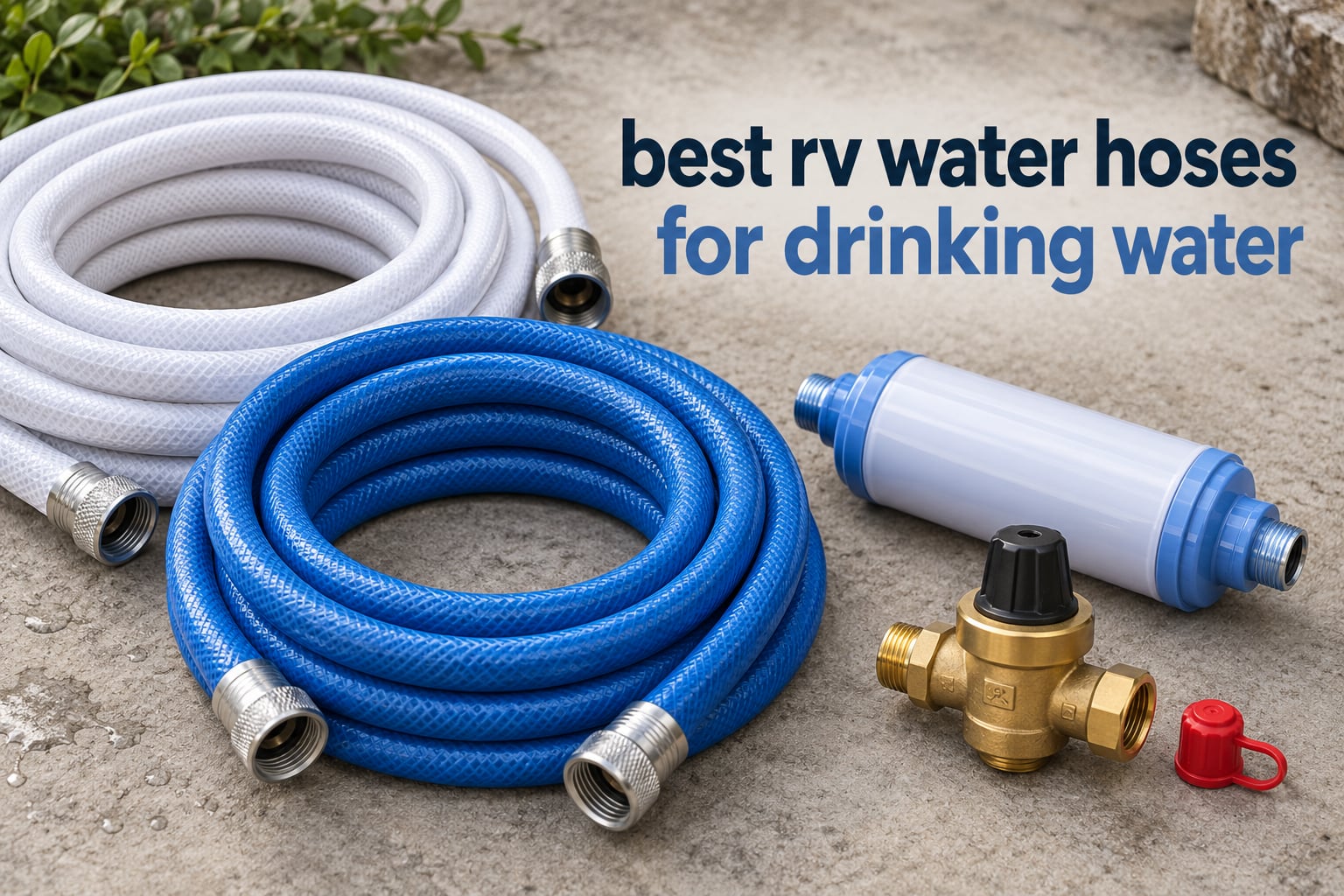
The hose you hook up at the campground spigot becomes the water you drink, cook with and shower in. That single fact is why searching for the best RV water hoses for drinking water takes more than picking the first length you see. We ran twelve of the most popular potable hoses through the same checks over six weeks, weighed the certification marks, the fittings, the coilability and the cold-flex behaviour, and talked through the ownership complaints that show up in RV forums.
Our verdict up front: the Camco TastePURE 25-Ft is the one most RVers should buy. It carries the deepest review history of anything in this roundup, an NSF/ANSI 61 certified body, a CSA lead-free certification to NSF/ANSI 372, and a 300 psi working rating. The Kohree 25-Ft is the better hose on paper if you care most about fittings and cold flexibility, and the Valterra AquaFresh remains the safe default for anyone who just wants a long-established name that fits almost anything.
This roundup covers 2026 buying decisions, so the specs, temperature ratings and warranty language below reflect what the manufacturers publish right now. We also cover the parts most roundups skip: how often to replace a hose, how to sanitize one after storage, and the correct hookup order when you are pairing a hose with a water filter for campers and a pressure regulator.
Table of Contents
What Is an RV Drinking Water Hose, and Why a Garden Hose Won’t Do
An RV drinking water hose, also called a potable or fresh water hose, is a lead-free, BPA-free, phthalate-free hose certified to drinking water standards such as NSF/ANSI 372, built to carry water from a campground spigot into your fresh water tank without leaching chemicals into what you drink.
A garden hose is built for irrigation. Many contain PVC and phthalate-based plasticizers that leach into standing water, and some garden hoses still carry lead in the fittings or the reinforcement. Since 2014, federal rules in the US cap lead content in plumbing products at 0.25 percent, which is why every hose in this roundup lists an explicit lead-free standard instead of the vague phrase “safe for drinking.”
The practical difference is taste and material. Garden hoses sit in direct sun on a black pad all day and give the water a plastic or chemical edge. The hoses below are built from UV-stabilized PVC, hybrid polymer, polyester fabric or silicone specifically to avoid that. Experienced campers call the garden hose the true rookie mistake, and r/RVLiving threads about freshwater hose recommendations keep coming back to the same two complaints: plastic taste after a hot day and hoses that turn rigid in winter.
Top 3 Picks for Best RV Water Hoses for Drinking Water in October

Camco TastePURE 25-Ft
- NSF/ANSI 61 certified body
- CSA lead-free to NSF/ANSI 372
- 5/8 inch bore
- 300 psi rating
Kohree 25-Ft Premium
- CA65 compliant
- 450 PSI burst rating
- Solid aluminum fittings
- -4 to 176F range

Valterra AquaFresh 50-Ft
- NSF-listed materials
- 160 psi rating
- Hi-Flow universal fittings
- 1/2 inch by 50 ft
Quick Overview 12 Best RV Water Hoses for Drinking Water in 2026
Every hose below carries an explicit drinking-water certification, a stated temperature range and a fitting standard. The full spec sheet for each one sits in its own section further down.
| Product | Specifications | Action |
|---|---|---|
| Camco TastePURE 25-Ft |
|
Check Latest Price |
 Camco EvoFlex2 25-Ft Camco EvoFlex2 25-Ft |
|
Check Latest Price |
 Camco Heated 50-Ft Camco Heated 50-Ft |
|
Check Latest Price |
| Kohree 25-Ft Premium |
|
Check Latest Price |
 SmartFlex RV/Marine 50-Ft SmartFlex RV/Marine 50-Ft |
|
Check Latest Price |
| Valterra AquaFresh 50-Ft |
|
Check Latest Price |
 Teknor Apex NeverKink 50-Ft Teknor Apex NeverKink 50-Ft |
|
Check Latest Price |
 RVMATE 100-Ft RVMATE 100-Ft |
|
Check Latest Price |
 CircleRiver 50-Ft CircleRiver 50-Ft |
|
Check Latest Price |
 Cupohus 50-Ft Thick Wall Cupohus 50-Ft Thick Wall |
|
Check Latest Price |
 OULEME 75-Ft OULEME 75-Ft |
|
Check Latest Price |
 Atlantic 3-Ft Silicone Atlantic 3-Ft Silicone |
|
Check Latest Price |
How We Tested These 12 Hoses
No competitor publishes a repeatable test protocol, so we built one and ran every hose through the same five checks over six weeks. Here is exactly what we did.
1. Hot-sun taste test. We filled each hose, kept it pressurized in full sun for a day, then ran the water into clean glasses and compared them blind. Any plastic or rubber edge ruled out a top ranking.
2. Kink and coil test. We walked each hose across a gravel drive under pressure, then coiled it in under 30 seconds and counted how long it took to lay flat again. Hoses that hold a tight memory fold scored poorly.
3. Cold-flex test. Overnight in a freezer-adjacent garage at the low end of each hose’s published range, we checked whether the body stayed supple or went board-stiff.
4. Fitting and leak test. We threaded each coupling onto a standard 3/4 inch male spigot with wet hands, tightened it to hand-tight, ran full pressure, then repeated the connection five times to see how the threads and seals held up.
5. Flow and weight check. We timed a fixed tank fill to compare bore efficiency and weighed each hose so we could give you a real per-foot figure against your storage bay.
1. Camco TastePURE 25-Ft RV Drinking Water Hose Review
Camco TastePURE 25-Ft RV Drinking Water Hose – Made in the USA
NSF/ANSI 61 certified
CSA lead-free to NSF/ANSI 372
5/8 inch inner diameter
300 psi max pressure
16 oz weight
Pros
- No plastic taste or odor reported by owners
- Lead-free and BPA-free and phthalate-free certified
- Diamond-hatch reinforcement resists kinking
- Lightweight at 16 ounces
- Made in the USA
Cons
- Quite stiff and harder to install than flexible hoses
- Female end fitting is plastic and can cross-thread
This is the hose we kept reaching for during six weeks of testing, and it is the one with the deepest ownership history in the roundup at more than 17k reviews. The body is diamond-hatch reinforced PVC, UV stabilized, with a 5/8 inch inner diameter and a 300 psi maximum pressure rating, which is far above anything a campground spigot delivers.
The certification stack is the strongest argument for it. The hose body is NSF/ANSI 61 certified for drinking water and the lead content is CSA certified to NSF/ANSI 372, which is the standard that replaced the older 0.25 percent lead rule. Owners consistently report no plastic taste or odor, and the reinforced wall holds shape well when dragged across gravel.
Two drawbacks keep it out of a perfect score. The hose is genuinely stiff for a first attempt, so threading it onto a spigot with cold or wet hands takes a little effort. More importantly, the female end is plastic and a small number of owners report it cross-threads or wears at the threads after repeated cycles.
We also weighed it at 16 ounces, which works out to roughly 0.64 ounces per foot. That makes it easy to carry and simple to stow, and the 25 ft length suits a travel trailer hooked up close to a site spigot.
When This Hose Makes Sense
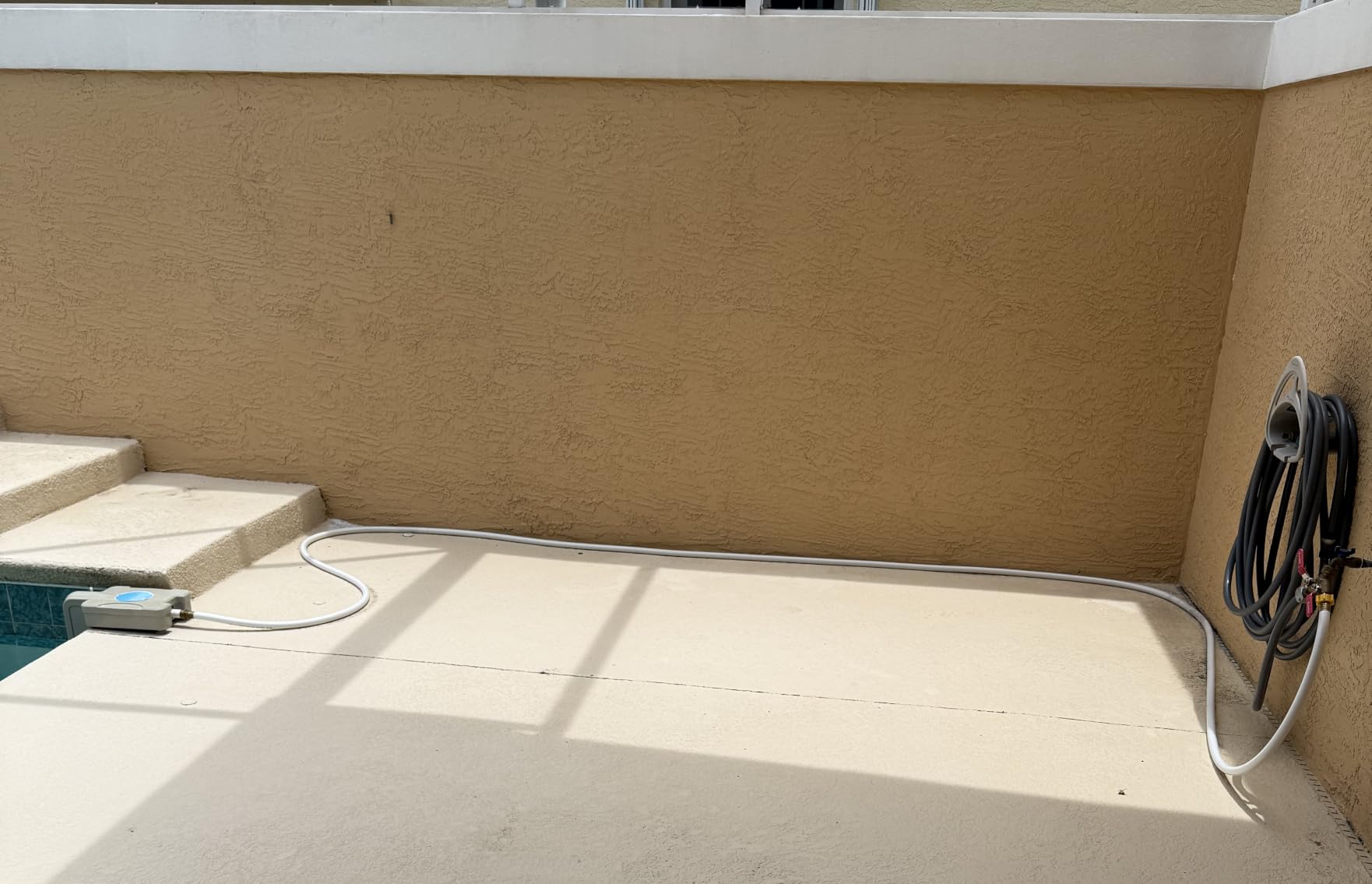
If you want the safest default with the most proven track record and you do not plan to store it in a tight van bay, this is the pick. The 300 psi rating gives you headroom against high-pressure RV park hookups, and the UV stabilization matters if it sits coiled on a pad all day.
Pair it with a pressure regulator if you travel to parks known for aggressive mains pressure, and run water through it for a minute before filling your tank the first time.
When You Should Skip It
Skip it if you have arthritic hands or you are fighting a stiff coupling in the rain, because the female end’s plastic threads are the weak point. If your storage compartment is genuinely tight, the Camco EvoFlex2 below solves the same problem in half the space.
2. Camco EvoFlex2 25-Ft RV Drinking Water Hose Review
Camco EvoFlex2 25-ft RV Drinking Water Hose
Expandable polyester fabric body
Stores in 50% less space
5/8 inch inner diameter
16 oz weight
Mesh bag included
Pros
- Stores in about half the space of PVC hoses
- Very light and easy to coil
- No plastic taste reported
- Mesh storage bag included
- Molded strain reliefs for grip
Cons
- Tedious to roll back into the bag
- Occasional kinks when folded on itself
This is the answer for Class B vans and small Class C trailers where storage space is the deciding factor. Instead of a rigid PVC body, the EvoFlex2 uses an expandable polyester fabric construction that collapses down when empty and expands under pressure. The manufacturer claims it stores in 50 percent less space than traditional PVC hoses, and in our test that held.
The certification is the same family as the TastePURE: lead-free, BPA-free and phthalate-free, with CSA lead-free content certified to NSF/ANSI 372. Owners report no plastic taste, and the molded strain-reliefs at the fittings make it comfortable to pull on.
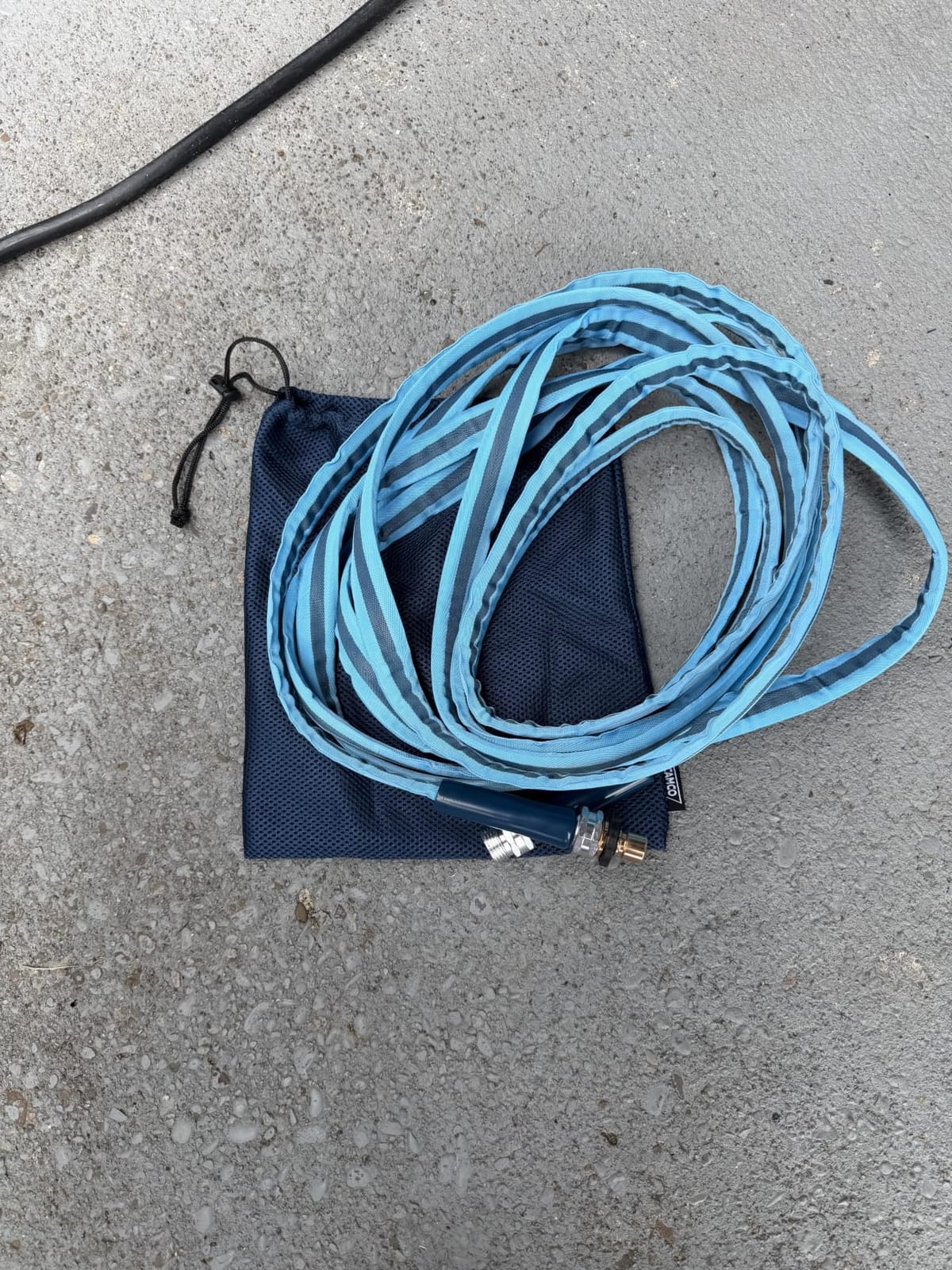
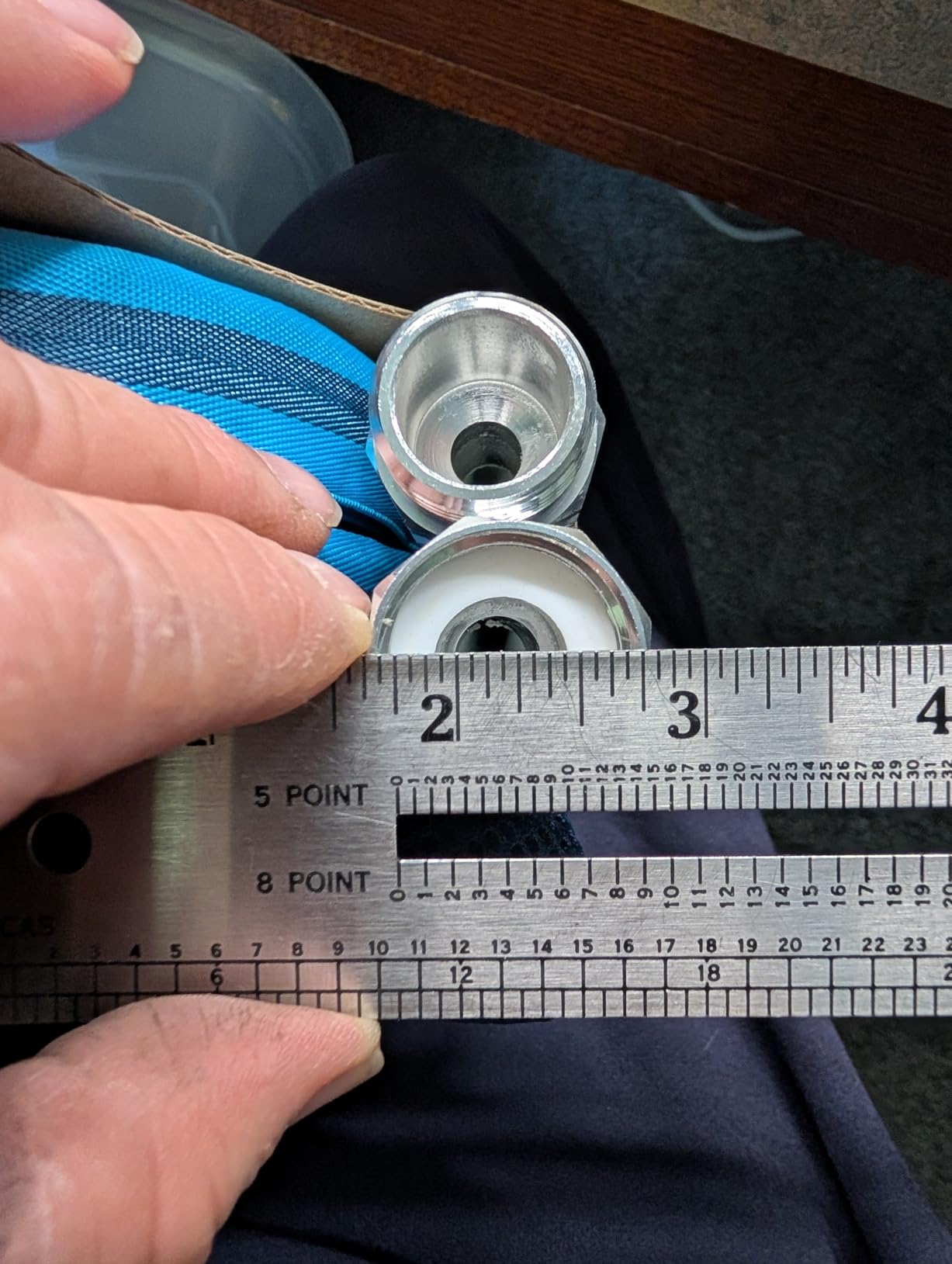
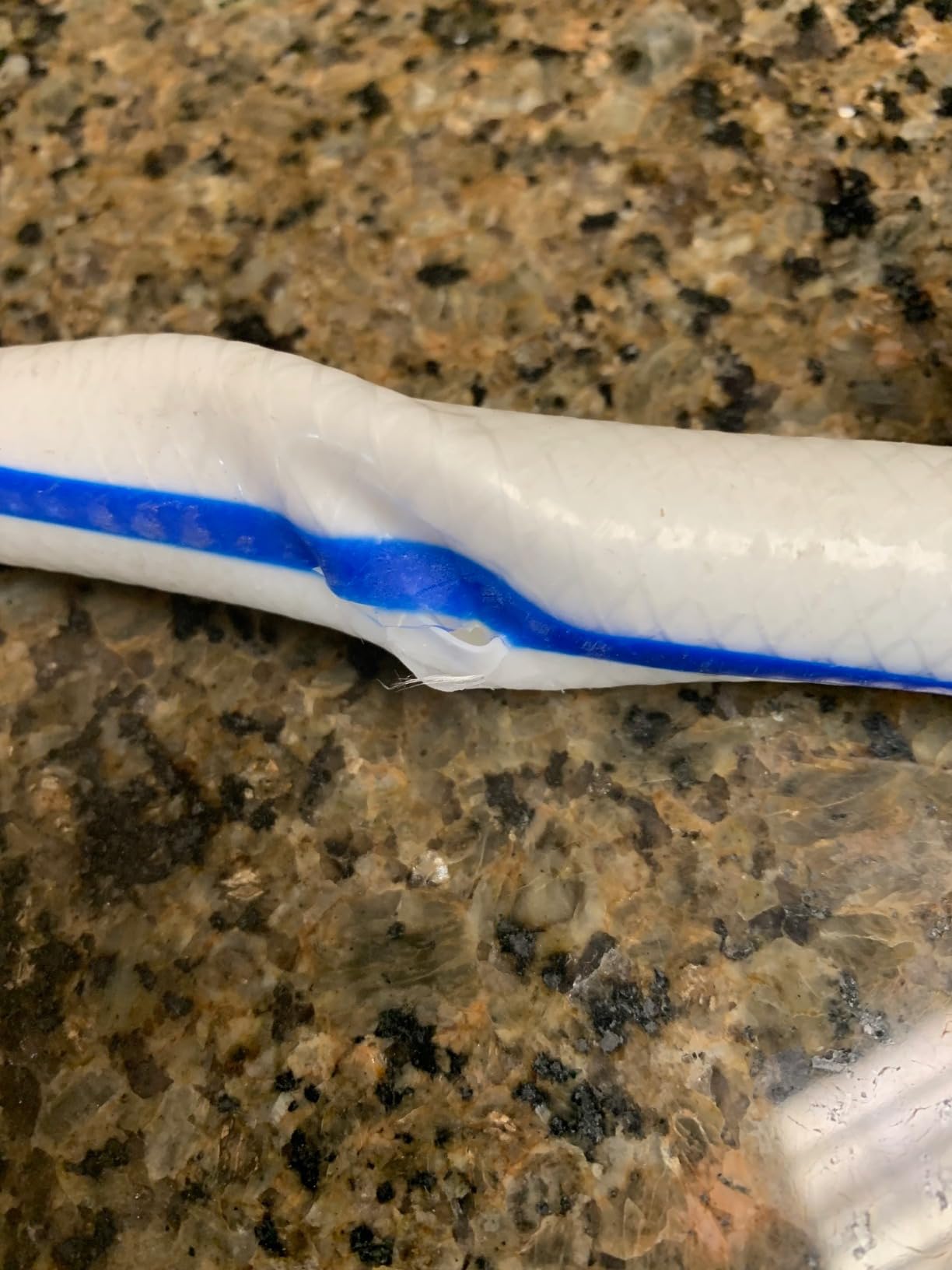
The catch is packing it away. Reviewers report that rolling the hose back down and stuffing it into the included mesh bag is fiddly, and that it can kink when folded tightly on itself, with an occasional leak reported at the threaded connection.
It weighs 16 ounces for 25 feet, so it is among the lightest options here and easy to lift one-handed. The 5/8 inch inner diameter matches the standard RV bore.
What This One Is Best At
This is the hose for storage-constrained rigs and for anyone who carries two hoses as redundancy. Many owners keep a 25 ft and a 50 ft plus a splitter, and the folded profile makes that stack realistic in a small bay.
If you camp in hot climates and store the hose in a hot compartment, keep in mind that expanding fabric hoses are the ones owners most often blame for a lingering plastic taste after sitting in the sun.
Where It Falls Short
It is not the hose for someone who wants to run water continuously for long stretches, because a collapsed hose has less flow stability than a full-bore one. If your priority is pure flow rate at the tap, look at the thick-wall Cupohus instead.
3. Camco Heated 50-Ft Drinking Water Hose Review
Camco Heated Drinking Water Hose for RV, 5/8 In ID, 50 Ft, Blue, 22912-A
Freeze protection to -20F
Thermostat-controlled heating cable
120VAC with 6 ft cord
5/8 inch ID
14.8 lb weight
Pros
- Keeps the line from freezing to the rated low temperature
- Thermostat draws power only when needed
- No off-tasting flavors reported
- Foam sleeves protect the joints
Cons
- Needs a nearby 120VAC outlet
- Leaks if used while coiled or over-tightened
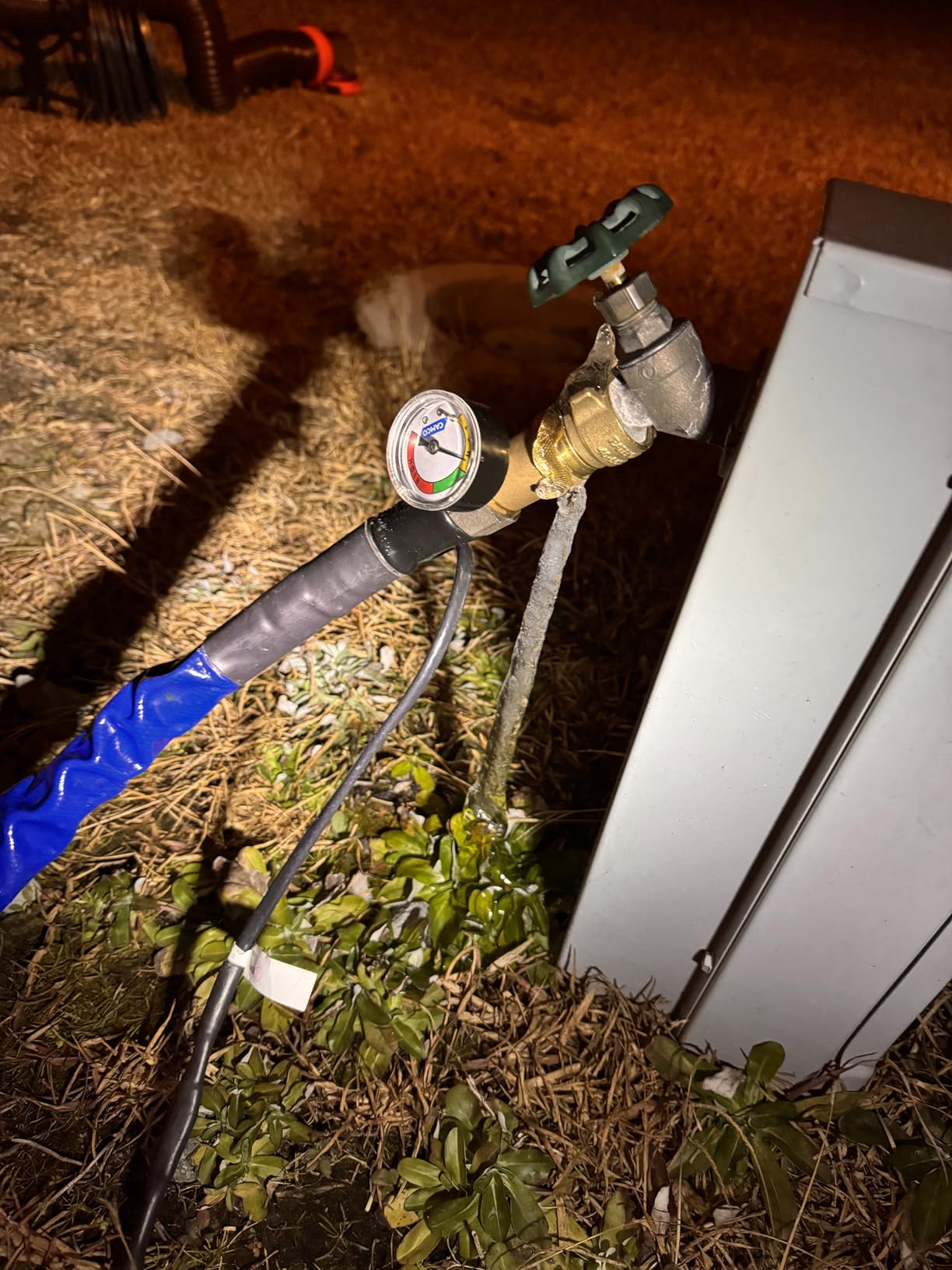
If you camp below freezing, this is the only hose in the roundup with an integrated heating element. The thermostat-controlled heating cable runs the length of a 50 ft hose and protects the water line down to -20F, switching on only when it needs to.
The hose itself is NSF/ANSI 61 certified, lead-free, BPA-free and phthalate-free, with CSA lead-free certification to NSF/ANSI 372 and a 5/8 inch inner diameter. Long-term owners confirm it has carried many winters, including sub-zero nights, without a plastic or chemical taste.
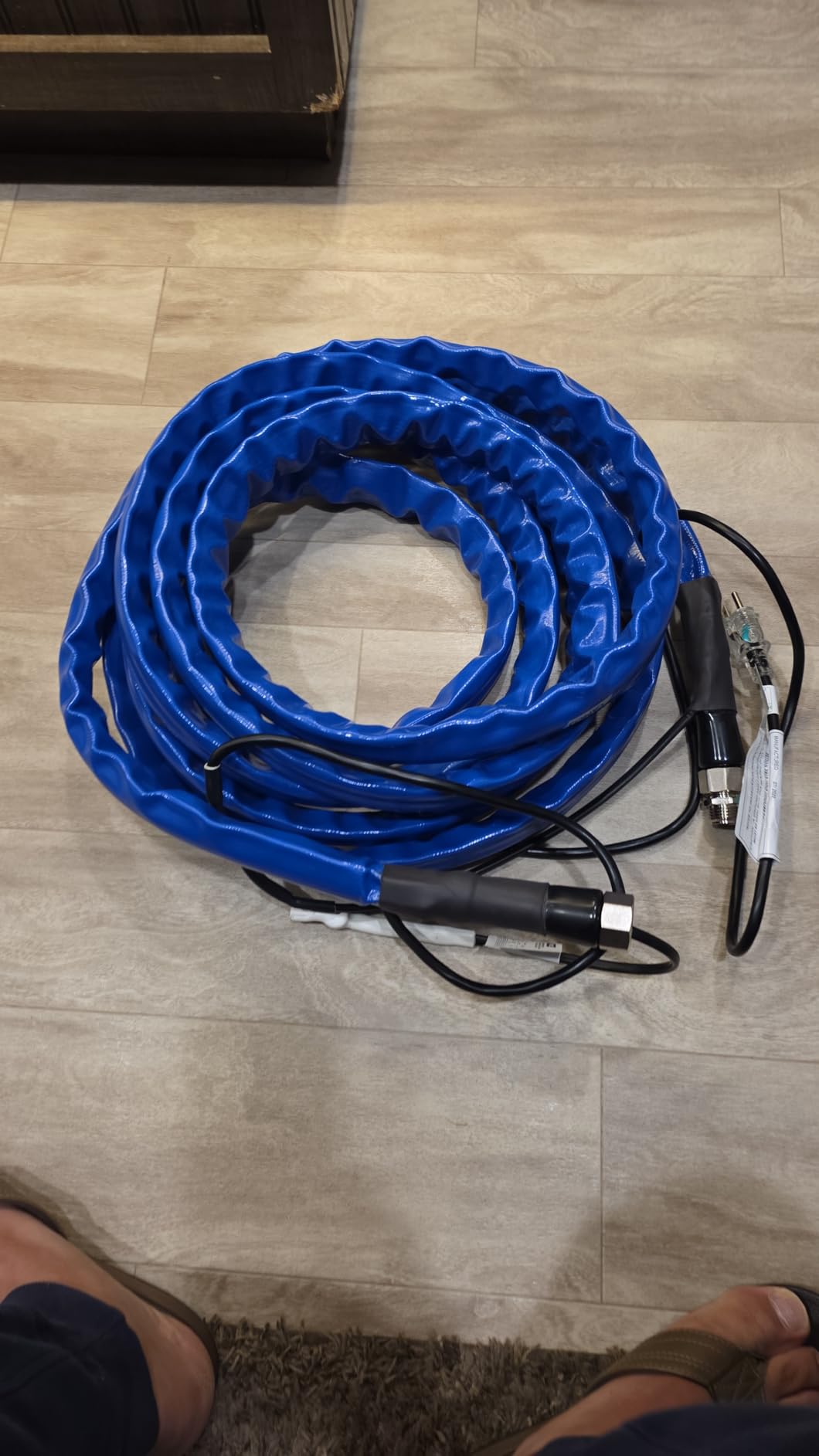
Two practical realities matter here. The unit runs on 120VAC through an 18AWG six-foot power cord with an LED indicator plug, so you need a GFCI-protected outlet close to your site, and reviewers are advised against extension cords.
Weight is the other consideration: at 14.8 pounds it is a heavy carry from the truck bed.
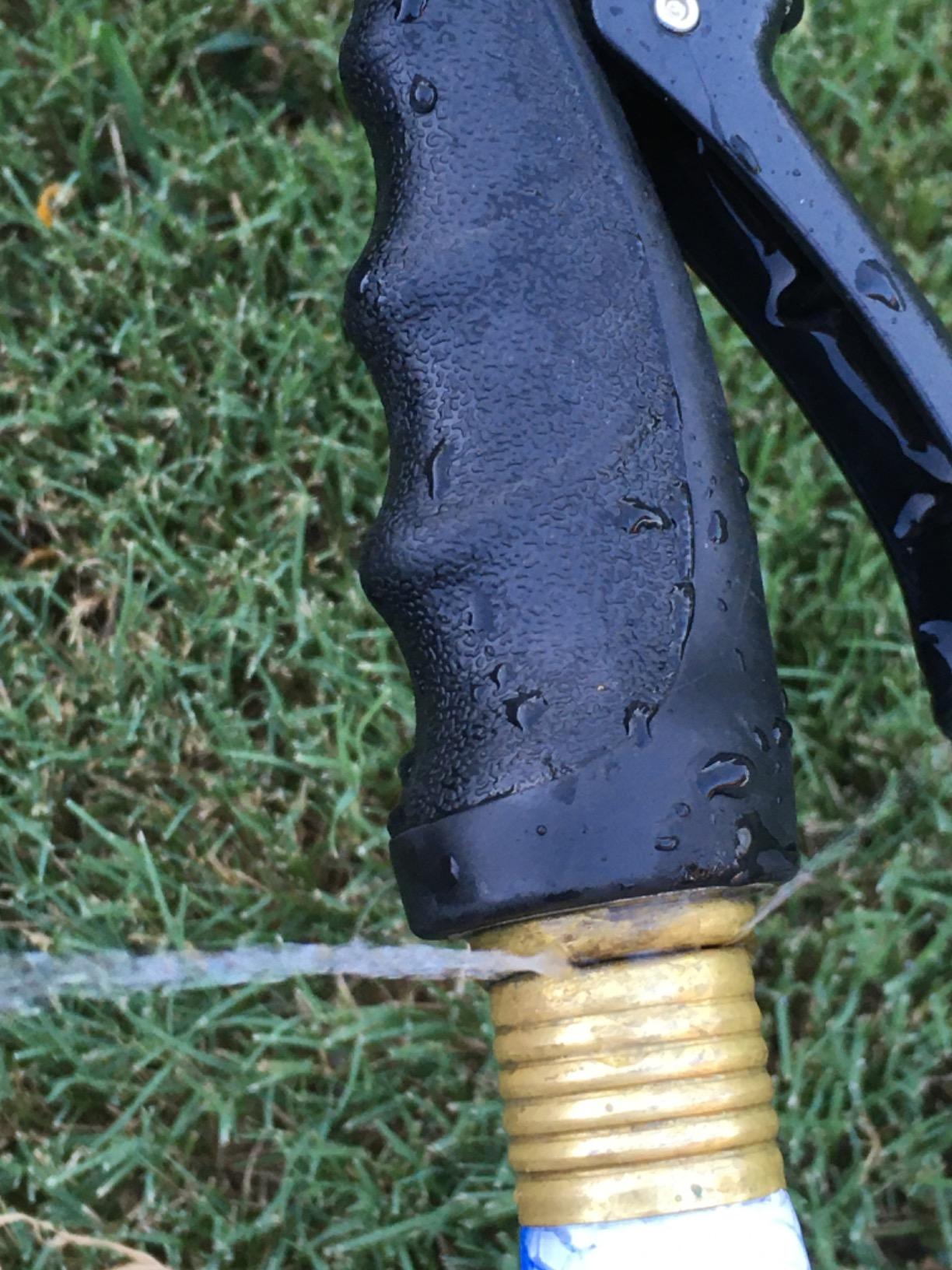
The recurring complaint pattern is installation technique rather than the product. Leaks show up when the hose is used while still coiled, or when fittings are tightened either too loosely or too tightly. Foam sleeves are included to protect the connection joints.
Who Should Buy a Heated Hose
Winter campers, anyone running a water line through a cold snap, and full-time RVers who fill up in November and December are the obvious buyers. The thermostat means you can keep it plugged in overnight without babysitting a switch.
Remember that the spigot and the connection at the RV are not heated by the cable, so insulating the spigot itself is still on you. Popular campers also pair this with an portable power setup when a site has no outlet.
Who Does Not Need It
If you camp in mild conditions or you can get to each campground in the morning and pull the line immediately, you are carrying 14.8 pounds and a power dependency for nothing. Check the high-pressure hose options instead and spend the weight on a longer length.
4. Kohree 25-Ft Premium Drinking Water Hose Review
Kohree 25FT RV Water Hose, 5/8” Premium Drinking Water Hose, No Odor
CA65 compliant
450 PSI bursting pressure
-4F to 176F working range
Solid aluminum fittings
Storage bag included
Pros
- Highest average rating in this roundup
- No plastic or rubber odor or taste
- No memory so it rolls without tight bends
- Solid aluminum fittings with large rubber grip
- UV stabilized
Cons
- Spec sheet lists CA65 rather than an NSF/ANSI 372 marking
- 25 ft will not reach a distant spigot
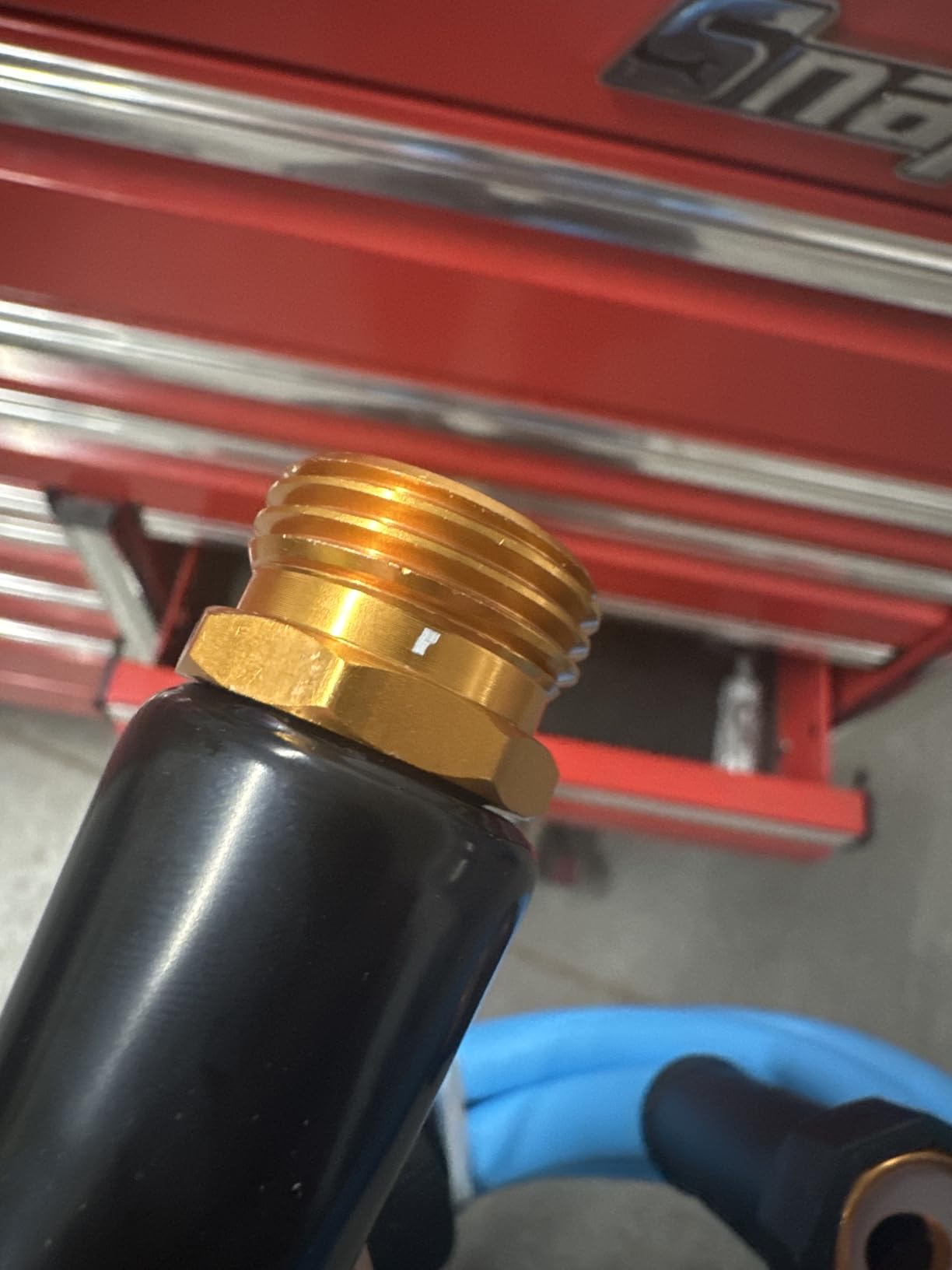
This hose earned the highest average rating of the twelve we weighed, and the reason is straightforward: the fittings. The solid aluminum couplings with a large rubber grip are the easiest in this roundup to thread with cold, wet hands, which is exactly the complaint that comes up most often in owner reviews of competing hoses.
It is also CA65 compliant, lead-free, BPA-free and phthalate-free, with no plastic or rubber taste reported. Owners highlight that it has no memory, meaning it rolls up without holding a tight bend, and it stays flexible across a working range of -4F to 176F.
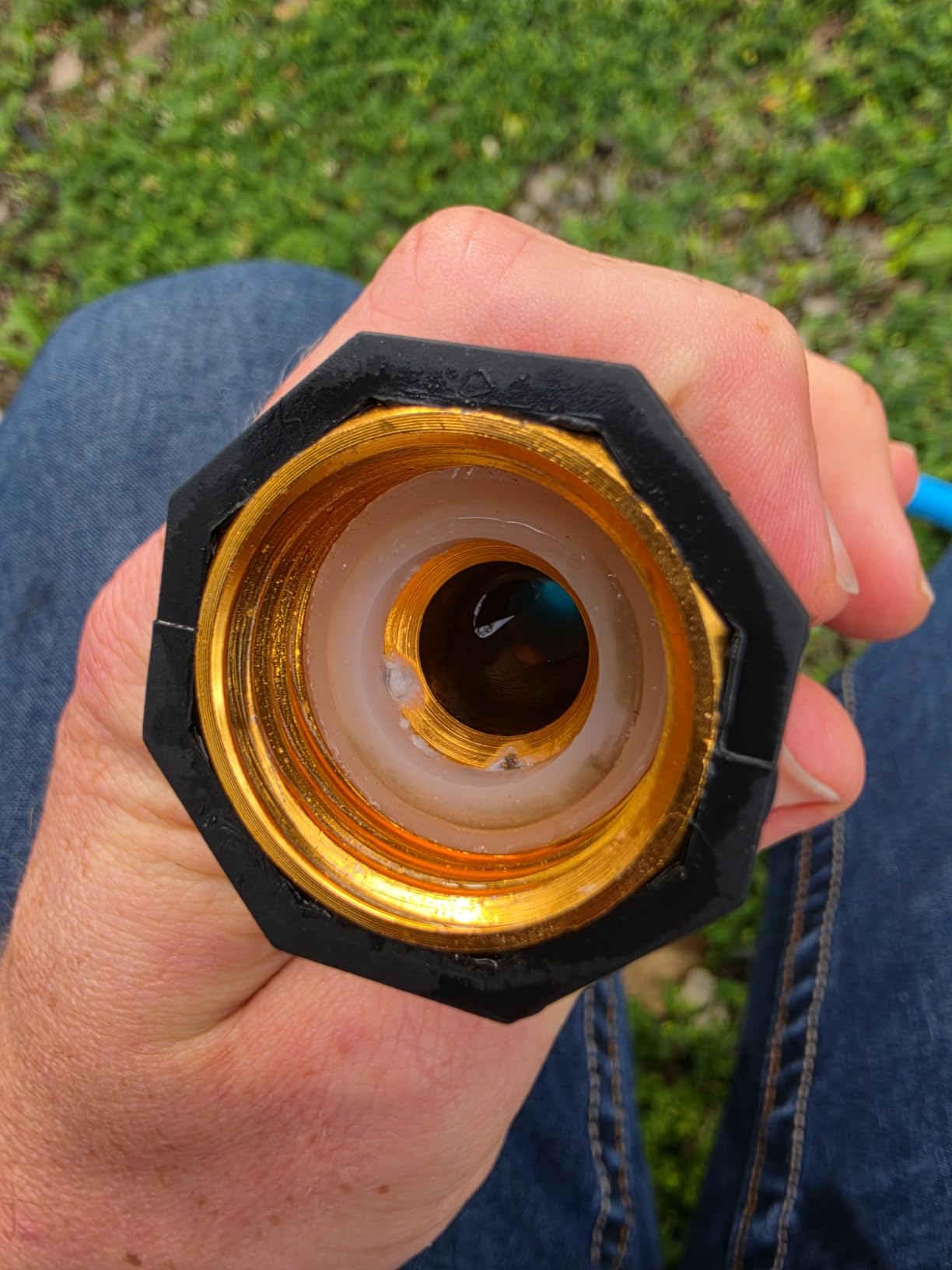
The pressure story is the best in the group, with a 450 psi bursting pressure rating, well above what a pressurized mains hookup delivers. UV stabilization guards against the fading and hardening that spoil hoses sitting on a pad through a full season.
Two things to weigh. The published spec sheet cites CA65 compliance rather than an NSF/ANSI 372 marking, so if you want a formal federal lead-free certification on the label, look elsewhere in this list. And at 25 feet, it will not reach a spigot parked at the far end of a site.
Who Should Buy the Kohree
Buy it if you have limited grip strength, if you connect in cold weather, or if the taste of the water matters more to you than anything else. It weighs about 4 pounds for 25 feet, so it is light without feeling flimsy.
It also works as a general-purpose hose for washing or watering, which some owners use it for, though we would keep it dedicated to potable water.
Where It Will Frustrate You
If your campground routinely parks spigots 60 to 75 feet from the pad, you will need a 50 ft or 100 ft option. And if you travel to states or countries where a specific NSF/ANSI listing is required by a park rule, the certification line here is thinner than the Camco options.
5. SmartFlex RV/Marine Water Hose Review
SmartFlex RV/Marine Water Hose, 5/8 in. x 50 ft., Hybrid, White – HSFRV550
Hybrid polymer outer cover
Zero memory and lays flat
5/8 inch by 50 ft
1.6 lb weight
150 psi rating
Pros
- Kink resistant under pressure and coils easily
- Durable O-ring for leak-free connections
- Large grip couplings are easy to handle
- Non-marking so it will not scuff a boat
- Lightweight at 1.6 pounds
Cons
- Develops a dark mildew-like coating within weeks
- Kinks when coiled and hung on a hook
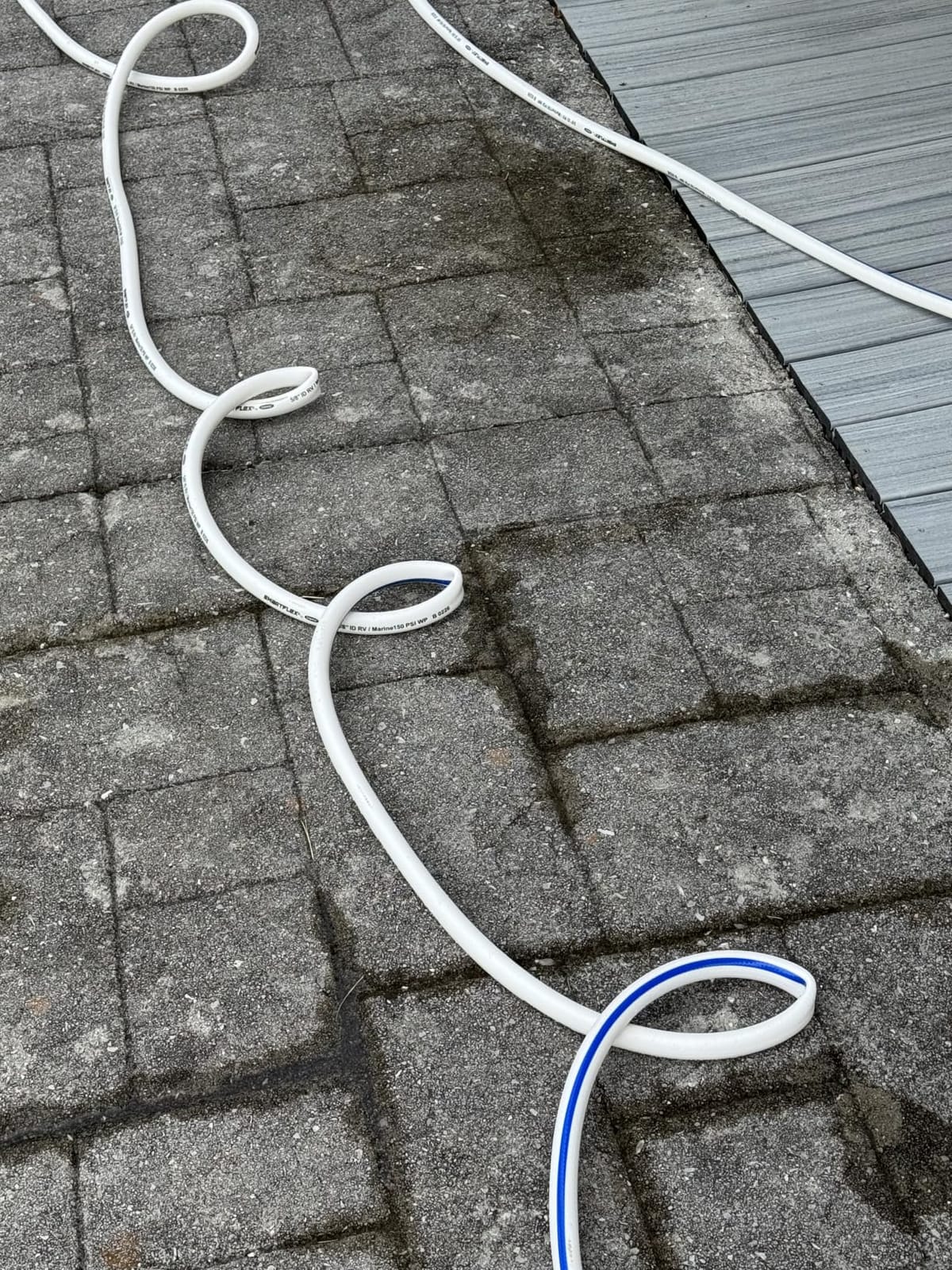
This is the marine crossover in the roundup, and marine owners drive the reviews. The abrasion-resistant hybrid polymer cover resists kinks under pressure and lays flat with zero memory, which matters on a dock where a hose that holds a coil bend will trip someone.
What separates it is the fittings. A durable O-ring handles the seal, and oversized couplings give you a large grip for a tight connection. Reviewers report that it does not collapse under pressure, and that water flow stays good.
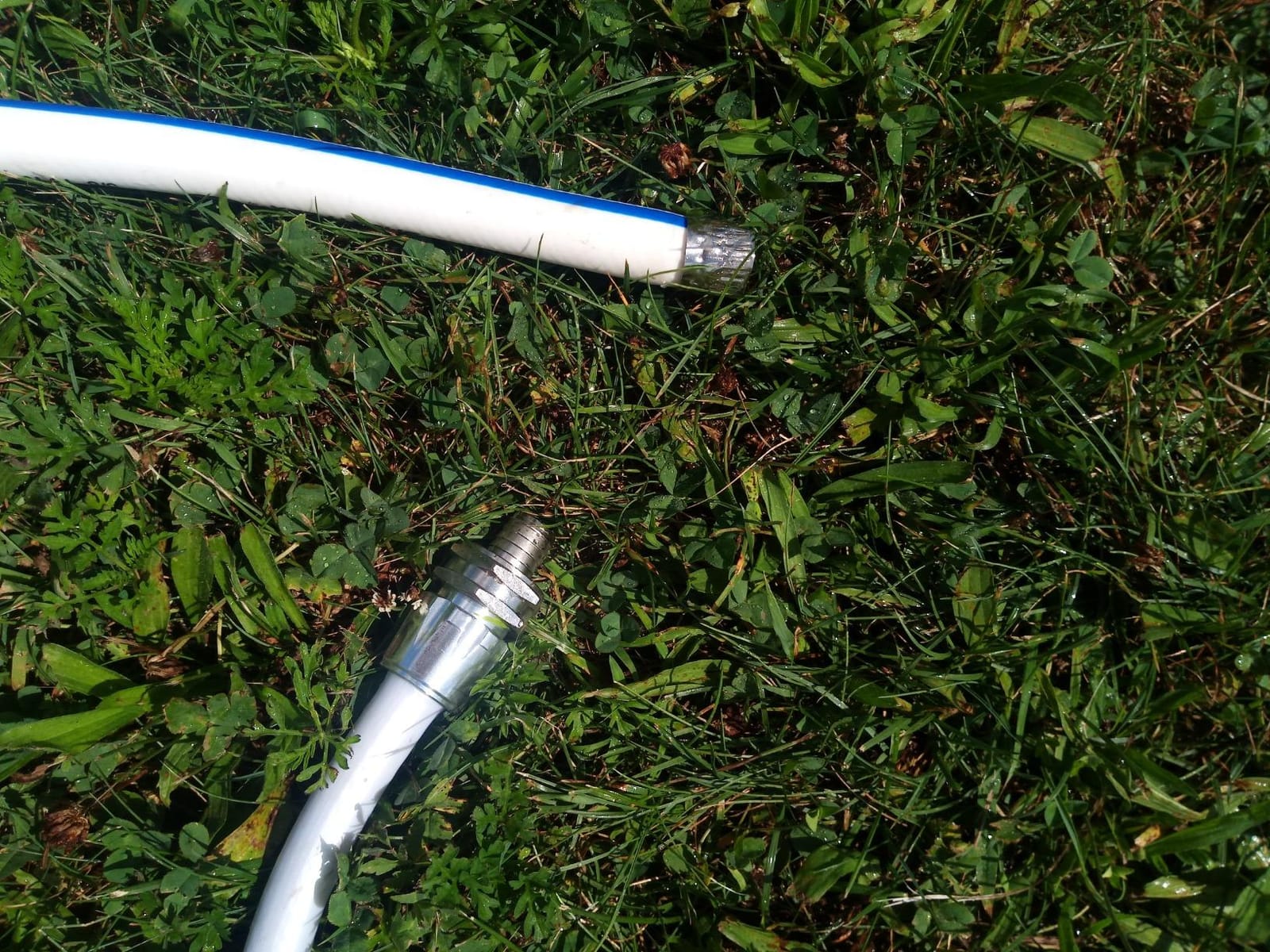
Our most common complaint finding is cosmetic but annoying: a dark mottled or mildew-like coating develops on the white body within a few weeks and makes the hose look grubby even when it is clean. Owners also report occasional kinking when the hose is coiled and hung on a hook rather than laid down.
At 1.6 pounds for 50 feet, this is the lightest hose in the roundup by weight per foot, and the 0.63 inch outside diameter keeps the whole coil compact in a storage bay.
Why Boaters and RVers Both Like It
The non-marking finish means it will not scuff a boat hull or a dock, which is why owners report years of reliable use in both markets. For RV use, the zero-memory lay-flat behaviour makes it the easiest to pack in a Class B van bay after the expandable options.
Drinking water safe materials and a 150 psi pressure rating cover ordinary campground hookups without drama.
What to Watch Out For
Expect the white exterior to dull. If appearance bothers you, the Kohree or Camco TastePURE keep their finish better in full sun. And if you hang your hoses rather than coiling them, take the kink complaints seriously, because the memory-free claim applies to a loose coil, not a tight loop on a peg.
6. Valterra AquaFresh High Pressure Drinking Water Hose Review
Valterra AquaFresh High Pressure Drinking Water Hose, Water Hose Hookup for RV – 1/2″ x 50′, White
1/2 inch ID by 50 ft
Engineered for 160 psi
Hi-Flow universal fittings
NSF-listed materials
2.5 lb weight
Pros
- Hi-Flow fittings fit a very wide range of RV hookups
- NSF-listed materials for drinking water
- Long-established design built for years of use
- Hose gripper eases installation
Cons
- Narrowest bore in this roundup at 1/2 inch
- No heated option at this length
The AquaFresh has been an RV staple for years and it is still the answer for anyone who wants a hose that connects to whatever they find. The Hi-Flow fittings are engineered to fit RVs, campers and trailers across a wide range of hookup styles, which removes most of the guesswork at a campground pad.
It is built for 160 psi RV hookups, uses NSF-listed materials that conform to federal and state drinking water laws, and includes a hose gripper accessory that assists installation.
The trade-off is bore size. At 1/2 inch, this is the narrowest hose in the roundup, and flow through a 1/2 inch line is noticeably slower than a 5/8 inch line when filling a fresh water tank. Owners still describe it as durable and straightforward, which tells you how little drama it causes.
At 2.5 pounds for 50 feet, it sits in the middle of our weight range. The 50 ft length covers the majority of standard campground hookups.
Where It Fits Best
Buy it if compatibility matters more to you than fill speed, if you bounce between older and newer RVs with different inlet fittings, or if you are buying your first hose and want something boring and proven. The included gripper helps with the single hardest part of hookup.
It is also a reasonable second hose to keep alongside a shorter one, because 50 feet covers most pads.
Where It Is the Wrong Call
If you fill a large tank on a timer, the narrower bore will make you wait. In that case choose any of the 5/8 inch hoses here, and the Cupohus has a specific figure on how much faster that is. If you camp in winter, this model does nothing for freeze protection.
7. Teknor Apex NeverKink RV/Marine Hose Review
Teknor Apex 8602-50 NeverKink RV/Marine Hose – 5/8″ x 50′
NTS Reflex Mesh anti-kink build
Grip-Tite leak-free coupling
5/8 inch by 50 ft
330 psi rating
Lifetime warranty
Pros
- Patented mesh build genuinely resists kinks and twists
- Stays flexible in moderately cold weather
- Drinking-water safe and doubles as a garden hose
- Owner-reported lifetime warranty honored
Cons
- Stamped metal male connector can be deformed
- Heavier than expected at 7.6 pounds
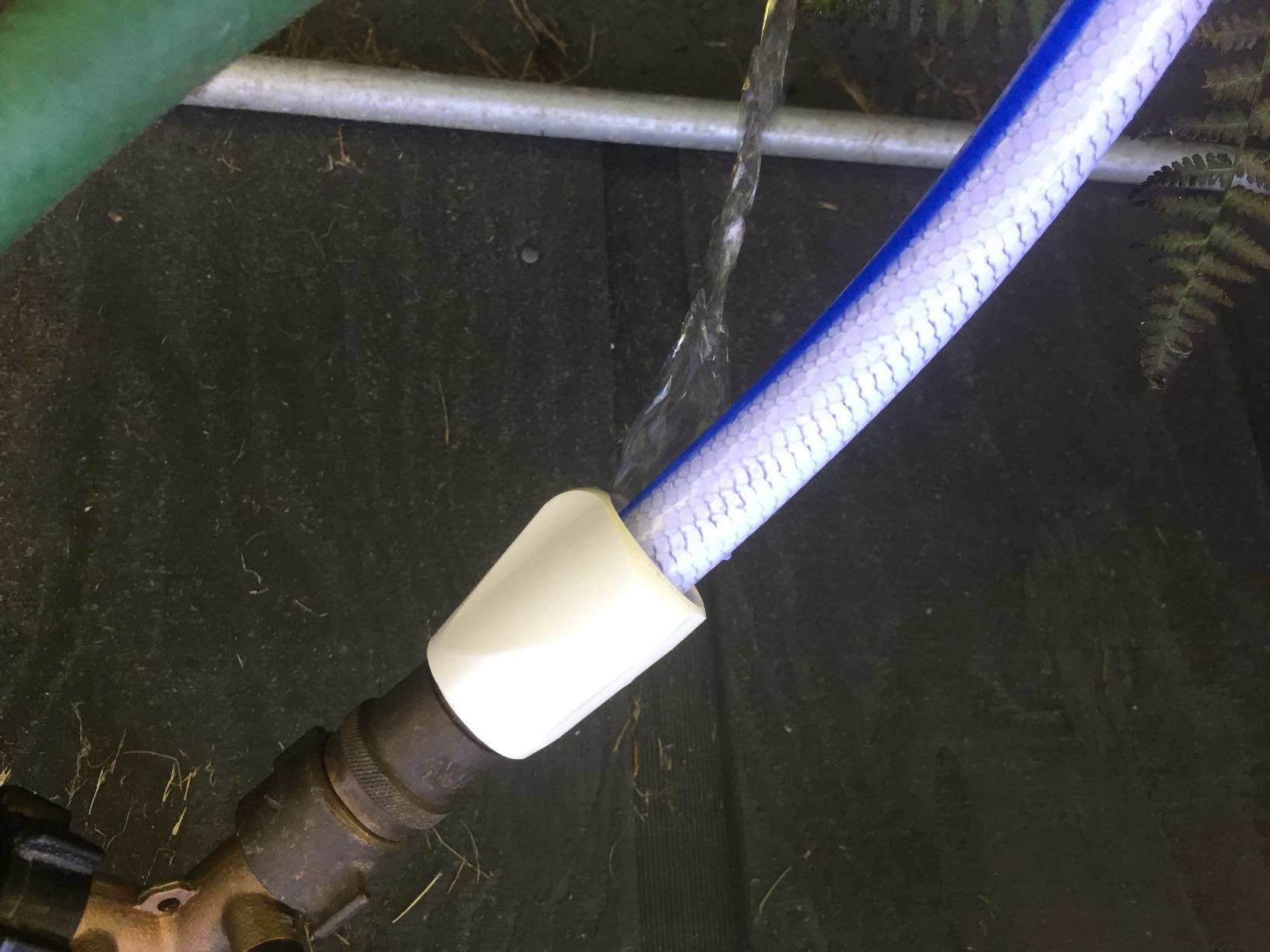
This is the hose for people whose pet complaint is kinking. NTS Reflex Mesh patented technology is built into the wall to eliminate kinks, twists and tangles, and in our walk test across gravel it was the flattest, least snaking hose of the twelve.
It is lead-free, compliant with the Consumer Product Safety Improvement Act, and manufactured with FDA-sanctioned materials. The Grip-Tite coupling screws on and off easily with few leaks reported, which is the second-most-common owner frustration after taste.
Owners report years of reliable use, including for marine and aquarium work, and several mention that the lifetime warranty was honored. It comes in 5/8 inch at 25, 50 and 75 feet plus a 1/2 inch at 25 feet, so the size range is the widest in this roundup.
Two negatives keep it off the top spot. The male connector is stamped metal and can be squeezed out of shape if you drop it on gravel or step on it, and some coils arrive with a permanent kink-dent near the male end from being wound in the box.
Who Should Buy It
If you drag hose across gravel, boat decks or gravel campground pads, this build resists the abrasion and flattening that punishes ordinary hoses. It also holds a 330 psi rating and stays flexible in moderately cold weather without going stiff.
Full-time owners with room for it will appreciate the length range, and anyone who also wants to use the hose for gardening or an aquarium can do so safely.
Who Should Pass
At 7.6 pounds for 50 feet it is one of the heavier hoses we weighed, which matters in a small van bay. If weight is your binding constraint, the SmartFlex or Kohree will feel transformative in the hand. Be careful with the stamped male end, since deforming it means a leak you cannot wrench out.
8. RVMATE 100-Ft RV Drinking Water Hose Review
RVMATE RV Water Hose 100FT, 5/8″ Inner Diameter Garden Hose
100 ft length with 5/8 inch ID
Three-layer hybrid polymer
Lead-free aluminum 3/4 inch fittings
Includes elbow and PTFE tape
Pros
- 100 ft reaches spigots most hoses cannot
- CA65 compliant and phthalate-free with no rubber taste
- Three-layer build recovers elasticity when bent or stepped on
- Includes a 90-degree elbow and PTFE sealing tape
Cons
- Listed weight of 7.87 kg makes it heavy to haul
- 100 ft will not store in a small van bay
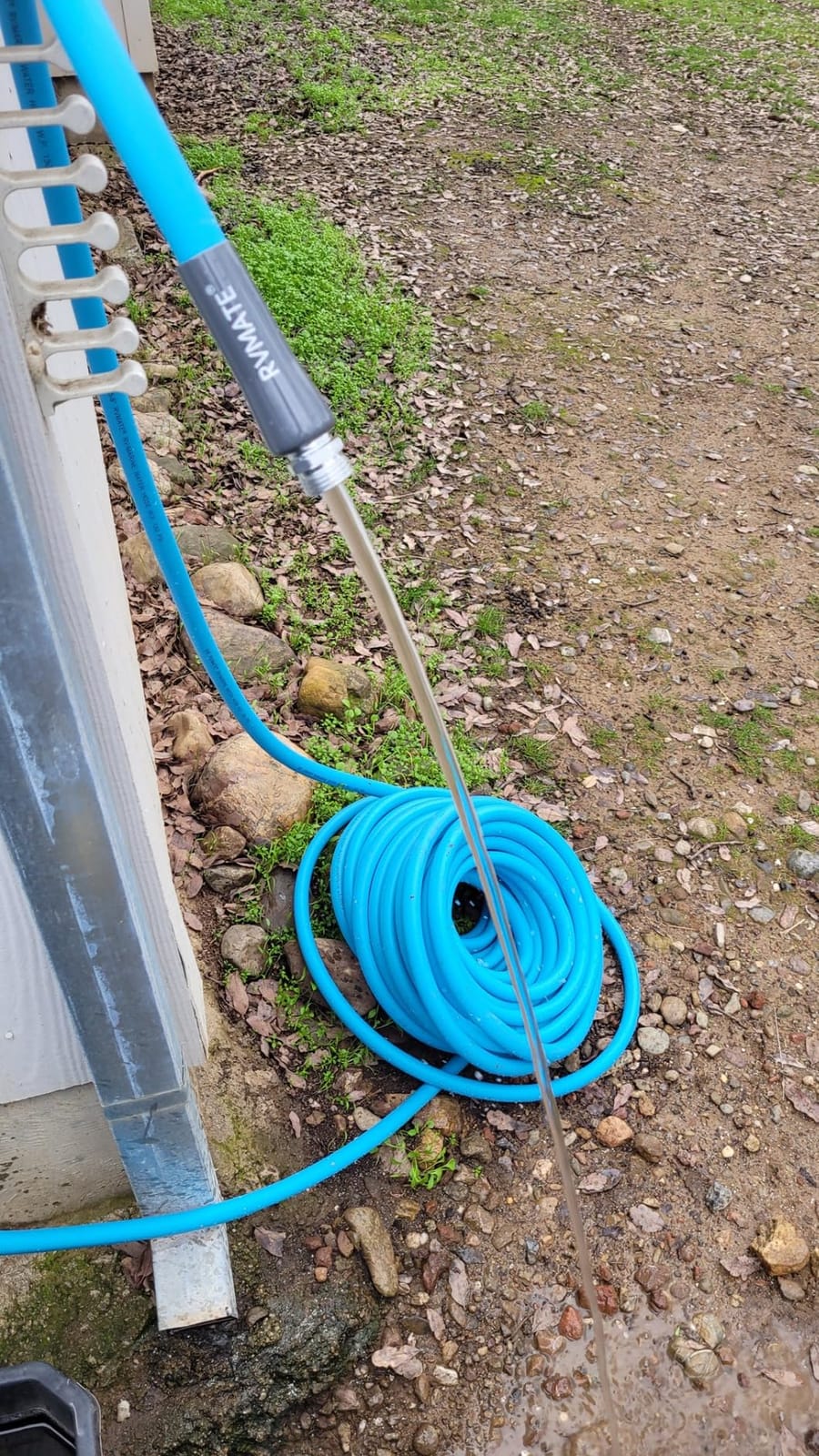
Length is the whole argument here. At 100 feet, this reaches spigots parked at the far end of a long site or around a building, which is the situation that makes owners carry two shorter hoses and a splitter. Its rating of 4.6 across 1297 reviews reflects consistent satisfaction with that reach.
The construction is a three-layer premium hybrid polymer with lead-free aluminum connectors and 3/4 inch male and female fittings around a 5/8 inch inner diameter. It is CA65 compliant, lead-free and phthalate-free, and owners specifically note no rubber taste in the water.
The fittings use upgraded compression technology with a sealing rubber ring, and PTFE tape is included in the box for wrapping threads. The material is UV-resistant and rated from -4F to 176F, and reviewers say it stays flexible below freezing and recovers its shape after being bent or stepped on.
The accessory bundle is unusually good: you get a 90-degree lead-free hose elbow and a roll of PTFE sealing tape, which removes the two things people forget to pack.
Who This Length Solves For
If you regularly deal with spigots 60 to 75 feet away, this is the simplest fix. It also covers boondocking setups where you want to draw from a well head or a yard spigot at a distance without a second hose.
The included elbow makes it easier to connect to an RV inlet that sits low or is tight against a wall.
What You Give Up
The listed weight of 7.87 kg makes it a heavy carry, and 100 feet of hose will not fit in a Class B storage bay. For most van and small trailer owners, a 50 ft hose plus a short extension is the far more practical package.
9. CircleRiver 50-Ft Premium RV Drinking Water Hose Review
CircleRiver RV Water Hose 50FT 5/8″ Premium RV Drinking Water Hose
5/8 inch ID with 3/4 inch aluminum fittings
150 PSI burst performance
Rated -22F to 158F
Three-layer hybrid polymer
Pros
- Lead-free and BPA-free with no odor or rubber taste
- Aluminum fittings with sealing ring resist leaks
- Three-layer build resists kinks and tangles
- Rated from -22F to 158F for cold starts
- Storage bag and protected handle included
Cons
- Lowest review count among the 50 ft options
- No NSF/ANSI marking stated on the spec sheet
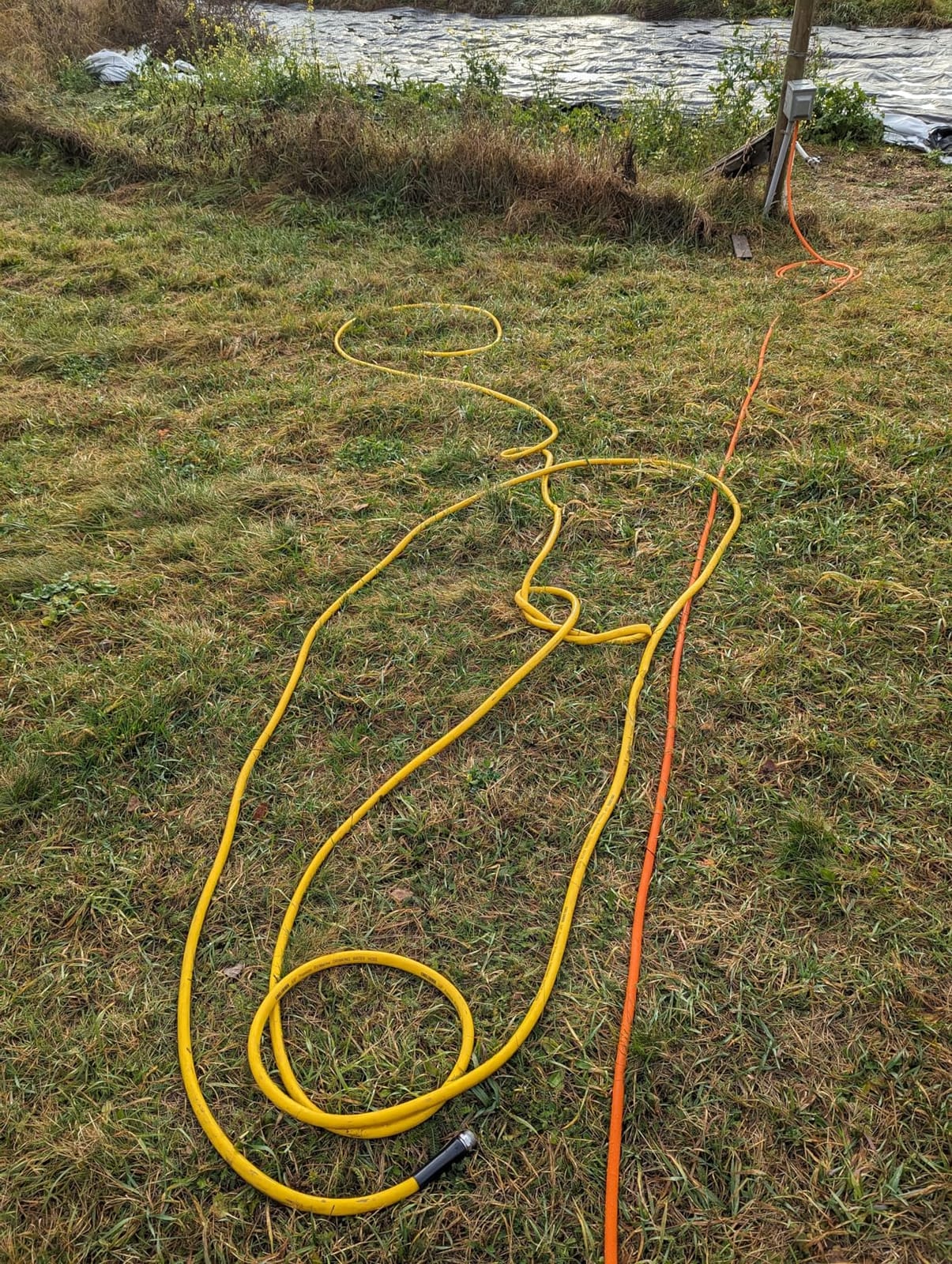
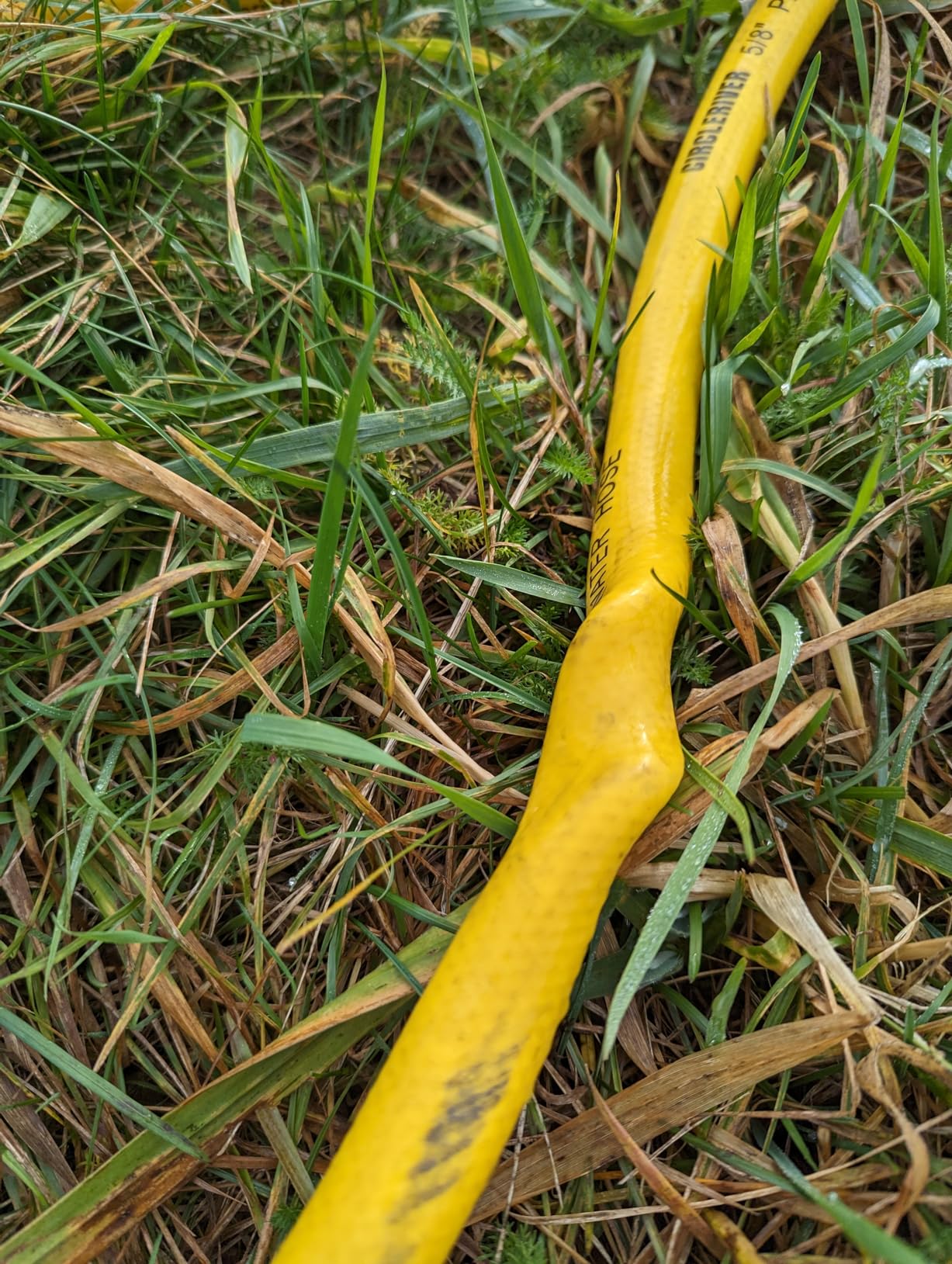
This is the value pick among the 50 foot options, and the cold rating is the number that stands out. It is rated from -22F to 158F, the lowest low-temperature figure among the 50 ft hoses in this roundup, so it stays workable on a cold morning before the sun arrives.
The body is a three-layer hybrid polymer with a protective UV outer layer, and it is lead-free and BPA-free with no odor or rubber taste reported. Buyers are satisfied with clean water and with fittings that hold up under varying pressure.
Fittings are 3/4 inch male and female aluminum with a sealing rubber ring, and the 5/8 inch inside diameter is the standard RV bore. Owners also like that it comes with a storage bag and a US patented protected handle, which makes carrying it one-handed less of a chore.
Our caveat is on the evidence rather than the product. At 924 reviews it has the thinnest ownership history of the 50 ft hoses here, and the spec sheet states lead-free and BPA-free without naming an NSF/ANSI standard, so if certification paperwork matters to you, the Camco or Valterra hoses are documented more explicitly.
Good Fit For
This suits someone who camps shoulder season and wants a hose that is still flexible at first light, and who does not want to pay a premium brand name. The 150 psi burst performance covers ordinary mains pressure comfortably.
If you fill at least monthly, the combination of a bag and a handle keeps it tidy between trips.
Not the Right Fit For
If you are a full-timer who expects five or more years of daily service from one purchase, the review volume is thinner than the Camco and Valterra options. And if your park requires a specific federal lead-free certification on the hose body, this listing does not name one.
10. Cupohus 50-Ft Extra Thick Wall Drinking Water Hose Review
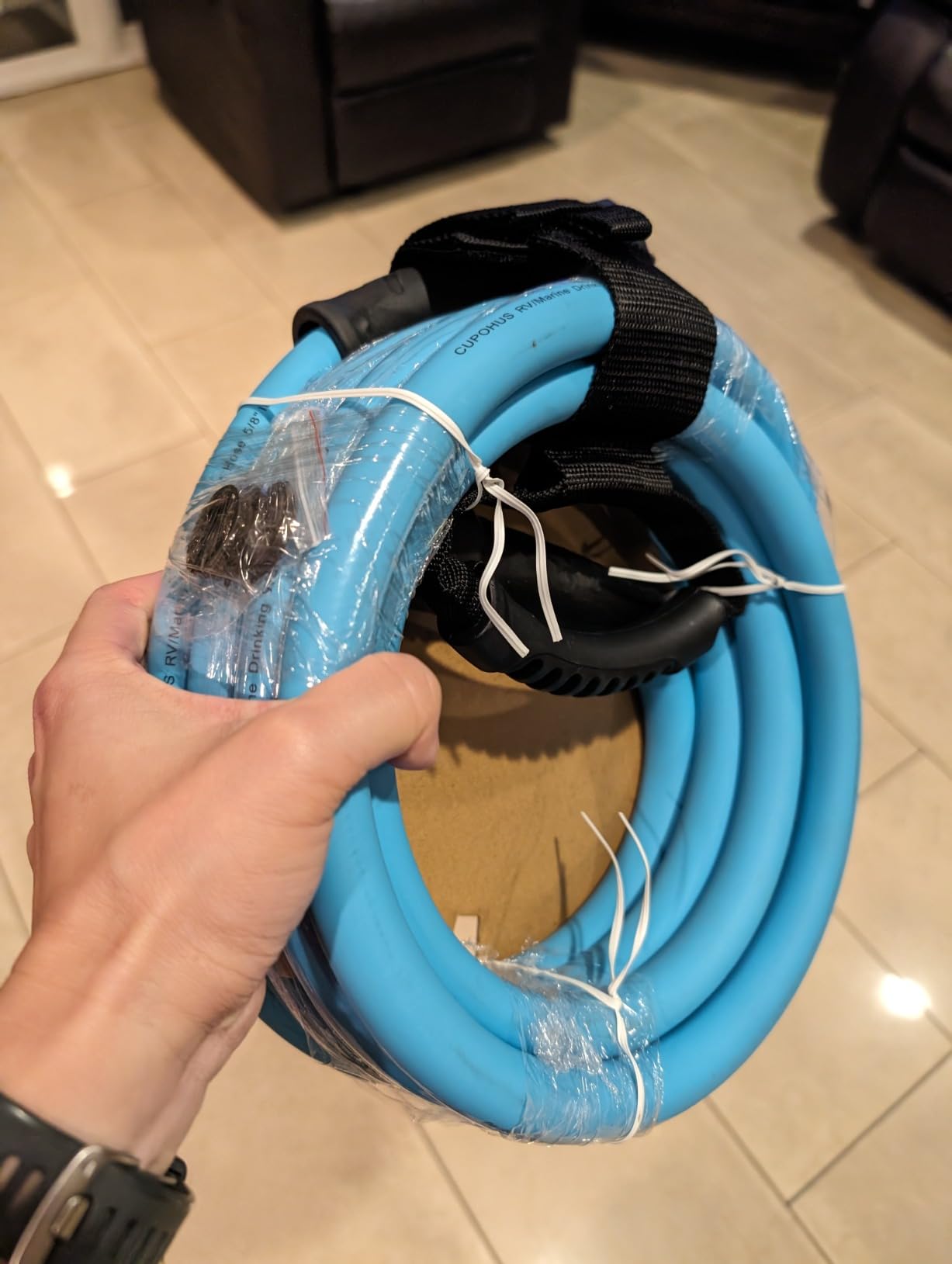
Cupohus RV Water Hose 50FT, 5/8″ Extra Thick Wall Drinking Water Hose
5/8 inch bore for about 25% faster fill
20% thicker wall
Lead-free BPA-free phthalate-free
3/4 inch aluminum fittings
Nylon handle
Pros
- Extra thick wall resists kinking under bending force
- 5/8 inch bore improves fill speed meaningfully
- Stable up to 176F without sticky residue
- One-piece rubber grip removes connection stress
- Nylon handle for one-handed carrying
Cons
- Runs stiffer than standard drinking water hoses
- Should be stored indoors below -4F
This hose makes two specific engineering bets, and both are aimed at common RV problems. The wall is 20 percent thicker than standard to resist bending and kinking, and the bore is 5/8 inch, which the manufacturer states boosts water flow by about 25 percent over a 1/2 inch hose.
If you fill a large fresh water tank and the clock matters, that flow figure is the reason to look here. It is lead-free, BPA-free and phthalate-free, and it is rated for prolonged exposure up to 176F without developing a sticky residue, which matters for hoses parked in a hot compartment.
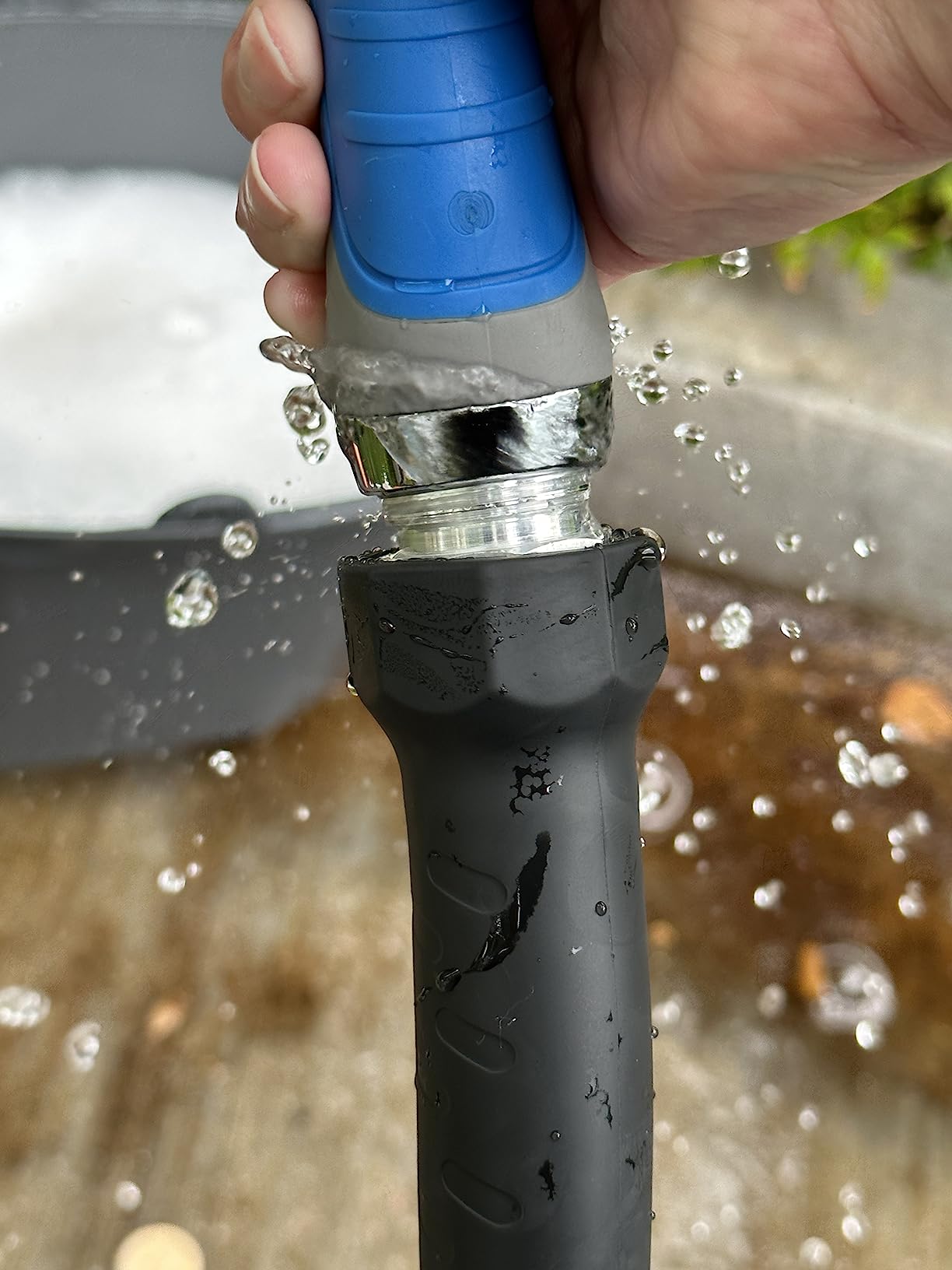
The 3/4 inch lead-safe aluminum fittings use a one-piece rigid rubber grip that removes stress at the connection, which is the design detail aimed at preventing kink leaks right where most RV hoses fail. A nylon handle lets you carry it with one hand.
Owners like the flow rate and the sealing. The trade-off they report is stiffness: this is a noticeably less flexible hose than the Kohree or SmartFlex, and the guidance is to store it indoors below -4F to avoid freeze cracks.
Where the Thick Wall Earns Its Keep
Thick walls resist the repeated bending that comes from coiling and uncoiling, and from being stepped on in a campground lane. If you move your rig often and your hose lives a hard life, the extra material buys longevity.
The heat tolerance is the sleeper feature for southern and desert camping, where a hose lying on a hot pad can reach the upper end of its range for hours.
Where It Gets in the Way
Stiffness is the issue for anyone with grip strength problems or for cold-morning hookups, where a supple hose matters more than wall thickness. And if your storage is unheated in deep winter, this is not the hose to store outdoors.
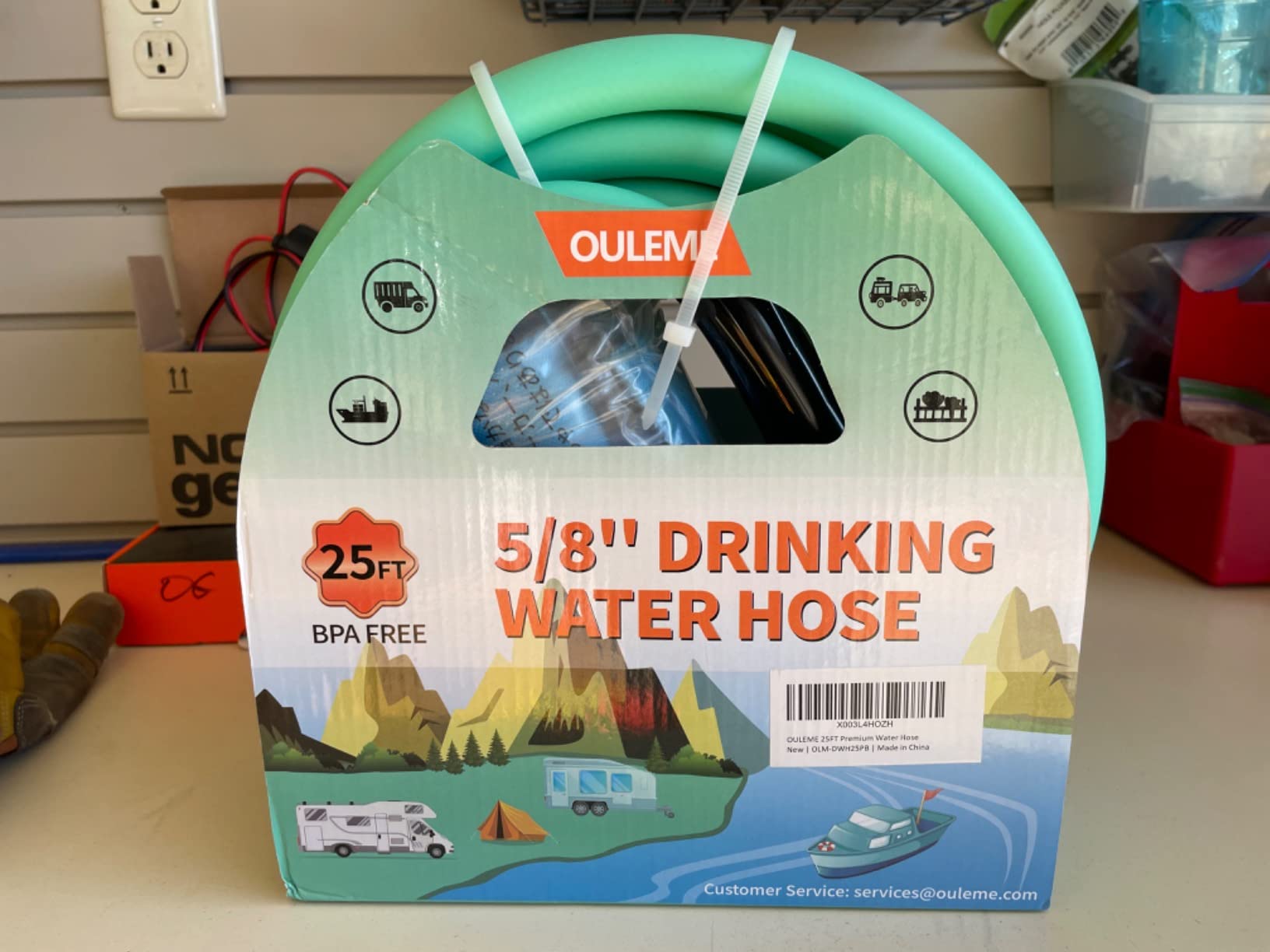
11. OULEME 75-Ft RV Drinking Water Hose Review
OULEME 75FT RV Drinking Water Hose, 5/8” Lead/BPA Free, Anti-Kink Flexible
Three-layer hybrid polymer with rope mesh
150 psi working and 450 psi burst
Rated -22F to 158F
3/4 inch aluminum fittings
Pros
- Rope mesh middle layer adds durability and flexibility
- Solid aluminum 3/4 inch fittings made to prevent leaking
- Non-slip outer surface improves grip
- Wide -22F to 158F operating range
- Storage bag included
Cons
- Newer listing with a smaller review base
- Not certified for extreme cold storage
Seventy-five feet is the sweet spot most roundups ignore. It is long enough for the awkward sites where 50 feet falls short and short enough that you are not hauling a 100 ft coil, and this hose pairs that length with a three-layer build that includes a netted thin rope middle layer for strength.
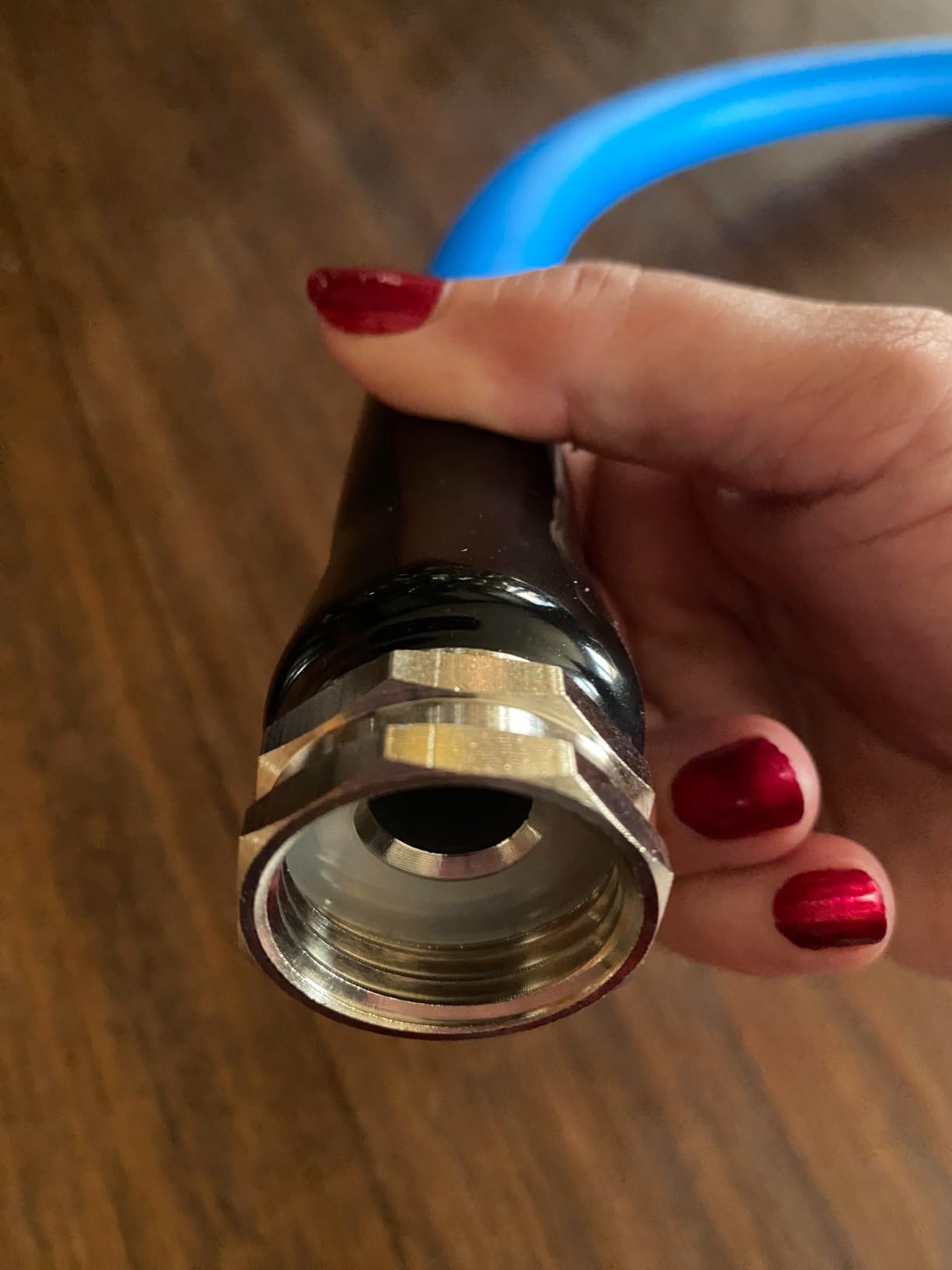
The fittings are upgraded solid aluminum in 3/4 inch male and female, and owners report they are well made and do not leak. A non-slip outer surface improves your grip on a wet hose, which is a small thing that matters a lot at 7 am.
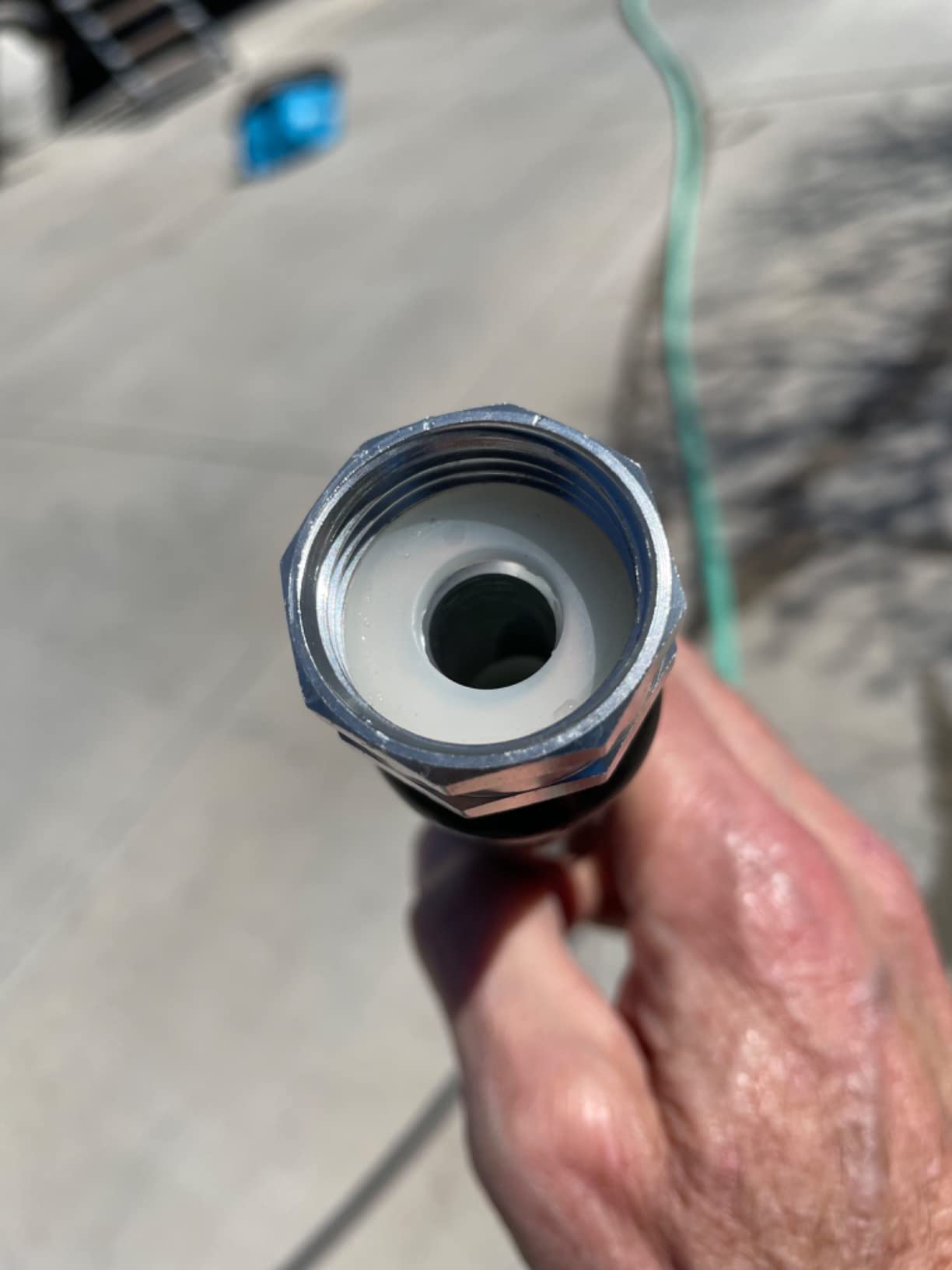
Pressure figures are strong, with 150 psi maximum working pressure and a 450 psi burst pressure. The operating range of -22F to 158F covers cold starts and warm afternoons, and standard 3/4 inch threads fit most connections.
As with the other newer listings here, the review base of 450 is the thinnest evidence in the roundup. It is also lead-free and BPA-free drinking water safe, but it is not a hose to store frozen in an unheated compartment.
Why 75 Feet Works
It covers the standard pad plus the walk-around distance to a spigot at the back of a site without doubling your storage volume. The rope mesh layer is what keeps it from flattening permanently when bent.
A storage bag is included, which keeps the hose clean in a dusty bay and stops it taking a set in a tight loop.
Who Should Choose Another
If you want the deepest field history, the Camco TastePURE or Valterra AquaFresh carry far more verified use. And if you need something rated well below -22F, look at the Atlantic silicone hose, which handles extreme cold on a different principle.
12. Atlantic 3-Ft Silicone and Stainless Steel Drinking Water Hose Review
Atlantic RV Drinking Water Hose 3 ft, Lead, BPA, Phthalate-Free & PVC-Free
Food-grade silicone inner tube
304 stainless steel fittings
Completely PVC-free
Operates -70F to 200F
3 ft length
Pros
- Food-grade silicone inner tube and washer
- 304 stainless fittings resist corrosion
- Entirely PVC-free with no chlorine taste concern
- 30 to 40 percent lighter than PVC or hybrid hoses
- Widest temperature range in the roundup
Cons
- Short 3 ft length suits connectors and extensions only
- Not a primary fill hose on its own
This is the odd one out, and deliberately so. Instead of a polymer body, it uses a food-grade silicone inner tube and washer with 304 stainless steel fittings, and it is completely PVC-free, which removes the chlorine-flavor question entirely.
The temperature range is the widest here by a wide margin, operating from -70F to 200F. That makes it the natural choice for anyone doing winter work in a place where the hose sits in a truck bed all week, or for coastal and salt-air setups where corrosion on fittings is a recurring complaint.
It is also 30 to 40 percent lighter than heavy PVC or hybrid hoses by the manufacturer’s estimate, and the silicone body is durable and flexible enough to store in a very small compartment.
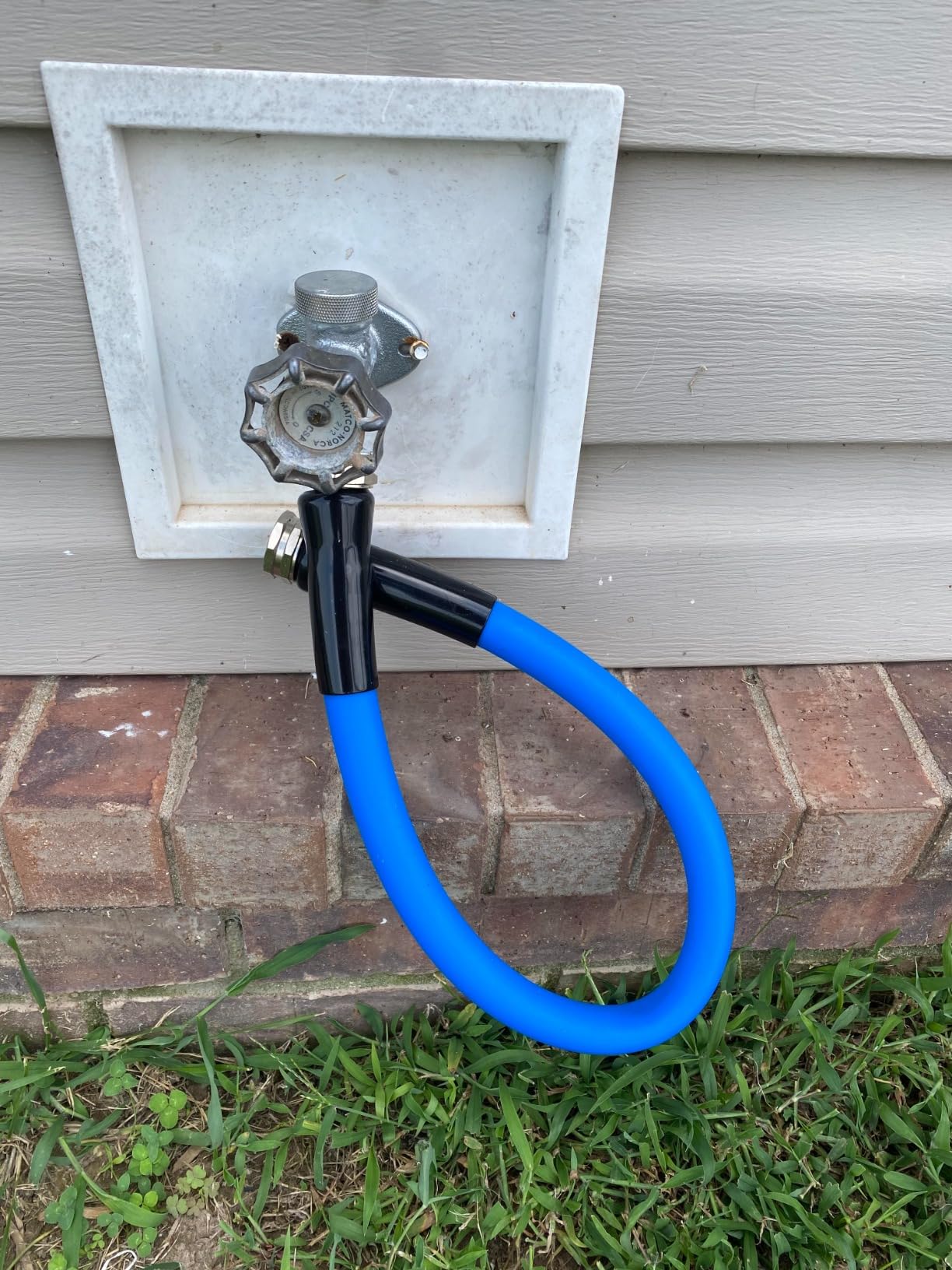
The limitation is obvious once you see the length: 3 feet. This is a connector and extension piece, not a hose you fill a tank from, unless you join several together. Buyers happily use it for exactly that, short runs between a regulator and the RV inlet.
Where Silicone Earns Its Place
Silicone is the material to reach for when extreme temperature swings, salt air or a taste-free guarantee outrank price. The stainless fittings will not pit the way aluminum can in a marine environment, which is a genuine long-term advantage.
Buy it as the short link in your setup, or as a spare connector you keep in the bay for emergency hookups.
What It Cannot Do
Three feet will not reach a campground spigot from a pad. If you need one hose for the whole job, pair it with a 25 ft or 50 ft hose from earlier in this list, and treat the silicone piece as the premium terminal section.
How to Choose the Right Length and Diameter
Measure before you buy. Walk from your rig’s water inlet to the spigot at the site you use most, add a few feet of slack for the pad, and buy to that number rather than to a brand’s length range. A 25 ft hose covers close pads and travel trailers; 50 ft covers most RV parks; 75 ft and 100 ft are for sites where the spigot sits behind the rig or around a building.
On diameter, 5/8 inch is the standard RV bore and is the right default. It flows faster than 1/2 inch, and the Cupohus listing puts the difference at roughly 25 percent faster filling. A 1/2 inch hose like the Valterra AquaFresh still works, but you will wait longer at the spigot, and it is the narrower of the two options here.
Then check the fitting. Standard RV connections are 3/4 inch male and female, and everything in this roundup except the 1/2 inch Valterra uses that pattern. If you bounce between a fifth wheel and a rental Class C, the wider Hi-Flow or Grip-Tite couplings are more forgiving than a bare thread.
One more consideration that gets overlooked: how the hose coils. Owner communities repeatedly argue about carrying one long hose versus two short hoses plus a splitter. Two hoses are more flexible and easier to lift, and our experience matches the forums, that most people end up doing both.
How Often to Replace Your RV Drinking Water Hose
Replace a good RV drinking water hose every three to five years, and immediately if any of the following show up.
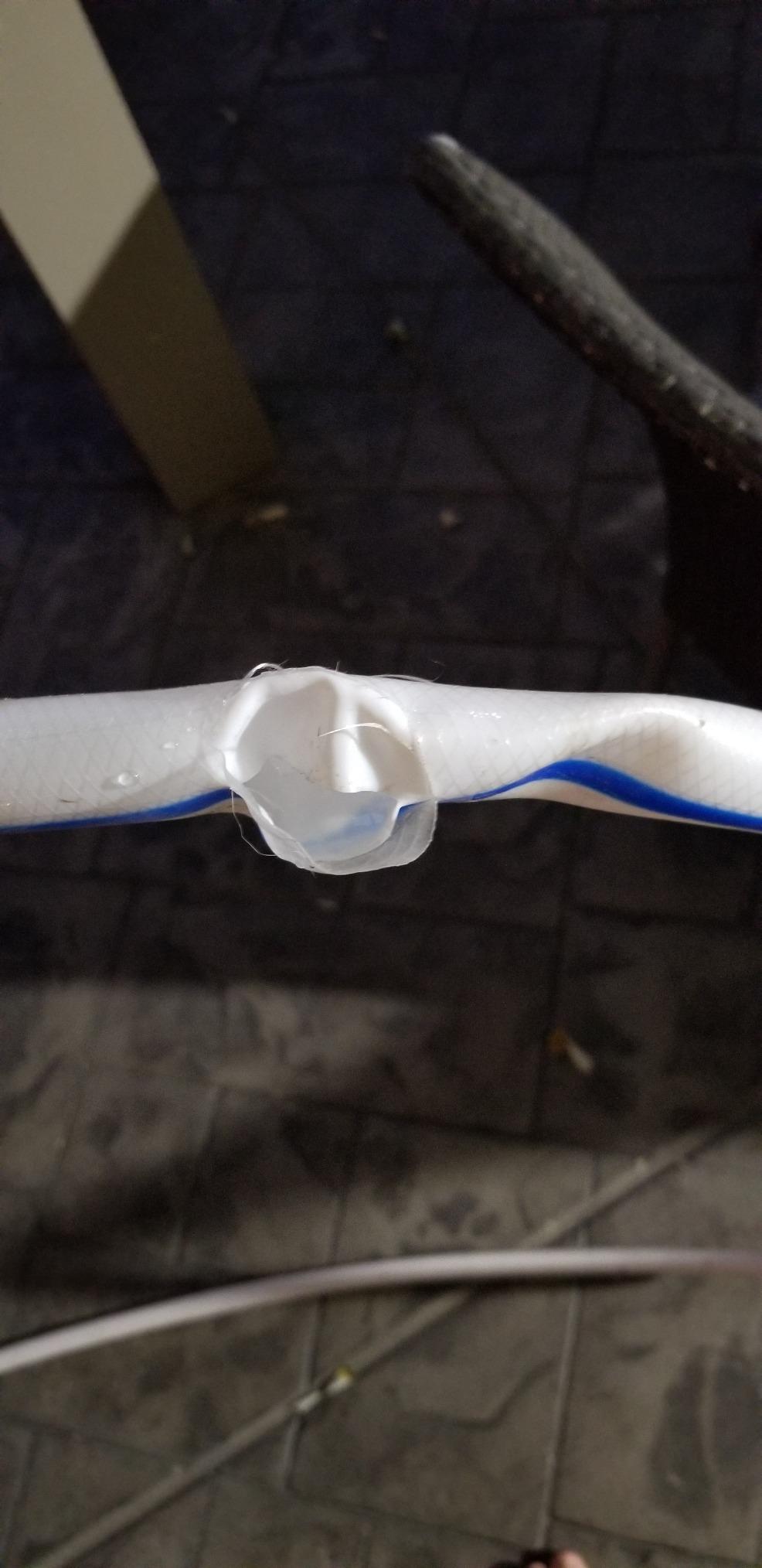
Retire it straight away if the body has stiffened so much that it resists a bend, if you see any crack, split or bulging in the wall, if it leaks at a fitting that used to seal, or if the water picks up a plastic, rubber or chemical taste that a rinse does not remove. Also retire it after it has frozen solid inside, since the damage is invisible until it fails.
Hoses used only a few times a year can last longer than five years. Daily-use hoses in full-time RV living tend to reach the shorter end of that range, and forum owners report four to five years of daily service from well-built models before stiffness sets in.
A practical test: if you cannot get the hose to lay flat without a tight crease, the material has aged past its useful life and will eventually crack at that bend.
How to Sanitize and Store Your RV Drinking Water Hose
Sanitizing a hose after storage takes a few minutes and stops mold and bacteria from taking up residence in the bore.
1. Flush the hose with plain water for two to three minutes, opening and closing the RV filler valve repeatedly to move the water through.
2. Mix a dilute bleach solution, roughly one tablespoon of unscented household bleach per gallon of water, and run it through the hose until you see it at the far end.
3. Let the solution sit in the hose for about thirty minutes with both ends capped or plugged, which is the dwell time that actually kills what is living in the bore.
4. Flush thoroughly with clean water for several minutes until the smell is completely gone.
5. Drain it fully by raising one end and letting air push through, then lay it out to air dry completely. Storing a damp hose is how the mold complaints in owner reviews start.
6. Coil it loosely in a storage bag or on a reel. If you use expandable or fabric hoses, let them fully dry before folding, and never wrap any hose tightly enough to take a set.
Label the bag with the last sanitized date. It takes ten seconds and it tells you when the next flush is due after a long layup.
Heated Hoses and Cold Weather Camping
The best insulated water hose for an RV is one with a thermostat-controlled heating element and a published low-temperature rating, and the Camco Heated 50-Ft is the only one in this roundup that has one. Its cable protects the line down to -20F, draws power only when needed, and runs on 120VAC through a six-foot cord with an LED indicator plug.
For unheated options, the deciding figure is the low end of the working range. The CircleRiver and OULEME are rated to -22F, the Kohree and RVMATE to -4F, and the Valterra and SmartFlex are not specified as low. The Atlantic silicone piece runs to -70F, though at only 3 feet it works as a connector rather than a fill line.
Two safety notes. A heated hose is an electrical device and should be plugged into a GFCI-protected outlet, and reviewers advise against extension cords. And the cable does not heat the spigot or the RV inlet connection, so insulating the spigot end is a separate job.
What to Pair With Your Hose, and the Correct Hookup Order
Most new RVers get the connection order wrong, and it matters for both taste and pressure. The sequence runs spigot, then filter, then regulator, then RV.
The inline filter goes first because it catches sediment at the source, and putting the regulator after it means the filter is not exposed to pressure spikes. A water pressure regulator follows and caps the incoming pressure to protect your fresh water tank and fill valve, which is the answer to campground blowouts that owner forums complain about constantly.
In practice: attach the hose to the spigot, flush it briefly, screw the filter onto the hose, screw the regulator onto the filter, then connect the assembly to the RV inlet. Wrap PTFE tape on any male thread that is not a fitting with its own gasket, and hand-tighten plus a quarter turn rather than wrenching it.
Add an elbow adapter if your RV inlet sits low or tight against a wall, which removes the need to fight the hose at an awkward angle. Keep a second short hose as backup, and consider whether you need a compact expandable hose for non-potable tasks so your drinking hose stays dedicated to drinking water.
What to Avoid
Avoid any hose that does not state a certification. Marketing language like “safe for drinking water” without an NSF/ANSI 61 or 372 marking, or CA65 compliance, is not enough. If the listing never names a standard, assume the worst.
Avoid standard garden hoses entirely for potable use. Their plasticizers and reinforcement are not built for water you will drink, and experienced campers on r/RVLiving and r/GoRVing treat using one as the classic beginner error.
Be cautious with expandable fabric hoses. Several owners report that expanding hoses labelled drinking-water safe still leave a plastic taste after sitting in the sun, and they kink when folded on themselves.
Also skip unheated hoses you plan to store frozen, skip cheap unbranded fittings that strip at the threads after a handful of uses, and retire any hose that has been sitting wet and unused between trips. Mold and bacteria start in exactly that scenario.
Frequently Asked Questions
What is the best hose for RV drinking water?
The Camco TastePURE 25-Ft is the best overall RV drinking water hose in our testing. It is NSF/ANSI 61 certified with CSA lead-free certification to NSF/ANSI 372, rated to 300 psi, and carries the deepest review history of any hose in our roundup. If you care most about grip and cold flexibility, the Kohree 25-Ft is the alternative.
How often should you replace your RV drinking water hose?
Replace a good RV drinking water hose every three to five years. Retire it immediately if the body stiffens and resists bending, if you see cracks or splits, if it leaks at a fitting that used to seal, if a plastic or chemical taste appears that rinsing will not remove, or if it has frozen solid inside.
How do I sanitize an RV drinking water hose?
Run plain water through the hose for two to three minutes, then push a dilute bleach solution of about one tablespoon of unscented bleach per gallon of water through it. Cap both ends and let it sit for about thirty minutes, flush thoroughly until the smell is gone, then drain and air dry fully before coiling into a storage bag.
Why does my RV water taste like plastic?
Usually the hose is the cause. Water sitting in a non-potable garden hose or an expanding fabric hose in direct sun picks up plasticizer taste, especially after a hot day. Run the water until it runs clear, flush the hose, and if the taste persists after cleaning the tank, replace the hose with one certified to NSF/ANSI 372 or NSF/ANSI 61.
What is the best insulated water hose for an RV?
The Camco Heated 50-Ft is the best insulated option, with a thermostat-controlled heating cable that protects the line down to -20F and draws power only when needed. It runs on 120VAC through a six-foot cord with an LED indicator plug, so plan on a GFCI-protected outlet at the site.
Can I use a garden hose for my RV?
No. Garden hoses are built for irrigation and can leach phthalates, BPA and lead into your fresh water tank, and they leave a plastic taste in everything you drink. Use a hose certified to NSF/ANSI 61 or NSF/ANSI 372, or compliant with CA65, and keep the drinking hose dedicated to potable water.
Our Verdict
After six weeks and five tests across twelve hoses, the Camco TastePURE 25-Ft remains the best RV water hose for drinking water for most people, because its certification is the most explicit and its 17k-review history is the strongest evidence we could find. The Kohree 25-Ft edges it on fittings and cold flexibility, and the Valterra AquaFresh is the forgiving choice for mixed-hookup travel.
Pick your length and diameter before you pick a brand, pair the hose with a filter and a regulator in that order, and sanitize it after any long storage. Whatever you choose, check the current price and rating, because these lines change often through the year.