

A gas pizza oven fixes the three things that make most people give up on outdoor pizza: lighting a fire, judging temperature by feel, and waiting. You connect a propane hose, turn a knob, and the stone climbs to temperature while you shape dough. Of everything we covered for the best gas pizza ovens for beginners, three stood apart: the Gozney Roccbox for the most consistent results, the BIG HORN 12 inch multi-fuel oven for the widest body of owner feedback, and the Ooni Koda 16 for heat retention between pizzas.
A gas pizza oven is an outdoor cooker that uses a propane or natural gas burner to heat a baking stone to roughly 750 to 950 degrees Fahrenheit. At that temperature a 12-inch pizza goes from raw dough to blistered, leopard-spotted crust in about 60 seconds, which is roughly 15 times faster than a household oven at 550 degrees. That is the whole argument for gas: no fire tending, no charcoal, and a flame dial you can turn down mid-cook.
We spent weeks reading owner feedback, spec sheets and failure reports across a dozen ovens, then ranked them for the specific person buying a first oven rather than the person buying a fourth. Each entry below carries a beginner difficulty score out of 5, the honest downsides, and the accessories you will still need. If you want the wider field beyond gas, our best outdoor pizza ovens picks cover wood and electric models too, and the backyard pizza oven guide covers placement and stand height.
Table of Contents
Best Gas Pizza Ovens for Beginners: Our Top 3 Picks in 2026

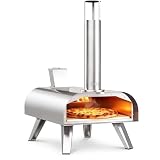
Three ovens earned a top slot for different reasons. The Gozney Roccbox is the most consistently loved oven in our roundup at 4.7 stars across 1905 reviews. The Ooni Koda 16 holds heat better than anything else here and includes the regulator and gas hose in the box. The BIG HORN 12 inch multi-fuel oven has the largest body of real owner feedback we found, which makes it the safest bet if you want proof rather than promise.
All 12 Gas Pizza Ovens Side by Side in October
| Product | Specifications | Action |
|---|---|---|
| Gozney Roccbox |
|
Check Latest Price |
 Ooni Koda 16 Ooni Koda 16 |
|
Check Latest Price |
| BIG HORN 12 inch Multi-Fuel |
|
Check Latest Price |
 PIZZELLO 16 inch Dual-Fuel PIZZELLO 16 inch Dual-Fuel |
|
Check Latest Price |
 Ooni Karu 12 Ooni Karu 12 |
|
Check Latest Price |
 BIG HORN 15 inch Gas BIG HORN 15 inch Gas |
|
Check Latest Price |
 Mimiuo 12 inch Gas Mimiuo 12 inch Gas |
|
Check Latest Price |
 BIG HORN 16 inch Multi-Fuel BIG HORN 16 inch Multi-Fuel |
|
Check Latest Price |
 Solo Stove Pi Prime Solo Stove Pi Prime |
|
Check Latest Price |
 Mimiuo Auto-Rotating Gas Mimiuo Auto-Rotating Gas |
|
Check Latest Price |
 Q Pizza PS102 Rotating Q Pizza PS102 Rotating |
|
Check Latest Price |
 VEVOR Dual Fuel Pizza Oven VEVOR Dual Fuel Pizza Oven |
|
Check Latest Price |
Read the table for heat and capacity, then read the entries for the part no spec sheet covers: how forgiving the flame is, and how often you will need to turn the pie. Those two numbers decide whether your first weekend is fun or frustrating.
1. Gozney Roccbox: The Most Consistent First Oven You Can Buy
Gozney Roccbox Outdoor Pizza Oven, Portable, Gas & Wood Fired – Black
950°F
12 inch pizza in 60 seconds
48.5 lb
24.8 in long
Pros
- Highest average rating here at 4.7 stars across 1905 reviews
- 950°F with a 12 inch pizza in 60 seconds
- low-profile stone floor is easy to load and turn
- built on Gozney commercial oven heritage
- dual fuel with an optional wood burner attachment
Cons
- Wood burner attachment is a separate purchase
- stone floor centres on 12 inch pies rather than large family-size pizzas
- propane only out of the box
This is the oven owners praise most consistently. With 87 percent of ratings at five stars, there is no consensus problem to argue with. Restaurant-grade results, 60-second bakes and a countertop footprint that suits a small patio are the three things people keep repeating in the reviews.
Beginner difficulty: 2 out of 5. The flame arcs from a single burner across the stone rather than blasting from one side, so the pie cooks evenly and needs turning less often than a straight side-burner design.
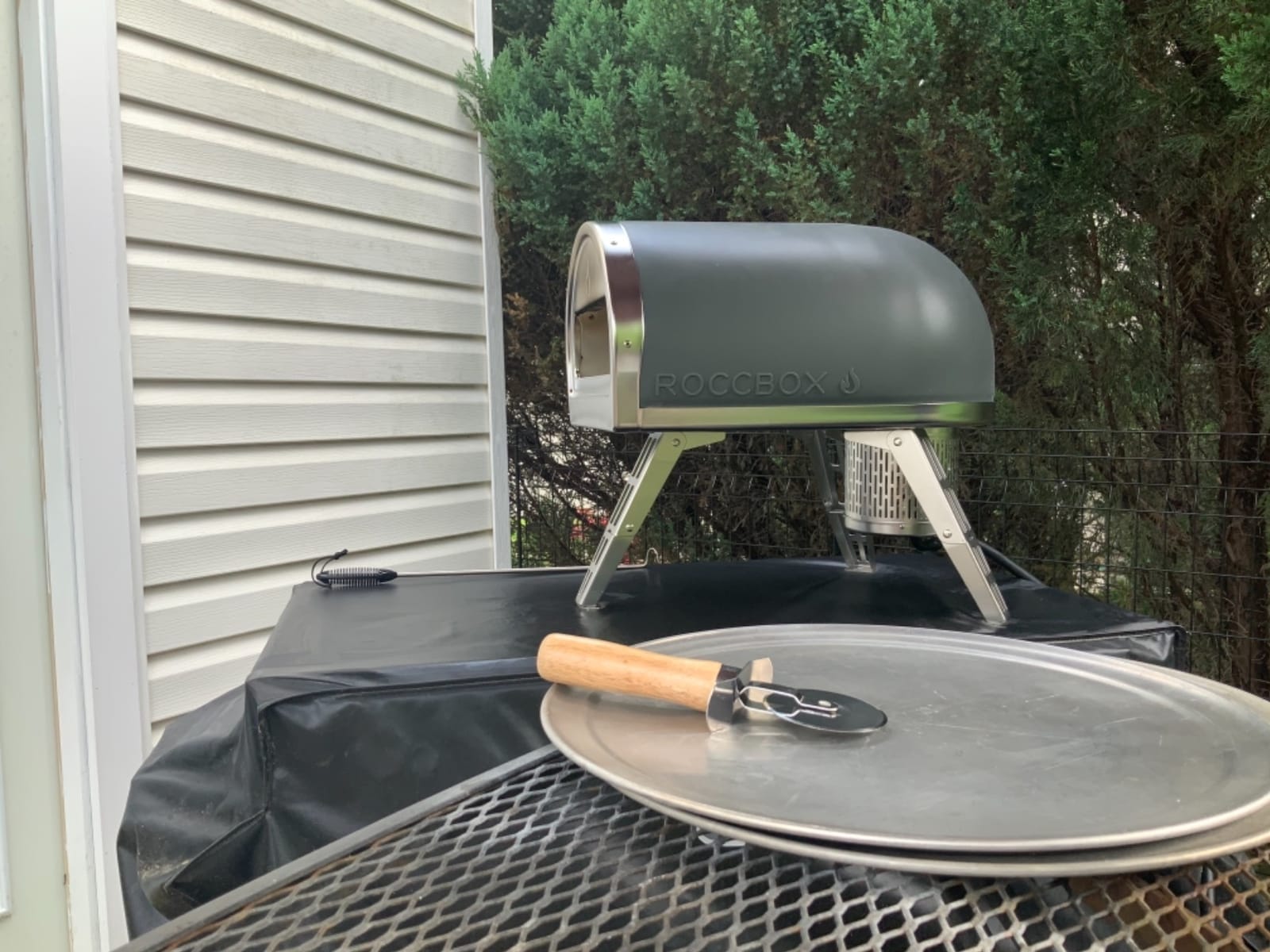
It weighs 21.98 kg, or 48.5 lb, which is the heaviest build in this roundup. That is fine on a patio but worth knowing before you plan to move it between the garage and the garden every season.
Gozney built its reputation on commercial pizza ovens, and that heritage shows in the chamber shape. The low profile means a shorter launch distance and a flat stone, so a slipped pizza slides rather than catching an edge.
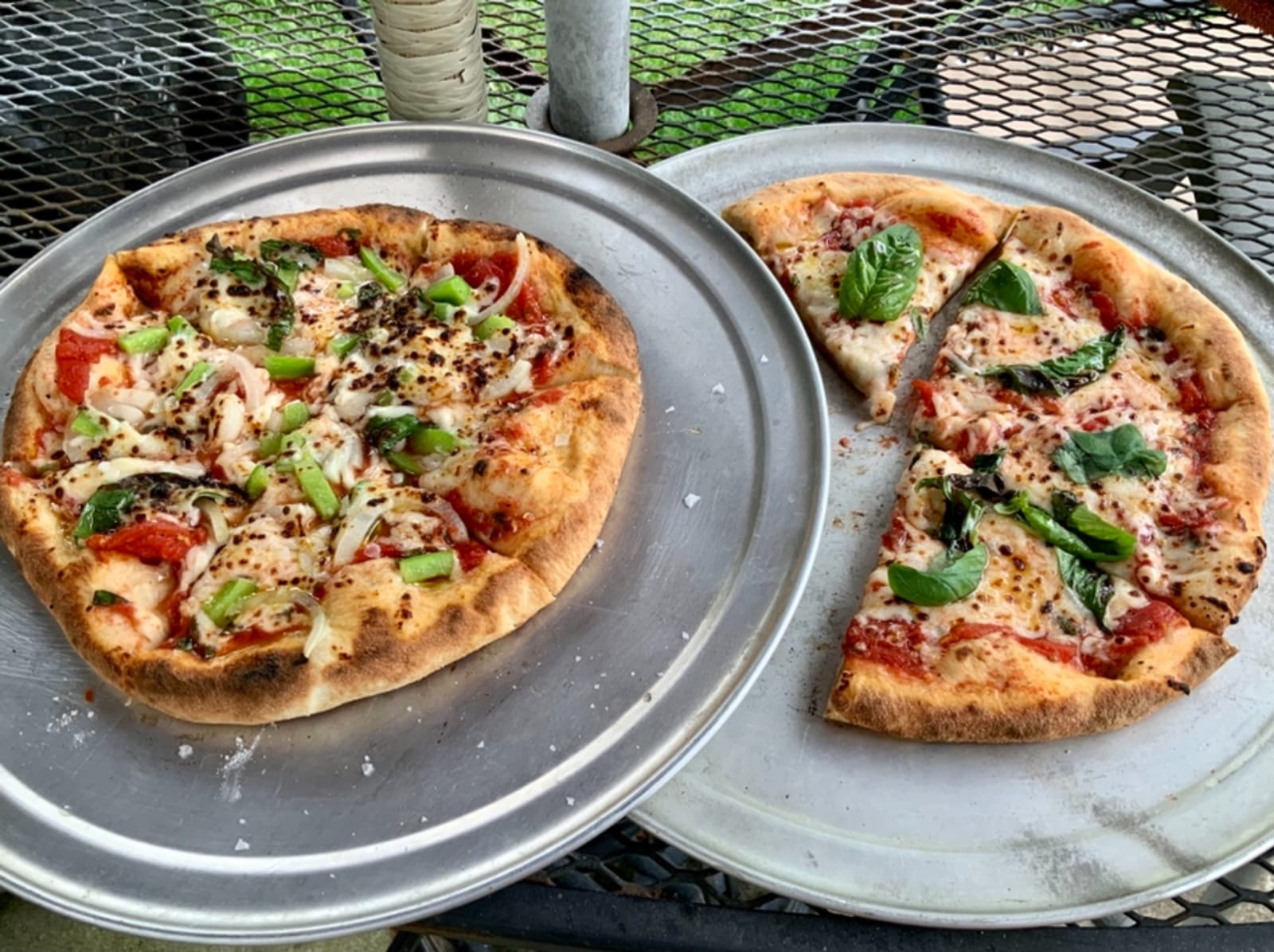
Why the low-profile stone floor helps beginners
Two reasons, and both are about mistakes. The opening is wide relative to the height, so launching is a short, flat motion instead of a steep drop. And because the flame travels in an arc, the back of the pie and the front cook at a similar rate, so a 60-second bake is genuinely 60 seconds rather than a guess.
Reviews describe the 12-inch pie as the sweet spot. Larger doughs still fit, but the stone is built around that size and you lose the even cook above it.
Where the 12 inch stone ceiling shows
If your household eats 16-inch pies, this is the wrong oven. The trade-off is honest: you get the highest satisfaction scores in the group, but you also cap your pie size. A family of four is served well by 12 inches across a few rounds; a party of ten is not.
Wood flavour is the other cap. The optional wood burner attachment is a separate purchase, so treat this as a propane oven with an upgrade path rather than a dual-fuel oven out of the box.
2. Ooni Koda 16: Best Heat Retention and the Cleanest Box
Ooni Koda 16 Propane Gas Pizza Oven – 16″ Gas Powered Outdoor Oven with 28 mBar Regulator and Gas Hose, Gas Powered Portable Pizza Oven – Foundry Black
950°F
Ready in 20 min
16 inch stone
28 mBar regulator
Pros
- 60 second pizza at up to 950°F
- ready in about 20 minutes
- 28 mBar regulator and gas hose included
- powder coated carbon steel shell holds heat
- five year warranty when registered with Ooni
Cons
- Open front design takes extra gas to preheat in cold weather
- user guide omits the PTFE tape step on the gas thread
- 16 inch cavity is larger than most beginners need
- no front door to trap heat
The Koda 16 is the most forgiving gas oven in this list for a first cook. Setup is genuinely minimal: unfold the legs, drop in the stone, connect the tank. The 28 mBar regulator and gas hose arrive in the box, which removes the single most common first-day trip to a hardware store.
Beginner difficulty: 2 out of 5. The powder coated carbon steel shell holds heat well, so recovery between pizzas is fast and the second pie cooks at the same temperature as the first.
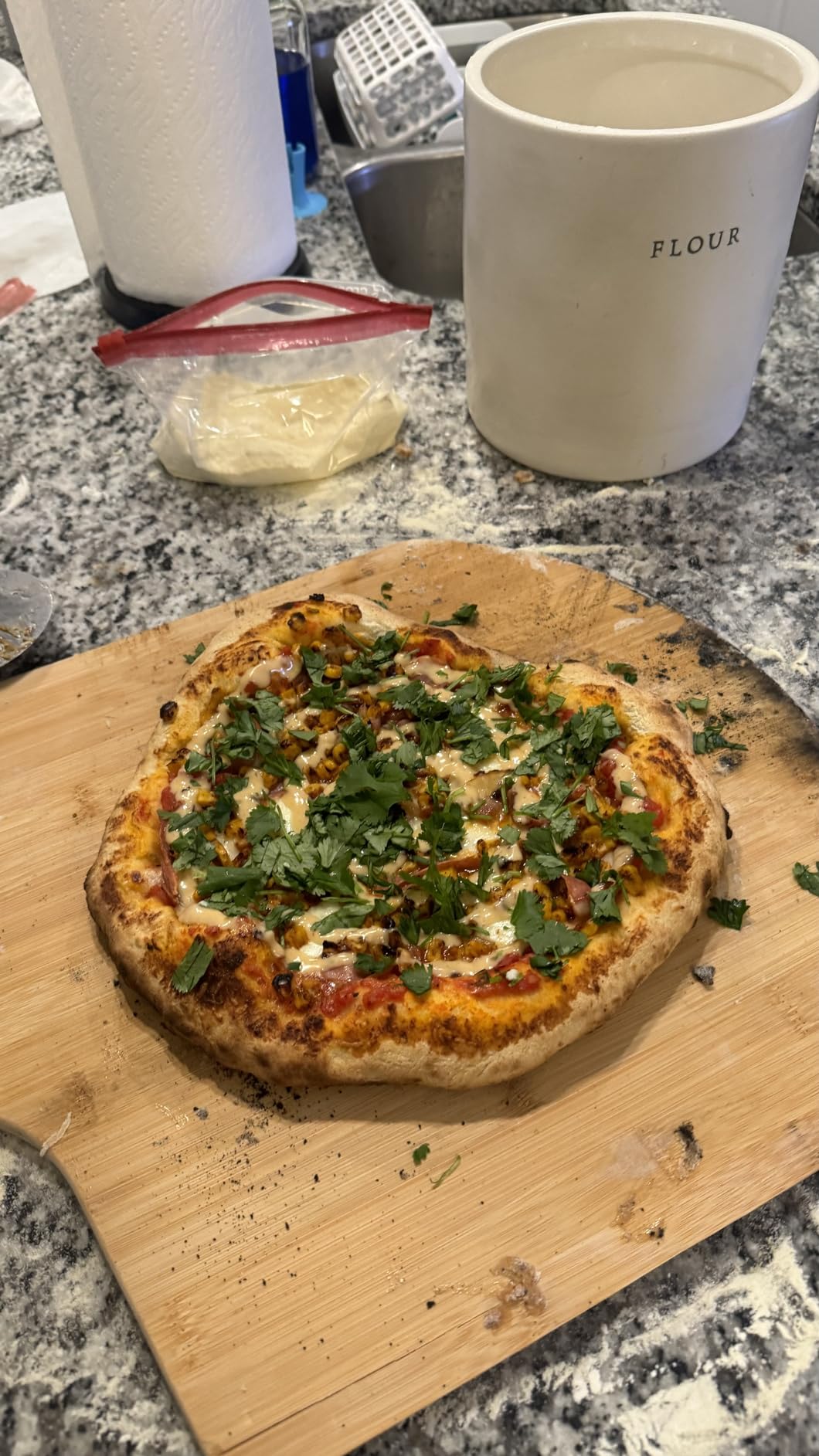
The dominant complaint is not performance but the instruction manual, which omits the PTFE tape step on the gas connection. That omission can cause a leak and a poor flame, so wrap the thread yourself before the first connect and you will never think about it again.
85 percent of reviews are five star, and reviewers repeatedly call out how much simpler this is than a wood oven. The same owners note it doubles as a meat and vegetable oven with Ooni cast iron accessories, which is a genuine second use for a first pizza oven.
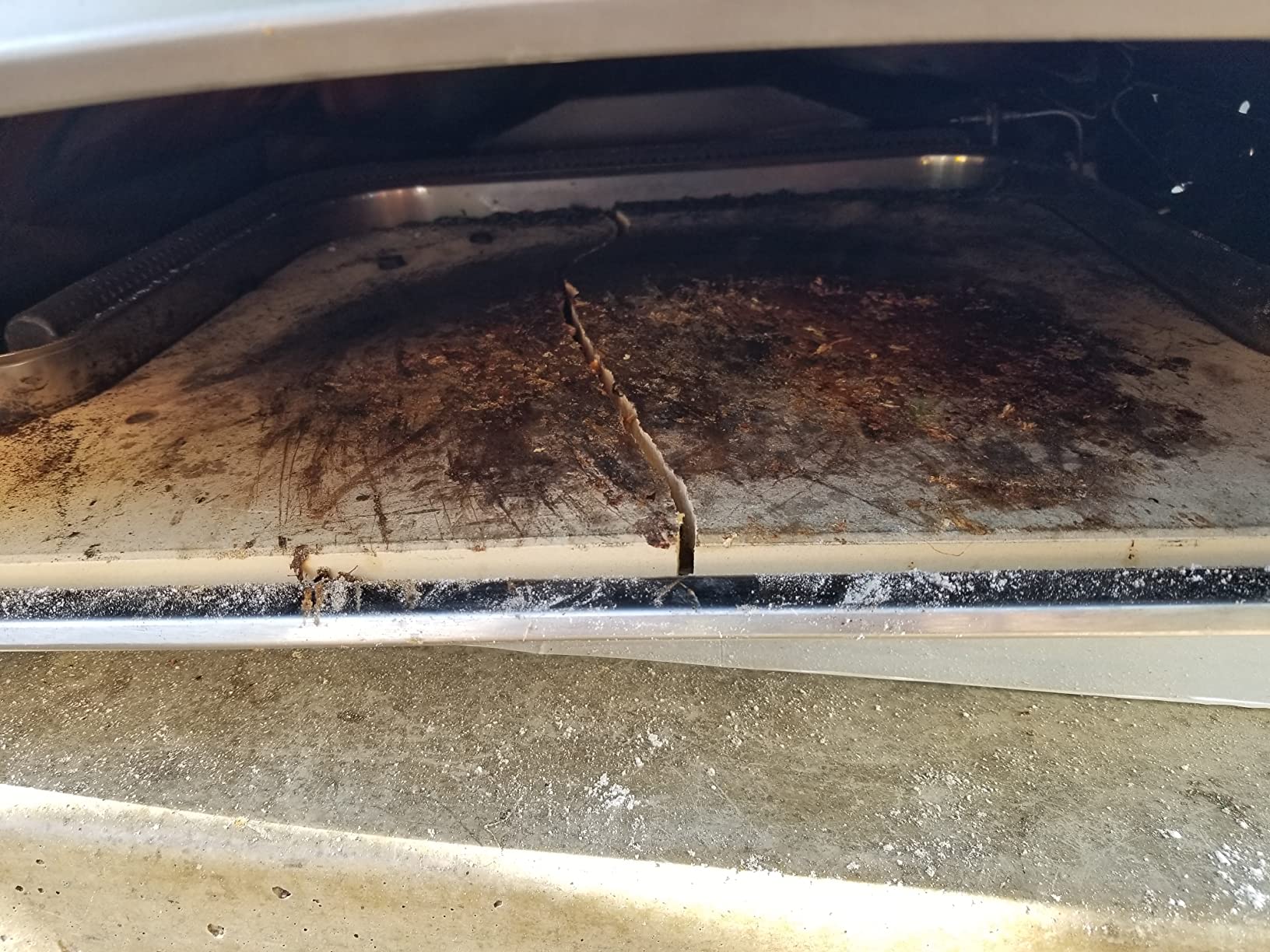
Whether the 16 inch cavity helps or hurts a first pie
A 16-inch stone means more room for a launch error, which is a beginner advantage. It also means a longer preheat and more gas per session. If you are cooking for two or three, the extra capacity is idle weight you carry in fuel and time.
Newcomers who over-top their first pizza will struggle with the dough, not the oven. Start with a light topping for the first three pies and let the oven do its job.
Getting the gas connection right the first time
Three steps, none of which the manual bothers to spell out. Wrap the propane thread in PTFE tape, hand-tighten the regulator, then check the flame before you leave it unattended. A visibly yellow or uneven flame at the nozzle means a connection problem, not a hot oven.
Because the front is open with no door, a cold-weather preheat burns noticeably more gas and takes longer. Plan the first cook of the season for a mild afternoon rather than a cold one.
3. BIG HORN 12 Inch Multi-Fuel Pizza Oven: The Most Proven Starter Oven
BIG HORN 12″ Outdoor Pizza Oven, 1110°F, Wood Pellet, Gas & Electric
Max 1110°F
Ready in 18-20 min
12 inch square stone
25 lb
Pros
- 3-in-1 multi-fuel body
- hardwood pellets included
- 1110°F maximum
- ready in 18-20 minutes
- 12 inch square stone
- folds flat at 25 lb
- two year warranty
Cons
- Steep learning curve on pellet lighting and airflow
- gas and electric burners are sold separately
- burns through hardwood pellets quickly during a session
- no built-in thermometer or included peel
With 2651 reviews behind it, this is the oven we could find the most evidence for, and most of that evidence is positive. Owners describe a 25-pound stainless body that folds down, throws a 12-inch pie in 60 to 90 seconds, and produces a genuinely smoky crust once the pellet fire is dialled in.
Beginner difficulty: 3 out of 5, and only because the default fuel is pellets. Nothing about the hardware is difficult: unfold the legs, drop in the stone and light the tray.
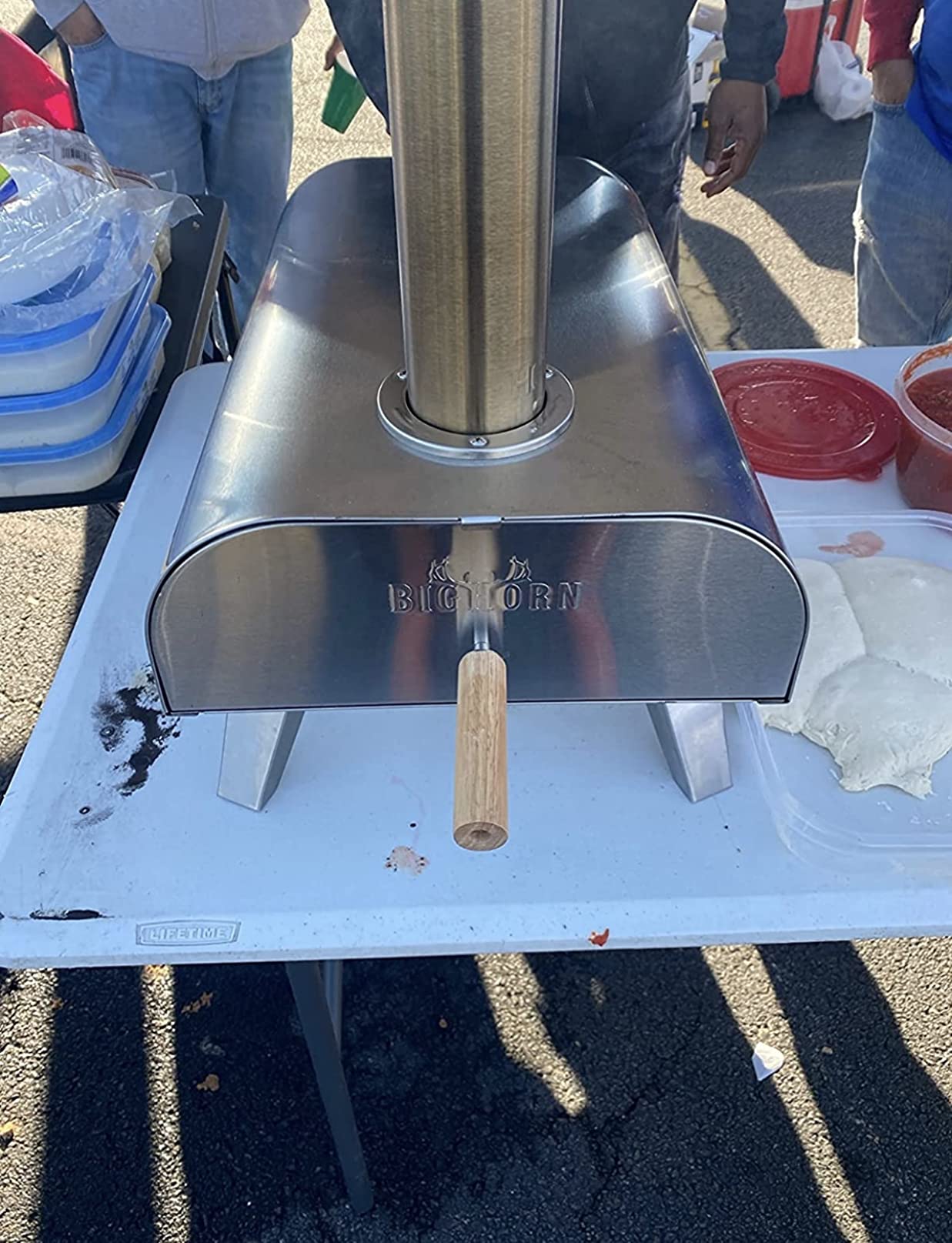
The complication is fire management, and it is real. Nearly every review mentions the same theme: this is not a set-and-forget oven. Preheating takes 15 to 20 minutes with steady pellet feeding, and the top bakes faster than the bottom, so pies need frequent turning. A few buyers added gas or electric burner attachments specifically to sidestep pellet management, and a handful gave up after repeated attempts.
Responsive customer support does come up in reviews, including a cracked stone that was replaced. That is worth more than it sounds for a first-time buyer, because a cracked stone on day three is how a hobby dies.
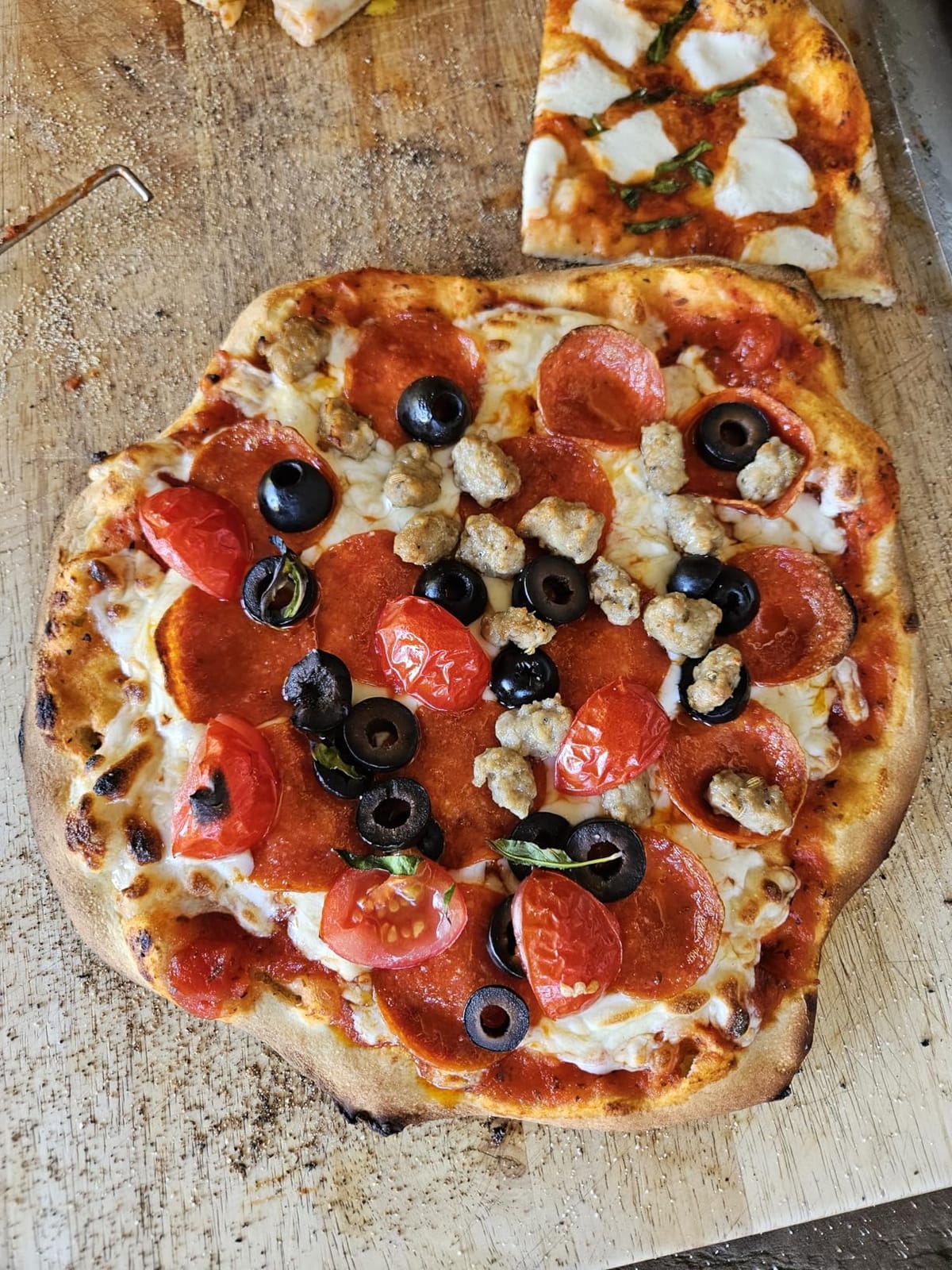
How hard is the pellet fire for a first cook?
Harder than gas, honestly. You have to feed pellets steadily and adjust the air intake, and the flame will not hold a steady temperature the way a gas burner does. Budget 20 minutes of supervision for the first cook and expect the crust to colour unevenly until you get a feel for it.
The reward is flavour. If you like smoky, blistered crust more than you like convenience, this is the oven in our list that delivers it, and the follow-up feedback from buyers who stuck with it is unusually enthusiastic about the finished pie.
What changes when you add the gas burner
Several owners added the optional gas attachment and the effect is close to a different oven. No fire to light, no pellets to carry, no ash in the firebox, and a dial instead of airflow guessing. If you know you will only ever cook on gas, buying the burner and skipping pellets entirely is the version of this oven we would pick.
Note what is not in the box: no thermometer and no pizza peel. Budget for a handheld infrared thermometer and a second peel before your first session, which is also the advice repeated across pizza oven forums by owners who learned it the hard way.
4. PIZZELLO 16 Inch Dual-Fuel Oven: The Best All-In-One Box
PIZZELLO 16″ Outdoor Pizza Oven, Propane & Wood Fired Steel Pizza Grill
752°F max
Ready in 25-30 min
16 inch cavity
2 burners
Pros
- Propane and wood burners both included in the box
- includes peel
- cutter
- pellet scoop
- stone and carry bag
- 16 inch cavity fits larger pizzas and subs
- insulation cotton between double walled stainless steel
- fold-up legs and detachable chimney
Cons
- 752°F ceiling sits well below the 950°F class leaders
- one-star share of 12 percent
- coating shows fingerprints easily
- the listing does not publish a unit weight
No oven in this roundup arrives with more than this. Two burners, a 16-inch stone, a stainless peel, a cutter, a pellet scoop and a waterproof carry bag, which removes the accessory budget that trips up most first-time buyers.
Beginner difficulty: 3 out of 5. The propane side is easy; the wood side is the learning curve, and the oven is tall at 31.5 inch with a detachable chimney to lift off.
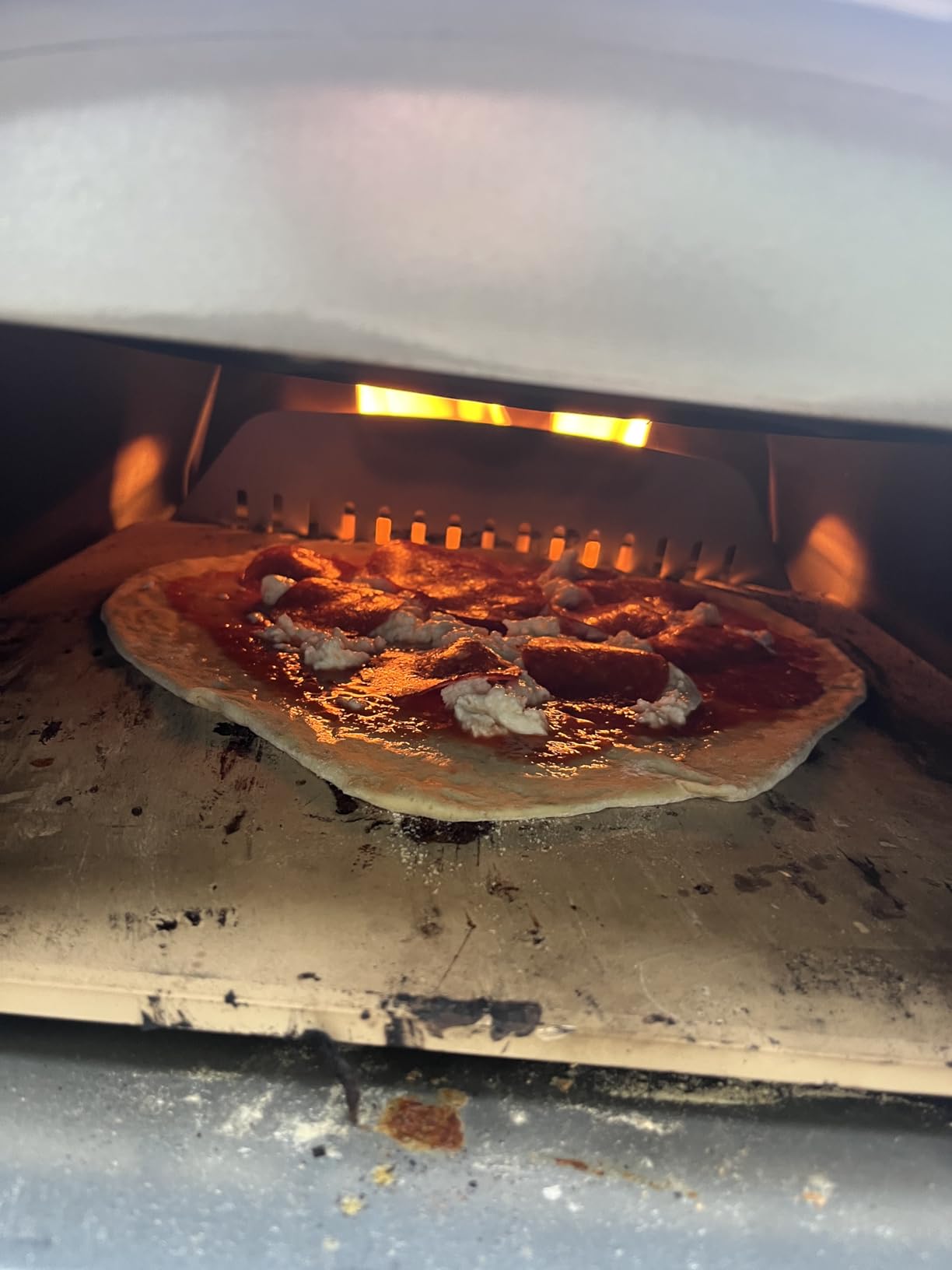
The insulation cotton sandwiched between double-walled stainless steel improves heat consistency, and reviewers like the larger cavity for anything beyond pizza. Subs, pretzels and baked dishes all fit, which widens what you can do with a first outdoor oven.
The trade-off is temperature. A 752°F ceiling produces a good crisp crust, but it cannot match the high-heat blistered char of the Ooni and Gozney ovens. That gap is where most of the one-star feedback comes from.

What the 752°F ceiling means for your crust
You will get a cooked, chewy, well-coloured crust with browning on the underside. You will not get leopard spotting or a puffed cornicione, because those need stone temperatures above 800°F. For most beginners that is a perfectly good result and the difference is easy to miss on a first pie.
If crispness matters more to you than versatility, choose an oven with a 900°F-plus rating instead. If versatility matters, keep this one.
What arrives in the box, and what you still buy
Almost everything. The only real gap is a temperature gauge, and the carry bag is a genuine benefit for anyone cooking away from a patio. The stainless coating shows fingerprints easily, which is cosmetic and mildly annoying in direct sun.
Bubble wrap and sealing on the box need care, because reviewers report units arriving with the packaging opened by mistake. Inspect the stone on unpacking before you build it.
5. Ooni Karu 12: Best Budget Multi-Fuel and Lightest Build
Ooni Karu 12 Multi-fuel Outdoor Portable Pizza Oven – Reaches 950°F and Cooks 12 Inch Pizzas in 60 Seconds. Versatile Wood or Propane Gas Fired Grill with Pizza Stone
950°F
Ready in 15 min
12 inch pizza
26.4 lb
Pros
- Ready in 15 minutes with a 12 inch pizza in 60-90 seconds
- runs on wood or charcoal out of the box with no fuel purchase to start
- 26.4 lb with fold down legs and a removable chimney
- custom fuel tray maximises airflow and leaves little ash
- 84 percent of reviews are five star
Cons
- Ooni propane gas burner is sold separately
- wood and charcoal mode is slow and messy
- the included peel fits too snugly to be practical
- 31.5 inch deep footprint runs larger than expected
The Karu 12 delivers Ooni-level 950°F heat in a body you can carry to a campsite. At 26.4 lb it is one of the most portable ovens here, and 84 percent of its reviews are five star, which is a strong signal for a first purchase.
Beginner difficulty: 3 out of 5. It works out of the box with wood or charcoal, so you can start cooking before you buy any gas hardware. The custom fuel tray is well designed for airflow, which is the usual weak point on multi-fuel ovens.
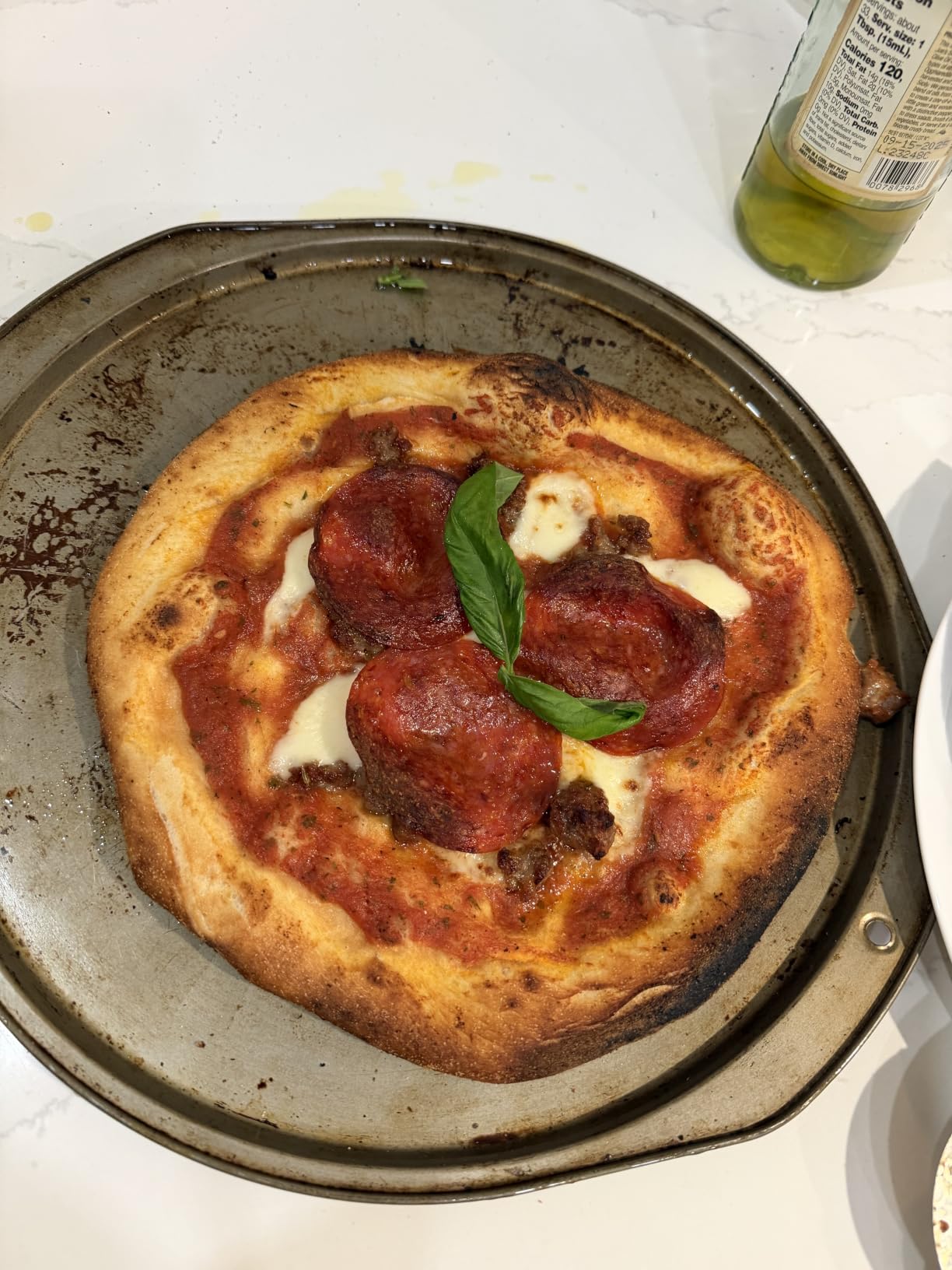
Feedback splits along fuel lines. Wood and charcoal owners report authentic flavour and a real learning curve on airflow and refuelling. Gas attachment owners say it is cleaner, faster and indistinguishable in taste, which is a fair summary of the whole multi-fuel category.
The most common complaint is that the listing does not make clear the propane burner is a separate purchase. If gas is your plan, add the Ooni gas burner to your cost from day one.
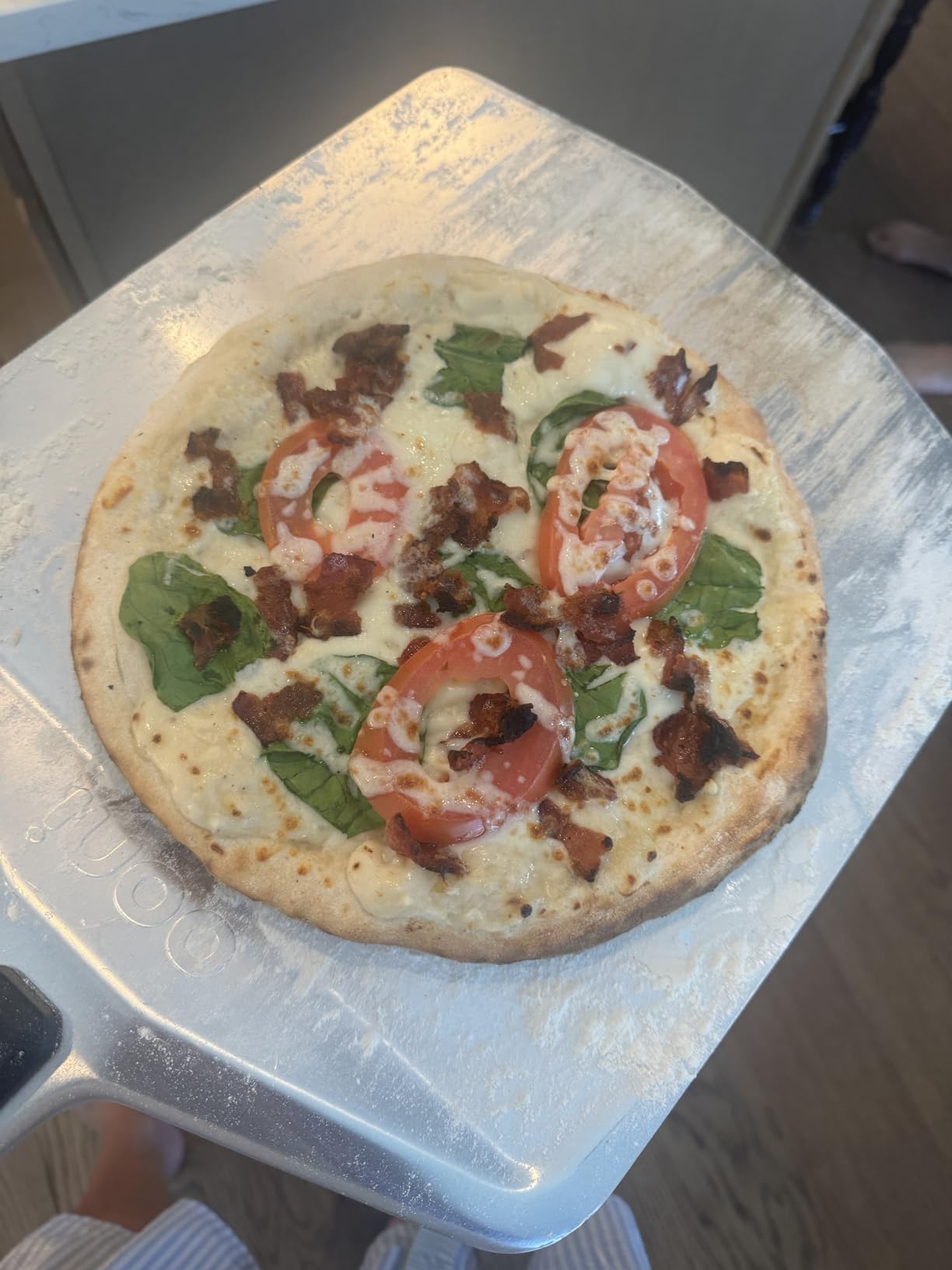
Whether the separate gas burner matters
It matters if you want gas. Without it, this is a wood and charcoal oven that also happens to be excellent at both, and for a lot of beginners that is a perfectly good outcome. With it, you get instant ignition and dial control, at the cost of one more box to store.
The included peel fits too snugly to be practical according to many buyers, and plenty of them buy a second one anyway. A loose-fitting peel makes the launch far easier on a 12-inch pie.
Footprint and portability trade-offs
It is deeper than you expect at 31.5 inch, so measure the space before you commit. The fold-down legs and removable chimney are the trade that buys the low weight, and both work well.
Ooni cast iron accessories let you roast steak, fish and vegetables in the same oven, which is the second-use argument that keeps a pizza oven earning its space year-round.
6. BIG HORN 15 Inch Gas Pizza Oven: Best for a Buyer Who Hates Turning Pizzas
BIG HORN Gas Pizza Oven, Portable Propane Pizza Oven with 15 inch Pizza Stone, Stainless Steel Pizza Maker for Outdoor Cooking
Dual 23000 BTU burners
750°F in 10 min
Built-in thermometer
Pros
- Dual side burners rated 23000 BTU
- arc shaped chamber circulates heat evenly so no rotation is needed
- built-in thermometer plus dual control knobs
- cooking area fits pizzas up to 14.7 inches
- includes pizza stone
- foldable peel and regulator hose
Cons
- Propane tank is not included
- stainless steel body runs hot to the touch during cooking
- 750°F in 10 minutes sits under the 950°F most bakers aim for
- two burner knobs take practice to manage together
This is the gas-only counterpart to the BIG HORN pellet oven, and it is the one to buy if fire management sounds like a chore. Gas instead of pellets means nothing to light, nothing to carry and no ash in the firebox, with 72 percent of ratings at five stars.
Beginner difficulty: 2 out of 5. The arc-shaped chamber circulates heat so the brand says no pizza rotation is needed, which removes the single most common beginner complaint.
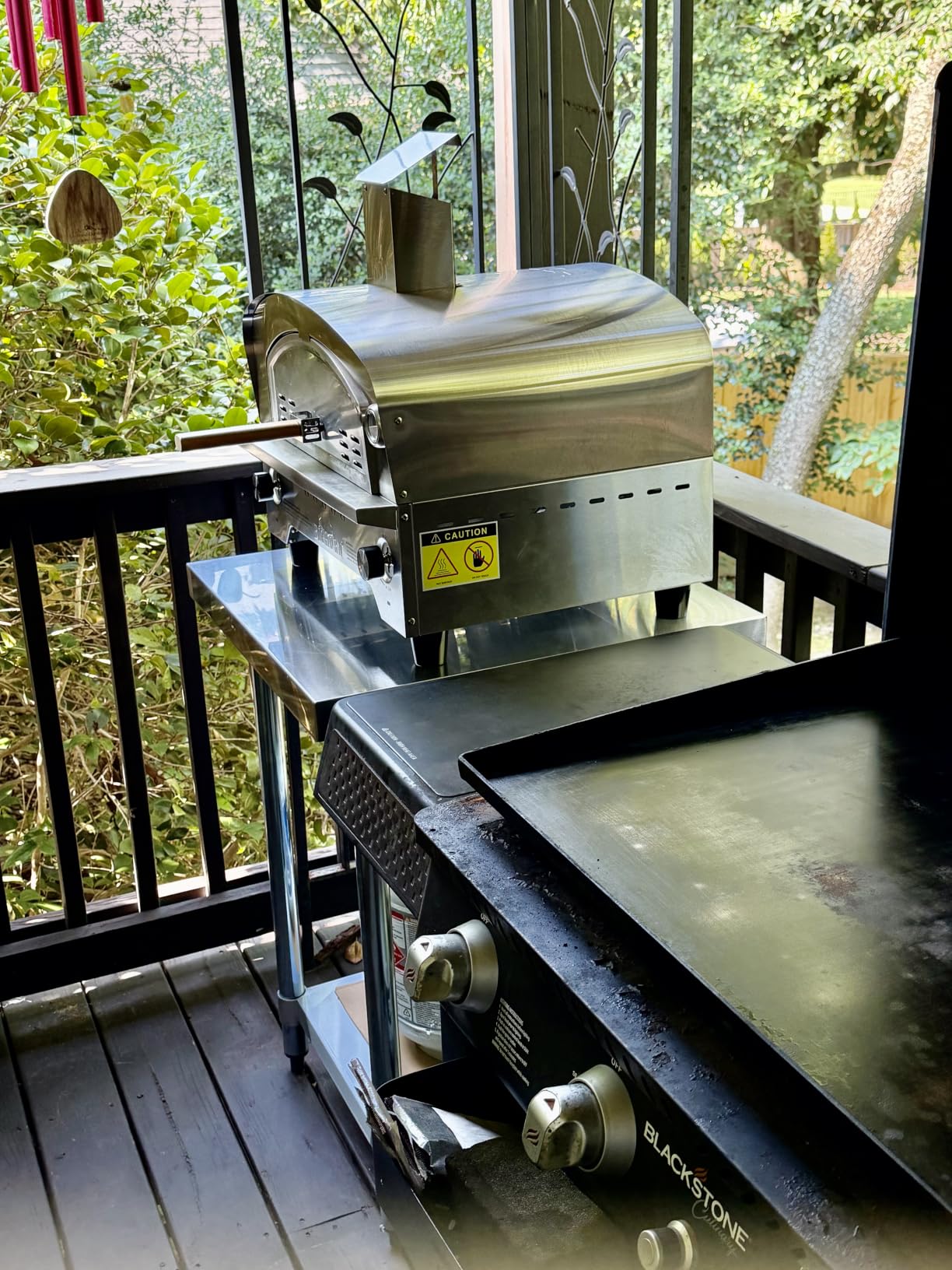
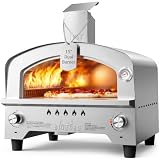
Two side burners rated at 23000 BTU heat the chamber to 750°F in 10 minutes, and the cooking area fits pizzas up to 14.7 inches. That makes it one of the larger gas ovens here and a better fit for feeding a family than most 12-inch models.
There is a practical detail beginners appreciate: the built-in thermometer means you are not guessing or spending extra on an infrared thermometer on day one. The dual control knobs let you set each side independently.
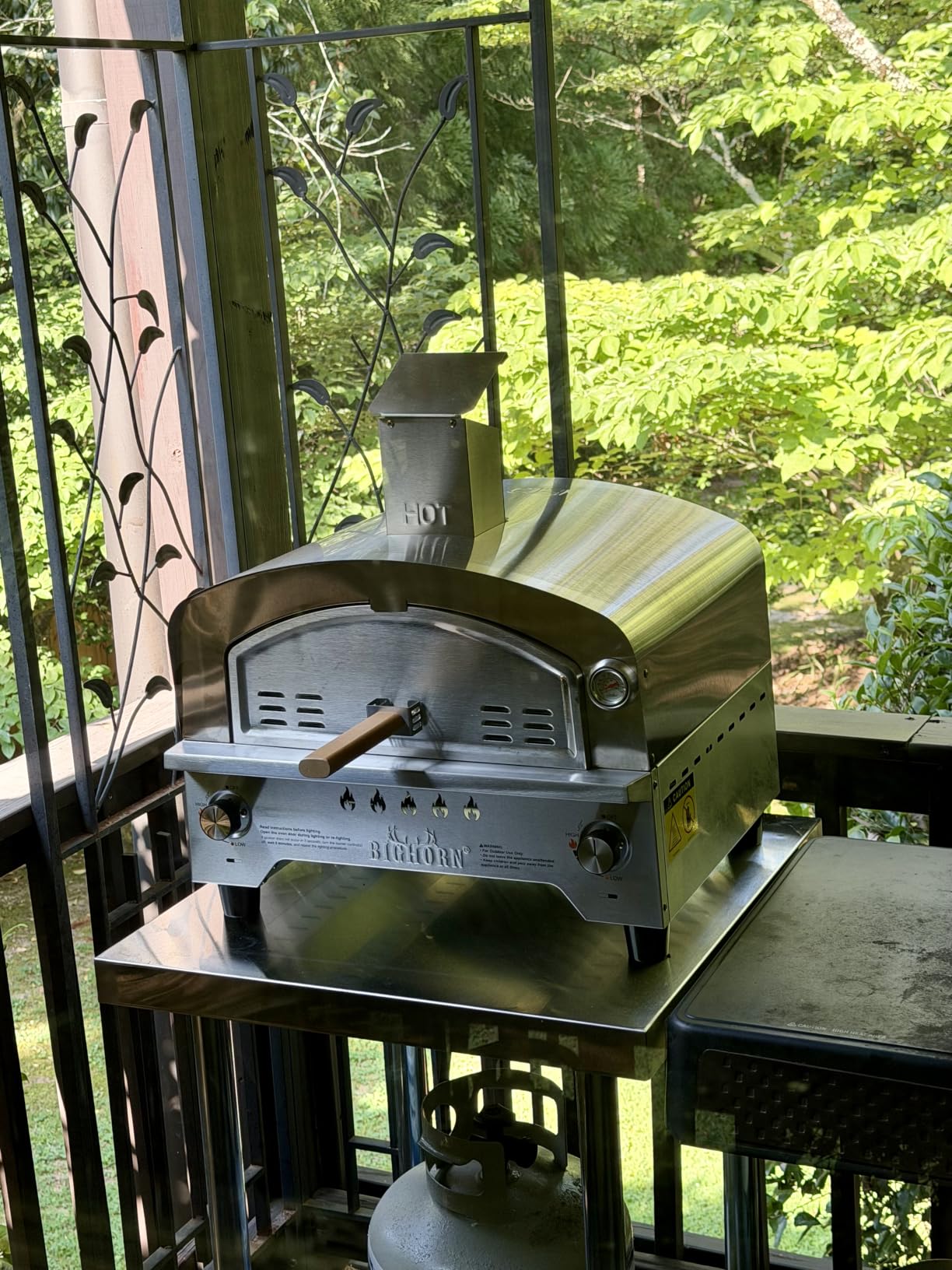
Why no rotation is needed here
The chamber is arc shaped, so the flame from each side burner wraps around the pie instead of hitting one edge. With even heat, a pizza cooks without the open-turn-turn routine that burns the front crust on fixed-deck ovens. For someone who has never launched a pizza, removing the turn is a genuine kindness.
The trade is char and a puffy rim. A 750°F chamber with an even cook gives you an evenly browned base rather than a blistered top, and the brand quotes 60-second bakes at that temperature.
Where the two burner knobs get tricky
Two knobs means two variables, and reviewers point out that managing both at once takes a few sessions before it feels automatic. Start with both at the same setting and only then experiment with one side down for a front-heavy pie.
Also remember the stainless steel body runs hot to the touch during cooking. Use a long-handled peel and keep the tank connection well clear of the chamber.
7. Mimiuo 12 Inch Gas Pizza Oven: Best Complete Kit for a Small Patio
Mimiuo 12″ Gas Pizza Oven Outdoor 33Lbs – 60S Bake, w/Stone, Peel & Cover
900°F in 10-15 min
13 inch cordierite stone
33 lb
kit included
Pros
- 33 lb stainless build that owners credit with better heat retention
- reaches 900°F in 10-15 minutes and bakes in 60 seconds
- 13 inch cordierite stone rated to 2200°F
- kit includes stone
- peel and cover so nothing else is needed
- tool-free setup with folding legs
Cons
- Full burn chars the top before the base cooks
- one review reports the temperature control dial breaking
- 11 percent of reviews are one star mostly on durability
- arrives with screws missing for the pizza turner
This is a heavy, well-insulated 12-inch oven delivered as a complete kit. The box contains the oven, a 13-inch cordierite stone, a 12 by 14 inch peel and a protective cover, so the only thing you must source is a propane tank.
Beginner difficulty: 3 out of 5. The hardware is simple, but the flame needs managing. The single most repeated owner tip across reviews is to preheat at medium for 30 minutes and drop the flame to minimum the moment the pizza goes in.
That single adjustment resolves the most common complaint, which is a burnt top with a raw base. The cordierite stone is rated to 2200°F, resists cracking and warping, and the 33 lb body holds heat between rounds.
It also handles more than pizza. Steak, wings, vegetables and bread all work on the same stone, which matters if you want the oven to earn its patio space in months when you are not making pie.
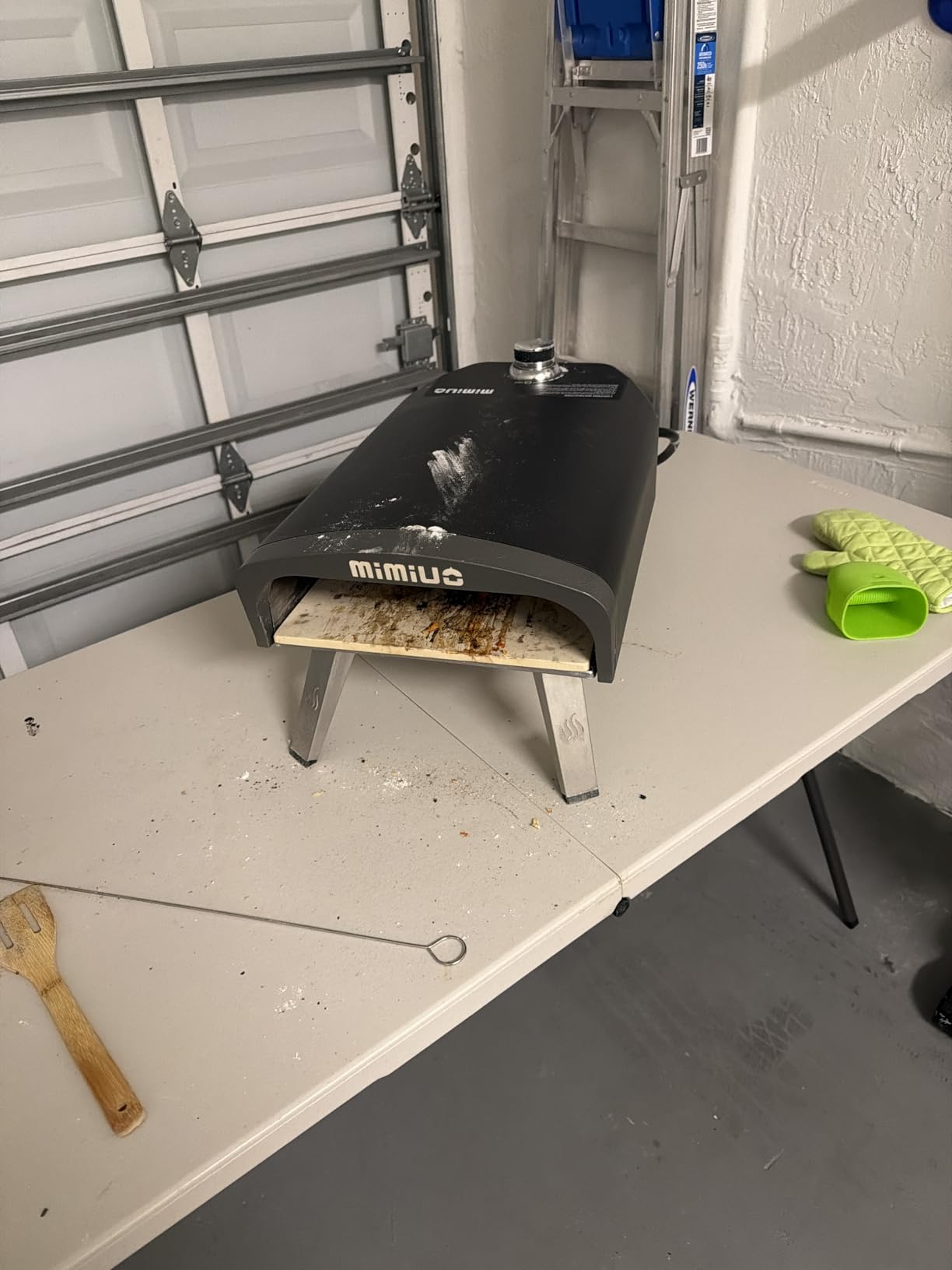
Managing the flame once the pizza goes in
Preheat at medium rather than high. The oven reaches 900°F comfortably in 10 to 15 minutes, but running full burn during a cook scorches the top before the base sets. Turn the dial down as the peel enters, and your cook time stretches by maybe 30 seconds while the result improves immediately.
This is a dial-control oven with a single knob, so the learning curve is one variable. That is simpler than a twin-burner setup and easier to keep consistent across a whole session.
What the kit includes, and the durability reports
Stone, peel and cover are all included, and setup needs no tools beyond unfolding the legs. That completeness is the main reason to pick this over a cheaper bare oven.
Durability is where the reviews split. Several buyers report a failed control dial and one unit that broke after only a few uses, and the unit arrives with screws missing for the turner. The stone is also hard to wash and picks up staining over time.
8. BIG HORN 16 Inch Multi-Fuel Pizza Oven: Best for Feeding a Group
BIG HORN OUTDOORS 16″ Multi-Fuel Outdoor Pizza Oven – 2-in-1 Wood-Fired & Gas Compatible (Burners Sold Separately), 1112°F Outdoor Stainless Pizza Cooker, Portable for Party Usage, Sliver
1112°F max
16 inch cavity
Built-in thermometer
42.5 lb
Pros
- 16 inch cavity is the largest in this roundup
- reaches 1112°F and preheats in 15 minutes
- built-in front thermometer plus glass flame window
- adjustable air intake plate evens out temperature swings
- two year warranty with multi-year reliability reports
Cons
- 42.5 lb build is awkward to move between seasons
- gas burners are sold separately so it is pellet only out of the box
- burns through hardwood pellets quickly
- firebox handle and hopper latch get dangerously hot
If your goal is a summer party oven, the 16-inch chamber here is the largest we covered and the reason people buy it. Owners of the gas attachment call it a standout value, and longevity reports of two-plus years stand out in this category.
Beginner difficulty: 4 out of 5. It is pellet fired out of the box, which puts it in the demanding category, and the practical cautions are real rather than quality related.
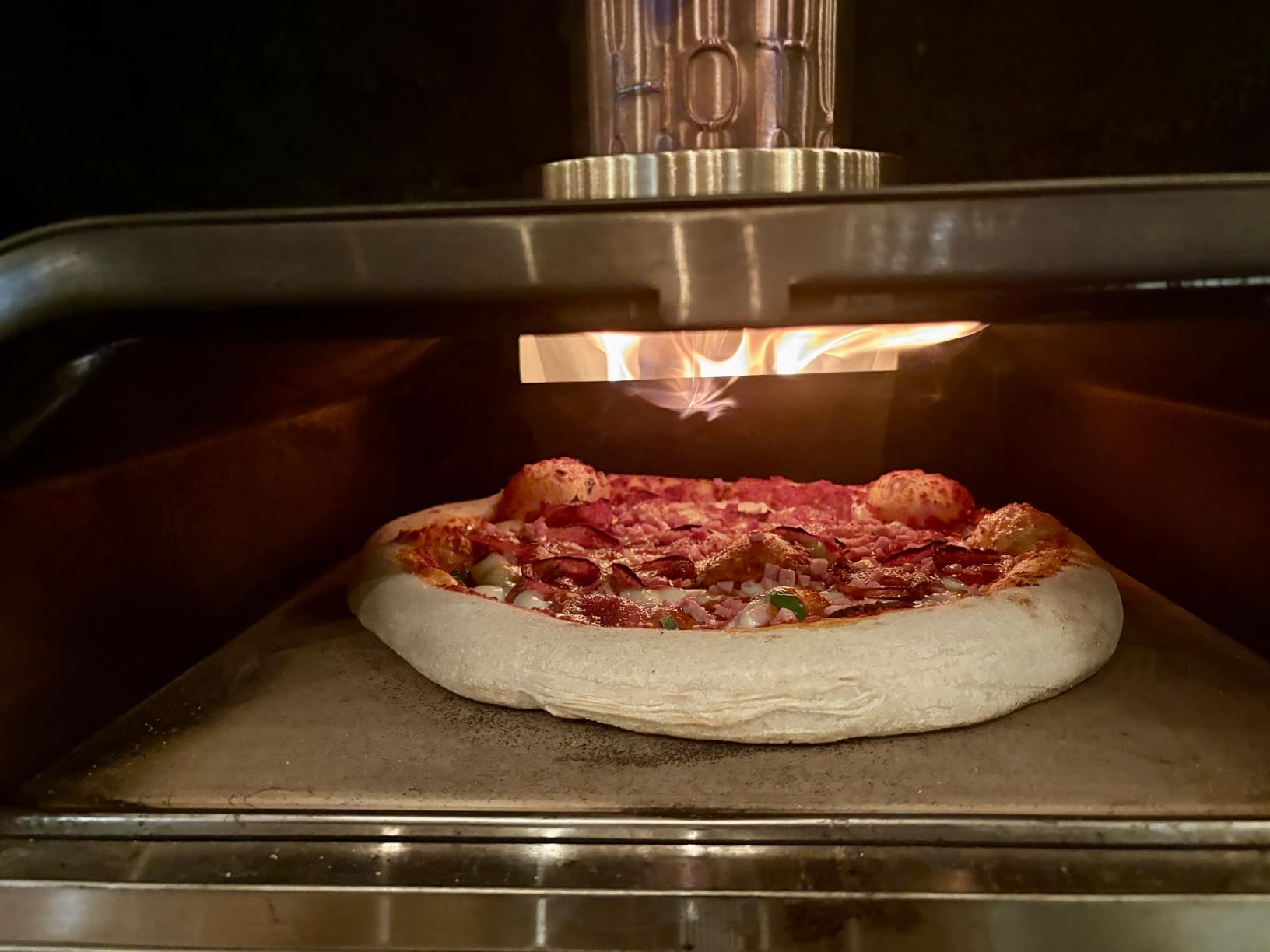
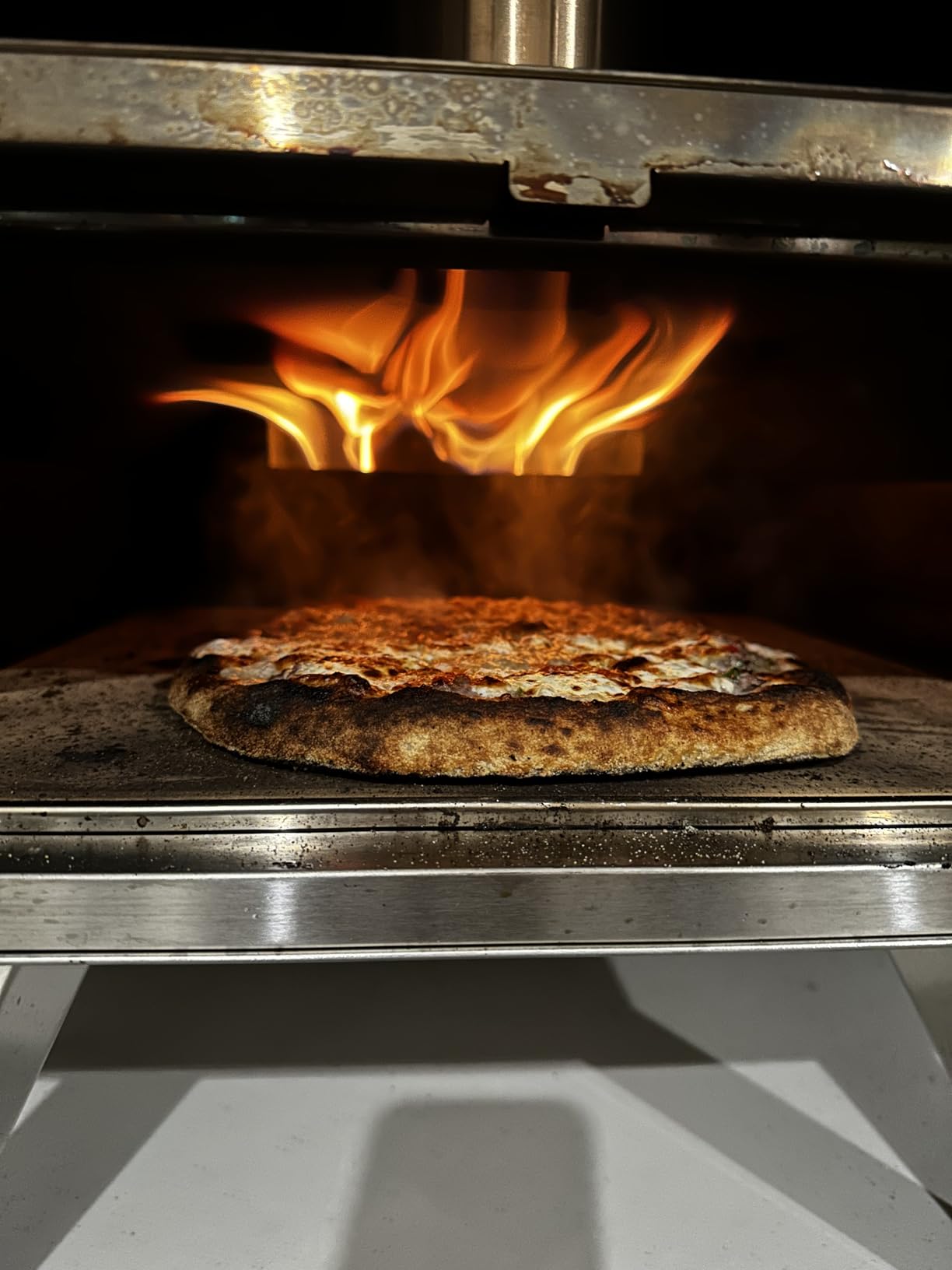
The built-in front thermometer and the glass window to observe the flame are both genuinely useful when you are running a fire rather than a burner. The adjustable air intake plate helps even out temperature swings that plague fixed pellet ovens.
It preheats to 300°C in 15 minutes and tops out at 1112°F, with 60 to 90 second pizzas once the stone is where you want it.
Whether 16 inches is too much for a beginner
Too much stone means a longer preheat and more fuel per pizza, and a bigger surface to read with your thermometer. Forum regulars consistently advise starting at 12 inches and graduating later, and going too big early is a common regret.
If you are unsure, this is the expensive end of that advice. The trade is that you can cook two 12-inch pies side by side or feed a group without round-robin cooking.
Handling and safety on a pellet fire
At 42.5 lb this is heavy and awkward to move, so plan a permanent stand rather than a garden table you carry it to. Long-handled peels and a turner are close to mandatory here.
Two cautions from reviews: the firebox handle and pellet hopper latch get dangerously hot during use, and flames can shoot out of the hopper, chimney and front opening when the door is opened. Open it slowly, from the side.
9. Solo Stove Pi Prime: Best Value Against the Premium Gas Models
Solo Stove Pi Prime Propane Pizza Oven | Portable Outdoor Gas Pizza Oven
900°F
15 min preheat
13 inch opening
90 second bakes
Pros
- Preheats in about 15 minutes and cooks a 12 inch pizza in 90 seconds
- front facing temperature control for repeatable flame settings
- 13 inch panoramic opening makes turning and monitoring easy
- 304 stainless steel body with a cordierite stone
- setup is place the stones and connect the tank
Cons
- Pizzas cook so fast you must stand and turn constantly
- the stone needs a full 30 minute warm-up or the base will not crisp
- not designed for premade dough made for domestic ovens
- transit damage is reported including a dented unit
Reviewers consistently treat this as a step up from budget ovens and as the value leader against premium gas models, with several comparing it directly and favourably to an Ooni purchase. It also cooks more than pizza, with a cordierite stone and front-facing flame control that handles roasting.
Beginner difficulty: 2 out of 5. The setup is the simplest description in the roundup: place the stones, connect the tank.
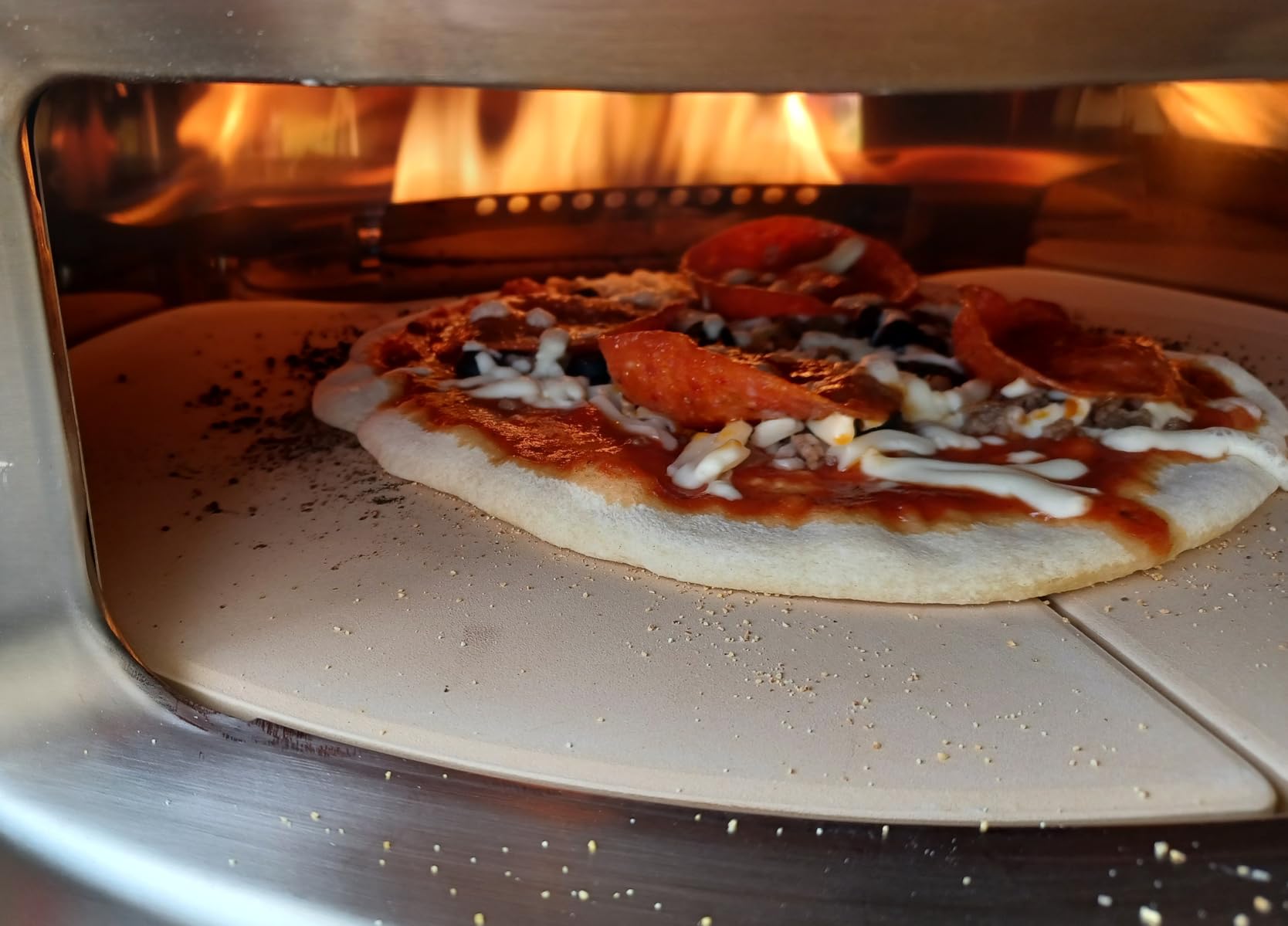
The workflow advice across reviews converges on one pattern: preheat on high for 15 to 30 minutes, then turn the knob down just below the red marks and rotate the pizza every 30 seconds. Follow that and the results are consistent from session to session.
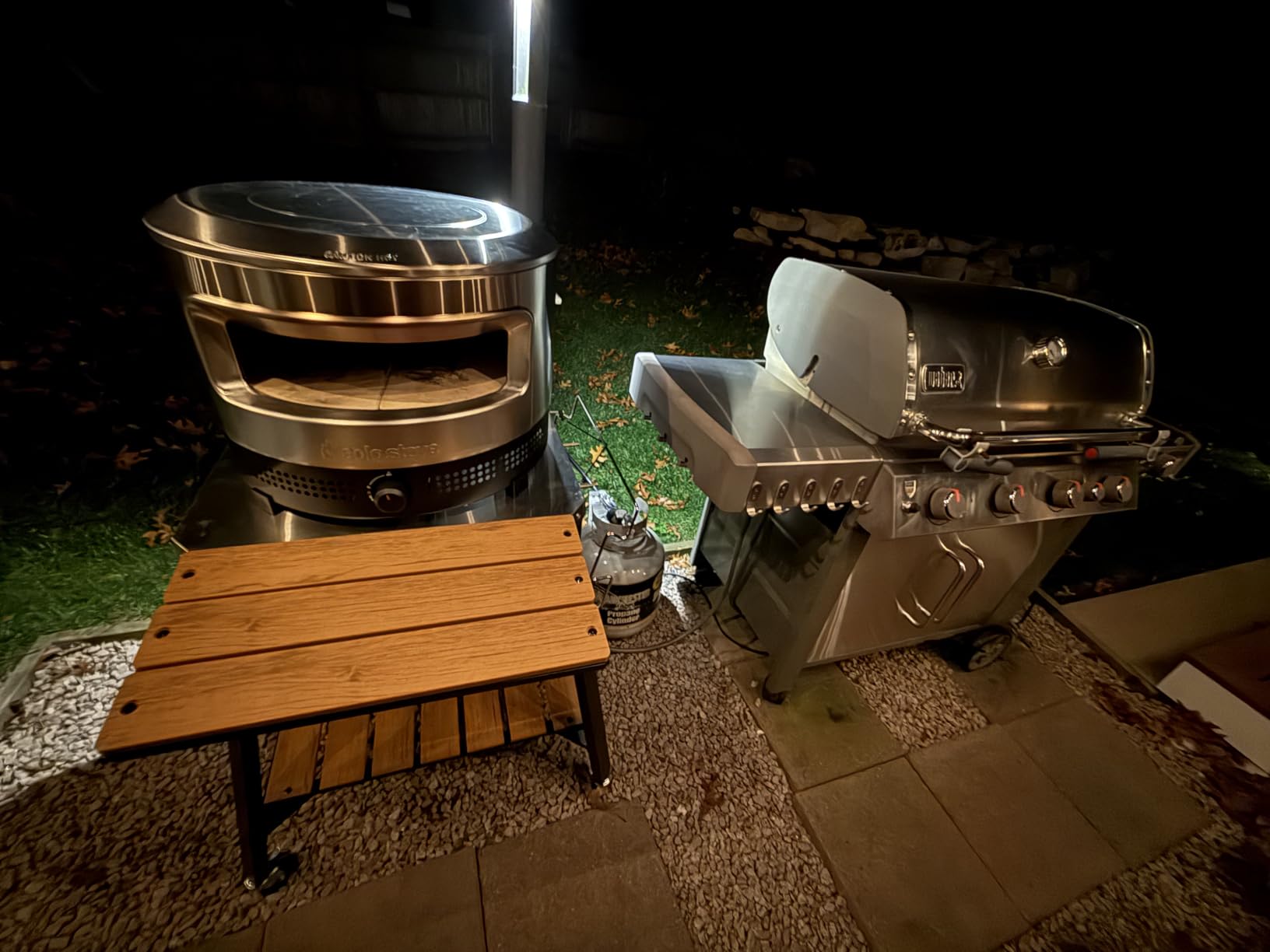
The 13-inch panoramic opening is wider than most ovens at this size, and that width is what makes a 30-second rotation realistic. You can see the whole pizza without opening anything.
Why the wide opening changes the learning curve
Rotation is where beginners lose confidence. A wide opening means you can watch the front crust colour in real time instead of lifting the lid and guessing, and the flat 13-inch stone keeps the pie centred while it turns.
The cost is speed. At 90-second bakes you are standing at the oven, not chatting with guests, so plan your first few sessions as cooking sessions rather than entertaining.
The 30 minute warm-up most owners skip
Several reviews warn that the stone needs a full 30 minutes of heat or the bottom crust will not crisp on the first pies. The brand also recommends roughly an hour of burn-in before first use to clear manufacturing dust, which is worth doing on a patio rather than at a busy hour.
It is also not designed for store-bought dough made for domestic ovens. That dough is formulated for a 550°F kitchen oven, so buy dough made for high heat or make your own.
10. Mimiuo Auto-Rotating Gas Pizza Oven: Best if You Refuse to Turn Pizzas
Mimiuo Auto-Rotating Gas Pizza Oven Outdoor 39Lbs, 60S Bake, w/Stone
Auto-rotating stone
900°F in 15 min
13 inch cordierite
39 lb
Pros
- Automatic rotating stone removes the need to open the oven and turn the pizza
- 39 lb build with double-layer insulation
- preheats to 900°F in about 15 minutes with 60 second bakes
- 13 inch round high-density cordierite stone rated to 2200°F
- kit includes turntable
- stone
- peel and cover
Cons
- Rotating shaft needs a few drops of cooking oil to spin freely
- 39 lb is among the heaviest portable ovens
- temperature drops noticeably between pizzas despite the heavy insulation
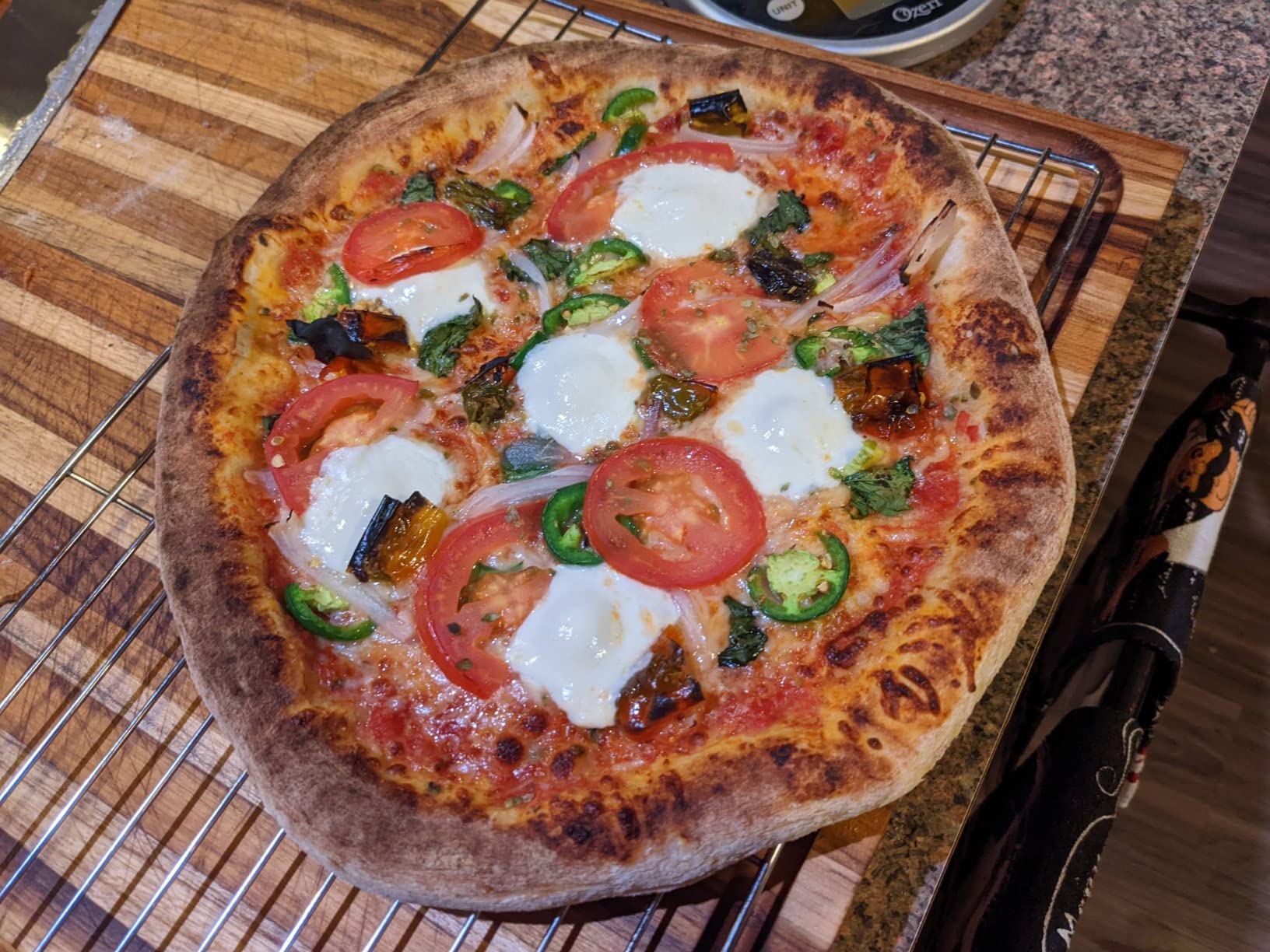
The rotating stone is the entire point. It cooks every edge evenly without manual turning, which is the reason buyers choose this over a fixed-deck model and the reason several describe it as a large step up in ease of use.
Beginner difficulty: 2 out of 5 once running, because the turning problem is solved. The trade is weight and heat recovery rather than complexity.
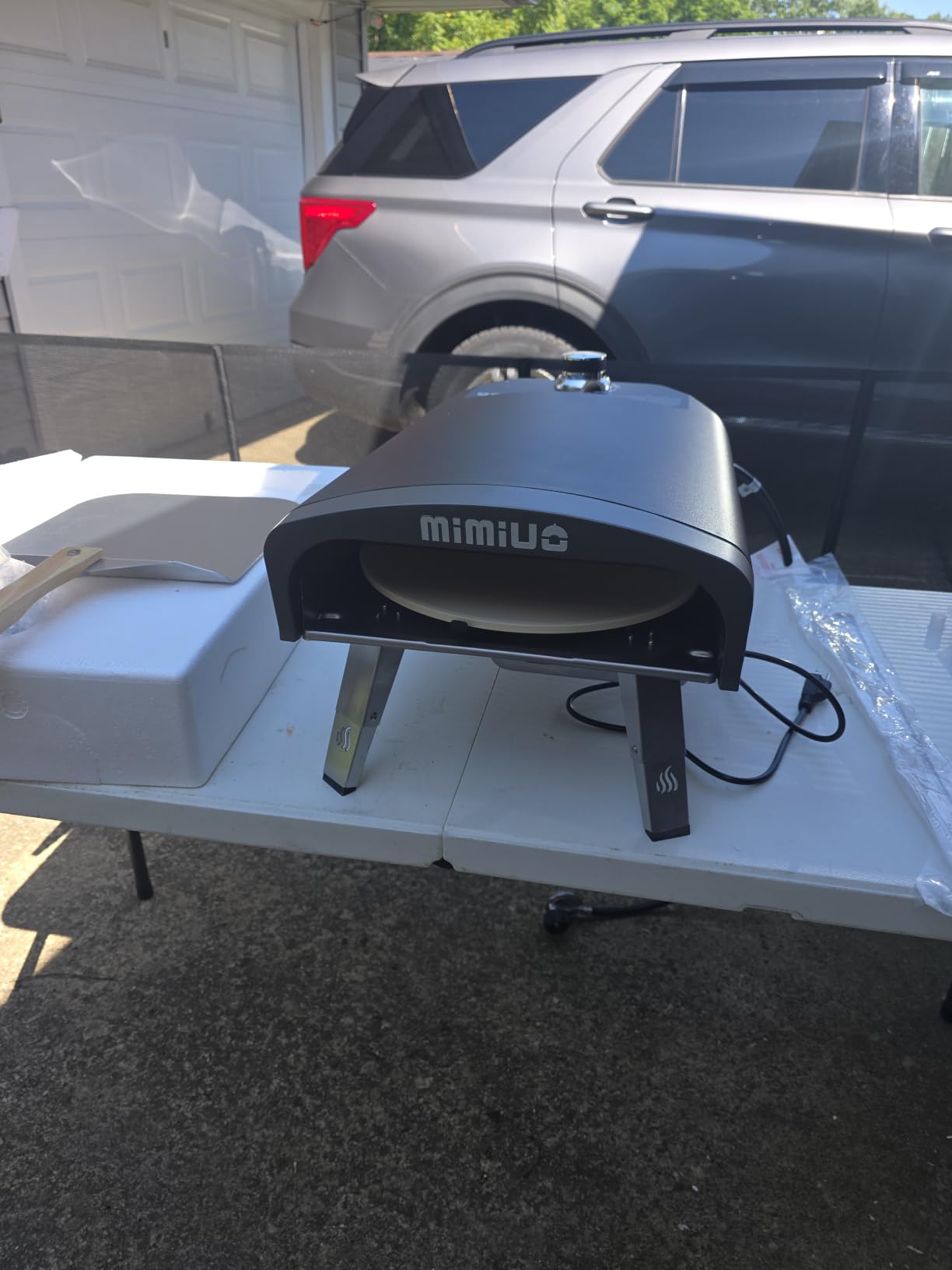
At 39 lb with double-layer insulation and a heavy-duty turntable, this is built for long-term outdoor use. The 13-inch round high-density cordierite stone is rated to 2200°F, so it handles repeated thermal cycling without warping.
Setup is tool-free: folding legs, a knob-controlled flame and a propane connection you attach once.
Whether auto-rotation is worth the extra weight
If you have a partner or children who will also cook, rotation is the skill that gets abandoned first. A rotating deck removes it entirely, and the 60-second bakes on a 900°F stone stay even without babysitting.
The 39 lb weight is the counterweight to that convenience, and it is among the heaviest portable ovens in this roundup. It needs a permanent stand.
Between-pizza heat recovery
Heavy insulation holds a lot of energy, but reviews still report a noticeable temperature drop between pizzas. Give it 30 to 45 seconds after a launch before the thermometer reading means anything, and do not judge a second pie by the first pie’s timing.
The one maintenance item owners mention is lubricating the rotating shaft when the spin slows, which the brand treats as normal rather than a fault.
11. Q Pizza PS102: Best Rotating Deck on a Smaller Budget
Q PIZZA 13″ Propane Gas Pizza Oven with Automatic Rotating Stone, PS102
932°F in 10-15 min
13 inch rotating stone
1 minute bakes
33 lb
Pros
- Automatic rotating stone spreads heat evenly so pies do not burn on one side
- preheats to 932°F in 10-15 minutes and bakes in about a minute
- no assembly needed beyond dropping in the stone and connecting the tank
- built-in gas ignition and adjustable flame dial for roasting
- one long-term owner reports roughly 200 pizzas over two years
Cons
- One-star share of 13 percent is the highest in this roundup
- one review reports the plastic control knob melting
- another reports the rotation motor failing
- running at full flame burns the crust before the base cooks
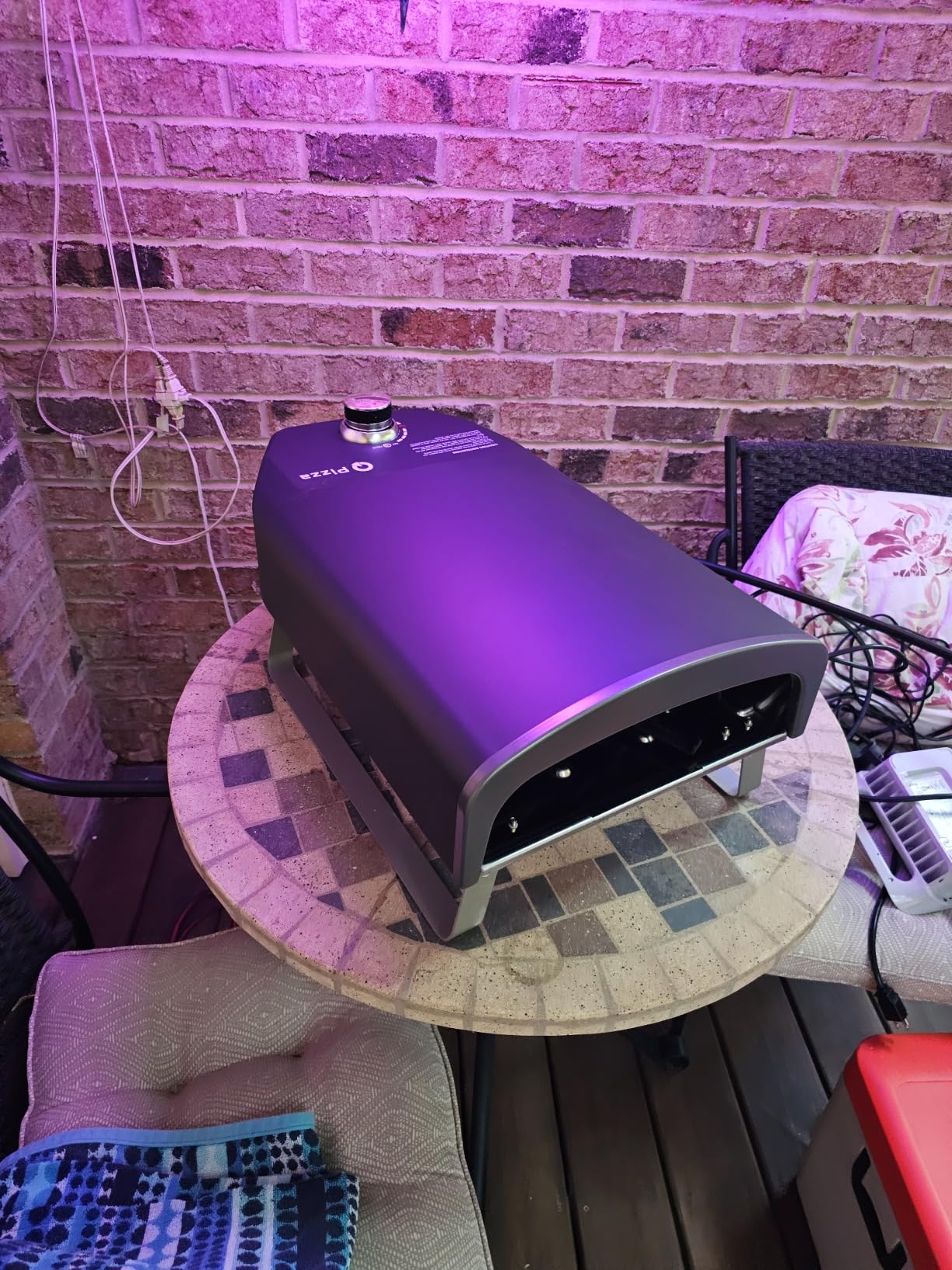
Rotating stone, 932°F, no assembly and about a minute per pizza. Satisfied owners describe the mechanism as making the oven far easier than manual turning, with four or five back-to-back pizzas without reheating.
Beginner difficulty: 2 out of 5, with one asterisk: the rotating deck depends on a motor and a plastic knob, which is where the complaints concentrate.
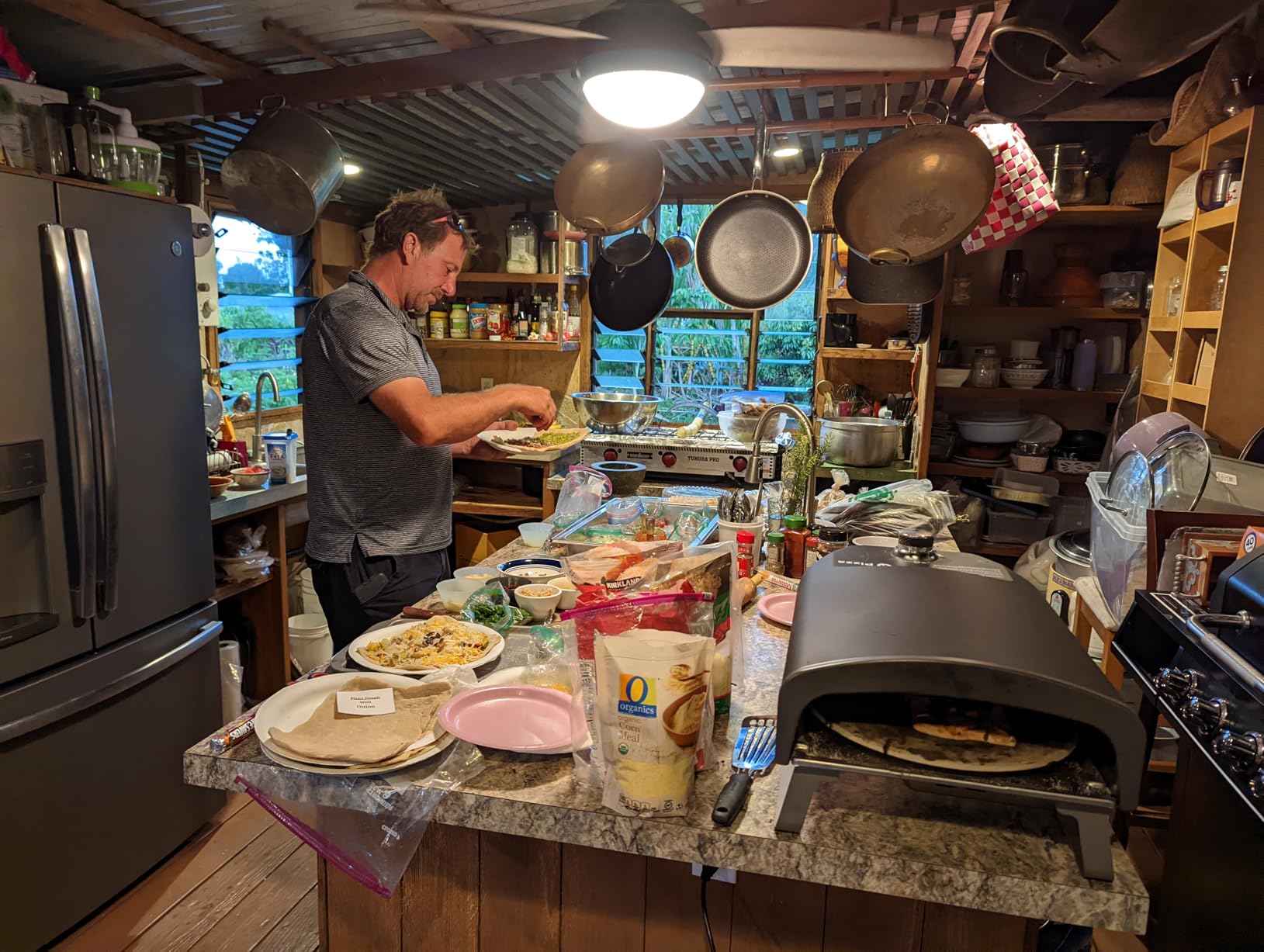
At 24.5 by 15 by 10 inches and 33 lb, it is a genuinely compact oven, and the built-in ignition means there is no separate lighter step. The flame dial also handles roasting meat, fish and vegetables, and baking bread or pastries.
Heat management is the other consistent caution. Run the flame at maximum during preheat, then dial it back once the stone reaches temperature.
What auto-rotation actually fixes
It fixes the uneven cook, not the temperature. A fixed-deck oven with one side burner will char the front of the pie before the back is done, and no amount of turning skill fixes that on a small stone. A rotating deck equalises the exposure instead.
If uneven cooking is the thing that would frustrate you, this solves it in hardware rather than technique.
Durability risks on a budget rotating model
Buyers report a melted plastic control knob within two days and a failed rotation motor, with the second owner noting that return shipping costs made the purchase a total loss. That is the pattern to weigh: the mechanism is the reason you like it, and it is also the part most likely to fail.
The 13 percent one-star share is the highest in our list, and it clusters on component failure rather than cooking performance.
12. VEVOR Dual Fuel Pizza Oven: Best for Camping With a Rotating Stone
VEVOR Dual Fuel Pizza Oven Outdoor, 16 in Wood Fire & Propane Gas Pizza Oven, Portable Pellet & Propane Pizza-Maker with Thermometer, Large Multi Fuel Pizza Cook for Outside Camping & Backyard
Pellet and propane
1000°F max
15 min preheat
43 lb
Pros
- Dual fuel with pellet and propane plus a rotating stone
- preheats in 15 minutes and reaches a 1000°F maximum
- three-layer body with thick insulation cotton
- carry bag
- pellet scoop and pressure regulator all included
- one reviewer benchmarks it against an Ooni Karu 12 and finds results equal
Cons
- Pizzas burn quickly at full flame
- the closed door blocks your view of the pizza
- pellet flame goes out easily and needs frequent refilling
- two reviews report a cracked stone on arrival
Feature for feature, this is the densest oven in our list: pellet and propane in one body, a rotating stone, a built-in thermometer, and a carry bag. The ratings sit in an even band, which fits what owners describe as capable but demanding.
Beginner difficulty: 4 out of 5. It is dual fuel with a pellet side that needs kindling, airflow and refilling, so it asks more of a first cook than a pure gas oven.
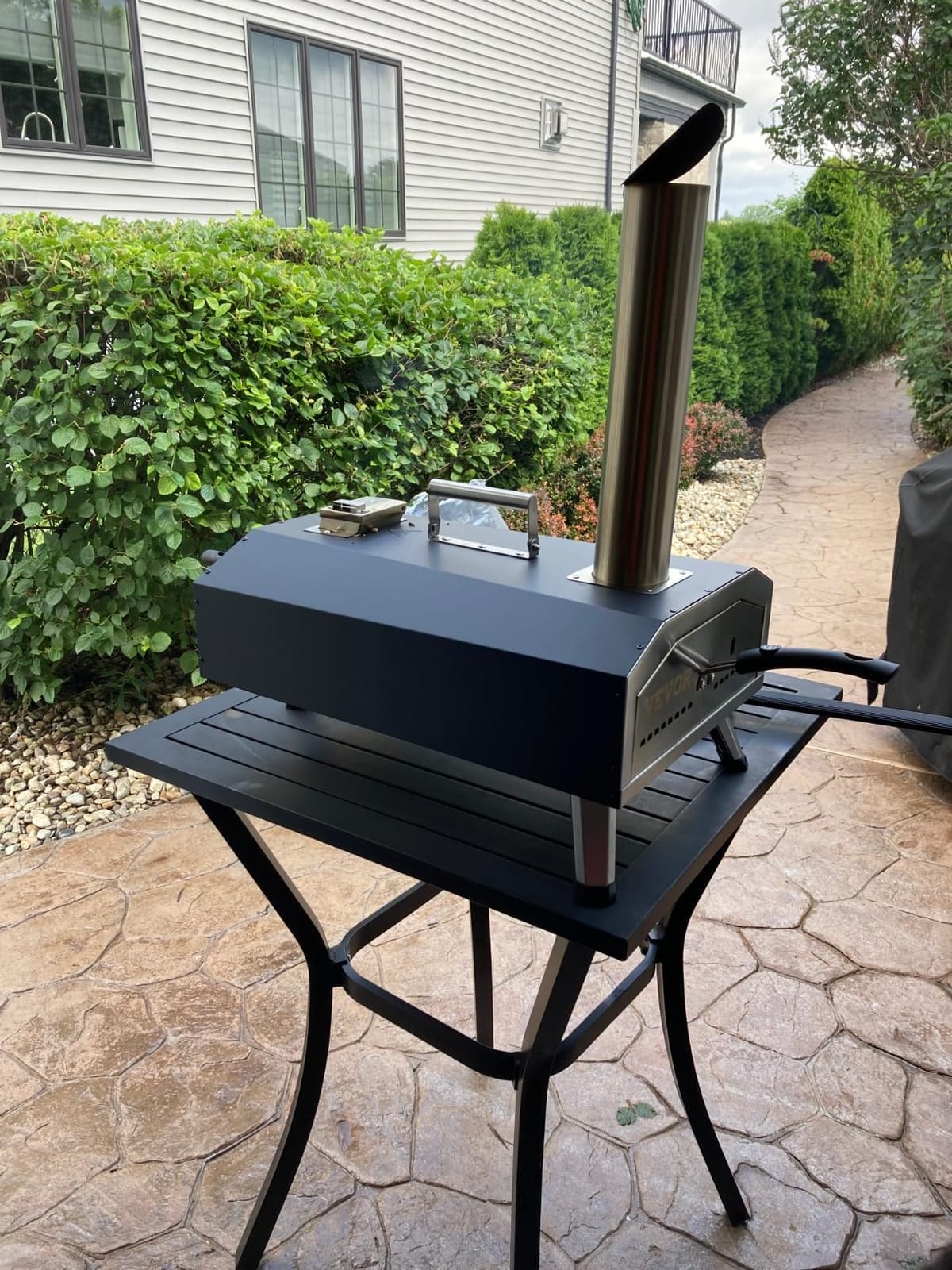
The three-layer construction with thick insulation cotton is what makes heat recovery workable across a pellet fire. One reviewer benchmarked it directly against an Ooni Karu 12 and found the results equal, which is a strong claim for the money.
It also arrives with a carry bag, pellet scoop, pressure regulator and recipe booklet, so the packing list for a camping trip is short.
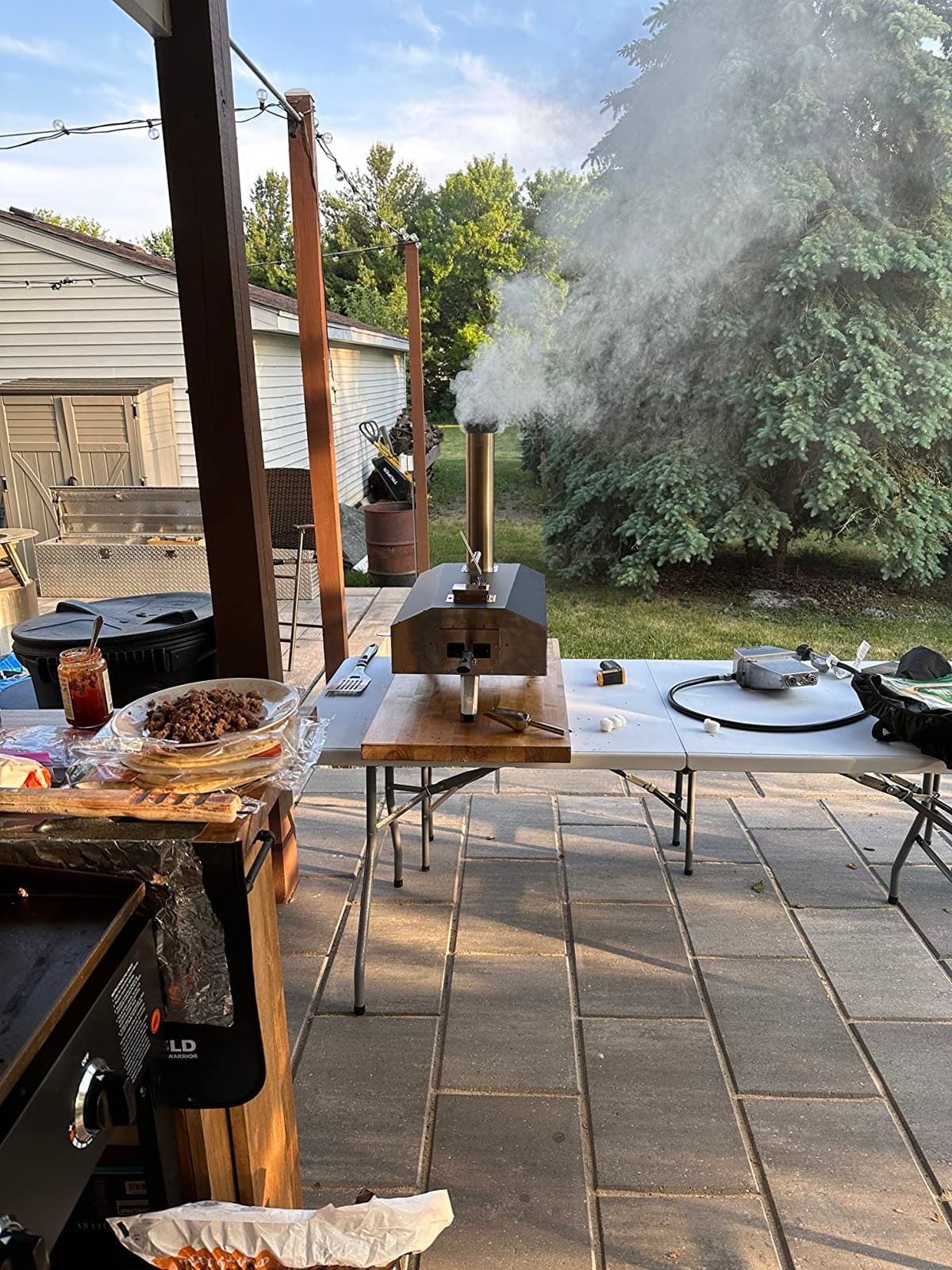
Dual fuel and pellet management realities
Dual fuel is a real advantage when you want wood flavour at a campsite but a predictable flame at home. The catch is that the pellet flame goes out easily and needs kindling and frequent refilling, which is a fire to supervise rather than a dial to turn.
At 43 lb and 33.7 inches deep, this is a substantial carry, and the carry bag helps but does not make it a one-person job.
Stone durability and return costs
Two separate reviews report the pizza stone arriving cracked with a damaged box, and owners cite return shipping that is not prepaid as a major drawback. Inspect the stone before you build the oven and keep the packaging until the first cook is done.
There is also a visibility problem: with the door closed to hold temperature, you cannot see the pizza. Plan to cook with the door open on the first few pies, or accept that you are trusting the clock.
Your First Cook: A Six-Step Walkthrough
Most burnt first pizzas are not a bad oven. They are a fast oven and a new cook. Six steps, in order, remove almost every beginner mistake.
1. Preheat for the full stated time. Ten minutes on a dial is not the same as a stone at temperature. A handheld infrared thermometer is the single most useful purchase that never comes in the box, and you aim for a stone reading of 750 to 800°F for a beginner’s first few pies. Aim higher, at 850 to 950°F, once you can turn a pizza without burning it.
2. Shake semolina or flour onto the peel, not the dough. A dusting on the dough tears the skin. A light dusting on the peel lets the pizza slide off when you want it to.
3. Build the pie on the peel with a fast wrist. Lift the peel 1 inch off the counter, rotate it a quarter turn, and let gravity drop the pizza onto the stone. A short, flat, level launch is what separates a good first pie from a miss.
4. Turn on a schedule, not on a feeling. On fixed-deck gas ovens, turn every 30 seconds. On rotating-deck ovens and the BIG HORN arc chamber, you can leave it. If the front crust colours before the base, turn twice as often.
5. Drop the flame as the pizza goes in. This is the single most repeated tip across owner reviews, and it fixes the burnt top with a raw base. Preheat high, then turn the dial down to medium for the 60 to 90 second cook.
6. Wait before you read the thermometer again. After a launch, the stone drops and takes 30 to 45 seconds to recover on most ovens. A reading taken immediately after a pie will convince you the oven is failing when it is working correctly.
Gas vs Wood vs Electric Pizza Ovens for Beginners
Gas is the easiest fuel to learn on, and that is the short answer to whether gas pizza ovens are worth it. Instant ignition, no fire tending, and heat recovery between pies that wood cannot match. It is the only fuel where a beginner’s tenth pizza is as predictable as their first.
Wood gives you flavour that gas cannot replicate, and it is the reason many cooks migrate to wood later. It also requires airflow management, refuelling, ash disposal and a tolerance for a temperature that drifts. That tolerance is the part beginners underestimate.
Electric ovens win on control and indoor placement, and lose on the top end. They are the right choice for an apartment or a small balcony with no gas connection, and our best indoor pizza ovens cover that case. For a patio or a backyard with a tank, gas is the better first buy.
On placement, these are outdoor appliances. They need a deck or patio surface, clearance from walls and trees, and a propane connection. If you have never used one, our backyard pizza oven guide covers stand height and safe siting.
What to Look for in a Beginner Gas Pizza Oven
Maximum temperature. Aim for 900°F or above if you want leopard spotting and a puffed rim. Anything under 800°F will still make a good pizza, it just will not blister. Temperature is a spec, not a promise, so read owner reports on whether the stone actually reached it.
Flame geometry decides your workload. This is the point no competitor explains. A single burner that arcs across the stone cooks evenly and needs less turning. A straight side burner or a twin side-burner layout creates a hot zone on one edge, so you must rotate. Rotating-deck ovens solve it in hardware. Before you buy, work out which layout it is, because it is the biggest day-to-day difference between two ovens with identical headline temperatures.
Heat retention, not peak heat. Peak temperature is a preheat number. What matters on pie three is how fast the stone recovers. Heavier bodies with double-layer insulation hold energy better, which is why the 33 lb and 39 lb ovens in our list recover well and lighter 12-inch units need a longer pause.
Opening size. A wider opening makes launching and turning easier and lets you see the pizza without a camera. The 13-inch panoramic opening on the Solo Stove Pi Prime and the arc chamber on the BIG HORN 15 inch are both beginner-friendly in this respect.
The accessories you will still buy. A handheld infrared thermometer, a turning peel, a cover and a stand are not included with almost any oven in this list. Budget roughly half the oven’s cost again for those four items, and it is the reason a mid-range oven is the value pick rather than the cheapest one. Anything with a built-in thermometer, an included peel and a full kit is quietly more economical.
Propane tank sizing. A 20 lb tank covers a 12-inch oven through a long dinner easily. Large dual-burner models burn far faster, and owners report a bigger oven can empty a standard tank in a single party, so keep a spare. Check whether the tank and regulator are included; several ovens here require a separate purchase.
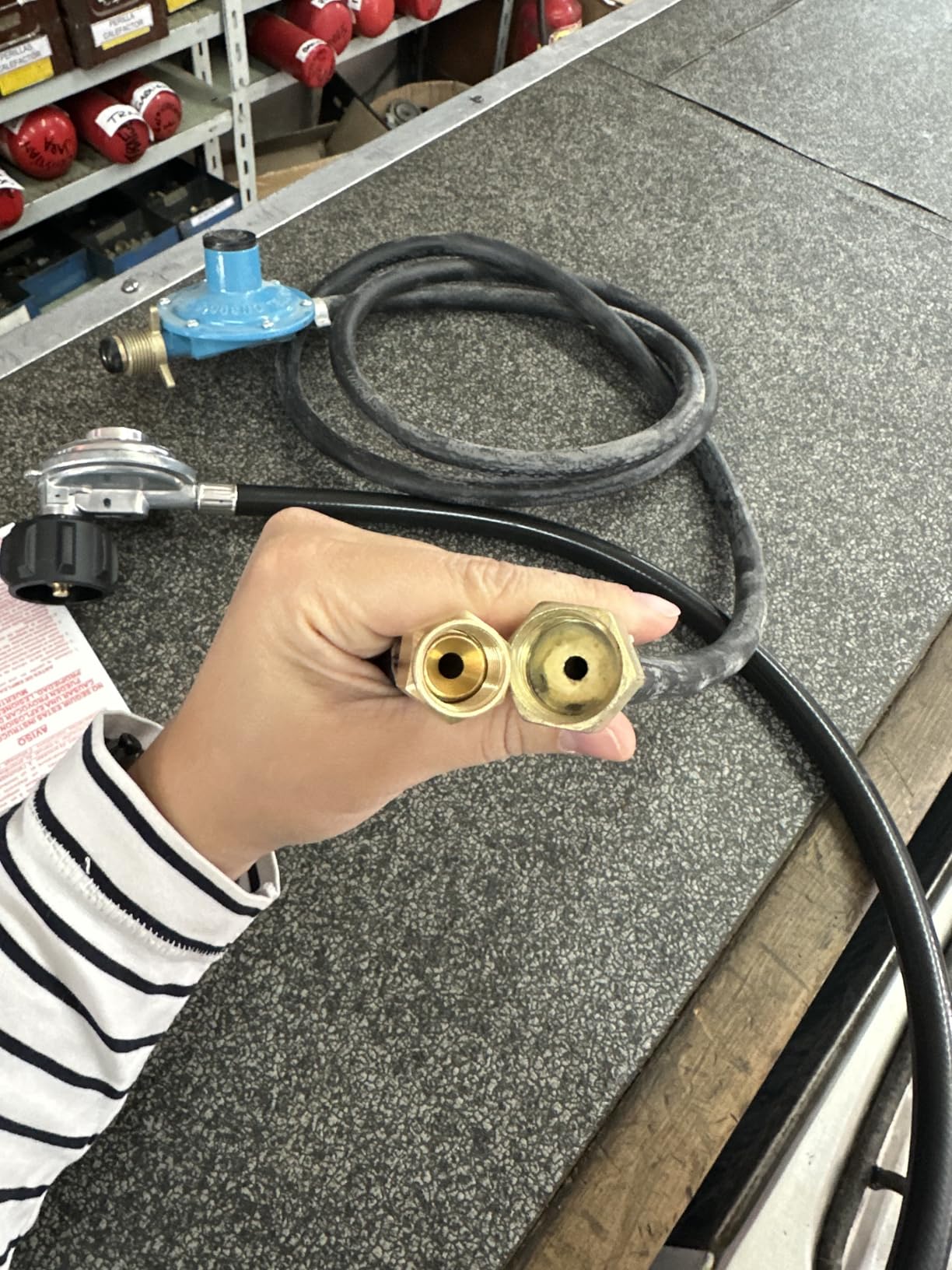
Natural gas or propane. Most ovens in this roundup are propane only, and the Ooni Koda 16 explicitly is not compatible with natural gas. Conversion is possible on some models but involves the regulator, not just a hose, and it is a common forum question with little editorial coverage. Unless you have a fixed natural gas line, buy propane.
What to skip as a beginner. Over-engineered rotating mechanisms are the main trap, since the motor is a failure point on the budget models. Very high-output burners that scorch toppings before the base cooks are the second. A 16-inch chamber is not a better first oven, it is a longer preheat. Pick the simplest 12-inch gas oven with a single flame control, learn it, and upgrade once you know what you actually want.
Frequently Asked Questions
What is the best gas pizza oven for a beginner?
The best gas pizza oven for a beginner is one with a single flame dial, a stone in the 12 to 13 inch range, and a simple ignition sequence. In our roundup the Gozney Roccbox rated highest for consistent results, the BIG HORN 12 inch multi-fuel oven had the largest body of owner feedback, and the Ooni Koda 16 held heat best between pizzas. All three reach 900 to 950 degrees and cook a pie in 60 to 90 seconds.
Are gas pizza ovens worth it?
Yes, for most first-time buyers. Gas gives instant ignition, no fire tending, and fast heat recovery between pizzas, which removes the three reasons beginners abandon wood-fired ovens. The trade is that you give up the smoky flavour of a real wood fire and you need an outdoor propane setup. If your only option is a balcony with no gas connection, an electric oven is the practical choice instead.
Is Ooni or Gozney better for a first pizza oven?
Both are strong first ovens and the choice comes down to size and fuel flexibility. The Ooni Koda 16 has a 16 inch stone, strong heat retention from a carbon steel shell, and a gas hose and regulator included in the box. The Gozney Roccbox has the highest rating in our roundup, a lower profile stone floor that is easier to launch onto, and takes an optional wood burner for dual fuel. Ooni buyers should check the manual for the PTFE tape step on the gas thread.
How long does a gas pizza oven take to preheat?
Most gas ovens in our roundup reach temperature in 10 to 20 minutes on the dial, but the stone needs longer to match. Budget 15 to 30 minutes of actual preheat, and a further 30 minutes for the first few pies on some models. Owners commonly report that a full 30 minute warm-up is what makes the bottom crust crisp, so treat the quoted preheat time as the point where the flame settles, not the point where the stone is ready.
My pizza oven is not getting hot enough. What can I do?
Check four things in order. Give it a full 30 minutes rather than the quoted 10 to 20, since the dial settles before the stone does. Confirm the flame is blue at the nozzle, because a yellow flame means a gas connection problem such as a missing PTFE wrap. Measure the stone with an infrared thermometer, since a chamber reading is not a stone reading. Then reduce airflow or burner output, since a badly adjusted pellet or air intake plate is the usual cause on multi-fuel models.
How big a propane tank does a gas pizza oven need?
A standard 20 lb propane tank covers a 12 inch gas oven through a long cooking session. Large dual-burner ovens consume far more, and owners of bigger models report a single tank can be emptied in one party, so keep a spare on hand. Most ovens in this roundup need a 20 lb tank with a standard regulator, and a few ship with the regulator and hose while others require you to buy them separately.
Conclusion: Our Beginner Gas Pizza Oven Picks in 2026
Start with the Gozney Roccbox if you want the most consistent first cook, the highest rating in our roundup and the easiest low-profile chamber to launch into. Choose the Ooni Koda 16 if heat retention between pizzas matters most, and wrap the gas thread in PTFE tape before your first connect. Pick the BIG HORN 12 inch multi-fuel oven if you want the widest body of real owner evidence behind it, and add the gas burner attachment so you are not managing pellets.
Whatever you choose, buy an infrared thermometer with it. The best gas pizza ovens for beginners are not the ones with the highest number on the box; they are the ones where you can see the stone temperature and turn the pie without panic. That is the whole difference between a hobby that lasts and one that ends after a weekend.