
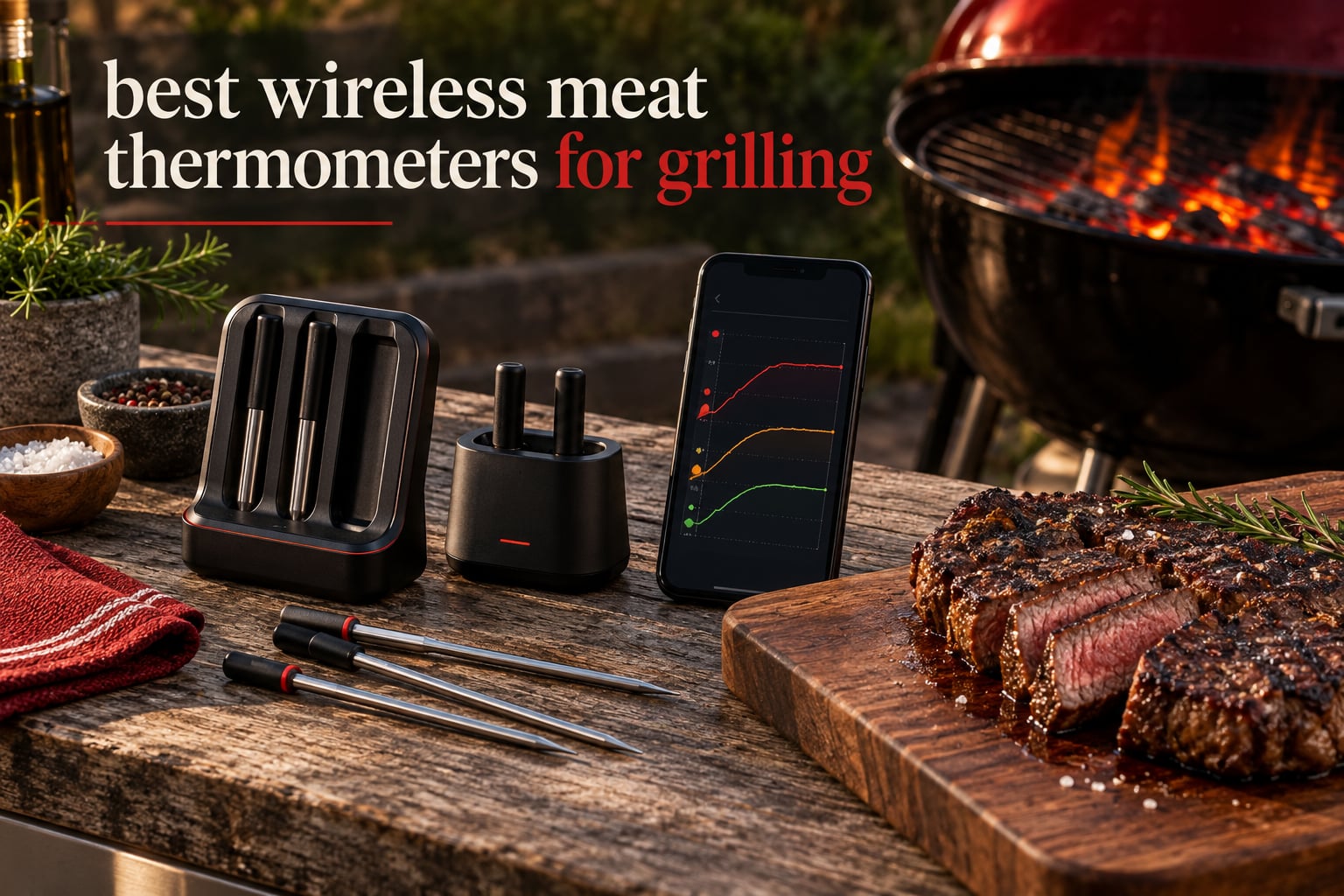
A wireless meat thermometer is a leave-in probe that reports internal food temperature, and usually ambient grill or smoker temperature too, to a handheld receiver, a phone app, or both, so you can monitor a cook without standing over the grill. For most people hunting for the best wireless meat thermometers for grilling, the deciding factors are real range with the lid closed, sensor count, and whether you can use the thing without an app.
Our team cooked through ten of them across steaks, chicken thighs, pork shoulder, brisket and air fryer loads. Five rely on Bluetooth, two use Wi-Fi, two run on Sub-1G radio, and one is a plain RF receiver that needs nothing but batteries. We tracked accuracy against a control instant-read, watched how the ambient channel behaved when the probe sat buried in meat, and measured how far the signal actually carried with a metal lid down.
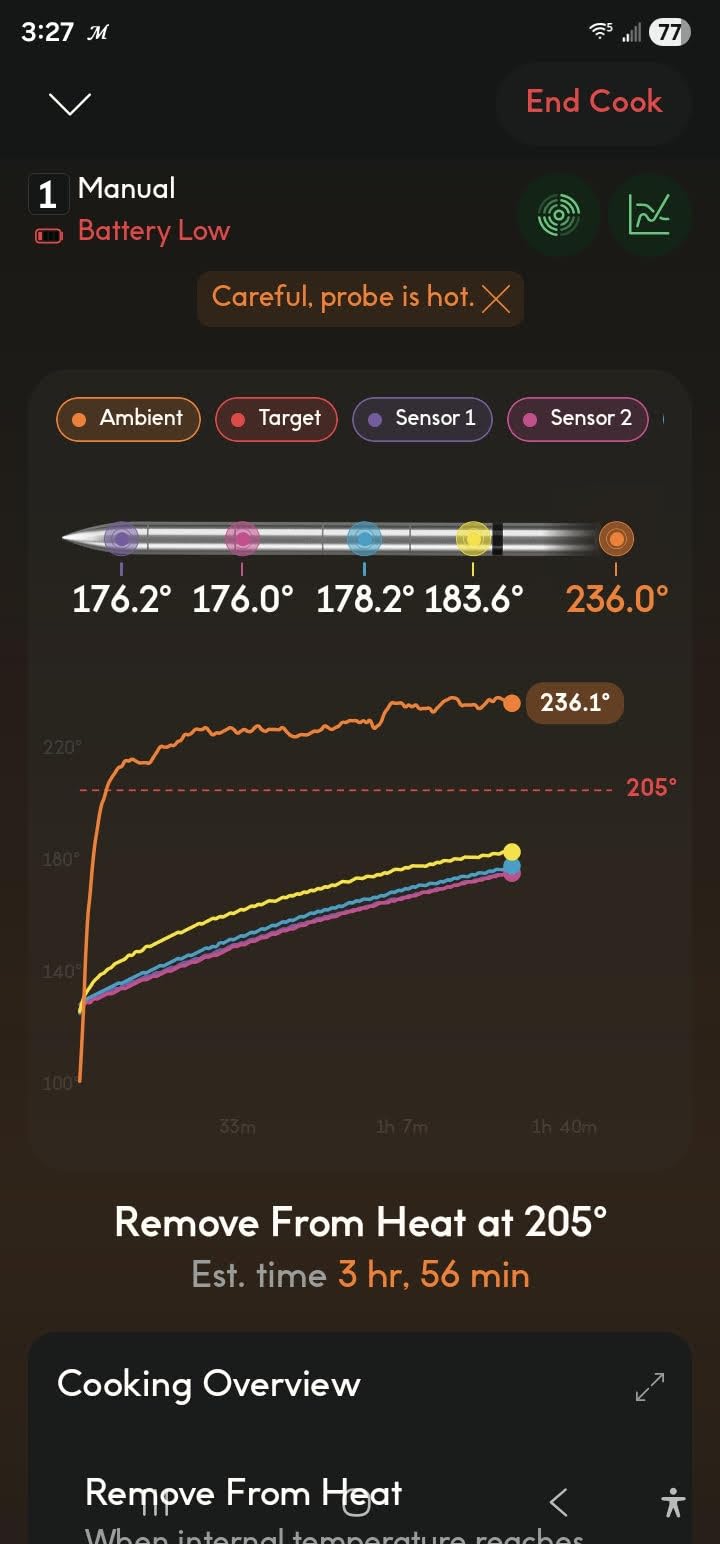
One finding shaped everything else: the ambient sensor on a probe left in meat reads low, sometimes well below the true pit temperature, because the probe body pulls heat out of the air. If you rely on that channel to tell you how hot your smoker really is, you need a separate pit thermometer. Our picks below use it as a rough trend line, not as a control.
If you also care about prep, our picks on the best cutting boards for meat pair well with any of these. For non-cooking temperature needs, we covered smart thermometers separately.
Table of Contents
Top 3 best Wireless Meat Thermometer Picks for 2026
Our Editor’s Choice, the TempPro TempSync 500FT, works out of the box with no account and no app, which is exactly what most cooks want. The MEATER Plus takes the top slot for cable-free cooking, and the ThermoMaven Sub-1G WT10 carries a signal through smoker steel that Bluetooth units cannot.

TempPro TempSync 500FT
- RF receiver
- no app needed
- Dual food and ambient probes
- 500ft rated range

MEATER Plus
- Truly wire-free probe
- Dual internal and ambient sensors
- Bluetooth repeater in charger

Quick Overview Every Wireless Meat Thermometer We Tested in October
All ten models appear in the table below with the specs that actually change the outcome of a cook. Use it to narrow the field before you read the full write-ups.
| Product | Specifications | Action |
|---|---|---|
| TempPro TempSync 500FT |
|
Check Latest Price |
| MEATER Plus |
|
Check Latest Price |
 TempPro TempSpike 500ft TempPro TempSpike 500ft |
|
Check Latest Price |
| ThermoMaven Sub-1G WT10 |
|
Check Latest Price |
 Inkbird IBT-4XS Inkbird IBT-4XS |
|
Check Latest Price |
 Inkbird IB-0960 WiFi Inkbird IB-0960 WiFi |
|
Check Latest Price |
 ThermoMaven P2 WiFi ThermoMaven P2 WiFi |
|
Check Latest Price |
 CHEF iQ Sense Gen3 CHEF iQ Sense Gen3 |
|
Check Latest Price |
 Govee H5055 Govee H5055 |
|
Check Latest Price |
 Typhur Sync Gold Gen2 Typhur Sync Gold Gen2 |
|
Check Latest Price |
How We Tested
Every thermometer ran through the same six checks so the results compare cleanly.
Ice bath and boiling water. We packed the sensing end into a well-stirred ice slurry and waited for stability, then into boiling water, comparing against a control instant-read each time. Anything that missed by more than a degree or so had to earn its place on range, price and build instead.
Grill and smoker work. Each model took a full cook: steaks and chicken thighs on a gas grill, a pork shoulder and a brisket in a smoker, plus air fryer loads for the high-heat crowd. We noted response time and whether readings tracked our control probe.
Ambient channel behaviour. With the probe buried in a thick cut, we compared the ambient reading against the smoker’s own dial. Every model under-reported here, and the size of the gap varied widely.
Range walk-out. Starting with the lid closed, we walked away in five-foot steps until the reading froze or dropped, then repeated through a garage door and around a corner. Advertised range never matched what we got.
Battery and recharge. We timed how long each probe or receiver ran on a full charge and noted whether the device warned you before dying mid-cook.
App and setup friction. Pairing, account creation, alert behaviour and whether the hardware alone could do the job without a phone.
1. TempPro TempSync 500FT Wireless Meat Thermometer – Editor’s Choice
TempPro TempSync 500FT Wireless Meat Thermometer for Grilling and Smoking
RF radio, no app or account
Dual probes for food and ambient
32-572F range, 3 second response
Pros
- Works straight out of the box with zero setup
- Highest rated model in our group with a deep review base
- Long RF link carried signal across an insulated garage door
- Two probes cover two proteins at the same time
- Readable backlit display with count-up and count-down timer
Cons
- No low-battery warning before the display goes dark
- No app so no remote notifications or cook history
- Transmitter needs batteries removed to fully power down
This is the model I hand to anyone who says they just want a thermometer that works. You pull the tabs, drop the receiver on the counter, and the display shows both probes at once. No account, no download, no Wi-Fi handshake, and nothing to sign in to when the smoke alarm goes off at midnight.
The RF link is the reason it holds up where Bluetooth units struggle. In our walk-out test the reading stayed live through a closed insulated garage door and around a corner, which is a realistic backyard-to-kitchen setup for plenty of people. The manufacturer rates it at 500ft, and like every claim in this category, you will get a fraction of that. Even so, it never froze on us.
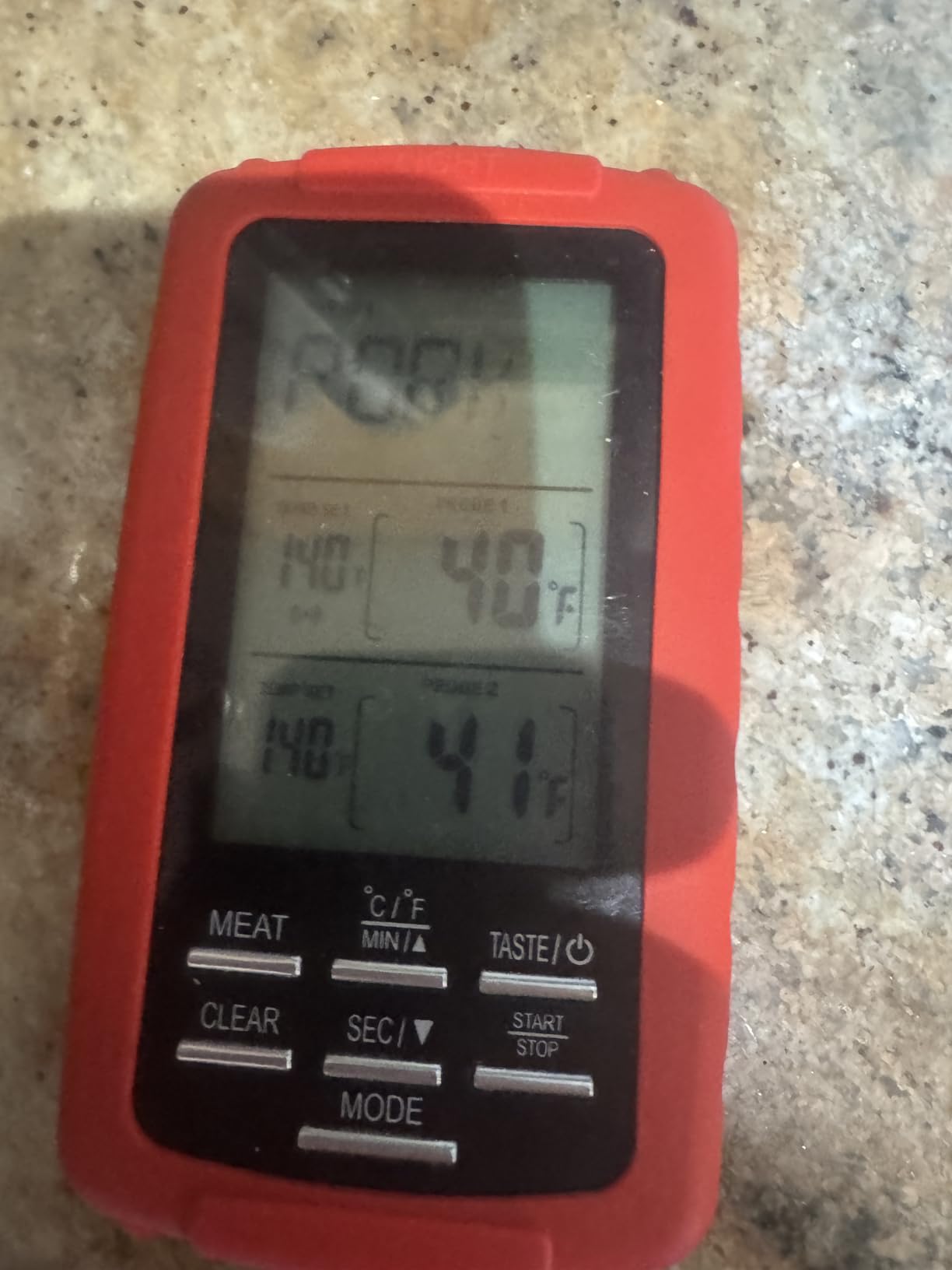
Two probes ship in the box, and each one shows food temperature or ambient temperature as you choose. That makes it the only pick here that tracks two cuts at once without cables running to a base. Long-term owners report four-plus years of service, which matches what we saw in build quality.
The ambient channel under-read pit temperature with the probe buried, as expected. Use the second probe inserted into the firebox wall if you want a real pit number, and leave the first one in the meat.
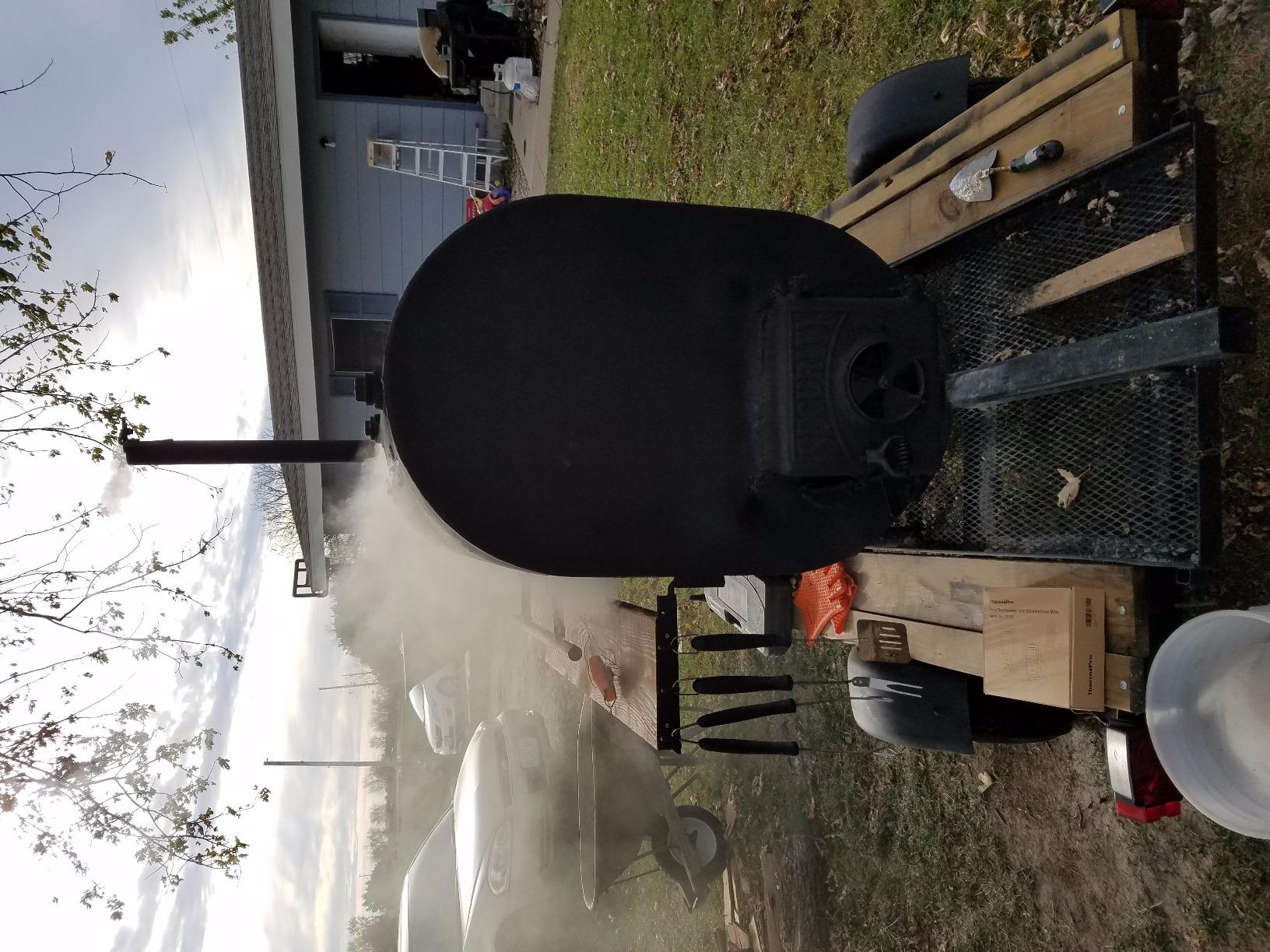
What you get from the two-probe setup
Both probes display simultaneously on the receiver, so a pork shoulder and a rack of ribs can run side by side with nothing hidden behind an app. The timer, alarm and USDA presets for ten meat types all live on the device, and every preset can be overwritten with your own target.
That independence matters more than it sounds. Forum threads about wireless thermometers keep circling back to how annoying it is when a cook is buried in setup menus while dinner burns.
Where it falls short
There is no low-battery warning. More than one owner has described the display going dark during an overnight brisket because nobody noticed the AAAs were fading. Pop fresh batteries before long cooks.
It also cannot cook you a report card afterwards. No graphs, no history, no push alerts. If your smoker sits in the far corner of the yard and you want a notification on your phone, look at the Wi-Fi picks further down.
2. MEATER Plus Smart Meat Thermometer – Best Cable-Free Experience
MEATER Plus Smart Meat Thermometer, Honey, Bluetooth, 165ft, Grill & Oven
100 percent wire-free probe
Dual internal and ambient sensors
32-527F range, hours per charge
Pros
- Nothing runs from the meat back to a base or a cable
- Bluetooth repeater built into the bamboo charger
- App gives guided steps and estimated finish times
- Dishwasher safe
- Excellent review volume from long-term owners
Cons
- Probe-to-base link is far shorter than the 165ft claim
- No battery indicator on the probe
- Single probe only
- Re-pairing friction when the charger moves
The MEATER Plus is still the cleanest cable-free design in the category. Nothing comes out of the steak, nothing runs to a transmitter, and you slice with a clean board. That convenience is the whole pitch, and after cooking on it we understand why the review count sits where it does.
The charger doubles as a Bluetooth repeater, which quietly solves the short link between probe and phone. The catch is that the base needs to be near the grill for that repeater to help. Push the charger inside the house and the probe-to-base hop collapses to roughly 33ft in our testing.

Dual sensors handle internal and ambient readings, with internal rated to 212F and ambient to 527F. Five minutes on the charger buys about two hours of cook, which covers most weeknight grilling and plenty of smoke sessions when you charge between courses.
The app is the strongest part of the package. Guided cook steps, real-time alerts and estimated finish times take the guesswork out of a first brisket, and long-term owners report consistent results across steak, chicken, turkey and roasts.
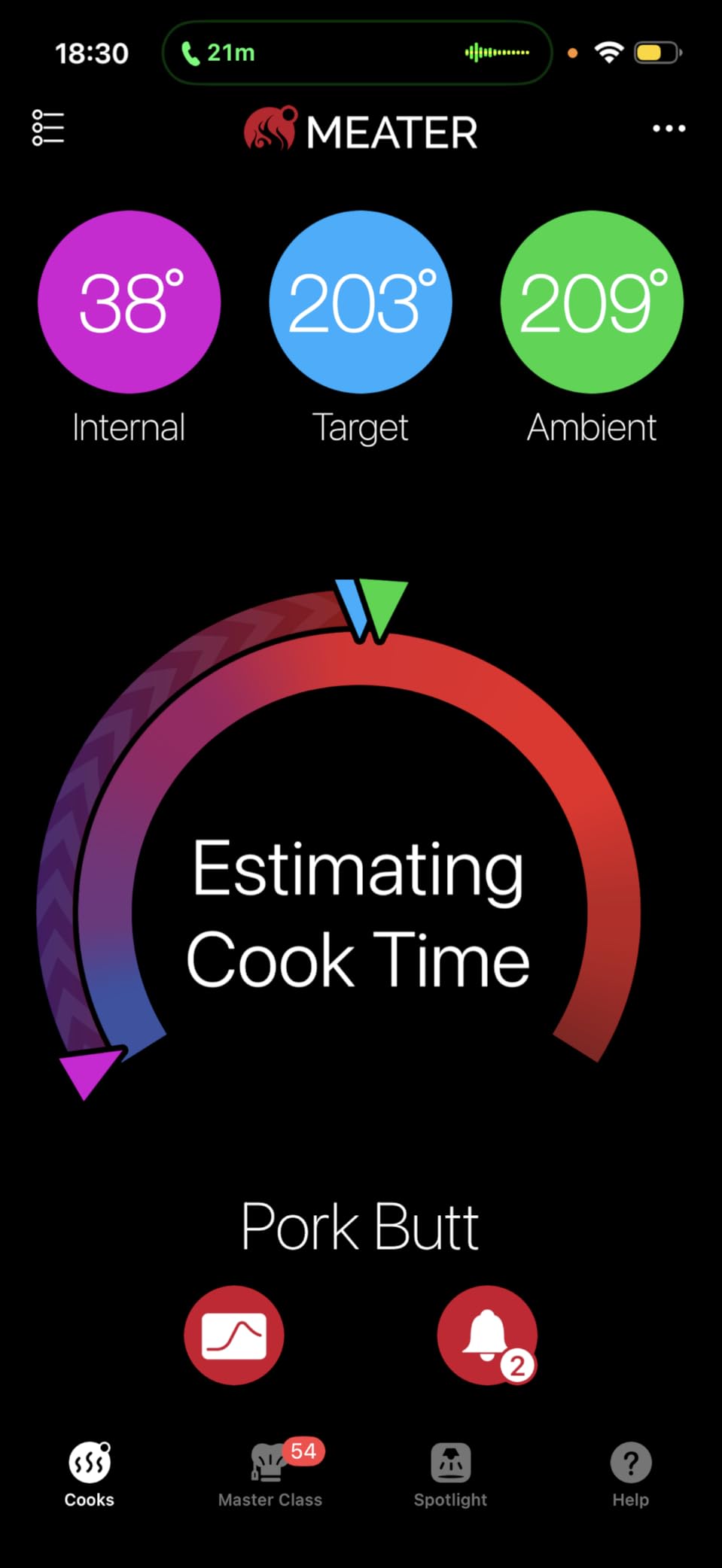
Where the cable-free design pays off
Small cuts. Owners who cook burgers, sausages and chicken wings love this probe because there is no cable to pinch shut the meat or drip juice down the counter. On a thicker cut the tradeoff is thickness, since the probe body is wider than a thin instant-read needle.
It is also the easiest to hand to someone who is not deep into gadgetry, as long as they will use a phone. The guided steps in the app do most of the explaining.
Where the cable-free design annoys
Range is the honest weak spot. Advertised figures assume open air and a base positioned well. In a real yard with a metal lid down, treat the effective figure as a fraction of the claim.
There is no battery level indicator on the probe itself, and pairing occasionally re-establishes after a move. Budget a spare charge before an overnight smoke rather than trusting a full battery from the drawer.
3. TempPro TempSpike 500ft Wireless Meat Thermometer – Best for High-Heat Cooking
TempPro TempSpike 500ft Wireless Meat Thermometer with Upgraded Meat Probe
Ceramic handle rated to 1050F
IPX8 waterproof cable-free probe
RF plus Bluetooth 5.2, pre-paired
Pros
- Genuinely cable-free probe with a 1050F ceramic handle
- Handles searing
- deep frying and pizza oven work
- IPX8 waterproof body cleans deeply
- Pre-paired so there is no account or WiFi setup
- Built-in low battery alert
Cons
- Base must stay close to the grill or the link drops
- Ambient readings can run under the appliance dial
- No true on/off switch so the battery keeps draining
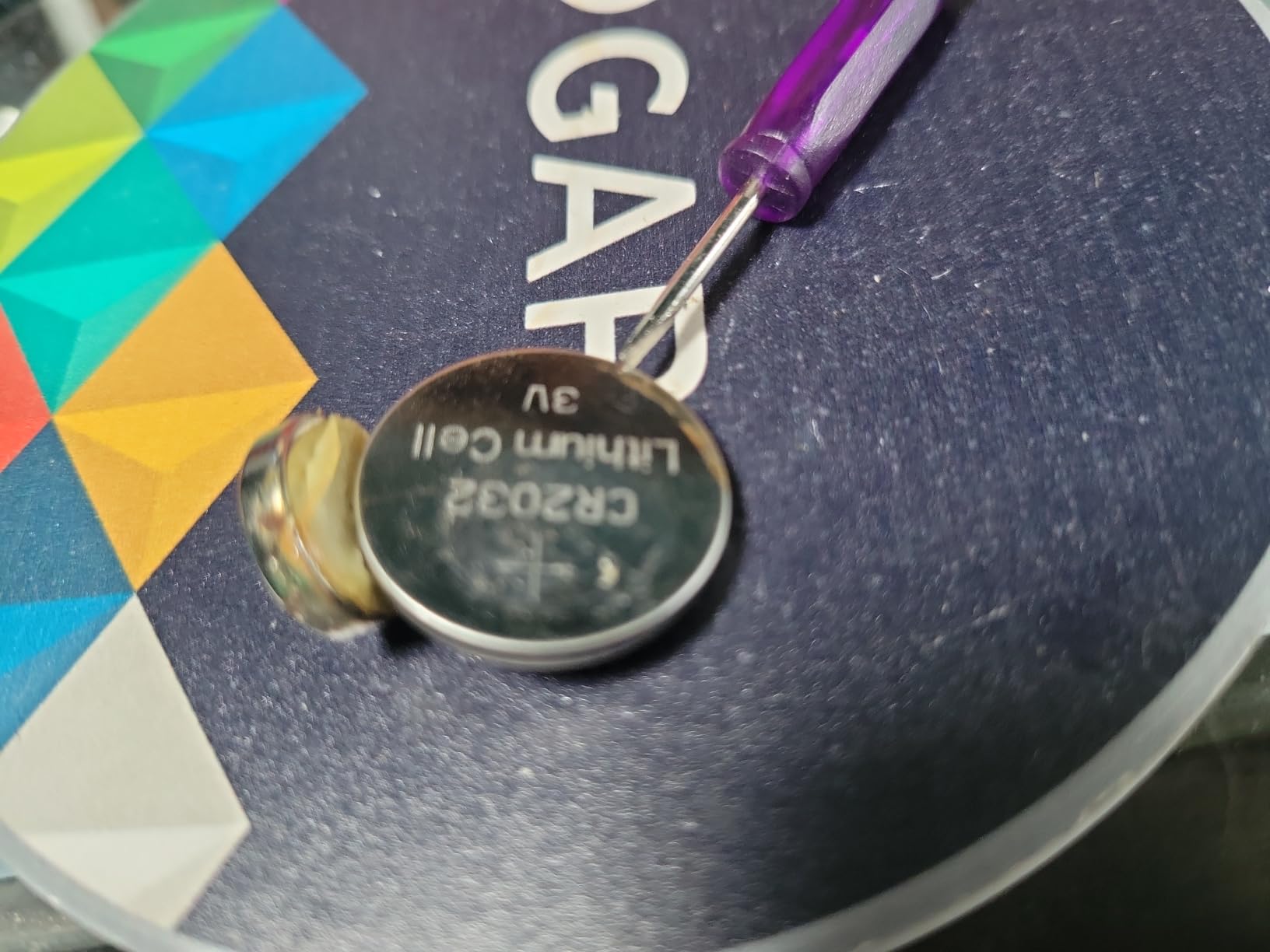
- Adhesive-secured CR2032 is awkward to swap
The TempSpike is the pick for anyone whose cooking gets genuinely hot. The ceramic handle is rated to 1050F, which means the probe can stay in the meat through a hard sear, sit in an air fryer, or handle a pizza oven without cooking itself. Most competing probes soften or throw errors well below that.
Radio is a combination of RF and Bluetooth 5.2, which is unusual at this level. The app needs no account and the unit arrives pre-paired, so you are not typing credentials into a phone while raw chicken sits on the counter. That single design choice removes the most common reason first-time buyers give up on app thermometers.
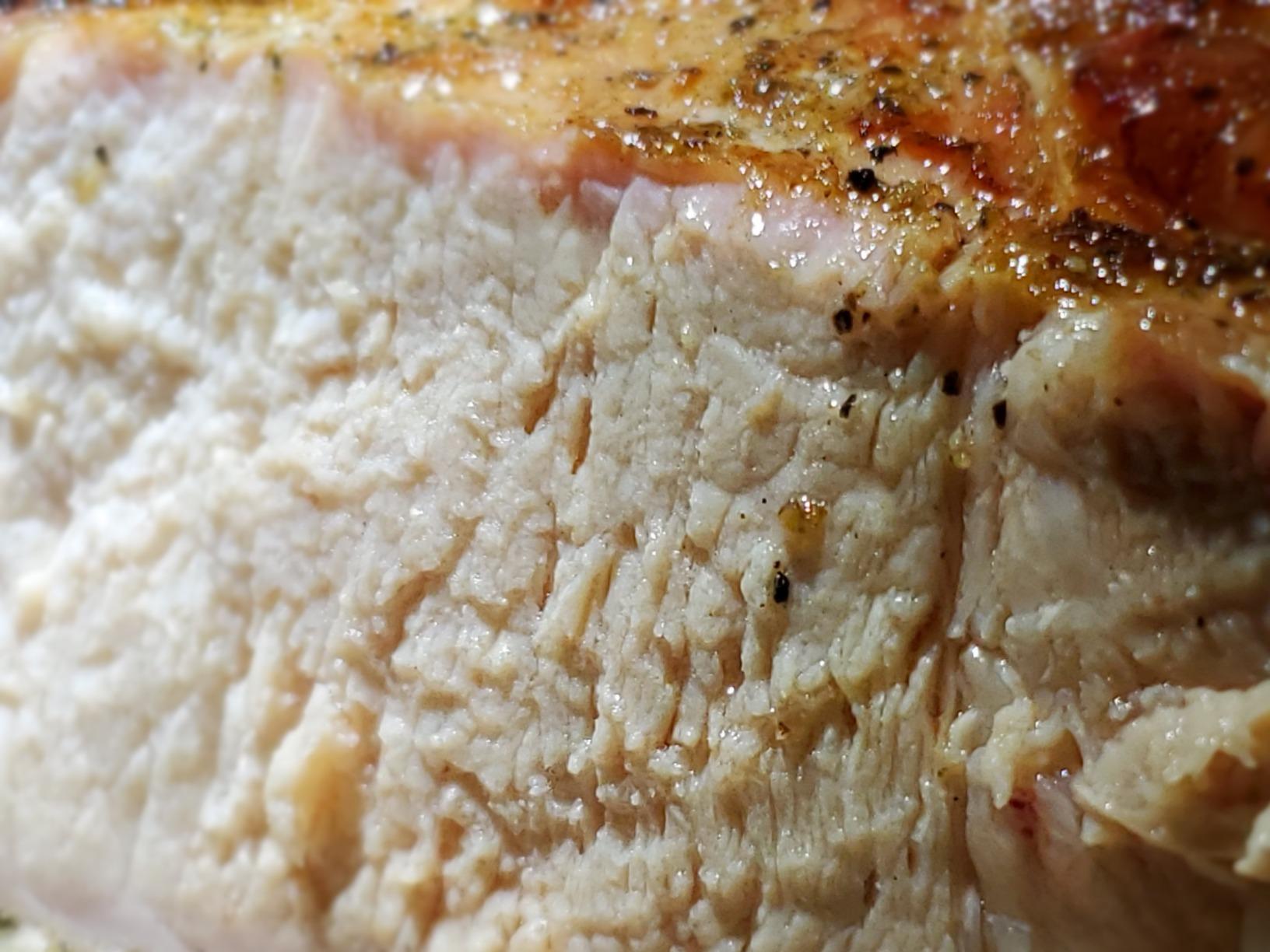
Accuracy sits around plus or minus 1.8F, and owners report ice bath and boiling water checks landing within a degree or two. The app links to Apple Watch alongside phone and tablet, and carries custom alerts plus cooking estimates.
Temperatures span 14F to 212F internal and 14F to 572F ambient, so it doubles as a brining and cold-read thermometer. That cold end is a genuine advantage over several rivals that stop at 32F.
When high-heat tolerance changes the result
Deep fryers and broilers punish probes that cannot take the heat. Keeping this one inserted through a sear means you learn the moment a steak crosses from rare to medium rare without lifting the pan or guessing at rest time.
Owners also like that the IPX8 body takes a deep clean, which matters when smoke and oil have to come off before the probe goes near food again.
When high-heat tolerance is not enough
The base still needs to be near the grill. Move it far away for convenience and the link becomes the weak point, which undercuts the reason you wanted a wireless probe in the first place.
Some owners report ambient readings below the appliance’s own dial, and there is no on/off switch, so the battery drains while the probe sits idle in the fridge. The adhesive on the coin cell makes a swap a fussy job with tweezers.
4. ThermoMaven Sub-1G WT10 Wireless Meat Thermometer – Best Range Through Smoker Steel
ThermoMaven Sub-1G Smart Wireless Meat Thermometer with Standalone Base
Sub-1G radio, 3000ft range
6 sensors, NIST plus or minus 0.5F
Internal 221F, ambient 752F
Pros
- Sub-1G signal carries through thick smoker steel
- Base runs standalone with its own display and target setting
- NIST-certified accuracy at 0.01F resolution
- Smart mode pulls food before the target temperature
- USB-C charging with 10 plus hours per charge
- 18 month warranty and a calibration certificate in the box
Cons
- Single probe only
- Ambient sensor lags and under-reports on fast high-heat cooks
- Recipe library in the app is thin
- An unexplained network error can appear in the app
This is the model I trust when the grill is a long way from the kitchen. Sub-1G radio sits below the Bluetooth band and behaves very differently around metal, and in our walk-out the reading stayed live far past the point where Bluetooth models started dropping. Owners running offset smokers and pellet grills report the same thing.
The manufacturer claims 3000ft unobstructed and 700ft obstructed. Even allowing for the usual optimism, it held a stable signal inside the house, which is the range claim that actually matters at dinner time.
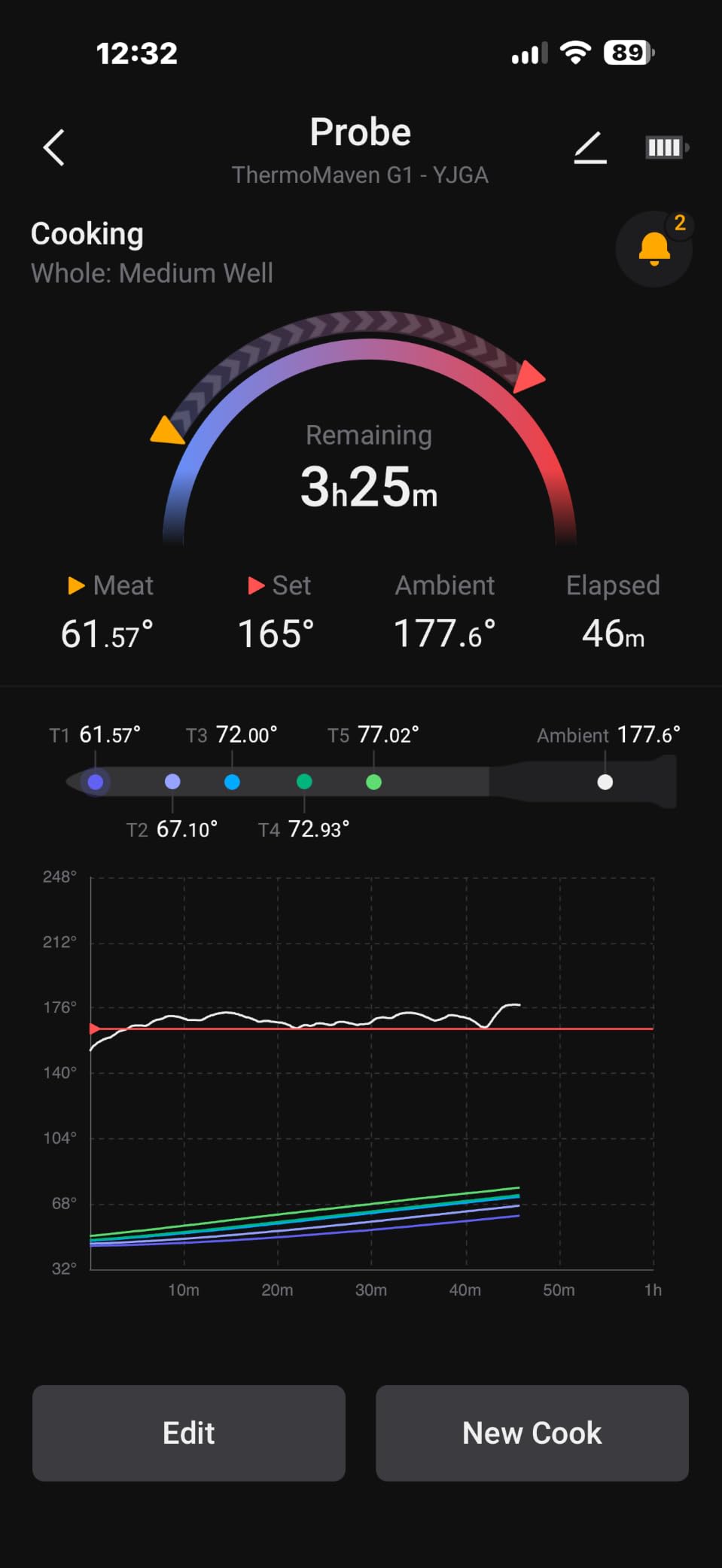
The sensor stack is where the money went. Six sensors, five internal and one ambient, NIST-certified at plus or minus 0.5F with 0.01F resolution. In practice that is tighter than most instant-read thermometers we used as controls, so it never held up our results.
Smart mode is a nice touch: it pulls the food before the target so it finishes without drying out. The base has its own display and target setting, which means you can run the whole cook without opening an app, and it magnetically attaches to a smoker side or pellet hopper.
Why Sub-1G beats Bluetooth on a metal cooker
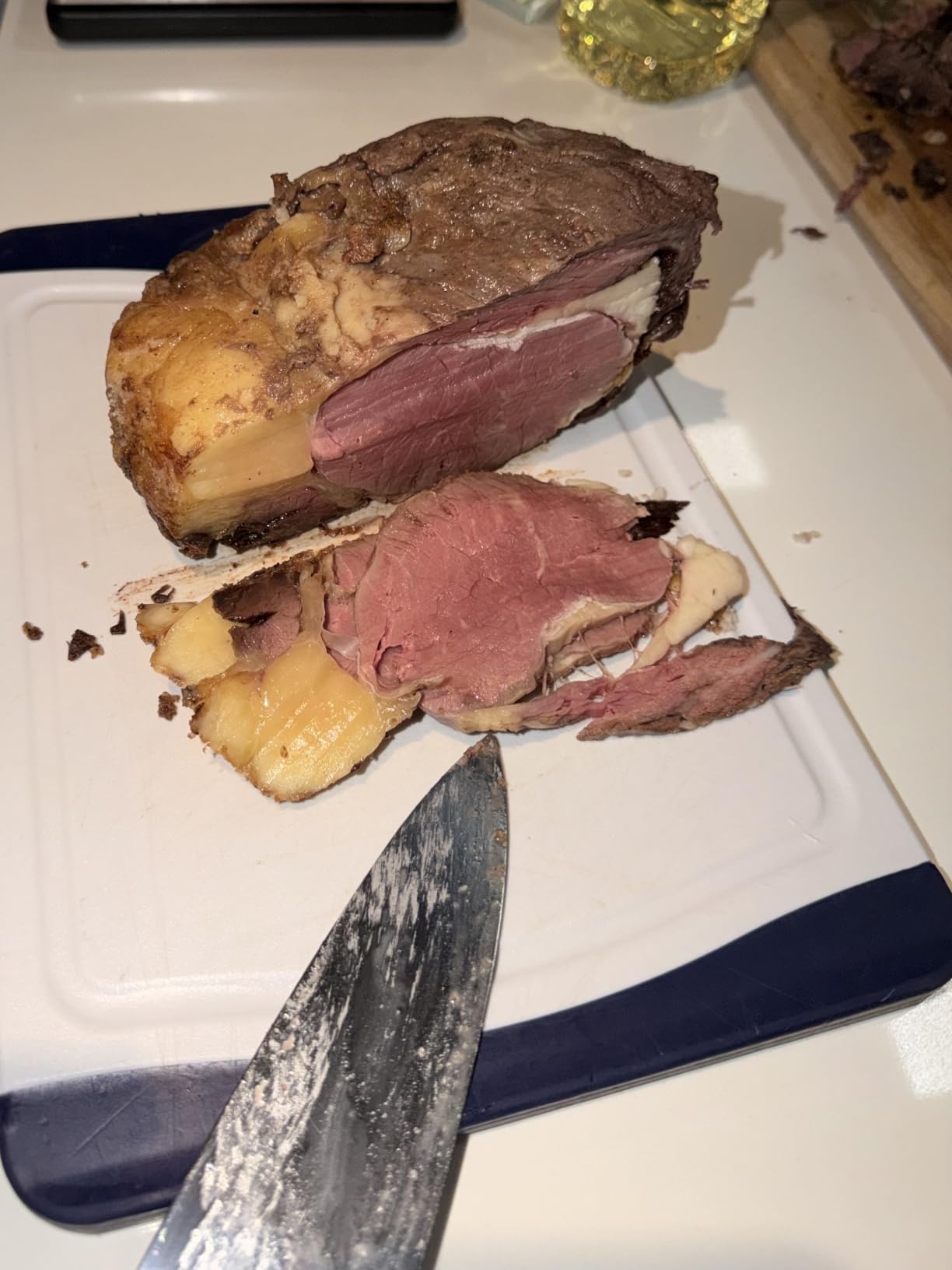
Bluetooth signals get absorbed by thick steel and by the insulated walls of a kamado or offset. Sub-1G transmits lower and with more penetration, so the probe keeps reporting from inside the cook box while you sit at the table.
For anyone whose grill sits at the bottom of a yard, that reliability is worth more than any extra app feature. It is also the reason this category has shifted toward Sub-1G hardware in recent years.
Why the single probe holds it back
There is one probe and the base takes no additions. That rules out the multi-cut cook, where a pork shoulder and a chicken both need watching at once. Look at the four-probe picks if that is your situation.
The ambient sensor also lags and under-reports during quick, high-heat cooks, and the app’s recipe library is thin next to its hardware. Menu text is English only, and the probe wants roughly 6cm of insertion for a steady reading.
5. Inkbird IBT-4XS Bluetooth Thermometer – Best for Four Probes at Once
INKBIRD Bluetooth Digital Wireless Food Meat Thermometer IBT-4XS, 4 Probes
Bluetooth base with 4 probes
32-572F short-term range
Rotatable 2.2 inch LED
Pros
- Four probe capacity in a single unit
- Rotatable LED readout readable from any angle
- Rechargeable battery good for roughly 40 hours of cooking
- Strong magnetic back clamps to a smoker or oven
- App includes temperature graphing and pairs with both iPhone and Android
Cons
- Probes must be firmly seated or readings jump to implausible values
- These are wired probes ending in a Bluetooth base
- Effective range drops with walls and grill doors
- No calibration function
Four probes is the number most cooks actually want and the number most products refuse to deliver. The IBT-4XS ships three meat probes plus a dedicated ambient probe, all terminating in a Bluetooth base with a big magnetic back. You clamp it to the smoker wall and read it from the doorway.
The rotatable display is a small idea with a large effect. Double tap the power key and the readout turns, which means the base can sit flat against the steel of an offset smoker without craning your neck. Owners single this out as the reason the unit lives in their rotation.
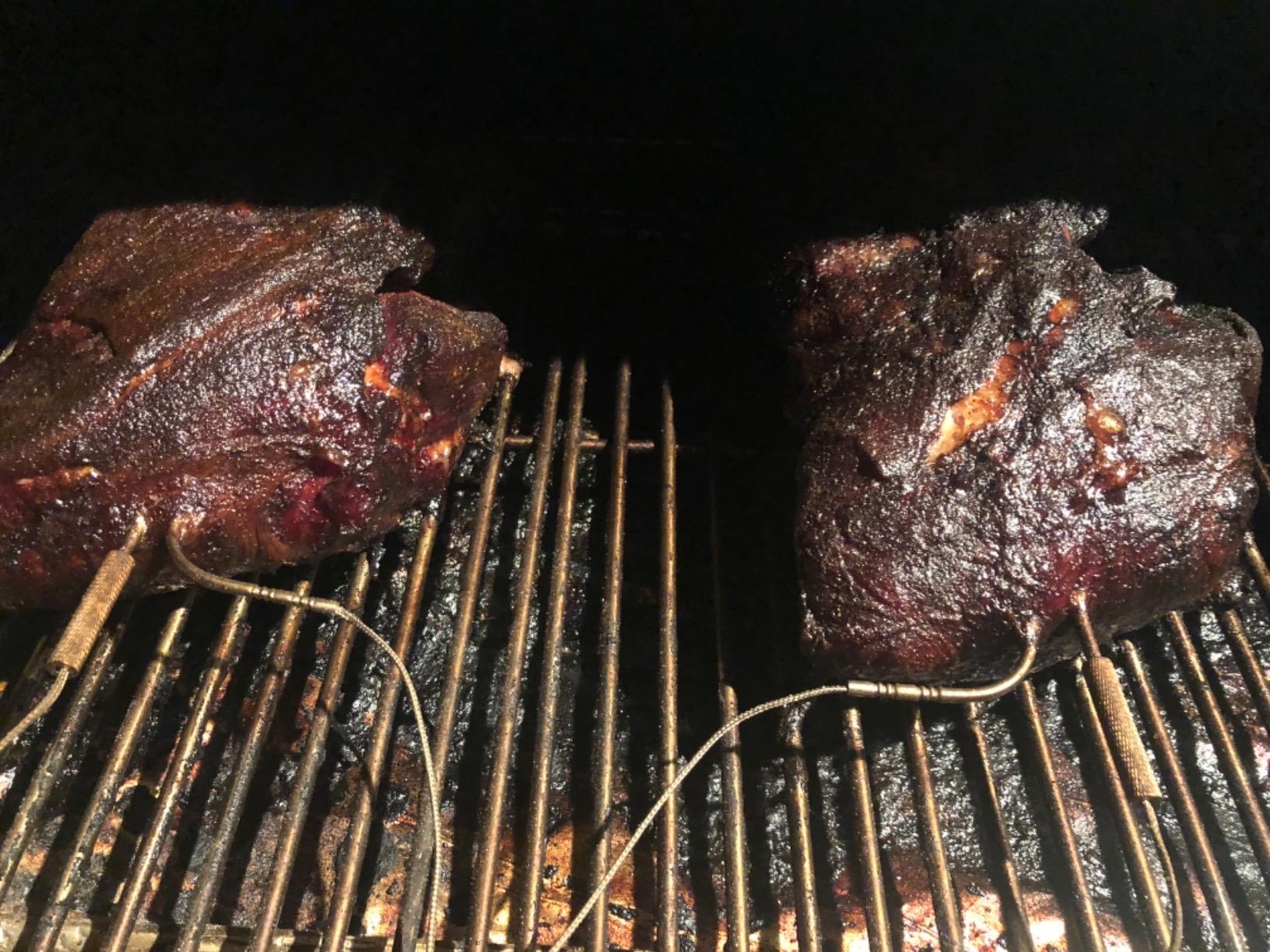
Battery life is roughly 40 hours per full charge, which covers an overnight cook without a mid-night charge. Bluetooth range is rated at 150ft outdoors, and in practice that holds across an open yard but drops once walls or a closed grill door get involved.
The app graphs temperature over time so you can see the shape of a cook rather than a single number. It is functional rather than beautiful, and pairing requires location services to be enabled on your phone.
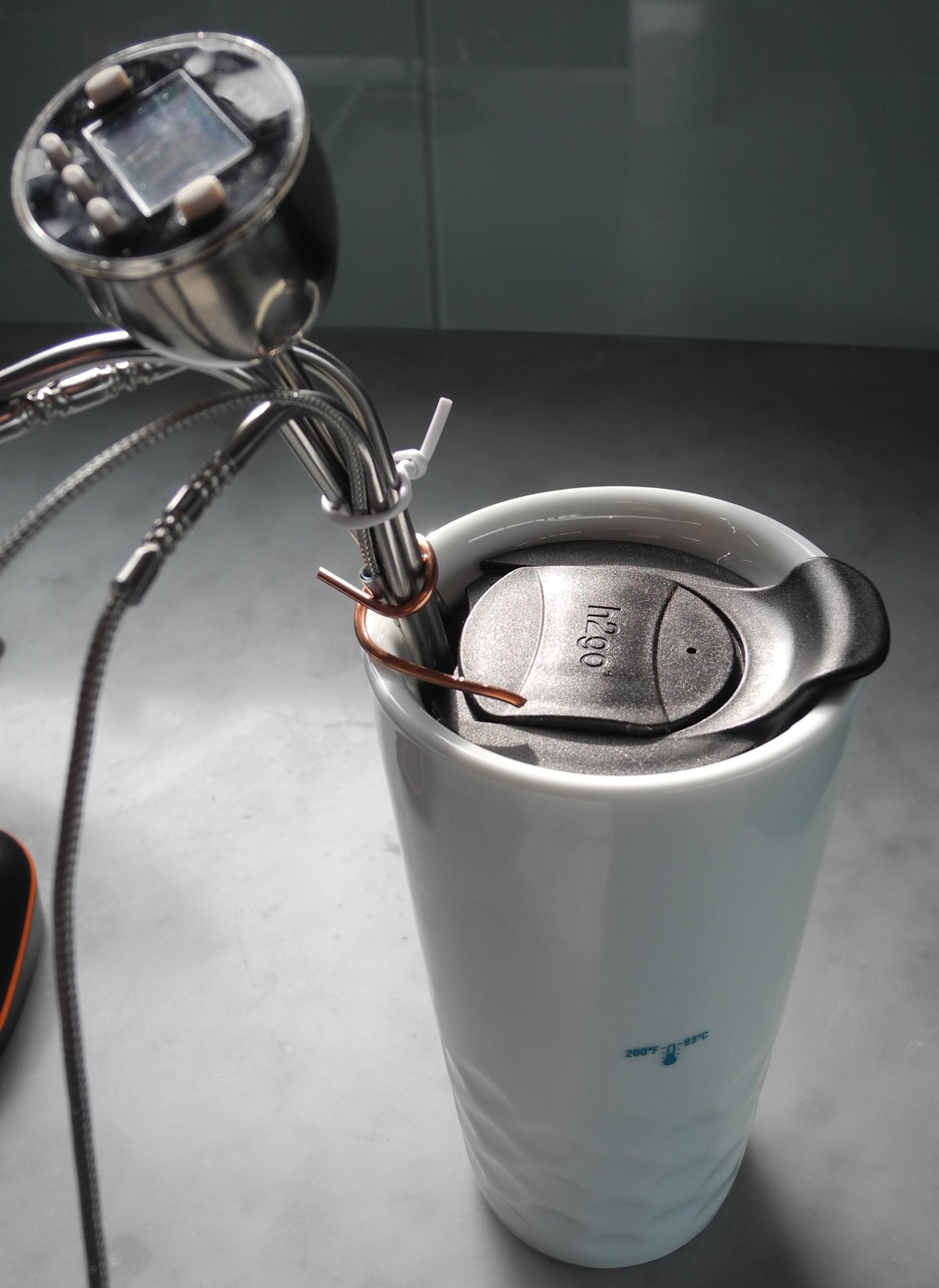
How four probes change a cook
Three cuts plus a dedicated ambient probe means a whole dinner gets monitored at once. A shoulder in the top position, two chickens below, and one probe reading the actual firebox temperature that the internal ones cannot give you.
That last point matters. Because one probe is free for pit temperature, you sidestep the heat-sink problem entirely on this pick in a way none of the single-probe models allow.
How four probes change the caveats
These are wired probes ending in a Bluetooth base, so cables still run out of the meat. That is less tidy than a cable-free stick but entirely manageable on a smoker with a shelf to route them along.
Probe seating matters enormously. A loosely inserted probe throws wild readings such as 572F, and there is no calibration function to correct a unit that runs off. Peel the screen film before first use and push every probe home until you feel the click.
6. Inkbird IB-0960 WiFi 4-Probe Thermometer – Premium Multi-Mode Pick
Wireless Meat Thermometer with 4 Probes, INKBIRD WiFi Meat Thermometer Digital Wireless for Rotisserie Grill Oven,Unlimited Range Dishwasher Waterproof Bluetooth Thermometer for iOS & Android
WiFi, Bluetooth and receiver modes
4 probes, 2 sensors each
Backlit base, 25 hour battery
Pros
- Three connectivity modes including a phone-free receiver option
- Four independent probes each with internal and ambient sensors
- Magnetic base doubles as charger and 30 minute data logger
- App includes 28 USDA presets with five taste levels
- Spare probes sold individually
- IP67 waterproof probes
Cons
- App caps selectable temperatures near 203F which blocks higher heat cooking
- Plastic base is rated to only about 176F
- Some units show probe-to-probe drift of roughly 10F
- Foil wrapping blocks the Bluetooth signal to the base
This is the most flexible box in the roundup. It runs on Wi-Fi for genuinely unlimited distance, Bluetooth at roughly 300ft outdoors for camping, or a receiver mode that skips the phone entirely. Owners who wanted wireless monitoring without an app dependency keep singling this one out.
Each of the four probes carries two sensors, one at the head and one at the tail, so you get an internal and an ambient number per probe. The base has a wide backlit display that shows all four without opening the app, and it stores 30 minutes of cook data on its own.
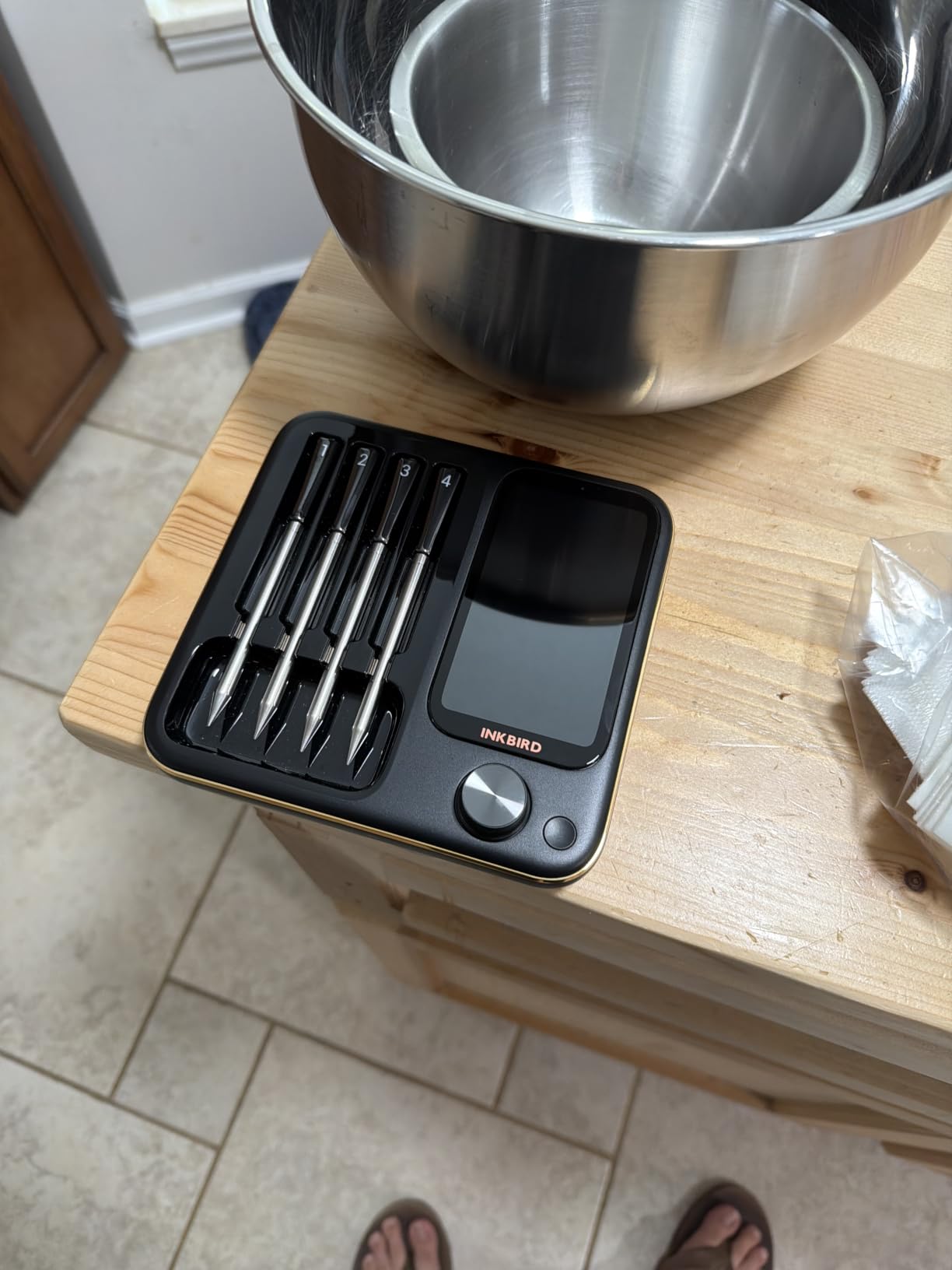
App support is the best in this group. Twenty-eight USDA presets, five taste levels, custom cooks with photos, time alerts and graph tracking. Calibration runs from minus 12.6F to plus 12.6F, which is rare at this level and lets you correct a probe that has drifted.
Battery life lands around 25 hours per charge with IP67 waterproof probes, and spare probes can be bought individually so one failure does not end your setup.
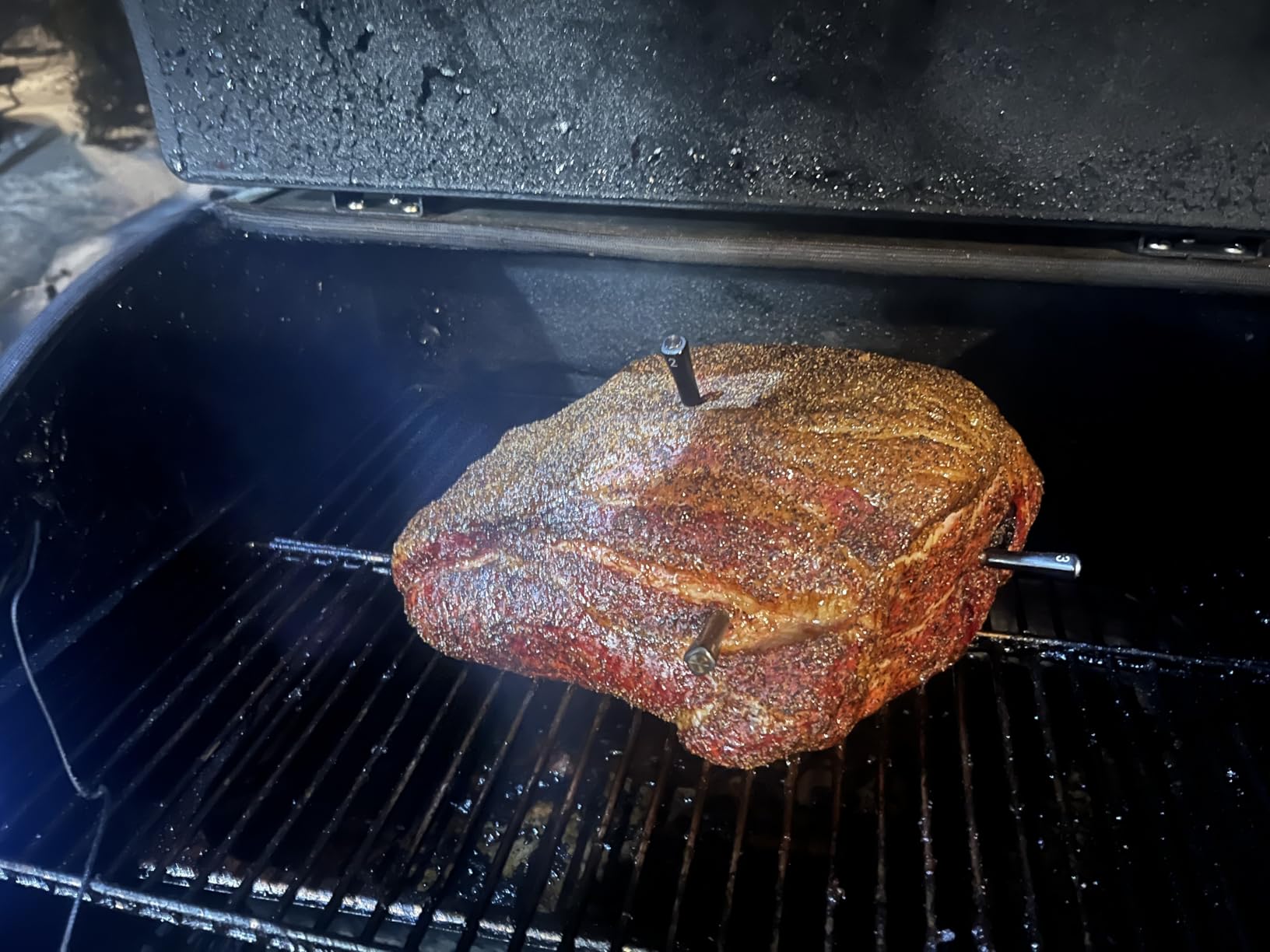
Why three connectivity modes matter
Wi-Fi on a 2.4GHz band means you can check a smoker in a garage, a shed, or the far end of the property without caring about distance. Bluetooth covers trips away from home. Receiver mode covers the cook who would rather not deal with a phone at all.
That flexibility is why this is the pick we would put in a gift basket. Nothing about it breaks when the recipient dislikes apps.
Why the app ceiling is a real problem
The app caps selectable temperatures near 203F and throws a probe-too-hot warning, which gets in the way of searing or any genuinely high-heat work. That ceiling is the main reason the rating sits below its rivals despite the feature set.
Keep the plastic base below about 176F and away from the cook box, do not wrap a probe in foil if you expect Bluetooth to hold, and note that some units show probe-to-probe drift near 10F. Inkbird’s support has earned credit for replacing dead probes.
7. ThermoMaven P2 WiFi Wireless Meat Thermometer – Best for Two-Probe Cooks
ThermoMaven WiFi Wireless Meat Thermometer, 2 Probes, Smart Base, 6 Sensors
Two ultra-thin 6-sensor probes
2.4GHz WiFi from the base
Internal to 221F, ambient to 752F
Pros
- WiFi from the base removes the Bluetooth range ceiling
- Ultra-thin probes keep juices in the cut
- Smart base sets targets without opening the app
- NIST-certified plus or minus 0.5F accuracy
- IPX8 dishwasher safe probes
- Base charges in 2 hours for 24 plus hours
Cons
- Requires a 2.4GHz only WiFi band
- Two probes may be limiting for large multi-cut cooks
- App and AI-guided features are optional rather than essential
The P2 is the step up from the Sub-1G version, and the difference is Wi-Fi from the base. Once the base joins a 2.4GHz network, distance stops being a factor at all, which Bluetooth-only units can never fully offer.
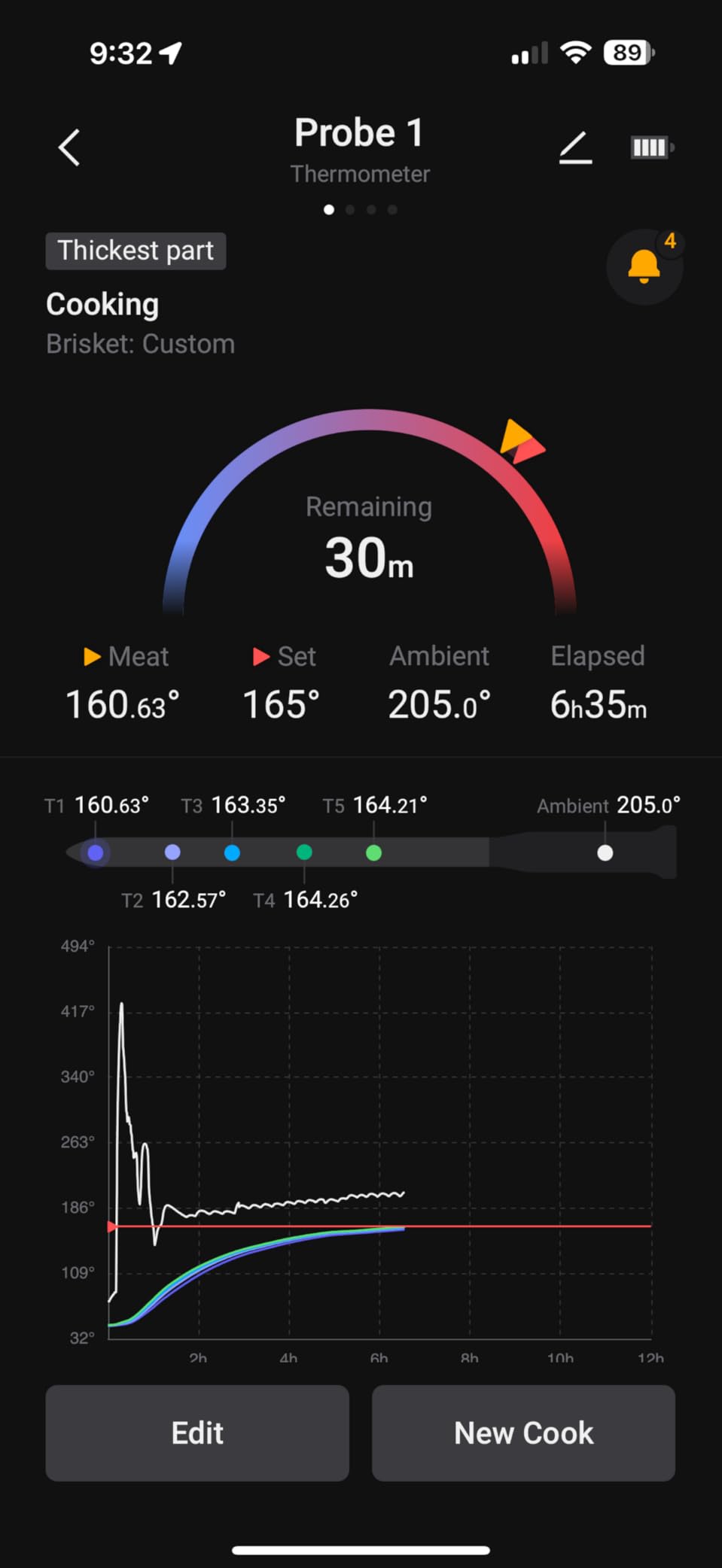
Two ultra-thin probes come in the box, each carrying six sensors, five internal plus one ambient. Thinness is the detail that gets overlooked until you cook a steak: these leave a much smaller hole than most probe bodies, so less juice escapes and the cut holds together when you move it.
The smart base is the part owners like most. You set target temperatures on the device and read live readings without touching a phone, and the app is there for history and guided cooking when you want it rather than as a requirement.
Charging is sensible. The base charges in two hours for more than 24 hours of use, and a two-minute probe charge returns two hours of monitoring, which covers most of a long cook with room to spare.
Why probe thinness earns its own badge
Steaks, burgers and chicken breasts all bleed juice around a thick probe. The ultra-thin profile here closes that gap, and it is the reason several reviewers comparing it against thicker probes in the same cook preferred the results.
Six sensors per probe also give an internal gradient, so you can see the centre progressing relative to the edge instead of trusting a single point reading.
Why two probes and one WiFi band cause friction
The 2.4GHz requirement is real. Modern dual-band routers often need manual configuration before the base will join, and that setup step is the most common reason buyers give up on Wi-Fi thermometers.
Two probes may not be enough for a big cook, and a four-probe variant exists for anyone who needs more capacity. Accuracy claims sit in the same plus or minus 0.5F class as the rest of this brand’s range.
8. CHEF iQ Sense Gen3 Smart Wireless Meat Thermometer – Best App-Guided Cooking
CHEF iQ Sense | Smart Wireless Meat Thermometer | 2 Ultra-Thin Probes | WiFi Unlimited Range | 1000°F Heat Safe | 5 Sensors | BBQ, Grill, Oven, Smoker, Air Fryer | Gen3
2 ultra-thin 5-sensor probes
Hub with speaker and WiFi bridge
Rated to 1000F heat
Pros
- Hub doubles as charger
- storage case
- WiFi bridge and speaker
- Color-coded numbered probes for multi-cut cooks
- 1000F heat rating resolved overheating complaints in earlier generations
- App has doneness presets
- flip reminders and rest timers
- Up to 40 hours per charge covers long smokes
Cons
- Cloud account and WiFi sign-in are mandatory before any feature works
- Connection occasionally drops and has to re-establish
- Some units had probes stop responding after mild oven use
- App supports only English and French-Canadian
Cooking performance is where this one shines. The Gen3 probes carry four internal sensors plus an ambient sensor each, and the 1000F heat rating fixed the overheating complaints that dogged earlier versions. You can leave the probe in place through a sear without watching for an error message.
The hub is the cleverest piece of hardware design in the category. It charges both probes at once, stores them, bridges them onto Wi-Fi, and doubles as a speaker so you get audible alerts from the counter rather than a silent push notification on a phone in another room.
Two probes are included and they are colour-coded and numbered, so tracking two steaks to different donenesses or two proteins at once is straightforward. Runtime runs up to 40 hours of continuous use on a full charge, with far longer standby.
The app is the most complete of the group: doneness presets, flip reminders, rest timers, estimated cooking times, guided recipes and video guides.
Why the hub speaker changes cooking day
A speaker alert means you hear the moment a brisket hits temperature from anywhere near the kitchen, with no phone in your hand and no screen to wake. On a long cook that removes the single most common failure mode, which is a missed notification.
Colour-coded probes solve the other recurring annoyance. When two cuts are cooking at different targets, a numbered colour on the probe tells you at a glance which reading belongs to which piece.
Why the mandatory account draws complaints
A cloud account must be created and the hub must join Wi-Fi before anything works, including core monitoring. Buyers who dislike handing data to an app express that strongly, and it is the main reason this rating sits mid-pack.
Connections occasionally need to re-establish, the hub still needs Wi-Fi even for basic use, and a few owners report probes going unresponsive after mild oven work. The app is English and French-Canadian only.
9. Govee H5055 Bluetooth Meat Thermometer – Budget Pick
Govee Bluetooth Meat Thermometer Digital with Smart App Timer and Alerts
Bluetooth transmitter, 2 probes
Plus or minus 1.8F under 302F
Backlit LCD with magnet
Pros
- Least expensive way into app connected monitoring
- Readings matched higher-end instant-reads in our side-by-side checks
- Food grade 304 stainless steel probes rated plus or minus 1.8F
- Backlit LCD with magnet
- fold-out stand and hanging hook
- App stores history with USDA recommended presets
Cons
- Wired probes with a Bluetooth transmitter
- Bluetooth range drops with walls and distance
- Notifications only fire when the app is opened and refreshed
- No calibration option
- Probe wires show wear after regular use
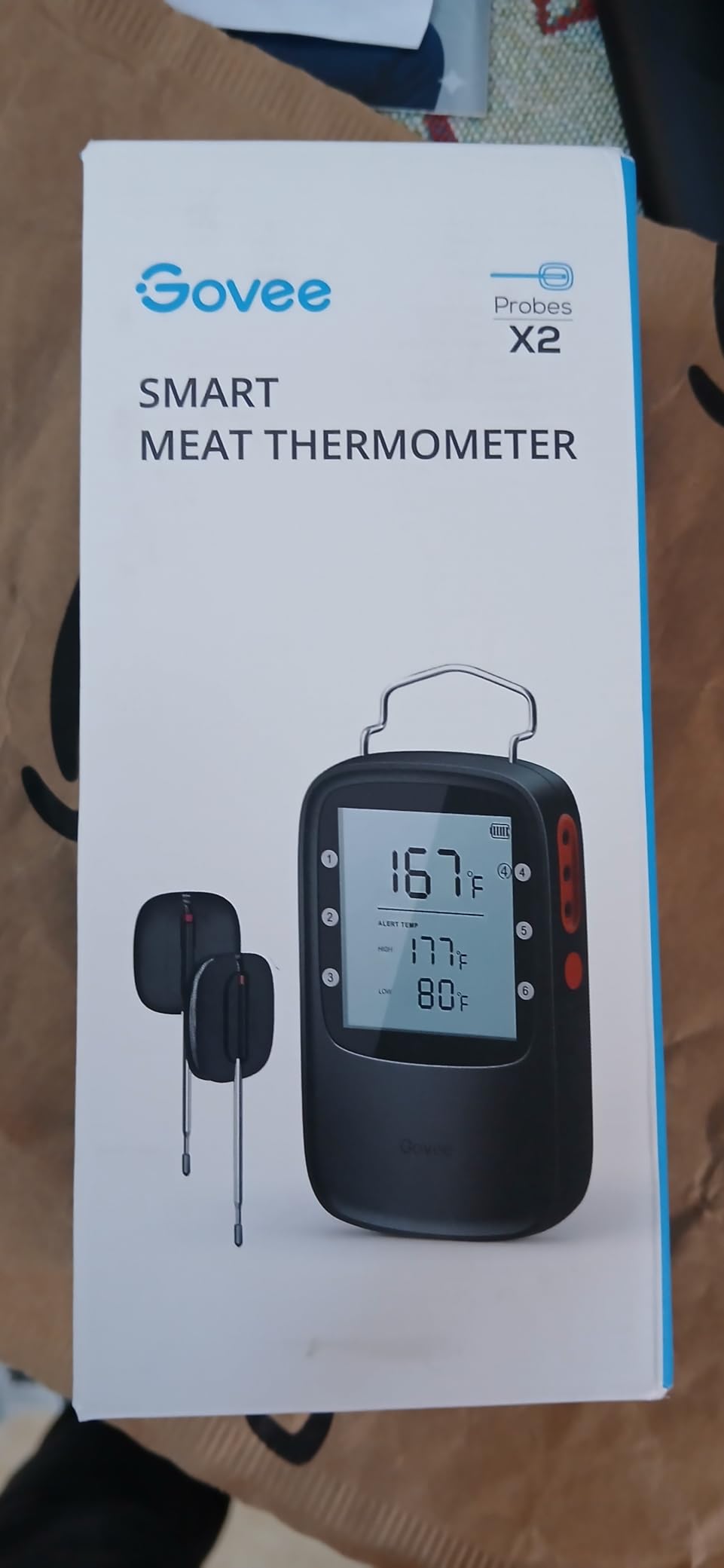
If you want to know what wireless monitoring actually feels like without spending much, this is the place to start. The Govee pairs with a phone over Bluetooth, stores cook history and presets, and the readings lined up with our control thermometer and with the smoker’s own dial.
Placement hardware is unusually good for the money. A strong magnet, a fold-out stand and a hanging hook mean the base can live on the side of a grill, on a shelf, or hooked under a cabinet without a mount.
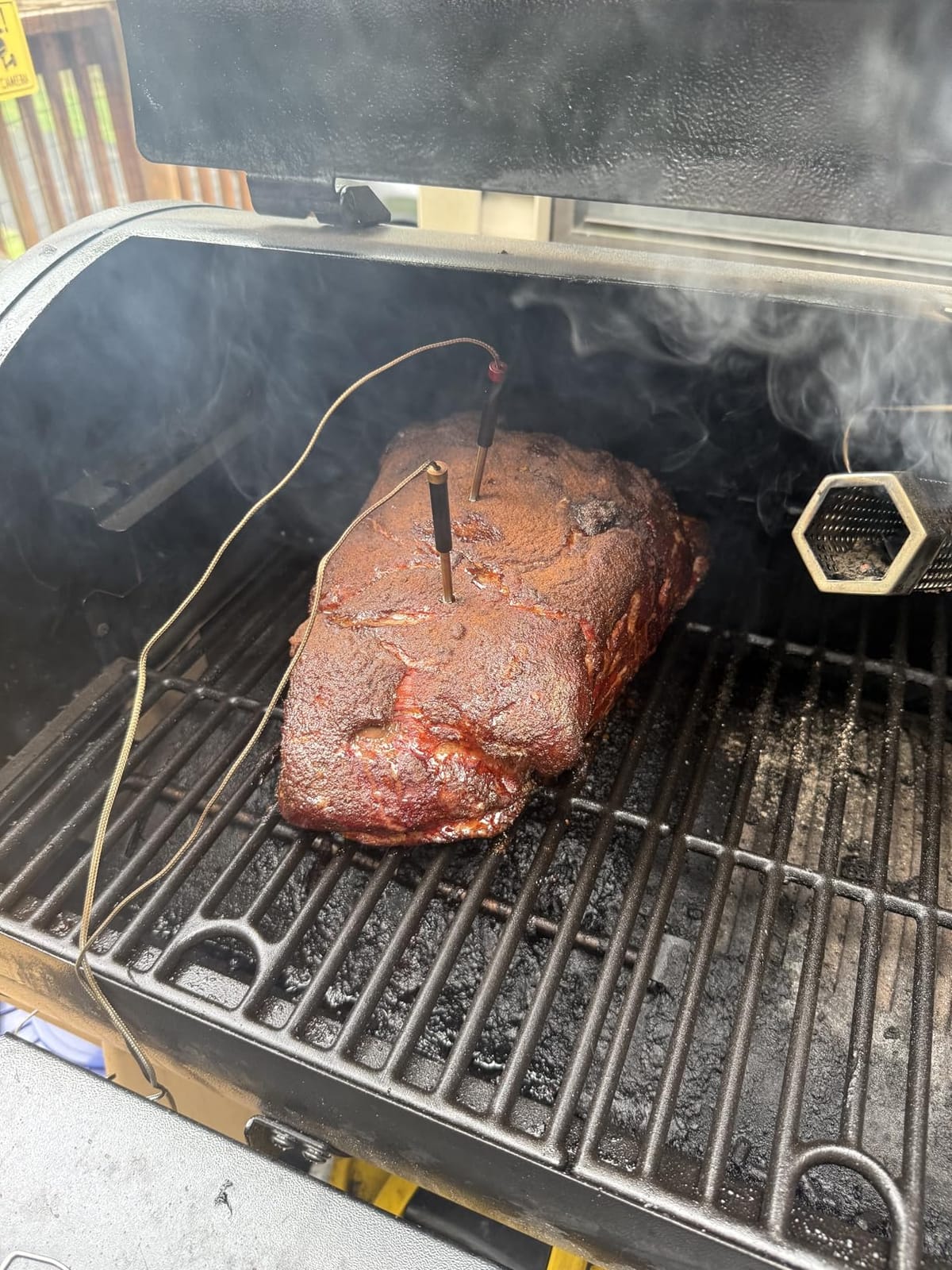
Accuracy is rated at plus or minus 1.8F below 302F, which is honest for this tier and tight enough for everyday grilling. The 40 inch stainless cable reaches from most grills to a nearby surface without a fuss.
Govee has been credited with replacing faulty units when customers raised problems, which is worth something on a device where calibration is not offered.
Why this is a sensible first wireless buy
The learning curve is small. Open the app, pick a preset, set an alert, and put your phone down. That is the whole routine, and it teaches you whether you actually want remote monitoring before you invest in a more capable box.
For steaks, chicken and burgers on a gas grill within sight of the house, it does the job without drama.
Why it falls short for serious cooks
These are wired probes ending in a Bluetooth transmitter, so a cable still runs out of the meat. Only two probes are included, which is thin for a cook who wants a shoulder and a chicken together.
The bigger issue is alerts. Push notifications only fire when the app is opened and refreshed, so on a long smoke you may be relying on a buzzer you cannot hear. There is no calibration option either, and the wires show wear sooner than the housing does.
10. Typhur Sync Gold Gen2 Sub-1G Thermometer – Best for Precision Readings
Typhur Sync Gold Gen2 Sub-1G Wireless Meat Thermometer with 6 Sensors & LCD
Sub-1 GHz radio, 6 sensors
Plus or minus 0.5F accuracy
Base has its own LCD
Pros
- Sub-1 GHz signal passes walls
- kamado grills
- smokers and Dutch ovens
- Base LCD allows setting and reading without a phone
- Free app with no subscription and a live multi-point graph
- Calibrated at three stages in production
- USB-C charging with a standard phone cable
Cons
- Setup instructions are cryptic
- Base relies on a magnet with no stand
- Base display font is small
- Smallest review base in the roundup so long-term data is thin
The Sync Gold Gen2 is the newest design here and the most precise on paper. Six sensors, five internal plus an ambient sensor at the tip, plus or minus 0.5F accuracy and a 0.5 second response time. Each probe is calibrated at three separate stages during production.
Radio is Sub-1 GHz, which the manufacturer positions as roughly ten times the signal strength of Bluetooth-based units. In practice the signal held through walls and heavy cookers in our walk-out, which matches what owners report about kamado grills and smokers.
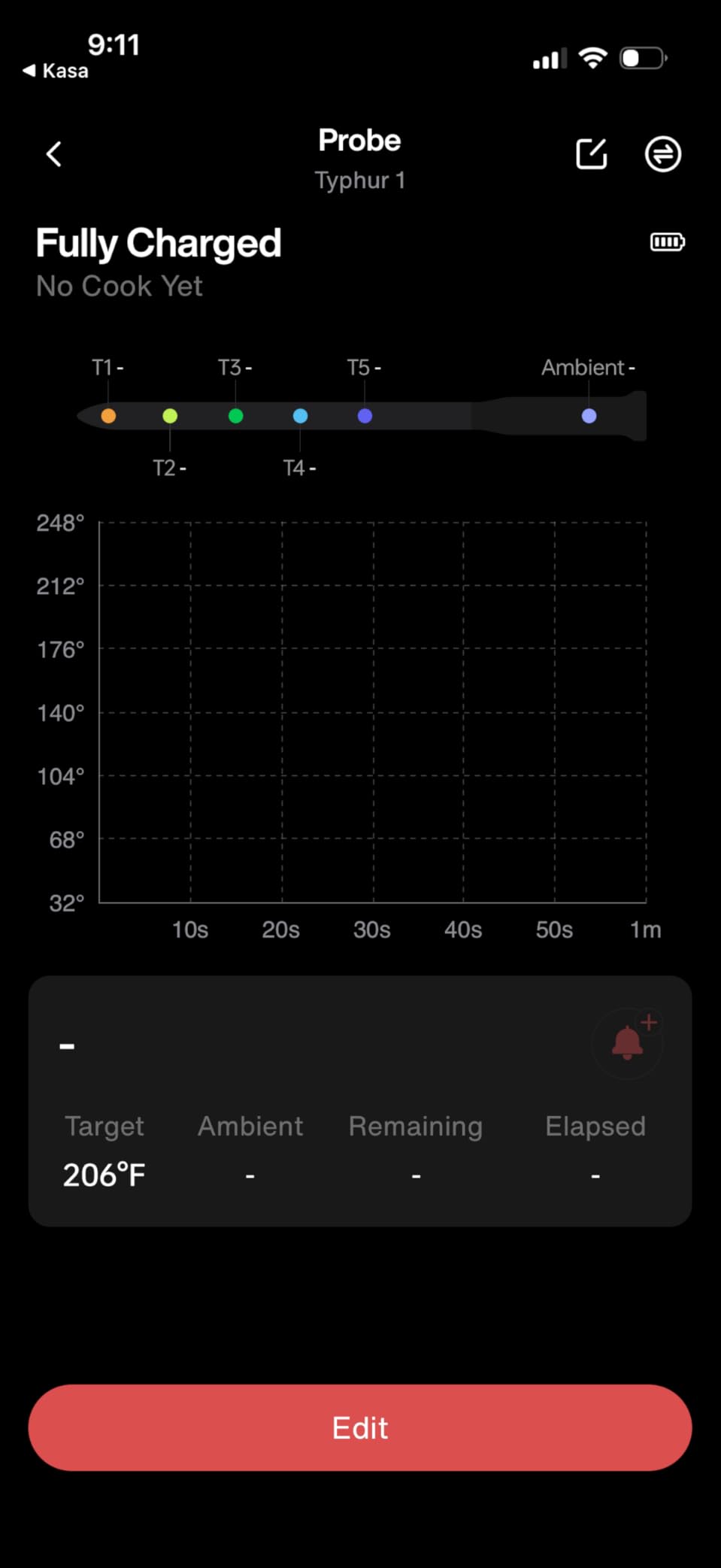
The base has its own LCD, so you can set a target and read temperatures without a phone, and the app is free with no subscription attached. The live graph shows a multi-point gradient rather than one line, so you can watch the centre of a cut relative to its edge.
Probes are IPX8 and rated for open-flame grilling, and USB-C charging means the same cable as your phone.
Why a multi-point gradient matters
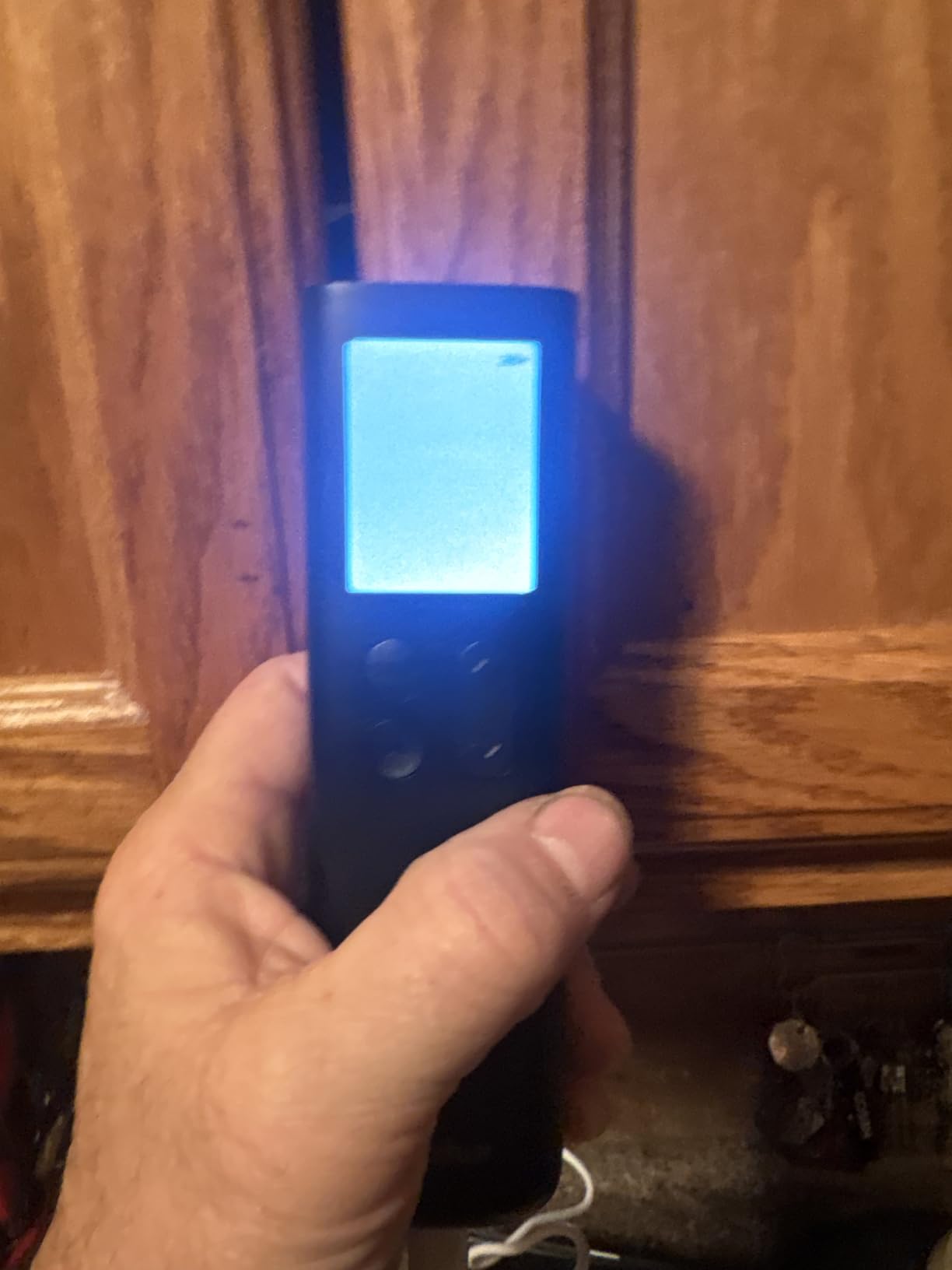
Most probes report one internal point, so a reading tells you little about the rest of the cut. With five internal sensors spread along the probe, you get a shape rather than a number, which is genuinely useful when deciding whether a thick brisket is progressing evenly.
The app is free, which removes a complaint we hear often about connected cooking hardware. No subscription means the tool keeps working at full function years later.
Why the setup flow needs work
Onboarding is the weak point. Instructions are cryptic, a target temperature cannot be set until the probe is inserted, and some users found the app discarding input partway through setup.
The base has a magnet but no stand, and the display font is small. This is also the smallest review base in our group, so treat the long-term reliability picture as less settled than the numbers above suggest.
Do You Actually Need a Wireless Meat Thermometer?
Sometimes no, and the honest answer saves money. A large group of forum regulars argue that an instant-read plus a cheap wired leave-in probe covers the majority of home cooks, and in our experience that is true for anyone cooking a steak or a chicken breast in under an hour.
Wireless monitoring earns its place in three situations. The first is a long cook, where opening the lid every twenty minutes costs heat and dries the bark on a brisket or a pork shoulder. The second is multi-protein cooking, where two leave-in probes beat one and you would otherwise be juggling connections.
The third is a grill far from the kitchen. If your cooker sits at the far end of the yard, wireless is the difference between monitoring and guessing.
What wireless does not do is read pit temperature better than the alternatives. For that, a dedicated grill-top dial or an infrared thermometer is cheaper and more accurate, and it does not suffer the heat-sink problem. Related tools like our picks on the best meat grinders are where extra budget usually goes further for most cooks.
How to Choose a Wireless Meat Thermometer in 2026
Decide on connectivity first. Bluetooth reaches a phone directly and is the cheapest option, but signal degrades with walls and metal. RF sends to a handheld receiver and needs no phone at all. Wi-Fi removes distance limits but insists on a 2.4GHz network. Sub-1G radio pushes through thick steel and is the best answer for offset smokers and far yards.
Count probes against real cuts. One probe covers a single steak. Two covers a dinner with a protein and a vegetable. Four covers a whole cook, and only three models here reach that number. Buying a two-probe model and then wishing for a third is the most common upgrade regret we hear.
Check sensor count against the question you ask. One internal sensor answers what temperature is the meat. Five internal sensors plus an ambient sensor answer how the cut is progressing and how hot the environment is. NIST certification at plus or minus 0.5F appears on two models in this group.
Understand the heat-sink effect. An ambient sensor buried in meat reads low, because the probe draws heat from the air around it. If pit temperature drives your cooking, either buy a separate pit thermometer or use a multi-probe model where one probe is free for the firebox.
Verify max ambient temperature against your cooking. Probes rated to 572F handle most grilling and smoking. Deep fryers, broilers and pizza ovens push higher, where a 750F or 1000F rating and a ceramic handle earn their place.
Judge real range, not the claim. Advertised figures assume open air. Ask what happens with the lid closed and a wall between you and the cooker. Sub-1G and RF models held up in our walk-out; every Bluetooth unit dropped earlier.
Decide how much app you can tolerate. Some devices need an account and a Wi-Fi sign-in before a single reading appears, and that is a deal breaker for plenty of cooks and a poor gift for anyone who dislikes gadgets. Receivers and smart bases need none of that.
Look at probe diameter before small cuts. Thick probe bodies tear burgers, sausages and wings. Ultra-thin designs such as the ThermoMaven P2 and CHEF iQ Sense leave a smaller hole and hold on to more juice.
Check battery life against your longest cook. Figures in this roundup run from about 10 hours on the ThermoMaven base to roughly 40 hours on the Inkbird IBT-4XS, and one receiver-based pick gives no low-battery warning at all. Longer than that, charge before you start.
Factor in care. Dishwasher-safe IPX8 probes clean in seconds. Hand-wash-only models and anything with a ceramic handle need more care, and bending a probe at the cable entry is the fastest way to kill one.
Frequently Asked Questions
What are the benefits of a digital meat thermometer?
A digital thermometer removes the guesswork from cooking by giving you the actual internal temperature of the food instead of an estimate based on time and appearance. It tells you when to pull a steak, when a chicken is genuinely done rather than just cooked through on the outside, and when a brisket has reached the point where resting will finish the job. It also catches dangerous ambient swings in a charcoal or wood fire before they burn your food.
Do you leave a meat thermometer in while grilling?
Yes. Leaving a leave-in probe in place during grilling is the intended use, and it is why wireless probes are built to handle searing temperatures. Choose a probe with a high ambient rating if you sear hard, keep it away from direct flame on thinner cuts, and pull it out before resting if you want a clean slice without a hole. Instant-read thermometers are meant to be pulled and used within seconds.
Can you use a wireless meat thermometer in a smoker?
Yes, and a smoker is exactly where wireless models earn their price. Bluetooth units can lose signal through thick insulated walls, so RF and Sub-1G models are better choices for an offset or a kamado, and Wi-Fi models work when the base can reach a 2.4GHz network. Remember that an ambient sensor buried in meat under-reports pit temperature, so track firebox temperature separately.
What is a good wireless thermometer that connects to WiFi?
The ThermoMaven P2 and the Inkbird IB-0960 are the two strongest WiFi options we tested. The P2 ships with two ultra-thin NIST-certified probes and a smart base, while the IB-0960 offers four probes and three connectivity modes. Both need a 2.4GHz network, so check your router settings before buying and expect a short setup step on a dual-band router.
How do wireless meat thermometers work?
A probe with internal temperature sensors sits in the food and transmits readings wirelessly. Bluetooth sends to a base unit or straight to a phone, Wi-Fi sends through your home network from a base, and RF or Sub-1G radio sends to a dedicated receiver. The base or app turns those readings into graphs, target alerts and estimated finish times.
How far away can a wireless meat thermometer read?
Expect less than the advertised figure once a metal grill lid closes. In our walk-out testing, Bluetooth units stopped updating far short of their claims, while RF and Sub-1G models kept reporting through an insulated garage door and around corners. Wi-Fi removes the distance question entirely as long as the base stays on a 2.4GHz network and the signal reaches your router.
Our Final Verdict for 2026
The best wireless meat thermometers for grilling fall into two camps. Devices that need an app give you alerts and graphs but add setup friction, and devices that work on a receiver or a smart base give you dependable readings with nothing to configure.
Our pick is the TempPro TempSync 500FT for most cooks, the MEATER Plus for anyone who wants no cable in the meat, and the ThermoMaven Sub-1G WT10 when the grill sits far from the kitchen. Add a cheap instant-read for pit temperature, and check the commercial meat slicer guides if you are processing a whole cook afterward.
Still deciding? Tell us your grill type, how far it sits from your phone, and how many cuts you usually cook at once, and we will point you at one model.