
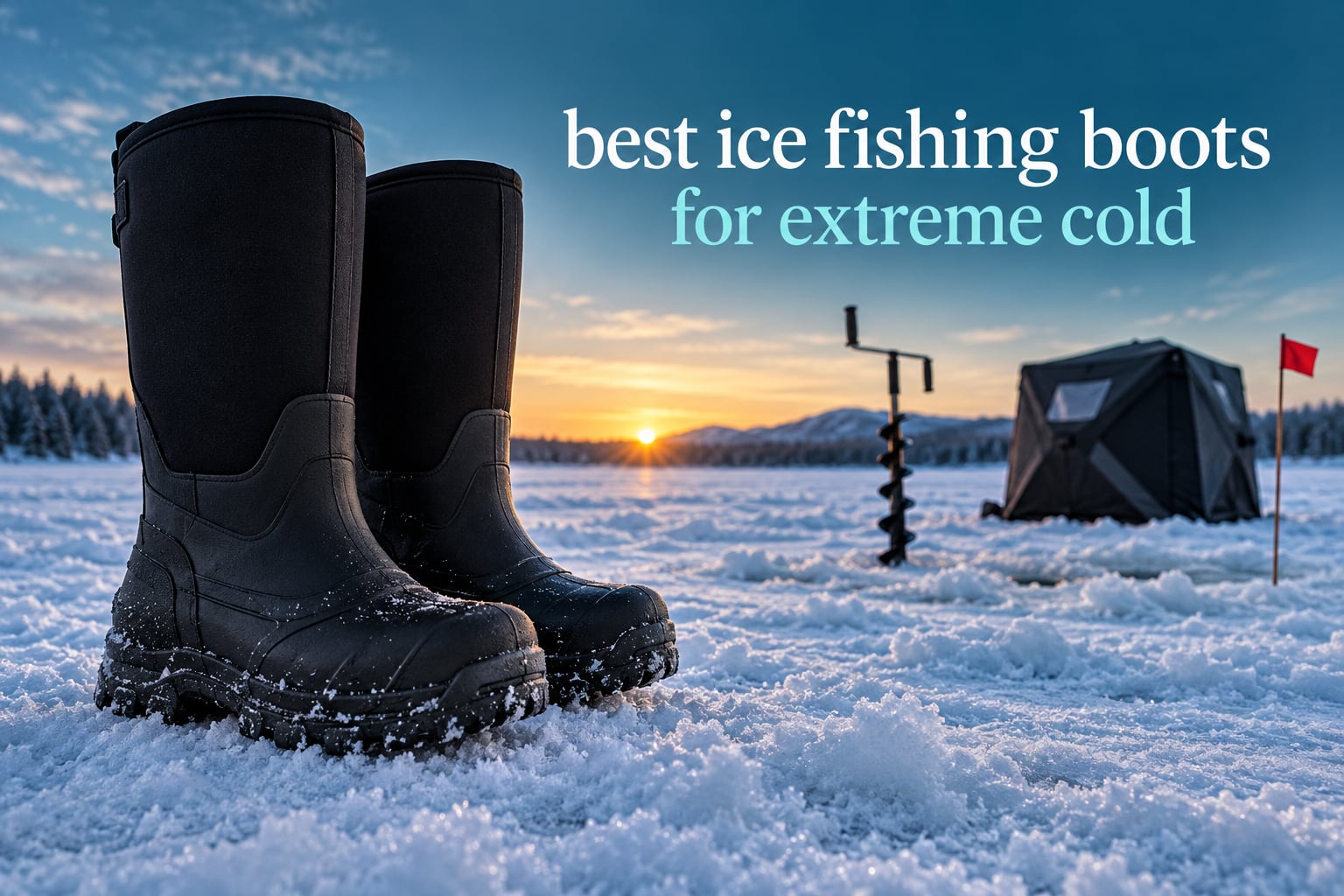
Sitting on the ice at minus 20 with numb fingers is part of the job. Sitting there with numb feet is how a good fishing day turns into an early retreat, and how a small cold spot turns into a real cold injury. After a few seasons of putting anglers through hard early-season mornings and late-season nights, one thing stands out: the best ice fishing boots for extreme cold are not simply the heaviest boot you can find.
They are the boot that keeps heat in while you are stationary, keeps slush out when the ice turns to soup, and still lets you walk a mile across a drift to find fish. Feet fail first on the ice because there is no muscle movement generating heat, because ice pulls cold straight up through the sole, and because a sweaty foot inside a heavy boot chills the second you stop walking.
This roundup covers 11 pairs we would consider for anyone fishing below zero, from a lightweight neoprene bootie for slush-season scouting to a pac boot rated deep into polar temperatures. We focused on published insulation specs, stated temperature ratings, owner feedback, and the details that decide whether a boot survives a full day: fit over thick socks, liner durability, traction on glare ice, and whether you can still operate a snowmobile footwell in it. We also broke down which temperature rating you actually need, since that is the question most buyers get wrong.
If you are also outfitting the rest of your winter kit, our guides to the best insulated jackets for extreme cold and the best insulated snow boots for extreme cold cover the other half of a cold-weather setup. Drill and shelter matter too, so the best ice fishing augers for lakes and the best ice fishing shelters for winter round out the gear list.
Table of Contents
Top 3 Best Ice Fishing Boots for Extreme Cold in 2026

MUCK Arctic Pro
- 8mm neoprene bootie
- 100% waterproof MUCKPROOF
- 2mm thermal foam
- Bob-Tracker outsole

Baffin Snow Monster
- Rated to about -94F
- Removable B-Tek Heat liner
- Vapourized aluminum membrane
- Lightweight for the warmth

Kamik Icebreaker
- Rated to -40F
- Removable 8mm Zylex liner
- 100% waterproof rubber
- TRACKER outsole
Ice Fishing Boots for Extreme Cold in October Full Comparison
| Product | Specifications | Action |
|---|---|---|
| MUCK Arctic Pro Insulated Boot |
|
Check Latest Price |
| Kamik Icebreaker Insulated Waterproof Snow Boots |
|
Check Latest Price |
 MUCK Arctic Sport Tall Snow Boot MUCK Arctic Sport Tall Snow Boot |
|
Check Latest Price |
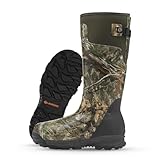 LaCrosse Alphaburly Pro 18 Waterproof Boot 1600g LaCrosse Alphaburly Pro 18 Waterproof Boot 1600g |
|
Check Latest Price |
| Baffin Snow Monster Insulated All-Weather Boot |
|
Check Latest Price |
 Baffin Impact Mid-Calf Extreme Cold Boot Baffin Impact Mid-Calf Extreme Cold Boot |
|
Check Latest Price |
 ROCKY Sport Utility 1000G Insulated Waterproof Boot ROCKY Sport Utility 1000G Insulated Waterproof Boot |
|
Check Latest Price |
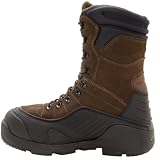 ROCKY Blizzard Stalker Waterproof 1200G Boot ROCKY Blizzard Stalker Waterproof 1200G Boot |
|
Check Latest Price |
 Baffin TUNDRA Lightweight Extreme Weather Boot Baffin TUNDRA Lightweight Extreme Weather Boot |
|
Check Latest Price |
 MUCK Arctic Ice Tall Boot with Vibram Arctic Grip MUCK Arctic Ice Tall Boot with Vibram Arctic Grip |
|
Check Latest Price |
 Dryshod Arctic Storm Mid-Calf Winter Boot Dryshod Arctic Storm Mid-Calf Winter Boot |
|
Check Latest Price |
1. MUCK Arctic Pro: the most proven boot in the roundup
Muck Arctic Pro Tall Rubber Insulated Extreme Conditions Men’s Hunting Boots
8mm neoprene bootie
100% waterproof MUCKPROOF
EVA midsole
2mm thermal foam
Pros
- Warm and dry in genuinely harsh cold
- 100% waterproof shell
- Roomy toe box fits thick or heated socks
- Bob-Tracker outsole grips snow and mud
- Slip-on design is fast on icy mornings
Cons
- Bulky before break-in
- No heel wedge so it is awkward with snowshoe straps
- Upper can crackle after three to four seasons
- Some wearers lose warmth below about -20C
We have put the Arctic Pro through more seasons than any other boot here, and it keeps being the safest answer to the question of which ice fishing boot handles below-zero cold without drama. The 8mm neoprene bootie plus a slip of thermal foam under the footbed traps enough heat that owners report staying comfortable sitting still around -20C, which covers most early-season and late-season ice across the Upper Midwest and northern states.
The wide toe box is the part we notice most. It fits a thick merino layer or a heated sock without pinching, which matters because a compressed toe loses circulation fast and a cold foot loses feeling before the rest of you does.
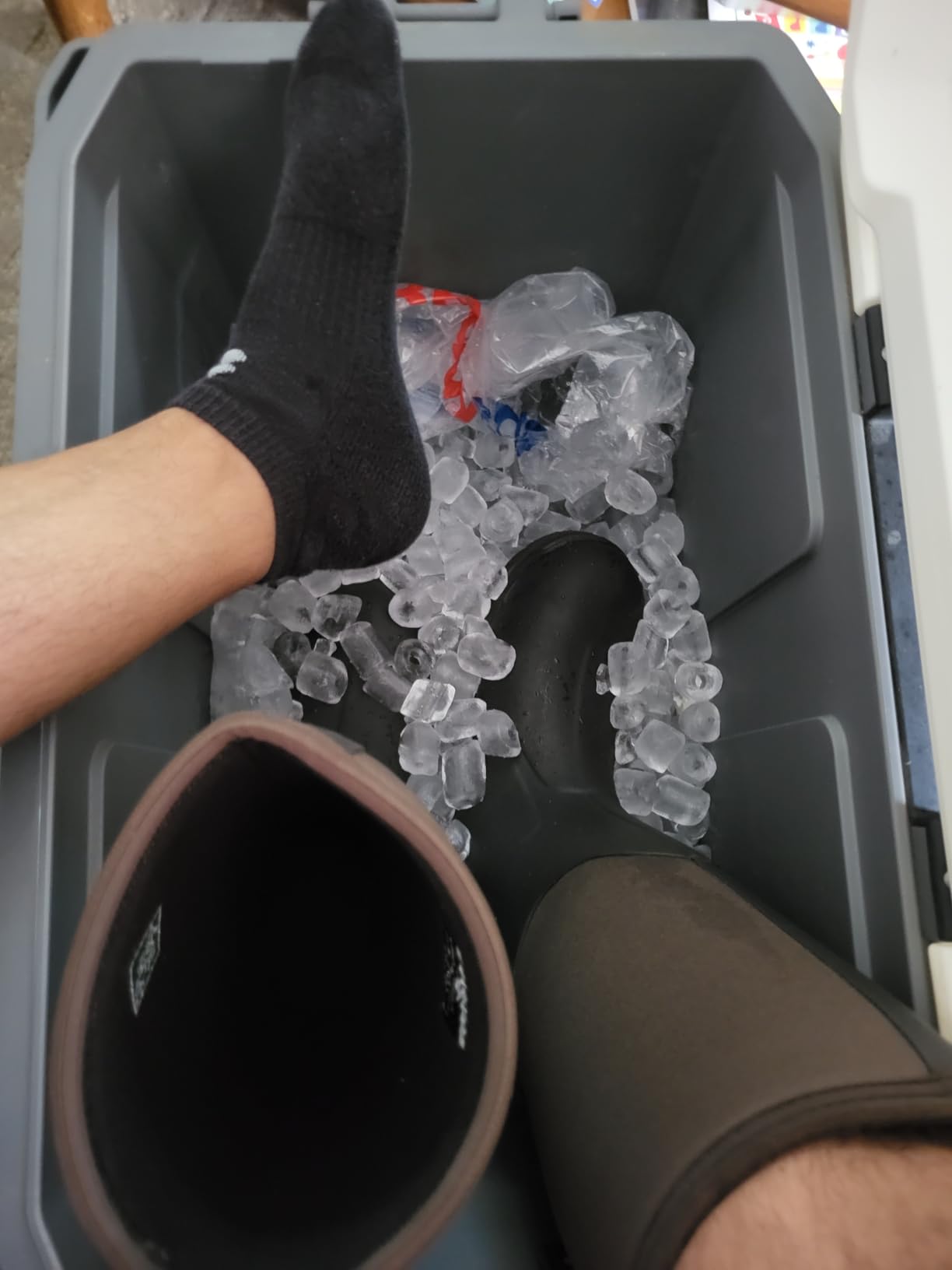
The MUCKPROOF shell is genuinely waterproof rather than water resistant. One owner told us they sat with their feet in a full ice cooler for four hours and never felt cold, which is the kind of field report we trust more than a lab spec.
Mechanically, the aggressive Bob-Tracker outsole uses semi-spherical lugs that shed slush and debris instead of packing with ice, and the EVA midsole takes the sting out of standing on concrete access points. It is also a pull-on design, so nothing slows you down at 5 a.m. in the dark.
What you get right at subzero temps
Warmth is the headline here. There is enough loft in the 8mm bootie to hold a foot warm through a stationary session at minus 20C, which is the number that matters for drilling and jigging on a cold morning.
The waterproof shell means slush, drip from the auger, and wet snow banks do not reach your socks, and reviewers report the construction has held up through years of mud and worksite use.
Where it falls short for anglers
The boot is bulky, especially before break-in, and that bulk is real dead weight on a long walk to a distant spot. Forum regulars on r/IceFishing and CloudyNights consistently warn that you should not cheap out on winter boots precisely because a heavy boot with a good liner still beats a light boot that leaks.
There is no heel wedge, so pulling it off is harder and it can be awkward under a snowshoe strap. Long-term owners also note the upper can begin to crackle after roughly three to four years, and some report insulation losing punch below about -20C.
2. Kamik Icebreaker: the value pick rated to minus 40
Kamik Icebreaker Black 11 D (M)
Rated to -40F/-40C
Rubber upper, 100% waterproof
Removable 8mm Zylex liner
11mm Zylex insole
Pros
- Rated to -40F for the money
- Fully waterproof rubber upper
- Removable liner dries overnight
- Light and flexible for long walks
- Adjustable collar and top drawstring block deep snow
Cons
- Runs large so size down
- Synthetic liner wears at the heel
- Very slippery on smooth indoor floors
- Heavier than it looks
The Icebreaker is the boot we hand to anyone who wants genuine -40F capability without stepping into pac-boot territory. Kamik rates it to -40F and -40C, and the removable 8mm Zylex liner is the reason it performs: it wicks moisture, so a full day of drilling does not leave you with a wet foot at sundown.
Owners repeatedly report buying a second or third pair a decade later, and one reviewer ran a five-mile loop several times a week in them, which tells you the walk out to a remote spot is not a problem.
Warmth and drying out between days
Because the liner comes out, you can pull it at night, stand it by the stove, and put a dry one in the morning. That single feature matters more on a two-day trip than any layer of extra foam.
The rubber upper never leaked in years of wet-weather use for the owners we read, and the 11mm Zylex insole adds underfoot cushioning plus moisture control.
Fit problems to plan for
This boot runs large, and most owners size down a half size for the best fit. It is also a narrow last, so wide feet get squeezed, and the calf section can feel tight on larger builds.
Two other complaints come up: the synthetic liner wears out at the heel sooner than expected, and replacement liners cost close to half the price of a new boot. It is also slick on polished indoor flooring, so take care in a lodge or on a smoothed ice surface.
3. MUCK Arctic Sport Tall: tall shaft warmth without the pac-boot weight
Muck Arctic Sport Rubber High Performance Men’s Winter Boots
5mm neoprene bootie
Fleece lining
2mm thermal foam
MS-1 shaped outsole
Pros
- Tall shaft keeps drifts and slush out
- Lightweight for a tall snow boot
- 2mm thermal foam plus neoprene for real warmth
- Pull tab makes it easy on and off
- Rugged MS-1 outsole bites into loose snow
Cons
- Bulky despite the light listed weight
- Less insulation than the 8mm MUCK models
- Not a full pac boot for standing cold days
Where the Arctic Pro is an ankle-height neoprene boot, the Arctic Sport Tall adds a shaft that reaches above the ankle, which is what keeps wet snow from working its way in during a snowfall. For anglers wading through a drift bank to reach a spot, that extra coverage is the whole point.
Warmth comes from a 5mm neoprene bootie, a fleece lining, and a 2mm thermal foam layer under the footbed. That is less loft than the 8mm booties, so we treat it as a three-season-to-winter-cold boot rather than a deep cold one.
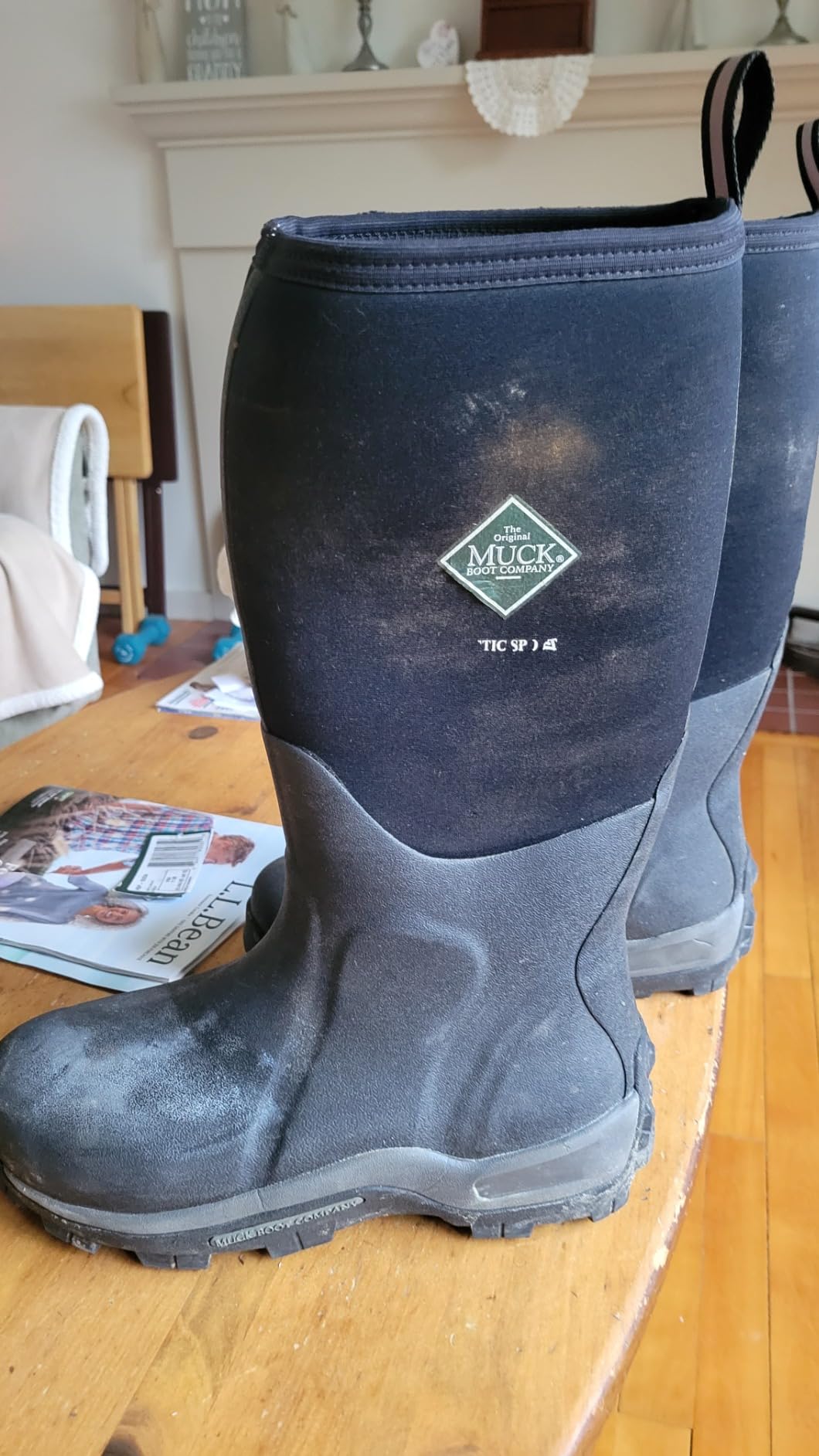
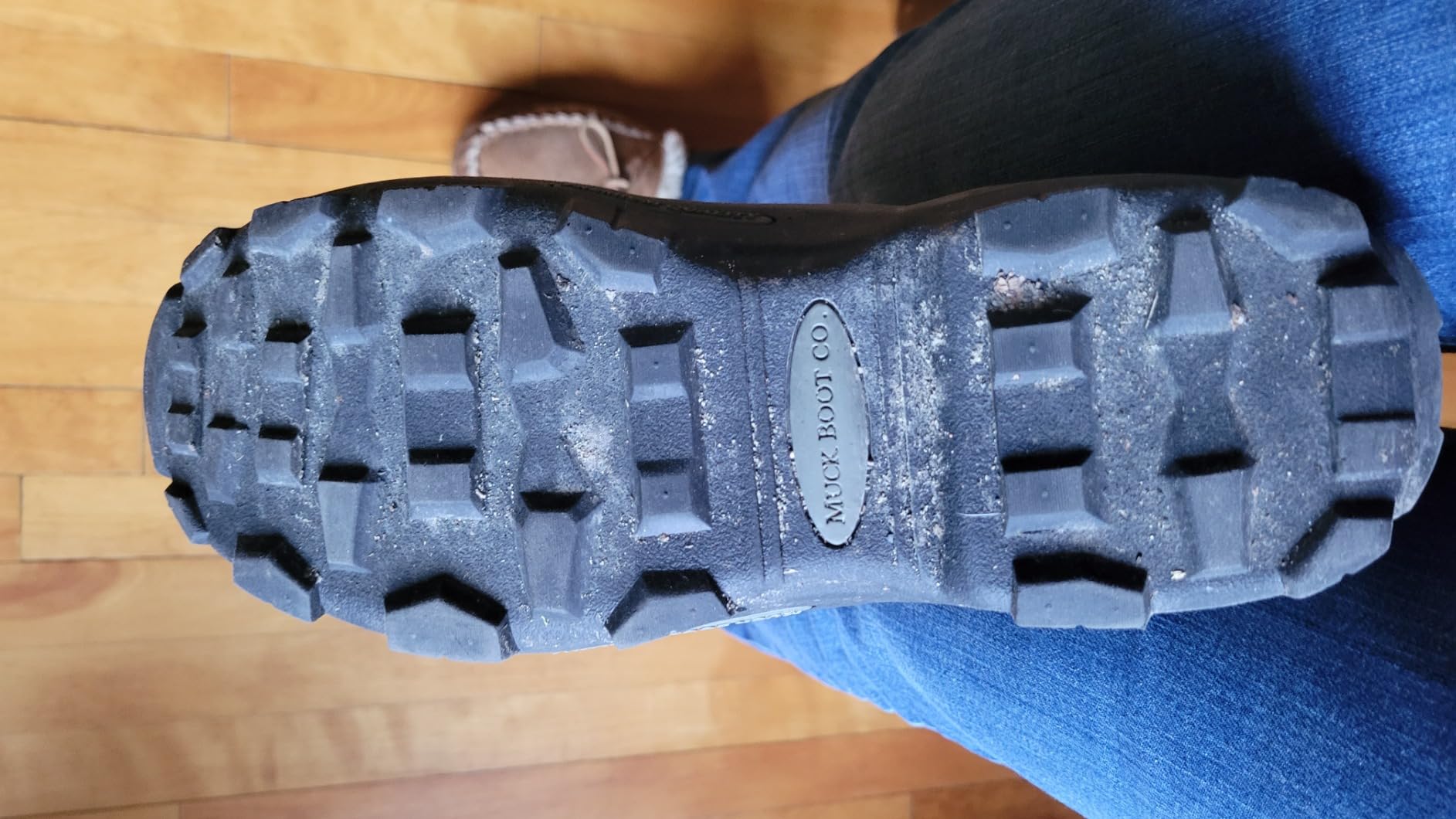
The listed weight is just over a pound, which is remarkable for a tall boot, and the pull tab at the top means you can get it on and off with frozen gloves. The MS-1 shaped outsole is aggressive and stable, and owners consistently describe it as durable and easy to wear for extended periods.
It also costs far less to break in than a stiff leather pac boot, so if you are new to this and want a tall boot that behaves on day one, this is the one we would start with.
Good for the walk to the spot
The tall shaft and rugged outsole make this a strong choice when your route involves deep snow rather than bare ice. Fleece lining plus neoprene holds warmth well for active walking.
Users like that it is light enough to keep moving in and that the aggressive tread gives real grip in loose surfaces.
Where it is not the right tool
If you plan to sit stationary through a -30F afternoon, the 5mm bootie gives you less margin than the 8mm Arctic Pro. For deep-cold hut sessions, spend up.
Some owners still find it bulky despite the light listed weight, and the fleece and foam are less compressible than a full removable liner over a long day.
4. LaCrosse Alphaburly Pro 18: the best boot for deep snow approaches
LaCrosse Waterproof Hunting Boots, Mossy Oak Country Dna 1000g, 14
Rated to -60F
1600g Thinsulate
18-inch shaft
Waterproof rubber and neoprene
Pros
- Rated as low as -60F
- Warm sitting still at -25C for a week
- Waterproof against creek water and mud
- 18-inch shaft keeps deep snow out
- Quick-dry lining wicks moisture
Cons
- Insulation stops above the ankle
- Limited cushioning after four or five hours
- Bulky and awkward on long treks
- Sizing shifts over the product's life
The Alphaburly Pro is a genuine pac boot, and it behaves like one: an 18-inch shaft, 1600 grams of Thinsulate, and a waterproof rubber and neoprene shell rated by LaCrosse as warm down to -60F. One owner reports sitting still at -25C through a full week of hunting in it, which is about as harsh a stationary test as this sport produces.
We think of it as the best choice when you walk in through chest-deep snow, use a sled, or fish where the shore approach is worse than the lake. The height alone does most of that work.
Waterproofing is the second story. Users cross cold creek water that soaked through uninsulated boots without getting wet, and the quick-dry lining wicks moisture so the boot does not stay damp between days. The adjustable rear gusset takes different calf sizes well.
The burly outsole with aggressive tread grips wet rocks and muddy banks, which is exactly the surface you hit when walking a shoreline access in spring conditions.
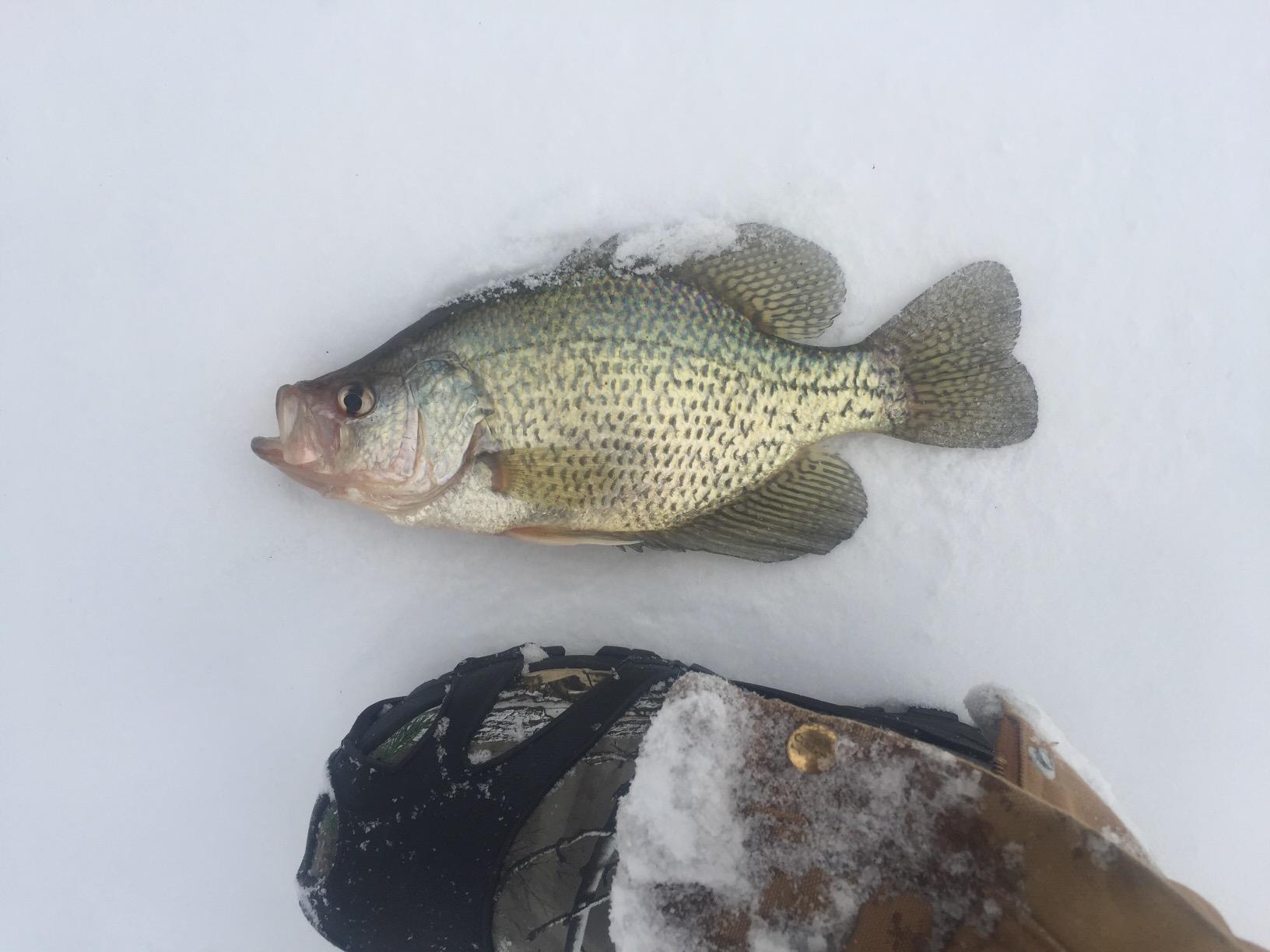
Warmth that survives a stationary afternoon
At 1600g of Thinsulate plus a neoprene shell, this is the boot we trust for a hut day when the thermometer reads in the negative twenties and you are not moving at all.
The waterproof build means a wet drill hole or a slush bank costs you nothing, and the 18-inch shaft keeps snow out on approach walks.
What you trade for that warmth
The insulation is concentrated in the foot and does not extend above the ankle, so your lower leg can feel the cold. Cushioning is modest, and owners report foot soreness after four or five hours of standing or light hiking.
The bulk is significant, and one reviewer notes that sizing changes over the life of the boot, so check the fit against thick socks before committing.
5. Baffin Snow Monster: the deepest stated rating in the roundup
Baffin Snow Monster Men’s Winter Boots, Arctic Rated, -22 to -49 degrees Fahrenheit, Tall Height, Br5 – Worn Brown, Size 10
Rated to about -70C/-94F
Removable B-Tek Heat liner
Polar Rubber outsole
EVA midsole
Pros
- Deepest published rating here
- Removable multi-layer liner can be aired nightly
- Lighter and less stiff than comparable pac boots
- Water beaded on the outside during snowmelt
- Quick-pull lace with top cinch for venting
Cons
- Runs small so size up
- Not perfectly waterproof at stitching above the toe
- Rigid sole with limited grip on bare ice
- Snow collar fights snow pants
When we need the warmest boot on this list on paper, this is it. Baffin rates the Snow Monster to roughly -70C, about -94F, and in some conditions to -100F depending on activity level. The removable Comfort-Fit inner boot uses B-Tek Heat hollow-fibre insulation and a Vapourized Aluminum Membrane that reflects body heat back down.
What makes it our top premium pick rather than the coldest spec is weight. Owners note it is lighter and less stiff than comparable pac boots, so you can actually walk a full day in it, and CloudyNights users repeatedly single it out alongside the Korkers Polar Vortex and the Baffin Impact when the temperature drops.
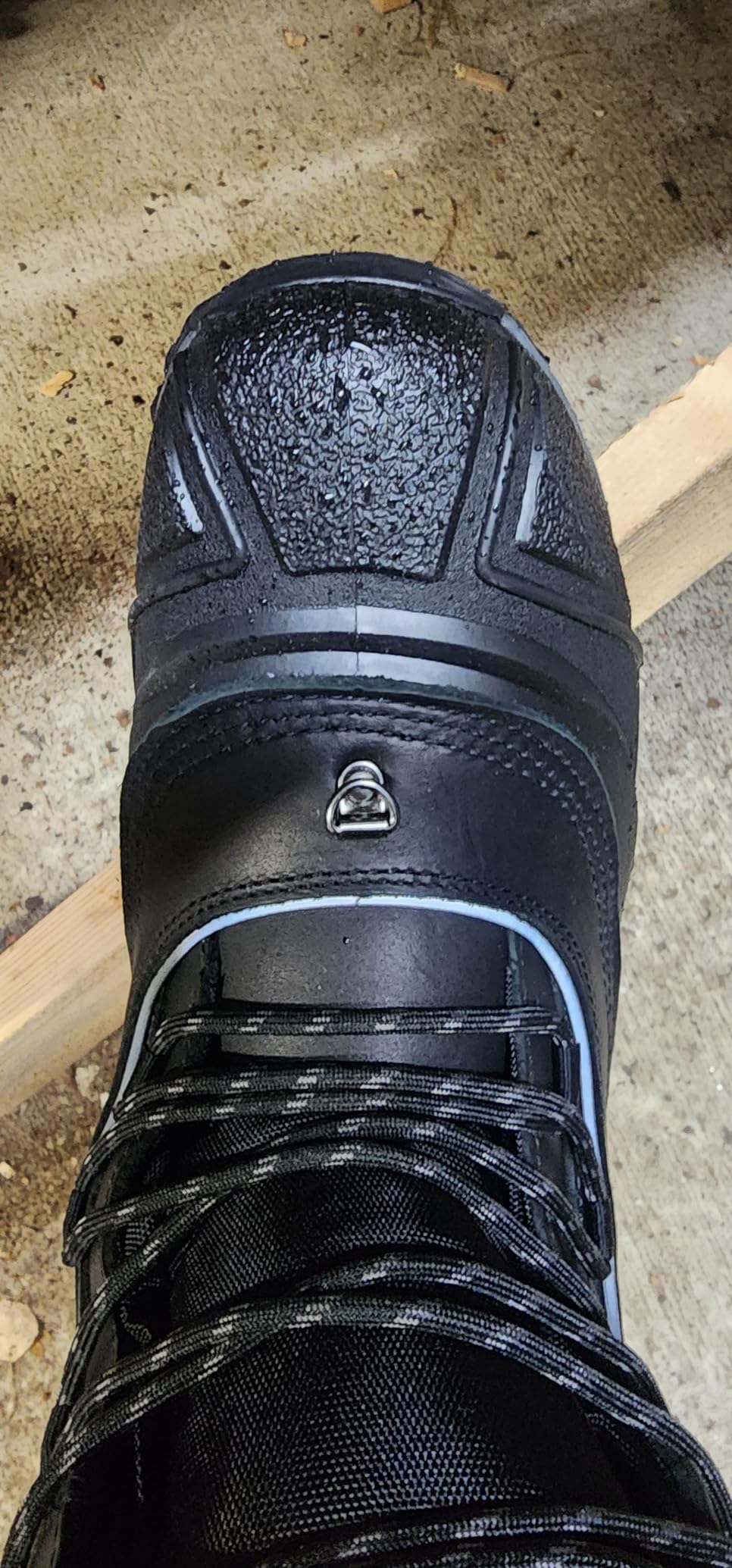
The liner is fully removable, which means you can air it overnight between trips and control the odor that builds up in a boot nobody dries out. Water beaded on the upper during snowmelt without entering the boot in our reading of owner reports, and the full-length quick-pull lace with a top cinch lets you vent heat on the walk out.
The Arctic Rubber shell keeps it light and cold-resistant, and the Polar Rubber outsole adds grip and longevity on most winter surfaces.
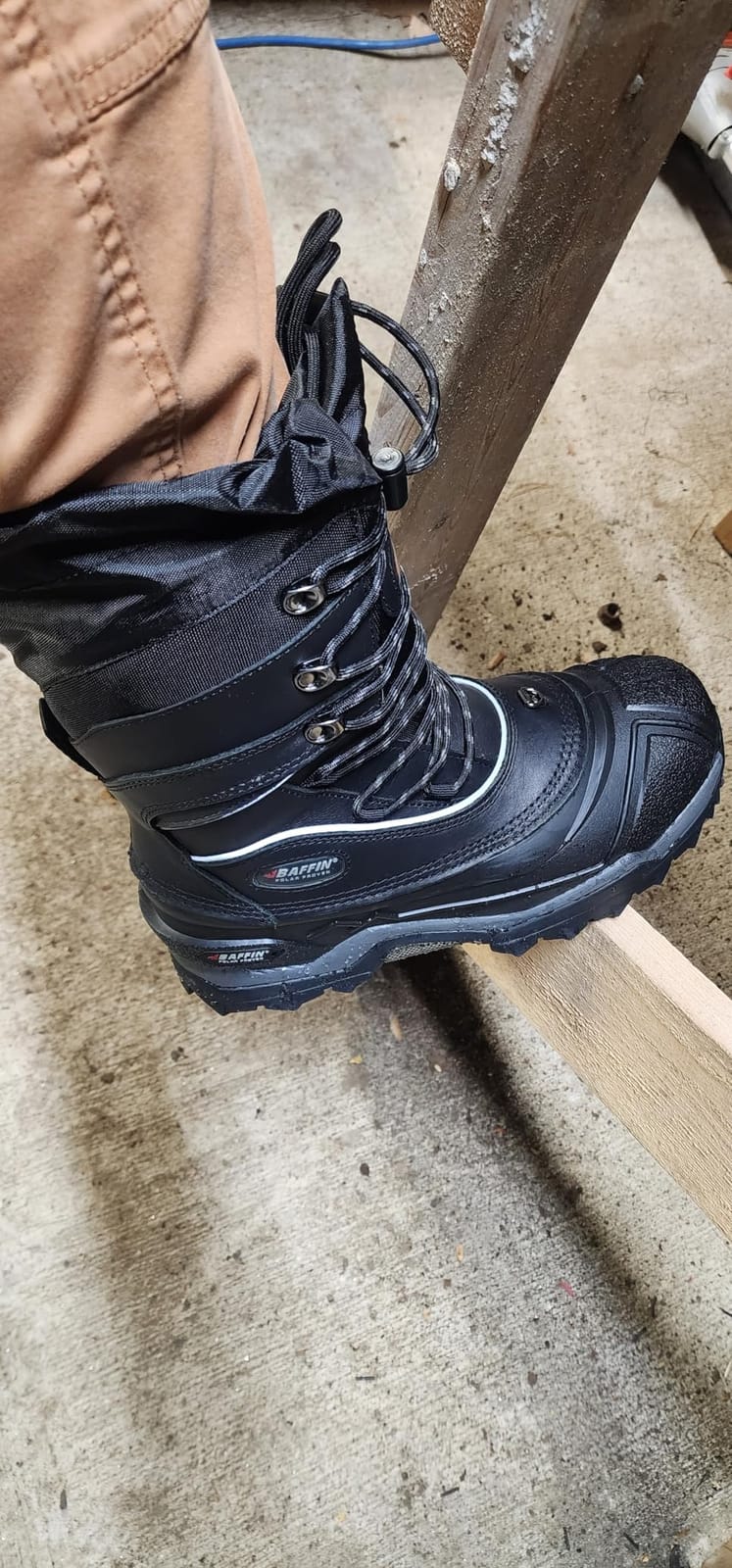
Best choice for the coldest days on the calendar
At the deepest stated rating in this roundup, this is the boot for late-season ice where the air temperature and the wind chill are working against you all afternoon.
Owners describe it as the warmest extreme cold boot they have owned, and the removable liner keeps the whole package manageable over a multi-day trip.
Two caveats worth reading before you order
It runs small, and most owners recommend sizing up at least half a size. Waterproofing is not perfect at the stitching above the toe, where one owner reported water ingress in moderate wet conditions.
The sole is rigid with limited grip on bare ice, so carry chains or crampons. The locking snow collar also makes it hard to tuck jeans in or fit over standard snow pants.
6. Baffin Impact: built for polar-grade cold
Baffin Men’s IMPACT Waterproof Extreme Cold Weather Ice & Snow Boots
Polar rated for -40F and below
Removable Comfort-Fit liner
Double buckle closure
EVA midsole
Pros
- Keeps feet warm for hours below -80F per owners
- Used by Antarctic field personnel
- Removable washable liner airs out overnight
- Buckles work with gloves
- Reflective piping helps at night
Cons
- Very heavy at about 3 pounds per boot
- Order at least a full size up
- Bulky shaft will not fit standard snow pants
- Difficult to work vehicle pedals in
The Impact is the boot that shows up when the weather stops being recreational. Baffin tested it in North and South Pole conditions and rates it for -40F and below, and owners report keeping feet warm for hours in weather that would defeat lighter boots. Several cite use by Antarctic field personnel as the reference standard for this kind of gear.
It is also the most practical choice in this roundup for anyone working around a snowmobile or four-wheeler. The double buckle fasteners are operable with gloves on, which matters more than it sounds when your hands are frozen at the ramp.
Warmth and hardware for gloves
The removable Comfort-Fit multi-layer liner packs Thermaplush, B-Tek Foam, Double B-Tek Heat, the aluminum membrane, PolyWool, Hydromax, and DiamondNet, and it can be washed and aired out nightly.
Air-cell insulation in the sole cushions long periods of standing, which is the other reason this boot shows up in professional cold-weather use.
Accept the weight, or pick something else
This is the heaviest boot here at roughly 3 pounds per boot for a size 10, which limits long hikes. Owners also emphasize that the internal room meant to trap warmth becomes a liability when you are hauling heavy loads.
The bulky shaft will not fit under standard snow pants, the size is enormous so you should order at least a full size up, and some drivers report difficulty operating pedals in it.
7. ROCKY Sport Utility 1000G: the durability pick
ROCKY Sport Utility 1000G Insulated Waterproof Boot, Mossy Oak Break Up, Size 13(WI)
1000g 3M Thinsulate Ultra
Sport Utility outsole
Rocky Waterproof construction
6.1 pounds per pair size 10
Pros
- Proven waterproof in deep creek crossings
- 1000g Thinsulate handles sub-zero wind chill
- Cushioned insole for long days on your feet
- Wide and half sizes available
- One owner still wears a first pair after 20 years
Cons
- Heavy feel during the first steps
- Soft sole gives only decent traction on ice
- Most buyers recommend a half size up
The Sport Utility is the boot we recommend to anyone who keeps the same pair for a decade. Owners report crossing six to eight inch deep creek water repeatedly without getting wet, and 1000 grams of 3M Thinsulate Ultra holds warmth down into single-digit temperatures and sub-zero wind chill without baking your feet on warmer days.
The difference from the pac boots here is shape. It is a mid-height hiking boot, so it walks like a boot, and the availability of wide sizes and half sizes makes it one of the few on this list that works for a genuinely wide foot or a smaller woman without a hunt.
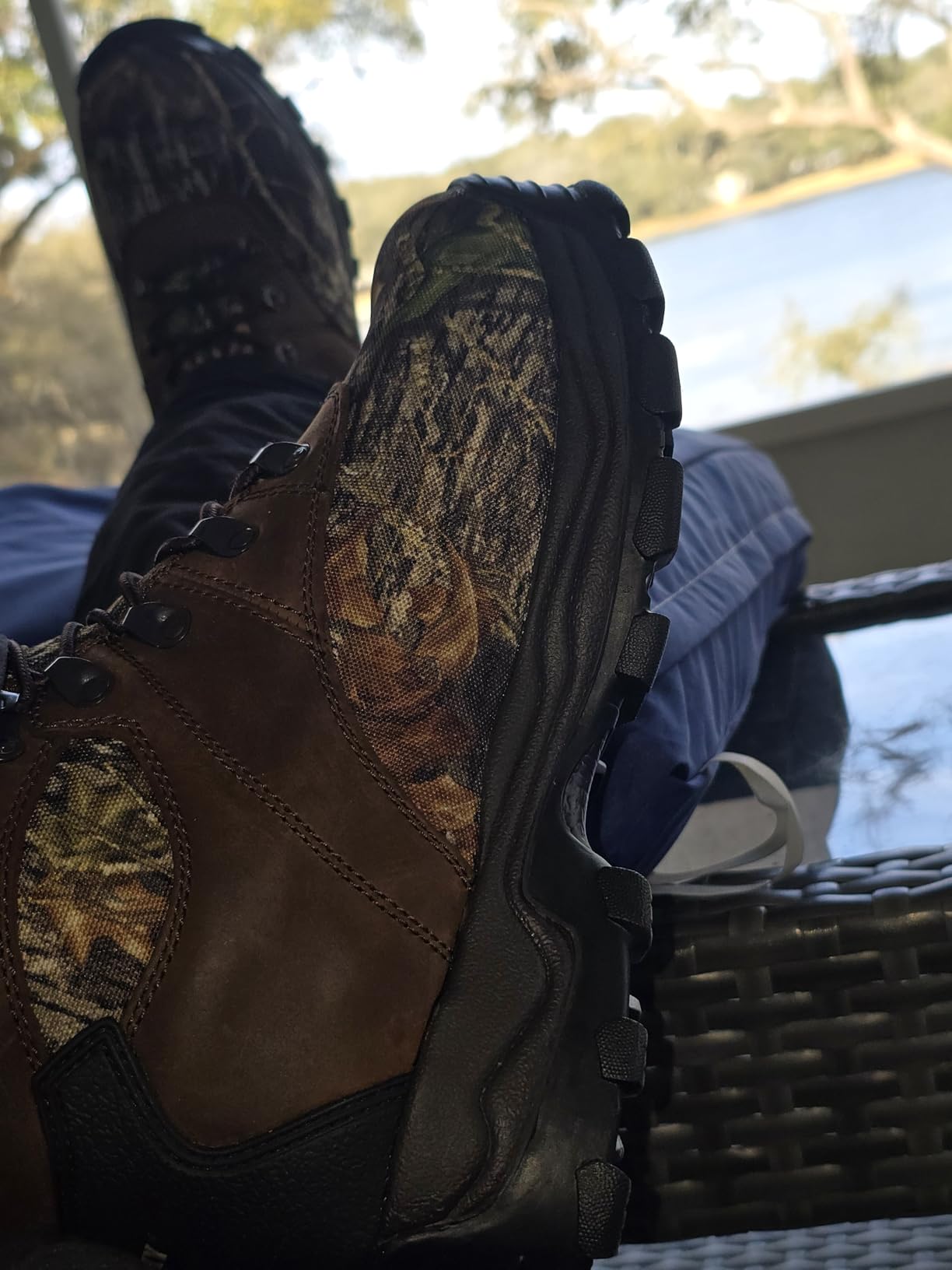
The Sport Utility outsole gives solid grip on snow and wet ground, and a cushioned insole makes hours of standing bearable. ROCKY covers the construction with a waterproof guarantee, which matters when your fishing spot involves a wet shoreline crossing.
Durability is the headline review theme. Hunters and winter workers describe it as a long-standing value pick, and one owner still wears a first pair after twenty years.
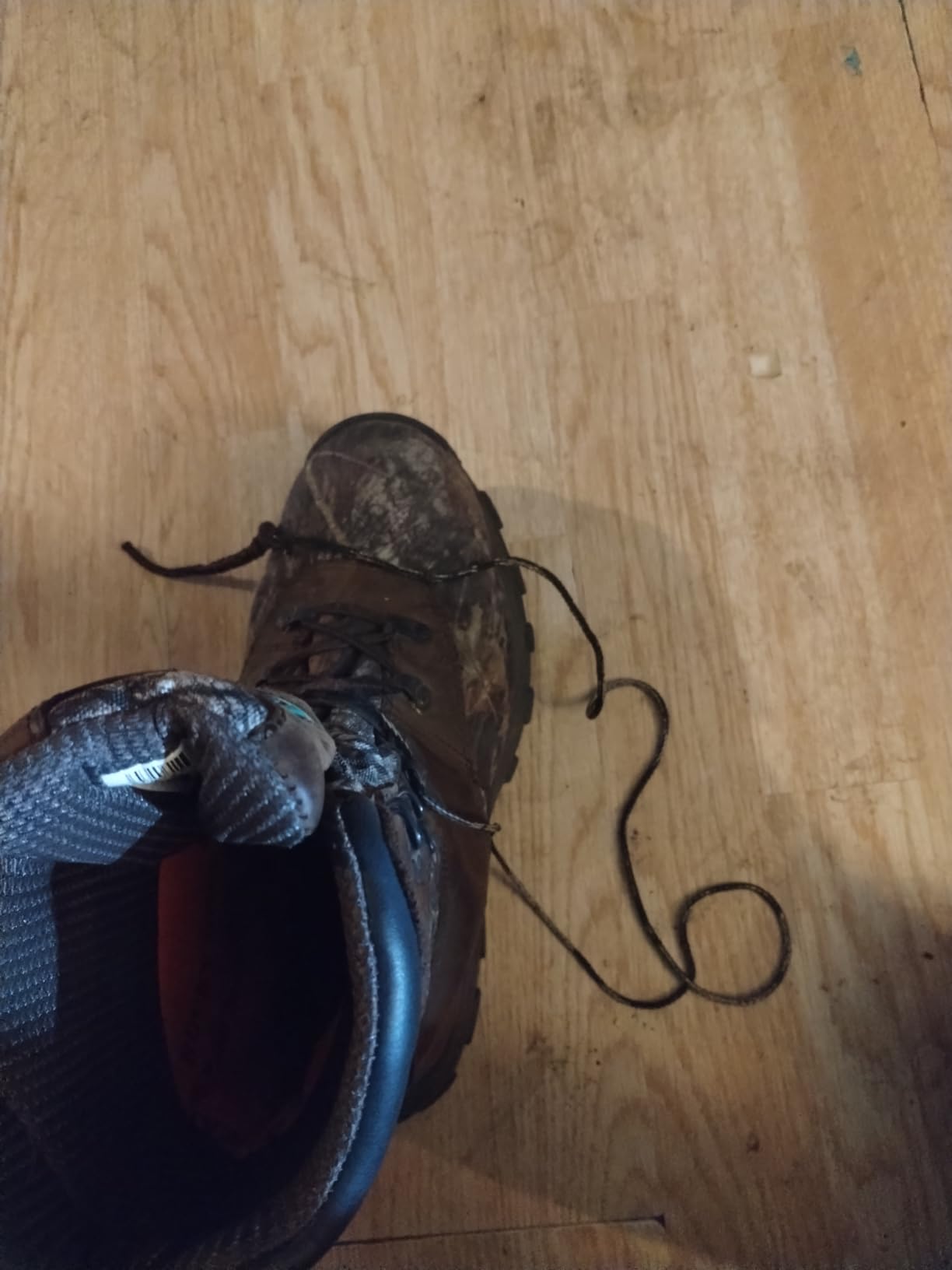
Best for anglers who need one boot for every job
If your season includes shore wading, slush, snowmobile access, and long walks, this is the most versatile option here. The waterproofing and 1000g of insulation cover everything from single digits to genuine sub-zero wind chill.
It also handles a wet footbed situation better than most, because the hiking-boot profile drains less than a deep pac boot.
What the reviews flag
The main complaint is the heavy feeling during the first few steps before you adjust. The soft rubber sole gives only decent traction on bare ice, so bring traction aids for a glare ice lake.
Most buyers recommend going a half size larger than their usual shoe size to accommodate thick socks, which matters more here than in a tighter last.
8. ROCKY Blizzard Stalker 1200G: a laced fit with more insulation
Rocky Men’s Blizzard Stalker Pro Hunting Boot,Brown/Black,12 M US
1200G insulation
Rubber vamp, waterproof construction
Removable mesh PU footbed
Lace-up closure
Pros
- 1200G handles cold-weather work well
- Rubber vamp holds up in mud and wet conditions
- Removable PU footbed adds cushioning
- Padded collar keeps debris out
- Laces give a secure adjustable fit
Cons
- Heavier build than lighter hunting boots
- Lace-up closure is slower than a slip-on
- Less warmth than the pac boots on this list
The Blizzard Stalker is the same ROCKY idea as the Sport Utility with more insulation and laces instead of a pull-on. At 1200G it sits between the 1000g Sport Utility and the 1600g LaCrosse pac boot, and for a stationary cold day that extra 200 grams is worth having.
Laces are the feature some anglers will like more than they expect. A secure, adjustable fit matters when you are walking on uneven ice with a full auger in hand, and the padded collar plus extended tongue keep slush out around the ankle.
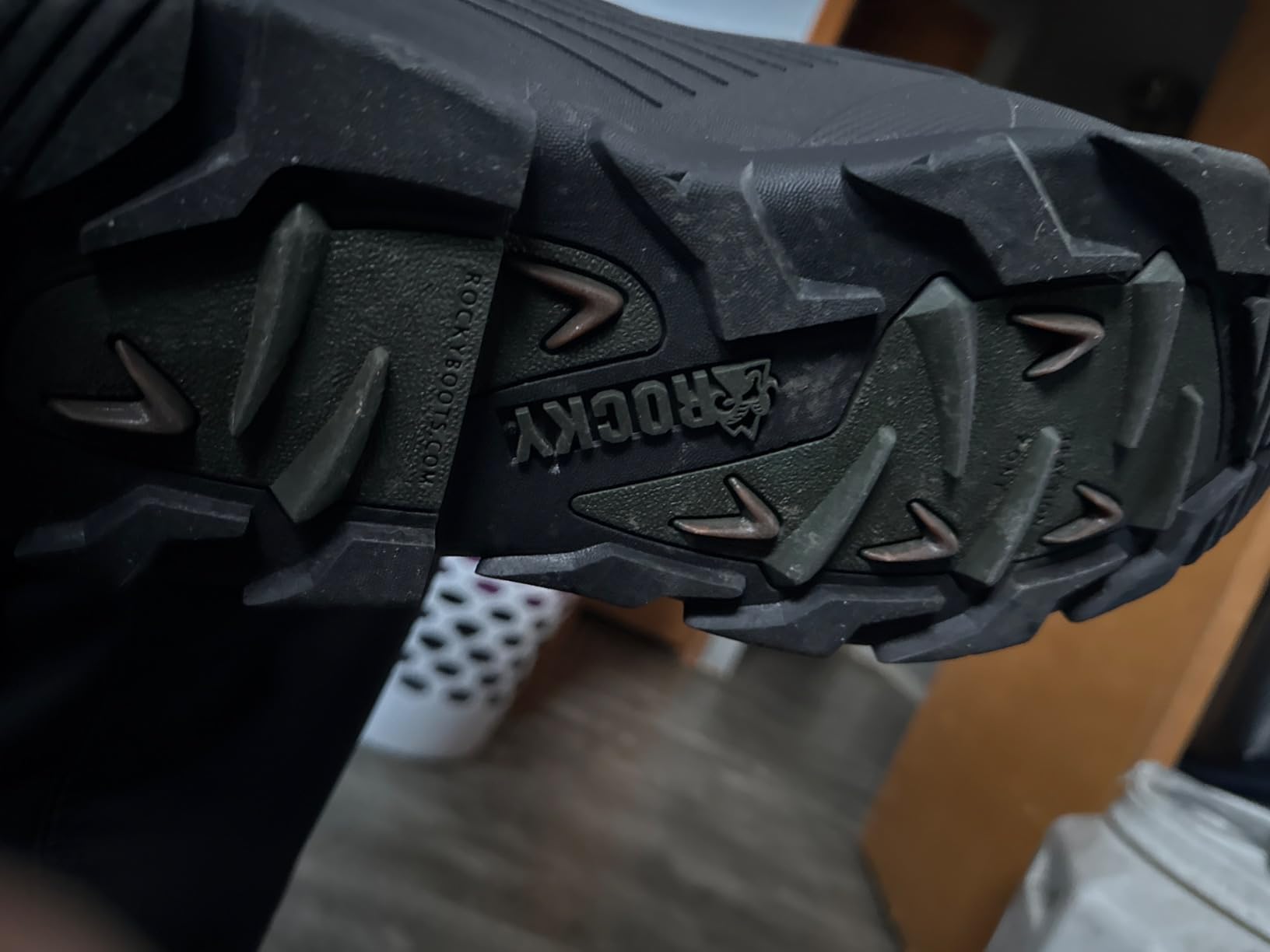
The durable rubber vamp is what holds up in wet and muddy conditions, and the removable mesh PU footbed adds cushioning and can be replaced when it flattens. That replaceable footbed is a quiet durability win over boots with a glued-in insole.
It comes from a long-running Rocky hunting line, so the build quality is consistent, and the lace-up closure lets you cinch the lower section tight to keep the shaft heat in.
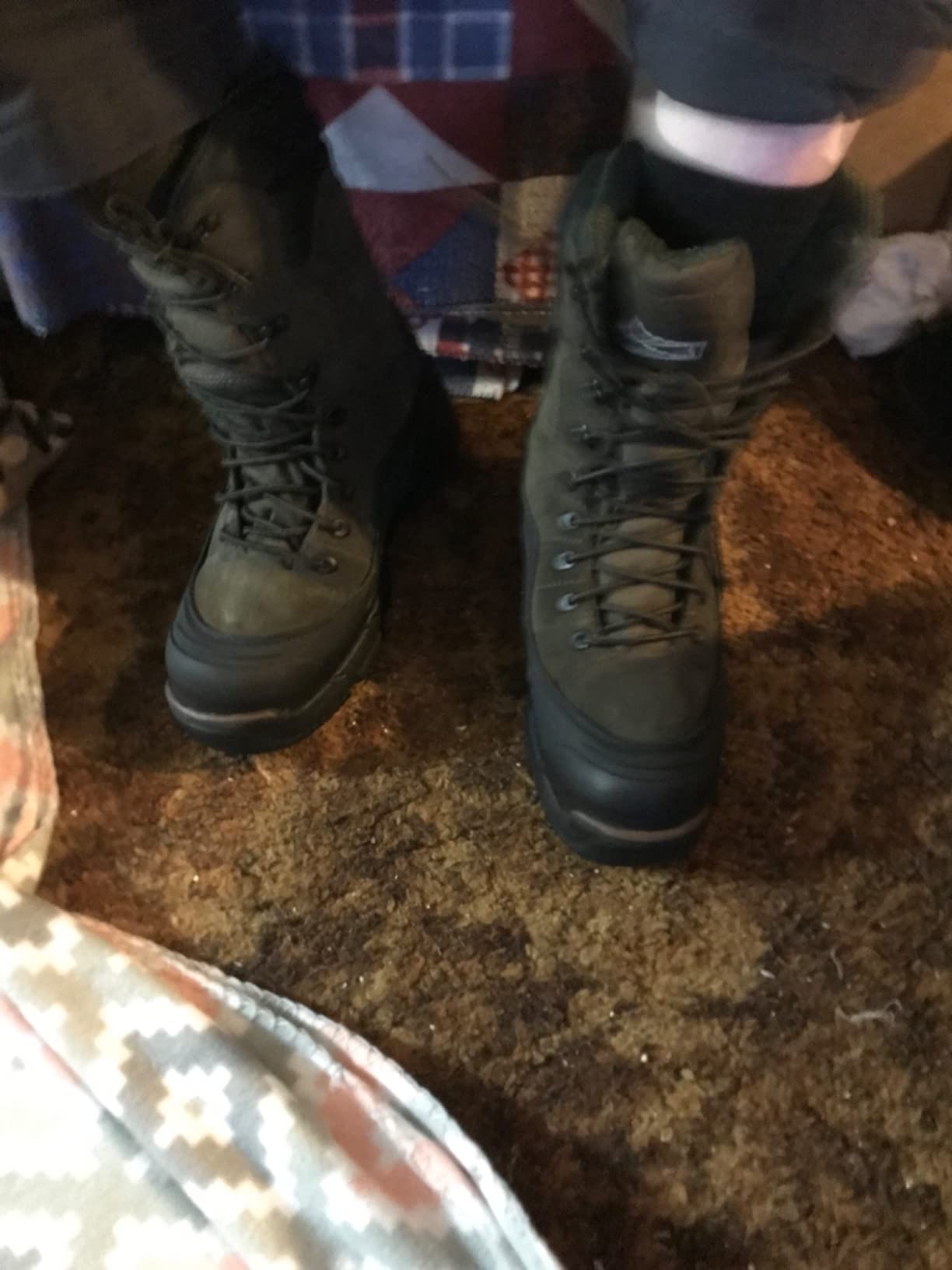
When laces beat slip-ons
If you have a wide or irregular foot, lacing gives you control over the midfoot that a fixed slip-on bootie does not. It also suits a deep-snow approach where you want the extra shaft tension.
The 1200G fill handles cold-weather hunting and work conditions without the bulk of a full pac boot.
Where it stops short
The build is heavier than lighter insulated hunting boots, and lacing is slower than a slip-on when you are setting up at first light with numb hands.
For true deep cold you will want more insulation than 1200G delivers, which is why the LaCrosse and Baffin pac boots sit above it on this list.
9. Baffin TUNDRA: the lightweight easy-entry option
Baffin Men’s TUNDRA Insulated Waterproof Lightweight Extreme-Weather Outdoor Snow Winter Boots for Snowshoeing & Ice Fishing, Black, 10
Rated -10C to -30C
Removable multi-layer liner
Arctic Rubber shell and EVA midsole
Slip-on, no laces or buckles
Pros
- Warm through five hours of snowshoeing at 25F
- Slip-on with no buckles or laces
- Removable multi-layer liner with aluminum membrane
- Lightweight at 2 pounds
- Velcro ankle strap adds support
Cons
- Rigid sole transmits every surface irregularity
- Minimal traction on ice
- One owner reported water ingress in shallow puddles
- Rating appears optimistic to some users
The TUNDRA is the boot we suggest for anyone who fights with laces, buckles, or stiff hips on a cold morning. It slips on with no hardware at all, and the Velcro ankle strap adds just enough support to make it feel secure rather than loose.
Baffin rates it for -10C to -30C, which is 14F down to about -22F, at moderate to high activity. Owners report warmth through five hours of snowshoeing at 25F right out of the box, and the removable multi-layer liner carries the same Thermaplush, B-Tek Foam, B-Tek Heat, and aluminum membrane stack as the bigger Baffin boots.
Warmth for active use
This is an activity-rated boot. It performs well when you are snowshoeing or walking in and warming up, which is how most early-season ice fishing begins.
At 2 pounds per pair it is one of the lighter options here, and it is more flexible than Baffin’s heavier Eiger-class boots.
Limits on the ice
The rigid sole has little give, so every cobblestone and uneven patch off snow transfers straight to your foot, and the Polar Rubber outsole offers minimal traction on ice where wearers report sliding.
One reviewer reported water ingress in shallow puddles, and some users find the -30C rating optimistic. Cushioning is also lighter than on Baffin’s higher models.
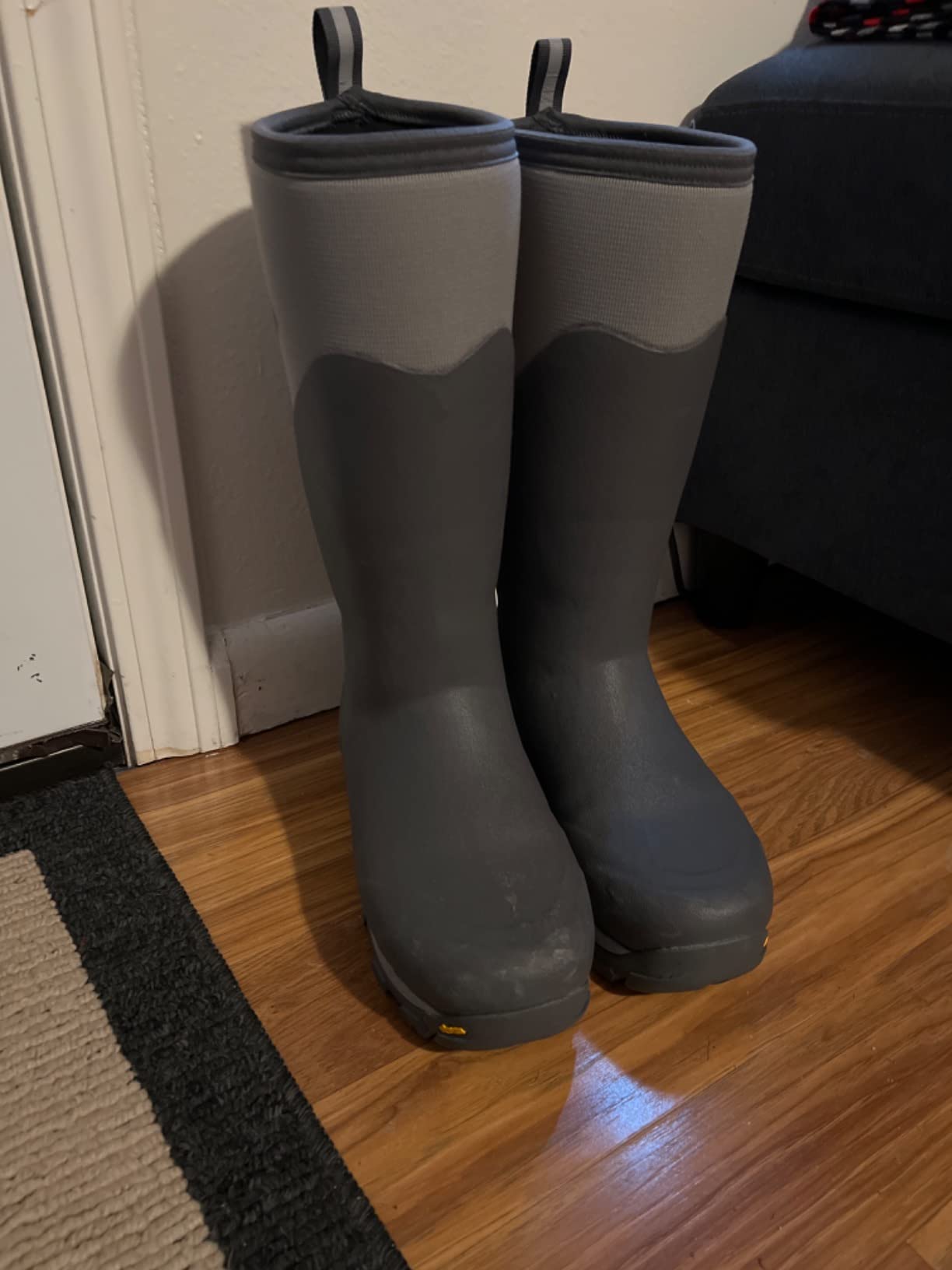
10. MUCK Arctic Ice Tall with Vibram Arctic Grip: the traction pick
MUCK Men’s Arctic Ice Tall Boot + Vibram Arctic Grip A.T.
Vibram Arctic Grip A.T. outsole
8mm neoprene bootie
100% waterproof
15-inch shaft
Pros
- Vibram Arctic Grip gives the best ice traction here
- 100% waterproof neoprene and rubber shell
- Warm in 20F field testing
- Comfortable for extended wear
- Lightweight midsole for all-day support
Cons
- Some reports of soles separating within a year
- Runs slightly large
- Not as warm as advertised for some owners
- Heels wear down on hard surfaces
Most boots on this list need traction aids on glare ice. This one has the Vibram Arctic Grip A.T. outsole, a compound developed for wet ice and packed snow, and owners consistently report excellent grip on both mud and frozen ice.
That makes it our pick when your spot is across a polished lake surface or a frozen access trail where a slip would end your day. The 15-inch shaft with extended rubber coverage keeps slush out on the walk in.
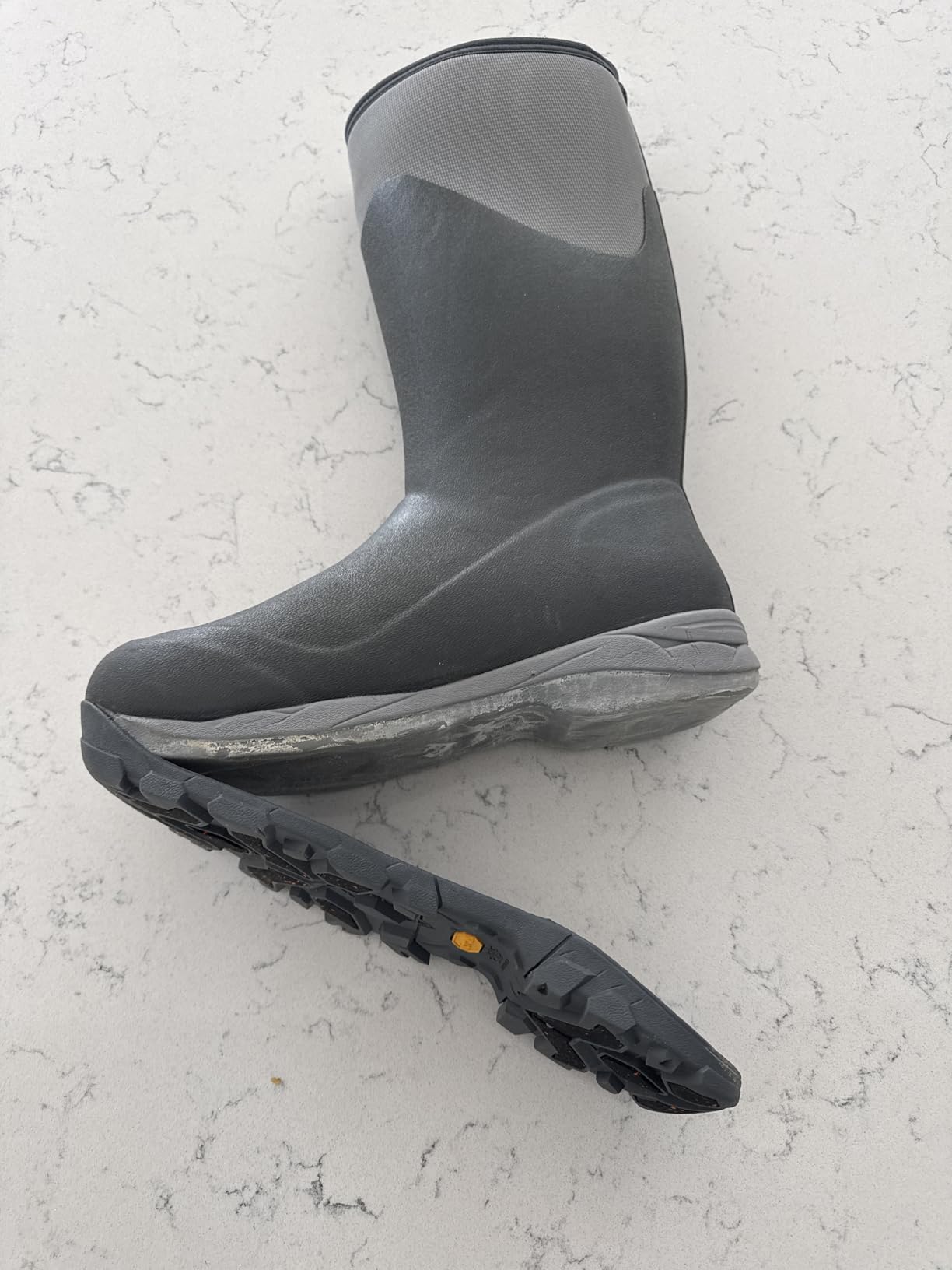
Warmth comes from the same 8mm neoprene bootie used in the Arctic Pro, and testers report good performance in 20F weather with the feet staying dry in soaked conditions. The bioDEWIX dry footbed topcover with NZYM manages moisture and odor, and the lightweight midsole holds up for long sessions.
It is also easy on and off, which matters more than it sounds when your hands are stiff.
Best for grip on hard ice
If traction is your main concern, this outsole is the reason to buy this boot rather than a similar neoprene model. Owners single it out for grip on frozen surfaces where other boots slide.
The 100% waterproof build keeps wet feet out during slush-season scouting and early ice.
Quality reports to weigh
Some users report soles separating in under a year, and long-time MUCK owners report declining quality compared to earlier runs. That durability doubt is why this sits lower on our list despite the strong traction.
It also runs slightly large, and some customers find it less warm than the rating implies.
11. Dryshod Arctic Storm: made for very large feet
Dryshod Arctic Storm Men’s Water Proof Mid-Calf Winter Boot Black Size 7
Comfort range -50F to 65F
5.5mm bootie and Densoprene XD foam
DS1 natural rubber outsole
Sizes 7 to 16
Pros
- Seven-layer protection rated to -50F
- 100% waterproof HydroKote exterior
- Large sizes up to 16 are hard to find
- Easy on and off with airmesh lining
- Roll-down calf pipe adjusts the fit
Cons
- Runs large
- so size down or size to fit
- No half sizes available
- Footbed less comfortable than some rivals
- Some users find it slippery on ice
The Dryshod Arctic Storm solves a problem the rest of this list does not: size. It is offered up to a size 16, which for a boot rated to -50F is genuinely rare, and if you have been squeezing into a size 14 because that is all that exists, this is worth a look.
Warmth comes from a seven-layer stack: a 5.5mm bootie, 2.5mm of Densoprene XD foam described as extreme density, 2mm of airmesh, and a 2mm warm fleece lining, sitting on an EVA cold-blocking midsole. The stated comfort range runs from -50F to 65F, and owners report testing it in 5F weather.
Warmth with a real cold-blocking sole
The DS1 outsole pairs a high-traction natural rubber outsole with a cold-blocking EVA sponge midsole, which is the piece that stops ice from pulling heat straight out of your foot.
All Dryshod boots are built waterproof top to bottom, and the HydroKote exterior lets water roll off and dry in seconds instead of saturating the outer textile.
Fit quirks to plan around
Owners recommend buying a size up for the best fit, and there are no half sizes, so anyone between sizes has to choose. The footbed is less comfortable than some competing boots for long sessions.
A few users find it slippery on ice despite the rubber outsole, and the smaller review base means long-term durability is less proven than the established picks above.
How to Choose Ice Fishing Boots for Subzero Days
The fastest way to overspend or pick wrong is to ignore the temperature rating and buy on brand reputation. Owners trust real field reports over stated specs, which is why every entry above includes what reviewers actually reported at a given temperature.
Match the rating to your coldest day
At 0F, almost any insulated waterproof boot on this list works, and a mid-height rubber boot like the Kamik Icebreaker is more than enough. At -20F, we want at least an 8mm neoprene bootie or 1200G of Thinsulate, which puts the MUCK Arctic Pro, the ROCKY Blizzard Stalker, and the LaCrosse Alphaburly in play.
At -40F, you want a stated polar rating: the Baffin Impact is tested for -40F and below, the Alphaburly is rated to -60F, and the Dryshod Arctic Storm carries a -50F comfort floor. Below -40F, the Baffin Snow Monster with its roughly -94F stated rating is the deepest spec in this roundup.
One caveat: manufacturer ratings run optimistic. Treat them as a ceiling you can approach while moving, not a temperature you can sit at, and add a liner or chemical warmer for true stationary cold.
Insulation: millimeter neoprene or gram-weight Thinsulate
These are two different systems. Millimeter neoprene is a thick bootie sealed inside a waterproof rubber or nylon shell, and thickness is the direct measure: 5mm handles typical winter, 8mm is the real winter answer. Thinsulate is measured in grams, where 1000g is a solid all-round winter fill and 1200G to 1600g is deep cold territory.
A removable liner changes the equation. It can be dried overnight and swapped, and it lets you tune warmth for a mild afternoon versus a hard evening. Forum regulars consistently call liners worth it and note they last longer than owners expect when dried between trips.
Waterproofing, slush, and drying boots out
Full waterproof construction matters more on the ice than most buyers expect, because your feet are near the meltwater line. A 100% waterproof shell also protects the insulation, which loses its loft once saturated.
After a slush day, take the liners out, stuff the shells with newspaper or a foam mat, and let them dry away from a heater. It is the single habit that most extends boot life, and it costs nothing. A wax or repellent treatment on the upper helps shed wet snow on the walk out.
Traction on glare ice
Only the MUCK Arctic Ice Tall here has a purpose-built wet-ice outsole in the Vibram Arctic Grip A.T. compound. Everything else wants traction aids, and several models in this roundup explicitly accept chains or crampons.
Owners ask repeatedly whether cleats make a real difference on glare ice. They do, and most wearers pair a boot with a medium-aggression strap-on cleat rather than trying to find a boot that grips everything. If you also walk long distances to your spot, check whether the cleat system is compatible with your snowshoes before you buy.
Sizing, socks, and liners working together
Sizing is the most trusted content in this category, so we keep it simple. Wear the thickest sock or boot liner you plan to fish in and size to that. Several boots here run large, including the Kamik Icebreaker and the Dryshod Arctic Storm, while the Baffin Snow Monster and Impact run small and need a half size to a full size up.
Layering matters: merino wool keeps warmth without the bulk of cotton, synthetic blends dry faster overnight, and heated socks become necessary at or below 20F for multi-hour outings. Place toe warmers on top of the toes rather than under them, and keep a foam or rubber mat under your boots so they are not in direct contact with the ice.
If you are building a full cold-weather kit, our picks for the best insulated snow boots overlap with several entries here, and choosing a shelter that keeps the wind off makes the boot’s job much easier. Once you are set up, the best ice fishing flashers for lakes help you find fish faster in low light.
Frequently Asked Questions
What is the warmest boot for ice fishing?
On published specifications, the Baffin Snow Monster is rated to roughly -70C, about -94F, and in some conditions down to -100F depending on activity level. It pairs that rating with a removable Comfort-Fit inner boot using B-Tek Heat hollow-fibre insulation and a Vapourized Aluminum Membrane, and it is lighter than comparable pac boots. The Baffin Impact is the alternative for polar-rated cold, tested in North and South Pole conditions for -40F and below.
Do neoprene boots keep you warm?
Yes, when the thickness matches the temperature. An 8mm neoprene bootie, used in the MUCK Arctic Pro and the MUCK Arctic Ice Tall, is the practical winter standard and holds warmth for a stationary angler near -20C. A 5mm bootie, used in the MUCK Arctic Sport Tall, is comfortable in cold but moving weather rather than deep cold. Neoprene also blocks water completely, which matters more than most buyers expect on the ice.
What are the warmest boots for extreme cold?
The warmest options in this roundup are the Baffin Snow Monster at roughly -94F stated, the LaCrosse Alphaburly Pro 18 with 1600g of Thinsulate rated to -60F, the Baffin Impact rated for -40F and below, and the Dryshod Arctic Storm with a -50F to 65F comfort range. Choose among them by weight and fit rather than rating alone, since the heaviest boots are the least comfortable over a full day.
Should I size up ice fishing boots?
Size to the thickest sock or liner you will actually fish in, then check the model. The Kamik Icebreaker and Dryshod Arctic Storm run large and often need a size down, while the Baffin Snow Monster runs small and needs at least a half size up, and the Baffin Impact is enormous and needs a full size up. Bulky boots also stop you layering two pairs of socks, so the fit matters more than the number on the box.
Do I need insulated pac boots or will good rubber hunting boots work?
Good rubber hunting boots work for most of the season. At 0F to -20F, a waterproof boot with 1000g to 1200G of Thinsulate, such as the ROCKY Sport Utility or Blizzard Stalker, is comfortable for hours. Pac boots with an 8mm neoprene bootie or 1600g of insulation earn their bulk when you sit still below -20F or walk in through deep snow, where the shaft height and extra loft keep heat in.
What boots work for snowmobile and ATV access to a fishing spot?
Footwell clearance is the real requirement. Bulky pac boots such as the Baffin Impact are widely reported as hard to use around vehicle pedals, so if you ride to your spot, a mid-height boot like the Kamik Icebreaker, the ROCKY Sport Utility, or the Baffin TUNDRA is the safer pick. The Baffin Impact and the Kamik Icebreaker use buckle or pull-on closures that work with gloves, which matters when your hands are cold.
The Verdict: Which Ice Fishing Boot Wins in 2026
The MUCK Arctic Pro is our pick for the best ice fishing boots for extreme cold because it pairs an 8mm neoprene bootie with a genuinely waterproof shell and a roomy fit that accepts thick socks, and because owners back it up with reports of staying warm sitting still near -20C.
Go deeper on cold nights with the Baffin Snow Monster, choose the Kamik Icebreaker for value at -40F, and pick the ROCKY Sport Utility if you want one boot that lasts for years. Whichever you choose, size to your socks, add a chemical warmer at or below 20F, and keep a mat under your boots so the ice is not drawing heat out of them.