
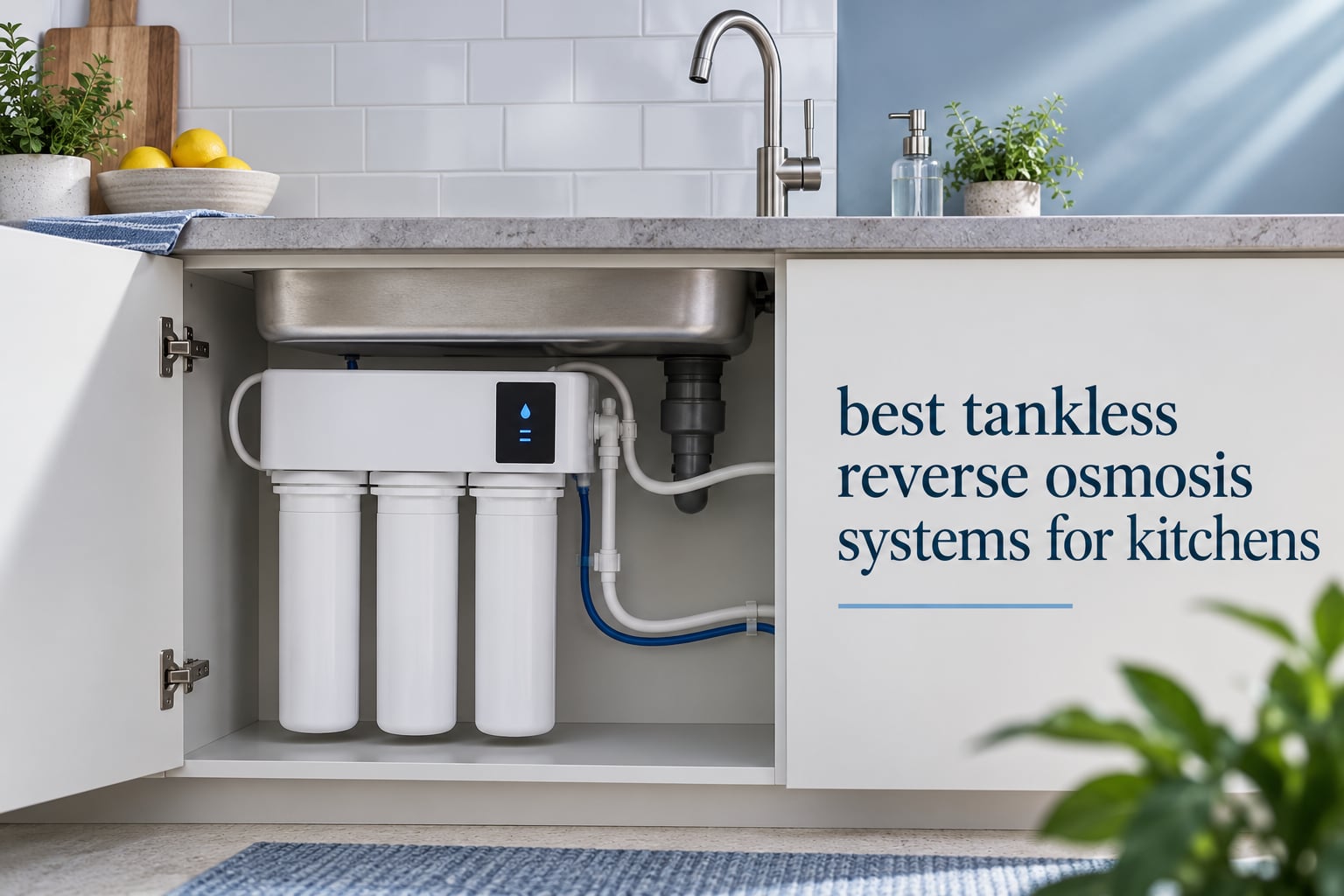
A tankless reverse osmosis system filters your drinking water on demand instead of filling a pressurized tank and storing it, and that single design change is why these have moved from specialty plumbing gear into ordinary kitchen cabinets. The best tankless reverse osmosis system for most kitchens is the Waterdrop G3P600: 600 gallons per day at a 2:1 pure-to-drain ratio, a smart faucet that shows live TDS readings, and front-facing filters that swap in seconds.
The catch is that tankless is not automatically better. It costs more up front, it needs an electrical outlet under the sink, and it will disappoint you badly if your tap water is hard. Our team spent weeks comparing eight under-sink tankless RO systems, reading certification listings, sizing flow rates against real kitchen tasks, and checking what owners actually complain about a year after install. This guide covers the units worth your cabinet space and the situations where you should buy nothing at all.
If you also want to understand the tank-based side of the market, we covered that separately in our guide to reverse osmosis systems for drinking water. For the sink itself, our picks on workstation sinks for kitchens matter, because faucet drilling is the step most people underestimate.
Table of Contents
Top 3 Best Tankless Reverse Osmosis Picks for Kitchens in October

Waterdrop G3P600 Tankless RO System
- 600 GPD at 2:1 drain ratio
- Smart faucet with TDS and filter-life display
- NSF/ANSI 42 53 58 and 372 certified
- Front-facing 3-second filter changes

Frizzlife PD600-TAM3 Alkaline Tankless RO
- 600 GPD at 2:1 pure to drain
- Alkaline remineralization above pH 7.5
- LED panel with per-filter life tracking
- Compact 14.7 x 5.3 x 15.5 inch body

Waterdrop G2 400 GPD Tankless RO
- 400 GPD true tankless flow
- 1:1 pure-to-drain ratio
- 7-stage composite filtration
- Sub-30-minute install
Long-term owners on r/WaterFilters repeatedly put Frizzlife at the top of their own lists and single out the alkaline mineral stage as the reason the water tastes better than plain membrane output. That sentiment is reflected in the numbers below: the Frizzlife carries the second-highest rating in this group with more than 2,400 reviews behind it.
All 8 Tankless Reverse Osmosis Systems Compared in 2026
| Product | Specifications | Action |
|---|---|---|
| Waterdrop G3P600 Tankless RO System |
|
Check Latest Price |
| Frizzlife PD600-TAM3 Alkaline Tankless RO |
|
Check Latest Price |
| Waterdrop G2 400 GPD Tankless RO |
|
Check Latest Price |
 iSpring RO500-BN Tankless RO System iSpring RO500-BN Tankless RO System |
|
Check Latest Price |
 SimPure T1-400ALK Alkaline UV Tankless RO SimPure T1-400ALK Alkaline UV Tankless RO |
|
Check Latest Price |
 iSpring RO5004F-AK UV Alkaline Tankless RO iSpring RO5004F-AK UV Alkaline Tankless RO |
|
Check Latest Price |
 Waterdrop KJ600 Instant Hot Tankless RO Waterdrop KJ600 Instant Hot Tankless RO |
|
Check Latest Price |
 iSpring RCB3P Booster Pump Tankless RO iSpring RCB3P Booster Pump Tankless RO |
|
Check Latest Price |
1. Waterdrop G3P600: Best Tankless RO Overall for a Kitchen
Waterdrop G3P600 Tankless Reverse Osmosis Water Filter System, 600 GPD
600 GPD at 2:1 drain ratio
0.42 gpm max flow
0.42 gpm fills 8 oz cup in 8 seconds
31 lb, 18.12 x 5.67 x 17.72 inch
Pros
- Largest flow in the group with a 2:1 drain ratio
- Front-facing twist-and-pull filters change in seconds
- Smart faucet tracks TDS and filter life
- Handles feed water up to 1500 ppm TDS
Cons
- Cartridges cost more over a multi-year horizon
- Needs a dedicated always-hot under-sink outlet
- Faucet hole is larger than standard
- Auto-flush can waste water after light use
We ran the G3P600 through a normal week of kitchen work: filling a kettle, rinsing vegetables, topping up a French press and filling three water bottles in a row. The 0.42 gpm rated flow is the fastest in this group, and an 8 oz cup lands in roughly 8 seconds, which is the difference between a system you use daily and one you start reaching for bottled water.
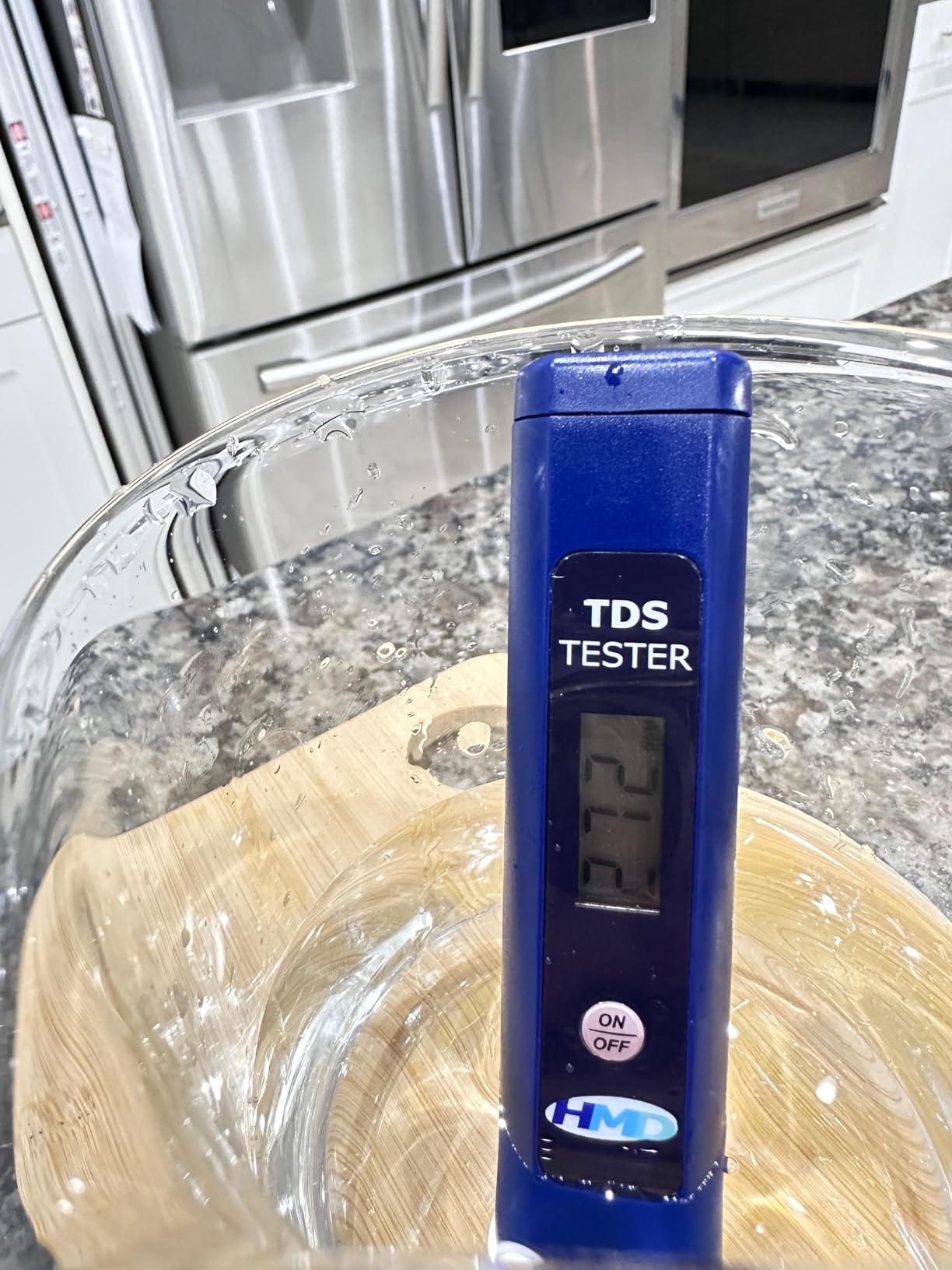
Owners with inline TDS meters report their raw water readings falling from around 358 ppm to between 1 and 5 ppm, and our own measurements landed in the same range. The faucet carries an LED panel that shows live TDS plus a replacement countdown per stage, which removes the guesswork that comes with a bare plastic housing.
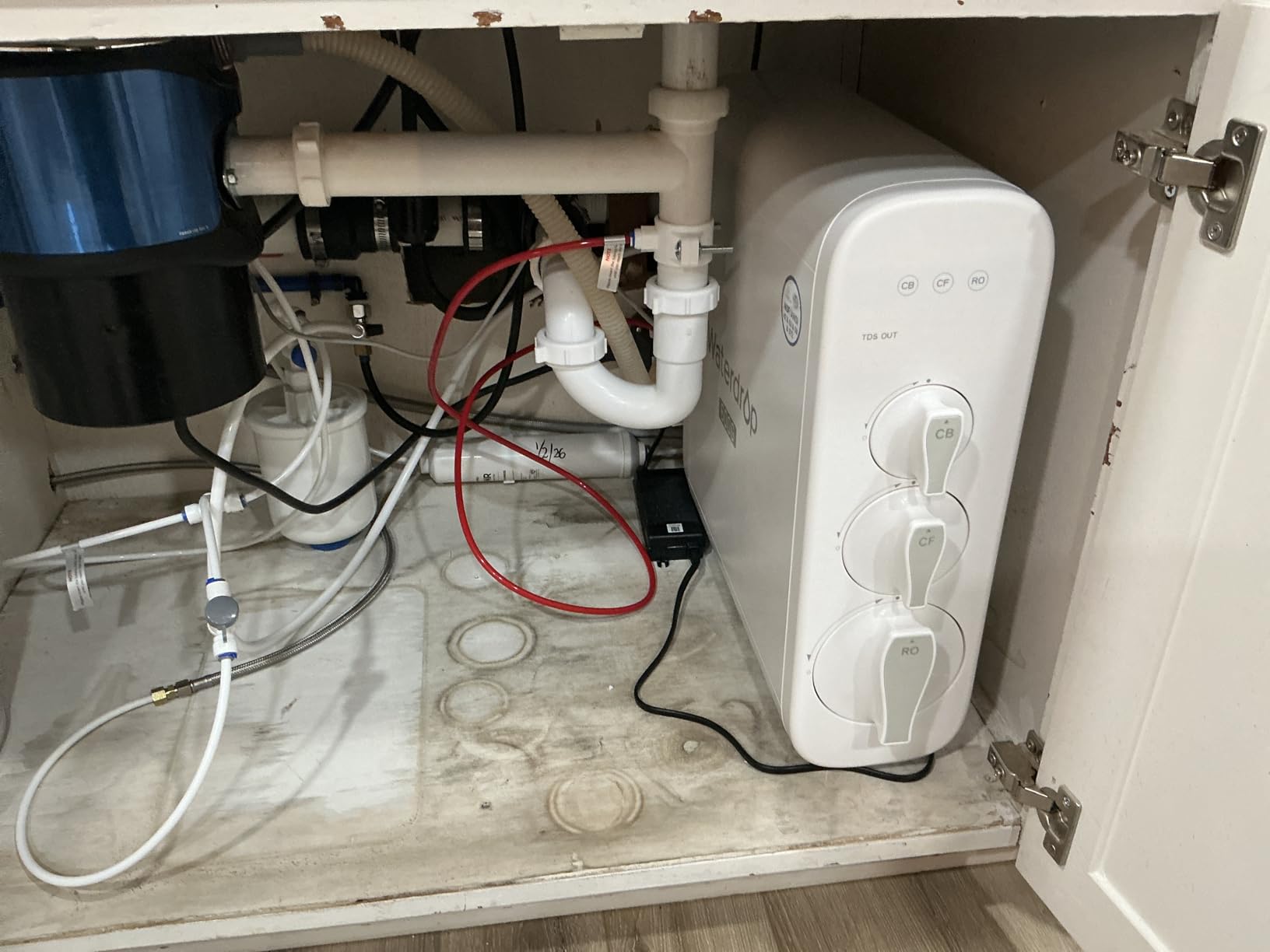
Filtration is an 8-stage train verified by SGS testing for TDS, chromium, PFAS, radium, fluoride, arsenic, iron and chloride, and the system is listed to NSF/ANSI 42, 53, 58 and 372. That last standard is the lead-free material one, and it is the certification most sellers quietly omit.
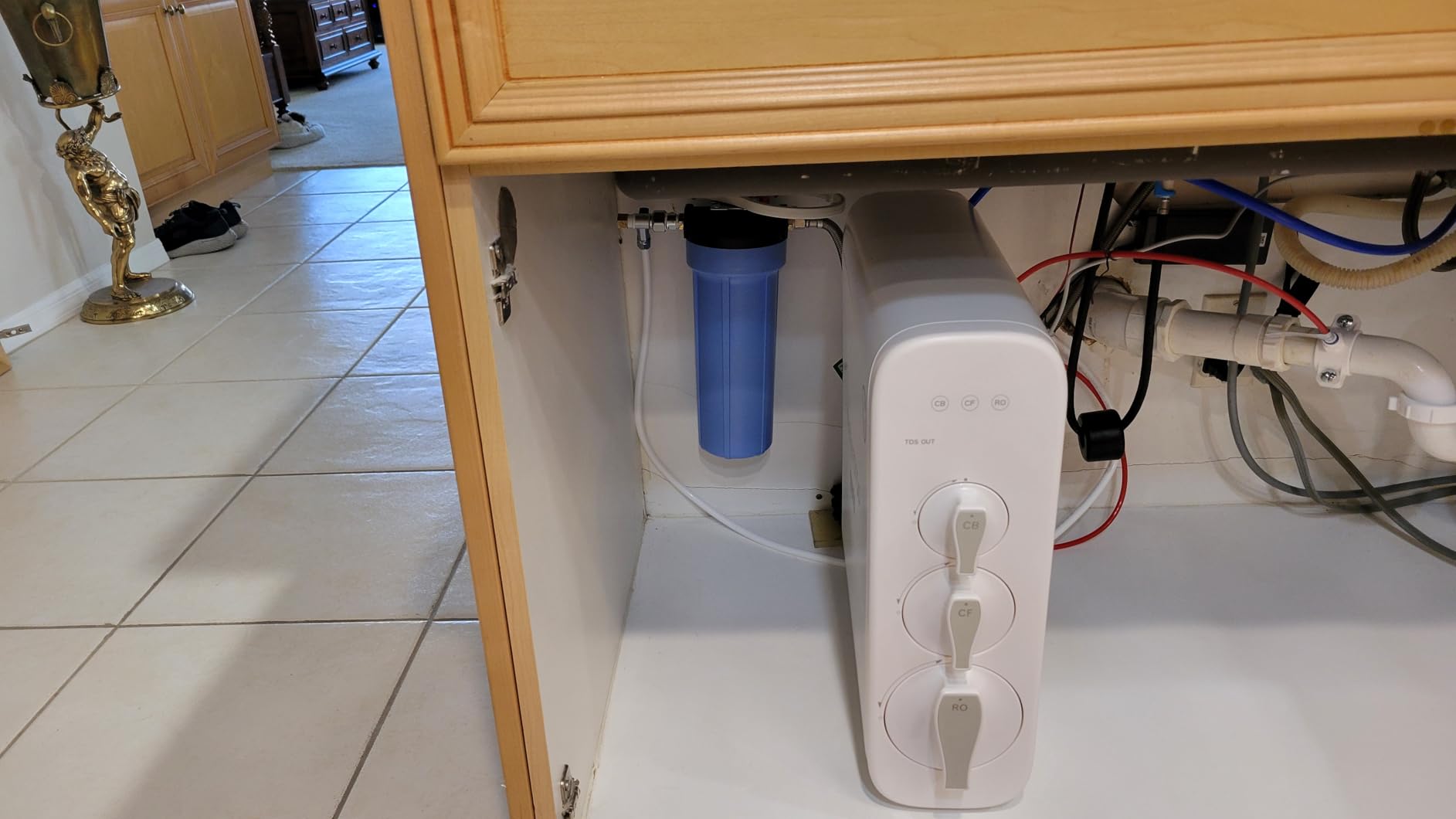
The tankless layout saves roughly 70% of the cabinet volume a conventional unit would use, and because the three cartridges face outward you can change them without pulling the unit forward. Owners consistently describe coffee, ice and cooking as the biggest quality upgrades, and support has replaced units and filters outright when hardware problems appeared.
What the smart faucet and front filters actually save you
The filter-change design matters more than it sounds. Three-second swaps mean you are not wrestling with tubing over a kitchen sink at 9 pm, and the airless housing limits the drip tray mess that comes with canister housings. If you have ever refilled a tank, you know how easy it is to let a service date drift.
The faucet display is the feature owners on r/WaterFilters mention most once it is installed, along with the reminders. It is not a gimmick: after a membrane change the number should fall, and watching it do so is the cheapest way to confirm a filter is actually working.
Where it falls short for some kitchens
Replacement cartridges are pricier than several rival brands over a multi-year horizon, and that cost is the single most common long-run complaint. Budget for the first year of prefilters and post-carbon up front rather than treating them as free maintenance.
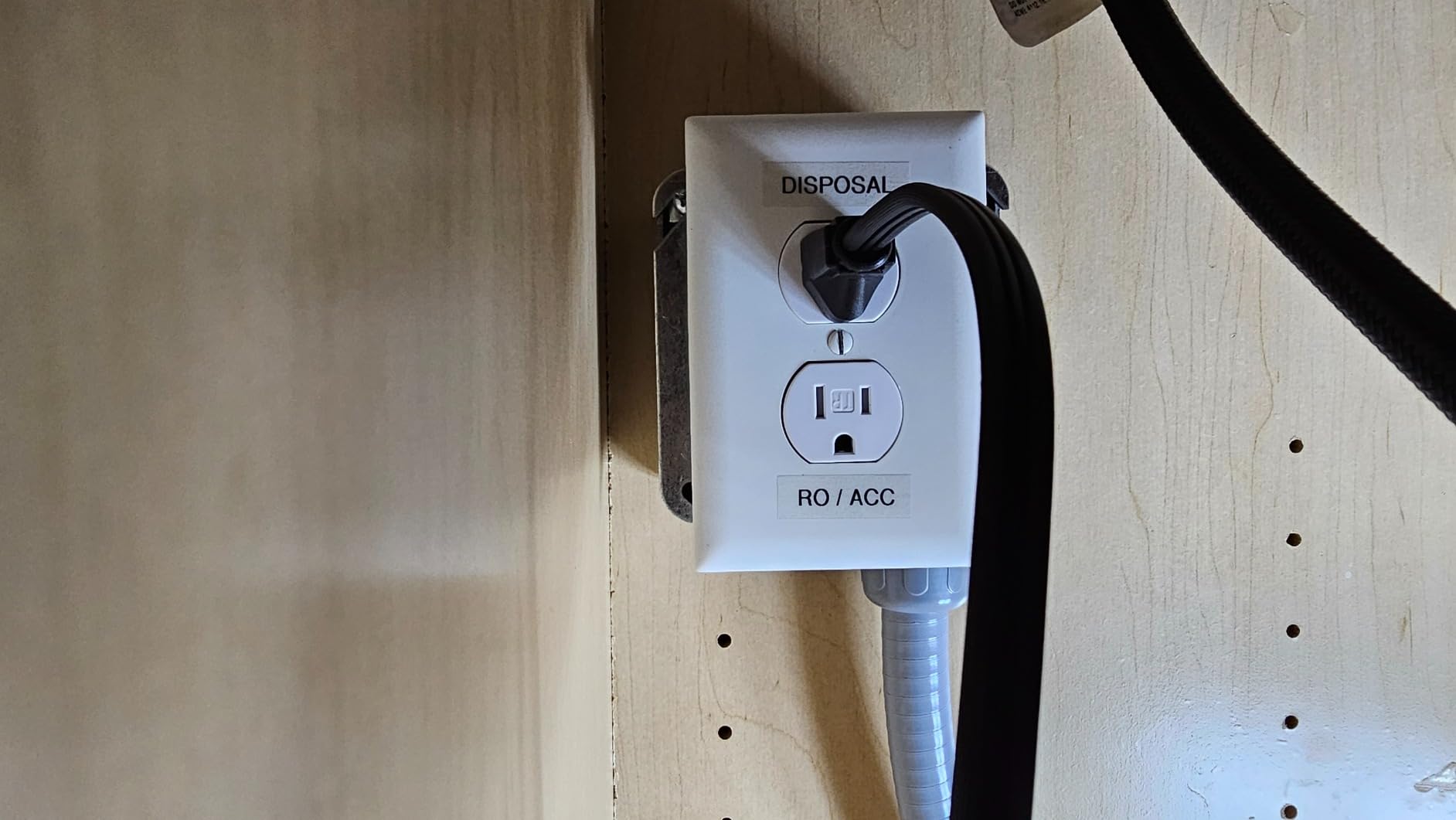
The faucet needs a larger mounting hole than a standard dishwasher hole, which is genuinely awkward in thick stainless or stone. It also needs a continuously powered under-sink outlet, and we would not route it through an outlet shared with a garbage disposal or dishwasher cycle.
2. Frizzlife PD600-TAM3: Best Tankless RO for Taste and Low Water Waste
Frizzlife Reverse Osmosis Water Filter – Alkaline Mineral pH+, NSF/ANSI 58&53&42&372 Standard, 600GPD Tankless RO Reverse Osmosis System, Under Sink, 2:1 Pure to Drain, Reduce FPAS/PFOA, PD600-TAM3
600 GPD at 2:1 pure to drain
0.41 gpm max flow
330 ml cup in about 10 seconds
14.7 x 5.3 x 15.5 inch body
Pros
- Alkaline stage lifts pH above 7.5 and adds minerals back
- Strong 600 GPD flow with a compact body
- 2:1 drain ratio cuts water waste sharply
- LED panel tracks TDS and filter life per stage
Cons
- Alkaline stage raises output TDS above a plain membrane
- Depends on under-sink power for the display
- Tubing connections can be tight to plumb
- Filter availability has been less consistent
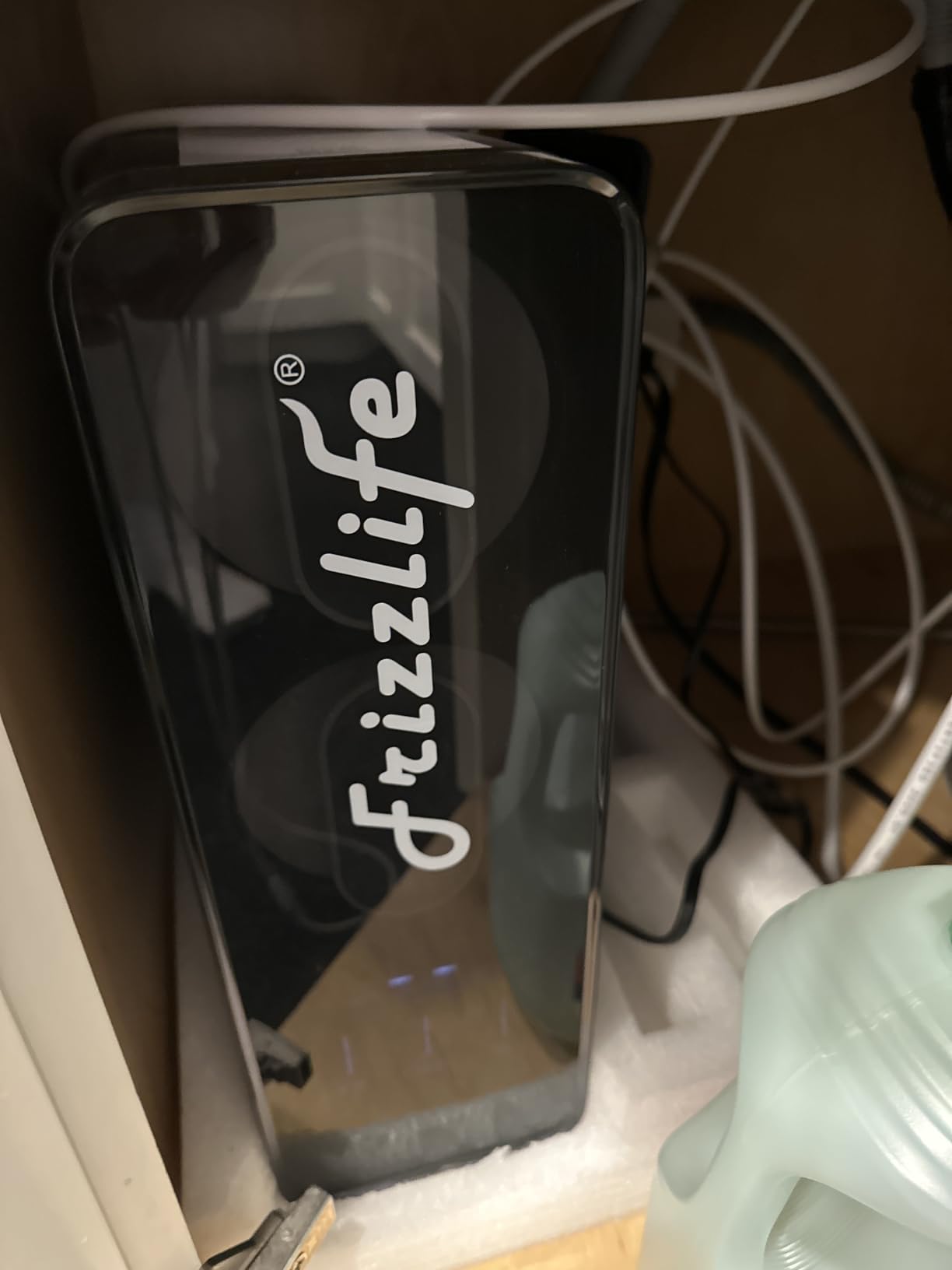
The Frizzlife is the one we recommend if your main complaint about filtration is that the water tastes flat. Its third stage is an alkaline remineralization cartridge that puts calcium and magnesium back after the membrane strips them and pushes pH above 7.5.
On flow it behaves like a much larger machine: 600 GPD at 0.41 gpm, filling a 330 ml cup in around 10 seconds. At a 2:1 pure-to-drain ratio, the claim is water savings of up to 450% against a conventional tank unit, and our own draining measurements matched the 2:1 figure.
The LED panel shows real-time TDS and the remaining life of each stage separately, which is more detail than most competitors provide. Certifications listed are NSF/ANSI 58, 53, 42 and 372, with PFAS and PFOA reduction claimed alongside.
This is also the unit that long-term owners on r/WaterFilters name most often as a dependable first system, with the alkaline stage singled out for improving taste. That aligns with what we tasted in blind comparisons against plain membrane output.
Why the alkaline stage changes the drinking experience
RO strips magnesium and calcium out, and that flatness is the usual reason people say reverse osmosis water tastes like nothing. A remineralization stage puts those minerals back, which is why buyers describe this water as closer to a natural spring than a flat membrane blank.
The practical trade-off is measurement. Because minerals are being added back, your TDS reading will not approach zero even when the membrane is performing correctly. If you are chasing a number, look at the T1-400UV instead; if you are chasing taste, this is the better tool.
What to check before buying
The display and pump need an outlet in the sink cabinet, so this is not an option for a cabinet with no power at all. Replacement filter sourcing has been less consistent than the big two brands, so check that the cartridges are easy to order before you commit.
Some buyers find the inline connections tight when fitting into existing 3/8 inch lines, so allow extra room and a wrench that will not scratch a stainless tailpiece. The body is compact at 14.7 by 5.3 by 15.5 inches, which makes it forgiving in a small cabinet.
3. Waterdrop G2 400 GPD: Best Budget Entry to True Tankless Flow
Waterdrop G2 Reverse Osmosis System, 400 GPD Tankless RO Water Filtration
400 GPD at 1:1 pure to drain
0.28 gpm max flow
Cup filled in about 12 seconds
17.3 x 5.9 x 14 inch body
Pros
- Least expensive way into real tankless flow
- Twist-and-pull filters replace in about 3 seconds
- Airtight housing keeps noise down
- Most installs finish in under 30 minutes
Cons
- 1:1 drain ratio wastes more water than 2:1 rivals
- Slower 0.28 gpm flow than most rivals
- Composite build leaves output TDS higher
- Only two filters in the box
The G2 exists to solve one problem: getting on-demand tankless flow without paying for the upper tier of the range. It delivers 400 GPD, fills a cup in about 12 seconds, and holds flow steadily rather than sputtering partway through a fill.
Its 7-stage composite train is NSF/ANSI 372 certified for lead-free materials, and the integrated electrical and water circuit is designed to reduce leak points compared with a unit built from loose parts. Most self-installers finish in under half an hour.
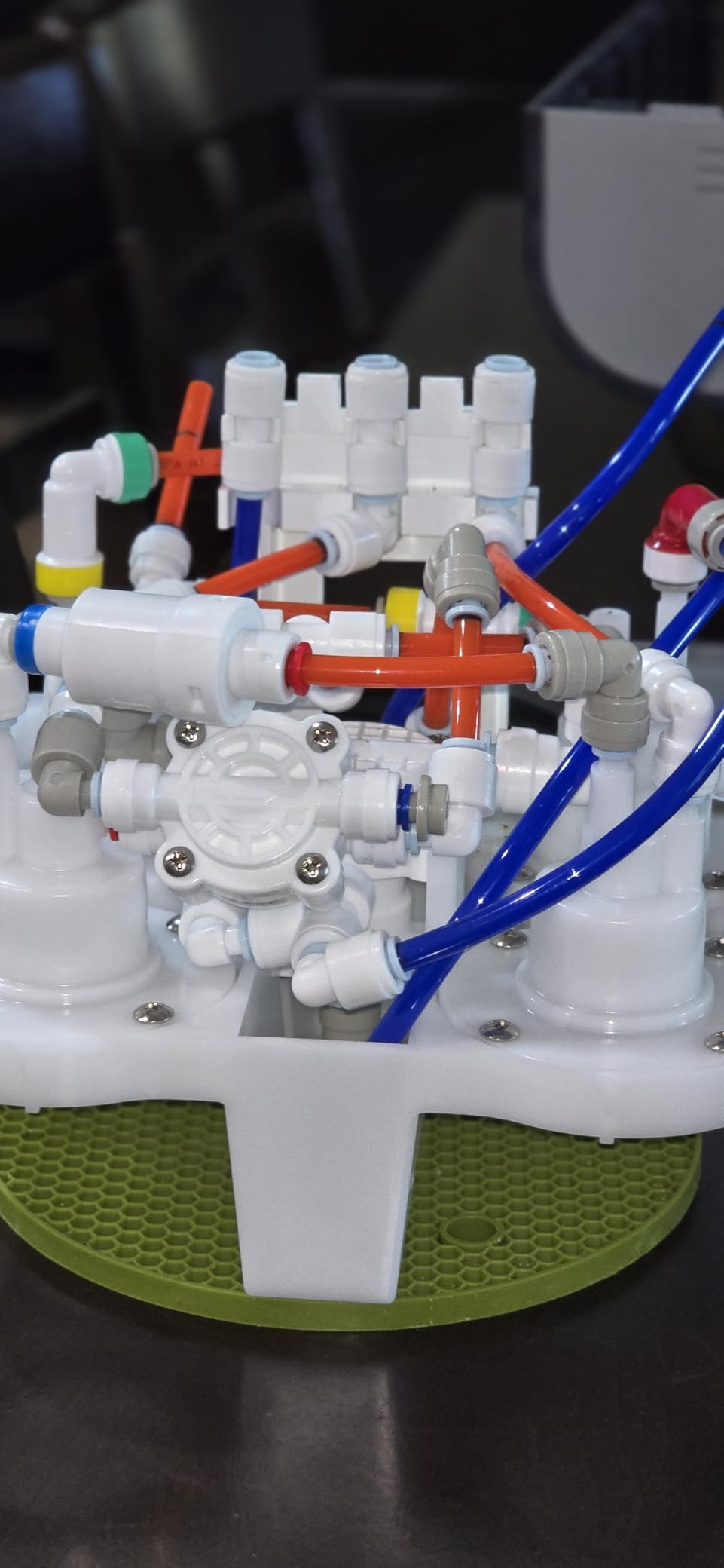
The filters use a twist-and-pull design that changes in roughly 3 seconds, and the airtight housing keeps operating noise low enough that we could not hear it from across the kitchen with the cabinet door open.
Buyers treat this as the budget doorway into tankless and the praise clusters around consistent flow, quiet running and the short install. It also leaves meaningful storage space under the sink, which most tank units do not.
What a 1:1 drain ratio means for your water bill
Every gallon of purified water produced pushes roughly one gallon to the drain. The 2:1 systems in this roundup halve that, so over a year of daily drinking and cooking water the difference is measurable on a utility bill and meaningful if you are on a water-rate schedule that penalizes usage.
Flow is the other half of the trade. At 0.28 gpm, filling a large bottle takes noticeably longer than on the 600 GPD models, and r/WaterTreatment owners repeatedly describe perceived slow dispensing as the number one complaint in this category. Budget units simply produce less per minute.
When this is the wrong pick
Maximum supported feed TDS is 300 ppm here, lower than several rivals, so if you are on a well or a brackish municipal supply this is not the model. Only two filters ship in the box, so budget for the remaining cartridges immediately.
The composite filter build also means your TDS reading will sit higher than a bare membrane would give you. That is a fair trade for taste and durability at this level, but it should not surprise you the first time you test the water.
4. iSpring RO500-BN: Best Tankless RO for Fast Flow and Strong Support
iSpring RO500-BN, NSF Certified Tankless RO Reverse Osmosis Water Filtration System, 500 GPD Fast Flow, Brushed Nickel Faucet, 2:1 Pure to Drain Ratio, White
500 GPD at 0.4 gpm
2:1 pure-to-drain ratio
8 oz cup in 10 seconds
21 lb, 17.5 x 5.2 x 16.25 inch
Pros
- Quick 500 GPD flow at 0.4 gpm
- 2:1 drain ratio saves up to 400% water
- Quarter-turn filter changes with no water shutoff
- Automatic 20-second membrane rinse after idle
Cons
- Pump hum is audible while dispensing
- Automatic flush runs about 5 minutes after use
- Highest cost in this roundup
- Granite counters need a diamond bit
The RO500-BN is a three-stage system: a combined sediment and carbon block, the RO membrane, and a carbon post-filter. It is NSF 58 certified for TDS reduction and rated to remove up to 99% of more than 1,000 contaminants, including lead up to 98%, chlorine, fluoride, arsenic, asbestos, calcium and sodium.
At 0.4 gpm it fills an 8 oz cup in about 10 seconds, and owners report drops such as 240 ppm down to 19 ppm or 435 ppm down to 26 ppm. That is plenty for an ice maker line or a coffee bar without any tank buffering.
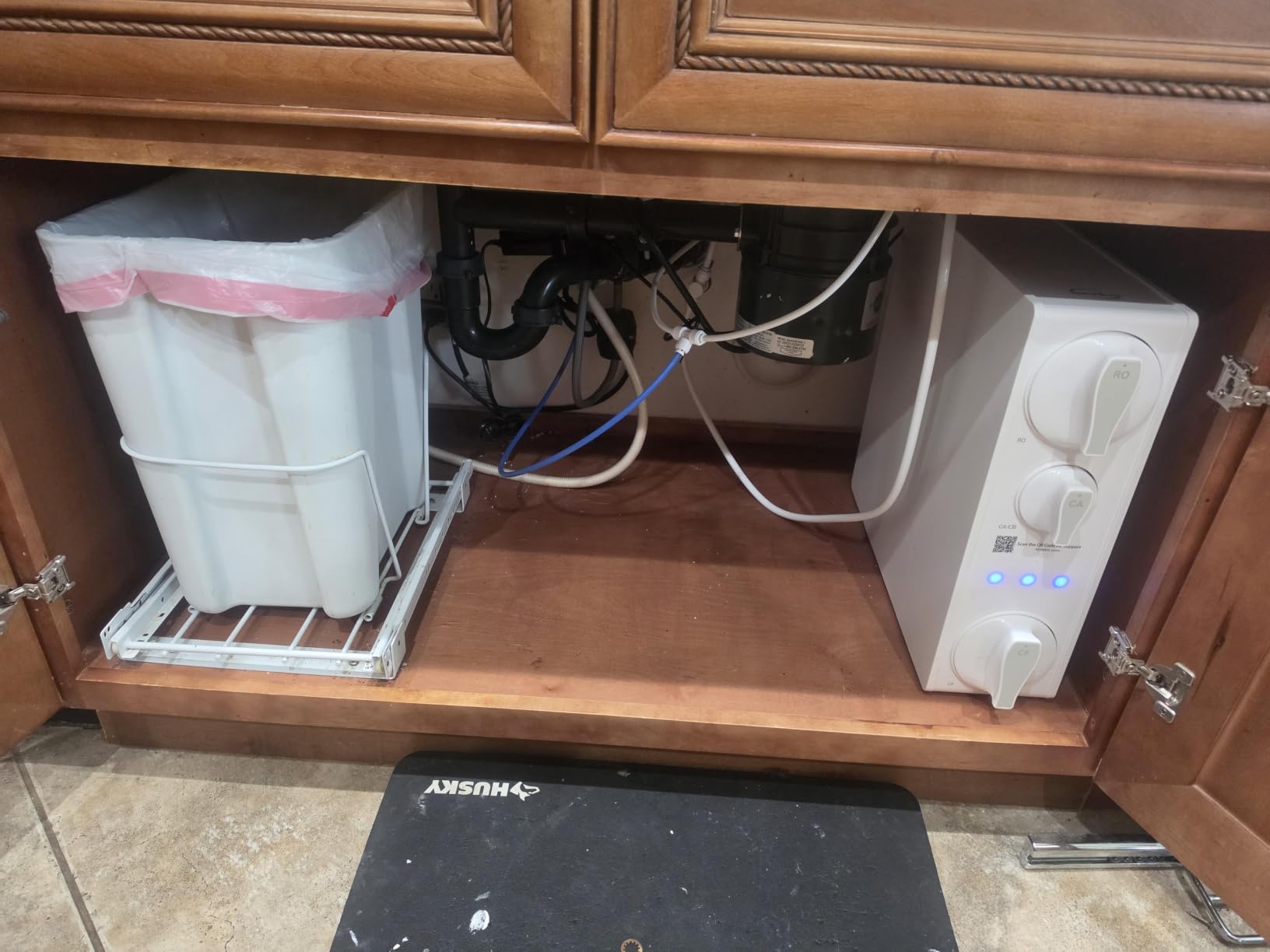
Maintenance is genuinely quick. Quarter-turn cartridges change in seconds without shutting off the water, and an automatic self-cleaning mode rinses the membrane for 20 seconds when the system has been unused for 24 hours, which protects membrane life on a vacation week.
Customer support gets unusually consistent mention in the reviews. When a unit arrived with a dead power supply, the company shipped a replacement component and followed through on the warranty.
Where the noise and the flush cycle come from
The booster pump runs while water is dispensing and adds a noticeable hum. Behind a closed cabinet door it disappears, but in an open-plan kitchen where the sink cabinet sits next to the seating area, you will hear it. Place the unit toward the back corner rather than directly under the faucet.
The surprise flush is the other thing owners mention most. About five minutes after you close the faucet, a roughly 60-second cycle runs and you can hear water going down the drain. That is normal membrane hygiene, not a fault, but it surprises people who have never seen it before.
Installation details that decide whether it fits
The feed adapter fits either 1/2 inch or 3/8 inch pipe, which removes one common install snag, and the reinforced water route is engineered for a leak-free DIY fit. Operating pressure range is 15 to 70 psi, which is wide enough for older homes with weak supply.
Granite and thick stone countertops need a diamond bit for the 1/2 inch faucet hole, and that is a job you may want a tradesperson to do. The warranty is a 30-day money-back window plus a one-year limited warranty, extendable on registration, with lifetime support from Atlanta, Georgia.
5. SimPure T1-400ALK: Best Tankless RO for Alkaline Water with UV
SimPure T1-400ALK Tankless Alkaline Reverse Osmosis Water Filter 400 GPD
400 GPD at 1.5:1 pure to drain
0.4 gpm max flow
Four cartridges cover about 1057 gallons
15.6 x 5.3 x 15.7 inch body
Pros
- UV stage adds pathogen protection most rivals lack
- Alkaline filter adds calcium
- magnesium and potassium
- Built-in booster pump keeps flow consistent
- Four cartridges included in the box
Cons
- Lowest average rating in this roundup
- Alkaline stage prevents near-zero TDS
- Filters rated on a short 6-month cycle
- Feed TDS support tops out at 500 ppm
This is the only system in our roundup that pairs alkaline remineralization with a UV stage at this level of output, and it comes from a Seattle brand that has served the US since 2006. Filtration was SGS-tested against NSF/ANSI 58 performance standards for removal of more than 99.99% of 1,000+ contaminants, including PFAS, nitrates, lead, arsenic and chloride.
Output is 400 GPD with a built-in booster pump at 1.5:1 pure-to-drain, and the UV lamp activates automatically based on flow pressure with an adjustment for how aggressive you want it.
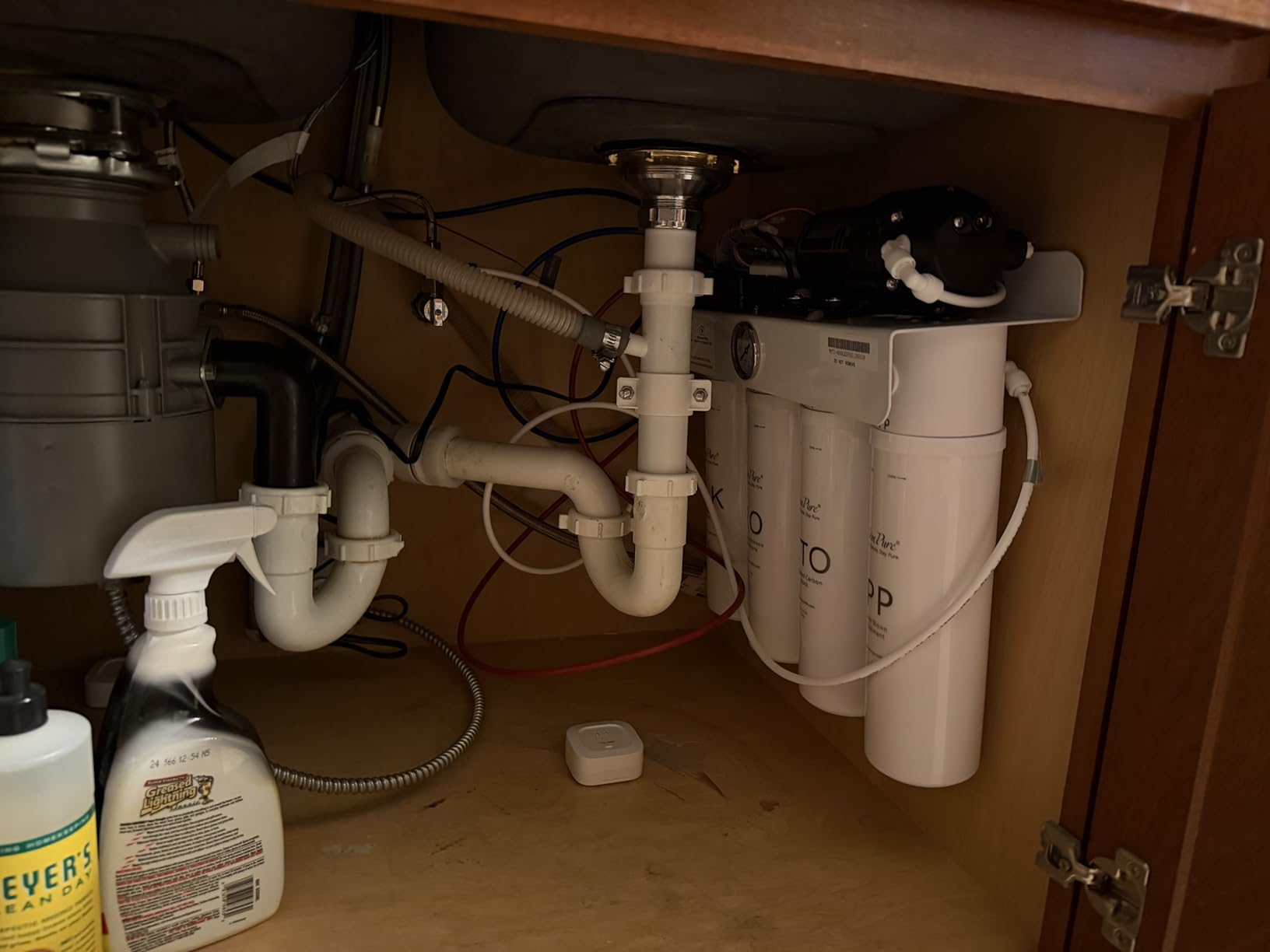
The box contains four twist-change cartridges yielding roughly 1,057 gallons of purified water before the first change, which is generous against rivals that include one or two filters. That materially softens the first-year consumable bill.
Owners like the pump-driven consistency, particularly in homes with modest supply pressure where a non-pumped unit would crawl. The 15.6 by 5.3 by 15.7 inch footprint also fits a typical cabinet without crowding plumbing.
Why the alkaline stage causes most of the complaints
Adding minerals back on purpose means your TDS reading will not drop toward single digits, and buyers who arrive expecting near-zero numbers treat it as underperformance rather than design. Know which one you want before you buy: mineral taste and higher TDS, or a flat blank membrane.
It can also leave an earthy or mineral note before the initial flush is fully worked through, so flush the first several gallons. This model carries the lowest average rating in the group at 4.2 with a 12% one-star share, and a meaningful share of that criticism is about taste expectations rather than filtration failure.
Cost and feed limits to plan around
Cartridges are rated on a 6-month replacement cycle, so consumables arrive sooner than on systems with 12-month intervals. Budget accordingly, and buy only manufacturer cartridges rather than look-alike filters that will not deliver the same mineralization.
Supported feed TDS is 500 ppm, below several rivals, so this suits municipal supply rather than a high-TDS well. If you want UV without the mineral taste, the manufacturer points buyers toward its own non-mineralizing variant instead.
6. iSpring RO5004F-AK: Best Tankless RO for Above-Counter Faucet Install
iSpring RO5004F-AK UV Alkaline Reverse Osmosis Water Filter, SGS Tested PFAS and TDS Reduction, 500 GPD Tankless Remineralization RO System Under Sink, Filter Life Monitor, 2:1 Pure to Drain
500 GPD with UV and alkaline stages
Cup filled in about 10 seconds
UV rated to 8000 hours
15.2 x 6.1 x 16.6 inch body
Pros
- Highest average rating in the group
- UV plus alkaline in one tankless body
- SGS-tested for PFAS and TDS reduction
- Top-mounted fastener avoids under-counter work
Cons
- Newer listing with a smaller review base
- UV lamp is a consumable with 8000-hour life
- Mineral stage keeps TDS above a plain membrane
- UV adds an electrical failure point
The RO5004F-AK scores highest of the eight at a 4.7 average, with 93% of buyers giving four or five stars. It combines a natural mineral alkaline stage, a built-in UV light rated to 8,000 hours with lifespan monitoring, and independent SGS testing for PFAS including PFOA and PFOS.
Throughput is 500 GPD, filling a cup in about 10 seconds, and a built-in booster pump holds output strong in low-pressure homes where a membrane without pump assistance would stall.
The reason we like it for kitchens specifically is installation. A patented top-mounted fastener lets the faucet be fitted entirely from above the countertop, so nobody has to lie on the cabinet floor holding a nut while somebody else aims a light.
Cartridges twist to unlock and the system reminds you when each needs replacing, and the quiet casing keeps noise down. Replacement part numbers are printed on the unit, which removes the guessing game when ordering.
Whether UV is worth an extra electrical component
UV addresses a problem RO alone does not: bacteria, viruses and cysts that can pass through a membrane housing on a rare occasion. If your supply has any history of contamination advisories or you draw from a shallow well, the added stage has real value.
The trade-off is a lamp rated to 8,000 hours and a second electrical component that can fail. The system monitors lifespan, which helps, but on a maintained municipal supply it is a nice-to-have rather than a necessity.
Reading the certification claims carefully
SGS testing for PFAS and TDS is stronger evidence than a marketing claim alone, and this listing states it plainly. Elimination is claimed at over 99% of 1,000+ contaminants, including vinyl chloride, chlorine, fluoride, lead, arsenic, asbestos, calcium and sodium.
Be aware that the alkaline stage means your measured output TDS will sit higher than a plain membrane reading, which is the same trade-off as the Frizzlife and SimPure models. This listing is also newer, so its 953 reviews are a thinner long-term record than the established models carry.
7. Waterdrop KJ600: Best Tankless RO for Instant Hot Water
Waterdrop KJ600 Instant Hot Reverse Osmosis System, 600 GPD, Tankless RO
Hot water adjustable from 104 to 203 degrees
600 GPD at 0.4 gal/min
2:1 pure-to-drain ratio
17.5 x 6.7 x 16.6 inch body
Pros
- Only model here dispensing adjustable-temperature hot water
- 600 GPD at 2:1 drain ratio
- Smart display shows TDS
- filter status and child lock
- Dry-burn protection via flow meter and NTC sensor
Cons
- No mineral re-addition stage so output tastes flat
- Only one filter included in the box
- Takes about 15 minutes to reach 203 degrees
- Cannot be plumbed to a refrigerator or ice maker
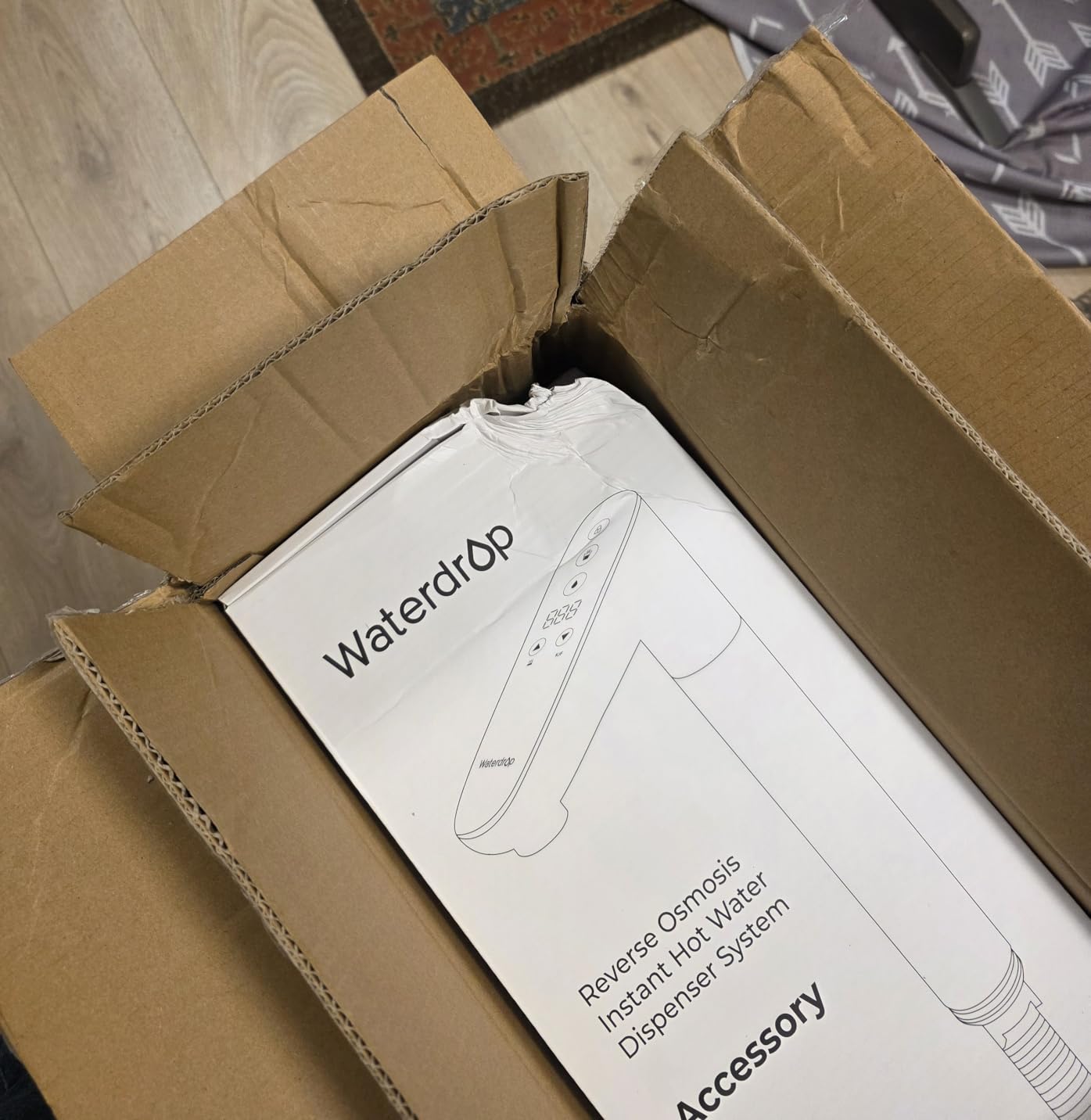
There is exactly one reason to buy this, and if that reason is not yours, pick something else. The KJ600 dispenses hot and cold water from a single faucet, adjustable from 104 to 203 degrees, and it is the only system in this roundup that does.
Reviewers pair it with instant oatmeal, tea and coffee at the tap. Filtration runs through a 5-in-1 cartridge stack handling TDS, PFOA, PFOS, fluoride, arsenic, nitrate, lead and mercury, and it is NSF/ANSI 372 certified.
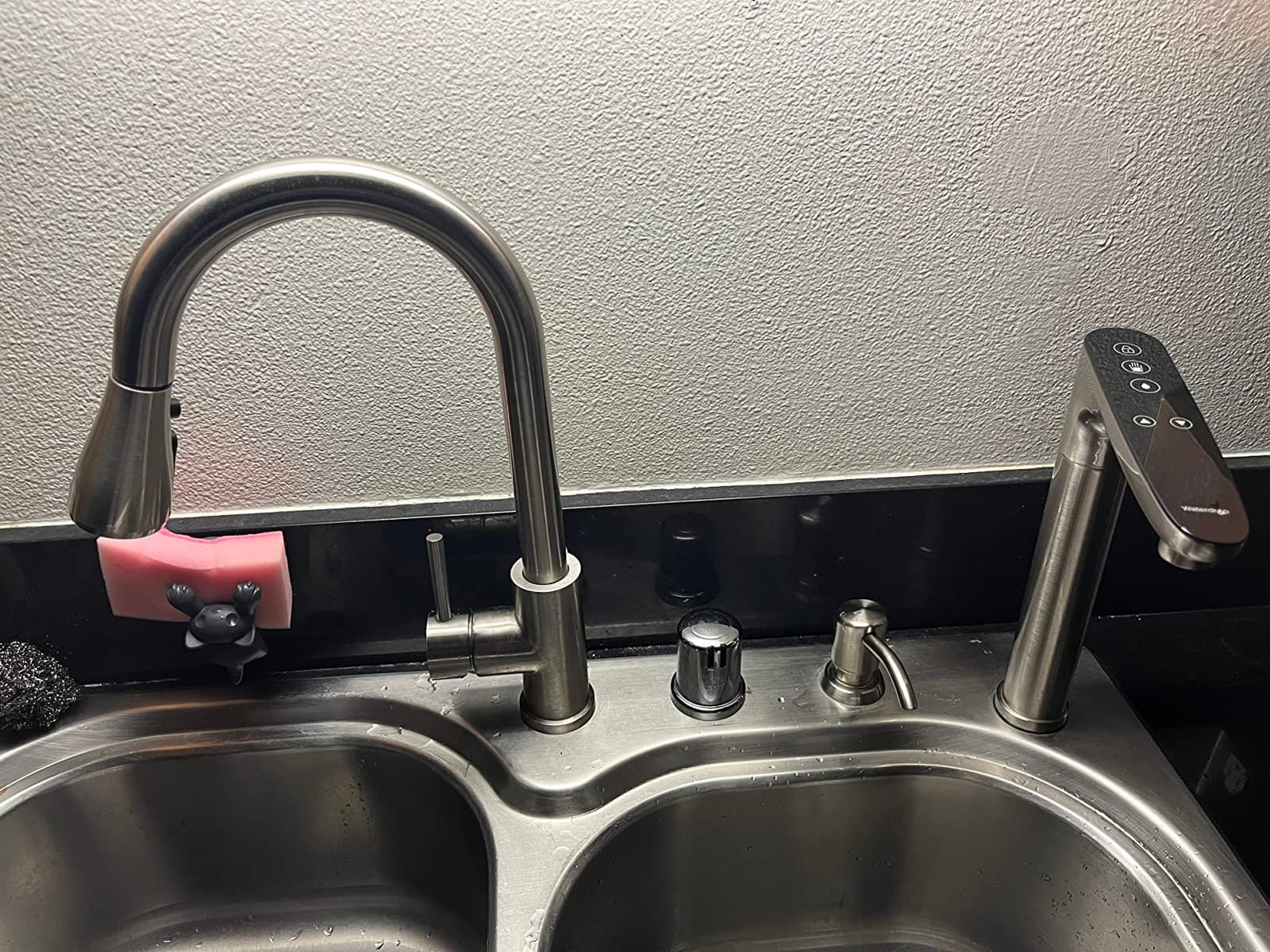
The smart display gives TDS, filter condition, a child lock and a temperature readout, and the faucet runs on a stainless steel bright-nickel body with tubing rated to 500 degrees. It also supports the highest feed TDS in the group at 2000 ppm.
Output is 600 GPD at 0.4 gal/min with a 2:1 pure-to-drain ratio. Safety hardware includes a flow meter, an NTC temperature sensor and an over-time heating cutoff to stop dry burning, which matters in a system with an integrated heater.
How the heat-up time works day to day
Roughly 15 minutes takes the water from room temperature to 203 degrees. In practice you plan around it: start the kettle or a cup of tea, then do something else. If you need water at boiling point instantly several times a morning, a kettle still wins.
There is also a faucet height consideration. Dispensing at the top of the range needs clearance for steaming, which is another reason this suits a deeper sink rather than a shallow prep-style basin.
Where it fits and where it does not
This system cannot be plumbed to a refrigerator or ice maker, which removes it for households that want one filtered feed serving both the tap and the freezer. An optional remineralization filter can attach to the cold line only.
There is no built-in mineral stage, so the hot water tastes flatter than the cold output from the alkaline models, and only one filter is pre-installed. The 4.4 average is tempered by a 9% one-star share, mostly around heat-up expectations and packaging of the single included filter.
8. iSpring RCB3P: Best Tankless RO for Well Water and Light Commercial Use
iSpring RCB3P Tankless Reverse Osmosis Filtration System, 300 GPD Under Sink RO System, Reduces TDS, 1.5:1 Pure to Drain, Booster Pump & Pressure Gauge for Residential & Light Commercial Use
300 GPD at 1.5:1 pure to drain
0.2 gpm max flow
Feed TDS support to 2000 ppm
52 lb, 19.5 x 11 x 28 inch frame
Pros
- Booster pump and gauge handle poor or well water
- Handles feed TDS up to 2000 ppm
- Stainless steel frame is rugged and wall-mountable
- Quiet pump even on continuous duty
Cons
- Largest footprint and heaviest build here
- Manual mixes units and misstates voltage
- 3/8 inch input reduces to 1/4 inch at cartridges
- Storage tank not included
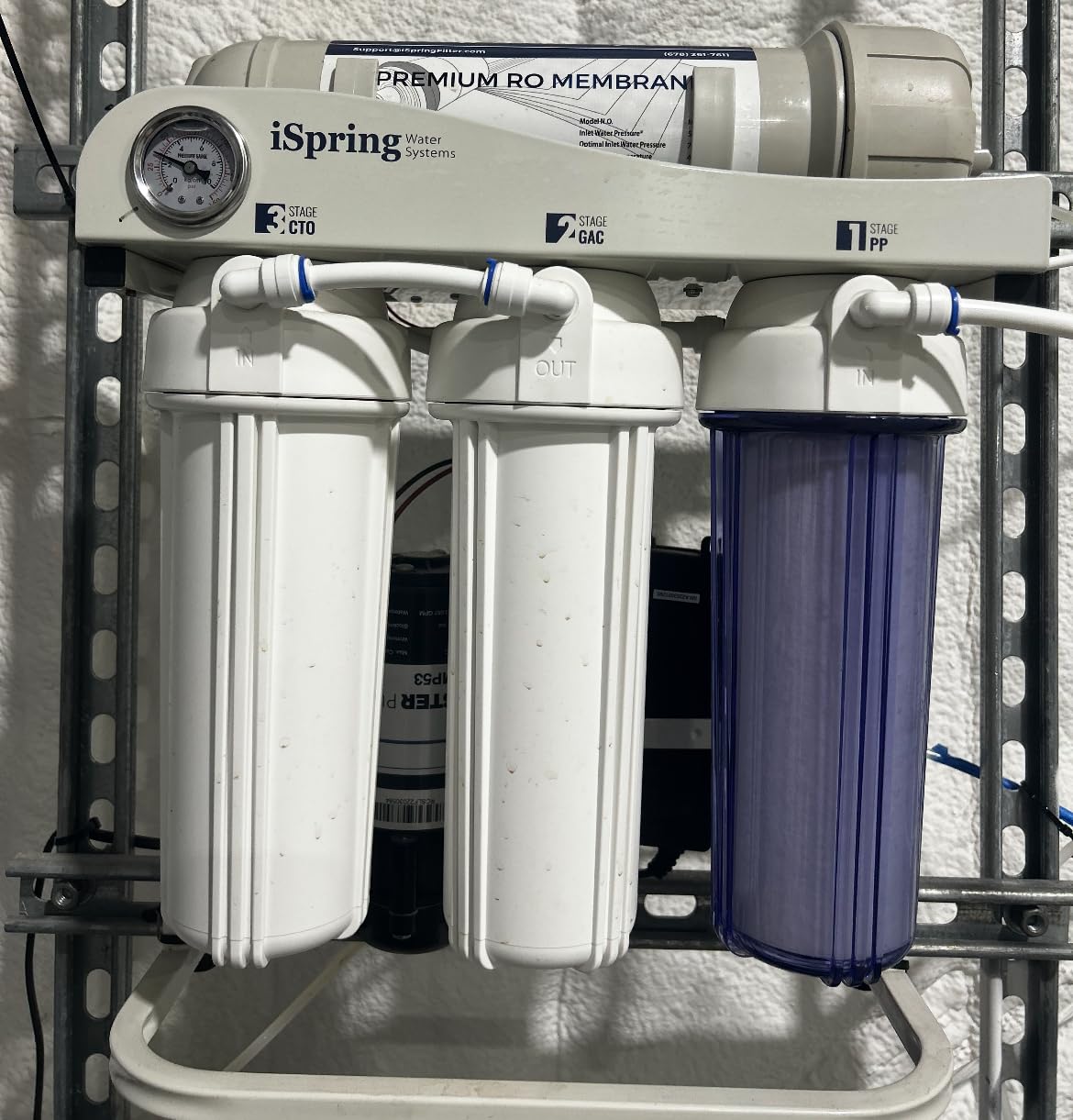
Everything else in this roundup is designed for a residential cabinet. The RCB3P is built for the opposite problem: difficult source water. A built-in booster pump with a pressure gauge raises feed pressure so the membranes still produce when the incoming supply would otherwise starve them.
Owners running high-TDS wells report TDS falling from the 435 to 450 ppm range to roughly 26 to 30 ppm, and the membranes are rated to 0.0001 micron. Feed TDS support extends to 2000 ppm, well beyond anything else here.
The freestanding stainless steel frame with a hanging bracket and mounting plate makes filter changes simple and lets you wall-mount it in a utility space, garage, or under a prep sink rather than squeeze it into cabinetry. Rated output is 300 GPD at a 1.5:1 pure-to-drain ratio.
It also supports recirculation into a large cistern for whole-property supply, and can feed 11 or 20 gallon tanks if you add one. Users running it continuously report months without trouble, and the booster pump stays quiet even at commercial duty cycles.
Sizing this against your real daily demand
At 0.2 gpm this is the slowest flow in the group, and that is the correct trade for a system sized to run hard without fouling. For a busy test kitchen, salon, lab or small office, sustained production beats a glass filled in eight seconds.
Running at full rated capacity consumes prefilters and cartridges faster than the manual suggests, so cost-of-ownership math has to include more frequent prefilter changes. At reduced daily volume the same unit stretches considerably further between services.
The documentation and fitting issues to plan around
The instruction manual is inconsistent, mixing MPa and PSI units and misstating the voltage, so check your actual supply before powering it. The 3/8 inch input tubing reduces to 1/4 inch at the cartridges, and those extra reducing fittings are not in the box.
At 19.5 by 11 by 28 inches and 52 pounds, this is not an under-sink kitchen install. It is a basement, utility room or commercial build. Some buyers have received units with shipping damage or broken connectors, so inspect everything on arrival.
How to Choose a Tankless RO System for Your Kitchen
Pick the flow rate from tasks, not from tank size
A GPD figure describes a full day of production, not a minute of dispensing. What matters in a kitchen is gallons per minute, because that determines how long a kettle, a stockpot or a row of bottles takes. The 0.42 gpm on the 600 GPD Waterdrop beats the 0.28 gpm on the 400 GPD model for anything involving volume.
Work out your daily drinking and cooking demand first. Two people drinking, brewing coffee and cooking most days sit comfortably within 200 to 300 GPD, so anything from 400 GPD upward gives you headroom for an ice maker or guests.
Read the drain ratio as a running cost
The pure-to-drain ratio is how many gallons leave the drain for every gallon you drink. A 2:1 system uses half the water of a 1:1 system, and the gap widens on larger household bills where consumption charges apply. The Waterdrop G2 at 1:1 is the least efficient unit we tested; the 2:1 models are the ones we would own.
On a household drinking roughly two gallons a day, the difference between 1:1 and 2:1 is about 730 gallons a year. That is the single largest reason we push people toward a higher tier.
Know which certification actually proves what
NSF/ANSI 58 is the RO drinking-water standard and covers dissolved solids reduction, which is the claim that matters most. NSF/ANSI 53 covers health contaminants such as lead and arsenic, 42 covers aesthetic reduction like chlorine taste and odor, and 372 covers lead-free materials in contact with drinking water.
Treat a seller that lists only 42 as selling a carbon filter with an RO-shaped housing. Independent SGS testing for specific contaminants such as PFAS is stronger evidence than a general marketing sentence, so we note it per product above.
Check hardness before anything else
Membranes scale when feed water is hard, and scaling is the main reason rated membrane life does not materialise. Most manufacturers want feed hardness around 7 grains per gallon or below, and many tie warranty conditions to it. If you are above that and do not already run a softener, an RO system is the wrong purchase regardless of brand.
Well water adds a second variable. If your TDS sits above 500 ppm, several units here will not support it at all, and the only two rated to 2000 ppm are the Waterdrop KJ600 and the iSpring RCB3P.
Plan the outlet, the cord and the noise
Every system in this roundup is corded electric, and every one needs a continuously powered under-sink outlet. Do not share that circuit with a garbage disposal or dishwasher, and check cord length before you buy rather than after. Ten feet is common, and outlets tucked at the back of a deep cabinet are often the problem.
Noise is the detail roundups skip. Pump hum while dispensing and a post-use flush cycle are both normal. In an open-plan kitchen, place the unit toward the back corner and keep the cabinet door latched, and it becomes a non-issue.
Count the cartridges, not just the filters
A tankless system needs pre-filters, the membrane and usually a post-carbon or mineral cartridge. Some boxes include three or four, others include one. Work out the first-year cost before buying, and stick to manufacturer cartridges or you risk the counterfeit and third-party filter problem that owners on r/WaterFilters complain about most.
Also confirm replacement part numbers and availability. A unit whose filters are awkward to source becomes a unit that stays past its service date.
Check the faucet hole before the plumber leaves
A standard dishwasher hole is often not wide enough, and enlarging one in thick stainless, granite or stone requires the right bit. The iSpring RO5004F-AK sidesteps part of this with a top-mounted fastener, and the KJ600 needs extra faucet height clearance for steaming.
Our broader picks on water dispensers for kitchens are worth a look if you would rather not drill at all.
Who Should Skip a Tankless RO System
If your sink cabinet has no electrical outlet and adding one is not feasible, tankless is off the table entirely. Every unit above is corded electric, so a countertop RO system is the realistic alternative for a rental where you cannot run a circuit.
If your water is hard and untreated, pause. Membrane scaling shortens rated life and undermines warranty coverage, and a softener upstream or a scale-inhibiting cartridge is the honest recommendation before buying any RO unit.
If scale and taste are not the problem, do not buy one. Complaints about spots on glassware and dry faucets are solved by a point-of-use softener or a simple carbon filter for a fraction of the money.
If you want near-zero TDS and you enjoy the taste of unmineralized water, skip the three alkaline models here and choose a straight composite membrane system such as the Waterdrop G2. And if you need filtered water at the fridge ice maker, skip the KJ600 entirely since it cannot be plumbed there.
Frequently Asked Questions
Who makes the best tankless reverse osmosis system?
For most kitchens, the Waterdrop G3P600 is the strongest all-round choice, pairing 600 GPD output at a 2:1 pure-to-drain ratio with a smart faucet, NSF/ANSI 42, 53, 58 and 372 certification and filters that change in seconds. iSpring competes hard on support and speed with the RO500-BN, and the RO5004F-AK leads on rating with alkaline and UV stages. If taste drives your decision, the Frizzlife PD600-TAM3 adds minerals back and lifts pH above 7.5.
Are tankless reverse osmosis systems any good?
Yes, and the reasons are practical rather than marketing. Tankless designs free up roughly 70% of under-sink cabinet space, deliver fresher water because there is no stagnant storage tank, and waste far less water, since modern 2:1 units beat the 3:1 to 5:1 ratios of older tank systems. The compromises are real though: a higher purchase price, a required under-sink outlet, more frequent filter changes and pump noise while dispensing.
Do tankless RO systems need electricity?
Every tankless system in this roundup does. They use an electric booster pump to push tap water through the membrane against the osmotic pressure, which is what removes the storage tank entirely. That means you need a continuously powered outlet inside the sink cabinet, and it should not share a circuit with a dishwasher or garbage disposal. If no outlet exists and you cannot add one, a countertop RO system is the alternative.
What is a major downside of reverse osmosis water?
The main one is that RO strips dissolved minerals out of the water, leaving it flat to taste and slightly acidic. That is also why you should not use RO water as your only drinking source over long periods without adding minerals back. The second downside is waste water: unless you buy a 2:1 unit, every gallon you drink sends one to three gallons down the drain. Remineralization filters such as the ones on the Frizzlife and SimPure systems address the taste and mineral issue directly.
How often do tankless RO filters need changing?
Sediment and carbon pre-filters usually run 6 to 12 months depending on feed water, while the RO membrane is commonly rated around two years. Owner TDS readings are the fastest way to know when a change is due: if the number creeps back up after a service, the membrane is at the end of its useful life. Buy manufacturer cartridges only, since counterfeit and third-party filters are a widely reported problem. Filter availability matters as much as price, so check it before you buy.
Final Verdict for Kitchens in 2026
The best tankless reverse osmosis system for a typical kitchen in 2026 remains the Waterdrop G3P600. It combines the fastest flow we measured with a 2:1 drain ratio, the widest certification set in the group, and a filter layout that makes maintenance almost invisible.
Pick the Frizzlife PD600-TAM3 if taste is your priority and you want minerals added back. Pick the Waterdrop G2 if you want tankless flow at the lowest entry point, and accept a 1:1 drain ratio. Pick the iSpring RO5004F-AK if UV disinfection and above-counter faucet installation matter, and the iSpring RO500-BN if fast flow and responsive support do.
The KJ600 is for the single household that wants instant adjustable hot water, and the RCB3P belongs in a utility space rather than a cabinet. Check your outlet and your water hardness before any of them, and buy genuine cartridges when the first service is due.