
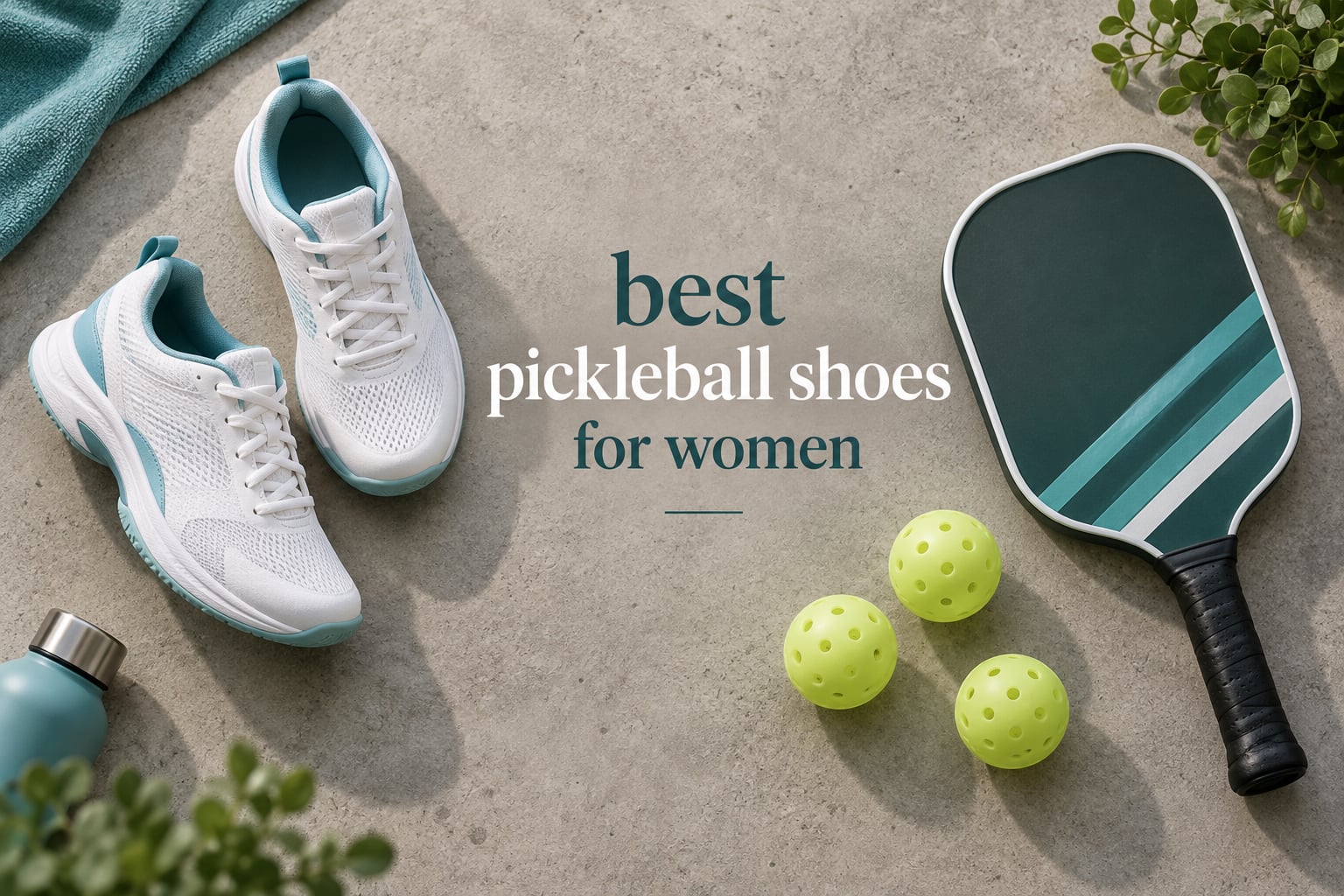
Pickleball looks like a low-impact sport right up until you play it. Then you spend three hours shuffling side to side, planting hard at the kitchen line and pushing off your front foot toward the non-volley zone, and any weakness in your footwear shows up within a week. Finding the best pickleball shoes for women is less about brand and more about three things: how the shoe handles lateral movement, how much room your toes get, and whether the cushioning still feels good after two hours on concrete.
We spent weeks reading through owner reviews, comparing lasts and midsole specs across twelve of the highest-rated court shoes built for women, and matched them to the way people actually play: open play three times a week, weekend tournaments, indoor rec-center leagues, and hot concrete in July. What follows is the result, with a verdict for every shoe and an honest note on where each one falls short.
One warning before we start. Running shoes are the wrong tool, and they are wrong for a mechanical reason rather than a style reason. A running shoe is engineered for heel-to-toe motion, so it stacks cushioning in the heel and leaves the base narrow and slightly raised for forward roll. Pickleball asks the opposite of your foot. Players on r/Pickleball describe running shoes as comfortable in the first ten minutes and then unstable exactly when they are making hard lateral cuts, and the same threads carry a steady stream of advice to buy court shoes instead and add arch-support insoles if the foot starts complaining. If you want to see how that cushioning logic plays out in a different sport, our guide to running shoes for women covers what heel-to-toe cushioning actually does, which makes the contrast easier to see.
Table of Contents
Top 3 Picks for the Best Pickleball Shoes for Women in October 2026

K-Swiss Express Light
- Wide toe box for lateral footwork
- OrthoLite open-cell foam midsole
- Dragguard 7.0 rubber reinforcement

ASICS Upcourt 6
- Breathable mesh underlays
- Lightweight flexible build
- Sidewall support for lateral transitions
The K-Swiss Express Light is the pick we keep coming back to because it is purpose-built for pickleball rather than rebranded from another sport. Its 2593 ratings mean the fit complaints below come from a lot of real owners rather than a handful of early samples.
The ASICS Upcourt 6 shares the highest rating of anything we tested at 4.4 across 2594 reviews, built on a volleyball platform that transfers cleanly to indoor pickleball. The adidas Gamecourt 2 is the value pick: a stable, durable tennis platform with 2776 ratings behind it and a build that suits players who are new to court shoes.
All 12 Women’s Pickleball Shoes at a Glance in October 2026
| Product | Specifications | Action |
|---|---|---|
| K-Swiss Express Light Pickleball Shoe |
|
Check Latest Price |
 Avia Verge Womens Court Sneakers Avia Verge Womens Court Sneakers |
|
Check Latest Price |
 ASICS Gel-Dedicate 8 ASICS Gel-Dedicate 8 |
|
Check Latest Price |
 Skechers Viper Court Reload Skechers Viper Court Reload |
|
Check Latest Price |
 LEFUS AMZ-P601 Pickleball Shoe LEFUS AMZ-P601 Pickleball Shoe |
|
Check Latest Price |
 K-Swiss Pickleball Supreme K-Swiss Pickleball Supreme |
|
Check Latest Price |
 Wilson Pickle Pro Wilson Pickle Pro |
|
Check Latest Price |
 Skechers Viper Court Pro 2.0 Skechers Viper Court Pro 2.0 |
|
Check Latest Price |
 Ryka Courtside Pickleball Shoe Ryka Courtside Pickleball Shoe |
|
Check Latest Price |
 adidas Gamecourt 2 adidas Gamecourt 2 |
|
Check Latest Price |
 K-Swiss Hypercourt Express 2 K-Swiss Hypercourt Express 2 |
|
Check Latest Price |
| ASICS Upcourt 6 |
|
Check Latest Price |
1. K-Swiss Express Light Pickleball Shoe: Best Overall for Lateral Movement
K-Swiss Women’s Express Light Pickleball Shoes – Lightweight Breathable Court Shoe, Stable Support, Durable Toe Protection, Egret/Patina Green, 8.5 W
Wide toe box
EVA midsole with OrthoLite foam
Dragguard 7.0 reinforcement
Standard and wide widths
Pros
- Wide toe box handles side-to-side cuts
- Dragguard 7.0 holds up in high-wear zones
- OrthoLite foam pulls moisture off the foot
- Standard and wide widths available
Cons
- Brand guidance says size up half a size
- 4.1 average reflects mixed comfort reports
- Listed at one pound so it is built for stability not speed
This is one of the few shoes here that K-Swiss built for pickleball first and did not inherit from a tennis line. That matters because the design decisions follow the sport’s actual demands: a wide toe box for the pivots and lunges at the kitchen, an EVA midsole paired with OrthoLite open-cell foam for moisture management across a long open-play session, and Dragguard 7.0 rubber laid into the toes and heels where drag happens.
Owners consistently describe the toe box as the reason they keep coming back. Wide feet in particular report enough room across the ball of the foot that the shoe stops fighting bunions after an hour, and the heel stays secure through quick stops without needing a tight lace pull.
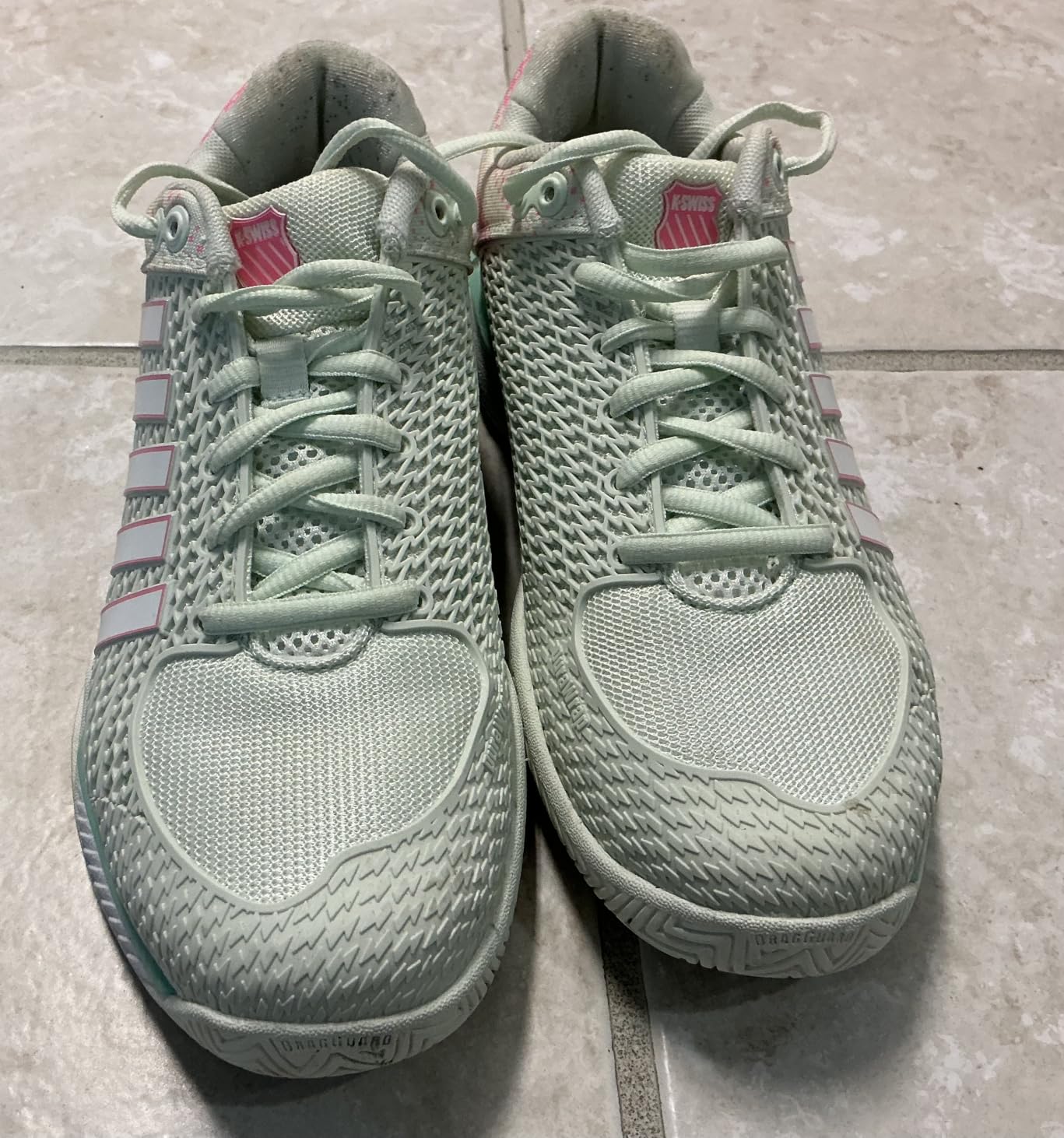
The trade-off is weight and the size habit. The listed weight of one pound tells you this is a stability-first platform rather than a speed shoe, so if you play mostly at the net and value quick reactions over foot lockdown, a lighter court shoe will suit you better. Owners also note that the brand’s own guidance is to size up half a size, which means your usual street size may not be your court size.
Durawrap overlays protect the upper from toe dragging, and the shoe ships in standard and wide widths, which removes the usual guesswork when your feet sit between a B and a D. That combination of a genuine wide width option and reinforced high-wear zones is why this is our top pick.
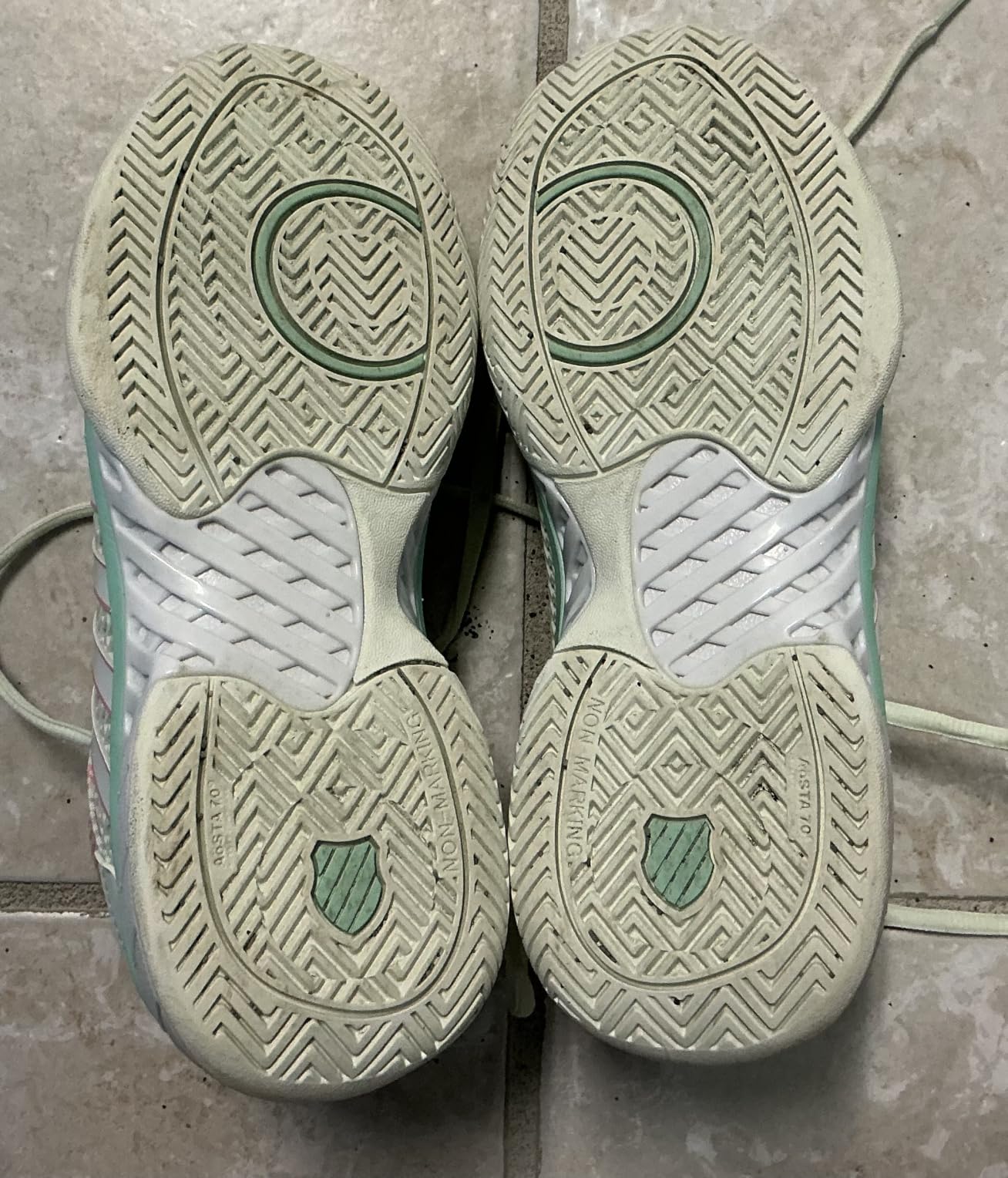
How the fit behaves for wide feet and bunions
Reviewers with wide feet and painful bunions call the toe box generous for a court shoe, and the availability of an actual wide width means you do not have to force the issue by sizing up two sizes. If your forefoot spreads past the base of the big toe, spec the wide width in this model and keep your true length.
Where it is not the right shoe
Speed-first net players will find this shoe heavier than they want, and the 4.1 average rating reflects a real split: many owners love the roomy fit, while a consistent group describes the cushioning as flat after a few months of daily court use. Break-in is short, but it is not zero, so give it two sessions before you judge it.
2. Avia Verge Womens Court Sneakers: Best for Wide Feet and Long Standing Days
Avia Verge Womens Sneakers – Tennis, Court, Cross Training, or Pickleball Shoes for Women, 7.5 Wide, White with Light Pink
Removable memory foam liner
Molded EVA midsole
Anatomical heel cradle
Wide and medium widths
Pros
- Removable memory foam liner relieves pressure points
- Wide widths available in sizes 6 to 11
- 4.2 rating from 6365 reviews
- Lightweight at 8.4 ounces
Cons
- Cross-training outsole rather than a court-specific pattern
- 4.2 average shows mixed long-session support
- Synthetic leather upper traps heat
The Avia Verge has 6365 ratings behind it, which is a large evidence base, and it fills a gap nothing else here fills: a genuinely roomy court option for players whose feet are wide enough that most court shoes pinch by the second hour.
The removable memory foam sock liner is the feature owners write about most. You can pull it out, air it after a wet session, or swap in an orthotic without tools, and the compression-molded EVA midsole with an anatomical heel cradle handles the kind of standing and walking that comes with playing several games in a row at an open-play venue.

Cantilever heel stabilization adds the lateral rigidity that keeps your foot from rolling when you push off hard to reach a short dink, and the shoe carries an 8.4-ounce listed weight, which is light for something with this much cushioning in it. Both wide and medium widths are offered, so this works as an honest wide-fit pick rather than a compromise.
The honest limitation is what it is not. This is a cross-training sneaker sold for tennis, pickleball and everyday wear, so the outsole pattern is a general grip pattern rather than a herringbone court tread. On indoor sport tile and smooth concrete it grips well; on gritty outdoor asphalt you will feel the difference next to a dedicated court shoe.
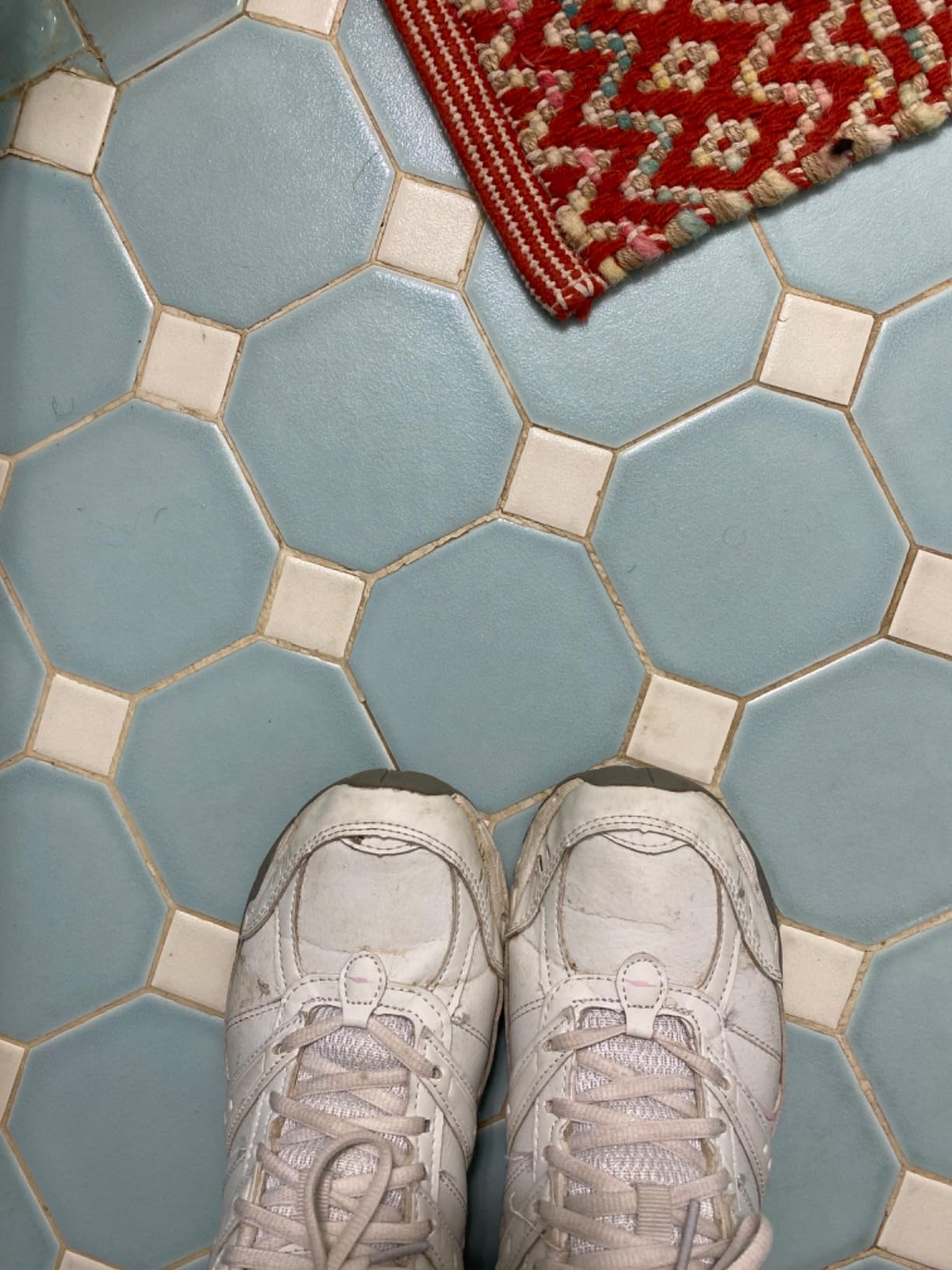
Whether it suits plantar fasciitis and bunions
Players with arch pain and a bunion history tend to gravitate here for a simple reason: there is room and there is cushioning. The removable liner also means you can fit a full-foot orthotic, a common recommendation for plantar fasciitis. Because the heel cradle is molded rather than flat, the shoe stays comfortable through long sessions on hard surfaces.
Where it is not the right shoe
If you play regularly on rough outdoor courts, the outsole will not give you the same edge control as a court-specific shoe. Reviews also include a steady stream of comments that comfort drops off during very long sessions, so treat it as a strong value pick for recreational play rather than a tournament platform.
3. ASICS Gel-Dedicate 8: Best for Shock Absorption on Hard Courts
ASICS Women’s Gel-Dedicate 8 Tennis Shoes, 8, White/Pure Silver
GEL shock absorption
TRUSSTIC midfoot support
Wrap-up outsole
Solution-dyed sockliner
Pros
- GEL cushioning softens impact on concrete
- TRUSSTIC system resists twisting on side shuffles
- Solution-dyed sockliner wicks and dries fast
- Established platform with 1983 ratings
Cons
- Toe box runs narrow for wide feet
- Cushioning feels firmer than a dedicated pickleball shoe
- Synthetic toe overlays rather than a full mesh upper
The Gel-Dedicate 8 is the ASICS answer to the foot-pain question, and it works through impact absorption rather than through width. GEL cushioning in the heel and forefoot takes the sting out of concrete, and the TRUSSTIC midfoot support system resists the twisting force that shows up when you plant and cut.
Because it launched as a tennis shoe, the platform is already tuned for a court base: durable synthetic leather toe overlays where the toe drags, and a wrap-up outsole that extends around the base of the shoe for stability. The solution-dyed sockliner is a small detail that matters in summer, since it dries faster than a glue-heavy foam liner.
Here is the caveat we hear most often, and it is repeated across community threads as well as owner reviews: the toe box runs narrow in women’s sizing. If you have ever had a court shoe pinch at the pinky toe, this model will not fix that problem, and wide width variants do exist but they are not as generous as the shoe’s brand positioning suggests.
That makes this a strong second option for players with arch pain and normal-width feet, and a poor first choice for wide feet or bunions. Our diabetic shoes guide for women goes deeper into why toe pressure and fit matter for anyone with reduced sensation or circulation, and the same principles apply here.
Whether it suits plantar fasciitis and bad knees
The GEL midsole is the reason this shoe shows up in plantar fasciitis conversations at all. It is a firmer, more controlled cushion than a plush walking shoe, which some feet prefer because the arch is still doing work. For players with knee sensitivity after long sessions, the shock absorption does real work on the downstep.
Where it is not the right shoe
Wide feet and bunions are the dealbreaker. Sizing up half a size lengthens the shoe but does not widen the platform, so if you go up a size you will slide around inside a narrow box. If toe room is your issue, choose a model built around a wide toe box instead of fighting this one.
4. Skechers Viper Court Reload: Best for a Lace-Free Fit
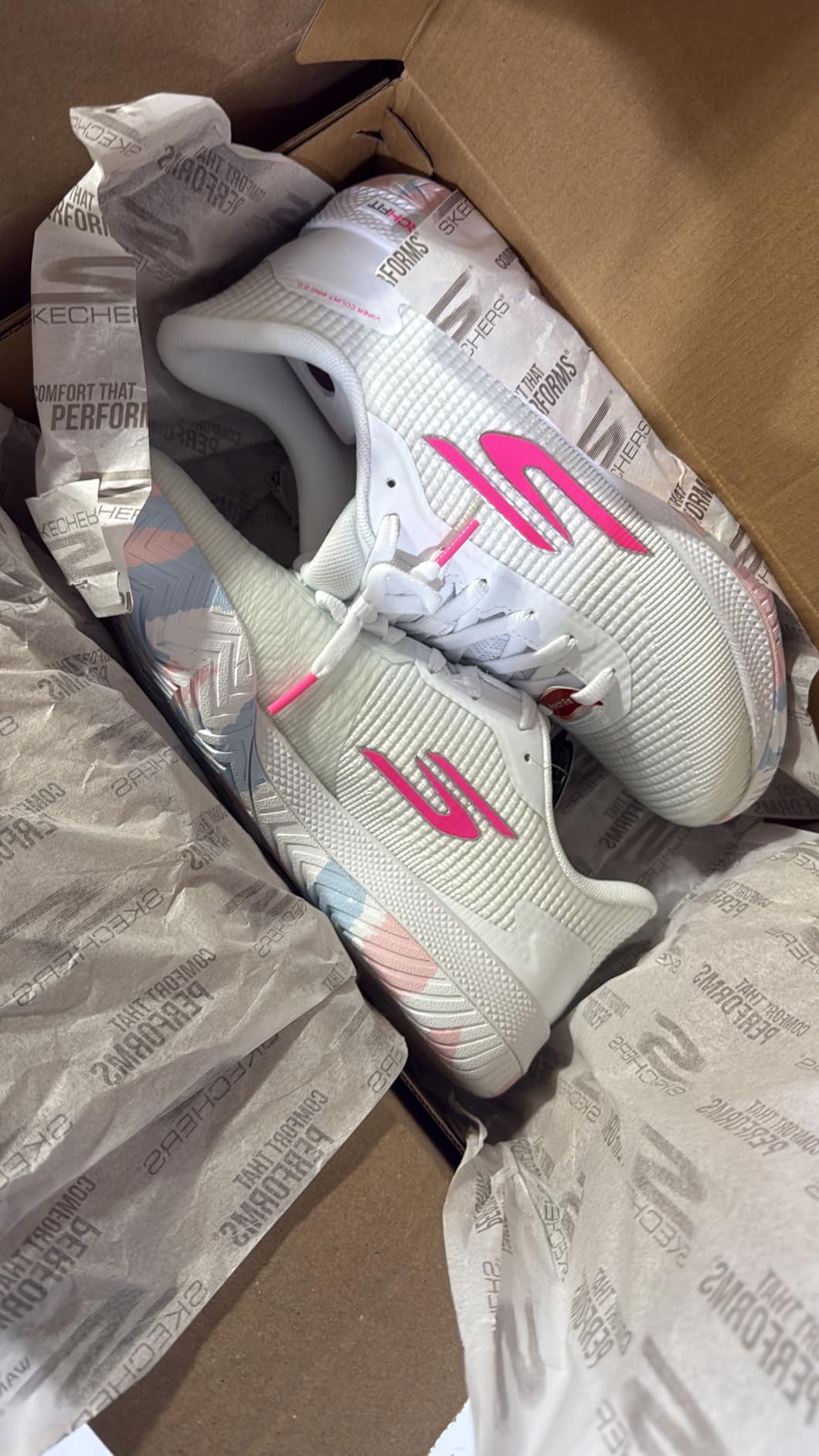
Skechers Women’s Viper Court Reload Hands Free Slip-Ins Pickleball Sneaker, White/Pink/Lavender, 6
Hands Free Slip-ins construction
Podiatrist-certified arch insole
ULTRA FLIGHT midsole
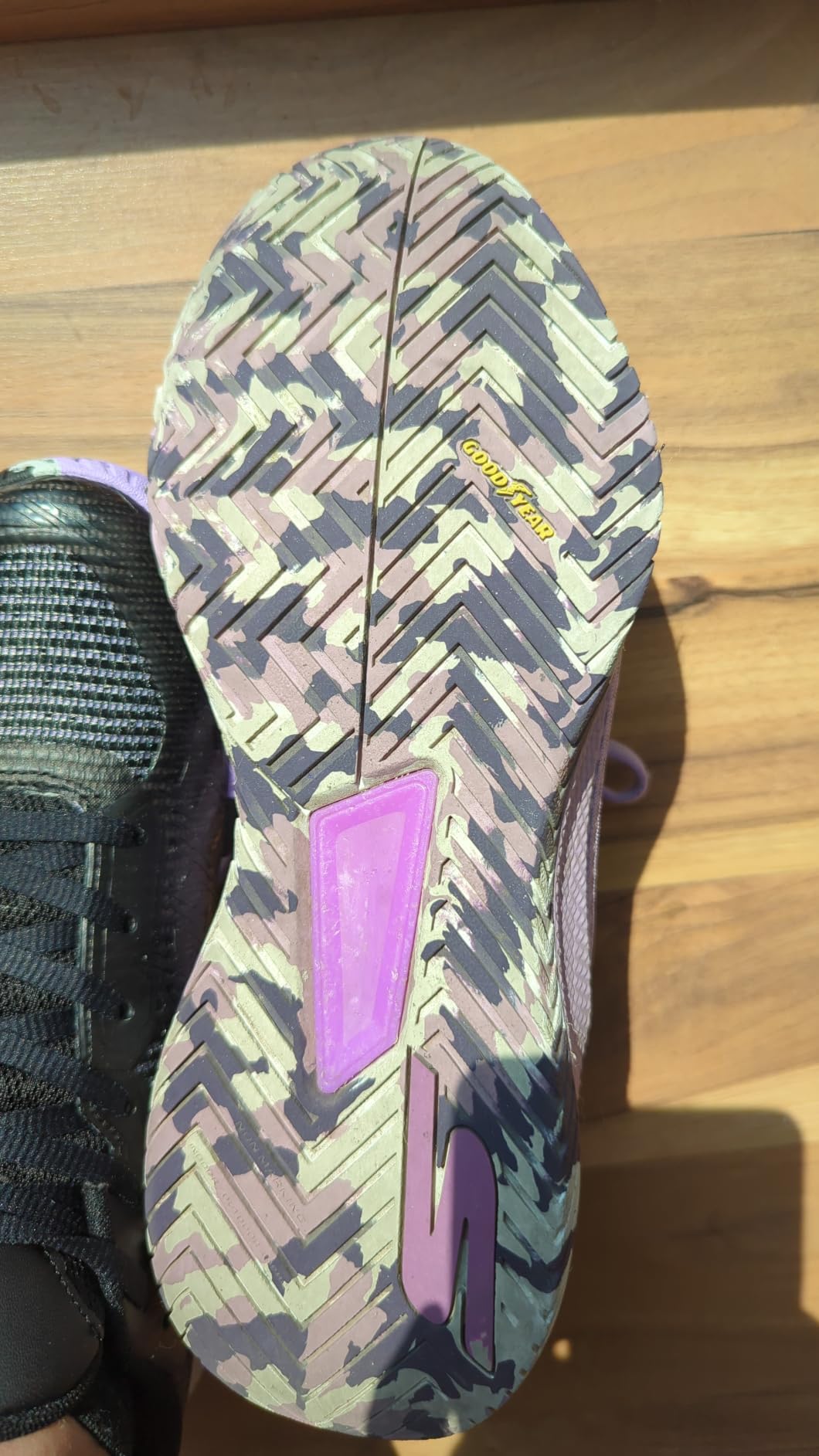
Goodyear Performance outsole
Pros
- Step in and go with no laces to tie
- Arch Fit insole is removable and molds to the foot
- Goodyear outsole gives court traction
- 4.3 rating across 731 reviews
Cons
- Sizing can be inconsistent between Skechers models
- Roomier feel than a court-specific last
- Less adjustable fit with no laces
Shoe choice has an accessibility dimension that rarely gets discussed. Laces are a genuine problem for anyone with limited hand dexterity, a bad shoulder, or simply no interest in retying mid-match, and the Viper Court Reload solves it with Hands Free Slip-ins construction. You step in and the heel is held in place by the collar and heel panel rather than by tension.
The real strength is the insole. The removable Skechers Arch Fit insole is podiatrist-certified and molds to the shape of your foot over time, which means it can absorb the arch stress that drives plantar fasciitis pain during long sessions. ULTRA FLIGHT midsole cushioning keeps the shoe responsive without the mushy feeling of a thick foam platform.
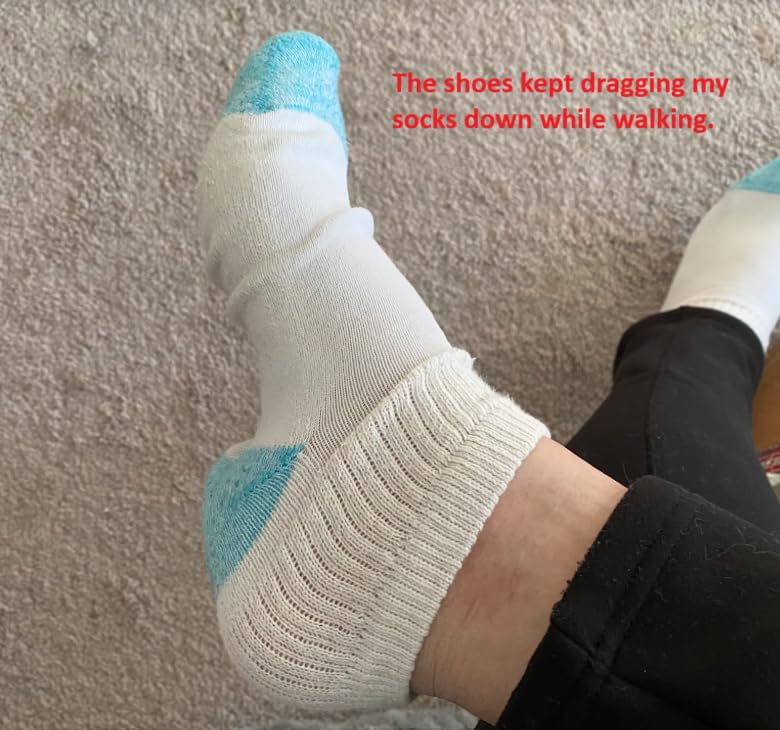
Underfoot, the Goodyear Performance outsole is the same family of rubber that has powered the Viper line, and it gives predictable traction on both indoor wood and outdoor hard courts. Wide width options are available too, which helps because the last naturally sits roomier than a tennis-specific fit.
The honest caveat is adjustability. Without laces there is no way to pull the midfoot tight, so players who rely on lockdown to stop their foot sliding during aggressive lateral moves will feel less control than they would in a laced court shoe. The heel still holds, but the midfoot does not tighten the same way.
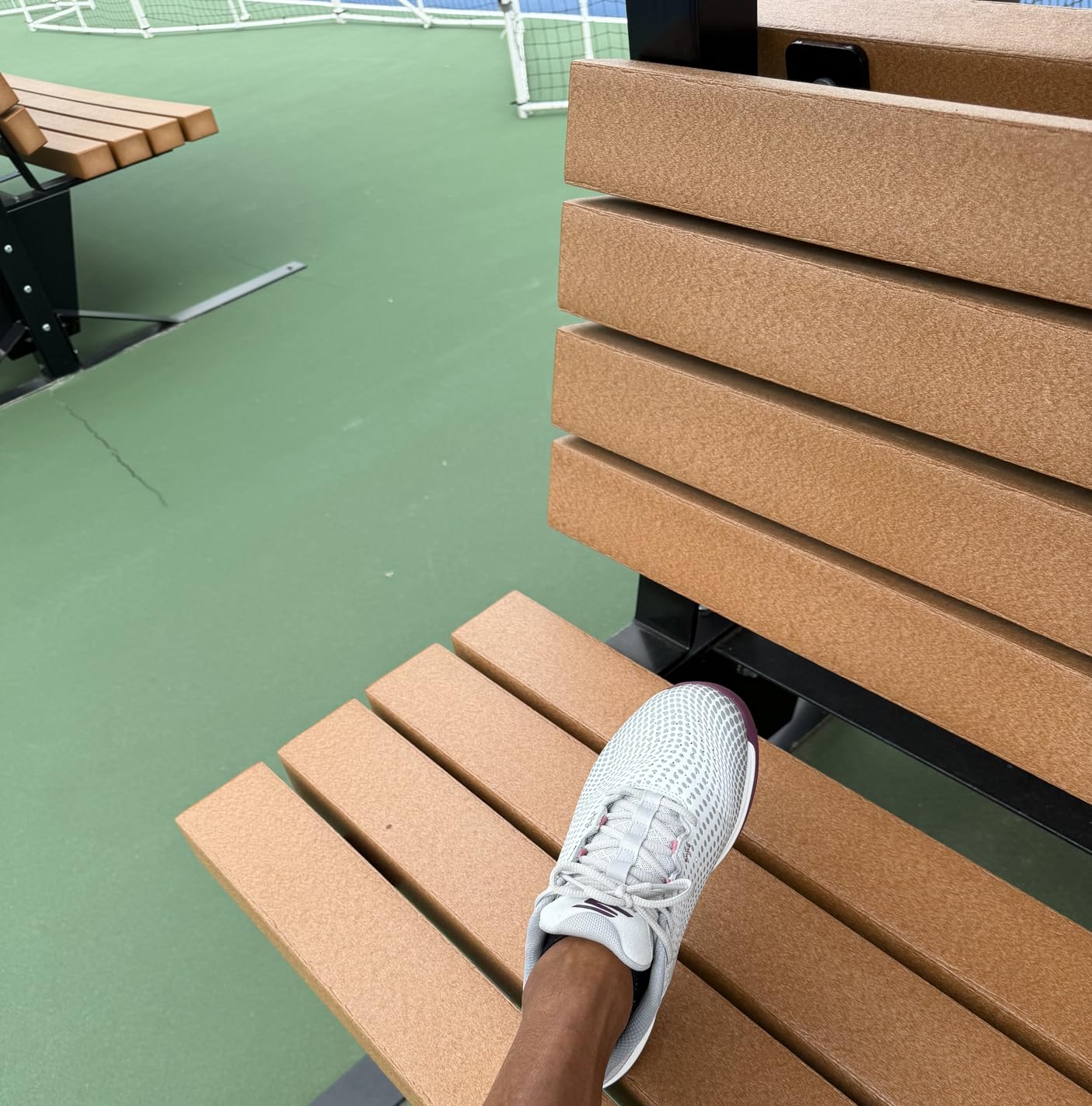
Fit notes for wide feet
The roomy default shape means most players do not need to size up, which removes the guessing game that trip up people ordering court shoes online. If you are between sizes and play on your toes at the kitchen, order the smaller of the two and let the heel panel do the work.
Where it is not the right shoe
Competitive players who want maximum lateral lockdown should look at a stability-first platform instead. Sizing can also vary between Skechers models, so if you have owned other pairs, read recent owner comments about fit rather than assuming consistency across the brand.
5. LEFUS AMZ-P601 Pickleball Shoe: Most Versatile
LEFUS Women’s Pickleball Shoes – AMZ-P601, Non-Slip, Cushioning, Anti-Torque, Breathable Court Shoes (P601 Purple, 10)
Non-slip rubber outsole
Shock absorbing cushioning
Anti-torque support
Arch support and mesh upper
Pros
- Built for pickleball rather than adapted from tennis
- Rubber outsole wraps up the sides and toe
- Removable insoles can be dried and aired out
- Plays true to size for wide feet
Cons
- Toe rub that does not break in for some wearers
- Lateral support is thin for competitive play
- Less brand support for fit issues
The LEFUS AMZ-P601 is named for pickleball without borrowing a tennis platform, and it is a low-cost way to get a shoe actually drawn for side-to-side movement. If you are starting out and playing three times a week at an open court, this is the sensible first purchase.
The rubber outsole wraps up the sides and the toe rather than sitting flat, which gives the shoe more sidewall bite during a lateral lunge than a general sneaker would. Arch support technology runs through the footbed, and the mesh wrap upper keeps air moving on a hot outdoor court where a solid leather upper would cook your feet.
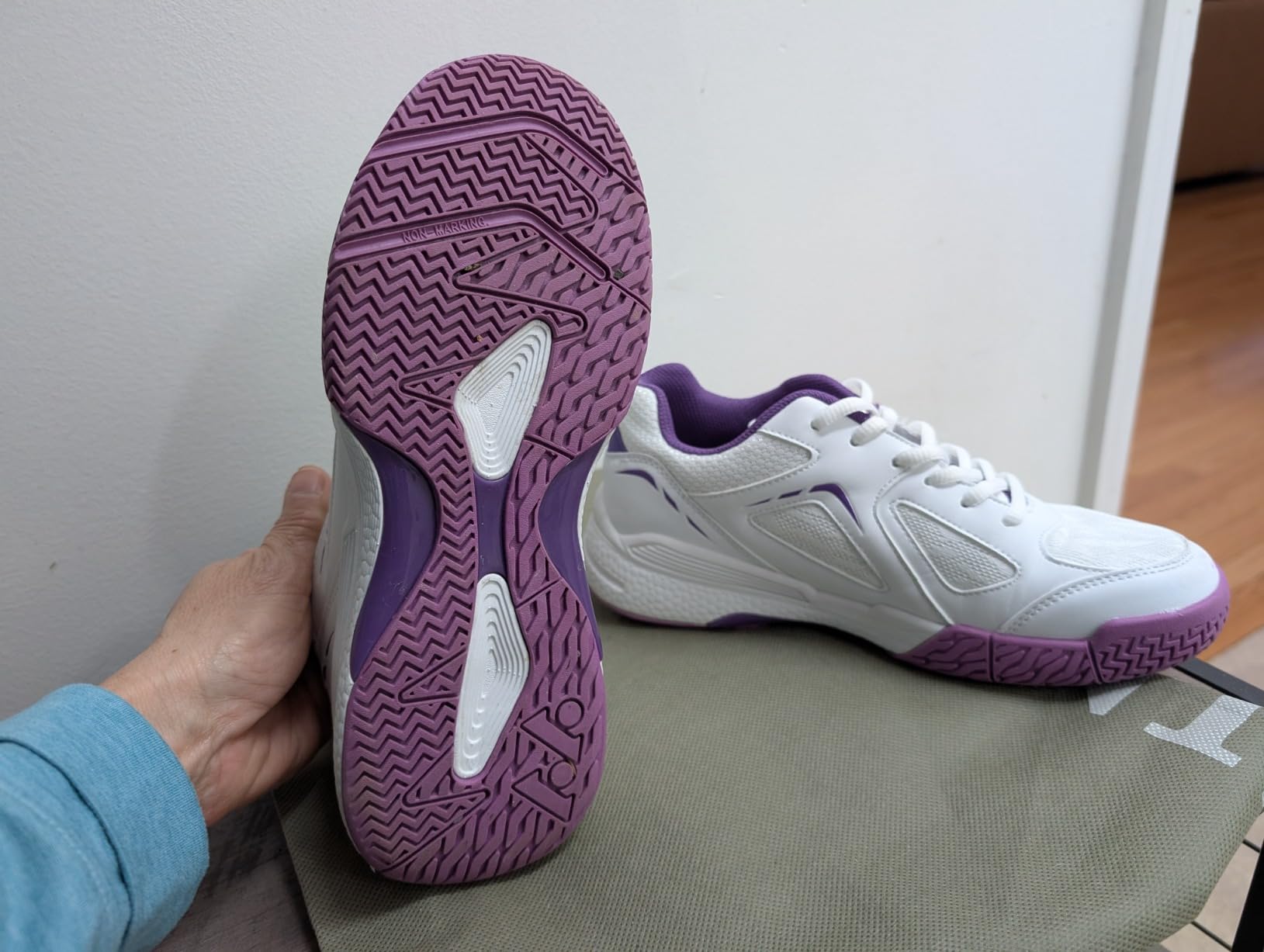
Two details earn more praise than they should. The removable insole can be pulled out and dried after a sweaty session, which matters more than it sounds on outdoor concrete in July. And a wide toe box that plays true to size means wide-footed owners do not have to guess, which is not something you can say about every budget court shoe.
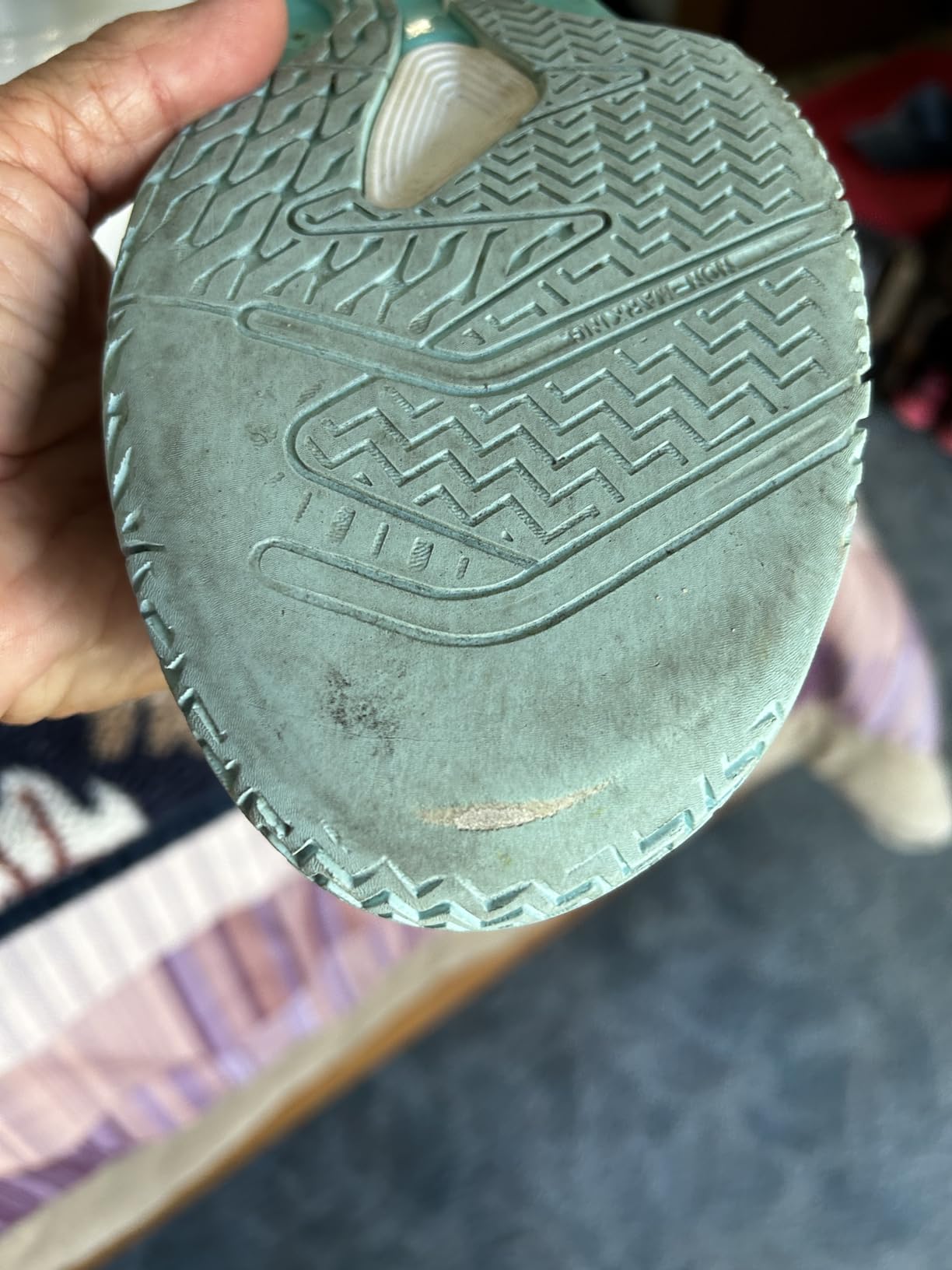
What you trade away is refinement. Owners report that the shoe cannot be broken in and can rub at the toes over long sessions, and a minority find the lateral support insufficient for competitive play. Treat it as a straightforward value pick rather than a long-term relationship.
Fit notes for wide feet and bunions
The toe box is roomy and the shoe runs true, so wide feet do not force a size up. Order your normal size and check that your longest toe still clears the front by about a thumb width.
Where it is not the right shoe
If you play six days a week in a league, replace it sooner rather than later, because the midsole has no dual-density support to keep it from going flat. Anyone with a history of ankle sprains should also consider a stability platform instead, and buyers who need an arch correction should budget for an insole separately.
6. K-Swiss Pickleball Supreme: Best for Tournament-Frequency Play
K-Swiss Women’s Pickleball Supreme Shoe, White/Heather/Peach Fuzz, 7.5 M
180 PSC support chassis
Dragguard 7.0 outsole
Stability platform
Half-size-up guidance
Pros
- 180 PSC chassis resists twisting on hard cuts
- Dragguard 7.0 reinforcement for abuse
- Designed for five to seven play days a week
- Stiffer midfoot platform than neutral shoes
Cons
- Lowest average rating here at 4.0 with 11 percent one-star reviews
- Stability feel takes adjustment from neutral shoes
- Listed at two pounds of mass
The Pickleball Supreme is the shoe in this group aimed most directly at players who train five to seven days a week. The design target is not comfort in a showroom, it is surviving short lateral bursts and repeated front-to-back transitions without the shoe deforming.
The 180 PSC plantar support chassis is the headline. It stiffens the area under the midfoot so the shoe resists twisting when you cut hard, and Dragguard 7.0 reinforcement in the toe and heel handles the high-abuse zones where a court shoe usually starts to break down first. Wide width options are offered alongside the half-size-up guidance, which is useful for feet that need both length and girth.
The honest part of this review is the rating. At a 4.0 average with 11 percent one-star reviews, this is the least consistent shoe we recommend, and the pattern in the negative reviews is predictable: the stability build feels unfamiliar to anyone coming from neutral athletic shoes. It is a support-forward feel, not a neutral one, and the brand’s own guidance is to order half a size up.
That means it rewards patience. Most owners who stay with it describe a two to three week adjustment period during which the midfoot feels firm, followed by a shoe they trust on hard courts. If you cannot commit to that adjustment, a lighter all-court model will suit you better.
Whether it suits wide feet
Wide width options are available, which is the right starting move given how much this shoe resists twisting. Because the chassis is stiff, an undersized foot will slide, so the combination of a true length plus the wide width is worth taking seriously rather than defaulting to a half size up.
Where it is not the right shoe
Casual recreational players will find this shoe overbuilt, and the two-pound listed weight tells you it is not going to feel fast off the line. If you only play once or twice a week, a lighter all-court model will feel better for longer.
7. Wilson Pickle Pro: Best for Bunions and Post-Game Foot Pain
WILSON Pickle Pro Women’s Pickleball Shoe – White, Size 8 US
Pickleball-specific contoured fit
Plush ankle collar
Wide toe box
OrthoLite EVA sockliner
Pros
- Wide toe box relieves foot and bunion pain over long sessions
- No break-in needed for most buyers
- Plush collar secures the ankle
- 4.3 rating across 244 reviews
Cons
- Supplied insole is thin and frequently replaced
- Reports of rapid toe wear or outsole separation
- Runs very wide for players with narrow feet
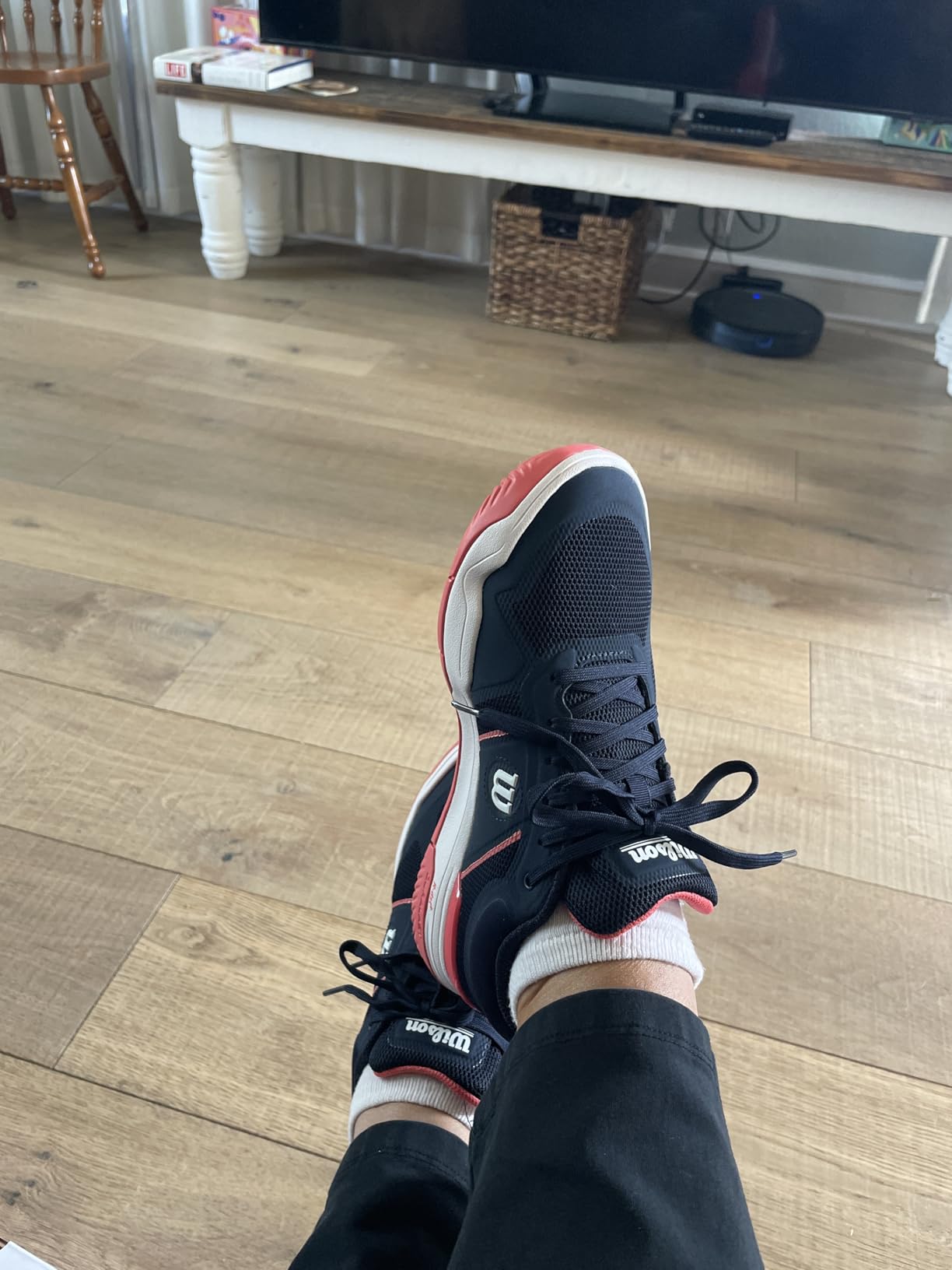
This is the shoe community threads keep recommending for bunions, and the reason is specific rather than general. Owners who came to the Wilson Pickle Pro after struggling with standard-width court shoes describe the wide toe box as the thing that eliminated post-game foot pain entirely rather than just reducing it.
Midfoot support is paired with that roominess so the shoe does not turn into a loose slipper, and the plush collar gives the ankle a secure, cushioned hold without a hard collar edge. The large heel-toe drop adds underfoot cushioning that softens the impact of repeated starts, and the OrthoLite EVA molded sockliner handles moisture.
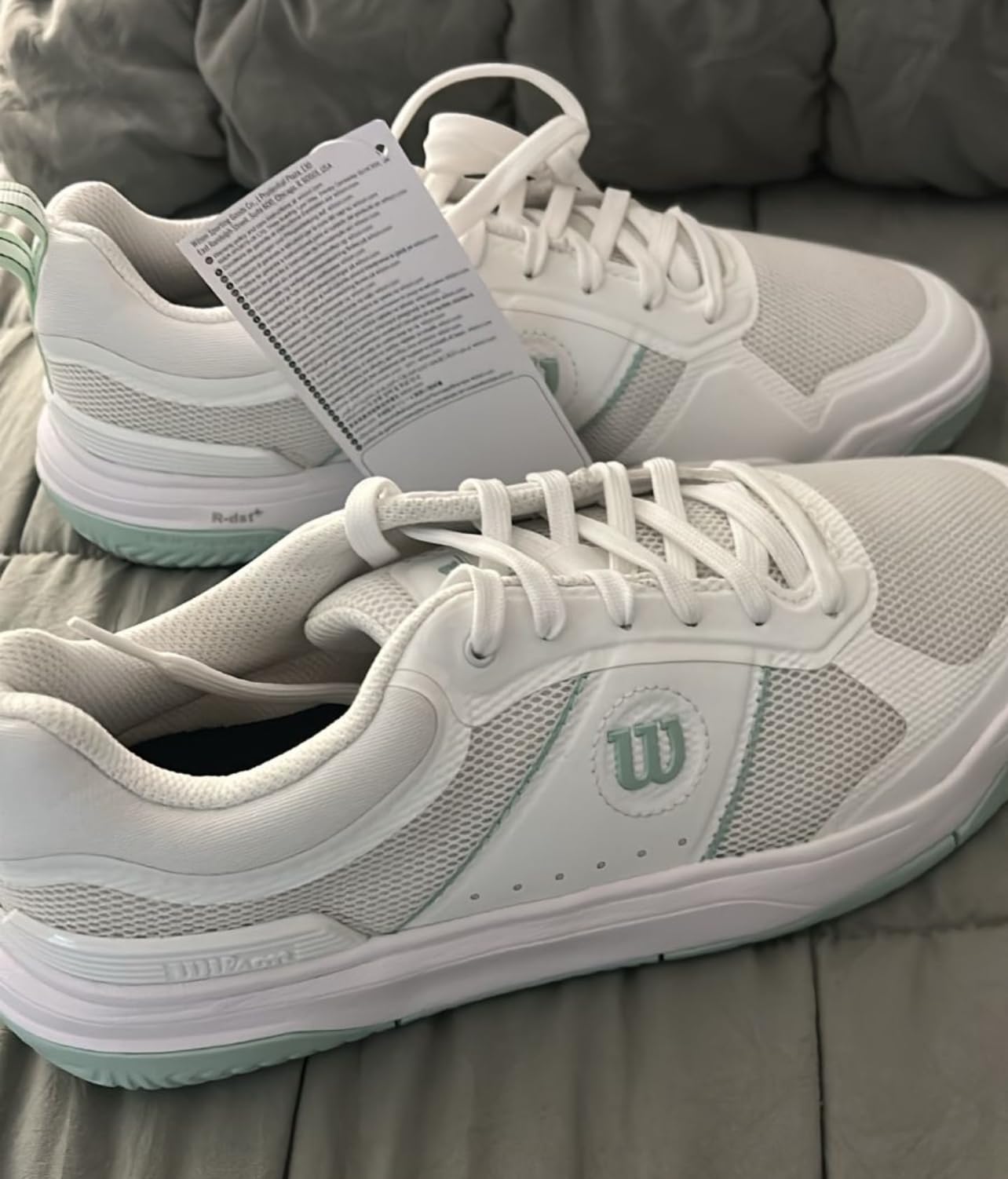
It is also a genuinely pickleball-specific design rather than a renamed tennis shoe. The contoured fit was drawn for the kitchen line, where you are standing split-stepped and pushing off one foot at an angle, and that shows up in how the shoe holds through lateral reach.
The most common owner fix is simple: replace the insole. Reviews describe the supplied sockliner as thin and hard, so budget for a simple cushioned insole from day one and the shoe performs considerably better than out of the box. Durability is the smaller concern, with some reports of outsole separation or rapid wear at the toe on very frequent use.
Whether it suits plantar fasciitis and bunions
It is the pick we would hand to someone whose main goal is removing foot pain. The wide toe box stops the compression that makes bunions flare after long sessions, and if you also deal with arch pain, swapping the supplied liner for an orthotic makes this a comfortable long-session option.
Where it is not the right shoe
If you have narrow feet, this shoe will feel loose, and the very wide platform can make quick direction changes feel vague. It also carries the smallest review base here at 244 ratings, so less long-term evidence than the heavily reviewed models above.
8. Skechers Viper Court Pro 2.0: Best for Certified Arch Support
Skechers Women’s Pickleball Viper Court Pro 2.0 Sneaker, White, 8.5 Medium
APMA-certified Arch Fit insole
ULTRA GO Foam midsole
Goodyear Gold outsole
Breathable mesh upper
Pros
- Arch Fit insole carries the APMA Seal of Acceptance
- Tied for the highest rating here at 4.4
- Breathable mesh keeps feet cool in long matches
- Goodyear Gold outsole built for controlled slides
Cons
- Styling is less court-specific in appearance
- Lightweight build feels less stable than a dedicated platform
- Not a pure pickleball shoe
The Viper Court Pro 2.0 is the version of the Skechers court line we would put in front of anyone whose main concern is foot comfort rather than competition. It holds a 4.4 average across 555 ratings, and the feature that drives those ratings is the removable Arch Fit insole carrying the American Podiatric Medical Association Seal of Acceptance.
That seal is not marketing filler. It means the insole was reviewed for arch support and shock absorption, which is exactly the mechanism that matters if your plantar fascia aches at the end of a long open-play session. Because the insole is removable, you can swap in a prescription orthotic and keep the shoe.
The rest of the platform is built for multiple court sports. ULTRA GO Foam midsole gives responsive cushioning rather than the sink-in feeling of a thick foam, and the Goodyear Gold compound outsole is designed for controlled slides, which matters at the kitchen where the surface can go slick. The breathable mesh upper with synthetic overlays helps on hot outdoor courts.
It also works for padel and tennis, so if you play more than one racket sport you are not buying a single-use shoe. The drawback to owning a general court shoe is honest enough to state: the athletic styling reads more like a training shoe than a court platform, and the lighter build gives less lateral rigidity than a dedicated stability model.
Whether it suits foot pain and wide feet
This is a strong option for arch pain specifically, and wide width options are available for players who need the extra room. It also wears well as a walking shoe between sessions, which is a genuine benefit if your club is not in your kitchen and you are covering a lot of ground on match day.
Where it is not the right shoe
If your game depends on hard stops at the baseline and you want maximum lateral chassis, a stability-first court shoe will hold your foot better. Competitive players who dislike the styling should also know this is not the shoe for them.
9. Ryka Courtside Pickleball Shoe: Best Women-Specific Last
Ryka Womens Courtside Pickleball Sneakers White/Navy 10 W
Narrow heel and roomy toe last
Substantial cushioning
Indoor and outdoor traction
Perforated leather upper
Pros
- Built on a women-specific last with a narrow heel and roomier toe
- Arch support helps limit plantar fasciitis pain
- Grippy rubber sole on lateral moves
- Workable on both indoor and outdoor courts
Cons
- Pleather upper cracks and does not breathe well
- Tongue edge can chafe the top of the foot
- 4.1 average with a wider spread of feedback
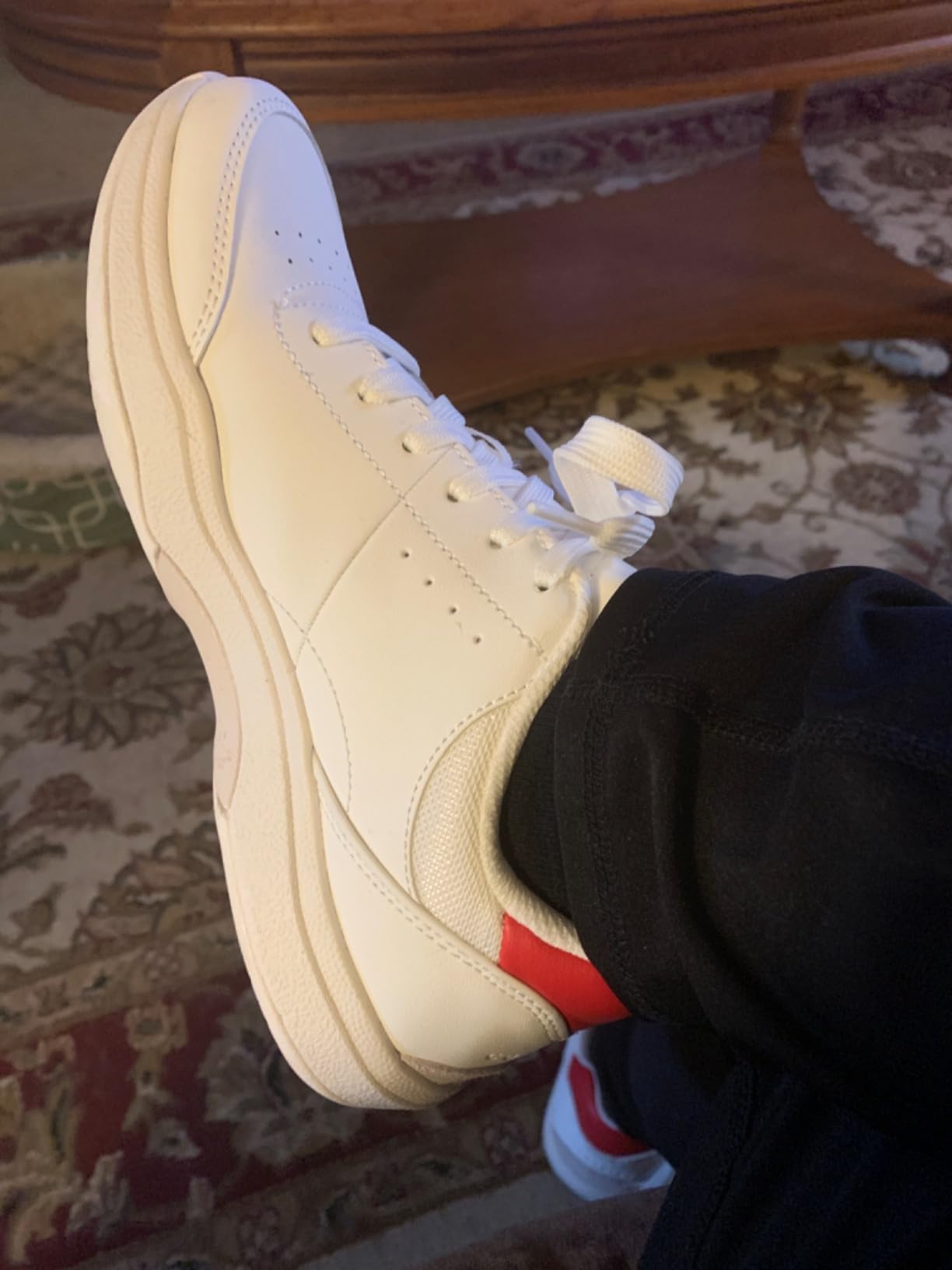
The Ryka Courtside is built on a women-specific last with a narrower heel and a roomier toe box, which is the shape most women with wide feet or bunions are actually looking for when they ask for a narrow heel with a wide toe box.
The narrower heel does real work. It stops your foot from sliding inside the shoe during lateral shuffles without squeezing the forefoot, which is the trade-off you get in every shoe that only makes the toe box wider. Add the padded collar and lace-up closure, and this shoe will not require you to trade one fit problem for another.
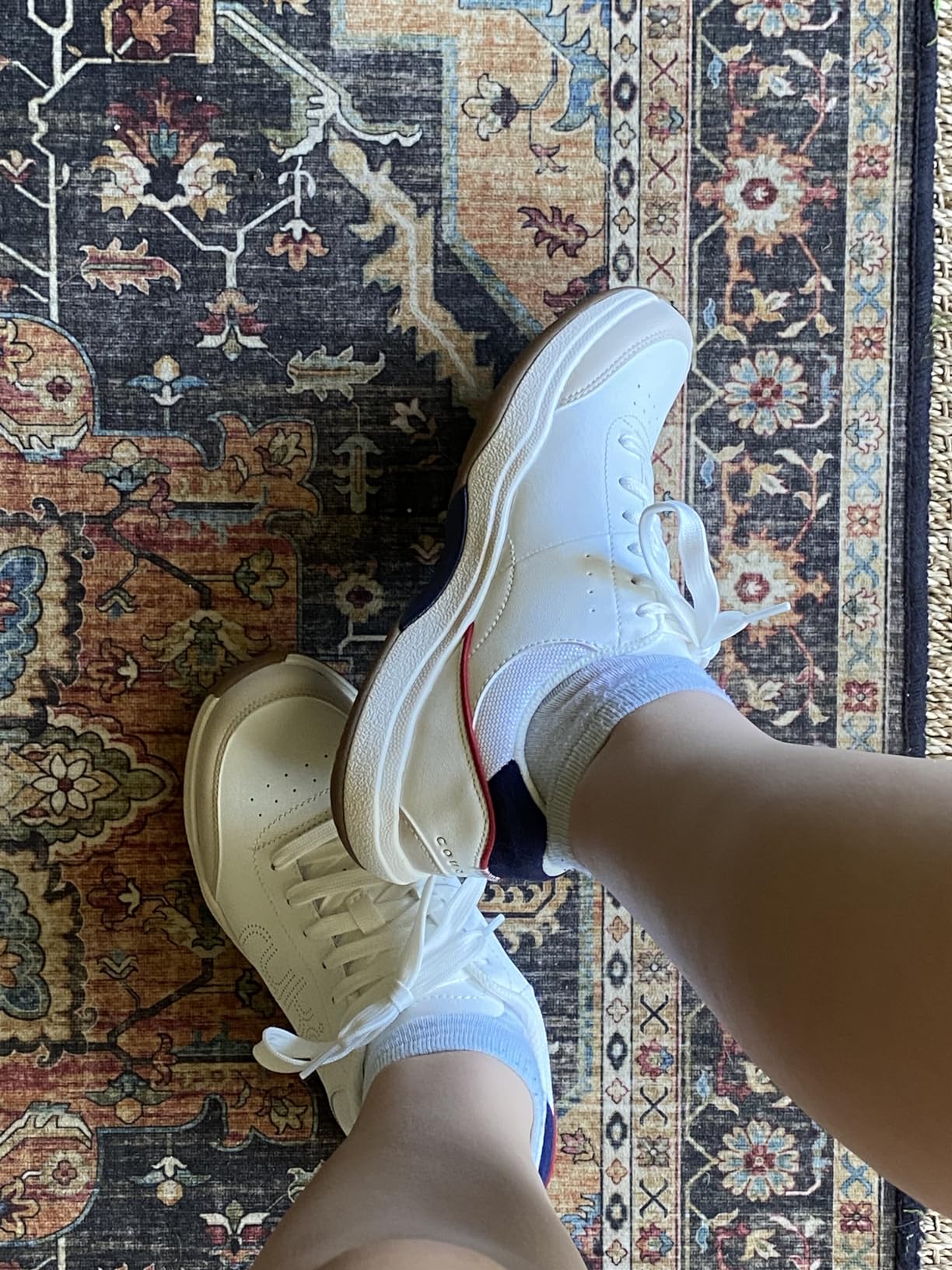
Arch support in the footbed is reported by owners as effective at keeping plantar fasciitis at bay, and the substantial cushioning throughout absorbs impact on hard courts. The grippy rubber sole is rated as safe-feeling on lateral moves, and the shoe is specified for both indoor and outdoor court sports including pickleball and tennis.
The complaints are consistent enough to plan around. Pleather is a coated synthetic that does not breathe and eventually cracks at the flex points, so this is a poor choice for hot outdoor summer sessions. The rigid tongue edge chafes the top of the foot for some wearers, and the 4.1 average with 530 ratings reflects a wide spread of experience.
Whether the last shape suits wide feet
If you have spent years in shoes that squeeze your toes or slip at the heel, this last answers both problems at once. It is not the widest toe box in the group, but it is built from the ground up around the narrower heel and roomier forefoot that women’s feet tend to need.
Where it is not the right shoe
Do not buy this for outdoor summer play. The upper traps heat and cracks, and a rigid tongue plus a non-breathable material is a recipe for blisters on a long hot session. Cool indoor courts are where this shoe makes its case.
10. adidas Gamecourt 2: Best Value Pick
adidas Women’s GameCourt 2 Sneaker, White/Silver Metallic/White, 9
Open mesh breathable upper
EVA lightweight midsole
Adiwear high-wear outsole
Padded collar
Pros
- Stable wide platform stops the foot sliding in lunges
- Grippy on indoor gym floors
- 2776 ratings behind a proven platform
- Partly made with recycled materials
Cons
- Runs about a half size large
- Non-removable factory insole limits orthotic use
- Less breathable than mesh rivals for some players
The Gamecourt 2 is a long-serving adidas tennis platform that works as a pickleball shoe because it was already built for lateral court movement. With 2776 ratings at a 4.3 average, it is one of the most proven shoes in this group and a sensible entry point for anyone moving from running shoes.
The open mesh upper is breathable and flexible, which matters on long summer sessions, and lightweight EVA midsole cushioning keeps the shoe from feeling flat without adding bulk. The Adiwear outsole is a high-wear rubber compound placed exactly where a court shoe wears out, which is the part you should care about if you play outdoors.
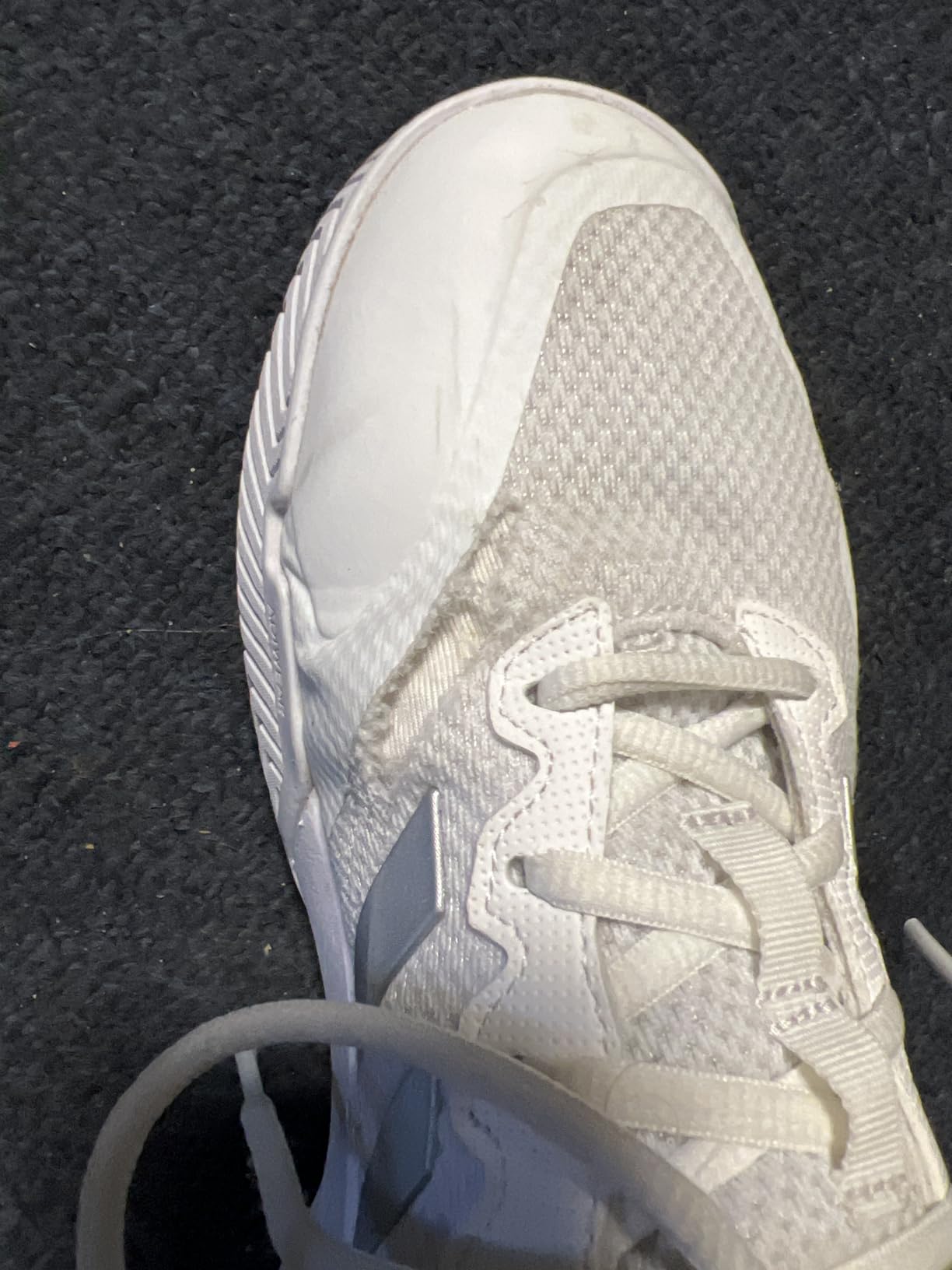
The padded collar does quiet work around the ankle, and owners report a wide, stable platform that stops the foot sliding during lunges at the net. On indoor gym floors the grip is among the best in this group. It is also made in part with recycled materials, which is not a performance feature but does not hurt.
The one issue that shows up over and over is sizing. The Gamecourt 2 runs about a half size large, so most players size down, and because the factory insole is not removable, players who need an arch insert have to slide it under rather than swap it. Reviews also mention it can feel less breathable than lighter mesh rivals in high heat.
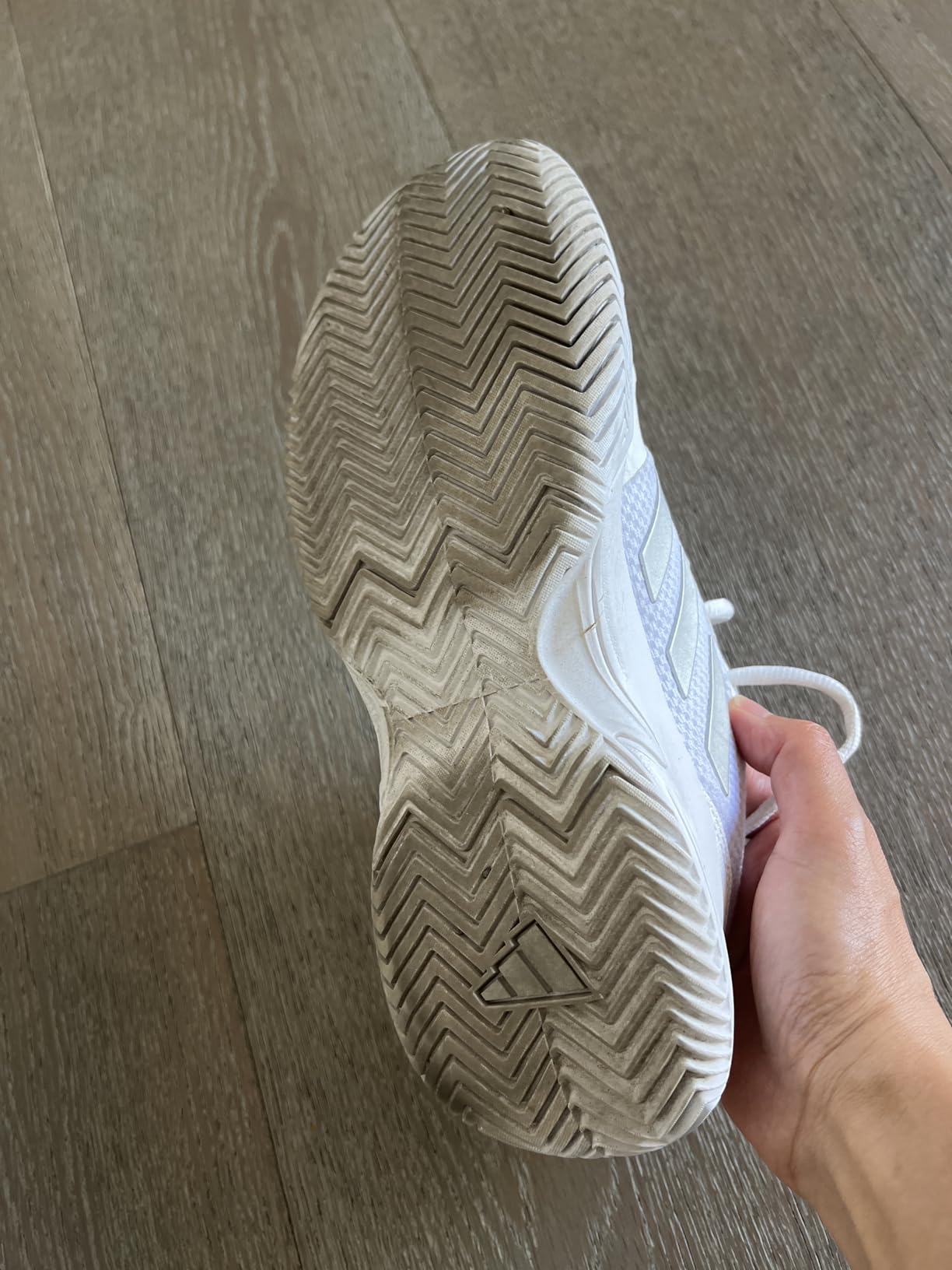
Whether it suits wide feet and arch pain
The roomy platform and the fact that it runs large means this works reasonably well for wide feet, though you should still order a size down. For arch pain, the light EVA cushioning is more of a comfort feature than a correction feature, so pair it with a full-length insert if that is your main concern.
Where it is not the right shoe
A non-removable insole is a real limit for anyone who uses orthotics, and the modest cushioning will not carry a player who has genuine plantar fasciitis pain through many hours a week. If pain is the primary issue, choose a shoe built around an arch-support footbed instead.
11. K-Swiss Hypercourt Express 2: Best Premium Cushioned Shoe
K-Swiss Women’s Hypercourt Express 2 Tennis Shoe, White/Black, 7.5 M
Aosta 7.0 rubber outsole
180 PSC stability chassis
Surgelite cushioning
Durawrap Flex protection
Pros
- Cushioning holds up on long hard sessions
- Outward-angled sole gives a very stable lateral base
- No break-in required
- True to size with 1457 ratings behind it
Cons
- Rigid toe box does not suit bunions or narrow forefeet
- Outsole can wear out inside a year of heavy play
- Heavy build listed at three pounds
The Hypercourt Express 2 is the premium end of the range and the one to consider if you play long sessions on hard courts and want cushioning that does not bottom out. Surgelite cushioning technology provides lightweight impact protection, and owners consistently describe the feel as cloud-like after a long day.
The outward-angled sole design widens the contact patch, so when you push off toward a wide shot the shoe resists rolling and keeps your knee tracking the way you intended. The 180 PSC plantar support chassis handles the midfoot, and Durawrap Flex protects the upper with no break-in period required.
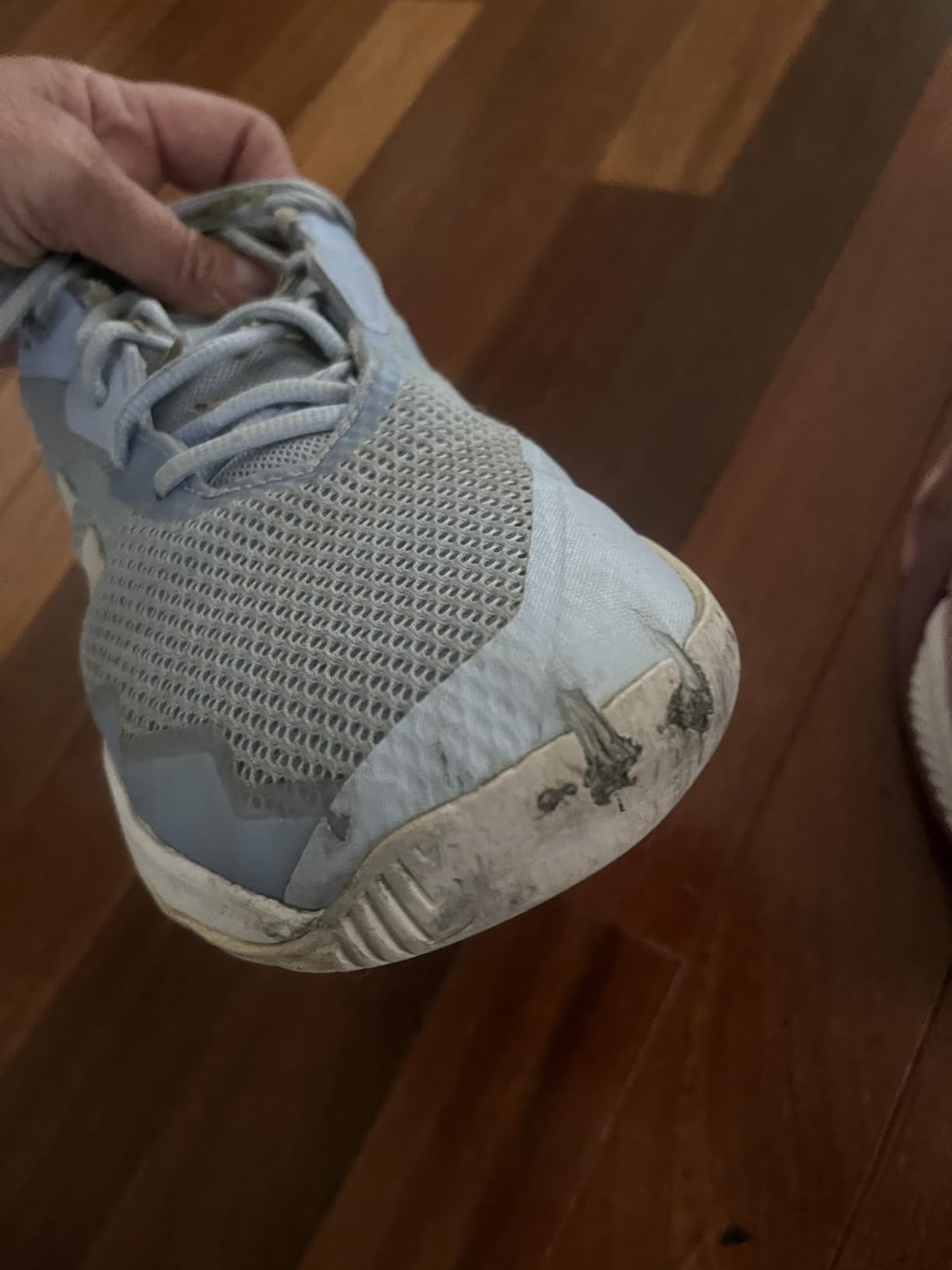
Aosta 7.0 high-density rubber outsole handles durability and traction, and the Ortholite open-cell sock liner moves moisture away from the foot. It is also true to size, which removes one of the most common sources of disappointment when ordering online.
The catch is the toe box. Owners describe it as rigid and rounded, which is a problem for bunions or narrow forefeet because there is no give at the front of the shoe. It is also among the heavier shoes we list at a three-pound listed weight, and reviewers report the outsole can wear through in under a year of heavy play, which changes the cost-per-session math for a frequent player.
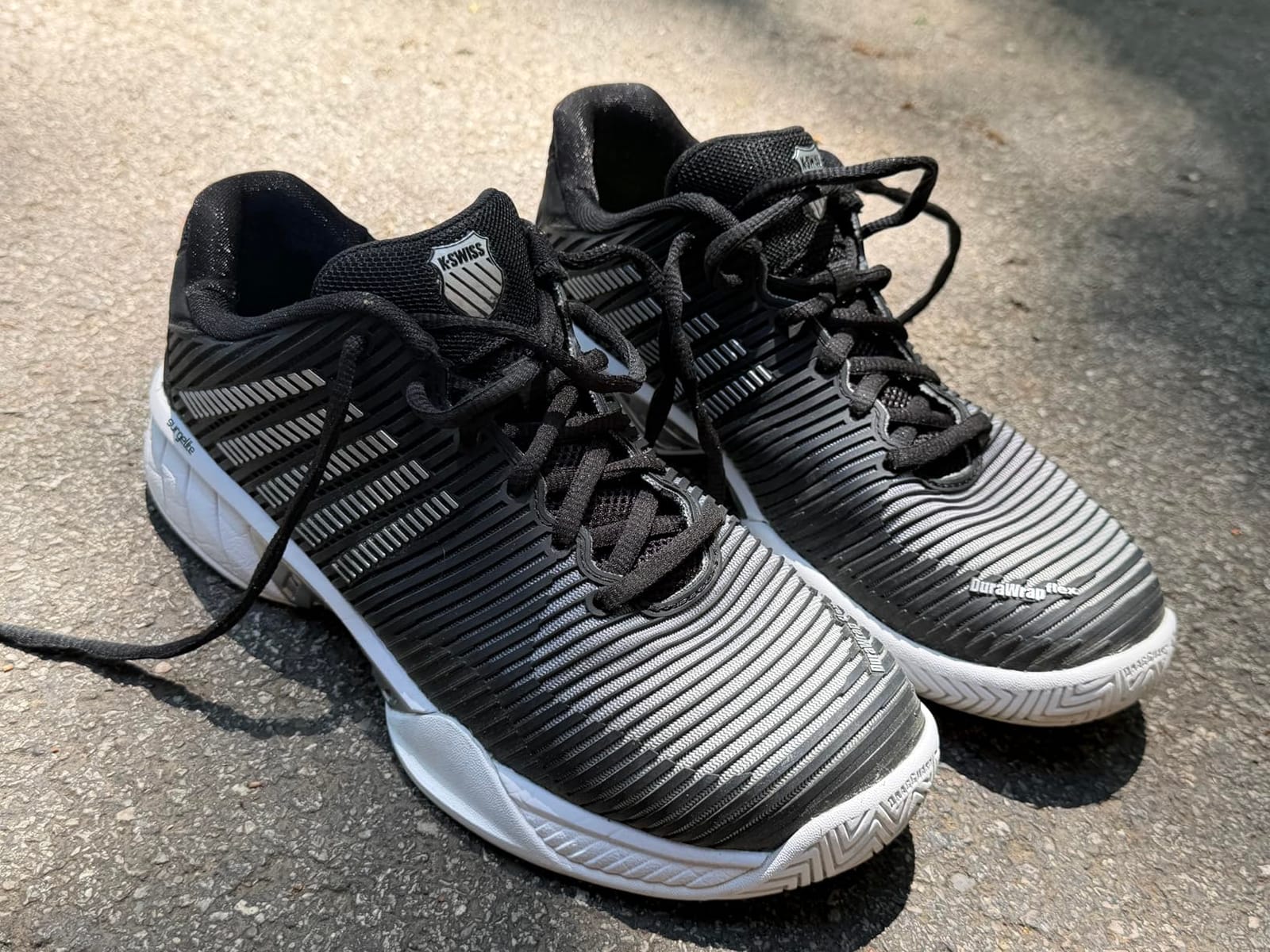
Whether it suits long sessions and foot pain
For three-hour open-play days on concrete, this is a comfortable option, and players with a history of shin or foot pain tend to rate it highly for that reason. The stable base also makes it a solid choice if you are returning to racket sports after a layoff and want confidence over speed.
Where it is not the right shoe
Bunions and narrow forefeet rule it out. If toe room matters at all, a wide-toe-box model will serve you better, and if you play several times a week outdoors, budget for replacement sooner rather than expecting this outsole to last multiple seasons.
12. ASICS Upcourt 6: Top Rated Pick for Indoor Play
ASICS Women’s Upcourt 6 Volleyball Shoes, 8.5, White/Pure Silver
Breathable mesh underlays
Solution-dyed sockliner
Lateral sidewall support
Lightweight flexible build
Pros
- Excellent grip on indoor hardwood
- Lightweight with genuine lateral support
- Minimal break-in and comfortable out of the box
- Tied for the highest rating here at 4.4 across 2594 reviews
Cons
- Supplied insole is thin with little arch support
- Runs small so most players size up
- Can rub on the ankle bones
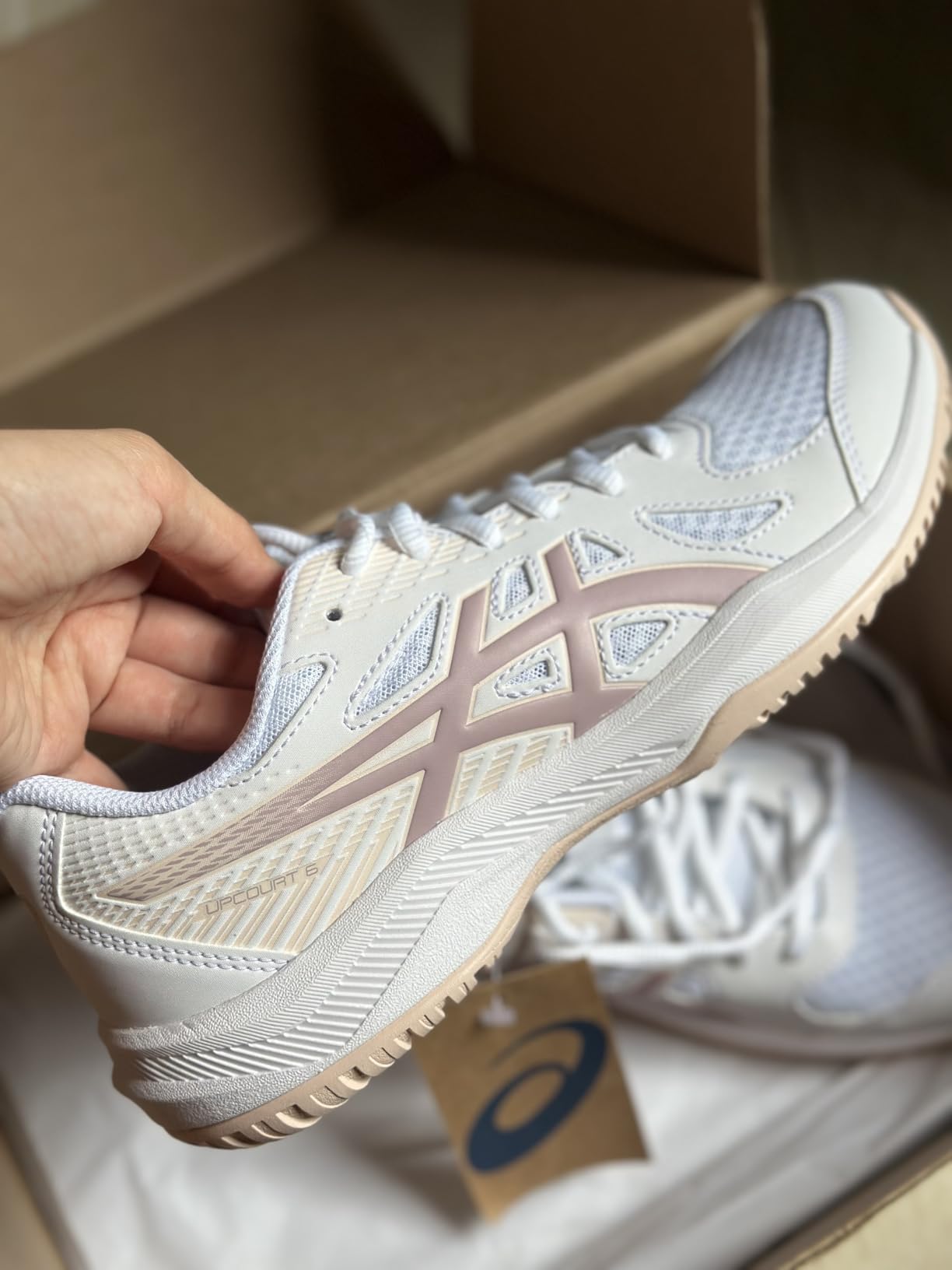
The Upcourt 6 is a volleyball shoe that a large number of indoor pickleball players have adopted, and the reason is the floor rather than the marketing. The outsole pattern grips indoor hardwood exceptionally well, and the sidewall support is built for the quick lateral transitions that volleyball shares with pickleball’s kitchen play.
It holds a 4.4 average across 2594 ratings, which makes it one of the two highest-rated shoes in this group, and the lightweight flexible build means it is comfortable straight out of the box with almost no break-in. Owners moving from running shoes or court shoes report needing only a short adjustment period.
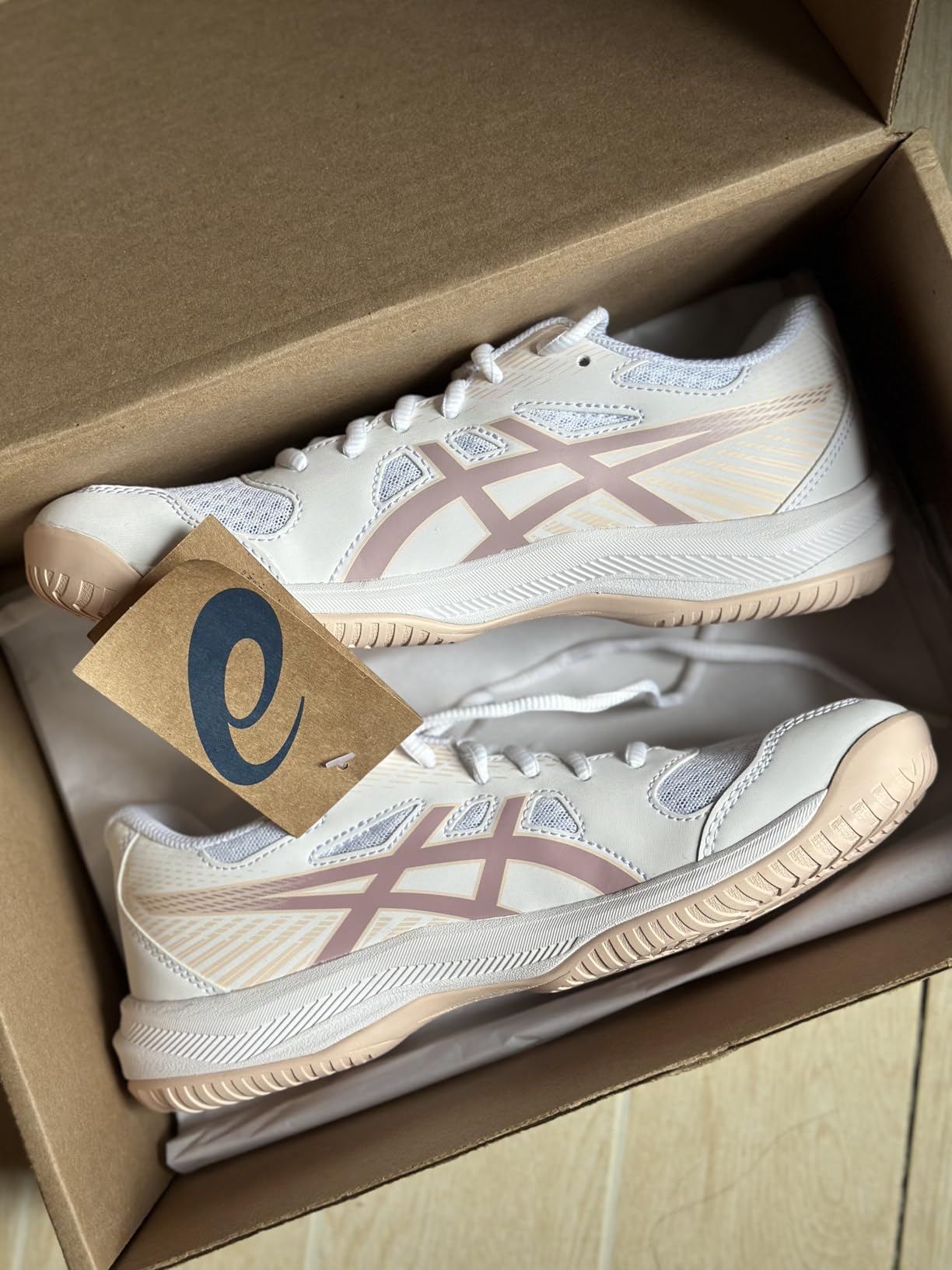
The solution-dyed sockliner reduces water use and carbon emissions in manufacturing, and practically it means a liner that handles moisture better than a glue-heavy foam construction. The wide colorway selection is a genuine bonus for anyone who has ever been stuck with one option for their entire club.
The complaints are about what comes with the shoe rather than the shoe itself. The supplied insole is thin with minimal arch support, so many owners replace it, and the sizing runs small enough that the manufacturer guidance itself says to size up. Some wearers also report rubbing on the ankle bones, which usually means going up a half size resolves both the length and the chafing.
Whether it suits indoor and outdoor play
This is at its best on indoor gym floors where the grip can fully do its job. On outdoor concrete it is usable but the lightweight construction gives less underfoot protection, and if that is your main surface, choose something with more midsole protection for repeated impact.
Where it is not the right shoe
If your feet are wide, sizing up lengthens the shoe without widening the base, so it will not solve a toe box problem. Players with plantar fasciitis should plan on replacing the thin supplied insole, and anyone who rubs on the ankle bones should go up a half size rather than pushing through it.
How to Choose Women’s Pickleball Shoes: Fit, Width, Surface and Support
Judging a court shoe on cushioning alone is the most common mistake, because cushioning is the one thing you can get from any comfortable walking shoe. Lateral support is what separates a court shoe from everything else, so it deserves the first look.
Lateral support matters more than cushioning
Pickleball movement is stop-start and side-to-side: a split-step, a hard plant, a push-off at an angle, repeated hundreds of times in a session. A shoe handles that with a wide base, reinforced sidewalls and a midsole firm enough not to twist. Running shoes put that stability to work in the opposite direction, which is why they feel fine standing still and unpredictable the moment you cut.
Women’s lasts are not just smaller men’s lasts
A genuine women-specific last is molded around a narrower heel and a roomier forefoot. That combination matters more than width alone: a narrow heel stops your foot sliding inside the shoe during lateral movement, and a roomier toe box stops compression at the pinky toe. Most scaled-down shoes deliver one without the other, which is why sizing up so often fails to fix a wide-foot problem.
Width codes and why sizing up is not the same as going wide
US women’s widths run from B (medium) through D (wide) and on to 2E (extra wide). Size tells you the length of the foot; width tells you the girth. Buying a half size up lengthens the shoe without adding width across the ball of the foot, so if your toe box pinches, a longer shoe will not solve it. Look for a model that is offered in a wide width, and check the toe box shape as well, since a rounded toe box can feel narrow even in a labeled wide.
Foot pain, plantar fasciitis and bunions
For plantar fasciitis, the priority is a supportive footbed with a defined arch plus enough midsole to absorb the downstep. A removable insole matters more than you would think, because it lets you swap in an orthotic instead of stacking a cheap insert on top of a factory one. For bunions, the priority is different: you need a wide toe box, a flexible forefoot and minimal compression at the fifth toe, and you should prioritize room over cushioning every time.
Indoor versus outdoor court shoes
Indoor gym floors reward grip and a lightweight build because the surface is consistent and forgiving. Outdoor concrete is harder, hotter in summer and much more abrasive on outsoles, so durability and midsole protection matter more than speed. Players who do both end up owning two pairs, and that is a reasonable budgeting decision rather than a failure, because one pair of shoes asked to handle both surfaces will retire sooner than either would alone.
When to replace your court shoes
Three signs it is time: the midsole no longer rebounds when you press your thumb into the heel cushion, the outsole tread is visibly worn flat across the ball of the foot, or your feet start aching in places that used to be fine. For someone playing three times a week, that usually lands somewhere between six and twelve months. Casual players can stretch that, and anyone on concrete daily should expect the shorter end of it.
If you split your week across sports, our basketball shoes for women guide covers high-impact court cushioning in more detail, and the nursing shoes guide is a useful reference if you are on your feet for long shifts around your playing schedule. Both share the fit principles above.
Frequently Asked Questions
What are the best-rated women’s pickleball shoes?
The highest-rated options we tested are the ASICS Upcourt 6 at 4.4 across 2594 ratings and the Skechers Viper Court Pro 2.0 at 4.4 across 555 ratings. The K-Swiss Express Light stands out as the best overall because it is drawn for pickleball first, with a wide toe box and Dragguard 7.0 reinforcement, backed by 2593 ratings.
What shoes do podiatrists recommend for pickleball?
A court shoe with a supportive, defined arch, a firm base for lateral movement and enough midsole cushioning for hard surfaces. Podiatric concerns centre on toe compression, arch collapse and ankle instability rather than on brand. Removable insoles matter because they let you fit a full-foot orthotic for plantar fasciitis when plain cushioning is not enough.
What shoes are good for plantar fasciitis and bunions?
For plantar fasciitis, look for arch support and shock absorption, such as the Skechers Viper Court Pro 2.0 or ASICS Gel-Dedicate 8. For bunions, prioritise a wide toe box and flexible forefoot instead, which points to the Wilson Pickle Pro, K-Swiss Express Light or Ryka Courtside. Cushioning helps pain, but toe room prevents the pain from starting.
Which is better for plantar fasciitis, New Balance or ASICS?
Between the two brands, ASICS generally offers more structured cushioning through GEL technology and stability systems such as TRUSSTIC, which suits feet that need the arch to keep working. Wide feet should be cautious with ASICS, because the women’s lasts are widely reported to run narrow, so check for a wide width option before buying. The right answer is whichever shoe gives your arch support without compressing your toes.
What are the worst shoes to wear for plantar fasciitis?
Running shoes are the usual culprit, because their soft, heel-stacked foam and narrow base are built for forward motion rather than the lateral cuts pickleball demands. Flat, thin-soled casual sneakers are close behind, since they give your arch nothing to stand on. Shoes that fit too tightly at the toe box are also problematic because compression at the fifth toe changes how you stand.
Should I size up in pickleball shoes, and do they run narrow?
It depends on the brand. K-Swiss and ASICS models are frequently reported to run small or narrow, so a half size up is often advised. Sizing up lengthens the shoe but does not add width, so if your toes are compressed you need a wide width rather than a longer size. Always check recent owner fit comments for the specific model before ordering.
How long do pickleball shoes last?
For someone playing three times a week, expect roughly six to twelve months depending on surface and intensity. Outdoor concrete wears outsoles far faster than indoor gym floors, and daily players should expect the shorter end of that range. Replace them when the midsole stops rebounding, the tread goes flat across the ball of the foot, or new aches appear in feet that were previously fine.
The Best Pickleball Shoes for Women to Buy in 2026
After working through all twelve, the K-Swiss Express Light Pickleball Shoe is our choice as the best pickleball shoes for women overall. It is drawn for pickleball rather than adapted from tennis or volleyball, it offers a real wide width alongside a wide toe box, and its 2593 ratings give you far more evidence to judge the fit than most other models here.
Pick a different one if your feet tell you to. Wide feet and bunions point to the Wilson Pickle Pro or the Ryka Courtside, the latter being the model here built on a genuine women-specific last. Arch pain and plantar fasciitis point to the Skechers Viper Court Pro 2.0 or the ASICS Gel-Dedicate 8. Indoor league players gravitate to the ASICS Upcourt 6, and players on a budget get the most out of the LEFUS AMZ-P601 or the adidas Gamecourt 2.
Whatever you choose, buy on width before length, give any court shoe two sessions before judging it, and replace it when the cushioning stops responding rather than when the outsole finally gives up. Our picks above will keep changing as new models land, so check back through 2026 for the latest updates.