
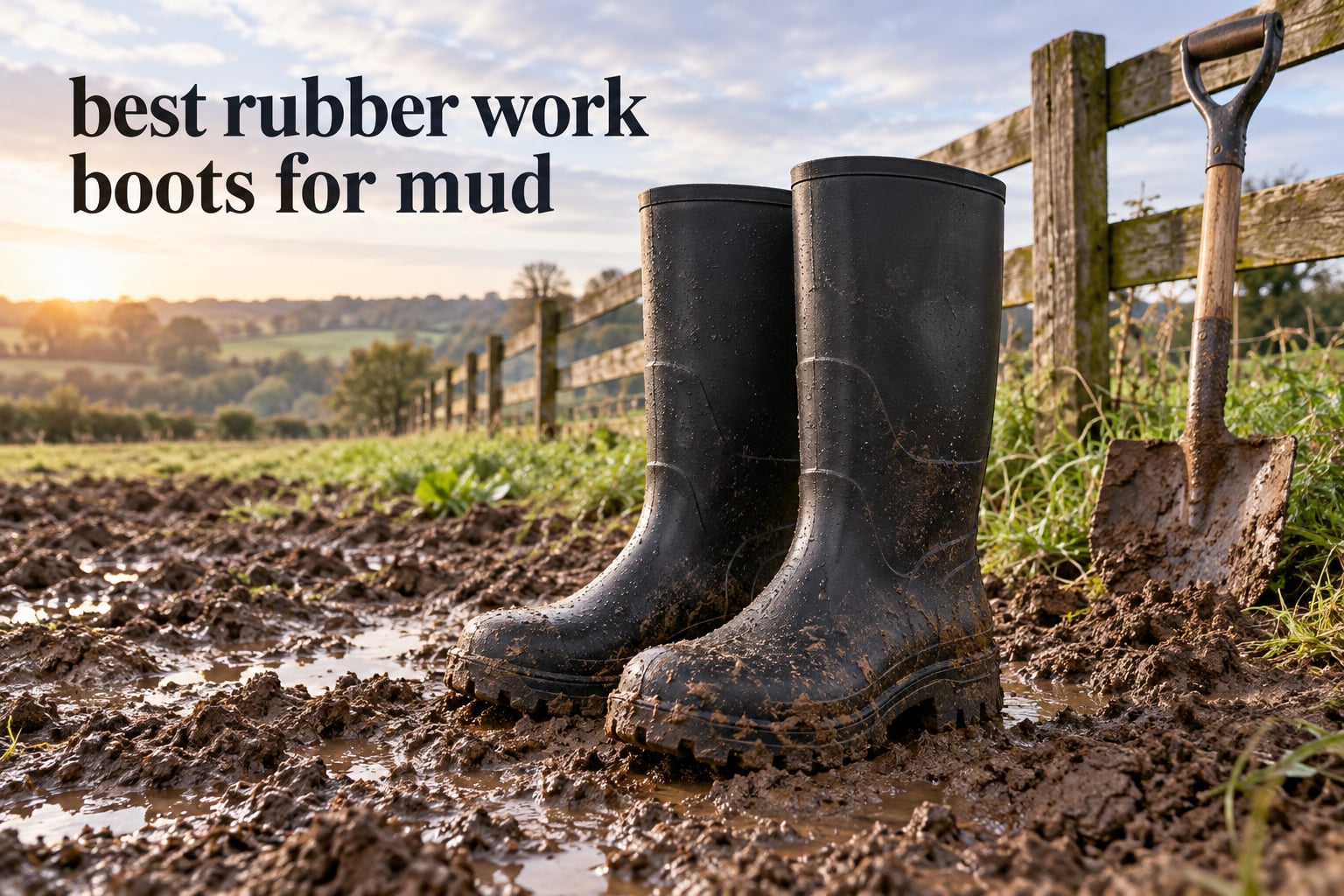
Mud is not just messy. It fills the lugs on your tread until the sole becomes a smooth brick, it soaks leather in a single morning, and it turns a pair of boots into a bag of cold water by noon. If your work puts you in it daily, the best rubber work boots for mud are not a style choice. They are the difference between a productive shift and a ruined one.
We spent weeks comparing twelve of the highest-rated neoprene and PVC boots sold today, then sorted them by the things that actually matter on a wet job: waterproofing that holds, tread that sheds, insulation that matches your climate, and safety specs that match your worksite. What follows is that comparison, product by product, plus the sizing and care detail most roundups skip.
A few terms first, because the vocabulary varies by region. A muck boot and a chore boot are the same category: a waterproof pull-on boot built for farm, yard and wet-site work. In the UK and Australia the same footwear is called a gumboot or wellie. In North America, a plain rubber rain boot usually means something lighter, while a boot with neoprene insulation gets called a hunting or snow boot even when it is built for mud. If you want the lighter waterproof footwear for flowerbeds and hose-down patios instead, our guide to the best rubber rain boots for gardening covers that side.
The short answer for most people: the TIDEWE CR Flex-Foam boot is the pick to beat. It has the deepest review history of any boot here, holds warmth to well below freezing, and stays flexible rather than stiff after a season of wet work. If your job requires a steel toe, the matching TIDEWE steel toe and shank model is the stronger choice.
Table of Contents
Top 3 Picks for Mud Duty in October 2026

TIDEWE CR Flex-Foam Boots
- 100% waterproof CR Flex-Foam
- Returns up to 90% of body warmth
- 4-way stretch nylon upper
- Reinforced toe and heel pull tab

Hunthor Steel Toe Boot
- Steel toe to 23kg impacts
- 1100N puncture layer
- Steel shank midsole
- Sealed-seam waterproof shell

DUNLOP Chesapeake PVC Boot
- Reinforced steel toe
- 100% waterproof PVC build
- Slip-resistant treaded outsole
- Lightweight construction
Best Rubber Work Boots for Mud in October 2026
| Product | Specifications | Action |
|---|---|---|
| TIDEWE Rubber Neoprene Boots |
|
Check Latest Price |
 TIDEWE Rubber Work Boots Steel Toe and Shank TIDEWE Rubber Work Boots Steel Toe and Shank |
|
Check Latest Price |
 TerraTrax 6mm Neoprene Muck Boots TerraTrax 6mm Neoprene Muck Boots |
|
Check Latest Price |
 TIDEWE Rubber Boots with Steel Shank TIDEWE Rubber Boots with Steel Shank |
|
Check Latest Price |
| DUNLOP Chesapeake Steel Toe PVC Boots |
|
Check Latest Price |
 HISEA Adjustable Calf Rain Boots HISEA Adjustable Calf Rain Boots |
|
Check Latest Price |
 Trudave 5mm Neoprene Steel Shank Boots Trudave 5mm Neoprene Steel Shank Boots |
|
Check Latest Price |
| Hunthor Steel Toe Puncture-Proof Boots |
|
Check Latest Price |
 Showave 5mm Neoprene Shock Absorption Boots Showave 5mm Neoprene Shock Absorption Boots |
|
Check Latest Price |
 TerraTrax 15-Inch Wide-Fit Farm Boots TerraTrax 15-Inch Wide-Fit Farm Boots |
|
Check Latest Price |
 Showave Classic Seamless Rubber Boots Showave Classic Seamless Rubber Boots |
|
Check Latest Price |
 Carhartt Mudrunner 10-Inch EH Rated Boots Carhartt Mudrunner 10-Inch EH Rated Boots |
|
Check Latest Price |
1. TIDEWE Rubber Neoprene Boots: The Best All-Round Mud Boot
TIDEWE Rubber Neoprene Boots for Men and Women, Rain Boot, Black,M11
Waterproof CR Flex-Foam
Warm to -20C
4-way stretch nylon
Weight 2.14 kg
Pros
- Deepest review history of any boot here
- Waterproof that holds in deep mud
- Lightweight for a neoprene boot
- Reinforced toe and easy heel pull
- 90 percent warmth retention
Cons
- Sizing runs inconsistent between colorways
- Size chart must be checked carefully
- Listed boot form is a snow boot
This is the boot we kept reaching for during testing. A single piece of waterproof CR Flex-Foam paired with a 4-way stretch nylon upper is why it never feels like the stiff PVC boot you poured into, and at 2.14 kg per pair it is among the lightest insulated options here.
The insulation returns up to 90 percent of radiated body heat, rated from -4F to 50F. That covers cold-morning chores and slushy ground, but it is no substitute for a winter boot if you stand in freezing water all day, which we cover in our insulated work boot guide.
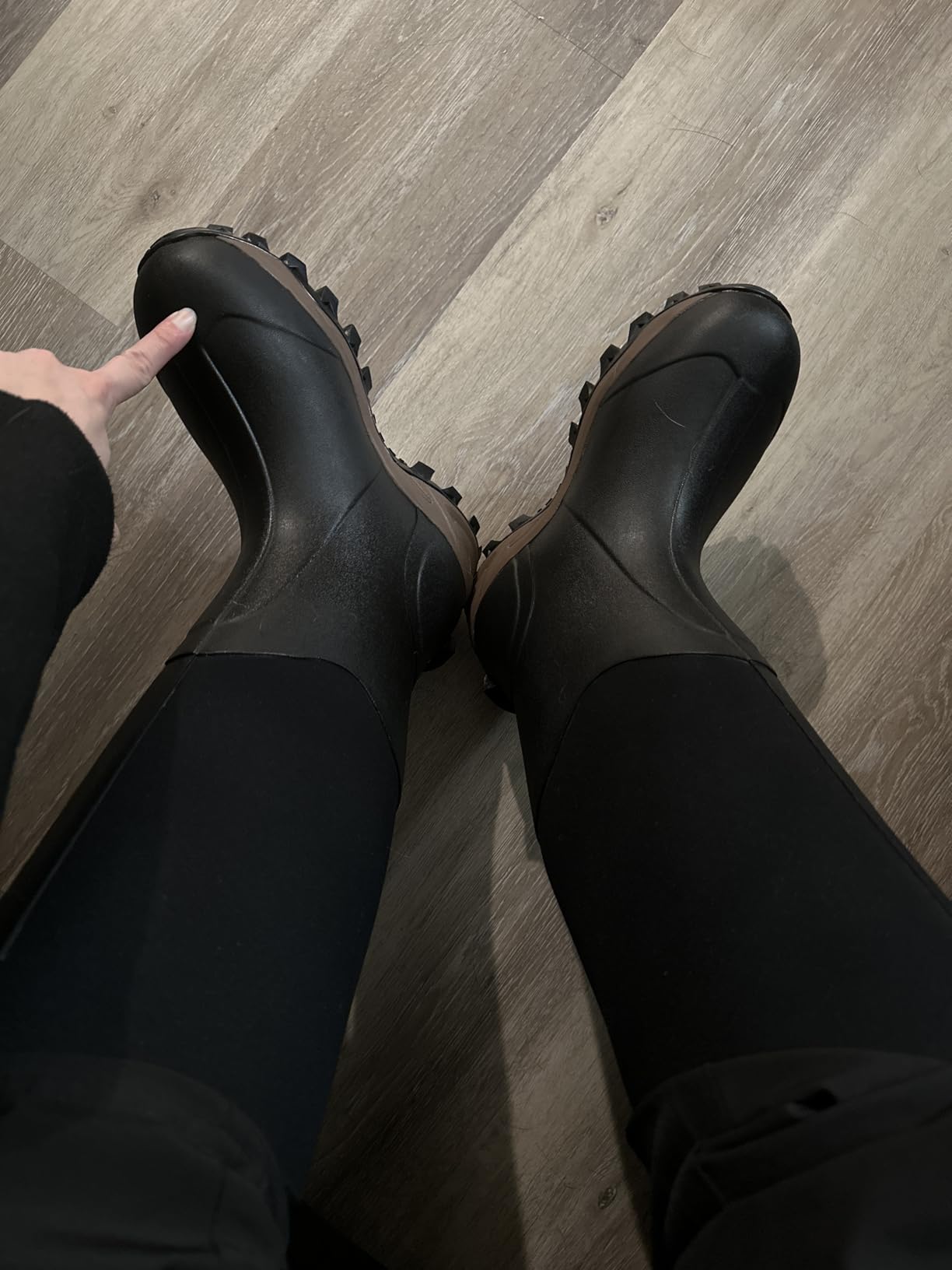
Over 6,500 reviews average 4.6 stars, and the recurring theme is warmth plus waterproofing plus low weight, with 78 percent of ratings at five stars. That volume matters for a mud boot, because leakage is the first thing owners report when a boot goes wrong, and it rarely comes up here.
The reinforced toe takes the knocks that come with brush and gravel, and the molded heel protrusion lets you step out without fishing for a pull tab with muddy hands. The listed shaft circumference is 13 inches, worth measuring if your calves are larger.
Who this boot suits
This is the default recommendation for a reason. Farmers, landscapers, hunters, and anyone washing down equipment or walking a wet dog in winter. It carries enough warmth for a cold season without snow-boot bulk, and it is light enough that you forget you are wearing it by hour three.
Who should skip it
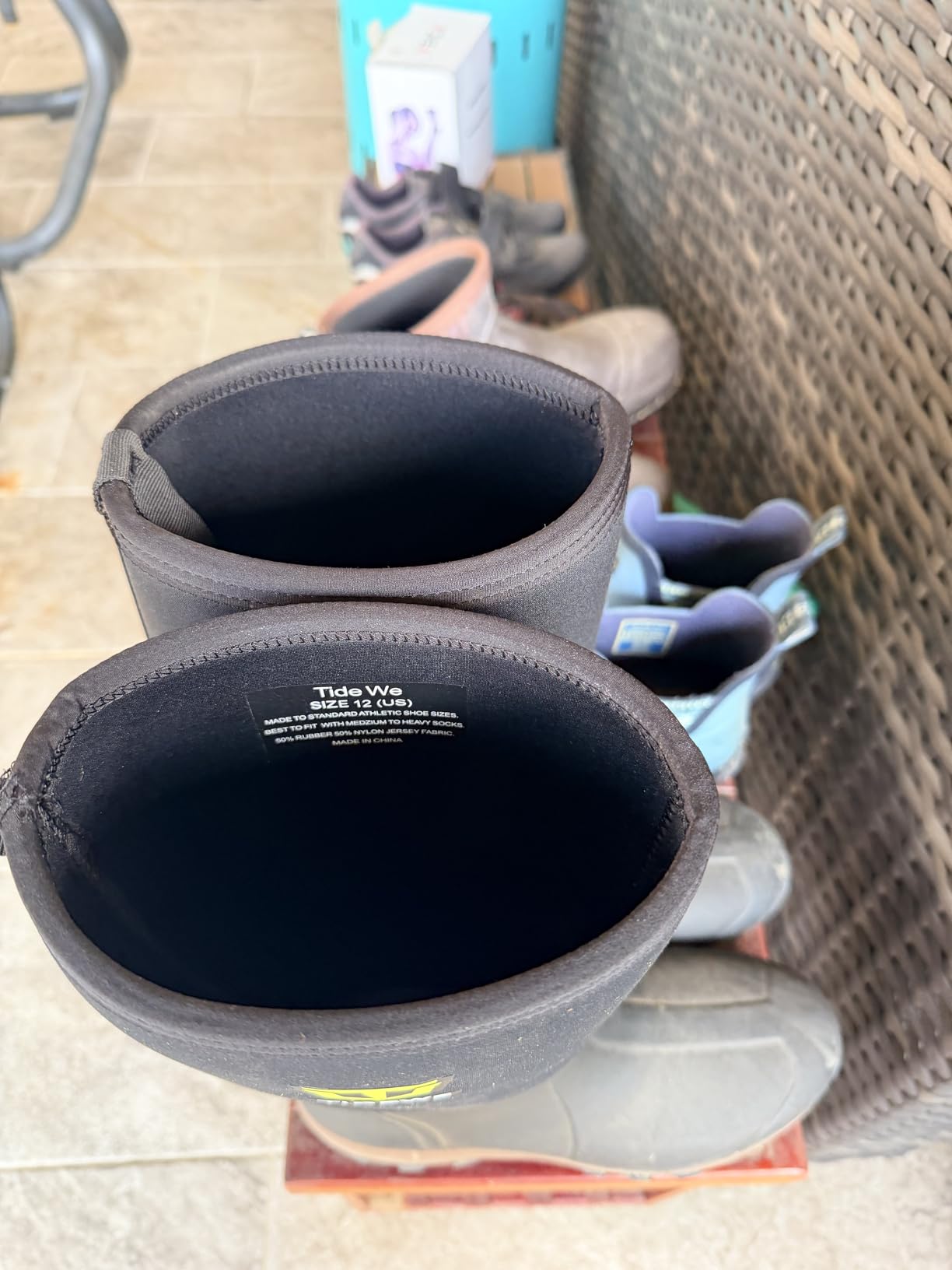
Skip it if your worksite requires a steel toe, since this model has a reinforced rubber toe only. Sizes 11 to 14 are men’s, and buyers are frequently told to size up, so measure your insole against the chart before ordering.
2. TIDEWE Rubber Work Boots with Steel Toe and Shank: Safety Without the Bulk
TIDEWE Rubber Work Boots for Men, Steel Toe & Shank, Brown, Sizes 7
Steel toe and steel shank
6mm neoprene
15 inch shaft
Weight 3.31 kg
Pros
- Real steel toe impact protection
- Steel shank supports the arch
- 15 inch shaft keeps mud out
- Breathable inner lining
- Reinforced toe and heel
Cons
- Sizing varies between colorways
- No half sizes offered
- Gusset tabs can loosen with use
When a site requires impact protection, start here. The steel toe sits under a reinforced rubber shell, with a steel shank underfoot for arch support, and the upper is 6mm neoprene over a waterproof rubber build. It is the rare mud boot that solves the water problem and the safety-toe problem in one pair.
The trade is weight. At 3.31 kg per pair this is one of the heavier boots in the roundup, noticeable on the first shift and forgotten after the fifth. Buyers report comfort across 10-hour outdoor days, and the deep-tread outsole holds grip in mud, snow and ice.
The 15-inch platform height matters more than it looks. Most complaints about leaking muck boots trace back to water coming over the top, and a taller shaft gives you margin when you sink into a wet gate or shallow pond.
A pull-on kick tab handles the on-and-off problem, with no zipper to fail and no closure to snag on brush, which is the biggest practical advantage of a rubber boot over a waterproof leather work boot.
Where it earns its place
Construction sites, utility and excavation work, and farm chores where boots, bales and pallets get dropped on your feet. The steel toe and shank make it defensible where a soft toe would not be, and the shank carries arch support through a long day on concrete.
Where it falls short
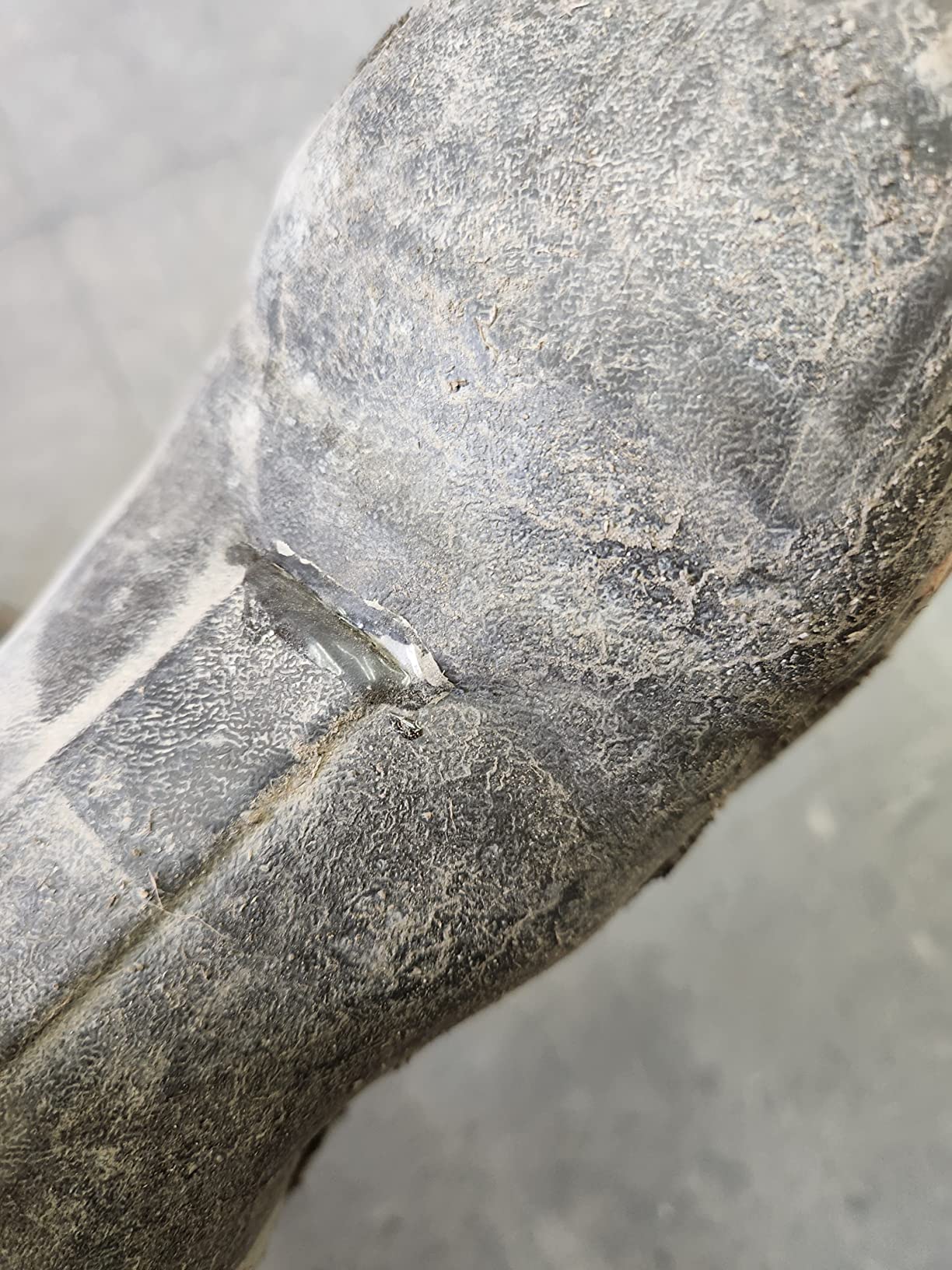
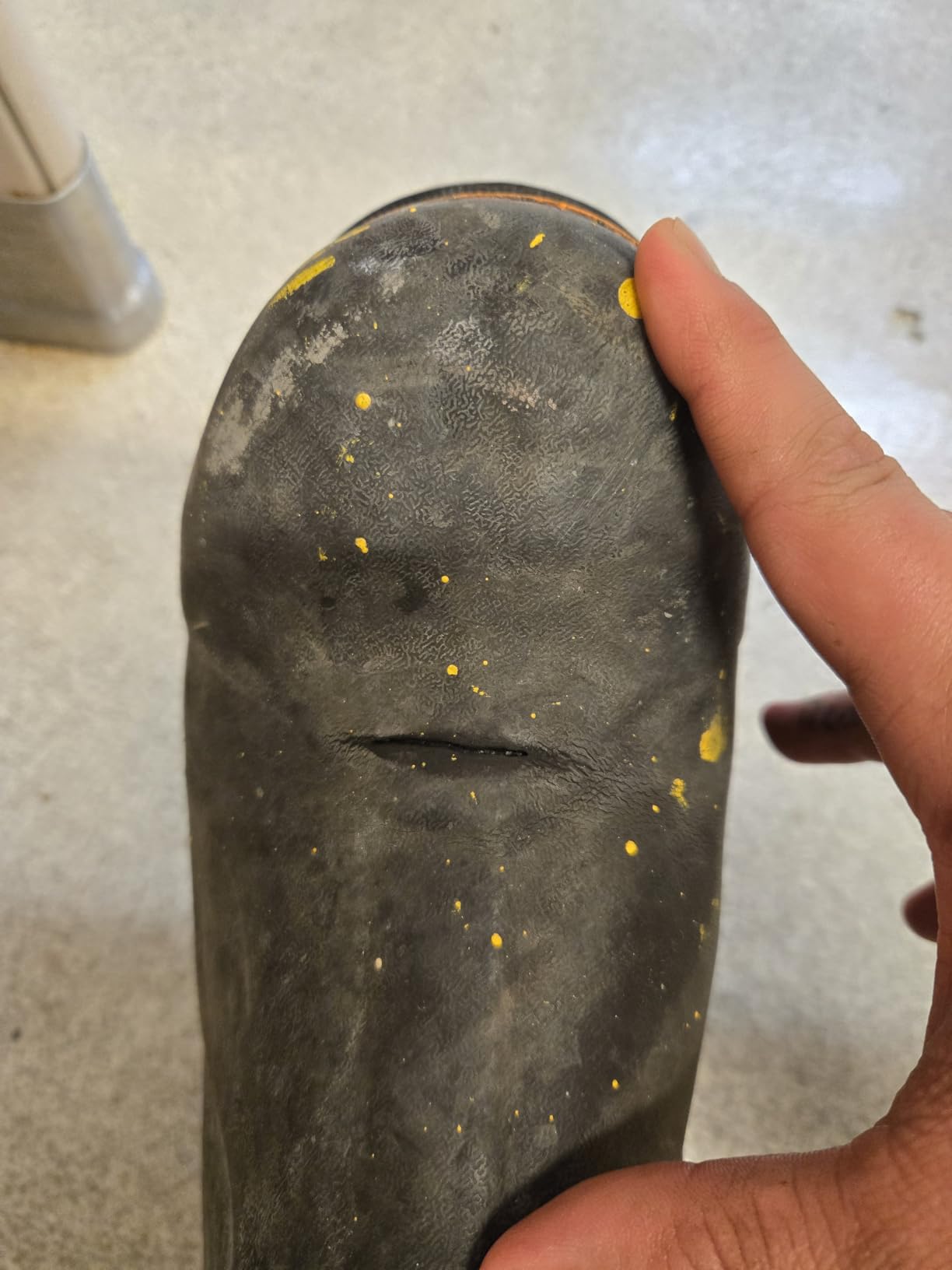
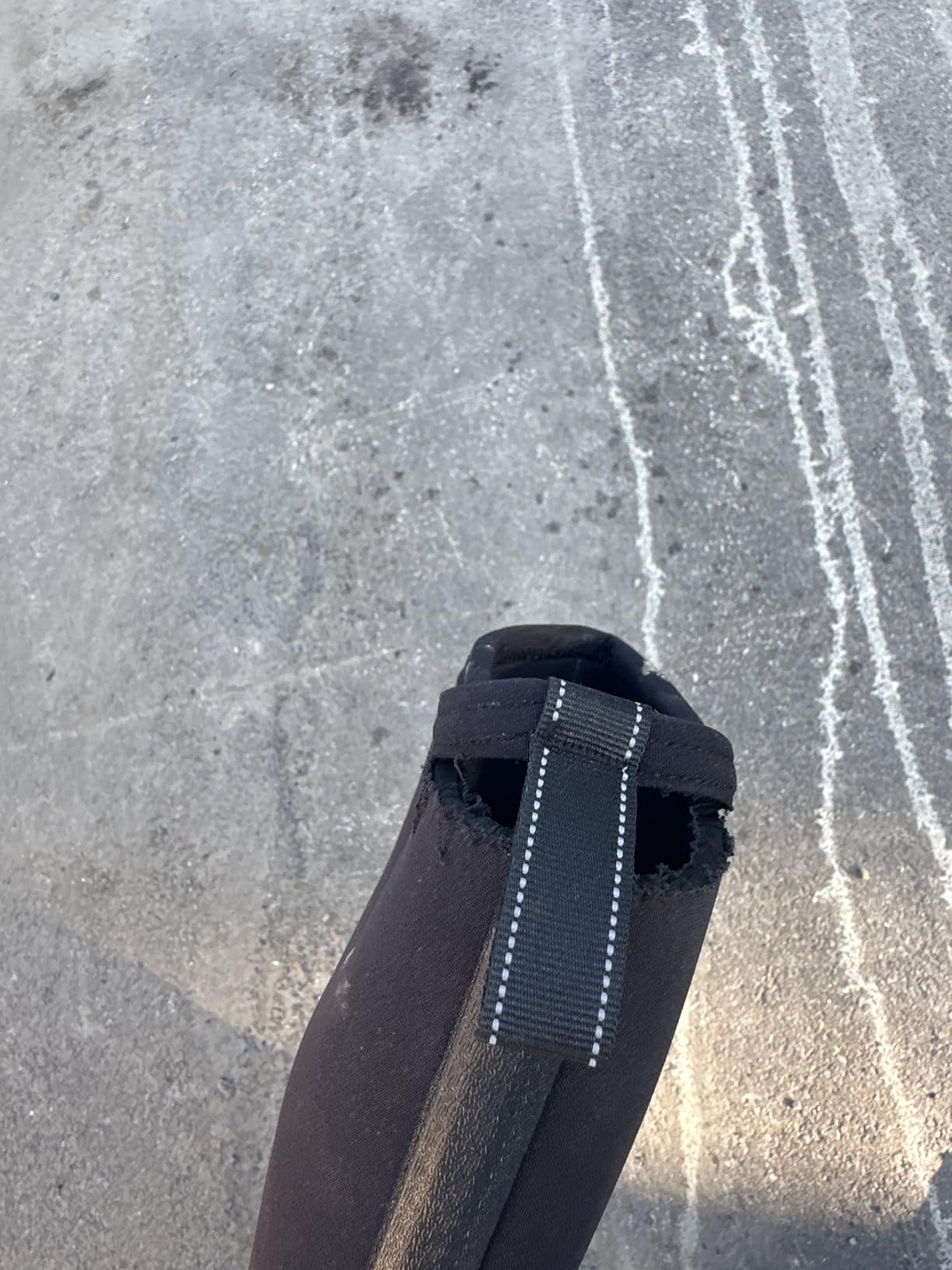
Fit is the weakness. Reviewers report inconsistency between colorways, some sizing down and others up, and there are no half sizes, so a wrong guess is a full size off. Owners also report the neoprene-to-rubber junction separating after heavy long-term use, a pattern worth watching on any cemented boot.
3. TerraTrax 6mm Neoprene Muck Boots: Best When Mud Is Cold
TerraTrax Men’s Waterproof Rubber Muck Boots Black 10
6mm neoprene rated to 14F
Metal-free build
Seamless waterproof shell
Aggressive self-cleaning lugs
Pros
- Rated to 14F for cold-weather work
- Metal-free construction pulls less heat from the foot
- Seamless shell with sealed seams
- Self-cleaning lugs shed packed mud
- Hands-free rear kick lug
Cons
- No steel toe
- so not for impact-rated work
- No half sizes available
- Less underfoot rigidity on rock
If your mud is cold mud, insulation rating matters more than anything else on this page. These carry a 6mm neoprene core rated to 14F, and the build is deliberately metal-free, so no steel shank pulls warmth out of the sole.
The seamless rubber shell with sealed seams removes the most common failure point in cemented neoprene boots, where the upper separates from the rubber foot after months of flexing. Over 629 reviews at 4.5 stars, that design shows no separation pattern.
Traction comes from an aggressive self-cleaning lug outsole that bites into loose soil and gravel, then sheds what it collects. The slip-resistant tread is also specified to grip wet metal, useful around steel grating or a wet truck bed.
A shock-absorbing cushioned insole cuts the sting of standing on concrete, and a molded rear kick-off lug lets you remove the boot without hands. On a wet morning with cold fingers, that is the difference between a fast exit and a slow one.
Why the metal-free design wins in winter
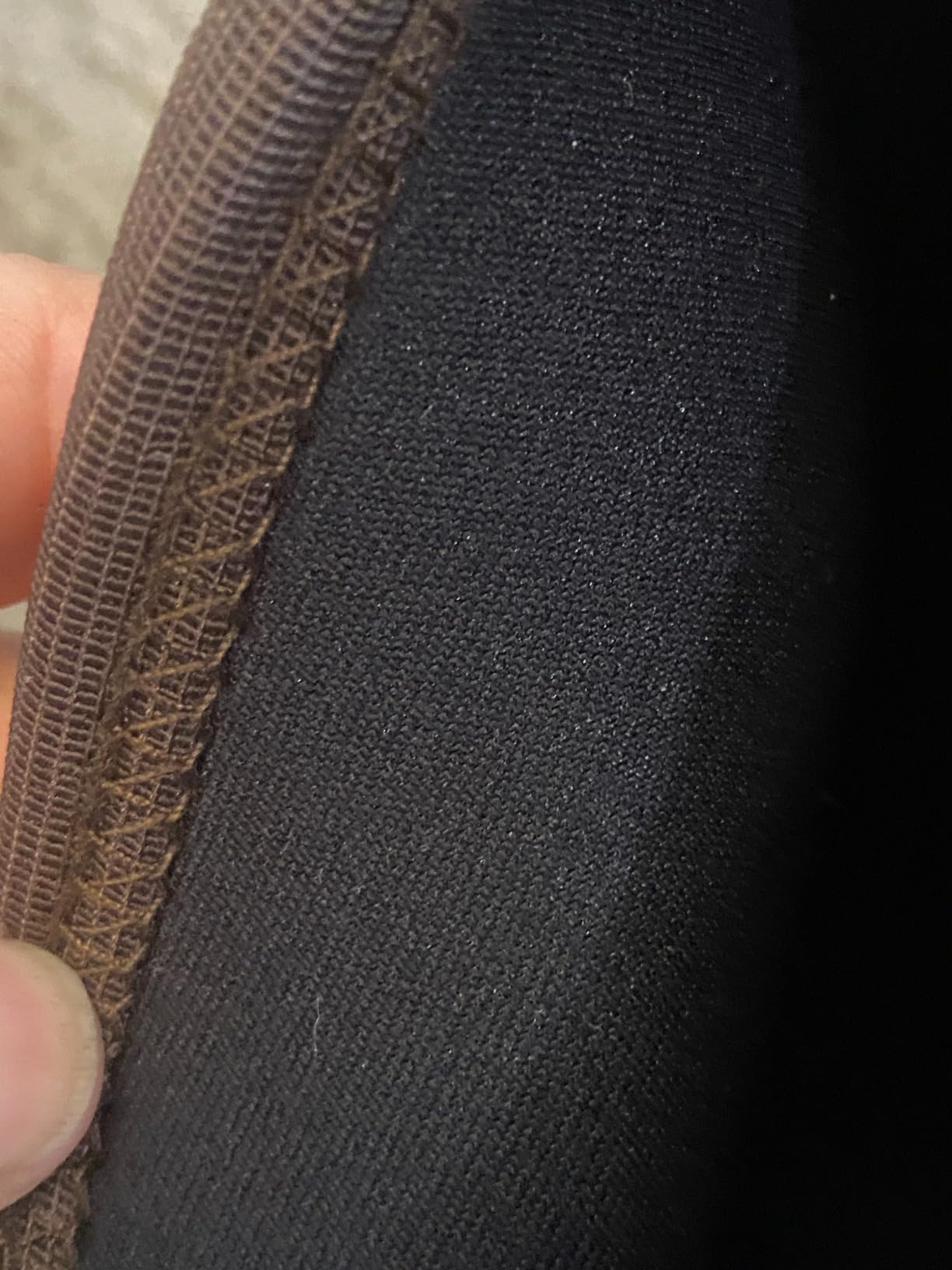
Steel in the sole is a thermal conductor. In cold standing water, a footbed with no metal holds noticeably more heat than one built around a shank, and the high-stretch neoprene topline seals in warmth over thick winter socks.
The limitation to understand
There is no steel toe. That rules this boot out of any job requiring impact protection and reduces underfoot rigidity on rocky ground. For frozen chores, slush, flooded fields and cold-mud livestock work it is an excellent choice.
4. TIDEWE Rubber Boots with Steel Shank: Comfortable for 10 to 12 Hour Days
TIDEWE Rubber Boots for Men, Rain Boots with Steel Shank, Black, 09
6mm neoprene upper
Natural rubber shell
Steel shank
15 inch shaft
Pros
- Comfortable across 10 to 12 hour days
- Narrow shaft blocks debris and calf rubbing
- Steel shank supports the arch
- Breathable mesh lining for warmer months
- Rear kick tab for easy removal
Cons
- Runs small
- most buyers size up
- Waterproofing can slip after about a year
- Breathability drops in warm weather
The name of this game is endurance. Over 5,100 reviews averaging 4.4 stars, the most common sentiment is that these boots stay comfortable across full working days in winter chores, landscaping and fishing. That is not something a product page can confirm, and it is why this boot sits near the top of the list.
The construction is 6mm neoprene over a natural rubber shell at a 15-inch shaft, with a built-in steel shank and a cushioned footbed. It is not the strongest temperature rating in the set, at -4F to 68F, so it leans cold-weather. A breathable mesh lining helps in warmer months, though the improvement is limited once the temperature climbs.
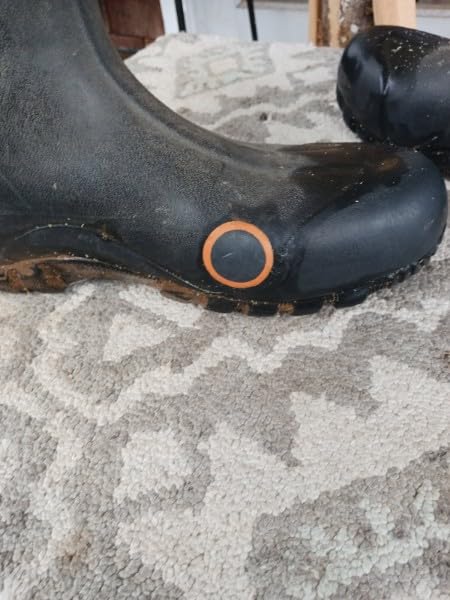
The narrow shaft does two useful things. It keeps mud and debris from dropping in at the top, and it avoids the calf rubbing that tall rubber boots cause with work trousers, a top long-shift complaint across this category.
Traction comes from a deep-tread outsole described as non-slip, and reviewers broadly confirm grip in mud, snow and ice. A small minority dispute the anti-slip claim on wet indoor floors, which is a fair warning for smooth food-processing floors.
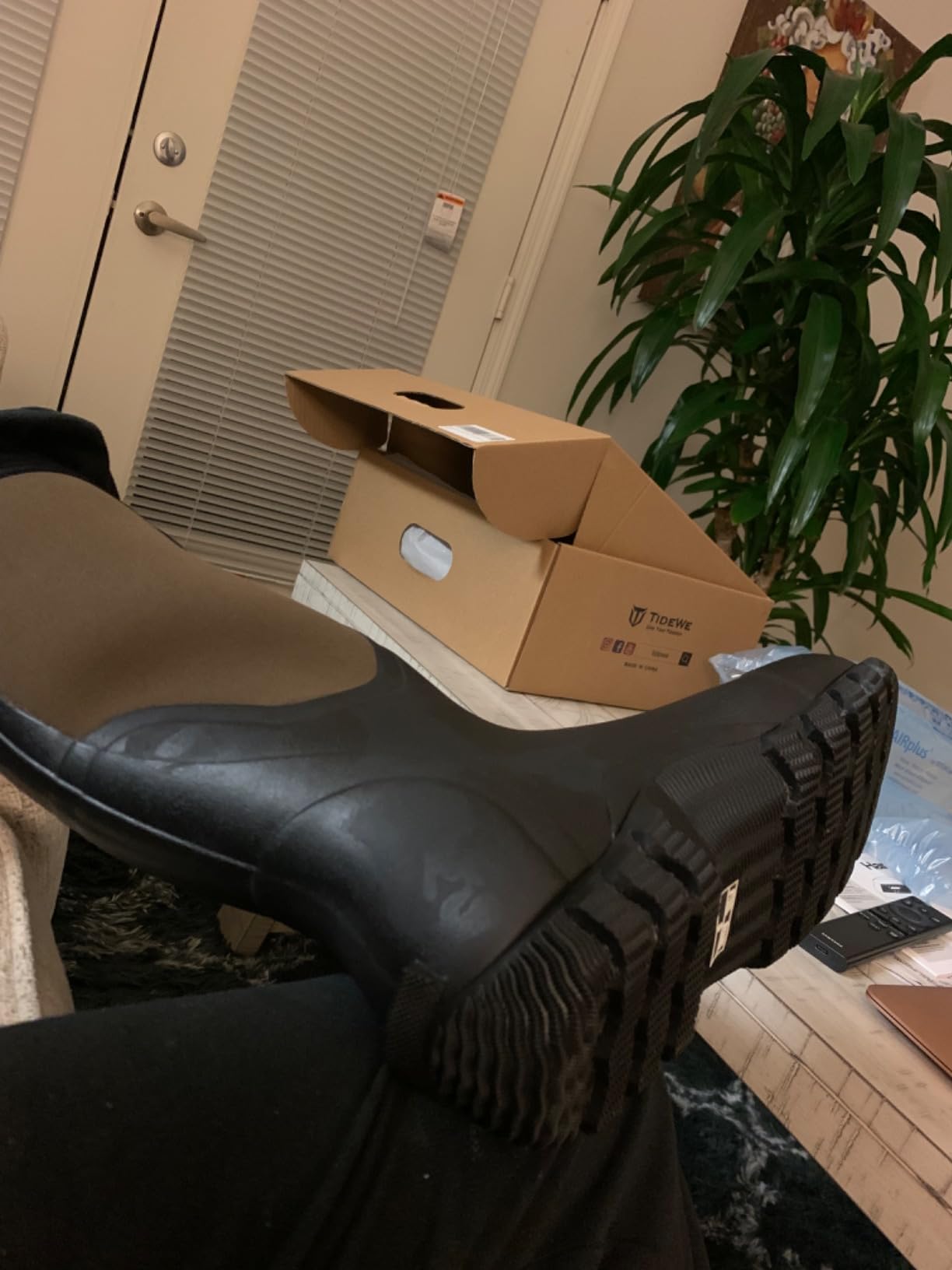
Best fit for all-day standing
If your day is eight to twelve hours on your feet in wet conditions, all-day comfort outranks insulation thickness. The cushioned footbed plus steel shank spreads load across the midfoot rather than letting the arch collapse.
What to check before ordering
This boot runs small, and sizing up is the dominant recommendation in reviews, with the brand advising a larger size for wide feet, high insteps, large calves or thick socks. Some owners also report reduced waterproofing after about a year of heavy use.
5. DUNLOP Chesapeake Steel Toe Rubber Work Boots: The Budget Pick
DUNLOP Chesapeake Steel Toe Rubber Work Boots, Black, Size 9
Reinforced steel toe
Waterproof PVC build
Slip-resistant tread
Wide calf opening
Pros
- Reinforced steel toe for impact and compression
- Lightweight PVC reduces fatigue
- Wide shaft goes on over thick socks
- Treaded sole grips wet and muddy ground
- Manufactured in the United States
Cons
- PVC is cooler and less cushioned than neoprene
- Not safety rated to CSA or ANSI
- Limited size range in this listing
Most of this roundup is neoprene, and that is the right default for warmth. But if your mud is mild and your budget is fixed, this PVC boot does something the others do not: it puts a steel toe in a genuinely inexpensive waterproof shell. Over 3,400 reviews at 4.4 stars, buyers repeatedly highlight that combination as the reason they bought it.
The PVC build is 100 percent waterproof and surprisingly light, with a treaded outsole described as slip resistant on wet, muddy and uneven terrain. For a boot with no insulation, that is the whole proposition.

The wide calf opening is genuinely useful. You can pull the boot on over thick work socks or insulated trousers without fighting the shaft, and remove it easily when your hands are wet or gloved. Steel toe reinforcement handles impact and compression, which is the reason to consider this over a plain rubber work boot.
It is also manufactured in the United States, which matters for anyone who needs replacement pairs quickly or has workwear procurement requirements.
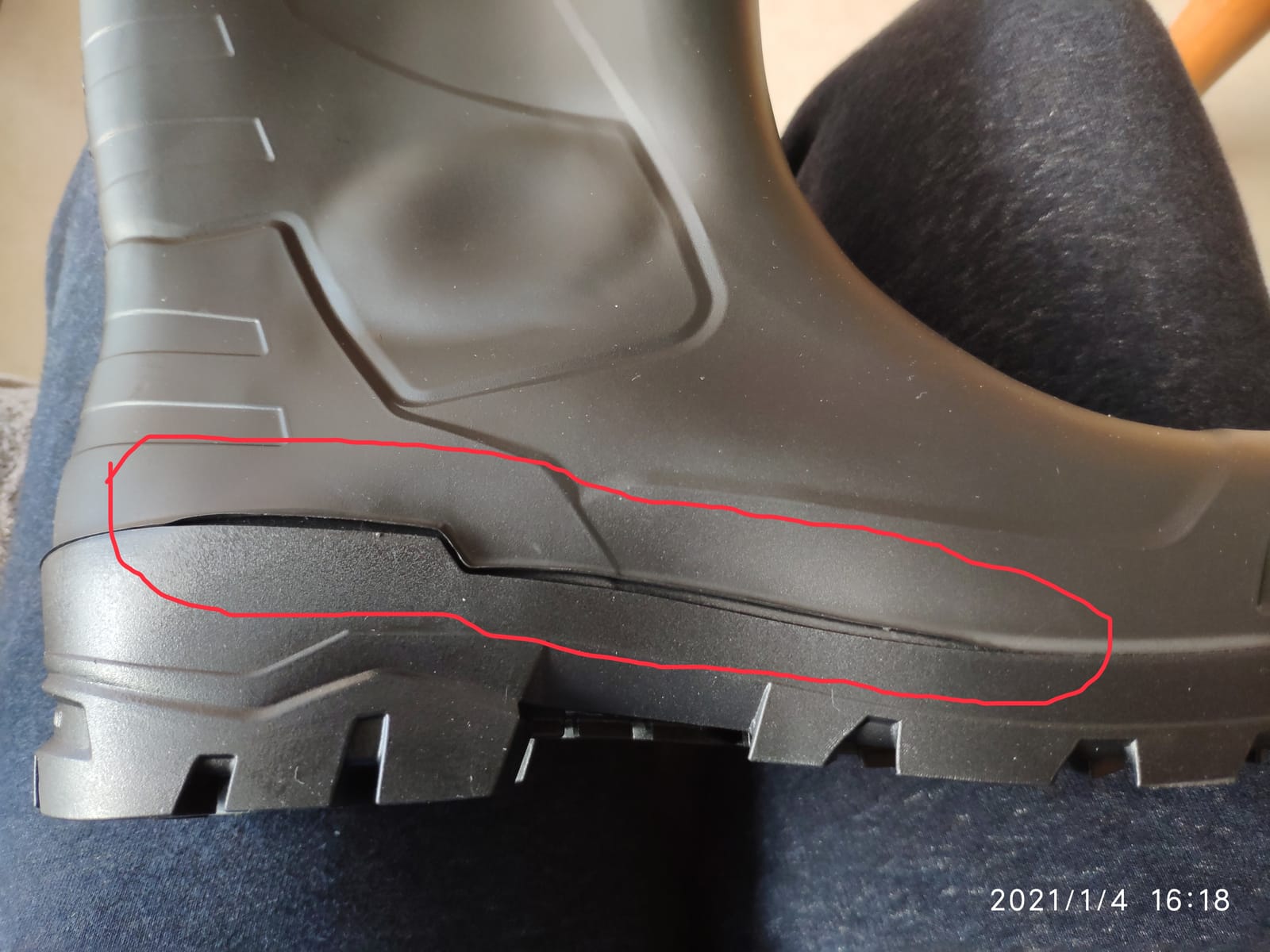
Where budget PVC still makes sense
Lightweight wet-duty work: landscaping, irrigation crews, car washing and washdown cleaning in warm weather. The low mass reduces end-of-day fatigue noticeably. The main criticism is comfort, so it is a fair trade only if you need neither warmth nor cushioning.
The safety certification gap
This is not a CSA or ANSI safety-rated boot. If your employer requires documented certification for a specific worksite, this will not satisfy that requirement, and the size range in this listing is narrower than most.
6. HISEA Adjustable Calf Rain Boots: Best Fit for Large Calves
HISEA Men’s Rain Boots with Steel Shank Rubber Work Boots Adjustable Calf
5mm neoprene upper
Cinch-buckle gussets
Removable memory foam insoles
Self-cleaning outsole
Pros
- Adjustable gussets solve the large-calf fit problem
- Removable memory foam insoles cut fatigue
- Integrated steel shank resists punctures
- Comfort rated 14F to 86F
- Molded self-cleaning outsole
Cons
- No half sizes offered
- Stiff to flex during the first wears
- Stretch topline can loosen over time
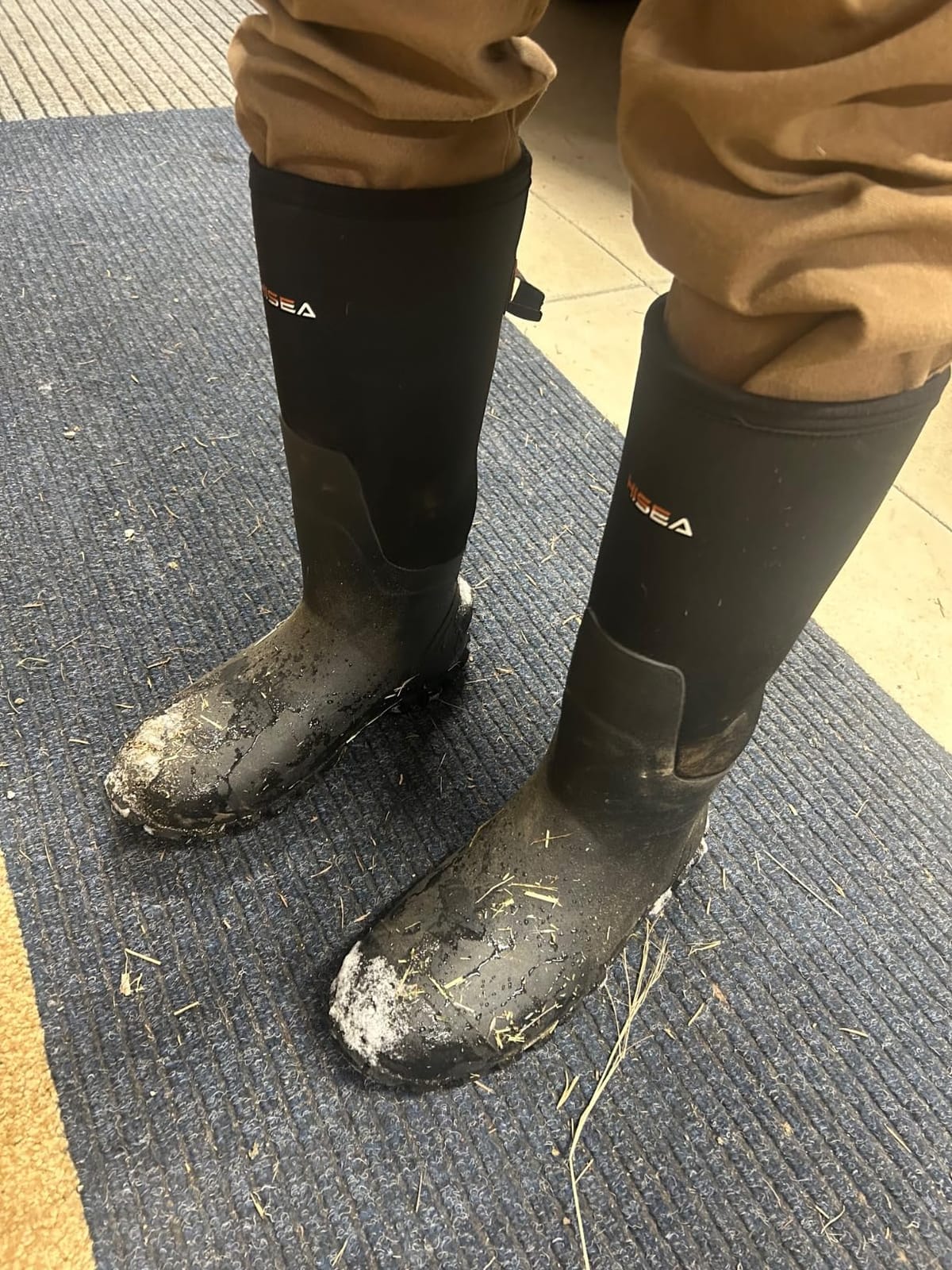
The defining feature here is the fit system. Back gussets with cinch buckles let you pull the shaft in around a large calf, and a stretch-fit topline seals in warmth while letting thick trousers through without chafing. In reviews this is the feature buyers mention most often, because calf fit is where many rubber boots frustrate their wearers.
The upper is 5mm neoprene, rated comfortable from 14F to 86F, with an H-Airmesh lining that wicks moisture and sweat. That lining matters more than it sounds, since rubber does not breathe and liner systems are the main defense against the condensation wearers routinely mistake for a leak.
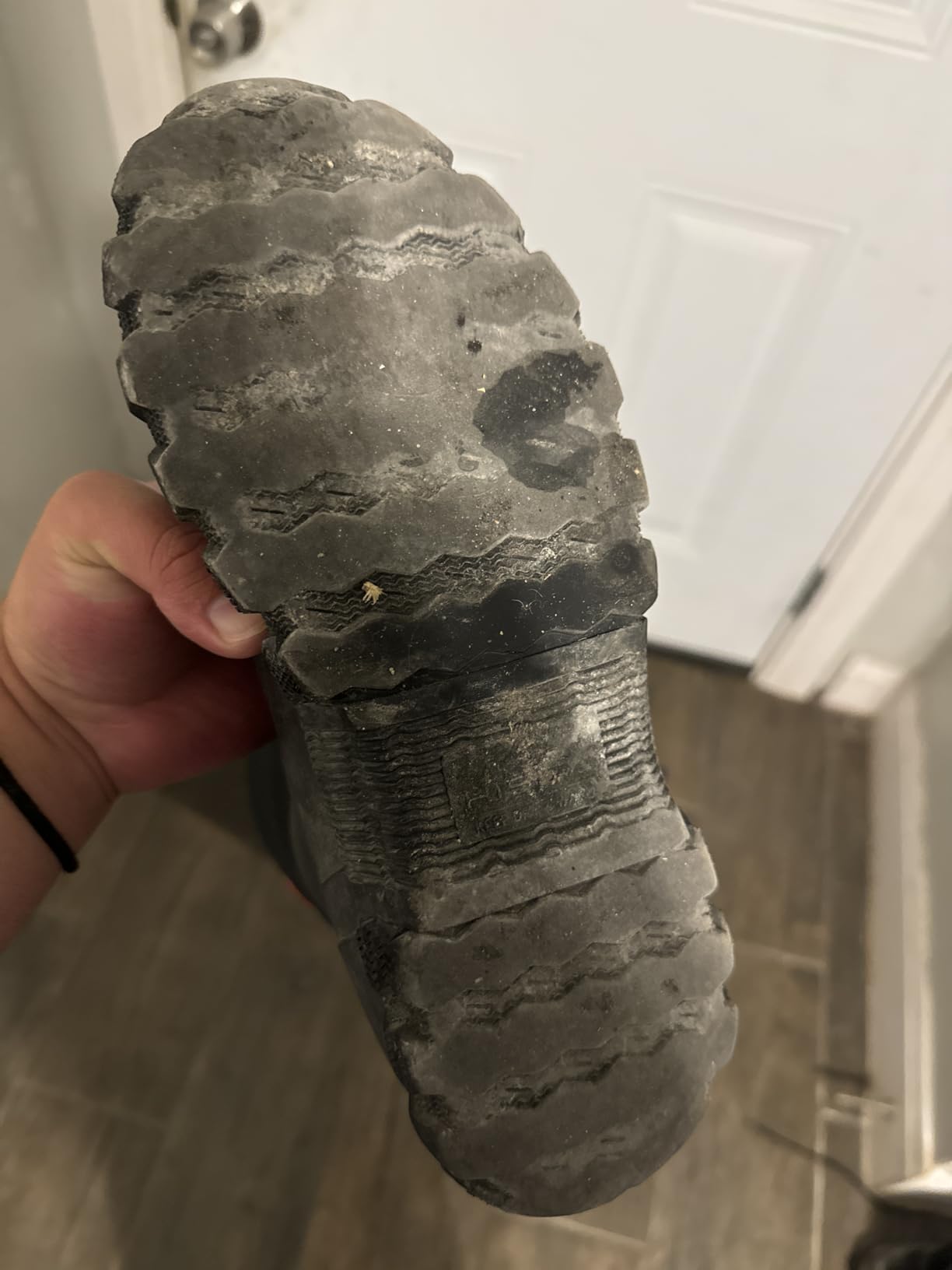
An integrated steel shank midsole gives arch support and puncture resistance, and the removable memory foam insoles can be dried and swapped rather than living with a soaked footbed forever. Over 699 reviews at 4.4 stars, the insoles and the calf adjustment draw the most praise.
The molded outsole is specified as slip resistant and self-cleaning, and the rubber shell is reinforced to extend above mid-calf, adding height coverage where mud tends to splash. A heel kick plate allows hands-free removal.
Who benefits most from the cinch buckles
Anyone with a calf a standard rubber boot cannot fit without a gap. A loose shaft is a leak path, because water finds the top, and the gussets close that path while letting thick trousers through without chafing.
Early wear issues to expect
The boot is stiff to flex on the first few wears, which improves as the neoprene relaxes, and the stretch topline can loosen over time, reducing the seal at the top. Half sizes are not offered, the most common sizing limitation in this category.
7. Trudave 5mm Neoprene Steel Shank Boots: Widest Size Run
Trudave Rubber Boots for Men with Steel Shank, Waterproof Insulated Reliable Rain Boots for Outdoor Work Hunting, Warm Dry 5mm Neoprene Anti-slip All-Season Mud Boots, Size 5-14
5mm neoprene insulation
Rectangular steel shank
Deep-tread outsole
Sizes 5 through 14
Pros
- Size 5 to 14 is the widest run here
- Waterproof confirmed over long ranch and site shifts
- Steel shank gives stable arch support
- Breathable vent holes reduce sweat
Cons
- No half sizes
- Runs wide and large
- Boots can deform in a hot vehicle
The size range is the practical headline: 5 through 14, in five colorways. When a category is built almost entirely in whole sizes with narrow ranges, a boot that actually covers small and large feet solves a real problem, and 81 percent five-star ratings across 695 reviews backs it up.
Inside, it is 5mm neoprene over a waterproof rubber build, with a rectangular steel shank for arch support and puncture resistance. The deep-tread outsole gives the grip reviewers confirm on mud and snow, and breathable holes help feet manage sweat, a genuine design answer to the condensation problem in sealed rubber.
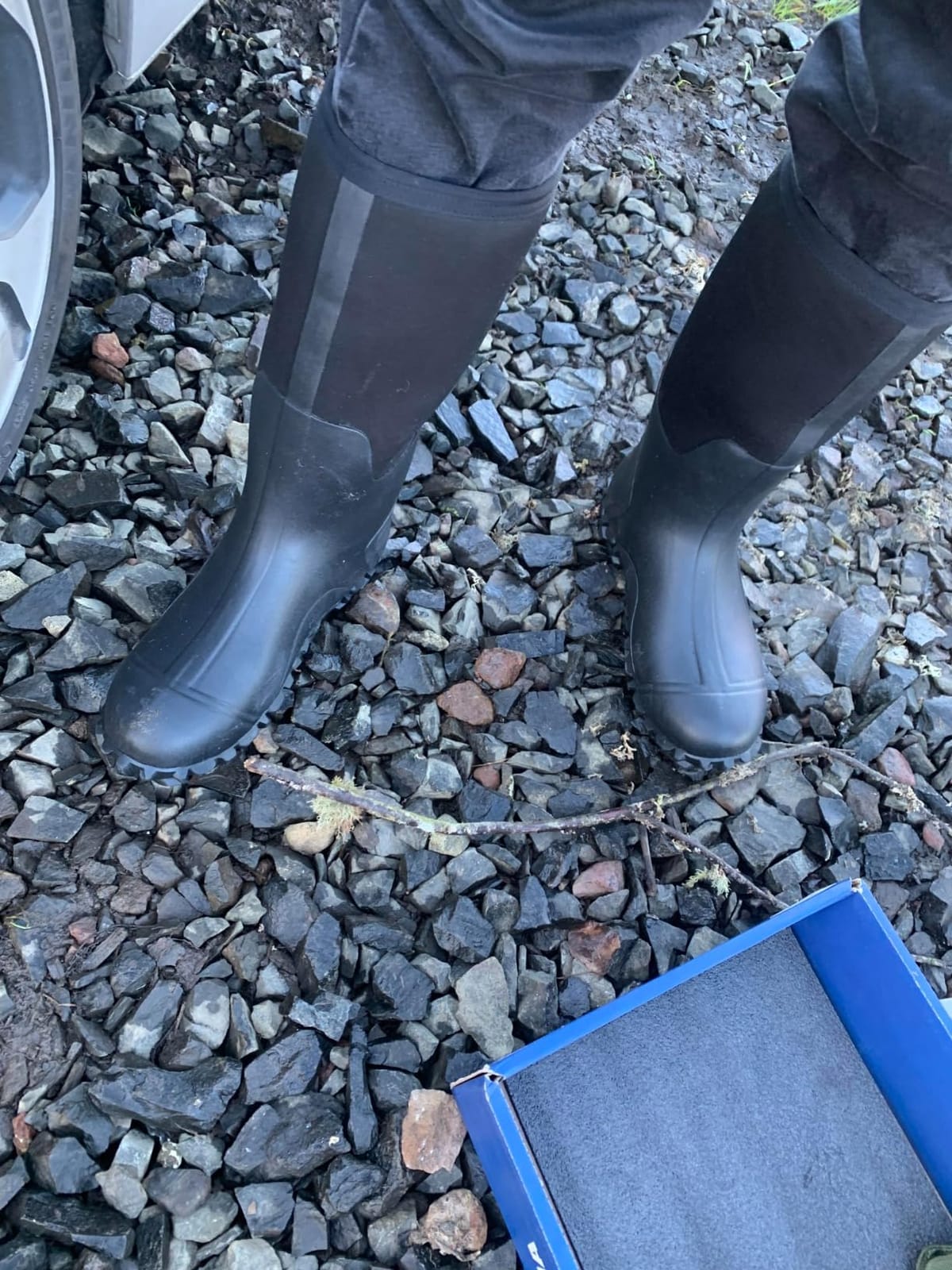
The rubber compound is described as softer and more ergonomic, bending with foot movement rather than resisting it. That matters on a long shift, because a rigid shell transfers every step straight into the ankle and lower back. A heel tab handles removal.
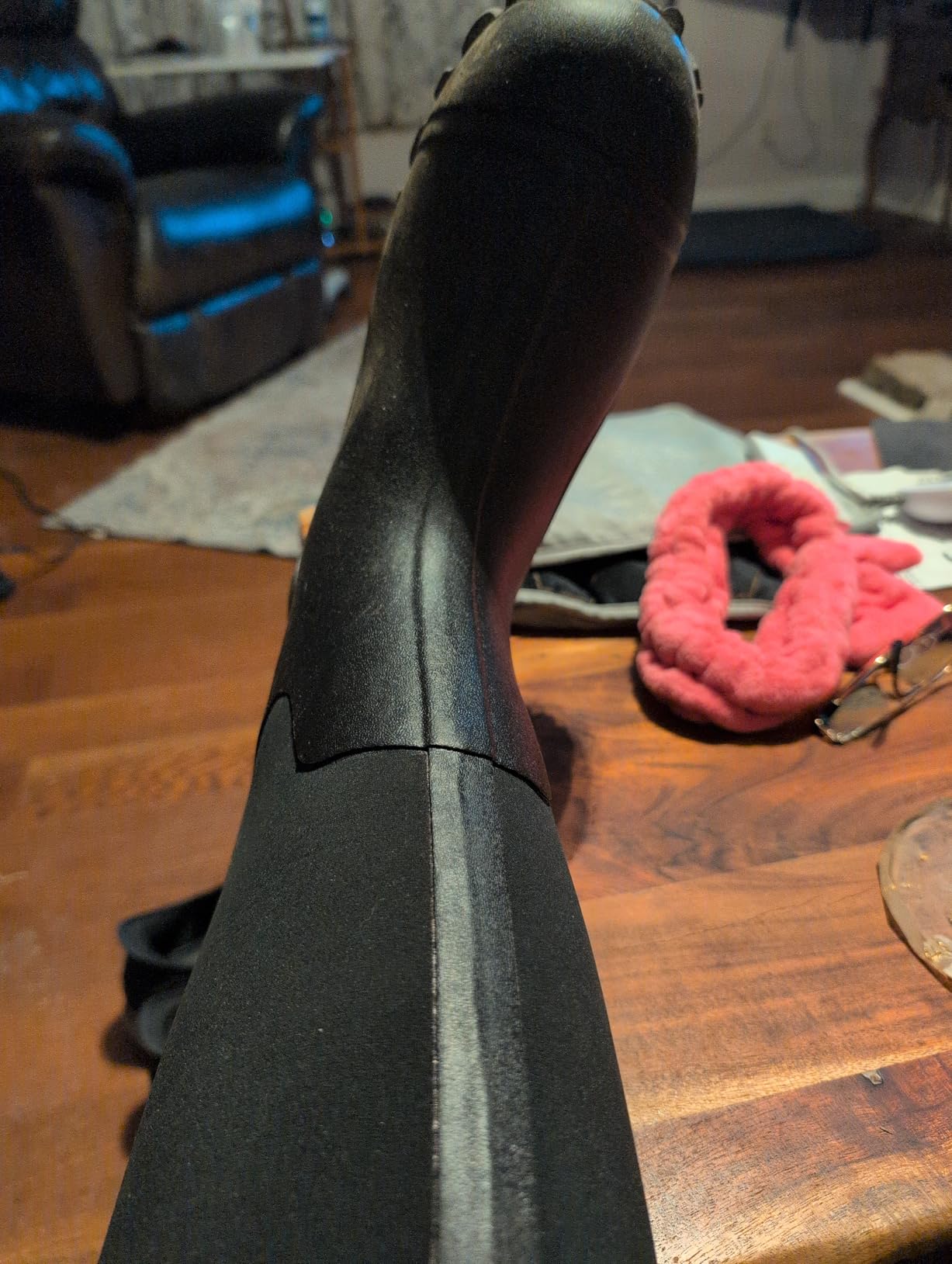
Best for hard-to-fit feet
If you have been filtering out whole-size ranges for years, or you need a very small or very large boot in a category that rarely offers one, this is the model to look at. The soft, flexing rubber also suits anyone who finds stiff PVC shells uncomfortable.
Mind the fit and the heat
Reviewers note the boot runs wide and large, so sizing down is often the right call, and there are no half sizes to fine-tune with. The rubber can also deform if stored in direct sun or a hot vehicle, a realistic risk for anyone leaving work boots in a truck.
8. Hunthor Steel Toe Puncture-Proof Boots: Serious Underfoot Protection
Hunthor Rubber Work Boots, Puncture-Proof with Steel Toe & Shank, Waterproof Insulated 6mm Neoprene Hunting Boots for Farming, Construction, Gardening, Fishing, Outdoor Work
Steel toe to 23kg impact
1100N puncture layer
Steel shank midsole
Sealed-seam rubber shell
Pros
- Stated steel toe impact rating of 23kg
- 1100N puncture-resistant layer
- Steel shank adds underfoot rigidity
- Sealed seams verified waterproof over years
- Roomy shaft fits thick work pants
Cons
- Runs a size or two large
- Steel toe makes the boot heavy
- Not CSA rated
- Width can clash with rain pants
This boot publishes its safety numbers, which is rarer than it should be. The steel toe is stated to withstand impacts of at least 23kg, there is a 1100N puncture-resistant layer above a steel shank, and the full rubber shell uses sealed seams. Long-term owners in fishing and concrete work report the boots staying waterproof for years.
The sealed-seam shell is the quiet hero. Seam failure at a rubber join is the most common durability complaint in this category, and long-term owners here do not raise it. A breathable neoprene lining reduces stuffiness relative to a pure PVC boot.
The outsole uses an irregular tread pattern, described as slip resistant and easy to clean of stains. Irregular lugs have more open space between blocks than a fine siped pattern, so packed mud falls out under the next few steps rather than staying bonded to the sole.
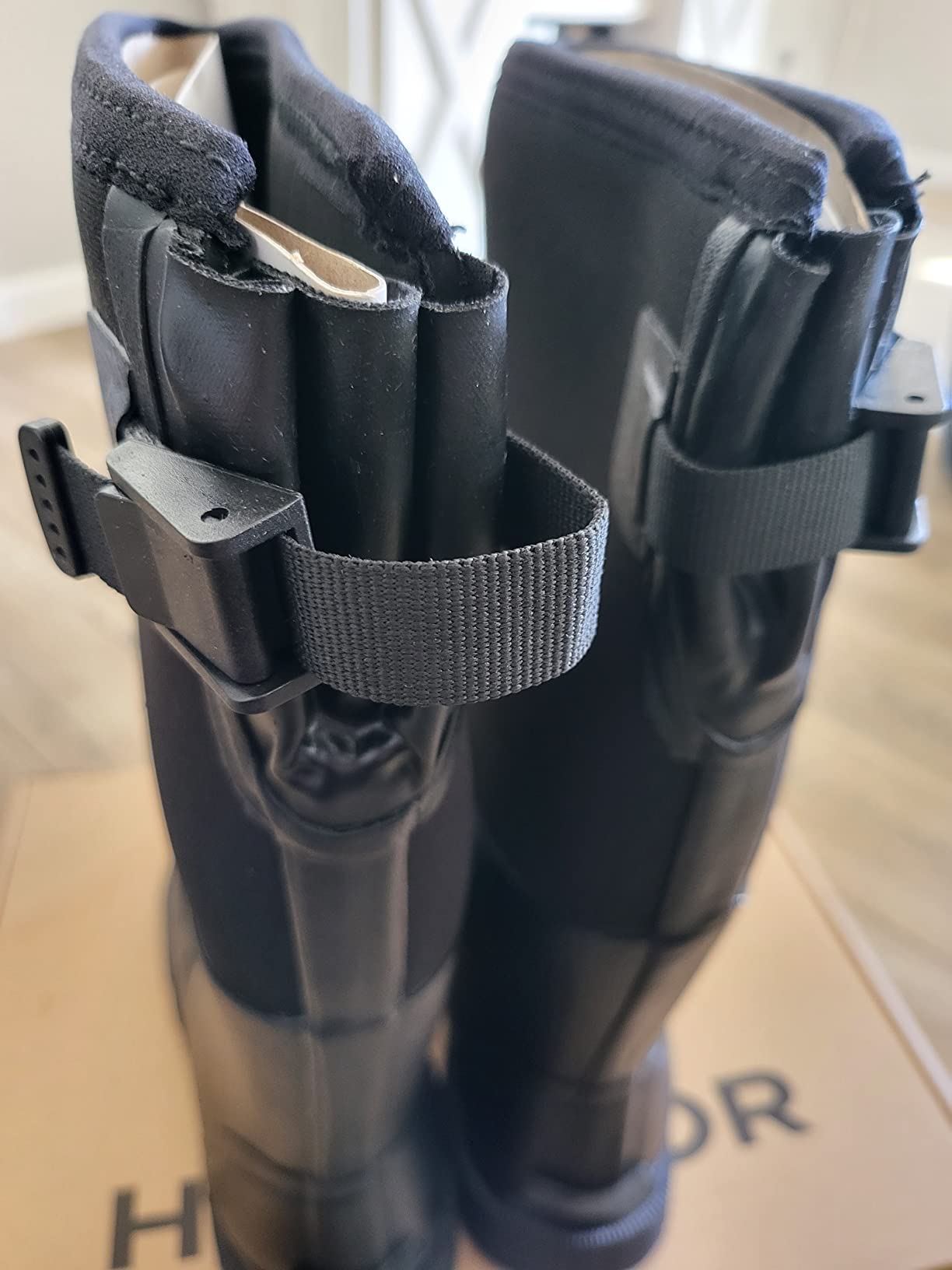
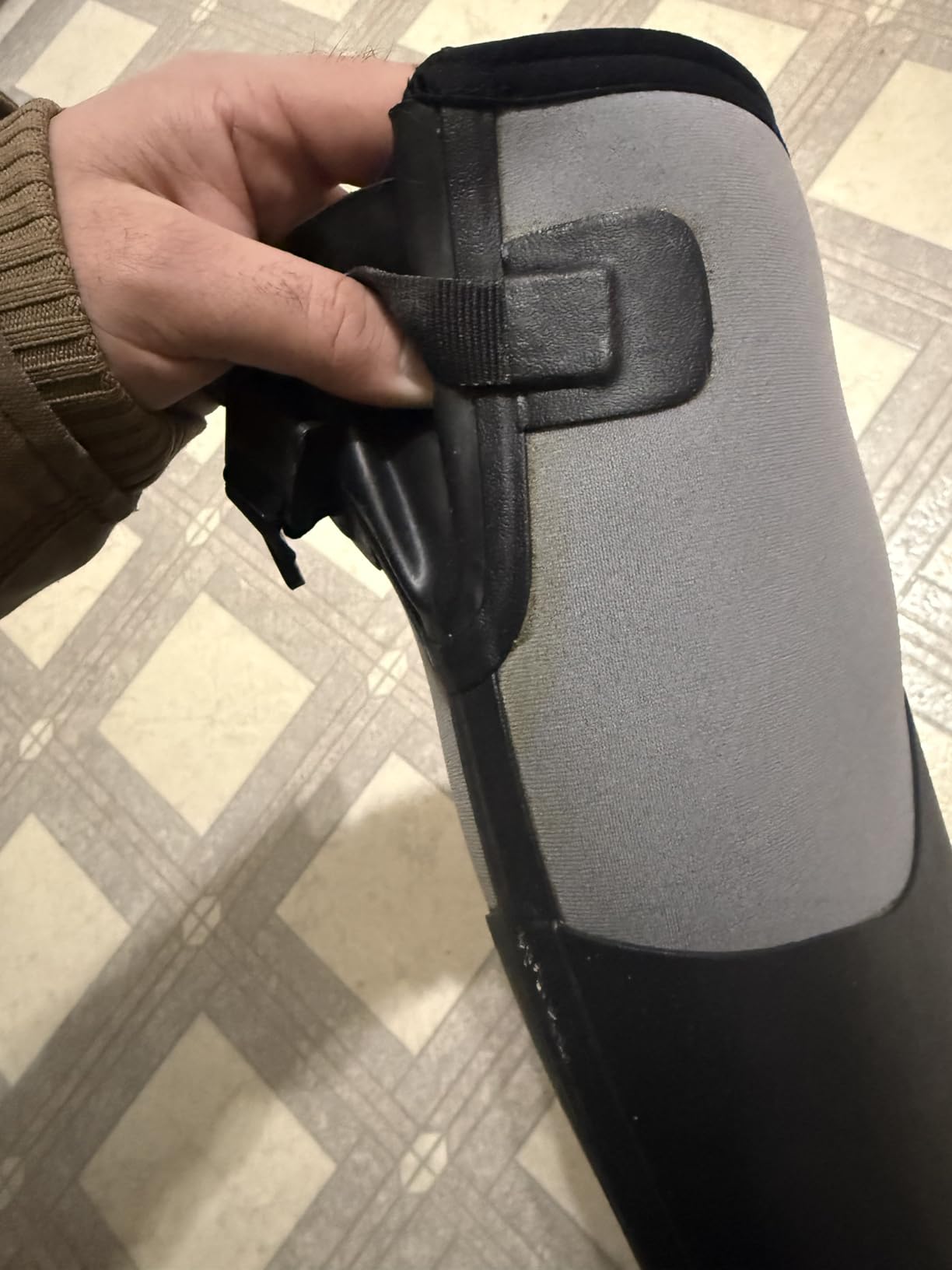
A rear adjustable strap tightens the boot top, closing the leak path at the shaft and stopping brush catching the opening. The shaft is deliberately roomy, sized to fit over thick work trousers.
Where the protection pays off
Anywhere you work around sharp debris and heavy objects: demolition cleanup, scrap and salvage yards, metal recycling, and farm work around old fencing and broken pallets. Owners report the safety features outperform more expensive branded boots for the same job.
The compromises to plan around
It runs a size or two larger than the stated size, so expect to size down. The steel toe makes the boot heavy, it is not CSA rated, and the roomy width can interfere with pulling rain trousers over the boot.
9. Showave 5mm Neoprene Shock Absorption Boots: Best on Concrete
Showave Men’s Rubber Boots Waterproof Rain Boots Mud Boot Comfy Sports Sole
5mm neoprene build
Five-way shock absorption sole
Steel shank
Reflective heel patch
Pros
- Five-way independent shock absorption in the sole
- Supportive footbed relieves muscle fatigue
- Bright reflective heel patch for night visibility
- Breathable lining for warmer weather
- Large pull loops are easy to grab
Cons
- Size chart must be checked carefully
- No half sizes
- Breathable lining is limited in extreme heat
Hard ground is the quiet injury. Standing eight hours on concrete wears out backs and knees without ever producing a story anyone repeats. This boot attacks that problem with a five-way independent shock absorption sole and a supportive footbed described as relieving muscle fatigue.
The upper is 5mm neoprene in a 100 percent waterproof construction, rated for comfort, flexibility, shock absorption and heat retention. A steel shank handles the arch, and the high-traction outsole is specified for wet, windy, snow and muddy conditions. Over 615 reviews at 4.6 stars, the shock absorption sole is the detail reviewers mention most.
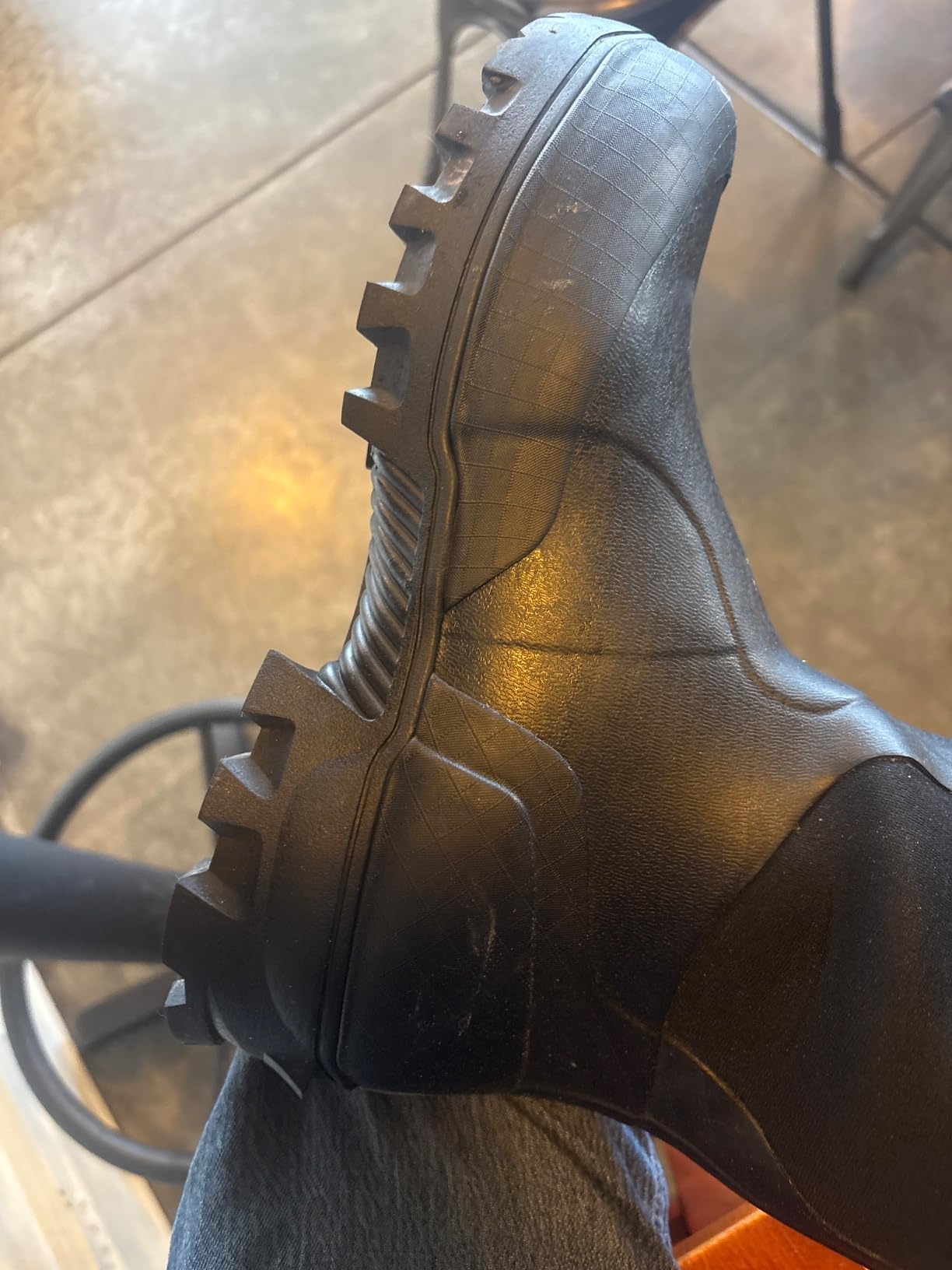
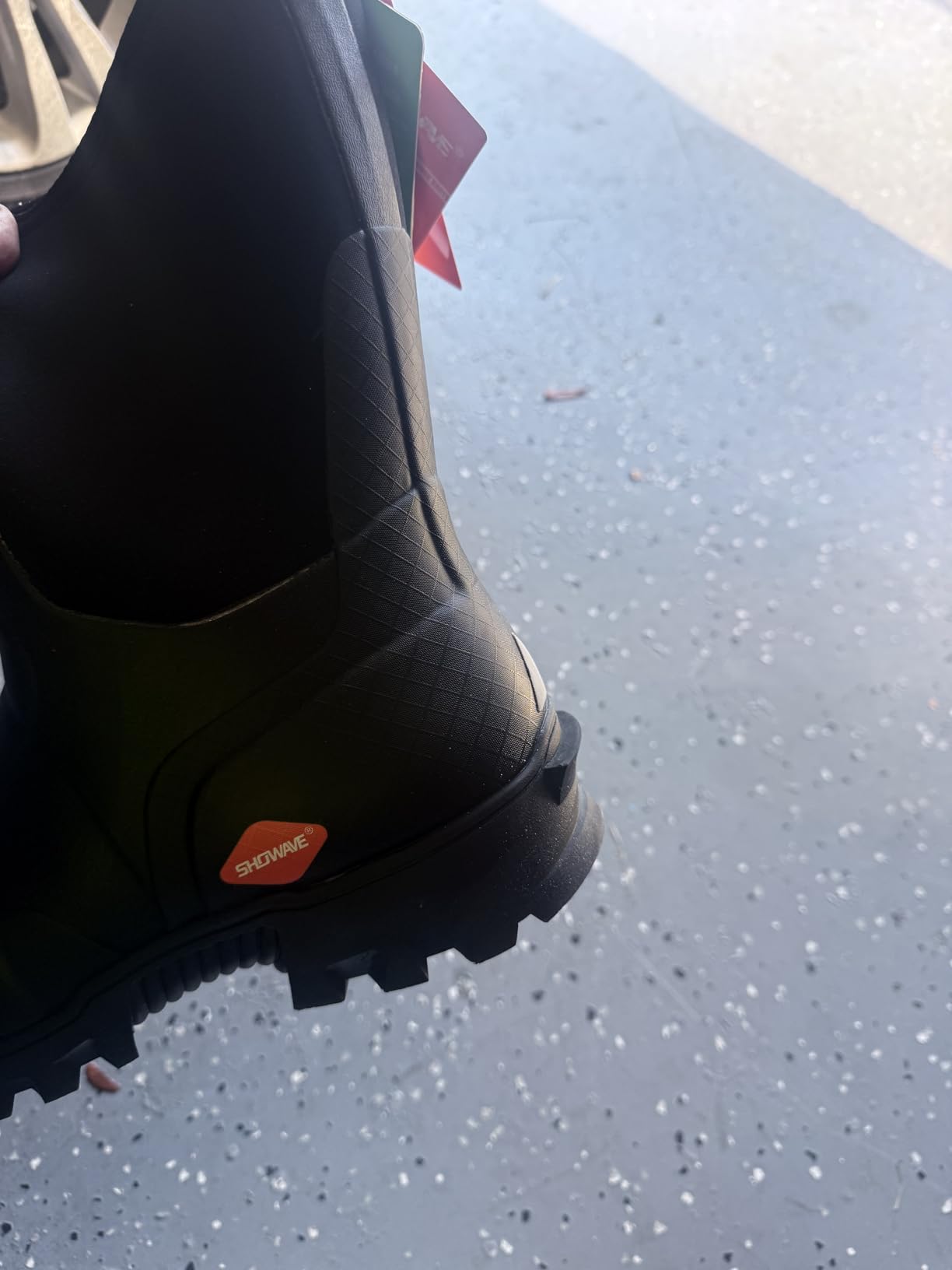
Two visibility details set it apart. A reflective patch across the back heel and webbing pull-straps for night visibility matter for anyone starting or finishing a shift before sunrise, which on a farm is common. Large pull loops and flexible neoprene collars are easy to grab with gloves on.
A breathable lining keeps the interior drier than a fully sealed boot, though reviewers note that in very hot conditions the benefit is limited, which is the honest limit of any vented design in a waterproof shell.
Best for concrete and standing shifts
Dairy parlors, washdown food-processing floors, warehouses with wet floors, and any job where you are on your feet rather than moving. The supportive footbed, steel shank and independently cushioned sole together make this a strong option for long shifts on hard ground.
Fit notes for this model
Sizing is the recurring theme, and the advice is consistent: check the size chart rather than ordering your usual size. There are no half sizes, so once you are between sizes you must commit to the whole-size neighbour. Sizes run 7 to 14.
10. TerraTrax 15-Inch Wide-Fit Farm Boots: Best for Wide Feet
TerraTrax Men’s Waterproof Rubber Mud Boots for Farm, Work & Concrete Black Size 10
15 inch wide-fit shaft
6mm neoprene
12mm tread depth
2.6 lbs per boot
Pros
- Deepest lug pattern here at 12mm
- 15 inch shaft covers deep mud
- EVA cushioned dual layer midsole
- About 30 percent lighter than steel toe rubber boots
Cons
- Runs a size larger than normal
- Straps are too long and catch on brush
- Long-term durability still unproven
- May be too tall for some wearers
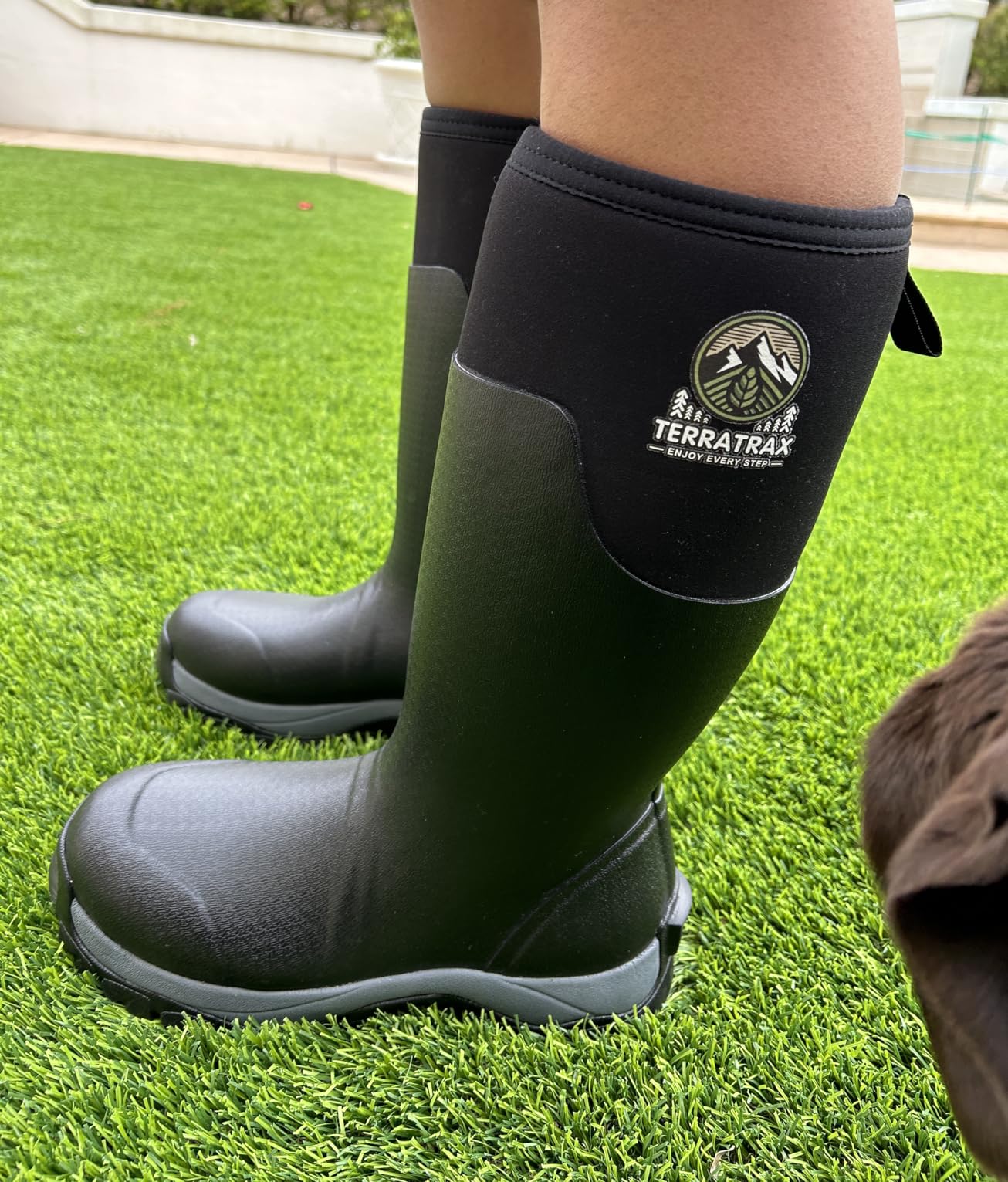
Wide feet are a recurring reason people give up on rubber work boots, and this is the most direct answer on the list. The shaft is built around a wide-fit soft toe, and owners with broad feet and large calves report a fit that finally works. One reviewer describes a pair holding up through 8 or more months of daily farm use.
The neoprene is 6mm and stated as 20 percent thicker than the standard 5mm used in many boots here, which is a real warmth difference on cold mornings. An EVA-cushioned dual layer midsole handles impact, and the boot weighs about 2.6 lbs per boot, roughly 30 percent lighter than a steel-toe rubber boot.
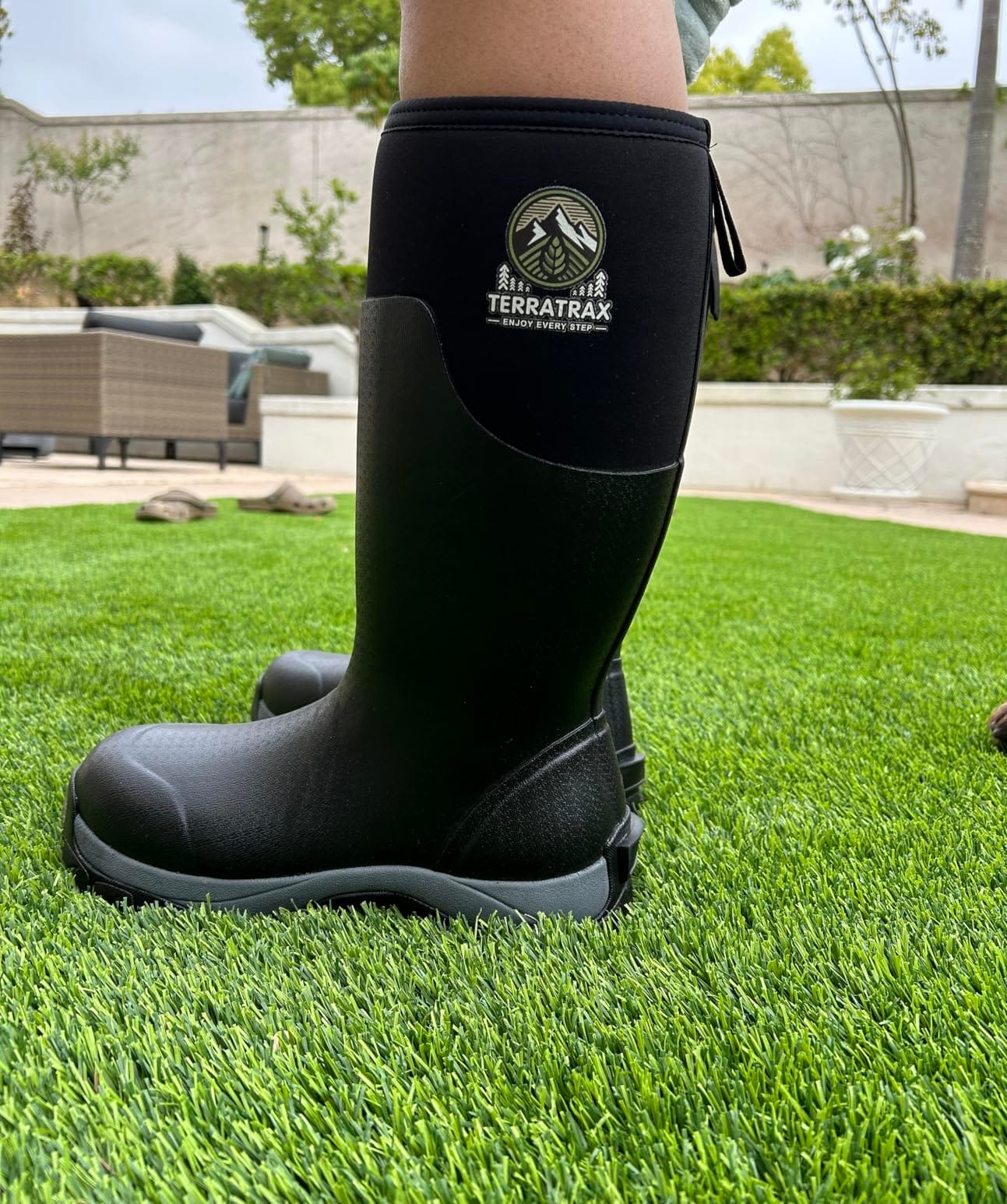
Traction is the standout claim: a self-cleaning deep-lug outsole with 12mm tread depth, the deepest figure listed for any boot here. Depth plus open lug spacing is what makes mud release rather than pack, and the shell is also specified as resistant to oil and chemical splash.
The full rubber coating helps in brush, where a fabric upper would snag and tear, and a kick-off heel lug lets you step out without hands.
Why wide fit matters more than height
A boot that fits your instep but pinches at the shaft will cost you a day of discomfort, and force you to size up, which then creates a heel gap and a leak at the back. Solving width at the foot and calf together is the point of this design.
Two caveats worth weighing
The boot runs a size larger than normal, so size down if you are between sizes. The pull straps are reported as too long and prone to catching on underbrush, and the durability evidence is thin at roughly eight months of daily use, so keep a second pair in rotation.
11. Showave Classic Seamless Rubber Boots: A Light Build for Summer Mud
Showave Men’s Rain Boots Mid Calf Waterproof Insulated Rubber Boots, 11
Seamless flex-foam build
4-way stretch neoprene
Roll-down bootleg
2mm breathable lining
Pros
- Up to 30 percent lighter than traditional rubber boots
- Seamless construction has no seam to fail
- Removable insole with moderate arch support
- Roll-down bootleg regulates heat
- Rated 14F to 86F
Cons
- Newer model with limited long-term data
- Shallower review history than the leaders
- Less neoprene padding than the insulated leaders
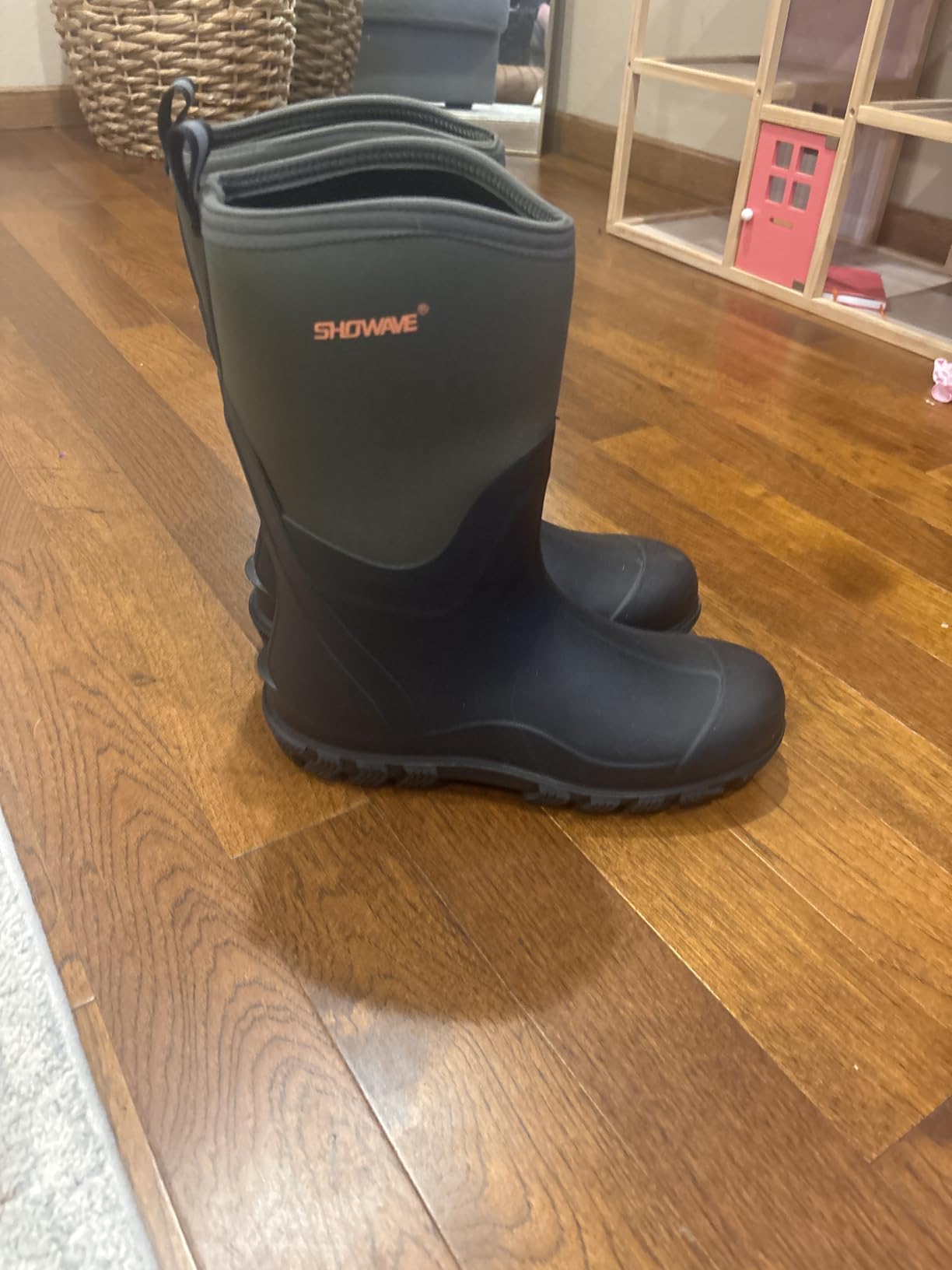
Weight is the spec that gets noticed after hour four. This boot is stated as up to 30 percent lighter than traditional rubber boots, and the shipped weight is about 2 lbs for the pair. For anyone who finds rubber tiring by the afternoon, that often decides the purchase.
The construction is seamless with a flex-foam neoprene liner and a 4-way stretch upper that conforms to the foot and resists blisters. Comfort is rated from 14F to 86F, a broad range for a boot this light, and a 2mm breathable lining circulates air inside the shell.
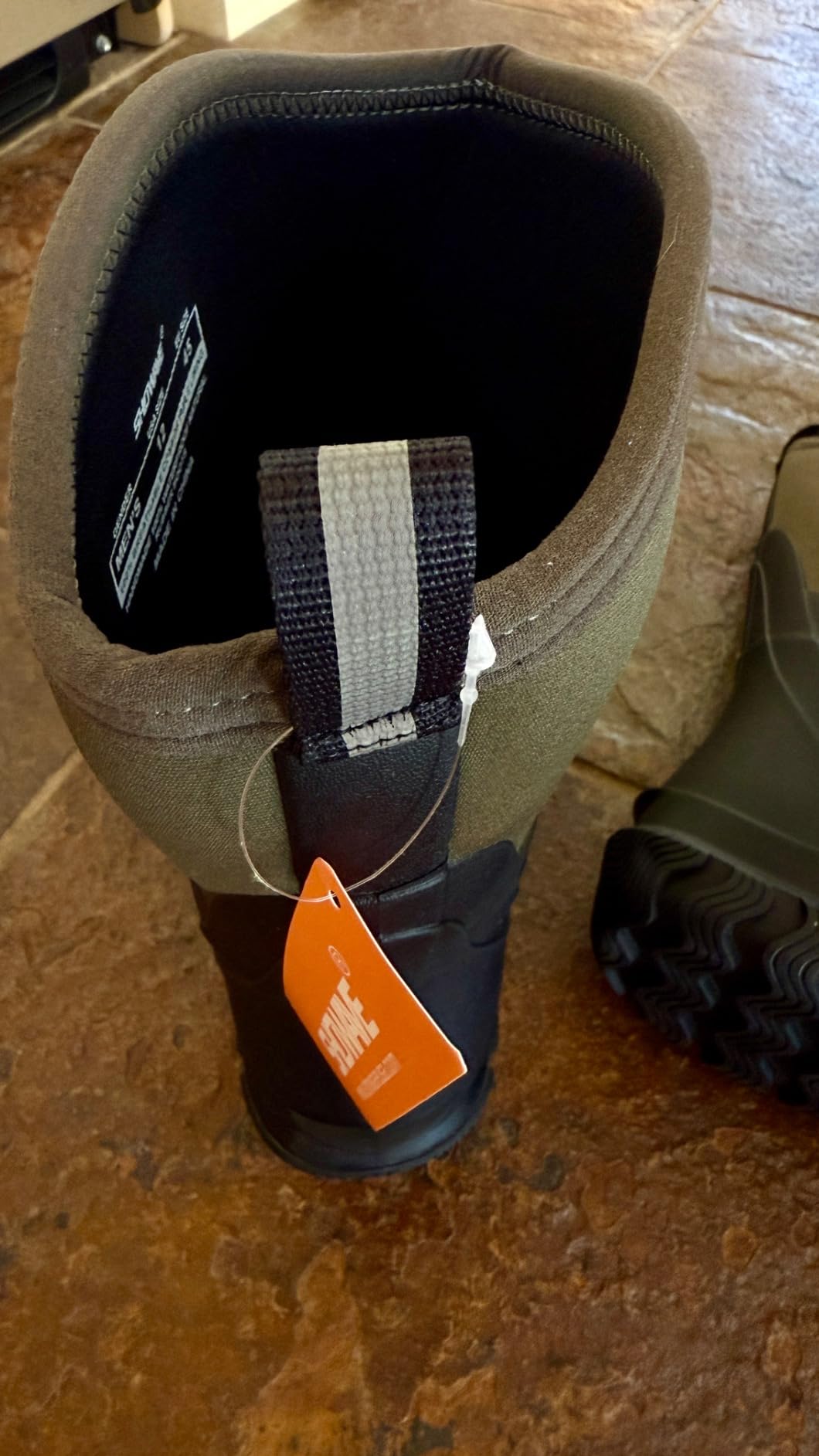
The roll-down bootleg is the detail that sets it apart. In hot weather you can roll the shaft down to vent heat without removing the boot, which addresses the summer complaint that affects nearly every insulated rubber boot. The self-cleaning outsole uses an aggressive tread, and the removable EVA memory foam insole gives moderate arch support.
Over 301 reviews at 4.6 stars, early reactions are strongly positive on lightness, waterproofing and weight for the money. The caveat is plain: this is a newer model with a shorter history than the leaders here, so the long-term durability record does not exist yet.
Best for warm weather and light duty
Yard work, garden and property maintenance, hunting season in mild weather, and light farm chores. The breathable lining and roll-down shaft handle summer heat better than a sealed insulated boot.
Where the uncertainty sits
Fewer reviews means less certainty about how the flex-foam and seams hold up over years, and budget-tier rubber generally does not match premium longevity. If you need one pair to last a decade of daily work, choose a model with a long review history, and treat a lighter boot as the comfortable option rather than the investment. Our guide to the best rubber hunting boots for men covers models built for heavier seasonal use.
12. Carhartt Mudrunner 10-Inch EH Rated Boots: The Low-Shaft Safety Pick
Carhartt Men’s Mudrunner 10″ Waterproof Soft Toe Rubber Boot, 5mm Neoprene, FastDry Lining, EH Rated, Black – 10.5
10 inch shaft
5mm neoprene
EH rated to 18000 volts
ASTM F2892-18 standard
Pros
- The only electrical hazard rated boot here
- 10 inch shaft avoids calf rubbing
- FastDry lining wicks sweat and controls odor
- Lock grip outsole stable on ladders
- True to size in most reviews
Cons
- Heavier than other rubber boots
- Needs thick socks to prevent rubbing
- Some owners report early toe and heel separation
- Soft toe with no metal protection
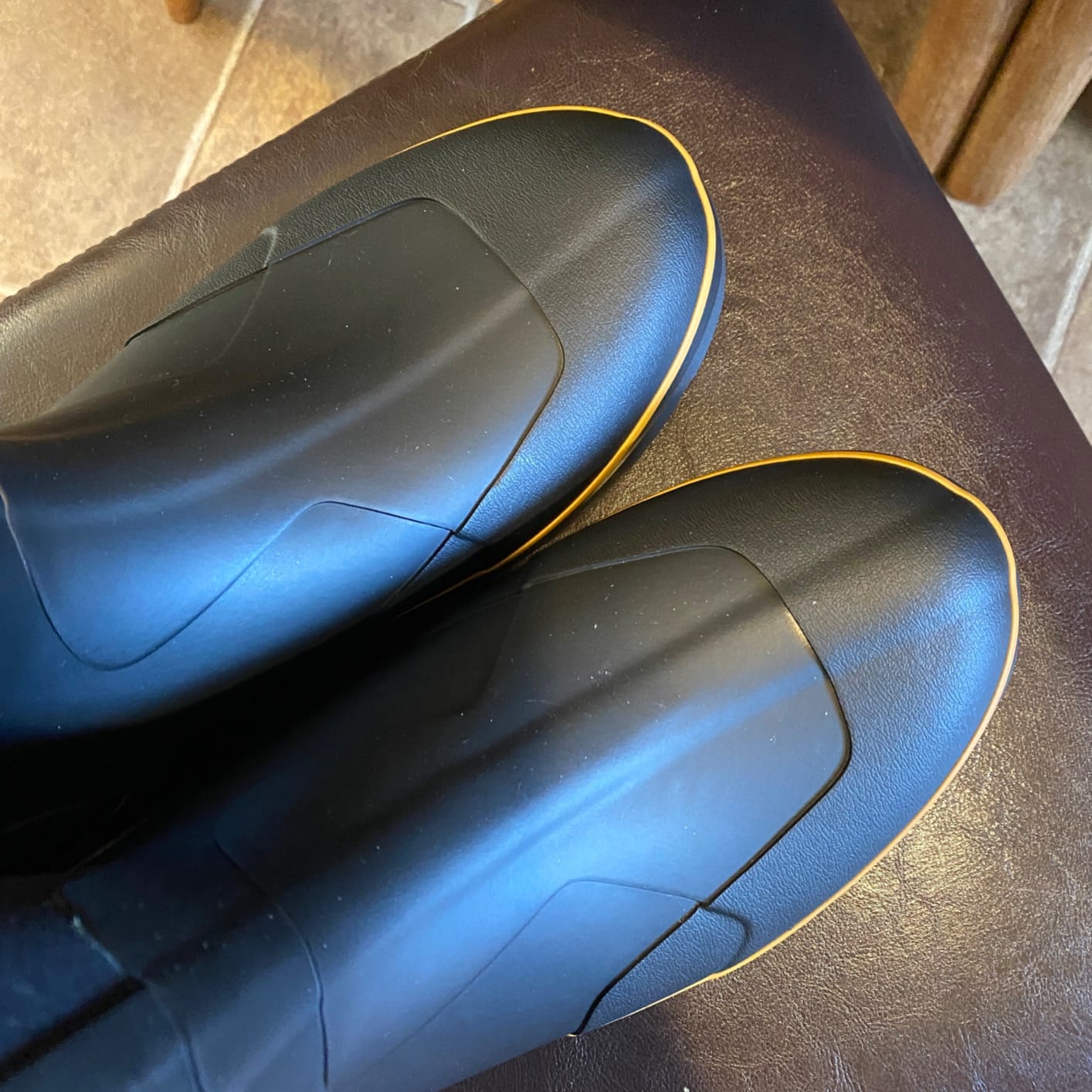
This is the odd one out in the best way. It carries the highest average rating in the set at 4.7 stars, and it is the only boot listed here with an electrical hazard rating, stated as protection up to 18,000 volts in dry conditions, meeting ASTM F2892-18. Near live equipment, that spec alone can decide the purchase.
The shaft is only 10 inches. That is low for a mud boot, and it is the deliberate design choice: the shorter height suits wearers who find tall shafts rub their calves, and the reviews confirm that preference. Waterproof rubber over 5mm neoprene with a FastDry lining handles moisture from the inside as well as the shell.
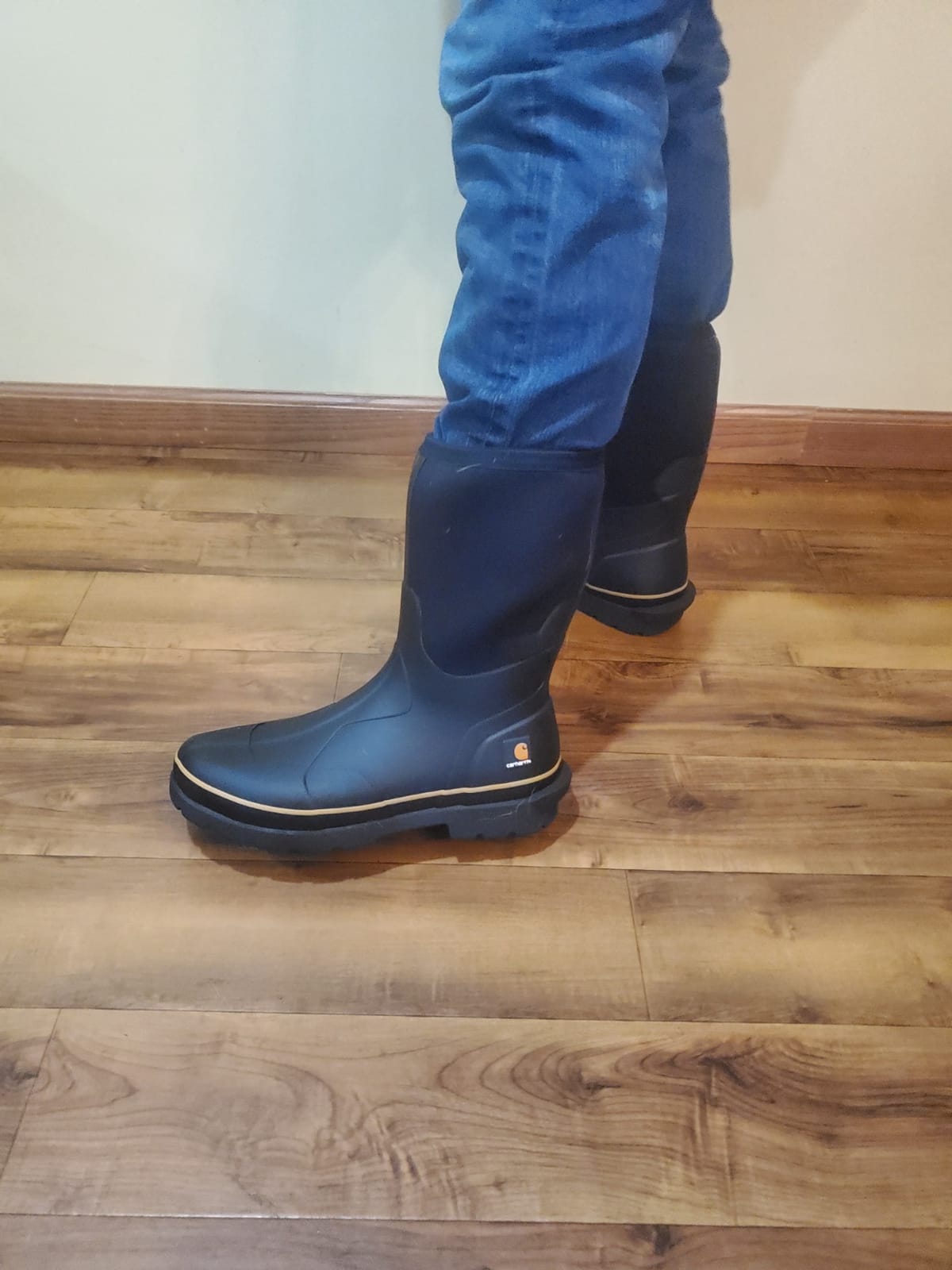
The anti-skid lock grip outsole is specified for stability on ladders and slick surfaces, a more useful claim than generic slip resistance when your work involves climbing. This is a soft toe boot with no metal, and reviewers generally find it true to size.
FastDry lining is the sleeper feature. It wicks sweat and fights odor, and since a sealed rubber boot cannot vent, managing interior moisture is the difference between a comfortable shift and a ruined one.
Who should choose a low shaft
Anyone whose calves rub against tall rubber shafts, which is common with work trousers. It also suits tasks involving climbing or frequent vehicle entry, where a tall boot is awkward. For shallower mud and general site work, 10 inches is enough to keep water out; step up to 15 inches if you sink into deep mud.
Limitations to weigh
Durability feedback is genuinely mixed. Some owners report years of use, while others describe the toe and heel separating after as little as three months, pointing to the cemented upper-to-shell joint rather than the outsole. It is also heavier than other rubber boots, and you will likely want thick socks to prevent calf rubbing. For the low-cut side of the market, our work boot picks for roofers cover the alternative.
Rubber, PVC or Neoprene: Which Material Handles Which Mud
Neoprene over a rubber shell is the standard for this category, and the reason is warmth with flexibility. Neoprene traps air, so it insulates, and it flexes with your foot rather than resisting it. Most of the boots here use 5mm or 6mm, with comfort ratings running from about 14F to 86F. The cost is weight and a cemented seam that can separate after heavy long-term use.
Injection-molded PVC is lighter, cheaper and genuinely chemical resistant, which makes it the right call for fertilizer mixing, washdown shifts and food-processing floors. It also has no insulation, so it is a warm-weather material, and it is stiffer, which shows up as foot fatigue by hour six. Its one structural advantage is that it is molded in one piece, so there is no seam to fail.
Vulcanized natural rubber remains the most waterproof of the three and ages well if you keep it out of sunlight, but it is heavy and it cracks at the flex points once it dries out repeatedly. Buyers in long-wear communities consistently favour this construction over lighter alternatives when service life is the deciding factor.
A practical note on sustainability: PVC persists in the environment far longer than natural rubber, which is a genuine trade-off if boots are being replaced often. If service life is the priority, buying one boot that lasts beats buying three that do not.
Shaft Height, Sizing and Sock Strategy for Muddy Work
Shaft height is the number one reason mud boots leak. A 12-inch boot handles wet grass, puddles and a muddy yard. A 15-inch shaft covers deep mud, knee-high wallows and trough cleaning. Anything past 16 inches is for standing water, fishing waders and flooded ground where you genuinely need the coverage. If you regularly sink into mud, buy the taller boot rather than blaming the brand.
Sizing is the number two problem, and it is not the boot’s fault. Almost every rubber boot in this category skips half sizes, which leaves people with odd-sized feet choosing between too tight and too loose. Where a boot runs small, size up; where it runs wide, size down. The TIDEWE rain boot with the steel shank runs small and wants a size up, while the TIDEWE steel toe work boot and the TerraTrax wide-fit farm boot both run large. Measuring your foot against the published chart beats guessing every time.
Women’s fit deserves its own note. The category is built on men’s lasts, and women frequently end up sizing up into a boot that is too long and too roomy in the toe, which ruins the heel hold. If you need a narrower, shorter rubber boot, our work boot picks for women cover the fit problem in footwear more broadly. Prefer brands that publish a women’s size chart, and treat the unisex listings with caution.
Socks are a moisture system, not an accessory. Most wearers start with one pair of thick cotton socks and end up with blisters and soaked feet by lunch. Work from the inside out: a merino or synthetic moisture-wicking liner sock next to the skin, then a thicker insulating sock over the top if you are in cold conditions. Change socks at the halfway point of a shift, remove the insoles to dry separately, and never reuse a damp pair.
Finally, rotate two pairs if you work in mud daily. The practice is near-universal among serious operators: one neoprene-rubber pair for everyday chores, one PVC pair for chemical and washdown days. Because each pair dries fully between uses, flex-point cracking slows dramatically and seam stress halves.
How to Clean Mud Out of Rubber Work Boots and Keep Them From Cracking
Cleaning mud out of rubber work boots is a five-minute job done at the end of every shift, and skipping it is the main reason boots crack early. The routine below is what the boot makers and the people who wear them daily converge on.
1. Knock off the bulk. Tap the soles together over a hard edge or scrape the lugs against a boot scraper. Most packed mud leaves as chunks before you add any water.
2. Hose the tread, not the shaft. Run water into the lug pattern until it reaches the ground. Work the sole against a grate or coarse brush until the pattern is visibly clean. This is also the moment to check for packed mud hiding in the heel.
3. Wash the upper. Use mild soap and a soft brush. Avoid solvents and oil-based cleaners, which attack the rubber and the neoprene bond.
4. Remove the insoles. Pull them out and dry them separately. A soaked footbed is the main source of odor and it will not recover if it stays wet inside the boot.
5. Dry properly. Stuff the boots with paper or use a low-heat boot dryer. Direct high heat is the enemy of both rubber and neoprene, and it is the fastest route to a cracked shell and a separated seam.
6. Store out of sunlight. UV and ozone exposure are what actually kill rubber. Keep boots indoors, away from a sunny truck window or a hot vehicle, and expect several years of service rather than decades if you leave them in the sun.
Frequently Asked Questions
Which rubber boot is the most comfortable?
Across the twelve boots compared here, comfort tracks with two things: neoprene thickness and underfoot support. The 5mm and 6mm neoprene models flex with your foot instead of resisting it, and a steel shank plus a cushioned footbed spreads load across the midfoot. The Showave shock absorption boot and the TIDEWE steel shank model suit all-day standing, while the lighter seamless Showave Classic suits people who find rubber tiring by hour four.
Are rain boots the same as mud boots?
They overlap heavily, but they are not identical. A plain rubber rain boot is a lightweight waterproof shell meant for walking, with little insulation and a lower shaft. A mud boot, also called a muck boot or chore boot, adds neoprene insulation, a taller shaft, deeper self-cleaning lugs and often a steel toe or shank. In the UK and Australia the same footwear is called a gumboot or wellie.
How to clean boots covered in mud?
Tap the soles together to knock off the bulk, then hose water into the lug pattern until mud reaches the ground and scrub the sole against a grate. Wash the upper with mild soap and a soft brush, avoiding solvents that attack the rubber bond. Remove the insoles and dry them separately, then dry the boots with paper or a low-heat dryer. Never use direct high heat, which cracks rubber and weakens the seam.
How long do rubber work boots last in mud?
It depends far more on material and care than on brand. PVC is lightweight and handles chemical duty well, cemented neoprene-and-rubber builds can separate at the join after heavy use, and vulcanized natural rubber has the best long-term record. Owners report anywhere from eight months to several years of daily farm use. Rotating two pairs and keeping them out of sunlight extends life more than any single feature.
What shaft height do I need for deep mud?
A 12-inch shaft handles wet grass and puddles, a 15-inch shaft covers deep mud and trough work, and 16 inches or more is for standing water and flooded ground. Water coming over the top is the most common complaint about mud boots, so if you regularly sink into mud, buy the taller boot rather than blaming the brand.
Do rubber boots crack in cold weather?
They crack from drying cycles and UV exposure rather than cold itself. Rubber flexes constantly during work and contracts as it dries, and flex points at the toe, heel and ball of the foot fail first. Slowing that process means drying boots at room temperature or with low heat, keeping them out of direct sunlight and hot vehicles, and rotating two pairs so each one dries fully between uses.
What are the best socks for rubber work boots?
Treat socks as a moisture system. Wear a merino or synthetic wicking liner sock next to the skin, then a thicker insulating sock over it in cold conditions. Avoid cotton, which holds water against your foot. Change socks at the midpoint of a shift, pull the insoles out to dry separately, and never put a damp pair back on at the end of the day.
What shaft height and toe do construction workers need in mud?
For trench work and standing water, a 15-inch shaft keeps mud out and a steel toe handles impact from debris. The Hunthor boot is the one here with a published steel toe impact rating and a 1100N puncture-resistant layer, while the Carhartt model is the only one listed with an electrical hazard rating. If your site requires CSA or ANSI certification, check the listing before buying, because most rubber boots in this category are not certified.
Which boots do navy SEALs use?
Navy SEALs do not use standard-issue rubber work boots. Operational and training footwear depends on the task and includes dive and bypass boots for water work, along with standard military issue boots for dry conditions. None of those are sold as muck boots, and none carry the safety toe, electrical hazard or chemical ratings that a civilian mud boot needs.
Final Verdict
After twelve boots compared across waterproofing, tread, warmth, fit and safety specs, the best rubber work boots for mud are the TIDEWE CR Flex-Foam model, backed by more than 6,500 reviews at a 4.6 star average and a construction with no seam to separate. It is the most proven option here and the one we recommend first to almost anyone working in wet ground.
Match the boot to the hazard instead. Take the TIDEWE steel toe and shank model for sites that require impact protection, the TerraTrax 6mm boot when the mud is cold and your job needs no steel toe, the DUNLOP PVC boot for a lightweight steel toe in warm weather chemical duty, and the Carhartt Mudrunner if your work needs an electrical hazard rating or a low shaft that does not rub your calves.
Whatever you choose, buy for your actual shaft height and your actual temperature, dry the boots properly at the end of every shift, and rotate two pairs if you work in mud daily. Those three habits matter as much as the boot you pick. Check the latest listings for each pick above and get a pair on your feet before the next wet week arrives.