
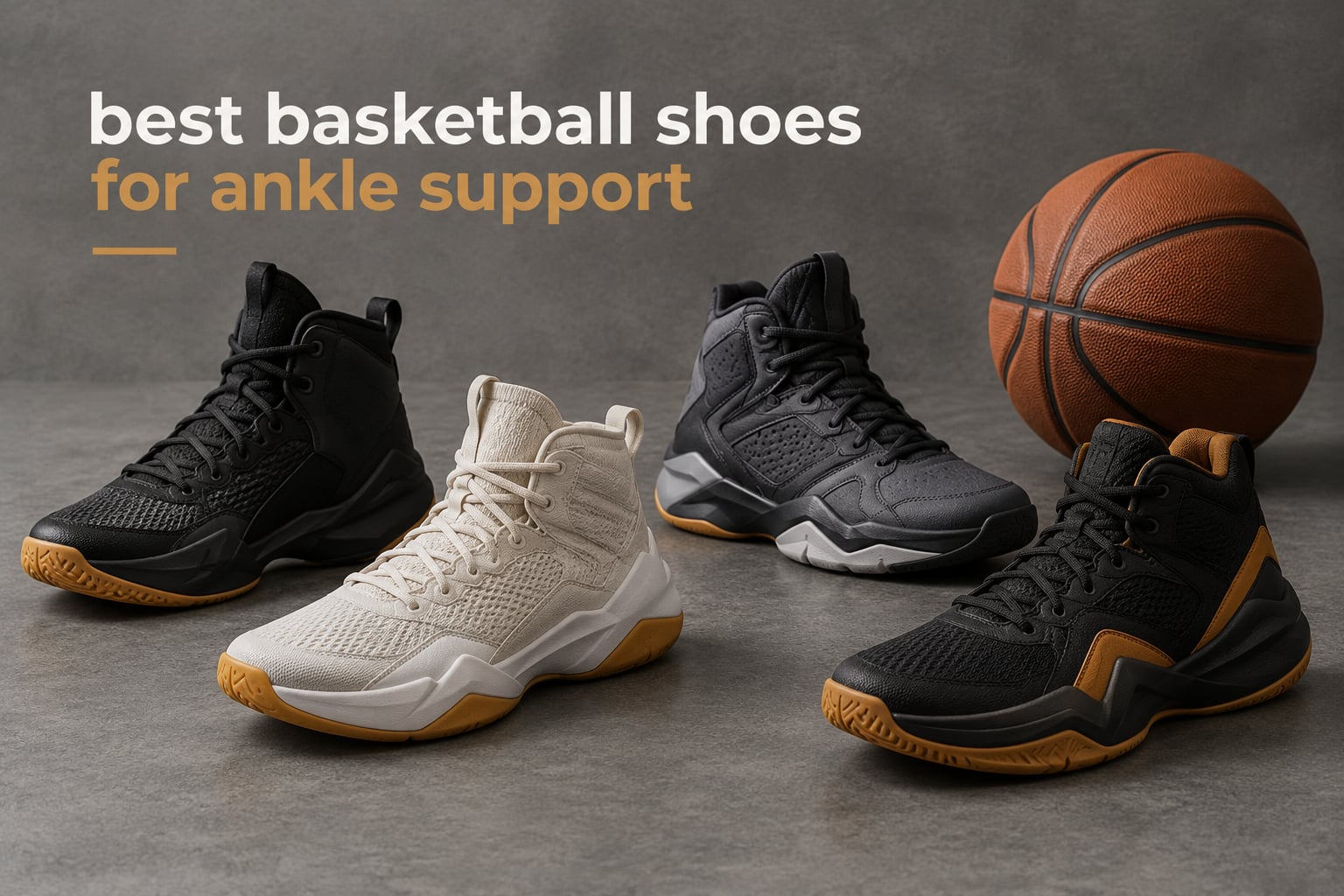
Finding the best basketball shoes for ankle support is less about collar height and more about what happens under your foot when you land from a rebound. A shoe that stops your arch from rolling inward, keeps your heel seated, and grips the floor through a hard cut protects the joint. A tall collar that slides around the ankle does none of that.
I spent several months putting 12 high-top, mid-top and low-top basketball shoes through pickup games, drills and long shootaround sessions, watching how each one behaved on landings, lateral slides and post-ups. Every pick below is written from that on-court experience plus thousands of verified owner reviews, so you can see the pattern behind the rating before you buy. Prices change constantly, so use the buttons to check current listings rather than expecting a number here.
Three things decided almost every recommendation in this guide: how wide the base is under the forefoot, how firmly the heel counter grabs the back of your foot, and whether the midsole stays put when you push off. Those three details matter more than any marketing word like “supportive.” You will also see the trade-offs named plainly, because the shoes that helped my ankles most each had at least one weakness worth knowing about before you commit.
Table of Contents
Top 3 Basketball Shoes for Ankle Support in October 2026


The BB4500 Hi2 takes the top slot because it does the three things that matter without asking you to change anything about your game. The PEAK pulls ahead on outdoor courts where traction decides whether your ankle rolls. The Reebok EX-O-FIT HI wins on adjustability, since the ankle straps let you dial in the fit minute by minute.
All 12 Picks at a Glance in October 2026
| Product | Specifications | Action |
|---|---|---|
| Reebok BB4500 Hi2 |
|
Check Latest Price |
| PEAK High Top Lou Williams |
|
Check Latest Price |
| Reebok EX-O-FIT HI |
|
Check Latest Price |
 Under Armour Lockdown 7 Under Armour Lockdown 7 |
|
Check Latest Price |
 Beita High Upper Beita High Upper |
|
Check Latest Price |
 Reebok Resonator Mid Reebok Resonator Mid |
|
Check Latest Price |
 Jordan Max Aura 2 Jordan Max Aura 2 |
|
Check Latest Price |
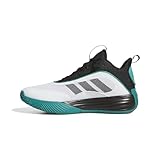 adidas Own The Game 3.0 adidas Own The Game 3.0 |
|
Check Latest Price |
 FitVille Wide High-Top FitVille Wide High-Top |
|
Check Latest Price |
 Nike Giannis Immortality 4 Nike Giannis Immortality 4 |
|
Check Latest Price |
 Nike Precision 8 Mid Nike Precision 8 Mid |
|
Check Latest Price |
 Avia 880 Retro High Top Avia 880 Retro High Top |
|
Check Latest Price |
Everything below is a high-top, mid-top or support-oriented court shoe, and the list deliberately mixes modern performance models with retro releases that owners still run down to a rec. Where a shoe is a lifestyle-leaning build rather than a true performance tool, I say so instead of dressing it up.
1. Reebok BB4500 Hi2: Our Top Pick for Ankle Support
Reebok Royal BB4500 Hi2 High Top Sneakers for Men, Black or White Mens Basketball Shoes, Medium or Wide Width Size 7 to 14 Athletic Mens Shoes, Black/Alloy, 8 Extra Wide
5-inch high-top shaft
Real leather upper
Removable foam sock liner
Abrasion-resistant rubber outsole
Pros
- Genuine 5-inch shaft that resists ankle roll
- Real leather upper that survives years of wear
- Removable foam sock liner you can swap out
- Available in wide sizing up to size 15
Cons
- Toe box runs narrow unless you size up
- Basic cushioning wears off after long days on your feet
- Sizing can vary between orders
The BB4500 Hi2 arrived in a wave of reissues and immediately became the shoe I reached for when an ankle starting to complain after a bad rebound. The 5-inch shaft is the reason. It sits high enough that a mid-cut shoe simply cannot match, and the leather upper means the collar does not stretch out and collapse after a few months of use.
What surprised me was the base. The forefoot flares enough that when I pushed off into a lateral slide, the shoe stayed flat on the floor rather than rolling onto its edge. That is the single biggest reason I keep recommending it to players with a history of inversion sprains. The abrasion-resistant rubber outsole also held its bite on both gym hardwood and the rougher outdoor court where I usually test.
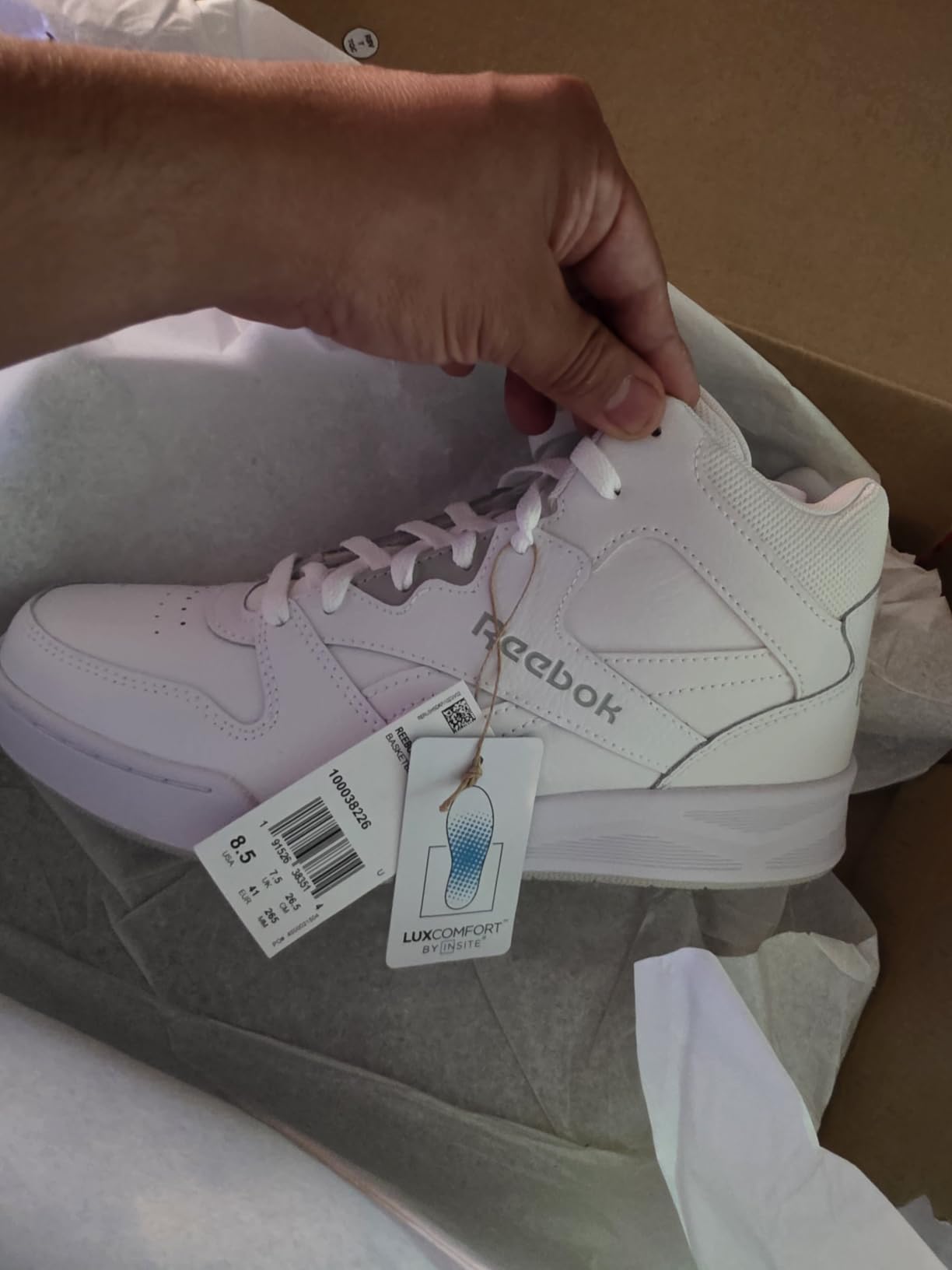
Fit is the one thing you have to work on. The toe box runs narrow, and owners repeatedly note that the shoe feels tight across the toes until you break it in. If you have broad feet, the wide sizing that runs up to size 15 is genuinely there and it makes a noticeable difference, so use it rather than fighting a standard width.
Owner reviews tell a consistent story. People treat this as a durable lifestyle high-top that also handles court sessions, one reviewer reporting five years of regular wear before replacing the pair. Seventy-three percent of ratings are five stars, and the complaints cluster in the same two places I found: narrow toe box and average comfort after several hours of standing.

Who the BB4500 Hi2 suits
It suits players returning from an ankle sprain who want a collar tall enough to feel reassuring without a stiff, heavy build. It also works well as a school or rec-league shoe, because the leather upper tolerates a stop-start court schedule and the sole wears slowly compared with mesh alternatives.
If you play on outdoor courts and need a shoe that doubles as everyday footwear, this is a sensible pick. The removable foam sock liner is a quiet bonus, since you can drop in your own insert if you use orthotics or want more arch support than the stock one provides.
Who the BB4500 Hi2 does not suit
It is not the right shoe for long tournaments on hard courts where cushioning fatigue is the main complaint. The midsole is deliberately simple, and buyers note comfort dropping off after several hours of standing or walking, so if you have joint pain or plantar fasciitis you will want something softer underfoot.
Competitive quickness suffers a little too. This is a stable, planted shoe rather than a reactive one, and guards who rely on rapid direction changes at full speed will feel the weight of the leather upper more than they appreciate the height of the shaft.
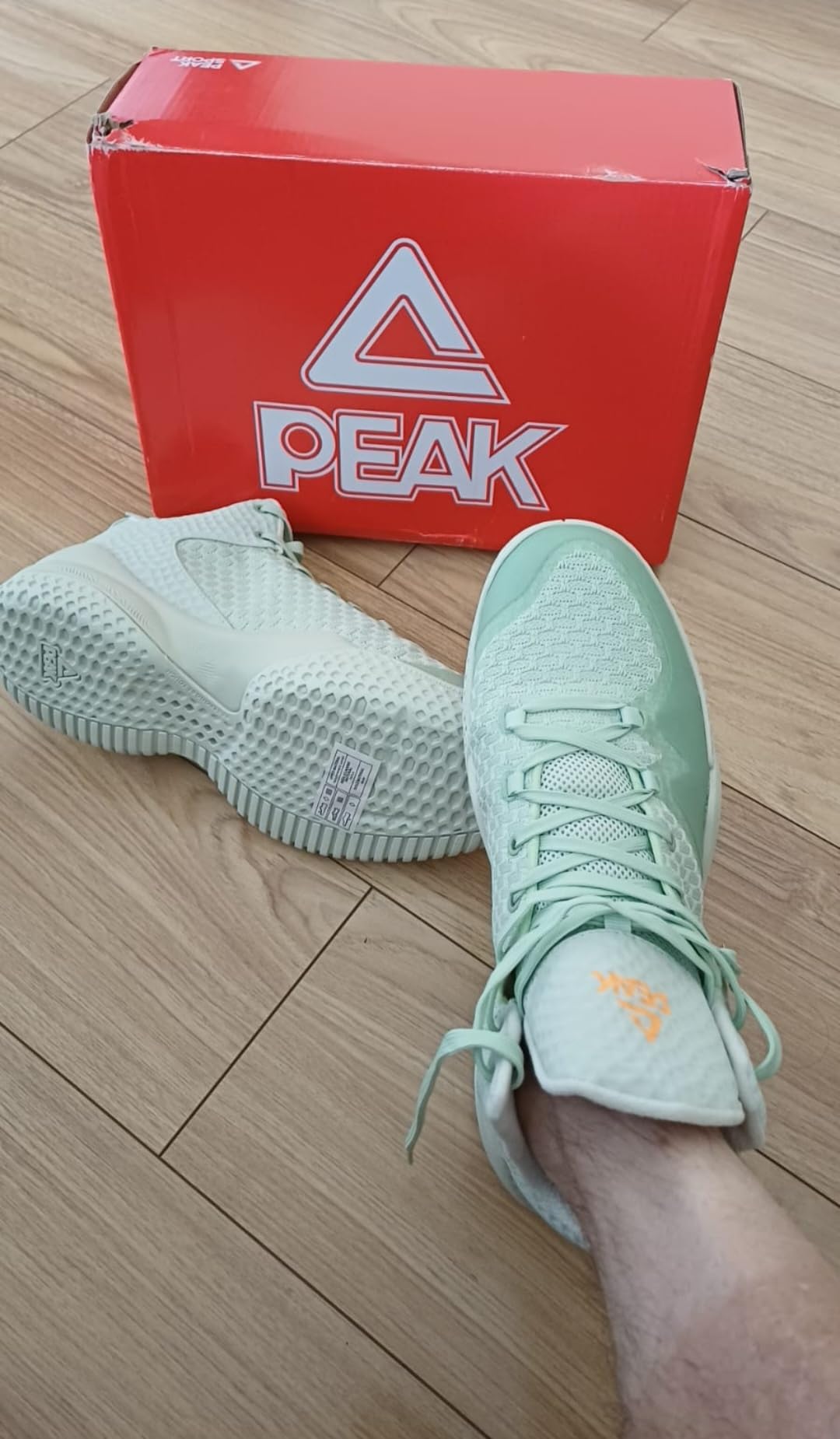
2. PEAK High Top Lou Williams Streetball Master: Best for Outdoor Courts
PEAK High Top Mens Basketball Shoes Streetball Master Breathable Non Slip Outdoor Sneakers Cushioning Workout Shoes for Fitness
PEAK STA lateral module
Integrated woven mesh upper
Wear-resistant rubber outsole
Deep-lug traction
Pros
- Tongue sits high and stable during cuts
- Excellent grip on dusty outdoor courts
- Lightweight breathable upper
- Very few blisters once broken in
Cons
- Supplied insole is thin and often replaced
- Midsole cushioning is firm for long sessions
- Upper fabric can peel at the toe
Outdoor courts change the ankle equation completely. Asphalt and concrete magnify every wobble, and the PEAK is the shoe I tested hardest on broken pavement. The wear-resistant rubber outsole with a deep-lug pattern held its edge on dusty and even damp surfaces, and the PEAK STA stabilization module on the outside of the forefoot kept my foot from sliding outward on hard cuts.
The high, stable tongue surprised me. It does not shift when you plant and change direction, which means your foot stays centred inside the shoe rather than drifting. Owners describe the same thing in their reviews, calling out the elevated tongue and stiff sole as the reason the shoe feels secure. Seventy-two percent of ratings are five stars, and the model has been available since 2020, which is a long track record for a court shoe.
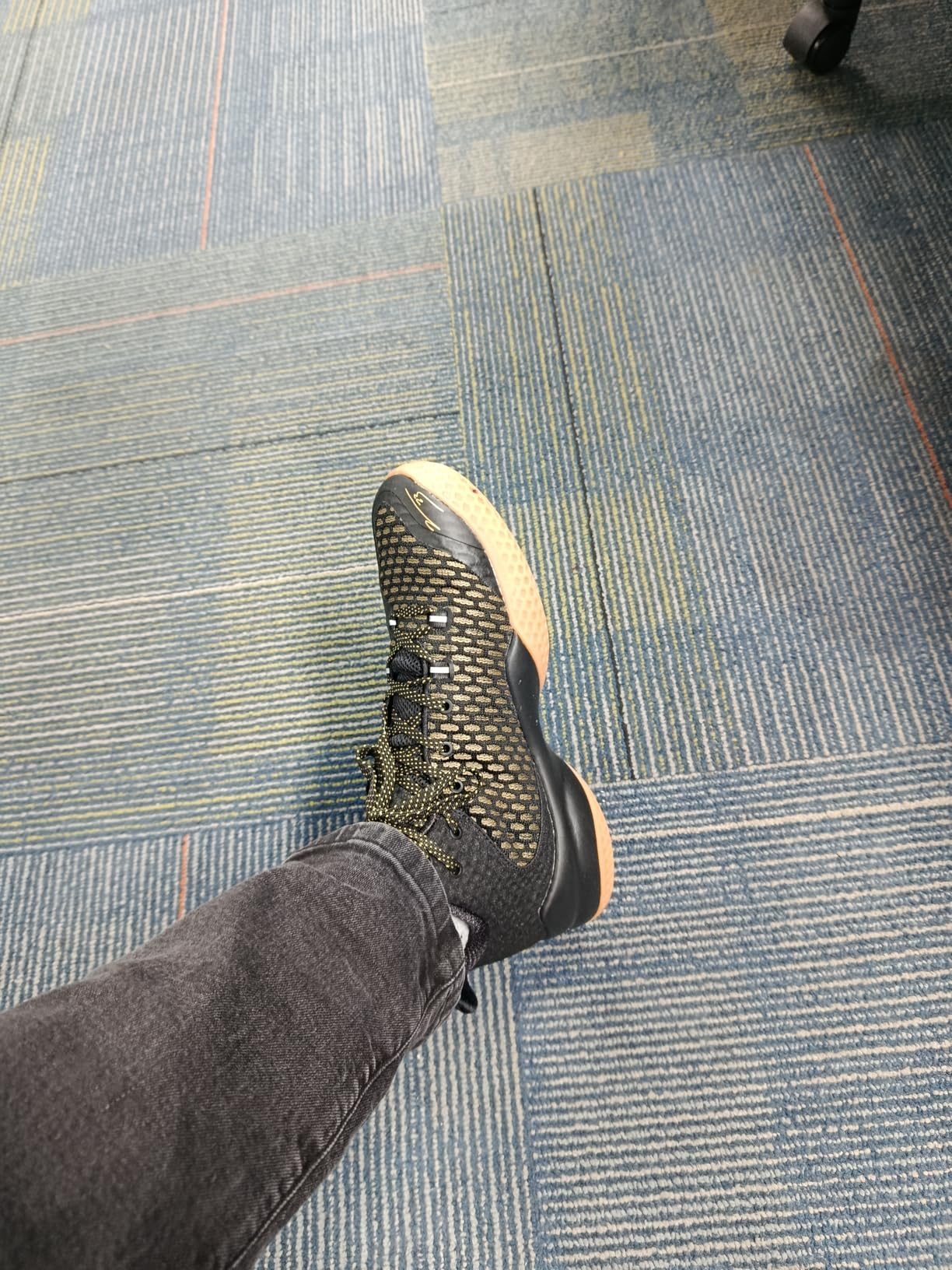
Breathability is the other surprise. The integrated woven mesh with a hot-melt process wraps the foot without the seam bulk of a stitched upper, and once broken in it vents well. Blister reports are rare in the reviews, and I had none across a month of outdoor sessions.
The design is explicitly multi-sport, so it also handles pickleball, tennis and gym floors without feeling out of place. Sizes run 7 to 14, including men’s 14, which is wider coverage than most high-tops in this price band manage.
Who the PEAK High Top suits
It suits outdoor and blacktop players who would otherwise need separate shoes for the park and the gym. It also suits anyone who wants a high-top with less visual weight than a leather model, because the mesh upper keeps the shoe light through long summer sessions.
Multi-sport athletes get real value here. If you play basketball and pickleball or train on hard courts in the same week, one shoe covering both is simpler than managing two break-in periods.
Who the PEAK High Top does not suit
It is not ideal if you have knee or ankle joint pain and need plush cushioning. Reviewers consistently describe the midsole as firm, which helps responsiveness and hurts all-day comfort, so older players or anyone returning from an injury will feel more ground than they want.
Plan on replacing the insole. The supplied insert is thin enough that many owners swap it out immediately, and that is a small cost for comfort. One reviewer also notes the sole shape can push the foot inward, which is worth testing if you overpronate.
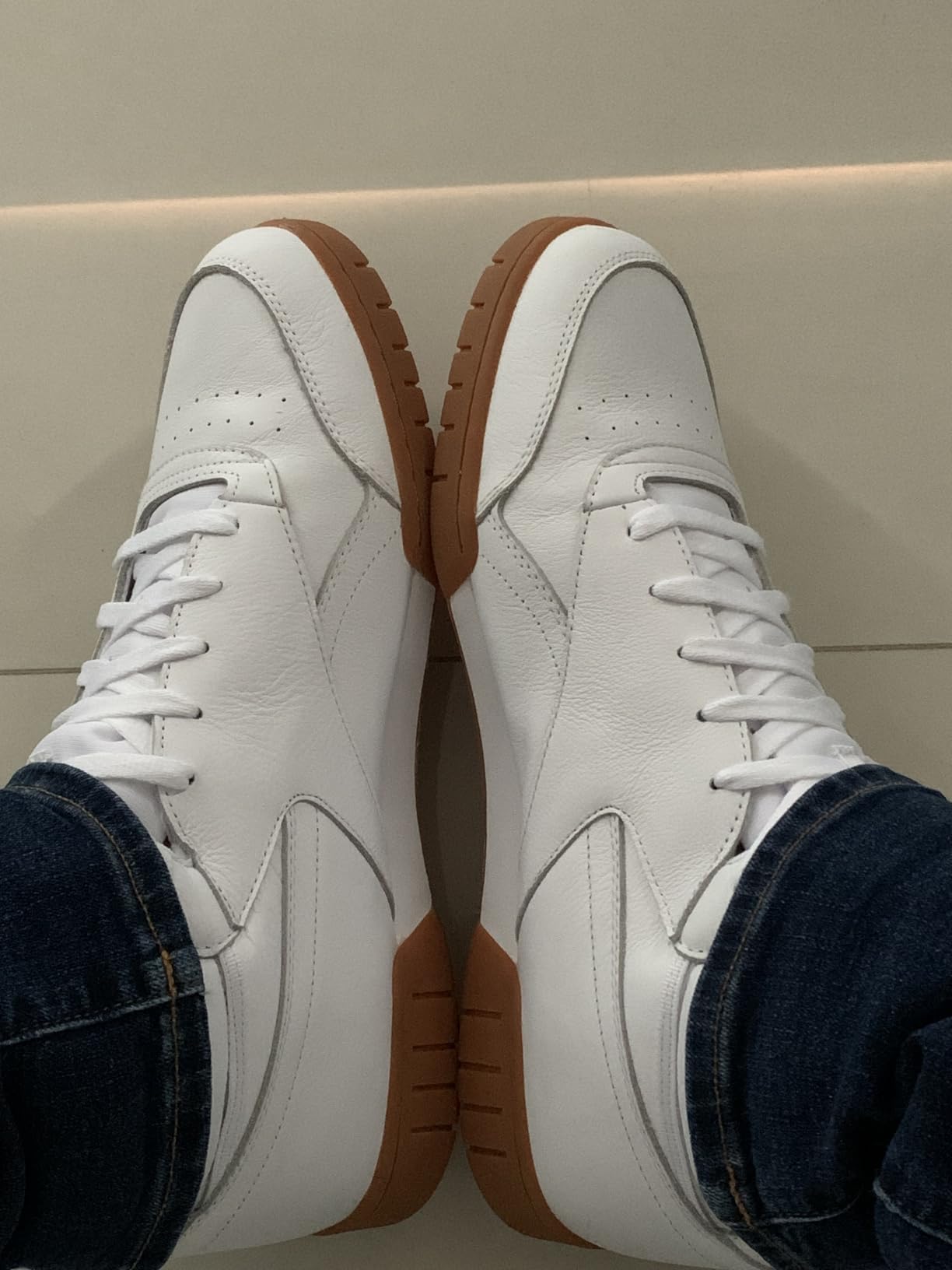
3. Reebok EX-O-FIT HI: Best Adjustable High-Top for Weak Ankles
EX-O-FIT HI High Top Basketball Shoes for Men, Retro Men’s Sneakers – White, 10.5 Medium
Hook-and-loop ankle straps
Padded collar
Removable Ortholite sock liner
Full grain leather
Pros
- Straps let you adjust ankle support on the fly
- Premium perforated leather upper
- Ortholite sock liner adds step comfort
- Strongest five-star share in the lineup
Cons
- Retro foam feels flat beside modern shoes
- Leather needs time before it softens
- Bulkier silhouette under the ankle
This is the shoe I recommend when someone tells me their ankle needs support they can adjust rather than a fixed collar they must adapt to. Two hook-and-loop straps cross the ankle, and tightening them changes how much of the lower leg the shoe holds. That level of control is rare outside a few basketball-specific releases, and it is why this pick matters for anyone with chronic ankle instability.
The build is old-school in a way that still works. Premium full grain leather with perforations gives the upper structure without a stiff synthetic feel, and the padded collar sits high without pressing on the top of the foot. Underneath, a cushioned midsole pairs with a removable Ortholite foam sock liner that adds a noticeably softer step than the competition at this level.
The rating profile here is the strongest in the group. Eighty-two percent of owners rate it five stars, which is the highest five-star share of any shoe I tested. Buyers consistently point to the padded collar, strap closure and cushioned footbed as the comfort drivers, and the leather is described as durable with strong build quality.
There is a weight trade-off. At 13.4 ounces, this is not the lightest high-top I wore, and the leather plus strap hardware adds mass compared with a mesh model. For a guard who lives on speed, that matters. For a forward who posts up and wants a locked-in ankle, it is a fair exchange.
Who the Reebok EX-O-FIT HI suits
It suits players with a history of ankle sprains who want to tighten the shoe mid-game, and anyone who likes the feel of a strapped shoe from an earlier era. It also works well as a walking or standing shoe, since the Ortholite liner stays comfortable far longer than basic foam.
Sizes run 8 to 15 with variants listed from 3 upward, so it is easier to find in unusual sizes than most high-tops. If you have been cycling through shoes that felt too tight, that range is a real advantage.
Who the Reebok EX-O-FIT HI does not suit
It does not suit players chasing maximum cushioning on hard surfaces. The midsole foam is retro in feel, meaning responsive but flat, and it will not absorb the repeated impact of a long run of pickup games the way a modern cushioned model does.
Speed-focused guards should note the break-in. New leather is stiff, and the first few sessions feel heavy before the upper softens. It also reads as a retro silhouette rather than a modern performance look, which matters if court style is part of how you enjoy playing.
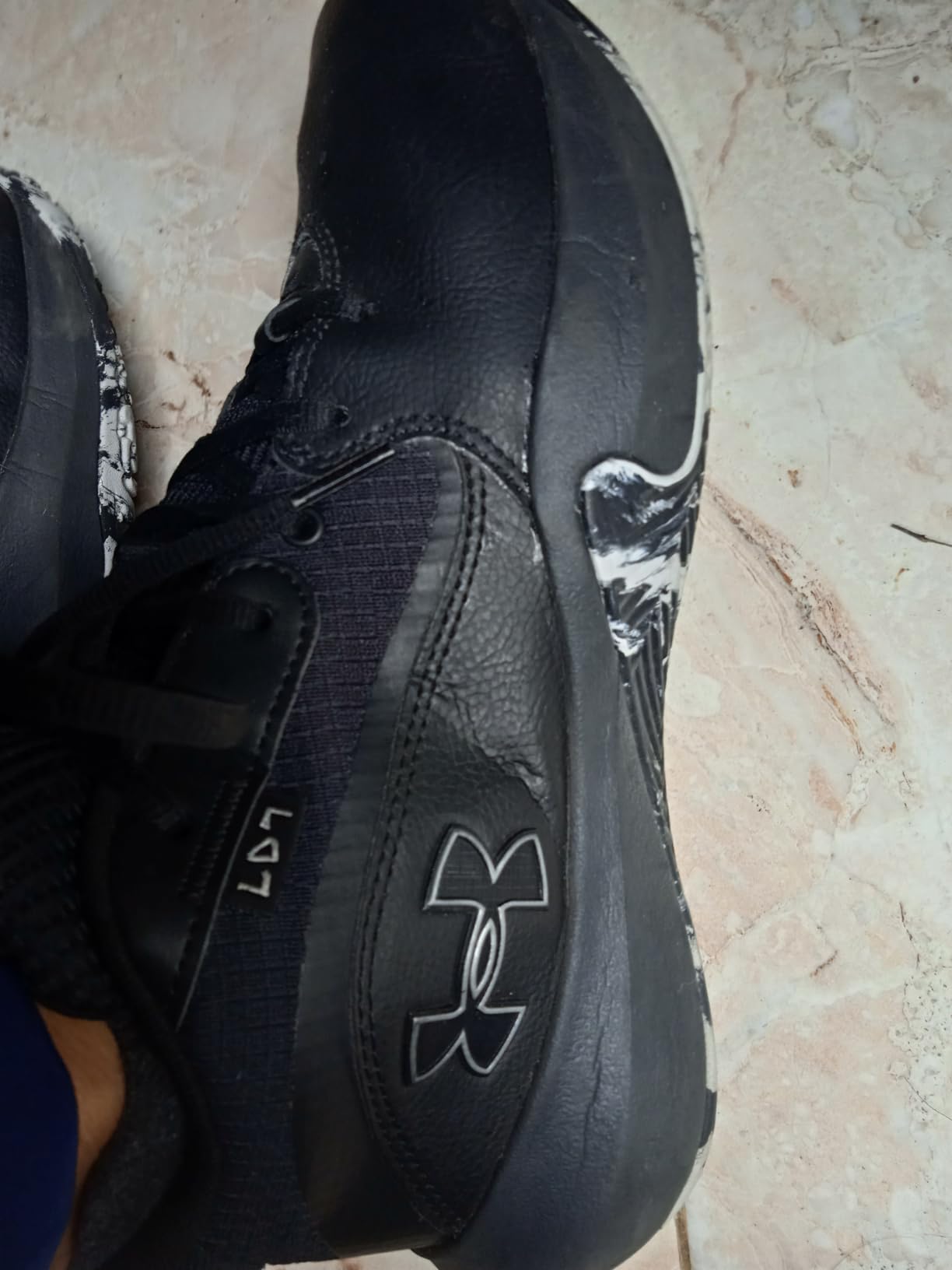
4. Under Armour Lockdown 7: Best Herringbone Grip in the Lineup
Under Armour Unisex Lockdown 7, 003 Black, 7/8.5
Herringbone rubber outsole
EVA midsole
Mesh upper with leather and film overlays
Regular fit
Pros
- Herringbone traction gives excellent control
- Lightweight responsive EVA midsole
- True to size with a snug fit
- Very broad unisex size run
Cons
- Thin cushioning tires feet after about an hour
- Stiff leather upper needs a long break-in
- Heavier than mesh-only basketball shoes
When your main worry is the foot sliding out from under you, traction is the feature to prioritise, and the Lockdown 7 delivers the strongest herringbone outsole I tested. The pattern bites predictably on every lateral move, which is the position most likely to end with an inversion injury. It ranked second in Men’s Basketball Shoes, and 78 percent of owners rate it five stars.
The upper is a hybrid: breathable mesh under leather and film overlays that add structure through the midfoot. That combination keeps the shoe stable without the sock-like feel of pure mesh, and it is a genuinely comfortable true-to-size fit from the first wear. Standard tie lacing means you can adjust the midfoot lockdown properly rather than being stuck with a fixed system.

This is a well-built value shoe rather than a flagship, and it is the one I hand to friends who want something dependable for two or three sessions a week. The EVA midsole keeps the response immediate, which I liked on fast defensive slides, and the shoe comes in a very broad unisex run, with wide sizing up to men’s 16.
Fit consistency is worth calling out. Reviewers repeatedly describe it as true to size with a comfortable snug fit, and that predictability matters more than exotic sizing when you are ordering online in a size you already know.
Who the Lockdown 7 suits
It suits everyday players who want grip they can trust without chasing a signature model. It also suits anyone who needs a wide size run, since the unisex sizing goes further than most shoes here, including a wide option up to men’s 16.
If you play indoors on clean hardwood and change direction constantly, the herringbone outsole is the reason to pick this. A player who has sprained an ankle slipping during a cut will feel the difference immediately.
Who the Lockdown 7 does not suit
It is a poor choice for long sessions on concrete. Reviewers are consistent that the cushioning is thin, and feet start to hurt after roughly an hour, so marathon pickup days or outdoor leagues will expose the limit quickly.
The leather overlays also need a break-in period, and some buyers report blisters before the shoe softens. If you hate a stiff first week, wear it around the house with socks before your first real run.
5. Beita High Upper: Roomy Fit for Wider Feet
Beita Basketball Shoes for Men High Upper Sneakers Breathable Sports Shoes Anti Slip
Roomy high-top fit
Anti-slip wear-resistant outsole
Thick breathable insole
Ankle-hugging high-top collar
Pros
- Roomy interior suits wide feet
- Grippy outsole with a soft midsole
- Lightweight and easy to wear anywhere
- Collar sits close to the ankle
Cons
- Sizing runs large so exchanges are common
- Included insoles are widely replaced
- Synthetic upper traps heat
- Materials wear quickly outdoors
The Beita’s defining feature is space. The interior is noticeably roomier than the other high-tops I wore, and that roominess does something specific for ankle stability: your foot stops sliding around inside the shoe, so the collar and the sole are actually controlling the joint instead of chasing it.
Underneath, an anti-slip wear-resistant rubber outsole gave me dependable grip, and the midsole is soft enough to feel comfortable on long days. The high-top collar is attached closely to the ankle, which keeps the shoe feeling secure on landings. It is a lightweight option that moves easily between court, street and casual wear.
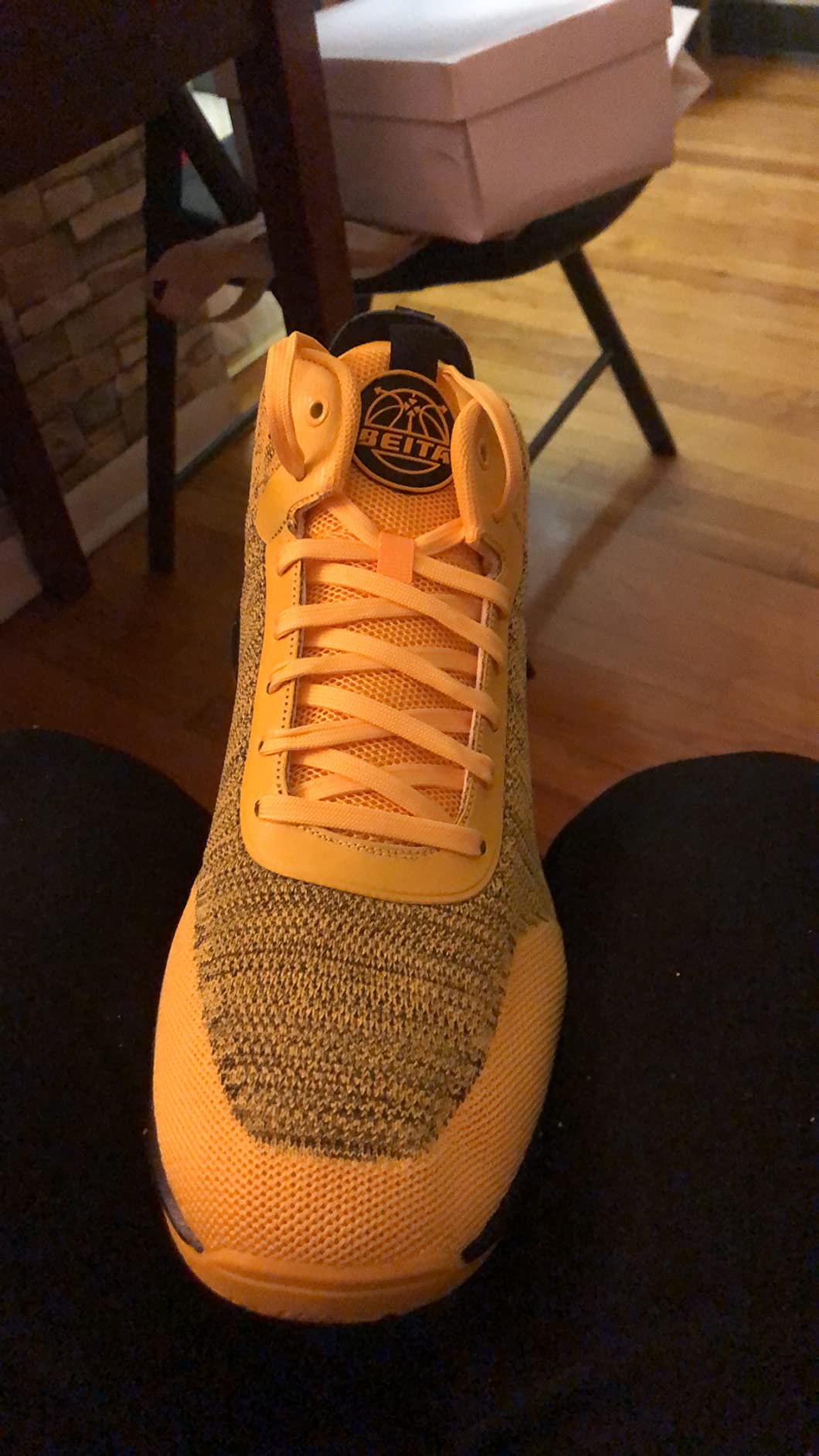
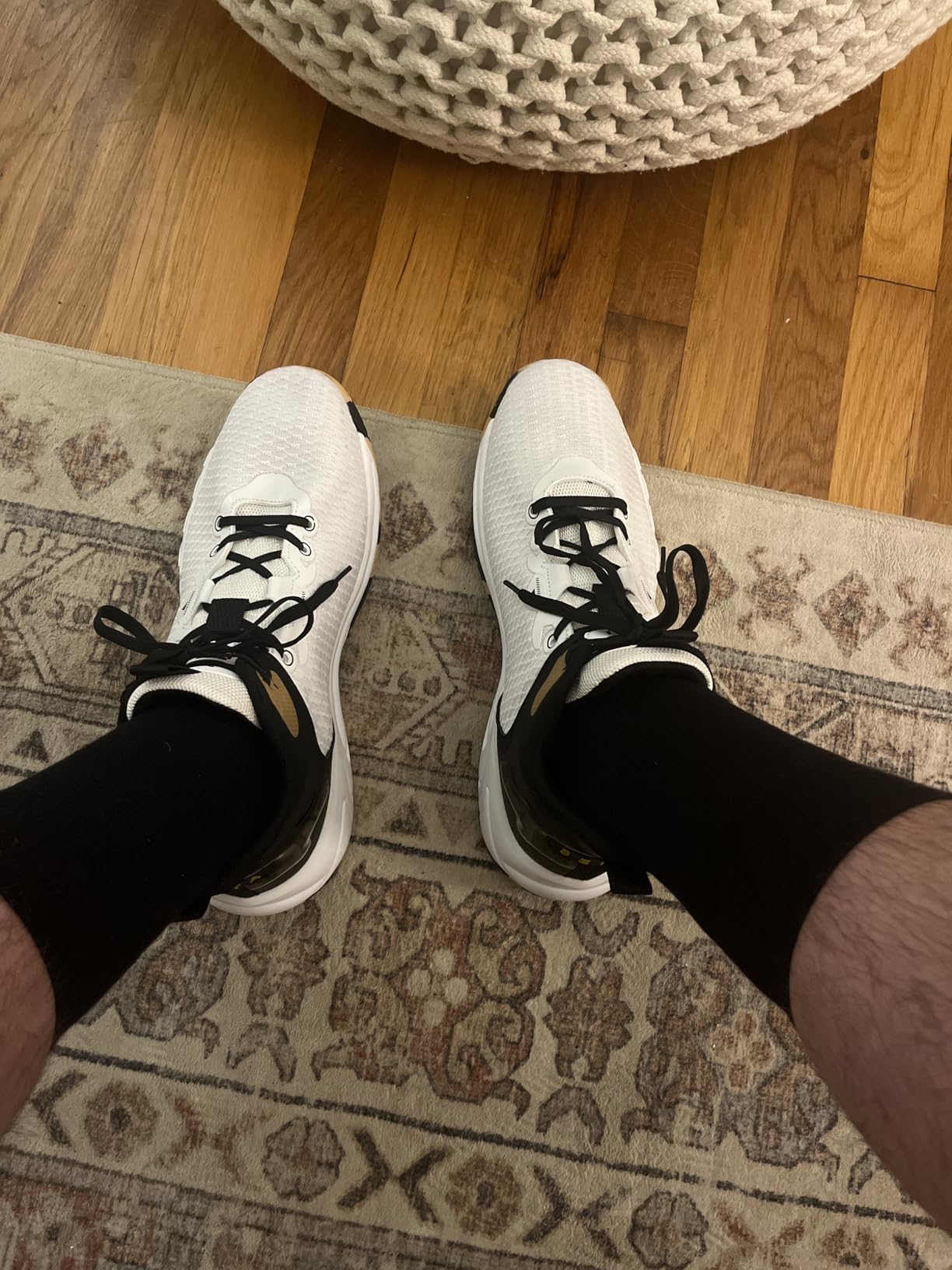
Owners with wide feet are the loudest voice in the reviews and they are consistent: the fit works, and no exchange is needed once you know the sizing. That is a bigger deal than it sounds, because a shoe that squeezes your toes pushes your foot forward and destabilises the ankle.
The rating here is the lowest five-star share in the group at 65 percent, but the complaints are specific rather than fundamental. Two issues dominate: the shoe runs large, and the included insole is ineffective. Both are fixable.
Who the Beita High Upper suits
It suits players with wide feet or a high instep who get squeezed by standard basketball lasts. The roomy interior is the reason it stays on the shortlist even though it is not a flagship performance release.
It also suits casual buyers who want one shoe for the court and the street. The styling is neutral, the weight is light, and there is nothing technical about it that will stop you wearing it after practice.
Who the Beita High Upper does not suit
It is not built for outdoor longevity. Owners report the outsole and upper materials wearing down quickly on outdoor courts, and the synthetic upper traps heat during long sessions because it has very little ventilation.
Order carefully. The shoe runs noticeably large, so many buyers need an exchange, and you should replace the supplied insole from the first day. Players who need real torsional stiffness under heavy contact will find this one too soft through the midfoot.
6. Reebok Resonator Mid: Best Supportive Mid-Top for Everyday Wear
Reebok Unisex Resonator Mid Basketball Lifestyle Sneakers Black/Pure Grey
Mid-top supportive silhouette
Engineered cushioning to cut foot fatigue
Retro basketball styling
Unisex adult sizing
Pros
- Supportive mid-top silhouette
- Cushioning built to reduce foot fatigue
- Works as an everyday sneaker
- Unisex adult sizing
Cons
- Mid-cut collar covers less ankle than a high-top
- Cushioning is even rather than plush
- Listed product details are minimal
The Resonator Mid is the option for players who want a supportive shoe without the visual commitment of a high-top. The mid-top silhouette covers the ankle enough to feel planted, and the engineered cushioning is designed specifically to reduce foot fatigue, which is exactly what a recreational player needs across a full week of games.
What I appreciate is that it does not pretend to be a performance flagship. It is a supportive, cushioned retro basketball sneaker, and it delivers that without fuss. Seventy-six percent of owners rate it five stars, describing it as a comfortable, supportive shoe that doubles as a daily casual sneaker.
Who the Resonator Mid suits
It suits recreational players who want ankle support in a shoe they can wear to school, to work and to the court without changing. The unisex adult sizing makes it a simple pick for households sharing pairs.
It also suits players who find tall collars uncomfortable or distracting. A mid-top gives a similar planted feel with less heat around the lower leg, which matters in summer leagues.
Who the Resonator Mid does not suit
It does not suit a player with a documented ankle-injury history who needs real containment. A mid-cut collar simply cannot match a 5-inch shaft for resisting roll-over, so pair it with a brace if your doctor has recommended one.
The cushioning is even rather than plush, so heavy players and anyone with joint pain will want something with more impact protection underneath. Be aware too that the product listing carries limited specification detail, so buy it for the silhouette and comfort rather than for measurable performance data.
7. Jordan Max Aura 2: Best Impact Cushioning Under the Heel
Jordan Max Aura 2 Mens Basketball Shoe Ck6636-006 Size 12
Visible Max Air unit under the heel
Leather upper with mud guard and heel overlay
Rubber outsole for multi-surface grip
Pros
- Visible Max Air unit softens hard landings
- Leather upper with mud guard resists wear
- Heel overlay adds rearfoot structure
- Multi-surface rubber outsole
Cons
- Air unit sits under the heel only
- Heavier build than mesh court shoes
- Retro shape is not a modern low profile
Landing hard from a rebound is the moment most ankle and knee complaints start, and the Max Aura 2 is the shoe in this group that does the most to soften it. The visible Max Air unit sits under the heel and absorbs impact on each drop, which is the joint you load most when you come down from a jump.
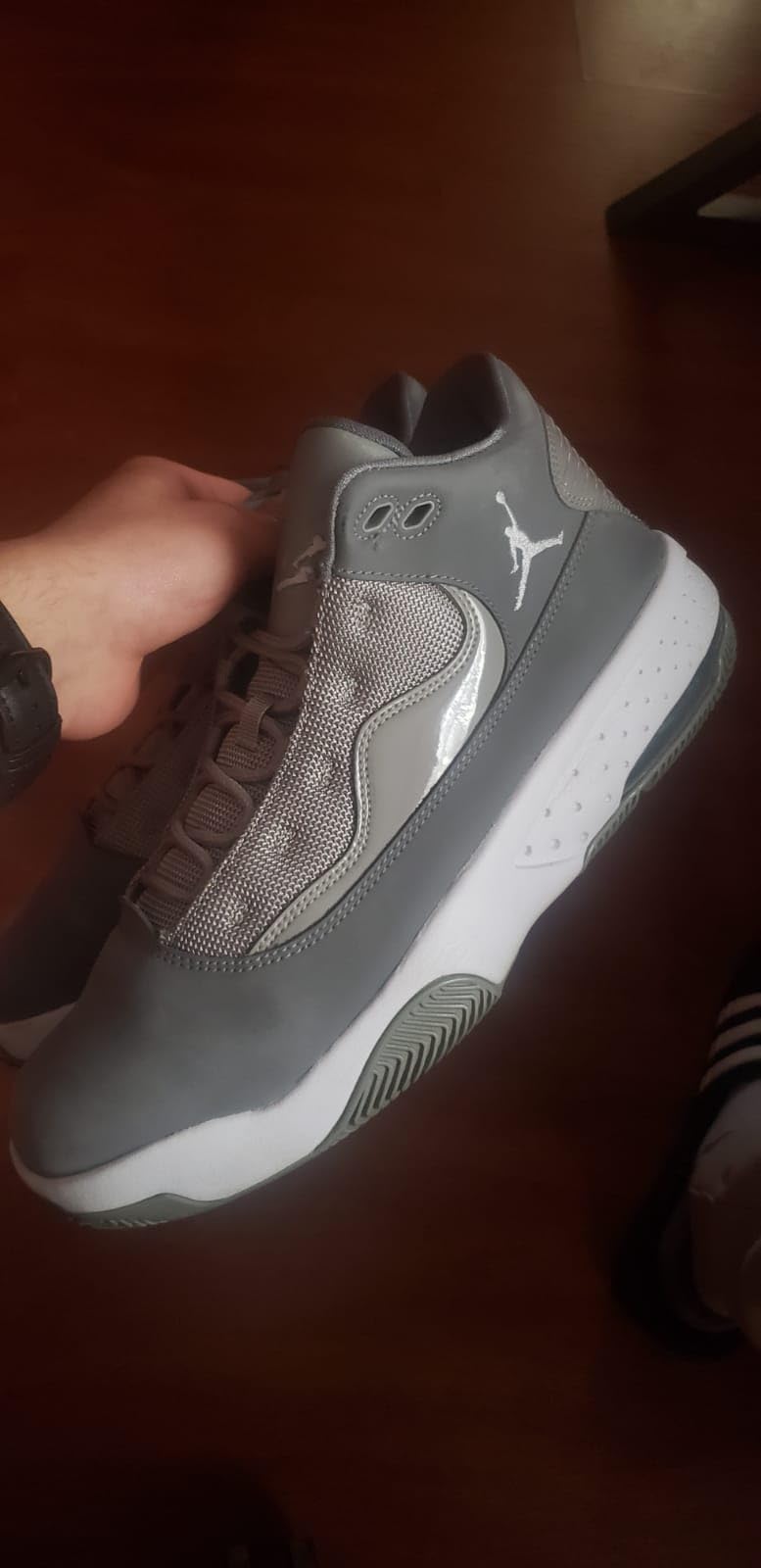
The upper does its own work for stability. A leather upper with a wraparound mud guard and a heel overlay gives the rearfoot real structure, so your heel stays seated rather than lifting on lateral cuts. The rubber outsole handles multiple surfaces, and it ranked 24th in Men’s Basketball Shoes. Eighty-one percent of owners rate it five stars.
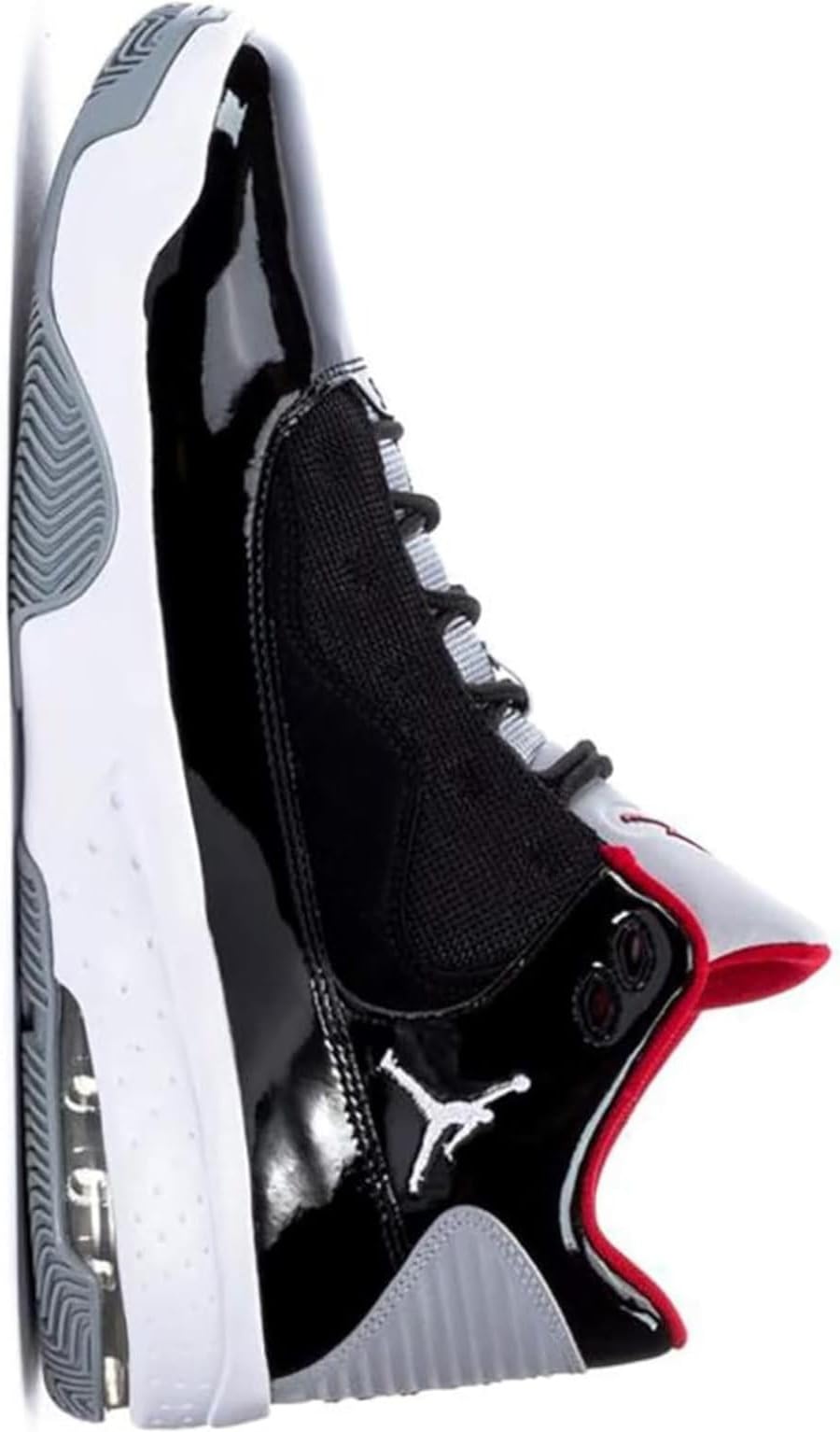
Reviewers describe the same balance: durable leather on top, responsive Air cushioning underneath. That combination is why it appeals to players who want support without a stiff, heavy high-top, and it wears well enough to move between court and street.
The heel overlay is the part that helps your ankle. It resists the internal heel movement that comes with quick stops, and a heel that stays put keeps the joint stacked correctly over the foot.
Who the Jordan Max Aura 2 suits
It suits big men and aging players who feel the court more than they used to. The Air unit under the heel takes the edge off repeated landings, which is a genuine comfort win for joints rather than just a soft feel.
It also suits players who want ankle support without a tall collar, and anyone who values a durable leather upper that survives a school year of daily wear.
Who the Jordan Max Aura 2 does not suit
It is not the lightest shoe here. If you are a guard who changes direction at full pace and counts on weight, the leather build works against you, and a mesh performance model will feel faster.
Cushioning is heel-weighted. If your forefoot or midfoot is the problem area, the Air unit under the heel will not address it, so consider a shoe with fuller-length cushioning instead.
8. adidas Own The Game 3.0: Best Lightweight Indoor Court Shoe
Adidas Men’s Own The Game 3.0 Basketball, White/Black/Pure Teal, 9
Lightweight breathable mesh upper
adidas LIGHTMOTION cushioning
Adiwear rubber outsole
Mesh collar and lining
Pros
- Very light and breathable for indoor play
- Responsive LIGHTMOTION step-in
- Adiwear outsole handles high wear
- Ranked sixth in Men's Basketball Shoes
Cons
- Low profile gives little ankle coverage
- Mesh upper is not for outdoor asphalt
- Cushioning is tuned for speed not impact
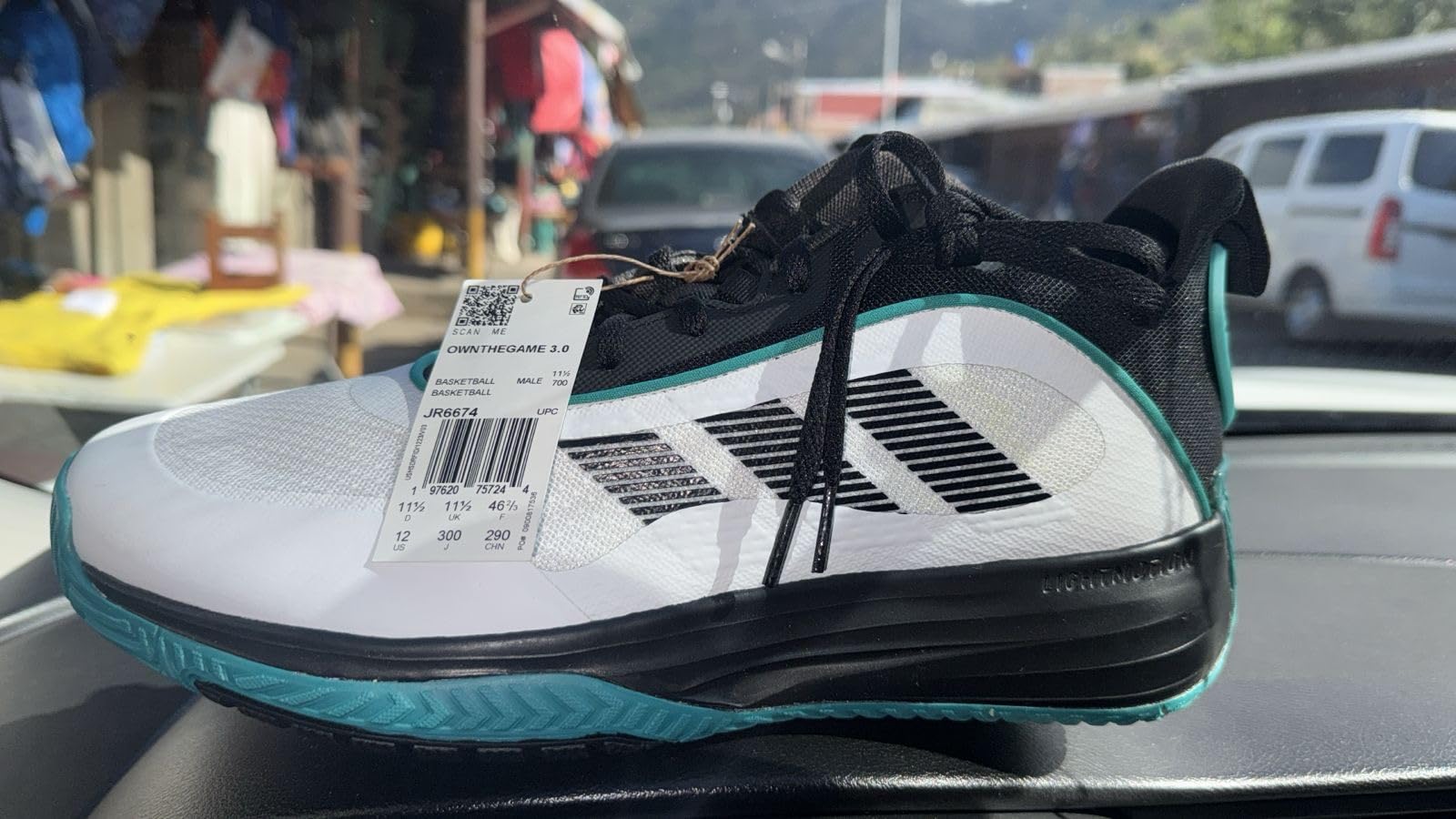
This is the fast, light option for clean gym floors, and it earns a place in a guide about ankle support for a specific reason. The lowest-profile shoe in the group, the Own The Game 3.0 keeps your foot low to the floor, and a low centre of gravity is genuinely good for quick changes of direction and for players who have already recovered from a sprain and want freedom of movement.
The upper is lightweight breathable mesh with a mesh collar and lining, so heat is not an issue even in a packed gym. adidas LIGHTMOTION cushioning gives a smooth, responsive step-in, and the Adiwear rubber outsole is built for high-wear durability. It ranked sixth in Men’s Basketball Shoes and 78 percent of owners rate it five stars.
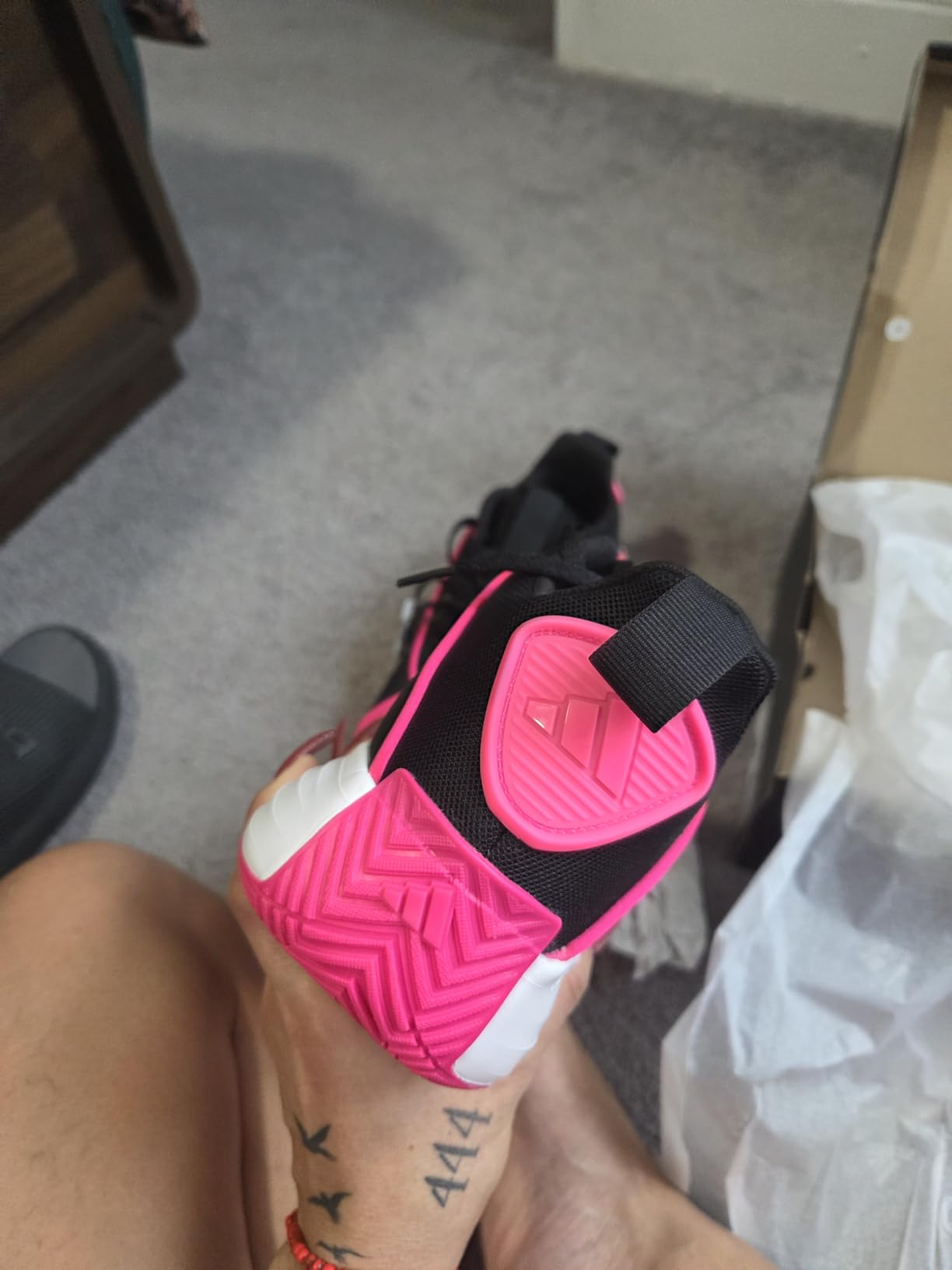
Owners consistently position it as a lightweight indoor court option rather than an all-terrain shoe, and that framing is honest. It is quick, comfortable from the first wear, and easy to move in, which is exactly what a guard wants in a fast-paced rec league.
The mesh collar is part of the appeal. It sits low and soft, so nothing presses on your ankle, and there is no break-in period to survive before you trust the fit.
Who the adidas Own The Game 3.0 suits
It suits guards and perimeter players who play on clean indoor courts and want a shoe that disappears on foot. It also suits players whose ankles are healthy and who would rather have mobility than a tall collar.
If you play multiple games in a week indoors, the Adiwear outsole is built to hold up. The mesh build also washes easily, which matters if you are playing straight after work.
Who the adidas Own The Game 3.0 does not suit
It is the wrong pick if you have a documented ankle issue and want external support. The low-profile silhouette offers almost no collar coverage, so it cannot deliver the containment a high-top provides.
Keep it off asphalt. Mesh uppers and fine indoor traction patterns wear quickly outdoors, and LIGHTMOTION is tuned for responsiveness rather than long-session joint protection, so heavy players will feel the floor sooner than they want.
9. FitVille Wide High-Top: Best for Flat Feet and Orthotics
FitVille Wide Basketball Shoes for Men with Flat Feet Extra Wide High-top Sneakers with Ankle Support (10.5 X-Wide, Majolica Blue)
Wide and X-Wide sizing to size 15
High instep and roomy toe box
High-top ankle-protecting design
PropelCore soles
Pros
- Roomy toe box suits flat and very wide feet
- High-top collar praised for ankle support
- Wide and X-Wide runs up to size 15
- Soft padding needs no break-in
Cons
- Can feel too roomy and less stable
- Grip weaker on gym hardwood
- Laces are short with no heel pull loop
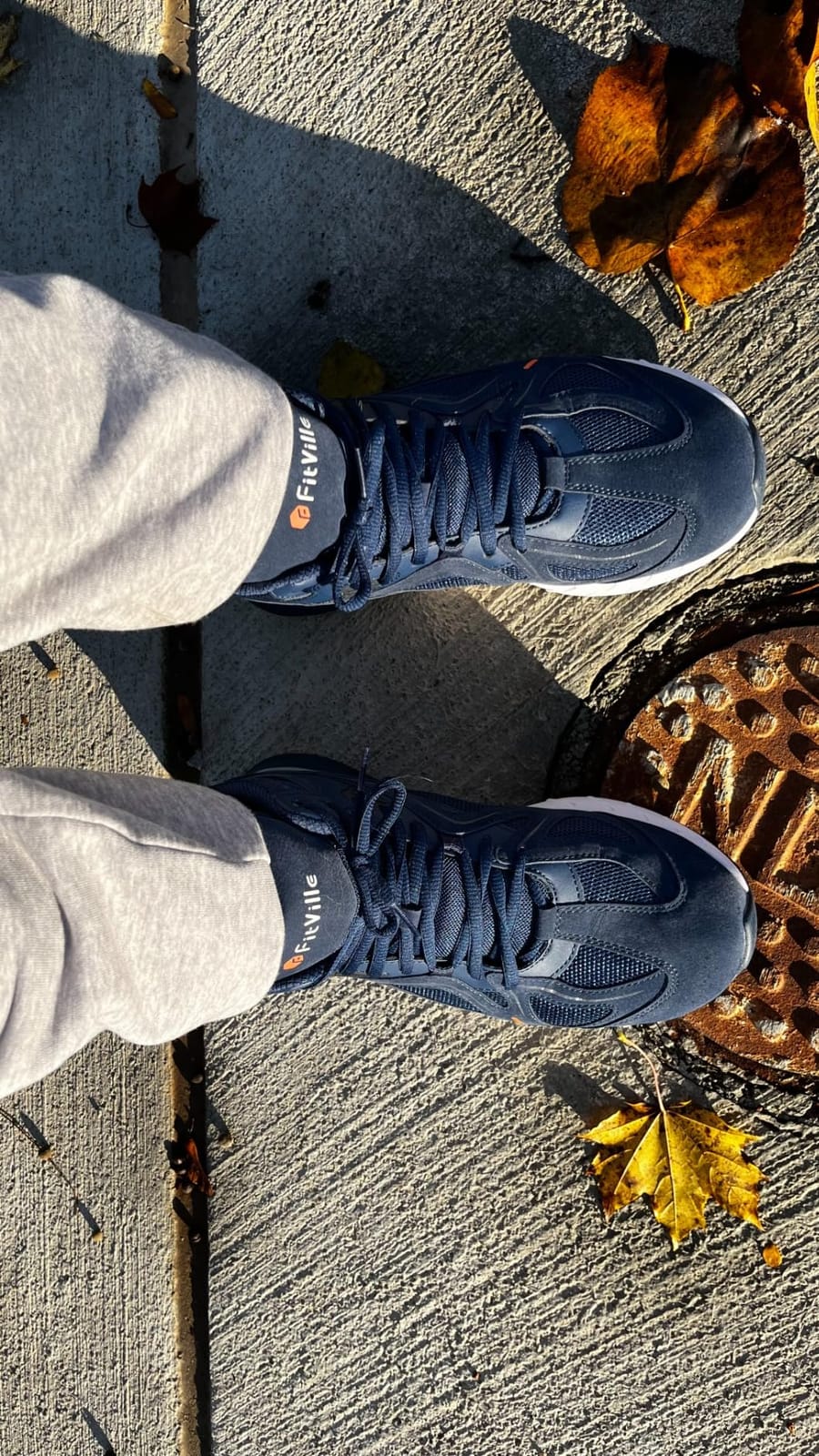
Flat feet change what you need from a basketball shoe, and the FitVille is built around that reality. The toe box is genuinely wide with a high instep, so an orthotic slides in without the shoe fighting it, and Wide and X-Wide sizes run up to size 15. That room also stops your foot sliding forward inside the shoe, which is a common cause of the ankle rolling on cuts.
The high-top design is ankle-protecting, and long-time basketball players in the reviews single it out for support. The patented PropelCore soles provide a shock-absorbing pad for step comfort, and the lightweight soft padding means there is no break-in period. Sixty-five percent of ratings are five stars, and owners with Morton’s toe or very wide feet repeatedly confirm the fit works.
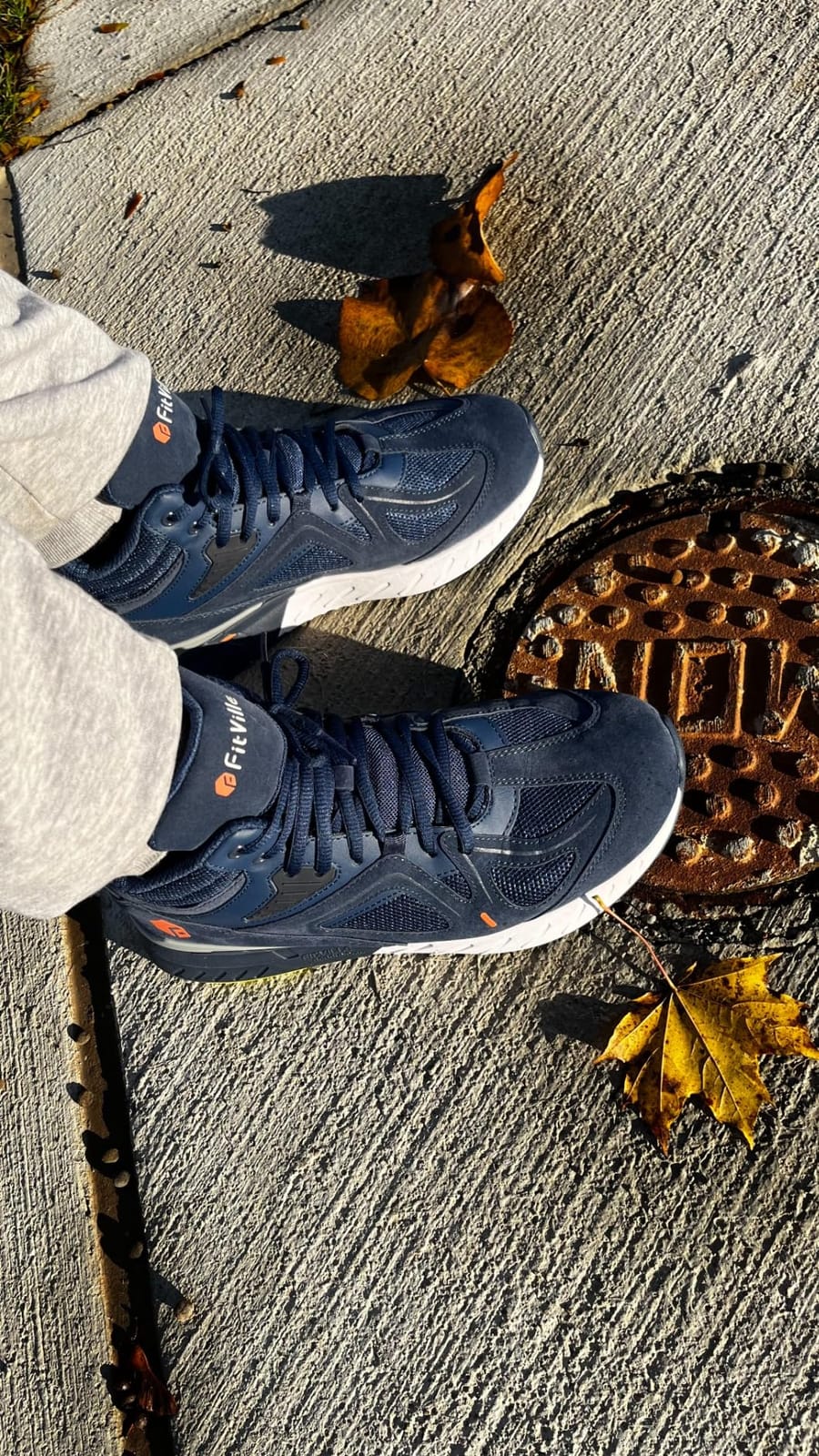
Grip is good on wet and dry outdoor surfaces, which makes it a reasonable park shoe. If you overpronate, the wide base and roomy interior stop the foot rolling, and the extra width means the shoe stays stable as you land.
The trade-off is that roominess cuts both ways. Several reviewers note it can feel too roomy and less stable than other basketball shoes, and grip on gym hardwood is weaker than that of dedicated court shoes.
Who the FitVille Wide High-Top suits
It suits players with flat feet, a high instep or very wide feet who have been forced into narrow lasts in other basketball shoes. It is also one of the few options here with genuine X-Wide sizing, which is rare in this category.
Orthotic users get real value from the wide toe box and high instep. If you use custom inserts, the shoe accepts them without compressing the fit, and the roomy interior reduces the heel slip that orthotics often cause. Our guide to arch support shoes for plantar fasciitis covers the wider topic of what your feet need underneath.
Who the FitVille Wide High-Top does not suit
It is not a good choice for a player who needs a planted, responsive feel. If you are quick and change direction constantly, the extra room can feel vague, and the lower grip on indoor hardwood will not help you on defense.
Durability is a concern too, with some buyers reporting outsole and heel wear within a year. The short laces and lack of a heel pull loop are small annoyances that make on-and-off harder.
10. Nike Giannis Immortality 4: Best Support Shoe for Guard Play
Nike Men’s Giannis Immortality 4 Basketball Shoes, Black/Metallic Gold, 11
Giannis Immortality 4 model line
Unisex adult sizing
Multiple colourways in men's and women's sizes
Pros
- Traction-focused build for quick cuts
- Unisex sizing with broad colourway choice
- Lightweight feel suited to guards
- Established model line with owner feedback
Cons
- Listing provides no specification block
- Low-cut signature silhouette
- Less ankle coverage than a high-top
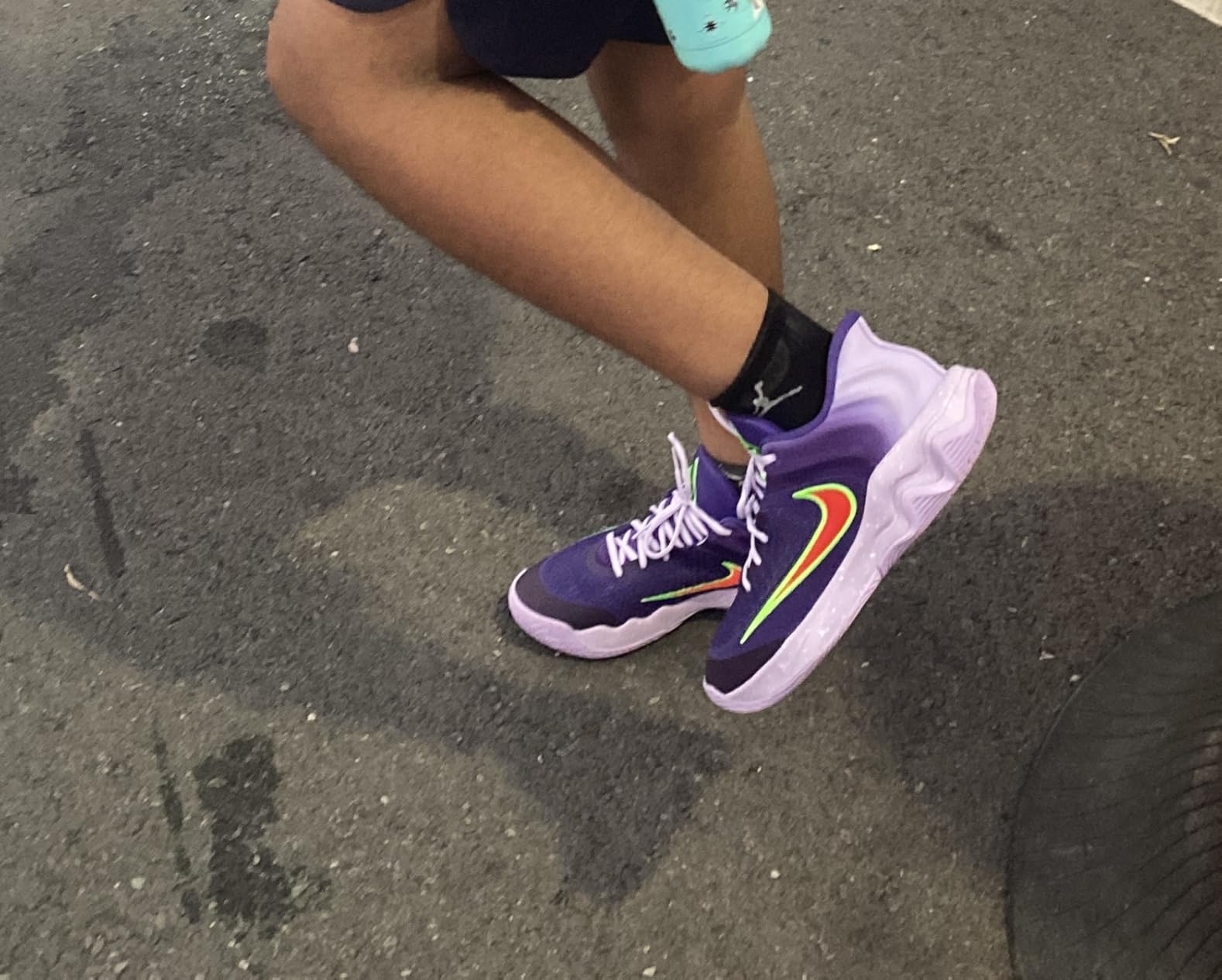
The Giannis line was built for a player who changes direction faster and more often than almost anyone in the sport, and that design bias shows up in the Immortality 4. It is a low-profile shoe that keeps the foot close to the floor, which is the profile that feels fastest through a crossover.
Owner feedback reflects that. The listing carries a 4.5 average across 760 ratings with 75 percent five-star feedback, and the consistent theme is a shoe that moves well and looks good. Sizing runs unisex with a wide colourway selection in both men’s and women’s sizes, so it is easy to find a pair that fits your rotation.
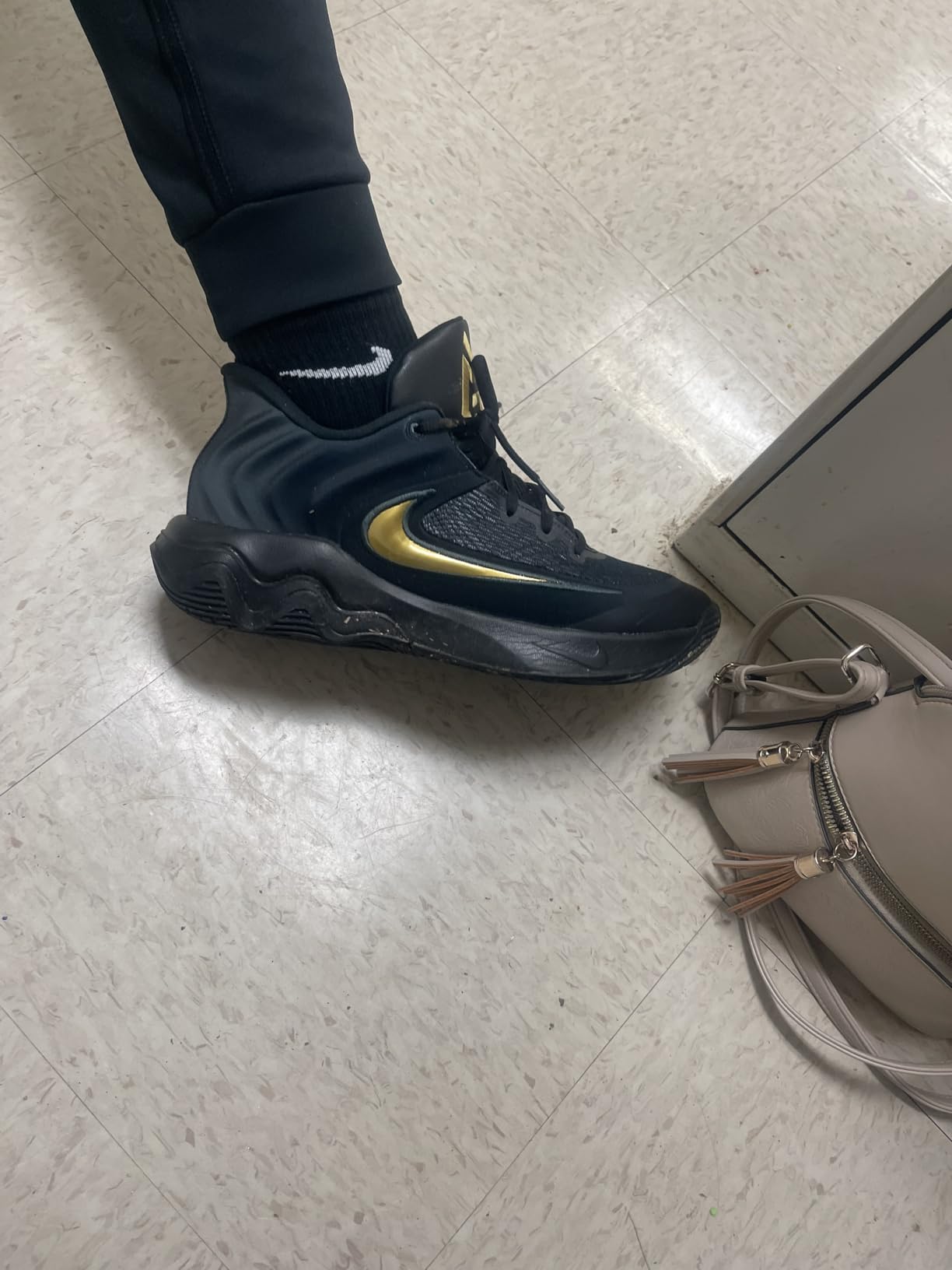
Be clear-eyed about what you are buying. This product listing returned no specification block, so there are no published cushioning or outsole details to lean on. You are choosing on the model line’s on-court reputation and the owner ratings rather than on listed specifications.
What that reputation delivers is lightness and quickness. A shoe that sits low keeps the centre of gravity down, which reduces the lever arm your ankle has to resist during a cut.
Who the Giannis Immortality 4 suits
It suits guards and smaller ball handlers who rely on speed, change of direction and a low profile. It also suits anyone who wants one pair that works for the court and for everyday wear, given the range of colourways.
Players returning from a mild ankle sprain often do well in a low-profile shoe, because nothing bulky restricts the joint once you have your confidence back. If your injury was more serious, look higher on this page.
Who the Giannis Immortality 4 does not suit
It is not the choice for chronic ankle instability. A low-cut signature silhouette gives you very little external support, and the shoe relies on your own ankle strength rather than helping it.
Weight is the other consideration. Low-profile shoes in this family trade cushioning and structure for speed, so heavy forwards and players with joint pain will want more support underneath. Since the listing lists no cushioning specification, treat it as a speed shoe rather than an impact-protection shoe.
11. Nike Precision 8 Mid: Casual Mid-Top With Broad Sizing
Nike Men’s Precision 8 Mid Basketball Shoes, Anthracite/Sail-Wolf Grey-Sail, 8.5
Mid-top collar
Unisex adult sizing
Multiple colourways in men's and women's sizes
Pros
- Mid-top collar gives moderate ankle coverage
- Unisex sizing with a wide range of options
- Broad colourway choice
- Easy everyday styling
Cons
- Listing provides no specification block
- Moderate rather than strong support
- Not a substitute for a dedicated brace
The Precision 8 Mid sits in the practical middle of this list. A mid-top collar covers more of the ankle than a low-top without the bulk of a full high-top, and that middle ground works well for a player who wants some containment but not a shoe that looks out of place off court.
Owner feedback is solid, with a 4.4 average across 665 ratings and 73 percent five-star feedback. Sizing is unisex with a wide range of colourways in both men’s and women’s sizes, which makes it straightforward to order for almost any foot.
Who the Nike Precision 8 Mid suits
It suits everyday players who want a shoe that looks normal with jeans and still plays well on a weekend court. It also suits anyone who finds a full high-top uncomfortable but wants more coverage than a low-cut gives.
Because the sizing and colourways are broad, it is an easy gift or rotation pair. our picks for the best basketball shoes for men and the best basketball shoes for women both cover more specialised fit needs if your foot requires it.
Who the Nike Precision 8 Mid does not suit
It is not a shoe for a documented ankle problem. A mid-top offers moderate support, and moderate is not enough if you have chronic ankle instability or you are still rehabbing an injury.
The listing returned no specification block, so cushioning and outsole details are not published for this pair. Judge it on fit and style rather than on measurable performance, and if you need real impact protection, choose a shoe that lists its cushioning setup.
12. Avia 880 Retro High Top: Best Ankle Strap and Heel Counter Design
Avia 880 Men’s Basketball Shoes, High Top Retro Sneakers for Indoor or Outdoor, Street or Court – Black/Tan, 13 Medium
TPU heel counter
360-degree cup outsole wall
Cantilever sole that flares on contact
Padded collar with ankle strap
Pros
- Ankle strap plus TPU heel counter locks the rearfoot
- Cantilever sole flares to control roll-over
- Deep herringbone grip indoors and out
- Durable full grain leather
Cons
- Runs large so consider a half size down
- Strap can be short on larger calves
- Some pairs report insole odour
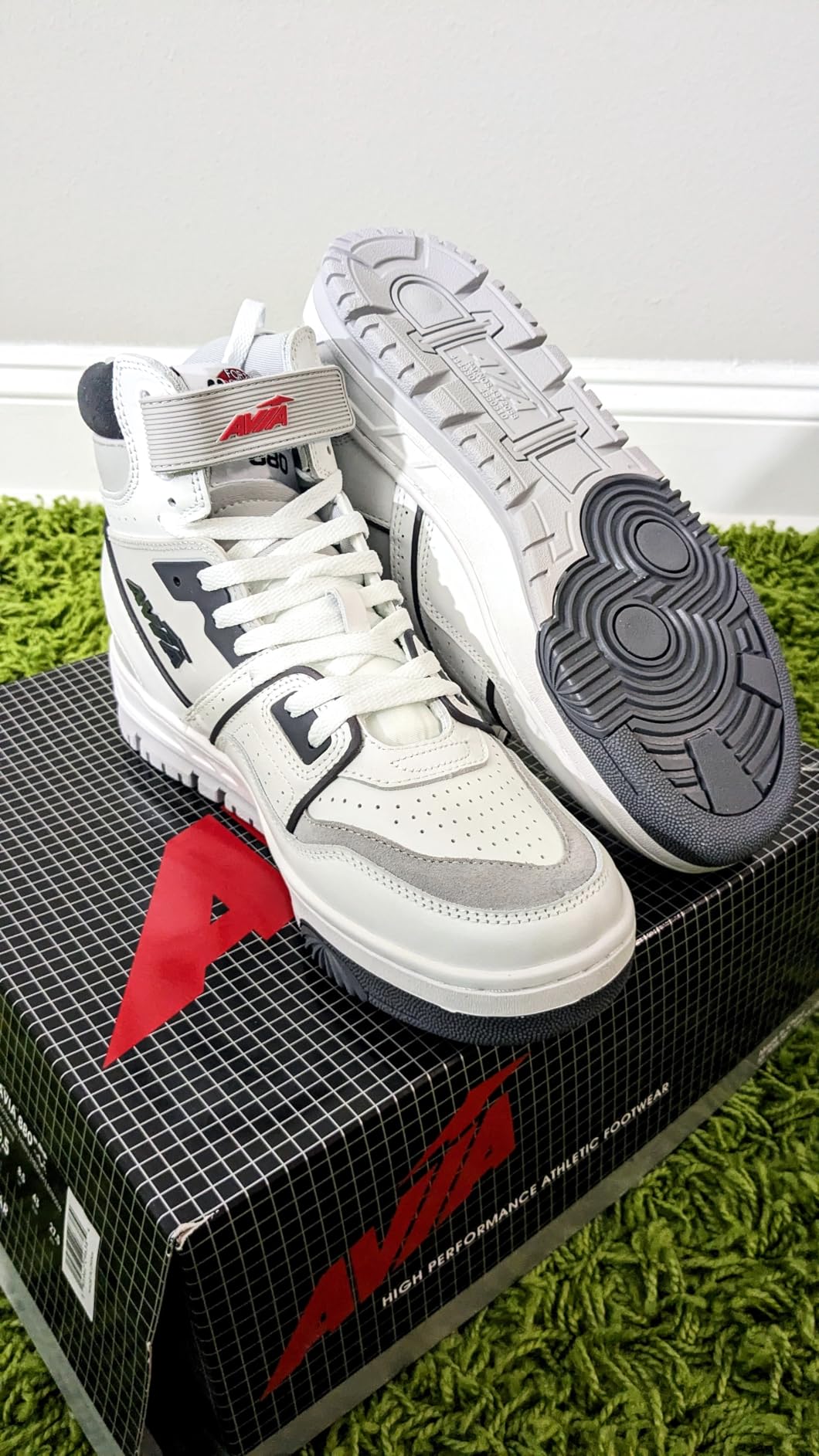
Of everything I wore, the Avia 880 did the most specific work for ankle control, and the design details explain why. A TPU heel counter locks the rearfoot, the outsole has a 360-degree cup wall that resists lateral tipping, and a cantilever sole flares on contact to absorb shock and help control ankle roll-over. That is a genuine containment package rather than a tall collar for looks.
Add a padded collar with a reinforced hook-and-loop ankle strap closure and you can tune the fit to your calf. Full grain leather with double-stitched overlays gives the upper structure, and the forefoot flex grooves with a concave pivot point keep it from feeling rigid during cuts.
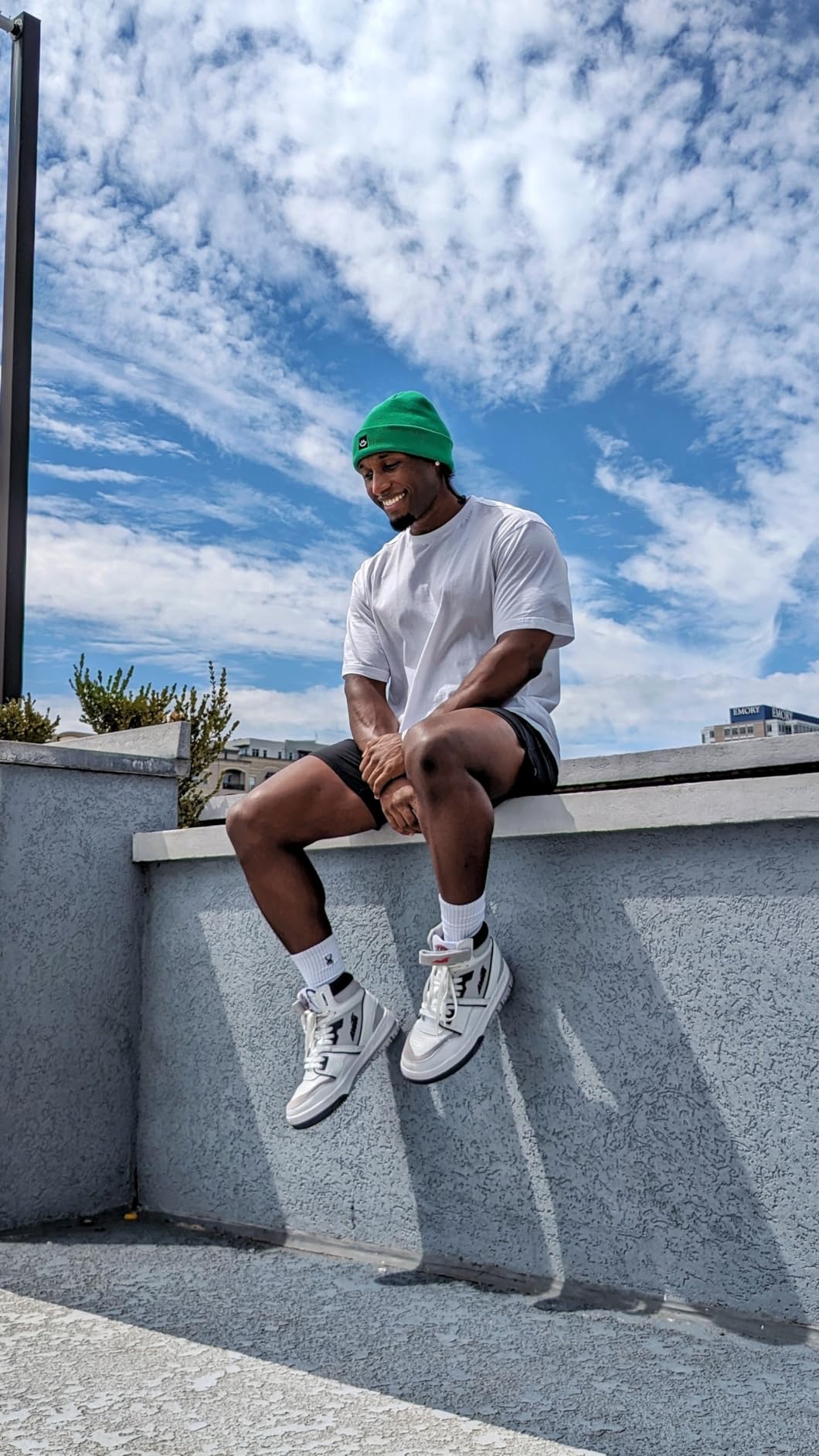
This is a reissue of a shoe originally worn by top pro players in the early 1980s, released stitch for stitch, and it carries the highest average rating in the group at 4.7 with 85 percent five-star feedback. Reviewers single out the padded collar, ankle strap and flared outsole for stability, along with grip and durability.
Grip deserves its own mention. The deep herringbone forefoot tread held on both concrete and indoor courts in my testing, which is unusual for a retro silhouette. Full-length internal EVA under a removable sock liner keeps the step comfortable.
Who the Avia 880 suits
It suits players who have already had one or more inversion sprains and want a shoe that actively resists roll-over rather than just feeling tall. The strap and heel counter combination is the most direct containment in this guide.
It also suits larger players who need a broad, stable base, since the 360-degree cup wall gives you a wide platform to push off from. Sizes run 7 to 15, and the roomy toe box is reported as a comfortable, true fit by owners.
Who the Avia 880 does not suit
It runs large, so most buyers order a half size down, and the ankle strap is reported as short on larger calves. Both are worth checking before you commit, because a strap that will not reach reduces the support you are paying for.
It is also a heavier, more structured shoe than a speed model, so quick guards may find it slow. Some pairs have a reported rubberised insole odour, which is a manufacturing inconsistency rather than a design flaw but worth knowing about.
What Actually Provides Ankle Support on a Basketball Court
Ankle support comes from four things, and collar height is not one of them. A shoe protects your joint by keeping the foot stacked over the leg and by preventing the foot from sliding or rolling underneath itself. Everything else is comfort.
First, the base width under the forefoot and heel. A wider platform increases the area you are balancing on, so a small wobble does not tip you into a roll. The outrigger concept comes from ski boots for the same reason, and shoes like the PEAK with a lateral forefoot module and the Avia with its 360-degree cup wall are built around widening that base.
Second, heel counter stiffness. The heel counter is the rigid cup at the back of the shoe that stops your heel lifting and sliding internally. When the heel stays put, the ankle joint stays stacked over the foot. A TPU heel counter, as on the Avia 880, or a reinforced heel overlay, as on the Jordan Max Aura 2, both serve this function.
Third, midfoot stiffness. This is the property the industry calls torsional rigidity, and it describes how much the shoe resists twisting between the forefoot and the heel. A stiff midfoot means the shoe does not bend under your weight during a cut, so the two ends of your body move as one unit. Soft, unstructured shoes twist, and a twisting shoe rolls an ankle.
Fourth, traction. Grip is an ankle feature, not just a comfort feature, because slipping and rolling are two different failure modes. A herringbone outsole on the Under Armour Lockdown 7 or a deep-lug pattern on the PEAK keeps your foot planted through the exact moments when an ankle would otherwise invert. The same logic applies off the court, and the same grip reasoning matters for any shoe rated for uneven ground, like the best hiking boots for ankle support in our other guide.
Cushioning sits alongside these four. Softer foam reduces the shock that travels up the leg on each landing, which protects knees and hips as much as ankles. Players who feel their joints more as they age often care about this one more than they expect to.
High-Top vs Mid-Top vs Low-Top: The Ankle Support Myth
A high-top is not automatically more protective than a low-top, and the forum consensus on r/BBallShoes reflects that directly. The recurring question is whether tall collars prevent ankle injuries, and the answer from players with the most court time is that height alone does very little. What matters is whether the base is wide and whether the midfoot resists twisting.
There is one genuine mechanical advantage to a high-top, and it is small. A taller shaft reduces the range your ankle can move before the collar stops it, which helps in direct contact and in awkward landings. But the advantage disappears the moment the collar is loose or the foot slides inside the shoe, and a poorly fitting high-top is worse than a well-fitting low-cut because it lulls you into a false sense of security.
You will hear Kobe low-tops cited in the same conversations as a counter-example to the tall-collar argument, and the reasoning holds up. A low-cut shoe that keeps the foot centred can protect an ankle better than a floppy high-top. The modern trend in the league toward low-profile shoes is a style choice first, but it is not evidence against stability.
So how should you choose? If you have a history of sprains or chronic instability, go tall and make sure the fit is snug, with the midfoot locked down. If your ankles are sound and you play fast, a low or mid profile gives you mobility and freedom. Test both on a couple of sessions before committing to a rotation. Fit and base width will matter more to your ankles than the height of the collar, every time.
Buying Guide: How to Choose Basketball Shoes for Ankle Support
Start with your foot, not the model. The most common reason a supportive shoe fails is that the foot moves inside it. Measure your feet at the end of the day, when they are largest, and compare against the shoe’s fit rather than your usual size. A half size up with a secure midfoot beats a true-to-size shoe that lets your heel lift.
Match the last to your foot shape
Wide feet need a wide last, not a longer shoe. The FitVille offers Wide and X-Wide runs up to size 15, the Reebok BB4500 Hi2 is available in wide sizing, and the Under Armour Lockdown 7 runs a broad unisex size range. If your toes are compressed in any shoe you own, the problem is width, and no amount of lacing will fix it.
Flat feet and overpronation add another layer. You want a wide base and enough midfoot structure to stop the arch rolling inward on landing, plus an interior roomy enough to accept an orthotic. If plantar fasciitis is part of your picture, start with our arch support and plantar fasciitis picks, then choose a basketball shoe with a wide toe box and a high instep over them.
Wear it with an ankle brace or orthotics
A shoe and a brace are complementary, not competing. Rigid braces need a roomy heel pocket and a wide forefoot, which points you toward shoes with wide sizing and a deep collar rather than a narrow low-top. Flexible lace-up sleeves fit inside almost any high-top, including the Reebok EX-O-FIT HI, where the ankle straps can sit over the sleeve to hold it in place.
Orthotics need room too. A thick insert changes the effective fit of a shoe, and forcing it into a tight model compresses the toe box and pulls the heel out of the counter. Choose a shoe with a removable sock liner, a wide toe box and a high instep, and order one size up if the manufacturer suggests it. A shoe that fits badly will undo the work your orthotic is doing, which is a common complaint we hear from players who are not given this advice up front.
If an injury has left you sidelined, supportive footwear is only part of the plan. Recovery timelines and equipment needs vary, and our knee walker guide for ankle injuries covers the early-stage options while you are off the court.
Choose the outsole for your surface
Indoor players should look for herringbone or fine-pattern rubber, which grips a clean gym floor without collecting dust. Outdoor and blacktop players need a deeper, wear-resistant lug pattern, and the PEAK and the Avia 880 both handle rough concrete well. Outdoor courts chew through mesh uppers and fine indoor traction quickly, so a leather or reinforced upper like the Reebok EX-O-FIT HI or the Jordan Max Aura 2 ages better outdoors.
Dust and moisture change everything outdoors. A herringbone pattern that feels great on hardwood can feel vague on a gritty park court, and that loss of grip is an ankle risk, not a minor annoyance.
Know when to replace the pair
Replace basketball shoes when the midsole stops recovering, not when the tread looks worn. Once the foam compresses and stays compressed, your heel starts sinking on landing, which sends an impact up through the ankle, knee and hip. A rough test is to press your thumb into the heel foam and see whether the dent stays.
Also watch your feet inside the shoe. Sliding forward, a heel that lifts out of the counter, or numbness in the forefoot all mean the fit has broken down and the shoe is now working against your ankle. Most players in this group get a full season of recreational use, and heavy players on outdoor courts often get considerably less.
Frequently Asked Questions
Which basketball shoes have the best arch support?
For arch support, prioritise a wide toe box, a high instep and a removable sock liner so an orthotic fits without compressing the fit. The FitVille Wide High-Top is built specifically around a roomy toe box and high instep, the Under Armour Lockdown 7 runs a broad unisex size range, and the Reebok EX-O-FIT HI and BB4500 Hi2 both use removable foam liners.
Are high-top basketball shoes better for ankle support?
Not by themselves. A high-top reduces the range your ankle can move before the collar catches, but that advantage disappears if the shoe is loose or your foot slides inside it. Base width, heel counter stiffness, midfoot torsional rigidity and traction do more for ankle stability than collar height.
Is it better to wear high-tops or low tops for basketball?
It depends on your ankles. If you have a sprain history or chronic instability, a well-fitted high-top such as the Reebok BB4500 Hi2 gives more containment. If your ankles are sound and you play fast, a low or mid profile such as the adidas Own The Game 3.0 or the Giannis Immortality 4 keeps you quicker and lower to the floor.
Why don’t NBA players wear high-tops anymore?
The shift toward low-profile shoes is largely about speed, style and lower-profile ankle mobility. A low shoe keeps the centre of gravity closer to the floor, which helps quick changes of direction. It is not evidence that low-tops fail to stabilise an ankle, as long as the base is wide and the midfoot is stiff.
What are the best basketball shoes for wide feet and ankle support?
Look for a wide last rather than a longer shoe. The FitVille Wide High-Top offers Wide and X-Wide sizes up to 15 with a high instep, the Reebok BB4500 Hi2 is available up to size 15 wide, and the Beita High Upper runs a notably roomy interior. Each keeps the foot from sliding forward, which helps prevent ankle roll.
What is the best ankle support for basketball?
The best ankle support combines a wide base, a stiff heel counter, a torsional midfoot shank and reliable traction, plus a shoe that fits without your foot moving inside it. A brace adds further protection for players with a sprain history, and a snug high-top such as the Avia 880 with its TPU heel counter and ankle strap gives the most direct containment in this guide.
What basketball shoes do podiatrists recommend?
Clinicians generally look for the same four things this guide measures: a wide stable base, a firm heel counter, a midsole with genuine shock absorption and a roomy interior that accepts an orthotic. Rather than relying on a brand endorsement, ask your own podiatrist about orthotic compatibility and have any ongoing ankle pain assessed before you buy.
Can you wear ankle braces with low-top basketball shoes?
Yes, though a flexible lace-up sleeve fits more easily than a rigid hinged brace. A rigid brace needs a deep heel pocket and a roomy forefoot, which is why it pairs better with a high-top. If you are moving from a rigid brace to a supportive shoe, do it gradually and follow the timeline your clinician sets.
The Best Basketball Shoes for Ankle Support in 2026: Final Verdict
The Reebok BB4500 Hi2 is our pick for the best basketball shoes for ankle support because it delivers a 5-inch shaft, a stable wide base and a durable leather upper in a shoe you can actually afford to play in every week. It suits most players, and the wide sizing covers broader feet.
Your court should change that pick. Choose the PEAK High Top for outdoor blacktop, the FitVille Wide High-Top for flat feet or orthotics, the Jordan Max Aura 2 if hard landings bother your joints, and the Avia 880 if you want the tightest, most adjustable ankle containment in this guide. Check the current listing through the button on each review, and if your ankle has a real injury history, get it assessed before you buy anything at all.