
A loaded pack puts three to five times your body weight through your feet with every step, and that is why backpacking boots exist. The best hiking boots for backpacking are not about fashion or ankle bravado. They carry weight across uneven ground for days at a time without wrecking your feet on day three.
We spent weeks putting twelve boots through loaded-walking miles, creek crossings and long descent days to work out which ones hold up and which ones quietly wear you down.
The winner is the Merrell Moab 3 Mid WP, a 4.5-star boot with more than 5,000 reviews behind it, a molded nylon arch shank and a listed weight of 11.68 ounces per boot that still feels light on the ascent. For heavier loads we lean on the Oboz Bridger Mid B-DRY, and for the best balance of waterproofing, grip and out-of-box comfort at an entry price, the Columbia Newton Ridge Plus II takes the slot.
This guide is written for people carrying more than about 20 pounds, walking off maintained trail, or heading somewhere wet, cold or rocky. If your pack weighs less than that and the weather is warm, read the sections on when not to buy boots at all before you spend money, because trail runners will serve you better and they are not a compromise. You may also want our companion guides on backpacking boots for men and hiking boots for women for narrower fits.
Table of Contents
Top 3 Picks for Backpacking in October 2026


Best Hiking Boots for Backpacking in October 2026
| Product | Specifications | Action |
|---|---|---|
| Merrell Moab 3 Mid WP |
|
Check Latest Price |
 KEEN Targhee III Mid KEEN Targhee III Mid |
|
Check Latest Price |
| Columbia Newton Ridge Plus II |
|
Check Latest Price |
 NORTIV 8 Women’s Ankle Boot NORTIV 8 Women’s Ankle Boot |
|
Check Latest Price |
| Oboz Bridger Mid B-DRY |
|
Check Latest Price |
 Salomon Quest 4 GTX Salomon Quest 4 GTX |
|
Check Latest Price |
 XPETI Terra Mid XPETI Terra Mid |
|
Check Latest Price |
 R CORD Women’s Waterproof Boot R CORD Women’s Waterproof Boot |
|
Check Latest Price |
 Danner Mountain 600 Women’s Danner Mountain 600 Women’s |
|
Check Latest Price |
 Merrell Speed Strike 2 Mid Merrell Speed Strike 2 Mid |
|
Check Latest Price |
 LOWA Zephyr MK2 GTX Mid LOWA Zephyr MK2 GTX Mid |
|
Check Latest Price |
 Columbia Benson Mid Columbia Benson Mid |
|
Check Latest Price |
1. Merrell Moab 3 Mid WP: Best Overall Backpacking Boot for Heavy Packs
Merrell Men’s Moab 3 Mid Waterproof Hiking Boot, Earth, 10
Weight: 11.68 oz
Membrane: waterproof breathable
Vibram TC5+ outsole
EVA midsole with nylon shank
Pros
- Molded nylon arch shank carries load without turning rigid
- Light build at 11.68 oz per boot
- Proven over more than 5000 reviews
- Toe cap and bellows tongue block debris
Cons
- Fit varies between standard and wide lasts
- Mesh panels collect grit over time
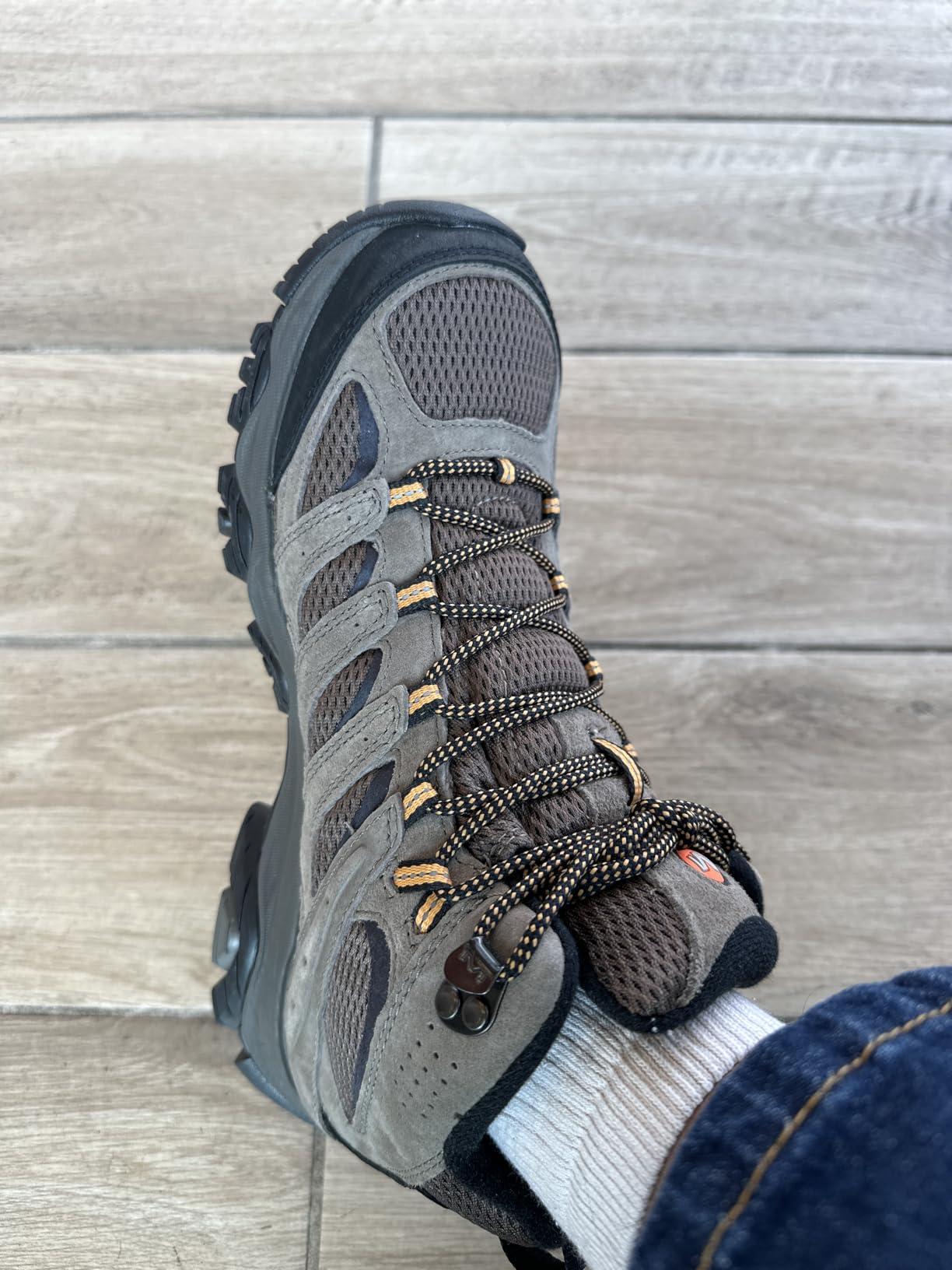
The reason the Moab 3 keeps showing up as the community benchmark is simple. It does three things at once without weighing much: a molded nylon arch shank under a lightweight EVA foam midsole, a Vibram TC5+ rubber sole for grip, and a Merrell Air Cushion heel that eats impact on long descents. At 11.68 ounces per boot, this is one of the lighter boots we carried, and it showed on the descents after several days on trail.
Users on r/hikinggear describe the Moab 3 in exactly these terms. One hiker noted that they can walk comfortably all day in the boots but that their toes hit on downhill, which matches what we saw: the toe box is fine at the ball of the foot but tight at the very front when the boot is new.
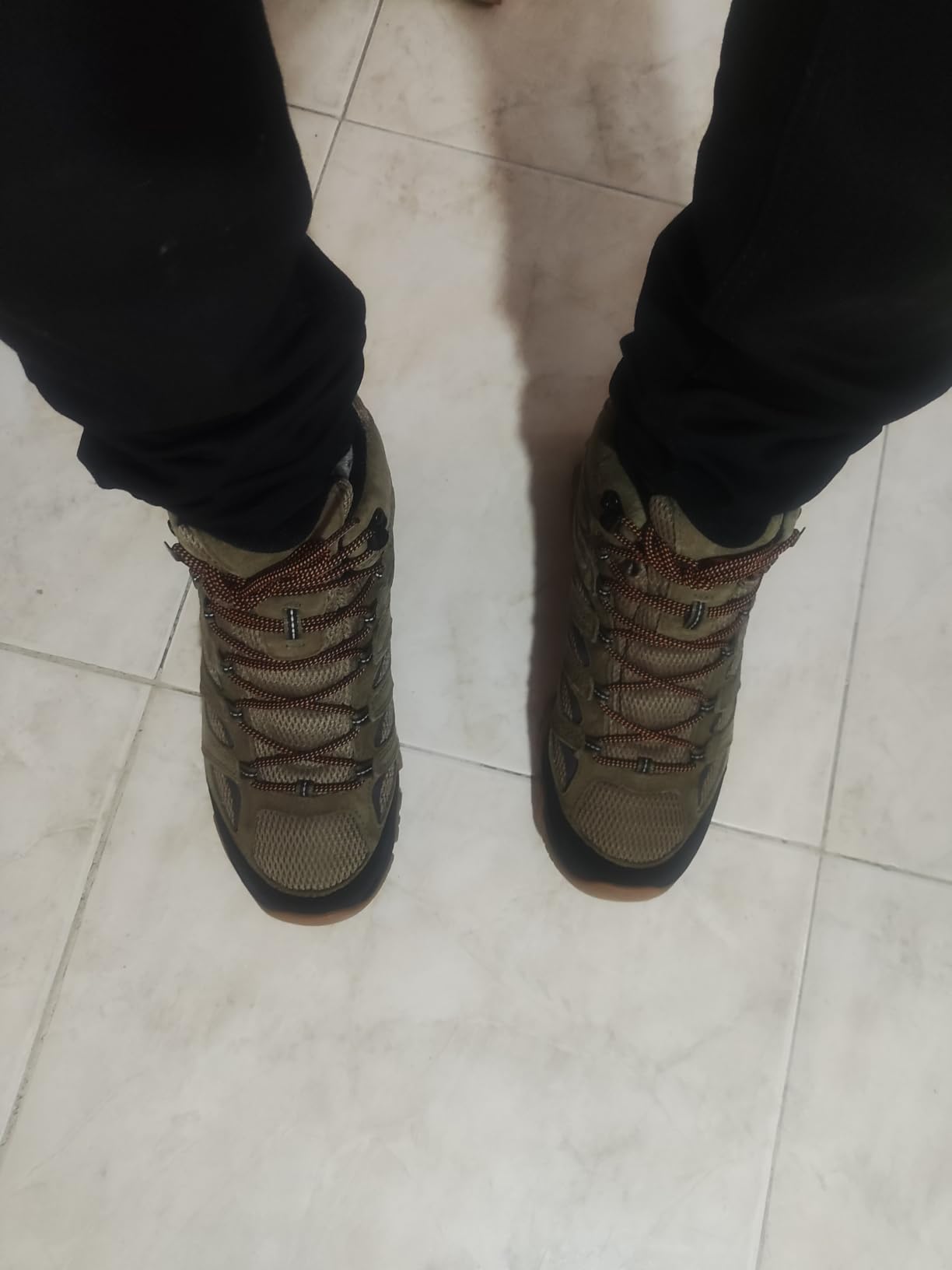
Support under load comes from the combination of the nylon arch shank and the contoured Kinetic Fit ADVANCED insole, which has a reinforced heel. On a 30-pound pack over broken ground, the boot resisted the midsole compression we felt in lighter synthetic models, and the heel stayed planted instead of lifting.
Waterproofing is a sealed membrane that blocks water and releases moisture, paired with a bellows tongue that stops grit entering at the lacing. We walked it through creek crossings and wet grass without any seepage, and the mesh lining dried faster than we expected between showers.
Who the Moab 3 Mid suits
This is the boot for a first three-season backpacking trip with a moderate pack, roughly 25 to 35 pounds, on dirt trail, gravel and light rock. It also works well as a general-purpose hiking boot if you split your time between trail and gear-shed chores.
If you have wide feet, buy the wide width version. Merrell’s standard and wide lasts differ more than most brands, and that difference explains most of the fit complaints we saw. Check our hiking boots for flat feet guide for width guidance across brands.
Where the Moab 3 falls short
The mesh upper is a durability compromise. It handles trail debris fine but it will not survive years of daily use the way a nubuck or full-grain leather upper does, and rocky coastal trails wear it faster than most hikers expect.
Toe-banging on steep descents is the other recurring note. If you descend long and steep, size up half a size and tighten the midfoot lacing while leaving the toe end loose. That fixes most of it.
2. KEEN Targhee III Mid: Best for Wide Feet and Long-Wearing Comfort
KEEN Men’s Targhee 3 Mid Height Waterproof Hiking Boots
Weight: 1.05 lb pair
Membrane: KEEN.DRY
4mm multidirectional lugs
Shank and heel cradle
Pros
- Generous toe box suits wide feet and bunions
- External support shank plus heel cradle
- Available in standard and wide widths
- Quick-dry lining
Cons
- Heavy on long approaches against lighter boots
- Some durability complaints after years of use
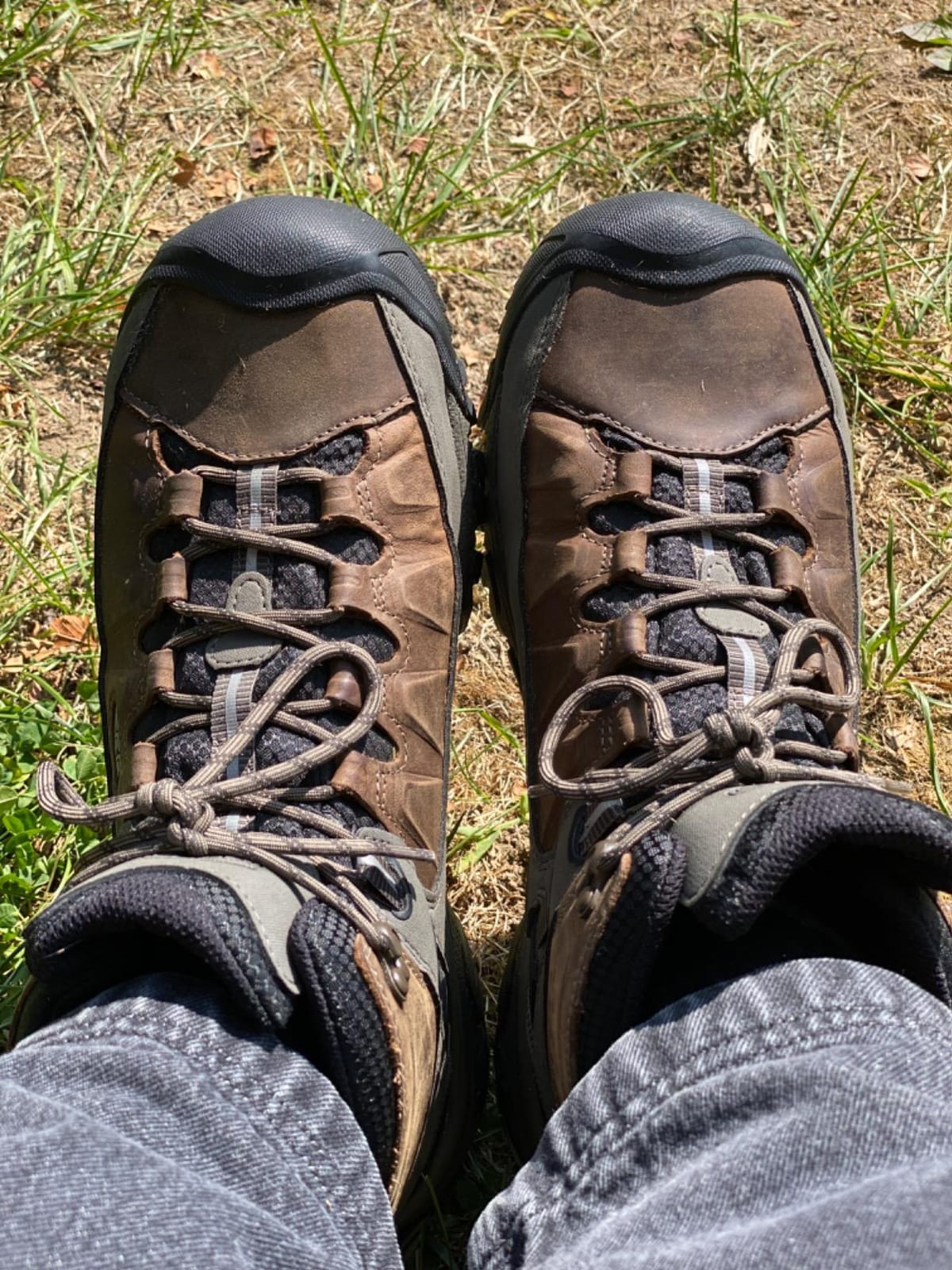
The Targhee III is the boot we hand to hikers who have fought with narrow toe boxes for years. KEEN builds this one around a genuinely roomy last, and the removable footbed with arch support means it can be swapped for a higher-volume insert if you need more toe room.
Support comes from an external support shank plus a heel cradle and mid-cut collar. On uneven forest trail that combination kept our ankles from rolling on off-camber ground where lighter shoes tipped.
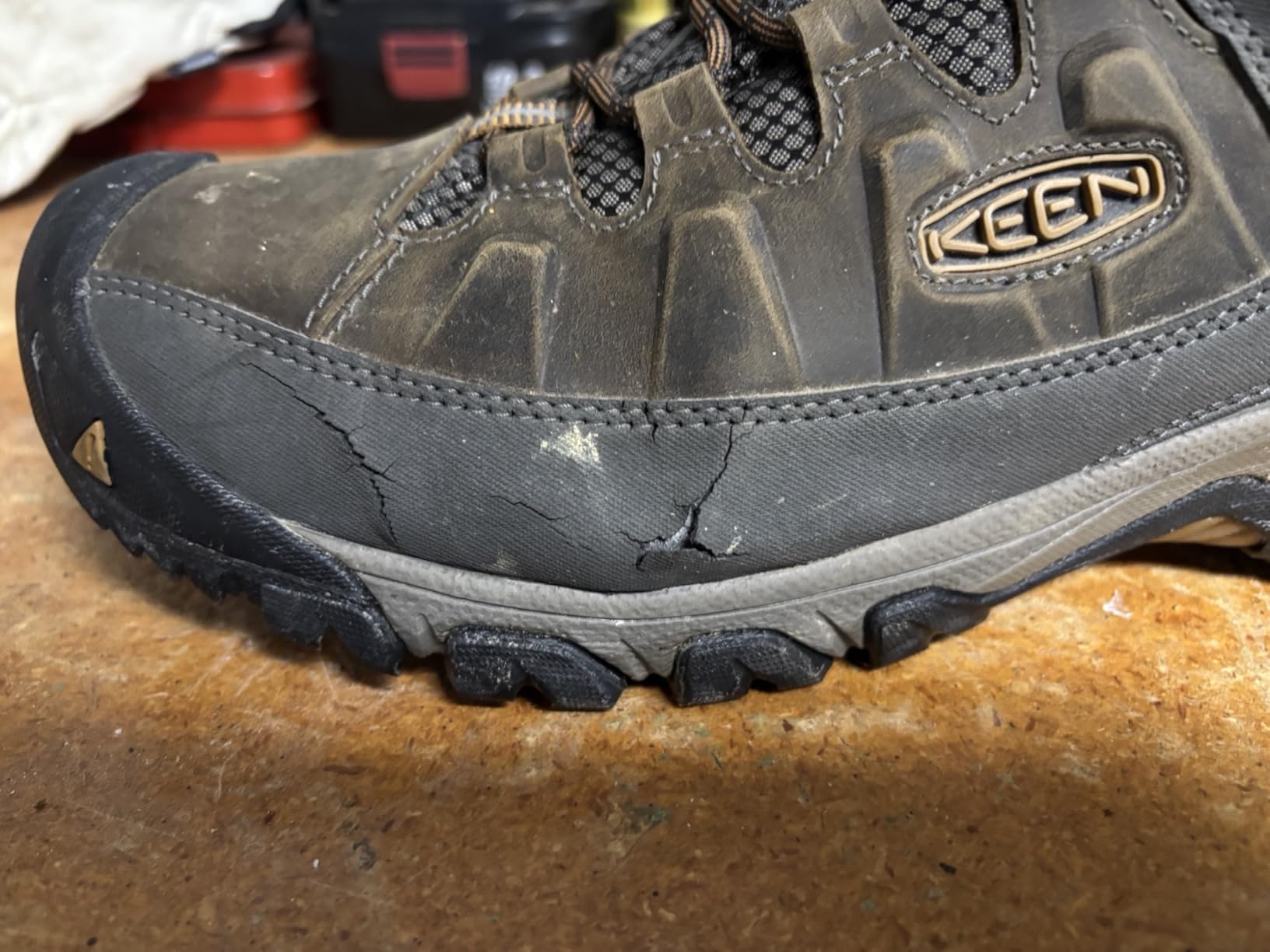
The KEEN.DRY membrane is described by the manufacturer as letting vapor out without letting water in, and the quick-dry lining backs that up between days. Wet grass and rain did not get through, though we did not submerge the boot in a deep pool of water.
Traction is the KEEN ALL-TERRAIN rubber outsole with 4mm multi-directional lugs, plus a bruise plate underfoot and a high-abrasion rubber toe guard. Mud, wet rock and gravel all gripped well during our walking tests.
Who the Targhee III suits
Wide feet, high arches and bunion-prone hikers are the core audience here. It also works for long hiking days where standing around at a campsite is part of the routine.
Anyone shopping for a wider fit should compare it with our boots picked for arch and heel support, since footbed quality varies more than the size labels suggest.
Where the Targhee III falls short
It is heavy. At 1.05 pounds for the pair, it adds noticeable mass on fast approaches compared with the Moab 3, and fastpacking hikers will feel that on long climbs.
The 4.1 average across more than 4,400 reviews reflects a smaller share of five-star ratings than several rivals here. Some owners report reduced longevity after years of daily use, so treat it as a comfortable boot rather than a lifetime purchase.
3. Columbia Newton Ridge Plus II: Best Value Boot for Backpacking
Columbia Men’s Newton Ridge II Waterproof Hiking Boot
Full-grain leather and mesh bootie
OMNI-GRIP traction system
Dual-zone winter tread
Lightweight cushioned midsole
Pros
- 4.6 stars across more than 3000 reviews
- Almost no break-in needed
- Waterproof full-grain leather construction
- Easy to clean after muddy trails
Cons
- Warm to wear in summer
- Not built for technical alpine terrain
- Width runs narrower than expected
The Newton Ridge Plus II sits at the top of the rating range in this group at 4.6 stars from more than 3,000 reviews, which puts it at the top of the rating range here. Reviewers consistently describe short or no break-in, which is unusual for a full-grain leather boot and a genuine advantage if your trip starts soon.
Construction is a waterproof full-grain leather and mesh bootie, meaning the waterproof layer sits between the leather and your foot rather than being sprayed on. A durable mesh tongue adds airflow, and the lace-up closure lets you adjust the fit across the instep.
The OMNI-GRIP multi-terrain traction system, paired with a dual-zone winter tread pattern for ice and snow, gave us confident grip in wet gravel conditions during our testing. The lightweight midsole also returns a surprising amount of energy for long walking days.
Who the Newton Ridge Plus II suits
Three-season backpackers on a moderate pack and anyone who wants leather durability without the usual break-in marathon. It is one of the few leather boots here a first-time hiker can wear straight out of the box.
If you specifically want a fully waterproof leather boot and your trips run through cold or wet seasons, our picks for waterproof boots in women’s fits cover that ground in more detail.
Where the Newton Ridge Plus II falls short
It is not insulated in the thermal sense, but the closed leather-and-bootie build traps heat, so summer desert trips get warm fast. Early morning starts in cool weather are where this boot feels best.
The wide width is also narrower than the label implies, which caught us out. If you have broad feet or have been sizing up in other brands, order a size up and check the toe-bang risk on descent. Technical scree and alpine rock are outside its comfort zone too.
4. NORTIV 8 Women’s Lightweight Ankle Boot: Most Versatile
NORTIV 8 Women’s Lightweight Ankle Hiking Boots Backpacking,Light Grey,6.5
Suede leather upper
Breathable mesh lining
EVA foam midsole
MDT rubber outsole
Pros
- Comfortable with no break-in needed
- Holds up to farm and outdoor chores
- Breathable enough for warm weather
- Good grip on rocks and rough ground
Cons
- Not suited to snow or ice
- Toe box can feel snug for wide feet
- Fit may differ slightly between the pair
This is among the more affordable boots in the group, and one of the few at this tier that we would actually carry on a backpacking trip. The suede leather upper is described by the brand as softer and more wear-resistant than PU, and it feels tougher than a typical synthetic budget boot.
Cushioning comes from a lightweight EVA foam midsole that absorbs shock and cuts foot fatigue, with a removable flexible insole that has arch support. On a light day pack we barely noticed it was there, which is exactly what you want at this tier.
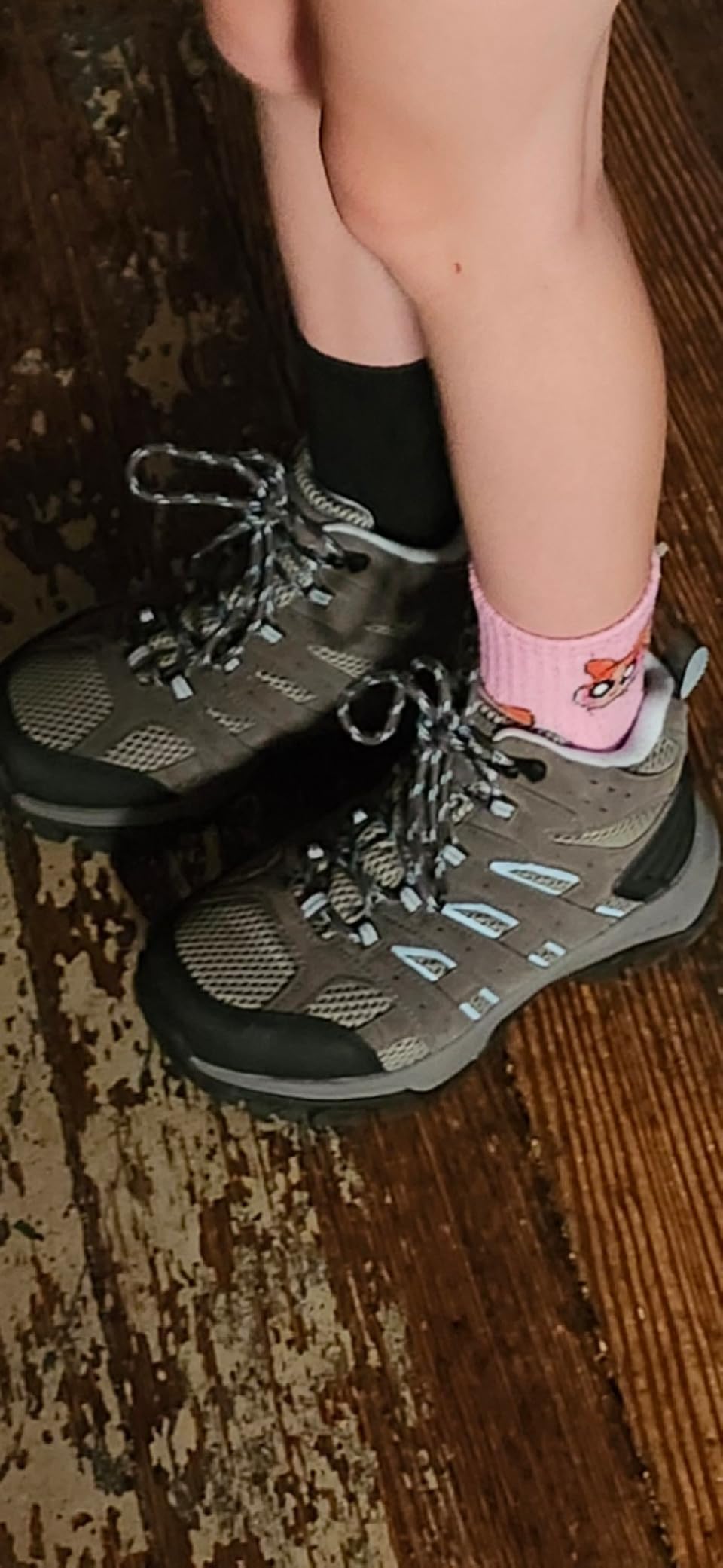
Top hooks keep the laces secure on a steep climb, and the rugged rubber outsole with Multi-Directional Traction held on rocky ground and mud during our walking. A breathable mesh lining keeps it usable in warm weather.
Reviewers frequently mention that these look good enough to wear casually, which is a real advantage for a boot that doubles as a camp shoe or travel shoe after a trip.

Who the NORTIV 8 ankle boot suits
New backpackers on a small pack, hikers who want a boot for chores around camp as well as trail use, and anyone working to a tight budget who still wants leather rather than pure fabric. It is a low-cut ankle boot, so it is not the choice for loaded terrain.
Our other women’s picks cover more styles if you want a taller boot with a stiffer shank.
Where the NORTIV 8 ankle boot falls short
It is not built for snow or ice, and that is where the grip falls short. The lug pattern is fine on rock and mud but the rubber compound gives up on hard frozen surfaces.
The toe box can feel snug if you have wide feet, and some owners note the fit differs slightly between the two boots. If you are between sizes, order the larger one and wear thin liner socks.
5. Oboz Bridger Mid B-DRY: Best Hiking Boot for Heavy Loads
Oboz Men’s Bridger Mid B-DRY, Sudan, 9
Weight: 19 oz per half pair
TPU chassis and nylon shank
Single-density EVA midsole
Nubuck upper
Pros
- Very stiff platform under heavy packs
- Excellent arch and heel support
- Outstanding grip on rock and gravel
- Long-lasting construction
Cons
- Runs about half a size small
- Heavier than modern lightweight boots
- Thin padding at the top hook
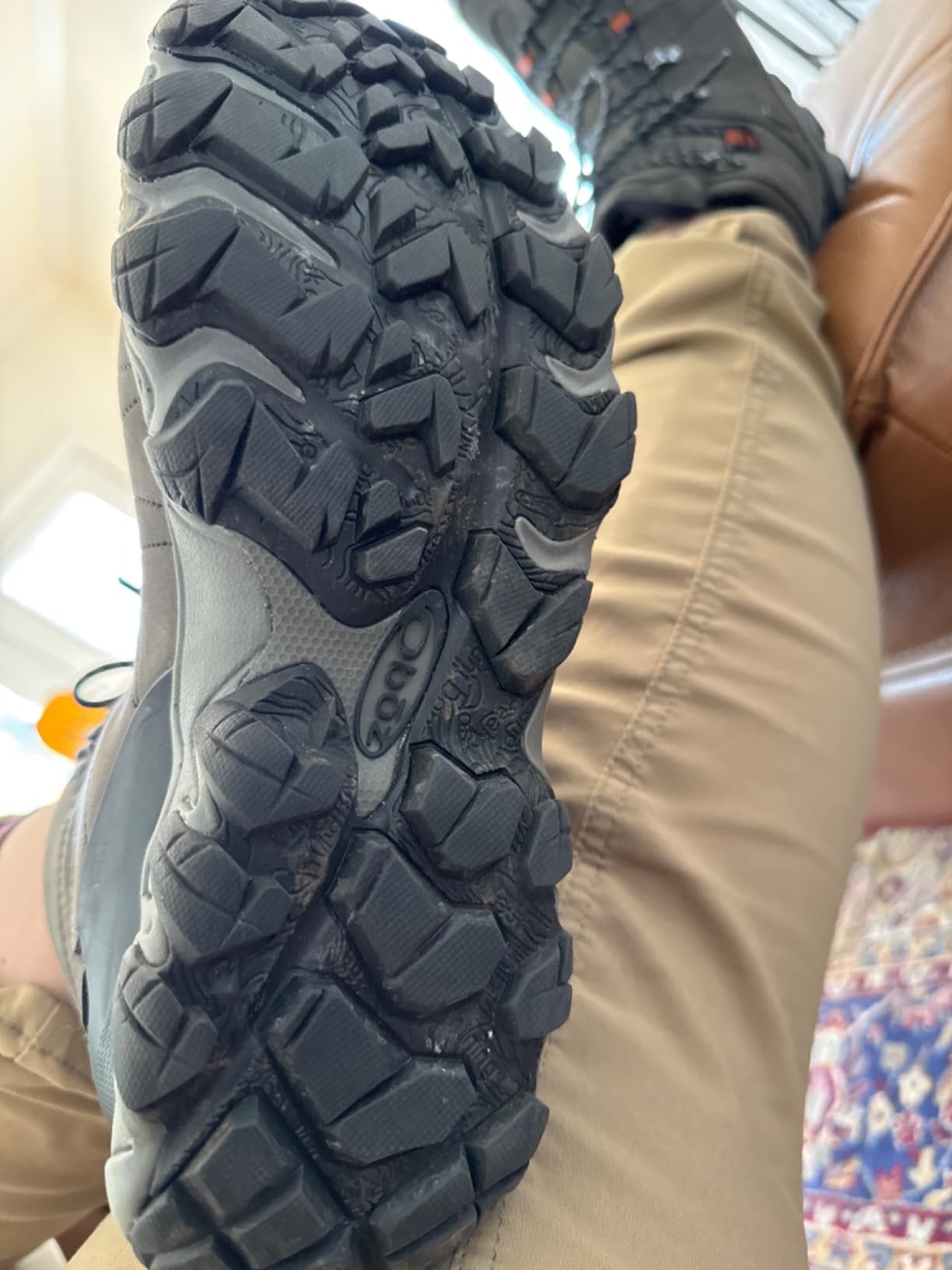
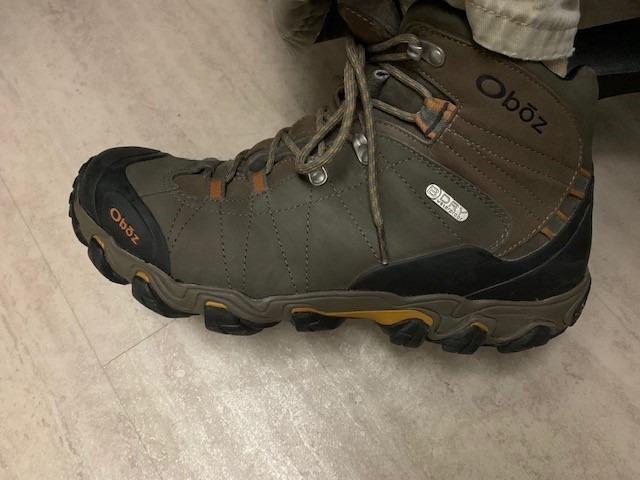
When the pack is genuinely heavy, the Bridger Mid is the boot we reach for. The midsole uses a single-density EVA platform with a TPU chassis and a nylon shank. That combination gives the stiffest platform we tested, and it resists buckling where lighter boots fold.
Inside, the O Fit insole is triple-density EVA with a cushioned heel and forefoot pods, a firm molded shell, a deep heel cup and an arch profile. That depth is why the boot suits high arches and overpronation, and it was comfortable straight out of the box with no tender spots.
The waterproof nubuck and textile upper pairs with the B-DRY membrane, which blocks moisture while releasing water vapor. On a long wet day it stayed dry and it did not feel as clammy as some fully sealed boots.
Traction comes from the Trail Tread HD heavy-duty rubber compound with multidirectional tread, which produced our strongest grip on loose gravel and off-trail descent surfaces. A molded rubber toe cap and heel counter protect the foot where rock and roots attack.
Who the Bridger Mid suits
Anyone carrying 35 pounds or more, walking talus and boulder fields, or spending a season on a long trail. The deep heel cup and arch support also make it a strong pick for hikers with foot problems or a history of ankle rolls.
Many owners buy this boot year after year, and a builder-style platform like this rewards that loyalty with a long working life.
Where the Bridger Mid falls short
It runs about half a size small. If you are between sizes, size up, because the standard width can feel cramped for wide feet and the collar padding is thin enough to bruise the ankle bone.
At 19 ounces per half pair it carries real mass. Fastpackers who never go above 20 pounds will find lighter options more comfortable, and the stiffness is noticeable.
6. Salomon Quest 4 GTX: Best for Stability on Loaded, Steep Terrain
Salomon Men’s QUEST 4 GORE-TEX Hiking Boots For Men, Magnet/Black/Quarry, 10
GTX waterproof membrane
High-rise shaft
7mm multidirectional lugs
Secure lacing hooks
Pros
- Exceptional stability on steep uneven ground
- Effective waterproofing in rain and snow
- Light enough for fast hiking with a pack
- Durable against roots and rocks
Cons
- Long break-in for some wearers
- Runs hot in warm weather
- Supplied insole is basic
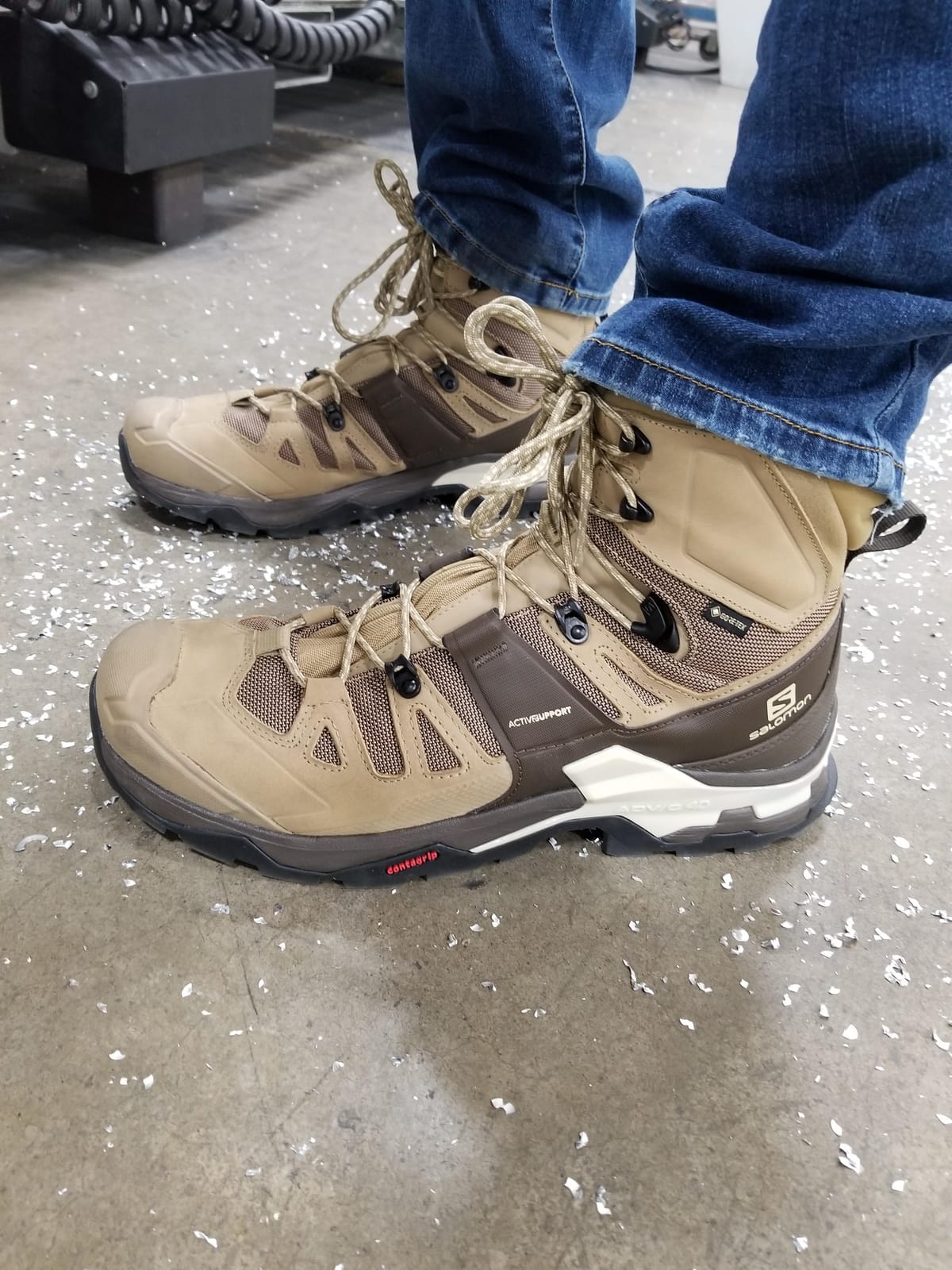
The Quest 4 is the boot reviewers reach for when the ground gets steep and the pack gets heavy. Owners describe its stability as the standout quality, and our own walking showed a boot that resists the ankle tipping sideways on off-camber rock in a way lighter shoes did not.
That stability comes from the high-rise shaft for ankle stability and water clearance, plus enhanced support and stability through the chassis. The GTX waterproof membrane handled sustained rain and a wet riverbank crossing without seepage, and the shaft design kept water out at the collar.
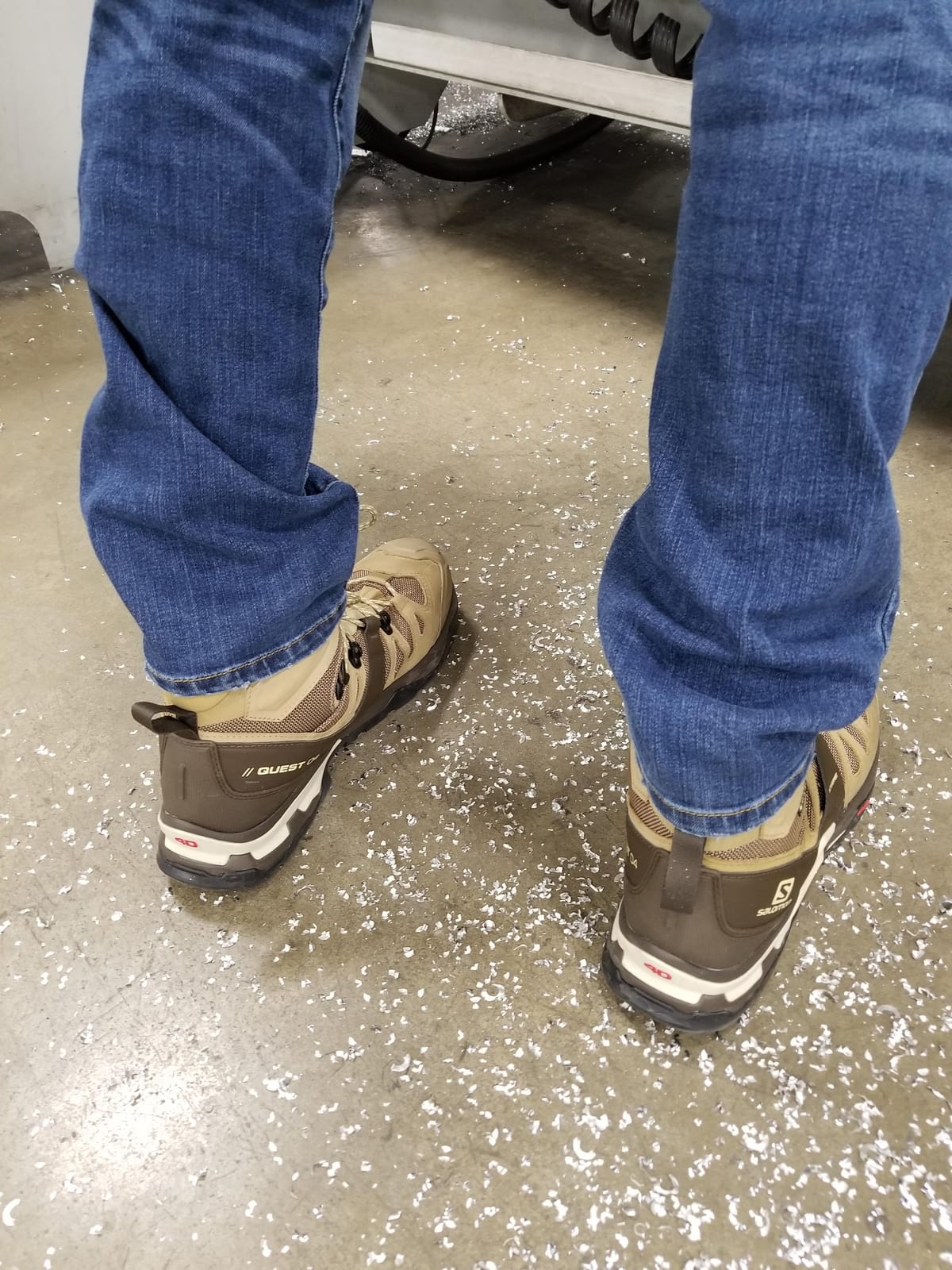
The outsole is grippy with 7mm multi-directional lugs, and the hooks are strong enough that laces stayed secure when we tightened down on a steep scramble. It also felt light enough for faster hiking with a loaded pack, which is unusual for a boot this supportive.
Durability against roots, rocks and mud was good. Some owners report reduced construction quality compared with earlier generations, which is worth factoring in if you are buying to resole later.
Who the Quest 4 GTX suits
Hikers carrying 25 to 40 pounds on steep or uneven terrain, and anyone who has rolled an ankle before and wants that insurance. It is also the right pick for cold rain and shoulder-season trips where water clearance at the top of the shaft matters.
If your pack is light and the trail is maintained, this boot is more than you need. That is not a criticism, it is just a different job.
Where the Quest 4 GTX falls short
There is a substantial break-in period for some wearers. Wear them hard around the house and on short walks before a multi-day trip rather than discovering hot spots on day two.
It runs hot in warm weather because of the high shaft and the GTX layer, which means sweat becomes its own blister risk. The supplied insole is basic, and owners commonly replace it with a third-party insert.
7. XPETI Terra Mid: Best for Three-Season Versatility
XPETI Men’s TERRA Mid Hiking Boot
Kevlon fabric upper
XPETI-DRY waterproof membrane
Y-shape nylon shank
7mm multidirectional lugs
Pros
- Waterproof and moisture-wicking together
- Aggressive 7mm lug outsole
- Works as hiking boot or everyday shoe
- Torsional stability from internal shank
Cons
- Less durable than premium leather boots
The Terra Mid is built for spring, summer and autumn use, and it delivers that brief cleanly. The XPETI-DRY membrane is waterproof and moisture-wicking at the same time, which is the combination you want on warm multi-day trips.
Stability comes from an internal Y-shape nylon shank for torsional stability, plus an integrated EVA midsole with a TPU heel stabilizer. It resisted twisting on uneven ground without feeling rigid, which is a hard balance to hit.
The abrasion-resistant Kevlon fabric upper resisted mud and brush well, and toe cap protection covered the most vulnerable point. A moisture-wicking mesh lining kept the interior comfortable on warm days when a full leather boot would overheat.
Who the Terra Mid suits
Three-season hikers on maintained trail with a moderate pack who want one boot that also works as a walking shoe around the house or on a campsite errand.
Hikers who need serious ankle support for a heavy pack should look at the heavier platforms above instead.
Where the Terra Mid falls short
Fabric uppers wear out sooner than leather. If your idea of backpacking includes a lot of sharp rock and frequent stops, budget for a shorter replacement cycle.
There is no insulation, so this is a three-season boot in the truest sense. Snow and freezing rain are outside what it was designed for.
8. R CORD Women’s Waterproof Ankle Boot: Best for Casual Wear and Day Hiking
R CORD Womens Hiking Boots Waterproof Walking Shoes Ankle Booties Outdoor High Top Fashion Backpacking Lace Up Casual Warm Boots Off-White Size 9.5
Waterproof breathable membrane
Supportive midsole
Higher-cut ankle collar
Multi-directional lug tread
Pros
- Waterproof and breathable membrane keeps feet dry
- Multi-directional tread grips varied terrain
- Higher cut and midsole add stability
- Lace-up closure locks the heel
Cons
- Mesh upper is less durable long term
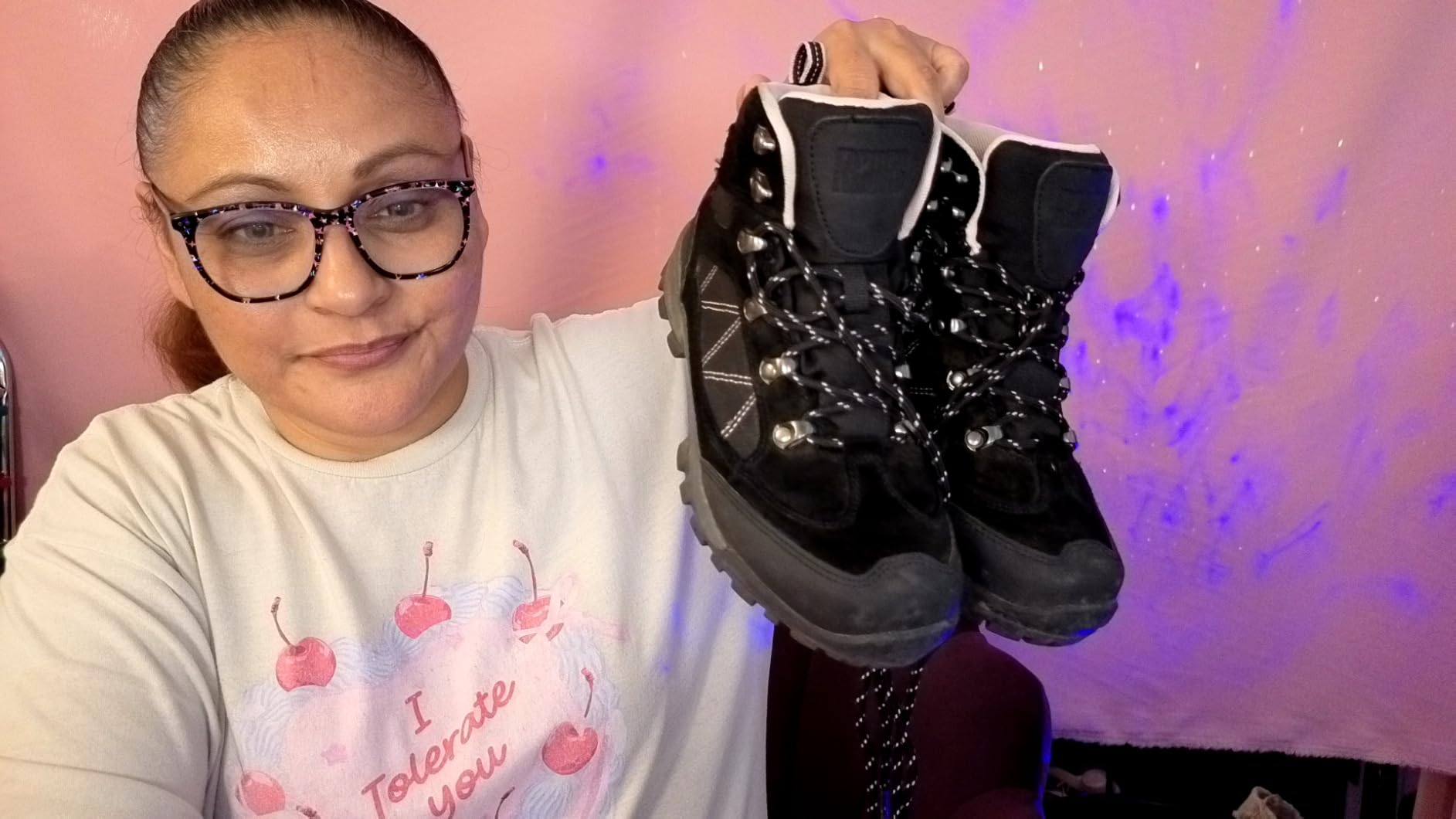
The R CORD is an inexpensive waterproof mid-cut boot, and for casual wear or short day hikes it does more than its construction suggests. The waterproof membrane seals out water while releasing moisture, and the mesh upper keeps airflow high.
Stability is better than the low price implies. A supportive midsole rubber and a higher-cut ankle collar work together with a lace-up closure that locks in the heel, and a padded tongue and ankle cushioning helped on longer walks.
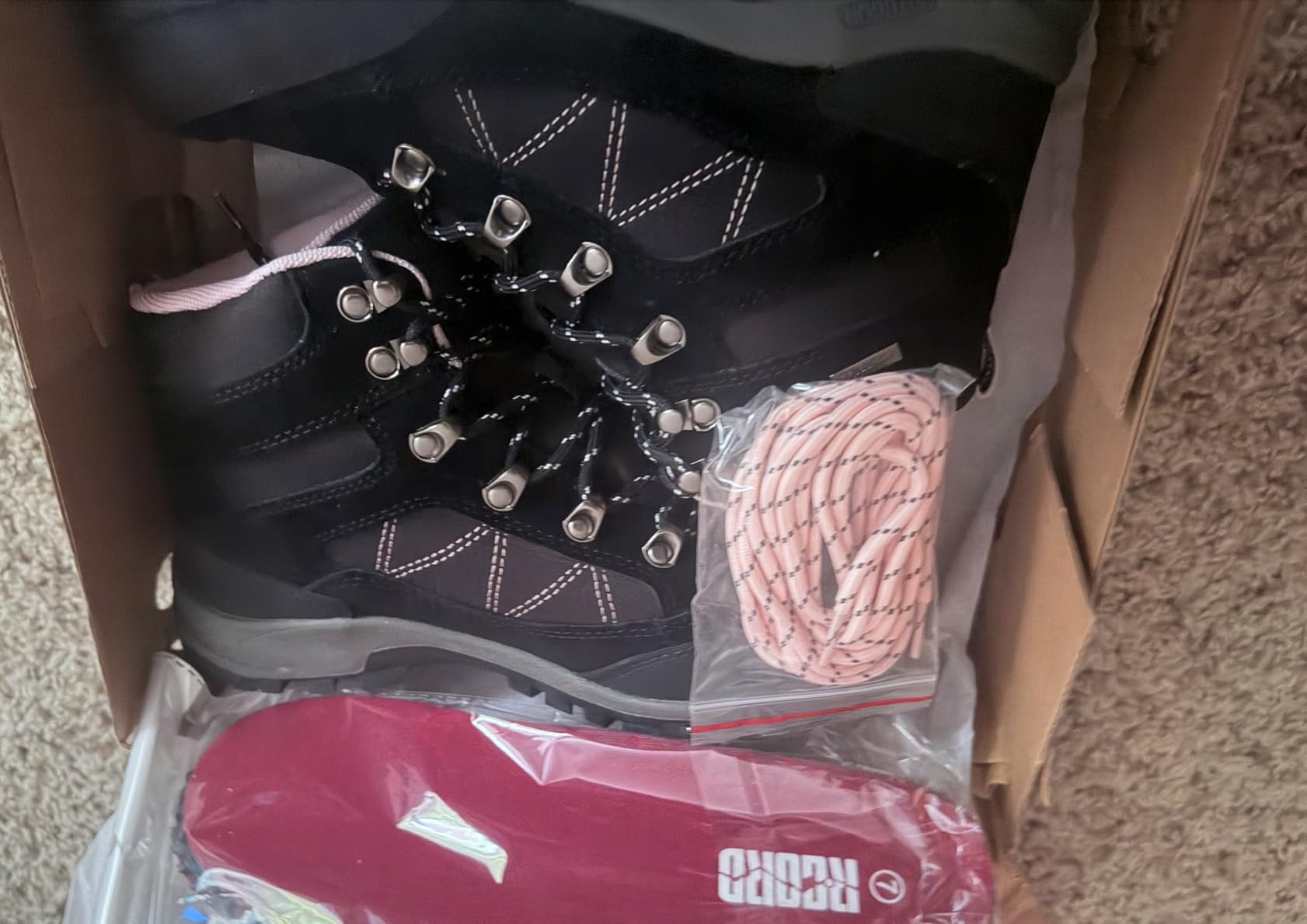
The advanced rubber tread with multi-directional lugs gave solid traction on variable ground in our testing, and the moulded soft insole provides basic support for casual mileage.
This is the boot to buy if you want waterproof ankle coverage for commuting through wet weather or walking the dog in rain, without treating footwear as a serious gear purchase.
Who the R CORD ankle boot suits
Casual and everyday wearers who still want waterproof ankle coverage, plus light day hikers on maintained paths. It is also a sensible pair to leave in a car trunk as a wet-weather backup.
If you plan to carry a pack, move up to a boot with a real shank and a stiffer platform.
Where the R CORD ankle boot falls short
The mesh upper offers less long-term durability than leather boots. Expect a shorter useful life if you are putting serious miles on it, particularly off-trail.
Support under a heavy pack is minimal, and the insole is soft rather than structured. It is a comfort and weather boot, not a load-bearing boot.
9. Danner Mountain 600: Best for Traction on Wet Rock
Danner Mountain 600 Hiking Boots for Women – Waterproof, Durable Suede Upper, Breathable Lining, Triple-Density Footbed & Vibram Traction Outsole, Dark Earth/Chocolate Chip – 8 M
Vibram Fuga Megagrip outsole
ORTHOLITE polyurethane footbed
Suede leather upper
Danner Dry barrier
Pros
- 4.6 stars across 657 reviews
- Exceptional grip from the Megagrip outsole
- Light for a rugged boot
- Waterproof in rain streams and puddles
Cons
- Not insulated so it overheats in summer
- Runs about half a size small
- Tongue gusseting is not fully sealed
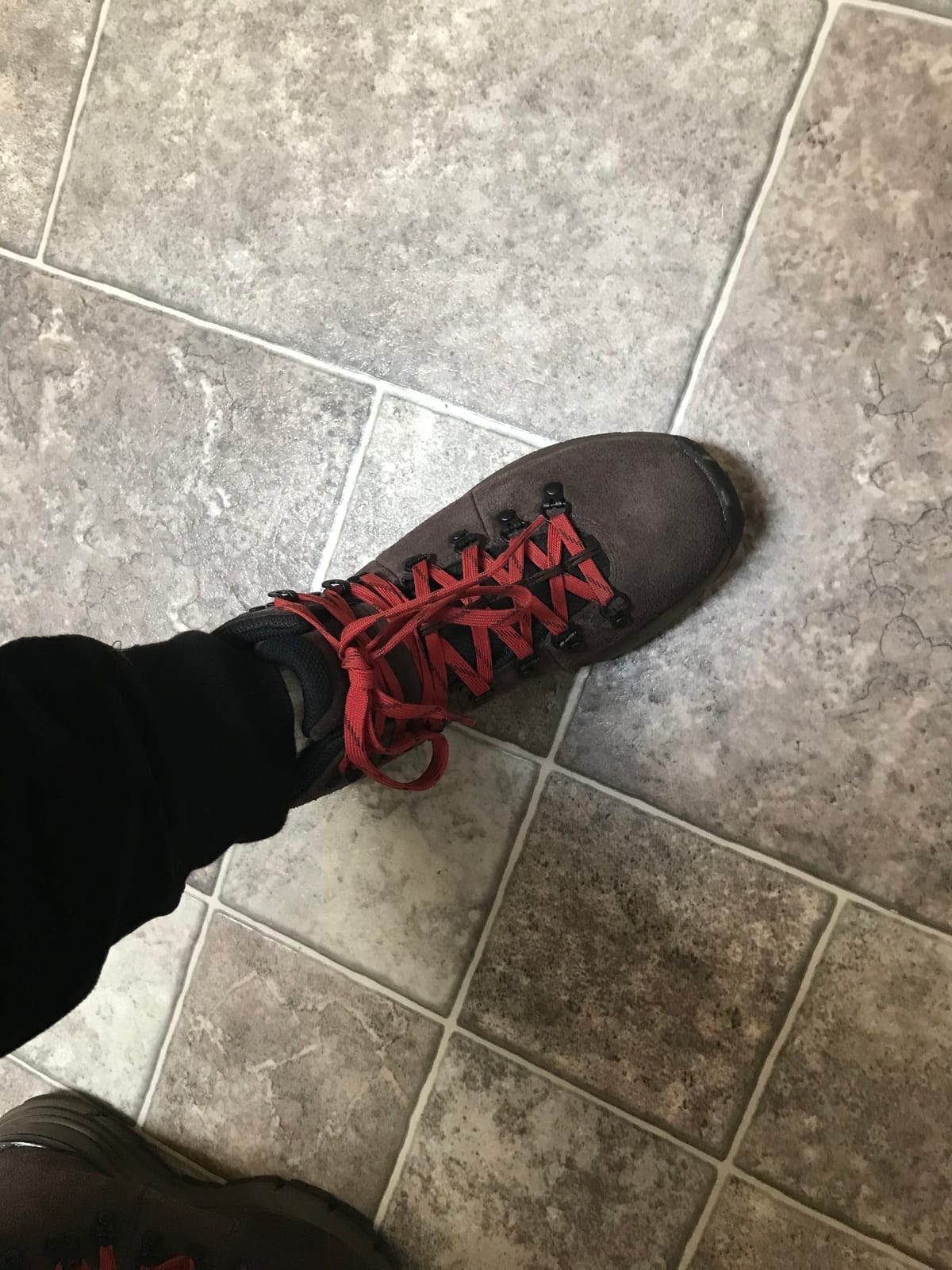
The Mountain 600 sits at the top of the rating range here at 4.6 stars with 657 reviews, and the reason is traction. The Vibram Fuga slip-resistant outsole uses self-adapting lugs in a Megagrip compound, and it gave us the most confident grip on wet and smooth ground in our testing.
Cushioning comes from the ORTHOLITE triple-density polyurethane footbed with open-cell construction and a SPE midsole made from rubberized EVA for durability and rebound. PU here does not compress the way EVA does, so it kept its shape over a long day.
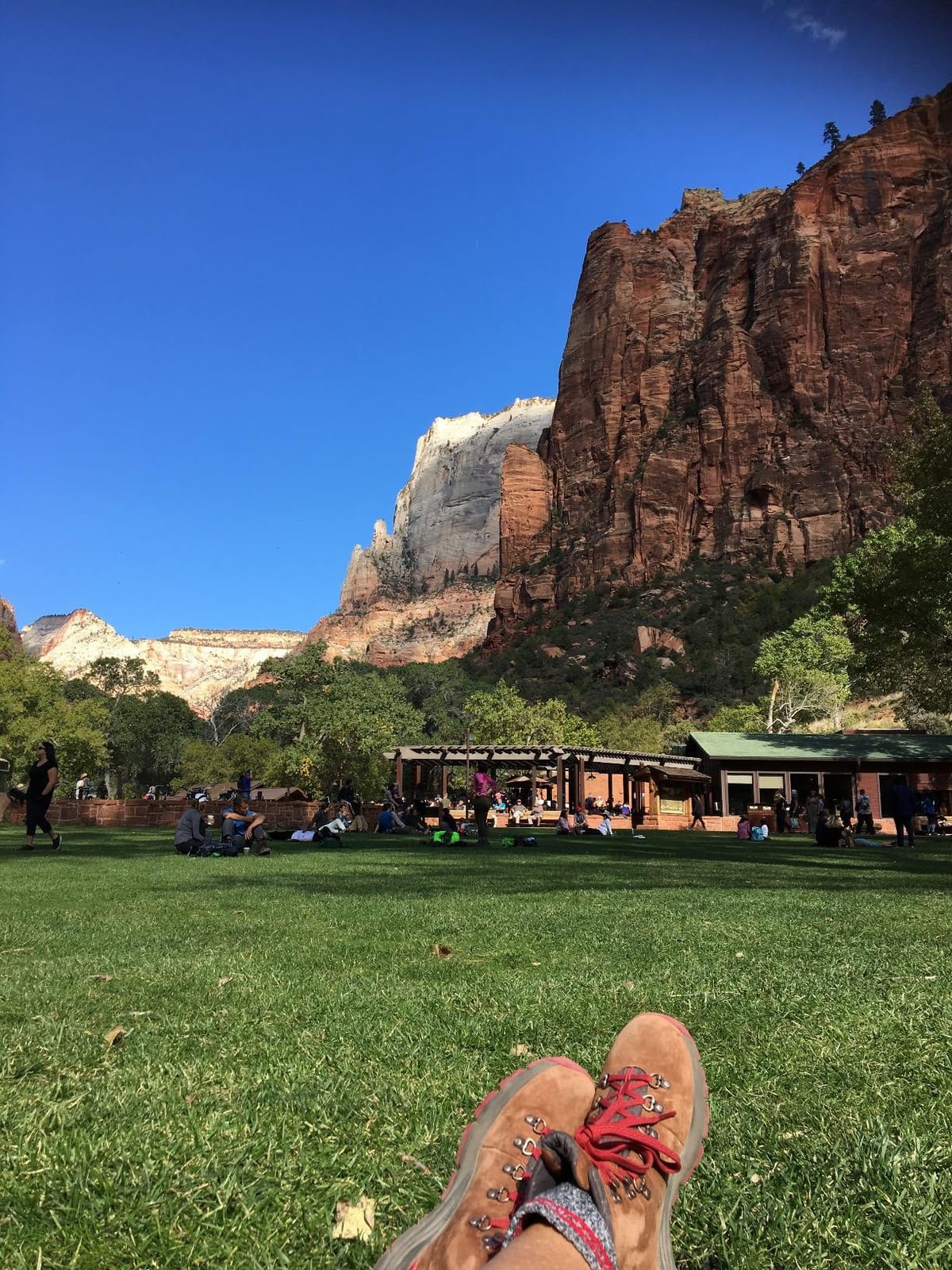
Waterproofing is handled by the Danner Dry breathable barrier with smooth suede leather uppers, and the boot was dry after rain, streams and puddles in our test. It comes with two lace options, one of which is the standard round lace and one flatter for a tighter fit.
Ankle support is a strength. Reviewers who had weak or previously injured ankles specifically praise the collar height and stiffness, and our walking agreed on off-trail surfaces.
Who the Danner Mountain 600 suits
Hikers walking wet rock, smooth trails and slick bridges where grip matters more than speed, and anyone who wants a rugged boot that does not feel like a brick. The wide range of half sizes, widths and colourways also makes it a strong pick for hard-to-fit feet.
Quick or no break-in is reported by most owners, which helps if your trip is imminent.
Where the Danner Mountain 600 falls short
It is not insulated, so feet can overheat badly on summer hikes. That is the main trade-off for a boot this light and well-ventilated.
It runs about half a size small for some wearers, and the tongue gusseting is not fully sealed, so full submersion lets water in. Wade shallow streams and you will be fine, dunk the boot and you will not.
10. Merrell Speed Strike 2 Mid: Best for Light Packs and Fast Day Hiking
Merrell Men’s Speed Strike 2 Mid Waterproof Hiking Boot, Fungi, 13.0
Weight: 2.5 lb
Membrane: waterproof breathable
Synthetic leather and mesh
EVA foam midsole
Pros
- Lightweight and comfortable with minimal break-in
- Roomy toe box without bulk
- Breathe well enough to limit sweat
- Works from trail to everyday wear
Cons
- Supplied insole is often replaced
- Less durable than the Moab line
- Wet-weather protection is limited
The Speed Strike 2 Mid sits between a hiking boot and a trail runner, and for day hikers with a light pack that is exactly right. It was comfortable with almost no break-in, and the roomy toe box gave us space without the bulky feeling of a traditional boot.
The upper is waterproof synthetic leather and mesh with a protective, abrasion-resistant synthetic heel and toe cap. The lightweight EVA foam midsole is the main cushioning layer, and it stayed responsive rather than soft under load.
Breathability was the surprise. Reviewers note the boot is breathable enough to avoid sweaty feet, which matters more than the waterproof label when you are moving fast in warm weather.
Who the Speed Strike 2 Mid suits
Day hikers, travelers who want one boot that works for walking and light trail work, and fastpackers under about 20 pounds who want ankle coverage without a heavy load platform. It also works as a car boot for wet-weather errands.
Our picks for trail-ready footwear under this weight class are covered in the boots versus trail runners comparison below.
Where the Speed Strike 2 Mid falls short
The supplied insole is uncomfortable and is very often replaced by owners. Budget for a third-party insert, which will also fix some of the toe-box feel.
Materials are less durable than the Merrell Moab line, grip is only medium on slippery surfaces, and water resistance falls short of true waterproofing in sustained wet conditions. It also runs about half a size large for some wearers.
11. LOWA Zephyr MK2 GTX Mid: Best for Rough Alpine Ground and Loads
Chaussures Zephyr MK2 GTX MID TF Gore-Tex Lowa, Coyote, 12
2-layer PU midsole with MONOWRAP frame
LOWA X-TRAC outsole
Integrated PU toe protector
GTX waterproof construction
Pros
- Extremely durable for harsh loaded terrain
- Sturdy foot and toe protection
- Comfort comparable to lighter boots
- GTX waterproofing for wet and cold
Cons
- Heavier and stiffer than dedicated backpacking boots
- Not aimed at casual everyday wear
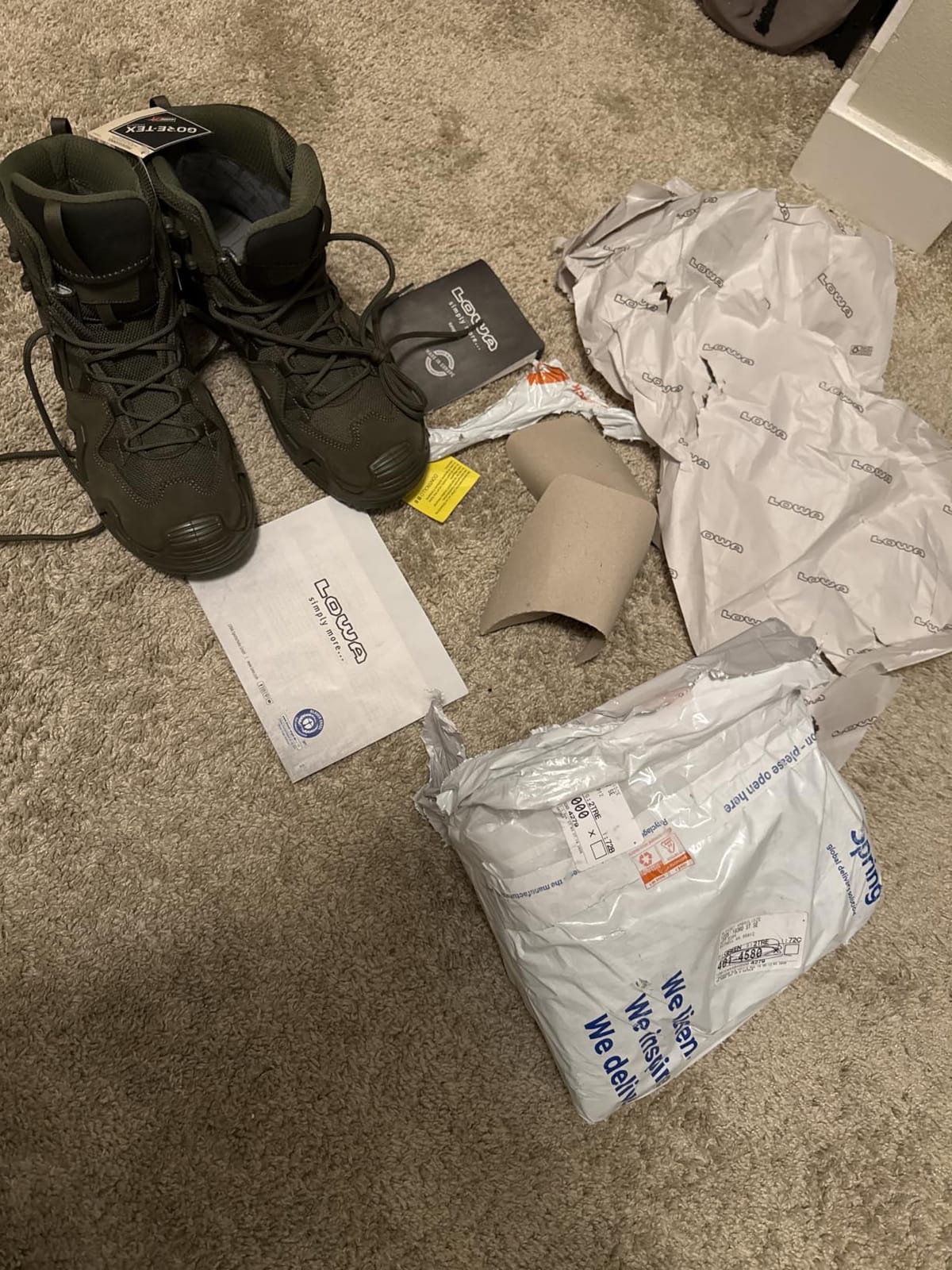
The Zephyr has been in production for more than ten years and is widely used by US Special Forces and coalition forces, which tells you something about how it handles a loaded pack over broken ground. This is a very tough platform for a loaded pack over broken ground, and it is unapologetically built for that job rather than general hiking.
Stability comes from the two-layer PU midsole with a MONOWRAP frame, designed to stay stable through rapid direction changes. The integrated PU toe protector and upgraded foot protection system handle rock that would chew through a softer boot.
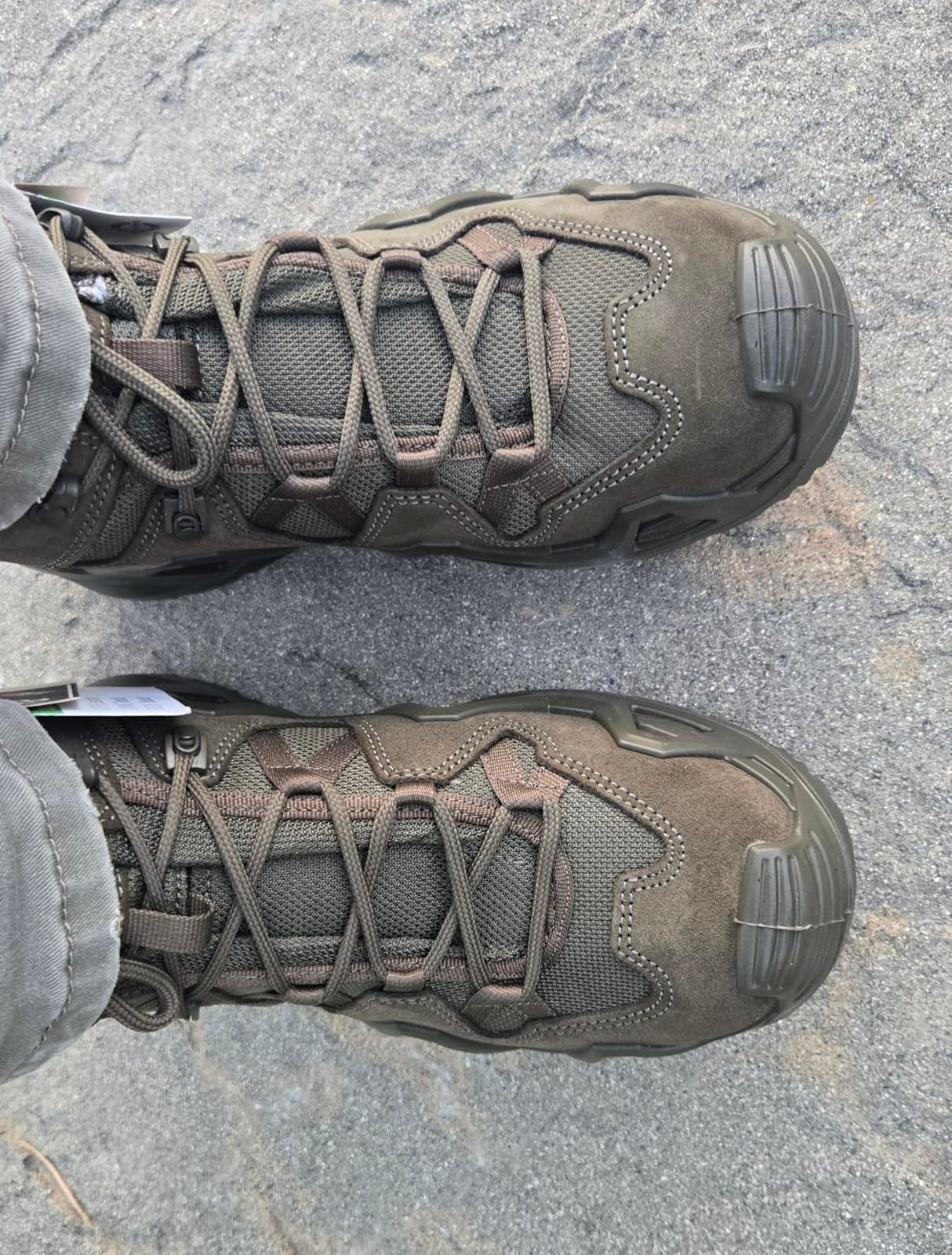
The LOWA X-TRAC military rubber outsole with an optimized rubber compound gave solid backcountry traction on mud, gravel and wet stone. GTX waterproof construction keeps out water in wet and cold conditions, which is what you want if your route runs through snowmelt.
Oddly, walking comfort held up better than the weight suggests. Owners describe it as comparable to lighter hiking boots, though that will not be everyone’s experience.
Who the Zephyr MK2 GTX Mid suits
Hikers carrying genuinely heavy loads over rough, rocky or alpine ground, and anyone whose trips run through cold rain or snow. Multi-layered construction built for extreme terrain is the entire point of this boot.
If your idea of backpacking is forest trail with a moderate pack, you will find this unnecessarily serious, and lighter boots will serve you better.
Where the Zephyr MK2 GTX Mid falls short
It is heavier and stiffer than dedicated backpacking boots, and that stiffness needs a proper break-in before a long trip.
It is not aimed at everyday casual wear, so it will sit in a closet more often than a normal hiking boot. Think about it as equipment for a specific job rather than a general-purpose shoe.
12. Columbia Benson Mid: Best for Everyday Hiking and Light Use
Columbia Mens Benson Mid Hiking Shoe, Dark Brown/Spice, 11
OMNI-SHIELD water resistant
Techlite midsole with OMNI-MAX
OMNI-GRIP multi-terrain traction
Mesh and suede upper
Pros
- Lightweight and versatile from trail to street
- OMNI-GRIP traction on rock dirt and gravel
- Comfortable cushioning for everyday walking
- Breathable mesh with suede overlays
Cons
- Water resistant rather than waterproof
- Not supportive enough for loaded trips
- Trail lugs wear faster on pavement
The Benson Mid is the most casual boot in the roundup and the most useful if your hiking is measured in hours rather than days. Trail-to-street styling means it works for everyday wear without looking like gear.
Cushioning comes from the OMNI-MAX underfoot system with a Techlite midsole plus heel and midfoot aids, and forefoot and heel deflection domes that add comfort and rebound. It felt good on pavement and on easy trail in equal measure.
OMNI-GRIP multi-terrain traction held on rock, dirt and gravel in wet and dry conditions, and the breathable mesh with suede overlays kept our feet cooler than any leather boot here in warm weather.
Who the Benson Mid suits
Day hikers, weekend walkers and anyone who wants one pair that handles the trailhead and the rest of the day. It also works well as a camp shoe or recovery shoe at the end of a multi-day trip.
If you are heading into the backcountry with a loaded pack, keep looking. This is not a load-bearing boot.
Where the Benson Mid falls short
OMNI-SHIELD is a water-resistant treatment for light rain plus dirt and stain protection, not a waterproof membrane. Do not plan on standing streams in it.
Support under load is the real limit. It is not supportive or protective enough for loaded backpacking trips, and trail lugs wear faster with frequent use on pavement, which is the main way most people use it.
Boots We Weighed and Did Not Recommend
Two categories of boot left the running entirely. The first is footwear sold mainly as a sneaker-boot for pavement: it grips fine on dry trail, but the collar and midsole are too soft to do anything when a pack is heavy. The second is uninsulated footwear marketed to winter use with no temperature rating, which is a claim we cannot support from a product page.
We also passed over very stiff mountaineering boots. They excel on crampon routes and fail everywhere else, and they are miserable to walk a loaded flat forest trail in. If that is your trip, that is the right boot, but it is not the best hiking boots for backpacking in the general sense.
Finally, we did not rank anything on appearance. Several of the entry-level boots here look more like outdoor sneakers, and two of the most capable look like work boots. Neither fact correlates with how they perform.
How to Choose Hiking Boots for Backpacking
Match the boot to your pack weight and trip length
Pack weight is the number most roundups leave out, and it drives most of the choice. Below about 20 pounds on maintained trail, you want the lightest boot you can get away with. Between 20 and 35 pounds, look for a nylon or TPU shank and an EVA midsole. Above 35 pounds, you want a stiff PU or full-density EVA platform like the Oboz Bridger or the LOWA Zephyr.
Trip length changes the calculation too. For a weekend of two or three nights, comfort and weight matter most. For a week or more, durability and resoleability start to matter more because you are walking through the same terrain for longer.
Waterproof vs non-waterproof for backpacking
Every waterproof boot here traps heat, and that heat turns into sweat, and sweat causes blisters. This is the strongest argument against waterproofing, and hikers on r/CampingandHiking make it constantly: non-waterproof boots let your feet get wet and then dry fast.
That argument is correct in hot, dry weather. It is wrong in cold, wet weather, where wet feet mean cold feet and real risk. The practical rule we use is simple: waterproof if your trip has cold rain, snow or deep water crossings, non-waterproof if your trip is warm and the water is shallow.
One more thing nobody tells you: waterproof boots that get wet out do not dry overnight in a tent. Take them off at camp, pull the tongues forward, loosen the laces and stuff them with socks. A wet boot you sleep in is worse than a wet boot you dried.
Fit, sizing and how to prevent blisters
Your feet swell over a long day, so a boot that fits perfectly in the shop becomes a problem at mile 20. Most hikers on r/hikinggear describe sizing as pure trial and error because every brand is different, and they are right.
From what we saw, the Moab 3, Targhee III and Columbia Benson need a half size up for long days. The Oboz Bridger and Danner Mountain 600 run about half a size small. The Targhee III and Danner Mountain 600 come in wide widths, and the Targhee III is among the roomiest toe boxes we tested.
To prevent blisters, leave a thumb’s width of space in front of your longest toe, lock the heel by crossing the laces high on the instep or skipping the lowest eyelet, and wear merino or synthetic socks rather than cotton. Tape a hot spot with anti-friction tape or a blister bandage before it opens rather than after. Break the boot in on short walks at home before you leave.
Boots vs hiking shoes vs trail runners
Thru-hikers on r/Thruhiking mostly reject boots and choose trail runners because they are comfortable, breathable, fast and they dry quickly. That is not a wrong position, it is a position for maintained trails under about 20 pounds.
One r/backpacking user described coming from years of trail runners and finally being let down on an alpine trek with tough scree miles. That is the crossover case. Boots win on rock protection, loaded support, deep creek crossings and scree; trail runners win on weight, breathability and dry-out time. Shoes sit in the middle.
Support, stability and the ankle support myth
Some hikers say ankle support is a myth and that legs do the work. Part of that is right. A tall collar does not prevent every ankle roll on its own.
What genuinely helps under load is the shank, the firm platform between midsole and outsole that carries weight and reduces calf fatigue, plus a deep heel cup that stops the foot sliding forward on ascents. A stiffer boot helps most when the pack is heavy, the ground is uneven and off-trail. If you are on a flat maintained trail with a light pack, a stiffer boot mostly makes your ankles work harder for nothing.
Frequently Asked Questions
What are the best hiking boots to prevent blisters?
Fit comes first: leave a thumb’s width in front of your longest toe, lock the heel by lacing high on the instep or skipping the bottom eyelet, and buy at the end of the day when your feet are swollen. From this roundup the KEEN Targhee III has one of the roomiest toe boxes we tested, the Danner Mountain 600 runs closest to true sizing, and the Merrell Speed Strike 2 Mid needs an insole swap. Wear merino or synthetic socks, tape hot spots before they blister, and break boots in on short walks before a trip.
How much should a good pair of boots cost?
Think in tiers rather than numbers. Entry-level synthetic and mesh boots cover occasional day hikes and light packs. Mid-tier boots add a real shank, a molded midsole and a proper waterproof membrane, and that is where most backpacking happens. Premium leather and platform boots cost more but last longer and can often be resoled, which lowers the cost per mile over a long enough life. Buy the lightest tier that matches your pack weight.
Is Salomon or Merrell better for backpacking?
It depends on the use case rather than on a universal winner. The Salomon Quest 4 GTX wins for stability on steep, uneven ground with a heavy pack. The Merrell Moab 3 Mid WP wins on weight, out-of-box comfort and proven long-term value, weighing 11.68 ounces per boot. If you carry a big pack on rough ground, favor Salomon. If you want one pair for everything on maintained trail, Merrell is harder to argue with.
Why do navy SEALs wear hiking boots?
Military rucking puts a heavy load over long distances on rough ground, which is exactly the job a supportive waterproof mid-cut boot does well: the shank carries the load, the collar stabilises the ankle and the waterproof membrane handles wet crossings. They historically used quick-drying non-waterproof leather to avoid trapped sweat. For backpacking, the same reasoning applies to boots with a stiff shank rather than soft trail shoes.
Are waterproof hiking boots good for backpacking?
They are good in cold, wet or snowy conditions and they are a poor choice in hot, dry weather, because the membrane traps heat and the sweat it produces causes blisters. They also fail to dry overnight in a tent once wetted out. Waterproof is the right call for cold rain, snow and deep creek crossings; non-waterproof is better for summer trails where water is shallow and drying speed matters more.
Should I size up in hiking boots?
Usually by half a size for multi-day walking, because feet swell over distance. Sizing direction is brand specific: the Merrell Moab 3, KEEN Targhee III and Columbia Benson Mid tend to need a half size up, while the Oboz Bridger Mid and Danner Mountain 600 run about half a size small. Measure your feet in the afternoon, wear the socks you will actually hike in, and check that you keep a thumb’s width of toe room.
Are boots better than trail runners for backpacking?
Boots win for heavy packs, off-trail terrain, scree and boulder fields, deep creek crossings and crampon compatibility. Trail runners win on weight, breathability and how fast they dry out, which is why most thru-hikers choose them for maintained trails under about 20 pounds. If you are walking off-trail or carrying more than 30 pounds, boots are the more reliable choice. For warm-weather trips with a light pack, trail runners are better footwear.
How long do hiking boots last with a heavy pack?
It depends on the upper and the outsole more than the mileage. Fabric and mesh uppers wear out first, typically after a few seasons of heavy use, while full-grain leather boots that accept resoles can last far longer if the midsole is rebuilt. Failure modes to watch for are outsole wear on the heel, midsole compression in EVA platforms, membrane delamination at the flex point and shank fatigue. Check the heel and flex point each season rather than waiting for a failure on the trail.
Final Verdict for Backpacking in 2026
After weeks of walking with all twelve, the best hiking boots for backpacking split cleanly by load. The Merrell Moab 3 Mid WP is the one to buy for the widest range of trips, because it carries a moderate pack well at 11.68 ounces and comes with the strongest proof behind it in the roundup. Carry 35 pounds or more, walk off-trail, and the Oboz Bridger Mid B-DRY is the stiffer, more protective answer.
For steep ground with a heavy pack the Salomon Quest 4 GTX is our stability pick, and for wet rock the Vibram Megagrip outsole on the Danner Mountain 600 is the gripper we trust most. If your budget is fixed, the Columbia Newton Ridge Plus II and the NORTIV 8 ankle boot cover the entry end of the roundup without asking you to compromise on waterproofing.
Pick by pack weight first, fit second, and waterproofing third, in that order. Get the sizing right at the end of the day, break them in before you leave, and the boots will do the rest.