
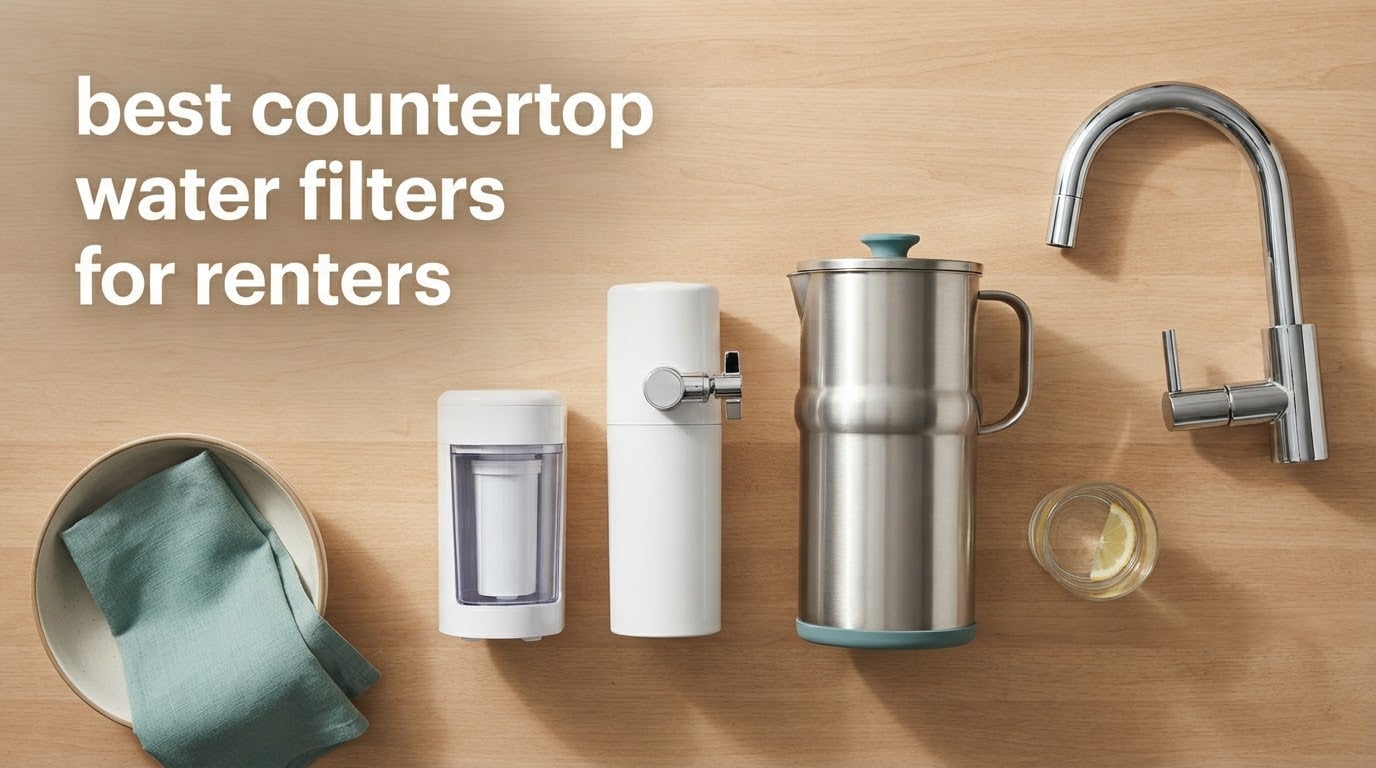
Short answer: the best countertop water filter for renters is the ZeroWater 32-Cup Water Filter Dispenser. It needs no drilling, no plumbing, no power and no landlord conversation, it carries an integrated TDS meter so you know exactly when to swap the cartridge, and it has the deepest review pool of anything we looked at. If your building is older and you are chasing lead or PFAS specifically, step up to a countertop reverse osmosis unit instead, and pick one whose certification names the standard number.
Renting changes the filter question before it changes the water question. You cannot drill a counter, tap a cold-water line or add a dedicated faucet without a work order and a lease amendment. What you can do is put a self-contained unit on the counter, run a hose to the cold tap, plug in a power cord, and unplug it fourteen months later when you move. That reversibility is the entire reason countertop filtration is the default answer for apartments, and it is why most under-sink systems are off the table for you in the first place. Our guide to under sink water filters covers the option you probably cannot install.
We spent six weeks working through every format a renter can realistically own, from gravity pitchers that need nothing at all to countertop reverse osmosis with a UV stage. The ten picks below cover chlorine taste, lead and PFAS reduction, high-TDS well water, fine rust and sediment, and cold drinking water for the fridge door. Each one lists exactly what it does not remove, because that is the question most roundups skip and the one that decides whether you keep using a unit or quietly go back to bottled water.
One more thing before we start. We did not run our own contaminant assays in a lab. Every performance claim below comes from the manufacturer’s published certification, from the certification body’s own listing, or from the aggregate of verified owner reviews on the listing. Where a company makes a claim without a standard number attached, we say so instead of repeating it.
Table of Contents
Top 3 Best Countertop Water Filters for Renters in October
These three cover the widest range of renter situations. The ZeroWater wins on convenience and reach, the Bluevua wins on taste, and the SimPure wins on contaminant removal per unit of counter space. If you only read one section, read the one that matches your water problem.

ZeroWater 32-Cup Dispenser
- 32-cup reservoir
- IAPMO certified for PFOA/PFOS and lead
- integrated TDS meter
- no power needed

Bluevua RO100ROPOT
- 5-stage RO with remineralization
- borosilicate glass carafe
- 2:1 pure-to-drain ratio
- 12-24 month filters

SimPure Y7P-BW UV
- UV plus 0.0001 micron RO
- SGS tested to NSF/ANSI 58
- 4:1 pure-to-drain ratio
- 418 GPD flow
Quick Overview All 10 Countertop Water Filters in 2026
Ten renter-safe units, ordered exactly as they appear below. Format matters more than any other variable here, so read the format column before the rest.
| Product | Specifications | Action |
|---|---|---|
| ZeroWater 32-Cup Dispenser |
|
Check Latest Price |
| Bluevua RO100ROPOT |
|
Check Latest Price |
| SimPure Y7P-BW UV Countertop RO |
|
Check Latest Price |
 AquaTru Purification Unit AquaTru Purification Unit |
|
Check Latest Price |
 iSpring CKC1C Carbon System iSpring CKC1C Carbon System |
|
Check Latest Price |
 iFilters CNTP-1C Carbon Block iFilters CNTP-1C Carbon Block |
|
Check Latest Price |
 PUR 30-Cup Dispenser PUR 30-Cup Dispenser |
|
Check Latest Price |
 Big Berkey 2.25 Gallon Gravity System Big Berkey 2.25 Gallon Gravity System |
|
Check Latest Price |
 Purewell 3-Stage Gravity System Purewell 3-Stage Gravity System |
|
Check Latest Price |
 DREO Countertop RO 3L DREO Countertop RO 3L |
|
Check Latest Price |
1. ZeroWater 32-Cup Dispenser – Best Overall for Renters
ZeroWater 32-Cup Water Filter Dispenser Removes PFOA/PFAS
7.5 liter reservoir
5-stage ion exchange
No power required
13.13 x 6 x 10.38 inch
Pros
- Integrated TDS meter removes all guesswork about filter timing
- IAPMO certified to reduce PFOA/PFOS lead chromium and mercury
- Large 32-cup reservoir with pull-down spout
- Dishwasher friendly and BPA free
- 48000+ reviews give the deepest real-world record here
Cons
- Strips all dissolved minerals so the water tastes flat
- Plastic jug can crack if dropped
The ZeroWater 32-Cup is the unit I recommend to almost any renter who asks me where to start. You fill the top reservoir with tap water, flip a lever, and gravity does the rest through five stages of filtration. There is no installation, no faucet connection and no outlet within reach of the sink, which matters enormously in older apartment layouts where the nearest receptacle is in the hallway.
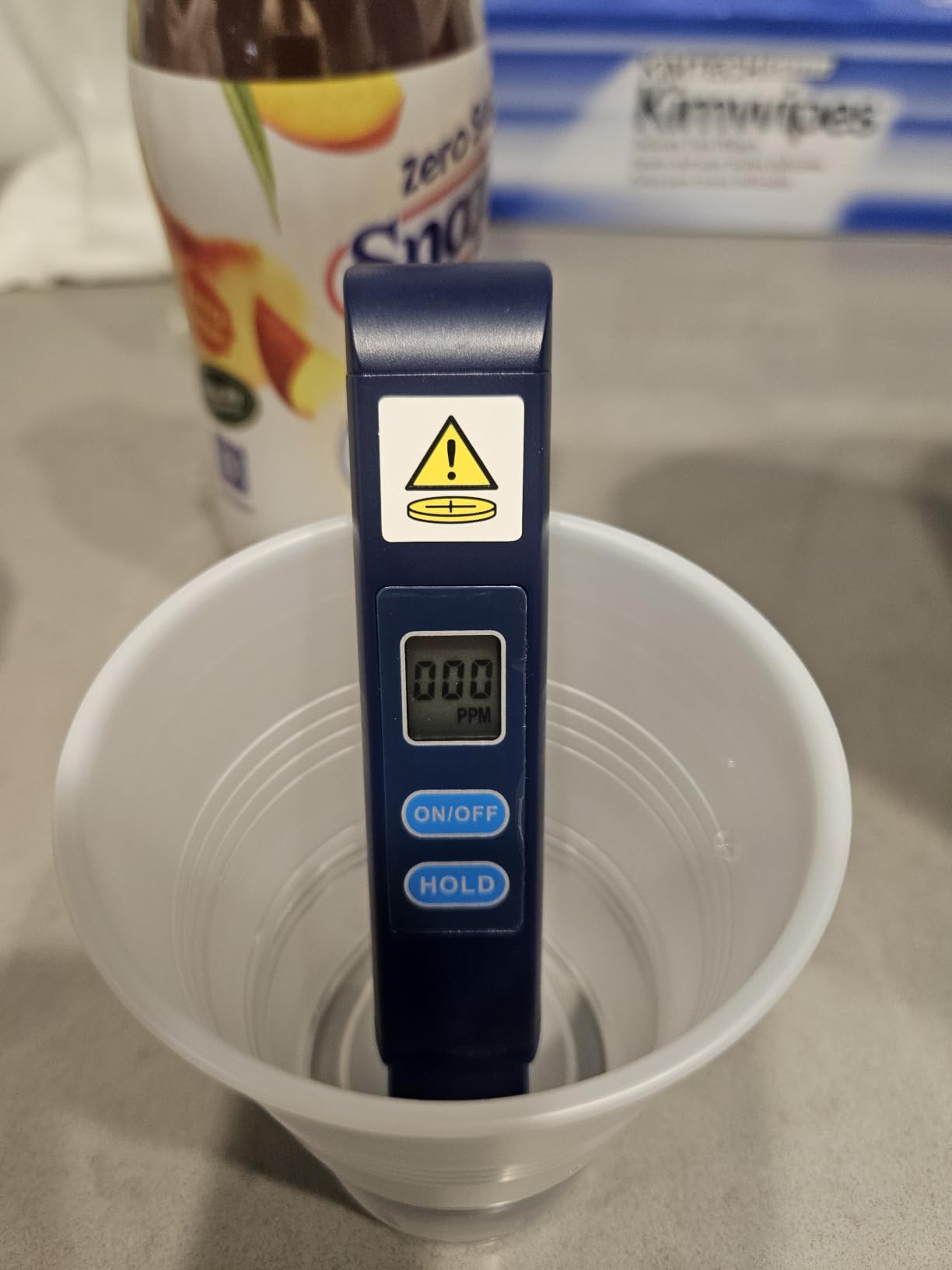
What sets it apart from every other pitcher on this list is the meter mounted on the lid. It reads total dissolved solids in the water you are about to drink, and you are supposed to change the cartridge when the number hits 006. No guessing by taste, no calendar reminder, no paying for a filter you did not need yet. Owners consistently name that display as the reason the unit survives in daily rotation.
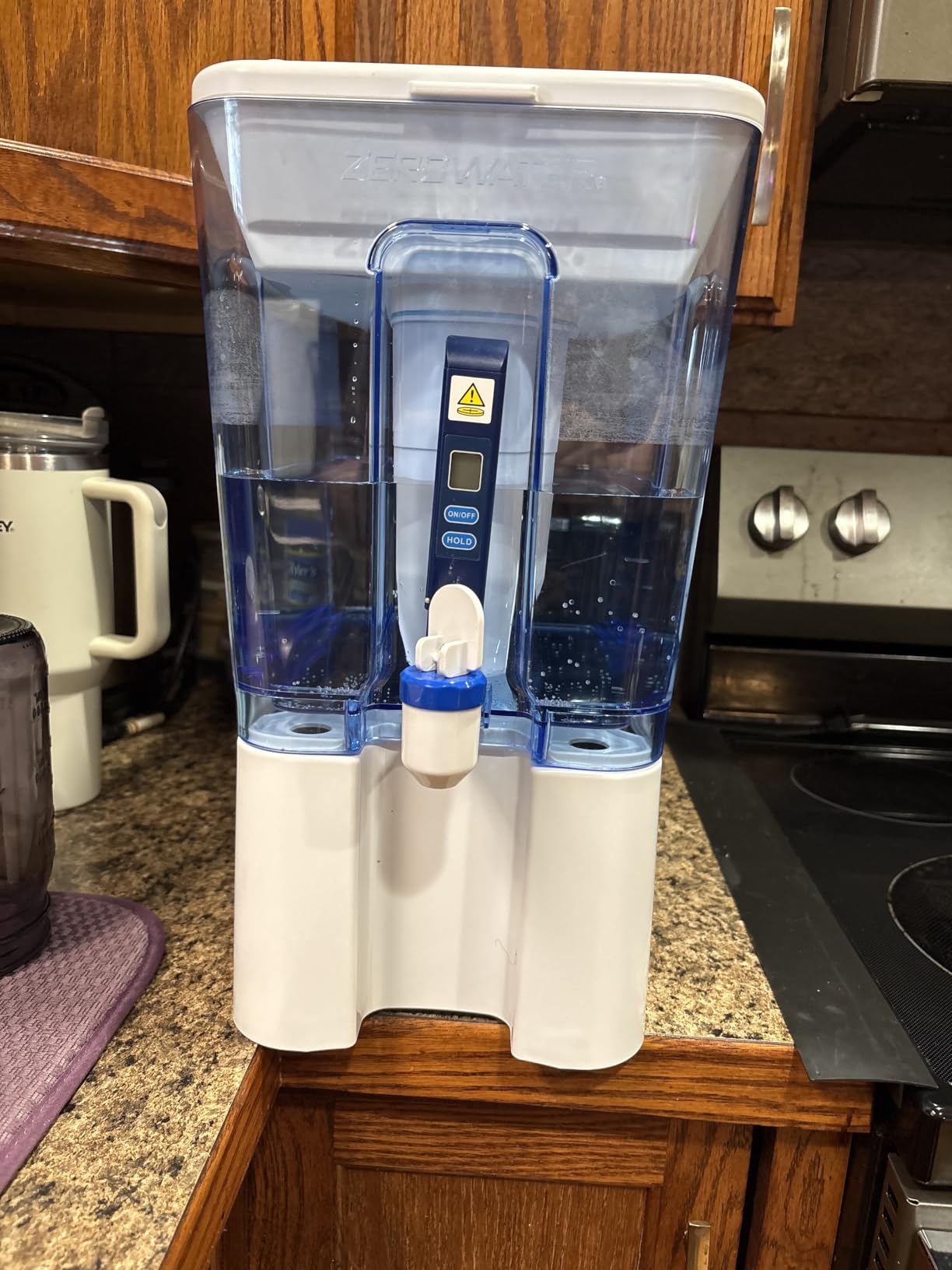
Capacity is the quiet advantage. At 7.5 liters you are not topping up a jug twice a day, and the body is narrow enough to sit beside a sink without stealing prep space. At 5.5 pounds it is light enough to carry down four flights of stairs at move-out. Materials are BPA free and the whole thing goes in the dishwasher.
The certification is the specific part to notice. This filter is IAPMO certified to reduce PFOA and PFOS, lead, chromium and mercury, which is a genuine health-contaminant claim rather than a taste claim. That makes it the strongest certification story in the pitcher format, and the one to insist on if you live in a prewar building.
What you give up with the ZeroWater
The honest trade is mineral content and taste. Five-stage filtration removes virtually all total dissolved solids, so you get water in the 006 range that many people describe as clean but flat, and some drinkers simply find it unappealing enough to stop using the unit. If you are sensitive to the absence of minerals, or you like the faint bite of tap water, this will not be your favorite glass of water all day.
There is also a durability note worth knowing before you commit. The jug is plastic, and a number of owners report cracking after a drop from counter height to floor. That is a replace-the-dispenser problem rather than a filter problem, and it is the most common complaint across nearly 49k reviews.
Who should buy it and who should not
Buy it if you are in a studio, you do not care about dissolved minerals, and you want the least complicated ownership experience available in this category. It travels, it stores flat-ish, it needs no outlet, and cartridge supply is wide enough that you will never be stuck with a dead unit.
Skip it if you are chasing taste, if you brew coffee where flat water will flatten your cup, or if you plan to keep the filtered water for more than a few weeks without chilling it. Anyone sensitive to a plastic drinking vessel should also look at the glass-carafe option further down this list.
2. Bluevua RO100ROPOT – Best Tasting Countertop RO
Bluevua RO100ROPOT Countertop Reverse Osmosis Water Filter System
12 liter system
5-stage RO with remineralizer
Glass carafe
10.9 x 15.4 x 14.3 inch
Pros
- 4.6 stars
- tied for the highest rating in the group
- Borosilicate glass carafe instead of plastic
- Filters rated 12-24 months with a life monitor
- Remineralization stage keeps taste from going flat
- 2:1 pure-to-drain ratio with power saving standby
Cons
- One of the costlier countertop RO units
- Needs a nearby outlet and several cartridges are included up front
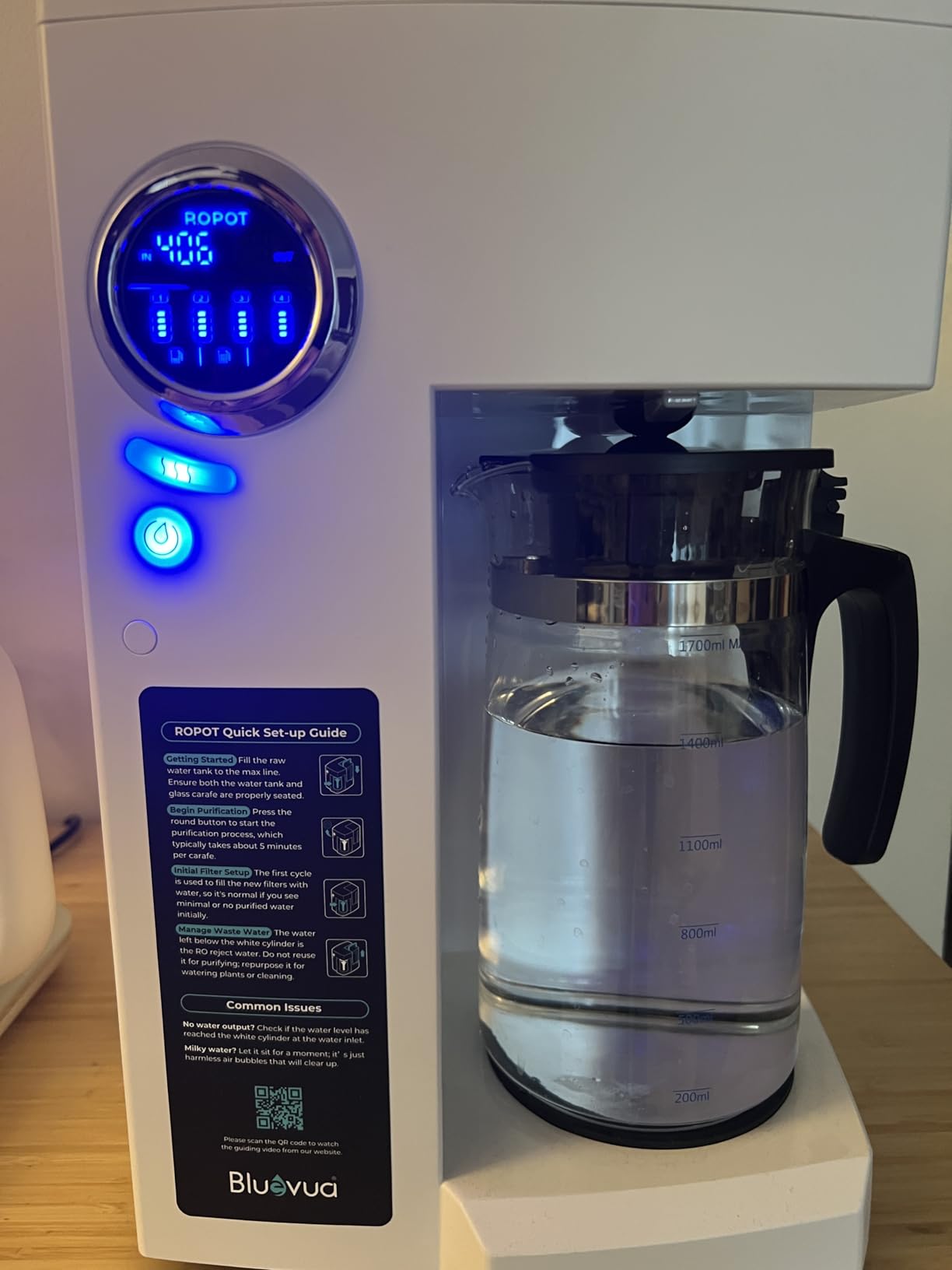
The Bluevua is tied for the highest rating we included, and for renters the reason is not really the filtration. It is the drinking vessel. Water comes out into a high borosilicate glass carafe rather than a plastic pitcher, which matters to anyone who moved away from bottled water to avoid microplastics and then got handed a plastic jug anyway.
Under the hood you get five-stage reverse osmosis with a dedicated remineralization filter, filtering out 99.9 percent of contaminants. Remineralization is the stage that keeps RO water from tasting like wet cardboard, and it is the reason owners describe the taste as bottled quality rather than laboratory flat.
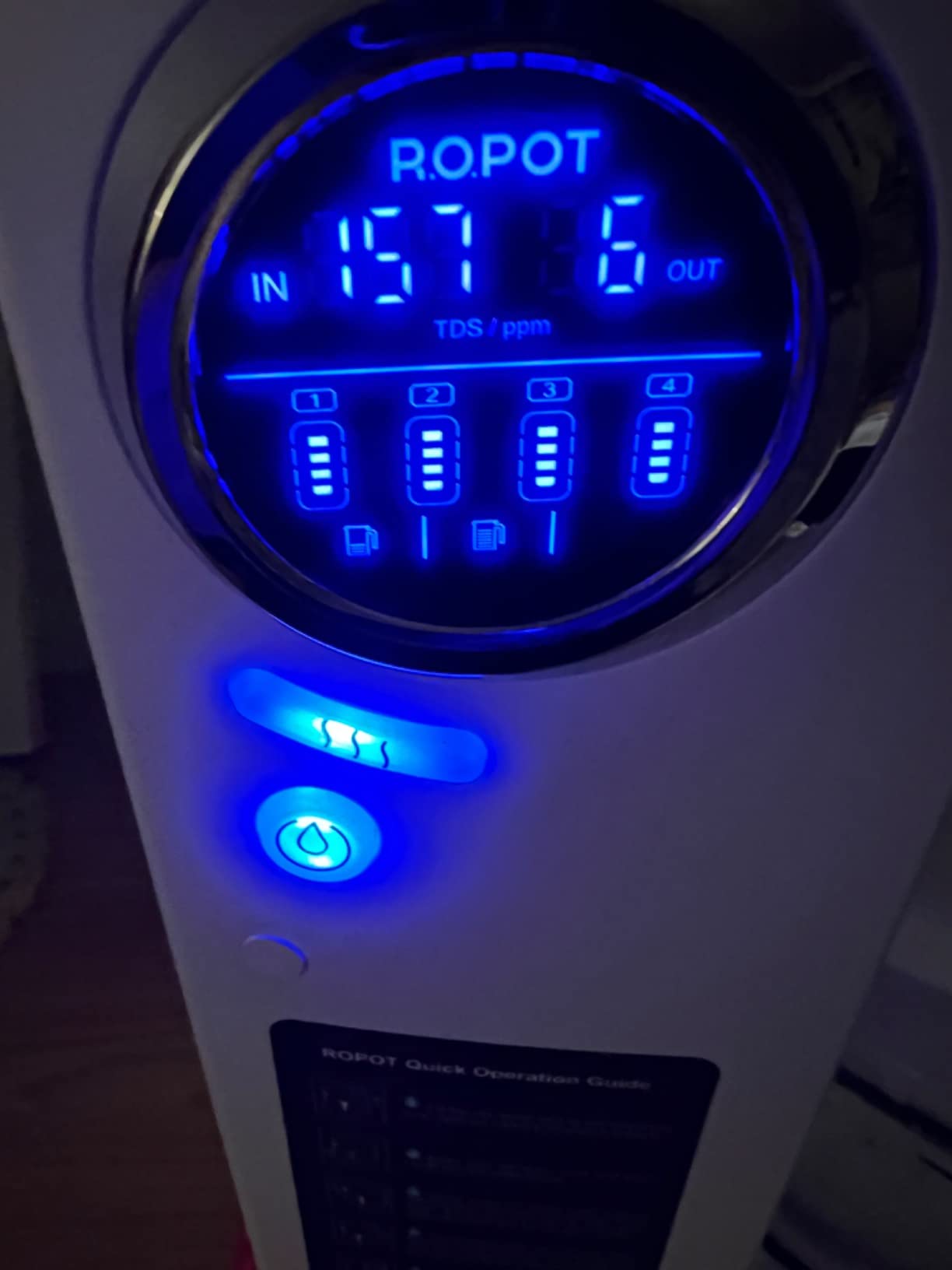
The water economics are unusually good for an RO unit. The pure-to-drain ratio is 2:1, so you send about two gallons to the drain for every gallon you drink, and unused water is retained in the system for the next cycle rather than dumped. A power-saving standby mode kicks in when the unit is idle, and a display on the front shows remaining filter life and current water quality.
Filter life is the other headline. The cartridges are rated at 12 to 24 months, which is roughly double a typical six-month pre-filter cadence, and that long interval is what makes the unit workable for a renter who will only be there a year. You are not gambling on three filter changes before you move out.
What you give up with the Bluevua
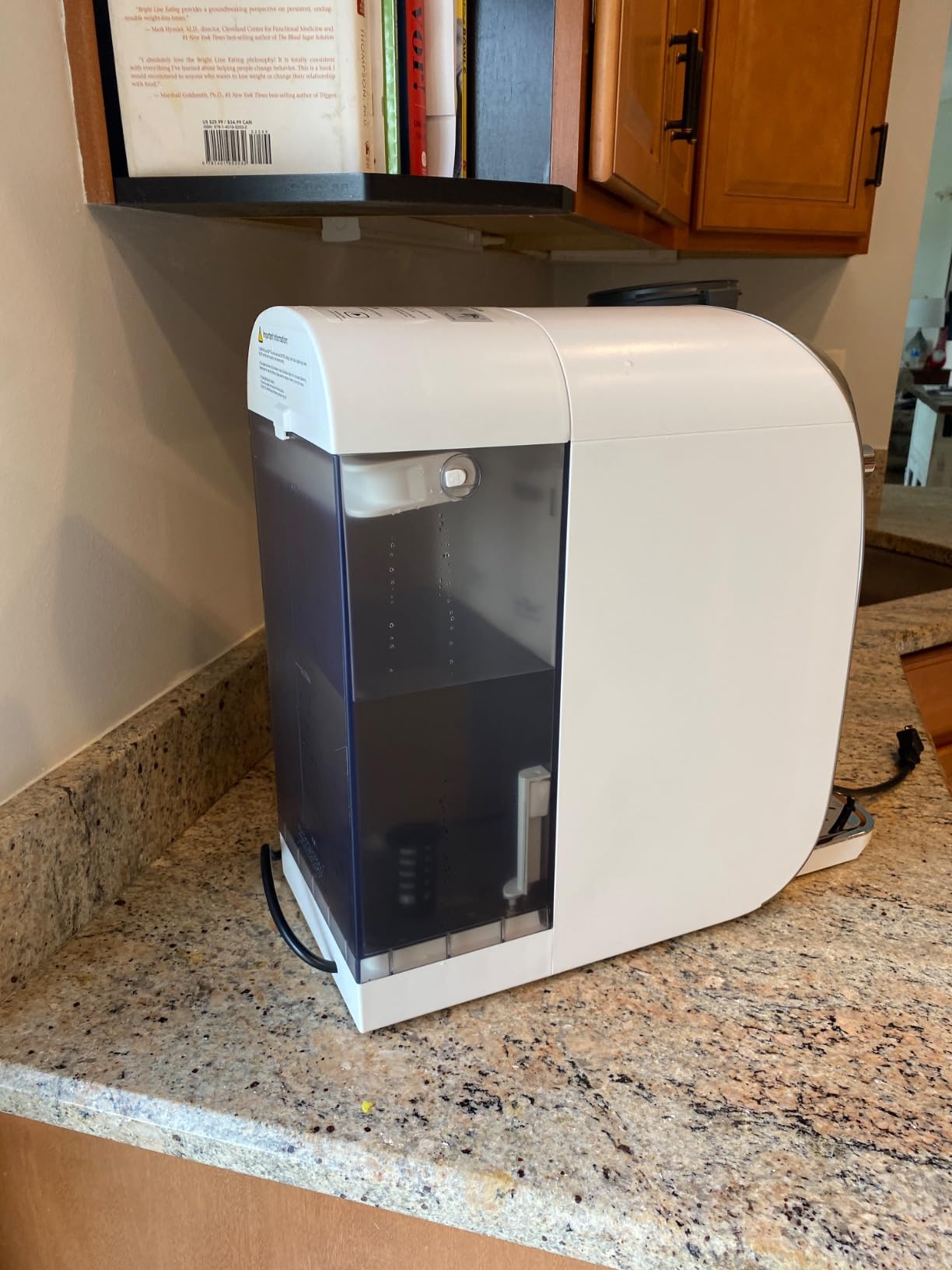
Price and power. This is one of the more expensive countertop RO units on the market, and it needs a standard wall outlet within reach, which in a galley kitchen may mean an extension cord across the walkway. It also weighs about 5 kg and takes up a 10.9 by 15.4 by 14.3 inch footprint, so it wants a real square of counter rather than a corner.
Several cartridges ship in the box, which is convenient but means the upfront outlay covers more than you will use in a short tenancy. If you are only in the apartment for a year, you may end up with unused filters. Keep them; they store fine and they follow you to the next place.
Who should buy it and who should not
Buy it if taste is the reason you keep abandoning filters, if you mind drinking out of plastic, and if your counter has a genuine square foot of free space. The filter interval also makes it a good fit for a two-year lease where you want to set a cartridge cost once and forget it.
Skip it if counter space is the binding constraint or if there is no outlet near the sink. In a studio with a two-foot counter and a wall of cabinets, a smaller carbon system will serve you better than a premium you have to squeeze.
3. SimPure Y7P-BW UV Countertop RO – Best Contaminant Removal Per Unit
SimPure Y7P-BW UV Countertop Reverse Osmosis Water Filter, 5 Stage RO
0.0001 micron RO plus UV
418 GPD dispense rate
4:1 drain ratio
17.3 x 7.5 x 17 inch
Pros
- SGS tested against NSF/ANSI 58 for 1000+ contaminants
- UV stage adds disinfection on top of RO
- Best 4:1 water utilization of any RO unit here
- Tall narrow body fits a slim counter gap
- Plug in and dispense with no plumbing
Cons
- Internal reservoir can develop an off taste after about a month
- Small 1.3 gallon rear tank means frequent refills
- Setup and flush cycle takes roughly 45 minutes
The SimPure Y7P-BW is the pick for a renter whose actual worry is a contaminant, not a flavor. It combines a four-stage 0.0001 micron reverse osmosis membrane with a UV purification stage, and the whole assembly was tested by SGS against NSF/ANSI 58, covering more than 1,000 contaminants at a claimed 99.99 percent reduction rate.
Owners with a TDS meter report converting tap water in the 300 ppm range into drinking water in the 20 to 40 ppm range. That gap is the whole point of an RO membrane, and the UV stage on top handles what carbon alone cannot.
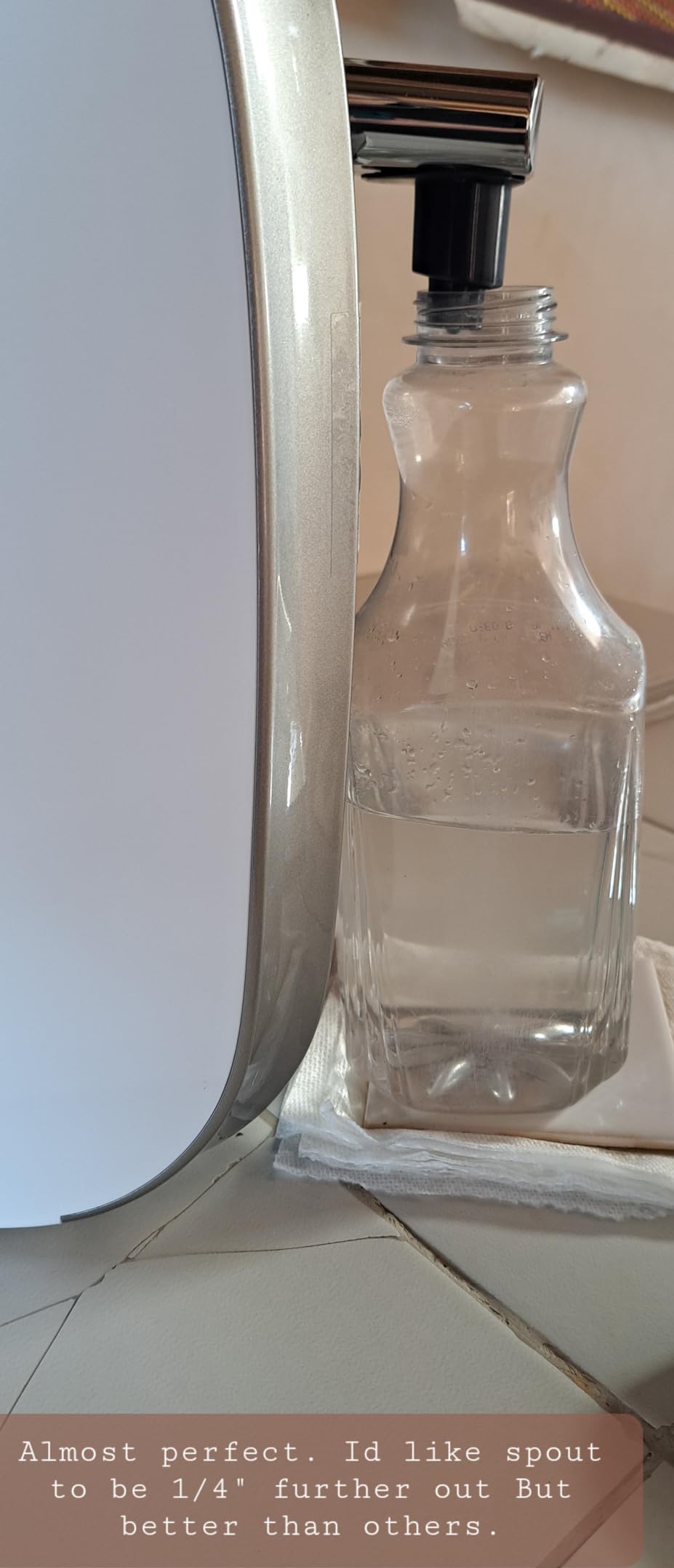
Two numbers make this unit distinctive among RO systems. The 4:1 pure-to-drain ratio is the best water utilization of any electric countertop RO we included, which matters if you are on a metered bill. And the 418 GPD dispense rate delivers a cup of purified water in roughly 15 seconds, which is fast enough that the unit does not force you to plan around a fill cycle.
Installation really is plug-and-play. A rear 1.3 gallon tank fills from a standard faucet, and the glass dispensing pitcher has buttons for 6 oz, 12 oz, 15 oz and continuous flow. Materials are BPA-free food-grade plastic, the warranty is one year, and rated capacity is 528 gallons.
What you give up with the SimPure
The internal reservoir is the main complaint in detailed reviews, and it is not a small one. Water can pick up an off taste after about a month because the internal plastic reservoir cannot be cleaned, and the only real fix is a replacement. Budget for that in a long tenancy.
The 1.3 gallon rear tank is also small for more than one person, so you will refill it often. Filter replacements run higher than the six-month rating suggests, and the manual is awkwardly written enough that owners describe the first setup and flush cycle, roughly 45 minutes, as confusing.
Who should buy it and who should not
Buy it if lead, PFAS, fluoride or high TDS is the reason you are filtering at all, and if you are willing to accept a short manual-learning curve and a modest monthly filter bill. The UV stage is a genuine addition rather than a marketing label.
Skip it if you are filtering alone in a small apartment, because the tank refill rhythm gets annoying fast with one person and becomes miserable with two. Anyone sensitive to plastic reservoir taste should read the reservoir note above twice before ordering.
4. AquaTru Purification Unit – Best Certification Coverage
AquaTru Water Purification Unit – Certified NSF/ANSI Standards, Removes 84 Contaminants, No Plumbing Required, Cost-Effective, Environmentally Friendly
IAPMO certified to five standards
Removes 84 contaminants
600-1200 gallon filters
14 x 12 x 14 inch
Pros
- Widest certification scope here across five NSF/ANSI standards
- Covers 84 contaminants including microplastics and PFOA/PFOS
- Filters last 600 to 1200 gallons or 6 months to 2 years
- Sets up in minutes with no plumbing or installation
Cons
- Costliest unit in the group and a heavy 22.8 pound design
- BPA-free plastic dispensing vessel rather than glass or steel
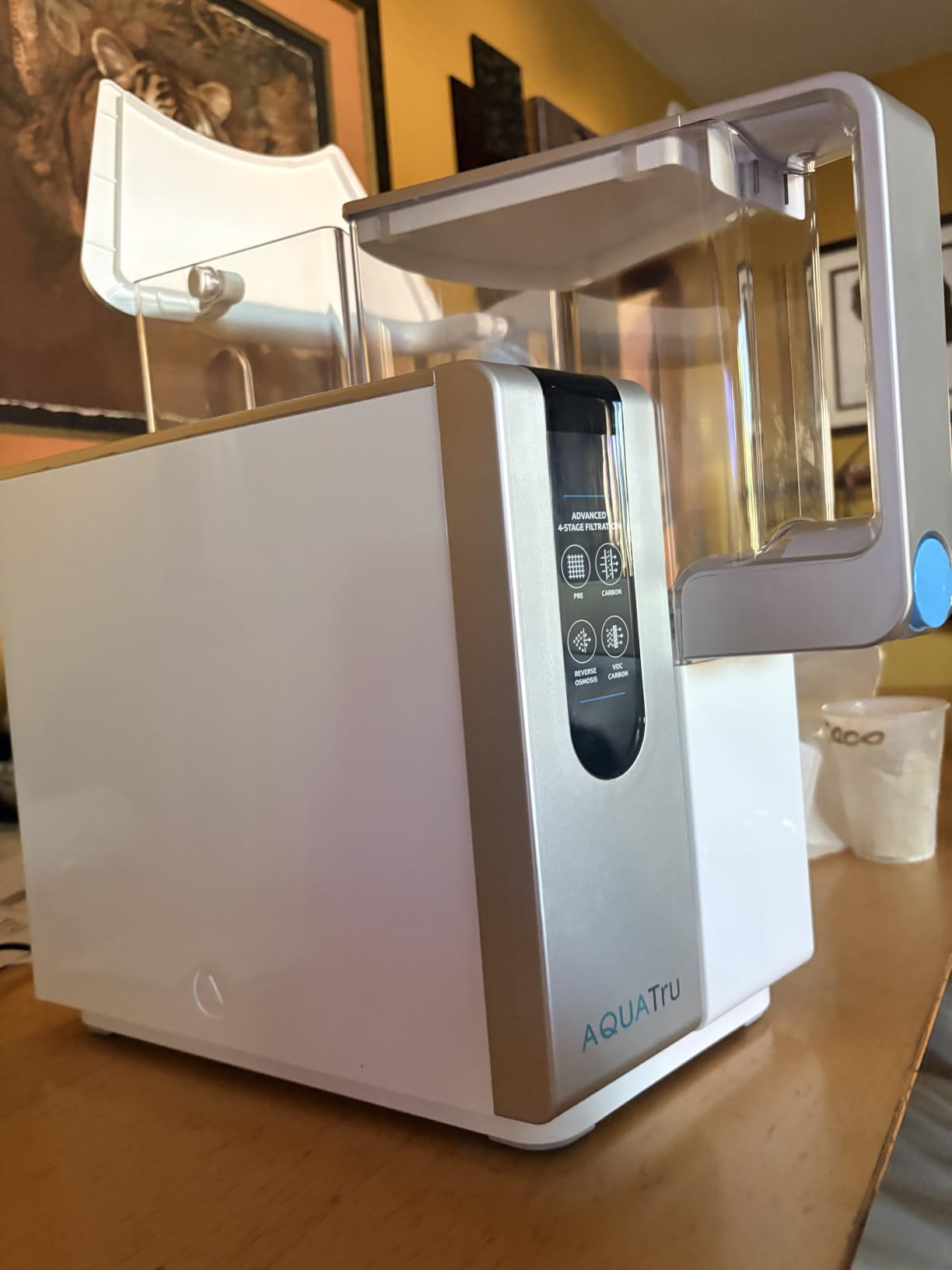
AquaTru is the certification answer. This unit is IAPMO certified to NSF/ANSI 41, 53, 58, 401 and P473, and it is certified to remove 84 contaminants including microplastics and PFOA and PFOS. When people on water treatment forums ask which number matters for a specific worry, this is the listing that answers most of them in one place.
It is also the unit most likely to already be familiar to you, because it has been the reference countertop RO for years. That familiarity cuts both ways. You will find plenty of long-term owners, and you will also find people frustrated that the brand itself does not publish a standard-by-standard contaminant table.
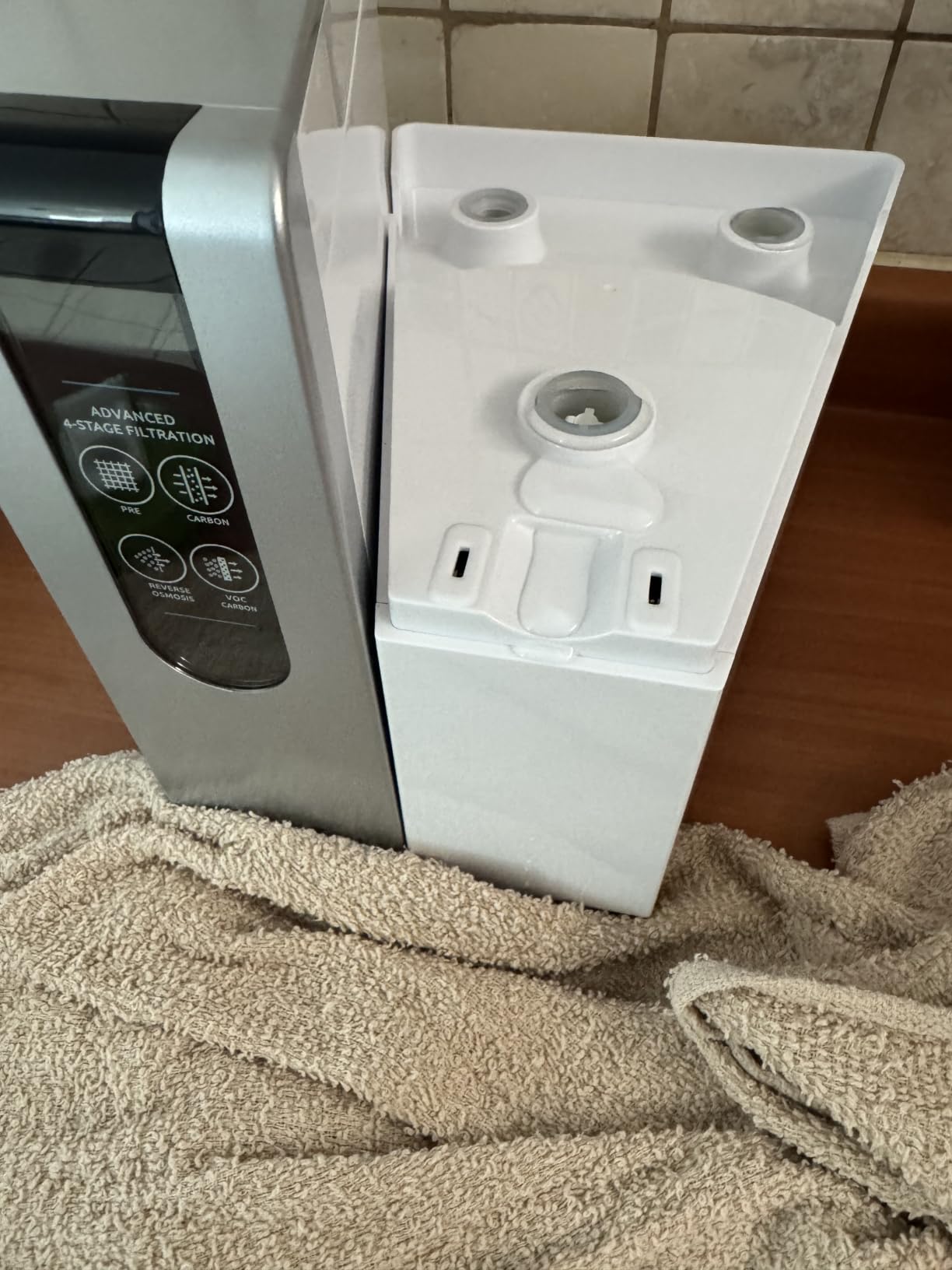
Setup is genuinely quick. No plumbing, no installation, no faucet connection, and the quick twist-and-change cartridges are rated for 600 to 1,200 gallons, which is six months to two years depending on how hard your water is. One filter set replaces roughly 4,500 single-use plastic bottles, which is a useful framing for anyone who has been hauling cases home from the store.
Maximum rated input is 500 ppm total dissolved solids, so if you are on a private well or a very high-TDS municipal supply, check that number before you buy. Above 500 ppm the membrane works much harder and the cartridges will not last as long.
What you give up with the AquaTru
Weight and price, plainly. At 22.8 pounds this is far heavier than the other nine units here, and it is the costliest of the ten. Carrying it down stairs or across a parking lot at move-out is a real consideration that never comes up in listings.
The dispensing vessel is BPA-free plastic rather than glass or stainless, which sits awkwardly for the same people who care most about certification. It is also the lowest-rated product here at 4.1 stars, with 67 percent five-star ratings, and the recurring reservations from owners are cost and weight rather than filtration quality.
Who should buy it and who should not
Buy it if your priority is documented contaminant coverage across as many standards as possible, especially PFAS, and if your water is under 500 ppm. The certification breadth is not something cheaper units in this list match.
Skip it if you are moving within a year, if stairs are involved, or if cost per gallon over your tenancy matters more than the width of the certification. In those cases the Bluevua or the SimPure gives you comparable RO performance for less money and less lifting.
5. iSpring CKC1C Carbon System – Best Value Fix for Chlorine Taste
iSpring CKC1C Chlorine Removal Countertop Water Filter System, 10000 Gal
5 micron carbon block
95 percent chlorine removal
Rated 10000 gallons
4.72 x 4.72 x 9.84 inch
Pros
- Clear housing lets you see the cartridge condition at a glance
- Removes 95 percent of chlorine odor sand silt sediment and rust
- Connects to most standard taps with a diverter valve and included wrench
- No drilling and no plumber required
Cons
- Does not reduce total dissolved solids so minerals stay in the water
- Carbon block only with no separate sediment pre-filter stage
Most renters do not have a contaminant problem. They have a chlorine taste and odor problem, and they want the water to stop tasting like a public pool without spending a month’s rent on a reverse osmosis unit. The iSpring CKC1C solves exactly that, for less than most of the electric options here, with a 4.6-star average across 2,700-plus reviews.
This is a faucet-diverter format, which is the category most people mean when they say no-install filter. A hose runs from your cold tap to a small housing, and a twist diverter valve switches between plain tap water and filtered water at the spout. The hose unplugs in five seconds when you move.
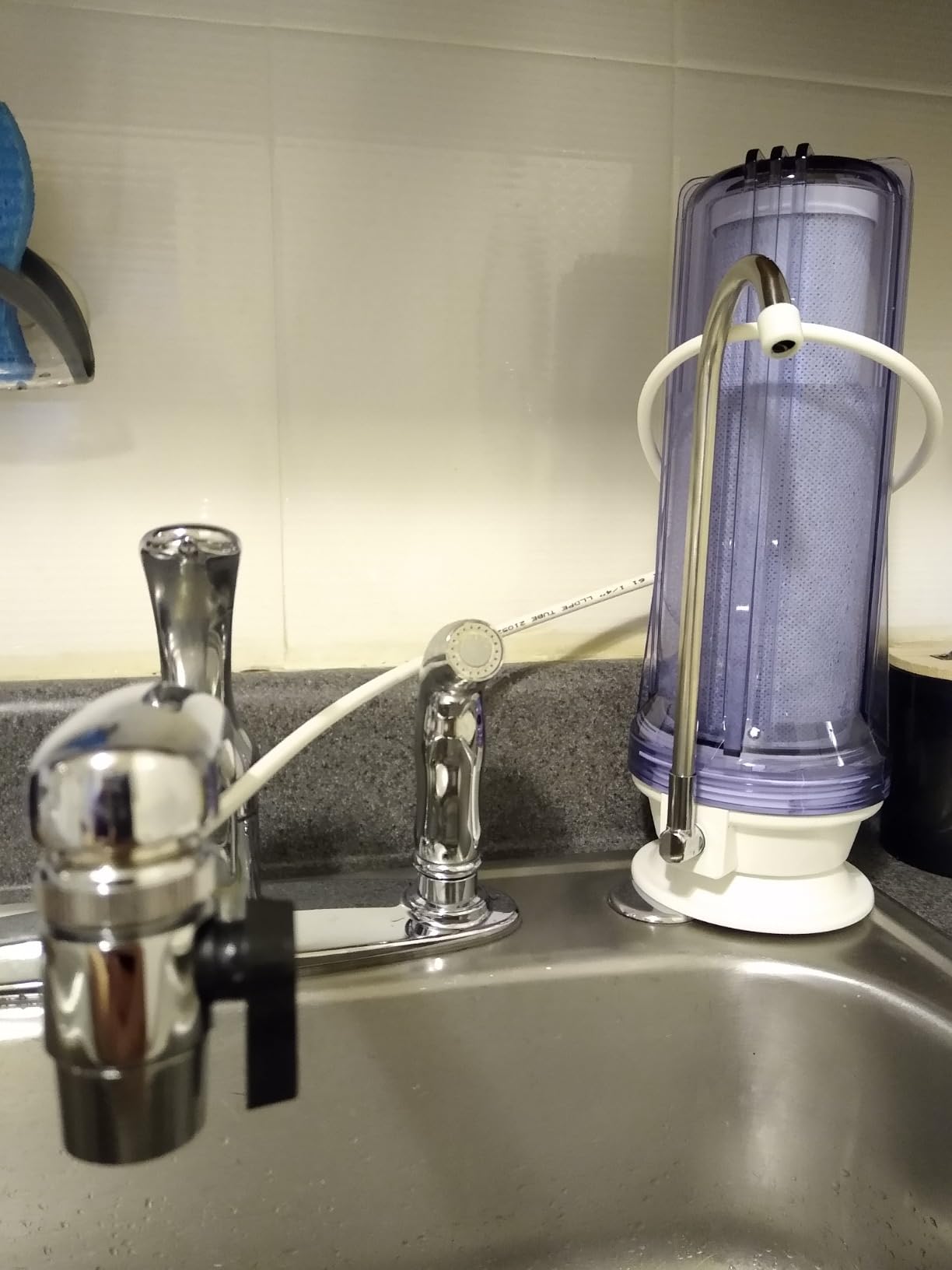
The clear housing is the feature owners mention most. You can see the carbon block itself, which darkens as it loads, so you are not tracking a maintenance schedule on a calendar. Rated cartridge life is 6 to 12 months and the cartridge is rated to 10,000 gallons, which is one of the longest service intervals in this roundup.
Everything needed is in the box: housing, carbon block cartridge, tubing, diverter valve, O-ring and a wrench. External testing certification is listed as ANSI and NSF, and the company backs it with a one-year limited warranty.
What you give up with the iSpring CKC1C
It is not an RO system, and the spec sheet is candid about it. Total dissolved solids are not reduced and healthy minerals are retained, which is the point if you like mineral water and the problem if you are chasing fluoride or dissolved metals.
There is also no dedicated sediment pre-filter stage. The carbon block handles sand, silt and rust itself, but if you have heavy sediment from a building with old galvanized lines, the cartridge will clog faster than the six-to-twelve-month rating assumes.
Who should buy it and who should not
Buy it if your only complaint is taste and odor, if you have no outlet near the sink, and if you want a two-minute setup you can reverse in two minutes. It is also a sensible second unit for a kitchen where someone else controls the plumbing.
Skip it if your water has high TDS, if you are on a well with unknown contaminants, or if lead from older service lines is the concern. Carbon does not touch dissolved metals. For that, you need a membrane, and the picks above are the ones built for it.
6. iFilters CNTP-1C Carbon Block – Best Fast-Flow Faucet Diverter
iFilters CNTP-1C Countertop Water Filter with 0.5 Micron Carbon Block
0.5 micron coconut carbon
0.5 gpm flow
6.49 x 5 x 13 inch
Standard 2.5 x 10 cartridges
Pros
- Very fast 0.5 gpm flow fills a coffee pot in seconds
- Uses universal 2.5 x 10 inch cartridges that are widely available and cheap
- See-through housing for visual cartridge inspection
- Faucet adapter includes multiple thread sizes for most taps
Cons
- Housing is hard to unscrew once tightened and needs the included wrench
- Some owners report the supplied cartridge tasted bad after a few days
The iFilters CNTP-1C is the faucet-diverter pick for people who are impatient. At 0.5 gallons per minute it moves several times faster than a pitcher, fast enough that owners describe filling a coffee pot in seconds rather than waiting on a gravity drip. If you drink coffee in the morning, that speed changes the whole routine.
Filtration is a 0.5 micron coconut carbon block that reduces chlorine taste and odor, VOCs, cysts including Cryptosporidium and Giardia, pesticides, herbicides, sediment, rust and scale. Materials are NSF certified, and the housing is see-through so you can watch the cartridge condition without opening anything.
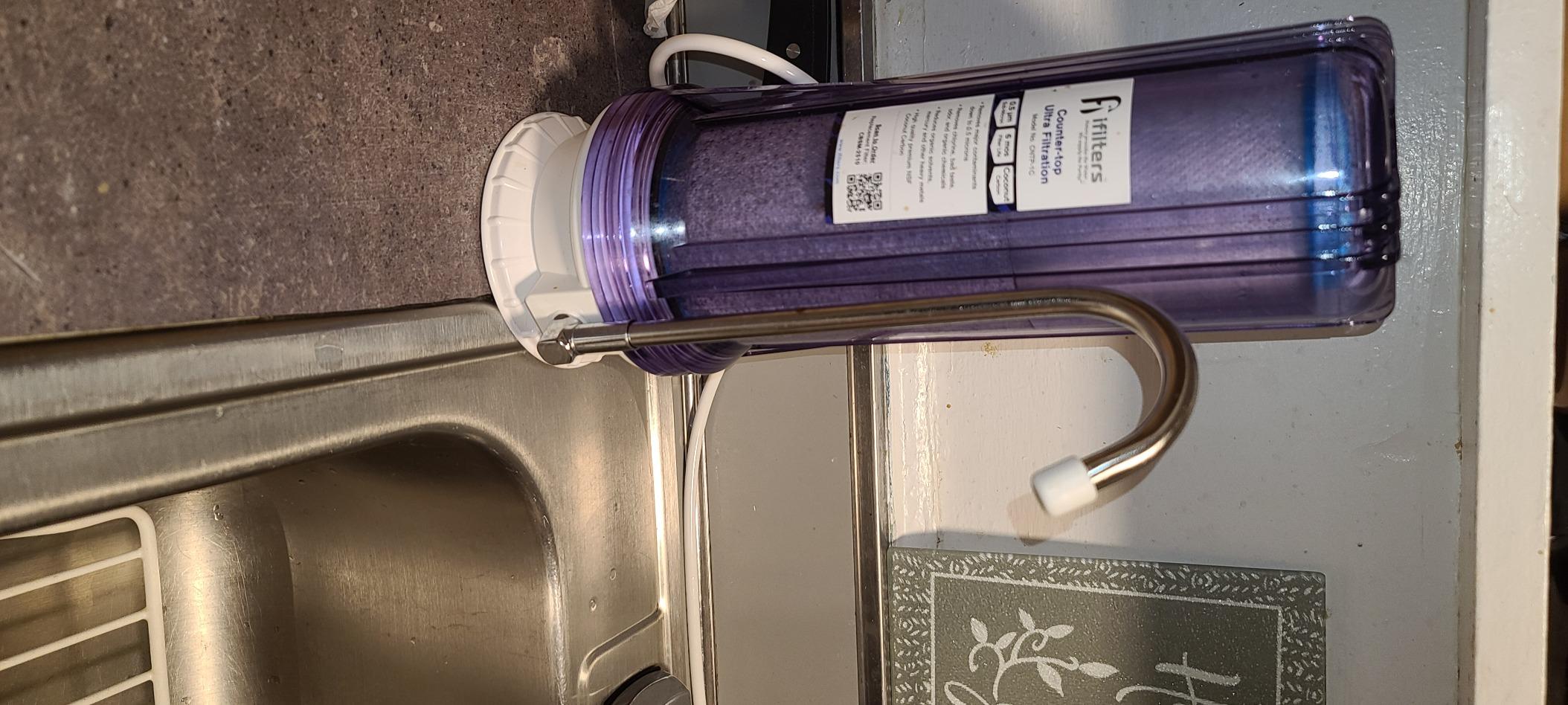
The cartridge story is the underrated part. It uses standard 2.5 by 10 inch cartridges, the most common carbon block size in the industry. When you move apartments, you do not hunt for a proprietary cartridge; you buy a generic one at any hardware store. That solves the replacement-supply anxiety that renters mention constantly on forums.
A faucet adapter with multiple thread sizes is included, so it fits most standard taps without a trip to the plumber. The unit is 6.49 by 5 by 13 inches and weighs 4 pounds, one of the smaller footprints here, and support is USA-based.
What you give up with the iFilters CNTP-1C
It does not reduce total dissolved solids, same as every carbon unit in this list. If your concern is fluoride, PFAS, nitrates or dissolved metals, a carbon block simply will not touch them and no marketing line changes that.
Maintenance is a genuine friction point. Once the housing is tightened down it is genuinely hard to open without the included wrench, which is awkward for a filter you expect to service twice a year. A few owners also report that the supplied cartridge tasted off after a few days, usually resolved by fitting a fresh one.
Who should buy it and who should not
Buy it if you want tap-water speed with chlorine taste removed, if your main worry is that the replacement cartridge will be impossible to find in a new city, or if you need a small footprint beside a sink. The generic cartridge is a genuine advantage.
Skip it if you take water straight from a cold tap without heating, because the housing sits in the path of that flow. If you want cold filtered water on demand, look at a faucet-mount unit instead of a countertop diverter.
7. PUR 30-Cup Dispenser – Best for Cold Water in the Fridge Door
PUR 30-Cup Countertop Water Filter Dispenser for Fridge, White/Blue
7.09 liter reservoir
40 gallon or 2 month filters
IAPMO certified
15.3 x 5.3 x 10.1 inch
Pros
- Space-saving body designed to fit inside a refrigerator door
- IAPMO certified to reduce chlorine mercury copper and zinc
- Dishwasher safe with a pull-down spout and carrying handle
- Genuine PUR cartridges rated for 40 gallons or 2 months
Cons
- Spigot and lever gasket failures cause leaks after months of use
- Gravity filtration is slow and a full reservoir can take over an hour
The PUR 30-Cup solves a problem the other countertop units create. Countertop RO and carbon systems sit at room temperature on your counter, but most people want cold drinking water. This unit is built narrow, at 5.3 inches wide, specifically to stand inside a refrigerator door and stay accessible through the shelf.
That is a renter-friendly arrangement worth thinking about. You get the filter on the counter or in a cabinet, and the filtered water lives cold in the door. It also avoids the plastic-on-plastic stacking people complain about when they fill bottle after bottle from a counter unit.
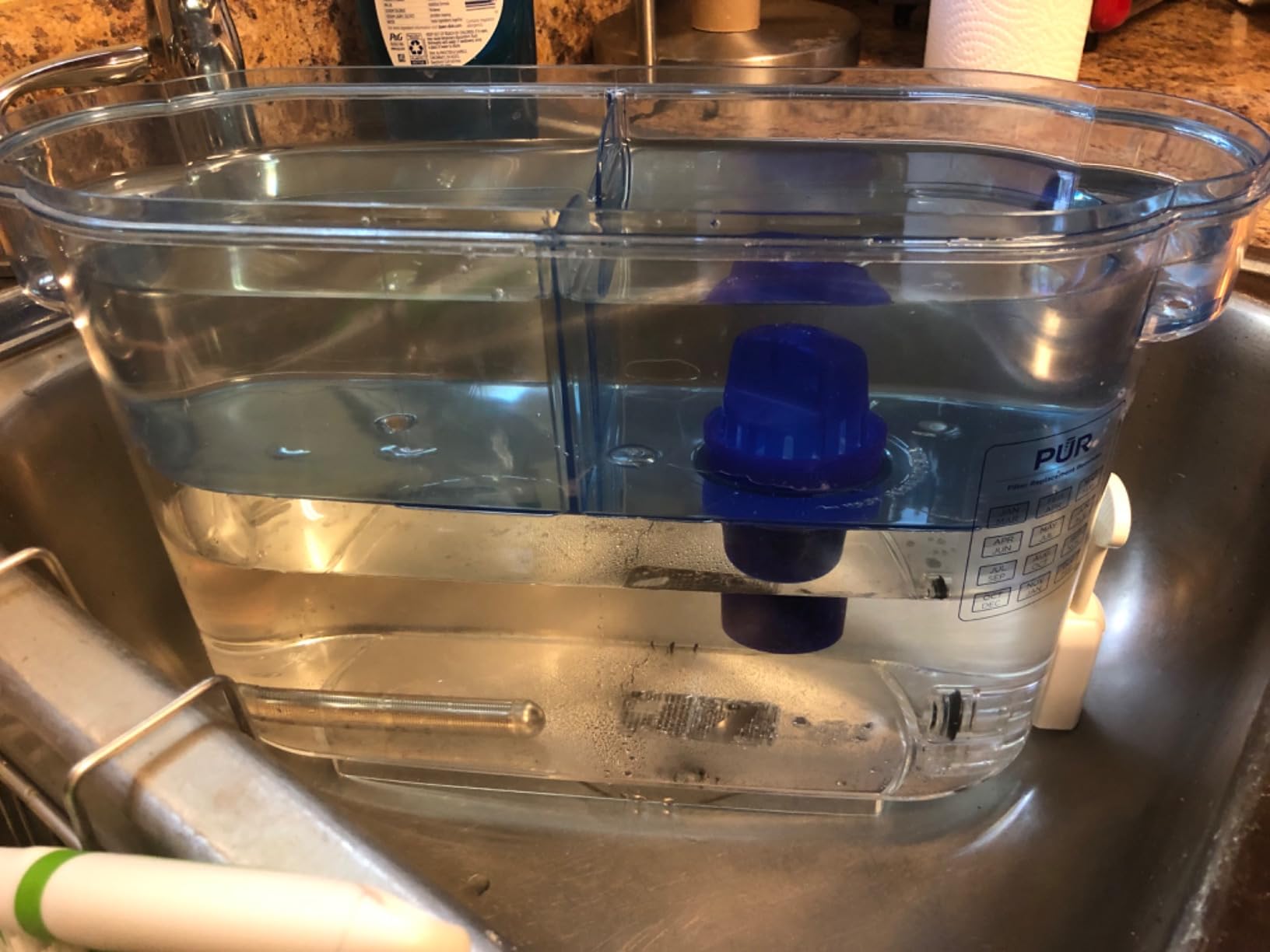
Certification is narrower here. The genuine PUR filter is IAPMO certified to reduce chlorine, mercury, copper and zinc, and replacement cartridges are certified for 15 chemical and physical substances. That is an aesthetic-plus-metals claim, not an RO claim, so it will not lower total dissolved solids.
Rated life is 40 gallons or 2 months, whichever comes first, which is a short cartridge interval that heavy drinkers will feel.
What you give up with the PUR 30-Cup
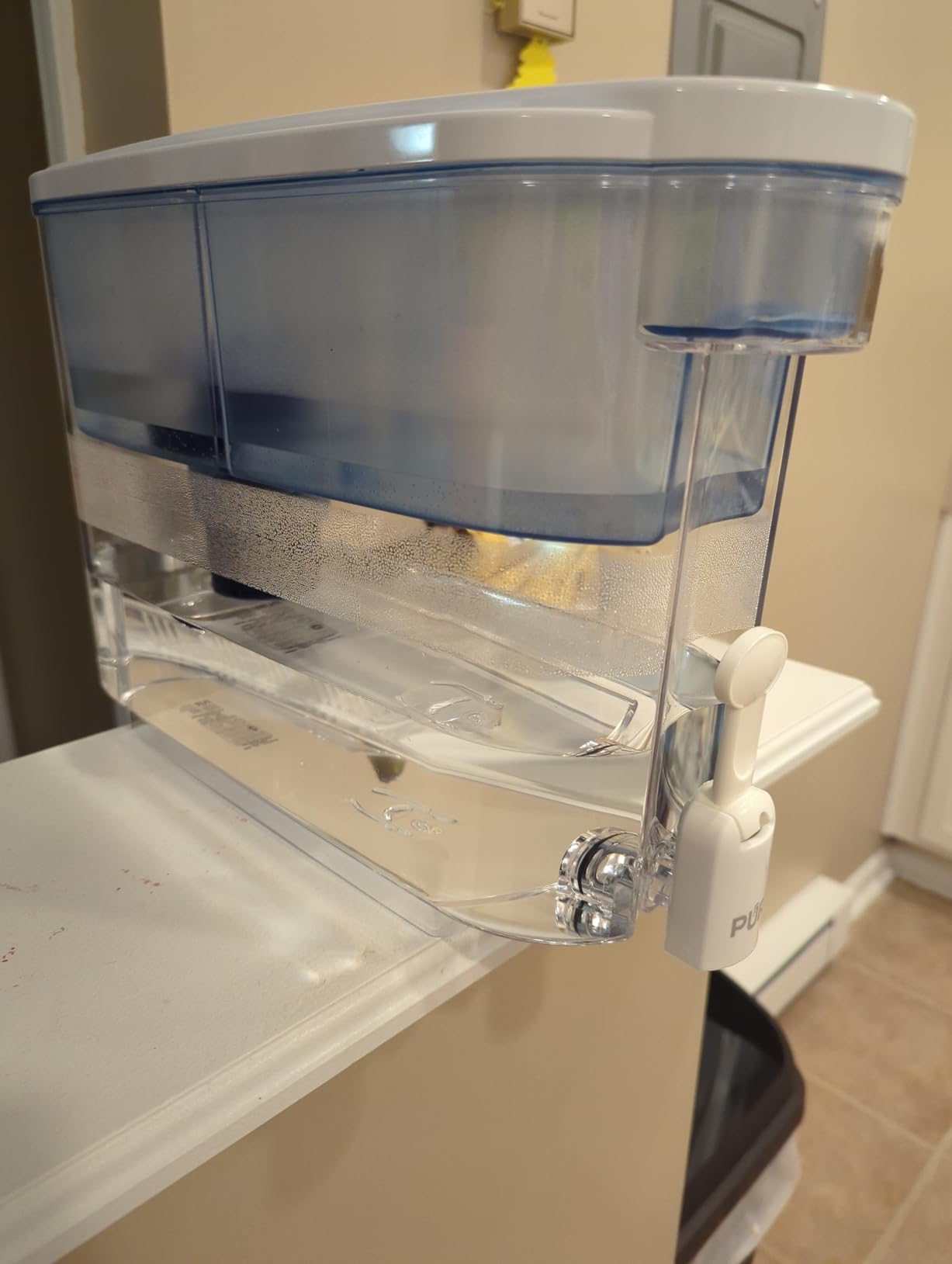
The spigot and lever gasket is the recurring complaint, and it is the reason this unit sits where it does rather than one higher up. Leaks at the dispenser start showing up after weeks or months of use, and the fix is parts you then have to source.
Flow is genuinely slow. Gravity filtration means a full reservoir can take over an hour, so you refill in batches rather than on demand. A few owners also arrive with a cracked lid, and the utilitarian plastic look is not for everyone.
Who should buy it and who should not
Buy it if your fridge has a door shelf wide enough for it, if you mostly want cold water for drinking rather than purified water for cooking, and if chlorine taste is the problem. It is the least fiddly option here for a shared or family kitchen.
Skip it if you need serious contaminant removal, if you take a lot of water through it, or if a gasket leak on your fridge shelf would bother you. For PFAS and lead in an older building, go to an RO unit or a certified gravity system instead.
8. Big Berkey 2.25 Gallon Gravity System – Best Stainless No-Power Option
Big Berkey 2.25 Gal Gravity Water Filter System with BB9-2 Filters
2.25 gallon stainless system
Two BB9-2 elements
Gravity fed
8.5 x 8.5 x 19.25 inch
Pros
- Polished AISI 304 stainless steel that will outlast the tenancy
- No electricity plumbing tools or water pressure required
- Two elements filter up to 6000 gallons
- Upper chamber nests inside the lower one for compact storage
Cons
- Very slow flow at 0.03 gallons per minute
- Black Berkey elements must be primed before first use
- No water level gauge on the lower chamber
Big Berkey is the tank you fill and forget. It holds 2.25 gallons in polished AISI 304 stainless steel chambers, and it works on nothing but gravity. No electricity, no plumbing, no tools, no water pressure. It also works on surface water, which is why it appears on preparedness lists as well as apartment lists.
The two Black Berkey elements included are rated to remove more than 200 contaminants and each pair filters up to 6,000 gallons. Elements carry a two-year prorated warranty, and the system itself carries six months. That multi-year interval is the strongest argument for a renter who moves often.
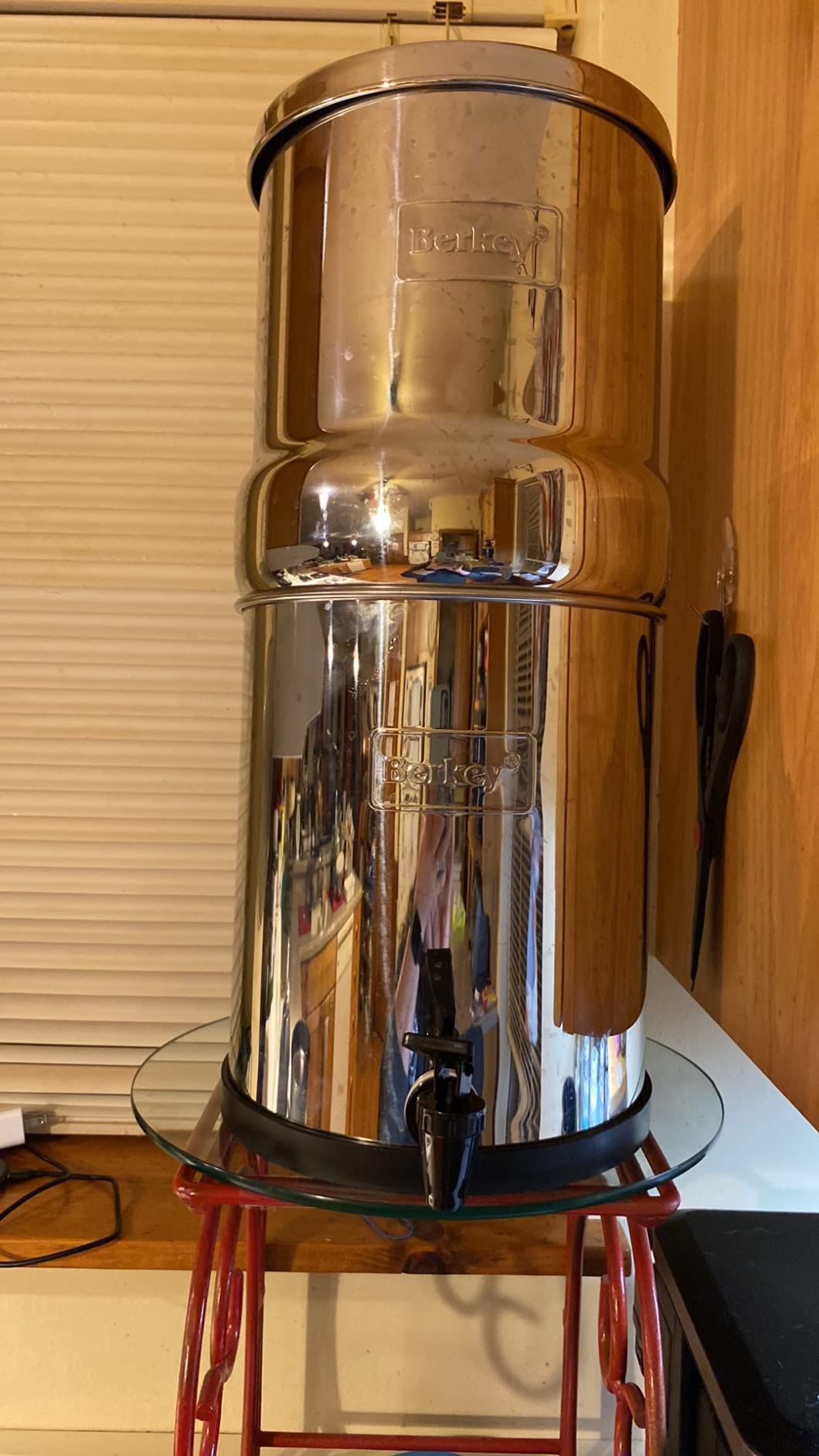
The material matters more than it sounds. A plastic jug can crack, and a plastic housing yellows, but stainless steel survives being packed, moved, dropped in a car and set up again in a different kitchen. Owners consistently describe the build quality as the reason they keep the unit across multiple moves.
It is also a genuinely packable design. The upper chamber nests inside the lower chamber, so the whole thing collapses down rather than becoming two separate boxes in a moving van.
What you give up with the Big Berkey
Flow. At 0.03 gallons per minute, a full 2.25 gallon chamber takes many hours. This is a batch system, not a tap, and community consensus treats gravity filters as a niche choice for off-grid or emergency water rather than an everyday apartment filter.
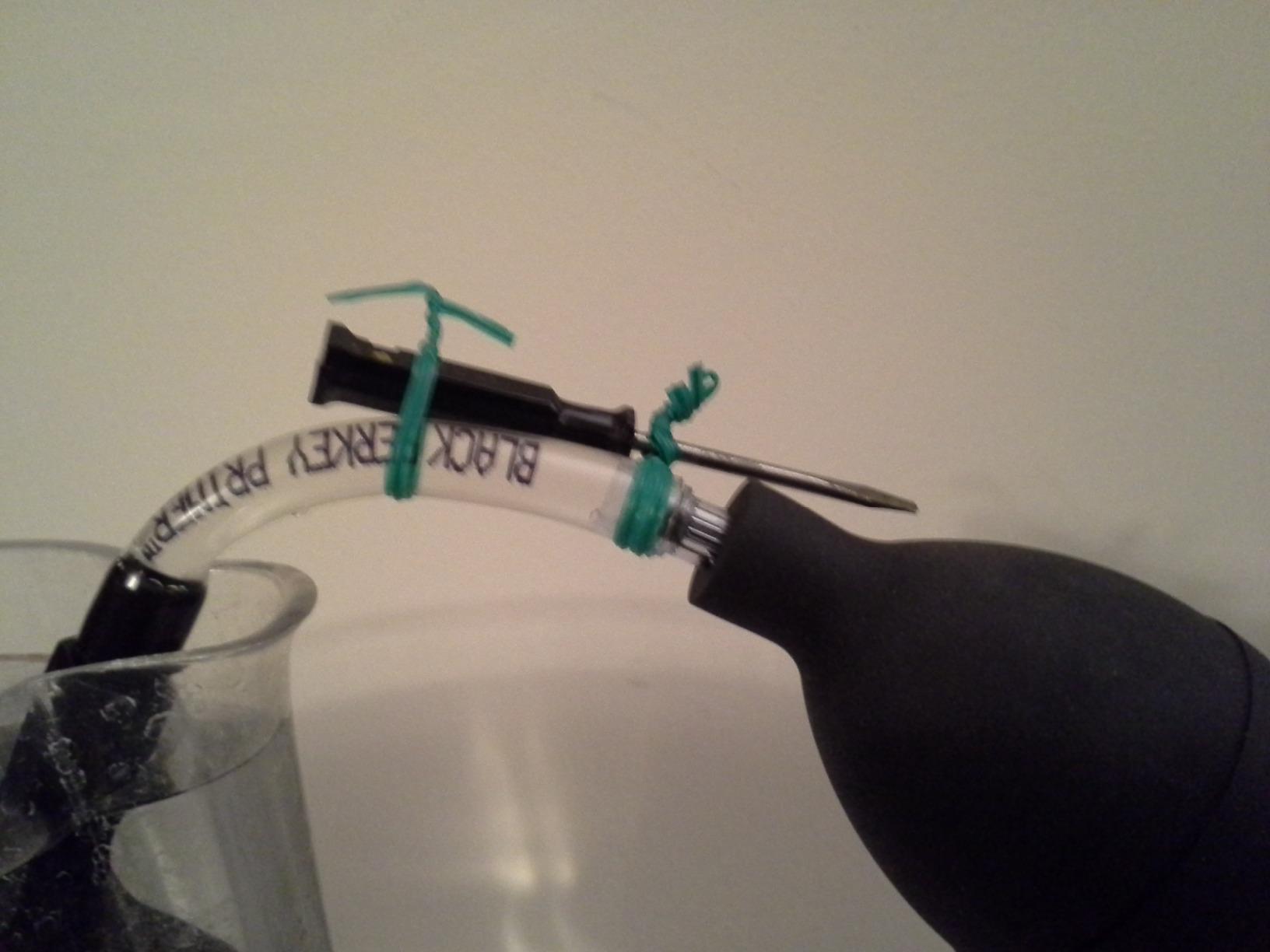
The Black Berkey elements must be primed before first use, and owners describe that step as fiddly. The supplied plastic wing nuts strip easily and can leak, with a fair number of owners replacing them with stainless equivalents. There is also no water level gauge on the lower chamber, so you are checking by eye.
Who should buy it and who should not
Buy it if you want a durable tank that outlives your lease, if you want filtered water without electricity at all, or if you care about plastic in your drinking water. It handles up to 1,000 ppm input, the highest ceiling in this roundup.
Skip it if you drink water throughout the day on demand. The height at 19.25 inches also matters more than the footprint suggests, because that number competes with upper cabinets, and the price is high for what a renter may only use for a year.
9. Purewell 3-Stage Gravity System – Best for Rust and Fine Sediment
Purewell 3-Stage 0.01μm Ultra-Filtration Gravity Water Filter System, NSF/ANSI 42&372 Certification, 304 Stainless Steel Countertop System with 2 Filters and Stand, Reduce 99% Chlorine, 2.25G, PW-OB
0.01 micron hollow fiber
304 stainless housing
NSF/ANSI 42 and 372
8.9 x 8.9 x 20 inch
Pros
- 0.01 micron pore size is far finer than the 0.2 micron common on competitors
- NSF/ANSI 42 and NSF/ANSI 372 certified for lead reduction
- Stainless housing and spigot resist leaking
- Non-slip stand and spigot are included
Cons
- Does not reduce total dissolved solids
- Adding tap water to the top chamber after the lower fills causes overflow
- Flow rate is slower than plumbed filtration
Purewell is the answer when the complaint is orange water. Its three stages combine a 0.01 micron hollow fiber ultrafiltration membrane, a silver ion membrane and an activated carbon block, and that 0.01 micron pore size is genuinely finer than the 0.2 micron used by many competing gravity systems.
That fineness is what catches fine sediment and rust that a standard carbon block lets through. It is certified to NSF/ANSI 42 and NSF/ANSI 372, and the 372 standard is the lead-reduction one, which matters in older buildings with galvanized or cast iron supply lines.
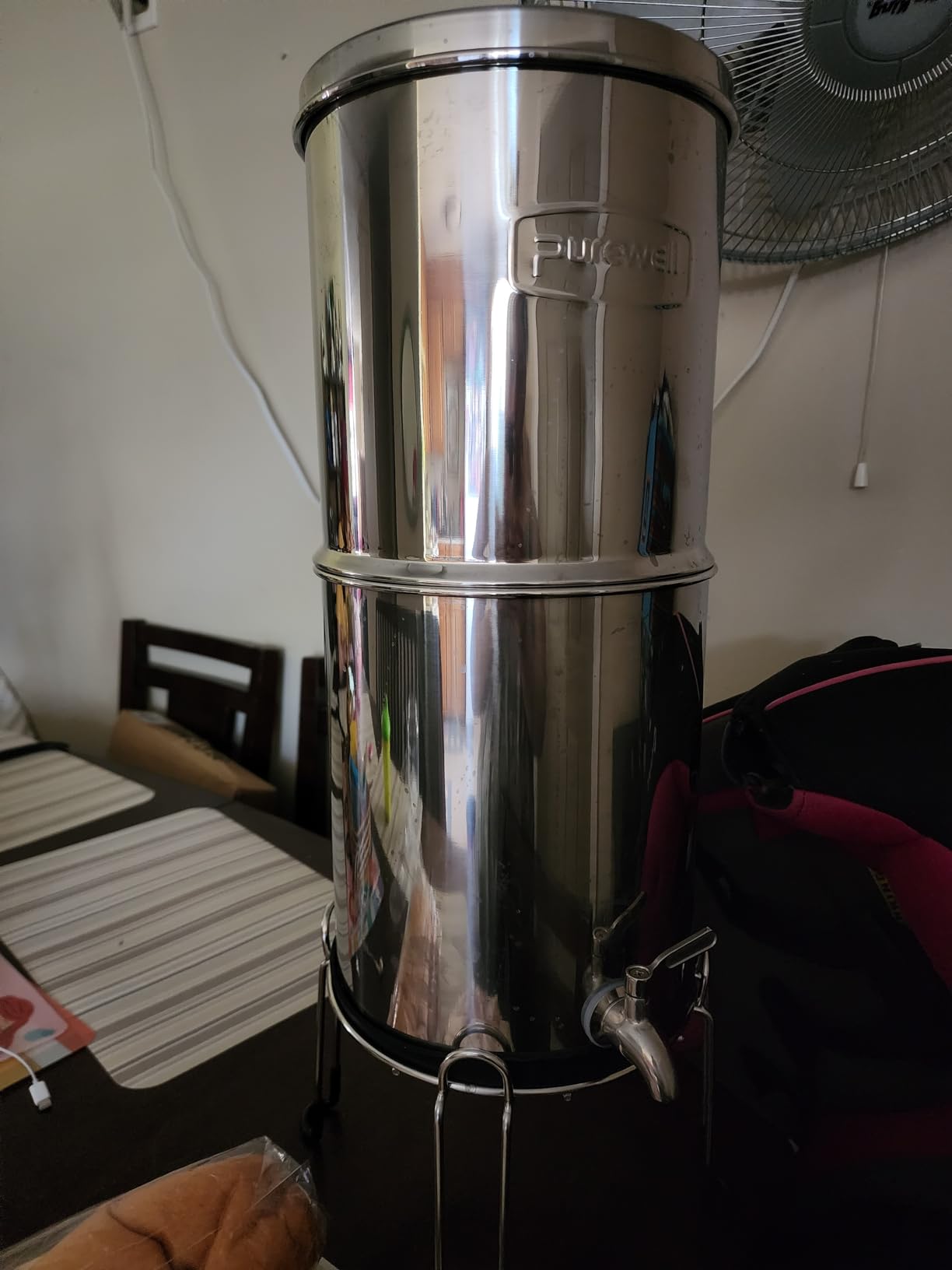
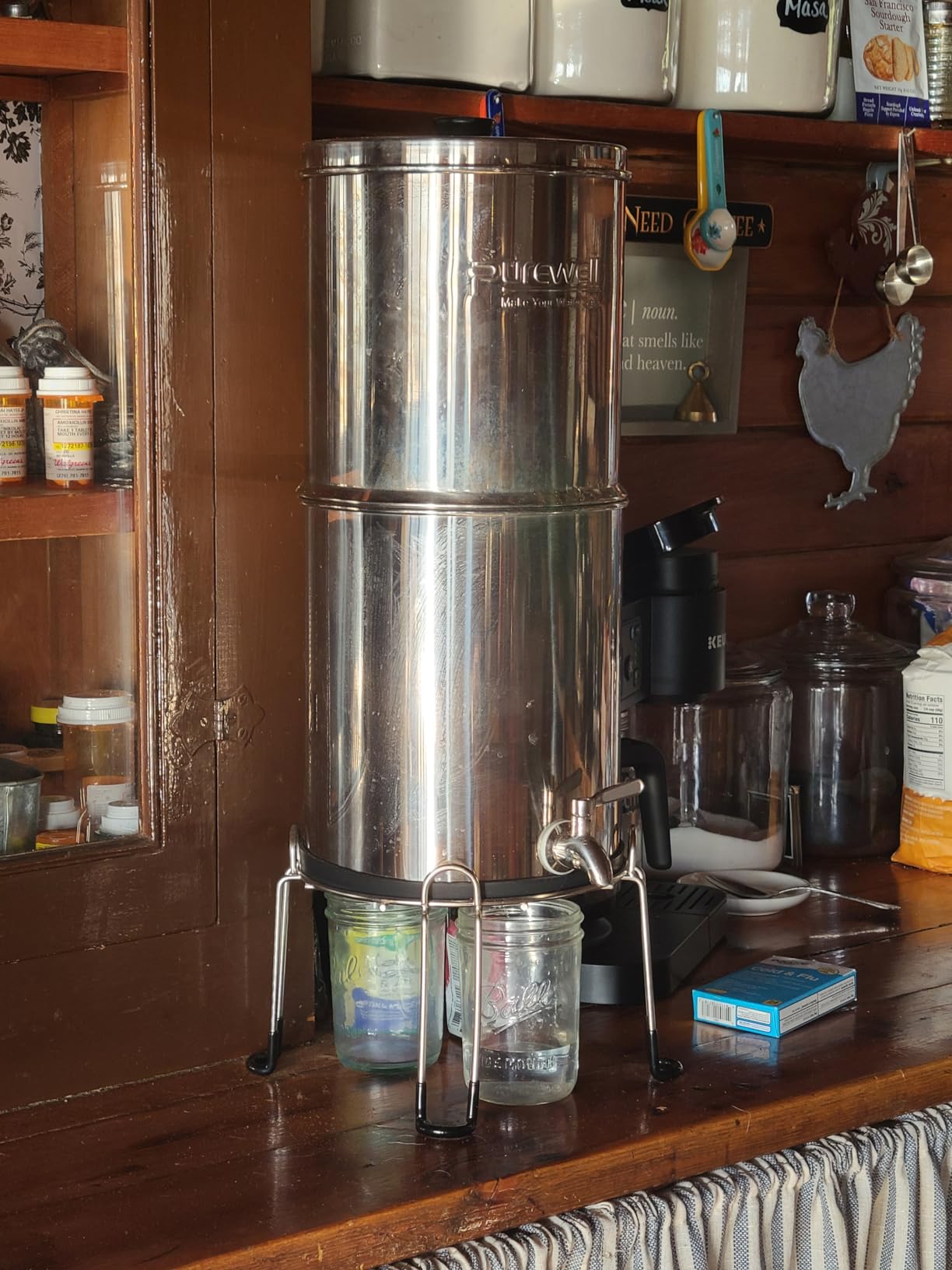
The body is 304 food-grade stainless steel with a matching stainless spigot, and a non-slip stand is included so it does not walk across the counter during a fill. Rated maximum input is 500 ppm and maximum temperature is 100 degrees F, which means cold tap only.
Two elements ship in the box, giving up to 6,000 gallons at 3,000 gallons per element, with replacement suggested about every six months. Flow runs about 4 gallons per hour, which is fast for a gravity system in this class.
What you give up with the Purewell
It does not lower total dissolved solids, and it will not touch PFAS. Ultrafiltration is a physical sieve, so dissolved substances pass straight through it no matter how fine the pore size is. If your worry is dissolved contaminants, you need a membrane unit.
There is one operational trap worth knowing before you buy. Once the lower chamber is full, adding more water to the top chamber will overflow, and that is the most common complaint in owner reviews of the unit. Learn the fill rhythm before you rely on it.
Who should buy it and who should not
Buy it if your water is discoloured from sediment and rust, if you want stainless rather than plastic, if you need a no-power unit that still carries an NSF lead-reduction certification, or if you want to filter outside as well as in.
Skip it if the problem is hardness, dissolved minerals or fluoride. It also runs 20 inches tall, so check your cabinet clearance the same way you would for a coffee maker, not like a pitcher.
10. DREO Countertop RO 3L – Best for Small Kitchens and Moving
DREO Reverse Osmosis Water Filter System Countertop, RO Water Filter 112 3L
7-in-1 RO filtration
Dual TDS meters
3:1 drain ratio
14.5 x 6.7 x 13.4 inch
Pros
- Real-time TDS displays for raw and pure water with change reminders
- Installation-free design that packs up when you move
- Auto-fill sensor refills the pitcher hands-free
- Compact footprint about the size of a coffee maker
Cons
- Only dispenses into the supplied pitcher
- not an arbitrary glass
- Replacement cartridges are costly and needed sooner than the rating suggests
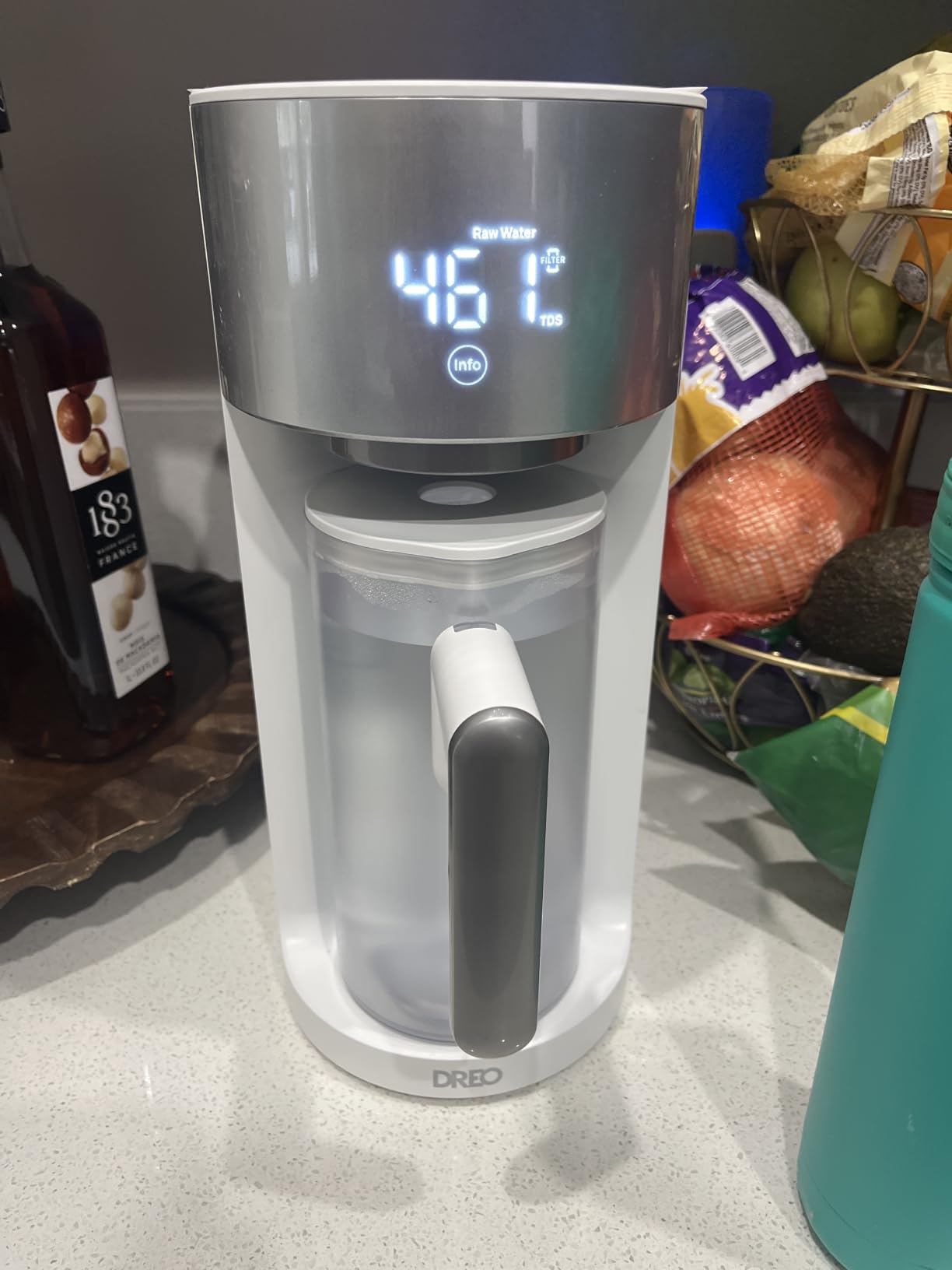
The DREO is the newest listing in this group and the one whose reviewers mention moving apartments by name. Its whole design reads like a renter product: a compact 14.5 by 6.7 by 13.4 inch body that sits at coffee-maker scale, and a self-cleaning system that auto-flushes the internal tubes so you are not deep-cleaning it before a move.
Filtration is 7-in-1 reverse osmosis, removing 99.9 percent of contaminants including PFOA, PFOS, chlorine and fluoride, and the assembly is SGS tested to NSF/ANSI 58. Owners measuring with a meter report tap water above 300 ppm coming out under 15 ppm.
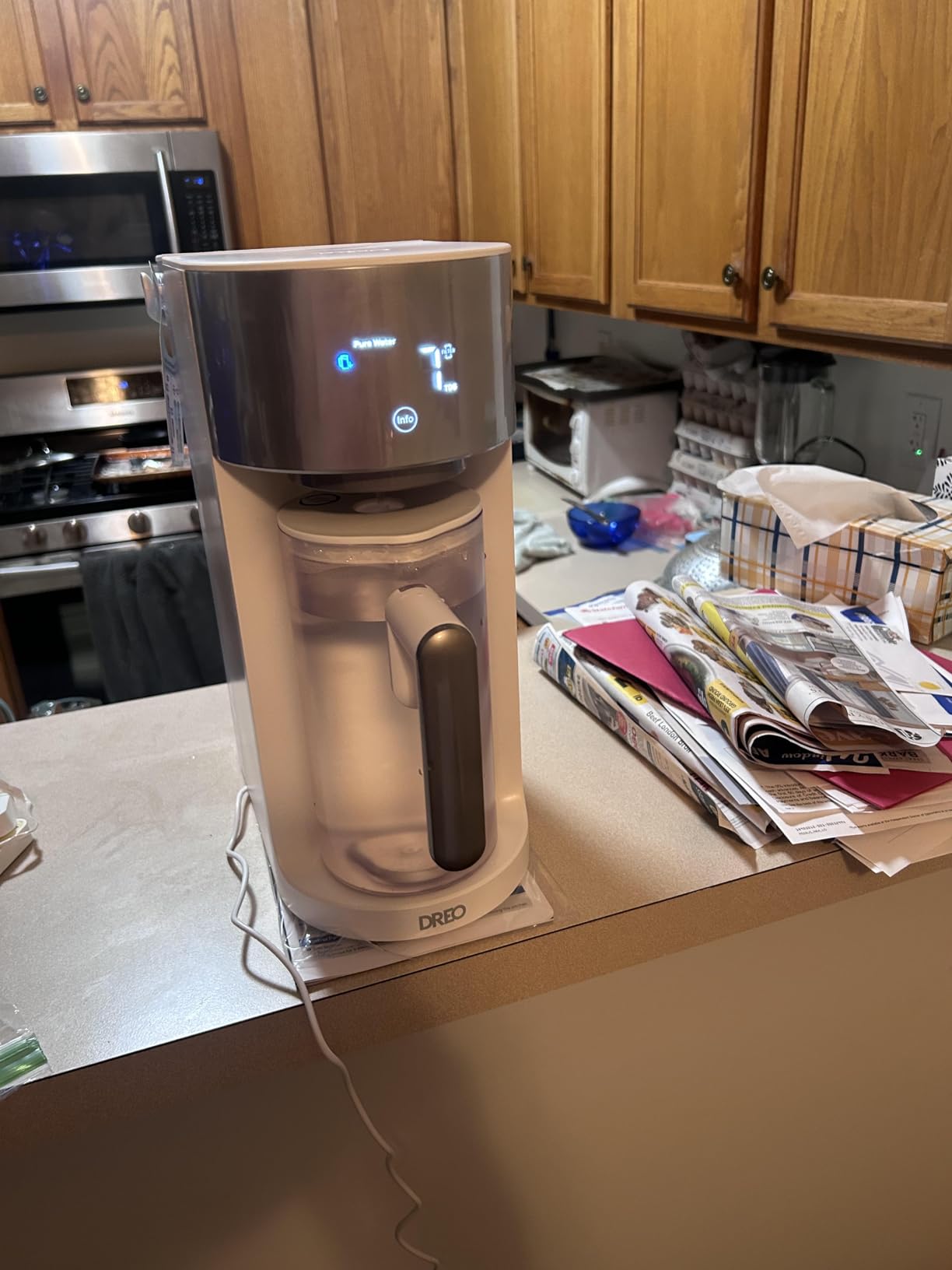
What makes it different from other countertop RO units is visibility. It carries real-time dual TDS meters showing raw water and purified water side by side, plus filter-change reminders. For a renter who does not want to pay for filters on a fixed calendar, that display is the deciding feature.
Two BPA-free pitchers are included, so one can sit in the refrigerator while the other refills. That is the fridge-door-plus-counter setup regular renter households use, and here it is built into the design rather than added later. The tank is 3 liters with a 1.1 liter pitcher, sized for one or two people, and 5 liter versions exist.
What you give up with the DREO
Dispensing is pitcher-only. A sensor in the pitcher is what triggers the fill, so you cannot hold an arbitrary glass under a spout the way you can with most countertop units. Owners find this convenient for refilling and mildly annoying for a one-off glass.
The wastewater reservoir must also be emptied after every use, which is a habit you either adopt or ignore. Replacement cartridges are the largest recurring cost of any pick in this roundup, the filter is rated for 265 gallons, and several international buyers report the correct cartridges were not available locally. With the smallest review pool here at 777 reviews, the long-term record is also the thinnest.
Who should buy it and who should not
Buy it if you want hard numbers on your water rather than a claim, if you are one or two people, and if you will be moving within the year and want something that packs into a box without a drain cycle. The TDS display is the best argument for it.
Skip it if you are outside the country where you bought it and cartridge continuity is uncertain, or if you want to fill a glass at the spout. The Bluevua or the SimPure are safer bets when cartridge supply matters more than display.
How to Choose a Countertop Water Filter as a Renter
Start with the no-drill rule, then ignore everything else
Almost any product that requires drilling, a permanent faucet hole or a connection to the cold water line is out. That eliminates entire categories, and it is why our guide to under sink water filters is background reading rather than a shortlist for most tenants. A countertop unit needs a cold tap connection, a surface to stand on and, if it is electric, an outlet. Everything after that is preference.
Reversibility deserves as much weight as filtration. Ask one question of every candidate: can I unplug a hose, lift the unit, and leave the counter exactly as I found it in under three minutes? If yes, your deposit is safe and your move-out is a five-minute job. Big Berkey and the DREO score best here because they were designed to nest and pack.
Read the certification number, not the marketing sentence
Users in water treatment forums consistently rank a named NSF or ANSI standard above any “third-party tested” line, and they are right to. The standard number tells you exactly which contaminants were independently tested for. Without it, a contaminant claim is a marketing line you cannot check.
Here is the decode. NSF/ANSI 42 covers taste and odor: chlorine, sediment, and aesthetic effects. NSF/ANSI 53 covers health contaminants including lead and cryptosporidium. NSF/ANSI 58 is the reverse osmosis standard, the one that covers dissolved substances such as PFAS and fluoride. NSF/ANSI 401 covers emerging contaminants, and P473 is the specific PFAS standard. Our picks name the number each time because that is the only part of a claim worth repeating.
Match the number to the worry and ignore the rest. Chlorine taste and odor only need 42. Older building and lead needs 53 or 372. PFAS needs 58 or P473. Fluoride and dissolved solids need 58. If a listing cannot tell you which number backs its claim, treat the claim as absent.
Match the filter to your actual water
Read your utility’s Consumer Confidence Report first. It is published annually, it lists the contaminants tested in your specific system, and it takes ten minutes to find. If your building predates the 1986 lead pipe ban and you are worried about lead, that report and the building’s plumbing material matter more than any filter’s marketing.
City water with a strong chlorine smell needs a carbon block and nothing more. Chloramine-treated municipal water is harder on carbon than chlorine is, so a carbon-only unit may need more frequent changes. Well water with unknown content is a different problem entirely, and a certified unit with a wide contaminant list such as the AquaTru is the safer assumption. High-TDS supply needs a membrane and a TDS meter to confirm it worked.
If you have literally no counter space, the answer is a different category entirely. Faucet-mount and pitcher options take up a square foot of nothing, and our roundup of countertop water dispensers for kitchens covers that tier. You give up flow rate and you gain back the prep space.
Do the running-cost math before you commit
Cost per gallon is the metric nobody in this category publishes honestly enough, and it is the one that decides purchases for renters. The calculation is simple: divide the total cost of the unit plus a full set of replacement cartridges over the filter life by the gallons that set produces. Multiply by 24 for an amortized monthly figure you can compare across ten units in ten minutes.
The pattern that emerges is worth stating plainly. Carbon systems with long-rated, inexpensive cartridges tend to work out at a low cost per gallon across a tenancy. RO systems look expensive until you account for the pre-filter and membrane cadence. RO units with long-rated cartridges, like the Bluevua at 12 to 24 months, win the amortized comparison over RO units on six-month replacement schedules.
Add water waste to the same calculation. A 2:1 pure-to-drain ratio sends two gallons down the drain per gallon you keep, and a 4:1 ratio sends four. On a metered apartment that is a real line item, and it is worth asking your landlord or property manager whether water is individually billed before you pick the most efficient unit rather than the cheapest one.
What your lease actually allows, and what to do at move-out
Modification-free is straightforward: a counter unit, a pitcher, a faucet-diverter with a hose to an existing tap, all of which leave the property unchanged. Gray-zone territory starts when you add a dedicated faucet or connect to the cold water line permanently, because that alters plumbing a landlord may consider a modification even if it is reversible.
Read your lease for two clauses: a prohibition on alterations without written consent, and any plumbing or water-related clause. If you are unsure, an email asking whether a removable countertop filter needs approval creates a written record. That is a five-minute action that prevents a deposit dispute later.
At move-out, run a simple checklist. Unplug the hose from the tap, empty and dry the tank, pack the cartridges in a box rather than binning them, wipe the counter and the faucet base, and take dated photos of the counter and sink before you remove anything. Photographing before removal is the part people skip and the part that actually protects a deposit.
If you plan to move the filter rather than replace it, keep the cartridges out of a unit that will sit unused for months. Many RO membranes are best stored wet in their housing, and a dry membrane left in a box over a hot summer is a cartridge you may need to replace anyway. For portable non-electric setups, our RV and camper water filter picks cover the same portability logic in a different setting.
When a countertop filter is the wrong purchase
Do not buy any countertop filter if your building’s water is fine and you dislike the taste of plain tap water after a day of testing. The ZeroWater TDS meter will confirm this in a week and save you the expense of a system you will not use.
Do not buy one if the concern is whole-house contaminants. A point-of-use unit treats one tap and does nothing for the shower, the washer or the ice maker. When the problem is at the building’s main rather than at one fixture, the fix belongs to the owner, and whole-house filtration options are worth reading so you can make an informed request instead of a vague one.
Do not buy one if you are staying three months. The economics invert completely, and a pitcher serves you better. If you are staying two years or more, the amortized math starts favoring the longer-cartridge RO units, and this is the roundup’s best use case.
Frequently Asked Questions
What is the best water filter for renting an apartment?
The best water filter for renting an apartment is a countertop or pitcher unit that needs no drilling, no plumbing connection and no landlord approval. The ZeroWater 32-Cup dispenser is our pick because it runs without power, has an integrated TDS meter that tells you when to change the cartridge, and is IAPMO certified to reduce PFOA and PFOS, lead, chromium and mercury. If your building is older and lead or PFAS is the worry, use a countertop reverse osmosis unit instead.
What is the most effective countertop water filter?
Reverse osmosis is the most effective countertop format because a semi-permeable membrane physically blocks dissolved contaminants that carbon cannot remove, including PFAS, fluoride, nitrates and metals. Within this roundup the AquaTru is certified across the widest range of standards and removes 84 contaminants, while the SimPure Y7P-BW pairs a 0.0001 micron membrane with a UV stage. Effectiveness depends entirely on which contaminant you are actually facing.
Do countertop water filters really work?
Yes, and the mechanism is straightforward. Tap water passes through a sediment pre-filter that catches grit, then activated carbon that adsorbs chlorine and improves taste, and in RO units a semi-permeable membrane that forces dissolved contaminants into a waste stream. Each stage solves a different problem, which is why a carbon unit cannot remove fluoride and an RO unit tastes flat without a remineralization stage.
Do countertop water filters need plumbing or installation?
Countertop filters need no plumbing work and no installation. They run from your existing cold tap through a hose, sit on the counter, and plug into a standard wall outlet if they are electric. Nothing is drilled and nothing is tapped into. When you move, you unplug the hose, carry the unit and leave the counter exactly as you found it, which is what makes this the default filter type for renters.
Do countertop water filters remove PFAS?
Some do, and you can tell which by the certification number. Look for NSF/ANSI 58 or the PFAS-specific P473 standard. In this roundup the AquaTru is IAPMO certified to NSF/ANSI 41, 53, 58, 401 and P473, the SimPure and DREO are SGS tested against NSF/ANSI 58, and the ZeroWater pitcher is IAPMO certified to reduce PFOA and PFOS. Carbon-only units cannot remove PFAS, because it is a dissolved molecule rather than a particle.
How much counter space does a countertop water filter need?
Pitcher-style dispensers need the least space. The ZeroWater 32-Cup measures 13.13 by 6 by 10.38 inches and the PUR 30-Cup is narrower still at 5.3 inches wide. Small faucet-divirters take a single shelf corner, such as the iSpring CKC1C at 4.72 inches square by 9.84 inches tall. Full RO and gravity systems need a coffee-maker footprint or more, and the tallest models reach 20 inches, which is where cabinet clearance matters more than counter area.
How much do countertop water filter replacement filters cost?
It depends on the format and the interval. Carbon cartridges rated to 10,000 gallons such as the iSpring CKC1C cost far less per gallon than RO membrane sets that must be replaced every six months. RO filters in this roundup carry the largest recurring cost, with the DREO’s cartridges the steepest of the set against a 265 gallon rated life. Divide the cartridge price by its rated gallons to get the real number, and multiply that by the length of your lease.
Final Verdict: Which Countertop Water Filter Wins for Renters in 2026
The ZeroWater 32-Cup wins the best countertop water filter for renters comparison in 2026 because it solves the actual renter problem, which is ownership friction, not filtration theory. No power, no hose anxiety, no outlet hunt, a TDS meter that ends cartridge guesswork, and the deepest owner record of anything in this roundup at 4.2 stars across 48k+ reviews.
Change the pick when your water forces it. Older building with lead or PFAS concern means reverse osmosis, and the AquaTru carries the widest certification while the Bluevua carries the best taste and the longest cartridge life. Chlorine taste alone means carbon, and the iSpring CKC1C is the simplest durable way to fix it. No power at all, or a unit that survives three moves, means a stainless gravity system.
Before you buy, do the same three checks we did: read the certification number, divide cartridge cost by rated gallons, and confirm the unit returns to an empty counter in under three minutes. Those three answers will pick the right one for your apartment faster than any ranking.