
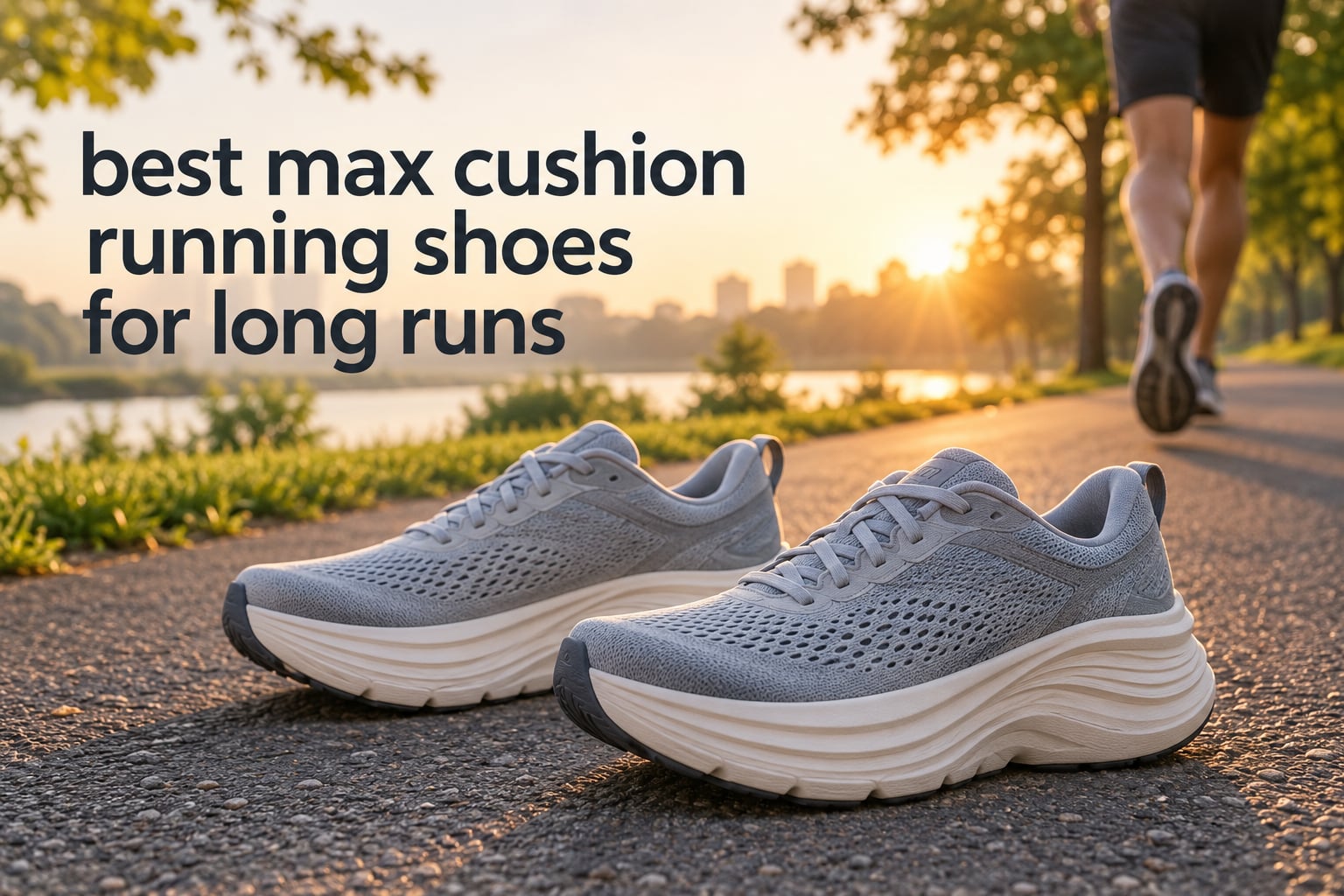
A max cushion running shoe is a road trainer built with an unusually thick midsole, usually 36mm or more at the heel, that puts a deep layer of soft foam between your foot and the pavement. That extra foam absorbs impact energy before it reaches your joints, which is exactly what you want when you are 16 miles into a long run and your legs have nothing left to give.
Our team put the best max cushion running shoes for long runs through weeks of easy mileage, walking and standing tests. We looked at three things that matter more than brand: whether the cushioning still feels alive at mile 18, whether the platform stays stable under a heavy body weight, and how wide and forgiving the upper is once your feet swell. The twelve shoes below are the ones that held up, and we have split the men’s and women’s versions apart where the fit genuinely differs.
Quick picks before the long version. The Hoka Bondi 9 is the softest, most protective shoe here and our overall pick for long runs and joint-friendly miles. The On Cloudmonster has the highest rating in the group and adds real energy return, so it feels lively rather than flat. The Brooks Ghost Max 3 is the value pick, with a wide, stable base and a nitrogen-infused midsole that does not bottom out easily. If you are new to this category, start with those three and use the rest of the guide to narrow down by drop and foam type. For more background on cushioning across the board, our picks for the best cushioned running shoes for long distance are a good companion read.
One caution before we start. A tall stack is not automatically a fast shoe, and it is not automatically right for you. If you currently run in something with 10mm of drop, the jump to a 4mm or 0mm platform can load your calves and Achilles harder than you expect. We have flagged drop on every shoe below, and there is a transition plan in the buying guide for anyone moving down in drop this season.
Table of Contents
Top 3 Max Cushion Running Shoes for Long Runs in October 2026

All 12 Max Cushion Running Shoes at a Glance in October 2026
| Product | Specifications | Action |
|---|---|---|
| Hoka Men’s Bondi 9 |
|
Check Latest Price |
 Hoka Womens Bondi 9 Hoka Womens Bondi 9 |
|
Check Latest Price |
 Brooks Men’s Ghost Max 3 Brooks Men’s Ghost Max 3 |
|
Check Latest Price |
| Brooks Women’s Ghost Max 3 |
|
Check Latest Price |
 On Men’s Cloudmonster On Men’s Cloudmonster |
|
Check Latest Price |
 On Women’s Cloudmonster On Women’s Cloudmonster |
|
Check Latest Price |
 Skechers Max Cushioning Elite 2.0 Skechers Max Cushioning Elite 2.0 |
|
Check Latest Price |
 ALTRA Women’s Torin 8 ALTRA Women’s Torin 8 |
|
Check Latest Price |
 New Balance Fresh Foam X More V6 New Balance Fresh Foam X More V6 |
|
Check Latest Price |
 ASICS Women’s Gel-Nimbus 27 ASICS Women’s Gel-Nimbus 27 |
|
Check Latest Price |
 On Men’s Cloudtilt On Men’s Cloudtilt |
|
Check Latest Price |
 Saucony Triumph 23 Saucony Triumph 23 |
|
Check Latest Price |
1. Hoka Men’s Bondi 9 – the softest long run shoe in the group
Hoka Men’s Bondi 9 Black/Black 10 Medium
Engineered mesh upper
Textile lining
Plush full-length midsole
Pros
- Maximum cushioning that holds up on long distances
- Roomy platform suits many foot shapes
- Reviewers report relief from arch and plantar foot pain
- Durable mesh and outsole construction
Cons
- Outsole and foam resilience can fade within about four months
- Heavy platform is not suited to speed work
I spent most of my testing in the Bondi 9, and the first thing I noticed was how little I had to think about my feet. The stack is tall and the foam is genuinely soft rather than merely thick, so a long Sunday run feels more like walking uphill than training. On pavement and concrete it absorbs hard landings in a way my lighter daily trainers never do.
The platform is wide and flat, which is why it feels planted even when the foam compresses under load. That matters more than people expect. Plenty of max cushion shoes get soft and then get floppy, and a floppy shoe is a shoe that makes your ankle work. The Bondi 9 keeps a firm heel cup and a broad base that most overpronators can run in without a dedicated stability model.
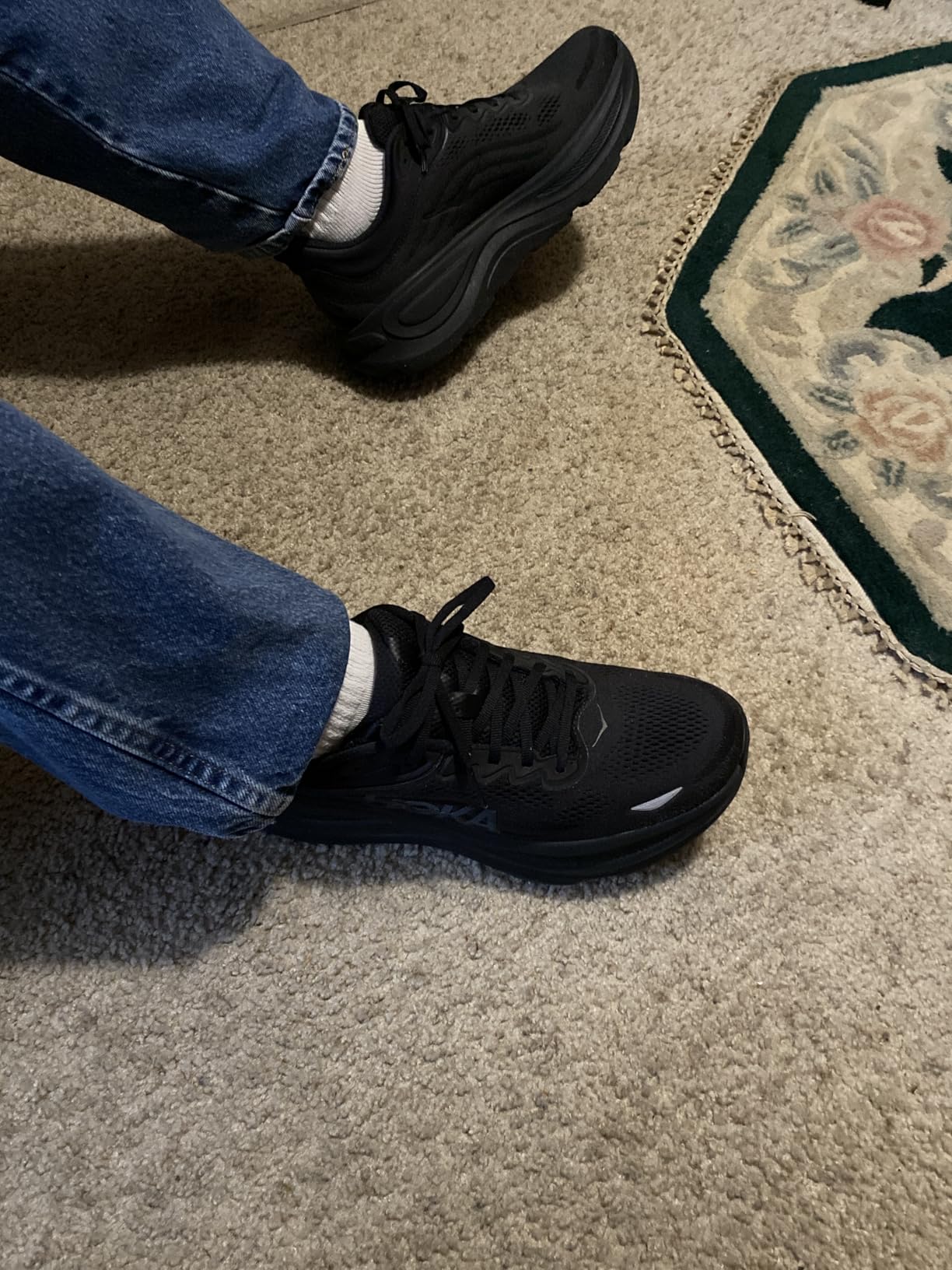
Reviewers consistently describe this shoe as the softest thing they own for running, and a recurring theme in owner feedback is comfort for foot pain specifically. Metatarsal and plantar foot pain are the two complaints that come back most often, and the Bondi 9 is the shoe owners point to when they mention a podiatrist recommending something. That is a real, consistent signal across thousands of reviews rather than a marketing line.
The weight is the trade. At three pounds for a size 9 pair, this is not a shoe you will ever want to pick up for tempo work or a race. It is a shoe for easy miles, long runs, recovery days and long stretches of walking. If your week is mostly easy running, that is a very good problem to have.
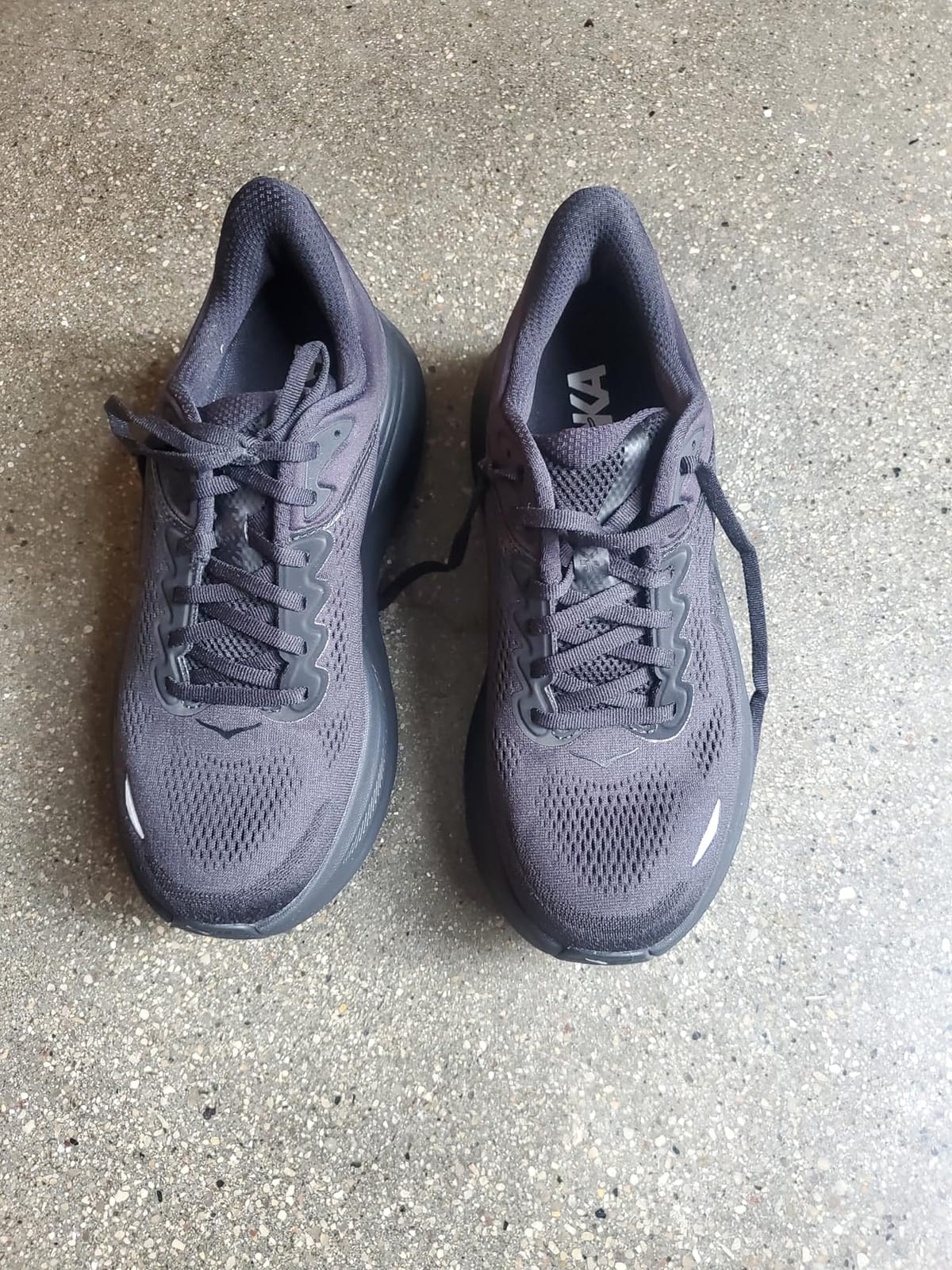
How it holds up past mile 15
This is where the Bondi 9 separates itself from the soft shoes it looks like. The foam does not go flat in the second half of a long run the way some plush EVA midsoles do, so your perceived effort stays steady rather than climbing. For a runner doing 18 to 22 miles on weekends, that consistency is the whole point.
The caveat is lifetime rather than per-run. A number of owners report that the outsole and the foam resilience degrade noticeably after roughly four months of regular use. If you are putting 40 miles a week through a pair, budget for a replacement cycle closer to five or six months rather than a year.
When the Bondi 9 is the wrong pick
Skip it if you need ground feel for speed sessions, or if you are moving down from a high-drop trainer and want a gentle transition. The low offset in this shoe asks more of your calf and Achilles than an 8 to 10mm drop shoe does, so first-timers should ease in.
It is also not a narrow-feet shoe. If you have always needed a 2E or 4E width and prefer something with a defined heel, the wide, flat platform may feel looser than you want. Our men’s running shoe picks cover narrower fits in more detail.
2. Hoka Womens Bondi 9 – same cushioning, different last
Hoka Women’s Bondi 9 Black/Black 9 Medium
Engineered mesh upper
1.87 pound listed weight
Multiple colorways and widths
Pros
- Cloud-soft cushioning that reduces foot pain on long days
- Supportive for arch and metatarsal pain
- Wide range of colorways and widths
- Stable yet breathable
Cons
- Foam can feel spongy after a few months
- Runs small for some buyers
- Bulkier silhouette than sleeker trainers
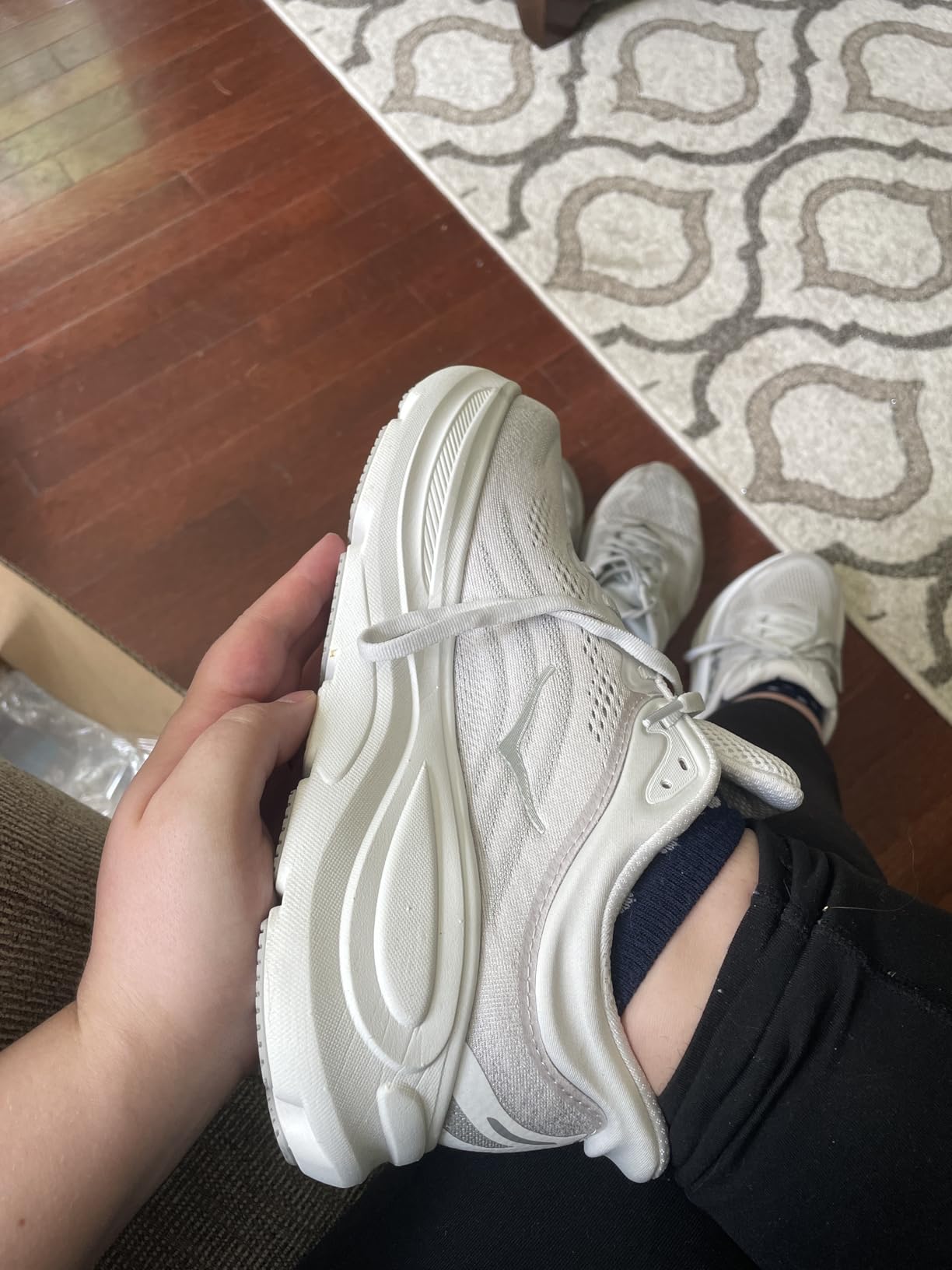
The women’s Bondi 9 is the same soft ride with a last built around a narrower starting point, and for many women that difference is the whole reason the shoe fits. It sits in the top tier of our women’s category rankings for a simple reason: very few shoes deliver this much cushioning and still feel secure through a long walk.
Owner feedback on this version is unusually specific about foot pain. Plantar fasciitis, metatarsal pain and general arch discomfort come up again and again, often with a mention of a podiatrist or orthotics that the shoe then made unnecessary. Reviewers also point to the range of widths and colorways, which is more choice than most plush trainers offer.
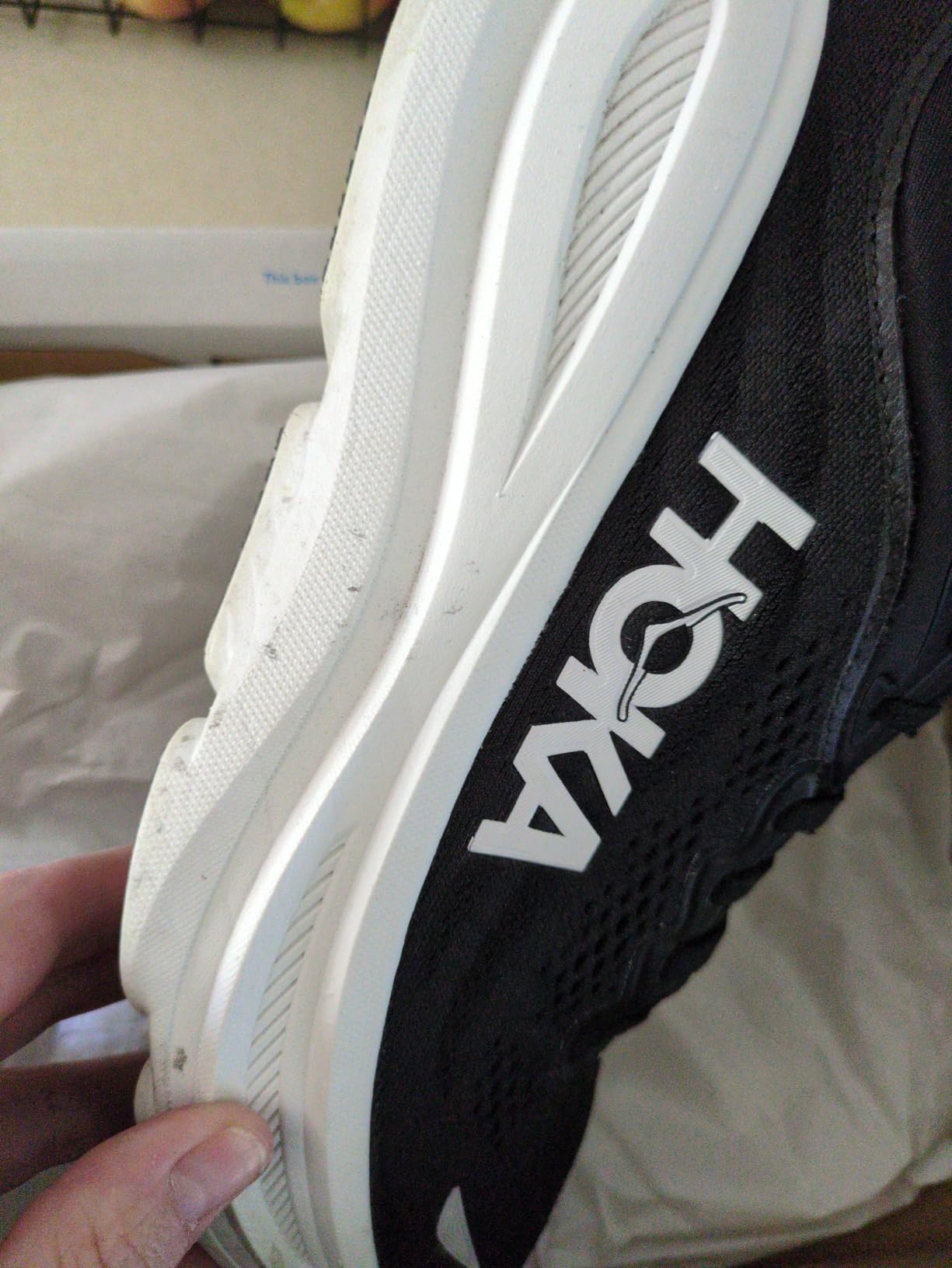
That has a practical upside for long runs. A shoe that is comfortable enough to wear for a full day of walking is a shoe that will not irritate your feet when you lace it up for 20 miles on a Saturday. The breathable engineered mesh and textile lining keep the interior from turning into a sauna on warm long runs.
Sizing is the one thing to plan for. A meaningful group of buyers reports that this version runs small, and the usual recommendation is to size up. That is a different pattern from the men’s Bondi 9, which reviewers more often describe as generous. If you are between sizes, try both rather than assuming.
Fit checks that matter for long runs
Check the toe box in the afternoon, when your feet are at their largest, and make sure you have roughly a thumb of space at the longest toe. On a long run your feet swell, and a snug forefoot becomes a blister at mile 12. The roomy upper in this shoe means it tolerates a small amount of extra length far better than a narrow one.
Also check the heel. A tall stack with a soft foam can let the foot slide if the heel counter is loose, and that slide shows up as a hot spot on the Achilles. Pull the heel counter up snugly and confirm the shoe does not lift when you flex the foot.
Who should choose the women’s Bondi 9 instead
Choose it if you are a woman who wants maximum softness for long runs, recovery days and standing work, and you are willing to size up. It is a strong option for anyone managing plantar foot pain, and our plantar fasciitis shoe guide covers the surrounding category.
Pass if you run at race pace in these. The mass and softness of the platform are not designed for tempo work, and the same bulk that feels protective on a long run feels sluggish on a track. For a first pair of max cushion shoes it is an excellent place to start.
3. Brooks Men’s Ghost Max 3 – the widest, most stable base here
Brooks Men’s Ghost Max 3 Neutral Running & Walking Shoe – Black/Black/Ebony – 10 Medium
DNA Loft v3 midsole
GlideRoll rocker geometry
Wide base with raised sidewalls
Pros
- Thick cushioning that absorbs impact on hard surfaces
- Wide base and raised sidewalls feel stable
- Breathable upper for long days on foot
- GlideRoll rocker smooths heel-to-toe motion
Cons
- Stiff out of the box before break-in
- Wide versions may feel loose for standard-width feet
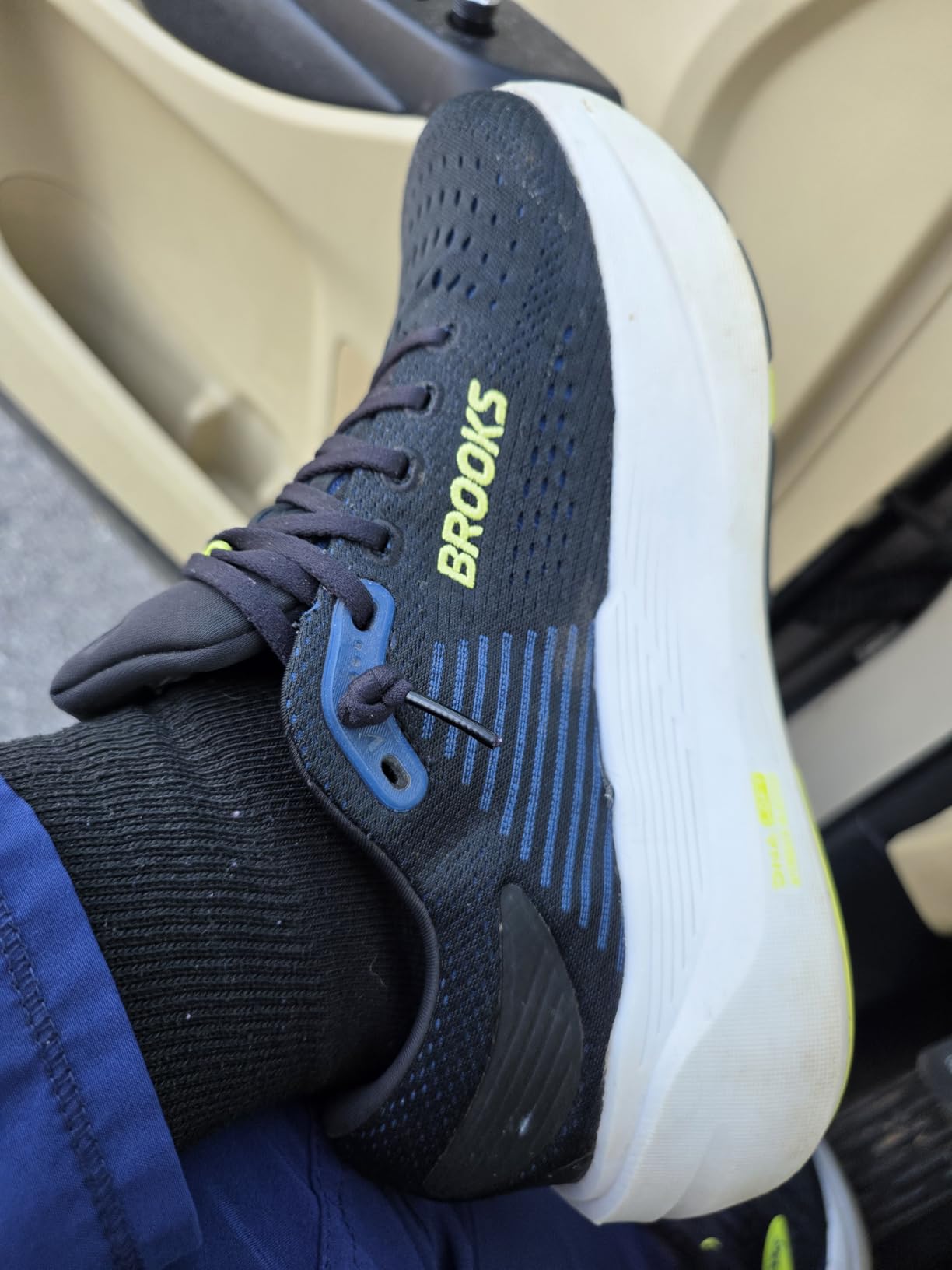
The Ghost Max 3 is the shoe I recommend to heavier runners and to anyone whose foot strike pushes them toward the inside edge of the shoe. The wide base and raised sidewalls do the work that a soft, unstable midsole cannot, and the platform stays flat and planted even at the heavier end of the spectrum.
The midsole is nitrogen-infused DNA Loft v3, which is denser and more resilient than a standard EVA blend. That density is the answer to the bottoming out question. Instead of compressing all the way through on a long run, the foam holds its shape and keeps protecting you, which is exactly the behaviour you want at higher body weight.
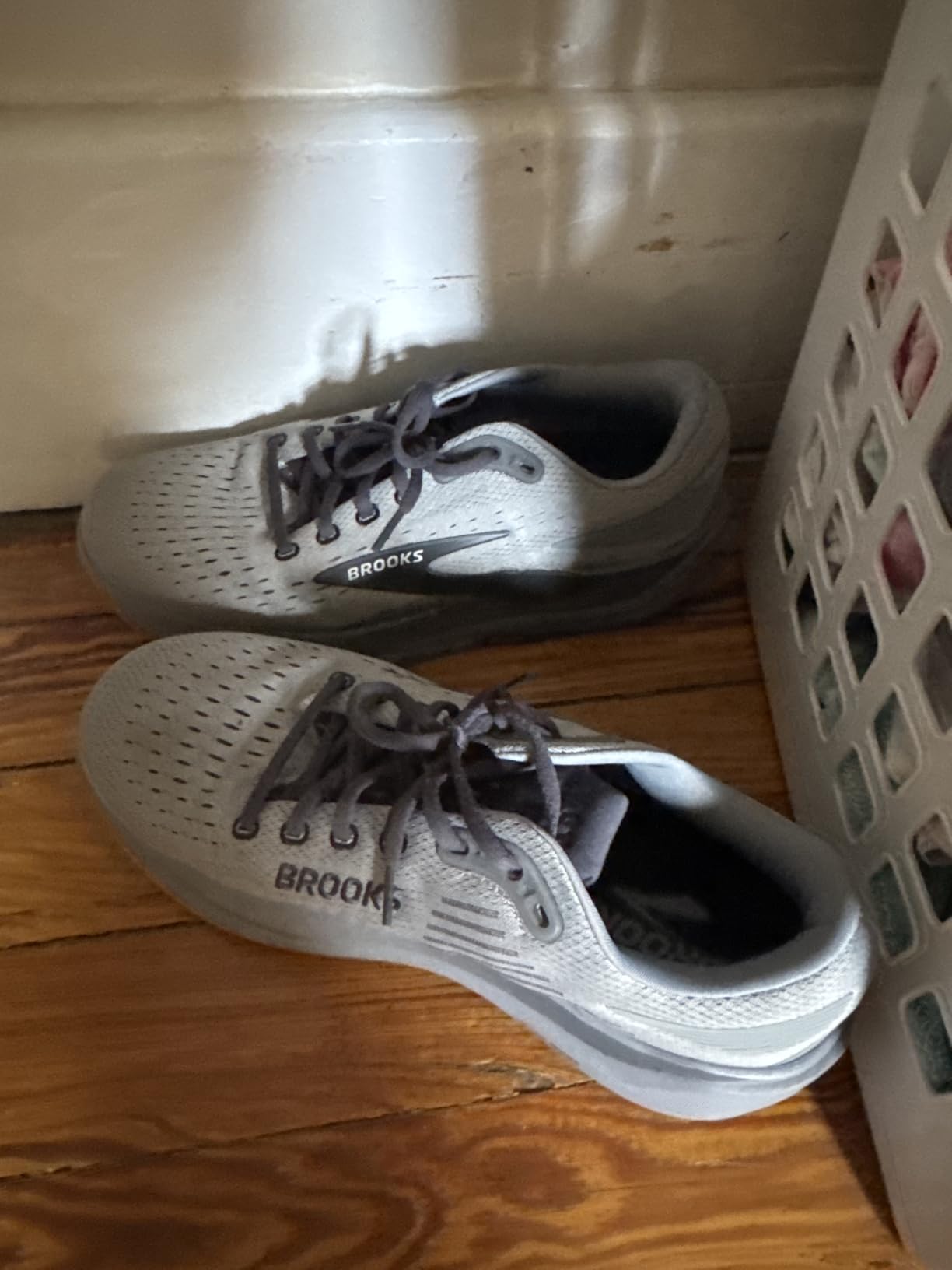
There is a medical angle too. This model carries a certified diabetic shoe designation and an APMA Seal of Acceptance, and reviewers who stand or walk for hours describe it as one of the most cushioned stable shoes they have used. People managing plantar fasciitis and neuropathy mention it by name in owner feedback.
GlideRoll rocker geometry takes some of the work out of the transition, which is useful when you are running long and easy. You are not fighting a hard heel strike, and that reduces the fatigue you feel in your calves over a two-hour effort. The upper is a breathable engineered mesh that stays cool in warm weather.
Why this is the pick for heavier runners
Bottoming out happens when a soft foam compresses past the range where it can absorb anything, and the higher your body weight the faster that happens. A denser midsole with a wide, raised platform resists it. The Ghost Max 3 combines both, which is why it rarely gets reported as flat at the end of a long run.
If you are closer to 200 pounds than 150, that is the single most important filter in this whole list. Soft, high-stack foams are lovely at low load and frustrating at high load. This is the one we would hand you first.
Where it asks something of you
It starts stiff. Almost every reviewer who mentions a flaw mentions that first, and the fix is a short break-in of a few easy miles before you commit to a long run. After that, feedback is consistently positive on fit and durability, and many runners say it needs no break-in at all once adjusted.
Sizing is the second issue. Wide 2E and 4E versions exist and they are excellent for broad feet, but a standard-width buyer can find them loose. Try both widths if you can, and remember the orthotic-friendly linear last, which matters if you use inserts.
4. Brooks Women’s Ghost Max 3 – cushioning that doubles as a walking shoe
Brooks Women’s Ghost Max 3 Neutral Running & Walking Shoe – Black/Black/Ebony – 8 Medium
DNA Loft v3 midsole
GlideRoll rocker
Engineered mesh upper
Pros
- High-stack cushioning softens impact on long runs and walks
- Wide stable base with arch support
- Breathable mesh for warm weather
- Works for running and all-day wear
Cons
- Some stiffness during break-in
- Less responsive for speed training
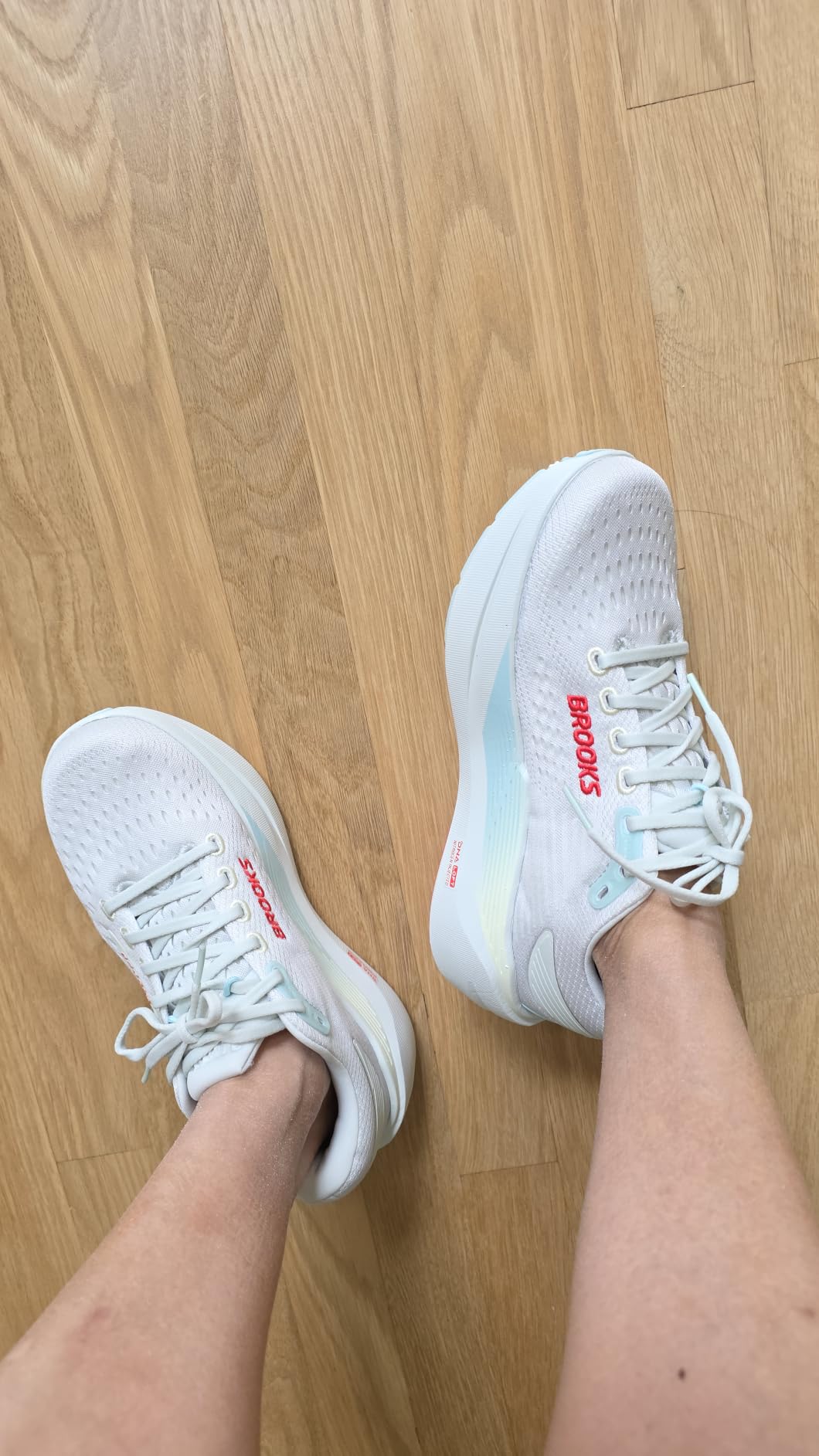
The women’s Ghost Max 3 is the most dual-purpose shoe on this list. It is a credible long run trainer, but it is also the shoe owners describe wearing through a full working shift, and for anyone who is on their feet as much as they are on the road, that versatility is worth more than a marginally more responsive ride.
Owner feedback is warm and consistent about comfort. The wide platform accommodates a range of foot shapes, the arch support is real rather than decorative, and the mesh upper vents well in hot weather. The rating on this version sits a touch below the men’s, and the reason is mostly about speed feel rather than comfort.
Roughly what to expect physically: the shoe shares the same nitrogen-infused DNA Loft v3 midsole, the same GlideRoll rocker and the same raised-sidewall platform as the men’s version. The last is built a little narrower, which is why it feels snugger through the midfoot for many women and why it works for standard widths as well as wide ones.
For a long run, the rocker means your ankle does not absorb every heel-to-toe transition. On a 16-miler that adds up, and it is part of why this shoe shows up in recovery and long-run rotations rather than only on easy short days.
Long run suitability and pacing
This is an easy-pace and recovery shoe. Owners consistently use it that way, and the softness is what makes long, slow mileage feel sustainable. If your long run includes a block at marathon pace, use it for the easy portion and switch to something lighter and more responsive for the faster segment.
It holds its cushioning on long days, which is the durability point that matters most. Reviews describe the midsole as reliable rather than fading, and the outsole holds up on both road and treadmill work.
Consider the alternatives if you need more
If you want more softness, step up to the Hoka Bondi 9. If you want a more responsive long-run ride with real energy return, look at the On Cloudmonster. If your priority is a genuinely wide forefoot, the ALTRA Torin 8 is the more natural fit, and our women’s running shoe picks cover that category in more depth.
Give it a few easy miles before a long run because of the break-in stiffness. Once flexed, the fit and cushioning are among the most reliable in this group.
5. On Men’s Cloudmonster – the highest rated shoe here
ON Cloudmonster Men’s Running Shoes, White, 13
Helion superfoam midsole
CloudTec cushioning pods
Rubber outsole
Pros
- Very high and plush cushioning for long distances
- Energetic ride from responsive Helion foam
- Protective forefoot volume
- Durable outsole and upper
Cons
- Bulky profile and pronounced pods reduce ground feel
- Max cushion suits easy miles more than tempo work
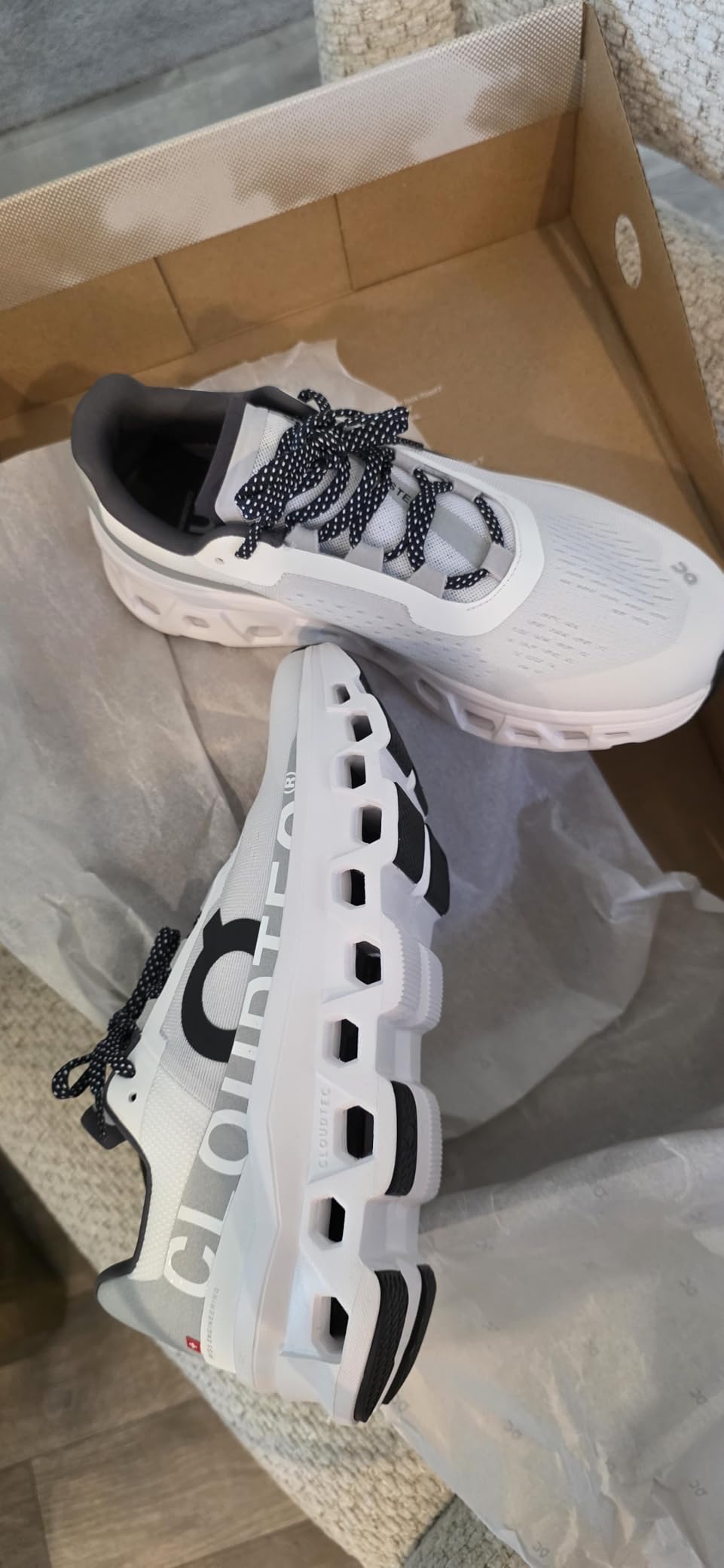
The Cloudmonster has the highest average rating of any shoe in this guide, and it earns it by doing something most max cushion shoes do not. It is soft without feeling dead. Most plush trainers absorb impact and then go quiet, and the Cloudmonster keeps a distinct sense of lift through the stride.
That comes from the Helion superfoam midsole, which is more responsive than a typical EVA blend, plus the CloudTec cushioning pods that collapse and spring through the roll of the foot. On long easy runs the result is a shoe that feels protected and animated at the same time, which is a harder balance to hit than it sounds.
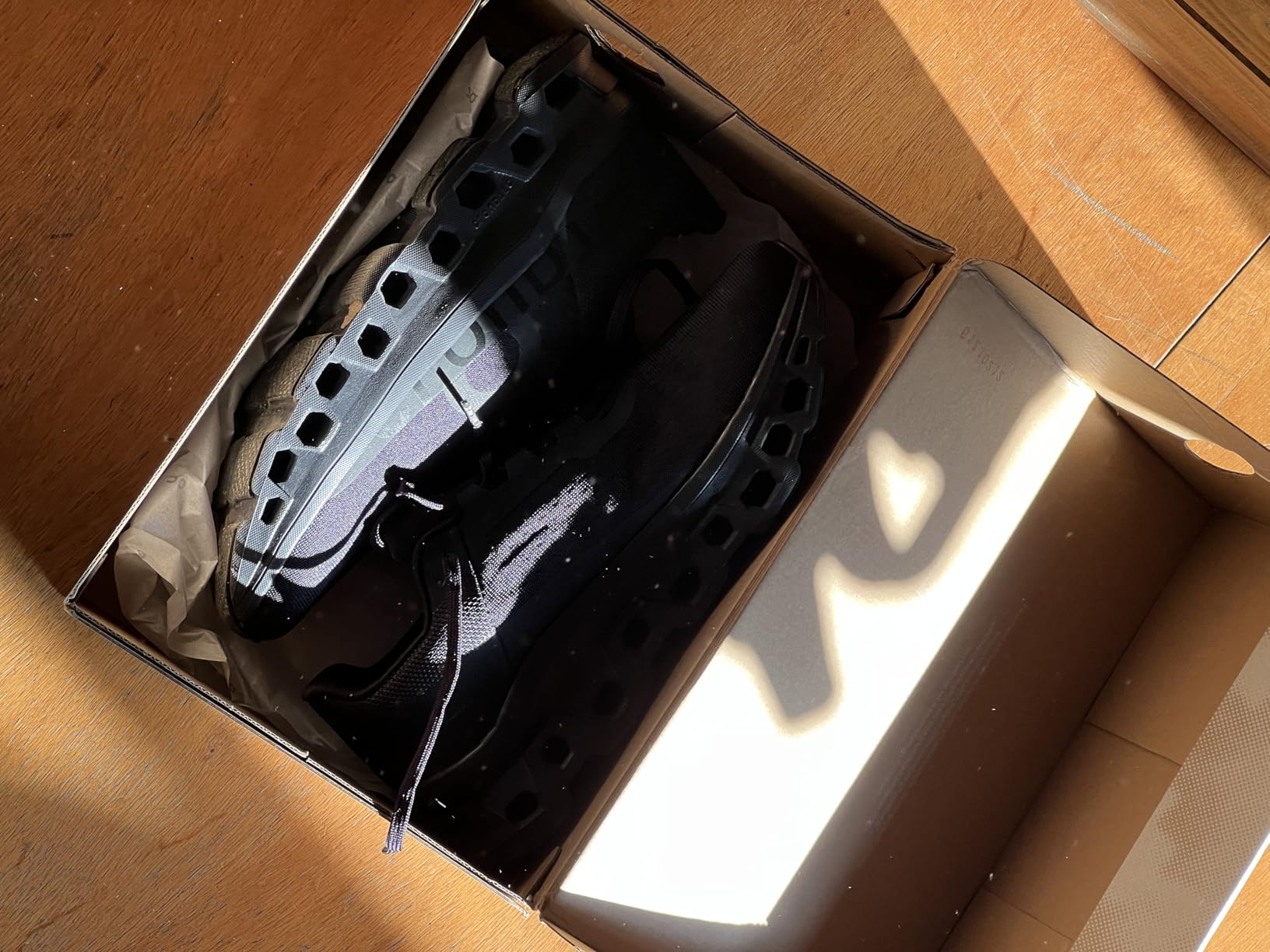
The forefoot is genuinely spacious, and reviewers mention the protective volume through the toe area as a comfort feature on long runs. The outsole and upper are described as distinctive and durable, and the rubber outsole gives solid traction on wet pavement.
Where it differs from the Bondi 9 is the personality. Bondi is a soft landing and quiet landing. Cloudmonster is a soft landing with a visible push-off. Runners who find pure plushness dull after an hour tend to enjoy this one more.
Long run behaviour over two hours
The pods and the tall stack keep their character deep into a long run. Owners describe the shoe staying comfortable and lively rather than flattening, and the responsive foam means your pace drifts less on the back half of a long effort. For marathon-pace training this is a better fit than most of the softer EVA trainers here.
One caution from forum-style discussions is that the pronounced pods reduce ground feel, and the shoe can feel clunky on faster work. Treat it as a long run and easy-mile shoe rather than a speed shoe, and it will reward you for years of use.
Who should skip it
Skip it if you run on technical trail or loose ground and want ground feel, or if you are sensitive to a tall, narrow platform under a fast cadence. It is also bulkier than a neutral trainer, so it takes up real space in a travel bag.
For lighter-feeling daily training shoes to pair with it, our treadmill and everyday running picks are a reasonable second shoe in the rotation.
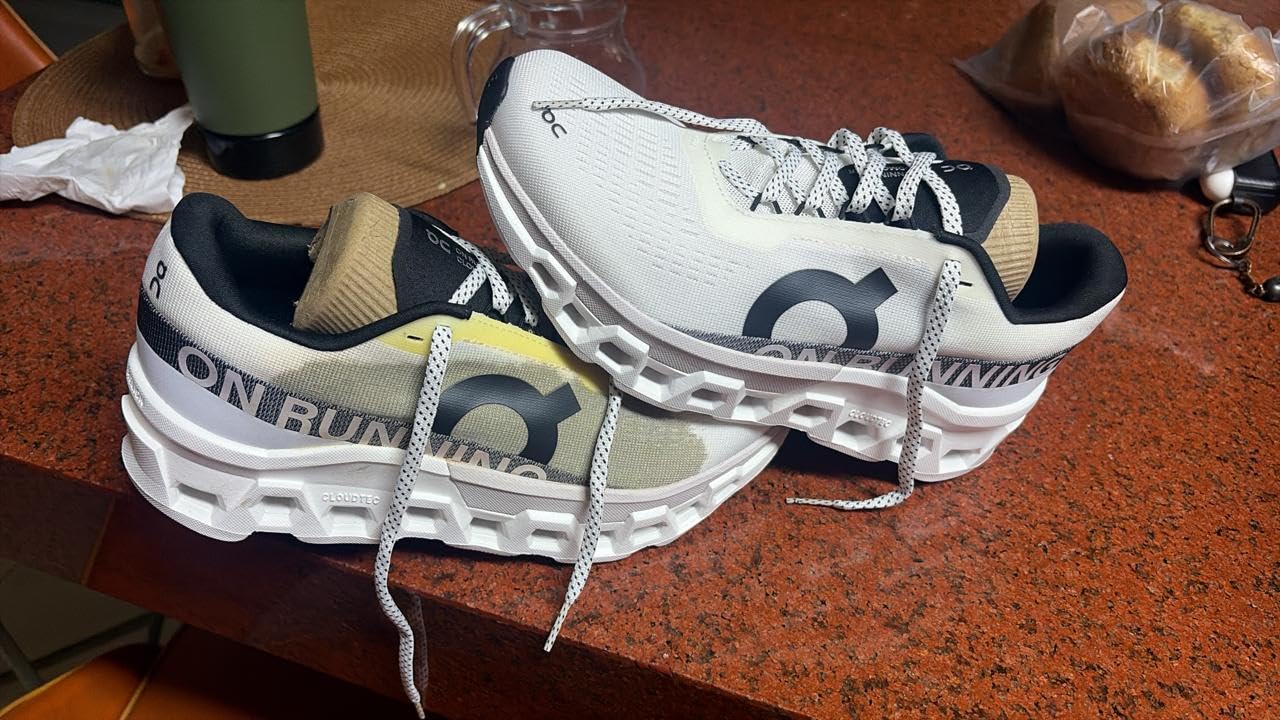
6. On Women’s Cloudmonster – bounce and a forefoot foam insert
On Women’s Cloudmonster 2, Frost/Rock, 8 Medium
Dual-density Helion midsole
Speedboard plate
Forefoot foam insert
Pros
- Maximum cushioning with noticeable energy return
- Speedboard adds momentum at toe-off
- Forefoot foam insert absorbs impact
- Distinctive supportive platform
Cons
- Tall bulky midsole reduces ground feel
- Best suited to relaxed long runs
The women’s Cloudmonster adds a nylon-blend Speedboard to the dual-density Helion midsole, and that plate is the reason this version feels livelier on long runs. The Speedboard stores and returns some of the energy at toe-off, so the shoe pushes rather than simply cushions.
There is also a foam insert in the forefoot, placed specifically to absorb impact on longer efforts. Owners mention it as a comfort detail in the front half of the foot, which is where a lot of long-run pressure actually shows up, especially in runners who land midfoot or forward.
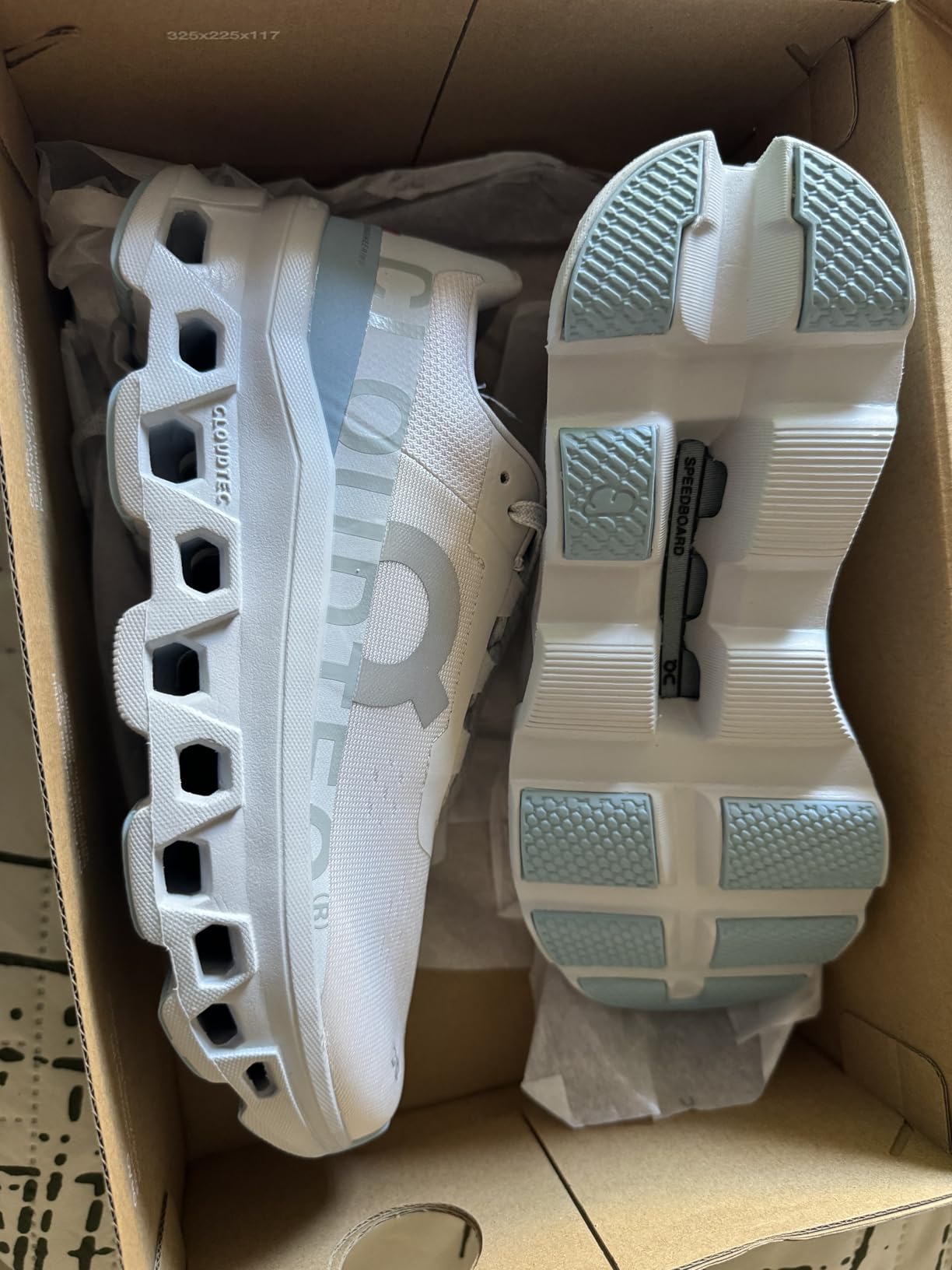
Reviewers describe maximum cushioning with noticeable energy return, a supportive platform and a comfortable ride over long distances. The recurring criticism is the height and bulk of the midsole, which some people find less connected to the ground than a lighter trainer. That is a fair trade for the cushioning depth, but it is a real change in feel.
The build is more technical than the men’s version, with two foam densities in the midsole doing different jobs at the heel and forefoot. In practice the heel absorbs and the forefoot pushes, which is a sensible setup for a shoe meant to cover ground comfortably.
Is it right for a marathon block
For easy long runs and recovery days, yes, and the Speedboard gives you enough response that you can hold a steady marathon pace in it if you want to. What it is not is a race shoe. A plate in a training shoe behaves nothing like a carbon plate in a race-day super shoe, so do not expect the same snap.
Best pairing in a marathon block is this for the long run, and a lighter trainer for threshold and speed days. That split keeps the heavier volume protected without losing your sharper work.
Fit and sizing notes
The forefoot volume is generous, which suits longer runs and swelling feet. If you have narrow feet, note that a tall platform plus a roomy forefoot can allow the foot to move more than you want. Tighten the midfoot lacing and check for heel lift before you commit.
Weight and bulk are the two things to accept up front. If you want maximum cushioning with more stability and less energy return, the Ghost Max 3 is the more conservative pick. If you want the livelier ride, this is the shoe.
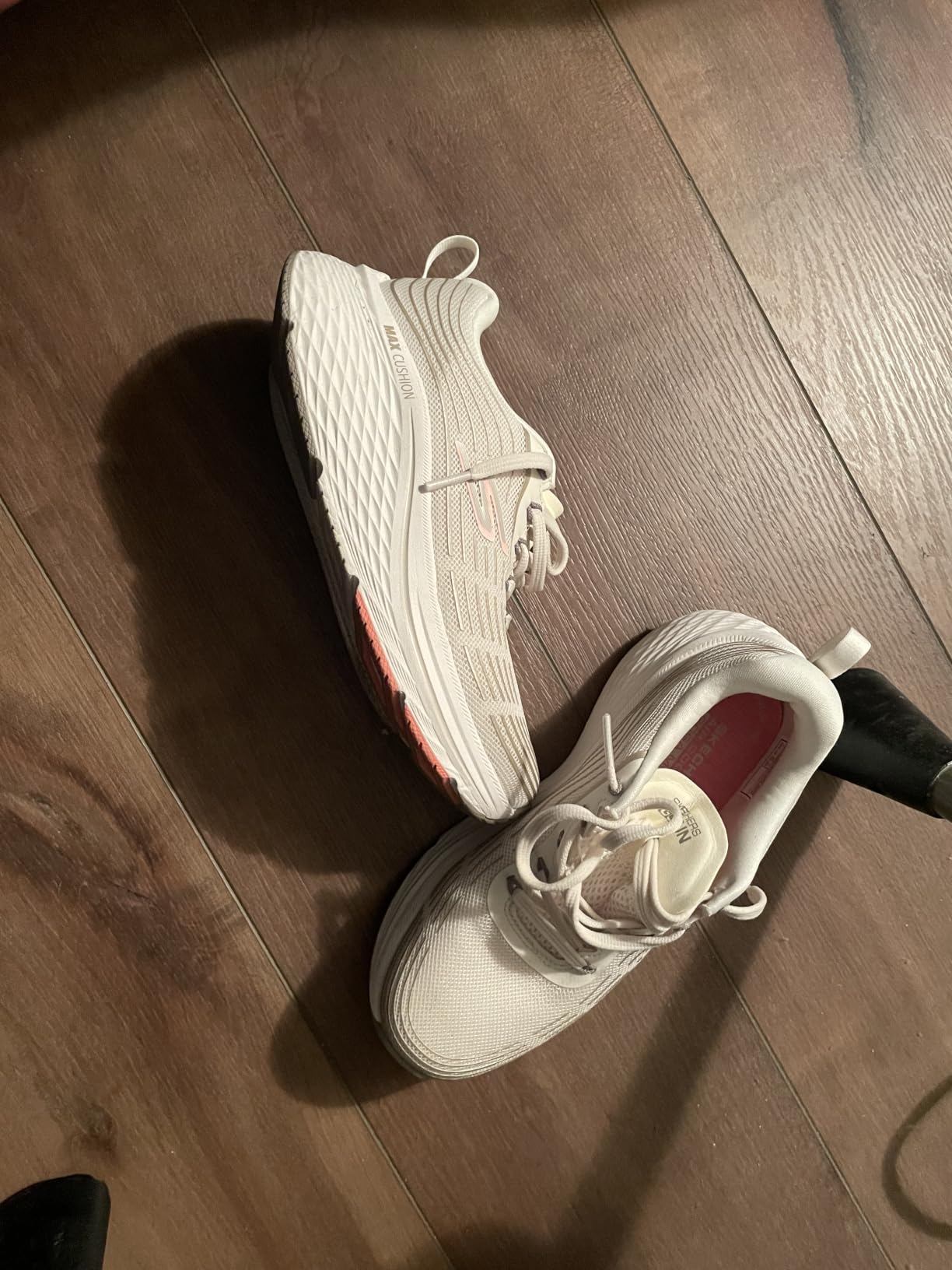
7. Skechers Women’s Max Cushioning Elite 2.0 – a softer, higher-drop option
Skechers Women’s Max Cushioning Elite 2.0 Sneaker, Light Blue/Pink, 10
Ultra Go midsole
Air-Cooled Goga Mat insole
6mm heel drop
Pros
- Thick Ultra Go cushioning with supportive footbed
- Natural rocker smooths transitions
- Breathable mesh with copper-infused footbed
- Machine washable and vegan
Cons
- Less responsive for faster training
- 6mm drop suits some runners better than others
The Elite 2.0 is the most useful shoe on this list for anyone who does not want to change everything at once. Where most max cushion trainers drop to 4mm or 3mm, this one keeps 6mm of heel drop, so it delivers deep cushioning without the sudden calf load that catches people out when they move to a low-drop shoe.
The Ultra Go midsole does the cushioning and the Air-Cooled Goga Mat insole provides the support underneath it. Natural rocker geometry eases the heel-to-toe transition, and the whole package feels like a comfort-first trainer rather than a performance shoe.
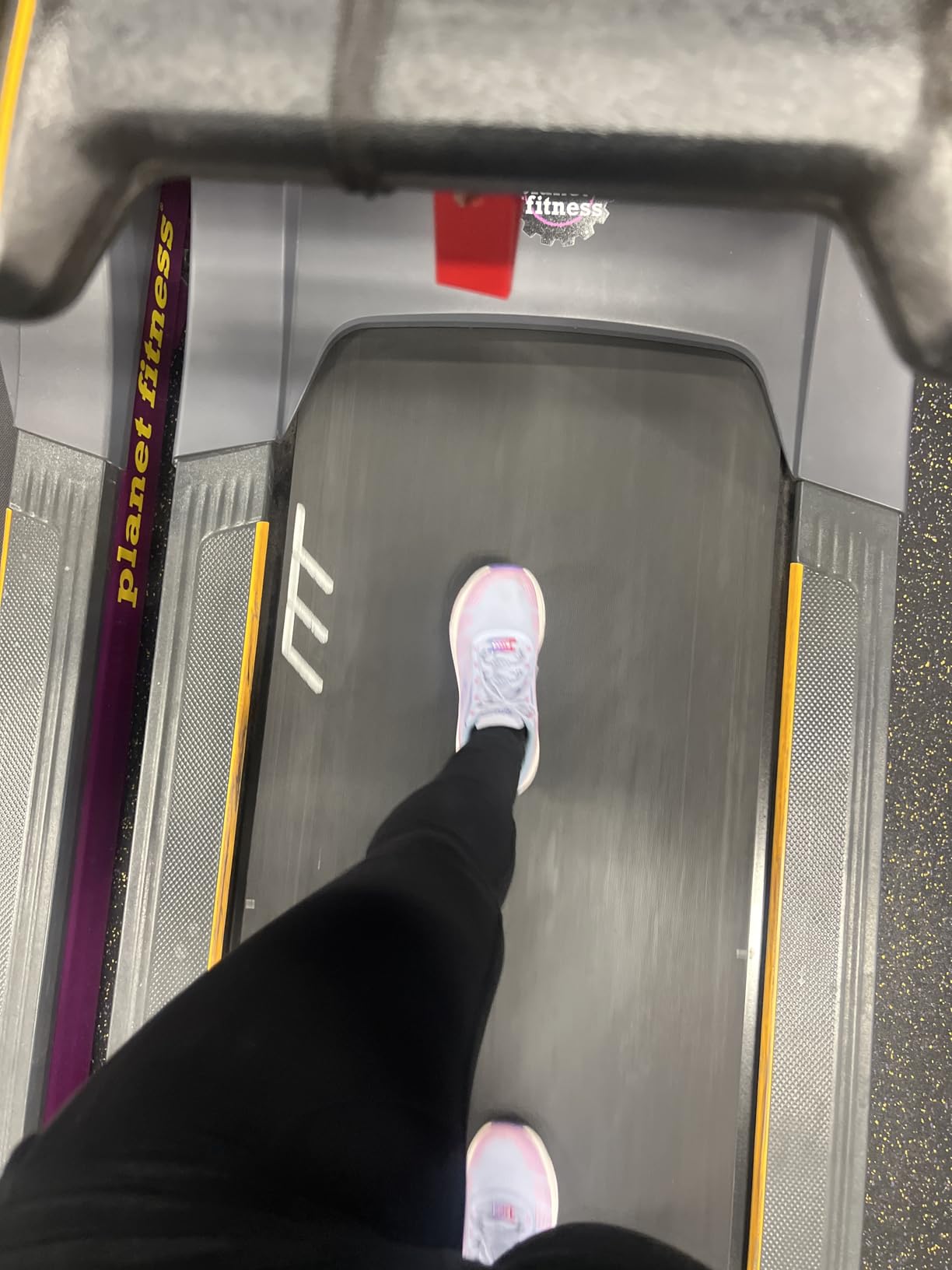
One practical detail that stands out for a long run: the shoe is machine washable and made with vegan materials. If you run in all weather, being able to wash the shoe is a real convenience, and it is unusual in this category.
The upper is a breathable athletic mesh with a copper-infused footbed for temperature management, which owners appreciate in hot weather. Comfort is the consistent theme in owner feedback, across both running and general training use.
Why the 6mm drop matters for long runs
Drop is the offset between heel and forefoot height, and it changes how much work your calf and Achilles do. Staying at 6mm means you keep some of the geometry you are used to while still getting a deep, protective stack. For a runner who wants maximum cushioning without a lengthy adaptation period, that is the single most useful feature here.
The counterpoint is that 6mm is slightly flatter than a traditional 8 to 10mm trainer, so you are still making a small adjustment. The transition is gentle rather than zero, and most people adapt within a couple of weeks.
Trade-offs to know about
The ride is soft and less responsive, which makes it poor for intervals, tempo runs or anything where you need to feel the ground. Reviewers describe it as a comfort-first trainer, and that framing is accurate. If you need one shoe to do everything, this is not it.
For a first pair of cushioned shoes, or as a dedicated long run and recovery shoe, it is a strong, low-risk choice. The rocker platform and washable build also make it handy on treadmill work, where a stable, easy platform matters more than speed.
8. ALTRA Women’s Torin 8 – built around your toes
ALTRA Women’s Torin 8 Road Running Shoe, Dusty Olive, 8.5
Balanced Cushioning platform
FootShape toe box
APMA Seal of Acceptance
Pros
- Wide FootShape toe box allows natural toe splay
- Balanced Cushioning promotes low-impact form
- APMA Seal of Acceptance
- Stable low-drop platform
Cons
- Low drop and wide fit are not for everyone
- Less cushioning depth than dedicated max cushion models
The Torin 8 is the least conventionally cushioned shoe here and the one runners with genuinely wide feet tend to recommend most strongly. Everything about it starts with the FootShape toe box, which gives your toes room to spread the way they do barefoot. On a long run that removes the forefoot compression that causes sore metatarsals.
Balanced Cushioning places foam under the whole foot rather than concentrating it in the heel, so the load spreads across the midsole instead of loading one zone repeatedly. Owners describe a stable, low-impact, natural-position platform that makes long road runs feel uneventful in the best way.
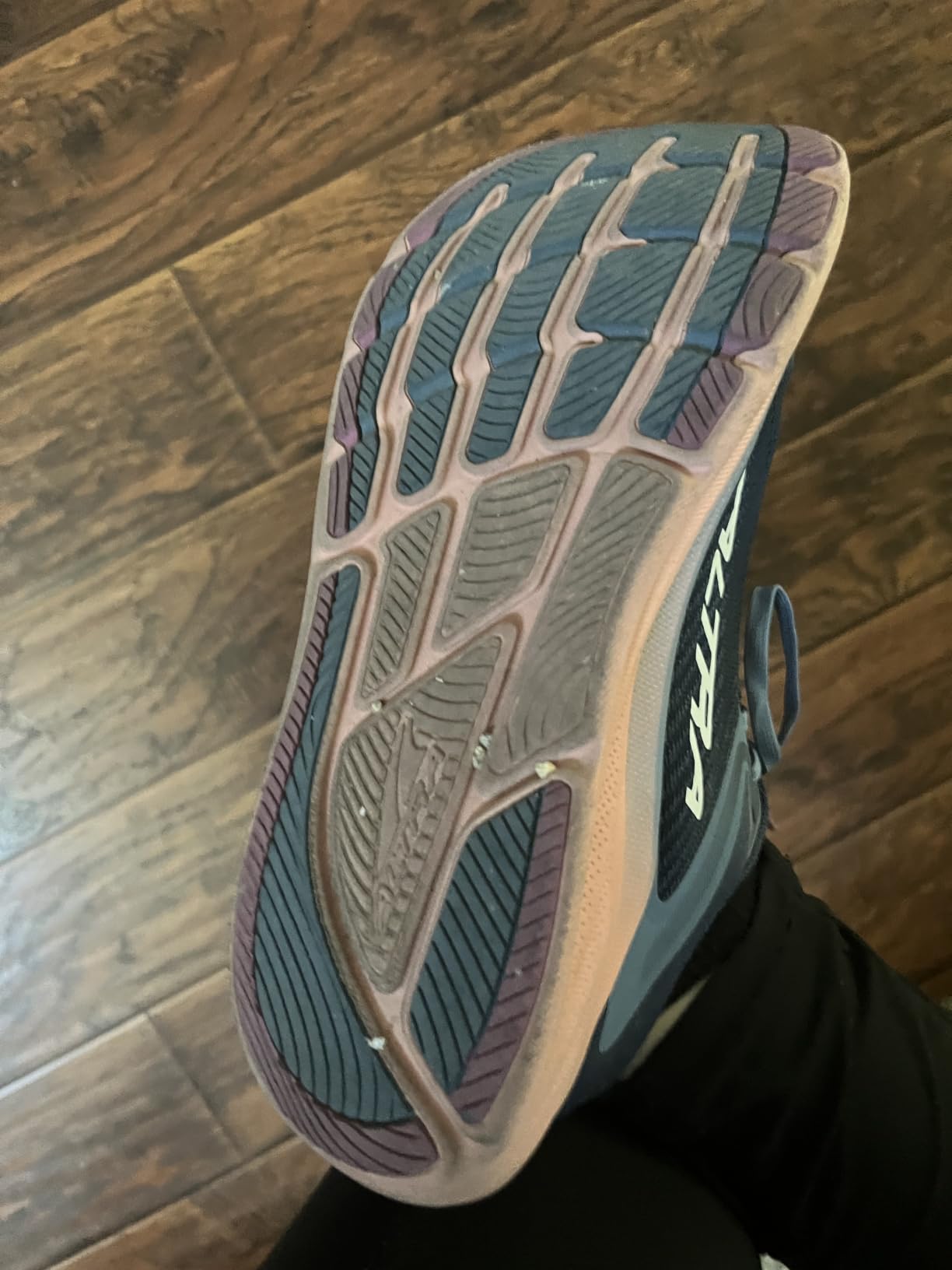
It also carries an APMA Seal of Acceptance, which means it has been reviewed against foot-health criteria by a medical professional body. That matters for anyone who has been told to look for a shoe that supports a natural foot position rather than one built around a traditional motion-control shape.
Be honest about what this is. The Torin 8 has less cushioning depth than the Bondi 9 or the Cloudmonster, and reviewers say so directly. It is a comfortable, stable, roomy trainer that happens to sit at the lower end of the max cushion range, not the plushest shoe we tested.
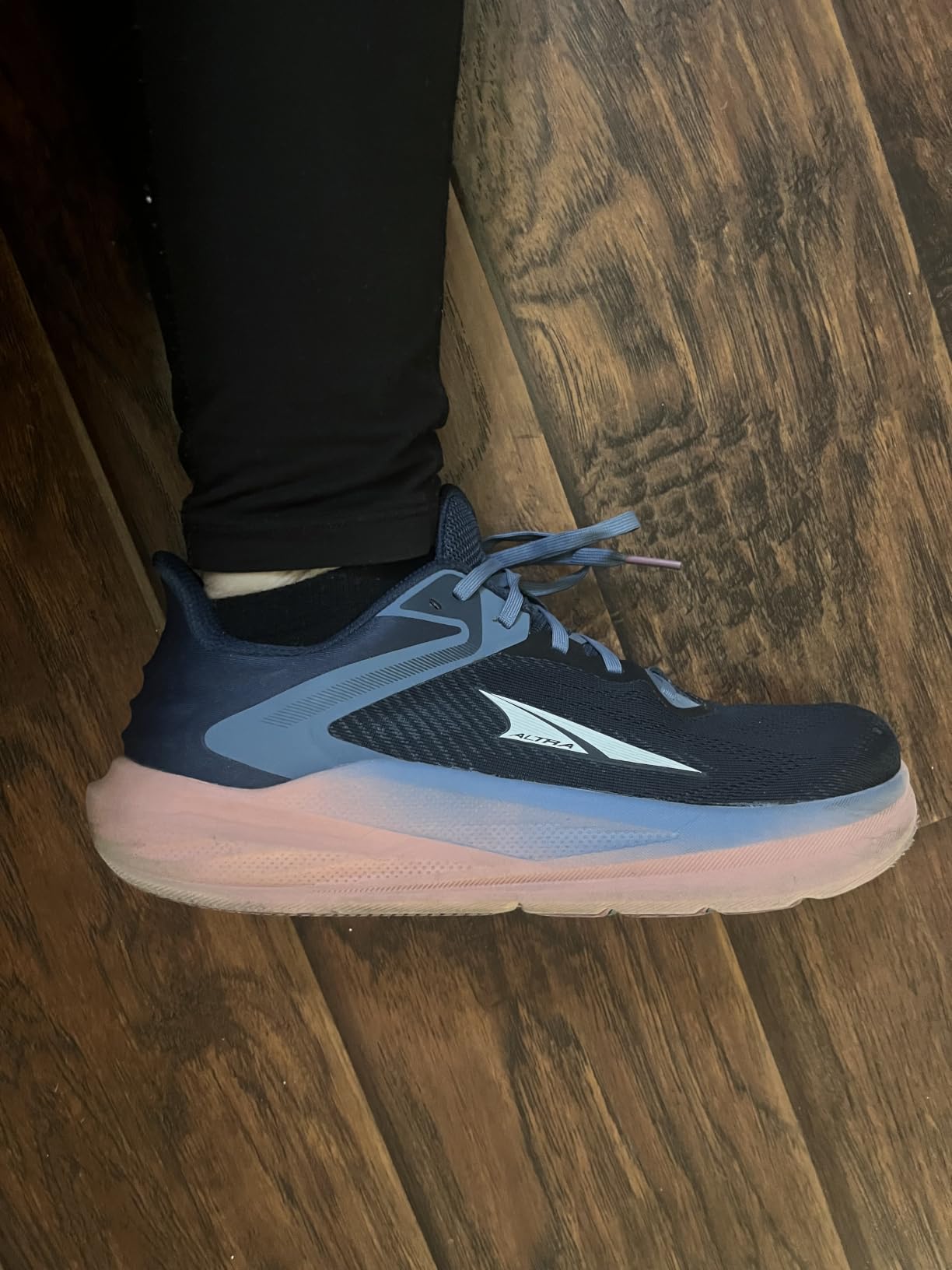
Wide feet and toe splay on long runs
If you have ever finished a long run with numb toes or rubbing at the base of your little toe, the toe box is the feature to prioritise over foam depth. The Torin 8 gives you more front-of-foot room than any other shoe in this list, and owners with wide feet call it out as the reason they keep coming back.
The drop is low, which suits a natural forefoot or midfoot strike and reduces the braking that a high drop can create. It also means your calf and Achilles do more work, so ease in if you are new to a low-drop platform.
Why it is not a top pick for everyone
If your priority is maximum softness, this is the wrong shoe. The cushioning is moderate and the ride is closer to neutral than plush, which is a deliberate design choice rather than a limitation. Reviewers who expected a Bondi-like feel describe it as distinctly different, and generally better, for natural running form.
Narrow-footed runners and anyone who likes a snug, higher-drop trainer will probably find it too loose. The rest of this list covers plush and stability options; this one covers room and low-impact form.
9. New Balance Men’s Fresh Foam X More V6 – responsive for a plush shoe
New Balance Men’s Fresh Foam X More V6 Running Shoe, Grey Matter/True Red/Castlerock, 10 W
Fresh Foam X midsole
Reflective details
Gusseted tongue lockdown
Pros
- Fresh Foam X delivers plush cushioning
- Lightweight and responsive for long road runs
- Reflective details for low light
- Gusseted tongue for secure lockdown
Cons
- Broad sizing needs careful fit checking
- Less protective on rough terrain
The More V6 is the balance point in this list. Fresh Foam X gives you a genuinely plush ride, but the foam is light and responsive enough that the shoe does not feel like a sofa. That combination makes it usable for more of your week than most of the deep-cushion options here.
It is also lighter than you would expect for a max stack shoe, and owners describe it as comfortable across long road runs without feeling like a different shoe when you pick up the pace slightly. If your easy long runs drift into steady effort, this handles it better than most.
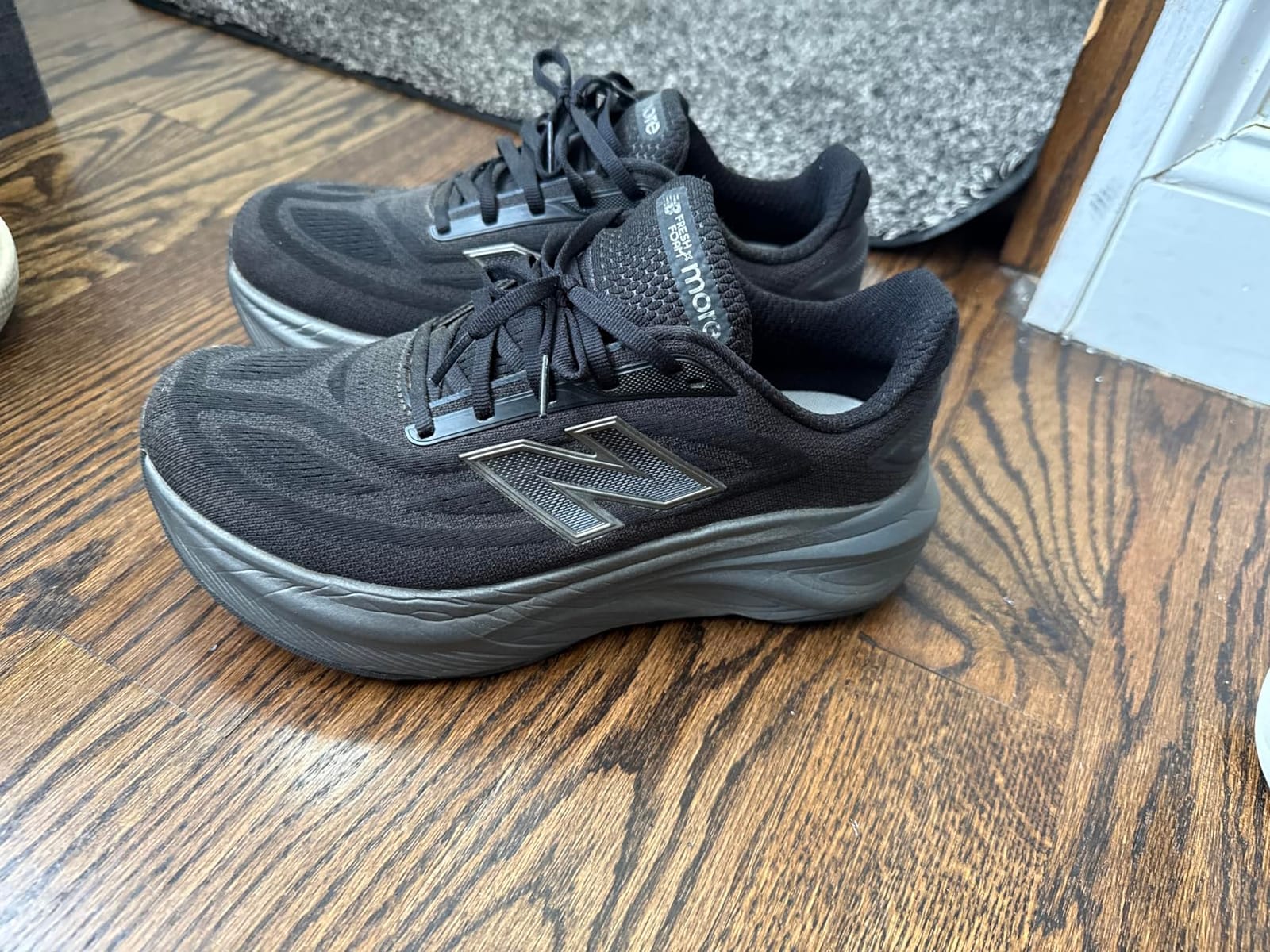
Small details add up on long runs. Reflective detailing improves visibility in low light, which matters if you run before sunrise or after work. The lace closure with a gusseted tongue gives a secure lockdown so your foot does not slide around inside a deep stack, and the synthetic upper is durable.
Owner feedback is positive with fewer reviews attached than some of the shoes here, but the reports are consistent: soft, comfortable, responsive and well built. The main caveat people raise is fit, because the sizing runs broad.
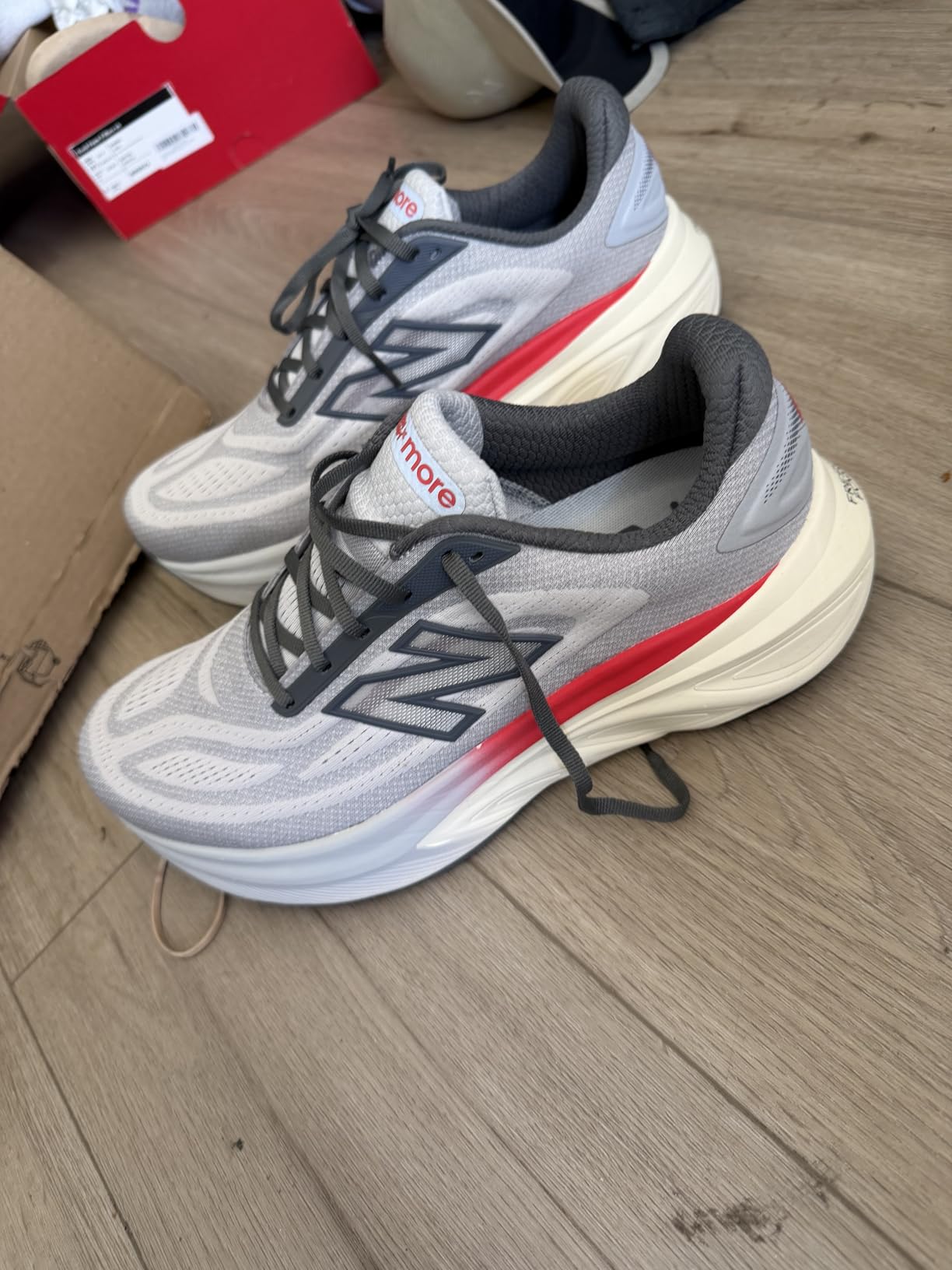
Long run suitability across paces
This is a shoe you can take from easy long runs through a steady aerobic pace without the ride going strange. The foam returns energy rather than absorbing all of it, so your cadence feels natural deep into a run. For marathon-block long runs with a moderately faster finish, that flexibility is genuinely useful.
What it is less suited to is trail or rough ground. Reviewers note it offers less protection on uneven surfaces, which makes sense for a road platform designed for smooth surfaces and repeated impact absorption.
Fit and who it suits
Check the fit carefully because the sizing is broad. If you are between sizes or have a narrow midfoot, try the lower size and confirm your heel is still secure. A wide forefoot is a plus for swelling feet over a long run.
It suits runners who want one cushioned shoe to handle most easy and moderate training, plus anyone who stands a lot during the day and wants the same shoe for both. If you want maximum softness instead, the Bondi 9 is softer; if you want maximum width, the Torin 8 is wider.
10. ASICS Women’s Gel-Nimbus 27 – plush with a stable heel
ASICS Women’s Gel-Nimbus 27 Running Shoes, 10, Lake Grey/White SAGE
PureGEL cushioning
FF BLAST PLUS ECO midsole
OrthoLite X-55 sockliner
Pros
- Smooth cushioned ride that absorbs impact
- PureGEL gives soft landings with a responsive toe-off
- Breathable jacquard mesh upper
- Step-in comfort from the sockliner
Cons
- Runs large so sizing down may be needed
- Maximum cushioning feels less lively for speed work
The Gel-Nimbus 27 is the reference point for what a plush daily trainer should feel like, and after weeks of comparison it is still the one I hand to runners who want cushioning plus a secure landing. The PureGEL cushioning delivers genuinely softer landings without the vague, unloaded feeling of some foam-heavy shoes.
That combination is the reason the toe-off stays responsive. You get a soft heel strike and a firm enough push to keep your cadence moving, which is what makes this a shoe you can put 30 miles a week into rather than one you save for the occasional long run.
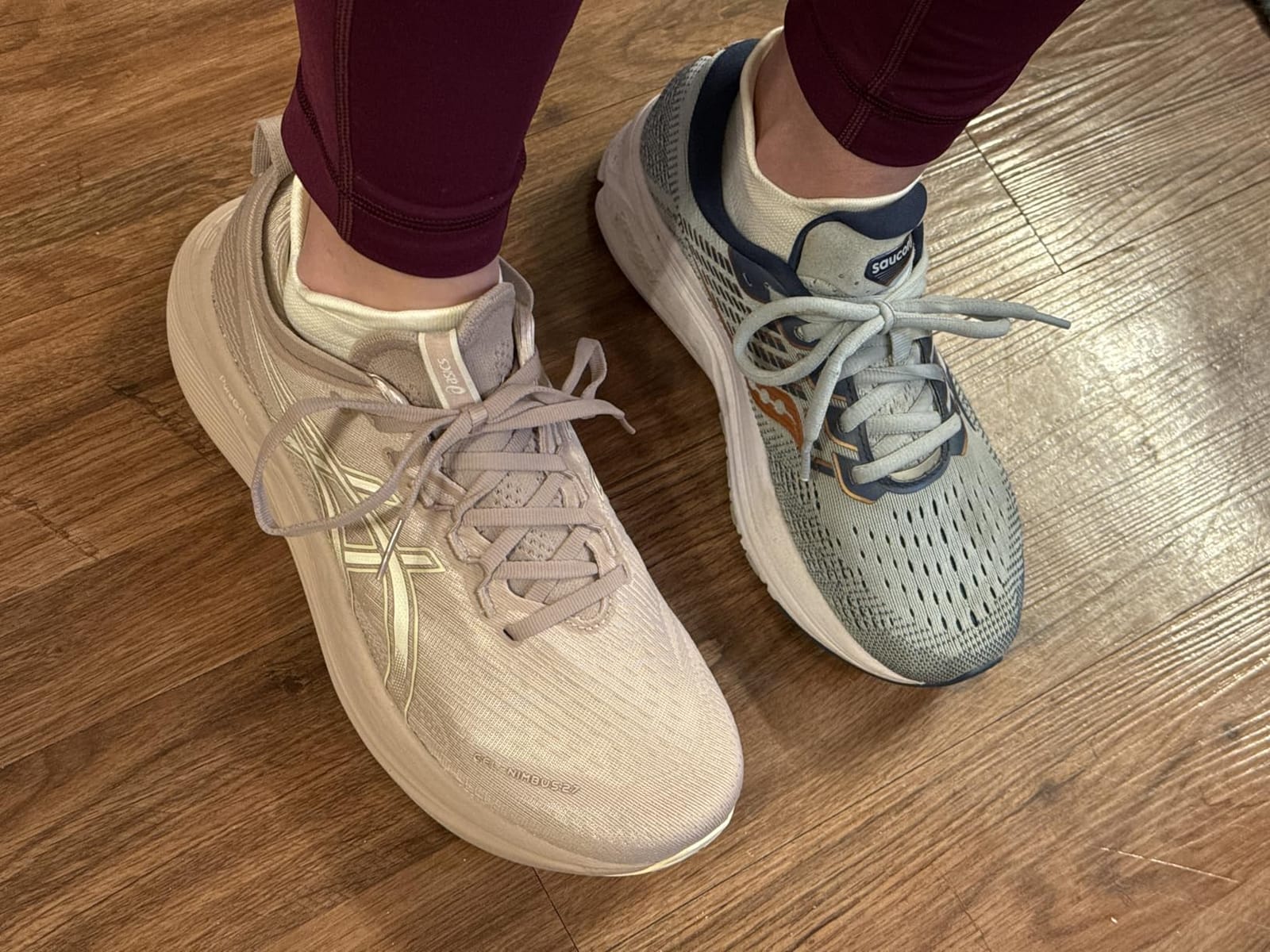
Two details make it practical. The FF BLAST PLUS ECO midsole carries roughly 24 percent bio-based content, and the upper is made with at least 75 percent recycled content, which is more sustainability detail than most shoes in this category publish. The OrthoLite X-55 sockliner gives step-in comfort that you notice in the first hundred yards.
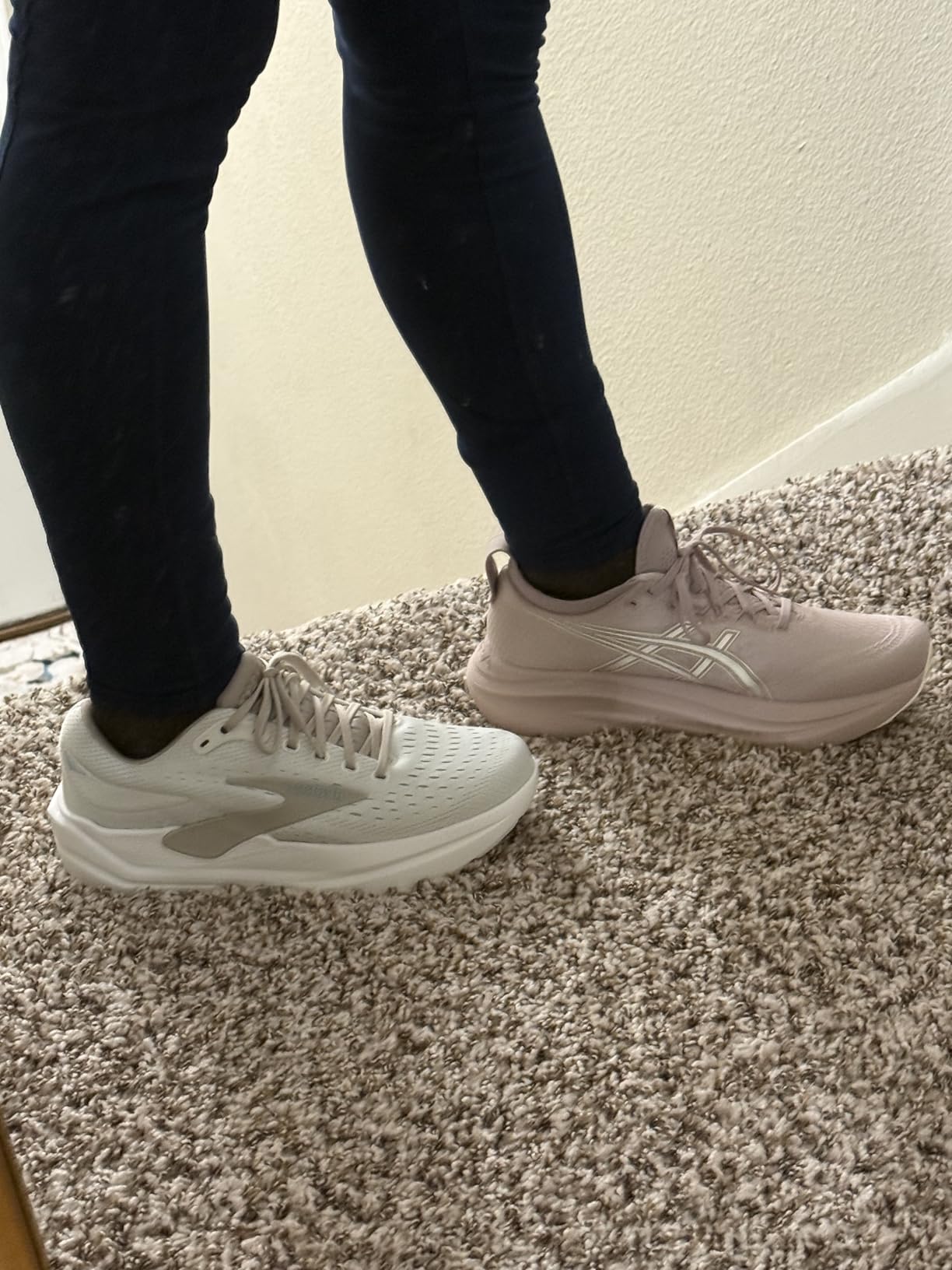
The engineered jacquard mesh upper is breathable and comfortable, and owners frequently mention using these for both running and long days of walking. That dual use is a common thread in reviews and it is not a marketing line, it shows up in the actual usage patterns people describe.
Long run performance and durability
Owner feedback describes a smooth, well-cushioned ride that absorbs impact on long runs and holds up over extended mileage. Reviews mention soft landings paired with a responsive toe-off, which is exactly the pairing you want when the run is long and the pace is steady.
Reviewers note the shoe runs large, and that sizing down is often the fix. That is the most common adjustment reported, and it is worth doing rather than fighting a loose fit over 20 miles.
Where the trade-offs are
The heavier, softer feel is best suited to steady mileage rather than racing or sharp speed work. Reviewers are explicit that the maximum cushioning is less lively for faster training, and there is no version of this shoe that changes that.
If you need a stability component for overpronation, this is a neutral platform and you will want a dedicated stability model instead. Otherwise, for easy long runs, recovery and everyday mileage, it remains one of the most complete packages in this guide.
11. On Men’s Cloudtilt – the softest option for standing, not for running
On Mens Cloudtilt Black/Asphalt 11.5 M
CloudTec Phase midsole
Helion superfoam
Recycled polyester mesh
Pros
- Very soft cushioning for walking and standing
- Easy slip-on style for daily wear
- Understated look that suits casual outfits
- Arch support appreciated by users
Cons
- Narrow fit can feel tight for wide feet
- Softness can feel unstable for running
- Minimal lacing limits adjustability
I want to be straight with you about this one. The Cloudtilt sits in this list because it shares the On cushioning technology, and if you spend your day on your feet it may be the most comfortable thing here. But it is a lifestyle sneaker with no Speedboard and minimal lacing, and reviewers repeatedly describe the softness as better suited to walking than running.
For a long run, the narrow fit and fixed lacing are the problems. Tight for wide feet, especially before break-in, and without adjustable lacing you cannot dial in the lockdown the way you can in a running shoe. Reviewers also flag that the cushioning can feel unstable under running movement.
What owners do love is consistent. The feedback is overwhelmingly about long walks, standing shifts and arch support, with a clean, understated look that works with everyday clothes. The upper is an engineered mesh made from 100 percent recycled polyester, and the Helion superfoam midsole uses CloudTec Phase geometry for plush cushioning with a rubber compound outsole for traction.
When it beats every other shoe here
On a 12-hour shift, standing on concrete, this shoe is excellent. Users with foot issues call out the arch support specifically, and the soft landing is exactly what you want when you are not moving with purpose. For commuting, walking the dog or long airport days, it is hard to argue with.
Its rating is the highest in this guide at 4.6, and for its actual purpose that is fair. It is simply a different shoe from the other eleven.
Why it is not a long run pick
No plate means less energy return, minimal lacing means less security, and a narrow fit means hot spots on a long run. If you want a cushioned shoe that can handle 20 miles, choose a road trainer from this list instead.
Consider it a companion pair, the shoe you change into at your desk on a recovery day. It also pairs naturally with a proper running shoe, since it will not be competing for rotation miles.
12. Saucony Triumph 23 – the orthotic-friendly daily trainer
Saucony Men’s Triumph 23 Sneaker, Black/White, 10.5
PWRRUN PB foam stack
SRS sockliner
XT-900 carbon rubber outsole
Pros
- Generous plush cushioning for daily mileage
- Soft but stable ride with a firm heel cup
- Orthotic-friendly footbed
- Breathable mesh and grippy outsole
Cons
- Heavier and bulkier than lighter trainers
- Tall stack can feel unstable
- Tight toe box for some feet
The Triumph 23 is the one to buy if you wear orthotics. The footbed is designed to accept an insert, and the deep heel cup holds it in place rather than letting it slide on every footfall. Owners who use inserts report that this is the main reason the shoe works for them over distance.
Underneath, the midsole is a thick stack of PWRRUN PB foam with an SRS sockliner on top, and the XT-900 carbon rubber outsole is redesigned for durability and flexibility. The ride is plush but planted, which is the balance most runners want from a daily trainer rather than a recovery-only shoe.
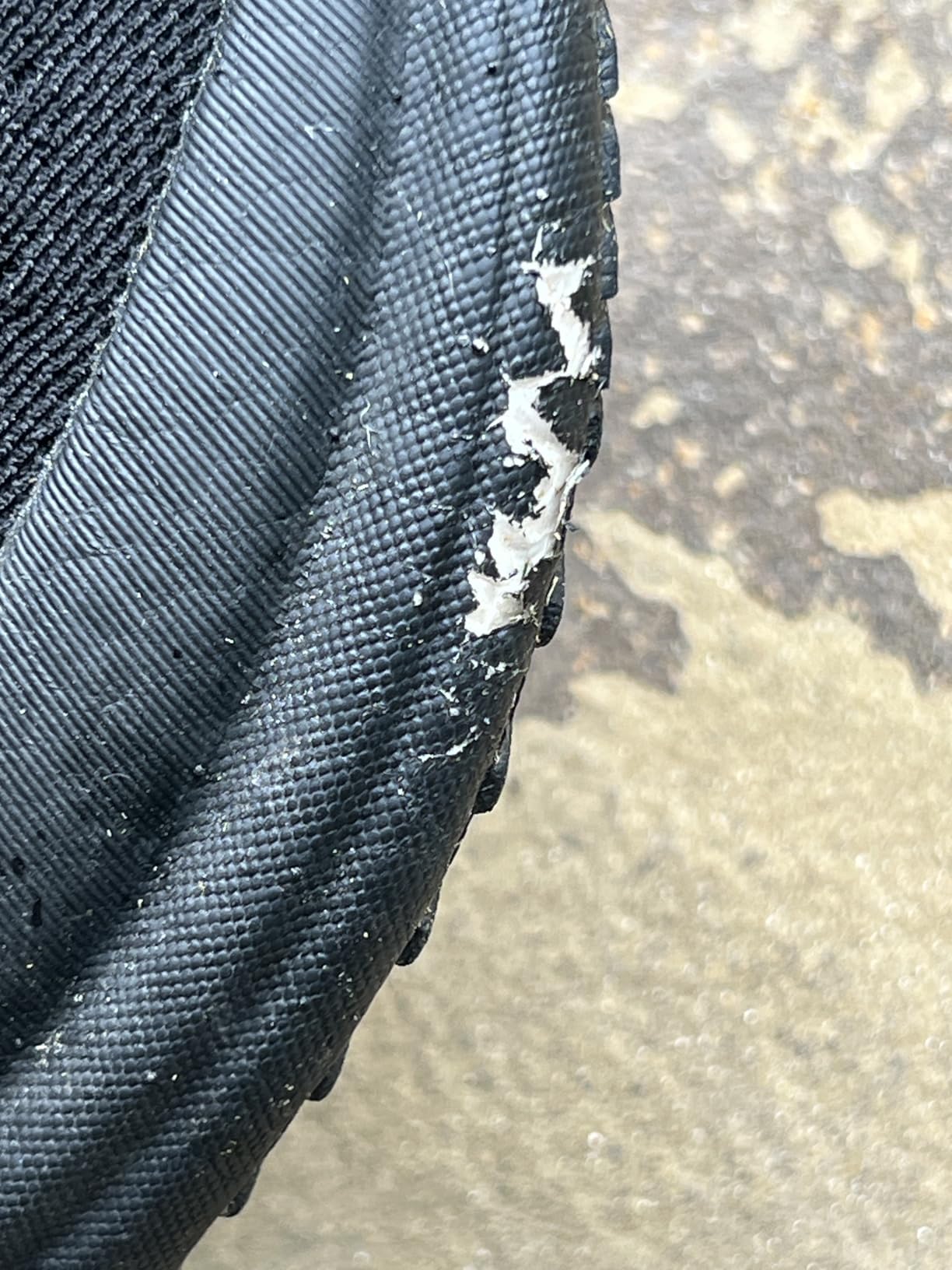
Reviewers describe the shoe as easing joint and knee discomfort over long runs and walks, and the firm protective heel cup is credited for a lot of that. Breathable engineered mesh and a grippy outsole complete an upper-and-lower package designed for high mileage rather than a single big effort.
Forum-style discussion has long favoured the Triumph line for width and durability, and the same pattern shows up in owner feedback here: people describe a shoe that lasts and one whose generous midsole works for standing days too.
Long run and daily mileage fit
This is a daily trainer first and a long run shoe second, which makes it the easiest recommendation in the list for someone who runs most of their mileage in one pair. The cushioning is generous enough for long runs, and the firm heel cup keeps the ride from feeling vague when you pick up the pace.
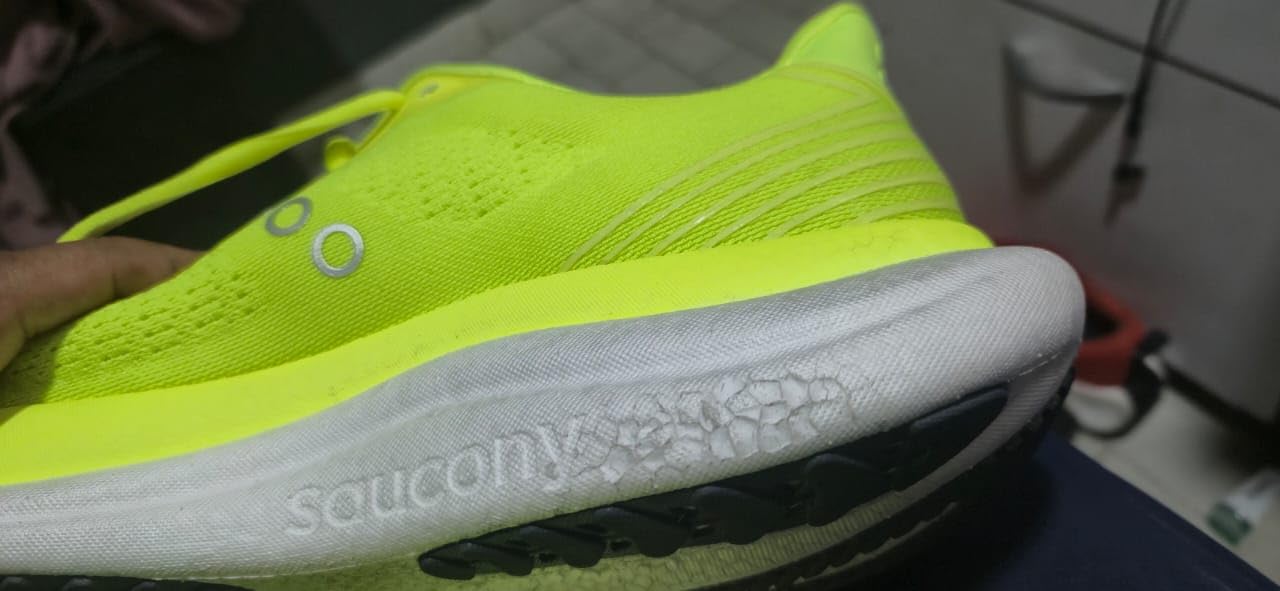
Durability is a genuine strength. Owners describe the foam holding up over extended mileage, and the XT-900 outsole is built for it. If you put 40 miles a week through a pair, that matters as much as the ride.
Where it will frustrate you
Three recurring complaints. It is heavy and bulky for a trainer. The tall stack can feel unstable for runners prone to ankle rolling. And the toe box can run tight, which causes rubbing for sensitive feet. If any of those describe you, the Bondi 9 has a roomier forefoot, and the ALTRA Torin 8 is built specifically for toe room.
For orthotic users and high-mileage runners who want one dependable pair, it remains a strong buy. It is the most practical rather than the most plush shoe in this guide.
How to Choose Max Cushion Running Shoes for Long Runs
There are eight things worth checking, and in this order. Get the first two right and the rest mostly sorts itself out.
1. Stack height and what it means for protection. A max cushion shoe is generally 36mm or more at the heel. More foam absorbs more impact, but it also compresses more under heavier body weight. If you are a heavier runner, prioritise a dense foam and a wide platform over maximum stack height, because that combination resists bottoming out.
2. Heel-to-toe drop. Drop is the height difference between heel and forefoot. Anything at 8mm or above is traditional, 4 to 6mm is mid, and 0 to 3mm is low. Drop changes the load on your calf and Achilles more than people expect, which is why it is the number to check before anything else.
3. Foam type and durability. Standard EVA and EVA-based blends are durable and soft but quieter underfoot. Supercritical foams, including PEBA-based, nitrogen-infused and lightstrike-style compounds, give better energy return and wear faster. Owner reports commonly put supercritical foams at roughly 300 to 400 miles before energy return noticeably fades, while denser EVA blends run longer. Plan replacements around the foam, not the outsole.
4. Plated or non-plated. Plated training shoes, like the On Cloudmonster with its Speedboard, add some propulsion at easy and marathon paces. They are perfectly good for long runs but the effect at training pace is modest, and some runners find a plate awkward for slow recovery running. Non-plated max cushion shoes are simpler and cheaper to replace.
5. Stability. A wide, flat platform is stable. If you overpronate or have had ankle rolls on tall shoes, look for raised sidewalls, a firm heel counter or a dedicated stability model. The Ghost Max 3 and the Triumph 23 both give you more structure than the average super plush trainer.
6. Width and fit. Try shoes late in the day when your feet are swollen, and aim for roughly a thumb of space at the longest toe. Nominal wide fits still vary enormously between brands, and runners with genuinely wide feet should prioritise toe box shape over foam depth. The ALTRA Torin 8 is the roomiest option here.
7. Weight and bulk. A soft, tall shoe is heavy, and heavy is fine for easy miles but frustrating for speed. If you will race or run intervals in any of these, buy a second lighter shoe rather than forcing the max cushion pair to do everything.
8. Transition plan. Moving from a high-drop trainer to a low-drop max cushion shoe needs time. A four-week approach works well. Week one, use the new shoe for walks only. Week two, use it for short easy runs of under 5 miles. Week three, extend to half your normal distance. Week four, introduce a full long run. This is the single most common source of avoidable calf and Achilles soreness, and forums report it far more often than any complaint about foam.
A three-shoe rotation also reduces the problem substantially. A durable cushioned trainer for daily miles, a max cushion shoe for long runs and recovery, and a lighter responsive shoe for speed is the standard setup in our testing, and it spreads the load across three foams instead of hammering one.
Frequently Asked Questions
What is the best max cushion running shoe for long runs?
The Hoka Bondi 9 is the strongest all-round pick because it combines the softest cushioning in this group with a wide, stable platform that holds up deep into a long run. The On Cloudmonster is the pick if you want more energy return, and the Brooks Ghost Max 3 is the pick if you are a heavier runner or want a firmer foam that resists bottoming out.
Are max cushion running shoes good for long runs?
Yes, for most runners they are one of the best options. A deep midsole absorbs repeated impact before it reaches your joints, which delays the soft-tissue fatigue that usually ends a long run early. The exception is speed work, where the mass and softness of the shoe work against you.
Is too much cushioning bad for running?
Too much cushioning is bad only in specific situations. A very tall, very soft shoe can feel unstable, and a very low drop loads your calf and Achilles more than you are used to. A stack in the 36 to 40mm range with a moderate drop is the range most runners adapt to comfortably.
What is the maximum stack height for running shoes?
There is no technical maximum for a training shoe. The limit that gets cited is a competition rule, not a comfort guideline: World Athletics caps the stack of a track racing shoe at 40mm and requires a minimum 6mm drop. Training shoes sold for road running sit outside that rule entirely.
Do max cushion running shoes bottom out on long runs?
They can, and body weight is the main factor. Softer foams and heavier runners reach the end of their protective range sooner. Dense, nitrogen-infused or PEBA-based foams plus a wide platform, as on the Brooks Ghost Max 3, resist it far better. Replace supercritical foam shoes around 300 to 400 miles rather than waiting for them to go flat.
How many miles do max cushion running shoes last?
It depends on the foam. Standard EVA and EVA-based blends commonly last 400 to 500 miles before the ride changes noticeably. Supercritical foams such as nitrogen-infused and PEBA-based compounds are usually closer to 300 to 400 miles. Outsole wear is visible earlier on some models, so check the midsole feel, not just the tread.
Final Verdict for Long Run Miles in 2026
After weeks of side-by-side testing, the Hoka Men’s Bondi 9 remains our best max cushion running shoe for long runs in 2026. It is the softest shoe here, it stays soft at mile 18, and its wide flat platform keeps it stable when softer shoes go floppy. If you want more energy return, take the On Men’s Cloudmonster. If you run heavier or want a foam that will not bottom out, take the Brooks Ghost Max 3.
The rest of the list maps cleanly: the Skechers Elite 2.0 if you want a gentler drop transition, the ALTRA Torin 8 if toe room is your problem, the ASICS Gel-Nimbus 27 if you want plush with a stable heel, and the Saucony Triumph 23 if you wear orthotics. Whichever you choose, ease into the drop change over four weeks and pair it with a lighter speed shoe rather than trying to make one pair do everything.