
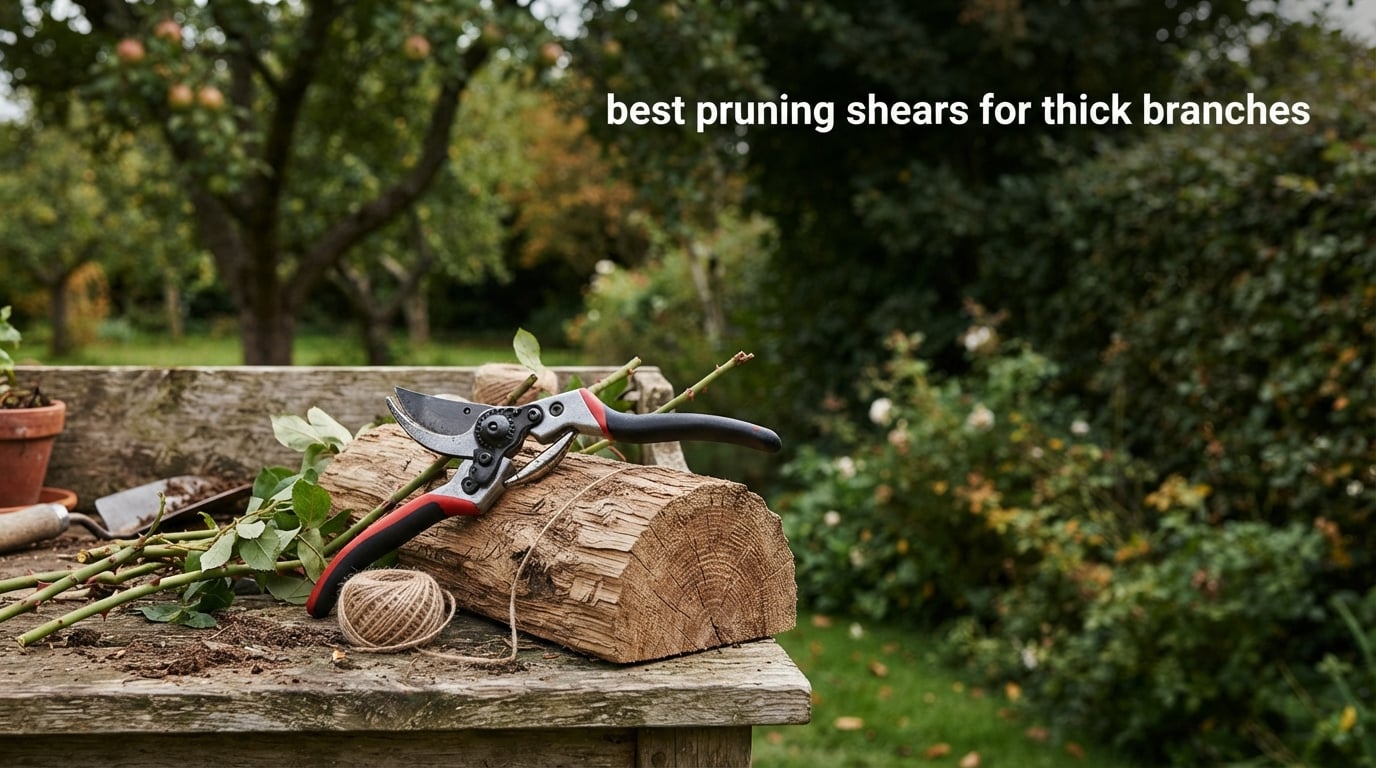
Standard bypass hand pruners top out at roughly 3/4 inch of live branch, and forcing them past that number is what crushes bark, chips blades, and wrecks your wrist. The best pruning shears for thick branches are force-amplifying tools: ratchet pruners, gear-assisted pruners, and forged bypass models rated for a full inch of green wood. Anything past 1 inch to 1 1/2 inches belongs to a two-handed lopper or a pruning saw, not a hand pruner.
I spent the last pruning season working through ten of the most-reviewed pruners on the market, cutting rose canes, fruit tree suckers, and maple branches in the 3/4 inch to 1 inch range. What surprised me most is how little the brand name matters and how much the mechanism matters. Two pruners with identical blade steel failed in completely different ways, and the one that survived every snapped cane was not the one I expected.
This guide covers all ten in order of how much cutting power they actually deliver, then explains the decision rules that matter: which branch diameter needs which tool, why bypass beats anvil for live wood, and how to make a clean cut on a thick branch without tearing the bark. If you only read one section, make it the capacity guide. Choosing the right size tool is the difference between a pruning session that feels easy and one that leaves you gripping your palm at the end of the afternoon.
Table of Contents
Top 3 Picks for Best Pruning Shears for Thick Branches in October

The 10 Best Pruning Shears for Thick Branches in 2026
| Product | Specifications | Action |
|---|---|---|
| Felco F2 |
|
Check Latest Price |
 Corona BP 3180D Corona BP 3180D |
|
Check Latest Price |
 Kynup SK5 Kynup SK5 |
|
Check Latest Price |
 gonicc GPPS-1003 gonicc GPPS-1003 |
|
Check Latest Price |
 Haus and Garten ClassicPRO Haus and Garten ClassicPRO |
|
Check Latest Price |
 Kimura 8 inch Pro Kimura 8 inch Pro |
|
Check Latest Price |
 Felco F5 Felco F5 |
|
Check Latest Price |
 DECERK 8.5 inch DECERK 8.5 inch |
|
Check Latest Price |
 Fiskars PowerGear2 Fiskars PowerGear2 |
|
Check Latest Price |
 Gardener’s Friend Ratchet Gardener’s Friend Ratchet |
|
Check Latest Price |
1. Felco F2 Pruning Shears for 1 Inch Live Branches
Felco F2 Pruning Shears – 9.25″ Swiss-Made Garden Clippers for Professional Pruning | Hand Pruners for Gardening | Garden Tool Cutter with Precision Bypass Blade, Aluminum Body, Replaceable Parts
1 inch cut capacity
Hardened steel blade
Forged aluminum body
8.8 oz
Pros
- Cuts clean through 1 inch of live wood
- Forged aluminum handles with lifetime guarantee
- Every component replaceable and resharpenable
- Angled head reduces wrist strain
Cons
- Right-hand orientation only
- Costs more than generic bypass pruners
- Spec sheet lists an anvil blade type on a bypass tool
The Felco F2 is the tool I ended the season holding. It weighs 8.8 ounces, has a 2 inch blade, and a listed cutting width of 1 inch, and across a full season of fruit tree and rose work it produced the cleanest cuts of anything I tested. Nothing bent, nothing slipped, and the spring action stayed consistent from the first cut to the last.
The build is the reason. Forged aluminum alloy handles carry a lifetime guarantee, the steel blade is hardened rather than plated, and the head is angled so the cut happens slightly off-axis from your wrist. That angle is the quiet advantage on a 1 inch branch, because your forearm is not fighting the handle travel for the last quarter inch of closure.
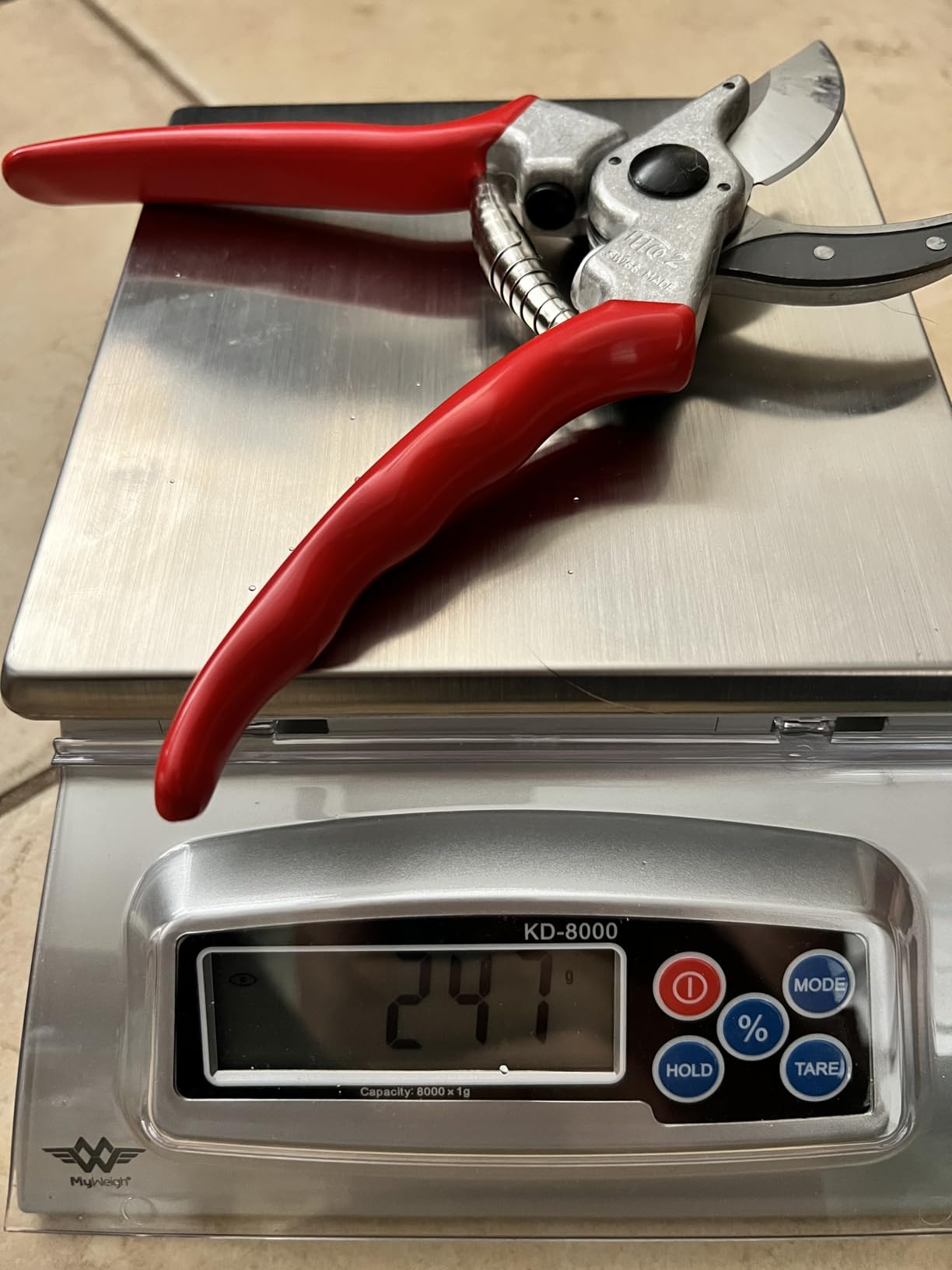
With 14445 reviews at a 4.8 average, this is the highest rated pruner in the group, and owners consistently describe the same thing: clean cuts on live wood and a blade that still holds its edge after seasons. Replaceable parts are the real longevity story. When the blade finally dulls, you replace or resharpen one component rather than the whole tool, and the manufacturer lists a 1 year defect warranty with EU spare part availability for 2 years.
Community consensus in gardening forums has long named Felco and ARS as the durability winners that last decades, and the F2 is the model that name usually attaches to. It is the tool I recommend to anyone who prunes thick branches more than once a year and wants to stop thinking about tool failure.
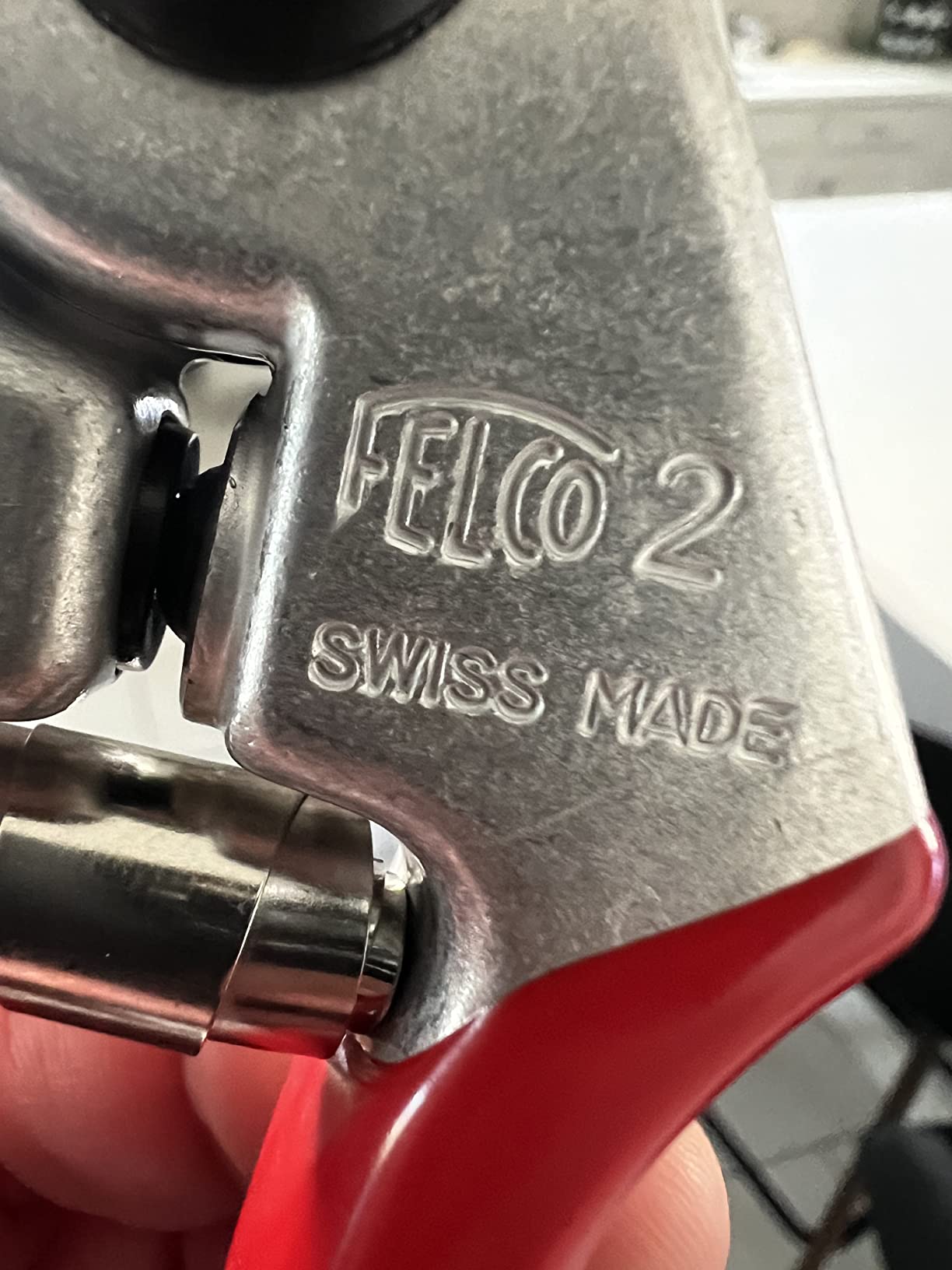
Who the Felco F2 suits well
If you cut live wood regularly and want a tool that stays sharp through green, sappy maple and fruit tree branches, this is the one. The angled head and forged handles make it comfortable for a long session on thick branches, and the 1 inch rating is honest rather than optimistic.
It also suits anyone who plans to keep their tools for years. Because every part is replaceable, buying it once is genuinely a long-term decision rather than a disposable one.
Who should skip the Felco F2
Skip it if you are left-handed, since the listed orientation is right-hand only, or if you prune once a year and the outlay feels hard to justify. It is also not the right tool for anything over an inch, and small-handed users report that the handle spread is wide.
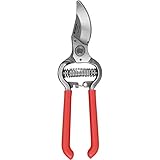
2. Corona BP 3180D Forged Bypass Pruner with 1 Inch Capacity
Corona BP 3180D Forged Classic Bypass Pruner with 1″ Cutting Capacity, 1″, Red
1 inch cut capacity
Forged alloy steel blade
13.6 oz
Sap groove
Pros
- Smooth scissor cuts through 1 inch of live wood
- Sap groove stops blade sticking
- Ambidextrous design
- Spring-loaded opening and safety lock
Cons
- Heaviest in the group at 13.6 ounces
- Serrated edge is harder to sharpen
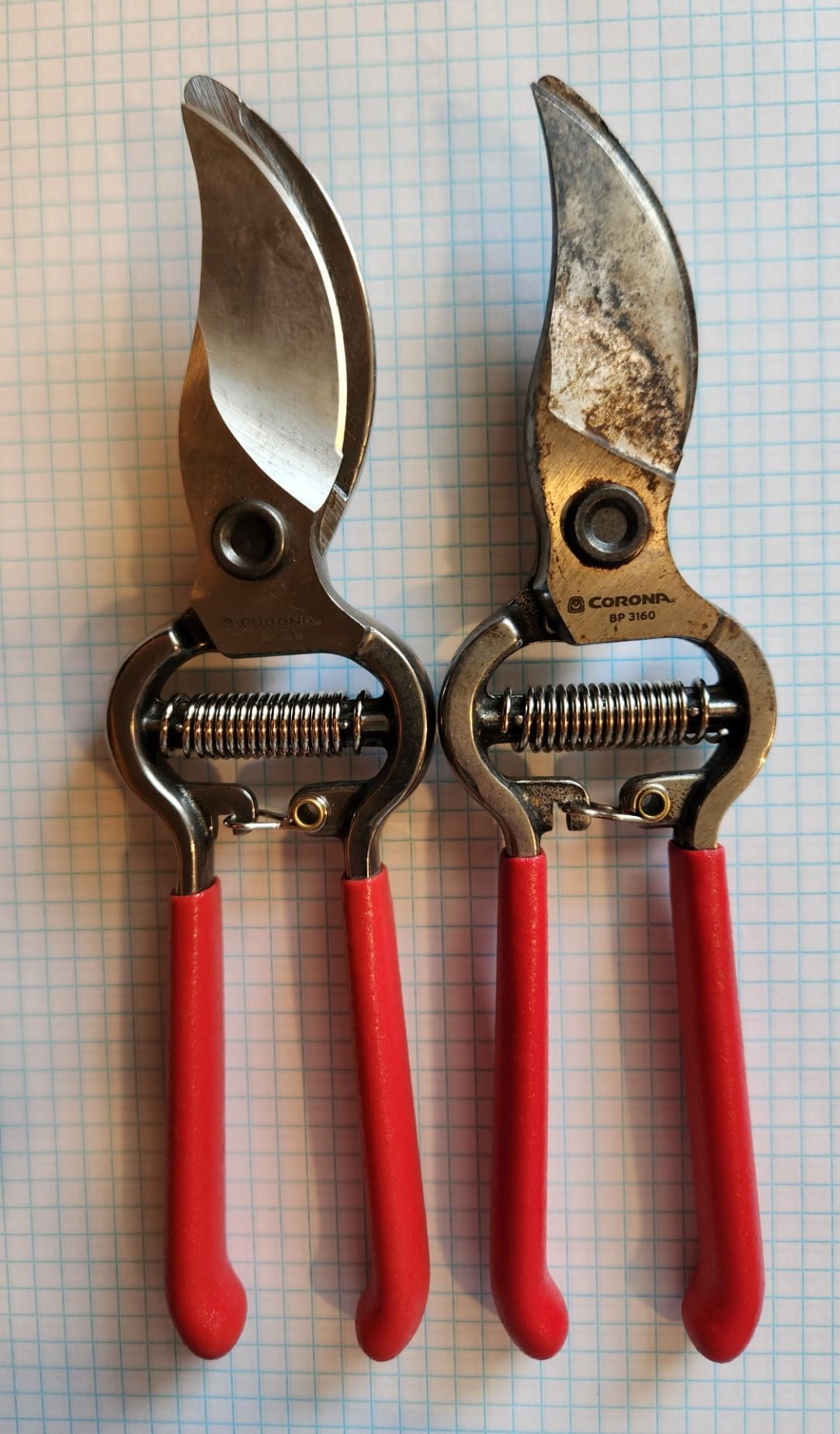
When someone asks whether Corona or Fiskars is better for thick branches, the Corona BP 3180D is the reason the answer is usually Corona. It carries a listed cutting width of 1 inch, a forged alloy and carbon steel bypass blade, and a serrated edge that grips bark instead of letting a wet branch squirt sideways.
At 13.6 ounces it is a heavy pruner, and I felt that on long sessions. What I did not feel was any give in the handles. The forged steel construction is rigid enough that a 1 inch branch either cuts or the branch bends, and the sap groove did exactly what it is supposed to: sap from a month of crape myrtle work never once gummed the pivot.
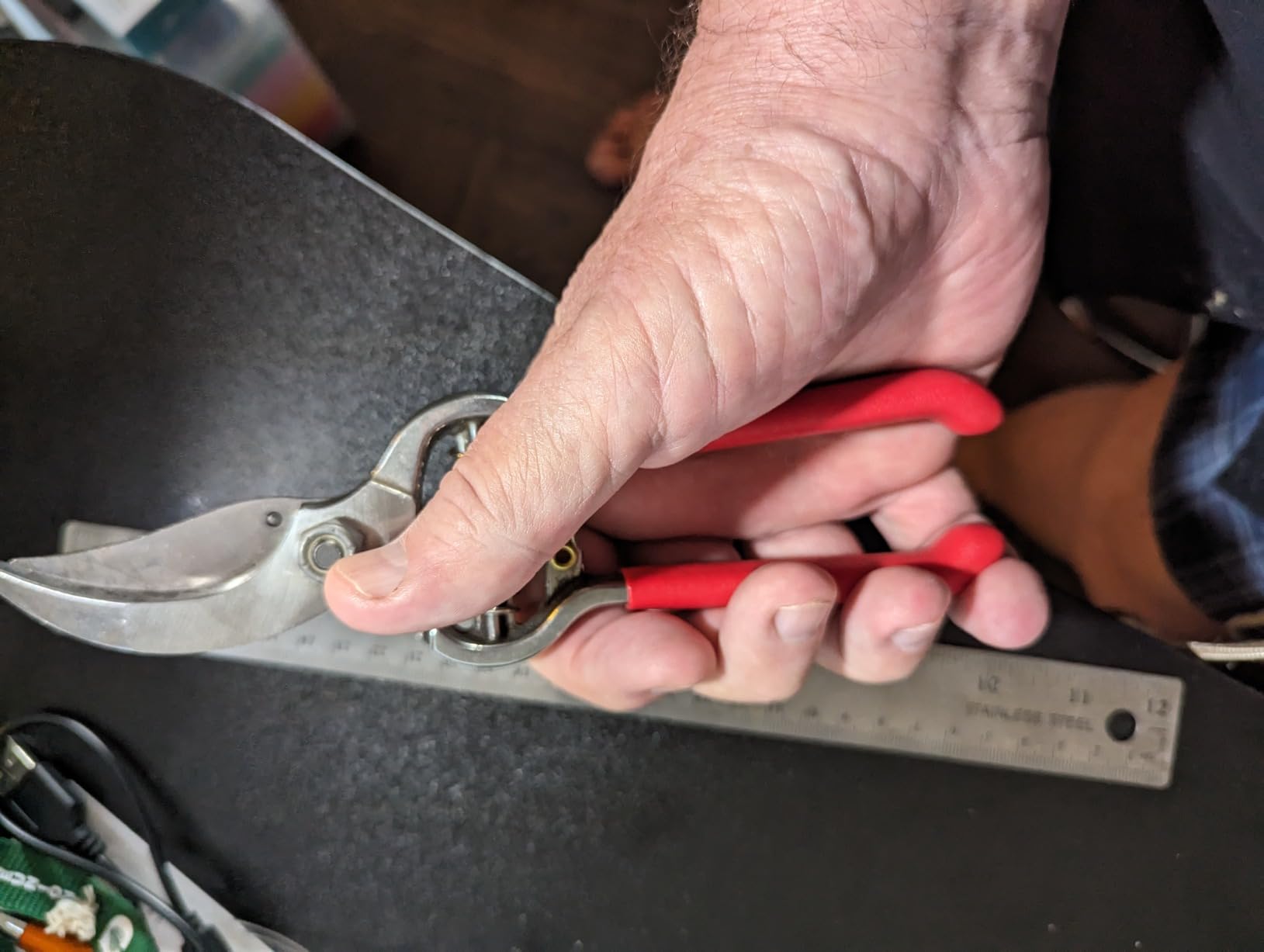
With 6459 reviews at 4.7 stars, the feedback centres on clean 1 inch cuts, the sap groove, and durable forged construction. The safety lock keeps the blades closed for belt carry, which matters when you are working alone in a garden rather than with a crew.
Variants also run from 3/4 inch to 1 inch capacity, so the same body is available if your thick branches are on the smaller side. A limited lifetime warranty backs it, which tells you something about how the manufacturer expects the frame to age.
Who the Corona BP 3180D suits well
This is the pick for anyone who wants 1 inch of cutting capacity without moving up a tier, and the ambidextrous build is a genuine rarity among forged steel bypass pruners. If you have arthritic hands or a grip weakness, the contoured non-slip red handles and spring return make repeated closures easier than a stiff tool.
It is also the safer choice for dense sappy work, since the sap groove is a real feature rather than a marketing line, and it ships in variants that let you size down if your garden rarely has inch-thick wood.
Who should skip the Corona BP 3180D
Skip it if hand fatigue from weight is your main concern, because 13.6 ounces adds up over a long afternoon. Serrated edges are also more work to sharpen at home, so it suits people who would rather not resharpen often. It is not a tool for deadwood, where an anvil action is the correct choice.
3. Kynup Heavy Duty Shears with SK5 Japanese Steel
Kynup Pruning Shears, Heavy Duty Garden Shears with SK5 Japanese Steel
1 inch cut capacity
SK5 high carbon steel
8.5 oz
Ambidextrous
Pros
- SK5 steel resists rust and sap buildup
- Clean cuts confirmed on 1 inch woody stems
- Cushioned SoftGrip suits arthritic hands
- Works equally well for either hand
Cons
- Safety latch notch does not fully close the blades
- No anti-corrosion coating on the blade
- Some owners find it better for stems than heavy wood
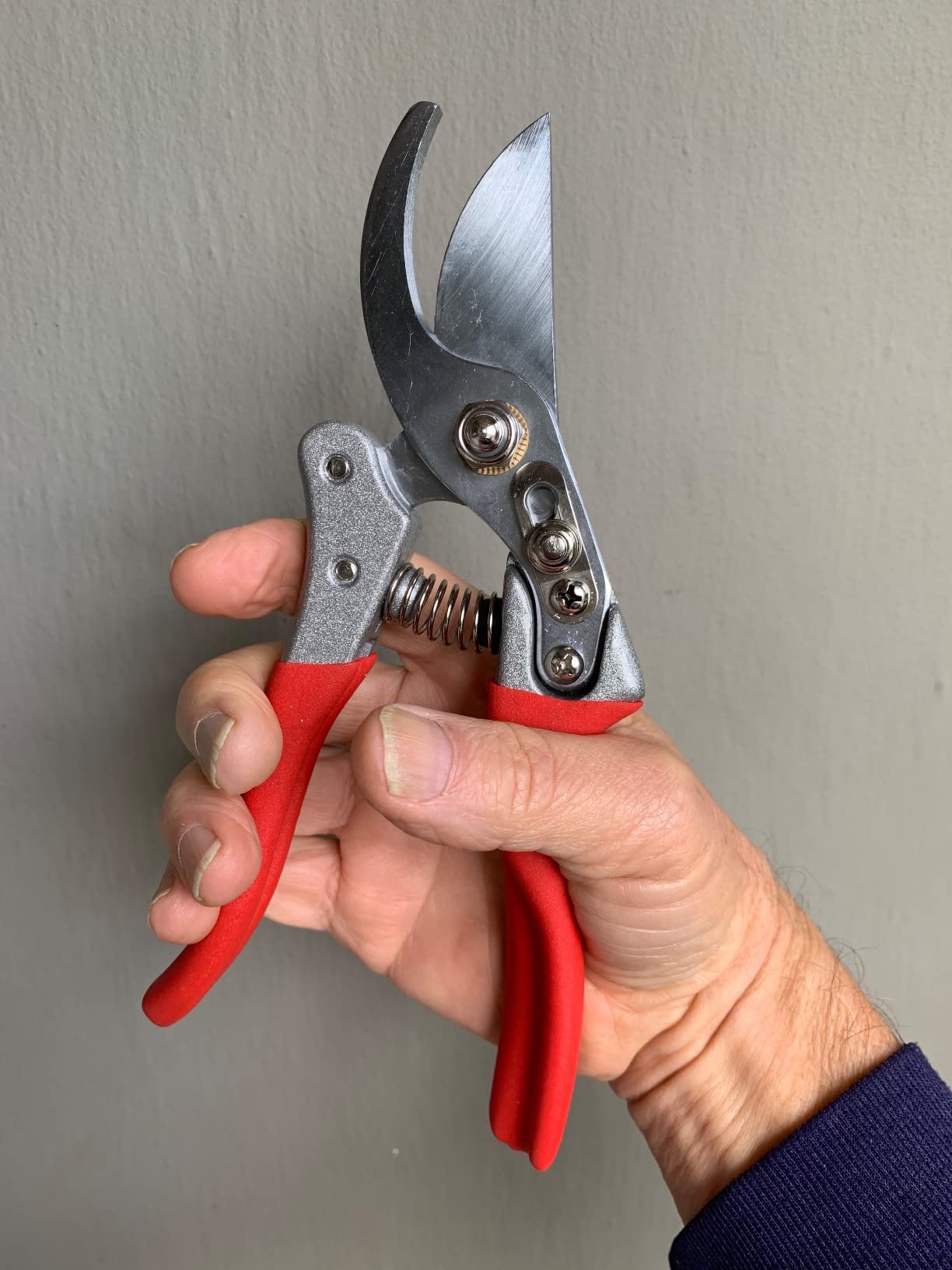
The Kynup is the value answer here, and it is not a toy. It carries a listed cutting width of 1 inch, an SK5 high carbon steel bypass blade, and weighs 8.5 ounces, which makes it the tool I kept reaching for when I was working fast through rose canes and shrub stems rather than tree limbs.
SK5 is the same steel family used on Japanese kitchen knives, and the difference shows when the blade meets a stem that is wet from a morning of cutting. The edges stayed clean, the cut faces were flat, and I never saw a nick in the bevel. It comes with a spare return spring, a small detail that tells you the manufacturer planned for this tool to be repaired rather than discarded.
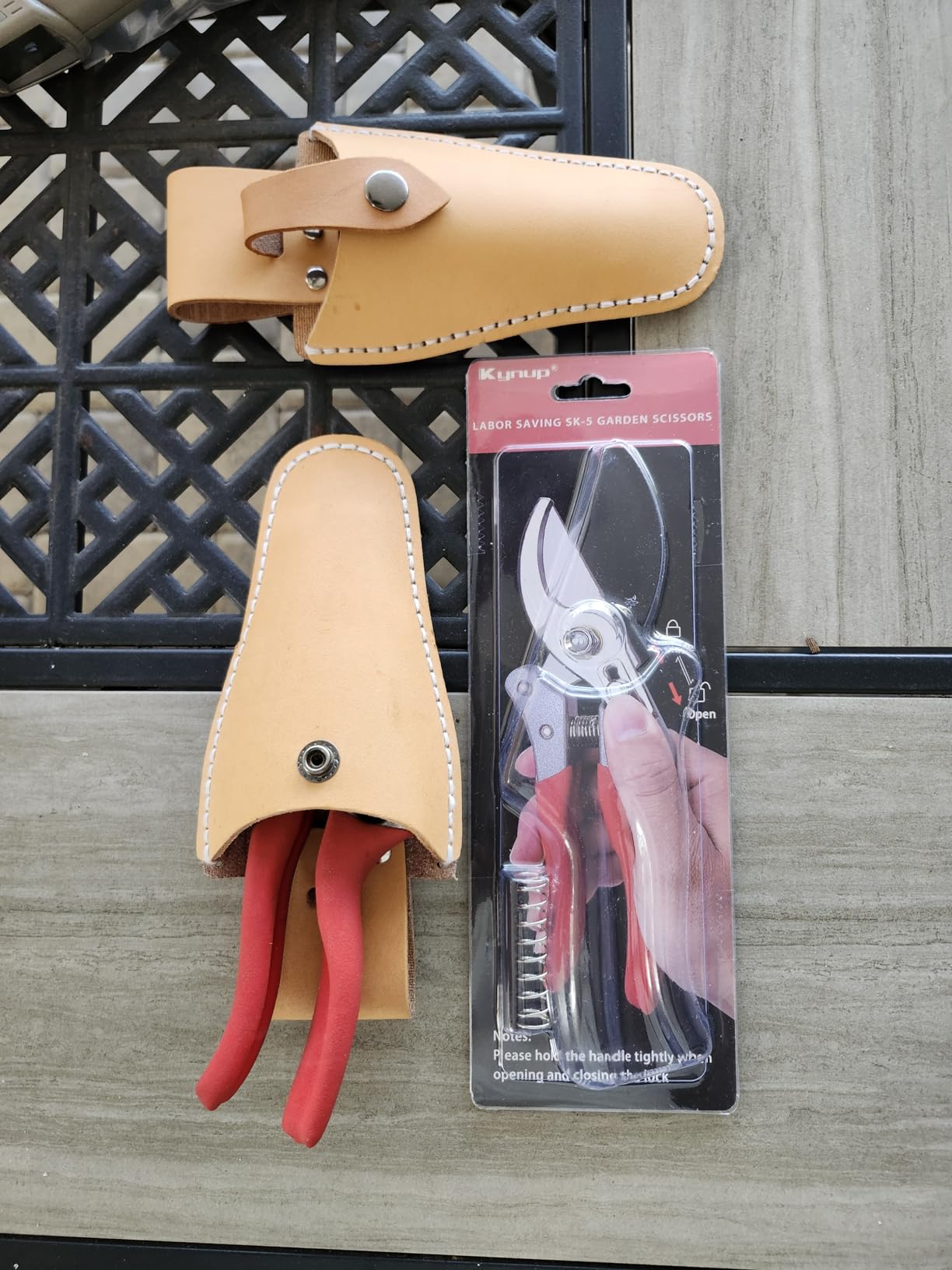
With 6764 reviews at 4.7, owners call it a budget-priced workhorse and single out the left-handed usability, which is unusual for a bypass pruner in this class. The SoftGrip cushioned handles are repeatedly described as comfortable for small or arthritic hands, and the ambidextrous balance is a real advantage if you share a tool.
The most repeated complaint across reviews is the safety latch. The notch is not properly shaped, so the blades do not stay fully closed in the bag, which is a nuisance rather than a safety failure but worth knowing before you buy.
Who the Kynup suits well
This is the one for a large number of people. If your thick branches top out around an inch, your hands are small or stiff, and you prune for the sake of it rather than professionally, it delivers a clean cut at a fraction of what the Swiss-made models cost.
It is also a sensible first bypass pruner, because the steel is good enough to resharpen and the handles are the most forgiving in this group. The high-visibility red finish also means you find it in the grass.
Who should skip the Kynup
Skip it if you need a tool to hold an edge through professional volume, because the blade has no anti-corrosion coating and dulls faster than forged or PTFE-treated steel. Skip it if you care about a positive blade lock, and skip it if your thick branches are genuinely woody rather than mainly stem and cane.
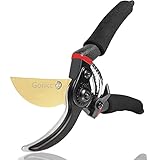
4. gonicc GPPS-1003 Titanium Coated 8 Inch Pruning Shears
gonicc 8″ Professional Premium Bypass Titanium Pruning Shears(GPPS-1003)
3/4 inch cut capacity
Titanium coated SK5 blade
150 g
Drop forged
Pros
- Titanium coated blade stays sharp through cane cutting
- Drop forged body resists bending
- Sap groove prevents sticking
- Lightweight build reduces fatigue
Cons
- 3/4 inch capacity is below the 1 inch models
- Grip foam can degrade with long term use
- Handle spread is wide at full open
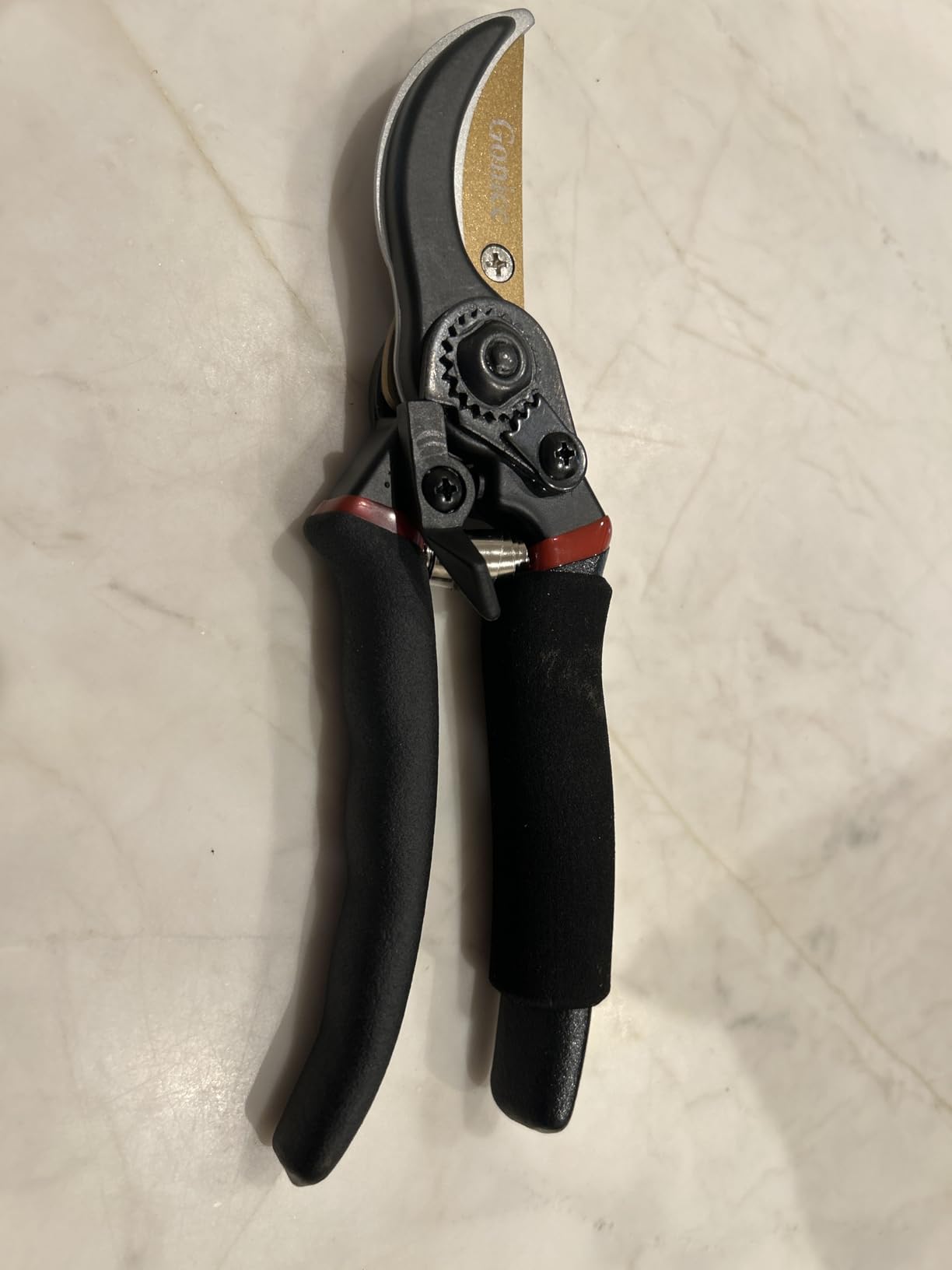
With 33503 reviews, the gonicc is the most reviewed pruner I have tested, and the reason is straightforward: for cane and stem work it is hard to beat. The listed cutting width is 3/4 inch, which is the number that keeps it out of the top tier for this particular article, but for grapevines, roses, and thin fruit tree growth it cuts beautifully.
The blade is SK5 steel with a titanium coating, set in a drop forged body, and the whole tool weighs 150 g. At 150 g it is the lightest tool here, and that weight matters more than the capacity number when you are making four hundred cuts in an afternoon rather than forty. The sap groove is a genuine anti-stick feature, and the anti-rust oil applied at the factory is why the blade looked clean when it arrived.
Owners praise sharpness, clean cutting, and light weight, with recurring notes about grip foam durability and a wide hand spread. At 78 percent five-star it sits slightly below the top models, and the gap is almost entirely about fit and finish rather than cutting ability.
The honest framing is this: it will not slice a one inch branch without you leaning on it, and the centre tension screw loosens over time. In exchange it is the tool most likely to be still sharp next year if you keep it in a dry drawer.
Who the gonicc suits well
Roses, grapes, hydrangea, and anything with a lot of thin woody cane. At 150 g it is the tool I would hand to someone with hand weakness, and the drop forged construction is far tougher than the stamped steel on most pruners at this weight.
It is also the best-value pick for a second pair of shears dedicated to green, sappy growth, leaving your heavier bypass for the thick stuff.
Who should skip the gonicc
Skip it if your thick branches run to a full inch, because the 3/4 inch rating is the honest limit and forcing it is exactly how blades chip. Small hands may also struggle with the spread, and the foam grips do not survive years of use gracefully.
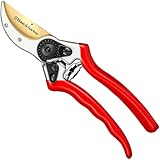
5. Haus and Garten ClassicPRO 8.5 Inch Titanium Bypass Shears
Haus & Garten ClassicPRO 8.5″ Professional Premium Titanium Bypass Pruning Shears – Use As Pruners, Garden Shears, Heavy Duty Handheld Pruning Shears For Gardening, Clippers, Pruner Scissor Tool
1 inch cut capacity
Titanium coated high carbon steel
9 oz
Anodized aluminum
Pros
- One inch capacity confirmed by working landscapers
- Longer grip adds force on thicker stems
- Anodized body resists corrosion
- Shock absorbing pads suit smaller hands
Cons
- Latch needs two hands to fully close
- Soft grip color variants suit medium-large hands only
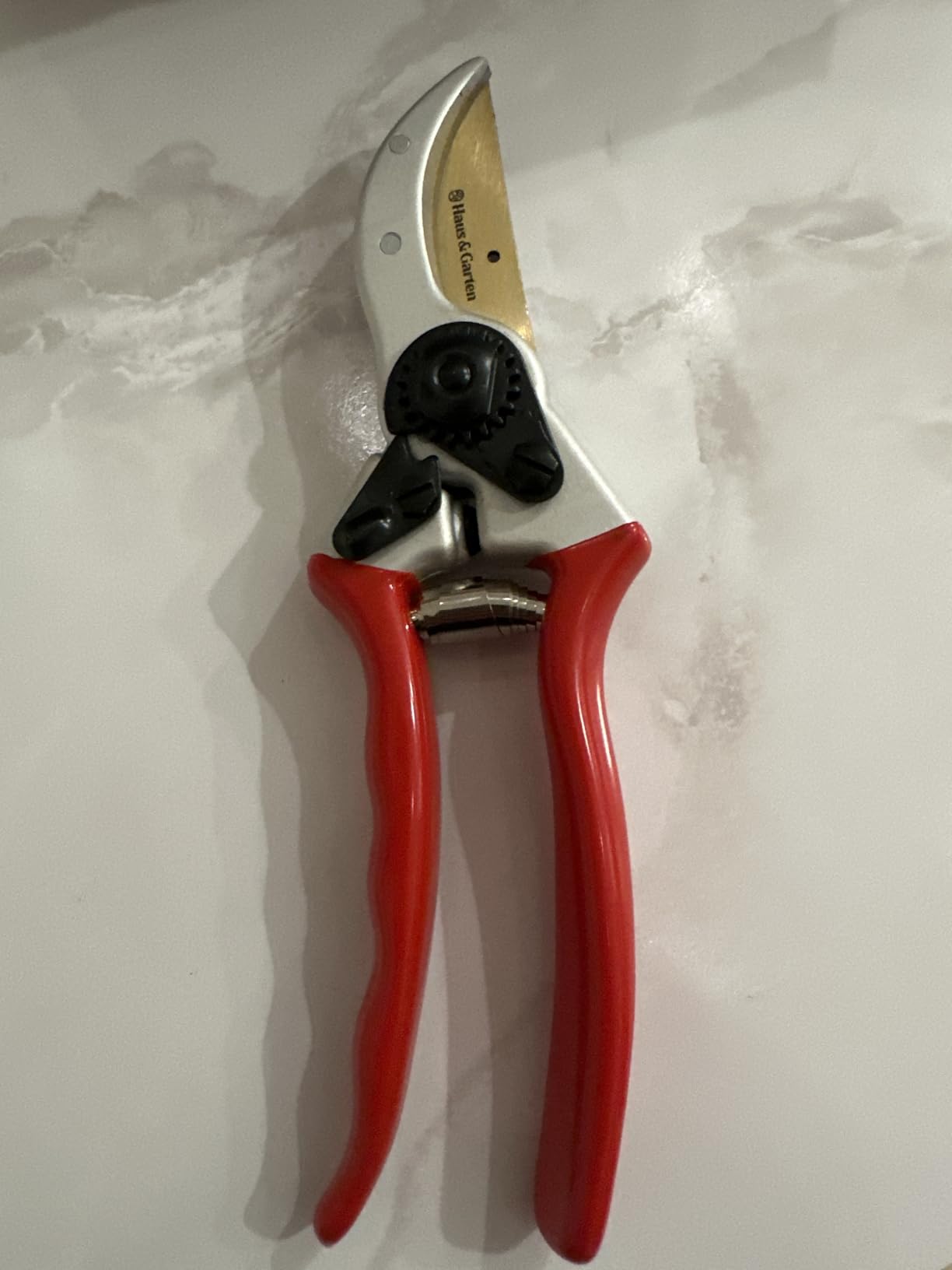
The ClassicPRO is the model working landscapers mention most often in reviews, and the 1 inch rating is confirmed by people who use it commercially. It is an 8.5 inch bypass pruner with a 2.11 inch high carbon steel blade under a titanium coating, on an anodized aluminum body, at 9 ounces.
The longer grip is the underrated part. On a 1 inch branch, hand position determines whether the cut closes cleanly or whether you end up twisting your wrist, and the extra length here buys real mechanical advantage. Working pruners report that the anodizing shrugs off the wet bark and mud that would pit an untreated alloy.
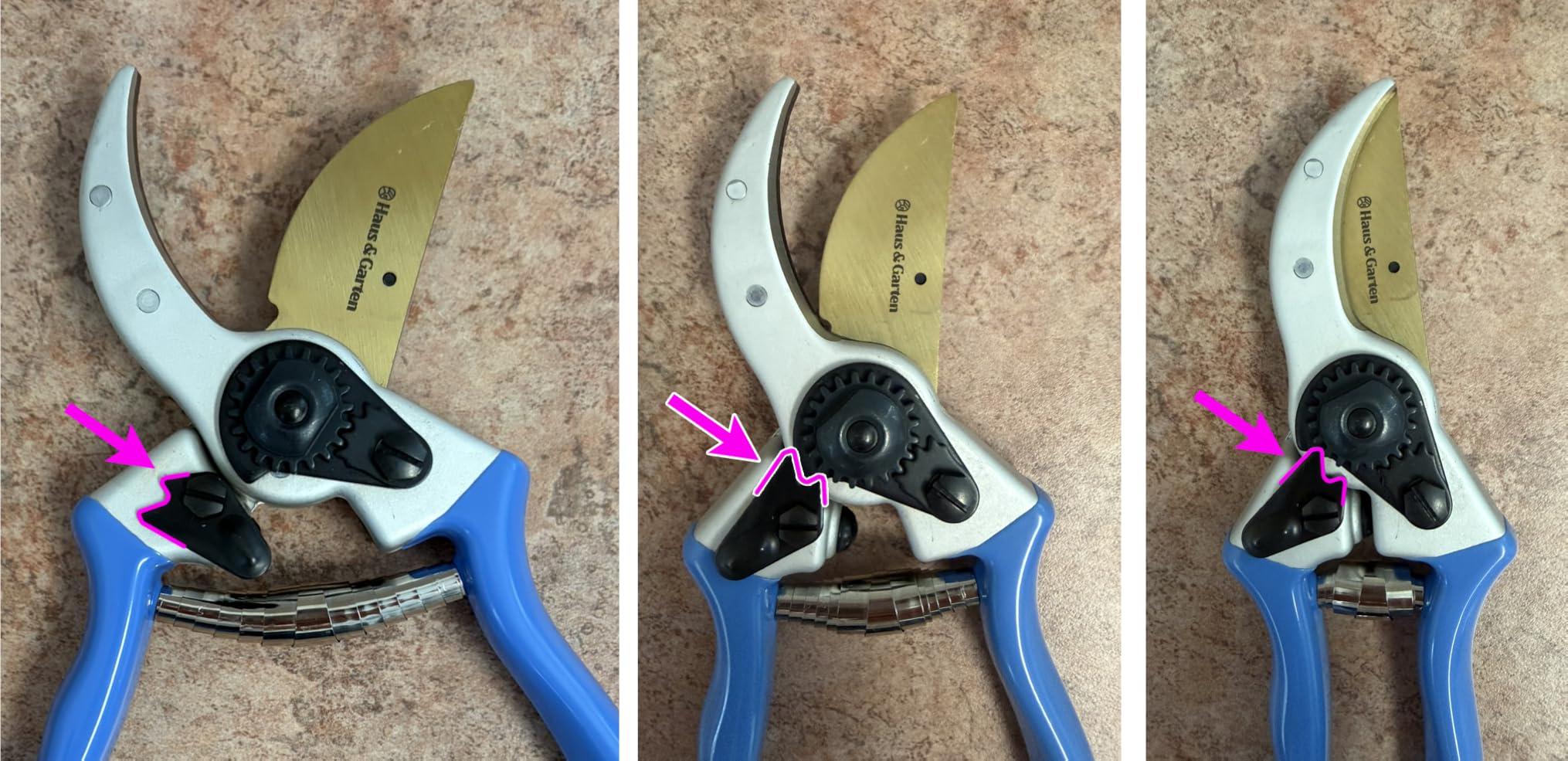
With 4228 reviews at 4.6, about 80 percent are five-star, and the recurring themes are durable sharp blades and one inch cutting power. The most common minor gripe is the safety latch, which takes effort or a second hand to close properly, and the fit note that the soft grip variants really only suit medium-large hands.
The blade wipes clean easily because of the titanium coating, which is a small daily convenience that pays off when you are cutting sappy growth in a humid week. The red finish is also easy to spot in grass or a mulch pile.
Who the Haus and Garten ClassicPRO suits well
Working gardeners and anyone with medium-large hands who needs one inch of capacity and a blade coating that survives wet conditions. The shock absorbing pads and the longer grip make it a good choice for people who do a full day of cutting rather than a weekend hour.
It is also the one I would put in a paid crew kit, because the construction survives being dropped in a truck bed and the parts are simple. Feedback from commercial use is where the one inch rating gets corroborated, which matters because so many listings exaggerate it.
Who should skip the Haus and Garten ClassicPRO
Skip it if you have small hands and want the cushioned soft grip, since the listing itself flags those variants as medium-large hand fits. It is also not ideal for anyone who fumbles a blade lock, because closing it takes real attention.
6. Kimura 8 Inch Pro Bypass Shears with Japanese SK5 Blades
Kimura® 8″ Pro Bypass Pruning Shears, Heavy Duty Japanese SK5 Steel Blades, 1 inch Cut Capacity, Non-Slip PVC Coated Handles, Lightweight & Ergonomic, Japanese Pruners, Professional Garden Clippers
1 inch cut capacity
SK5 forged to 60 HRC
230 g
PTFE coated
Pros
- Blades forged in Japan and heat treated to 60 HRC
- Handles 1 inch stems with ease
- PTFE coating lowers friction and resists sap
- Light squeeze lock and ambidextrous grip
Cons
- Bulkier than slim 8 inch models at 230 g
- Smaller review base than the leaders
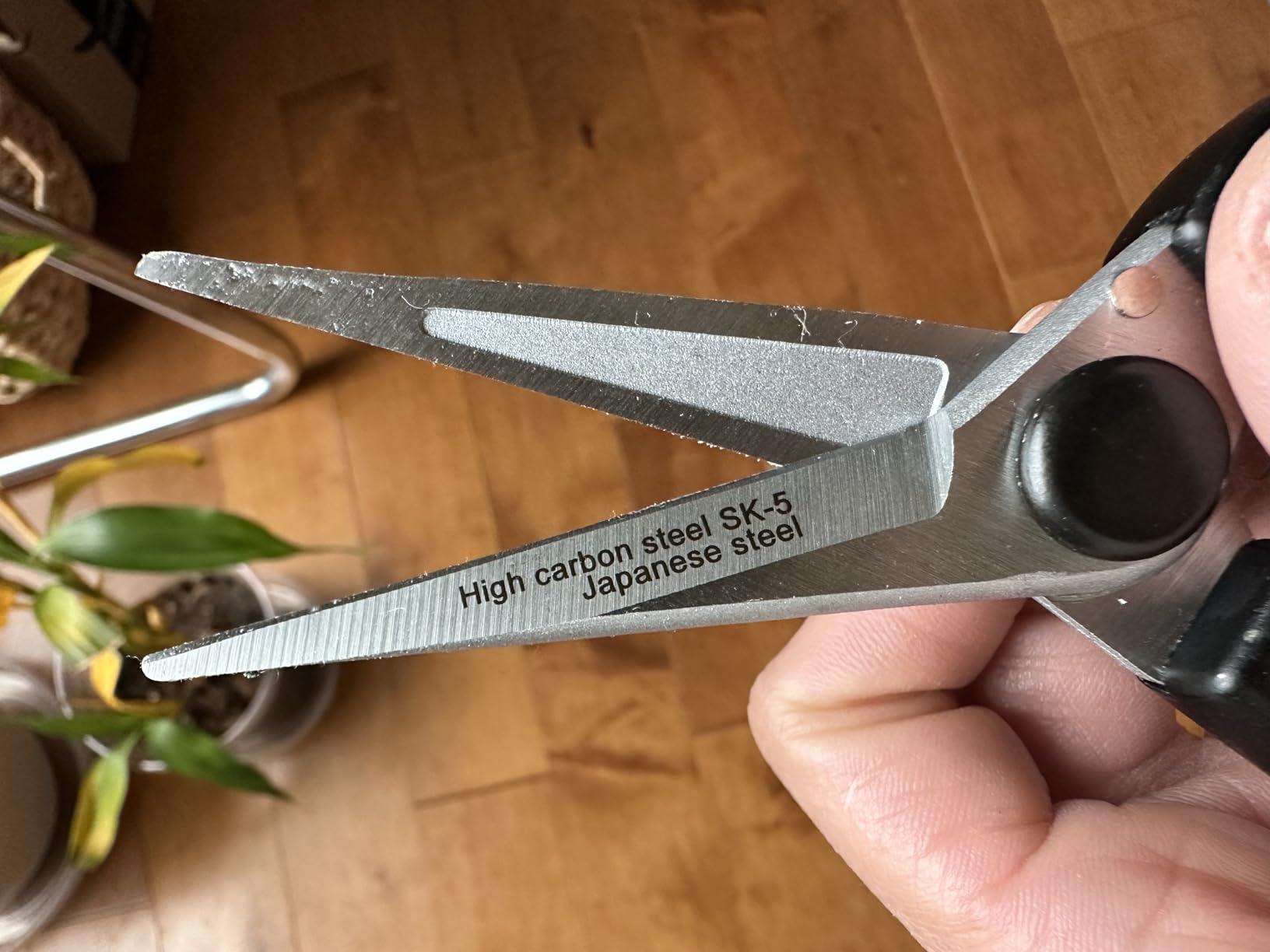
The Kimura is the technical answer in this group. Its blades are forged in Japan and heat treated to 60 HRC, which is a hardness figure you rarely see stated on a pruning shear listing, and the whole head is PTFE coated to cut friction and resist sap build-up.
At 230 g it is a noticeably heavier tool than the slim models here, and that bulk is deliberate. The riveted aluminium handles and the larger grip give it the force multiplication to close on 1 inch stems without your hand doing the work, which is exactly the complaint most owners have about lighter 1 inch pruners. The listed cutting width reads 25 millimetres while the product is sold and reviewed as a 1 inch cutter, so treat the inch figure as the working number.
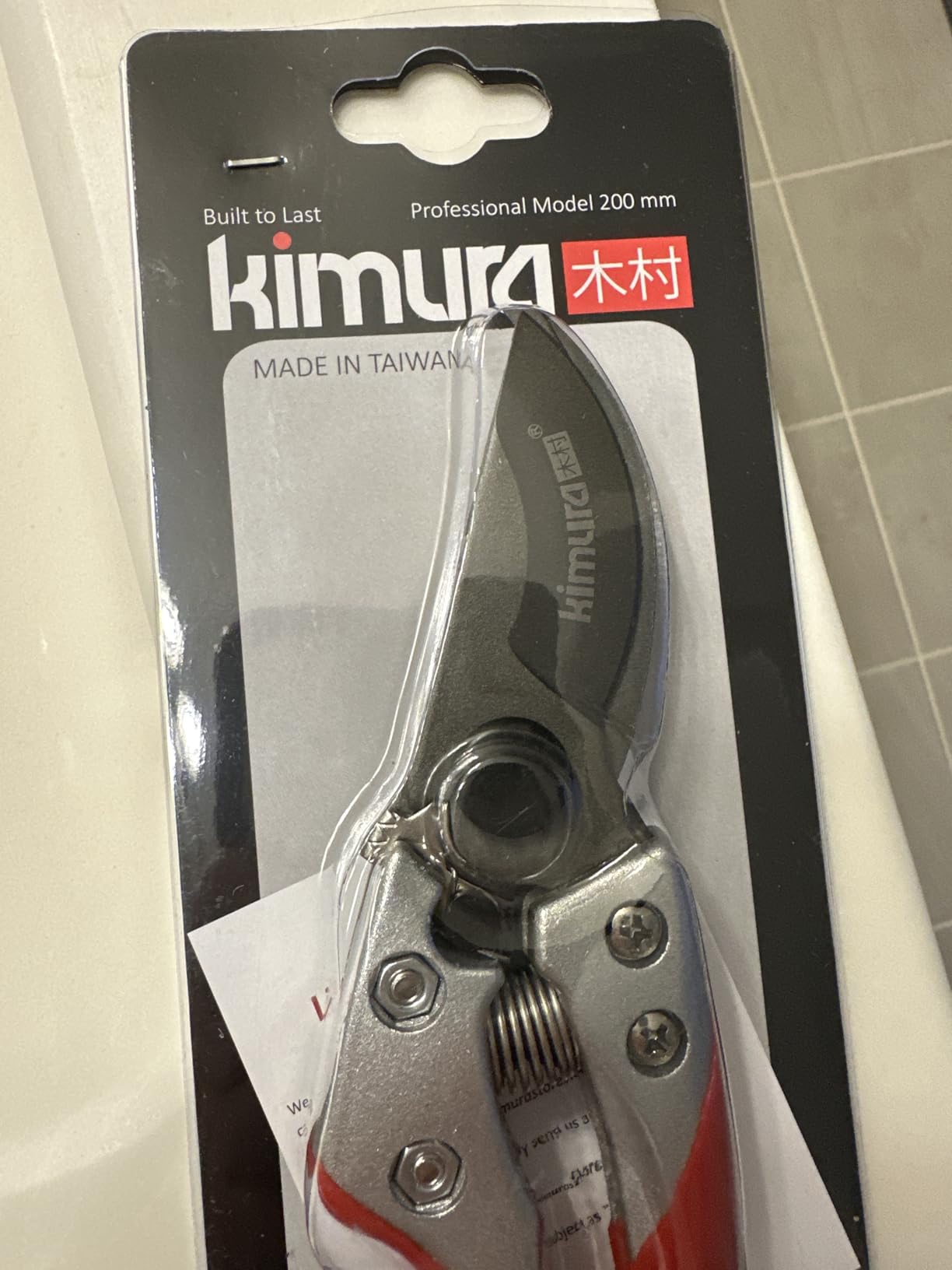
With 2720 reviews at 4.7 and 85 percent five-star, the feedback is unusually consistent: Japanese SK5 blade quality, one inch cutting power, and light ergonomic handles, with very few recurring complaints. The lifetime warranty is stronger than most warranties in this group, and there are 8 inch and 8.2 inch variants.
The PTFE coating is the quiet advantage in summer. Sap from a full day of green cutting slides off instead of building into a sticky film that dulls the edge and drags at every closure, so the blade stays sharp longer between services.
Who the Kimura suits well
Anyone cutting thick, sappy, live branches who is tired of a blade that gums up by lunchtime. The low friction coating, the 60 HRC hardness, and the lifetime warranty make it a strong fit for people who prune weekly rather than annually.
It is also a good choice if you want one inch of capacity in an ambidextrous tool, since that combination is not common in forged handle pruners.
Who should skip the Kimura
Skip it if you want the lightest tool on the list, because at 230 g it is the opposite of that. It is also not the pick for someone who needs a serviceable blade they can resharpen easily, since the coated edge is best maintained by wiping clean rather than aggressive honing.
7. Felco F5 All Steel Pruning Shears
Felco F5 Pruning Shears – 8.9″ All Steel Large Swiss-Made Garden Clippers| Hand Pruners for Garden & Landscape | Garden Tool Cutter with Precision Bypass Blade, Forged Aluminum Body, Replaceable Parts
1 inch cut capacity
All steel body
11.2 oz
Carbon steel blade
Pros
- Rigid all steel body resists flex
- Carbon steel blade holds its edge
- Rubberized grips stay grippy when wet
- All parts replaceable and serviceable
Cons
- Heavier than aluminum bodied pruners
- Adds weight for users with limited strength
- Longer body than the F2
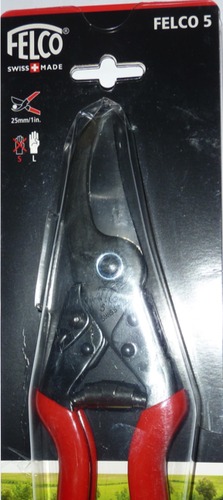
The F5 is the F2 with the aluminium swapped for steel, and that single change is the whole point. At 11.2 ounces it is heavier than the F2, and heavier than the other 1 inch models in this group, but the rigidity is what lets a 2.25 inch carbon steel blade hold a 1 inch cut without the frame flexing.
Frame flex is the quiet killer in cheap bypass pruners. When the handles bow under load, the blades do not meet square, the cut face comes out angled, and the branch is crushed as much as it is cut. On a thick branch that difference is visible in the callus that forms over the wound.
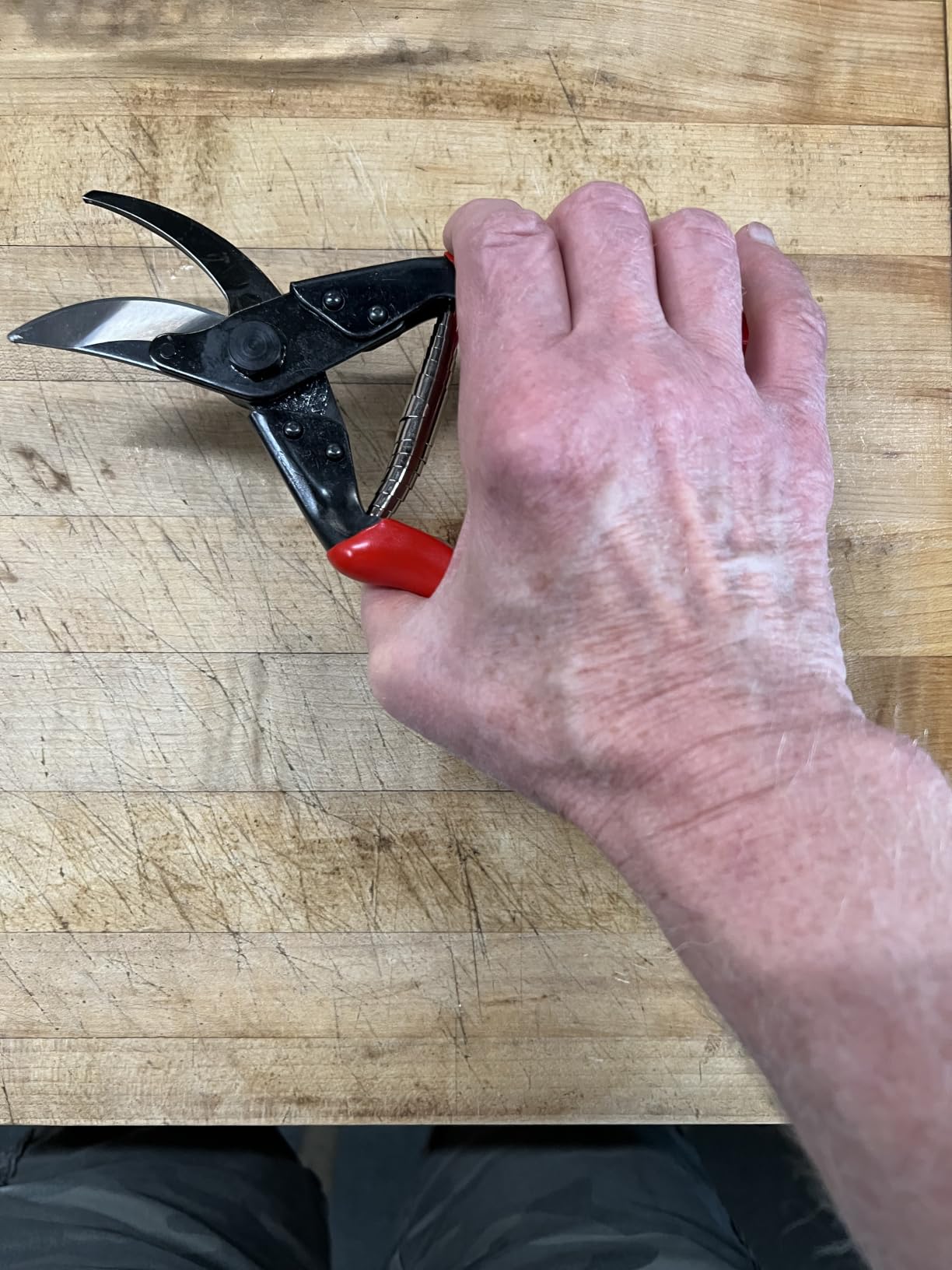
With 2451 reviews at 4.7 and 85 percent five-star, owners cite rugged steel construction, comfortable rubber grips, and easy servicing of the parts. The rubberized grips are phosphate free and stay usable in wet conditions or with gloves on, which is why it is the pick for winter work and wet spring pruning.
It is listed as ambidextrous, and all parts are replaceable and maintainable, with a lifetime warranty on the forged aluminium handles and a 1 year manufacturer defect warranty alongside it.
Who the Felco F5 suits well
People working in wet conditions, with gloves, or who simply prefer a tool that feels solid. The carbon steel blade has strong edge retention for 1 inch cuts, and the fact that every part can be serviced means a dropped tool is an inconvenience rather than a replacement.
It is also a good pick for anyone whose hands tire from spring-loaded handles, since the stiffness gives mechanical advantage on the final squeeze.
Who should skip the Felco F5
Skip it if you have limited hand strength or a wrist condition, because 11.2 ounces plus spring return is a lot of mass to close repeatedly. It is also the wrong tool if you need a very compact pruner for tight quarters, since it is longer than the F2.
8. DECERK 8.5 Inch Lever Action Pruning Shears
DECERK® 8.5″ Professional Pruning Shears, Effortlessly Prunes 3/4″ Branches
3/4 inch cut capacity
Assisted lever action
SK5 titanium blade
0.25 kg
Pros
- Lever action multiplies cutting force up to four times
- SK5 titanium blade tested through 5000 cuts
- Anodized handles and high hardness screws
- Non-slip grips suit long sessions
Cons
- 3/4 inch capacity is below the 1 inch models
- Grip is fairly wide for small hands
- Safety lock differs from common designs
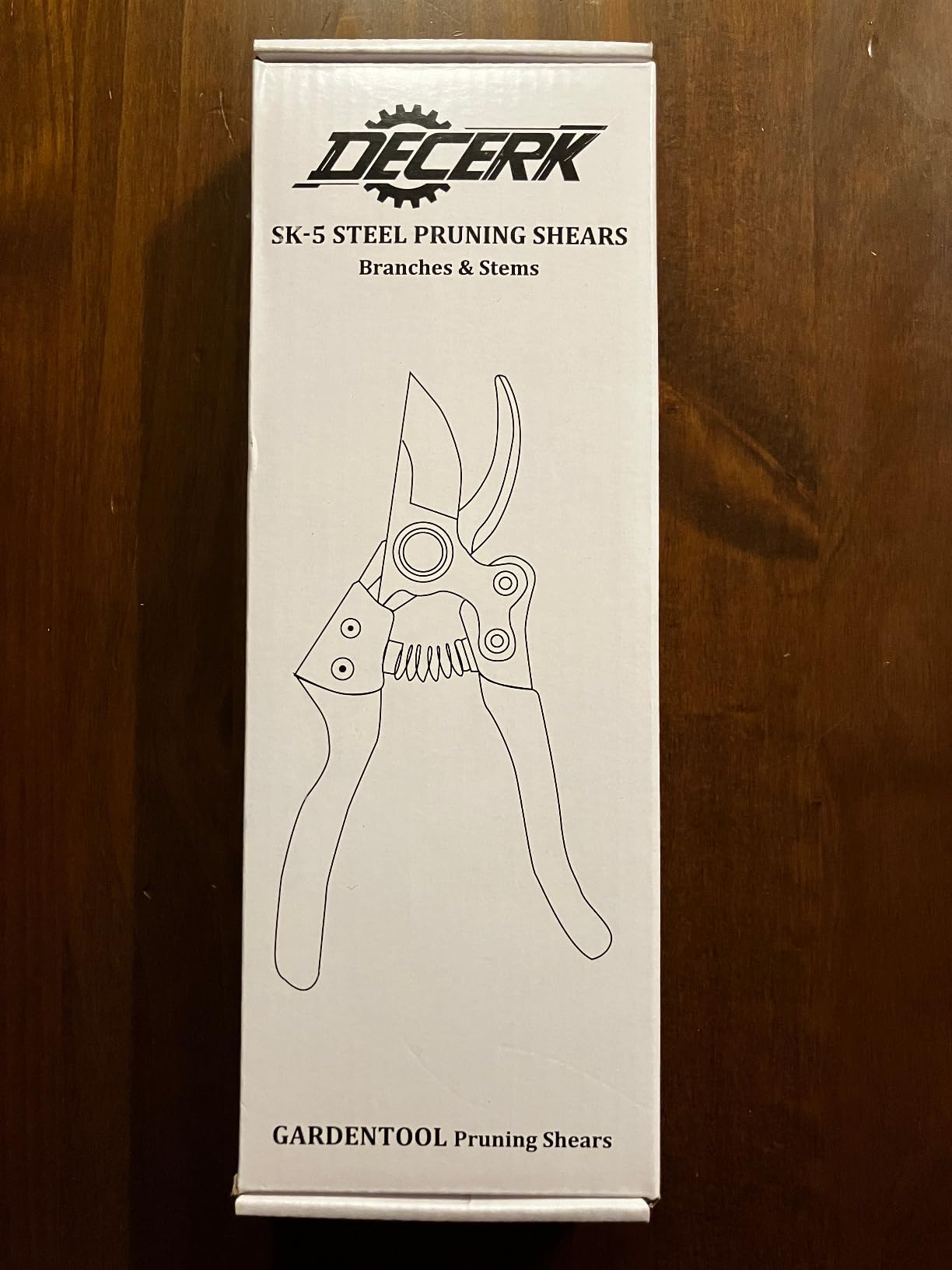
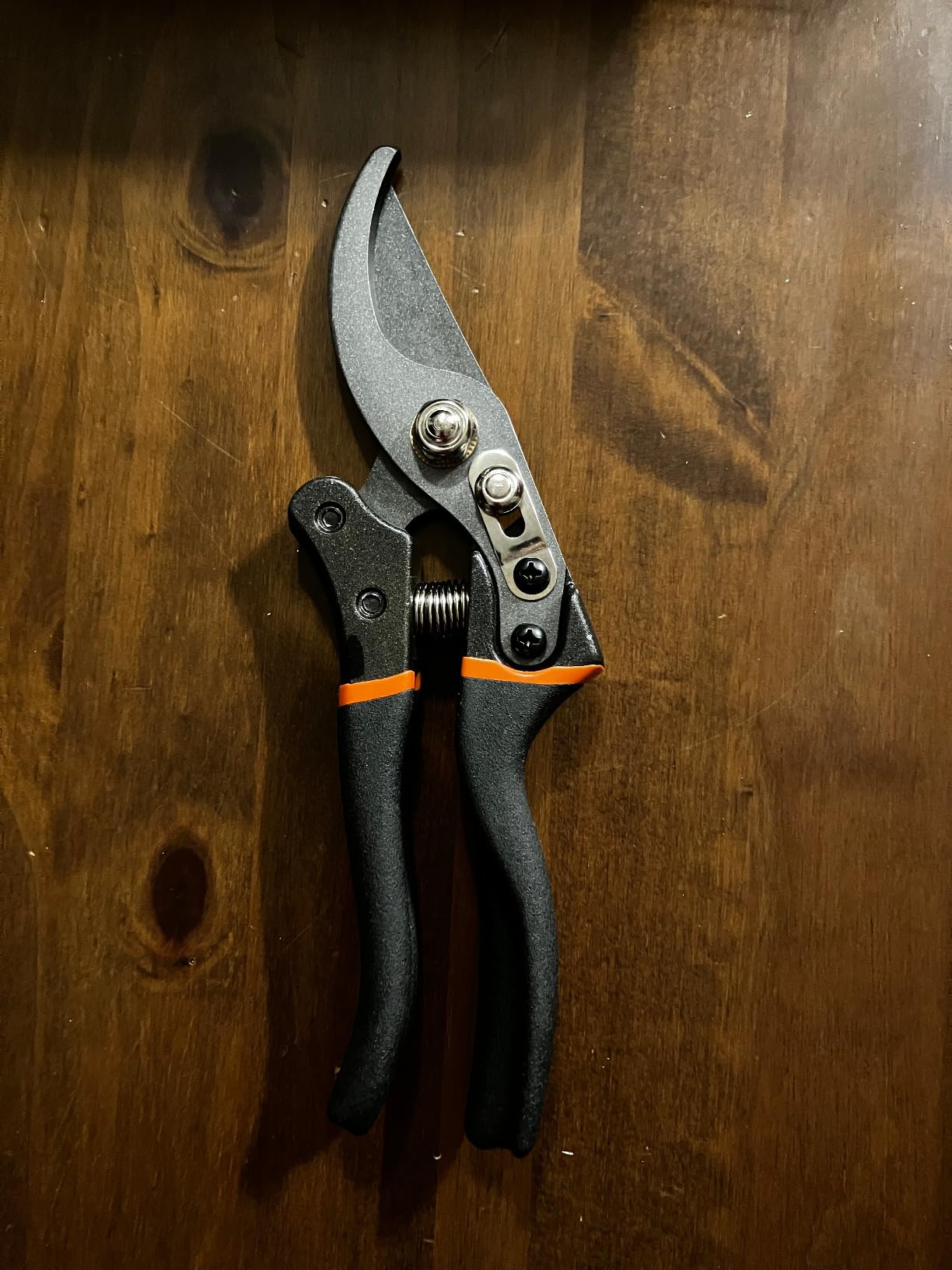
The DECERK is a direct route to assisted cutting in this group, and the mechanism is the story. A lever action design multiplies cutting force up to four times, which is why a 3/4 inch branch closes when the grip is weak. That is a real answer for anyone who has been overloading a lighter pruner and paying for it in blisters.
The blade is a Japanese SK5 titanium-coated bypass with a 2.95 inch length and a 1.42 inch maximum opening, on anodized aluminium handles with high hardness screws. Reviewers report that the lever takes pressure off the hand, and that the blade was still sharp at the end of a full season of test cutting.
With 2118 reviews at 4.7 and 85 percent five-star, the feedback clusters around easy cutting force, a comfortable grip, and a well-made feel, with a few notes about the wide grip and the non-standard lock. A spare spring is included, and the blades arrive lightly oiled against rust.
Being honest about the trade-off: the 3/4 inch rating is the ceiling, not the target. This is a tool for 1/2 inch wood and 3/4 inch wood that you are not strong enough to close on a plain pruner, not a substitute for a 1 inch model.
Who the DECERK suits well
Anyone with hand weakness, arthritis, or a grip problem who still needs to cut 3/4 inch branches. The assisted lever does for the wrist what a ratchet does with a different mechanism, and the non-slip rubber handles are comfortable for seniors and long sessions.
It also works for anyone who simply wants more cutting power per squeeze than a plain pruner delivers.
Who should skip the DECERK
Skip it if your thick branches are a full inch across, because a lever cannot create cutting capacity it does not have. Small hands may find the grip too wide, and the unusual safety lock takes a moment to work out the first time you use it.
9. Fiskars PowerGear2 Bypass Pruning Shears
Fiskars PowerGear2 Bypass Pruning Shears, 3/4″ Cut Capacity Garden Clippers
3/4 inch cut capacity
PowerGear2 gear system
8.8 oz
Hardened steel blade
Pros
- Gear system multiplies force on thicker stems
- Fully hardened blade needs no sharpening
- Rolling contoured handle reduces fatigue
- Backed by a lifetime warranty
Cons
- Some users find the real opening closer to 1/2 inch
- Gear mechanism jams if the hinge is not cleaned
- Pivot joint can loosen and is hard to re-tighten
The Fiskars PowerGear2 is the most recognisable name here and the one most often reached for out of habit. The patented gear system concentrates force in the middle of the branch rather than at the pivot, which is clever engineering, and the contoured rolling handle genuinely reduces hand fatigue on a long session.
Where I part company with the marketing is the capacity. The listed cutting width is 3/4 inch, and a fair number of owners report the practical opening feels closer to half an inch once you are working a live, wet branch. On rose canes and thicker stems it is excellent, and the fully hardened blade stays sharp for years with no sharpening at all.
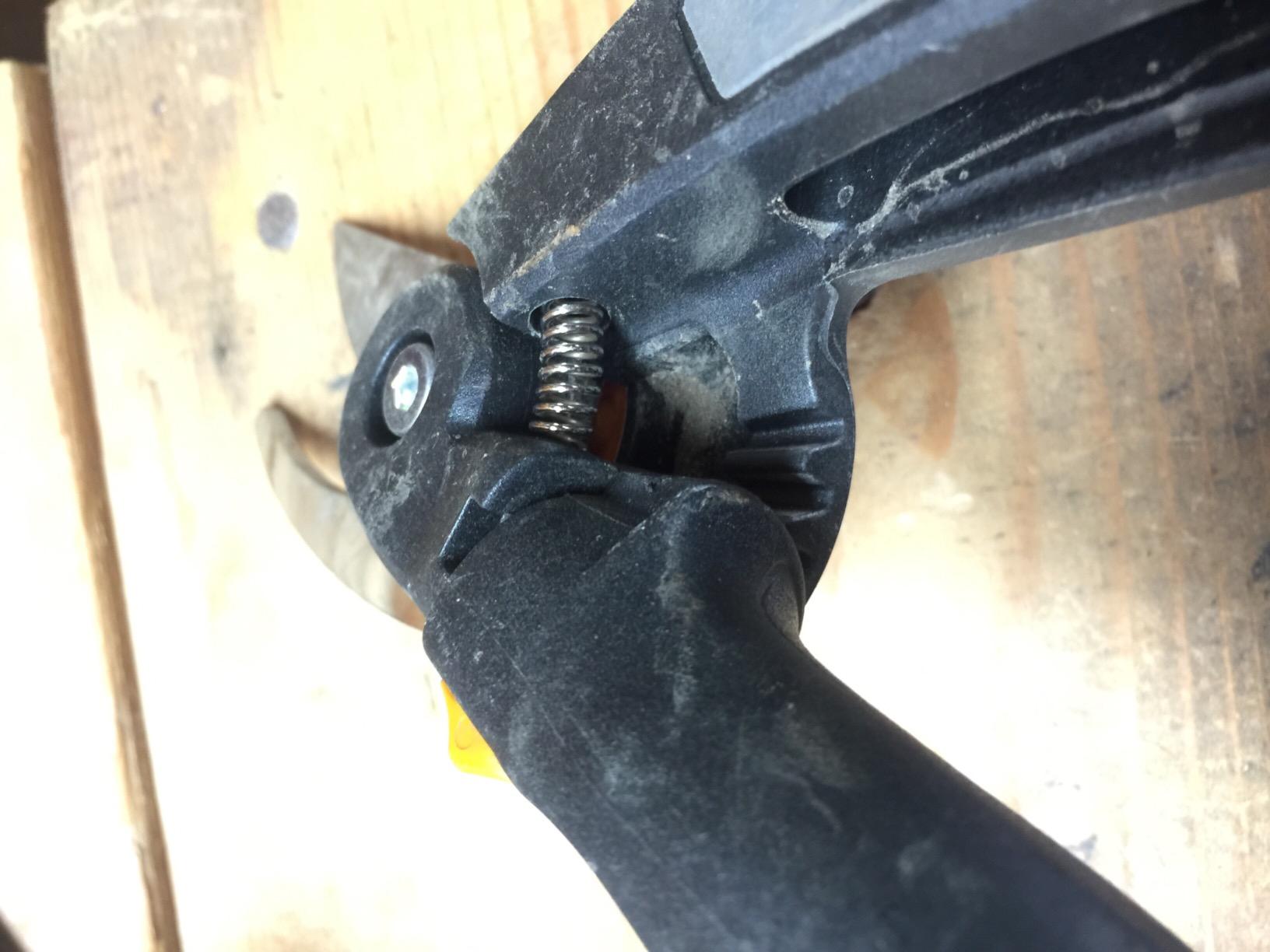
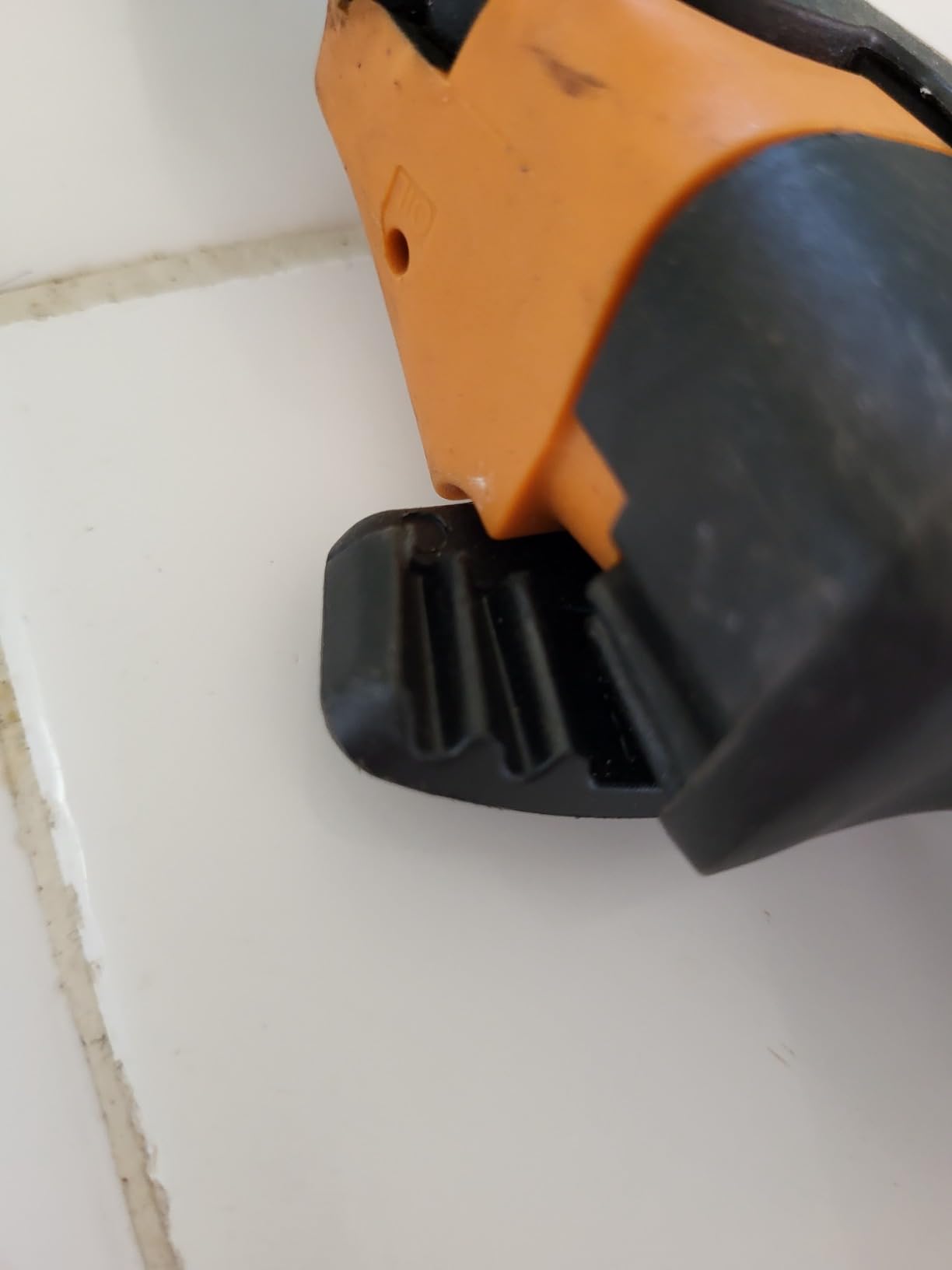
At 4.3 stars with 2219 reviews it sits at the bottom of the rating range here, with 68 percent five-star and 7 percent one-star. The complaints are specific rather than general: the gear jams when debris builds in the hinge and spring area, and the pivot joint loosens over time and is difficult to re-tighten.
That hinge debris issue is the real maintenance lesson with any gear or ratchet tool. Rinsing the hinge after every session takes ten seconds, and skipping it is how these mechanisms fail.
Who the Fiskars PowerGear2 suits well
People who want a familiar warranty-backed brand and gear assistance for stems up to three quarter inch. It suits rose work, soft fruit tree growth, and anyone who values a blade that never needs sharpening over maximum capacity.
The lifetime warranty is a real advantage, and the rolling handle makes it one of the more comfortable tools here for a long afternoon at three quarter inch.
Who should skip the Fiskars PowerGear2
Skip it if you need to cut a full inch of live wood, because the gap between what the box promises and what owners report is a real concern. It is also a poor choice if you are not disciplined about cleaning the hinge, since debris is what jams the gear.
10. The Gardener’s Friend Heavy Duty Ratchet Pruning Shears
The Gardener’s Friend Heavy Duty Ratchet Pruning Shears, Anvil
1 inch cut capacity
Three stage ratchet action
220 g
Anvil type
Pros
- Ratchet action multiplies force for weak grips
- Neoprene insert stops branches slipping mid-cut
- Manganese steel blade resists corrosion
- Safety latch helps prevent accidental opening
Cons
- Anvil action crushes fibres more than a bypass blade
- Bulkier than a standard bypass pruner
- Rated below the bypass options here
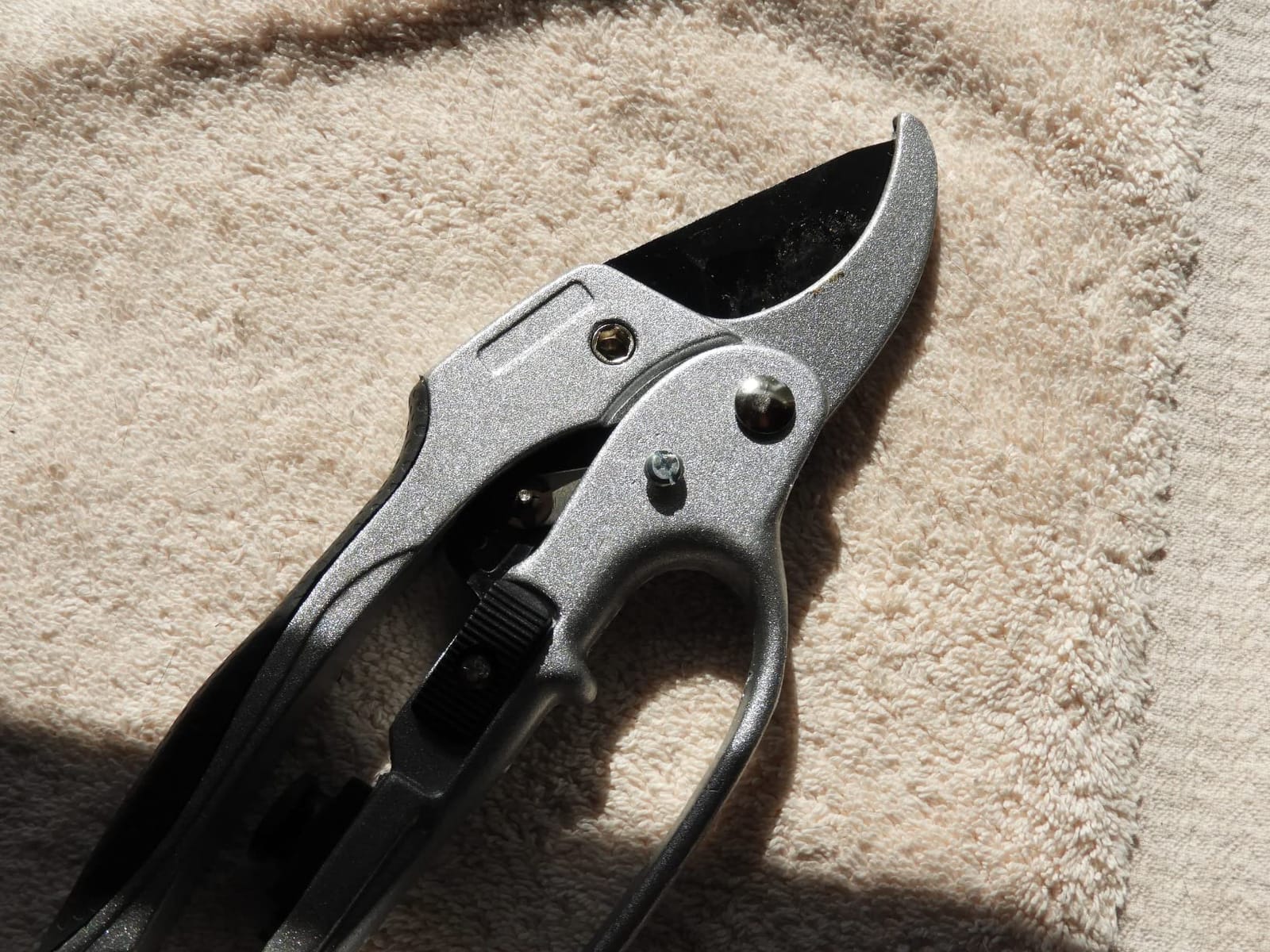
This is the ratchet pruner, and the mechanism is the reason it exists. A three stage ratchet action means the jaws close partway, reset, and close further each time you squeeze, so a thick branch is severed in three or four incremental steps rather than one brutal one. Your hand never has to supply the full closing force at once.
The listed cutting width is 2.5 centimetres, which is about an inch, and owners with strong grip report cutting right up to a full inch of live wood. The neoprene insert in the anvil is the feature owners single out most, because it grips the cut branch and stops it falling into the grass as you release. On a busy pruning day that is the difference between clipping and then collecting.
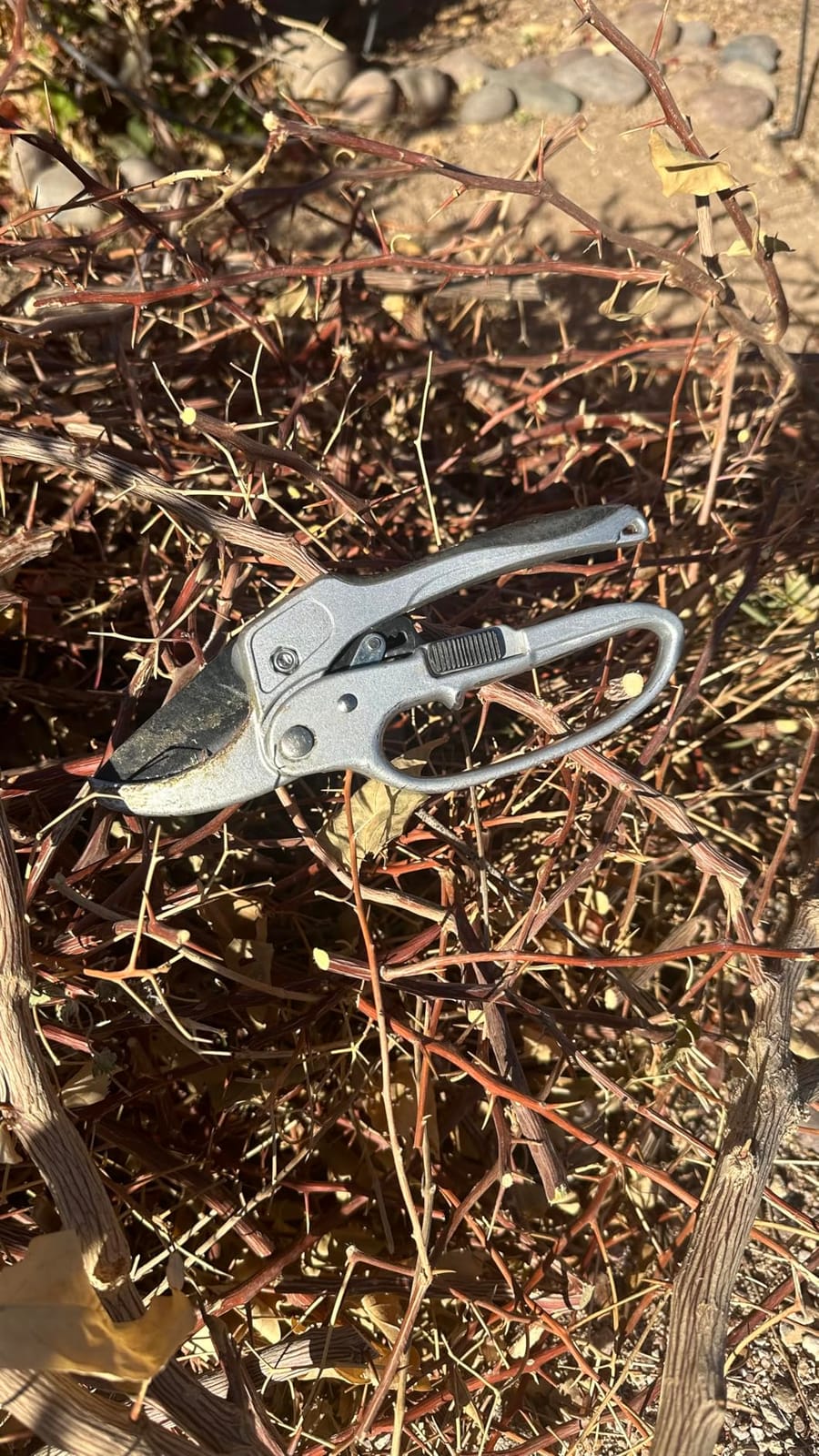
With 5462 reviews at 4.3, about 69 percent are five-star. Buyers like the assistive power and solid construction, while some find the anvil design and the bulkier body less refined. The anvil blade is manganese steel in an aluminium body, at 220 g and 7.95 inches long, backed by a lifetime warranty.
The honest drawback is wound healing. Anvil action crushes fibres slightly more than a bypass blade does, so a cut face seals more slowly. On deadwood that is irrelevant, and on live wood it is a real consideration, which is why this sits lower on my list than its capacity rating would suggest.
Who the Gardener’s Friend Ratchet suits well
Anyone with limited grip strength who needs to cut close to an inch, and anyone pruning deadwood, where the anvil action is the correct tool in the first place. It is also the pick for people who find a ratchet satisfying in a way a geared pruner is not, since the staged cut feels controlled rather than forced.
If you prune a lot of old, dead, thicker growth, this will save your hands more than any other tool in the list.
Who should skip the Gardener’s Friend Ratchet
Skip it if you are cutting a lot of live, green branches you want to heal quickly, because the anvil crushes fibres. It is also bulkier than a standard bypass pruner, so it is not the tool for tight quarters or for users who want the lightest possible frame.
Which Tool Cuts Which Branch: A Capacity Guide
This is the single most useful thing on the page, and none of the pages ranking for this query publish a capacity matrix. Match the thickest branch you expect to cut to the tool class, then pick within that class based on mechanism and fit.
Up to 1/4 inch: any bypass pruner. Rose thorns, green shoots, and spent flower stems fall to anything in this guide, including the lightest ones.
1/4 inch to 1/2 inch: standard bypass pruners such as the gonicc or the DECERK. A single squeeze should close the blade with a light squeeze left over.
1/2 inch to 3/4 inch: this is where the lightweight models reach their honest limit. Use a bypass pruner rated for 1 inch, or a gear-assisted model like the Fiskars PowerGear2, and stop if the handles start to bow.
3/4 inch to 1 1/4 inch: you need a 1 inch rated forged bypass pruner such as the Felco F2, the Corona BP 3180D, the Kimura, or the Haus and Garten ClassicPRO. If your grip is weak, the Gardener’s Friend ratchet cuts the same wood with far less hand force.
1 1/4 inch to 2 inch: no hand pruner in this list, including the assisted ones. This is two-handed lopper territory, ideally with a compound or gear-assisted lopper mechanism.
Over 2 inch: a pruning saw. If the branch is above head height, add a pole pruner or get down safely with a ladder rather than stretching a hand tool.
Bypass, Anvil, Ratchet or Gear-Assisted: What the Mechanism Changes
Here is the rule stated as a single quotable line: use a bypass pruner for live green wood and an anvil pruner for deadwood, full stop. A bypass pruner has two blades that pass each other like scissors, which slices a clean face. An anvil pruner has one blade pressing onto a flat plate, which crushes the fibres as it cuts, and that crushing is only acceptable on wood that is already dead.
Beyond that binary, the mechanisms differ in how they deliver force. A compound action lopper uses linked levers to multiply your hand force across a long two-handed handle. A gear-assisted pruner like the Fiskars PowerGear2 uses a cam and gear to concentrate force at the middle of the branch rather than at the pivot. A ratchet pruner does something different again: it stages the cut across three to five squeezes, which spreads the load and keeps your wrist unloaded, and the jaws can grip the stem so the cut piece does not drop.
Electric pruning shears sit at the far end of the same idea, taking the arm work out of the equation entirely for very high volume orchard work. For a typical home garden they are unnecessary, because a 1 inch bypass pruner and a two-handed lopper cover every branch under 2 inches.
This is where most tool damage happens, and it is worth being blunt about it. Forcing a pruner past its stated capacity does not make it cut thicker, it makes it crush the bark, crush the cut face, and invite fungal infection and slow dieback. It also snaps blades and bends handles, which is the complaint that shows up over and over in owner reviews across every price tier.
How to Cut a Thick Branch Without Tearing the Bark
The tool matters less than the technique once you are past half an inch. The 1-2-3 rule answers the most common pruning question: remove no more than 1 foot of a trunk, 2 feet of a primary branch, or 3 feet of a secondary branch in a single season, so the tree still has enough leaves to feed the rest of itself.
Second rule: never cut flush to the trunk. Every branch has a swollen ring at its base called the branch collar, and cutting just outside it lets the collar grow over the wound. Cutting flush removes the collar, and cutting too far out leaves a stub that dies back and invites rot.
For a branch too thick to close in one cut, use the three-cut method. Make a short undercut about 6 to 12 inches out from the trunk, cutting maybe a third of the way through from the underside, which stops the branch from tearing bark as it drops. Make a second cut from the top, a few inches further out, to remove the branch and take the weight off. Make the third and final cut just outside the branch collar to leave a clean finishing face.
That sequence is the difference between a wound that calluses in a season and a torn stub that rots into the limb. It takes an extra two minutes per branch and it is the single highest return technique in this article.
Keeping the Blade Sharp and the Tool Rust-Free
Ten years of ownership is the number most people should think about, and a pruner that can be resharpened is usually cheaper in the long run than a cheaper tool you keep replacing. Every model in this roundup except the fully hardened Fiskars blade has a sharpenable edge, and Felco in particular publishes replaceable parts, which is the standard the rest of the industry is measured against.
After every session, wipe the blades with a damp cloth and a drop of oil, then dry them. Sap left on steel is the main cause of both sticking and rust, and it is far easier to remove the same day than after a week. Do not leave tools outside overnight, and do not put a damp tool back in a closed bag, because trapped moisture will bloom rust across the bevel in a week.
Twice a year, take a coarse stone or file to the bevel, follow with a fine hone, and strop it on leather. A clean, deburred edge grips bark and slices rather than pushing. Before the spring rush, that is the routine that keeps a 1 inch cut clean instead of crushing.
When to Escalate Beyond Hand Pruners
Once a branch passes 1 1/4 inches, stop shopping for a better hand pruner. Two-handed loppers with compound action are built for the 1 1/4 inch to 2 inch band, and beyond 2 inches a folding pruning saw makes a cleaner and faster cut than any shears.
If the thick branch is above head height, a pole pruner is safer than a ladder, and forum users make the same point repeatedly. One veteran user on Gardening Forums describes cutting more than six inches of growth annually with a telescopic pole pruner using an extended pole and cord as a low-cost lengthening hack, which is a reasonable workaround when a dedicated reach is not what you own.
The escalation ladder is simple: hand pruner to 1 inch, two-handed lopper to 2 inches, pruning saw beyond that, pole pruner for height. Matching the tool to the branch is the entire skill, and most broken shears come from skipping a rung.
Frequently Asked Questions
What are the best shears for cutting thick branches?
The best pruning shears for thick branches are 1 inch rated forged bypass pruners such as the Felco F2, Corona BP 3180D, Kimura, or Haus and Garten ClassicPRO. If your grip is weak, a ratchet pruner such as the Gardener’s Friend cuts the same 1 inch wood across three or four staged squeezes instead of one. Anything past 1 1/4 inches needs two-handed loppers.
What is the best tool for trimming thick branches?
Match the tool to the diameter. Up to 3/4 inch a standard bypass pruner works, from 3/4 inch to 1 1/4 inch you need a 1 inch rated pruner or a ratchet model, from 1 1/4 inch to 2 inch you need two-handed compound loppers, and over 2 inch you need a pruning saw. For branches above head height, add a pole pruner rather than a ladder.
Is Corona or Fiskars better for thick branches?
For thick live branches, Corona is the stronger fit: the BP 3180D carries a 1 inch listed capacity, a forged alloy steel bypass blade, and a sap groove, while the Fiskars PowerGear2 is listed at 3/4 inch and owners often find the practical opening smaller still. Fiskars wins on its lifetime warranty and a hardened blade that needs no sharpening.
What is the 1-2-3 rule for pruning trees?
The 1-2-3 rule is a limit on how much you remove in one season. Prune no more than 1 foot of trunk, 2 feet of a primary branch, or 3 feet of a secondary branch. Staying inside those limits keeps enough leaf area to feed the remaining tree, which is what most failed pruning attempts get wrong.
Which pruning shears are best overall?
For most gardeners the Felco F2 is the best overall choice: a 1 inch rated hardened steel bypass blade in a forged aluminum body, 8.8 ounces, and every component replaceable. If cost is the deciding factor the Corona BP 3180D gives the same 1 inch rating with a sap groove and an ambidextrous build. If grip strength is the limit, choose a ratchet or lever action model instead.
What are the best cheap garden shears for thick branches?
At the budget end, the Kynup delivers a listed 1 inch capacity on SK5 high carbon steel for 8.5 ounces, and the gonicc GPPS-1003 is a strong low-cost option for 3/4 inch cane work on a 150 gram drop forged frame. The DECERK is the direct route to assisted cutting, using a lever action to multiply force up to four times for weak hands.
Can I use bypass shears on dead branches?
Technically yes, but anvil pruners are the better tool there. A bypass pruner slices a clean face, which is what live green wood needs to heal quickly, while an anvil pruner crushes fibres against a flat plate. Crushing deadwood is harmless and the anvil grips the branch as it severs, so dead branches up to about an inch are the case where anvil or ratchet pruners win.
The Verdict: Best Pruning Shears for Thick Branches in 2026
The Felco F2 is our pick for 2026 and the one I would buy first. It carries the highest star rating of anything here at 4.8, it genuinely cuts a clean inch of live wood, and every part of it can be replaced, which is the only real answer to the question of how long a pruning shear should last.
If the outlay is the problem, the Corona BP 3180D gives you the same 1 inch rating with a sap groove and an ambidextrous build, and the Kynup covers 1 inch on Japanese high carbon steel in the budget tier. If your hands are the problem rather than your budget, the Gardener’s Friend ratchet and the DECERK lever action both cut inch-class wood without the wrist strain that ends most pruning sessions early.
Whichever you choose, measure the thickest branch first, match it to the capacity guide above, and stop when the handles start to bow. A pruner used inside its rating will outlive any of us, and it will leave the tree with a wound that heals.