
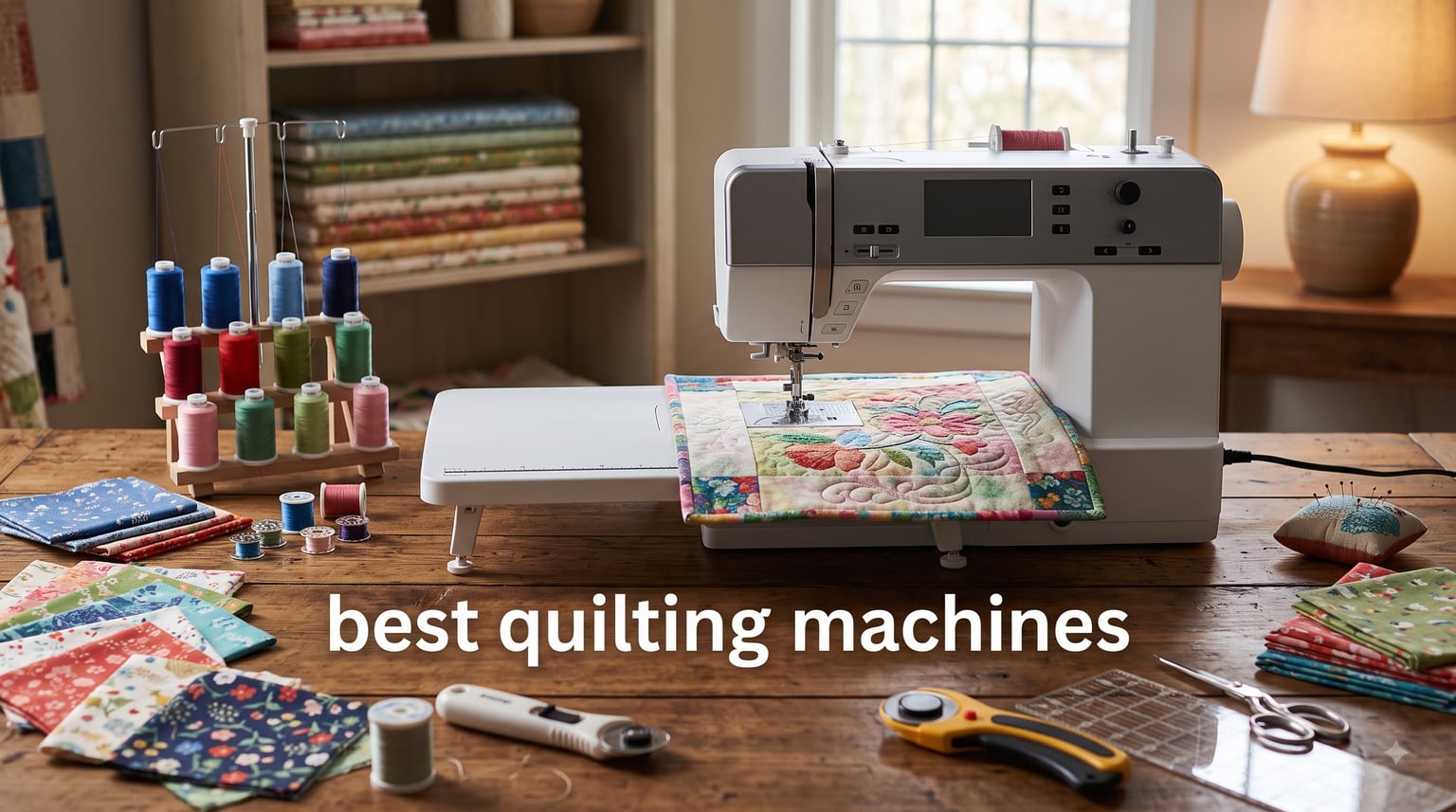
I have spent the better part of three years quilting on everything from a $185 starter machine to a semi-industrial straight-stitch workhorse, and I can tell you the machine matters more than almost any other decision you will make as a quilter. The best quilting machines give you the throat space to wrestle a queen-size quilt sandwich, the motor power to push through six layers of fabric and batting, and the stitch consistency that separates a family heirloom from a frustrating weekend.
If you want the short answer: most home quilters land on the Juki TL-2010Q for serious free-motion work, the Brother CS7000X as the best value do-everything machine, and the Janome MC6650 when a 10-inch throat and 1,000 stitches per minute fit the budget. That matches what I see over and over in r/quilting threads, where the Juki TL series is the most recommended quilting machine under $1,200 by a wide margin.
In this guide, our team walks through 10 machines we compared across throat space, motor strength, stitch quality, and real owner feedback from nearly 30,000 combined customer reviews. I will also flag exactly where each machine falls short, because a straight-stitch-only Juki and a 600-stitch Singer serve two completely different quilters. By the end, you should know precisely which machine fits your quilting style, your space, and your budget.
One thing before we start: every machine here can actually quilt. The differences come down to how much quilt they can handle, how fast, and how comfortably. A $185 Brother will finish a baby quilt happily. It will fight you on a king-size. Knowing that boundary before you buy is the whole game.
Table of Contents
Top 3 Picks for Best Quilting Machines in October
These three cover the quilter journey from first machine to near-professional studio. The Juki TL-2010Q is our Editor’s Choice because it is the machine working quilters actually buy, the Brother CS7000X is the best value for beginners and garment sewists who also quilt, and the Janome MC6650 is the premium pick for quilters who need maximum throat space without going to a longarm frame.
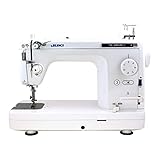
Juki TL-2010Q
- Semi-industrial straight stitch
- Large throat workspace
- Automatic thread trimmer
Best Quilting Machines in 2026: Quick Comparison
Here is the full lineup side by side. Notice how throat space and motor strength climb with price, while stitch counts do not. That is the single most useful thing this table can teach you: you pay for power and workspace, not for decorative stitches.
| Product | Specifications | Action |
|---|---|---|
| Juki TL-2010Q |
|
Check Latest Price |
 Brother CS7000X Brother CS7000X |
|
Check Latest Price |
 Janome MC6650 Janome MC6650 |
|
Check Latest Price |
 Brother XR9550 Brother XR9550 |
|
Check Latest Price |
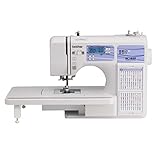 Brother HC1850 Brother HC1850 |
|
Check Latest Price |
 Singer Quantum Stylist 9960 Singer Quantum Stylist 9960 |
|
Check Latest Price |
 Janome JW8100 Janome JW8100 |
|
Check Latest Price |
 Brother XR3774 Brother XR3774 |
|
Check Latest Price |
 Brother CP100X Brother CP100X |
|
Check Latest Price |
| Juki TL-2010Q Bonus Pack |
|
Check Latest Price |
1. Juki TL-2010Q – The Semi-Industrial Quilting Workhorse
Juki TL-2010Q 1-Needle, Lockstitch, Portable Sewing Machine with Automatic Thread Trimmer for Quilting, Tailoring, Apparel and Home Decor
Semi-industrial lockstitch
Automatic thread trimmer
Knee lifter lever
38 pound aluminum body
Pros
- Professional straight stitch quality
- Large workspace for big quilts
- Handles thick layers and heavy fabrics easily
- Knee lifter keeps hands free
- Automatic thread trimmer saves time
Cons
- Straight stitch only
- no zigzag
- Learning curve for threading
- Requires regular oiling
The first time I pieced a quilt top on a Juki TL-2010Q, I understood the hype within ten minutes. The machine sews up to 1,500 stitches per minute, and the stitch quality at that speed is better than most beginner machines produce at half speed. It is the machine I now recommend without hesitation when someone asks what they should buy after outgrowing their first sewing machine.
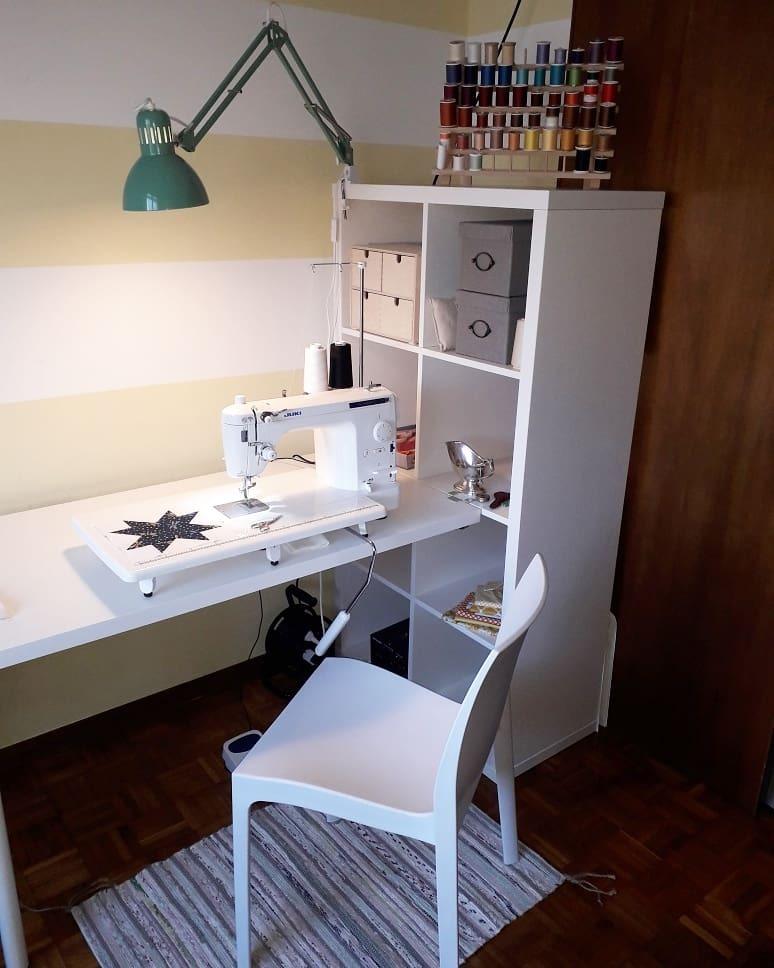
The 9-inch throat space and 38-pound aluminum body are what make it a true quilting machine. I dragged a queen-size sandwich under the arm without the cramping and folding a standard domestic machine forces on you. Owners in quilting forums describe it in almost identical terms: a workhorse that just does not flinch.
The automatic thread trimmer is the feature that spoils you fastest. Kick a heel lever and both top and bobbin threads cut cleanly, which matters enormously when you are stopping and starting every few inches during free-motion quilting. The included knee lifter lets you raise and lower the presser foot without taking your hands off the quilt.
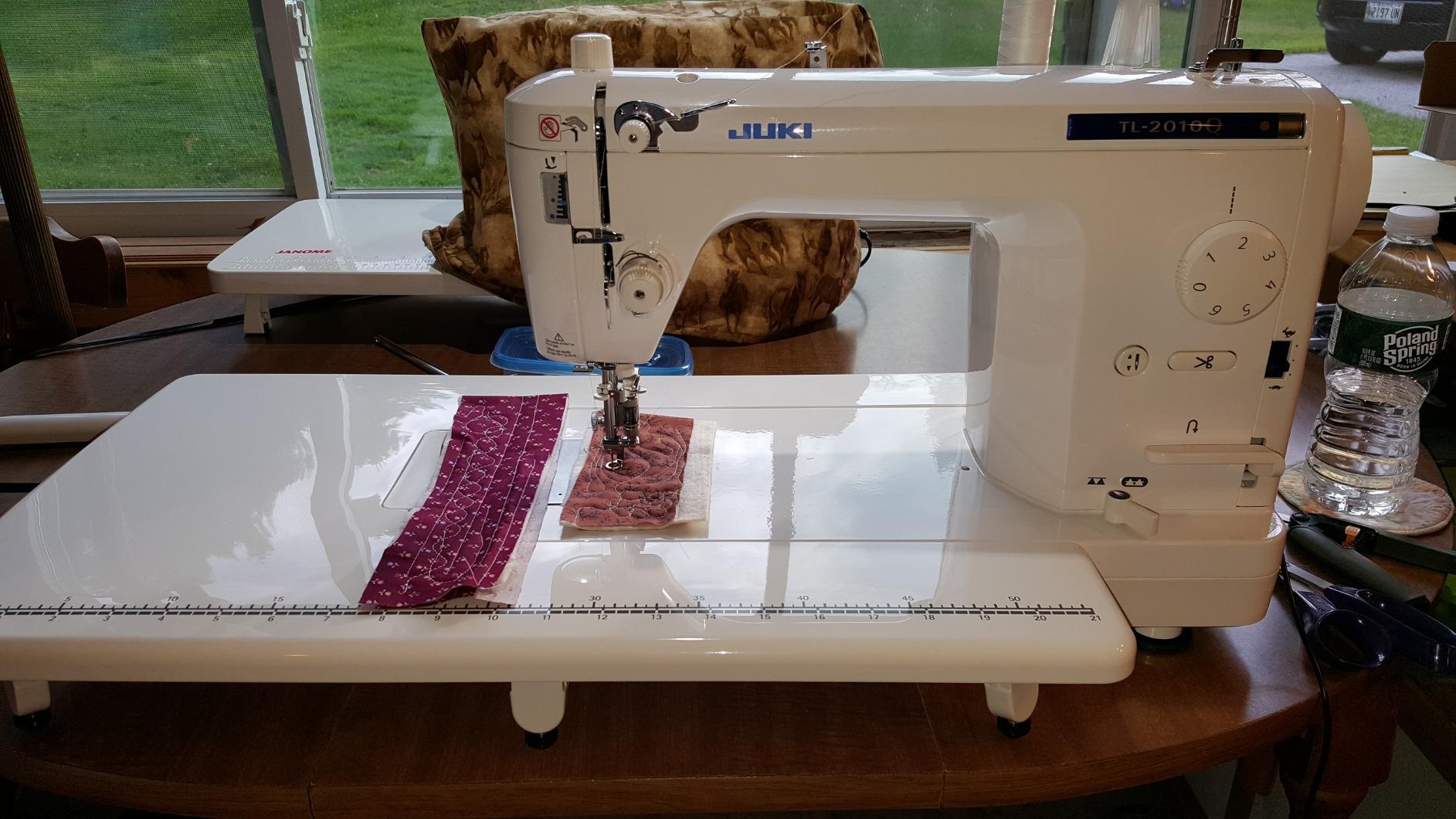
Now the honest part. This is a straight-stitch-only machine, full stop. No zigzag, no buttonholes, no decorative stitches. If you want one machine for garments, mending, and quilting, this is not it. Threading also takes practice, and the automatic needle threader has a reputation for being fussy until you learn its rhythm.
It also demands maintenance. The TL-2010Q uses a rotary hook that needs oiling, and long-term owners treat daily oiling as part of the routine rather than a chore. My view: that maintenance is exactly why a 15-year-old Juki still sews like new while cheap computerized machines get tossed after four years.
Who should buy the Juki TL-2010Q
This is the machine for the committed quilter who already owns or does not need a general-purpose sewing machine. It is ideal if you piece and free-motion quilt regularly, finish quilts larger than throw size, or want speed for production work. Forum users consistently call it the best price-to-performance quilting machine you can buy.
Who should skip it
Skip it if you want a single machine that does everything, or if the idea of oiling your machine weekly makes you tense. Beginners who are still exploring whether quilting will stick should start cheaper and upgrade here later. And if you sew lots of stretch fabrics or want decorative stitching, the straight-stitch-only design will frustrate you quickly.
2. Brother CS7000X – Best Value Quilting Machine for Beginners
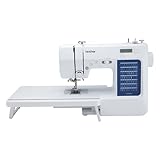
Brother CS7000X Sewing and Quilting Machine LCD Display
70 built-in stitches
Metal frame
Wide table and 10 feet
14 pound portable body
Pros
- Excellent value for the price
- Metal internal frame for durability
- 10 presser feet plus quilt guide
- Wide table included
- Large needle-to-arm workspace for the class
Cons
- Limited throat space for large quilts
- Not built for heavy-duty materials
- Can struggle with very thin fabrics on long stitches
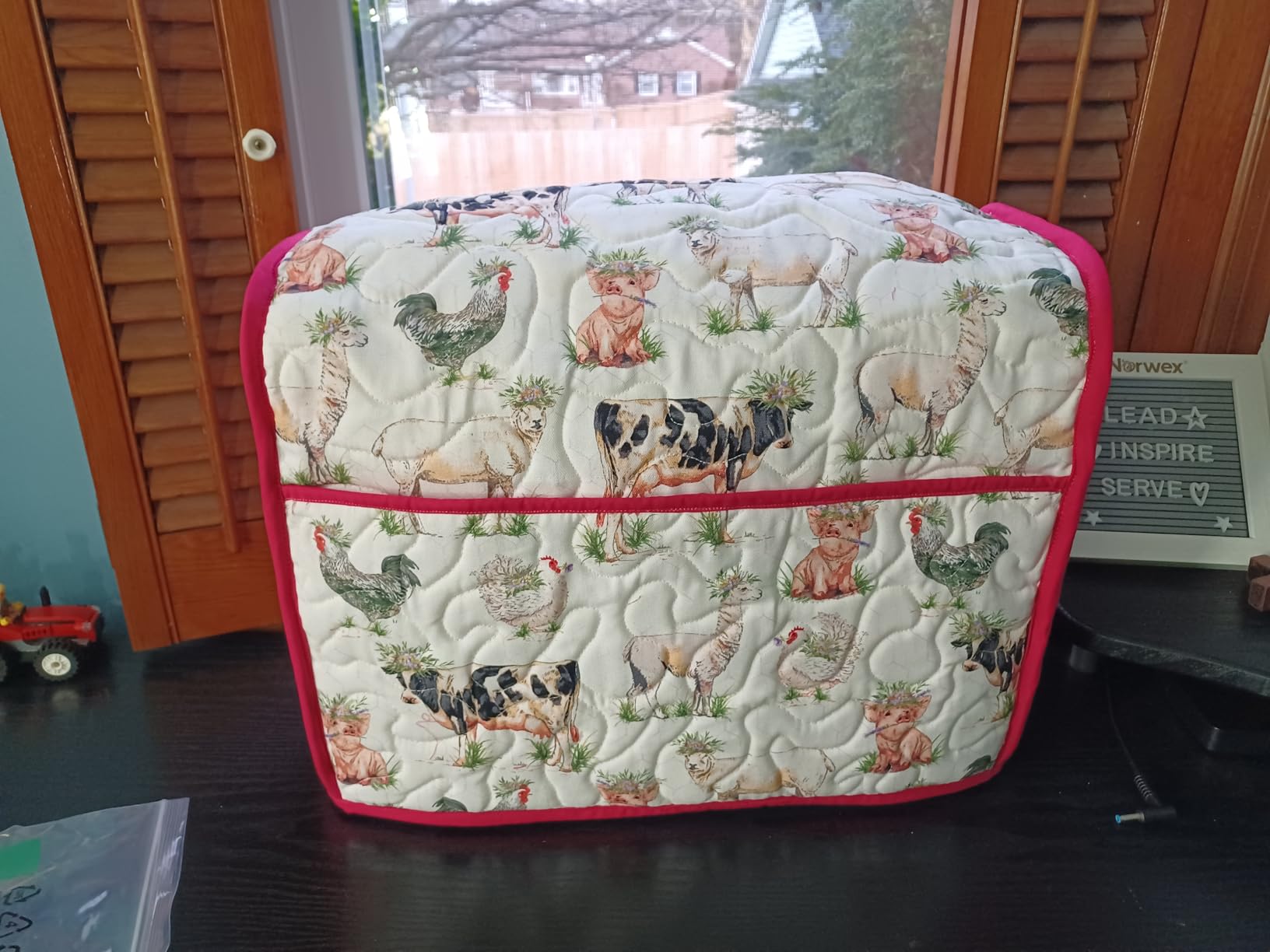
The Brother CS7000X is the machine I hand to new quilters most often, and I say that after comparing it directly against the XR9550 and HC1850 in the same price band. It ranks #5 in Amazon’s entire sewing machine category for a reason. You get a real metal frame, a fixed needle bar for cleaner stitching, and a wide table, all at a beginner-machine price.
What sold me is how well it quilts relative to what it costs. The needle-to-arm workspace is genuinely larger than typical in this class, and the 10 included feet cover the quilting basics: a walking foot for straight-line quilting, a quilting foot, and a quilt guide for even parallel lines. Drop the feed dogs and it free-motion quilts respectably once you lower the tension and slow down.
The stitch quality is where Brother’s computerized machines consistently punch above their price. Owners report smooth seams through denim and heavy piecing seams, which is more than I can say for most machines at this level. The jam-resistant drop-in bobbin saves beginners from the bird-nesting misery that makes people quit sewing.
The limitation is physics. This still has a compact throat, so a king-size quilt will involve the rolling, folding, and creative cursing familiar to every domestic-machine quilter. The motor also is not meant for hours of daily production sewing; it handles jeans seams fine, but it is not a semi-industrial workhorse.
Some owners note trouble with very thin fabrics on long stitch settings, which is a tension-learning exercise rather than a defect. The hard case and light weight make it genuinely portable for classes, which matters if you attend a guild or retreat.
Who should buy the Brother CS7000X
Buy it if you are new to quilting, returning after years away, or want one affordable machine that quilts, mends, and sews garments. It is also a smart second machine for classes and travel. For the money, it is the best entry point into machine quilting in 2026.
Who should skip it
Skip it if you mainly finish large quilts or want fast free-motion work, because the throat space and motor will hold you back. Look at the Juki TL-2010Q instead. And if you want a big stitch library for decorative work, the XR9550 or HC1850 below offer more stitches for similar money.
3. Janome MC6650 – Premium Pick for Serious Home Quilters
Janome MC6650 Sewing and Quilting Machine
10 inch throat space
1000 stitches per minute
All-metal flatbed
Independent bobbin winder motor
Pros
- Huge 10 inch throat for large quilts
- Powerful 1000 SPM motor with quiet operation
- Bobbin winds while you sew
- 12 presser feet and convertible free-motion foot
- One-push needle plate conversion
Cons
- Premium price
- Manual could be clearer
- Auto threader struggles with synthetic thread
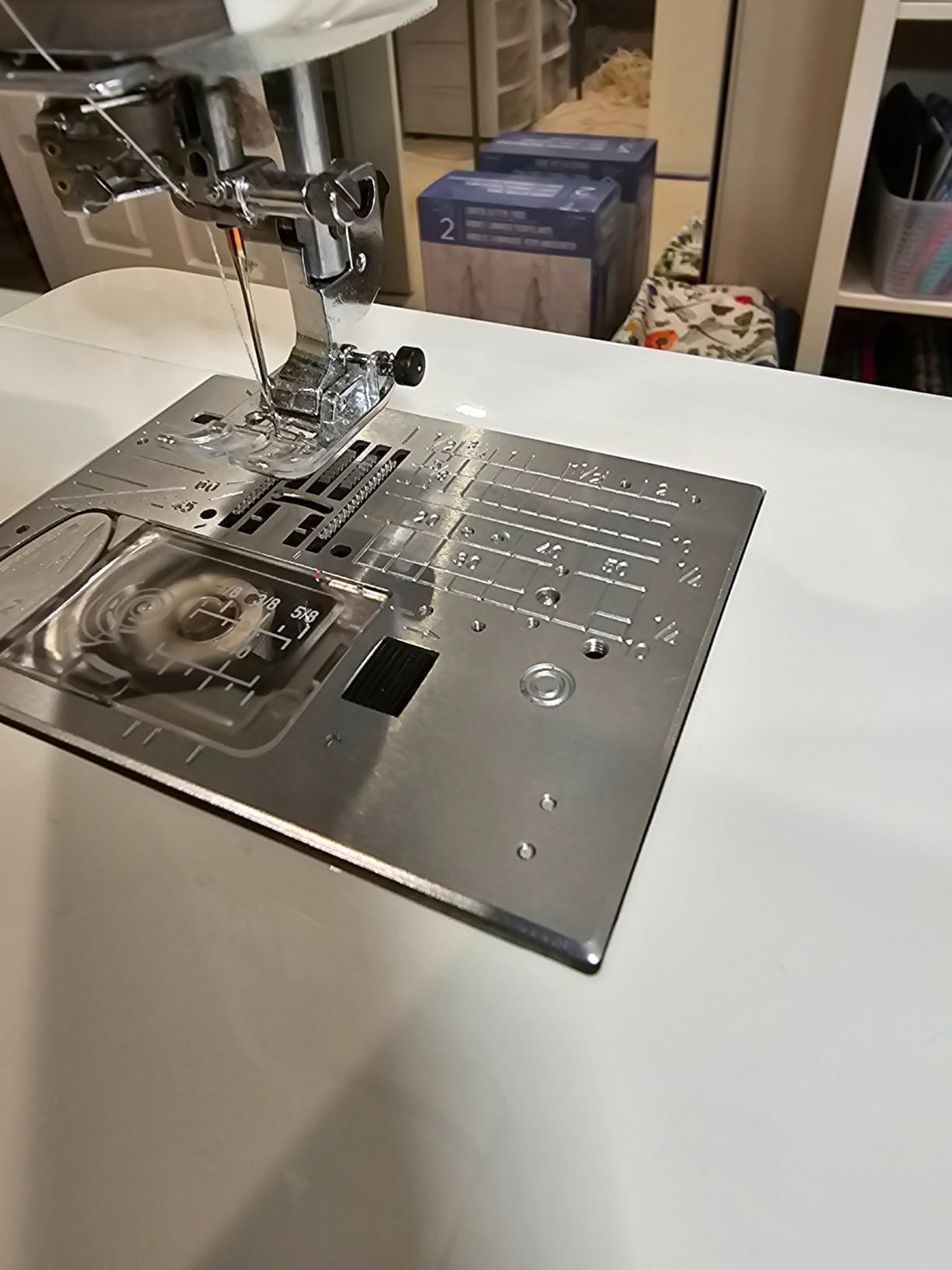
The Janome MC6650 is what happens when a manufacturer builds a domestic machine that refuses to act like one. The 10-inch throat space is the headline: that is genuinely semi-professional territory, enough to finish queen-size quilts at home without the arm cramped against your work. For quilters who cannot justify a longarm but are done fighting a small machine, this is the landing spot.
What impressed me most in owner reports is the independent bobbin winder motor. You can fill a bobbin while you are sewing, which sounds like a gimmick until you have stopped mid-seam for the hundredth time. The all-metal seamless flatbed, aluminum frame, and adjustable presser foot pressure round out a machine designed specifically around quilting physics.
The 1,000 stitches-per-minute top speed sits below the Juki, but the MC6650 does it quietly and with a full zigzag and utility stitch set. This is the compromise position: nearly the Juki’s quilting capability without giving up being a complete sewing machine.
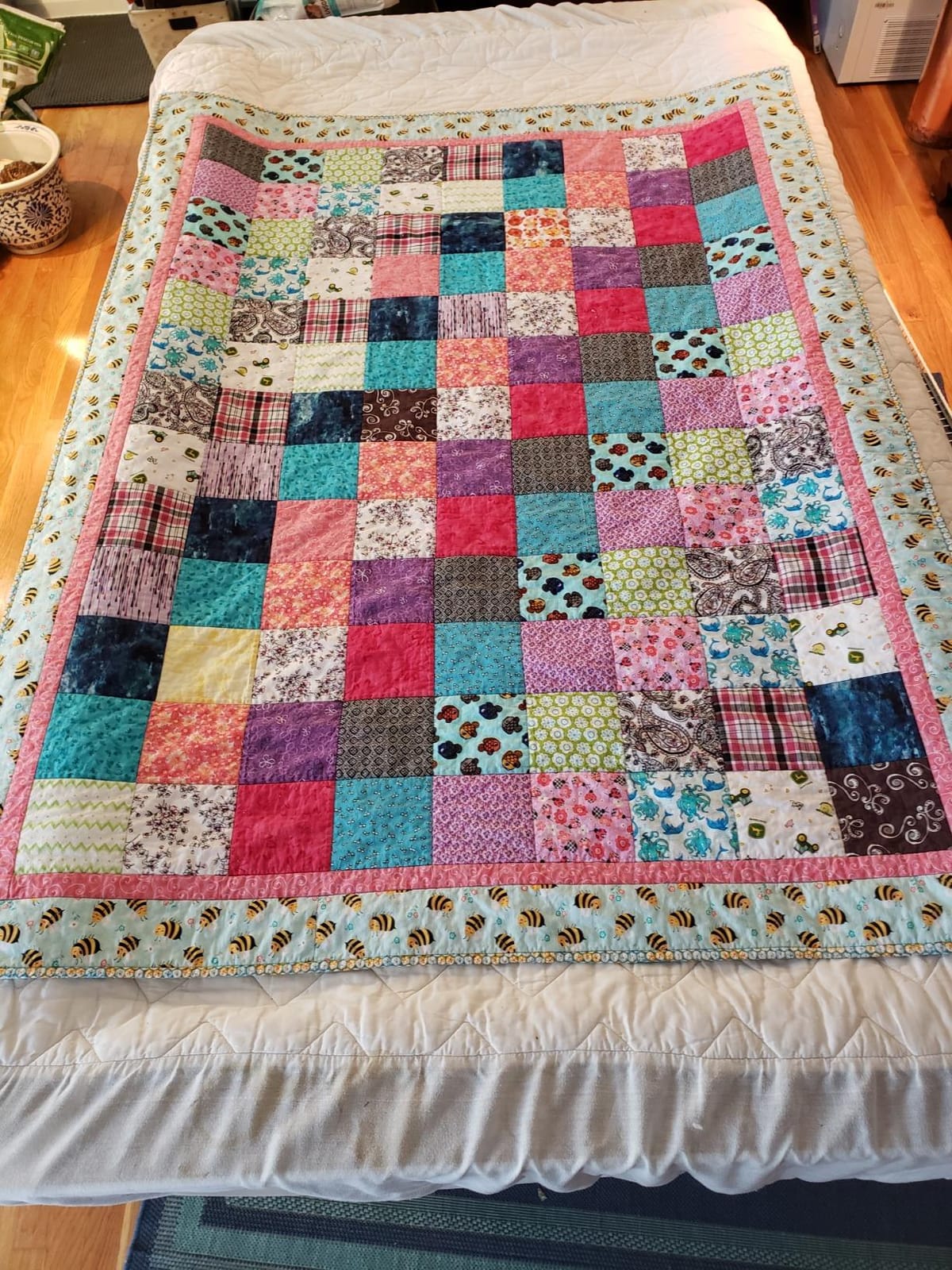
The trade-offs are real at this price. Several owners mention the instruction manual is thin for a machine this capable, and the auto needle threader works poorly with slippery synthetic threads. One recurring complaint is packaging: the large box lacks internal protection, and at least one buyer had a spool spindle arrive broken in shipping.
It is also not Prime eligible and stock runs thin, with only about 10 units available when we checked. If you are buying from a dealer instead, that is arguably a feature, since dealer support and setup is something forum quilters repeatedly say they wish they had chosen.
Who should buy the Janome MC6650
Buy it if you finish large quilts regularly, want domestic convenience with a near-mid-arm workspace, and plan to keep the machine for a decade or more. The 25-year limited warranty and Janome’s reliability reputation back that plan up. It suits the dedicated hobbyist standing at the border of professional work.
Who should skip it
Skip it if your budget is under $1,500 or your projects are mostly baby quilts and throws, where a Brother or the Juki does 90 percent of the work for far less. And if you already know you want frame-based longarm quilting, save toward a dedicated longarm instead of stretching this machine into a role it was not designed for.
4. Brother XR9550 – Most Popular Computerized Quilting Machine
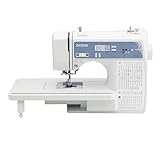
Brother XR9550 Computerized Sewing and Quilting Machine 165 Stitches
165 built-in stitches
LCD display
Wide table and 8 feet
10.1 pound portable body
Pros
- 165 stitches including quilting and heirloom
- Automatic needle threader and drop-in bobbin
- Wide table and hard case included
- Variety of quilting and monogramming feet
- Variety of speed control options
Cons
- Throat space is standard domestic size
- Needle threader can feel flimsy
- Not for heavy-duty production work
With over 4,700 ratings at 4.6 stars and a top-10 sales rank in sewing machines, the Brother XR9550 is arguably the most-owned computerized quilting machine in America. Our team keeps coming back to it because it hits a sweet spot: enough stitch variety to keep a creative quilter happy, enough support hardware to actually quilt, and a price that leaves room in the budget for fabric.
The 165 stitches include genuine quilting and heirloom utility stitches, plus 55 alphanumeric stitches for labels and signatures on quilt backs. The LCD display makes selection painless, and the machine tells you which presser foot to use for each stitch, which quietly teaches beginners the right habits.
In practice, it quilts like a good mid-range domestic: competent straight-line work with the included walking foot, decent free-motion with feed dogs dropped, and a wide table that helps with medium projects. The start/stop button lets you sew without the pedal, which many quilters with ankle or knee issues specifically thank Brother for.
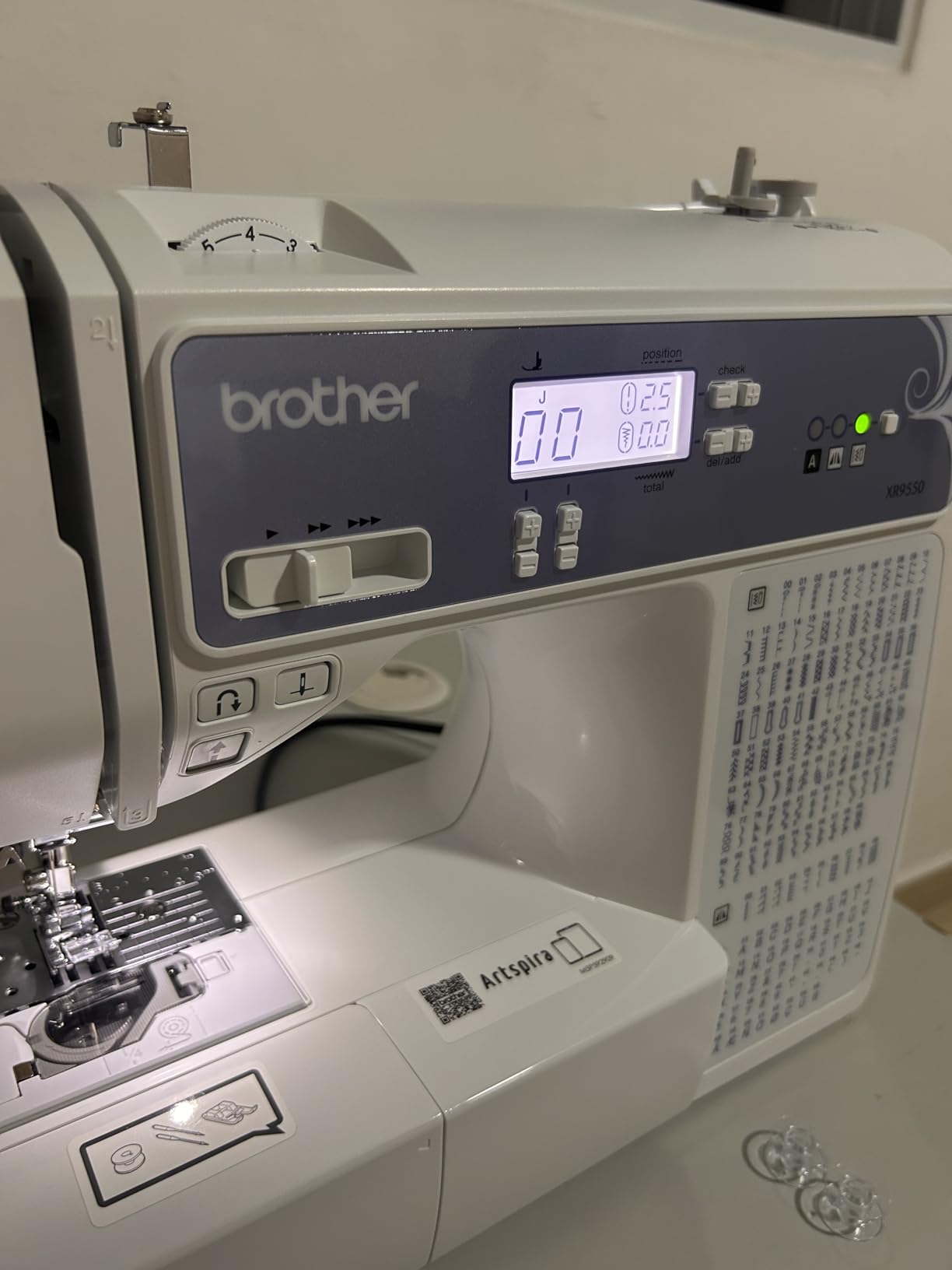
The constraints are the class constraints. The throat is standard domestic size, so large quilts require the usual folding technique. The included quilting accessories are functional rather than premium, and the needle threader has a plasticky feel that some owners distrust, even when it works.
The 10.1-pound weight is a double-edged sword. It makes the XR9550 wonderfully portable for classes, but it also means the machine can vibrate or walk at top speed on a slick table. A rubber mat solves it. For the price, the 25-year limited warranty and lifetime free phone support are genuinely reassuring.
Who should buy the Brother XR9550
Buy it if you split your time between quilting, garment sewing, and craft projects and want strong all-around capability. It suits the ambitious beginner through confident intermediate quilter, especially anyone who wants decorative and monogramming options alongside straight quilting work.
Who should skip it
Skip it if quilting is your singular focus, because you are paying for 165 stitches when what you need is throat space and motor. The CS7000X gives you the same quilting fundamentals for less, and the Juki gives you far more quilting capability for more. This is the generalist’s machine, not the specialist’s.
5. Brother HC1850 – Best for Quilting and Garment Sewing
Brother HC1850 Sewing and Quilting Machine, 185 Built-in Stitches, LCD Display, 8 Included Feet
185 built-in stitches
Advanced needle threader
Wide table and 8 feet
Start/stop button
Pros
- 185 stitches with automatic tension
- Advanced lever-action needle threader
- Quiet and smooth operation
- LCD tells you which foot to use
- Wide table and DVD included
Cons
- Narrow throat
- not for serious quilting
- Cannot sew denim or heavy upholstery
- Some feed dog lowering complaints
The Brother HC1850 has quietly accumulated one of the best reputations in the category: 4.7 stars across more than 5,100 reviews, the highest rating of any machine on this list. It is the older sibling of the XR9550, with 185 stitches, automatic thread tension, and a well-earned fame as the machine quilting instructors recommend to students.
Using it feels familiar if you have sewn on any modern Brother: quiet, smooth, and forgiving. The lever-action needle threader is genuinely easier than most, the jam-resistant drop-in bobbin behaves, and the machine prompts you toward the correct presser foot for every stitch. Beginners can be piecing their first quilt top within an hour of unboxing.
As a quilting machine specifically, it handles baby quilts and throws well, straight-line quilts nicely with the wide table, and free-motion adequately once you accept its pace. Many owners report a decade of reliable service, which is the real reason it keeps selling years after release.
Do not buy it expecting a heavy hitter. The throat is narrow, full stop, and Brother is explicit that denim, vinyl, and upholstery are beyond it. Some owners also report quirks lowering and raising the feed dogs, which matters since free-motion quilting depends on that function working cleanly.
Weight is a modest 10.1 pounds, so it shares the XR9550’s portability and its tendency to scoot on hard surfaces. The automatic thread tension is convenient for garment sewing but you will still want manual control when free-motion quilting, and the learning curve there is on you, not the machine.
Who should buy the Brother HC1850
Buy it if you are a beginner or teaching someone to quilt, or if you want a gentle, quiet, highly rated machine for piecing and smaller quilting projects alongside everyday sewing. The 25-year warranty and free lifetime support make it a low-risk first machine.
Who should skip it
Skip it if you quilt anything larger than a throw regularly, or if you ever sew heavy layers, because this machine will refuse both. At this price the CS7000X trades 115 stitches for a metal frame and better workspace, which most quilters should take.
6. Singer Quantum Stylist 9960 – Most Feature-Rich Option
SINGER® Quantum Stylist 9960 Computerized Sewing & Quilting Machine
600 stitches and 5 fonts
Automatic thread cutter
13 presser feet
Metal frame
Pros
- 600 stitches and 1172 stitch applications
- Automatic thread cutter for both threads
- 13 presser feet including walking and quarter inch
- Mirror imaging and stitch elongation
- Extension table included
Cons
- Some reported electronic failures
- Requires specific 15J bobbins
- Throat plate small for serious quilting
The Singer Quantum Stylist 9960 is the most-reviewed machine on this list by a wide margin: nearly 9,000 ratings. It is a feature bomb, with 600 built-in stitches, 1,172 stitch applications, 5 monogramming fonts, and 13 one-step buttonholes. Nobody genuinely needs 600 stitches, but creative quilters adore having them.
The quilting-relevant hardware is what justifies its place here. The automatic thread cutter trims both top and bobbin thread at a button press, the same luxury feature praised on the Juki. The 13 included feet include a walking foot, an open-toe foot, a darning/embroidery foot for free-motion, and a quarter-inch foot, which is the complete quilting foot kit most machines make you buy separately.
Stitch quality in owner reports is consistently described as excellent, and the metal frame gives it a steadier feel than its price suggests. The extension table, hard cover, and adjustable speed control complete a package that feels like it should cost more.
The catch is reliability. At 4.4 stars it sits below every other machine here, and the pattern in negative reviews is specific: motherboard and electronic failures, sometimes just past warranty. It is a minority of owners, but it is a real risk with any feature-dense computerized machine, and the 5-year electronics warranty only partly covers it.
It is also picky about bobbins, requiring Singer 15J rather than generic Class 15, and using the wrong ones causes the tension and bird-nesting problems that generate angry reviews. The throat plate is small for serious quilting, so treat this as a spectacular sewing machine that quilts well, not a dedicated quilting machine.
Who should buy the Singer Quantum Stylist 9960
Buy it if stitch variety and creative freedom drive your sewing, or if you want the maximum feature count per dollar with a full quilting foot set in the box. It suits confident sewists who love decorative work, monograms, and mixing quilting with elaborate garment construction.
Who should skip it
Skip it if you want a set-and-forget workhorse, given the electronic failure reports, or if pure quilting capability is the goal. And if you dislike reading manuals, 600 stitches and five fonts will overwhelm rather than delight. Quilters on forums who regret this purchase almost all wanted a Juki instead.
7. Janome JW8100 – Best Accessory Package for Quilters
Janome JW8100 Fully-Featured Computerized Sewing Machine with 100 Stitches, 7 Buttonholes, Hard Cover, Extension Table and 22 Accessories
100 stitches and 7 buttonholes
22 included accessories
Even feed and quarter inch feet
Extra-wide extension table
Pros
- 22 accessories including even feed walking foot
- Quarter inch foot for precise piecing
- Smooth reliable fabric feeding
- Needle up/down and speed control slider
- Quiet operation with jam-proof bobbin
Cons
- Light could be brighter
- Some specialty stitches render imperfectly
- Limited clearance for very thick projects
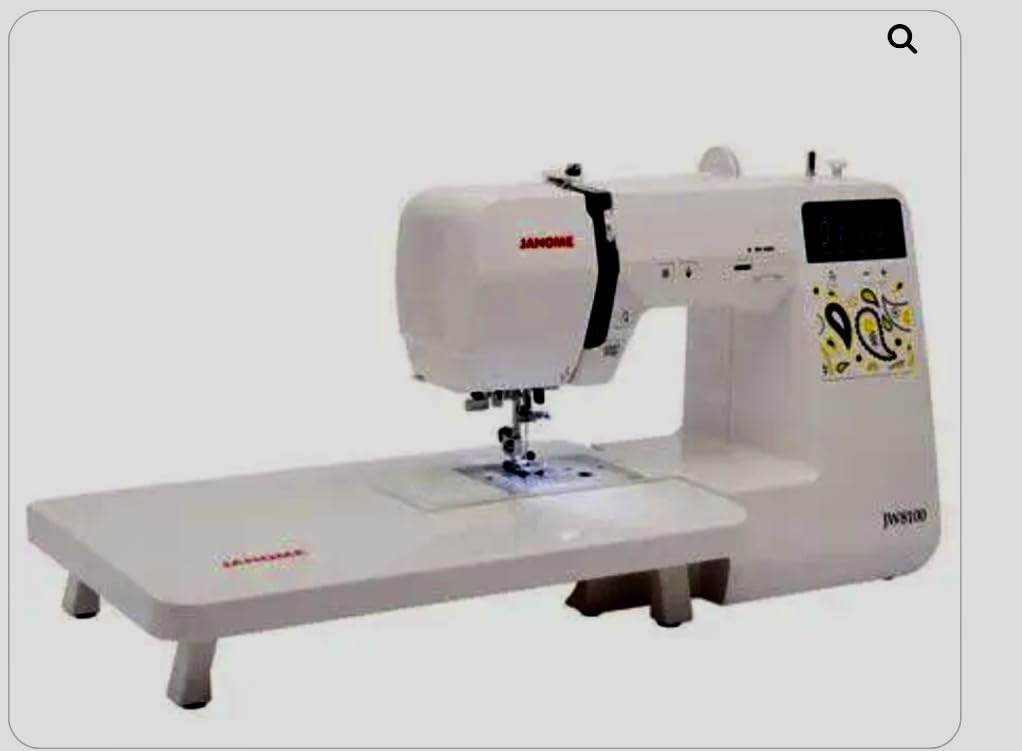
The Janome JW8100 is the sleeper pick on this list. Janome has the strongest reliability reputation in quilting forums, and this model packages that reputation with something quilters specifically should notice: a 22-piece accessory kit that includes an even feed walking foot and a quarter-inch foot. Those two feet alone can cost $60 to $80 bought separately.
Owners describe the feeding as the standout quality: the 7-piece feed dog system moves fabric smoothly without the shifting that plagues cheaper machines. For piecing, where a wandering seam allowance ruins the whole quilt, that feeding consistency matters more than any stitch count.
The quilting-specific ergonomics are here too: needle up/down control for pivoting at corners, a speed control slider, and an extra-wide extension table. The jam-proof drop-in bobbin uses standard Class 15 bobbins, which are available everywhere, unlike Singer’s proprietary 15J.
It is not the machine for heavy crossing seams or high loft batting, since the needle does not raise super high for very thick projects. The LED light gets the same complaint nearly every machine at this level gets: adequate, not generous.
A few owners note some specialty stitches do not render perfectly, which is common in this price class and irrelevant to quilting, where you will use two or three stitches your whole life. The 25-year mechanical warranty reflects how much faith Janome puts in the build.
Who should buy the Janome JW8100
Buy it if you want the most quilting-ready box at a mid-range price, without shopping for feet separately. It suits quilters who value smooth feeding and reliable mechanics over a giant stitch library, and anyone who has been burned by an unreliable brand before.
Who should skip it
Skip it if you want maximum throat space on a budget, since the Juki TL-2010Q offers far more workspace for quilting-specific work. And if you measure machines by stitch count, the XR9550 and 9960 both offer far more decorative range for similar or modestly more money.
8. Brother XR3774 – Best Budget Quilting Machine Under $200
Brother XR3774 Sewing and Quilting Machine 37 Stitches
37 built-in stitches
Wide table and 8 feet
Free arm
15 pound sturdy body
Pros
- Lowest cost way to start quilting
- Wide table and 8 feet included
- Automatic needle threader and drop-in bobbin
- Sturdy yet lightweight
- Instructional DVD for beginners
Cons
- No speed control button
- pedal only
- May struggle with thick layers
- Limited stitch variety
The Brother XR3774 is the answer to the most common question in beginner quilting spaces: what can I buy for under $200 that will not immediately fall apart? With 4.6 stars across more than 5,500 reviews, it is the proof that a genuinely usable quilting starter machine exists at this price.
The quilting essentials are present: a wide table, eight feet, a quilting stitch among the 37 built-ins, drop-in bobbin, and automatic needle threader. That is the entire functional checklist for piecing your first quilt top and straight-line quilting a baby quilt or throw.
I like that it is 15 pounds rather than featherweight, giving it a planted feel on the table that lighter Brothers lack. The free arm handles hemming and cuffs, and the included instructional DVD is genuinely useful for someone who has never threaded a machine.
Manage expectations about the limits. There is no speed control slider, so your foot pedal is the only speed governor, which makes learning free-motion harder. Thick layers and heavy materials are beyond it, and pushing them is how budget machines die early.
The stitch count is modest by design, and the 1-step buttonhole is serviceable rather than refined. As long as you treat it as a learning machine for small and medium projects, it delivers excellent value. Owners report years of reliable light-duty service, which is all you can ask at this price.
Who should buy the Brother XR3774
Buy it if you are genuinely unsure whether quilting will become your thing and want the cheapest sane way to find out. It is also a solid gift machine for a teen or a class machine. Many quilters, including several forum users I compared notes with, started on exactly this model.
Who should skip it
Skip it if you already know you are committed, because upgrading twice costs more than buying the CS7000X once. And skip it entirely if your projects involve thick batting, denim, or frequent large quilts. This machine defines the entry floor, not the ceiling.
9. Brother CP100X – The Overlooked Mid-Range Quilter
Brother CP100X Computerized Sewing and Quilting Machine
100 built-in stitches
Metal frame with fixed needle bar
Speed control slider
Wide table and hard case
Pros
- 100 stitches with 8 auto-size buttonholes
- Metal frame and fixed needle bar for clean stitching
- Speed control slider
- Wide table
- hard case and 10 feet included
Cons
- Lightweight body slides without a mat
- Bobbin winding can be inconsistent
- Flat bed smaller than previous models
The Brother CP100X gets less attention than the CS7000X and XR9550, and after digging through owner feedback I think that is simply a marketing artifact rather than a quality gap. It splits the difference between them: 100 stitches, a metal frame with a fixed needle bar, and a speed control slider the cheapest machines omit.
The fixed needle bar is a quietly meaningful feature for quilters. It reduces needle sway, which produces the cleaner, more consistent stitching that separates a crisp quarter-inch seam from a wobbly one. Add the speed control slider and you can slow down for precision piecing in a way pedal-only machines make difficult.
The bundle is generous: wide table, protective hard case, 10 sewing feet plus a quilt guide, and a decent accessory pouch. For a straight utility-and-quilting workflow, it covers everything a developing quilter needs.
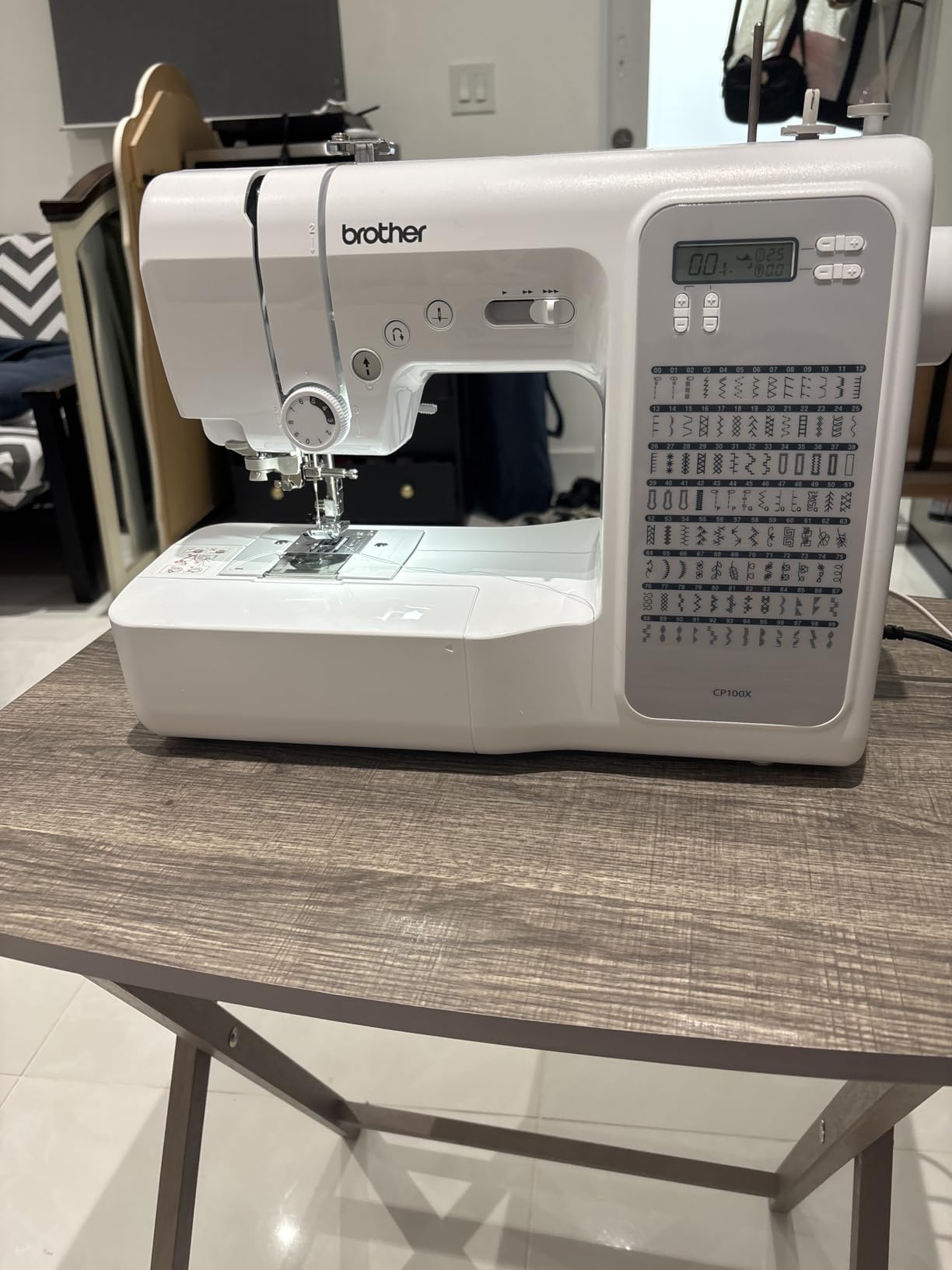
The complaints are small but consistent. At 10.5 pounds it slides on slick tables without a rubber liner underneath. The extended flat bed measures 14 inches, smaller than previous CP models, which reduced the working surface some owners expected.
A few users report inconsistent bobbin winding, which produces tension gremlins until you learn to wind evenly and at consistent speed. These are annoyances rather than dealbreakers, and the 4.6-star average across a smaller review pool suggests owners are broadly happy.
Who should buy the Brother CP100X
Buy it if you want the CS7000X’s practicality with a larger stitch library and a speed slider, at a price between the XR3774 and the XR9550. It suits the progressing quilter who has finished a few projects and wants more control without a large spend.
Who should skip it
Skip it if the small review pool makes you nervous and you prefer a model with a longer track record, since the CS7000X and XR9550 are proven quantities. And as with all compact Brother machines, skip it if your quilts are large and your batting is thick.
10. Juki TL-2010Q with Bonus Pack – Workhorse Bundle for Free-Motion Quilters
Juki TL-2010Q High Speed Sewing & Quilting Machine With Free Bonus Pack
Semi-industrial lockstitch
Bonus walking foot and extension table
Knee lifter
Automatic thread trimmer
Pros
- Industrial-grade straight stitch speed
- Walking foot and extension table in bundle
- Knee lifter lever for hands-free sewing
- Magnetic body accepts seam guides
- Quiet when properly oiled
Cons
- Requires daily oiling
- Screwdriver needed to change feet
- Straight stitch only
This is the same Juki TL-2010Q that won our Editor’s Choice, sold as a bundle with a free bonus pack that includes a walking foot, extension table, and dust cover. I am listing it separately because the bundle genuinely changes the value: those accessories are exactly what a straight-line quilter needs next, and buying them separately costs real money.
Everything that makes the TL-2010Q the forum-favorite quilting machine applies here. The 39-pound body does not vibrate at speed, the automatic thread trimmer is a daily quality-of-life upgrade, and the straight stitch is industrial-clean through six layers of cotton and batting without complaint.
The magnetic body is a hidden gem for quilters: magnetic seam guides stick directly to the arm, giving you perfect parallel channels for grid quilting. Owners describe machines that run for a decade-plus with nothing but oil and occasional cleaning.
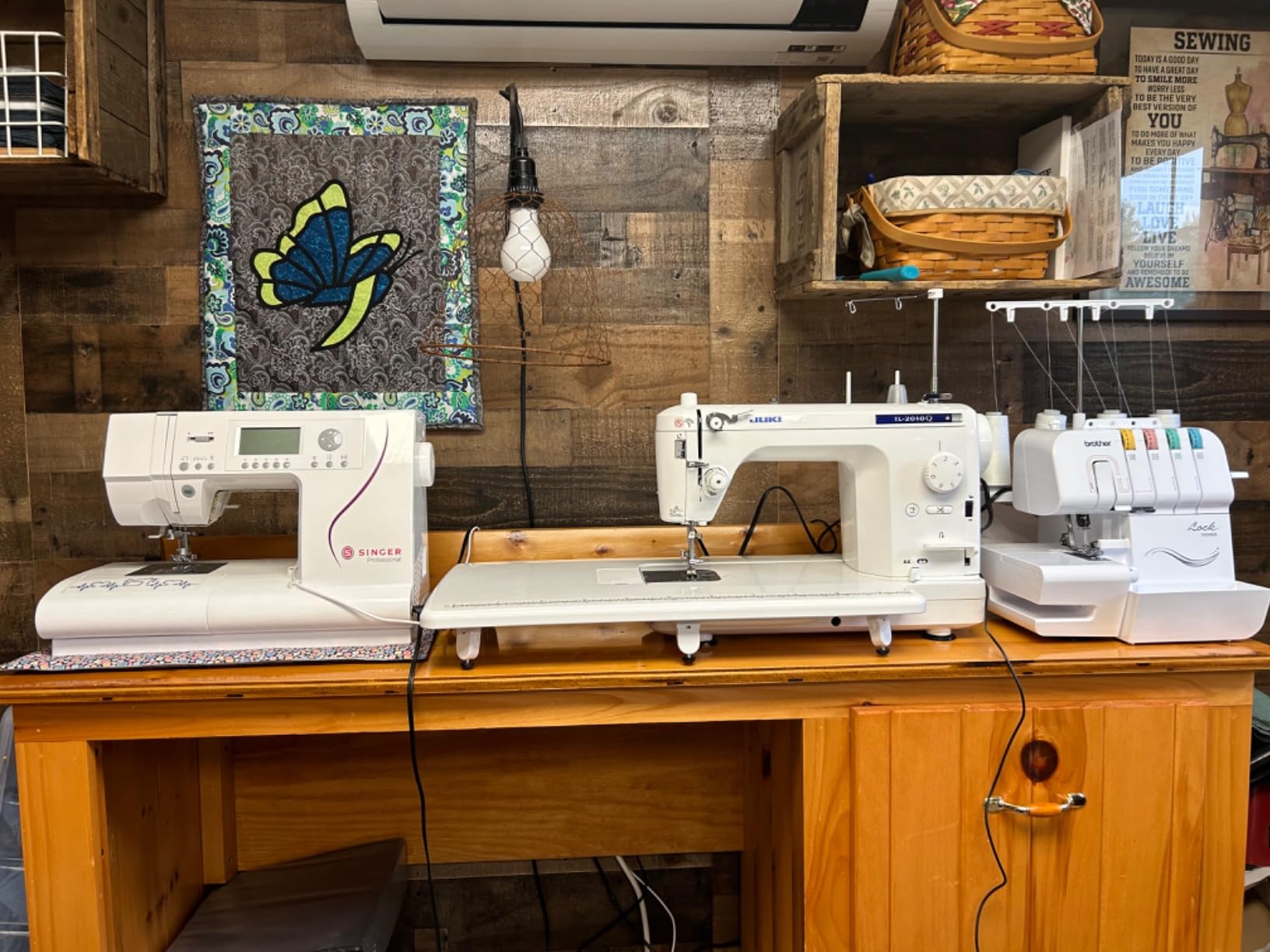
The bundle’s caveats are the machine’s caveats. Daily oiling is part of ownership, feet changes need a screwdriver rather than a quick-release lever, and there is no zigzag. Threading has a learning curve, though the manual walks it well.
Watch stock and seller carefully on this listing. It has shown availability warnings, and one owner in the review pool reported a defective unit that the seller replaced. Buying from a reputable seller or dealer matters with a precision machine.
Who should buy the Juki TL-2010Q bonus bundle
Buy it over the standard listing when the bundle price is close, since the walking foot and extension table complete the quilting kit on day one. It suits the committed straight-line and free-motion quilter who wants one final domestic machine before ever considering a longarm.
Who should skip it
Skip it under the same conditions as the base TL-2010Q: if you need zigzag, buttonholes, or a maintenance-free machine, choose any of the Brother or Janome models above. Compare both listings on price, because paying a large premium for the bundle when you already own the feet makes no sense.
How to Choose the Right Quilting Machine?
Choosing between the best quilting machines comes down to five questions, and answering them honestly will narrow this list to one or two candidates immediately. I have ordered them by how much they actually affect your day-to-day quilting.
How much throat space do you need? Throat space is the distance from the needle to the machine body, and it determines how much quilt you can maneuver. Standard domestic machines give you 6 to 7 inches, which means rolling and folding for anything bigger than a throw. The Janome MC6650’s 10 inches and the Juki TL series’ extended arm change the experience entirely for queen and king projects.
What motor power do your projects demand? A quilt sandwich is multiple layers of fabric plus batting, and crossing seams double the thickness. A 38-pound semi-industrial Juki powers through without slowing; a 10-pound beginner machine will skip stitches and strain. If you quilt with high-loft batting or piece continuously, motor strength should top your list.
Mechanical or computerized? Mechanical machines like the Juki are straight-stitch specialists: fewer features, but simple to maintain and nearly indestructible. Computerized machines like the Brothers and the Singer offer needle threaders, thread cutters, speed sliders, and stitch libraries, at the cost of electronic complexity. The forum consensus I found matches my experience: serious quilters often own both, a computerized machine for piecing and variety, and a mechanical workhorse for quilting.
What is your real budget tier? Under $200, the Brother XR3774 is the safe pick. Between $200 and $400, the CS7000X, XR9550, and JW8100 are all strong, differing mainly in stitch count and included feet. Between $500 and $1,000, the Singer 9960 is the feature leader. Above $1,000, the Juki TL-2010Q and Janome MC6650 are the two machines worth your money.
Can you get it serviced locally? This is the most overlooked factor in every thread I read. A machine is a 10-to-25-year relationship, and forum quilters repeatedly warn that brands without nearby technicians become expensive paperweights. Check which brands your local dealer supports before you buy, and weigh a dealer purchase against online savings. Test driving a machine before buying, as quilting instructors consistently advise, tells you more than any spec sheet.
Finally, think about the maintenance you will actually perform. A Juki that gets oiled weekly will outlive all of us; a Juki that never gets oiled will not. Buy the machine that matches your habits, not just your ambitions.
Frequently Asked Questions
What sewing machine do most quilters use?
Most home quilters use a domestic sewing machine with quilting features, with the Juki TL series (TL-2000Qi and TL-2010Q) being the most recommended model for dedicated quilting in forums like r/quilting. For general sewing plus quilting, Brother machines such as the CS7000X and XR9550 are the most popular by sales volume.
What is the best quilting machine for home quilters in 2026?
The best quilting machine for home quilters in 2026 is the Juki TL-2010Q for dedicated quilting thanks to its semi-industrial straight stitch, large workspace, and automatic thread trimmer. The Brother CS7000X is the best value pick, and the Janome MC6650 with its 10-inch throat space is the top choice for large quilts.
Which sewing machines are best for quilting?
The best sewing machines for quilting are the Juki TL-2010Q, Janome MC6650, Brother CS7000X, Brother XR9550, and Janome JW8100. Look for large throat space, a strong motor, drop feed dogs for free-motion work, and an included walking foot and quarter-inch foot.
Is Janome or Babylock better?
Both brands are excellent and closely matched in reliability. Janome is generally considered better for quilting-specific machines like the MC6650 with its 10-inch throat space, while Baby Lock models like the Jazz II are praised as smooth, reliable workhorses with slightly larger throats at mid-range prices. The better choice usually comes down to which brand has a dealer with service support near you.
Conclusion
After comparing 10 machines across nearly 30,000 owner reviews, our verdict on the best quilting machines is straightforward. The Juki TL-2010Q is the machine for committed quilters, the Brother CS7000X is the smartest value for beginners and generalists, and the Janome MC6650 is the large-quilt specialist for budgets that allow it.
Match the machine to the quilts you actually make, not the ones you imagine making, and check which brands your local dealer can service before committing. The right machine should feel like an upgrade to your quilting joy, not a compromise you negotiate with every seam.
Pick your candidate from the comparison table above, check the current price, and start planning the quilt that justified it. Happy stitching.