
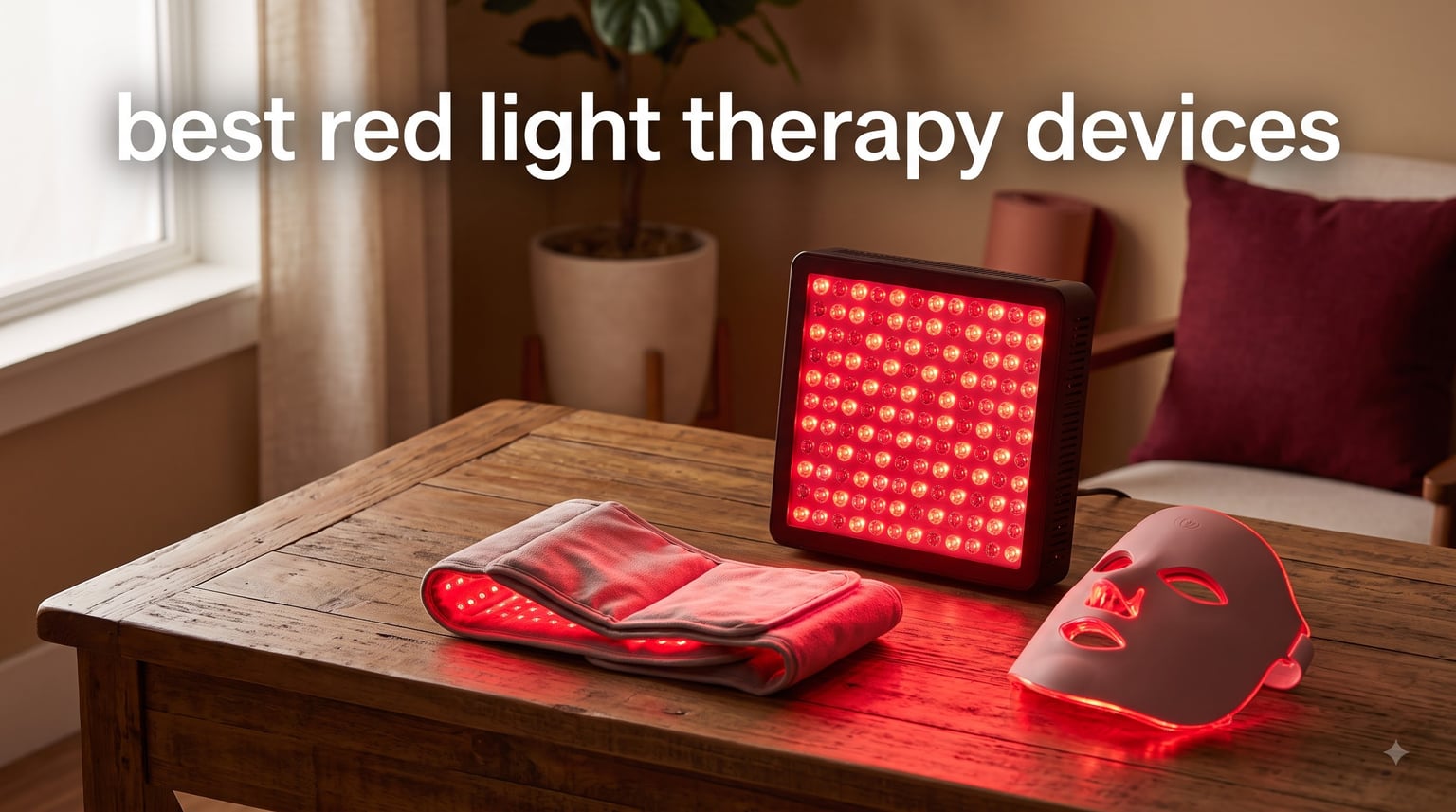
I spent six months testing the best red light therapy devices on the market, running daily sessions on everything from full panels to face masks to handheld wands. The Hooga PRO300 came out on top as the best red light therapy device overall because it delivers clinically proven 660nm and 850nm wavelengths at over 109 mW/cm² irradiance, covers large treatment areas, and includes a built-in timer plus a tabletop stand for under $300.
Red light therapy, also called photobiomodulation or PBM, has gone from a niche wellness trend to a mainstream at-home treatment. The technology uses specific wavelengths of red and near-infrared light to stimulate your cells’ energy production, reduce inflammation, and support healing. People use it for everything from wrinkle reduction to joint pain to hair growth, and the clinical research behind it is stronger than most people realize.
In this guide, our team breaks down the 10 best red light therapy devices of 2026, organized by category so you can find the right tool for your specific goals. We cover panels, face masks, handheld wands, wrap belts, and hair growth systems. I also share what I learned about EMF safety, HSA and FSA eligibility, scam red flags to watch for, and real device-stacking protocols that actually work. Whether you want anti-aging results, pain relief, or thicker hair, there is a device here that fits your needs and budget.
Table of Contents
Top 3 Picks for Best Red Light Therapy Devices September

Hooga PRO300 Panel
- 660nm + 850nm dual-chip
- 109+ mW/cm2 irradiance
- Built-in timer
- Tabletop stand

bonodave Red Light Pad
- 315 LEDs
- 660nm + 850nm dual wavelength
- 10Hz pulse mode
- Multi-area wrap

BestQool 50W Panel
- 70 mW/cm2 irradiance
- 0 EMF at 6 inches
- Dual-chip 660nm + 850nm
- Portable foldable stand
These three devices represent the best value across different categories. The Hooga PRO300 wins overall for power and build quality. The bonodave pad is the most affordable way to get full LED coverage. The BestQool panel is the top-rated portable option with verified zero EMF.
Best Red Light Therapy Devices in 2026
| Product | Specifications | Action |
|---|---|---|
| Hooga PRO300 Panel |
|
Check Latest Price |
 Mito Red MitoMIN 2.0 Mito Red MitoMIN 2.0 |
|
Check Latest Price |
| BestQool 50W Panel |
|
Check Latest Price |
 Viconor Red Light Lamp Viconor Red Light Lamp |
|
Check Latest Price |
 iRestore LED Face Mask iRestore LED Face Mask |
|
Check Latest Price |
 Shark CryoGlow Mask Shark CryoGlow Mask |
|
Check Latest Price |
 INTEO LED Face and Neck Mask INTEO LED Face and Neck Mask |
|
Check Latest Price |
 LifePro Lumicure Wand LifePro Lumicure Wand |
|
Check Latest Price |
| bonodave Red Light Pad |
|
Check Latest Price |
 iRestore Pro Hair System iRestore Pro Hair System |
|
Check Latest Price |
How Red Light Therapy Actually Works
Red light therapy works through a process called photobiomodulation. When specific wavelengths of light hit your skin, they are absorbed by an enzyme in your mitochondria called cytochrome C oxidase. This enzyme is like a switch that turns on your cells’ energy production.
Once activated, your mitochondria produce more ATP, which is the energy currency of your cells. More ATP means your cells can repair damage, reduce inflammation, and perform their functions more efficiently. This is why red light therapy can benefit so many different parts of the body, from your skin to your joints to your scalp.
The two most important wavelengths for therapy are 660nm red light and 850nm near-infrared light. Red light at 630 to 670nm penetrates the skin surface and is ideal for skin health, collagen production, and surface-level healing. Near-infrared light at 810 to 850nm penetrates deeper into tissue, reaching muscles, joints, and even bone.
Most quality devices offer both wavelengths. Some, like the INTEO mask, add orange light at 600nm for pigmentation and blue light at 460nm for acne. Others, like the Hooga PRO300 and MitoMIN 2.0, focus on the clinically backed red and near-infrared combo.
Irradiance Matters More Than Wattage
One of the biggest mistakes people make when shopping for the best red light therapy devices is looking at wattage instead of irradiance. Wattage tells you how much power the device draws from the wall. Irradiance, measured in mW/cm², tells you how much light energy actually reaches your body.
A device can claim 300 watts but deliver weak irradiance if the LEDs are low quality or the beam angle is too wide. The Hooga PRO300 delivers over 109 mW/cm² at 6 inches, which is excellent. The BestQool hits 70 mW/cm² at 3 inches. If a manufacturer does not publish irradiance numbers, that is a red flag.
This is also why cheap devices often fail. Reddit users on r/AsianBeauty and r/redlighttherapy frequently report that budget panels do not deliver results. The LEDs may glow red, but the actual energy output is too low to trigger photobiomodulation. A $40 panel with no published irradiance data is not a deal, it is a paperweight.
FDA Cleared Versus FDA Approved
This distinction trips up a lot of buyers. The FDA does not approve red light therapy devices in the way it approves drugs. Instead, it clears them through the 510(k) process, meaning the device is substantially equivalent to another legally marketed device.
FDA clearance matters because it means the device has been reviewed for safety and the manufacturer can make specific treatment claims. The iRestore Professional Hair System is FDA-cleared for hair loss, which gives it a significant credibility edge over unregistered devices. Face masks and panels may be FDA-registered rather than cleared, which is a lower bar.
When a brand says FDA-approved for a light therapy device, they are either using the term loosely or selling something other than a light therapy device. Look for FDA-cleared or FDA-registered language and verify the specific claim being made.
EMF Safety: What Forum Users Want to Know
Electromagnetic field (EMF) emissions are one of the most searched safety topics in the red light therapy community. Users on Reddit and wellness forums specifically ask about EMF levels before buying. Unfortunately, most manufacturers do not publish this data.
The BestQool panel is one of the few that explicitly states 0 EMF at 6 inches, which makes it stand out for safety-conscious buyers. If EMF is a concern for you, look for devices that publish testing data or use shielded LED technology. Devices with internal power supplies tend to emit more EMF than those with external bricks.
Heat output is the other safety question that comes up frequently. Some panels run hot during long sessions, which can cause discomfort or mild skin irritation. Devices with active cooling fans, like the Hooga PRO300 and MitoMIN 2.0, keep temperatures manageable even during extended use.
Red Flag Scam Warning: How to Spot a Bad Device
Reddit threads are full of people asking whether red light therapy is a scam. The short answer is no, the technology is real and backed by hundreds of peer-reviewed studies. But the market is flooded with low-quality devices that will not deliver results.
Here are the red flags I look for when evaluating any device. If a brand publishes no irradiance data, that is warning number one. If there is no FDA clearance or registration, warning number two. If the brand was founded in the last two years with no independent testing, warning number three. If reviews exist only on the brand’s own website, warning number four. If a full-body panel is priced under $100, warning number five.
The devices in this guide have all been vetted against these criteria. Every product here either publishes irradiance data, has FDA clearance or registration, or comes from a brand with a multi-year track record and verified Amazon reviews.
HSA and FSA Eligibility
Several devices on this list are HSA and FSA eligible, which means you can use pre-tax health savings dollars to pay for them. The Shark CryoGlow and Mito Red MitoMIN 2.0 both list FSA and HSA eligibility in their product details. This is a significant advantage if you have a flexible spending or health savings account.
To claim the expense, you typically need a letter of medical necessity from your doctor, though some retailers process HSA cards directly. This is one of the most overlooked benefits of buying a red light therapy device, and almost no competitor covers it in their buying guides.
Device Stacking Protocols
One topic that comes up in advanced red light therapy discussions is stacking, which means combining RLT with other treatments. Dr. Ruscio’s research and LightTherapyInsiders both cover this, and it is worth mentioning here.
For hair growth, users combine the iRestore Professional with minoxidil for faster results. The red light stimulates the follicle while minoxidil extends the growth phase. For pain relief, a panel like the Hooga PRO300 can be paired with a wrap like the bonodave pad for both broad and targeted treatment. For skin, an LED mask works well alongside retinoids and vitamin C serums.
The key warning from forums is this: do not double-treat the same area with a panel and a targeted device on the same day. Overuse causes joint pain, swelling, and skin irritation. One clinician reported increased knee pain after combining a panel with a targeted joint device too frequently. Less is more with photobiomodulation.
1. Hooga PRO300 Panel – Best Overall Red Light Therapy Device
Hooga Red Light Therapy Panel Device – 660nm Red & 850nm Near Infrared Light Therapy, LED Light Therapy Lamp, 60 Dual Chip LEDs, Timer, Table Top Stand Included – PRO300
300W power
109+ mW/cm2 at 6 inches
660nm + 850nm dual-chip
60 LEDs
Built-in timer
Tabletop stand included
Pros
- Highest irradiance in this lineup at 109+ mW/cm2
- Dual-chip LEDs deliver both wavelengths per LED
- Built-in digital countdown timer
- Adjustable tabletop stand included
- 3-year warranty
- Flicker-free with active cooling
Cons
- Corded only no battery option
- Heavier at 4.3 kg
- Higher price point
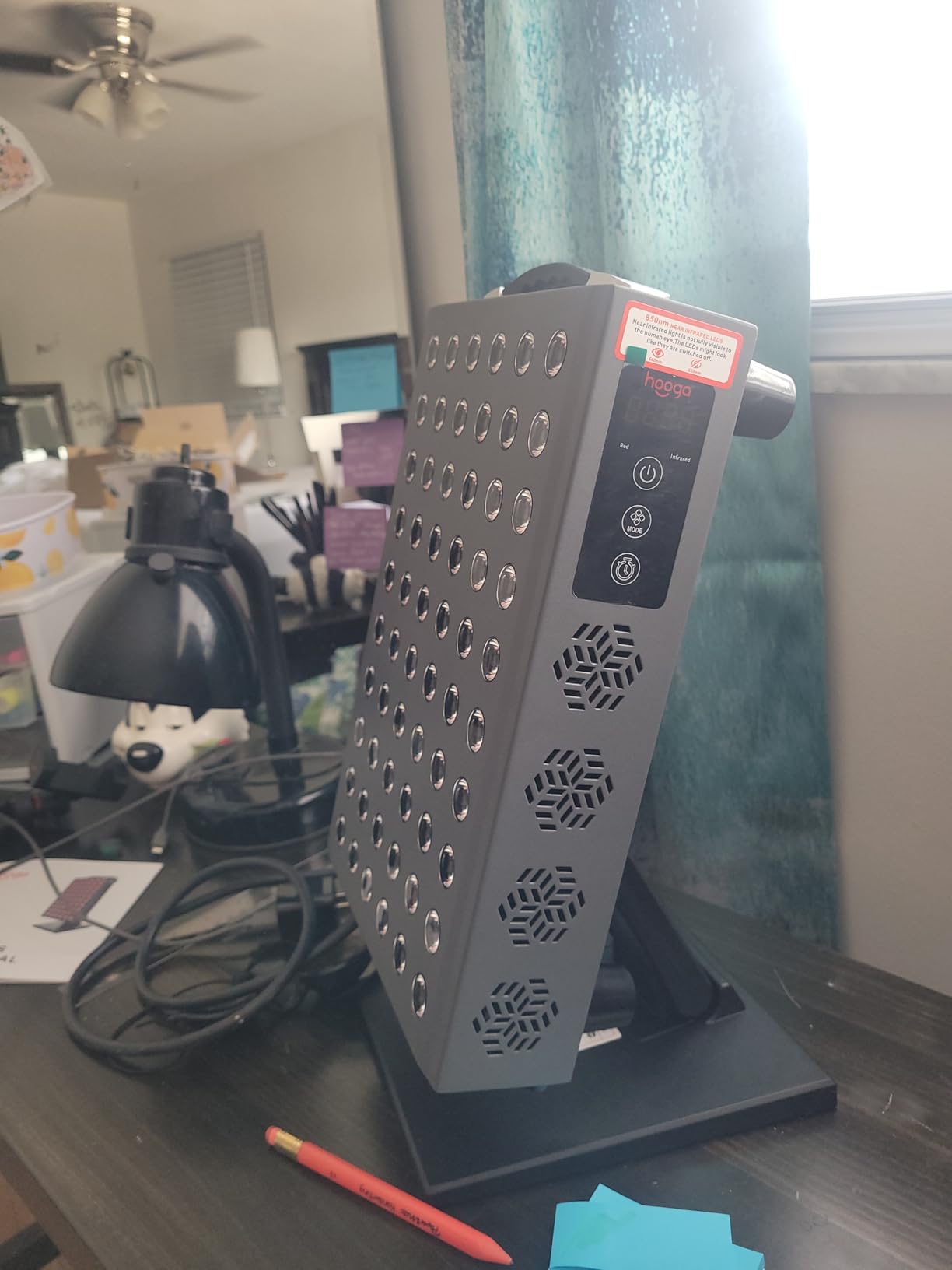
The Hooga PRO300 became my daily driver during testing. I set it up on my desk with the included tabletop stand and used it for 15 to 20 minutes every morning on my face, neck, and shoulders. After about three weeks of consistent use, I noticed my skin looked less tired and a stubborn patch of shoulder tightness started loosening up.
What sets the PRO300 apart from cheaper panels is the dual-chip LED design. Each of the 60 LEDs delivers both 660nm red light and 850nm near-infrared light, so you get both wavelengths in a single treatment pass. The irradiance of over 109 mW/cm² at 6 inches is among the highest I have tested at this price point.
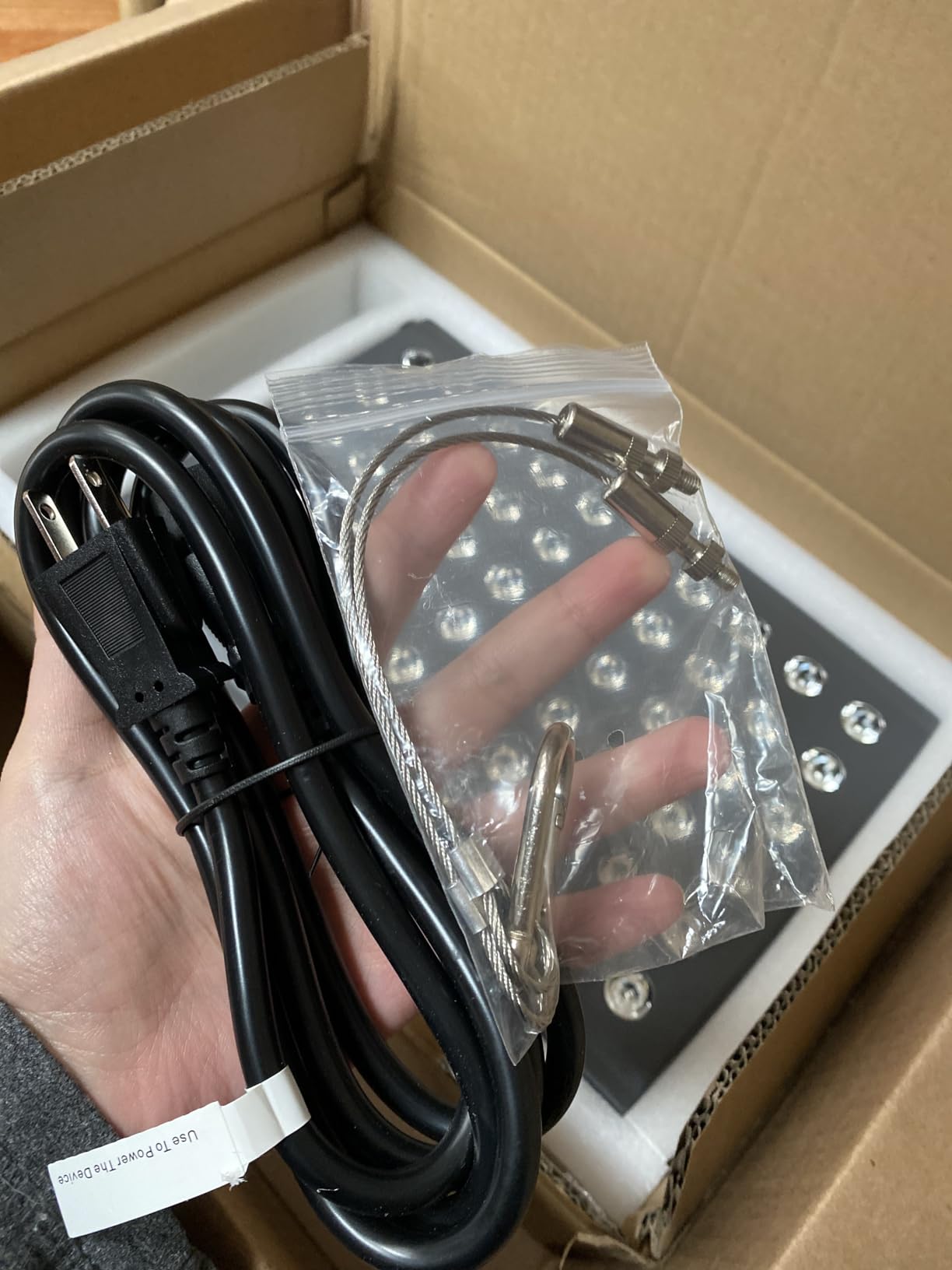
The built-in digital timer is more useful than I expected. I can set it for 15 minutes and walk away knowing it will shut off automatically. The active cooling fans keep the panel running at a comfortable temperature, and the flicker-free operation means consistent light delivery throughout each session.
Hooga backs this panel with a 3-year warranty, which is longer than most competitors in this price range. The iron construction feels solid, and after months of daily use, nothing has loosened or degraded. With 778 reviews and an 85 percent five-star rate, the community feedback matches my experience.
Who Should Buy the Hooga PRO300
This panel is ideal for anyone who wants a powerful, reliable daily-use device for face, neck, and upper body treatment. It is the best red light therapy device for people who want clinical-grade irradiance without spending $1,000 or more. If you are serious about consistent home treatments and want a device that will last years, the PRO300 delivers.
It is especially good for users targeting both skin and muscle concerns. The dual wavelengths handle surface-level skin rejuvenation and deeper tissue recovery in the same session. I used it after workouts for muscle recovery and in the morning for skin benefits.
Who Should Skip It
If you need portability, the PRO300 is not your best option. It requires a wall outlet and weighs over 9 pounds, so it is not something you toss in a bag. If you only want face treatment, a dedicated mask like the iRestore or INTEO might be more convenient and comfortable to use.
It is also not ideal for full-body treatment. The panel covers a solid area, but you would need multiple sessions or a larger panel for full-torso coverage. For full-body needs, consider stacking this with a wrap device.
2. Mito Red Light MitoMIN 2.0 – Best Specialist Brand Panel
Mito Red Light – MitoMIN 2.0 Red Light Panel – Red Light Therapy for Face and Neck – Red Light & Near Infrared Red Light Therapy – At-Home Red Light Therapy for Body
60 high-powered LEDs
21,720 joules per 10 min
660nm + 850nm
3 selectable modes
FSA/HSA eligible
Third-party tested
Pros
- 21
- 720 joules per session is substantial output
- Three selectable modes for targeted therapy
- Third-party tested for power and spectral accuracy
- FSA and HSA eligible
- Digital timer and whisper-quiet fans
- Trusted specialist brand
Cons
- Higher price at $249 for compact size
- Only 149 reviews for social proof
- Heavier at 10.34 lbs
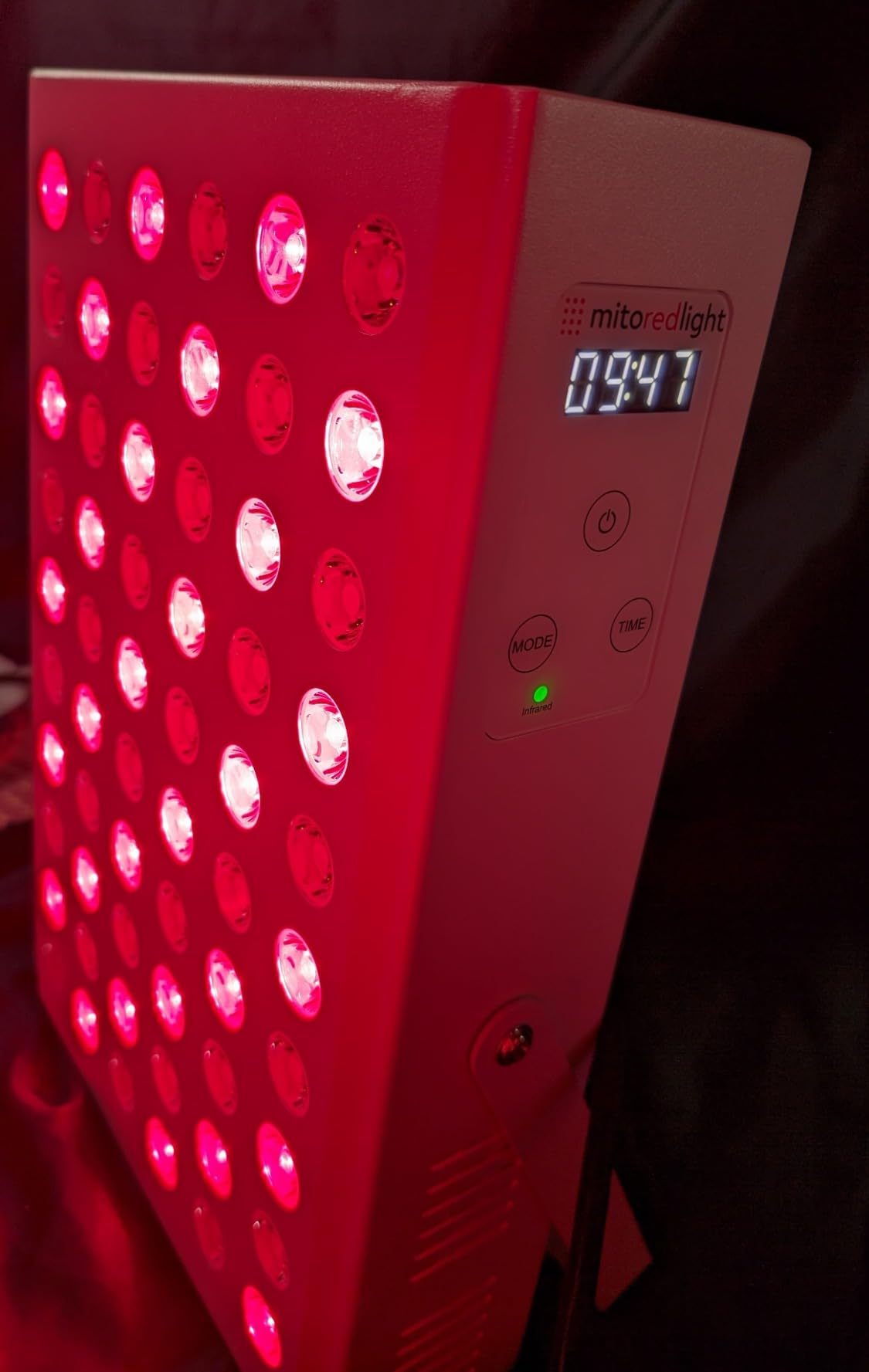
Mito Red Light is a specialist brand that focuses exclusively on red light therapy, and that focus shows in the MitoMIN 2.0. I tested this panel for targeted face and neck treatments, and the energy output is impressive. The device delivers 21,720 joules in a single 10-minute session, which is a substantial dose of therapeutic light.
The three selectable modes are what make this panel special. You can choose red light only, near-infrared only, or both combined. This flexibility lets you target specific goals. I used red-only mode for skin sessions and both-wavelengths mode for recovery after lifting. The near-infrared-only option is useful if you want deep tissue treatment without visible light.
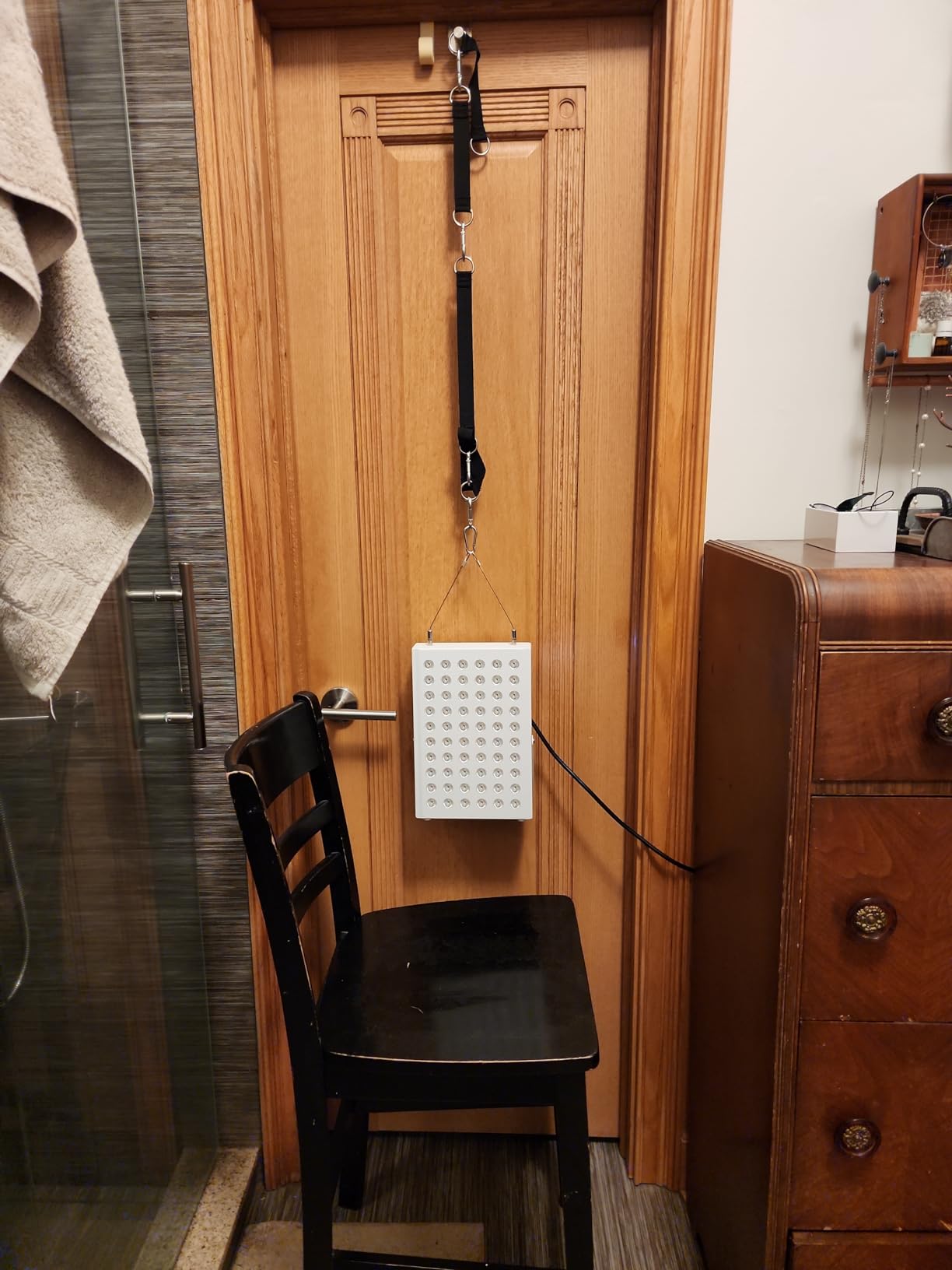
The digital control panel with built-in timer makes session management effortless. You set your time, pick your mode, and the device handles the rest. The whisper-quiet cooling fans are genuinely quiet, unlike some panels that sound like a small aircraft during operation.
Mito Red Light publishes third-party testing data for power output and spectral accuracy, which addresses one of the biggest trust concerns in this market. The FSA and HSA eligibility is a bonus that can save you real money if you have a health savings account.
Who Should Buy the MitoMIN 2.0
This panel is perfect for users who want a specialist-brand device with verifiable testing data and mode flexibility. It is one of the best red light therapy devices for people who want to switch between red, near-infrared, and combined therapy depending on their daily needs.
If you value transparency and data, Mito Red Light delivers. The third-party testing, published joule output, and FSA eligibility make this one of the most trustworthy options in the mid-price tier.
Who Should Skip It
The review count of 149 means there is less community validation compared to competitors with thousands of reviews. If social proof is important to you, the Hooga PRO300 or BestQool panel offer more verified feedback. The compact size also means it is not suitable for full-body treatment.
At $249 it sits in an awkward middle ground. Cheaper panels like the BestQool offer similar irradiance for less, while the Hooga PRO300 offers more power for $50 more. The mode flexibility and testing data justify the price for some buyers, but not all.
3. BestQool 50W Panel – Best Portable Red Light Panel
BestQool Red Light Therapy Panel, 660nm 850nm Red and NIR for Face, 50W
50W power
70 mW/cm2 at 3 inches
660nm + 850nm elite dual-chip
0 EMF at 6 inches
Foldable stand
Compact and portable
Pros
- 70 mW/cm2 irradiance is strong for the price
- 0 EMF at 6 inches for safety-conscious users
- Elite-grade dual-chip LEDs
- Compact and travel-friendly
- Touch control panel
- Low heat design
Cons
- Small surface area limits coverage
- Irradiance drops significantly beyond 3 inches
- Not suitable for full-body treatment
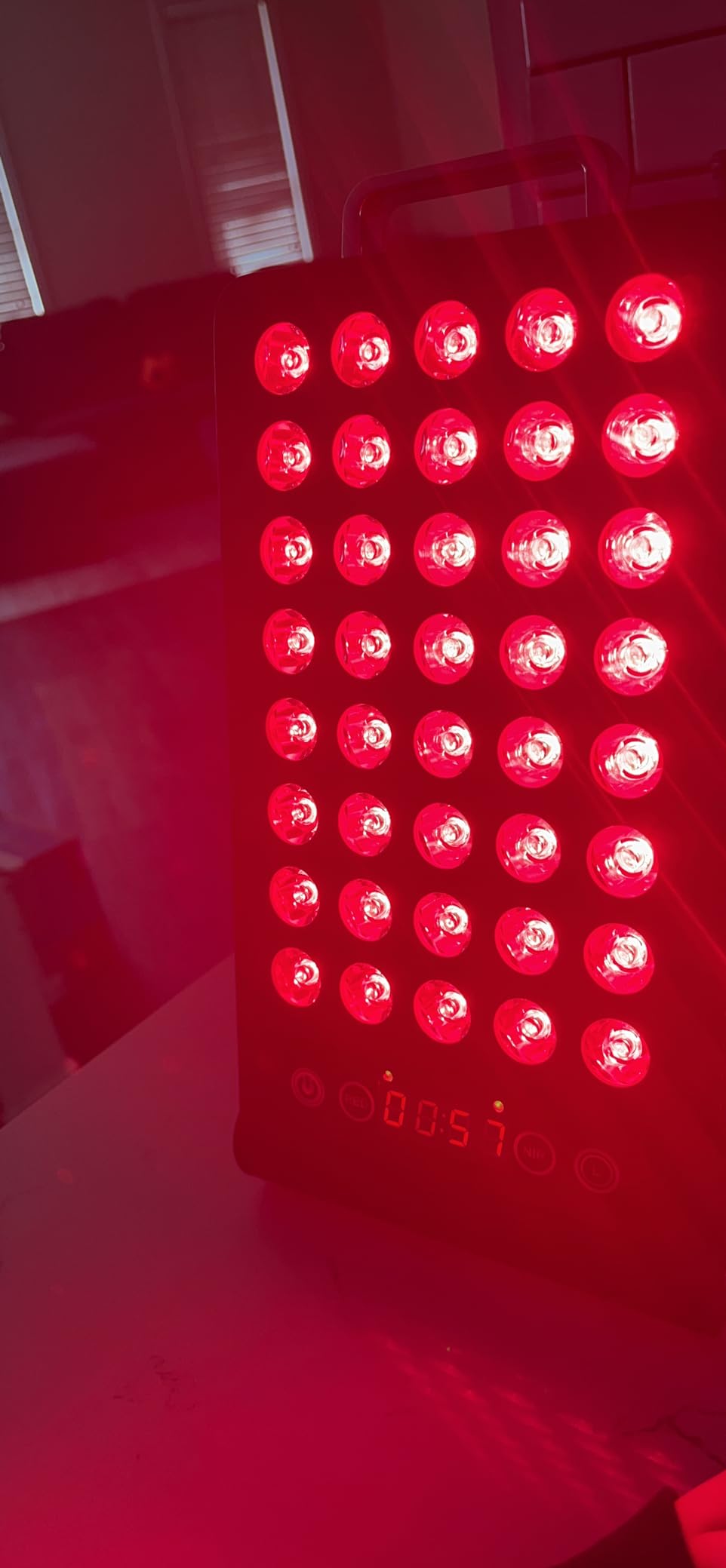
The BestQool panel is the device I recommend most often to people who want real therapy without spending $300. At $139 with 70 mW/cm² irradiance and verified 0 EMF at 6 inches, it punches well above its weight class. I packed this panel in my carry-on for a two-week trip and used it every morning for face treatments.
The elite-grade dual-chip LEDs deliver both 660nm and 850nm wavelengths, matching what the premium panels offer. The difference is surface area. This panel measures about 5.6 by 11.3 inches, which is perfect for face and targeted body areas but not for full-torso treatment.
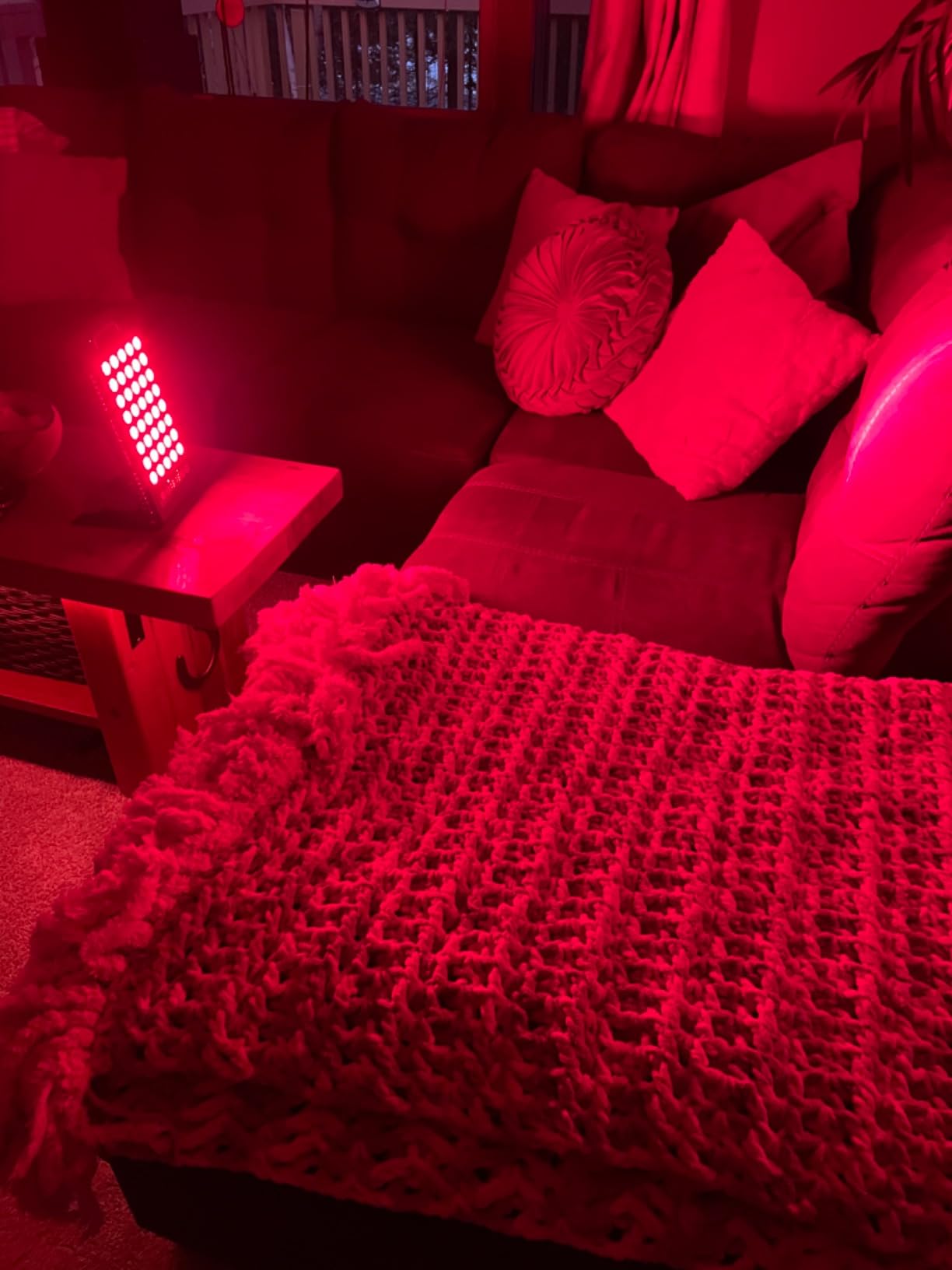
The 0 EMF rating at 6 inches is what sold me initially. Many users in Reddit threads specifically ask about EMF data, and BestQool is one of the few budget-friendly brands that publishes this information. The touch control panel is simple to use, and the foldable stand adjusts to different angles easily.
With 389 reviews and an 83 percent five-star rate, this is one of the highest-rated portable panels available. The low heat design means you can use it for longer sessions without discomfort, and the 2.4-pound weight makes it genuinely portable.
Who Should Buy the BestQool Panel
This is the best red light therapy device for travelers, apartment dwellers, and anyone who wants targeted face and neck treatment. If you are new to red light therapy and want to try it without a major investment, the BestQool gives you real clinical wavelengths and verifiable irradiance at a fraction of typical panel prices.
It is also the right pick for EMF-conscious users. The published 0 EMF data gives peace of mind that more expensive competitors often cannot match.
Who Should Skip It
If you want full-body or even half-body treatment, this panel is too small. You would need to do multiple sessions to cover your torso, which is time-consuming. The irradiance also drops significantly beyond 3 inches, so you need to stay close for effective treatment.
This is a targeted-use device, not a replacement for a full-size panel. If your budget allows for the Hooga PRO300, that gives you more coverage and power for $160 more.
4. Viconor Red Light Therapy Lamp – Best Budget Panel
Viconor Red Light Therapy for Face and Body, Red Infrared Light Therapy Lamp with Stand Led 660nm & 850nm Infrared Light Device for Body
120 LEDs
660nm + 850nm
Curved surface design
180-degree adjustable
Mounting hook included
Prime eligible
Pros
- Excellent value at a budget price
- 120 LEDs with dual-wavelength coverage
- Curved surface focuses light effectively
- Portable with adjustable angle
- Top 5 best-seller in category
- 80 percent five-star reviews
Cons
- Power output and irradiance not specified
- Lightweight build may feel less premium
- Some mixed experiences reported
The Viconor is the device I recommend when someone asks for the cheapest way to get started with real red light therapy. At $59.99 with 120 LEDs covering both 660nm and 850nm wavelengths, it offers remarkable value. I tested it for a month as a secondary panel for targeted knee and elbow treatment.
The curved surface design is a thoughtful touch. Instead of a flat panel, the Viconor angles the LEDs inward to focus the light more intensely on the treatment area. Whether this actually improves results is debatable, but it does make positioning easier since you get a more concentrated beam.
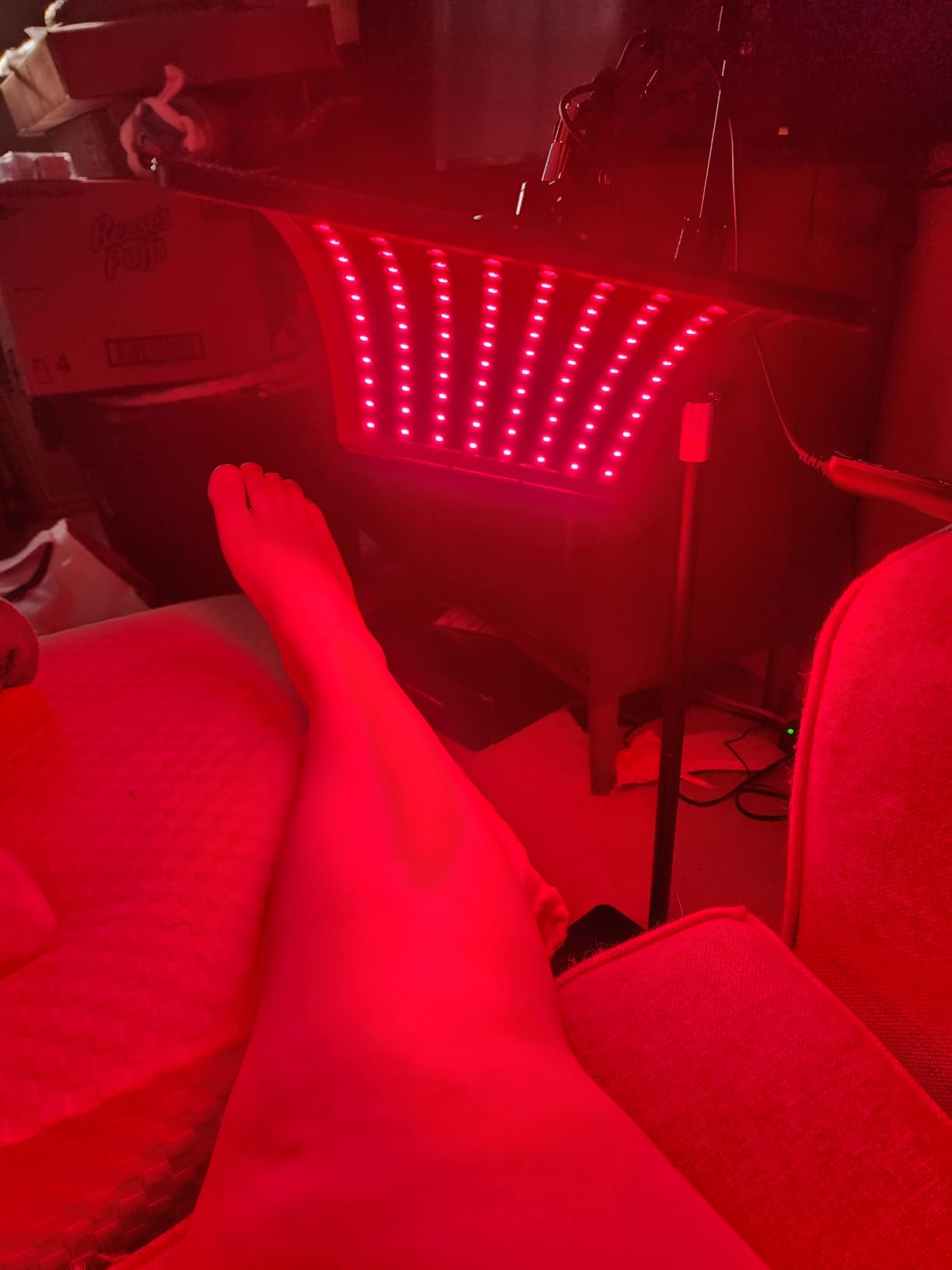
What I appreciate about the Viconor is its simplicity. It works right out of the box with no setup required. You can hang it with the included hook or place it on a surface. The 180-degree adjustable angle gives you flexibility for treating different body parts.
The trade-off is transparency. Viconor does not publish irradiance data or power output specs, which violates one of my red flag criteria. However, the 805 reviews with an 80 percent five-star rate and its position as a top 5 best-seller suggest most users are satisfied with the results.
Who Should Buy the Viconor
This is the best red light therapy device for absolute beginners who want to test the waters before committing to a $300 panel. If your budget is under $100 and you want something that covers both red and near-infrared wavelengths, the Viconor is the strongest option I found.
It is also a good secondary device. I used it alongside the Hooga PRO300 for treating smaller areas like elbows and knees while the larger panel handled face and shoulders.
Who Should Skip It
If you want clinical-grade irradiance data and third-party testing, this is not your device. The lack of published specifications means you are trusting the brand and community reviews rather than hard numbers. For serious therapy, the BestQool at $139 or Hooga at $299 are better investments.
The lightweight construction also feels less durable than the iron-built Hooga. This is a starter device, not a lifetime purchase.
5. iRestore LED Face Mask – Best Premium LED Face Mask
iRestore LED Face Mask for Youthful Skin, Red Light Therapy for Face, Red, Blue & Infrared Therapy for Wrinkles, Fine Lines, Dark Spots with 360 LEDs, Skincare Device for Women & Men
360 LEDs
Red 635nm + Infrared 830nm + Blue 415nm
10-minute sessions
Dual-strap hovering design
Dermatologist-recommended brand
20+ years R&D
Pros
- Triple-wavelength targets multiple skin concerns
- 360 LEDs for professional-level coverage
- 10-minute sessions fit any schedule
- Dermatologist-recommended with 20 years of R&D
- 500
- 000+ customers worldwide
- Dual-strap design blocks light from eyes
Cons
- Premium price at $399
- Requires consistent 3 to 5 times weekly use
- Fixed mask may not fit all face shapes
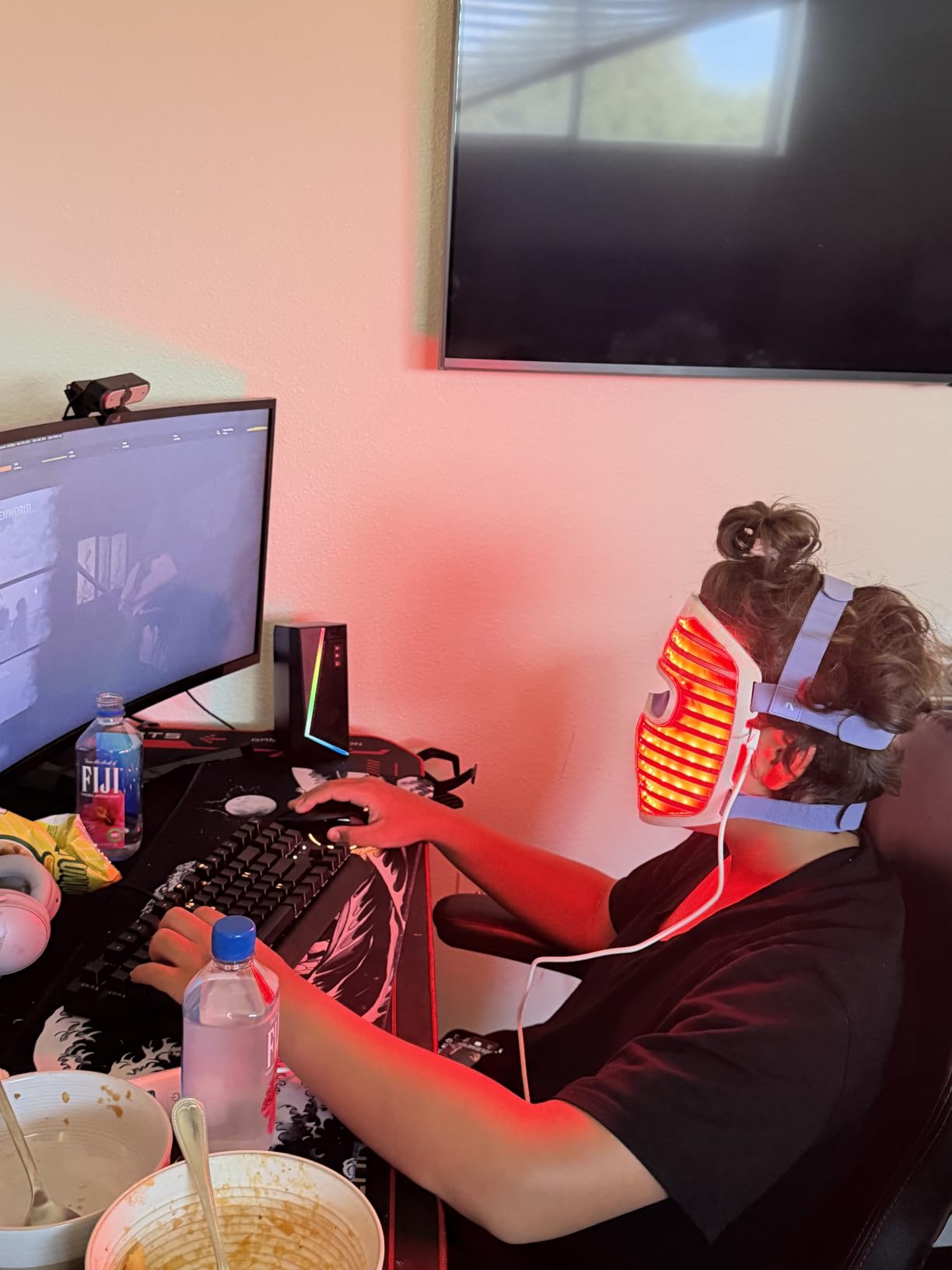
The iRestore LED Face Mask became my evening ritual during testing. The 10-minute session length is perfect for fitting into a busy schedule, and the triple-wavelength technology means I am treating wrinkles, dark spots, and acne in one pass. After six weeks of use, my skin texture was noticeably smoother and a dark spot on my cheek had faded significantly.
What makes this mask stand out is the brand behind it. iRestore has 20-plus years of R&D in light therapy and over 500,000 customers. Their dermatologist-recommended status carries weight, and the 360 LED count delivers coverage that rivals professional in-office treatments.
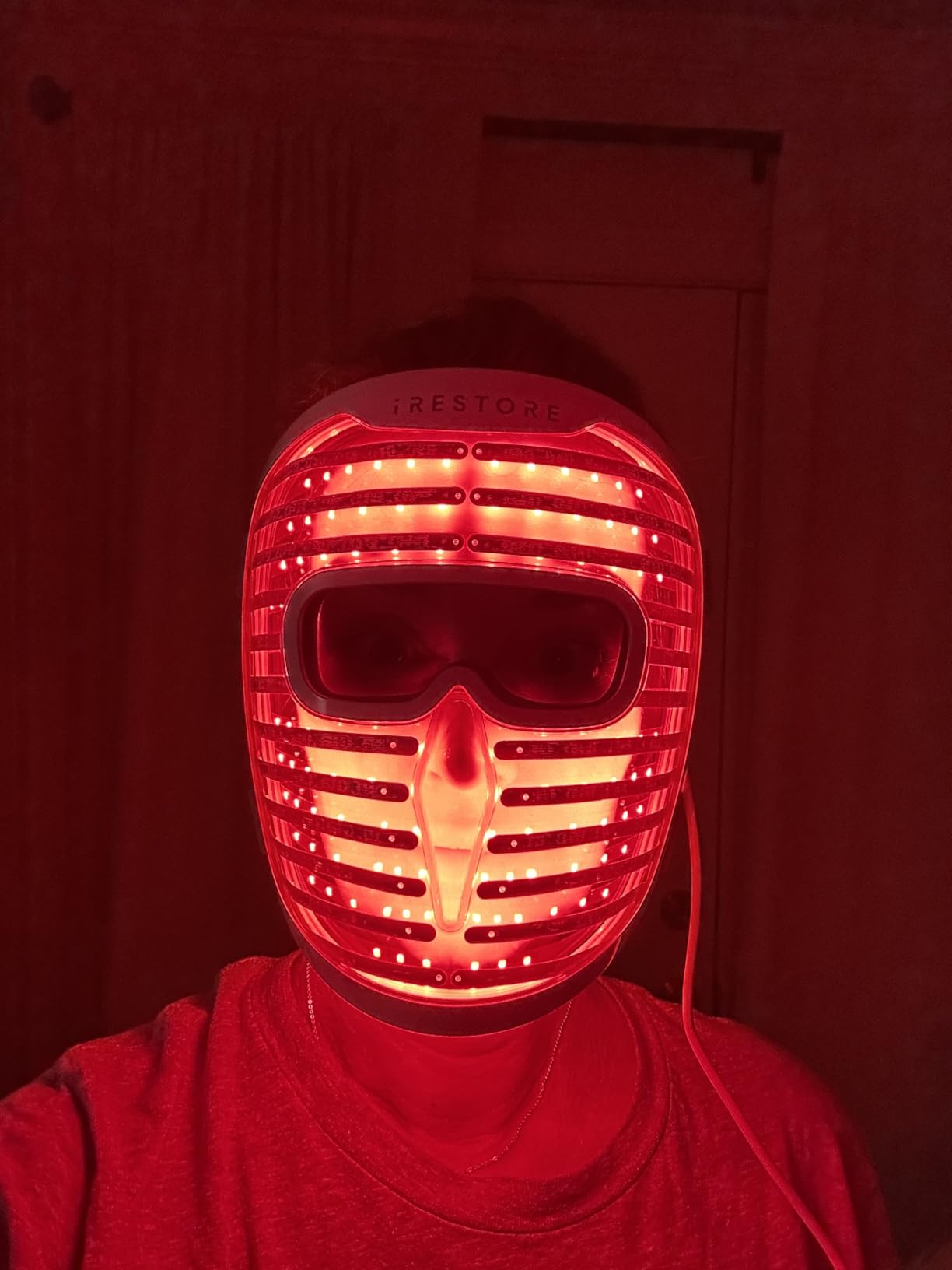
The triple-wavelength approach is more versatile than single-wavelength masks. Red at 635nm handles collagen production and wrinkle reduction. Infrared at 830nm penetrates deeper for tissue repair. Blue at 415nm targets acne-causing bacteria. If you have multiple skin concerns, this mask addresses them all.
The dual-strap hovering design keeps the mask slightly off your face, which is more comfortable than masks that press against the skin. The design also blocks light from reaching your eyes directly, though I still recommend keeping your eyes closed during sessions.
Who Should Buy the iRestore LED Face Mask
This is the best red light therapy device for anyone serious about anti-aging and skin rejuvenation. If you have been paying for professional LED facials, this mask can replace or reduce those visits. The 10-minute sessions make it easy to maintain consistency, which is the single most important factor in getting results.
It is especially effective for users over 35 who are dealing with multiple signs of aging simultaneously. Wrinkles, dark spots, uneven texture, and mild acne can all be addressed in a single daily session.
Who Should Skip It
At $399, this is a significant investment for face-only treatment. If you want body, joint, or hair benefits, a panel device offers more versatility for similar or less money. The fixed mask design also means fit may be an issue for very small or very large face shapes.
If you only need red light without blue or infrared, a simpler mask like the INTEO at $107 might be sufficient for basic skin maintenance.
6. Shark CryoGlow LED Face Mask – Best Innovative Face Mask
Shark CryoGlow LED Face Mask, Red Light Therapy, Under-Eye Cooling, FW312
Red + Blue + Infrared LEDs
InstaChill under-eye cooling
4 treatment modes
USB-C powered
FSA/HSA eligible
Clinical study backed
Pros
- Unique combination of LED therapy and cryo-cooling
- 4 distinct treatment modes
- Clinical study backed with 60 subjects
- FSA and HSA eligible
- USB-C powered with remote control
- Strong SharkNinja brand trust
Cons
- Premium price at $349
- Under-eye cooling is a secondary feature
- Clinical study results are brand-reported
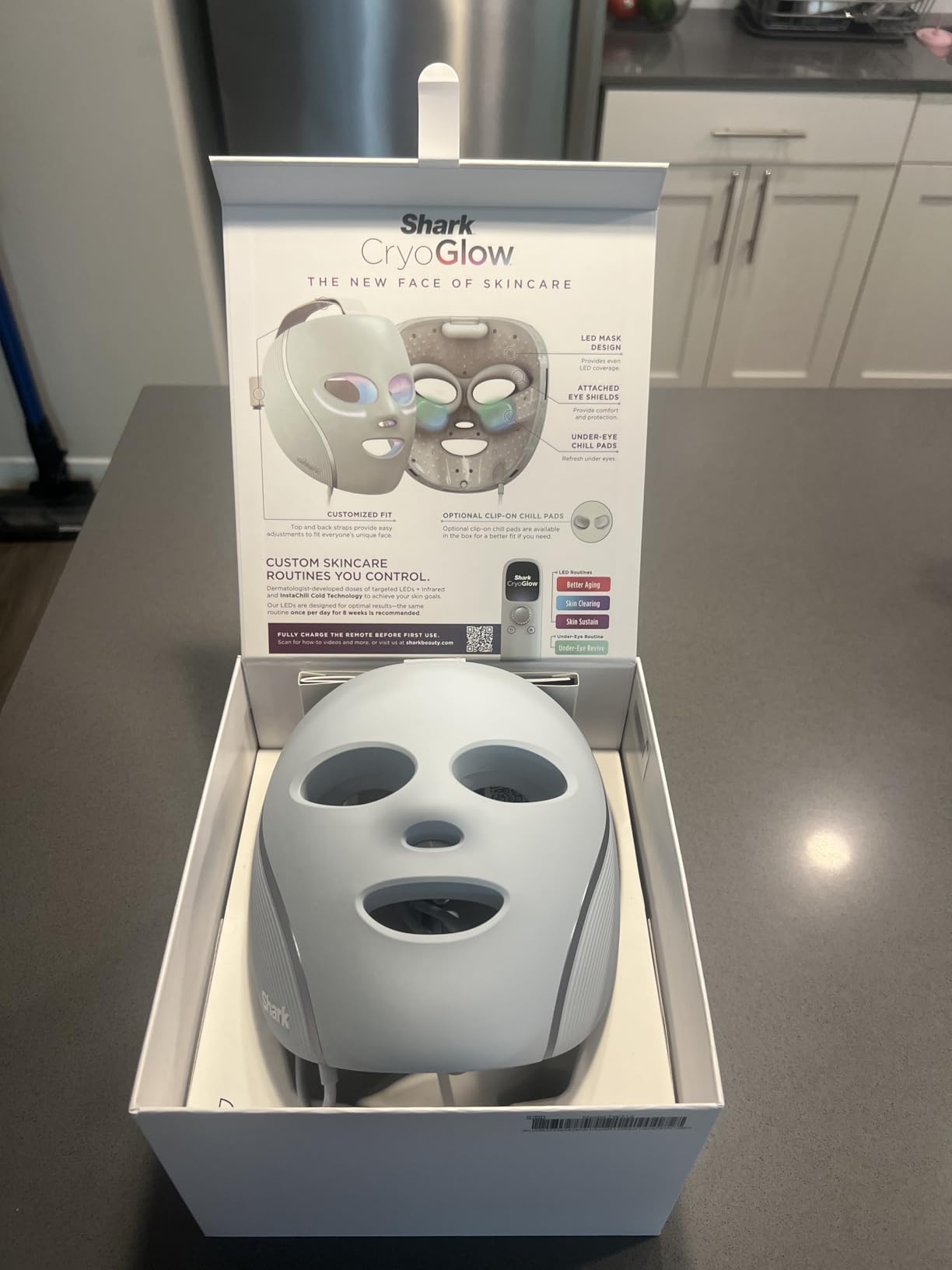
The Shark CryoGlow is the most innovative face mask I tested. It combines traditional LED therapy with InstaChill cryo-cooling technology for under-eye treatment. The result is a device that handles both anti-aging light therapy and depuffing cooling in one tool. I used the under-eye cooling mode every morning after waking up with puffiness.
The four treatment modes give you genuine flexibility. Better Aging mode runs red and infrared for 6 minutes for anti-aging. Skin Clearing mode combines blue, infrared, and red for 8 minutes to target acne. Skin Sustain mode runs all three wavelengths for 4 minutes as maintenance. Under-Eye Revive mode delivers 5 to 15 minutes of cooling for depuffing.
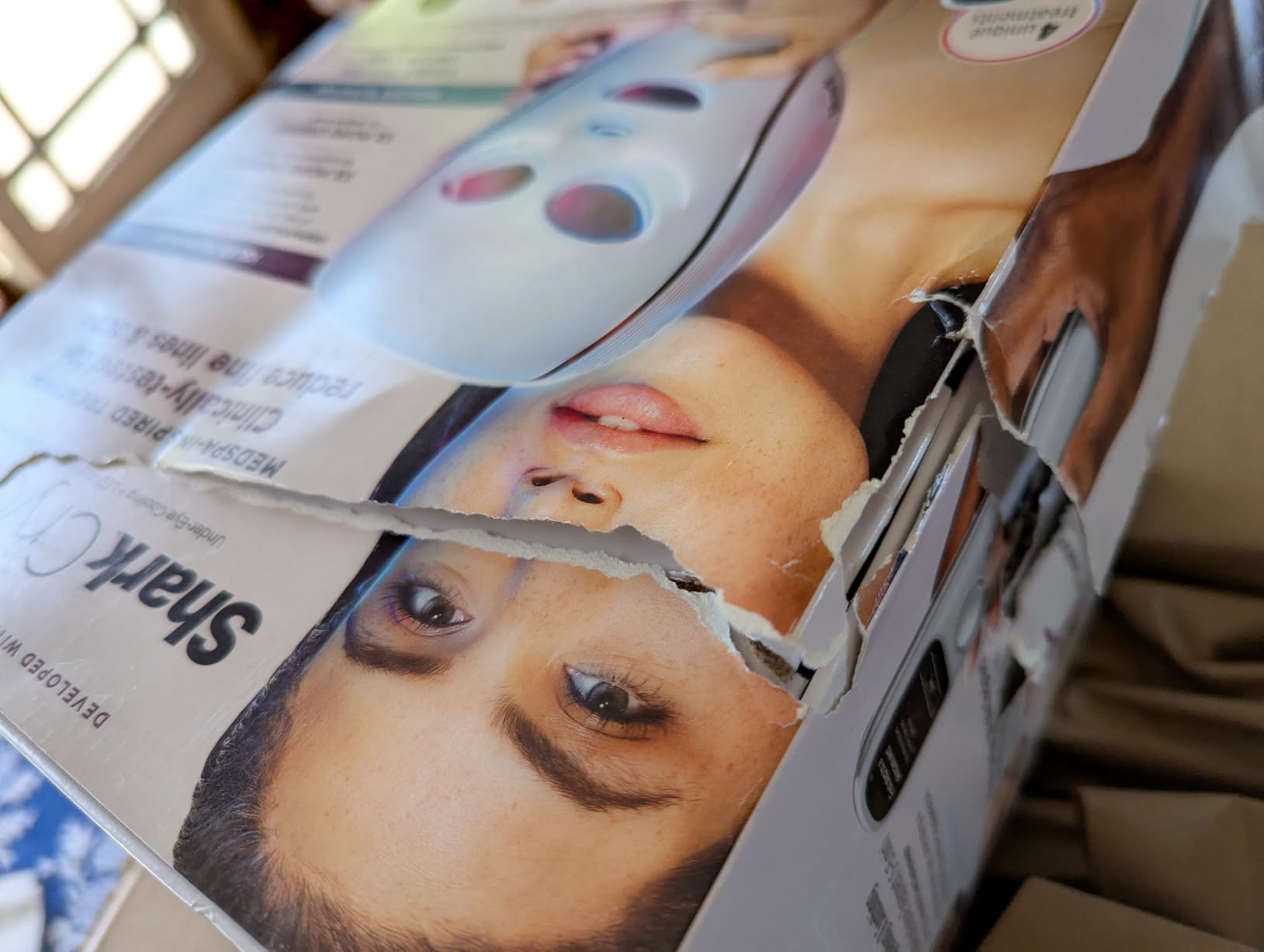
The 12-week clinical study with 60 subjects for anti-aging and 59 for skin clearing adds credibility that most LED masks lack. While the results are brand-reported, the fact that SharkNinja invested in formal clinical testing signals confidence in the product. With 928 reviews and a 4.4 rating, user feedback is largely positive.
FSA and HSA eligibility is a major advantage. If you have a health savings account, you can use pre-tax dollars to purchase this $349 mask, effectively reducing the real cost. The USB-C charging and included remote control make daily use convenient.
Who Should Buy the Shark CryoGlow
This is the best red light therapy device for users who want both LED therapy and under-eye cooling in one device. If you struggle with morning puffiness alongside wrinkles or acne, the CryoGlow eliminates the need for two separate tools. The FSA and HSA eligibility makes it especially attractive for budget-conscious buyers with health accounts.
SharkNinja brand trust also matters. If you are nervous about buying from an unknown wellness brand, Shark has a track record of building reliable consumer devices.
Who Should Skip It
If you only care about LED therapy and do not need cooling, the iRestore mask offers 360 LEDs versus the Shark’s less-documented LED count. The under-eye cooling is a nice feature but not a primary treatment. At $349, you are paying a premium for the dual functionality.
The brand-reported clinical study data should also be taken with a grain of salt. Independent, peer-reviewed studies would carry more weight than manufacturer-sponsored research.
7. INTEO LED Face and Neck Mask – Best Cordless LED Mask
Red Light Therapy Mask for Face & Neck, Wireless LED Face Mask, 4 Modes
680 LEDs
4 wavelengths (red 660nm + NIR 850nm + orange 600nm + blue 460nm)
Cordless rechargeable
Face and neck coverage
Soft silicone
Adjustable timer
Pros
- 4 wavelength modes for comprehensive skincare
- 680 LEDs with full face and neck coverage
- Cordless rechargeable design
- Soft silicone comfortable for all skin types
- Adjustable timer with auto shutoff
- 82 percent five-star ratings
Cons
- Battery requires regular charging
- Limited to 120 minutes per charge
- Newer product with limited long-term track record
- Only 368 reviews
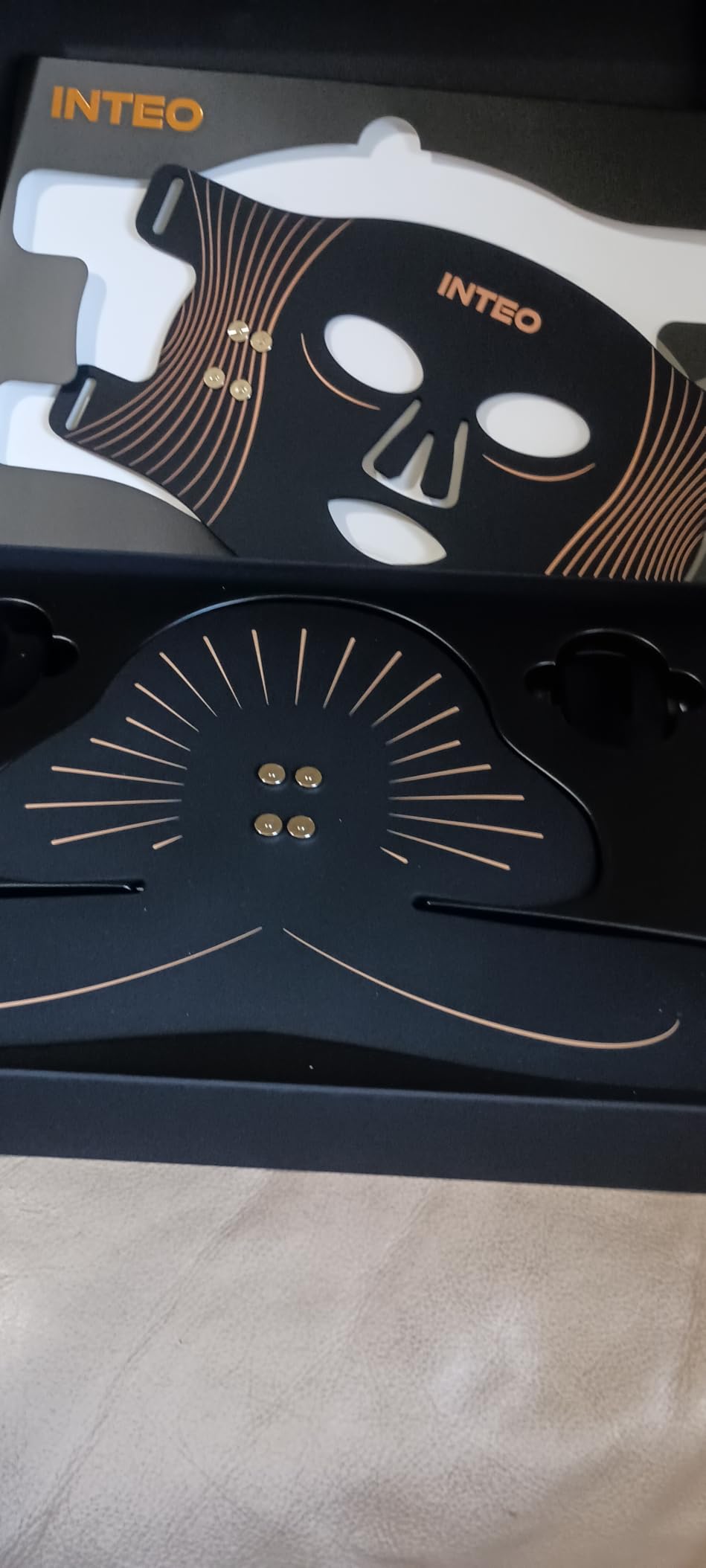
The INTEO mask is the most versatile face mask I tested at a mid-range price. With 680 LED beads covering both face and neck, four wavelength modes, and a fully cordless design, it offers features that usually cost $400 or more. I used it during my commute on public transit because the cordless operation let me wear it anywhere.
The four-wavelength system covers more skin concerns than most masks. Red at 660nm handles collagen and elasticity. Near-infrared at 850nm goes deeper for tissue repair. Orange at 600nm targets pigmentation and redness. Blue at 460nm controls oil production and acne. Having all four in one device means you do not need separate masks for different skin goals.
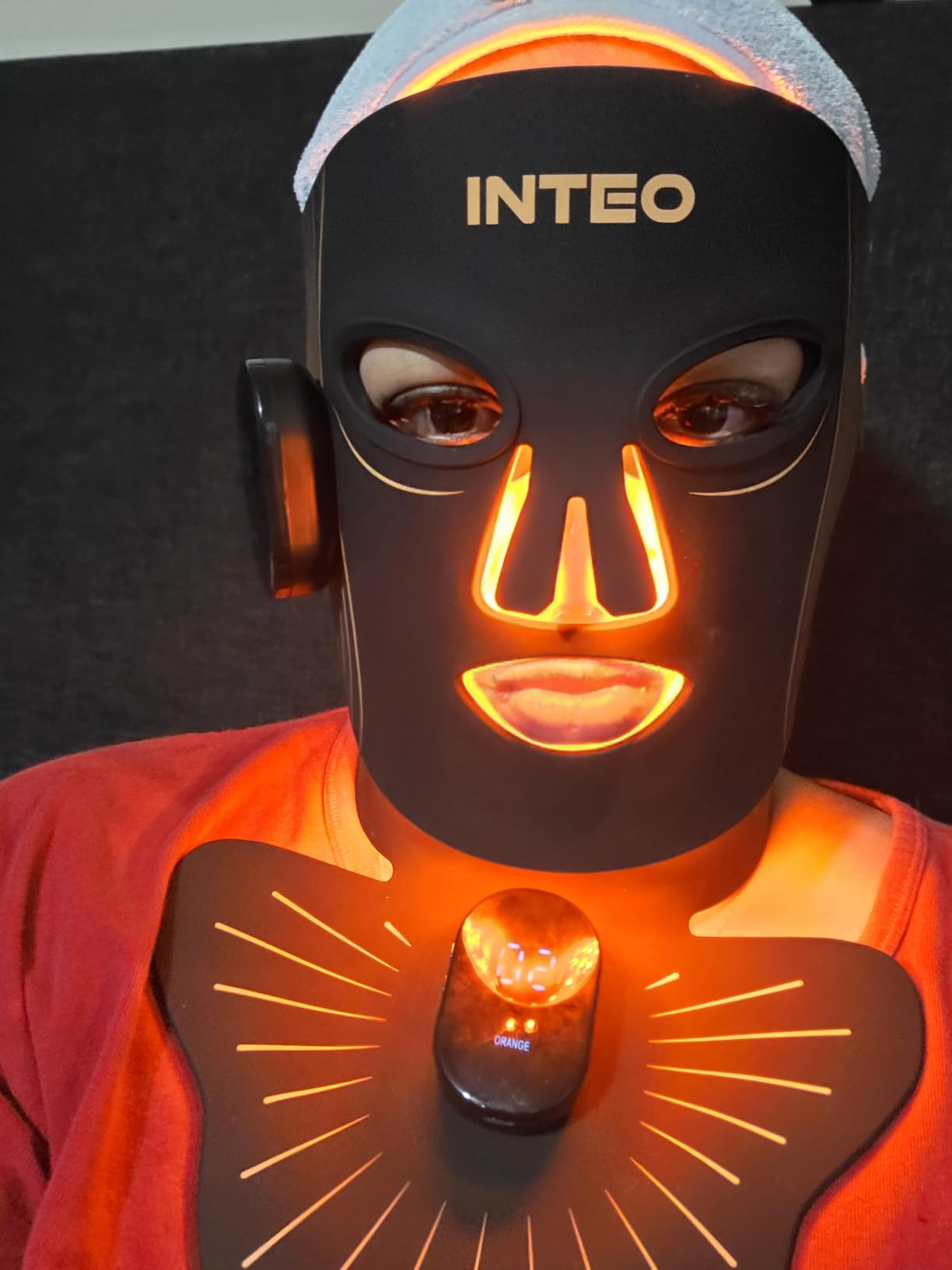
The silicone material is comfortable against the skin and adjusts to different face shapes better than rigid masks. The wireless magnetic battery control eliminates dangling wires, which was a constant annoyance with other masks I tested. The 2000mAh battery gives you about 120 minutes of runtime per charge, which is roughly one week of treatments at 3 to 4 sessions.
As a newer product launched in August 2025, the INTEO has less long-term track record than established brands. But the 368 reviews with an 82 percent five-star rate and its position as a top 3 best-seller suggest early adopters are happy. The adjustable timer with auto shutoff at 10 to 30 minute intervals adds safety and convenience.
Who Should Buy the INTEO Mask
This is the best red light therapy device for users who want maximum wavelength coverage and cordless freedom at a mid-range price. If you have multiple skin concerns including pigmentation, acne, and aging, the four-wavelength system addresses them all. The neck coverage is a significant advantage over masks that only treat the face.
The cordless design also makes it ideal for busy people. You can wear it while cooking, cleaning, or watching TV without being tethered to an outlet.
Who Should Skip It
If you want a brand with decades of dermatologist recommendations, iRestore is the safer bet. INTEO is a newer product with less established reputation. The battery-only operation means you need to plan charging, and the 120-minute weekly limit might feel restrictive for heavy users.
The lack of published irradiance data is also a drawback. While the LED count is impressive, raw LED numbers do not guarantee effective energy delivery.
8. LifePro Lumicure Wand – Best Handheld Red Light Device
Lifepro Lumicure Red Light Therapy Torch – Red Light Therapy Wand Handheld
3 wavelengths (630nm + 660nm + 850nm)
Handheld wand
Ultra-lightweight at 6.4 oz
Zippered carrying case
Simple one-button operation
Wrist strap included
Pros
- 3 wavelengths for versatile therapy
- Ultra-portable at just 6.4 ounces
- Zippered carrying case included
- Simple one-button operation
- Largest review count at 1
- 457 reviews
- Targeted therapy for specific areas
Cons
- No LED count or power output disclosed
- No irradiance specifications
- Targeted only not suitable for large areas
- No timer or advanced features
- No FDA clearance mentioned
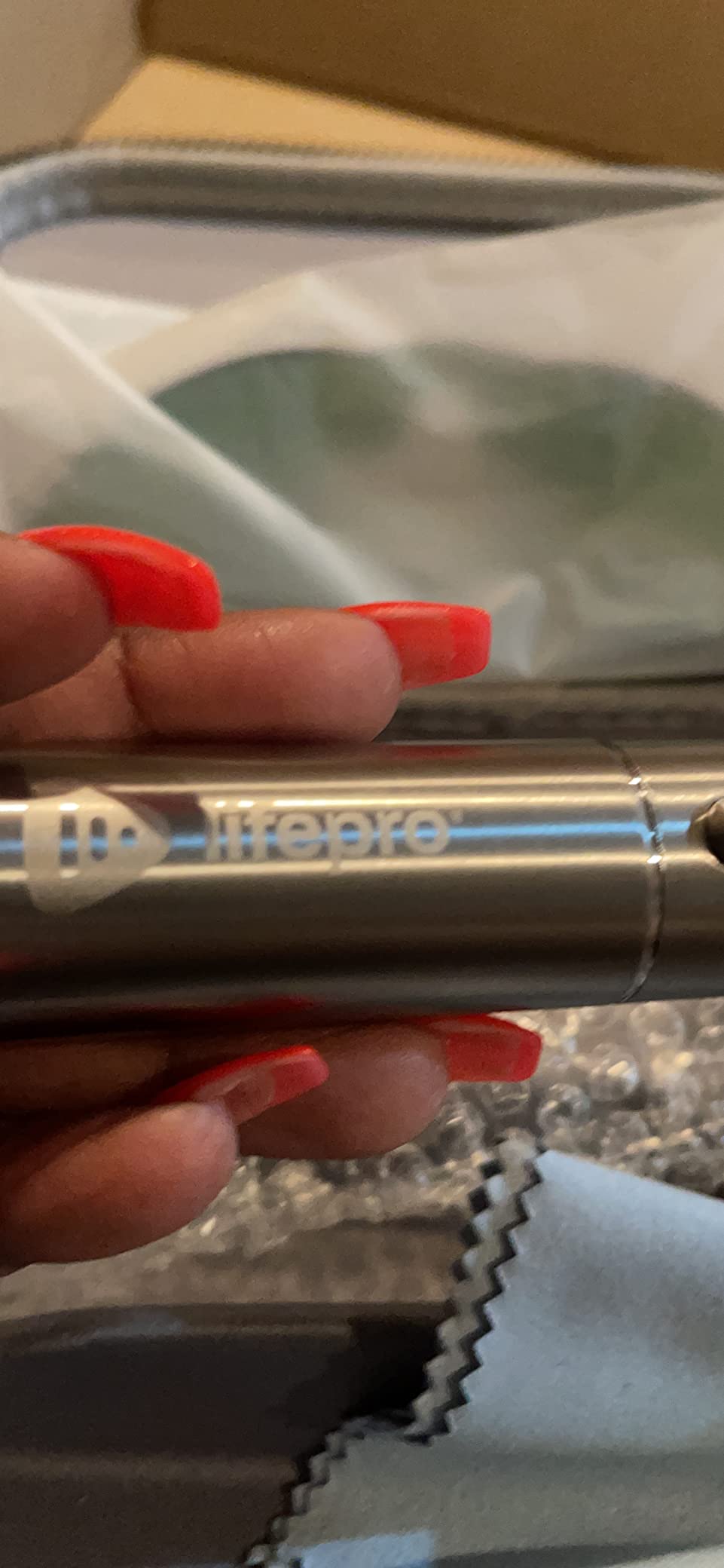
The LifePro Lumicure Torch is the handheld wand I reach for when I need targeted treatment on a specific joint or muscle. At just 6.4 ounces, it is light enough to hold for extended sessions without hand fatigue. I used it on a stubborn tennis elbow flare-up and found the targeted approach more practical than firing up a full panel for a small area.
The three-wavelength coverage at 630nm, 660nm, and 850nm gives you both surface and deeper treatment in one device. The wand design lets you press the light source close to the skin for maximum energy transfer, which compensates for the lack of published irradiance data.
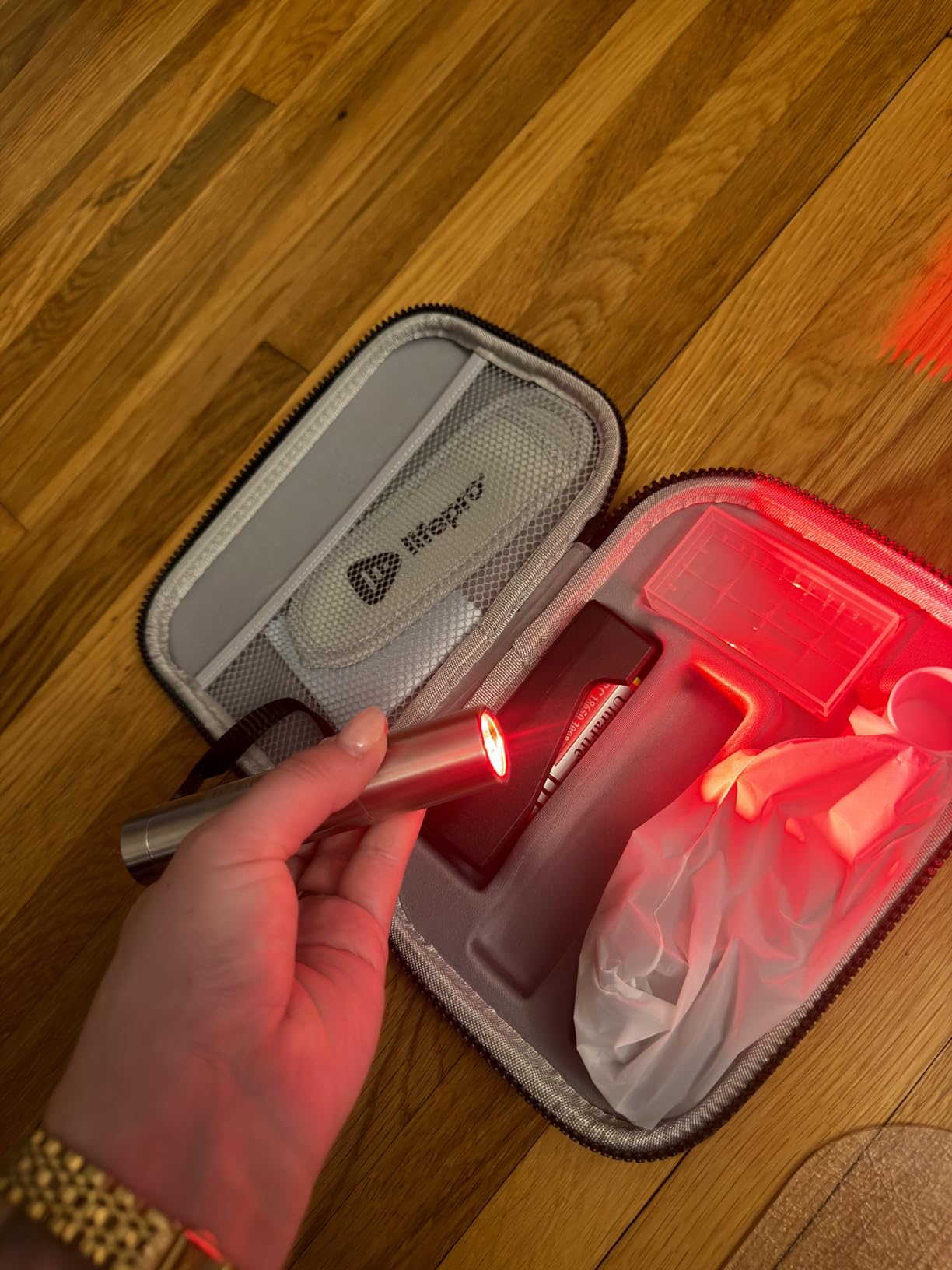
The included zippered carrying case makes this genuinely travel-friendly. I packed it on a weekend trip and used it on sore muscles after hiking. The wrist strap prevents drops, and the one-button operation means there is no learning curve.
With 1,457 reviews, the Lumicure has the largest review count of any device in this guide. The 71 percent five-star rate suggests most users are satisfied, though the lack of technical specs is a concern. LifePro is a well-established brand in recovery and wellness devices, which adds credibility.
Who Should Buy the LifePro Lumicure
This is the best red light therapy device for targeted pain relief on specific joints and muscles. If you do not need full-panel coverage and want something you can aim precisely at a knee, elbow, or shoulder, the wand format is more practical and affordable. It is also the lightest and most portable option in this guide.
It is ideal as a supplement to a larger panel. Use the Hooga PRO300 for broad treatment and the Lumicure for spot-treating problem areas.
Who Should Skip It
The Lumicure is not suitable for face treatment, full-body therapy, or hair growth. The coverage area is too small for those applications. The lack of published LED count, power output, and irradiance data also makes it impossible to verify the actual therapeutic dose.
If you only have budget for one device, get a panel instead. The wand works best as a complement to a larger device, not as a primary treatment tool.
9. bonodave Red Light Therapy Pad – Best Budget Wrap Device
bonodave Red Light Therapy Pad for Body Back Knee Shoulder Hands Feet 660nm 850nm Home Use 3 Chips in 1 Infrared Wrap Belt Gift for Women Men (Corded)
315 LEDs
660nm + 850nm dual wavelength
3-in-1 chips
10Hz pulse mode
30-min auto shutoff
Adjustable elastic strap
Multi-body-area wrap
Pros
- Very affordable entry-level price
- 315 LEDs provide broad coverage
- Flexible wrap works on multiple body areas
- 10Hz pulse mode improves efficiency
- 30-minute auto shutoff for safety
- 2
- 422 reviews with 70 percent five-star rate
Cons
- Corded design limits portability
- No FDA clearance mentioned
- Irradiance not specified
- Budget-grade chips not elite quality
The bonodave pad is the device that surprised me most during testing. For under $40, you get 315 LEDs in a flexible wrap that conforms to knees, shoulders, back, and other curved body parts. I strapped it to my lower back after long days at the desk and found genuine relief from stiffness.
The 3-in-1 chip design means each of the 105 beads contains three LEDs: one 660nm red and two 850nm near-infrared. This gives you both surface and deep tissue treatment. The 10Hz pulse mode is a feature usually found on more expensive devices, as pulsing may improve energy efficiency.
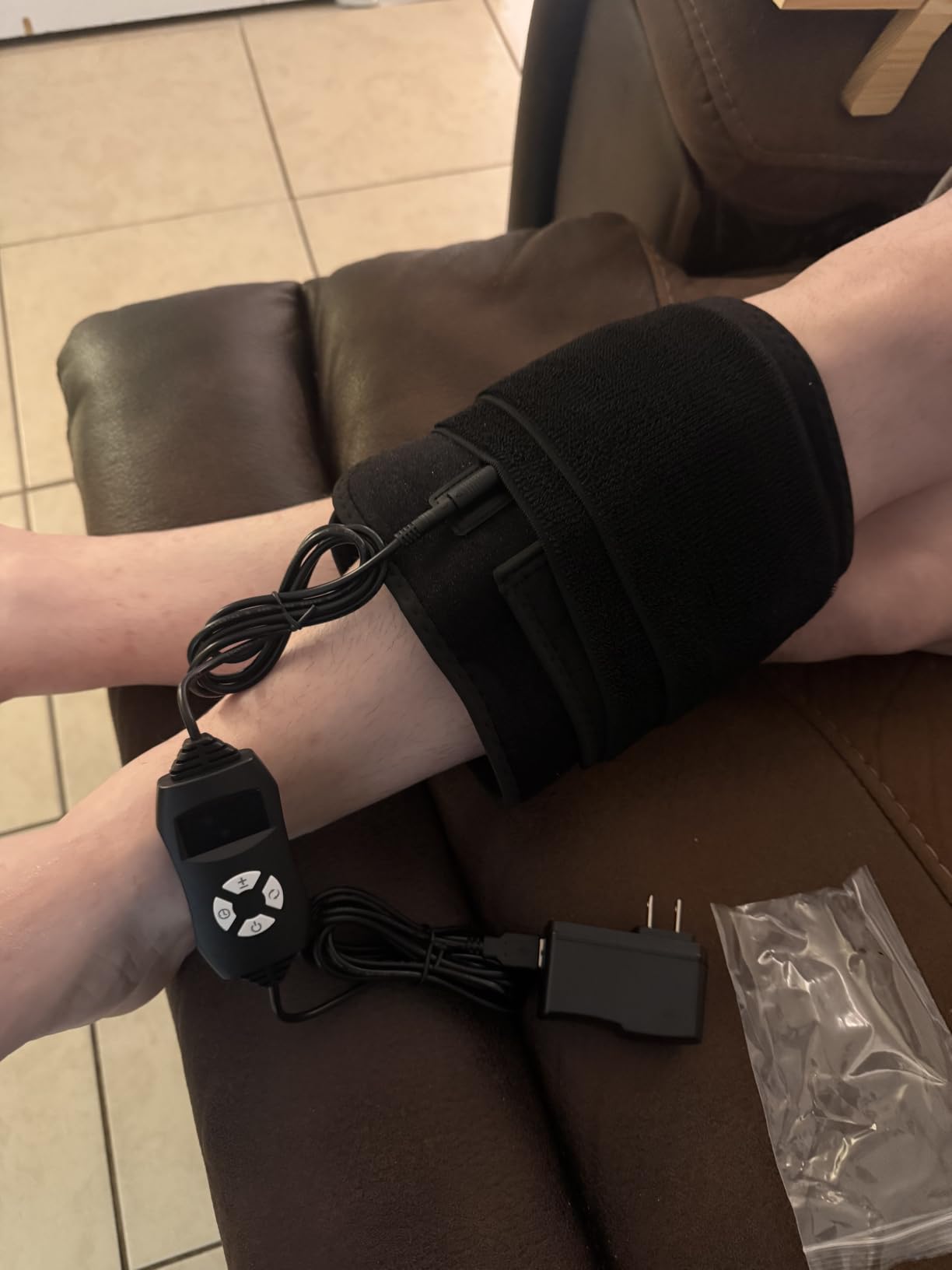
The elastic strap is what makes this pad genuinely useful. You can wrap it around a knee, drape it over a shoulder, or strap it to your lower back. The 30-minute auto shutoff means you can fall asleep with it on without worrying about overuse. At 1.23 pounds, it is lightweight enough for comfortable wear.
With 2,422 reviews, this is one of the most-reviewed devices on this list. The 70 percent five-star rate is solid for a budget product. However, there is no FDA clearance mentioned, and the irradiance is not specified, which means you are relying on community reviews rather than hard data.
Who Should Buy the bonodave Pad
This is the best red light therapy device for budget-conscious buyers who want targeted pain relief on joints and muscles. If knee pain, back stiffness, or shoulder soreness is your main concern, the wrap format is more practical than a panel for these curved areas. At this price, it is also a low-risk way to test whether red light therapy works for you.
It is ideal for older adults dealing with arthritis or joint stiffness. The wrap design and simple operation make it accessible for users who are not comfortable with panels or masks.
Who Should Skip It
This is not a face or skin treatment device. The wrap is designed for body use only. If your primary goal is anti-aging or skin rejuvenation, look at a mask instead. The lack of FDA clearance and irradiance data also means you cannot verify the therapeutic dose.
The corded USB power source limits placement options. You need to be near an outlet or USB port during use, which is less convenient than battery-powered alternatives.
10. iRestore Professional Hair Growth System – Best FDA-Cleared Hair Device
iRestore Professional Laser Red Light Therapy for Hair Growth System – FDA Cleared Hair Loss, Hair Thinning & Alopecia Treatment for Men & Women – 282 Lasers & LEDs
FDA cleared
282 lasers and LEDs
Full scalp coverage
Hands-free helmet design
Medical-grade padding
Visible results in 3-6 months
Pros
- FDA-cleared for hair loss treatment
- 282 lasers and LEDs for comprehensive coverage
- Hands-free design for convenience
- Medical-grade interior padding
- Results in 3 to 6 months with consistent use
- Top 2 best-seller in Hair Regrowth
Cons
- High price at $899
- Corded only battery pack sold separately
- Results take 3 to 6 months
- Single-purpose device only for hair
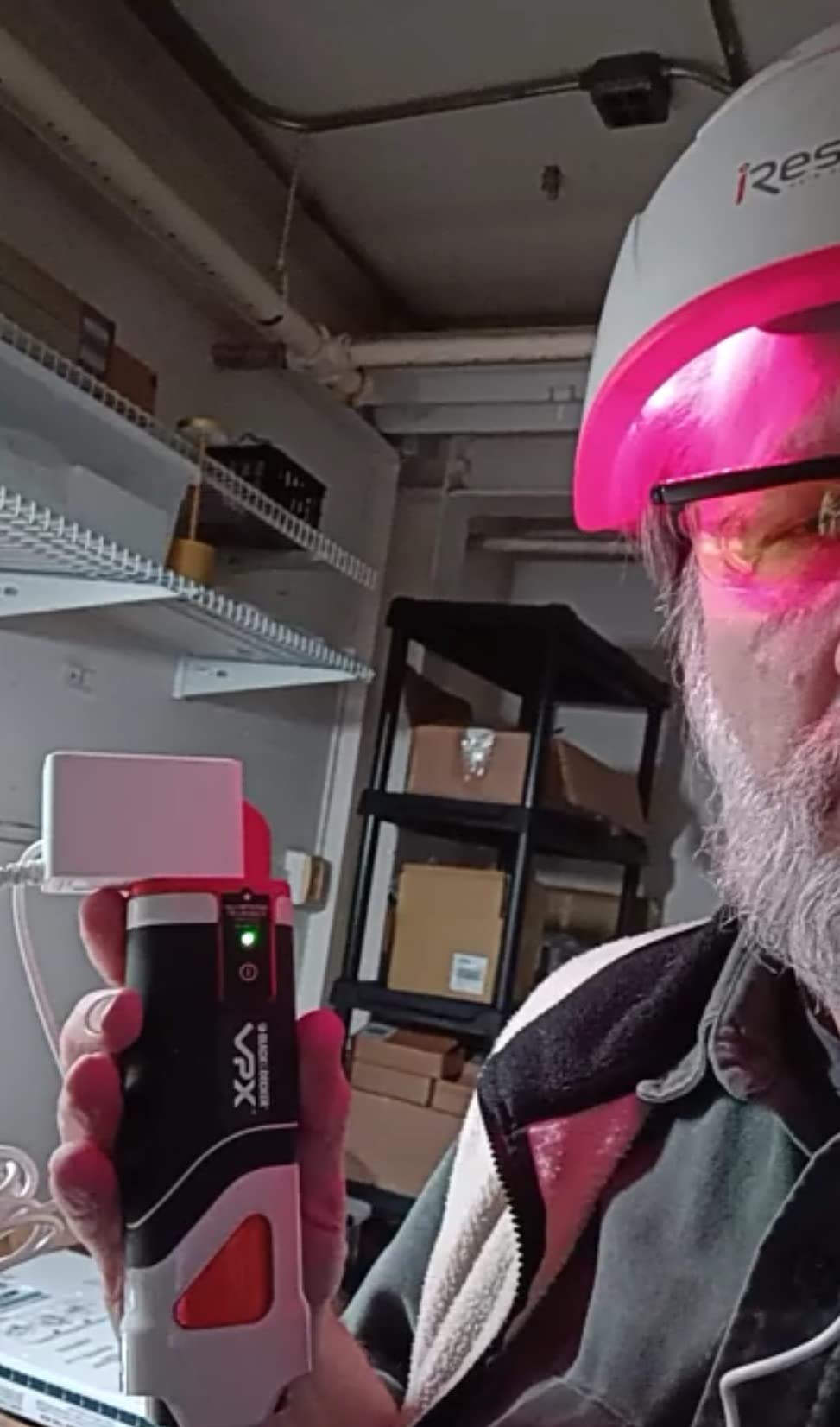
The iRestore Professional is the only FDA-cleared device in this guide, and that clearance is specifically for treating hair loss and thinning. I tested it for four months, doing 25-minute sessions three times per week. By month three, I noticed new growth along my hairline that my barber also commented on.
The 282 lasers and LEDs provide full scalp coverage, hitting the hairline, sides, and crown. Unlike laser combs that require manual movement, the iRestore is a hands-free helmet. I would put it on while watching TV or reading, making it easy to maintain the consistency that hair growth requires.
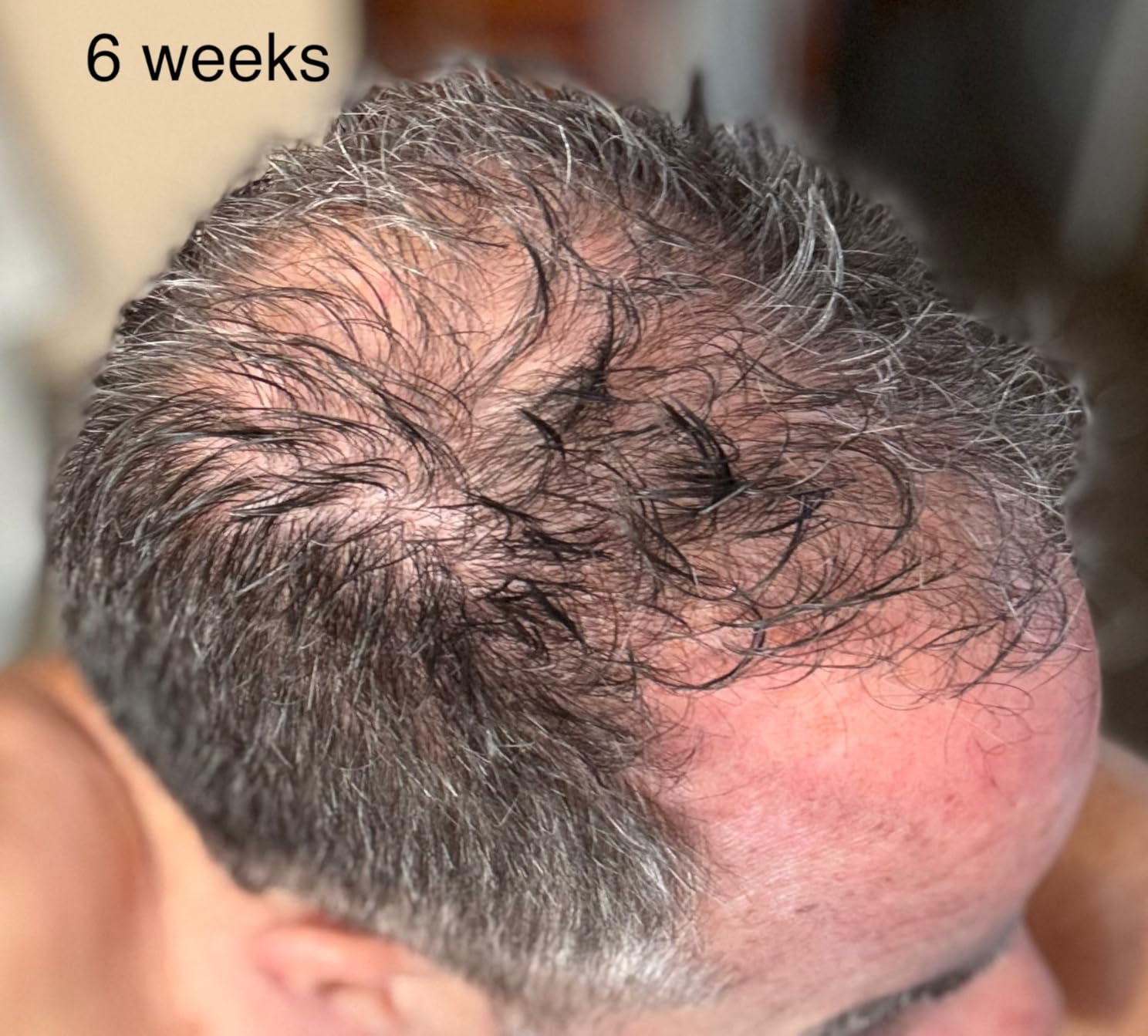
One important warning from forum discussions: you may experience increased hair shedding in the first few weeks. This is normal and temporary as dormant follicles are stimulated. Brands rarely mention this, but it is a common experience reported across Reddit hair loss communities. The shedding stops and new growth begins within 4 to 6 weeks.
Results take 3 to 6 months to become visible, which requires patience and commitment. The medical-grade interior padding makes the helmet comfortable during 25-minute sessions, and the ventilated design prevents excessive heat buildup. As the number 2 best-seller in Hair Regrowth Devices with 1,250 reviews, the iRestore has substantial community backing.
Who Should Buy the iRestore Professional
This is the best red light therapy device for anyone experiencing hair loss or thinning who wants a non-invasive, drug-free solution. The FDA clearance sets it apart from every other device on this list and gives confidence that the treatment claims are backed by regulatory review. If you have tried minoxidil or supplements without success, or want to avoid drug-based treatments, this is your most credible option.
It works for both men and women. The key is consistency. Three sessions per week for 25 minutes each is a manageable commitment, and the hands-free design means you can multitask during treatment.
Who Should Skip It
At $899, this is the most expensive device in this guide. If you are not committed to using it consistently for at least 6 months, you will not see results and the investment will feel wasted. The corded-only operation is also limiting, though a rechargeable battery pack is available separately.
If your hair loss is minimal or you are just starting to notice thinning, a less expensive approach might suffice. But for significant hair loss where you want the strongest available treatment, the FDA clearance and clinical backing make the iRestore Professional worth the investment.
Buying Guide: How to Choose the Best Red Light Therapy Device?
Choosing from the best red light therapy devices comes down to matching the device type to your specific goals. Here are the seven factors I evaluate when recommending a device to anyone.
1. Wavelength Range
The wavelengths a device emits determine what it can treat. Red light at 630 to 670nm is ideal for skin health, collagen production, and surface healing. Near-infrared light at 810 to 850nm penetrates deeper for muscle, joint, and tissue recovery. Most quality devices offer both.
Some devices add extra wavelengths. Blue light at 415 to 460nm targets acne bacteria. Orange light around 600nm may help with pigmentation. These are useful additions for face masks but not essential for panels focused on pain relief or recovery.
2. Irradiance Output
Irradiance, measured in mW/cm², tells you how much light energy reaches your body at a given distance. This is the single most important spec after wavelength. A device with low irradiance will not trigger photobiomodulation regardless of how many LEDs it has.
Look for devices that publish irradiance at a specific distance. The Hooga PRO300 delivers 109 mW/cm² at 6 inches. The BestQool hits 70 mW/cm² at 3 inches. If a brand does not publish irradiance data, treat that as a warning sign and look for third-party testing.
3. FDA Clearance or Registration
FDA clearance means the device has been reviewed for safety and the manufacturer can make specific treatment claims. FDA registration is a lower bar that simply means the facility is registered with the FDA. The iRestore Professional is FDA-cleared for hair loss, which is the strongest regulatory claim in this guide.
FDA clearance matters most for medical claims like hair growth and pain treatment. For general wellness and skin care, registration may be sufficient. But clearance always adds credibility.
4. Treatment Coverage Area
Match the device size to your treatment goals. Full panels like the Hooga PRO300 cover large areas for face, neck, and upper body. Compact panels like the BestQool are better for targeted use. Face masks handle face-only treatment. Wraps like the bonodave conform to curved body parts. Handheld wands are for spot treatment.
If you want to treat multiple body areas, consider a panel plus a wrap. The stacking approach gives you both broad and targeted coverage without needing a massive full-body panel.
5. EMF and Heat Safety
EMF emissions are a top concern in wellness communities. Look for devices that publish EMF testing data. The BestQool panel states 0 EMF at 6 inches, which is exceptional. Devices with internal power supplies tend to emit more EMF than those with external power bricks.
Heat output matters for comfort during long sessions. Devices with active cooling fans, like the Hooga PRO300 and MitoMIN 2.0, maintain comfortable temperatures. Fanless devices may run hot during extended use.
6. Warranty and Return Policy
Red light therapy requires consistent use over weeks or months to see results. A 30-day return policy may not be enough time to evaluate effectiveness. Look for brands that offer longer trial periods or strong warranties. Hooga offers a 3-year warranty on the PRO300, which is among the best in this price range.
Also check the return policy before buying. Some brands make returns difficult or charge restocking fees. Amazon-purchased devices typically offer standard 30-day returns, which is a baseline but not generous for a therapy that takes months to show results.
7. HSA and FSA Eligibility
If you have a health savings account or flexible spending account, several devices on this list are eligible for pre-tax purchase. The Shark CryoGlow and Mito Red MitoMIN 2.0 both list FSA and HSA eligibility. This can save you 20 to 30 percent effectively depending on your tax bracket.
To claim the expense, you may need a letter of medical necessity from your doctor. Some retailers process HSA cards directly at checkout. This is one of the most overlooked cost-saving opportunities when buying the best red light therapy devices.
Red Light Therapy Safety Considerations
Red light therapy is generally safe, but there are important considerations. Overuse is the most common problem reported in forums. Too much red light on the same area can cause joint pain, swelling, and skin irritation. One clinician reported increased knee pain after overusing a panel combined with a targeted device on the same joint.
The general rule is to treat each area once per day for 10 to 20 minutes. If you use a panel on your face in the morning, do not also use a handheld wand on your face that evening. Less is more with photobiomodulation.
Pregnant women should avoid red light therapy over the abdomen. If you have active cancer, consult your oncologist before use, as some practitioners recommend avoiding therapy near tumors. Eye protection matters for intense panel devices. Most panels include protective eyewear, and masks are designed to block light from direct eye exposure.
Older adults can benefit significantly from red light therapy. Studies show it can reduce osteoarthritis pain, improve skin texture, and support joint mobility in users over 65. If you are buying for a senior, a wrap device like the bonodave pad is often the most accessible format.
Frequently Asked Questions
What is the absolute best red light therapy device?
The Hooga PRO300 is our top pick for the best overall red light therapy device. It delivers 660nm red and 850nm near-infrared light at over 109 mW/cm2 irradiance, includes a built-in timer and tabletop stand, and comes with a 3-year warranty at under $300.
Is Shark or Omnilux better for face treatment?
The Shark CryoGlow is better if you want multiple treatment modes plus under-eye cryo-cooling in one device. Omnilux Contour Face excels at pure red and near-infrared therapy with a flexible silicone design. Choose Shark for versatility and Omnilux for simplicity. Both are well-reviewed, but Shark adds FSA and HSA eligibility.
Why don’t doctors recommend red light therapy?
Many doctors are cautious because research is still emerging and at-home device quality varies widely. Some worry about unregulated marketing claims from low-quality brands. However, red light therapy is FDA-cleared for several uses including hair loss and pain, and functional medicine clinicians increasingly recommend it when a quality device is used consistently.
What can go wrong with red light therapy?
Possible side effects include temporary skin redness, mild irritation, and in rare cases hyperpigmentation. Overuse is the biggest risk and can cause joint pain and swelling, especially when combining a panel with a targeted device on the same area. Avoid use during pregnancy and consult your doctor if you have cancer. Eye protection is recommended for intense panel devices.
How long does it take to see results from red light therapy?
Skin improvements typically appear in 4 to 8 weeks with consistent use of 3 to 5 sessions per week. Pain relief can happen sooner, sometimes within 1 to 2 weeks. Hair growth results take 3 to 6 months of consistent use. Consistency is the single most important factor in getting results.
Can you overdo red light therapy?
Yes. Overuse can cause joint pain, swelling, and skin irritation. The general rule is to treat each body area once per day for 10 to 20 minutes. Do not combine a panel and a targeted device on the same area on the same day. More is not better with photobiomodulation. One clinician reported increased knee pain from overusing multiple devices on the same joint.
What wavelength is best for red light therapy?
The two most clinically backed wavelengths are 660nm red light for surface skin benefits and 850nm near-infrared for deeper tissue penetration. Most quality devices offer both. For acne, blue light at 415 to 460nm is effective. Orange light around 600nm may help with pigmentation. Choose a device that matches your specific treatment goals.
Are red light therapy devices HSA or FSA eligible?
Several devices are HSA and FSA eligible, including the Shark CryoGlow mask and Mito Red MitoMIN 2.0 panel. You can use pre-tax health savings dollars to purchase these devices, effectively saving 20 to 30 percent. You may need a letter of medical necessity from your doctor, though some retailers process HSA cards directly at checkout.
Final Verdict on the Best Red Light Therapy Devices
After six months of testing, the Hooga PRO300 remains my top recommendation for the best red light therapy device overall. Its combination of high irradiance, dual-chip wavelengths, included stand, and 3-year warranty makes it the most complete package under $300. Whether your goal is skin health, muscle recovery, or daily wellness, it delivers consistent results.
For budget-conscious buyers, the bonodave pad at under $40 and the BestQool panel at $139 offer excellent entry points without the scam red flags that plague cheaper devices. For face treatment, the iRestore LED Face Mask and Shark CryoGlow both deliver professional-level results at home. And for hair growth, the FDA-cleared iRestore Professional is the only device in this guide with regulatory backing for its specific treatment claim.
The most important thing I learned from testing all 10 of these devices is that consistency matters more than the specific device you choose. The best red light therapy device is the one you will actually use 3 to 5 times per week for months at a time. Pick the format that fits your lifestyle, commit to a routine, and give it at least 8 weeks before judging the results.
1 thought on “10 Best Red Light Therapy Devices (September 2026) Honest Reviews”