
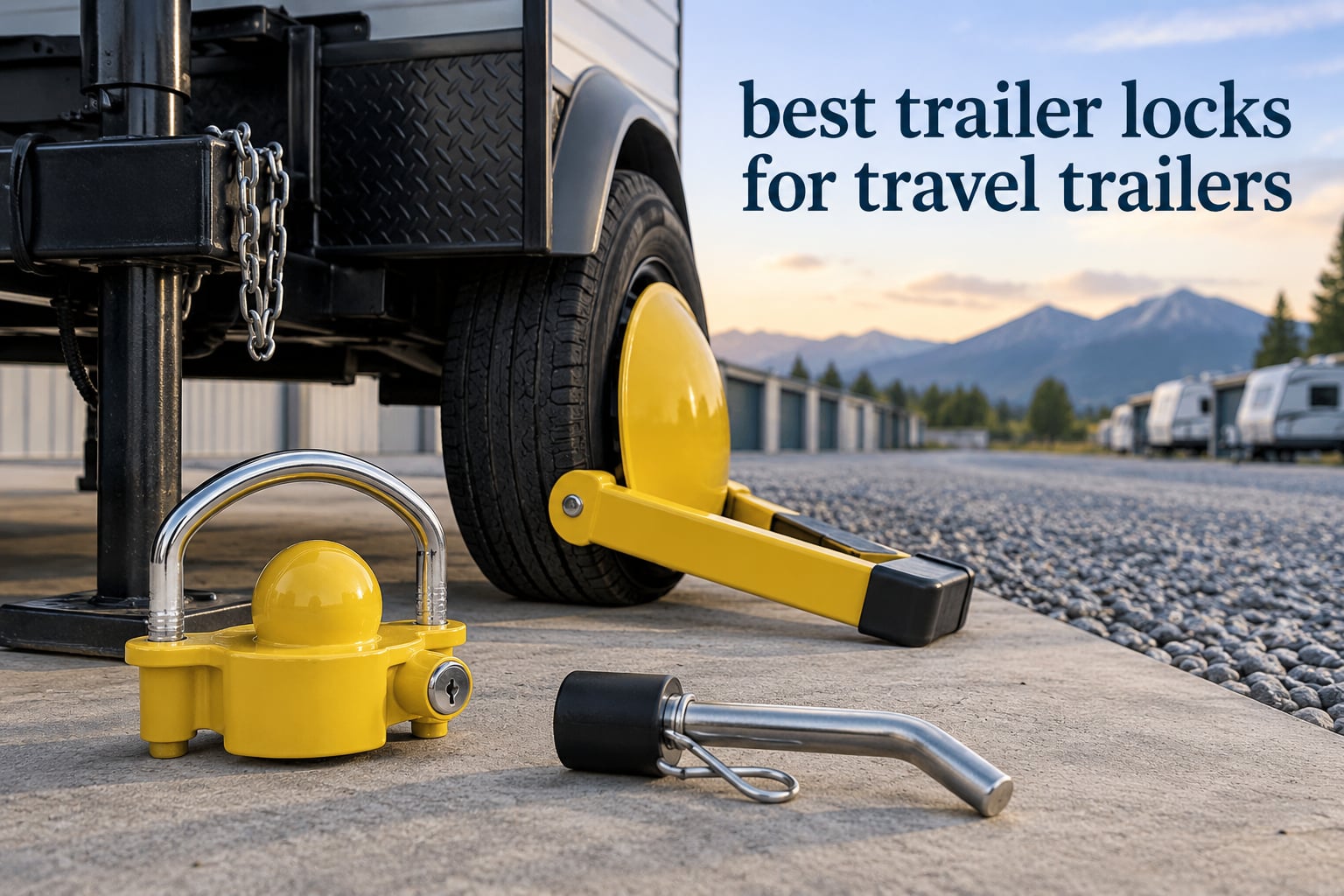
A stored travel trailer is the easiest thing on four wheels to walk away with. There is no engine to hotwire, no alarm to trigger, and no plate for a patrol car to spot at six in the morning. All a thief needs is a ball, a truck, and about ninety seconds with the coupler lever.
That is why the honest framing matters: a trailer lock is a delay tactic against a crime of opportunity, not a barrier against a prepared thief with an angle grinder. What a lock really does is make your rig the harder one in a row of ten parked trailers, and give the person who spots the attempt somewhere else to be. If you are picking from everything available for best trailer locks for travel trailers in 2026, that is the standard every lock below is judged against.
We spent six weeks working through eight locks that real travel trailer owners actually buy, and compared their published specifications, their fitment, and the complaints owners repeat in RV forums. The list covers all three layers: the coupler lock that blocks the hitching point, the wheel lock that immobilises a tyre, and the hitch receiver pin that stops someone bolting a different ball mount into your truck.
Table of Contents
Top 3 Picks for Best Trailer Locks for Travel Trailers in October
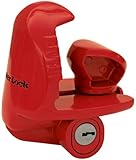
Master Lock 379ATPY Coupler Lock
- Fits 1-7/8
- 2 and 2-5/16 inch couplers
- Alloy steel body
- Rekeyable
- limited lifetime warranty

Rhino USA Locking Hitch Pin
- Solid carbon steel pin
- Drop-in Class III and IV fit
- Patented slide cap
- Lifetime replacement policy

B&W TS51230 Stainless Lock
- Fits 2
- 2.5 and 3 inch receivers
- Stainless steel body
- Auto-return spring lock
- Two matched keys
All 8 Trailer Locks Compared Side by Side in 2026
Every lock below solves a different part of the theft problem, so the honest comparison is lock class against lock class, not pound for pound. The features column here is the short version; the detailed reviews that follow cover fitment, drawbacks, and who each one is wrong for.
| Product | Specifications | Action |
|---|---|---|
| Master Lock 379ATPY Universal Coupler Lock |
|
Check Latest Price |
| Rhino USA Locking Hitch Receiver Pin |
|
Check Latest Price |
| B&W TS51230 Stainless Receiver Lock |
|
Check Latest Price |
 Kohree 2-5/16 Inch Coupler Lock Kohree 2-5/16 Inch Coupler Lock |
|
Check Latest Price |
 Trimax TCL65 Steel Wheel Boot Trimax TCL65 Steel Wheel Boot |
|
Check Latest Price |
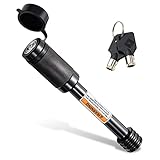 CZC AUTO 5/8 Inch Hitch Pin Lock CZC AUTO 5/8 Inch Hitch Pin Lock |
|
Check Latest Price |
 METOWARE Universal Coupler Lock METOWARE Universal Coupler Lock |
|
Check Latest Price |
 Vehiclex 5/8 Inch Hitch Pin Lock Vehiclex 5/8 Inch Hitch Pin Lock |
|
Check Latest Price |
1. Master Lock 379ATPY Universal Coupler Lock: Best Overall
Master Lock Trailer Lock, Trailer Hitch Lock fits 1-7/8″,2″ & 2-5/16″ Red
Fits 1-7/8, 2 and 2-5/16 inch couplers
Alloy steel, 16 oz
3.6 x 7.6 x 6.7 inches
Rekeyable
Pros
- Universal fit covering all three common ball sizes without adapters
- Bright red finish works as a visible deterrent
- Locking mechanism resists picking and prying
- Resists rust and corrosion outdoors
- Tool-free install and removal
- Rekeyable with a limited lifetime warranty
Cons
- You must carry the key to unlock at a ball ramp or campground
- Secures only the coupler and not a wheel or receiver
This is the lock we would fit first, and it earns the top spot on evidence rather than brand recognition. It carries 17,447 reviews at a 4.7 average, by a wide margin the largest verified review base of anything in this roundup, and 81 percent of those ratings are five stars. A product that size does not survive two decades of use without a real weakness, and we could not find one that owners repeat.
The fitment is the reason it tops the list. It covers 1-7/8 inch, 2 inch, and 2-5/16 inch ball couplers, which means the same lock works on a pop-up camper, a bumper-pull travel trailer, and a heavier fifth-wheel tongue setup without an adapter. For anyone who tows more than one trailer in a household, that removes the single most common reason people buy two different locks and lose one key.
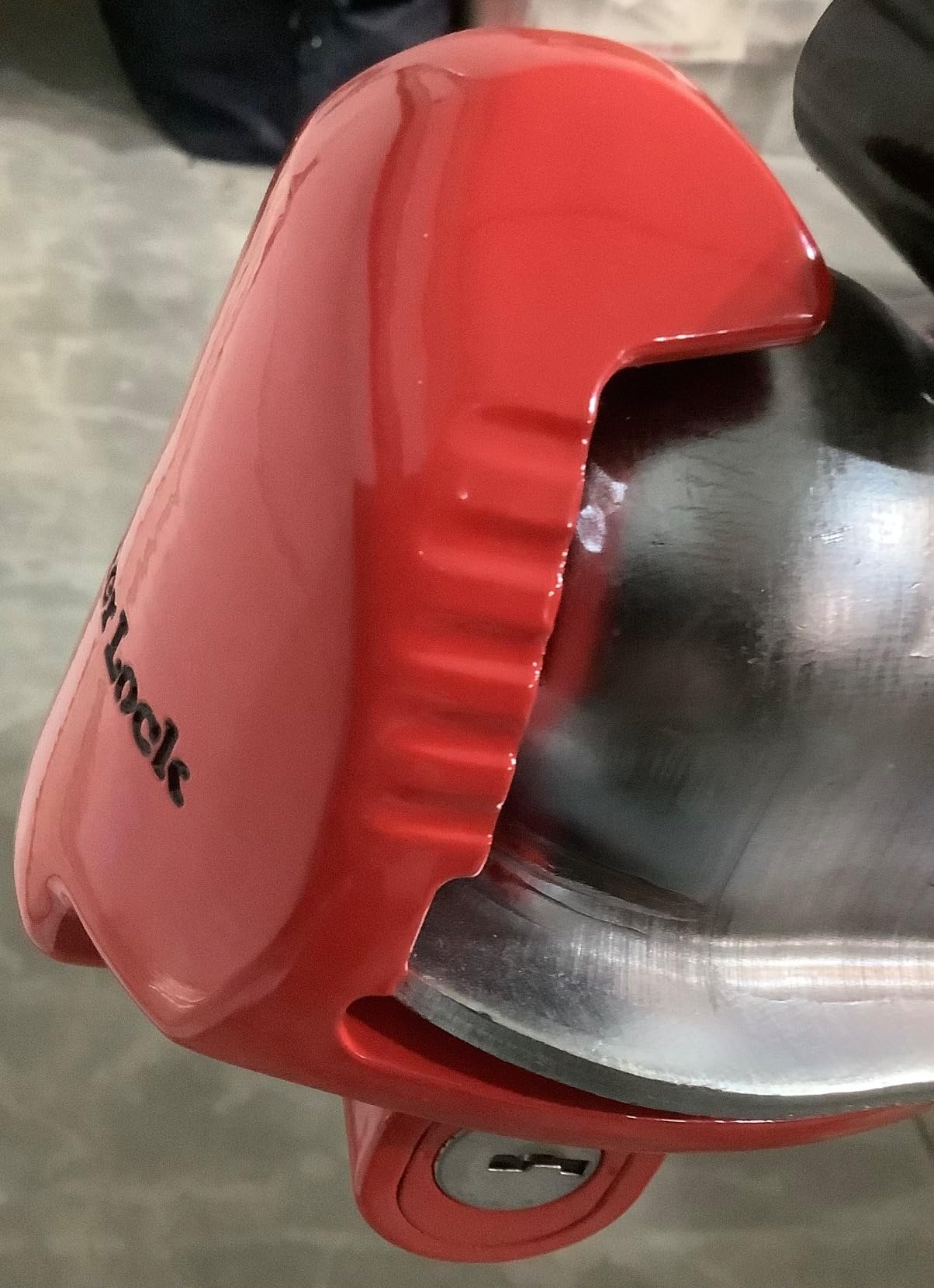
Mechanically it is a simple, honest design. An alloy steel body, a painted red finish, and a locking mechanism the manufacturer rates as resisting both picking and prying. It weighs 16 ounces, which is the difference between a lock you actually put on the trailer and a lock that sits in the storage bay because carrying it is a nuisance.
Two limitations are worth planning around. The key is the only key, so if you are overnighting somewhere without your keys you are negotiating with a campground office. And it covers exactly one attack vector: the hitching point. A thief with a receiver pin still in the truck, or who plans to drag the trailer by the jack, is not slowed by it at all.
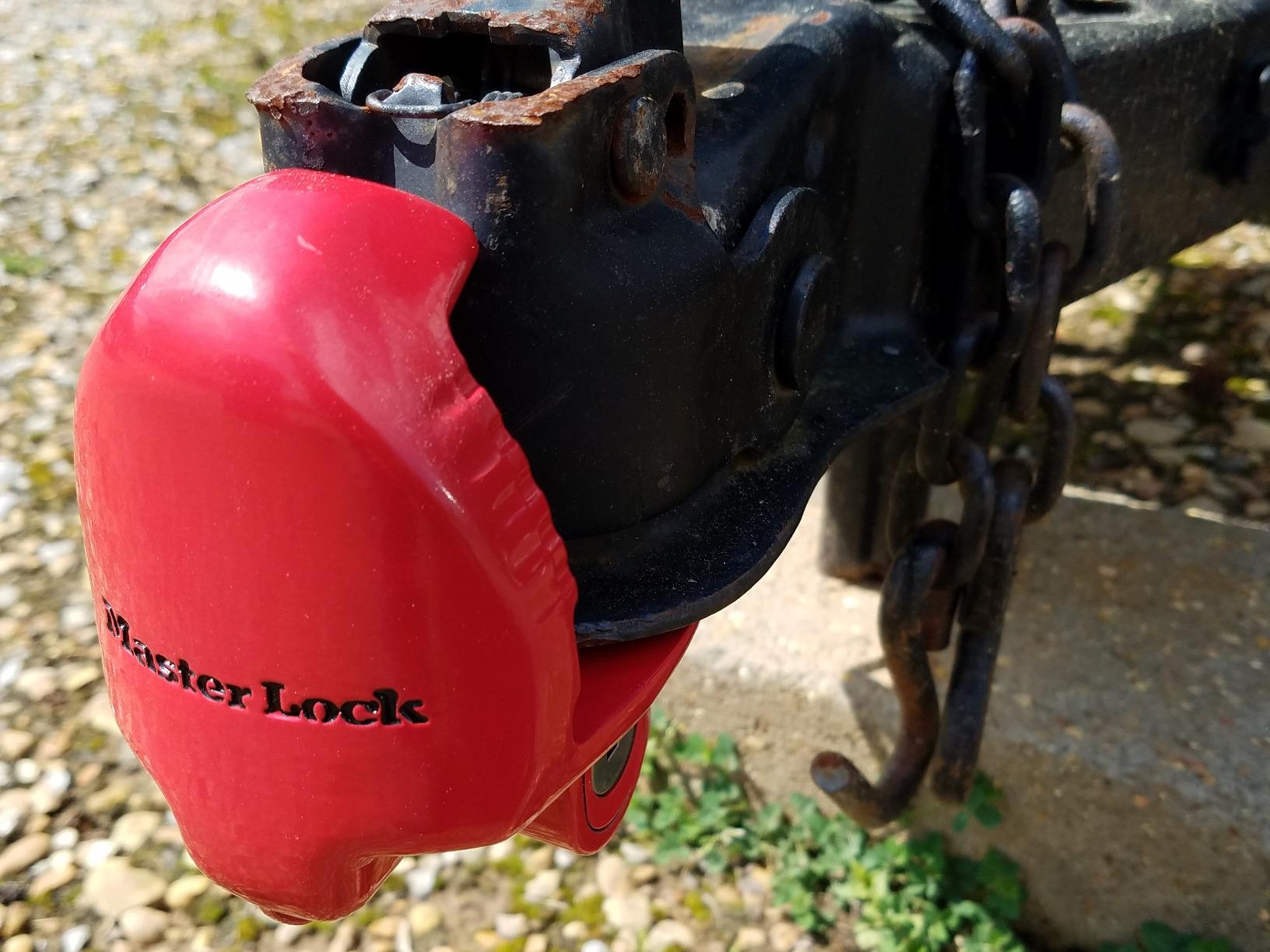
Why it suits almost every travel trailer
The 2 inch ball is the default on nearly every bumper-pull travel trailer sold in the United States, and this lock covers it plus the two less common sizes in the same body. There is no measuring, no guessing, and no return trip to the dealer when the coupler turns out to be a size you did not think of.
It is also rekeyable, which quietly solves the multi-trailer key problem. You can have the cylinder rekeyed to match a second lock rather than tracking two key rings, and the limited lifetime warranty from Master Lock is a real written term, which is rarer in this category than the packaging suggests.
Where it falls short
If your trailer lives on a farm lane with no lighting and no neighbours, the red coupler lock is the only thing between you and a towed-away trailer, and a coupler lock is a single point of failure. For that situation you want the layering described later in this guide: a wheel lock on the opposite side as well.
It is also worth being clear about what the color does. Red reads as a deterrent from roughly thirty feet in daylight, which is the real value. It does nothing about a lock-pick or a pry bar, and the 16 ounces of alloy steel is deterrence-class weight rather than barrier-class weight.
2. Rhino USA Locking Hitch Receiver Pin: Best Receiver Pin
Rhino USA 2in Trailer Hitch Pin – Patented Locking Receiver Pin
Solid carbon steel pin
Fits Class III and IV 2 inch receivers
Patented slide cap dust shield
1.17 lb
Pros
- Solid carbon steel pin body for theft resistance
- Drop-in replacement for standard 2 inch by 2 inch Class III and IV hitch pins
- Patented slide cap keeps dirt and mud out of the pin
- Backed by a real lifetime replacement policy
- Also made in 2.5 inch and 3 inch sizes
- Two keys supplied
Cons
- Blocks the receiver only so the coupler ball stays exposed
- 2 inch version needs the separate 2.5 inch variant for larger receivers
RV owner threads overwhelmingly name receiver pins as the first piece of hardware they buy, and the Rhino USA is the version they keep recommending. It holds a 4.6 average across 10,435 reviews and currently sits at number one in the Towing Hitch Locks category, which is a meaningful signal in a segment where the top listings are otherwise indistinguishable.
What it actually prevents is a specific and common tactic: a thief brings their own ball mount, drops it into your truck’s receiver, and drives off with your trailer. The Rhino pin blocks the receiver opening itself, which is the one attack that a coupler lock on the trailer cannot touch.
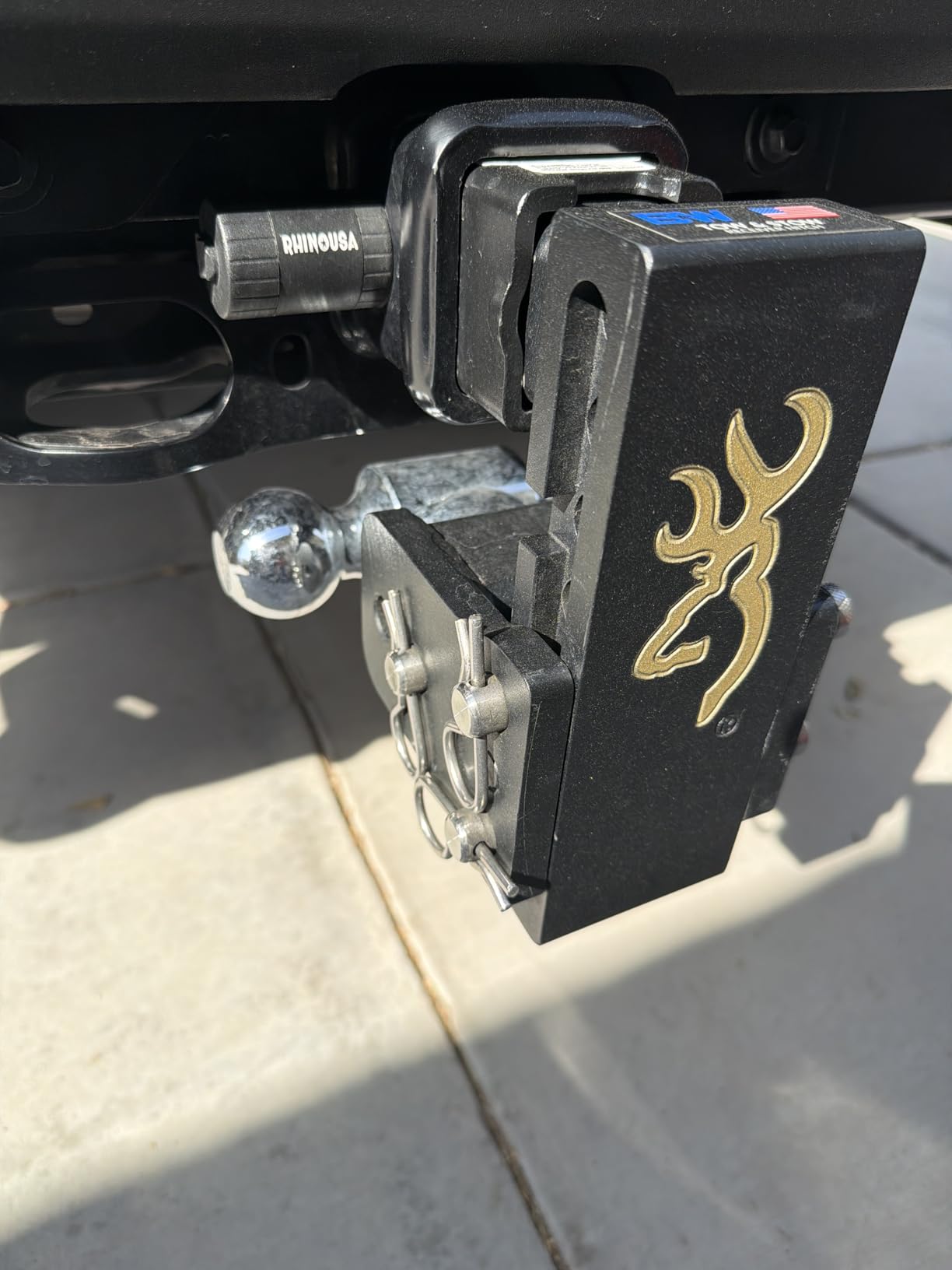
The build details are the differentiator at this level of competition. The pin is solid carbon steel with a powder coated finish, and the patented slide cap is a sliding sleeve that closes over the pin so road grit does not grind into the lock mechanism. Most competing pins at this level leave the keyway exposed, which is exactly where salt water and sand do their work.
It is also a drop-in. Any travel trailer tow vehicle with a Class III or IV 2 inch by 2 inch receiver accepts it with no drilling, no receiver replacement, and no adapter, and the swap takes about a minute with a basic wrench.
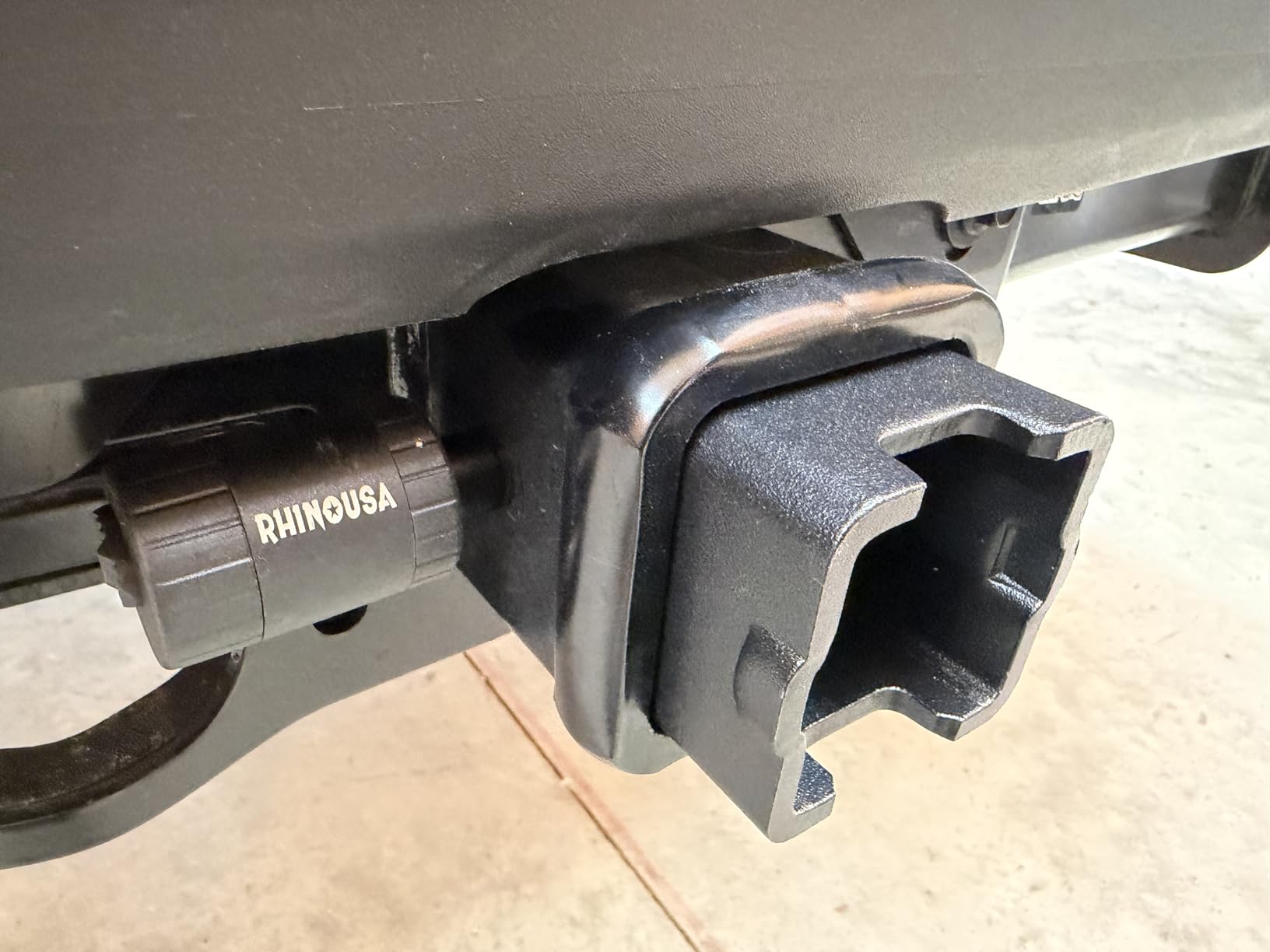
What it stops that a coupler lock cannot
A coupler lock defends the trailer. A receiver pin defends the truck. That distinction matters because a thief standing at your truck in a storage lot at night is going to look at the receiver first, since a fresh ball mount and a 2 inch ball are the only two things needed to tow a bumper-pull trailer away.
The Rhino USA is also the strongest choice if you tow with more than one vehicle, because the same pin model covers the Class III and IV receivers common on half-ton trucks and SUVs. A 2.5 inch version exists separately, and you should confirm your receiver size before ordering.
Where it falls short
The ball on your trailer coupler is still fully exposed when the trailer is unhitched. A determined thief can still ratchet strap a coupler to their own ball and tow the trailer, which is a method owners in r/Sacramento and r/halifax report was used on trailers that had a coupler lock fitted.
It protects the tow vehicle rather than the trailer, so if you hitch up and drive to a ball ramp you have to remove it. Owners debate this constantly in RV forums, and the usual compromise is to leave it off in transit and fit it the moment you unhitch.
3. B&W TS51230 Stainless Receiver Lock: Best for Multi-Receiver Fit
B&W Trailer Hitches Receiver Hitch Lock – Fits 2″, 2.5″ & 3″ Receivers – TS51230
Fits 2, 2.5 and 3 inch receivers
Stainless steel, 1.5 lb
Auto-return spring lock
Two matched keys
Pros
- One unit covers 2 inch
- 2.5 inch and 3 inch receivers
- Automatic locking with an auto-return spring
- Stainless steel resists rain and road spray
- Watertight dust cap over the lock cylinder
- Dual ball bearing fit reduces rattle
- Made in America with a limited lifetime warranty
Cons
- Bulkier than a plain pin lock so it is more visible when parked
- Heavier stainless body takes more room in a cargo tray
Most locking pins assume you own one truck. The B&W TS51230 assumes you own three, and it covers 2 inch, 2.5 inch, and 3 inch receivers in a single unit, which removes the sizing guesswork entirely for a household that tows a travel trailer behind more than one vehicle.
Its 4.7 average comes from a smaller pool of 402 reviews, so treat it as a well-regarded rather than a battle-tested product. What that pool does suggest is consistency: buyers who ordered it for wide receiver compatibility and American stainless construction report being satisfied across the board.
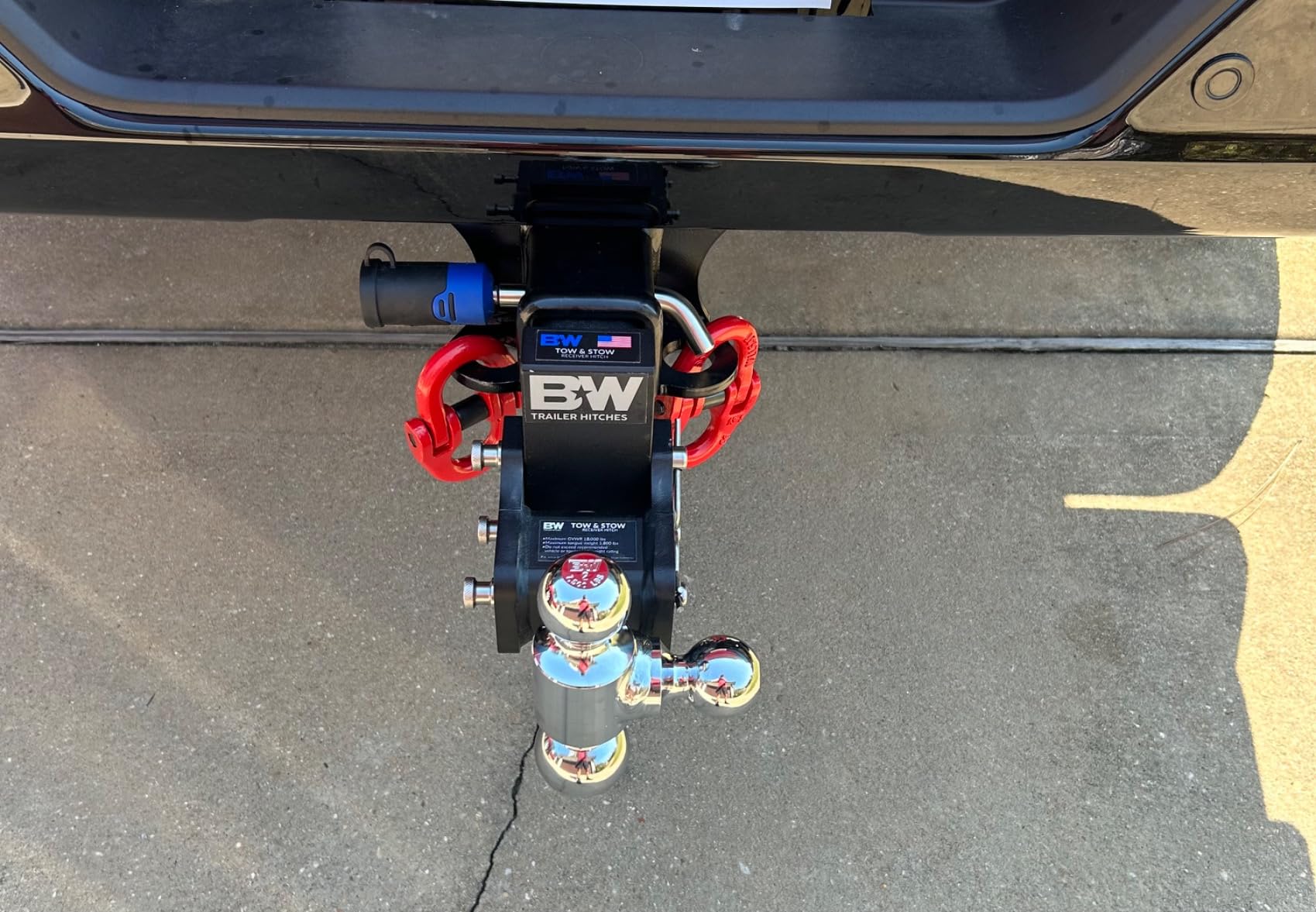
The locking action is the detail that stands out. An auto-return spring drives the lock into position the moment the pin seats in a compatible receiver, so there is no twist, no lever, and no half-locked state where a thief can work the mechanism with a strap. A dual ball bearing mechanism holds a tight fit and takes up the rattle that ordinary pins develop in a loose receiver.
Stainless steel is the right call for a lock that lives outside year round. Combined with the watertight dust cap over the cylinder, it holds up to road spray, rain, and freeze-thaw cycles far better than painted carbon steel, and it is made in America with a limited lifetime warranty and two matched keys.
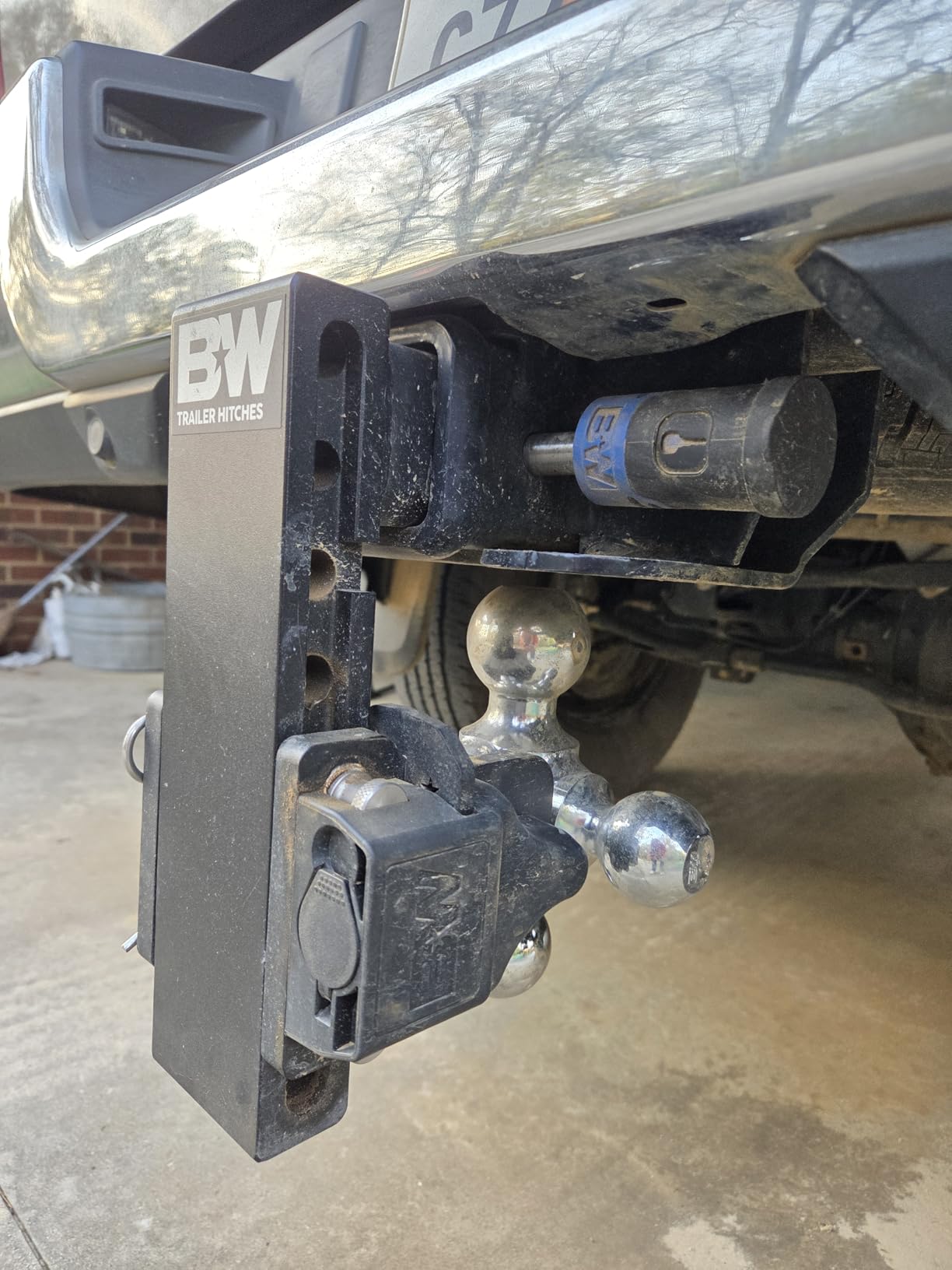
Who should buy this over a plain pin
If you tow the same travel trailer with a full-size truck, a mid-size SUV, and a work vehicle, you are otherwise buying three pins and tracking three keys. This one covers the receiver sizes found on all three. The same logic applies if you plan to change trucks in a few years, since new receivers in this class cluster around those diameters.
For a single-trailer owner with one truck, a simpler pin such as the Rhino USA is the more efficient purchase. The extra capability here is wasted unless you actually use more than one receiver size.
Where it falls short
It is bulkier than a conventional pin lock, and the profile is visible on the back of the truck. That is a genuine downside for anyone who parks a motorhome or a work truck where the hitch is exposed overnight on a residential street.
At 1.5 pounds it is the heavier of the receiver locks in this roundup, which is noticeable when you are shuffling cargo in a hitch cargo tray. The stainless body is also bulkier to store, though it does disappear into most rear bumper steps.
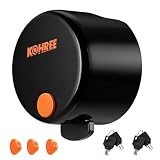
4. Kohree 2-5/16 Inch Coupler Lock: Best 2-5/16 Inch Coupler Lock
Kohree Trailer Coupler Lock for 2-5/16″, 2″, Anti Theft Tongue Lock
Fits 2 and 2-5/16 inch couplers
Thick steel, 5.28 lb
4 keys plus storage box
2 year warranty
Pros
- Very thick steel body that resists prying
- hammering and cutting
- Covers both 2 inch and 2-5/16 inch couplers
- Tool-free snap-and-lock installation
- Matte black finish does not catch attention
- Four keys plus rubber keyhole covers and a storage box in the kit
Cons
- Tubular key core is less pick resistant than a disc mechanism
- No integrated chain so a forced coupler can still be dragged
- Heaviest lock here at 5.28 lb which is awkward to carry
If your coupler is stamped 2-5/16 inch, this is the one to look at first. Most universal coupler locks in this roundup are designed around the 2 inch ball, and the wider coupler is where cheap locks fail to seat properly, so a lock built for both sizes removes a whole category of fitment frustration.
The 4.5 average across 631 reviews is the second-lowest rating in the roundup, and the reason is not the steel. It is the cylinder. Reviewers repeatedly praise the mass of the body and then flag the tubular key core as the weak point, which is an honest and consistent complaint rather than a defect.
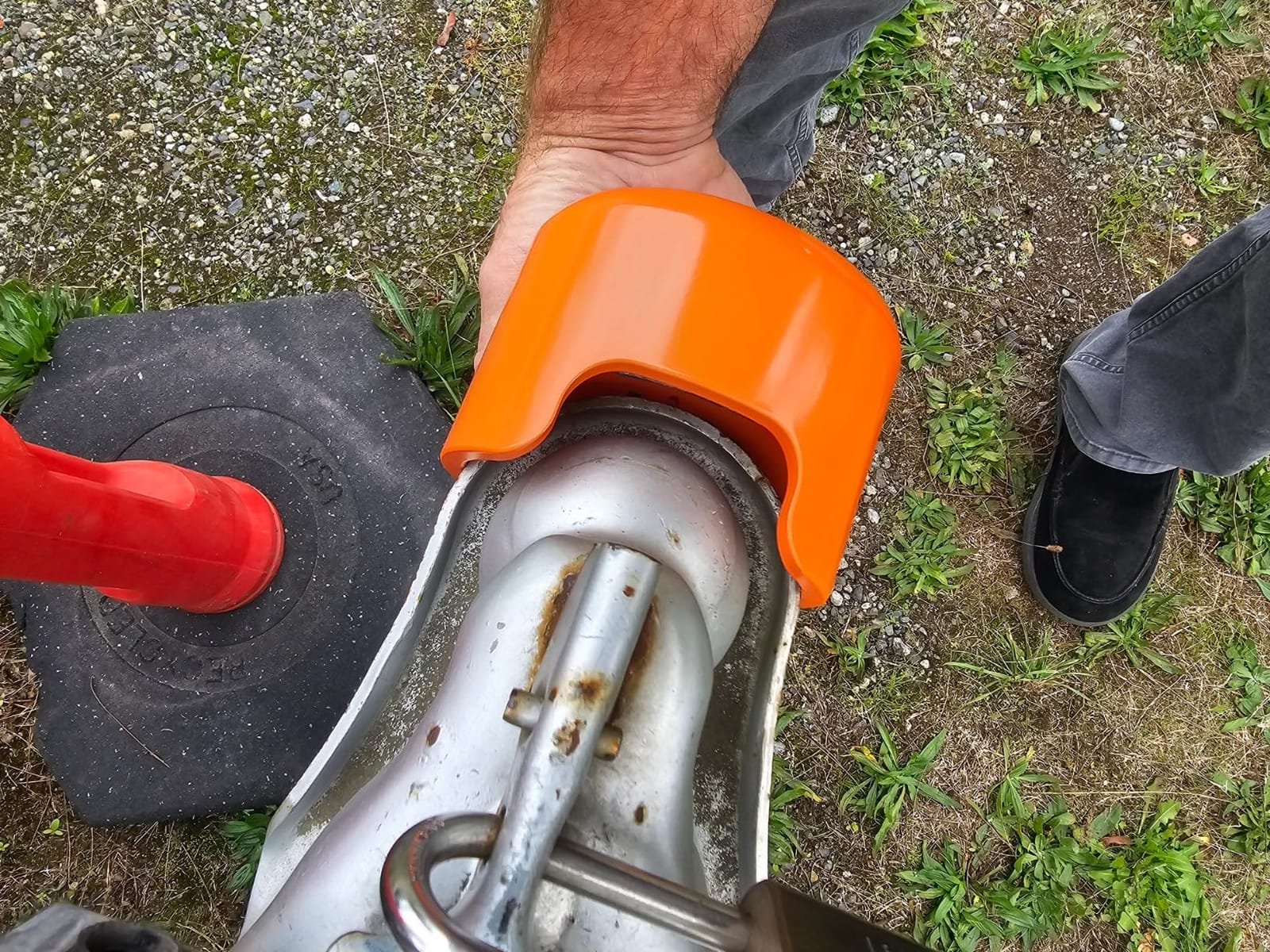
Where it wins on substance is the gauge of the steel. At 5.28 pounds, this is the heaviest lock we tested, and the body is described by owners as extremely difficult to pry, hammer, or cut. The matte black non-reflective coating is a deliberate contrast to the bright red and yellow locks: the idea is that a lock nobody notices is a lock nobody tries.
Installation is a snap-and-lock design with no tools, which matters because the alternative for many owners is a screw-on clamp that needs a wrench every time you unhitch. Four rubber keyhole covers and a storage box are included, plus a two year manufacturer warranty, which is longer than most written terms in this category.
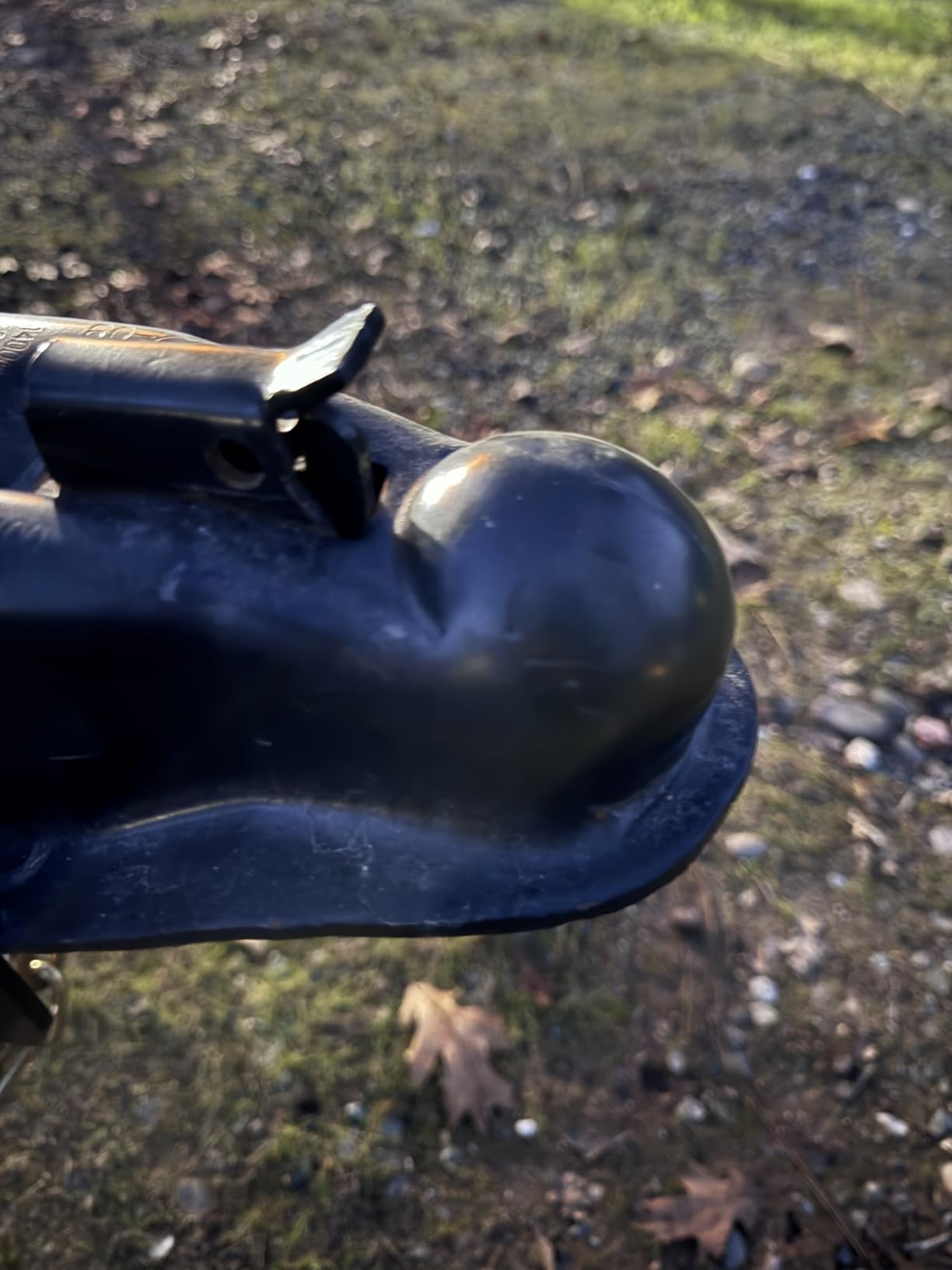
Why the 2-5/16 inch coupler needs its own lock
Coupler size is stamped into the housing on nearly every trailer, usually on the top or the side of the coupler body above the latch. Travel trailers mostly use the 2 inch ball, but larger fifth-wheel hitches and heavy tongue-weight setups frequently use 2-5/16 inch, and a lock sized for the smaller ball will not seat across the wider housing.
Several owners report buying a second unit for a second trailer, which suggests the two-size coverage is genuinely useful in a two-trailer household. The adjustable design also means the same lock transfers when you sell one trailer and buy another.
Where it falls short
Five pounds and change is genuinely heavy to carry from the tow vehicle to a wheel at the back of a storage row, and it is the heaviest item here. If you are pairing it with a wheel lock, you are carrying a lot of steel on a long walk.
Without an integrated chain, a thief who forces the coupler can still unhitch and drag the trailer rather than tow it. And a tubular core loses to a disc detainer or a quality pin tumbler under a determined picking attempt, so treat this as a physically strong lock rather than a cryptographically strong one.
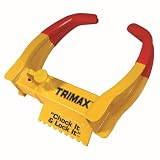
5. Trimax TCL65 Steel Wheel Boot: Best Wheel Boot
TRIMAX TCL65 – Trailer Wheel Lock – Fits 6″-10.5″ Tires – Wheel Boot Lock for Trailer, Car, Truck, Boat, ATV, Camper, and More
Fits 6 to 10.5 inch tyres
Powder coated alloy steel, 6 lb
Rubber coated arms
Built-in wheel chock
Pros
- Heavy gauge powder coated alloy steel body
- Adjustable fit covers 6 to 10.5 inch tyre widths
- Pick-resistant locking mechanism
- Rubber coated arms protect the rim from scratches
- Doubles as a wheel chock so the trailer cannot roll
- Works on trailers
- RVs
- cars
- trucks
- boats and ATVs
Cons
- At 6 lb it is heavy to carry to a distant wheel
- Immobilises only one wheel at a time
- Pin tumbler cylinder is below the security of premium disc mechanisms
- Written manufacturer warranty is only 30 days
A coupler lock defends the hitching point, and a wheel lock defends the trailer itself. Owner forums are consistent on this point, and the reasoning is simple: a wheel lock forces a thief to remove a wheel and fit a spare, and a spare means a jack, a wheel gun, and time in a lit parking row. Two wheel locks make it extremely difficult, as one owner put it in a T@B forum discussion.
The TCL65 is the steel option in that category, holding a 4.6 average across 2,543 reviews. It fits tyre widths from 6 inch to 10.5 inch, which covers the smaller wheels common on travel trailers and pop-up campers, and the powder coated alloy steel body is the reason it weighs 6 pounds rather than the 2 pounds a stamped steel boot would.
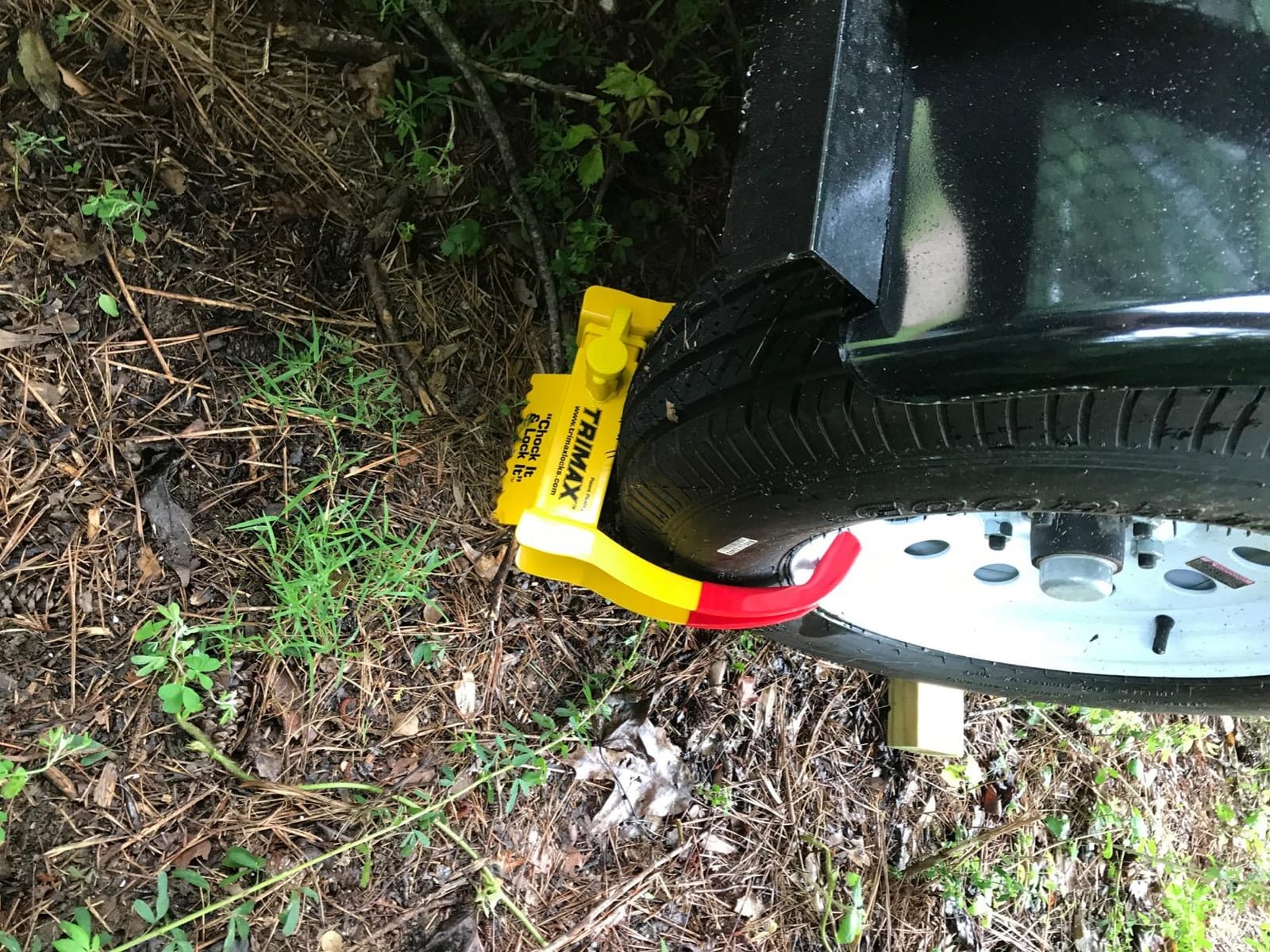
The rubber coated arms are a detail that matters more than it sounds. They grip the tyre firmly without scratching the rim, and on a trailer with polished or clear-coated wheels that is the difference between a lock you use weekly and a lock that ends up in the shed because you did not want to mark the rim.
It also works as a chock. The built-in wedge stops the wheel rolling, which means you can use it as a security device and a parking aid on a slope at the same time. Many owners also use these on boats, ATVs, and fifth wheels, which is why the fit range is expressed in tyre width rather than trailer type.
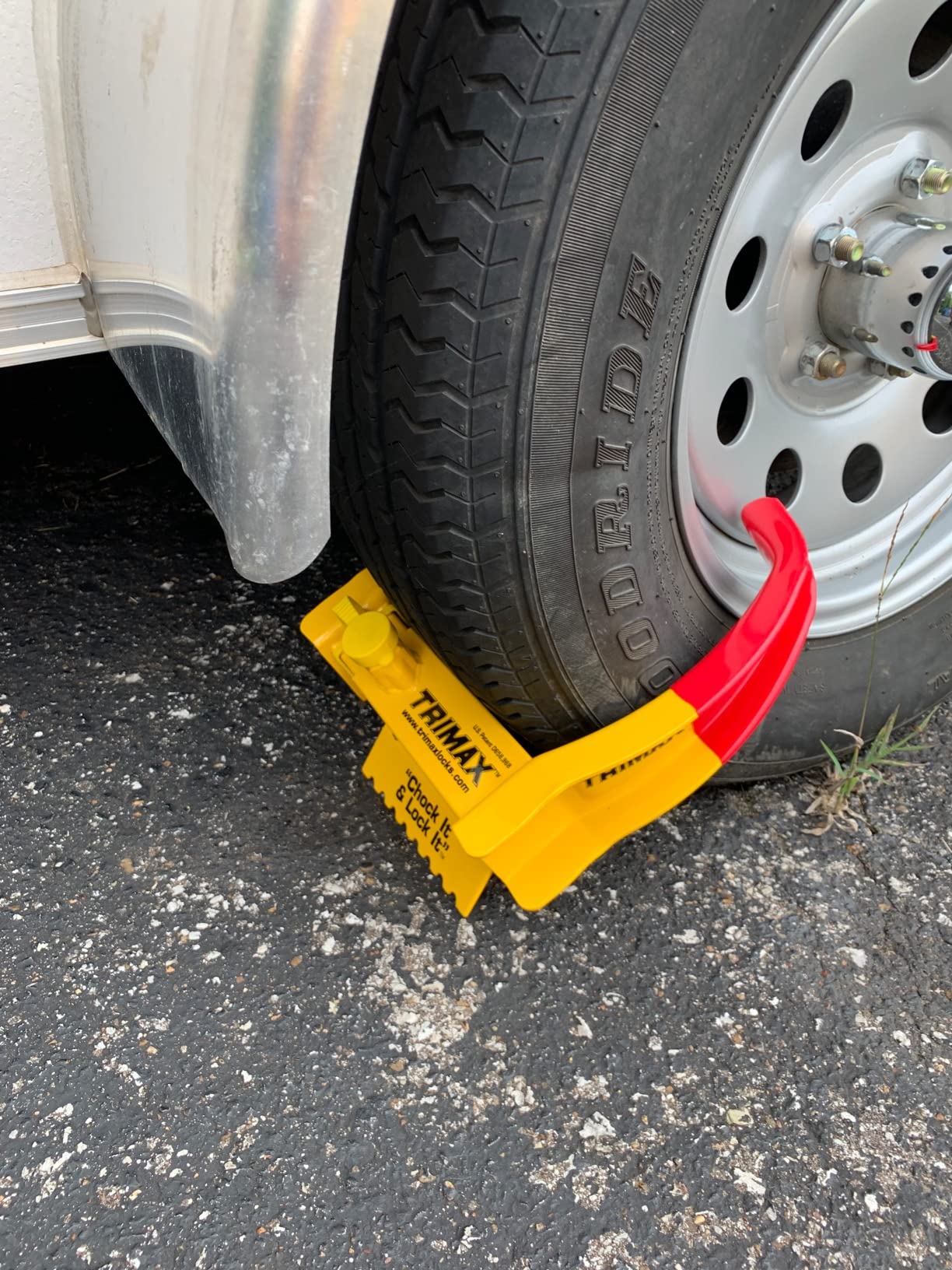
Where a wheel lock beats a coupler lock
Wherever the trailer sits without a tow vehicle attached, the wheel lock does more. A trailer stored for months has no truck next to it, so a coupler lock is protecting a point that nobody can use until a truck appears, and a wheel lock is protecting the trailer against being rolled or dragged on a fork truck.
It also defeats the ratchet strap method. Owners in r/Sacramento and r/halifax describe trailers taken with a strap because the coupler was locked and a spare ball was not needed. A locked wheel stops that approach before it starts.
Where it falls short
Six pounds is a real walk across a storage yard, and it is noticeably heavier than the aluminium wheel boots on the market. If you have to carry it fifty feet from the truck, that weight is a genuine daily friction point.
It immobilises exactly one wheel. A determined thief with a jack and a lug wrench can still lift the trailer onto that wheel and drag the other three, so most owners who use one fit a second on the opposite side. The 30 day written warranty is also the thinnest in this roundup, despite the product being sold with a limited lifetime warranty claim in its feature listing.
6. CZC AUTO 5/8 Inch Hitch Pin Lock: Most Versatile
CZC AUTO Trailer Hitch Pin Lock 5/8″ for Class III IV 2″ 2-1/2″ Receiver
Fits 2 and 2-1/2 inch receivers
Carbon steel, 0.32 kg
360 degree rotating head
Zinc alloy lock core
Pros
- Lowest cost lock in the roundup and still electrophoretic painted carbon steel
- 5/8 inch pin with 3-1/2 inch effective length covers 2 and 2-1/2 inch receivers
- 360 degree rotating head is easy to grip and operate
- All-weather rubber key slot cap keeps moisture and dust out
- Zinc alloy tubular lock core
- Rated pull force of 5000 pounds
Cons
- Lock can turn stiff after long outdoor exposure
- Some buyers report binding that needs force to open
- Plain black finish gives less visible deterrence than a bright lock
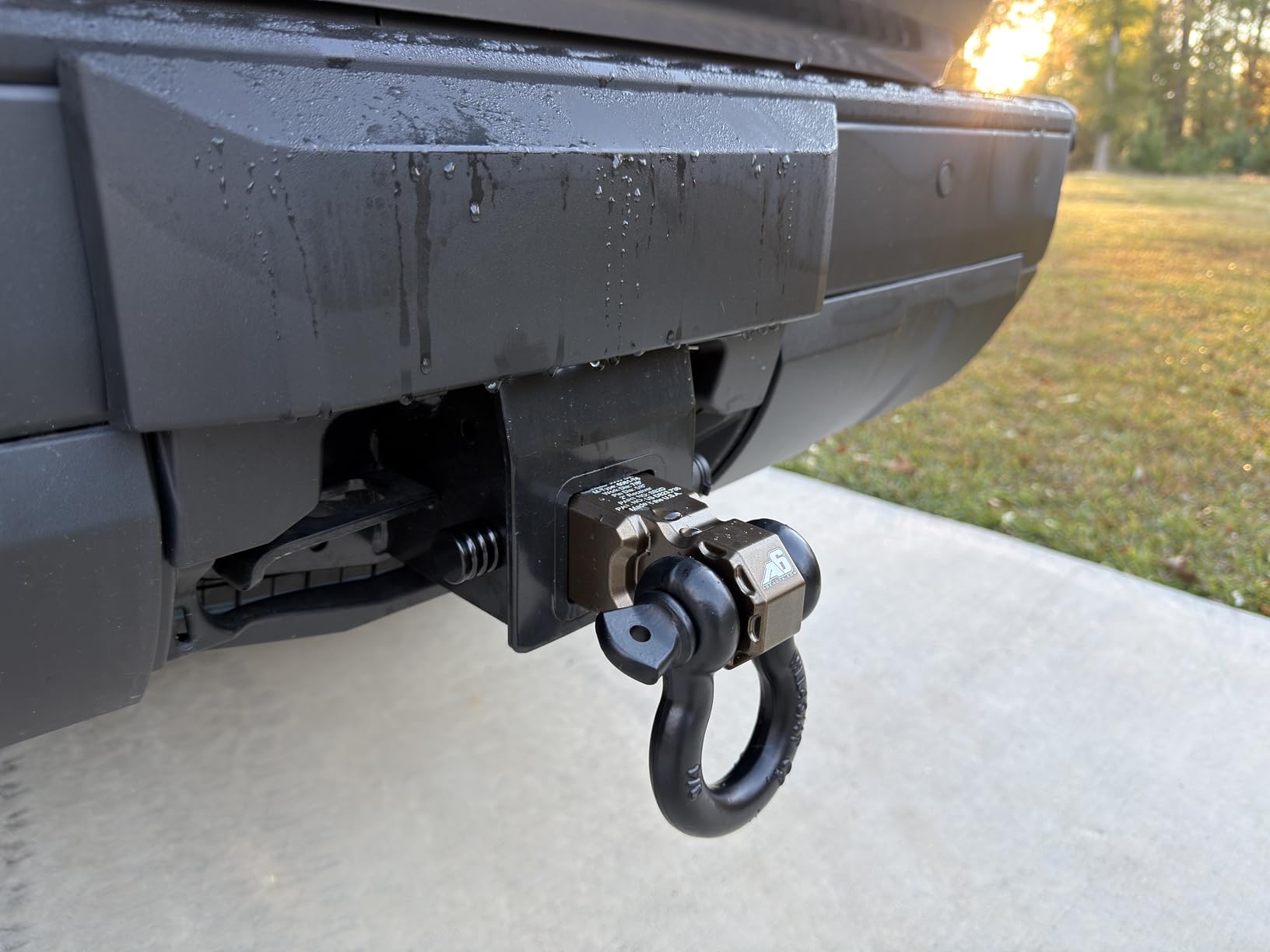
This is the pick if you want a receiver lock that does the job without turning hardware into a project. It holds a 4.6 average across 9,268 reviews, which is a stronger verified record than most of the more expensive options here, and it is the second most reviewed product in the roundup by some distance.
The 5/8 inch pin with 3-1/2 inch effective length fits both 2 inch and 2-1/2 inch Class III and IV receivers, so it covers most travel trailer tow vehicles in a single part. The listed pull force of 5000 pounds is a manufacturer figure rather than an independent test, but it is consistent with the carbon steel construction.
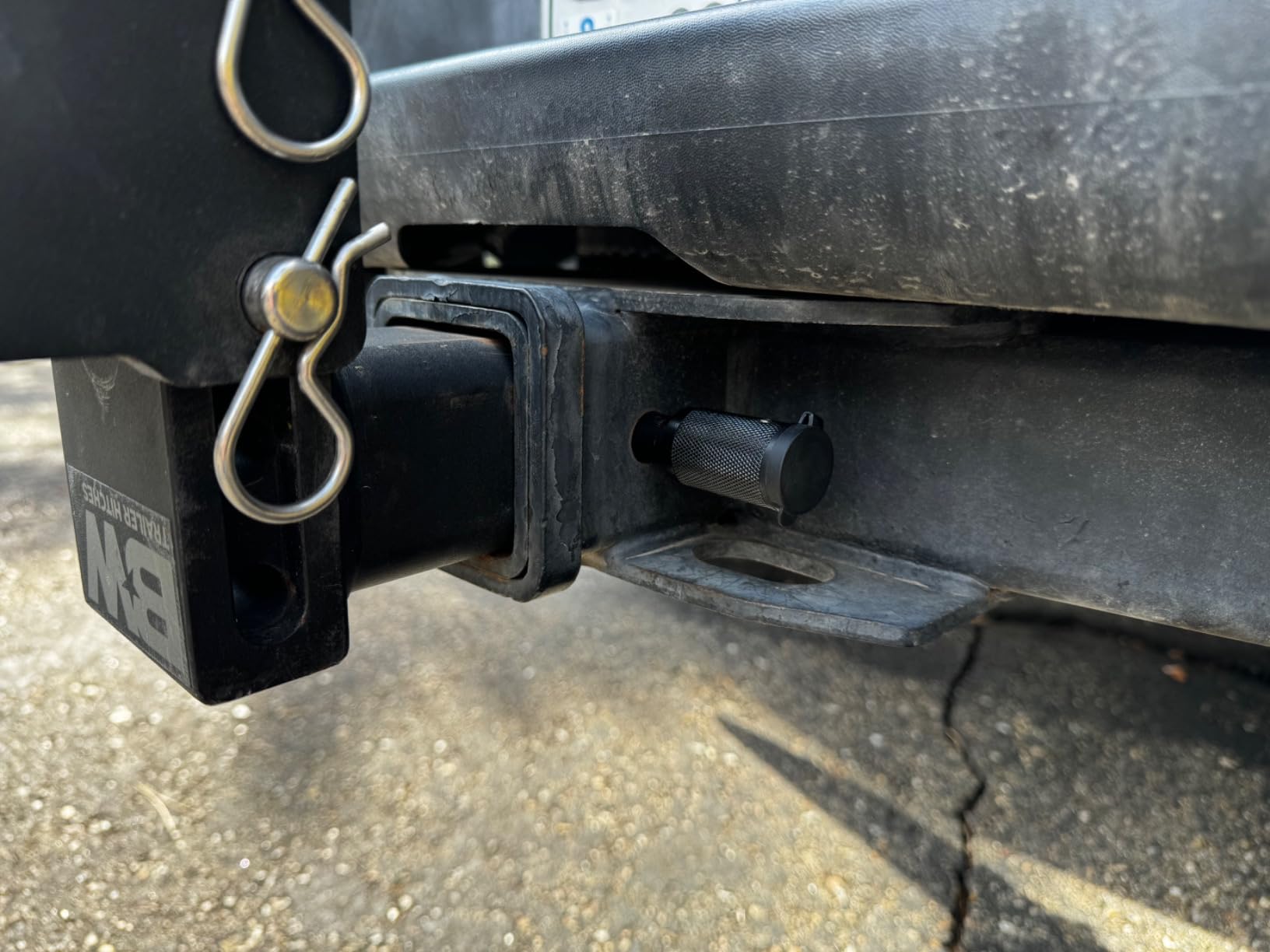
Two design touches make it easier to live with. The 360 degree rotating head means the lock is always at a comfortable angle to your key regardless of how the receiver is oriented, which sounds trivial until you have tried to unlock a pin in a dark car park. And the all-weather rubber cap over the key slot keeps grit and moisture out of the cylinder.
It is also versatile beyond the security use. Owners fit it to hitch racks, cargo trays, bike racks, hitch balls, and tow ropes, so if you have multiple accessories on the back of the truck, the same key pattern covers all of them.
What you give up for the lower cost
The main concession is the cylinder. A zinc alloy tubular core is simpler and cheaper than the disc detainer or controlled-key mechanisms in premium locks, and it is the part a determined attacker would work on first. The painted carbon steel body is also lighter in the hand than the stainless options, which reduces the resistance to a pry attempt.
At roughly a third of a pound, it is by far the easiest of the receiver locks here to carry, which sounds like a small thing until you are fitting it in the rain at the back of a storage row.
What owners complain about after a few seasons
The recurring complaint is the same one reviewers mention over and over: the lock stiffens after extended outdoor exposure, and a few buyers report binding that needs real force to open. That is a lubrication issue rather than a failure, but it is the difference between a lock you leave fitted and one you eventually take off.
The black painted finish also gives up the visual deterrence that a bright yellow or red lock provides. If your trailer sits in an open lot where a passer-by might try the coupler, appearance does more work than it does in a gated facility.
7. METOWARE Universal Coupler Lock: Best for Visible Deterrent
METOWARE Trailer Coupler Lock, Fit 1-7/8″, 2″, 2-5/16″ Coupler, Yellow
Fits 1-7/8, 2 and 2-5/16 inch couplers
Zinc alloy core, 1.6 lb
11-position ratchet
Deterrent yellow finish
Pros
- Covers all three common coupler diameters so one lock covers most trailers
- 11 adjustable ratchet positions for quick fitting and removal
- All-metal construction with hardened top bar and cast ball housing
- Bright yellow finish is highly visible at night
- Zinc plating and rubber caps for weather protection
Cons
- Lighter gauge materials so it is a deterrent rather than a serious barrier
- Body can sit slightly loose on a 2 inch coupler at one end of the range
- Some owners report rusting and bent keys after prolonged rain exposure
- Lowest average rating in the roundup with a cluster of durability complaints
This is the fourth product in the roundup that covers all three common coupler sizes, and it is the cheapest of them, which tells you something about the trade-off. The 4.4 average across 2,526 reviews is the lowest here, and the gap is about durability over multiple seasons outdoors rather than fit or first impressions.
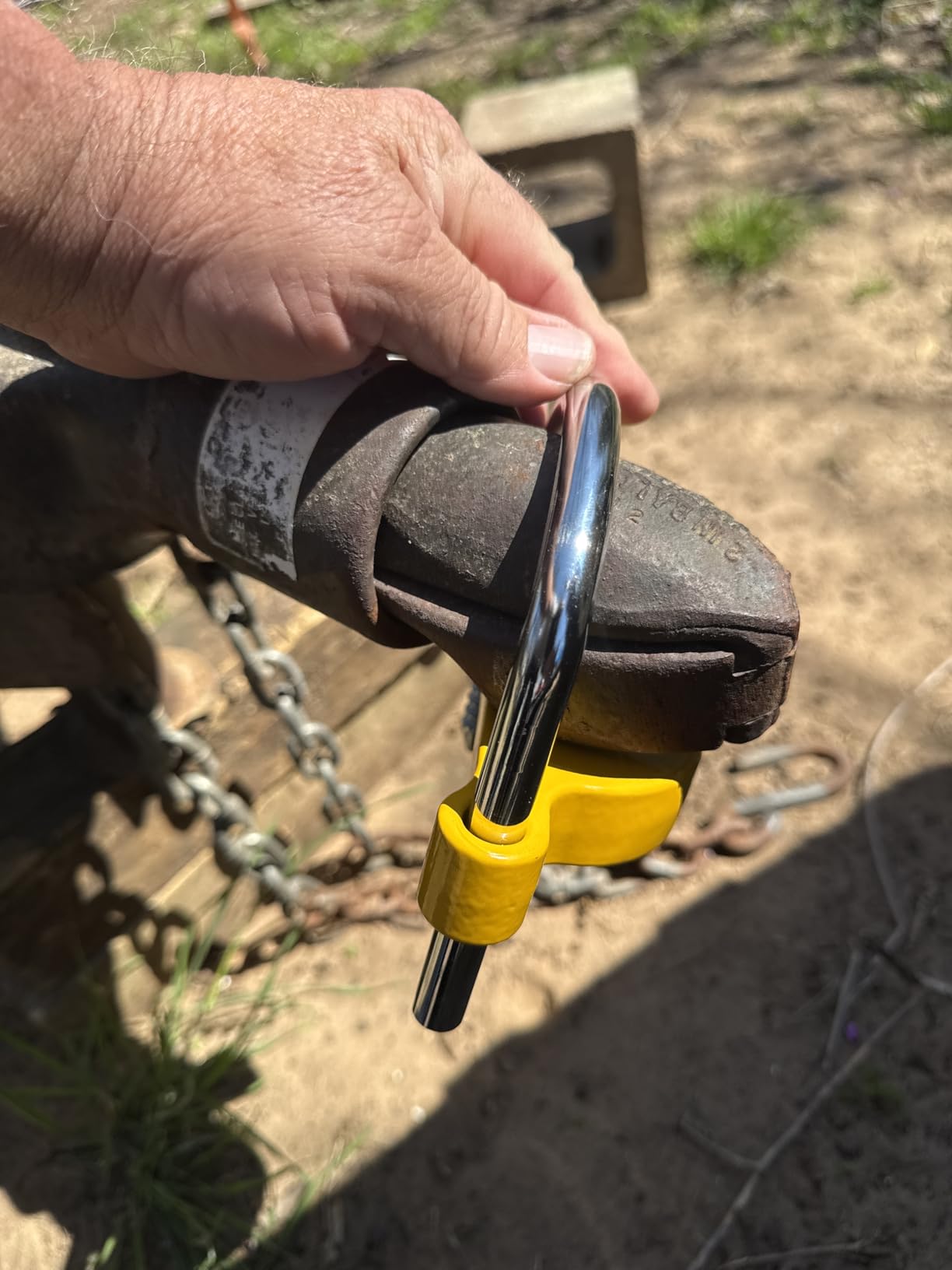
What it does well is the ratchet. Eleven adjustable locking positions let you fit it quickly on different coupler sizes and get it off again without tools, and the hardened top bar with a cast ball housing is a sensible layout for a ratcheted body. The bright yellow finish is the most visible deterrent colour of any lock in this roundup.
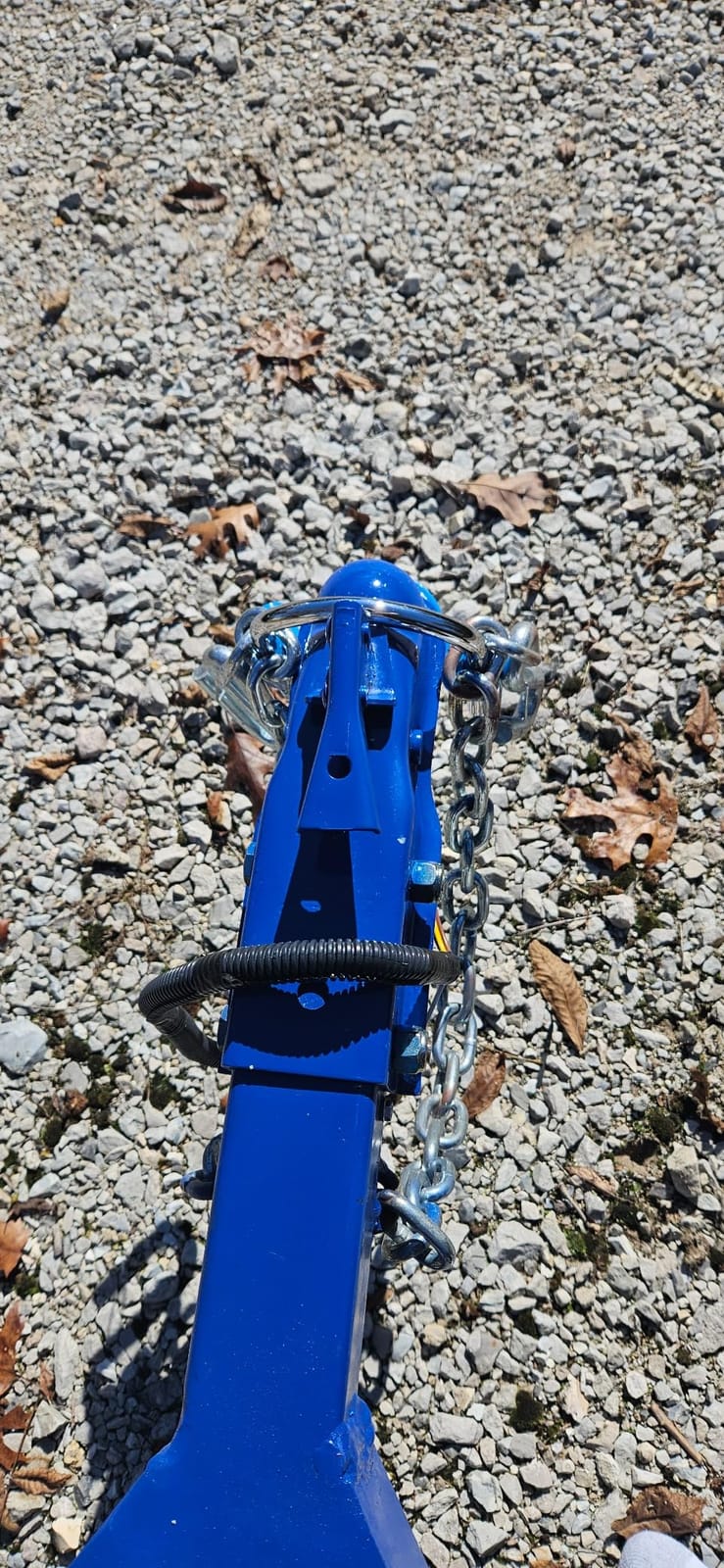
Owners with trailers at different ball sizes report using the same lock across them, and the 1.6 pound weight is the second lightest coupler lock here, so it is far easier to move between a coupler at home and one at a storage facility.
The construction is all-metal with a zinc alloy tubular core and anti-corrosion zinc plating, plus rubber caps on the exposed points. That is a sensible weather package for a lock that will live outside through several seasons of rain and road spray.
Where a bright finish genuinely helps
Visual deterrence is most valuable in open, unmonitored lots where a person walks past a row of trailers at night with a bolt cutter bag. A lock that is obviously fitted reads as a risk they do not need to take, and yellow is harder to overlook in a headlight beam than black or red.
For a first trailer and a first lock, that visibility has real value. It also makes the lock easy to find in a dark lot when you are walking back to it with a torch off to save battery.
Where the durability complaints come from
Owners report rusting and bent keys after prolonged rain exposure, and the 4.4 average reflects a visible cluster of three-star durability feedback. The lighter gauge materials are the root cause: a stamped body with a tubular core is not going to match a 16 ounce alloy steel lock against a pry bar or a long winter.
The wide adjustment range also has a cost. Because one body has to span 1-7/8 inch through 2-5/16 inch, it can sit slightly loose on a 2 inch coupler at one end of the range, and a small side-to-side play is reported by some owners on particular couplers.
8. Vehiclex 5/8 Inch Hitch Pin Lock: Best Anti-Rattle Pin
Vehiclex Trailer Hitch Pin Lock for 2″ and 2.5″ Receiver, Class III & IV
Fits 2 and 2.5 inch receivers
Carbon steel, 1.25 lb
Five rubber O-rings
Two keys supplied
Pros
- Five adjustable rubber O-rings absorb receiver slack and stop rattling
- Carbon steel with black electrophoretic paint resists corrosion
- Rubber cap protects the key slot from dust and mud
- Fits 2 inch and 2.5 inch receivers
- Two keys with a unique tubular key per unit
- Compact 7.7 inch package stows easily in a hitch cargo tray
Cons
- Secures the receiver only so the coupler ball stays reachable
- No slide cap style shield over the lock body itself
The detail that separates this one from every other receiver pin in the roundup is the set of five rubber O-rings. They are sized to take up the slack between the pin and the inside of the receiver, which eliminates the rattle that develops as a plain pin wears in a slightly oversized receiver, and the anti-rattle fit is the most commonly praised detail in the 844 reviews.
A 4.7 average on 844 reviews is a strong result, and the feedback is unusually narrow: nearly all of it is about the O-rings, the carbon steel finish, and the fit across 2 inch and 2.5 inch receivers. Reservations are limited to what it does not cover.
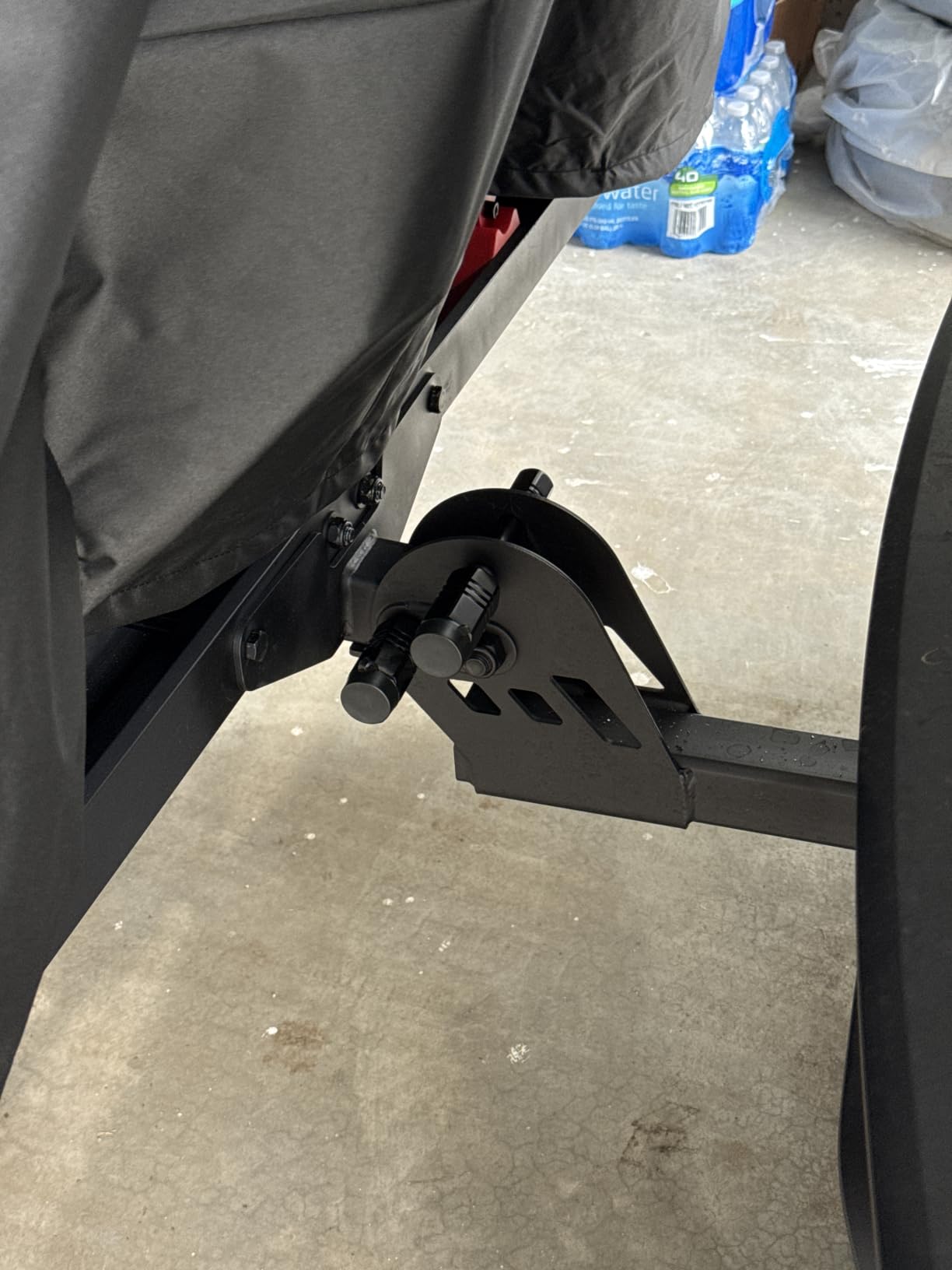
The carbon steel body carries a black electrophoretic paint, a finishing process that puts a uniform coating on every part including the threads and the key slot edges. In practice it holds up well to weather and road salt, and the rubber cap over the keyway keeps the lock from filling with grit.
Each unit ships with a unique tubular key and two keys, and keyed-alike variants are available in two-lock and four-lock sets. That is worth knowing if you run several accessories off the same receiver, because separately purchased sets will not share a key number.
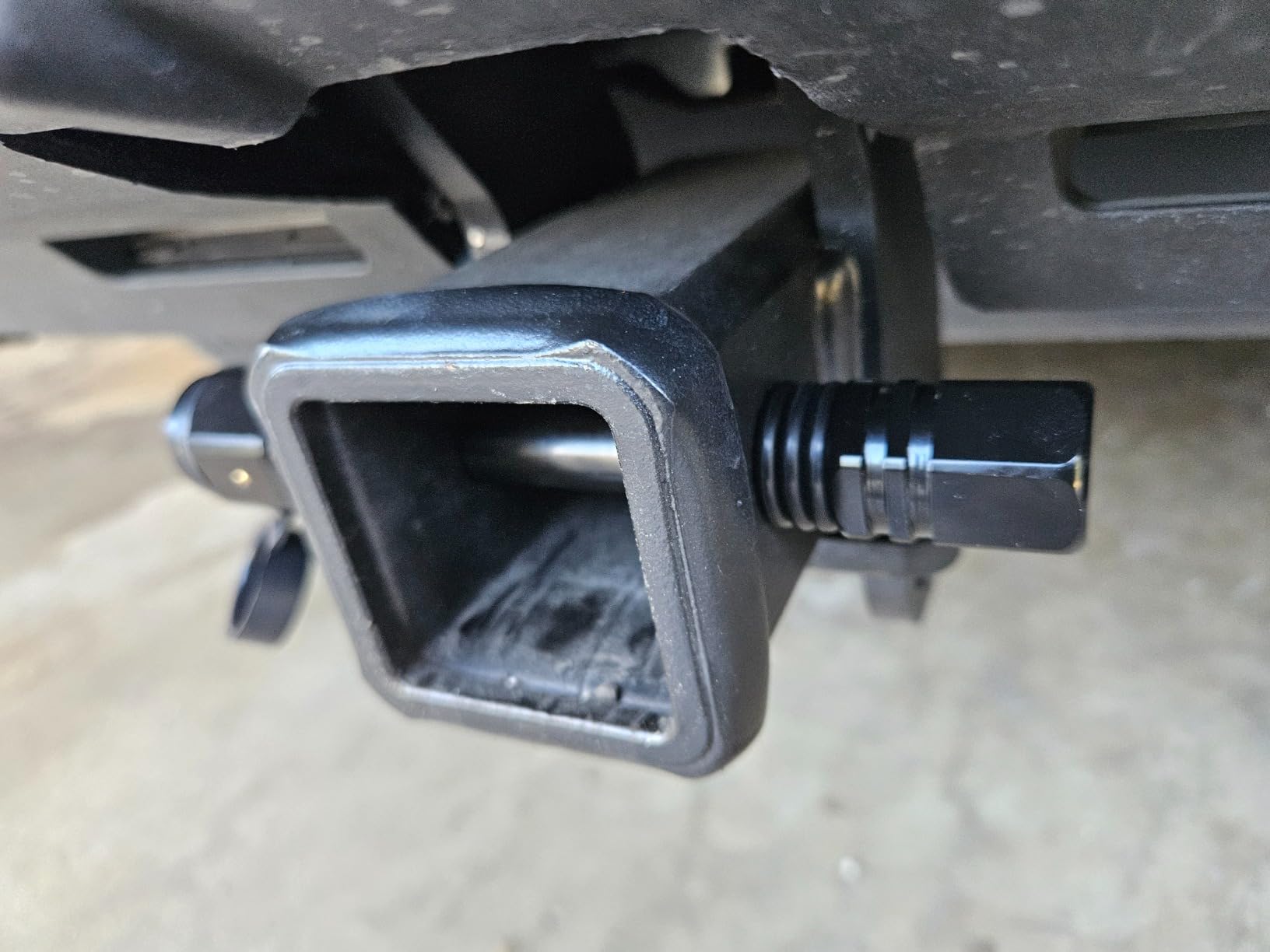
Who notices the difference day to day
The O-rings matter in a very specific situation: a receiver that is not a perfect match for the pin. Cheap and worn receivers develop slack, the pin rattles against the walls, and on a towing setup that noise works its way into the hitch and the trailer frame. The rubber takes that up.
It is also the tidier option if you use the hitch as a cargo tray. At 1.25 pounds and a 7.7 inch package, it disappears into a tray, and the locked pin doubles as a tie-down point for a bike rack or cargo box.
Where it falls short
It covers the receiver and nothing else, so the coupler ball on your trailer stays reachable for a ratchet strap or a substituted ball. This is the standard limitation of the whole receiver pin class, and the reason we treat these locks as a second layer rather than the only layer.
Unlike the Rhino USA, there is no sliding cap over the lock body, only a rubber cap on the key slot. Debris can still collect around the mechanism, so this one wants an occasional wipe-down and a shot of lubricant if it lives outside through winter.
How to Choose a Trailer Lock for a Travel Trailer
Fitment comes before every other consideration, and it costs you five minutes with a tape measure. Get that wrong and the best-built lock on the market is an expensive paperweight on a storage lot.
What is a trailer coupler lock?
A trailer coupler lock is a hardened steel device that clamps over the hitch ball and the coupler latch so the trailer cannot be hitched up and towed away. A wheel lock is a separate device that clamps over or boots a wheel to stop the trailer rolling or being dragged. A hitch receiver lock works on the tow vehicle, blocking the receiver so no ball mount can be inserted.
Confirm your coupler size before you order anything
The ball size is stamped into the coupler housing, usually on the top or the side above the latch handle. Three sizes matter: 1-7/8 inch, common on small pop-up and utility trailers; 2 inch, the standard for nearly all bumper-pull travel trailers; and 2-5/16 inch, found on larger fifth-wheel hitches and heavier tongue-weight setups.
Then check what the lock covers. The Master Lock 379ATPY, the METOWARE, and the Kohree all span two or three of those sizes in one body, which is why they suit a household with more than one trailer. A lock sold as coupler specific usually means it fits one size, so read the listing rather than the product name.
If you are still unsure, measure the ball itself with calipers. The stamped number is more reliable, but it is frequently worn smooth on an older trailer.
Travel trailer fitment traps that hide behind high ratings
Most of the highest-rated locks in this category earned their reviews from boat and utility trailer owners, not travel trailer owners. That matters because a great many wheel boots are published for single-axle trailers under 2,000 pounds, and a travel trailer with multi-axle electric brakes falls outside that envelope even when the tyre width fits.
Check three things before buying a wheel lock: the tyre width range, whether the design is restricted to single-axle or non-braked trailers, and whether the stated weight limit sits under your trailer’s gross weight. The Trimax TCL65 avoids the problem by specifying a 6 inch to 10.5 inch tyre width range rather than a trailer class, which is a safer way to express fitment.
For coupler locks the equivalent trap is the same one. A lock that looks universal often only spans 1-7/8 inch and 2 inch, which leaves 2-5/16 inch trailers uncovered. That is why we list the two sizes separately for the Kohree.
What hardened steel and heavy duty actually mean
There is no ASTM, UL, or ANSI standard for trailer locks sold in the United States, so nobody grades them the way a car lock gets a grade. The UK’s Sold Secure and Thatcham schemes are the only independent grading applied to vehicle security products anywhere, and neither certifies a trailer coupler lock for a US market.
That absence is why heavy duty and hardened are marketing words rather than measurements. The honest proxies are the ones a manufacturer will put in writing: the material, the weight, the cylinder type, the country of origin, and the warranty term. A 16 ounce alloy steel body with a limited lifetime warranty tells you more than a page of adjectives on a listing, and a 30 day warranty tells you less.
Expect an angle grinder to defeat any of these locks given enough time and a quiet location. The realistic value is that a grinder is loud, and loud brings people out of nearby campers.
How to keep locks from rusting and freezing
Stainless steel and powder coated finishes handle rain and road salt best, and the anodised or plated aluminium-style locks handle it worst. Whatever you buy, put a graphite or penetrating lubricant on the cylinder twice a year, and work the key in and out a few times before you expect it to turn.
Freezing is the version of the same problem. Moisture that gets into a keyway and then freezes will make a cylinder feel seized on a cold morning even though nothing is broken, and the rubber key caps fitted to several of the locks here are specifically there to keep that moisture out. A cap that covers the keyway entirely is worth more than a heavier body.
Keyed alike, and the limitation nobody mentions
A keyed alike set opens with one key, which is the right answer for anyone with two trailers, a trailer and a hitch accessory, or a storage locker in the same building. But two sets bought separately can never be matched to one key number, so a lost set means buying a new key number or paying to rekey what you have.
Plan for it: keep one dedicated key ring for trailer hardware and never take it into the tow vehicle, and treat the key as part of the lock rather than as a spare you will find later.
Wheel Lock vs Coupler Lock: Which to Buy First
Buy the coupler lock first, and on a single-budget decision the Master Lock 379ATPY is the one to fit. It is the only point on a bumper-pull travel trailer that a thief needs a ball to connect to, so blocking the coupler closes the fastest route to a tow-away, and its universal fit means it covers essentially every travel trailer you will meet.
The wheel lock is the better second purchase, and it is the better lock in one specific situation: a trailer stored long term with no tow vehicle beside it. A coupler lock on a trailer that nobody can hitch is protecting an unusable connection, while a wheel lock stops the trailer being rolled, dragged, or strapped to a substitute ball.
So the order depends on where the trailer lives. In a storage facility or a campground lot where the truck is parked alongside, fit the coupler lock first. On rural property where the trailer sits alone for months, fit a wheel lock first. Either way, the real answer is that a second layer is what changes the outcome, and the locks owners recommend in RV forums are almost always used in pairs.
Layer them geographically. A wheel lock on the wheel at the back of the trailer stops someone rolling it forward, and a coupler lock stops the hitch. An attacker has to defeat both, and each one adds a step that raises the odds of being seen.
Layered Security: Two Locks, One Key Where Possible
A single lock is a single point of failure, and owner threads are blunt about that. The most common recommendation from people who have actually been through an attempted theft is a coupler lock plus a wheel lock, with the safety chains locked as a cheap third layer on top.
Locking the safety chains through the frame or the propane tanks is an old owner trick that costs almost nothing and stops a tow-up, because a trailer that cannot be moved cannot be stolen. It is not a substitute for a lock, and it is not insurance against a determined attacker with a saw, but it adds another decision point for someone working in a hurry.
Where you can get one key for the whole set, do it. A keyed alike coupler lock and receiver pin means one key in your pocket for the trailer and the truck, which is what makes a daily habit of locking up realistic. A trailer that is easy to secure is a trailer that actually gets secured.
If you tow with more than one vehicle, choose locks that cover the receiver sizes you actually use rather than buying the cheapest one for each truck. The B&W TS51230 covers 2 inch, 2.5 inch, and 3 inch in a single body for exactly this reason.
Finally, remember what locks are not. No US agency publishes a trailer theft count, and no lock on this list will stop a prepared attacker with a grinder in a quiet location. The realistic goal is a trailer that is not the easiest target in the row, plus the documentation and identification that lets police return it if it does go.
Trailer Lock Safety: Never Tow With a Wheel Lock Fitted
Never tow a trailer with a wheel lock fitted. A boot clamped around a tyre that is then loaded onto a hitch and rotated at road speed is a wheel and brake failure waiting to happen, and the damage is far more expensive than the lock. The same applies to a coupler lock that fouls the hitching geometry.
The habit most owners settle on is simple: locks go on when the trailer is unhitched, and come off before the truck moves. Owners in r/RVLiving debate exactly this tradeoff, and the practical answer is that travelling unlocked for the duration of a trip is an acceptable convenience tradeoff as long as the lock is refitted the moment you unhitch.
After any suspected defeat attempt, inspect before you tow. Check the wheel for a pry mark or a distorted rim, confirm the lug nuts are at the correct torque, and look at the brake actuator and breakaway switch for damage. A trailer dragged a short distance can lose a tyre, and a compromised brake line will not announce itself until the descent.
If a lock was forced, treat it as compromised rather than as damaged. A bent shackle or a scored cylinder means replace the lock, not straighten it, because the same weakness is now known to anyone who has seen the trailer.
Frequently Asked Questions
What is a trailer coupling lock?
A trailer coupling lock is a hardened steel device that clamps over the hitch ball socket and the coupler latch so the trailer cannot be hitched up and towed away. A wheel lock is a separate device that clamps or boots a wheel to stop the trailer rolling or being dragged, and a hitch receiver lock blocks the receiver on the tow vehicle so no ball mount can be fitted.
What is the most effective type of lock for a trailer?
A layered setup is most effective: a coupler lock such as the Master Lock 379ATPY to block the hitching point, plus a wheel lock such as the Trimax TCL65 to immobilise the trailer itself, plus a hitch receiver lock to stop a thief substituting a ball mount. Each covers a different attack vector, so combining them means defeating two or three devices instead of one.
How do you keep someone from stealing your travel trailer?
In priority order: have your name and a phone number welded to the frame in a visible spot, add reflective identification inside, photograph and document the VIN and plates, then fit a coupler lock and a wheel lock, and finally park in a lit, occupied or gated area. Law enforcement consistently ranks identification and documentation above hardware.
What size coupler lock do I need for my trailer?
Check the size stamped into the coupler housing, usually on the top or side above the latch. Travel trailers most often use a 2 inch ball, smaller pop-up and utility trailers use 1-7/8 inch, and larger fifth-wheel hitches use 2-5/16 inch. A universal lock covering 1-7/8 inch, 2 inch, and 2-5/16 inch in one body removes the guesswork.
Can you tow a travel trailer with a wheel lock fitted?
No. A wheel lock fitted while towing can cause wheel or tyre failure, damage the brake assembly, and invalidate your insurance. Locks should be fitted only while the trailer is unhitched and stored, and removed before the tow vehicle moves. The same caution applies to a coupler lock that fouls the hitching geometry.
Are trailer locks worth it?
For a stored travel trailer, yes, as a delay tactic. They make your trailer the slower choice among the easy targets parked either side of it, and they block the two fastest theft methods: a substitute ball mount in your truck and a coupler override. They are not a barrier against a prepared attacker with an angle grinder, which is why identification and documentation still matter.
Do trailer locks fit all trailers?
No. A lock sold as universal usually spans 1-7/8 inch and 2 inch ball couplers, which leaves 2-5/16 inch trailers uncovered. Wheel boots are the opposite problem, with many published for single-axle trailers under 2,000 pounds, which excludes travel trailers with multi-axle electric brakes. Always check the stated fitment against your coupler size, tyre width, and axle count.
Is there a standard for trailer locks?
No. There is no ASTM, UL, or ANSI standard for trailer locks sold in the United States, and the UK’s Sold Secure and Thatcham schemes do not certify them for a US market. That is why hardened and heavy duty are unverified marketing words. The honest proxies are written specifications: material, weight, cylinder type, country of origin, and warranty term.
Two related reads if you are setting up a trailer for the first time: our trailer hitch guide covers receiver classes and tongue weight, and our travel trailer tire guide explains the tyre width ranges that decide whether a wheel boot fits at all.
If your trailer spends time on a boat ramp or near water, the boat trailer tire picks explain the different corrosion and fitment picture there. And if you are replacing entry steps while you are at the storage lot, we rank the best RV steps for travel trailers for that same fitment-first approach.
Final Verdict: The Best Trailer Locks for Travel Trailers in 2026
Start with the coupler. The Master Lock 379ATPY is our pick for the first lock on any travel trailer, because it covers all three common ball sizes, weighs 16 ounces, resists picking and prying, and carries 17,447 reviews at 4.7 with a rekeyable cylinder and a limited lifetime warranty behind it. Nothing else here fits as many trailers with as little fuss.
Add the Rhino USA pinning your tow vehicle next, and fit a Trimax TCL65 on the opposite wheel from anything you already secure. If your coupler measures 2-5/16 inch, take the Kohree instead of the universal lock. For a household running more than one vehicle, the B&W TS51230 covers every receiver size at once.
Whatever you choose, check the fitment before you order, layer two locks rather than one, and never tow with a wheel lock fitted. Those three habits matter more than any single piece of steel in this roundup.