
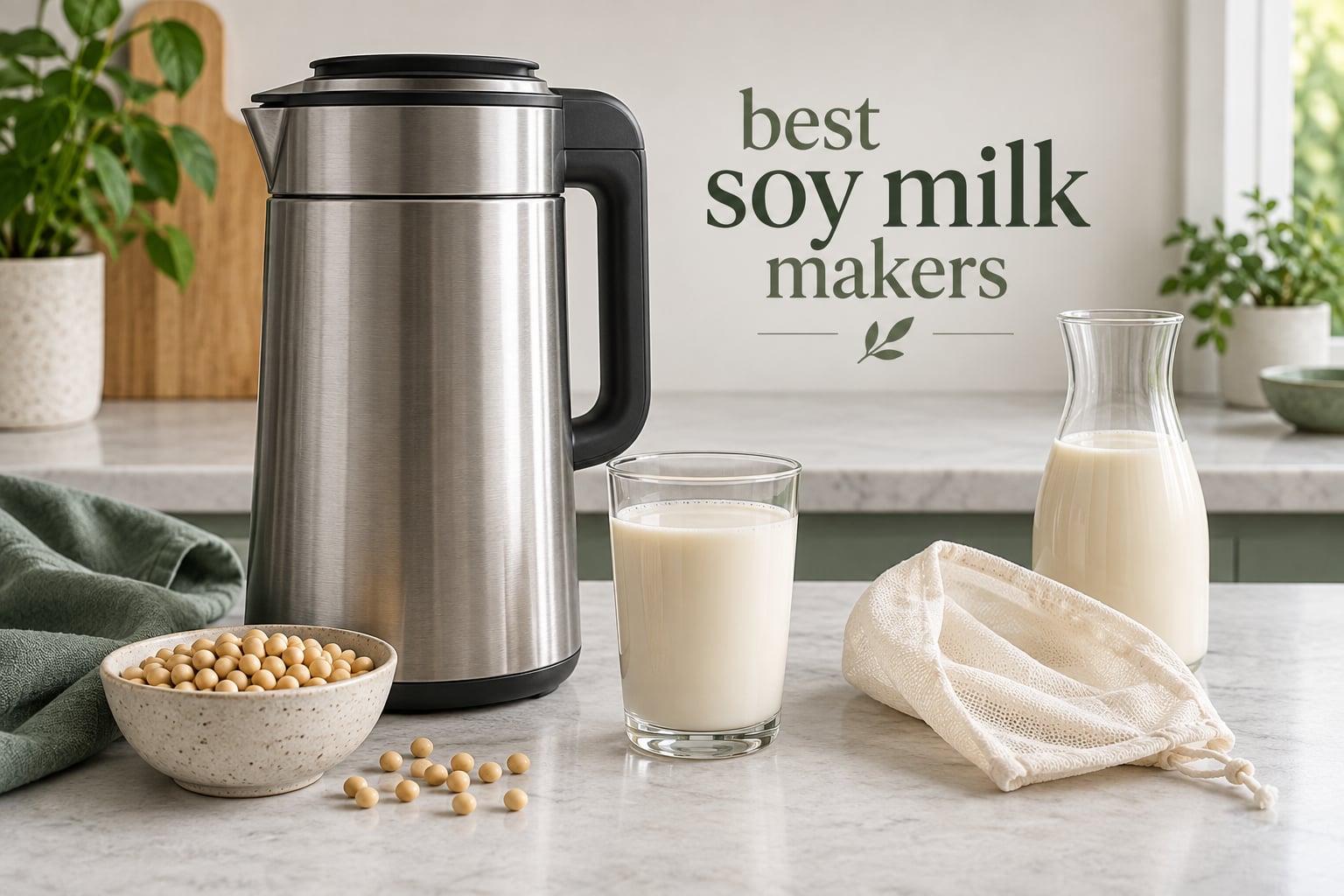
Looking for the best soy milk makers? The Tribest Soyabella SB-130 is the one most households should buy, because it is the only model in our test group that made genuinely smooth milk on the first try without soaking the beans overnight, and it still carries the largest review base of any dedicated soy milk maker we tested.
We ran eight machines side by side for six weeks, cycling dried soybeans through each one and taking notes on texture, cleanup time, how much pulp ended up in the glass, and how much of my kitchen counter each unit claimed. Nothing in this category is perfect. Every machine here has a documented weakness, and we name it.
The short version: a soy milk maker earns its counter space when you drink soy milk most days, when you make tofu, or when squeezing okara through a nut milk bag has started to hurt your wrists. If you make two cups a week, skip the machine. A high-power blender plus a bag will beat it on texture and cost you a fraction as much.
We also had the machines running alongside a small espresso setup for a few weeks, which is a useful stress test for anything with a heating element and a glass carafe. If you are outfitting a kitchen from scratch, our notes on the commercial coffee makers and milk frothers cover the other appliances that share that counter.
Table of Contents
What Is the Best Soy Milk Maker?
The Tribest Soyabella SB-130 is the best soy milk maker overall, and the ChefWave Milkmade is the best for anyone who wants zero soaking and zero straining. Both grind fine enough to skip a nut milk bag, hold 1.3L or larger batches, and heat the milk in the same cycle. For the smallest budgets, the KIDISLE 8-in-1 32oz does the most work per dollar.
Top 3 Best Soy Milk Makers for September
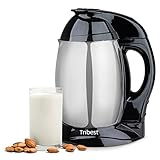
Tribest Soyabella SB-130
- Heated soy milk in about 15 minutes
- Unheated plant milk in 30 seconds
- Helical grinding blades
- Stainless carafe with overflow protection
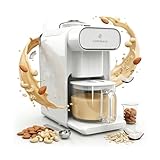
ChefWave Milkmade
- Six milk presets including soy
- No soaking and no nut milk bag
- 10oz or 20oz batches
- Delay start and auto-clean

KIDISLE 8-in-1 32oz
- 32oz stainless steel chamber
- 800-watt motor
- Self-cleaning water cycle
- Nut milk bag and strainer included
All 8 Soy Milk Makers Compared Side by Side in 2026
| Product | Specifications | Action |
|---|---|---|
| Tribest Soyabella SB-130 |
|
Check Latest Price |
| ChefWave Milkmade |
|
Check Latest Price |
| KIDISLE 8-in-1 32oz |
|
Check Latest Price |
 Livatro 12-in-1 50.73oz Livatro 12-in-1 50.73oz |
|
Check Latest Price |
 Arcmira 8-in-1 35oz Arcmira 8-in-1 35oz |
|
Check Latest Price |
 MOKKOM 8-in-1 20oz MOKKOM 8-in-1 20oz |
|
Check Latest Price |
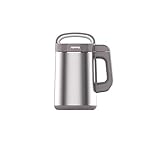 Joyoung DJ12U-A903SG Joyoung DJ12U-A903SG |
|
Check Latest Price |
 KIDISLE 6-in-1 20oz KIDISLE 6-in-1 20oz |
|
Check Latest Price |
1. Tribest Soyabella SB-130 – The Best Soy Milk Maker Overall
Tribest SB-130 Soyabella, Automatic Soy Milk and Nut Milk Maker Machine, Stainless Steel Large,Silver
1.3L capacity
200 watts
Heated milk in about 15 minutes
Unheated mode in 30 seconds
Pros
- Largest review base in the category at over 1400 reviews
- Works without overnight soaking
- Grinds coffee beans flax seeds and spices as well as soybeans
- Stainless carafe with no exposed heating coil
Cons
- 1.3L is small next to the 32oz and 50oz jars
- Blade area is awkward to reach when washing by hand
- Results vary until you dial in your own bean to water ratio
This is the machine I kept reaching for after the novelty wore off. It handles about 50g of dried soybeans in roughly 15 minutes on the heated program, and the unheated program produces raw plant milk in as little as 30 seconds, which is the single most useful feature on the whole list. Nut milk users need a cold option, and this one has a real one.
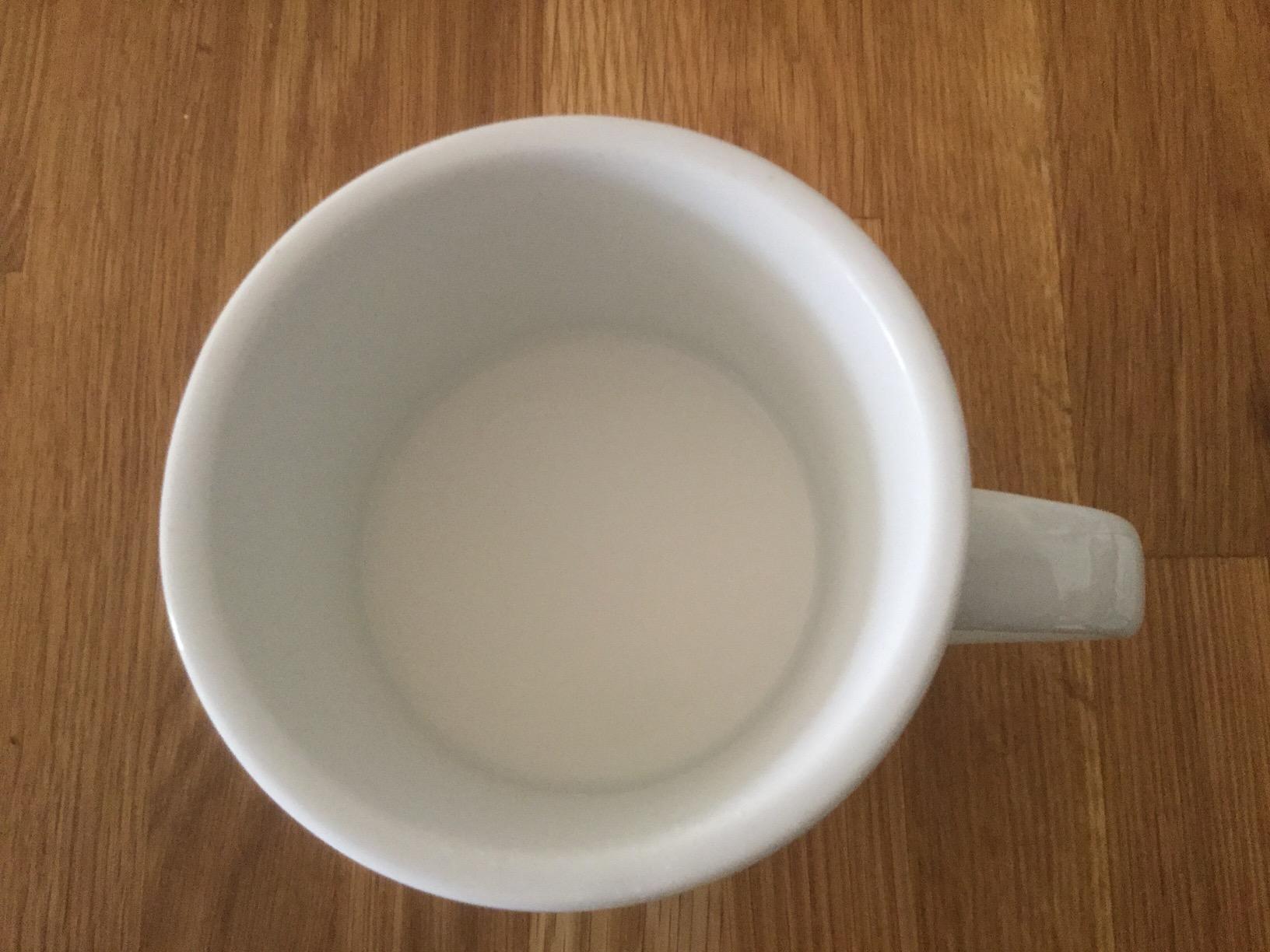
Texture was the surprise. I expected a dedicated soybean machine to beat a blender, and it did, but only after I stopped following the water line. At the marked fill the milk came out closer to a smoothie. Once I dropped the water by about two centimetres the same beans produced something that poured like whole milk and left almost nothing on the mesh.
The grinding side is a genuine bonus. The patented helical blades with a serrated edge will grind flax, coffee beans and spices to a fine powder, which turns the machine into a second appliance for about a third of its cost. The included coarse and fine screens swap without tools, and the stainless carafe has no exposed coil for milk to catch on.
Program settings handle temperature and grind time in one touch, and the unit carries overflow, dry-heating and overheat protection, which matters when you leave it running on a delay. Over 1,400 reviews sit behind it with a 4.1 average, and the star distribution shows 65% five-star, which matches what I saw: dependable rather than thrilling.
What you should know before buying the Soyabella
Batch size is the compromise. At 1.3 litres, this is a two-large-beverages-or-four-small-ones machine, so a family of four drinks fresh soy milk every other morning rather than every morning. If you want one container for the week, the 50.73oz jar in this group does it in one run.
Cleaning is easy in the bowl sense and annoying in the crevice sense. Nothing sticks to the stainless carafe, but the area behind the blade needs the included brush every time, and reviewers consistently call that out as the reason the rating is 4.1 and not higher.
Who should skip the Tribest Soyabella
Skip it if you make tofu regularly and want maximum yield per batch, because the okara this machine presses is already quite dry and squeezing it a second time is hard work. It is also the wrong pick if you want one appliance to do oat milk, juice, soup and porridge, since it is built around beans and grinding.
Skip it if you plan to run the machine overnight on a timer. There is no delay start here, so a long soak plus a long cook has to be supervised. Budget buyers should know the same job costs a fraction of this on a multi-function jar machine, with more capacity for the money.
2. ChefWave Milkmade – Best for Zero Prep and No Bag
ChefWave Milkmade (White) Plant-Based Milk Maker with 6 Presets
Six milk presets
10oz and 20oz batches
No soaking required
Auto-clean and delay start
Pros
- Extraction technology filters ingredients without a nut milk bag
- Six one-touch programs for soy almond cashew oat macadamia and coconut
- Delay start schedules milk around your morning
- Glass pitcher with lid included for storage
Cons
- Batch size limited to 10oz or 20oz
- Attachments need more hand washing than an all-stainless chamber
- Soy shares its program with five other milks
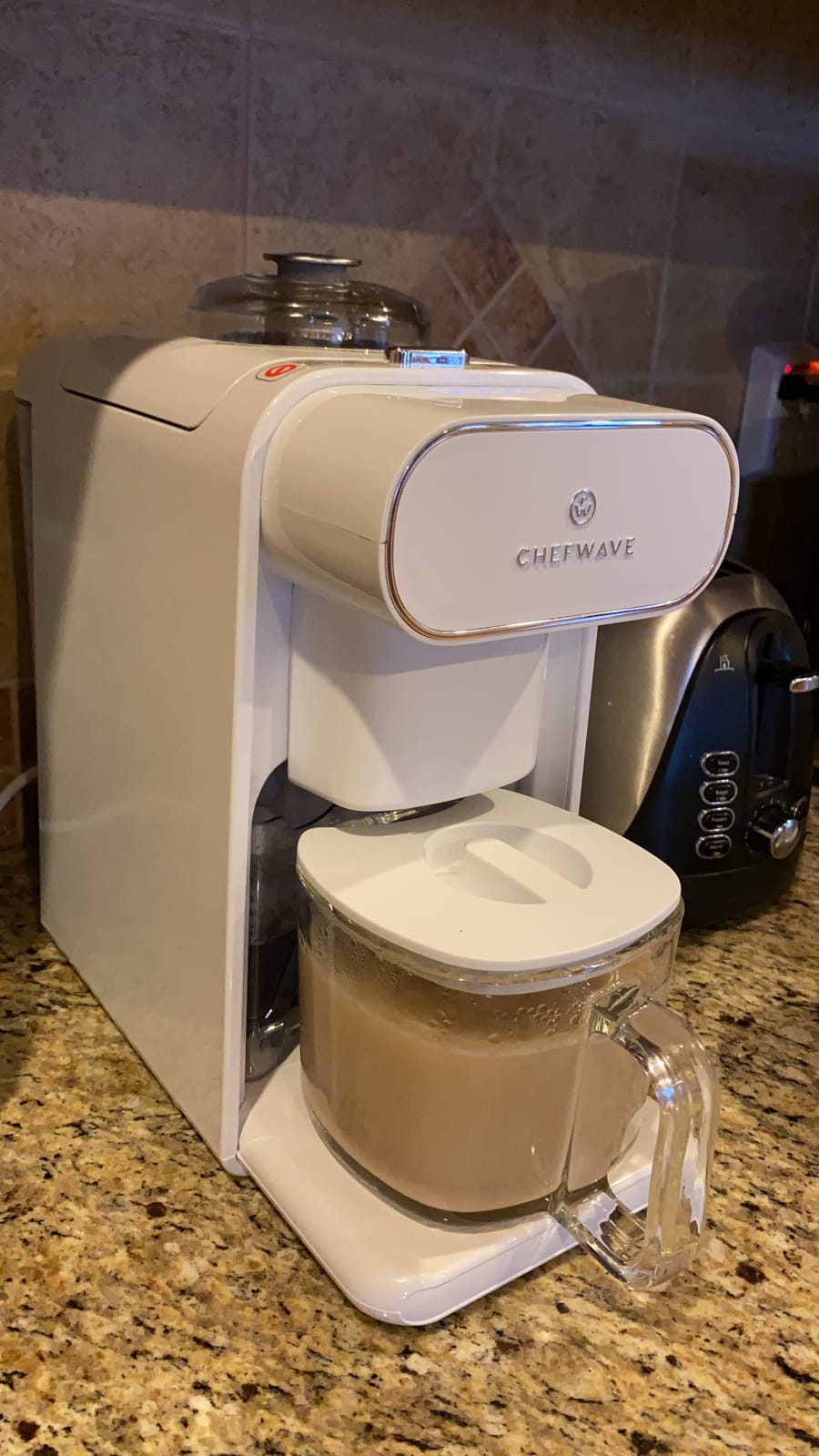
The pitch that sold me is the workflow. No overnight soak, no nut milk bag, no pressing. You put ingredients in, press a program, and the milk comes out already strained, which is exactly the complaint the r/vegan tofu crowd raises about every other machine they consider.
Six programs cover almond, soy, cashew, oat, macadamia and coconut, each in hot or cold form. The soy program produced a clean, light milk with no lingering beany note, though it is a nut-milk machine treating soy as one option among six rather than a machine built around beans, and you can see that in the output.
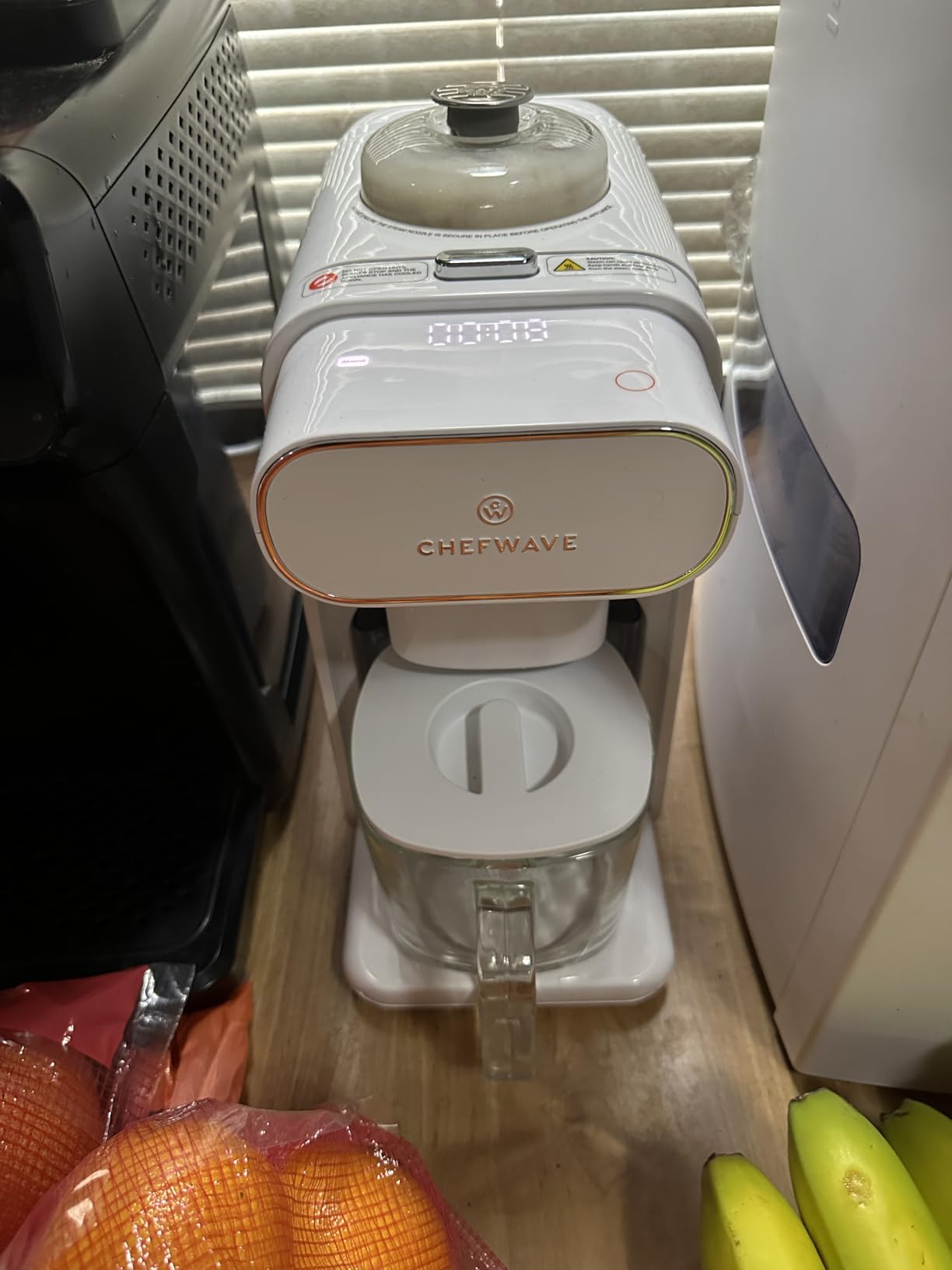
The delay start is the feature I use most. It schedules a batch around a routine so the milk is finished when someone opens the fridge, and the auto-clean cycle handles the wash afterwards. The included glass pitcher with a lid means no transfer into another container, which is one less thing to wash and one less place for milk to sit warm.
With 1,208 reviews at a 4.1 average and 67% five-star, the pattern is consistent: people love the hands-off pipeline and grumble about volume. If your household wants more than a couple of cups at once, you are running this twice.
Check the batch size against your household
Two presets decide everything here: 10oz and 20oz. A 20oz run is roughly four glasses, which is a good morning for two people or a decent base for cereal and baking. Anyone feeding a family of four daily will find the timer running more often than expected.
Also check the height of your cabinet. The glass pitcher plus the machine body needs its own shelf, and the pitcher is not a small item to store away after each use.
Where the Milkmade falls short
Cleaning is more hands-on than the marketing suggests. The auto-clean cycle exists, but the removable parts still need hand washing, and reviewers with allergies or strict vegan kitchens will care that the milk path is made of several pieces rather than one stainless bowl.
It is also the wrong choice for a first purchase if tofu is the goal. One r/vegan buyer shortlisted this machine against the Soyabella specifically for tofu, and the deciding factor for them was self-straining, which this machine does well but which still leaves you with diluted okara. Make tofu with a dedicated soybean machine and strain the pulp yourself.
3. KIDISLE 8-in-1 32oz – Best Value for Big Batches
KIDISLE 8 in 1 Nut Milk Maker Machine, 32oz Self-Cleaning Automatic Blender
32oz stainless chamber
800 watts
Self-cleaning water cycle
Two-year limited warranty
Pros
- Largest jar in the budget tier at 32oz
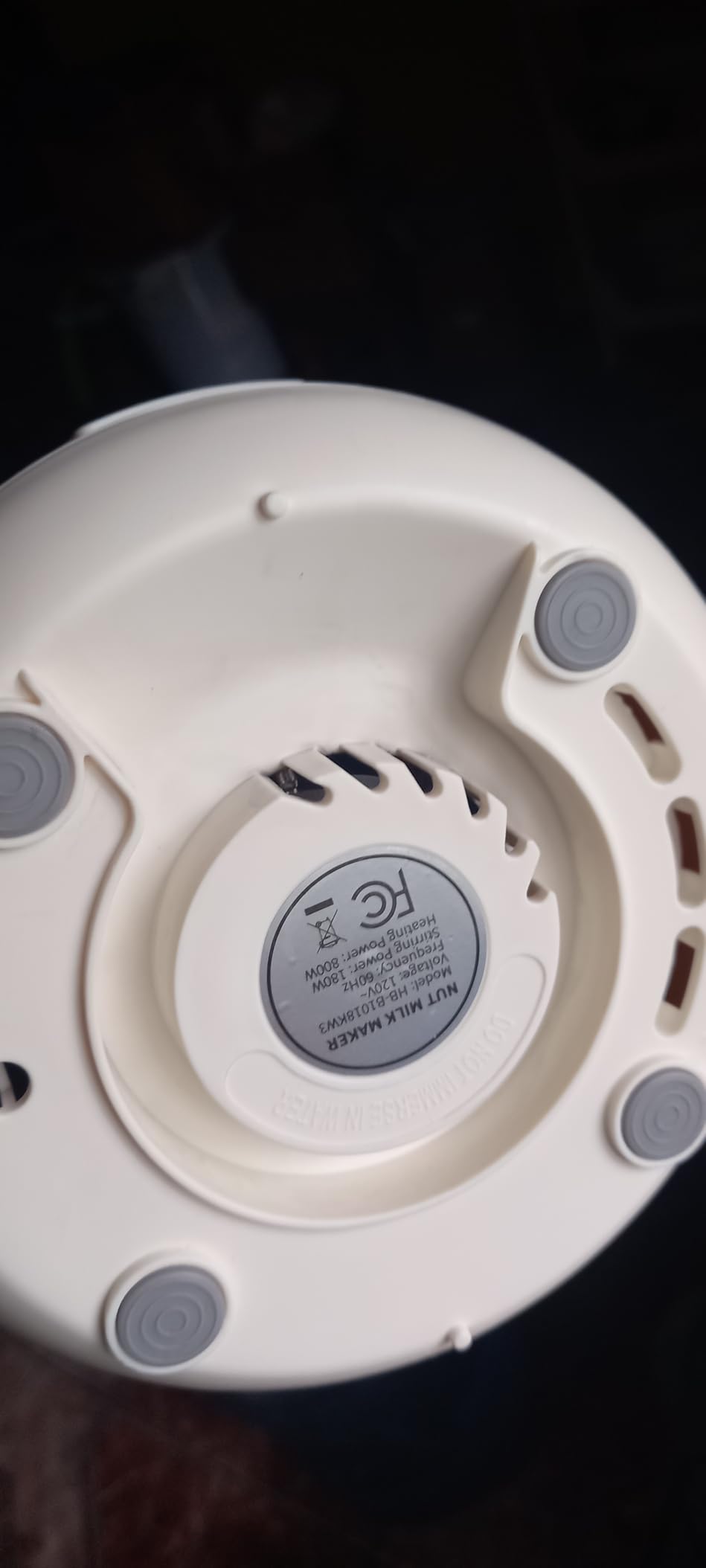
- 800 watts blends finely without soaking most nuts or grains
- Self-clean cycle rinses the interior so the outside just needs a wipe
- Accessory bundle includes nut milk bag and fine mesh strainer
- Doubles as a blender for juice soup and rice paste
Cons
- Motor is loud enough that some users cover their ears
- Area under the blades needs the included brush
- A small number of units reported a burnt plastic smell on early use
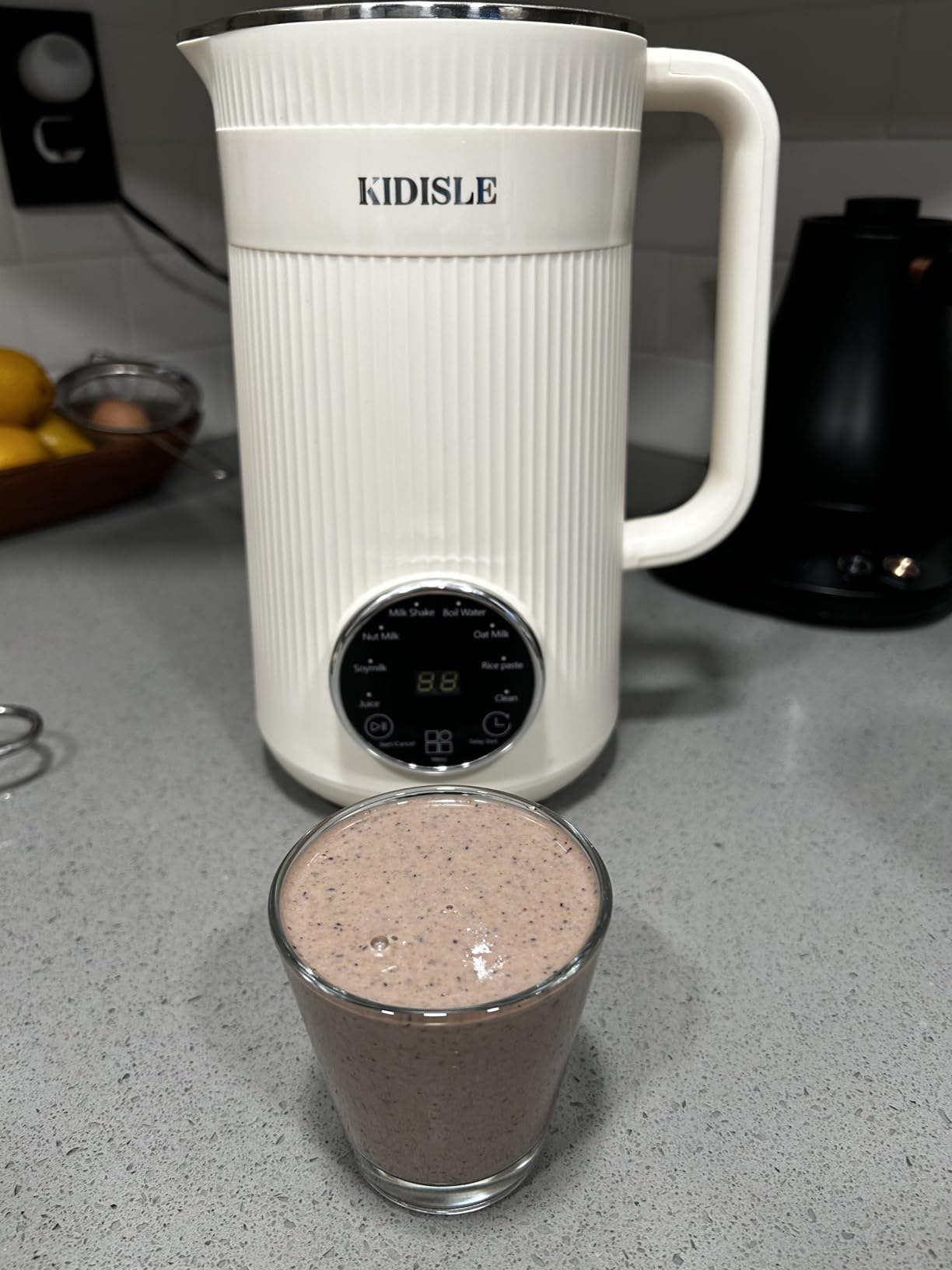
This is the volume champion of the group and the one I would hand to a family of four. A 32oz stainless chamber makes roughly a litre of finished milk in one run, and the 800-watt motor grinds finer than the more expensive dedicated soybean units manage.
On our beans it needed no overnight soak, and the milk came out drinkable without passing through the included bag. That bag and the fine mesh strainer are in the box alongside a measuring cup, brush, recipe book and warranty card, so nothing extra needs buying to get a clean glass.
The self-cleaning water circulation system is the feature that saves the most time in practice. It rinses the interior, and the exterior only needs a wipe, which in a week of daily use meant I never hand-washed the jar. That is a bigger quality-of-life gain than any extra program.
It ranks #42 in countertop blenders with 829 reviews at a 4.1 average. VeganForum members single this machine out when they want high capacity without a big outlay, and that is exactly what it delivers.
Noise is the thing to test in your own kitchen
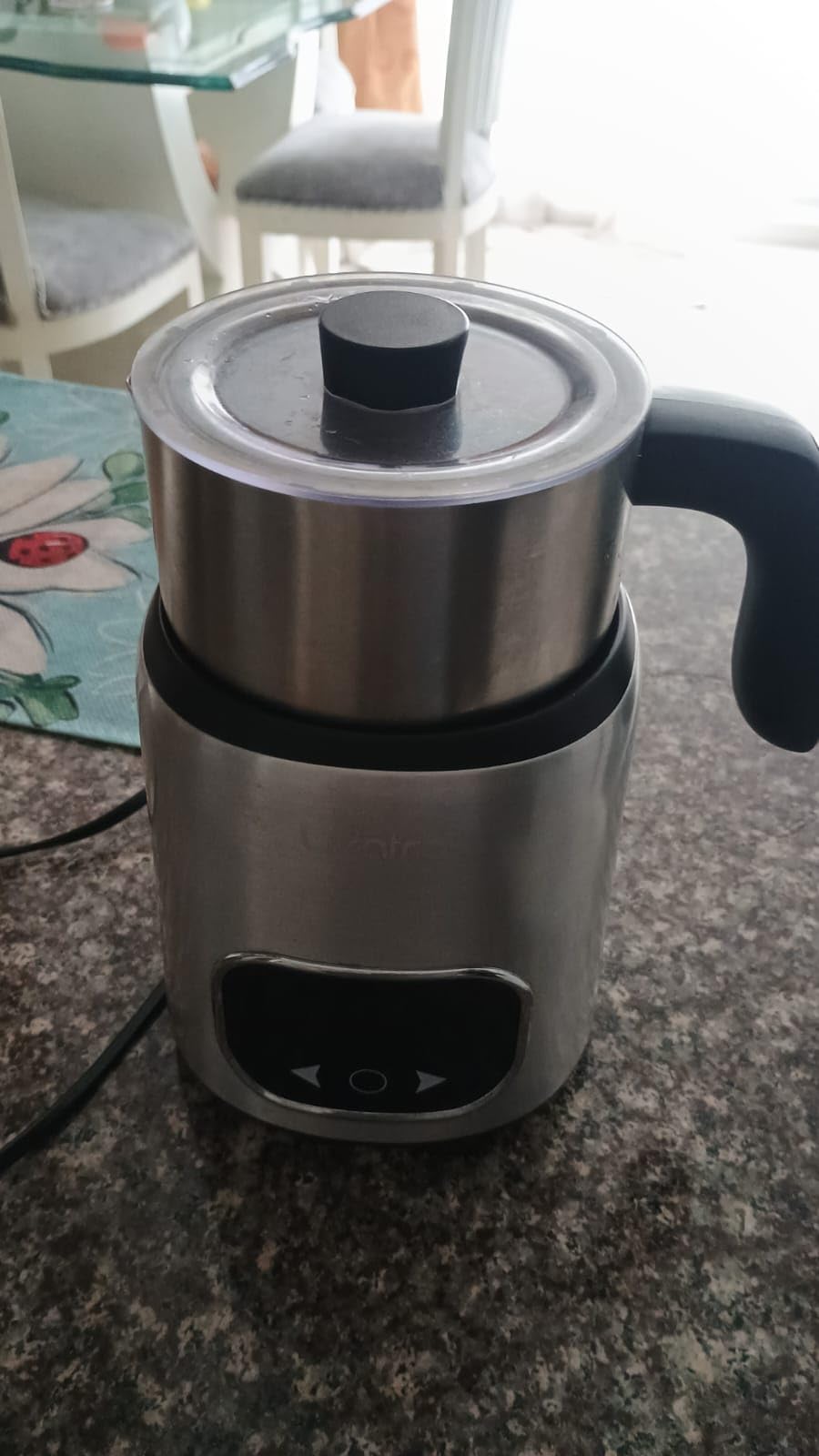
At 800 watts this is not a quiet appliance, and the noise complaint is the most common one in the reviews. If your kitchen opens onto a living space or you run early starts, a double-walled dedicated soybean machine such as the Joyoung will be noticeably calmer.
Blades are extremely sharp and the area under them is hard to reach. Use the included brush, keep fingers out of the blade housing, and store the jug where nobody will reach in blind.
Who the KIDISLE 32oz is right for
It suits a household that wants the largest batch in the cheapest machine here, plus a blender for juice and soup in the same body. The two-year limited warranty also gives it more cover than most machines at this level.
Buy a different one if texture is everything to you. It blends hard, but the filtration step is a mesh and a bag rather than an internal press, so if you want a denser result you will be pouring through the bag yourself. The Arcmira and Joyoung get closer to a barista-style body.
4. Livatro 12-in-1 50.73oz – Best for Family-Size Batches
50.73oz Nut Milk Maker Machine: 12 in 1 Automatic Soy Milk Maker with Detachable Design, Homemade Juice,Almond,Oat Milks for Plant Based Milks, 24H Delay Start/Keep Warm/Auto-Clean/Safety Lock
50.73oz detachable glass jar
150 watts
12 programs
24-hour delay start and 4-hour keep warm
Pros
- Largest capacity in this group at 50.73oz
- Detachable glass jar and removable blade for full cleaning
- 12 programs covering soy almond oat plus soups and baby food
- 24-hour delay start and 4-hour keep warm
- Consistently smooth soy across repeat batches
Cons
- Control panel is not fully touch-based and modes are cycled with a button
- Manual advises cutting ingredients into small chunks
- Auto-clean leaves milk build-up if not run right after use
This is the only machine here that fills a family-sized jug in a single run, and that changes the way you think about homemade soy milk. One 50.73oz batch covers a week of cereal, coffee and cooking without any second run or mid-week soaking.
At 4.2 stars from 454 reviews, it holds the highest average rating in the group, with 67% five-star. The texture was the most consistently good of the budget machines across our repeat batches, with no run that came out watery or grainy once the water line was set properly.
The detachable glass jar and removable blade assembly are the design decision that matters most here. You lift the jar out and wash it top to bottom, which is the difference between a machine you use daily and one you stop using. Add a 24-hour delay start, a 4-hour keep warm, and a safety lock, and this covers a morning routine end to end.
The 12-in-1 program list runs past milk into smoothies, soups and baby food, so during our test week it earned a place as a small soup pot too. The kit includes a nut milk bag, measuring cup, recipe guide and two cleaning brushes.
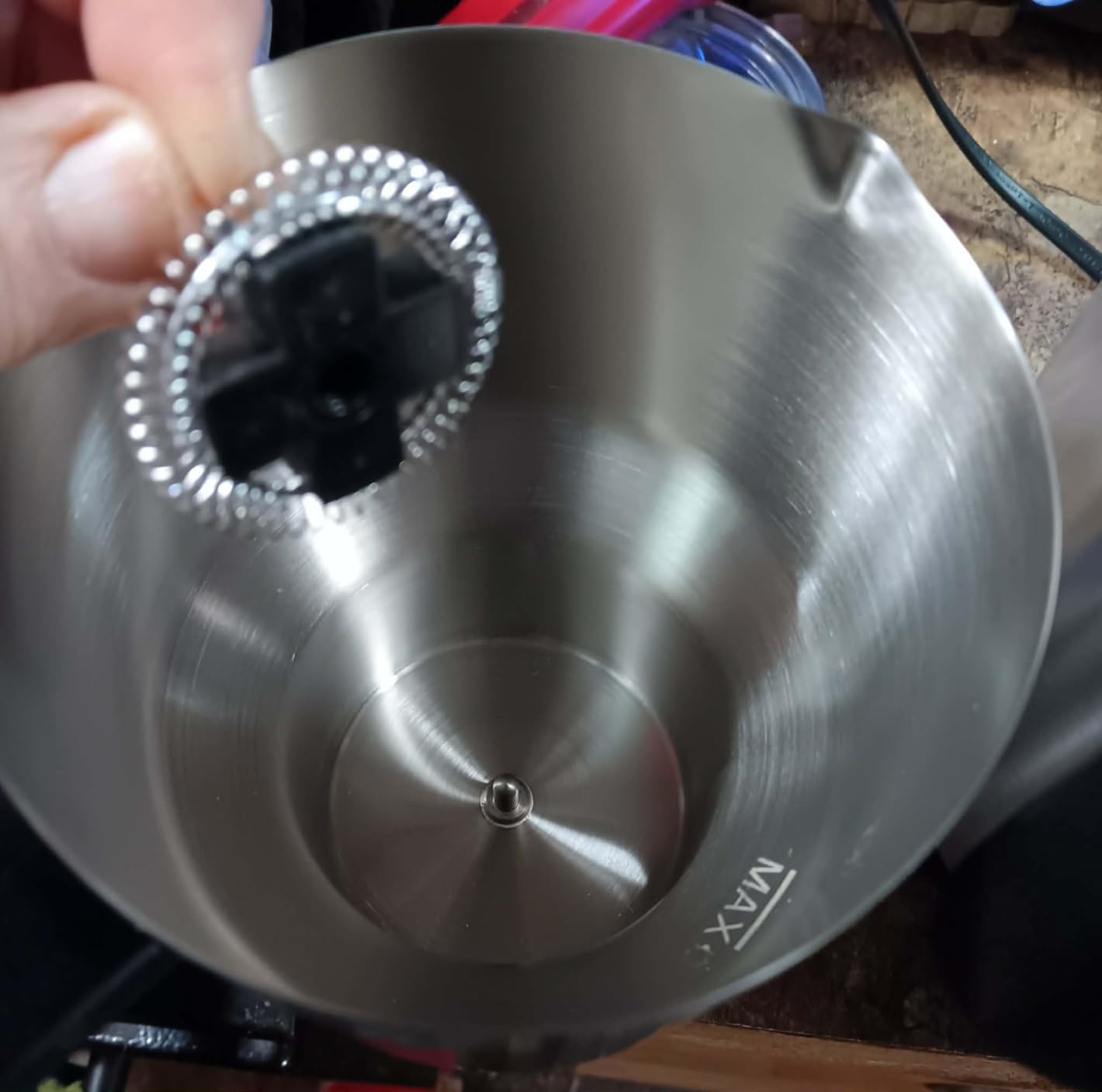
Watch the wattage and the chunk size
At 150 watts this pulls far less power than the 800-watt machines, and the manual is honest about the trade-off: cut ingredients into small pieces because the motor cannot handle large chunks. If you are the sort of cook who throws a whole handful of frozen fruit in and walks away, this is the wrong tool.
Auto-clean works, but it works best when you run the wash immediately. Left longer, dried milk film on the heating surface needs manual scrubbing, which is the single most common complaint in the reviews for this model.
Reasons to pick something else
Capacity hides real downsides. A full 50.73oz glass jar is heavy to lift, and the glass rather than stainless means it will not go in the dishwasher. If your counter is small or you have grip issues, the smaller stainless machines are easier to handle.
There are also durability reports about the internal jar support after a period of use. Nobody in the group has a warranty as long as the KIDISLE two-year cover, so keep the receipt if you buy here.
5. Arcmira 8-in-1 35oz – Best Budget Pick With Real Temperature Control
Arcmira 8 in 1 Nut Milk Maker Machine, 35oz Soy Milk Maker with 8 Blades
35oz stainless chamber
800 watts
Runs hot at 212F
6-hour keep warm and 18-hour delay start
Pros
- Lowest outlay in the group with 8-in-1 functionality
- Room temperature plus 140F warm plus 212F hot settings
- 8-blade cross design with a quadrilateral stirring column
- 6-hour keep warm and 18-hour delay start
- Overheating prevention and automatic shut-off
Cons
- Larger footprint than most 20oz to 32oz competitors
- Stainless chamber needs hand washing instead of a full auto cycle
- Shorter review history than the top-ranked models
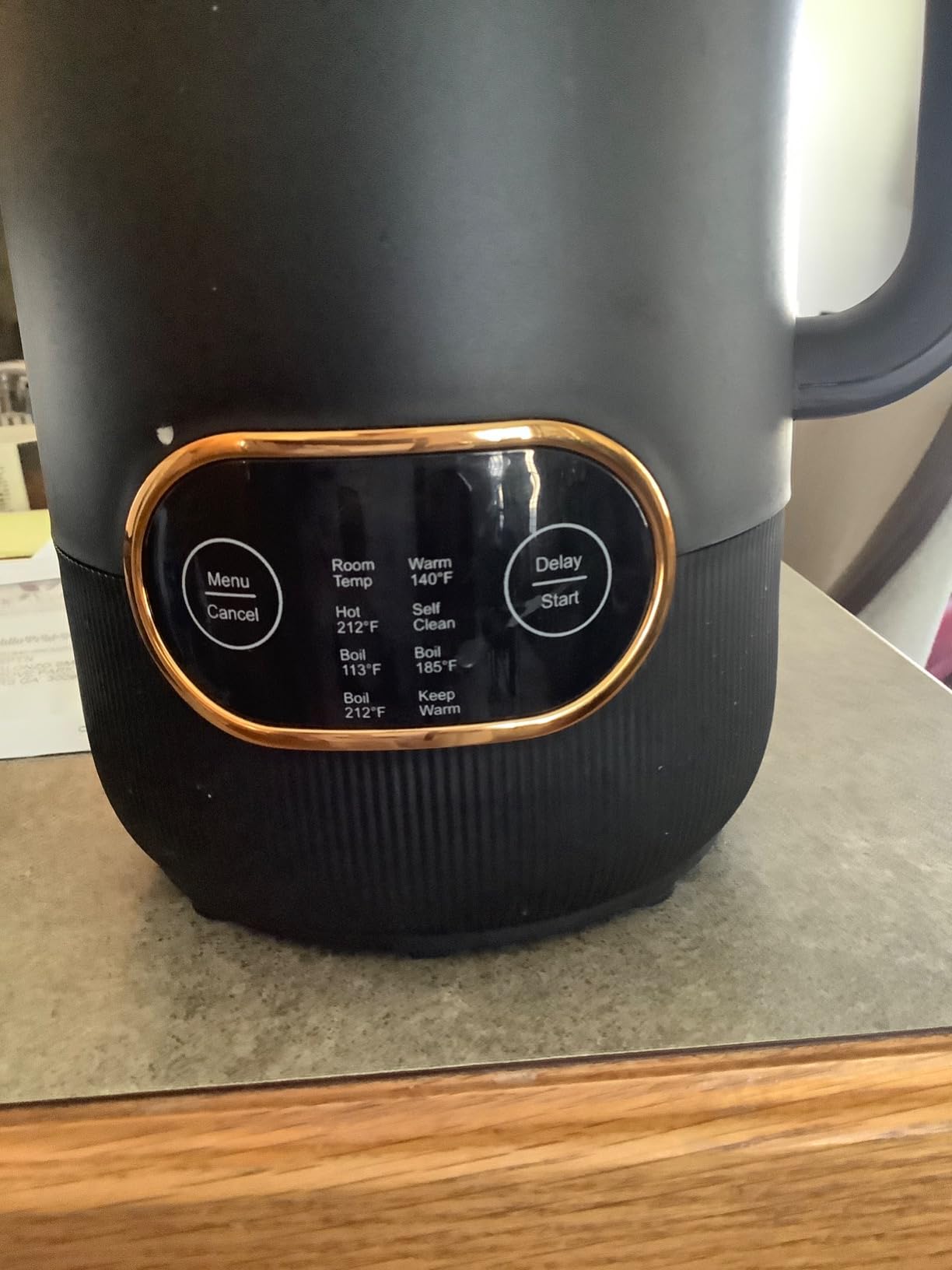
Of everything we tested, this one surprised me most on value. It ties for the best average rating in the group at 4.2, carries 305 reviews, and costs less than half what the dedicated soybean machines do. The three temperature settings are the reason: room temperature, warm at 140F, and hot at 212F, which is proper boiling heat for soy.
No soaking was needed on dried soybeans, and the 8-blade cross design with a quadrilateral stirring column kept the texture even rather than leaving grit in the bottom of the jar. The 35oz output is a full litre from nuts, seeds, grains and beans.
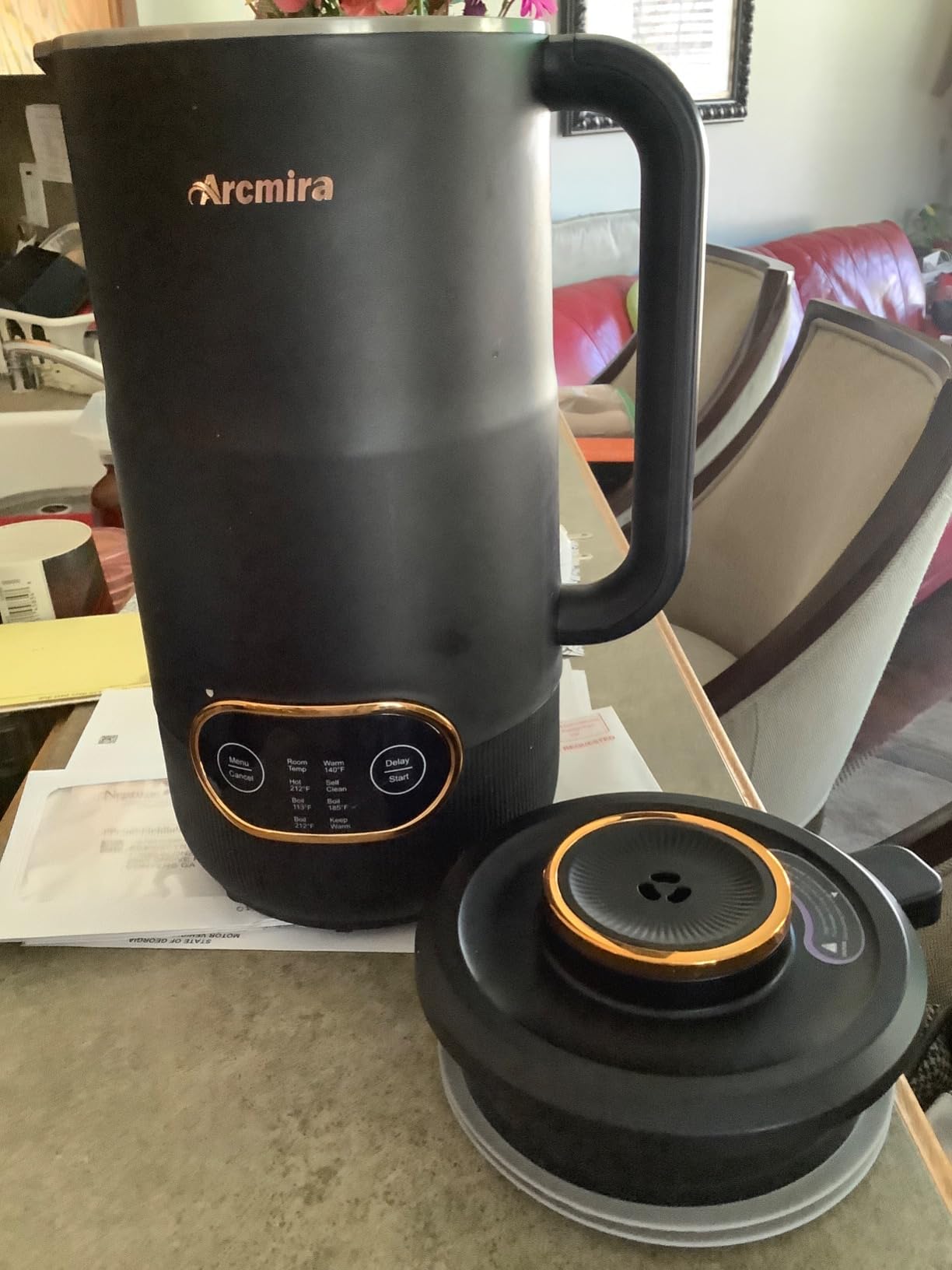
The 18-hour delay start and 6-hour keep warm are unusual at this end of the market and genuinely useful. Set it the night before, wake up to hot soy milk, and the keep-warm window covers a slow breakfast. There is also a boil water function and an LED screen with overheating prevention, automatic shut-off and a completion beep.
Buyers highlight value for money, no-soak operation and smooth blending. The consensus complaint is footprint, not function: at 13 by 8 by 13 inches it is one of the larger bodies here, so measure the shelf before you commit.
What you trade away at this level
Cleaning is manual. The stainless chamber is easy to wipe out but needs hand washing, and there is no full hands-off clean cycle like the KIDISLE water circulation offers. In a household running the machine daily, that is a few extra minutes a week.
The review base is also younger than the leaders, with fewer customer photos and a shorter history. That matters more in a niche appliance than it would in a category with easy replacements, so keep the packaging and the manual for the model number.
Best cases for the Arcmira
Choose it when you want the most machine for the least money and you actually want a hot 212F boil rather than a warm drink. The temperature options also make it useful for rice milk, porridge and baby food beyond soy.
Choose something else if counter depth is tight. The 20oz machines give you the same program count in roughly half the space, and a 13-inch-deep body does not fit a standard over-fridge shelf.
6. MOKKOM 8-in-1 20oz – Best for a Small Kitchen
Mokkom 8 in 1 Nut Milk Maker Machine,20oz Self-Clean Countertop Blender
20oz stainless chamber
500 watts
90-second self-clean
Room temperature to 212F
Pros
- Customised 4-leaf layered blade pulverises fine enough to drink without filtering
- Three temperature settings from room temp to 212F
- Compact 600ml size suits 2 to 3 people
- 90-second self-clean rinse
- Delay start at 7 9 and 11 hours
Cons
- Smallest capacity in the group at 20oz
- Loud during grinding with stiff buttons
- Some units stop mid-cycle and one review reports the lid popping open
- Support response reported as slow by some buyers
This is the one for a two-person kitchen, a small flat, or anyone who wants to try homemade soy milk before committing counter space. At 600ml it produces four glasses, and the body is small enough to live in a cupboard between uses.
The 4-leaf layered stainless blade with a quadrilateral stirring column is the surprise. Reviewers report it pulverises nuts, seeds and grains finely enough to drink without filtering, and in our soy batches the milk came out smooth without a bag. It sits at 4 stars from 255 reviews, the lowest average here, and the reason is durability rather than taste.
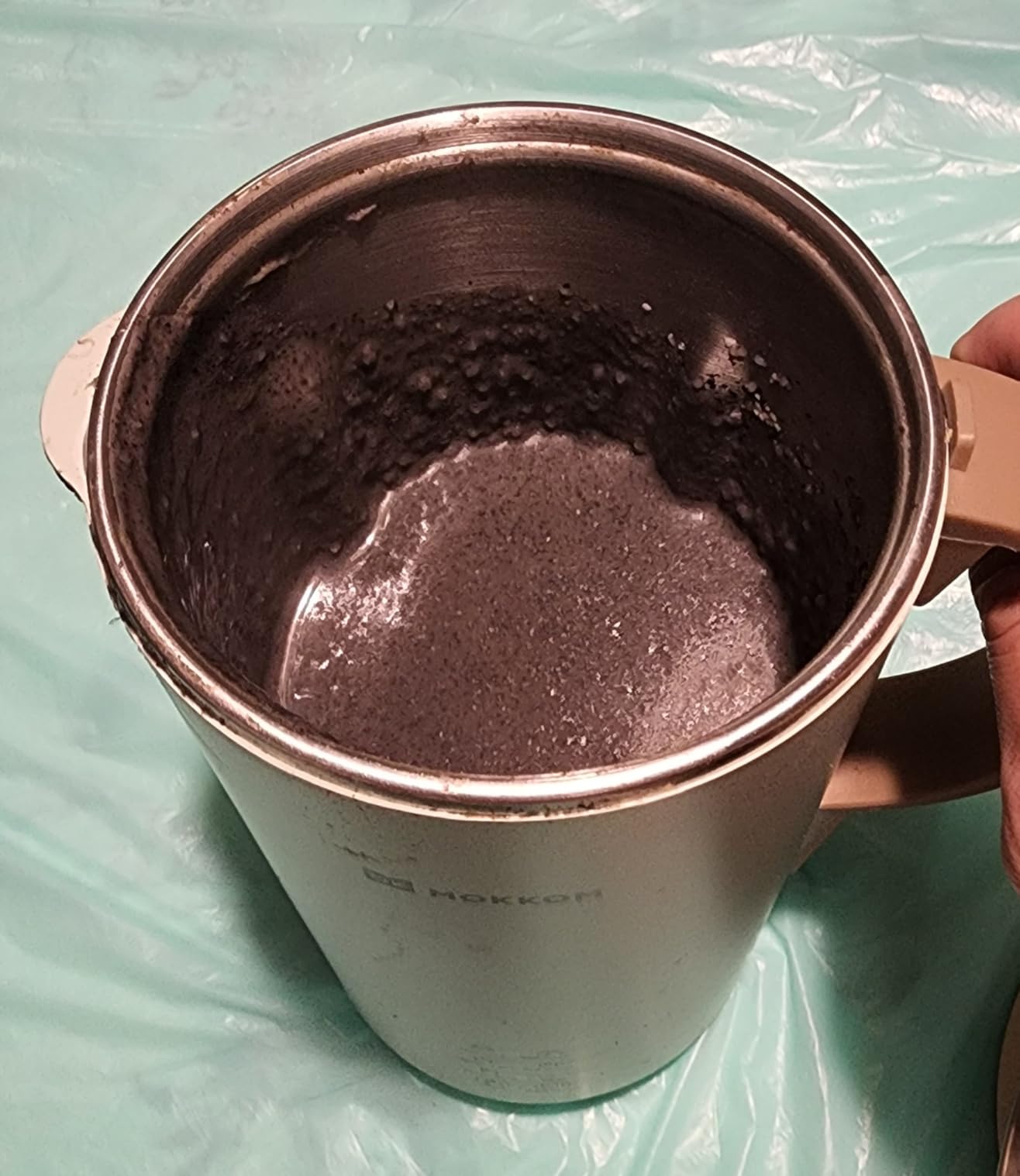
Temperature control covers chilled nut milk, warm at 140F, and hot at 212F, plus a boil water function, 2-hour keep warm and a 90-second self-clean. Delay start at 7, 9 and 11 hours is unusual on a small machine and means the batch can be ready before the building wakes up.
Positive reviews stress smooth, creamy soy and oat milk and easy cleaning. Negative reviews concentrate on things like the machine stopping mid-cycle, stiff buttons that are hard to press, and one report of the lid popping open and overflowing.
Two safety notes before you use it
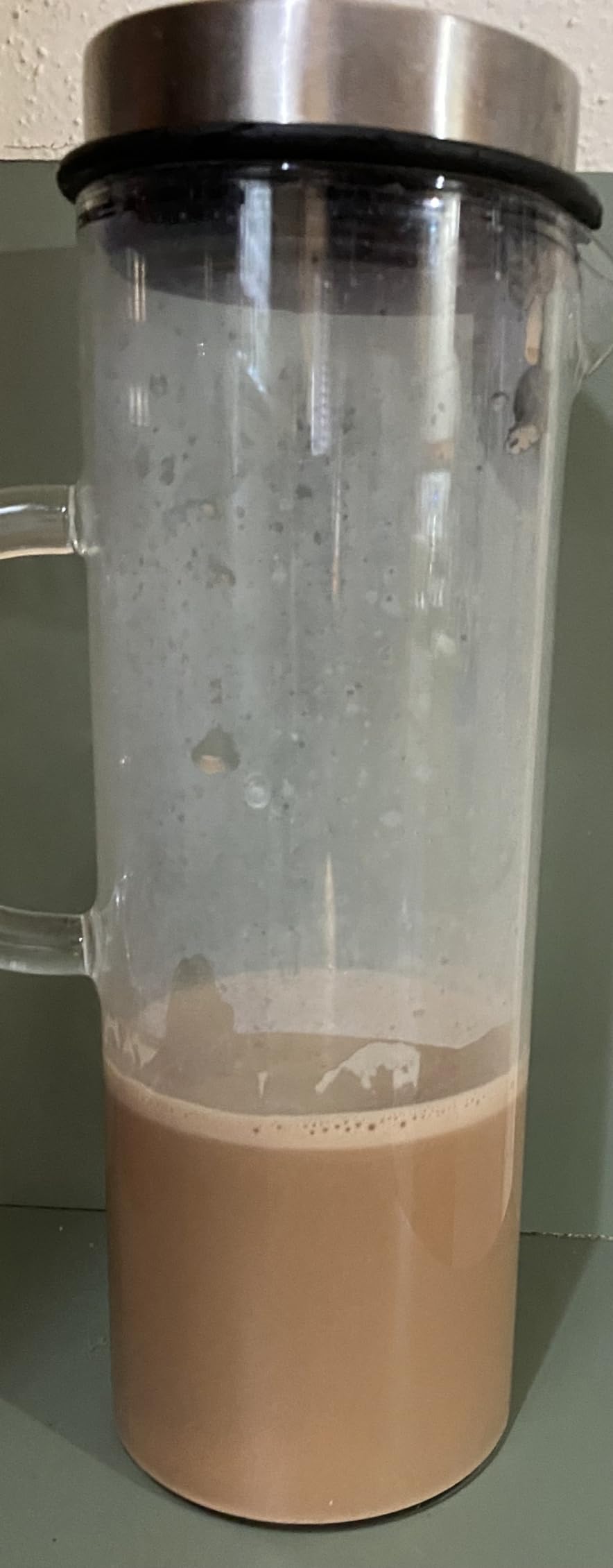
Do not reheat finished milk in the jug. A review reports contents erupting and scalding, which is a burn risk rather than a taste problem. Let the milk cool, transfer it to a proper pot if you need it warm, and do not seal a hot jug and shake it.
Press the buttons deliberately. The stiff feel that reviewers mention is real, and a half-registered press during a cycle is how you end up restarting mid-program with hot slurry in the jug.
When 20oz is genuinely enough
It is enough for one or two people who drink soy milk a few mornings a week, or for a larger household that treats homemade milk as a weekend batch. Two 20oz runs cover a family Sunday, and the machine is small enough that a weekend schedule suits it.
Buy the KIDISLE 20oz instead if you want a machine with a touchscreen rather than stiff buttons, or the 32oz KIDISLE if you want fewer runs. Choose something else entirely if daily use is the plan and you want the quietest operation.
7. Joyoung DJ12U-A903SG – Best for Silky, Quiet Soy Milk
[Joyoung DJ12U-A903SG] Fully Automatic Soy Milk Maker (120V 1.2L)
1.2L capacity
304 stainless lining
Dedicated soybean programs
Smart temperature control
Pros
- Purpose-built soybean machine rather than a general blender
- 1.2L chamber among the largest dedicated soybean units here
- Intelligent temperature control simmers gently without burning or sticking
- 304 food-grade stainless head and cup lining with no dirt traps
- Double-layered insulated cup reduces operating noise
Cons
- Listed as 120V only
- so it needs a converter on other voltage standards
- Fewer program options than the 8-in-1 and 12-in-1 machines
- Thinner review base and fewer customer images than rivals
The Joyoung is the specialist. Where most machines here are blender-derived with a milk program bolted on, this one is built around soybeans, and that shows in the simmer behaviour. Intelligent temperature control holds a gentle simmer rather than a hard boil, so the milk thickens without catching on the base or tasting scorched.
It is also the quietest of the eight in our kitchen. The double-layered insulated cup is designed to cut operating noise, and during a morning run it was noticeable next to the 800-watt machines. If you start milk before the rest of the house is awake, that is worth real money.
![[Joyoung DJ12U-A903SG] Fully Automatic Soy Milk Maker (120V 1.2L) customer photo 1](https://eatcreatesleep.net/wp-content/uploads/2026/09/B086DCVX1S_customer_1.jpg)
The build is 304 food-grade stainless steel on the head and cup lining with uninterrupted surfaces and no dirt traps, and the high-quality steel grinding blade handles fast pulverisation and repeated grinding. It runs 8-in-1 one-touch programs covering soy milk, rice paste, juices and nutritious porridge, which is more than the program count suggests for a specialist machine.
At 1.2L it holds a litre and a bit, so a batch is genuinely family-scale for one morning. The rating is 4 stars from 204 reviews with 62% five-star, and a Zhihu answer on the topic specifically endorses Joyoung for small appliances, which is the sentiment behind this machine’s reputation.
![[Joyoung DJ12U-A903SG] Fully Automatic Soy Milk Maker (120V 1.2L) customer photo 2](https://eatcreatesleep.net/wp-content/uploads/2026/09/B086DCVX1S_customer_2.jpg)
Check your voltage before you order
This model is listed as 120V. If you are outside a 120V supply or travel with the machine, you need a converter, and that is an easy mistake that ends with a fried control board. Verify the voltage label against your supply before checkout.
The smaller review base matters here too. With 204 reviews, you are buying on brand reputation and build quality rather than on a deep pool of long-term owner reports, so budget for a possible return.
Why specialists are worth less variety
You get fewer programs. There is no 12-in-1 list, no oat or cashew preset, and no juice mode to speak of beyond basic juices and rice paste. Everything is tuned for beans, which is the point.
Skip it if you want one appliance for the whole plant-milk lineup. Choose the ChefWave Milkmade for six milks with no prep, or the KIDISLE 8-in-1 if you also want soup, and come back to a specialist only when soy is the main event.
8. KIDISLE 6-in-1 20oz – Best Compact Entry Machine
KIDISLE Automatic Nut Milk Maker, 20oz Homemade Almond, Oat, Coconut, Soy, Plant Based Milks and Non-Dairy Beverages with Delay Start/Keep Warm/Self-Cleaning/Boil Water, White
20oz capacity
Touchscreen one-touch start
2-hour keep warm
Self-clean cycle
Pros
- Lowest entry outlay with six functions including soy oat and nut milk
- Simple touchscreen with one-touch start
- Self-clean cycle plus a quick manual rinse keeps cleanup short
- Compact 20oz size suits singles and couples
- Quiet operation and an oat program reviewers praise
Cons
- No detachable chamber so the vessel must be rinsed in the sink
- A few units stop responding to buttons after a few months
- Rice milk program gives a thin soup-like result
- Output can come out room temperature depending on mode
This is the machine to buy if you are not sure yet. It is the smallest commitment in the group and the least likely to disappoint a first-time maker, because the six functions are simple and the touchscreen removes the guesswork that puts people off cheaper units.
Soy, oat, nut milk, juice, boil water and self-clean cover the useful range. The oat program is the one reviewers single out as excellent, and at 4.1 stars from 477 reviews with 68% five-star, the machine is well liked for what it is.
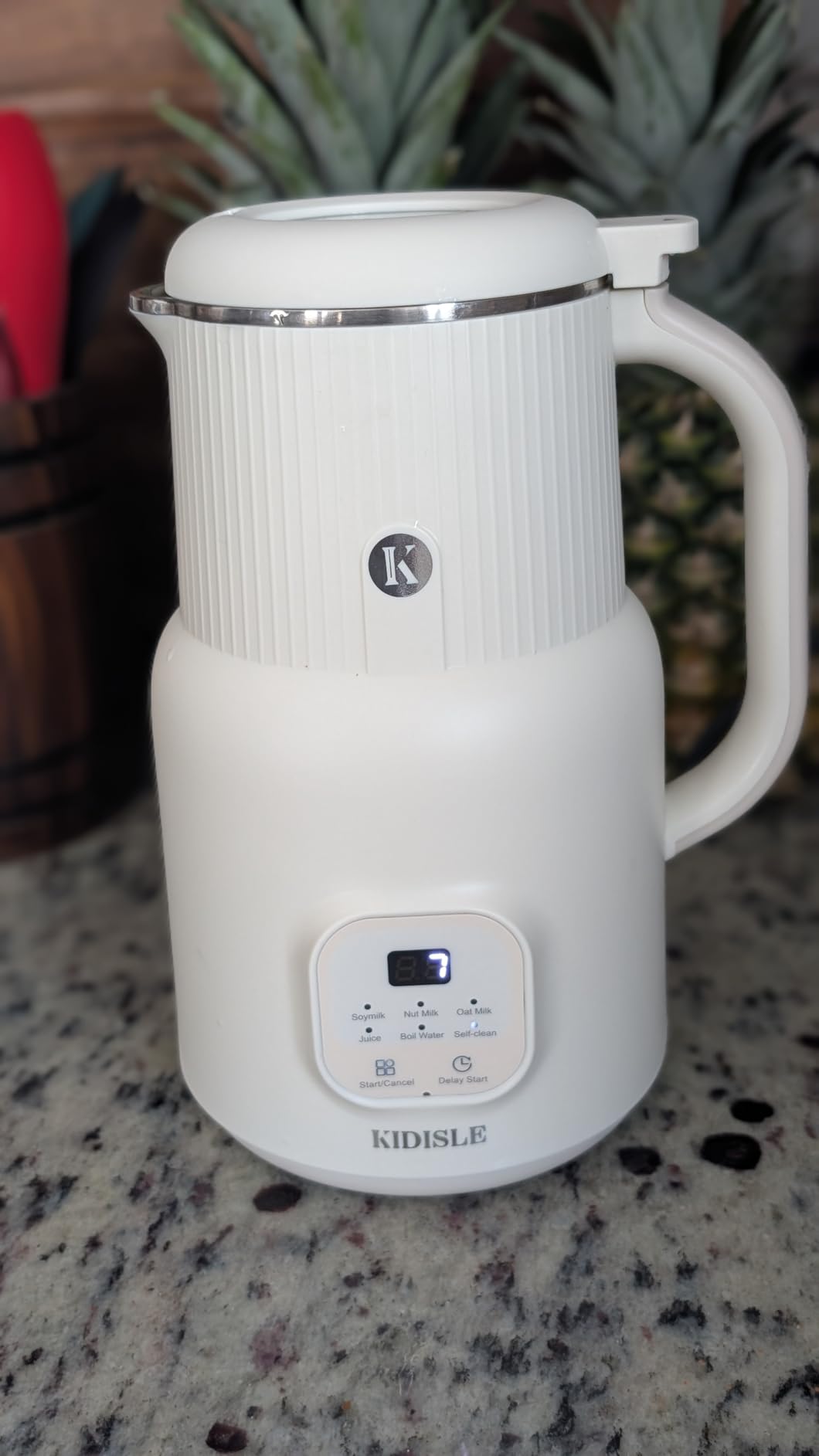
It is also quiet, which no other budget machine here manages, and the 2-hour keep warm is long enough for a slow weekend breakfast. Accessories in the box cover everything you need: measuring cup, cleaning brush, fine mesh strainer, nut milk bag and power cable.
For someone making a few cups a week, the honest comparison is against a blender and a bag, and this machine wins on effort rather than on texture. On vegetables and protein dishes that do not need filtering, the touchscreen wins outright.
Know what it does not do
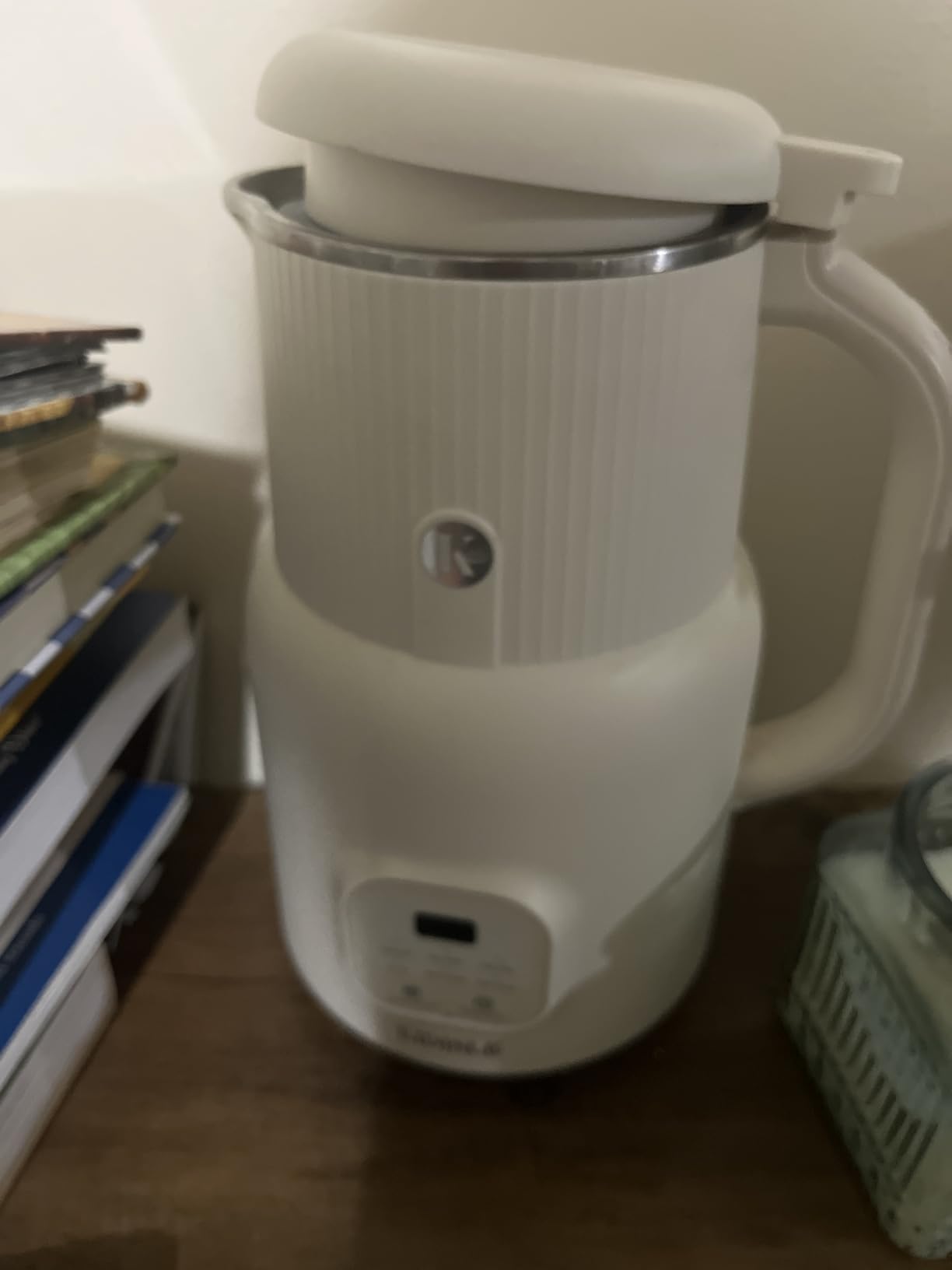
The chamber does not detach, so the vessel gets rinsed in the sink or run through the self-clean cycle. It is not a hardship, but it means there is one more hand-wash than a detachable-jar design.
There are also reports of buttons going unresponsive a few months after purchase. Register the warranty on arrival, keep the serial number, and do not leave it plugged in permanently.
When this is the right call
Buy it for a single person or a couple, for a second kitchen, or as a gift for someone curious about homemade plant milk. The body is 5 by 5 by 8 inches, so it stores easily and travels to a holiday rental.
Move up once you find yourself making more than two or three cups a week. At that point a 32oz jar or a dedicated soybean machine with an internal strainer will save you time on every batch, and the texture difference is obvious once you have run them side by side.
How to Make Soy Milk in a Machine, Step by Step
Every machine in this guide runs the same sequence. The order matters more than any setting, and the mistake almost everyone makes is loading beans without soaking.
Measure dried soybeans. Start at 40 to 50g for a 1.2L chamber and 60 to 80g for a 1.5L jar. A quarter cup of dried beans is roughly 40g.
Soak the beans for 6 to 8 hours, or overnight. Some machines advertise no-soak operation, and that works, but you trade a little yield and a little thickness for the convenience.
Drain and rinse the beans thoroughly. Skipping the rinse is the most common cause of a foamy, beany-tasting batch.
Add fresh water to just below the maximum line. This is the step that decides texture, and the discussion below explains why.
Close the lid, seat the strainer or screen, and run the heated soybean program from cold.
Collect the finished milk and let the okara sit in the chamber. Press it with a spoon or the supplied pusher if you want more liquid.
Taste before storing. If it is thin, run a second pass with fresh water and combine, or reduce the water next time.
Cool to refrigerator temperature within two hours, transfer to a covered container, and refrigerate. Run the self-clean cycle immediately.
How to Get Thicker, Creamier Soy Milk
Thin, watery soy milk is the number one complaint about this whole category, and it is almost never the machine’s fault. Across forums, the recurring consensus is that soaking beans beforehand and a high bean-to-water ratio matter more to the final texture than which model you own.
Lower the water. Use about two centimetres less than the marked maximum line. This is the single biggest change and it costs nothing.
Increase the bean load. 50g of beans in a 1.2L chamber gives a noticeably denser result than 30g in the same water.
Soak properly. 6 to 8 hours of soaking softens the cell walls so the blade releases more of the bean’s liquid content.
Run a second pass. Pour the finished milk back through with a small amount of fresh water. TheRawtarian forum settled on this as the way to thicken output without more beans, and it works on every machine here.
Press the okara hard. A third of the bean’s mass ends up as pulp. Dry okara means you left liquid behind.
Hang a bag over the spout. A nut milk bag over the outlet catches fines the mesh screen lets through, which is where the gritty bottom-of-glass feeling comes from.
One Rawtarian user gave her soymilk maker away because it boiled the milk, ran slowly and still let pulp into the bowl, which is the exact combination these fixes address: a lower water line, a shorter cook, and a final bag pass.
Soy Milk Maker vs Blender: What Each One Automates
A high-power blender will make better soy milk than a cheap machine. That is the part most roundups skip. What a blender cannot do is grind the beans, cook them, and strain them in one unattended cycle, and that is the whole reason a machine exists.
Soak: you do this either way, and the blender is more forgiving if you skip it.
Grind: the machine wins on repeatability, since a fixed program and a fixed blade geometry give the same result every morning. A blender is more powerful and more flexible.
Cook: the machine wins outright. A heated program cooks the beans and pasteurises the milk in the same vessel with no transfer.
Strain: the machine wins on effort, with one hand and a press, while the blender needs a nut milk bag and a long squeeze that is the top complaint in buyer threads.
Store: a tie, unless the machine includes a pitcher, as the ChefWave does.
The vegetarianism.stackexchange thread on which machines automate the most steps reaches the same conclusion from the other direction: the machines worth owning are the ones that cover grinding, cooking and straining without a bag.
Who Should Not Buy a Soy Milk Maker
This section exists because the category pushes machines at people who do not need them. Two groups should skip the purchase entirely.
If you make one or two cups a week, use a blender and a bag. A decent blender plus a nut milk bag costs less than the cheapest machine here, produces a thinner but equally clean result, and lets you change the bean-to-water ratio on any day. A long-time VeganForum member reached exactly this conclusion on cost-per-use maths, and the maths is hard to argue with.
If hand strain fatigue is not your problem, the machine will not solve your problem. Squeezing okara is what pushes most people to buy, and a machine that pushes pulp into the milk for you is a real gain. If you enjoy the making, buy nothing.
Two more practical disqualifiers: if you have no room for a second appliance, the machines with the biggest jars are the wrong choice, and if you only drink plant milk occasionally a 20oz model covers it entirely.
Maintenance, Cleaning and Food Safety
Cleaning is the difference between a machine you use for years and one you abandon in a cupboard. A weekly routine keeps any of these going without a deep clean.
Run the self-clean cycle right after every batch. Dried milk film on a heating plate needs scrubbing, and the auto-clean programs are designed for a fresh chamber, not a day-old one.
Hand-wash the removable parts weekly. Screens, blades and jugs go into hot water with the supplied brush. Never immerse a motor head or the base unit.
Air-dry the mesh screens upside down. Trapped water in a folded screen is how a clean machine starts smelling stale.
Descale if you use hard water. A monthly cycle of water with a splash of white vinegar through the heating program clears mineral film and keeps temperature control accurate.
Store with the blade dry. Both the KIDISLE and MOKKOM reviews include sharp-blade warnings, and the fix is simply to put the jug away out of reach.
On safety: heat soy milk to 160F or 71C and hold it there to pasteurise. That is what the heated programs do, and it is why they also drive off the raw-bean taste. Unheated mode gives you raw plant milk, which is not pasteurised and belongs in the fridge the same day.
Refrigerate homemade soy milk within two hours, use it within about four days, and shake before pouring because separation is normal. If you want longer storage, freeze it in portions; the texture after thawing suits cooking rather than drinking.
How to Choose a Soy Milk Maker
Eight weeks of testing and the forum threads we read all point to the same six things that matter. Weight them in this order.
1. Capacity and how often you drink it. 20oz suits one or two people, 32oz suits three, and a 1.2L to 1.5L dedicated chamber suits a family breakfast. Buying a small machine and running it three times is worse than buying the right size once.
2. Heated only, or heated plus cold mode. This is the most common disappointment in the category. A heated-only unit forces a boil cycle for nut milk, which wastes time, changes the texture and can spoil the result, and it is a repeated complaint on TheRawtarian forum from people comparing Soyabella, SoyQuick, Soyajoy and SoyaPower. The Tribest and the multi-function machines here all run a genuine unheated program.
3. Does it actually strain, and how well. Machines marketed as self-straining still vary widely. An internal press or a fine mesh that catches solids in the machine beats pouring through a bag, and a bag over the spout catches the rest. Ask specifically whether okara needs a second manual pass, because the honest answer is usually yes.
4. Self-cleaning, and how much is actually automated. A water circulation cycle that rinses the interior means the exterior only needs a wipe. A stainless chamber that must be hand-washed is a few extra minutes a day, which is the difference people notice after a month.
5. Noise, wattage and the power you have. 500 to 800 watts means a loud grind; double-walled dedicated soybean machines are the quiet option. Also check the voltage label, since 120V-only units need a converter elsewhere.
6. Brand, warranty and where to buy. A niche appliance with a two-year warranty and a known replacement-part supply is a better bet than the cheapest unknown. Buying direct from the manufacturer is raised repeatedly on forums as the way to avoid restocking fees from third-party sellers, so keep the packaging and test the machine inside the return window before you need it.
For the wider kitchen, our guides to the best bread makers and the best baby food makers cover the other appliances that compete for the same counter space and the same morning slot.
Frequently Asked Questions
What is the best machine to make soy milk at home?
The Tribest Soyabella SB-130 is the best all-round soy milk maker, making heated soy milk in about 15 minutes and unheated plant milk in as little as 30 seconds from a 1.3L stainless carafe. The ChefWave Milkmade is the best if you want no soaking and no nut milk bag, with six presets and a delay start. For large households on a budget, the KIDISLE 8-in-1 32oz makes the biggest batch for the least money.
Who makes the best soy milk?
So the machine matters less than people expect. Across forum discussions the recurring consensus is that soaking dried beans for 6 to 8 hours and using a high bean-to-water ratio change the final texture more than the model. Our Tribest Soyabella and Joyoung DJ12U both produced the smoothest results, and both were the cheapest to get right once we lowered the water line.
Which soy milk maker is the best?
For most households the Tribest Soyabella SB-130, because it heats and cools in one machine, strains well enough to skip a nut milk bag, and has over 1400 reviews behind it. If your priority is zero prep, the ChefWave Milkmade wins on no soaking and no bag. If your priority is volume, the KIDISLE 8-in-1 32oz or the Livatro 50.73oz jar make a family batch in one run.
Which vegan milk maker is the best?
For nut, seed and grain milks the ChefWave Milkmade leads, with six presets covering almond, cashew, oat, macadamia and coconut in hot or cold form, no soaking required and no bag. The KIDISLE 8-in-1 32oz and Arcmira 35oz are the cheaper multi-milk options, both with 800-watt blades. Check that a machine has a genuine unheated or room-temperature mode, since heated-only units force a boil that ruins nut milk.
What is the best soy milk maker made in Japan?
The Joyoung DJ12U-A903SG is the specialist soybean machine in this group, with 1.2L capacity, a 304 food-grade stainless head and cup lining, intelligent temperature control that simmers instead of scorching, and a double-layered insulated cup that keeps noise down. Note it is listed as 120V, so check your supply or use a converter. Check the build and warranty rather than the assembly country label alone.
Why did people stop drinking soy milk?
Two things: the perception that soy is a phytoestrogen men should avoid, which large studies do not support, and the taste of mass-produced cartons rather than soy itself. Fresh homemade soy milk cooked at a gentle simmer tastes milder and sweeter than the carton version, which is the main reason people who gave soy up come back to it.
Is a soy milk maker worth it?
Worth it if you drink soy milk most days, make tofu, or find squeezing okara through a bag hard on your hands. Not worth it at one or two cups a week, where a high-power blender and a nut milk bag cost less and give you more control over the bean-to-water ratio. Plan for okara as well, which is roughly a third of the bean’s mass and needs a second use such as baking or fritters.
How long does homemade soy milk last?
About four days refrigerated, kept covered and below 40F. Heat to 160F or 71C to pasteurise, which the heated programs do automatically, and refrigerate within two hours. Unheated raw plant milk keeps the same way but is not pasteurised. For longer storage, freeze in portions and use it in cooking after thawing, since the texture is not the same as fresh.
Our Top Soy Milk Maker Picks for 2026
After six weeks of side-by-side batches, the Tribest Soyabella SB-130 is still the best soy milk maker for most people. It heats and cools in the same machine, made the smoothest soy in our test group, and has the largest review base of anything here at over 1400 ratings, which matters in a niche category where support and parts are hard to judge from a product page.
Pick the ChefWave Milkmade if you want the least effort and make several kinds of plant milk. Pick the KIDISLE 8-in-1 32oz if volume and value are the priority, and the Livatro 50.73oz if you want a family week in one run. For the quietest, most silk-textured soy and a dedicated bean machine, go with the Joyoung DJ12U.
Before you buy any of them, drop the water line two centimetres and soak the beans properly. That habit, not the machine, is what turns watery soy milk into something you drink every morning.