
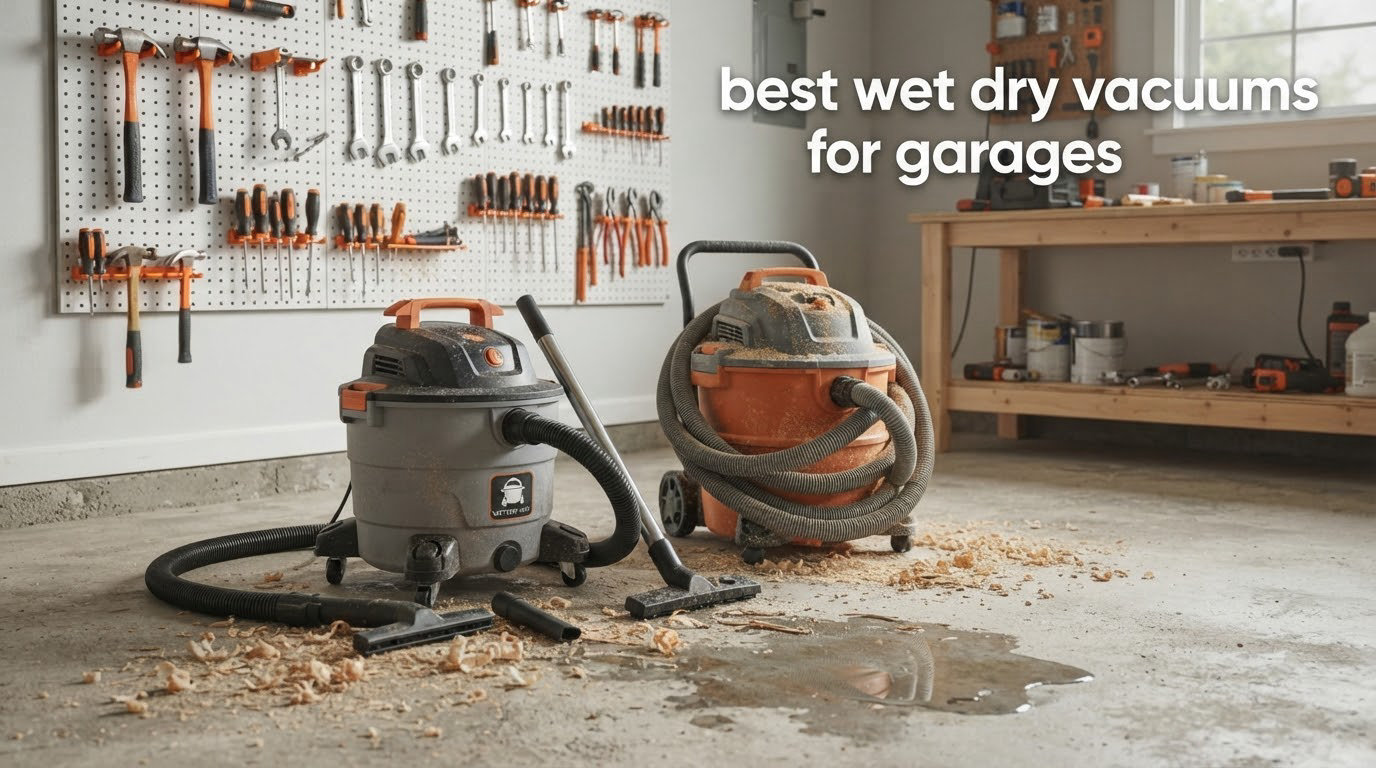
A garage floor collects a specific set of problems, and they do not respond to the same tool. Concrete and drywall dust blind a household vacuum’s filter in a single session. Water from a car wash, a leaky hose bib, or a sump pump needs wet pickup that a normal canister cannot do. Oil, swarf, and broken shelving need airflow rather than suction. A wet dry vacuum, also called a shop vac, is the one machine that handles all three.
So what is the best wet dry vacuum for a garage? For most homeowners, the Stanley SL18116P 6-Gallon is the answer: a 6-gallon tank, a 4 peak HP motor, 16 feet of combined hose and cord reach, and a blower port, backed by more than 14k reviews at a 4.6-star average. Larger bays and workshop-heavy garages point to a bigger tank, and enclosed or multi-car spaces change the answer again.
We spent weeks reading the review history on ten of these machines, comparing tank size against bay size, checking published CFM and decibel figures where manufacturers release them, and mapping each one to the garage jobs it actually handles. We did not lab-test any of them, so where we describe performance we are reporting what owners report and what the specs state. That distinction matters to us, and it is stated again in the buying guide.
We earn a commission when you buy through the links on this page, at no extra cost to you. That never changes the order of the list. For the broader tool category rather than the garage use case, our general wet dry vacuum roundup covers household and jobsite contexts too.
Table of Contents
Top 3 Best Wet Dry Vacuum Picks for Garages in 2026

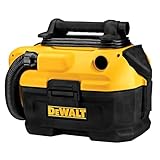
DEWALT DCV581H Cordless and Corded
- 2 gallon tank
- Runs on 20V MAX battery or cord
- Washable HEPA filter
- Onboard storage
The Stanley takes the top slot on the strength of the largest review base in the group at a 4.6-star average, balanced capacity, and the fact that it does everything a garage asks of a shop vac without becoming a storage problem. The CRAFTSMAN 16-gallon is the choice when volume of mess beats convenience, and the DEWALT DCV581H is the only pick here that runs on a battery and a cord at the same time.
At a Glance All 10 Garage Shop Vacs Compared in October
| Product | Specifications | Action |
|---|---|---|
| Stanley SL18116P 6-Gallon |
|
Check Latest Price |
 CRAFTSMAN CMXEVBE17595 16-Gallon CRAFTSMAN CMXEVBE17595 16-Gallon |
|
Check Latest Price |
| DEWALT DCV581H Cordless and Corded |
|
Check Latest Price |
 Vacmaster VBV1210 12-Gallon Vacmaster VBV1210 12-Gallon |
|
Check Latest Price |
 DEWALT DXV06P 6-Gallon Poly DEWALT DXV06P 6-Gallon Poly |
|
Check Latest Price |
 CRAFTSMAN CMXEVBE17590 9-Gallon CRAFTSMAN CMXEVBE17590 9-Gallon |
|
Check Latest Price |
 Bissell Garage Pro Wall-Mounted Bissell Garage Pro Wall-Mounted |
|
Check Latest Price |
 Shop-Vac 5989305 5-Gallon Shop-Vac 5989305 5-Gallon |
|
Check Latest Price |
 Vacmaster VOC508S 5-Gallon Steel Vacmaster VOC508S 5-Gallon Steel |
|
Check Latest Price |
 Armor All AA255W 2.5-Gallon Armor All AA255W 2.5-Gallon |
|
Check Latest Price |
CFM is published for only one of these machines, the Vacmaster VBV1210 at 106 CFM, which is worth knowing when a question about airflow comes up. The rest of the manufacturers list peak horsepower and suction lift in inches of water instead, and those numbers are not comparable across brands.
Quick Picks: Best Wet Dry Vac by Garage Situation
One-car garage with tight storage: DEWALT DXV06P 6-gallon, because it parks flat against a wall on four swivel casters at 14.8 pounds.
Two-car garage and a second vehicle project: Vacmaster VBV1210 12-gallon, the only pick with a published 106 CFM airflow and a detachable blower.
Workshop with a bench and a dust collector port: CRAFTSMAN CMXEVBE17590 9-gallon, whose rear exhaust doubles as a blower port.
Garage apartment or multi-use space: Stanley SL18116P 6-gallon, rated at 80 dB and easy to move between rooms.
Frequent car detailing: Bissell Garage Pro 18P03, with a 32-foot hose and an upholstery tool from a fixed wall mount.
Flood and sump-pump backup: CRAFTSMAN CMXEVBE17595 16-gallon, with a built-in oversized drain port.
Enclosed garage with shared walls: CRAFTSMAN CMXEVBE17595, the quietest published figure in the group at 69 dB.
Masonry and concrete drilling: CRAFTSMAN CMXEVBE17590 9-gallon, because the Qwik Lock filter changes in seconds between dust jobs.
Occasional DIY on a small budget: Armor All AA255W 2.5-gallon, which stows flat and weighs 11 pounds.
Maximum durability: Shop-Vac 5989305 5-gallon, with a stainless steel tank and a 3 year warranty.
If you are still furnishing the space rather than just cleaning it, our guides to gooseneck barn lights for garages and mechanic creepers cover the lighting and the floor-side work that usually comes next.
1. Stanley SL18116P 6-Gallon Wet/Dry Vacuum – Best Overall for Most Garages
Stanley – SL18116P Wet/Dry Vacuum, 6 Gallon, 4 Horsepower Black
6 gallon tank
4 peak HP
6 ft hose plus 10 ft cord
80 dB
13.4 lb
Pros
- Largest review base in this group at 14k+ ratings
- 16 ft of combined hose and cord reach
- Converts to a blower for leaves and grit
- Four swivel casters
- Full accessory kit included
Cons
- Foam filter needs frequent cleaning on fine dust
- Disposable bag handles only light debris
Six gallons is the size that keeps coming up when garage owners describe their actual floors, and the Stanley SL18116P is the machine that has convinced the most people that it is enough. Buyers consistently point to capacity and suction from the 4 peak HP motor as the reasons it handles vehicle interiors, garage floors, and general workshop cleanup without a second trip to the sink.
Reach matters more than buyers expect. The 6-foot hose plus the 10-foot cord and three extension wands gives roughly 16 feet of working distance, which is enough to cross a one-car bay from a single wall outlet. The blower port handles the leaf litter and grit that tracks in from the driveway, which a suction-only approach would leave behind.
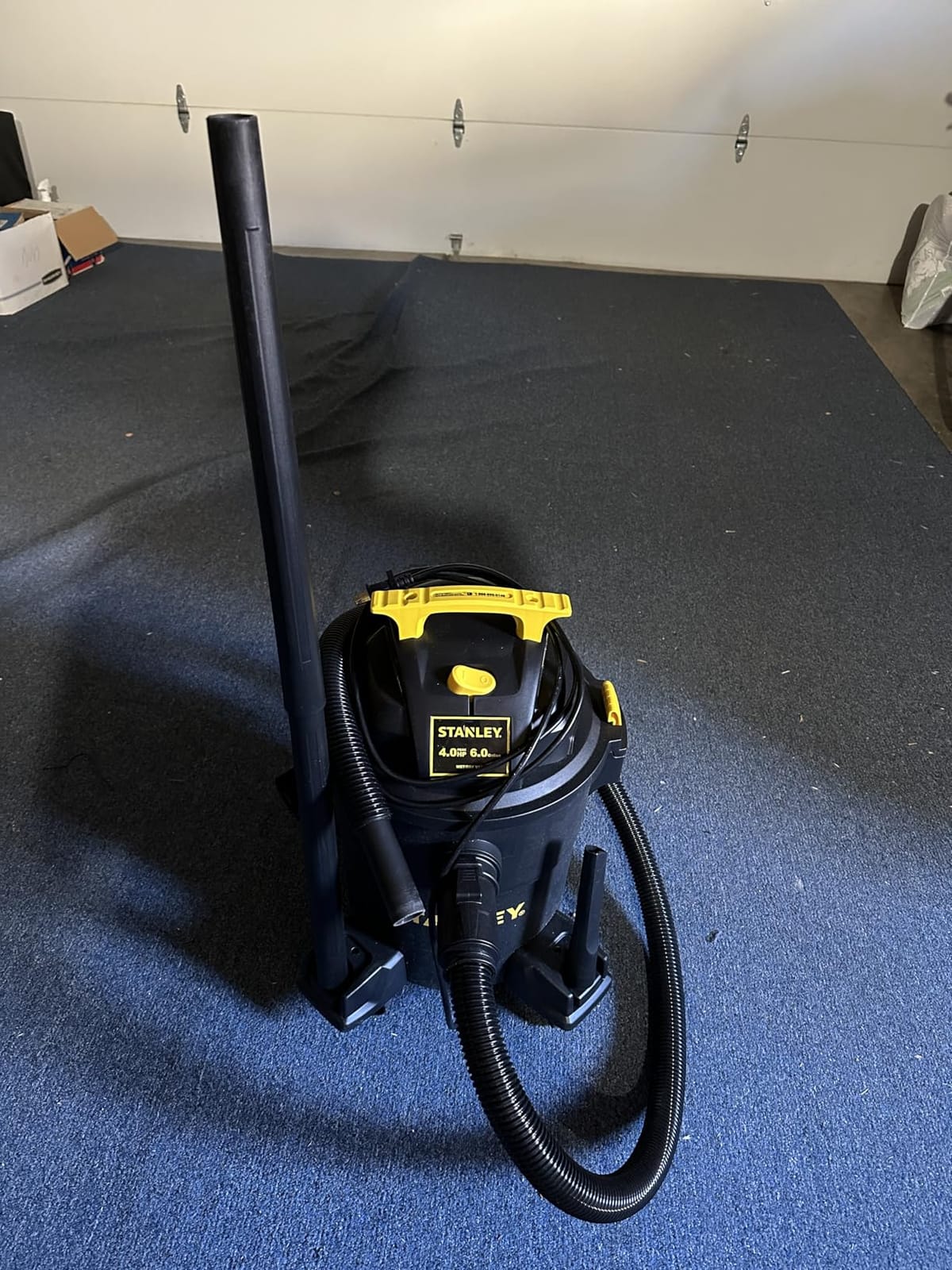
The included kit is unusually complete for this class: a gulper nozzle, floor nozzle, crevice tool, extension wands, a foam filter, a disposable bag, and a reusable dry filter with a clamp ring. That means a wet job and a dry job can be configured without buying anything else.
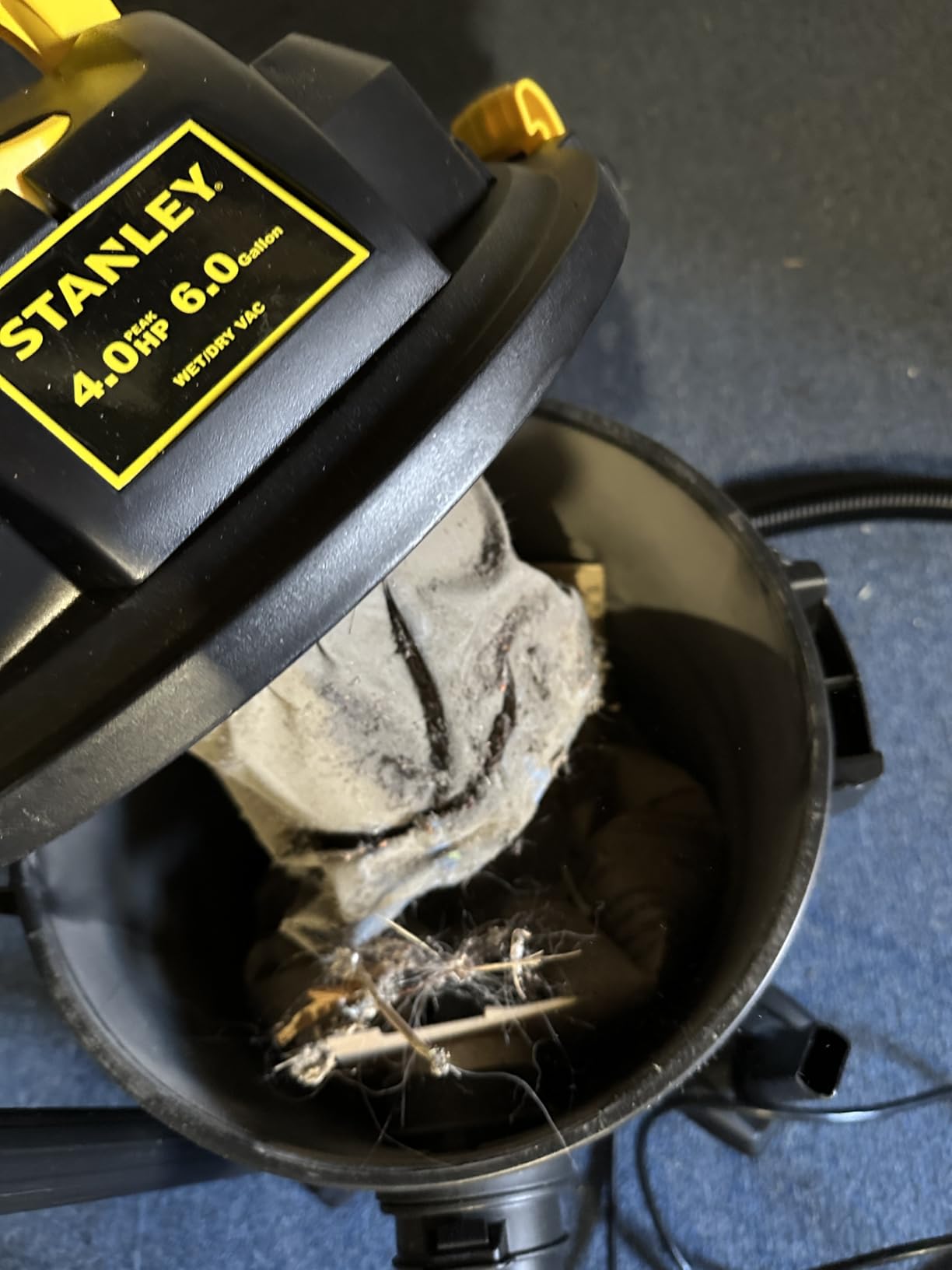
What gives on this one is filtration under fine dust. The foam filter that makes it good for wet pickup is the wrong tool for drywall or masonry grit, and owners who run it on dust report needing to clean it often. Using the disposable bag alongside the filter mitigates this, but it is an ongoing consumable cost.
Where the Stanley SL18116P earns its place in a garage
This is the pick for a garage where storage space is normal rather than severe. At 13.8 inches square and 20.47 inches tall, it sits against a wall without eating a workbench footprint, and four swivel casters mean it rolls across a sloped floor instead of dragging.
It suits owners who split tasks by accessory rather than by machine: dry debris into the bag, liquids through the foam filter with the gulper nozzle, and a hose swap to the rear port for blowing the driveway apron clear.
Where the Stanley SL18116P falls short
If your garage produces heavy masonry dust from drilling or cutting concrete, a cartridge filter unit handles that better. The foam element clogs faster, and owners report more frequent filter cleaning on dusty work.
For a two-car bay where you plan to pick up standing water from a sump pump, a 16-gallon tank would cut the number of draining trips roughly in half.
2. CRAFTSMAN CMXEVBE17595 16-Gallon 6.5 Peak HP – Best for Large Garages and Flood Cleanup
CRAFTSMAN CMXEVBE17595 16 Gallon 6.5 Peak HP Wet Dry Shop Vacuum
16 gallon tank
6.5 peak HP
7 ft 2.5 inch hose
69 dB
26 lb
Pros
- Highest peak HP in this group at 6.5
- 16 gallon tank cuts draining trips
- 69 dB is the lowest published figure here
- 2.5 inch Dual-Flex hose resists kinking
Cons
- 26 pounds is heavy to lift when full
- Only two casters reduce maneuverability
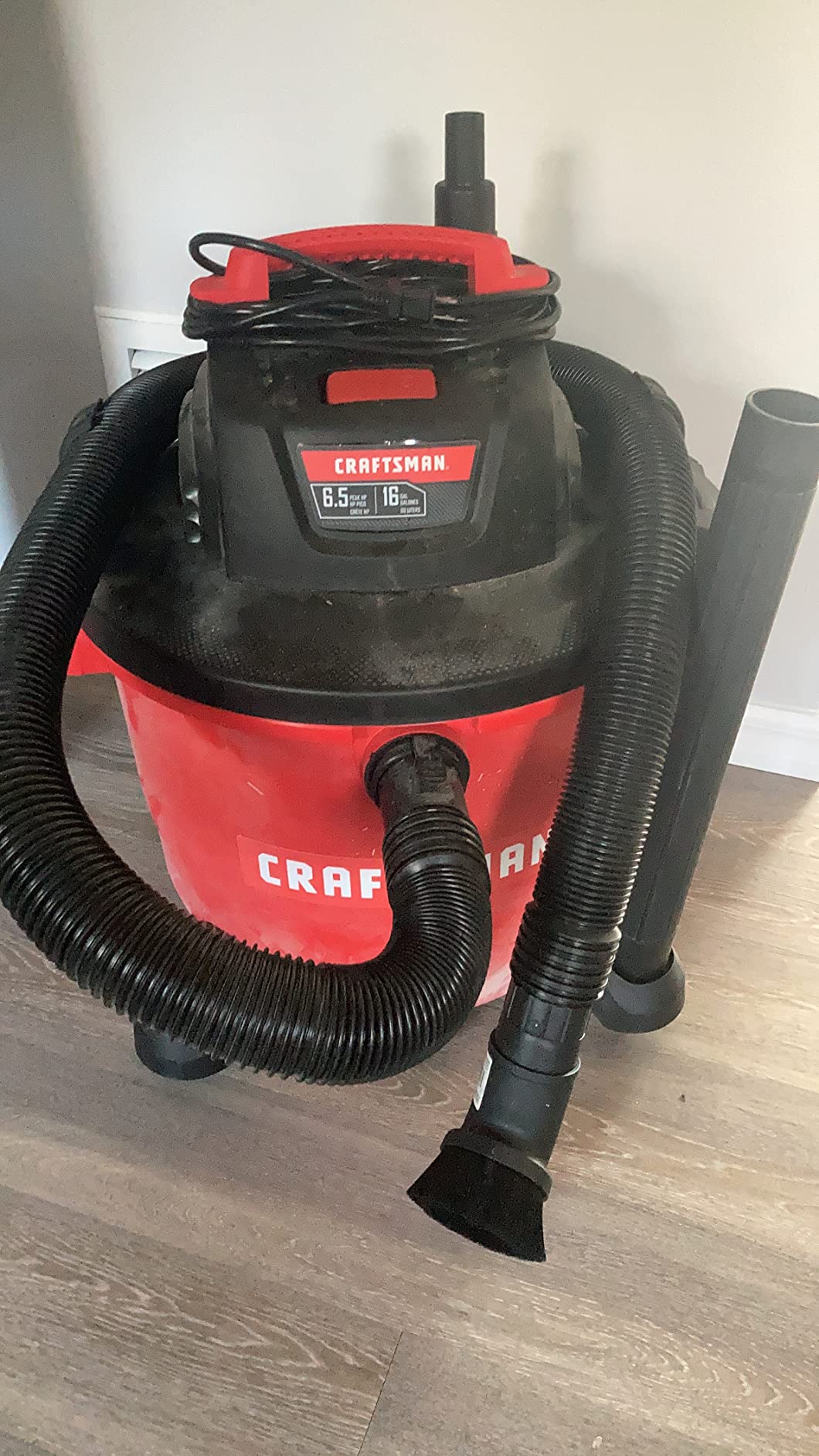
The CMXEVBE17595 holds the highest peak horsepower figure in this group at 6.5, paired with the largest tank at 16 gallons. That combination is the answer for garages where the cleanup volume is the problem: a wet floor after a wash, a sump pump discharge, or a weekend of renovation debris that would fill a 6-gallon can several times.
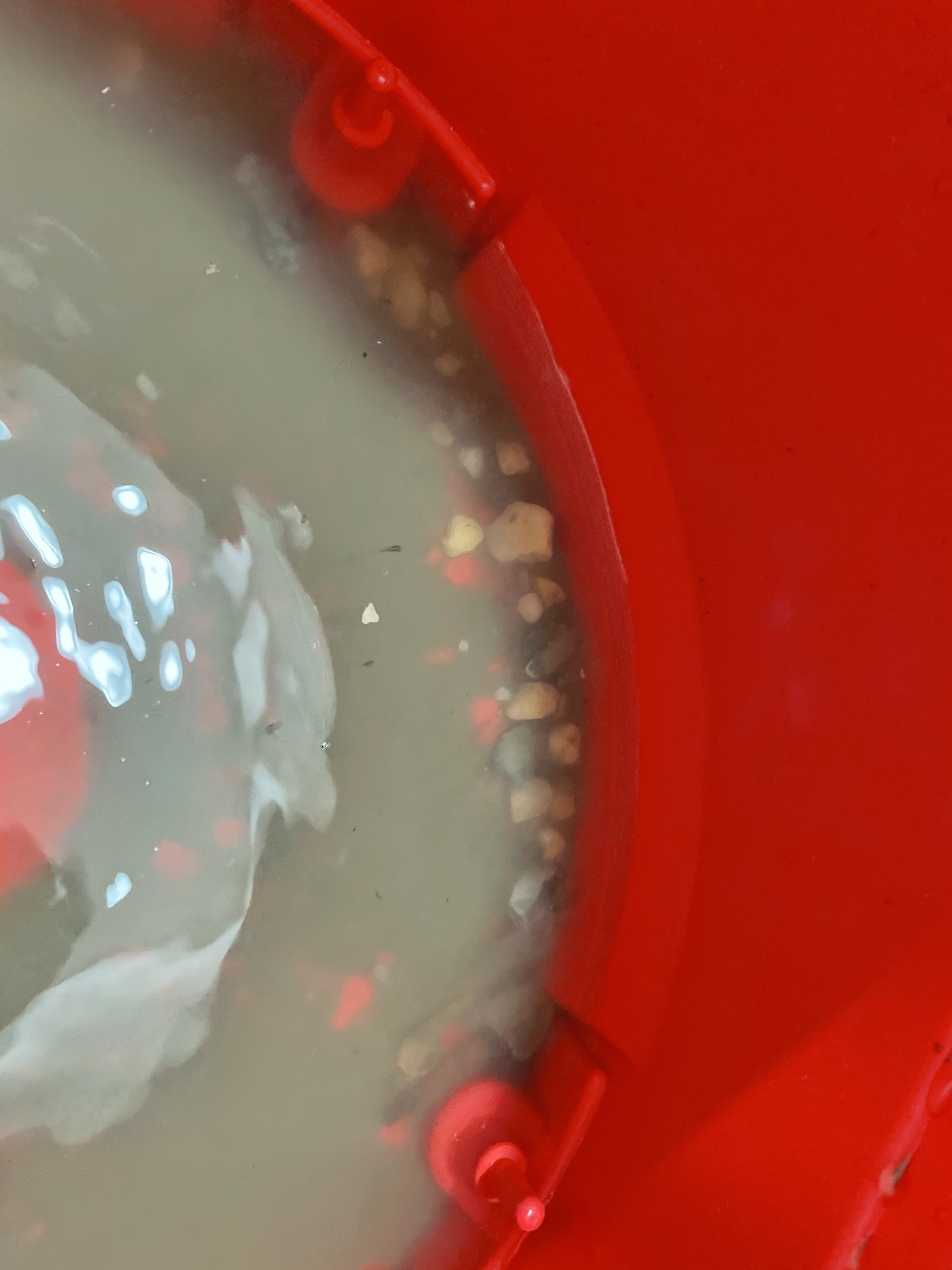
Two details stand out. The built-in oversized drain port empties liquid without tipping the whole canister, which matters when the tank holds more water than you want to lift. And at 69 dB, it publishes the lowest operating noise figure of the ten units here, a genuine advantage in an enclosed garage with shared walls.
The POS-I-LOCK Dual-Flex hose is 2.5 inches in diameter and 7 feet long, and owners specifically note that it resists kinking while you work around a vehicle. The accessory set covers the usual ground with two extension wands, a utility nozzle, a car nozzle, a wet nozzle, a Qwik Lock pleated paper filter, and a dust collection bag.
The trade-off is weight and handling. At 26 pounds empty, this is the heaviest unit on the list, and it rides on two casters rather than four, which owners mention when maneuvering across a rough or sloped garage floor. A 3 year limited warranty from Emerson Tool Company is the strongest coverage on two of the picks here.
Where the CRAFTSMAN 16-gallon makes sense
Choose this if water is the recurring mess. A 16-gallon tank plus a large drain port means one pass after a sump pump cycle or a car wash rather than three, and the wet nozzle pulls standing water off a flat slab without leaving a film.
It also suits garages that double as renovation space, where the debris is bulky and infrequent. Fewer stops mean fewer interruptions to a job that is already longer than planned.
Where the CRAFTSMAN 16-gallon makes life harder
If your garage floor is uneven or you carry the unit up steps, 26 pounds is a real penalty. Two casters also make it less willing to follow you around a bench than a four-caster unit.
For a small bay where floor space is the binding constraint, this model occupies a 21 by 23.8 inch footprint and stands 26.7 inches tall, which is a lot of garage to give up permanently.
3. DEWALT DCV581H 2-Gallon Cordless and Corded – Best Cordless Pick for Garages Without Outlets
DEWALT 20V MAX Shop Vacuum Wet and Dry, Shop Vac 2 Gallon, Cordless and Corded Wet Dry Vacuum Cleaner, Wide Nozzle, Hepa Filter, Tool Only (DCV581H)
2 gallon tank
20V MAX battery or 120V cord
5 ft hose
Washable HEPA filter
16 oz
Pros
- Runs on a battery or a cord
- Quiet relative to other cordless units
- Washable filter
- Onboard hose and accessory storage
- Floating ball protects the fan in wet mode
Cons
- Suction trails full-size corded units
- 2 gallon tank fills quickly
- Fine dust clogs the filter fast
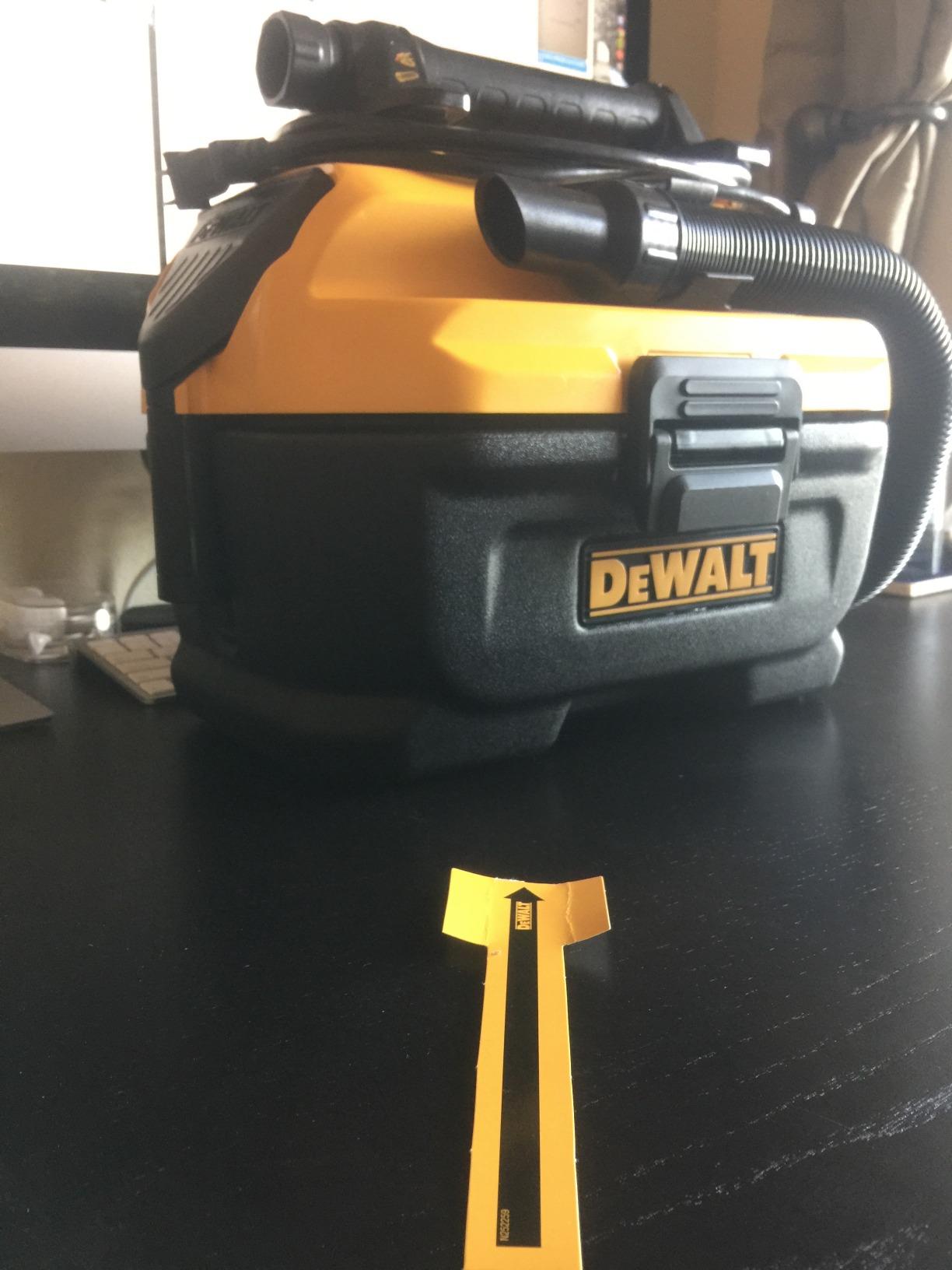
The DCV581H solves a problem no other pick here addresses: a garage with no outlet where you need to clean. It runs on a 20V MAX battery or a 120V cord, so the same machine covers a car interior in a driveway and a fixed workshop bench. At 16 ounces of body weight, it is the one you carry with one hand.
Owners highlight the washable reusable filter that rinses under running water, and the onboard storage for the hose and attachments. A floating ball shuts off airflow before water reaches the fan in wet mode, which protects a machine that people regularly point at car mats and floor spills.
The included hardware is a 5-foot crush-resistant hose at 1-1/4 inch diameter, a wide gulper nozzle, a Gore wet/dry HEPA filter, and a crevice tool. The battery and charger are sold separately, so the ownership cost depends entirely on whether you already own that platform.
The honest limitation is suction. Owners consistently report that it is well below a full-size corded shop vac, and that fine dust like drywall or concrete clogs the filter quickly. Long-term owners also report battery connector failures on some units, and the included flat car attachment draws its own complaints.
Where the DEWALT DCV581H fits a garage routine
It belongs on the bench cart, not on the floor. Car interior work, seat tracks, the footwell, and small spills are all within reach of a 5-foot hose and a machine you can pick up without bending.
If you already own 20V MAX batteries, the running cost of this approach is effectively free, and the washable filter removes the consumable line item that trips up dry-only use.
Where the DEWALT DCV581H is the wrong tool
A 2-gallon tank empties quickly. For a wet garage floor after washing a car, you will be draining repeatedly while a 6-gallon or larger can would finish in one pass.
Masonry drilling is the other mismatch. Fine dust blinds this filter in a way it would not blind a cartridge unit, and the washable filter then needs a full clean before the next dry job.
4. Vacmaster VBV1210 12-Gallon with Detachable Blower – Best Airflow and Best Blower Conversion
Vacmaster Blue Line 12-Gallon* 5 Peak HP† Wet/Dry Vacuum with Detachable Blower VBV1210
12 gallon tank
5 peak HP
106 CFM
7 ft hose
Detachable blower
Pros
- Only pick with a published 106 CFM airflow
- Detachable blower releases with one hand
- 22 ft combined reach
- Air and noise diffuser included
- Large drain port
Cons
- 10.5 A draw trips 15 amp breakers
- Heavy and bulky when the tank is full
- Hoses can clog on plaster debris
The VBV1210 is the only unit in this roundup where the manufacturer publishes airflow, at 106 CFM, and that number changes how it should be judged. Airflow is what determines how fast a garage floor clears and how well it handles loose volume rather than a single heavy item, and this machine leads the group on the only comparable figure available.
The detachable blower is the other standout. It releases with one hand and reaches a stated 210 MPH, so clearing sawdust off a bench, blowing out between a tire and a fender, or moving leaves off the driveway apron is a hose swap rather than a second tool. Owners also praise the included air and noise diffuser.
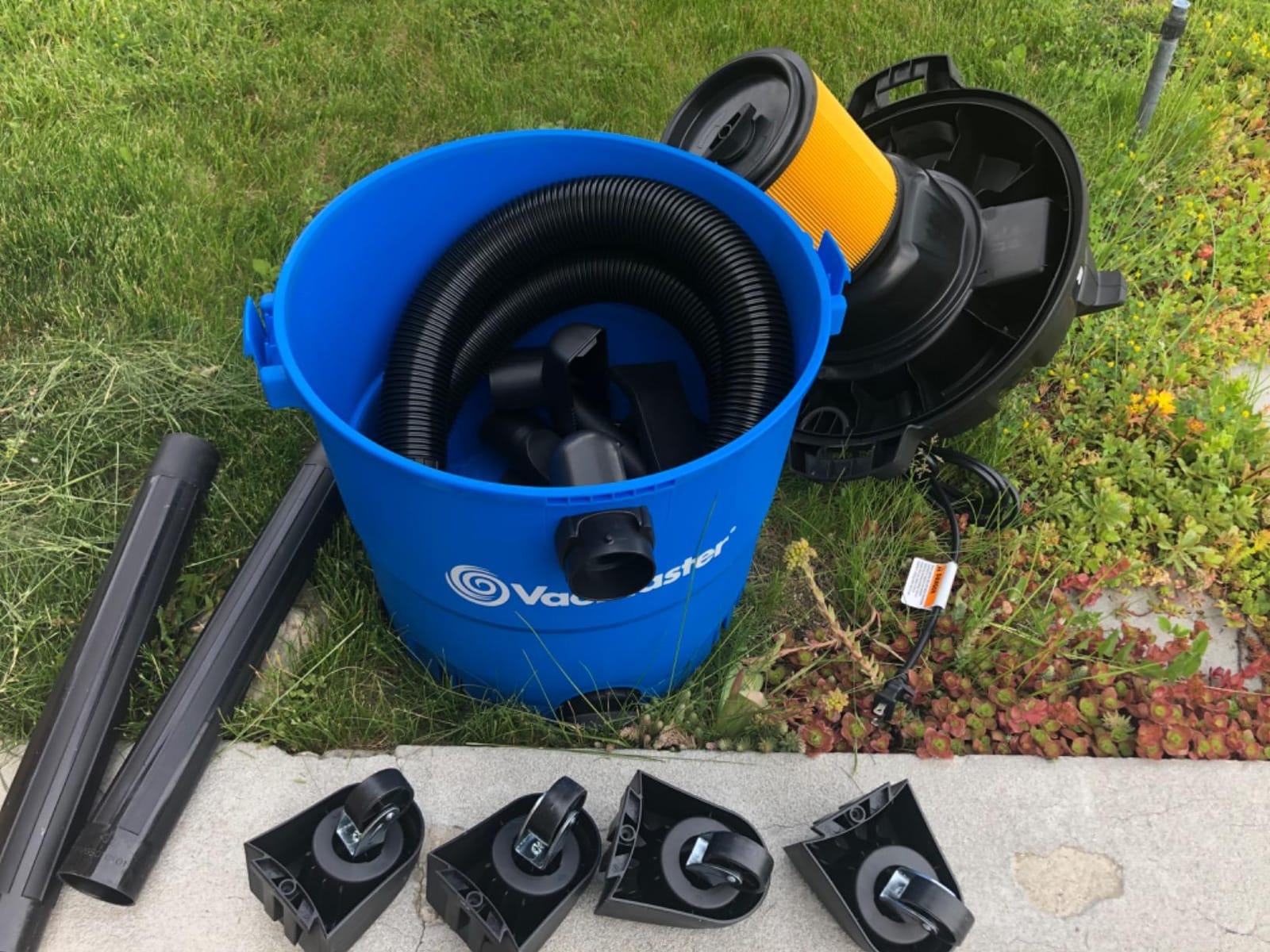
At 12 gallons with 5 peak HP, this is a genuinely large machine for a home garage. It carries a 22-foot combined reach from hose and cord, 11 accessories with onboard storage, wide-stance casters, and a balanced top handle. Reviewers report it pulling up gravel, hay, pet hair, and general debris without difficulty.
Two practical notes. The 10.5 amp draw is high enough that owners report tripping 15-amp breakers, so plan on a dedicated 20-amp circuit or a heavy extension cord. And the wet filter sponge is thin, with owners reporting tears during fitting, plus hoses that clog with plaster and drywall debris.
Where the Vacmaster VBV1210 earns its size
If your garage is also a workshop, this is the pick. The blower converts properly, the tank holds a full session of sawdust and offcuts, and the diffuser takes the edge off the noise in an enclosed space.
It is also the most sensible answer to the airflow question, because 106 CFM is the one published figure you can actually compare rather than a peak horsepower number that is not comparable between brands.
Where the Vacmaster VBV1210 is overkill
A 12-gallon canister that weighs heavily when full is awkward in a one-car bay or a garage apartment. Owners report the bulk as a real drawback, not a minor one, once you are draining it into a utility sink.
The circuit requirement is the detail people discover late. On a shared 15-amp outlet, it will trip, and that changes where you can plug it in.
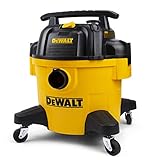
5. DEWALT DXV06P 6-Gallon Poly Wet/Dry Vacuum – Best for One-Car Garages
DEWALT Shop Vacuum 6 Gal 4 HP Poly Wet/Dry Vacuum with Blower DXV06P
6 gallon tank
4 HP motor
7 ft hose plus 10 ft cord
77 dB
14.8 lb
Pros
- Compact 15.5 by 19.5 inch footprint
- 10 ft cord with cord wrap
- Built-in blower port for sawdust
- Four rubberized swivel casters
Cons
- Cartridge filter must be fitted before use
- 77 dB is louder than the large-tank picks
- Poly tank is lighter duty than steel
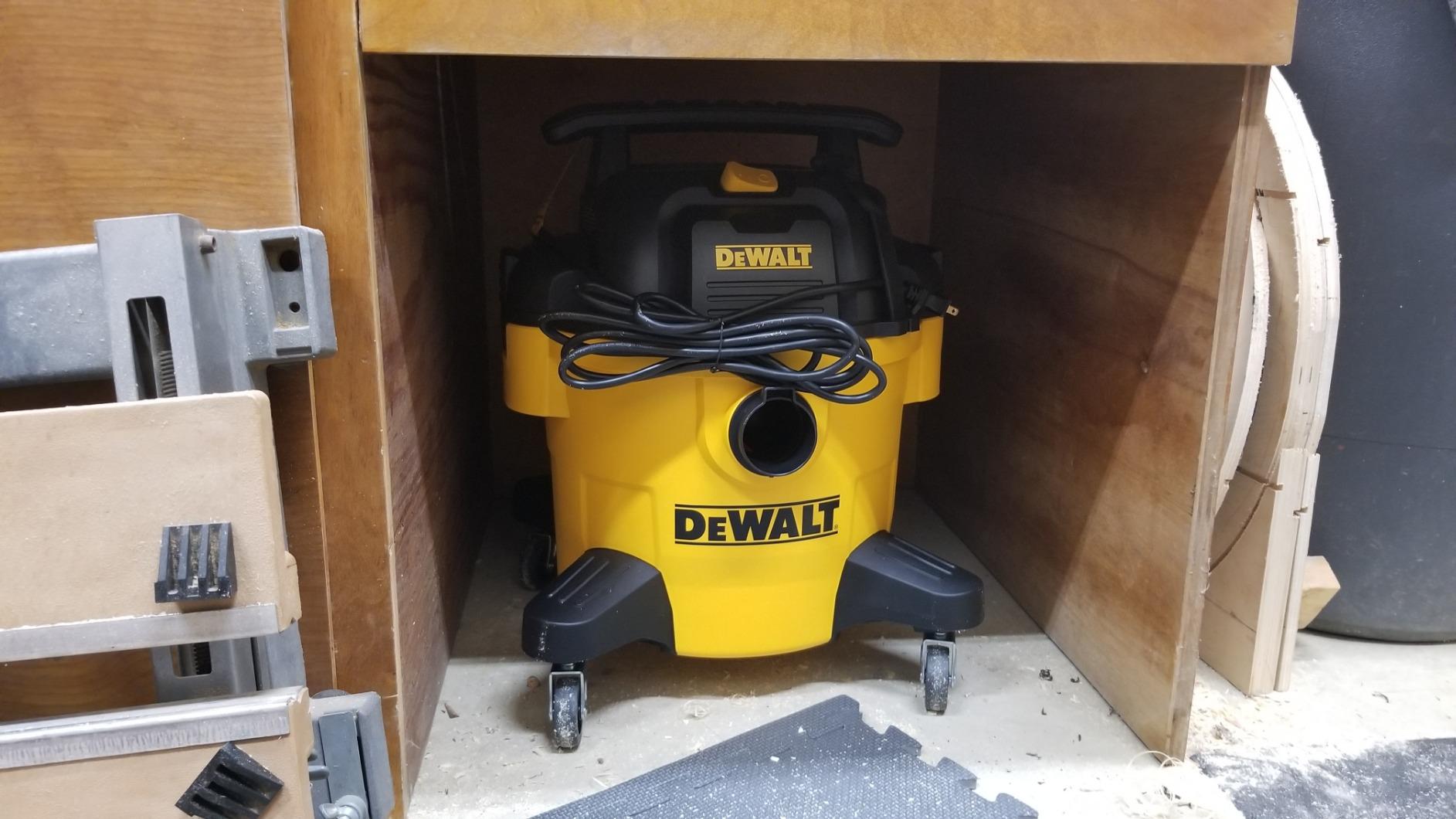
The DXV06P answers a very common garage question: what do I buy when the space is small and the messes are routine? At 15.5 by 19.5 inches and 16.5 inches tall, it tucks against a wall without stealing bench space, and 14.8 pounds means one person can move it without a struggle.
Its 4 HP motor delivers the same class of suction as larger machines in normal conditions, and the built-in blower port clears sawdust and bench debris without an adapter. The 10-foot cord with a wrap is longer than most 6-gallon units offer, which is where reach usually falls short.
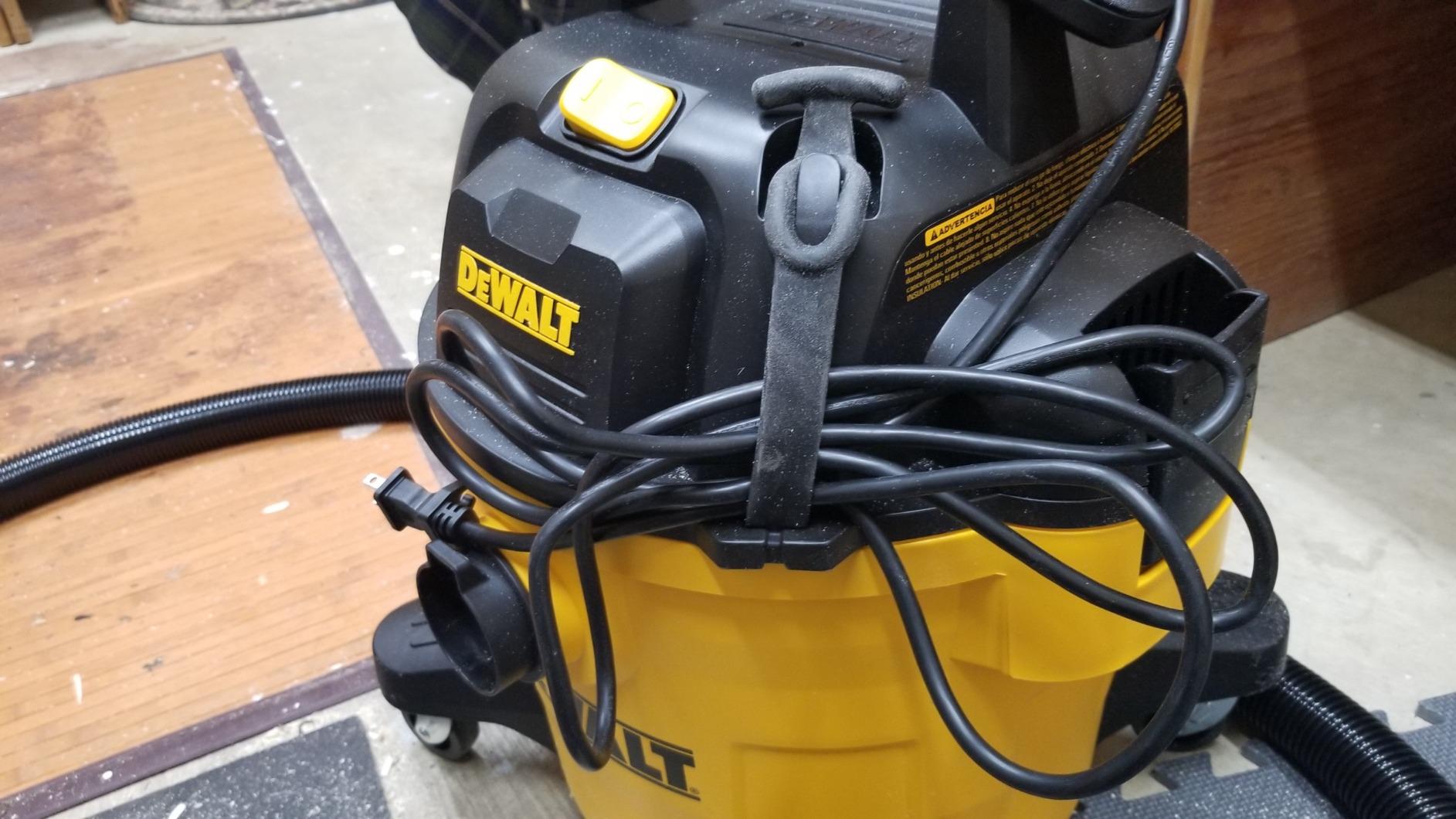
The accessory set covers the basics well: a 1-7/8 inch by 7-foot hose, two extension wands, a cartridge filter, a dust bag, and floor, utility, and crevice nozzles. Rubberized swivel casters move smoothly across a sealed concrete floor, which is a detail owners with sloped slabs appreciate.
The recurring practical note in reviews is not a fault but a habit: the cartridge filter has to be installed before the unit will do anything. At 77 dB it is also louder than the 16-gallon CRAFTSMAN, which is the price of a smaller motor and a plastic tank.
Where the DEWALT DXV06P works best
A single-bay garage with a workbench and one vehicle. Six gallons is enough for a car interior, a spill, and a sweep of the floor without hauling the unit outside to empty it.
Owners who use it for woodworking rate the blower port highly, since bench debris is a volume problem more than a suction problem.
Where the DEWALT DXV06P is not enough
A poly tank dents and scuffs, and owners comparing it against stainless alternatives note the difference in longevity if the unit gets bumped around by a car or a mower.
For anyone drilling masonry regularly, 77 dB in an enclosed garage is tiring over a long session, and a machine with a published quiet figure would serve better.
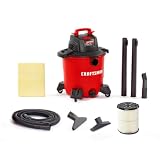
6. CRAFTSMAN CMXEVBE17590 9-Gallon 4.25 Peak HP – Best for Fine Dust and Workshops
CRAFTSMAN CMXEVBE17590 9 Gallon 4.25 Peak HP Wet Dry Shop Vacuum
9 gallon tank
4.25 peak HP
68 in suction
82 dB
15.5 lb
Pros
- Qwik Lock filter changes take seconds
- Built-in oversized drain for wet work
- Utility
- car and wet nozzles included
- 15.5 lb is light for the tank size
Cons
- 82 dB is the loudest published figure here
- Roller wheels can detach
- Some models arrive without hardware
This is the pick for a garage where fine dust is the problem rather than water. The Qwik Lock pleated paper filter fastening system is the reason: it lets you swap between a fine-dust cartridge and the foam element in seconds, which is the practical answer to the forum question about whether a HEPA shop vac handles concrete and brick drilling.
Nine gallons is a deliberate middle. It handles more volume than a 6-gallon can without the 26-pound problem of a 16-gallon unit, and reviewers single out the built-in drain that empties liquid without rolling the machine to the sink.
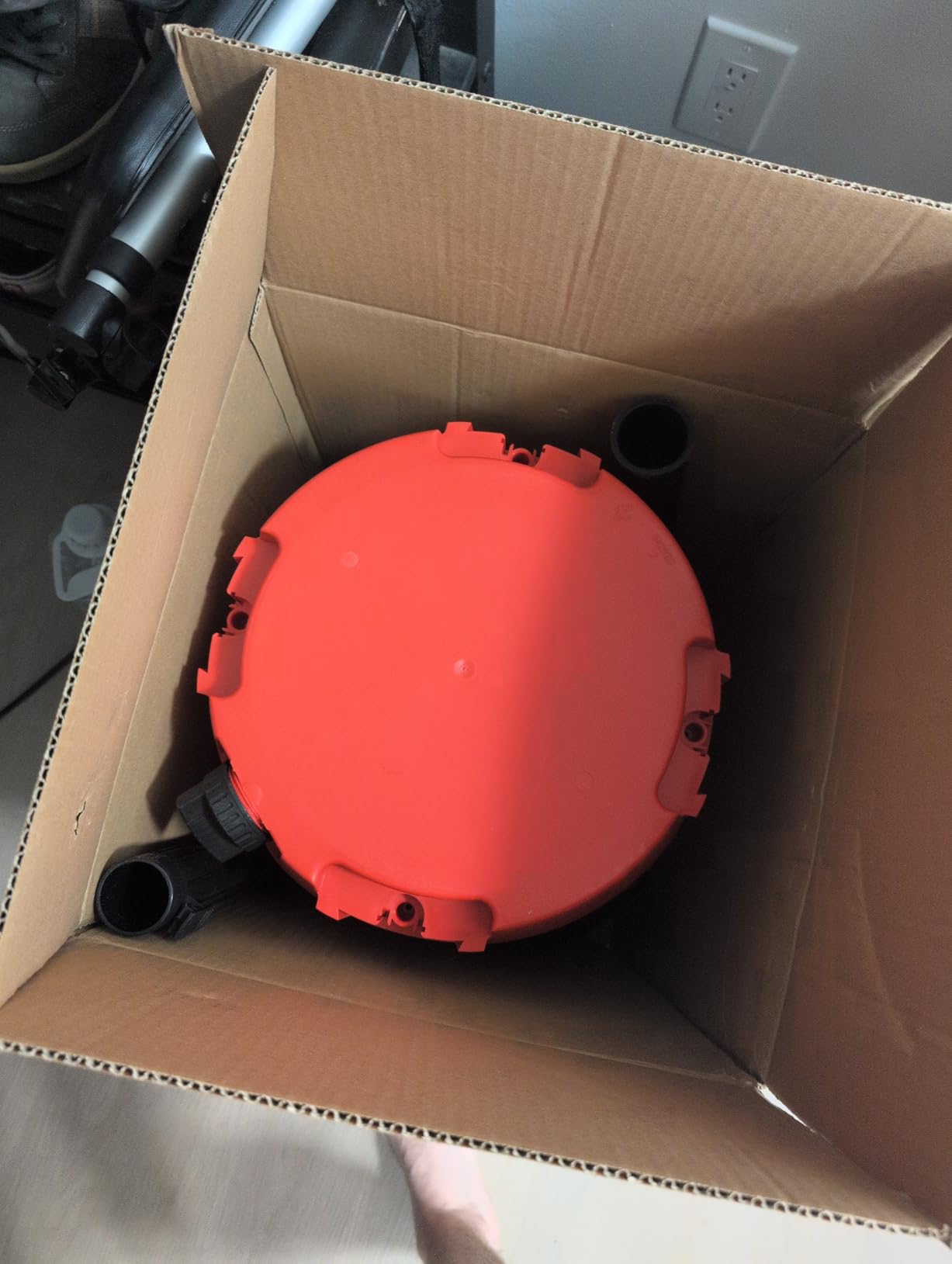
The accessory list is the most complete in the mid-size group: a 1-7/8 inch by 7-foot POS-I-LOCK hose, two locking extension wands, a utility nozzle, a car nozzle, a wet nozzle, the Qwik Lock filter, and a dust collection bag. The rear exhaust doubles as a blower port for driveway and apron debris.
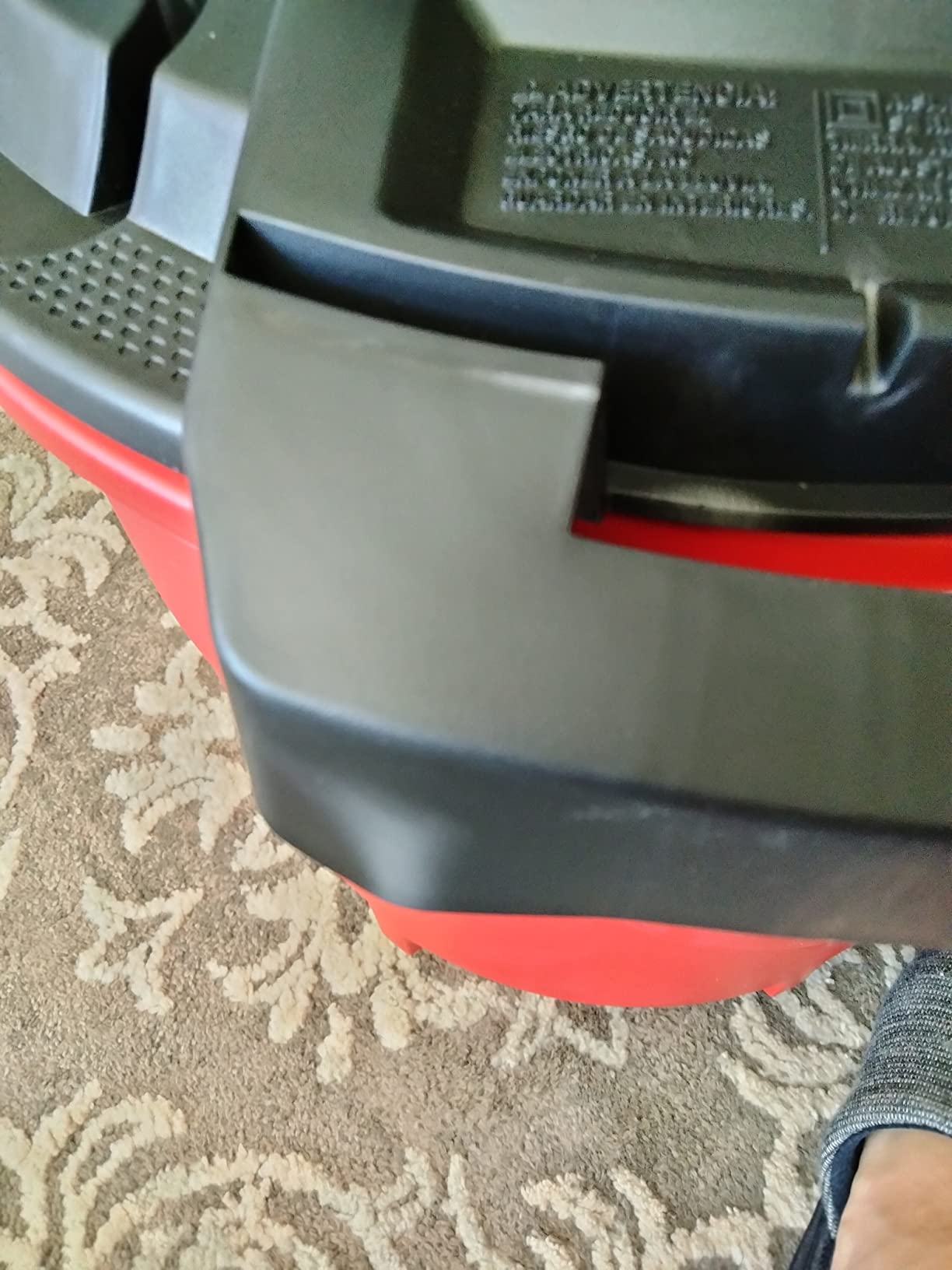
Owners report three recurring annoyances. It is the loudest machine here with a published 82 dB figure, roller wheels can detach and need snapping back into place, and some models arrive without the screws for the handle or wheels. Only one dust bag is included, so ongoing use means buying more.
Where the CRAFTSMAN 9-gallon makes sense
Any garage where you drill, cut, or sand. Fast filter changes mean you are not stuck with a saturated cartridge, which is the single biggest cause of a wet dry vac blowing dust back into the room.
It is also a good fit for a workbench that gets used for car work and woodworking in the same week, since the nozzle set covers utility, car, and wet pickup.
Where the CRAFTSMAN 9-gallon disappoints
82 dB is the loudest figure published in this group. In an enclosed garage with a shared wall, that is a real quality-of-life problem, and owners who want quieter operation should look at the 69 dB CRAFTSMAN instead.
Detachable roller wheels and a hose that can twist the unit as you work are small irritances, but they show up on nearly every unit in this class, not just this one.
7. Bissell Garage Pro 18P03 Wall-Mounted Wet/Dry Vacuum – Best Wall-Mounted Pick for Small Garages
Bissell Garage Pro Wall-Mounted Wet Dry Vacuum/Blower, 18P03
4 gallon tank
32 ft stretch hose
1400 watts
Wall mount kit included
6.3 lb
Pros
- Frees entire floor space in a tight garage
- 32 ft hose reaches anywhere from one mount
- 6.3 lb body is easy to carry
- Semi-translucent tank shows fill level
Cons
- 4 gallon tank empties often
- Fixed mount reduces portability
- Installation requires mounting hardware
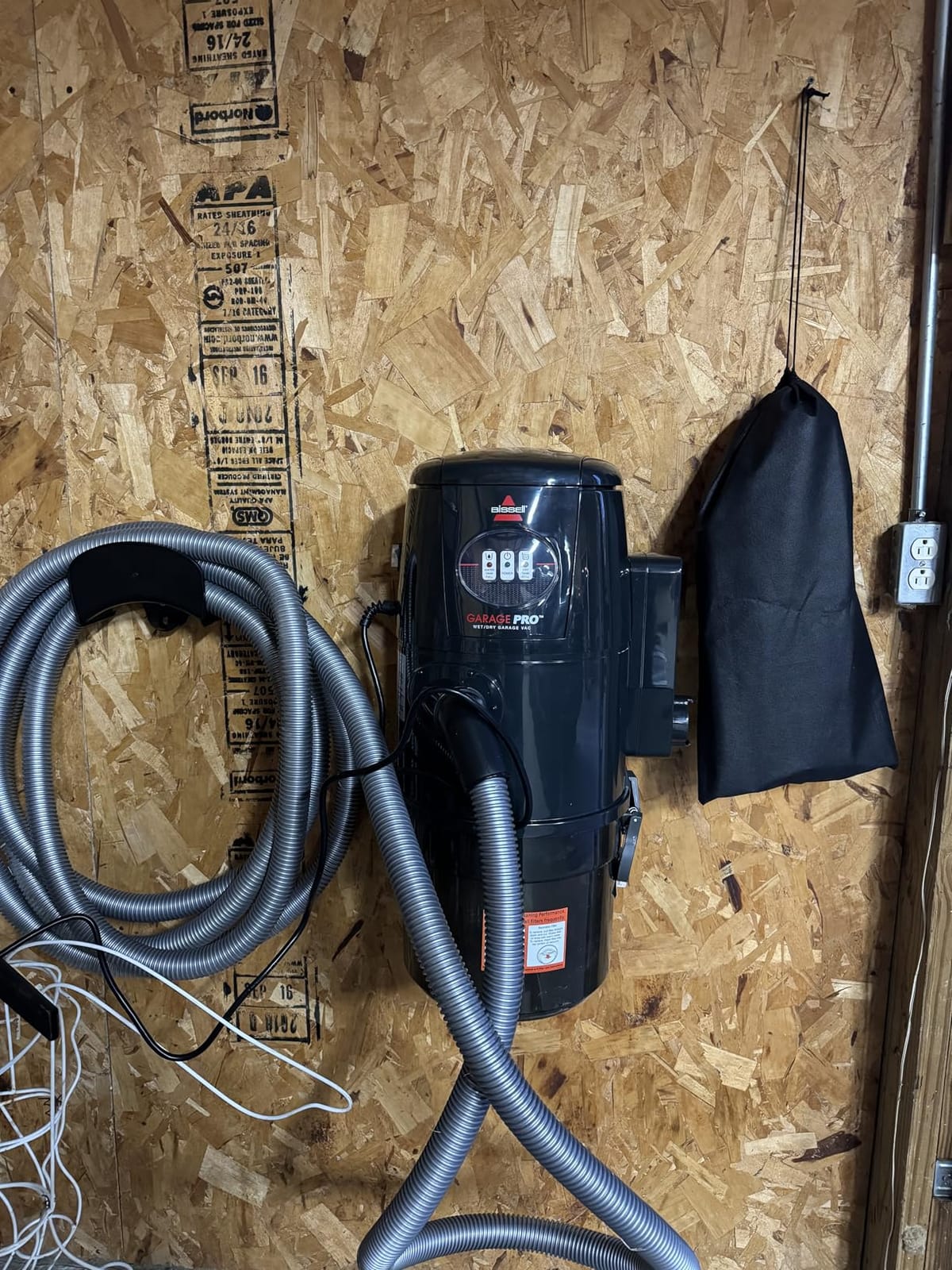
Wall mounting is the most garage-specific buying decision on this list, and the Bissell Garage Pro 18P03 is the clearest example of it. The machine hangs on the wall, which means it never occupies floor space, never gets kicked by a lawnmower, and never competes with a workbench for a corner in a one-bay garage.
The reach that design unlocks is the reason to buy it. A 32-foot stretch hose from a fixed point covers the whole bay, the far wall, and the underside of a vehicle, which no wheeled unit with a 7-foot hose can do without following you around on its cord.
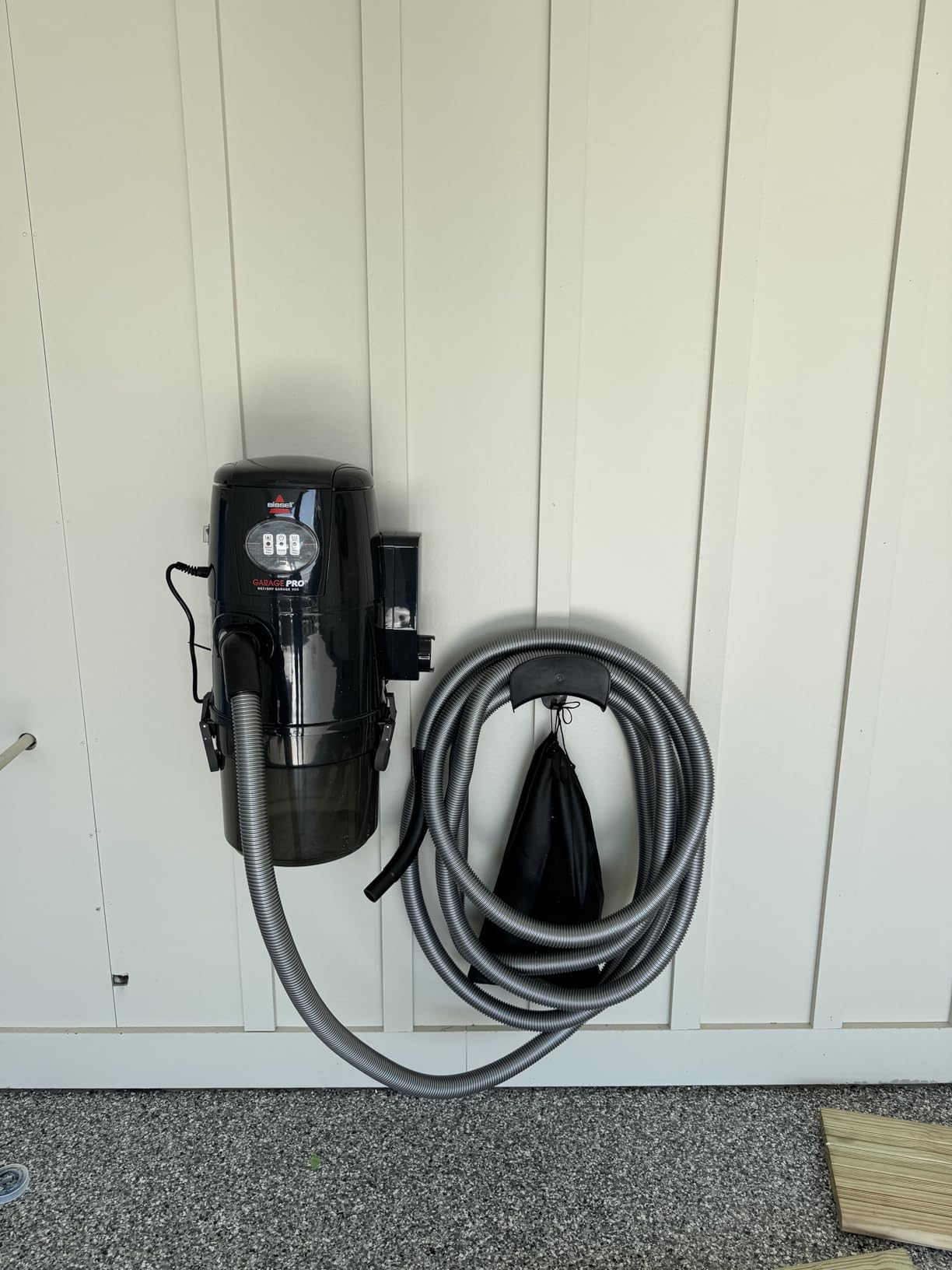
It is also light. At 6.3 pounds with two carry handles, this is a machine a 1400-watt, 12-amp unit that you can lift into a car trunk, and it converts to a blower for car and garage debris. Seven attachments plus an accessory bag cover car, floor, upholstery, and bare-floor cleaning, and the semi-translucent tank shows fill level at a glance.
The constraint is capacity. Four gallons is the second-smallest tank here, and owners report that it needs frequent emptying during anything beyond a spot clean. A fixed mount also reduces portability compared with a wheeled can, and the two-year warranty is shorter than the three-year coverage on the corded CRAFTSMAN and Shop-Vac picks.
Where the Bissell Garage Pro works best
Small garages where floor space is the scarcer resource. Hanging the unit at roughly chest height next to the door keeps the floor clear and puts the hose within reach every time you walk in.
Car detailing is the ideal pairing. The upholstery tool, the long hose, and the blower conversion cover interior extraction, footwell debris, and blow-out between the tire and fender without moving anything.
Where the Bissell Garage Pro falls short
Four gallons for a two-car garage with water problems is a small tank. You will be draining it multiple times, and a larger wheeled can empties less often.
If you need to take the machine somewhere else, a fixed wall mount is an anchor. That flexibility has to come from a second unit.
8. Shop-Vac 5989305 5-Gallon 4.5 Peak HP – Best Stainless Steel Build
Shop-Vac 5989305 5 Gallon 4.5 Peak HP Wet/Dry Vacuum with Blower Function
5 gallon stainless tank
4.5 peak HP
59 in suction
78 dB
Bagged design
Pros
- Stainless steel tank resists rust and dents
- Full-circumference dolly plus two carry handles
- Bagged design keeps the tank clean on fine debris
- 3 year warranty
Cons
- 5 gallon tank is small for heavy garage work
- 6 ft hose is short
- Bagged running adds consumable cost
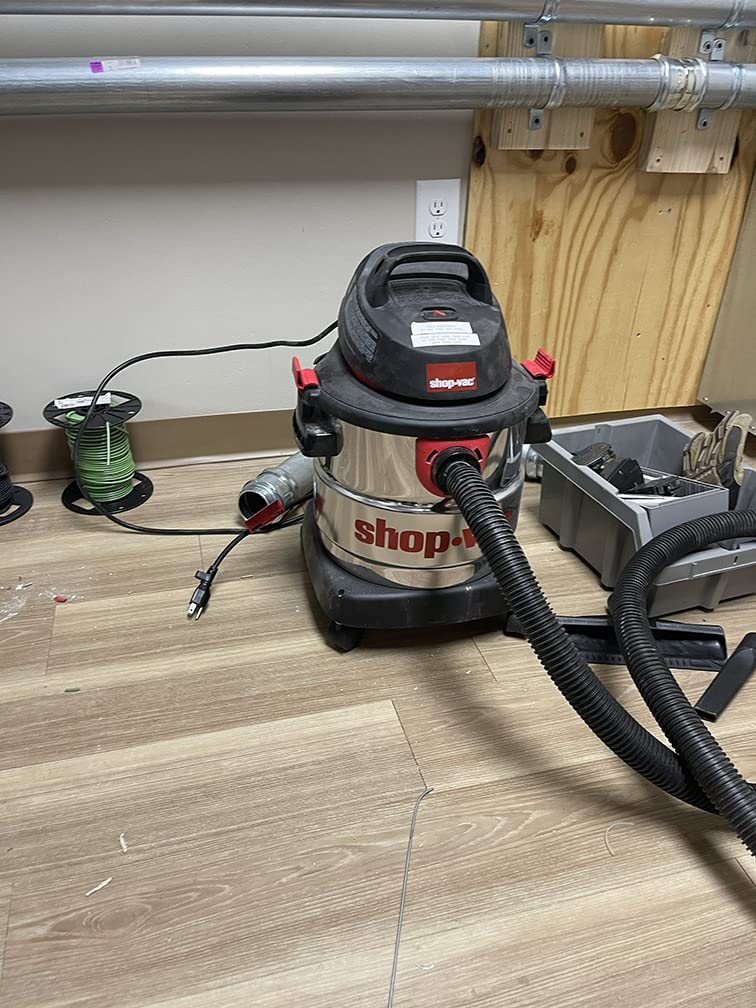
Steel is the durability argument. A garage floor deals with water, oil, gravel impacts, and the occasional dropped wrench, and a stainless tank outlasts the polypropylene alternative in that environment. The Shop-Vac 5989305 pairs that tank with a 4.5 peak HP motor rated at 59 inches of maximum suction.
The bagged design is the underrated part. Owners note that the disposable bag keeps the tank interior clean when picking up fine debris, which matters in a garage where you would rather not rinse out a wet canister after a dusty job. The full-circumference dolly plus top and side carry handles make it easy to move either way.
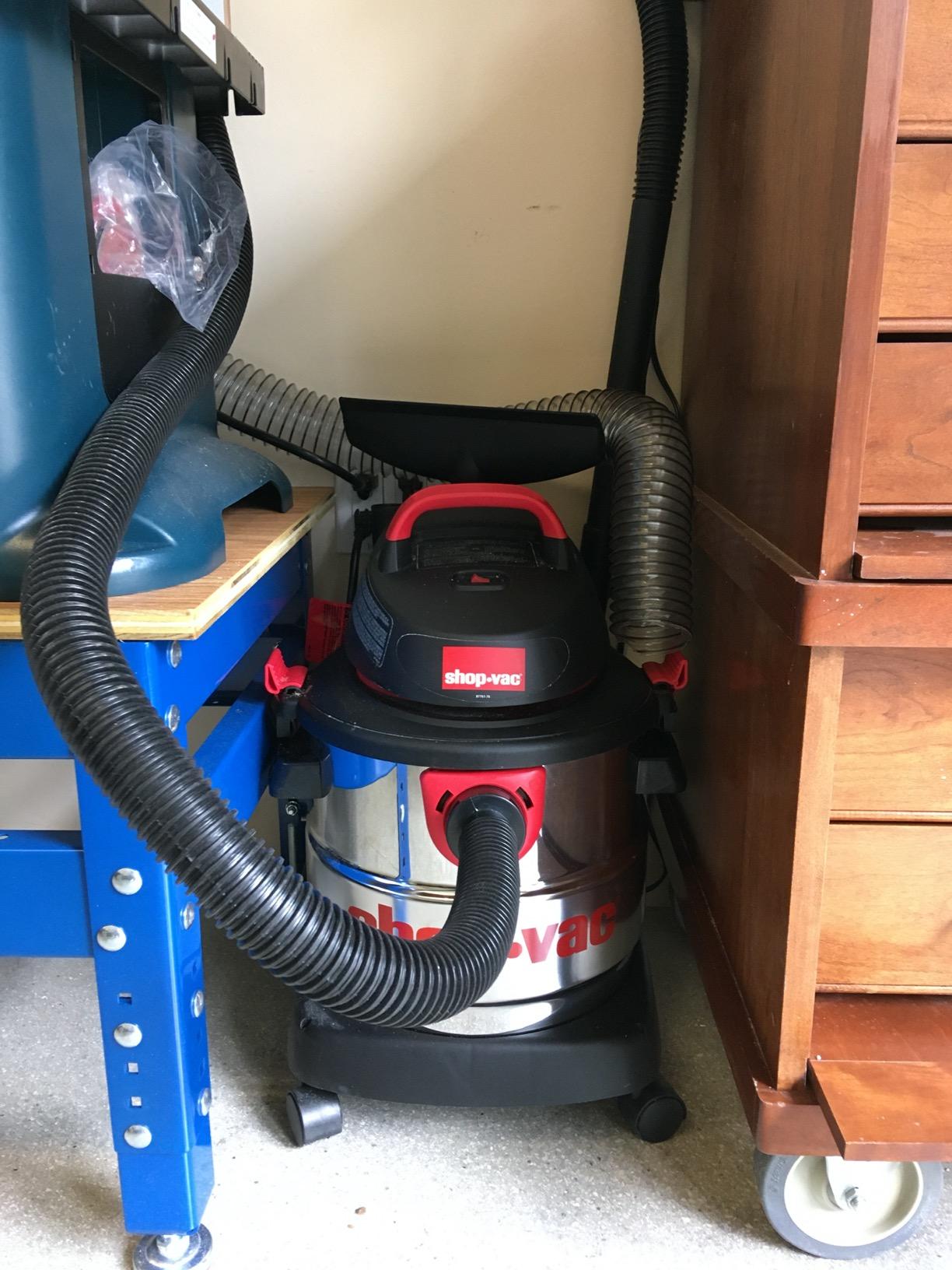
The accessory kit is complete: a hose, three extension wands, a crevice tool, a gulper nozzle, a floor nozzle, a cartridge filter, a foam sleeve, and a filter bag. A 3 year warranty is solid for this tier.
Two things temper that. Five gallons is the smallest tank among the wheeled corded picks, and owners report that capacity as the most common criticism. The 6-foot hose is also on the short side, so you will rely more heavily on the cord. Running bagged also means buying bags as an ongoing cost.
Where the Shop-Vac 5989305 holds up
Any garage where the machine takes abuse rather than careful handling. A steel tank tolerates being bumped, dragged over a rough apron, and stored damp without developing the dents and stress cracks a poly tank eventually shows.
It is a good fit for a mixed garage where you alternate dry fine debris and wet pickup, since the bag and the foam sleeve cover both.
Where the Shop-Vac 5989305 is limited
Five gallons fills quickly during a car wash or a weekend of renovation debris. Two larger picks on this list would finish those jobs in fewer draining trips.
Its 4.4-star average carries the lowest share of five-star ratings in this group, and owners most often point to capacity and the short hose as the cause.
9. Vacmaster VOC508S 5-Gallon Stainless Steel – Best Compact Steel Pick with a Low Power Draw
Vacmaster VOC508S 1101 5-Gal 4 Peak HP Stainless Steel Wet/Dry Vac Red
5 gallon stainless tank
135 air watt motor
16 ft reach
77 dB
4.36 A draw
Pros
- 4.36 A draw works on standard household circuits
- Stainless steel tank in a compact body
- Cartridge and foam filters both included
- Blower function via adapter
Cons
- 5 gallon tank suits routine cleanup only
- 135 air watts is modest for large debris
The VOC508S solves an electrical problem that the bigger units create. Its 4.36 amp draw is roughly half what a 12-amp shop vac pulls, which means it runs on a standard household circuit without tripping a breaker when you also have a power saw or a charger on the same outlet.
It still gives you a stainless steel tank in a body that measures 13.38 by 13.2 inches and stands 21.85 inches tall. That is a steel tank that stores against a wall without claiming bench space, which is the usual reason people rule steel out in a small garage.
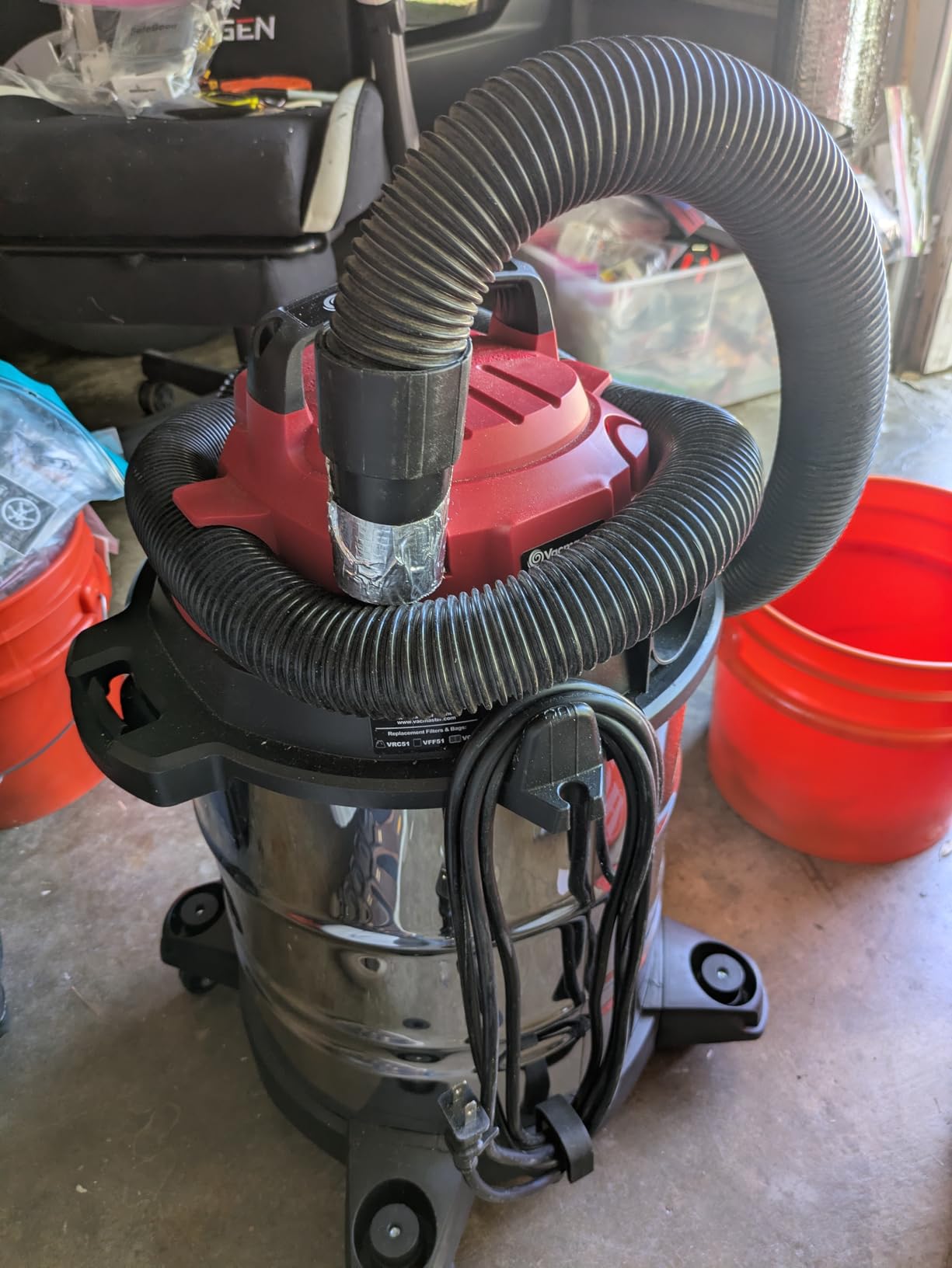
The 135 air watt motor is rated by air watts rather than peak horsepower, which is a more honest number and puts it in an honest context. It is adequate for routine wet and dry pickup, and the 16 feet of combined hose and cord reach covers a one-car bay.
Both filter types ship in the box, a cartridge for dry pickup and a foam element for wet, plus five more accessories and a blower adapter. The limitation is straightforward: five gallons and a modest motor mean this is a car and floor machine, not a bulk debris machine.
Where the Vacmaster VOC508S fits
Garages with limited circuits, older wiring, or a shared outlet with other tools. A low draw means you do not have to plan your cleanup around what else is plugged in.
It is also a good small-garage combination, since steel durability and a compact footprint are hard to find together.
Where the Vacmaster VOC508S runs out
A low draw means a lower motor output, and 135 air watts is not much for gravel, plaster, or renovation debris. Owners who move the same volume every week report needing two draining trips that a bigger tank would avoid.
For a two-car garage with a bench, one of the 9-gallon or 12-gallon picks will simply finish sooner.
10. Armor All AA255W 2.5-Gallon Utility Vac – Best Budget Pick for Occasional DIY
Armor All AA255W 2.5 Gal 2 Peak HP Wet/Dry Utility Vac Orange/Black
2.5 gallon poly tank
2 peak HP
6 ft hose plus 12 ft cord
75 dB
11 lb
Pros
- Lightest wheeled pick at 11 lb
- Integrated hose cord and accessory storage
- 13 accessories included
- Converts to a blower
Cons
- 2.5 gallon tank for small messes only
- 2 peak HP is the lowest figure here
- Not built for heavy garage debris
Not every garage needs a 16-gallon machine. If yours is tidy, sees occasional DIY, and mostly needs a car interior and a small spill handled, the Armor All AA255W does that job for a fraction of the physical presence. It weighs 11 pounds and measures 14.2 by 10.6 inches, so it stores anywhere.
The accessory count is the surprise. Thirteen attachments come in the box, including a 12-foot cord, a 6-foot hose at 1-1/4 inch diameter, three extension wands, a deluxe car nozzle, brushes, a 2-in-1 utility nozzle, a floor brush and squeegee nozzle, a reusable cloth filter, and a foam wet filter. Integrated storage keeps all of it on the unit.
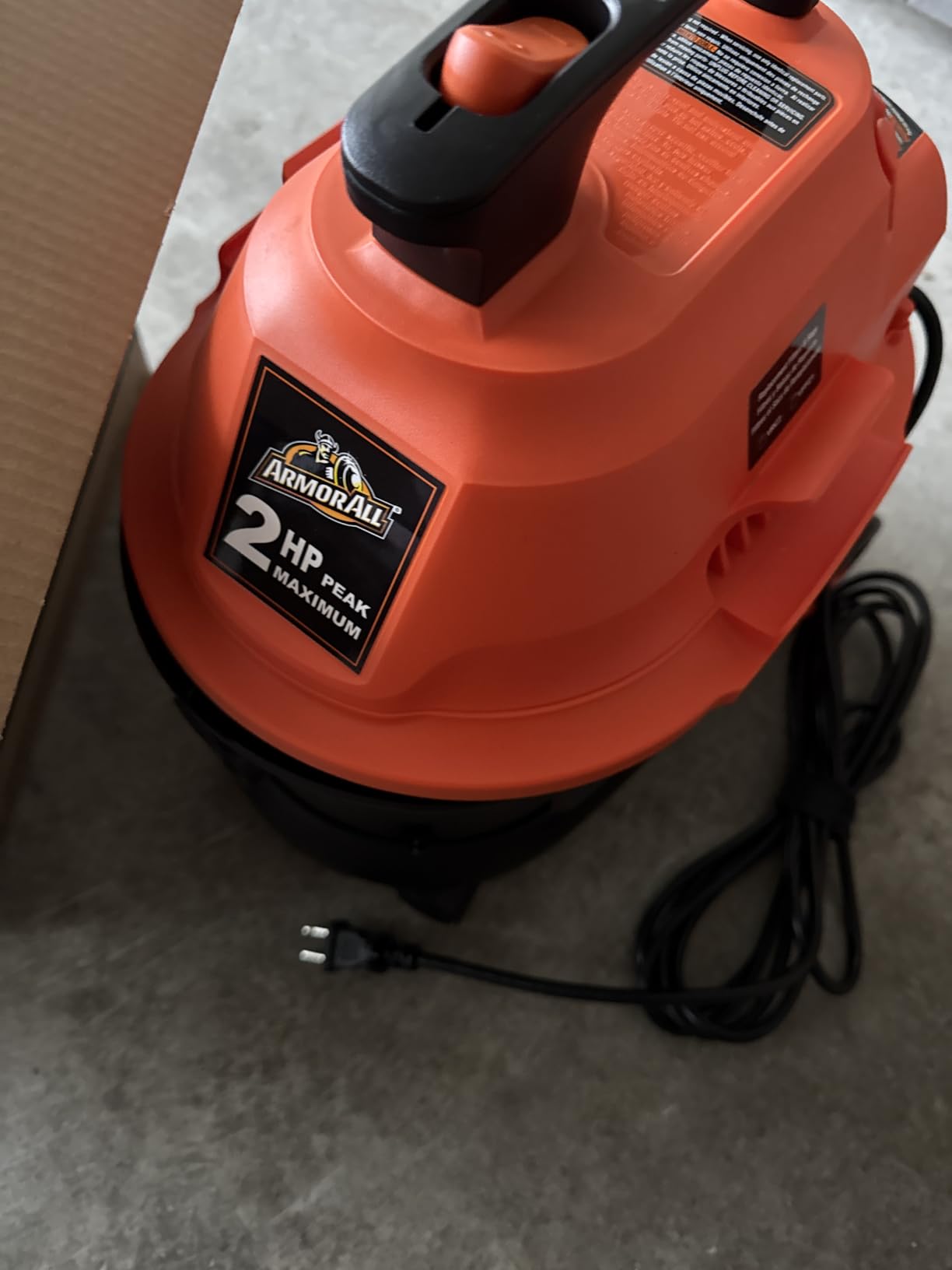
At 2 peak HP and 48 inches of maximum suction, this is the weakest suction figure in the group, and owners treat it accordingly. It is a light utility vac for car interiors and small garage messes, not a floor machine for embedded grit and heavy debris.
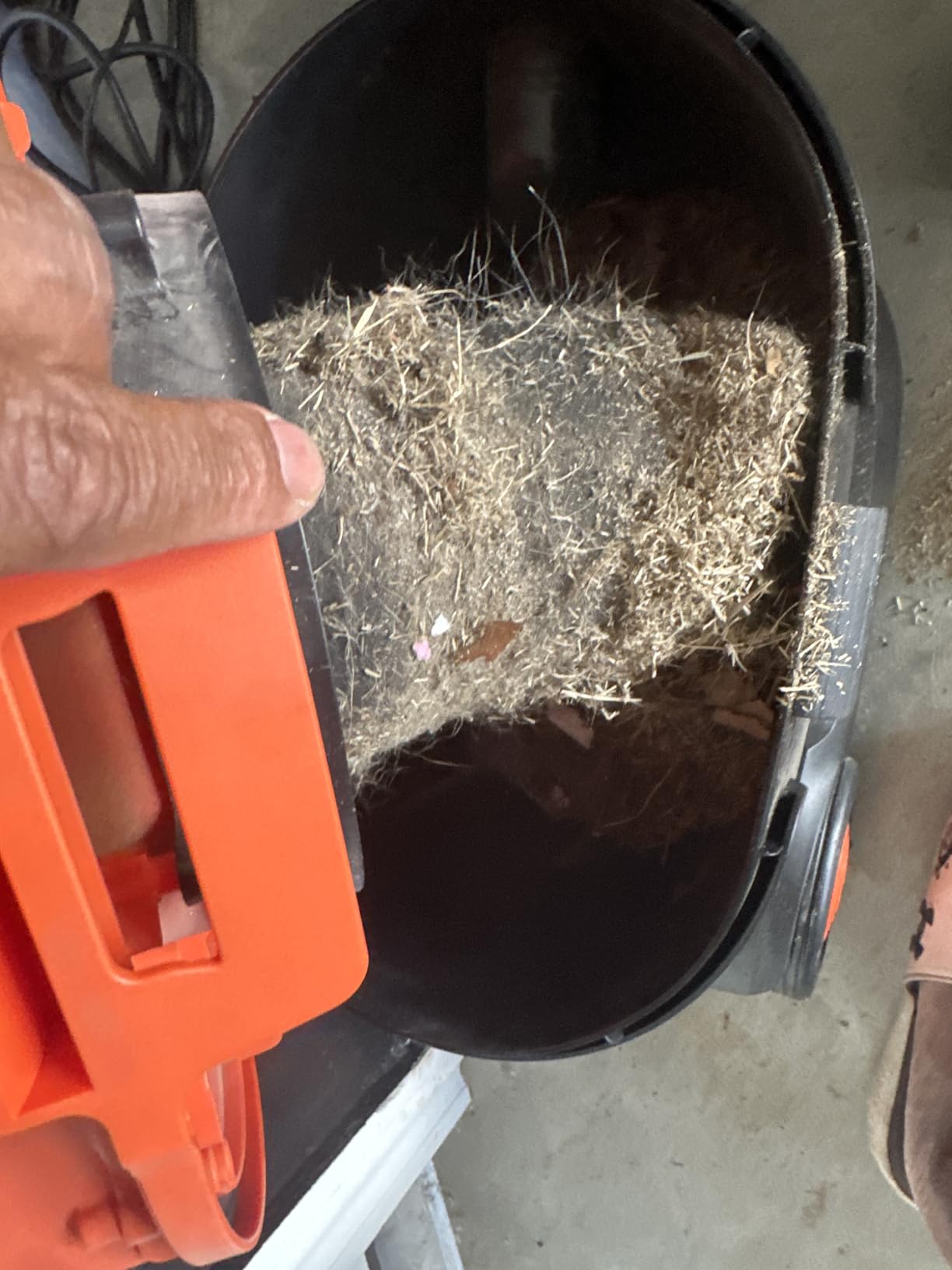
The published noise figure of 75 dB is among the lower ones here, which is a modest advantage in an enclosed space despite the smaller motor. The 2.5-gallon polypropylene tank and cloth filter also mean this is the pick for someone who empties it after every job rather than at the end of a session.
Where the Armor All AA255W is the right call
Garage apartments, storage sheds, and one-bay garages where cleaning is occasional. At 11 pounds it moves easily, and the blower function handles leaf litter without a second tool.
It is also the natural second machine in a two-vac setup, keeping this one for wet work and a larger can for dry dust.
Where the Armor All AA255W is the wrong call
Two peak HP and 48 inches of suction will not move gravel, plaster, or a wet garage floor in one pass. Owners describe it as a car and spot-clean machine.
A 2.5-gallon tank means multiple drains per session, so for anything beyond a weekend cleanup, the extra capacity of a 6-gallon model pays for itself in time saved.
How to Choose a Wet/Dry Vacuum for Your Garage
Every pick above was chosen on published specifications and thousands of owner reviews, not on bench testing in our own shop. The criteria we applied were tank capacity against realistic garage mess volume, published airflow or suction figures where a manufacturer provides them, noise ratings where published, the reach available from hose plus cord, and how the machine drains and stores. Here is how to apply the same logic to your own floor.
Match tank capacity to your bay size
A one-car bay handled mostly by a broom and a shop vac is a 4 to 6 gallon problem. That covers a car interior, a small spill, and a sweep of the slab without walking the tank to a drain. A two-car garage where you wash cars inside, or a bay that catches sump pump discharge, moves to 9 to 12 gallons. Renovation work and flood response justify going to 16 gallons, because the limiting factor is how many times you want to carry a wet tank across the garage.
Decide corded or cordless on outlet access, not on power
Corded units deliver stronger and steadier suction because they run a mains motor. Cordless units trade that for freedom: the DEWALT DCV581H is the only pick here that runs on both a 20V MAX battery and a cord, which is the practical answer for a garage with no outlet. The cost is battery platform lock-in, a smaller tank, and less suction on dusty work.
Treat peak horsepower as marketing and CFM as reality
Peak horsepower is a maximum figure measured under ideal conditions and is not comparable between brands. It does not mean the machine will run at that output with a hose attached and a filter installed. Airflow, measured in cubic feet per minute, is the figure experienced owners actually trust, and forum discussion consistently points at airflow and vacuum pressure rather than accessory lists. Only one machine in this roundup publishes CFM: the Vacmaster VBV1210 at 106 CFM.
Add up hose plus cord before you buy
Total reach is the number people misjudge. A 7-foot hose on a 25-foot bay means you are moving the machine, and owners regularly describe a vac trailing behind them like a lead. The Stanley combines a 6-foot hose with a 10-foot cord for roughly 16 feet. The wall-mounted Bissell solves the same problem differently, with a 32-foot hose from one fixed point, which is why it reaches the far corner of a bay that nothing else here touches.
Choose the filter for your dust, and change it often
Standard cartridge filters handle wood, chips, and general debris. Fine dust filters handle drywall and concrete grit. HEPA filters capture the finest particles, and a dust bag catches what passes the filter and keeps the tank clean. Dust classes L, M, and H are a European rating system for hazardous material containment that garage drilling dust does not usually fall into, so for most owners a fine dust cartridge plus a bag is the practical answer. The single most common cause of a shop vac blowing dust back into the room is a saturated filter.
Plan where it lives before you choose the size
A 16-gallon unit occupies a 21 by 23.8 inch footprint and stands 26.7 inches tall. In a one-car bay that is a quarter of usable floor space given up permanently, and owners with small garages consistently rank size and noise as decisive. If space is tight, a wall-mounted unit removes the question entirely. If you have room, a four-caster model that parks flat against a wall is the easier compromise.
Check the noise figure and the drain hardware
Published decibel figures in this group run from 69 dB on the CRAFTSMAN 16-gallon to 82 dB on the CRAFTSMAN 9-gallon. In an enclosed garage with shared walls, that spread is noticeable. Draining matters just as much: a built-in oversized drain port or drain valve empties liquid without tipping or rolling the whole tank, and its absence is one of the most commonly cited annoyances among owners.
Frequently Asked Questions
What is the best wet dry vacuum for a garage?
For most homeowners, the Stanley SL18116P 6-Gallon is the best wet dry vacuum for a garage. Its 6-gallon tank, 4 peak HP motor, 16 feet of combined hose and cord reach, and blower port cover spills, debris, and blowing, backed by more than 14k reviews at 4.6 stars.
How big a tank does my garage shop vac need?
A one-car garage with routine spills needs 4 to 6 gallons. A two-car garage where you wash cars inside or handle sump pump discharge needs 9 to 12 gallons. Renovation debris and flood cleanup justify 16 gallons, because fewer draining trips matter more than the extra weight.
Should I buy a corded or cordless wet dry vac?
Corded units deliver stronger, steadier suction and unlimited runtime. Cordless units trade that for freedom from outlets, which matters in a garage with no power. The DEWALT DCV581H is the only pick here that runs on both a 20V MAX battery and a cord, but its suction trails full-size corded units.
Which shop vac has the best CFM?
The Vacmaster VBV1210 is the only machine in this roundup that publishes airflow, at 106 CFM. Most manufacturers list peak horsepower instead, which is a maximum figure measured under ideal conditions and is not comparable between brands, so airflow is the more useful figure when it is offered.
Will vacuuming drywall dust ruin my vacuum?
It will not ruin the machine, but drywall dust blinds a standard cartridge fast and once clogged the filter lets dust blow back out. Use a fine dust cartridge plus a disposable bag, change filters when airflow drops, and rinse or dry any foam element before using it again.
Is a stainless steel tank worth it for a garage?
Often yes. A stainless tank resists rust, dents, and the repeated knocks a garage floor delivers, and it tolerates being stored damp. The Shop-Vac 5989305 and Vacmaster VOC508S pair steel tanks with 3 year and similar coverage, while poly tanks are lighter and easier to carry.
Can a wet dry vacuum be used as a leaf blower?
Yes. Most shop vacs have a rear exhaust port that accepts the hose, so moving the hose converts the unit into a blower. The Vacmaster VBV1210 has a detachable blower that releases with one hand and reaches a stated 210 MPH, which makes driveway and leaf cleanup much faster.
Why is my wet dry vac blowing out dust?
The usual cause is a saturated filter rather than a faulty machine. Check that the filter is seated and the correct type for the debris, that the gasket is sealing, that any foam pre-filter is dry, and that the hose connection is tight. Empty and clean the filter before returning to dry dust work.
Which Wet Dry Vacuum Should You Buy?
Start with tank size against your bay, then pick the power type that matches your outlets. The Stanley SL18116P 6-Gallon is the best wet dry vacuum for garages overall because it balances capacity, reach, blower function, and storage footprint. Choose the Bissell Garage Pro 18P03 if floor space is the constraint, or the DEWALT DCV581H if you have no outlet to work from, and step up to the CRAFTSMAN 16-gallon when water volume is the recurring problem.
This roundup was reviewed and updated for 2026. Pick your garage situation from the quick list above, then check the current price and availability for the model that fits it.