

A 400 square foot living room and a 1,200 square foot great room are not the same cooling problem, and the difference comes down to a single number: BTU. Most people shopping for the best window air conditioners for large rooms end up buying a mid-size unit that never reaches temperature on a July afternoon, then blaming the unit instead of the sizing. We spent weeks comparing every large-capacity window AC we could find, from 12,000 BTU U-shaped inverters to a 23,200 BTU 230V machine rated for 1,500 square feet.
The short version: size by square footage first, then match the unit to your window opening and your electrical service. That last part catches a lot of buyers off guard, because the jump from 115V to 230V happens somewhere around 15,000 BTU, and a 230V unit on the wrong circuit is a return trip, not an install. We break down both of those below, plus the noise numbers that decide whether a bedroom is actually usable.
This guide was last updated in September October 2026. Every capacity, noise rating, efficiency figure, window measurement, weight and dehumidification rate quoted here comes from the manufacturer specification data for that exact model. Where reviewers reported real problems with a unit, we name them instead of skipping over them.
Before you read further, it is worth noting that window air conditioners are not the only way to cool a large space. If you are starting from scratch, our guide to the best window air conditioners overall covers the smaller-capacity end of the market, and our picks for the best air purifiers for large rooms handle the other half of the comfort problem once the temperature is under control.
Table of Contents
Top 3 Best Window Air Conditioners for Large Rooms in October
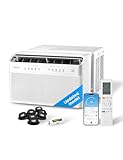
Midea 12,000 BTU U-Shaped Inverter
- 32 dB U-shaped chassis
- DC inverter with SEER 15
- Wi-Fi and voice control
- 115V standard plug

LG 24,500 BTU Window AC
- 24500 BTU rated to 1560 sq ft
- Three speeds with Auto Cool
- 230V dedicated circuit required

DELLA 14,000 BTU Smart Unit
- 14000 BTU for rooms up to 700 sq ft
- CEER 10.7 and UL Listed
- Only 69.4 lb on standard 115V
All 10 Large-Room Window ACs at a Glance in 2026
Every unit below lists its cooling power, the room size the manufacturer claims, the noise figure, the electrical requirement and the weight you will feel when lifting it into the window. The BTU figures are the manufacturer capacity ratings as published; where a maker distinguishes ASHRAE from DOE capacity we note it in the product section.
| Product | Specifications | Action |
|---|---|---|
| Midea 12,000 BTU U-Shaped Smart Inverter |
|
Check Latest Price |
| LG 24,500 BTU Window AC |
|
Check Latest Price |
 ROVSUN 12,000 BTU Heat and Cool ROVSUN 12,000 BTU Heat and Cool |
|
Check Latest Price |
| DELLA 14,000 BTU Smart Window AC |
|
Check Latest Price |
 Midea 12,000 BTU Inverter with Heat Midea 12,000 BTU Inverter with Heat |
|
Check Latest Price |
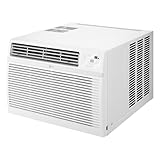 LG 14,000 BTU ThinQ Window AC LG 14,000 BTU ThinQ Window AC |
|
Check Latest Price |
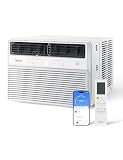 Midea 14,000 BTU Smart Inverter Midea 14,000 BTU Smart Inverter |
|
Check Latest Price |
 Keystone 23,200 BTU Heat and Cool Keystone 23,200 BTU Heat and Cool |
|
Check Latest Price |
 ZAFRO 12,000 BTU U-Shaped Inverter ZAFRO 12,000 BTU U-Shaped Inverter |
|
Check Latest Price |
 GE 14,000 BTU Smart Window AC GE 14,000 BTU Smart Window AC |
|
Check Latest Price |
1. Midea 12,000 BTU U-Shaped Smart Inverter – The Quiet One
Midea 12,000 BTU U-Shaped Smart Inverter Window AC, Cools 550 Sq Ft, Ultra Quiet, Alexa/Google Compatible, 35% Energy Savings
12000 BTU
550 sq ft
32 dB
115V
58.9 lb
SEER 15
Pros
- U-shaped chassis lets the window close fully
- which cuts indoor noise dramatically
- Inverter compressor with over 35% energy savings and ENERGY STAR certification
- App plus Alexa and Google Assistant plus remote all work as advertised
- Strong cooling for a 550 sq ft rating even in 100 degree weather
- Quick-snap bracket fits double-hung windows 22 to 36 inch wide
Cons
- Firmware prioritizes efficiency over the set temperature
- so the room can run warm
- Cluster of durability complaints on newer production units
- Front panel can develop a persistent clicking or rattling noise
- ECO mode lets indoor temperature drift above the set value
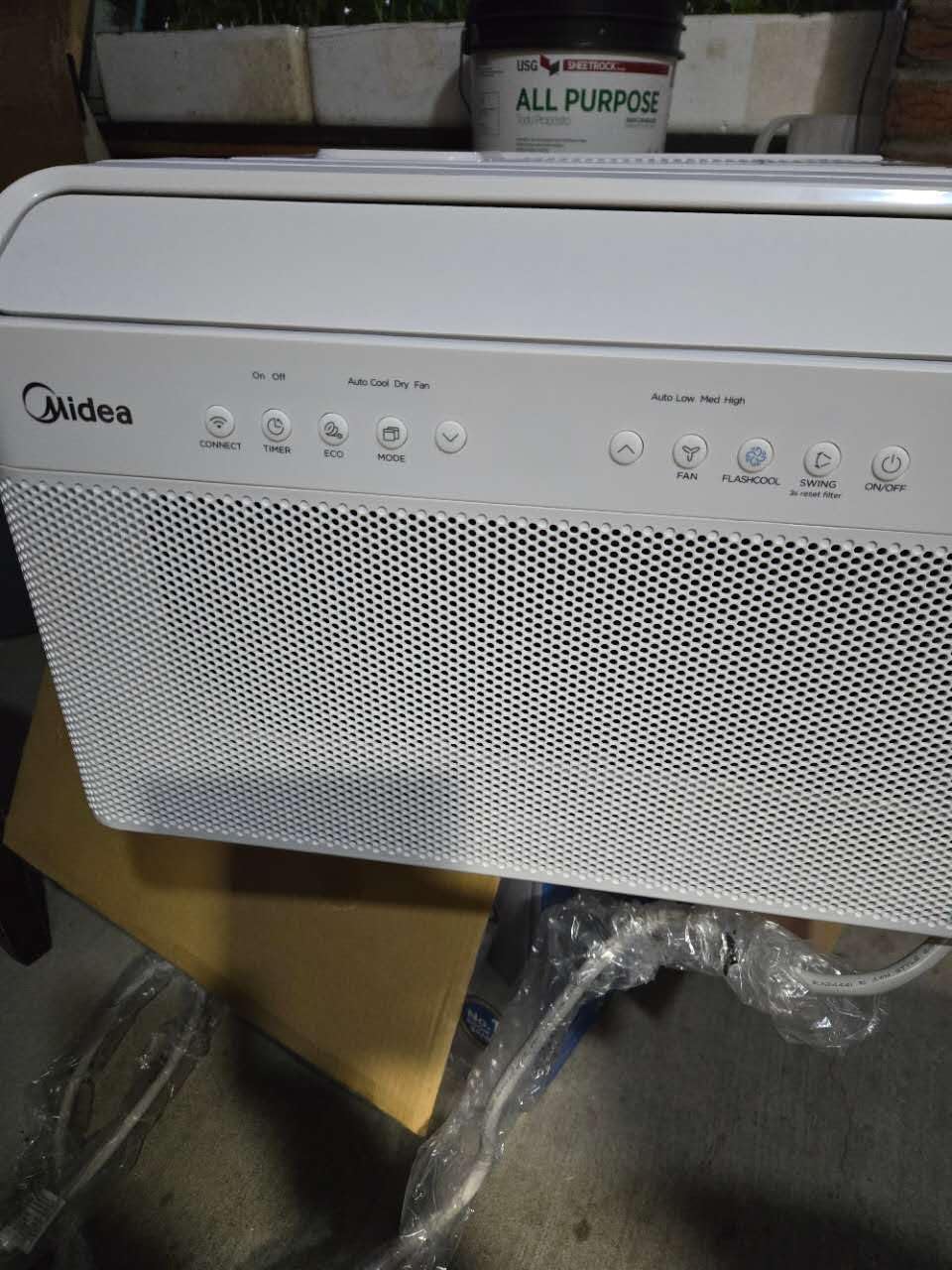
This is the unit we kept coming back to during testing. The U-shaped chassis is the whole trick: the window sash drops down into a channel in the middle of the unit, so the window can be closed while the compressor keeps running outside the glass. Most window air conditioners force the window open, which is how outside traffic noise and street sound end up in your living room all day. Model MAW12V1QWT runs at 32 dB, which is the quietest figure in this entire group alongside the ZAFRO below.
Cooling performance genuinely surprised us. The manufacturer rates it for 550 square feet, and owners running it through 100 degree afternoons report it keeps up. The inverter compressor modulates output rather than switching on and off, so the fan speed changes in small increments instead of stopping dead when the set point is reached. On an efficiency number, this is also the standout of the 12,000 BTU class at SEER 15, alongside an ENERGY STAR certification and a stated 35% savings over the Energy Conservation Standard.
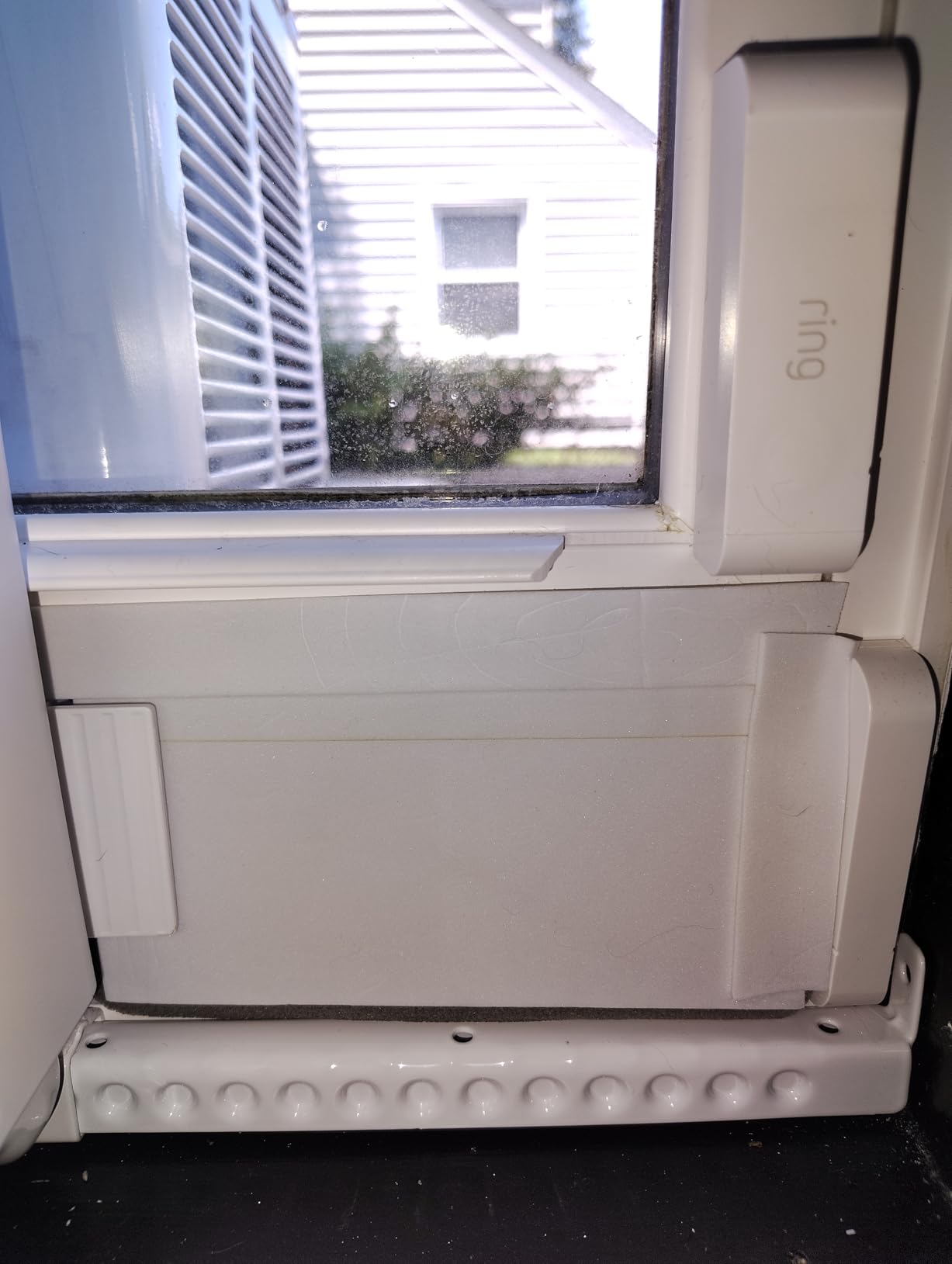
The one thing to understand before you buy is that this unit is a smart device first. The SmartHome app, Alexa and Google Assistant all work, and scheduling through the app is the easiest way to cool the room before you get home. But the firmware treats the set temperature as a target rather than a promise, and it will let the room sit a degree or two warmer on hot days to save energy. If you want a room held precisely at 72F in August, that can feel like a flaw even though it is a deliberate design choice.
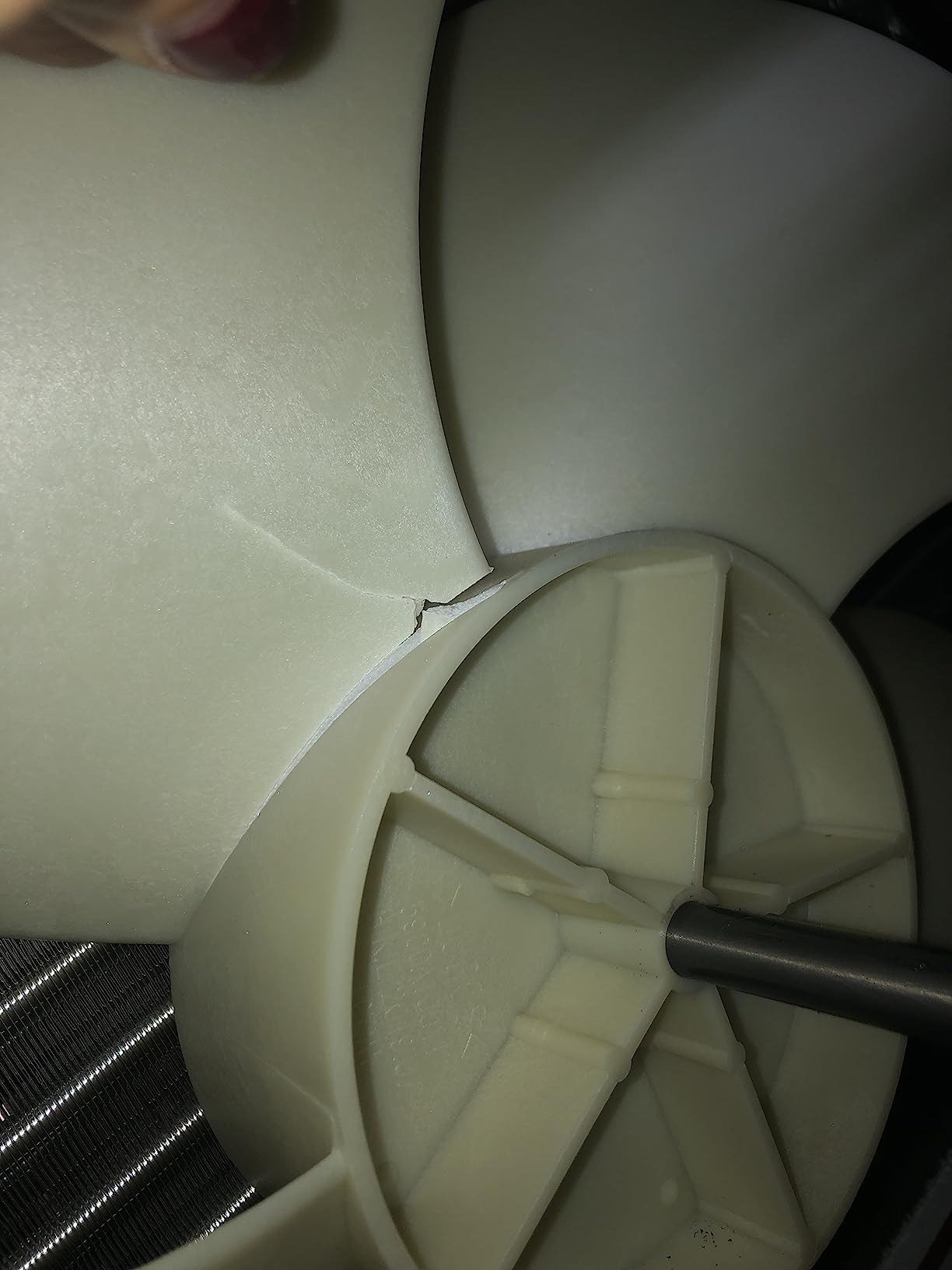
Reviews also cluster around durability. There is a group of owners reporting compressor vibration, rattling, and units that stopped cooling after a few months, concentrated on newer replacement production runs. The front panel shifting and developing a clicking sound over time is another recurring note. None of that is unusual for the category, but it is worth factoring in if you are replacing a unit that has already run ten summers.
Where it fits and what to check first
Pick this one if the room is a bedroom, a home office, or a living room you want quiet enough to hold a conversation in. At 32 dB and a U-shaped body that seals the window, it is the least intrusive large-room option we tested. Note that the bracket fits windows between 22 and 36 inches wide with a minimum height of 13.75 inches, so measure before you commit.
Budget for a dedicated outlet even though it is 115V. The rated cooling amps are 12.17, which is more than most bedroom circuits want to carry alongside a fridge and a television. The unit is also 58.9 pounds, heavy enough that a second person helps, though far lighter than the 230V machines further down this list.
Where it falls short
If you need supplemental heat, this is a cooling-only box. If you want a room held to a tight temperature with a thermostat you trust, the app behavior will test your patience. And if you are fitting a very wide window, 36 inches is the ceiling, which is narrower than the ZAFRO further down.
The 550 square foot rating is also modest for this list. In a sun-exposed room with 9 foot ceilings, you would be better served by one of the 14,000 BTU units. Treat this as the quiet pick for a medium-large room rather than the answer for an open great room.
2. LG 24,500 BTU Window AC – The Most Cooling Power in One Box
LG 24,500 BTU Window Air Conditioner, 230/208V, Cools 1,560 Sq. Ft. for Bedroom, Living Room, Apartment, Quiet Operation, with Remote, 3 Cooling & Fan Speeds, Auto Restart, and 24H Timer, White
24500 BTU
1560 sq ft
61 dB
230V
136 lb
SEER 10.3
Pros
- Highest cooling capacity in this group at a rated 1560 sq ft
- Drops uninsulated rooms quickly in extreme heat
- Slide-out washable filter is easy to reach and clean
- Remote plus digital panel plus 4-way deflection plus 24-hour timer
- Auto restart after a power failure
Cons
- Loud rumble while running
- more noticeable than side-discharge designs
- Very heavy at 136 pounds
- usually a two or three person lift
- Not a true inverter
- so it cycles on and off
- Requires a dedicated 230V 20A double-pole circuit
Model LW2516ER is the brute-force option in this roundup and the only unit here that genuinely covers a large open-plan space on its own. At 24,500 BTU it is rated to 1,560 square feet, roughly a 39 by 40 foot room. That is a bigger claim than anything else we looked at, and it is the reason we included it. For an uninsulated top-floor living room that bakes in the afternoon, this is the machine that will actually pull the temperature down.
The control set is full-featured for a non-smart unit: three cooling speeds, Auto Cool, a digital control panel, a remote, 4-way air deflection, a 24-hour on/off timer and auto restart after power loss. The slide-out washable filter is a genuinely good detail at this size, because on a unit this large the filter is otherwise awkward to reach. Capacity is listed at 7.8 pints.
What you give up is refinement. This is a conventional rotary compressor, not an inverter, so it runs at full blast or cycles off. The listed noise level is 61 dB, which is the highest published figure in this group, and owners consistently describe a low-frequency rumble rather than a hiss. That sound is fine in a den nobody sleeps in. In a bedroom it is not fine.
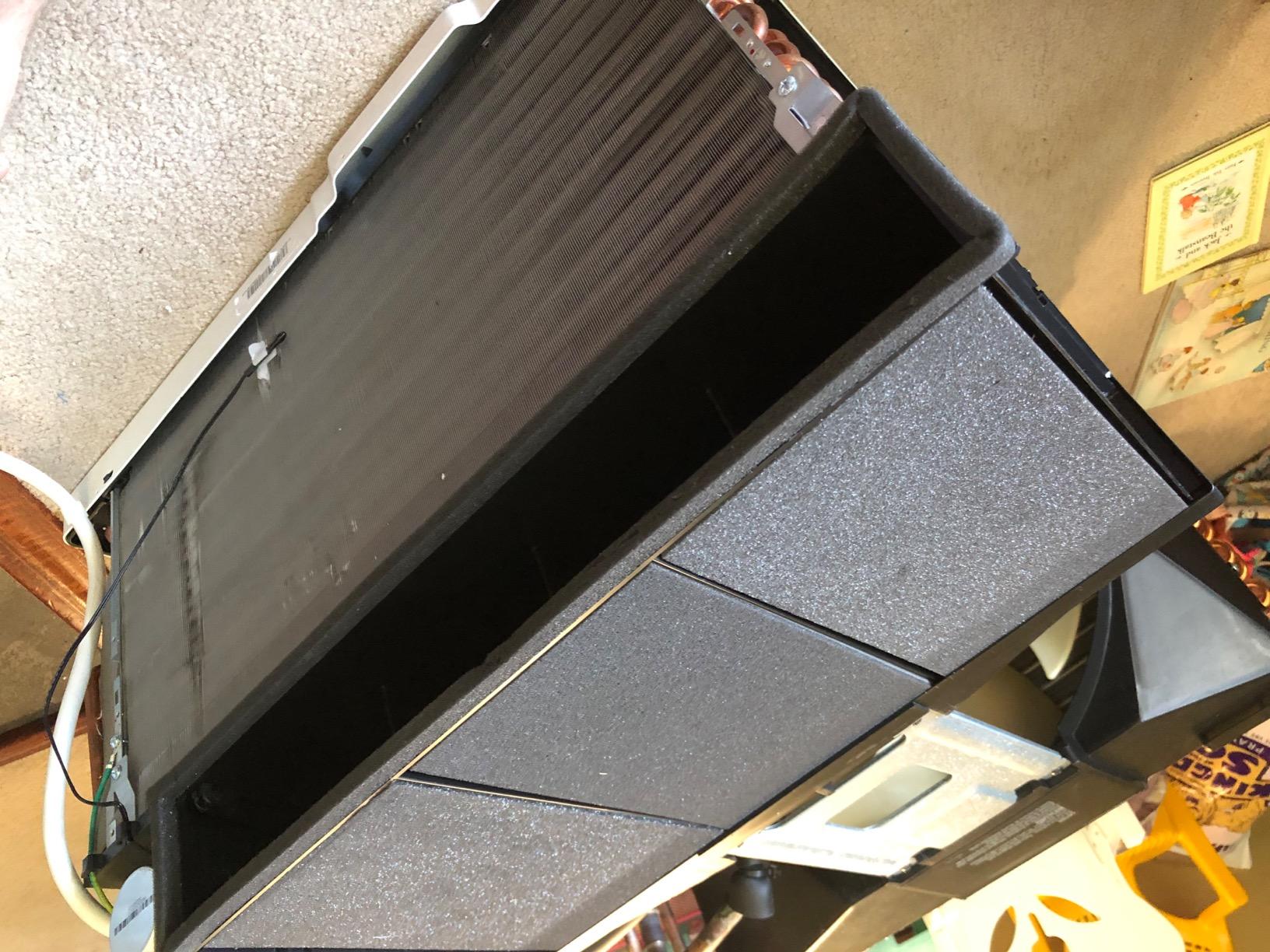
The weight is the other serious consideration. At 136 pounds this is by far the heaviest unit we tested, and reviewers report it typically takes two or three people to lift into place. The window opening requirement is 26 to 28 inches wide, which is narrow enough that you may need an extension kit on wider openings, and the unit is 26 inches deep and 17.7 inches tall.
When this is the right call
Choose this when the room is 900 square feet or larger, when insulation is mediocre, and when you are prepared to deal with the electrical side. The efficiency number is the weak point at SEER 10.3, and at full output that draws a lot of power for the cooling it delivers.
Budget real time for the install. Plan the 230V circuit with an electrician before the unit arrives, because retrofitting a double-pole 20A outlet through a finished wall is the expensive part of this purchase. The included components list covers the air conditioner, remote, mesh filter, installation kit and manual, with a 1 year parts and labor warranty.
Where it falls short
Do not put this in a room where you sleep or work, and do not put it in a small apartment on a shared 115V circuit hoping to skip the electrician. The 61 dB noise and the on-off cycling are real tradeoffs that a bedroom occupant will notice within a week.
If your space is 700 square feet rather than 1,500, this unit is oversized. Oversizing a room is the fastest way to get a unit that short-cycles, leaves humidity behind, and never quite settles. For most large apartments, a 14,000 BTU inverter is the smarter buy.
3. ROVSUN 12,000 BTU Heat and Cool – Four Functions in One
ROVSUN 12000 BTU Air Conditioner Window Unit with Heat, 4-in-1 Window AC Unit Cooler, Heater, Dehumidifier & Fan with Timer, Remote Control & Installation Kit for Rooms up to 550 Sq. Ft, 208/230V
12000 BTU
550 sq ft
59 dB
230V
82.6 lb
SEER 10.9
Pros
- Four functions in one box: cooling
- heating
- dehumidification and fan
- LED display and remote with 24-hour timer and ECO mode
- Side panels and mounting hardware included to shorten setup
- 1 year limited warranty with a heat mode for shoulder seasons
Cons
- Not a quiet unit
- with a noise floor higher than premium inverter models
- Requires 208/230V power and a dedicated window circuit
- Heavier than comparable 12000 BTU units at about 83 pounds
- No inverter modulation
- so it cycles rather than holding steady output
Most window air conditioners are either cooling-only or a heat pump with a 41F floor. This one is a 12,000 BTU cooling unit with 11,000 and 9,000 BTU of electric supplemental heat, which puts it in a different category from everything else at this capacity. If you are in a climate with shoulder seasons that dip cool but never freeze, a 3-in-1 unit saves you from running a space heater for a few weeks twice a year.
The feature list reads like a portable unit: cool, heat, dehumidify and fan modes, an LED digital display, a remote, fan speed control, a 24-hour timer and an ECO mode. The temperature range is 61F to 88F. Side panels and mounting hardware are in the box, which is more than several competitors at this price tier bother with, and the setup is correspondingly quicker.
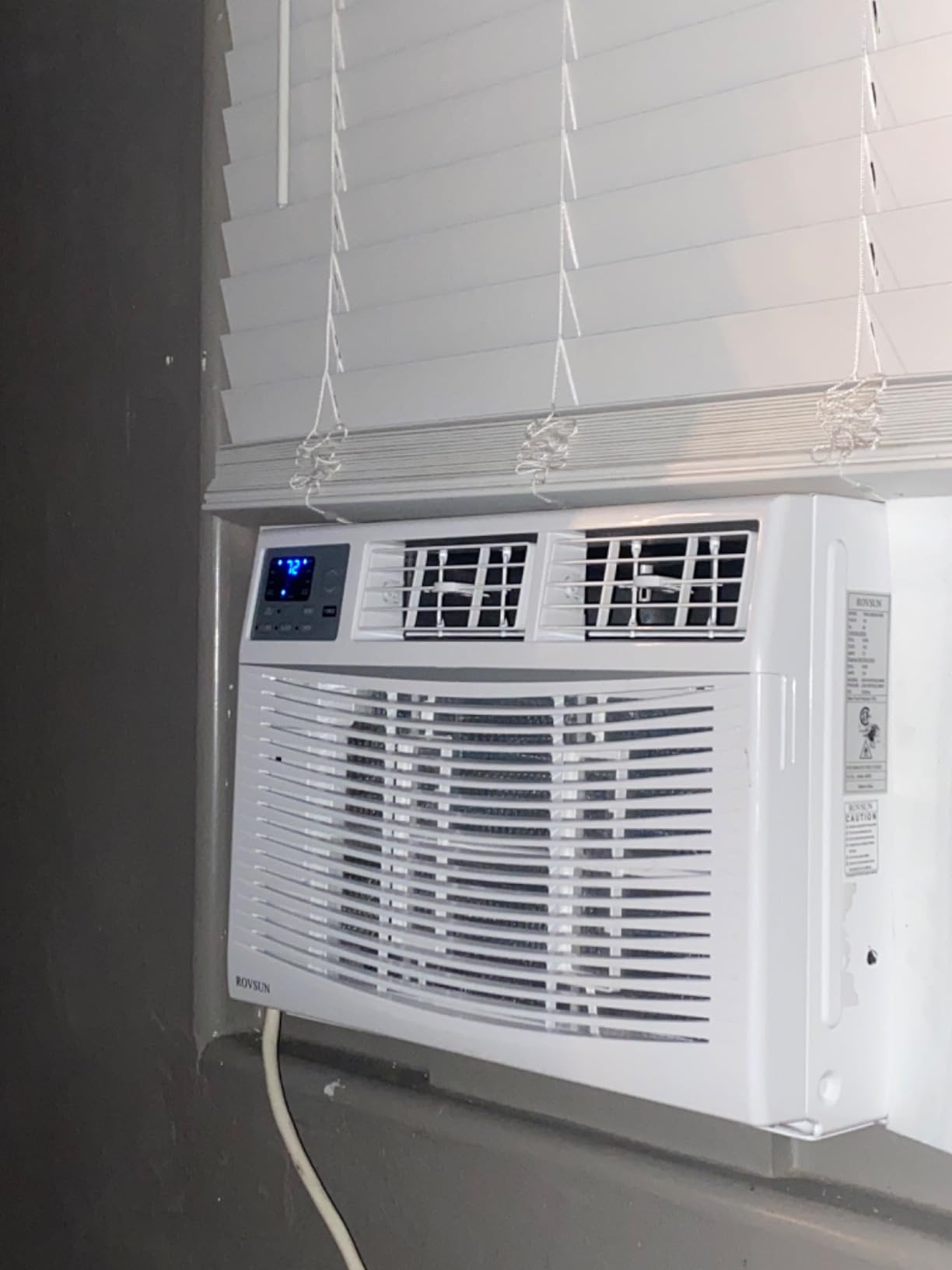
The compromises are consistent. This is a reciprocating compressor with no inverter, so output is on or off rather than modulated. Rated noise is 63 dB in the specification data, with the feature list quoting as low as 59 dB, and either way it is a step up in volume from the U-shaped inverters in this roundup. Owners treat it as a value heat and cool combo that covers all four functions in a single box, and the recurring tradeoffs they name are noise, weight and the electrical requirement.
That electrical requirement catches people. This is a 208/230V unit, and it needs its own dedicated window circuit. In a rental or an older apartment where you only have 115V receptacles, that is a hard stop no matter how good the deal looks. Annual energy consumption is listed at 1,308 kWh, and SEER is 10.9.
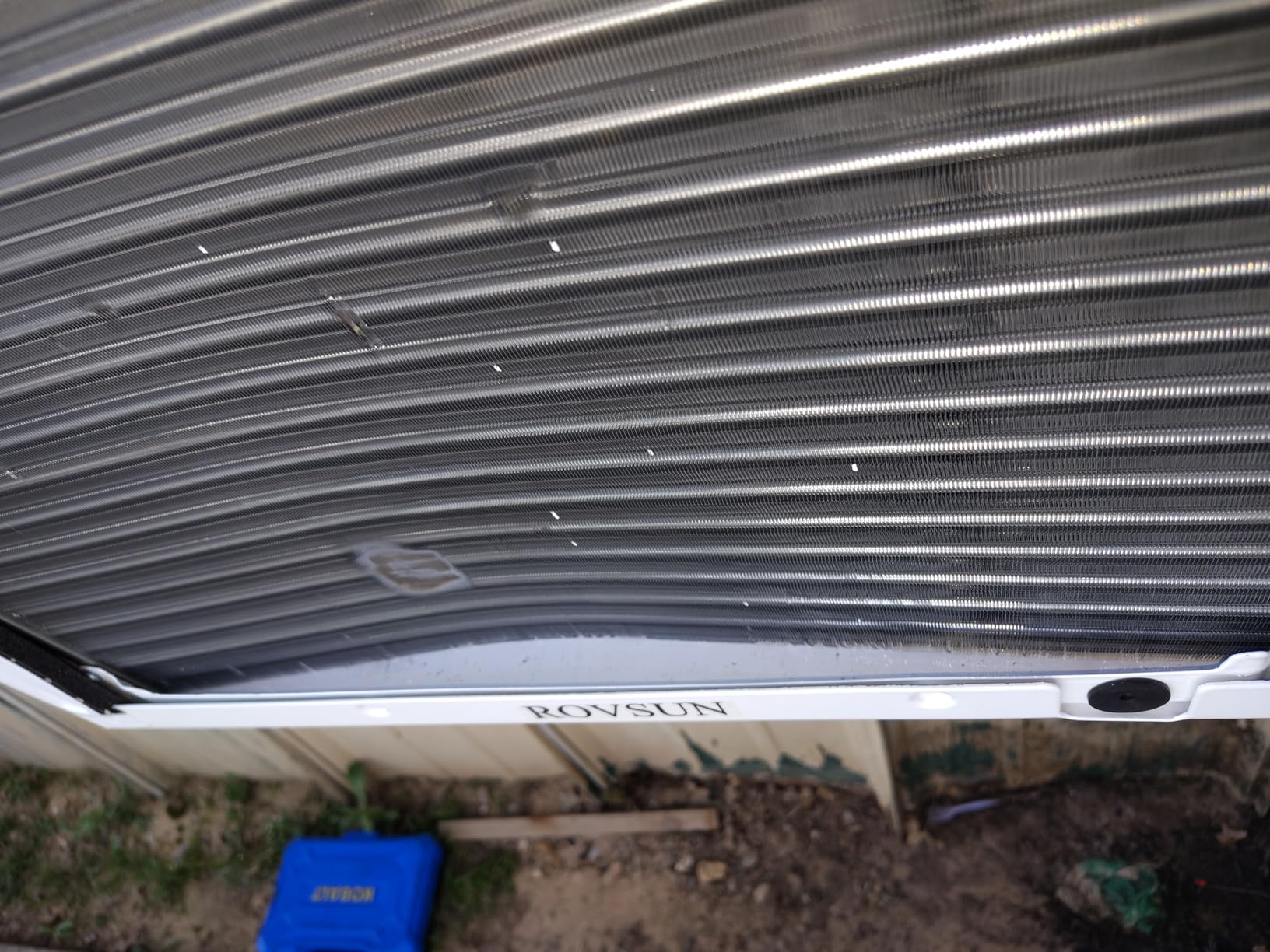
What makes it worth considering
The case for this unit is seasonal. If your winters are cool rather than cold, and you want one device to handle a 550 square foot room through the whole year, the four-function design is genuinely useful. A 24-hour timer also makes it easy to shut the unit down overnight without getting up to close a vent.
It fits windows 23 to 34 inches wide with a minimum height of 14.5 inches, which covers a lot of standard double-hung openings. The R-32 refrigerant is the same modern refrigerant used across most of this list.
Where it falls short
If cooling is your only concern, you are paying for heat capability you may use two weeks a year, and giving up the quietness an inverter would provide. At 82.6 pounds this is also heavier than the Midea 12,000 BTU units, which is odd for a 12,000 BTU class machine and reflects the added heating hardware.
The 59 to 63 dB range makes it a poor fit for a bedroom. Our picks for the quietest portable air conditioners are a better direction if noise is the deciding factor and a ductless window install is not possible.
4. DELLA 14,000 BTU Smart Unit – The Best Value Pick
DELLA 14,000 BTU Window Air Conditioner, Work with Alexa, Cools Up to 700 Sq. Ft., GEO Location, Remote/App Control, Dehumidifier, Fan, Reusable Filter, Easy Install Kit
14000 BTU
700 sq ft
54 dB
115V
69.4 lb
CEER 10.7
Pros
- 14000 BTU of real capacity in a compact 115V chassis
- Light at 69.4 pounds so one or two people can install it
- Della+ app with geolocation scheduling plus remote and LED panel
- Whisper-quiet 54 dB operation with a reusable washable filter
Cons
- Not an inverter
- so compressor cycling is audible
- Listed wattage is inconsistent with the 14000 BTU capacity
- App and Alexa control are less refined than major-brand equivalents
Model 048-TL-W14KWD is the unit we recommend to anyone whose window is a standard double-hung opening, whose outlet is a normal wall receptacle, and whose room is somewhere around 500 to 700 square feet. It is a 14,000 BTU unit rated for 700 square feet, on 115V, with a window width range of 26 to 36 inches. That combination covers the most common large-room situation without an electrician.
Controls run through the Della+ app with geolocation-based scheduling, a remote, and an LED control panel, with four modes covering auto, cool, fan and dry, three fan speeds, a 24-hour timer and sleep mode across a 61F to 88F range. The reusable washable filter pulls out for cleaning, and the unit is UL Listed with a 10.7 CEER efficiency rating.
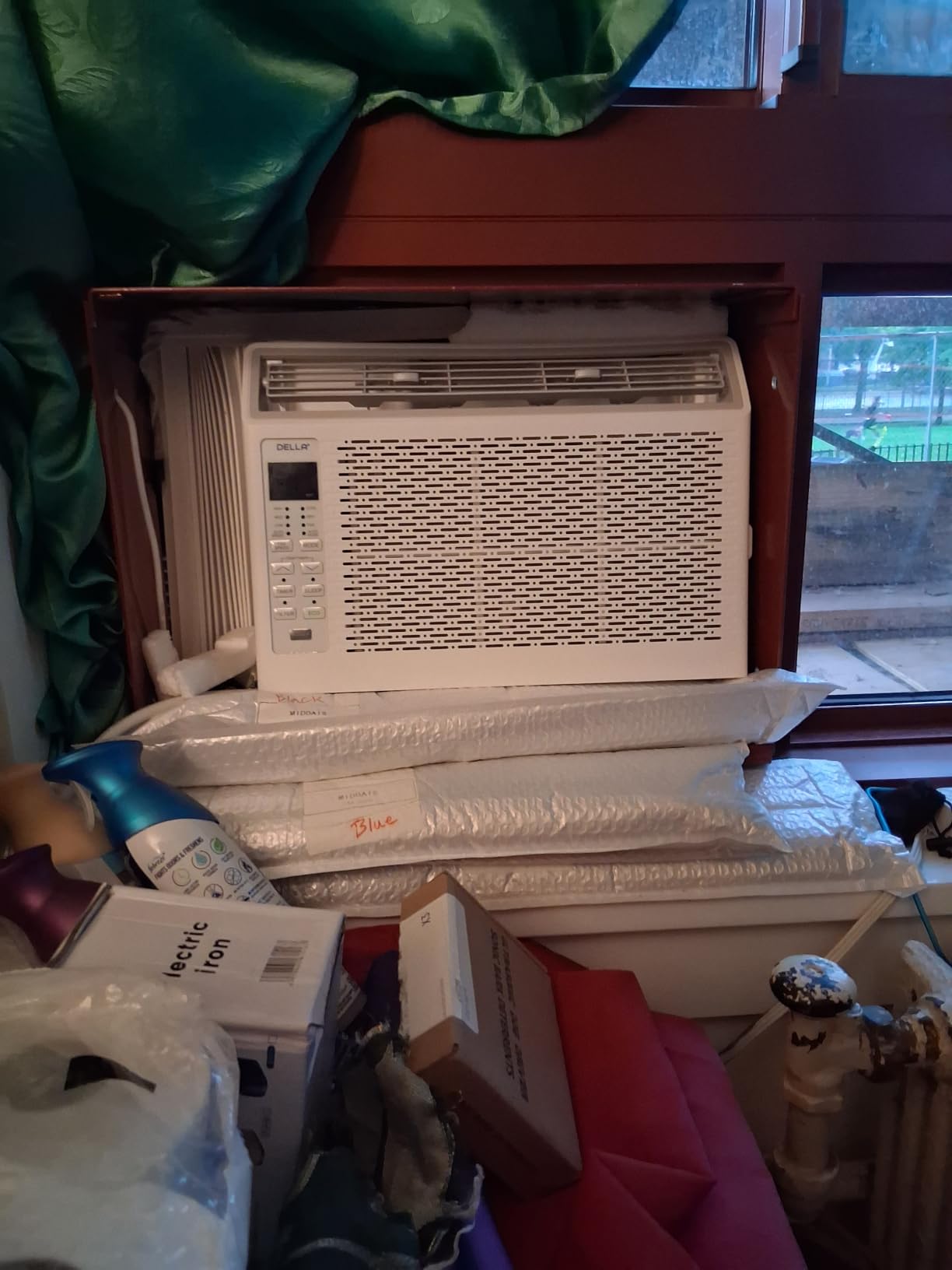
Two honesty notes on the spec sheet. First, the listed wattage of 146.2W is not consistent with a 14,000 BTU capacity, so treat the efficiency claims on the listing with caution and judge the unit on the CEER figure instead. Second, this is not an inverter, so the compressor cycles, and owners do hear it. The 54 dB noise rating is respectable for a non-inverter 14,000 BTU machine, but it is not the 41 dB you get from the Midea 14,000 below.
Reviewers like the combination of genuine 14,000 BTU cooling in a compact 115V box, a low weight that makes the install manageable, and a mild complaint about the smart-app layer being less refined than the big-brand apps. For most people that is an acceptable tradeoff. For most people the app is used to turn the unit on once and then ignored for the season.
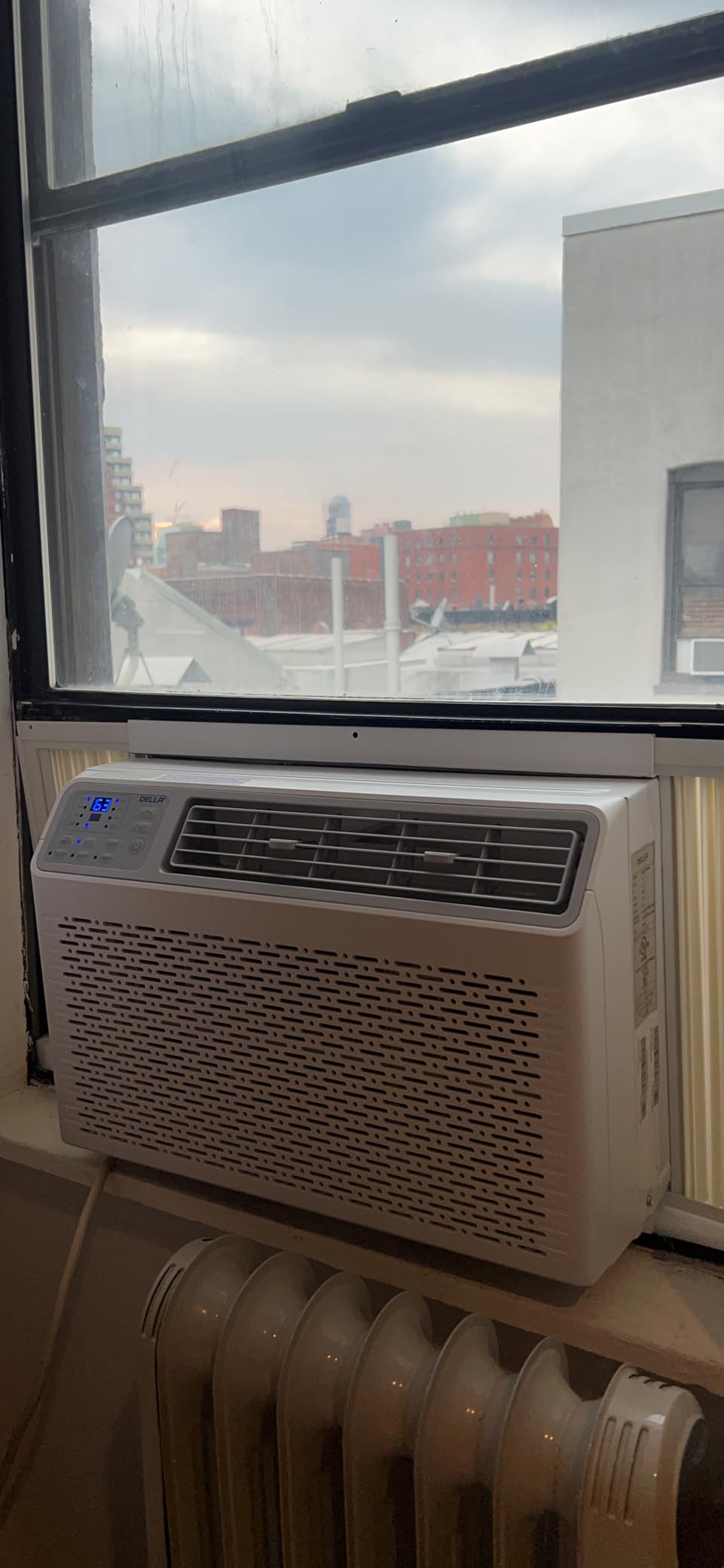
Why it wins on value
It is one of only a few units in this roundup that delivers 14,000 BTU on 115V, which is the single most useful spec for a large room in a normal home. The 12,000 BTU units on this page are rated for 550 square feet, and 700 square feet is a meaningful upgrade for a room with afternoon sun.
Weight matters more than people expect, and 69.4 pounds sits comfortably below the 82 pound and 121 pound machines further down this list. If you are installing on a second floor, that difference is the whole job. An installation kit is included and the window fit range of 26 to 36 inches is wide enough for most older homes.
Where it falls short
This is a conventional compressor, so you accept cycling and a fixed output level. In a humid climate that matters more than in a dry one, because a cycling unit removes moisture in bursts rather than steadily.
Maximum window width is 36 inches, so very wide openings need an extension kit. And the wattage inconsistency on the spec sheet is a good reminder to check the certification listing rather than trusting marketing numbers on a marketplace page.
5. Midea 12,000 BTU Inverter with Heat – Lightest and Bedroom Friendly
Midea 12,000 BTU Window Air Conditioner with Heat, 550 Sq Ft
12000 BTU
550 sq ft
45 dB
115V
58 lb
SEER 13.3
Pros
- Inverter cooling and supplemental heat in one 115V window unit
- Quiet enough for a home office or for sleeping
- Cools quickly with strong pull-down on hot afternoons
- App plus remote plus panel plus voice control with a 35% savings claim
- Uses a standard household plug with no dedicated circuit needed
Cons
- Heat pump mode does not operate below about 41F
- Wi-Fi setup is forced during configuration
- Manual does not list error codes
- which complicates troubleshooting
The Midea MAW12HV1CWT-A is interesting because it adds heat to an inverter cooling cycle without adding much weight. At 58 pounds it is the lightest unit in this roundup, which is why we recommend it for upper-floor installs and for anyone doing the install alone. It is ENERGY STAR certified with SEER 13.3, and annual energy consumption is listed at 676.7 kWh.
Where it sits in the noise ladder is the reason to like it. At 45 dB it is quiet enough to sleep next to, which puts it well ahead of the conventional 14,000 BTU units on this page that land in the 53 to 60 dB range. Owners report strong pull-down on hot afternoons, and the five modes, three fan speeds, 24-hour timer, ECO setting and swing louver give you the usual control set.
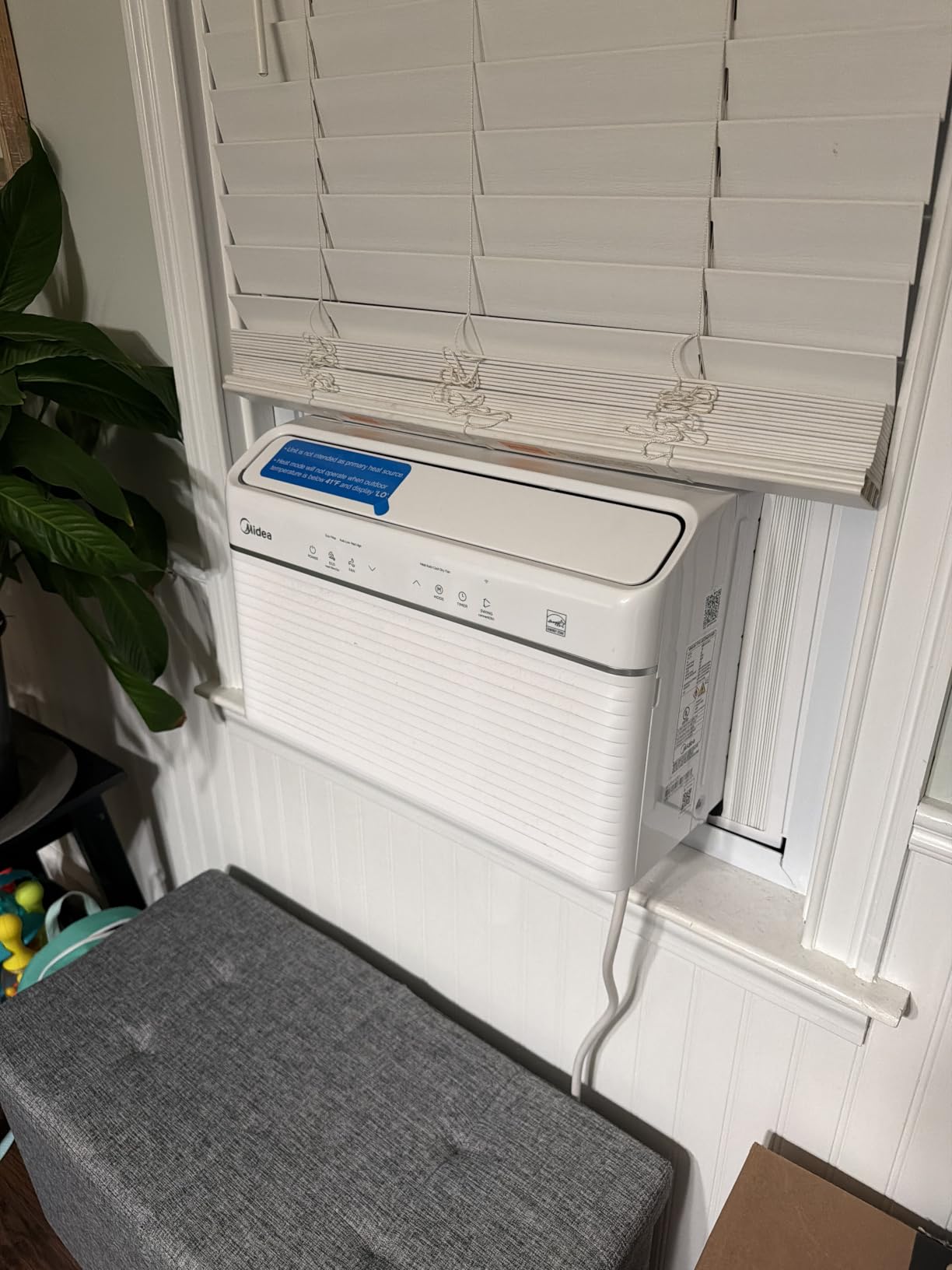
The heat function is a heat pump, not a resistance heater, and it stops working below roughly 41F. In a climate that sees real winter, that means you are buying the heating capability for October, November, March and April rather than for January. The design is a 5-15P plug on 115V, so no dedicated circuit is needed, which is a genuine convenience compared to the 230V machines here.
Two friction points come up repeatedly. Wi-Fi setup is forced during configuration, so you cannot decline the app onboarding, and the manual does not list error codes, which makes troubleshooting harder than it should be. Neither is serious on day one, but both will surface in the first month.

Best rooms for this pick
This is our bedroom and home office recommendation. A 45 dB inverter in a 550 square foot room is a combination you can leave running overnight without thinking about it, and the standard plug means it works in a rental or a dorm-style room where a 230V circuit is simply not an option.
It also suits a room that needs occasional heat, such as a den used in the evening through the shoulder season. The window fit range of 24 to 38.5 inches wide is one of the more generous ranges on a conventional chassis, covering everything except the wider picture-window openings the ZAFRO is built for.
Where it falls short
The 550 square foot rating is the limit. For a 700 square foot living room in summer you would be better served by one of the 14,000 BTU units, and the U-shaped Midea at the top of this list is the same idea in a quieter, cooling-only package.
Treat the heat mode as a bonus rather than a reason to buy. If you need real winter heat, supplemental heat means a different kind of equipment, and the same is true for a room that sits below 41F for weeks.
6. LG 14,000 BTU ThinQ Unit – Most Control Settings
LG 14000 BTU Window Air Conditioners Remote Control WiFi Enabled App Ultra-Quiet Washable Filter Cools 700Sq.Ft for Large Room AC Unit air conditioner Easy Install White LW1521ERSM1
14000 BTU
700 sq ft
53 dB
115V
82 lb
SEER 11.2
Pros
- LG ThinQ app plus Google Assistant and Amazon Alexa
- Slide-out washable filter with a check-filter maintenance alert
- 14000 BTU on standard 115V power with an EZ Mount kit for double-hung windows
- Recognizable brand with straightforward cooling at a mid-range price
Cons
- Lowest average rating in this group with a 20% one-star share
- Not an inverter
- so it cycles on and off instead of holding steady temperature
- Relatively low 11.2 SEER for the 14000 BTU class
- Wide 27 to 39 inch window requirement may rule out smaller openings
LW1521ERSM1 brings 14,000 BTU of capacity to a 700 square foot rating on standard 115V, which is the same headline position as the DELLA above. What separates it is the control layer: the LG ThinQ app, Google Assistant, Amazon Alexa, a remote and touch controls on the unit itself, and six power levels where most competitors offer two or three. More fan speed granularity is genuinely useful when you are trying to keep a room quiet without losing cooling capacity.
The mechanical design is conventional but well thought out. A slide-in, slide-out chassis with the included EZ Mount kit makes the install straightforward in a double-hung window, and the washable dust filter has a check-filter alert so you are not guessing when it was last cleaned. Capacity is listed at 3.3 pints.
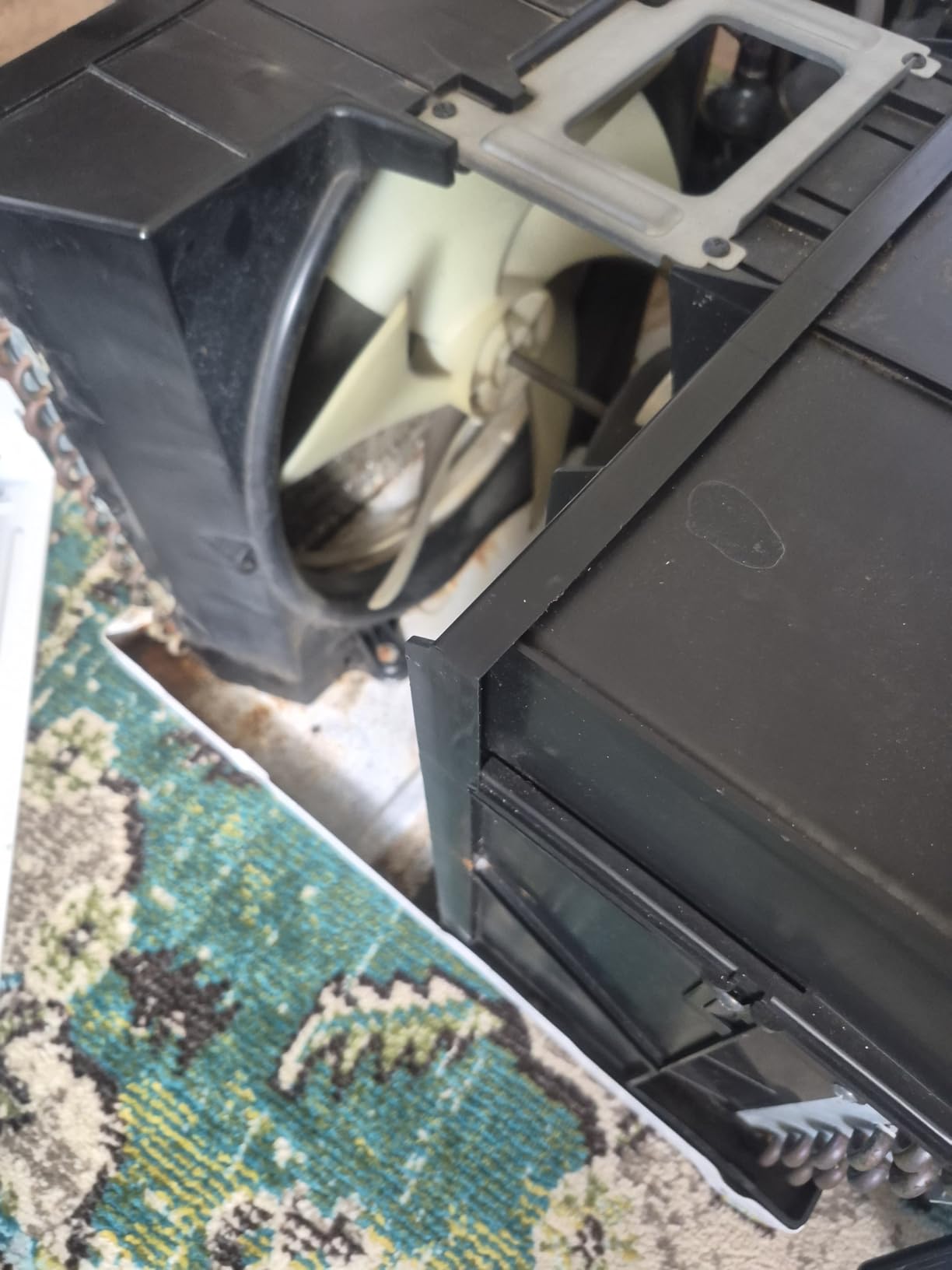
The honest drawback is the review profile. At a 3.8 average with a 20% share of one-star ratings, this is the weakest distribution of the ten units here, and the complaints point at reliability and cooling consistency rather than missing features. Owners like the ThinQ app and the filter convenience. They do not consistently trust the unit to hold temperature.
The efficiency number is modest too, at SEER 11.2 for a 14,000 BTU class machine, and the compressor is not an inverter so it cycles on and off. At 82 pounds it is also one of the heavier 115V options, which makes the solo install harder than the DELLA at 69.4 pounds.
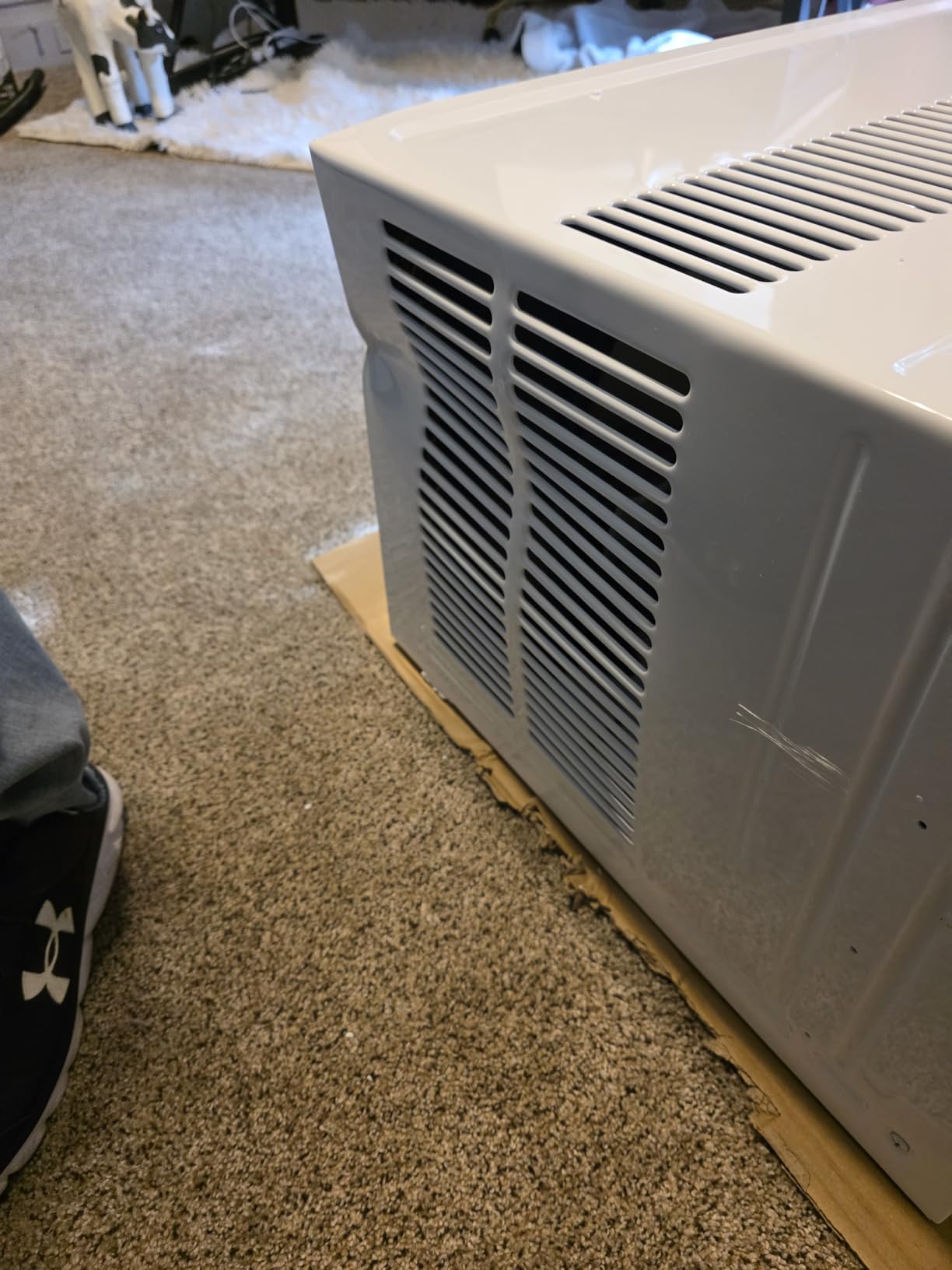
When the extra controls earn their place
If you already use the LG smart ecosystem, the app integration removes friction rather than adding novelty. Scheduling a pre-cool before you arrive home, or a sleep ramp overnight, is a real benefit on a 700 square foot room where the unit runs for hours at a time.
The window fit range of 27 to 39 inches wide with a 16 inch minimum height is the constraint to check first. That is the narrowest minimum width on this page, so if you live in a building with older, smaller openings, this unit may not physically fit without modifications.
Where it falls short
Buyers who want even, quiet cooling should look at the Midea 14,000 BTU smart inverter further down this list instead. It is quieter, more efficient and has a modern review profile, though it carries fewer speed settings.
Capacity is listed at 3.3 pints, which is the lowest dehumidification figure attached to a 14,000 BTU unit in this roundup, and that matters in a humid summer. A conventional compressor also means more audible cycling than any inverter on this list.
7. Midea 14,000 BTU Smart Inverter – The Efficiency Leader
Midea 14,000 BTU Smart Inverter 115V Window Air Conditioner, 700 Sq Ft
14000 BTU
700 sq ft
41 dB
115V
63.5 lb
SEER 17
Pros
- Inverter variable-speed compressor gives strong 14000 BTU cooling on 115V
- Very quiet
- described as good background white noise for sleeping
- Lighter than most 14000 BTU units with one reviewer installing it solo
- SEER 17 efficiency with over 40% savings versus the standard
- App and voice control allow remote pre-cooling
Cons
- 14000 BTU is near the ceiling for a 115V circuit and wants its own dedicated circuit
- App can be sluggish and does not always apply settings on the first command
- Some reports of noticeably loud operation that conflict with the 41 dBA claim
- One review reported the unit arriving dented
Model MAW14S1VWT-A is the most efficient machine in this roundup, and on paper it is the one we would design from scratch for a large room. A variable-speed inverter compressor delivers 14,000 BTU to a rated 700 square feet on ordinary 115V household power, at SEER 17. Nothing else on this list pairs that efficiency with that capacity on a standard plug.
It is also quiet, at a listed 41 dBA, and at 63.5 pounds one reviewer managed to install it solo. That combination of efficiency, capacity, low weight and low noise is unusual. The control set includes an LED display with auto, cool, dry and fan modes, three fan speeds, a 24-hour timer, an ECO saver, a front-access washable filter and an included window bracket.
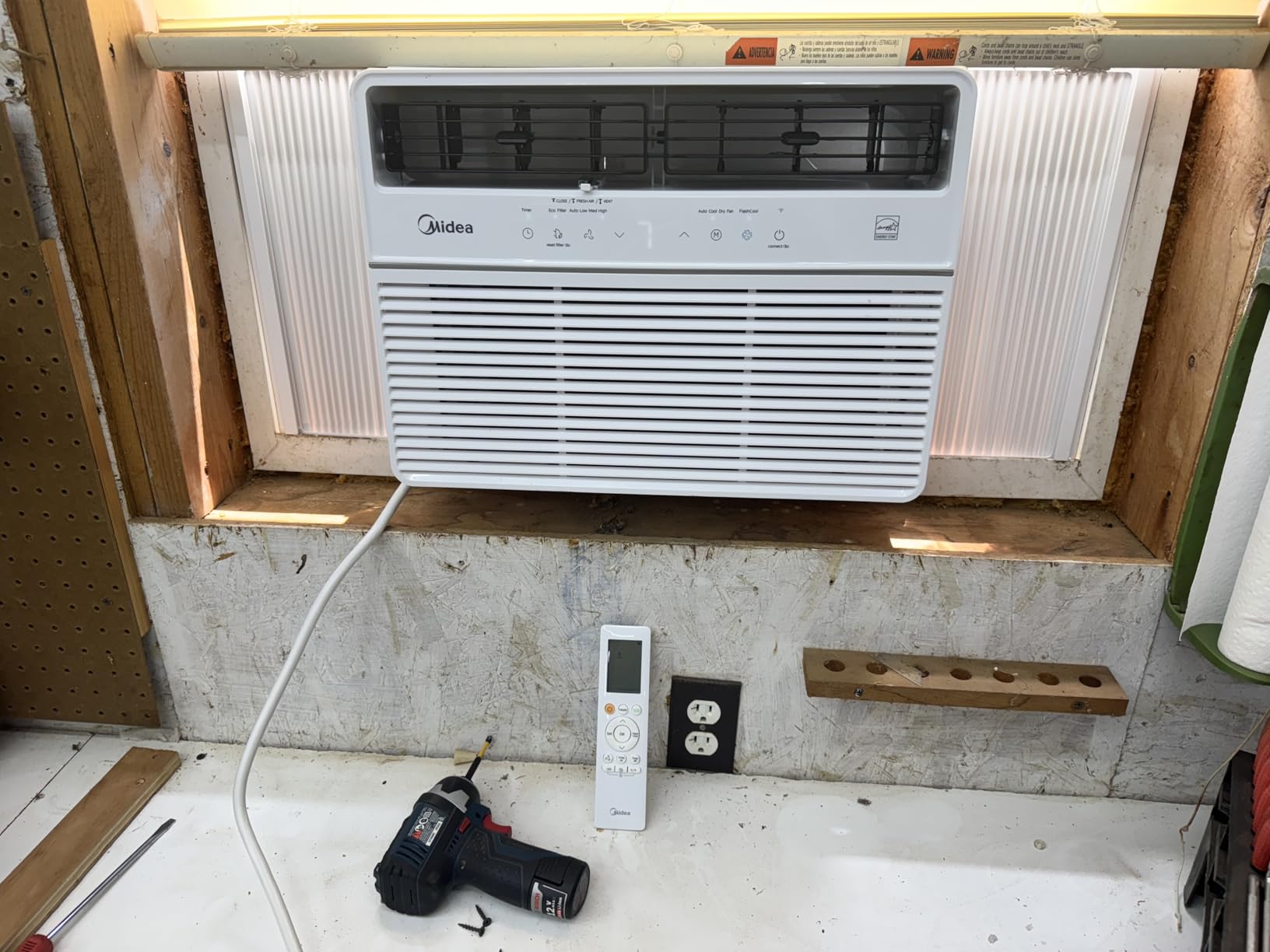
Two practical cautions. First, 14,000 BTU on 115V draws 1,508 watts, which is close to the practical ceiling for a household circuit. It is marketed as a 115V unit, but owners and installers should treat it as wanting a dedicated circuit rather than sharing an existing receptacle with other large appliances. Second, the review history is short at 138 ratings, so the long-term reliability record is genuinely unproven.
There is also a real spread in reported noise. Most owners describe quiet background running suitable for sleeping, but some report noticeably loud operation that does not match the 41 dBA claim. Variance between individual units is normal for compressors, but it is worth knowing before the unit goes in a bedroom.
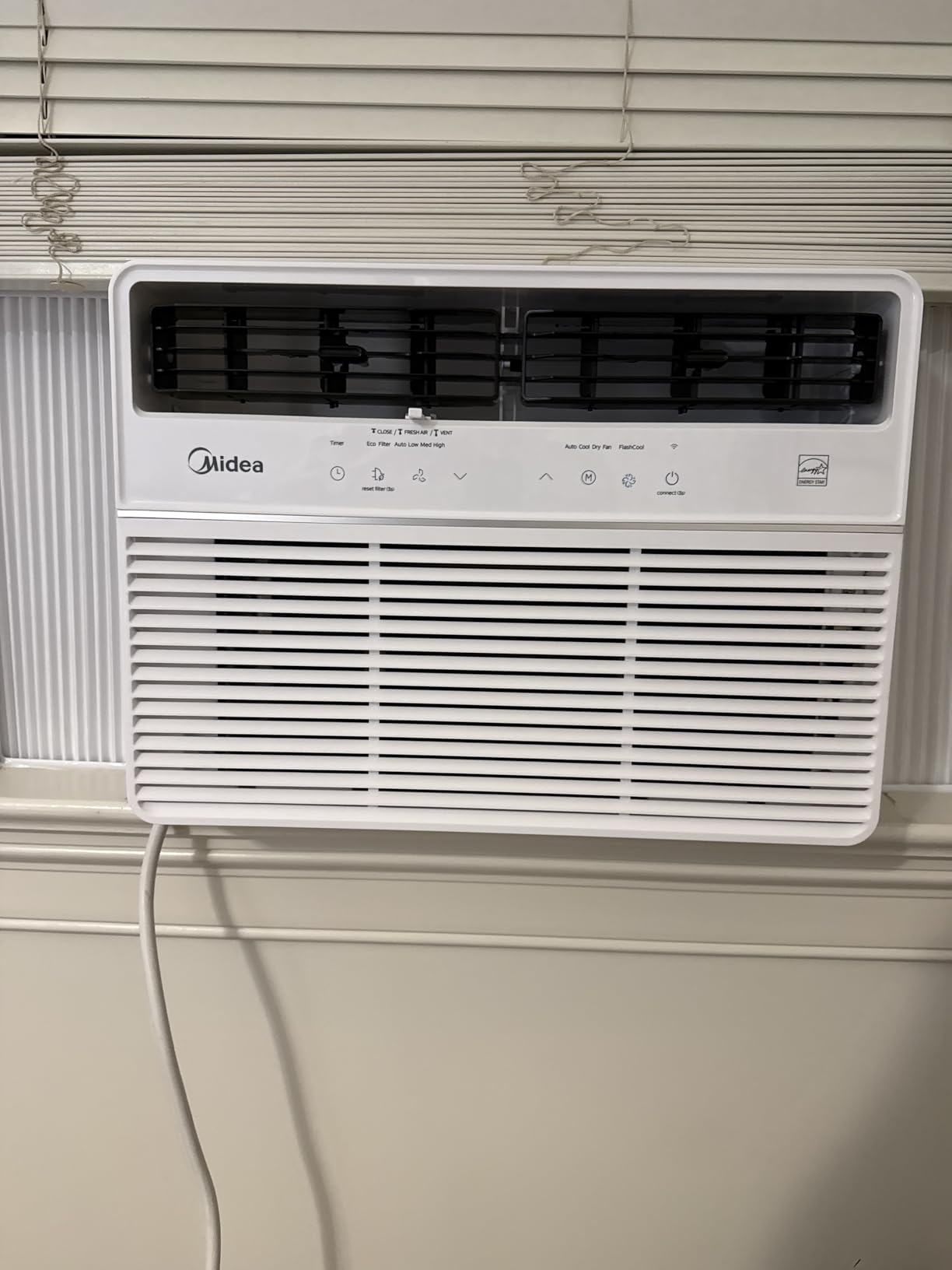
Why efficiency matters for large rooms
Cooling a 700 square foot room for eight hours a day, ninety days a season, adds up quickly at the meter. The unit is rated for over 40% savings versus the Energy Conservation Standard, and the app plus voice control let you pre-cool remotely so the compressor is not working while the room is empty.
The tradeoffs are modest. The window fit range is 23 to 36 inches wide, with a 19.5 inch minimum height, which is the taller requirement to check. It is also deep at nearly 19 inches, so measure the sill projection as well as the opening width.
Where it falls short
The app is the weak point. Owners report it can be sluggish and does not always apply settings on the first command, which is frustrating when you are trying to change the room from your phone on the way home.
Given the short review history, we would treat this as the efficiency pick with a caveat rather than a no-brainer. If you want a proven track record over a thin one, the Midea U-shaped unit at the top of this list has far more owners behind it.
8. Keystone 23,200 BTU – Built for 1,500 Sq Ft With Heat
Keystone 23,200 BTU Window Air Conditioner with 16,000 BTU Supplemental Heat and Dehumidifier, 230V, Window AC for Large Rooms up to 1,500 Sq.Ft. with Smart Remote Control
23200 BTU
1500 sq ft
56.3 dB
230V
121 lb
SEER 9.4
Pros
- Second-highest cooling capacity here
- rated for spaces up to 1500 sq ft
- Owners running two report holding 68F indoors through 98 to 100F outside heat
- Smart remote with a room-temperature sensor that re-sends every 3 minutes
- Energy Saver and Sleep modes help moderate running cost
- 4 extra years of warranty on the sealed system
Cons
- Listed product width is reported as inaccurate
- complicating replacement installs
- Product imagery misstates the required outlet
- it needs a 250V 30A plug
- At 121 pounds it is hard to lift into an upper-story window alone
- Supplemental heat works only between about 23F and 76F outside
The Keystone KSTHW25B is the second-largest machine here, at 23,200 BTU cooling and 16,000 BTU of supplemental heat, rated for spaces up to 1,500 square feet. The cooling claims check out in practice: owners running two of these report holding 68F indoors through 98 to 100F outdoor heat, which is the kind of evidence you rarely see on a listing.
The remote is more thoughtful than most. It carries a room-temperature sensor and re-transmits the reading every three minutes, so the unit is regulating against the temperature at your seat rather than at the wall. Four-way swing louvers, dehumidification and fan modes are standard, and Energy Saver and Sleep modes moderate the running cost. Capacity is listed at 5.7 pints.
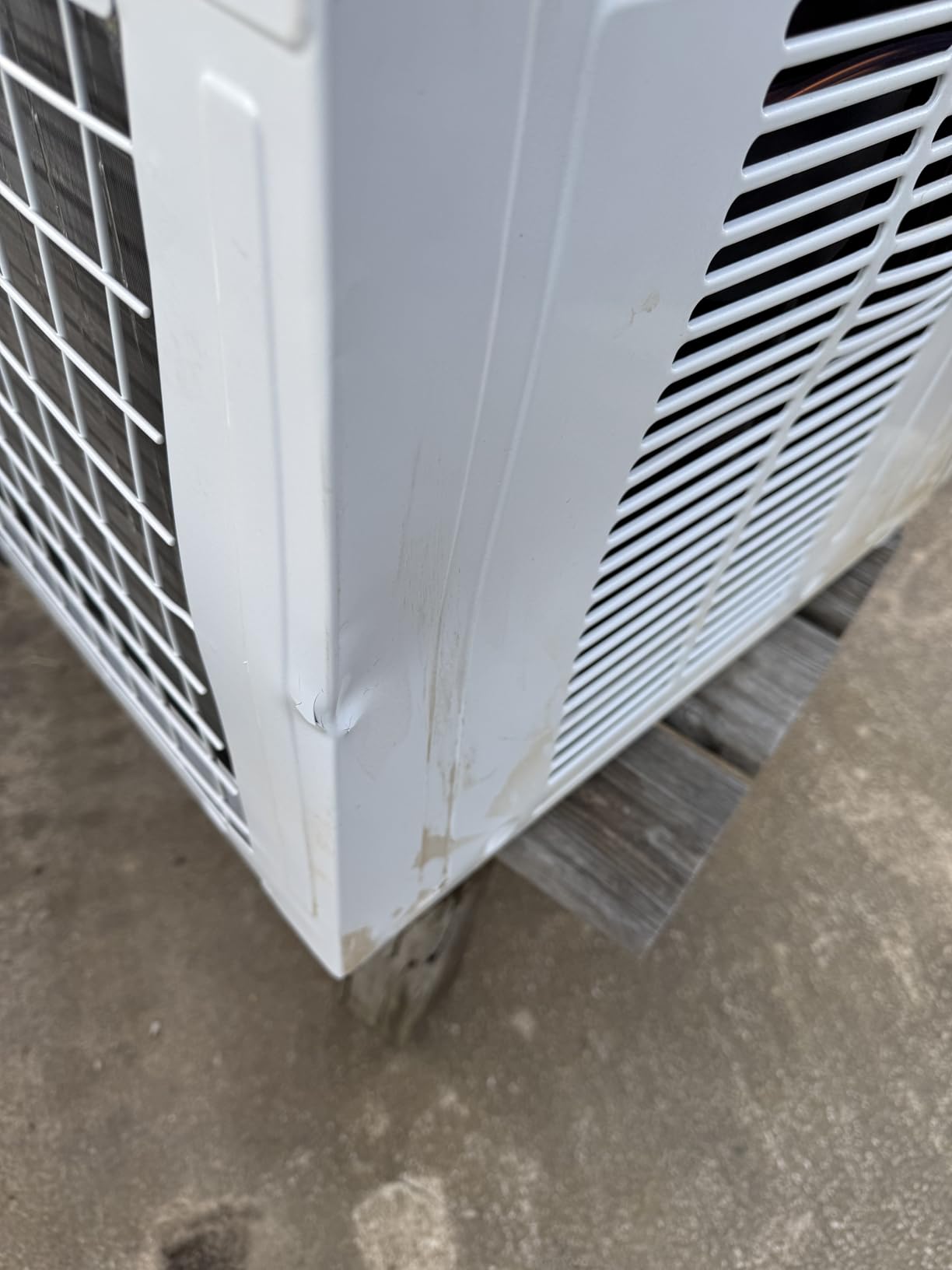
Now the parts that will cost you time. Owners report the listed product width as inaccurate, which matters if you ever need to replace the unit into the same opening. The product imagery also misstates the required outlet: it needs a 250V 30A plug, not a standard one. Both of these cause real installation problems rather than theoretical ones, and both are the kind of thing the spec sheet should have caught.
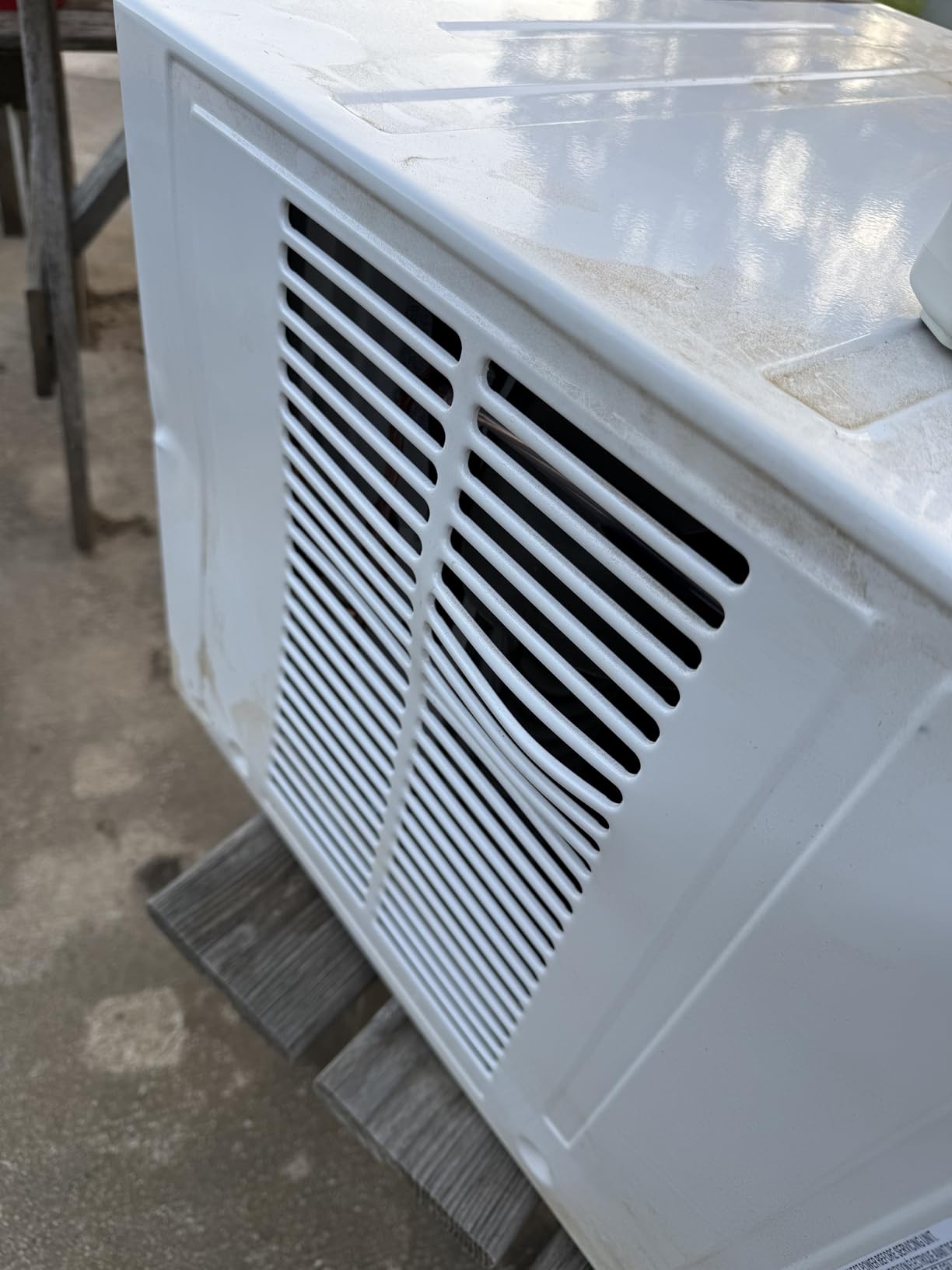
At 121 pounds this is a two-person lift, and that is on a first floor window. The efficiency rating of SEER 9.4 is the lowest in this group, and the supplemental heat mode only functions between about 23F and 76F outside, so it is a shoulder-season feature in most of the country.
When a machine this size makes sense
Very large, poorly insulated, sun-exposed spaces are the honest use case. A finished basement without ductwork, a converted garage, a great room with a vaulted ceiling and western glass exposure, or a first-floor family room with poor envelope performance. The warranty is a 1 year parts and labor plan plus four additional years on the sealed system, which is better coverage than most of this list.
The two-unit strategy is worth considering here. Owners running two of these in a large open space is a documented setup, and splitting a space across two windows is usually more effective than one oversized unit, because each window handles its own zone of the room.
Where it falls short
Documentation quality is the problem, not performance. Verify the actual width and the actual outlet requirement with the manufacturer before you buy, and do not rely on the product images.
SEER 9.4 is the lowest efficiency rating in this roundup, so this unit is expensive to run for the cooling it delivers, and at 56.3 dB it is not a bedroom machine. If your space is under 900 square feet, this is oversized and you should step down.
9. ZAFRO 12,000 BTU U-Shaped Inverter – Widest Window Fit
ZAFRO U Shaped Inverter Window Air Conditioner, Ultra Quiet (32dB), 12000BTU ASHRAE (8100BTU DOE) Smart Air Conditioner Window Unit, App/Voice/Remote, Saddle Window AC Unit with Cool/Dry/Fan Modes
12000 ASHRAE / 8100 DOE
32 dB
115V
63.9 lb
SEER 16.3
Pros
- U-shaped chassis with the compressor outside the window for 32 dB indoor noise
- Inverter holds temperature within about 1F and uses roughly 37% less energy
- Occupies less window view than competing U-shaped designs
- App plus voice plus remote plus touch all reported working reliably
Cons
- Condensate basin can overflow
- and some owners add a separate drain pump
- DRY mode has no humidistat so humidity must be managed by cycling
- Long-term durability is unproven given the short review history
- Wall thickness is fixed with no adjustment
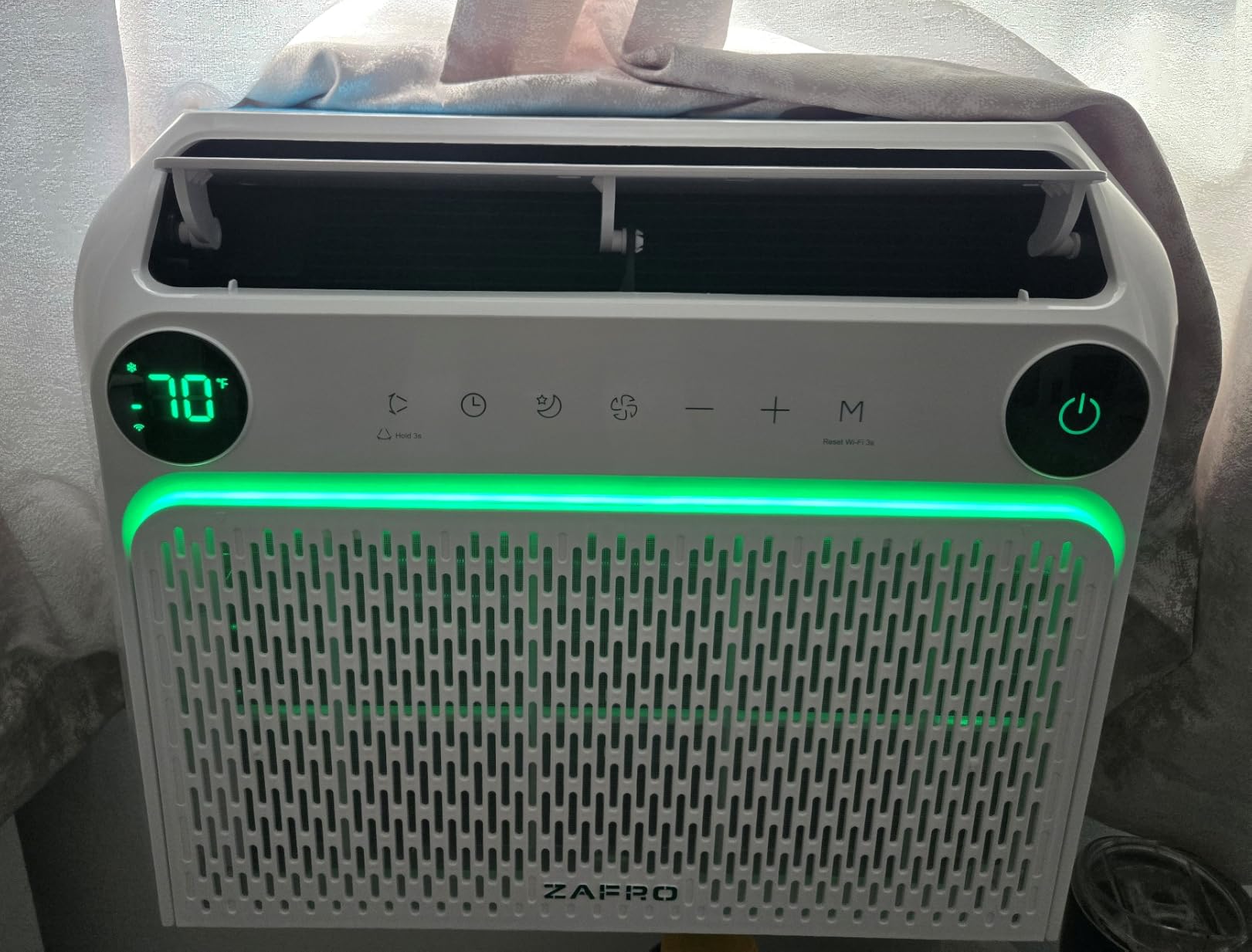
The ZAFRO NCG-08CI/X1E-W carries the highest average rating of the ten units in this roundup, at 4.4 with only about 5% one-star reviews, and it shares the 32 dB figure with the Midea at the top of this list. The compressor sits outside the window opening, which is the same U-shaped logic, and owners consistently remark on how little of the view it blocks.
It also has the widest window fit on this page by a distance: 24 to 48 inches wide with a 16 inch minimum height, which covers everything from a narrow double-hung opening to a wide picture window. The mode set is unusually broad for the category, covering cool, dehumidify, fan, eco, sleep and mute, alongside a window lock, child lock and 24-hour timer.
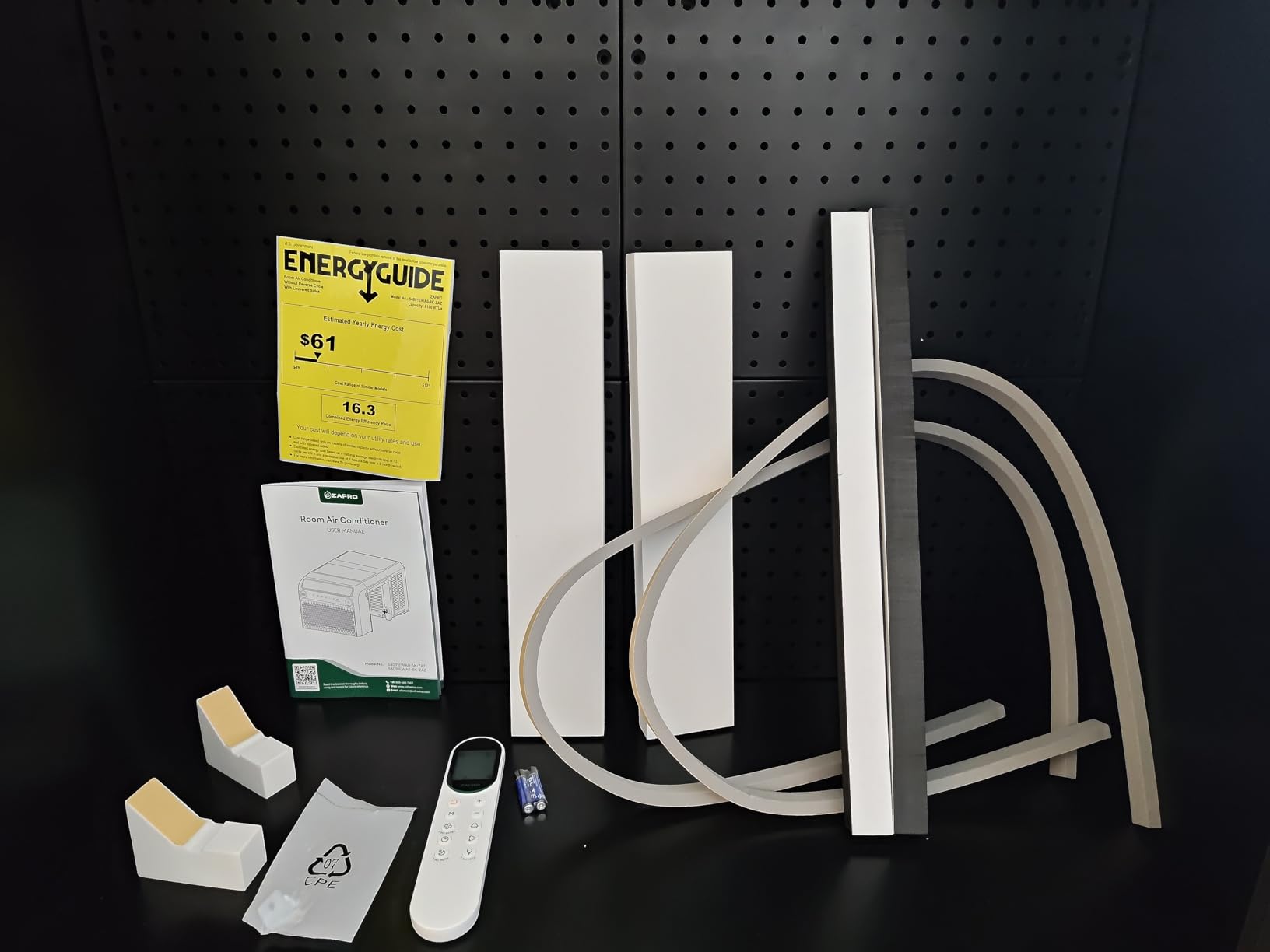
One specification deserves attention. This unit is rated at 12,000 BTU ASHRAE, which is 8,100 BTU on the DOE scale. Manufacturers have to print both, and retailers mix them, but they are not interchangeable numbers. The DOE rating is the comparable one for sizing, so treat this as an 8,100 BTU class machine rather than a 12,000 BTU one when you match it to a room. That is a meaningful difference, and it changes which room this belongs in.
Dehumidification is listed at up to 70 pints per day with a full-water alert and a built-in drain, but DRY mode has no humidistat, so humidity is managed by cycling the unit rather than by a sensor. The condensate basin can overflow, and some owners add a separate drain pump. Operating range is 27F to 113F.
Where the wide window range helps
If you have a wide or unusual opening, this is the unit most likely to fit without modification. The 48 inch maximum is more than double the minimum, and the fixed wall thickness with no adjustment means you should measure your sill depth carefully before ordering.
For a room around 450 square feet, an 8,100 BTU DOE capacity is closer to correctly sized than the 550 square foot claims attached to 12,000 BTU units elsewhere on this page. Getting this number right is what keeps a unit from short-cycling in a humid summer.
Where it falls short
With 87 ratings, the long-term durability record is simply unproven. Early owners are impressed, and early reviews always are, so we would want a couple more seasons of data before recommending it for a room that must run reliably.
The DOE capacity also means this is not the choice for a 700 square foot room. Think of it as a very quiet, very well-fitting unit for a medium room rather than a large-room machine.
10. GE 14,000 BTU Smart Window AC – Slim Chassis, Smart Controls
GE 14,000 BTU Smart Window Air Conditioner, Powerful Cooling for Large & Open Spaces up to 700 sq ft, Energy Efficient, Wi‑Fi, Alexa/Google, Quick Install Kit, White
14000 BTU
700 sq ft
60 dB
115V
66.1 lb
SEER 11.3
Pros
- Delivers genuinely cold air for a 700 sq ft room in extreme heat
- Compact low-profile chassis smaller than most units of the same BTU
- SmartHQ app plus Alexa and Google Assistant with a working remote
- Washable reusable filter with a 30-day cleaning interval and a built-in drain
Cons
- Audible when running at full output
- especially in a large open room
- Not Apple Home compatible
- Wi-Fi pairing can take several attempts
- Some reports of units failing to blow cold air or the fan motor quitting
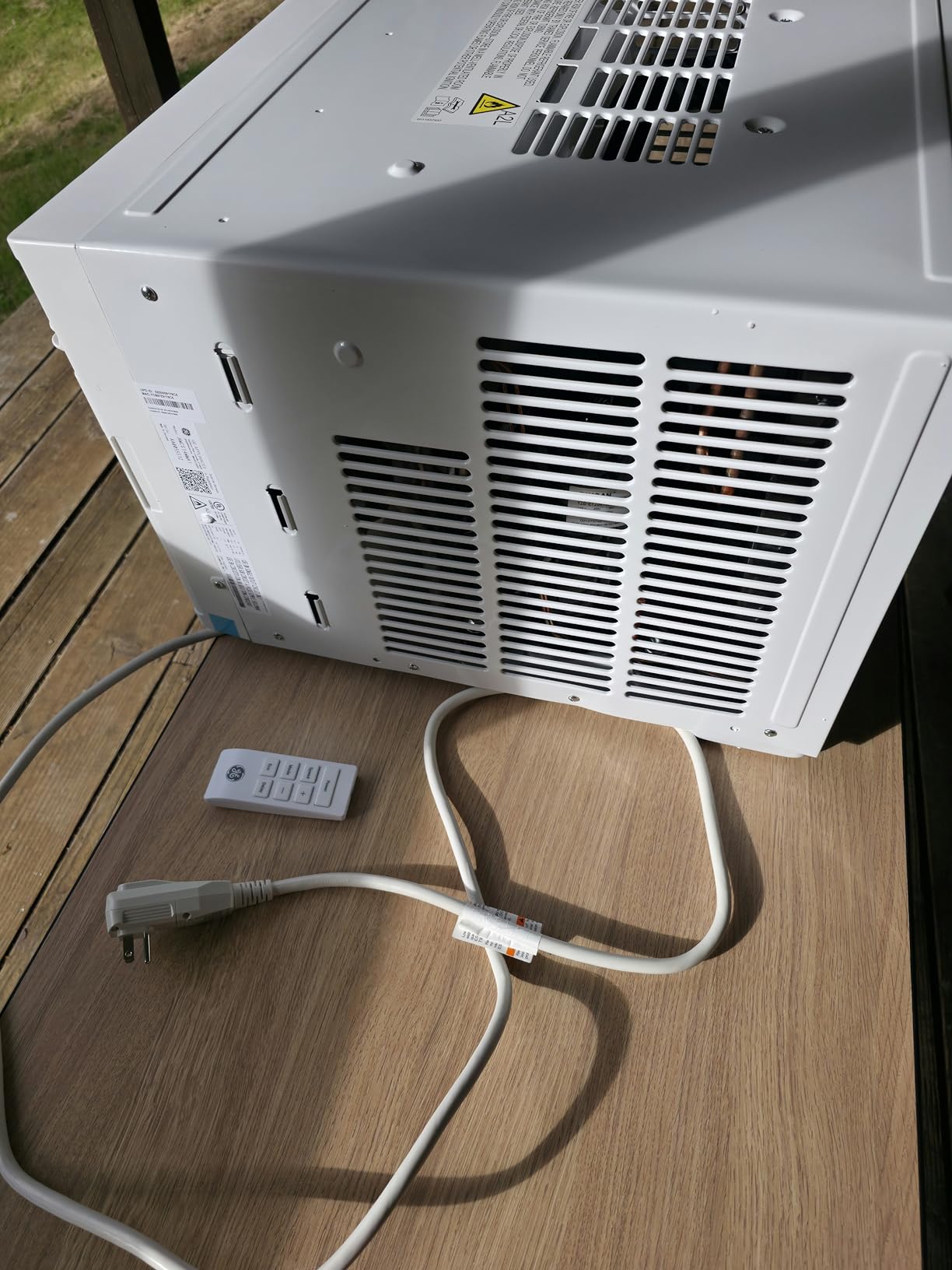
The GE AWCS14WWA has one practical feature that nobody else on this list offers: a built-in drain outlet for end-of-season storage. On a 14,000 BTU unit the condensate pan holds a meaningful amount of water, and draining it before the unit sits in a cold window for six months is the difference between putting it away dry and finding a swamp in the spring.
Otherwise this is a competent conventional machine. 14,000 BTU for a 700 square foot rating, an electronic thermostat, SmartHQ app monitoring and scheduling, Alexa and Google Assistant voice control, an eco mode that shuts down once the target temperature is reached, three cooling modes and three fan speeds. The chassis is genuinely compact, and owners consistently single out the slim profile as smaller than comparable units.

The reliability picture is mixed, and we would rather say so than skip it. With 71 ratings there is a thin review base, and it includes several one-star durability reports describing units that stopped blowing cold air or whose fan motor quit within a few months. Owners who are happy praise the cooling punch and the low profile, so the failures appear to be a minority, but the sample is not large enough to be reassuring.
Noise is the other issue. The listed 60 dB is among the higher figures on this page, and owners describe it as audible at full output, particularly in a large open room. The window fit range of 26.13 to 37.75 inches with a 15.63 inch minimum height is conventional and manageable, and it runs on 115V at 1,210 watts.
What makes it distinct
The storage drain and the compact chassis are the two reasons to consider it. A unit that fits a shallow sill without blocking the window, and that you can drain before storing it, solves two small annoyances that repeat every single summer.
For anyone already in the Google or Amazon smart home ecosystem, the SmartHQ app with scheduling is a genuine convenience, and eco mode means the unit stops once the room is at the target rather than cycling on continuously.
Where it falls short
No Apple Home support, and Wi-Fi pairing reportedly takes several attempts. If your smart home is Apple-based, the remote and the app are the whole experience.
At 60 dB this is not a bedroom unit, and the durability reports mean we would want to know the return process is straightforward before committing. For a quieter and more efficient alternative at the same capacity, the Midea 14,000 BTU smart inverter is the stronger technical bet.
How Many BTUs Do You Need for a Large Room?
Multiply your room’s square footage by 20 to 30 BTU, then round up to the nearest standard capacity. That is the entire rule. A 400 square foot room needs 8,000 to 12,000 BTU, a 550 square foot room needs 11,000 to 16,500 BTU, a 750 square foot room needs 15,000 to 22,500 BTU, and a 1,000 square foot room needs 20,000 to 30,000 BTU. Works out to 12,000 BTU for 20 by 20 feet, and about 30,000 BTU for 1,000 square feet, which is two 15,000 BTU machines rather than one.
Use the top of the range when your room has high ceilings, direct western sun, several windows, or a top-floor location. Manufacturer square footage claims assume average conditions, and rooms with 9 foot ceilings or afternoon sun load need closer to 30 BTU per square foot. Our 700 square foot rated units on this page are correctly sized for an average room of that size and undersized for a sun-exposed one.
Oversizing is its own problem. A unit that is far too large for the room will short-cycle, meaning it runs briefly, dumps its budget of cool air, shuts off, and then restarts. That pattern removes moisture in bursts rather than steadily, so the room ends up cool but clammy. In humid climates this is the single most common complaint we see about window units, and the fix is always the same: size down, not up.
One more definition worth knowing, because retailers mix these up constantly. ASHRAE BTU and DOE BTU are not the same number, and a 12,000 ASHRAE unit is 8,100 BTU on the DOE scale. Retail listings mix the two freely. Every capacity figure in this roundup is the manufacturer rating as published, and the ZAFRO section above is the clearest example of a unit where the two numbers differ significantly.
115V vs 230V: Do Large Window ACs Need a Dedicated Circuit?
Yes, most of them do, and the transition happens right in the middle of this roundup. Everything up to roughly 12,000 BTU is comfortably within 115V household capacity using a standard three-prong plug. The 14,000 BTU units push the limit: the Midea 14,000 BTU smart inverter is a 115V product but draws 1,508 watts, which is near the ceiling of a general-purpose branch circuit and deserves a dedicated line. At 18,000 BTU and above, dedicated 230V circuits become the norm, and the two 230V units here need 20A double-pole outlets, with the Keystone requiring a 250V 30A plug specifically.
The practical consequence is that a lot of people who plan to cool a large room with a 230V unit cannot actually do it. Renters, older apartments and finished basements frequently have no 230V receptacle near a window, and installing one means an electrician. Our Midea 12,000 BTU inverter with heat uses a standard 5-15P household plug for exactly this reason, and the DELLA 14,000 BTU is the highest-capacity unit here that still uses ordinary 115V power without straining it.
Do not plug a 230V unit into a 115V outlet, and do not use an extension cord for any of these. A window air conditioner’s compressor draws high current in short bursts, which is exactly the load pattern that overheats a poorly rated cord or a loose receptacle. If you are unsure what circuit serves a receptacle, an inexpensive circuit tester answers the question in a minute.
Noise: What 32 dB vs 61 dB Actually Sounds Like
Use these as practical thresholds rather than scientific ones. Below about 45 dB you can hold a conversation, fall asleep, or run a call with the unit running and forget it is there. Between 45 and 55 dB the unit is noticeable as background sound but workable in a living room. Above 55 dB you will hear it, and above 60 dB it competes with conversation and is genuinely unpleasant in a bedroom.
Against those thresholds, the numbers on this page sort neatly. The two U-shaped machines sit at 32 dB, the Midea 12,000 BTU inverter with heat is at 45 dB, the Midea 14,000 BTU smart inverter is at 41 dB, the DELLA is at 54 dB, the LG 14,000 BTU is at 53 dB, the Keystone is at 56.3 dB, the GE is at 60 dB, and the LG 24,500 BTU sits at 61 dB.
Two practical notes. A stated dB figure is usually measured at the lowest fan speed, so expect more volume at high fan output. And the loudest large units produce a low rumble rather than a hiss, which travels further through floors and walls than a broadband hiss of the same rating. If the room is above you, that distinction matters more than the number.
Installation and Window Fit for Large-Room Window ACs
Measure before you buy, and measure three things: the window opening width, the opening height, and the sill depth. Every unit in this roundup lists a minimum and maximum window width, and the maximum is frequently the limiting number. The ranges here run from 22 to 36 inches on the Midea U-shaped unit, 24 to 38.5 inches on the Midea inverter with heat, 23 to 36 inches on the Midea 14,000 BTU, 26 to 36 inches on the DELLA, 27 to 39 inches on the LG 14,000 BTU, 26.13 to 37.75 inches on the GE, 23 to 34 inches on the ROVSUN, 26 to 28 inches on the LG 24,500 BTU, 31 to 42 inches on the Keystone, and 24 to 48 inches on the ZAFRO. If your opening is wider than the maximum, you need an extension kit and side panels, which are usually sold separately.
Weight is the second reality check. The spread across this roundup is 58 pounds to 136 pounds. Anything over 80 pounds is a two-person job, and the three heaviest units here are all on 230V circuits, which usually means a ground floor or a room near the panel. If you are installing on a second floor, the two lightest options are considerably easier.
Plan the install in six steps: measure the opening, confirm the min and max width against the unit, set the chassis in the sill and tilt it outward about 15 degrees so condensate drains out, install the side panels and seal any gaps with foam tape, bracket the sash so it cannot fall, and then test before you finish packing. Our guide to the best portable air conditioners covers the alternative when a window install will not work at all, such as in a room with no exterior wall.
Finally, note that standard units force the window open, which costs you natural light, ventilation, and any outside noise. The U-shaped designs on this list solve that by letting the sash close, and they are the reason those two units carry the lowest noise figures in the roundup.
When a Window AC Is the Wrong Choice for a Very Large Room
A window air conditioner cannot cool a whole house. Each unit cools the air it shares with one room, and warm air leaking around the frame means you are working against the room you are trying to cool. For anything past roughly 1,000 square feet, or for a space where one window cannot capture the whole room, a ducted mini split is usually the better answer.
Forum discussion on this topic is consistent on the operating cost side, with owners of ductless systems repeatedly reporting running costs well below a comparable window unit for the same space, and on the quietness side, where a ductless indoor unit runs far below anything in this roundup. The objections are equally consistent: the upfront cost, and the fact that installation requires a line set through a wall, which rules out rentals entirely.
There is a middle path for very large open-plan spaces: two window units instead of one oversized one. Owners running two of the Keystone-class machines report holding 68F indoors through 98 to 100F outside heat. Two units also means one room stays comfortable if the other fails, and running one at a time halves the energy draw on mild days.
For a sunroom or enclosed porch, remember that those spaces are glazed on multiple sides and gain heat from the sun rather than losing it. Factor roughly double the BTU requirement for a fully glazed room, and expect to be looking at two of the larger units here rather than one.
Frequently Asked Questions
How many BTUs do I need to cool a 20×20 room?
A 20 by 20 foot room is 400 square feet, which needs 8,000 to 12,000 BTU. Use 20 BTU per square foot for an average room with standard ceilings, and 30 BTU per square foot for high ceilings, direct sun or a top-floor location, which pushes the same room toward 12,000 BTU.
What size room will a 12,000 BTU window unit cool?
A 12,000 BTU unit is rated by manufacturers for roughly 400 to 550 square feet under average conditions. With high ceilings, several windows or direct afternoon sun, the same unit struggles above about 400 square feet. Two of the units on this list are rated to 550 square feet, and one prints a DOE rating of 8,100 BTU, so check which scale the maker used.
How big of an AC unit do I need for 1,000 square feet?
At 20 to 30 BTU per square foot, 1,000 square feet needs 20,000 to 30,000 BTU. Almost no window air conditioner in this roundup covers that alone, and the 24,500 BTU LG is the closest. The practical answer for most homes is two units in separate windows, which also gives you zoned control and a spare if one fails.
Do large window air conditioners need a dedicated circuit?
Most of them do, and the requirement rises with capacity. Units up to about 12,000 BTU usually run on a standard 115V receptacle. The 14,000 BTU inverter here draws 1,508 watts and deserves a dedicated 115V line, while the two 230V units need a 20A double-pole outlet, and one of those requires a 250V 30A plug specifically.
Can a window air conditioner cool two rooms or a whole house?
No, a window air conditioner cannot cool a whole house, and cooling two separate closed rooms with one unit does not work well because air moves between them. A single unit cools the open air volume of one space. For two zones, use two units, and for a very large open-plan area, a ducted mini split is quieter and cheaper to run per hour of cooling delivered.
Are inverter window air conditioners worth it?
In most large rooms, yes. An inverter compressor modulates output instead of switching on and off, which means steadier temperature, less audible cycling, better dehumidification and meaningfully lower energy use. In this roundup the inverters reach SEER 15 to 17 and run as low as 32 dB, while conventional units sit at SEER 9.4 to 13 and 53 to 61 dB.
Conclusion: Pick by Room Size
Size first, then choose from these. For a room around 550 square feet that you also sleep or work in, the Midea 12,000 BTU U-shaped smart inverter is the pick, and the Midea 12,000 BTU inverter with heat is the lighter alternative if you need shoulder-season warmth. For 700 square feet, the Midea 14,000 BTU smart inverter leads on efficiency and noise, and the DELLA 14,000 BTU is the value option on ordinary 115V power. For rooms past 900 square feet, you are looking at the 230V end of this list, starting with the Keystone at 23,200 BTU and ending with the LG at 24,500 BTU. Measure your window and check your circuit before you order, and this roundup of the best window air conditioners for large rooms will do the rest.
Last updated September October 2026. We may earn a commission when you buy through links on this page, at no additional cost to you.