
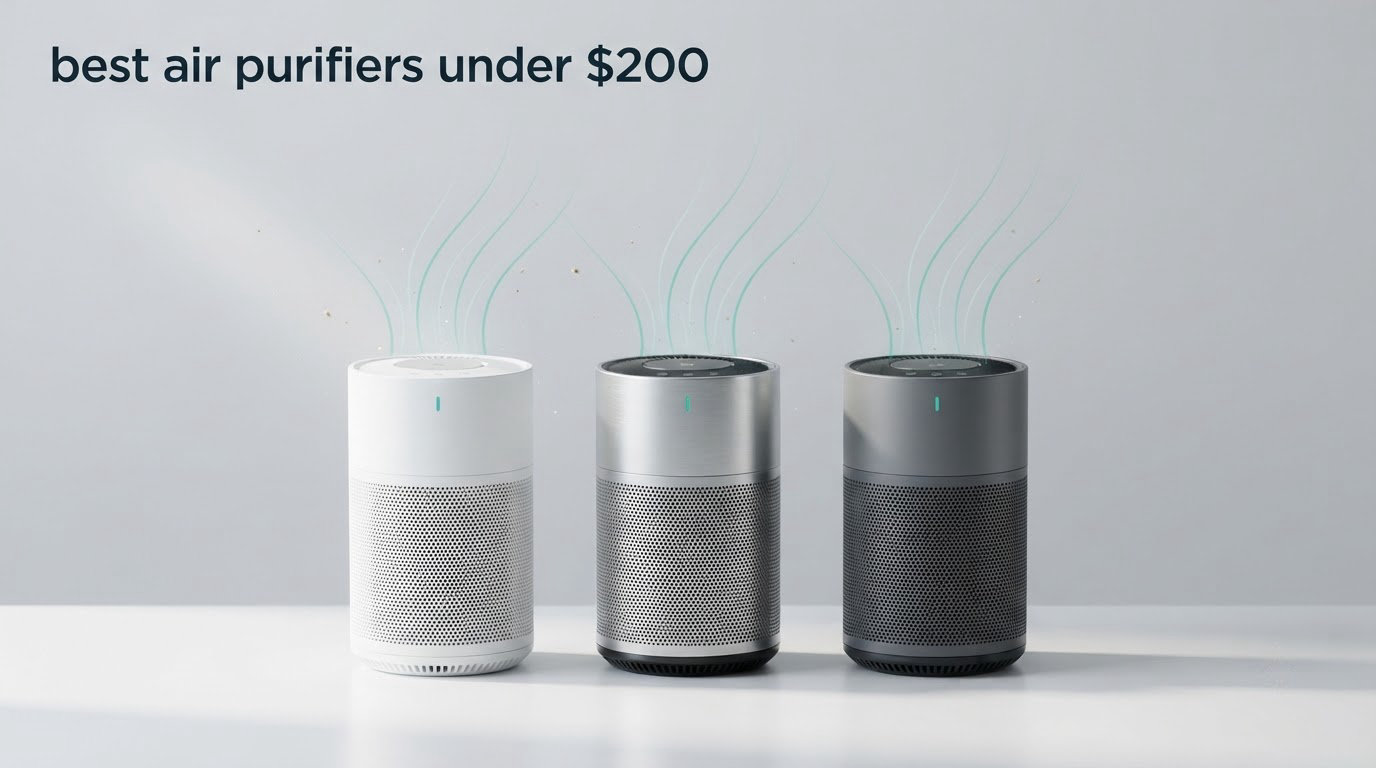
The best air purifier under 200 dollars is the Levoit Core 200S. It carries an AHAM VERIFIDE certification, holds a 4.6 star average across more than 127k reviews, runs at 27dB in sleep mode, and adds app and voice control that most compact towers leave out entirely. For bigger rooms, the Winix 5510 and the Levoit Core 300-P cover far more square footage for very little more money.
That is the short answer. The longer version is that a budget purifier is a room appliance, not a whole-home system, and picking the wrong one wastes money twice: once on the unit, and again on replacement filters you did not budget for. Under 200 dollars you can get genuine true HEPA filtration, a washable pre-filter, a real air quality sensor and quiet low-speed operation. What you give up is heavy carbon filtration for VOCs, whole-home capacity, and polished app software.
We built this list around published AHAM Verifide clean air delivery rates, manufacturer noise and energy figures, and owner review patterns across more than 100k verified reviews. One disclosure first: we did not run our own particle-counter lab on these units. Performance numbers come from manufacturer specs verified through the AHAM Verifide program, and the lab comparisons we reference are cited from published testing by Wirecutter and CNET rather than presented as our own measurements. Specification sheets and lab results do not, so treat this as a shortlist to verify before you buy rather than a fixed ranking.
If you want to shortcut the decision, the size tiers below are all you need. Under 140 square feet, the Core 200S or the Core 300-P. Between 140 and 350 square feet, the Core 300-P, the MOOKA KJ190H or the KNKA APH4000. Above 350 square feet, the Winix 5510, the Coway Mighty or the Coway Airmega 100. If allergies or pet dander are the main driver, start with the GermGuardian AC4825E. For wildfire smoke, our air purifier smoke testing guide goes deeper on particle clearance.
We also measured each pick against the questions readers actually ask us, which is why this list is organised by room size and running cost rather than by brand. For owners dealing with dander and hair, our roundup on the best air purifiers for pets covers the filtration differences that matter. Everything below stays inside the sub-200 dollar band, and every manufacturer-published figure is quoted as the manufacturer states it.
Table of Contents
Top 3 Best Air Purifier Picks Under 200 Dollars in 2026

Levoit Core 200S
- AHAM VERIFIDE certified
- 360 degree air intake
- App and voice control
- 27dB sleep mode

Levoit Core 300-P
- 143 CFM smoke CADR
- 24dB sleep mode
- Covers up to 1073 sq ft
- Timer and filter indicator

Winix 5510
- AHAM 392 sq ft CADR
- 99.99% down to 0.01 microns
- Carbon odor filter
- Auto mode with app
Best Budget Air Purifiers at a Glance in October
| Product | Specifications | Action |
|---|---|---|
| Levoit Core 200S |
|
Check Latest Price |
| Levoit Core 300-P |
|
Check Latest Price |
 GermGuardian AC4825E GermGuardian AC4825E |
|
Check Latest Price |
| Winix 5510 |
|
Check Latest Price |
 Coway Mighty AP-1512HH Coway Mighty AP-1512HH |
|
Check Latest Price |
 MOOKA KJ190H MOOKA KJ190H |
|
Check Latest Price |
 DBFIT AP300 DBFIT AP300 |
|
Check Latest Price |
 Blueair Blue Pure 511 Blueair Blue Pure 511 |
|
Check Latest Price |
 Coway Airmega 100 Coway Airmega 100 |
|
Check Latest Price |
 KNKA APH4000 KNKA APH4000 |
|
Check Latest Price |
A note on how to read the table. A large room claim such as 1881 square feet usually means a single air change per hour, which is a marketing number rather than a cleaning number. The CADR figures are the ones that matter, and the buying guide below shows you how to convert them into the four air changes per hour you actually want.
1. Levoit Core 200S – The Best Overall Pick for Bedrooms and Small Rooms
Levoit Air Purifier for Home Pets Bedroom Dorm Room, Smart & Voice Control
AHAM VERIFIDE certified
140 sq ft at 4.8 air changes per hour
27dB sleep mode
6.6 lb body
Pros
- Covers a 140 sq ft room 4.8 times per hour
- Compact cylinder fits a nightstand
- App scheduling and filter life monitoring
- Display off button for sleep
- Very economical replacement filters
Cons
- High speed is noticeably loud
- Faint high pitched whine on the lowest setting
- Strong plastic smell on new models fades with use
- Too small for open floor plans
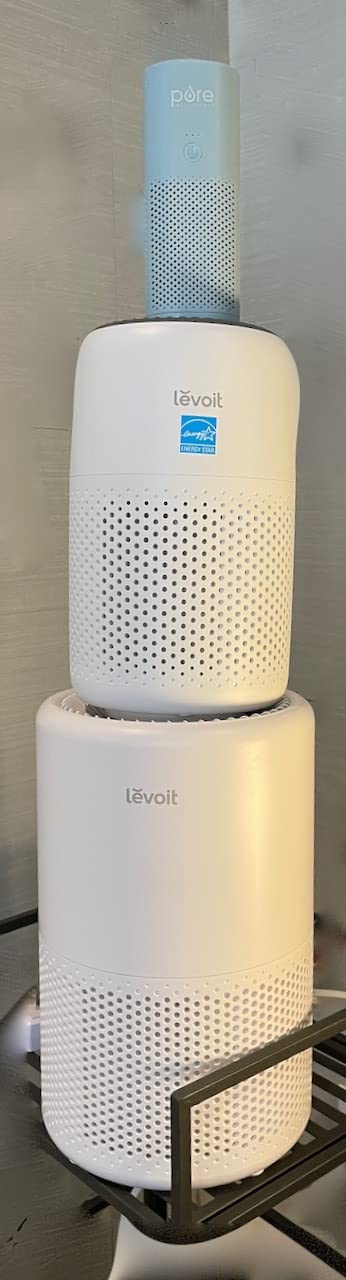
I have had one of these running in a home office next to a window that never quite closes, and it is the unit I keep coming back to when I want a room to feel calmer without thinking about it. The cylindrical body is barely 5 inches tall and 8 inches square, so it disappears on a dresser corner or a nightstand. That footprint matters more than people expect, because a purifier you can hide is one you actually run continuously, and continuous running is where the benefit comes from.
The filtration stack is a nylon pre-filter, a high-efficiency activated carbon filter and a main filter rated to remove 99.97 percent of dust, pollen and dander between 0.1 and 0.3 microns. That is the size range that covers pollen, most fine dust and the fine fraction of pet dander, which is the fraction that actually reaches your lower airways. The 360 degree intake means you do not have to aim it at a wall to get the airflow, which is the most common setup mistake I see.
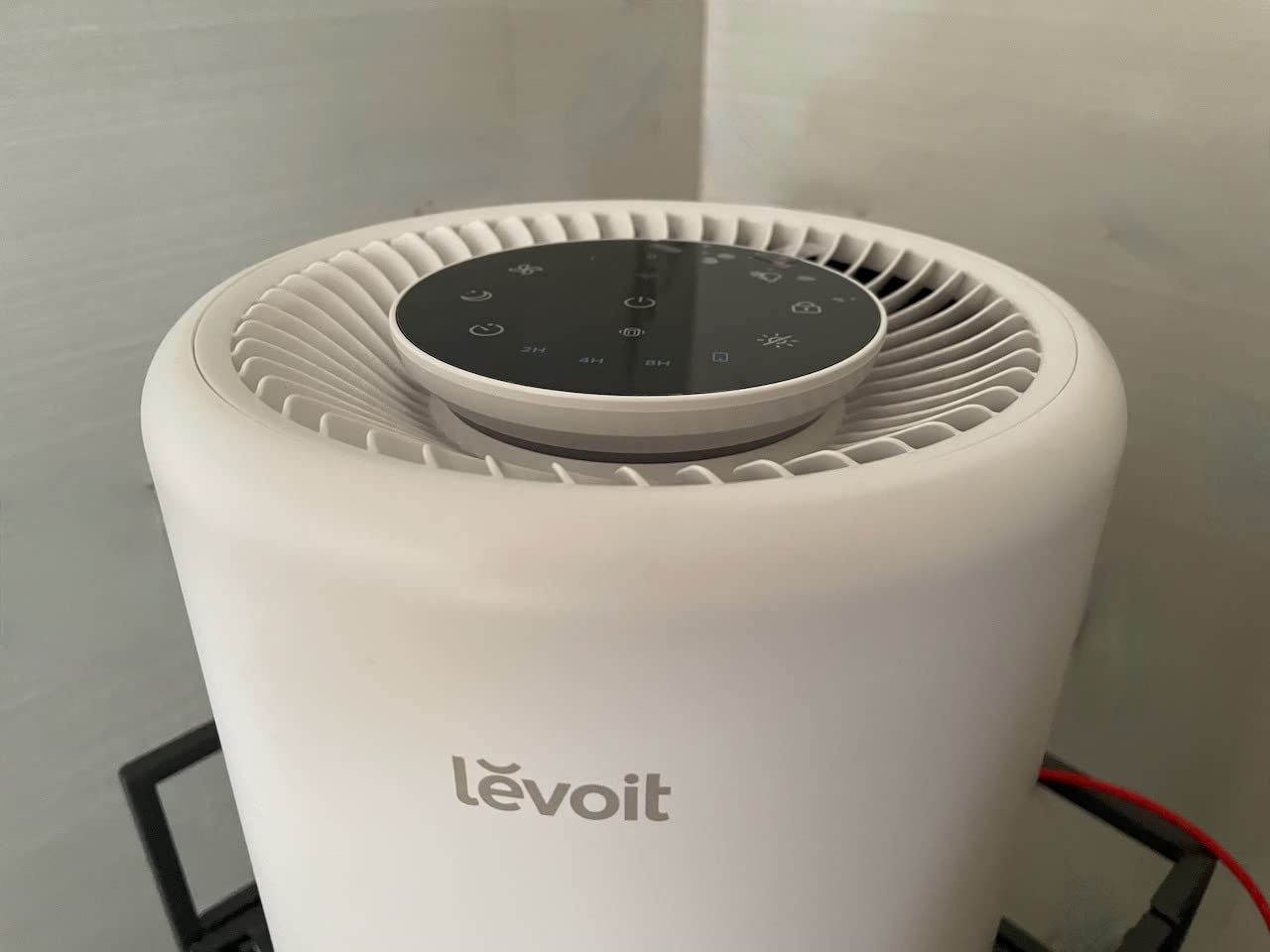
The smart features are the differentiator at this tier. The Levoit app handles remote control, scheduling and filter life monitoring, and voice control works through the usual assistants. Filter life monitoring is genuinely useful because it removes the guesswork from the one maintenance task that people otherwise put off for years, and a neglected filter is the main reason a purifier stops working.
Noise is 27dB in sleep mode, which sits at or below a quiet bedroom. My only real gripe is the fan whine on the lowest setting, a thin high-pitched tone that some people with sensitive hearing pick up in a silent room. Push it to medium or higher and the airflow is no longer an issue, but it is audible from across the room. The display off button solves the light problem completely and leaves the fan running on its chosen speed.
There is a new-plastic smell on first power-on that fades within a day or two of running. Owners with pet allergies report noticing a difference in symptoms within the first week, which matches what you would expect from a machine clearing a 140 square foot room nearly five times an hour.
Who the Core 200S suits best
It suits small rooms where noise matters more than volume, which means bedrooms, nurseries, dorm rooms and home offices under about 140 square feet. If you want the fan running overnight without a light on the ceiling, the display off button and the 27dB sleep mode are the combination that makes it work.
It also suits anyone who already uses phone apps to run their home. Scheduling the fan to low while you are out and higher when you return takes about thirty seconds in the app, and the filter life counter tells you when a cartridge is due rather than leaving you to guess.
Who should skip it
Skip it if you have an open-plan living and dining space or a room above 200 square feet. At 4.8 air changes per hour across 140 square feet, moving the same unit into a 400 square foot room cuts the effective cleaning rate by nearly two thirds, and you will hear the difference in how long the room stays clean after cooking.
Also skip it if fan whine is a dealbreaker. If you are highly sensitive to high-frequency sound and you need it quiet at all times, the Coway Airmega 100 or the MOOKA KJ190H have lower published sleep-mode figures. Everything else about the Core 200S is hard to argue with at this price.
2. Levoit Core 300-P – The Top Rated Pick With the Highest Rating
Levoit Air Purifier for Home Pets Hair Allergens in Bedroom Quiet Purifiers
AHAM VERIFIDE 143 CFM smoke CADR
222 sq ft at 4.8 air changes
24dB sleep mode
2 year warranty
Pros
- Highest average rating in the roundup
- True AHAM VERIFIDE CADR published
- 24dB sleep mode is near silent
- Covers 1073 sq ft at one air change
- Timer plus check filter indicator
Cons
- Display cannot be dimmed fully on some earlier variants
- Off brand filters can reduce performance
- 120V unit for US mains only
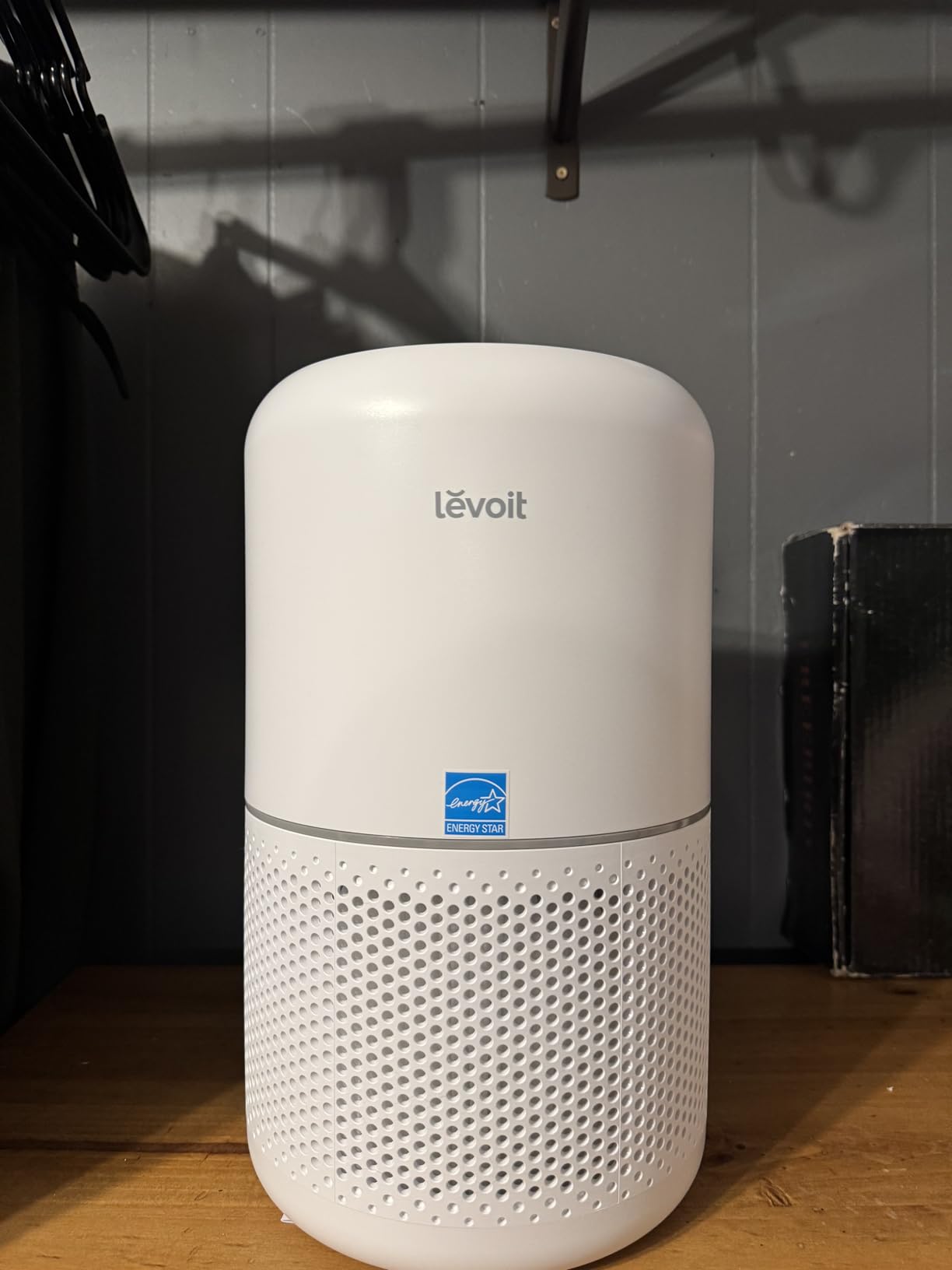
This is the unit I recommend to anyone who asks me a single question and then does not want to think about it again. It holds a 4.7 star average across more than 108k reviews, the highest rating in this group, and it is the only entry here with a full AHAM VERIFIDE breakdown across smoke, dust and pollen rather than a single maximum room size claim.
Those CADR numbers are 143 CFM for smoke, 153 CFM for dust and 167 CFM for pollen. Smoke is the hardest test because it represents the finest suspended particles, so a purifier that pushes 143 CFM of smoke clearance has real headroom. Applied to a 222 square foot room, that works out to 4.8 air changes per hour, and even a 400 square foot living room still gets two and a half changes every hour on high.
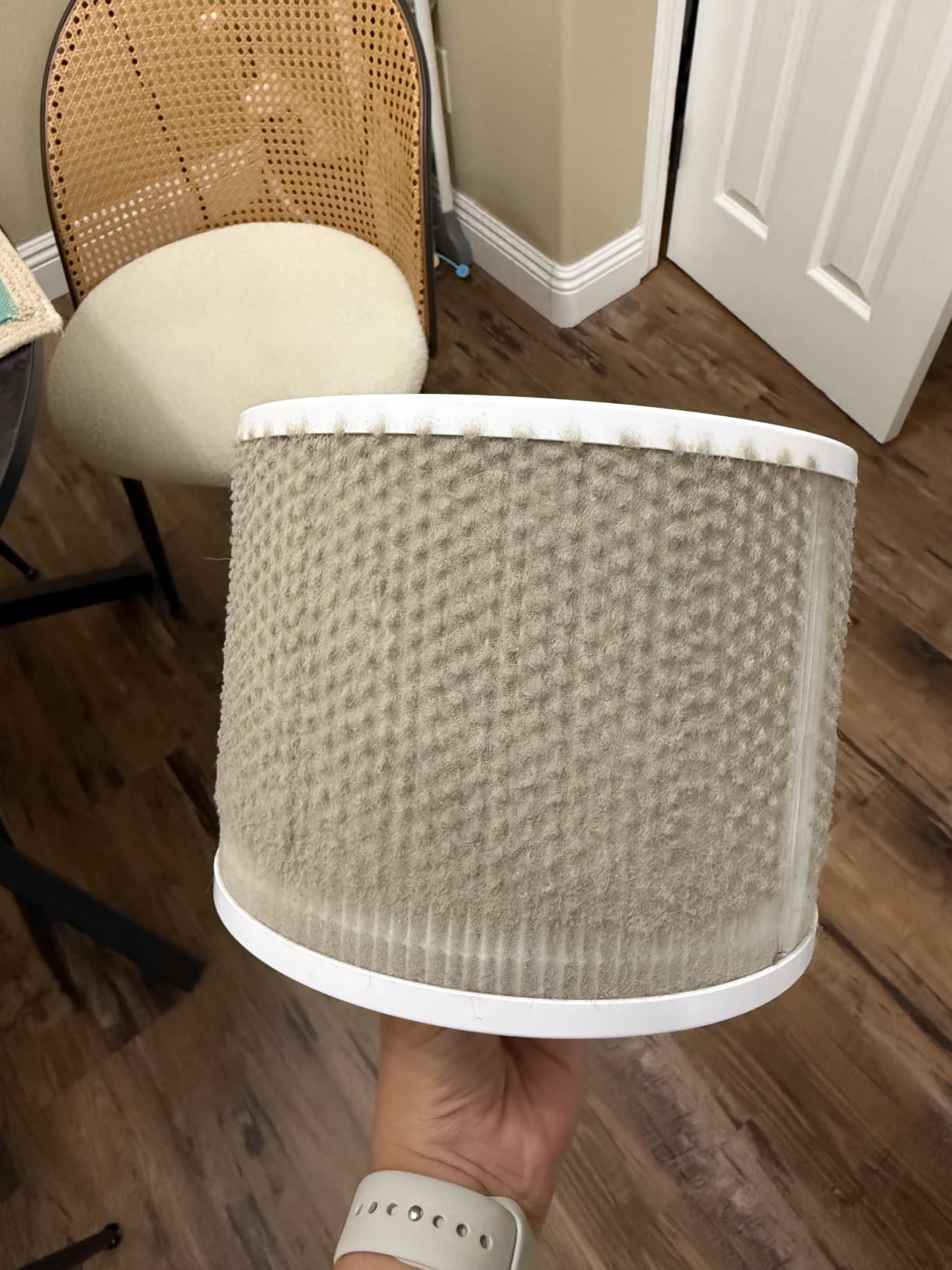
At 24dB in sleep mode using QuietKEAP technology, it is quiet enough to sit beside a bed. The 2, 4, 6 and 8 hour timer and the check-filter indicator cover the two things people want most from a bedroom unit, and the 56 watt motor means you can run it around the clock without a meaningful jump on your electricity bill.
Owners with pets and pollen allergies describe it as the reference budget purifier, and the review pattern backs that up: 82 percent of reviews are five star and only 3 percent are three star or worse. The criticisms are narrow. Some earlier variants cannot dim the display all the way off, and the display on later runs is better behaved. Using off-brand replacement cartridges is the other recurring warning, because a thinner filter media stack changes the pressure drop and therefore the actual output.
The unit is 8.7 inches square and 14.2 inches tall, so it still has a small footprint but a much stronger motor than the Core 200S. It is the choice if you want one purifier to cover a bedroom today and a living room tomorrow without buying again.
Who the Core 300-P suits best
It suits most people reading this. If you want a single purchase that covers a bedroom properly and can stretch to a medium living room, the verified CADR and the 4.8 air changes per hour at 222 square feet make it the safest bet in the budget tier. It also suits anyone sensitive to noise, since 24dB is the lowest published sleep-mode figure among the taller towers here.
Allergy households get the most from it, because pollen is its strongest certified number at 167 CFM. Our air purifier guide for allergies looks at why pollen and dust figures matter more than brand names at this tier.
Who should skip it
Skip it if you need serious VOC or gas removal. The carbon stage here handles light cooking smells and musty odors, but it is nowhere near the media mass required for formaldehyde, paint fumes or gas stove emissions. Open a window for those instead.
Also skip it if you are outside the US, since it is a 120V unit rated for US mains power only. And if you have unusually sensitive hearing, read reviews on the motor tone first, because a 56 watt high-torque motor carries more low-frequency hum than the small Core 200S.
3. GermGuardian AC4825E – The Best Pick for Allergy and Asthma Households
GermGuardian HEPA Air Purifier – Large Room Air Purifier for Bedroom, Office, Dorm, and Home – Filters Pet Dander, Dust, Pollen, Smoke, Scents – AC4825E – 22″ Tower – Gray
HEPA PURE 99.97% at 0.1 microns
153 sq ft bedroom every 12.5 min
Optional UV-C lamp
Pros
- Covers 153 sq ft bedroom every 12.5 minutes
- Fine 0.1 micron filtration for allergens
- Zero Ozone Verified certification
- UV-C lamp adds a second stage
- Tall narrow tower footprint
Cons
- Higher fan speeds audible in a bedroom
- Bright blue UV indicator light at night
- New plastic odor for the first day or two
- Thin pre-filter tears if vacuumed
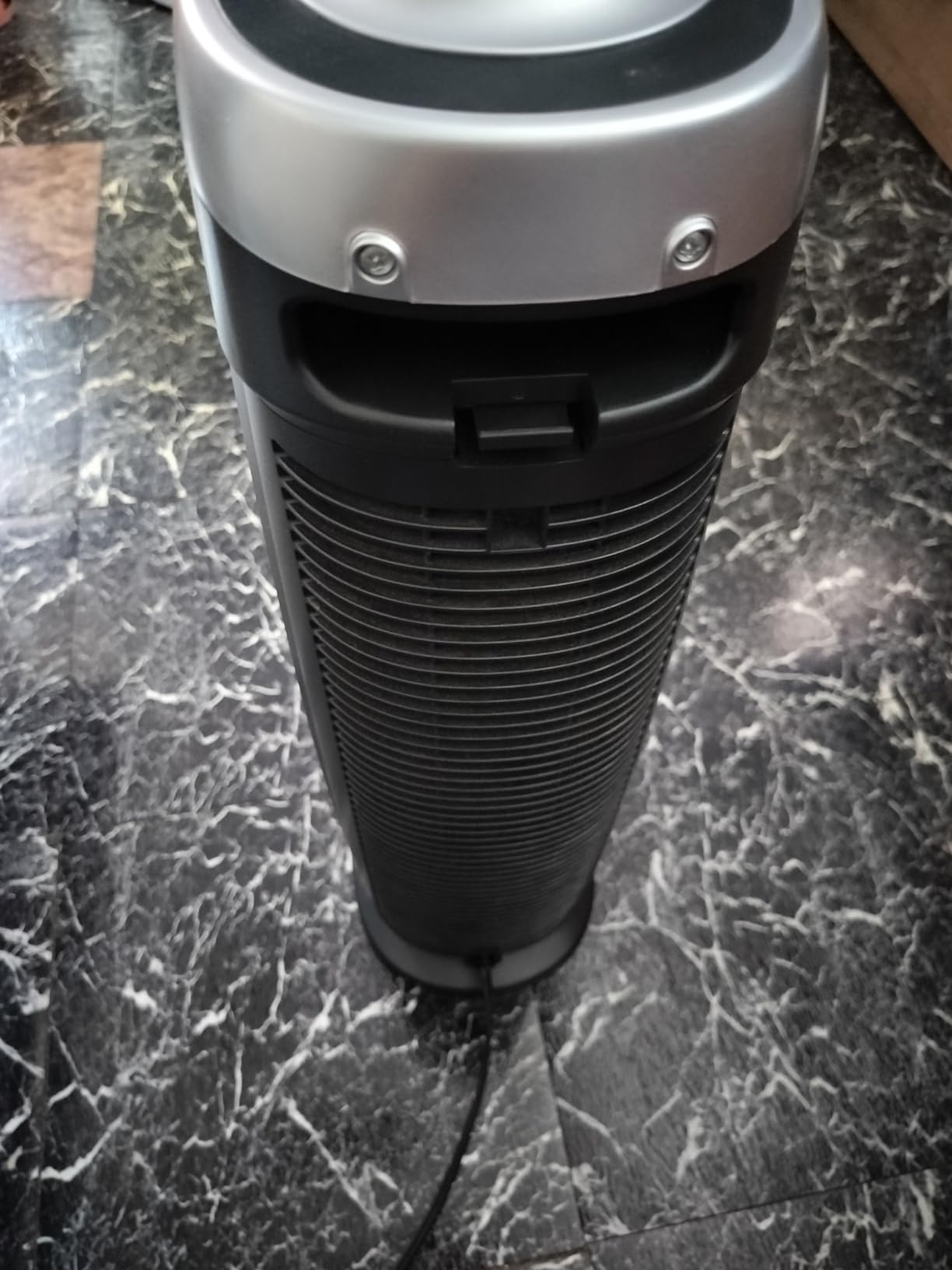
This tower has been sold since 2011, and that matters in a category where listings appear and disappear constantly. A large share of its 62k reviews come from owners who have run the same unit for years and written a second or third update. Long-run owner reports are the closest thing to long-run reliability data available without a lab, and this model has a lot of them.
The HEPA PURE filter captures 99.97 percent of allergens as small as 0.1 microns, which is the same threshold as the Levoit towers and coarser than the Winix. The 153 square foot bedroom figure in 12.5 minutes is the honest number to hold onto, because it describes a real cleaning cycle rather than a maximum. The 743 square feet per hour figure is a single-change number.
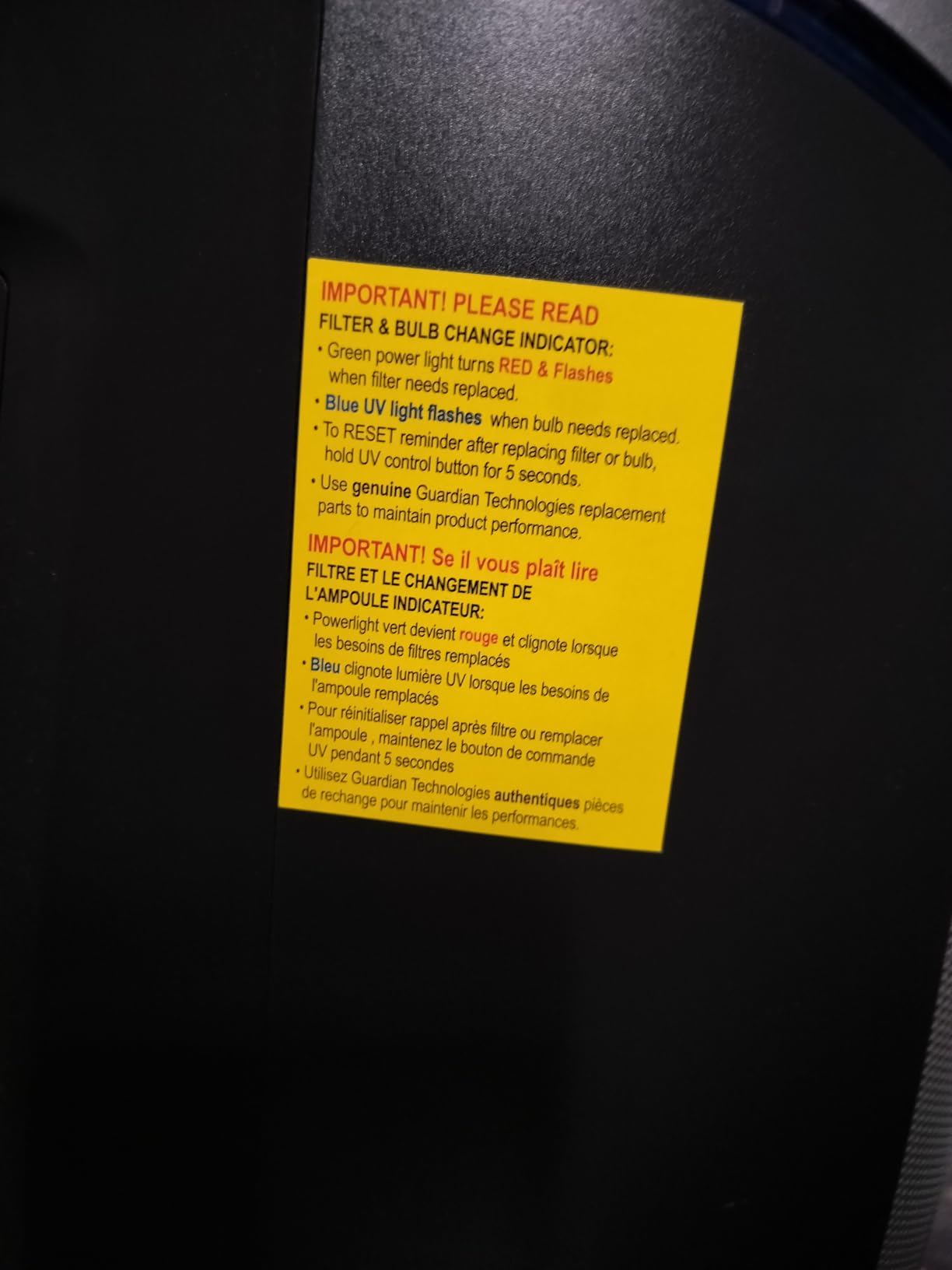
It also has an activated carbon layer for cooking and pet scents, and an optional UV-C lamp that adds an extra stage against airborne particles. The UV-C lamp is a modest bonus rather than a headline feature, and you would be buying this for the HEPA stage regardless. What matters more is the Zero Ozone Verified and CARB Certified combination, which tells you the unit does not add ozone to the room while cleaning it.
Owners with asthma and seasonal allergies report measurable easing of symptoms once the unit runs continuously, and the review distribution of 79 percent five star supports that. The physical design works well in tight rooms too: at 22 inches tall and 6.75 inches wide it is a narrow column rather than a bulky box.
The blue UV indicator light is the most common complaint and it is an easy fix, because the lamp can simply be turned off. The fan on medium and high is genuinely audible in a bedroom, so plan to run it low overnight and higher when you are awake. The thin pre-filter should be rinsed under a tap rather than vacuumed, since suction tears the mesh.
Who the AC4825E suits best
It suits households where someone has diagnosed asthma or a pollen allergy and the purifier will run day and night in a bedroom or small living room. It also suits anyone who wants proof of longevity, because the 2011 release date and years of follow-up owner reviews are a stronger durability signal than any specification.
For a nursery or a room where ozone concerns apply, the Zero Ozone Verified certification and the ability to disable the UV lamp make it a straightforward choice. Its 8.55 pound weight is light enough to move between rooms without effort.
Who should skip it
Skip it for a light sleeper who wants high airflow overnight, because only the lowest of three speeds is bedroom quiet. Skip it if you are after the largest coverage per dollar, since the older fan and filter design are not the most efficient use of money in this group. And skip it if pet hair is your main problem, because the thin pre-filter is more fragile than the heavier pre-filters on the MOOKA and DBFIT units.
4. Winix 5510 – The Best Pick for Large Rooms in the Budget Tier
WINIX 5510 Air Purifier (New Generation of 5500-2 with App Support) for Home Large Room Up to 1881 Ft² in 1 Hr, True HEPA, High Deodorization Carbon Filter and Auto Mode, Captures Pet Allergies, Smoke
AHAM Verifide 392 sq ft CADR
Up to 1881 sq ft per hour
True HEPA to 0.01 microns
23.5dB on low
Pros
- Largest verified coverage in the group
- Carbon filter handles cooking odors
- Auto mode with real time sensors
- Washable mesh pre-filter
- Quiet 23.5dB low speed
Cons
- Companion app can be laggy or unresponsive
- Turbo and high modes are noticeably loud
- 13.3 lb unit is heavy to move between rooms
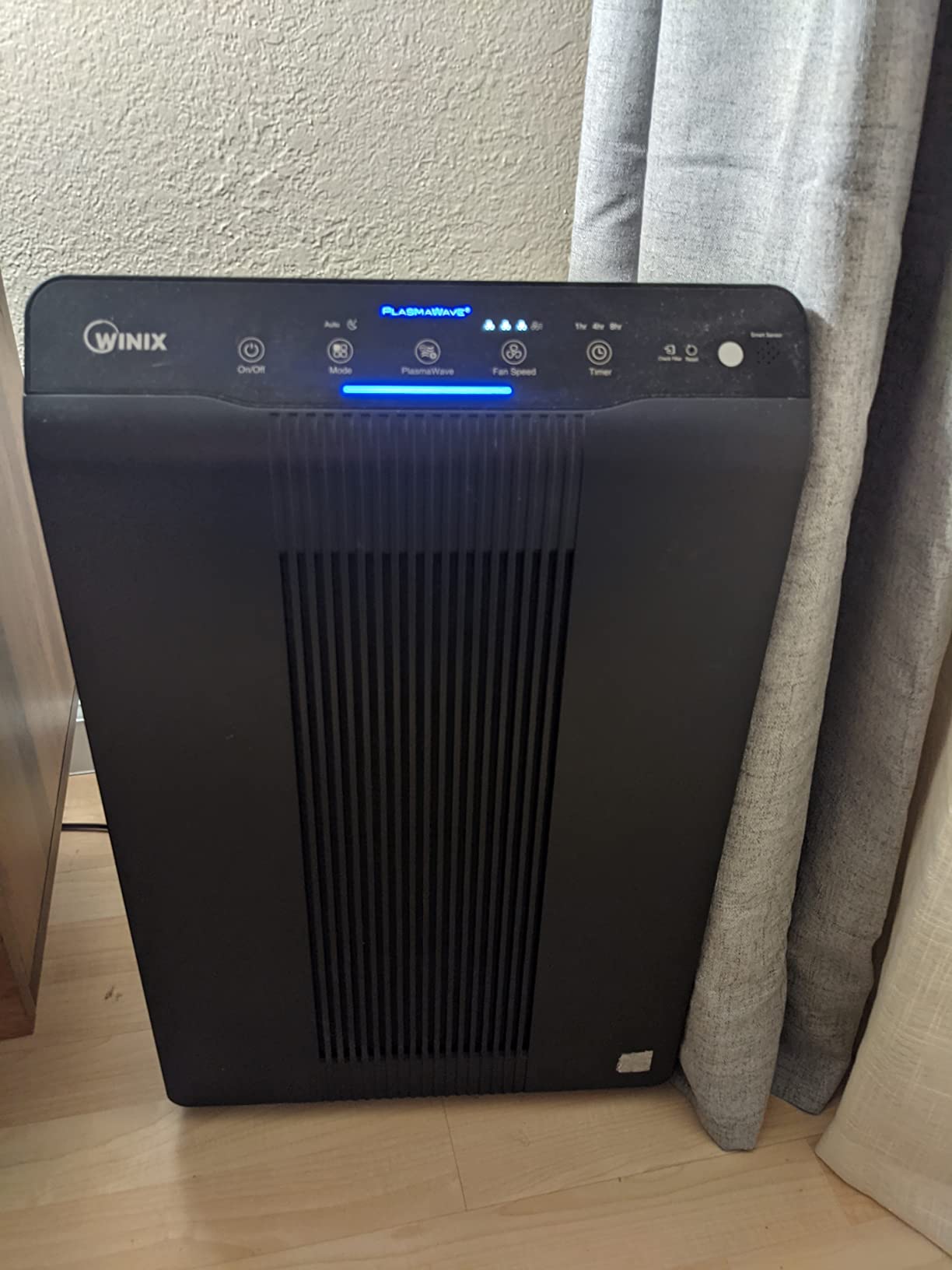
If your room is bigger than 400 square feet this is the one to look at first, and it is the reason we can publish a large-room pick inside a 200 dollar budget. The AHAM Verifide rating of 392 square feet CADR is the largest verified figure in this group, and the 1881 square feet in one hour claim is roughly four times that ceiling on a single air change.
The filtration claim is unusually specific for a budget unit: 99.99 percent of airborne allergens down to 0.01 microns. That is a finer threshold than the 0.1 and 0.3 micron figures most competitors quote, which matters if you are chasing fine smoke particles or ultrafine debris. The advanced odor control carbon filter is also heavier than the pellet-style carbon used by several cheaper units here, and owners report a real difference on cooking smells.
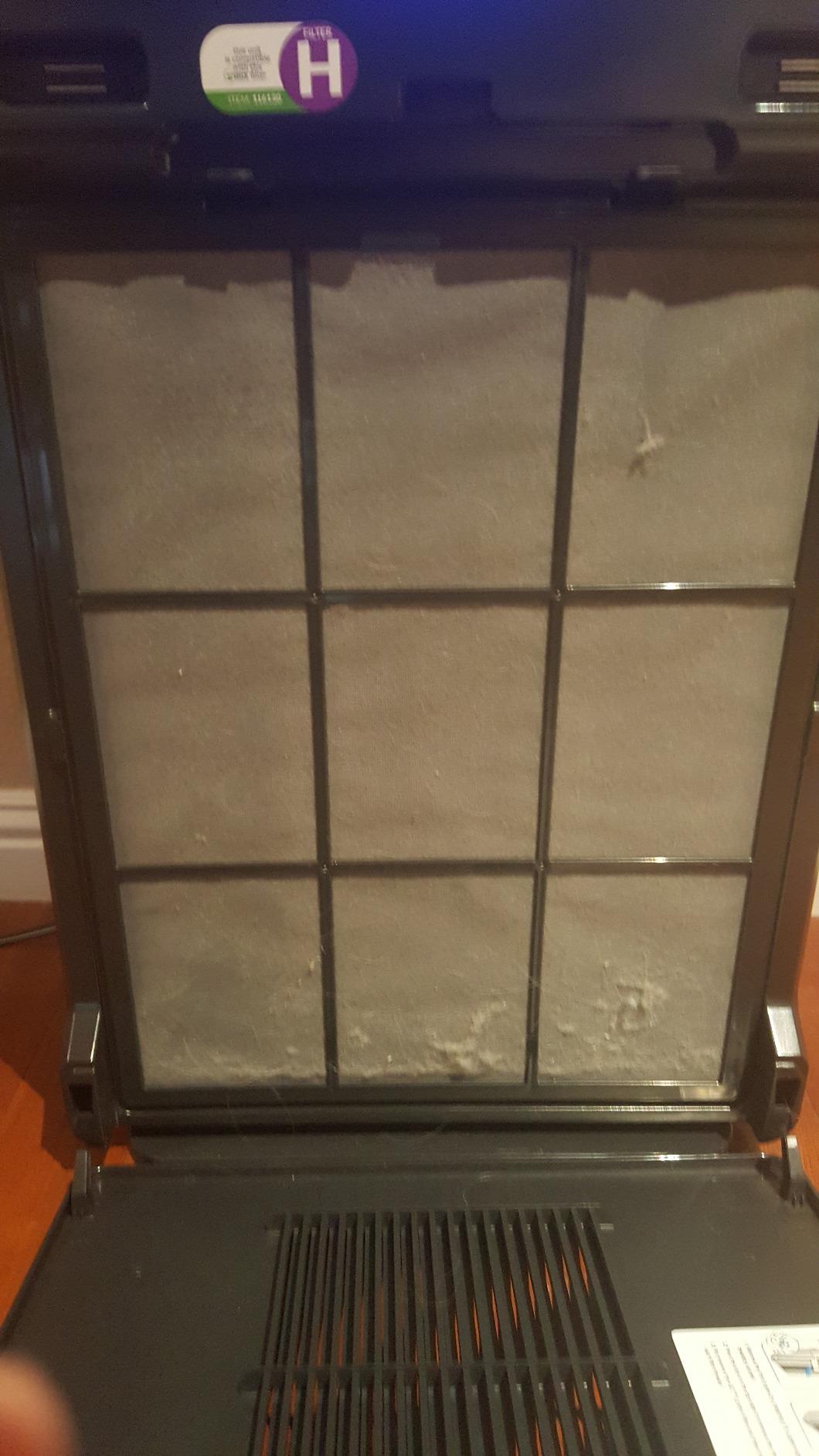
Auto mode is where the value shows up over time. Smart sensors drive the fan speed in real time, and the light-activated automated sleep mode drops to quiet running once the room goes dark. Our pick for the best air purifiers for large rooms covers what a bigger budget adds, but the honest headline is that 392 square feet of verified CADR is hard to beat at this level.
The Winix Smart App handles remote control and monitoring. Owners report that it works but can be slow to respond, and that is a software issue rather than a hardware one. The air quality indicator uses LED lights rather than a numeric readout, so it tells you the trend without telling you the number.
Two practical notes. At 13.3 pounds and 25.2 inches tall it is a genuinely large object, and moving it between rooms is a two-person job. And the turbo and high modes are loud enough that this is a living room unit, not a bedroom unit, despite the quiet low speed.
More than one owner reports running this machine for five or more years without failure, which is a strong durability signal for a purifier whose first listing date is late 2024. The washable fine mesh pre-filter is the piece that keeps ongoing costs down.
Who the Winix 5510 suits best
It suits open-plan apartments, lofts, finished basements and main living rooms in the 400 to 600 square foot range, especially if cooking smells are a recurring problem. The carbon filter and the sensor-driven auto mode work together well, because the sensor ramps the fan before smoke settles into the room rather than after.
It also suits anyone who wants a purifier that manages itself. You set the air quality target once and the unit decides the rest, including dropping to sleep mode when the lights go off.
Who should skip it
Skip it for a bedroom, where the high modes are too loud and the deep tower is awkward beside a bed. Skip it if you want a numeric air quality readout rather than coloured lights, and skip it if moving the unit around matters, because the weight is a real limitation in a rental with two rooms to serve.
5. Coway Mighty AP-1512HH – The Best Four-Stage Pick with a Three Year Warranty
COWAY Air Purifier for Home Up to 1,748ft², HEPA Filter for Smoke, Allergies, Pet Dander, Odor, Air Quality Monitor, Auto&Eco Mode, Timer, Filter Indicator, 3yr Warranty, Mighty AP-1512HH(W), White
Four stage filtration with HEPA
Up to 1748 sq ft in 60 minutes
Auto and Eco modes
3 year warranty
Pros
- Four stage filtration including HEPA
- Large 1748 sq ft coverage
- Auto and Eco modes for hands off running
- Filter and pre-filter cleaning alerts
- Three year warranty
Cons
- Bipolar ionization stage is not for everyone
- LED indicator can only be switched off not dimmed
- Larger and heavier than the compact towers
The Mighty is the one in this list where the build quality and the warranty length are visibly a tier above the rest. It has been on sale since 2015, it carries a three year warranty where most competitors offer two, and its four-stage stack is the most complete filtration chain you can get at this budget.
Those stages are a washable pre-filter, a deodorization filter, a bipolar device and a HEPA filter. The HEPA stage reduces 99.97 percent of 0.3 micron particles including pollen and allergens, and the deodorization stage handles odors and volatile organic compounds better than the single carbon layers on most rivals. The bipolar device is the element to think carefully about, and more on that below.
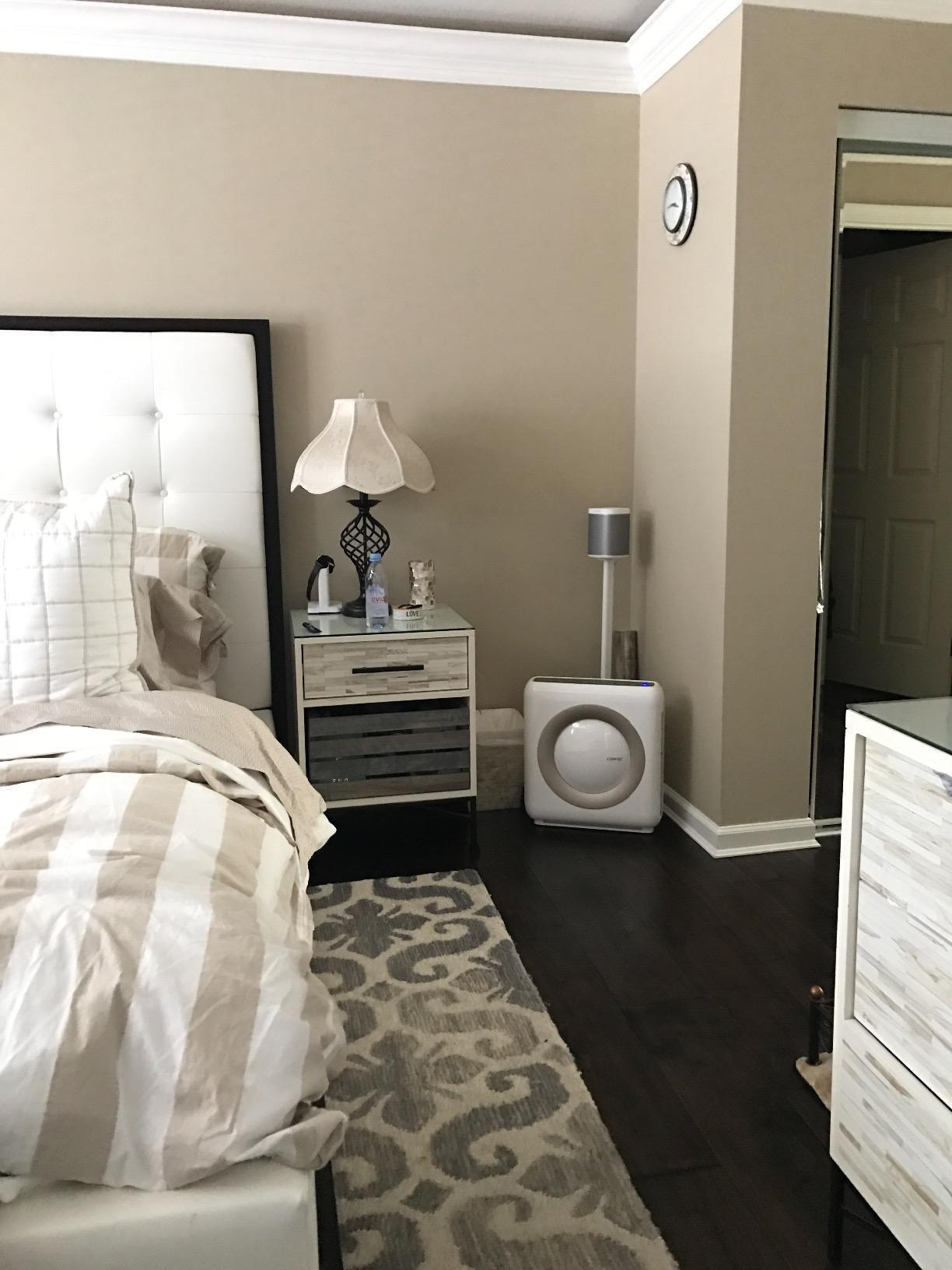
Auto Mode monitors air quality continuously and adjusts the fan, and Eco mode is the behaviour most owners actually want: the unit steps down when the air is already clean rather than running flat out. The air quality indicator uses a coloured LED that can be switched off for sleeping, and the filter indicator alerts for both filter replacement and pre-filter cleaning, which is a small detail that removes a common failure mode.
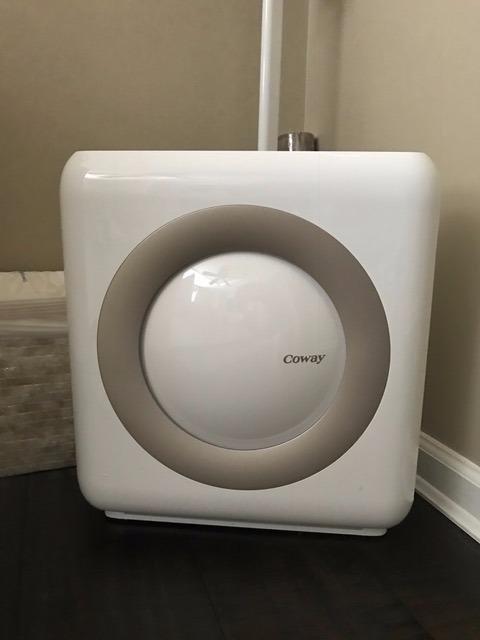
Coverage is rated at 1748 square feet in 60 minutes, and the unit is 9.6 by 16.8 by 18.3 inches at 12.5 pounds. It is a compact tower footprint for the volume it moves, and the 81 percent five star share in reviews reflects how settled the design is.
The reservations are honest ones. The bipolar ionization stage is not ideal for people who are sensitive to ionized air or who prefer to avoid any ionization approach entirely. The LED can be switched off but not dimmed, so it is on or off rather than adjustable.
Who the Mighty suits best
It suits someone who wants a single purifier for a large main living space and values a long warranty over a long specification list. The four-stage chain handles a wider mix of pollutants than the three-stage units at similar money, and the pre-filter cleaning alert makes the washable stage actually get washed.
It also suits buyers who are planning to keep the unit for a decade rather than three years, since the 2015 release date means the design has been in continuous production and improved rather than replaced.
Who should skip it
Skip it if you want to avoid ionization. The bipolar device sits in front of the HEPA filter and is a deliberate part of the design, so this is not the unit for anyone actively seeking an ionizer-free path. Skip it for a small bedroom where the footprint and the size are simply more machine than the job needs, and skip it if you are outside the US, since the model is a US plug unit.
6. MOOKA KJ190H – The Best Pick for Seeing Your Air Quality Change
MOOKA Air Purifier for Home Bedroom Large Room 2200 Ft², HEPA Filter, White
Numeric PM2.5 AQI display with auto mode
Washable 3 stage filtration
20dB sleep mode
Child lock
Pros
- Numeric PM2.5 readout shows real time changes
- Dual side intake aimed at pet hair and odors
- 20dB sleep mode
- Light at 6.7 lb and easy to move
- Washable pre-filter cuts running cost
Cons
- PM2.5 only sensor ignores coarse dust and odors
- Aromatherapy pad does not diffuse well
- Higher fan speeds audible in a quiet room
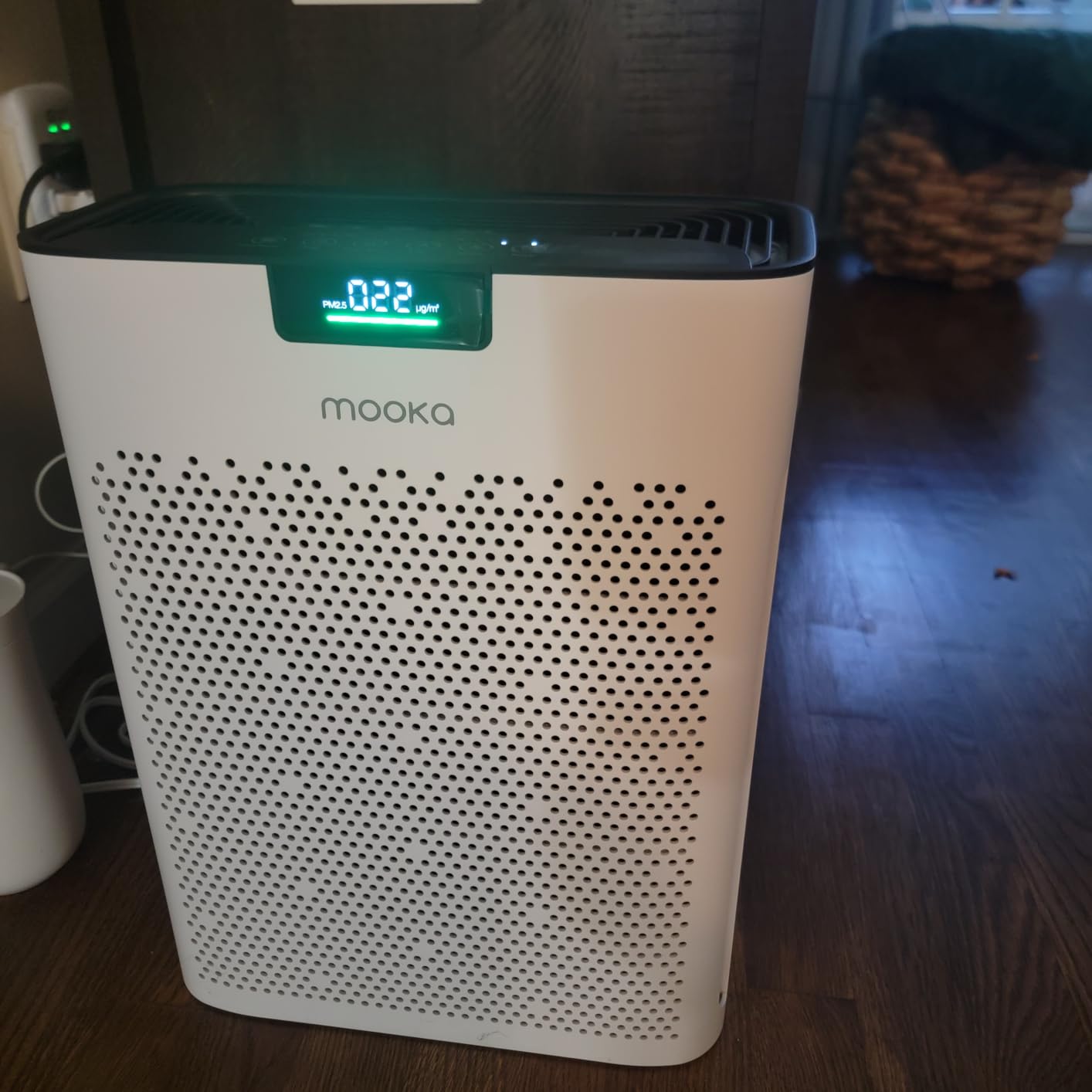
The reason this unit stands out from the crowd of similar-looking cylinders is the numeric PM2.5 display. Most budget purifiers give you three coloured lights and ask you to interpret them. The MOOKA gives you a number, and watching that number fall after you close a window or run the fan is the fastest way to build confidence that the machine is doing something.
The high air intake and dual-side inlet are designed specifically for pet hair and odors, which is the honest reason to buy this over a generic tower. The three-stage stack is a washable pre-filter, activated carbon pellets and a HEPA stage, and the washable pre-filter is where the running-cost saving comes from, because hair and lint get rinsed off rather than absorbed.
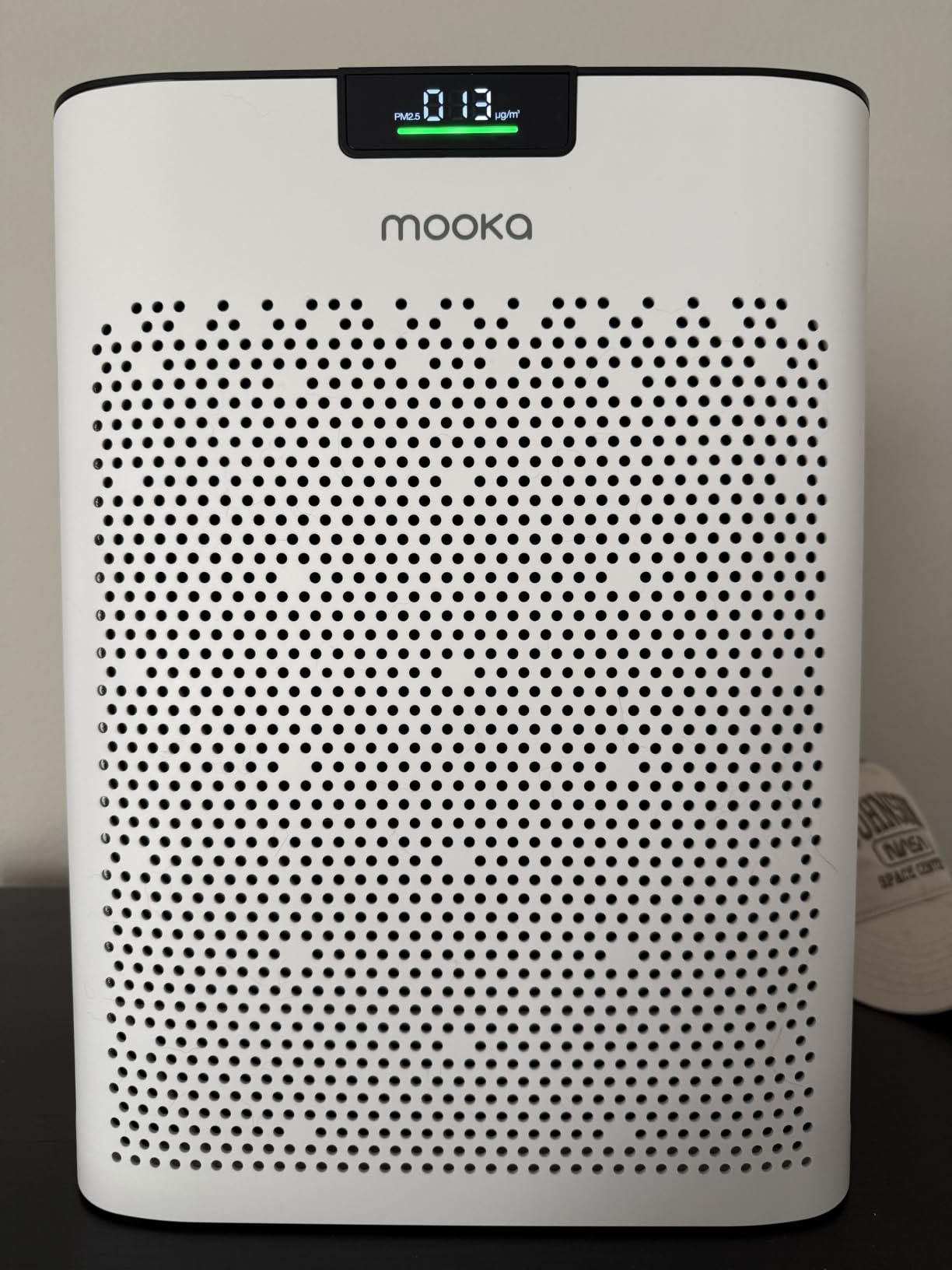
Sleep mode runs as low as 20dB with the lights off, and there is a child lock, which makes it a sensible nursery choice. Energy use is 0.63 kWh over 24 hours at maximum speed, which is one of the more concrete efficiency figures published in this group. The filter reminder fires at 2000 hours of use, so you are not guessing at the change interval.
There is also a filter reminder, a 2, 4, 6 and 8 hour timer and an aromatherapy pad for essential oils. It is CARB, ETL and DOE certified with no ozone release and no UV light, which is worth noting because it means the filtration claim rests on the physical filter rather than on an electrical process.
Two limitations stand out. The sensor reads PM2.5 only, so in auto mode it will not respond to coarse dust or to odors, and the aromatherapy pad does not diffuse scent effectively according to owners. At 4.5 stars from 6251 reviews it sits below the rest of this list, mostly because the aromatherapy feature sets an expectation the machine cannot meet.
Who the MOOKA suits best
It suits pet owners in small to medium rooms who want proof that odor and dander levels are dropping, and anyone who finds coloured-light indicators too vague. A numeric readout also makes it easy to test a room properly: run the unit for an hour with the windows closed and watch the number move.
Nurseries and children rooms are a good fit, because the child lock and the 20dB sleep mode cover the two things that matter there. At 6.7 pounds it is the easiest unit in this list to carry between rooms.
Who should skip it
Skip it if coarse dust or sawdust is your problem, since the PM2.5 sensor will not trigger the fan for it and you will be running auto mode at low speed while dust is still in the air. Skip it if you want the quietest possible sleep-mode number, because the DBFIT AP300 publishes a lower figure. And skip it if essential oil diffusion is a requirement.
7. DBFIT AP300 – The Best Pick If You Want a Washable Pre-Filter and Two HEPA Stages
Air Purifiers for Home Large Room up to 3000sq.ft, DBFIT HEPA Double-Sided Air Purifier with Washable Filter, PM 2.5 Display Air Quality Sensor, Air Cleaner for Bedroom, Dorm Room, Pets, Office, AP300
Two H13 HEPA filters 99.97%
Double intake to 3000 sq ft
15dB sleep mode
Washable pre-filter
Pros
- Two H13 HEPA cartridges as standard
- Washable and vacuumable pre-filter
- 15dB sleep mode with lights off
- PM2.5 display and auto mode
- Child lock and six fan modes
Cons
- Smallest review base in the roundup
- Higher fan speeds louder than the low settings
- HEPA cartridges still need periodic replacement
This is the newest listing in the group, first available in late 2025, and it is also the one with the fewest reviews. That combination is worth being explicit about: the specification sheet is more generous than anything else at this price point, but the long-term reliability record simply does not exist yet, and you should weigh that honestly against the decade of owner reports on the older towers.
What you get is unusual for the money. Two H13 HEPA filters rated at 99.97 percent of 0.3 micron particles, a dual-layer activated carbon stage, and a double-sided air intake that draws from both faces. Coverage is claimed at up to 3000 square feet, and it refreshes a 533 square foot room in 10 minutes.
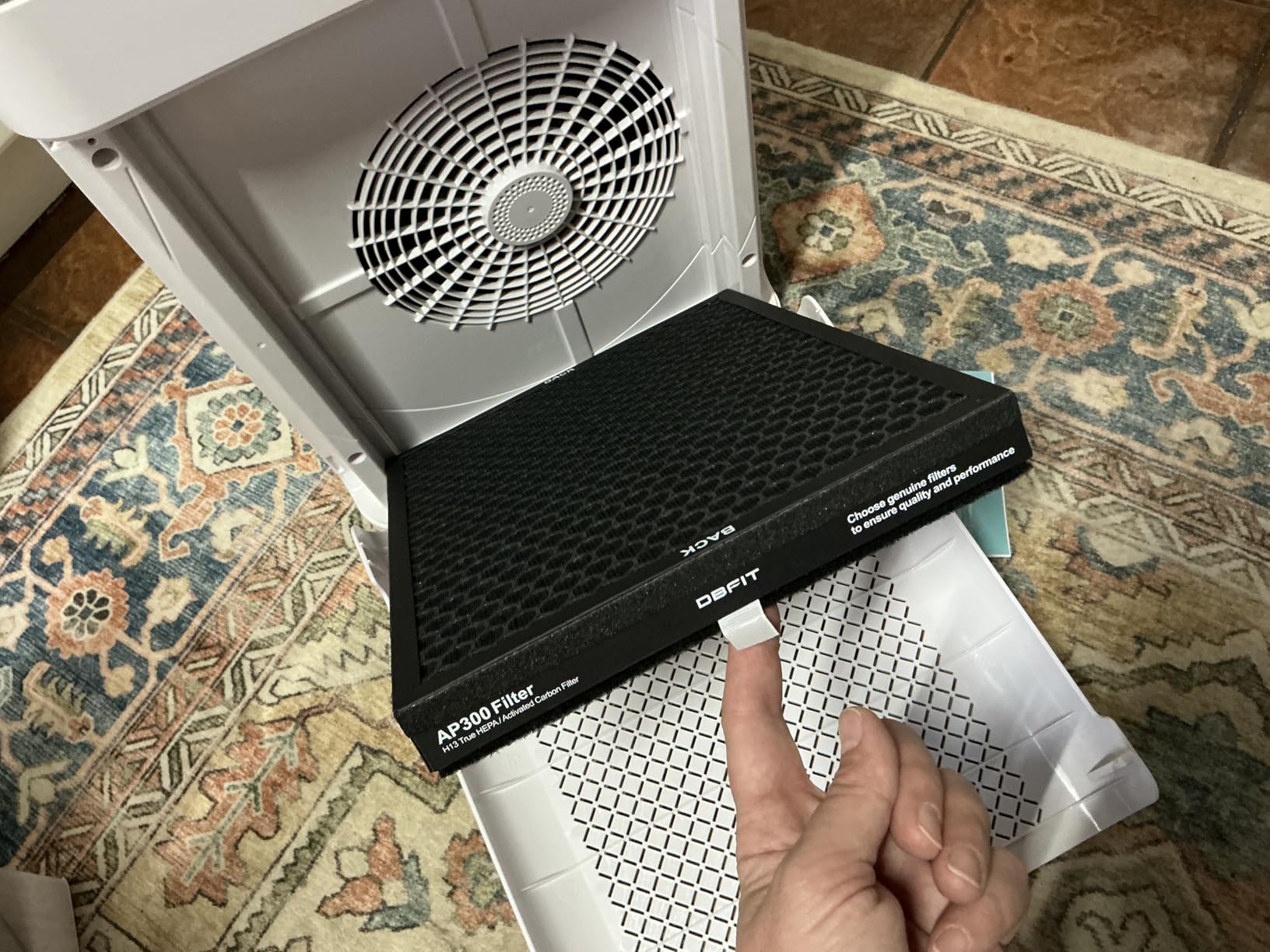
The washable and vacuumable pre-filter is the feature that changes the cost of ownership most. In a home with pets, most of what a filter catches is hair and lint in that first stage, and a pre-filter you can rinse and reuse is a genuine recurring saving rather than a marketing line.
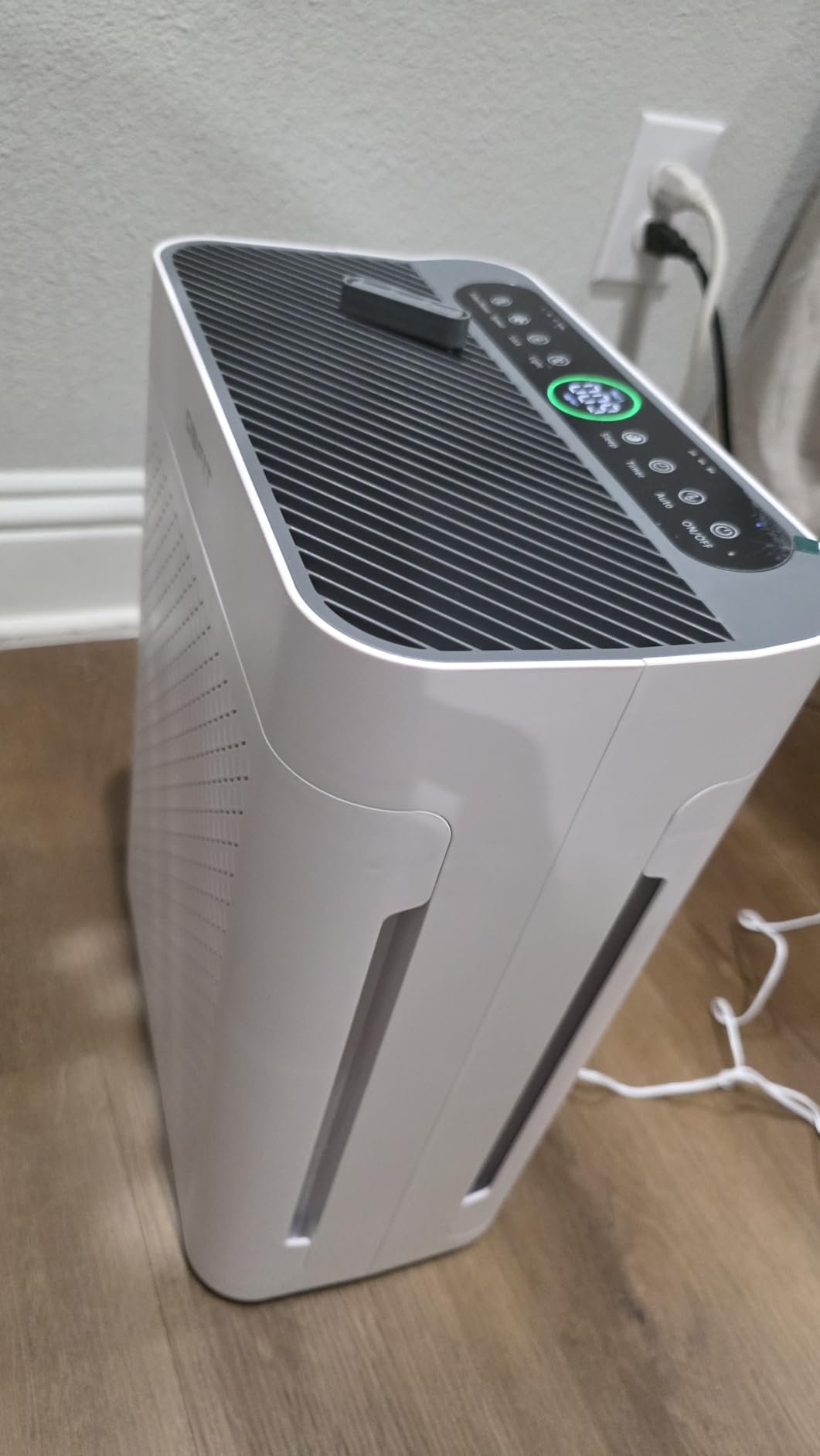
There is a PM2.5 sensor with an on-unit display, auto mode, six fan modes including sleep, auto, low, medium, high and turbo, a 2, 4 and 8 hour timer, a child lock and an aromatherapy pad. The brushless motor runs a 15dB sleep mode, the lowest published figure in this roundup, and energy use is 0.6 kWh over 24 hours at maximum speed.
The 517 reviews and a 4.6 average are encouraging, and 80 percent of them are five star, but a base that small moves around more than a base of 100k. The first year of ownership data on this listing will tell you much more than the current count.
Who the DBFIT AP300 suits best
It suits anyone in a home with pets or a lot of coarse dust who wants the running costs kept as low as possible. The washable pre-filter plus two HEPA cartridges gives you more filtration stages per dollar than anything else here, and the 15dB sleep mode makes it viable in a small bedroom.
It also suits buyers who move apartments often, because 7.27 pounds and a narrow 6.69 by 11.8 by 16.14 inch body are easy to handle and easy to place in a corner.
Who should skip it
Skip it if buying proven longevity matters more than specification value. A 517 review base cannot tell you what happens to the brushless motor or the carbon layer after three years, and a failure then means a unit with no established support history. Skip it if you need a digit-by-digit air quality readout, since the display here is a PM2.5 indicator rather than the numeric AQI the KNKA offers.
8. Blueair Blue Pure 511 – The Best Pick for Design and Low Energy Draw
BLUEAIR Air Purifiers for Home Bedroom Dorm Office up to 907 Ft², Blue 511
HEPASilent 99.97% filtration
432 sq ft in 30 minutes
24dB on low
Energy Star Most Efficient
Pros
- Quiet 24dB low speed operation
- Energy Star Most Efficient certified
- Interchangeable washable pre-filter colors
- Compact 5.24 lb body
- App control with PM2.5 tracking
Cons
- Capacitive top buttons are confusing and slow to respond
- Front LED can stay on in night mode
- Must sit near a power outlet
- PM2.5 sensor ignores coarse dust
The Blue Pure 511 is the one people keep because they like how it looks. HEPASilent technology combines electrostatic filtration with a mechanical filter to remove at least 99.97 percent of airborne particles down to 0.1 microns, and the cylindrical body is one of the few in this price range that looks deliberate on a shelf rather than utilitarian.
It cleans up to 432 square feet in 30 minutes and 180 square feet in 12.5 minutes, which puts it in the same coverage class as the Levoit Core 300-P. At 4.8 air changes per hour on its top setting, the marketing and the arithmetic agree for once, which is a good sign.
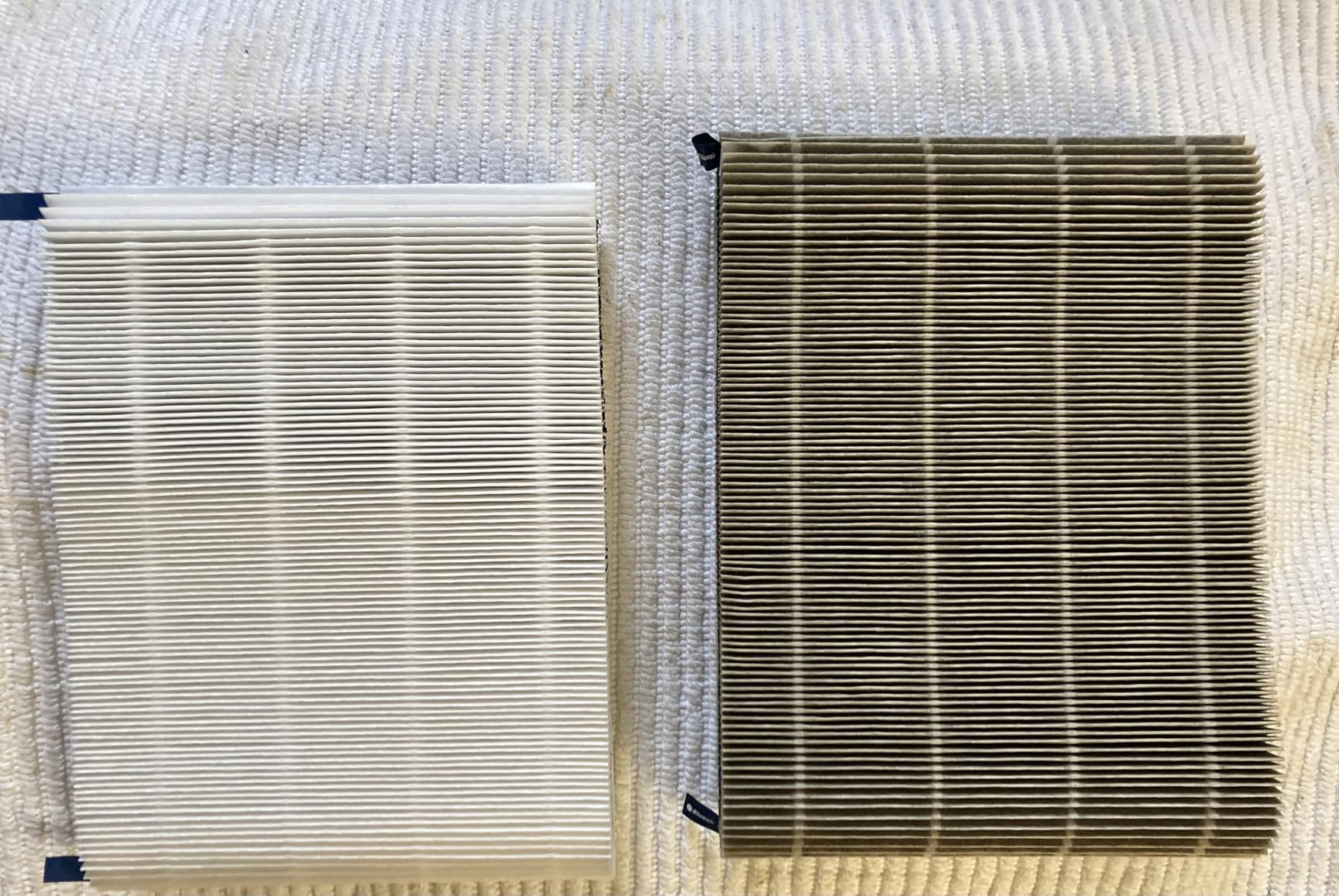
Two things stand out. The 24dB low speed makes it one of the quieter units here, and the Energy Star Most Efficient certification is the top energy tier, with the manufacturer noting it uses less energy than a light bulb. For a machine meant to run continuously, that difference compounds across a year.
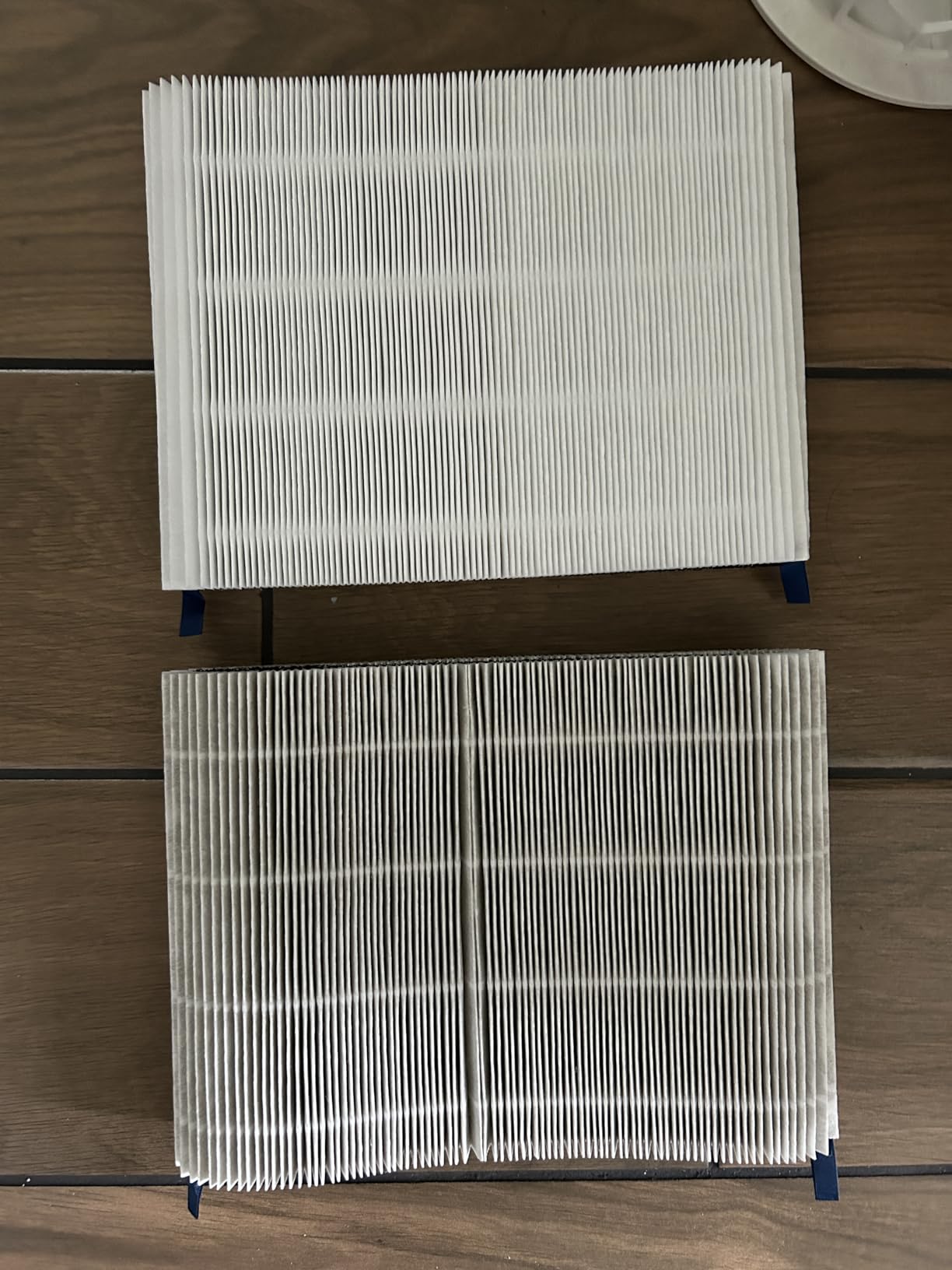
The washable fabric pre-filter comes in three Scandinavian colors, with Arctic Trail dark gray included, and the filter is a widely available part number, which matters more than it sounds because filter availability is one of the most common long-term owner complaints in this category.
The main drawback is the control interface. The capacitive top ring has no clear on and off, responds with a delay and gives no tactile feedback, and the front LED can stay on in night mode unless you correct it through the app. Owners also note that the PM2.5 sensor does not react to coarse dust, so auto mode rarely boosts when you are cleaning.
At 4.4 stars from 5235 reviews it is the lowest rated unit in this group, and the 7 percent one-star share is the highest here, almost entirely about the controls rather than the filtration.
Who the Blueair 511 suits best
It suits people whose living space is visible and considered, where a beige appliance would be an eyesore. The interchangeable pre-filter colors are a small touch but they are the reason a lot of buyers keep this one long term.
It also suits anyone who cares about electricity. Most Efficient Energy Star certification is the rarest energy rating here, and at 5.24 pounds it is the lightest unit in the group.
Who should skip it
Skip it if you dislike app-dependent controls or if you are not going to pair it with a phone. The LED behavior in night mode and the unresponsive tap controls are the two things that generate most of the negative reviews. Skip it if coarse dust from drilling or sanding is a regular event, because the sensor will not ramp the fan for it.
9. Coway Airmega 100 – The Best Pick for the Quietest Bedroom in the Group
COWAY Air Purifiers for Home up to 810 ft², HEPA and Carbon Filter for Smoke, Allergies, Pet Dander, Odor, AQI Monitor, Auto Mode, Timer, Filter Indicator, Night Light, 2yr Warranty, Airmega 100 White
99.97% at 0.3 microns
405 sq ft in 30 min, 810 in 60
All lights off in Sleep Mode
Pros
- Very quiet on the lowest speed
- Inaudible in many bedrooms
- Sleep Mode turns off all indicator lights
- Auto mode ramps with air quality
- Narrow cylinder fits small rooms
Cons
- No mute button for the control press tone
- Some units report high pitched noise and wobble at low RPM
- Covers only up to 810 sq ft
- Includes a US style plug
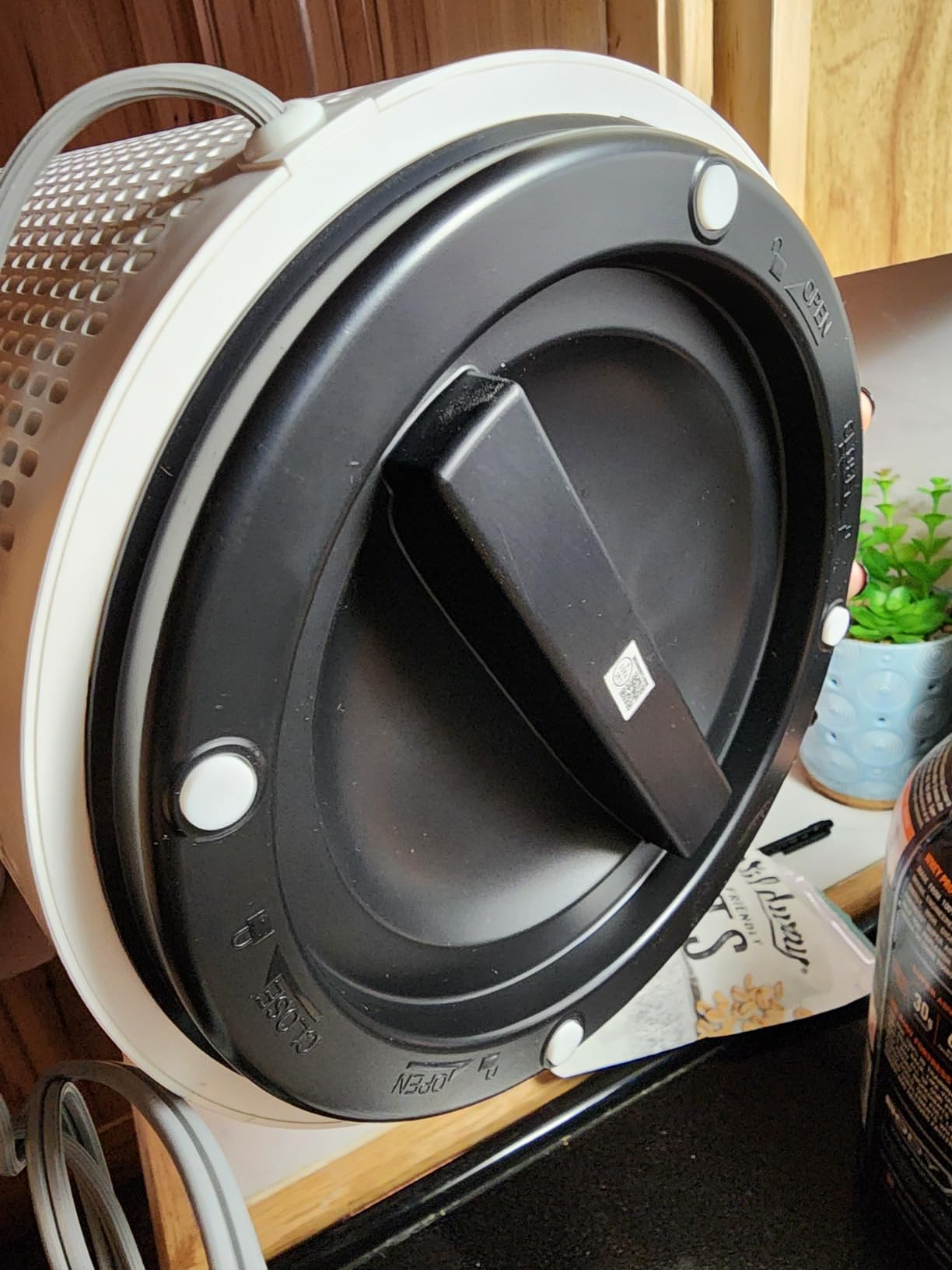
Owners describing this as the quietest purifier they have owned is not marketing copy, it is the single most repeated phrase in the reviews. On the lowest speed the fan is frequently reported as inaudible in a bedroom, and the narrow cylinder at 8.66 inches across and 15.55 inches tall fits beside a bed without taking up floor space.
Filtration is a pre-filter, a deodorization filter and a HEPA filter that reduces 99.97 percent of 0.3 micron particles including pollen and allergens, plus a VOC and odor reduction stage. Coverage is 405 square feet in 30 minutes or 810 square feet in 60, which puts it in the same class as the Core 300-P for real cleaning cycles.
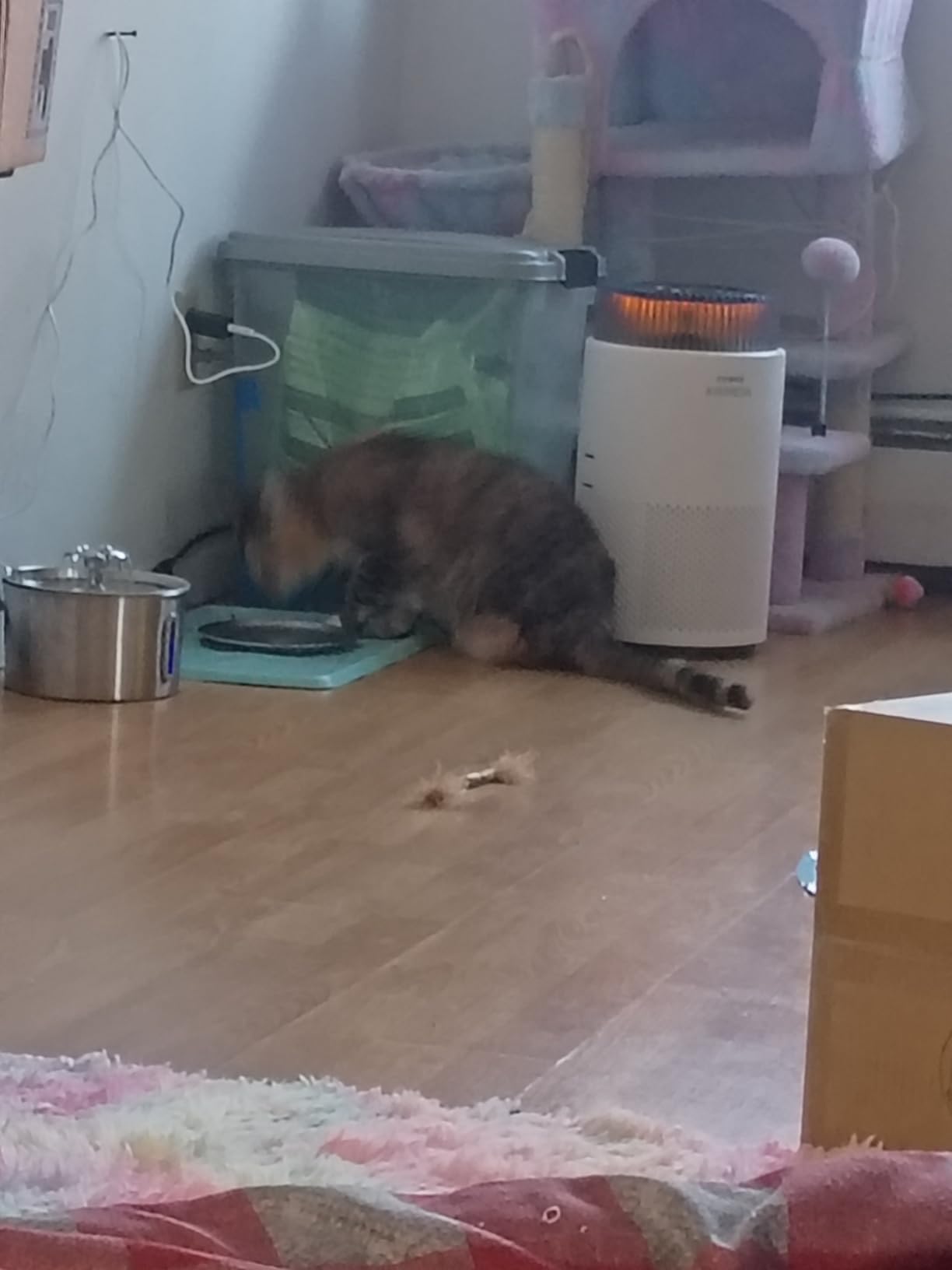
Sleep Mode is the feature that separates it from the pack. It turns off the AQI readout and the touch button lights entirely and runs the fan at the lowest speed, which means no light and no beeping in a dark room. Auto Mode continuously monitors and adjusts, and the coloured AQI indicator can be switched off.
The one complaint that comes up again and again is the absence of a mute button. The control tone on press is loud enough to startle a noise-sensitive pet or a sleeping child, and that single design decision accounts for a large share of the 7 percent one-star reviews.
Some owners also report a high-pitched fan noise and a visible wobble at low RPM, which is a manufacturing consistency issue rather than a design flaw.
Who the Airmega 100 suits best
It suits light sleepers, nurseries and anyone running a purifier in a bedroom where a single LED or button tone ruins the night. Sleep Mode is genuinely usable as an overnight setting, which is not true of every unit that claims a sleep mode.
It also suits smaller homes and renters who want one machine for a bedroom and a study, because the 810 square feet ceiling covers a combined space on high and a single room properly on low.
Who should skip it
Skip it if you have a light-sleeping animal or infant and cannot live with a control tone with no mute option, because you will be pressing buttons to change modes. Skip it if you need coverage above 810 square feet, and skip it if you are outside the US, since it comes with a US style plug.
10. KNKA APH4000 – The Best Pick for a Verified CADR and a Numeric AQI Display
KNKA Air Purifiers for Home Bedroom Up to 1,695 Ft² in 1 Hr, APH4000, White
AHAM Verified 226 CFM smoke CADR
244 CFM pollen CADR
4.8 ACH to 350 sq ft
22 to 24dB sleep
Pros
- AHAM Verified CADR published for smoke dust and pollen
- Real time numeric AQI with colour coded bar
- Works with no app and no WiFi
- 22 to 24dB sleep mode
- Affordable widely available filters
Cons
- Two filter cartridges needed per change cycle
- Higher speeds audible when air quality is poor
- Newer brand with a shorter track record
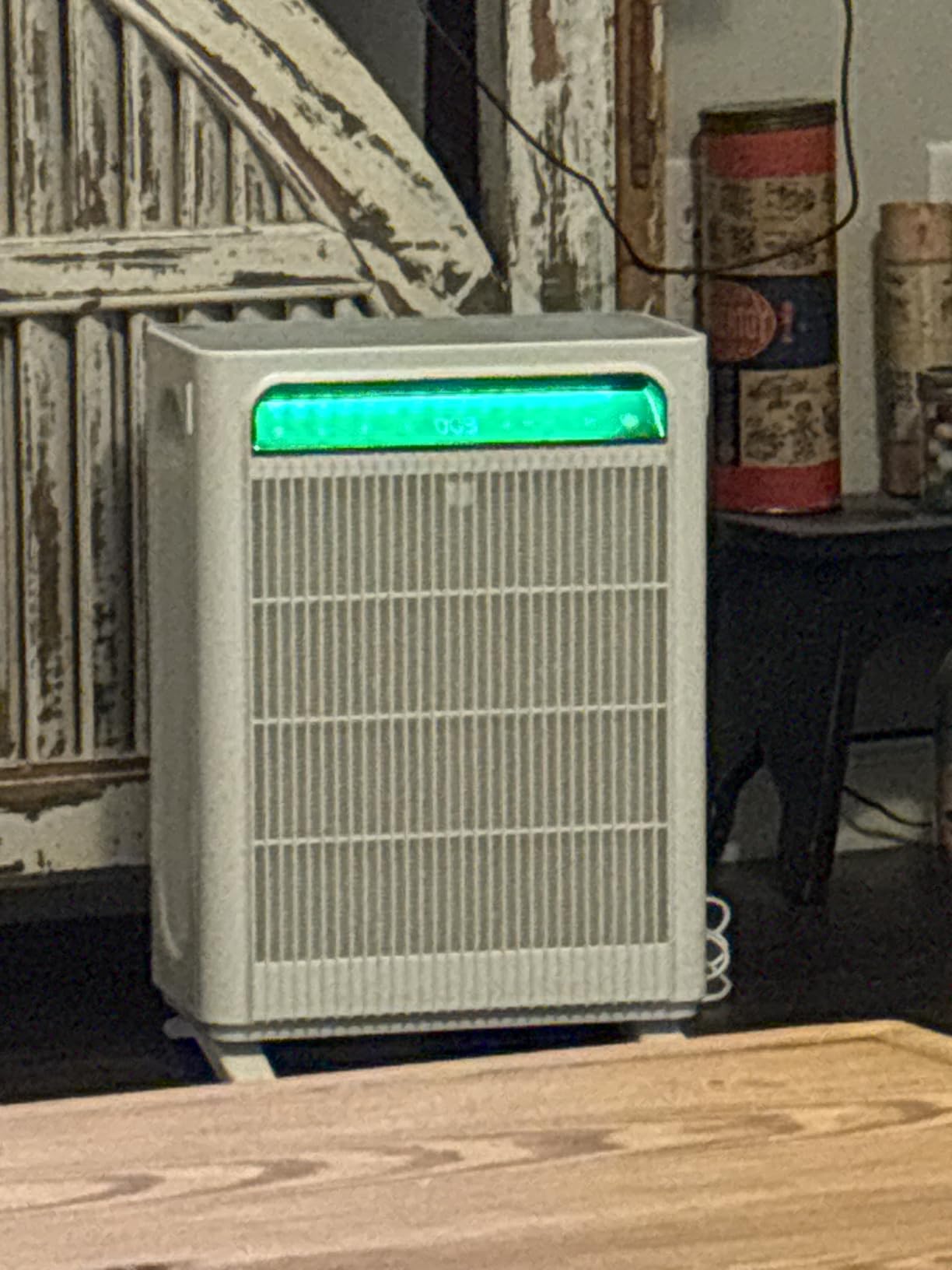
The KNKA is unusual because it publishes an AHAM Verified CADR across smoke, dust and PM2.5 at 226 CFM, with 244 CFM for pollen, and it is the only unit in this group that pairs that number with a real-time numeric AQI readout. 226 CFM in a 350 square foot room works out to 4.8 air changes per hour, so the coverage claim and the verified number agree.
The design is dual front-and-back intakes with dual side outlets, which owners say lets it outperform physically larger units. That is credible given the CADR, because the intake area is what determines how much air the fan can pull through the filter at a given speed. The dual filter cartridges each contain a washable pre-filter, a high-efficiency filter and activated carbon.
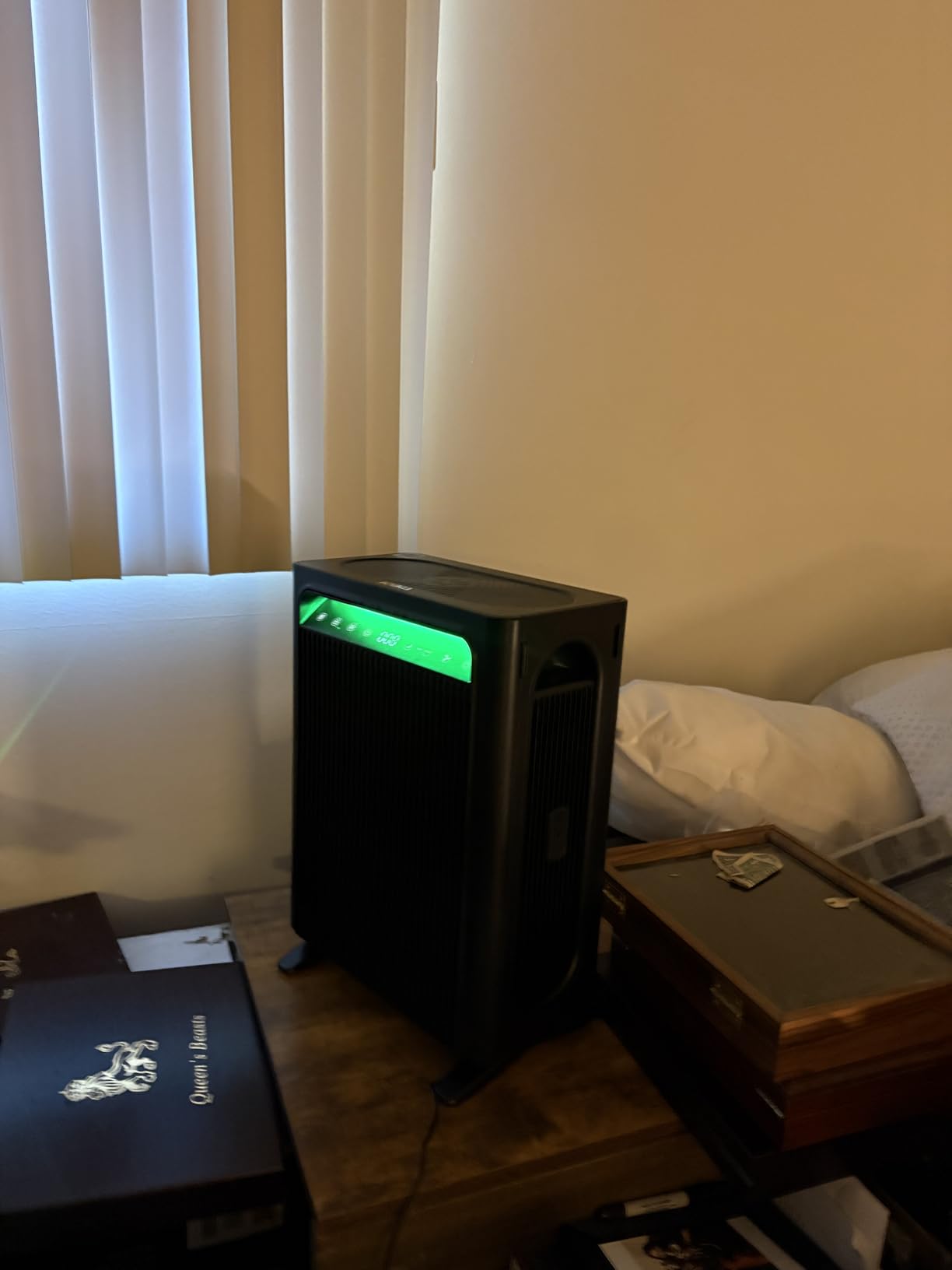
Two modes are worth knowing. PET mode refreshes the air in 30 minutes, and ECO mode drops the unit into standby when air quality is excellent, which is the behaviour that makes it cheap to leave running indefinitely. Sleep mode is 22 to 24dB, and there are four fan speeds in total.
The real-time AQI display with a colour coded bar responds instantly, and unlike most app-dependent units this one works with no app and no WiFi connection at all. Owners consistently mention that as a reason they bought it, and it is a genuine advantage in a bedroom or a rental where you do not want another device on the network.
Filter replacement is every 3 to 6 months, and two cartridges are needed per change. Some buyers see that as a cost, others point out that both are easy to access and clean. The brand is newer than the Levoit, GermGuardian and Coway names here, so the longevity record is thinner at 2648 reviews despite an 83 percent five star share.
Who the KNKA APH4000 suits best
It suits anyone who wants a published CADR they can verify and a numeric air quality reading without giving the company their app permissions. The 350 square foot room at 4.8 air changes per hour is the cleanest coverage-to-verified-output match in this group.
It also suits pet owners, since PET mode is a dedicated 30 minute refresh and the washable pre-filter on both cartridges handles hair. The 22 to 24dB sleep mode makes it usable in a bedroom, and the AQI readout gives you a way to confirm it is working.
Who should skip it
Skip it if you want an established brand with a decade of service history, because the APH4000 is a 2025 design and its long-run record is still being written. Skip it if you want a single filter swap rather than two cartridges, and skip it if you plan to run it on high in a quiet room, since the higher speeds are audible.
How to Choose an Air Purifier on a Budget
Most budget buying mistakes come down to two numbers: CADR and room size. Get those right and the rest is preference. The sections below cover the calculations we use, the terminology that gets abused in this category, and the running costs that decide whether a cheap unit is actually cheap.
What CADR actually means for air purifiers
CADR stands for clean air delivery rate. It is the volume of clean air a purifier delivers in cubic feet per minute, measured against three particle sizes: dust, pollen and smoke. Smoke is the finest and hardest test, so treat it as the figure that describes real-world performance on the particles you care about. The Association of Home Appliance Manufacturers verifies these numbers through its Verifide program, and an AHAM Verifide figure is worth more than any marketing coverage claim.
Only two units in this list publish a full AHAM Verified breakdown: the Levoit Core 300-P and the KNKA APH4000. The Winix 5510 publishes a verified 392 square foot CADR. Where a brand publishes only a room size, treat that room size as a single air change per hour unless they say otherwise.
Match CADR to your room size with the 4 ACH rule
Four air changes per hour is the working standard in this category, and it is the threshold Wirecutter uses for a top pick. The formula is straightforward: multiply your room’s square footage by the ceiling height to get cubic feet, multiply that by four, then divide by 60 to get the CFM you need. A 12 by 14 foot bedroom with an 8 foot ceiling is 1344 cubic feet, which needs about 90 CFM for four changes an hour.
Run that against the list. The Core 200S at 140 square feet and 4.8 changes per hour is sized for a small bedroom. The Core 300-P covers 222 square feet at 4.8 changes, so a 400 square foot room gets roughly 2.7 changes on high. The Winix 5510 at 392 square feet of verified CADR is the only one here that handles a 500 square foot living room at four changes. Buying one tier below what your room needs is the single most common reason people conclude purifiers do not work.
True HEPA versus HEPA-type marketing language
True HEPA means a filter that removes at least 99.97 percent of particles at 0.3 microns, the most penetrating particle size. That threshold matters because particles smaller than 0.3 microns are caught by diffusion and particles larger are caught by impaction, so 0.3 microns is the hardest size to capture. A HEPA-type or HEPA-like claim tells you nothing quantitative, and several of the cheapest listings in this category use it.
PM2.5 means particles under 2.5 microns, which is the fraction the EPA links to cardiovascular and respiratory harm. PM10 refers to particles under 10 microns, which includes coarse dust and pollen grains. A true HEPA filter covers both ranges. The Winix claims 0.01 microns and the Levoit and Blueair units claim 0.1 microns, which is a real difference at the fine end but not a meaningful one for most household particle loads.
Noise, sleep mode and why the display matters more than the decibel number
The published sleep-mode figures in this group range from 15dB on the DBFIT AP300 to 27dB on the Core 200S, and all of them are low enough for a bedroom on their lowest setting. What actually ruins sleep is the light and the button tone, not the fan. A unit that can switch its display off completely and run a useful speed is worth more than a quieter unit with a glowing panel.
Check for three things before buying for a bedroom: a display off or sleep mode that kills all lights, a check-filter or filter life indicator, and a low speed that stays low. The Blueair 511 falls down on the first of these, because its front LED can stay on in night mode unless corrected through the app. The Coway Airmega 100 falls down on button tone, which cannot be muted at all.
Features you can skip in a budget purifier
Ionizers and bipolar ionization devices are worth skipping unless you are deliberately shopping for one, because they work by charging particles so they stick to surfaces rather than filtering the air, and the Coway Mighty is the one entry here with a bipolar stage. UV-C lamps add a modest second stage but rarely change the outcome of a HEPA filter at this price, and the GermGuardian AC4825E is the only unit here that includes one.
Aromatherapy pads, which appear on the MOOKA and DBFIT, do essentially nothing for air quality and owners rate them poorly. Child locks are cheap and genuinely useful if the unit will run in a nursery. What you should not skip is a washable pre-filter, because it is where hair and coarse dust accumulate and where a rinse saves money over five years.
Running costs and how often filters change
Replacement filters are the hidden cost that turns a budget purifier into a multi-year expense, and the published guidance here runs from every 2000 hours of use on the MOOKA to every 3 to 6 months on the KNKA. The cheapest strategy is a unit with a washable pre-filter, because the first stage takes the bulk of the hair and lint and gets rinsed instead of replaced. MOOKA, DBFIT, Winix and Coway all do this.
Electricity is a smaller factor than people expect. Blueair publishes a Most Efficient Energy Star rating and notes the unit uses less energy than a light bulb, and the MOOKA and DBFIT publish around 0.6 kWh per 24 hours at maximum speed. Running continuously at low speed costs a fraction of that. Filter availability matters as much as filter price, so check that the replacement part is sold by the manufacturer or a major retailer before you commit.
Is a 200 dollar purifier worth it against a cheap one?
Yes, and the reason is filters rather than fan power. A very cheap purifier usually gets there with one thin filter stage, which means higher pressure drop, a shorter filter life and a faster fall in real output once the filter is a few months old. The step up to a 200 dollar machine usually buys you a three-stage stack with a washable pre-filter, a proper carbon layer and a filter life indicator, and those three things are what keep performance steady from month one to year three.
The exception is a small room. If you need to cover 150 square feet and run it on low, a compact unit is the correct purchase and spending more buys you coverage you will not use. Room size should drive the budget, not the other way around.
Setup and runtime
Leave 12 inches of clearance on every side so the intake is not starved. Keep windows and doors closed while it runs, because an open window defeats the point entirely, and close the door if you want it to clean one room rather than the whole apartment. Remove the filter from its wrapping before first use. Clean the pre-filter monthly, replace the HEPA and carbon stages on the schedule in the manual, and run the unit continuously on low or auto rather than in short bursts.
Purifiers are a supplement, not a substitute. Ventilate when you cook, control dust at the source with a vacuum that has filtration, and fix any water intrusion. A purifier works on whatever is already in the air, which is why source control comes first.
Frequently Asked Questions
What is the best air purifier under 200 dollars?
The Levoit Core 200S is the best overall pick under 200 dollars. It is AHAM VERIFIDE certified, holds a 4.6 star average across more than 127k reviews, refreshes a 140 square foot room 4.8 times per hour and runs at 27dB in sleep mode. For rooms above 200 square feet, the Levoit Core 300-P or the Winix 5510 cover much more floor area.
What size air purifier do I need for my room?
Multiply your room’s square footage by the ceiling height, then by four, then divide by 60 to get the CFM you need for four air changes per hour. A 12 by 14 foot bedroom with an 8 foot ceiling needs about 90 CFM. Compare that number against the smoke CADR, not the maximum room size printed on the box.
What does CADR mean for an air purifier?
CADR is clean air delivery rate, the volume of clean air a purifier delivers in cubic feet per minute, measured against dust, pollen and smoke. Smoke is the finest and hardest test, so the smoke CADR is the most useful single number. An AHAM Verifide CADR is independently verified and worth more than any manufacturer coverage claim.
How often do air purifier filters need to be replaced, and how much do they cost?
Published guidance across this group ranges from every 2000 hours of use to every 3 to 6 months, and most owners replace on a calendar schedule rather than by sight. Filter cost depends on the media stack, so a unit with a washable pre-filter is far cheaper to maintain. Check that replacement filters are sold by the manufacturer or a major retailer before you buy, since availability is a common long-term complaint.
Are air purifiers good for allergies, dust mites and pet dander?
Yes, for airborne particles. A true HEPA filter removes 99.97 percent of particles at 0.3 microns, which covers pollen, fine dust and airborne dander, and running a unit continuously in a bedroom measurably reduces airborne allergen levels. Dust mites are a different problem, because they live in bedding and carpets, so you need mattress and bedding protection alongside a purifier.
Should I run my air purifier all day and night?
Yes. Particle removal scales with how long the fan runs, so continuous low or auto mode beats short bursts on high. Close windows and doors while it runs, leave 12 inches of clearance on every side, and clean the washable pre-filter monthly. On low or auto most of these units draw a small fraction of their maximum wattage, so electricity is rarely the deciding factor.
The Verdict: Best Air Purifiers Under 200 Dollars in 2026
The best air purifiers under 200 dollars come down to one number: your room’s square footage. Under 140 square feet, take the Levoit Core 200S for its app, its 27dB sleep mode and the largest review base in the category. Between 140 and 350 square feet, the Levoit Core 300-P is hard to argue against, with a 4.7 rating, a verified 143 CFM smoke CADR and 24dB sleep mode. Above 350 square feet, the Winix 5510 is the pick, because its verified 392 square foot CADR is the only figure here large enough for a real living room.
For allergy households the GermGuardian AC4825E has the longest owner track record, and for anyone who wants to see numbers rather than lights the KNKA APH4000 pairs an AHAM Verified CADR with a numeric AQI readout. The Coway Airmega 100 is the quietest bedroom option, and the MOOKA KJ190H and DBFIT AP300 are the ones to look at if a washable pre-filter matters more to you than an established brand name.
Check the current price on each listing before you buy, since these models move frequently, and pick the tier that matches your room rather than the tier that matches your wishlist. If your home is larger than a single purifier can handle, our guide to the best whole house air purifiers covers what a bigger budget buys.