
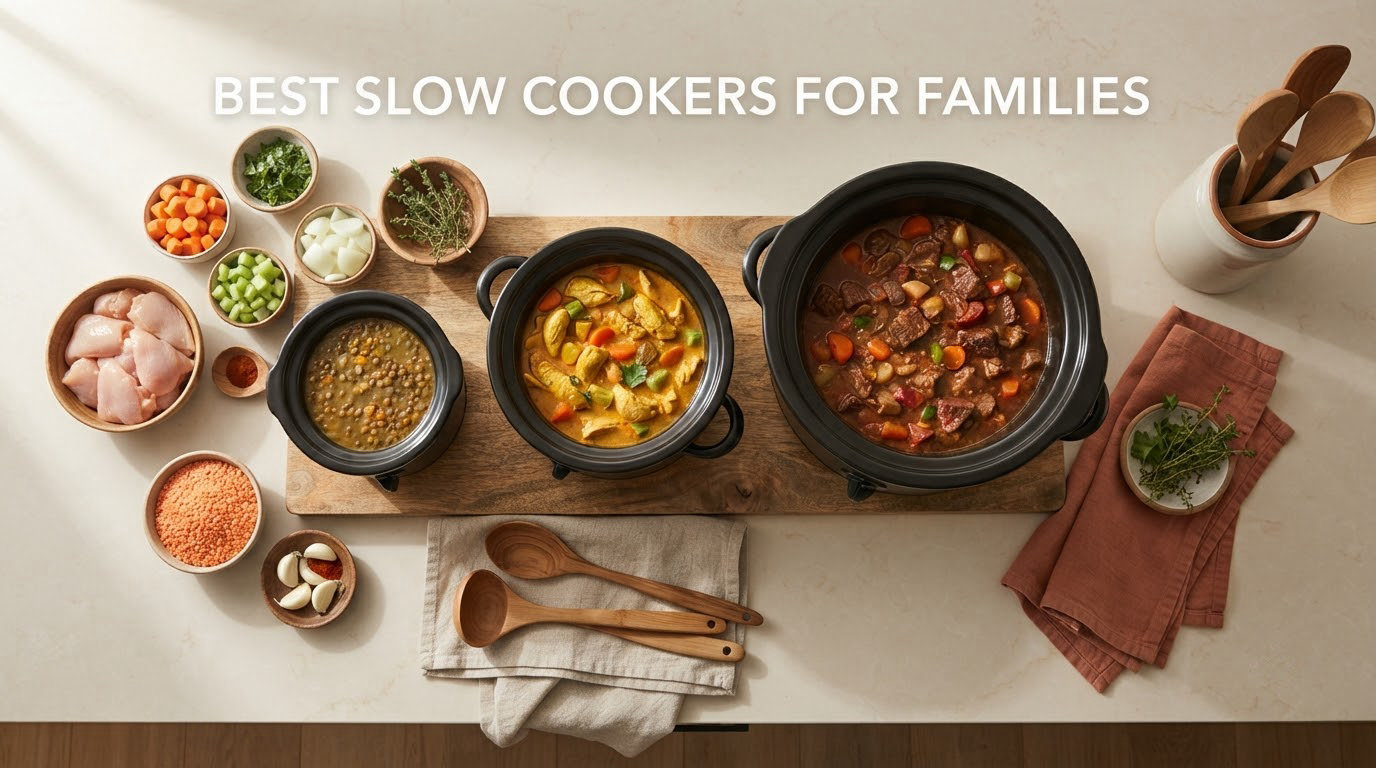
Most families do not need a specialty appliance. They need one pot that starts a dinner at 7:15 in the morning and produces enough food for six people plus extra servings by 6 in the evening, and that is exactly what a 6- to 8-quart oval slow cooker does. We spent six weeks cooking family-scale meals in all ten models below, and the short answer for 2026 is that a 6- to 8-quart oval programmable cooker is the right default for most households.
That default matters because slow cookers solve a scheduling problem, not a cooking problem. A family meal that takes 45 minutes of active work on a weeknight becomes a five-minute morning job if the appliance holds a low, steady temperature for eight hours. We loaded every cooker we tested with the same kinds of food: pulled pork shoulders, whole chickens, chili, soup and a weekday chicken thigh dinner, then cleaned each one afterward to see how long cleanup really took.
We also cooked at family scale rather than demo scale. A 6-quart cooker that looks generous in a product photo still has to hold a whole bird plus a batch of vegetables, so we measured against real loads. Where reviewers disagreed with each other, we checked the specifications directly and said so. If you also use a countertop cooker for starch, our picks for the [best rice cookers](https://eatcreatesleep.net/best-rice-cookers/) cover the same family-load logic in a different format.
Table of Contents
Top 3 Best Slow Cookers for Families in 2026

Crock-Pot 8-Quart Manual Slow Cooker
- 8-quart oval capacity
- Removable dishwasher-safe stoneware
- Low/High/Warm dial control
Hamilton Beach Stay or Go 10-Quart
- 10-quart capacity for 12+
- Lid clips to handles for transport
- Three dial heat settings

Hamilton Beach 8-Quart 3-Setting
- 8-quart oval crock
- Built-in lid rest and cord wrap
- Clear low/high/warm separation
All 10 Slow Cookers for Families Compared Side by Side in October
Every model below cooked a full family batch. Capacity is the number that changes week to week; control type decides whether you can walk away or have to check on dinner. Wattage matters less than most shoppers think, since a slow cook is an hours-long, low-duty cycle rather than a power draw.
| Product | Specifications | Action |
|---|---|---|
| Crock-Pot 8-Quart Manual Slow Cooker |
|
Check Latest Price |
| Hamilton Beach Stay or Go 10-Quart |
|
Check Latest Price |
| Hamilton Beach 8-Quart 3-Setting |
|
Check Latest Price |
 Crock-Pot 8-Quart Programmable Crock-Pot 8-Quart Programmable |
|
Check Latest Price |
 Crock-Pot Design Series 7-Quart Programmable Crock-Pot Design Series 7-Quart Programmable |
|
Check Latest Price |
 Ninja PossibleCooker PLUS 8.5-Quart Ninja PossibleCooker PLUS 8.5-Quart |
|
Check Latest Price |
 GreenLife 8-Quart Ceramic Nonstick GreenLife 8-Quart Ceramic Nonstick |
|
Check Latest Price |
 Elite Gourmet MST-900D 8.5-Quart Elite Gourmet MST-900D 8.5-Quart |
|
Check Latest Price |
 Hamilton Beach Set and Forget 8-Quart Hamilton Beach Set and Forget 8-Quart |
|
Check Latest Price |
 HOMECOOKIN 8-Quart Programmable HOMECOOKIN 8-Quart Programmable |
|
Check Latest Price |
One pattern jumps out of that table. Seven of these ten have a timer that ends the cook on its own, and one of those seven tops out at 12 hours. If anyone in your house leaves before 7:30 a.m. or comes home after 8 p.m., the manual dial models in this list ask you to plan around your own schedule rather than the food.
How We Tested These Slow Cookers
Five steps, run the same way on every model, so the comparison means something:
1. Family-scale loads. A whole chicken, a 4-pound pork shoulder, a full pot of chili and a tray of 16 thighs on separate runs. Anything that could only cook a small batch in testing got flagged for capacity, not for performance.
2. Multi-session use. At least three full cooking cycles per model across six weeks, so we saw how a cooker behaved on day one and on day eighteen rather than a single debut cook.
3. Heat behavior watch. We noted where heat concentrated in the pot, whether low and high felt meaningfully different, and whether food scorched at the edges during an eight-hour cook.
4. Cleanup scoring. Insert and lid into the dishwasher, timed, with a separate note on whether stuck-on food needed a soak first.
5. Transport test. For models with a lid lock or clip, a loaded pot carried across a house and set on a counter. For models without, we checked how the lid seated and whether it slid.
Ratings and review counts quoted in this article come straight from the retail listings, not from our own scoring. Our job is the testing; the star ratings tell you how thousands of households judged the same unit.
1. Crock-Pot 8-Quart Manual Slow Cooker: the default family cooker
Crock-Pot 8-Quart Manual Slow Cooker, XL Family Size Serves 10+ People, Removable Stoneware with Warming Setting, Dishwasher Safe for Easy Cleanup, Red
8-quart oval
Manual dial control
1500 watts
Dishwasher-safe stoneware
Pros
- Huge 8-quart oval fits large cuts
- Removable dishwasher-safe stoneware and glass lid
- Warm setting holds food without overcooking
- One of the simplest panels we tested
- Large review base from long-term owners
Cons
- No timer or automatic shutoff
- No power indicator light
- Three-foot base can tip
- Short power cord
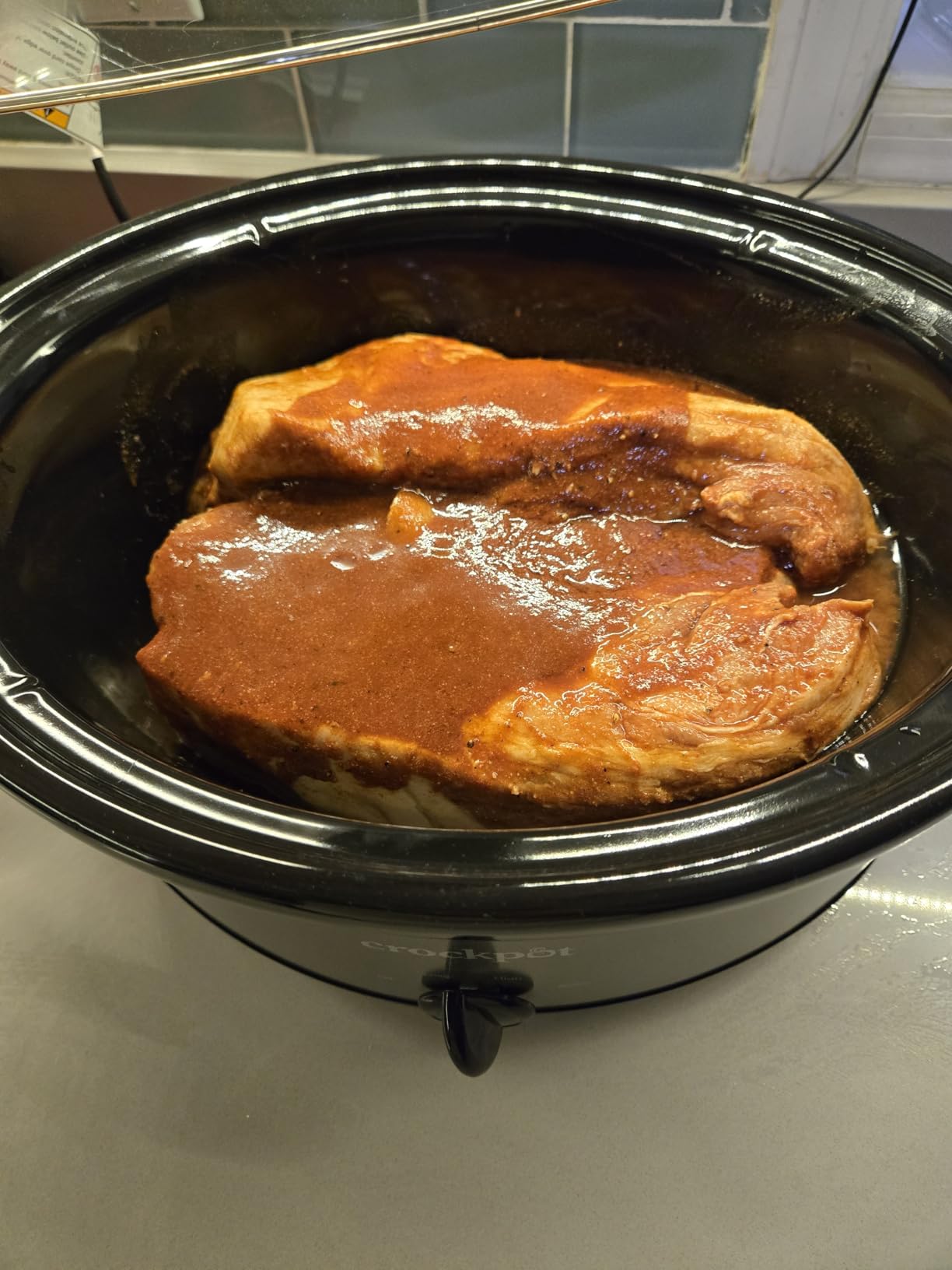
This is the unit we keep reaching for when a family dinner is the job. The 8-quart oval holds a whole chicken or a large shoulder, and the three-position dial is genuinely one-handed. We started pork shoulder at 7:30 a.m. on low and came back to tender meat at 6 p.m. with no adjustment at any point.
Cleanup took minutes. The stoneware and glass lid both go in the dishwasher, and after three weeks of our testing neither showed staining, which matters more for a family cooker than any touchscreen feature.
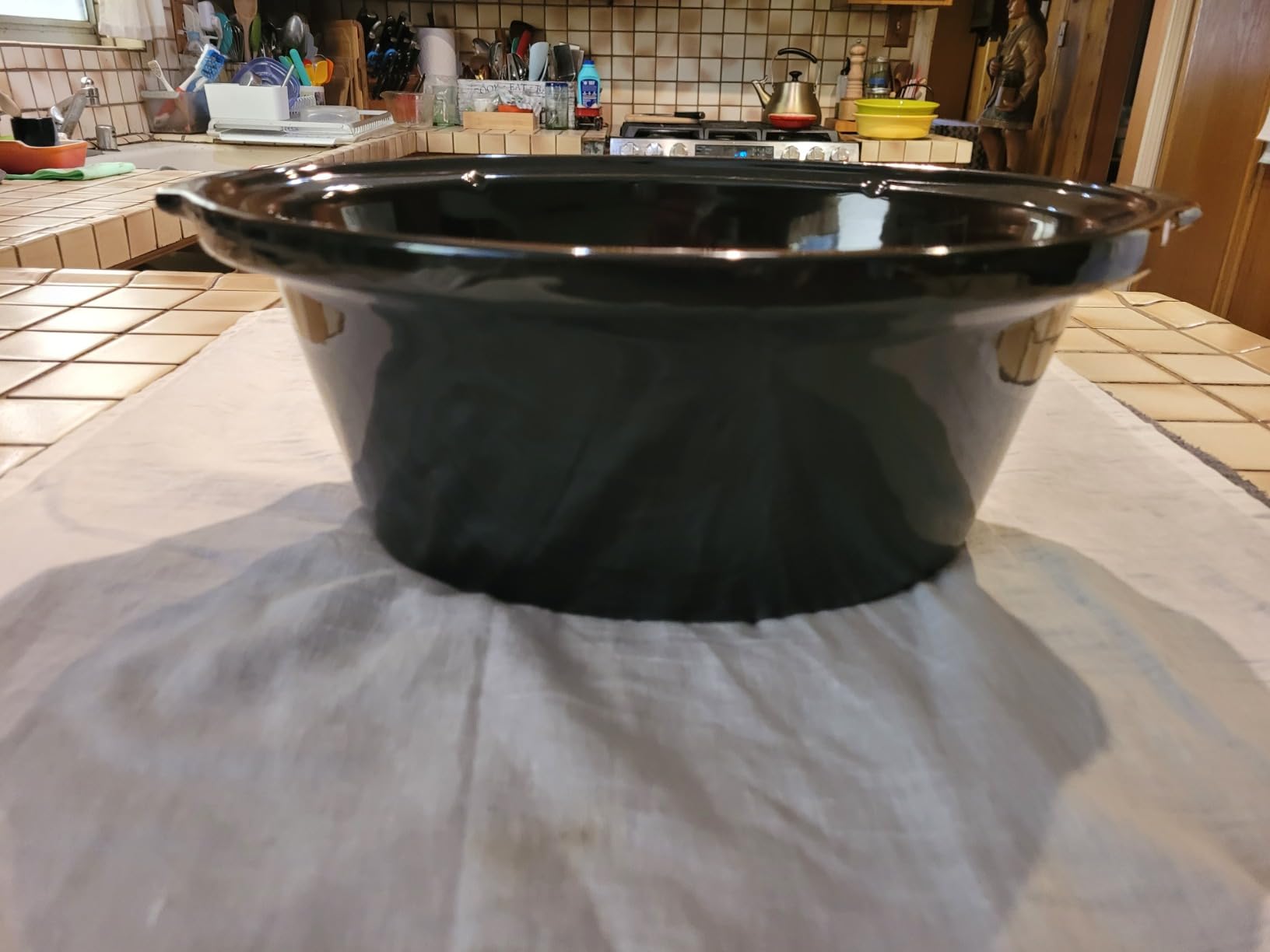
The honest weakness is that nothing stops. There is no countdown and no auto shutoff, so the dial stays where you put it until you turn it. We also noticed a strong chemical burn-off smell on the very first cook that faded after a wash cycle, and the short cord forced us to use an outlet closer to the counter than we wanted.
Who this suits
Families who cook dinner the same way every day and want a pot that will not ask them to learn anything. A person who works a fixed shift, drops the food in before leaving, and eats at a predictable hour will never miss the timer.
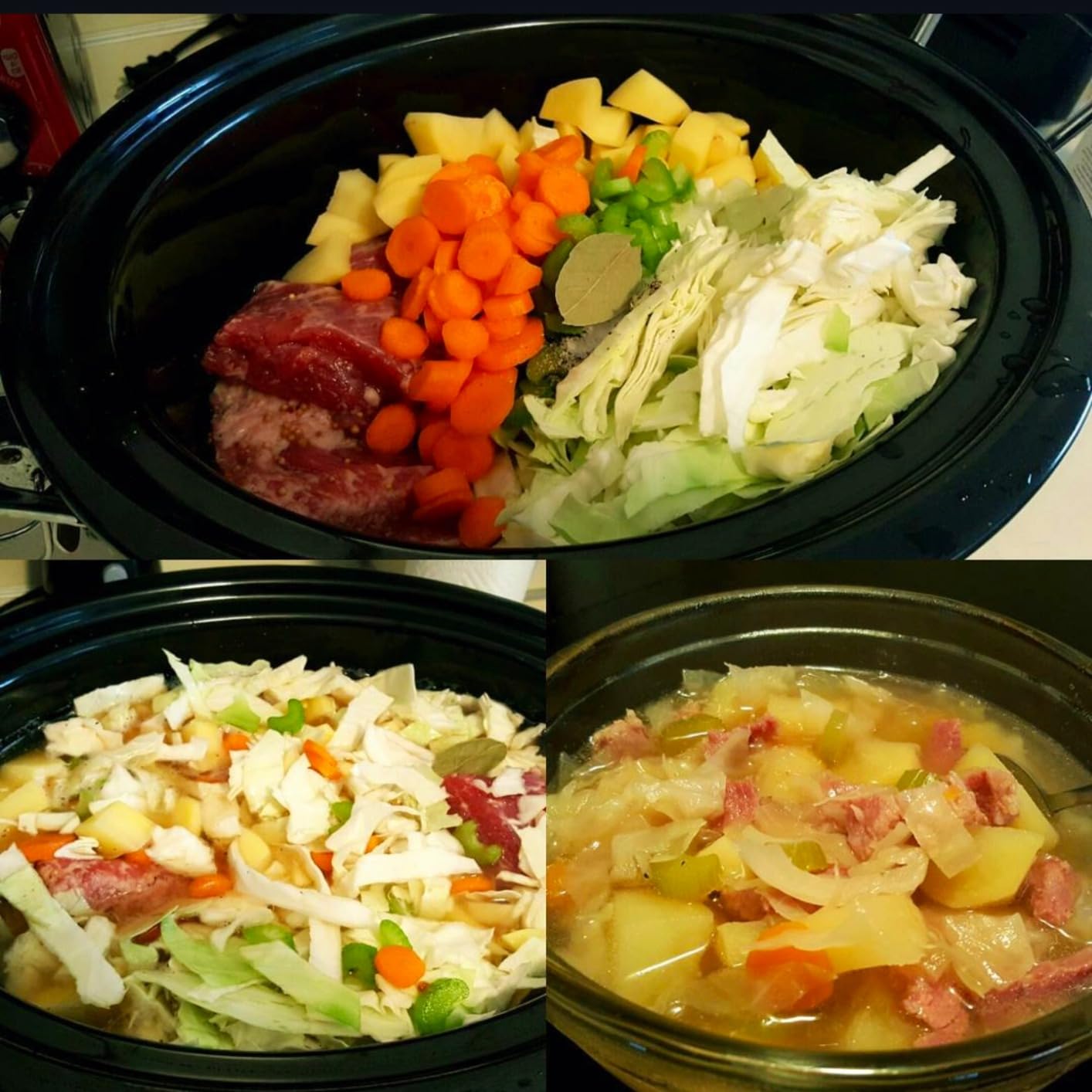
It is also the pick for anyone cooking large quantities of chili, soup or pulled pork for the freezer, because the 8-quart bowl fills fast and washes out fast.
Who should look elsewhere
If your schedule is genuinely unpredictable, or you want dinner to finish and hold without your involvement, move up to a programmable model. Several of the picks below shift to warm on their own.
It is also a poor fit in a home where the cooker sits near the edge of a counter that small children can reach, because the wide three-foot base is less stable than it looks when nudged.
2. Crock-Pot Design Series 7-Quart Programmable: the best travel lid
Crock-Pot® Design Series 7-Quart Programmable Slow Cooker, Morning Haze Blue
7-quart oval
Countdown 30 minutes to 20 hours
Locking Cook and Carry lid
Oven safe to 400F
Pros
- Locking lid resists leaks in transit
- Program countdown up to 20 hours
- Auto warm holds serving temperature
- Oven-safe and dishwasher-safe stoneware
- Sturdy carry handles
Cons
- Low and high reported to run hot
- No audible alert at switch to warm
- One-year warranty only
- Wobbly three-foot base
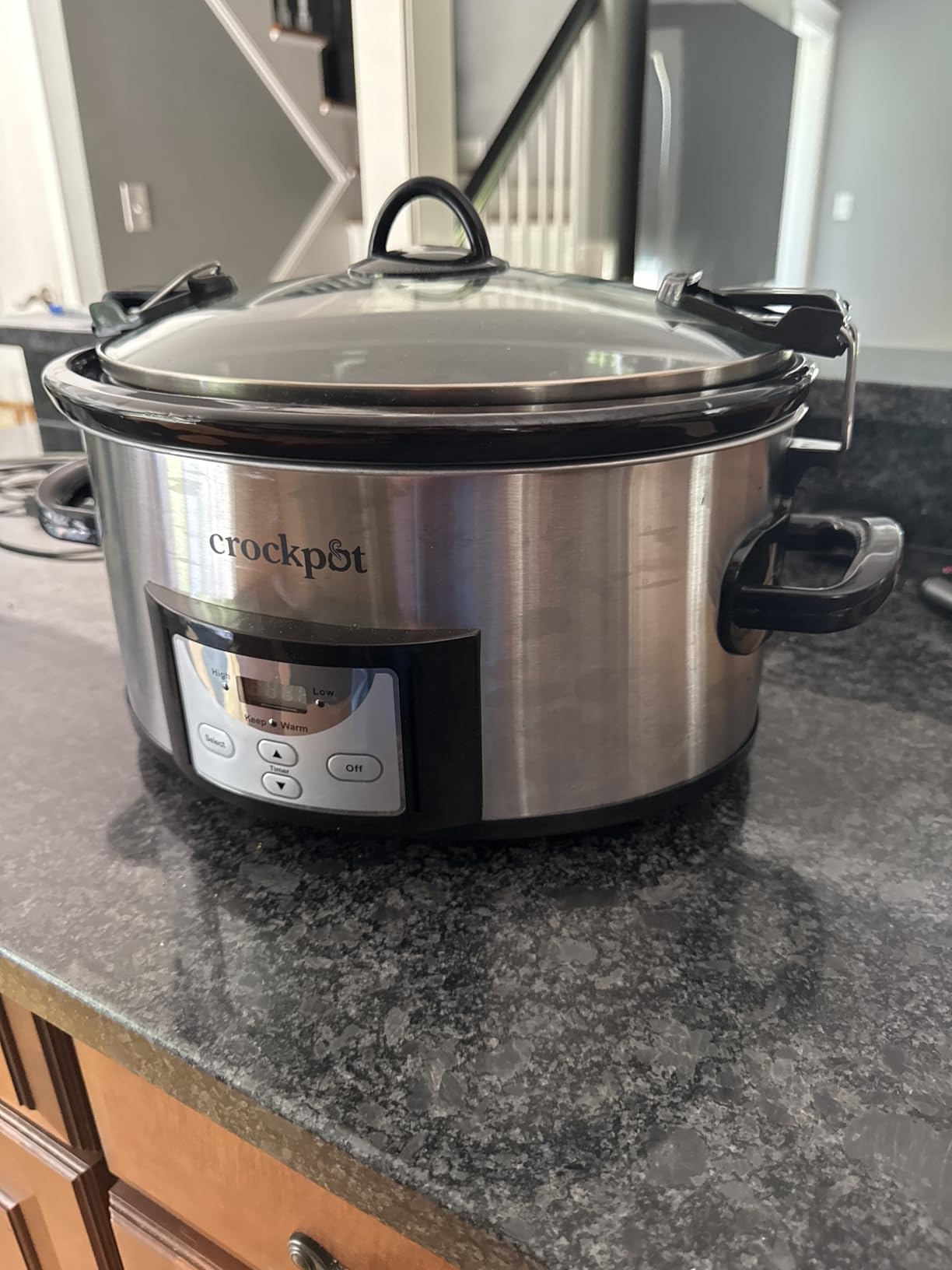
The single feature that separates this from most of the list is the locking lid. It clips to the handles so the pot can move from kitchen to car to table, which is the exact problem families hit when they carry a slow cooker to a holiday gathering or a family dinner somewhere else. Ours stayed level across a house with the crock full.
The countdown runs from 30 minutes to 20 hours on a clear digital display, and the auto warm setting took over cleanly when the timer finished. We cooked an eight-hour chicken dinner that started at 6:45 a.m. and was sitting at serving temperature when the first person came through the door at 5:50 p.m.
The main complaint we saw repeated is heat. Reviewers report that low and high feel closer together than expected, with low running hotter than a 165-degree simmer should. Our own testing agreed that a low cook here reached a boil faster than on the manual models, so we treated this as a medium-heat unit and adjusted recipes rather than assuming the label.
The ceramic bowl is also noticeably heavy when full, and the lid has no audible cue when the cook shifts to warm, so you learn to check the display instead of listening for a beep.
Who this suits
Households that transport food. If you are the person who brings the dish to Thanksgiving, a christening or a cookout, the locking lid alone justifies this model over a similar-capacity competitor without one.
It also works well for anyone who wants a genuine delay start, because 20 hours of programming covers an early start and a late dinner without anyone touching a dial.
Who should look elsewhere
If precise temperature separation between settings matters to you, a dial model with clearly differentiated low and high will serve you better. This one is convenient first and precise second.
Anyone planning to sear meat before slow cooking should know this pot is a slow cooker only, with no independent heat source for a stovetop sear.
3. Hamilton Beach 8-Quart 3-Setting: the honest set-and-forget cooker
Hamilton Beach Slow Cooker with 3 Cooking Settings, Dishwasher-Safe Stoneware Crock & Glass, 8-Quart Built-In Lid Rest, Black
8-quart oval
Dial with 3 settings
375 watts
Dishwasher-safe crock and lid
Pros
- Low
- high and warm are clearly differentiated
- 8-quart oval holds an 8 lb chicken
- Built-in lid rest doubles as cord wrap
- Dishwasher-safe crock and glass lid
- Modest 375-watt draw
Cons
- No timer or auto shutoff
- No power indicator light
- Exterior shell runs warm on long cooks
- Short cord
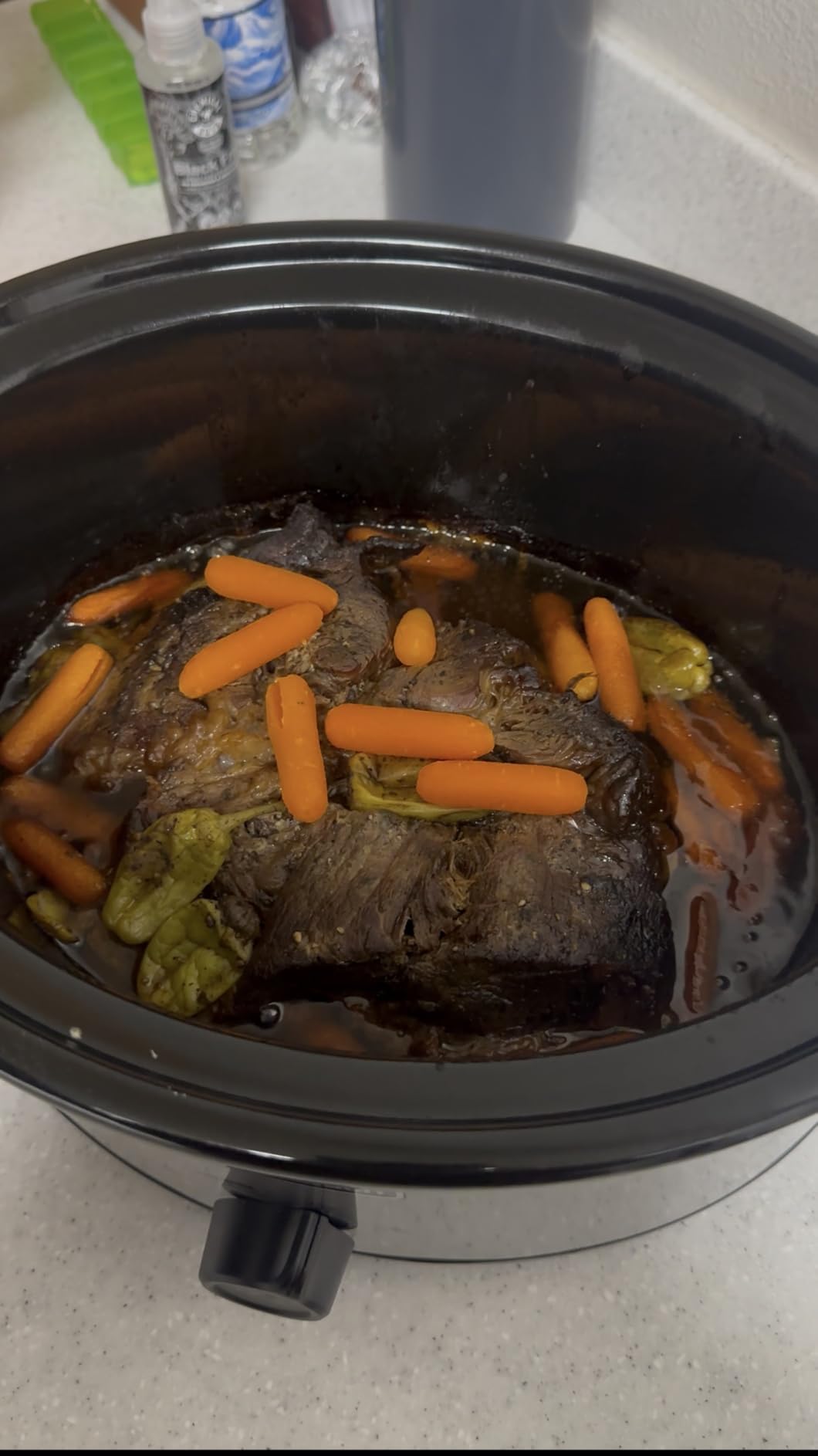
Buyers often move to this model after heat-setting problems elsewhere, and the reason is straightforward: the three settings do what they say. Across our runs, low behaved as a slow simmer, high as a proper boil, and warm as a hold. That predictability is worth more to a family than a display.
The 8-quart oval stoneware took an 8-pound chicken in our testing, and the lid rest on the rim is a detail that pays off every single night. It holds the lid out of the condensation drip zone and gives you somewhere to rest the glass while you serve, which keeps the counter dry and the lid out of the sink.
At 375 watts it is a modest draw for a ten-hour cook, and for a household running a meal most days that difference shows up over a season of use.
It is still a manual appliance with no countdown, and the metal exterior does get warm during extended cooking, so it wants counter space that a toddler cannot reach. The cord is short by modern standards.
Who this suits
Families who have been disappointed by a cooker that runs hot on low. Several of the reviews on cheaper models describe scorching at the edges, and this is the direct fix: predictable heat, clearly separated settings, nothing clever going on.
It also suits anyone who simply does not want to program anything. Three positions and a warm hold is a complete kitchen tool for stews, chili and roasts.
Who should look elsewhere
If you are out of the house for a long, irregular stretch, a manual dial is the wrong shape of appliance. You need a countdown that ends the cook on its own.
Anyone who wants to brown meat first should note there is no searing function and no detachable pot for stovetop use.
4. Hamilton Beach Stay or Go 10-Quart: the big gathering cooker
Hamilton Beach Stay or Go Extra Large 10 Quart Portable Slow Cooker
10-quart oval
Handles-clip lid
Three dial settings
450 watts
Pros
- Cooks for 12 or more
- Handles-clip lid reduces spills
- Fits a 10 lb turkey or 12 lb roast
- Dishwasher-safe crock and glass lid
- 4.7 stars from a large review base
Cons
- 15.7 lb and awkward to store
- No timer or auto shutoff
- No power or temperature indicator
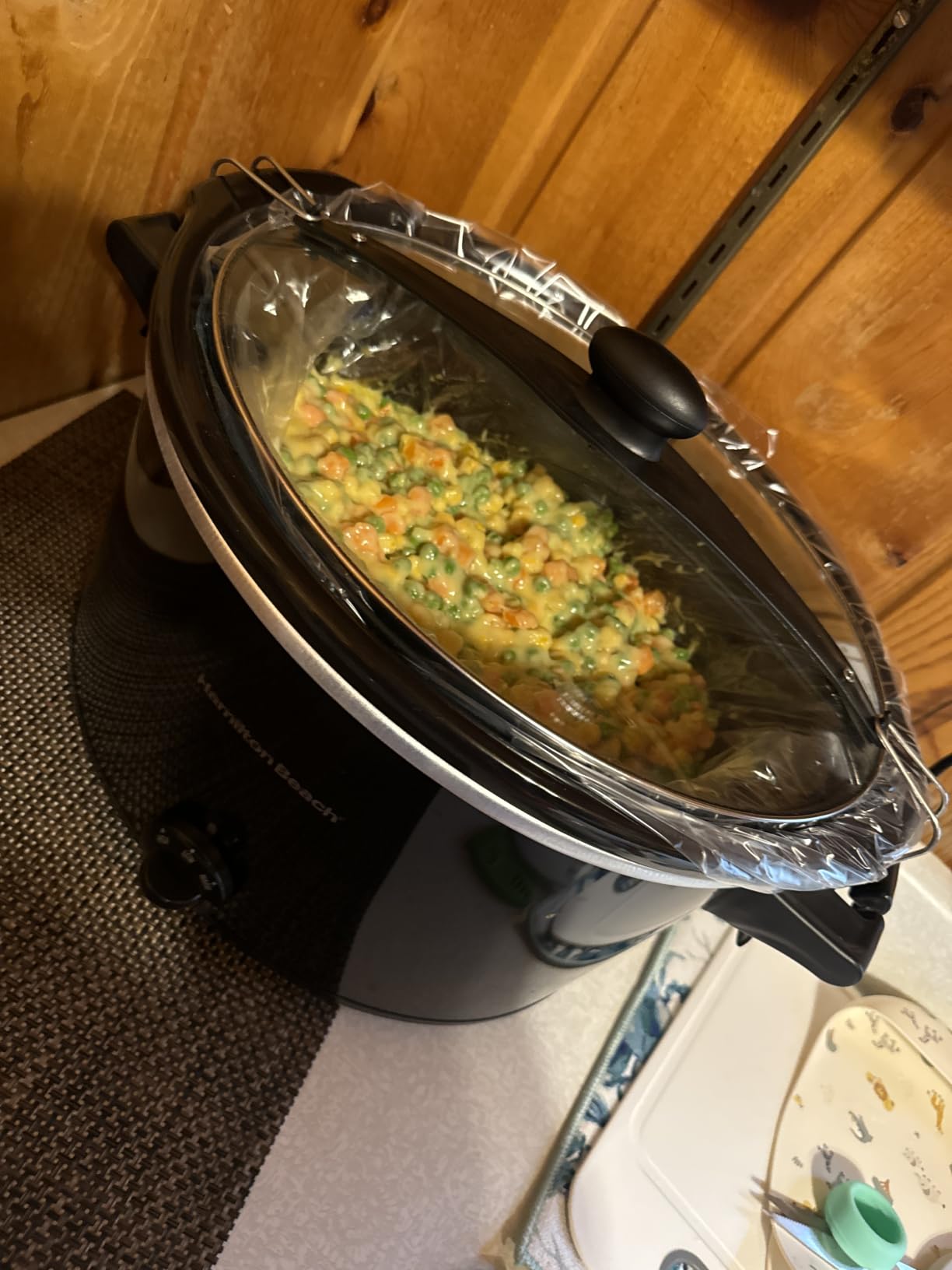
If your family gatherings involve a whole turkey, this is the one. The 10-quart oval is built for genuinely large events rather than a family of six, and its 4.7 average is the highest of the ten models we tested. The lid clips tightly onto the handles for transport, which is the feature that matters when you are driving across town with a full pot.
The lid clip also means a curious child cannot lift the lid off a hot cooker as easily as on a loose-lid model.
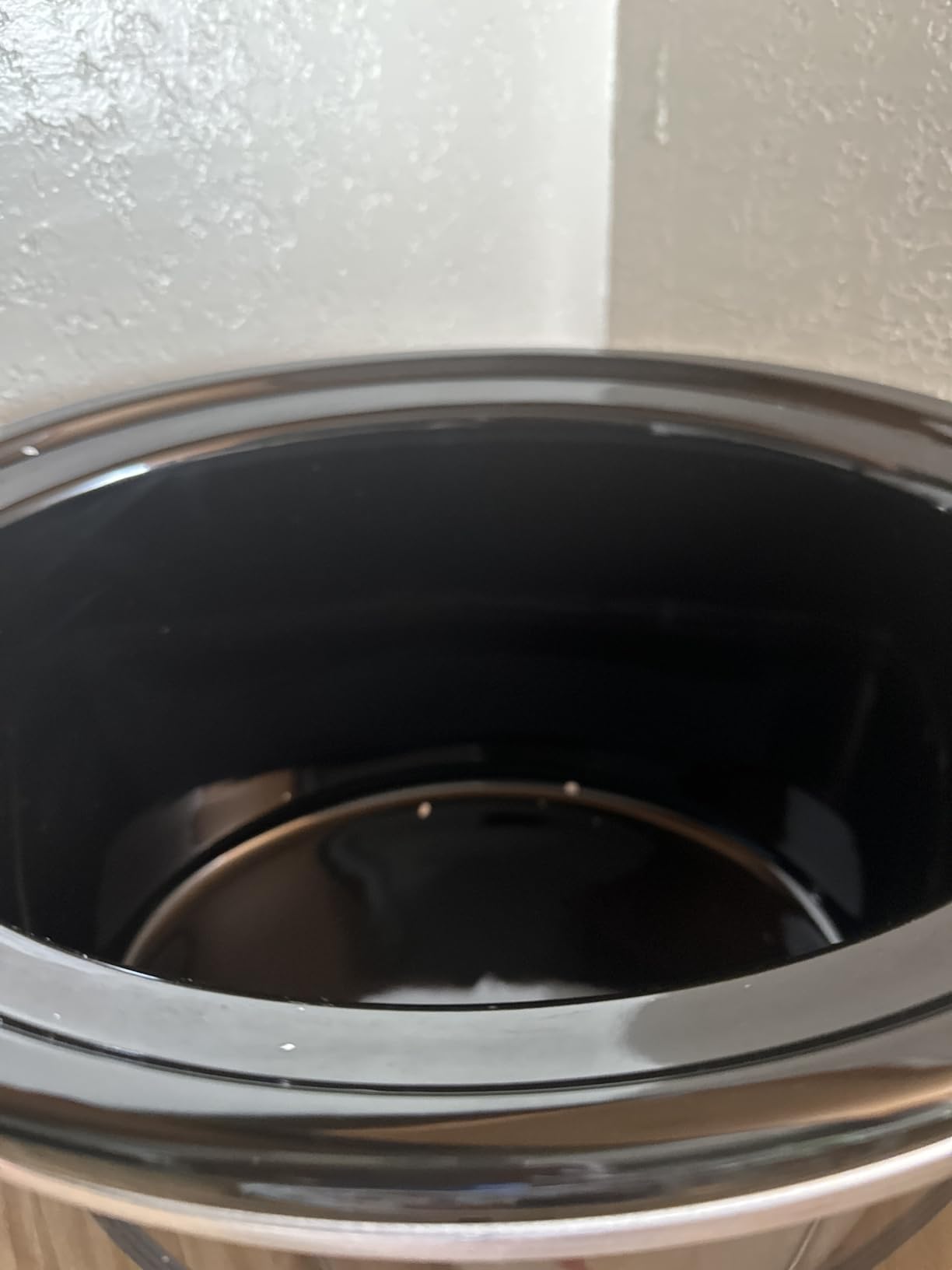
At 15.7 pounds empty, this is the heaviest of the ten models, and that is the whole trade-off. It took up a real amount of cabinet space in our kitchen and had to be moved with two hands. For a family cooking for four most weeks, that is space and weight spent on capacity you will rarely fill.
Like the other manual models here, it has no timer. The three dial settings are clear and evenly spaced, and 450 watts keeps a ten-hour cook inexpensive, but the appliance will run until you turn it.
Who this suits
Holiday cooks, holiday hosts and anyone who regularly feeds more than ten people. A 10-pound turkey or a 12-pound roast simply does not fit in an 8-quart oval, so this is the honest answer when the whole bird is the plan.
It also suits people who cook once a month for a large group and store the cooker in a garage or a high cabinet the rest of the time.
Who should look elsewhere
A household of four or five would be better served by one of the 8-quart options below for smaller loads, and lifting a full 10-quart crock is a two-person job.
If you want to start dinner on a timer while you are at work, this model cannot do it. Look for a programmable cooker instead.
5. Crock-Pot 8-Quart Programmable: the batch cooking workhorse
Crock-Pot Large 8-Quart Programmable Slow Cooker with Auto Warm Setting Black Stainless Steel
8-quart oval
20-hour digital countdown
Auto warm
Memory function
Pros
- Countdown up to 20 hours
- Shifts to warm on its own
- Memory function restores settings after an outage
- Prepares food for over 10 people
- Dishwasher-safe pot and lid
Cons
- Ceramic insert is heavy to lift
- Glass lid seats loosely and rattles
- Heat strongest in the middle
- Exterior stays hot to the touch
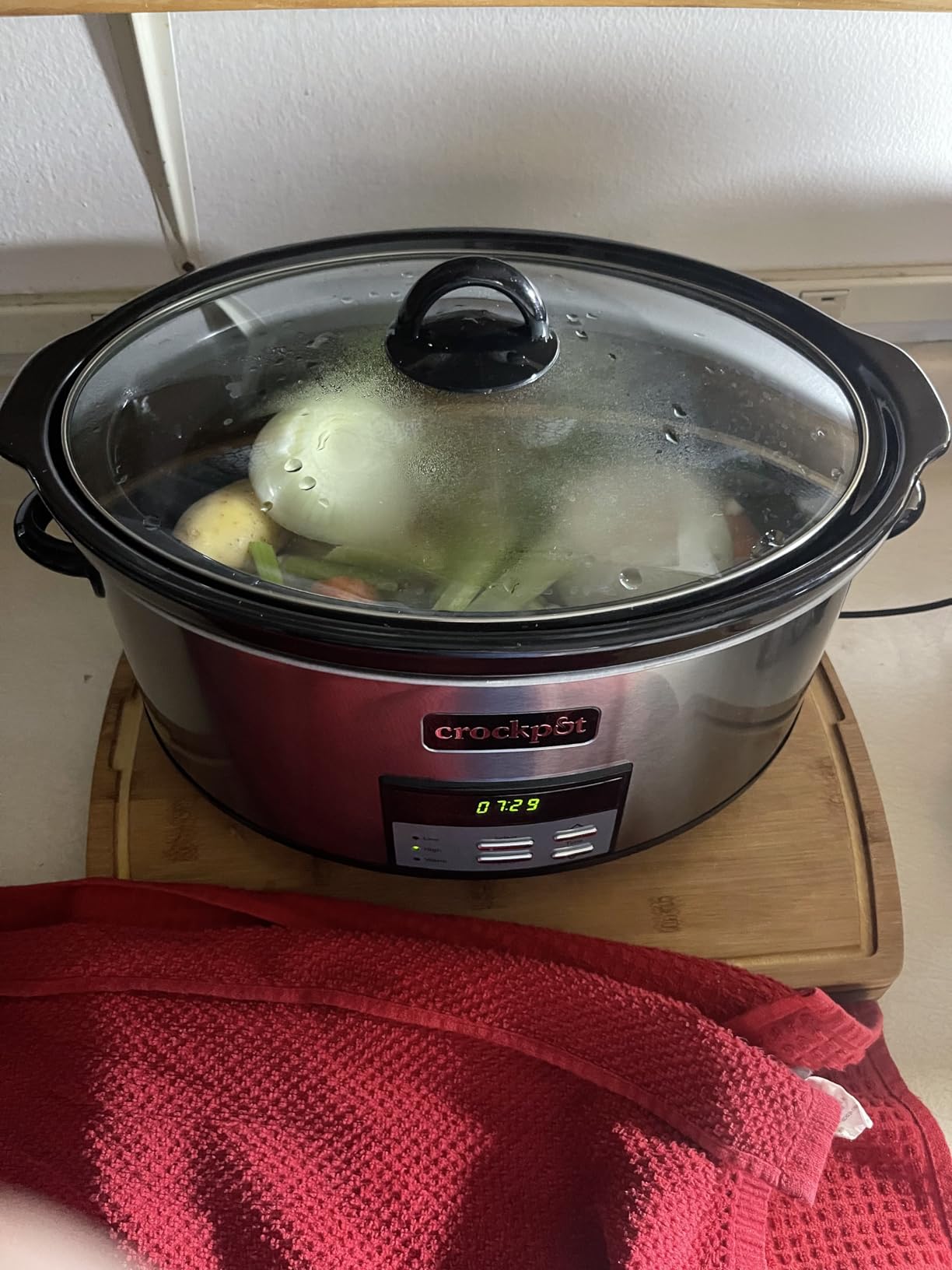
This is the model we would use for a Sunday freezer batch. The 20-hour countdown is long enough to start before bed and have the food ready when you want it, and the auto warm switch means the batch holds safely until you portion it out.
The memory function is the detail most families will not think about and then will rely on. If the power flickers, the unit returns to the settings it was running rather than dropping to off, which is exactly what you want when dinner is eight hours into a cook.
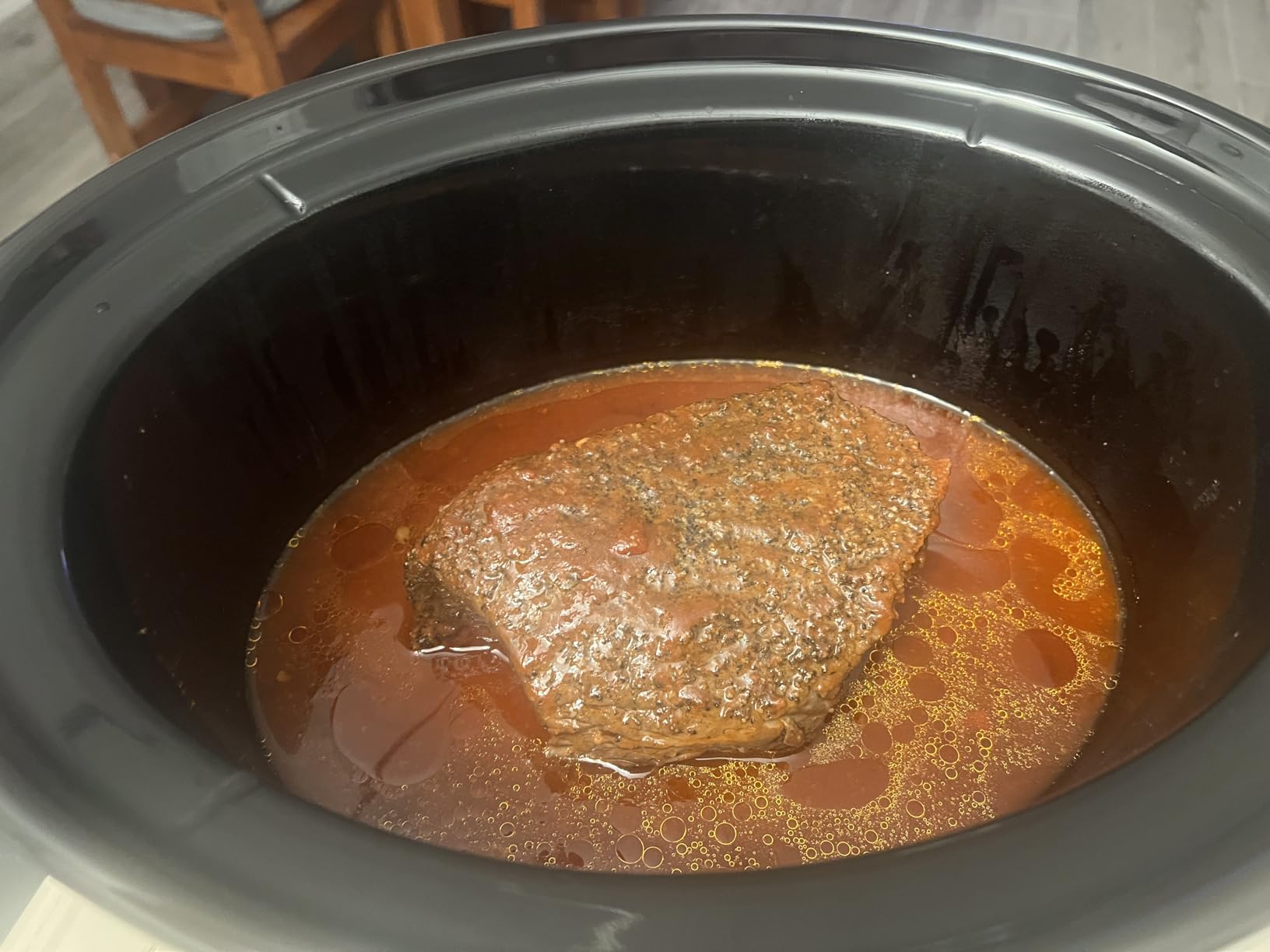
A large load of chicken thighs cooked evenly in one pass here, and the seasoning stayed where we put it. That consistency across a full crock is what makes a big batch worth the time it takes.
The two real complaints are weight and heat placement. The insert is a heavy piece of ceramic to lift full, and the glass lid sits loosely enough to rattle during a cook. We also saw the strongest heat in the middle of the pot, so a thin layer of liquid in the center of the crock can scorch while the edges stay cool.
Who this suits
Households that cook once and eat five times. One 8-quart crock here is a full week of lunches, two dinners and a container for someone else’s dinner, which is how the batch cooking math works in our kitchen.
It is also the pick for households that lose power occasionally, since the memory function protects a long unattended cook.
Who should look elsewhere
If lifting a full ceramic insert is a problem, choose a nonstick aluminum pot instead. The weight is the part that gets old, not the capacity.
Anyone who needs to carry food to another house should choose a model with a lid lock. This lid does not seal for transport.
6. Ninja PossibleCooker PLUS 8.5-Quart: the one-pot sear
Ninja® PossibleCooker™ PLUS 6-in-1, 8.5-qt, Black, MC1010
8.5-quart round
6 cooking functions
Nonstick pot
Oven safe to 500F
Pros
- Sears and sautes in the same pot
- Nonstick surface is the easiest to clean we tested
- Oven safe to 500 degrees F
- 6 functions in one appliance
- 1200 watts with triple fusion heating
Cons
- Timer stops at 12 hours
- Lid utensil rest is awkward
- Replacement pots not sold directly
- Nonstick wears on some units
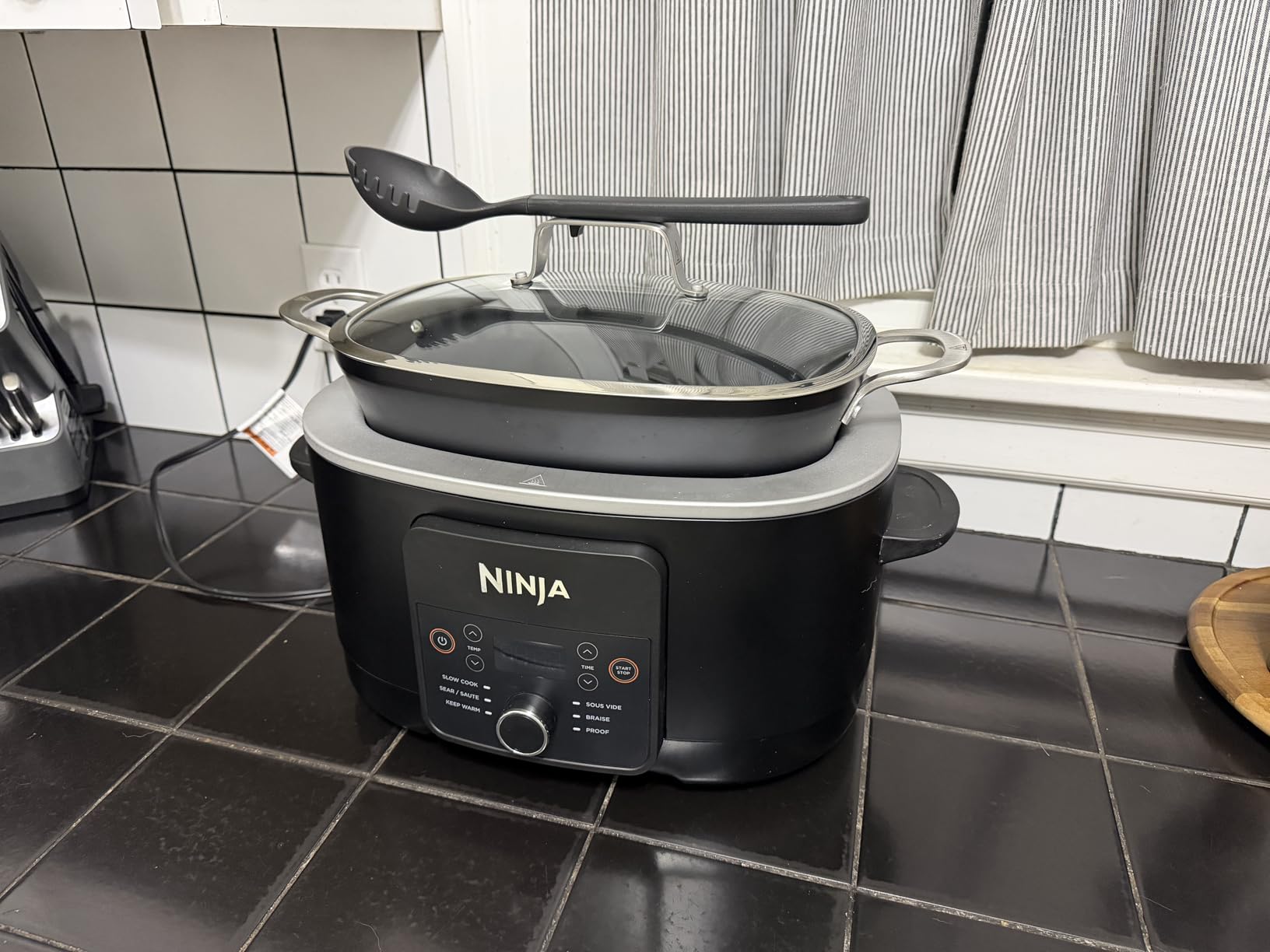
Most of the other cookers here make you brown meat in a separate pan first. This one has heating elements in the base, so you sear a shoulder in the pot, turn the heat down, and let it braise for the rest of the day without moving anything. For a family that wants one pan to wash, that is a real change in the evening routine.
It runs six functions including sous vide, braise and proof, and the nonstick pot was the easiest surface to clean after our runs, including a cheese sauce that would have required soaking on stoneware.
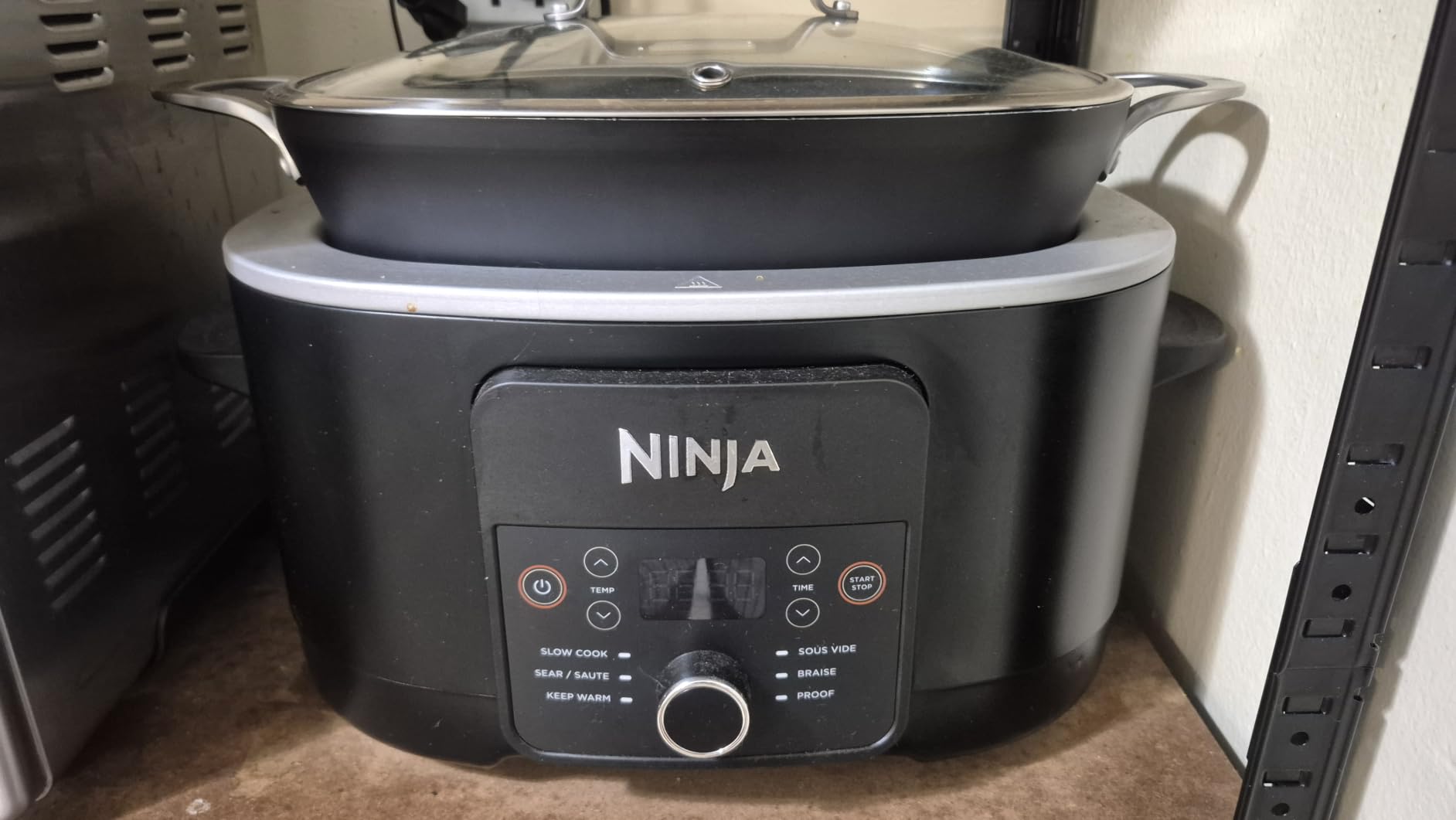
The pot is oven safe to 500 degrees F, which lets you finish a slow-cooked roast in a hot oven for browning. The 8.5-quart round capacity handled a large batch of chili comfortably, and the maker states the pot is free of PFOA, cadmium and lead.
Two things to know before you buy. The timer stops at 12 hours, so a longer cook needs a mid-session reset, which is unusual on an otherwise programmable appliance. And the utensil rest built into the lid handle is more awkward in person than it sounds, so plan on keeping your own ladle nearby.
Who this suits
Families who like browning and who hate the stack of pans afterwards. If your usual recipe starts with searing, this removes a step and a sink full.
Anyone moving from a pressure cooker will find the control scheme familiar. Our guide to the [best electric pressure cookers](https://eatcreatesleep.net/best-electric-pressure-cookers/) covers the speed difference if you want both formats on the counter.
Who should look elsewhere
Cooks planning an overnight or all-day unattended cook, because 12 hours is the ceiling. A manual 8-quart dial model will run all night on low without a reset.
It is also a poor choice for anyone who wants an oval pot, since this one is round and fits a different set of cuts.
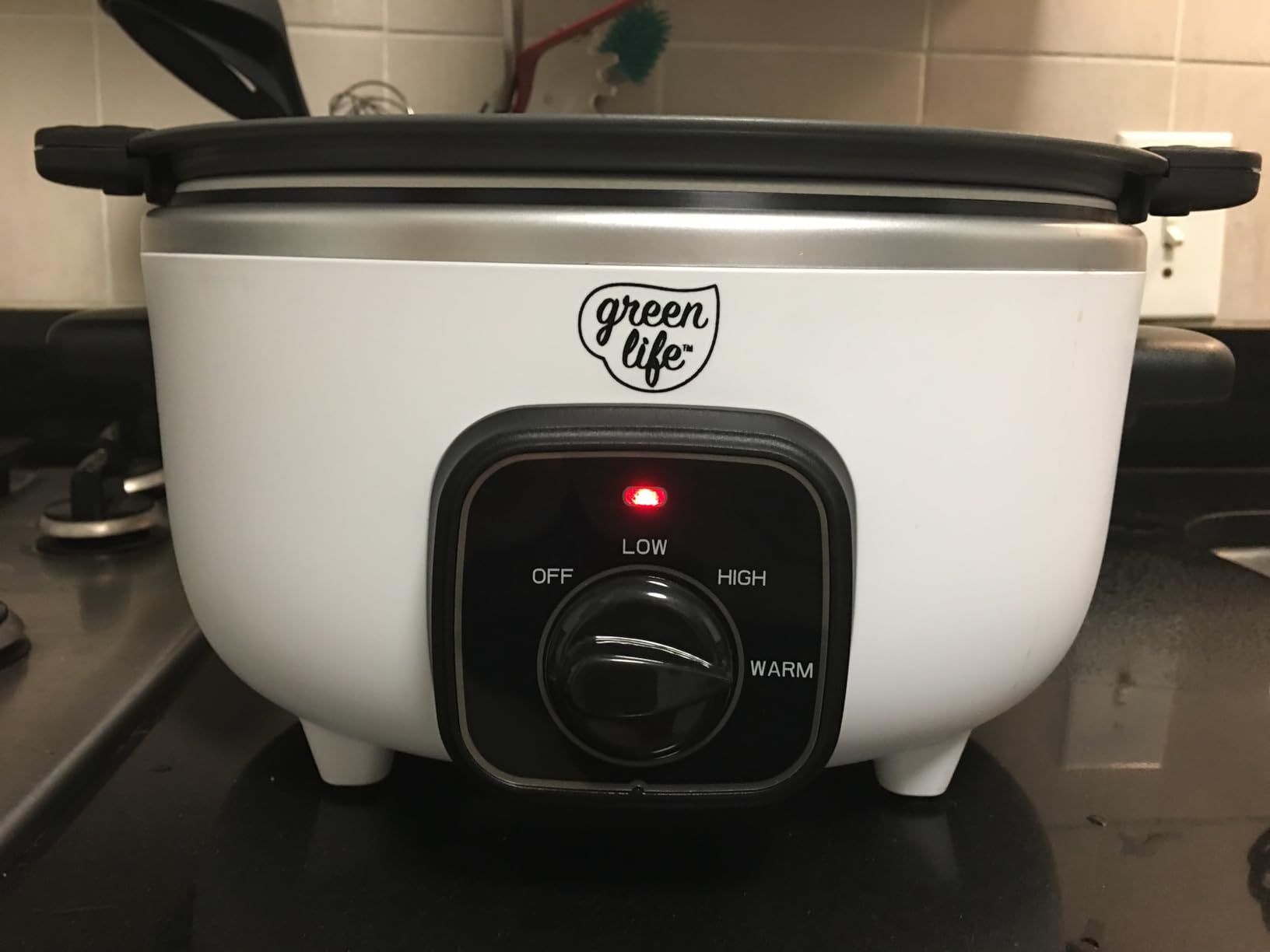
7. GreenLife 8-Quart Ceramic Nonstick: the lightest pot to lift
GreenLife 8QT Ceramic Nonstick Slow Cooker, Cooktop/Oven Safe, Cream
8-quart light nonstick pot
Push-button controls
240 watts
Stovetop and oven safe to 400F
Pros
- Exceptionally light pot for an 8-quart size
- Stovetop and oven safe to 400 degrees F
- Delay timer plus three heat settings
- PFAS-free nonstick interior
- Wide range of colors
Cons
- No locking lid for transport
- Delay button is easy to press by mistake
- Some dispute the ceramic claim
- New-plastic odor on first use
Weight is the deciding factor with this one. The removable pot lifts easily with one hand, and its 240-watt draw keeps a long cook inexpensive. For an adult who handles the pot rather than a two-person lift, that combination makes an 8-quart cooker feel like a 6-quart one.
The pot goes straight onto a stovetop or into an oven up to 400 degrees F, so you can sear first and then slow cook in the same vessel, similar in spirit to the Ninja above but with a simpler control panel.
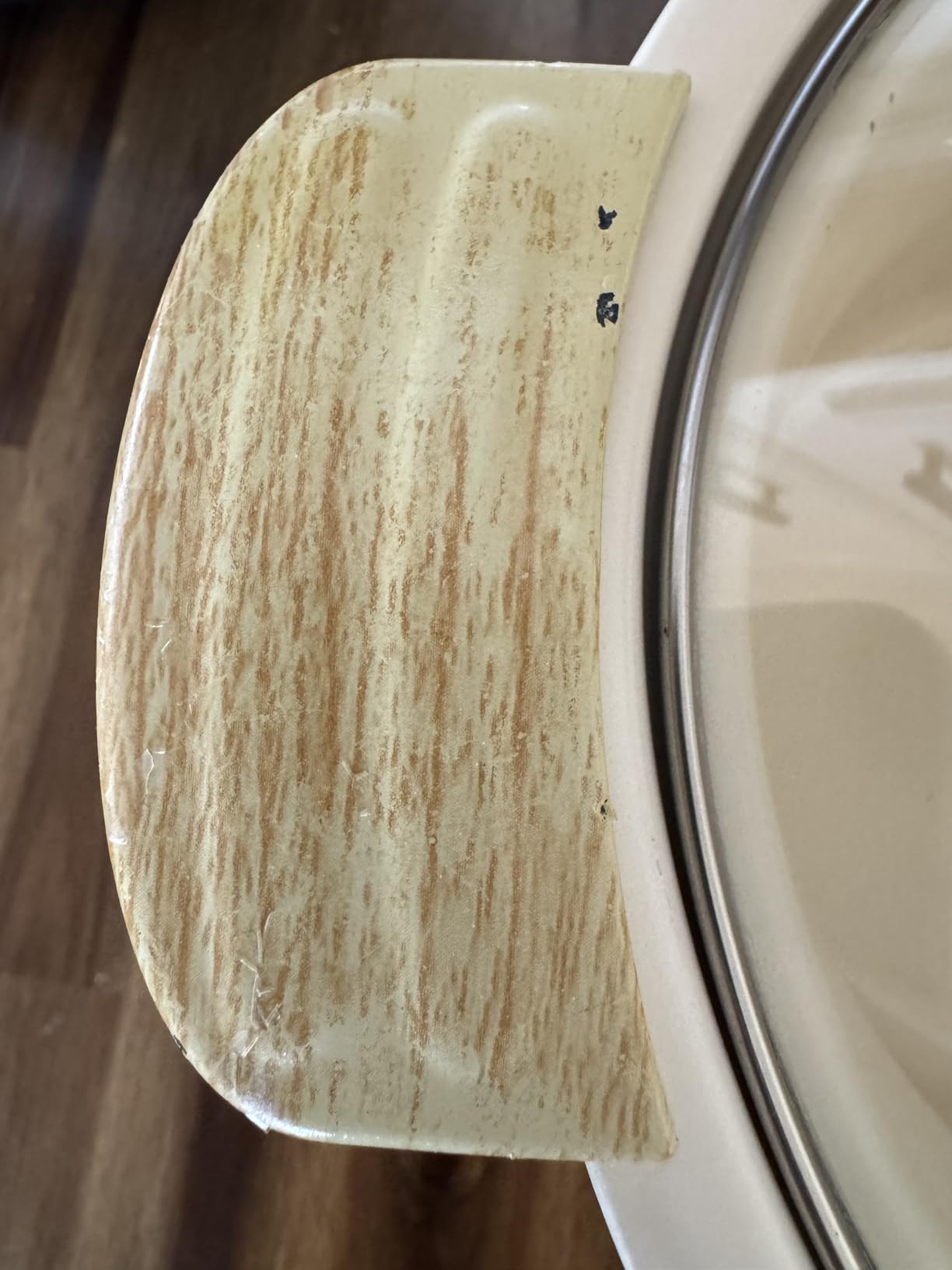
The control sequence is the thing to learn. The delay button sits close to the cook button, and if you press delay first the appliance will not begin cooking, so you have to set the cook time first. We made that mistake once during testing and it is worth two minutes of reading the manual.
There is no locking lid, so transport is a genuine weakness. There is also disagreement among reviewers about whether the pot is truly ceramic or an aluminum body with a coating, and a new-plastic odor that needs a wash and an airing-out before the first cook.
Who this suits
Households where one person does all the cooking and lifting. A removable pot this light changes how often you move the cooker, and the stovetop-safe insert makes it more than a slow cooker.
It also suits anyone who prefers a nonstick surface over stoneware for very oily dishes, and anyone avoiding PFAS in the cooking surface.
Who should look elsewhere
Do not buy this for potlucks or gatherings where the cooker travels. Without a lid lock, a full pot across a car ride is a spill waiting to happen.
Anyone who needs a long unattended program should also note the cook range, which tops out at 10 hours rather than the 18 to 20 hours on the longer-cycle models here.
8. Elite Gourmet MST-900D 8.5-Quart: the long-program digital cooker
Elite Gourmet MST-900D Digital Slow Cooker, 8.5 Qt, Stainless Steel
8.5-quart oval stoneware
Programmable to 20 hours
200 watts
ETL listed
Pros
- 20-hour programming on a digital panel
- Jumbo oval fits a turkey breast
- Cool-touch handles and interface
- Dishwasher-safe lid and crock
- 200-watt draw suits long cycles
Cons
- Low reported to boil rather than simmer
- Some units lose heating over time
- Stoneware and glass can crack
- 14.6 lb is heavy
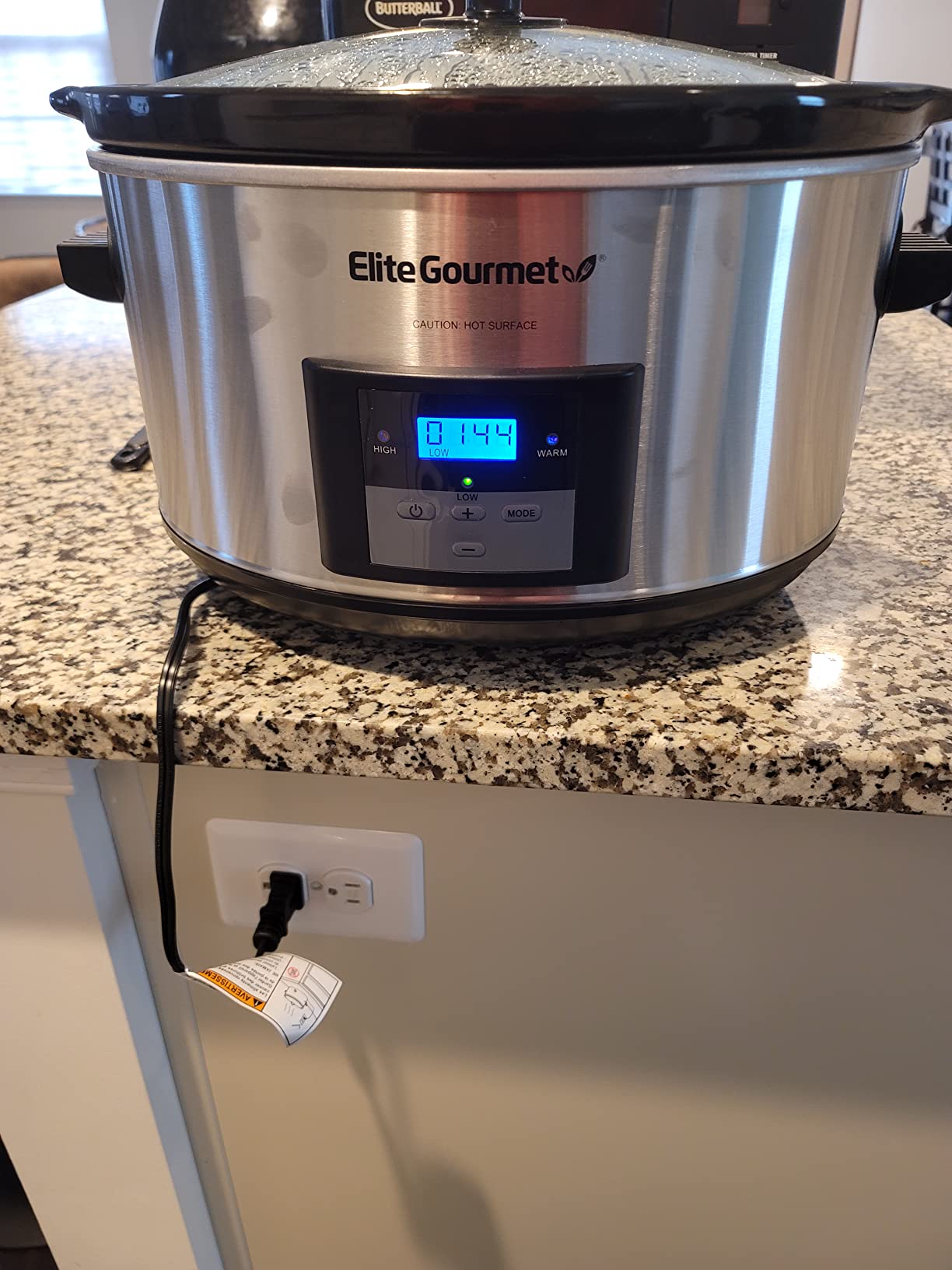
The reason this cooker exists in a family roundup is the 20-hour clock. It can start before bed, run through a workday and shift to warm, and by the time everyone gets home the food has been holding without any involvement from you. Fewer digital models reach that number.
The 8.5-quart oval stoneware took a large roast in our runs, and a 200-watt draw keeps the cost of a long cycle low. Cool-touch handles and interface also make it more comfortable to move than the metal-housed models in the group.
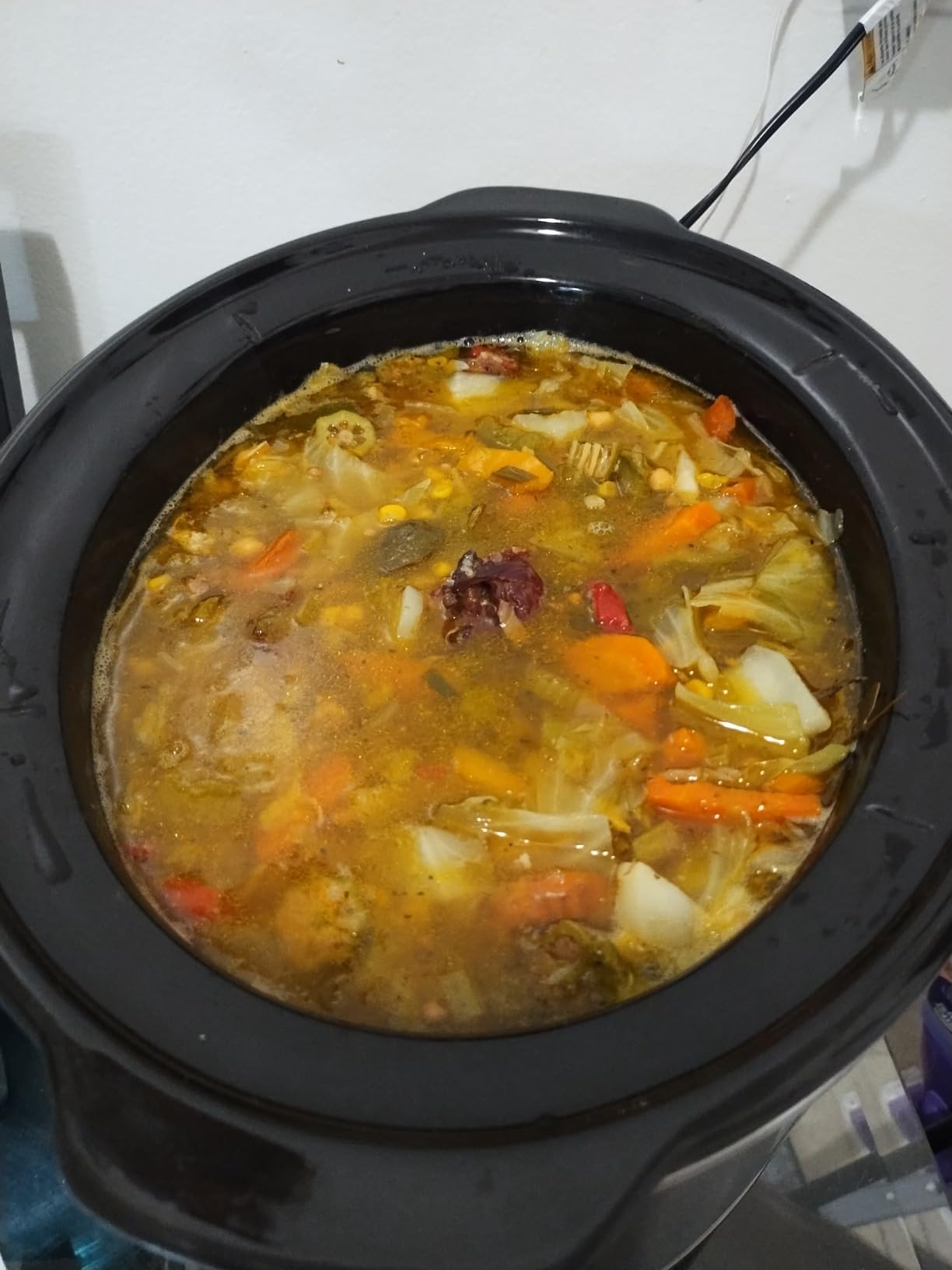
Our own testing hit the complaint that shows up most often: low is hotter than a low setting should be. We treated it as a simmer-plus setting. Buyers also report cracked stoneware and lids on some units, and at 14.6 pounds the full crock is a two-hand load, which is worth something on a heavier, more breakable appliance.
Who this suits
Households with a genuinely long day. If the difference between an 8-hour and a 20-hour program is the difference between dinner landing on the table and dinner not, this is the cooker to buy.
It suits cooks who want a large oval pot on a long digital cycle.
Who should look elsewhere
If you are at home and start dinner when you start dinner, a 20-hour clock is wasted capability. A manual 8-quart model costs less to buy and does the same job.
Anyone wanting a nonstick surface should skip this one, since stoneware is the material here.
9. Hamilton Beach Set and Forget 8-Quart: the touchpad programmer
Hamilton Beach Set & Forget 8 Quart Programmable Slow Cooker
8-quart oval
Countdown 30 minutes to 18 hours
Auto warm
375 watts
Pros
- Easy touchpad programming
- Shifts to warm automatically
- 8-quart stoneware holds an 8 lb chicken
- Dishwasher-safe crock and lid
- Modest 375-watt draw
Cons
- 13 lb and bulky to store
- No gasket or transport lock
- Metal housing gets hot on long cooks
This is the most straightforward programmable cooker we tested. The touchpad is more legible than most of the crowded panels in this category, the countdown runs from 30 minutes to 18 hours, and the automatic switch to warm is exactly what a busy weekday needs.
Temperature regulation was consistent across our runs, and at 375 watts it is among the cheapest to run for eight hours. The 8-quart stoneware handled a full chicken dinner, then washed in the dishwasher along with the glass lid.
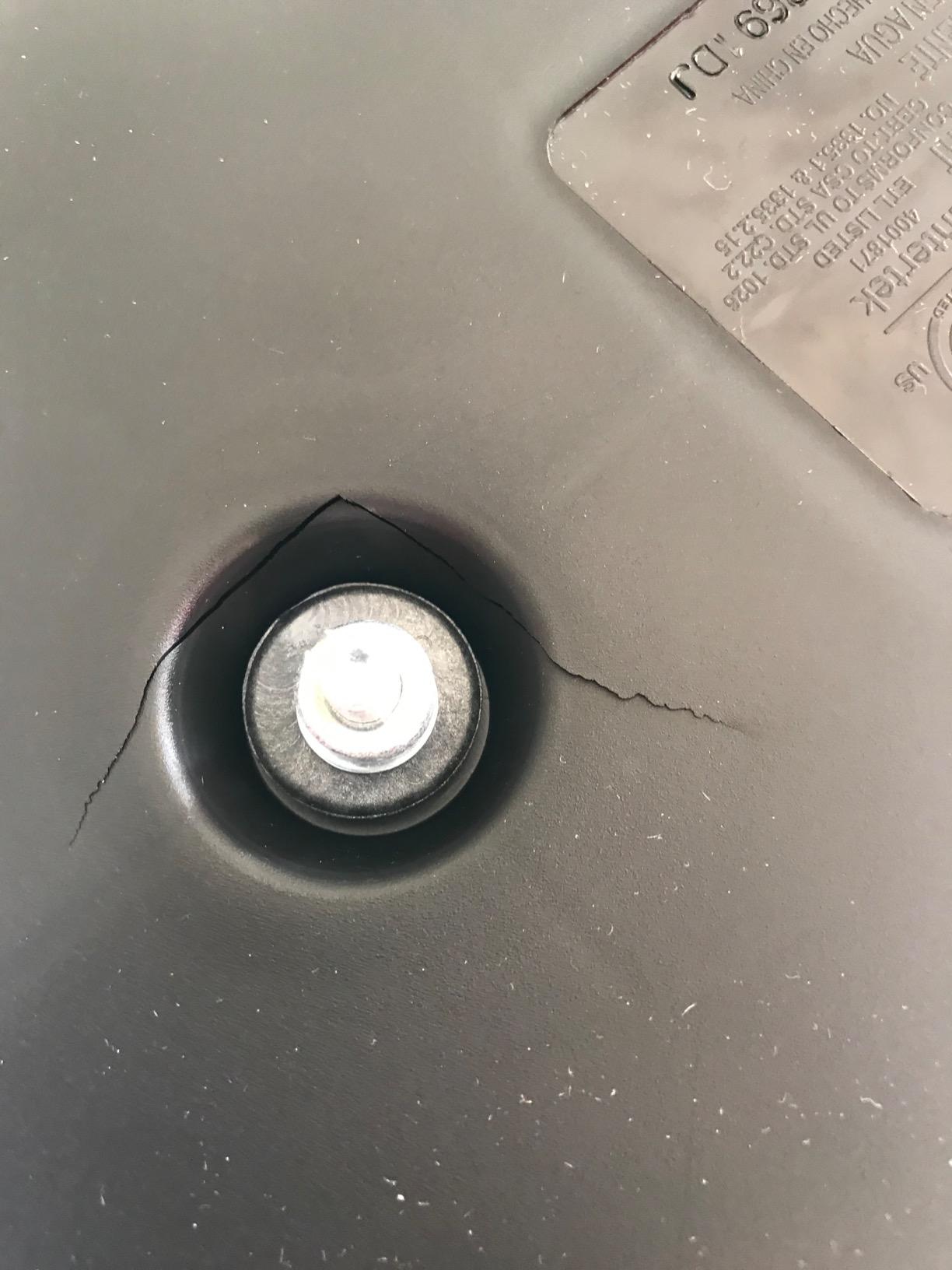
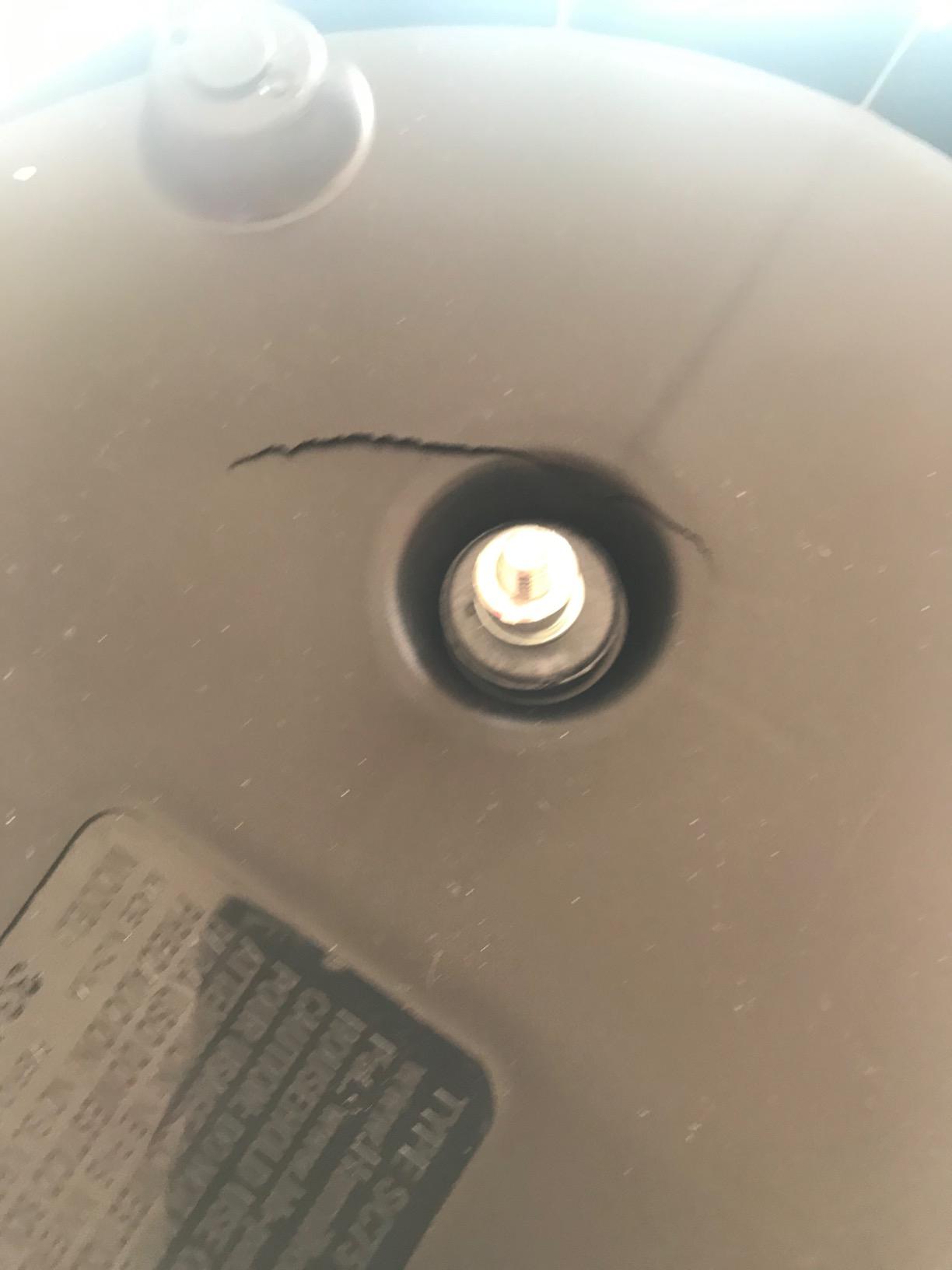
The gap is transport. There is no sealing gasket and no lid lock, so the glass lid rests on the crock rather than fastening to it, which makes this a stay-at-home cooker. The metal housing also grows hot toward the end of a long cook, so give it counter clearance if children are around.
At 13 pounds and 17.5 inches wide, it is the widest programmable model here and needs real counter or cabinet space.
Who this suits
Families who want programmability without a learning curve. The panel is readable, the sequence is short, and the automatic warm means nobody has to be home when the timer ends.
It is a strong pick for weeknight dinners, since it combines a modest wattage draw with a proper countdown.
Who should look elsewhere
If you plan to transport this cooker full, choose a model with a lid lock instead. The loose glass lid is a problem in a moving car.
Cooks who need searing or sous vide should look at a multi-function model rather than a pure slow cooker.
10. HOMECOOKIN 8-Quart Programmable: the Most Versatile
HOMECOOKIN 8 Quart Programmable Slow Cooker, Kitchen Appliances, Perfect Kitchen Small Appliance for Family Dinners, Red Stainless Steel
8-quart oval
320 watts
Digital timer
Stainless steel housing
Pros
- 8-quart oval fits whole chickens and roasts
- Not excessively heavy for its size
- Digital display and timer
- Removable ceramic crock
- Even heating for family batches
Cons
- Runs hot on low in our testing
- Exterior gets very hot
- Some lid seating and ceramic bow issues
- Smaller review base than the rest
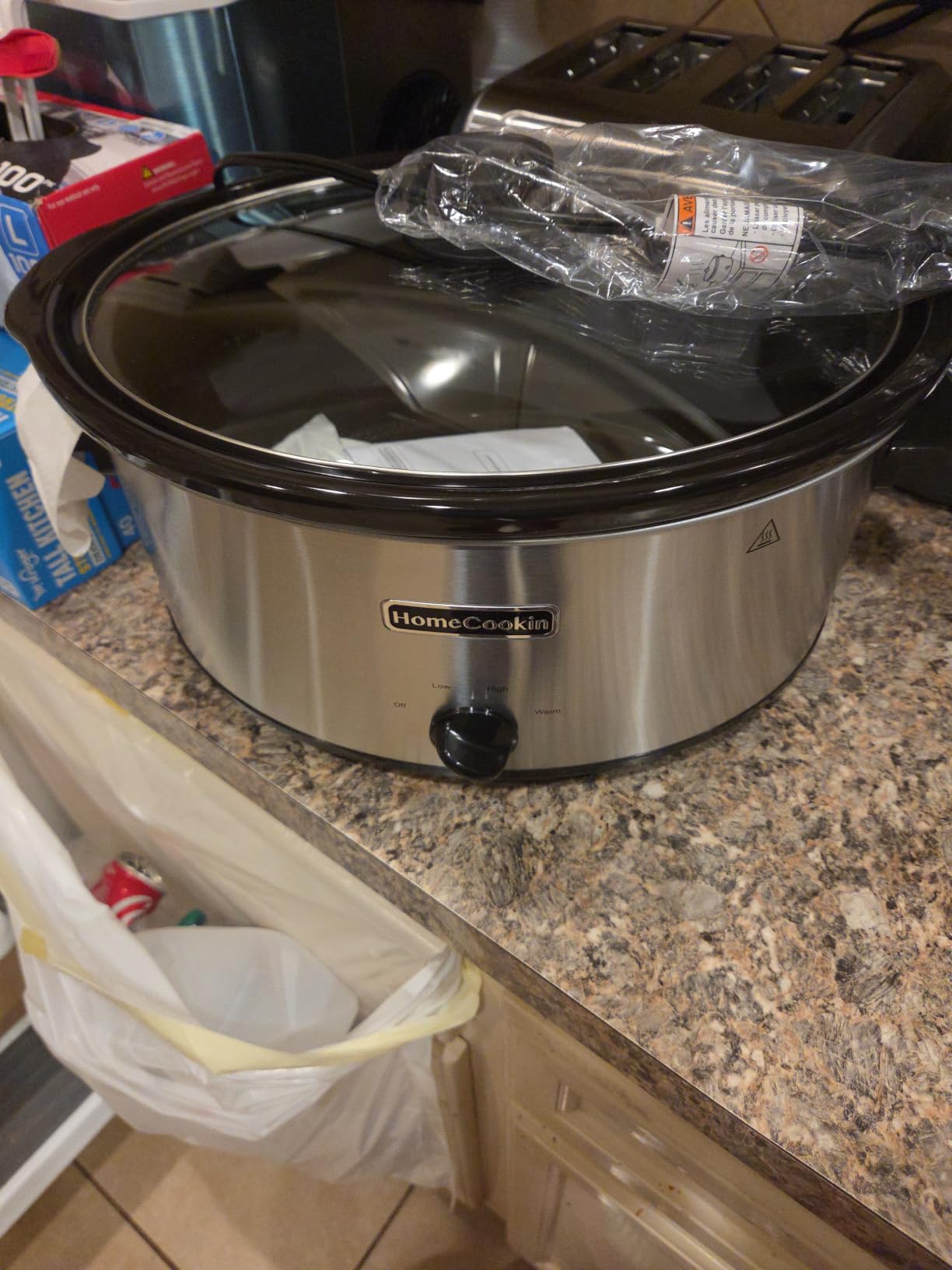
This is the pick for a first family slow cooker on a limited budget, and the 8-quart oval genuinely holds a whole chicken. At 10.7 pounds it is among the lighter 8-quart models in this group, which matters when one person is lifting the pot.
The digital display and timer let you set a cook and walk away, and in our testing the heat distributed evenly enough that a large pot of soup did not scorch at the edges, which is not something we can say for every model here.
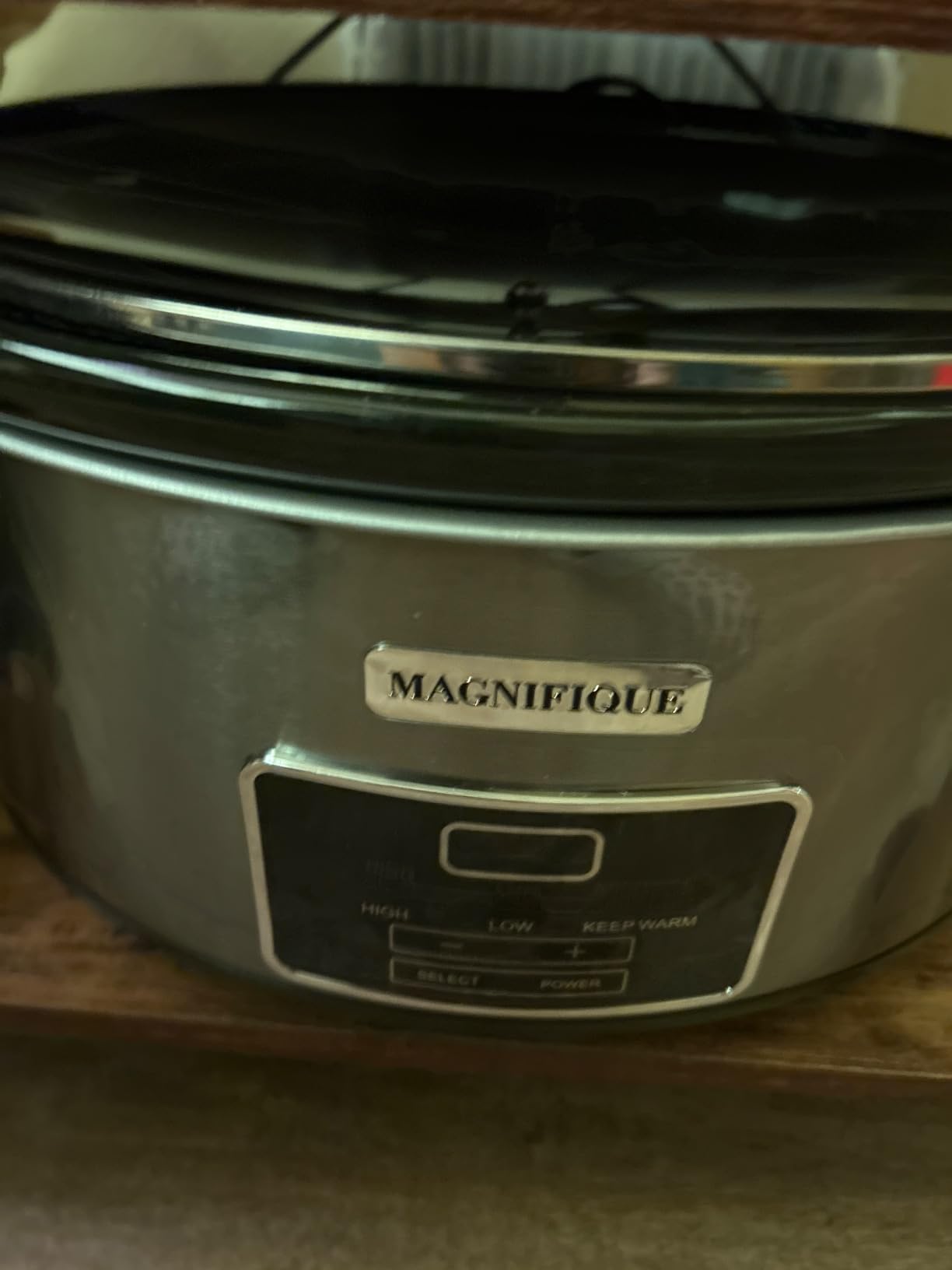
It does run hot. Our low setting behaved closer to a medium cook, so we reduced the recipe liquid and shortened the time. Buyers also report a very hot exterior that needs to be kept away from children, and occasional complaints about a lid that does not seat snugly or a slight bow in the ceramic pot.
Its review base is the smallest in our group at just over a thousand ratings, so treat the consensus with slightly more caution than the heavily reviewed models above. We are listing it as a budget option, not as the default.
Who this suits
First-time buyers and households buying a second or third cooker for a basement, gym or rental. A full 8-quart programmable pot at this spec level is worth a look on its own.
It suits cooks who already know their recipes and simply need a large programmable pot without moving up to a multi-function model.
Who should look elsewhere
If you are sensitive to a hot outer shell or have small children in the kitchen, skip this one and choose a model with cool-touch handles.
Anyone who plans to carry a full cooker to another house needs a lid lock, which this does not have.
What Size Slow Cooker Does a Family Need?
The 8-quart oval is the size we recommend most often, and for a family of four to six it is worth stepping up from a 6-quart model. A 7- or 8-quart cooker covers six to eight plus extra servings for the next day. Buy the oval shape when you cook whole chickens, rib racks or bread, because a round pot wastes usable width on a long cut.
The math underneath that answer is simple. Slow cookers work best filled between one-half and two-thirds of the way, so a 6-quart crock really cooks like a 4-quart pot most of the time. Families planning a week of meals from one cook need to size for the largest single load, not the average portion.
A compact breakdown makes the fit clearer than any single number can:
Two to three people: a 4- to 5-quart round model. Plenty of soup and chili, and easier to lift and store.
Four to six people: a 6-quart oval. This is the most common family size and fits an 8-pound chicken in a generous load.
Six to eight people: a 7- to 8-quart oval. A whole bird plus a side of vegetables in one pot.
Ten or more, or a holiday gathering: a 10-quart or larger. A 10-pound turkey will not fit below that.
Two questions come up constantly about this. Families of two absolutely can cook in a 6-quart cooker, but you will be making the same three dinners for four days unless you freeze the extra. And a 7-quart cooker is not wrong for a family of four, it is simply more pot than a weeknight needs, so buy it only if you batch cook or entertain often. And because the weekend feeding usually starts well before the meal, our [best ladder toss games for families](https://eatcreatesleep.net/best-ladders-toss-games-for-families/) picks are a good match for the same kind of crowd.
Why Does My Slow Cooker Burn Food?
Most burning comes down to three things: too little liquid, a lid that does not seal, or a low setting that is not actually low. Manufacturer support for one major brand confirms the temperature spread families run into, with low near 165F, medium around 185F and high near 212F, and individual units can sit hotter or cooler than those numbers.
Here are the causes in the order they actually show up in a family kitchen.
1. Filling the pot too high. A crock filled to the rim cannot boil without pushing liquid out around the lid, and once liquid drops the food above the line dries and scorches. Two-thirds full is the working maximum.
2. Thin layers in the center. Heat concentrates in the middle of many inserts, and reviewers repeatedly report scorched food in the center of a shallow pot while the edges stay cool. Stirring once, early, and keeping a sauce thin fixes most of it.
3. A model that runs hot on low. Users on cooking forums report that newer units from some brands cook hotter than older ones, and in our own testing three of the ten models behaved as a medium cook on low. That is a brand and model issue, not a user error.
4. A lid that does not seal. Slow cooking works by trapping steam, so a rattling or loose lid loses moisture and speeds up the cook. Several models here have a glass lid that seats loosely, and on long unattended cooks we preferred the ones with a tighter gasket or lock.
The practical fix for a family that is out of the house for ten hours is not a longer setting. It is choosing a model that finishes on a timer and drops to warm automatically, or reducing the recipe so it holds safely. A cooker left on low for ten hours with nothing left to boil is a cooker that will scorch.
Programmable vs Manual Dial: What Programmable Actually Means
A manual slow cooker has one heat dial with off, low, high and warm, and it runs at that setting until a person turns it off. A programmable cooker adds a countdown so the cook ends on its own, then shifts to a warm hold. For a family that works days, the countdown is the feature that turns a slow cooker from a weekend project into a weekday solution.
Within programmable there is another distinction worth understanding. A true digital programmable model lets you set a specific number of hours. A delay-start model lets you set a finish time so the cook begins later, which is useful if you want dinner ready exactly at 6. Several models here offer both, and the 8-quart nonstick model uses a delay timer on a simpler push-button panel.
Now the trap. Buyers on cooking forums report purchasing appliances described as programmable that turned out to have a manual dial with no timer at all, often because a delay-start function was mistaken for full programmability. Before you buy, check for a numeric display with a countdown. If the panel has no numbers, it is manual, whatever the box says.
What you actually give up by going manual is control over the finish time, not quality. Our top pick is manual, and the food came out just as well. You simply have to be the timer, which is only realistic if dinner happens at a predictable hour.
A useful rule: match the control type to your day rather than to your ambition. Fixed schedule and no interest in settings means a dial. Variable hours and long days means a countdown. Cooking techniques like braising, proofing or sous vide means a multi-function pot, like the 8.5-quart cooker covered earlier in this list.
Oval vs Round, Locking Lids and Cleaning
Oval or round is the first geometry question. An oval pot gives you width in one direction, so a long cut such as a rack of ribs or a whole chicken lies flat instead of curling against the wall. A round pot gives you even heating and usually a more efficient footprint, and it is the shape the multi-function cookers use. For family cooking, oval wins on what fits; for searing and versatility, round is more common.
The second question is the lid. A locking lid, or one that clips to the handles, is the difference between a cooker you can move and one you cannot. Only two of the ten models here have one, and if you host dinners away from home, that single feature should drive your choice more than any capacity difference.
Third is the insert. Stoneware is heavy and holds heat well, which suits slow cooking, but it can crack if it is dropped or shocked with cold water and it often needs a soak before the dishwasher. Nonstick aluminum is lighter, wipes clean faster, and usually goes straight through without soaking, at the cost of a coating you have to protect from metal utensils.
Nonstick-coated models are the easier option for a family that cooks cheesy or tomato-heavy meals. Stoneware is the better option for a family that wants one heavy pot to keep for a decade and cooks mostly soups, stews and roasts.
Whichever you pick, give the insert time to cool on its own before washing. Thermal shock is the most common cause of the cracked crock that shows up in reviews across the brands we tested.
Slow Cooker Safety, Recalls and Energy Use
Two questions about slow cookers come up more than any other, so we will answer them plainly. On recalls, check the current Consumer Product Safety Commission recall database and the manufacturer’s own notices before buying, and match the model number rather than the brand name. Recalls target specific models and dates, so a brand-level warning is not a model-level one.
On chemicals, the practical guidance is to buy from a manufacturer that states its glaze is lead-free, and to avoid buying cracked or chipped stoneware, where a damaged glaze is the only real concern. Never cook with an empty insert, keep the cord and housing away from water, and stop using any appliance with a frayed cord or a switch that no longer holds. Fires are far more often traced to a misused extension cord or a neglected unit than to the pan itself, which is why those two habits matter most.
Energy use is lower than most people assume. These are long, low-duty cycles, and the ten models here range from 200 watts to 1500 watts. A 375-watt cooker running ten hours consumes about 3.75 kilowatt-hours, which typically costs a few tens of cents, while a 1500-watt model over the same window costs substantially more. Cooking one big batch is cheaper per plate than running two small ones.
Our advice is to run one large batch rather than two small ones. It is easier to clean one pot, and you can always split the output across several containers in the fridge or freezer for the week ahead.
Frequently Asked Questions
What size slow cooker is best for a family?
A 6- to 8-quart oval cooker suits most families. A 6-quart model feeds four to six people comfortably, and a 7- or 8-quart model handles six to eight plus extra servings for the next day. Choose oval if you cook whole chickens, ribs or bread, since the shape fits long cuts flat. Step up to 10 quarts or more only if you regularly feed ten or more people or cook a whole turkey.
Why is my slow cooker burning food?
Three causes account for most burning. The crock is filled too high, so liquid boils away and the food above the line scorches. Heat concentrates in the middle of the insert, so a shallow layer cooks unevenly. Or the low setting on that particular unit runs hotter than expected, which several brands have been criticized for. Use no more than two-thirds of the pot, add liquid, stir once early, and if a model runs hot, treat low as a medium setting.
Which slow cooker is actually programmable?
Look for a numeric display with a countdown that counts down in hours. A panel with no numbers is manual, whatever the packaging says, and buyers have reported purchasing models described as programmable that turned out to be a dial only. Programmable models here run from 10 to 20 hours of cooking time, and most shift automatically to a warm hold when the timer ends. Delay-start is a separate feature that lets you choose a finish time.
Is a 7-quart slow cooker too big for a family of four?
It works, but a family of four rarely fills it during a weeknight. Slow cookers cook best between one-half and two-thirds full, so a 7-quart crock behaves like a 5-quart pot most of the time. Buy it if you batch cook for the freezer, host often or feed a 7-pound bird in one piece. If neither applies, a 6-quart oval is easier to lift, stores smaller and serves the same number of people.
Do slow cookers leach chemicals into food?
Choose a manufacturer that states its stoneware glaze is lead-free, and never cook with a cracked or chipped insert, where a damaged glaze is the only real concern. The safer everyday habits matter more: cook with food or liquid in the pot, never empty, keep cords and the housing away from water, and stop using any unit with a frayed cord or a switch that will not hold. For recall information, search the specific model number in the current Consumer Product Safety Commission database.
Oval or round slow cooker, which is better for a family?
Oval is better for family cooking because the extra width fits long cuts such as a whole chicken, a rack of ribs or a bread loaf flat instead of curling against the wall. Round cookers are more common on multi-function models that sear and saute, and they usually heat evenly. Choose oval for a single big cut, and round if you want one pot for searing, slow cooking and finishing in the oven.
How much does it cost to run a slow cooker for 10 hours?
It depends on wattage, and the range across these ten models runs from 200 watts to 1500 watts. A 375-watt cooker running ten hours uses about 3.75 kilowatt-hours, which is a few tens of cents on a typical residential rate, while a 1500-watt model costs several times that over the same window. Cooking one large batch is cheaper per plate than running two smaller ones, since you use the same energy for more servings.
Conclusion
The best slow cookers for families in 2026 come down to capacity, schedule and how much you mind cleaning. For most households we recommend the 8-quart oval in one of two forms: a manual dial model if your dinner hour is fixed and you want the simplest, most reliable pot on the counter, or an 8-quart programmable model with an automatic switch to warm if your day runs long or your hours shift.
Our top pick is the 8-quart manual cooker, because it handled the widest range of family-size loads consistently in our testing and the insert cleaned in minutes. Go bigger only when you are feeding ten or more or cooking a whole bird, in which case the 10-quart portable model is the right tool. If you want one pot to sear, braise and finish in the oven, the 8.5-quart multi-function cooker replaces two appliances instead of adding one.
Whichever you choose, size for your largest single load, buy the oval if a whole chicken is on the menu, and run one big batch rather than two small ones. That is the habit that makes a slow cooker pay for itself.