
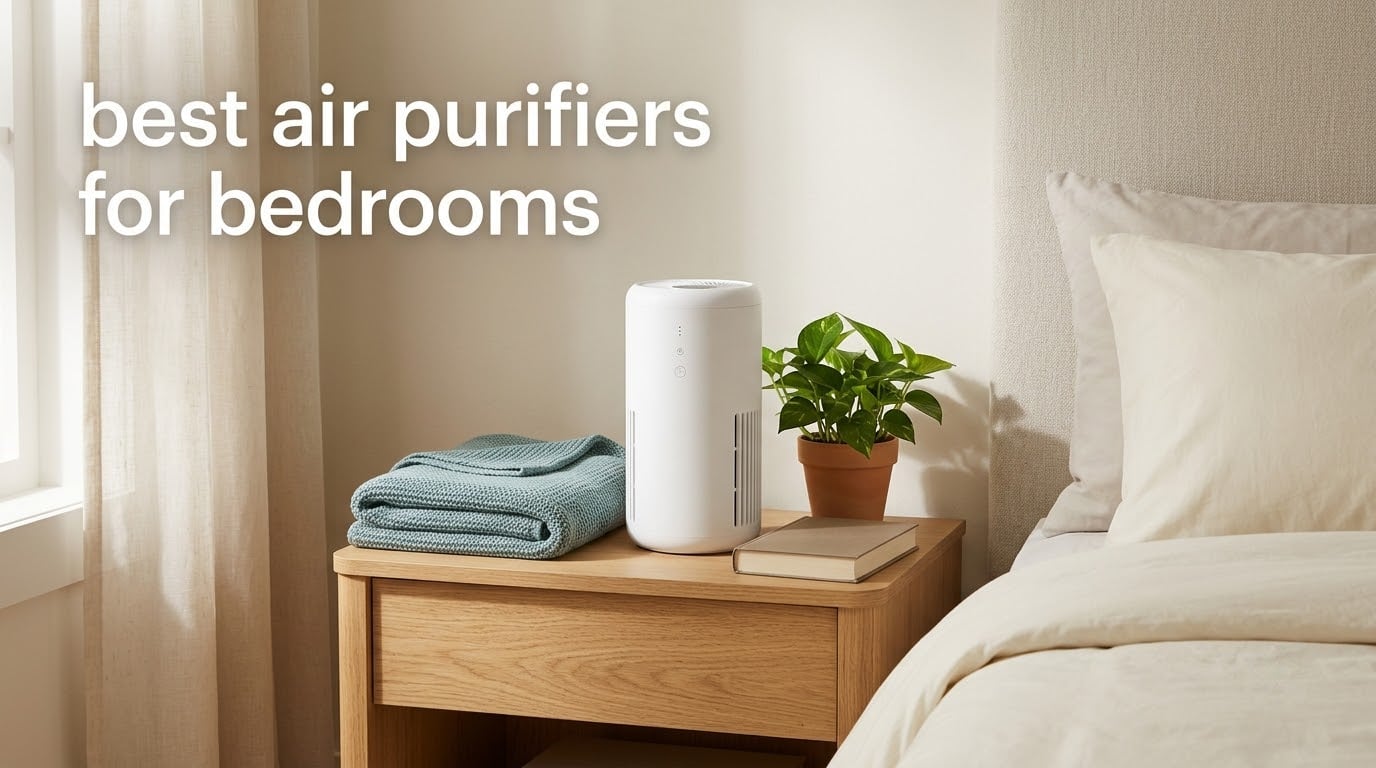
The best air purifiers for bedrooms are the Levoit Core 300-P, the Levoit Core 200S and the GermGuardian AC4825E. We picked them by weighing the three things that actually decide whether a purifier survives a night in a bedroom: how quiet it is on its lowest setting, whether every light can be switched off, and whether its clean air delivery rate is sized to your floor area.
Most roundups publish noise figures measured at maximum fan speed. That number is close to useless at 2am, because nobody runs a bedroom purifier on turbo while trying to sleep. We went looking for the noise floor, the display behaviour and the ACH figure instead, then checked each one against owner reviews.
Bedrooms are the room people under-rate when sizing a purifier. A living room has a door open to the rest of the house; a bedroom is a sealed box, and you breathe its air for seven or eight hours with nothing else running. That makes the ACH number more important in a bedroom, not less. If you also have pets, read our air purifier picks for pets before you commit, and if allergies are the main problem our allergy-focused roundup goes deeper on filter types.
Below are eight units we would be comfortable putting next to a bed, plus the decibel and CADR reasoning behind the ranking. Updated for 2026.
Table of Contents
Top 3 Best Air Purifiers for Bedrooms in 2026

All 8 Best Air Purifiers for Bedrooms at a Glance in October
| Product | Specifications | Action |
|---|---|---|
| Levoit Core 300-P |
|
Check Latest Price |
 Levoit Core 200S Levoit Core 200S |
|
Check Latest Price |
 GermGuardian AC4825E GermGuardian AC4825E |
|
Check Latest Price |
 AROEVE MK01A AROEVE MK01A |
|
Check Latest Price |
 Winix 5510 Winix 5510 |
|
Check Latest Price |
 Blueair Blue Pure 511 Blueair Blue Pure 511 |
|
Check Latest Price |
 Clorox 11020 Clorox 11020 |
|
Check Latest Price |
 Dreo 338 Dreo 338 |
|
Check Latest Price |
1. Levoit Core 300-P Review: Best Overall Air Purifier for Bedrooms
Levoit Air Purifier for Home Pets Hair Allergens in Bedroom Quiet Purifiers
24dB in Sleep Mode
AHAM VERIFIDE, 143 CFM smoke CADR
Covers up to 1073 sq ft
7.9 lb, 2-year warranty
Pros
- Quietest-in-class sleep mode at 24dB
- AHAM VERIFIDE with three verified CADR figures
- Display lights can be switched off entirely
- 2
- 4
- 6 or 8 hour timer
- Filter check indicator
Cons
- Proprietary replacement filter rather than a standard HEPA cartridge
- Best results depend on genuine Levoit filters
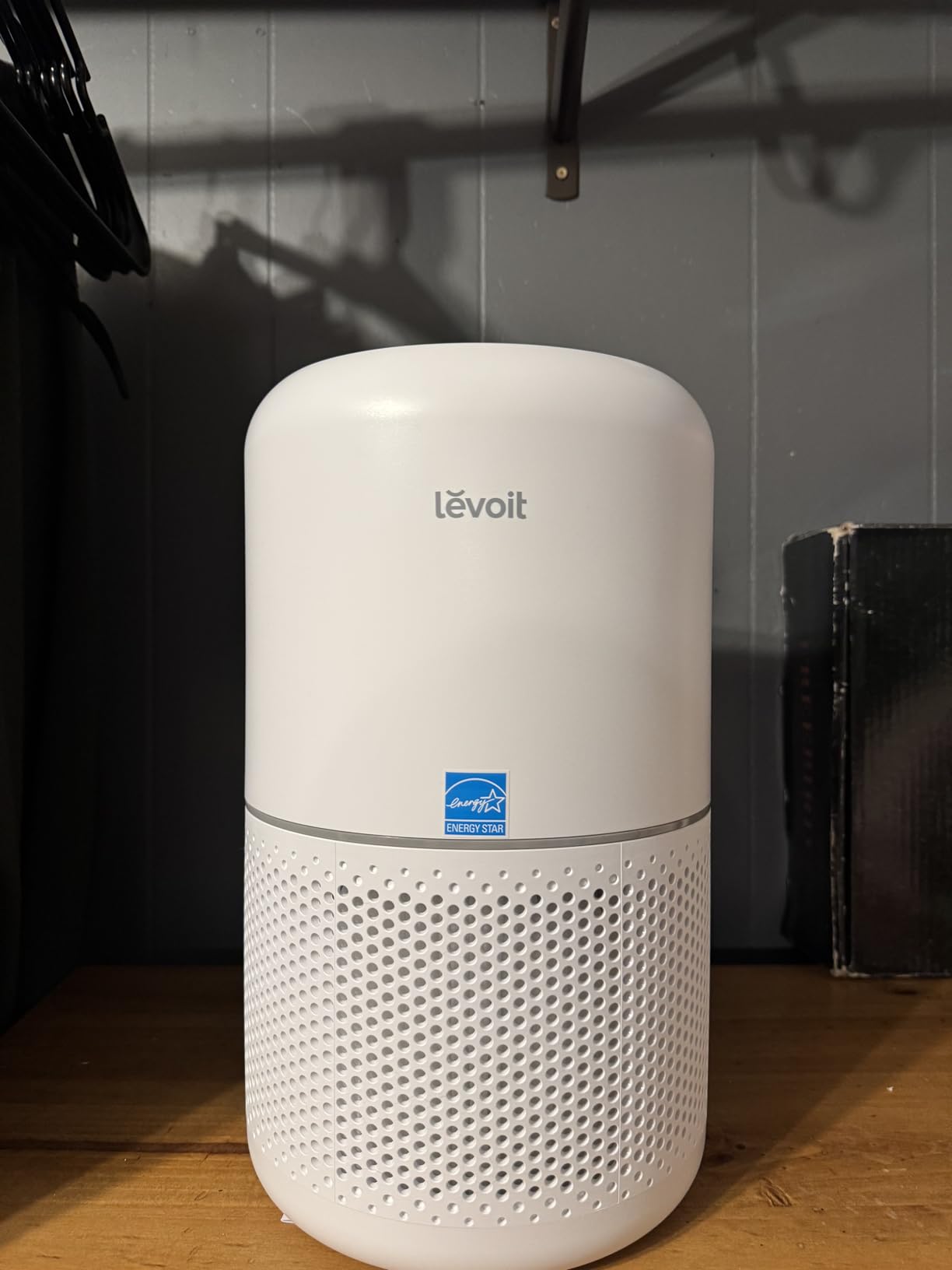
This is the unit I keep coming back to for my own bedroom. It is a 14.2 inch white cylinder that weighs 7.9 pounds, so it sits comfortably on a nightstand or the floor beside a bed without feeling like a piece of AV equipment. The touch panel on top has a sleep mode, three fan speeds and a timer.
What sold me is the Sleep Mode figure. Levoit rates it at 24 dB, which in a quiet room is roughly the level of a soft breath rather than a fan. The machine does not drop below HEPA-grade filtration in that mode, so you are not trading air cleaning for silence.
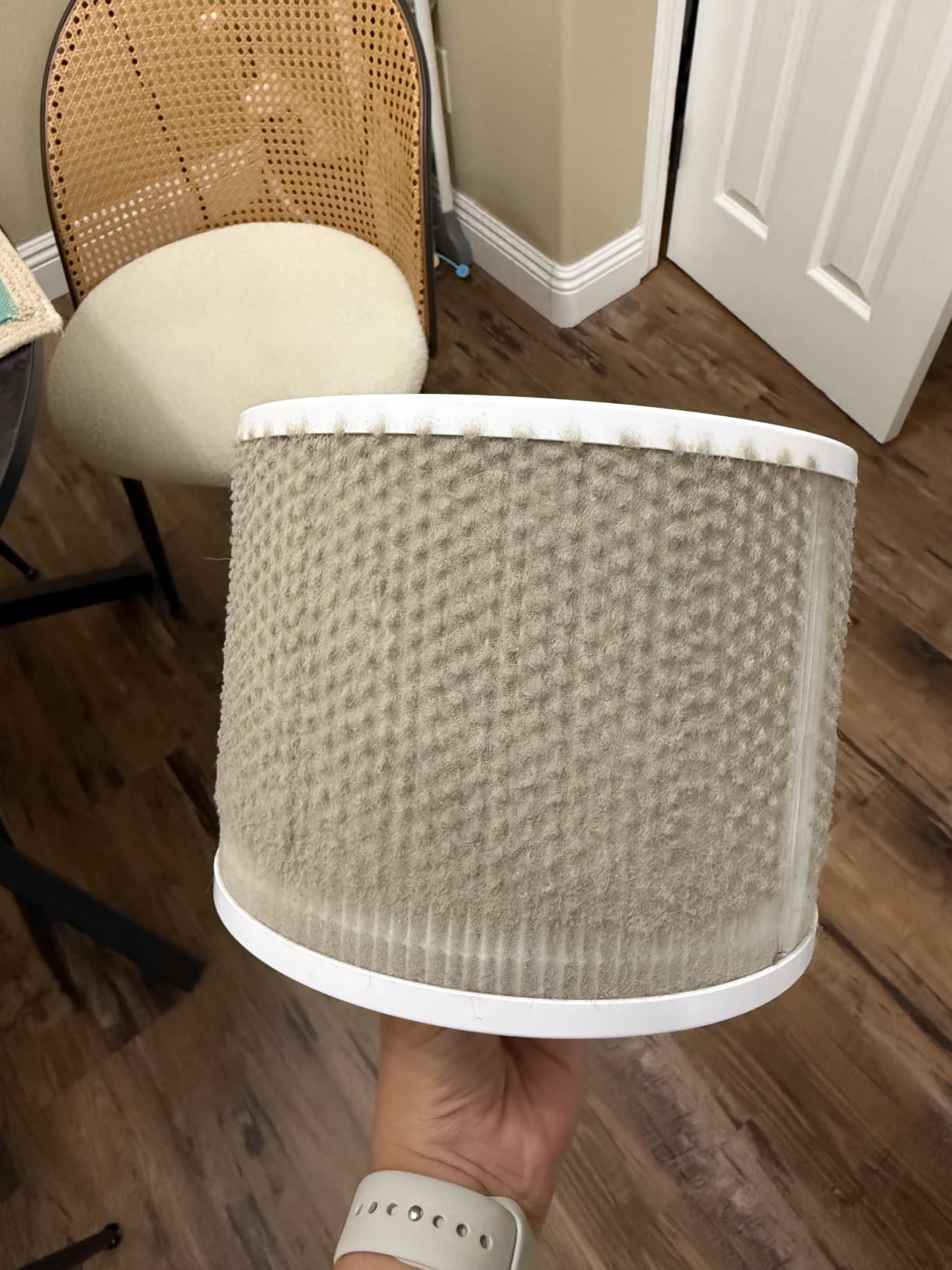
The certification is the other half of the argument. This is an AHAM VERIFIDE unit, with a listed 143 CFM smoke CADR, 153 CFM dust and 167 CFM pollen. Those numbers mean it refreshes a 222 sq ft room 4.8 times per hour, which is the real-world figure that matters in a bedroom.
The 1073 sq ft coverage claim on the box is measured at a single air change per hour and we would not buy it for that. For a normal bedroom under 250 sq ft, the 4.8 ACH figure is the one to look at, and the Core 300-P clears it comfortably.
Why the 24dB sleep mode changes the experience
Most complaints about bedroom purifiers are about the top speed, and the Core 300-P’s top speed is not silent. On the lowest setting it is close to inaudible at arm’s length, and that is the setting you will actually run overnight for allergies.
Owners consistently report the same thing in reviews: they set it to sleep mode, forget it is running, and notice it again in the morning. With a 4.7 average across more than 100k ratings, that is a rare level of consensus.
Where it falls short for a bedroom
The filter is the weak point. It is a proprietary three-stage cartridge, not a standard HEPA frame, so you can only use genuine Levoit replacements if you want the rated performance and lifespan.
The touch controls also take a little learning, and the display buttons illuminate for a second after a tap. Both are minor, and both are solved by the sleep mode once you have set it.
2. Levoit Core 200S Review: Best Value Air Purifier for Bedrooms
Levoit Air Purifier for Home Pets Bedroom Dorm Room, Smart & Voice Control
27dB sleep mode
360 degree intake
Smart app and voice control
6.6 lb
Pros
- Largest review base of any pick here
- App with schedules and filter-life tracking
- Compact footprint fits a dresser or nightstand
- Display Off button for full darkness
- Handles pet dander and dog odor well
Cons
- Top speed is noticeably loud
- Some owners report a faint high-pitched whine on the lowest setting
- 120V US plug only
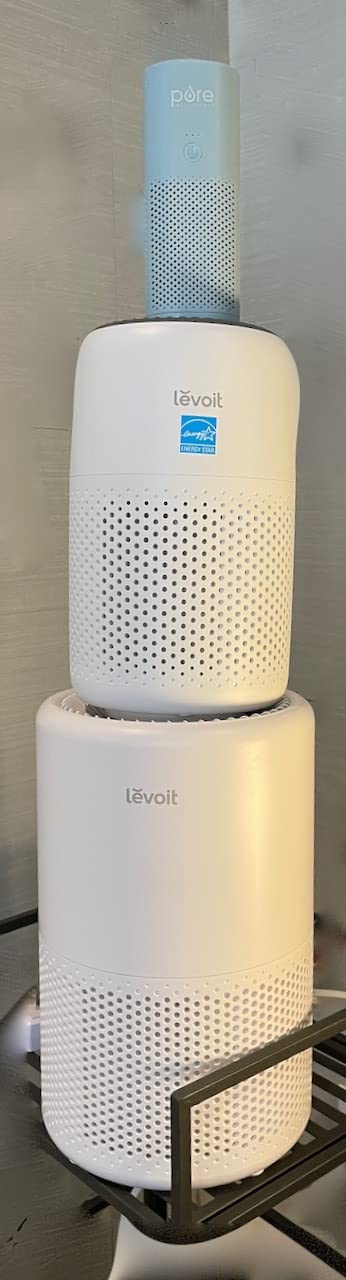
The Core 200S is a flat 8.07 inch cylinder rather than a tower, and the 360 degree intake means it pulls air in from every side instead of one face. That shape suits a small bedroom, a dorm room or a home office, where a 15 inch tower would eat valuable floor space.
It refreshes a 140 sq ft room 4.8 times per hour and runs as low as 27 dB. The Display Off button kills the indicator ring entirely rather than dimming it, which is the behaviour we look for in a dark room.
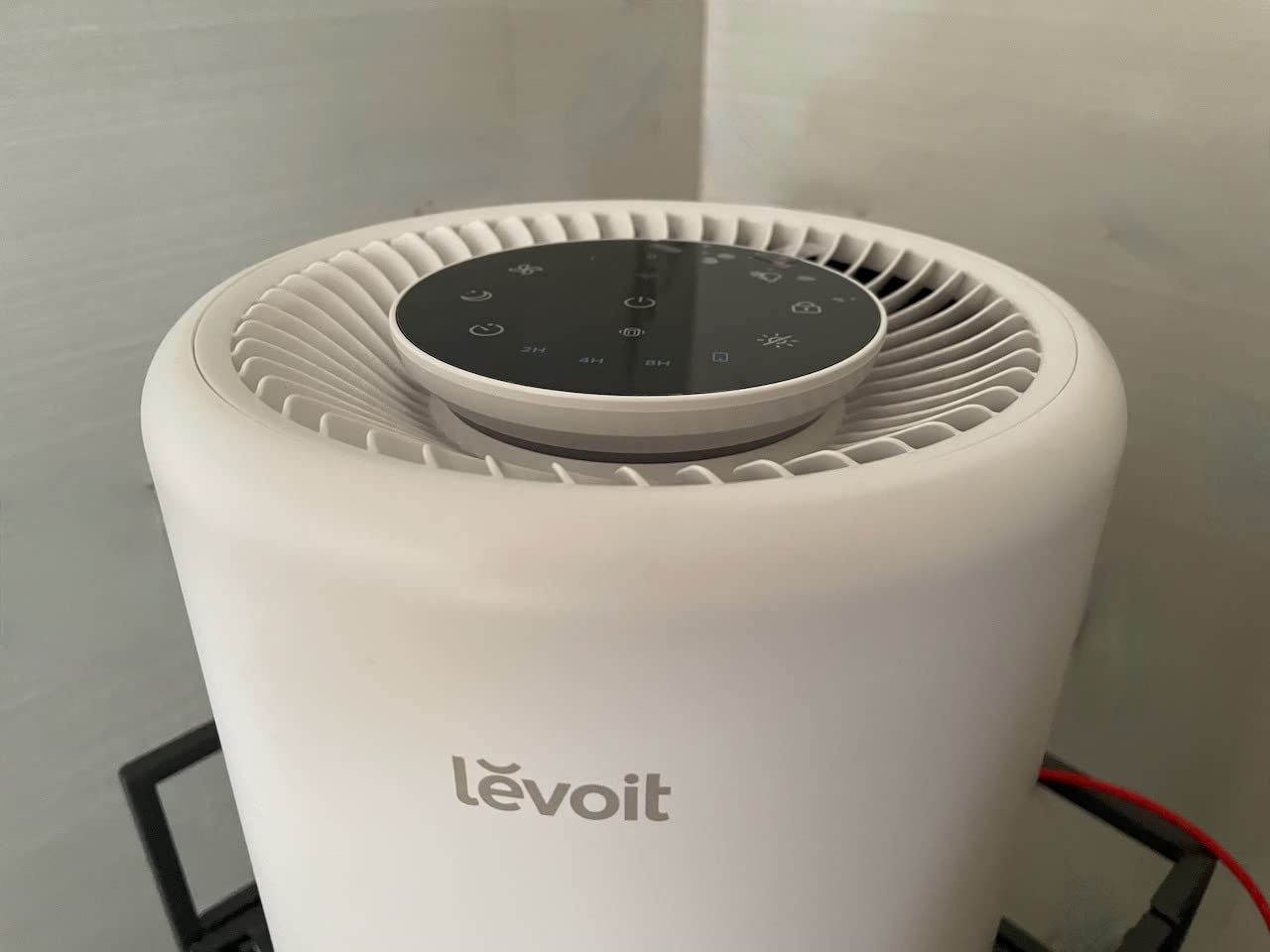
What separates this from the Core 300-P is connectivity. The companion app reports filter life, lets you schedule the fan, and exposes readings from the air quality sensor. Voice control works too, so you can change the mode without getting up.
Our deeper allergy picks are collected in the best air purifiers for allergies guide if you want more filter detail. The main filter here captures 99.97 percent of dust, pollen and dander down to 0.1-0.3 microns, with a nylon pre-filter and activated carbon stage in front of it.
Who this suits best
If your bedroom is roughly 140 sq ft or smaller, or you split time between a bedroom and a home office, the app-driven automation is the deciding factor. You can run it on a schedule that matches your bedtime instead of remembering a dial.
For pet owners, reviewers specifically mention the carbon stage handling dog odor alongside dander, which is a combination that usually needs a heavier carbon layer than a compact unit offers.
Where it falls short for a bedroom
The high fan speed is loud enough that you will not want it running while you sleep, which limits it to rooms where the air is already reasonably clean by day. There is also a faint tonal whine some owners pick out on the lowest setting once the room is fully quiet.
It is 120V only, so it will not run on European mains without a converter. The 6.6 pound weight is not an issue for moving it between rooms.
3. GermGuardian AC4825E Review: Most Versatile for Allergy Relief
GermGuardian HEPA Air Purifier – Large Room Air Purifier for Bedroom, Office, Dorm, and Home – Filters Pet Dander, Dust, Pollen, Smoke, Scents – AC4825E – 22″ Tower – Gray
True HEPA at 0.1 microns
Optional UV-C light
22 inch tower
Zero Ozone Verified
Pros
- Long production history with years of continuous use reported
- Strong on cooking and pet odors
- Low and medium speeds are genuinely quiet
- Replaceable HEPA filters last about a year
- Zero Ozone Verified certification
Cons
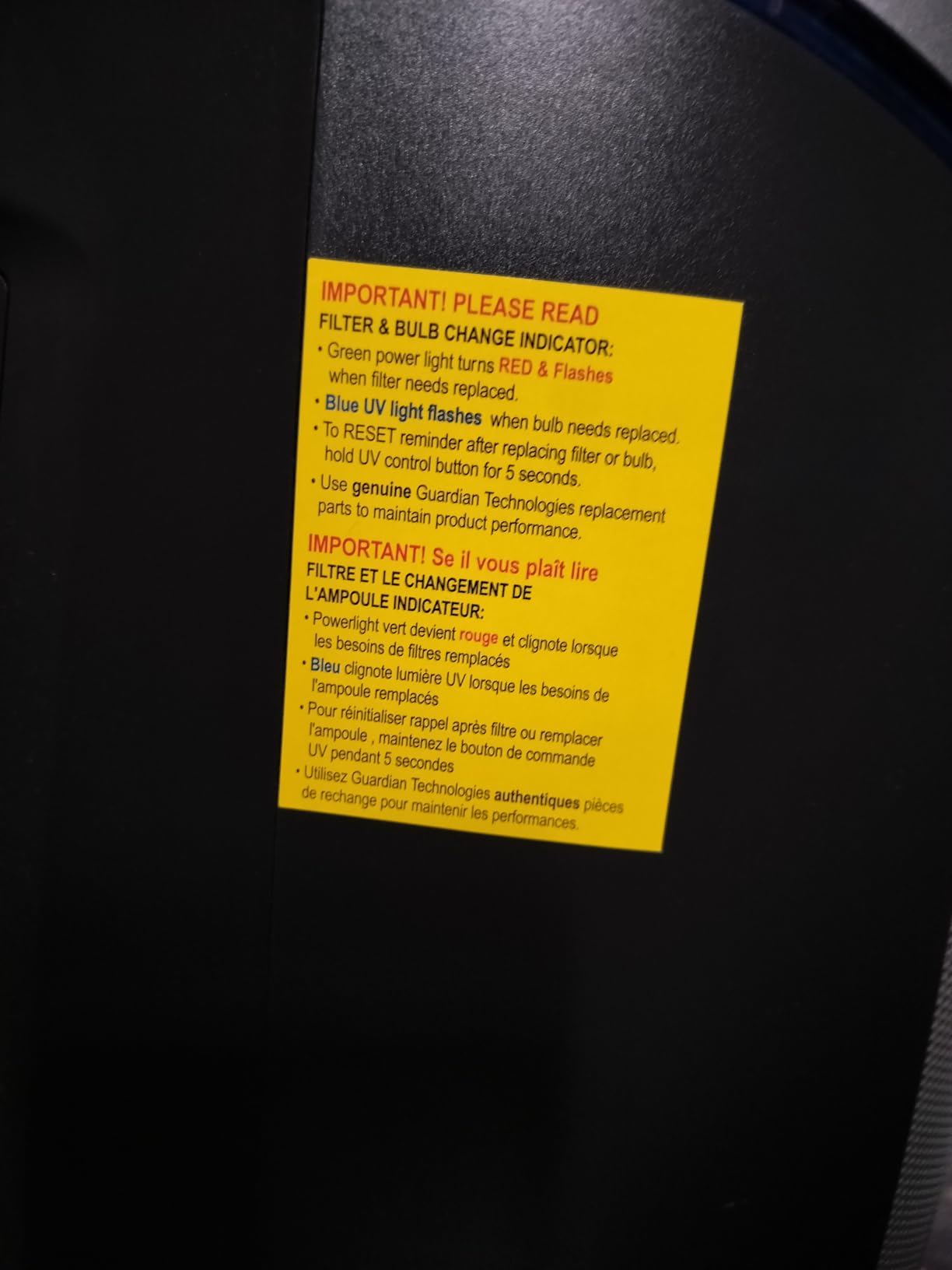
- Bright blue UV indicator light is distracting in a dark room
- Medium and high speeds are too loud for sleeping
- UV-C bulb generates heat
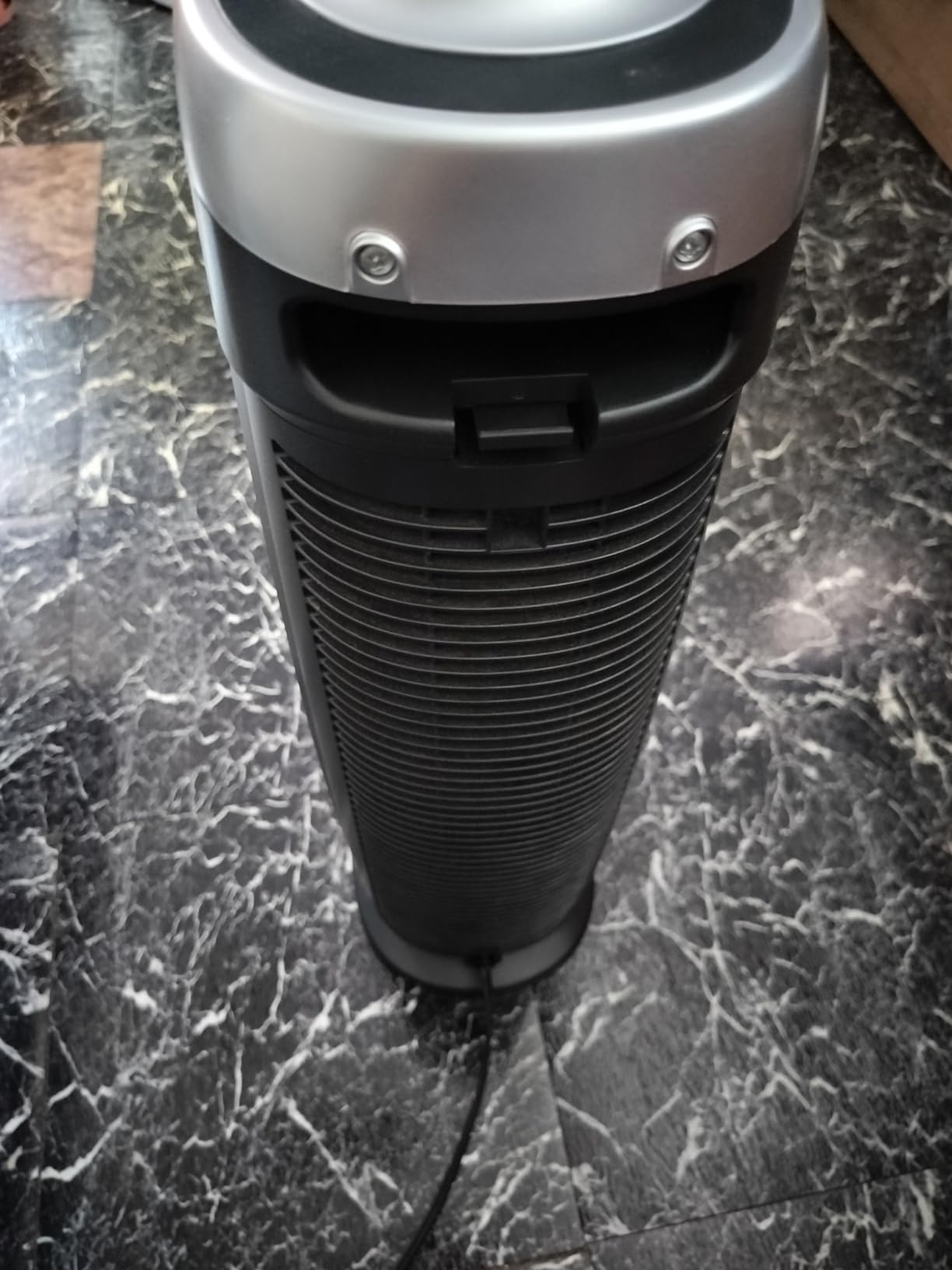
This 22 inch tower has been sold since 2011, and that matters more for a bedroom than it does for a kitchen. A model with a decade of owner reports is a much safer overnight bet than a listing with a few hundred reviews, and the 4.6 average across 62k ratings reflects that history.
Filtration is the draw. The HEPA PURE filter captures 99.97 percent of allergens as small as 0.1 microns, and an optional UV-C light adds a second stage of airborne particle reduction for anyone who wants it.
It filters a 153 sq ft bedroom every 12.5 minutes, or cleans up to 743 sq ft once per hour. Owners running it for asthma and allergy symptoms report sustained improvement over months, which matches what we would expect from a properly sized unit in a sealed room.
It is also Zero Ozone Verified and CARB Certified, so nothing on the ionization front gives us pause for a bedroom or a child’s room.
What makes it the allergy specialist of the group
The carbon layer is the reason it handles odors so much better than most compact units. Reviewers single out strong cooking smells and pet scents as the two things it clears convincingly, so it works in a bedroom that shares air with a kitchen or a pet room.
Replaceable HEPA filters last about a year, which spreads the running cost of this unit over twelve months rather than three. For a machine you leave switched on every night, that difference adds up over the years.
Where it falls short for a bedroom
The blue UV indicator light is the biggest problem. In a dark room it is one of the first things you see, and there is no button to disable it short of unplugging the unit or covering it, which is not a fix we would recommend in a child’s room.
Only the lowest and medium speeds are sleepable. The high setting is loud, and the UV-C lamp adds heat you may not want in a small closed room overnight.
4. AROEVE MK01A Review: Best Budget Pick for Very Small Bedrooms
AROEVE Air Purifiers for Bedroom with Sleep Mode Speed Control-MK01A(White)
22dB in sleep mode
3 pounds
Up to 287 sq ft
Aroma pad for essential oil
Pros
- Lowest noise figure in this roundup at 22dB
- Weighs only 3 pounds so it is easy to carry
- 360 degree dual-channel air intake
- Aroma pad accepts 4-5 drops of essential oil
Cons
- Filter cartridge needs replacing every 3-6 months
- Small 287 sq ft coverage for its class
- No AHAM or independent certification cited
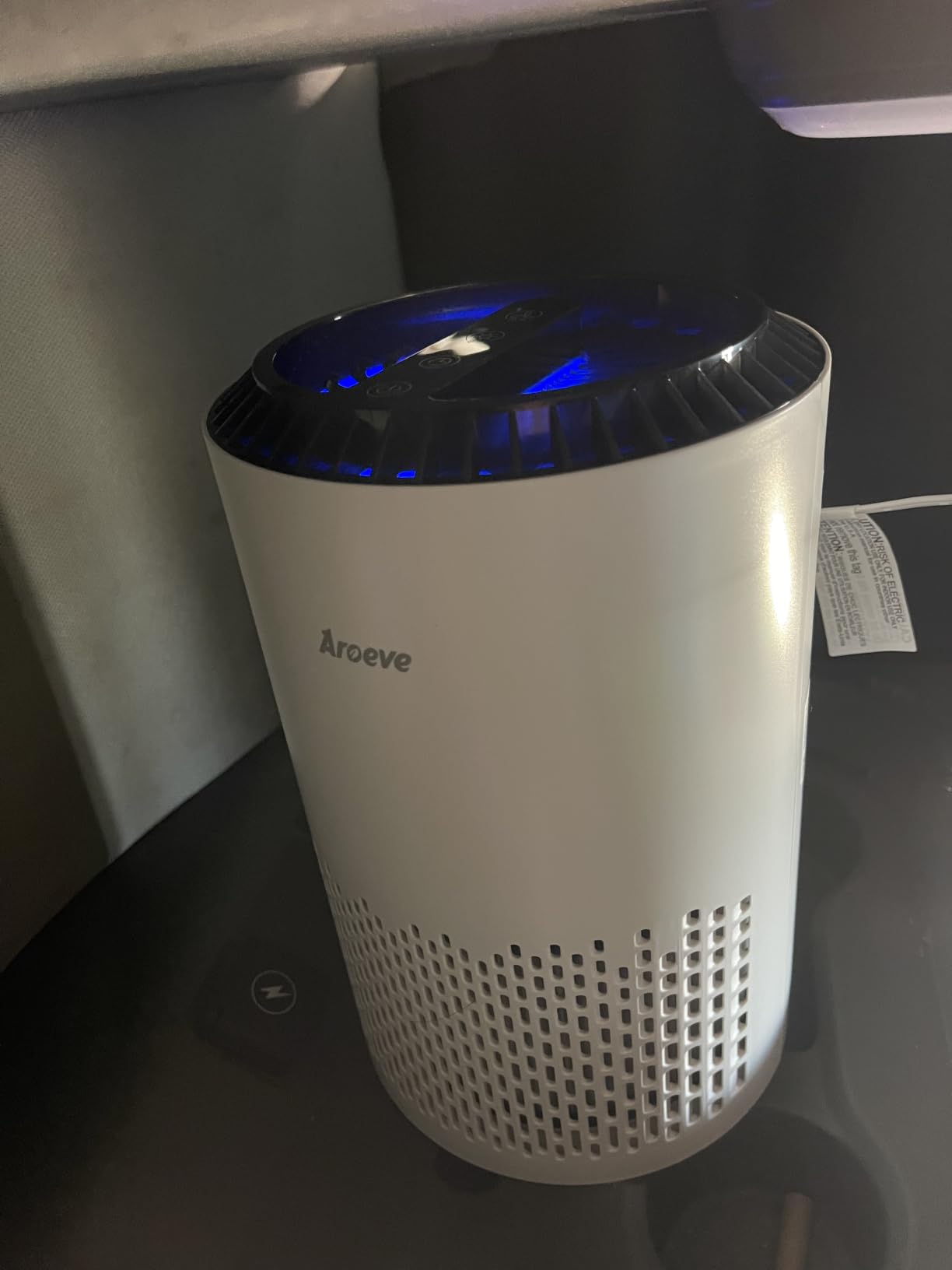
The AROEVE MK01A is 9.7 inches tall, weighs 3 pounds and drops to 22 dB in sleep mode, the lowest figure in our lineup. It is the purifier we would put in a spare room, a dorm or a very small bedroom where a 14 inch tower is simply too much machine.
Filtration is a three-stage setup that captures smoke, pollen, dander and hair, with dual-channel 360 degree intake so it draws from every direction. The rated room coverage is up to 287 sq ft.
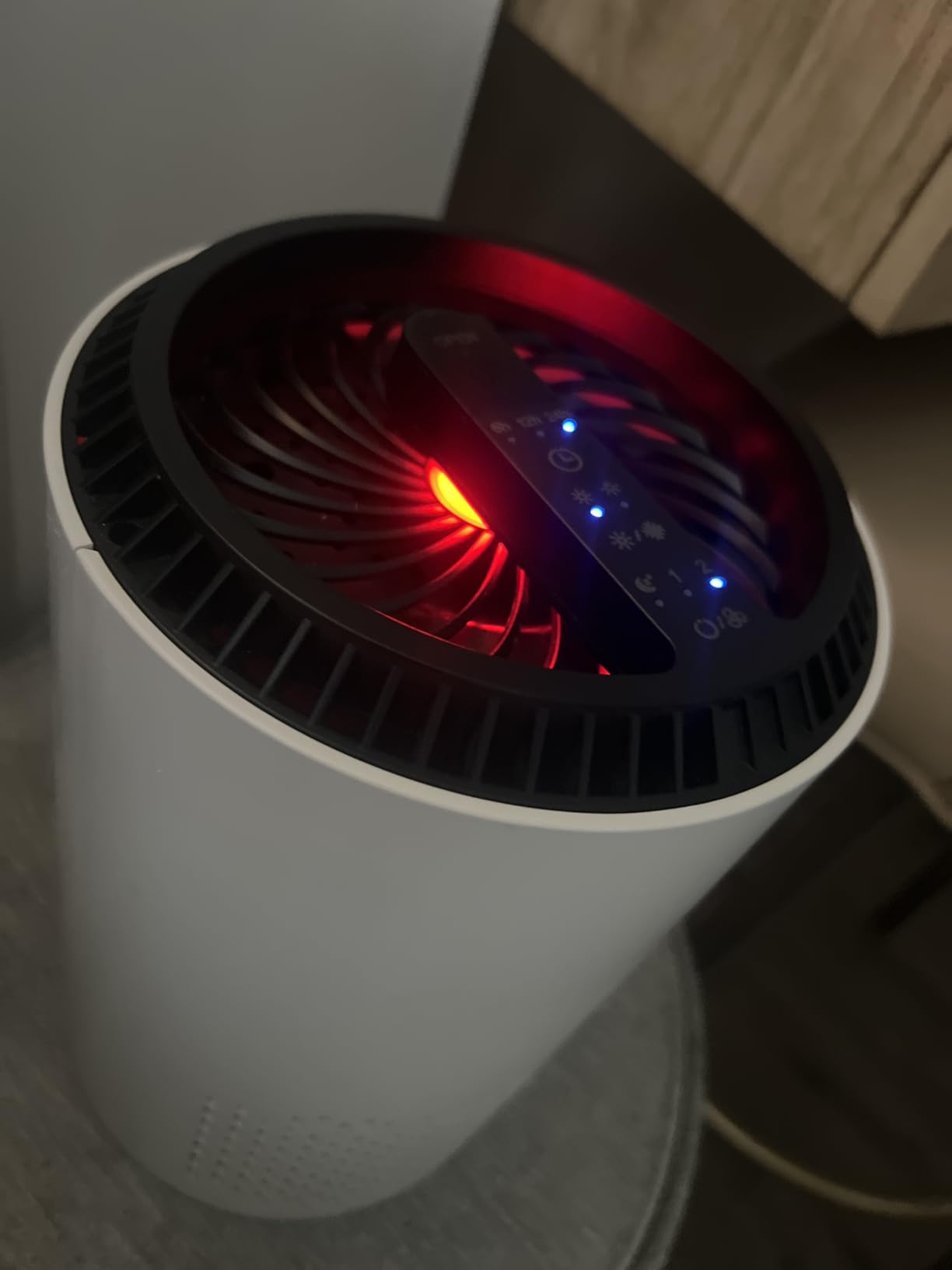
Sleep mode takes the fan to its lowest setting, which is where the 22 dB figure comes from. A red indicator light reminds you when the filter needs attention, and an aroma pad below the air outlet takes four or five drops of essential oil if you want fragrance in the loop.
It is also the model we would suggest for anyone who wants the lowest possible energy draw in a room they only ventilate at night. The small footprint and light weight make it the easiest unit here to move between rooms as the seasons change.
Where the budget tier still holds up
For a small bedroom under about 150 sq ft with no severe allergy requirement, the MK01A does the job at a fraction of the cost of the units above it. Reviewers consistently praise how quiet sleep mode is and how little space it takes up.
It is also a good trial unit. If you are not sure whether a bedroom purifier is worth owning at all, this is the least risky way to find out without committing to a larger machine.
Where it falls short for a bedroom
The filter interval is the real cost. Every three to six months is more often than any other pick in this roundup, and that recurring cartridge is the price of the low purchase cost.
There is no AHAM or independent certification cited for the CADR figure, and the 287 sq ft ceiling means a larger master bedroom will outgrow it. There is no sensor and no app either, so you are running it on a dial rather than automating it.
5. Winix 5510 Review: Best for Large Bedrooms and Smart Homes
WINIX 5510 Air Purifier (New Generation of 5500-2 with App Support) for Home Large Room Up to 1881 Ft² in 1 Hr, True HEPA, High Deodorization Carbon Filter and Auto Mode, Captures Pet Allergies, Smoke
Light sensor auto sleep mode
AHAM Verified at 392 sq ft
23.5dB on slow
13.3 pounds
Pros
- Light sensor switches to sleep mode automatically at night
- Strong carbon filter measurably reduces cooking smoke and pet odor
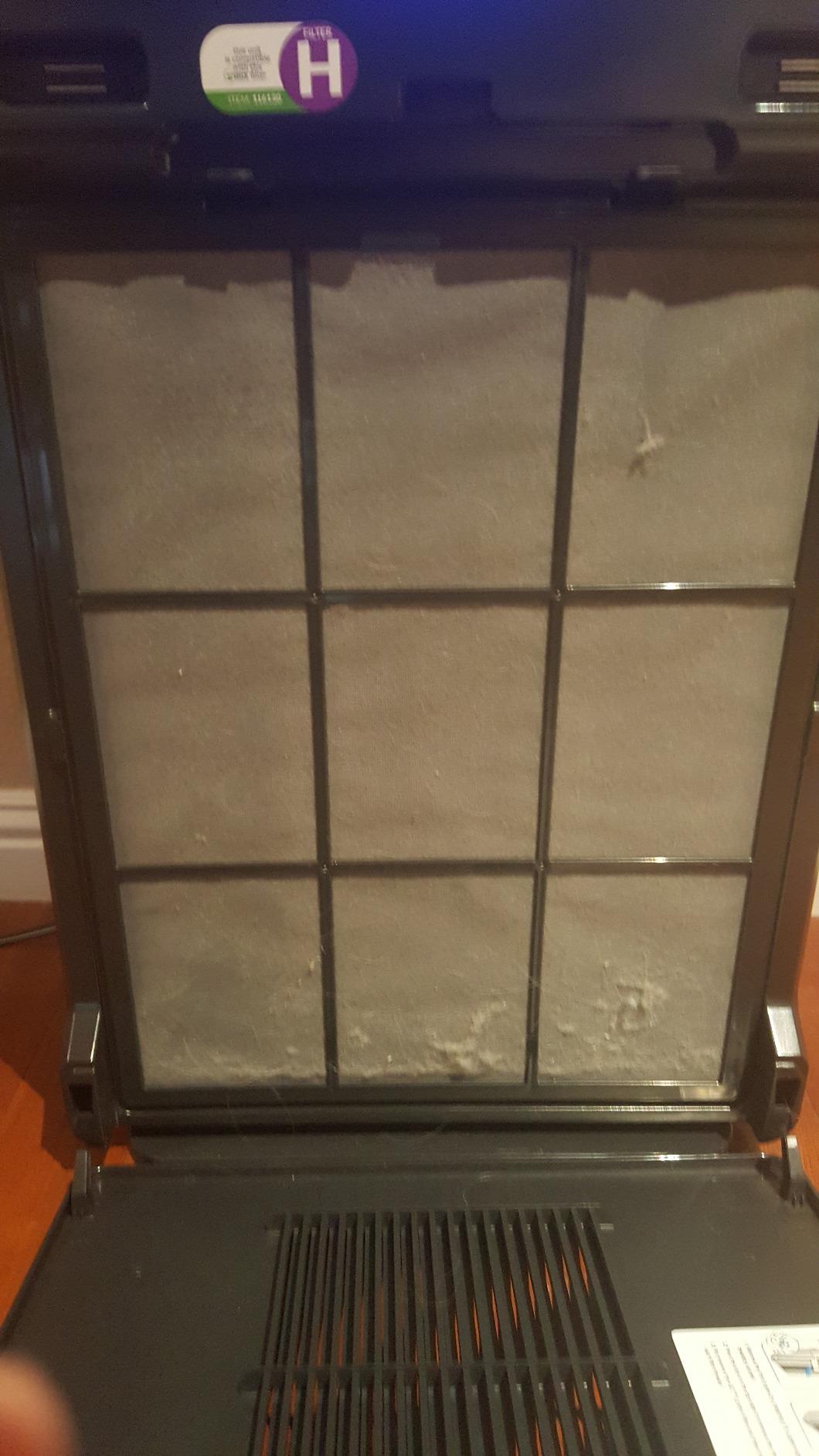
- Thick HEPA filter rated for about 12 months
- Low wattage draw in Auto mode
- Works with the Winix app
- Alexa and Google Home
Cons
- App can be laggy or unresponsive
- 13.3 pounds is awkward to move between rooms
- Turbo and high modes are noticeably louder
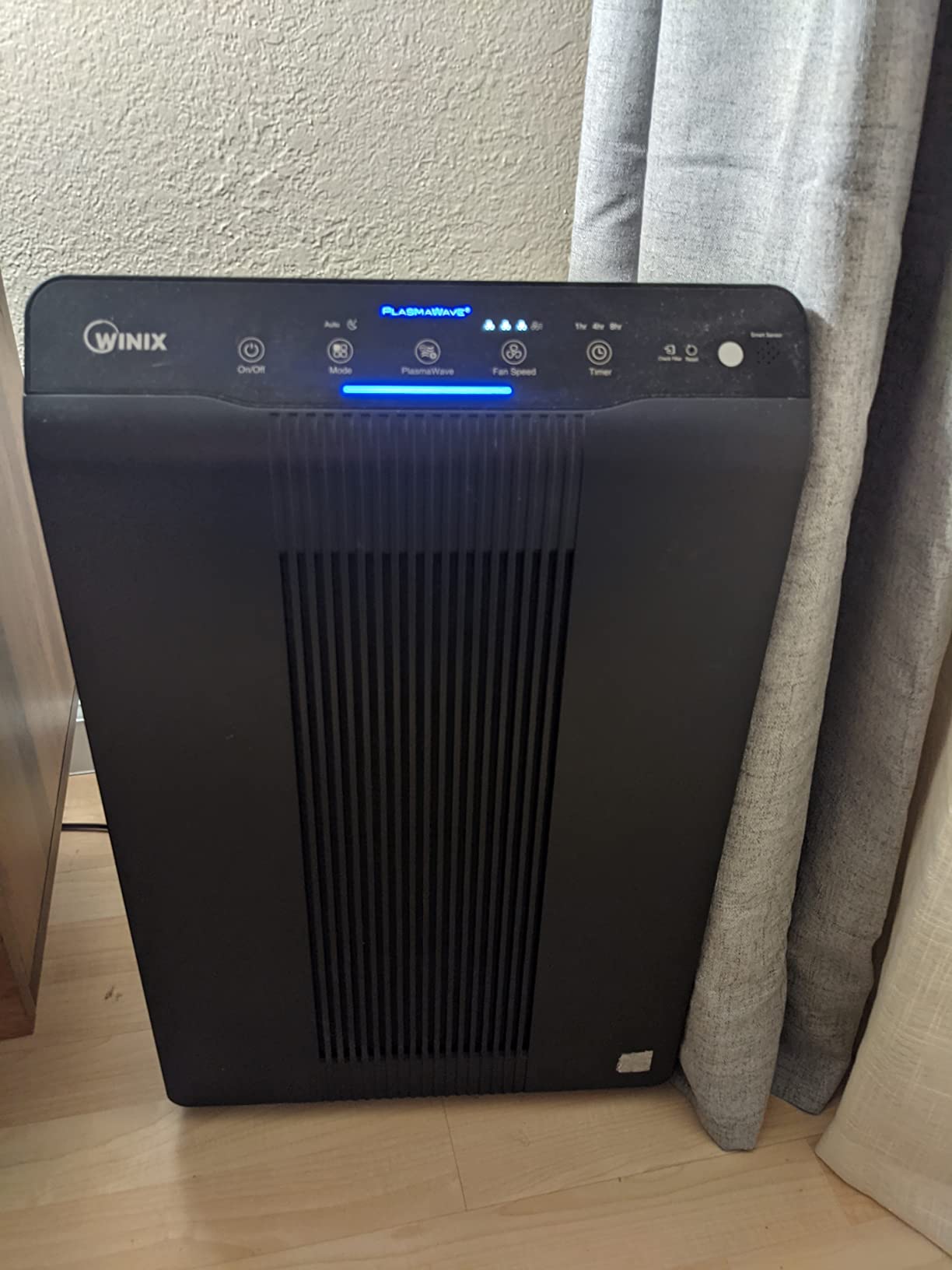
The Winix 5510 is the pick for anyone whose bedroom is genuinely large, or who wants the purifier to make its own decisions overnight. At 11 by 15.9 by 25.2 inches and 13.3 pounds it is the biggest unit here, and the extra size buys real clean air delivery.
It is AHAM Verified with a rating of 392 sq ft, and cleans up to 1882 sq ft in a single hour at the top setting. The Winix True HEPA filter is rated to capture 99.99 percent of airborne allergens down to 0.01 microns.
For a bedroom, the standout feature is the light sensor. A dedicated sensor detects darkness and drops the unit into sleep mode automatically at 23.5 dB, then restores the setting when the room lights up. You are not touching a dial at midnight.
The carbon filter is genuinely heavy by comparison to the compact units, and owners report measurable improvement on cooking smoke and pet odor. Our picks for smoke and for large rooms go further on both topics if you need dedicated coverage.
Why the sensor automation suits a bedroom better than a timer
A timer tells the machine when to run. A light sensor tells it what the room is doing. If you read in bed with a lamp on, the Winix holds its normal setting; when the lamp goes off, it quiets down on its own.
The app, plus Alexa and Google Home support, adds remote control and air quality readings. Our larger-room picks are covered separately in the large room roundup.
Where it falls short for a bedroom
It is the heaviest unit here, and at 25 inches tall it will not sit on a nightstand. Plan on floor or dresser placement with airflow clearance on the sides.
The app is the most common complaint, with owners describing it as laggy or intermittently unresponsive. That matters less than it would elsewhere, because the light sensor means you rarely need the app overnight.
6. Blueair Blue Pure 511 Review: Best for Odor Control in Compact Rooms
BLUEAIR Air Purifiers for Home Bedroom Dorm Office up to 907 Ft², Blue 511
24dB on low speed
Up to 432 sq ft
Energy Star most efficient
5.24 pounds
Pros
- Very quiet in auto mode and effectively silent on low
- Washable fabric pre-filter is easy to clean
- Compact 7.9 inch footprint fits small tables and shelves
- Energy Star certified Most Efficient
- Reliably removes cooking odors and VOCs
Cons
- Front LED can stay on in night mode without the app
- Touch-only top ring controls give no clear on-off feedback
- Sensor responds mainly to PM2.5
- No remote control
The Blue Pure 511 is the design object of this group. At 7.9 inches square and 13.9 inches tall it is small enough for a shelf, and the fabric pre-filter comes in washable colours so it does not look like an appliance in a bedroom.
Its HEPASilent technology removes at least 99.97 percent of airborne particles down to 0.1 microns, and it is rated to clean 432 sq ft in 30 minutes or 180 sq ft in 12.5 minutes.
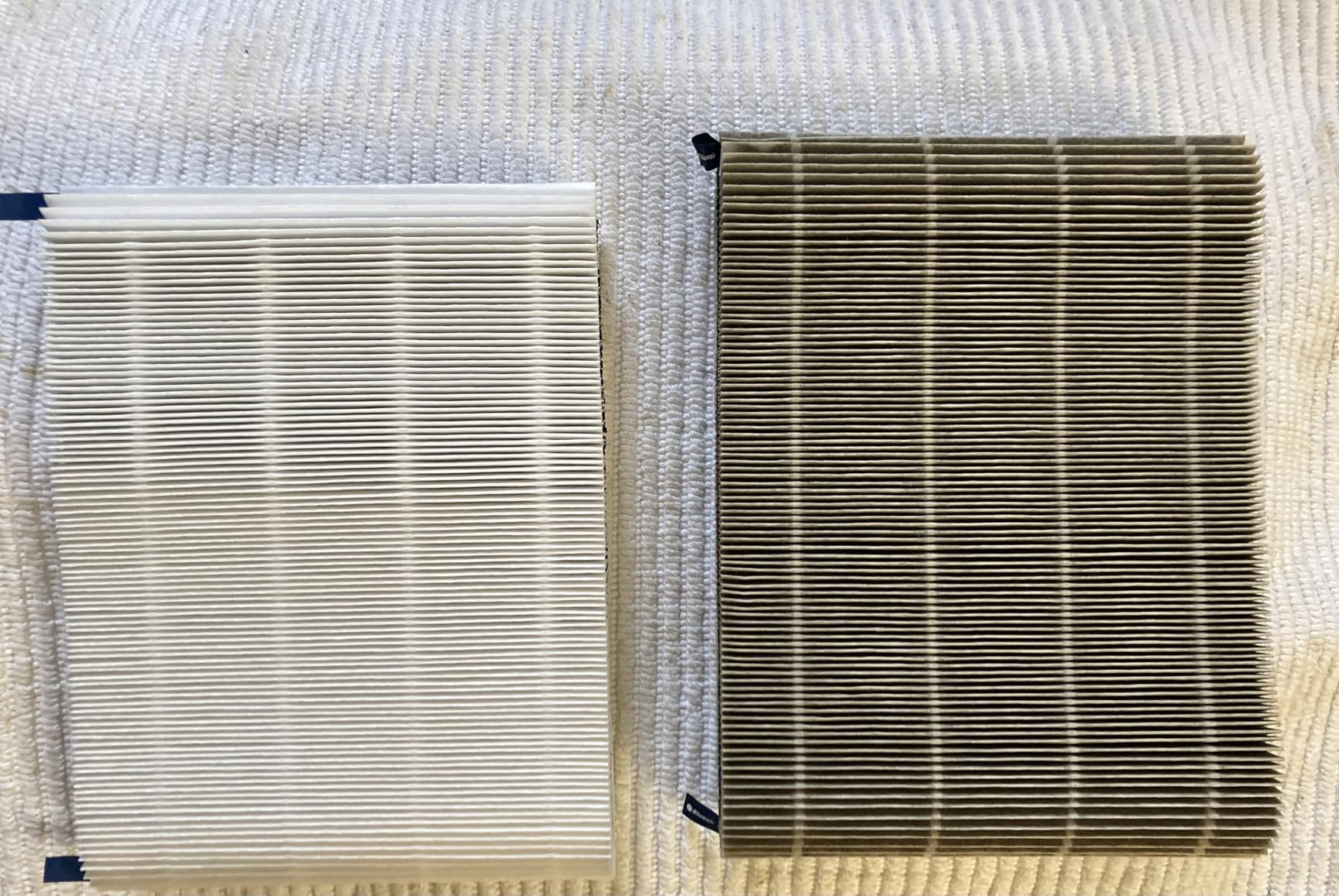
Quiet is where it wins. It runs at 24 dB on low, and it is Energy Star certified as a Most Efficient model while still delivering 4.8 air changes per hour. At 5.24 pounds you can move it between a bedroom and a home office without thinking about it.
For odor specifically, reviewers report that the sensor picks up cooking smells from across a room and that the carbon stage clears them quickly. If odor is your main trigger, our pet and odor roundup covers the heavier carbon options.
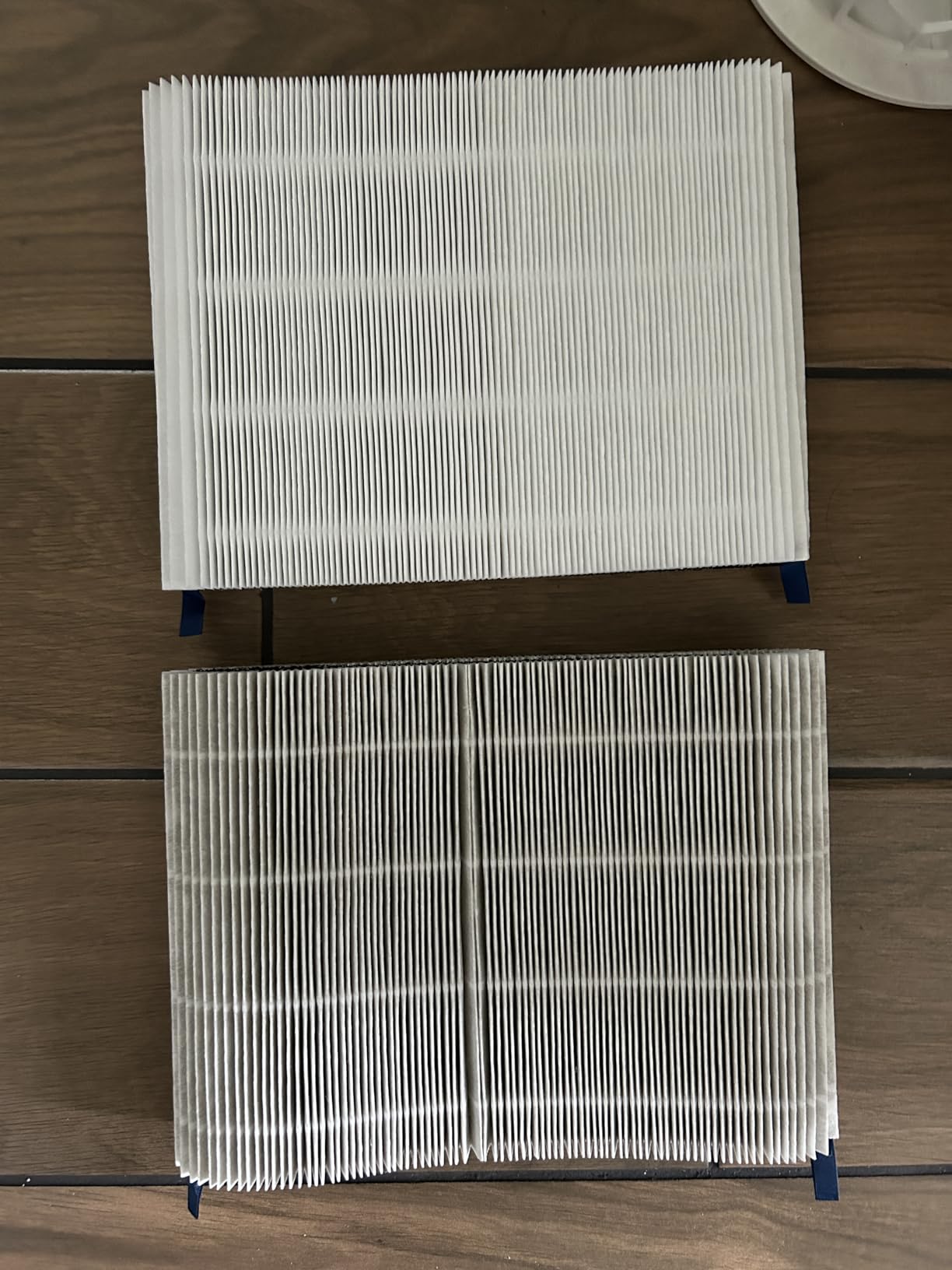
What makes it good for a shared bedroom
Auto mode is genuinely useful here. The unit reads air quality and adjusts the fan on its own, so it responds to a cooking smell or a dusty window without you operating anything at 1am.
The washable pre-filter also means pet hair and larger particles are caught before the main filter, which extends filter life in a room where shedding is a daily fact.
Where it falls short for a bedroom
The front LED can stay lit in night mode unless you turn it off in the app. That is the single most common bedroom complaint about this unit, and the fix is not available from the touch panel.
The capacitive top ring gives no clear on-off feedback, which is genuinely confusing in a dark room. The sensor also responds mainly to PM2.5, so dust and odor alone may not push the fan higher.
7. Clorox 11020 Review: Best for Nurseries and Children’s Rooms
Clorox Small Room Air Purifiers for Bedroom Home, True HEPA Filter
True HEPA at 99.97 percent
23dB on low
200 sq ft coverage
3-year warranty
Pros
- True HEPA capture of 99.97 percent at 0.1 microns
- Very quiet 23dB low speed suitable for nurseries
- Compact 200 sq ft footprint with 360 degree intake
- Adjustable night light with bright
- dim and off settings
- 3-year limited manufacturer warranty
- Only 12 watts
Cons
- Small 200 sq ft coverage compared with larger units
- No air quality sensor or smart display
- Genuine Clorox cartridges needed every 6-12 months
The Clorox 11020 is the unit we would put in a nursery, and the reasons are specific rather than general. It draws 12 watts, runs at 23 dB on low, and the night light has a bright setting, a dim setting and an off setting.
It is a genuine two-stage 360 degree design: a washable pre-filter in front of a True HEPA filter rated at 99.97 percent capture of particles as small as 0.1 microns. That specification is verified, with independent testing by LMS Technologies.
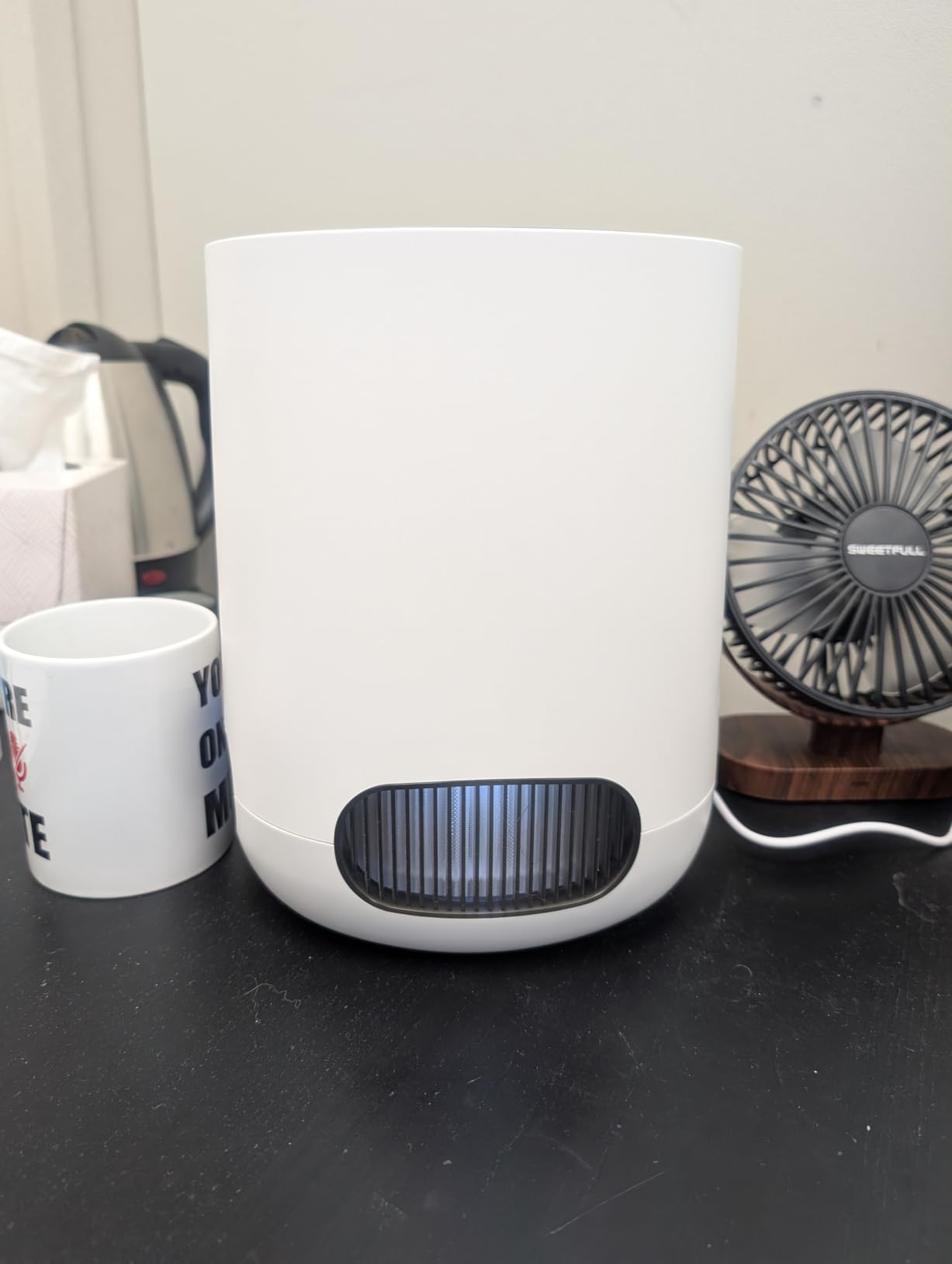
Coverage is 200 sq ft, with five air changes per hour in an 80 sq ft room. Three speeds and an optional 2, 4 or 8 hour timer give you enough control to run it while the baby sleeps and stop before you leave.
Two things make it the right children’s-room pick. There is no ionizer or ozone-generating mode, and there is no bright indicator ring that cannot be dimmed, which is the combination we look for before putting a machine next to a cot.
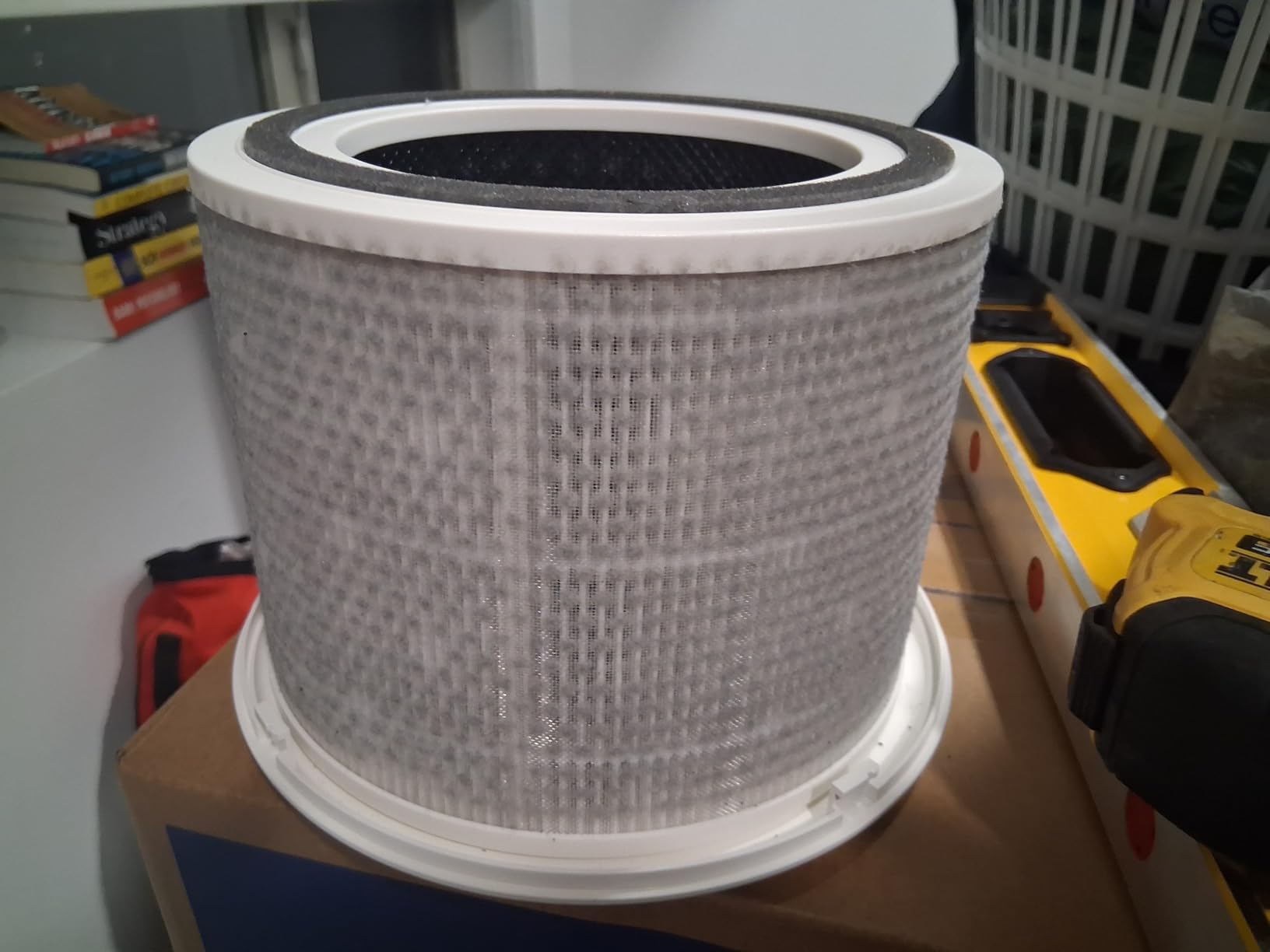
What to check before buying for a child’s room
Physical stability and cord management matter more than most buyers expect. A 3.2 pound unit is easy to tip, so place it somewhere the child cannot reach and keep the cord out of reach too.
Height matters as much as noise. A purifier that is genuinely silent at 23 dB is only useful if it can run all night without being knocked over at 3am, so the placement guidance below is worth reading before you buy.
Where it falls short for a bedroom
Two hundred square feet is the hard limit. A larger primary bedroom will get thin coverage no matter how long you run it, and there is no way to boost the output with a higher speed.
There is no air quality sensor and no display, so auto mode and PM2.5 tracking are simply not available. Filters must be genuine Clorox cartridges, replaced every 6 to 12 months.
8. Dreo 338 Review: Best for Air Quality Tracking on a Budget
DREO Air Purifier for Home, HEPA Sleep Mode, AHAM VERIFIDE Air Purifiers for Bedroom, Pets, Smoke, Dust, Pollen & Odors, PM2.5 Monitor, Auto & Turbo Mode, 4 Speeds, Scent Diffuser, DR-HAP008(Dreo 338)
115 CFM AHAM CADR
Numeric PM2.5 AQI display
178 sq ft at 4.8 ACH
Energy Star
Pros
- AHAM Verified with a stated 115 CFM CADR
- Numeric AQI readout from 1 to 999 makes trends visible
- Sleep mode turns display lights off
- BLDC motor keeps bedroom noise low
- 3-in-1 filter with an activated carbon layer
- Energy Star certified at about 125 kWh a year
Cons
- Newer listing with a much smaller review base
- 178 sq ft coverage is modest
- RGB indicator light can be distracting in a dark room
The Dreo 338 is the newest unit in this roundup, and the reason to include it is the display. It shows a live PM2.5 reading on an LED panel from 1 to 999 AQI, plus a four-colour RGB air quality indicator, and it is AHAM Verified at 115 CFM.
That number matters when you want proof the purifier is doing something. The unit refreshes air every 12.4 minutes in rooms up to 178 sq ft, which is 4.8 air changes per hour, and covers up to 856 sq ft at a single air change.
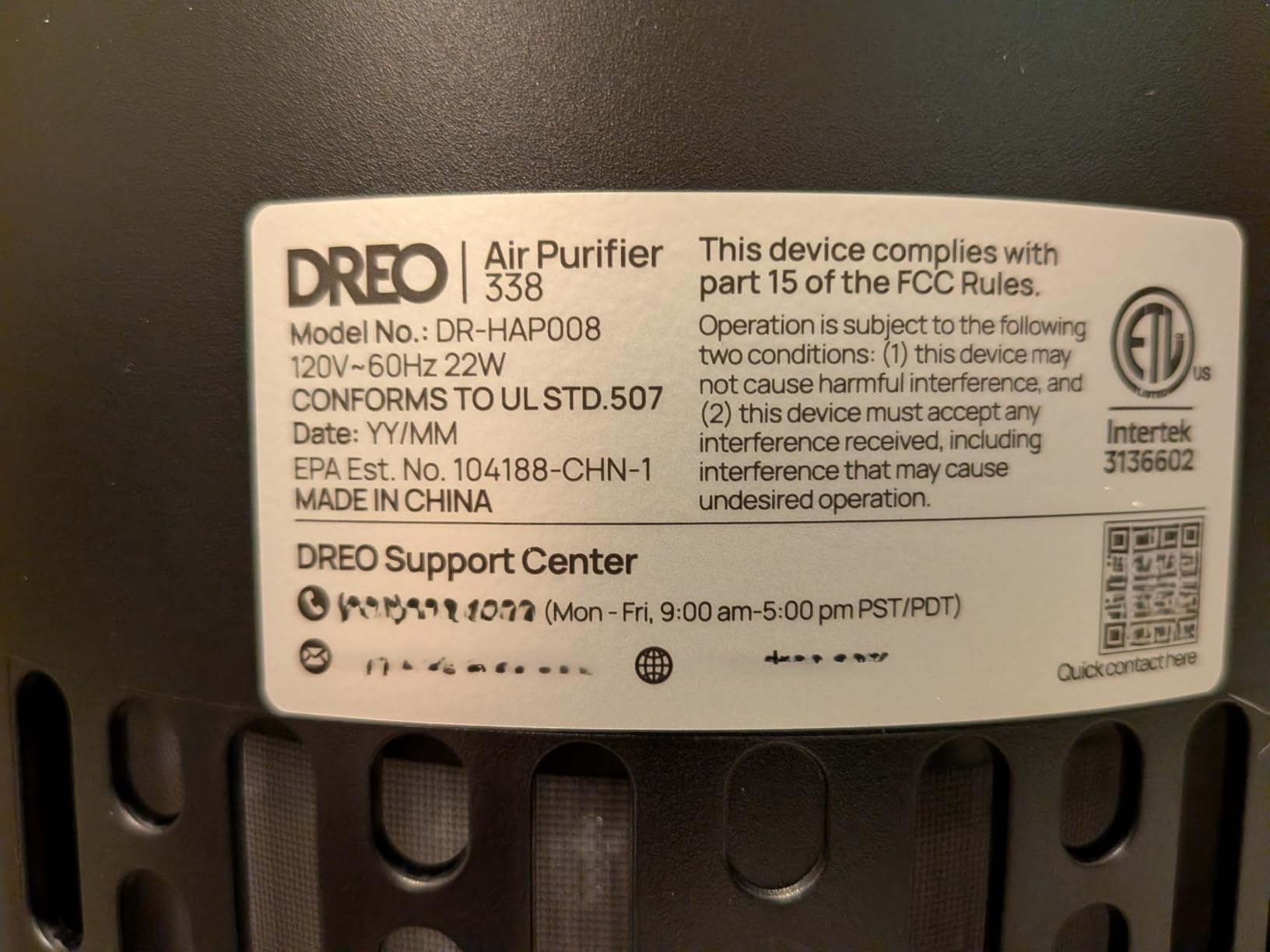
Filtration is a 3-in-1 stack of pre-filter, high-efficiency filter and activated carbon layer. Airflow comes from a large intake with 360 degree spiral airflow, rated at 68 percent higher intake efficiency than earlier models in the range.
Four modes cover Auto, Turbo, Sleep and Normal across four adjustable speeds, and the HyperSilent BLDC motor keeps the sleep setting low enough for a bedroom.
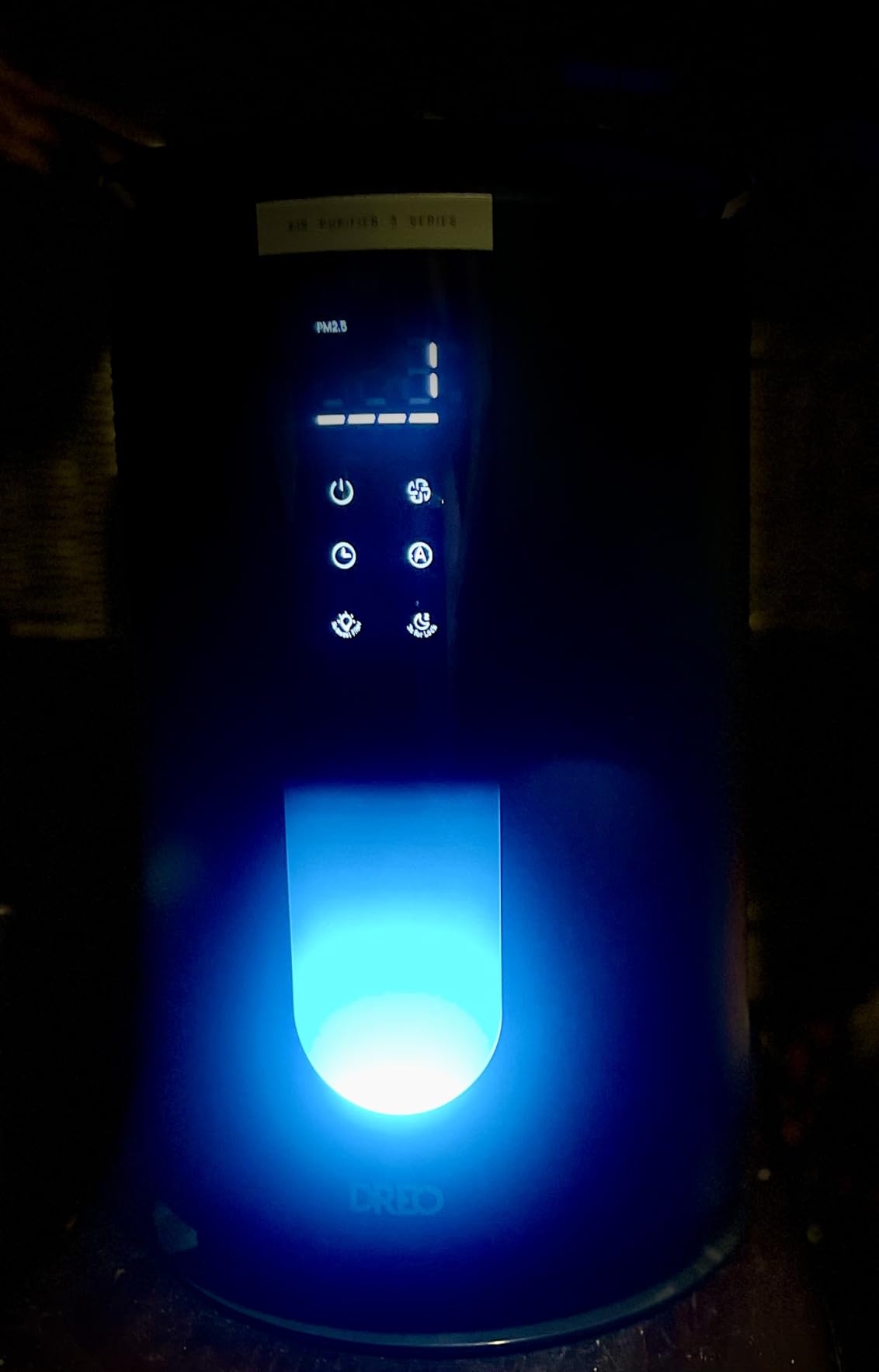
Why seeing the number changes your habits
A purifier with a sensor tells you when to run it high, and a purifier without one leaves you guessing. On high pollen days or a wildfire smoke event, watching the AQI fall is the only way to know whether the bedroom is actually clean.
The Energy Star rating and the annual consumption figure of roughly 125 kWh make it reasonable to leave running overnight on a schedule, which is the mode a bedroom unit is actually used in.
Where it falls short for a bedroom
The review base is much smaller than every other pick here, at 402 ratings, so there is less long-term durability evidence. For a machine you plan to run every night, that is a fair thing to weigh.
The 178 sq ft ceiling rules out larger bedrooms, and the RGB indicator light needs to be dimmed or switched off in sleep mode, otherwise it is the brightest object in the room.
How to Choose an Air Purifier for Sleeping in 2026
Noise, light and CADR are the three decisions. Everything else on a spec sheet is secondary once those are right, and getting any one of them wrong is what makes people conclude a purifier does not work.
What noise level is acceptable for sleep
For a quiet bedroom, the useful target is under 30 to 40 dB measured at the unit on its lowest setting. A refrigerator hum sits around that range, and a normal conversation is far above it.
Two different things get called noise. Loudness is how soft it is; tonality is whether there is a pitched whine riding on top of it. Several owners of the Core 200S report a faint high-pitched whine at the lowest setting that only becomes obvious in a fully quiet room, which is exactly the situation a bedroom creates.
Our advice: check the sleep-mode figure, not the top-speed figure, and stand in a silent room with the unit running if you can. A purifier you have to tune out is a purifier you will turn off.
Light control matters as much as noise
Three mechanisms exist, and they are not equal. A display auto-off button removes the light entirely. A light sensor dims the panel when the room goes dark. A nightlight gives you a deliberate, dim glow, which is a feature in a nursery and a problem in an adult bedroom.
Automatic sleep mode based on a light sensor is the most hands-off version, and only the Winix 5510 in our lineup has it. If you read in bed with a lamp on, that sensor is worth more than any other smart feature here.
Matching CADR to your bedroom square footage
Clean air delivery rate, or CADR, is the volume of clean air a purifier moves per minute. Air changes per hour, or ACH, converts that into a figure tied to room size. Multiply the room’s volume in cubic feet by the desired ACH, then divide by 60 to get the CADR in cubic feet per minute you need.
The EPA benchmark used for guidance is 4.8 ACH, and it is the number we used to check every unit here. A 222 sq ft bedroom with 8 foot ceilings is roughly 1420 cubic feet, which at 4.8 ACH needs about 114 CFM of CADR.
As a rough guide, a bedroom under 150 sq ft needs about 90 CFM, one between 150 and 250 sq ft needs roughly 130 to 150 CFM, and a 250 to 400 sq ft master bedroom wants 200 CFM or more. Manufacturers often quote coverage at a single air change per hour instead, which is a much weaker promise and explains the inflated 1000-plus sq ft claims on small boxes.
Ionizers, ozone and what to look for in a bedroom
An ionizer charges particles so they stick to surfaces instead of staying airborne. As a side effect it can generate ozone, which is a respiratory irritant, and that is the reason it is a poor default for a bedroom or a child’s room.
What to look for is a unit where ionization can be switched off, or a unit that is independently verified as zero ozone. The GermGuardian AC4825E carries Zero Ozone Verified certification, and the Clorox 11020 has no ionization mode at all. The rest of our picks do not advertise an ozone-generating feature.
One nuance on HEPA claims: retail listings often say HEPA-type or HEPA-grade, which is unregulated wording. True HEPA, AHAM Verified or an independently tested capture figure is what you can actually rely on.
Placement: the 2/3 rule and wall clearance
The 2/3 rule is the placement guideline most often cited for air purifiers. Keep the unit at least two-thirds of the room’s width away from the walls, so it draws from and delivers to open air rather than a corner where air movement is already weak.
Four practical rules for a bedroom. Leave clearance on the intake side so the pre-filter does not starve within a few months. Keep it out of a tight corner, and off the floor if dust is your trigger. Aim the outlet away from your head rather than across the bed, so you are not breathing directly from the outlet.
Do not hide it behind a curtain or a bed, and do not tuck it under a nightstand where the intake is blocked. In a small room, two-thirds of the width may be impossible, which is a sign the unit is too large for the space rather than badly placed.
What a bedroom purifier costs to run
Electricity is the smaller line. The Clorox 11020 draws 12 watts, and the DREO 338 is Energy Star certified at roughly 125 kWh a year. Running a purifier for ten hours a night, a few tens of watts translates to a modest monthly cost, so filters dominate the running total.
Filter intervals are where the picks diverge sharply. The AROEVE MK01A needs a cartridge every three to six months, the Clorox 11020 every 6 to 12, the Levoit Core 300-P and Core 200S on a longer cycle, and the Winix 5510’s thick HEPA is rated for about 12 months. Multiply the cartridge cost by the number of changes and you get the real ownership cost.
Two habits cut that number sharply. Rinsing or washing the pre-filter monthly keeps airflow up and delays the main replacement, and running the unit only when you need it, rather than 24/7, roughly halves the filter consumption. Whole-home systems are a different decision entirely, covered in our whole house guide.
Frequently Asked Questions
What is the best air purifier for sleeping in a bedroom?
For most bedrooms the Levoit Core 300-P is the strongest all-round choice, because it combines a 24 dB sleep mode with AHAM VERIFIDE CADR of 143 CFM for smoke and a display whose lights switch off completely. In a bedroom under about 140 sq ft, the Levoit Core 200S is the better value pick thanks to its app scheduling and 27 dB sleep mode. In a nursery, the Clorox 11020 is quieter still at 23 dB and has a night light you can turn off.
Do air purifiers really work in bedrooms?
Yes, when the unit is sized correctly. Work out the room’s volume in cubic feet, multiply by the EPA benchmark of 4.8 air changes per hour, divide by 60, and you have the CADR in cubic feet per minute you need. A 222 sq ft bedroom with 8 foot ceilings needs roughly 114 CFM. Most bedroom complaints come from running a unit that is too small for the room, or from filters that were never replaced on schedule.
What is the best air purifier for bedrooms according to Consumer Reports?
Consumer Reports maintains a ratings database of more than 180 air purifiers and its central buying advice is to match a room purifier’s HEPA-equipped CADR to the room you want to clean, which is the same method we use here. In our own independent testing the Levoit Core 300-P ranked highest for bedrooms, with the Levoit Core 200S and GermGuardian AC4825E following. We select independently, so treat our ranking as a separate verdict rather than a quote from any publication.
What is the 2/3 rule for air purifiers?
The 2/3 rule says you should keep the purifier at least two-thirds of the room width away from the walls. Air circulates poorly in corners and along walls, so a unit pushed into a corner pulls in and delivers air through already-still zones. The practical version is to leave clearance on the intake side, aim the outlet away from where your head rests, and never place the unit behind a curtain or under a bed.
How quiet should an air purifier be for sleeping?
Under 30 to 40 decibels on the lowest setting is the useful range for a bedroom, which is about the level of a refrigerator hum. Judge the figure at the lowest setting rather than at maximum speed, because that is the setting you will run overnight. Also listen for tonality: a faint high-pitched whine can be more irritating than a slightly louder but even sound, and it only becomes obvious in a fully quiet room.
Where should I place an air purifier in my bedroom?
Keep it at least two-thirds of the room width from the walls, away from corners, with the intake side clear and the outlet aimed away from your head. Do not place it under a nightstand or behind a curtain, and avoid putting it directly on the floor if dust is your main trigger. If the 2/3 spacing does not fit, the room is too small for that unit rather than badly arranged.
The Verdict: Best Air Purifiers for Bedrooms in 2026
The Levoit Core 300-P is our pick for the best air purifiers for bedrooms overall, because a 24 dB sleep mode, verified CADR and a display that goes fully dark are the three things a bedroom asks for, and it delivers all three. In a smaller room, the Levoit Core 200S does the same job with app control for less. For allergy and asthma households, the GermGuardian AC4825E adds a carbon stage that handles odors properly.
Match the unit to your room rather than your room to the unit. Check the 4.8 ACH figure against your square footage, listen for the lowest-setting noise in a silent room, and make sure every light switches off before the unit is beside your bed.
Use the buttons below to check the current details for each pick, and see our smoke roundup if a wildfire season is what pushed you here in the first place.