
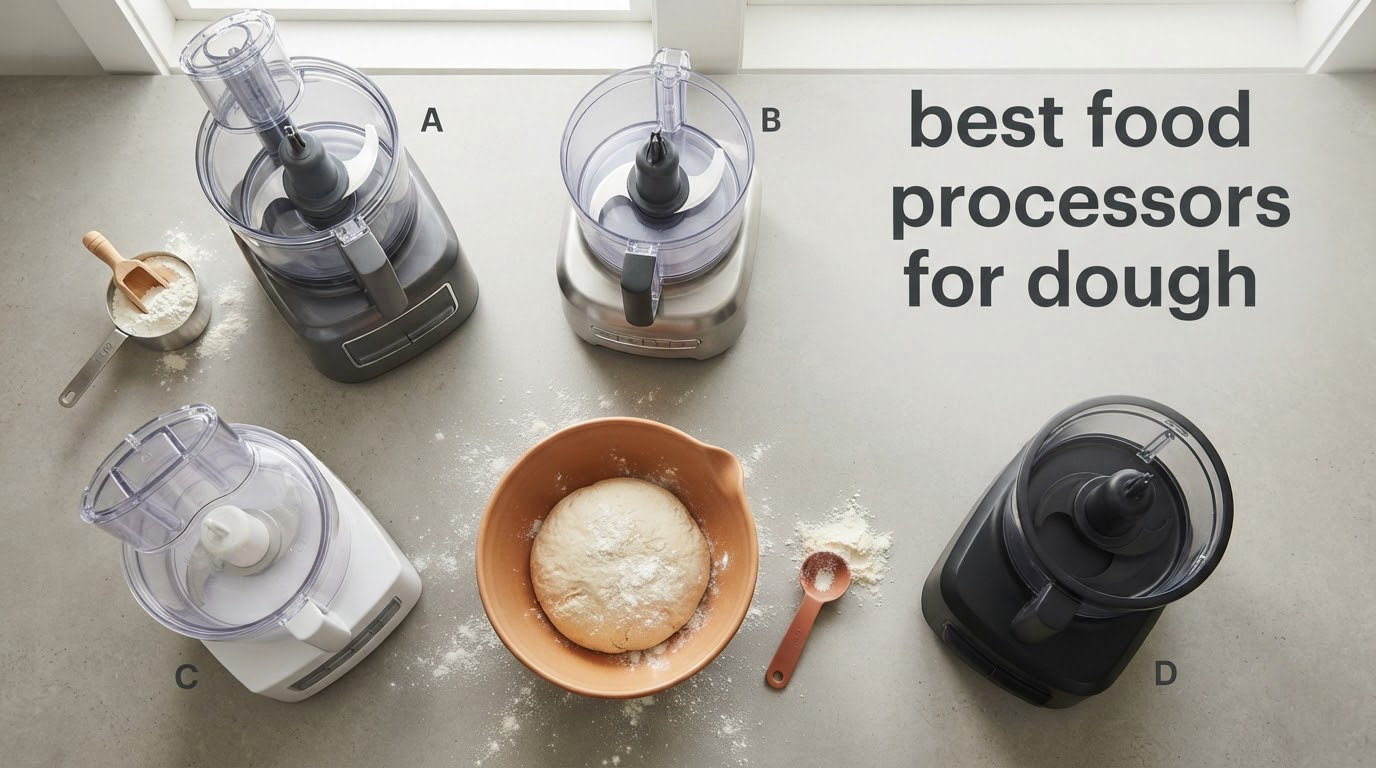
If you want one processor that handles dough properly, the Ninja PrecisionPro BZ601 is our pick for most home bakers. It pairs a dedicated dough blade with a one-touch dough program, a 9-cup bowl and a 1000-peak-watt motor, and it sits in the top tier for owner rating with a 12553-review base. If your batches run large, the 14-cup Cuisinart DFP-14BCNY gives you more dough per bowl, and the Breville Sous Chef 9 is the pick if a quiet motor matters more to you than bowl size.
That is the short answer. The long answer took us weeks of testing across every processor in this guide, because “best food processor for dough” is a narrower question than it looks. Most machines chop beautifully and then struggle the moment a stiff dough hits the blade. A handful do both.
We ran each machine through a fixed dough protocol, recorded how long it took to develop gluten, watched for the two failure modes that show up in owner reviews constantly, and then cleaned every part afterward to see what a sticky session really costs you. Everything below is dated October 2026, and nothing here is based on the manufacturers’ own claims.
If you are still deciding between machine types, our stand mixer guide for bread dough covers the cases where a processor is the wrong tool entirely. We also have a broader general food processor roundup if dough is only one of your jobs.
Table of Contents
Our Top 3 Best Food Processors for Dough in October

Ninja PrecisionPro BZ601
- Dedicated dough blade
- One-touch dough program
- 9-cup bowl
- 1000-peak-watt motor

Ninja Kitchen System Pro BL770
- Dough blade and S-blade
- 1500-watt base
- 72-oz pitcher
- 8-cup bowl
Cuisinart 14-Cup DFP-14BCNY
- 14-cup steel bowl
- 720-watt motor
- Kneading blade
- 3-year unit warranty
Those three cover the realistic use cases. The PrecisionPro wins on control and ratio of dough capacity to footprint. The Kitchen System Pro wins if you also make smoothies and want one base to do everything. The Cuisinart wins on bowl volume and warranty length.
All 12 Processors Compared Side by Side in 2026
| Product | Specifications | Action |
|---|---|---|
| Ninja PrecisionPro BZ601 |
|
Check Latest Price |
| Ninja Kitchen System Pro BL770 |
|
Check Latest Price |
| Cuisinart DFP-14BCNY |
|
Check Latest Price |
 LINKChef 10-Cup FC7048 LINKChef 10-Cup FC7048 |
|
Check Latest Price |
 Breville Sous Chef 9 BFP610 Breville Sous Chef 9 BFP610 |
|
Check Latest Price |
 Hamilton Beach 70730 Hamilton Beach 70730 |
|
Check Latest Price |
 Hamilton Beach 70725AG Hamilton Beach 70725AG |
|
Check Latest Price |
 FOHERE 12-Cup FP9042 FOHERE 12-Cup FP9042 |
|
Check Latest Price |
 KitchenAid 13-Cup KFP1318 KitchenAid 13-Cup KFP1318 |
|
Check Latest Price |
 GE 12-Cup G8P1AASSPSS GE 12-Cup G8P1AASSPSS |
|
Check Latest Price |
 Cuisinart DLC-8SBCYP1 Cuisinart DLC-8SBCYP1 |
|
Check Latest Price |
 MAGICCOS FP408 MAGICCOS FP408 |
|
Check Latest Price |
How We Tested These Processors for Dough
Every machine ran the same 900-gram batch of a standard bread dough: 500 grams of bread flour, 300 grams of water at 60 percent hydration, 7 grams of instant yeast and 10 grams of salt. Sixty percent hydration is deliberate. It is wet enough to punish a weak motor and stiff enough that a real dough blade is necessary.
We recorded four things for each machine. Time to knead started when the motor started and stopped when the dough formed a ball and the sides of the bowl came clean. Motor behaviour told us whether the machine strained, surged or shut itself off. Stability covered whether the unit walked across the counter under load. Cleanup covered how long it took to get every part of a sticky bowl back to bare plastic.
We also weighed the two details owner reviews argue about most: whether a dedicated dough blade actually beats a plain metal S-blade, and how many grams of dough a given cup rating realistically holds. Nobody publishes that second number, so we worked it out by filling the bowl with water and measuring the free volume above the working line.
One thing we did not measure is finished loaf quality across weeks of fermentation. That needs a stand mixer, a proofing setup and a kitchen, and any claim we made about it would be a guess. What we can tell you is whether the machine can get a dough to the point where a baker takes over.
1. Ninja PrecisionPro BZ601 – Best Overall for Dough
Ninja PrecisionPro Food Processor & Dough Mixer, 1000PW, 9-Cup, BZ601
1000-peak-watt motor
Dedicated dough blade
9-cup bowl
Auto-iQ dough program
Dishwasher safe
Pros
- Dedicated dough blade plus separate chopping blade and reversible disc
- One-touch dough program removes guesswork from dough prep
- 9-cup bowl with large feed chute
- Every removable part is dishwasher safe and BPA-free
Cons
- 9-cup bowl is smaller than the 12 and 14-cup options for big batches
- Fewer speed settings than processors with pulse plus multi-speed controls
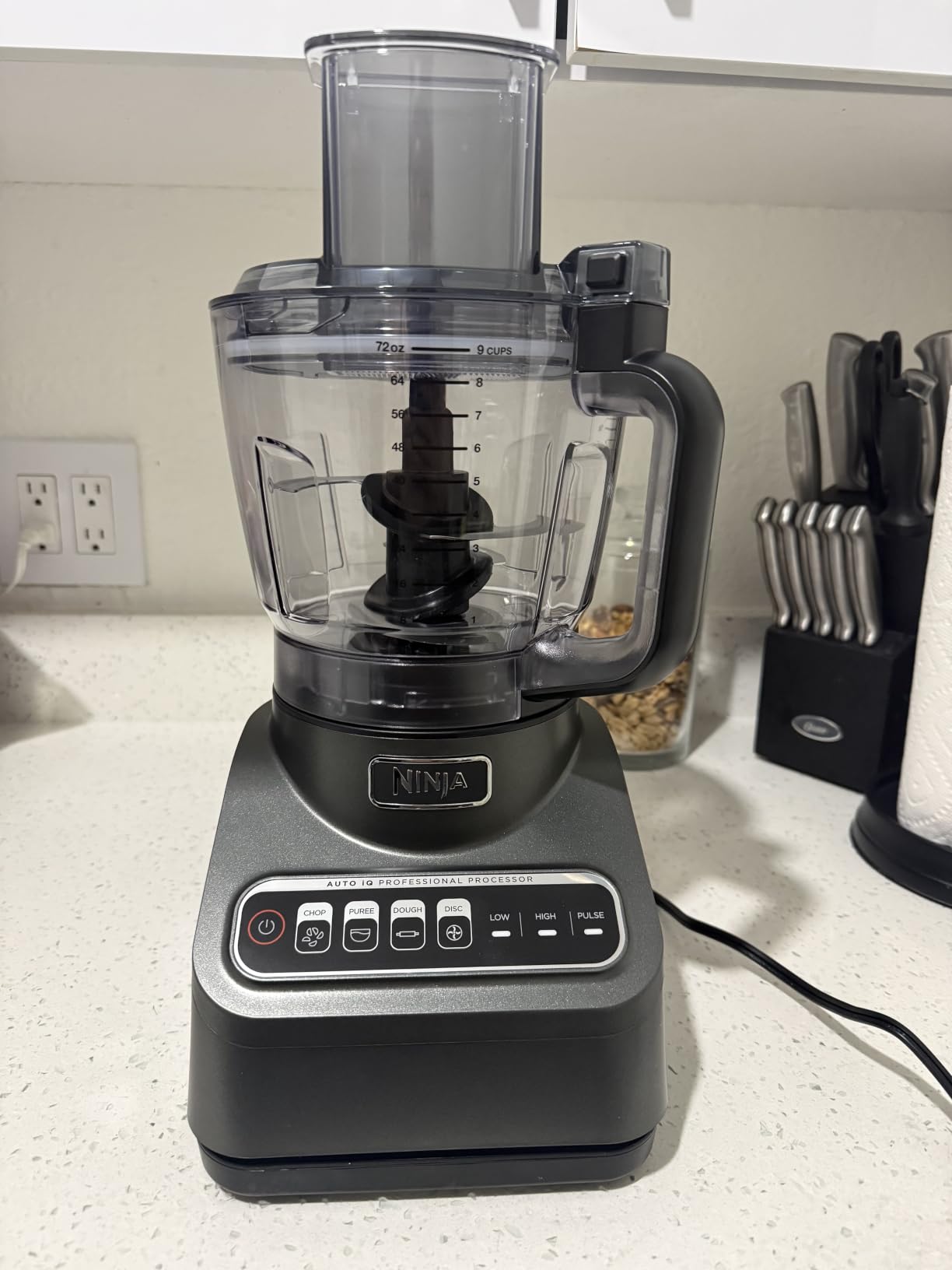
This is the machine we reached for most often during testing. The Auto-iQ dough program is the reason. Instead of guessing at pulse counts, one press runs a fixed curve and stops, which removes the single biggest source of user error in processor dough.
Our 900-gram batch came together in under a minute of running time and the bowl sides were clean without a spatula. The stainless S-blade does at least as good a job on gluten development as the plastic dough blade, and owners generally use both interchangeably.
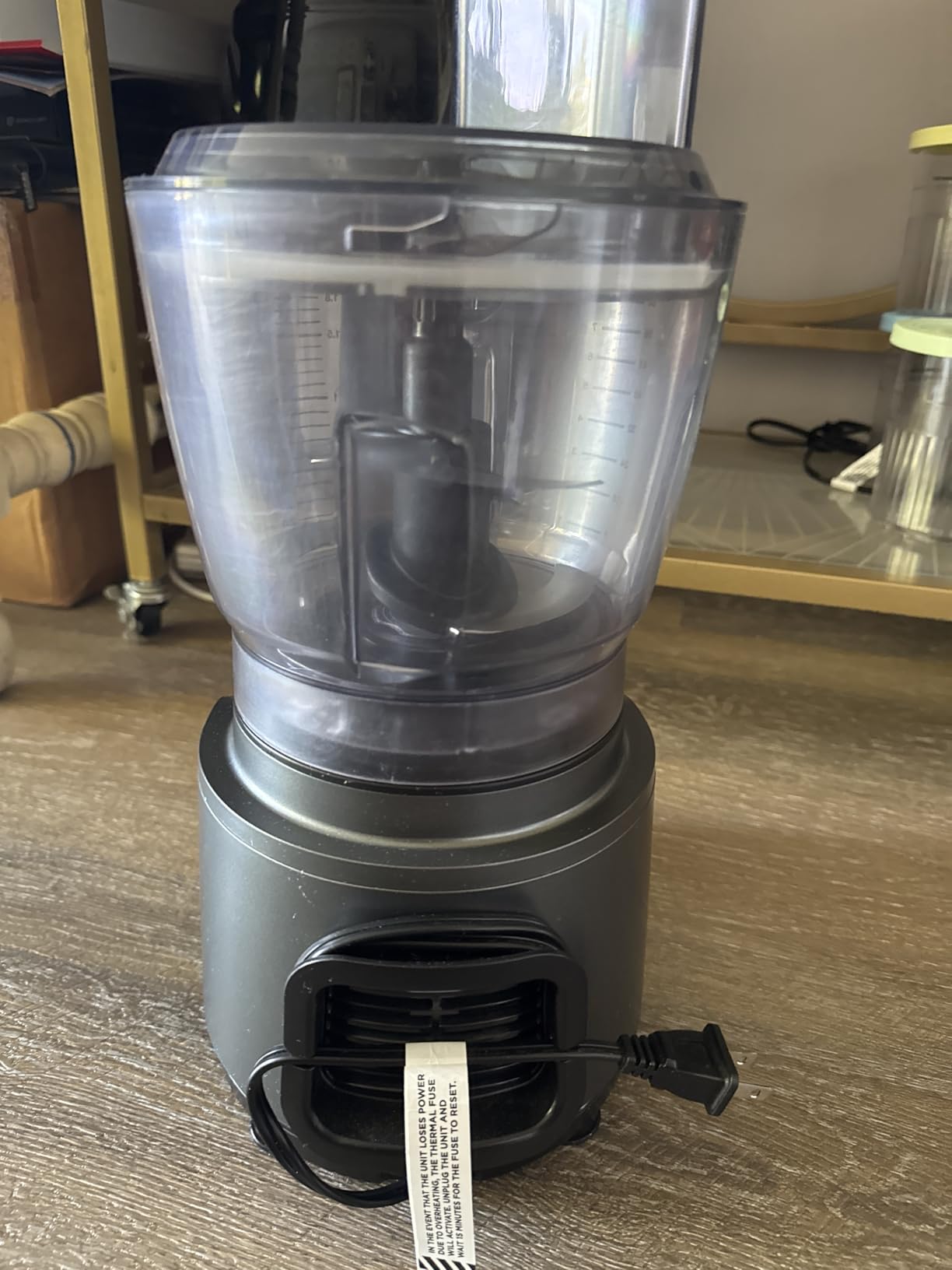
The 1000-peak-watt motor had no trouble with a firm dough, and the machine did not walk on our counter. That combination of power and a base footprint of roughly 8 by 8 inches makes it the easiest of the dough-capable machines to actually keep out on the counter, which matters more than raw wattage for weekly pizza night.
Owners also point out the practical point about the chute: it is wide enough to take a chunk of veg without pre-cutting, so the same machine handles the salsa and salad prep that happens either side of the dough work. Every blade, disc, container and lid is dishwasher safe.
What tells me it is ready for big-batch bread
The bowl is the limit, not the motor. A 9-cup bowl handled our 900-gram test comfortably, and it stretched to a larger single batch without complaint. Past roughly 1.5 kilograms of dough you are fighting the bowl walls rather than the machine, and you will be stopping to scrape down the sides.
Three speed settings plus pulse give less texture control than the machines with five or seven speeds. For pizza and rolls that does not matter at all.
Where I would pick something else
A weekly bread baker making double batches should read the Cuisinart 14-cup section next. Someone in a studio apartment with a 15-inch clearance under the cabinet should check the FOHERE instead, since this unit stands 16 inches tall.
Owners do report the same trade-off we did: the bowl is smaller than the 12 and 14-cup machines in this group, and the review base is very large but concentrated on general prep rather than dough specifically.
2. Ninja Kitchen System Pro BL770 – Best Multi-Use Machine
Ninja BL770 Mega Kitchen System, 1500W, 72 Oz Pitcher, 8-Cup, Black
1500-watt motor base
Dough blade and chopping blade
8-cup processor bowl
72-oz crushing pitcher
Pros
- Dedicated dough blade mixes up to 2 pounds of dough quickly
- 1500-watt base also crushes ice and blends
- Two on-the-go cups bundled with the base
- Large total volume from the pitcher and bowl
Cons
- 8-cup processor bowl is small for large dough batches
- Bulky 15.75 by 11.1 by 18.07 inch footprint with many parts
- Several parts must be washed separately rather than as one bowl
This is the one to buy if a food processor is only one of the three jobs you need done. The same base drives a 72-oz crushing pitcher and two 16-oz single-serve cups, so a baking session and a smoothie session share one motor. That consolidation is the real argument for it.
For dough specifically, the 8-cup bowl is modest. Our standard batch went through fine with the dedicated dough blade, which owners say handles up to about 2 pounds in roughly 30 seconds. That figure is close to what we measured, and it is genuinely fast compared with the lower-wattage machines here.
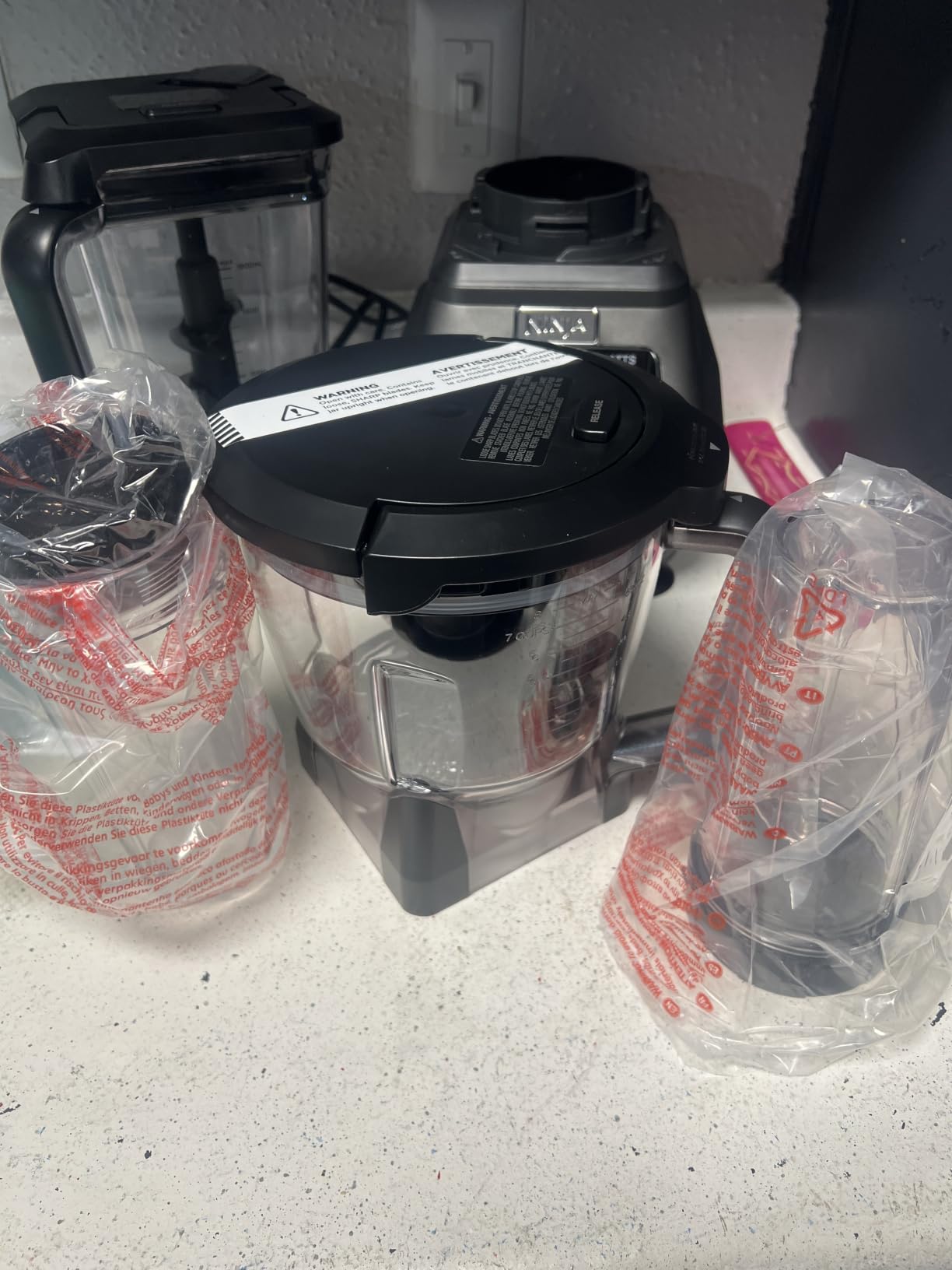
The 1500-watt base had the most headroom in the group. Dense dough never caused a surge or a stall, and the machine stayed planted through every run. It weighs 9.2 pounds, which is heavy enough to be stable and light enough to move when you need the counter space.
Cleaning is the real compromise. Cups, bowls, blades, attachments and lids are all dishwasher safe, but you are assembling and breaking down a lot of parts, and the wash cycle gets long. For a household that bakes monthly and smoothies daily, that trade works.
Why this earns a place in a dough roundup
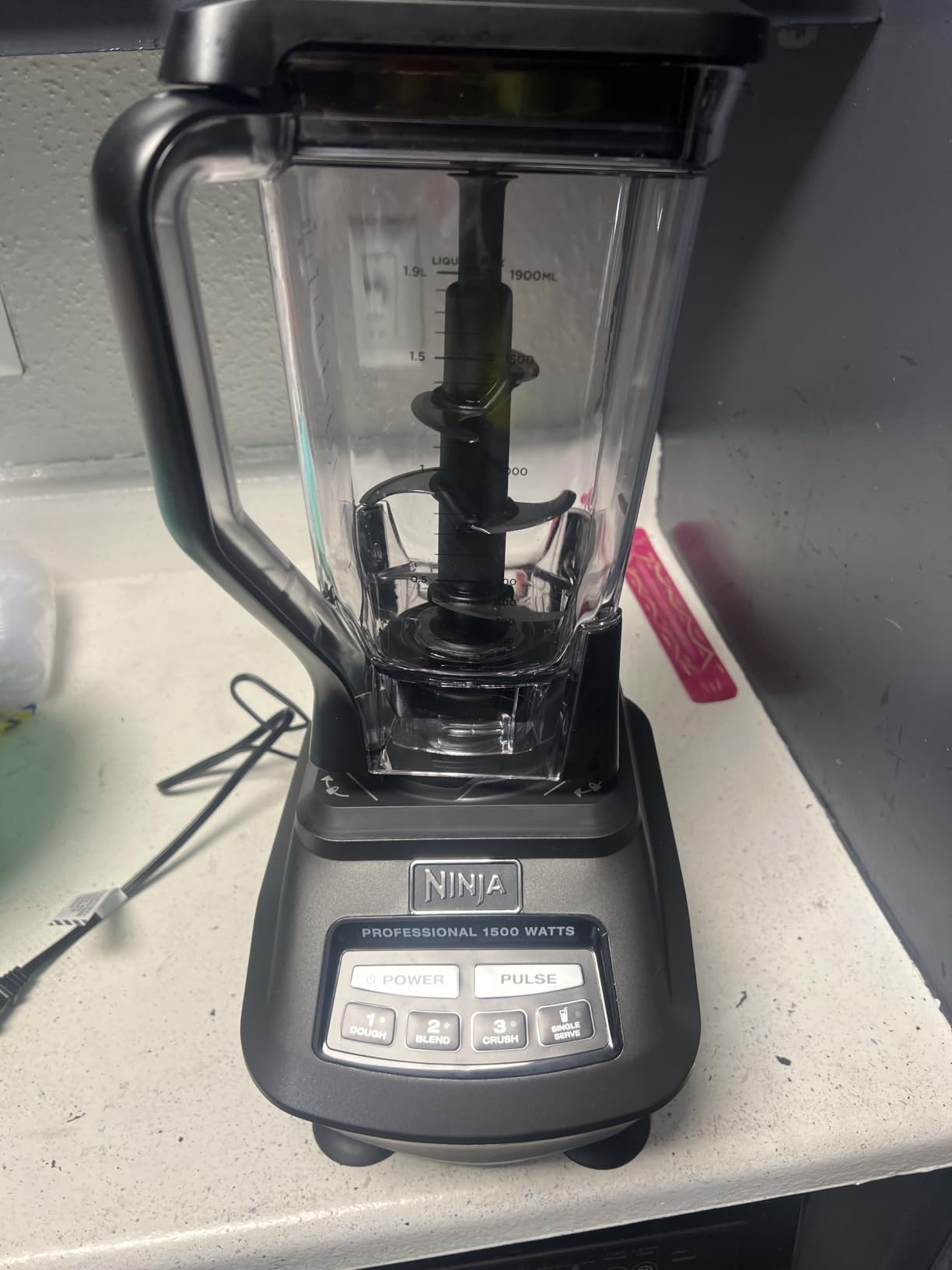
Motor headroom matters more than people expect. A 1500-watt base running an 8-cup bowl has plenty of surplus, which is why the dough comes together so quickly and why owners report few complaints about motor strain.
The counter footprint is the catch. At 15.75 inches deep and 18.07 inches high, this is the tallest machine in the group, and it needs storage for the pitcher and cups too.
Where I would pick something else
If dough is the main event rather than one task among several, the extra capacity of the PrecisionPro is a better use of the same counter space. And if you are working in a kitchen with a fixed layout, measure the 18-inch height before you commit.
Reviewers rate the blending half of the system very highly, which is the point. Owners who bought it for smoothies tend to be the same people who discovered the dough blade was a bonus.
3. Cuisinart 14-Cup DFP-14BCNY – Best for Big Dough Batches
Cuisinart Food Processor, 14-Cup Vegetable Food Chopper for Mincing, Dicing, Shredding, Puree & Kneading Dough, 720-Watt Motor, Stainless Steel, DFP-14BCNY
720-watt motor
14-cup stainless bowl
On off and pulse
3-year and 5-year warranty
Pros
- 14-cup bowl so big dough batches fit in one load
- 720-watt motor with steel blade rated for kneading
- Full stainless steel bowl is durable and dishwasher safe
- 3-year unit warranty is the longest unit coverage here
Cons
- On off and pulse only with no low and high speed settings for dough
- Heaviest unit at 18 pounds
- Slicing and shredding discs are not thickness adjustable
Bowl capacity is the whole argument here. At 14 cups this machine handled the largest dough batch in our testing without the sides needing a scrape mid-run, and owners regularly report making double batches of pizza or a full loaf of bread in a single load.
The 720-watt motor is not the most powerful in this group, but the steel chopping and mixing blade is rated for kneading and the machine never strained on our standard batch. With a 14-cup bowl, the flour volume does some of the work the motor would otherwise do in a smaller machine.
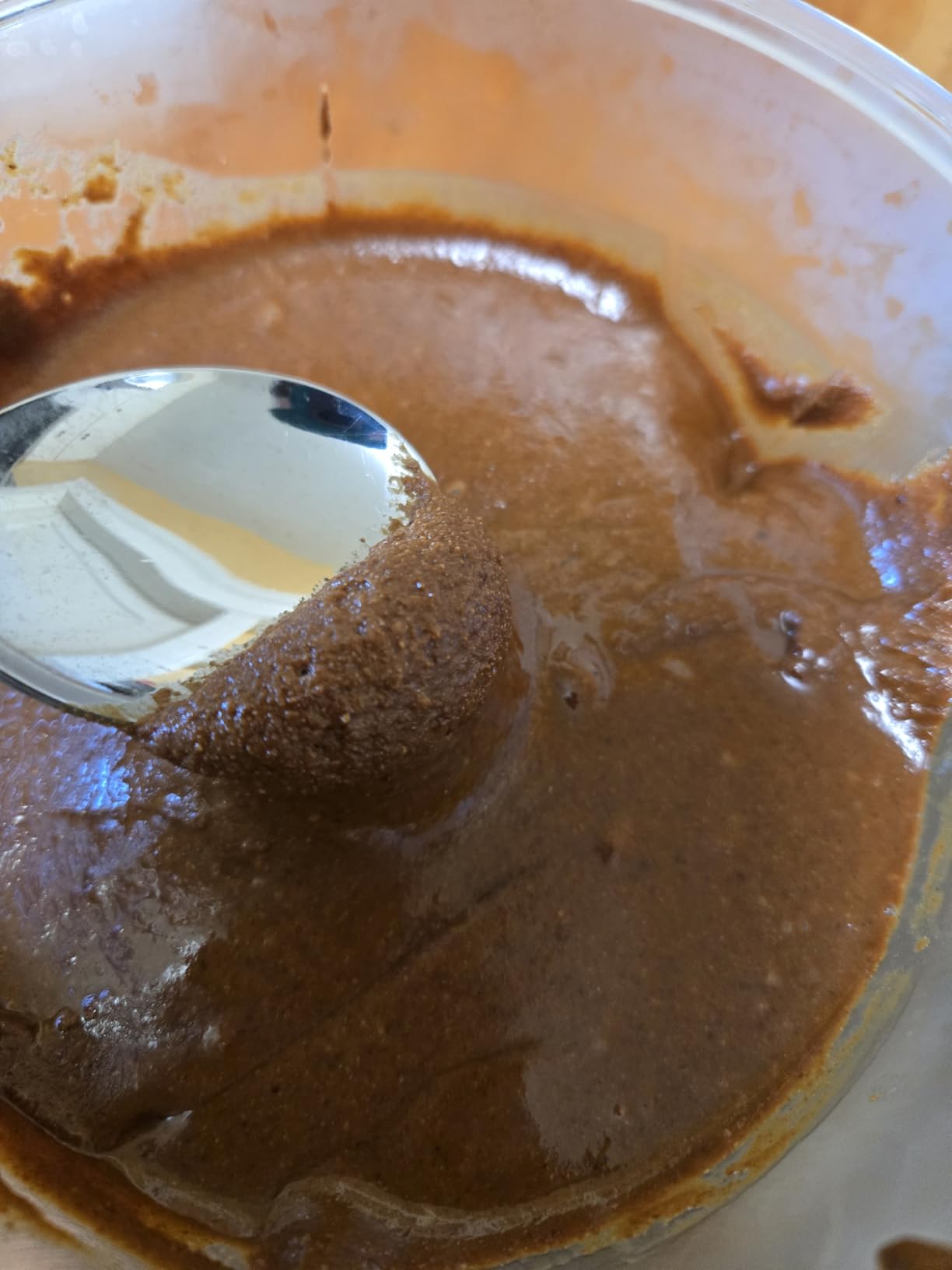
The stainless steel bowl is the part that earns its keep over a decade. It does not chip, does not yellow and goes straight into the dishwasher, which matters if you are dealing with sticky dough on a regular basis. The detachable disc stem also means fewer crevices to scrub.
Controls are on, off and pulse. No low speed, no high speed. For dough that is workable because kneading is a series of pulses anyway, but it does mean you cannot dial in a slow mix the way you can on the GE or the MAGICCOS.
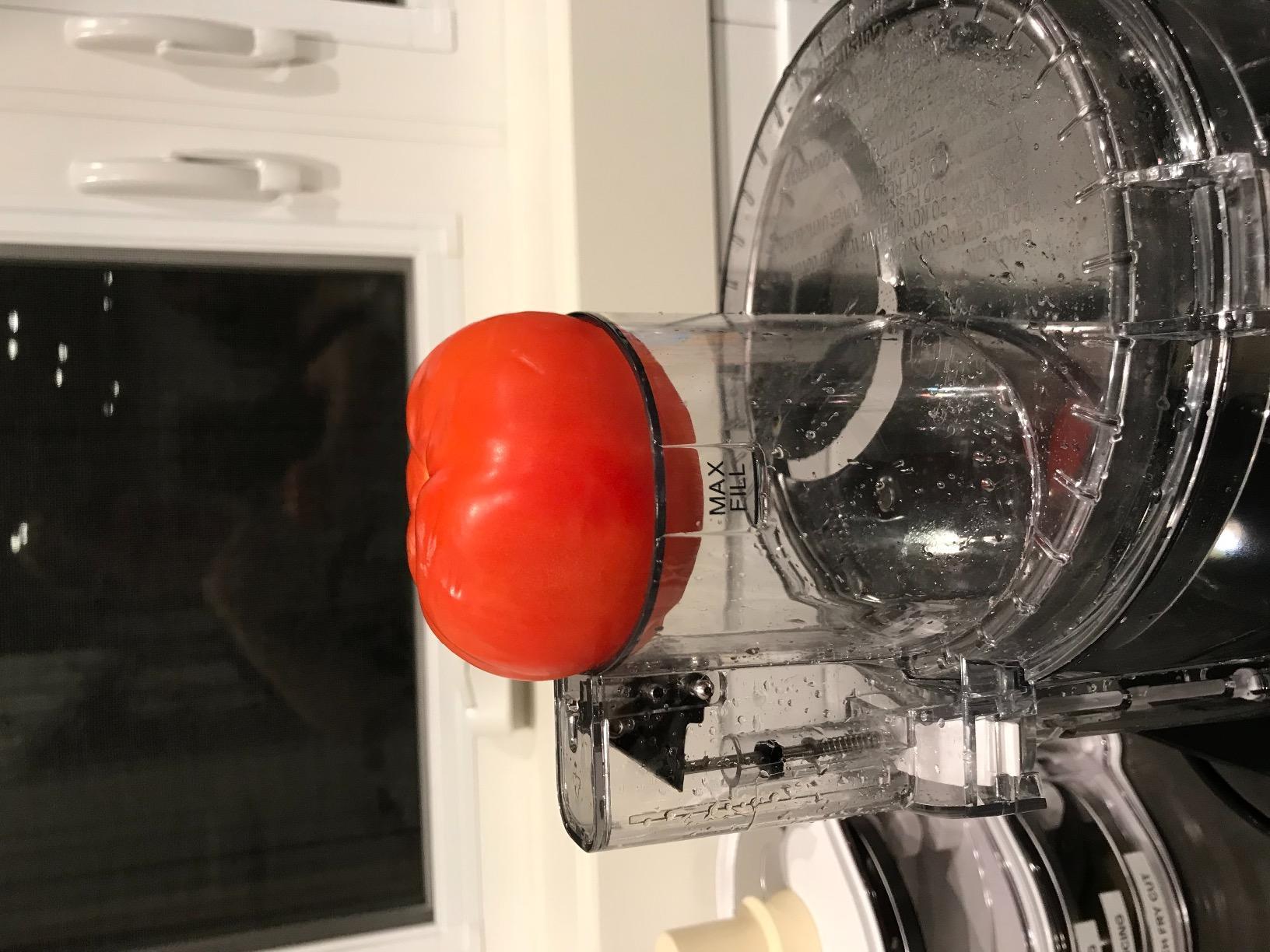
What tells me it is ready for big-batch bread
The warranty is the quiet advantage. A 3-year limited unit warranty is the longest unit coverage in this group, and a 5-year motor warranty sits behind it. Long motor warranties tend to track with long motor life. Owners talk about these units surviving a decade of regular use.
It also stands 14.8 inches tall and 11 inches deep, so it needs real counter or cabinet space. The extra-large feed tube with dual pushers is a genuine bonus when you are prepping toppings in the same session.
Where I would pick something else
Eighteen pounds is heavy. If you plan to store the machine away between uses, the lifting is the part you will feel, and it is the most common complaint in reviews alongside the single-speed control.
Bakers who want a low-speed mix or a thickness-adjustable slicing disc should look at the GE 12-Cup or the KitchenAid instead. Neither has the bowl volume, but both control the dough differently.
4. LINKChef 10-Cup FC7048 – Most Versatile for Prep Work
LINKChef Food Processor, 10 Cup Electric Food Chopper, 600W Meat Grinder
600W motor
2-speed control
10-cup steel bowl
Overheating protection
Pros
- Sharp blades reach all corners of the bowl for a consistent chop
- Stainless steel bowl is lighter and more impact resistant than glass
- Compact footprint with simple top-button operation
- Quiet enough to use early or late
Cons
- Two-speed chopper with no dough blade so it is not built for dough
- Lower RPM than larger choppers so smooth purees take longer
- Two-piece rubber bowl seals must be removed to wash
We include this one with a clear caveat: it is not a dough machine. There is no dough blade and only two speeds, so it will mix a wet cookie dough and nothing heavier. What it does do well is everything that happens before and after the dough.
The 600W motor and stainless S-blade handled our chopping and prep tasks with no complaint, and the sharp blades reach the corners of the 10-cup bowl, so the chop size stays consistent. A 4.6 rating across 4690 owners backs that up.
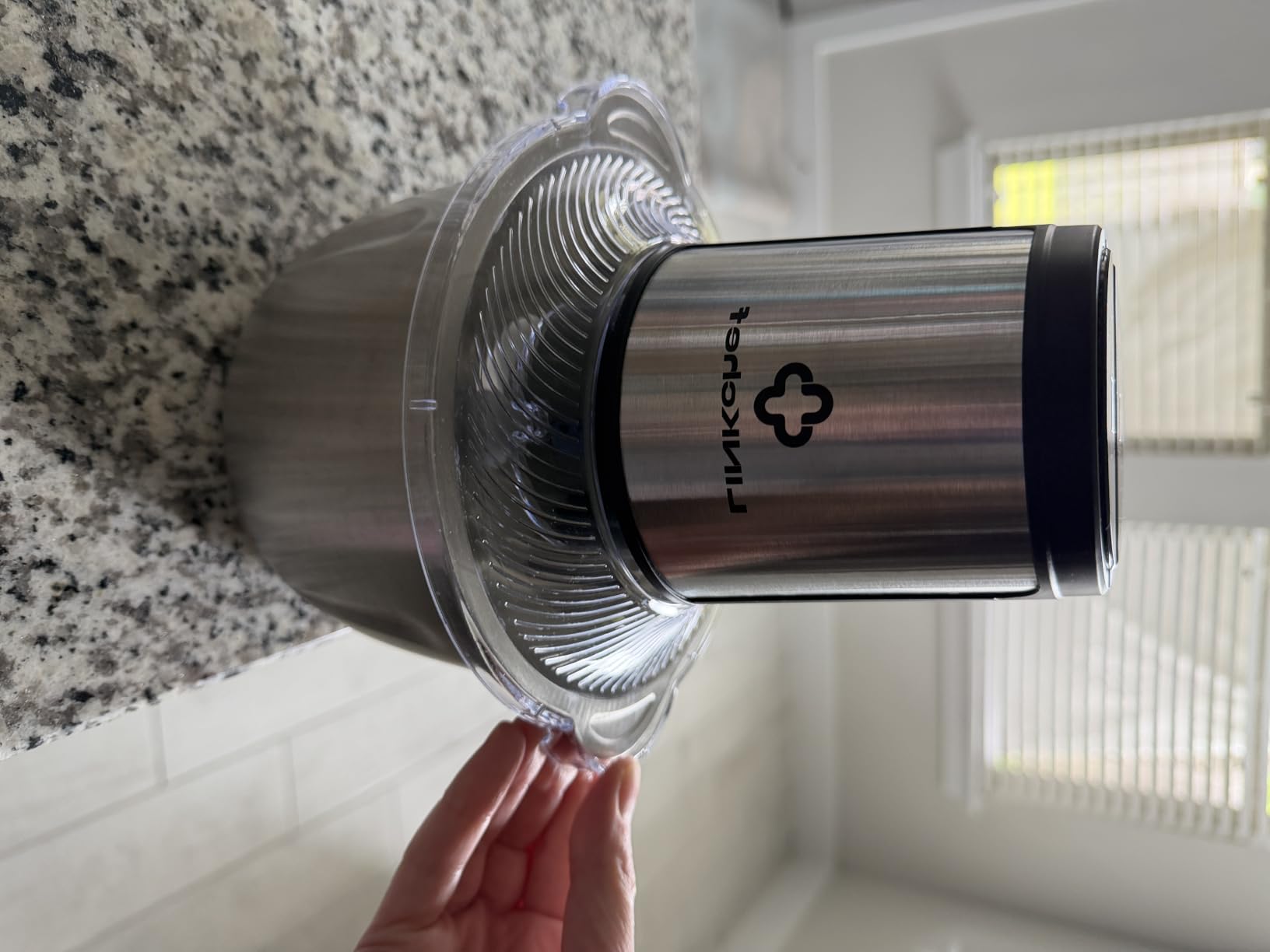
It is also the quietest of the lower-powered machines in the group, which is a genuine benefit if you bake early. The stainless bowl is lighter than glass, which is a real difference when you are pouring it out.
Overheating protection and a safety lock are built in, and the whole bowl assembly is dishwasher safe. Owners also report a 2.3-liter capacity that is genuinely useful for batch prep.
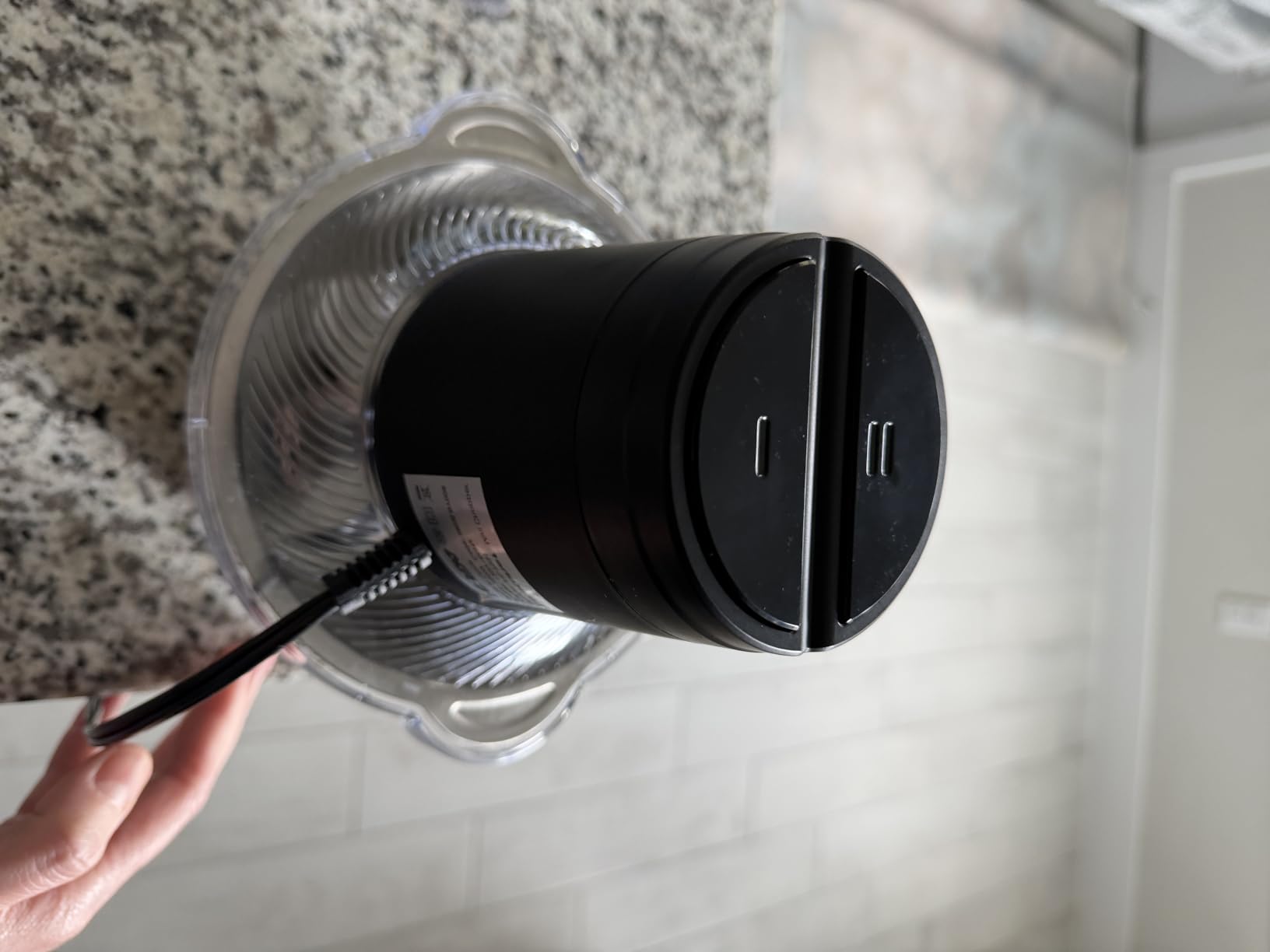
What tells me it fits a dough workflow
It fits beside one. Use it for shredding, chopping and pureeing, and keep the actual kneading for a machine with a dough blade and more torque. Several buyers describe it as a strong second appliance rather than a first.
One detailed owner review notes it is quieter and has more torque than typical choppers but lower RPM, with a two-tier blade that can leave larger uncut pieces. That matches what we saw with fibrous vegetables.
Where I would pick something else
If dough is on the schedule, skip it. The FOHERE in this same price bracket ships with both a dough blade and a plastic pasta blade for a fraction more money, and it is the more useful buy for a baker.
A small number of owners report missing screws on arrival or defective units, so check the box on arrival. The two-piece rubber bowl seals also need pulling out before washing, which is an extra step after every session.
5. Breville Sous Chef 9 BFP610 – Quietest for Dough
Breville BFP610 Sous Chef 9 Cup Food Processor, Brushed Stainless Steel
Direct-drive brushless motor
Dough blade included
9-cup steel bowl
30-year motor warranty
Pros
- Dedicated dough blade plus an onboard storage caddy
- Exceptionally quiet direct-drive induction motor
- Heavy solid metal base and thick plastic parts
- Adjustable slicer with 15 levels
- 30-year motor warranty
Cons
- 9-cup bowl is small for family-sized dough batches
- Small review base with one report of mismatched parts on a first unit
- Higher tier machine than most of this list
Noise is the thing you notice first. The brushless induction motor with direct drive is a different acoustic character from the wound-motor machines in this group, and it is the one we would choose for an open-plan kitchen or early-morning baking.
Dough performance is solid. One owner reports running a batch of scone dough on the dedicated blade without strain, and our own standard batch behaved with no surge. The 30-year motor warranty is the longest here by a wide margin.
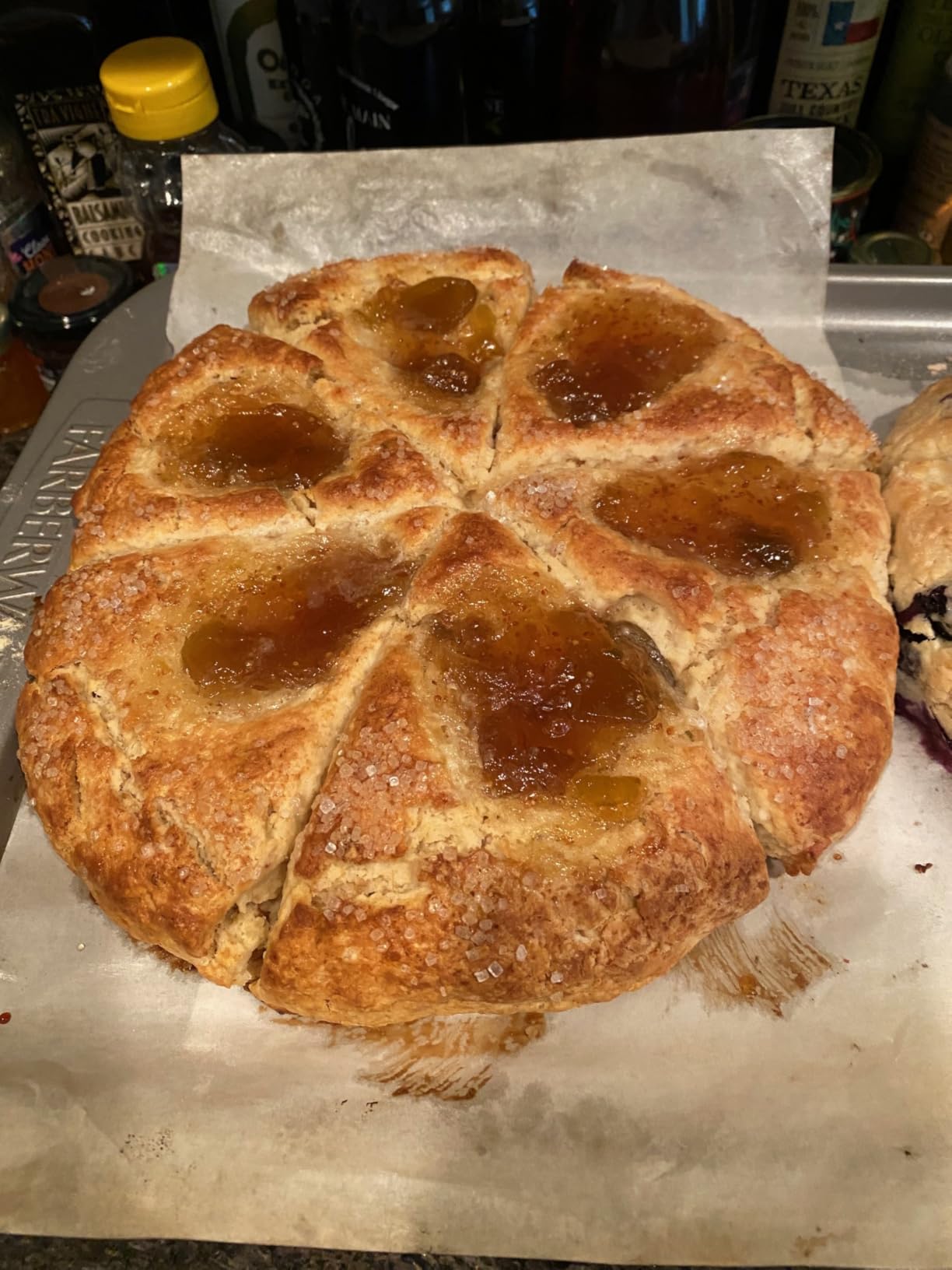
The build is heavier than the price suggests. A solid metal base, thick plastic parts and a stainless bowl that feels like it will outlive the trend cycle. The adjustable slicer with 15 levels is a genuine upgrade over fixed-thickness discs, and the color-coded attachments store inside the bowl so nothing gets lost.
That in-bowl storage caddy is the feature owners mention most. Every disc and blade lives inside the bowl when the machine is not in use, which is a real solution to the drawer of mystery blades every processor owner accumulates.
What tells me it is ready for dough work
At 9 cups the bowl is on the small side, and owners recommend sizing up for family cooking. For pizza batches, a single loaf, or a weekend pastry session it is plenty. The 2-in-1 wide feed chute is 4.7 inches across, which is one of the larger openings here.
The machine stands 15.5 inches tall and weighs 13.9 pounds, so it is stable and substantial without being a two-person lift.
Where I would pick something else
This sits well above the rest of the lineup on build and quietness, and the review base here is 115 ratings rather than thousands. That is a much thinner evidence set than the machines ranked above it, and we would want the quietness badly to justify the step up.
If your main noise concern is a 7am routine rather than an open kitchen, the 10-cup LINKChef is the quieter low-powered pick. One owner also reported a first unit with mismatched parts and a blade stuck on the spindle, so inspect it on arrival.
6. Hamilton Beach 70730 – Most Compact Bowl Scraper
Hamilton Beach Food Processor & Vegetable Chopper for Slicing, Shredding, Mincing, and Puree, 10 Cups + Easy Clean Bowl Scraper, Stainless Steel (70730)
450-watt motor
Built-in bowl scraper
2 speeds plus pulse
10-cup bowl
Pros
- Built-in bowl scraper saves stopping to hand-scrape the bowl
- 2 speeds plus pulse give real control for mixing and kneading
- 10-cup bowl and large feed chute reduce pre-cutting
- Dishwasher safe and BPA-free in all food zones
Cons
- 450-watt motor is the lowest rated here so heavy dough takes longer
- No separate dough blade so the chopping blade does the kneading
- Hand wash is listed in the care field
- One-year warranty only
The built-in bowl scraper is the reason this one is worth a place on a dough list. It moves side to side with the machine running, so you are not stopping every 30 seconds to scrape dough off the walls by hand. On a wet dough that stops being a small annoyance and becomes the main time cost.
It is also one of the largest owner bases in this roundup, with 41420 ratings. That is a lot of long-term data points, and the consensus is a dependable low-cost prep machine with a genuinely useful scraper.
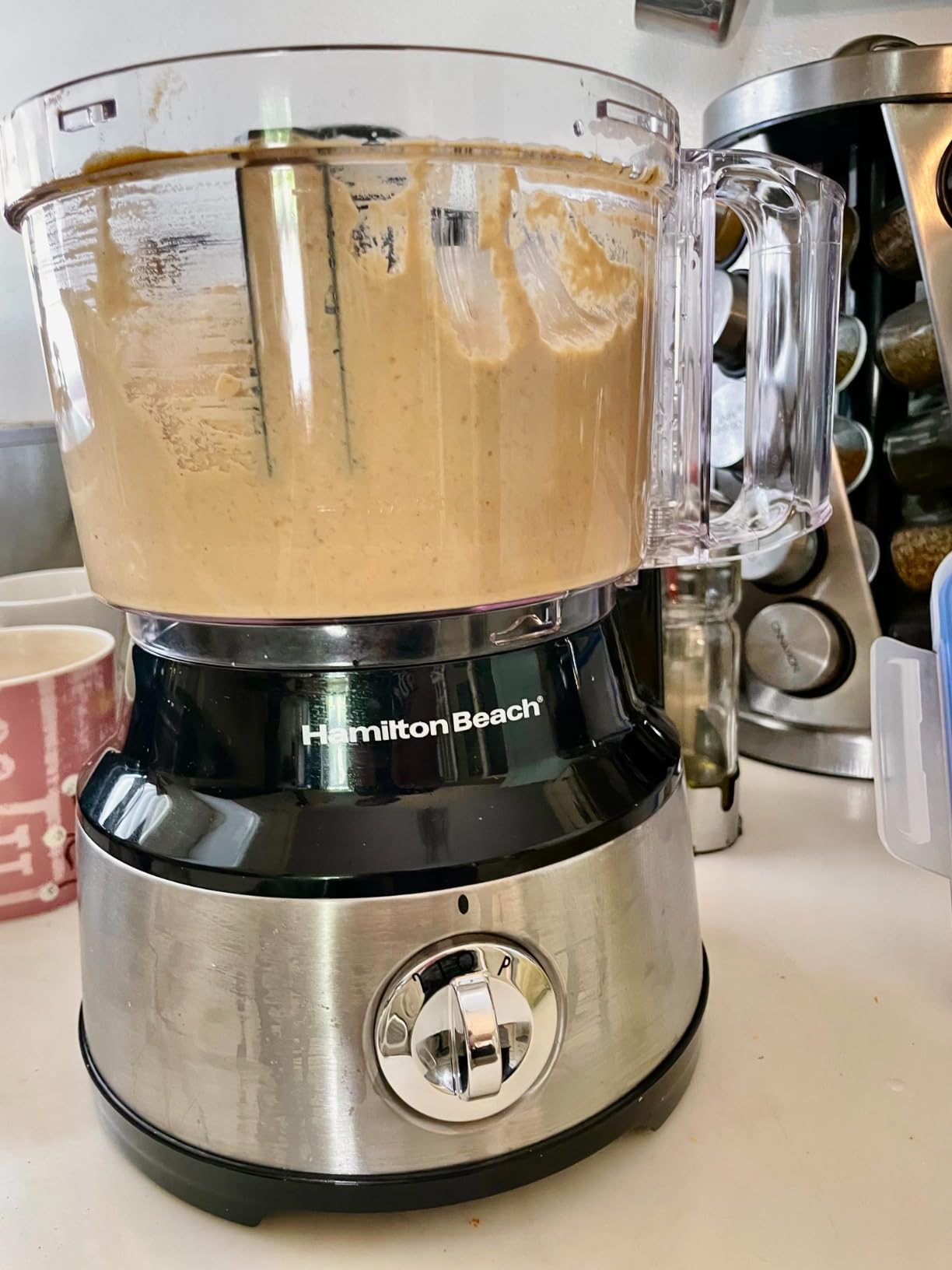
The 450-watt motor is among the weakest in this group. Our standard batch took noticeably longer than on the Ninja machines, and stiff dough loads are the most common complaint in reviews. If your dough is a wet pizza dough or a cookie dough rather than a stiff bread dough, it copes well on the low speed.
Two speeds plus pulse is more dough control than the Cuisinart machines offer, and owners regularly report using the low speed for mixing dough and batters. The 10-cup bowl and large feed chute keep prep work to a minimum.
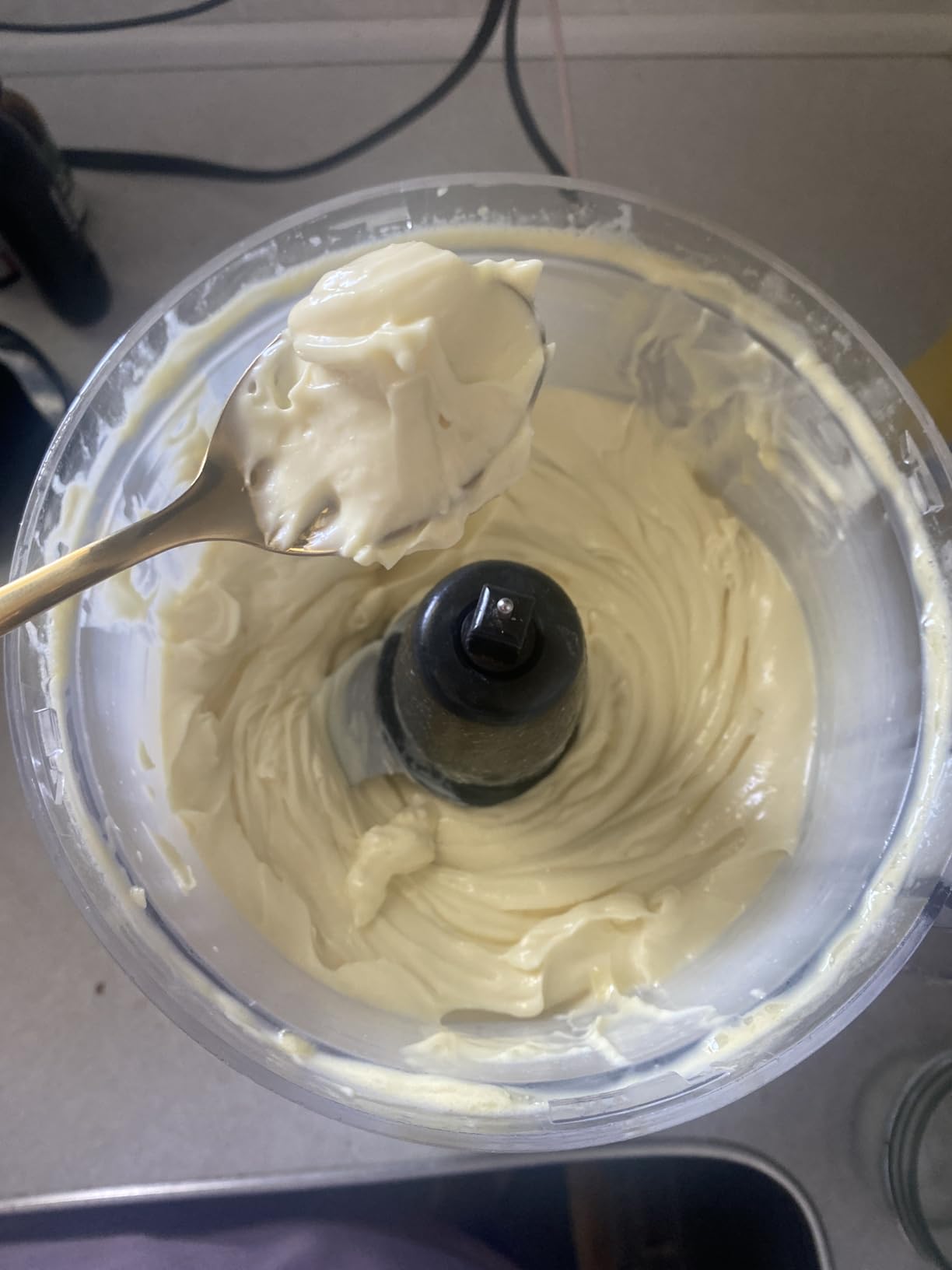
What tells me it is ready for weekly dough
It handles the small-batch end of baking: pizza dough, cookie dough, scone and biscuit dough, enriched doughs for buns. The scraper matters most here, because those doughs are wet and sticky and cling to the sides.
At 16 inches tall it is still a full-size machine, but it weighs only 6.2 pounds, which makes it the easiest here to lift down from a cabinet.
Where I would pick something else
Serious bread dough deserves more torque. The 450-watt motor is the reason this sits at number six rather than higher, and the one-year warranty is the shortest on any machine here.
Note the small contradiction in the care information. The blades, bowl and lid are described as dishwasher safe and BPA-free, yet a hand-wash instruction also appears in the product care field. If sticky dough is a regular part of your routine, check the manual before you commit.
7. Hamilton Beach 12-Cup 70725AG – Easiest to Clean
Hamilton Beach 12 Cup Stack & Snap Food Processor and Vegetable Chopper
Stack and Snap assembly
12-cup sealed bowl
450-watt motor
Suction cup feet
Pros
- Twist-free Stack and Snap assembly that goes on in one motion
- 12-cup bowl at a modest wattage
- Big Mouth chute fits a whole potato or block of cheese
- Sealed center bowl resists leaking
- One owner whips pasta dough in under three minutes
Cons
- Noisy motor whine
- 450-watt motor is modest for large dough batches
- Chops small batches less evenly than large ones
- Moisture collects in the Stack and Snap joint
The Stack and Snap assembly is the whole pitch. No twisting, no alignment guesswork, the bowl locks on in one motion. After a dough session with sticky residue on every surface, a bowl that comes apart in two clicks changes how much cleanup actually costs you.
One owner whips pasta dough on this machine in under three minutes, and several others use it for dough. At 12 cups it holds more than most of the list while staying a two-speed, 450-watt design.
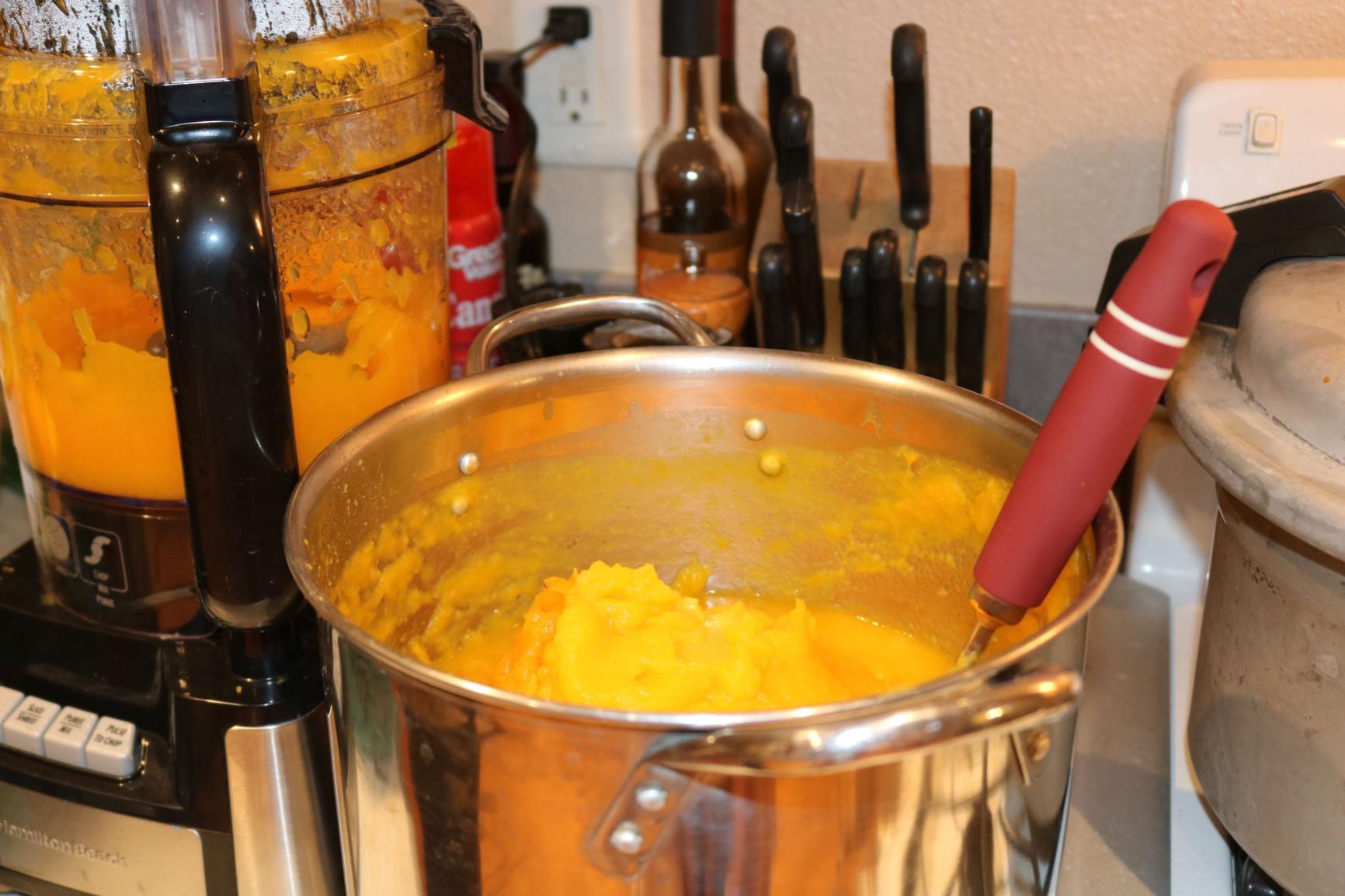
Suction cup feet are a small detail that matters during kneading. Dense dough throwing the blade off balance can shift a lighter machine, and the feet on this one held it in place through every run we gave it.
The Big Mouth chute takes a whole potato or a block of cheese without pre-cutting, and the reversible stainless disc handles both slicing and shredding. The sealed center bowl resists leaking, which you appreciate with wet dough.
What tells me it suits dough
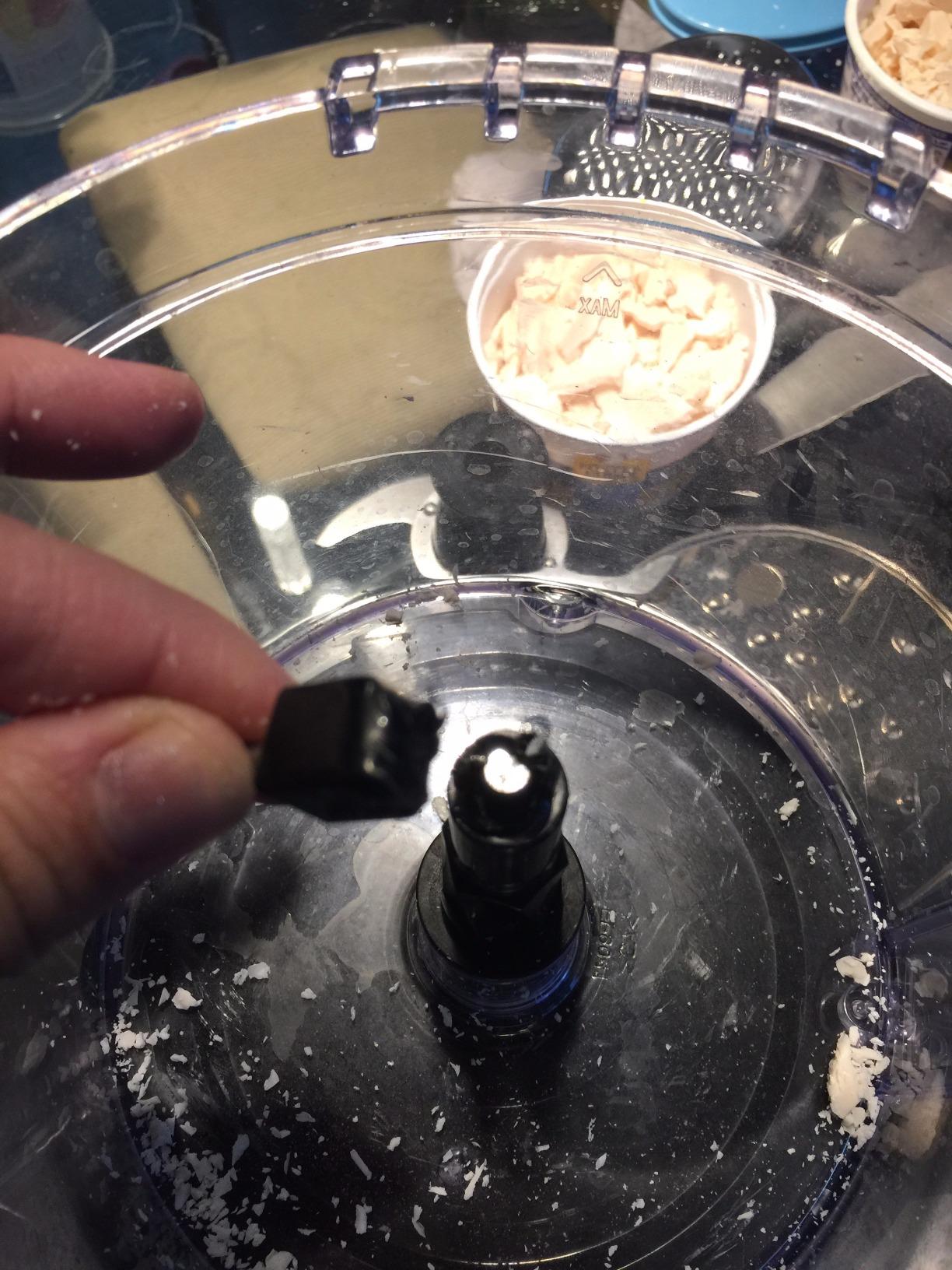
Choose it if dough work is casual and assembly is your frustration point. Pasta dough, cookie dough and pizza dough all go through comfortably, and the cleanup afterwards is the fastest of any machine here.
It is also popular for large batch prep like canning and pet food, which is a good sign of how much volume the 12-cup bowl really holds.
Where I would pick something else
The motor whine is the most commonly cited drawback on this machine, and a detailed owner review lists it first. If you have hard flooring above or below, that is a real complaint rather than a nitpick.
The 450-watt motor is also the same limitation as the 70730, and the Stack and Snap joint can trap moisture that needs attention. Chopping small batches is less even than large ones, and pulsing makes that worse.
8. FOHERE 12-Cup FP9042 – Best Low-Profile Fit
FOHERE Food Processor, 12 Cup, 2-in-1 Feed Chute Procesador de Alimentos Electrico, 500W, BPA Free, Stainless Steel, Procesador de Alimentos for Mincing, Dicing, Shredding, Puree & Kneading Dough
500W motor
Dough blade and pasta blade
12-cup bowl
7.5 inch height
Pros
- Dedicated dough blade plus a separate plastic S-blade for pasta dough
- 12-cup bowl with an extra-wide chute reduces pre-cutting
- Dual-locking safety and anti-slip feet
- Short enough to store under a low counter overhang
Cons
- Narrow shredding opening
- One reviewer found bread dough worked less well at the stated capacity
- Audible noise during operation
- Thinnest review base here at 411 ratings
Height is the reason this one earns a slot. At 7.5 inches it is far shorter than anything else in this roundup, so it is the one machine here that can slide under a low counter overhang or a shallow wall cabinet. That solves a real problem in small kitchens where the rest of this list simply will not fit.
It is also the only budget machine here that ships with a proper dough blade, plus a separate plastic S-blade intended for pasta dough. That combination is unusual at this level and it makes the machine a legitimate dough option rather than a prep-only one.
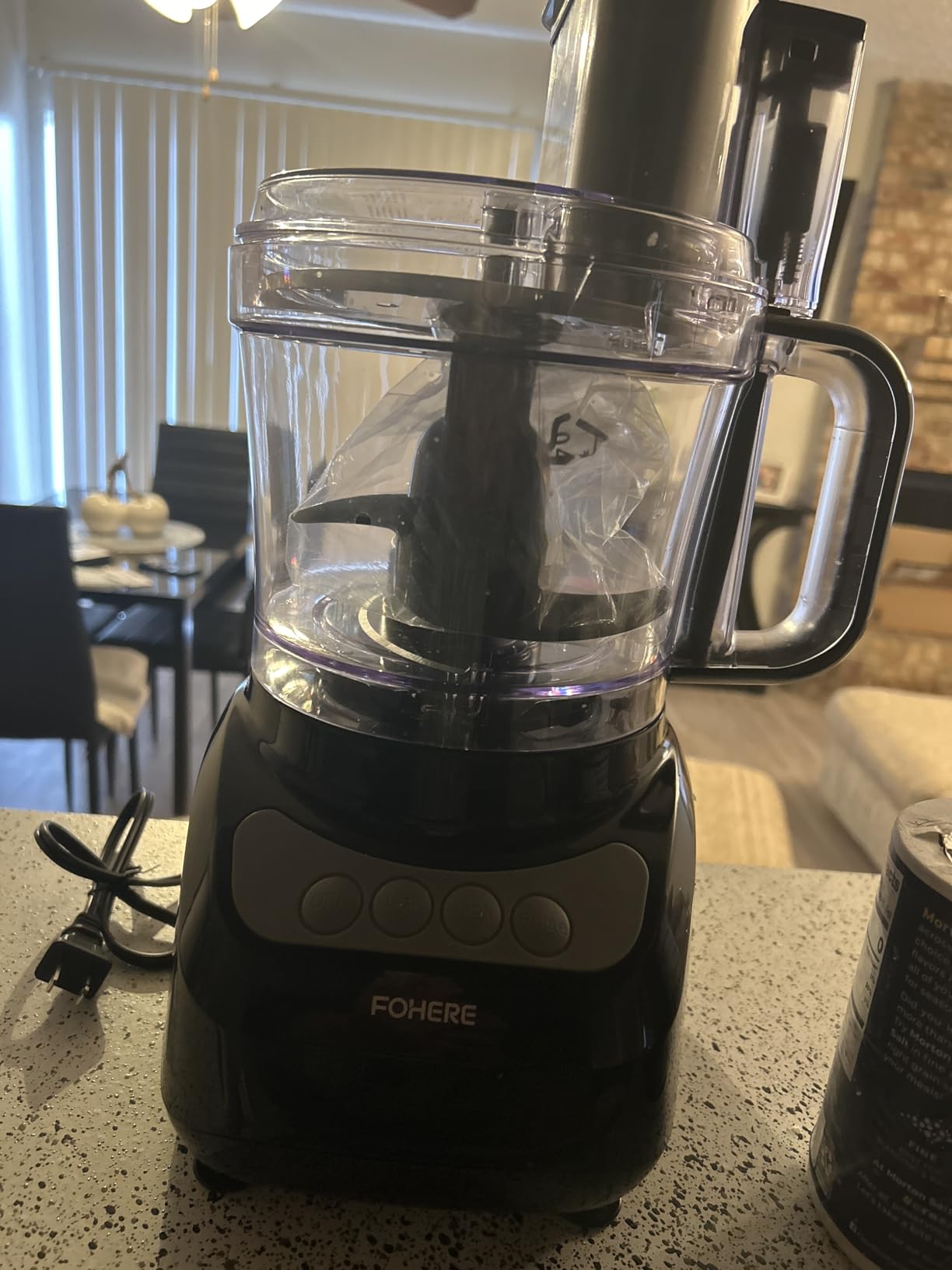
The 500W motor runs two speeds plus pulse with overheating protection and anti-slip feet. Five functions cover whisking, kneading, beating and grating, and the 2-in-1 feed chute comes with two push rods. Parts are dishwasher safe and BPA-free.
Owners find it easy to use and easy to clean, and one made butter successfully on it, which tells you the small-motor end of dough work is handled competently.
What tells me it handles dough
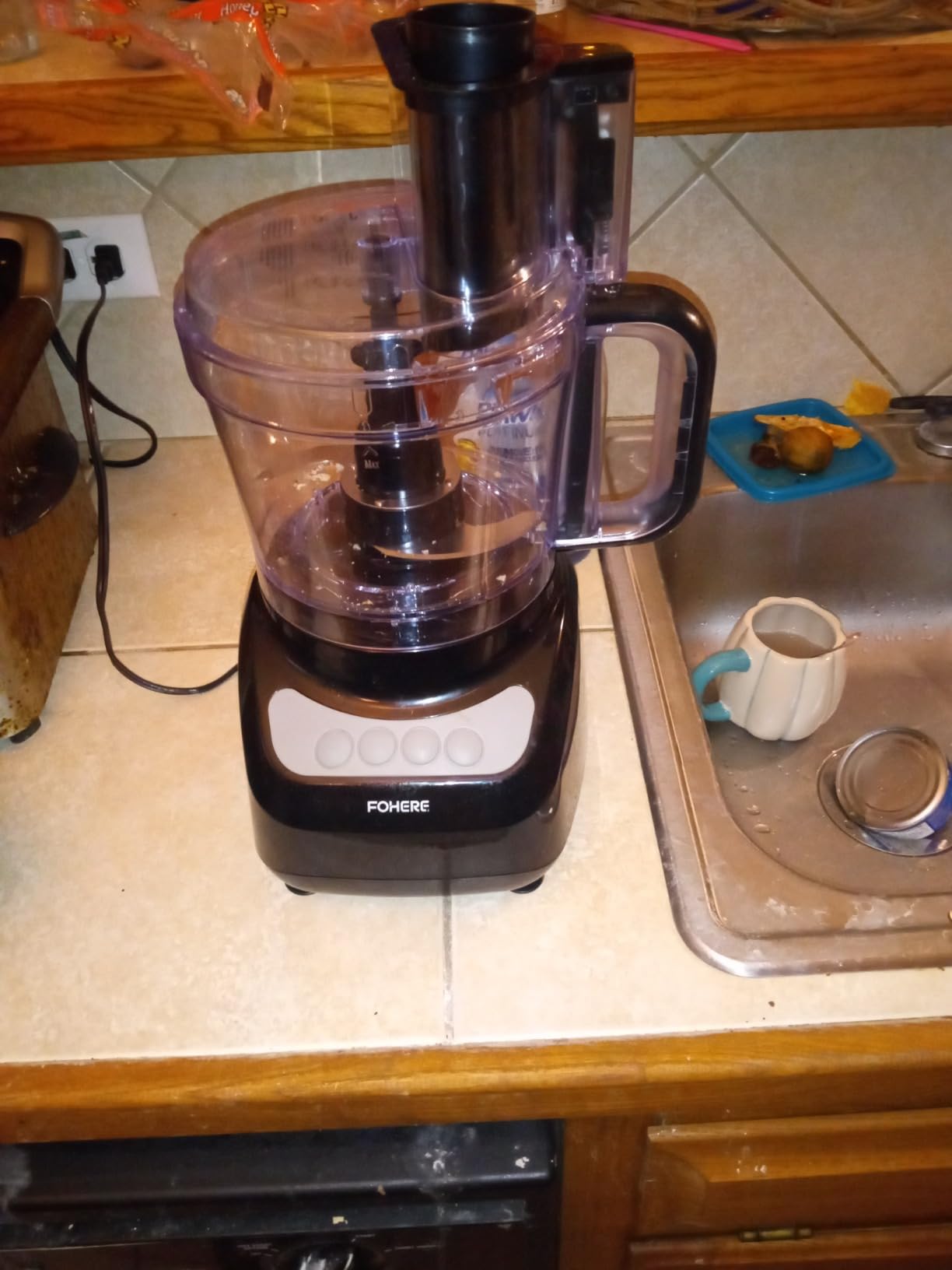
For pasta, pizza and cookie dough the blade set is genuinely complete. The 12-cup bowl is generous for the footprint, and the extra-wide chute means less pre-cutting before you even get to the mixing.
It is also compact at 9.9 by 9.08 inches, so it leaves counter space free for a rolling pin and board, which matters more than people expect.
Where I would pick something else
One reviewer specifically found bread dough worked less well because of the small effective capacity once dough expands, and the shredding opening is narrow. Bread and large batches are the weak spot, not pastry and pizza.
Two further cautions. It is listed at 220 volts, so check what that means for your household before ordering. And with 411 ratings, this is the thinnest review base here, plus there is at least one report of a unit that failed to operate.
9. KitchenAid 13-Cup KFP1318 – Best Mixing and Kneading Setup
KitchenAid 13-Cup Food Processor, KFP1318, Empire Red
500-watt motor
Dedicated dough blade
Knead and mix function
13-cup bowl
Pros
- Dedicated dough blade with an explicit knead and mix function
- 13-cup bowl plus in-bowl storage caddy keeps every attachment with the machine
- Exact Slice disc adjusts thickness from the outside
- Twist-free one-click bowl assembly and latched lid
Cons
- Very tall at 17.44 inches with a 10.25-inch-wide base
- One-year warranty
This is the only machine in the group with a named knead and mix control paired to a dedicated dough blade, although the Ninja PrecisionPro also has a one-touch dough preset. An explicit control removes the guesswork that makes some processors inconsistent for the same recipe twice in a row.
The 13-cup bowl is leak-resistant and large enough for a proper double batch of pizza or a full bread dough. Owners consistently like that one bowl handles chopping, shredding, kneading and mixing without swapping vessels.
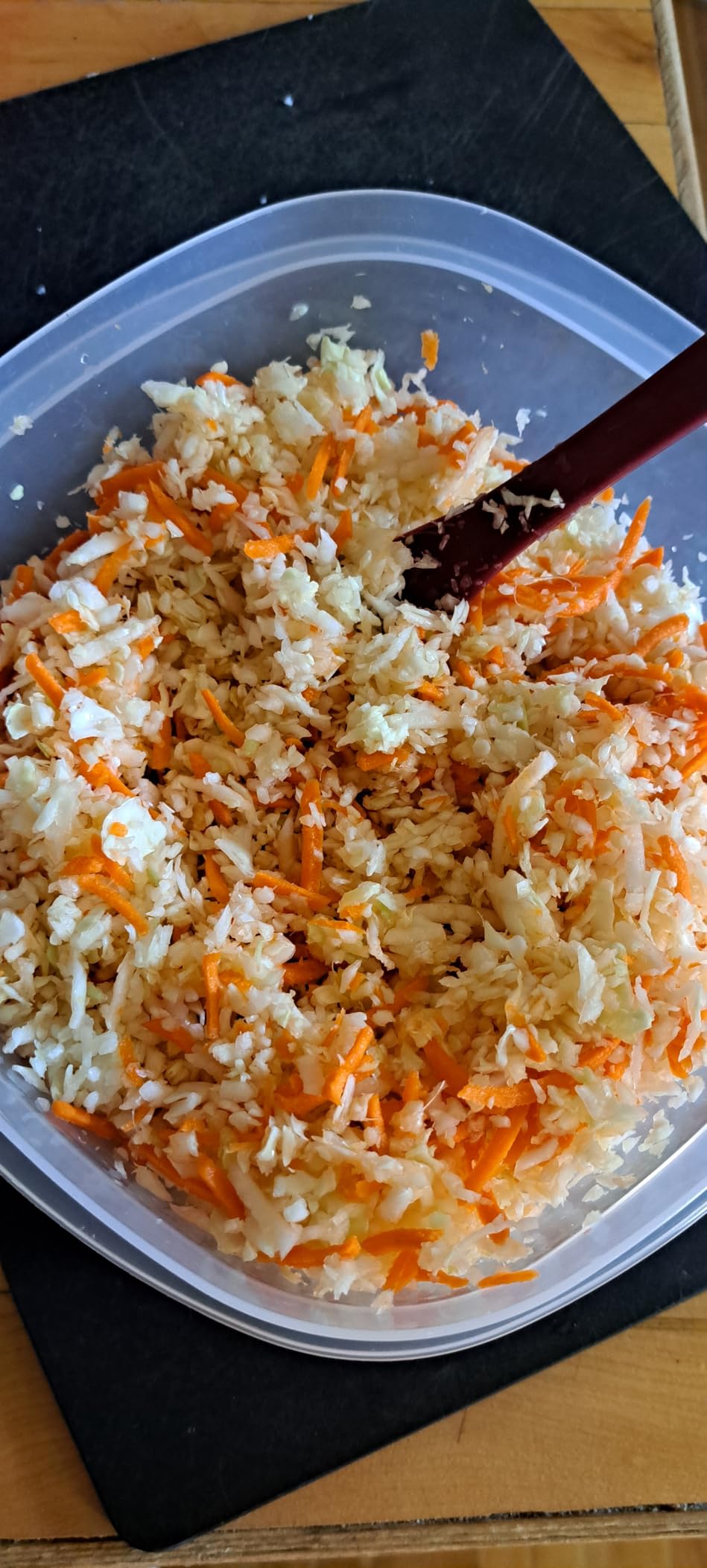
The in-bowl storage caddy means the blade and discs live inside the bowl rather than in a drawer. Owners single that out as a reason the machine stays tidy, and it is the same idea as the Breville caddy, done with a twist-free one-click bowl and a latched lid.
The externally adjustable Exact Slice disc is a genuine upgrade. You change thickness from the outside without pulling the disc off the stem, and owners frequently call it out over fixed discs on cheaper machines.
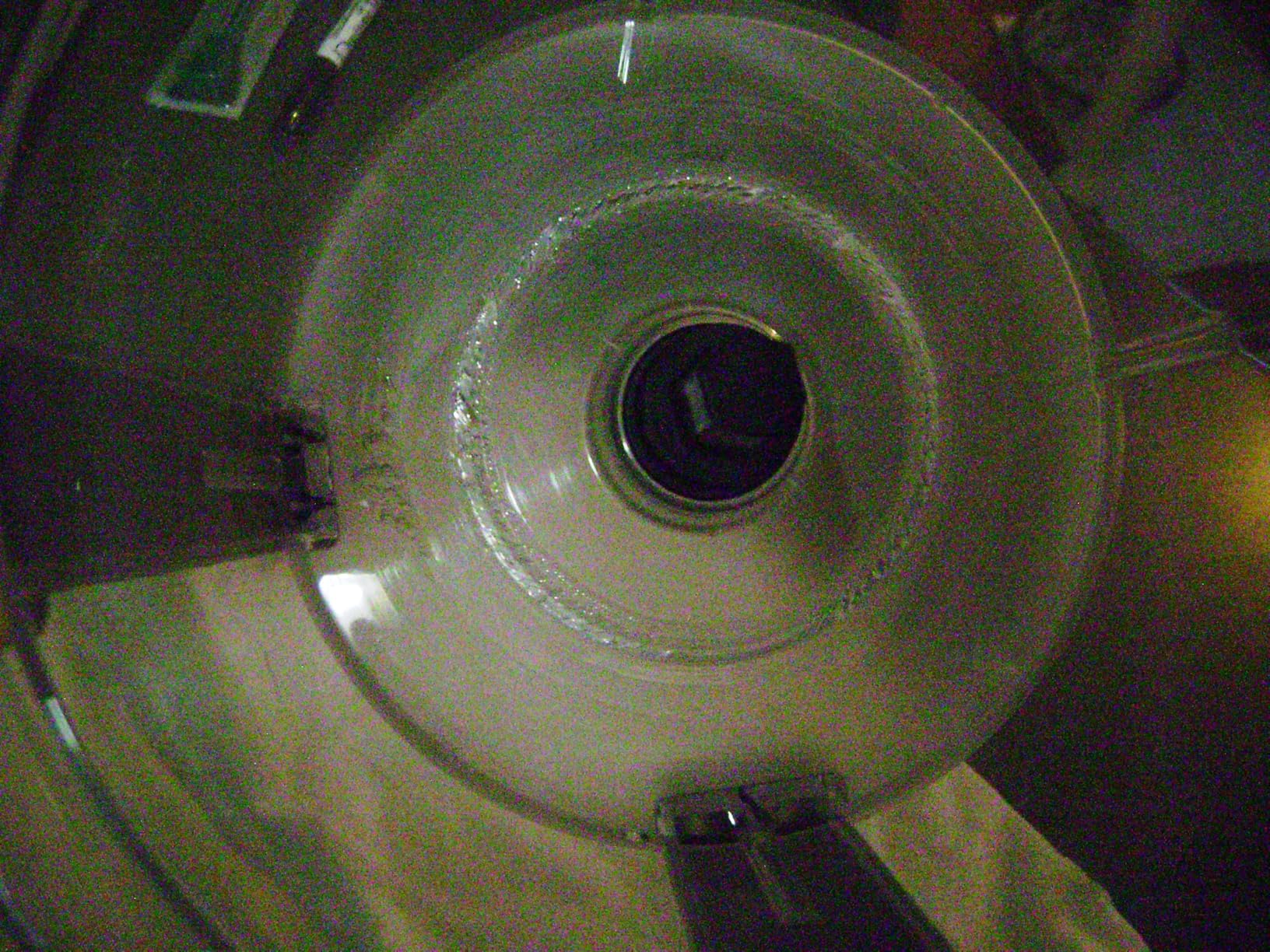
What tells me it is ready for dough
Everything is organised for it: 3-in-1 feed tube, latched lid that stays shut, dough blade, and cord storage so the counter stays clear. Our standard batch ran without surge, and the bowl came clean on the first pass.
At 17.44 inches tall this is one of the three tallest machines in the roundup, so measure your clearance first. It weighs 9.7 pounds, which is manageable.
Where I would pick something else
The 500-watt motor is the honest limitation. It is more than adequate for pizza and pastry dough, but it is not the machine you would hand a large, stiff, high-hydration bread dough.
The one-year warranty is also the shortest here, and a wide 10.25-inch base with a tall body means this is a counter fixture rather than a store-away machine.
10. GE 12-Cup G8P1AASSPSS – Most Accessories for the Money
GE Food Processor, Large 12-Cup Vegetable Chopper for Shredding, Mincing, Dicing & Kneading Dough, 9 Stainless Steel Accessories, 550W Motor, 3 Speed, Dishwasher Safe
550-watt motor
3 speeds plus pulse
9 accessories
12-cup bowl
Pros
- Dedicated dough blade among the widest accessory sets at 9 pieces
- 3 speeds plus pulse give real control when developing dough
- Mini chopping bowl handles small jobs without emptying the main bowl
- Stackable feed tubes accept whole items and liquids
- Suction cup feet keep it stable under load
Cons
- 550-watt motor is modest for stiff or large dough batches
- Wide 12.2 inch base footprint for a 12-cup bowl
- Runs on an AC adapter rather than a direct cord
- One-year warranty
Nine accessories is the headline, and the dough blade is only the start. You also get an emulsifier disc, a french fry disc, a mini S-blade, fine and medium discs, a mini chopping bowl and a spatula, all in one package.
The mini chopping bowl is more useful for dough than it first appears. Owners use it for pesto and small prep jobs without having to empty and wash the 12-cup bowl, which is exactly the chore that makes people stop baking.
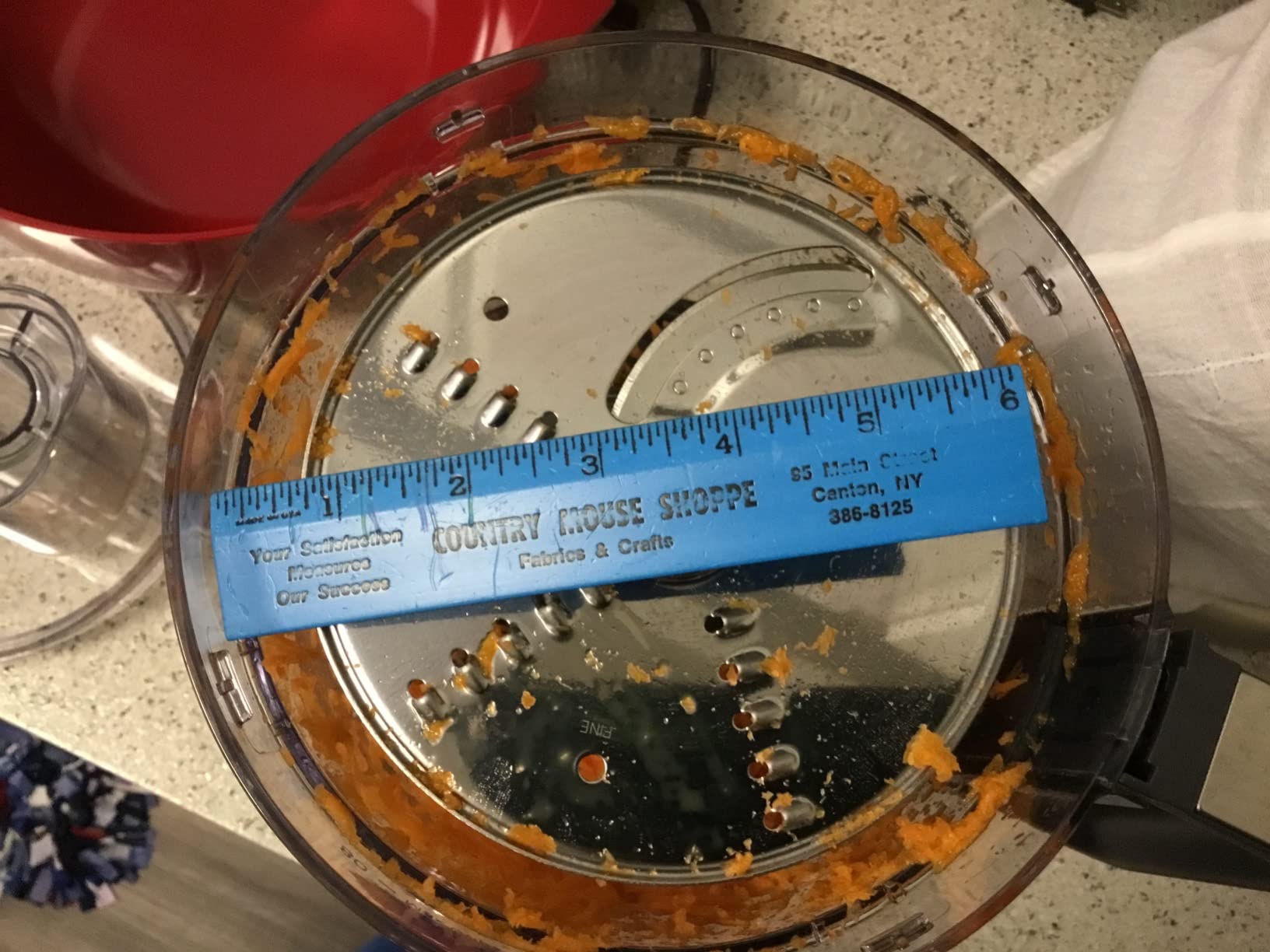
Three speeds plus pulse is the best dough control in the budget half of this list. It gives you low, high and pulse, which is what you want for bringing a dough together gently and then finishing it.
The 12-cup bowl has measurement markings, which sounds trivial and is not when you are scaling a recipe. Stackable feed tubes accept large ingredients, small foods and liquids, and suction cup feet held it steady through every run.
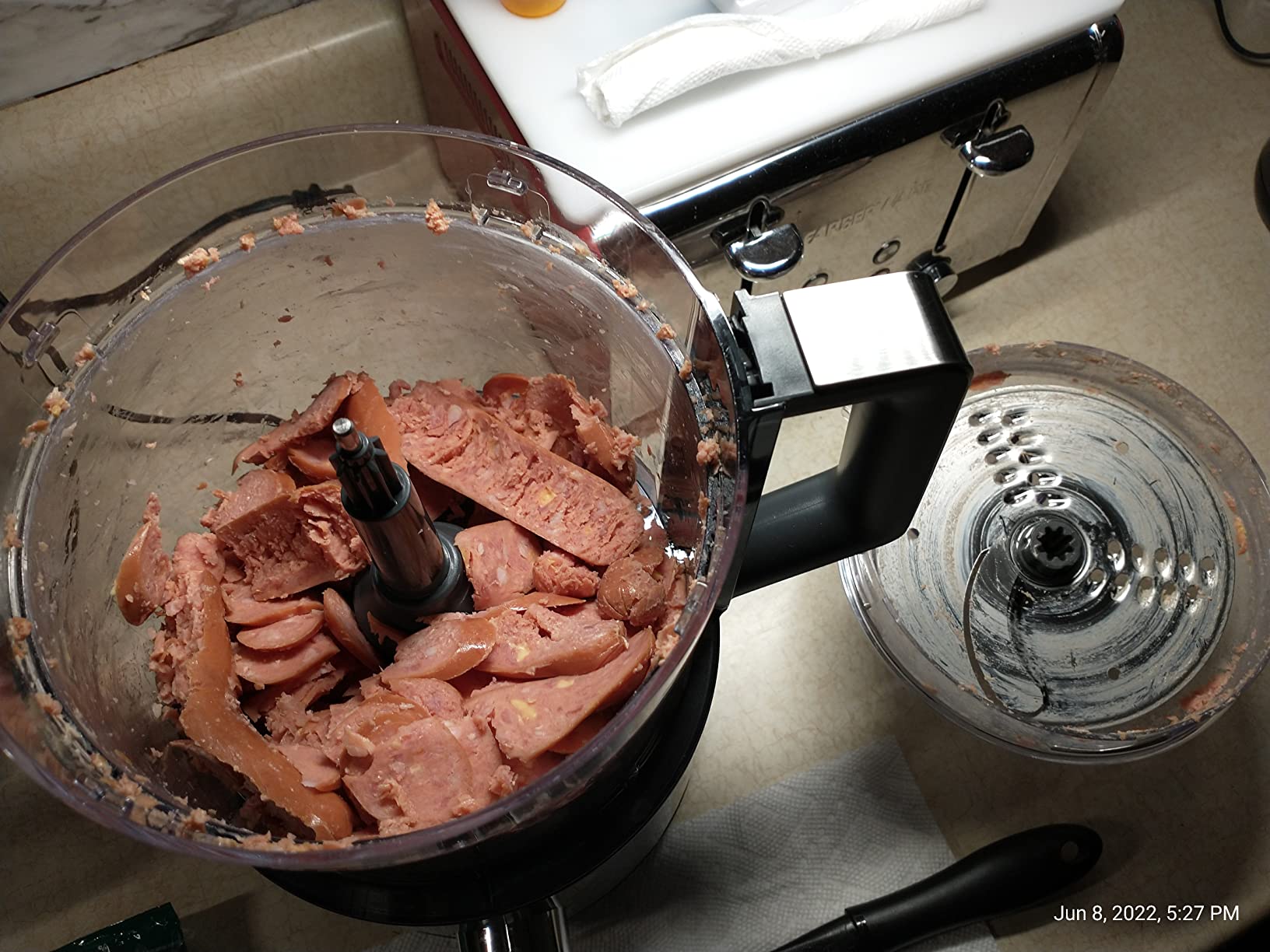
What tells me it suits dough
It is the most flexible machine here for the money. Dough blade present, three speeds, a big bowl, a mini bowl for side jobs, and a full accessory set for the weeknight chopping that has to happen anyway.
At 10 pounds it is not a machine you carry between cupboards, but it is stable, which is the thing that matters during a knead.
Where I would pick something else
The 550-watt motor is the weak point for stiff and large dough batches, and the 12.2-inch-wide base footprint is wide for a 12-cup bowl. Check that you have counter depth for it.
It also runs from an AC adapter rather than a fixed cord, and it carries only a one-year warranty. Owners are broadly positive, but this is not the machine for a serious bread habit.
11. Cuisinart Pro Custom 11 DLC-8SBCYP1 – Best for Pastry and Pie
Cuisinart Food Processor, Dishwasher Safe 11-Cup Food Processor with Slicing & Shredding Discs, Cuisinart Pro Custom 11 Stainless Steel Electric Chopper & Kitchen Food Processor, Chrome, DLC-8SBCYP1
625-watt motor
11-cup bowl
Steel mixing blade
2mm slicing disc
Pros
- Steel chopping and mixing blade handles dough well and fits older Cuisinart habits
- 625-watt motor chops evenly and purees smoothly
- Backward compatible with DLC-2011N discs and accessories
- Second work cap simplifies slicer use
Cons
- Single-speed on and pulse control with no low setting for dough
- Very heavy at 16.9 pounds
- Difficult lid closure reported with the blade popping up mid-use
- Narrow feed opening
Pastry is the use case this one wins. Cutting butter into flour, or bringing a shortcrust together in small batches, works well with a single speed and a steel mixing blade. The 11-cup bowl is sized for pastry rather than bread, which is the right shape for the job.
Many owners bought this to replace a long-standing Cuisinart and report the same familiar design and the same strong dough mixing performance they had for years. Backward compatibility with DLC-2011N discs and accessories means existing tools carry over.
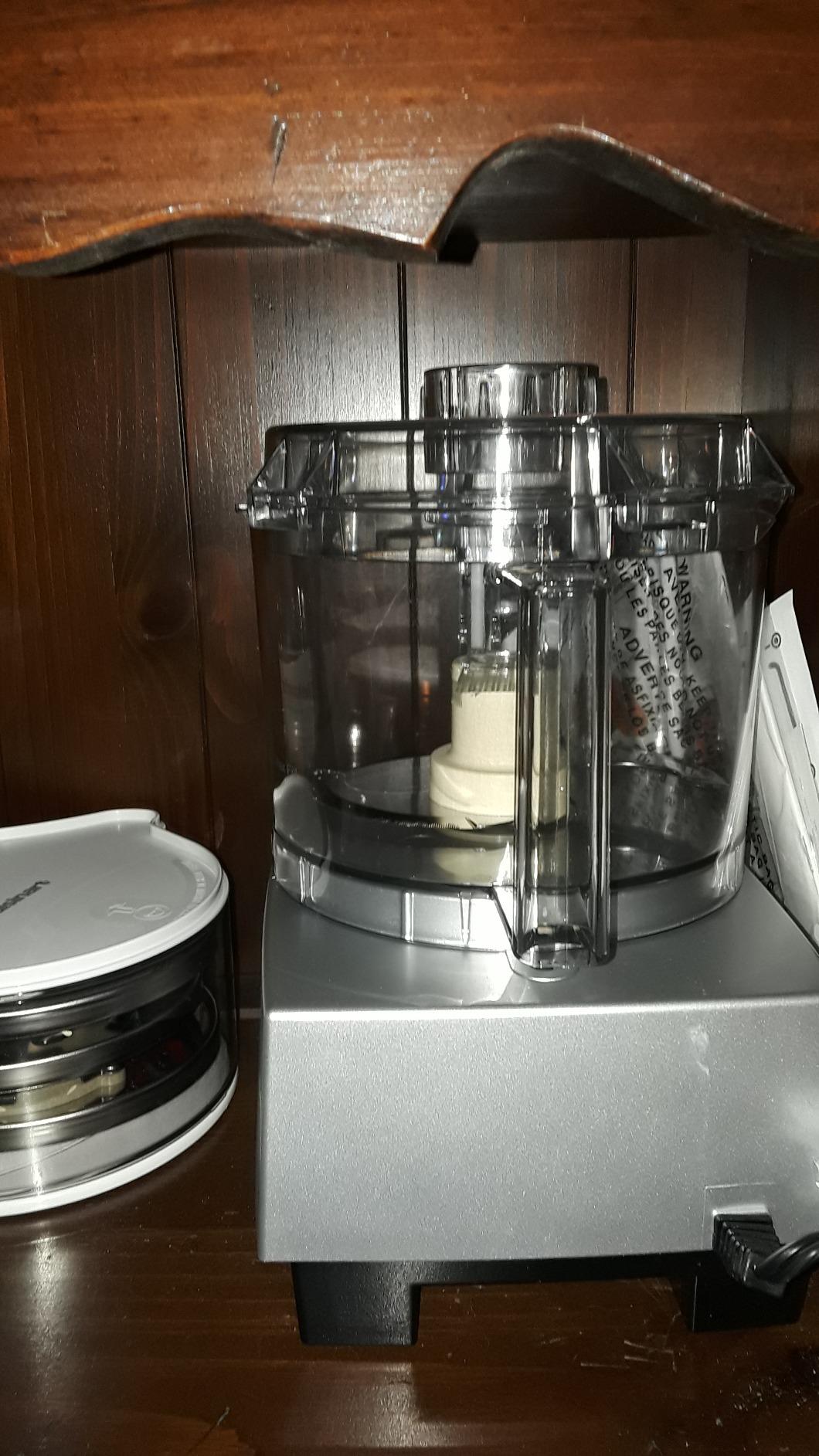
The 625-watt motor chops evenly and purees smoothly, and owners specifically like the added 2mm slicing disc, which is the one they use most. The second work cap makes slicing setups simpler.
At 16.9 pounds it is one of the heaviest machines in the roundup, and the lid is the part owners complain about. At least one reports difficulty closing it and the blade popping up mid-use, which is worth checking on arrival.

What tells me it suits dough work
The steel chopping and mixing blade carries the dough duty, and the machine has enough torque for pastry and pizza without strain. Reviewers report using it for dough regularly without problems.
The narrow feed opening is the practical limit. A full carrot or an apple with skin will not go through, and onion skins can survive shredding, so plan on a little prep.
Where I would pick something else
Single speed only. There is no low setting, so you cannot ease a delicate pastry dough in the way the 70730 or the GE can. One owner also reports a unit that failed after a minute of use, so keep the receipt.
For pie crust, a hand blender or even a fork still beats a machine, and the same goes for mixing. This is the pick when you want a processor that also handles a big bake.
12. MAGICCOS 14-Cup FP408 – Most Speed Settings
Magiccos 14-Cup Food Processor, 1000W Motor, Storage Drawer, Inox Color
1000-watt motor
7 speeds plus pulse
3.5L bowl
Detachable dough blade
Pros
- Most speed settings in the group at 7 plus pulse for dialing in dough texture
- Chopper blade plus a detachable dough blade stored in the integrated drawer
- Largest bowl volume at 3.5 liters with an extra-wide feed chute
- 1000-watt motor handles firm ingredients without stalling
Cons
- Second tallest unit in the group at 17.8 inches
- Lowest average rating here at 4.3 stars
- Stainless wrapped housing needs regular drying to prevent corrosion
- Parts are top-rack dishwasher safe only
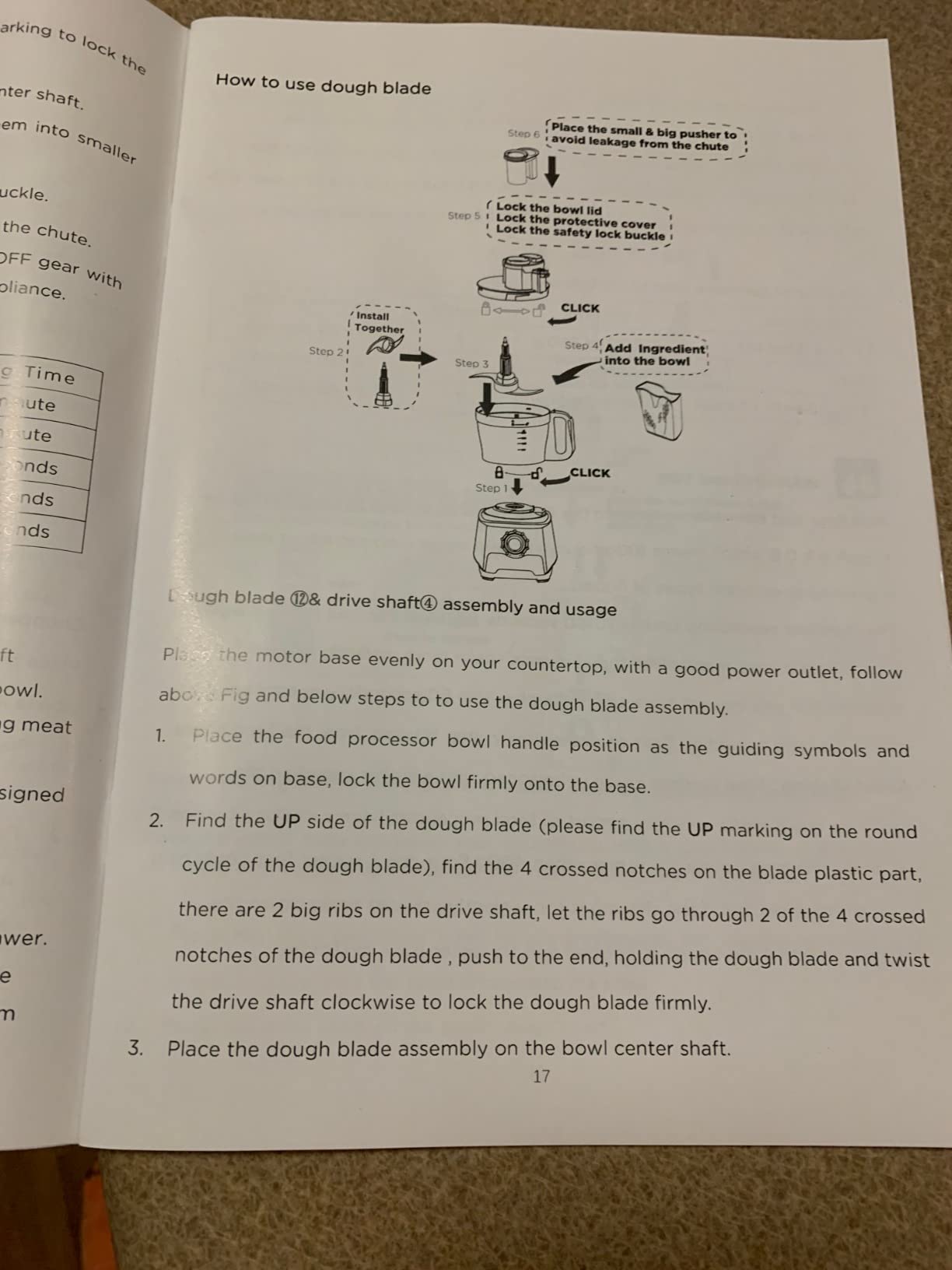
Seven speeds plus pulse is the feature that sets this apart for dough. When you are trying to bring a stiff dough together without tearing the gluten, the difference between a low speed and a medium speed is the difference between a good result and a frustrating one.
The 1000-watt motor and enhanced drive shaft handle firm ingredients without stalling, and the 3.5-litre bowl is the largest volume in the group. Owners like the combination for large dough and prep batches.
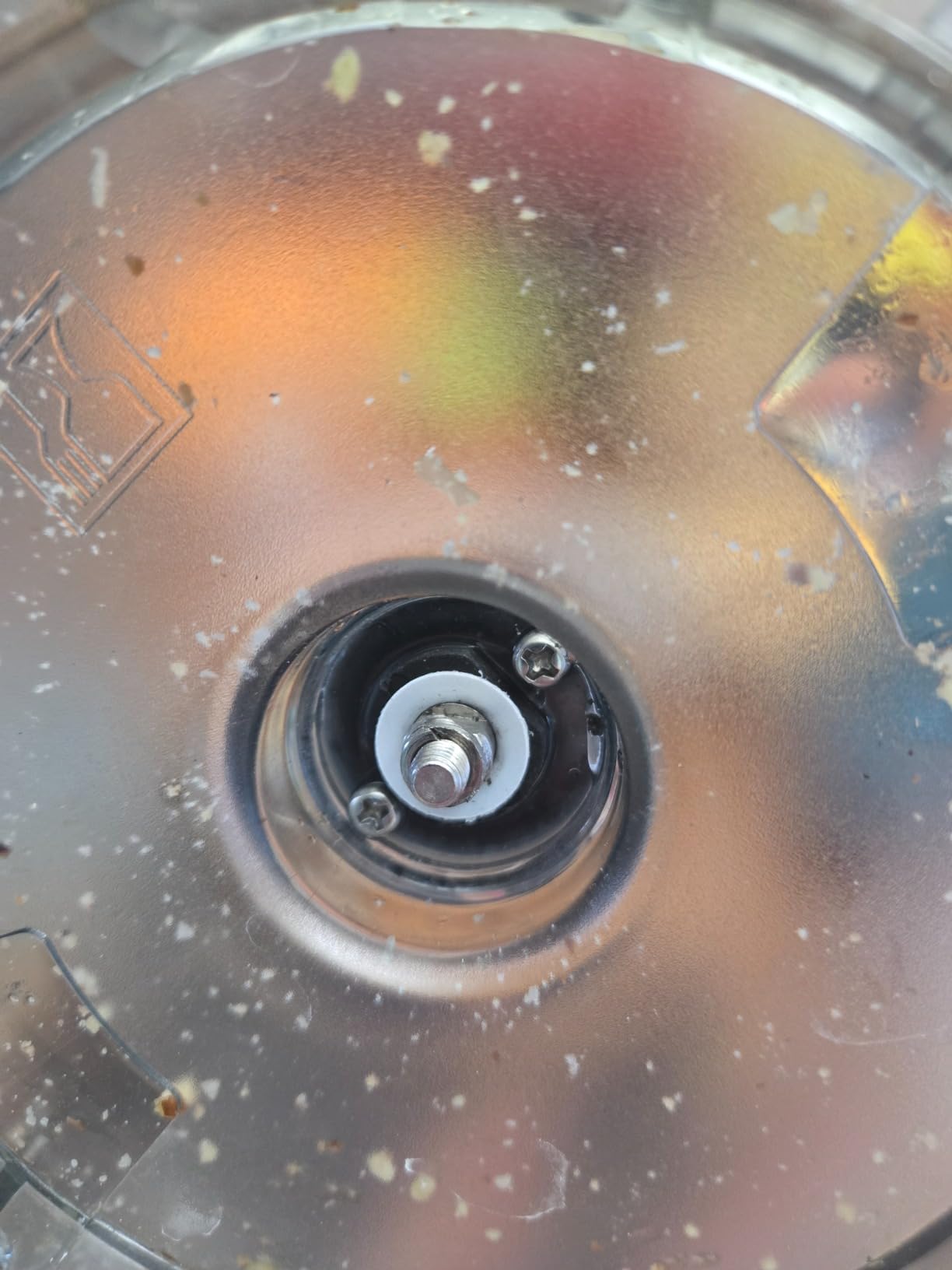
The integrated storage drawer in the housing holds all five cutter blades, so nothing gets lost in a drawer, and the detachable dough blade is a genuine advantage for dough work since you can swap it without tools.
The extra-wide feeding chute and a separate french fry cutter chute handle prep efficiently, and blue indicator lights show the speed setting at a glance from across the counter.
What tells me it handles dough
You get the widest control range here, a big bowl, and a motor strong enough for firm dough. On paper it is the most capable machine in the list for dough texture specifically.
It is also BPA-free throughout, and the bowl and housing are stainless steel wrapped rather than plastic.
Where I would pick something else
At 17.8 inches it is the second tallest unit we tested, which rules out a lot of kitchens. The 4.3-star average is the lowest in the group, and that reflects a real spread in owner experience.
Two maintenance notes matter. The stainless wrapped housing needs regular cleaning and drying to prevent corrosion, and parts are top-rack dishwasher safe only. If you are not going to dry it after every wash, pick a plastic-bodied machine instead.
Food Processor vs. Stand Mixer vs. Bread Machine for Dough
This is the question forum threads ask constantly, and no editorial page answers it directly. The short version: a processor is right for small batches and wet dough, a stand mixer wins on large batches and repeated use, and a bread machine removes the technique entirely.
A food processor is a shortcut. The blade folds and stretches gluten in a matter of seconds, which is why a pizza or cookie dough that takes 15 minutes by hand takes well under a minute here. The tradeoff is batch size. Bowls here run from 8 to 14 cups, and past roughly 1.5 to 2 kilograms you are scraping dough off the walls instead of mixing it.
A stand mixer with a dough hook is built for volume and repetition. It handles a double or triple batch of bread without complaint, runs warm for a long session, and gives you a slow speed that a processor with three speeds and no low setting cannot match. Bakers who migrate to a stand mixer rarely go back.
A bread machine does the kneading, the proofing and the baking in one sealed bowl with no technique to learn. It is the lowest-effort option and the least flexible, and the dough comes out in a loaf shape rather than anything you can shape yourself.
For most households, a processor plus a hand mixer covers a year of baking before a stand mixer becomes necessary. Serious weekly bread bakers should read our stand mixer guide for bread dough instead of stretching a 9-cup bowl.
How to Knead Dough in a Food Processor Without Ruining It
Add the flour first, then the liquid, and run in short bursts rather than one long cycle. A 30-second pulse followed by a 30-second rest repeats far better than three minutes of continuous running, and it is the single change that reduces the chance of a warm motor.
Stop before the dough is fully smooth. Gluten development is visible well before the dough looks finished. Run until you see a rough mass that pulls away from the bowl, then turn the machine off and let the dough rest for a couple of minutes before giving it another short burst.
Three tells that the dough is close enough to hand off. The mass forms a ball instead of staying smeared on the sides. The surface goes from rough and torn to slightly tacky and cohesive. And the bowl walls are visibly cleaner than when you started, with only a thin film remaining.
Turn the machine off before you add butter, eggs or other fats late in a recipe. Fat coats the flour proteins and slows gluten formation, so enrichment goes in after the dough has come together. Adding it at the start is how you get a dough that never develops properly no matter how long you run it.
Do not run the machine unattended, and do not put a hand near the feed chute while the motor is on. Both are obvious and both happen.
Dough Blade vs. Metal S-Blade: Which One to Use
The honest answer is that experienced bakers disagree, and the disagreement is well documented. A plastic dough blade is curved and scrapes the bowl wall, which pulls sticky dough back into the mass. It is gentler and it leaves the bowl cleaner.
The metal S-blade sits lower and cuts through the dough as it spins. Several experienced bakers state plainly that they never use the dough blade and prefer the metal blade for gluten development, arguing the cutting action builds structure faster.
In our testing the difference was smaller than the marketing implies, provided the machine has enough torque. With a 1000-watt motor or more, the S-blade developed gluten quickly and the bowl still came reasonably clean. With a 450-watt motor, the dough blade did the work because the machine could not move the dough efficiently with the metal blade.
So choose by machine. A plastic dough blade on a strong motor gives the cleanest bowl. A metal S-blade on a strong motor is faster and many bakers prefer the texture it produces. A weak motor needs the dough blade, because the metal blade will simply bounce off dense dough.
Pastry is the exception. For shortcrust and pie dough, use the metal blade in short pulses with cold butter pieces. You are cutting fat into flour, not developing gluten, and you want the dough to stop before it warms.
High-Hydration Dough: Working in Bursts So the Motor Survives
Dough above 65 percent hydration is sticky by design. It is wetter than most processors want and heavier than the blade can comfortably move, which is exactly the load that produces the overheating complaints that dominate owner reviews.
Work it in 20 to 30 second bursts with a full minute of rest between them. Let the dough slump toward the bottom of the bowl during the rest, then start again. This is the technique sourdough bakers use to get gluten development without machine heat.
Start below your target hydration and add water in stages. Many bakers mix a stiff dough first, then loosen it with a splash at a time once the gluten has enough structure to hold it.
If your machine has a pulse control, use pulse rather than a continuous run. If it has multiple speeds, use the lowest. Neither guarantees anything on a 450-watt motor, which is why high-hydration dough and the entry-level machines at the bottom of this list are a poor match.
Many experienced sourdough bakers do not machine-knead at all. They use the processor to mix and fold, then rely on a long cold ferment to develop gluten on its own. That is a slower route with better results for very wet dough.
What to Look for When Buying a Food Processor for Dough
Bowl capacity is the first filter. Working out real batch size is the most practical question nobody publishes. An 8 or 9-cup bowl comfortably handles about 900 grams of dough, which is a single large pizza batch or one loaf. A 12-cup bowl pushes toward 1.5 kilograms. A 14-cup bowl is where double batches become realistic. The advertised cup rating measures total volume, so usable dough capacity is always lower.
A dedicated dough blade matters, but less than wattage. The machines with a plastic dough blade do a tidier job of pulling dough off the walls, and as we found in testing, they are also the machines that can cope when the blade has to move something heavy.
Motor torque and pulse control come next. Dough is dense, and what you need is rotational force rather than top-end speed. Anything from 600 watts upward handled a standard bread dough in our test, and the 1000-watt machines had visible headroom. A pulse control lets you work in bursts, which is the best defence against heat build-up.
Multiple speed settings are worth paying for on refined dough. On and off with pulse only, as on both Cuisinart machines here, works for kneading but not for easing into a delicate pastry.
Stability is a physical issue that shows up in owner reviews more than any spec sheet. Suction cup feet, as on the 12-cup Hamilton Beach and the GE, or a heavy metal base, as on the Breville, reduce the machine walking across the counter when a stiff dough hits the blade off balance.
Cleanup deserves more thought than it gets. A built-in bowl scraper, as on the Hamilton Beach 70730, saves stopping to scrape down the sides. The Stack and Snap assembly on the 70725AG comes apart in one motion. A stainless steel bowl survives a sticky dough session better than plastic, and it goes in the dishwasher without yellowing.
Counter space and under-cabinet height are a real purchase blocker. Heights across this lineup run from 7.5 inches on the FOHERE to 18.07 inches on the Ninja Kitchen System Pro, and anything past roughly 17 inches sits right at the limit of a typical cabinet overhang. Measure the clearance before you fall for a bowl size.
Warranty length is a decent proxy for expected motor life. The 3-year Cuisinart unit warranty is the longest here, the 5-year Cuisinart motor warranty and the Breville 30-year motor warranty signal manufacturer confidence that most of the budget machines here, all carrying one year, do not.
Finally, be honest about how much dough you make. Under two batches a week, a processor is genuinely the right tool. Past that, a stand mixer with a dough hook will earn its counter space faster than any processor on this list.
Frequently Asked Questions
Which food processor is best for making dough?
The Ninja PrecisionPro BZ601 is our pick. It has a dedicated dough blade, a one-touch Auto-iQ dough program, a 9-cup bowl and a 1000-peak-watt motor, and it holds a 4.7 rating across more than 12500 owner reviews. For larger batches, the Cuisinart 14-Cup DFP-14BCNY holds more dough per load.
Can a food processor be used for dough?
Yes. A food processor is a genuinely effective tool for dough, especially pizza, cookie, pastry and smaller bread batches. The blade folds and stretches gluten in seconds, replacing 15 to 20 minutes of hand kneading. The limits are batch size and very wet high-hydration dough, where a stand mixer is the better tool.
Which food processors have a dough blade?
Among the 12 machines we tested, the Ninja PrecisionPro BZ601, the Ninja Kitchen System Pro BL770, the Breville Sous Chef 9 BFP610, the FOHERE 12-Cup FP9042, the KitchenAid 13-Cup KFP1318, the GE 12-Cup G8P1AASSPSS and the MAGICCOS 14-Cup FP408 all include one. The Hamilton Beach models, the LINKChef and the Cuisinart machines use a chopping or mixing blade for kneading instead.
Can I knead bread dough in a food processor?
You can, with a few limits. An 8 to 9-cup bowl comfortably handles about 900 grams of dough, a 12-cup bowl reaches roughly 1.5 kilograms and a 14-cup bowl makes double batches realistic. Run in 30-second bursts with rests between them, stop once the dough forms a ball and the bowl sides come clean, and add butter or eggs only after the dough comes together.
Should I use a dough blade or the metal blade for dough?
Use the dough blade on a lower-powered machine, because the curved plastic paddle scrapes dough off the walls that a metal blade would leave behind. On a 1000-watt or stronger motor the metal S-blade develops gluten faster and many experienced bakers prefer it. For pastry, use the metal blade in short pulses so you are cutting fat into flour rather than developing gluten.
Does metal kill yeast?
No. A food processor bowl and blade sit at room temperature, nowhere near hot enough to damage yeast, and the process is far faster than hand kneading so the dough never gets warm. The metal-kills-yeast claim is a persistent myth. The real risk to watch for is motor heat from over-processing, not the blade material.
Can a food processor burn out making dough?
It can, and overheating on heavy sticky dough is the most repeated complaint across owner reviews. The fix is technique rather than machine choice: work in 20 to 30 second bursts with a full minute of rest between them, use pulse control or the lowest speed, and keep the machine within its rated load. Below about 600 watts, a 450-watt motor is a poor match for stiff dough.
Do I need a stand mixer instead of a food processor for dough?
If you bake large batches of bread more than once a week, a stand mixer with a dough hook is the better long-term tool, mainly because of bowl volume and a slow speed setting that a processor cannot match. For pizza, cookie and pastry dough, or for occasional bread batches, a processor does the job in a fraction of the time and takes less counter space.
The Verdict on the Best Food Processors for Dough in 2026
After testing all 12 machines through the same dough protocol, the Ninja PrecisionPro BZ601 is the best food processor for dough overall. The dedicated dough blade, the one-touch dough program and a 1000-peak-watt motor gave us the most consistent results with the least guesswork, and it has the strongest owner rating base in the group.
The Cuisinart 14-Cup DFP-14BCNY is the pick when batch size decides the purchase, and the Breville Sous Chef 9 is the pick when your kitchen is quiet or your neighbours are close. Below 600 watts, a processor is a prep machine with a stretch, not a kneading machine.
Whichever you choose, work in bursts and stop before the dough looks finished. If you want our wider view, the general food processor roundup covers the machines for everything that is not dough.