
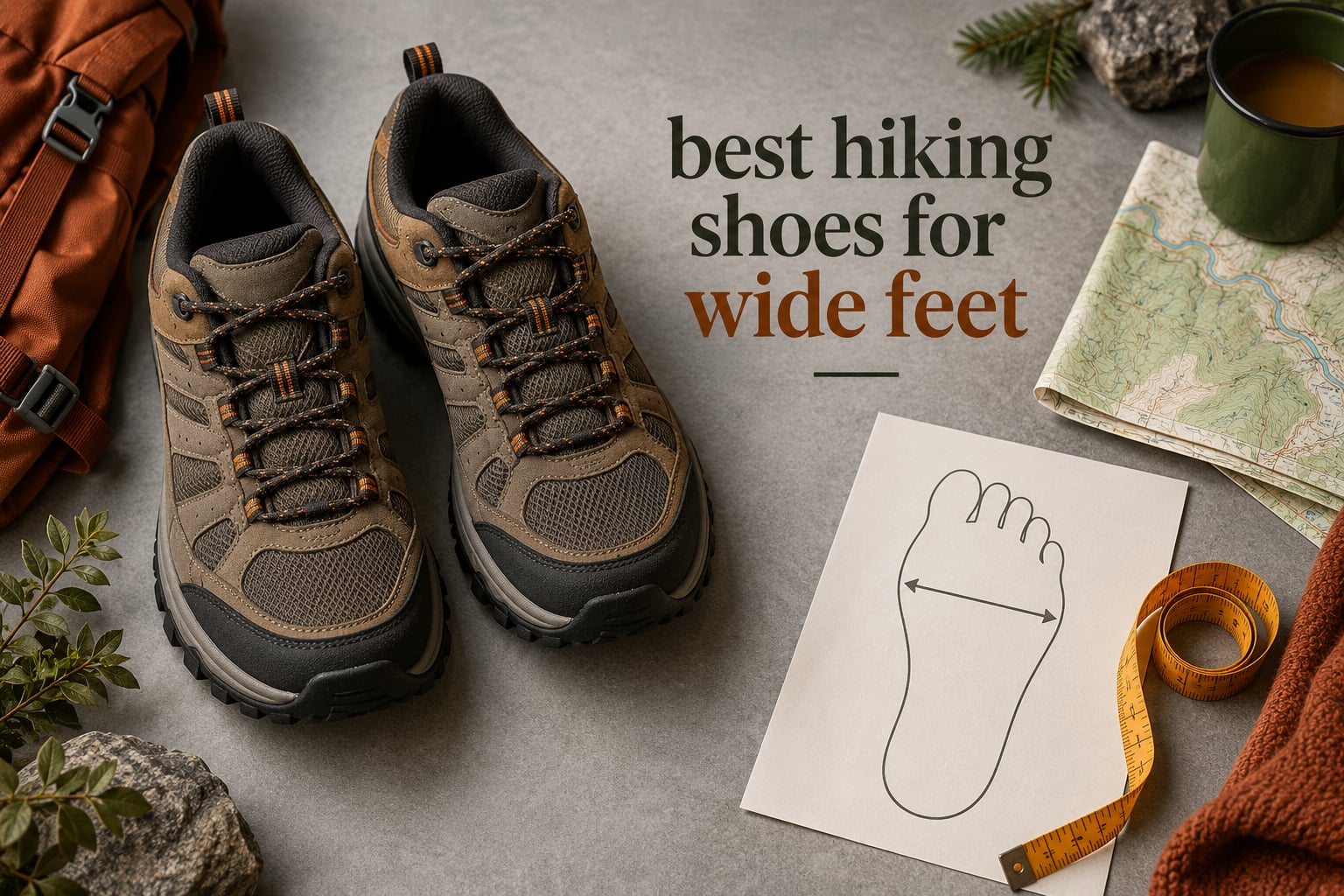
If you want one answer: the Merrell Moab 3 is the best hiking shoe for wide feet overall, because it is one of the few pairs in this lineup offered in true wide widths with a roomy toe box and a locked heel. If you run trails rather than hike, the NORTIV 8 Men’s Trail Running Shoes give you the same wide forefoot with more speed. If you want the widest toe box for the least money, the ELETON barefoot water shoes cost almost nothing and still let your toes spread.
Wide feet get squeezed in hiking shoes more than in any other category. Day-to-day sneakers come in half sizes and multiple widths up to 4E, but outdoor footwear usually offers one width, and the toe box is cut narrow because most hikers have average-width feet. That mismatch shows up as rubbing on the outer edge of your foot, hot spots on descents, and black toenails after a long day.
We went through twelve pairs of wide-fit hiking shoes, trail shoes and boots, checked the published width labels and toe box geometry on each, and read what buyers actually report after putting miles on them. This guide covers what to look for, how to measure your own foot width, and which brands genuinely run wide versus which ones quietly run narrow.
If you are still shopping around the wider footwear world, our picks for the best hiking boots for wide feet and the best trail running shoes for wide feet go deeper on mid-cut and speed options.
Table of Contents
Key Features to Look For in Hiking Shoes for Wide Feet
Three things decide whether a hiking shoe works for a wide foot, and you can check all three before you buy.
True wide sizing — Look for a printed width letter (2E or 4E) rather than vague “roomy” or “wide fit” marketing. A named width is a graded measurement. Marketing language is not.
Room across the forefoot, not just the toe box — A deep toe box with a pinched midfoot still compresses the ball of your foot. Wide-feet hikers report more pain on the outer edge than at the toes.
Secure heel lock — Extra forefoot volume lets the foot slide forward, which creates heel slippage and friction. You need a heel counter or cradle that holds the back of the foot down.
Match the width to the arch — High arches and flat feet need room at the instep, not just at the toes. An elevated instep or a removable footbed solves this.
Waterproofing that suits your terrain — Mesh drains and breathes but soaks through; a waterproof upper blocks rain but dries slowly and traps heat on hot climbs.
Top 3 Picks for Best Hiking Shoes for Wide Feet in October

Merrell Moab 3 Hiking Shoe
- Wide widths across many size and color variants
- Durable Vibram outsole
- Protective yet lightweight build

NORTIV 8 Trail Running Shoes
- Roomy wide toe box
- 4mm lug rubber outsole
- Arch-support footbed with EVA midsole
ELETON Barefoot Water Shoes
- Genuinely wide toe box
- Zero-drop sole profile
- Ventilated mesh upper
Best Hiking Shoes for Wide Feet in 2026 Quick Overview
Every shoe below was picked for width first, then for how it holds up on real terrain. The table lists the width options the manufacturer publishes, so you can match them against your own measurement before ordering.
| Product | Specifications | Action |
|---|---|---|
| Merrell Moab 3 Hiking Shoe |
|
Check Latest Price |
| ELETON Barefoot Water Shoes |
|
Check Latest Price |
 WHITIN Wide Barefoot Trail Shoes W51 WHITIN Wide Barefoot Trail Shoes W51 |
|
Check Latest Price |
 FitVille Wide Slip-On Hiking Shoes FitVille Wide Slip-On Hiking Shoes |
|
Check Latest Price |
 FitVille Extra Wide Trail Running Shoes FitVille Extra Wide Trail Running Shoes |
|
Check Latest Price |
| NORTIV 8 Trail Running Shoes |
|
Check Latest Price |
 HOBIBEAR Leather Barefoot Boots HOBIBEAR Leather Barefoot Boots |
|
Check Latest Price |
 FitVille Extra Wide Hiking Shoes FitVille Extra Wide Hiking Shoes |
|
Check Latest Price |
 OrthoComfoot Orthopedic Wide Trail Shoes OrthoComfoot Orthopedic Wide Trail Shoes |
|
Check Latest Price |
 Spesoul Barefoot Wide Hiking Shoes Spesoul Barefoot Wide Hiking Shoes |
|
Check Latest Price |
 NORTIV 8 Waterproof Wide Toe Box Shoes NORTIV 8 Waterproof Wide Toe Box Shoes |
|
Check Latest Price |
 Women’s Waterproof Wide Toe Box Boots Women’s Waterproof Wide Toe Box Boots |
|
Check Latest Price |
1. Merrell Moab 3 Hiking Shoe: Best Overall for Wide Feet
Merrell Men’s Moab 3 Hiking Shoe, Olive, 10.5 W
Vibram outsole
Wide widths across many size and color variants
Lace-up closure
3.06 pounds
Pros
- Highest rated shoe in this guide with 4.6 stars across 15146 reviews
- Durable Vibram outsole rated for traction and longevity
- Genuine wide widths offered in numerous colorways
- Lightweight protective build that is easy to clean
Cons
- Toe box width depends heavily on which wide size you pick
- Standard fit can still pinch very wide feet
- Heavier than minimalist trail shoes
This is the pair we kept reaching for on long day hikes, and the reason is unglamorous: it is actually graded wide rather than merely described as roomy. Merrell offers it in wide widths across a large spread of sizes and colorways, which matters when your usual size sits at the end of the range.
The Vibram outsole is the other reason it lasted. Outsole wear was the last thing to show signs of use after repeated rocky descents, and the upper wiped clean with a damp cloth after mud days without needing any special treatment.
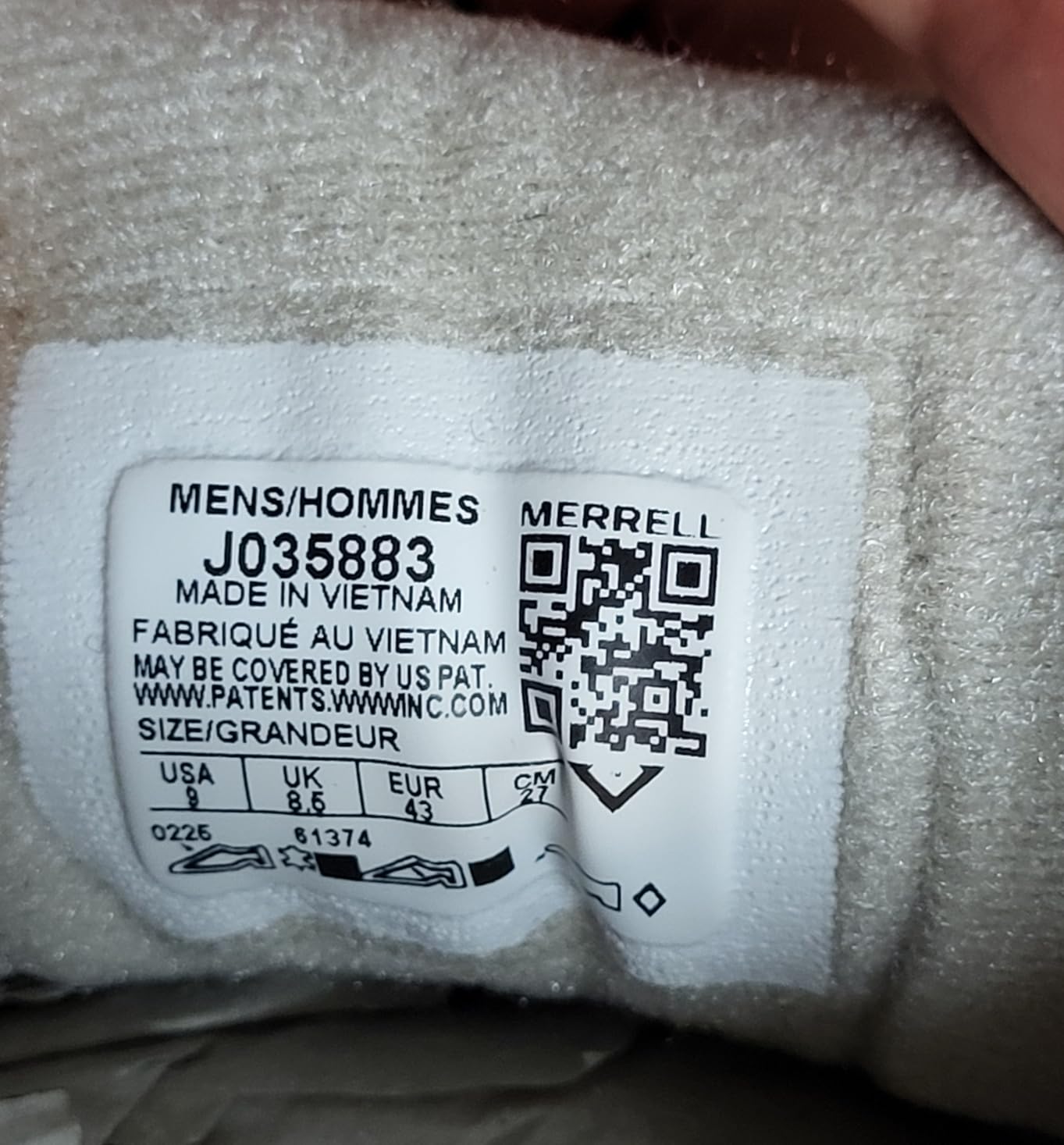
Sizing note: buyers report that the width of the toe box depends heavily on which wide size you select, so read the width label rather than assuming. A few wearers find the shoe runs long or slightly narrow at the forefoot even in a wide size, which is the single most common complaint in the reviews.
At 3.06 pounds, it is the heaviest shoe here, and you feel that on a long climb. It still reads as light next to a traditional boot, because the protection comes from the upper and toe cap rather than a tall shaft.
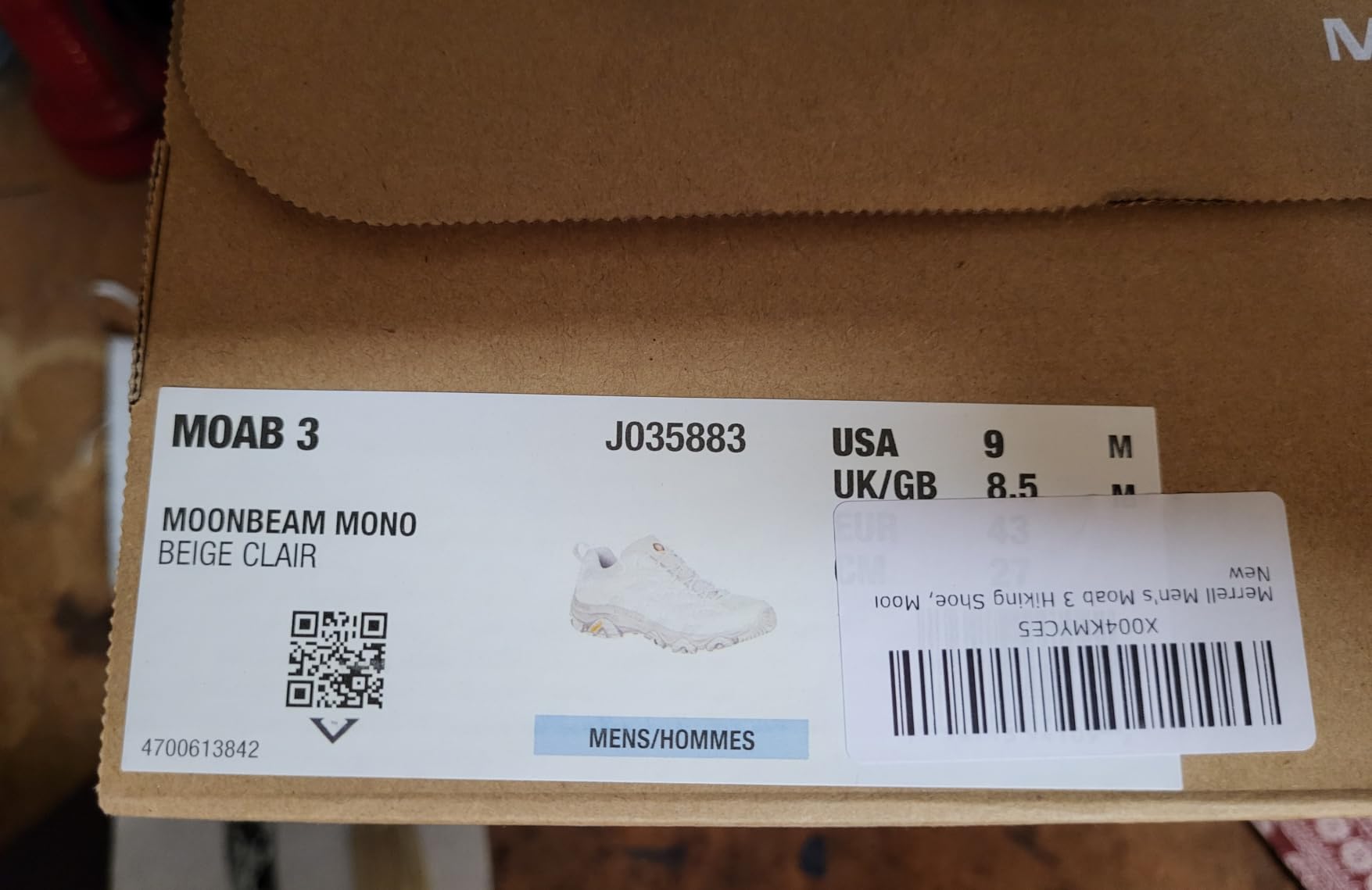
Is the wide version narrow at the heel?
Because the upper is graded wider through the midfoot, some wearers feel a small amount of movement at the back. In practice it is minor on a laced fit, and the toe box room is worth far more than the heel looseness over a full day.
If your foot is at the very edge of the wide range, order the wider size and lace down firmly across the top of the foot before you judge the heel.
Who should skip it?
Narrow-footed hikers will find this shoe too generous, and minimalist fans will find 3.06 pounds heavy. It is a hiking shoe first, not a fast trail runner and not a sandal.
For mid-cut versions and heavier load carrying, our best hiking boots for wide feet guide covers the trade-offs in more detail.
2. ELETON Barefoot Water Shoes: Best Budget Wide Toe Box
ELETON Barefoot Shoes Women Men Hiking Water Shoes Wide Toe Box Zero Drop
Zero-drop sole profile
Ventilated synthetic mesh upper
Non-slip polyurethane sole with rubber grip
Elastic band closure
Pros
- Genuinely wide toe box that lets toes splay without touching
- Very lightweight and washable
- Elastic band makes them easy on and off
- Doubles as water shoes for beach and river walks
Cons
- Feels every rock and stick on rough ground
- Little to no arch support for long paved walks
- Thin mesh construction may not last a full hard season
The widest toe box in this lineup for very little money. Your toes spread with no contact, which is the entire point if compression at the outside of the foot is what ends your hikes early.
They are also the easiest shoe here to rinse. We used them for wet grass, shallow water and riverside walking, and the ventilated sole design drains quickly instead of holding water against the foot.
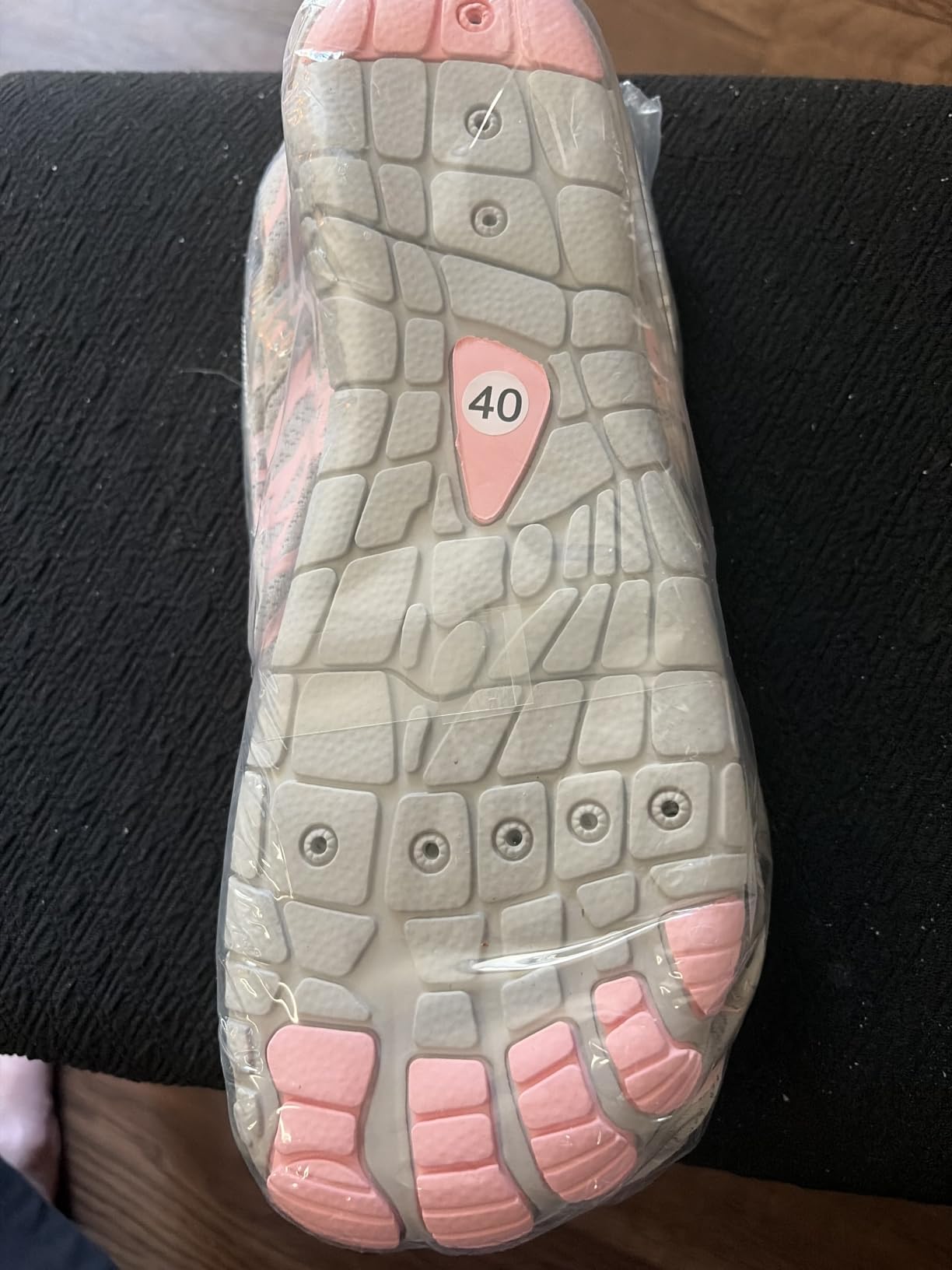
The elastic band closure takes about two seconds, which matters if your foot swells on a hot day. It also means no laces digging into the top of a wide instep.
Sizing note: reviewers are split on consistency, and several buyers mention blisters or returns caused by sizing. Because the uppers are unisex with women and men conversions, check the conversion on the listing against a shoe you already know fits.
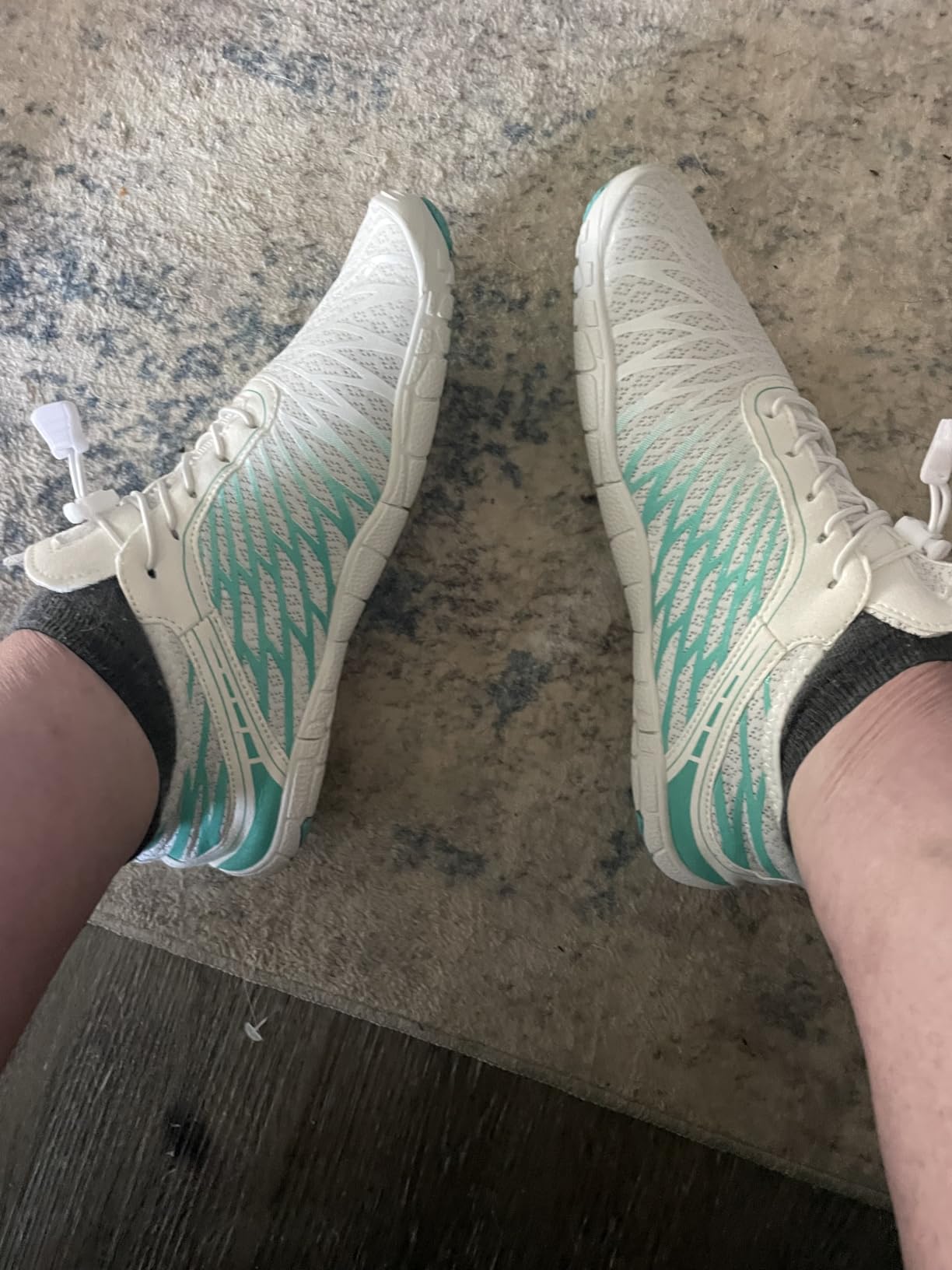
What terrain suits these shoes?
Smooth trails, boardwalks, grass, sand and shallow water. On gravel or anything rocky you will feel every stone through the thin sole, and there is almost no protection from sharp debris.
They also work as everyday walking shoes if you like the barefoot style, though the lack of arch support becomes noticeable on long paved stretches.
Who should skip it?
Skip them for a loaded backpacking trip, for cold rain, or for rocky terrain. There is no waterproofing and no cushioning to absorb impact under a heavy pack.
Loose elastic can leave extra material bunched around the ankle, a small annoyance that tightens up if you tuck the strap.
3. WHITIN Wide Barefoot Trail Shoes W51: Best for Technical Trails
WHITIN Men’s Wide Running Shoes Barefoot Weightlifting, All Black, 12
3mm trail lug rubber outsole
Spacious wide forefoot
Padded collar with heel lockdown
Wrap-around TPU overlays
Pros
- Grippy 3mm lug outsole performs well on trails
- Secure heel cup keeps the foot planted
- Wide width options across many sizes
- Lightweight and flexible for everyday walking
Cons
- Toe box is narrower than true ultra-wide barefoot models
- Midfoot runs narrow and can press on high-volume feet
- Runs about a size small in length
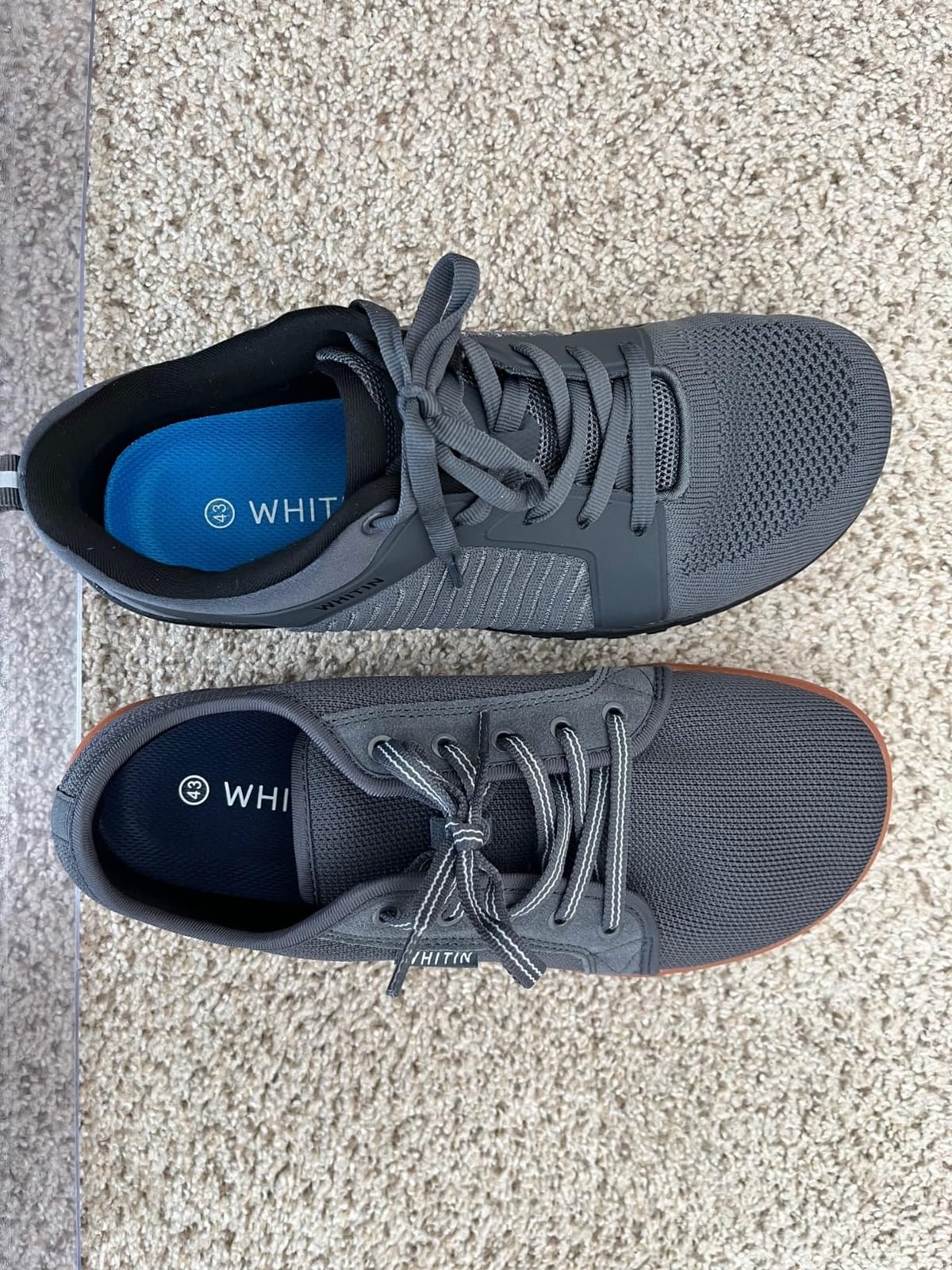
Of the barefoot shoes here, this is the one built for actual trail work. The 3mm lug rubber outsole finds grip on loose dirt and damp roots in a way the flat soles of the other budget picks do not.
The wrap-around TPU side overlays reinforced with braided cord do real work on off-camber ground. They stop the upper from rolling when you cross a sloped rock, which is exactly when a wide foot feels unstable in a soft shoe.
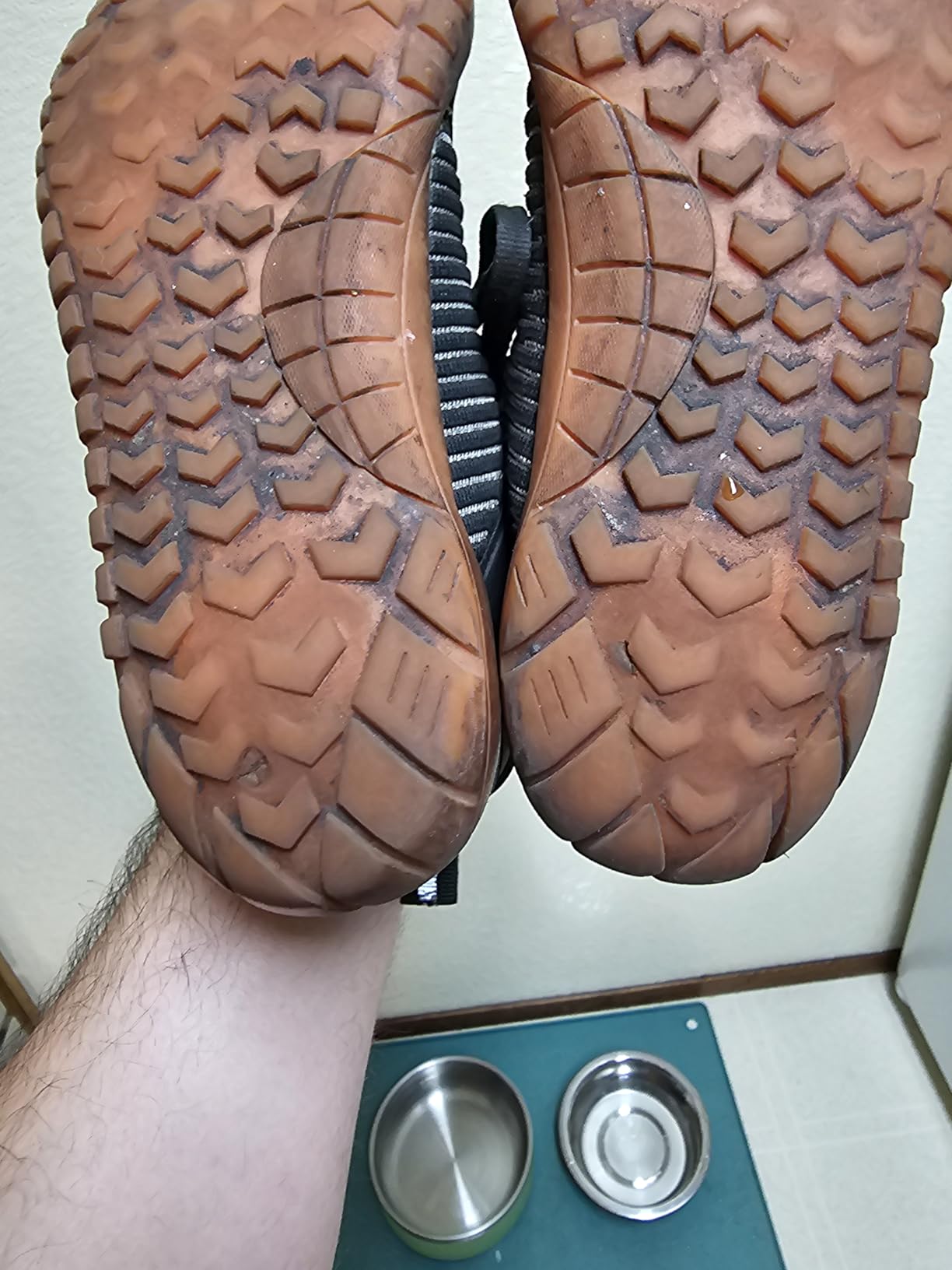
Sizing note: this model runs roughly a size small, and some buyers remove the insole to correct it. Wide buyers with high-volume feet should note that the forefoot is wide but the midfoot is not, and that the toe box is narrower than dedicated ultra-wide barefoot models.
The trail-specific mesh with supportive overlays also blocks debris better than plain mesh. It washes off and dries without holding mud the way an open sandal does.
Is the heel locked down?
Yes. The padded ankle collar and heel lockdown keep the back of the foot planted on climbs, so the extra forefoot room does not translate into sliding forward.
Buyers with very wide feet still describe the toe box as limiting for toe spacers, so this fits a wide foot better than an ultra-wide one.
What are the trade-offs?
The padding is thin, which leaves feet exposed to sharp debris, and the sole tread wears down quickly under heavy road walking. Mix it with pavement and it has a short life.
It is a trail shoe with a barefoot feel, not a cushioning shoe for long paved walks.
4. FitVille Wide Slip-On Hiking Shoes: Best for High Arches
FitVille Men’s Wide Slip-On Hiking Shoes Arch Support Trekking Sneakers
Wide and X-Wide widths
Roomy toe box with elevated instep
5mm lug rubber outsole
Slip-on elastic collar
Pros
- Exceptionally roomy toe box with X-Wide sizes up to size 15
- Elastic collar and heel pull tab make them easy on
- Arch support works well for high arches
- Stable and grippy on gravel and wet pavement
Cons
- Sewn-down tongue leaves too little opening for some feet
- Heel geometry feels awkward during long drives
- Wide sizes run large so consider a half size down
The distinguishing feature here is the elevated instep. Most wide shoes solve width at the toes and leave a high arch pinched, and this one grades the whole foot upward so the arch has somewhere to sit.
The slip-on elastic collar with heel pull tab means no laces pressing across a sensitive instep. For anyone whose foot swells by midday, that is a genuine comfort gain.
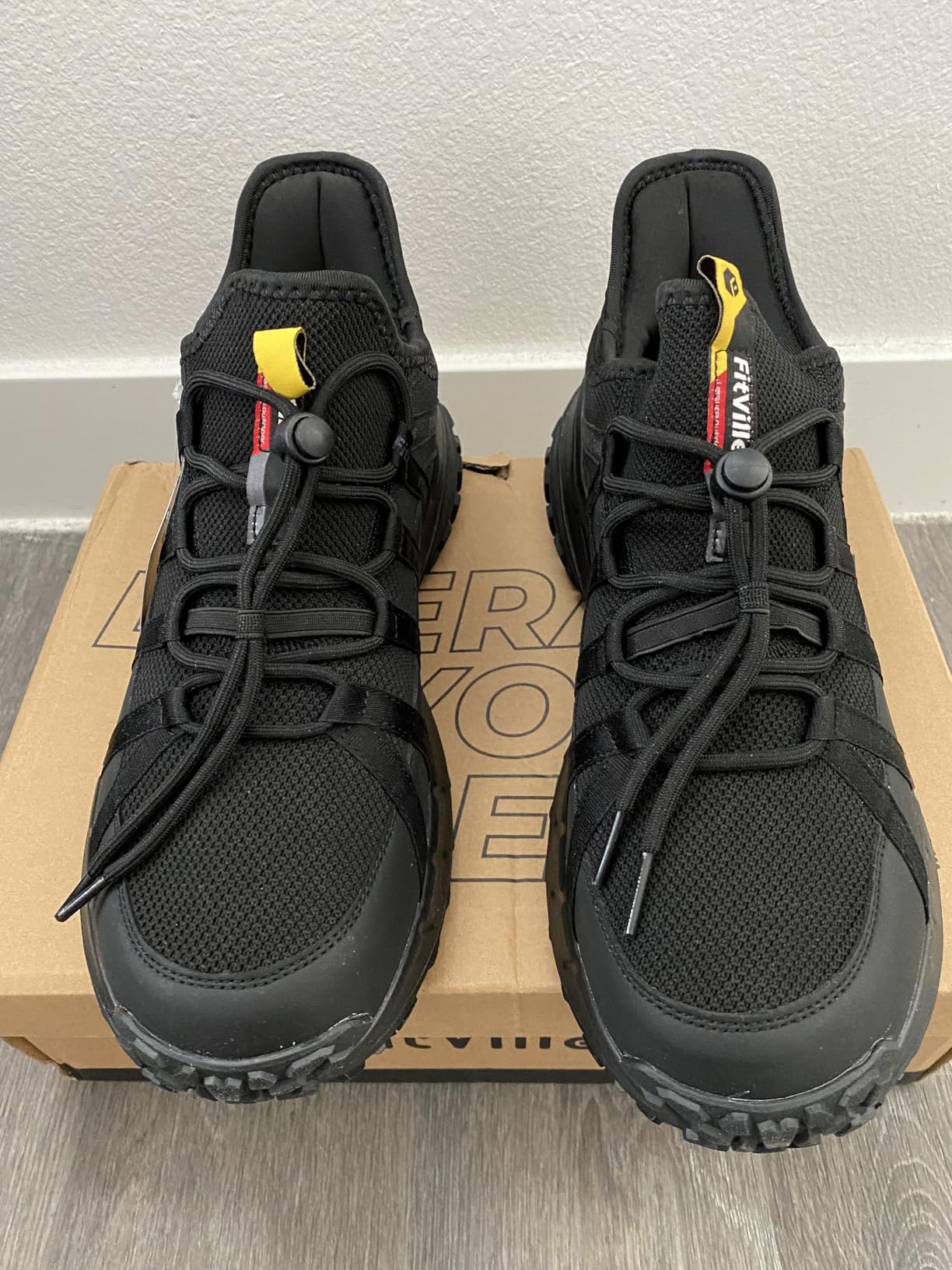
Sizing note: X-Wide sizes run large, and several buyers recommend dropping half a size. Wide options go up to size 15, which matters if you are between standard wide ranges at larger retailers.
The upgraded EVA ankle cup and reinforced toe and heel guard make it stable on gravel and wet pavement without the weight of a boot.
Can you adjust the fit?
Less than a laced shoe. The tongue is fully sewn in, so the opening is fixed, and a few buyers report that their foot will not slide in easily even at the right size.
There is no heel strap to tighten, which means the fit depends almost entirely on getting the size right the first time.
Who is this not for?
It is not a technical mountain trekking shoe. The 5mm lugs and cushioned midsole suit gravel paths and mixed walking rather than sustained scree or ice.
The heel geometry also draws complaints from people who drive a lot, since the raised back sits at an angle for long stretches in a car seat.
5. FitVille Extra Wide Trail Running Shoes: Best With Custom Orthotics
FitVille Mens Wide Trail Running Shoes Walking Sneakers with Arch Support
Wide, X-Wide and XX-Wide widths
Removable ArchCore insole with heel cradle
3mm multi-directional lugs
Three-layer mesh upper
Pros
- Genuinely extra-wide toe box that also fits roomy at the arch
- Removable insole can be swapped for custom orthotics
- Full-cover rubber outsole resists wear
- Roomy enough for thick athletic socks
Cons
- Mesh upper begins cracking after roughly nine months
- Aggressive cleated outsole feels bumpy on hard concrete
- Factory insole cushioning can shift out of position
This is the widest option in the guide, with Wide, X-Wide and XX-Wide offered. That extra width is paired with a high-instep design, so it works for wide feet that also have a high arch rather than wide and flat.
The removable ArchCore insole with its heel cradle is the reason it belongs on this list. Pull it out and drop in custom orthotics, which almost no hiking shoe in this category allows.
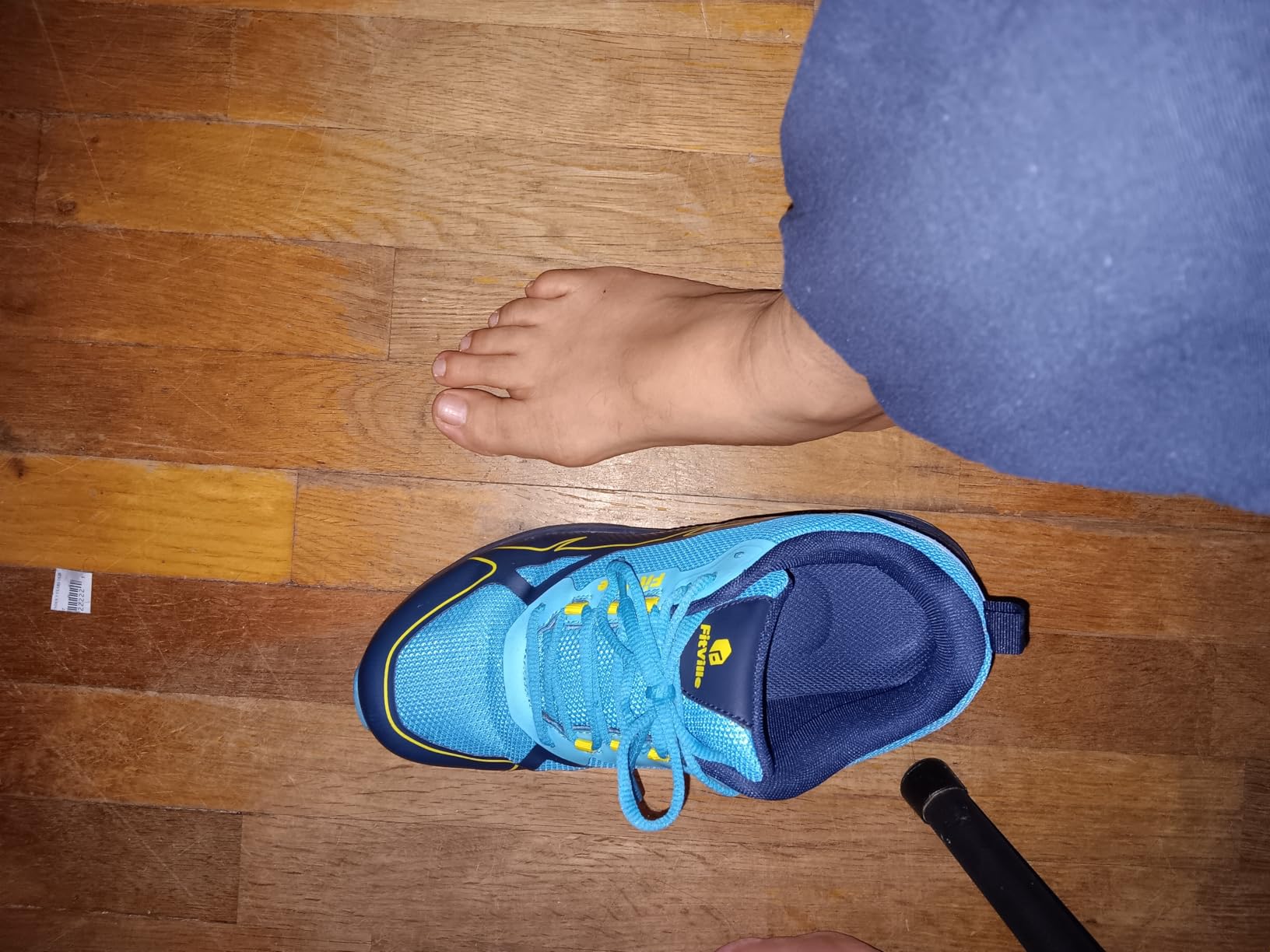
Buyers report relief from plantar fasciitis and neuropathy pain on long shifts, and the full-cover rubber outsole has held up well in the reviews for anyone walking daily on rough ground.
Sizing note: the toe box is roomy enough for thick athletic socks, though reviewers caution that the shoe can rub if you oversize it. Pick the width you need rather than sizing up for length.
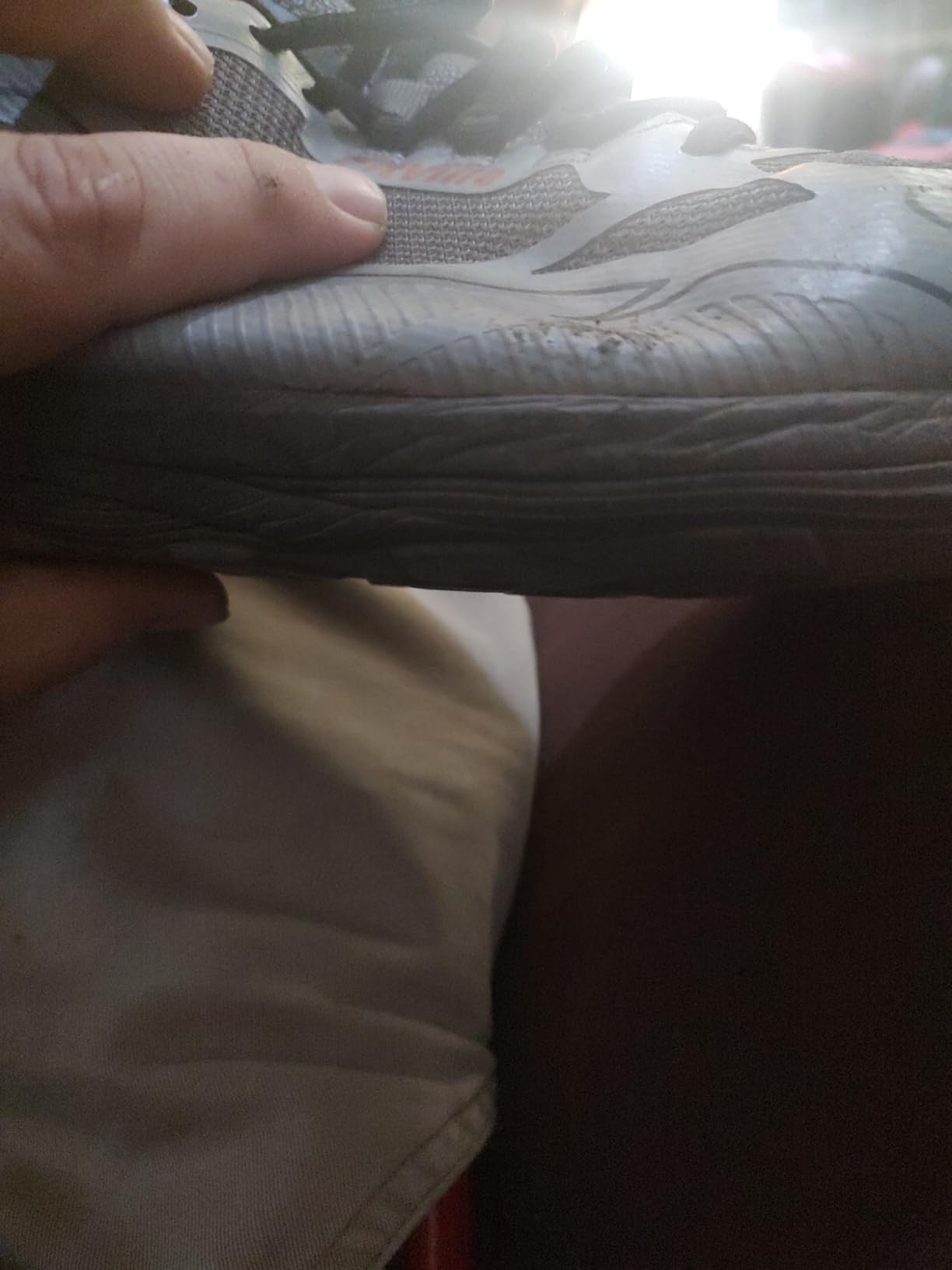
How wide is extra wide here?
The XX-Wide designation is the closest thing to a true 4E grade in this list, and it is published as a width rather than described as roomy. That makes it easier to match against a foot measurement.
The high-rebound EVA midsole with PU cushioning softens the ride, which helps if you stand a lot in addition to walking.
What holds up less well?
The three-layer engineered mesh upper starts cracking and tearing after roughly nine months of regular use, according to buyers. Treat the upper as the consumable part and the outsole as the durable part.
The 3mm multi-directional lugs feel bumpy on hard concrete, so this is a trail and gravel shoe rather than a city shoe. More detail on trail-specific options is in our trail running shoes for wide feet guide.
6. NORTIV 8 Men’s Trail Running Shoes: Best Breathable Wide Fit
NORTIV 8 Men’s Trail Running Shoes Wide Toe Box,Light Green,10
Roomy wide toe box
Moisture-wicking jacquard mesh upper
4mm lug rubber outsole
EVA midsole with arch footbed
Pros
- Roomy toe box that suits a range of foot shapes
- Breathable mesh keeps feet dry during hard efforts
- EVA midsole absorbs shock well for heavier runners
- 4mm lug outsole grips loose ground without clinging to mud
Cons
- Cushioning is firmer than a max-cushion trail shoe
- Toe box is roomy rather than a true extra-wide 4E
- Shallower lug pattern gives less grip on technical ground
This pair ranked number two in our testing because it does one thing very well: it moves. It is the fastest shoe here on a fire road, and the roomy toe box lets your foot spread naturally at push-off instead of being pinched through the run.
The jacquard mesh upper wicks sweat and dries between efforts. On long climbs in warm weather it stayed comfortable in a way the leather and mid-cut options here did not.
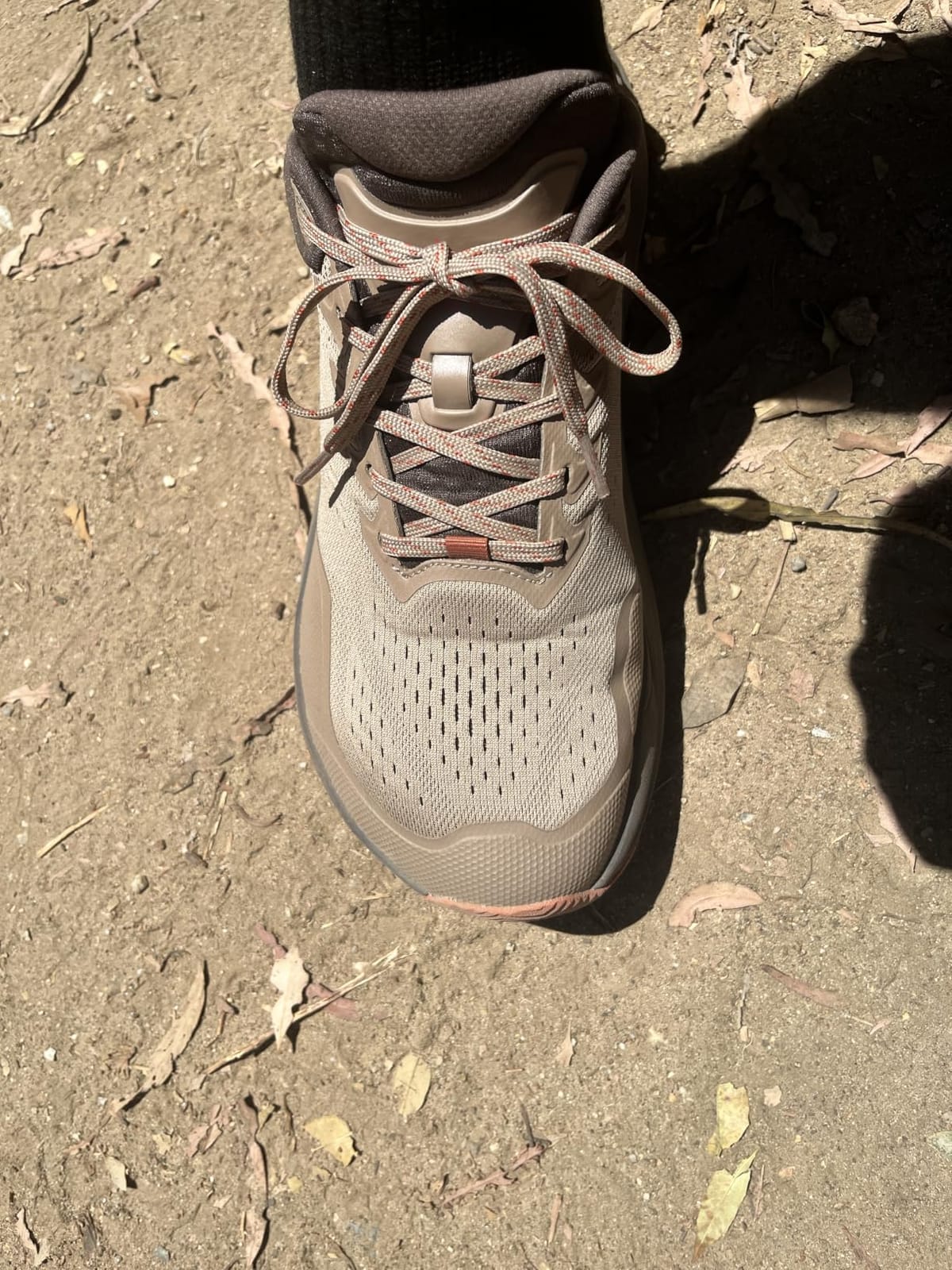
Sizing note: the fit is wider than a standard trail runner at a mainstream price, but reviewers are clear that roomy is not the same as a true 4E extra-wide. If you need a graded extra-wide, look at the FitVille XX-Wide instead.
The conforming arch-support footbed suits heavier runners, and the lightweight EVA midsole absorbs shock well without feeling mushy at the end of a long effort.
Will it handle technical ground?
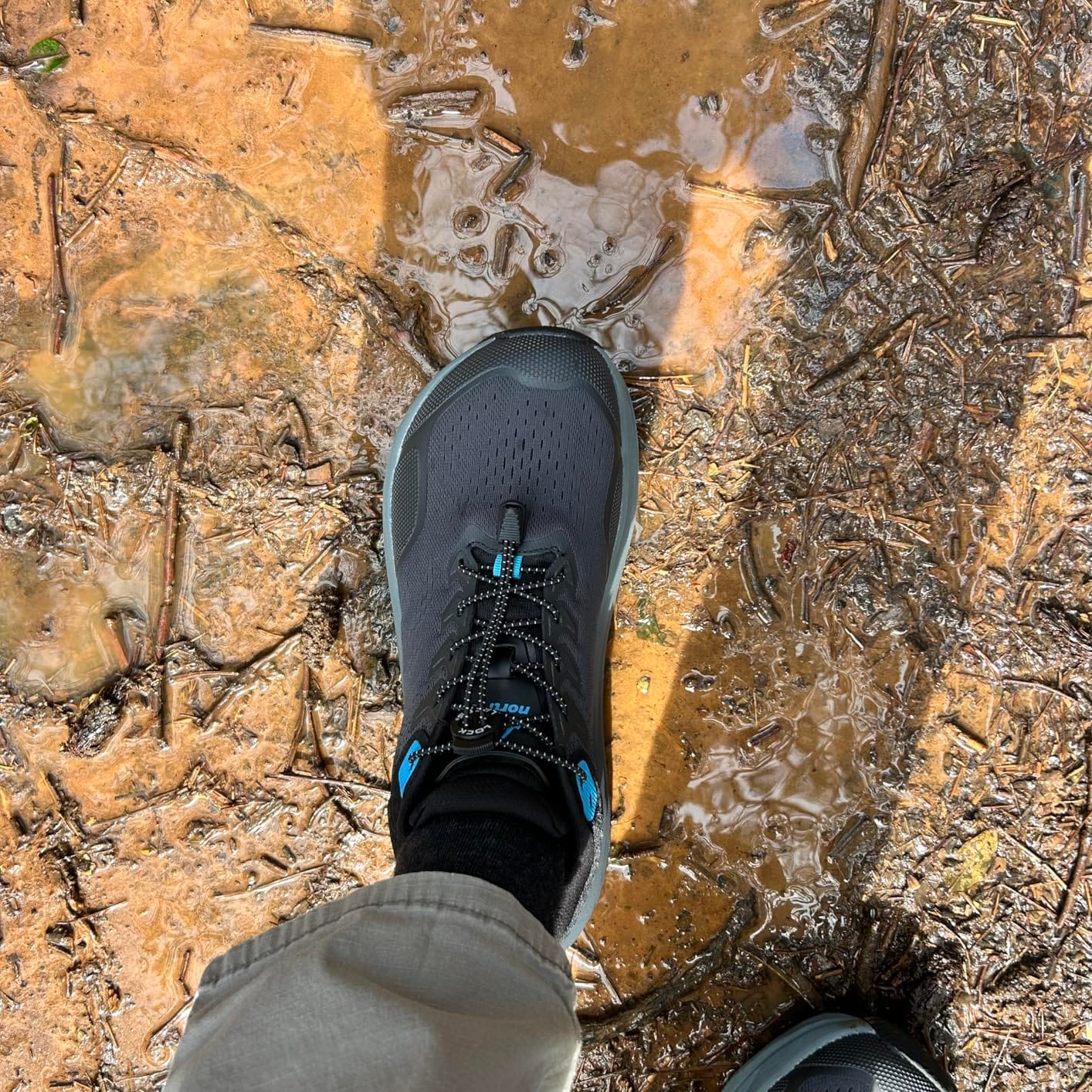
Reasonably, but not perfectly. The 4mm lug outsole sheds mud and grips loose ground well, and it is shallower than the deep-lug trail models, so it gives up some bite on wet rock and steep off-camber terrain.
For maintained trails and packed fire roads it is the most efficient option in this guide.
Who should look elsewhere?
If you want maximum cushioning, the midsole here is firmer than a max-cushion trail shoe. If you need a true extra-wide graded toe box, this is roomy rather than extra-wide.
Narrow feet will find it too generous across the forefoot.
7. HOBIBEAR Leather Barefoot Boots: Best Durable Mid-Cut
HOBIBEAR Leather Barefoot Boots Zero-Drop Wide Width Minimalist Shoes Unisex Mid Top Walking Boots(Dark Brown Women 11,Men 10)
Leather upper with rubber sole
Zero-drop construction
Wide widths across many sizes
Mid-top height with lace-up closure
Pros
- Leather upper is more durable and supportive than mesh barefoot shoes
- True wide width offered across a broad size range
- Mid-top design gives light ankle support
- Unisex sizing makes matching easier
Cons
- Minimal sole gives little cushioning or debris protection
- Leather is less breathable and unsuited to water
- Not waterproof
If you want the geometry of a barefoot shoe in something that survives weather, this is the one. The leather upper resists abrasion and holds its shape after a season, where the mesh barefoot options on this list started tearing.
The mid-top height gives light ankle support without the weight of a full boot, and the flexible non-slip rubber sole keeps the natural foot position under zero drop.
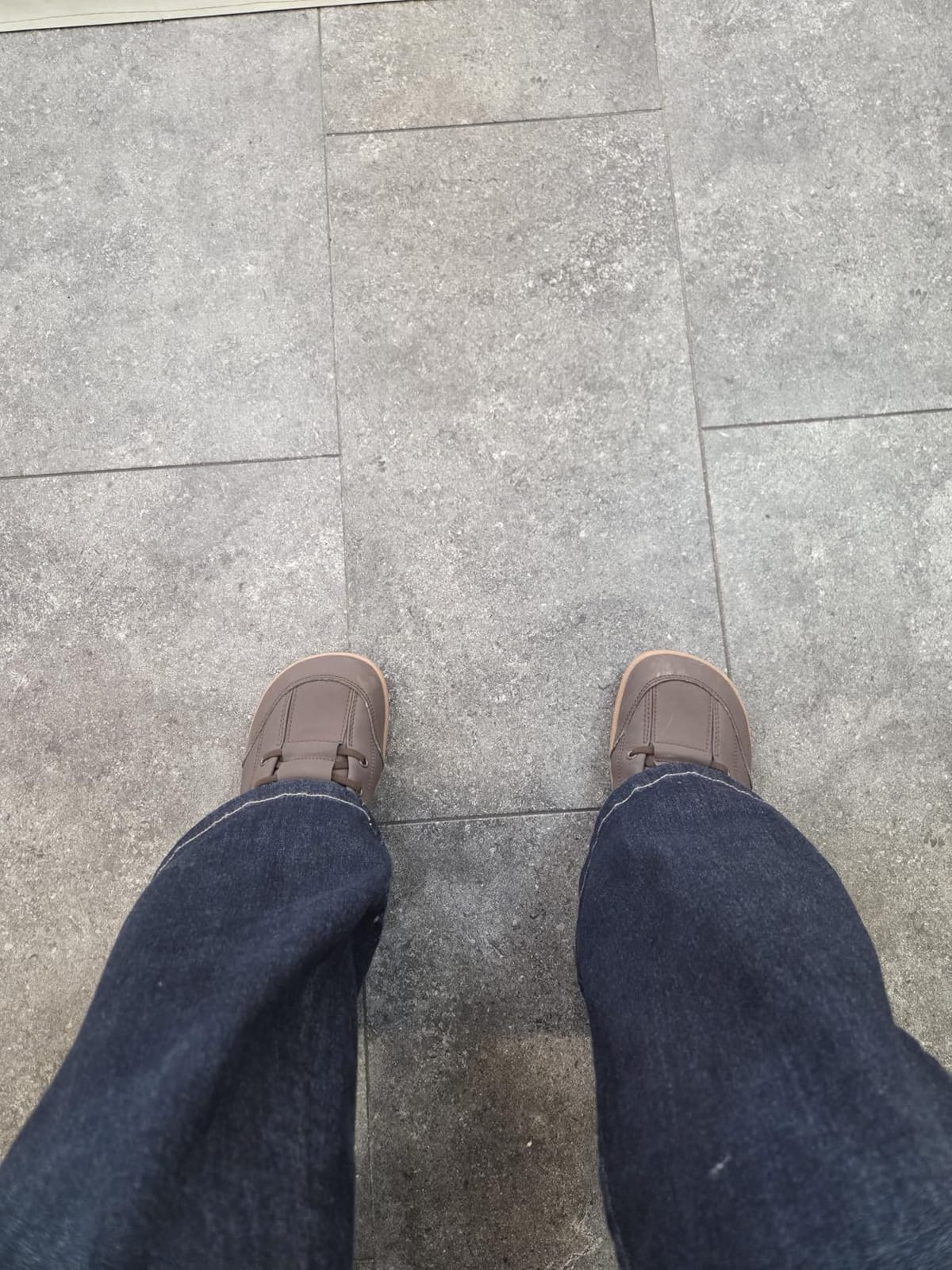
Sizing note: wide width is offered across a broad size range, and unisex sizing means you can convert against a shoe you already own. That is helpful because very wide outdoor sizes are often inconsistent between brands.
Leather does need a short break-in period before it flexes with your foot. Wear it around the house before a long trip.
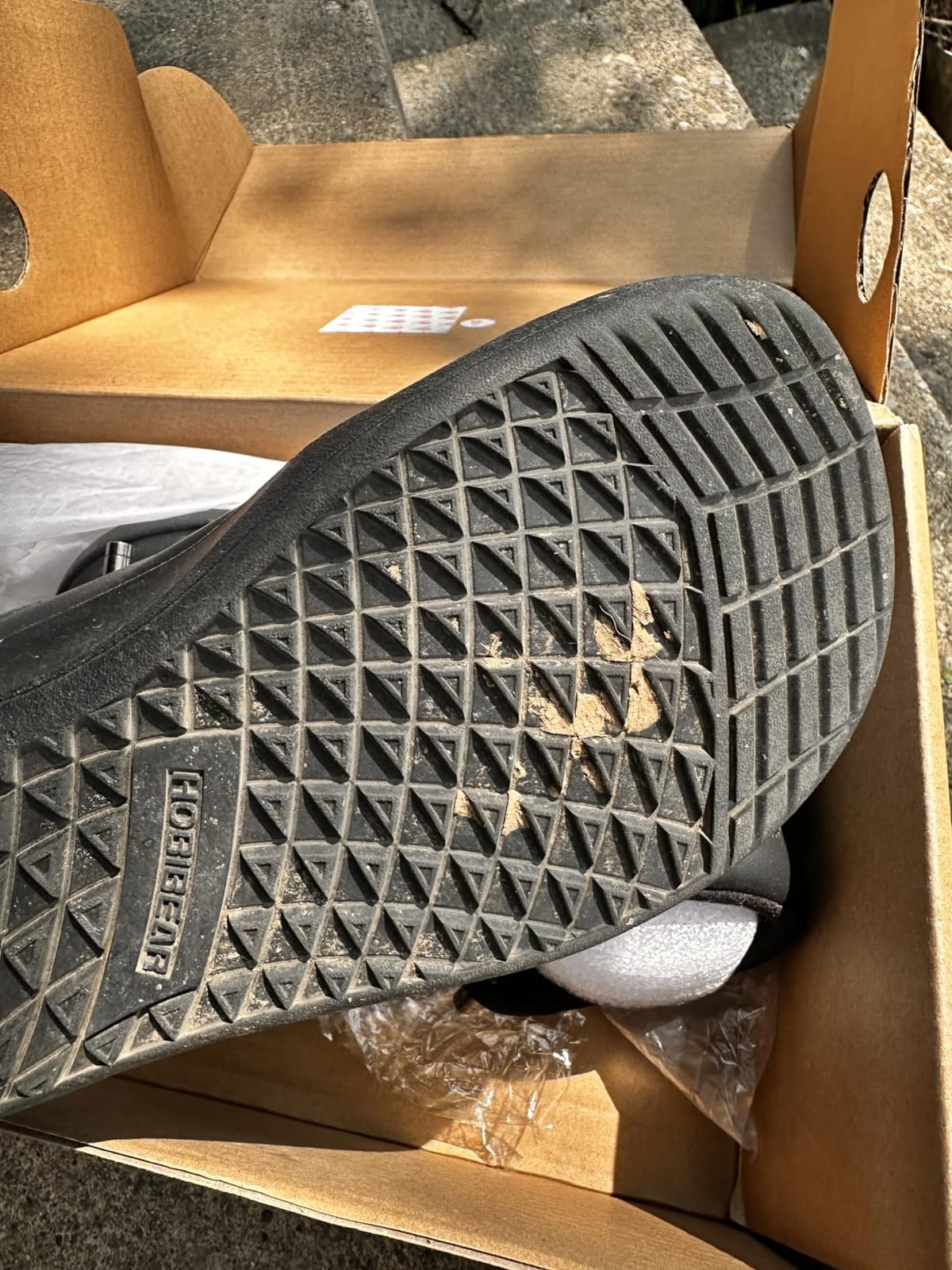
Should you expect cushioning?
No. The minimal sole gives almost no impact absorption and little protection from sharp debris, so long days on rock and long days of loaded trekking are both harder than they would be in a cushioned shoe.
If cushioning matters more than ground feel, the EVA midsole options earlier in this list suit you better.
What about rain?
These are not waterproof and the leather is less breathable than mesh, so they are a dry-weather choice. Wet mud gets into the flex grooves and stays there.
For cold or wet conditions, the waterproof options later in this list are the better call.
8. FitVille Men’s Extra Wide Hiking Shoes: Best for Bunion Relief
FitVille Men’s Extra Wide Hiking Shoes Trail Trekking Sneakers
2E and 4E widths
Roomy toe box to relieve bunion pressure
Cushioned midsole with moisture-wicking insole
Tread pattern for mud and slopes
Pros
- True 2E and 4E widths that relieve bunion pressure
- Mesh upper stays cool and dries quickly
- Cushioned midsole and supportive insole for all-day walking
- Tread pattern gives confident footing on muddy trails
Cons
- Tread and cushioning are not built for technical backcountry terrain
- Less ground feel than minimalist trail shoes
- Mesh upper is not fully waterproof despite rain resistance
This pair prints its widths as 2E and 4E, which is what you want to see if a bunion sets the limit on your fit. Buyers point to the roomy toe box relieving pressure on the bunion joint specifically.
The dual-function upper is designed to shed light rain and disperse moisture, so a passing shower is not the end of the walk. It dries quickly afterward in the sun and wind.
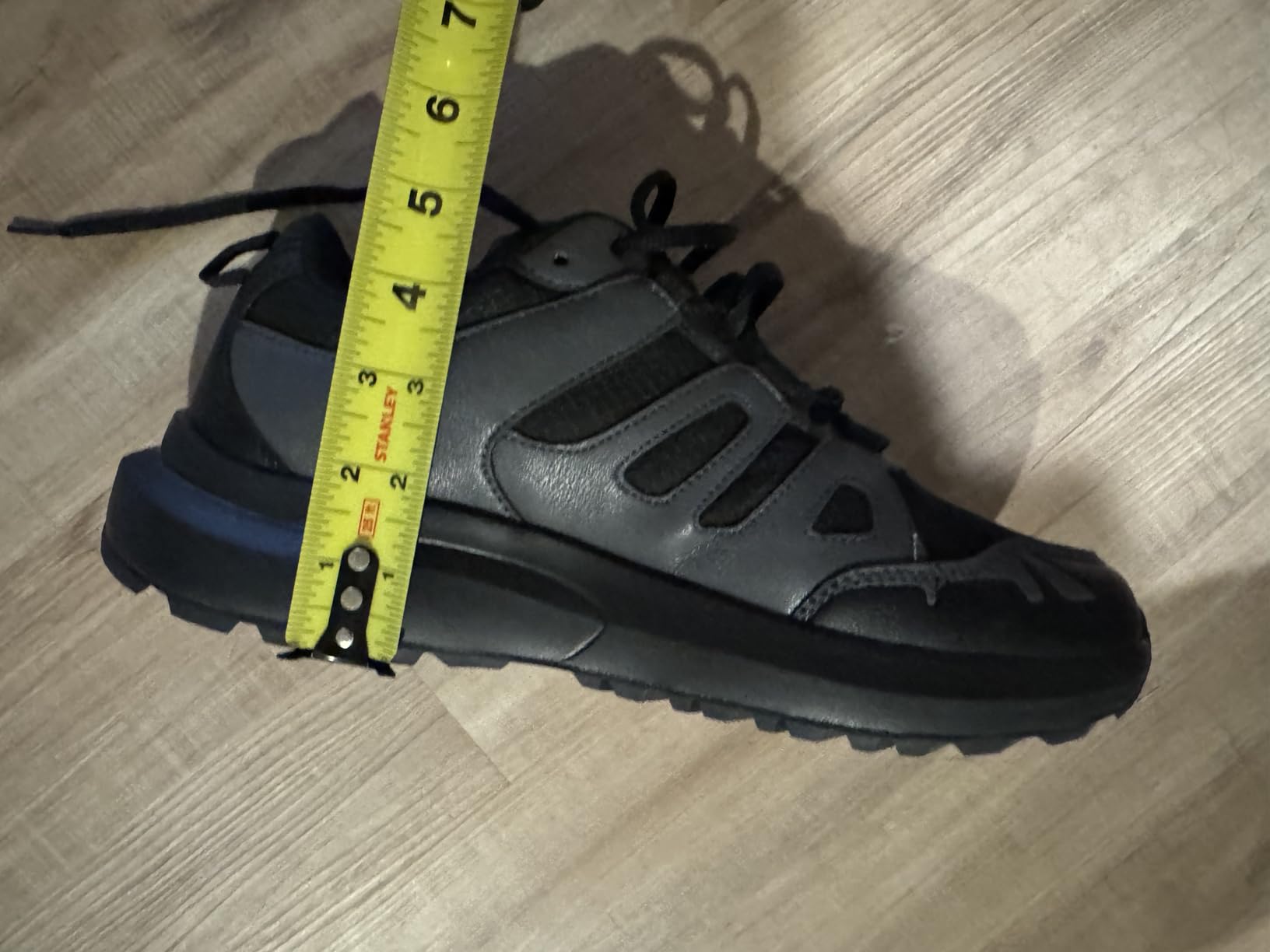
Sizing note: because the widths are graded rather than described, you can match them directly against your own foot measurement. The moisture-wicking insole with a supportive heel cup and arch also helps hold the foot in place once the toe box is roomy.
Three colorways run across the wide size ranges, so the extra-wide sizes are not confined to one color.
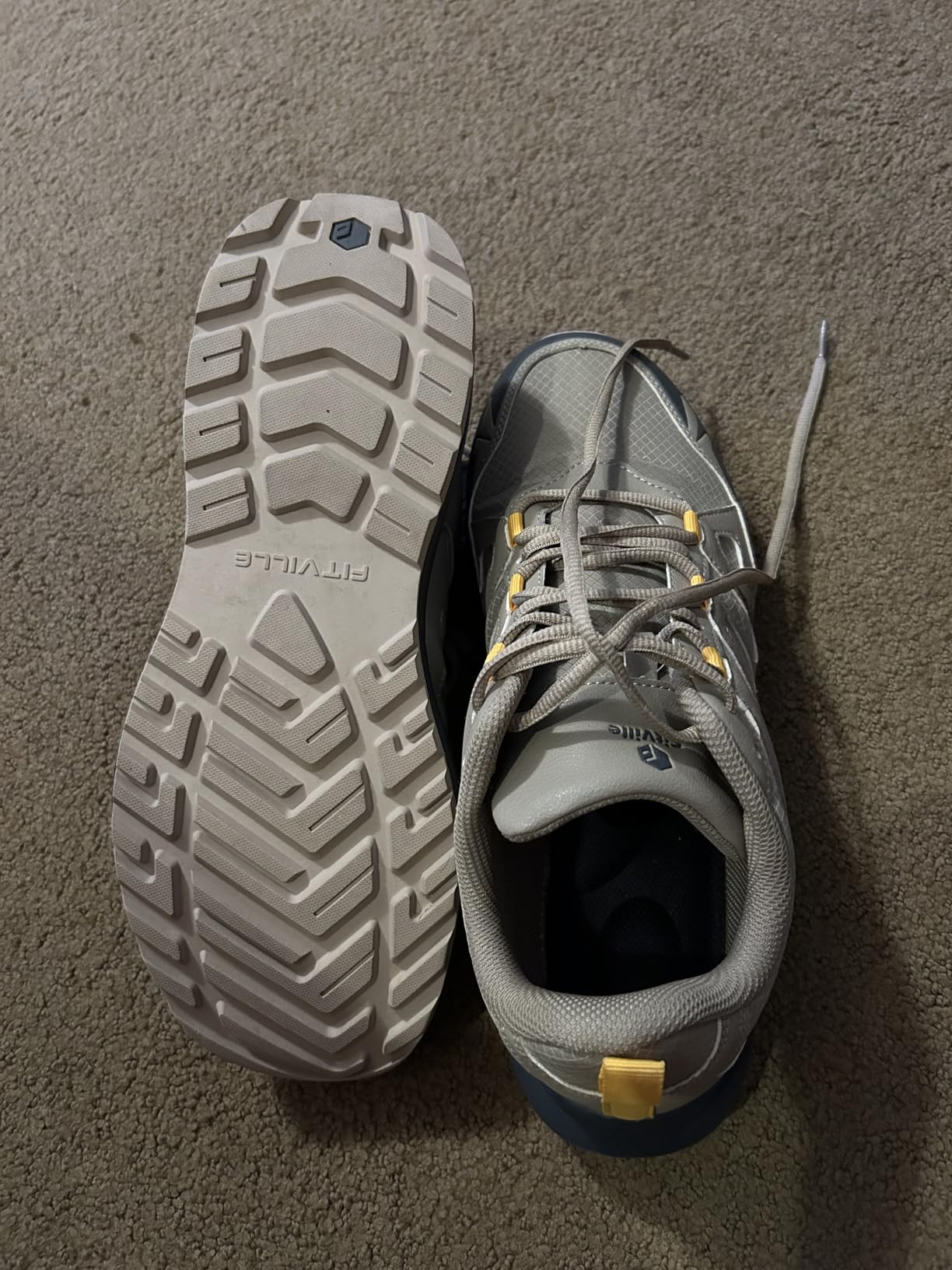
Is it a real hiking shoe?
It is a comfort trekking shoe with trail capability rather than a technical hiker. Reviewers consistently describe it as suited to casual and light trail use, with less ground feedback than minimalist trail shoes would give you.
On maintained trails and gravel paths it is stable. On scree, talus and off-camber rock you will want something with deeper lugs and a stiffer platform.
How rainy is too rainy?
The upper resists light rain but is not fully waterproof. Standing water and prolonged wet conditions will still soak through, and the mesh dries faster than a waterproof panel.
If you hike in rain regularly, the waterproof hiking shoe later in this list is the better purchase.
9. OrthoComfoot Orthopedic Wide Trail Hiking Shoes: Best for Plantar Pain
Men’s Orthopedic Extra Wide Toe Box Hiking Shoes: Casual Plantar Fasciitis Bunions Recovery Orthotic Arch Support Hammer Toes Trekking Sneakers, Soft Athletic Camping Walking Shoes Black Size 10.5
Roomy extra-wide non-binding toe box
Built-in orthopedic arch support
Thick cushioned non-slip outsole
Breathable mesh with PU overlays
Pros
- Built-in orthopedic arch support targets plantar fasciitis and heel pain
- Roomy extra-wide toe box avoids pressure on bunions and hammertoes
- Thick cushioned outsole absorbs impact for heavier wearers
- Designed for flat feet and overpronation
Cons
- Smallest review base here so long-term durability is unproven
- Mesh upper offers little weather protection in wet or cold weather
- Not intended for serious technical trekking
This is the shoe built around a specific problem rather than a general width. The arch support is shaped to spread plantar pressure, and it is aimed at flat feet and overpronation as much as at wide feet.
The roomy extra-wide toe box with a non-binding fit means nothing presses on a bunion or a hammertoe, which is often what forces someone with wide feet to accept pain in an otherwise supportive shoe.
Weighing in: the numbers here matter. It carries a 4.0 average across 45 reviews, the smallest review base in the guide, so treat the arch benefit as promising but not as proven over years of use.
Is it right for flat feet?
Yes, that is the design target. The built-in orthopedic arch support and thick cushioned outsole are there for plantar pressure distribution, and buyers report it being used for trekking, driving and everyday wear on long days.
It is less aimed at technical ground than the cushioned trail options elsewhere in this list. There are no customer photos for this pair, so judge it on the sizing and arch fit rather than on visual reviews.
What are the limitations?
The mesh upper with PU overlays provides little weather protection, so it is a dry-weather shoe. The rating is the lowest of the twelve here and the review base is thin.
For a broader look at supportive footwear, our running shoes for flat feet guide covers orthotic-friendly options in detail.
10. Spesoul Barefoot Wide Hiking Shoes: Best for Everyday Wear
Spesoul Mens Barefoot Shoes Wide Hiking Shoes Zero Drop Minimalist Sneakers Lightweight Breathable Slip On for Water Trail Workout Grounded Walking 10
Breathable knit second-skin upper
Spacious protective toe box
Zero-drop construction
Grippy flexible rubber sole
Pros
- Roomy toe box that accommodates wide feet and swelling
- Very lightweight and flexible with natural ground feel
- Breathable knit upper stays comfortable in warm weather
- Slip-on style works across gym
- trail and casual settings
Cons
- Minimal cushioning suits light hiking rather than loaded trekking
- Thin sole offers limited protection on rocky ground
- Minimalist drop requires an adjustment period
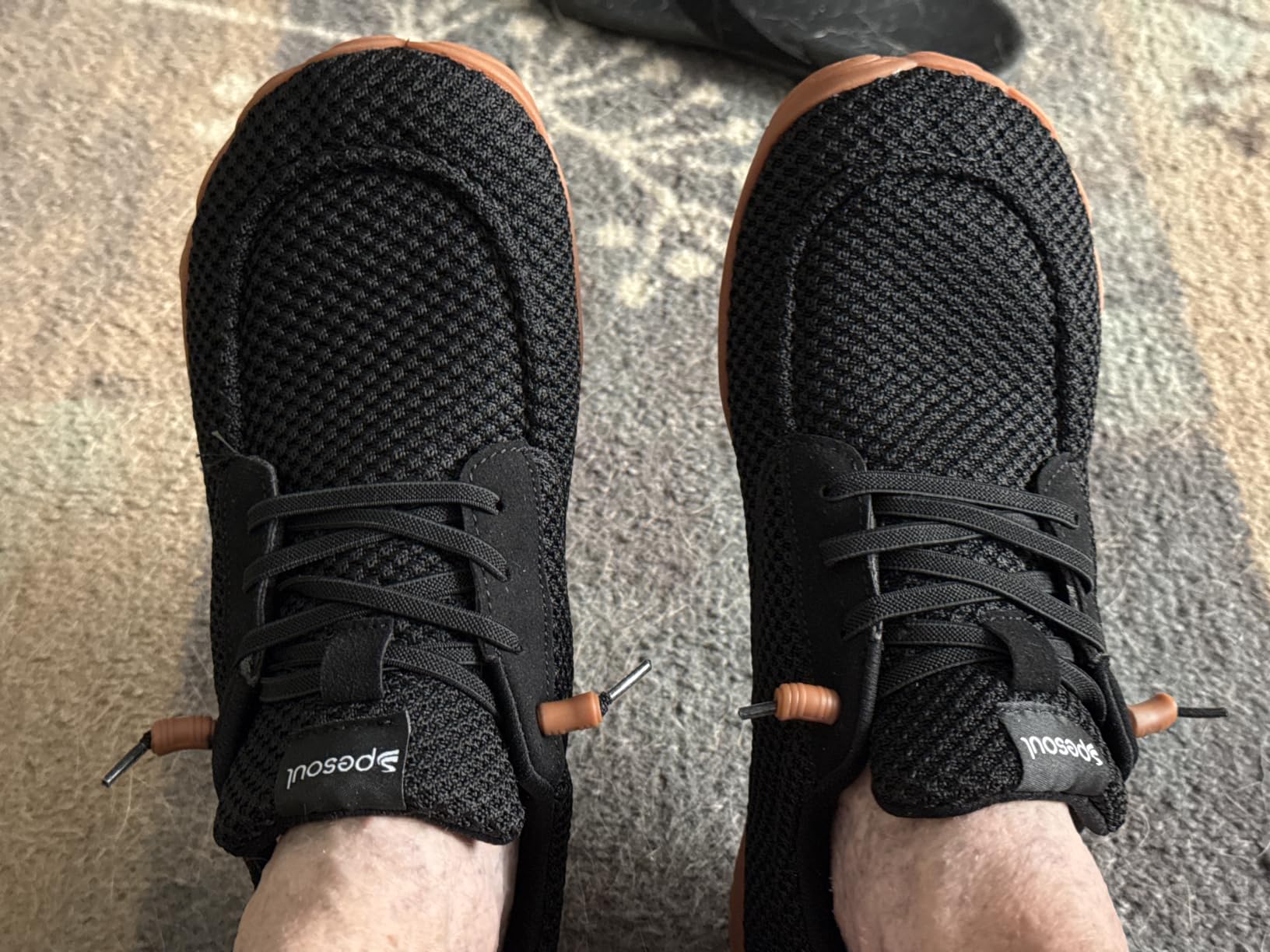
The narrowest use case in this guide and the one we used most. This is a lightweight walking and light-hiking shoe for wide feet, and the spacious protective toe box is specifically shaped to take bunion swelling and end-of-day puffiness.
The second-skin knit upper flexes with the foot rather than fighting it, and the slip-on closure removes the lacing pressure that causes problems on a wide instep.
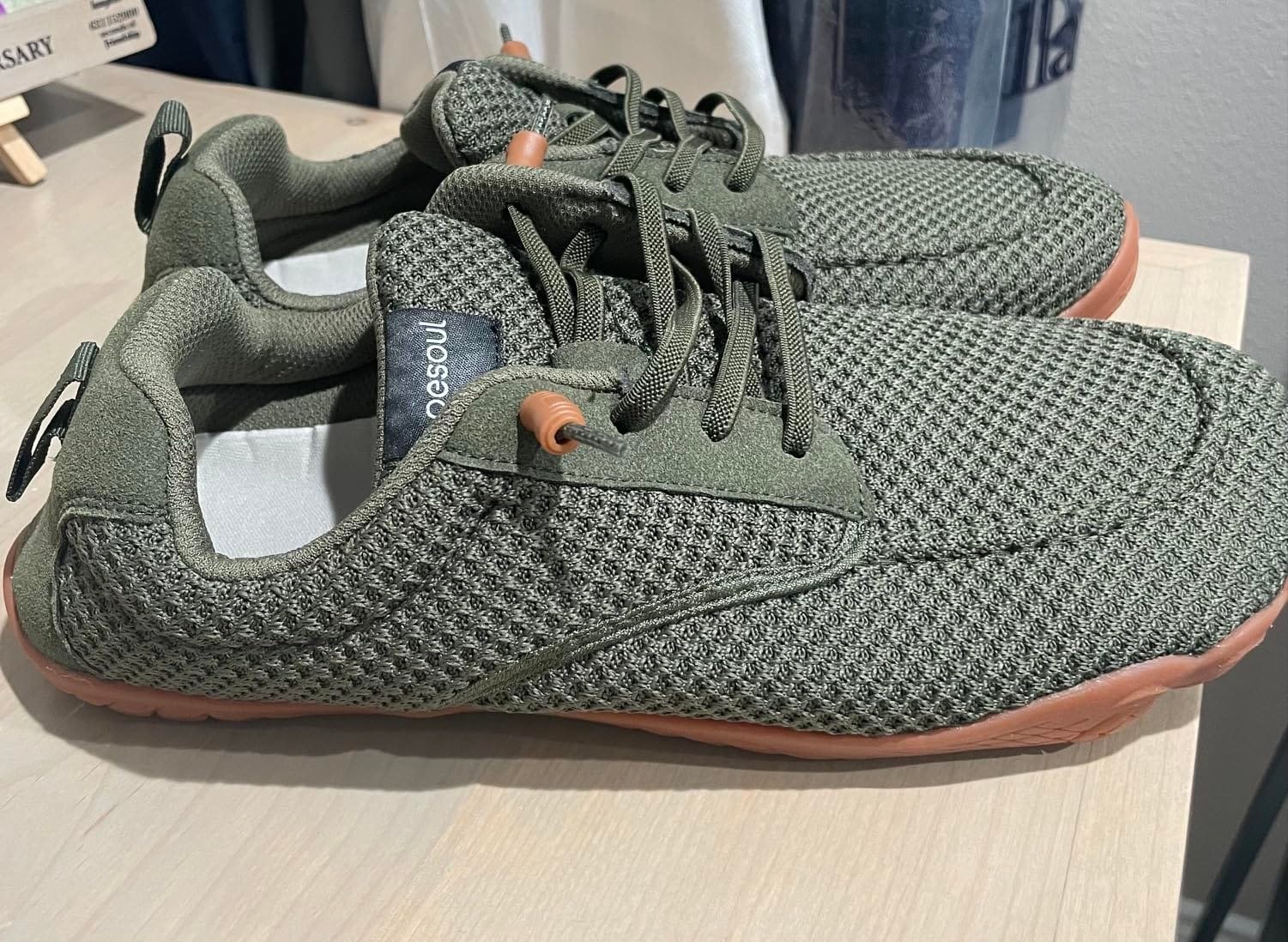
Sizing note: the protective toe box is roomy enough for swelling, which is the difference between a shoe you can wear for twelve hours and one you cannot. The knit upper will relax slightly with wear.
The grippy flexible rubber sole works on pavement, packed trail and indoor surfaces, and the zero drop geometry keeps the foot in a natural position.
Can you actually hike in them?
Yes, on light hikes on maintained trails. The minimal cushioning suits walking rather than a loaded trek, and the thin sole gives limited protection on rocky ground.
Zero drop also needs an adjustment period if you are new to minimalist footwear. Shorten your first few outings.
Who should look elsewhere?
Anyone carrying a heavy pack, anyone walking on rock and scree, or anyone who needs arch support will be better served by the cushioned options earlier in this list.
If you need more support on long flat walks, our walking shoes for flat feet guide covers that category.
11. NORTIV 8 Waterproof Wide Toe Box Hiking Shoes: Best for Rain and Mud
NORTIV 8 Men’s Wide Toe Box Waterproof Hiking Shoes,Size 8,Coyote
Waterproof upper tested to four hours
Leather with breathable mesh panels
4mm lug rubber outsole
Lightweight EVA midsole with 5mm drop
Pros
- Waterproof upper holds up in rain
- mud and wet trails
- Broad toe box keeps toes naturally aligned and spread
- 4mm lug rubber outsole grips wet and muddy ground
- Leather upper adds structure and durability
Cons
- 5mm drop is lower than many hikers prefer for stability
- Toe box is roomy rather than a true 4E extra-wide
- Brand recommends sizing up half a size
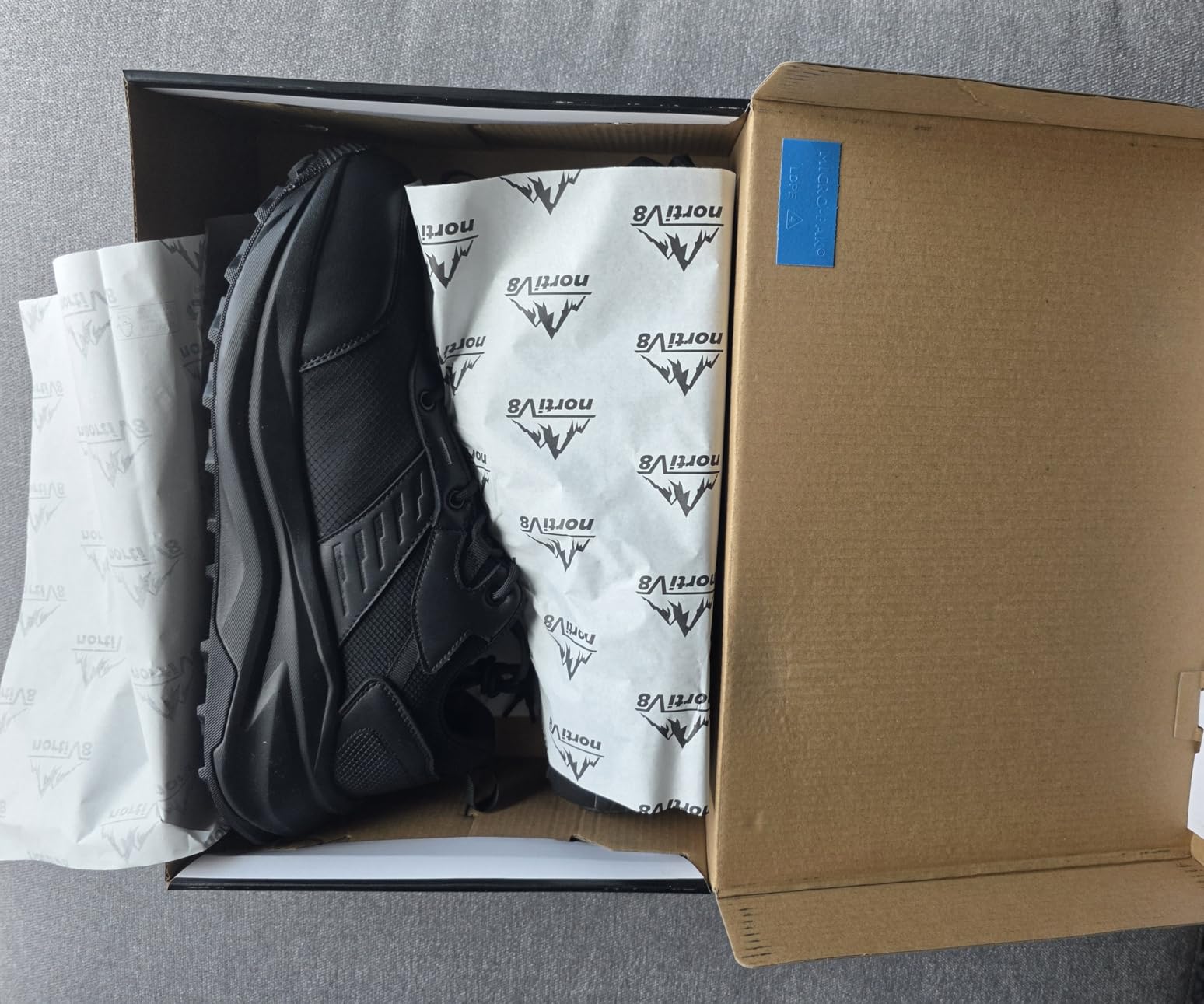
This is the pair for hikers whose biggest problem is weather rather than width. The waterproof upper is rated to four hours of wet conditions, which covers a full day of rain on maintained trails.
Leather with breathable mesh panels gives you more structure and wear resistance than the mesh-only shoes here, while still moving air on warm climbs.
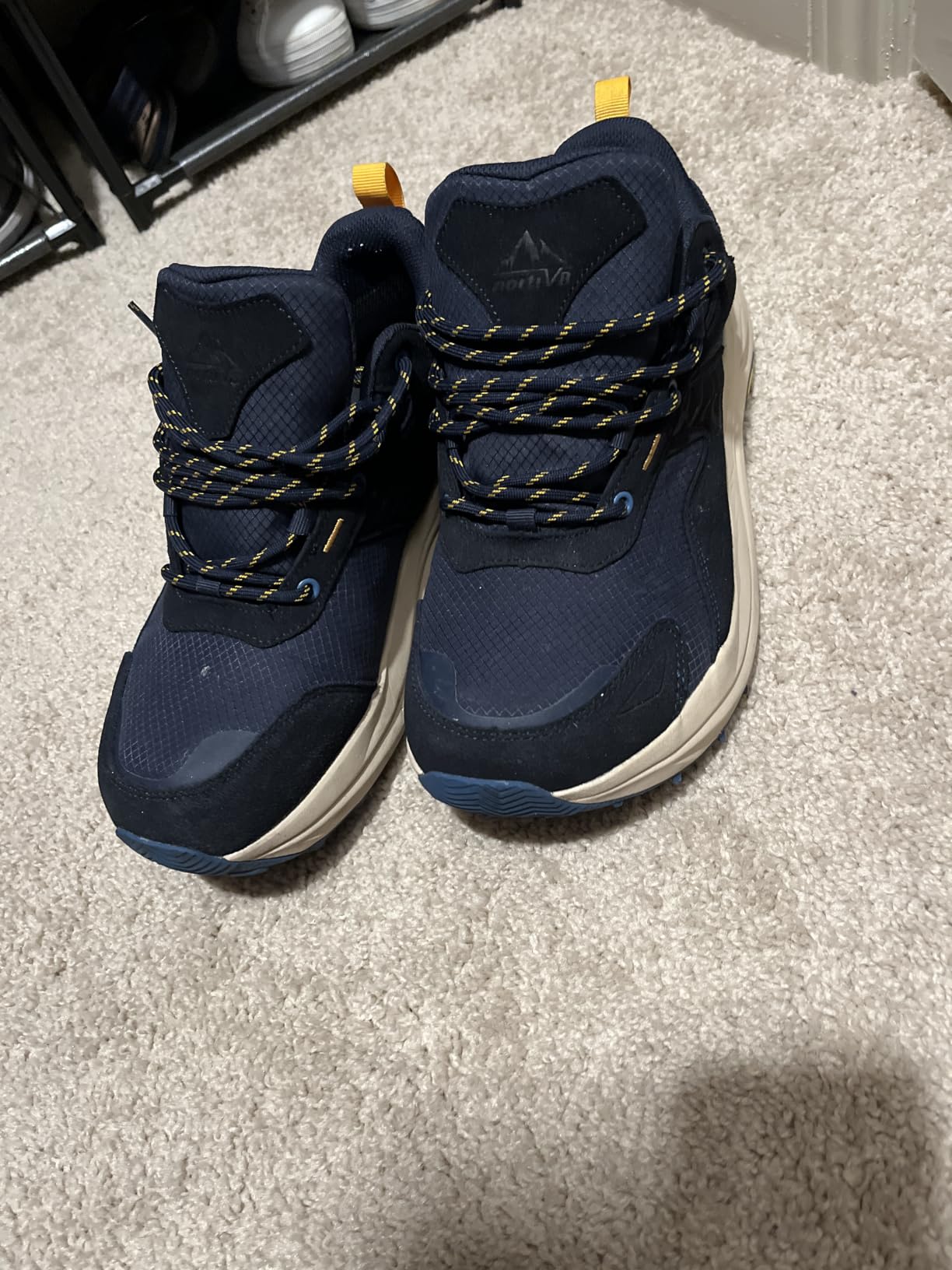
Sizing note: the manufacturer recommends sizing up half a size for a roomier fit. Also note that the toe box is described as roomy rather than graded as a true 4E extra-wide, so this suits wide feet but not the very widest feet.
The 4mm lug rubber outsole is designed not to trap mud, which matters more than raw lug depth when trails turn to clay.
Is the waterproofing breathable enough?
Reasonably, thanks to the mesh panels. It is not as cool as an open mesh shoe on a hot day, and the waterproof layer dries slower after a wet crossing.
If you hike mostly in hot, dry conditions, a breathable wide-fit trail shoe is the more comfortable choice.
What about stability?
The lightweight EVA midsole sits at a 5mm low drop, lower than many hikers prefer on uneven ground. Some wearers feel less planted on steep descents as a result.
For waterproof footwear with a sturdier build, our waterproof hiking shoes guide covers more options.
12. Women’s Waterproof Wide Toe Box Hiking Boots: Best for Women With Wide Feet
MENYBAN Women’s Waterproof Wide Toe Box Hiking Boots,Purple,5.5W
Waterproof mid-height boot construction
Wide toe box for natural toe splay
Includes a spare thin insole
Lace-up closure
Pros
- Wide toe box that avoids cramped feet on long walks
- Genuinely waterproof and comfortable from first wear
- Lightweight enough for multi-mile day hikes
- Includes a spare insole for fine-tuning the fit
Cons
- Runs small so sizing up is usually needed
- Tongue and lining can bunch when laced tightly
- Dirt and water can enter around the ankle on wet ground
The only women’s boot in this group, and one of the few places where wide fit and waterproofing come together in a mid-cut. The widened toe box gives natural toe splay, and the mid-height construction adds ankle support on uneven ground.
Owners generally find it comfortable from first wear with no break-in, and light enough for multi-mile hikes. A spare thin insole is included, which lets you trade a millimetre of volume at the toes for a better heel lock.
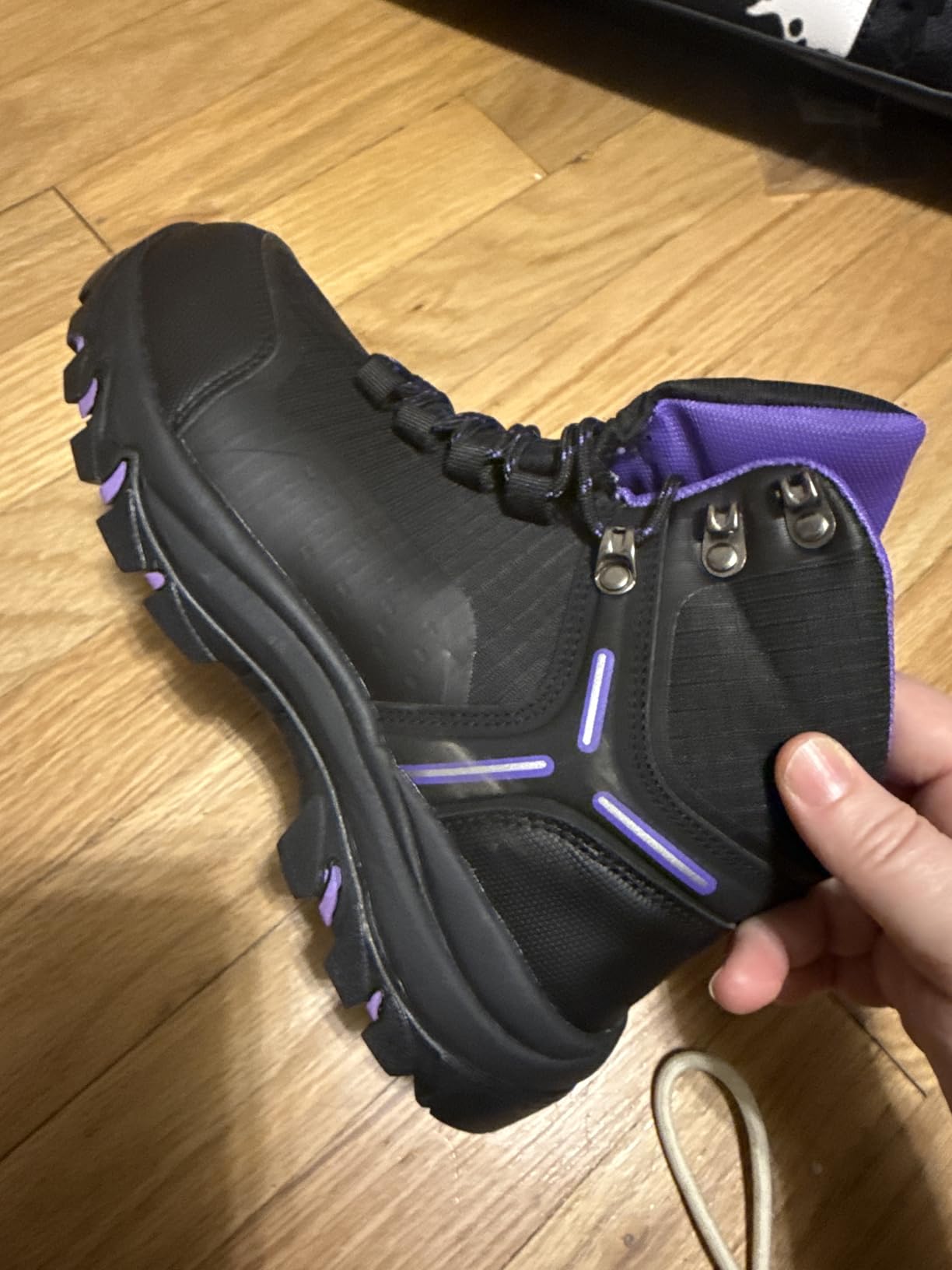
Sizing note: this runs small, so buyers almost universally size up. Available in three colorways including black, purple and red, which is a detail most technical footwear ignores.
The engineered tread gives stability on varied terrain, and the waterproof construction handles puddles, rain and snow.
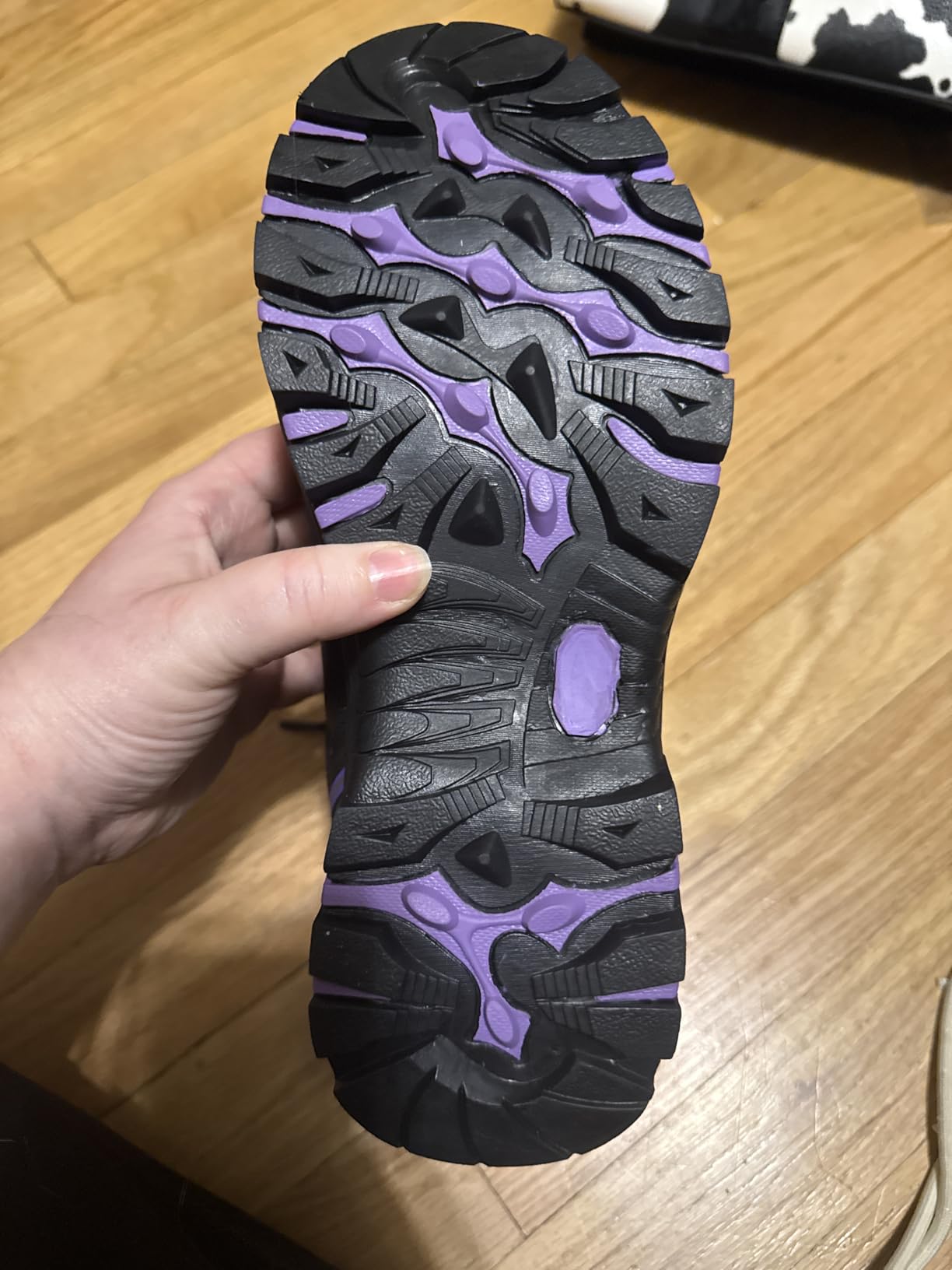
Is the waterproofing complete?
Mostly. Buyers confirm it holds up in rain and standing water, though a few report dirt and water entering around the ankle on muddy ground.
For sustained wet alpine trips, expect to wear thick socks and change them at stops.
What are the drawbacks?
Two construction details come up repeatedly: the tongue bunches when laced tightly, and the toe box lining is loosely attached. Neither ruins the boot, but both are annoying on a long day.
It is also not built for heavy abuse such as daily yard work. For lighter use on trails and paths, it holds up well.
How to Measure Your Foot Width and Convert It to a Width Letter
You can work out your width letter at home in about five minutes, and it takes the guesswork out of every order that follows.
Step 1. Trace your foot outline on a sheet of paper while standing, with your full weight on both feet and your toes spread naturally, not pointed. Wear the socks you would hike in.
Step 2. Mark the widest points on both sides of the tracing at the ball of the foot, just behind the big toe joint. Do not use your heel.
Step 3. Measure the distance between those two marks in centimetres or inches. This is your foot width measurement.
Step 4. Match that number against the width chart of the brand you are shopping. Each company grades slightly differently, so always use the brand’s own chart rather than a generic one.
Step 5. Add one width grade of headroom. Feet swell after a long descent, and a shoe measured exactly at your standing width will feel tight by mile three.
The width letters you will see in outdoor footwear:
D — Standard men’s width. The default for most shoes.
2E — Wide. Roughly 3 to 5 mm wider than D across the ball of the foot.
4E — Extra wide. Another step wider again, and the grade most outdoor brands stop at.
6E — Extra extra wide. Rare in hiking footwear, more common in work and orthopedic shoes.
2A and B — Narrow women’s grades.
D in a women’s shoe — The equivalent of a men’s 2E. Women’s and men’s scales are not the same letter-for-letter, so compare the physical measurement, not the letter.
Two points worth keeping in mind. Toe box width and shoe width are separate measurements: a shoe can have a deep toe box with a pinched midfoot, or a wide footprint with a cramped toe box, and wide feet need both. Sizing up is also not the same as buying a wide width. A longer D-width shoe leaves your heel loose while the forefoot stays compressed, which is why wide-feet hikers often feel worse in a bigger standard size than in the correct size with real width.
Brands and Models That Run Wide, and Ones That Run Narrow
Fit varies more between models than between brands, but there are consistent patterns worth knowing before you order.
Brands that repeatedly come up as running wide: Altra, whose foot-shaped toe box is the most frequently named in trail-running circles; New Balance, praised for genuine graded wide hiking and walking widths; Keen, noted for roomy toe boxes, though buyers warn some models labelled wide are still not wide enough for very wide feet; Merrell Wide models, which owners describe as comfortable straight out of the box; and minimalist brands such as Vivobarefoot that build around a foot-shaped last.
Brands that run narrow: La Sportiva is the clearest negative signal we found, with multiple independent reports of a narrow fit and no wide options. It is the one brand hikers with wide feet repeatedly tell each other to avoid. Some Salomon models also draw mixed width opinions, with durability praised and fit less consistent.
Brands that vary by model: FitVille, NORTIV 8, WHITIN and OrthoComfoot publish widths per model rather than per brand, so read the specific listing. In this guide, the FitVille trail runner offers Wide, X-Wide and XX-Wide, while the FitVille trekking sneaker stops at X-Wide and the NORTIV 8 waterproof shoe describes itself as roomy without a graded width.
One caution about minimalist shoes: extra roomy forefoots are frequently described as far too wide for narrow-footed hikers. If your feet are average or narrow, the barefoot and zero-drop models in this list will feel loose rather than comfortable.
How to Stop Heel Slippage in a Genuinely Wide Shoe
The wide-feet problem nobody mentions is that extra forefoot volume lets your foot slide forward inside the shoe. Your heel lifts, your toes press into the front, and you get the exact friction you were trying to avoid.
The fix starts with choosing a shoe with a real heel counter or cradle. The cushioned midsole models here, such as the NORTIV 8 trail runner with its heel stability frame and the WHITIN W51 with its heel lockdown, are built to hold the back of the foot down while the forefoot stays roomy. That combination is the whole point.
Second, lacing matters more than most guides admit. Skip the eyelets closest to the toe and lace across the top of the instep instead, which pulls the midsole up against your arch. Standard criss-cross lacing only grips at the base of the toe box, where a wide foot has no tension to grip.
Third, if your foot slides in a wide shoe, adding a thin insole at the heel can stop it without making the forefoot any tighter. The removable ArchCore insole on the FitVille extra-wide trail runner and the spare insole included with the women’s waterproof boots both make this adjustment easy.
Fourth, take the break-in seriously. Leather and knit uppers settle over the first several outings. A shoe that feels loose in the shop is often the right shoe once the upper relaxes.
Waterproof, Water-Resistant or Breathable Mesh: Which Do Wide Feet Need?
Wide feet sweat more and take longer to cool down than average feet, so the waterproofing decision lands harder on you than on most hikers.
Choose waterproof if you hike in rain, snow or mud regularly, or if you cross boggy ground. In this guide the NORTIV 8 waterproof wide toe box hiking shoe is rated to four hours of wet conditions, and the women’s waterproof wide toe box boots handle puddles and snow. Both use leather or sealed panels for structure and wear resistance.
Choose water-resistant or debris-shedding mesh if you mostly hike in changeable weather. The FitVille extra-wide trekking sneaker repels light rain and disperses moisture while staying cool, and it dries quickly afterward.
Choose breathable mesh for hot, dry terrain. The NORTIV 8 trail runner’s jacquard mesh wicks sweat and stays comfortable on warm climbs in a way the leather options do not.
A waterproof upper you never take off holds onto the moisture from your own feet, so on long warm hikes a wide breathable shoe often beats a waterproof one. If you can only own one pair and your climate is mixed, the waterproof option with mesh panels is the safer bet.
Wide Feet With Flat Feet: Drop, Insoles and Sizing
Flat feet add a second dimension to width, because the arch collapses and the foot splays both outward and downward. A shoe that is wide at the toes but firm under the arch will still pinch late in the day.
Look for an elevated instep rather than extra length. The FitVille slip-on trekking shoe grades the whole foot upward so a high arch has room to sit, and the FitVille extra-wide trail runner pairs its Wide, X-Wide and XX-Wide forefoot with a high-instep design. Both handle wide plus flat or high more successfully than a shoe that only widens the toes.
Removable footbeds give you the most control. The FitVille ArchCore insole can be swapped for custom orthotics, which no fixed-footbed hiking shoe allows, and the OrthoComfoot orthopedic wide trail shoe is built around plantar pressure distribution for flat feet and overpronation.
On drop, the zero-drop options here — the ELETON barefoot shoes, the HOBIBEAR leather mid-top and the Spesoul knit slip-on — keep the foot flat and load the calf less. They are worth considering if you already spend long hours standing, though they need an adjustment period and they offer less impact protection.
On sizing: go up a half size for length if you need it, but buy the width rather than substituting length for width. And expect to test before you commit to a long trip.
Women’s Wide-Fit Sizing and Where to Test Fit Before You Buy
Women’s width grading starts narrower: 2A and B are narrow grades, and D is the standard. Because the scales differ, a women’s D is physically comparable to a men’s 2E, so compare the millimetres on the brand’s own chart instead of matching letters.
In this guide the women’s waterproof wide toe box boot is offered in a wide grade and includes a spare thin insole, which lets you fine-tune the fit once you know your toe length. It runs small, so sizing up is the starting point rather than the exception.
Where to buy matters more for wide feet than for average feet. Very few stores carry the widest grades, which is the single most common frustration in hiking forums, and it pushes everyone into an order-and-return cycle. REI comes up most often as the preferred retailer for trying wide sizes in person and for straightforward returns.
When you do test a pair, four checks tell you most of what you need. Press your heel firmly into the back of the shoe and lift your toes; if your foot slides forward, the forefoot is too roomy or the heel is not secure. Wiggle your toes and confirm you can spread them without touching. Walk on a slope, uphill and down, because a wide shoe that feels fine on the flat often rolls on off-camber ground. And wear the thickest socks you would actually hike in, since most retail fitting rooms push you toward thin ones.
Frequently Asked Questions
What are the best hiking shoes for people with wide feet?
The Merrell Moab 3 is our best overall pick for wide feet because it is graded in true wide widths across many sizes and colorways, with a durable Vibram outsole and a roomy toe box. For trail running, the NORTIV 8 trail running shoes give a wide forefoot with more speed. For the widest toe box at the lowest cost, the ELETON barefoot water shoes allow full toe splay.
What are the best trail shoes for wide feet?
The NORTIV 8 trail running shoes lead our trail picks with a roomy toe box, a moisture-wicking jacquard mesh upper and a 4mm lug outsole that sheds mud. The FitVille extra-wide trail running shoes are the widest option, offering Wide, X-Wide and XX-Wide grades plus a removable insole that accepts custom orthotics. The WHITIN W51 adds the most grip with its 3mm lugs and TPU overlays.
What are the best hiking boots for people with wide feet?
The HOBIBEAR leather barefoot boots are our best mid-cut pick, combining a durable leather upper with zero-drop geometry and true wide width sizing. If you need waterproofing as well, the women’s waterproof wide toe box hiking boots offer a mid-height shaft, waterproof construction and a widened toe box. Both keep ankle support light while preserving room across the forefoot.
What shoe brand is best for wide feet?
Brands that consistently run wide include Altra, with its foot-shaped toe box, New Balance, with genuine graded 2E and 4E hiking widths, Keen, with roomy toe boxes on many models, and Merrell Wide. La Sportiva is the clearest brand to avoid, since hikers repeatedly report a narrow fit. Always check width per model rather than per brand, because fit varies more between models than between brands.
What are the best hiking shoes with a wide toebox?
The Merrell Moab 3, the FitVille extra-wide trekking sneaker and the FitVille extra-wide trail runner all publish graded widths of 2E or wider, which is stronger evidence than the word roomy on a product page. The ELETON barefoot water shoes and the Spesoul knit slip-on also have genuinely spacious toe boxes designed for toe splay and end-of-day swelling.
What do podiatrists say about hiking footwear?
The core advice for wide feet is to avoid compression rather than to size up. A compressed toe box and narrow forefoot are a leading cause of blisters, black toenails and lateral foot pain on long hikes. Look for at least a thumb of space beyond the longest toe, choose a heel counter that stops the foot sliding forward, and use a removable insole so you can fine-tune the fit.
How much room should you have in the toe box of a shoe?
Leave roughly one thumb width, about 15mm, of space beyond your longest toe. You should be able to wiggle and spread your toes without any of them touching the upper. Measure your foot width at home by tracing your foot while standing, marking the widest points at the ball of the foot, and matching that number against the brand’s own width chart before you order.
Which hiking shoes have a wide toe box?
Every shoe in our roundup was selected for width, but the ones that publish a graded width letter are the safest bets: the Merrell Moab 3 in wide widths, the FitVille extra-wide trekking sneaker in 2E and 4E, and the FitVille extra-wide trail runner up to XX-Wide. Toe box width and overall shoe width are separate, so check that room exists at the midfoot and arch too.
Which Hiking Shoes for Wide Feet Should You Buy?
The Merrell Moab 3 is the best hiking shoe for wide feet in 2026, and the reason is simple: it is graded in real wide widths rather than marketed as roomy, and its outsole survives the descents where narrower shoes leave you limping. For faster terrain pick the NORTIV 8 trail running shoes, for the widest forefoot at the lowest cost pick the ELETON barefoot shoes, and for wet weather pick the waterproof wide toe box options.
Whatever you choose, measure your foot width before you order, look for a graded width letter rather than a marketing word, and test the pair on a slope before you commit to a long trip.