
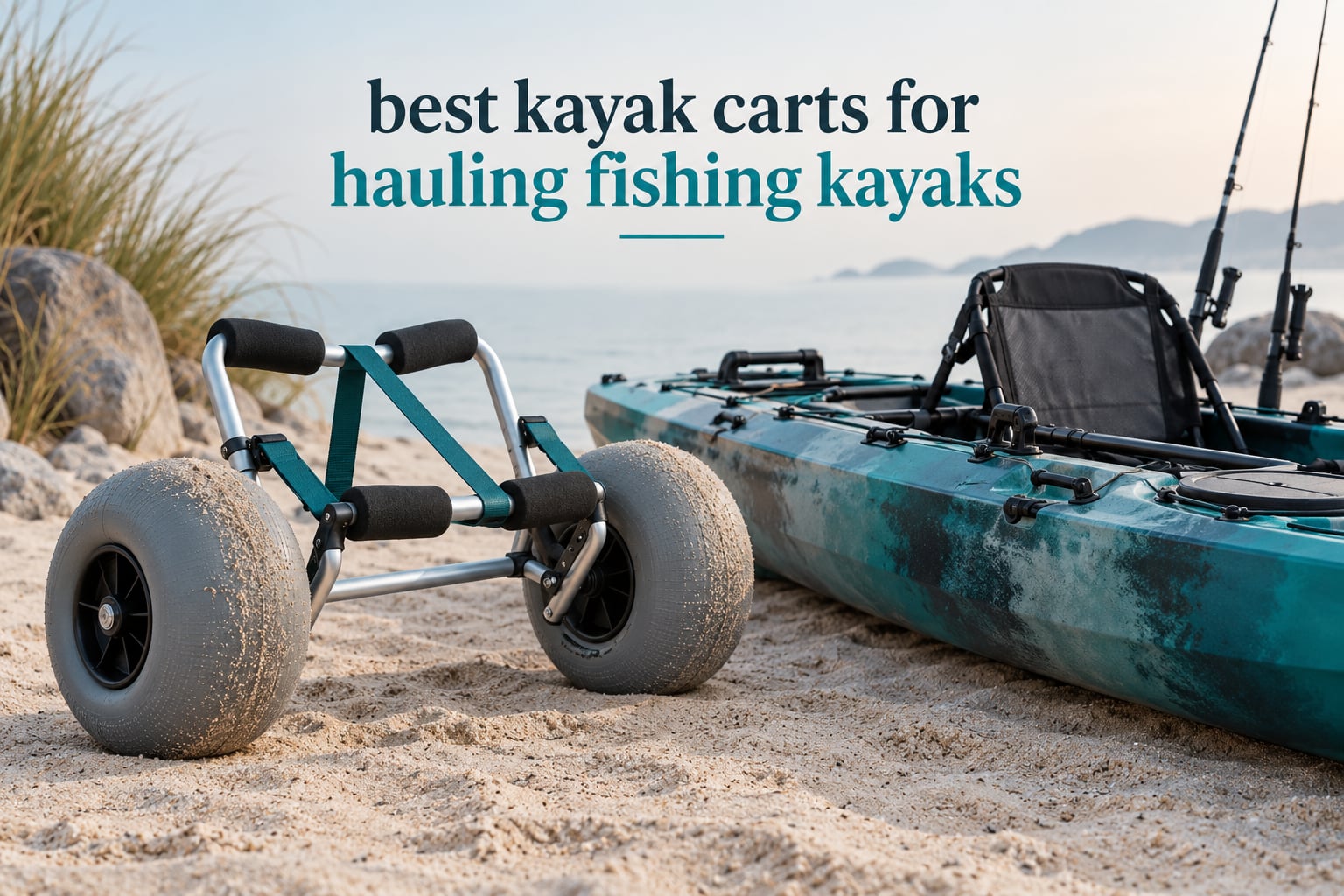
The worst part of a fishing kayak day is not the fishing. It is the last 100 yards between the truck and the water, with a rigged sit-on-top on your shoulder, a tackle bag in one hand and a landing net in the other. A cart removes that problem, which is why searches for the best kayak carts for hauling fishing kayaks keep growing every season.
Fishing kayaks punish cheap gear harder than recreational boats. A pedal drive, an anchor trolley, a battery, a cooler and a crate of tackle can push a boat past 150 lb before you add a single soft plastic. That weight changes what you need: bigger wheels, a wider platform, a kickstand for solo loading, and a load rating you treat as a ceiling rather than a suggestion.
We compared 12 of the most widely reviewed carts and trolleys, looked at what owners report after a season of use, and sorted them by terrain and boat type. We earn a commission when you buy through our links, which is why the disclosure sits here. If you have not settled on a boat, our picks for the best fishing kayaks cover the hull shapes below, and inflatable craft behave differently.
Table of Contents
Top 3 Best Kayak Carts for Hauling Fishing Kayaks in 2026

Wilderness Systems Heavy Duty
- 450 lb capacity
- Adjustable-width bunker bars
- Two bunk heights
- Collapses into a dry well

YakAttack TowNStow Bunkster
- 450 lb capacity
- 6.25 to 16 inch bunk spacing
- Tool-free five-part breakdown
- 12 inch wheels

Bonnlo 200 lb Folding Cart
- 200 lb capacity
- 10 inch airless tires
- Double kickstand
- Two ratchet straps
The Best Kayak Carts at a Glance in October
| Product | Specifications | Action |
|---|---|---|
| Wilderness Systems Heavy Duty |
|
Check Latest Price |
| Bonnlo 200 lb Folding Cart |
|
Check Latest Price |
 RAD Sportz 150 lb Cart RAD Sportz 150 lb Cart |
|
Check Latest Price |
 Suspenz DLX Transport Trolley Suspenz DLX Transport Trolley |
|
Check Latest Price |
 Bonnlo Boat Kayak Cart Bonnlo Boat Kayak Cart |
|
Check Latest Price |
| YakAttack TowNStow Bunkster |
|
Check Latest Price |
 RAILBLAZA C-Tug SandTrakz RAILBLAZA C-Tug SandTrakz |
|
Check Latest Price |
 Pelican Deluxe Cart Pelican Deluxe Cart |
|
Check Latest Price |
 Ulticor Kayak Cart Ulticor Kayak Cart |
|
Check Latest Price |
 Suspenz All-Terrain Super Duty Suspenz All-Terrain Super Duty |
|
Check Latest Price |
 VEVOR 350 lb Beach Wheels VEVOR 350 lb Beach Wheels |
|
Check Latest Price |
 VEVOR 450 lb Solid Tires VEVOR 450 lb Solid Tires |
|
Check Latest Price |
How We Picked These Kayak Carts
We picked these carts from published specifications crossed against aggregated owner feedback, not a season of our own field testing. That distinction matters, because the gap between a 450 lb headline rating and a cart that still tracks straight at 300 lb only shows up after months of sand and salt.
Six axes carried the ranking. Wheel diameter versus terrain came first, because owners repeatedly make the same point: wheel size matters far more than frame weight. Hull fit and platform adjustment came second, then load rating against realistic rigged-boat weight. Solo-loading ergonomics, storage footprint and frame material finished the scoring.
Where owners repeatedly report the same complaint, we weighted it heavily. Where a listing claims a number that reviews contradict, we note the gap instead of repeating the marketing.
1. Wilderness Systems Heavy Duty Kayak Cart — Best Overall for Fishing Kayaks
Wilderness Systems Heavy Duty Kayak Cart | Flat-Free Wheels | 450 Lb Weight Rating | for Kayaks and Canoes
450 lb capacity
13 lb cart weight
32 inch L x 26 inch W
Adjustable-width bunker bars
Pros
- 450 lb rating handles fully rigged fishing kayaks
- Adjustable bunk width fits many hull shapes
- Two bunk height positions
- Collapses to fit a rear dry well
Cons
- No kickstand so solo loading needs a high lift
- May not fit every brand of storage hatch
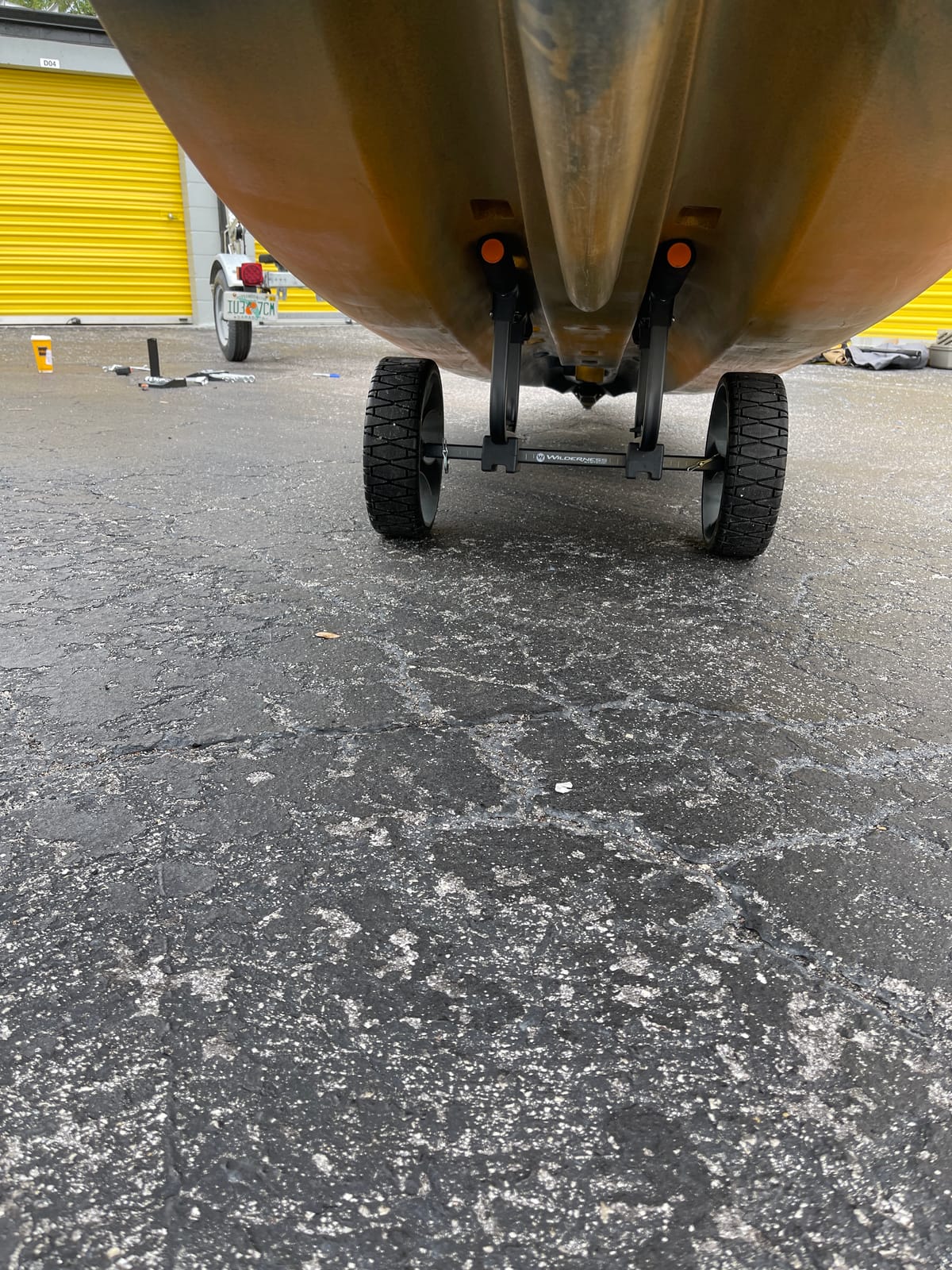
This is the cart that solved our own hauling problem. A 450 lb rated capacity on a 13 lb frame means a rigged sit-on-top pulls with almost no resistance, and the adjustable-width bunker bars stop the hull twisting the way narrow fixed bars do on a long walk.
The two bunk heights matter more than they sound. High clears odd hulls; low drops the centre of gravity so a heavy boat stays planted across uneven ground. Anglers running heavy electronics and tackle treat this as the option for anything beyond about 100 yards from the ramp.
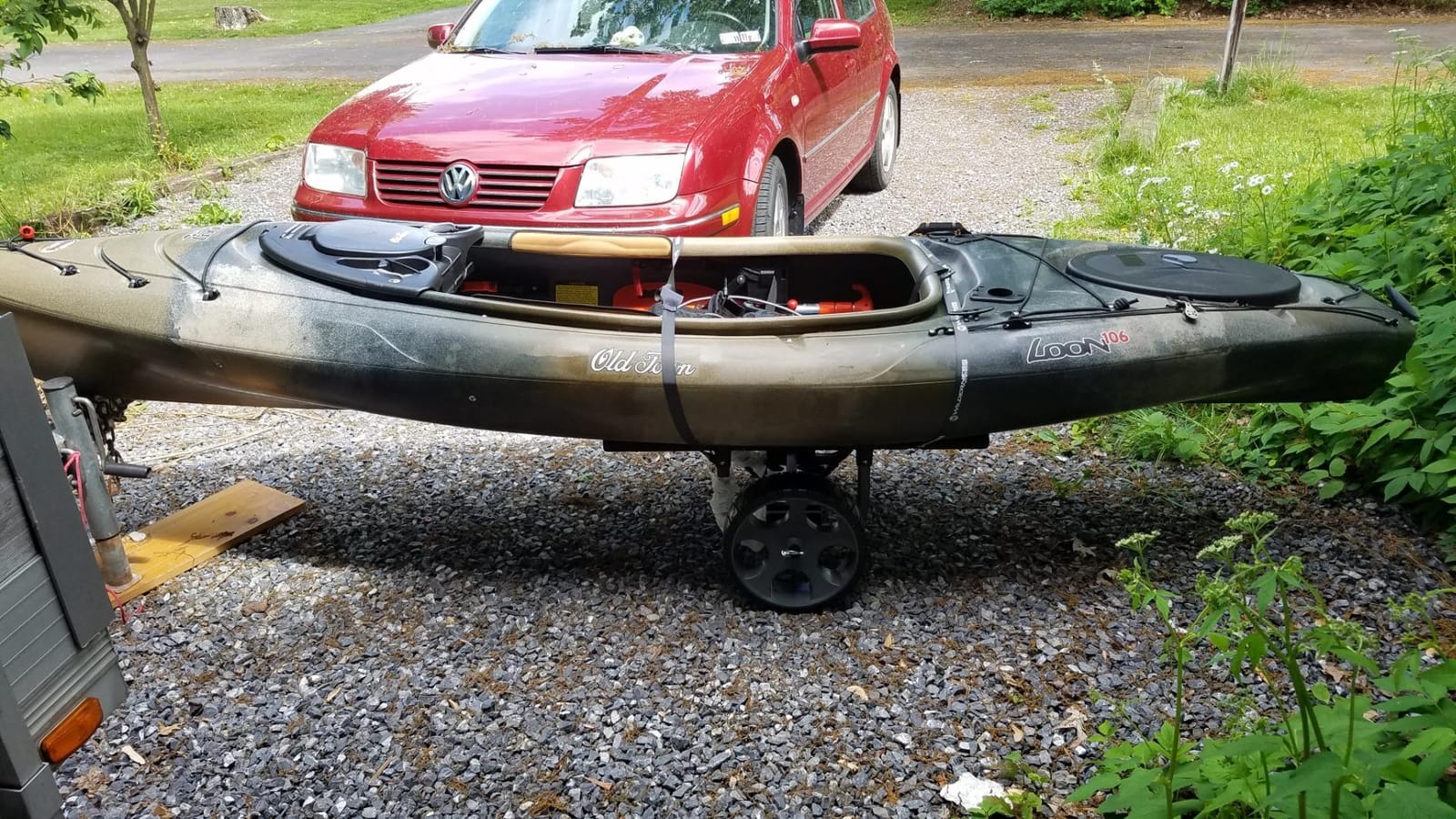
The wide wheels soak up bumps without the frame flexing, and the whole unit collapses into a compact bundle that fits a typical rear dry well. At 13 lb it is still light enough for one person to carry from a tailgate while holding the bow.
Who this cart suits
Anyone moving more than 250 lb from the vehicle to water, including pedal-drive and motorized rigs. Two height positions and wide bunk adjustment cover V-hulls, tunnel hulls and many catamaran shapes without a second cart.
Where it falls short
There is no kickstand, so you lift the bow on yourself and a fully loaded fishing kayak becomes a two-person job without a tailgate. Owners also report confusion about whether the collapsed cart fits their specific hatch.
2. Bonnlo 200 lb Folding Cart with Airless Tires — Best Value
Bonnlo Universal Kayak Carrier – Trolley for Carrying Kayaks, Canoes, Paddleboards, Float Mats, and Jon Boats – Inflation-Free Solid Tires Wheel 2 Ratchet Straps
200 lb capacity
5 lb cart weight
10 inch solid PU tires
Anodized aluminum pipe frame
Pros
- Most battle-tested budget cart with thousands of owner ratings
- Folds flat and wheels detach for hatch packing
- Airless tires never need inflating
- Double kickstand for solo loading
Cons
- Airless tires can develop flat spots under a static heavy load
- Cart and kickstand add bulk in a hatch
With more than 2,800 owner ratings behind it, this is the most proven budget cart here, and owners describe it the same way every time: a sturdy, foldable way to move a kayak from truck to water that fits in a car without thinking about it.
The 20x2mm anodized aluminum pipe frame carries a stated 200 lb limit, enough for a solo angler with a battery and a crate. The 10 inch solid PU airless tires roll over sand, lawn and rough ground without a pump, which removes a whole category of trip prep.
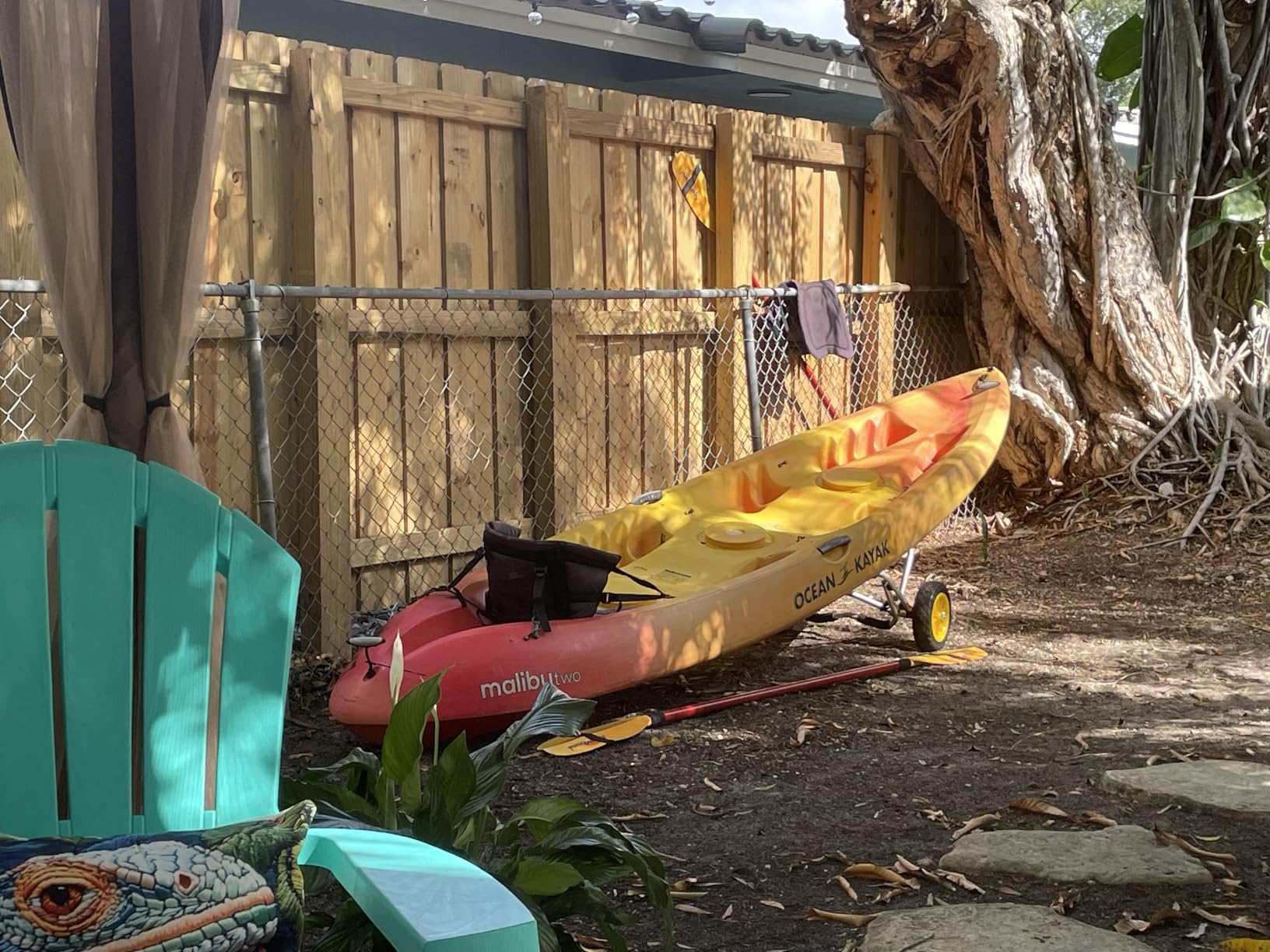
Two ratchet straps come in the box and grip the hull with minimal slippage, which answers the most repeated frustration in fishing forums. The kickstand props the boat onshore while you stage gear and makes solo loading far less awkward than a cart without one.
Who this cart suits
Weekend anglers launching from a paved ramp, grass bank or firm beach with a boat under 200 lb loaded. It is also the one we would buy first for a mixed fleet, since owners run canoes and paddle boards on the same frame.
Where it falls short
Ten inch wheels are the limiting factor. They work on packed surfaces and grass, but they are a parking-lot size, and in genuinely soft sand they dig. Solid PU tires can also pick up a flat spot if the loaded cart sits still for weeks.
3. RAD Sportz Kayak Cart with Carrying Bag — Best for Boats Beyond a Kayak
Rad Sportz Kayak Cart with Wheels and 150lb Capacity, Orange
150 lb capacity
9.7 lb cart weight
28.5 inch L x 7 inch W
10 inch solid wheels
Pros
- Hauls tandem kayaks
- canoes
- jon boats and paddle boards
- Quick to assemble and folds into the mesh bag
- Retaining pins keep wheels secure
- Light enough for one person to control
Cons
- Supplied straps are reported as weak
- Light weight can let a loaded kayak drift while balancing
This is the cart we recommend to people who own more than one craft. Owners routinely run tandem kayaks, SUPs and small jon boats on the same frame, and the 150 lb rating covers everything except a heavy rig.
The powder-coated aluminum frame with alloy steel hardware holds its shape, and the release-pin wheels are a small detail that pays off. On cheaper carts wheels rattle loose on rough ground; these snap and stay.
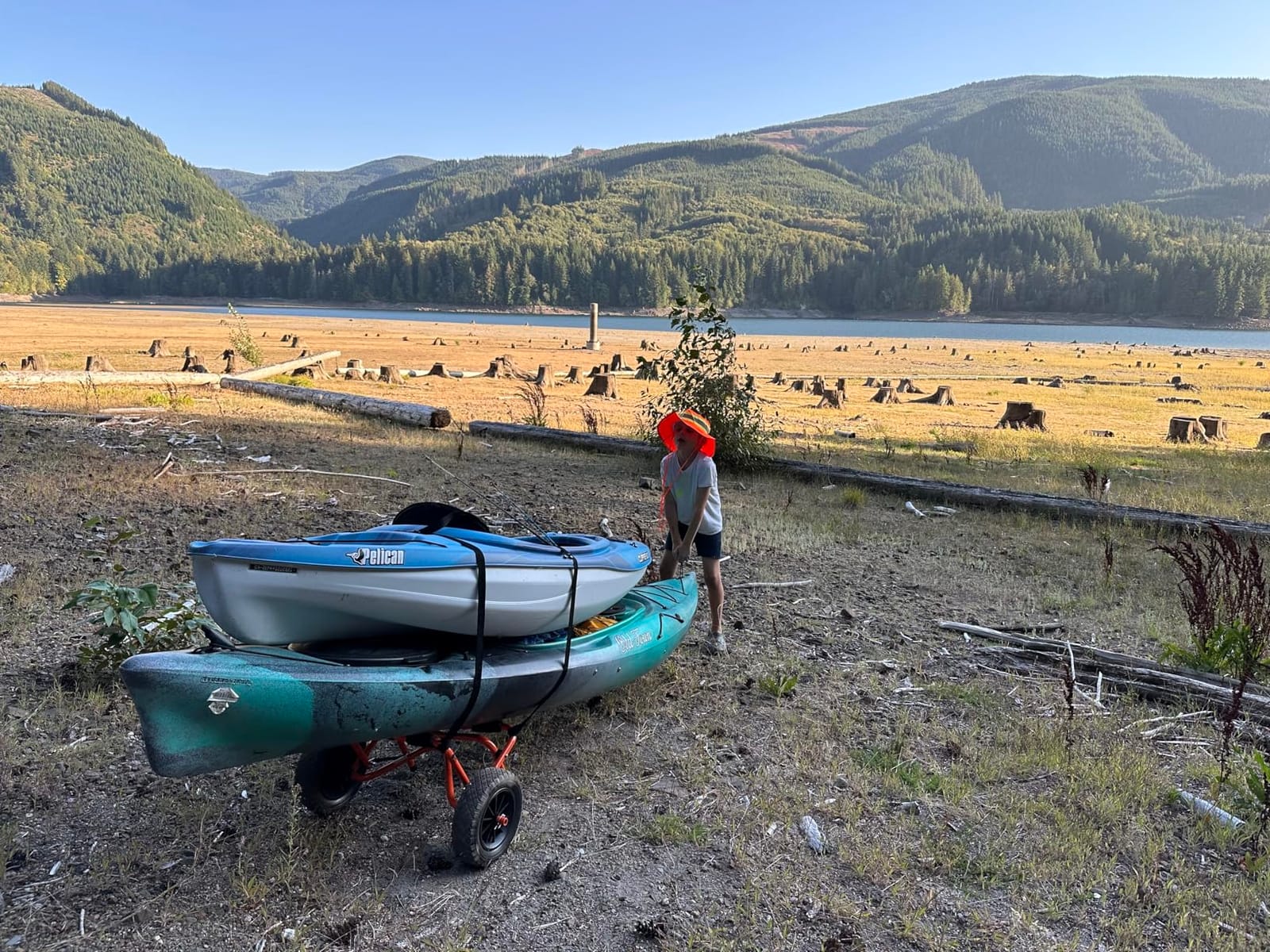
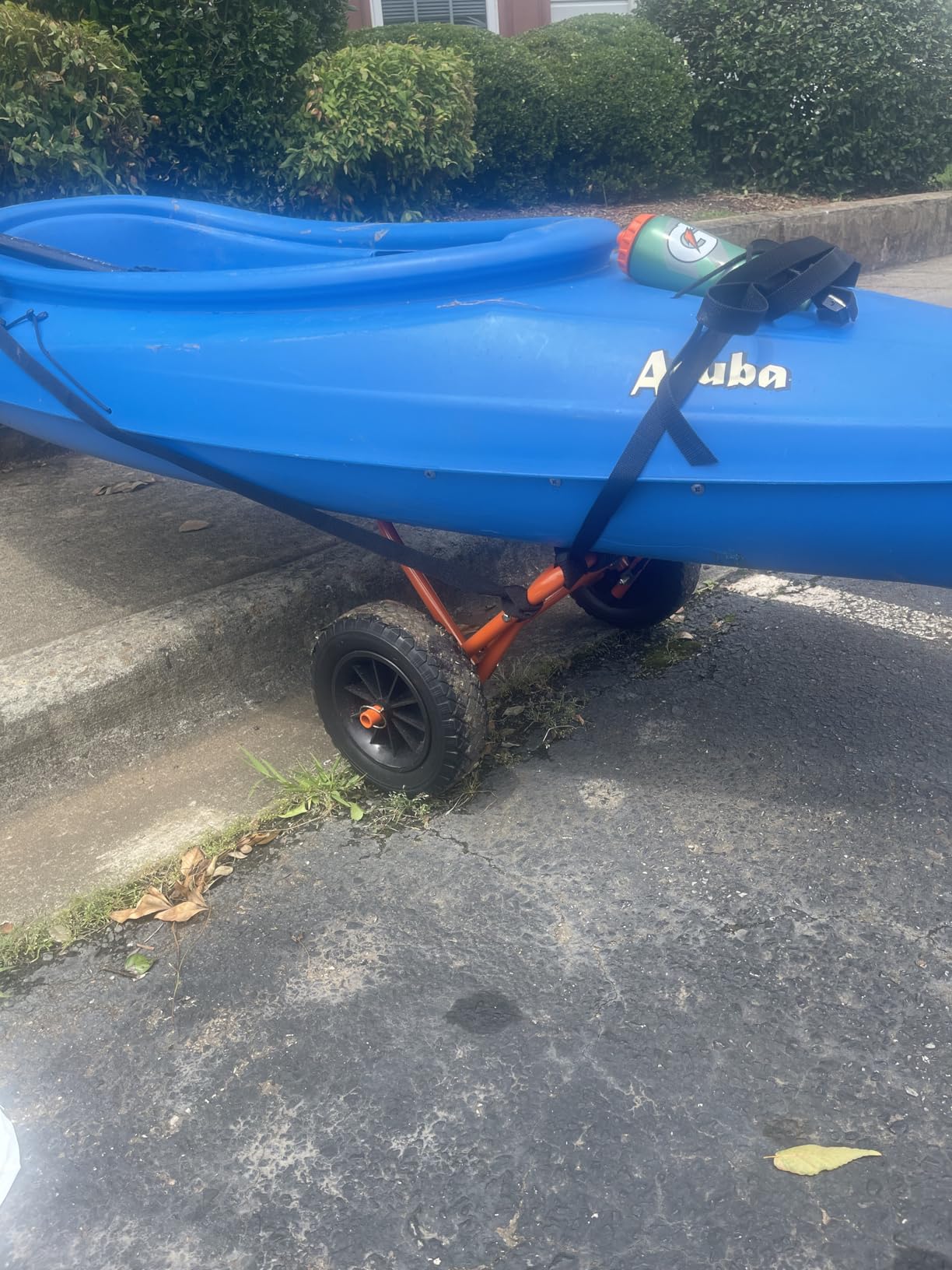
The mesh carry bag is included and reviewers single it out. Dropping the whole cart into a bag and slinging it over a shoulder is what makes a remote launch practical alone, and the airless tires roll through dirt, gravel and mud without complaint.
Who this cart suits
Owners of a sit-on-top plus a SUP or canoe who want one frame for everything, and anyone stowing gear in a small vehicle who needs the cart to fit a front hatch. For a boat under about 130 lb loaded the rating is comfortable rather than tight.
Where it falls short
The included tie-down straps are the most repeated complaint across nearly 2,900 reviews, and many owners swap in cam-buckle straps or bungee cord. The 9.7 lb weight that makes it easy to carry also makes it drift-prone while you balance a heavy boat on.
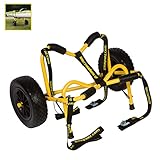
4. Suspenz DLX Kayak Trolley — Best for Compact Stowing
Suspenz Kayak Canoe Transport Trailer, DLX Kayak Cart, Trolley with Airless Wheels and Straps, Weight Capacity 150 lbs, Yellow (22-0044)
150 lb capacity
9 lb cart weight
14 by 18 inch platform
6061-T6 aluminum frame
Pros
- 3 inch deep mid-V cradle stops the hull rocking
- Tool-free unfold with quick-release wheels
- Airless tires need no maintenance
- Rust-resistant aluminum frame
Cons
- 150 lb rating is low for heavily rigged fishing kayaks
- Built for transport rather than for storing a hull on it
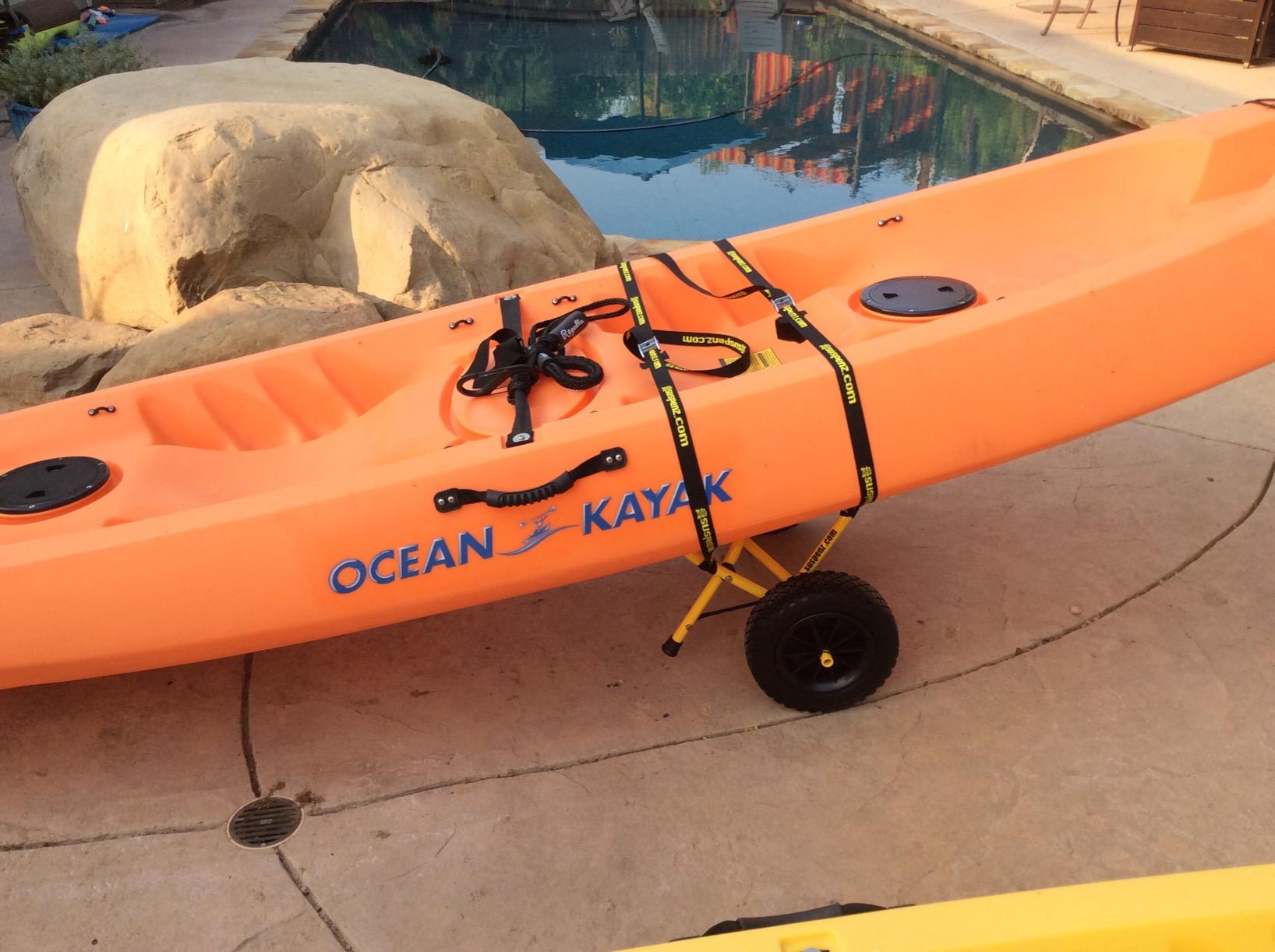
The 3 inch deep mid-V platform is the reason to pick this over another 150 lb frame. Owners report the kayak stops rocking and shifting on uneven ground, which is the complaint we hear most about bunker-bar carts in general.
The 6061-T6 powder-coated aluminum frame with stainless hardware resists rust, which matters on brackish and coastal launches. Setup is tool-free, the wheels release on a quick-release, and the airless tires mean nothing to inflate before launch.
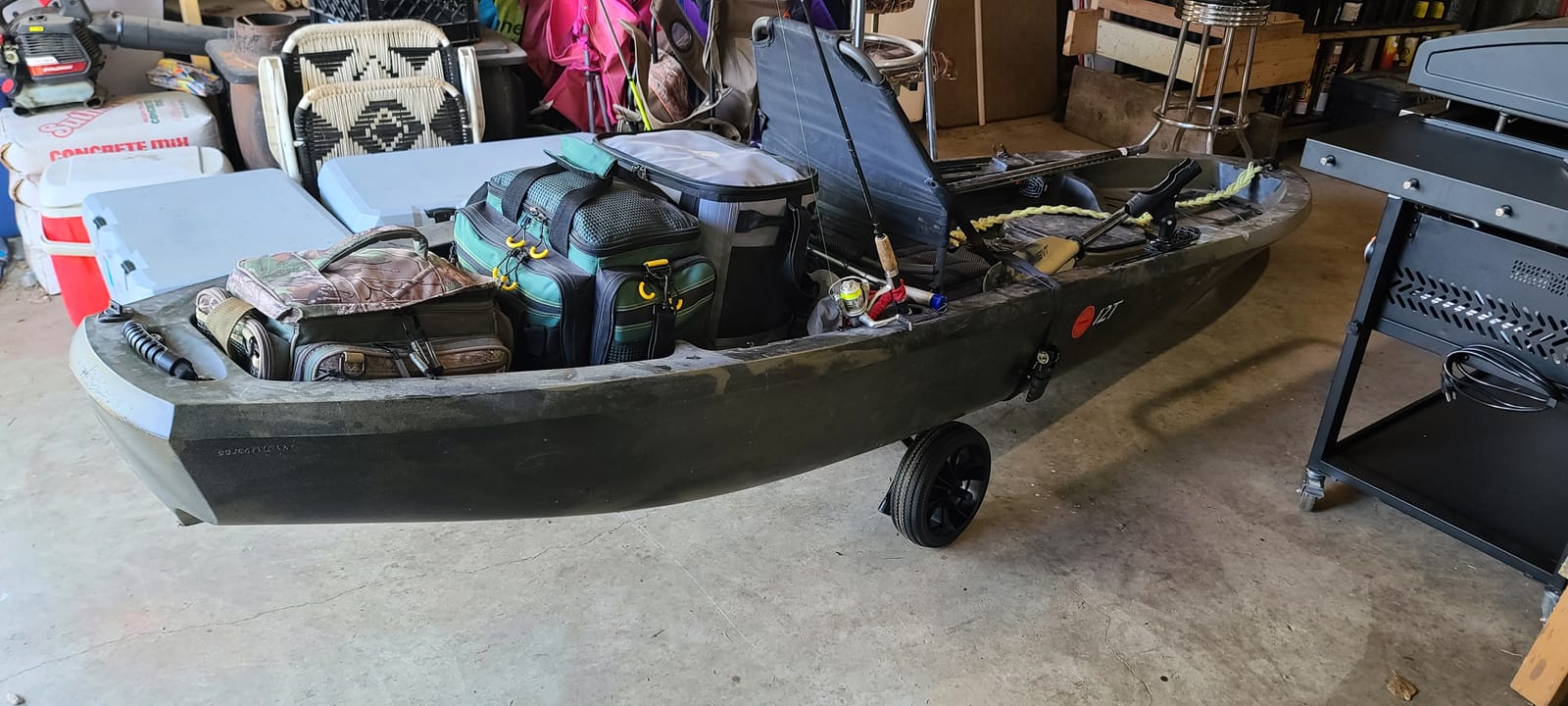
The platform measures 14 by 18 inch and the whole unit weighs 9 lb, so it folds small enough to live in a hatch or a trunk. That footprint is the trade-off buyers of this class keep returning to: whatever is most durable and whatever is most maneuverable.
Who this cart suits
A solo angler with a light to moderately loaded kayak who values a quiet, stable ride and compact stowage over raw capacity. It folds small enough to live in a hatch or trunk without planning around it.
Where it falls short
The 150 lb rating is the constraint, and buyers of heavily rigged boats flag it directly. Add a pedal drive and a battery and you are near that number before the cooler and tackle go on. Treat it as a ceiling.
5. Bonnlo Boat Kayak Canoe Cart — Best for First-Time Buyers
Bonnlo Boat Kayak Canoe Cart Carrier Dolly Trailer Tote Trolley Transport Kayak Accessories Large with 20x2mm Aluminum Pipe Double Kickstands, Inflation Free Solid Tire Wheels, 2 Ratchet Straps
200 lb capacity
6 lb cart weight
10 inch solid PU tires
20x2mm aluminum pipe
Pros
- Lowest cost entry to airless-wheel hauling
- Solid tires roll through sand and lawns
- Folds down and stores between trips
- Ratchet straps hold with little slippage
Cons
- Noisier and slightly less rigid than tubular premium frames
- Kickstand adds width when packing into a hatch
If you have never owned a kayak cart, this is the sensible first purchase. Reviewers treat it as a capable budget cart rather than a compromise, and satisfaction is driven almost entirely by value relative to premium frames.
The spec sheet matches the larger Bonnlo closely: a 200 lb limit on the same 20x2mm anodized aluminum pipe, 10 inch solid PU airless tires, foam bumpers on the arms and rubber caps on the feet.
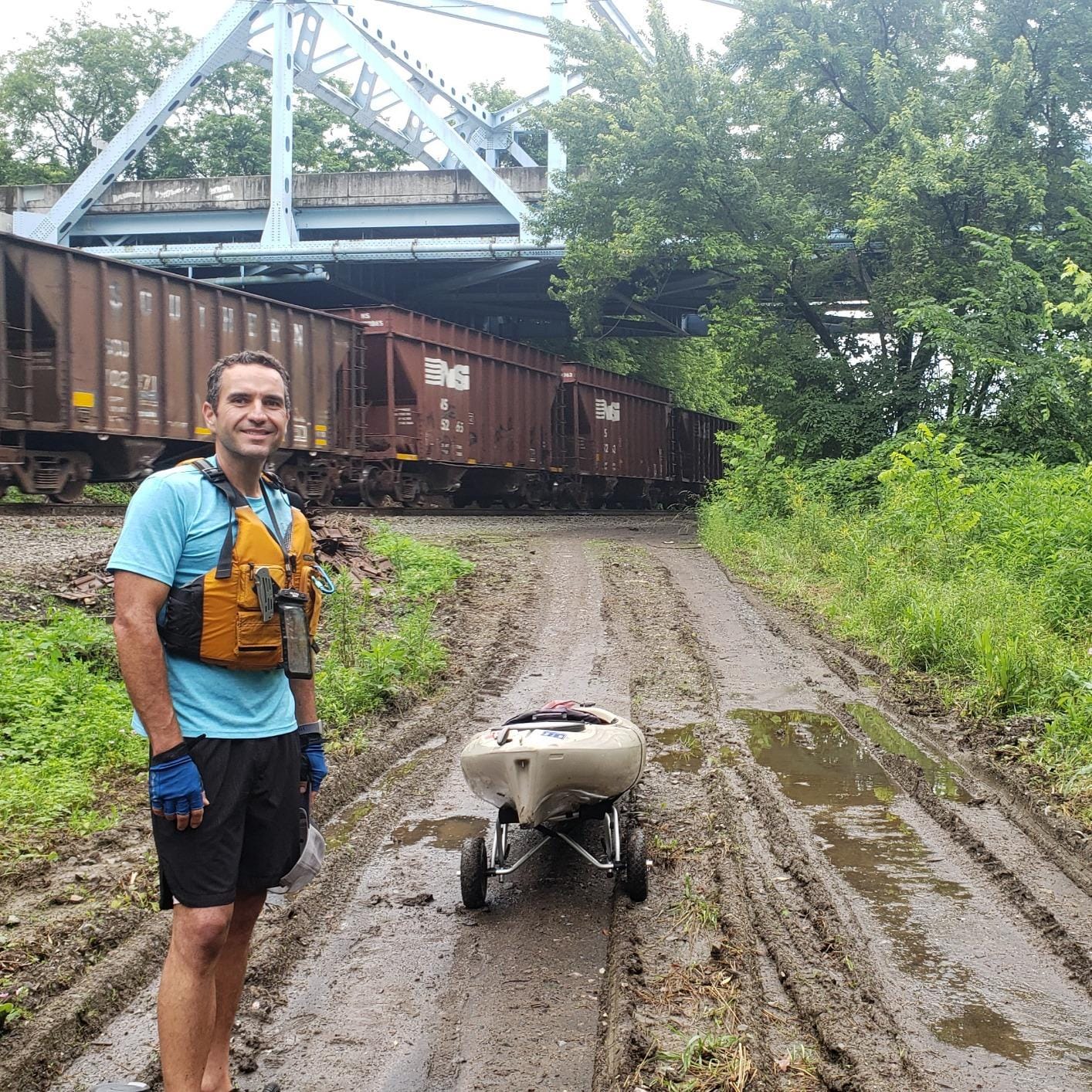
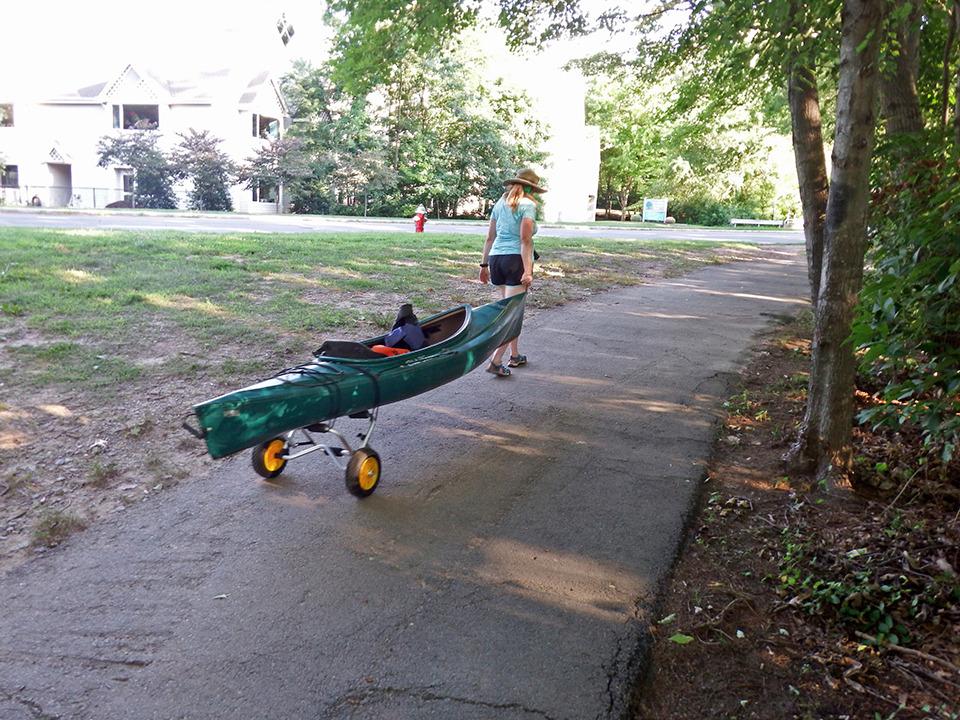
Two ratchet straps grip well, the frame folds with detachable wheels for hatch packing, and a kickstand props the boat onshore while you stage gear. At 6 lb it is one of the lighter frames here, which is why solo handling feels manageable.
Who this cart suits
New owners, occasional paddlers and anyone with a boat under 200 lb launching from a firm surface. It also works as a second cart for the gear problem described in the buying guide.
Where it falls short
Owners describe it as noisier and slightly less rigid than tubular-frame premium carts, and a heavily loaded boat moves more in the frame. The kickstand also widens the folded package if you plan to stow it inside the hull.
6. YakAttack TowNStow Bunkster — Best for Pedal-Drive Kayaks
YakAttack TowNStow Bunkster Kayak Cart – 450 lb Capacity
450 lb capacity
11.1 lb cart weight
12 inch wheels
6.25 to 16 inch bunk spacing
Pros
- 450 lb rating covers loaded pedal-drive rigs
- Wide bunk adjustment fits many hull widths
- Tool-free five-part breakdown
- 12 inch wheels clear rough ground
Cons
- Heavier and bulkier to carry back from the launch
- 12 inch wheels add to the folded package
Pedal-drive owners have a specific problem: the drive and motor push a fishing kayak past what most carts claim. The Bunkster is rated 450 lb flat, which is the highest published figure in this group and the one that matters most for a rigged sit-on-top.
Bunk spacing adjusts from 6.25 inch to 16 inch, so it matches narrow rec kayaks and wide sit-on-tops with one frame. It breaks down into five parts with no tools, and the anodized aluminum with stainless hardware suits coastal launches.
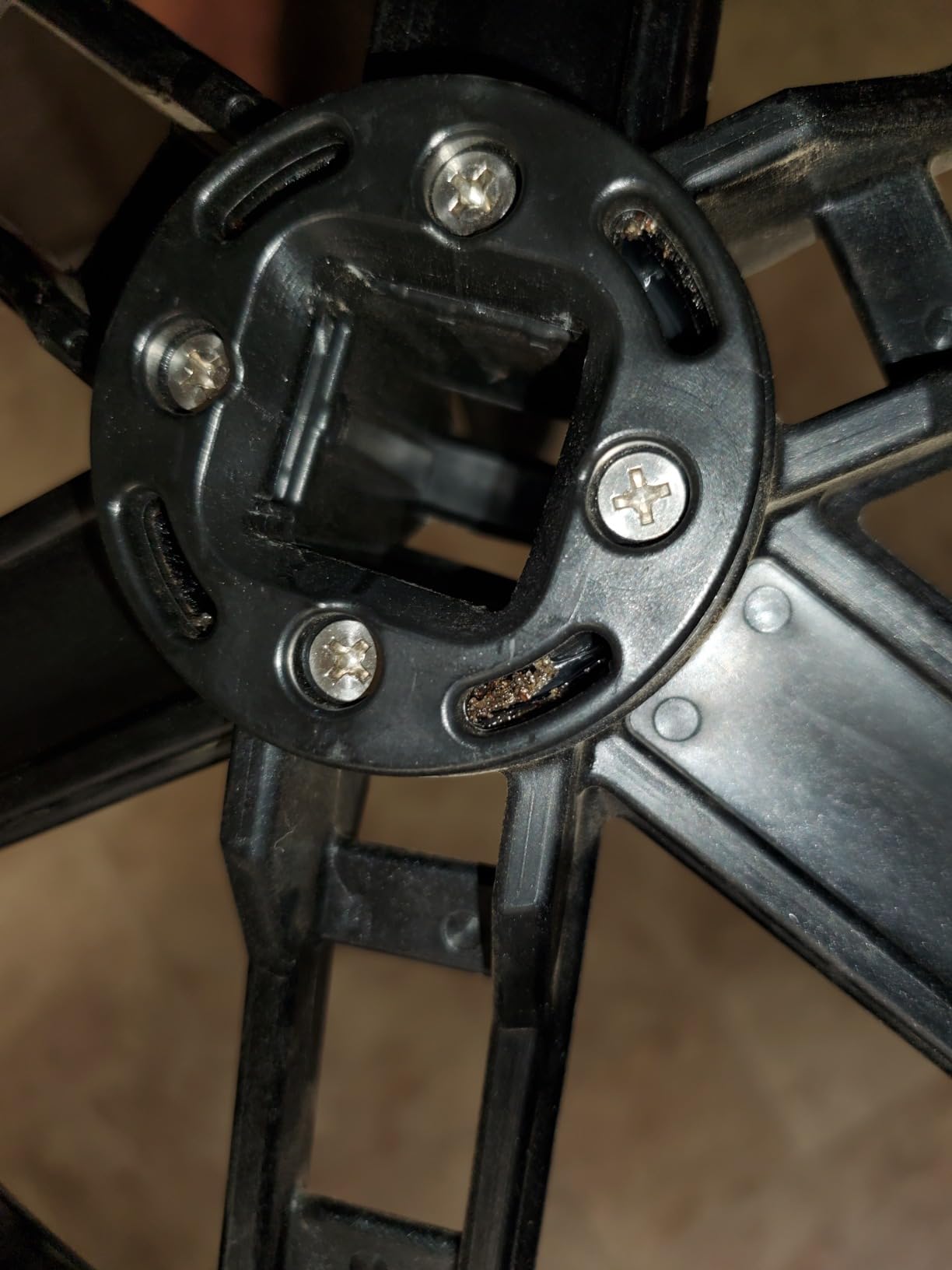
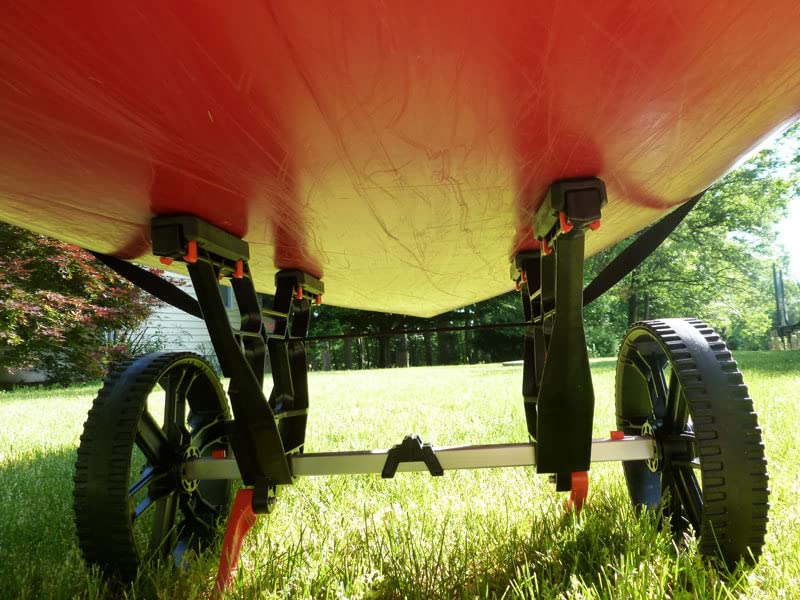
The 12 inch wheels roll over gravel and packed sand that stops a 10 inch wheel, and multiple tie-down points on the frame let you secure a bow or a crate. At 11.1 lb it is still within reach of a solo carry.
Who this cart suits
Anyone with a pedal drive, a trolling motor battery or a rig where load genuinely exceeds 250 lb. The 450 lb rating also makes it the safest choice on rough ground, and the marine-grade hardware suits coastal and brackish anglers.
Where it falls short
Weight and bulk are the stated drawbacks. At 11.1 lb with 12 inch wheels, this is not a cart you want to carry 200 yards back across a marsh after a long day. And carts left at the ramp disappear: one owner reported a TowNStow gone within the hour, so take it with you.
7. RAILBLAZA C-Tug with SandTrakz Wheels — Best for Saltwater and Soft Sand
RAILBLAZA C-Tug Kayak and Canoe Roller Cart with SandTrakz Puncture Free All-Terrain Wheels, 300lb Loading Capacity with Reinforced Material
170 lb effective load rating
Puncture-free SandTrakz wheels
Rust-resistant frame
Fits most kayak hatches
Pros
- Wide flexible-spoke tires float over soft sand without flats
- Breaks down fast and fits inside most hatches
- No tire pressure to maintain
- Rust-resistant reinforced frame
Cons
- Effective load rating is 170 lb despite a 300 lb headline figure
- Strap-caddy style needs a flat scupper-accessible area
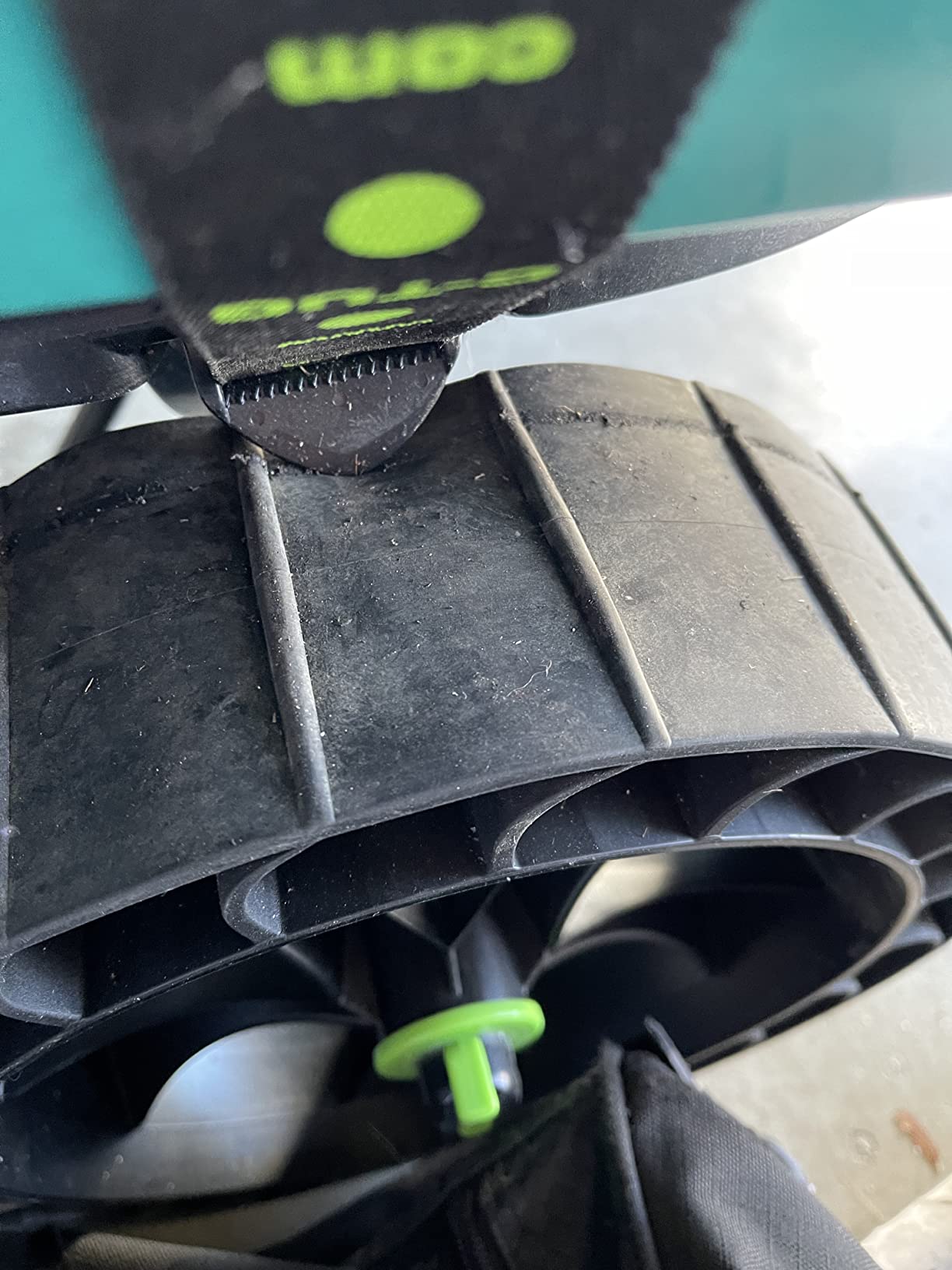
The SandTrakz wheels are flexible-spoke, not pneumatic. There is no tube to inflate, no valve core to leak and no pressure check before a trip, which answers the maintenance complaint owners raise about balloon tires directly.
Because the spokes flex, the wheels spread weight across a wide contact patch and roll through soft sand without burying. That is the whole argument for this cart over a 10 inch hard wheel.
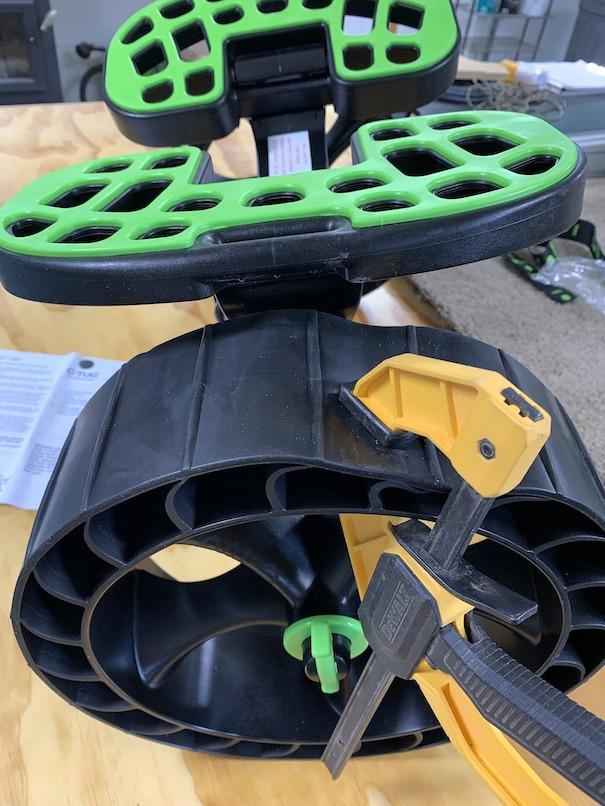
The rust-resistant reinforced frame survives repeated salt spray better than a powder-coated steel frame, owners say, and it dismantles quickly enough to fit inside most hatches for remote launches. A tie-down strap is included, worth replacing on a rig.
Who this cart suits
Light to moderately loaded kayaks launching on soft sand where you would rather not carry a pump, plus saltwater flats and marsh access where corrosion decides the outcome. The quick breakdown also suits remote launches.
Where it falls short
The load rating is the honest problem. Listings advertise 300 lb, but reviewers report an effective rating near 170 lb. The caddy design also needs a flat, scupper-accessible area to sit correctly, so very narrow or rounded hulls can rock on it.
8. Pelican Deluxe Kayak and SUP Cart — Best for Pelican Owners
Pelican Canoe Kayak and SUP Transport Cart Sport Deluxe Cart for Canoe, Kayak and SUP – Adjustable Width – 2 Height Positions – Airless Tires – Heavy Dutty and Resistant – Easy to Assemble
175 lb capacity
8.8 lb cart weight
8 to 13 inch width
10 inch airless tires
Pros
- Width and height adjustment matches many hull shapes
- Wide 10 inch airless tires handle grass and gravel
- Natural match for sit-on-top fishing kayaks
- Simple assembly with no complex fittings
Cons
- 175 lb rating is modest for battery trolling motors
- One-star reviews more concentrated than most carts here
If your sit-on-top is a Pelican, this is the cart designed around it. Owners report the platform lines up with the hull without guesswork, which is the whole advantage of buying the cart and boat from the same maker.
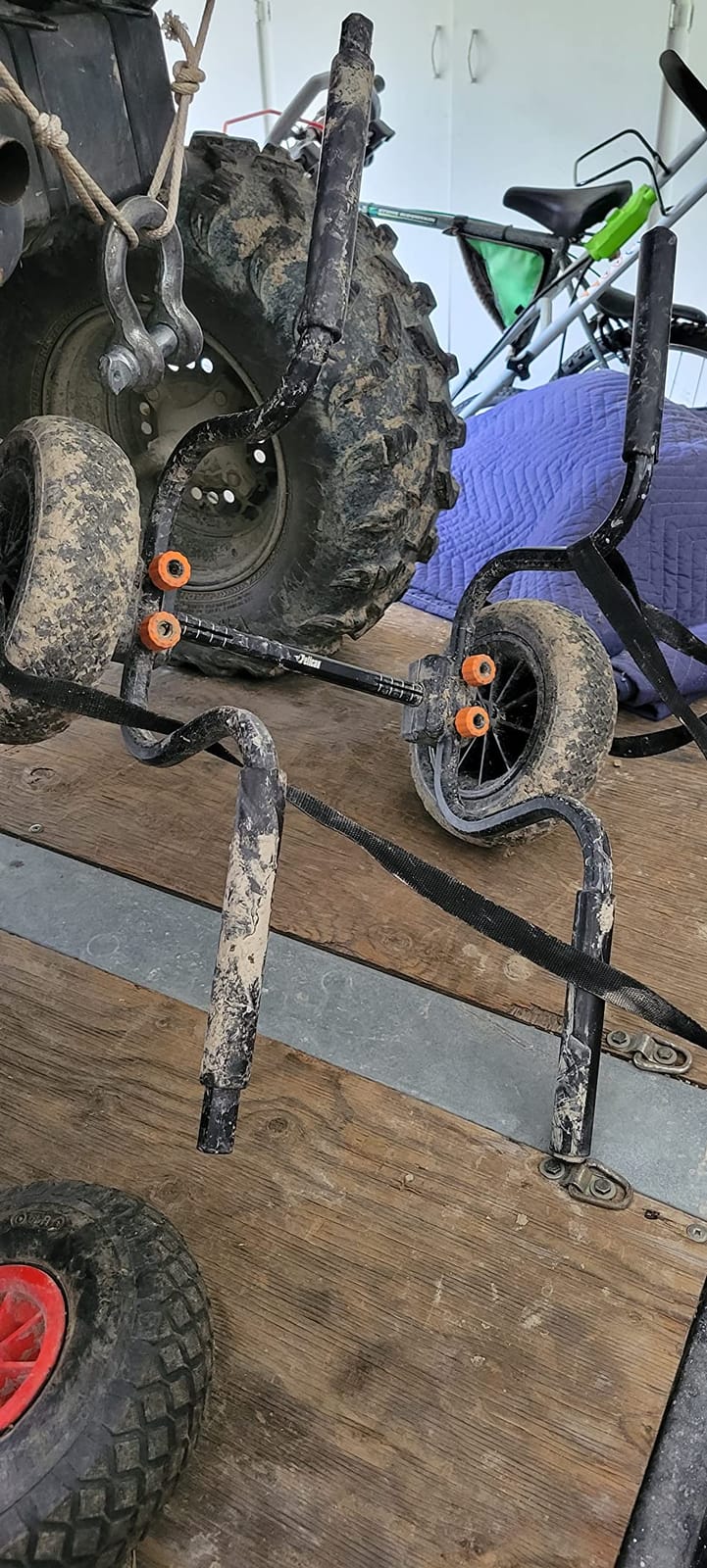
Width adjusts from 8 inch to 13 inch with two bunk height positions, so it covers narrow and wider hull shapes. The corrosion-resistant aluminum frame carries rubber bumpers on each arm, and the 10 inch by 3 inch airless tires are wider than most at that diameter.
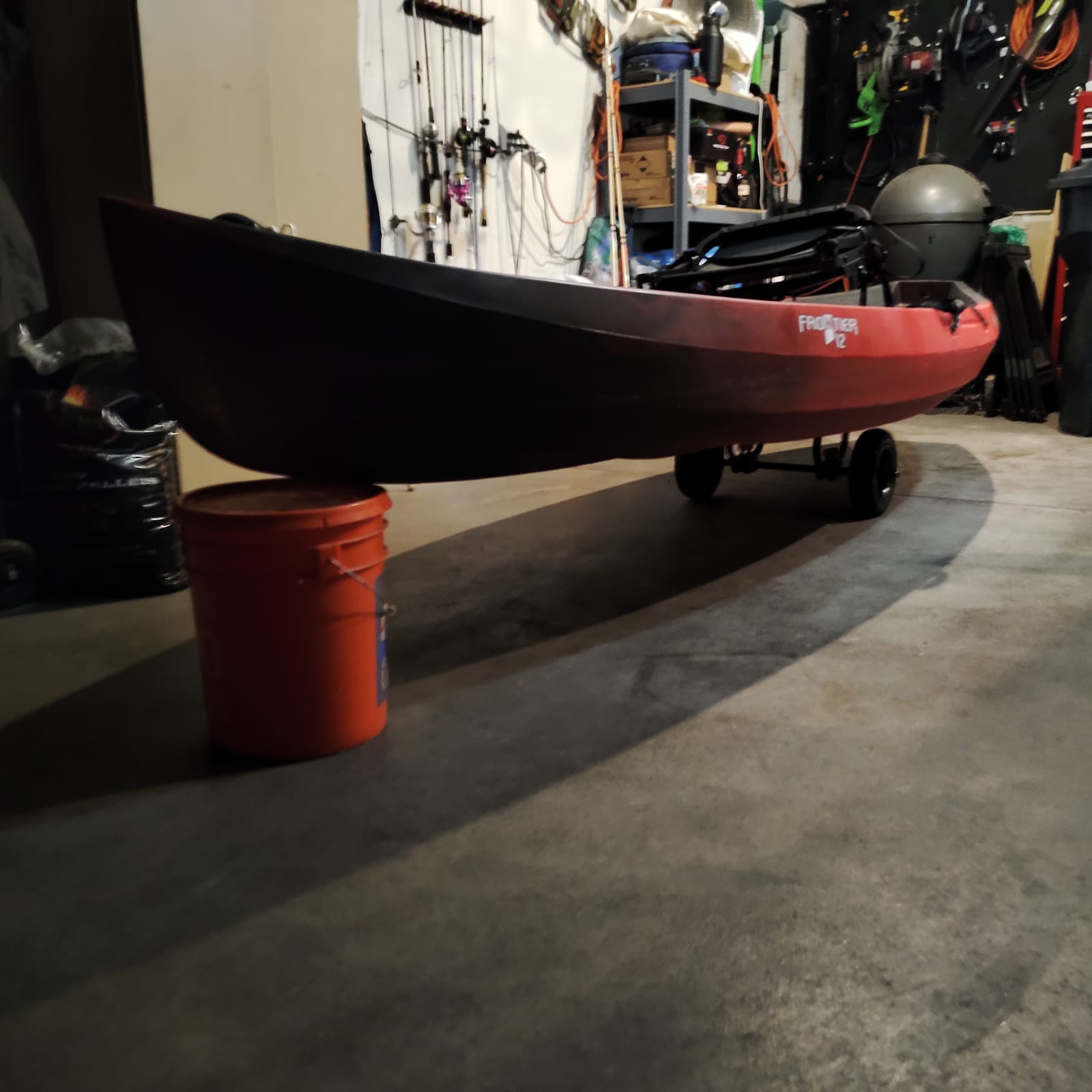
Owners report the tires rolling over grass, gravel and forest trail without complaint. Assembly is straightforward with no complex fittings, and an adjustable strap is included.
Who this cart suits
Pelican owners and anyone on a firm launch who needs a mid-weight cart for a boat under 175 lb. It also covers paddle boards and canoes within that rating, and the adjustment makes it workable if you rotate between craft of similar width.
Where it falls short
175 lb is modest for anglers carrying a battery trolling motor. Add a motor, a battery bank and a cooler and you are testing the frame. Owner feedback also carries a higher share of one-star reviews than the premium carts here.
9. Ulticor Kayak Cart — Best for Fast Setup and No-Tools Assembly
Ulticor Kayak Cart, Puncture-Free Wheels Assembles and Disassembles Within Seconds – Easy to Store – No Tools Required – All-Terrain Durable Kayak and Canoe Cart with Adjustable Straps (Green – Black)
260 lb capacity
About 10 lb cart weight
25 inch frame
Tool-free assembly
Pros
- Assembles and disassembles in seconds with no tools
- Puncture-proof all-terrain wheels
- Adjustable strap keeps the hull from shifting
- Compact for stowing in small spaces
Cons
- Highest one-star share of the carts reviewed
- Composite body is less repairable than aluminum
If you want to be moving in under a minute, this is the one. Owners report assembling and breaking it down in seconds with no tools, using snap-and-lock fittings rather than bolts and pins.
The 260 lb rating sits in the middle of this group: high enough for a solo angler with tackle and a battery, low enough that we would not put a pedal drive on it.
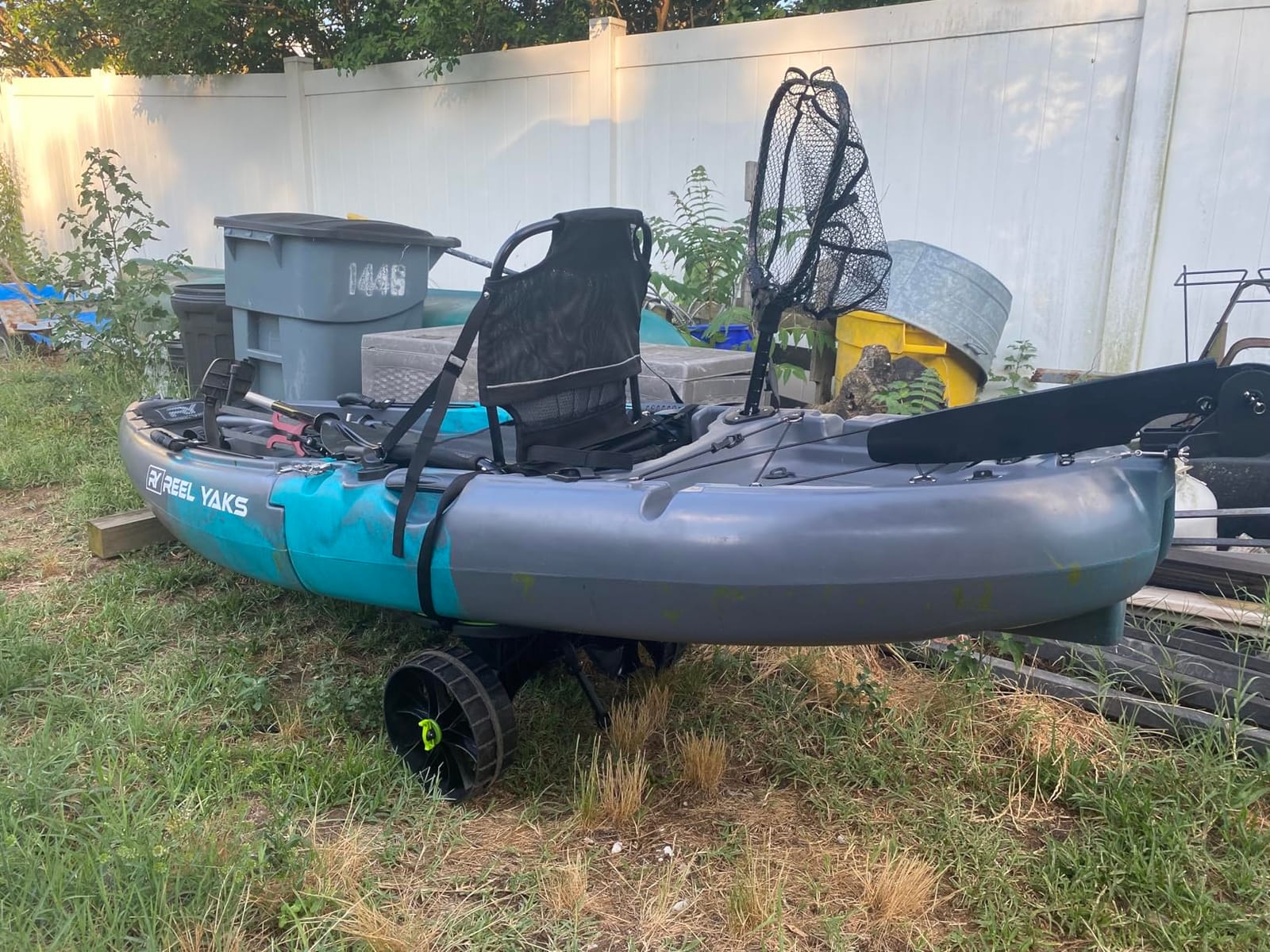
The puncture-proof all-terrain wheels need no maintenance and handle rough ground, and the bonded hull pads grip the boat without adding strap pressure. The reinforced composite body with stainless-reinforced axles resists bending under load.
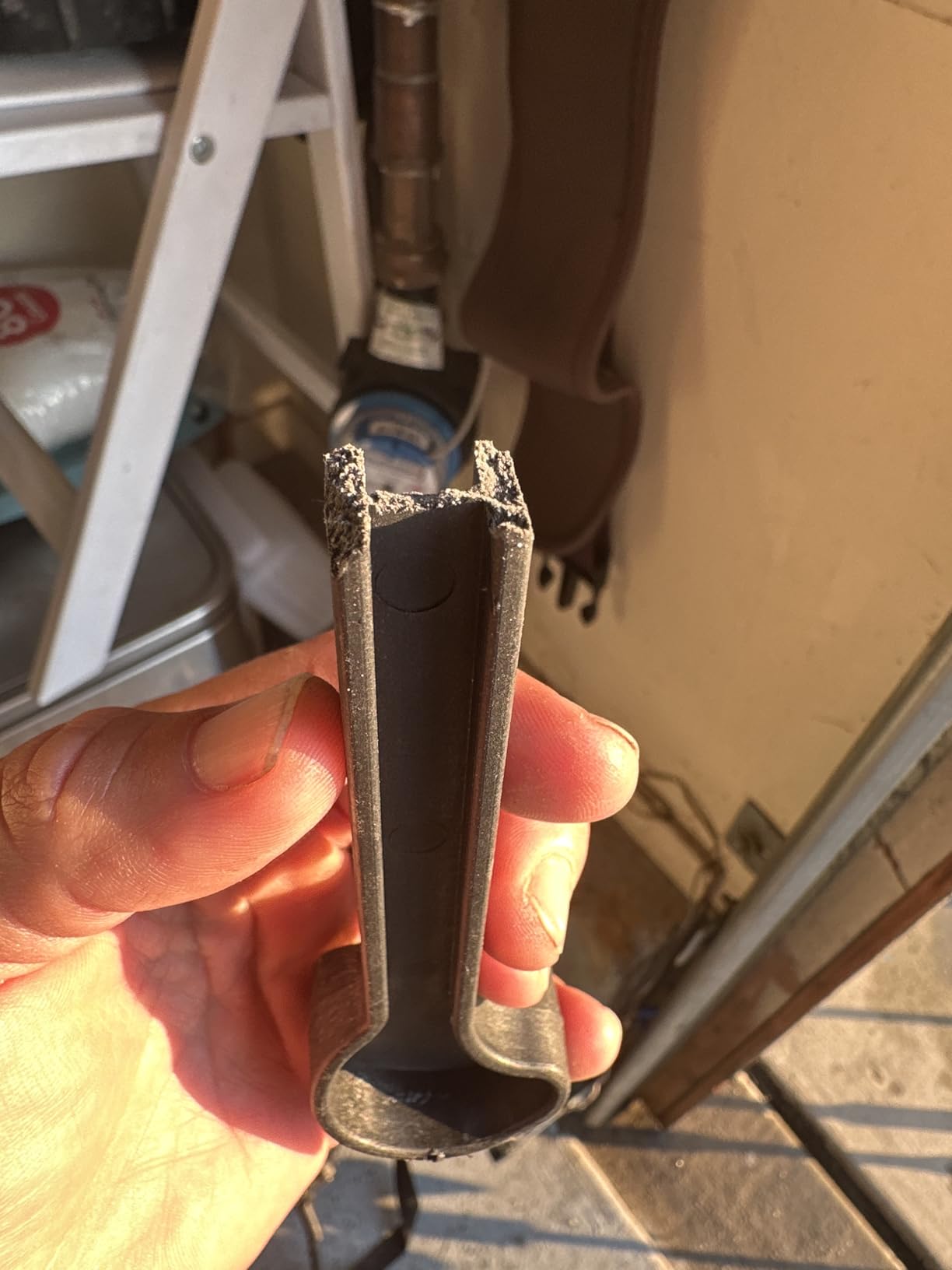
Who this cart suits
Paddlers who move between vehicles or launches often and want zero setup time, and anyone stowing gear in a small space since the breakdown is fast and the package compact. It is also a reasonable second cart for tackle and coolers.
Where it falls short
This cart has the highest proportion of one-star reviews in the group, and the pattern is hardware and strap durability, so expect more variation between units than with an aluminum frame. A composite body also cannot be repaired the way a bent tube can.
10. Suspenz All-Terrain Super Duty — Best for Rugged Ground
Suspenz All-Terrain Kayak Cart Dolly, Super Duty Canoe Cart with No-Flat Airless Wheels, 350 lb Capacity, Foldable Kayak Dolly, Model 22-9908
350 lb capacity
17 lb cart weight
15 inch airless wheels
Bunker bar adjusts 9 to 20 inch
Pros
- 15 inch airless wheels clear rocks and ramps
- Five-position bunker bar matches V
- tunnel and flat hulls
- Powder-coated steel frame with foam-padded bars
- Spring-loaded kickstand for solo loading
Cons
- Steel frame is heavy at 17 lb and corrodes in saltwater
- Folded unit is bulky to carry back from the launch
At 15 inch, these are the largest airless wheels in this group, and that diameter is what clears rubble, roots and broken concrete. Owners report the cart crossing obstacles that stopped smaller wheels outright.
The five-position bunker bar adjusts from 9 inch to 20 inch wide, covering V-hulls, tunnel and catamaran hulls and flat bottoms without a different frame. The powder-coated steel frame does not flex, and the oversized bars carry foam padding.
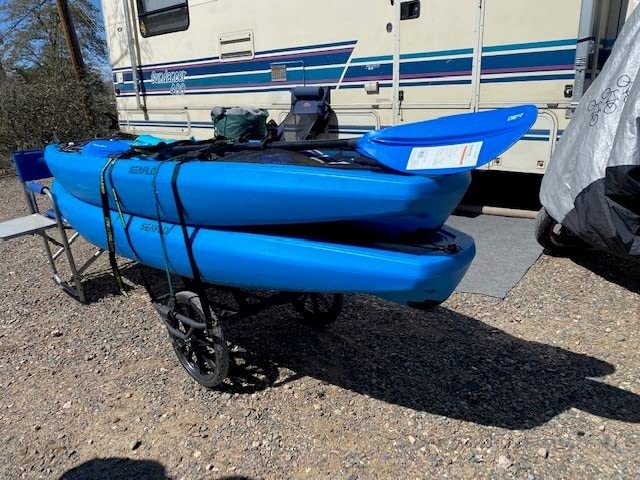
A spring-loaded kickstand handles solo loading, and the frame folds to roughly 31 by 16 by 9 inch. Owners describe carts in this class working well on rutty roads, small rocks and packed sand.
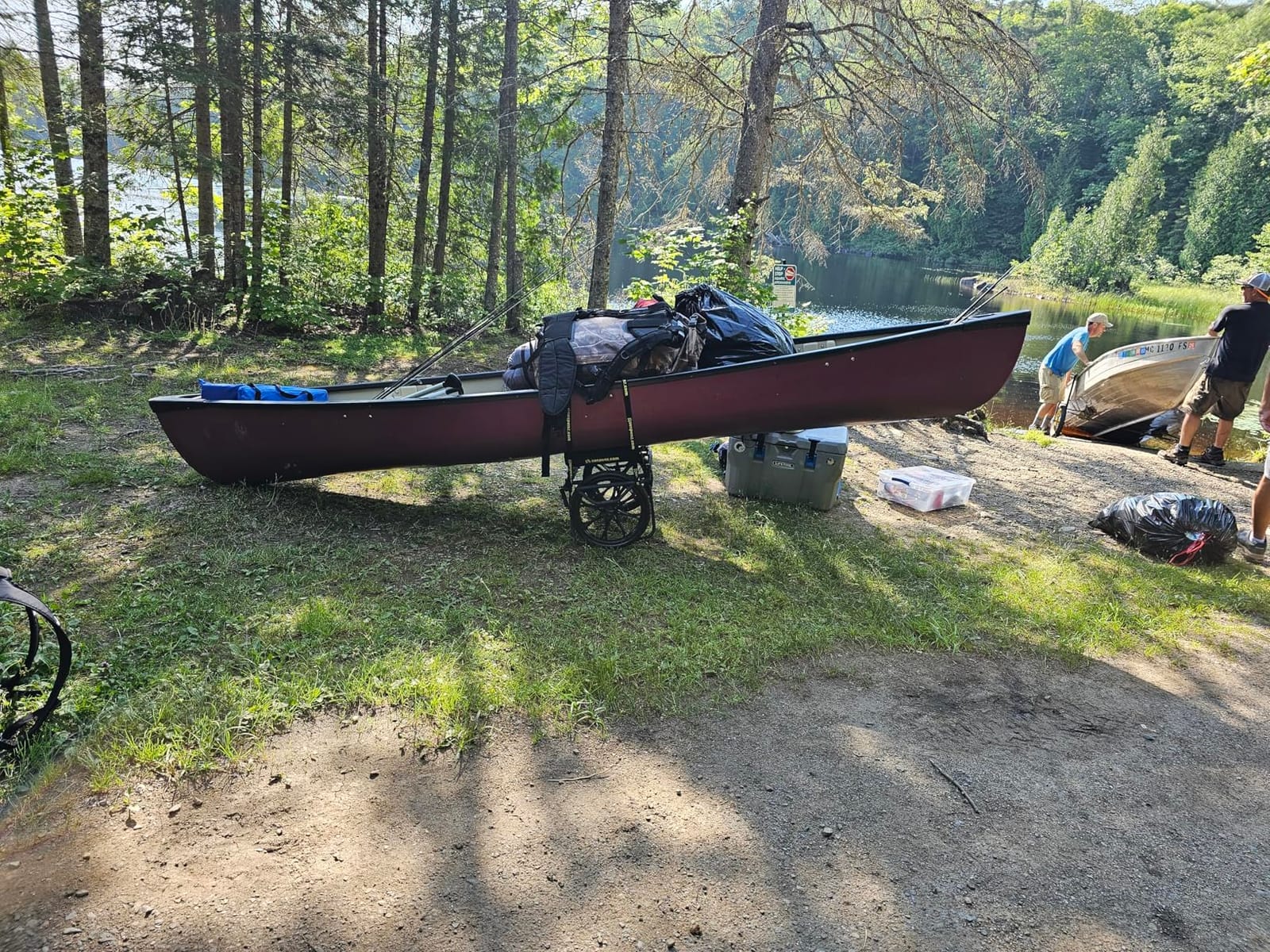
Who this cart suits
Anglers launching over broken ground, gravel and rocky paths rather than a smooth beach, plus wide tunnel-hull and catamaran kayaks where a narrow platform would rock. It is a heavy-hauling tool, not a lightweight one.
Where it falls short
17 lb is heavy, the heaviest cart here, and reviewers name both the weight and the folded bulk as recurring trade-offs. Steel also corrodes: rinse it fresh after every trip and treat the frame, since salt-driven corrosion is the leading cause of joint failure on this frame type.
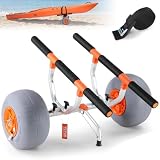
11. VEVOR 350 lb Heavy Duty Cart with 13 Inch Beach Wheels — Best for Soft Sand
VEVOR Heavy Duty Kayak Cart, 350lbs Load Capacity, Detachable Canoe Trolley with 13” Beach Wheels, Adjustable Carrier Width & Nonslip Support Foot, for Kayaks Canoes Paddleboards Float Mats Jon Boats
350 lb capacity
15 lb cart weight
13 inch pneumatic beach wheels
Width adjusts 170 to 440 mm
Pros
- Wide low-pressure 13 inch wheels float over soft sand
- Support foot prevents sliding on inclines
- 170 to 440 mm width fits pedal kayaks
- Large frame suits a heavily loaded rig
Cons
- Pneumatic tires need periodic inflation checks
- Manufacturer notes tire breakage risk on gravel
- Bulky to carry back and to pack in a hull
This is the soft-sand specialist. The 13 inch low-pressure beach wheels float a loaded boat over packed sand that stops a 10 inch wheel dead, and the 350 lb rating leaves room for a rig.
Width adjusts from 170 mm to 440 mm, which owners credit with letting it fit pedal-drive kayaks and wide sit-on-tops, and the 2mm thickened aluminum alloy frame is stiffer than it looks at that weight.
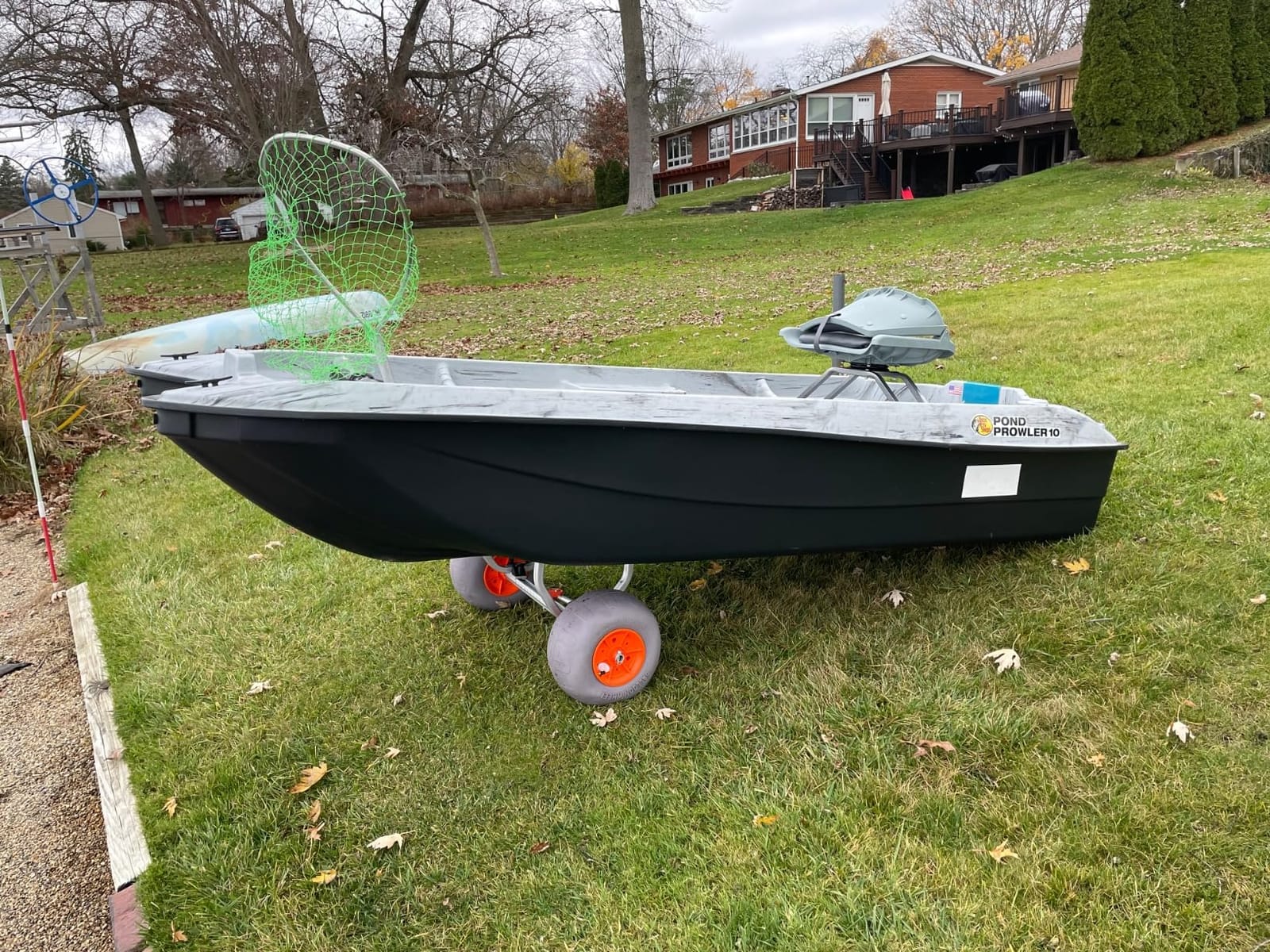
The single non-slip support foot locks the cart on an incline, addressing the tipping problem anglers raise in forum threads. Owners also report rolling over trailer lips and curbs other carts could not cross, and assembly takes about two minutes.
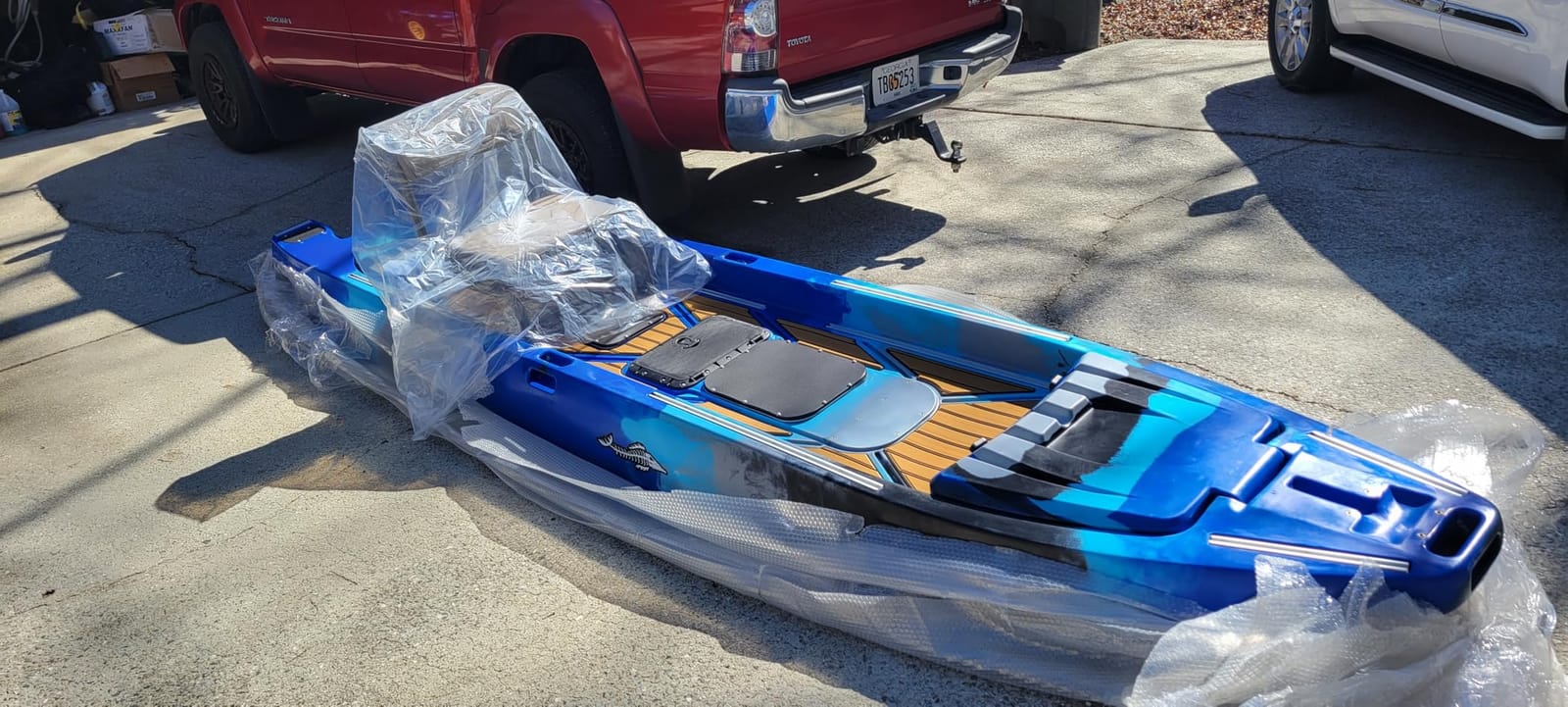
Who this cart suits
Beach anglers launching across soft packed sand where no other surface exists for 100 yards, and anyone with a pedal kayak needing a wide, high-capacity platform. If your route mixes gravel with sand, this handles both better than any 10 inch cart here.
Where it falls short
These are pneumatic, so you carry a maintenance item: owners report periodic top-ups, and a puncture from a rock or shell ends the trip. The manufacturer also notes tire breakage risk on gravel, and the frame is bulky to carry back from the launch.
12. VEVOR 450 lb Heavy Duty Cart with 12 Inch Solid Tires — Best for Gravel Ramps
VEVOR Kayak Cart, Heavy Duty 450 lbs Load Capacity, 12” Solid Tires
450 lb capacity
12.1 lb cart weight
12 inch solid airless tires
Width adjusts 170 to 440 mm
Pros
- 450 lb rating without premium-tier pricing
- 12 inch solid tires absorb shocks over gravel and sand
- Support foot locks the cart on uneven ground
- Tool-free detachable assembly
Cons
- Wide frame folds to a sizable package
- No spring-loaded kickstand so loading height is higher
This cart has the strongest capacity-to-cost ratio in the group. A 450 lb rating on a 2mm thickened aluminum alloy frame, at a mid-range price, is the value pick for anyone moving a genuinely heavy fishing kayak.
The 12 inch solid tires never need inflation and absorb shocks over gravel and sand. For anglers launching off a gravel road or a concrete ramp who do not want to think about tire pressure, that is the whole decision.
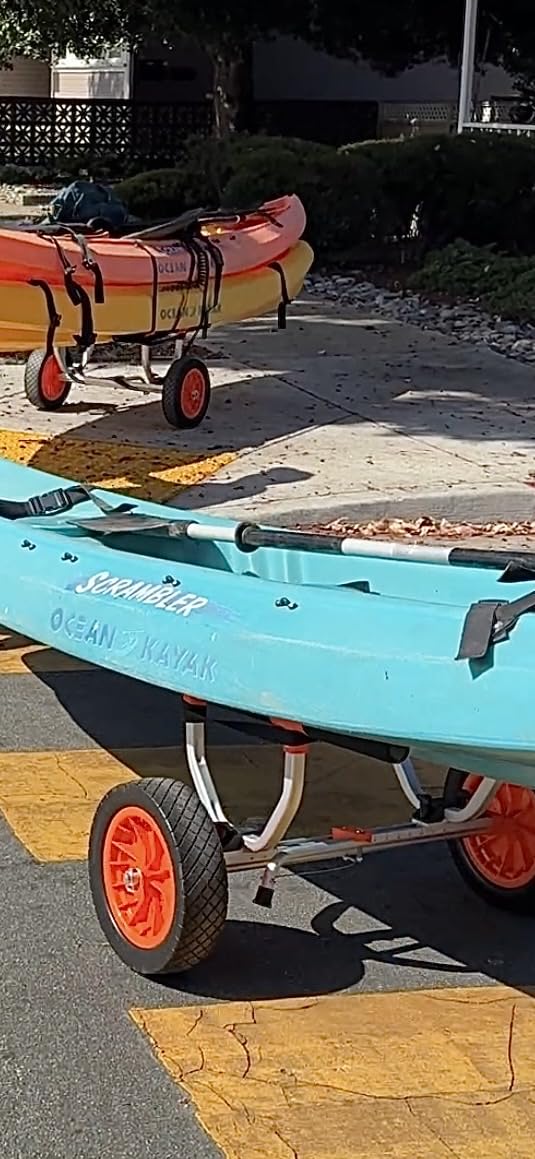
The single-foot support locks the cart on uneven ground, which is what stops a loaded boat rolling off on a sloped ramp, and the non-slip strap runs over a foam-protected rod so the hull does not sit on bare metal. Owners note the adjustable width covers kayaks, canoes, paddle boards, jon boats and floating mats.
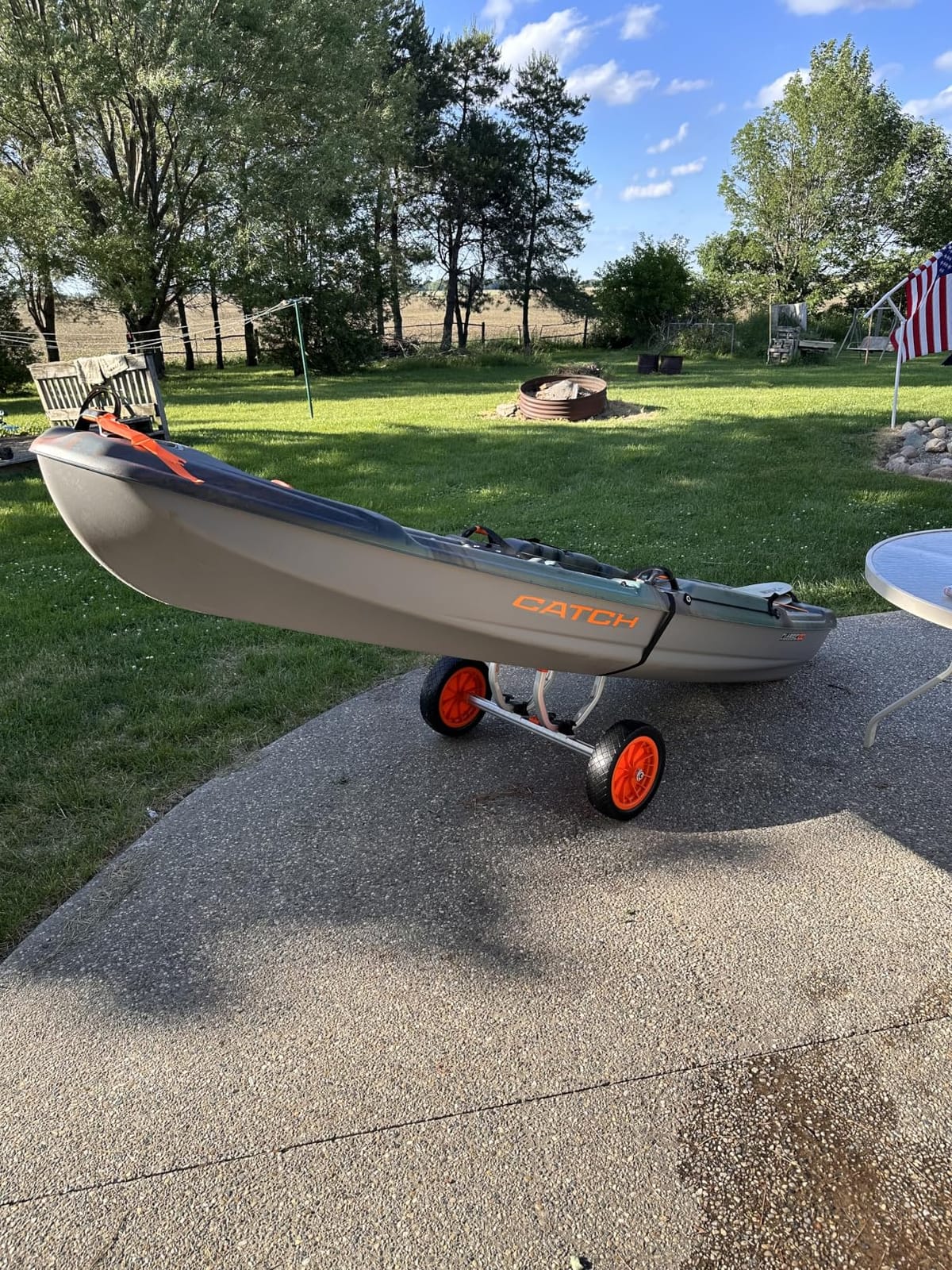
Who this cart suits
Anglers with a heavy rig on a hard-surface or gravel launch who want capacity without paying a premium brand name, and anyone whose boat width falls outside the adjustment range of smaller carts. The detachable design splits it into halves for storage.
Where it falls short
The 170 mm to 440 mm adjustment means a wide frame and a correspondingly sizable folded package, so measure your hatch first. There is no spring-loaded kickstand, so the loading height is higher and you will want a tailgate, a dock edge or a second pair of hands.
How to Choose a Kayak Cart for Fishing Kayaks
The best kayak cart for your setup is decided by wheel size first and load rating second. Everything else, from frame material to strap type, refines those two choices.
1. Wheel diameter decides where you can launch
Owners make the point better than any manufacturer: wheel size matters far more than frame weight. Ten inch wheels are a parking-lot size, twelve inch is the minimum for soft sand, and thirteen inch and above is noticeably better. Match the wheel to the worst surface on your route, not the best one.
2. Airless, balloon or flexible-spoke wheels
Airless polyurethane tires never need inflating but are rigid and can develop flat spots under long static loads. Balloon tires float best on soft sand and need a pump and pressure checks. Flexible-spoke wheels sit in between, floating like a wide balloon tire with nothing to inflate, and owners simply swap wheel sets when the terrain changes.
3. Hull fit: bunker bars or scupper plug-ins
Most carts use adjustable-width padded bunker bars that cradle the hull from underneath, and wide adjustment matters more than any other fit feature because it decides whether the boat rocks or tracks straight. Scupper plug-in carts post into the drain holes of a sit-on-top, so they carry no straps. If you go that route, measure the inner diameter of your scupper holes and confirm the plug fits before buying.
4. Capacity: do the loaded-boat math
Add hull weight, pedal drive or trolling motor and battery, anchor trolley, tackle and cooler. A rigged fishing kayak commonly lands well past 150 lb. Then treat the published rating as a ceiling, and read the trail and rough-terrain figures when a brand publishes them rather than relying on the headline number.
5. Solo loading and straps
A kickstand props the boat onshore while you stage gear and keeps the frame level while you lift a bow. A single support foot does something similar on sloped ramps by locking the cart against rolling. Straps are where most setups fail, and owners routinely replace supplied webbing with rail-mounted tie-downs rather than fighting what is in the box.
6. Terrain matching and wheelbase
Concrete ramps, gravel paths, grass banks, rocky shorelines, tidal flats and deep soft sand each favour different wheels. Nobody publishes wheelbase, the wheel-to-wheel width, but it is the best stability proxy available, and a wider wheelbase resists tipping on a slope.
7. Stowage, the second cart and saltwater care
Check the folded package against your hatch or trunk opening before buying, since release-pin wheels and a tool-free breakdown are what make hatch packing realistic. Remember that a dedicated kayak cart carries the boat and nothing else, so tackle, coolers and landing nets still need a second cart. Finally, rinse the frame in fresh water after every salt or brackish trip, because most warranties do not cover corrosion.
Owner-Reported Problems You Can Avoid
The most useful buying advice on this topic comes from people who have already broken something, and these failure modes come up repeatedly across fishing forums.
Wheels burying to the axle is the big one. Owners describe carts stopping dead in soft sand and forcing a shuffle-drag carry, which is exactly the scenario that ends a fishing trip before it starts.
Strapping the kayak down is the most repeated frustration overall. Forum threads treat it as the recurring pain point, and the usual fix is replacing supplied straps with rail-mounted tie-downs.
Bunker-bar carts letting a hull twist and slide mid-pull is another common report; widen the bunk spacing, tighten the straps and keep the load low and centred. Kickstands collapsing are reported mostly on budget carts, and strap fraying mostly on carts with thin supplied webbing. And carts left at the ramp disappear, which is a risk on any launch where you walk away from the vehicle.
Balloon Wheels vs Airless Wheels: The Real Tradeoff
Balloon wheels float better on soft sand because a low-pressure tube spreads weight across a large contact patch. Airless wheels need no maintenance and cannot go flat. Flexible-spoke wheels split the difference, which is why we recommend them for coastal and marsh launches.
The cost of balloon tires is maintenance. Owners report top-ups between trips, punctures from rocks and shells, and valve core leaks needing a repair kit. The cost of airless wheels is floatation: on deep sand a rigid 10 inch wheel digs where a 13 inch balloon tire floats.
Saltwater Care and Securing Your Cart at the Ramp
Steel frames corrode and most warranties do not cover salt damage. Rinse the whole cart in fresh water after every coastal trip, dry the frame before storage, and treat bare steel with a corrosion protectant a few times a season. Anodized marine-grade aluminum and rust-resistant reinforced frames hold up far better, which is why the YakAttack and RAILBLAZA are the safer coastal buys.
For theft, keep it simple. Take the cart with you or lock it to the trailer. A cable lock through the axle to a fixed trailer point costs less than the cart and removes the most common ramp scenario reported in forums.
Frequently Asked Questions
What is the best fishing kayak cart?
The Wilderness Systems Heavy Duty is the best fishing kayak cart for most anglers, rated 450 lb with an adjustable-width bunker bar frame that handles a fully loaded sit-on-top. Pedal-drive owners should consider the YakAttack TowNStow Bunkster for its wide bunk adjustment and 12 inch wheels. Budget buyers get the most from the Bonnlo 200 lb folding cart with airless tires and a double kickstand.
Are kayak dollies worth it?
Yes, when the walk from the vehicle to the water is long, the ground is soft or rough, or your boat is heavy. A fishing kayak rigged with a pedal drive, tackle, cooler and battery can exceed 150 lb, and a cart removes the back strain and hull drag wear. No, when you launch from a concrete ramp, paddle 20 yards, and fish a lightweight boat. In that case the cart is dead weight in your vehicle.
What size kayak cart wheels do I need for sand?
Twelve inch is the practical minimum for soft sand. Ten inch airless wheels work on parking lots, pavement and grass but dig into packed beach sand. Thirteen inch balloon wheels float noticeably better, and 15 inch airless wheels clear rocks and broken ground as well as sand. Flexible-spoke wheels like the SandTrakz design float like a balloon tire with nothing to inflate.
How much weight can a kayak cart hold?
Published ratings in this group run from 150 lb to 450 lb, but treat the number as a ceiling rather than a comfort zone. Add hull weight, pedal drive or motor and battery, anchor trolley, tackle and cooler to your rigged setup. Above 250 lb loaded, use a 350 or 450 lb frame, and prefer a cart with a kickstand so the boat can be staged while you load.
Do kayak carts work for pedal kayaks?
Yes, as long as you match the capacity tier to the rig. A pedal drive, motor and battery can push a fishing kayak past 200 lb loaded, which rules out most 150 and 175 lb carts. The Wilderness Systems Heavy Duty and the YakAttack TowNStow Bunkster are both rated 450 lb, and the YakAttack’s bunks adjust from 6.25 to 16 inch to cover long pedal-drive hulls.
What is the difference between a kayak cart and a kayak dolly?
They are the same product category. The market uses dolly when it emphasises load rating and hauling strength, trolley when it emphasises folding and stowage convenience, and cart as the neutral term, but they describe the same two-wheeled frame with padded bunker bars. Treat any of the three as comparable as long as the wheel size and capacity match.
How do I stop a kayak cart tipping on a slope?
Use three things together. Pick a cart with a wider wheelbase, the wheel-to-wheel width, since a wider stance resists tipping on uneven ground. Use the support foot or spring-loaded kickstand, which locks the frame against rolling while you load. And keep the load centred and low, tightening straps before pulling so the centre of gravity stays behind the axle.
Final Verdict
For most anglers fishing from a sit-on-top, the Wilderness Systems Heavy Duty is the pick. A 450 lb rating, adjustable-width bunker bars and two bunk heights cover a fully rigged boat, and it collapses into a dry well so it comes to the water with you.
If you run a pedal drive or a trolling motor battery, choose the YakAttack TowNStow Bunkster for its 450 lb rating, wide bunk adjustment and 12 inch wheels. On a tight budget launching from a firm ramp, the Bonnlo 200 lb folding cart gives you airless tires and a kickstand without the premium tier.
Size the wheels to your worst terrain and the load rating to your rigged weight. If you are still comparing boats rather than carts, start with our kayak trailer guide, and for a fully portable alternative see our inflatable fishing kayak picks.
These are the best kayak carts for hauling fishing kayaks in 2026, ranked on specifications and owner feedback rather than marketing copy. Check current availability before you buy.