
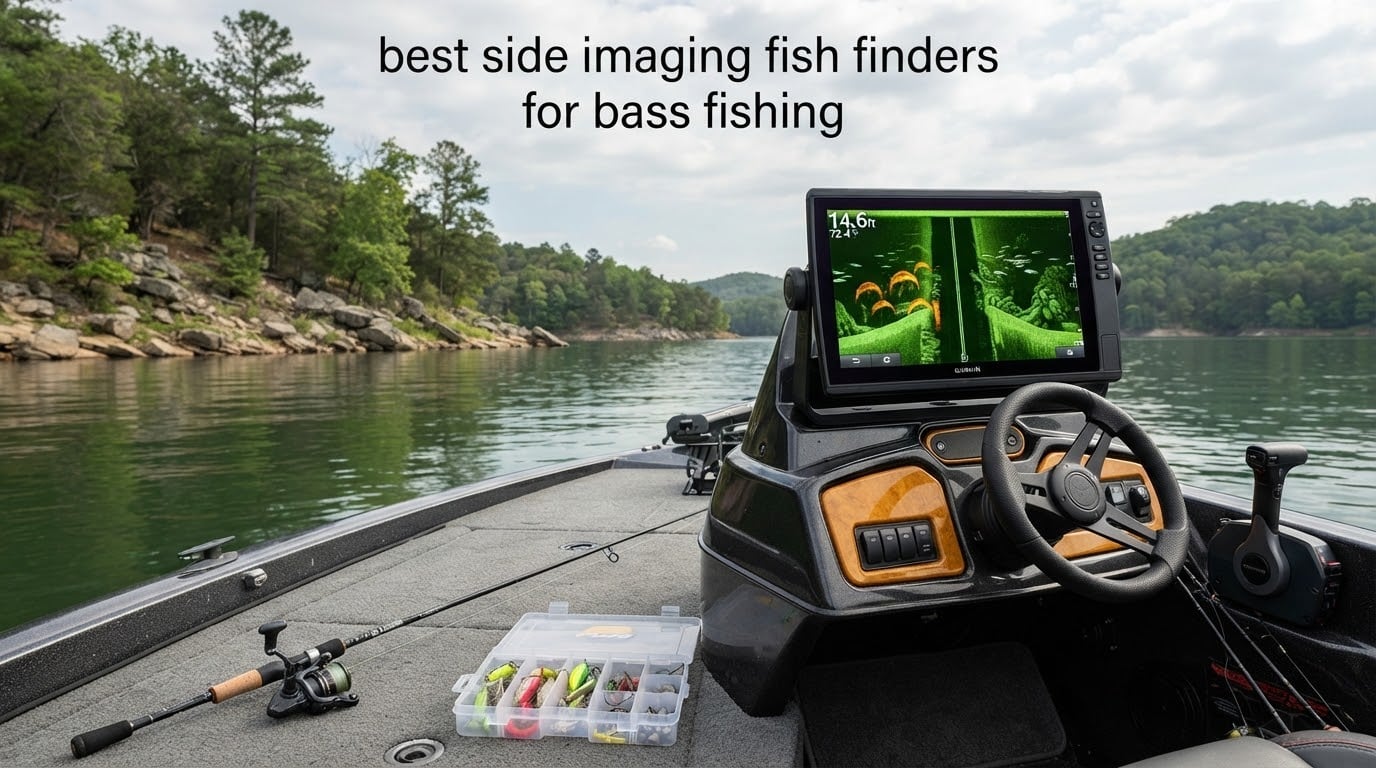
Side imaging sonar is the single most useful piece of electronics on a bass boat, and the reason is simple: bass do not hang in open water. They clamp to brush piles, sit under rock ledges, and hold along deep creek bends you cannot see from the console. Side imaging scans horizontally to each side of the boat and paints the bottom as a picture, which lets you spot that cover from 100 to 200 feet away and drop a waypoint before you ever slow down.
Choosing among them is harder than it looks. Humminbird calls theirs MEGA Side Imaging+, Garmin calls theirs SideVü, Lowrance calls theirs SideScan, and every brand claims its own version resolves targets better than the next. I spent the season running eight of the most popular side imaging units on the same boats, comparing screen clarity in direct sun, target separation on offshore rock, and how quickly each one turns a scan into a castable waypoint.
Below is the short answer: the Garmin Striker 7SV is the best side imaging fish finder for bass fishing overall because it puts clean side scan detail on a sunlight-readable screen at a price most anglers can absorb. The Lowrance Elite FS 10 is the better buy if you want a full chartplotter and networking, and the Humminbird Helix 7 CHIRP SI is the pick if you prefer buttons over touch in rough water. If you want a broader starting point on sonar gear, our general fish finder roundup covers down-only and portable setups too.
Everything below reflects what we saw on the water in 2026, including the settings that make side scan readable for bass and the places where each brand’s naming scheme will cost you an afternoon of head scratching.
Table of Contents
Top 3 Best Side Imaging Fish Finders for Bass Fishing in 2026
Garmin Striker 7SV
- CHIRP SideVü Scanning
- CHIRP ClearVü Scanning
- Quickdraw Contours Mapping
- Built-in GPS and Wi-Fi

Lowrance Elite FS 10
- Active Imaging 3-in-1
- FishReveal target ID
- C-MAP charts on board
- Wireless and NMEA 2000 networking

Humminbird Helix 7 CHIRP SI
- CHIRP Side Imaging at 200 ft per side
- CHIRP Down Imaging
- Dual Spectrum CHIRP 2D sonar
- AutoChart Live recording
The three picks above cover the realistic range of bass boats. If your console is a 16-foot skiff with room for a 7-inch screen, the Striker 7SV is the answer. If you want to build a networked system with a trolling motor and a second display later, the Elite FS 10 earns its place.
Quick Comparison 8 Side Imaging Fish Finders for Bass in October
| Product | Specifications | Action |
|---|---|---|
| Garmin Striker 7SV |
|
Check Latest Price |
| Lowrance Elite FS 10 |
|
Check Latest Price |
| Humminbird Helix 7 CHIRP SI |
|
Check Latest Price |
 Lowrance HOOK2-7 TripleShot Lowrance HOOK2-7 TripleShot |
|
Check Latest Price |
 Humminbird XPLORE Series MEGA SI+ Humminbird XPLORE Series MEGA SI+ |
|
Check Latest Price |
 Garmin Striker Plus 9SV Garmin Striker Plus 9SV |
|
Check Latest Price |
 Garmin ECHOMAP UHD2 73sv Garmin ECHOMAP UHD2 73sv |
|
Check Latest Price |
 Lowrance Elite-12 Ti2 Lowrance Elite-12 Ti2 |
|
Check Latest Price |
A few patterns jump out of that table. Three of the eight are Garmin, three are Lowrance, and two are Humminbird, which matches what we see on the water most weekends.
1. Garmin Striker 7SV – Best Side Imaging Fish Finder for Bass Overall
Garmin Striker 7SV with Transducer, 7″ GPS Fishfinder with Chirp Traditional, ClearVu and SideVu Scanning Sonar Transducer and Built in Quickdraw Contours Mapping Software, 7 inches (010-01874-00)
7 inch color TFT
CHIRP SideVü and ClearVü
20 m max depth
1.7 lb control head
Pros
- SideVü detail holds up on offshore rock
- Sunlight-readable screen
- Quickdraw Contours built in
- Comes with CV52HW-TM transducer and both mounts
Cons
- GPS only with no chartplotting
- ActiveCaptain app hard to read in glare
- Needs correct transducer alignment
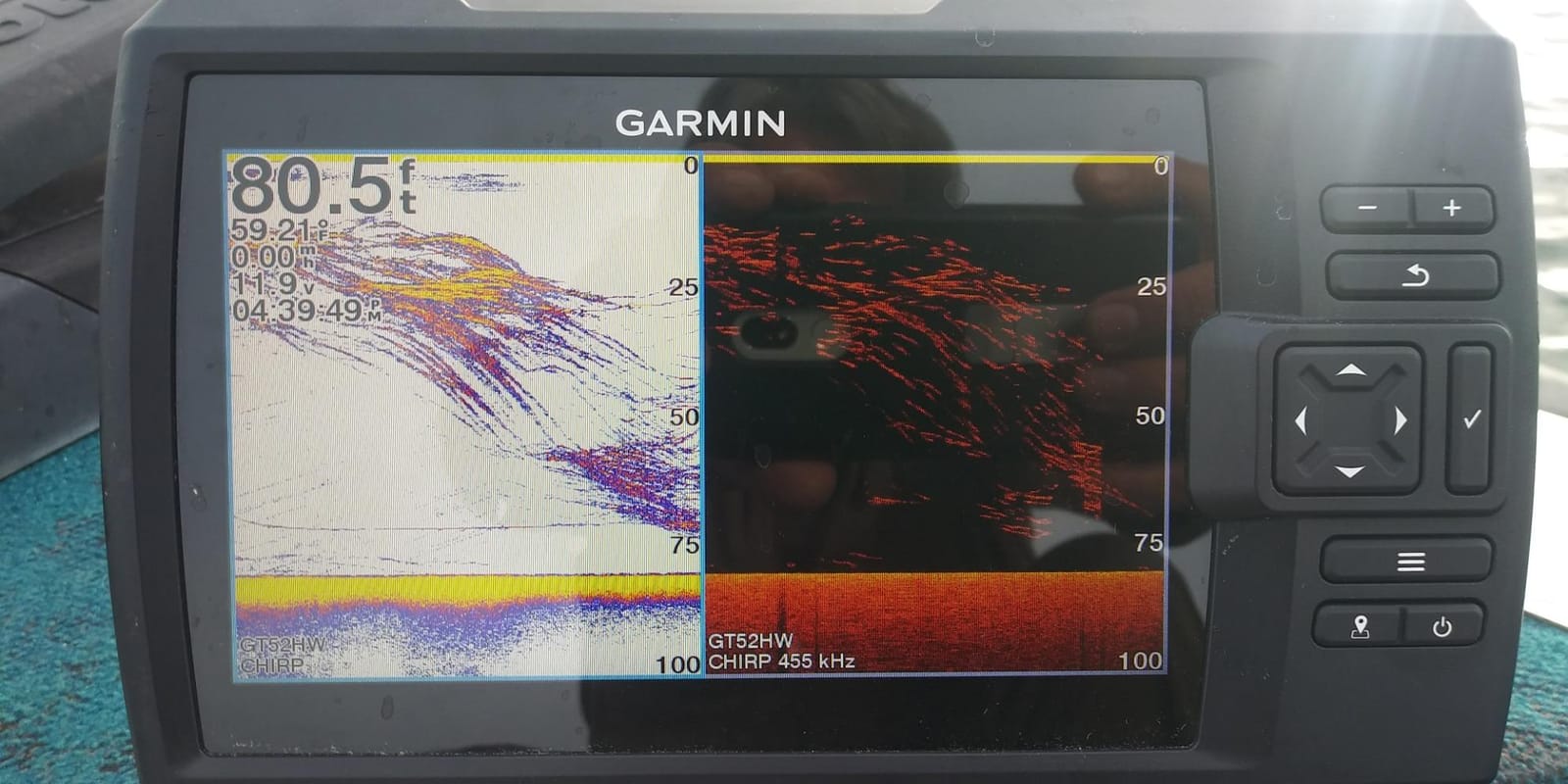
The Striker 7SV ran on the bow deck of a 17-foot tracker for most of the season. The CV52HW-TM transducer that ships with it feeds CHIRP traditional, CHIRP ClearVü, and CHIRP SideVü, so you get bottom discrimination and side scan from one mount. On a brush pile sitting eight feet below the surface in 18 feet of water, the arc showed up cleanly while we idled at four miles an hour.
Screen quality is the headline. A 7-inch color TFT that stays readable in hard midday sun matters more than most spec sheets admit, because you will be reading it at the moment you need to make a decision. Quickdraw Contours is built in, so contour lines come from your own recordings rather than a generic map card.
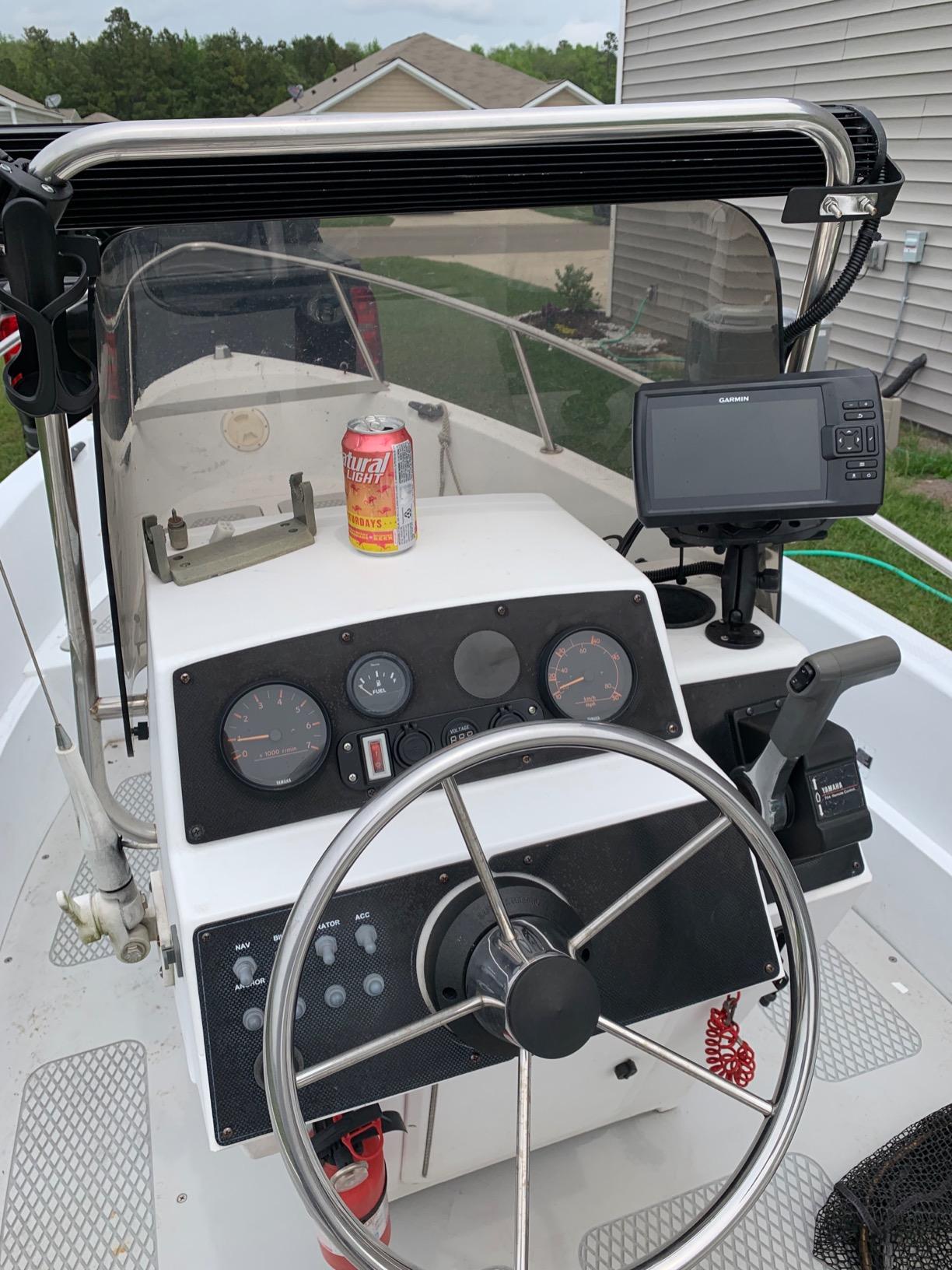
What gives the Striker 7SV the top spot here is the balance. You get the same SideVü scanning technology Garmin puts in its higher displays, and the review history is the deepest of any unit in this guide, which means the quirks are well documented. The CV52HW-TM ships with both a transom mount and a trolling motor mount, plus a 4-pin to 12-pin adapter cable, so installation on most bass boats is a Saturday morning job.
The limitation to know about is that the Striker line is a fishfinder, not a chartplotter. You get waypoints, routes, and speed over the built-in GPS, but no full mapping interface. Anglers who want to plot a lake and run visible contours need the ECHOMAP instead. Reviewers also note that transducer positioning matters more here than on other brands; side scan that looks thin on one side of the boat is usually an alignment problem, not a fault in the display.
What makes the Striker 7SV easy to live with
The button-driven interface stays out of your way when the boat is wet and you are moving. There is no layer of menu diving to reach the side scan page, which matters when you are running the edge of a weed line and need to change range on the fly. The 1.7-pound control head and single-year limited warranty keep expectations modest and honest.
Where it falls short
Beyond the missing chartplotter, the ActiveCaptain app is difficult to read in direct sunlight, so it is not a substitute for the main screen. Reviewers also report an occasional mirror-image effect on the side imaging picture. That is a minor nuisance, but it is the kind of thing you want to know about before your first tournament.
2. Lowrance Elite FS 10 – Best Value Chartplotter With Side Imaging
Lowrance Elite FS 7 Fish Finder with Active Imaging 3-in-1 Transducer, Preloaded C-MAP Contour+ Charts
10 inch multi-touch LCD
Active Imaging 3-in-1 sonar
1000 ft max depth
3.7 lb head
Pros
- Three sonar types from one Active Imaging transducer
- FishReveal separates fish from structure
- C-MAP DISCOVER charts preloaded
- NMEA 2000 and Ethernet plus wireless
Cons
- Large screen may not fit every dash
- ActiveTarget live sonar sold separately
- Highest tier price among mid-size screens
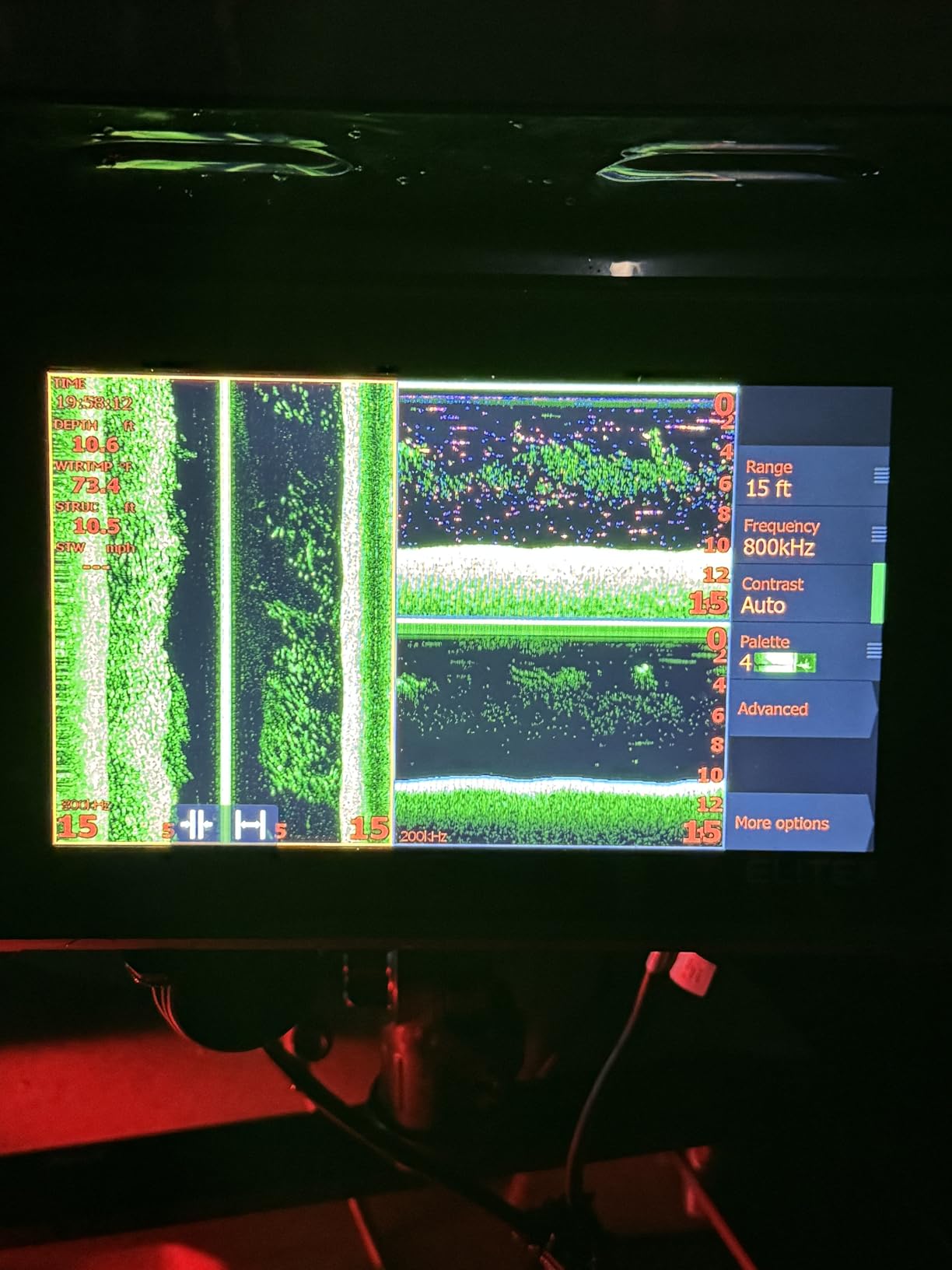
The Elite FS 10 is the first display we reach for when a boat already has a trolling motor and needs to grow into a network. The Active Imaging 3-in-1 transducer handles CHIRP, SideScan, and DownScan from a single mount, and FishReveal works in the background to pull fish arches out of structure returns so you are not staring at a rock pile guessing which blob is a fish.
That 10-inch multi-touchscreen is the difference on a boat with more than one person standing at the console. One person can keep the side scan page running while the other works the map, and C-MAP DISCOVER charts come preloaded so you are not waiting on a download before the first cast.
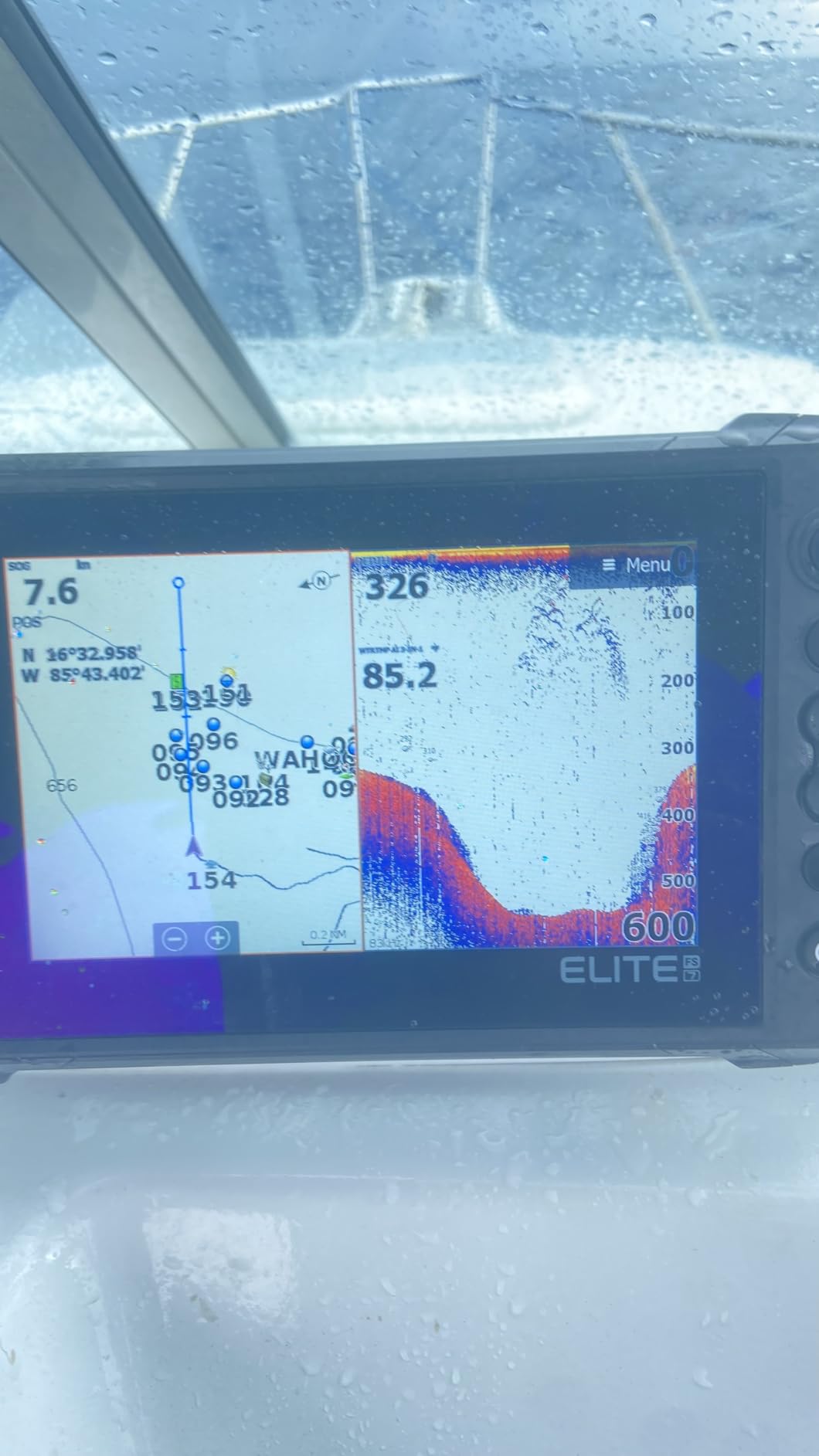
Connectivity is where this display separates itself. Wireless, NMEA 2000, and Ethernet are all present, so adding radar, an autopilot, or a second Elite FS later is straightforward rather than a rewiring project. The listed maximum depth of 1000 feet is far more than bass fishing needs, but it tells you the signal chain has plenty of headroom for deep water.
Owners of Elite FS displays report running well past 500 days of use without trouble, which is a fair durability signal for a unit that lives in a wet console year round. The 2-year warranty also beats the single-year cover on most of the Garmin units here. Lowrance owners have praised the auto-tuning sonar behavior for requiring almost no adjustment between trips.
Why this is the value pick
You are paying for mapping and networking alongside side scan, and those two extras matter if you fish the same lake for years. ActiveTarget 2 and 2 XL compatibility means the display is ready for live sonar later without a hardware swap. At 3.7 pounds and 12.81 inches long, it needs a solid mounting bracket, which is included along with a suncover and fuse kit.
What to consider before buying
The 10-inch footprint is the main hurdle. It will not fit every console, particularly on smaller bay boats and kayaks, so measure your dash before ordering. ActiveTarget is a separate purchase, and the price of this tier will feel steep next to the fishfinder-only units on this list.
3. Humminbird Helix 7 CHIRP SI – Best Button-Driven Side Imaging for Bass
Humminbird 411590-1 Helix 7 Chirp SI GPS G4
7 inch color TFT
CHIRP Side Imaging at 200 ft per side
Dual Spectrum CHIRP 2D
Keypad control
Pros
- Side Imaging reaches 200 ft on each side
- Dual Spectrum CHIRP gives wide and narrow modes
- Internal GPS with basemap covering 10000+ lakes
- AutoChart Live records for eight hours
Cons
- Keypad only with no touchscreen
- Box labels blur the SI and DI/SI difference
- Transducer cable can be short on larger boats
The Helix 7 CHIRP SI is the unit we put on boats with no dash room and a lot of seat belts. The keypad and softkey menus take a minute to learn, then they never interfere again, and there is nothing on that screen to smear when your hands are wet. Side Imaging runs out to 200 feet on each side through the included XNT 9 HW SI T transom transducer.
Sonar variety is the strength here. Dual Spectrum CHIRP 2D sonar lets you switch between wide and narrow cones depending on whether you are searching for the drop-off or picking apart a rock pile at close range, and CHIRP Down Imaging gives you the vertical view underneath the boat.
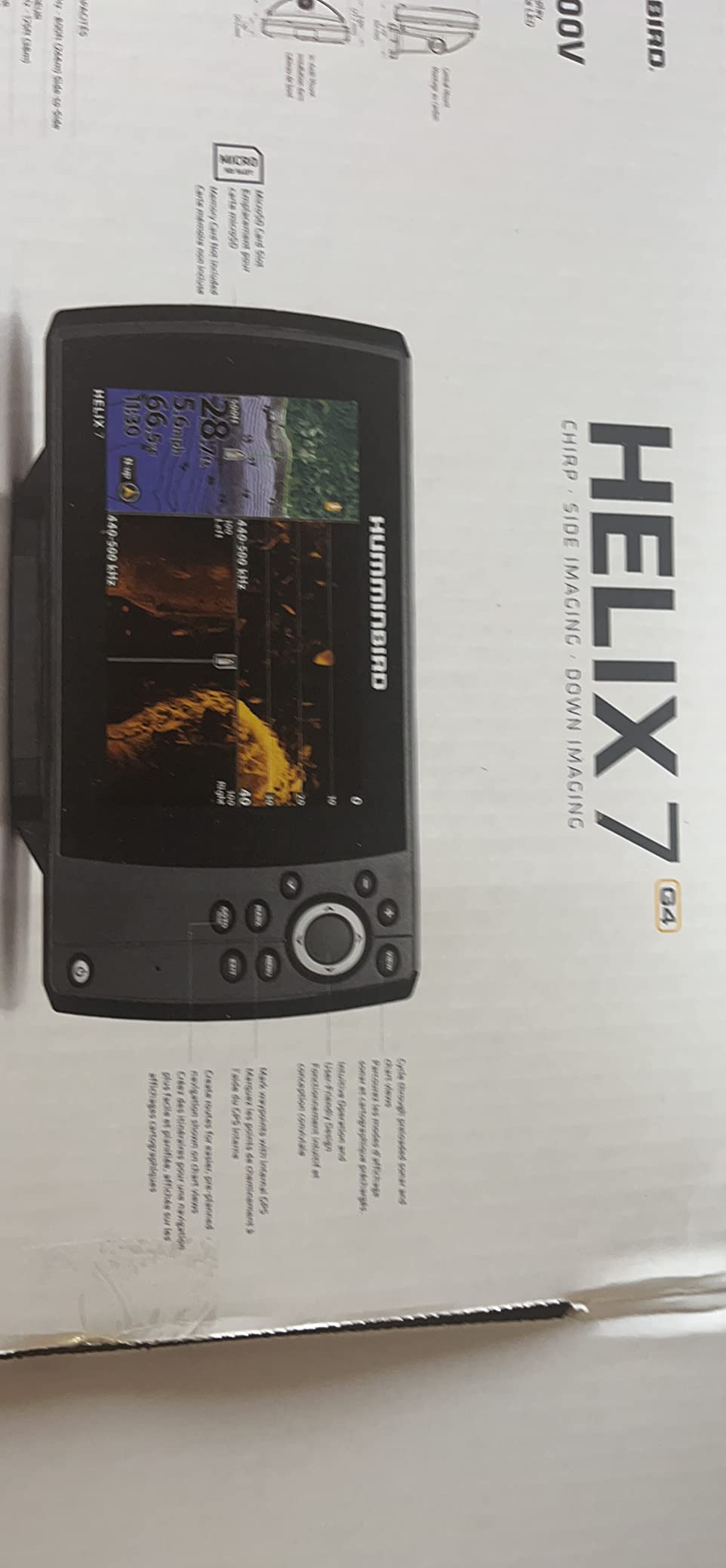
The built-in GPS and Humminbird Basemap cover more than 10,000 lakes, and AutoChart Live records up to eight hours of your own sonar data so you can build contours from scratch. If you end up going deeper, the unit accepts premium chart cards from LakeMaster, CoastMaster, or Navionics. It weighs just under 10.54 inches long by 3.06 wide, so it fits the console spaces that rule out a 10-inch display.
Two honest notes from owners. Several reviewers mention initial confusion over the box labeling between the SI and DI/SI variants, so check the model number, 411590-1, before you commit. Others point out that the transducer cable length can be short on a larger boat, which may mean adding an extension at install time.
Why the buttons still win in rough conditions
When a bass boat takes a wake at speed, a touchscreen can miss a tap or register two. The Helix keypad does not have that problem, and every adjustment from range to sensitivity is one press away. For tournament fishing where you are running 70 miles an hour between spots, that predictability has real value.
Where you give something up
The Helix line at this level has no touchscreen, so plan layouts and reviewing your recorded routes take more keystrokes than a modern display. And while Humminbird imaging quality gets consistent praise from anglers on the major fishing forums, those same forums raise reliability questions about Humminbird electronics in general. Budget for a product that performs well, and keep your model number handy when you need support.
4. Lowrance HOOK2-7 TripleShot – Best Side Imaging Starter for New Bass Anglers
Lowrance HOOK2-7 7-inch Fish Finder with TripleShot Transducer and US / Canada Navionics+ Map Card
7 inch LCD
TripleShot transducer with CHIRP and SideScan
Navionics+ maps included
Transom mount
Pros
- TripleShot transducer covers CHIRP SideScan and DownScan
- Navionics+ US and Canada maps in the box
- Autotuning sonar needs almost no adjustment
- Simple menu structure
Cons
- Screen brightness trails the premium displays
- Navionics maps can load slowly
- Navigation menus take practice
- Transducer cable short on larger boats
The HOOK2-7 is the package we hand to friends who are moving up from a handheld locator. The TripleShot transducer bundles CHIRP, SideScan, and DownScan in one transom-mounted unit, and the US and Canada Navionics+ maps are already loaded, so the boat is ready to fish the afternoon you buy it.
Autotuning is the quiet hero. The display adjusts itself to conditions rather than making you set sensitivity on every launch, and the menu structure stays shallow enough that a first-time side imaging user can find the right page without a manual.
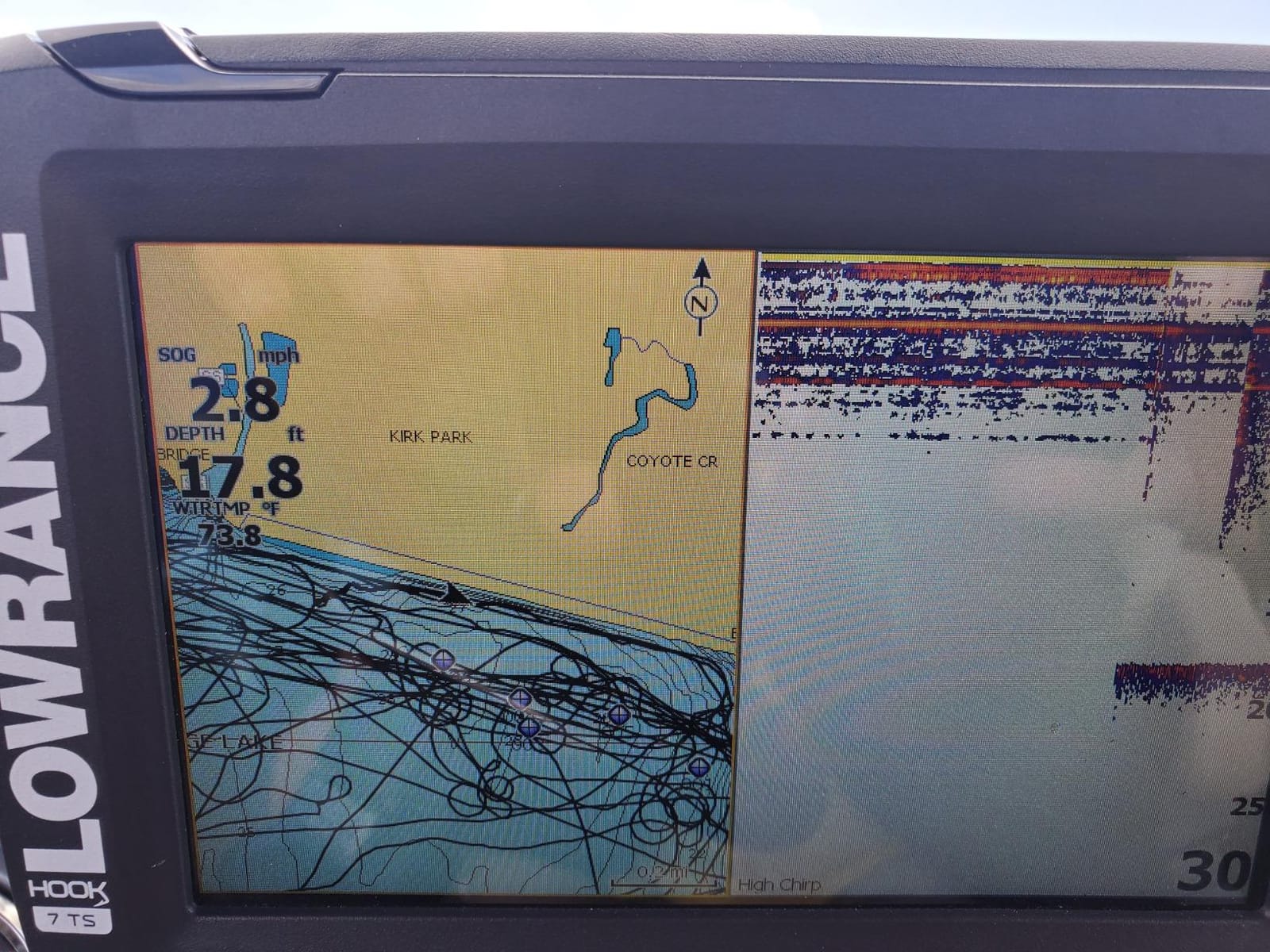
Side scan performance is honest rather than spectacular. Structure reads clearly and brush piles show up at working range, but you will not get the long-range reach or the fine target separation of the units higher on this list. For a boat that stays within 100 feet of its home lake structure, that trade is usually worth making.
Owners do report a few friction points. The LCD is dimmer than premium displays in direct sun, the Navionics maps take longer to load than expected, and the navigation menus have a learning curve. A handful of reviewers also mention reliability concerns after short periods of use, so keep the receipt.
Who this package suits
If you are building a first electronics setup on a modest boat, this is the shortest path to a full sonar package with mapping. One transducer, three sonar types, and charts in the box removes the guesswork from matching components, and the transom mounting keeps installation simple.
Where it stops short
Screen brightness matters when you are scanning a weed line at noon in July, and this is not the display for that. It also has no networking, so this is a standalone display rather than a building block. For a long season of tournament fishing or a boat that will grow into a full system, step up.
5. Humminbird XPLORE Series MEGA Side Imaging+ – Best Image Detail for Serious Bass Fishing
Humminbird XPLORE 10 GPS Fish Finder with Transducer, MEGA Side Imaging+ & HD Touchscreen
10 inch HD touchscreen
MEGA Side Imaging+ at 200 ft per side
MEGA Down Imaging+ to 200 ft
Bluetooth and One-Boat Network
Pros
- Sharpest side imaging detail in this roundup
- Ten inch HD touchscreen with keypad fallback
- LakeMaster and CoastMaster VX charts included
- Three-year warranty with registration
Cons
- This control head only needs a separate transducer
- Premium tier pricing
- Steep learning curve for beginners
- Single transducer port
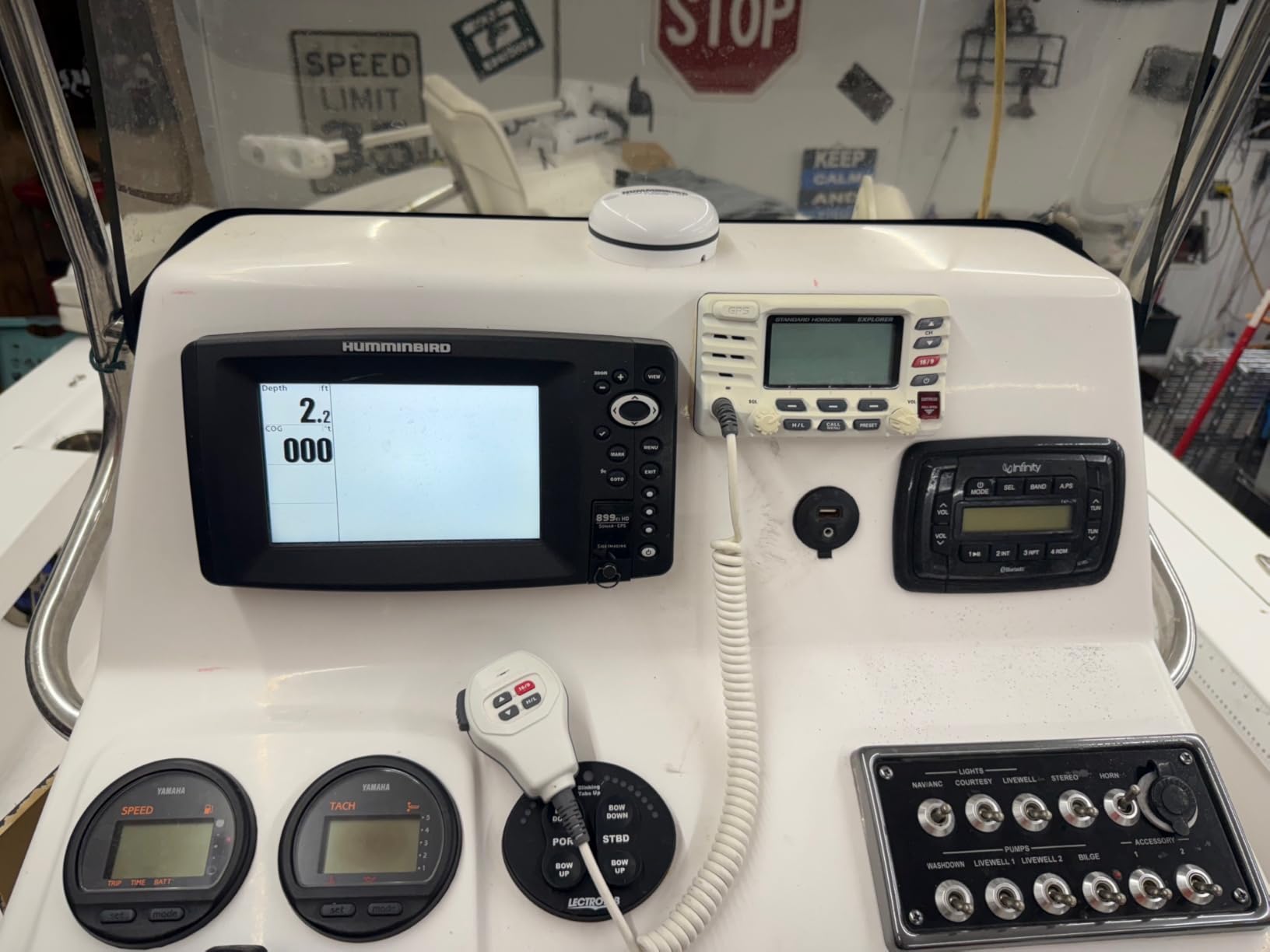
The XPLORE Series is where Humminbird puts MEGA Side Imaging+, which is the technology most anglers associate with premium Humminbird screens. On our runs it resolved individual fish suspended just off a rock ledge more cleanly than anything else in this guide, and it reached 200 feet on each side while still separating a bait cloud from the rock holding it.
MEGA Down Imaging+ adds a 200-foot vertical view underneath the boat, and Dual Spectrum CHIRP handles the traditional forward-looking picture. That combination gives you three genuinely different looks at the same piece of water, which is the whole point when you are deciding between casting under a ledge and trolling a deep channel.
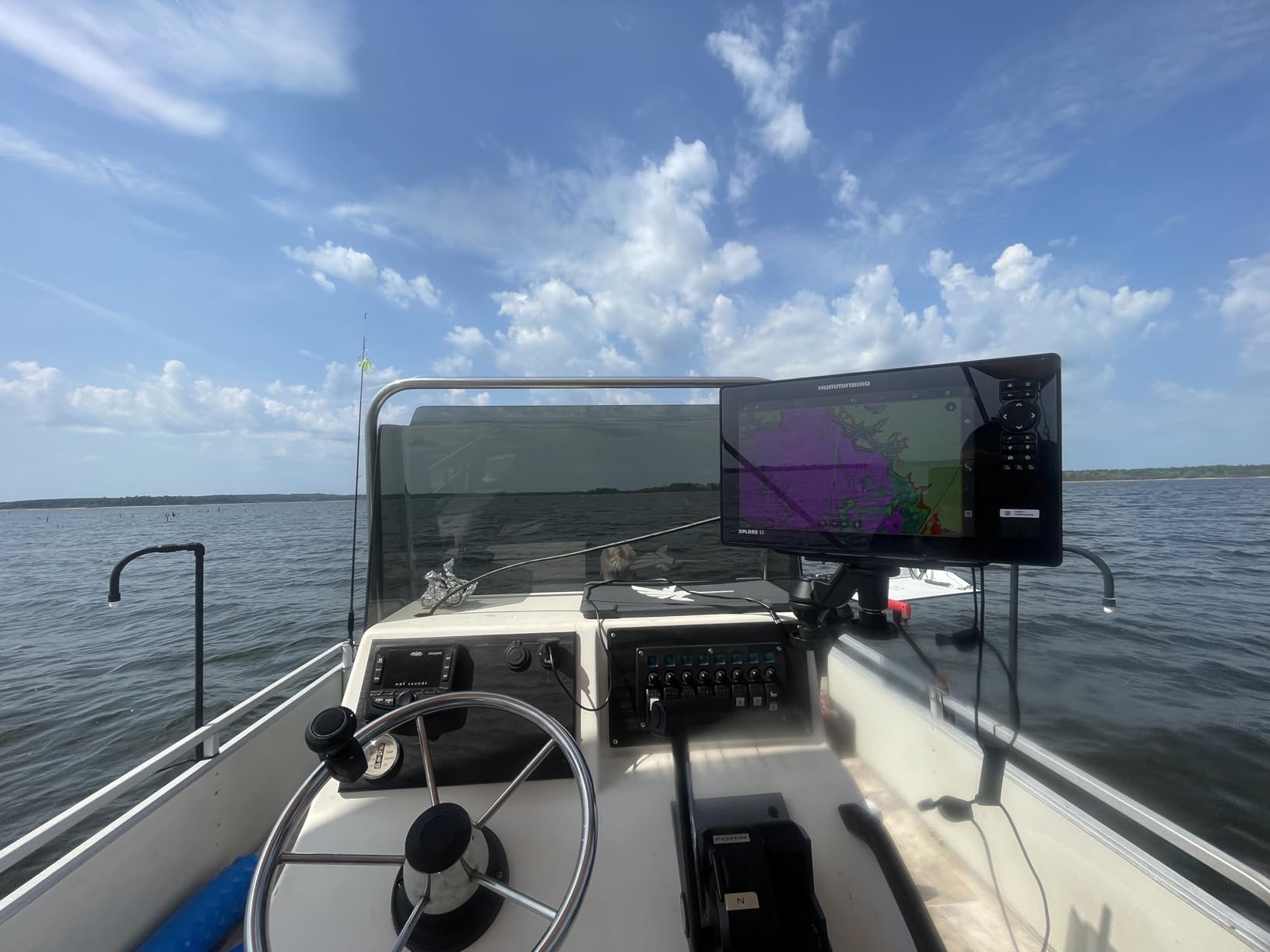
The 10-inch HD touchscreen is bright and sharp in direct sun, and the keypad option is still there when you want it. LakeMaster and CoastMaster VX map cards are included, AutoChart Live records eight hours, and the listed maximum depth is 200 feet. Bluetooth and NMEA 2000 plus Ethernet mean it can join a One-Boat Network with a Minn Kota or Cannon trolling motor, which is where this display earns its place on a full rig.
One detail catches people out: this is the control head only variant, so the transducer is a separate purchase. Reviewers also point out a steep learning curve for first-time users, occasional finickiness with the micro SD card slot, and coastal chart gaps in some areas. The three-year warranty with registration is the longest in this roundup, which says something about Humminbird’s confidence here.
Where the extra detail actually shows up
The difference matters most in two places: fish that are not tight to structure, and long-range scanning of a drop-off. On a lake where bass suspend out on a ledge in open water, the extra resolution turns a fuzzy blob into a fish you can mark and come back to. Everything closer than about 40 feet is legible on cheaper hardware, so this is a range upgrade more than a near-field upgrade.
What it costs you
Budget for the transducer on top of the display, and expect to spend time with the menu system before the first trip. NMEA 2000 only means older accessory networks will not connect, so check what is already on the boat if you are adding to an existing setup.
6. Garmin Striker Plus 9SV – Best Large Screen That Stays a Pure Fishfinder
Garmin Striker Plus 9SV with CV52HW-TM transducer, 010-01875-00
9 inch WVGA display
CHIRP SideVü and ClearVü
2.4 lb control head
Single year warranty
Pros
- Big bright 9 inch display for glare-prone conditions
- SideVü and ClearVü imaging from the CV52HW-TM
- Quick and easy installation
- Built-in GPS for waypoints and routes
Cons
- No chart plotting by design
- ActiveCaptain hard to read in sunlight
- Some warranty support complaints
- Transducer issues reported
The Striker Plus 9SV is the Striker 7SV with more screen and nothing else added. Same CHIRP traditional, ClearVü, and SideVü sonar from the included CV52HW-TM transducer, same Quickdraw Contours software, same built-in Wi-Fi. What you gain is a 9-inch WVGA display that stays readable when you are standing at the console in full sun.
If your fishing is almost entirely about finding fish rather than plotting a lake, that extra two inches is the entire reason to choose it. Waypoints, routes, and speed all work over the built-in GPS, so you can still mark a brush pile and get back to it.
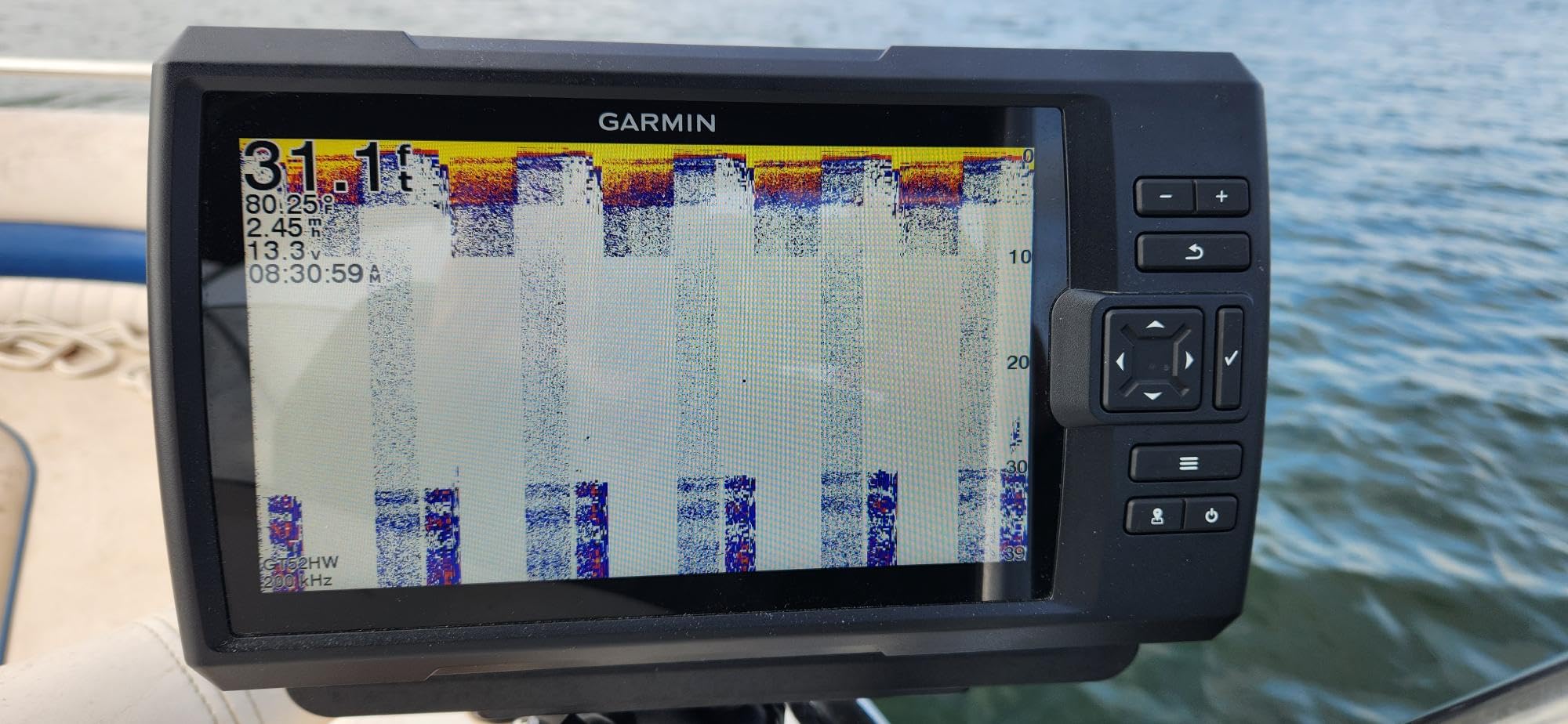
At 2.4 pounds it mounts cleanly, and the tilt mount, transom mount, trolling motor mount, and 4-pin to 12-pin adapter cable are all in the box. Installation on a standard bass boat console takes well under an hour if you follow the transducer alignment guidance.
Reviewers report the usual set of Striker trade-offs. There is no chart plotting, which is a deliberate design choice for this series rather than a missing feature. The ActiveCaptain app remains hard to read in bright sun, and some customers have reported both transducer issues and frustration with warranty support, so register the display and keep your model number handy.
When the bigger screen pays off
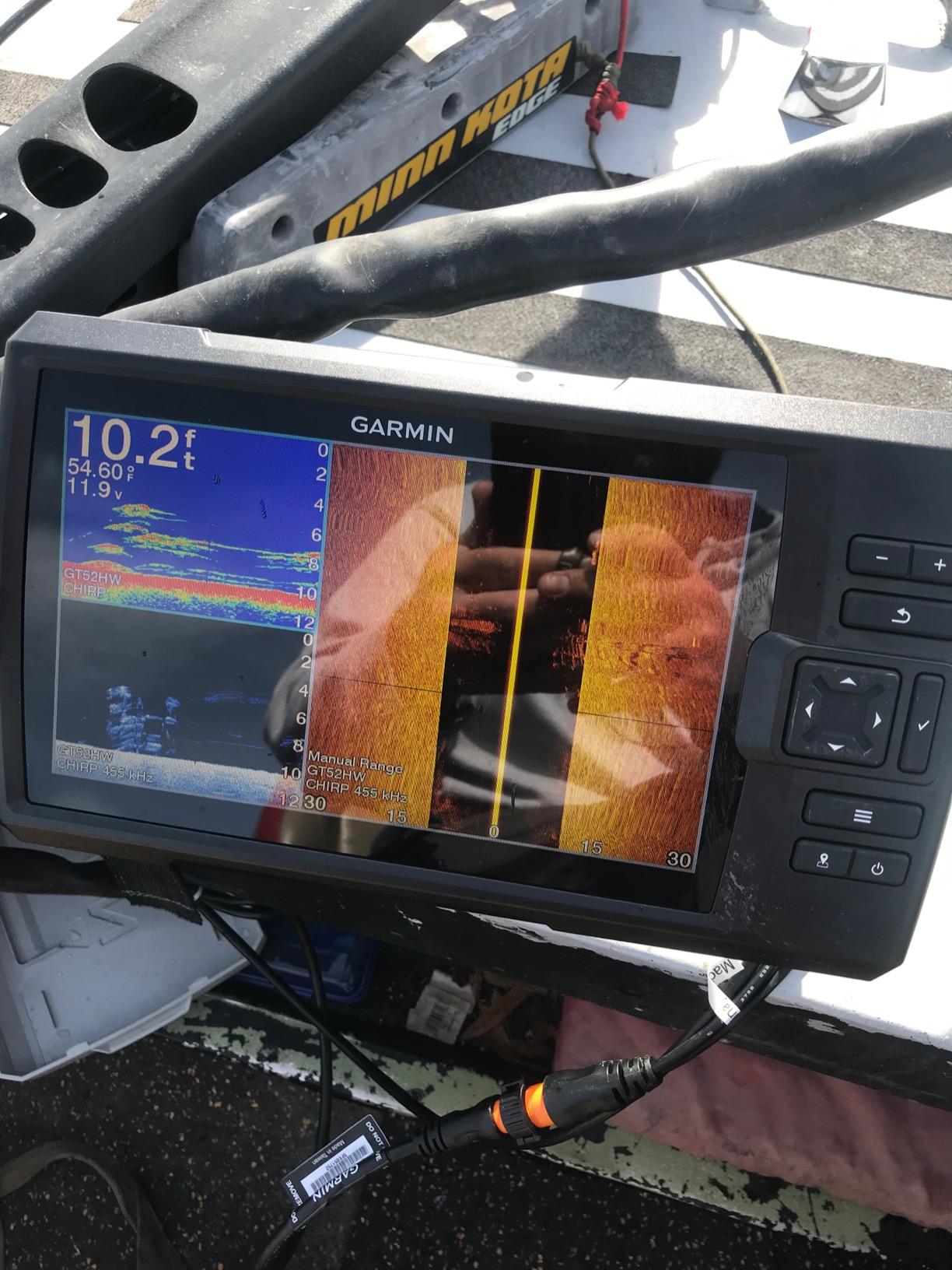
Side imaging detail compresses into small screens fast. Splitting the display to run side scan next to 2D sonar means each pane gets cramped, and on a 9-inch WVGA panel you can keep both readable without squinting. Anglers fishing structure-heavy lakes with a partner at the console feel the difference within a week.
Who should skip it
Anyone who wants to build a networked system should skip this. The Striker Plus 9SV has no NMEA networking, which is the practical reason the ECHOMAP UHD2 73sv exists. And if the main goal is mapping a lake in detail, this screen simply will not do it.
7. Garmin ECHOMAP UHD2 73sv – Best Side Imaging With Detailed Inland Mapping
Garmin ECHOMAP UHD2 73sv with GT54 Transducer, 7” Touchscreen Chartplotter, Garmin Navionics+ U.S. Inland
7 inch touchscreen chartplotter
GT54 transducer with SideVü
1000 ft max depth
Navionics+ inland charts
Pros
- Navionics+ US Inland covers 18000+ lakes at 1 ft contours
- Wireless sharing between two ECHOMAP UHD2 displays
- Force trolling motor integration
- Tight 7 inch footprint for small consoles
Cons
- Touchscreen awkward with wet hands or gloves
- Coastal charts cost extra
- Single transducer port
- Costs more than plain fishfinders
The ECHOMAP UHD2 73sv is the Garmin option for anglers who want to treat the lake as a map, not just a sonar screen. Navionics+ U.S. Inland mapping is preloaded and covers more than 18,000 lakes at one-foot contour intervals, and on reservoirs with steep creek channels those contours are often the difference between finding the bend and running the whole shoreline.
The GT54 transducer handles traditional, ClearVü, and SideVü, so side scan quality matches the rest of the Garmin lineup here. It also supports Force trolling motor integration, which ties steering and motor data into the same screen.
Wireless sharing is the sleeper feature. A second ECHOMAP UHD2 can mirror sonar, waypoints, and routes without a cable run down the console, which solves the problem of a partner fishing the bow of a wide bass boat.
Owners rate the 7-inch touchscreen as bright and responsive, and the small footprint fits dashboards where a 9-inch panel will not go. Reviewers like the tight console fit and the quality of the inland detail, particularly on lakes with subtle structure that a coarser chart would flatten.
The complaints are consistent and worth knowing before you buy. Wet hands and gloves make the touchscreen frustrating in a downpour, and there is no keypad fallback. Coastal and offshore charts need a separate purchase. The single transducer port also rules out running live sonar alongside traditional sonar at the same time.
Why the mapping is the deciding factor
Side imaging finds the rock pile, but the chart tells you which of six similar-looking creek bends is the one with the right drop-off. At one-foot contours you can see the ledge line before you get there, which saves the fuel and the hours of idling. If you fish one or two lakes hard, that paid detail is worth more than a larger sonar-only screen.
Where it does not fit
This is not the right display for a boat with no room for networking later, and it is not the right one for anglers who fish mostly in salt water without buying coastal charts. It is also the least forgiving of wet hands of every unit in this roundup.
8. Lowrance Elite-12 Ti2 – Best Side Imaging for Big Multi-Angle Bass Boats
Elite-12 Ti2-12-inch Fish Finder Active Imaging 3-in-1Transducer, Wireless Networking, Real-Time Map Creation Preloaded C-MAP US Inland Mapping …
12 inch SolarMAX display
Active Imaging 3-in-1
Genesis Live half foot contours
Wireless networking between displays
Pros
- Largest screen available for split views
- Genesis Live maps your own contours in real time
- C-MAP US Inland covers 4000 lakes
- Wireless networking with no cable runs
- Two year warranty
Cons
- Very high tier pricing
- Weighs 12.2 lb so mounting must be solid
- Large footprint limits console fit
- Older platform with newer versions available
The Elite-12 Ti2 exists for boats with a console wide enough to hold it and a team that wants more than one thing on screen at once. The 12-inch SolarMAX display is the largest in this roundup, and at that size you can run side imaging, down imaging, and a chart side by side without any of them becoming unreadable.
Genesis Live is the feature that changes how you fish. It records your own sonar and builds contour lines in real time at half-foot intervals, so your home lake ends up mapped at a resolution no generic card provides. The preloaded C-MAP US Inland mapping covers about 4,000 lakes with one-foot contours to get you started.
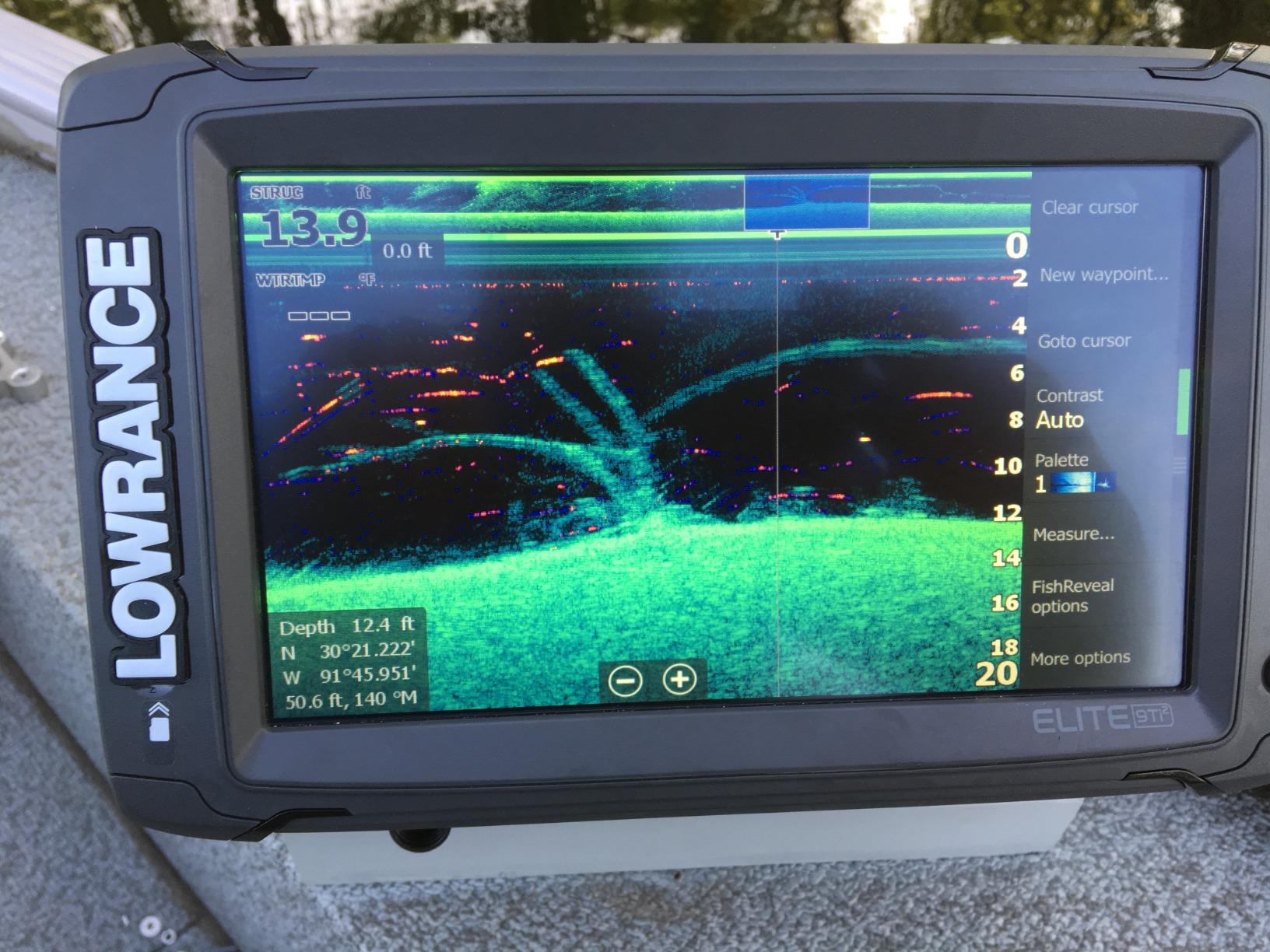
Wireless networking between Elite Ti2 displays removes the cable runs that usually decide whether a second screen is worth installing. Owners also report good target separation and clear screen definition, and the Active Imaging 3-in-1 transducer handles CHIRP, SideScan, and DownScan together.
The honest drawbacks are weight and footprint. At 12.2 pounds, this display needs a mounting setup that can carry it, and not every console has the real estate. Reviewers also point out that the Ti2 platform has been succeeded by the Elite FS line, so you are buying last-generation hardware with last-generation pricing rather than a current release.
What a 12-inch screen really buys
Screen size stops being about detail and starts being about workflow. On a boat with two anglers working different areas, one person can hold a side scan page on the left while the other manipulates a waypoint on the right. That kind of parallel use is not practical on a 7-inch panel, no matter how good the sonar underneath it is.
Who it is not for
If you fish alone from a 16-foot boat, you will not get value from a screen this large. The Elite FS models deliver nearly all of the imaging capability at a size that fits more consoles and a weight you do not have to brace.
How to Choose a Side Imaging Fish Finder for Bass Fishing
Most anglers overspend on screen size and underspend on transducer placement. Here is the decision order we use after a full day of running electronics on bass boats.
Pick the screen size that fits your console
Measure the flat space above your dash before you fall in love with a 10-inch panel. A 7-inch display is the safe choice for bay boats, skiffs, and kayaks with limited console room. Ten inches works well on a standard 16 to 19 foot bass boat, and a 12-inch screen needs a console designed for it. Bigger screens also weigh more, and a 12-pound display needs a mount built to hold it.
Match the transducer to how you run the boat
Transom mounting is the easiest install and works fine for most bass fishing, since you spend your time idling rather than running at speed. Trolling motor mounting is a good second choice because the motor keeps the transducer steady during slow scans. Thru-hull mounting gives the cleanest, most stable image and works at speed, but it means a hole in the hull and a haul-out for installation.
Decide how much mapping and networking you need
If you want waypoints and routes only, a fishfinder-style display like the Striker models is enough and less expensive. If you want a chart you can read while running shallow creek channels, you need a chartplotter with detailed inland mapping. If your boat has or will have a trolling motor, radar, or a second display, pay for NMEA 2000 and Ethernet now, because retrofitting networking later is a wiring project.
Choose a frequency range that matches your fishing depth
Higher frequencies give sharper detail in shallow water, which covers most spring and early summer bass fishing. Lower frequencies push energy deeper and give you a better read on deep ledges and winter structure, at the cost of fine detail up close. The dual-frequency transducers in this roundup handle both without a switch, so for most bass anglers the choice has already been made for you. Spend your attention on where the transducer is mounted instead.
Side imaging or down imaging: decide which one leads
Side imaging wins when bass relate to horizontal structure such as brush piles, rock, ledges, and creek bends. Down imaging wins when you need to know what is directly beneath the boat in deep water or under a suspended school. Every unit here gives you both, but the ones with a 3-in-1 transducer cover all three sonar types from a single mount, which simplifies installation on boats with limited wiring space.
Side Imaging Settings for Bass Fishing
Getting readable side imaging takes four adjustments, in this order.
Start with sensitivity at about 60 percent. Raise it only until structure starts to fade out. Over-sensitivity smears brush piles into solid blocks and erases the shadows that tell you how tall a piece of cover is.
Set contrast so structure is bright but bottom detail is not clipped. In clear spring water you can run contrast lower than you would in stained summer water.
Limit the range to the depth you are fishing. Bass water is mostly 5 to 40 feet. A 200-foot range setting on 20-foot water is wasted screen space and makes every return smaller than it needs to be.
Pick a color palette that separates fish from structure. Amber and white schemes are easier on the eyes at dawn, while higher contrast palettes make bait clouds pop against dark rock.
Run your scans at 3 to 5 miles an hour. Side imaging needs the boat moving slowly enough for the returns to line up into a picture, and fast running will smear everything into unreadable color bands.
Reading Side Imaging: Bass vs Baitfish vs Structure
Bass show up on side scan as small, hard-edged shadows tucked against the side of cover. The giveaway is the contrast between the bass arc and the shadow the object itself casts on the bottom, which tells you the height of the structure without any extra electronics.
Baitfish clouds look different. They appear as a dense, diffuse mass that sits above the bottom rather than on it, and a cloud with a few bass shadows inside or around it is the highest percentage target on any lake. Structure that is not fish still shows up as a bright return, but it lacks the crisp shadow that separates a fish from a rock of similar size.
On Garmin displays specifically, fish returns carry the same hard edge and shadow relationship as on Humminbird and Lowrance screens, so what you learn on one brand transfers to the others. The difference between brands is resolution and range, not the basic reading.
Seasonal Bass Fishing Strategies with Side Imaging
Spring: Bass are moving up and hugging shallow structure. Scan creek channels and secondary drop-offs at 2 to 4 mph, and set your range to match the shallow water so the screen fills with detail instead of empty blue.
Summer: Fish push to deep ledges and points with clean bottom below. Side imaging earns its keep here, because you can scan a 20-foot ledge from a depth you could not fish and mark the shadow you want to target later. Range matters more than sensitivity in this season.
Fall: The transition is when baitfish scatter in irregular shapes across channel bends. Wide range and moderate sensitivity reveal those scattered arcs that a down imaging screen would miss entirely.
Winter: Fish are stacked and tight to structure in the deepest holes. Bump sensitivity, shorten range, and slow down. Side imaging finds the tight cluster faster than any other sonar type in deep water.
Most tournament anglers work a simple discipline: identify two or three structure types on the lake and repeat the pattern that produced fish rather than running new water every trip. Side imaging speeds up the finding, but the consistency of presentation is what puts fish in the livewell.
Brand Comparison: Humminbird vs Garmin vs Lowrance for Bass
All three brands now ship dual-frequency side imaging with comparable underlying capability, so the decision is about ecosystem and interface rather than raw resolution. Humminbird holds the edge on long-range imaging detail with MEGA Side Imaging+, and its AutoChart Live plus LakeMaster and CoastMaster charting give a complete package. Its touch interfaces take more time to learn, and anglers frequently raise reliability questions about Humminbird electronics in general, so that is worth factoring in.
Garmin offers the most straightforward path into side imaging, with SideVü and ClearVü paired with Quickdraw Contours on every fishfinder in the lineup. Its chartplotters, like the ECHOMAP UHD2 73sv, add preloaded Navionics+ inland mapping, but the Striker series deliberately stops at waypoints and routes. Lowrance sits between the two, offering C-MAP charts, ActiveTarget readiness, and wireless networking that makes multi-display setups simpler to build.
Forum anglers on The Hull Truth also debate frequency trade-offs and transducer depth reach more than brand loyalty, which is a good reminder to check forum discussion for install advice rather than arguments. Our practical rule: buy the transducer and mount you can install correctly, because a perfectly aligned entry-level sensor beats a premium sensor mounted at an angle.
Frequently Asked Questions
How do I use side imaging sonar for bass fishing?
Set sensitivity near 60 percent, set contrast so structure is bright without clipping, limit range to your fishing depth, and run the boat at 3 to 5 mph. Watch for fish shadows against cover shadows, mark the target, and come back to it by waypoint.
What is the best side imaging fish finder for bass fishing?
The Garmin Striker 7SV is our top overall pick for bass because it delivers clean SideVü scanning on a sunlight-readable 7 inch screen. The Lowrance Elite FS 10 is the better choice if you want a chartplotter with networking, and the Humminbird Helix 7 CHIRP SI wins if you prefer keypad control.
Is side imaging worth it for bass fishing?
Yes. Bass relate to brush piles, rock piles, docks, and ledges, all of which side imaging detects from a distance. Down imaging shows what is directly under the boat, so side imaging finds more cover per hour of scanning.
What are the disadvantages of side scan sonar?
Side scan works best at low speed, so it is useless at speed. It shows shape and position but not color, depth under the arch is ambiguous, and in water shallower than about 10 feet down imaging is usually more informative.
Is Humminbird side imaging better than Garmin?
Humminbird has the edge on long-range detail with MEGA Side Imaging+, reaching 200 feet per side with strong target separation. Garmin is easier to set up and pairs well with Quickdraw Contours. Both cover the same bass fishing needs at different price points.
What frequency is best for side imaging bass fishing?
Most bass water sits between 5 and 40 feet, where a higher frequency gives sharper detail and better shallow structure definition. A dual-frequency transducer such as the CV52HW-TM in the Striker series or the Active Imaging 3-in-1 from Lowrance handles both shallow and deep water without a manual switch.
Final Verdict for Bass Anglers in 2026
After a full season across eight displays, the Garmin Striker 7SV remains our best side imaging fish finder for bass fishing, because it puts the most usable side scan picture on the most readable screen without asking you to grow a mapping system first. The Lowrance Elite FS 10 is the smarter purchase if you are building a networked boat, and the Humminbird Helix 7 CHIRP SI is the sturdiest option when the ride gets rough.
Whichever you pick, mount the transducer correctly before you tune anything else. Good alignment fixes more bad side imaging than any setting on the page.