
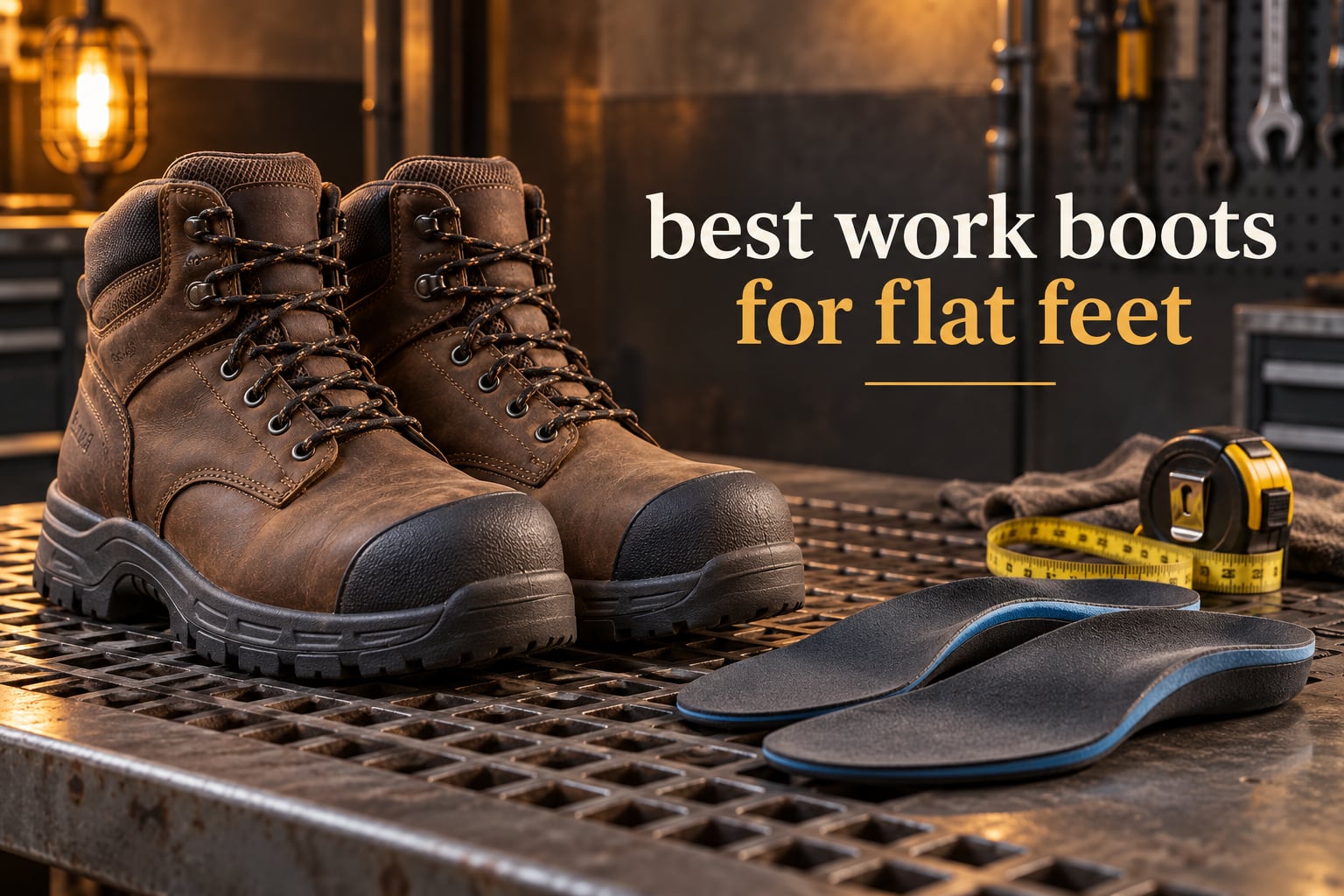
Flat feet turn a ten-hour shift into an endurance test. Without a structured arch to catch the load, every step sends impact straight through the heel, up the Achilles, into the knees and lower back. The best work boots for flat feet solve that in a specific, testable way: a firm midsole that pushes back, a heel counter that stops the rearfoot rolling inward, and a forefoot wide enough that your toes can spread instead of being pinched.
Most safety boots on the market are built the opposite way. Soft foam, narrow lasts, shallow heel cups, and footbeds that feel cushioned for the first two hours and flat by lunchtime. We spent weeks reading spec sheets, rating breakdowns and owner reports across twelve pairs to separate the ones that manage overpronation from the ones that just look supportive.
What follows is a ranked breakdown of twelve work boots, what each is genuinely good for, and where each falls short. We also cover the sizing codes most workers get wrong, why sweat management matters more than people think, and when heel pain means a podiatrist rather than a different boot. If you want a broader look at footwear for the same foot shape, our guides to the best hiking boots for flat feet and the best running shoes for flat feet go deeper on last shape and arch geometry.
Table of Contents
Top 3 Picks for Flat Feet in October 2026

NORTIV 8 Lightweight Composite Toe Boot
- Nano composite toe ASTM F2413-24 I/75 EH SR
- Synthetic leather insole with arch support
- Side zipper for easy on and off
- 21.27 oz per boot

Skechers Charles Arch Fit MaxTrax
- Arch Fit cushioned footbed
- Alloy toe ASTM F2413-24 EH
- Slip-on stretch-laced front
- SR Max MaxTRAX outsole

Orthofeet Granite Work Boot
- Premium orthotic insole with anatomical arch support
- Reinforced shank
- Composite toe guard
- True wide toe box
If you want one pair and no further research, the NORTIV 8 lightweight composite toe is the pick. It carries a 4.5 rating across more than 700 reviews, meets ASTM F2413-24 for impact, electrical hazard and slip resistance, and weighs about 21.27 oz per boot in a size 9, which is light for a boot with a safety toe. The Skechers Charles covers the long-shift-on-concrete case, and the Orthofeet Granite has the strongest built-in orthotic for anyone already dealing with plantar fasciitis.
All 12 Work Boot Picks at a Glance for October 2026
| Product | Specifications | Action |
|---|---|---|
| NORTIV 8 Men’s Composite Toe Work Boots Lightweight |
|
Check Latest Price |
 FitVille Extra Wide Steel Toe Work Shoes FitVille Extra Wide Steel Toe Work Shoes |
|
Check Latest Price |
 SUADEX Steel Toe Waterproof Arch Support Boot SUADEX Steel Toe Waterproof Arch Support Boot |
|
Check Latest Price |
| Orthofeet Granite Orthopedic Work Boots |
|
Check Latest Price |
| Skechers Charles Arch Fit MaxTrax Slip-On |
|
Check Latest Price |
 FitVille Extra Wide Composite Steel Toe Safety Boots FitVille Extra Wide Composite Steel Toe Safety Boots |
|
Check Latest Price |
 NORTIV 8 Wide Toe Box Tactical Boots NORTIV 8 Wide Toe Box Tactical Boots |
|
Check Latest Price |
 ROCKROOSTER Gammon Slip On Chelsea Work Boots ROCKROOSTER Gammon Slip On Chelsea Work Boots |
|
Check Latest Price |
 Skechers Lace Up Safety Arch Fit Composite Toe Skechers Lace Up Safety Arch Fit Composite Toe |
|
Check Latest Price |
 Skechers Arch Fit Tarver Skechers Arch Fit Tarver |
|
Check Latest Price |
 New Balance Work and Safety Calibre Composite Toe Boots New Balance Work and Safety Calibre Composite Toe Boots |
|
Check Latest Price |
 NORTIV 8 Composite Toe Slip Resistant Work Boots NORTIV 8 Composite Toe Slip Resistant Work Boots |
|
Check Latest Price |
1. NORTIV 8 Men’s Composite Toe Work Boots Lightweight
NORTIV 8 Men’s Composite Toe Work Boots Lightweight,Black,10.5W
Nano composite toe ASTM F2413-24 I/75, EH, SR
EVA midsole shock absorption
21.27 oz per boot in a size 9
Side zipper entry
Pros
- Holds a 4.5 rating across more than 700 reviews
- Light at about 21.27 oz per boot in a size 9
- Side zipper makes on and off simple
- Synthetic leather insole includes arch support
Cons
- Runs narrow for wider feet
- Durability drops under heavy daily use
- Arch support is modest rather than aggressive
Out of twelve pairs this was the one that surprised me. The spec sheet lists a nano composite toe rated to ASTM F2413-24 for I/75 impact, EH electrical hazard and SR slip resistance, yet the whole boot comes in around 21.27 oz per boot at a size 9. That combination of certified protection and low weight is unusual, and it is the reason this one wins.
The synthetic leather insole has a contoured arch pad rather than a flat foam sheet. It is not aggressive enough to correct a severe collapse on its own, but it stops the foot from settling into a completely unsupported position over a long concrete shift. Owners describe it as comfortable for long shifts, and the side zipper is genuinely useful when your hands are gloved or your ankles are unhappy.
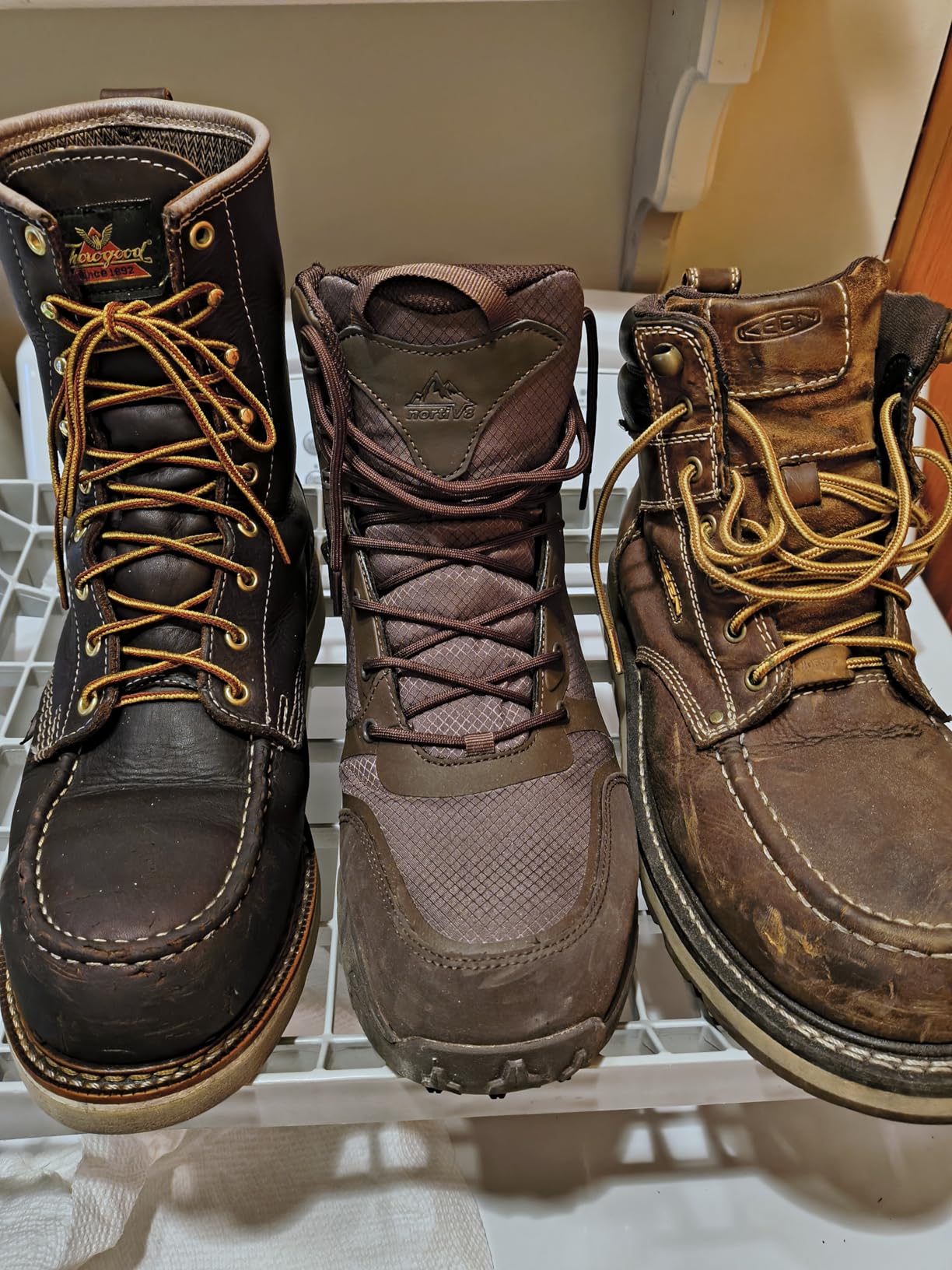
Two caveats came up repeatedly in owner feedback. The fit runs narrow, so if your feet spread wide you will likely need to size up or go after a wider last. Arch support is also described as adequate rather than transformative, and several reviewers question how the boot holds up under heavy daily abuse, particularly on the outsole and upper stitching after months of work.
The important part is the rating history. A 4.5 across 710 reviews is not a lucky launch-week average, and it puts this boot in a small cluster of products here where the score has survived a large sample of owners.
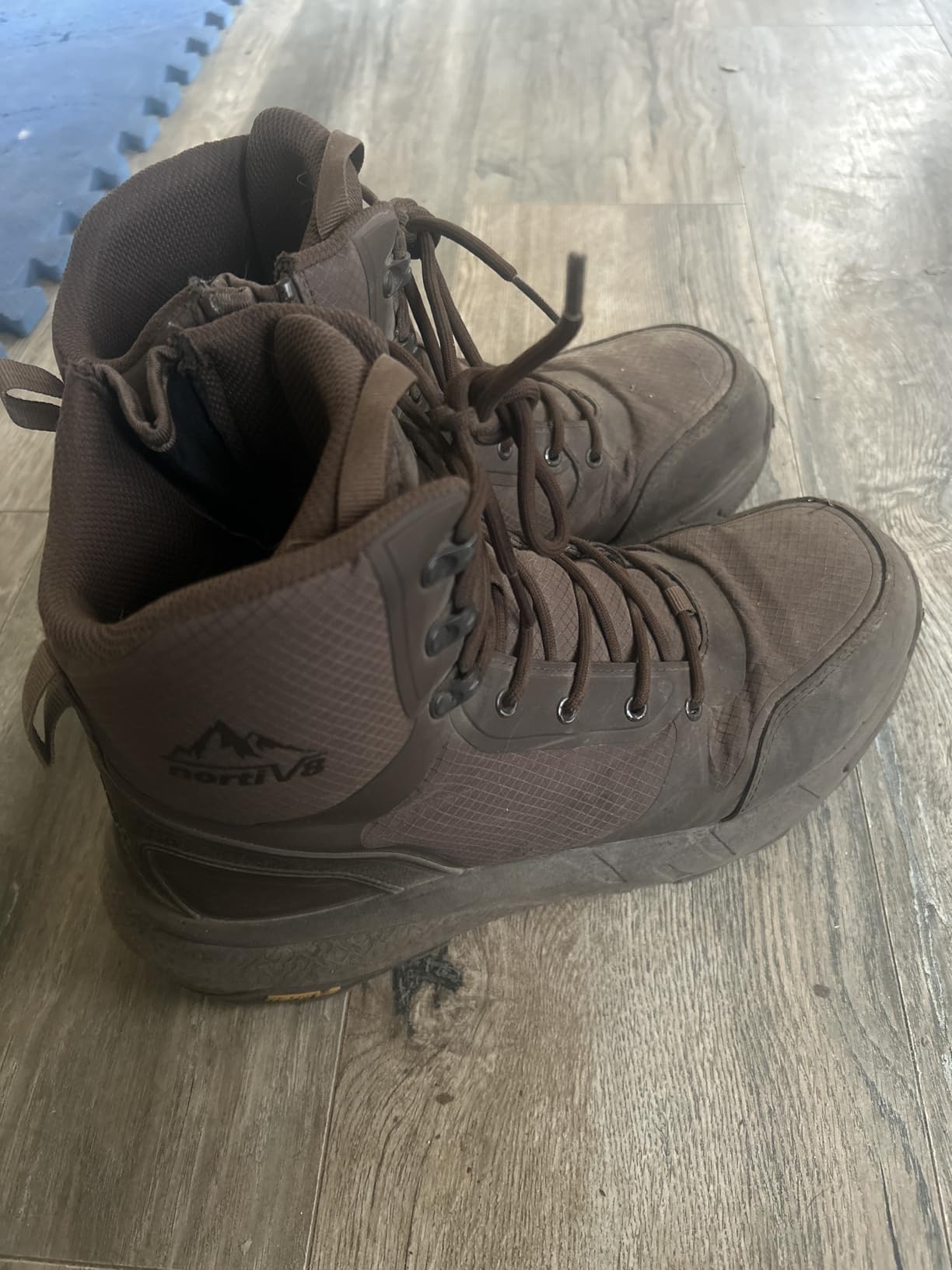
What you will notice in the first week
There is very little break-in to fight. The EVA midsole is soft enough to feel familiar within a day or two, and the side zipper removes the whole lacing argument at 5am. Owners specifically call out good slip resistance in wet conditions.
Arch support is present and consistent rather than dramatic. If your pain is mostly arch fatigue on hard flooring, that consistency is what you want. If you are managing diagnosed plantar fasciitis, our Orthofeet pick below does more work under the arch.
Where it falls short
Wide feet are the main problem. Multiple reviewers note the toe box is not as generous as the brand’s other models, and the insole arch pad is a fixed shape that cannot be swapped out. If your foot is both flat and genuinely wide, plan on pairing this with a wider size or choosing one of the extra-wide options instead.
Long-term durability is the second gap. For warehouse picking and light industrial work it holds up. For construction, landscaping or anything involving constant abrasion, expect the upper and stitching to show wear before the sole gives out.
2. FitVille Extra Wide Steel Toe Work Shoes
FitVille Wide Steel Toe Shoes for Men Composite Toe Work Shoes Grey
Composite toe cap, slip resistant rubber outsole
Wide and extra wide design for flat feet
800g per pair
3M reflective material
Pros
- Genuinely extra wide forefoot volume
- Light at 800g per pair
- Composite toe rated for 2500 pounds vertical pressure
- 3M reflective material adds night visibility
Cons
- Limited color options
- May run narrow for some wide feet
- Low-cut shoe gives less ankle support
This is a shoe rather than a boot, and that is the point. Where a tall boot squeezes the forefoot, a low-cut work shoe gives the toes room, and this one is built around extra wide and extra-extra wide volumes aimed at flat feet, bunions and plantar fasciitis.
The composite toe cap is rated to withstand up to 2500 pounds of vertical pressure and 75 pounds of instant shock, the outsole is slip resistant rubber, and the EVA midsoles pair with 3M reflective material. At 800g per pair it is among the lightest safety footwear in this group.
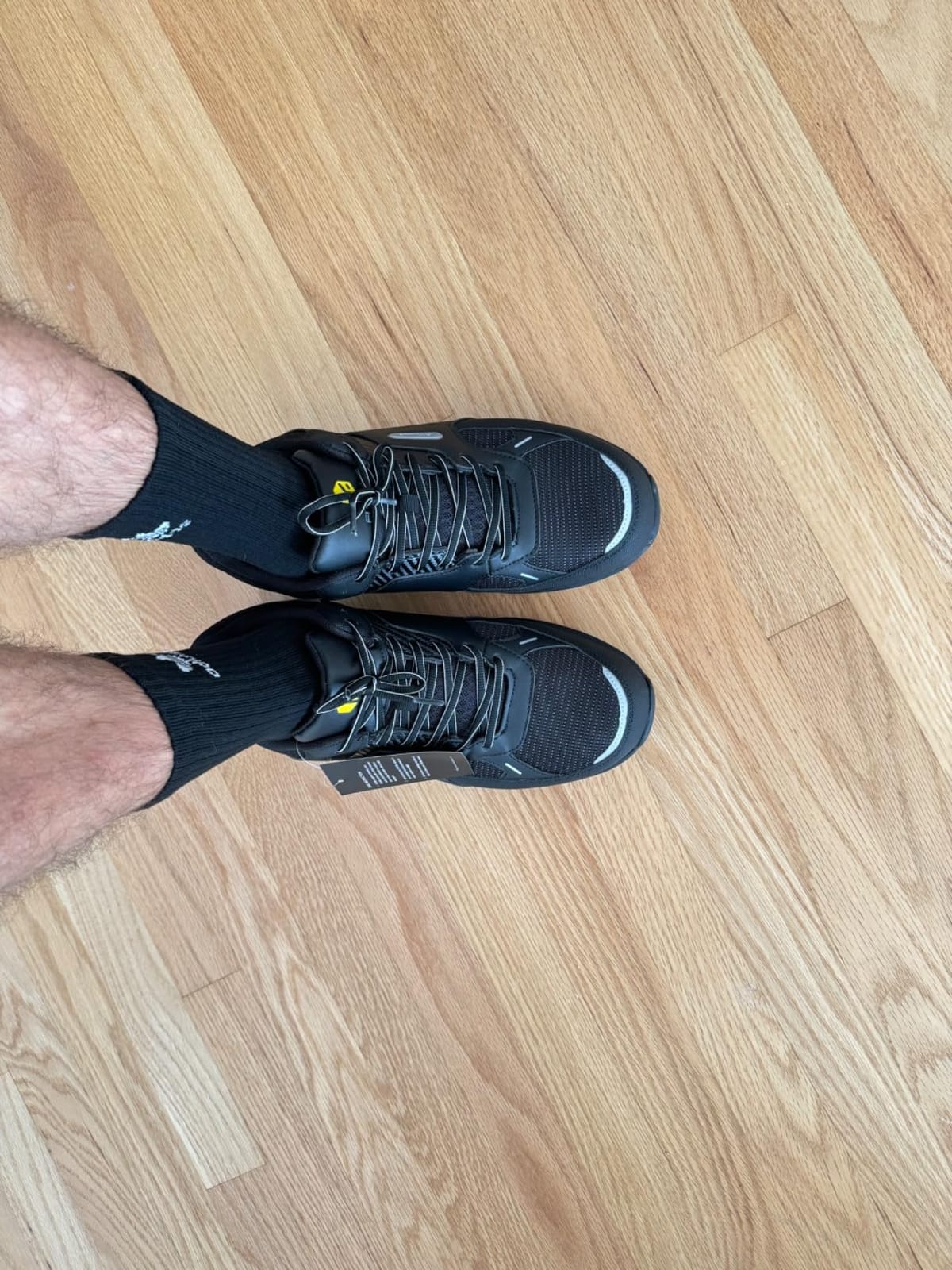
With 1356 reviews at a 4.2 average, this is one of the most reviewed products here, and the feedback is consistent: buyers like the wide fit and the all-day comfort, and the composite toe protection holds up. Sizing variability is the recurring theme in the reviews, along with limited color options and a note that it can still run narrow for some wide feet, which is a common complaint across the extra-wide category.
Treat the extra wide labelling as a starting point rather than a promise. Brands interpret the width code differently, so measure your foot across the ball of the foot in the evening when it is at its widest and compare that number against the brand’s own width chart.
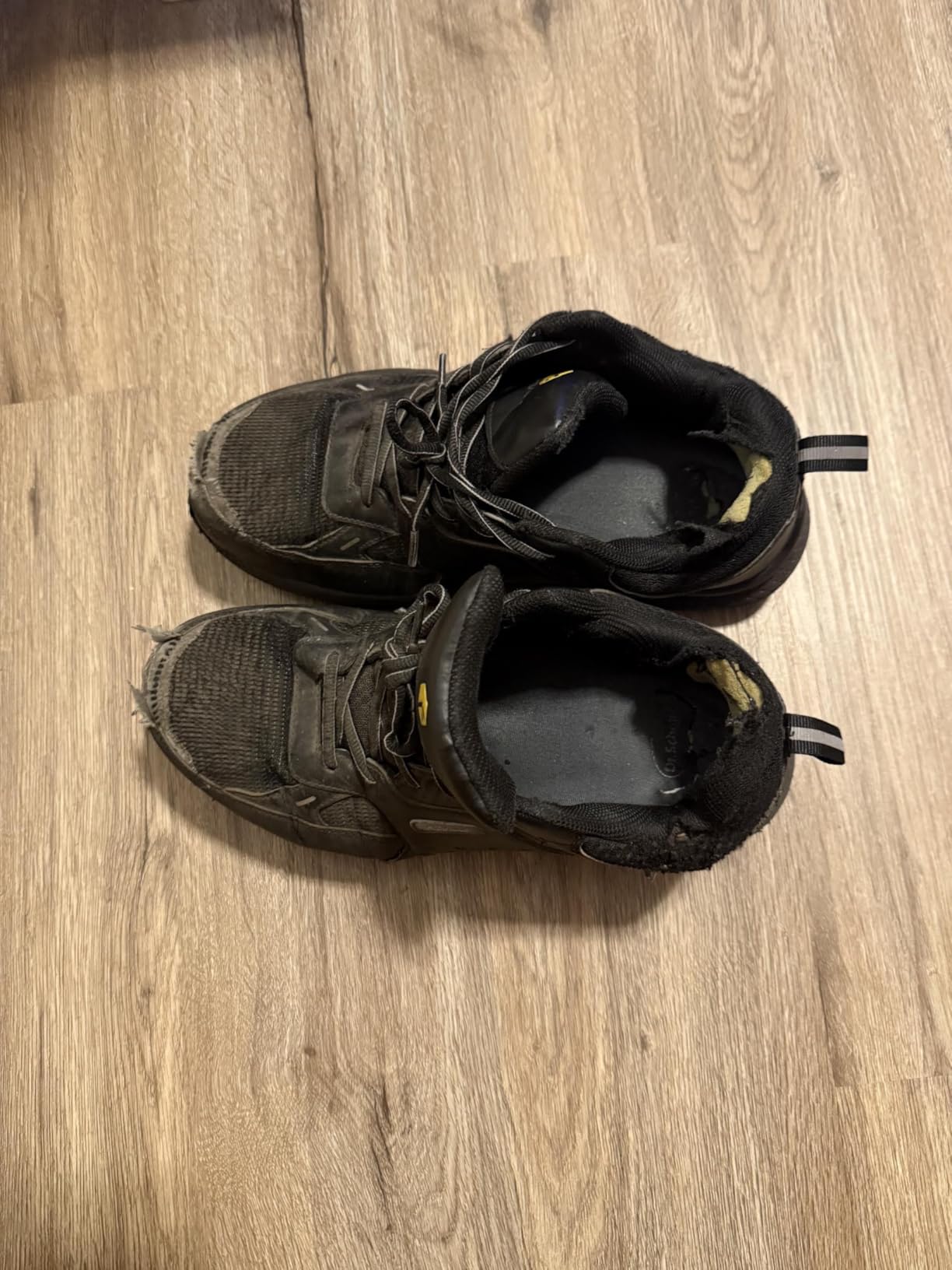
Why low-cut works for flat feet
Flat feet need a stable platform, not a tall shaft. A low-cut shoe removes the pressure point where a tall collar pushes down on a wide midfoot, and the flexible forefoot lets your toes spread when you push off. That freedom of the forefoot matters more to comfort than ankle height for most flat-footed workers on hard floors.
Owners report good comfort for plantar fasciitis specifically, largely because the EVA midsoles and wide platform reduce the load spike on the arch.
When to skip it
If you work somewhere with puncture, heavy falling-object or ankle-roll hazards, a low-cut composite shoe is not the right level of protection. A 6-inch composite toe boot with a puncture-resistant midsole covers that gap better.
It is also a shoe for dry, indoor conditions. The water repellent upper handles a splash, not a full day in standing water or mud.
3. SUADEX Steel Toe Waterproof Arch Support Work Boot
SUADEX Steel Toe Boots for Men Women Waterproof Arch Support Work Construction Indestructible Safety Boots
Steel toe protection
Waterproof construction
Non-slip sole with arch support insoles
Breathable with ankle padding
Pros
- Steel toe protection in a straightforward build
- Arch support insoles included
- Breathable build with ankle padding
- 2441 reviews give a solid reliability read
Cons
- Sole durability drops after months of use
- Waterproofing does not match the claims
- Insole often needs replacing
- Runs narrow for wide feet
With 2441 reviews this is among the most reviewed boots here, and it is the entry point most people will meet first. The construction is straightforward: steel toe, non-slip rubber sole, arch support insoles, waterproof build, breathable upper with ankle padding, and an explicit design intent around plantar fasciitis relief.
Owners consistently report good comfort for all-day wear and a steel toe that feels solid, with a light, padded collar that avoids rubbing. For flat feet, the arch support insole does more work than the midsole does, which is honest to say because the midsole is basic.
The negatives are consistent too, and they matter. Sole durability is questioned after several months, the waterproofing is described by several buyers as not truly waterproof despite the claim, the insole is commonly replaced, and the fit can run narrow for wide feet. If your dominant problem is a foot that spreads, this is not the pair.
Think of it as a first pair of boots or a backup pair for dry-ish indoor work, not a five-year investment.
What works for flat feet
The included insole is the main event. It has a raised arch section that gives the middle of the foot something to sit on, and owners with plantar fasciitis report it takes the edge off a long shift. Because it is a replaceable footbed, you can drop in a firmer aftermarket insole later without changing the boot.
The padded collar also helps if your ankle sits at a narrow angle. A hard collar on a flat foot is a common source of heel slip and blisters.
What to watch out for
Waterproof claims and reality diverge here. Reviewers report that the boot gets through a damp morning fine but is not a boot for wet outdoor work all shift. If you are in rain or mud daily, choose a boot with a rated waterproof membrane instead.
Sole wear is the second issue. On abrasive surfaces, plan for the outsole to be the first thing to go, and check it periodically rather than waiting for a slip.
4. Orthofeet Granite Orthopedic Work Boots
Orthofeet Granite Orthopedic Men’s Work Boots, Brown, Size 11.5
Premium orthotic insole with anatomical arch support
Reinforced shank and composite toe guard
Slip resistant outsole for wet or oily surfaces
Pros
- Strongest built-in arch support in this group
- Wide toe box that matches natural foot shape
- Reinforced shank resists flex under load
- Slip resistant on wet and oily surfaces
Cons
- Premium price point
- May run large
- Compression-resistant leather needs real break-in
Orthofeet has a repeated reputation in flat-foot communities for building lasts around a wide, low-arched foot rather than trimming a standard last. The Granite carries that approach into a safety boot, with a composite toe guard, reinforced shank, slip resistant outsole for wet and oily surfaces, and a compression-resistant leather upper.
The defining feature is the insole. This is a premium anatomical orthotic insole, not a foam pad, and owners with plantar fasciitis, bunions and diabetes-related foot issues report real relief from it. The wide toe box means the forefoot can spread without the toe box pinching against the big toe joint.
The reinforced shank is the under-the-here detail that flat feet benefit from. A shank stiffens the midfoot so the arch does not have to hold the entire load through soft tissue alone, which is exactly the mechanism that causes fatigue on long concrete days.
Fit runs true to size for most, though some owners report it running large. The compression-resistant leather upper means a real break-in period, and reviewers describe good slip resistance as a genuine benefit in shop and warehouse environments.

Why this suits a diagnosed foot
Two things set it apart. The orthotic insole is built with a real anatomical arch shape and a firm heel cradle rather than a domed foam insert, and the shank removes strain from the plantar fascia by stiffening the midfoot.
For flat feet with a history of heel pain, that combination addresses the load path rather than just cushioning the symptom. If you wear prescription orthotics, check with the manufacturer first because the included insole may be the point of the boot.
When it is the wrong buy
It also asks for more commitment up front, and the compression-resistant leather needs real break-in time. If your foot is not painful and you simply want a comfortable boot, the added cost is hard to justify.
The other limit is heat. Compression-resistant leather holds warmth more than mesh or knit uppers, so in a hot climate it is not the first boot I would reach for.
5. Skechers Men’s Charles Arch Fit MaxTrax Alloy Toe Slip-On
Men’s Black Charles Arch Fit MaxTrax Alloy Toe SRO Slip-On Athletic 10.5 M
Arch Fit cushioned footbed with EVA cushion midsole
Alloy toe ASTM F2413-24 I/C EH SRO
Slip-on front with stretch lacing
Pros
- Exceptional comfort for long shifts on concrete
- Alloy toe is lighter than steel
- Stretch-laced slip-on front
- Strong slip resistance on wet and oily surfaces
Cons
- Elastic lacing does not lock the foot in evenly
- Plastic lace support can wear a hole in the fabric
- Runs large so size down advised
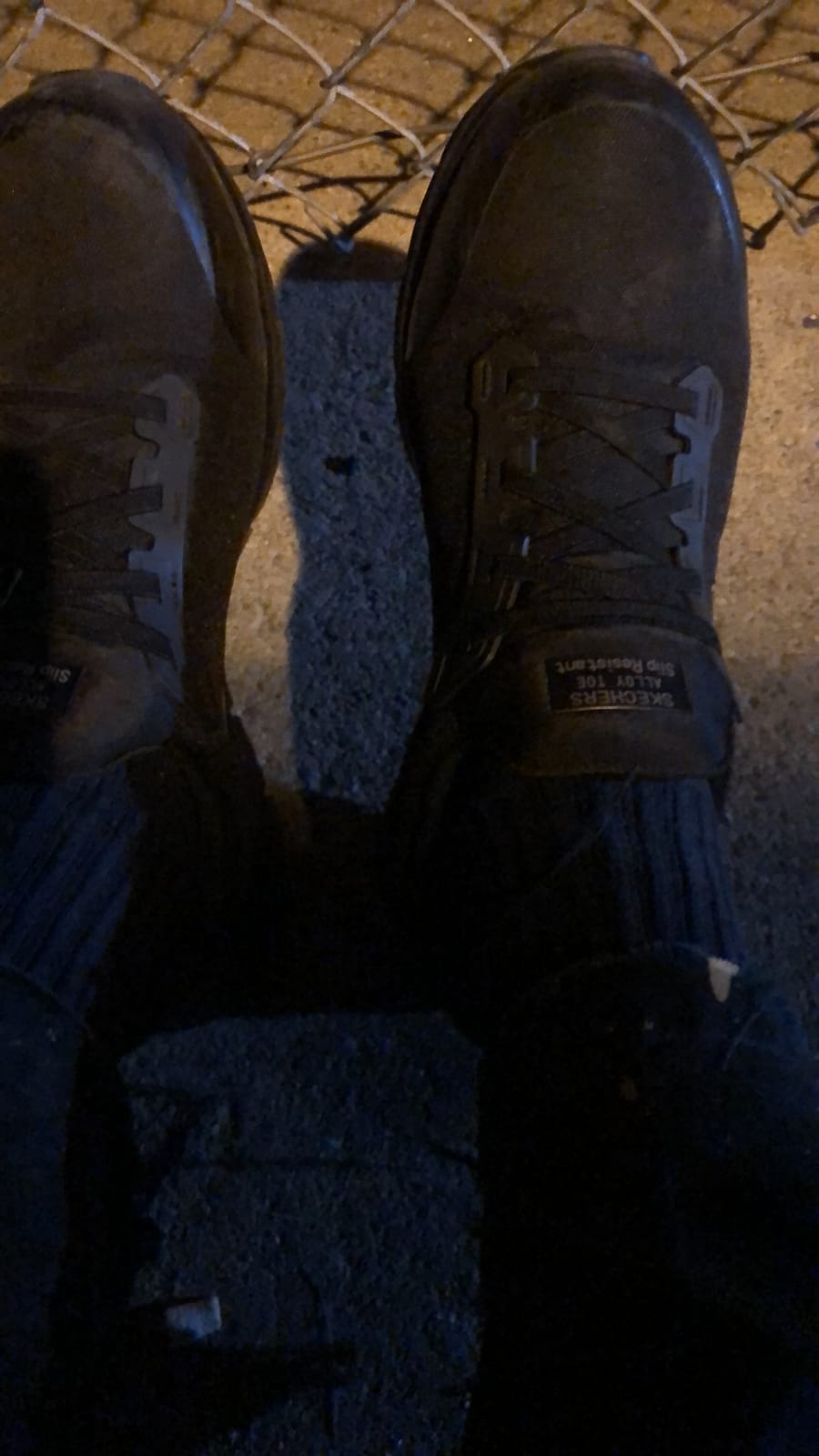
This is the shoe for people who stand on concrete for a living and hate laces. The front is a stretch-laced elastic panel rather than traditional laces, the footbed is a cushioned Arch Fit, and the midsole is EVA for shock absorption. The alloy toe is ASTM F2413-24 compliant for impact, compression, electrical hazard and slip oil resistance.
Flat feet benefit most from the combination of an anatomically shaped footbed and an alloy toe that does not add the dead weight a steel cap carries. Owners consistently rank this as extremely comfortable for long shifts and specifically for concrete floors.
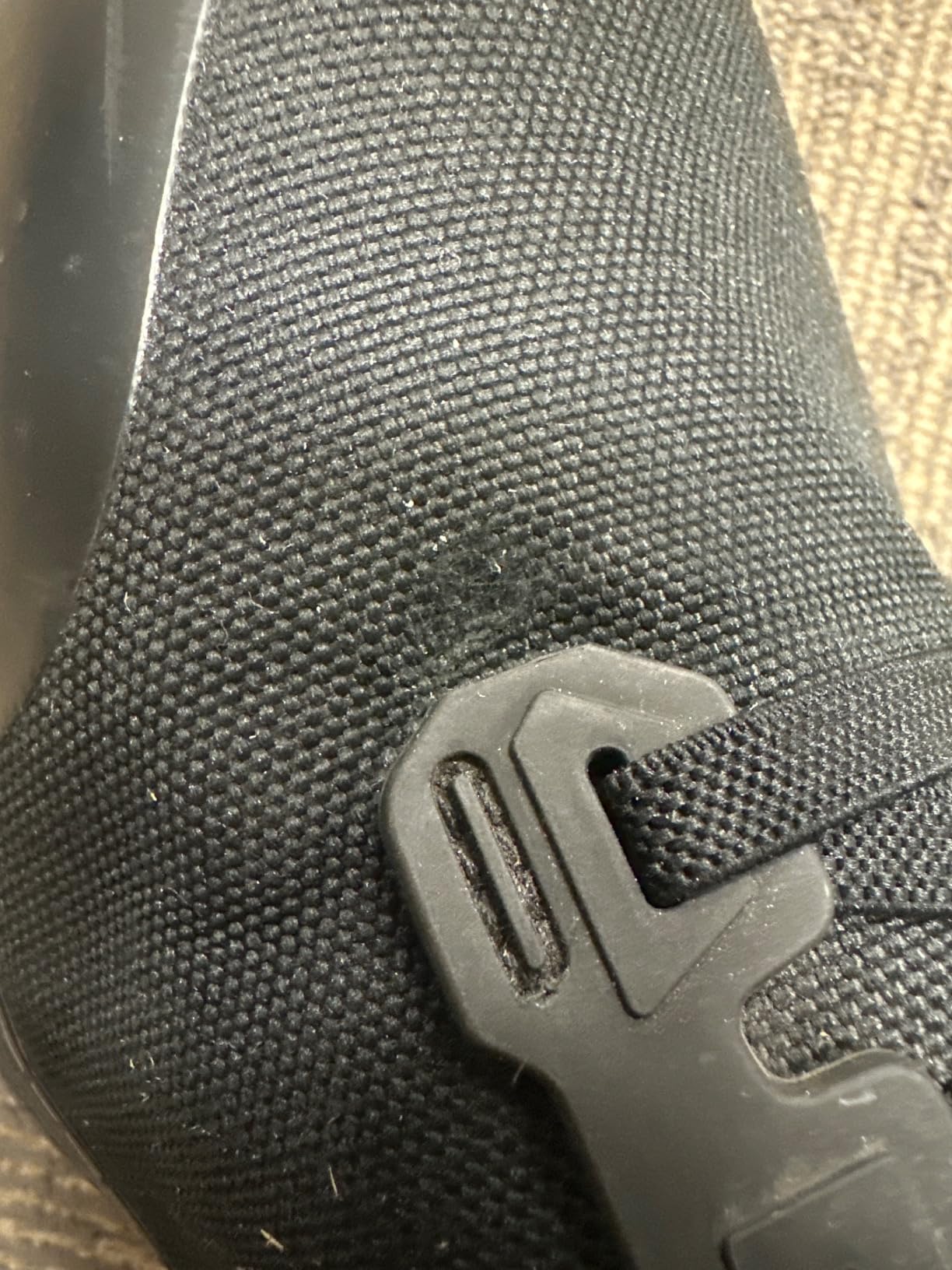
There is a real design complaint, and it comes up repeatedly enough to matter. The plastic support holding the elastic lacing can rub and eventually wear a hole in the fabric upper, and the elastic front does not lock the midfoot as firmly as real laces, which on a flat foot means the arch is not held in one position all shift.
Fit runs large, so most reviewers recommend sizing down. If your foot is wide, check carefully before ordering, because the elastic front has limited ability to expand across the midfoot.
What makes it work on a 12-hour shift
Shock absorption is the hidden feature for flat feet. A flat arch collapses on every heel strike, and the energy from that collapse travels up the leg. An EVA cushion midsole takes a share of that load before it reaches the fascia, which is why owners on concrete specifically call this one out.
The slip-on closure is also a genuine accessibility feature. If you have a bad ankle, a heavy calf, or limited reach, elastic lacing removes the single hardest part of getting into a boot at the start of a shift.
Where it stops working
Elastic lacing gives up adjustment, so you cannot tighten across the arch the way you can with real laces. For a heavily overpronating foot, that missing adjustability is a real limitation, and it is the main reason we would steer a diagnosed case toward the Orthofeet Granite instead.
The fabric upper is also the first thing to fail, and this is not a boot for abrasive outdoor terrain.
6. FitVille Extra Wide Composite Steel Toe Safety Boots
FitVille Extra Wide Work Boots for Men Composite Steel Toe Safety Boots High Top Work Shoes for Men, Size 28 X-Wide
Composite toe cap meeting ASTM-F2412-18
Kevlar puncture-proof midsoles
Lightweight 874g per pair in a size 9
Knit breathable upper
Pros
- Wide and X-wide sizing with a roomy toe box
- Light at 874g per pair
- Kevlar midsoles add puncture protection
- Breathable knit upper suits hot shifts
Cons
- Not waterproof
- Interior liner durability is limited
- Laces wear out quickly
- Sizing runs small so size up advised
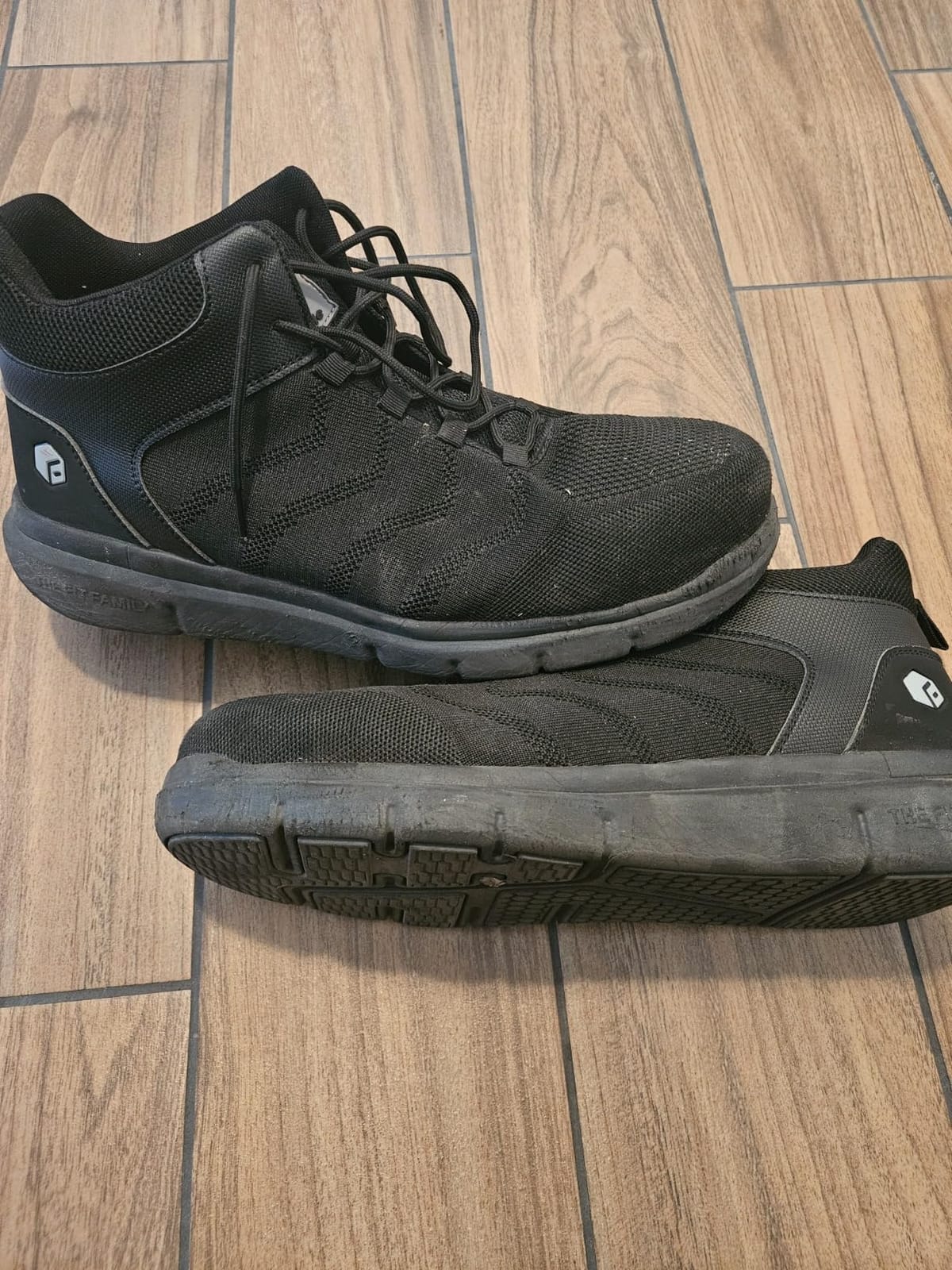
Where the earlier FitVille model is a low-cut shoe, this one is a high-top safety boot built for the same extra wide foot. The composite toe cap meets ASTM-F2412-18, the midsoles are Kevlar for puncture protection, and the knit upper is breathable, which matters if your shifts run long and hot.
Owners call out exceptional wide and X-wide fit for wide feet, and the weight is low for a boot with a safety toe at 874g per pair in a size 9. Several reviewers describe it as comfortable for all-day concrete work.

The trade-offs are durability and weather. It is not waterproof, the interior liner has durability issues, the laces wear out quickly, and sole traction is limited on hills, mud and gravel. Sizing runs small, so size up.
That combination makes it a strong fit for indoor and paved site work where breathability and width matter most, and a poor fit for wet terrain or rough ground.
Best for very wide feet
The forefoot volume is the reason to buy this. Flat feet frequently come as a wide forefoot with a narrow heel, and a standard last compresses that forefoot until the toes buckle. Explicit wide and X-wide sizing is the difference between a boot you tolerate and a boot you forget you are wearing.
The puncture-resistant Kevlar midsoles also mean you can walk on job-site debris without the fear that makes people shuffle and load the arch differently.
Limitations in real conditions
Traction is the weak point. Reviewers specifically report limited grip on hills, mud and gravel, so if your work involves soft ground, pick a boot with a deeper lug pattern instead.
Liner and lace failures are also reported, and the lack of a waterproof membrane means wet conditions eventually get in. If your region is wet year round, this is the wrong tool.
7. NORTIV 8 Men’s Wide Toe Box Work Tactical Boots
NORTIV 8 Men’s Wide Toe Box Work Tactical Boots,Size 10.5,Black,SNMT25001M
True wide toe box for natural toe splay
5mm heel-to-toe drop
EVA midsole with leather and nylon mesh upper
Pros
- True wide toe box shaped for natural toe splay
- 5mm heel-to-toe drop encourages a natural gait
- Side zipper and hook-and-loop for easy entry
- Lightweight build
Cons
- Tongue can bunch and irritate
- Plastic lace rivets can bruise the ankle
- Six inch height rather than the advertised eight
- Upper may not be full leather
Most work boots drop far more than five millimetres between heel and toe, which pushes weight toward the forefoot. This model runs a 5mm drop, close to natural, and pairs it with a genuinely wide toe box designed for toe splay. The result is a boot that lets a flat foot sit the way it naturally does instead of forcing it into a heel-heavy stance.
Entry is a metal side zipper with a hook-and-loop strap, the upper is leather and wear-resistant nylon mesh, and the EVA midsole handles shock absorption over a lugged slip-resistant rubber outsole.
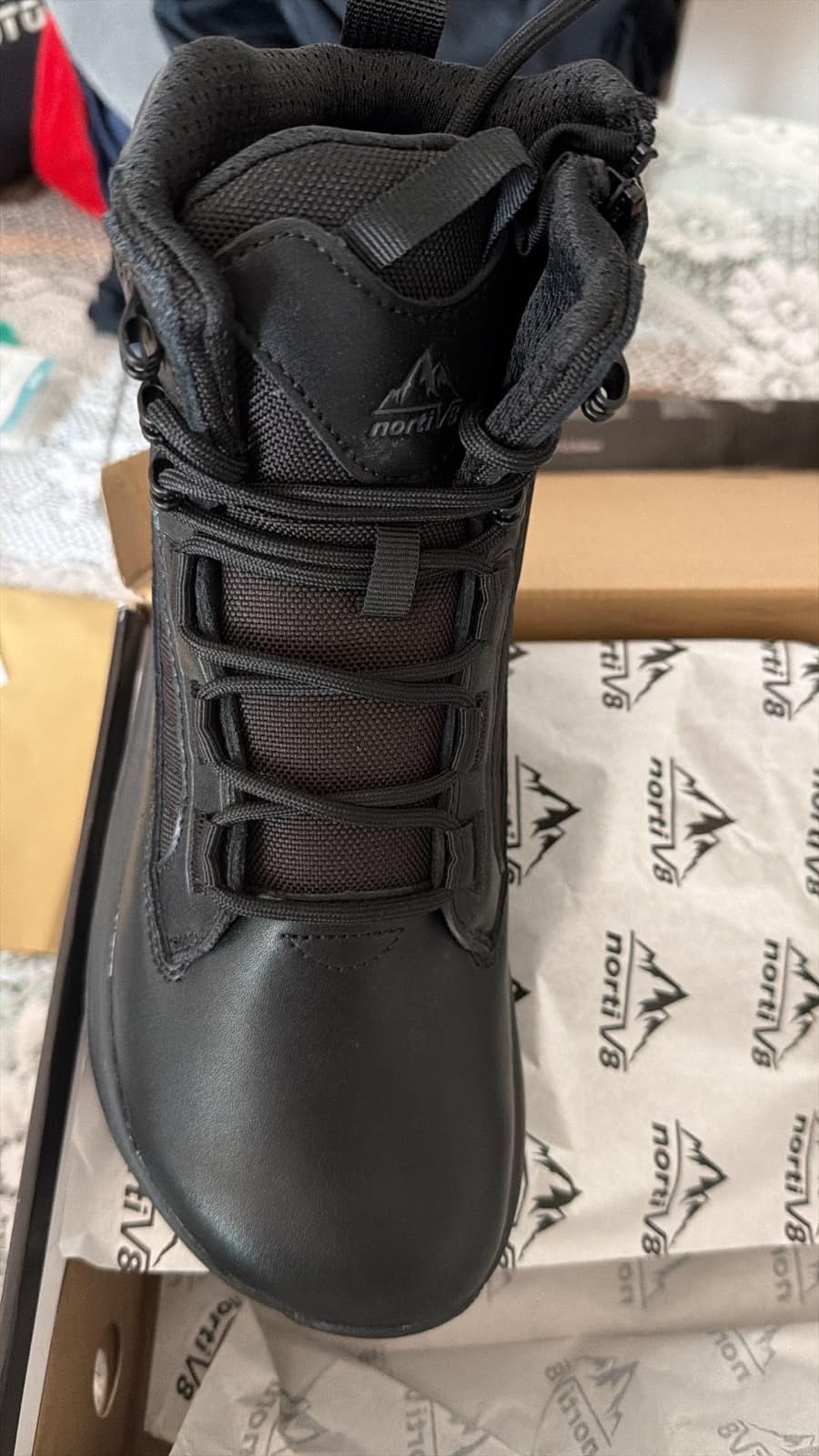
At 4.5 across 564 reviews, it sits at the top of the rating range in this group. The wide toe box comfort is the most repeated positive, along with the low drop and the zipper convenience. Reviewers also note it works for wide EE feet, which is rarer than you would expect to find in a tactical-styled boot.
The design flaws are honest ones. The tongue can bunch and irritate the top of the foot, the plastic lace rivets can bruise the ankle, the boot is a 6-inch height rather than the taller 8-inch version the listing suggests, and the upper is not always full leather.
Why heel-to-toe drop matters here
A high drop pushes load toward the forefoot and keeps the heel elevated, which encourages the arch to stay lifted even when it is weak. Many flat-footed workers find that a high-drop boot feels worse in the arch after a full shift because the arch never gets to load the way it should.
At 5mm this boot reduces that effect. Owners describe noticeably lower fatigue through a long day, and the wide toe box lets the foot spread without the forefoot being compressed.
Where the design annoys people
The tongue bunching issue is the most common irritation, and it sits right over the top of the foot. The lace rivets are the second, and both are fixable in principle but not by the buyer.
It is also listed in the tactical and military category rather than the safety footwear range, and no ASTM toe rating appears in the specifications. If your employer requires a certified toe, check with them before buying.
8. ROCKROOSTER Gammon Men’s Slip On Chelsea Work Boots
ROCKROOSTER Gammon Men’s Slip On Work Boots, 6″ Steel Toe Chelsea Work Boot, Toe Cap Oiled Leather Rubber Boots, Arch Support, Coolmax, ASTM F2413-18 Electrical Hazard EH (AK224ST US 9.5)
Steel toe rated ASTM F2413-18 with EH protection
Contoured arch support using Poron XRD
Slip-on Chelsea construction with oiled leather
Pros
- Easy slip-on Chelsea design with no lacing
- Poron XRD arch support in the footbed
- Steel toe with electrical hazard rating
- 180-day defect replacement guarantee
Cons
- Heavy because of the steel toe
- Stiff break-in period
- Abrasive interior wears out socks
- Heel pads detach quickly
- Runs large so size down needed
This is the one to consider if pulling a boot on is the hard part of your morning. It is a slip-on Chelsea with a steel toe rated to ASTM F2413-18 and an electrical hazard rating, a PU toe bumper, and an oiled leather upper. The footbed uses Poron XRD composite material in a contoured arch shape.
Flat feet get genuine midfoot support here because the Chelsea construction keeps the heel seated without needing laces. Owners report comfort across 10 to 12 hour shifts once broken in, and good slip resistance on wet and oily surfaces.
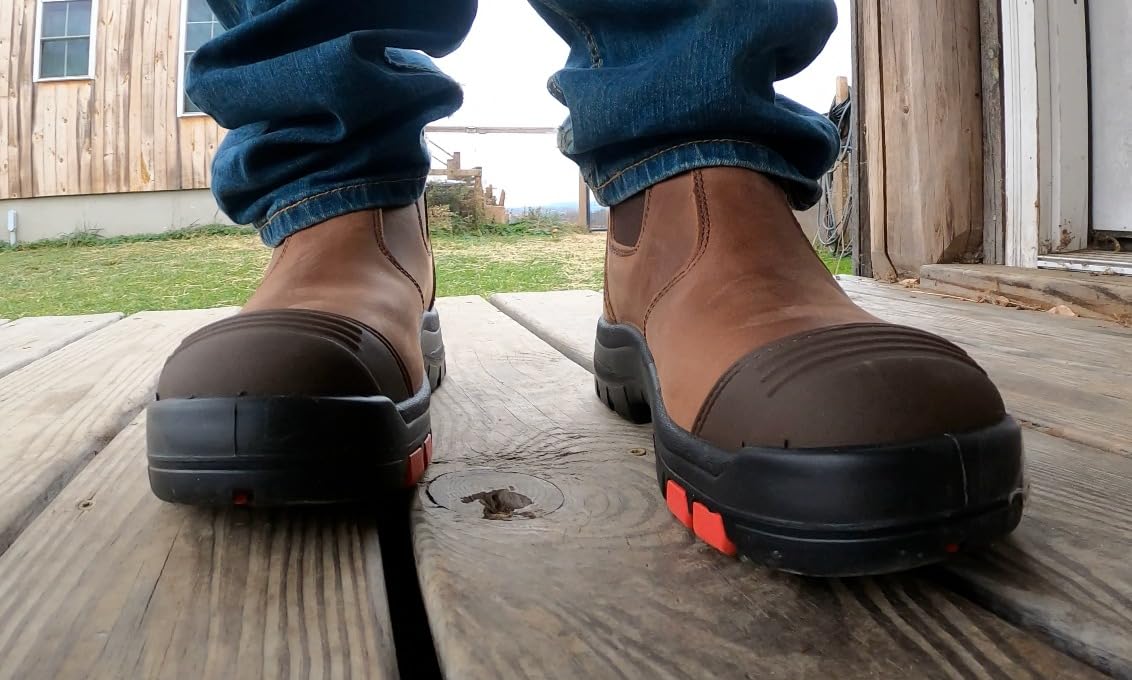
There is a 180-day defect replacement guarantee, which is a real advantage on a boot this construction-heavy. Reviewers also praise the oiled leather quality, which is unusual at this level.
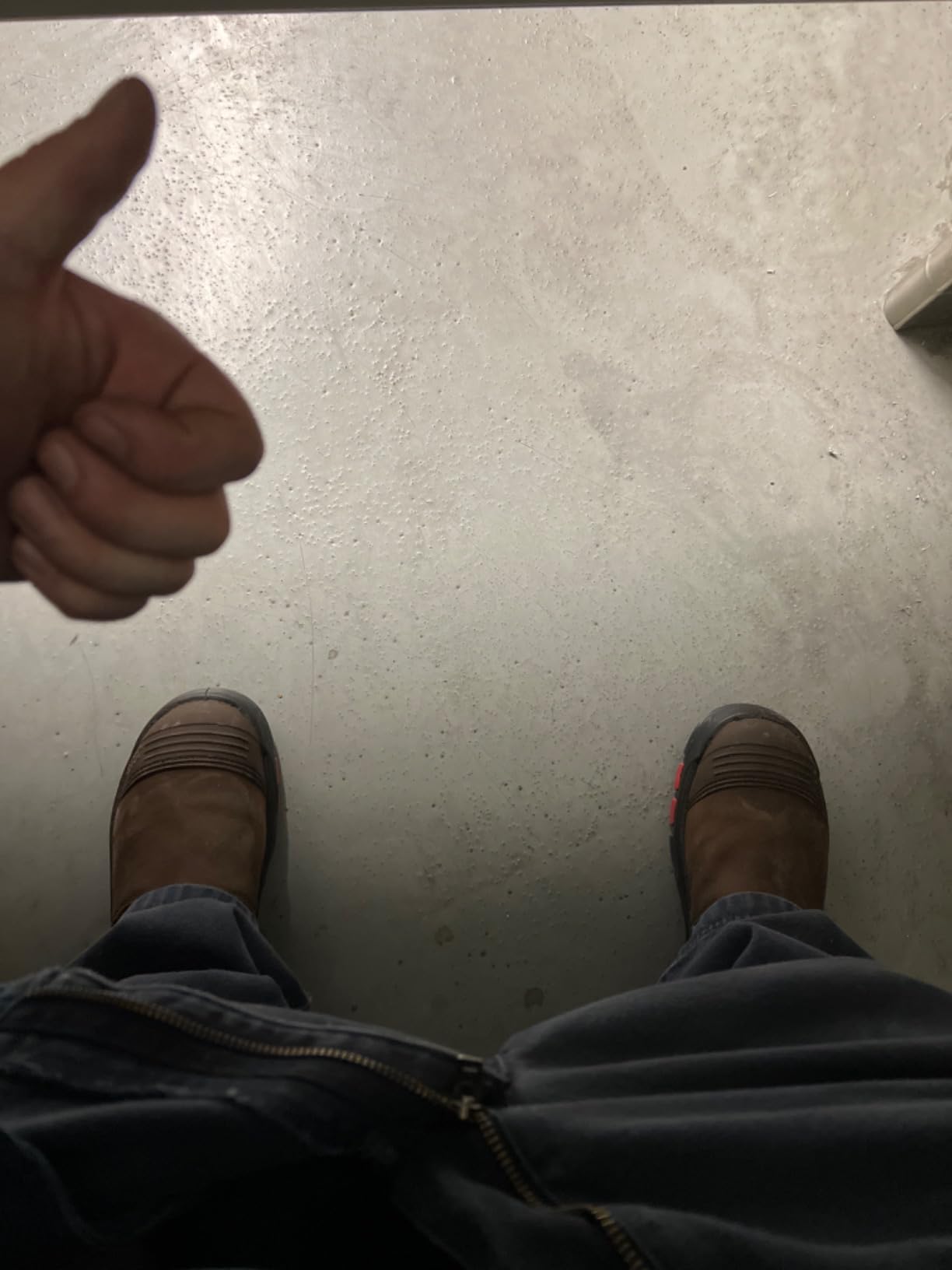
The cons are heavier than a lacing complaint. The steel toe makes it heavy, the break-in is stiff, the interior is abrasive enough to shred socks, the heel pads tear off quickly, and sizing runs large. A few buyers also report a quality decline in recent production runs.
Who benefits most from a pull-on
Anyone with limited hip or ankle mobility. People recovering from an ankle injury, workers with knee problems, and anyone who cannot reach their laces comfortably will find a Chelsea removes a real obstacle. The 292-review base is small, but the feedback pattern is consistent.
Poron XRD is a durable, shock-absorbing material, so this footbed resists the mid-afternoon collapse that cheap foam footbeds suffer on concrete.
Trade-offs to accept
Weight and break-in. The oiled leather and steel toe give this a substantial build, and the stiffness means the first two weeks are uncomfortable. Wear good socks during the break-in because the interior lining is genuinely abrasive.
Size down. Running large is the most common fit error with this boot.
9. Skechers Men’s Lace Up Safety Arch Fit Composite Toe
Skechers Arch Fit SR Comp Toe Black/Charcoal 10.5 D (M)
Arch Fit insole system, APMA certified
Composite safety toe ASTM F2413 with EH
Slip resistant outsole for wet, dry, oily and greasy surfaces
Pros
- APMA certified Arch Fit insole built from 120000 foot scans
- Composite toe is lighter than steel
- Removable cushioned insole
- Documented durability of 13 months or more
Cons
- Runs narrow
- order a wide width
- Upper can separate at the seams over time
- Heavier than expected for a safety shoe
Real laces are the underrated feature here. For a foot that overpronates, the ability to tighten across the midfoot is worth more than almost any cushioning upgrade, and this is one of the few boots in the group where you can actually do that adjustment.
The footbed is the Arch Fit insole system, built from 120,000 foot scans and APMA certified, and it is removable. The composite safety toe meets ASTM F2413 with electrical hazard protection, and the outsole is slip resistant across wet, dry, oily and greasy surfaces.
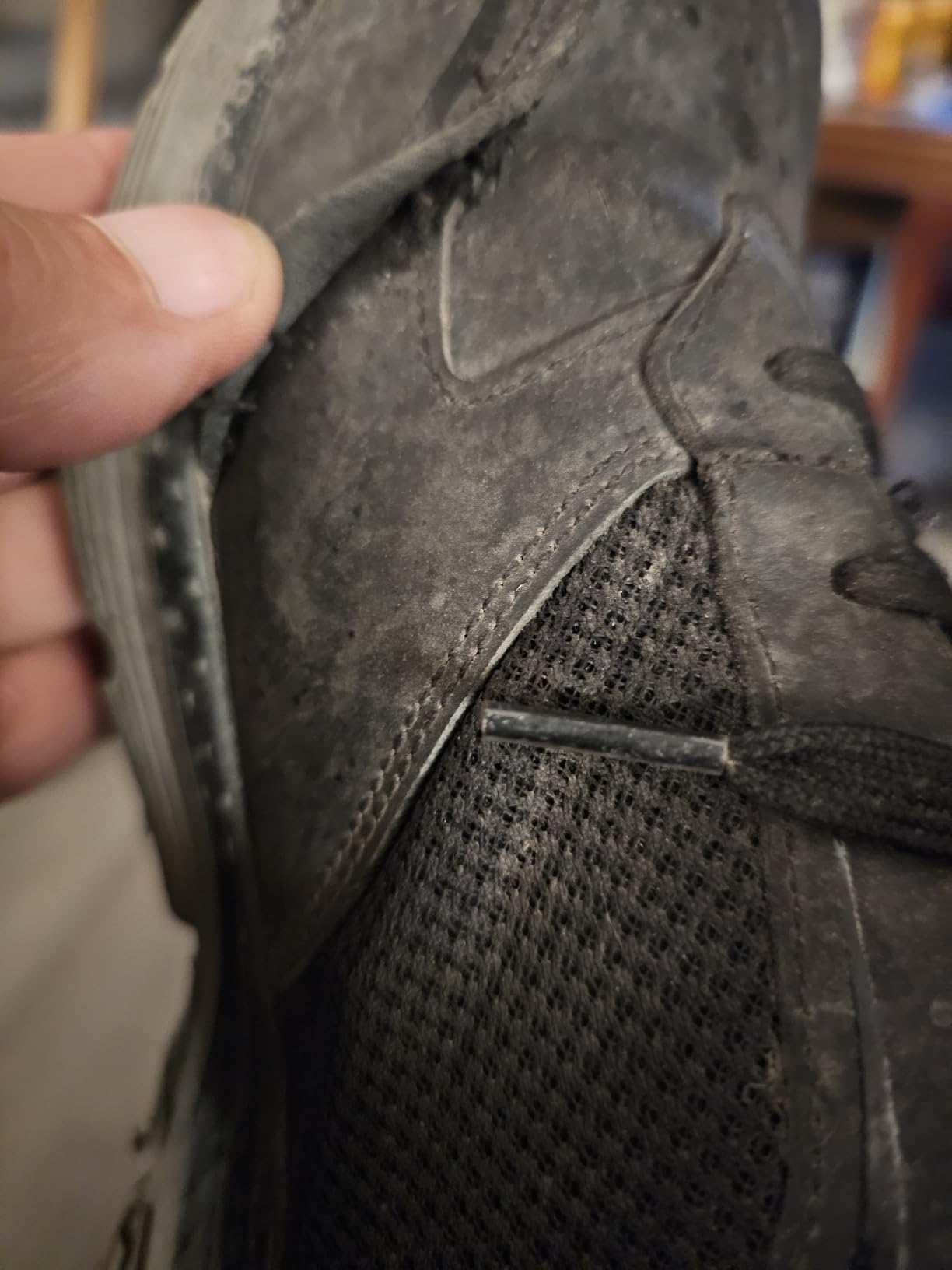
Owners with plantar fasciitis rate this very highly for all-day comfort and report that the composite toe is barely noticeable compared to steel. One reviewer documents 13 months or more of daily wear as a UPS driver, which is the kind of durability data that matters more than any marketing claim.
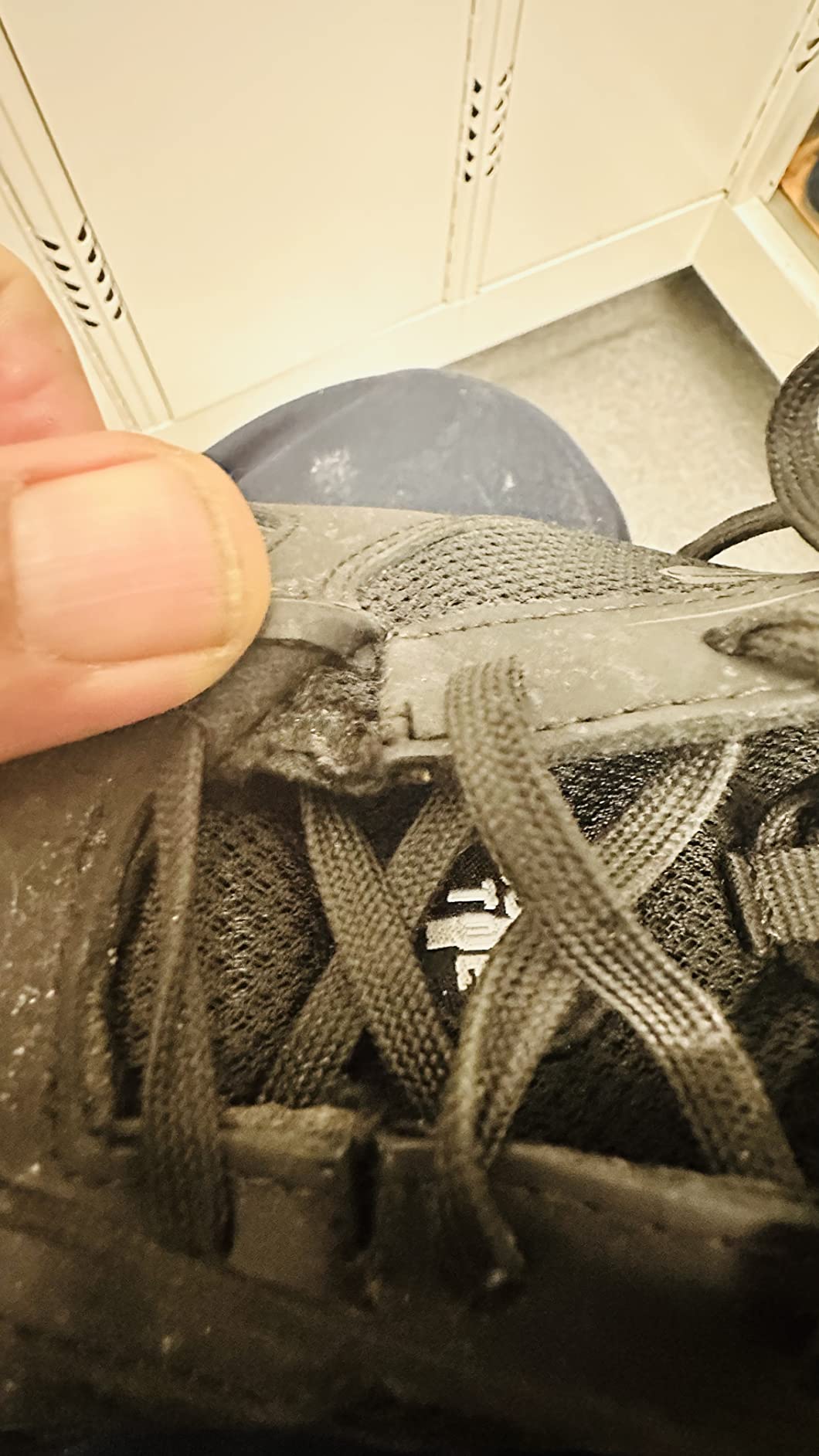
Fit is the catch. It runs narrow, and the advice across reviews is to order a wide width. The upper can separate at the seams over time, and some recent reviews mention fit inconsistency between production batches.
What makes it work for flat feet
Three things stack. The insole is foot-scanned rather than generic, the lace closure lets you tighten across the arch, and the composite toe keeps the whole shoe light enough that you can keep it on for a full shift without fatigue.
The removable insole is also the key to a longer life, since you can replace the footbed long before the upper or outsole is finished.
Where it disappoints
If you do not order a wide width, the forefoot will feel cramped by week two. Several buyers describe the shoe as heavier than they expected, and the seam separation issue appears after extended wear.
This is a light-duty and medium-duty safety shoe. It is not built for the abrasion of landscaping or heavy site work.
10. Skechers Men’s Arch Fit Tarver
Skechers Men’s Work Arch Fit Tarver CT
Patented Arch Fit podiatrist-certified insole
Composite safety toe to ASTM F2413 with EH
Goodyear rubber outsole
SATRA TM-77 tested waterproof
Pros
- Podiatrist-certified Arch Fit insole for flat feet
- Composite toe keeps the weight down
- Waterproof design tested to SATRA TM-77
- Goodyear rubber outsole for grip
Cons
- Shoelaces arrive too short according to multiple reviews
- Stitching can pull out at the seams over time
- Durability concerns after several months
- The wide version can run too large
The Tarver is the boot to shortlist if your work is outdoors and wet. It combines the patented Arch Fit insole system, which is podiatrist-certified for arch support, with a composite safety toe meeting ASTM F2413 including electrical hazard protection, a Goodyear rubber outsole, and a waterproof design tested to SATRA TM-77.
At 4.4 across 280 reviews, it is a strong rating for a waterproof safety boot. Owners report excellent arch support specifically for flat feet and plantar fasciitis, plus comfort straight out of the box.
Reviewers describe a durable construction for work environments and good grip on a range of surfaces. The leather, synthetic and mesh upper with a lace-up closure gives you the midfoot adjustment that flat feet benefit from.
The complaints are specific and fixable. Several reviewers say the supplied laces are too short, which is a cheap problem. More substantively, stitching can pull out at the seams after several months of wear, and the wide version can run too large, so check the size chart rather than assuming.
The waterproof case for flat feet
Wet feet are worse than tired feet for a flat arch. A soaked sock and a damp insole soften everything under the foot, and the arch loses the last bit of support it had. A rated waterproof membrane keeps the footbed dry, which preserves the arch support you paid for.
Compare that to the cheaper boots in this group where reviewers report that waterproof claims do not hold up. The SATRA TM-77 test is a real specification, not a marketing line.
Where it falls short
Seam durability is the main issue, and it appears in reviews after extended wear. The included laces being too short is annoying but trivial to replace.
It is a heavier boot with a mesh and leather upper that is not as cool in high heat as a knit upper would be. If your climate is hot and dry, prioritise the knit and mesh options instead.
11. New Balance Men’s Work and Safety Calibre Composite Toe Work Boots
New Balance Calibre Composite Toe Work Boots for Men – EH, PR, Non-Slip Leather Safety Shoes for Industrial & Construction, Black, 9 Wide
Composite toe to ASTM I/75 C/75 and ASTM F2913-19
Electrical hazard rated to ASTM F2412-18a
Puncture-resistant anti-perforation midsole
Moisture-wicking mesh lining
Pros
- Built around an athletic last rather than a work last
- Moisture-wicking lining and perforated insoles
- Puncture-resistant anti-perforation midsole
- Water-resistant leather upper
Cons
- Sizing runs large for some buyers
- A break-in period is required
- Premium price compared to similar safety shoes
Most safety boots borrow their shape from hiking or industrial footwear. The Calibre borrows from an athletic shoe, and that is exactly why it works for flat feet. A shoe last with a wider, flatter platform under the arch gives a low arch somewhere to sit, and the New Balance comfort insole with an Acteva midsole cushions rather than propping.
On the safety side it carries a lightweight composite toe to ASTM I/75 C/75 and ASTM F2913-19, electrical hazard protection to ASTM F2412-18a, a puncture-resistant anti-perforation midsole, a slip-resistant outsole, and a water-resistant leather upper.
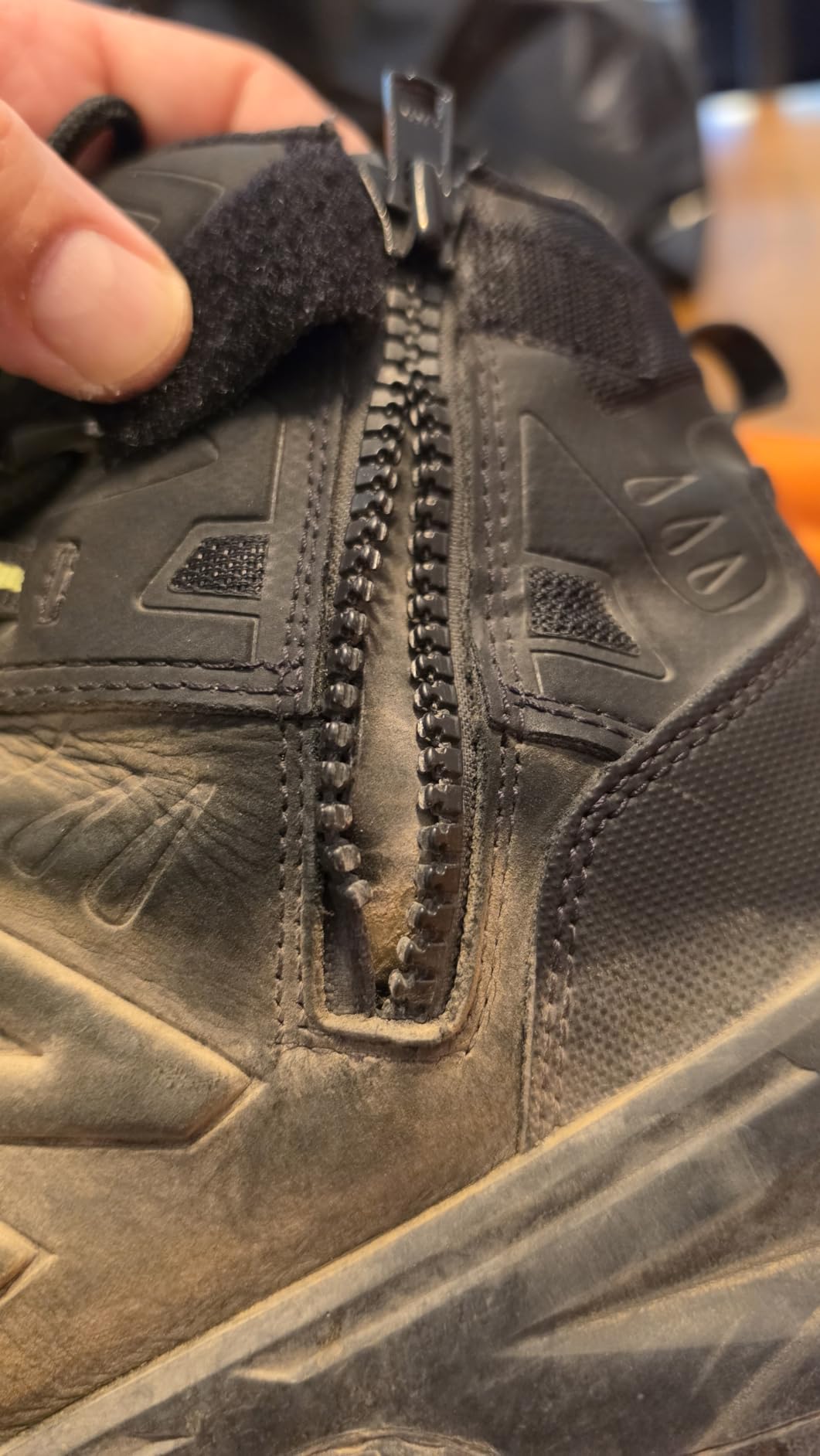
With 1032 reviews at 4.2, it sits in the heavily-reviewed group here and the feedback is remarkably consistent. Owners like the athletic comfort, the lightweight composite toe, good slip resistance, and the moisture-wicking lining with perforated insoles that keeps feet dry through a long shift.
That last point deserves emphasis. Sweating inside a boot is a top complaint in flat-foot communities, and it accelerates both blistering and insole breakdown. A moisture-wicking lining is a practical feature, not a nicety.
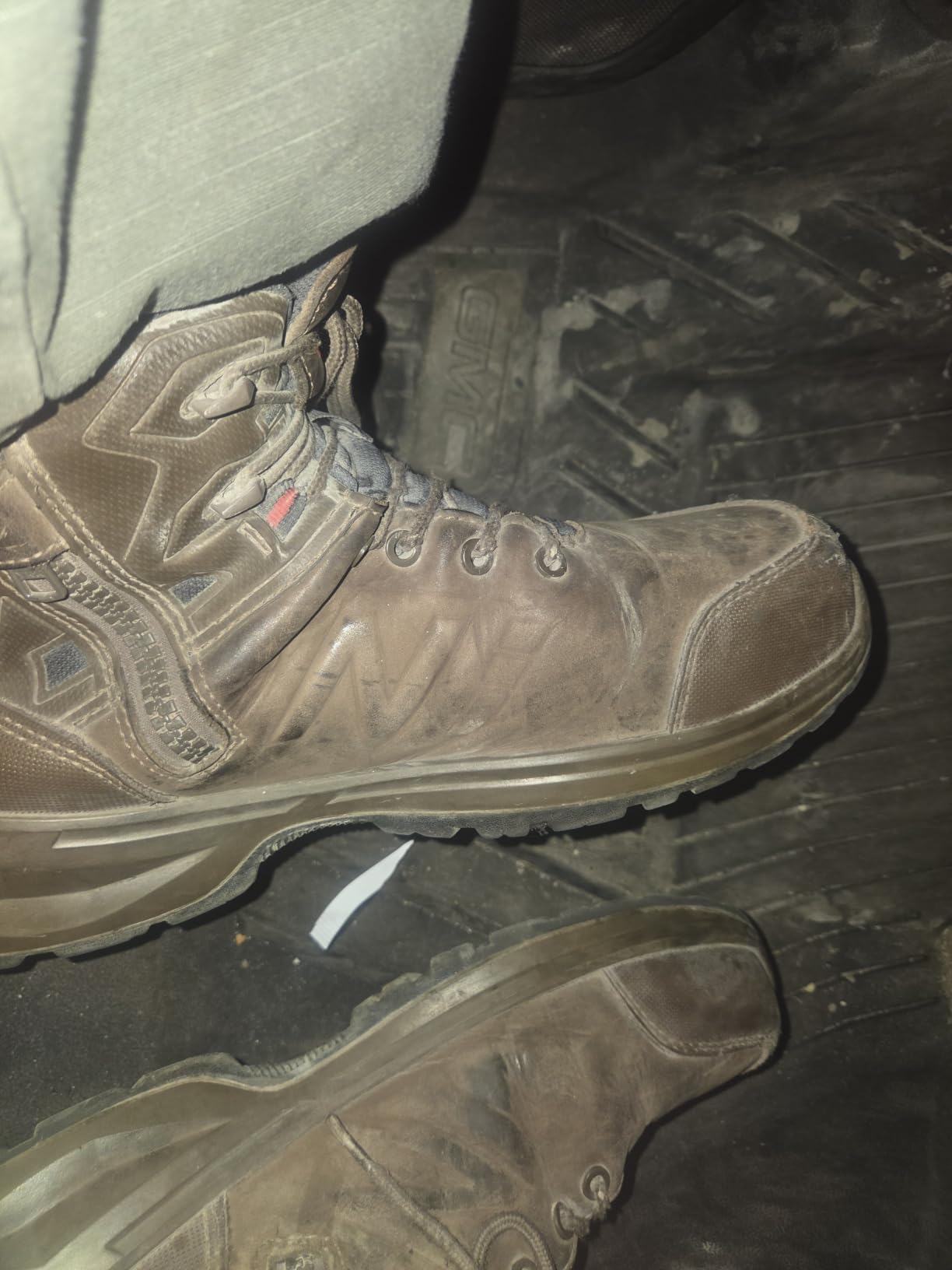
Why an athletic last suits a flat arch
An athletic last is built with a wider base and a shallower heel-to-toe drop than a traditional work boot. Both of those give a flat foot more contact area with the ground and less of a lever arm under the arch, which is the mechanical reason this design is comfortable for low arches.
The Acteva midsole provides cushioning that returns energy through a long shift, which matters more for comfort than peak support does for many flat-footed workers.
Trade-offs
Sizing runs large for a number of buyers, so consider a half size down. A break-in period is also expected, particularly around the arch, which is normal for a supportive boot and worth knowing before day one.
That places it above the basic safety shoes in this group, though it sits below the orthopedic boots on cost. It is a fair middle position for someone who needs breathability and safety in the same pair.
12. NORTIV 8 Men’s Composite Toe Work Boots Slip Resistant
NORTIV 8 Men’s Composite Toe Work Boots Slip Resistant,Black,9.5
Nano composite toe to ASTM F2413-24 I/75, EH, SR
E-TPU midsole for high energy return
Side zipper with lace-up closure
22.5 oz per boot in a size 9
Pros
- Consistently strong slip resistance in wet and muddy conditions
- E-TPU midsole returns energy through a long shift
- Side zipper plus laces gives both speed and adjustability
- 4.5 rating across more than 600 reviews
Cons
- Heavier than the lighter NORTIV 8 model
- Zipper durability drops over time
- An initial break-in period is required
This is the mud and wet-weather version of the lightweight model, and it is the one to pick if your workplace is wet. The nano composite toe meets ASTM F2413-24 for I/75 impact, EH electrical hazard and SR slip resistance, and reviewers single out the traction in muddy and wet conditions as the standout feature.
The midsole is the difference from the lighter model. E-TPU is a higher-energy-return foam than EVA, and owners describe it as responsive through a full day of standing and walking. The synthetic leather insole has a contoured arch section, which is where the flat-foot support comes from.
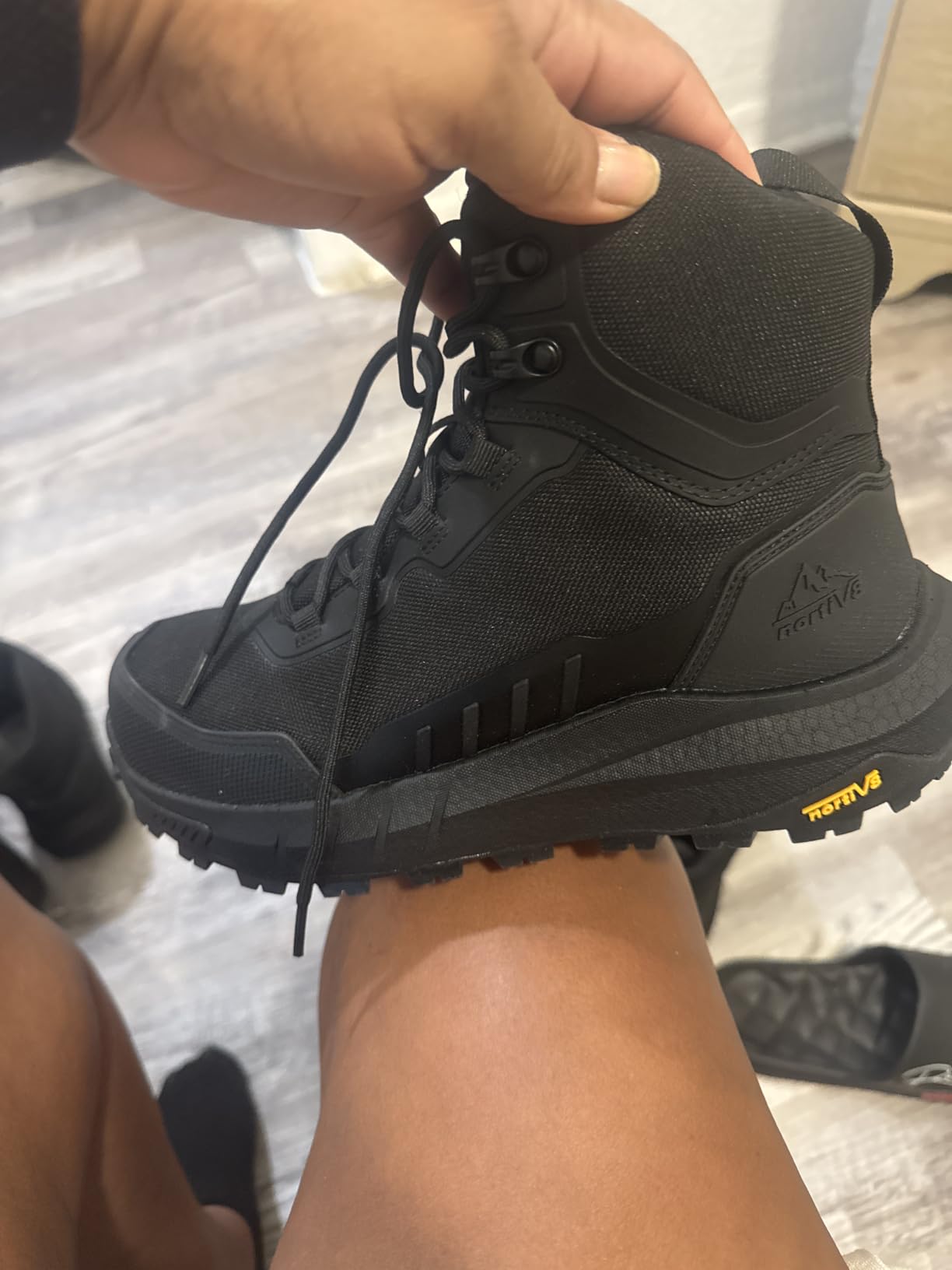
Closure is a genuine strength. The side zipper makes it fast to get on, and the lace-up closure lets you adjust across the midfoot, which is the single most useful feature for an overpronating foot. That combination is rare at this level.
At 22.5 oz per boot in a size 9, it is heavier than its sibling, and that is the main trade-off. Zipper durability over time is the other concern, along with an initial stiffness that needs a short break-in.
Why traction matters more for flat feet
A flat foot rolls inward when it lands, which pushes the sole into the ground at an angle. On a wet or oily surface, that roll is exactly what turns a slip into a fall. A boot rated SR for slip resistance reduces the chance of that uncontrolled roll happening at all.
The combination of a rated outsole, a light composite toe and a responsive midsole means you are not compensating with a heavy, stable boot that tires your legs by hour eight.
Where it loses out
Against the lighter NORTIV 8 model, the extra weight adds up on a 12-hour shift standing still. If your site is dry and mostly concrete, the lighter boot is the better buy.
The insole is synthetic leather with a contoured arch, which is good but not orthopedic. If your heel pain is significant, pair it with an aftermarket insole or look at the Orthofeet option instead.
What to Look for in Work Boots for Flat Feet
These four criteria decide whether a boot manages a flat arch or simply tolerates it. If a product listing does not answer them, keep looking.
Firm arch support. A midsole or footbed that pushes up under the arch and resists collapsing, not a soft pillow that compresses within an hour. For a flat foot, a firm platform that deforms slightly and returns beats maximum cushioning every time.
A sturdy heel counter. The rigid cup at the back of the boot that grips your heel and stops the rearfoot rolling inward. Without it, a flat arch collapses on every step no matter how good the footbed is.
Removable insoles. A footbed you can lift out. This is what lets you swap in firmer aftermarket insoles or prescription orthotics later, and it is also how you replace a footbed that has worn flat rather than buying a new boot.
A wide toe box. Forefoot space so your toes can spread. Cramped toes cause balance changes that push stress back up the foot, and wide forefoot volume is a genuine medical comfort measure for low arches.
Add three secondary criteria we used to rank the list. Toe material changes weight, and weight changes fatigue. A composite or alloy toe is meaningfully lighter than steel with the same protective rating. Outsole slip resistance matters more than most people expect, because overpronation increases the chance of a slip turning into a fall. And closure style is an accessibility decision, not a style one, since elastic or zipper entry removes a real obstacle for anyone with ankle or knee trouble.
Width Codes, Toe Types, and Closure Styles
Most disappointment with work boots comes from a width mismatch, and the codes are genuinely confusing. D is a standard or medium width. 2E, usually labelled W, is wide. 4E, often labelled EE or XW, is extra wide. The problem is that brands apply these labels inconsistently, so a wide boot from one brand can fit narrower than a standard boot from another.
The reliable method is to measure. Stand on a sheet of paper in the evening, mark the heel and the tip of the longest toe, mark the points where the foot is widest across the ball, measure that distance in millimetres, and compare it against the brand’s own width chart for that specific model. Flat feet and a wide forefoot frequently arrive together, and if your measured forefoot width lands in 4E territory, a 2E boot will never work no matter how good its arch support is.
On toe types, steel is heavier and colder, while composite and alloy toes are lighter and thermally quieter. For a 12-hour shift, that difference in weight is meaningful, and neither rating is meaningfully weaker than the other if it carries a proper ASTM F2413 mark. Electrical hazard ratings, marked EH, matter if you work near energised equipment.
For closures, laces give the best midfoot control, elastic panels give the fastest on and off with less control, and pull-on Chelsea styles sit in between. If you can reach your laces comfortably, lacing is the better choice for a flat arch.
Insoles, Break-In, and Hot-Weather Comfort
The single most common improvement reported by flat-footed workers is not a new boot. It is a new insole. Replacing the factory footbed with a firmer aftermarket insole from a brand such as Superfeet, Powerstep or Currex is the fix that appears again and again in owner feedback, because it costs a fraction of a new pair of boots and targets the actual problem.
Match the insole to the boot. A removable footbed gives you freedom. A glued-in footbed does not, so check before you buy anything else. There is a three-step ladder here: the factory footbed is a starting point, a good aftermarket insole handles most mild and moderate cases, and a custom prescription orthotic is the right answer for a diagnosed structural issue or severe pain.
On break-in, be realistic. A stiff leather boot with a firm orthotic footbed needs two to three weeks of short, increasing wear before a full shift, and the first week often feels worse at the arch rather than better. A knit or mesh upper with an EVA midsole is comfortable within a day or two. You cannot judge arch support on the first day, because the footbed has not yet formed to your foot.
Heat is the issue almost no roundup covers, and it matters more than most people expect. Waterproof membranes keep water out and trap heat and sweat in, so a waterproof boot in a hot climate can be worse than a non-waterproof one. Knit and mesh uppers move moisture away from the skin, and a moisture-wicking lining is worth more than most people credit. If you sweat heavily, a breathable non-waterproof boot and a spare pair of socks will outperform a sealed boot every time. For cold-weather work, our guide to the best insulated work boots for winter work covers the other half of the year, and our best hiking boots for wide feet guide goes deeper on narrow-heel wide-forefoot fits.
When Flat Feet Need More Than a Boot
A boot manages symptoms, it does not correct a flat arch. Anyone reading a roundup hoping that the right pair will end heel pain overnight will be disappointed, and it is worth being direct about that before you spend.
Seek a podiatrist if heel pain wakes you at night, if the pain is worse after standing still than after walking, if you see a bulge along the inside of the arch, or if you have diabetes, arthritis or a history of ankle sprain. Those patterns point to plantar fasciitis, a posterior tibial tendon problem or a different foot structure that needs a proper assessment, not a different size.
Two habits extend the life of any boot you choose. Rotate between two pairs so the foam midsoles and footbeds recover between shifts, and replace the insole long before the boot looks worn, since a collapsed footbed is what makes comfortable boots suddenly painful. Our guides to the best walking shoes for flat feet and the best running shoes for flat feet cover the off-duty hours where most foot problems start.
Frequently Asked Questions
What boots are best for flat feet?
The best boots for flat feet combine a firm arch-supporting midsole, a sturdy heel counter, a wide toe box and a removable footbed. A supportive last matters more than any single cushioning feature, because a flat arch needs a platform that resists collapsing rather than a soft insert that compresses. Our top pick is the NORTIV 8 lightweight composite toe boot, which pairs a certified safety toe with an arch-contoured insole at a very low weight.
What brands are best for flat feet?
Brands that consistently get recommended for flat feet are those that build around a wide, low-arched last rather than trimming a standard one. Orthofeet is repeatedly praised in flat-foot communities for very flat and wide lasts. Skechers, KEEN and New Balance are also frequently mentioned because their comfort and safety shoes use roomier shapes. Skechers appears three times in our list because its Arch Fit footbeds suit low arches, though you should always order a wide width.
What are the best work shoes for flat feet?
For flat feet, the best work shoes are lower-cut safety shoes with a wide toe box and a shaped footbed, because a low-cut upper removes the pressure a tall collar puts on a wide midfoot. The FitVille extra wide composite toe shoe is the clearest example here, with an extra wide forefoot volume at 800g per pair. The Skechers Charles slip-on pairs an alloy toe with an Arch Fit footbed and is built for long shifts on concrete.
What are the best insoles for flat feet in work boots?
The best insoles for flat feet in work boots are firm, contoured and full-length, and the boot must have a removable footbed to accept them. Superfeet, Powerstep and Currex are the three most frequently recommended in worker forums. A good aftermarket insole handles most mild to moderate cases, while a custom prescription orthotic is the right answer for a diagnosed structural issue or severe pain. Replacing the insole is usually a fraction of the cost of new boots.
What work boots do podiatrists recommend for flat feet?
Podiatrists generally recommend three things for flat feet: a firm midsole that resists arch collapse, a deep and rigid heel counter that controls the rearfoot, and a removable footbed so a prescription orthotic can be fitted. They also stress that a boot manages symptoms rather than correcting the arch, and that a flat foot combined with a wide forefoot usually needs an extra wide last. See a podiatrist directly if heel pain wakes you at night or if the pain is worse after standing than walking.
Can work boots fix flat feet?
No boot can correct a flat arch, and any product claiming otherwise is overselling. What good work boots do is manage the mechanics: a firm midsole pushes back against arch collapse, a heel counter limits overpronation, a wide toe box lets the forefoot spread without cramping, and a removable footbed lets you add orthotic correction. That difference is significant for comfort over a long shift, but it is symptom management, not a cure.
Are wide-width work boots better for flat feet?
Wide-width work boots are better for flat feet when the flat arch is accompanied by a wide forefoot, which is a very common combination. A wide last stops the forefoot being compressed, and compressed toes change your balance and push stress back up the foot. Measure the width across the ball of your foot in the evening and compare it with the brand’s chart for that model, because width labels differ between brands and a wide boot from one maker can fit narrower than a standard boot from another.
How long do work boots take to break in for flat feet?
A stiff leather boot with a firm orthotic footbed needs two to three weeks of short, increasing wear before a full shift, and the first week often feels worse at the arch rather than better. A knit or mesh upper with an EVA midsole is comfortable within a day or two. Do not judge the arch support on the first day, because the footbed has not yet formed to your foot. If the arch is still painful after two weeks of regular wear, the fit is wrong rather than the boot being faulty.
Conclusion: Our Best Work Boots for Flat Feet in 2026
Our top pick for 2026 is the NORTIV 8 lightweight composite toe boot, which holds a 4.5 rating across more than 700 reviews while keeping a certified ASTM F2413-24 toe and staying light enough for a full shift. If plantar fasciitis is part of your picture, the Orthofeet Granite has the strongest built-in orthotic and a reinforced shank. If your foot is flat and genuinely wide, the extra wide FitVille models give you a forefoot volume that standard lasts cannot.
Whatever you choose, the fit matters more than the badge on the box. Measure your foot in the evening, order the width the measurement supports, and plan two to three weeks of break-in before judging it. And if the arch pain is severe enough to wake you at night, get to a podiatrist before you buy another boot.