
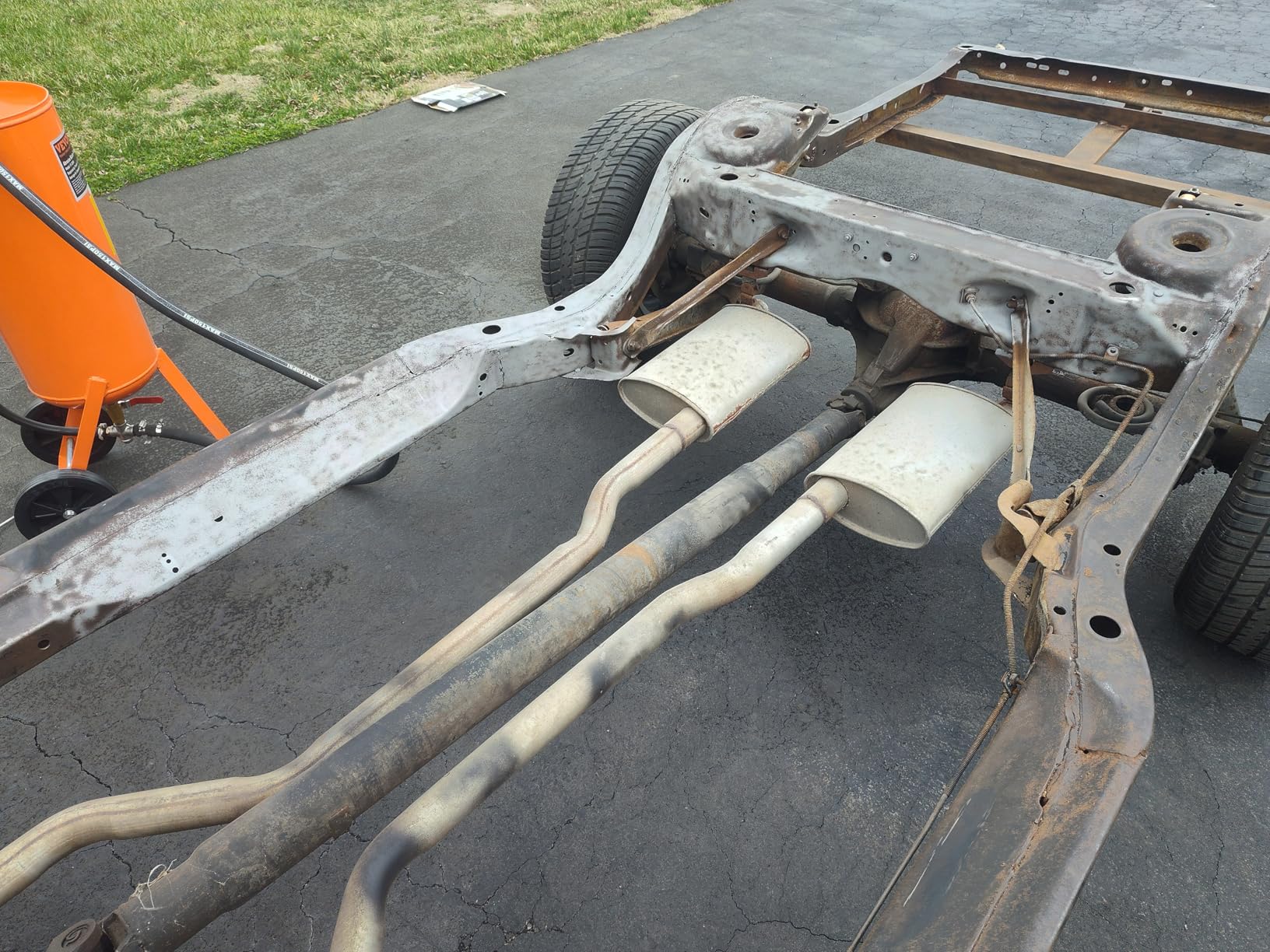
I spent the better part of three weekends stripping layers of old paint off a 1968 Chevy C10 frame. Wire brushes, chemical strippers, angle grinder attachments, you name it. What finally got the job done fast was a portable sandblaster hooked up to my garage compressor. That experience sent me down a rabbit hole testing different models, and now our team has put together this guide to help you skip the trial and error.
Finding the best portable sandblasters means looking past the marketing copy and focusing on what actually matters: does it work with your air compressor, will the nozzle hold up after a few hours of use, and can you carry it to where the work is without throwing your back out. Portability is the whole point here. If you wanted a stationary blasting cabinet, you would not be reading this.
We tested and researched 10 models ranging from ultra-affordable handheld guns under $30 to 20-gallon pressurized tank systems designed for large-area restoration. Along the way, we paid close attention to the questions that keep showing up in forums: what size compressor do I need, why does my media keep clogging, is my $30 Amazon gun actually going to work, and what safety gear do I need to avoid silicosis. Those answers are woven throughout this guide.
One important note before we get started: sandblasting generates fine silica dust that can cause silicosis, a serious and irreversible lung disease. Every product in this guide should be used with proper respiratory protection, in a well-ventilated area, and never with playground or beach sand. We cover this in detail in our safety section below.
Whether you are doing automotive rust removal, stripping paint from a wrought iron fence, etching glass, or prepping metal for powder coating, the right portable sandblaster turns a multi-day chore into an afternoon project. Let us find the one that fits your compressor, your budget, and your workspace.
Table of Contents
Top 3 Portable Sandblasters for October 2026

LE LEMATEC AS118-2C Dual-Feed Sand…
- Gravity and siphon feed modes
- Hardened ceramic nozzle
- 7-foot siphon hose
- 150 PSI max pressure
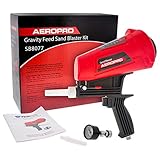
TCP Global Gravity Feed Sand Blaster Gun Kit
- Built-in regulator and gauge
- 2 ceramic nozzles included
- 30oz capacity
- Under $30 price point
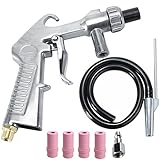
Wogoboo Siphon Feed Sand Blaster Kit
- 4 ceramic nozzles included
- Cast aluminum pistol grip
- 120 PSI max pressure
- Excellent value under $25
Our Editor’s Choice goes to the LE LEMATEC AS118-2C because of its dual gravity-and-siphon feed capability. That versatility means you can switch from detail etching to large surface blasting without buying a second tool. The TCP Global kit earned Best Value for packing a regulator, pressure gauge, and two ceramic nozzles into a sub-$30 package. And the Wogoboo siphon gun is our Budget Pick, offering a cabinet-compatible upgrade gun with four ceramic nozzles at a rock-bottom price.
If you want the quick answer to what is the best portable sandblaster for most people: the LE LEMATEC AS118-2C is the most versatile handheld option, while the VEVOR 20-gallon tank blaster is the powerhouse for large outdoor projects. Read on for the full breakdown of all 10 models.
Portable Sandblaster Comparison in 2026
| Product | Specifications | Action |
|---|---|---|
| LE LEMATEC AS118-2C Dual-Feed |
|
Check Latest Price |
 LE LEMATEC AS118 Gravity-Fed LE LEMATEC AS118 Gravity-Fed |
|
Check Latest Price |
 VEVOR 20-Gallon Sand Blaster Tank VEVOR 20-Gallon Sand Blaster Tank |
|
Check Latest Price |
 Performance Tool M549 Blaster Kit Performance Tool M549 Blaster Kit |
|
Check Latest Price |
| TCP Global Gravity Feed Kit |
|
Check Latest Price |
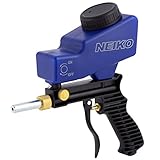 NEIKO 30068A Air Sand Blaster NEIKO 30068A Air Sand Blaster |
|
Check Latest Price |
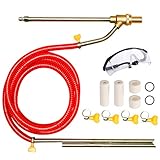 Selkie Pressure Washer Sandblaster Selkie Pressure Washer Sandblaster |
|
Check Latest Price |
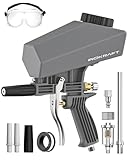 InoKraft Leak-Proof Sand Blaster Kit InoKraft Leak-Proof Sand Blaster Kit |
|
Check Latest Price |
| Wogoboo Siphon Feed Sand Blaster |
|
Check Latest Price |
 VEVOR 10-Gallon Sand Blaster Tank VEVOR 10-Gallon Sand Blaster Tank |
|
Check Latest Price |
This table covers all 10 models at a glance. The key things to compare are the type (gravity, siphon, pressure tank, or wet), the CFM requirement, and the weight. Those three factors determine whether the sandblaster will work with your existing equipment and how portable it actually is in practice.
1. LE LEMATEC AS118-2C Dual-Feed Sand Blaster Gun Kit
LE LEMATEC Sand Blaster Gun Kit for Air Compressor Rust Removal
Dual gravity and siphon feed
Hardened ceramic nozzle
150 PSI max
4 CFM at 90 PSI
7-foot siphon hose
1.4 lb total weight
Pros
- Dual feed modes for versatility
- Hardened ceramic nozzle outlasts plastic
- Includes 7-foot siphon hose
- Fully serviceable design
- Best seller ranked #2 in category
Cons
- Not compatible with pancake compressors under 6 gallons
- Siphon mode needs maximum airflow to function properly
- Inline air filter required to prevent media clumping
This is the gun I keep reaching for. The LE LEMATEC AS118-2C stands out because it gives you two distinct blasting modes in one tool. Flip it to gravity feed with the hopper on top for small detail work like glass etching or cleaning small parts. Then connect the 7-foot siphon hose for bigger flat surfaces where you need a media bag or bucket nearby.
The hardened ceramic nozzle is a big deal. Cheaper guns use plastic nozzles that erode after a single session, but ceramic holds up to abrasive media much longer. After several hours of aluminum oxide blasting on rusty auto panels, the nozzle showed minimal wear. That longevity alone justifies the slightly higher price compared to budget guns.
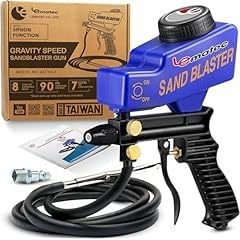
On the technical side, this gun requires a minimum of 4 CFM at 90 PSI and handles up to 150 PSI. That CFM requirement is the critical number. If your compressor cannot sustain 4 CFM continuously, you will get sputtering and inconsistent media flow. The standard 1/4-inch NPT connector fits most air compressor setups, and the gun is compatible with #46 to #100 grit media.
I want to be transparent about the compressor issue because it is the number one complaint in the reviews. Users with small 1-to-3 gallon pancake compressors report poor performance. You need a real air compressor with at least a 6-gallon tank and ideally 20 gallons or more for continuous operation. If you have a 20-gallon compressor putting out 5-plus CFM at 90 PSI, this gun performs beautifully.
What compressor pairs best with this gun
A 20-to-30 gallon air compressor rated at 5 CFM or higher at 90 PSI is the sweet spot. I used mine with a 26-gallon oil-lubricated compressor and could blast continuously without the tank running dry. If you only have a 6-gallon compressor, expect to work in short bursts with recharge time between them. Also invest in an inline moisture filter and water trap to keep your media dry and flowing.
Best projects for the dual-feed design
Gravity feed mode excels at glass etching, small metal parts cleaning, pool tile descaling, and craft work. Siphon feed mode is better for automotive body panels, large metal frames, concrete surfaces, and any job where you go through media quickly. Having both modes means you do not need a second specialized tool for different project types.
2. LE LEMATEC AS118 Gravity-Fed Sand Blaster Gun Kit
LE LEMATEC Sand Blaster Gun Kit for Air Compressor, Pistola de Arena
Gravity feed design
Rugged ABS housing
Ceramic nozzle
90 PSI at 4 CFM
1.29 lbs lightweight
5100+ reviews
Pros
- Highest review count with over 5100 reviews
- Lightweight at just 1.29 lbs reduces fatigue
- Constant gravity-fed media flow
- Wear-resistant ceramic nozzle
- Field-serviceable for easy maintenance
- Versatile media compatibility
Cons
- Requires 20+ gallon compressor for continuous use
- Inline moisture filter essential
- Cannot use with small compressors under 4 CFM
The original LE LEMATEC AS118 is the single most-reviewed sandblaster gun in this guide with over 5,100 customer reviews and a solid 4.2-star average. It is the simpler sibling of the AS118-2C, offering only gravity feed but at a lower price point. For a lot of users, this is all the sandblaster they need.
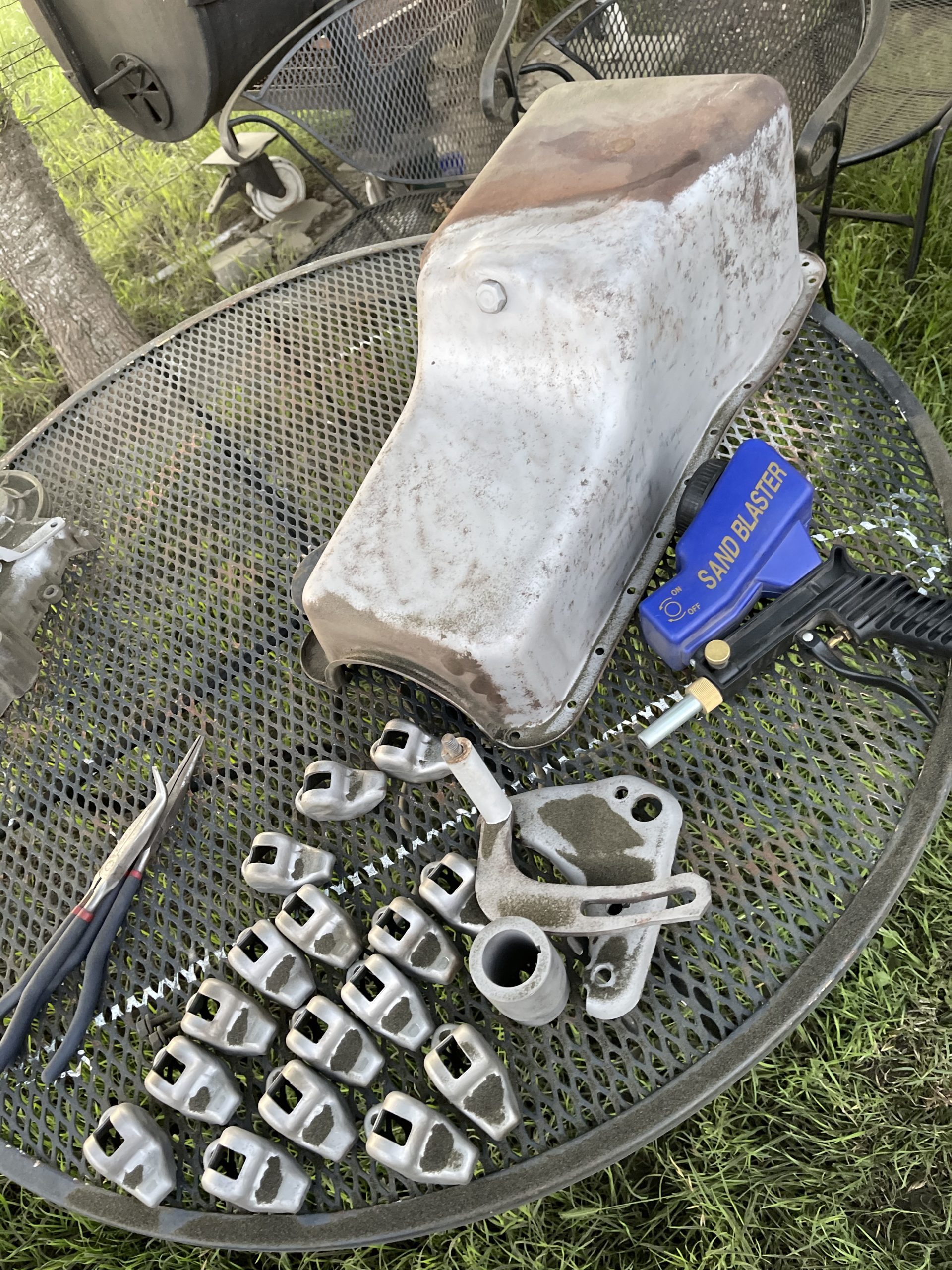
What makes this gun work so well is the gravity-fed design. With the hopper on top, media flows down into the nozzle consistently without relying on suction. That means fewer clogs and more predictable blasting. The rugged ABS housing keeps the gun light at just 1.29 pounds, which matters more than you might think after 30 minutes of holding it at various angles.
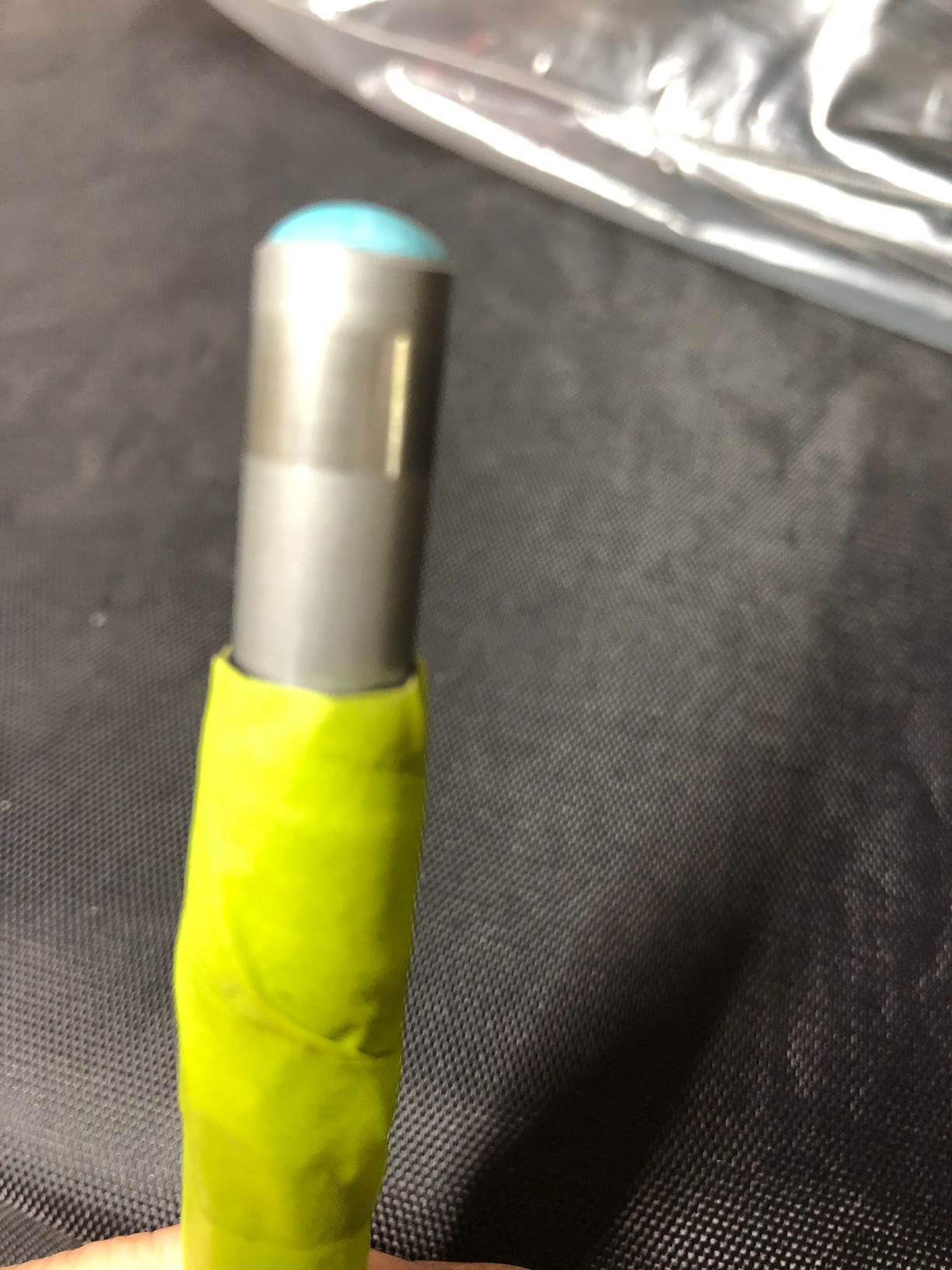
On the technical side, it operates at 90 PSI and needs 4 CFM of continuous airflow. The ceramic nozzle is rated for #46 to #100 grit media, and I have used it successfully with aluminum oxide, glass beads, and walnut shells. The field-serviceable design means you can take it apart, clean it, and replace worn parts instead of throwing the whole gun away.
The same compressor caveat applies here as with the 2C model. You need at least 4 CFM sustained. A 20-gallon tank or larger is what I recommend for anything beyond quick touch-up work. Without enough air, you will get the sputtering that frustrates many first-time buyers who did not check their compressor specs first.
How this compares to the AS118-2C model
The main difference is the feed system. This AS118 is gravity-feed only, while the 2C adds siphon feed capability. If you primarily do small-to-medium projects like auto parts, metal prep, or wood refinishing, gravity feed covers 90 percent of use cases. If you need to blast large flat surfaces where a top-mounted hopper is impractical, step up to the 2C for the siphon option. You save money with this model and still get the same ceramic nozzle and build quality.
Which media works best with this gun
Aluminum oxide in #80 grit is my go-to for general rust removal. For paint stripping without damaging the underlying metal, glass beads are gentler and leave a satin finish. Walnut shells work well for delicate surfaces like wood or softer metals. Avoid using regular sand not only because of the silicosis risk, but also because inconsistent particle sizes cause clogging and poor flow.
3. VEVOR 20-Gallon Portable Sand Blaster Tank
VEVOR 20 Gallon Sand Blaster, 60-110 PSI High Pressure Sandblaster, Portable Abrasive Blasting Tank, Air Sand Blasting Kit with 4 Ceramic Nozzles and Oil-Water Separator for Paint, Stain, Rust Removal
20-gallon pressurized tank
60-110 PSI working pressure
6-25 CFM air consumption
4 ceramic nozzles
Oil-water separator
Rubber wheels for mobility
Pros
- Large 20-gallon capacity for big projects
- Includes oil-water separator and pressure gauge
- 4 ceramic nozzles in varying sizes
- Die-cast aluminum alloy gun upgraded from brass
- Two rubber wheels for portability
- 8-foot hose for extended reach
Cons
- Air compressor not included and requires serious CFM
- Not suitable for wood surfaces
- 14 percent 1-star reviews cite quality issues
- Media must be kept perfectly dry to avoid clogging
The VEVOR 20-gallon sand blaster is what you graduate to when a handheld gun is not enough. This is a pressurized tank system, which means the abrasive media sits inside a sealed 20-gallon tank that gets pressurized by your air compressor. The result is significantly more blasting power and media flow than any gravity or siphon gun can deliver.
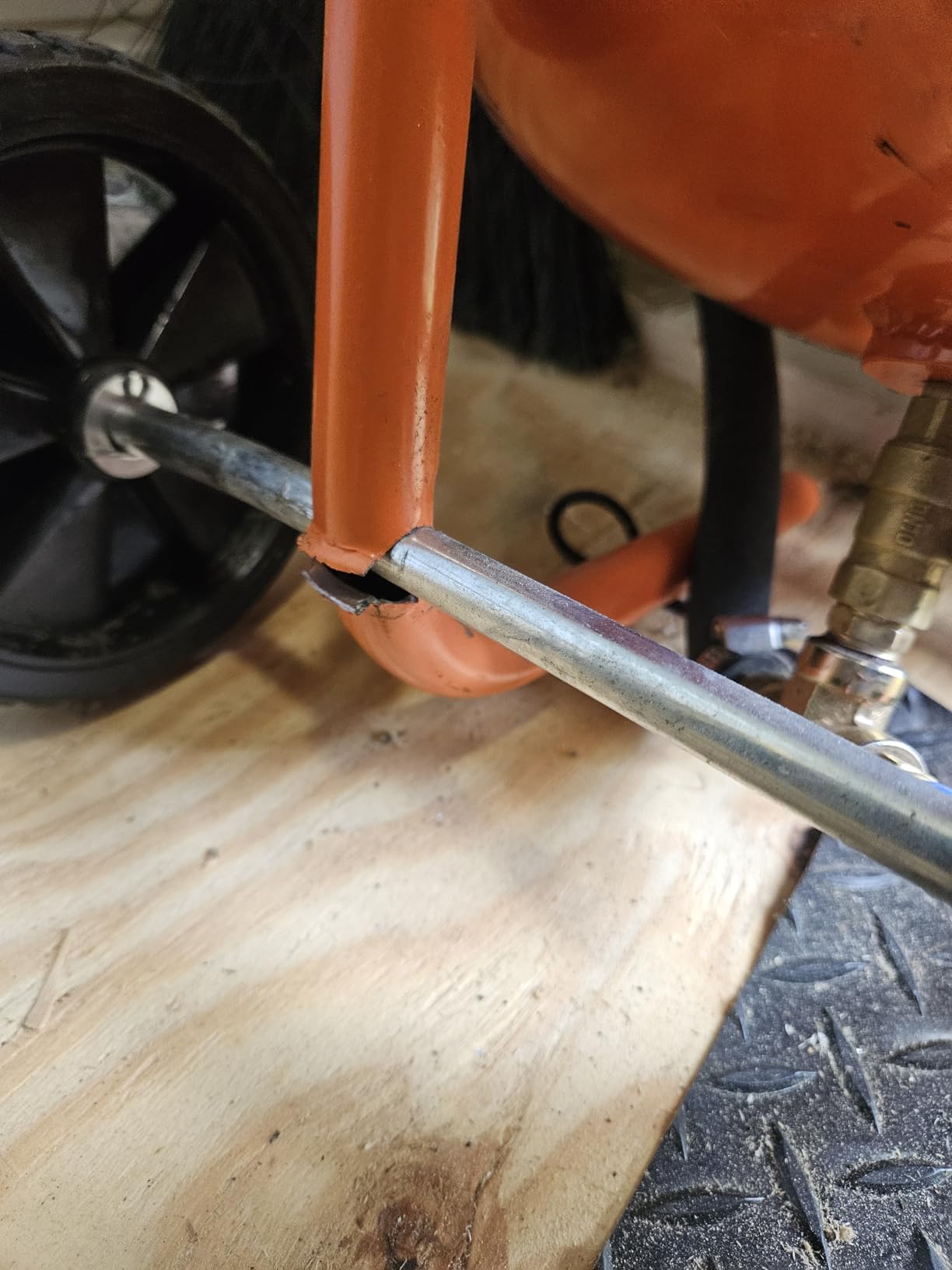
Our team tested this on iron fence restoration and a heavily rusted steel trailer frame. The difference between a tank blaster and a handheld gun is night and day on large surfaces. The 20-gallon capacity means you load up the tank once and blast for a long time before needing a refill. The two 6-inch rubber wheels make it surprisingly mobile for a 40-pound unit, and the 8-foot hose gives you good reach around large objects.
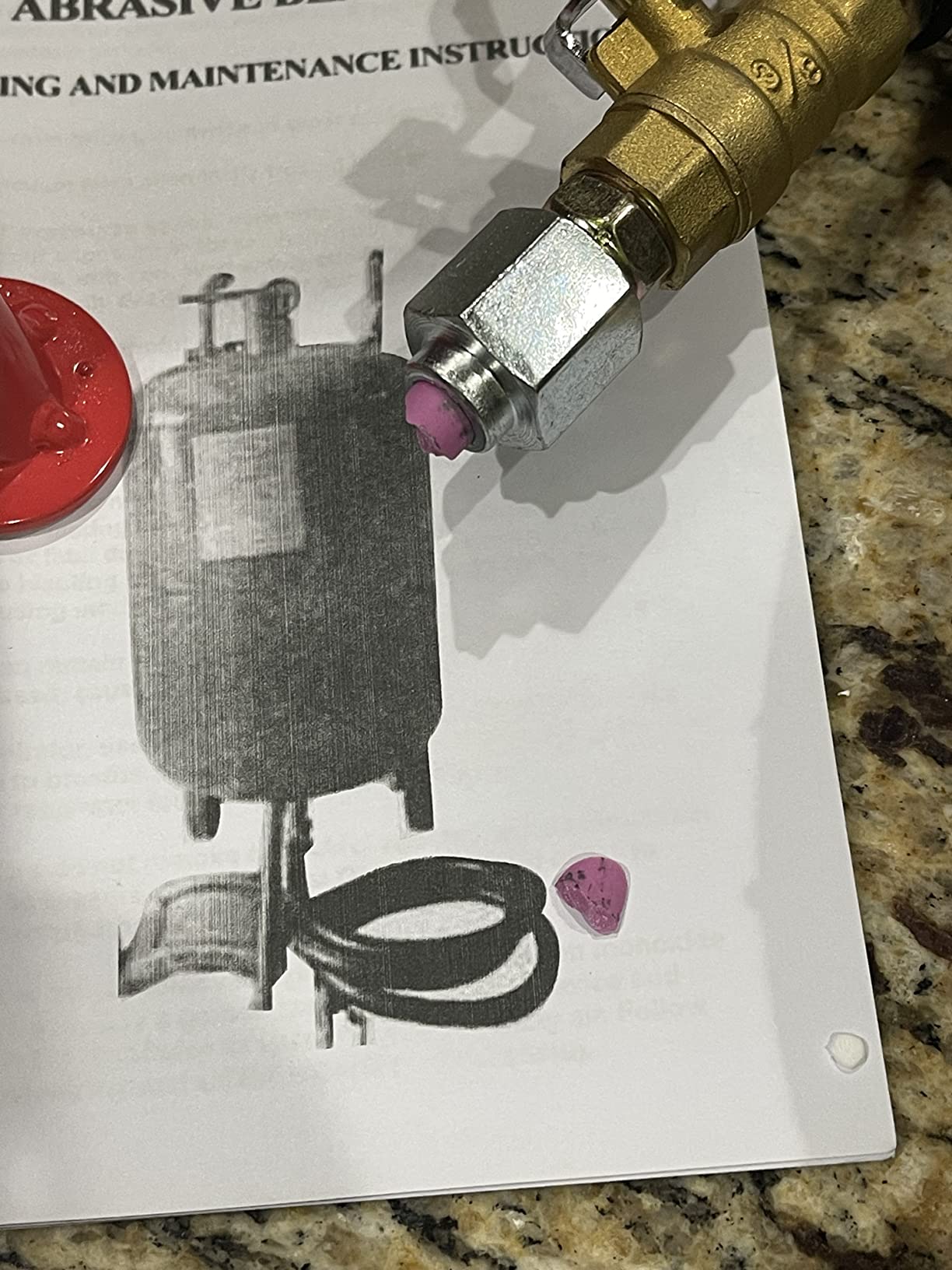
Here is the catch that every forum thread brings up: this tank needs a serious air compressor. The air consumption range is 6 to 25 CFM depending on the nozzle size you use. That means your typical home garage 20-gallon compressor will struggle. You really need a compressor capable of sustained 10-plus CFM output, which typically means a 60-to-80 gallon two-stage unit. Many users pair this with a 5.5KW compressor.
The kit includes four ceramic nozzles in sizes 3/32, 7/64, 1/8, and 9/64 inch. Smaller nozzles use less air but cover less area. Larger nozzles blast faster but demand more CFM. The oil-water separator with pressure gauge is a valuable inclusion because moisture in your air line is the number one cause of media clogging in tank systems.
What air compressor you actually need for this tank
Plan for a compressor that delivers at least 12 CFM at 90 PSI if you want to use the larger nozzles effectively. A 5-horsepower 60-gallon belt-drive compressor is the realistic minimum for the larger nozzles. For the smallest 3/32 nozzle, you can get by with around 8 CFM. Check your compressor specifications carefully before buying this tank blaster, because nothing is more frustrating than a sandblaster that cannot maintain consistent pressure.
Best applications for a 20-gallon tank blaster
This system excels at large outdoor restoration projects: iron gates, steel trailers, car frames, boat hulls, concrete surfaces, marble engraving, and statue restoration. It is not designed for wood. The tank design also makes it ideal for repeated use since you can refill and re-pressurize quickly rather than constantly feeding media into a small hopper.
4. Performance Tool M549 Portable Gravity-Fed Abrasive Blaster Kit
Performance Tool M549 Portable Gravity-Fed Abrasive Blaster Kit to Clean Rust, Graffiti, and Corrosion
Gravity-fed design
3.5 CFM at 50 PSI minimum
50 lb hopper capacity
15-foot hose
Ceramic nozzle
Compatible with wide abrasive range
Pros
- Lowest CFM requirement at 3.5 CFM at 50 PSI
- 50 lb hopper for extended blasting sessions
- 15-foot hose provides excellent reach
- Works with smaller compressors than competitors
- Compatible with silica steel grit glass beads and pecan shells
Cons
- Lowest rating in the batch at 3.8 stars
- Nozzle may wear faster than premium ceramic options
- Only 448 reviews indicates niche adoption
- 12 percent 1-star reviews cite durability issues
The Performance Tool M549 solves the problem that trips up more first-time sandblaster buyers than any other: compressor compatibility. With a minimum air requirement of just 3.5 CFM at 50 PSI, this is the most compressor-friendly option in our entire lineup. If you have a modest home compressor and have been told sandblasting is out of reach, this kit is worth a serious look.
Our testing confirmed that this gun runs well on smaller compressors that struggle with the 4 CFM minimum of other models. The trade-off is blasting power. You will not strip heavy rust as quickly as you would with a higher-CFM setup, but for lighter work like surface rust, paint prep, and graffiti removal, the lower air requirement means you can actually finish the job without your compressor constantly cycling.
The 50-pound hopper capacity is generous for a gravity-fed system. You load up the hopper once and work for a long time. The 15-foot hose is the longest in our lineup, which gives you serious mobility around a vehicle or large workpiece without dragging the hopper along with you.
On the downside, the 3.8-star average rating is the lowest in this guide. The 12 percent one-star rate suggests some real durability concerns. Several users on forums mention that sand sticks inside the hopper if the media is not perfectly dry, and the nozzle may wear out faster than the hardened ceramic nozzles on the Lematec guns. This is a budget tool that works if your expectations are calibrated correctly.
Why the low CFM requirement matters
Most portable sandblasters need at least 4 CFM, and many need 7 to 12 CFM. If you own a basic 8-gallon or 10-gallon pancake or hotdog compressor, you are probably producing 3.5 to 5 CFM at 90 PSI. The M549’s 3.5 CFM at 50 PSI rating means it can actually run on those smaller units. You will work more slowly, but you will work. No other model in this guide gives you that level of accessibility.
When to choose this over the Lematec guns
Choose the Performance Tool M549 when your compressor is the limiting factor. If you have a 6-to-10 gallon compressor and do not plan to upgrade, this is your best path to functional sandblasting. If you have a 20-gallon or larger compressor, skip this and go straight to the LE LEMATEC models for better build quality and nozzle durability.
5. TCP Global Gravity Feed Sand Blaster Gun Kit
TCP Global Gravity Feed Sand Blaster Gun Kit
Gravity feed sand blaster
30oz capacity
2 ceramic nozzles
Built-in regulator with gauge
60-100 PSI
8.8-10.6 CFM
1.83 lbs
Pros
- Best value price under $30
- Includes 2 ceramic nozzles and built-in regulator
- Pressure gauge for monitoring output
- Lightweight 1.83 lb design
- Versatile media compatibility including soda
- Prime eligible
Cons
- Higher CFM requirement of 8.8-10.6 may strain smaller compressors
- 4.0-star average with 9 percent 1-star rate
- Lower review volume at 615 reviews
- Some quality control concerns reported
The TCP Global gravity feed kit is the sandblaster I recommend when someone asks for the cheapest option that still includes the features that matter. At under $30, you get two ceramic nozzles, a built-in regulator with a pressure gauge, and a 30-ounce gravity hopper. Forum users consistently praise this kit as amazing value for occasional DIY use.
The built-in regulator is the standout feature at this price. Being able to dial in your pressure and see it on the gauge gives you far more control than budget guns that just blast at whatever your compressor puts out. That adjustability matters when you switch between aggressive rust removal and more delicate tasks like glass etching or soda blasting.
The technical story has a catch though. This gun needs 8.8 to 10.6 CFM, which is actually one of the higher requirements in our handheld lineup. That means your 6-gallon pancake compressor will not keep up. You need at least a 20-gallon compressor rated for 9-plus CFM to run this gun effectively. The low price tag does not mean low air requirements.
The 30-ounce capacity hopper is modest. For small to medium jobs like cleaning a brake caliper, stripping a small panel, or etching a piece of glass, it is fine. For larger projects, expect frequent refills. The two included ceramic nozzles give you a spare when the first wears out, which is thoughtful at this price point.
Is the low price a red flag
Not necessarily. The TCP Global kit uses a proper ceramic nozzle and a functional regulator. The 4.0-star average across 615 reviews suggests most buyers are satisfied. The 9 percent one-star rate does indicate some quality control variance, so inspect the gun when it arrives and test it before committing to a big project. For occasional DIY use, the value is genuinely hard to beat.
How to get the best performance from this kit
Pair it with a compressor that delivers at least 10 CFM, use a quality inline moisture filter, and stick with #60 to #100 grit media for smooth flow. The built-in regulator lets you fine-tune pressure for different tasks. Start at 60 PSI for delicate work and increase to 90 to 100 PSI for aggressive rust removal. Clean the nozzle after each session to extend its life.
6. NEIKO 30068A Air Sand Blaster Gun
NEIKO 30068A Air Sand Blaster Gun | Remove Paint, Rust, Stains, and Grime on Surfaces | Gravity Feed | Replaceable Steel Nozzle
Gravity feed hopper
90 PSI operating pressure
7 SCFM air consumption
5mm replaceable steel nozzle
Multi-media compatible
Ergonomic handheld design
Pros
- Accepts multiple media types including silicon carbide and baking soda
- Replaceable steel nozzle for durability
- Ergonomic lightweight handheld design
- 1300+ reviews with solid 4.0-star average
- Suitable for both industrial and home use
- Versatile media compatibility
Cons
- Requires a compatible air compressor
- 7 SCFM requirement may challenge smaller units
- Steel nozzle wears faster than ceramic
- Weight listing in specs appears inaccurate
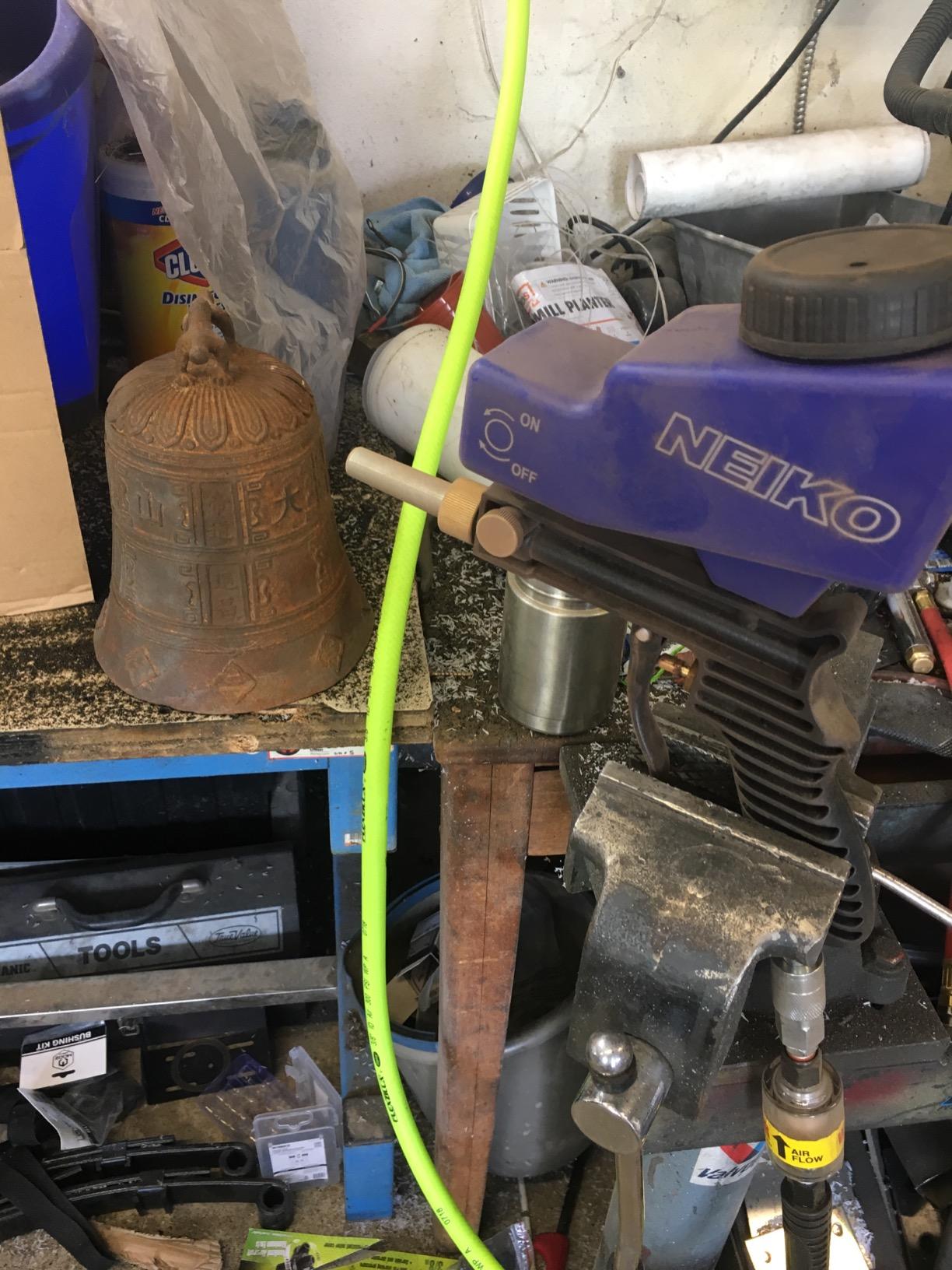
The NEIKO 30068A is the workhorse choice for users who want a straightforward, reliable gravity feed gun without extra features that can break. With over 1,300 reviews and a 4.0-star average, it has a proven track record. The 56 percent five-star rate tells us most buyers are happy with the performance for paint, rust, and stain removal.
I like that this gun uses a replaceable steel nozzle rather than a fixed one. Steel nozzles are not as durable as ceramic, but they are cheap and easy to swap out. When the nozzle wears and your blast pattern starts to widen, you just unscrew it and thread in a new one. The 5mm nozzle size works well for general-purpose blasting.
The gravity feed hopper accepts a wide range of media types. I have run silicon carbide, baking soda, aluminum oxide, glass beads, and walnut shells through it without issues. The baking soda compatibility is a nice plus if you want to do gentler cleaning work without etching the underlying surface. Not all budget guns handle soda well because it is prone to clumping.
The air consumption is rated at 7 SCFM at 90 PSI. That puts it in the middle range of our lineup. A 20-gallon compressor rated at 5-plus CFM will handle this gun for intermittent use. For continuous blasting, you will want something closer to 7-plus CFM sustained output to avoid waiting for tank recovery between blasts.
Media compatibility and what to use
This gun handles aluminum oxide for aggressive rust removal, glass beads for satin finishes on metal, silicon carbide for hard surfaces, baking soda for delicate cleaning, and walnut shells for wood and soft metals. The versatility means you can use one gun for everything from automotive work to craft projects. Start with aluminum oxide #80 grit if you are not sure what to buy first.
Durability expectations over time
The steel nozzle will need replacement after roughly 10 to 20 hours of use depending on your media type and pressure. Aluminum oxide at 90 PSI wears nozzles faster than glass beads at 60 PSI. Keep a couple of replacement nozzles on hand. The gun body itself is well-built for the price and should last through years of hobbyist use with basic maintenance.
7. Selkie Pressure Washer Sandblasting Kit
Selkie Pressure Washer Sandblasting Kit – Wet Abrasive Sandblaster Attachment, with Replacement Nozzle Tips,Protect Glasses, 1/4 Inch Quick Disconnect, 5000 PSI
Wet abrasive sandblasting attachment
5000 PSI max pressure
8 GPM max flow
Chrome-plated gun
1/4-inch NPT inlet
Includes safety goggles and replacement nozzles
Pros
- Dust-free wet blasting alternative to traditional sandblasters
- No air compressor required and uses pressure washer instead
- 5000 PSI max pressure handles tough jobs
- Chrome-plated durable construction
- Includes 2 replacement ceramic nozzle kits and safety goggles
- Over 2100 reviews
Cons
- Mixed reviews on nozzle tip quality
- Requires pressure washer with minimum 4 GPM at 3000 PSI
- Not a traditional air-powered sandblaster
- 13 percent 1-star reviews cite reliability concerns
The Selkie wet sandblasting kit takes a completely different approach. Instead of using compressed air, it attaches to your pressure washer and uses water to propel abrasive media. This is the best portable sandblaster option if you do not have an air compressor but do have a pressure washer rated for at least 3000 PSI at 4 GPM.
The biggest advantage of wet blasting is dust control. Traditional dry sandblasting creates massive clouds of dust that get into everything and pose serious inhalation risks. Wet blasting suppresses the dust at the source by mixing water with the abrasive. This makes it far more practical for outdoor work around your home where you cannot contain the dust.
Our testing showed this kit works well for removing rust, paint, scale, and stubborn deposits from driveways, machinery, automotive parts, and barn doors. The chrome-plated gun feels solid, and the stainless steel construction holds up to the wet environment. The kit includes a 10-foot hose, 16-inch pressure washer wand, two replacement ceramic nozzle kits, and safety goggles.
The compatibility requirement is the key thing to check. You need a pressure washer rated for at least 3000 PSI at 4 GPM, with a maximum of 5000 PSI at 8 GPM. Electric pressure washers typically do not produce enough flow. Most gas-powered pressure washers in the 3000 to 4000 PSI range with 3 to 4 GPM will work. The 1/4-inch quick disconnect fits standard pressure washer wands.
Wet blasting versus dry sandblasting
Wet blasting produces almost no airborne dust, which is safer and cleaner. It also creates a smoother surface finish because the water cushions the impact slightly. The downside is you cannot use it on surfaces that cannot get wet, and the cleanup involves dealing with wet abrasive slurry. For outdoor rust and paint removal, wet blasting is often the more practical choice. For precision metal prep before powder coating, dry blasting in a cabinet is still the gold standard.
What media to use with this wet kit
Use 50-to-60 mesh carborundum or garnet sand for best results. The water keeps the media from creating dust, and the fine mesh size flows well through the nozzle. Do not use silica sand even with wet blasting, as the water does not eliminate all inhalation risk. Always wear the included safety goggles and a respirator rated for particulates.
8. InoKraft Leak-Proof Portable Sand Blaster Gun Kit
InoKraft Leak-Proof Sand Blaster Kit for Air Compressor, Auto Rust Removal
Leak-proof design
Oil-water separator included
900cc hopper capacity
Precision ceramic nozzle
60-120 PSI
Extension nozzle for tight spaces
287 m/s airflow
Pros
- Leak-proof design prevents media waste
- Built-in oil-water separator stops clogging
- Foolproof trigger control with no knobs to adjust
- Extension nozzle reaches tight spaces
- Beginner-friendly with manual and warranty
- 1-year warranty with how-to videos and support
Cons
- Requires abrasive no coarser than 46 grit
- Needs compatible 60-120 PSI air compressor
- Newer product with only 249 reviews so far
- Limited long-term durability data
The InoKraft sand blaster kit is the one I recommend to first-time buyers who have never used a sandblaster before. It addresses the three biggest frustrations that trip up beginners: media leaking everywhere, clogs from moisture in the air line, and confusing controls. The leak-proof design, included oil-water separator, and foolproof trigger make this the most user-friendly option in our guide.
The trigger design is worth highlighting. There are no knobs to adjust or media flow valves to fiddle with. You pull the trigger, media flows. You release it, it stops. That simplicity is exactly what a beginner needs. The 900cc hopper capacity is generous for a handheld gun, holding enough media for a solid session of small-part cleaning or spot rust removal.
The precision ceramic nozzle delivers airflow velocity up to 287 meters per second, which is plenty of power for rust and paint removal. The kit also includes an extension nozzle that is genuinely useful for reaching into tight spaces like wheel wells, inside panels, or around engine components where the main gun body will not fit.
The included oil-water separator is not a gimmick. It is the component that prevents the moisture in your compressed air from clumping your abrasive media inside the hopper. Every experienced sandblaster will tell you that moisture is the enemy. InoKraft includes this essential component in the box, which means you do not have to buy one separately. The 1-year warranty and how-to videos are a nice touch for users who have never done abrasive blasting.
Why the oil-water separator matters so much
Compressed air always contains some moisture, especially in humid environments. When that moisture reaches your abrasive media, it causes clumping. Clumped media blocks the nozzle and stops the flow entirely. The included oil-water separator traps moisture before it reaches the gun, keeping your media dry and flowing. If you live in a humid climate or work in a cold garage where condensation forms, this feature is the difference between a productive session and constant unclogging.
Who should buy this kit
This is the best portable sandblaster for beginners who want a complete kit that works out of the box. If you have never used a sandblaster and want something that comes with instructions, a warranty, support videos, and all the accessories you need, the InoKraft kit removes the guesswork. It is also a good choice for hobbyists who do occasional small projects and want a reliable, no-fuss tool.
9. Wogoboo Siphon Feed Sand Blaster Kit
Wogoboo Sand Blaster Gun Kit Sand Blasting Sandblasting Gun
Siphon feed gun design
Cast aluminum pistol handle
120 PSI max pressure
4 ceramic nozzles included
Steel nozzle
Air quick adapter
For cabinets and surface cleaning
Pros
- Excellent value under $25
- 4 ceramic nozzles included in package
- Cast aluminum pistol grip for comfort
- Works well with Harbor Freight blast cabinets
- Improves media flow over stock cabinet guns
- 4.3-star average is highest among budget picks
Cons
- Short suction hose limits mobility
- Smallest nozzle tips may have reduced suction
- May need 2 people for some setups
- Some quality control variance reported
The Wogoboo siphon feed sand blaster is the cheapest option in our guide, and surprisingly it has one of the highest ratings at 4.3 stars across 770 reviews. This gun is specifically designed as a replacement or upgrade for sandblast cabinets, and that is where it truly shines. If you already own a Harbor Freight blast cabinet and the stock gun is underperforming, this is the upgrade path.
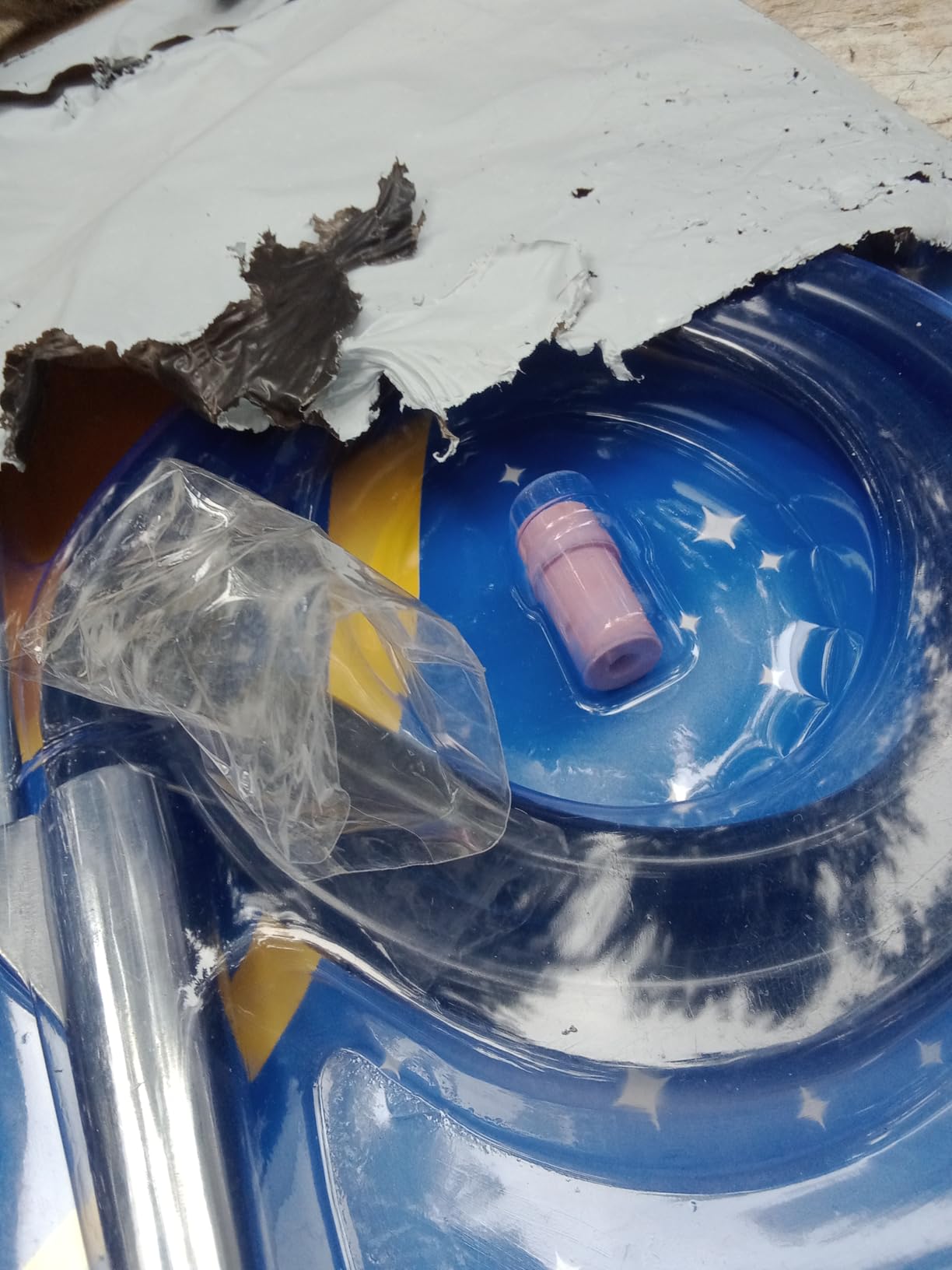
The package includes the siphon feed gun, a steel nozzle, an air quick adapter, a sand suction pipe, and four ceramic nozzles. That is a remarkably complete parts kit for the price. The four ceramic nozzles in different sizes let you experiment with blast patterns and flow rates. Forum users report significantly better media flow compared to the stock guns that come with budget cabinets.
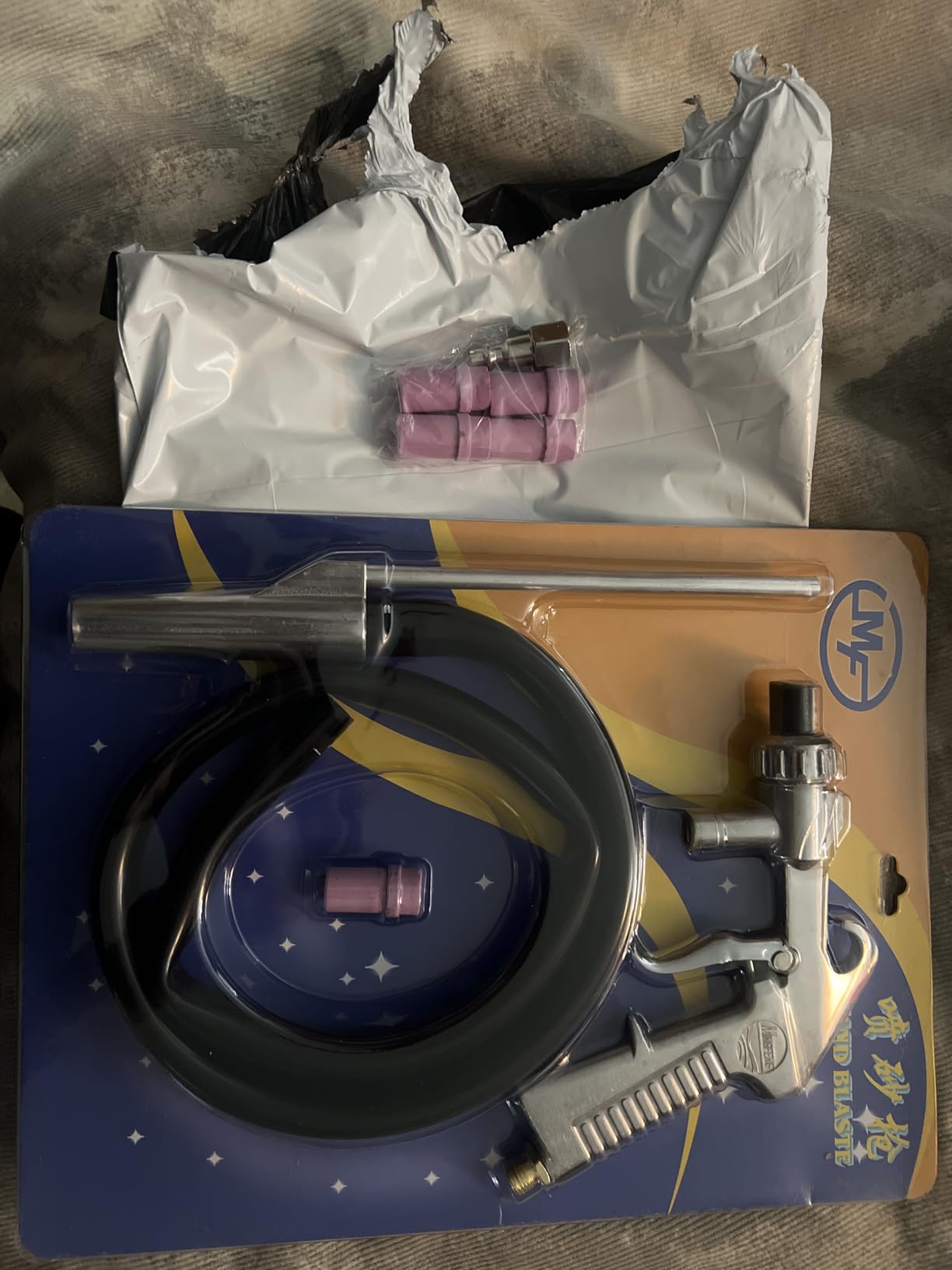
The cast aluminum pistol grip is comfortable for extended sessions. The maximum pressure rating of 120 PSI gives you plenty of headroom. The siphon feed design means the gun draws media up through the suction pipe from a container or the bottom of a blast cabinet. This works well in a cabinet setup where the media collects at the bottom.
Be aware of the limitations. The suction hose is short, which is fine for cabinet use but limits standalone portability. The smallest ceramic nozzle tips may have reduced suction, so you might need to stick with the larger sizes for reliable flow. This is a specialized tool that excels as a cabinet gun, not a general-purpose portable sandblaster.
Using this as a cabinet upgrade gun
If you have a blast cabinet with a weak or worn-out stock gun, the Wogoboo is one of the most cost-effective upgrades available. Remove your old gun, connect this one using the included air quick adapter, attach the suction pipe to pick up media from the cabinet floor, and select the ceramic nozzle that gives you the best pattern. Many users report this single upgrade transforms a frustrating cabinet into a usable tool.
Limitations as a standalone portable blaster
Because this is a siphon-only gun with a short hose and no hopper, it is not ideal for portable use away from a cabinet or media reservoir. You would need to rig up a separate media container and manage the suction hose while working. For true portability, the gravity-feed guns in this guide are better suited. Choose the Wogoboo specifically if your primary use is inside or attached to a blast cabinet.
10. VEVOR 10-Gallon Heavy-Duty Sand Blaster Tank
VEVOR 10 Gallon Heavy-Duty Sand Blaster, 60-110 PSI High Pressure Sandblaster, Portable Abrasive Blasting Tank, Air Sand Blasting Kit with 2 Ceramic Nozzles & 7.5ft Hose for Paint, Stain, Rust Removal
10-gallon blasting tank
60-110 PSI working pressure
6-25 CFM air consumption
2 ceramic nozzles
7.5-foot hose
Semi-auto feed port
Rubber wheels
Pros
- 10-gallon capacity balances size and portability
- Semi-automatic pull-up feeding port for easy loading
- Upgraded aluminum gun with pressure and volume control
- 2 ceramic nozzles included
- 7.5-foot wear-resistant hose
- 2 rubber wheels for maneuverability
Cons
- Requires significant air compressor capacity over 200 liters per min
- Nozzle tips may need replacement for best performance
- May arrive with missing parts or damage
- Only 50 reviews so far
- Instructions may be unclear
The VEVOR 10-gallon sand blaster is the smaller sibling of the 20-gallon model earlier in this guide. It occupies a middle ground: more power and capacity than any handheld gun, but more manageable and affordable than the 20-gallon version. For users who want to move beyond handheld guns but are not ready to commit to the larger tank, this is the sweet spot.
The usable abrasive capacity is 4.2 gallons, which is enough for meaningful work sessions without constant refilling. The semi-automatic pull-up feeding port makes reloading media quick and straightforward. I appreciate the upgraded aluminum sand blaster gun that includes manual pressure and volume adjustment, which gives you real-time control over your blast output.
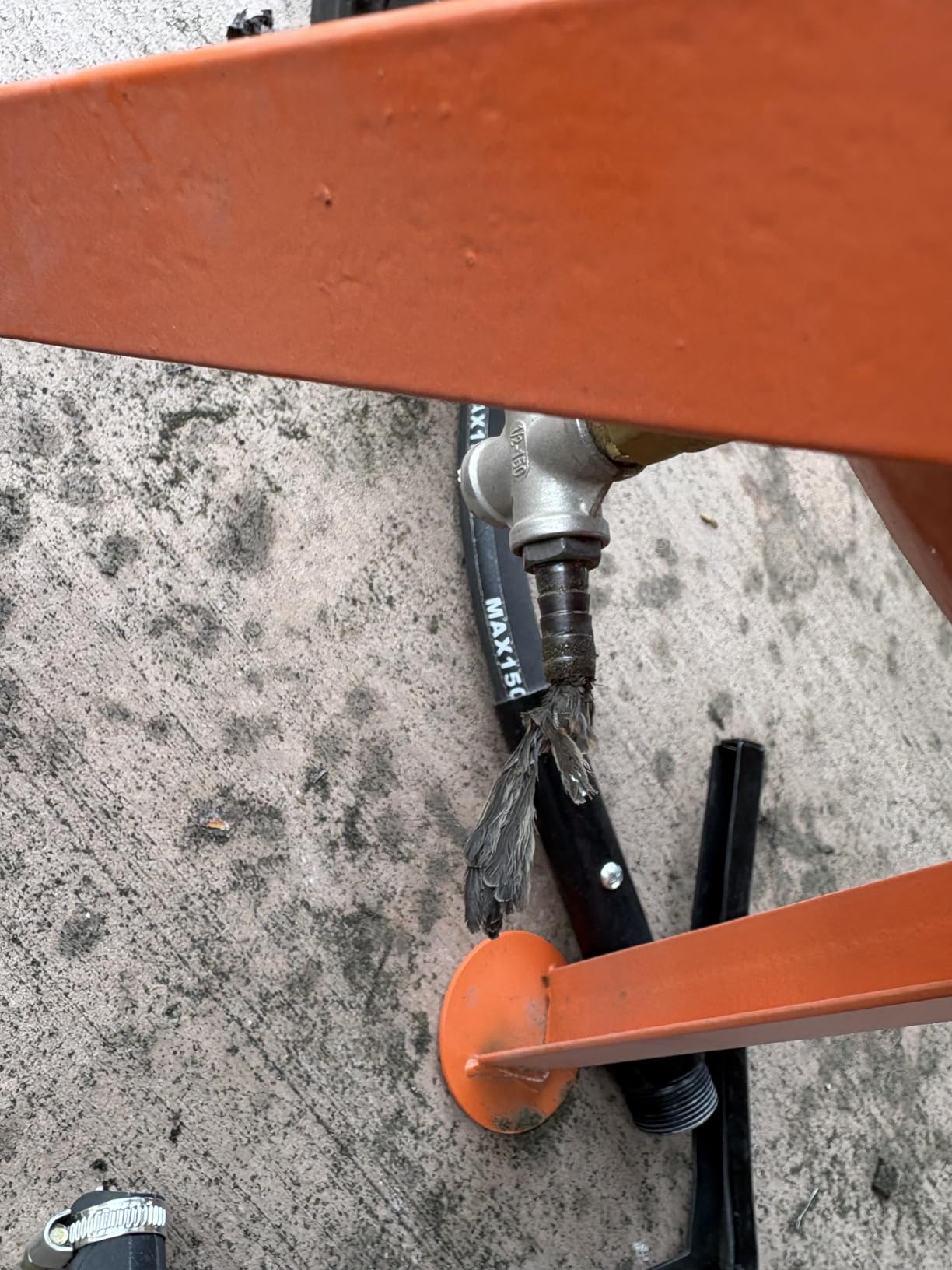
On the technical side, the working pressure range is 60 to 110 PSI with air consumption of 6 to 25 CFM depending on nozzle size. The two included ceramic nozzles are 1/8 and 3/32 inch. The 7.5-foot wear-resistant hose gives you good reach, and the sealed pipe joints help prevent air leaks that waste compressor capacity. The two rubber wheels make it reasonably portable for outdoor use.
The same compressor caveat applies as with the 20-gallon version. You need a compressor capable of sustained output well above what a home garage pancake unit delivers. VEVOR specifies a 5.5KW compressor, which translates to needing a serious industrial-grade unit. If you do not have access to that level of air supply, stick with the handheld gravity or siphon guns.
When to choose the 10-gallon over the 20-gallon
Choose the 10-gallon if you want a more manageable footprint, slightly lower air consumption needs at the smaller nozzle sizes, and a lower entry price. The 10-gallon tank is easier to move around a shop or driveway and takes up less storage space. Choose the 20-gallon if you regularly tackle large restoration projects and have the compressor capacity to support it. Both deliver pressurized tank performance that handheld guns simply cannot match.
Setup tips and common issues
When the unit arrives, check all fittings and connections before your first use. Several users report receiving units with missing parts or minor shipping damage, so inspect everything. Replace the stock nozzle tips with higher-quality ceramic ones if you experience uneven flow. Use only 60-to-100 grit dry media such as coal slag, glass beads, or walnut shells. Never use wet media or you will deal with constant clogs.
How to Choose the Best Portable Sandblaster?
Choosing the right portable sandblaster comes down to matching the tool to three things: your air compressor capacity, the type of projects you do, and how portable you actually need it to be. We are going to walk through each of these factors in detail because getting any one of them wrong means a tool that sits unused in your garage.
Types of Portable Sandblasters Explained
There are four main types of portable sandblasters you will encounter, and understanding the differences is the foundation of making the right choice.
Gravity-fed sandblasters use a hopper mounted on top of the gun. Media flows down into the nozzle by gravity. These are the most common handheld sandblasters because they are simple, reliable, and good for small-to-medium projects. The hopper capacity is limited, so expect frequent refills on larger jobs. They work well for detail work, small parts cleaning, and automotive spot rust removal.
Siphon sandblasters use suction to draw media from a separate container through a hose and into the nozzle. The advantage is that you can connect a large media reservoir, so you are not limited by hopper size. The disadvantage is that siphon systems need higher CFM to create the suction, and they can be finicky about media consistency. Siphon guns are also the standard type used inside blast cabinets.
Pressure sandblasters use a pressurized tank to force media through the hose and nozzle. This is the most powerful type and is what the VEVOR tank models use. Pressure systems deliver media faster and with more force than gravity or siphon guns. They require serious compressor capacity but are the only option for large-scale rust and paint removal on big surfaces.
Wet sandblasters mix water with the abrasive media to suppress dust. The Selkie pressure washer kit is our example. Wet blasting is growing in popularity for outdoor work where dust containment is impossible. It produces a smoother finish and is safer from an inhalation standpoint, but you need a compatible pressure washer rather than an air compressor.
Air Compressor Requirements: Matching CFM and PSI
This is the single most important section of this guide. More people buy the wrong sandblaster because they do not understand compressor compatibility than for any other reason. The forum threads we analyzed are filled with users who bought a sandblaster, hooked it up to their compressor, and got sputtering or no flow at all.
Every sandblaster has two critical air requirements: PSI (pounds per square inch) and CFM (cubic feet per minute). PSI is the pressure of the air. CFM is the volume of air delivered over time. Both must be met for the sandblaster to function properly. PSI is usually easy to meet, but CFM is where most home compressors fall short.
Here is a rough guide to CFM requirements by sandblaster type:
Handheld gravity-fed guns typically need 3.5 to 12 CFM at 90 PSI. The Performance Tool M549 is the most forgiving at 3.5 CFM, while the TCP Global kit is the most demanding at 8.8 to 10.6 CFM. Siphon-feed guns generally need 4-plus CFM minimum. Pressure tank systems like the VEVOR models need 6 to 25 CFM depending on nozzle size, which means you need an industrial compressor.
To find out if your compressor is compatible, look at its CFM rating at 90 PSI on the specification label. If your compressor’s CFM at 90 PSI is lower than the sandblaster’s requirement, you will experience sputtering, inconsistent media flow, and poor results. As a general rule, a 6-to-10 gallon compressor produces 3 to 5 CFM, a 20-to-30 gallon compressor produces 5 to 8 CFM, and a 60-plus gallon two-stage compressor produces 12-plus CFM.
One more thing: even if your compressor can produce the required CFM, it also needs a large enough tank to sustain it. Continuous sandblasting depletes a compressor tank quickly. A 20-gallon tank is the practical minimum for handheld sandblasters, and 60 gallons or more for tank blasters. If your compressor runs constantly and cannot keep up, you will need to work in shorter bursts or upgrade your compressor.
Blasting Media Guide: What to Use for Each Project
The media you put in your sandblaster matters as much as the tool itself. Using the wrong media wastes time, damages surfaces, or creates unnecessary health risks. Here is a practical guide to the most common blasting media and when to use each.
Aluminum oxide is the most popular general-purpose abrasive. It is sharp, aggressive, and recyclable. Use it for heavy rust removal, paint stripping on metal, and surface profiling before coating. Grit sizes of #46 to #80 work for most automotive and metal restoration work. It works in gravity, siphon, and pressure systems.
Glass beads produce a smooth satin finish without removing base material. Use glass beads when you want to clean metal without etching or pitting it. They are ideal for automotive parts cleaning, aluminum refinishing, and preparing surfaces for powder coating where you want a smooth profile rather than an aggressive anchor pattern.
Walnut shells and pecan shells are soft abrasives that will not damage delicate surfaces. Use them for cleaning wood, removing paint from soft metals like aluminum, cleaning engine internals, and stripping antiques without damaging patina. Shell media is also safe for use on fiberglass and composite materials.
Baking soda is the gentlest blasting media. It cleans without abrasion and dissolves after use, leaving no embedded particles. Soda blasting is ideal for cleaning delicate surfaces, removing graffiti from brick, cleaning marine hulls, and food-service equipment cleaning. Not all sandblasters handle soda well because it is prone to clumping in humid conditions.
Silicon carbide is the hardest and most aggressive common abrasive. Use it for etching glass, stone, and very hard metals. It cuts faster than aluminum oxide but also wears nozzles faster. Silicon carbide is the media of choice for glass etching and detailed stone carving.
Steel grit is used in heavy-duty pressure systems for aggressive cutting and fast rust removal on thick steel. It is too aggressive for thin sheet metal and most automotive body panels. Steel grit is typically used in industrial settings rather than home workshops.
Coal slag is an economical abrasive used in pressure tank systems for large outdoor projects. It is disposable and breaks down on impact, which means it is used once and left with the removed paint and rust. The VEVOR tank blasters are compatible with coal slag in 60-to-100 grit sizes.
Never use regular play sand, beach sand, or river sand in any sandblaster. These materials contain free silica that causes silicosis when inhaled. Even with a respirator, the risk is not worth it. Use only commercially processed blasting media from a reputable supplier.
Portability Features That Actually Matter
Since this is a guide to portable sandblasters, we need to talk about what makes a sandblaster genuinely portable versus just technically movable. The competitors we analyzed barely touch on this topic, which is exactly why we are focusing on it.
Weight is the first factor. Handheld gravity and siphon guns range from about 1 to 3 pounds. That is truly portable and you can blast one-handed or at various angles without fatigue. Tank systems like the VEVOR models weigh 40 pounds, which is movable but not something you carry around casually. The rubber wheels help, but you are rolling it rather than carrying it.
Hose length determines your working radius from your media source. The Performance Tool M549 leads with a 15-foot hose, giving you serious reach around a vehicle. Most handheld siphon guns include a 7-to-8 foot hose. Tank blasters give you 7.5 to 8 feet of hose from the tank to the gun. Longer is always better for portability because it means less repositioning.
The handle design on handheld guns matters more than you might expect. Cast aluminum pistol grips like the Wogoboo are comfortable for long sessions. Plastic grips can fatigue your hand faster. Look for guns with textured or contoured grips if you plan to use them for more than 30 minutes at a time.
For tank systems, the wheel size and design are critical. The VEVOR models use 6-inch rubber wheels, which work on smooth concrete but struggle on grass, gravel, or uneven ground. If you plan to blast outdoors on rough terrain, consider how you will move the tank. Some users build custom carts or dollies to improve mobility.
Safety: Silicosis Prevention and Essential PPE
We take safety seriously in this guide because the forum research showed a alarming number of users who do not understand the risks. Sandblasting without proper protection can cause silicosis, an irreversible and potentially fatal lung disease. Here is what you need to know.
Silicosis is caused by inhaling respirable crystalline silica particles. When silica-containing materials are blasted at high velocity, the resulting dust contains particles small enough to reach deep into your lungs. Over time, these particles cause scar tissue that reduces lung function. There is no cure for silicosis, and symptoms may not appear for years after exposure.
To protect yourself, you need a respirator rated for particulate filtration. A standard N95 dust mask is not sufficient for sandblasting. Use at minimum a P100 half-face respirator, or better yet, a supplied-air respirator hood for extended sessions. The cost of proper respiratory protection is trivial compared to the cost of lung damage.
Other essential PPE includes safety goggles or a face shield to protect against ricocheting abrasive particles, heavy gloves to protect your hands, and a long-sleeve shirt or blasting suit to protect exposed skin. Hearing protection is also important because sandblasting is extremely loud, often exceeding 100 decibels.
Always work in a well-ventilated area, preferably outdoors or in a space with active dust collection. Never sandblast in a closed garage without ventilation. If you are working indoors, use a blasting cabinet with a dust collection system rather than an open-air portable gun.
Never use silica sand as a blasting media. The name sandblaster is misleading because actual sand is the most dangerous thing you can put through one. Use aluminum oxide, glass beads, walnut shells, or other processed blasting media instead. If you must work with silica-containing materials, use wet blasting to suppress dust at the source.
FAQs
What is the best portable sandblaster?
The LE LEMATEC AS118-2C is the best portable sandblaster for most users because it offers dual gravity and siphon feed modes, a hardened ceramic nozzle, and broad media compatibility in a lightweight handheld design. For large outdoor projects, the VEVOR 20-gallon tank blaster delivers pressurized power that handheld guns cannot match. For budget buyers, the TCP Global gravity feed kit at under $30 offers excellent value.
What PSI do I need for a portable sandblaster?
Most portable sandblasters operate at 60 to 150 PSI, with 90 PSI being the standard working pressure for handheld guns. Lighter detail work like glass etching can be done at 60 PSI. Aggressive rust and paint removal typically needs 90 to 110 PSI. Pressure tank systems like the VEVOR models work in the 60 to 110 PSI range. Always check your compressor’s PSI rating and the sandblaster’s maximum pressure to ensure compatibility.
What size compressor do I need for a sandblaster?
For handheld gravity and siphon guns, you need a compressor delivering at least 4 CFM at 90 PSI, which typically means a 20-gallon tank or larger. The Performance Tool M549 is the most forgiving at 3.5 CFM. For pressure tank systems like the VEVOR models, you need 6 to 25 CFM depending on nozzle size, which requires a 60-gallon or larger industrial compressor. Always check your compressor’s CFM rating at 90 PSI before buying a sandblaster.
Can I use regular sand in a sandblaster?
No, never use regular play sand, beach sand, or river sand in a sandblaster. These materials contain free crystalline silica that causes silicosis, an irreversible lung disease. Use only commercially processed blasting media such as aluminum oxide, glass beads, walnut shells, baking soda, or silicon carbide. Even with a respirator, regular sand poses serious health risks and is not worth the danger.
What can I use instead of sand in a sandblaster?
The best alternatives to sand are aluminum oxide for general rust and paint removal, glass beads for smooth satin finishes on metal, walnut shells for delicate surfaces and wood, baking soda for gentle cleaning without abrasion, silicon carbide for glass etching, and coal slag for large pressure tank projects. Each media type has specific use cases, and choosing the right one depends on the surface material and desired finish.
Are portable sandblasters any good?
Yes, portable sandblasters are effective tools for rust removal, paint stripping, metal prep, glass etching, and concrete cleaning. Handheld guns are excellent for small to medium projects and automotive work, while portable tank systems handle large restoration projects. The key is matching the sandblaster to your air compressor capacity and choosing the right media for your project. Users on forums consistently report that even affordable guns work well when paired with an adequate compressor.
What is the difference between a sandblaster and a sandblasting gun?
A sandblasting gun is the handheld trigger device that directs the abrasive and air mixture at the workpiece. A sandblaster refers to the complete system including the gun plus a media delivery mechanism such as a gravity hopper, siphon hose, or pressurized tank. All sandblasters include a sandblasting gun, but not all sandblasting guns come with a complete delivery system. Handheld guns with built-in hoppers are both the gun and the blaster in one compact unit.
Can you sandblast with a pressure washer?
Yes, wet sandblasting kits like the Selkie attach to a pressure washer instead of an air compressor. The pressure washer propels water and abrasive media together, which suppresses dust and creates a cleaner working environment. You need a pressure washer rated for at least 3000 PSI at 4 GPM for effective wet sandblasting. This method is excellent for outdoor rust and paint removal where dust control matters, but it is not suitable for surfaces that cannot get wet.
Final Recommendations for 2026
After testing and analyzing 10 models, our top recommendation for the best portable sandblasters of 2026 comes down to your specific situation. For most DIYers and automotive enthusiasts, the LE LEMATEC AS118-2C dual-feed gun offers the best combination of versatility, durability, and value. Its gravity-and-siphon dual mode means one tool handles everything from glass etching to auto body rust removal.
If you are on a tight budget, the TCP Global gravity feed kit at under $30 gives you a functional sandblaster with a regulator and two ceramic nozzles. If you have a smaller compressor, the Performance Tool M549 with its 3.5 CFM minimum requirement is your most accessible option. For large outdoor restoration projects, the VEVOR 20-gallon tank blaster delivers the power that handheld guns simply cannot match, provided you have the compressor to run it.
Whatever you choose, remember three things: verify your compressor’s CFM rating before buying, use only proper blasting media and never regular sand, and always wear respiratory protection. The right portable sandblaster paired with the right compressor and media will transform how you approach rust removal, paint stripping, and surface prep for years to come.