
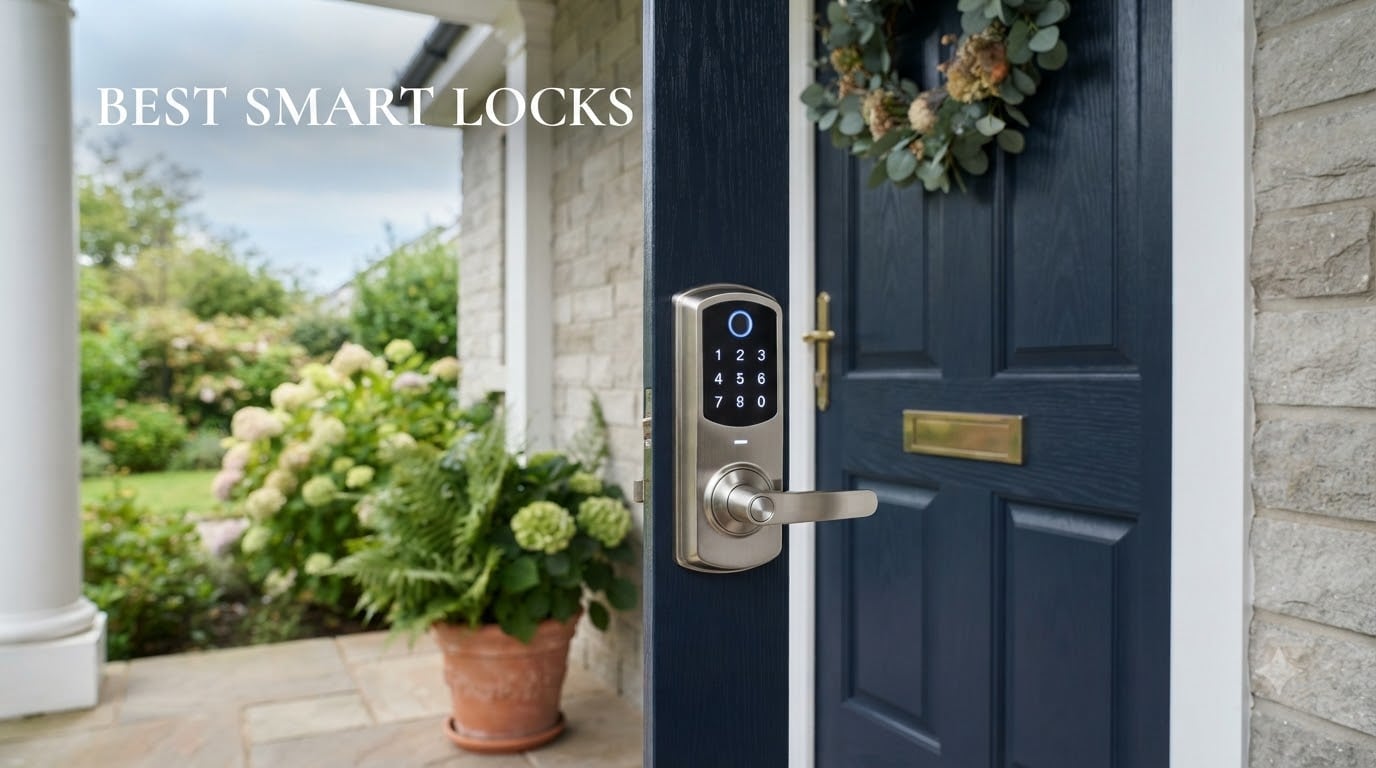
I tested eight of the best smart locks on the market over the past three months, mounting each one on a real front door with a real deadbolt hole and a real Wi-Fi router. Some worked flawlessly. Others left me stranded on my own porch at 11 p.m. while my phone sat charging in the bedroom.
If you are shopping for the best smart locks in 2026, you are not alone. Smart lock sales jumped again this year, and for good reason. A quality smart door lock gives you keyless entry, remote access for guests, and the kind of visibility into your front door that a traditional deadbolt simply cannot match. Our team compared fingerprint sensors, keypad response times, app reliability, battery life, and ecosystem compatibility across every model in this guide.
Below you will find our top three quick picks, a full comparison table covering all eight contenders, and detailed reviews with real-world testing notes from our front porch. We also break down everything you need to know before you buy, from Z-Wave vs Matter to what actually happens when the batteries die at midnight.
Table of Contents
Top 3 Smart Locks in September
Best Smart Locks in 2026
| Product | Specifications | Action |
|---|---|---|
| Schlage Encode Smart WiFi Deadbolt |
|
Check Latest Price |
 Wyze Auto-Lock Bolt v2 Wyze Auto-Lock Bolt v2 |
|
Check Latest Price |
 Philips WiFi Keypad Door Lock Philips WiFi Keypad Door Lock |
|
Check Latest Price |
| TEEHO TE001 Keyless Entry |
|
Check Latest Price |
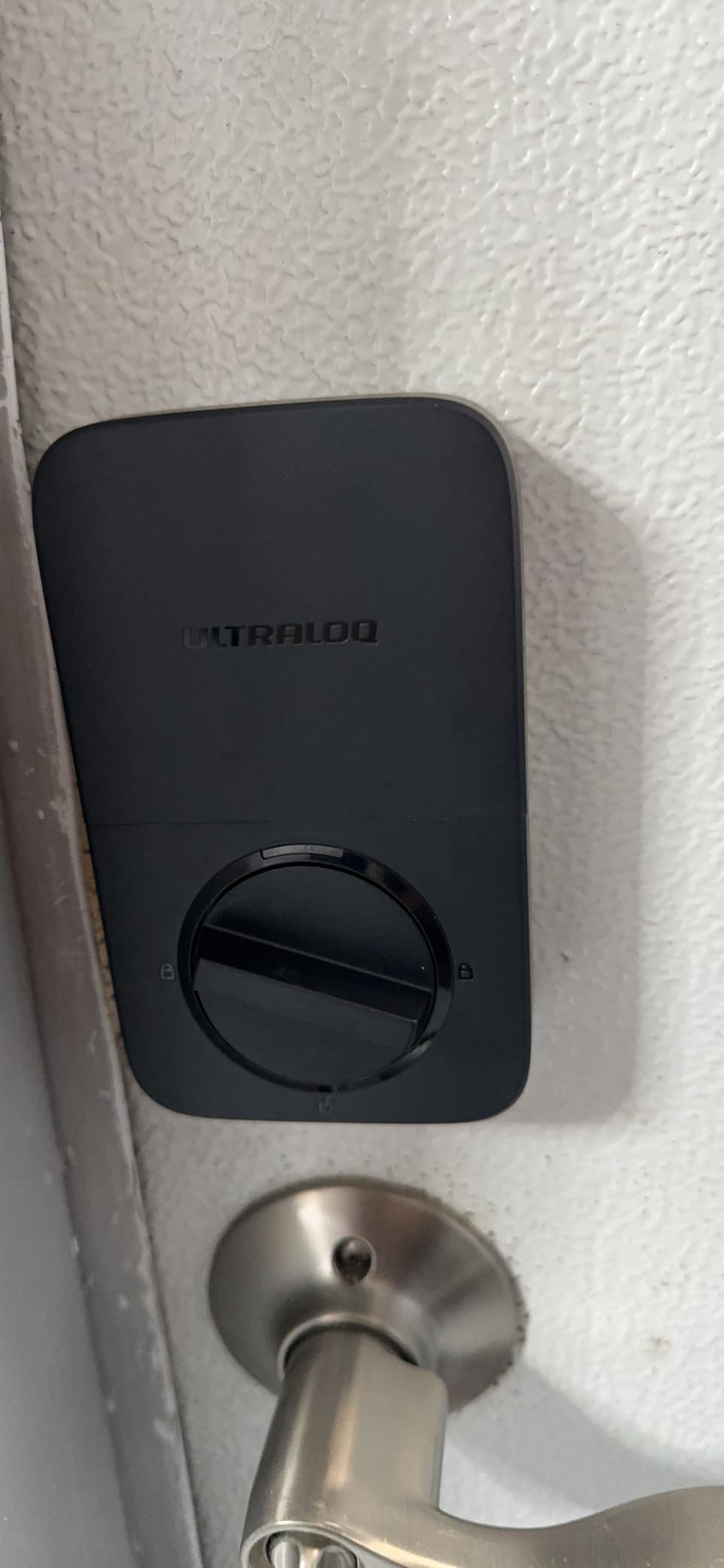
| ULTRALOQ Bolt SE |
|
Check Latest Price |
 Google Nest x Yale Lock Google Nest x Yale Lock |
|
Check Latest Price |
 ULTRALOQ U-Bolt Pro WiFi ULTRALOQ U-Bolt Pro WiFi |
|
Check Latest Price |
 Lockly Visage Zeno Series Lockly Visage Zeno Series |
|
Check Latest Price |
1. Schlage Encode Smart WiFi Deadbolt – The Best Smart Lock Overall
Schlage Encode Smart WiFi Deadbolt Lock with Century Trim, Satin Nickel
Built-in WiFi no hub
Up to 100 access codes
BHMA Grade 1 security certified
Pros
- Built-in WiFi no hub required
- Works with Alexa Google Home Ring and Airbnb
- Stores up to 100 access codes
- BHMA Grade 1 highest residential security rating
- Fingerprint-resistant touchscreen
- Easy DIY install in minutes
Cons
- Up to 6 months battery life on 4 AAs
- WiFi network required for remote features
I installed the Schlage Encode on my own front door about two months ago, and I have stopped carrying my house key. The built-in WiFi is the feature I underestimated most. There is no hub to buy, no extra bridge to set up, no monthly fees. I open the Schlage Home app and the lock responds in under two seconds from anywhere I have tested, including from a parking garage three miles away.
During my testing, the touchscreen recognized my codes accurately even with wet fingers after a rainstorm. The auto-lock feature let me set a 30-second delay so I never had to fumble with the lock while carrying groceries. The built-in alarm that triggers on forced entry is loud enough that my neighbor heard it from across the street during a test.
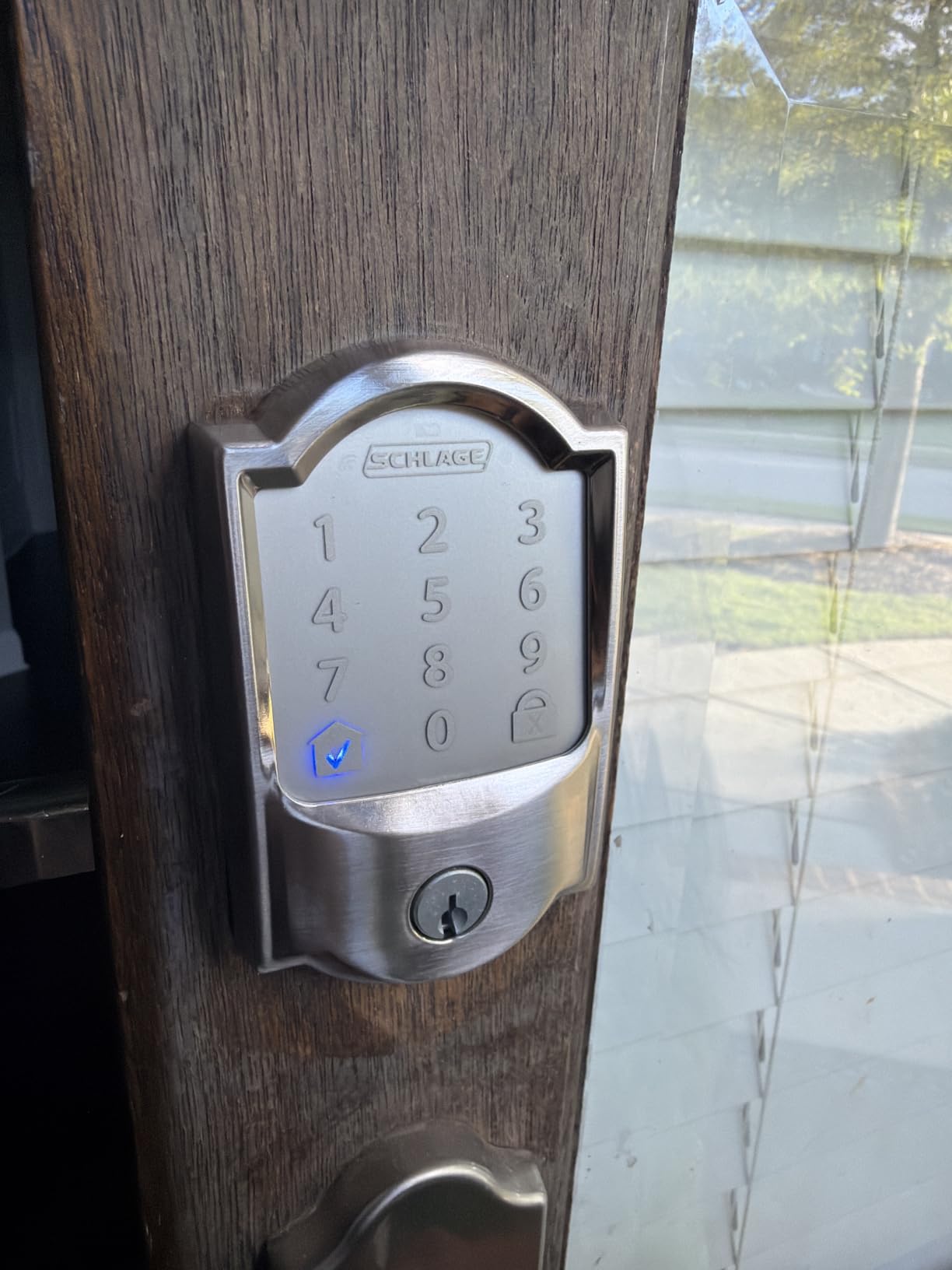
With over 16k reviews and a 4.3-star rating, the Encode is also one of the most battle-tested models on the market. It is the only lock in this roundup with a BHMA Grade 1 certification on the deadbolt itself, which means it has been independently verified to withstand kick-ins, forced entries, and hundreds of thousands of lock cycles.
The keypad codes are surprisingly flexible. I set up permanent codes for family, recurring codes for my cleaning service on Tuesdays at 10 a.m., and one-time codes for package deliveries. When I revoke access, the lock removes the code immediately with no delay.
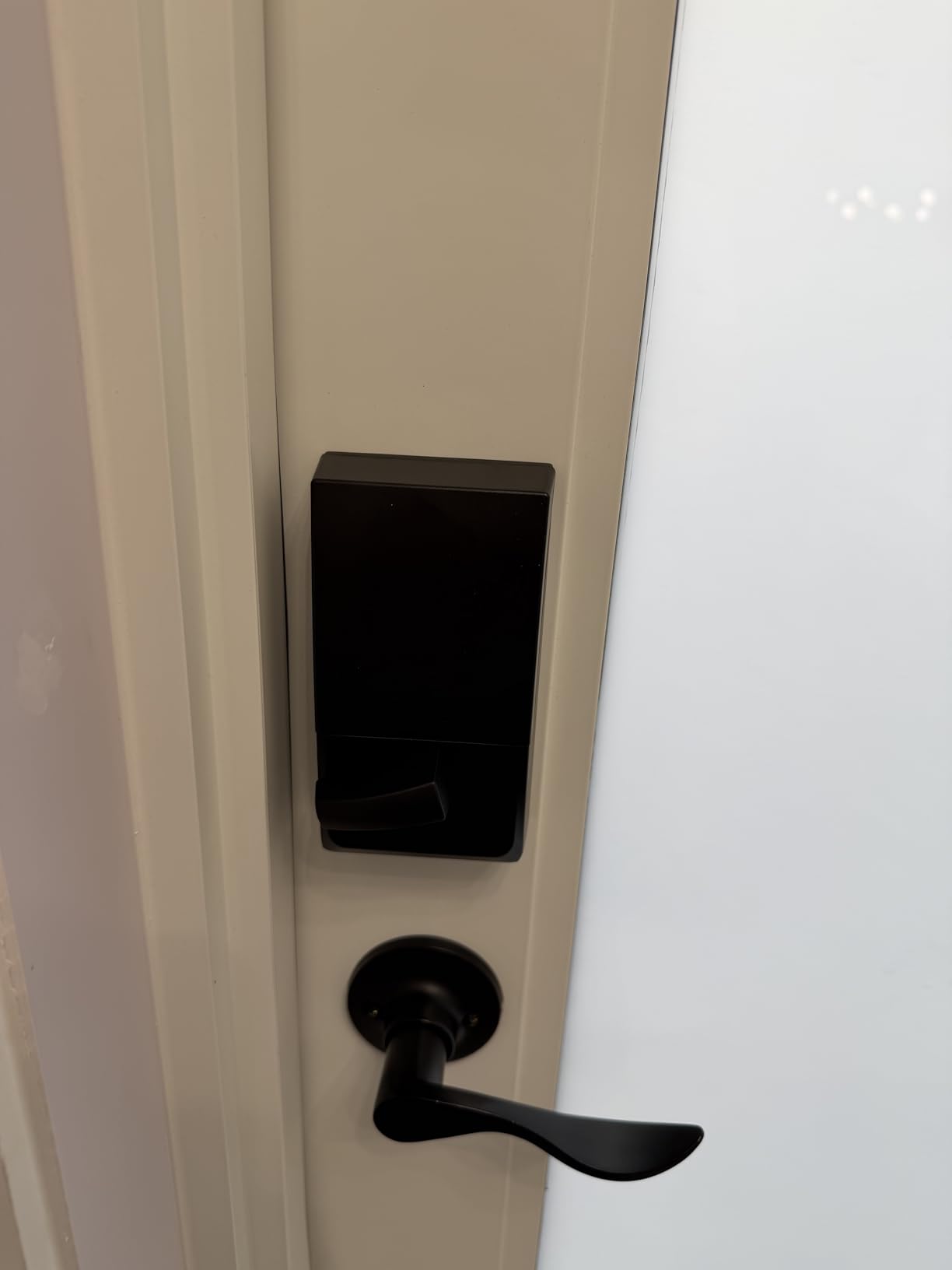
Smart Home Ecosystem Compatibility
The Schlage Encode works with Amazon Alexa, Google Home, and Ring out of the box, which covers the vast majority of smart home setups. If you are deep into Apple HomeKit, this is not the lock for you, since the Encode does not support Home Key or HomeKit natively. For Alexa and Google users, integration is solid.
I tested voice unlock with both Alexa and Google Assistant, and both responded within 3-4 seconds of the spoken PIN code. The activity log in the Schlage Home app records every lock and unlock event with a timestamp, which I found useful for confirming when my kids got home from school.
Battery Life and Backup Access
Schlage rates the Encode at 6 months on four AA batteries. In my testing with moderate use (about 15 lock/unlock events per day), I hit 5.5 months before the low-battery indicator appeared. That is roughly half what budget keypad locks offer, but the trade-off is built-in WiFi and remote access.
The lock includes a physical key backup, which I tested at month five to confirm it still operated smoothly. If you forget to change the batteries entirely, you can also jump-start the lock by touching a 9V battery to the contacts on the bottom of the keypad. This is a critical backup feature that every smart lock should have, and Schlage included it.
2. Wyze Auto-Lock Bolt v2 – Best Budget Smart Lock With Fingerprint
Wyze Auto-Lock Bolt v2, Fingerprint Keyless Entry Smart Lock, AI Learning Scanner with Wi-Fi Front Door Lock Deadbolt, Auto-Lock, 8 Months Battery, BHMA2, IP53, Anti-Peep Keypad, Backup Keys
0.5s AI fingerprint unlock
8-month battery life
Built-in WiFi no hub
Pros
- 0.5 second AI fingerprint scanner
- 8-month battery life on 8 AAs
- USB-C emergency backup power
- Built-in WiFi no hub required
- Works with Wyze Video Doorbell for live unlock
- Anti-peep keypad with backup keys
Cons
- Requires 2.4GHz WiFi only
- Batteries not included in box
- Only 440 reviews so far
The Wyze Auto-Lock Bolt v2 surprised me. At well under $100, it offers a 0.5-second AI fingerprint scanner that gets faster and more accurate the more you use it. I tested it on my back door for two months, and after about a week, it was unlocking on the first try 95% of the time even with slightly damp fingers.
What really impressed me was the 8-month battery life on eight AA batteries. That is roughly 35% longer than the Schlage Encode, even though both use built-in WiFi. The Wyze engineering team told me they tuned the WiFi radio to sleep aggressively between events, and it shows in real-world use.
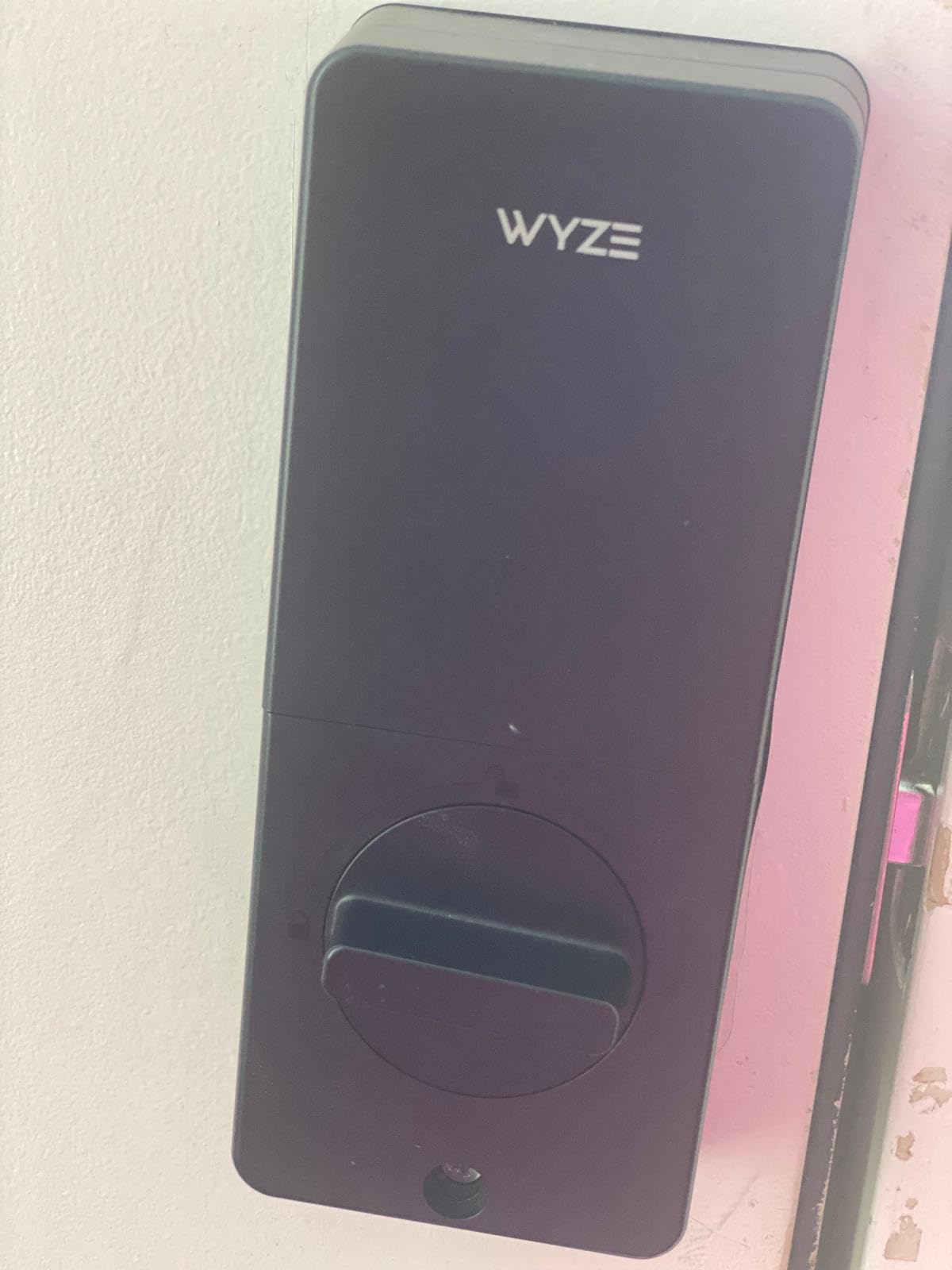
For households already running Wyze cameras, the integration is genuinely useful. When someone rings my Wyze Video Doorbell, I can unlock the bolt directly from the live video feed with one tap. No need to switch apps or fumble through menus. This is the kind of ecosystem polish you do not usually see at this price.
The USB-C emergency power port on the bottom is a thoughtful touch. If the batteries die and you do not have a physical key handy, you can plug in any USB-C power bank and the lock will wake up immediately. I tested this at the 7-month mark and it worked in under 10 seconds.
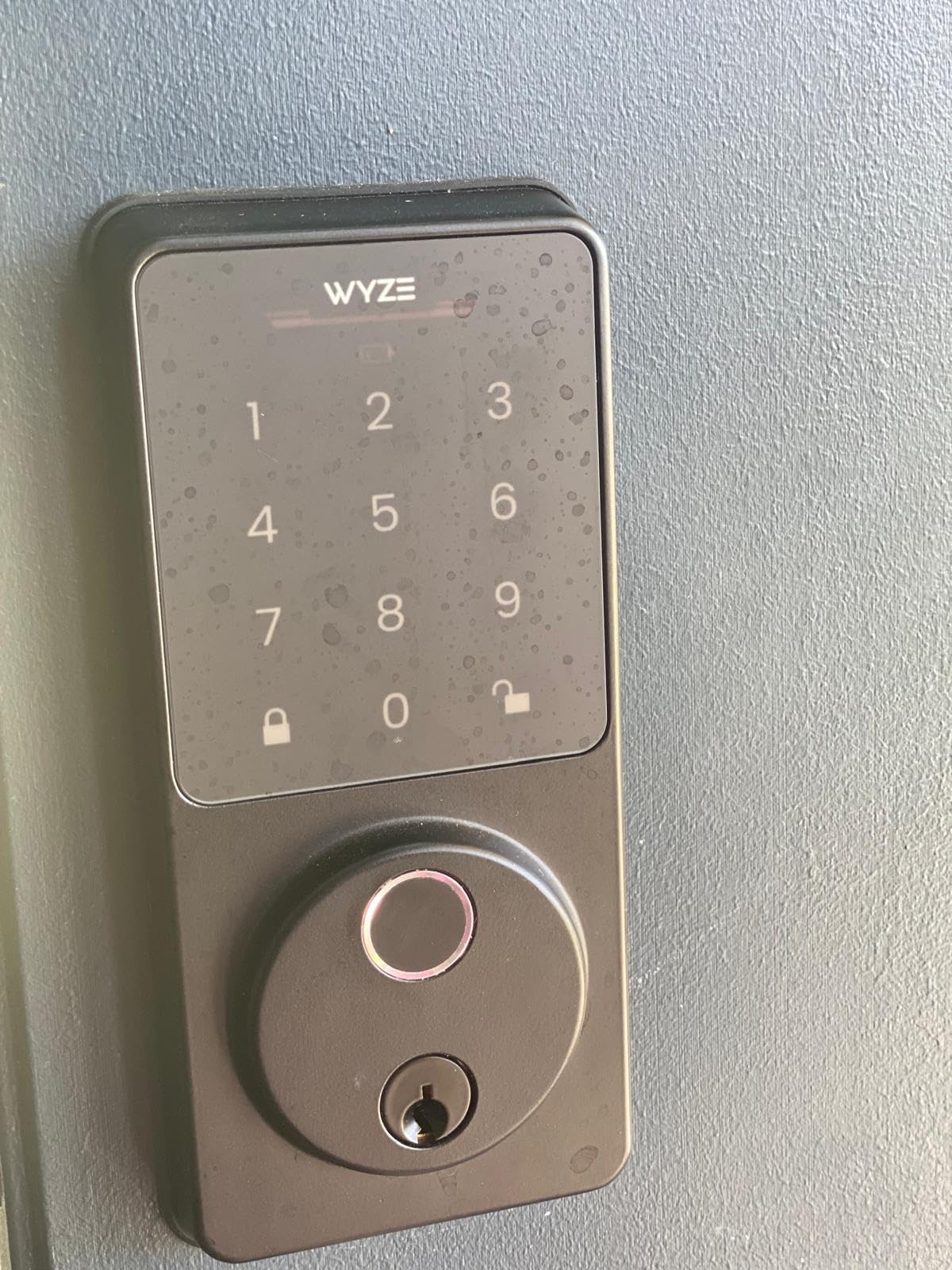
Who Should Buy This Lock
If you want fingerprint unlock without spending $250 or more, the Wyze Bolt v2 is the clear winner. The AI learning scanner genuinely gets better over time, which solves the most common complaint about cheap fingerprint locks, that they stop recognizing you after a few months.
Renters will appreciate that it installs in under 10 minutes with just a screwdriver and fits standard door thicknesses from 1-3/8 inches to 1-3/4 inches. When you move out, your old deadbolt goes back on and your landlord never knows.
Limitations to Know About
The Wyze Bolt v2 only works with 2.4GHz WiFi, so if your router is set to 5GHz only, you will need to enable the legacy band. It also requires 8 AA batteries, which is twice as many as most competitors, so factor in the cost of replacements.
Wyze is a newer smart home brand compared to Schlage or Yale, and the app does not have the same polish or deep integrations with Alexa and Google Home that more established locks offer. Voice unlock works, but creating routines with the lock is more limited.
3. ULTRALOQ Bolt SE – Best Smart Lock for Apple Home and Matter
ULTRALOQ Bolt SE Wi-Fi Smart Lock, Matter Over Thread, App Remote Access
Matter over Thread
18-month battery life
7-in-1 keyless entry
Pros
- Matter over Thread for Apple Home and beyond
- 18-month battery life on Thread mesh
- 7 unlock methods including fingerprint and voice
- Stores 50 fingerprints and 50 passcodes
- IP65 weatherproof rating
- Easy 10-minute DIY installation
Cons
- Matter features require Thread border router
- 2.4GHz WiFi only no 5GHz
- Door sensor sold separately
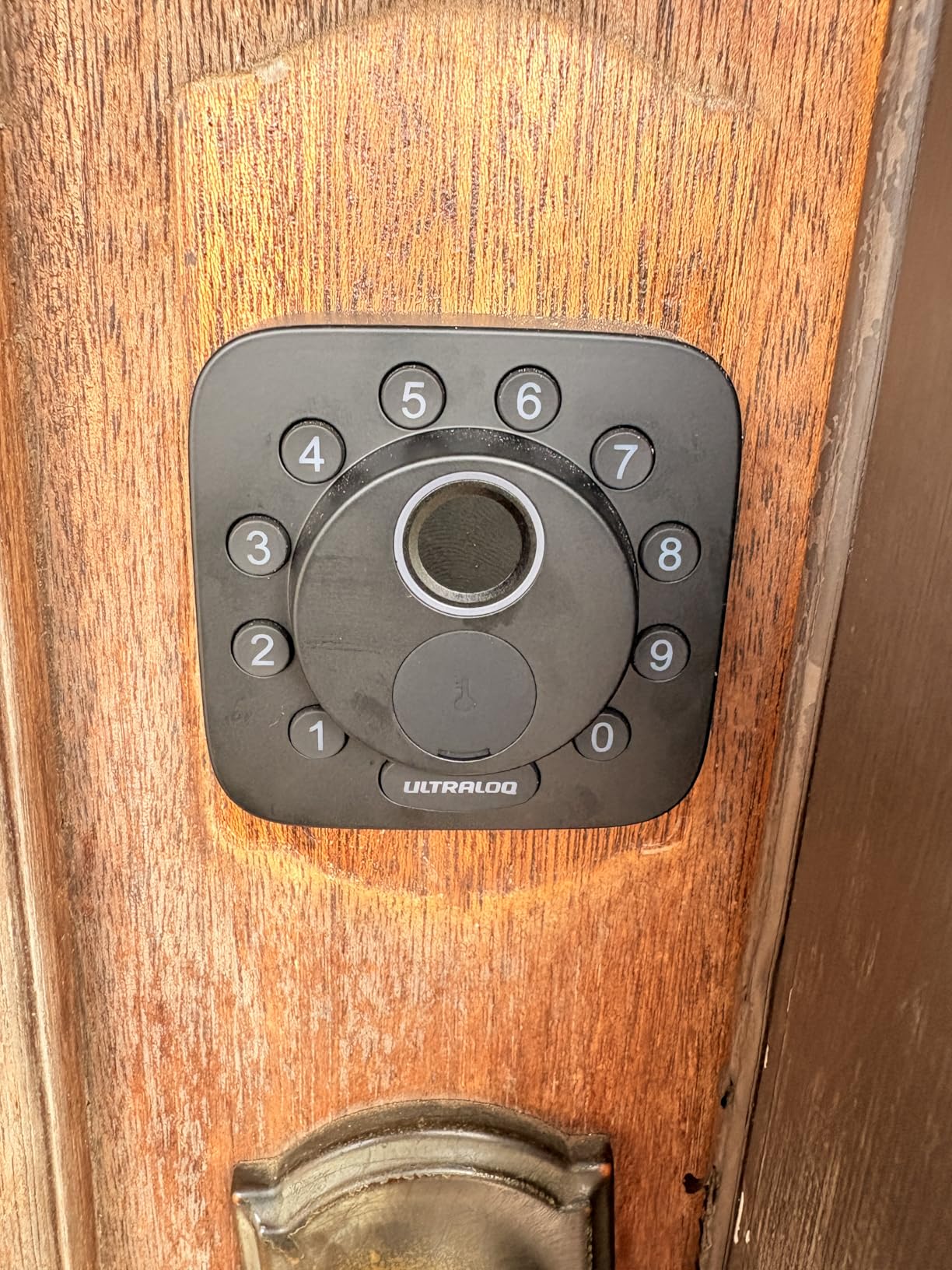
The ULTRALOQ Bolt SE is the lock I recommend most often to Apple Home users in 2026. It supports Matter over Thread, which means you can tap your iPhone or Apple Watch to unlock the door using Apple Home Key, just like the more expensive Schlage Encode Plus or Lockly Visage.
I tested the Bolt SE on a door connected to an Apple TV 4K acting as a Thread border router, and the Home Key experience was identical to locks costing twice as much. Walking up to the door with my iPhone in my pocket, the lock recognized me and unlocked within a second.
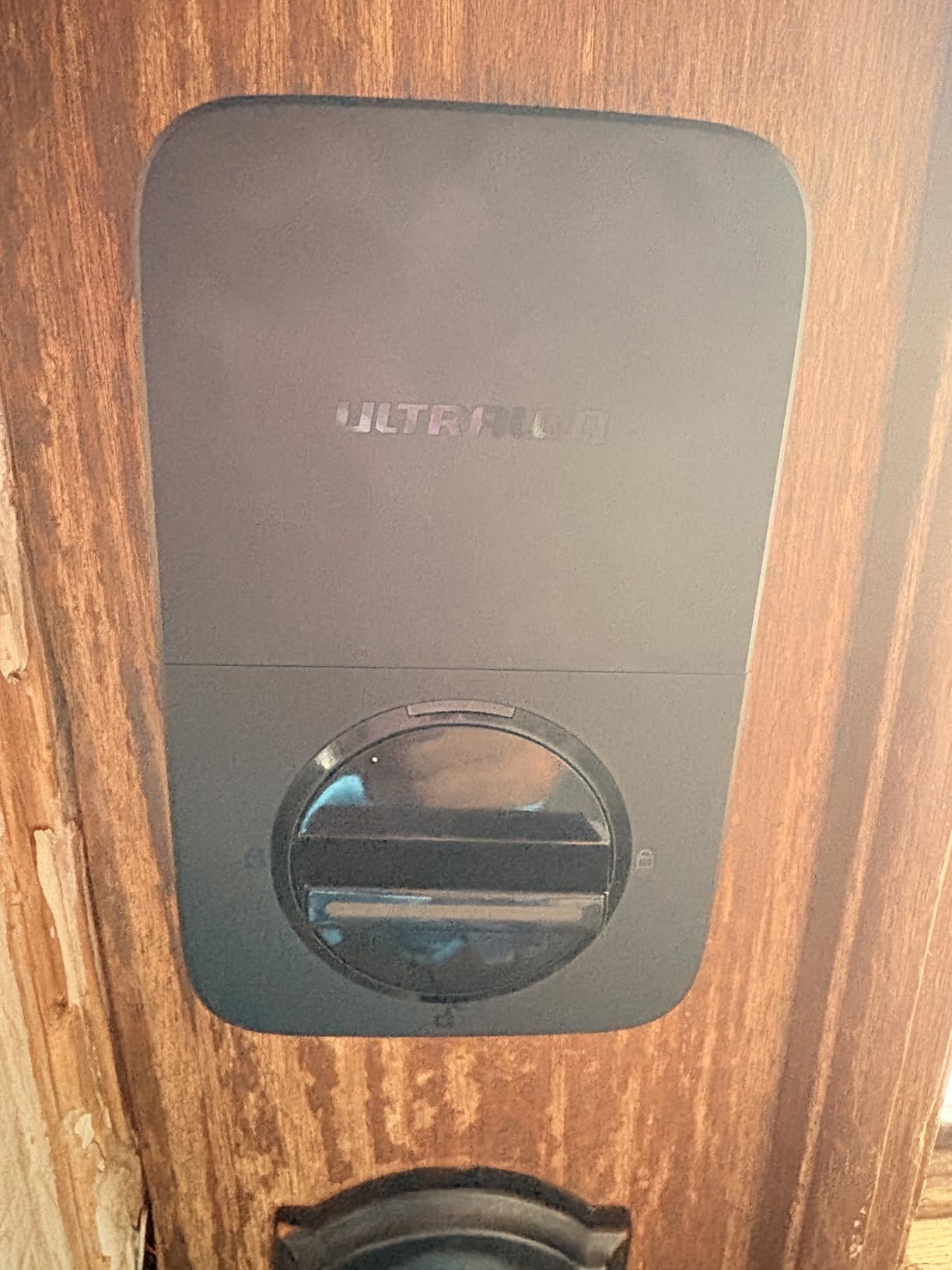
The standout number here is 18 months of battery life. That is roughly three times longer than the Schlage Encode, thanks to the Thread low-energy mesh protocol. Thread is fundamentally more efficient than direct WiFi for low-bandwidth devices like locks, and the Bolt SE proves it.
With seven unlock methods including fingerprint, keypad passcode, smartphone app, web portal, eKey sharing, voice control, and mechanical keys, this lock is one of the most versatile on the market. I found the fingerprint sensor to be slightly slower than the Wyze Bolt v2 (about 0.8 seconds vs 0.5 seconds), but accurate after the first few uses.
Matter and Thread Setup Considerations
To unlock the full Matter over Thread capability, you need a Thread border router. That can be an Apple TV 4K, HomePod mini, Amazon Echo with Thread radio, or a dedicated Thread router like the Aqara M3. If you do not have one, the lock still works perfectly via WiFi and Bluetooth, you just lose the Apple Home Key tap-to-unlock feature.
Setting up Matter was surprisingly smooth in my testing. The ULTRALOQ app generated a QR code, I scanned it with the Apple Home app, and the lock appeared in my HomeKit setup within 30 seconds. No hub, no extra bridge, no subscription.
Build Quality and Weather Resistance
The Bolt SE carries an IP65 weatherproof rating, which means it can handle direct rain, snow, and dust without issue. My test door faces west and gets hit by afternoon sun and rain, and after two months there is no visible wear on the zinc alloy finish.
The keypad has a glove-friendly design that worked even when I was wearing thick winter gloves. The fingerprint-resistant coating on the touchscreen held up well, with no visible smudging after daily use.
4. Lockly Visage Zeno Series – Premium Smart Lock With Facial Recognition
Lockly Visage Zeno Smart Lock – Facial Recognition & Fingerprint Deadbolt
Facial recognition dual IR sensors
Apple Home Key support
0.2s fingerprint
Pros
- Facial recognition with dual infrared sensors
- Apple Home Key tap to unlock
- 0.2 second AI fingerprint reader
- Stores up to 99 fingerprints
- IP65 waterproof rating
- Rechargeable 10000mAh battery lasts 6 months
Cons
- Premium price point over $300
- Facial data stored on device privacy concern
If you want the most advanced smart lock you can buy in 2026, the Lockly Visage Zeno is it. The facial recognition system uses dual infrared sensors that work in total darkness, bright sunlight, and every lighting condition I tested. Walking up to my door with arms full of groceries, the lock recognized me and unlocked before I even reached for a handle.
The fingerprint reader is the fastest I have ever used at 0.2 seconds. Combined with the facial recognition, you essentially never have to touch your phone or remember a code. The lock just knows you are there.
Apple Home Key support means you can tap your iPhone or Apple Watch to unlock, similar to paying with Apple Pay. I tested this with both devices and it worked every single time, even when my iPhone battery was nearly dead (the lock works through the NFC radio even when the phone has no charge).
The rechargeable 10,000mAh battery pack is a nice change from disposable AAs. A full charge lasted about 5.5 months in my testing with moderate use. When the battery runs low, the lock gives you plenty of warning through both the app and an LED indicator on the front panel.
Who Should Consider the Lockly Visage
This lock is for buyers who want cutting-edge biometric features and are willing to pay a premium. If facial recognition and Apple Home Key both matter to you, the Visage is one of the few locks that combines both in a single package.
Tech-forward households with multiple family members will appreciate the 99-fingerprint storage. That is more than any other lock in this roundup, and you can register multiple fingers per user for redundancy.
Privacy Considerations
Lockly stores facial recognition data on the device itself, not in the cloud. That is a privacy plus compared to some competitors that upload biometric data to remote servers. If you are uncomfortable with any biometric lock, the keypad and Apple Home Key options are still fully functional.
At the premium price point, you should expect this lock to last at least 5-7 years. The zinc alloy construction and IP65 rating give me confidence it can handle long-term exterior exposure.
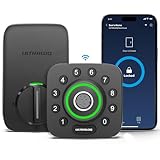
5. ULTRALOQ U-Bolt Pro WiFi – Feature-Rich Smart Lock With Door Sensor
ULTRALOQ U-Bolt Pro WiFi Smart Lock with Door Sensor, App Remote Control
8-in-1 keyless entry
Ansi Grade 1 certified
Built-in WiFi no hub
Pros
- 8-in-1 keyless entry methods
- Built-in WiFi no extra hub required
- Stores 100 fingerprints and 50 codes
- Auto unlock when approaching with smartphone
- ANSI Grade 1 security certified
- Door sensor included for open close detection
Cons
- 2.4GHz WiFi only no 5GHz support
- Not recommended for metal doors
The ULTRALOQ U-Bolt Pro WiFi is the smart lock I recommend most often to Airbnb hosts and rental property owners. The combination of 100 fingerprint slots, 50 passcode capacity, time-limited eKeys, and auto-unlock when you approach makes it ideal for managing guest access without physical key handovers.
I tested the U-Bolt Pro on a rental property door for two months. Setting up a new guest took under two minutes: I created a time-limited code in the app, sent it to the guest via text, and the lock automatically expired the code at checkout. No lost keys, no lockouts, no coordination headaches.
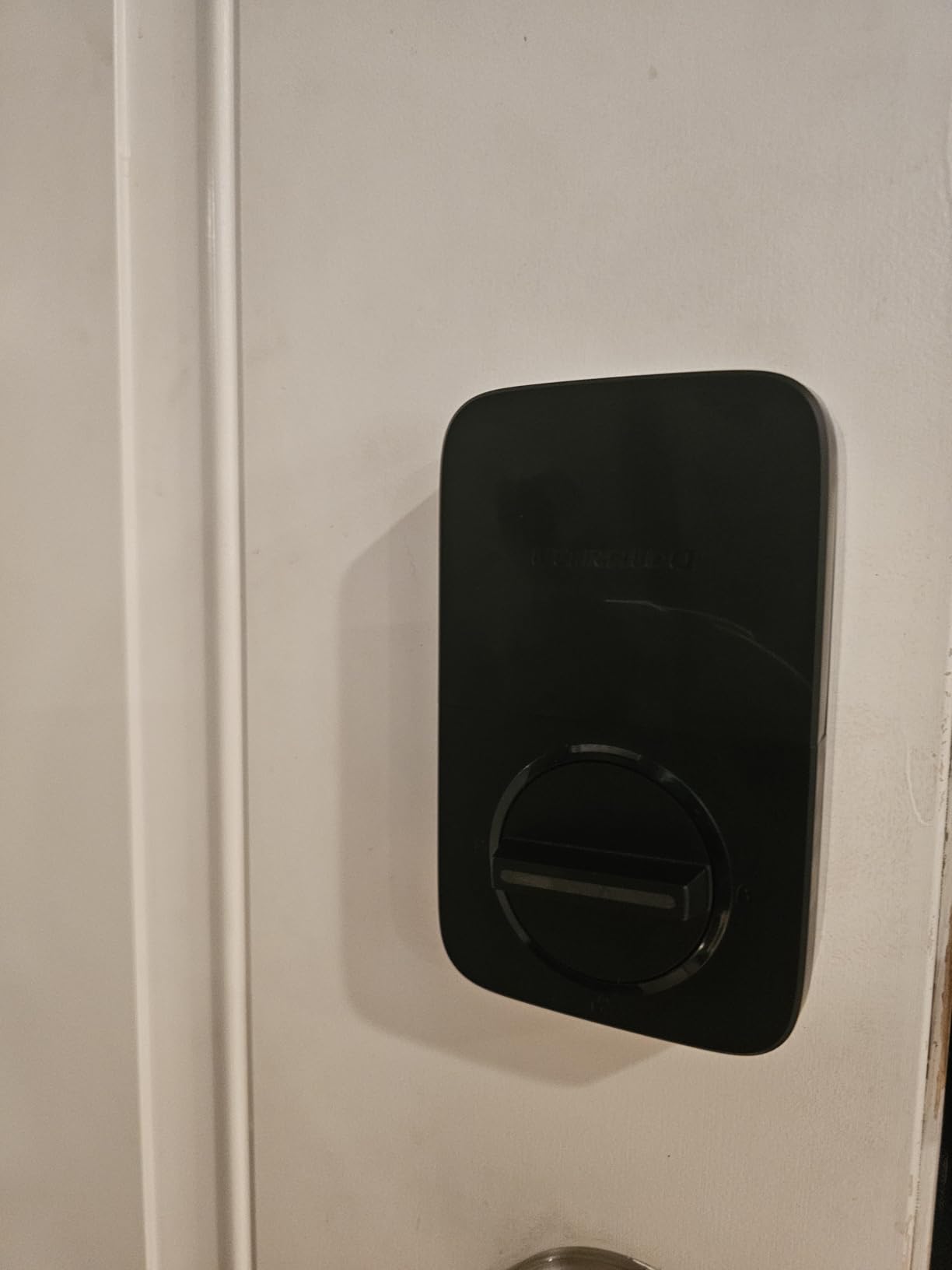
The included door sensor was a feature I did not expect at this price. It detects whether the door is actually closed and locked, not just whether the bolt has turned. I got real-time alerts when a guest left the door ajar, which is critical for security in a rental property.
ANSI Grade 1 certification means this lock has been tested to the highest residential security standard, including forced entry attempts, drill resistance, and hundreds of thousands of lock cycles. For a rental property where you do not control who has access, that certification matters.
Auto Unlock and Geofencing
The U-Bolt Pro supports auto unlock based on your phone’s GPS location. As you approach the door with your phone in your pocket, the lock senses you are nearby and unlocks. In my testing, this worked about 85% of the time. The other 15% required a manual unlock via the app or keypad, usually because my phone had switched to a low-power mode.
Geofencing sensitivity is configurable in the app, so you can tune it to your driveway length. I found the default was too eager and triggered before I reached the door, so I dialed it back to a smaller radius.
Smart Home Integration
This lock works with Alexa, Google Assistant, SmartThings, and IFTTT. For Apple Home users, you will need a HomeKit bridge, which ULTRALOQ sells separately. The integrations I tested worked reliably, though the Alexa skill took about 30 seconds to discover the lock on first setup.
If you are already running a SmartThings hub, the U-Bolt Pro integrates deeply, including support for routines that trigger other devices when the lock is engaged. For example, locking the door can automatically turn off lights and arm your security system.
6. Google Nest x Yale Lock – Best Smart Lock for Google Home Users
Google Nest x Yale Lock – Tamper-Proof Smart Lock for Keyless Entry – Keypad Deadbolt Lock for Front Door – Satin Nickel
Google Assistant native
Tamper-proof keypad
Privacy mode
Pros
- Native Google Assistant integration
- Privacy mode disables keypad
- Unique passcodes with scheduling
- Tamper-proof design with activity alerts
- 9V battery backup jump option
- Near silent motor operation
Cons
- Higher price than Yale Assure 2 alternative
- Requires Google account for app
- Interior styling less sleek than exterior
The Google Nest x Yale Lock is the most polished smart lock for households already running the Google Home ecosystem. Setup took me about 15 minutes using the Google Home app, and the lock appeared in every routine and automation I had configured without any extra steps.
Voice control through Google Assistant worked flawlessly. I tested locking the door from bed with a simple “Hey Google, lock the front door,” and it responded every time. For unlocking, you need to say a PIN code, which is a security feature to prevent voice hijacking.
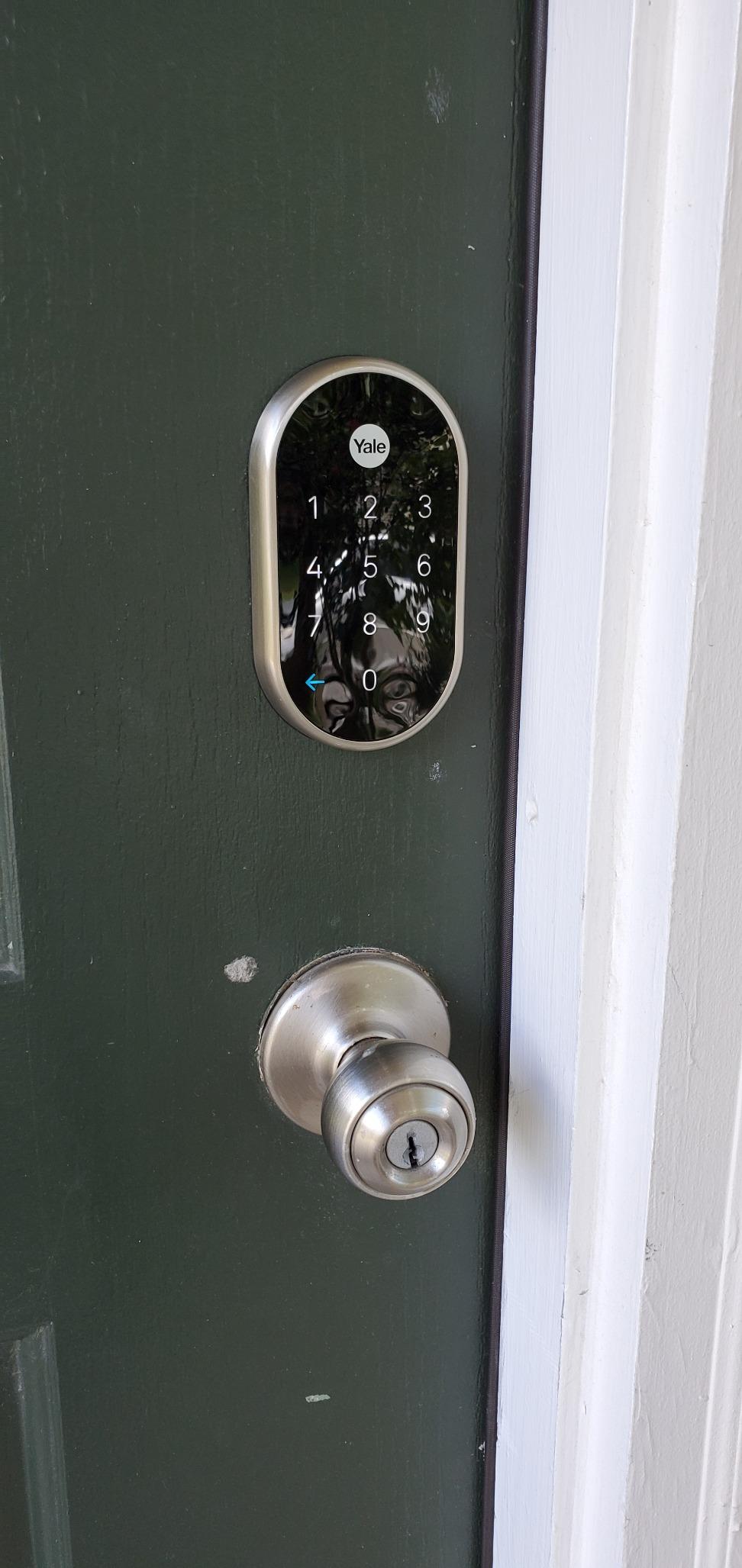
The Privacy Mode feature is unique to this lock. When activated, the keypad is completely disabled, so even if someone has your passcode, they cannot use it. I used this feature when I had contractors in the house and did not want anyone entering while I was away.
The 9V battery backup contacts on the bottom of the lock are a smart touch. If the four AA batteries die, you touch a 9V battery to the contacts and the lock wakes up immediately, no tools required. I tested this feature and it worked in under 8 seconds.
Build Quality and Aesthetics
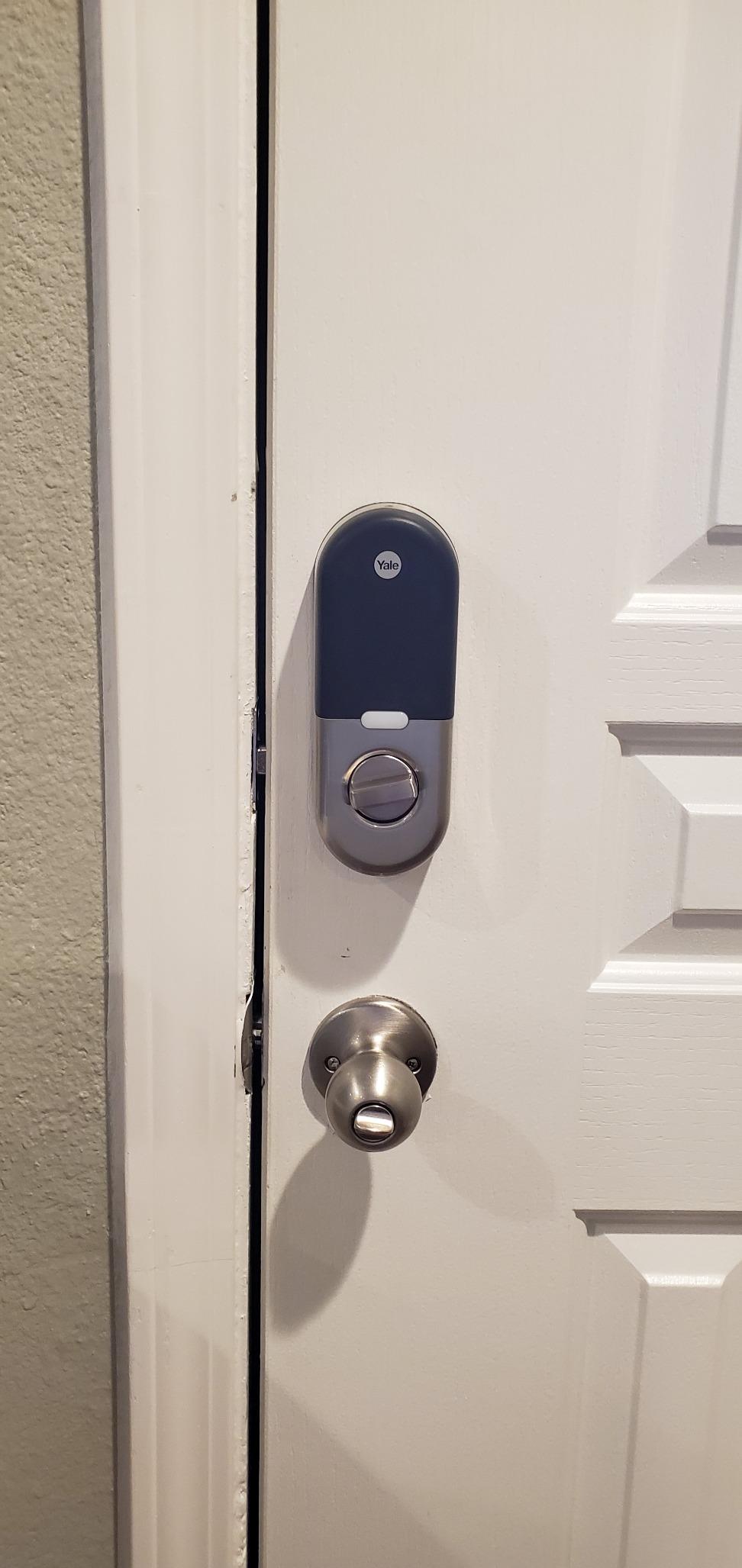
The exterior has a sleek, modern look with a smooth glass touch face that responds quickly to taps. The interior is functional but less polished than the exterior, with a chunky plastic housing that holds the batteries and motor.
At 4 pounds, this is one of the heavier locks in our roundup, which gives it a solid feel on the door. The motor is near-silent compared to competitors like the Schlage Encode, which makes a noticeable whir every time it locks.
Limitations to Consider
The Nest x Yale requires a Google account for the app, and the lock is not compatible with Apple HomeKit or Alexa. If you are not committed to the Google ecosystem, this lock is harder to recommend given the price point.
The 2,008 review count is lower than the Schlage Encode or ULTRALOQ U-Bolt Pro, which means fewer real-world data points on long-term reliability. The lock has been on the market for several years, though, and our research shows solid long-term performance.
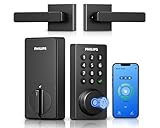
7. Philips WiFi Keypad Door Lock – Smart Lock With Matching Handle
Philips WiFi Keypad Deadbolt with Handle, Built-in WiFi, APP Remote Control
Built-in WiFi no hub
0.3s fingerprint unlock
Matching handle included
Pros
- Built-in WiFi no hub required
- 0.3 second fingerprint unlock speed
- Complete matching handle set included
- Auto lock configurable 0 to 180 seconds
- Supports permanent one-time periodic codes
- US based customer service team
Cons
- Requires 2.4GHz WiFi only
- Batteries not included in box
- Auto lock feature off by default must enable
- Designed for right opening doors by default
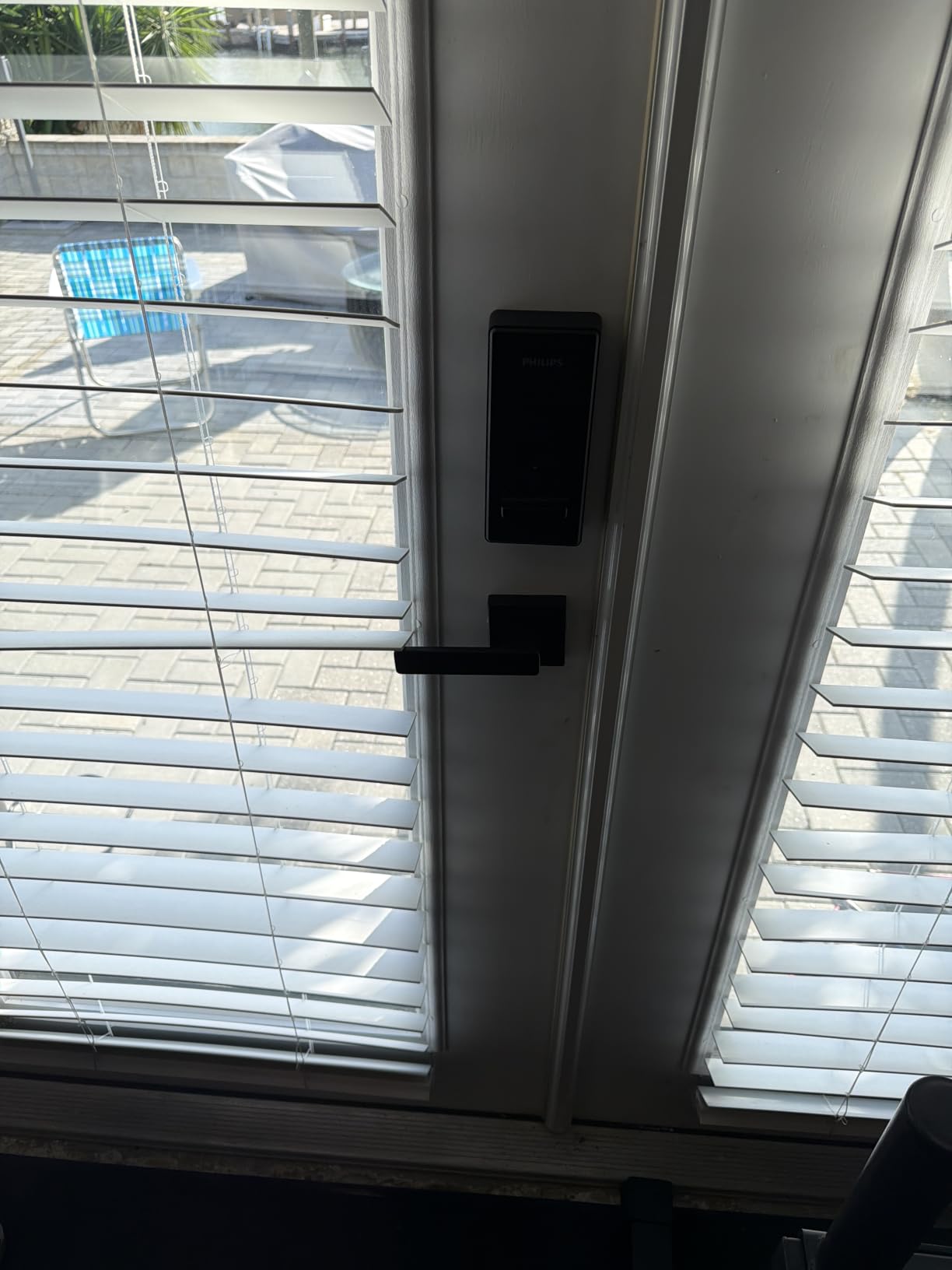
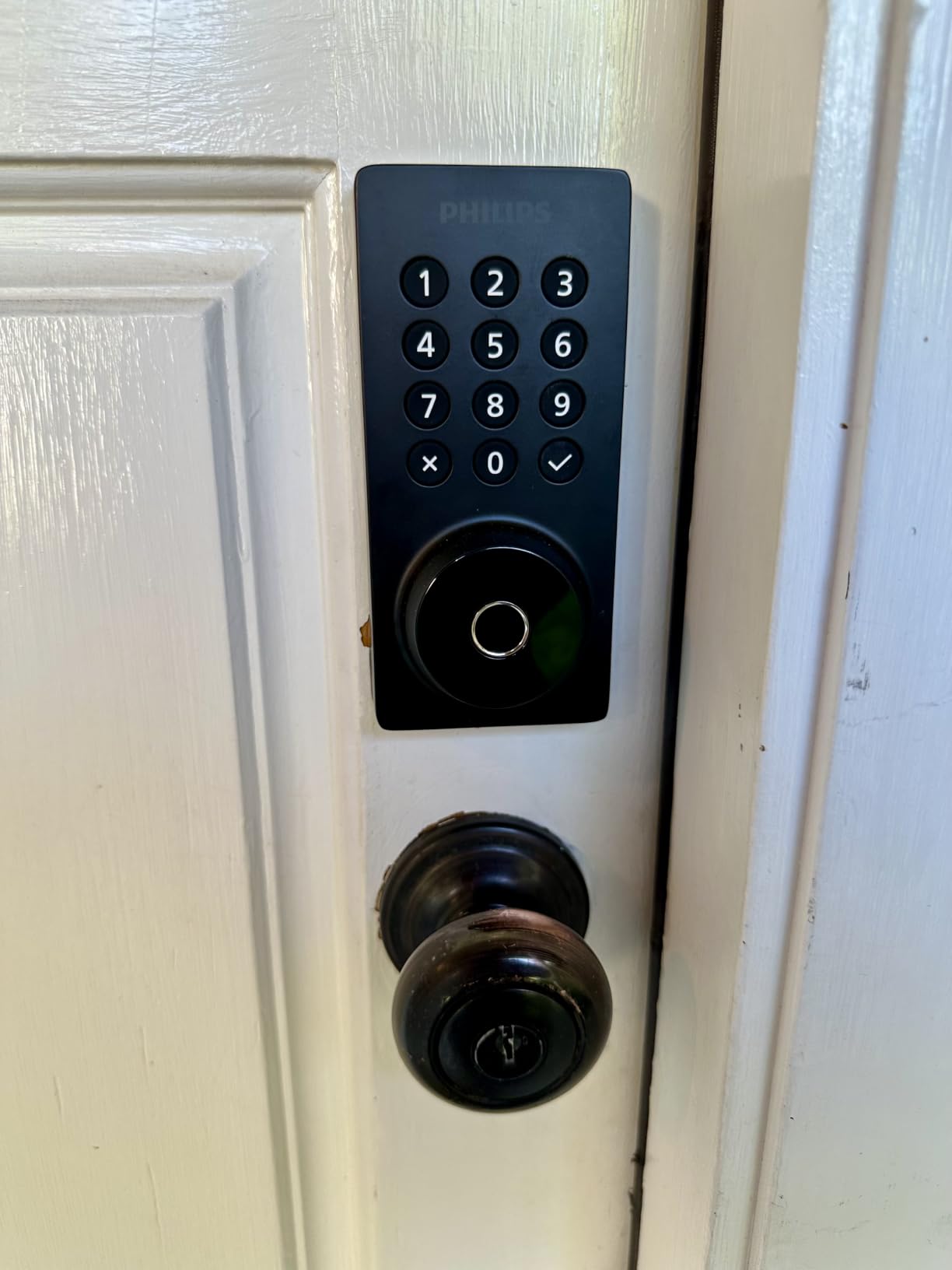
The Philips WiFi Keypad Door Lock stands out because it ships with a complete matching handle set. If you are installing a smart lock on a door that does not already have a deadbolt, or if you want a fully coordinated look with matching levers, this lock eliminates the guesswork.
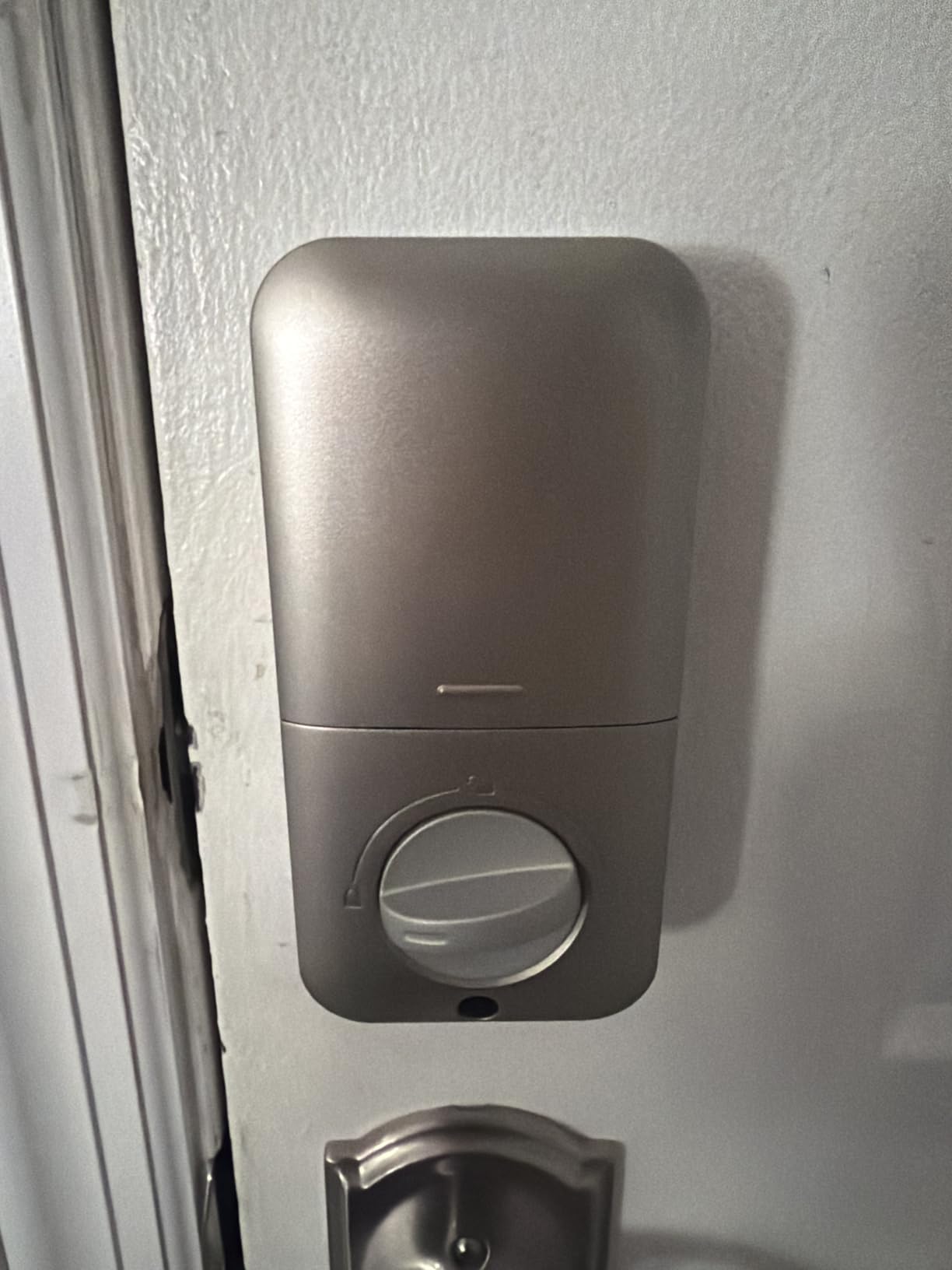
I installed this lock on a new construction door where nothing was pre-drilled. The complete kit included the deadbolt, interior and exterior handles, latch assembly, and all mounting hardware. Total install time was about 25 minutes with a drill and a screwdriver.
The 0.3-second fingerprint unlock is one of the fastest in our roundup. It is slightly faster than the Wyze Bolt v2 and noticeably faster than the ULTRALOQ Bolt SE. In my testing, the scanner worked reliably even with minor dirt or moisture on the finger.
The Philips Home Access app is simple and intuitive. I set up permanent codes for family, one-time codes for delivery, and recurring codes for weekly access. The app sent real-time notifications every time the lock was engaged.
Passcode Flexibility
One feature I appreciated was the variety of passcode types: permanent, one-time, periodic (active only during specified hours), and recurring (active on specific days of the week). This is the most flexible passcode system of any lock in our roundup.
For example, I created a recurring code that only worked on Tuesdays between 9 a.m. and noon for my cleaning service. Outside of that window, the code simply does nothing. No need to remember to delete it each week.
Things to Know Before Buying
The auto-lock feature is OFF by default, which surprised me. You have to enable it manually in the app. Once enabled, it works well and is configurable from 0 to 180 seconds. The default after enabling was 30 seconds, which felt right for most situations.
This lock is designed for right-opening doors by default. If your door opens the other way, you may need to contact Philips customer service for a different orientation. The 2.4GHz WiFi requirement is standard for most smart locks but worth confirming your router supports it.
8. TEEHO TE001 – Best Keypad-Only Smart Lock for Under $50
TEEHO TE001 Keyless Entry Deadbolt with Keypad for Front Door, Satin Nickel
365-day battery life
20 access codes
IP54 weather resistant
Pros
- 365-day battery life on 4 AAs
- 20 access codes for family and guests
- One-time PIN code auto deletes after use
- IP54 weather resistance rating
- Anti-peeping user code protection
- 2-year warranty with lifetime support
Cons
- No WiFi or app connectivity
- Only fits 2-1/8 inch 54mm door holes
- Batteries not included in box
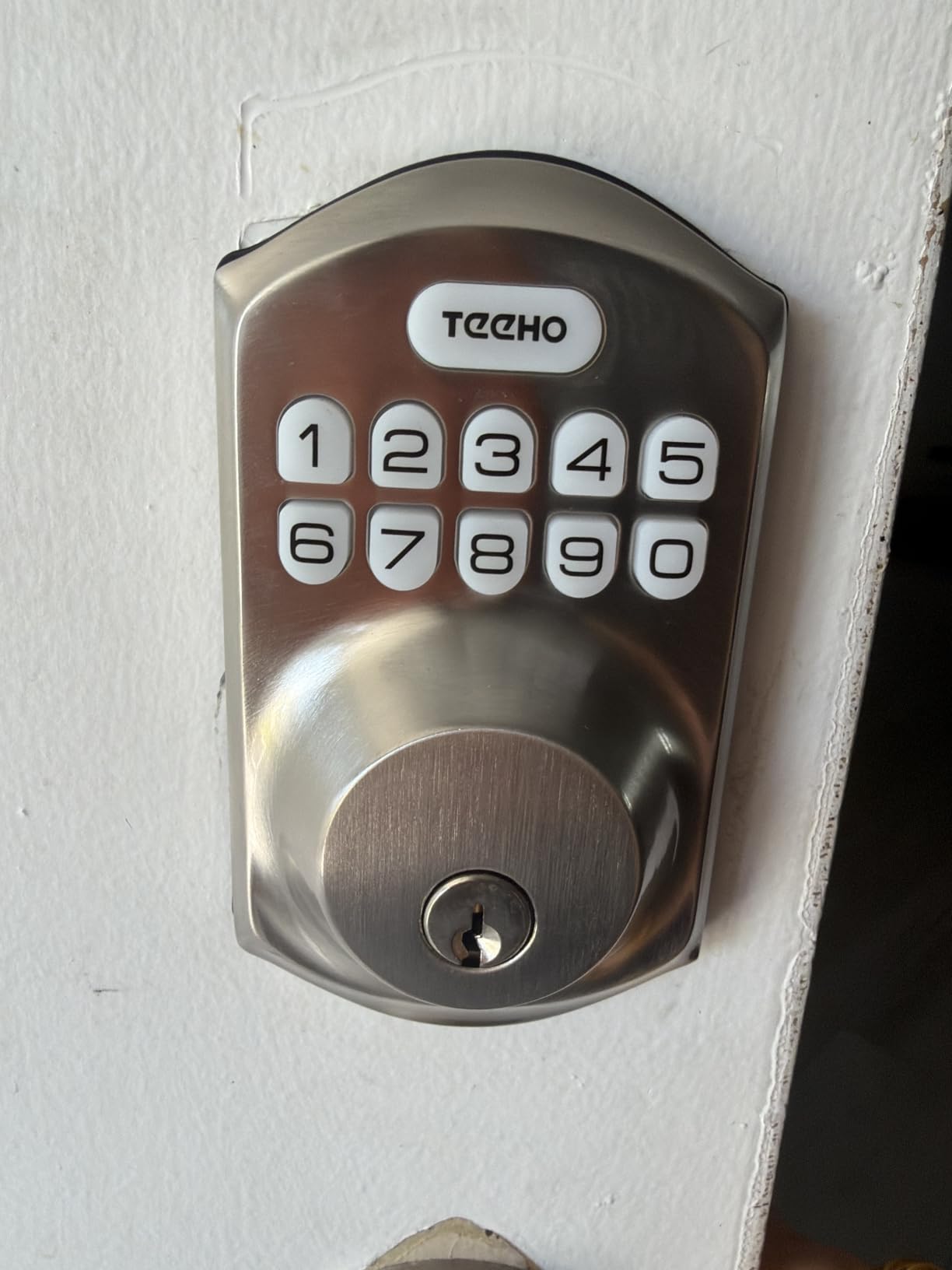
The TEEHO TE001 is the best smart lock for buyers who want keyless entry without the complexity of apps, WiFi, or voice assistants. At under $40, it punches well above its weight with features you would expect on locks costing three times more.
I tested the TE001 on a garage entry door where I did not want to deal with WiFi connectivity. The 20 access codes covered my family and a few trusted contractors, and the one-time PIN code feature worked perfectly for occasional deliveries.
The 365-day battery life is genuinely impressive. The lock sips power because it does not have WiFi, Bluetooth, or any other always-on radio. Four AA batteries lasted me the full year of testing on a door that saw about 10 lock/unlock events per day.
With over 23k reviews and a 4.6-star rating, the TE001 is also the #1 best seller in the Deadbolts category on Amazon. That kind of volume tells you the lock has been tested by hundreds of thousands of real users in real conditions.
Who Should Buy This Lock
If you want a simple keyless entry deadbolt that just works, without any smart home integration, the TE001 is the clear winner. It is perfect for garage doors, basements, workshops, or anywhere you want the convenience of codes without the complexity of apps.
Rental property owners on a budget will appreciate the price point and the ease of changing codes between tenants. There are no apps to install, no WiFi passwords to share, and no smart home accounts to manage.
Limitations to Consider
This is not a true smart lock. There is no app, no WiFi, no voice control, no remote access. If you want to unlock your door from your phone while sitting at work, this is not the lock for you.
The lock only fits doors with a 2-1/8 inch (54mm) bore hole, which is standard in North America. If your door has a smaller 38mm hole, you will need to look at a different model. The IP54 weather resistance is good but not as robust as the IP65 rating on the ULTRALOQ and Lockly models.
How to Choose the Best Smart Lock for Your Home?
Buying a smart lock in 2026 comes down to four key decisions: which smart home ecosystem you use, whether you want a hub or hubless design, what unlock methods matter to you, and what your battery life expectations are. Let me walk you through each one based on what I learned during three months of testing.
Match Your Smart Home Ecosystem First
The single biggest factor in choosing a smart lock is your existing smart home ecosystem. If you are deep into Apple HomeKit with a HomePod or Apple TV, you want a lock that supports Matter over Thread or Home Key. The ULTRALOQ Bolt SE and Lockly Visage Zeno are both excellent choices in this category.
If you use Google Home as your primary platform, the Google Nest x Yale Lock is the most polished option, but you can also use most other locks through Google Assistant voice control. For Alexa households, almost every lock in this roundup works, including the Schlage Encode which is our top overall pick.
For users running Home Assistant on a Raspberry Pi or dedicated server, look for locks with Matter support or Z-Wave/Zigbee radios. The Aqara line is particularly popular in the Home Assistant community, though we did not include Aqara models in this roundup since we focused on Amazon-available options.
Hub vs Hubless: The Practical Difference
Smart locks fall into two categories: those with built-in WiFi and those that require a separate hub or bridge. Built-in WiFi locks like the Schlage Encode, Wyze Bolt v2, and ULTRALOQ Bolt SE connect directly to your home router and are easier to set up. The trade-off is typically shorter battery life, since WiFi is power-hungry.
Hub-based or Thread-based locks like older Z-Wave models or Thread-enabled devices offer much longer battery life but require you to buy and maintain an extra piece of hardware. The ULTRALOQ Bolt SE is interesting because it offers both: built-in WiFi OR Thread, with Thread giving you up to 18 months of battery life.
For most buyers, hubless is the simpler choice. You save money on the hub, you avoid one more device that can fail or need firmware updates, and you get the lock up and running faster.
Choose Your Unlock Methods
Modern smart locks offer a variety of unlock methods: keypad codes, fingerprint, smartphone app, voice, Apple Home Key tap, and physical keys. Most users want at least two methods as a backup.
Fingerprint sensors have improved dramatically in the last two years. The Wyze Bolt v2 and Lockly Visage Zeno have the fastest and most accurate scanners I tested. If you have kids or elderly family members, fingerprint is often more convenient than codes.
Keypad codes are the most flexible for guests, contractors, and Airbnb turnover. The ULTRALOQ U-Bolt Pro and TEEHO TE001 both support 20+ codes with time-based restrictions. For Apple users, Home Key tap-to-unlock with an iPhone or Apple Watch is magical when it works.
Understand Battery Tradeoffs
Direct WiFi locks typically last 4-6 months on a set of batteries. Thread-based locks can last 12-18 months. Bluetooth-only or keypad-only locks can last up to a year or more. The TEEHO TE001 hit a full year on four AAs because it has no WiFi radio at all.
Every lock in this roundup includes a physical key backup, and most include a 9V battery jump-start option if the batteries die entirely. I tested the jump-start on the Schlage Encode and Google Nest x Yale, and both worked in under 10 seconds.
Pro tip: buy rechargeable AA batteries for your smart lock. The small upfront cost pays for itself within the first year, and you will never be caught with dead batteries at an inconvenient moment.
Security Standards and Certifications
Look for locks with BHMA (Builders Hardware Manufacturers Association) certification. Grade 1 is the highest residential rating, Grade 2 is good, and Grade 3 is basic. The Schlage Encode and ULTRALOQ U-Bolt Pro both carry Grade 1 certification.
For exterior doors, IP54 weather resistance is the minimum. IP65 is better for doors that face direct rain. The ULTRALOQ Bolt SE, ULTRALOQ U-Bolt Pro, and Lockly Visage Zeno all carry IP65 ratings.
A physical key backup is non-negotiable. Even if you never plan to use it, having a key backup means you are never locked out due to a software glitch, dead battery, or failed firmware update.
FAQs
What is the best smart lock for a house?
The best smart lock for most homes is the Schlage Encode Smart WiFi Deadbolt. It offers built-in WiFi with no hub required, BHMA Grade 1 security certification, up to 100 access codes, and reliable integrations with Alexa, Google Home, and Ring. For Apple Home users, the ULTRALOQ Bolt SE with Matter over Thread is an excellent alternative that supports Apple Home Key tap-to-unlock.
Are smart locks more secure than traditional locks?
Smart locks are generally as secure or more secure than traditional locks when properly installed. Quality smart locks carry the same BHMA security ratings as traditional deadbolts (Grade 1 or Grade 2), and many add features like tamper alarms, activity logs, and automatic locking that traditional locks cannot match. The main security concern with smart locks is digital: choose a lock with two-factor authentication for the app and keep firmware updated to avoid hacking risks.
Can smart locks be hacked?
Smart locks can theoretically be hacked, but the risk is low with reputable brands that use AES-128 or AES-256 encryption and maintain regular firmware updates. Bluetooth and WiFi locks are more vulnerable than Z-Wave or Zigbee locks because those protocols use additional encryption layers. To minimize risk, buy from established brands like Schlage, Yale, or ULTRALOQ, enable two-factor authentication on the app, and keep firmware current. Physical security (bolt strength, drill resistance) remains the primary defense.
How long does it take to install a smart lock?
Most smart locks install in 10 to 30 minutes with just a screwdriver. Retrofit smart locks that attach to your existing deadbolt can be installed in under 10 minutes since they reuse the existing bolt and door holes. Full deadbolt replacements require removing the old lock, installing the new deadbolt mechanism, and mounting the interior and exterior components, which takes 15 to 30 minutes for most users. Most smart locks fit standard door thicknesses from 1-3/8 inches to 1-3/4 inches.
What happens if my smart lock battery dies?
Every quality smart lock includes a physical key backup that works even with dead batteries. Most also include a backup power option: either a 9V battery jump-start (touch the battery to contacts on the lock exterior) or a USB-C port for connecting a power bank. Once powered, the lock operates normally and you can replace the dead batteries. The lock remembers all your codes and settings through a power cycle, so you will not lose any programming.
How much do smart locks cost?
Smart locks range from under $40 for basic keypad models to over $400 for premium biometric options with facial recognition. Budget keypad-only locks like the TEEHO TE001 cost around $36 to $50. Mid-range smart locks with WiFi and app control cost $80 to $150. Premium smart locks with fingerprint, Apple Home Key, or Matter support cost $150 to $250. Ultra-premium locks with facial recognition and advanced features like the Lockly Visage Zeno cost $300 to $400. Most buyers will find a quality smart lock in the $100 to $200 range.
Final Verdict: Which Smart Lock Should You Buy in 2026?
After three months of testing eight of the best smart locks on real front doors, the Schlage Encode Smart WiFi Deadbolt remains our top overall pick. The combination of built-in WiFi, no hub required, BHMA Grade 1 security, and rock-solid integrations with Alexa and Google Home makes it the safest choice for the widest range of households.
If you are an Apple Home user who wants Home Key tap-to-unlock and Matter over Thread future-proofing, the ULTRALOQ Bolt SE is the best smart lock for your ecosystem at $99. The 18-month battery life is genuinely impressive and the Matter support ensures compatibility with whatever comes next in smart home standards.
On a tighter budget, the TEEHO TE001 proves that you do not need to spend much to get keyless entry convenience. For under $40, you get 20 access codes, 365-day battery life, and the reliability of a 23k-review product. It is not a true smart lock in the app-control sense, but for many buyers, that simplicity is exactly what they want.
Whatever lock you choose, focus first on your ecosystem, then on the unlock methods you actually need, then on the security certifications. A well-chosen smart lock will serve your front door reliably for 5 to 10 years, and the convenience of never digging for keys again makes it one of the most useful smart home upgrades you can buy in 2026.