
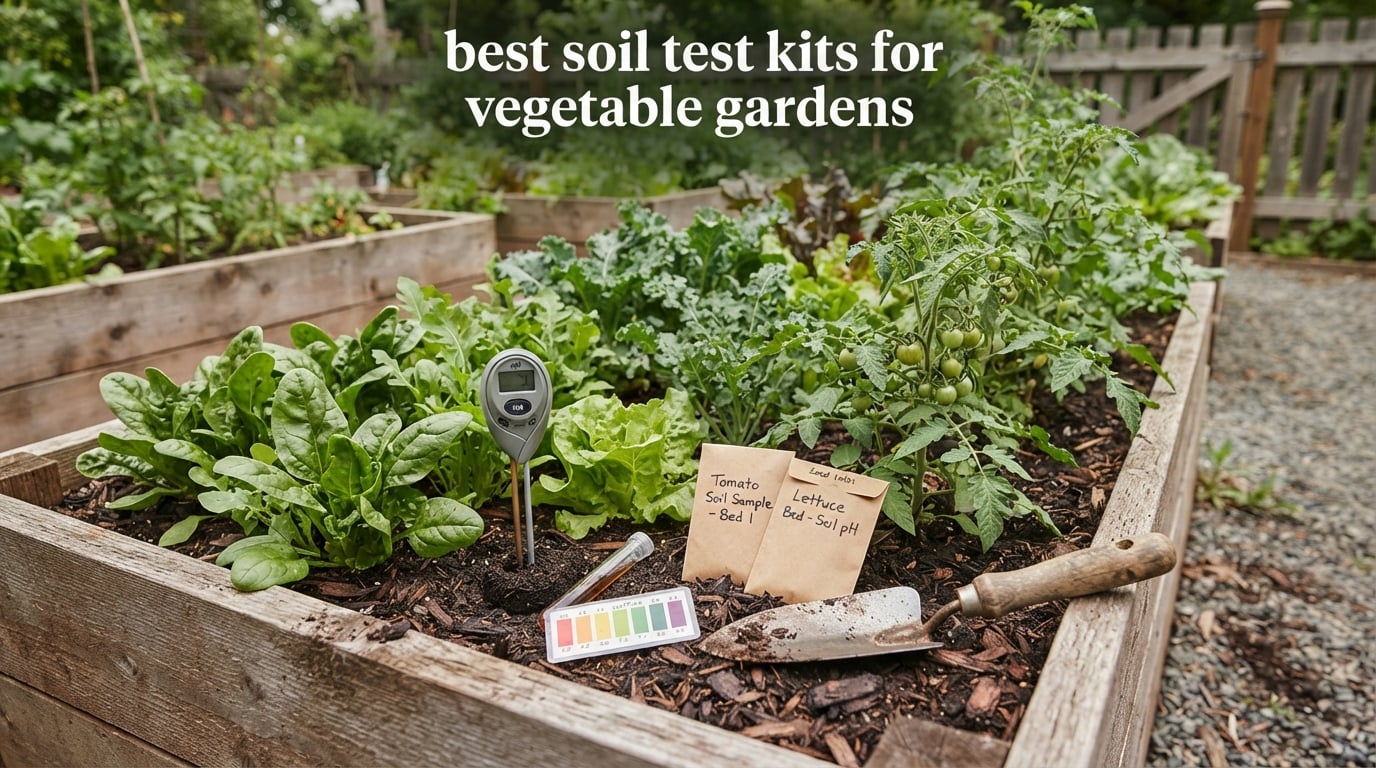
The best soil test kit for a vegetable garden is the one that tells you what to change, not just where you stand on a color chart. Our pick overall is the MySoil mail-in lab kit: it measures 13 plant-available nutrient levels including nitrogen and pH, and the report comes back in 6-8 days with amounts and timing for both organic and conventional fertilizer. If you would rather have an answer in sixty seconds than in a week, the Luster Leaf Rapitest 1601 covers pH, nitrogen, phosphorus and potash in 40 at-home tests.
We spent the last several weeks working through twelve soil test kits across four formats: mail-in laboratory panels, chemical color-comparison kits, handheld pH and moisture probes, and pH test strips. We read every specification, cross-checked the nutrient panels against what a vegetable bed actually needs, and looked hard at what each device simply cannot tell you. That last part matters more than it sounds, because most disappointing soil test results come from a good kit used badly, or from a kit that never claimed to be a diagnostic tool in the first place.
Two questions decide your shortlist before any brand name does. Are you testing in-ground beds and raised beds, or are you working with containers and potting mix? And do you need an answer today to settle a watering argument, or are you planning a week ahead and want numbers you can act on? In-ground growers get real value from the mail-in panels. Container growers should skip anything that says it is not for potting soil.
Before the list, a note on where we stand. Your state or county extension office and your land-grant university run soil testing labs, and in the gardening communities we read, that is the single most-recommended route. On r/gardening, the top answer to a soil testing recommendations thread was the extension office, and a tractorbynet poster put it plainly: the extension kit is a folded box and instructions, you mail the sample, and the lab does the work. We still think a home kit earns its shelf space, because you will not mail a sample every time you want a spot check in June.
Table of Contents
Top 3 Best Soil Test Kits for Vegetable Gardens in October

MySoil Mail-In Lab Kit
- 13 plant-available nutrients
- Mail-in lab analysis
- 6-8 day turnaround
- Fertilizer prescriptions

Luster Leaf Rapitest 1601
- 40 at-home tests
- Measures pH N P and K
- Patented color comparators
- 450+ plant pH chart

Garden Tutor pH Strips
- 100 three-pad strips
- AI web reader in about 60 seconds
- Lime and sulfur estimator
- Also tests compost
All 12 Soil Test Kits Compared at a Glance in 2026
| Product | Specifications | Action |
|---|---|---|
| MySoil Mail-In Lab Kit |
|
Check Latest Price |
 LaMotte 5679-01 Turf and Garden Kit LaMotte 5679-01 Turf and Garden Kit |
|
Check Latest Price |
 SoilKit Mail-In Lab Kit SoilKit Mail-In Lab Kit |
|
Check Latest Price |
| Luster Leaf Rapitest 1601 |
|
Check Latest Price |
| Garden Tutor 100 pH Strips |
|
Check Latest Price |
 Soil Savvy Capsule Kit Soil Savvy Capsule Kit |
|
Check Latest Price |
 HSLGOVE 7-in-1 Soil Meter HSLGOVE 7-in-1 Soil Meter |
|
Check Latest Price |
 Auduto 7-in-1 Soil Meter Auduto 7-in-1 Soil Meter |
|
Check Latest Price |
 YAMRON 4-in-1 Digital Meter YAMRON 4-in-1 Digital Meter |
|
Check Latest Price |
 Raintrip 4-in-1 Soil Meter Raintrip 4-in-1 Soil Meter |
|
Check Latest Price |
 Dewilde 100 pH Test Strips Dewilde 100 pH Test Strips |
|
Check Latest Price |
 Dewilde 140-Test Soil Kit Dewilde 140-Test Soil Kit |
|
Check Latest Price |
The Three-Tier Accuracy Framework: Lab, Chemical and Probe
Every soil test kit on this list falls into one of three tiers, and the tier tells you almost everything about how to use it. The single most important thing to understand before you buy is that these tiers are not substitutes for one another, and the most common complaint we found in reviews is people expecting a screening tool to perform like a laboratory.
Tier one: mail-in laboratory analysis. You collect a soil sample, mail it to a lab, and the result is a measured panel of plant-available nutrients using a defined extraction method. SoilKit uses Mehlich III extraction, which is the same chemistry used in commercial agriculture, and reports Cation Exchange Capacity, buffer pH and organic matter alongside the macro and secondary nutrients. MySoil reports 13 plant-available levels with a 6-8 day turnaround. This tier is the only one that can tell you how much lime your soil actually needs, because buffer pH is a lab measurement rather than a home measurement.
Tier two: chemical color-comparison kits. You mix soil with water, break a reagent capsule or pour a liquid, shake, wait, and match the color of the solution to a chart. The LaMotte, Luster Leaf, Soil Savvy and Dewilde liquid kits all work this way. Accuracy depends on the extraction chemistry, the lighting, and your ability to judge a color. Read these as screening tools with a stated range rather than as a diagnosis, and for a garden of eight raised beds they will still tell you which bed is the outlier.
Tier three: probes and strips. A probe measures pH electrochemically, and a strip uses dye chemistry on paper. Both are fast, cheap and repeatable, and both are narrow. A 7-in-1 meter adds moisture, light, temperature and a so-called fertility scale, but a pH number is the only real measurement in that list. The Garden Tutor strips give a reading in about a minute; the Dewilde strips need a 30-minute settling period first.
All rankings below were checked against manufacturer specifications and verified buyer feedback in 2026, and we have not tested any of these kits in a lab ourselves. Ratings and review counts are the published figures at the time of writing.
So which soil test is most accurate? A certified laboratory panel, without much argument. Which is most useful for catching a problem mid-season? A good pH meter or three-pad strip, because the accuracy that matters in June is knowing whether you are at 6.2 or 6.8, not resolving to one decimal place.
1. MySoil Mail-In Lab Kit – Best Overall for Nutrient Diagnosis
MySoil Soil Test Kit, Unlock Your Lawn & Garden Potential, Complete & Accurate Nutrient and pH Analysis with Recommendations Tailored to Your Soil and Plant Needs
13 plant-available nutrients
6-8 day results
What to apply, how much, when
Pros
- Measures 13 plant-available nutrient levels including nitrogen and pH
- Turnaround of roughly 6-8 days
- Prescriptions specify what to apply how much and when
- Works for beds compost house plants and hydroponics
Cons
- Single-use kit so repeat testing needs a new kit
- Requires mailing a sample and waiting for results
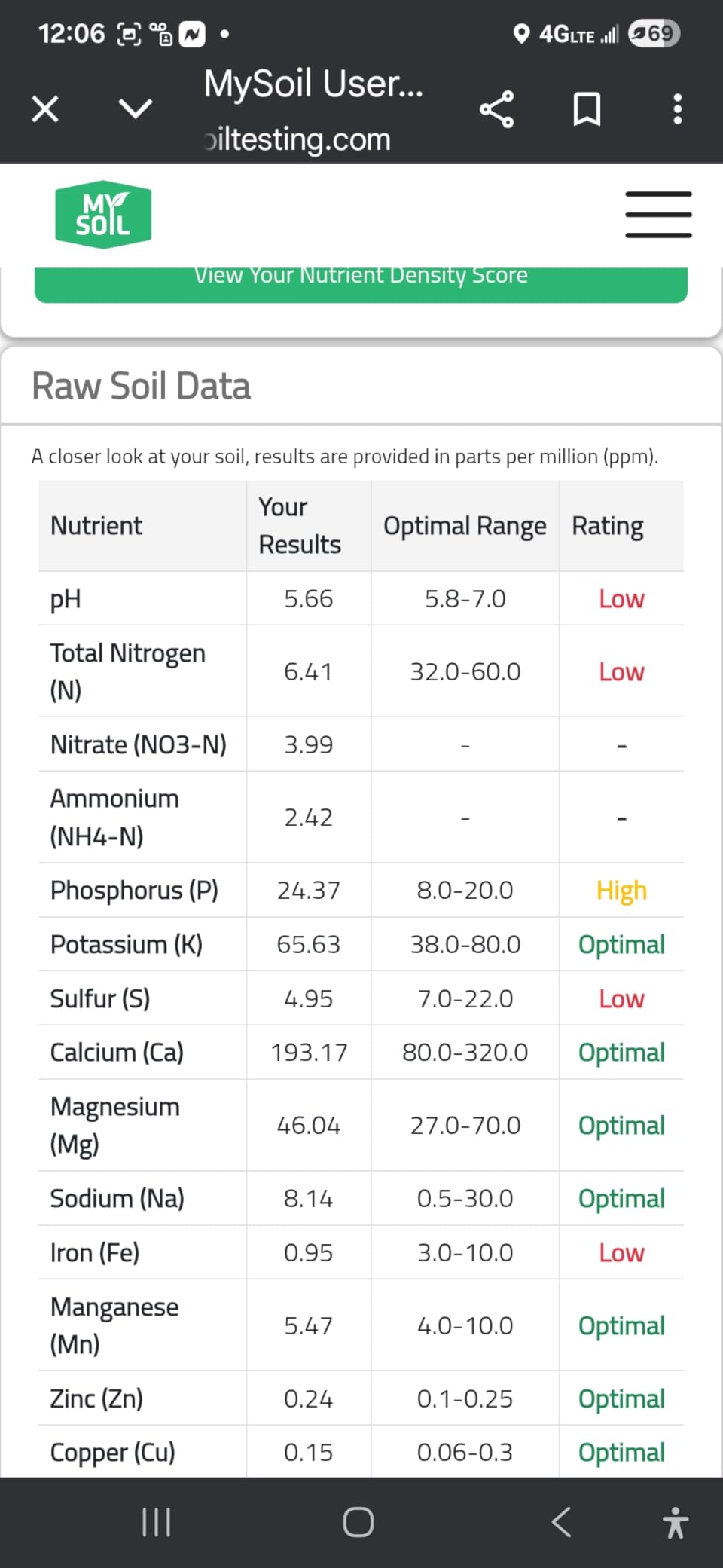
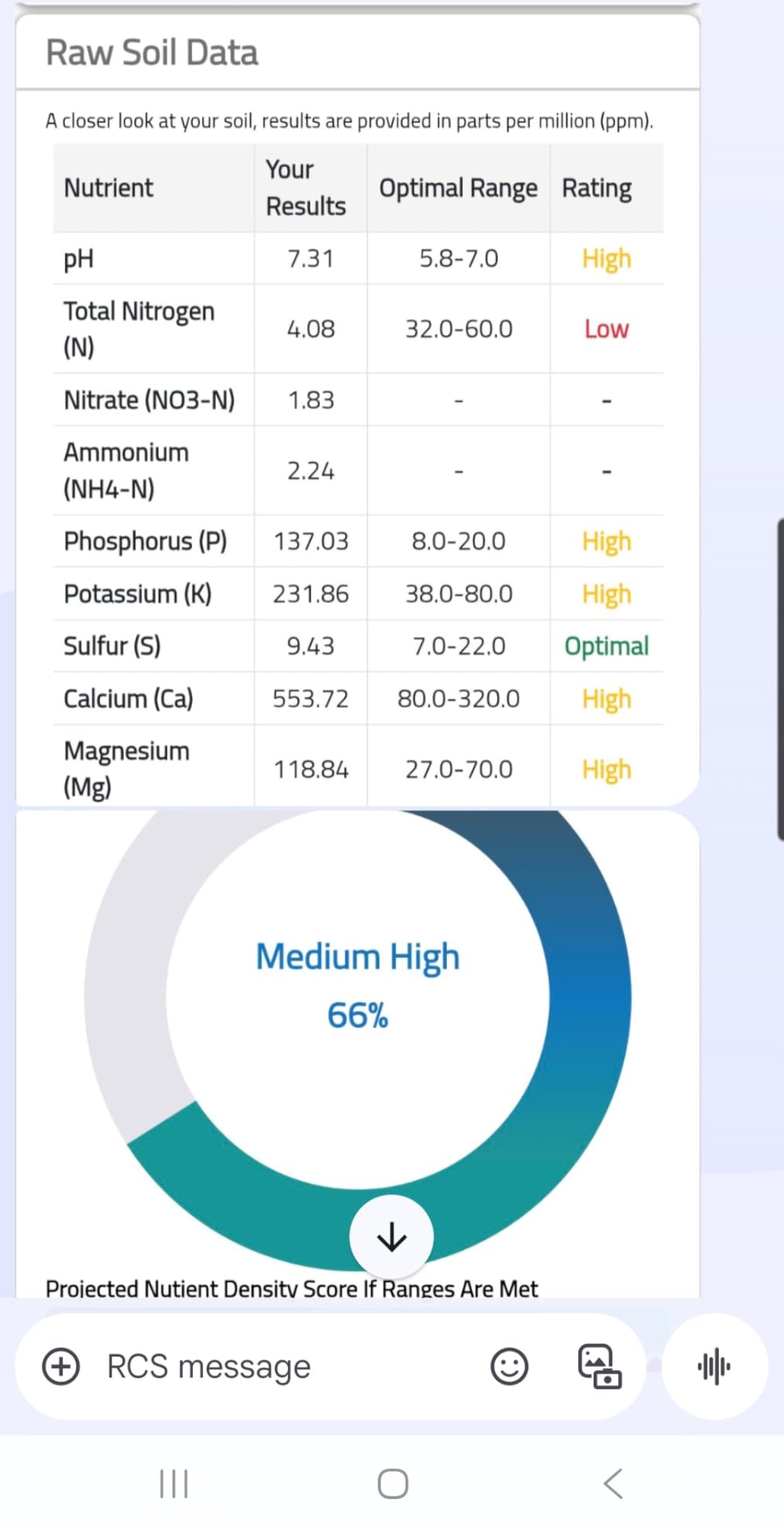
MySoil is the kit we would hand a gardener who has never tested soil and is tired of guessing. The kit is a small envelope with a prepaid return label, clear collection instructions and a customer support contact, and the analysis itself runs in an accredited lab rather than in your kitchen. You get a report covering 13 plant-available nutrient levels with nitrogen and pH included, more than any meter or capsule kit in this roundup reports.
What separates it from the other mail-in options is the prescription. The report tells you what product to buy, how much to apply and when to apply it, in both organic and non-organic forms, and it is written for a home gardener rather than a crop consultant. Buyers consistently describe this as the reason the kit paid for itself: they stopped applying fertilizer their soil did not need. At 4.6 stars from more than 3,800 ratings, it combines the highest rating in the roundup with a review base far larger than anything else listed.
The trade-off is honest and unavoidable. It is a single-use kit, so testing a second bed means a second purchase, and you cannot check a pH question in an afternoon the way you can with a meter. Plan it as an annual event, ideally in fall when the lab report lands before you amend for the next season, and treat a handheld pH device as your mid-season companion.
Because it reports plant-available levels rather than total amounts, the numbers match what extension labs and professional growers act on. That is a meaningful difference: a home kit that reads high phosphorus is telling you about an extraction, not about what your tomatoes can reach. MySoil is answering the second question.
When MySoil is the right choice
Choose it when you are starting a new vegetable plot, when growth stalled last season and you do not know why, or when you are applying lime and want to know how much. It is the strongest option here for raised beds built on uncertain fill and for anyone who has never had a real nutrient baseline.
It also covers compost, potting media and hydroponic setups, so a grower working across several systems gets one report format to learn instead of three.
When MySoil is the wrong choice
Skip it if you want a reading in ten minutes, or if you have a dozen beds and a limited budget and need a screening pass first. The single-use structure also makes it a poor fit for tracking how a bed changes week to week.
It is also the wrong tool for a container-only grower who just wants to know why the potting mix in one pot reads 5.4.
2. LaMotte 5679-01 Turf and Garden Kit – Best for Learning Soil Science
Lamotte Model El – Turf and Garden Soil Test Kit – 5679-01
15 tests each N P and K
30 pH tests
Laminated color charts
2.9 lb kit
Pros
- 4.6 stars
- a top-rated traditional color comparator kit
- Includes rapid test procedures and diagrammed instructions
- Comes with a Garden Guide and the LaMotte Soil Handbook
- Generous test allocation at 15 each for N P and K plus 30 pH
Cons
- Heaviest and bulkiest kit here at nearly 3 pounds
- Reports only N P K and pH with no secondary nutrients
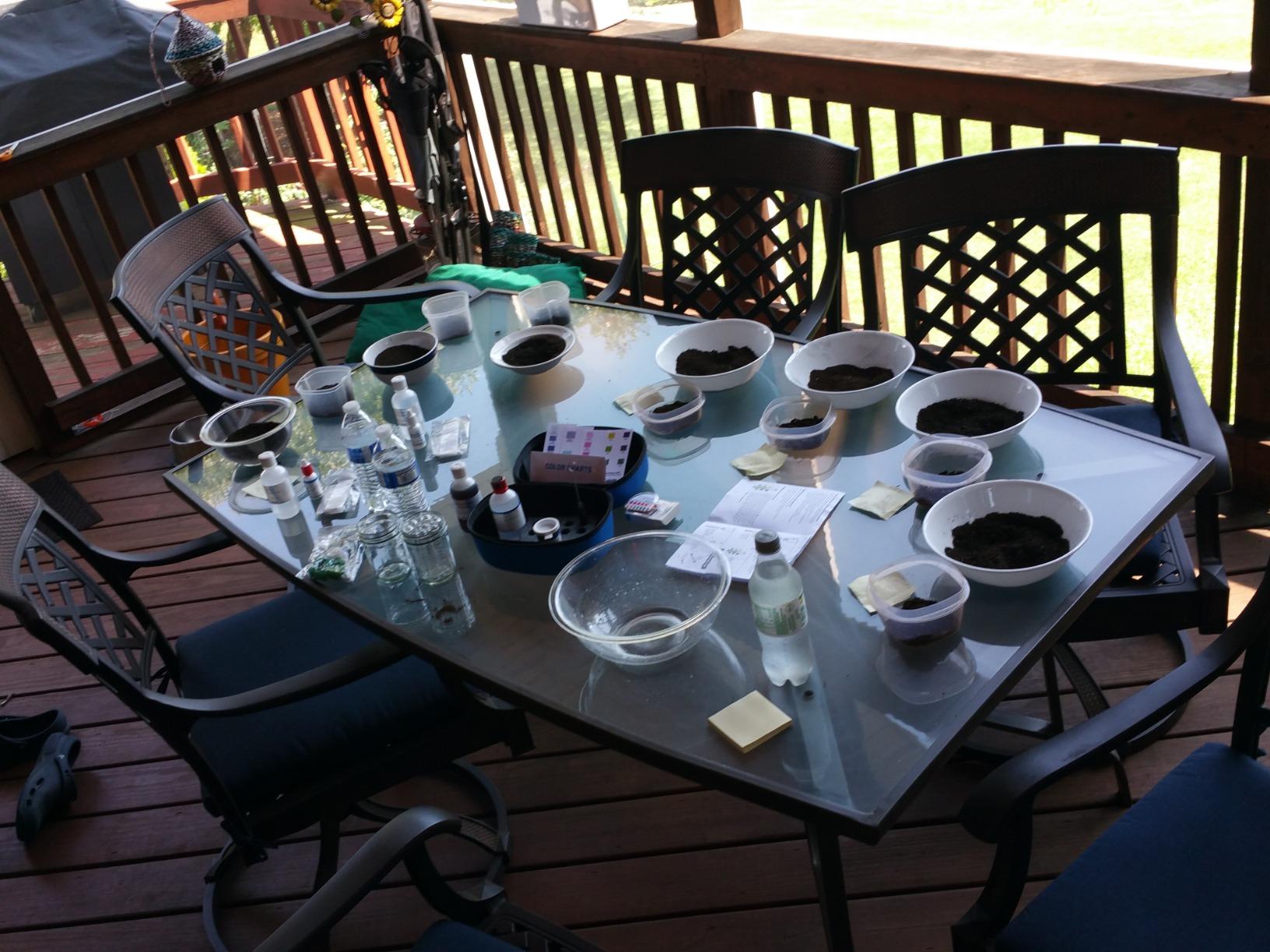
LaMotte built its reputation in school classrooms and lab work, and this kit brings that material home. At 4.6 stars it shares the highest rating in the roundup, and what buyers mention most is the documentation: rapid test procedures, diagrammed instructions and a set of laminated color charts that survive a season in a shed.
The allocation is generous. Fifteen tests each for nitrogen, phosphorus and potassium plus 30 pH tests means you could walk a whole garden of separate beds and still have pH tests to spare. The Garden Guide and the LaMotte Soil Handbook included with the kit explain how to read the charts and how those readings translate into lime and fertilizer guidance, which is the part most color-comparison kits skip.
The cost is weight and scope. The kit weighs nearly 3 pounds, which is real if you are testing a community plot on foot, and the nutrient panel stops at the three macronutrients plus pH. There is no magnesium, no sulfur, no micronutrients, and no buffer pH, so it cannot answer the lime question the way a lab can.
Color comparison still depends on your judgment of a shade under whatever light you are standing in. Read the chart outdoors on an overcast day rather than under a work lamp at night, and compare your sample to two neighbouring swatches rather than hunting for an exact match.
Who the LaMotte kit suits
It suits a household testing several beds or a school or community garden program that wants a repeatable procedure with printed documentation. The handbook alone makes it a genuinely good teaching tool if you are working with beginners.
It also suits anyone who wants a full season of testing from one purchase rather than tracking capsule refills.
Who it does not suit
It will not suit a grower who needs a nutrient diagnosis rather than a screening pass, because there is no secondary nutrient data and no buffer pH. It is also heavy to carry, and it covers the same four numbers as the Rapitest at several times the weight.
3. SoilKit Mail-In Lab Kit – Best for Buffer pH and Organic Matter
Soil Test Kit – Discover Your Lawn and Garden Fertility with pH, Nutrient and Mineral Analysis. Professional Results Provide Custom Fertilizer Prescription for Your Yard.
Mehlich III extraction
Reports CEC and buffer pH
Eight secondary nutrients
Online dashboard
Pros
- Uses the Mehlich III method used in commercial agriculture
- Reports CEC buffer pH and organic matter alongside the basics
- Regional recommendations based on address and square footage
- Printable analysis can be taken to a co-op for custom fertilizer mixing
Cons
- Results document layout and print formatting are hard to read
- Not intended for potting soil samples
- Weed disease and pest suggestions need a paid upgrade
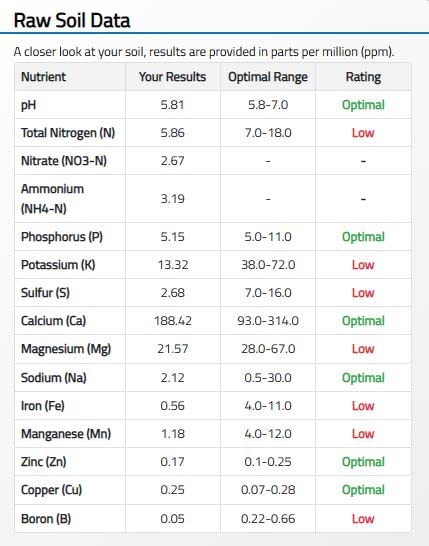
SoilKit is the panel that goes deepest on soil chemistry, and for a specific reason: it reports buffer pH. Buffer pH is what tells you how much lime a soil needs. Without it, a pH reading of 5.8 in heavy clay and the same reading in a sandy loam are two different problems requiring two different amounts of lime, and no home kit on this list can separate them.
The lab runs Mehlich III extraction, the same method used for commercial crop testing, and reports pH, buffer pH, organic matter, Cation Exchange Capacity and Estimated Nitrogen Release, plus phosphorus, potassium, magnesium, calcium, boron, zinc, manganese and iron. Results arrive in a SoilKit365 dashboard, and recommendations account for your address and the square footage you registered, so a large plot does not get a small plot’s fertilizer rate.
Multiple long-term reviewers say the recommendations saved them money on products they did not need, and one buyer said phone support from a named representative is what turned the report into an actual plan. The most common complaint is presentation: the results document is reported as poorly laid out, and one reviewer noted the report does not clearly label which number on the pH scale is your measured value. Plan to spend a few minutes finding the right figure rather than assuming the top line is it.
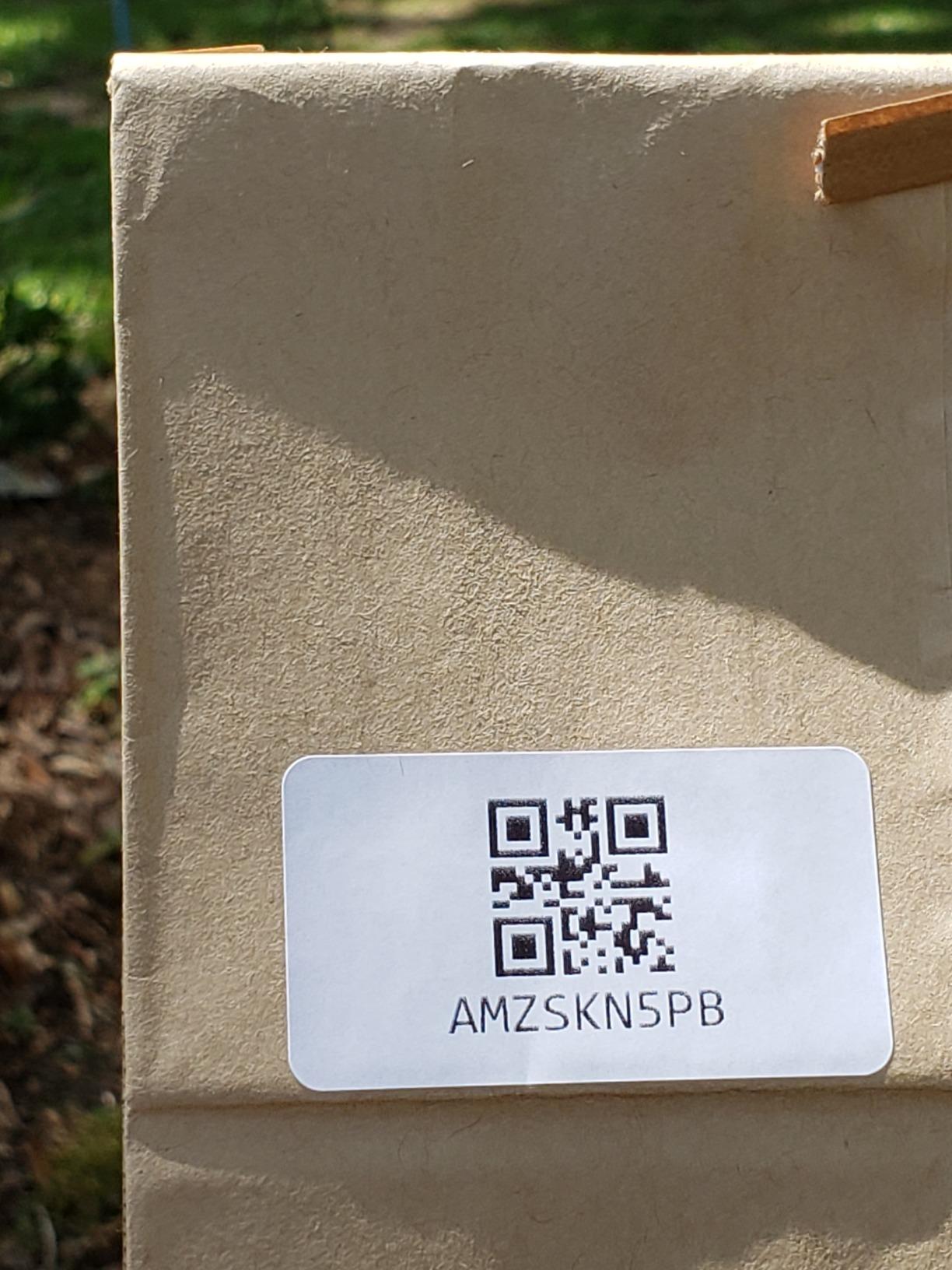
Sample registration uses a QR code, which removes the handwriting errors that quietly ruin lab submissions. It is also one of the few kits here that states plainly that it is not for potting soil, so do not send a container sample.
Where SoilKit earns its place
It is the right pick if you are about to apply lime for the first time and want the rate to be defensible, or if you manage a market garden where a miscalculated amendment rate costs real money across a large area.
The CEC figure is also the reason to send this one. CEC tells you how much nutrient your soil can hold, which changes how you think about repeated fertilizer applications.
Where it falls short
It falls short for container growers, who are explicitly told not to use it, and for anyone who wants a readable document. The dashboard is functional rather than friendly, and the paid upgrade for weed, disease and pest suggestions is a step up most vegetable growers do not need.
4. Luster Leaf Rapitest 1601 – Best Value Nutrient Kit
Rapitest Soil Test Kit for Gardens, Vegetables, Flowers and Lawns. USA designed and assembled soil tester completely, quickly and accurately measures/analyzes soil pH acidity and garden nutrients
40 tests: 10 each pH N P K
No batteries
Capsule and color comparator system
Pros
- Most reviewed kit here with more than 6700 ratings
- No batteries and no separate liquid reagents
- Capsule system is fast and easy to learn
- Includes a pH preference list for more than 450 plants
Cons
- Limited to pH nitrogen phosphorus and potash
- Color matching is subjective and depends on lighting
The Rapitest 1601 is the fastest full nutrient kit here to learn. You break a capsule into a test tube of soil and water, shake, let the solids settle, and compare the solution against a patented color comparator. No batteries, no measuring drops, no separate reagents.
Forty tests in the box means ten each for pH, nitrogen, phosphorus and potash, which is a workable season for a small garden. The pH preference list covering more than 450 plants is the sleeper feature, because it lets you check not just your soil pH but whether your actual crop sits in its preferred range. It is also the kit most gardeners already own, and the review volume explains why: more than 6,700 ratings at 4.2 stars.
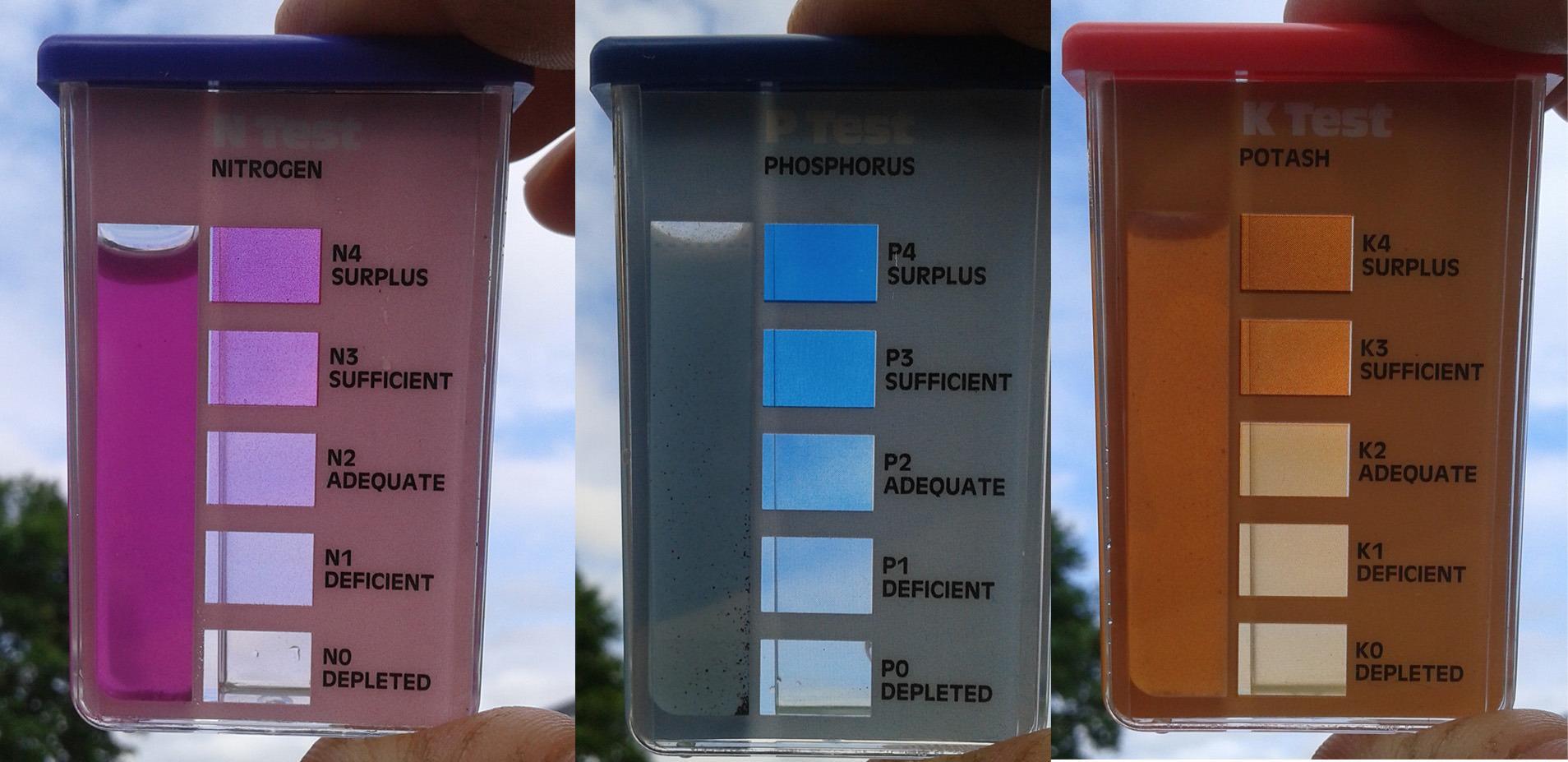
At 4.2 stars across a very large review base, the pattern in the reviews is a consistently acceptable product rather than a standout one, and the two most common themes are limited nutrient scope and subjective color matching. Read the comparator outdoors on an overcast day rather than under a work lamp, and match your sample to two neighbouring swatches rather than hunting for an exact match.
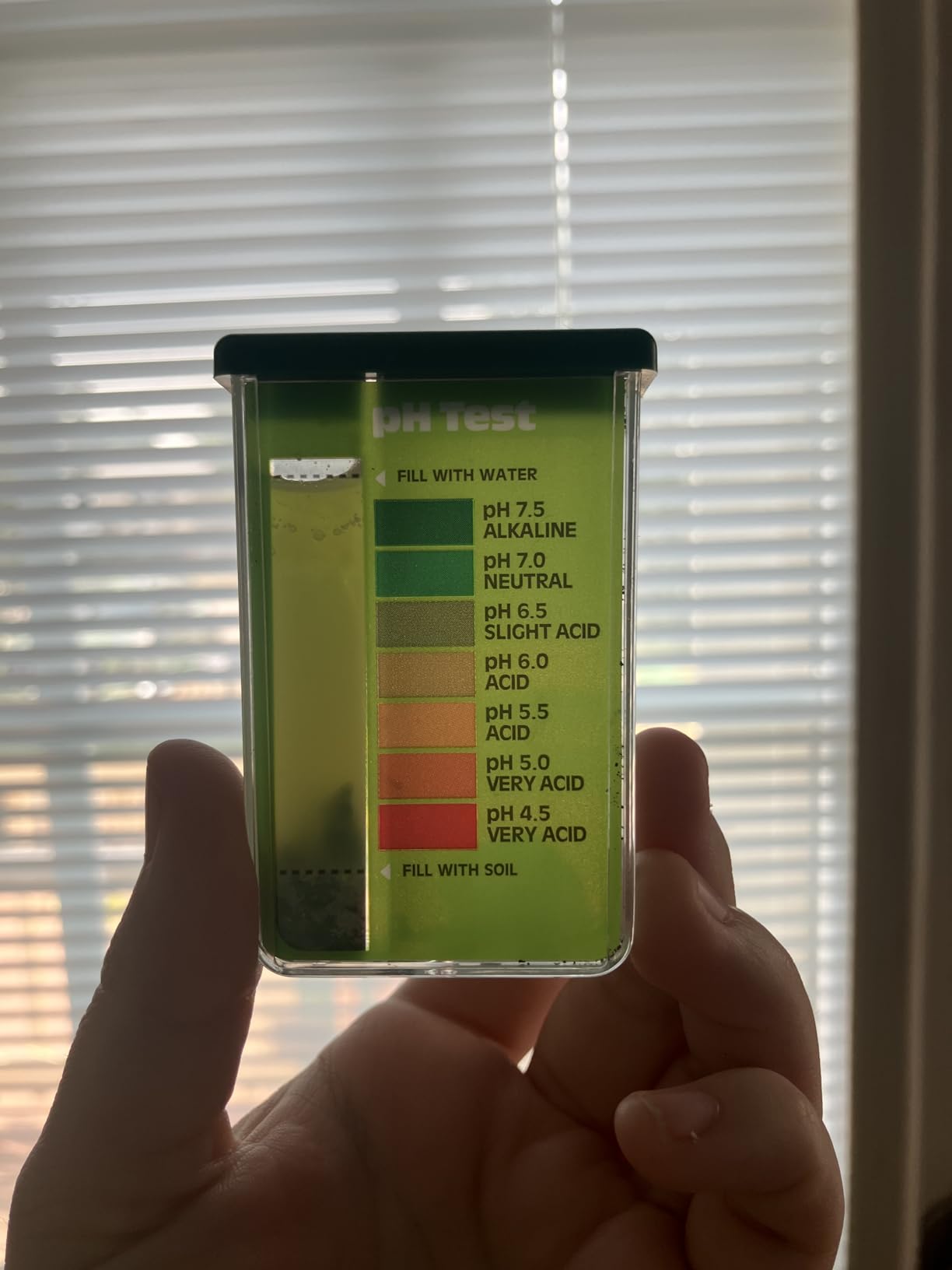
There is a second limitation worth naming. The kit tells you a potash reading, which is potassium by a different name, and that is as far as it goes. No magnesium, no sulfur, no organics, and nothing about how much lime to apply.
Why this is the best value pick
For a first vegetable garden, this is the kit to start with. It covers the four numbers that drive most deficiency symptoms, it teaches you what the numbers mean, and it gives you all four without any waiting or lab paperwork.
The 450-plant pH chart also makes it a good teaching tool for a household with several people who all need to know the same thing.
Where it is not enough
It is not enough when a crop is failing and you have already corrected pH and NPK, because the problem is likely a secondary nutrient, a drainage issue or a salt problem that this kit cannot see. It is also not a lime calculator.
5. Garden Tutor 100 pH Strips – Best for Instant pH Screening
Garden Tutor Soil pH Test Kit – 100 Strips with AI-Powered Web Reader – Accurate Testing for Lawn, Garden & Compost – pH 3.5–9
100 strips covering pH 3.5-9
Results in about 60 seconds
Web reader needs no app
Pros
- Three-pad strip design reads more consistently than single-pad strips
- Photograph and upload reader removes color guesswork without an app download
- Lime and sulfur application estimator included
- 100 strips give plenty of repeat tests
Cons
- Measures pH only with no nutrient readings
- AI reader needs a camera and internet connection
Garden Tutor solved a specific frustration that plain pH strips create: the vague color block that leaves you unable to tell whether you are at 6.2 or 6.8. Instead of eyeballing a swatch, you photograph the strip against the supplied template, upload it to a web reader, and get a digital pH value back. No app to install and no account to create, which is a genuine advantage if you share a device or do not want to register for anything.
The strip itself is a third-generation three-pad design spanning pH 3.5 to 9, and reviewers credit the extra pads with more consistent readings. A reading takes about 60 seconds, which makes this the second-fastest option here after a probe. The kit also includes an online lime and sulfur application estimator, so a number turns into a quantity without a separate chart.
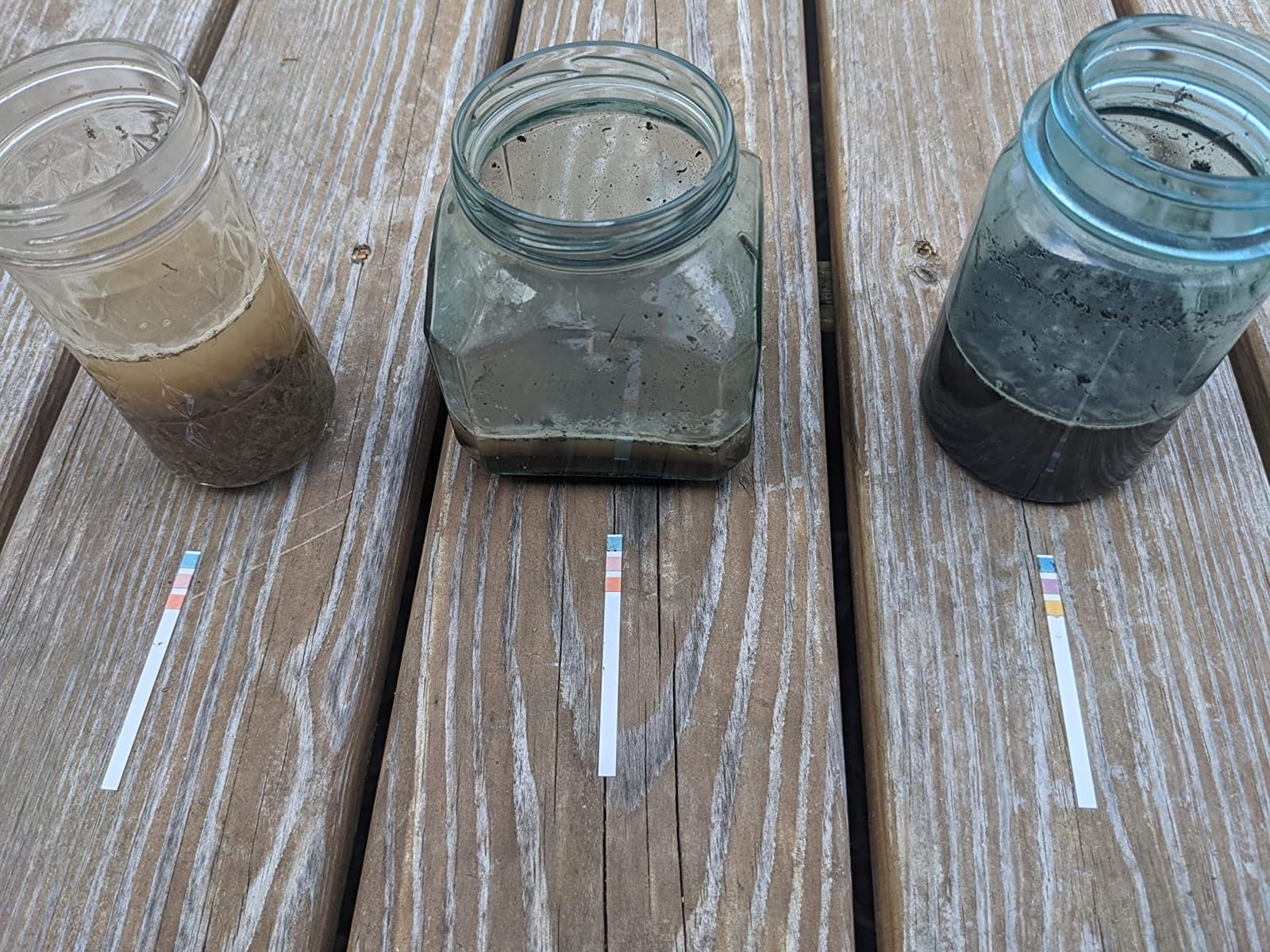
It also tests compost, which is more useful than it sounds, because finished compost pH tells you how it will affect the bed you are mixing it into. More than 100,000 kits have been sold according to the brand, and the resulting owner feedback shows up in how consistent the reviews read.
The AI reader still depends on lighting. Photograph strips in the same kind of light each time, and hold them against the template rather than in your hand, or the interpretation drifts with the shadows.
When strips are the right tool
They are the right tool for a spot check after an application of lime or sulfur, for tracking pH drift across a season in containers, or for testing several beds in an afternoon when you only need to know which one is the outlier.
Because pH is the number that gates nutrient availability, a good pH reading is often the most valuable single number you can get at home.
When strips are the wrong tool
They are the wrong tool if your problem is fertilizer. Nothing here measures nitrogen, phosphorus or potassium, so a nutrient diagnosis is simply not on offer.
6. Soil Savvy Capsule Kit – Best for Nutrient Breadth at Home
Soil Savvy – Soil Test Kit | Understand What Your Lawn or Garden Soil Needs, Not Sure What Fertilizer to Apply | Analysis Provides Complete Nutrient Analysis & Fertilizer Recommendation On Report
pH plus 14 nutrients
Resin capsule system
Plain-language prescription
Pros
- Broadest nutrient panel among the at-home capsule kits
- Resin capsule format means no liquid reagents to mix
- Recommendations written in plain language rather than lab jargon
- Laboratory method adapted from commercial agriculture
Cons
- Mail-in turnaround rather than immediate results
- About 10 percent of reviewers gave a one-star rating
Soil Savvy is the compromise kit for a gardener who wants more than four numbers but does not want a lab-style panel. It uses a resin capsule that releases its reagents into a soil and water slurry, and the report covers soil pH plus 14 nutrients including nitrogen, phosphorus and potassium. Fourteen readings at home is more than any other capsule or color-comparison kit here delivers.
Resin capsules mean there is no liquid to measure and no reagent bottles that leak in a shed. The technology behind it is the same approach used by agricultural producers, turf managers and landscapers, adapted for home use, and the fertilizer recommendation on the report is written in ordinary language rather than the shorthand agronomists use.
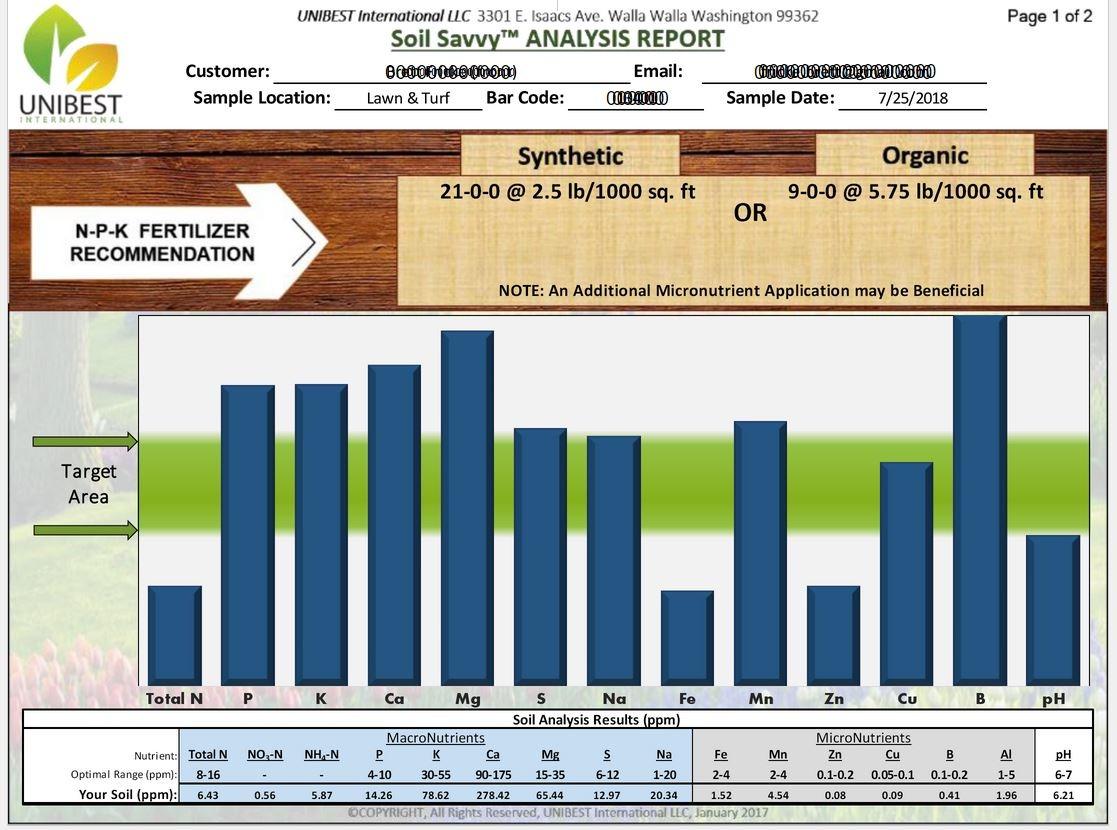
Be aware of the rating spread. At 4.2 stars with a 10 percent one-star share, that is the largest dissatisfied group among the capsule kits here, and the complaints tend to cluster around turnaround time and the report rather than the chemistry. Order it early in the season rather than the week you need the answer.
It is still a mail-in process, so it lands in tier one by mechanism and in tier two by practical resolution. You get a broad panel, but the extraction and interpretation are not the same as an extension lab run.
Who should buy Soil Savvy
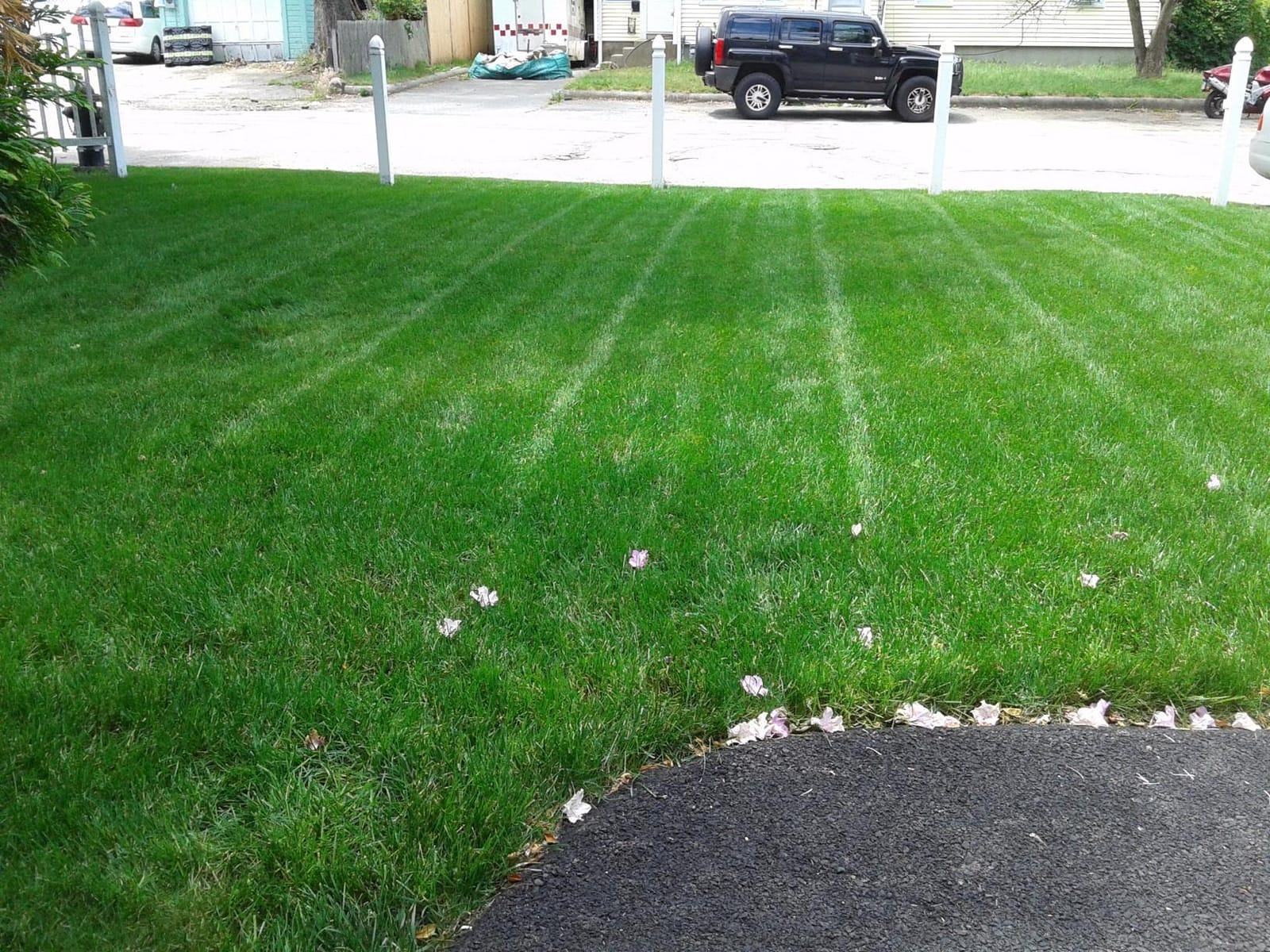
Buy it if you are a market gardener or an enthusiastic grower who wants a wide panel at home and who is comfortable waiting a week. The 14-nutrient report is enough to catch a magnesium or secondary nutrient shortfall that every other capsule or color kit here would miss.
It is also a good second opinion when a four-number kit told you everything was fine but the crop is still unhappy.
Who should skip it
Skip it if you need an answer the same day, or if you are on a very tight budget for a single-bed plot, where the extra nutrients may be more than you will use. The 10 percent one-star share is worth weighing against the breadth you gain.
7. HSLGOVE 7-in-1 Soil Meter – Best for Watering Decisions
HSLGOVE Soil Test Kit, 7-in-One Soil Moisture Meter/Soil PH Meter/Fertility, Dual Screen Soil Tester w/Digital Soil Temp/Air Temp&Humidity for Plants Gardening,Lawn,Farm Indoor&Outdoor-Lvory White
Seven measurements one probe
Dual dial and LCD
6.8 inch single probe
Spare batteries
Pros
- Seven measurements from one probe replace several separate meters
- Dual dial and LCD shows analog and digital readings
- Single probe is gentler on roots than dual-probe designs
- Spare batteries included
Cons
- Battery compartment is awkward to open
- Readings take 3-5 minutes to stabilize
- Analog dial moisture readings are relative not calibrated
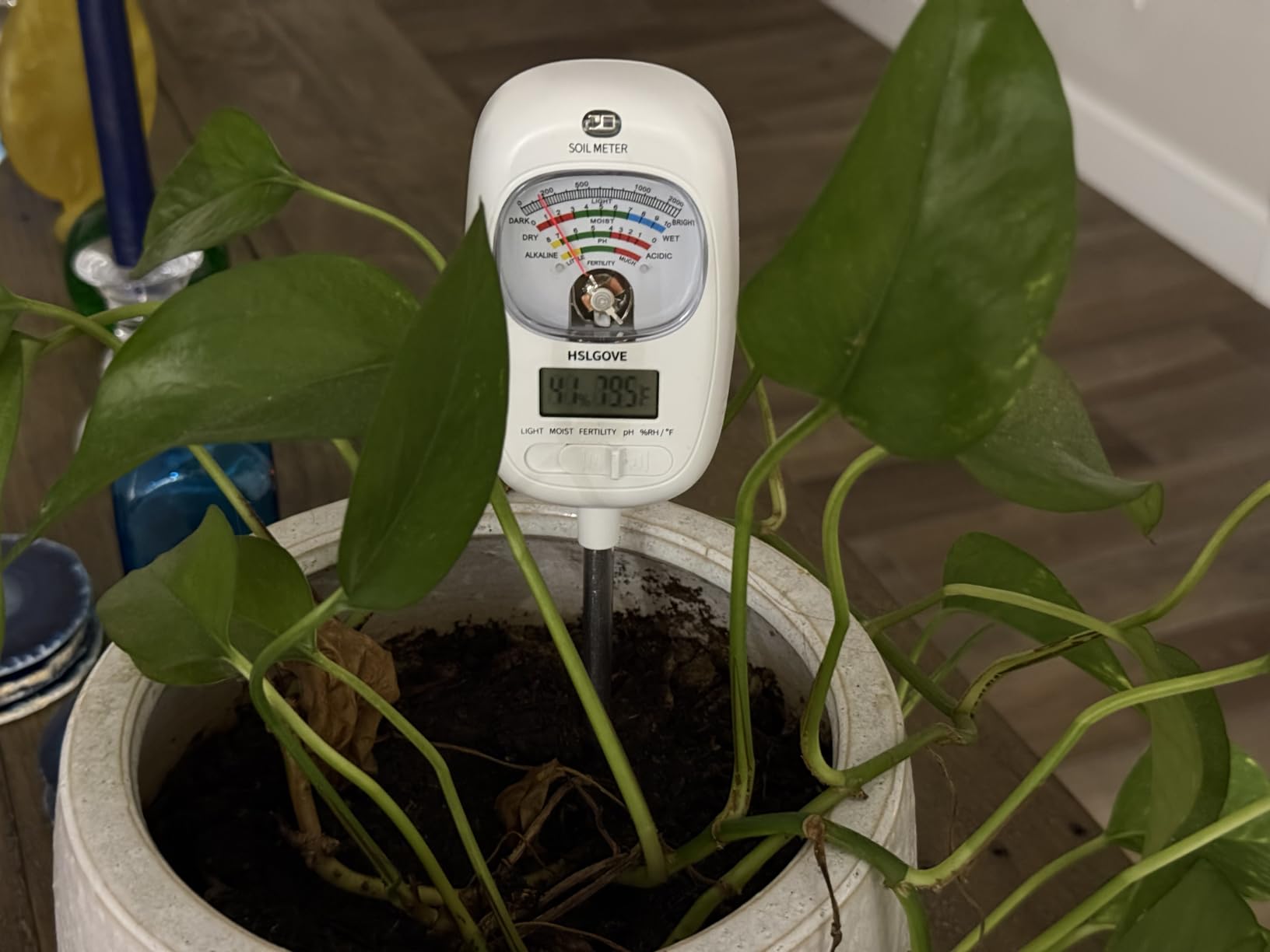
Almost every digital meter on this list is bought for one reason, and for most vegetable growers the reason is not pH. It is whether the bed needs water. The HSLGOVE meter gives you moisture, pH, a fertility scale, light, soil temperature, air temperature and humidity from a single 6.8-inch probe built from three metals, and buyers consistently report that it stopped them overwatering.
The dual display is unusual at this level. An analog dial gives a fast relative read for moisture while the LCD handles the numbers, so a glance tells you whether a bed is dry, adequate or saturated without waking the whole device up. At 4.4 stars with 84 percent of buyers giving four stars or better and an 80 percent five-star share, the recent reviews are dominated by beginners who say it removed guesswork.
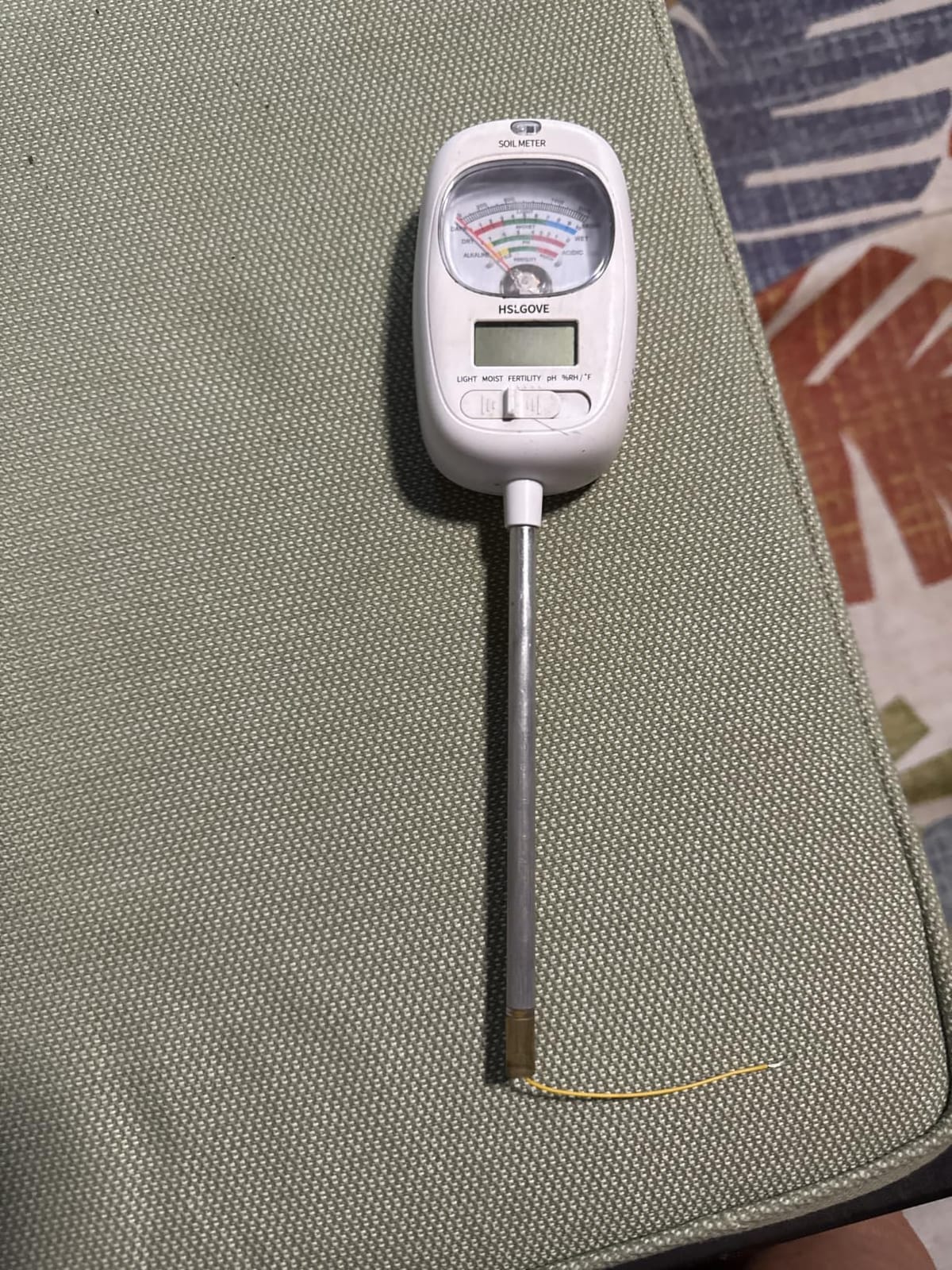
Understand what the readings are. The moisture dial is a relative scale, not a calibrated percentage, and the fertility reading is an inferred indicator rather than a nutrient measurement. Insert the probe more than 3 inches, wait the 3 to 5 minutes the manufacturer specifies before trusting the number, and clean the probe between locations or the next reading inherits the last one.
Two practical warnings from reviews. The battery compartment lid has no pry point and the manual does not explain how to open it, so plan a coin or a small screwdriver. And the thick single probe needs more force than you expect in dry soil.
When it makes sense
It fits a new gardener who waters by guessing, for raised beds that dry unevenly, and for anyone managing a greenhouse or a container mix where moisture changes quickly. It needs three replaceable batteries, and spares are in the box.
It is soil only, so do not dip it into a water or nutrient solution.
When it does not
It does not help if your problem is nutrients, because the fertility scale cannot tell you which nutrient is short. It is also a relative instrument rather than a calibrated one, so treat a change over time as signal and a single number as a starting point.
8. Auduto 7-in-1 Soil Meter – Best for an All-in-One Readout
7-in-one Soil Test Kit, Soil Moisture Meter/PH Meter/Sunlight Intensity/Fertility Soil Tester, LCD Display Air & Soil Hygrometer Temperature for Hous Plants Garden, Farm, Lawn Care Moisture Meter
Seven measurements
LCD temperature and humidity
Metal probes
Two-thirds insertion depth
Pros
- Seven-in-one coverage in a single handheld device
- Metal probes described as more corrosion-resistant and faster responding
- Stated to be beginner-oriented with simple one-button operation
Cons
- Explicitly unsuitable for sandy loose and rocky soils
- Probe must be cleaned and dried between readings
- Smallest review base among the digital meters at 201 ratings
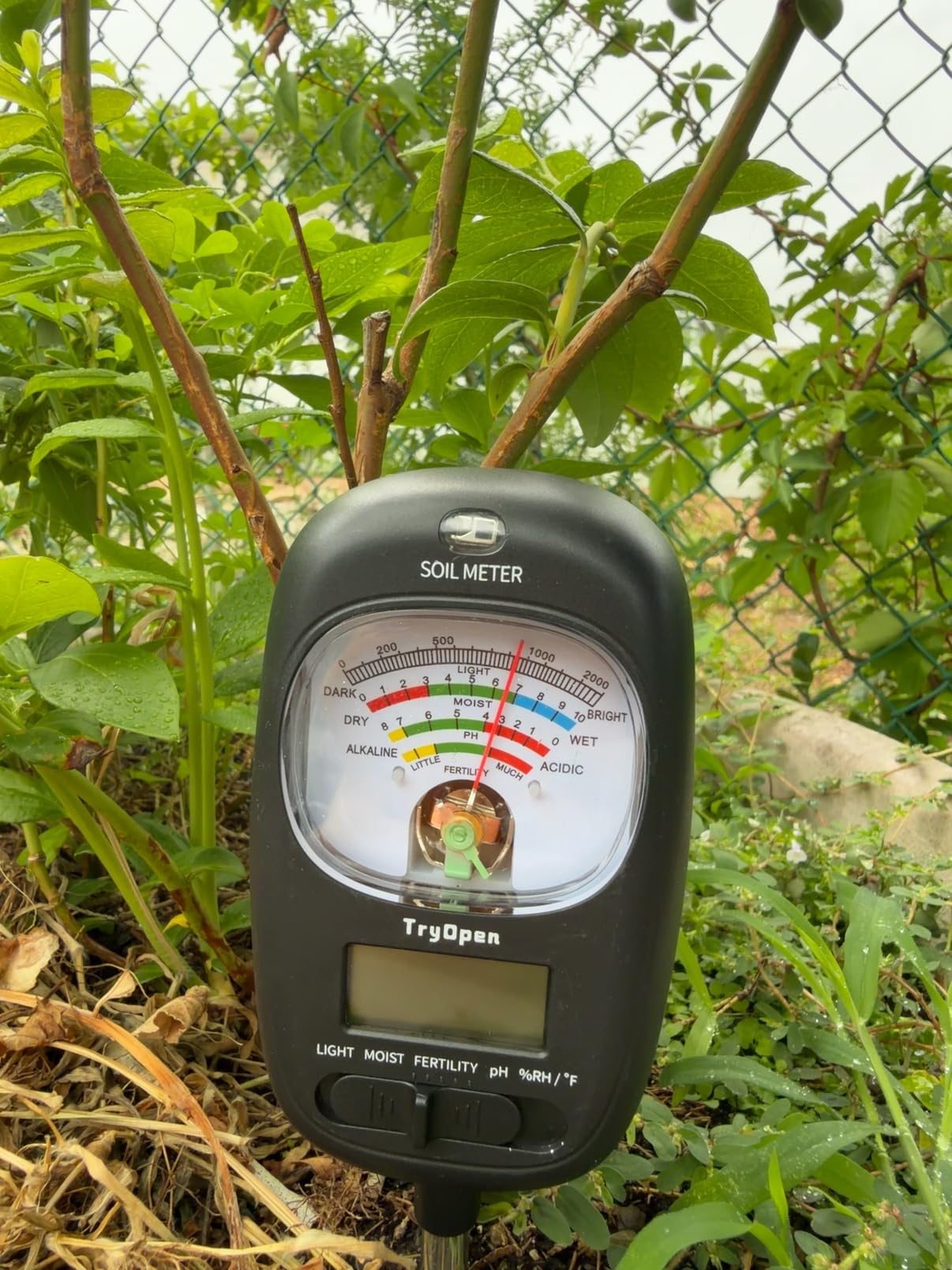
The Auduto meter does the same job as the HSLGOVE with a different emphasis. It reports soil moisture, pH, fertility, sunlight intensity, air humidity, air temperature and soil temperature, with an LCD for the temperature and humidity figures and metal probes for faster conductivity response. Where the HSLGOVE leads on the dual dial, the Auduto leads on the probe material and the response speed.
At 4.4 stars with 80 percent five-star ratings, it has the highest proportion of top marks among the digital meters, though on the smallest review base here at 201 ratings. Treat that as encouraging rather than conclusive. The one-button operation is genuinely approachable, and reviewers describe it as aimed at beginners who want an overview rather than a diagnosis.
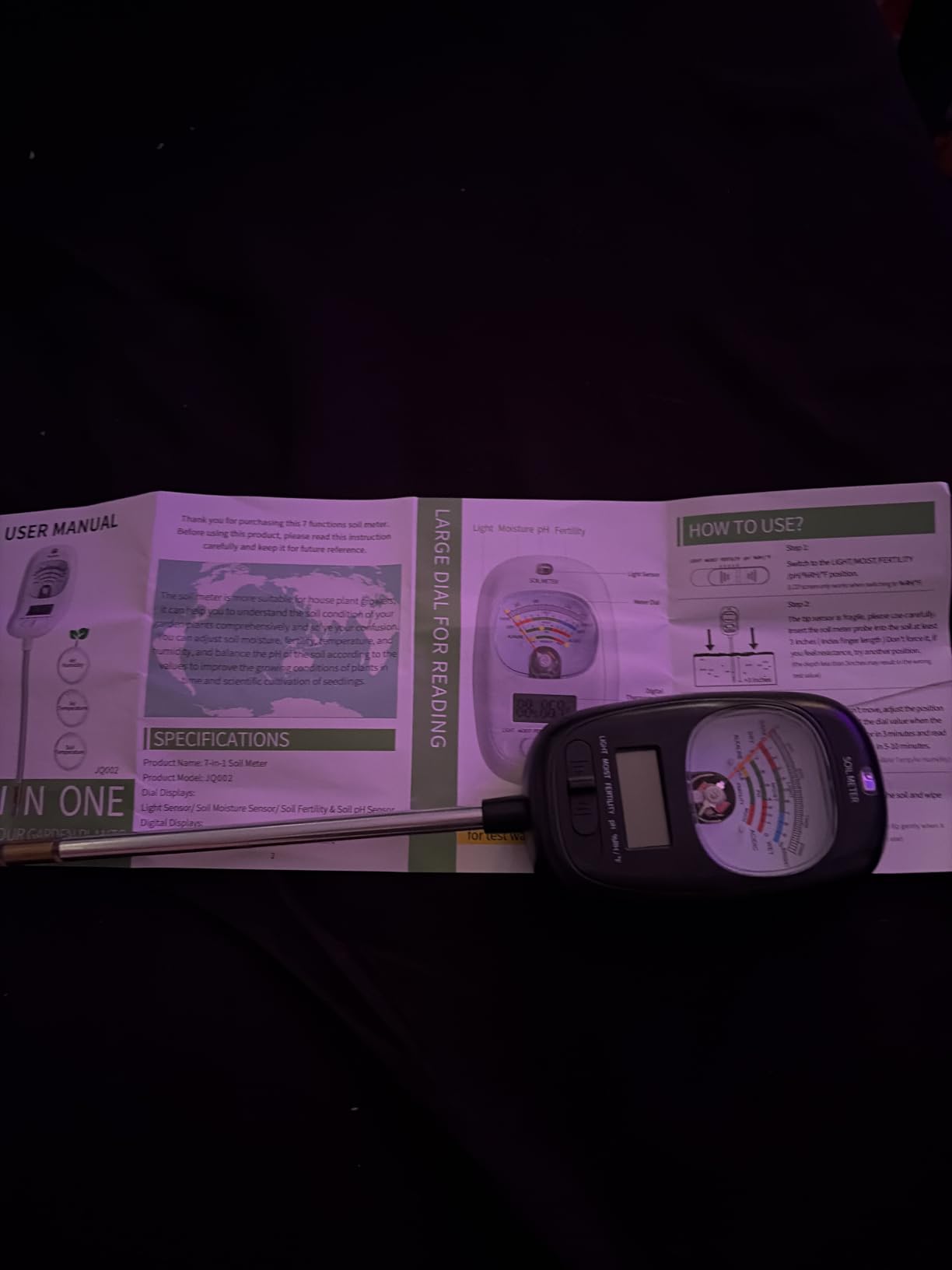
Insert two-thirds of the probe depth for a valid reading, and average several spots rather than trusting a single insertion. The manufacturer is explicit about limits: not for liquids, not for rocks, and not for sandy or loose soils. That last exclusion matters, because raised bed filler is often amended with compost and coarse material.
Keep the probe clean and dry between uses. A probe sitting in a wet bed overnight will give you a reading about the probe rather than about the soil.
Where it fits
It fits a grower who wants one device to cover watering, temperature and light placement, and who values the LCD readouts for greenhouse or indoor use. Two color variants are offered.
It suits a bed that is well-amended and compact rather than a new, coarse, sandy plot.
Where it falls down
It falls down in loose and rocky soils, in containers of very light mix, and anywhere the pH difference between spots is large enough that a single reading misleads you. It also gives no nutrient data of any kind.
9. YAMRON 4-in-1 Digital Meter – Best for Night-Time Checks
YAMRON 4-in-1 Soil Moisture Meter Digital Plant for Indoor & Outdoor Plants
Moisture pH temperature light
Backlit large LCD
45 degree rotating head
About 10 second readings
Pros
- Backlit large LCD is readable in low light and at night
- 45 degree rotating head avoids bending over
- Digital display is far easier to interpret than a color dial
- Fast readings of about 10 seconds
Cons
- Four AAA batteries required and not included
- Batteries need managing during long-term storage
- Very dry hard soil needs watering first
The YAMRON is among the most-reviewed digital meters in the group, with more than 3,400 ratings, and its distinguishing feature is the backlit screen. Evening watering decisions are exactly when a gardener wants a number, and a white backlit display that works in the dark is a small detail that changes how often you reach for the tool.
It measures soil moisture, pH, temperature and sunlight intensity, and the 45-degree rotating head is the change you notice first in a real garden, because you can read the screen while standing up rather than crouching over a bed. Insert the probe about 4 inches, wait roughly 10 seconds, and the reading is there.
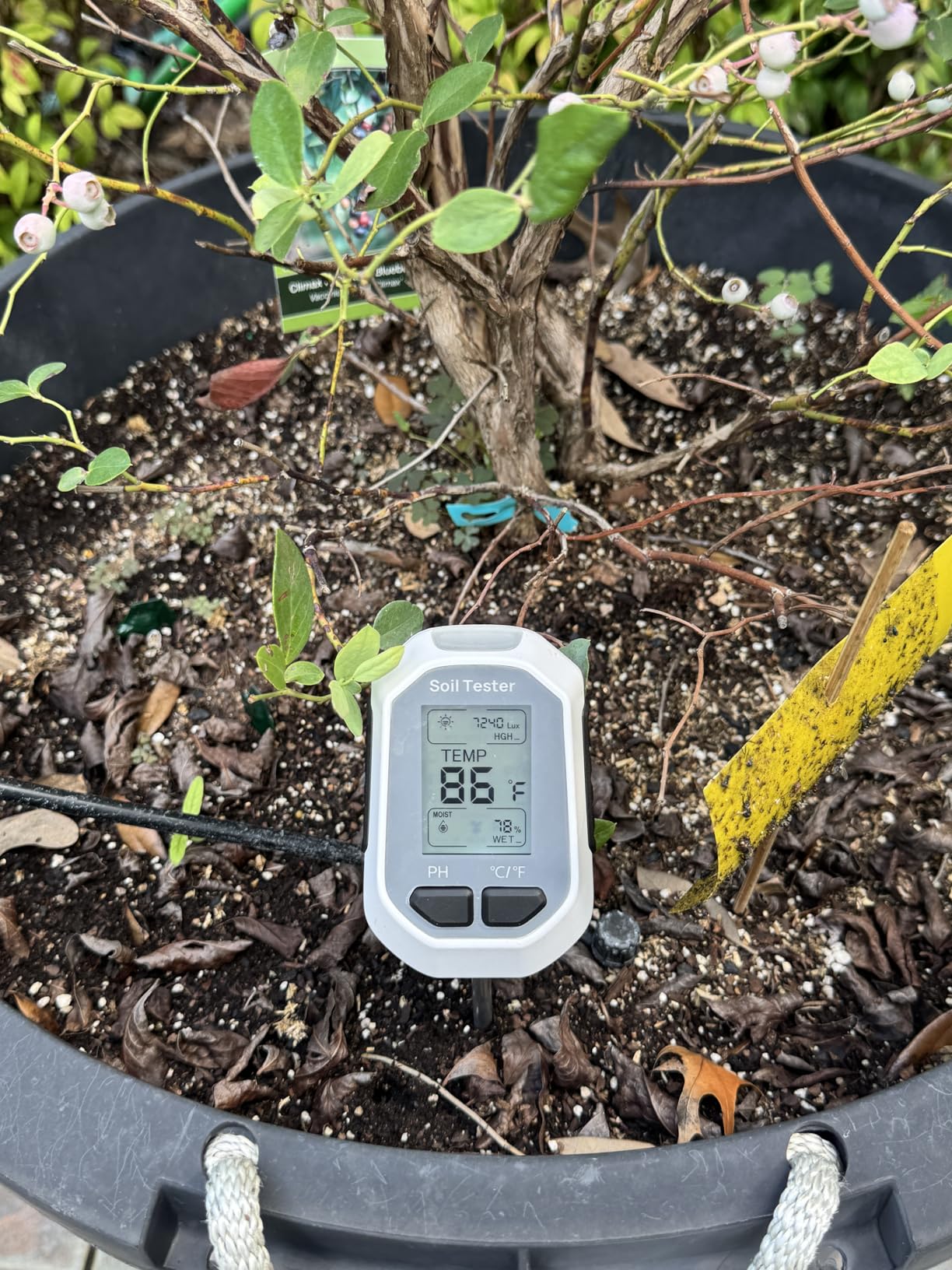
Two things to plan around. It takes four AAA batteries that are not included, and they have to be removed or managed if the meter sits in a shed over winter, which is how corrosion happens. The manufacturer also recommends averaging readings from at least five locations for the final pH and moisture value, and that is real work, not a formality, since a bed is rarely uniform.
On very dry hard soil, water the spot first and wait. A probe pushed into bone-dry ground gives you a reading about the probe contact rather than about the bed. It cannot be used to test liquids.
Reasons to choose it
Choose it for evening and early morning checks, for indoor container shelves, and for anyone who finds analog dials hard to read. The temperature range of 32 to 122 degrees F suits both indoor and outdoor use.
The rust-proof probe and simple one-glance graphics make it a good first digital meter.
Reasons to choose something else
Choose something else if you want nutrient information, or if you will not keep spare batteries on hand. Averaging five locations per reading is a real commitment when you have a dozen beds.
10. Raintrip 4-in-1 Soil Meter – Most Versatile
Soil Moisture Meter,4-in-1 Soil Ph Meter, Soil Tester for Moisture, Light,Nutrients, pH,Soil Ph Test Kit, Great for Garden, Lawn, Farm, No Battery Required, Gifts for Plants Lover
Moisture pH nutrients light
90 degree rotating dial
No batteries
Single probe
Pros
- No batteries required at all
- Patented 90 degree dial holds any angle for comfortable reading
- Single probe is gentler on seedling roots than dual-probe designs
- Includes a plant growing guide and sandpaper
Cons
- pH readings may not track accurately against a higher-end meter
- Less effective in loose soils
- Nutrient reading does not name which nutrients
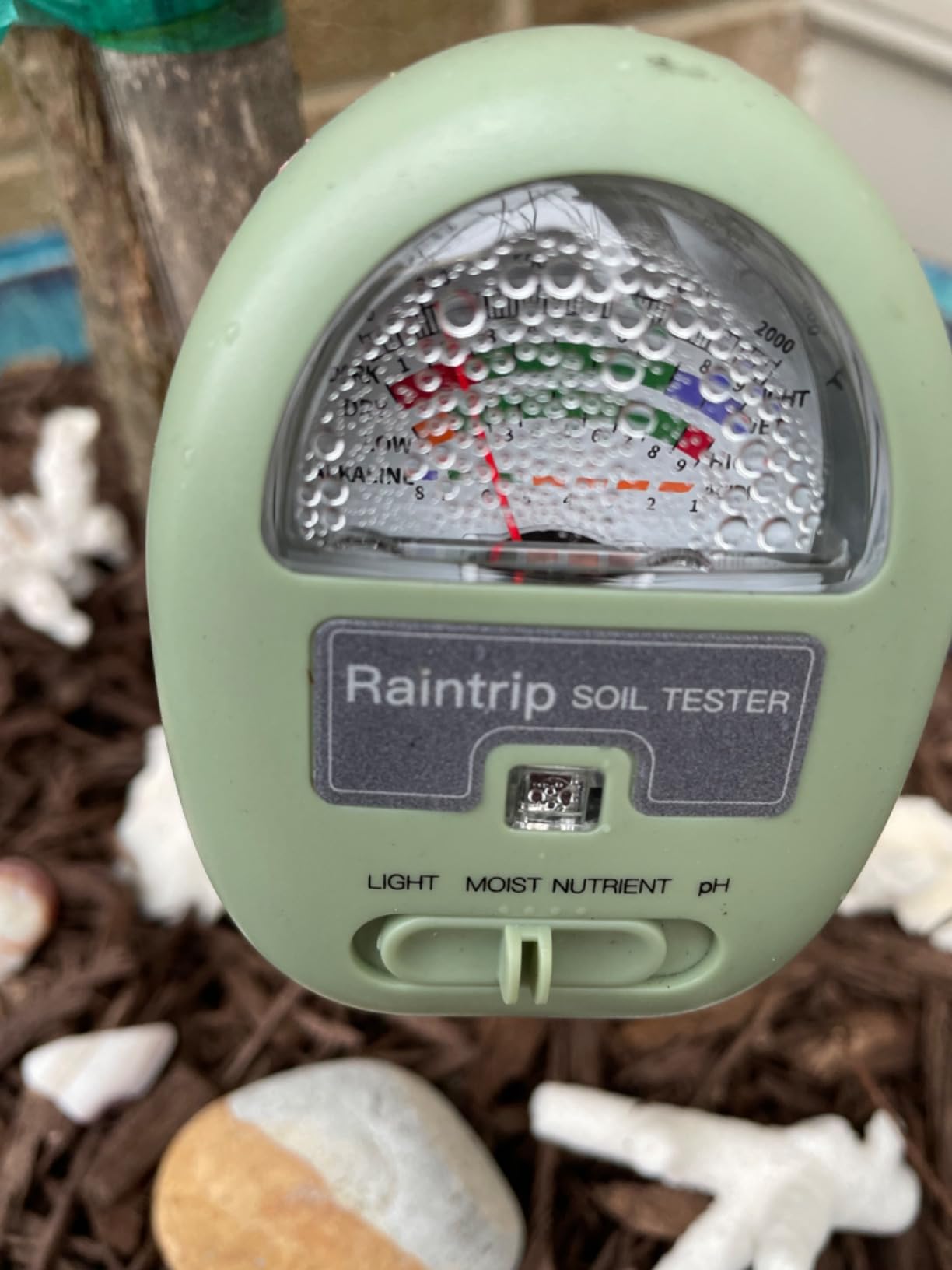
The Raintrip is a battery-free dial meter, and the reason is mechanical rather than electronic. It has no batteries at all, so there is nothing to die in a shed over winter and nothing to replace mid-season, and the patented 90-degree rotating dial holds any angle so you read it standing up. Reviewers also like that the single upgraded probe is gentler on seedling roots than a traditional dual-probe design.
It comes with a plant growing guide and a piece of sandpaper for cleaning the probe, both in a gift box. At more than 5,700 ratings it is one of the most-reviewed products in the roundup, and 78 percent of buyers give it four stars or better.
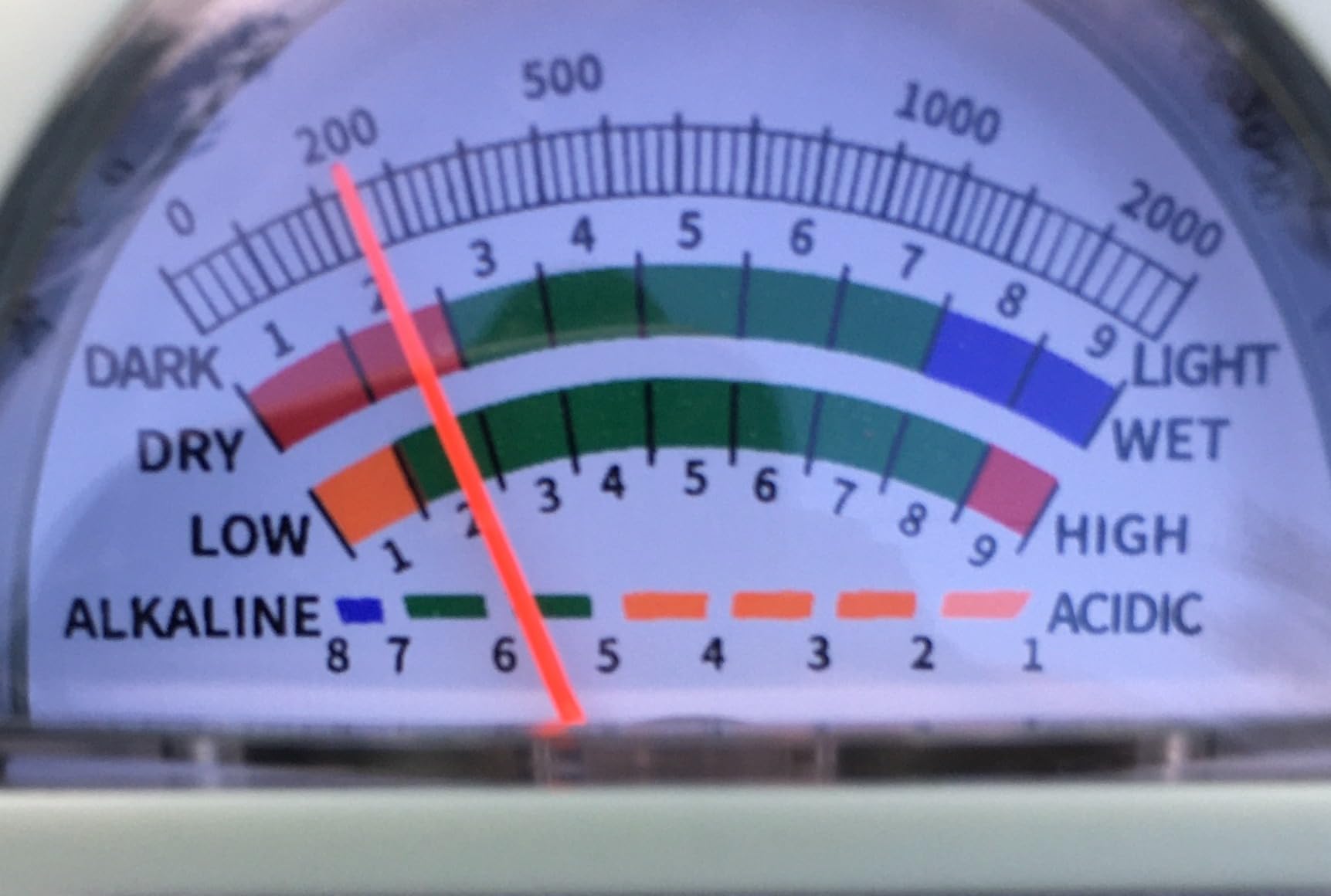
The pH accuracy is the real limitation, and we would not paper over it. One buyer who cross-checked the meter against a more expensive pen found the pH reading sitting near a constant 6.5 to 7 across very different pots, which is the single most important thing to know before you rely on it. That is consistent with the pattern in the ratings: pH accuracy draws the sharpest criticism and accounts for most of the one-star reviews.
The nutrient reading also does not tell you which nutrient is being detected, so treat it as a rough fertility indicator at best. It is less effective in loose soils, and some international reviews report the meter arriving non-functional, so keep the return process in mind.
Where the budget pick fits
It fits a first-season gardener, a household with a lot of containers, and anyone who wants a moisture reading with no consumables. For watering decisions it works, and reviewers report the moisture reading stopped them overwatering.
As a gift it works well, which matters for a tool you hand to a beginner.
Where it does not fit
It does not fit anyone making a lime or sulfur decision, because a constant 6.5 to 7 reading will confidently mislead you. Loose, sandy or coarse soils also defeat it.
11. Dewilde 100 pH Test Strips – Best for Portable pH Checks
Soil Test Kit – 100 Soil pH Test Strips (3.5–9 Range) for Garden, Lawn & Indoor Plants – Easy At-Home Soil Testing
100 strips pH 3.5-9
Chart on the bottle
30 minute settling time
Pros
- 100 strips give many more tests than a typical small strip pack
- Wide 3.5-9 range covers acidic through alkaline soils
- Color chart is printed on the bottle so there is nothing to lose
- Portable enough to test multiple garden locations
Cons
- Measures pH only with no nutrient analysis
- Requires a 30-minute settling time before dipping
- Color matching is subjective
This is the plain version: soil pH test strips, 100 of them, in a portable bottle with the color chart printed right on the container. There is no app, no reader, no batteries and no subscription, which makes it about as simple as soil testing gets and the easiest to hand to somebody else in the garden.
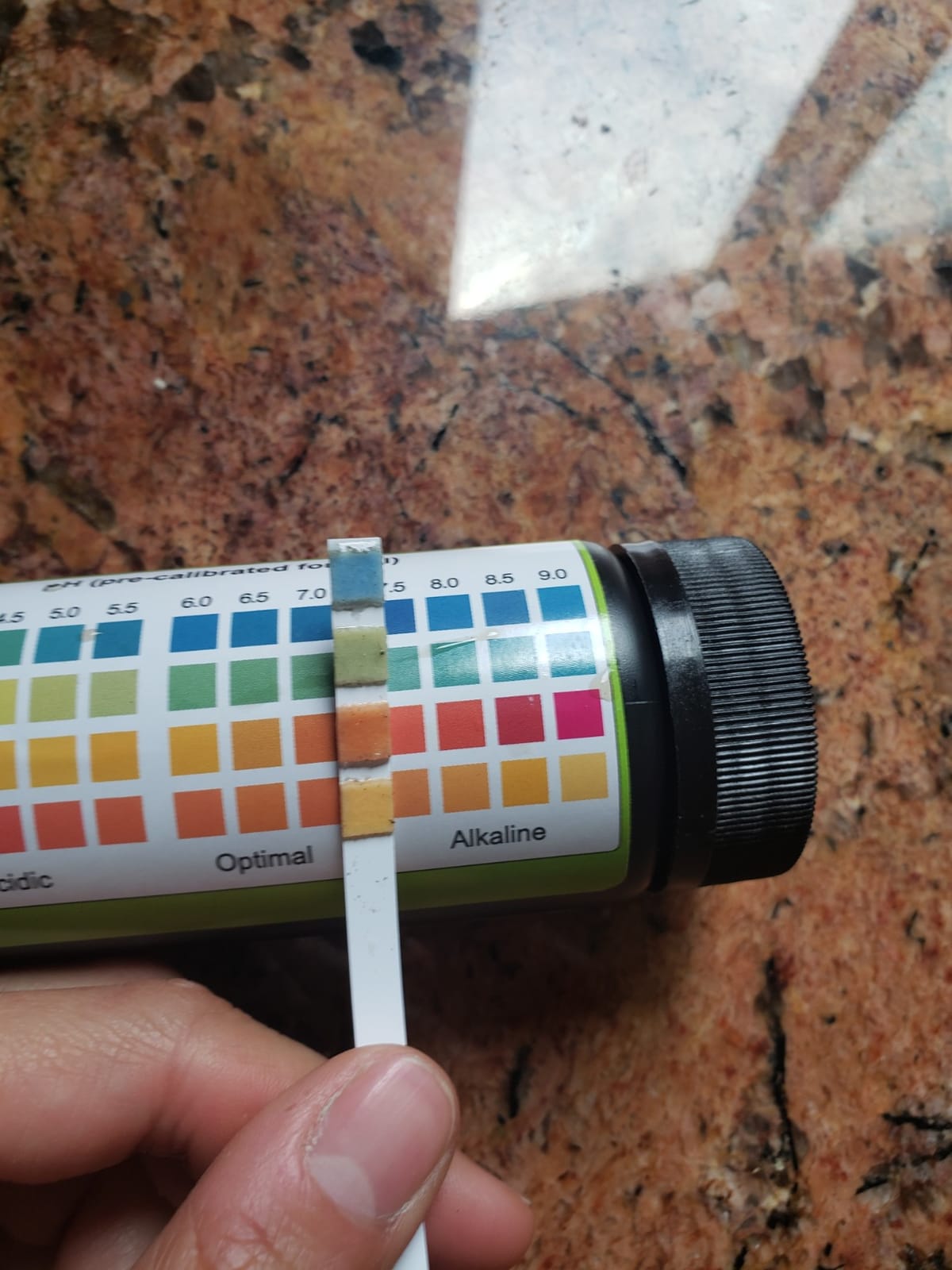
The procedure is spelled out on the bottle: mix your soil sample with water, let it sit for 30 minutes, dip a strip for 3 seconds, hold it horizontally for 60 seconds, then compare against the chart. At 4.2 stars with 569 ratings, close to four in five buyers give it four stars or better, with a 62 percent five-star share.
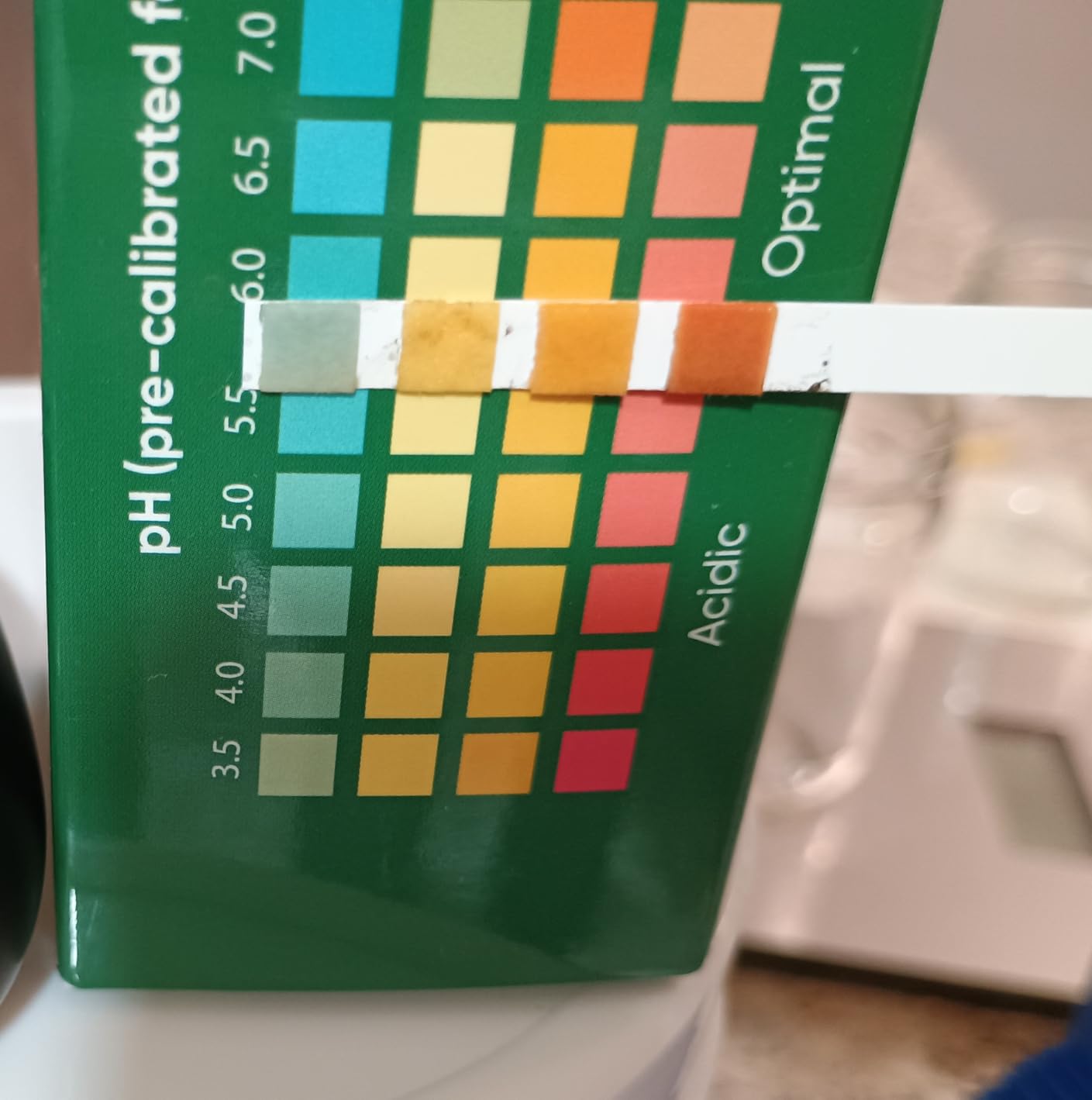
The 30-minute settling time is the reason to buy 100 rather than 40. It means one sample is a waiting game, so batching several beds in a single session is far more efficient than testing one bed and walking away. A 3.5 to 9 range covers acidic woodland soil through alkaline coastal soil.
Read the strip at the same time of day and in the same light each session, and accept that the answer is a band rather than a decimal. If you need to distinguish 6.2 from 6.8, use the Garden Tutor strips or a meter instead.
Best used for
It is best used for a broad pH map of a plot, for testing multiple locations in a session, and for keeping a seasonal record of a bed you have amended. The bottle format travels well between a bed, a greenhouse and a potting bench.
It is a useful backup to keep by the shed door.
Not useful for
It is not useful for nutrient diagnosis, and not useful when you need a precise figure to time a lime application. Two beds that look the same by eye can read a full point apart.
12. Dewilde 140-Test Liquid Kit – Best for High Test Volume
Soil Test Kit 140 Tests (2026 Updated Instructions) – pH, Nitrogen, Phosphorus, Potassium & Ammonia – Garden, Lawn & Plant Soil Tester Kit for Accurate Fertility Analysis
About 140 tests
Measures pH N P K and ammonia
Liquid format
Updated instructions
Pros
- About 140 tests per kit
- an unusually high test count
- Covers pH plus four fertility parameters including ammonia
- Small and light enough to store in a garden shed
- Instructions updated for the current season
Cons
- Lowest average rating in the group at 4.0 stars
- 13 percent of reviewers gave a three-star rating
- Color comparison remains subjective
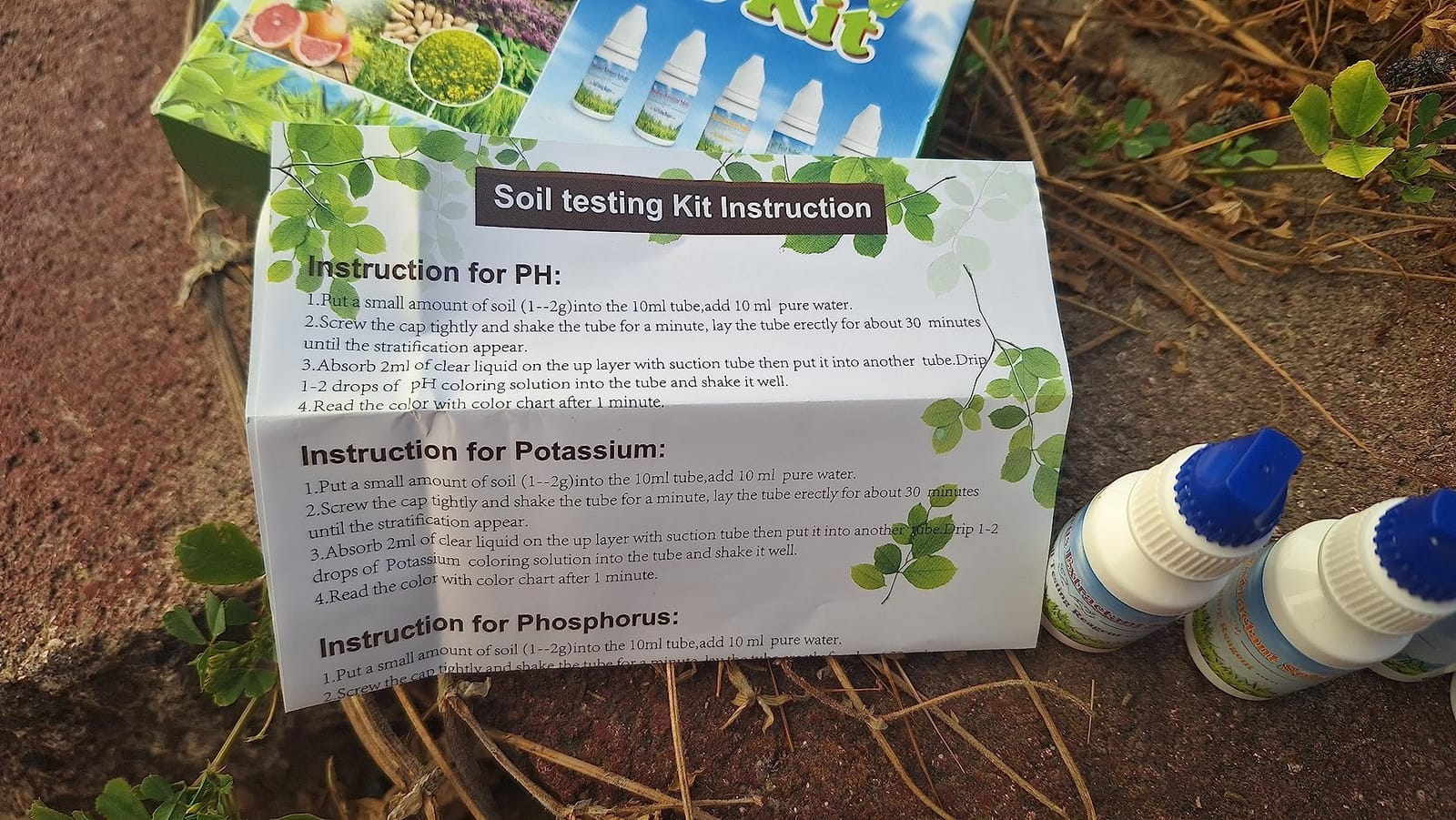
This liquid kit measures pH, ammonia, nitrogen, phosphorus and potassium, and the headline number is test volume: about 140 tests, roughly 40 for each parameter plus around 20 nitrogen tests. For a community garden, a school plot, or a grower running repeated tests across a season, that allowance is unusually generous.
Being liquid rather than capsule-based means no sealed reagents to break, and at 3.52 ounces the kit is small and light enough to live in a garden shed rather than a cupboard. The instructions have been updated for the current season, which is worth more than it sounds, because older color-comparison kits often disagree with their own charts.
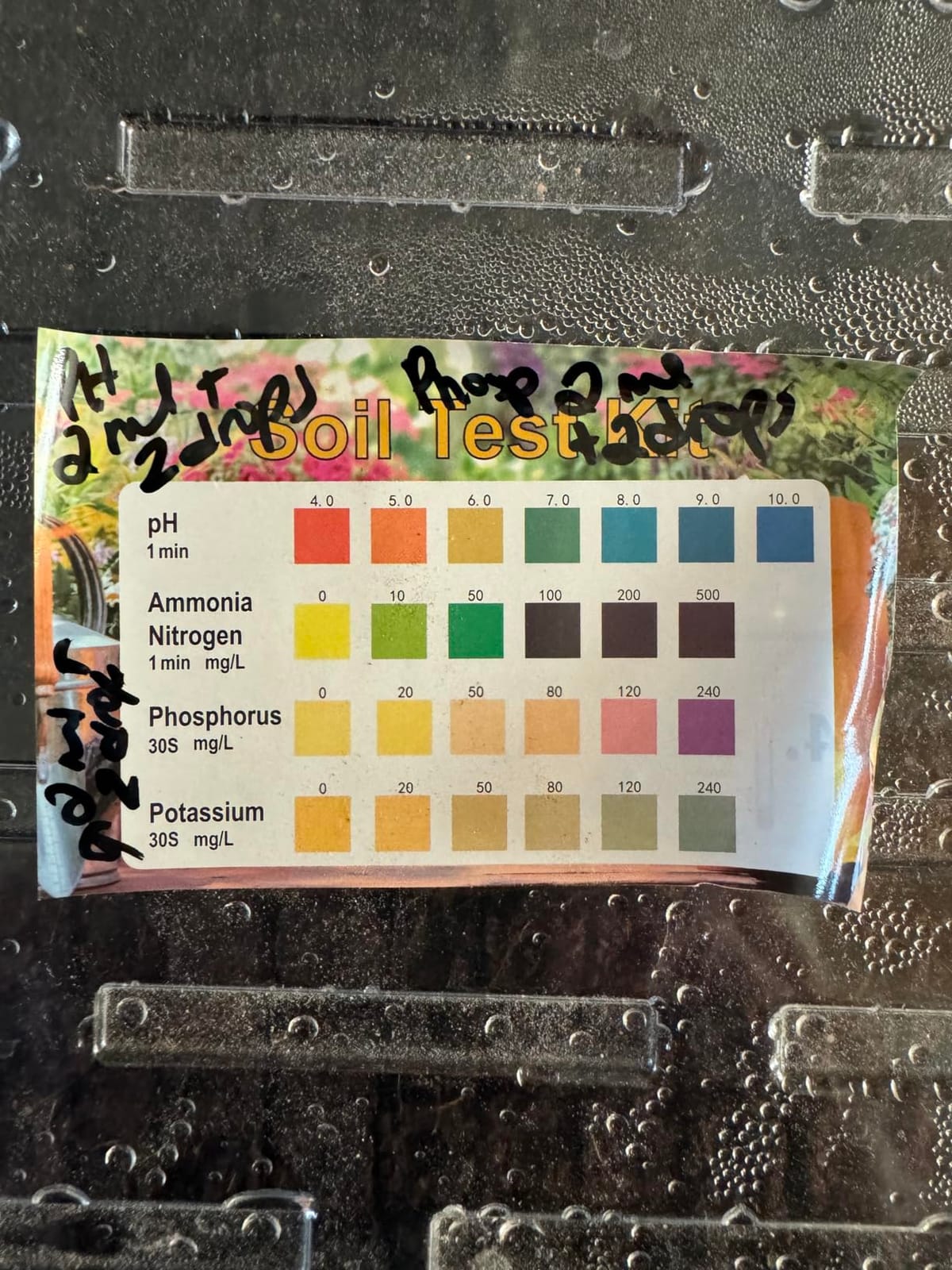
It carries the lowest average rating in the group at 4.0 stars, and 13 percent of buyers gave three stars, the largest share of mid-range ratings among these kits. Reviewers credit the test count and the value while reporting that the color comparisons are hard to read. Expect to hold your sample up to a light source and compare it to two neighbouring swatches rather than expecting an obvious match.
Adding ammonia is a genuine extra parameter, since high ammonia in a bed can signal unfinished compost or a fresh manure application. It is still a narrow nutrient picture with no secondary nutrients and no micronutrients.
Where it earns its place
It earns its place in a shared or high-volume situation: a community garden testing many plots, a classroom, or a grower who tests monthly across a dozen beds. Ammonia and nitrogen in the same run is useful when fresh compost or manure went in recently.
It also suits anyone who prefers a liquid procedure to handling capsules.
Where it does not
It does not suit a single-bed plot that will be tested once a year, because the test count becomes surplus. It is not a precision instrument, and the 4.0 average says so plainly.
How to Take a Soil Sample That Is Actually Representative
Most disappointing soil test results are not the fault of the kit. They are the fault of the sample. Follow these steps in order and any kit on this list will give you a number you can act on.
Pick the right time. Test in fall after harvest but before you amend, or in early spring before you add compost or fertilizer. Avoid testing right after an application, and avoid testing saturated soil.
Sample each bed separately. Beds built on different soil or amended differently are not the same garden. Blending them produces an average that fits none of them, which is a confusion that came up repeatedly in forum discussions.
Take 10 to 15 cores per bed. Use a trowel or a soil probe and cut a clean slice down to 6 inches for most vegetables, or 8 inches for deep-rooted crops like tomatoes and squash.
Sample the whole bed, not one corner. Move in a zigzag or an M pattern, avoiding the few inches immediately next to a wall, fence or path edge, and stay away from any spot where you have dumped compost or fertilizer.
Break up clods and mix thoroughly. Break every lump by hand, then combine the cores in a clean bucket. This homogenization step is where most home samples fail.
Take about a cup for a lab kit or a few tablespoons for a probe or strip. Follow the kit’s own volume guidance, and use a clean, dry container so old fertilizer residue does not skew the reading.
Test in the same conditions each time. Same time of day, same watering pattern, same light when you are reading a color chart, so that seasonal changes are real changes.
How many samples do you need? One per distinct bed, and more than one per bed if the bed is large, oddly shaped, or visibly uneven. A 4 by 8 foot bed can produce very different pH on the sunny end and the shaded end.
Vegetable Soil pH Targets You Can Test Against
Knowing your number matters less than knowing what to do with it. Most vegetables want a mildly acidic soil, and the differences between crops are narrower than most gardeners expect.
Brassicas and leafy greens (cabbage, kale, broccoli, spinach, lettuce): 6.2 to 7.0. These tolerate a slightly higher pH than most crops and are the best candidates for liming acidic soil.
Fruiting crops (tomatoes, peppers, eggplants): 6.0 to 6.8. Tomatoes are notably sensitive to a very low pH, and below 5.5 they often show iron or magnesium chlorosis regardless of how much fertilizer you add.
Root crops (carrots, beets, radishes, parsnips): 6.0 to 6.8. Root development is where a compacted or rocky bed shows up, so pH is rarely the whole story.
Legumes (peas, beans, clover): 6.0 to 7.0. These fix their own nitrogen, so they need less supplemental N than anything else in the bed.
Cucurbits (squash, cucumbers, melons): 6.0 to 7.0. Heavy feeders, so pH correct plus steady nitrogen matters more here than in almost any other group.
Potatoes: 5.0 to 6.0. The one common vegetable that genuinely prefers more acidic soil than the rest of the garden.
Raised beds and containers behave differently from in-ground plots. Potting mix has no buffering capacity, so pH drifts faster and amendments hit harder, which is why smaller, more frequent adjustments work better there. If you are planning a bed that will only exist for a season, our cold frame and season-extension guide covers structures worth building for that timeline.
How to Turn a Result Into an Amendment Decision
A test only pays for itself if it changes what you do. Here is the decision path, in order.
First, correct pH before anything else. Nutrients are unavailable outside a narrow pH window, so a nitrogen deficiency caused by low pH cannot be fixed with more nitrogen. If your pH is below your crop’s range, the answer is lime. If it is above the range, the answer is elemental sulfur. That is the whole rule: low pH gets lime, high pH gets sulfur.
Second, understand why it is off. Acidic soil often comes from pine bark mulch, sawdust, coffee grounds, acid-loving plant residues or heavy rainfall. Alkaline soil usually comes from limestone-rich native soil, hard water irrigation, or an over-application of wood ash, which is alkaline and contains potassium. If you keep adding the thing that caused the problem, the next reading will be worse.
Third, size the application to the reading. A pH figure alone does not tell you how much lime to apply, because soils differ in buffering capacity. That is precisely the number a home kit cannot give you. The Garden Tutor kit and the SoilKit report both include or calculate lime and sulfur quantities, and the extension office lab will size the application for you.
Fourth, fill in the nutrients. Once pH is in range, use your NPK numbers. Nitrogen moves and is spent fastest, so it is usually the first number to drop and the one you most often need to reapply mid-season. Phosphorus and potassium are stable in soil, so a low reading there usually means a long-term build, not a single correction. If you compost on site, a large share of your nitrogen return is already handled.
Fifth, retest, and set a rhythm. Test once before planting and again in fall, and spot-check pH mid-season with a meter or strips. Keep a simple written record per bed, because a trend across two years is worth far more than a single reading. If you use a liquid or foliar feed on a schedule, keep a note of what you applied when, or you will double-dose a bed next year.
If you spray or feed weekly, our backpack sprayer guide covers equipment that makes consistent application easier to track.
When Not to Trust a Home Soil Test Kit
Home kits are screening tools, and there are four situations where screening is not enough. First, when you are about to apply lime for the first time, because the rate depends on buffer pH that no home kit measures. Second, when a crop is failing and pH and NPK both look fine, because the cause is likely a secondary nutrient, a drainage problem or salt accumulation. Third, when you are diagnosing a container mix, since potting soil has no buffering capacity and behaves unlike anything a lab panel is calibrated for. Fourth, when you are judging compost or manure before adding it, where a lab analysis is the only reliable check of nutrient load and salt content.
Two more honest caveats. Cheap multi-function probes report a so-called fertility score that no lab method produces; treat it as a trend indicator and nothing more. And repeated probe insertion can compact soil or damage fine roots, which is why the single-probe designs in this roundup are preferable for seedbeds and containers.
None of this means skipping testing. It means using the right tier. Mail a sample to your extension office or land-grant university lab for the diagnosis, and keep a home kit for the spot checks in between.
Frequently Asked Questions
What is the most accurate soil test kit?
A mail-in laboratory panel is the most accurate option, and among the kits here the MySoil mail-in lab kit is our pick: it measures 13 plant-available nutrient levels including nitrogen and pH and returns results in 6-8 days. SoilKit is the deepest panel, using Mehlich III extraction and also reporting buffer pH, organic matter and Cation Exchange Capacity, which is what you need to size a lime application accurately. Color-comparison kits and handheld probes are screening tools by design and should not be expected to match a lab.
How accurate are DIY soil test kits?
It depends entirely on the tier. Mail-in lab analysis is measured with a defined extraction method and repeatable across laboratories. Chemical color-comparison kits give useful ranges but depend on lighting and on your judgment of a color. Probe meters and pH strips are fast and repeatable with each other, but a multi-function probe may only report an inferred fertility score rather than a nutrient measurement. Cheap 3-in-1 and 7-in-1 probes in particular draw the most criticism on pH accuracy.
How to test soil for a vegetable garden?
Test in fall after harvest or in early spring before adding compost or fertilizer. Sample each bed separately, take 10 to 15 cores down to 6 inches for most vegetables, zigzag across the whole bed, and avoid edges and spots where compost or fertilizer has been dumped. Break all clods by hand and mix the cores thoroughly in a clean bucket, then take about a cup for a lab kit or a few tablespoons for a probe or strip. That homogenization step is where most home samples go wrong.
What is the best soil test kit for a vegetable garden?
For in-ground beds and raised beds, the MySoil mail-in lab kit is the best overall choice because it measures 13 plant-available nutrients and returns a fertilizer prescription covering what to apply, how much and when. If you want results the same day, the Luster Leaf Rapitest 1601 gives 40 at-home tests covering pH, nitrogen, phosphorus and potash. If you only need pH, the Garden Tutor 100-strip kit returns a reading in about 60 seconds.
What is the best soil testing kit for nutrients?
For genuine nutrient diagnosis, choose a mail-in lab panel: MySoil reports 13 plant-available levels, and SoilKit adds buffer pH, organic matter, Cation Exchange Capacity and eight secondary nutrients and micronutrients using Mehlich III extraction. If you want a wide panel without a lab, the Soil Savvy resin capsule kit reports pH plus 14 nutrients. The Luster Leaf Rapitest 1601 is the value option for a first garden, covering pH, nitrogen, phosphorus and potash.
How many soil samples do I need, and how often should I test?
One sample per distinct bed, and more than one per bed if the plot is large, oddly shaped or visibly uneven, since beds built on different soil or amended differently should never be blended. In a typical year, test once before planting and again in fall, then spot-check pH mid-season with a meter or strips. Retesting the same beds under the same conditions each time is what turns single readings into a trend you can act on.
Do soil test kits expire?
Chemical and capsule kits do have a shelf life, because reagent capsules and liquid reagents degrade, and the color charts can fade or shift with age. Digital meters do not expire but do drift, and cheap probes are the ones most often reported as reading near a constant value over time. Mail-in lab services avoid the problem entirely since nothing is stored at home. Whatever you buy, store chemical kits in a cool, dry place away from direct light and keep the container closed.
The Best Soil Test Kits for Vegetable Gardens: Final Verdict
Start with the MySoil mail-in lab kit if you want a real diagnosis, a fertilizer prescription you can follow, and a top rating in the group. Add the Luster Leaf Rapitest 1601 if you want same-day answers on pH, nitrogen, phosphorus and potash. Go with SoilKit instead of MySoil when the lime application rate is the thing you most need to get right, and pick up a pH strip kit for the between-season checks a lab kit cannot serve.
Best soil test kits for vegetable gardens are the ones you will actually use twice a year, not the most sophisticated one on the shelf. Test each bed separately, correct pH before you touch fertilizer, and keep a written record per bed so next year’s decision is easy. Two of these picks also earn a place in a broader setup, so our backpack sprayer roundup covers consistent application and our cold frame guide covers short-season beds.