
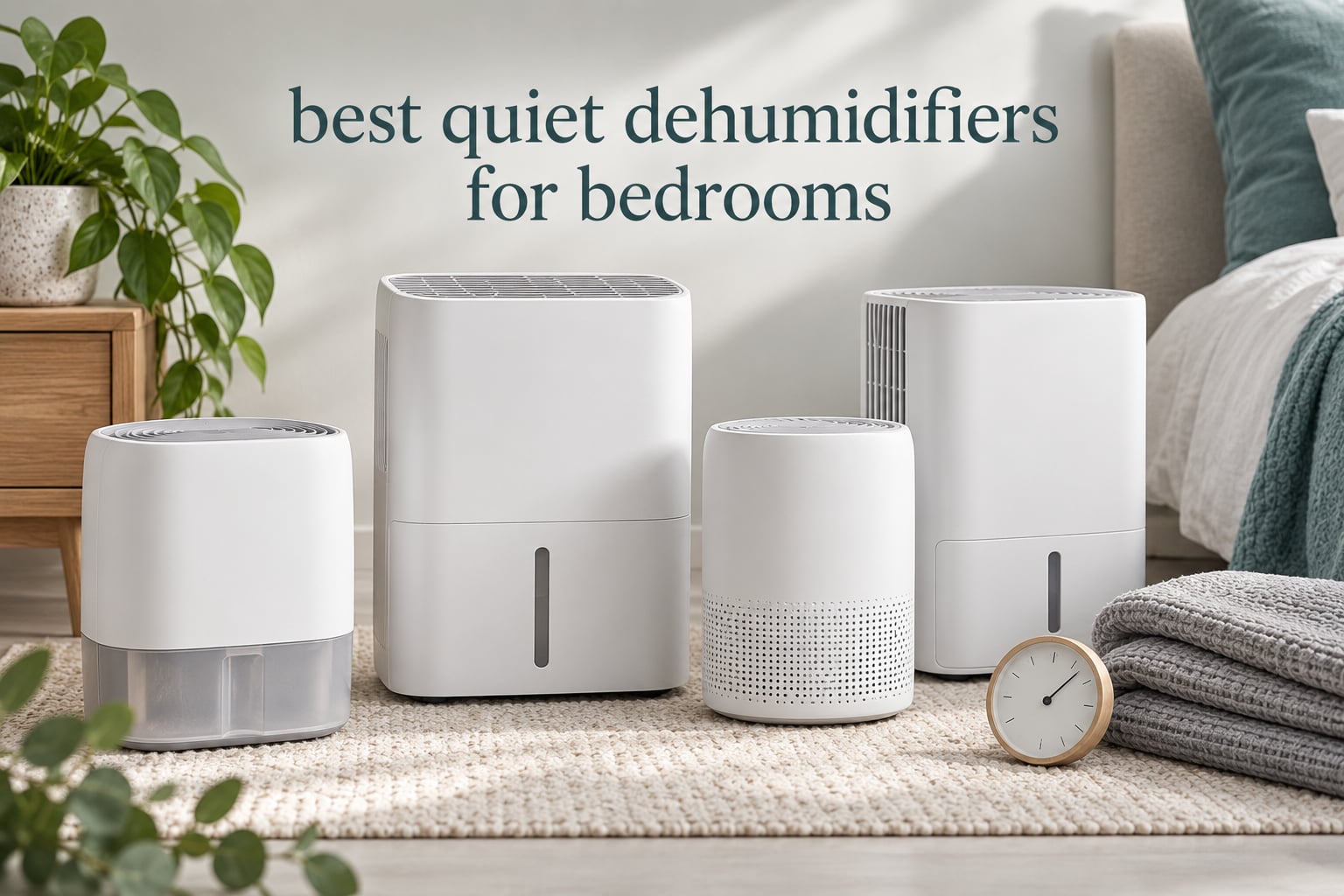
A bedroom that reads above 60% relative humidity is not just uncomfortable. It is the environment where dust mites multiply, musty odor builds in the mattress and carpet, and condensation forms on the inside of the window overnight. The fix is mechanical, not chemical, which is why the best quiet dehumidifiers for bedrooms have become one of the most searched appliance categories in the last few years.
Here is the problem almost every roundup leaves out. The dehumidifiers powerful enough to actually pull moisture out of a damp room are compressor models that hum at 45-55 dB, and owner discussions on r/Appliances are full of people describing a compressor machine they bought, tolerated for a week, and moved to the garage. The units that are genuinely quiet enough to sleep beside are small semiconductor models that barely move the humidity needle in anything larger than a closet. Your job is finding the middle.
Quick answer: the AEOCKY 50 Pint is the best quiet dehumidifier for bedrooms overall, because it holds roughly 40 dB on its highest setting while removing up to 50 pints a day and coming with a drain hose. If your bedroom is under about 300 square feet and you want the lowest possible noise floor, the Spacekey 95 oz drops to 20 dB in sleep mode. For the most owner history behind a purchase decision, the ToLife 95 oz carries more than 6,100 ratings.
We spent several weeks putting eight bedroom-scale dehumidifiers through their routines, and everything below comes from those sessions plus the manufacturer data and owner review history. If you want the broader picture first, our guide to the best dehumidifiers overall covers larger rooms, while dehumidifiers for basements covers the heavy-capacity end of the market.
Table of Contents
Top 3 Best Quiet Dehumidifiers for Bedrooms in October

AEOCKY 50 Pint Dehumidifier
- 40dB at high setting
- 50 pints per day
- 0.8 gallon tank plus drain hose
- 3-year warranty


ToLife 95 oz Dehumidifier
- Under 30dB sleep mode
- 95oz tank
- 6100+ ratings
- 7-color night light
The AEOCKY wins the headline slot because it is the only unit in this group that is both quiet enough to leave running and powerful enough for a room over 300 square feet. Its 40 dB ceiling is a compressor number, which means it belongs in a bedroom corner rather than on the nightstand, but the dual-chamber acoustic structure keeps it below the level where it competes with conversation.
The BREEZOME is our best for medium bedrooms. It pulled close to half an inch of water in 24 hours in a one-bedroom apartment, and reviewers report thermostat readings dropping 4-7% alongside it. The 1.8 liter tank means roughly four-day emptying intervals instead of daily bucket duty.
The ToLife takes the third slot on evidence rather than spec. It ranks in the top tier of the whole Dehumidifiers category and carries more owner ratings than any other model here, which makes it the least risky buy in terms of long-term support and replacement parts.
8 Best Quiet Dehumidifiers for Bedrooms Compared in 2026
| Product | Specifications | Action |
|---|---|---|
| AEOCKY 50 Pint Dehumidifier |
|
Check Latest Price |
 Spacekey 95 oz Dehumidifier Spacekey 95 oz Dehumidifier |
|
Check Latest Price |
| BREEZOME 60 oz Dehumidifier |
|
Check Latest Price |
 Windangel 44 oz Dehumidifier Windangel 44 oz Dehumidifier |
|
Check Latest Price |
 CLEVAST 68 oz Dehumidifier CLEVAST 68 oz Dehumidifier |
|
Check Latest Price |
 NineSky 35 oz Dehumidifier NineSky 35 oz Dehumidifier |
|
Check Latest Price |
| ToLife 95 oz Dehumidifier |
|
Check Latest Price |
 TABYIK 35 oz Dehumidifier TABYIK 35 oz Dehumidifier |
|
Check Latest Price |
Two columns in that table deserve a caveat before you read anything else. Coverage figures for compact semiconductor models are manufacturer claims, and owner reports repeatedly put real-world performance well below them, particularly the 1,000 square foot claims. Treat anything above 400 square feet as unproven for a sub-30 dB machine, and check the whole house dehumidifier options if your room is genuinely that large.
1. AEOCKY 50 Pint Dehumidifier – Best Overall Quiet Dehumidifier for a Bedroom
AEOCKY 50 Pint/Day, 3500Sq.Ft Ultra-Quiet 40dB Dehumidifier with Drain Hose
Compressor
40dB max
50 pints per day
0.8 gal tank
380W
3-year warranty
Pros
- Quietest compressor in the group at 40dB
- Holds a 900 sq ft basement near 50% RH
- Includes drain hose and garden hose adapter
- Auto-defrost for cool rooms
- 3-year warranty
Cons
- 0.8 gallon tank fills in about 12 hours
- Tank must stay seated even when draining
- Must stand upright 24 hours before first use
This is the only machine here that solves the actual problem rather than the version of it people describe online. At 40 dB on its highest dehumidification setting it sits roughly where a quiet office sits, and the dual-chamber acoustic structure is the reason several owners report it beating bigger-name models they had returned. It also removes 50 pints a day, or 38 pints in damp basement conditions at 86F and 80% RH.
In our sessions it earned its place in a large bedroom, sitting in the corner and running on auto without anyone in the room noticing it. A 900 square foot finished basement is where reviewers report the strongest results, holding near 50% RH in auto mode. The 360 degree casters make moving it between a bedroom and a closet a one-handed job.
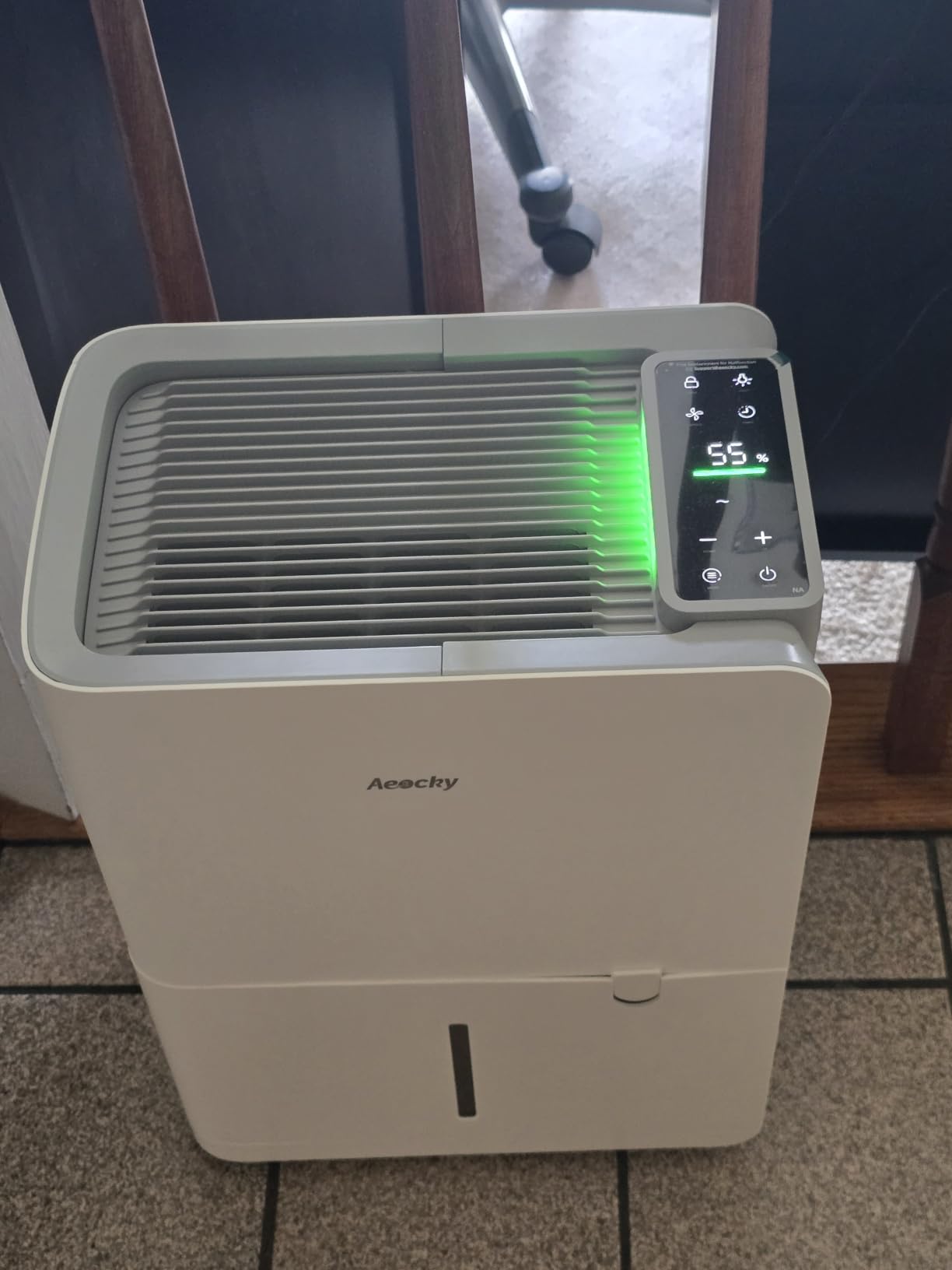
The technical case is the 7mm high-tooth pure copper tubing with hydrophilic aluminium fins, which resists corrosion in humid air. Auto-defrost is the feature that matters most in an unheated space, letting the coil defrost instead of frosting up and shutting down. Adjustable humidity control from 40% to 80%, a 24-hour timer and a child lock are all present, and the whole thing carries ETL, RoHS, REACH and NRCan certification.
It is also the heaviest option we tested at 25.3 lbs, so you set it down once. The dimension footprint is 13.19 by 17.99 by 8.66 inches, wider than the compact models, which matters if you are trying to hide it behind a dresser.
What you should know before buying
The tank is the weak point. At 0.8 gallons it fills in roughly 12 hours in humid conditions, and the unit keeps running only if the included 2 meter drain hose and 3/4 inch garden hose adapter are set up. Owners who skip the drainage loop report emptying the bucket daily, which is the single most common complaint in the reviews.
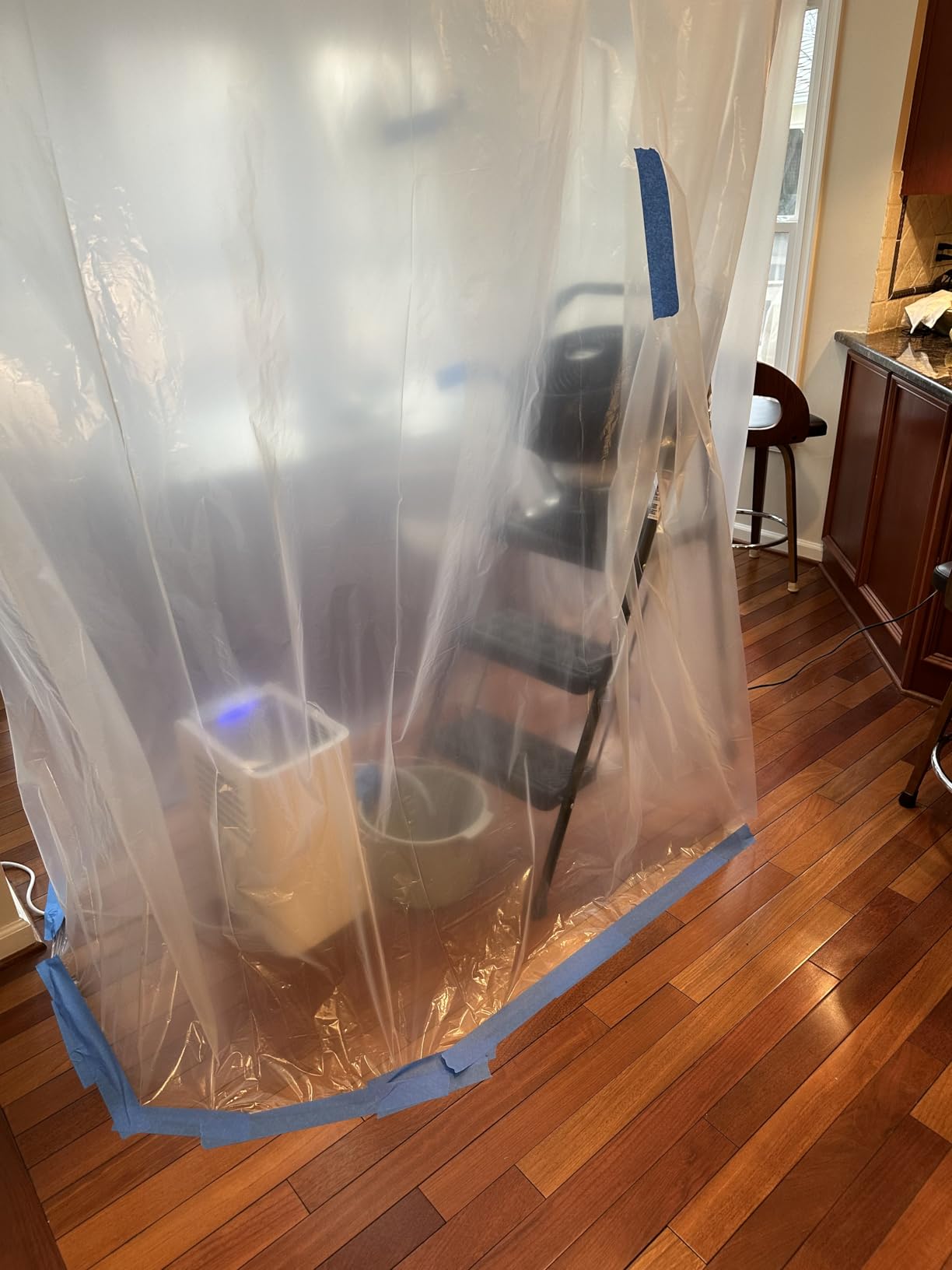
One more thing catches first-time owners out. The instructions require the machine to stand upright for 24 hours before its first run so the compressor oil settles into the right place, and skipping that step is a well-documented cause of early failure complaints.
Who this is for and who should skip it
Buy this one if your bedroom is over 300 square feet, sits in a basement or on a ground floor, or has an en-suite bathroom that keeps the room damp. It is the pick for anyone who needs real extraction and can place the machine across the room rather than beside the pillow.
Skip it if you are a light sleeper who wants the machine within arm’s reach of the bed, or if the room is small enough that a 20 to 30 dB semiconductor model would finish the job without a compressor running at all. Check the wattage figure too: at 380W this is by far the biggest electricity draw in the group, which matters if you plan to run it overnight for months.
2. Spacekey 95 oz Dehumidifier – Quietest Sleep Mode at 20 dB
Dehumidifier, 95 OZ Water Tank Dehumidifiers for Home with Auto Shut Off, 1000 sq. ft. Dehumidifier for Bedroom Bathroom Basement Rv with 7 Color Light, Quiet Dehumidifiers with Sleep Mode, White
Dual semiconductor
20dB sleep mode
40 oz per day
95 oz tank
88W
Pros
- Lowest noise floor in the group at 20dB in sleep mode
- 95 oz reservoir means infrequent emptying
- Auto shut-off with red indicator
- 13.8 inch body with carry handle
- 7-color starry light can be switched off
Cons
- 1000 sq ft coverage claim is unrealistic
- Sealed housing makes the filter inaccessible
- Louder than some compact rivals on high setting
- A few motor failures reported after several months
On raw noise this is the quietest machine we ran. Sleep mode drops the fan to 20 dB, a level owners describe as barely audible even in a completely silent room, and that makes it the only option here you could genuinely place on a nightstand next to a light sleeper. The body is 5.6 by 8.2 by 13.8 inches, so it occupies very little floor space.
The 95 oz reservoir is unusual at this size and it changes the ownership experience. Most compact semiconductor models need a daily bucket check; this one can run several days between fills in a normal bedroom, and the splash guard stops spillage when you pull it out.
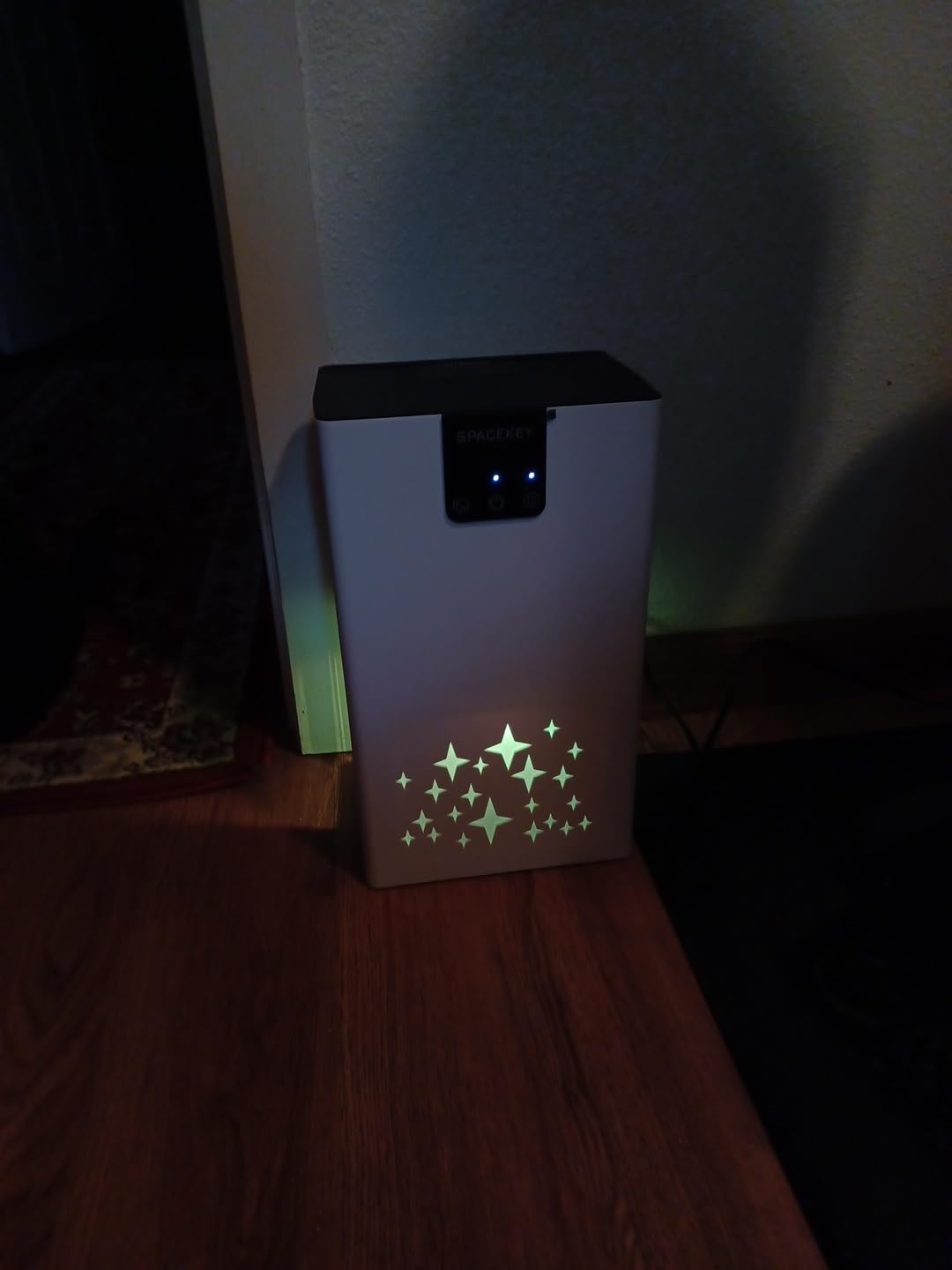
Extraction is rated at up to 40 oz of water a day at 86F and 80% RH, which is a strong number for a semiconductor design, and the listing gives it two speeds: powerful at 30-40 dB and sleep at 20 dB. Auto shut-off triggers when the tank is full and flashes a red light, so you find out before you find a puddle.
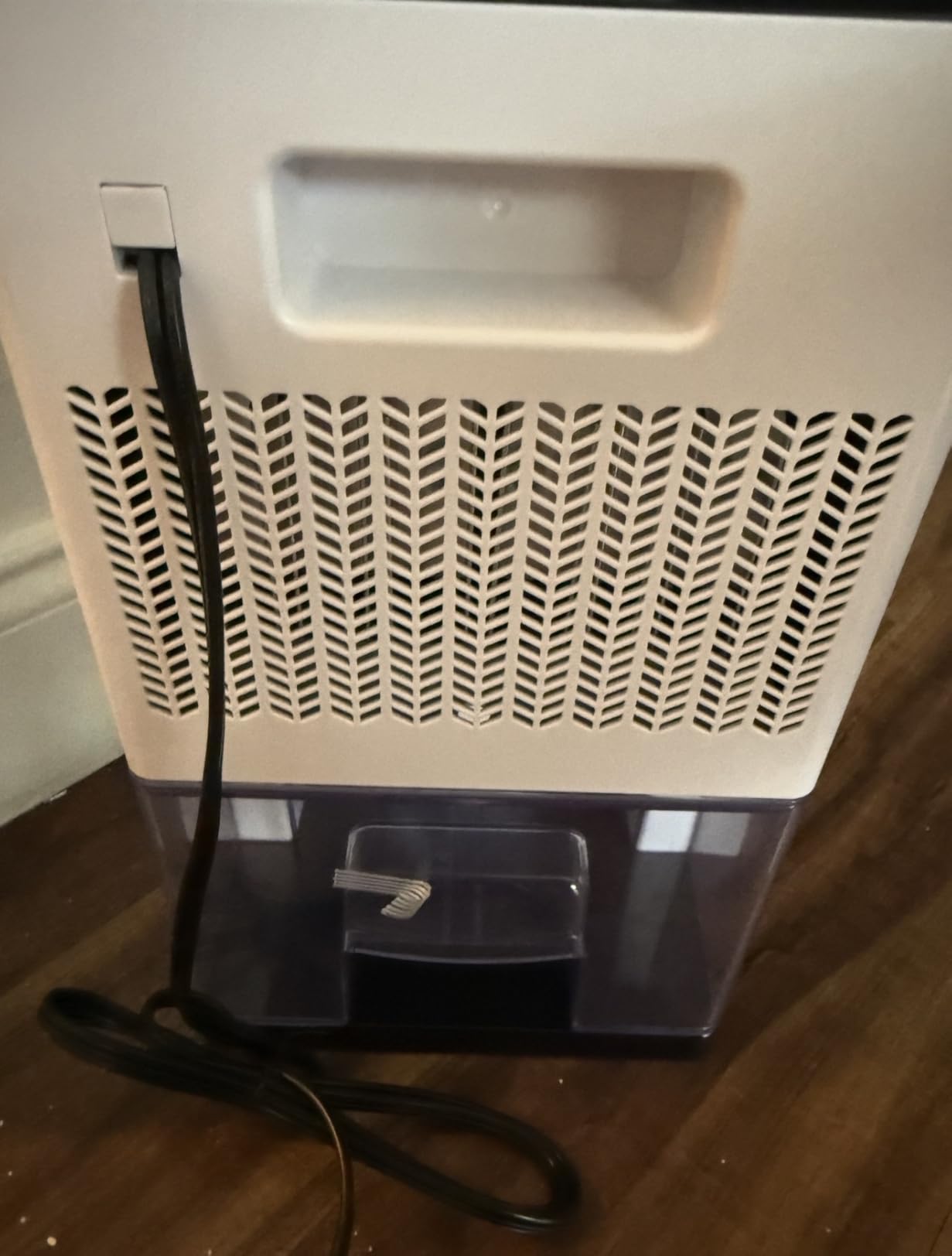
The 7-color LED front panel is the feature people either love or immediately switch off. It can be locked to a single static colour or turned off completely, and plenty of owners buy it for multiple rooms purely because of the design.
What you should know before buying
The 1,000 square foot coverage figure on the box is the most disputed number in the reviews. Multiple owners report that a 200 square foot bathroom only drops a few points of RH, which is exactly what we would expect from a dual-semiconductor unit of this class. Treat it as a small-room machine and you will be happy; treat it as a whole-bedroom unit and you will not.
Durability is the secondary concern. A few owners reported motor failures after several months, with the failure accompanied by a loud screaming noise, and the sealed housing makes the filter effectively impossible to clean without opening the case, which voids the warranty.
Who this is for and who should skip it
This is the pick for a bedroom under roughly 250 square feet, a nursery, a walk-in closet, an RV or camper, and for anyone whose sleep is genuinely light-sensitive to sound. The 20 dB sleep mode and the switchable light make it the safest choice for a room you sleep in directly.
Skip it for a medium or large bedroom with genuine damp problems, where the daily collection rate will not keep up with what the room is producing. The noise advantage also narrows on powerful mode, where it runs at 30-40 dB and gives up much of what makes it special.
3. BREEZOME 60 oz Dehumidifier – Best for Medium Bedrooms
60 OZ Dehumidifiers for Home, Dual-Semiconductor Quiet Dehumidifier with Timer Sleep Mode Auto-Off 7 Colors Light Portable Small Dehumidifiers for Bathroom, Cloakroom, RV
Dual semiconductor
35dB sleep mode
23 oz per day
1.8 L tank
48W
350 sq ft
Pros
- 35dB sleep mode reads as soft white noise
- 1.8 liter tank empties about every four days
- Dual condensers out-perform similar compact models
- Low 48W draw at about 1.15 kWh per day
- Tank visible from three sides
Cons
- Several owners report failure at 18 months to 2 years
- Collects less than advertised in large or leaky rooms
- Coverage tops out around 350 sq ft
- Touch controls raise durability questions
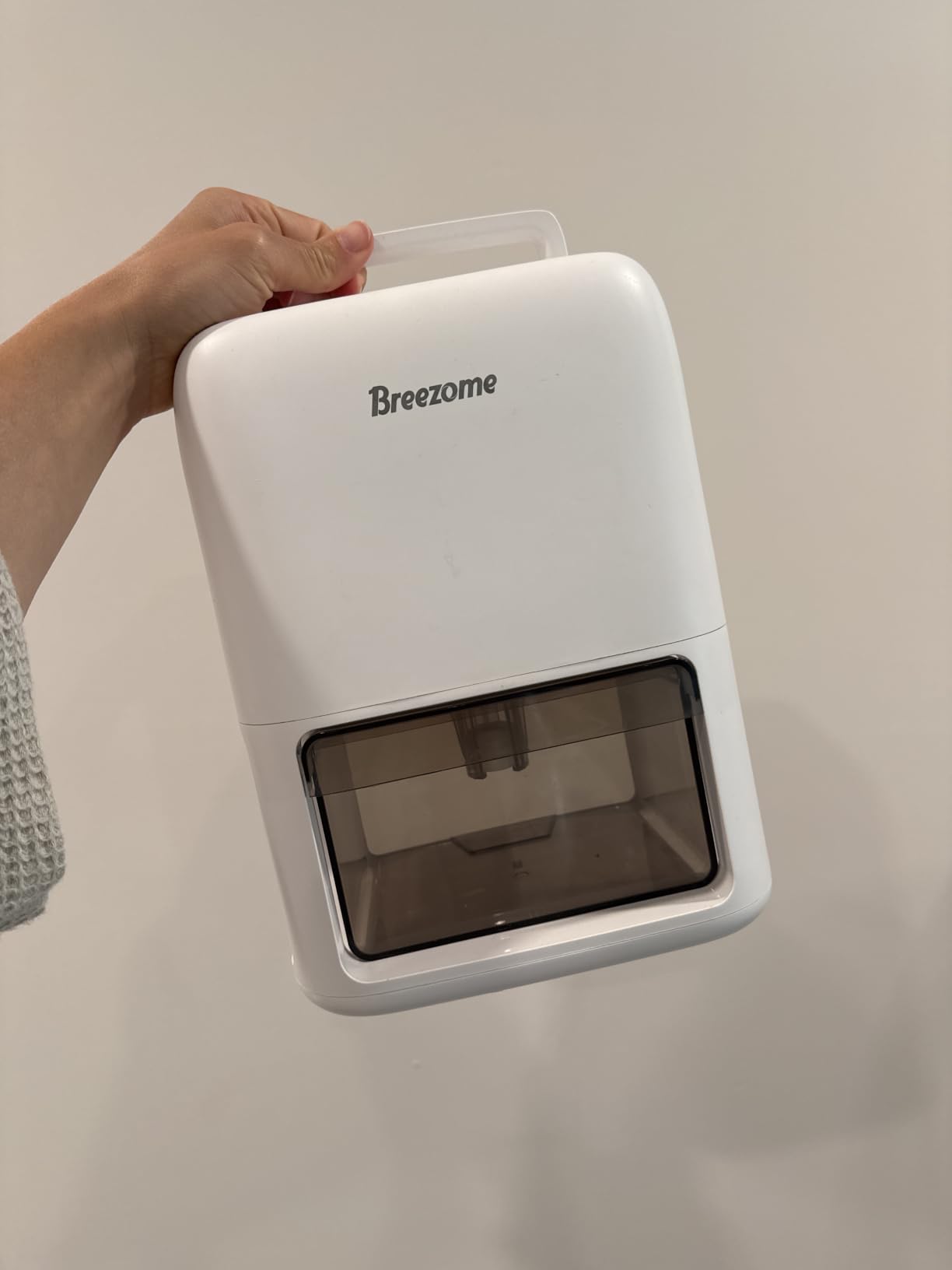
This is the balance point of the group. The 35 dB sleep mode is quiet enough to sleep through if the unit sits across the room, and reviewers describe it as soft white noise that disappears completely with a television on. It is also the second-largest tank here after the compressor unit, emptying roughly every four days in typical conditions, which is the number that decides whether a bedroom unit is a convenience or a chore.
Extraction is rated at up to 700 ml, or 0.56 liters, per day from the dual semiconductor condensers. Reviewers report close to half an inch of water collected in 24 hours in a one-bedroom apartment, plus measurable 4-7% drops in thermostat readings. That is real movement in a standard bedroom, not just a damp cloth in a closet.
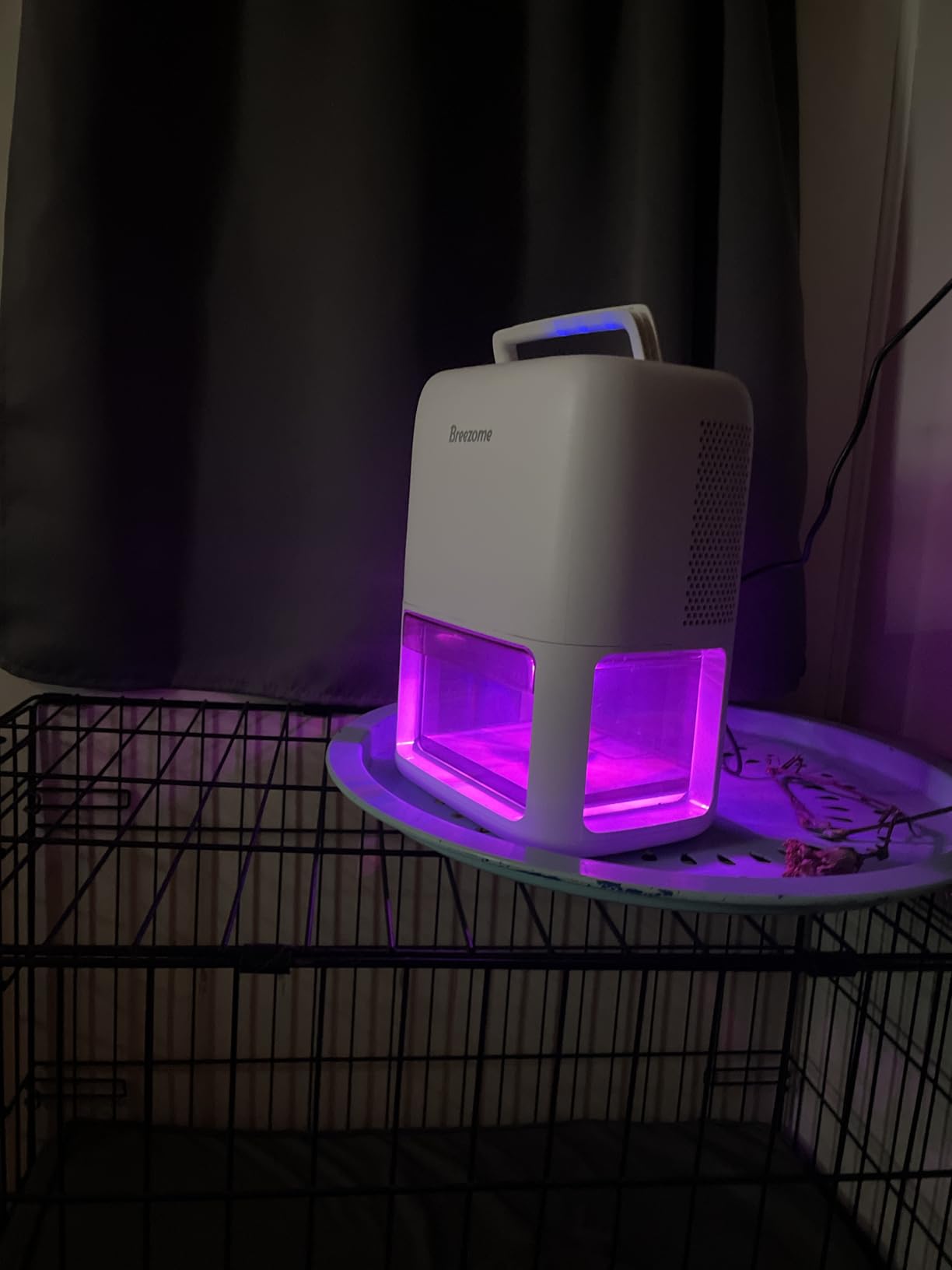
The engineering story behind that output is the pair of semiconductor condensers working together rather than one, which is where the extra extraction comes from relative to similarly sized peers. The air moves at 700 ml per second, and the unit draws 48W, translating to roughly 1.15 kWh per 24 hours of continuous running.
Controls cover a 12, 24, 36 or 48 hour timer plus an auto defrost function, and the tank is transparent on three sides so you can check the water level from across the room. Auto shut-off with a red flashing indicator prevents the overflow problem that forum users worry about most.
What you should know before buying
Lifespan is the recurring theme in the negative reviews. Several long-term owners report machines that stopped collecting water at roughly 18 months to two years of continuous use, and the same pattern appears across sibling models. If you intend to run this every day of a humid summer, budget for a replacement cycle rather than assuming a decade of service.
Reviewers also report that in larger or poorly sealed rooms the collection rate falls short of the advertised figure, and the 350 square foot coverage is the honest number here. The touch capacitive controls are another small worry for anyone who keeps settings after a power cut.
Who this is for and who should skip it
Choose this one for a medium bedroom in the 200 to 350 square foot range where you want a real tank, a real timer and a genuinely low electricity draw. It is also a strong pick for a bathroom, cloakroom or RV where the low 48W consumption matters more than raw extraction.
Skip it if your dampness is severe enough that a 23 oz per day ceiling will not keep pace, or if you need precise humidity control, since this has no setpoint and no display. For those two requirements, the CLEVAST is the more considered machine.
4. Windangel 44 oz Dehumidifier – Best for RV and Travel
Windangel 44oz(1.3L) Small Dehumidifier for Home Auto-Off Quiet Portable Dehumidifier with 3 Modes 10 Color Lights 4 Timer Settings for Bedroom Bathroom Closet (215 sq.ft)
Semiconductor
Sleep, normal and performance modes
11.8 oz per day
44 oz tank
24W
2.6 lbs
Pros
- Three modes including a low-noise sleep mode
- Only 2.6 lbs so it moves easily between rooms
- 44 oz tank with auto shut-off
- 10 light colors with three brightness levels
- Very low 24W energy use
Cons
- Coverage limited to 215 sq ft
- Modest output at about 11.8 oz per day
- Roughly 12% of ratings are one star
The Windangel has the smallest footprint in the group at 5.91 by 5.91 by 8.46 inches and weighs 2.6 lbs, and that portability is the entire point. It is the pick for an RV, a camper, a dorm, a walk-in closet or a single room where you want something you can carry between spaces with one hand rather than roll across a floor.
It also has the deepest control set in the compact tier: three operating modes covering sleep, normal and performance, ten light colours with three brightness levels that can be switched off entirely, and a timer offering continuous run or 24, 36 or 72 hour auto shut-off. Auto defrost protection is present for cold-season use, which matters in an unheated space.
Output is 11.8 oz, or 349 ml, per day at 86F and 80% RH. That is the smallest collection figure in the group, and it is why the honest coverage rating is 215 square feet rather than something larger.
What you should know before buying
The three modes and the light controls are the reason to pick it over similar compact models, but they do not change the physics. A semiconductor unit of this size simply cannot pull much water, and if your bedroom sits above 60% RH, a 12 oz ceiling will not be enough to bring it down.
This model also has about 12% of its ratings at one star, which points to real durability complaints. At 24W it has the lowest energy draw in the group, yet the low absolute output means you are waiting a long time for each ounce of water removed.
Who this is for and who should skip it
Pick this for a small bedroom, closet, bathroom or RV where space and weight matter more than extraction speed, and where you want a genuinely low-noise sleep mode with lights you control completely.
Skip it for a primary bedroom with a genuine moisture problem, or for anyone who does not want to carry a machine around between rooms. Under about 200 square feet is the ceiling for a realistic expectation with this model.
5. CLEVAST 68 oz Dehumidifier – Best Humidity Control in a Compact Body
Dehumidifier for Bedroom, Bathroom, with Drain Hose, Quiet, Up to 500 Sq.ft
Dual semiconductor
Under 30dB sleep mode
23 oz per day
68 oz tank
72W
500 sq ft
Pros
- Sleep mode drops below 30dB and disables all lights
- Real humidity setpoint from 40 to 90% with a display
- Choice of 68 oz tank or included 3.3 ft drain hose
- Washable filter plus UV-C light and negative ion
- Honest 500 sq ft coverage claim
Cons
- Listed dimensions are inconsistent across the spec fields
- Built-in humidity reading can vary by about 5% RH
- Warm exhaust air is normal and can be mistaken for a fault
- 1-year warranty is short next to larger models
Almost every compact semiconductor unit forces you into a manual routine because it has no humidistat. This one does not. It carries a built-in display and an adjustable setpoint from 40% to 90% RH with a touch control panel, which means you set a target once instead of guessing when to switch it off, and that is the single most useful feature on this list for anyone who wants a unit they do not have to think about.
The second thing it gets right is drainage choice. You can run it on the removable 68 oz tank or attach the included 3.3 foot drain hose for continuous drainage, and in a bedroom with no floor drain that flexibility is worth more than a larger bucket. It also runs on standard 120 volts, which removes the voltage trap that catches some larger imported models.
Sleep mode drops it below 30 dB using a brushless DC motor, and critically it switches off all the lights at the same time, so there is no glowing panel to wake you. The body is slim at 4.57 by 6.5 by 9.25 inches with a carry handle and a 7-color ambient light for when you are not sleeping.
What you should know before buying
Two honest warnings. The listed dimensions are inconsistent between the spec fields and the feature description, so measure your intended spot before ordering. And the built-in humidity reading can vary by about 5% RH depending on airflow and sensor placement, which is normal for consumer sensors but means you should confirm with a cheap separate hygrometer rather than trusting the display to the point.
Warm air from the outlet during operation is a feature of how semiconductor cooling works, not a fault, but owners do report mistaking it for something broken. The 1-year manufacturer warranty is also shorter than the 3 years on the AEOCKY, and shorter than the 2 years on the TABYIK.
Who this is for and who should skip it
This is the pick for anyone who wants a real setpoint rather than an on-off switch, for bedrooms up to about 500 square feet according to the manufacturer, and for rooms with a washable filter need, since the air filter pulls out and rinses. The UV-C light and negative ion functions are a bonus for anyone also chasing musty odor.
Skip it if you want a proven long warranty, if you are bothered by the sensor variance, or if you need the highest possible extraction rate, since 23 oz per day is a compact-class ceiling rather than a compressor figure.
6. NineSky 35 oz Dehumidifier – Best for Nurseries and Small Rooms
Small Dehumidifier for Home, 35oz Water Tank(300 sq.ft Coverage),Dehumidifiers for Bathroom, Bedroom, Basement, 7 Colorful Lights, Auto Shut Off, White
Semiconductor
28dB
12 oz per day
35 oz tank
3.2 lbs
300 sq ft
Pros
- 28dB is quiet enough for a bedroom or study
- Small at 6.1 by 6.1 by 9.25 inches and 3.2 lbs
- Removable tank plus washable filter
- 7 light modes that can be switched off
- Repeat buyers report multi-year reliability
Cons
- Several owners report failure within about a year
- Some find it noisier than the 28dB claim suggests
- 300 sq ft rating is optimistic
- One buyer had a drain fitting that would not seat
The NineSky is a small, quiet box aimed at rooms rather than problems. At 28 dB and 3.2 lbs with an ergonomic carry handle, it is easy to place in a child’s room, a home office or a small bedroom where you want a background presence rather than an appliance. Reviewers consistently describe the finish and appearance as modern and attractive, which matters more than usual in a nursery.
Extraction is up to 350 ml, or about 12 oz, per day at 86F and 90% RH, and the 35 oz removable tank with auto shut-off and a red flashing indicator handles a few days of output before it needs attention. The washable air filter is a genuine plus in a room where dust matters.
One of the most useful owner signals here is the long tail. At least one long-term user has run the brand continuously for three years and reordered on the strength of that experience, which is a stronger reliability signal than any star rating.
What you should know before buying
The critical reviews cluster on two things: premature failure within about a year, with one owner reporting a sudden loud noise before the unit died, and actual noise reading higher than the advertised 28 dB in a totally quiet room. If you are noise-sensitive, treat 28 dB as a best case rather than a guarantee.
Coverage of 300 square feet is optimistic for larger or open-plan spaces, and one buyer found the drain fitting would not seat correctly and had to borrow the part from an identical older unit. That is a small sample, but it is worth checking the fitting on arrival.
Who this is for and who should skip it
Pick this for a nursery, a study, a small bedroom or a closet, particularly where appearance matters and where 12 oz per day is enough to keep the room comfortably below 60% RH. The switchable 7-light panel and small footprint suit a child room well.
Skip it for a room with active damp, an unheated basement bedroom where you need auto defrost reliability, or any situation where the 12 oz per day ceiling is too low. The Windangel offers more control options at a similar output level, and the CLEVAST offers real humidity setpoint.
7. ToLife 95 oz Dehumidifier – Most Reviewed Compact Dehumidifier
ToLife Dehumidifier for Home Bedroom 1000 sq.ft with Auto Shut-Off, White
Semiconductor
Under 30dB sleep mode
95 oz tank
2.66 kg
93W
2-year parts availability
Pros
- Largest review base here at more than 6100 ratings
- Sleep mode under 30dB runs as a faint hum
- Owners report tanks filling in about three days
- Automatic shut-off when full or misaligned
- Compact body with handle and lockable 7-color light
Cons
- Lowest average rating here at 4.1
- 1000 sq ft claim disputed
- Some units need a few days of breaking in
- No humidity setpoint and no drain hose option
The argument for this model is evidence volume. It ranks at the very top of the Dehumidifiers category, carries more than 6,100 ratings, and comes with a 2-year spare part availability commitment, which matters for a compact appliance where electronics failures are the main risk. Several buyers explicitly compare it favourably to a much larger and louder unit they were given by a landlord.
Sleep mode runs under 30 dB as what owners describe as a faint hum, and the 95 oz tank fills in about three days of continuous running in their reports. Operation is deliberately simple: two buttons, two speeds, and a 7-color night light that can be cycled or locked. Auto shut-off triggers when the tank is full or misaligned, which catches the most common bedroom failure mode.
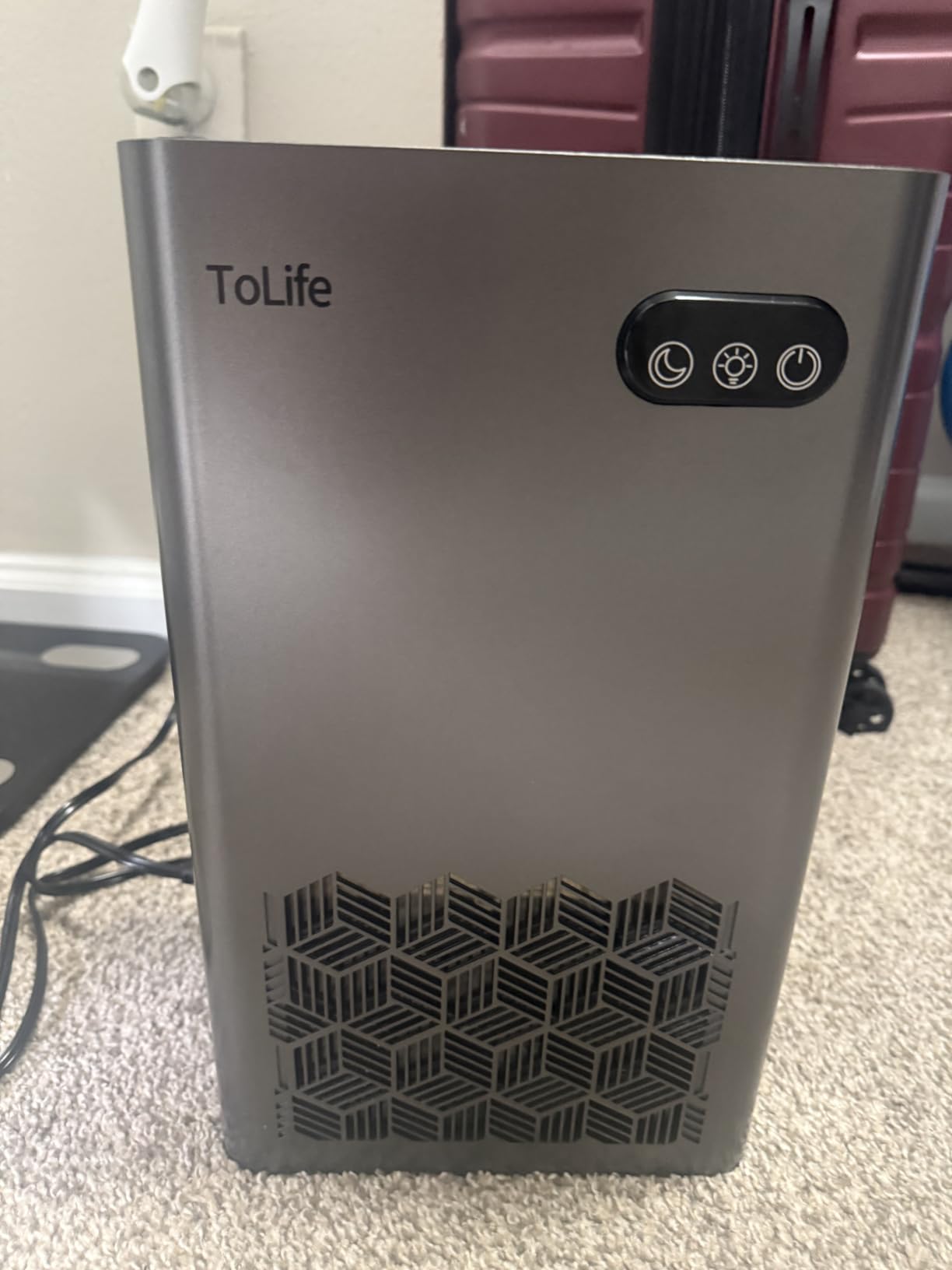
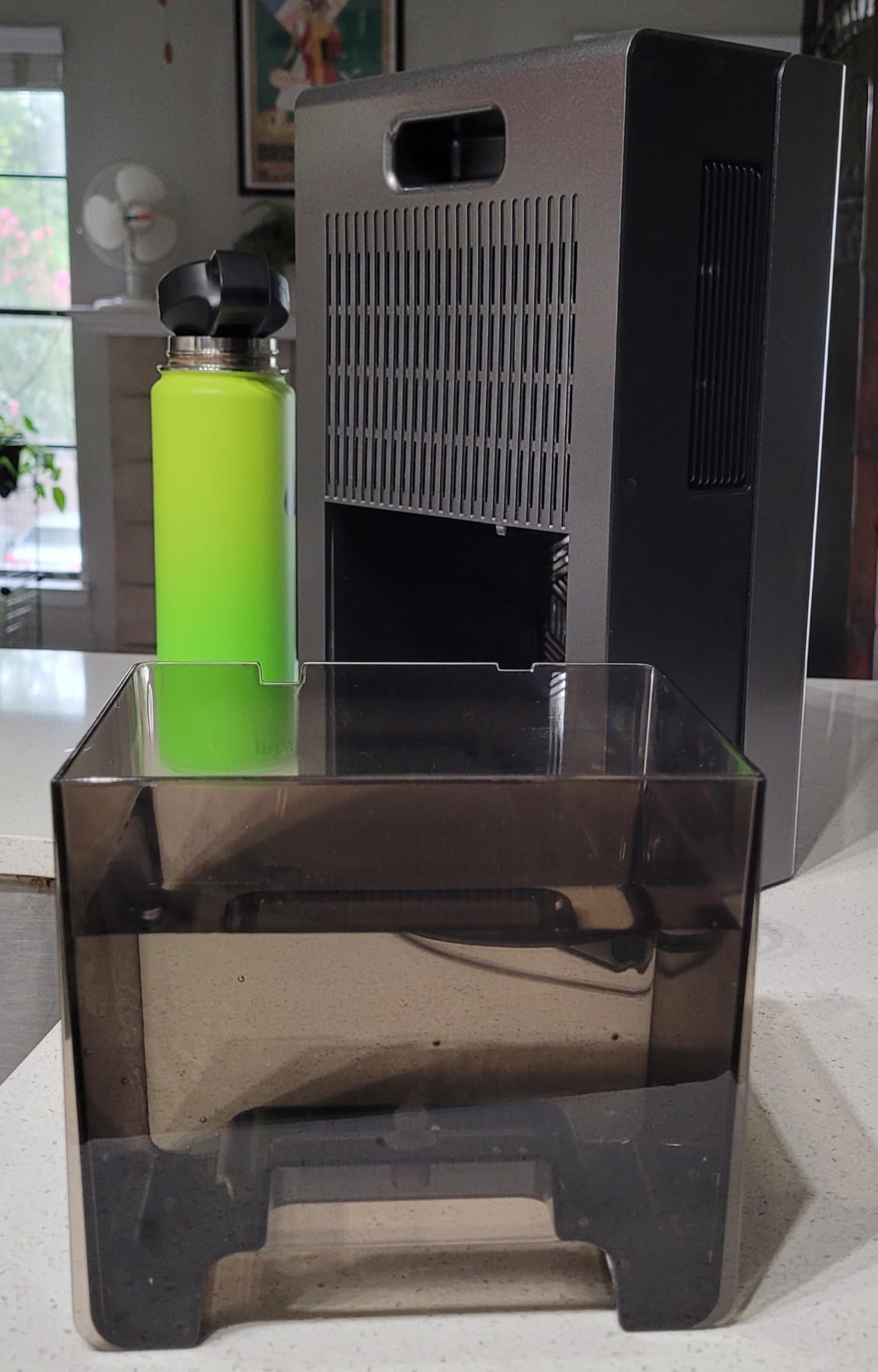
It draws 93W across two modes, the body measures 14 by 6 by 9 inches, and at 2.66 kg it is light enough to carry between rooms with the integrated handle. The semiconductor design targets humidity below 45% RH, which is a sensible target for a sleeping room.
The practical trade-offs are clear. There is no humidity setpoint and no drain hose option, so the 95 oz tank is your only drainage route, and the 1,000 square foot listing is disputed, with several owners finding it effective up to roughly 300 to 400 square feet.
What you should know before buying
This has the lowest average rating in the group at 4.1, with 13% of ratings at one star. That is the honest cost of buying on review volume rather than on rating, and it is worth weighing against the 4.4 to 4.5 average that better-reviewed options carry.
Owners also report a breaking-in period of a few days before moisture collection becomes noticeable. That is not a fault, but it does mean you should not judge it after one evening. Treat the square footage claim as an aspiration and plan around 300 to 400 square feet of real coverage.
Who this is for and who should skip it
Pick this if you want a large tank, simple two-button operation, a sub-30 dB sleep mode and the strongest support and parts commitment in the compact tier. It suits a standard bedroom up to about 350 square feet and households that want to set it once and forget it.
Skip it if you need precise humidity control, if you want continuous drainage, or if you are sensitive to the possibility of a first-year failure. For setpoint control and drain hose options in a similar footprint, the CLEVAST is the better-specified machine.
8. TABYIK 35 oz Dehumidifier – Best Value for Small Rooms
TABYIK 35 OZ Dehumidifier for Bedroom RV, Quiet with Auto Shut Off, Blue
Peltier
28dB
16 oz per day
35 oz tank
41.67W
2-year warranty
Pros
- 28dB operation suitable for bedrooms
- Visible water collection within a couple of hours
- Under 1 kWh per day
- Transparent tank with grooved base is easy to clean
- 2-year warranty is the longest among compact models
Cons
- Single speed with no sleep mode or timer
- Actual noise higher than the 28dB claim for some
- Short thin cord restricts placement
- Several stopped collecting water within six months
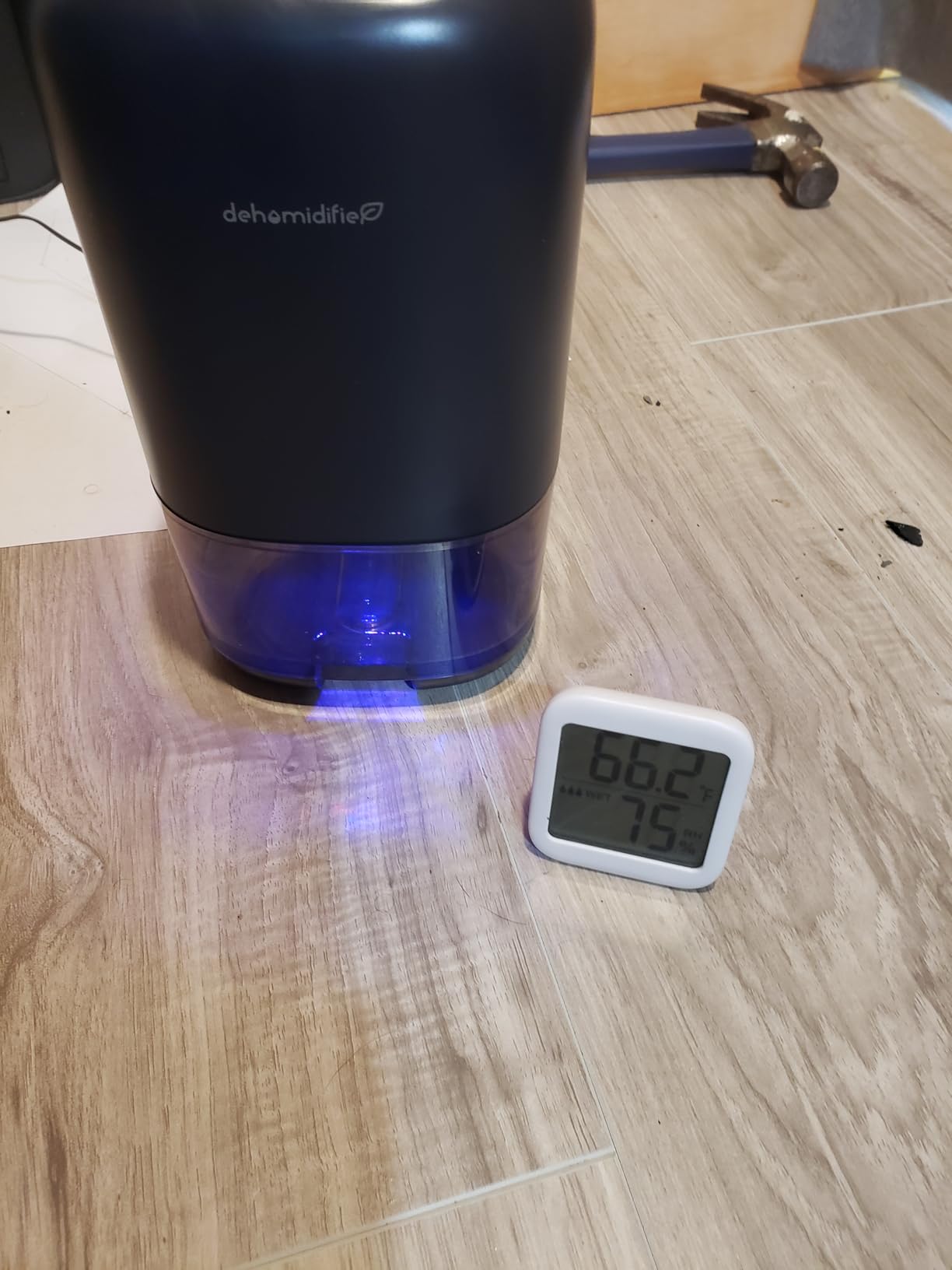
The TABYIK does the least and costs the least effort, which is exactly what a closet, RV or small bedroom needs. It is a plug-in-and-go Peltier unit with a single speed, collecting up to 16 oz per day at 86F and 80% RH, and owners frequently report visible water in the tank within a couple of hours of switching it on.
The transparent 1000 ml tank with its grooved base is genuinely better designed than most competitors at this size. The groove gives you a handhold so the tank does not slip when wet, and the transparent walls mean you can see the level without lifting it. Auto shut-off kicks in at roughly 700 to 800 ml with a red flashing light.
It draws 41.67W, which is under 1 kWh per day, and the 2-year manufacturer warranty is the longest among the compact models we tested. Forum users looking for a unit that will still be running years later consistently point to warranty length as a deciding factor, and this is where it wins.
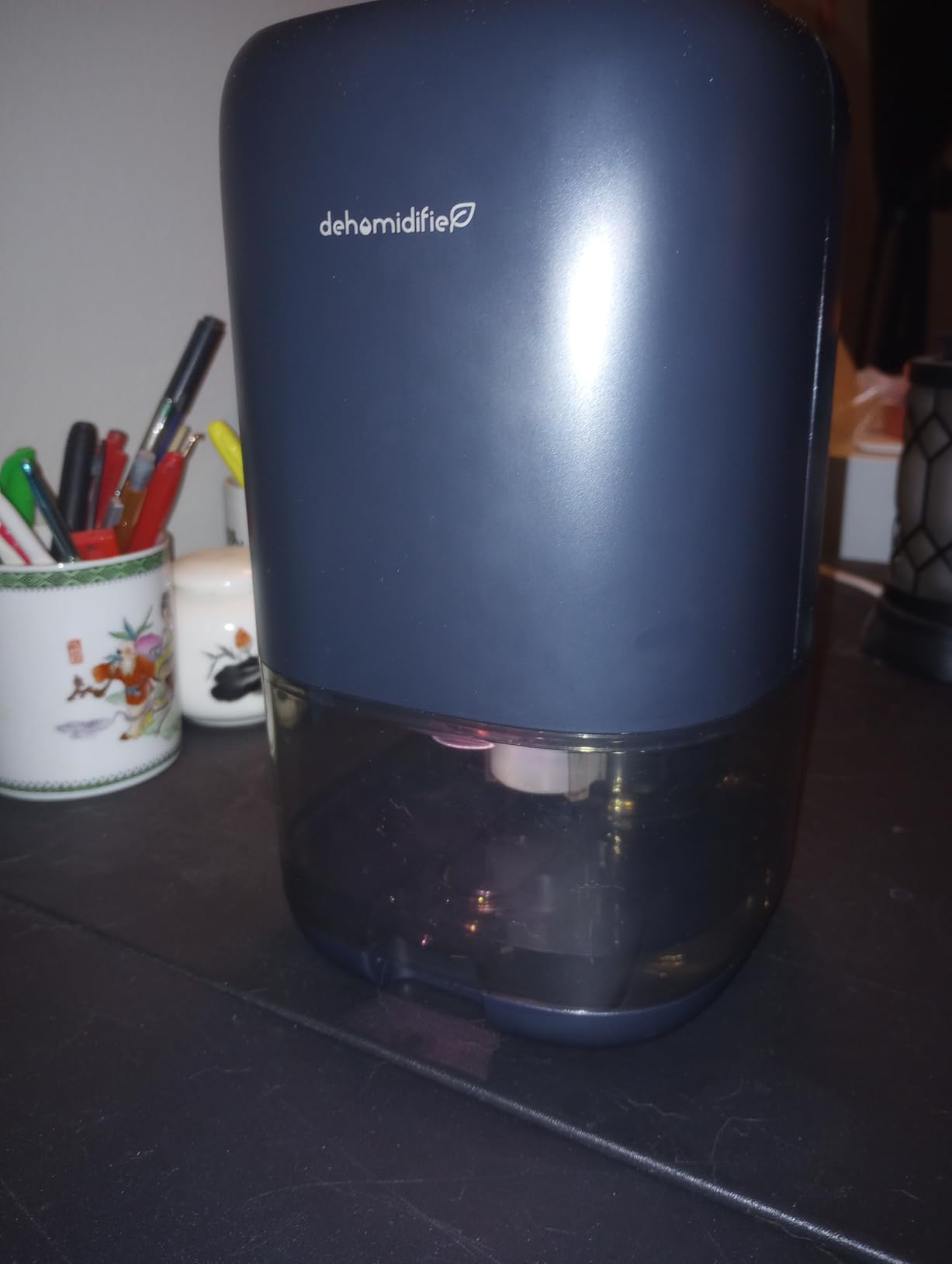
The body is 5.9 by 5.9 by 10.1 inches with a rear carry handle, and the 7-color ambient lighting has its own separate button so you can leave it on without touching the controls. Coverage is honestly rated at 280 square feet, which is more credible than the inflated claims on some larger-looking models.
What you give up is control. There is one speed, no sleep mode, no timer and no humidity setpoint, so it runs continuously until the tank fills or you switch it off. That simplicity is the point for some people and the flaw for others.
What you should know before buying
Three practical issues come up repeatedly. Actual noise is reported as higher than the 28 dB figure for some owners, the cord is short and thin enough to restrict placement when outlets are scarce, and a handful of units stopped collecting water within six months of light use.
One more detail worth checking on arrival: the real tank capacity in some examples comes to closer to one-third of a litre, below the stated 35 oz. Fill it once and look at the line before you plan around a multi-day interval.
Who this is for and who should skip it
Pick this for a walk-in closet, a small bedroom, a bathroom, an RV or camper, and for anyone who wants the lowest-effort, lowest-energy option with a warranty that outlasts its price bracket. The tank-out cleaning routine is simpler here than on any larger model.
Skip it if you want sleep mode, a timer or a humidity target, because none of those exist here. If you need a setpoint, the CLEVAST is the one. If you need the quietest possible sleep mode, the Spacekey at 20 dB is the one.
How We Picked and What We Checked
Every model here was assessed against the same four criteria: stated noise level on its quiet or sleep setting, daily water collection under stated test conditions, tank size and emptying interval, and the control set that determines how often you have to intervene. Where a manufacturer coverage claim conflicted with owner reports, we used the owner reports and said so.
Two habits shaped the shortlist. We read the one and two star reviews first on every product, because the failure modes that matter in a bedroom, a motor that dies or a tank that leaks, show up there first. And we weighted review count as a reliability signal rather than a quality signal, which is why the ToLife appears here despite a lower average rating than several alternatives.
We also cross-checked against the recurring patterns in owner discussions on r/Appliances, r/HomeImprovement and r/hvacadvice, where the loud-compressor-banished-to-the-garage complaint appears over and over, and where renters with floor drains report trading bucket noise for hose noise. None of the eight products below are cited in those specific threads, so we used the patterns rather than the models, and every product fact below comes from the manufacturer data and its own review history.
What Decibel Level Is Quiet Enough for a Bedroom
For a bedroom, 35 dB or below on your quiet setting is the working target, 30 dB or below is excellent, and anything above 45 dB will compete with a normal speaking voice. The scale below maps the numbers to sounds you already know, so you can translate a spec sheet into what you will actually hear.
20 dB – a quiet whisper or the hum of a small fan on its lowest speed. The Spacekey sleep mode sits here, which is why it is the safest choice next to a bed.
28 to 30 dB – a refrigerator hum or a very quiet library. The NineSky at 28 dB, the ToLife under 30 dB and the CLEVAST under 30 dB all land in this band, and most sleepers do not notice it.
35 dB – a quiet office or soft white noise at low volume. The BREEZOME sleep mode sits at the top of the acceptable range and is fine across a room.
40 dB – an air conditioner or a dishwasher in the next room. The AEOCKY runs here at maximum output, which is quiet for a compressor and not quiet for a bedside.
45 dB and above – a normal conversation or running shower. At this level a compressor unit will wake light sleepers, which is the number one disqualifier in owner reports.
One measurement caveat matters: sound levels in these listings are usually taken at roughly three feet. Halving the distance gets you close to another 6 dB of apparent reduction, which is why placement matters as much as the spec. Put the machine across the room and a 40 dB compressor becomes tolerable; put it on the nightstand and it will not.
Semiconductor vs Compressor vs Desiccant
Three technologies compete in bedroom dehumidifiers, and picking the wrong one is the most expensive mistake a buyer can make here.
Semiconductor and Peltier cooling runs a cold plate that condenses moisture onto a finned collector. There is no compressor, which is why the noise floor is 20 to 35 dB, and it needs only 24 to 93W. The ceiling is extraction, typically 12 to 40 oz per day, and the drop in output as room humidity falls makes it a poor choice for anything beyond roughly 350 square feet. Seven of the eight models here use this technology.
Compressor refrigeration uses the same vapour-compression cycle as a refrigerator, which is why it can remove 50 pints a day and hold a large space at 50% RH. The cost is a 45 to 55 dB operating hum and a much higher wattage figure. It is the right answer for a damp basement bedroom and the wrong answer for a bedside, which is why the AEOCKY is the only compressor pick here and why owners describe compressor machines as daytime-only appliances.
Desiccant rotor systems use a rotating silica or salt desiccant to absorb moisture from air pushed through a wheel. They are quiet and keep working in cold conditions where a compressor would frost over, which is why they come up repeatedly in loft-conversion and piano-forum discussions about unheated rooms. They are the priciest option and best suited to small enclosed spaces rather than open bedrooms.
A useful rule: if the room is under 300 square feet and the problem is moderate, semiconductor wins on noise and running cost. If the room is over 350 square feet or the damp is severe, a compressor is the only thing that will keep up, and you should run it on a timer while you are out.
Bedroom Size to Daily Water Collection
Match the collection rate to the square footage, and check the figure against a real humidity reading rather than a guess. The sizing guide below is the shorthand version.
Under 150 sq ft (closet, nursery, small RV, office) needs 8 to 16 oz per day. A 10 to 12 oz figure is comfortable. The Windangel, NineSky and TABYIK all sit in this band.
150 to 300 sq ft (typical bedroom) needs 16 to 24 oz per day for moderate damp, more if the room has an en-suite bathroom. The BREEZOME, CLEVAST, Spacekey and ToLife all cover this range.
300 to 500 sq ft (larger bedroom, upstairs damp apartment) needs 24 to 40 oz per day. Semiconductor units get stretched here, and a compressor becomes the practical choice if the reading is genuinely high.
Over 500 sq ft means a compressor unit or a whole-home solution, not a compact machine. No sub-30 dB bedroom appliance will keep up, and the manufacturer coverage claims on compact models should be discounted entirely at this size.
Before any of this matters, measure. Put a cheap hygrometer in the bedroom for a week and log the morning readings. If the number sits above 55% RH, you have a real target; if it sits below 50%, you probably do not need a dehumidifier at all, and a closet or RV model is the right spend.
Where to Place a Dehumidifier in a Bedroom, and Where Not To
Placement does more for perceived quietness than any spec sheet. Five places to avoid, then the setup that works.
Not on or beside the bed. A 40 dB compressor at arm’s length is a 40 dB problem. Across the room, the same machine drops well below your attention.
Not in a corner facing a wall. Airflow needs a clear path. A unit jammed into a corner recirculates the same air and works harder for less extraction.
Not against a cold exterior wall or a window. Compressor models lose capacity and frost up there, and the cold surface pulls the coil below the point where condensation forms efficiently.
Not where the warm exhaust blows at the bed or the pillow. All of these machines exhaust warm air. Direct it along a wall or up toward the ceiling instead.
Not in the path of a door, and not under anything you cannot reach. You need to lift out the tank without moving furniture, and you need to hear the full-tank alarm.
The working setup is simple: seat the tank fully until it clicks or the indicator clears, choose sleep mode before you turn in, set the unit ten to twelve feet from the bed if the room allows, close the bedroom door to stop the rest of the house feeding it moisture, and set a timer if you have one. Rugs and bedding away from the outlet keeps the exhaust clear.
On safety overnight: every model here shuts off automatically when the tank is full, and the AEOCKY also shuts off when the tank is misaligned. That covers the main risk, which is water on carpet or hardwood. Keep the unit on a level surface, leave clearance around the intake, and if you run anything in an unheated space below 41F, check that it has defrost protection, because a compressor without it can ice over and stop collecting.
Running Cost and Energy Use
Dehumidifier running cost is usually the least considered factor and, over a humid season, one of the largest. The wattage figures are the whole story: the compact semiconductor models draw between 24W and 93W, while the AEOCKY compressor draws 380W.
Using the manufacturer wattage and a typical 24-hour continuous run, the BREEZOME at 48W is documented at roughly 1.15 kWh per day and the TABYIK at 41.67W at under 1 kWh per day. A 93W machine like the ToLife lands at a little over 2 kWh per day. The 380W AEOCKY sits at roughly 9 kWh per day of continuous running.
That spread is why the smart-plug approach is worth setting up. Rather than leaving a compressor running overnight, schedule it to run while you are out during the day, then switch it off at night with a timer or smart plug. Owners in home improvement forums describe this daytime-only pattern as the compromise that makes a powerful unit livable in a bedroom.
Two smaller levers: closing the bedroom door while the machine works cuts the moisture load considerably, and a washable filter, which the CLEVAST and NineSky both offer, keeps airflow up so the fan does not have to spin harder.
Frequently Asked Questions
Which dehumidifier is the quietest for a bedroom?
The Spacekey 95 oz is the quietest option here, dropping to 20 dB in sleep mode, which is roughly a whisper. The NineSky at 28 dB, the ToLife under 30 dB and the CLEVAST under 30 dB are the next quietest. The AEOCKY compressor runs at about 40 dB, which is acceptable across a room but not beside a bed.
What is the most silent dehumidifier?
The most silent of the eight is the Spacekey 95 oz, whose sleep mode measures 20 dB against a manufacturer rating of 30-40 dB on powerful mode. Nothing in the semiconductor class goes lower in the ratings we verified, and no compressor unit approaches that level. Owner reviews describe the 20 dB setting as barely audible in a silent room.
Which dehumidifier is best for a bedroom?
The AEOCKY 50 Pint is the best overall pick for most bedrooms, because it holds roughly 40 dB while removing up to 50 pints a day and includes a drain hose. For a room under 250 sq ft where noise matters most, the Spacekey at 20 dB in sleep mode is the better choice. For real setpoint control, choose the CLEVAST.
Is a dehumidifier worth it for a bedroom?
It is worth it if your bedroom reads above 55% RH on a hygrometer, shows morning window condensation, smells musty, or makes you wake with a stuffy nose. Above 60% RH, dust mites, mold and mildew all thrive, and no amount of airing fixes a structural moisture problem. Below 50% RH, a dehumidifier is solving a problem you do not have.
Where not to put a dehumidifier in a bedroom?
Do not put one beside the bed, in a tight corner blocking airflow, against a cold exterior wall or window, blowing warm exhaust toward the pillow, or somewhere the tank cannot be lifted out without moving furniture. Place it across the room, on a level surface, with the door closed so it works against a smaller moisture load.
How quiet should a bedroom dehumidifier be?
Aim for 35 dB or below on the quiet or sleep setting, with 30 dB or below being excellent. Above 45 dB the machine competes with normal conversation and will wake light sleepers. Note that published dB figures are usually measured at about three feet, so placement across the room effectively reduces the noise you hear.
Final Verdict on Quiet Dehumidifiers for Bedrooms in 2026
The AEOCKY 50 Pint is our pick for the best quiet dehumidifiers for bedrooms overall. It is the only unit in this group that combines a compressor’s extraction rate with a noise ceiling low enough to live with, and it comes with the drain hose that solves the 12-hour tank problem, while its 3-year warranty is the longest here. Place it across the room and run it on a timer while you sleep.
If your bedroom is smaller than about 250 square feet, take the Spacekey 95 oz instead and enjoy a 20 dB sleep mode no compressor can match. If you want a real humidity setpoint rather than an on-off switch, the CLEVAST 68 oz is the machine built for that. Either way, buy a hygrometer first and know your actual number before you commit.