

Desert households already know the rule about air conditioning: the compressor runs, the meter spins, and the monthly bill arrives whether or not anyone is home. The best swamp coolers for dry climates take a completely different approach. They move air across water-saturated pads, let the water evaporate, and cool the room with nothing but a fan and a small pump. No refrigerant, no compressor, no ductwork.
That physics only works where the incoming air is dry. In the Southwest, the Mountain West, the High Desert and arid parts of the interior West, a well-sized evaporative cooler can drop a garage or covered patio 10 to 20 degrees below ambient for a fraction of the running cost of a portable compressor unit. In humid regions the same machine mostly adds moisture to the room, which is why dry climate is the entire point of this roundup.
We compared 12 units across the whole spectrum, from a 10-pound personal cooler to 3100 and 4800 CFM machines built for a workshop. Each one is rated in genuinely dry conditions, judged on airflow, tank size, noise, wattage and how owners describe the results after a season of use. If you want the fastest answer, the Hessaire MC37M is our pick; the rest of this guide explains why, and where the cheaper options beat it.
Table of Contents
Top 3 Picks for Best Swamp Coolers for Dry Climates in October
Best Swamp Coolers for Dry Climates in 2026
All twelve models appear below with the specifications that actually determine whether a unit can handle a dry-climate room, patio or garage.
| Product | Specifications | Action |
|---|---|---|
 Hessaire MC37M Hessaire MC37M |
|
Check Latest Price |
 Ashihoti 4-in-1 Evaporative Cooler Ashihoti 4-in-1 Evaporative Cooler |
|
Check Latest Price |
 DREO 40 Inch Tower DREO 40 Inch Tower |
|
Check Latest Price |
 Hessaire MC37V Hessaire MC37V |
|
Check Latest Price |
 Uthfy 4800 CFM Cooler Uthfy 4800 CFM Cooler |
|
Check Latest Price |
 PNTCK 3-in-1 Cooler PNTCK 3-in-1 Cooler |
|
Check Latest Price |
 OEMTOOLS 23968 OEMTOOLS 23968 |
|
Check Latest Price |
 VCJ 1800 CFM Cooler VCJ 1800 CFM Cooler |
|
Check Latest Price |
 DREO 43 Inch Tower DREO 43 Inch Tower |
|
Check Latest Price |
 Hessaire MC18M Hessaire MC18M |
|
Check Latest Price |
 Honeywell CL201AEW Honeywell CL201AEW |
|
Check Latest Price |
 SereneLife SLACLW4 SereneLife SLACLW4 |
|
Check Latest Price |
How Evaporative Cooling Works in Dry Air
A swamp cooler is a fan, a water pump and a block of absorbent media. Dry air is pulled through wet pads, water molecules jump from the wet surface into the moving air, and that phase change steals heat from the airstream. The air leaving the far side is cooler and more humid than the air that went in.
The gap between those two temperatures is the whole story. Evaporation cannot pull air below the wet-bulb temperature, which is the reading you get from a thermometer with a damp cloth wrapped around the bulb. In genuinely dry desert air that wet-bulb reading sits well below the dry-bulb reading, which is what creates the 10 to 20 degree drops owners in Arizona, Utah, Las Vegas and Southern Alberta report. As indoor humidity climbs toward the outdoor humidity, the two readings converge and the cooling effect disappears entirely.
That is why relative humidity is the number to watch. Manufacturer guidance for most of these units targets air below roughly 50 to 60 percent relative humidity, and the Honeywell CL201AEW states it plainly on the spec sheet. If you are in a coastal or Gulf Coast location in summer, an evaporative cooler will humidify your room and make it feel worse, and no amount of wattage will fix it.
Ventilation matters just as much. A portable evaporative cooler pushes roughly the same volume of air in as it moves out, so the room needs an exit path. Most owners in the dry states run the unit with a window cracked and a door ajar, and the ones who seal the room report the weakest results. The same rule applies outdoors: a unit pointed at a closed patio door is only moving hot air around a wall.
Power draw is the quiet advantage. The units in this roundup run from 45 watts for a personal cooler to 288 watts for the Honeywell, against compressor-based portable air conditioners that typically draw three to four times that while running. If you have already looked at heat pumps for the whole house, our heat pump guide for cold climates covers the other side of that comparison.
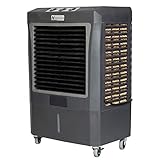
1. Hessaire MC37M – Best Overall Evaporative Cooler for Dry Climates
Hessaire MC37M Indoor or Outdoor Portable Oscillating Evaporative Swamp Air Cooler for 950 Square Feet of Space with Water Reservoir
3100 CFM
950 sq ft
10.3 gal tank
55 dB
276 W
8-hour timer
Pros
- 3100 CFM across 950 sq ft
- 10.3 gallon tank with hose fill
- Oscillating vents spread air widely
- Strong results reported in desert climates
Cons
- Loud even on the lowest setting
- Adds humidity so windows must stay open
- Open tank can slosh when moved
The MC37M is the unit we keep coming back to because it does the fewest things wrong. It moves 3100 CFM across a claimed 950 square feet, and it carries a 10.3 gallon reservoir that most owners report lasting four to six hours between fills. A garden hose adapter is included, so you can skip the bucket entirely and run it continuously.
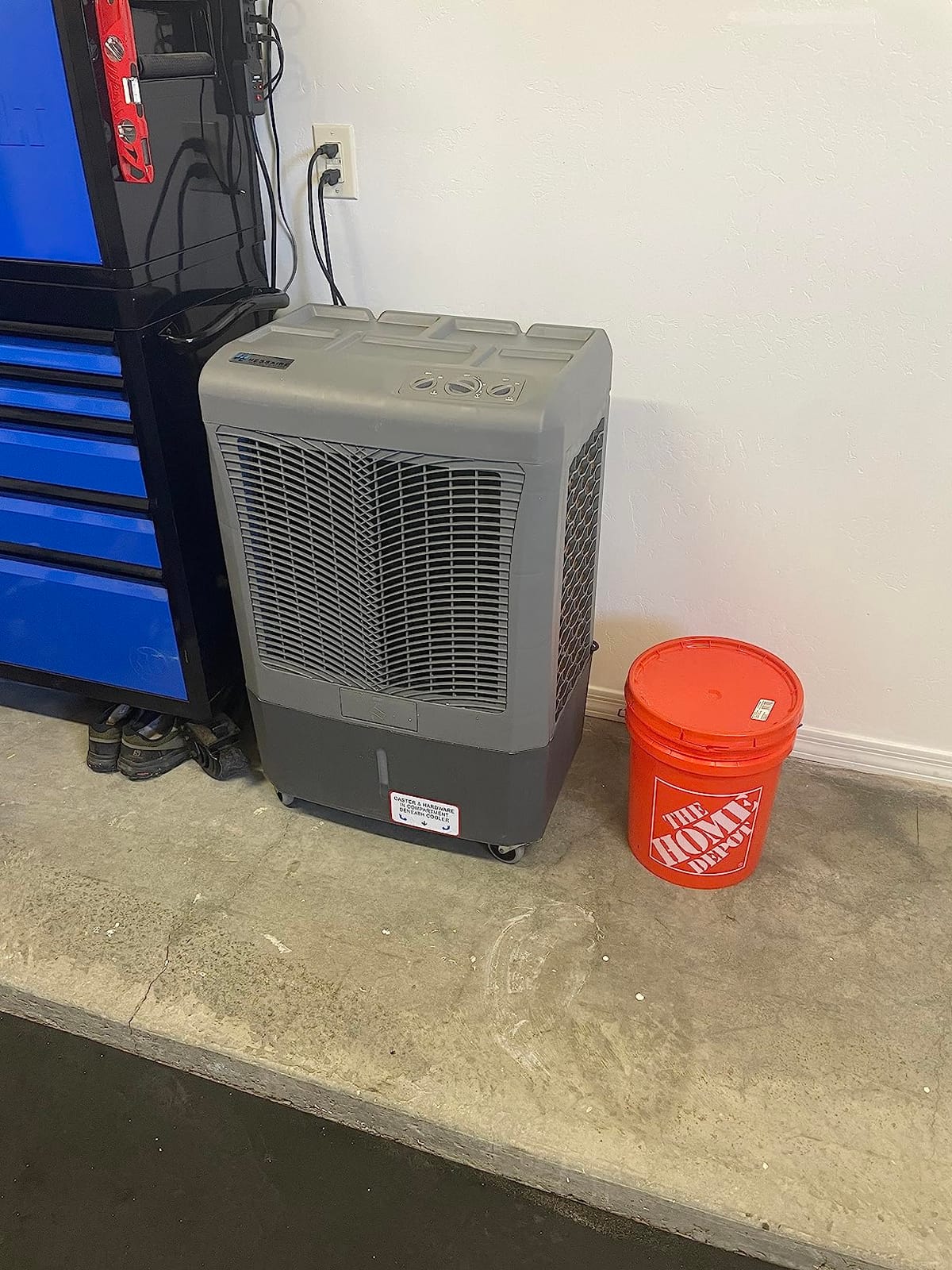
Owner feedback in this listing clusters hard around geography. Reviewers in Arizona, Las Vegas, Dallas, West Florida and Southern Alberta describe dropping patio, garage and porch temperatures by 10 to 20 degrees. On the HVAC advice boards, the recurring theme is that people in low-humidity areas get real results from this class of machine while buyers in humid regions return theirs.
Controls are simple: four fan-only settings, two evaporation settings, oscillating vents and an 8-hour timer. There is no remote and no app, which sounds like a step down until you realize the timer means you can start it before bed or before a shift without getting up.
What gives is noise and humidity. At 55 dB it is audible across a quiet room, and reviewers repeatedly note the open top tank will slosh and leak a little if you move the cabinet while it is full. One reviewer also reported a mould smell in a small enclosed office, which is a reminder to drain and dry it rather than leave it running unattended for weeks.
What you get in real dry air
At 276 watts with the pump and fan on high, this is the strongest combination of tank capacity and airflow in the group for a residential space. People using it in a two-car garage or a covered patio say it holds the space comfortably through an afternoon, which is a different claim from making a bedroom feel cold.
The oscillation is doing real work here rather than being a gimmick. A stationary 3100 CFM stream cools one corner; the oscillating louvres spread that across the 950 square feet the manufacturer claims, which is the difference between a cool spot and a cool space.
Where it falls short
The 37-inch tower is bulky and the plastic case is plain, so it reads as a utility appliance. It is not a bedroom candidate, and owners who tried it as one generally went looking for something quieter.
Reviewers also stress that this is not a compressor substitute above roughly 95 degrees or anywhere the humidity climbs. If your goal is a genuinely cold bedroom at midday in August, you are buying the wrong category. If your goal is a garage, a covered porch or an outdoor kitchen, it does exactly what it promises.
2. Ashihoti 4-in-1 Evaporative Cooler – Best for Small Spaces
Evaporative Air Cooler, 4-IN-1 Swamp Cooler, Portable Air Conditioners with 6 Speeds & 3 Modes, 3-Gal Water Tank, 15-20 FT/S Airflow, Remote & Touch Control for Home and Office
100 CFM
150 sq ft
3 gal tank
45 W
45 dB
6 speeds
Pros
- Four functions in one compact cabinet
- 6 speeds across 3 modes
- 3 gallon tank holds 10 to 12 hours
- Quiet 45 dB motor and 45 W draw
Cons
- 100 CFM is personal scale not room scale
- Only 4 reviews so far
- No oscillation despite the feature list
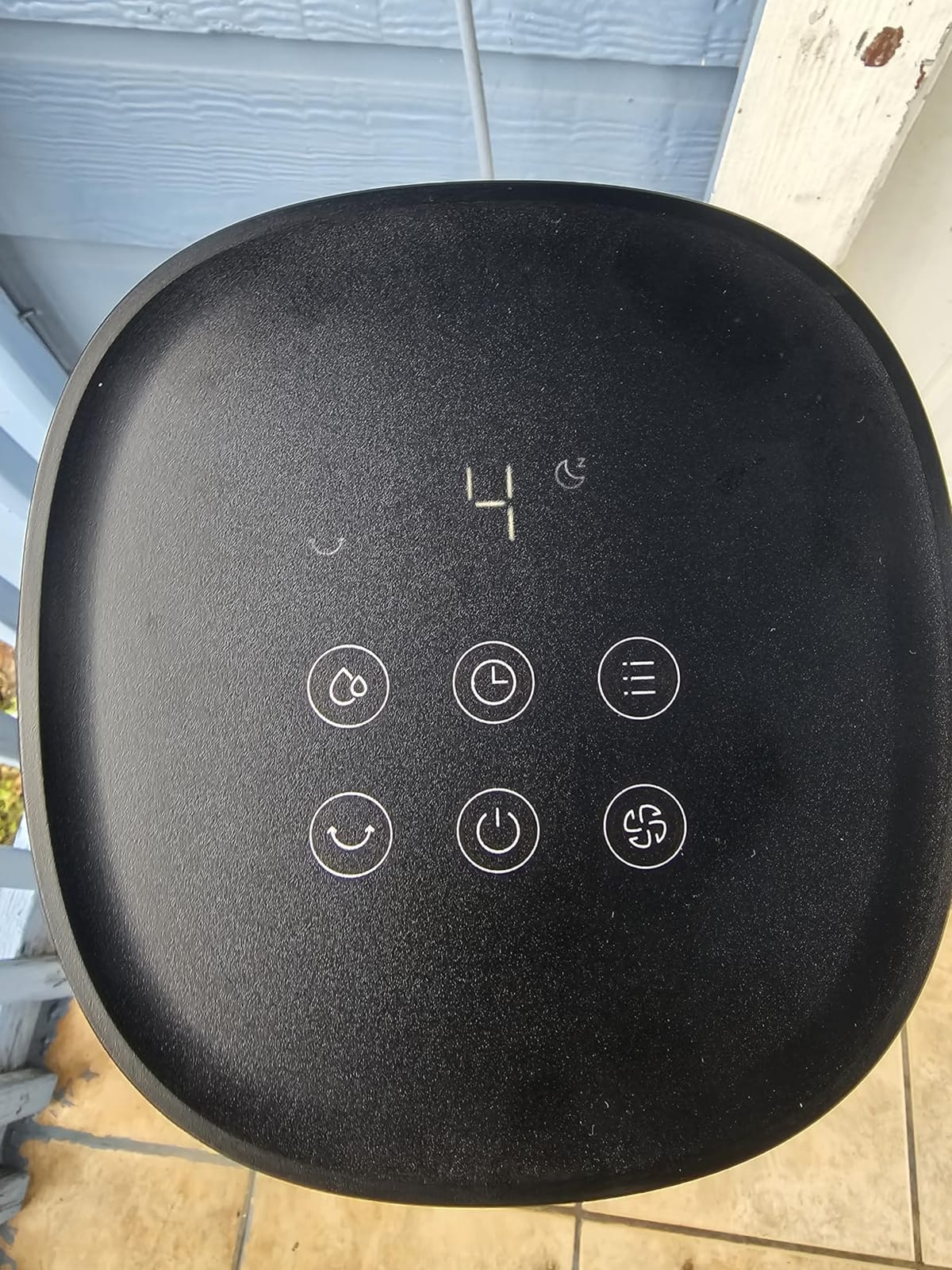
This is a desk-scale unit and it is honest about it. The listed airflow is 100 CFM across 150 square feet, which puts it in a different category from the 3100 CFM machines here. What it does offer is the most feature-dense control set at that size: six speeds across normal, sleep and cool modes, a remote, a touch panel and 360-degree casters.
The bottom-mounted 3 gallon tank has a viewing window and supports 10 to 12 hours of use, which is genuinely useful for a home office or dorm room where you do not want to walk over and refill. At 45 watts it costs almost nothing to leave running on a schedule, and 45 dB sits low enough to sit beside a desk.
The catch is the review base. A perfect 5.0 average from four reviews tells you very little about how this holds up in year two, and we would treat it as a low-commitment trial rather than a long-term purchase.
When this size is exactly right
A 150 square foot footprint is a home office, a dorm room, a sunroom corner or a spot at the end of a desk. In those places the limiting factor is not CFM, it is whether the air reaches you, and a compact tower with six speeds delivers that reliably.
It also requires no window kit and no exhaust hose, so nothing has to be installed. If you have been hesitating on a window unit because of the drilling, this sidesteps that entirely.
Where it falls short
Anyone hoping to cool a bedroom, living room or garage will be disappointed by 100 CFM. It moves air across your skin; it does not lower the temperature of the room.
It is also listed as a 4-in-1 device combining cooling, fan, humidifying and circulation, but no oscillation is mentioned anywhere in the spec sheet. In a small room that matters less than you would think, but in a shared space the air concentrates on one spot.
3. DREO 40 Inch Tower – Quietest Unit in the Roundup
DREO Evaporative Air Swamp Cooler, 40″ Cooling Fans that Blow Cold Air
1199 CFM
300 sq ft
4 L tank
31 dB
55 W
80 deg swing
Pros
- 31 dB is the lowest rating in the group
- Cross-flow impeller runs quiet
- Removable tank pad and grille
- 55 W draw with remote included
Cons
- 4 L tank needs frequent refills
- Delivers a direct breeze rather than room cooling
- 12 percent one-star share cites leaks and rattle
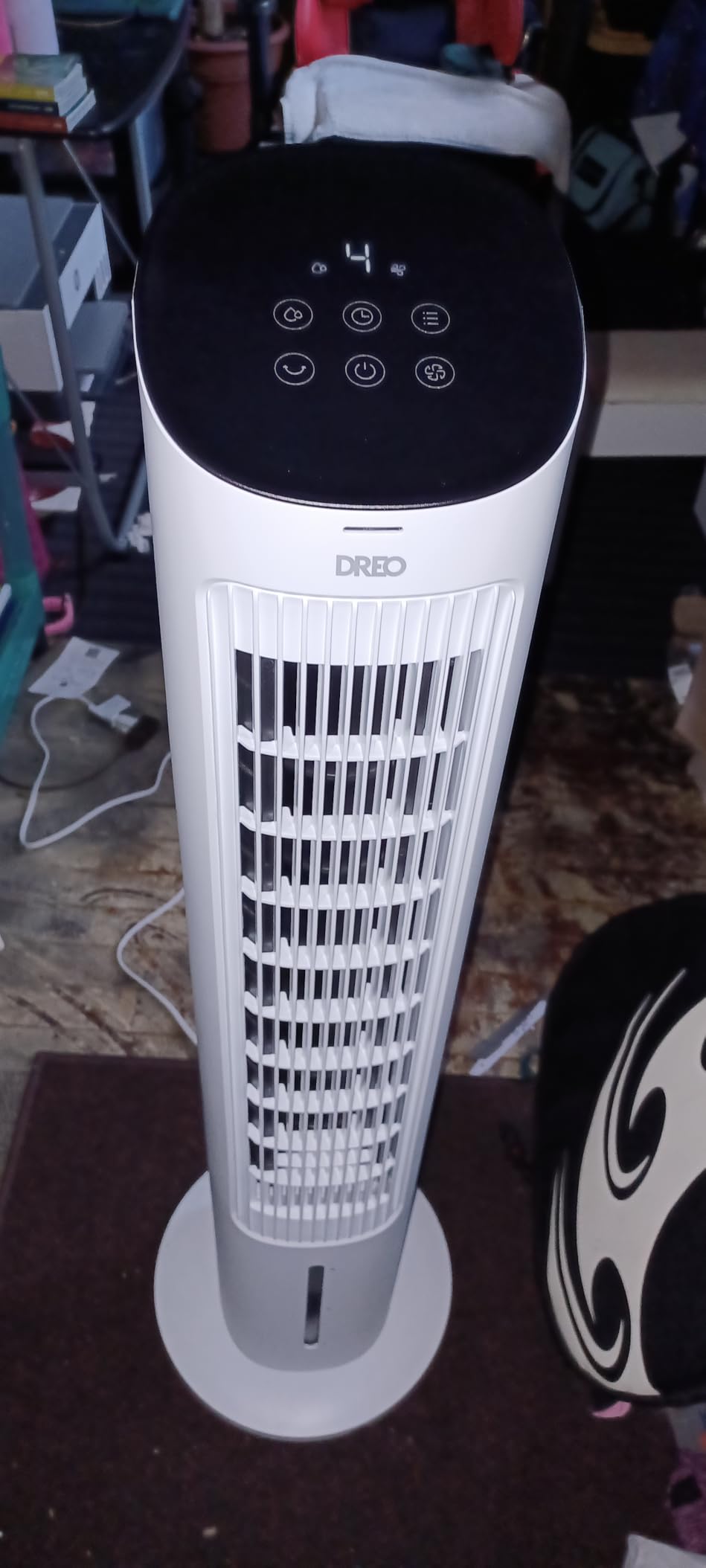
At 31 dB this is the one to buy if noise is the deciding factor. The cross-flow impeller is the reason: it moves a lot of air without the barrel-fan roar that dominates cheaper towers, which is why this model shows up in bedroom recommendations where its competitors do not.
It covers 300 square feet with 80-degree wide-angle oscillation and airflow up to 22 feet per second, which is plenty when you are sitting in the stream. The 13.2-pound body, digital display and remote make it a straightforward bedroom or office unit, and the removable water tank, cooling pad and rear grille mean cleaning does not require tools.
The 4-liter tank is the weak point. On a tower this tall, that is a small reservoir, and owners talk about refills rather than about runtime. If you want an unattended overnight unit, look at one with a gallon-scale tank instead.
Why the acoustics matter
Most of the complaint patterns in this category come down to one thing: people expect a 1000-plus CFM unit to drop the temperature of a whole room, and it does not. The DREO makes that trade explicit by concentrating on airflow quality rather than volume, and at 31 dB you can run it all night without thinking about it.
The oscillation angle is genuinely wide, so a single placement at the foot of a bed or desk still distributes across the space. For sleep, that is the feature that matters more than CFM.
Where it falls short
The rating spread tells the story: 12 percent one-star reviews cite leaking, rattling and disappointment against the 1199 CFM claim. The airflow figure is real, but it is a direct-breeze number, not a room-cooling number.
At 500 reviews and 4.0 stars it sits in the middle of the pack, not at the top. If you need to cool a space rather than a person, spend up and move to a gallon-tank unit with three-digit CFM.
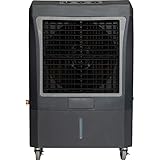
4. Hessaire MC37V – Highest Rated Cooler for Patios and Garages
MC37V MOBILE EVAPORATIVE COOLER
3100 CFM
950 sq ft
10.3 gal tank
40 lb
250 W
locking casters
Pros
- Highest owner rating in the group at 4.6
- 10.3 gal tank with continuous hose fill
- Stainless hardware stays rust free
- Four locking casters for garage and patio
Cons
- Loud at full speed
- Heavy at 40 pounds when full
- Needs daily draining to control mineral scale
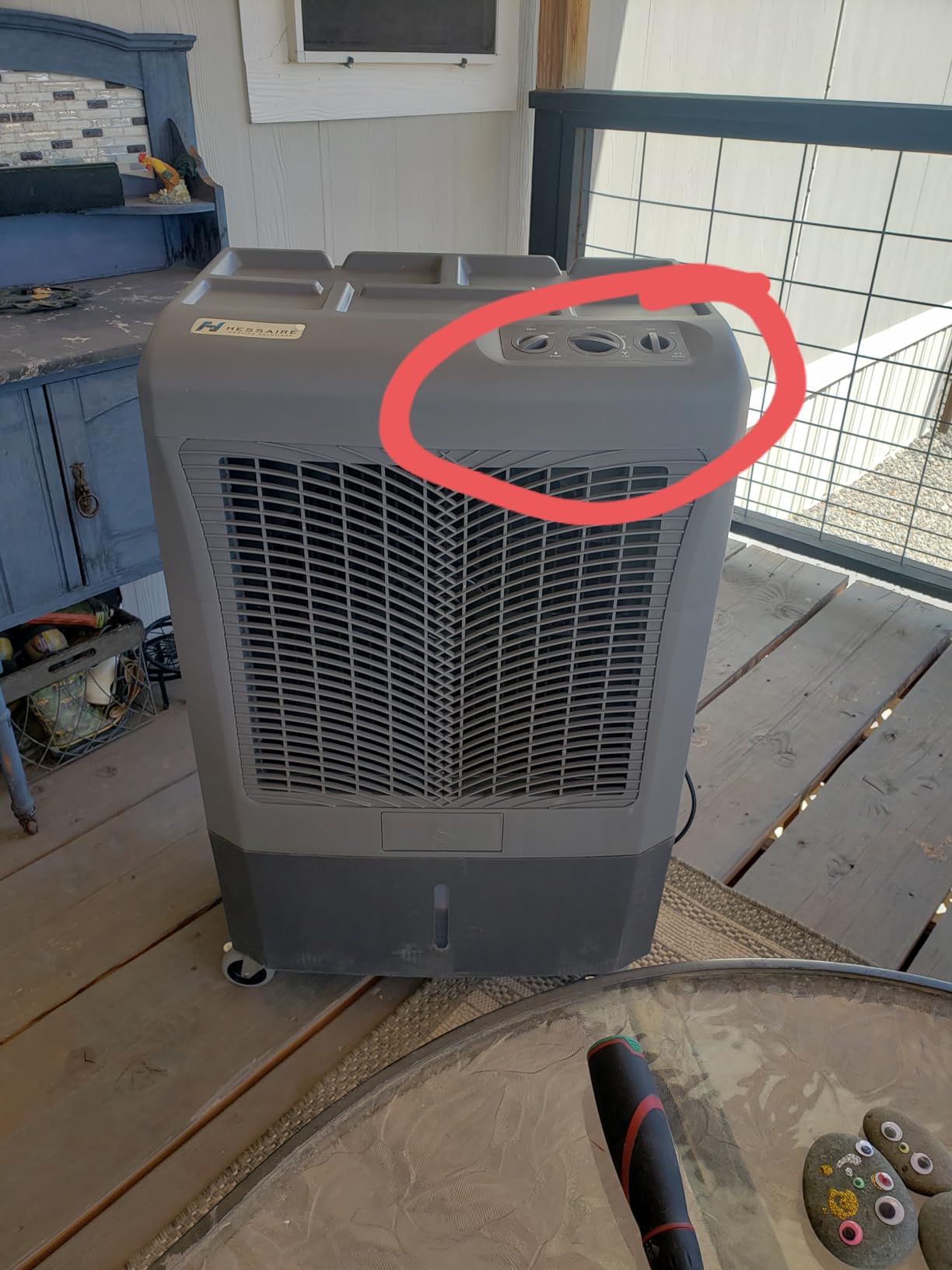
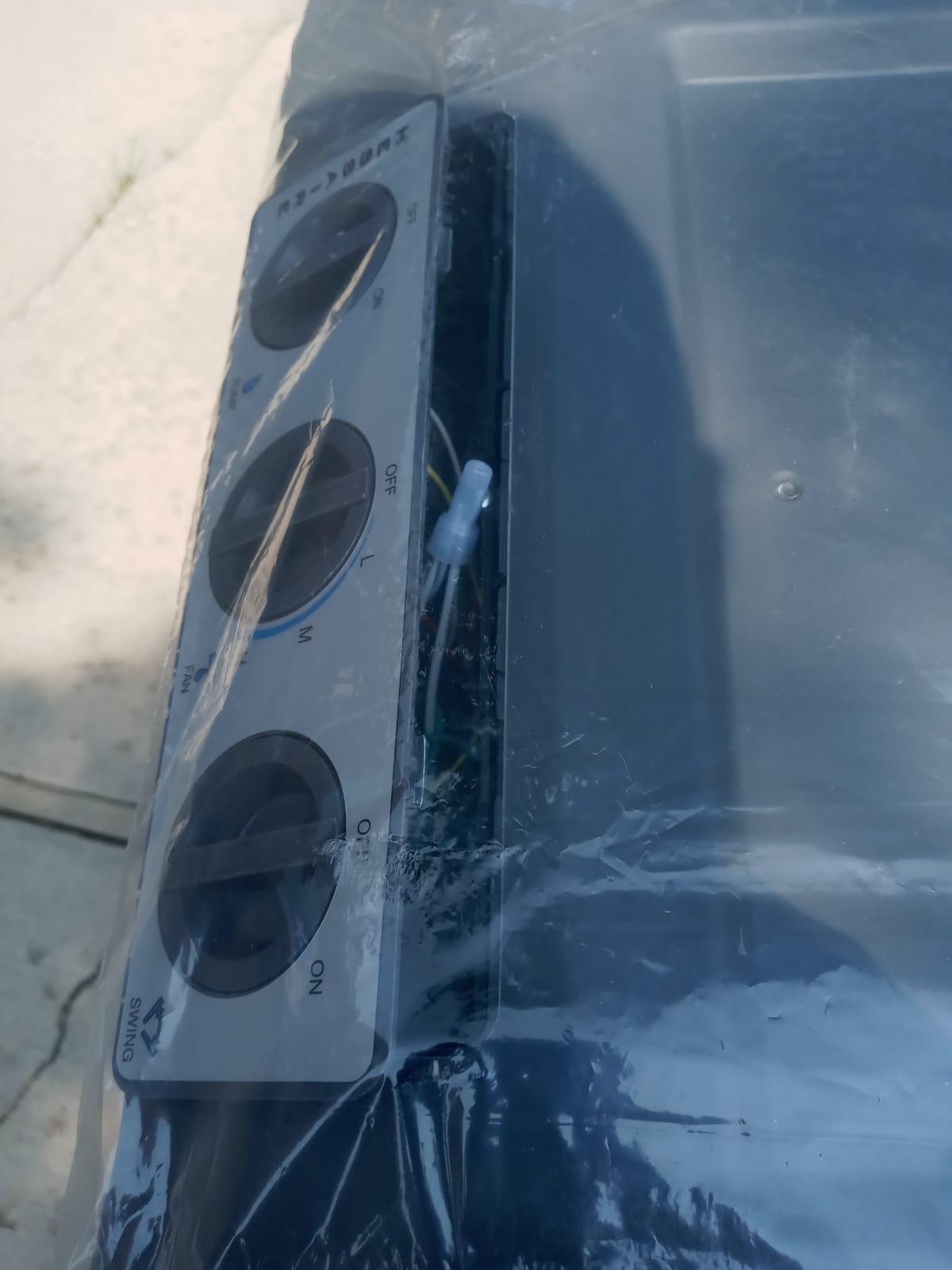
The MC37V shares its airflow and tank specification with the MC37M but is built as a mobile industrial chassis rather than a tower. Four heavy-duty locking casters, a 40-pound frame and three independent rotary controls for fan, pump and oscillation make it a machine you move once and leave where it belongs.
At 4.6 stars across 325 reviews with 82 percent five-star, this carries the strongest owner satisfaction in the roundup. The narrative is unusually consistent: buyers in Texas, Arizona and Dallas use it on decks, patios and in garages and report holding spaces 15 to 20 degrees below ambient.
Long-term owners single out the stainless steel fasteners staying rust free after two or more years of daily service. That is the kind of detail that only shows up in reviews written by people who have already solved their summer problem, and it is why the community consensus places Hessaire above the generic brands.
Why the metal chassis earns its place
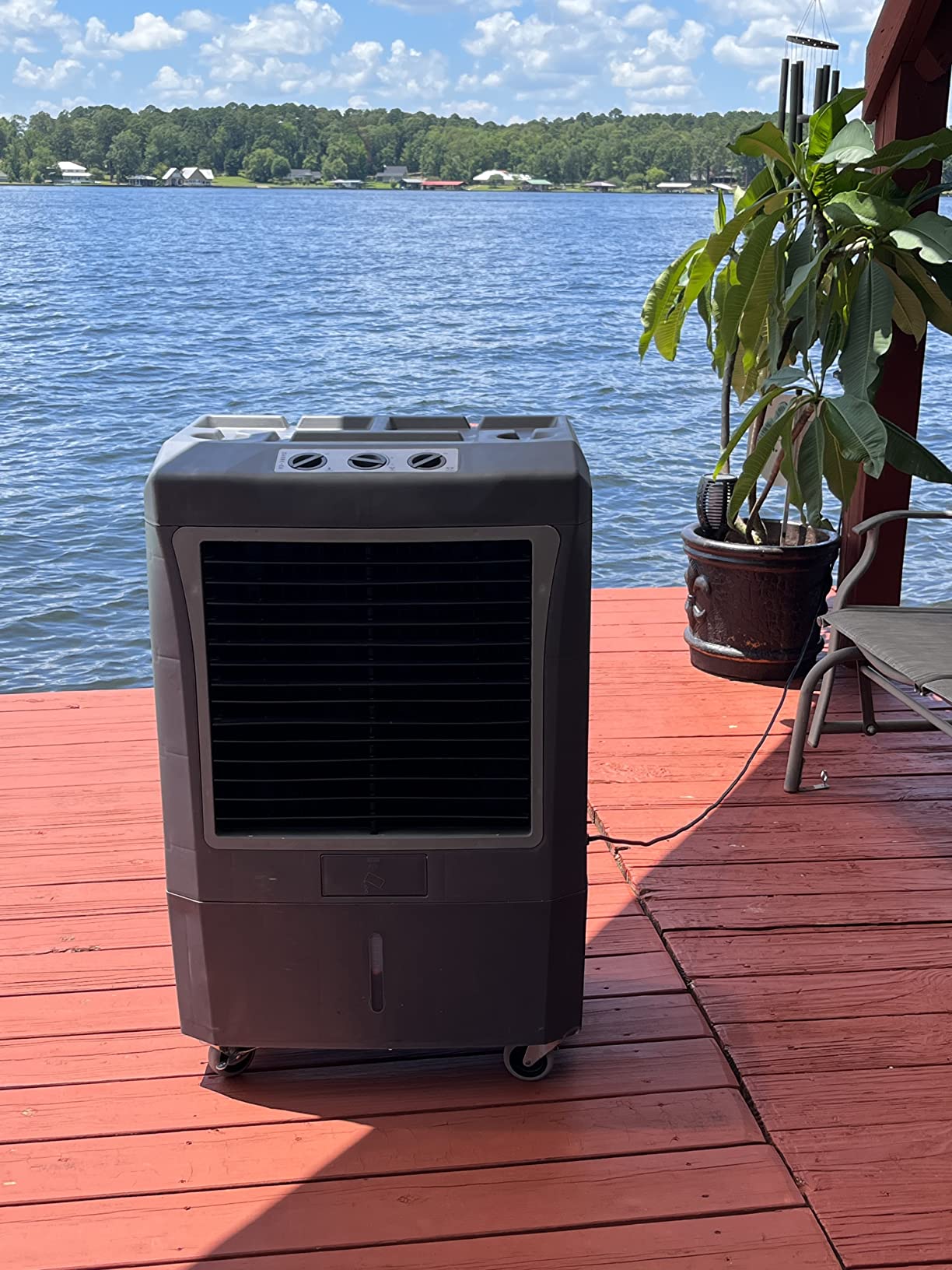
Three-sided rigid high-density pads give more evaporative surface than a single-sided pad, and the float adapter accepts a garden hose for continuous fill. The combination means a full day of patio or garage cooling without anyone carrying buckets.
Locking casters are more than a convenience. On an uneven patio or a garage ramp, a 40-pound unit that can roll is a unit you will actually use, and the independent pump control lets you saturate the pads before a party starts.
Where it falls short
Full speed is loud, though owners generally rate it quieter than barrel-fan designs. If the space is a bedroom rather than a garage, that noise is the dealbreaker.
The daily maintenance routine is real. Owners who skip draining the tank report mineral scale building on the media and inside the tank, and at 40 pounds moving it for a deep clean is a two-person job. Budget for the habit rather than the hardware.
5. Uthfy 40 Inch 4800 CFM – Best for Maximum Airflow
Uthfy 40″ 4800 CFM Swamp Cooler, Large Evaporative Cooler with 11 Gal Water Tank, 3 Speeds, 120° Oscillation, 3 Ice Packs, Metal Frame Portable Air Conditioners for Outdoor, Patio, Shop, Yard, Factory
4800 CFM
970 sq ft
11 gal tank
200 W
50 dB
120 deg swing
Pros
- Highest airflow figure in the roundup
- Largest tank at 11 gallons
- Metal frame and copper motor build
- Four casters with two lockable
Cons
- 200 W is higher than most units here
- 50 dB is audible in a quiet room
- Some reviews call cooling adequate not exceptional
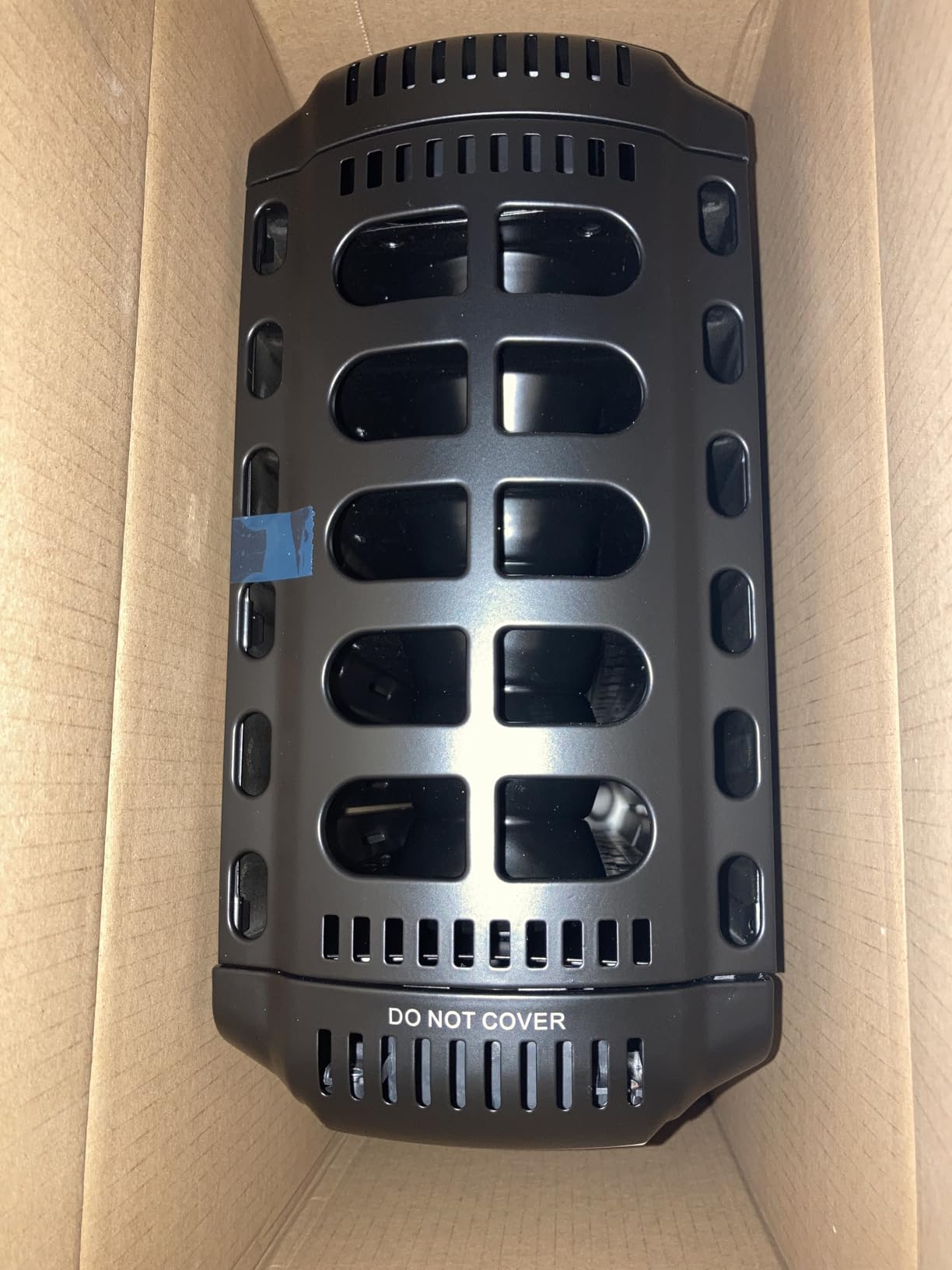
If your priority is moving the most air, this is the unit. Its 4800 CFM rating is the highest in the group, paired with the largest tank at 11 gallons and 120-degree automatic oscillation across a claimed 970 square feet.
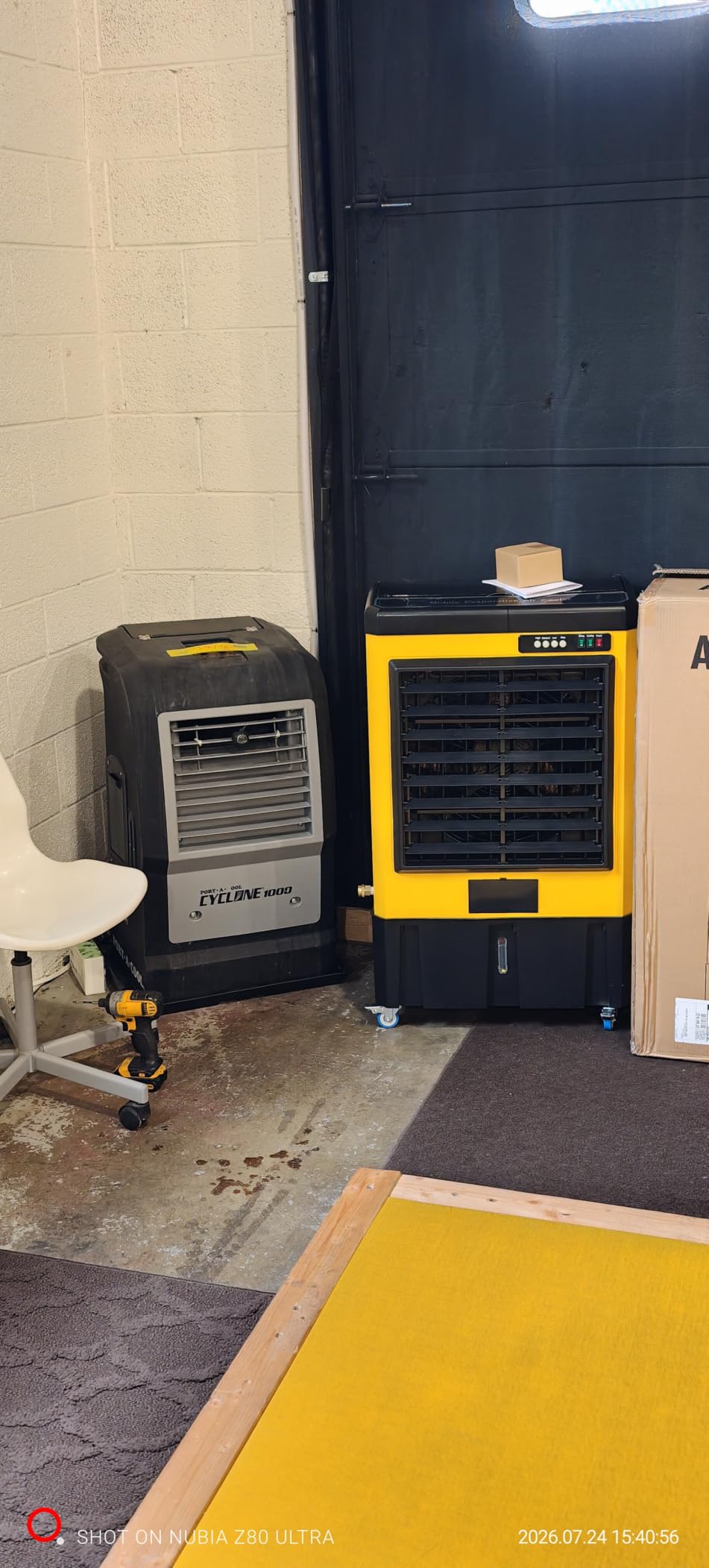
Triple air intake panels and a three-side cooling pad are the design details that back up the headline number. The tank supports manual top fill, continuous auto-refill and a built-in drain port, so you can plumb it once for a shop floor or a patio and stop thinking about it.
Three ice packs and a 4-in-1 composite ice curtain add a direct-breeze boost on top of the evaporative effect. That is a nice extra for a covered outdoor kitchen, though it is not doing the cooling work.
Where the extra volume actually pays off
Large open spaces with high ceilings are where volume matters. A workshop, a two-story open-plan room, a covered pool pavilion or a garage with a second workspace all benefit from air that reaches the far wall rather than pooling around the unit.
The metal frame and copper motor are a shop-floor specification, and that is exactly the context where the 50 dB noise stops being a problem. At 200 watts it draws more than the smaller units here, but on a 240-volt circuit that is a rounding error against compressor cooling.
Where it falls short
The 4.0 rating across 103 reviews is the least settled track record among the large-tank units, and 15 percent three-star reviews describe the cooling as adequate rather than exceptional. Output drops off in anything other than genuinely dry air, which is the category’s fundamental limit rather than a fault in this machine.
The yellow metal-frame styling is deliberately utilitarian and looks out of place in a living space. If the unit is going to sit in a sunroom, choose something that blends in.
6. PNTCK 3-in-1 Cooler – Lightest Unit for Bedrooms and Dorms
PNTCK Portable Air Conditioners, 3-IN-1 Swamp Cooler with 3 Fan Speeds, 4 Modes, 12H Timer, Remote, Ice Packs, 2.1Gal Water Tank, Evaporative Air Cooler for Bedroom Dorm Office Garage Home
2.1 gal tank
10 lb body
12-hour timer
80 deg louvers
3 speeds
Pros
- Assembly is four wheels and you are done
- Three speeds and four modes with 12-hour timer
- 10-pound body with handle and casters
- Child lock and adjustable blade safety
Cons
- Cooling fades once ice packs thaw
- Personal scale rather than room cooling
- Only 5 reviews so far
At 10 pounds this is the easiest unit here to move, and for a dorm room, a childrens bedroom or a small apartment that is a decisive advantage. Assembly is attaching four wheels, so you can have it running the same day it arrives.
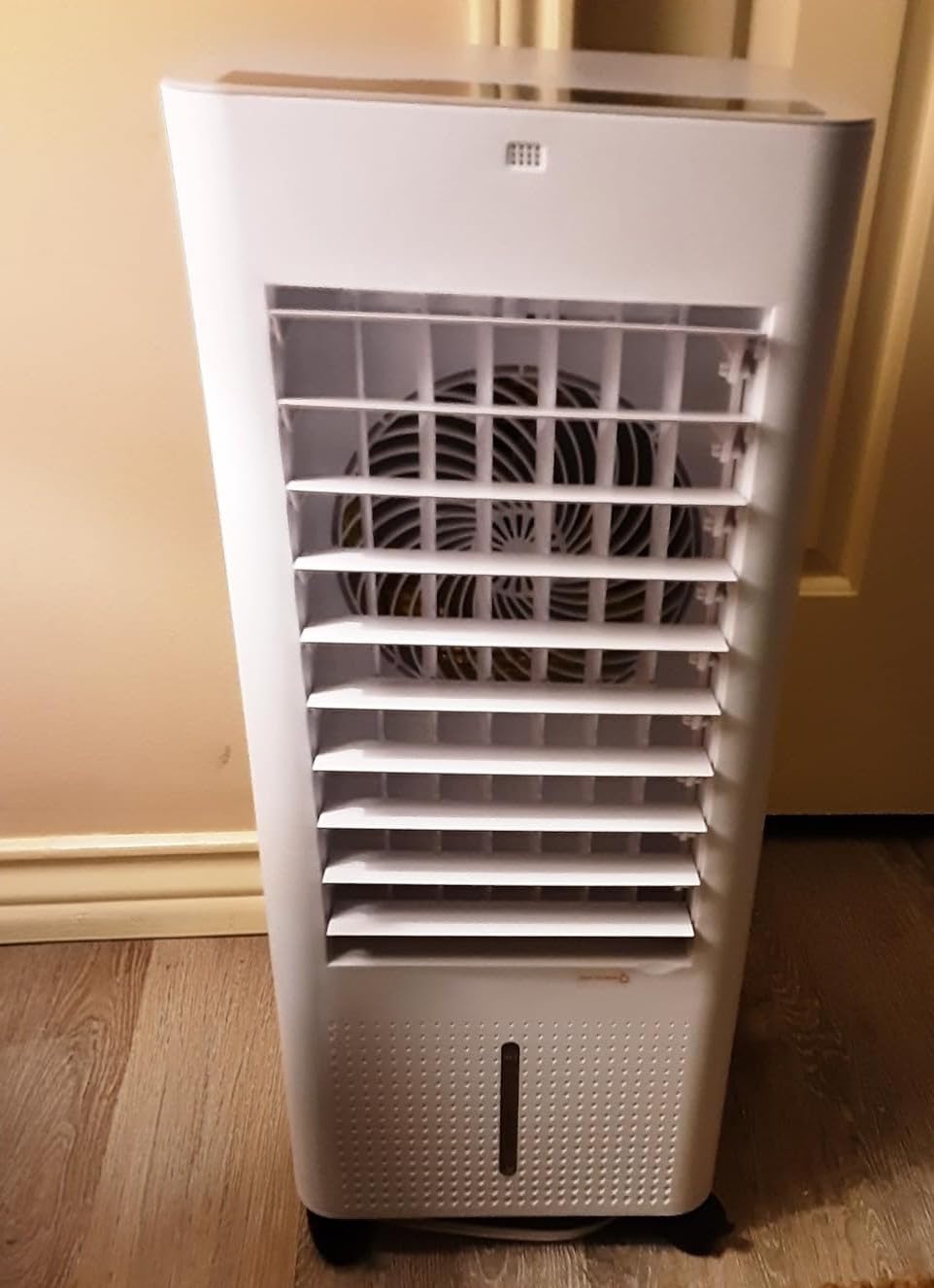
Three speeds across normal, nature, sleep and cool-air modes, a 12-hour programmable timer with auto shut-off, a remote with top touch buttons, a child lock and a float-ball water level indicator in the 2.1 gallon bottom tank. The louvers oscillate 80 degrees left and right without rotating the cabinet, which keeps the footprint narrow.
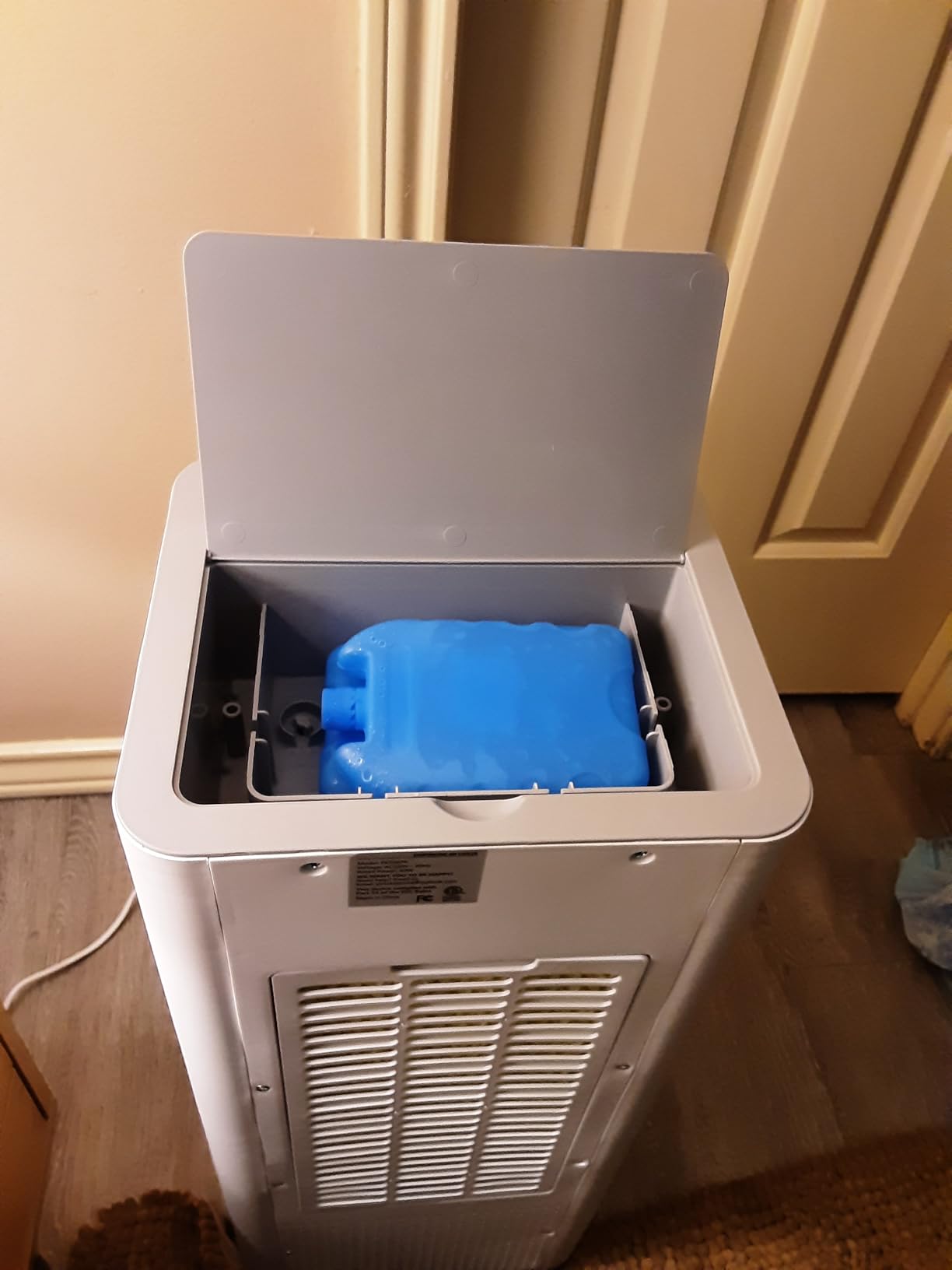
Two ice packs ship in the box. That is where the honest limitation sits: the cooling boost depends on frozen packs, so overnight use means keeping a second set in the freezer and swapping them.
Who this is built for
A 25-inch tower with a handle and four universal casters fits under a desk, beside a bed or in the corner of a home office. Buyers are clear-eyed that it is a personal cooler rather than a room air conditioner, and that framing is exactly what makes it affordable.
The 12-hour timer with auto shut-off is genuinely useful for sleep, since you can set it and stop thinking about it. The child lock and adjustable blade safety matter more in a family space than they would in a garage.
Where it falls short
A 4.7 average from five reviews is too thin a sample to treat as a reliability signal. Judge the purchase on the feature set and the price, not on the rating.
Buyers consistently note the water level indicator is hard to see without extra lighting, and that sustained cooling requires a supply of ice packs. If you want unattended all-day cooling, choose a gallon-tank evaporative unit instead.
7. OEMTOOLS 23968 – Best Built for Workshops and Garages
OEMTOOLS 23968 3-Speed Portable Swamp Cooler 3100 CFM 10.3-Gal. Water Tank
3100 CFM
950 sq ft
10 gal tank
68 dB
41.3 lb
45 in tall
Pros
- 45-inch tall with 3100 CFM over 950 sq ft
- High-density media with 80 percent more area
- UL GFCI plug and UV-resistant resin
- Built-in tool tray and casters
Cons
- 68 dB is the loudest rating in the roundup
- 41 pounds and 45 inches need two people to move
- Knob controls only with no remote
This is a garage appliance, not a room appliance, and the specification list makes that clear. A 45-inch tower at 41.3 pounds, 3100 CFM across 950 square feet, and a 1/5 horsepower three-speed motor driving a patented axial propeller with oscillating distribution.
The parts owners respond to are the work details: a built-in tool tray, casters, a UL GFCI plug and UV-resistant resin construction rated for the sun exposure a garage door actually delivers. The high-density media panels claim 80 percent more evaporation surface area than standard panels, and the three-sided design means the air moves through more wet media before it exits.
Why tradespeople buy this one
Buyers are typically tradespeople cooling a workshop or a two-car garage, and the combination of a 10.3 gallon reservoir and a 1/5 horsepower motor means a full day of work without a refill. The axial propeller keeps air distribution even and comparatively quiet for its output class.
A one-year limited warranty is standard for the category and worth factoring in if the unit will live in a space with dust and temperature swings.
Where it falls short
At 68 dB this is the loudest unit we tested data for, which rules out bedrooms and home offices entirely. That is an acceptable trade in a workshop where a compressor unit would be running anyway, and an unacceptable one anywhere you need to hear a conversation.
Controls are knobs only, with no remote and no digital interface, and a 69-review base is thin evidence for long-term reliability. Moving 45 inches of resin and steel is also a two-person job on stairs.
8. VCJ 1800 CFM – Best Tank-to-Size Balance for Bedrooms
VCJ 1800CFM Evaporative Air Cooler, 5.6 Gal 3 IN 1 Windowless Portable Swamp Cooler Air Conditioner,120° Oscillation, 3 Speeds, 12H Timer, 4 Ice Packs, Air Cooling Fan for Bedroom Room Office Garage
1800 CFM
5.6 gal tank
17 lb
150 W
1-12 hour timer
4 ice packs
Pros
- 5.6 gallon tank is large for the 1800 CFM class
- Four ice packs included in the box
- 120-degree oscillation from a 32-inch footprint
- 17 pounds with casters and a washable filter
Cons
- Only 29 reviews on a lightly proven listing
- 150 W is high for the airflow
- Extra mist and aroma functions add complexity
The VCJ is the one in this group where the tank is properly scaled to the airflow. A 5.6 gallon reservoir behind 1800 CFM of capacity means far fewer refills than the typical four-liter tower, and at 17 pounds with four universal casters it still moves between rooms without difficulty.
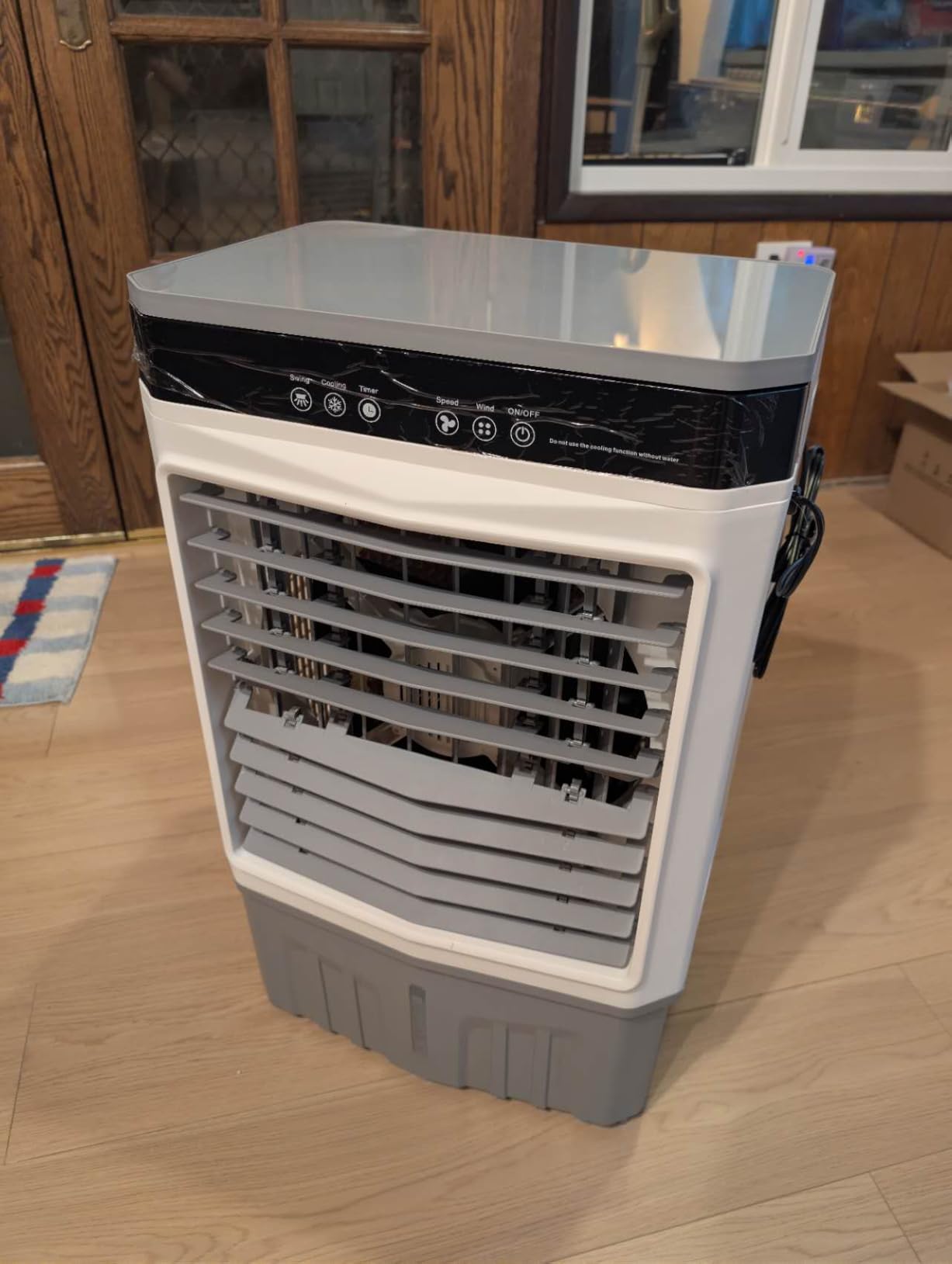
Three speeds, 120-degree wide-angle oscillation, a 1 to 12 hour timer on both the remote and the top panel, and four ice packs included. The removable washable filter and glass top cover are the sort of details that make routine cleaning bearable in a bedroom you actually live in.
It is also a genuine 3-in-1: fan, evaporative cooling, water mist and aroma diffusion, with no window kit and no exhaust hose required. Windowless operation is what makes it viable in a rental or a second bedroom with no exterior wall.
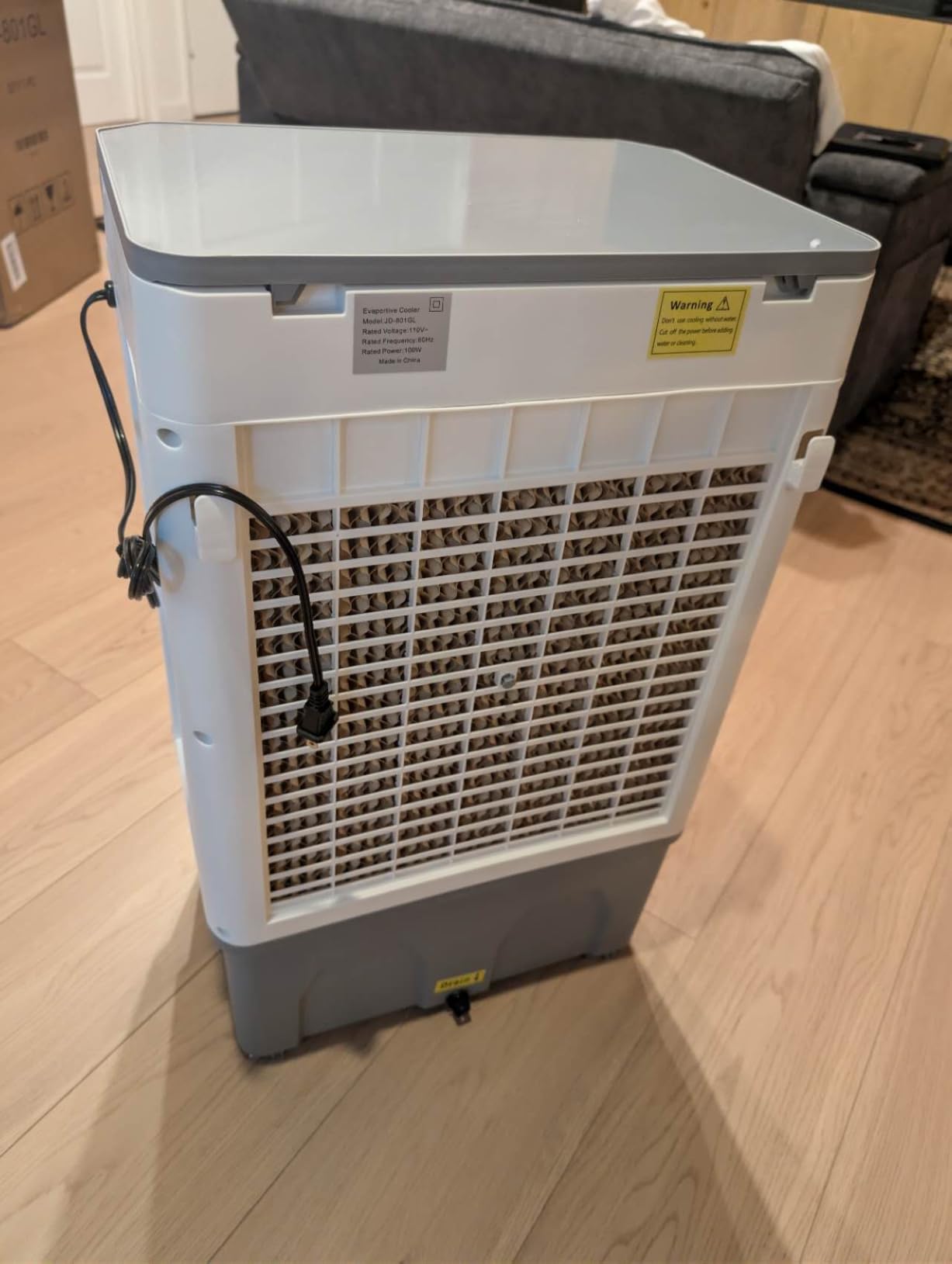
What the 5.6 gallon tank changes
Runtime is the difference between a unit you use and a unit you leave in the corner. With a tank in this range, a bedroom can be handled through a full night on one fill, which is the only realistic way to use a bedroom cooler.
Locking casters on two of the four wheels mean it can sit still in a carpeted room without creeping, and the washable filter helps with the dust that comes with a desert climate.
Where it falls short
Twenty-nine reviews and a low category rank point to an early-stage listing rather than a proven one, and 8 percent one-star reviews suggest early quality variance. Treat it as a reasonable-value experiment rather than a proven workhorse.
At 150 watts the draw is high relative to the 1800 CFM output, and the mist and aroma functions add buttons without adding independent cooling value. The eight percent one-star share is small, but it is not nothing.
9. DREO 43 Inch Tower – Best Smart-Connected Cooler
DREO Evaporative Air Swamp Cooler, 43″ Cooling Fans that Blow Cold Air, APP Control, 2025 Upgraded 80° Oscillating Floor Fan for Bedroom, 4 Speeds 4 Modes, Easy Cleaning, Ice Pack, White
6 L tank
25 ft/s airflow
85 deg swing
60 dB
app and voice control
Pros
- App plus remote and touch controls
- Works with Alexa and Google voice
- On-board temperature and humidity readings
- 25 ft/s airflow and 4 modes
Cons
- 60 dB is louder than the smaller DREO
- 6 L tank still needs regular refills
- Primarily a personal breeze device
This is the only unit here you can put on your phone network. The DREO app, plus Alexa and Google voice control, lets you check the room and change settings without walking to the unit, and the built-in temperature and humidity sensor is unusual in a category where almost nothing reports numbers back to you.
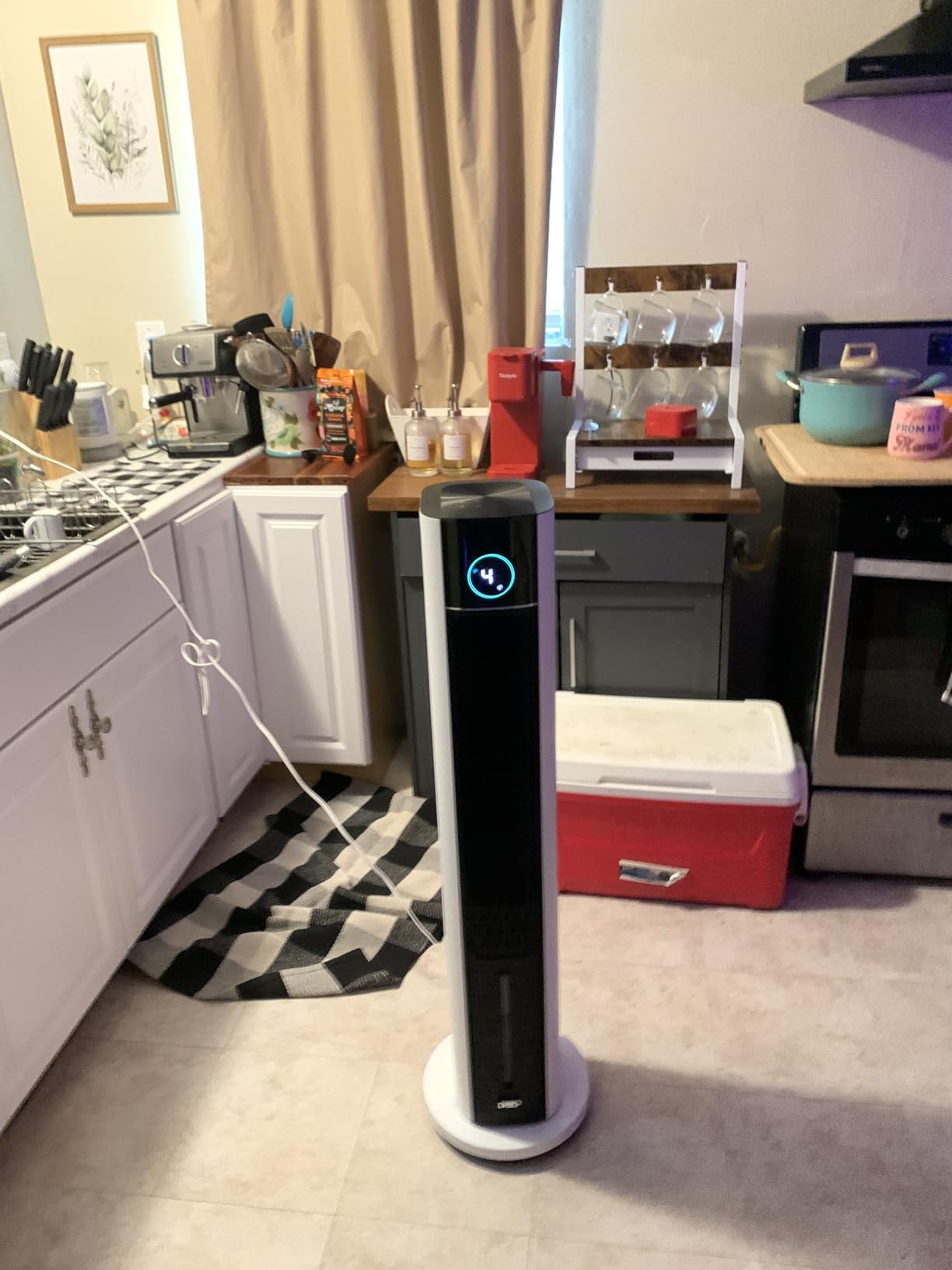
On the cooling side it is the newer upgraded version of the smaller DREO tower: wind speeds to 25 feet per second, a claimed 22 percent better evaporation rate, a 6-liter tank against 4 liters, and 85-degree oscillation with four speeds and four modes on a 12-hour timer. The IceWind system pairs dynamic air ducts with a 35-blade turbine and an optimized pad.
The tool-free cleaning design is a genuine improvement, and registration extends the warranty from 12 months to 30 months, which is a real advantage over the 1-year terms most of this category carries.
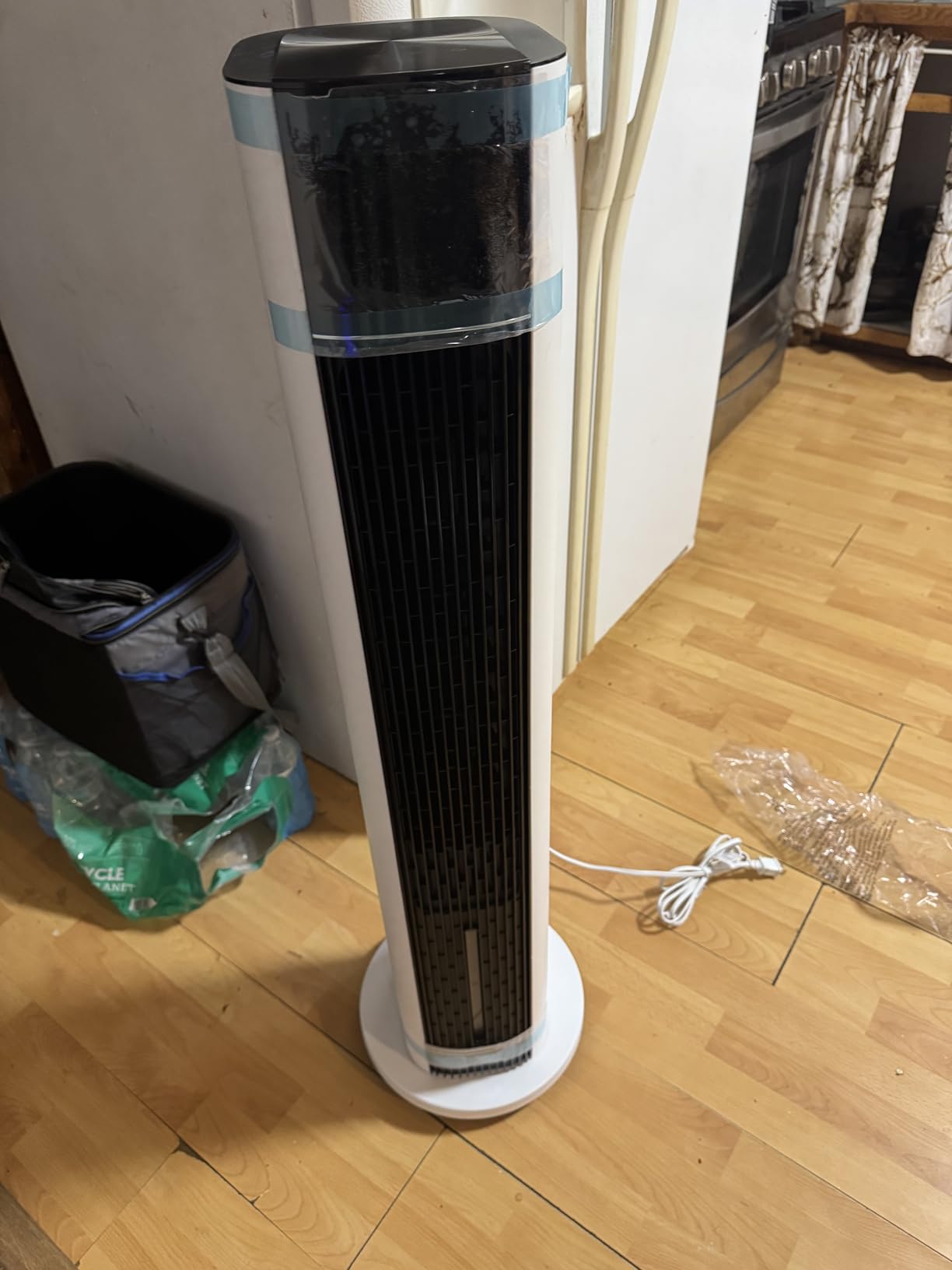
Why smart controls matter in a dry home
The humidity readout is the feature to pay attention to. Rather than guessing whether your indoor humidity has climbed past the point where evaporative cooling stops working, the app tells you, and that single number tells you when to open a window or run a dehumidifier instead.
That is the honest use case for connectivity here. Scheduling the fan around the hottest part of the afternoon from your phone is convenient, but the sensor is what actually improves the decision-making.
Where it falls short
At 60 dB it is meaningfully louder than the 40-inch DREO, so it is not the quiet-bedroom answer. And like its smaller sibling, it is a personal breeze device rather than a room-temperature machine.
A 10 percent one-star share reflects people who expected a larger machine. The 6-liter tank also still needs refilling for all-day use, so the app will not solve that.
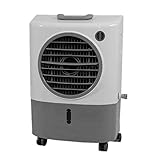
10. Hessaire MC18M – Best Value Cooler With the Most Owner Feedback
Portable Swamp Coolers – 1300 CFM MC18M Evaporative Air Cooler with 2-Speed Fan, 53.4 dB – 500 sq. ft. Coverage Evaporative Air Cooler Portable High Velocity Outdoor Cooling Fan by Hessaire – White
1300 CFM
500 sq ft
4.8 gal tank
85 W
53.4 dB
5 settings
Pros
- 4530 reviews make performance well documented
- Whole back panel devoted to the cooling pad
- Serviceable with pads pumps and blades available
- 85-watt draw and a garden-hose float valve
Cons
- Fixed tank takes several bucketfuls to fill
- Bulkier than most 1300 CFM units
- Water dripping is loud and there is no catch tray
With 4530 reviews this is the most documented evaporative cooler in the category, and that matters because the owner notes are unusually specific. Owners in Arizona, Utah, Idaho, Las Vegas and Alberta describe roughly a 10 to 15 degree drop at the outlet, with a room at 22 to 40 percent relative humidity dropping 4 to 6 degrees in an hour.
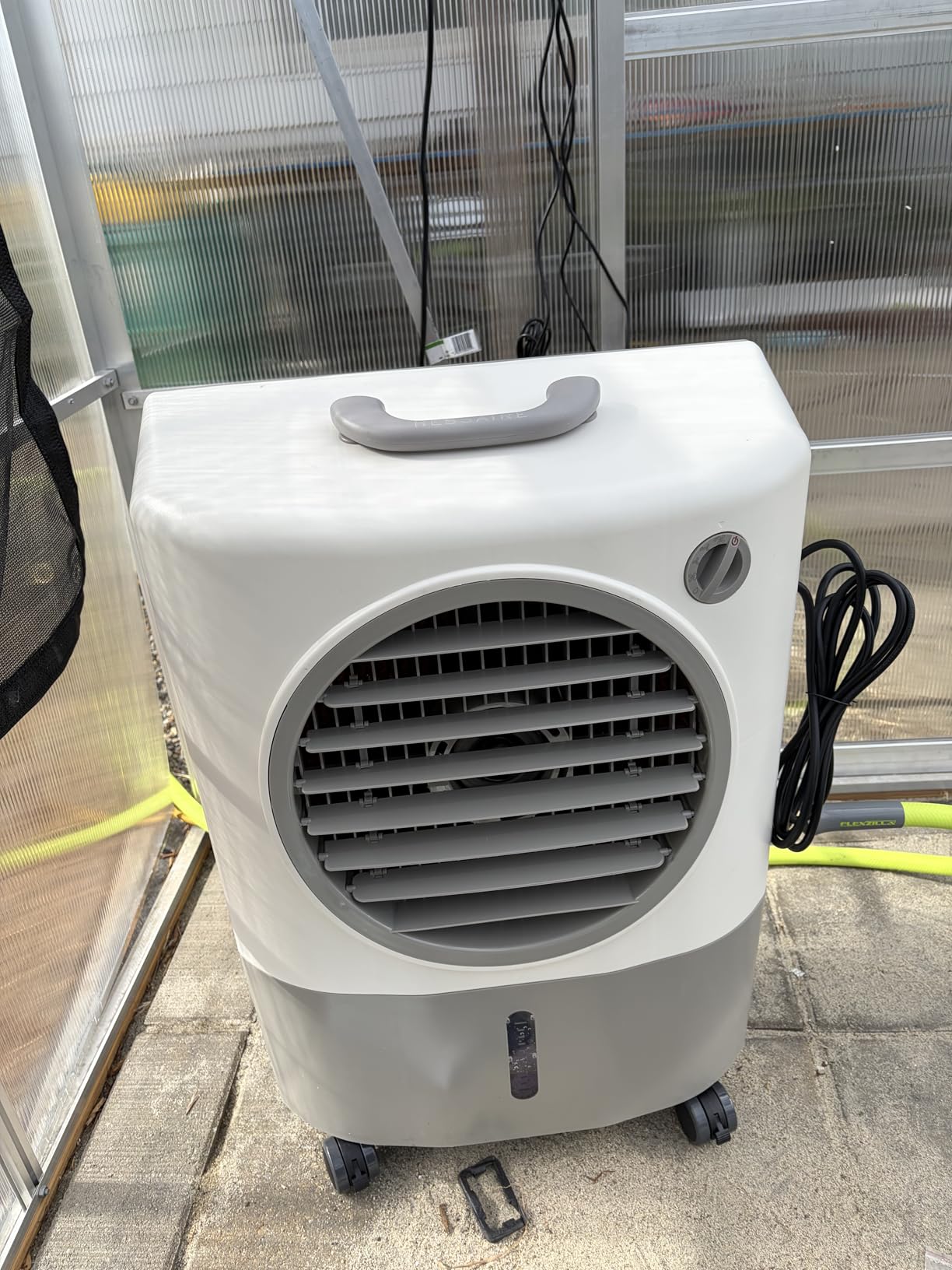
The engineering is the story. The entire back panel is devoted to hi-density XeL50 media, the pump keeps that large surface saturated, and the patented axial prop throws cool air considerably farther than a conventional barrel fan. Pads, pumps and fan blades are all readily available as replacement parts, so a tired unit is repairable instead of disposable.
At 85 watts with five settings, including high and low fan with water, high and low fan only, and a pump-only mode for soaking the pads, it draws a fraction of the power of the gallon-tank units here. A garden-hose float valve handles continuous fill.
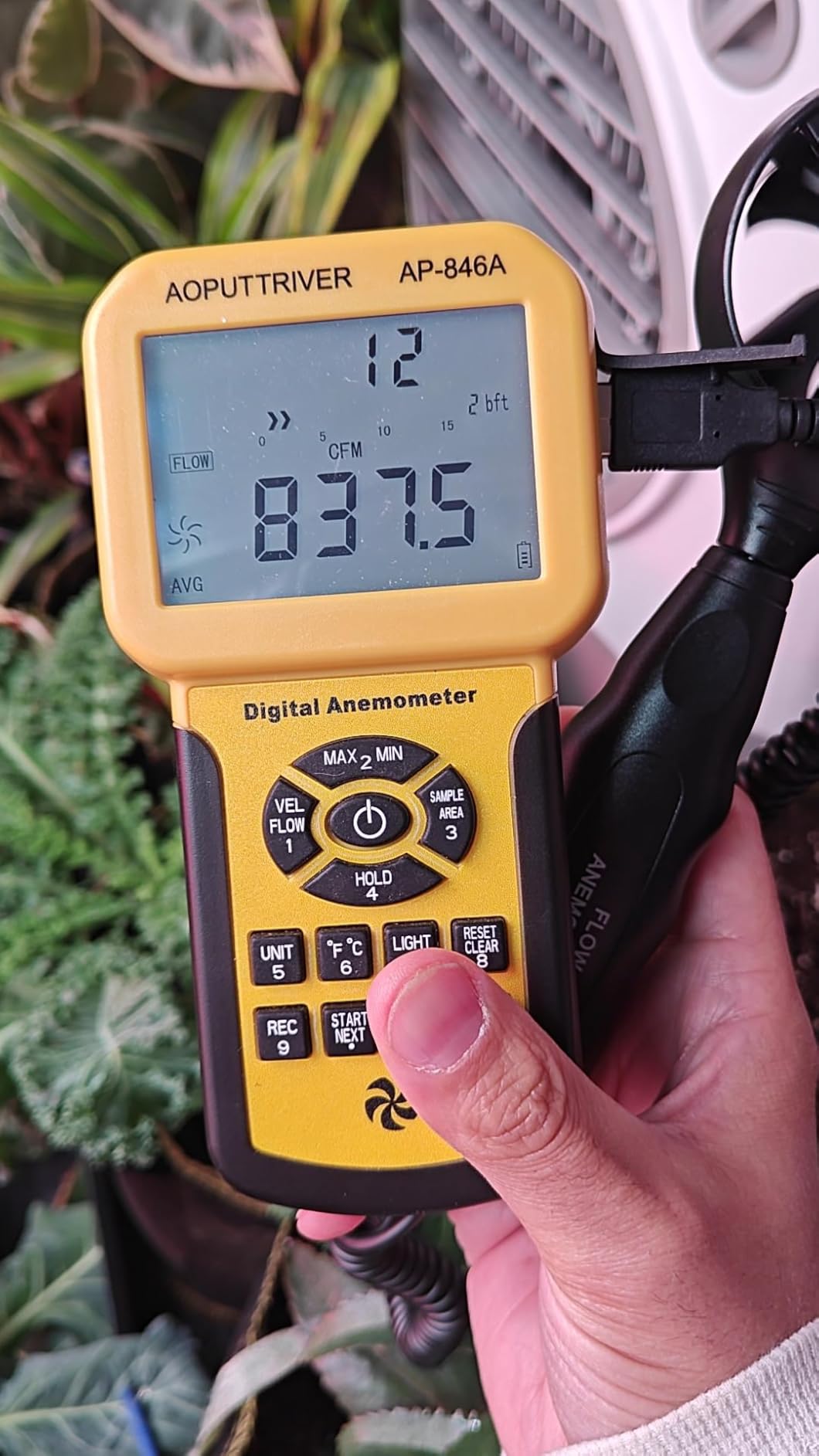
Read the measurement caveat
One owner with an anemometer measured roughly 830 CFM against the advertised 1300. Treat every CFM figure in this category as a marketing number rather than a laboratory result, which is why we lean on owner temperature reports instead.
The same reviews make the humidity limit concrete. Buyers in humid locations report the unit failing to cool at all, and effectiveness collapses once indoor humidity passes roughly 50 percent. If your summer readings sit there, this machine will disappoint you.
Where it falls short
The fixed, non-removable tank takes three or four bucketfuls to fill and the fill spout spills easily. Water dripping is loud enough to be noticed at night and there is no catch tray, which is the most common bedroom complaint in the reviews.
There is also no remote, no timer and no pump-dry auto shut-off, so the last job before storage is running it 30 minutes to dry the pads by hand. For a garage or a covered patio it is excellent value; for a bedroom, the noise and the bucket work are real costs.
11. Honeywell CL201AEW – Best for Adding Humidity in Arid Winters
Honeywell 745 CFM* Indoor Portable Evaporative Cooler with Remote Control – CL201AEW
745 CFM rated
280 sq ft
5.3 gal tank
288 W
64 dB
remote
Pros
- Recognizable brand with full remote and 8-hour timer
- 5.3 gallon tank runs about 8 hours
- Low water alarm with pump protection
- Activated carbon dust filter and washable honeycomb media
Cons
- Only 470 CFM of real airflow in the spec sheet
- 64 dB is loud and adds humidity fast
- Printed fill instructions are described as backwards
The Honeywell is the odd one out here, and its most valuable feature is not cooling. The adjustable humidification dial, the top ice compartment and the activated carbon filter make it a legitimate way to add moisture to bone-dry winter air in the Southwest. Multiple owners describe it as a life-saver when central air fails and the room simply will not get warm.
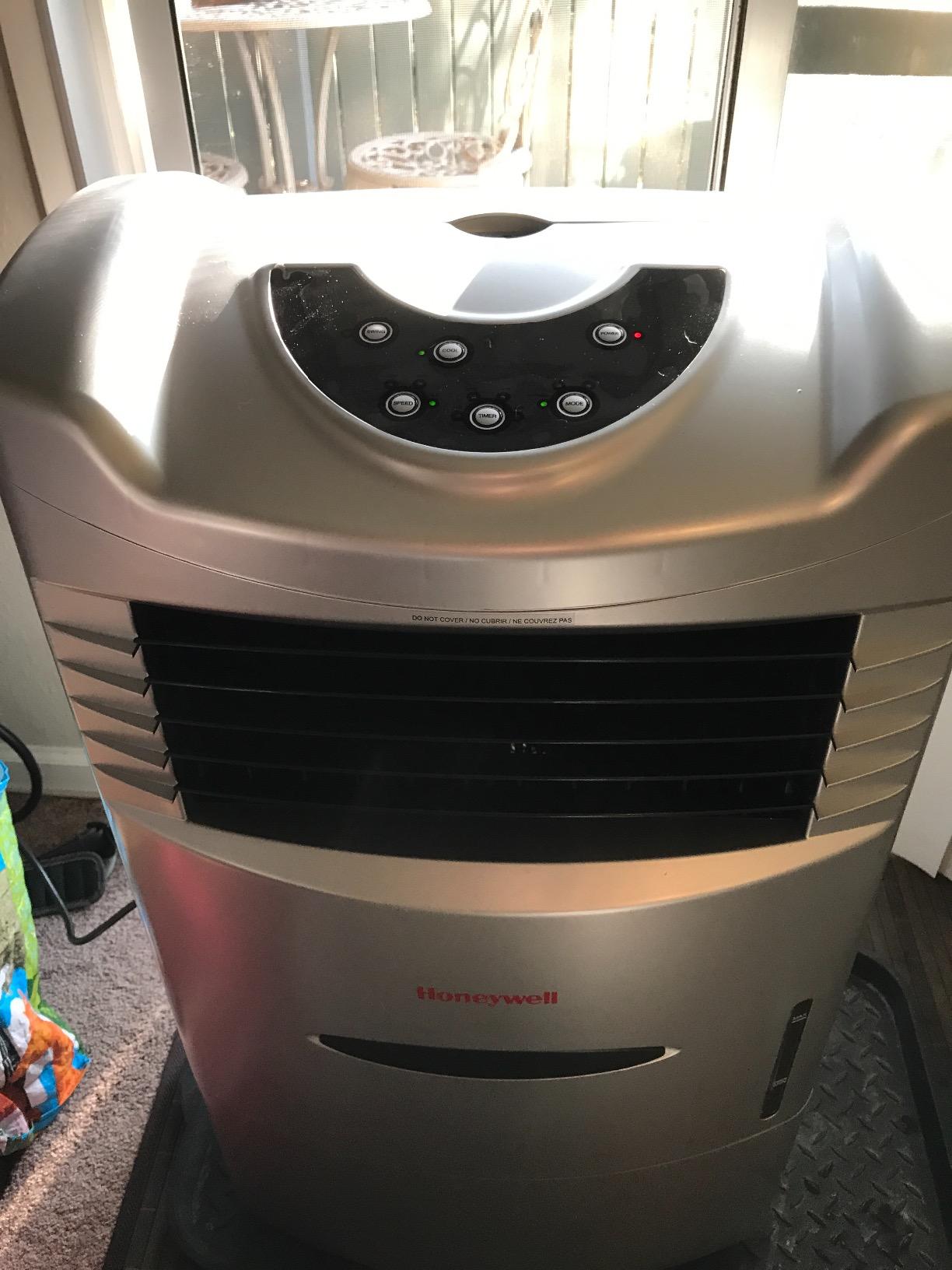
It is also specified for the right climate, with the manufacturer designating it for hot and dry air below 60 percent relative humidity. The 5.3 gallon tank runs roughly eight hours at full speed on one fill, the media is removable, washable honeycomb that is cheap to cut to fit, and there is a low water alarm with pump protection and an 8-hour shut-off timer.
Its weakness is that the real airflow is 470 CFM, the lowest in the roundup, against a marketed 745 CFM. The 288-watt draw is the highest here as well, which is an unusual combination for a unit with that little moving air.
Where the winter case is genuinely strong
Humidity in arid climates frequently sits below 20 percent, and that range makes people uncomfortable long before it makes them hot. The humidification dial lets you add moisture without running the pump continuously, and owners in Phoenix, Utah, Southern Alberta and Los Angeles rate that feature highly.
The carbon filter and washable honeycomb media also handle the dust that comes with desert air better than most units, and the remote with an LED panel is more control than many competitors offer.
Where it falls short
This carries the most quality-control risk in the field. With 17 percent one-star reviews, owners report failed motors, water distribution over the media degrading after a few months, and one unit that arrived used and mouldy with a rusted screw.
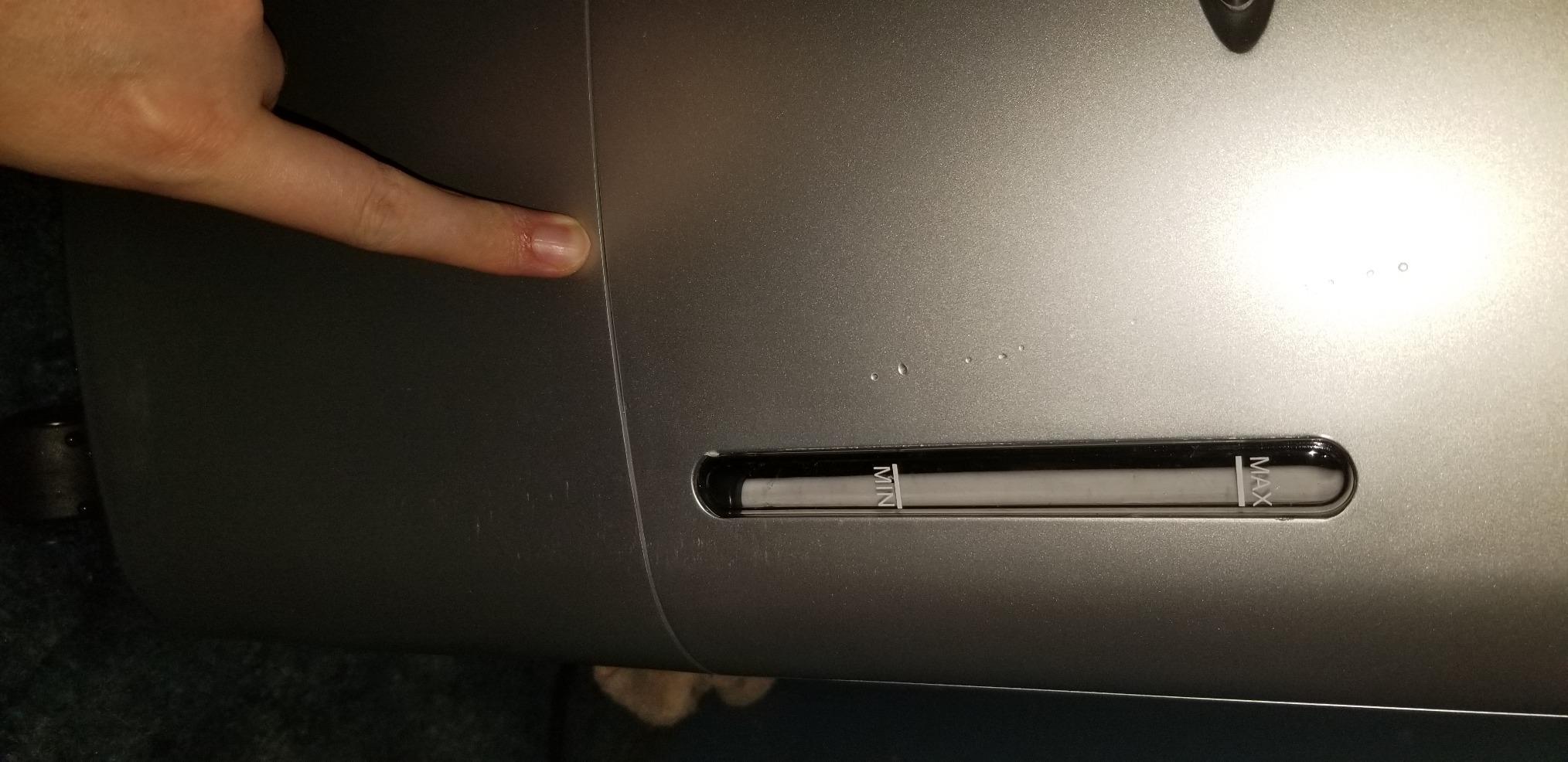
Most damaging is a design and documentation problem: published instructions that describe the minimum and maximum water markers backwards, which causes leaking and returns. The fill slot is also small and awkward, and the low-water sensor can fail to register a fill. If you buy it, verify the water line yourself before first use.
12. SereneLife SLACLW4 – Budget Pick for a First-Time Buyer
SereneLife Portable Evaporative Air Cooler with 4L Detachable Water Tank, 1800 CFM Evaporative Cooler with Remote & Ice Packs, Indoor Outdoor Air Cooler Portable for Room Use, (White & Gray)
1800 CFM
700 sq ft
4 L detachable tank
80 W
65 dB
11 lb
Pros
- Detachable 4 liter tank is uncommon at this tier
- 1800 CFM on only 80 watts
- Water shortage alarm with pump protection
- Four ice packs and a remote included
Cons
- Lowest rating in the field at 3.6 stars
- 65 dB is among the loudest here
- 1 to 7 hour timer is short
- 17 percent of reviews report failures or leaks
The SereneLife is the cheapest way to find out whether evaporative cooling suits your space, and on paper the specification is competitive. 1800 CFM rated for 700 square feet at 80 watts, with a detachable 4-liter tank that is genuinely unusual at this level, four ice packs, a remote and a water shortage alarm with pump protection.
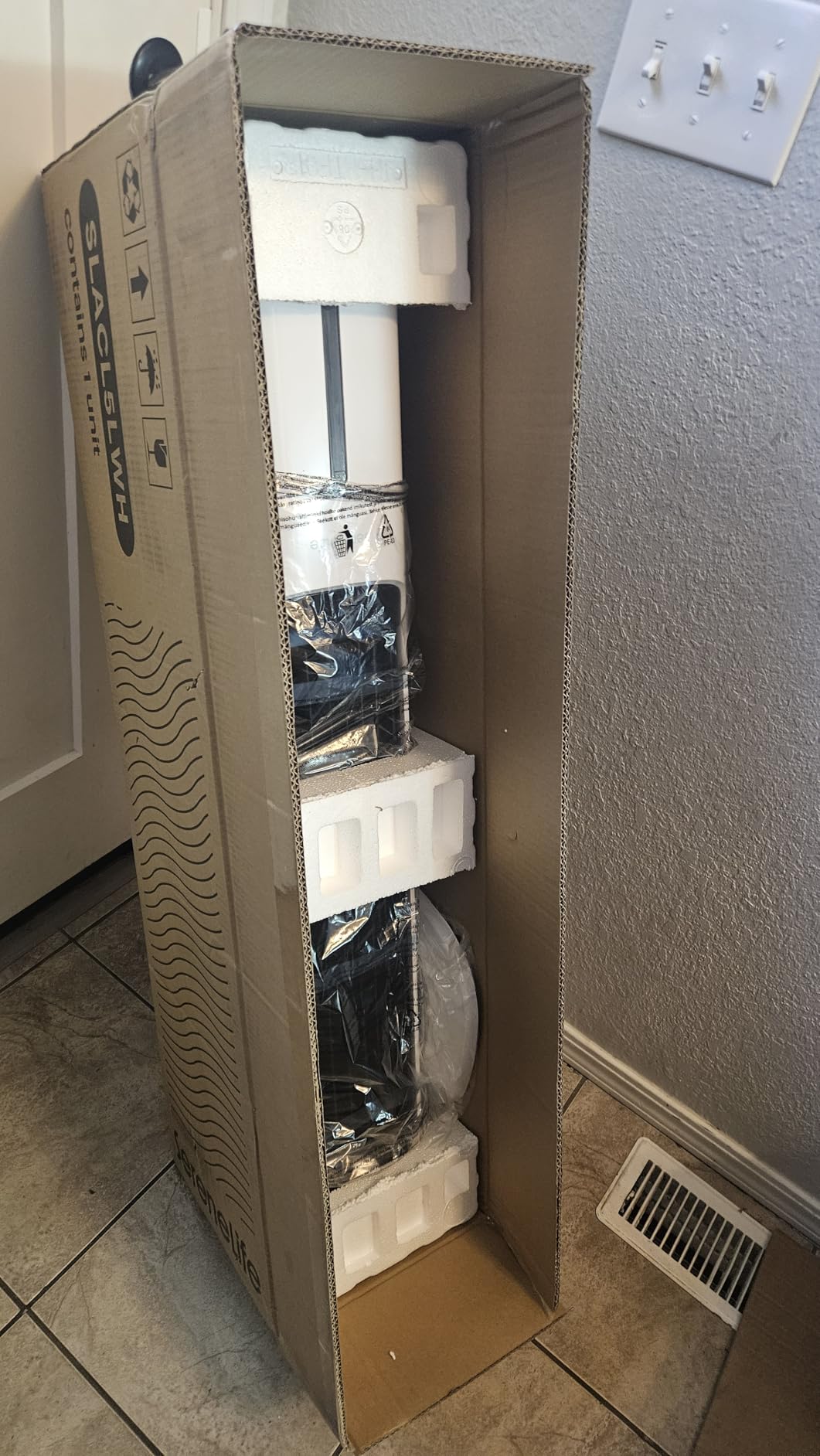
The detachable tank is the part worth caring about. Being able to lift it out, fill it at a sink and carry it back means you are not wrestling with a fixed reservoir, which is the single most common complaint aimed at cheaper coolers.
The problem is the review distribution. At 3.6 stars it is the lowest-rated entry here, with 17 percent one-star and 15 percent two-star reviews against 49 percent five-star. That 32 percent low-rating share centres on a 65 dB noise floor, a tank that needs refilling, and units that fail, leak or stop working.
When the trade makes sense
If you live somewhere genuinely dry, you want to test the category before committing, and you will not use it overnight, the efficiency is real: 1800 CFM on 80 watts is hard to match. The 11-pound ABS body and smooth casters make it easy to move between a bedroom and an office.
The water shortage alarm also protects the pump, which is the failure mode that most often kills units left running dry.
Where it falls short
At 65 dB it is one of the loudest units in the roundup, which undercuts the airflow claim in a quiet room. The 1 to 7 hour timer is also shorter than the 8 to 12 hour timers competitors carry, which limits overnight use.
A 4-liter tank behind a 700 square foot coverage claim is a mismatch, and 17 percent of reviews report units that fail or leak. If you want one purchase to last several seasons, the higher-rated units above are the safer bet.
How to Size a Swamp Cooler for Your Space
Start with square footage, then correct it. The common rule of thumb is that a portable evaporative unit with three-digit airflow handles a room of roughly 300 to 400 square feet, and the 950 square feet figures on the 3100 CFM machines assume open space rather than a furnished bedroom with a ceiling. Measure the floor, then subtract what you do not need cooled, such as a hallway or a closet.
For a more defensible number, work in cubic feet and air changes per hour. Multiply the room’s floor area by its ceiling height to get cubic feet, then multiply by the number of air changes you want per hour, typically 4 to 6 for a living space, and divide by 60 to convert to CFM. A 12 by 12 foot room with an 8 foot ceiling is 1152 cubic feet, and four air changes per hour works out to roughly 77 CFM, which tells you immediately that the 1199 and 3100 CFM numbers in this roundup are delivering far more than a minimum and that a 100 CFM unit is not far off either.
Adjust upward for the room rather than trusting the listing. High ceilings, sun-exposed windows, west-facing walls, a lot of glass, a workshop with a hot process running or a room full of electronics all add heat load. Adding 15 to 20 percent is conservative, and it is why the manufacturer coverage numbers on these units feel optimistic.
Adjust downward for the type of cooling you want. A direct breeze across a desk needs a fraction of the airflow a room-temperature drop requires. This is the mistake the forums keep flagging: people buy a 1300 CFM unit expecting it to chill a bedroom, then blame the machine when it only moves air.
Finally, take measured airflow seriously. The 4530-review Hessaire MC18M listing includes an owner who measured roughly 830 CFM with an anemometer against a claimed 1300. Manufacturer airflow is a free-air specification measured at the outlet, not delivered airflow across a room, so treat the numbers as a ranking rather than a promise.
Swamp Cooler or Portable AC: Which One Fits Your Situation
The decision comes down to four variables: humidity, the space, your power budget and whether you can vent. Humidity is not negotiable. Below roughly 50 to 60 percent relative humidity an evaporative cooler wins comfortably. Above it, a compressor unit is the only category that will actually dehumidify, and no evaporative design changes that.
For a garage, workshop, covered patio, sunroom or an indoor space you only need to be 10 degrees cooler, an evaporative cooler is usually right. It draws between 45 and 288 watts in this roundup, it does not recirculate stale air the way a portable AC does, and the running cost over a season is a fraction of compressor cooling.
For a bedroom you want genuinely cold, where windows are closed at night and the outdoor humidity is moderate, a portable air conditioner is the honest answer. The trade is power draw and a hot exhaust hose, and the benefit is that it dehumidifies while it cools. Related reading on moving air through a home in extreme heat is in our attic fan guide for hot climates.
One more variable decides it for many households: ventilation. An evaporative cooler needs an exit path for the air it moves, which means a cracked window or an open door. If the space is sealed, you are humidifying a room and calling it cooling.
A practical middle path is to use both in sequence rather than choosing one for the whole season. Run the evaporative cooler for the dry spring and early summer mornings, and switch to a portable AC for the humid late-summer afternoons when the outdoor dew point makes evaporative cooling pointless.
Water, Hard Water and Winterizing Your Cooler
Water use is the most common surprise for first-time owners, and it is the number most people underestimate. A large 10 to 11 gallon tank running in a hot dry climate can evaporate through in a working day, which is where the seven-plus gallons per day figure comes from in well water discussions on the home improvement boards. Budget for daily refills or plumb a continuous hose line.
Well water and hard water are a separate problem from volume. Hard water deposits scale on cooling pads and inside pumps, and owners report pads and pumps failing within a single season when they run untreated well water. If you are on a well, check your hardness first, use the continuous fill adapter so you are not constantly topping up, and expect to descale the media on a schedule rather than when something breaks.
Dust is the other dry-climate specific. A dusty desert pad loads up with particulates, airflow drops and the unit works harder for less cooling. Check the removable pad and grille on a monthly basis during heavy use, and note that most units here are designed for tool-free removal precisely so this is not a chore.
Mildew is the risk people in dry climates still hit. A wet pad left saturated with no airflow through it grows growth, which is why draining and drying the unit between uses matters even when the air is bone dry. If you are not using it for a week, empty the tank and run the fan without water.
Winterization is a five-step process and it prevents most of the damage people report. First, unplug the unit and drain the tank completely. Second, run the fan on high with no water for around 30 minutes to dry the pads and pump. Third, disconnect any garden hose or fill adapter so no trapped water remains. Fourth, brush off debris and wipe the housing down. Fifth, cover the unit and store it indoors, because the pump and motor are the parts that a hard freeze destroys.
If you are moving from carpet cleaning to a shop floor this year, our wet and dry vacuum guide covers the other half of a dry-climate workshop setup.
Frequently Asked Questions
Do swamp coolers work in 100 degree weather?
They do, and dry climates are exactly where they perform best. Owners in Arizona, Las Vegas, Utah and Southern Alberta report drops of 10 to 20 degrees at the outlet and 4 to 6 degrees across a room in an hour, even in extreme heat. The limit is humidity, not temperature. Once indoor humidity approaches outdoor humidity, which happens faster in very hot weather, the cooling effect shrinks toward nothing.
Is there a difference between a swamp cooler and an evaporative cooler?
No, the terms are interchangeable. A swamp cooler, evaporative cooler and evaporative air conditioner all describe the same design: a fan, a water pump and wet absorbent media that cool air by evaporation. The word air conditioner in some product titles is misleading, because there is no compressor and no refrigerant in any of these units.
At what humidity is a swamp cooler ineffective?
Around 50 to 60 percent relative humidity. Most manufacturers in this category specify dry climates, and the Honeywell CL201AEW states it directly as below 60 percent relative humidity. Evaporation cannot cool air below the wet-bulb reading, so as indoor humidity rises toward outdoor humidity the two readings converge and the cooling effect disappears. Above that threshold an evaporative cooler mostly adds moisture to the room.
Is it cheaper to run a swamp cooler or air conditioning?
Considerably cheaper in a dry climate. The units in this roundup draw between 45 and 288 watts, while portable compressor air conditioners typically draw several times that. The Hessaire MC18M moves 1300 CFM on 85 watts, so a full night of bedroom cooling stays well under a tenth of a kilowatt hour, and over a full desert summer that difference shows up clearly on a utility bill. The advantage disappears in humid weather, where the compressor unit is the only thing that actually cools and dehumidifies.
How much water does an evaporative cooler use per day?
A large tank in hot, dry conditions can evaporate through in a working day, and well water users discuss figures above seven gallons daily. Smaller units with four to six liter tanks need refilling every few hours. If daily refilling is inconvenient, choose a continuous fill adapter or plumb a garden hose, and expect to descale more often if your water is hard.
The Verdict: Which Swamp Cooler to Buy in 2026
The Hessaire MC37M remains our pick for the best swamp coolers for dry climates in 2026. It pairs 3100 CFM with a 10.3 gallon tank, a garden hose adapter and an 8-hour timer at 276 watts, and owners in genuinely dry states back the results up with 10 to 20 degree temperature reports.
Buy the Hessaire MC37V instead if you want the highest owner satisfaction in the group and a locking caster chassis you can roll from the garage to the patio. Buy the DREO 40-inch tower if noise is what is keeping you from sleeping with a fan running, and the DREO 43-inch tower if you want humidity readings on your phone.
And buy the Hessaire MC18M if your space is 500 square feet or smaller and you want the lowest running cost with serviceable parts. Whichever you choose, check your indoor humidity before the first hot week, keep the tank from going dry, and run the fan without water for half an hour before you put it away for the season.