
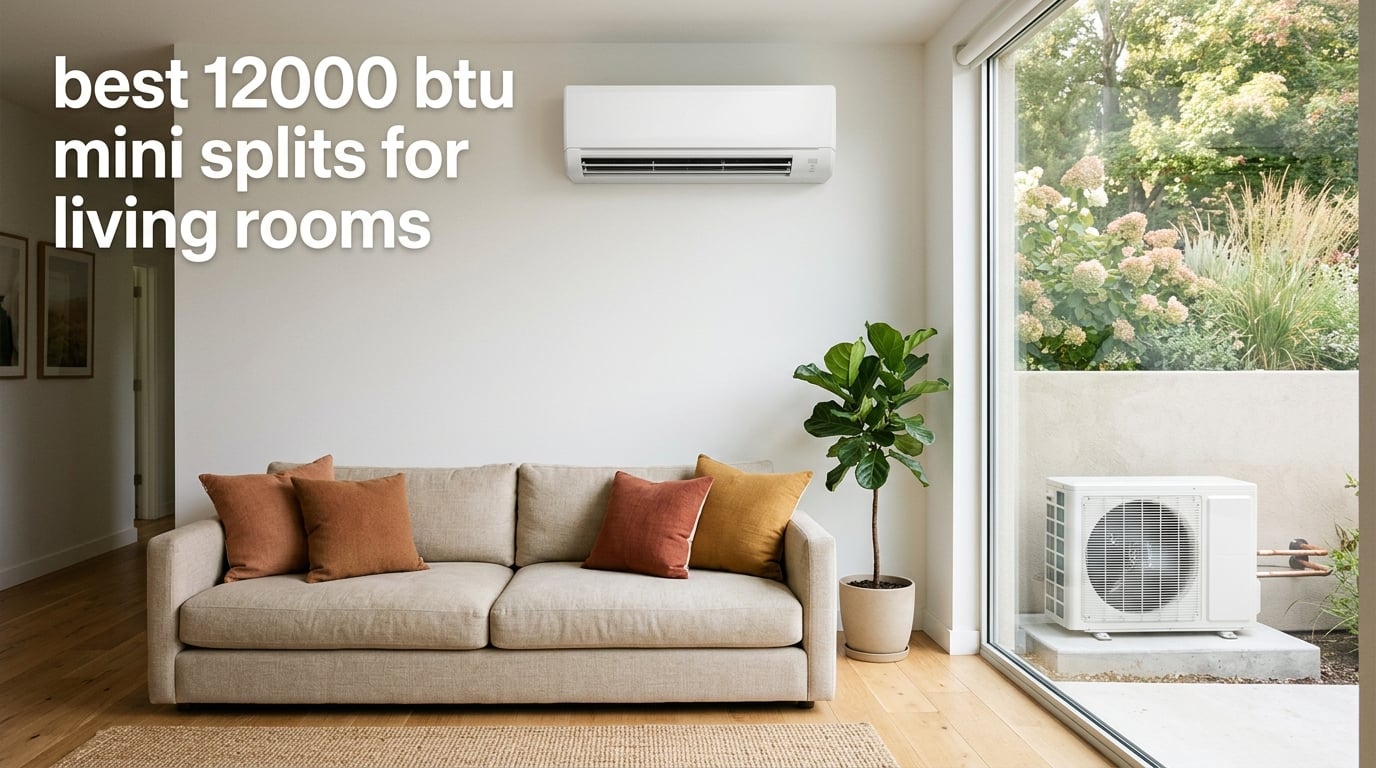
A 12,000 BTU mini split, also called a 1-ton ductless heat pump, handles a living room of roughly 450 to 650 square feet under normal conditions. That number is the industry rule of thumb, and it is the right starting point for most main-floor living rooms that face moderate sun exposure.
Living rooms are the hardest room in the house to size correctly, because they hold the most glass, the most doors and the most heat gain. A bedroom with the same square footage as a living room is an easier cooling job. Two of the 12 units below handle that glass load better than the other ten, and I flag which ones below.
We compared twelve 12,000 BTU systems on the specifications that actually change how a living room feels: SEER2 efficiency, indoor noise floor, electrical requirements, heating range at low outdoor temperatures, warranty length and how much of the install kit is included. If you are still outfitting the room, our guide to zebra blinds for living rooms cuts down the summer heat gain before the compressor ever switches on.
Table of Contents
Top 3 Picks for Best 12000 BTU Mini Splits for Living Rooms in 2026
All 12 Best 12000 BTU Mini Splits for Living Rooms in October
| Product | Specifications | Action |
|---|---|---|
| Senville LETO 12000 BTU |
|
Check Latest Price |
 COSTWAY 12000 BTU COSTWAY 12000 BTU |
|
Check Latest Price |
 Della Vario 23 SEER2 Della Vario 23 SEER2 |
|
Check Latest Price |
 Albott 12000 BTU 18 SEER2 Albott 12000 BTU 18 SEER2 |
|
Check Latest Price |
 Rellytech 12000 BTU 19 SEER2 Rellytech 12000 BTU 19 SEER2 |
|
Check Latest Price |
 Mountman 12000 BTU 19 SEER2 Mountman 12000 BTU 19 SEER2 |
|
Check Latest Price |
 ROVSUN 12000 BTU WiFi 20 SEER2 ROVSUN 12000 BTU WiFi 20 SEER2 |
|
Check Latest Price |
 MRCOOL 12000 BTU Fourth Generation MRCOOL 12000 BTU Fourth Generation |
|
Check Latest Price |
 Temprium 12000 BTU 22 SEER2 Temprium 12000 BTU 22 SEER2 |
|
Check Latest Price |
 Nexaro 12000 BTU 17 SEER2 Nexaro 12000 BTU 17 SEER2 |
|
Check Latest Price |
 Daikin Entra 18 SEER2 Daikin Entra 18 SEER2 |
|
Check Latest Price |
 Albott 12000 BTU DIY Pro Fast-Fit Albott 12000 BTU DIY Pro Fast-Fit |
|
Check Latest Price |
1. Senville LETO 12000 BTU – Best Overall for a Medium Living Room
Senville LETO Mini Split Air Conditioner, Heat Pump, White, 12000 BTU
12000 BTU 1 ton
20.8 SEER2
28 dB indoor
110V
Heats to 5F
16 ft line set included
Pros
- Largest review base in this group at over 2000 ratings
- 20.8 SEER2 efficiency on 110V power
- 16 ft line set and hardware included in the box
- 4-in-1 operation covering cooling heating dehumidify and fan
Cons
- Professional installation is not included
- No labor coverage in the warranty
- Warranty length is worded differently in two places on the listing
With 2,185 reviews at a 4.4 average, the Senville LETO has the widest owner history of any 12,000 BTU system we compared. That matters more than a longer specification list, because a living room is where comfort problems show up after a full season of use.
It runs on 110 volts, so it can go on a standard household circuit without a panel change. The R-454B charge and the rotary scroll compressor are conventional parts, and the unit is rated to 20.8 SEER2.
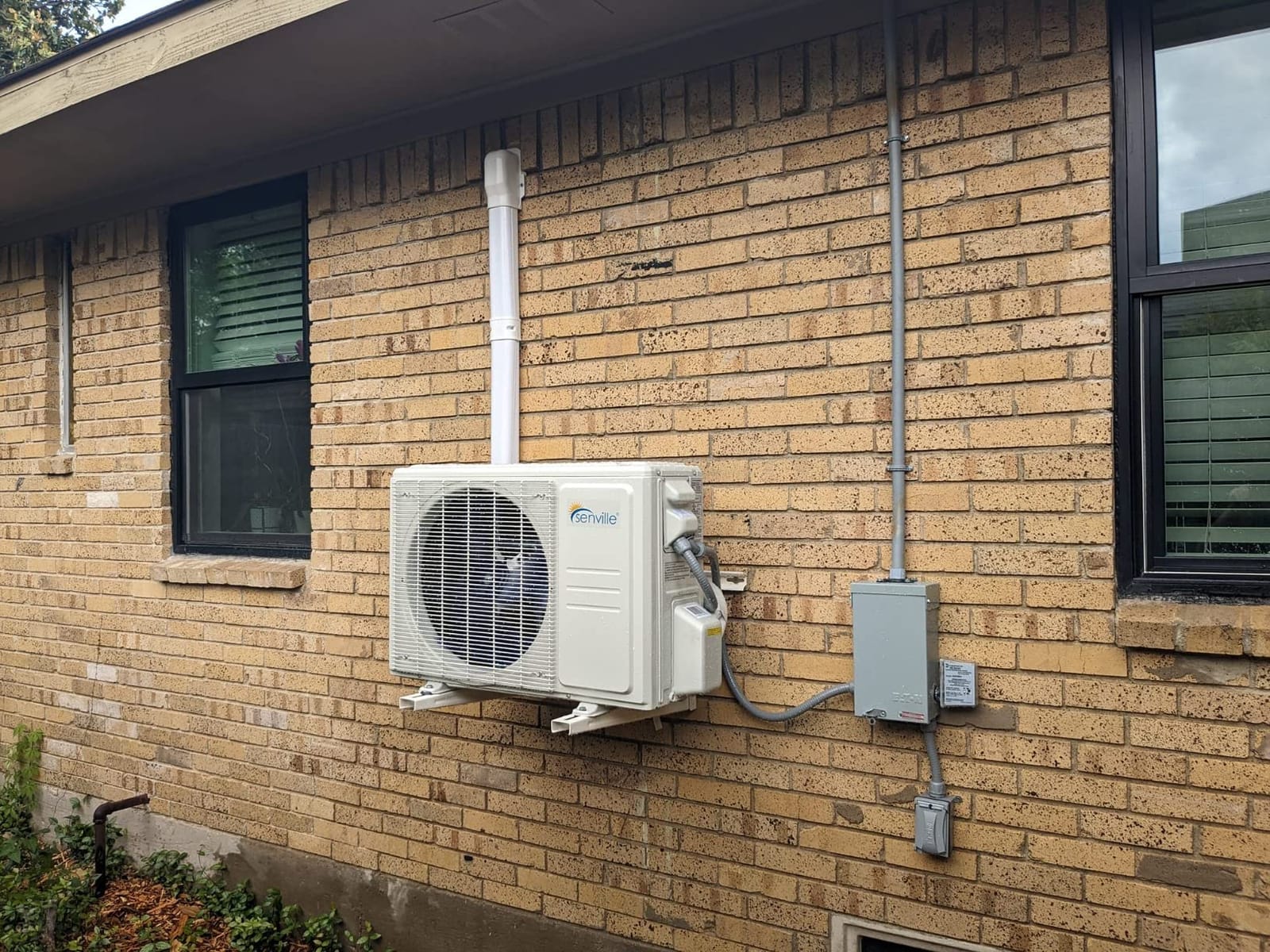
The head is rated at 28 dB, quiet enough for a room that sits next to a sleeping area. The remote display dims, and Alexa integration works through the app if you want scheduling rather than wall-mounted control.
Heating bottoms out at 5F, so in a mild winter it handles supplemental heat on a living room with no ductwork. It is not a cold-climate unit and I would not ask it to be the only heat source north of the Mason-Dixon line.
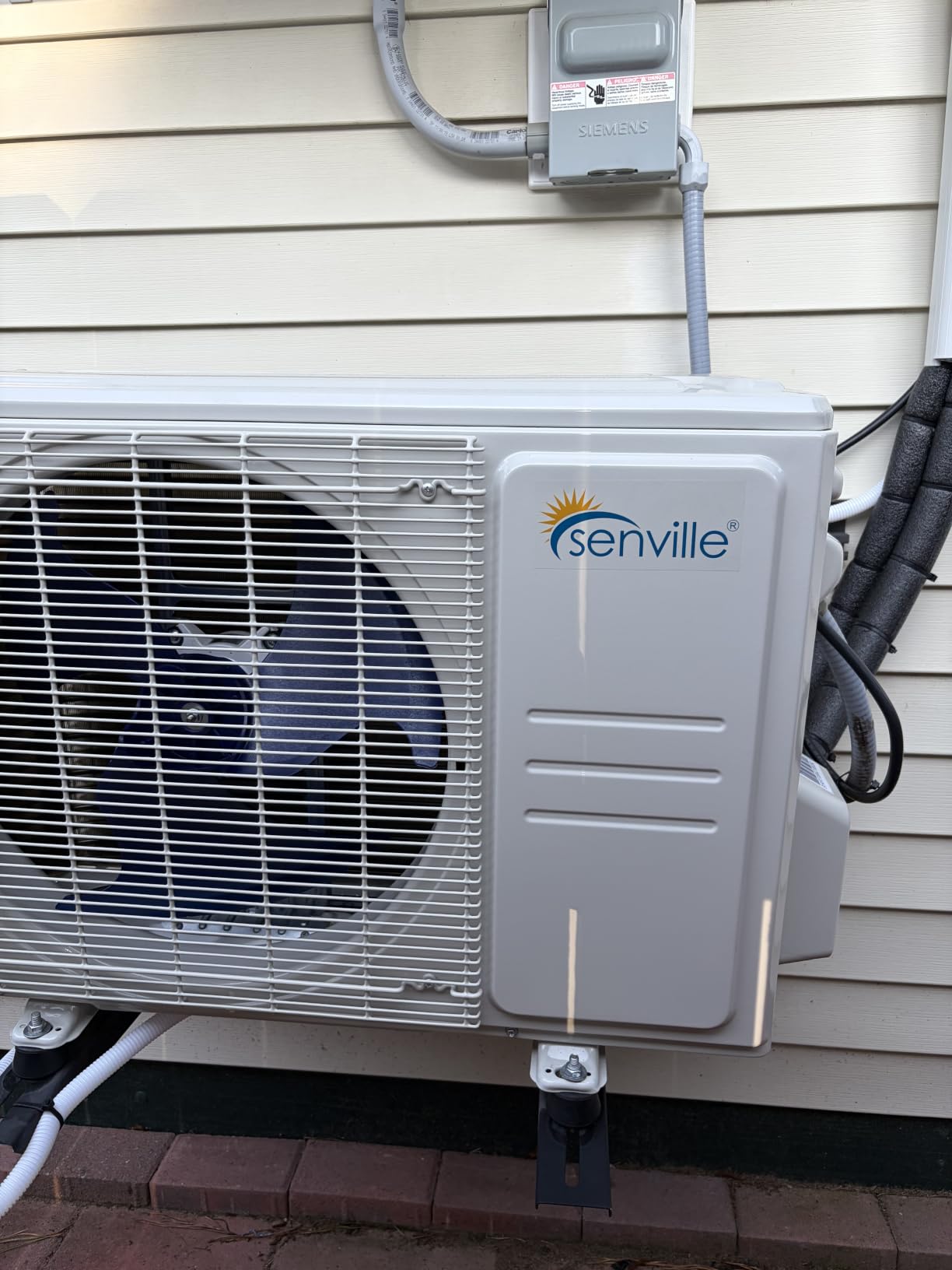
The included 16 ft line set is long enough for most close-quarters installs, which is exactly the situation in a living room where the head goes above the sofa and the condenser sits on a back pad.
What 20.8 SEER2 means for your monthly cooling bill
SEER2 is the seasonal efficiency number under the updated federal test, and anything at 20 or above is a strong result for a 1-ton system. The practical effect is lower running cost per hour of cooling compared with an 18 SEER2 unit, and less strain on the compressor during long August afternoons.
Buyers consistently mention one caveat in their reviews: the system ships with the parts for a proper install but the work still belongs to a licensed contractor.
Where this unit falls short in a living room
The warranty covers parts and the compressor but not labor, which is a real limitation if the unit fails in year six. The listing also states the warranty differently in the marketing copy and the specification block, so confirm the term in writing before ordering.
Room coverage is listed at 700 square feet, which is a seller claim at the high end of what a 12,000 BTU head actually conditions. Treat 450 to 650 as the working range.
2. COSTWAY 12000 BTU – Best Value 115V System
COSTWAY 12000BTU Mini Split Air Conditioner& Heater
12000 BTU cooling and 12300 BTU heating
20 SEER2
23 dB indoor
115V AC
R-32
Pros
- Quietest rated indoor head in the group at 23 dB
- 20 SEER2 efficiency at an entry-tier price point
- Five operating modes with four fan speeds
- Self-cleaning cycle at 134.6F plus a washable filter
Cons
- Indoor head is unusually wide at 44.5 inches and needs wall clearance
- Outdoor unit has to be sourced and paired separately
- Professional installation by a licensed contractor is required
The COSTWAY system pairs a 4.4 rating across 1,661 reviews with the lowest noise figure in this group. For an open-plan living room where the head is near the kitchen and the bedrooms are close, that 23 dB rating is the whole selling point.
It runs on 115 volt AC power and uses R-32 refrigerant. Five modes, four fan speeds, sleep mode, ECO mode and turbo give you more control surface than most units at this tier.
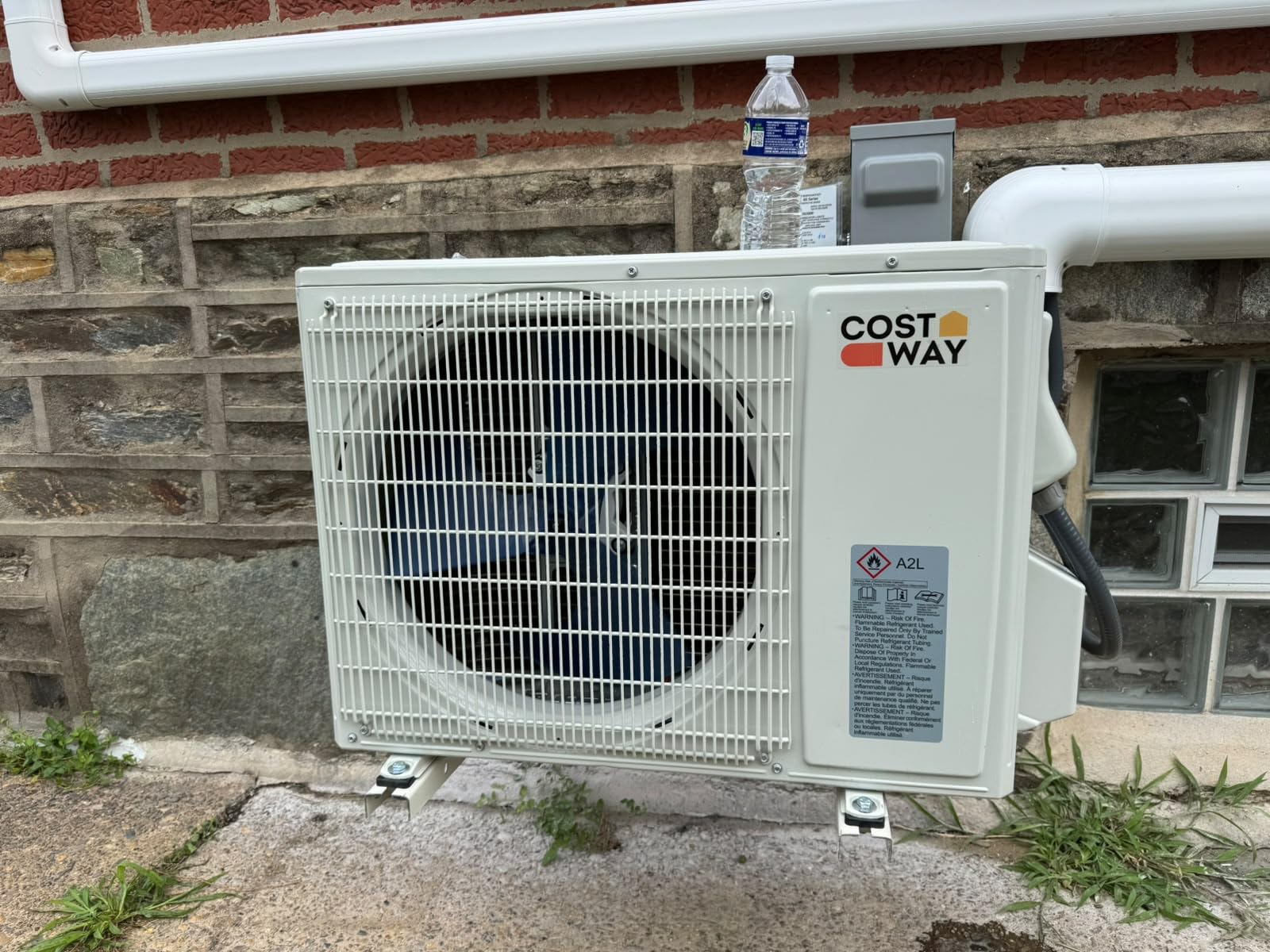
Owners report strong cooling for the money and an easy-to-follow remote. The self-cleaning function runs the coil hot to kill accumulated mold, which cuts down on how often you need to service the head.
Heating capacity is 12,300 BTU, slightly above the cooling rating, and the 20 SEER2 figure puts it in the efficient class. Five years of parts and eight years of compressor coverage are listed.
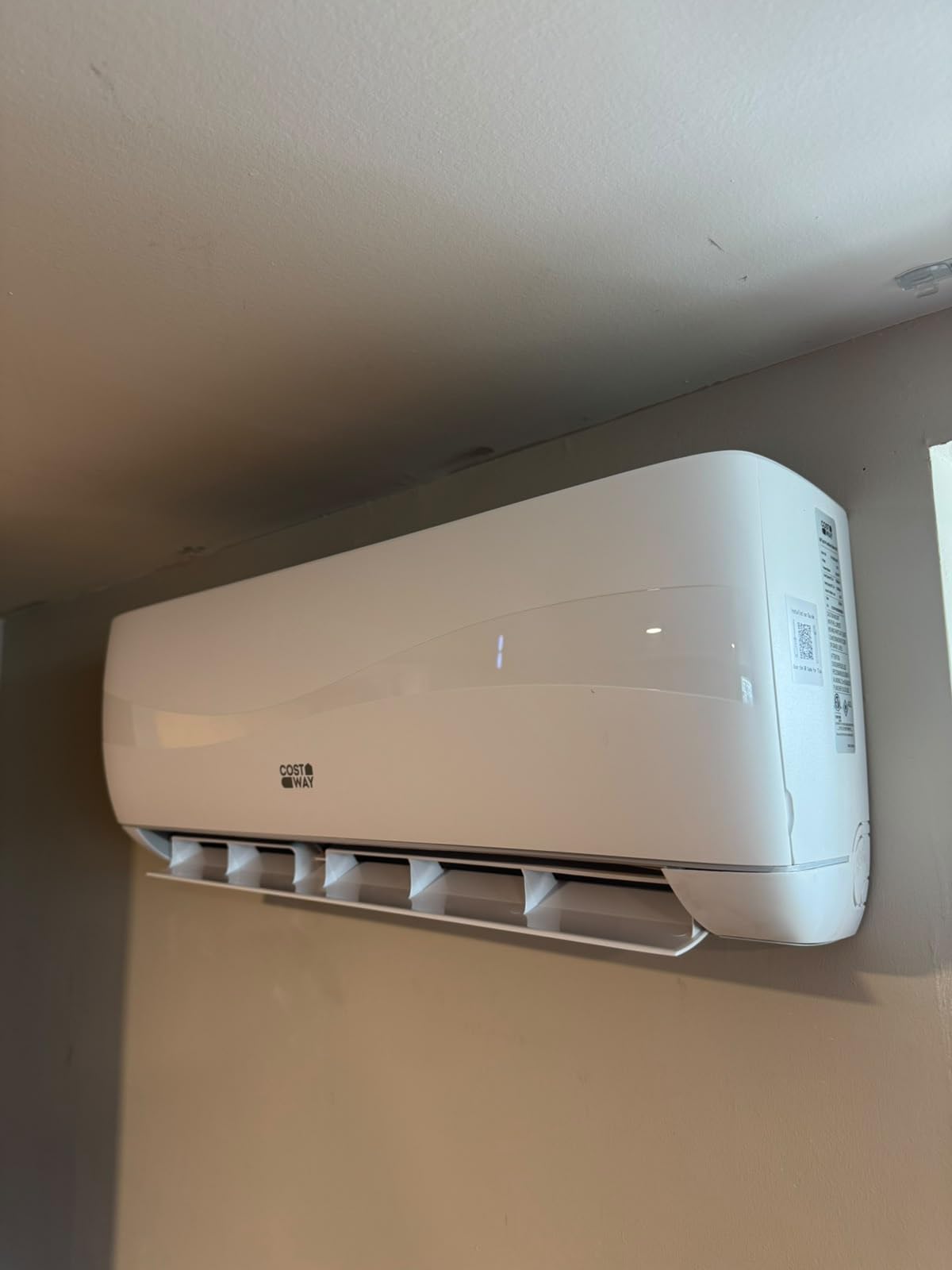
Plan the wall space before you buy
The indoor head measures 44.5 inches wide, which is wider than every other unit in this comparison. In a living room with a wide blank wall that is fine, but over a sofa with a window or near a corner it will not fit without shifting the layout.
Measure first. A wide head is easy to overlook and hard to move once the bracket is up.
Why the quiet rating matters in an open floor plan
Published noise ratings are taken at the lowest indoor fan speed, so 23 dB describes sleep mode rather than full output. Even so, a lower floor means less audible airflow when the room is quiet at night.
The real limitation is that you must buy the outdoor unit as a matched pair and have it installed properly. Budget for both parts and the labor.
3. Della Vario Series 23 SEER2 – Best Premium Efficiency
DELLA Vario Series 12000 BTU Mini Split Air Conditioner Work with Alexa with 1 Ton Pre-Charged Heat Pump Ductless Inverter System, 23 SEER2, Cools Up to 550 Sq. Ft,16.4ft Installation Kit Included
23 SEER2 and 9.5 HSPF2
28 dBa indoor head
230V
Cools 550 sq ft
Heats to -4F
Pros
- Highest SEER2 figure in the group at 23 with a 5 star BEE rating
- Only 12000 BTU unit here rated for heating down to -4F
- Remote-mounted sensor reads temperature where you are instead of at the head
- App scheduling plus Alexa integration
- Well-documented install videos and manuals
Cons
- Requires 230V power and a dedicated circuit
- Line set length cannot be changed without recharging the refrigerant
- HSPF2 of 9.5 sits just under the federal tax credit threshold
- Icon-only remote and thin mounting bracket
The Della Vario is the efficiency leader here at 23 SEER2 and 9.5 HSPF2, and it holds a 4.4 rating from 1,435 owners. It also does something none of the other 115V units do: it heats down to -4F.
That low-ambient capability makes it the pick if your living room in a northern climate is doing real heating work rather than just topping up a furnace. It runs on 230 volts, so plan for a dedicated circuit or an electrician.
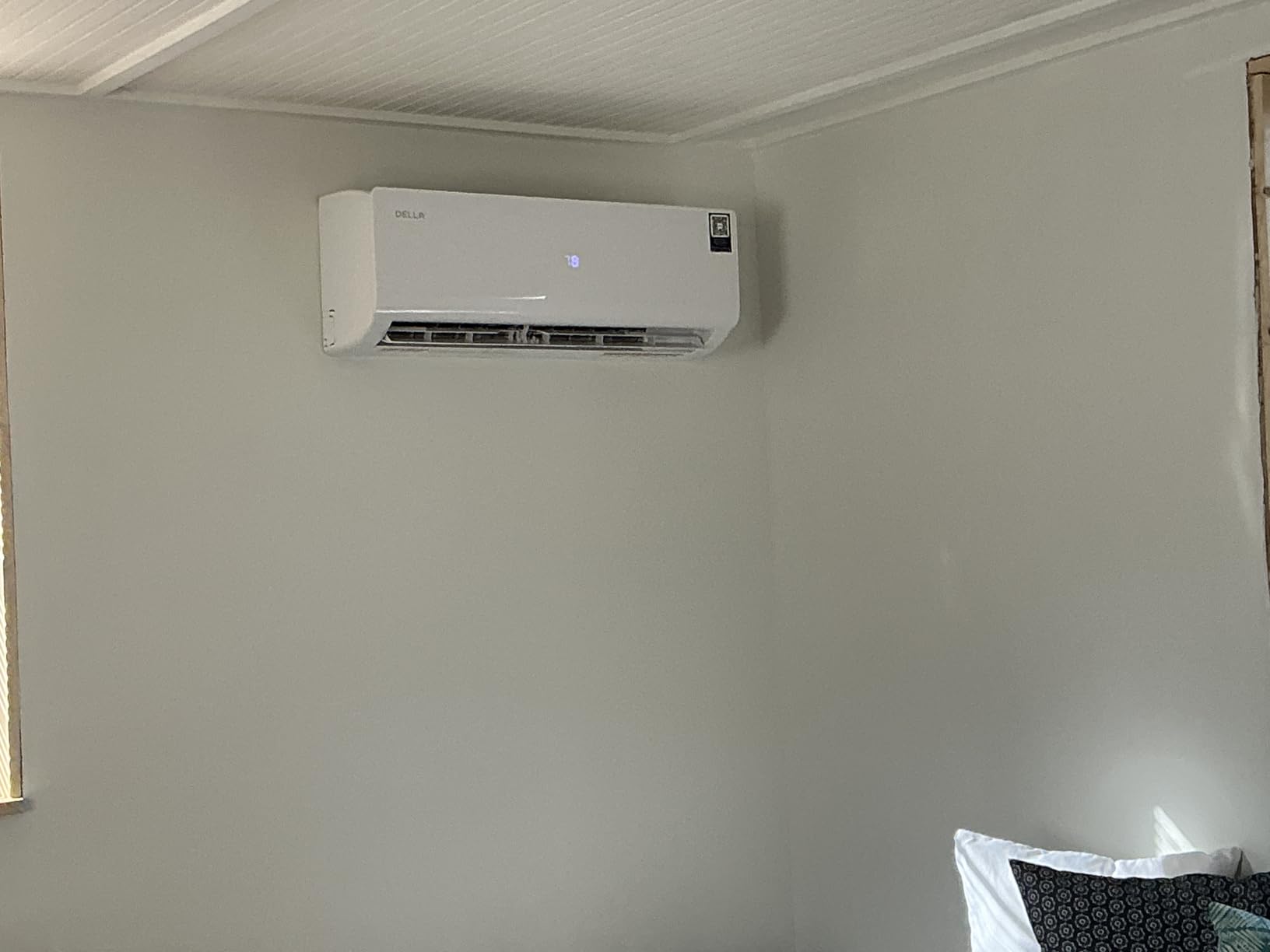
The remote-mounted temperature sensor is a small thing that owners consistently mention as the reason the room feels right. Instead of averaging the air at the ceiling, the head reads the temperature where the remote sits.
Coverage is rated at 550 square feet, which is a conservative and realistic figure for a 1-ton head in a sun-exposed room.
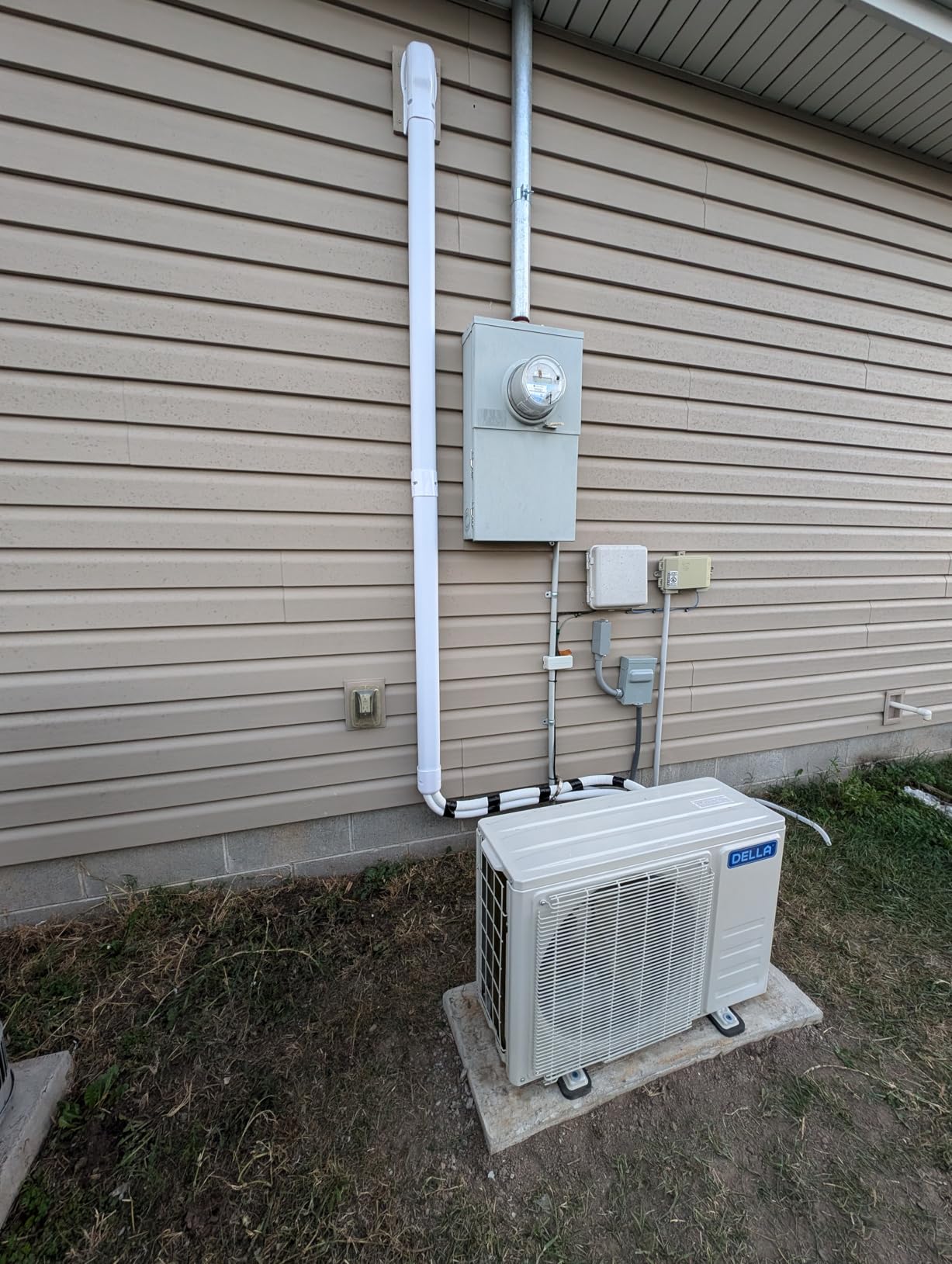
How the -4F heating floor changes the sizing decision
Most 12,000 BTU heat pumps stop being useful below about 40F to 50F unless they carry low-ambient features. This one carries its output far lower, so a living room in a cold climate gets heating from the same head rather than falling back to a furnace the moment the temperature drops.
That matters because inverter compressors lose efficiency as outdoor temperatures fall. The room still heats, but it takes longer to get there.
The install details that cause complaints
Owners report that line insulation and drain tubing degrade within roughly two years, and that the included mounting plate is thin sheet metal. Some HVAC contractors decline to service the unit, which is worth asking about before you commit.
A small number of owners of a sibling variant reported an indoor refrigerant leak followed by an unreplaceable unit after the warranty ended. Treat parts availability as a question to ask your installer.
4. Albott 12000 BTU 18 SEER2 – Lowest-Cost Starter Heat Pump
Albott 12,000 BTU Mini Split Air Conditioner and Heater SEER2 18, 115V
12000 BTU
18 SEER2
29 dB indoor
115V
5F to 122F operating range
Mesh filter
Pros
- Lowest entry cost among the units with meaningful review volume
- Works across a wide 5F to 122F ambient range
- Quiet indoor operation under 29 dB
- Self-cleaning cycle with removable filters and air blades
- App and remote control with a child lock
Cons
- Lowest SEER2 in this group at 18 and the lowest rating at 4.1
- About 14 percent of reviews are one star
- Warranty length is stated inconsistently across the listing
- Heavy at 151 pounds and the filters are basic mesh
The Albott is the cheapest of the units with real review volume, and at 4.1 stars from 391 reviews it is also the lowest rated. Buyers still report good cooling power for the money and low indoor noise, so the machine does what it says.
It covers a wide ambient range from 5F to 122F, which is useful if you plan to use it in a sunroom, garage or addition as well as a living room. Efficiency is 18 SEER2 with an R-32 charge.
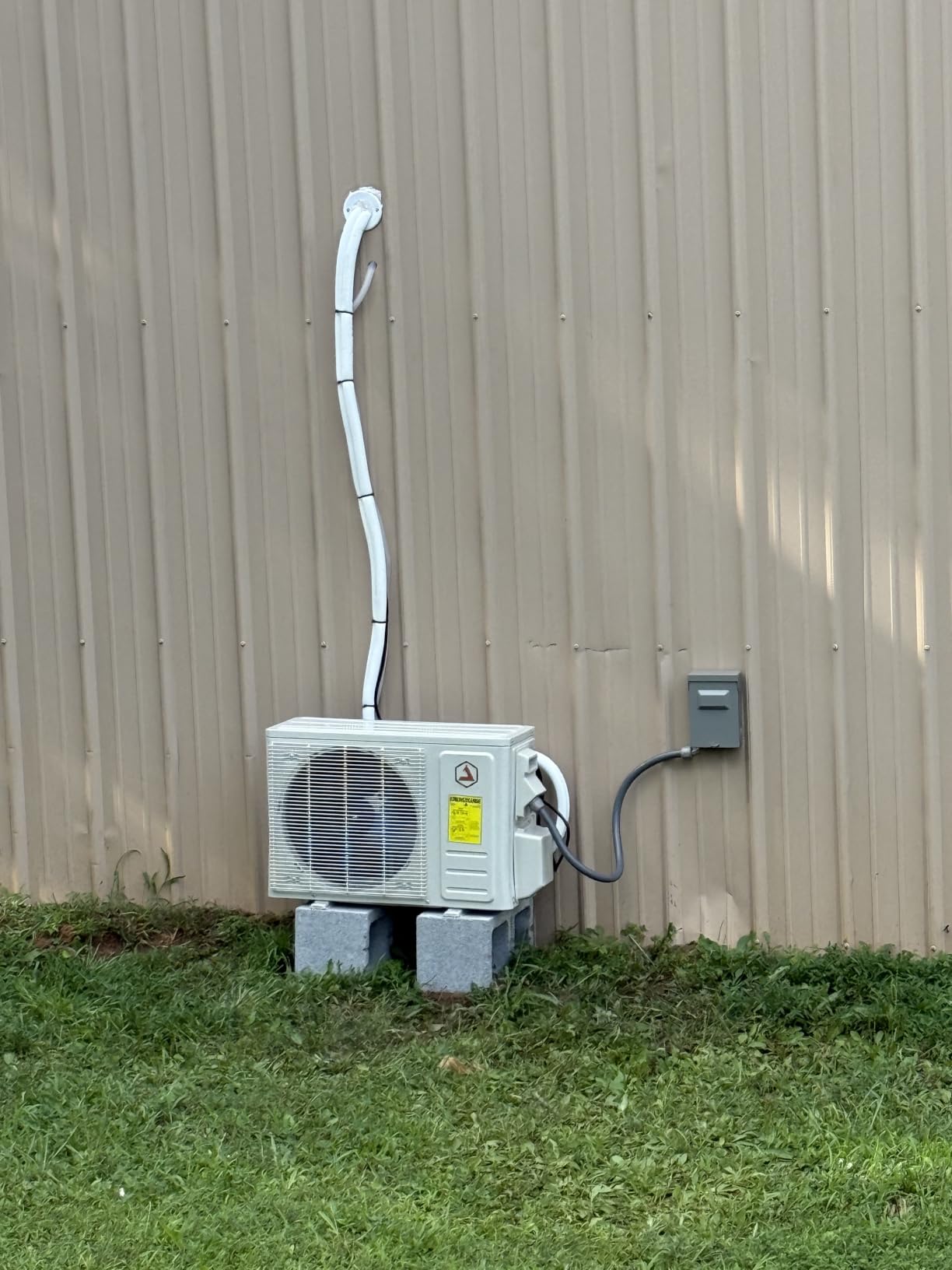
Setpoint runs from 61F to 90F, and the head uses removable mesh filters with a self-cleaning cycle. The app and remote both work, and a child lock is included.
Shipping weight is 151 pounds, the heaviest in this group, so whoever moves the unit needs to plan for it rather than doing it solo.
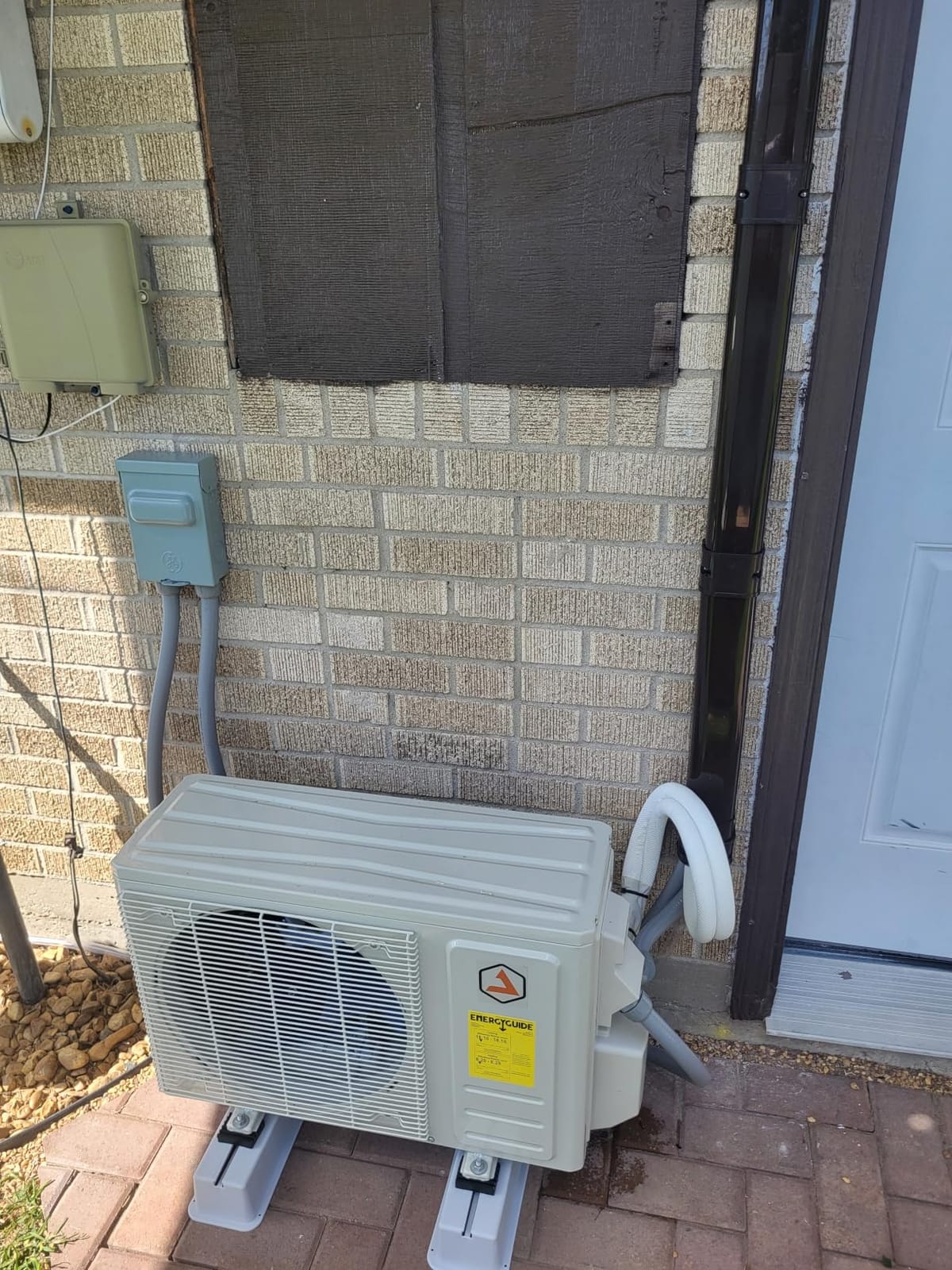
What an 18 SEER2 rating actually costs you
An 18 SEER2 system uses roughly 10 to 15 percent more electricity per hour of cooling than a 23 SEER2 system at the same load. Over a decade of summer use that gap adds up, and it is the main cost of buying the cheapest unit.
For a living room used only in the evening, the difference is small. For a room that runs eight hours a day in a hot summer, it is worth pricing the gap against the purchase price difference.
Where the 4.1 rating comes from
Roughly 14 percent of reviews are one star, about double what the well-reviewed models in this list show. The complaints cluster around first impressions of build quality rather than outright failure.
Warranty terms are listed differently in different parts of the page. Get the term in writing before you order, and remember that basic mesh filters will need more frequent cleaning than a higher-grade washable filter.
5. Rellytech 12000 BTU 19 SEER2 – Best for True 115V Homes
Rellytech Mini Split AC/Heating System, 12000 BTU, 19 SEER2 115V/110V
12000 BTU cooling and 12500 BTU heating
19 SEER2 and 8.5 HSPF2
115V AC
R-32
4 star BEE rating
Pros
- True 110V and 115V operation so no 230V breaker work is needed
- 19 SEER2 with a 4 star BEE rating
- Owners in hot climates report noticeably drier indoor air
- Quiet indoor and outdoor operation
- Kit includes both units and mounting hardware and connecting pipes
Cons
- Remote only with no built-in WiFi on this variant
- Noise is listed as 26 dB in specs and 42 dB in the bullet points
- Professional installation is still required despite the DIY-leaning presentation
- Warranty is stated as 8 years in one place and 1 year in another
The Rellytech holds a 4.4 rating from 355 owners with an 80 percent five-star share, the highest proportion in this group. It is a straight 115 volt system, which removes the single most common installation surprise in a ductless retrofit.
Owners in Florida and Nevada single out the dehumidification performance. In a humid summer, an inverter running long and steady at low capacity pulls more moisture than a unit that cycles on and off, and that shows up as a better-feeling room.
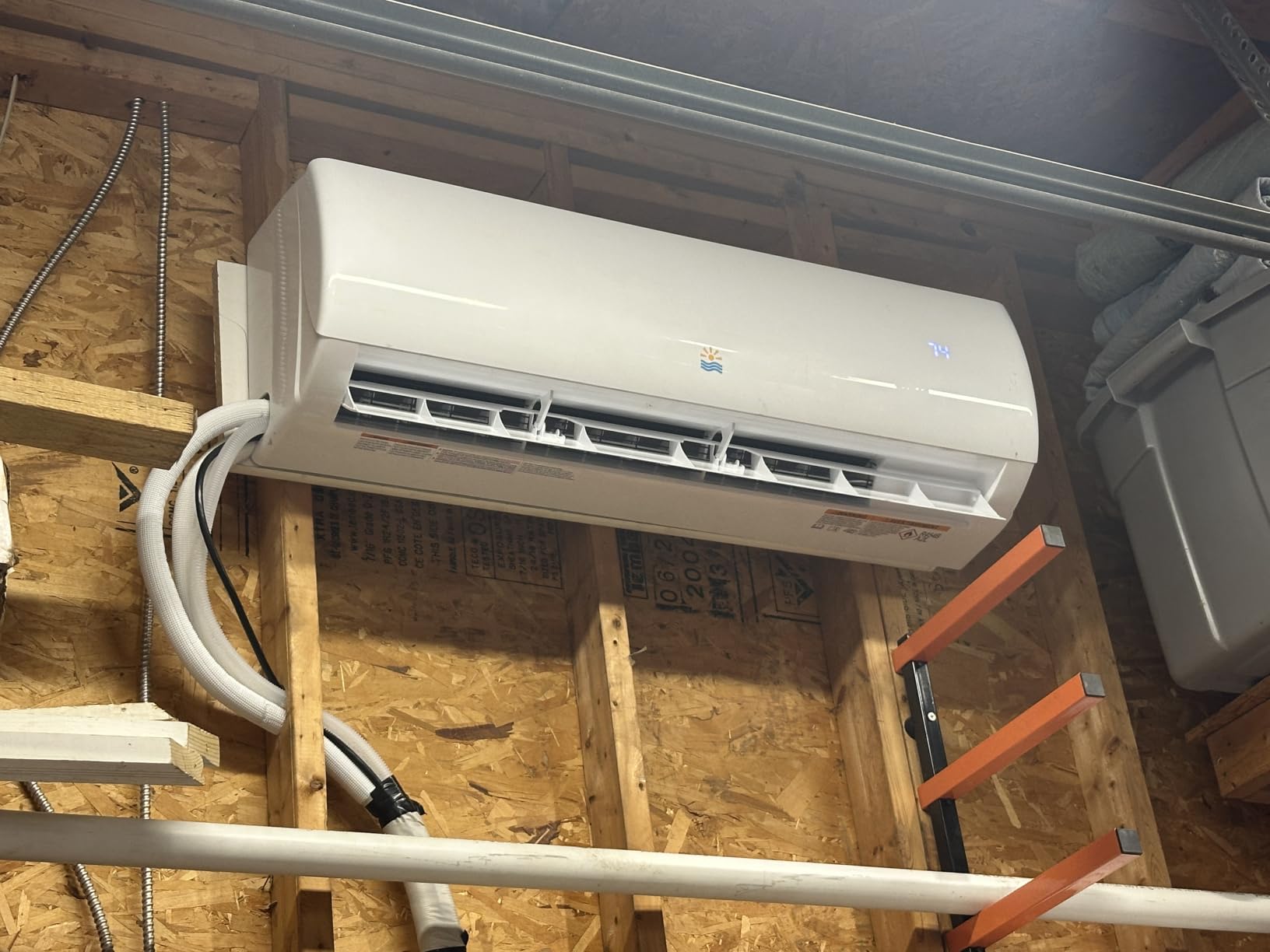
Cooling is 12,000 BTU and heating is 12,500 BTU at 19 SEER2 and 8.5 HSPF2. Four modes, four fan speeds, a 90-degree vertical swing and ECO mode cover the basics properly.
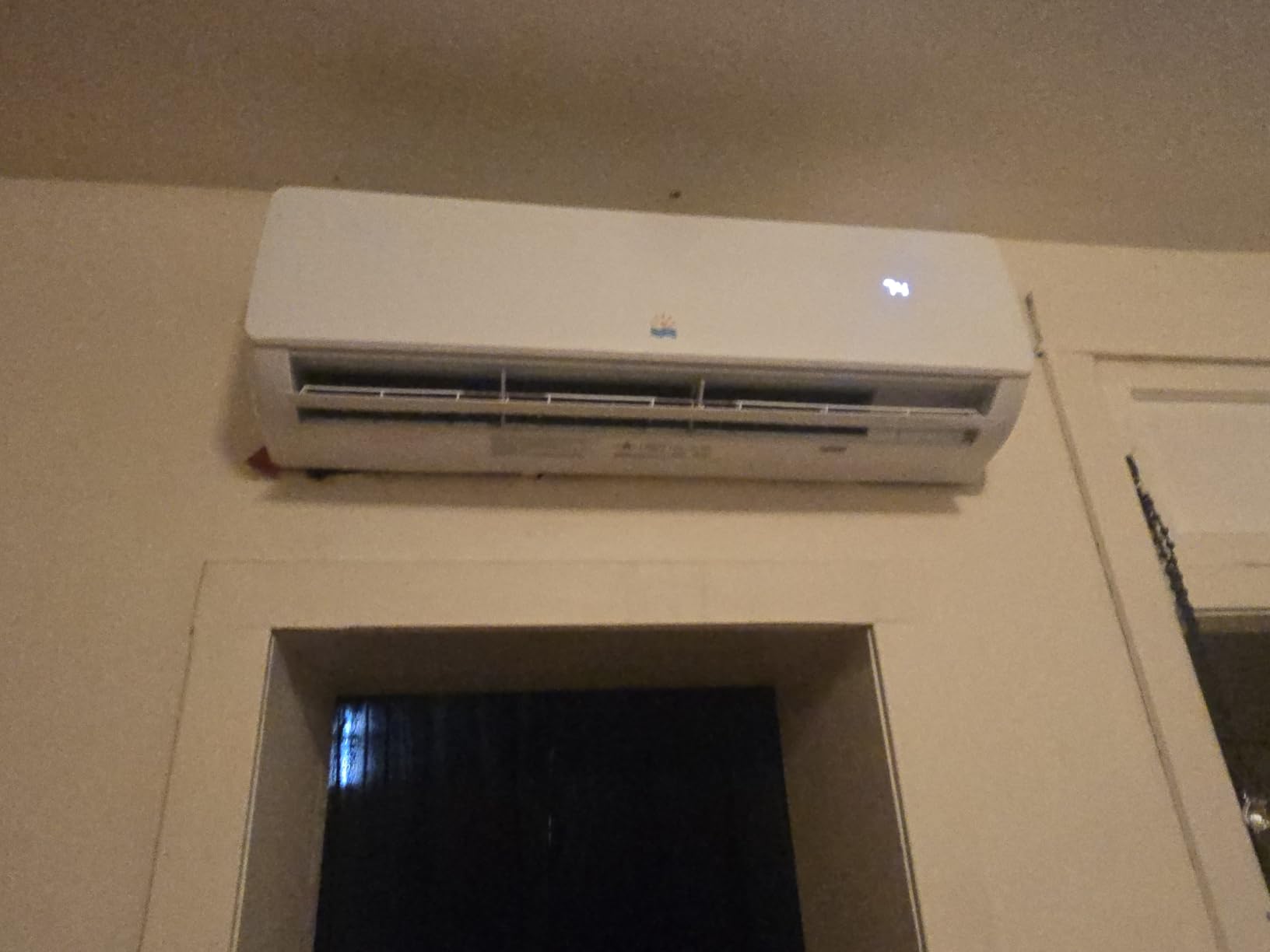
The kit is unusually complete: indoor and outdoor units, mounting plate, bracket template, communication cable, power cable, connecting pipes and a drain pipe all ship together.
Why 115V simplifies a living room install
A 230V mini split needs a double-pole breaker, a dedicated circuit run of the right gauge, and sometimes a panel upgrade. In an older home with a full panel, that electrical work can add more to the job than the equipment itself.
A 115V system can often land on an existing appropriate circuit. Ask your electrician to confirm capacity before you order.
Reading past the noise number
The listing gives 26 dB in the specification block and 42 dB in the bullet points. Treat the lower figure as the low fan speed and expect more sound at full output, particularly from the outdoor condenser on a hot night.
There is no WiFi on this variant. If you want app control from the couch, look at the ROVSUN or Temprium instead.
6. Mountman 12000 BTU 19 SEER2 – Best for Low-Maintenance Living Rooms
Mountman 12000 BTU Mini Split AC/Heating System,19 SEER2 110/120V Energy Efficient Ductless Inverter System,Cools Up to 750 Sq.Ft with Pre-Charged Condenser,Heat Pump & Installation Kits
12000 BTU 1 ton
19 SEER2
26 dB sleep mode
115V
R-32
Self-cleaning and auto-defrost
Pros
- Highest average rating in the group at 4.5 stars
- Self-cleaning cycle plus automatic outdoor defrost cut routine maintenance
- 26 dB sleep mode
- ECO mode claims up to 30 percent energy savings
- Remote display auto-off keeps a dark room dark
Cons
- Remote only with no app or voice assistant integration
- Weight and total wattage are not published
- Smaller review base than the established brands
- Coverage claims rest on the seller specification rather than independent testing
The Mountman posts the highest average rating here at 4.5 stars from 346 reviews, with only about 5 percent one-star responses. The self-cleaning coil and automatic outdoor defrost are the features owners mention most.
It runs on 115 volts with an R-32 charge and a 19 SEER2 inverter. Four modes and four fan speeds cover everyday use, and the installation kit ships with a pre-charged condenser.
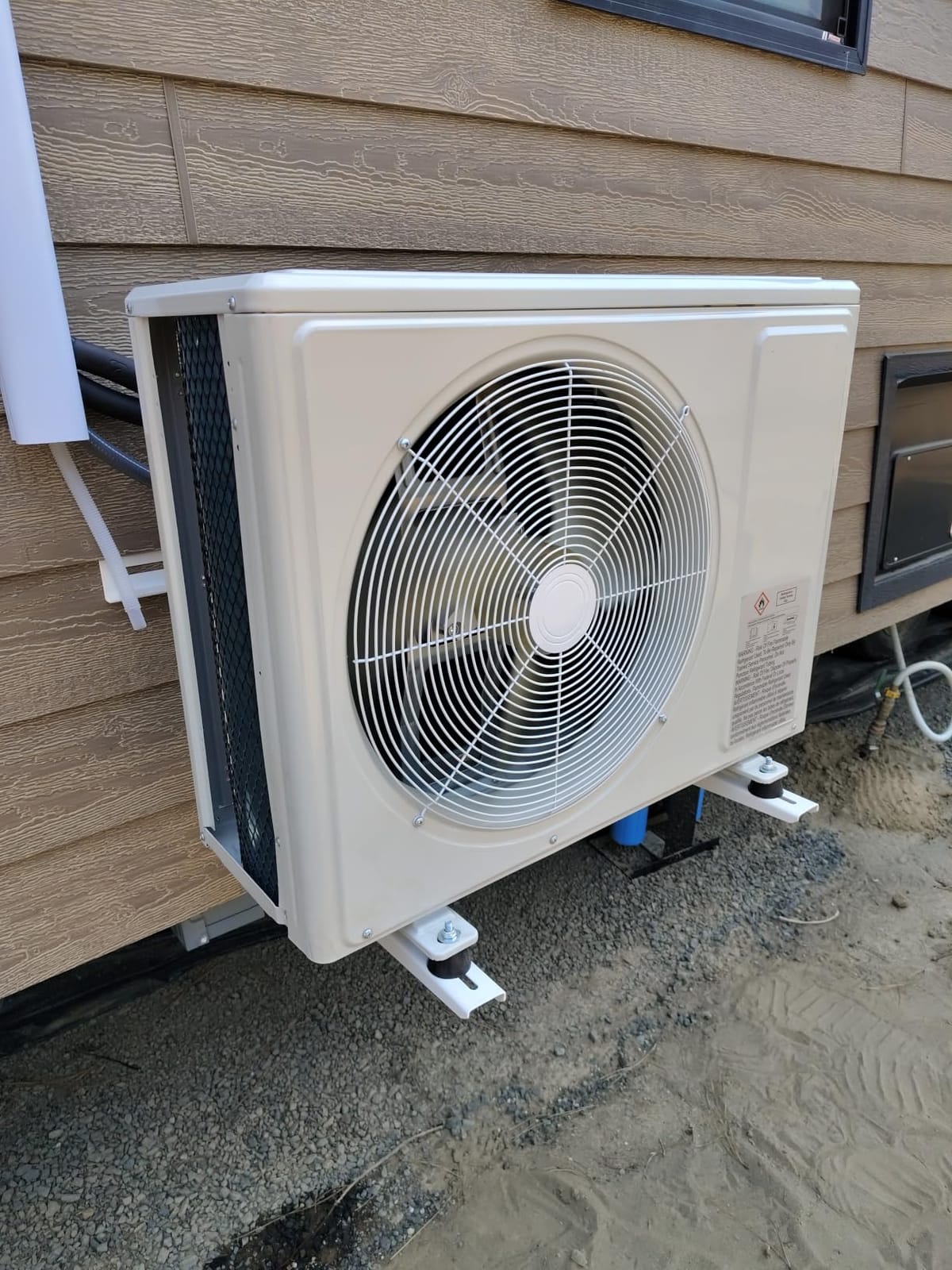
Sleep mode is rated at 26 dB and ECO mode claims up to 30 percent energy savings. The remote display shuts itself off after ten seconds, which is a small thing that matters in a dark living room.
A washable anti-dust filter handles the routine cleaning without a specialty part.
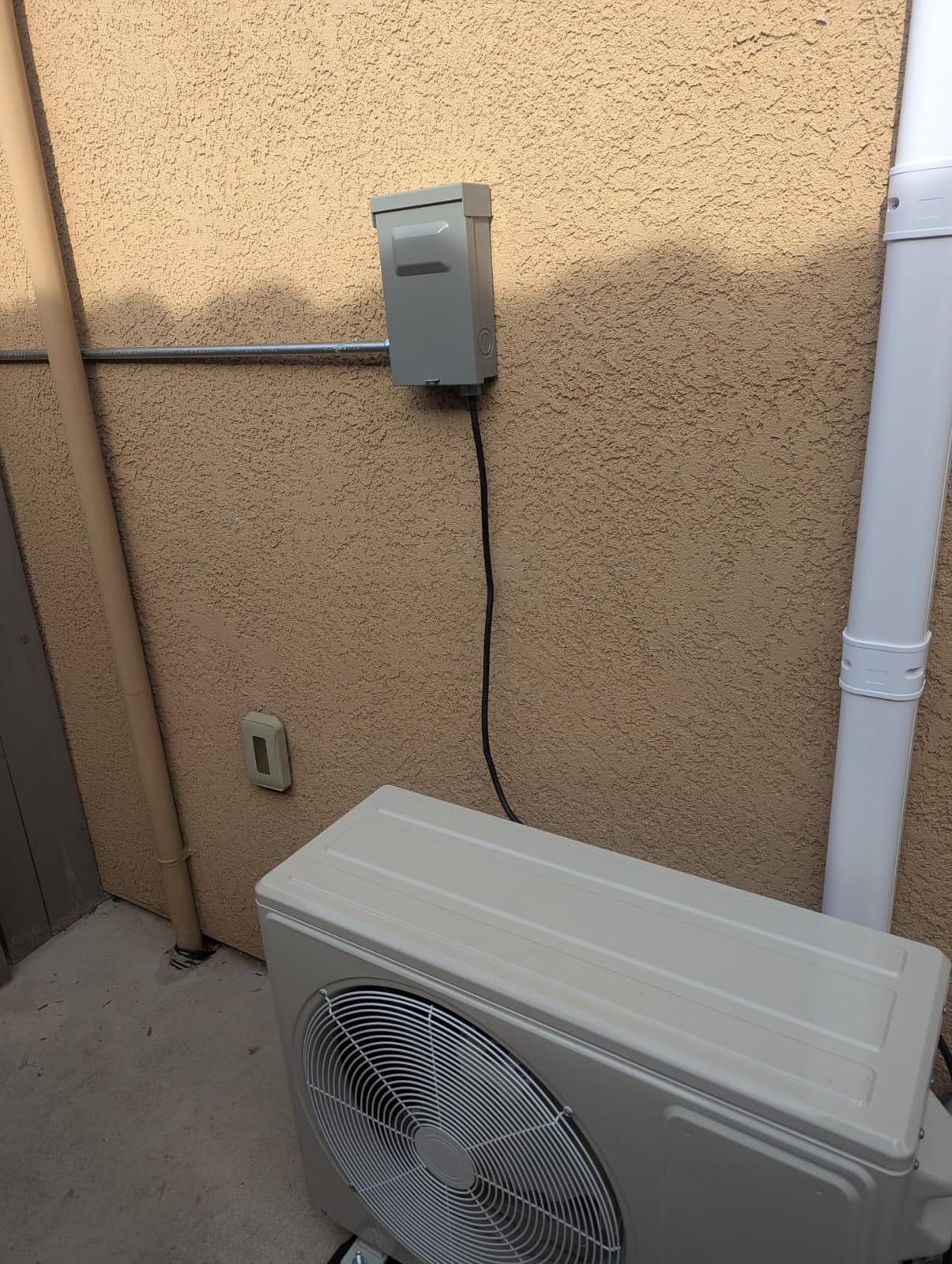
What self-cleaning actually does
The high-temperature self-clean cycle heats the indoor coil to roughly 134F to burn off mold and biofilm that collects on evaporator fins in humid seasons. It runs automatically or on demand depending on the mode you select.
It does not replace filter cleaning, but it reduces how often you need to pull the head apart and treat the coil.
What the thinner documentation means for you
Specification detail on this listing is lighter than the established brands: weight and total wattage are not published, and the 750 square foot coverage figure comes from the seller rather than independent testing.
With 346 reviews the long-term owner history is also still short. The rating is excellent, but the track record is not yet long.
7. ROVSUN 12000 BTU WiFi 20 SEER2 – Best for App and Voice Control
ROVSUN 12000 BTU Wifi Enabled Mini Split Air Conditioner & Heater with Inverter, 20 SEER2 Energy Saving 115V Ductless Split AC Unit with Pre-Charged Condenser, Heat Pump & Installation Kit
12000 BTU cool and 12600 BTU heat
20 SEER2
28 dB mute mode
115V
WiFi with Alexa
Pros
- Strongest smart feature set in the group with app
- Alexa and Google Assistant
- 20 SEER2 inverter with claims of up to 35 percent energy savings
- 28 dB in mute mode
- Four-way swing with turbo
- dehumidification and auto-defrost
- 16.4 ft line set included so most installs need no extra copper
Cons
- Coverage is listed as 550 sq ft in the bullet points and 750 sq ft in the specs
- Power cord is not included and has to be sourced separately
- Ships in two boxes and must stand upright for 24 hours before install
- Professional installation recommended
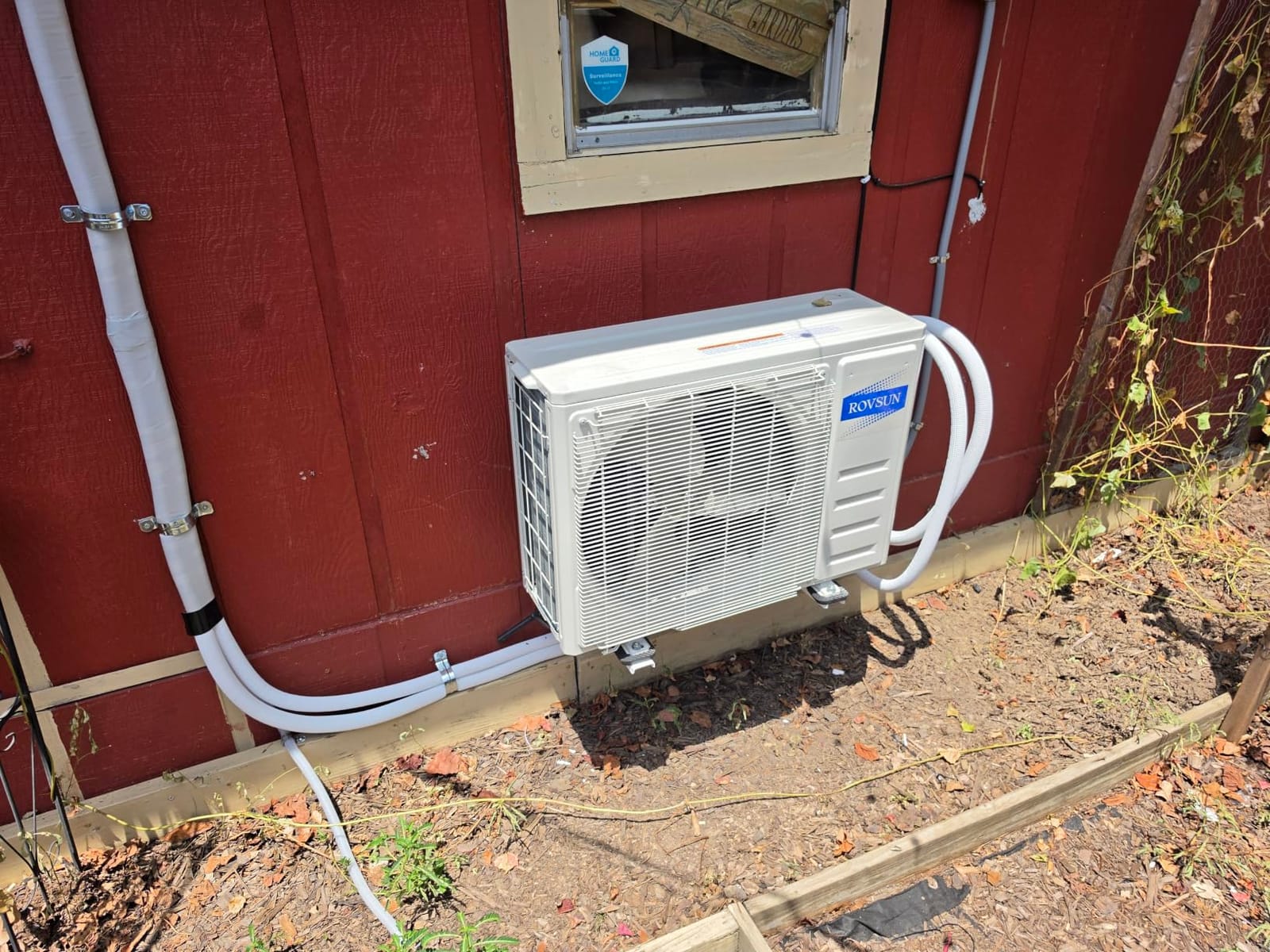
The ROVSUN holds a 4.4 rating from 283 owners with 79 percent five-star responses, and the smart control set is the best in this comparison. App scheduling works alongside Alexa and Google Assistant voice control, so the living room can be brought to temperature without anyone reaching for the remote.
Efficiency is 20 SEER2 with an inverter compressor claiming up to 35 percent energy savings, and it runs on standard 115 volt power. Cooling is 12,000 BTU and heating is 12,600 BTU.
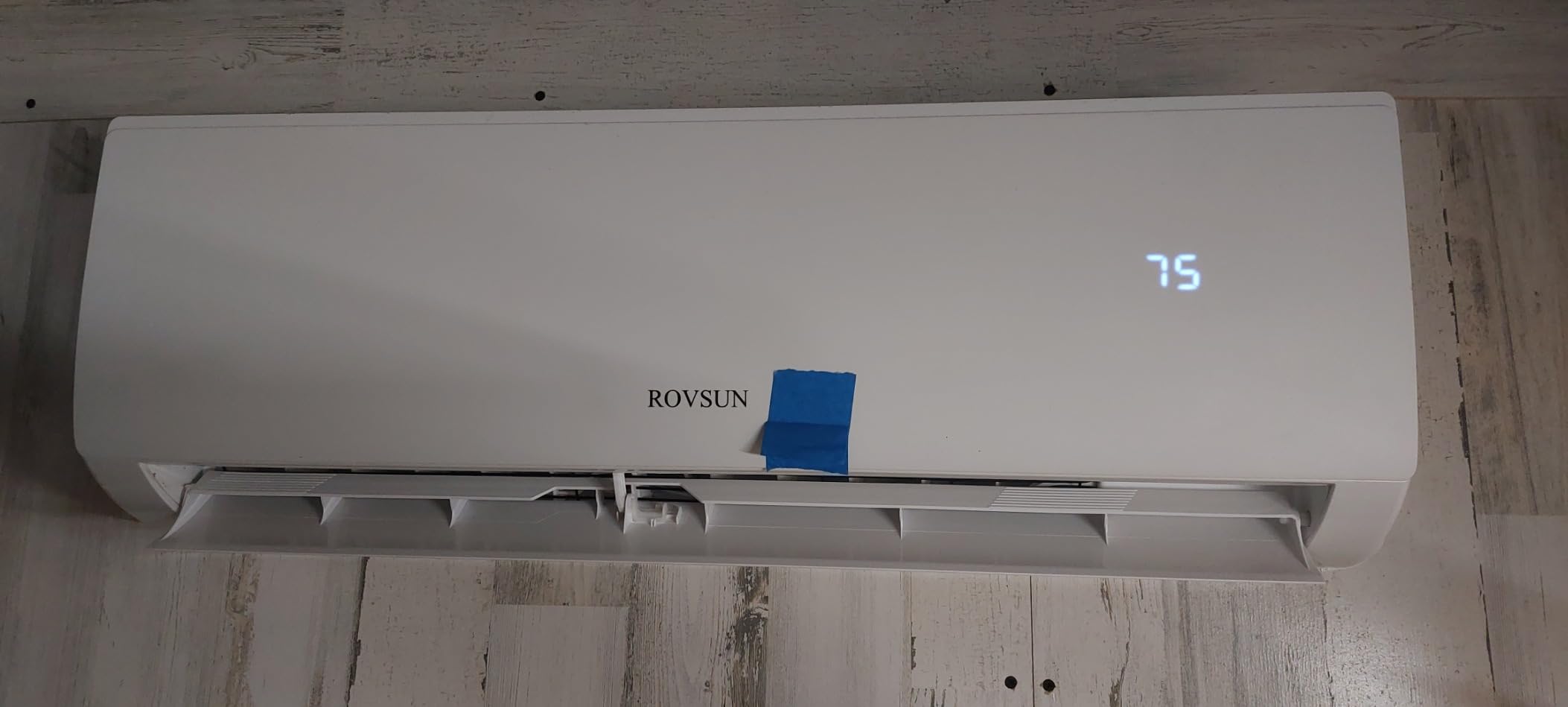
Four-way swing, turbo, dehumidification and auto-defrost cover the comfort features. The indoor head is rated at 28 dB in mute mode.
The included 16.4 ft copper line set is one of the longer kits in this group, which means most living room installs need no added copper or a vacuum pump.
Why app control changes how a living room is used
A ductless head in a living room is often the only comfort control in the space, and walking to it to change a setting is the friction that makes people leave it running. Scheduling from the sofa or a voice command solves that.
If your household already uses Alexa or Google Assistant, this is the unit that fits that setup without extra hardware.
Logistics you need to plan for
The unit arrives as two separate boxes, so parts can show up on different days. It has to stand upright for 24 hours before installation if it was tilted, and the power cord is not in the kit.
Coverage is listed two different ways on the same page. Use 450 to 650 square feet as the realistic range and check your room against that.
8. MRCOOL 12000 BTU Fourth Generation – Best for Genuine DIY Installs
MRCOOL 12,000 BTU WiFi Smart DIY Star 4th Generation Ductless Remote Controlled Mini Split Air Conditioner with Sleep Mode Function, White
12000 BTU 1 ton
22 SEER2 Energy Star certified
23.5 dB
115V
R-410A
500 sq ft rated
Pros
- Pre-charged Quick Connect line sets remove the vacuum step from the install
- Quietest published noise figure in the group at 23.5 dB
- 22 SEER2 with Energy Star certification
- Low refrigerant alarm and filter change alerts other units lack
- WiFi smart controller plus remote and voice control
- Auto restart restores settings after a power outage
Cons
- By far the most expensive unit in this comparison
- Smallest rated room coverage at 500 square feet
- Uses R-410A refrigerant which is being phased down
- Older 115V platform reflected in a low published wattage figure
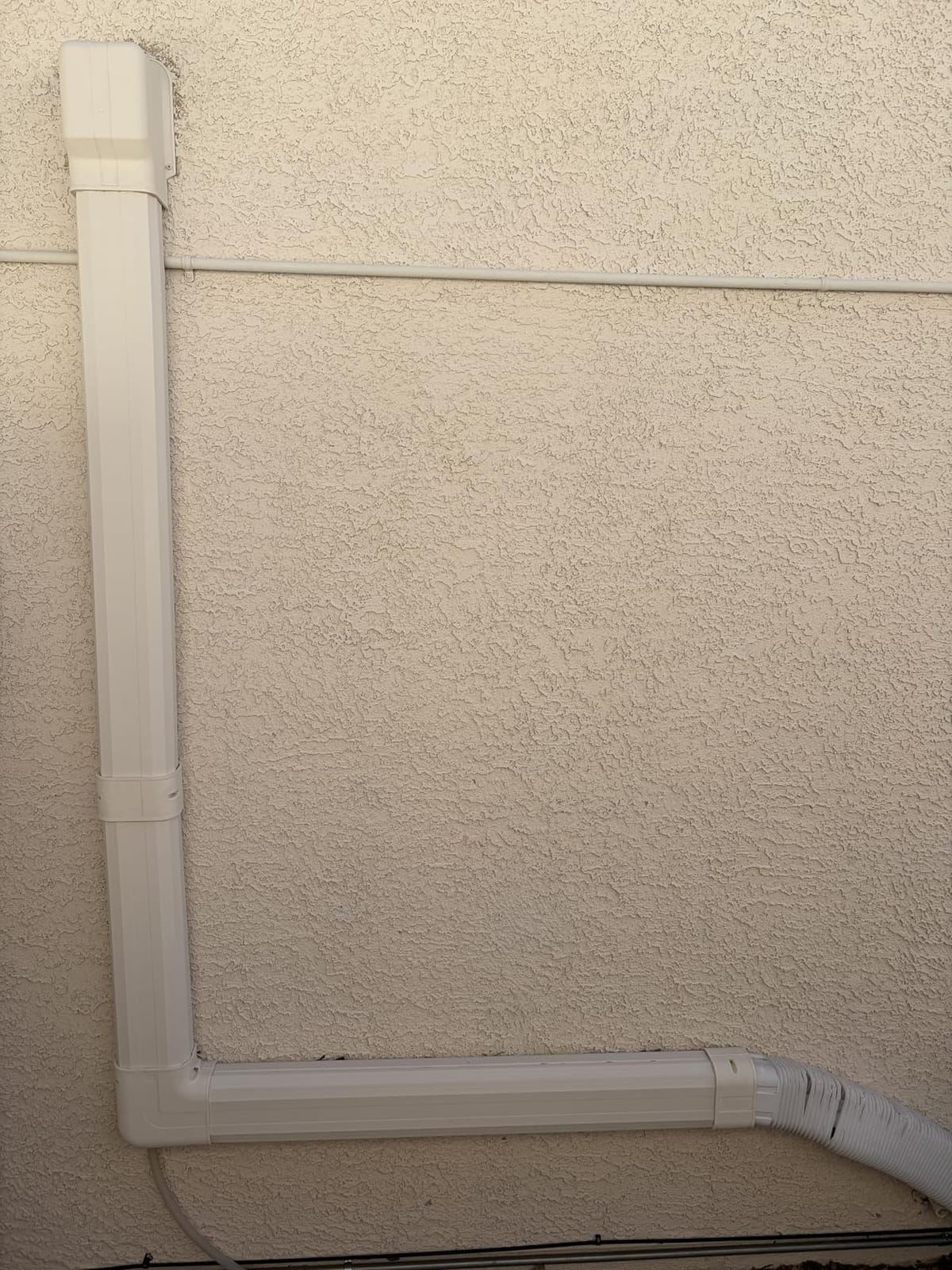
The MRCOOL is the outlier on price in this group, and it earns that with the only genuinely tool-free installation path here. The fourth-generation platform ships with pre-charged Quick Connect line sets, which removes the vacuum-and-charge step that makes most ductless installs expensive.
It holds a 4.3 rating from 193 owners. Efficiency is 22 SEER2 with Energy Star certification, and the 115 volt platform means no electrical upgrade.
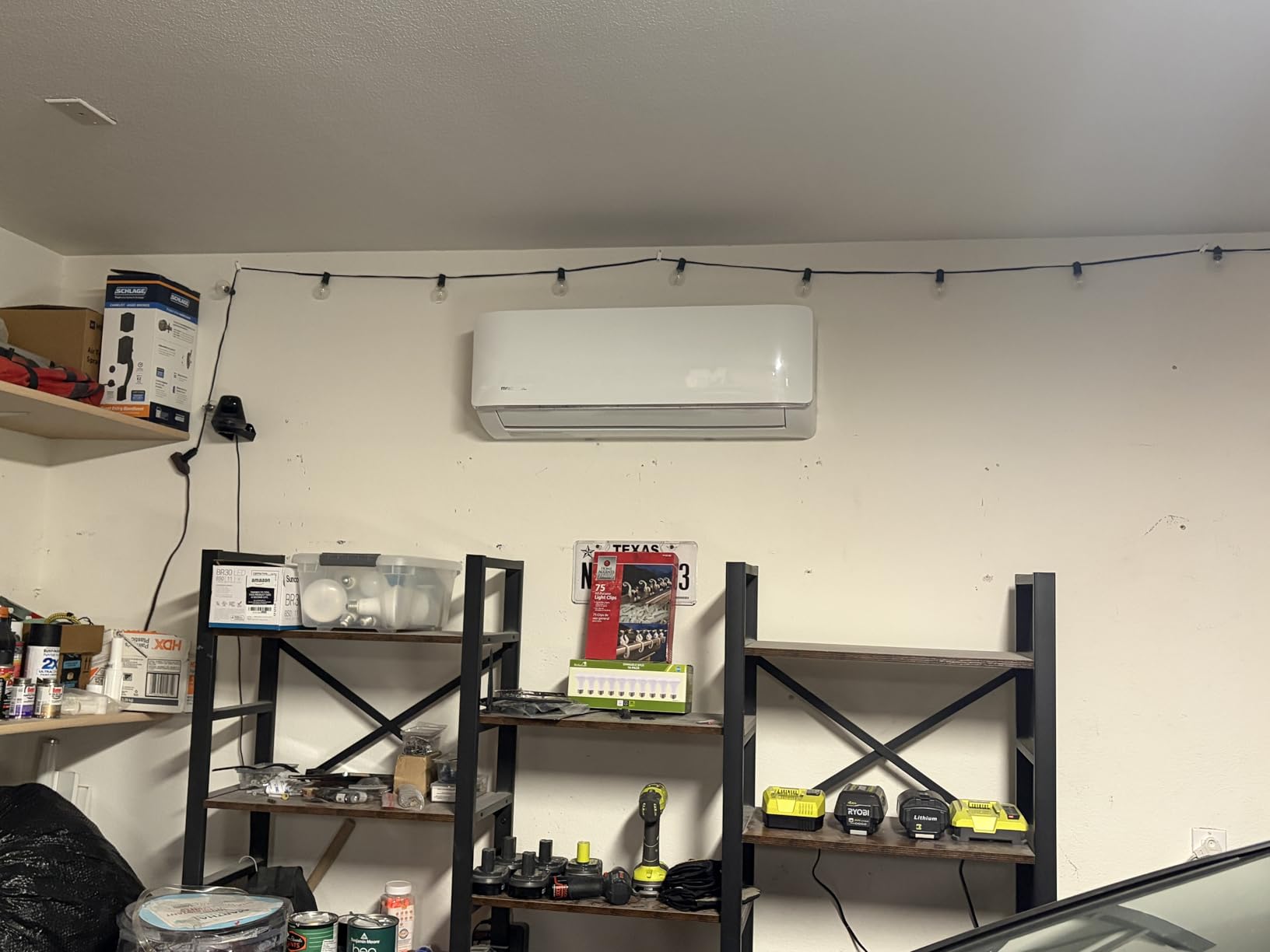
The maintenance alerts are genuinely useful: a low refrigerant alarm warns you before a small leak becomes a ruined compressor, and filter replacement prompts keep airflow up. It also cools down to 5F, and auto restart restores prior settings after an outage.
Everything ships in one kit: outdoor condenser, indoor head, DIYPro cable, remote, WiFi smart module and install hardware.
Where the tool-free install genuinely saves money
A conventional ductless install requires a vacuum pump, gauges, a recovery machine and a licensed technician who charges for all of it. Pre-charged connectors eliminate the vacuum step, and that is the single largest labor component in a straightforward install.
Local codes and warranty terms still apply, so check before assuming no professional is needed.
What the higher price does not buy
Room coverage is rated at just 500 square feet, the smallest in this group, so it is a tighter fit for a large living room. It also uses R-410A, a refrigerant being phased down domestically as the industry moves to R-32 and R-454B.
If your living room is at the upper end of the range and you want the highest efficiency rather than the easiest install, the Della or Temprium are stronger fits.
9. Temprium 12000 BTU 22 SEER2 – Best for Garages, Sunrooms and Additions
Temprium 12000 BTU Mini Split Air Conditioner, 115V 22 SEER2 AC & Heat Pump
12000 BTU cooling and 12300 BTU heating
22 SEER2
23 dB
780 watts
115V
R-32
Pros
- 22 SEER2 efficiency at a mid-range price
- Lowest published power draw in the group at 780 watts
- Quietest rated indoor noise at 23 dB
- Most complete control set with 7 modes and 7 fan speeds plus 4D swing and Follow-Me
- WiFi app plus Alexa and Google Assistant
- Lightest unit at 40.8 pounds
Cons
- Smallest review base in the group at 165 reviews
- 750 square foot coverage is a seller claim rather than verified
- Warranty is listed as only 1 year
- Professional installation still required for warranty in most regions
The Temprium pairs 22 SEER2 efficiency with a 780 watt published draw, the lowest in this group, and it holds a 4.4 rating from 165 owners. For a living room that runs long hours, the efficiency-to-cost ratio is hard to argue with.
The operating range of 5F to 122F is unusually wide, which is why this is the unit to consider for a sunroom, garage or finished addition that sees more temperature swing than a conditioned living space.
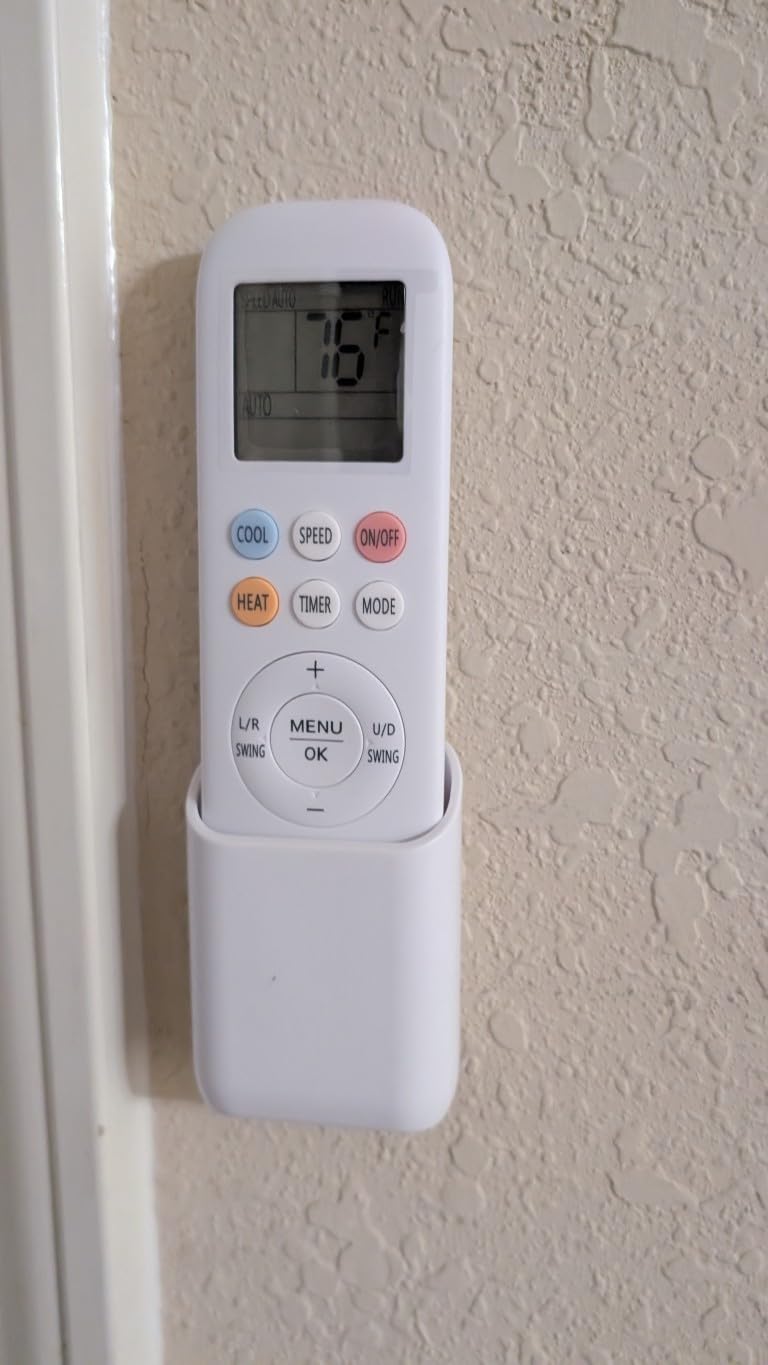
Control coverage is the widest here: seven operating modes, seven fan speeds, 4D auto swing, turbo and a Follow-Me function that carries a temperature sensor. WiFi app control works with Alexa and Google Assistant.
A high-temperature self-clean cycle at 133F and washable anti-bacterial filters handle upkeep.
Why low wattage matters on a long cooling season
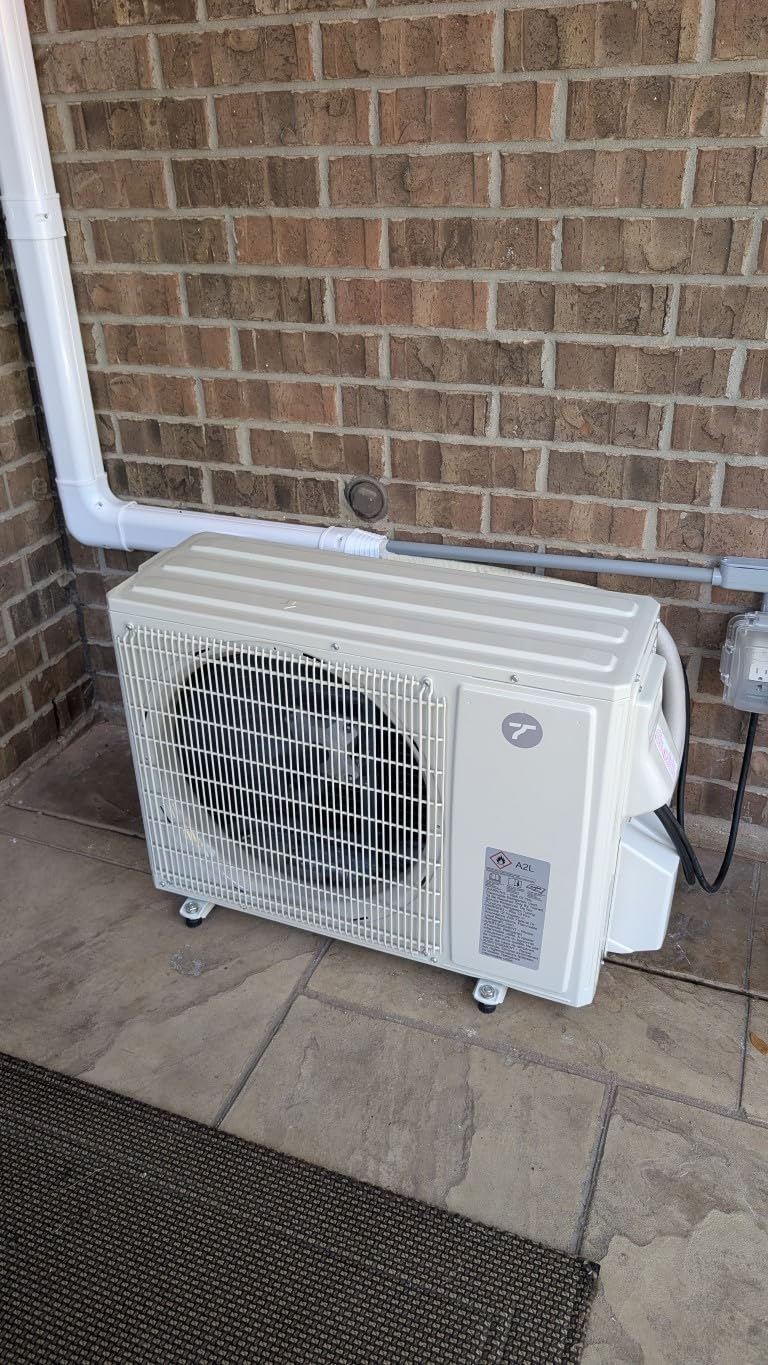
Published wattage is a max draw, not an average, so it does not directly predict your bill. It does indicate how hard the system is working at peak, and a 780 watt ceiling on a 12,000 BTU unit means the inverter is modulating rather than straining.
At 40.8 pounds the indoor head is also the lightest here, which matters if you are mounting it on an upper floor or a finished wall.
The warranty is the weak point
One year of manufacturer coverage is the shortest warranty in this comparison. That is a meaningful gap on a system you expect to run for a decade or more, and it is the reason this unit does not carry an overall recommendation.
With 165 reviews, the long-term owner history is also the shortest. Ask your installer what parts support looks like in your area before committing.
10. Nexaro 12000 BTU 17 SEER2 – Best Budget Four-Season Starter
Nexaro 12000BTU Mini Split Air Conditioner& Heater, 17 SEER2 𝟏𝟏𝟓𝐕 Wall-Mounted AC Unit Cools Rooms up to 750 Sq. Ft, Energy Efficient Inverter AC with Heat Pump
12000 BTU cooling and heating
17 SEER2
26 dB sleep mode
115V
205 watt
R-32
Washable filter
Pros
- Inverter compressor with consistent output and lower power use
- Sleep and mute mode at 26 dB
- Self-cleaning function at 135F with washable filters
- Auto-defrost on the outdoor unit for cold weather heating
- AHRI certified and under 70 pounds
Cons
- Coverage is listed as 450 sq ft in the feature bullets and 750 sq ft in the specs
- Only a 1 year warranty
- Ships in two separate boxes
- Professional installation required
The Nexaro rates 4.3 stars from 139 owners, with 72 percent five-star responses. It is the lowest efficiency unit in this group at 17 SEER2, and that is the honest trade against the rest of this list.
At a 205 watt published figure it draws very little power, and the inverter compressor delivers steady cooling rather than on-off cycling. Sleep mode runs at 26 dB.
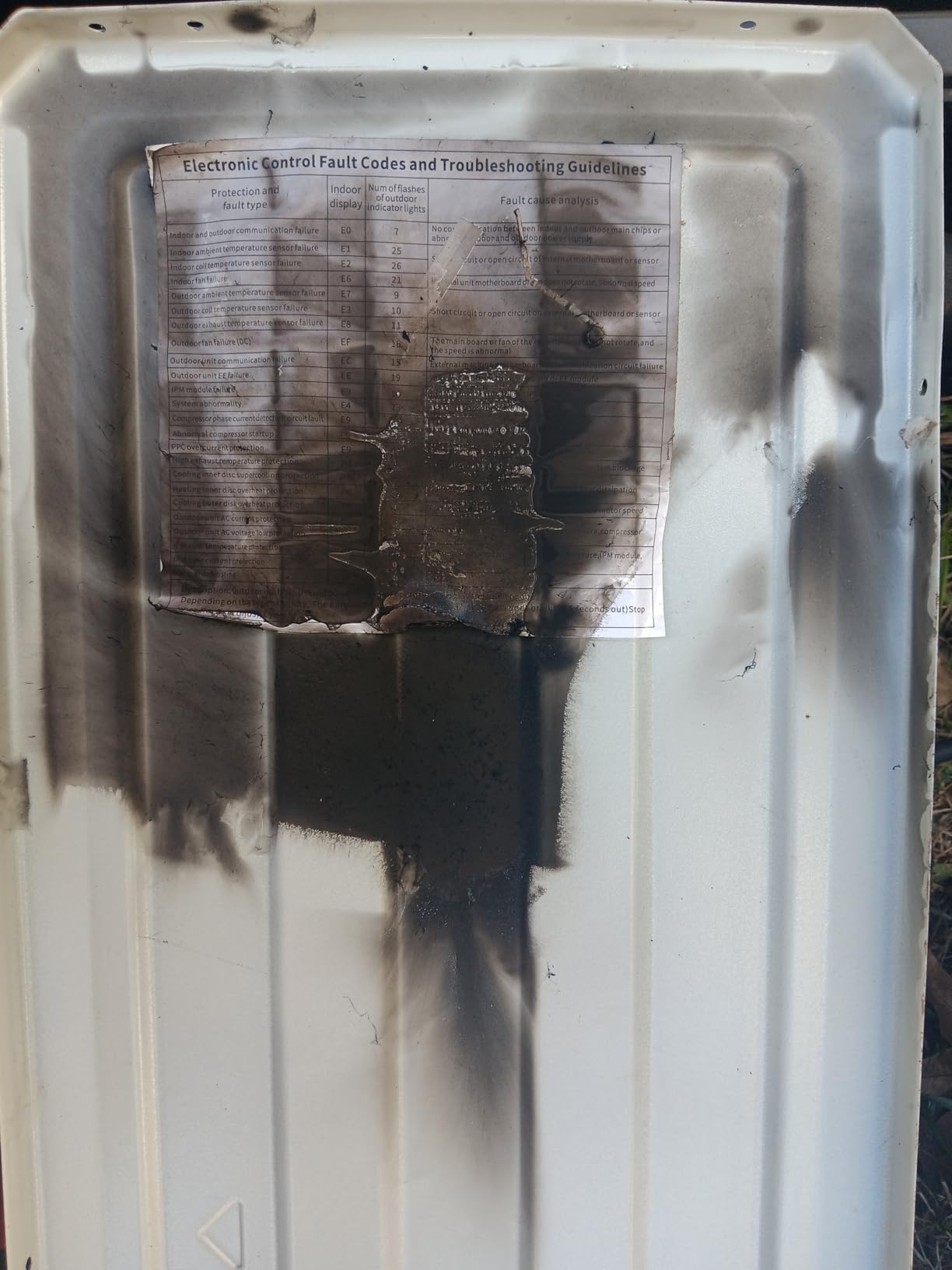
Maintenance features are the draw here: a self-cleaning cycle at 135F inhibits mold on the coil, washable filters keep airflow up, and auto-defrost supports heating in cold weather.
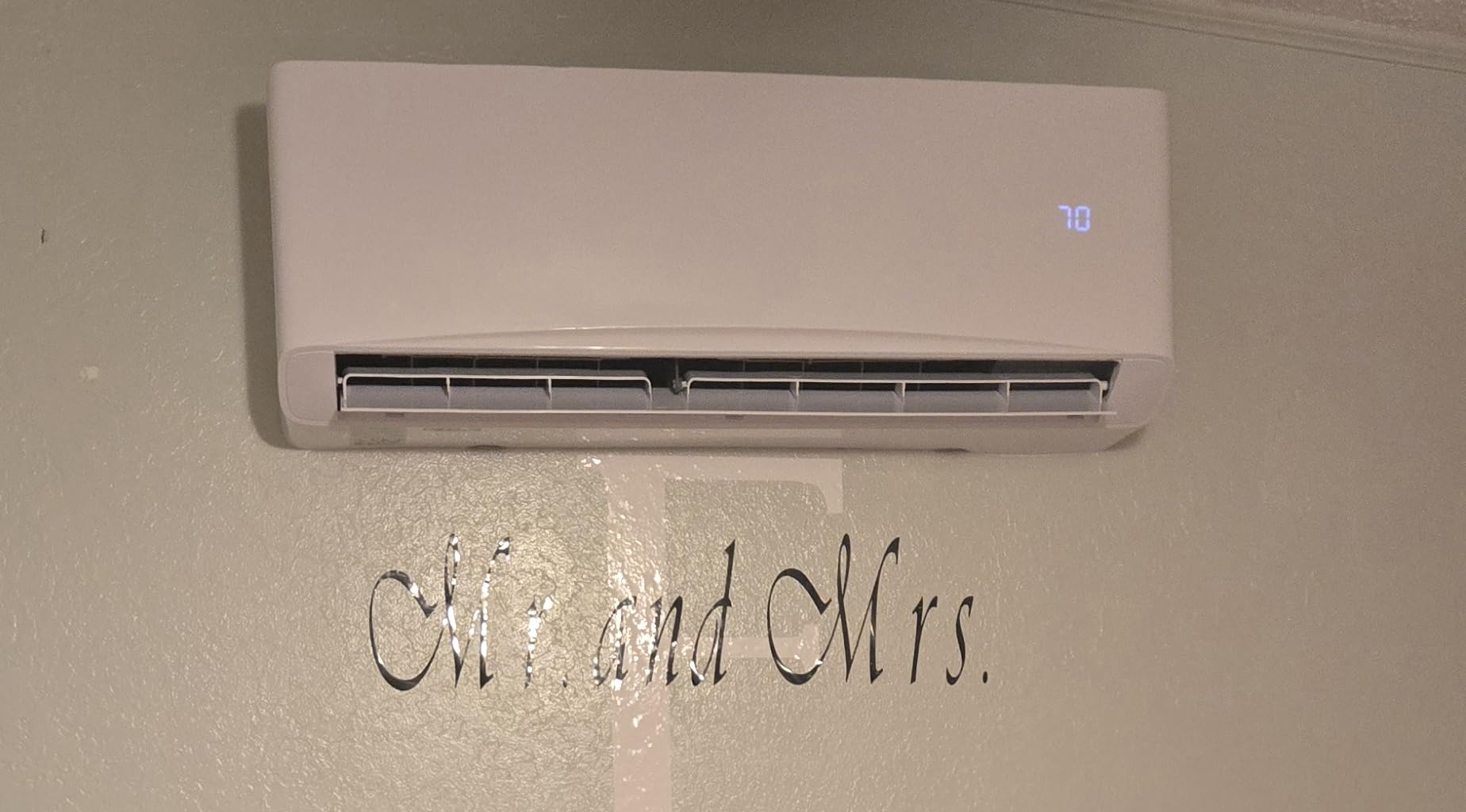
It runs on 115 volts with an R-32 charge, and the full kit ships with a 9.8 ft copper line set.
When 17 SEER2 is enough
A 17 SEER2 rating still clears the federal minimum, and for a secondary living room or a space used a few hours a day, the running cost gap against a 23 SEER2 unit is small enough that the upfront difference rarely pays for itself.
If the room runs full-time in a hot climate, the higher efficiency tier is the better long-term decision.
The coverage claim problem
The same listing describes the room as up to 450 square feet in the feature bullets and up to 750 square feet in the specification block. Both cannot be right, and the honest answer sits in between at 450 to 650.
A one year warranty is short, and the two-box shipment means parts can arrive separately. Confirm the warranty term before ordering.
11. Daikin Entra 18 SEER2 – Best for Buyers Who Want a Known Brand
Daikin 12,000 BTU 18 SEER2 Entra R32 Series Heat Pump Mini Split A/C
12000 BTU cooling and 11300 BTU heating
18 SEER2 and 9 HSPF2
29 dB
230V
550 sq ft
5 year warranty
Pros
- Recognizable manufacturer with established parts and service support
- 18 SEER2 with 9 HSPF2 and a 3.30 COP heating rating
- Cooling range from 50F to 115F and heating from 5F to 65F
- Blue Fin Protection coating and photocatalytic air purifying filter
- Five year manufacturer warranty and self-diagnostics with digital display
Cons
- Requires 230V hardwired power rather than a standard 115V plug-in
- Covers up to 550 square feet
- Heating capacity is 11300 BTU against 12000 BTU of cooling
- Smallest review base in this group at 78 ratings
The Daikin Entra is the only unit here from a major Japanese manufacturer most buyers already recognize, at 4.3 stars from 78 owners with 75 percent five-star responses. That matters when you are thinking about parts availability in ten years rather than this year’s purchase.
Efficiency is 18 SEER2 with 9 HSPF2 and a 3.30 COP heating rating. The cooling range runs from 50F to 115F and heating from 5F to 65F, with a DC inverter compressor and self-diagnostics on a digital display.
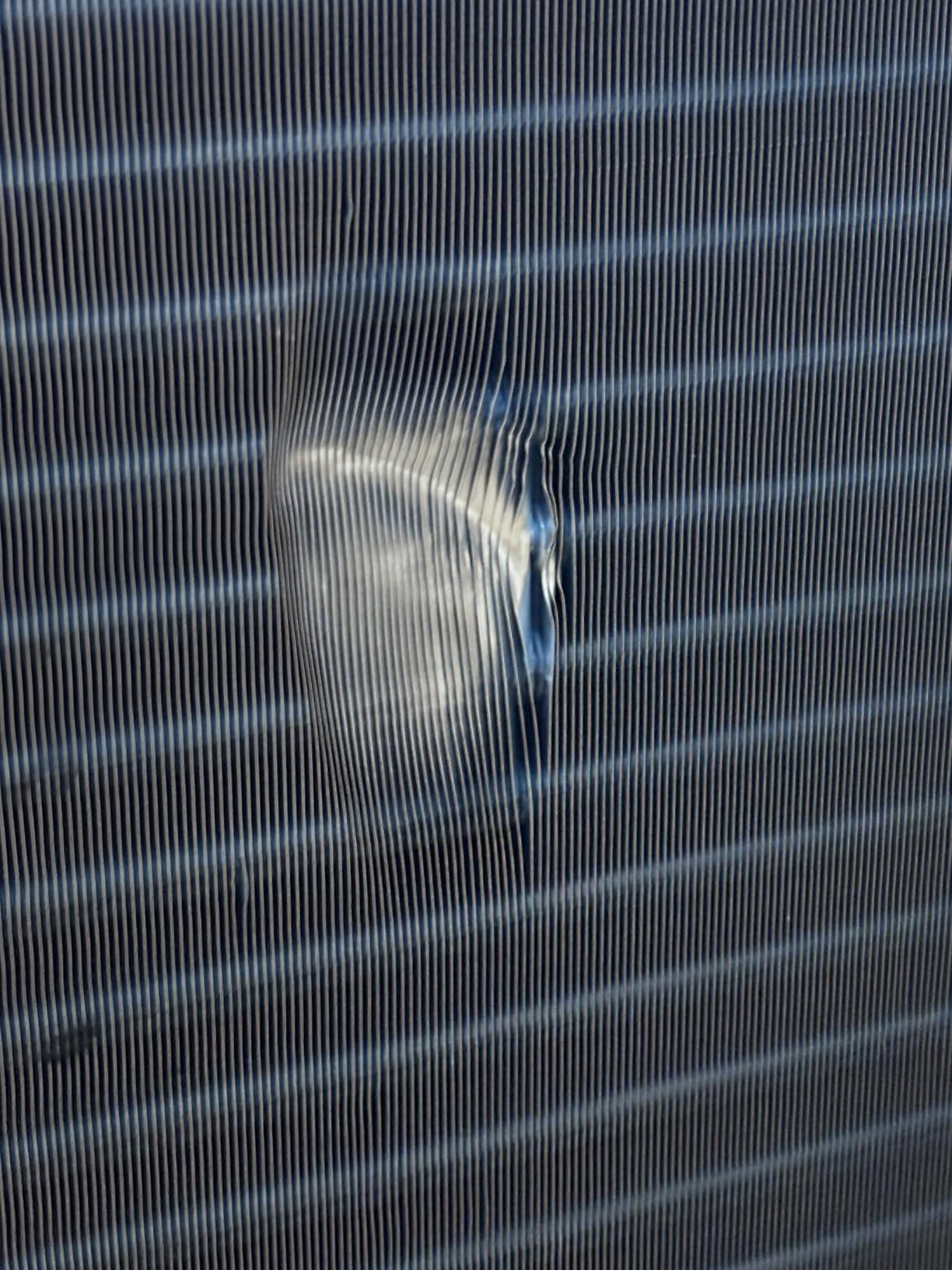
Blue Fin Protection coats the outdoor coils against corrosion, and the indoor head carries a titanium apatite photocatalytic air purifying filter. Dry mode, fan mode, auto mode, ECO+ and sleep mode cover everyday operation.
A 15 ft line set and wall mounting bracket are included in the box.
Why brand recognition changes the ownership calculation
A ductless head is a fifteen to twenty year appliance. The question that matters is whether you can get a genuine replacement part, a replacement board or a matching coil in year twelve.
An established manufacturer with regional service infrastructure is a safer answer to that question than a newer name, even when the newer name publishes a better specification sheet.
What you give up
Coverage is rated at 550 square feet, below several competitors here, and it needs 230 volt hardwired power. Heating capacity is 11,300 BTU against 12,000 BTU of cooling, so it delivers a bit less heat than it does cooling.
Below 5F the heating performance drops off entirely. For a warm climate living room it is a clean, serviceable choice; for a northern one, the Della covers far more ground.
12. Albott 12000 BTU DIY Pro Fast-Fit – Best for Pre-Wired DIY Setups
Albott 12,000 BTU DIY Mini Split AC & Heating System with Pro Fast-Fit Set
12000 BTU
18 SEER2 inverter
29 dB
115V
980 watts
5F to 122F range
Pre-wired indoor unit
Pros
- Pre-wired pre-connected indoor unit removes vacuuming and extra testing from the install
- 18 SEER2 inverter on standard 115V power
- Cools and heats up to 750 sq ft across a 5F to 122F range
- Quiet operation under 29 dB with app and remote control
- Self-cleaning function with removable filters and easy-clean air blades
Cons
- Power cord is not included
- Listed annual consumption of 750 kWh is high for an 18 SEER2 rating
- Mesh filter rather than a higher-grade washable filter
- Warranty is listed as 2 years in the spec block and 5 year compressor and 8 year parts in the features
This Albott DIY variant rates 4.3 stars from 59 owners, with 72 percent five-star responses. The distinguishing feature is the pre-wired, pre-connected indoor unit, which cuts the number of on-site steps considerably.
Efficiency is 18 SEER2 on 115 volt power, coverage is listed at 750 square feet and the operating range runs from 5F to 122F. The head operates under 29 dB with both app and remote control.
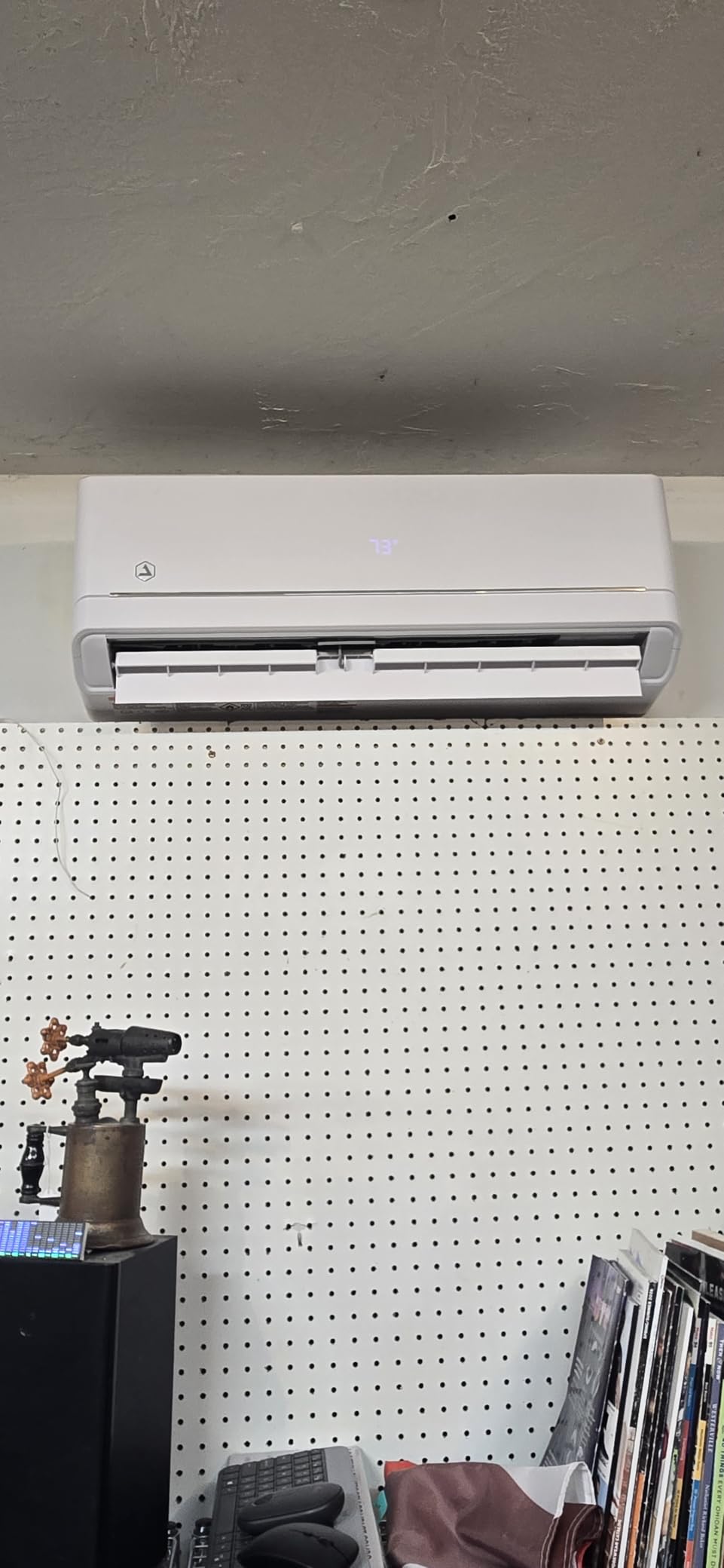
Setpoint adjusts from 61F to 90F with a 24-hour timer and sleep mode. A self-cleaning function, removable filters and easy-clean air blades handle routine upkeep.
At 66.5 pounds it is one of the lighter complete systems in this group.
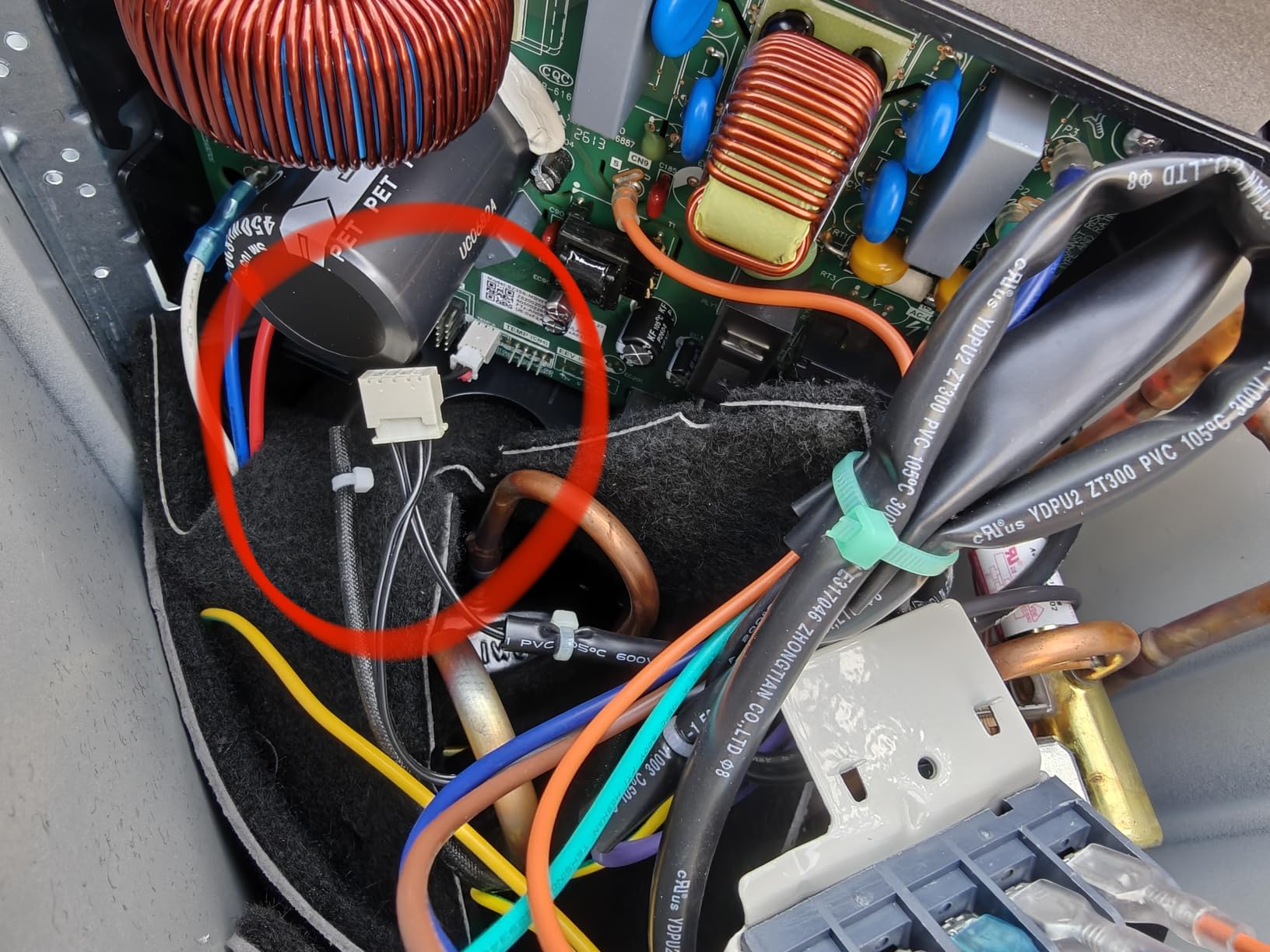
What a pre-wired indoor unit saves
On a conventional ductless install the installer has to flare the copper, run a vacuum, check for leaks and pull a charge. A pre-connected indoor head arrives with those connections finished, so the field work shrinks to mounting, piping and electrical.
That does not make the job code-free in most areas, but it reduces the billable hours.
Two details to settle before you buy
The power cord is not included, which is an easy surprise on a DIY-oriented system. The listed annual consumption of 750 kWh is high relative to an 18 SEER2 rating and is worth a question to the seller.
The warranty is listed as 2 years in the specification block and as 5 years compressor and 8 years parts in the features. Get the term in writing before ordering.
When a Living Room Does Not Need 12,000 BTU
A 12,000 BTU head is sized for a room of roughly 450 to 650 square feet at normal ceiling height with ordinary glass. Several variables push a living room out of that band, and stepping up or down changes which unit on this list fits.
Seller coverage claims across this group range from 450 to 750 square feet for identical 12,000 BTU capacity. None of those figures are wrong so much as optimistic under ideal conditions, which is why the 450 to 650 rule is the one to plan against.
Go up to 18,000 BTU when the room has heavy sun or glass
West-facing windows, a wall of sliders, a sunroom or a vaulted ceiling all add load that square footage alone does not capture. The most common sizing failure we see in homeowner discussion is a 12,000 BTU unit installed in a sun-exposed room, running flat out and never reaching setpoint.
If the room faces strong afternoon sun, plan a manual load calculation rather than a rule of thumb.
Step down to 9,000 BTU in three cases
A small, well-insulated room with light glass and modest sun can be handled by a 9,000 BTU head. A very tight, drafty space can also be better served by a smaller unit, because an oversized one cycles on and off instead of running steady.
Oversizing causes short cycling, which means the compressor starts and stops repeatedly. That is noisy, hard on the compressor, and worse at removing humidity because the system has no steady run time.
The rule most experienced installers follow is to undersize slightly rather than oversize, and to confirm with a load calculation either way.
Reconcile the coverage claims
When a product page says 750 square feet, that figure assumes a well-insulated room, standard 8 foot ceilings, limited glass and no direct afternoon sun. Retailers publish it because it describes the best case, not the typical living room.
Measure your room, count the glass area, note the orientation, then add roughly 15 to 20 percent if the load is uncertain.
How We Evaluated These 12 Units
We compared the published specifications and the pattern of owner reviews for twelve 12,000 BTU ductless heat pump systems. Every unit here is a single-zone system rated at one ton of cooling capacity.
We weighted five things: sizing accuracy of the published coverage claim, SEER2 and HSPF2 efficiency, the indoor noise floor, the low-ambient heating capability, and the reliability and warranty signal across the review history.
Installation practicality mattered too. Electrical requirements, whether a line set is included and how many on-site steps the install needs all shape what a system actually costs a homeowner to run for fifteen years.
We did not test these units in a controlled lab. The ratings and review counts come from the retailer listings, and every specification quoted here comes from the manufacturer data published on those listings.
Buying Guide: Voltage, Line Set, Install and Total Cost
Equipment price is only part of what a 12,000 BTU mini split costs in a living room. The line set, the electrical work, the drain line and the labor usually matter as much as the head itself.
115V versus 208-230V
A 115 volt system runs on standard household current, which is the single biggest simplification for a retrofit. Eight of the twelve units here run on 115V, including the Senville LETO, COSTWAY, Rellytech, ROVSUN, MRCOOL and Temprium.
A 208-230V system needs a dedicated double-pole breaker and properly gauged wiring. Two units here require it: the Della Vario and the Daikin Entra.
In a panel with no spare capacity, the electrical work can cost more than the equipment. Ask an electrician to check your panel before you commit to a hardwired unit.
Line set length and the vacuum step
A line set is the pre-insulated copper tubing connecting the head to the condenser. Most kits include 9.8 to 16.4 feet, which covers a typical living room where the two units sit close together.
Longer than the included length usually means adding copper and having the refrigerant charge adjusted, which costs money. Pre-charged Quick Connect systems like the MRCOOL avoid the vacuum step entirely, and pre-connected indoor units like the Albott DIY reduce field work.
What to confirm before you order
Seven things matter before a 12,000 BTU system leaves the warehouse: the room’s measured square footage, window orientation and glass area, ceiling height, the electrical panel situation, whether a permit is required in your municipality, the line set length versus your actual run, and who installs it.
Permit requirements vary locally and depend on the work involved. A plug-in style 115V install is simpler than a hardwired one in most jurisdictions.
Reliability and which names to approach carefully
Owners repeatedly name Mitsubishi Electric, Fujitsu, LG and Daikin as the durable choices, and Mitsubishi Mr. Slim is the most common premium recommendation in homeowner discussion. Daikin is the only one of those four in this group.
The caution is about the opposite end of the market. Fly-by-night brands with no local parts inventory, no published warranty terms and inconsistent specification pages are the ones that generate complaints about refrigerant service being unavailable after a failure.
The pattern to watch is not the brand name but the paperwork. A listing that states warranty length two different ways, lists noise twice with different numbers, or claims coverage figures that contradict its own bullets is telling you the documentation is not maintained.
Several units in this group have exactly that issue, which is why the review sections call them out rather than glossing over them.
Estimating running cost from SEER2
Higher efficiency means lower cost per hour of cooling, but the difference only shows up in a long, hot summer. For a 600 square foot living room with a few hours of daily use, the gap between 17 and 23 SEER2 is modest.
For a room that runs eight or more hours a day through peak summer, the efficient tier pays back faster than most buyers expect.
Maintenance that actually matters
Clean or washable filters every month during cooling season, vacuum the indoor coil and check the drain line for algae, and keep the outdoor unit clear of debris and at least a few feet off the wall.
Self-cleaning cycles on the COSTWAY, Mountman, Nexaro, Temprium and Albott units reduce how often you treat the coil, but filter cleaning stays a monthly job either way.
Before the season ends, it is worth thinking about the room itself. Good window treatments make a measurable difference to how hard a 12,000 BTU head has to work, and our picks for zebra blinds and roman shades handle that side of the equation well.
Frequently Asked Questions
Who makes the best 12000 BTU mini split?
Among the units we compared, the Senville LETO is the strongest all-round choice for a medium living room, pairing a 4.4 rating from more than 2,000 owners with 20.8 SEER2 efficiency, a 28 dB indoor head and 110 volt power. Daikin is the pick if long-term parts support matters more than specification value.
What is the most reliable brand of mini splits?
Homeowner discussion repeatedly names Mitsubishi Electric, Fujitsu, LG and Daikin as the durable choices, with Mitsubishi Mr. Slim the most common premium recommendation. Reliability signal matters more than the badge: a brand that publishes consistent warranty terms and maintains regional parts inventory will still be serviceable in year twelve.
How many square feet should a 12000 BTU mini split cool?
A 12,000 BTU, or 1-ton, ductless heat pump is designed for a living room of roughly 450 to 650 square feet with standard 8 foot ceilings and normal sun exposure. Seller pages claiming 750 square feet describe a best case with light glass and good insulation rather than a typical lived-in room.
What mini split brands to stay away from?
Avoid listings with no traceable warranty terms, no published AHRI certification and specification pages that contradict themselves. Several units in this roundup quote warranty length two different ways and state noise figures twice with different numbers. Undocumented fly-by-night brands with no local parts inventory are the biggest risk, not any specific name.
Is it better to undersize or oversize a mini split?
Undersize slightly rather than oversize. An oversized head cycles on and off, which is noisier, harder on the compressor and worse at removing humidity because the system has no steady run time. A slightly undersized unit runs continuously and efficiently. Confirm with a manual load calculation when the room has heavy glass or unusual sun exposure.
What are the disadvantages of a 12000 BTU mini split?
The main drawbacks are installation complexity, the need for a drain line, and the fact that a single head serves one zone only. Efficiency depends on how long you run it, and a 1-ton head cannot handle a heavily sun-exposed or oversized room. Short warranty terms on some budget units are a further risk.
Why is my electric bill so high with mini split?
Common causes include running the head with windows and doors open, setting the setpoint too low, a dirty filter restricting airflow, and using an oversized unit that short-cycles. A clogged filter alone can raise consumption noticeably. Raising the setpoint a few degrees and cleaning filters monthly makes the biggest difference.
The Verdict: Which 12000 BTU Mini Split Fits Your Living Room
The Senville LETO is our pick as the best 12000 BTU mini split for living rooms, because it pairs the widest owner history in this group with 20.8 SEER2 efficiency, 110 volt power and an included 16 ft line set. For a typical 450 to 650 square foot room with moderate sun, it is the least complicated way to get comfortable.
Choose the COSTWAY at 23 dB if the room adjoins a sleeping area and quiet matters most. Choose the Della Vario at 23 SEER2 and -4F heating if you want the most efficient unit and can handle 230 volt power. Choose the Daikin Entra if parts availability in ten years is your top concern.
Whatever you pick, measure the room and count the glass before you order, and get a load calculation for anything sun-exposed. A 12,000 BTU head handles a normal living room easily; the failures we see come from mismatched rooms, not mismatched units.