

If you are comparing the best mini split air conditioners under 1,000 dollars, the single most important thing to understand is that this budget covers the equipment box and nothing else. The indoor head, the outdoor condenser, and usually a pre-charged line set arrive in the carton. Labor, permits, electrical work, wall penetrations, and any extra line set footage land on a separate invoice, and they routinely add another 600 to 1,000 dollars on top.
That is not a complaint about the retailers. It is simply how ductless mini split equipment is priced, and almost every listing under the cap leaves it unsaid. We set the same rule for this roundup: every system below sits under 1,000 dollars for equipment, verified when we wrote this in 2026, and we tell you plainly what installation will add.
Our top pick is the Senville LETO 12,000 BTU. It has the deepest owner-review history of anything we could find at this budget, which means years of failure data rather than a few hundred early reviews, and it covers the 550 to 750 square foot band that most people are actually trying to cool. If you need a bedroom unit, a 1,000 square foot open floor plan, or a house with no 230-volt circuit, the picks further down handle those cases specifically.
We also looked at the wider category to place these in context. Our general mini split roundup covers what you get above this price ceiling, and our ductless mini split systems guide walks through multi-zone layouts if one room is not enough.
Table of Contents
Top 3 Picks for the Best Mini Split Air Conditioners Under 1000 Dollars in 2026

COSTWAY 12,000 BTU Heat Pump
- 23 dB operation
- 5 year parts and 8 year compressor
- 750 sq ft
- 5 modes
All 10 Best Mini Split Air Conditioners Under 1000 Dollars in October
| Product | Specifications | Action |
|---|---|---|
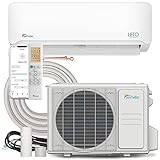 Senville LETO 12,000 BTU Senville LETO 12,000 BTU |
|
Check Latest Price |
| COSTWAY 12,000 BTU Heat Pump |
|
Check Latest Price |
 DELLA Vario 23 SEER2 DELLA Vario 23 SEER2 |
|
Check Latest Price |
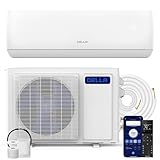 DELLA Motto 18,000 BTU DELLA Motto 18,000 BTU |
|
Check Latest Price |
 ROVSUN 9,000 BTU WiFi ROVSUN 9,000 BTU WiFi |
|
Check Latest Price |
 Albott 12,000 BTU 18 SEER2 Albott 12,000 BTU 18 SEER2 |
|
Check Latest Price |
 Rellytech 12,000 BTU 19 SEER2 Rellytech 12,000 BTU 19 SEER2 |
|
Check Latest Price |
 Mountman 12,000 BTU 19 SEER2 Mountman 12,000 BTU 19 SEER2 |
|
Check Latest Price |
 Temprium 12,000 BTU 22 SEER2 Temprium 12,000 BTU 22 SEER2 |
|
Check Latest Price |
 DELLA Serena 22 SEER2 DELLA Serena 22 SEER2 |
|
Check Latest Price |
1. Senville LETO 12,000 BTU – Best Overall and the Most Proven
Senville LETO Mini Split Air Conditioner, Heat Pump, White, 12000 BTU
12000 BTU 1 ton inverter
20.8 SEER,28 dB indoor
700 sq ft,110V
R-454B heat pump to 5F
Pros
- Deepest owner review base in this roundup at 2185 ratings
- All-season 4-in-1 operation including heat pump to 5F
- Works with Alexa and app for routines and remote control
- 16ft pre-charged line set included in the package
Cons
- Professional installation required and labor is not covered
- Not BEE star compliant
- 110V circuit limits it to lighter electrical service
This is the unit we recommend first for most people reading a sub-1,000-dollar budget. The Senville LETO is a 12,000 BTU one-ton inverter heat pump rated for 700 square feet of coverage, and it is the only system here with more than two thousand owner ratings behind it.
That review volume matters more than it sounds. A 4.4 star average built on 2,185 ratings has been stress-tested through multiple summers, and the complaints that survive that filter are small and specific. Roughly 76 percent of those ratings are five-star, and the negatives cluster around installation logistics rather than the machine itself.
The spec sheet is unremarkable in the way good budget equipment is. It uses a rotary scroll compressor, runs on 110 volts, uses R-454B refrigerant, and carries a 20.8 SEER rating with a published 28 dB indoor noise figure. The 16-foot line set comes pre-loaded with refrigerant, so if your run is under 25 feet no refrigerant work is needed at all.
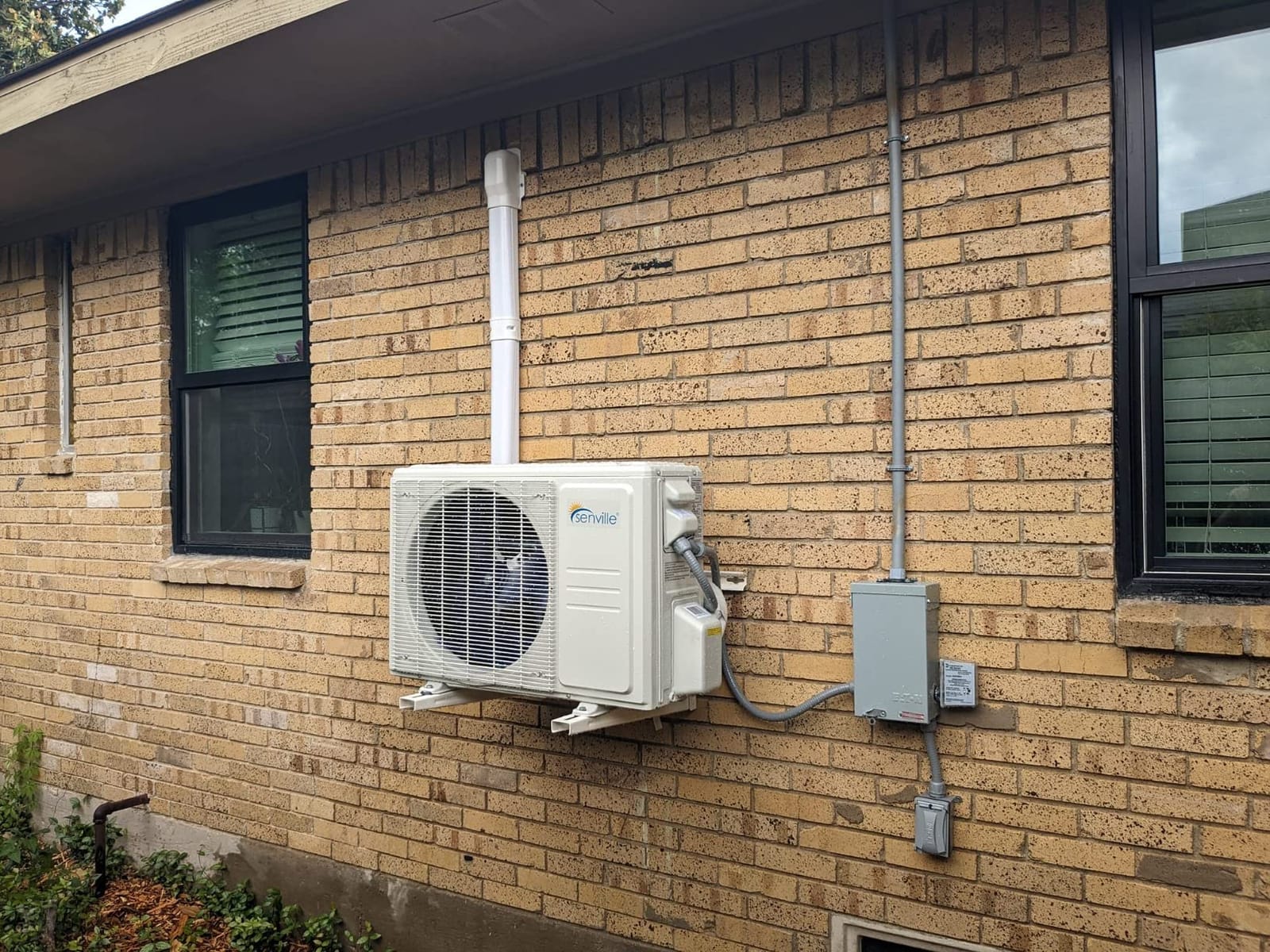
Control is handled by a remote with an auto-off display, and the unit is listed as Alexa enabled, so you can add it to routines without replacing the remote. Operation covers cooling, heat pump mode down to 5F, dehumidification, fan, and turbo, which is why it works as a year-round system rather than a summer-only box.
Warranty is where the marketing and reality differ. The listing states two years on parts and five years on the compressor, while the feature list and many owners describe five years on both. Owners report the manufacturer warranty excluding labor, which means a compressor failure out of year six is on you. Budget for that if you are in a region with hard water or coastal salt air.
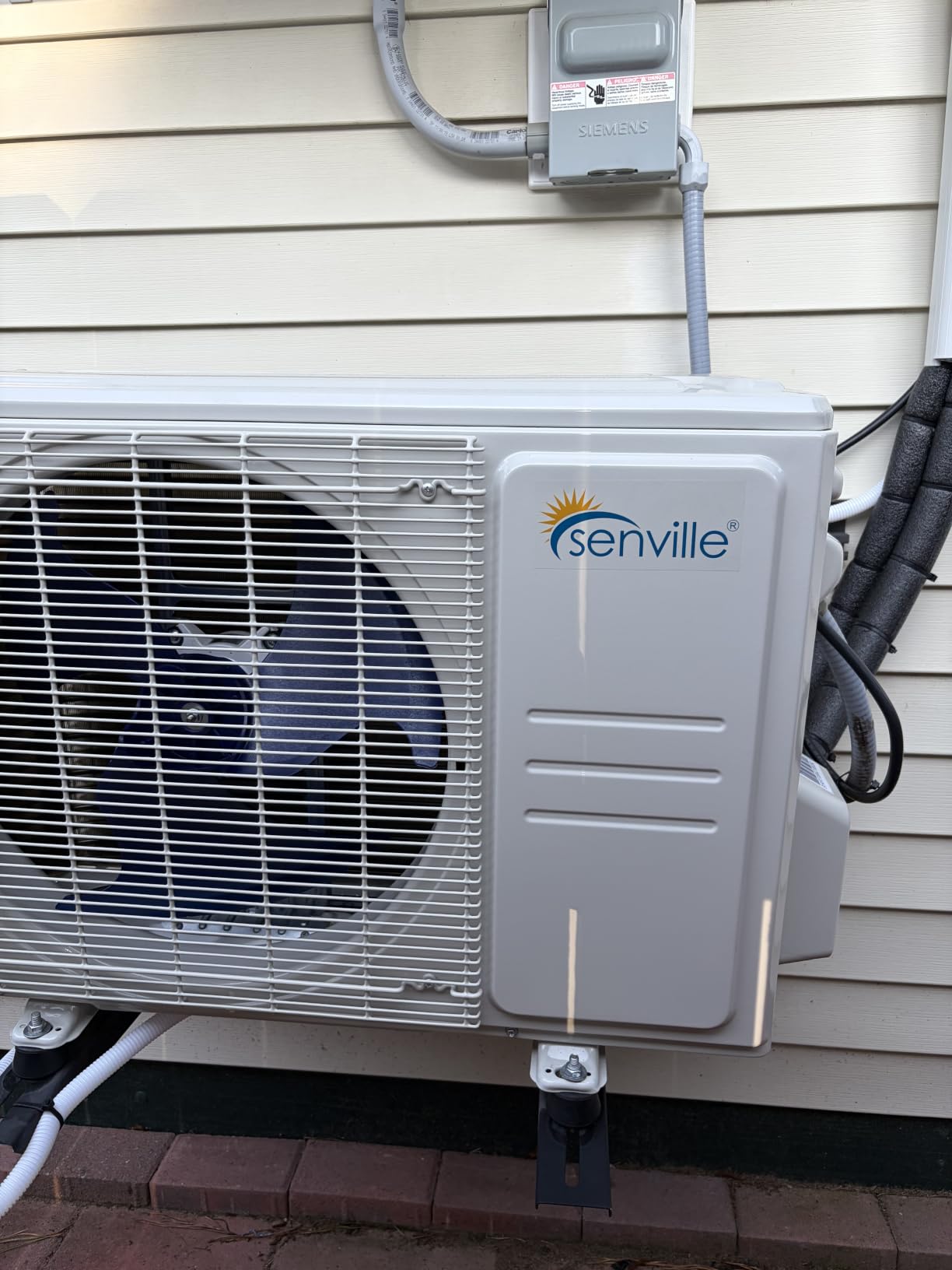
The unit weighs 78.3 pounds and the indoor head measures about 26 inches wide, so plan the mounting bracket around a solid stud or masonry anchor rather than drywall alone. Total dimensions of the system are 10.43 inches deep by 26 inches wide by 21.26 inches high.
When the LETO is the right buy
Choose the LETO when you are cooling one defined space between roughly 400 and 700 square feet, you want both cooling and supplemental heat, and you value knowing that thousands of owners have already made the same decision. It is the safest pick in the set for a first-time ductless buyer.
It is also a strong choice for a home addition, a converted basement, or a manufactured home with no existing ductwork, because 110-volt power means you do not need a 230-volt circuit pulled first. For garage-only use where temperatures routinely swing past the unit’s comfort range, our garage heat pump picks are built differently.
Where the LETO falls short
The warranty structure is the main gap. A two-year parts term is shorter than several competitors here, and labor is excluded outright, so a mid-life failure means you pay for the visit and possibly the part.
Not being BEE star compliant also means it sits below the efficiency tier that utility rebate programs usually reward. If your local program requires a minimum SEER2 to qualify, this unit will not qualify. The listed 700 square foot coverage is also the more optimistic end of what a 1-ton system handles in a sun-facing room, so a heavily glazed space may need the 18,000 BTU option further down.
2. COSTWAY 12,000 BTU – Best Value With the Longest Compressor Cover
COSTWAY 12000BTU Mini Split Air Conditioner& Heater
12000 BTU cooling and 12300 BTU heating
20 SEER,23 dB indoor
750 sq ft,115V,R-32
Pros
- 23 dB indoor operation
- among the quietest in this set
- 5 year parts and 8 year compressor warranty
- Five operating modes with four fan speeds plus ECO and turbo
- Pre-charged 16ft line set and washable filter included
Cons
- Professional installation required by the terms
- Outdoor unit must be installed new
- 20 SEER trails the 22 and 23 SEER2 units
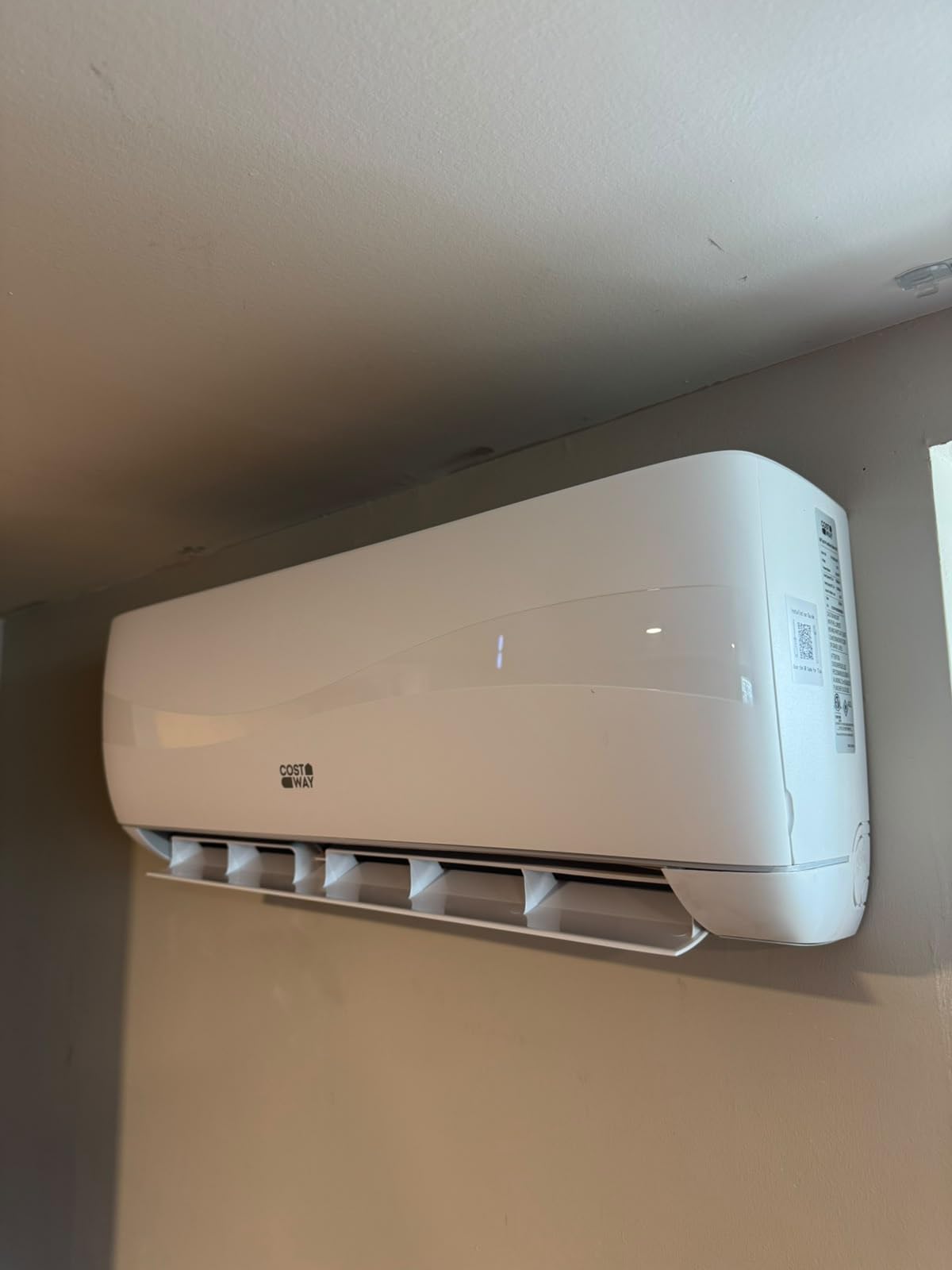
The COSTWAY 12,000 BTU runs at a published 23 dB on the indoor unit, among the lowest noise figures in this roundup, and it carries an eight-year compressor warranty with five years on parts.
It covers a claimed 750 square feet, which makes it the joint largest coverage claim among the 1-ton systems here, and it runs on 115 volts with R-32 refrigerant. Roughly 75 percent of its 1,661 ratings are five-star, and owners repeatedly single out how little they can hear it at night.
Feature-wise it is generous for the money. You get five modes, auto, cool, dry, heat, and fan, each with four fan speeds, plus a self-cleaning cycle that runs at 134.6F, a washable filter, four-way swing, ECO mode, turbo, an iFEEL function that reads temperature at the remote, and a timer that runs from half an hour to 24 hours.
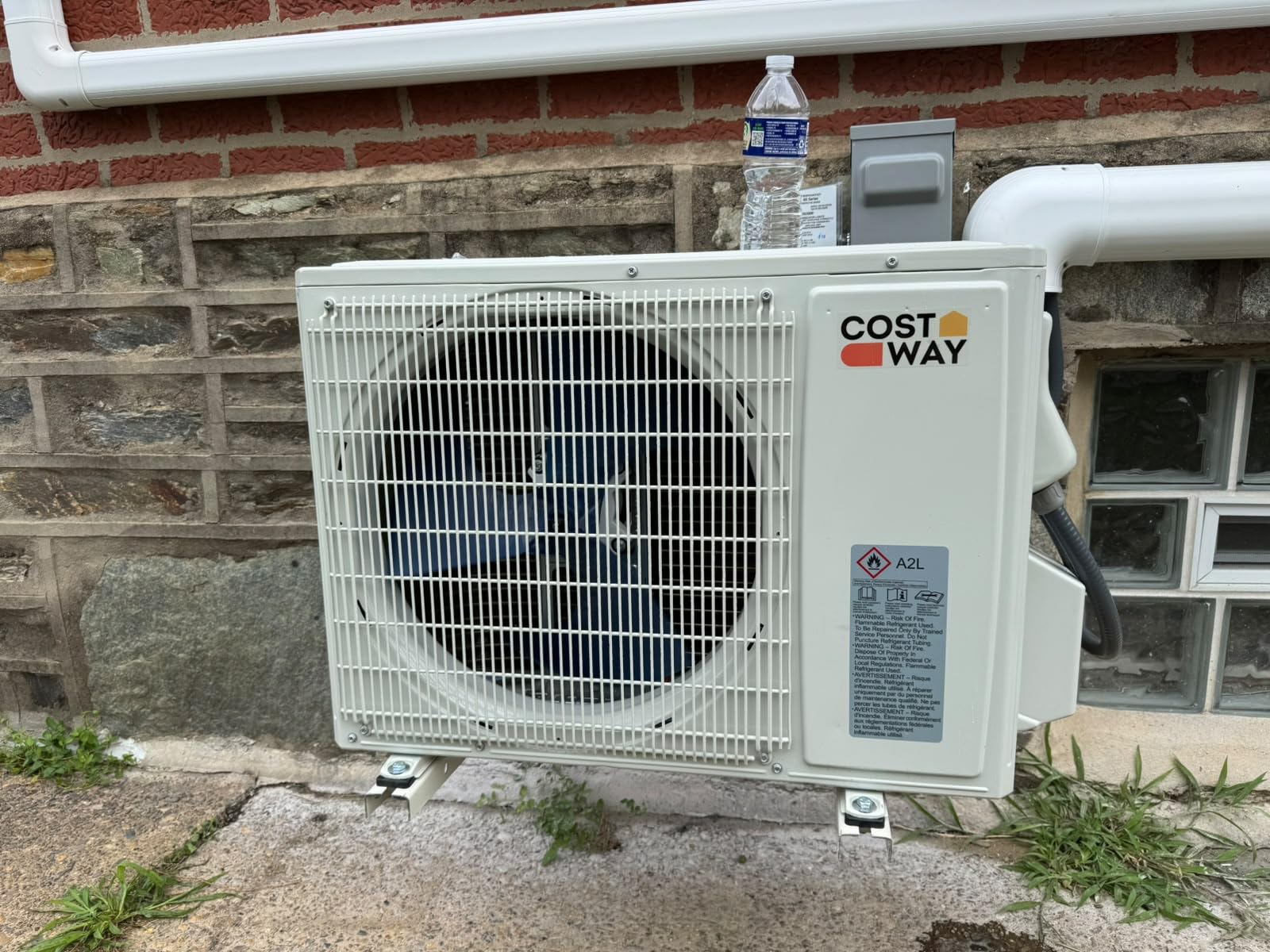
The package is pre-charged, so a run under the included line length avoids any refrigerant charge adjustment. The compressor is a scroll type with inverter drive, and the system is AHRI certified. At 68 pounds it is the lightest of the larger one-ton systems we looked at, which matters if you are handling the outdoor unit yourself on a balcony or a roof pad.
Owners report the self-cleaning function genuinely reduces filter upkeep in humid months, and the dry mode gets singled out in Florida and Gulf Coast installs where humidity is the real problem rather than temperature. Power draw is listed at 1,970 watts at full load.
When the COSTWAY is the right buy
Pick this one for a bedroom or a quiet home office where noise at idle is the deciding factor, and where you are on 115-volt power. The 23 dB figure and the sleep and ECO modes make it the quietest option in the set by spec.
It also suits buyers who intend to keep the system a long time and want the compressor cover to outlast a typical mortgage. The eight-year compressor term is the longest here, and the five-year parts term is the second longest among the 1-ton units.
Where the COSTWAY falls short
The 20 SEER rating is mid-pack. If you run this unit several hundred hours a year in a high electricity price area, the gap between 20 SEER and 23 SEER2 is real money over a decade, though it is rarely the largest line item on your bill.
Installation is mandatory under the terms, and the outdoor unit has to be installed new rather than paired with an existing condenser. That is a labor cost, not a compatibility problem, but it does mean the quoted equipment figure is the smallest part of the invoice. If your space is larger than about 700 square feet of sun-exposed floor, the 750 square foot claim starts to strain.
3. DELLA Vario 23 SEER2 – Best Efficiency per Watt Under the Cap
DELLA Vario Series 12000 BTU Mini Split Air Conditioner Work with Alexa with 1 Ton Pre-Charged Heat Pump Ductless Inverter System, 23 SEER2, Cools Up to 550 Sq. Ft,16.4ft Installation Kit Included
12000 BTU inverter heat pump
23 SEER2 and 9.5 HSPF,28 dBa
550 sq ft,230V,to -4F
Pros
- Highest efficiency rating among the units under the cap
- Heats down to -4F for genuine cold climate use
- ETL listed
- AHRI certified and BEE 5 Star
- App and remote with sensor temperature sensing
Cons
- Requires 230V power and a 15A fuse
- Needs a vacuum pump and gauges to commission the line set
- Alexa skill only supports on and off
The DELLA Vario is the most efficient system in this roundup, rated at 23 SEER2 with 9.5 HSPF, and it is the only one here that heats down to minus 4F as a rated specification rather than a marketing approximation.
It is a one-ton 12,000 BTU inverter heat pump with 12,000 BTU of heating capacity, running on 230 volts with R-454B refrigerant. Owners report reaching set temperature in roughly half an hour after startup, and about 77 percent of its 1,435 ratings are five-star.
The noise figure is 28 dBa for the indoor unit, and the coil uses a rotary scroll compressor. It is ETL listed, AHRI certified, and rated BEE 5 Star, which puts it in the tier that utility efficiency programs most often recognize.
Control is handled through a remote plus a smartphone app with WiFi scheduling, and the remote carries a temperature sensor so the unit reads comfort at the spot you are sitting rather than at the wall. Modes include dehumidify, sleep, iFEEL, and self-diagnosis, and the outdoor unit runs auto defrost.
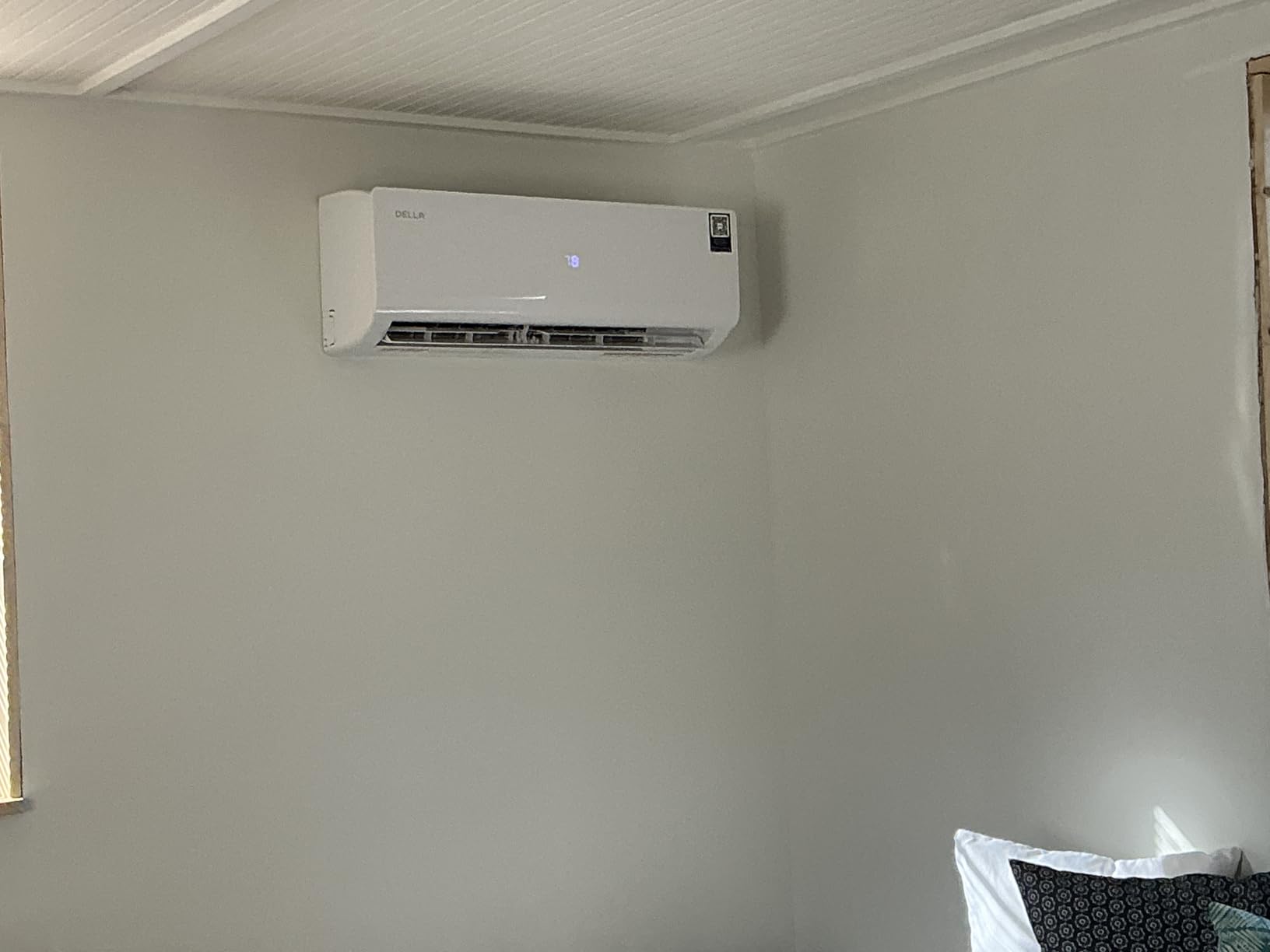
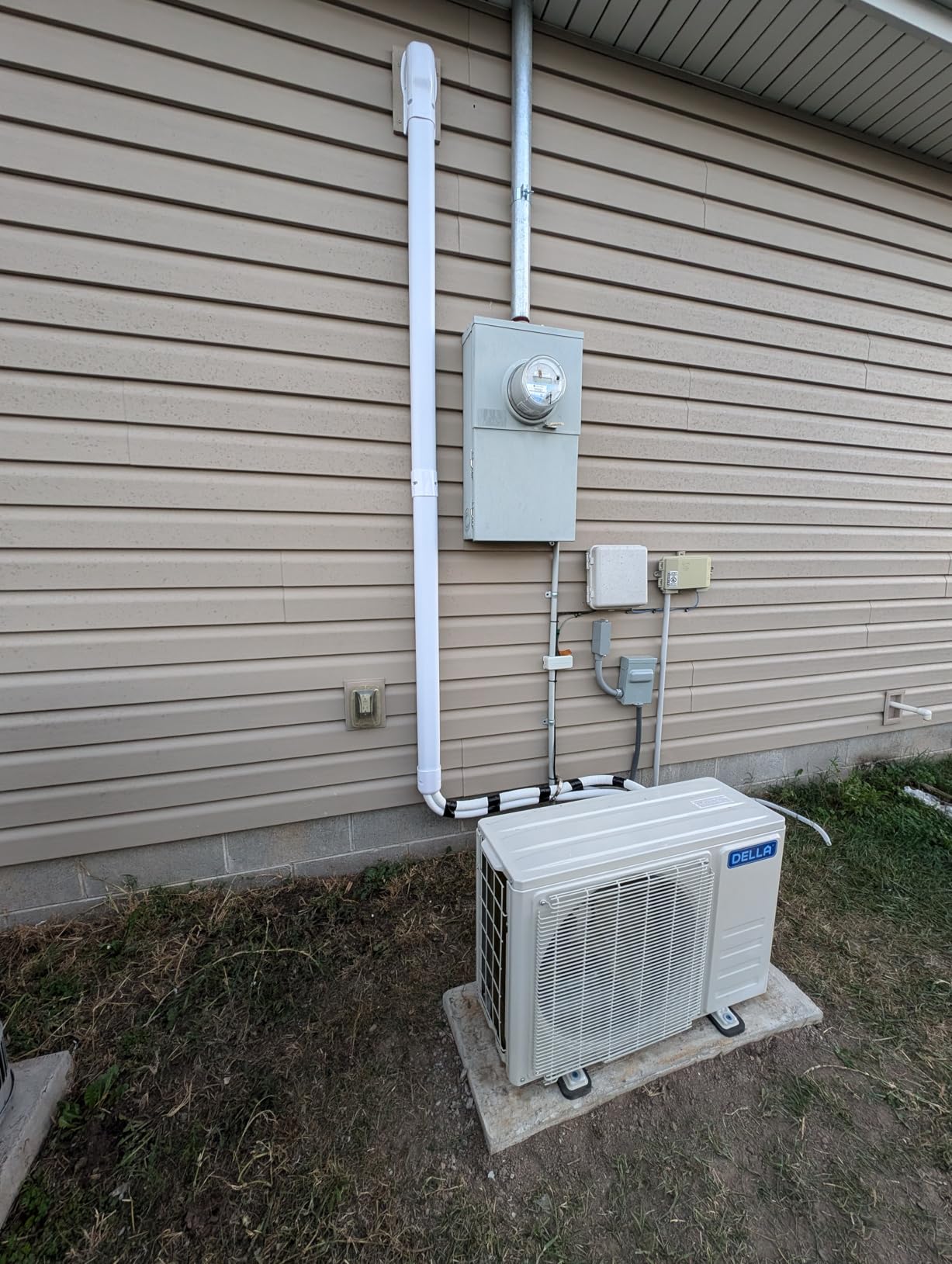
The install kit includes a 16.4-foot line set with 1/4 inch and 3/8 inch copper pipes plus a 78.7-inch drain pipe. The system weighs 61 pounds and the indoor head measures about 31.9 inches wide. Maximum fuse size is 15A.
Owners are split on one narrow point. The Alexa skill for the TL series supports on and off only, not full temperature or mode control, so treat the voice integration as a convenience rather than a real control surface. The app does the full job.
When the Vario is the right buy
Choose the Vario if heating is a genuine part of your plan, not just backup. A minus 4F rated heat pump mode in a cold state performs meaningfully better than a 5F-rated unit when outdoor temperatures drop, and this is the only system in the set with a published figure below zero.
It is also the right efficiency buy for a home office or a den you run year-round on a 230-volt circuit. At 23 SEER2 with a 9.5 HSPF it is the system most likely to have the lowest operating cost over fifteen years, even after installation, which is the number that matters when you look past year one.
Where the Vario falls short
The stated coverage is 550 square feet, the lowest in the roundup for a 12,000 BTU unit, so it is honest about its size but will not stretch to a large living room. A sun-facing room with wide glass at that square footage will run constantly without reaching setpoint.
It needs a dedicated 230-volt circuit and a 15A fuse, and the line set must be evacuated with a vacuum pump and gauge set, which rules out casual DIY work. Several owners also report that the supplied line-set tape wrap runs out before the job finishes and that the drain tubing and copper insulation can degrade within about two years. Budget for tape and insulation of your own.
4. DELLA Motto 18,000 BTU – Best for Rooms Near 1,000 Square Feet
DELLA Motto Series 18000 BTU 19 SEER2 230V Mini Split AC, Cools Up to 1000 Sq.Ft, Works with Alexa and Wifi, Ductless Inverter System Air Conditioner, Pre-Charged Heat Pump and 16.4ft Kits
18000 BTU and 18700 BTU heating
19 SEER2,29 dBa indoor
1000 sq ft,230V,to 5F
Pros
- Only unit here rated for 1000 square feet of coverage
- 18700 BTU heating capacity for shoulder seasons
- Cooling and heating in one ductless head
- 16ft copper line kit and 6.56ft drain pipe included
Cons
- Requires 208-230V power and a 15A fuse
- Line set vacuuming and refrigerant adjustment if run length changes
- Efficiency is 19 SEER2
- below the 1-ton units here
The DELLA Motto is the answer for anyone whose room is larger than a 1-ton system can handle. At 18,000 BTU cooling and 18,700 BTU heating it is the only unit in this roundup rated for 1,000 square feet, and it stays under the equipment ceiling.
It is a 1.5-ton inverter system running on R-32 refrigerant, rated 19 SEER2 and BEE 4 Star, with a published indoor noise figure of 29 dBa. The DC inverter compressor is claimed to deliver up to 30 percent power savings compared with a conventional fixed-speed compressor of the same size.
An upgraded bottom heating element on the outdoor unit allows heat pump operation down to 5F, which is a real winter supplement in most climate zones. Heating capacity of 18,700 BTU is more than its cooling rating, which is the typical inverter heat pump advantage.
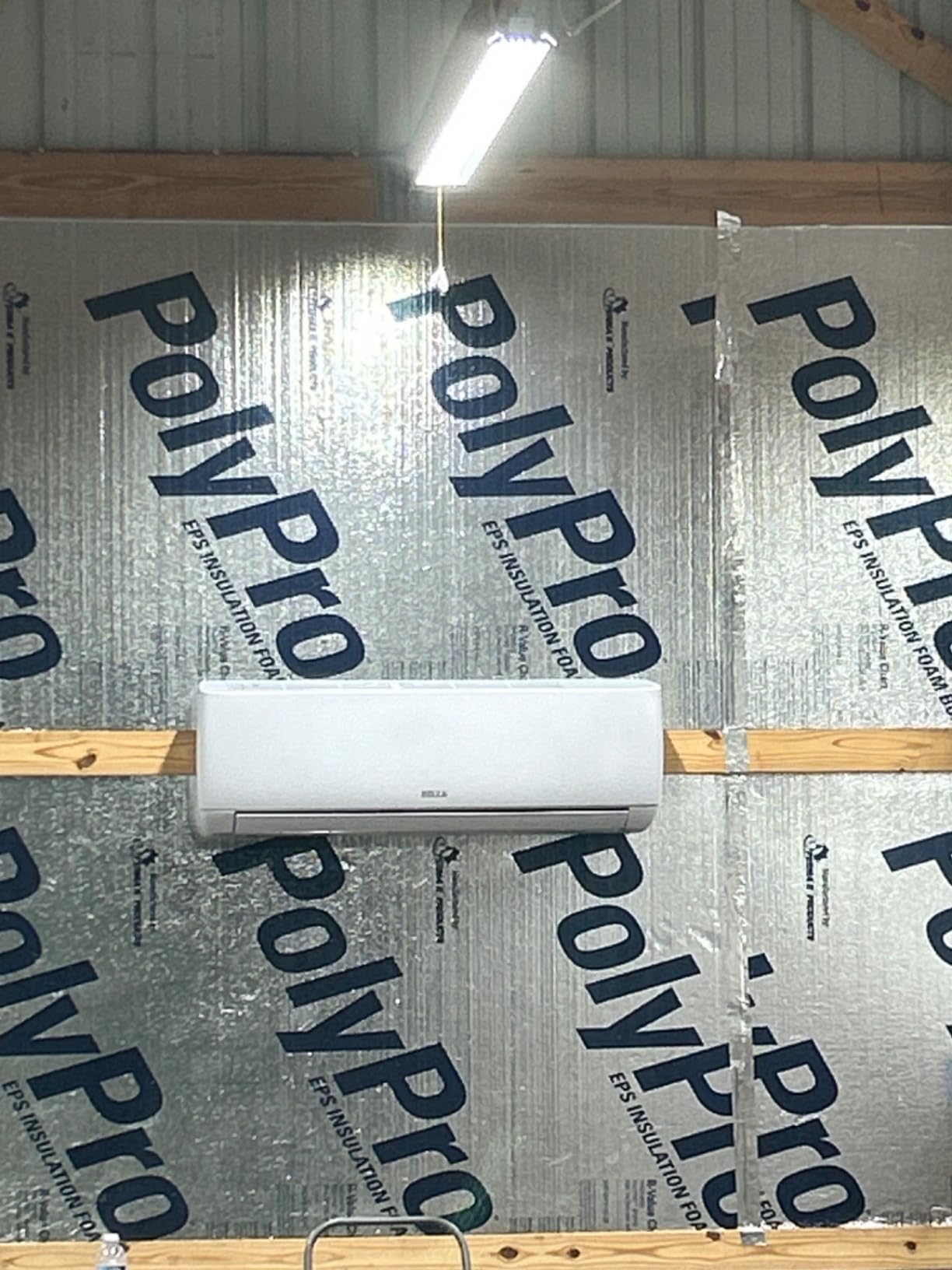
Airflow is handled with 4D air flow and an iFEEL function that reads temperature at the remote, plus sleep, ECO, and turbo modes and a 24-hour timer. It is Alexa and WiFi enabled, and the remote also carries a sensor for comfort control.
About 77 percent of its 836 ratings are five-star, with a 4.3 average. That is the second-lowest rating in the set, and the difference comes down to electrical requirements rather than performance. Buyers with a 208 to 230-volt circuit find it straightforward; buyers without one discover the upgrade cost quickly.
The listed dimensions are 8.82 inches deep by 37 inches wide by 12.44 inches high, and a weight is not stated in the listing. The package includes the remote, a 16-foot copper line kit, and a 6.56-foot drain pipe.
When the Motto is the right buy
This is the system to buy for an open-plan living area near 1,000 square feet, a converted garage with high ceilings, or a main floor you want to handle with one head rather than two smaller ones. One 18,000 BTU head can do the work two 9,000 BTU heads would, with one less indoor unit on the wall.
It is also a good fit for a finished basement or bonus room over a garage where you want real heat as well as cooling. The 18,700 BTU heating output carries a large open room through a shoulder season without a furnace cycle.
Where the Motto falls short
The 208 to 230-volt requirement is the constraint. If your home has only a 100-amp service with no spare breaker capacity, an electrician has to evaluate your panel before anyone quotes the install, and that evaluation can add cost that is not in the equipment budget.
At 19 SEER2 it is less efficient than every 1-ton unit in this roundup, so a larger space with high electricity rates will cost more to run than a 23 SEER2 alternative on a per-square-foot basis. One-star ratings are the largest single share of negative feedback at 12 percent, and those complaints cluster around the electrical requirement and the refrigerant procedures involved in changing line length.
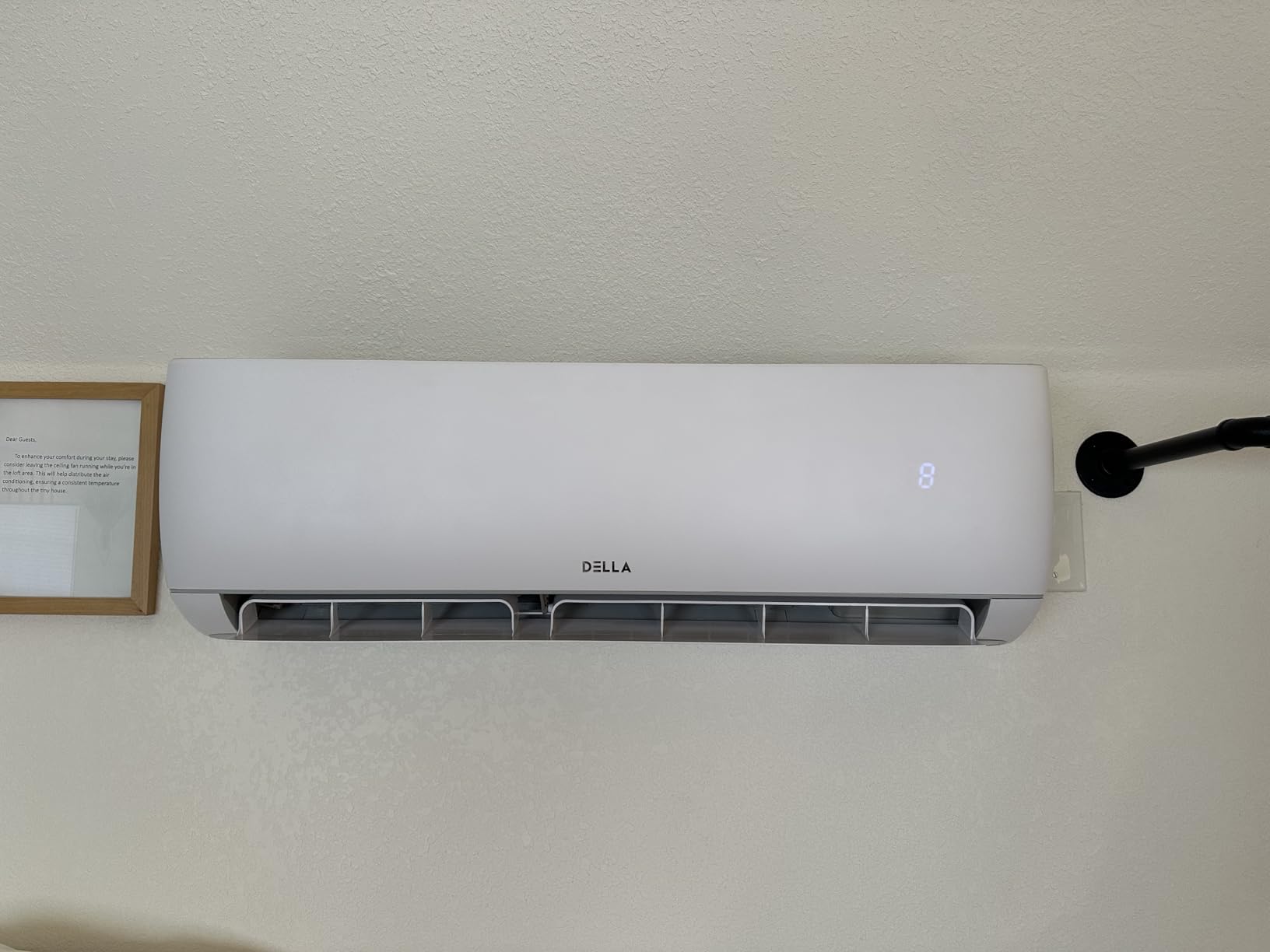
5. ROVSUN 9,000 BTU – Best for Bedrooms and 115V-Only Homes
ROVSUN 9000 BTU Wifi Enabled Mini Split Air Conditioner & Heater with Inverter, 20 SEER2 Energy Saving 115V Ductless Split AC Unit with Pre-Charged Condenser, Heat Pump & Installation Kit
9000 BTU 0.75 ton inverter
20 SEER2,28 dB in mute
450 sq ft,115V,20A plug
Pros
- 115V with 20A plug avoids any electrical service upgrade
- 28 dB in mute mode suits sleeping rooms
- App
- remote and voice control with WiFi
- Owners report cutting power use roughly in half versus a window unit
Cons
- One-year warranty is the shortest in the set
- Startup instructions skip the leak test step
- Wall head is bulky in a very small room
The ROVSUN 9,000 BTU is the only 9,000 BTU system here and the only one that plugs into a standard 115-volt 20A circuit without any electrical work, which makes it the practical choice for a bedroom in a home with older service.
It is a three-quarter ton inverter unit rated 20 SEER2 and BEE 4 Star, with a claimed efficiency saving of up to 35 percent. Coverage is 450 square feet, and the indoor noise figure is 28 dB in mute mode. Roughly 73 percent of its 462 ratings are five-star.
Owners report strong cooling and heating performance with genuinely good humidity control in Florida conditions, which is where the dry mode does more work than raw BTUs. The operating range is 61F to 88F, so it is a comfort band rather than a full climate band, and that limitation is worth knowing if you are pairing it with a furnace rather than using it as the whole system.
Control options are the best in the set for a bedroom unit: app, remote, and voice control through Alexa or Google Assistant, with four-way swing, ECO mode, sleep mode, and auto defrost. Annual energy consumption is listed at 875 watts, and the 115V/20A plug capability is the headline feature that no other unit here matches.
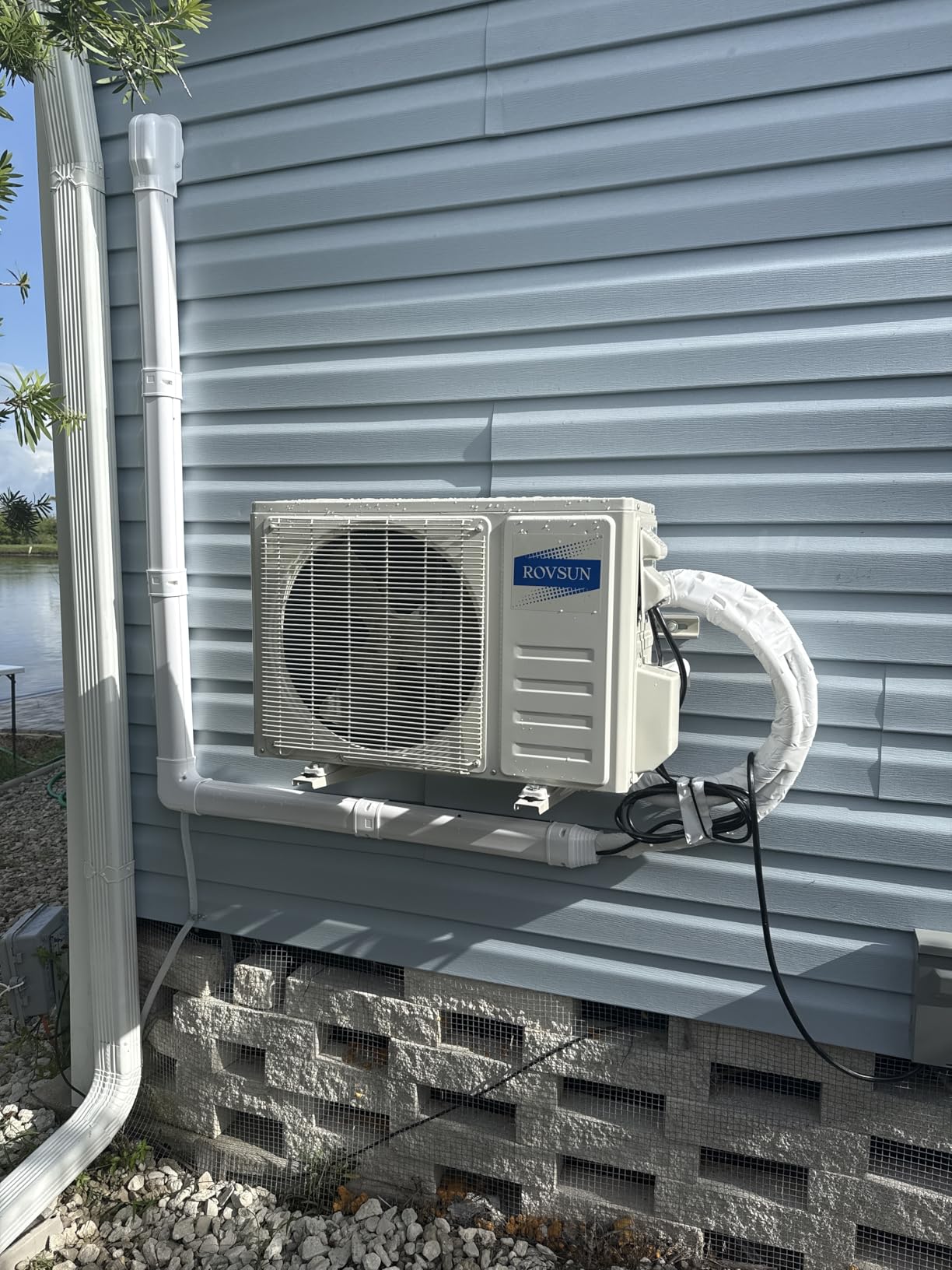
Several owners on community boards have paired ROVSUN with Pioneer in off-label installations and report both as quiet and dependable, which matches the review data. Repeat buyers report the same results across multiple units over about two years, which is a stronger reliability signal than a single large sample.
The package includes a remote, 16.4 feet of copper lines, and a signal cord. Weight is listed at 70 pounds and the indoor head measures 31.92 inches wide by 11.49 inches high, which is a visually chunky box in a small bedroom.
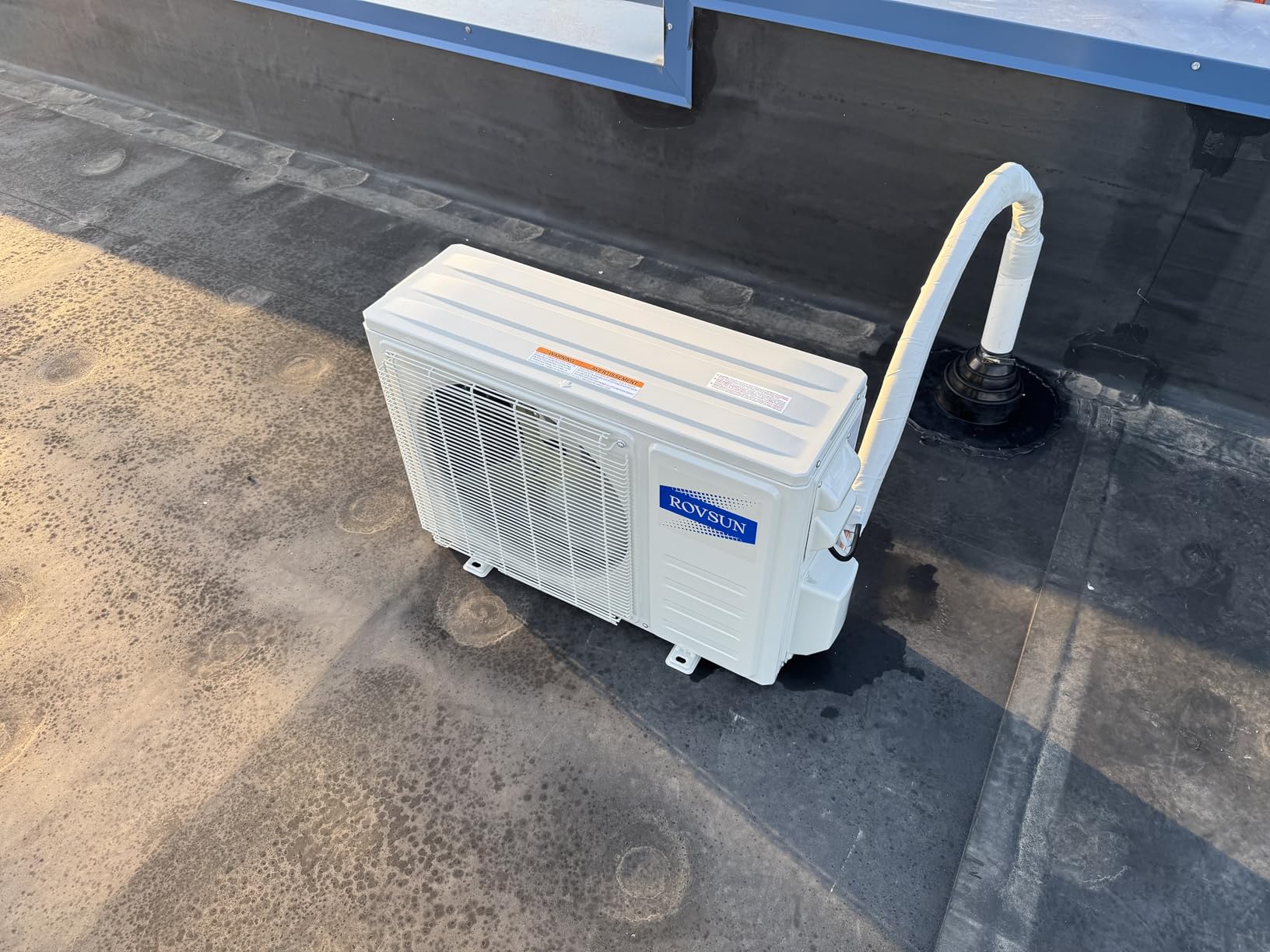
When the ROVSUN is the right buy
Take the ROVSUN for a primary bedroom, a small office, a converted closet room, or any space where the wiring situation rules out a 230-volt circuit. The 20A plug specification is the deciding fact for renters and for older homes that cannot grow their service cheaply.
It is also a good second unit for a house that already has central air but needs one room handled independently, since a 9,000 BTU head will cool a 450 square foot bedroom well and cost far less to install than a ducted zone.
Where the ROVSUN falls short
The one-year warranty is the shortest in the roundup, and it is the one place where this otherwise strong unit is clearly exposed. If the compressor fails in year three, coverage depends on what a card issuer or extended plan provides, not on the manufacturer.
The startup instructions skip the leak-testing step, and a vacuum pump and manifold gauges are required to commission the system properly. Doing this without them risks opening the refrigerant circuit without a proper vacuum, which is how you end up with moisture in the lines and corrosion later. One owner also reported excess condensation and mold growth in a sealed commercial room, so a bedroom with poor airflow needs an air sweep rather than a tight closed loop.
6. Albott 12,000 BTU 18 SEER2 – Longest Parts Cover on 115V Power
Albott 12,000 BTU Mini Split Air Conditioner and Heater SEER2 18, 115V
12000 BTU inverter heat pump
18 SEER2,below 29 dB
750 sq ft,115V,5F to 122F
Pros
- 7 year parts and 5 year compressor warranty on a 115V system
- Self-cleaning function with removable washable filters
- WiFi app and remote with child lock
- Operating range from 5F to 122F
Cons
- 18 SEER2 is the lowest efficiency rating in the set
- Listed system weight of 151 pounds is heavy
- Requires a new outdoor unit
The Albott 12,000 BTU pairs a seven-year parts term with five years on the compressor, and it does it on 115-volt power, which almost no other system in the set manages.
Coverage is a claimed 750 square feet at 12,000 BTU, and the operating range runs from 5F to 122F, so it covers both shoulder seasons without the common complaint of a unit that quits below freezing. Indoor noise is published at below 29 dB, and the setpoint range is 61F to 90F with a 24-hour timer.
Maintenance features are strong for the price. A self-cleaning function runs with removable mesh filters and air blades, and control is available through both a WiFi app and a remote with a child lock, which is a useful feature in a family room rather than a bedroom.
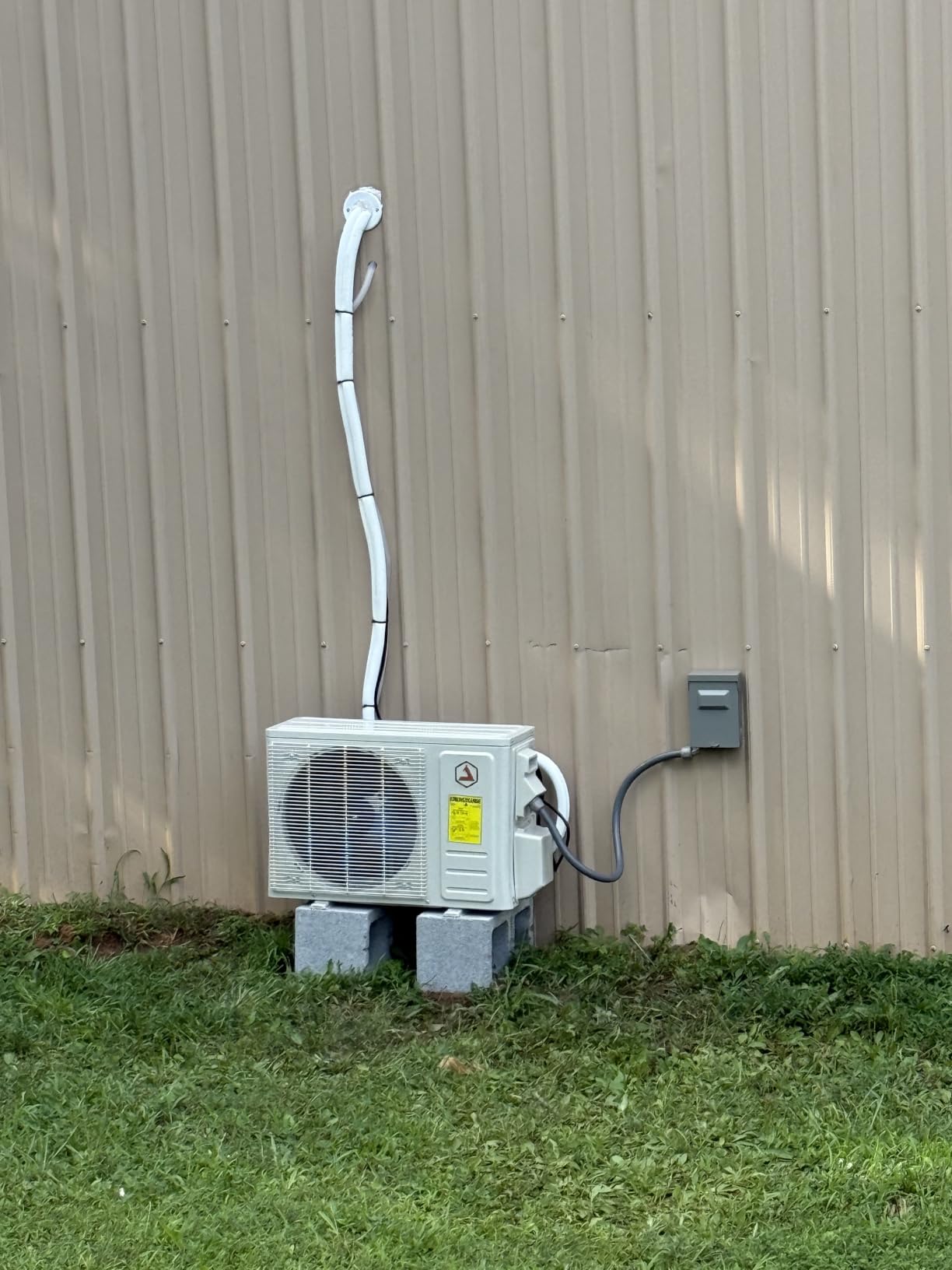
This unit carries the lowest average rating in the set at 4.1, with 68 percent five-star and 14 percent one-star. That distribution tells the story more clearly than the average does: buyers like the capacity and the warranty, and a meaningful minority are unhappy with efficiency.
Power draw is listed at 980 watts with roughly 700 kWh annual consumption, which is the best consumption figure in the roundup on paper. The compressor is a rotary scroll type and the refrigerant is R32.
One practical note on the listed weight of 151 pounds, the heaviest figure here by a wide margin. It likely reflects the packaged indoor and outdoor units together rather than a single component, but either way it is a two-person lift, and the head dimensions of 32.09 by 7.48 by 11.22 inches describe a wide, shallow wall unit.
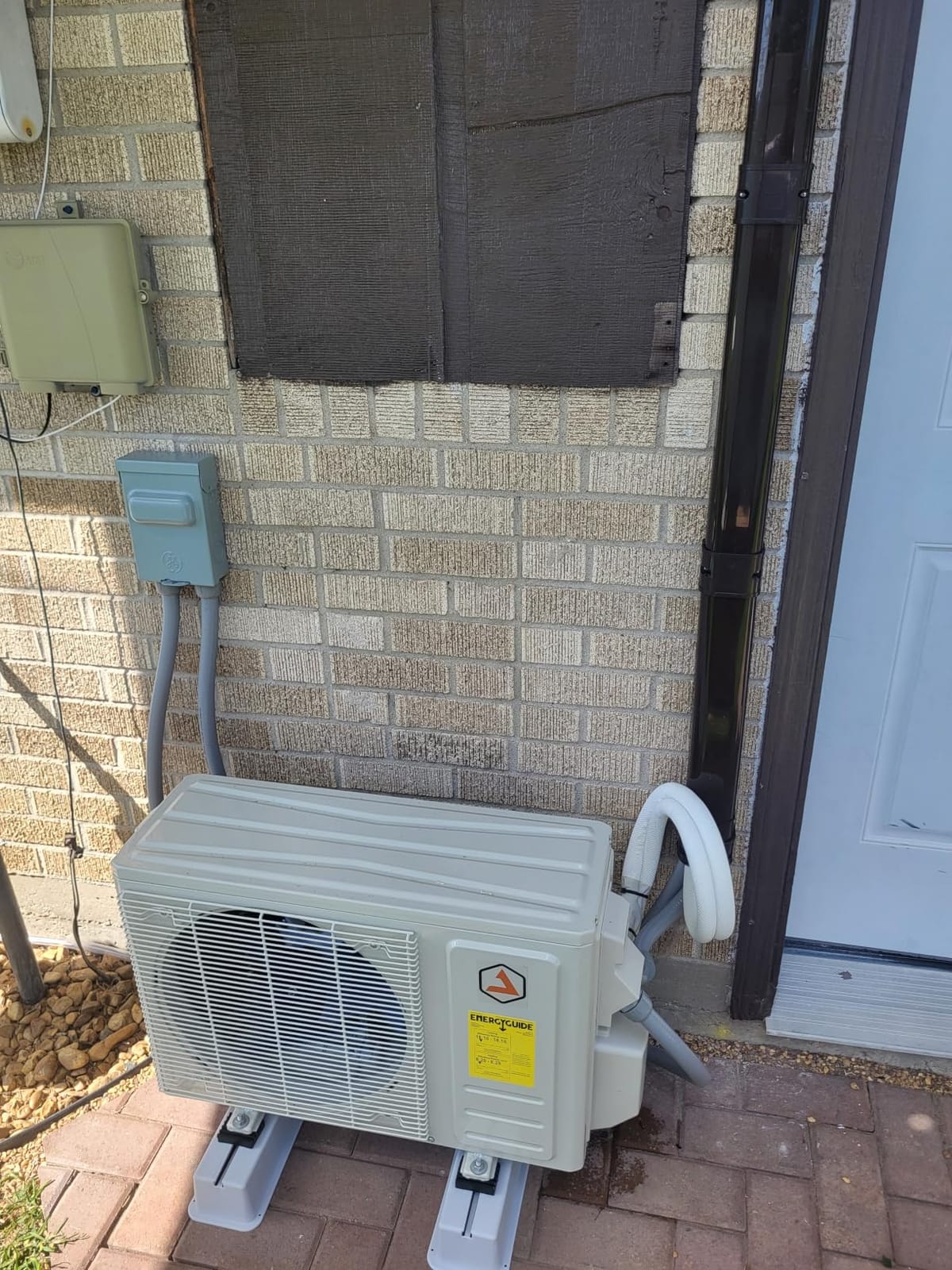
When the Albott is the right buy
Buy the Albott if you are on 115-volt power and intend to keep the system for a decade or more. The seven-year parts term removes the biggest financial risk that a short warranty creates, and it is the only system in this price band that pairs that coverage with a plug-in-or-standard-circuit electrical requirement.
It is also a fit for a family room or den where the child lock on the remote matters, and for owners in a mild climate who want a unit that can run from 5F to 122F without seasonal limits.
Where the Albott falls short
Eighteen SEER2 is the lowest efficiency rating here, and that directly translates into a higher operating cost per unit of cooling than a 22 or 23 SEER2 system. Over a long service life in a high electricity price area, that gap costs real money, which is why we rank this one below the other 115-volt options on value.
It also requires a new outdoor unit, and the 14 percent one-star share suggests some owners found the performance or the delivery experience underwhelming. The listed 151-pound weight makes handling more difficult than any other system in the roundup.
7. Rellytech 12,000 BTU 19 SEER2 – Best DIY Kit and Lowest Entry Point
Rellytech Mini Split AC/Heating System, 12000 BTU, 19 SEER2 115V/110V
12000 BTU cooling and 12500 BTU heating
19 SEER2 and 8.5 HSPF2,26 dB
750 sq ft,115V
Pros
- Lowest equipment cost among the 115V 12000 BTU units
- 19 SEER2 with 8.5 HSPF2 and 4 star BEE rating
- Most complete install kit including pipes
- cable
- putty and anchors
- 80 percent five-star share
- the highest proportion in the set
Cons
- Professional installation required by the terms
- Vacuum pump and gauges needed for a DIY install
- Noise and warranty figures are listed inconsistently
The Rellytech 12,000 BTU has the lowest equipment figure of any 115-volt 12,000 BTU system in this roundup, and it still delivers 19 SEER2 with an 8.5 HSPF2 heating rating, which is a combination that is hard to find below the cap.
It covers a claimed 750 square feet and runs four modes, cooling, heating, fan, and dry, with four fan speeds and 90-degree vertical swing. Indoor noise is published at 26 dB, and it is ETL and AHRI certified with a 4-star BEE rating.
Where it stands out is the install kit. The package includes indoor and outdoor units, the remote with two AAA batteries, a bracket template, a mounting plate, a 12.5-foot communication cable, a 5.9-foot power cable, 9.84 feet of connecting pipes, luting putty, a 6.56-foot drain pipe, and screws and anchors. That is the most complete consumables list of any unit here, and it is the single most useful thing for a buyer planning a self-install.
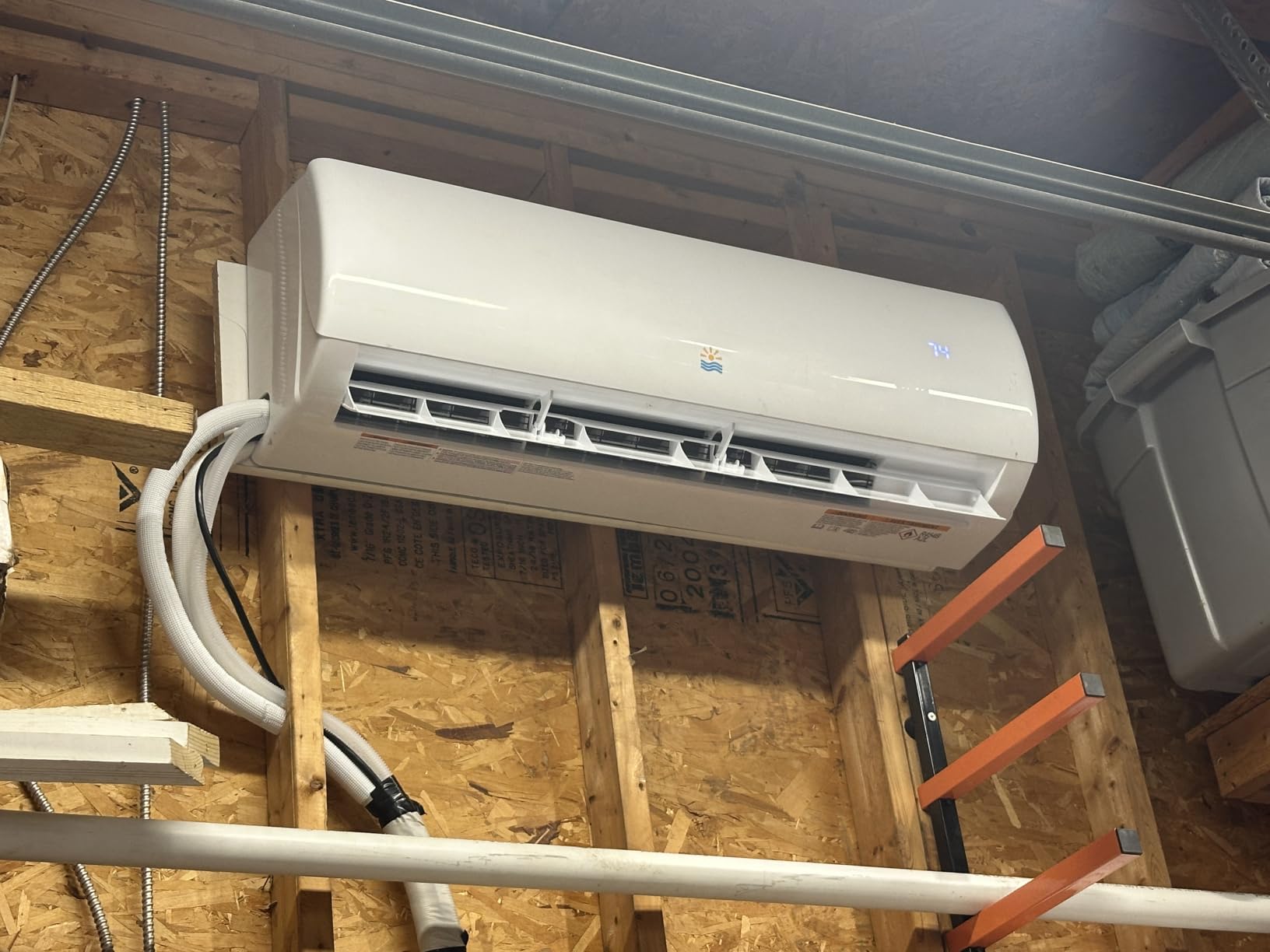
About 80 percent of its 355 ratings are five-star, the highest proportion in the set. Owners report strong cooling and humidity control in Florida heat, quiet enough operation to be barely noticeable at night, and appreciation for running on true 110V and 115V without a breaker upgrade.
Two listing inconsistencies deserve attention before you buy. The noise rating appears as both 26 dB and a 42 dB operating claim, and the warranty is described as one year in the specifications while the feature list references eight years. Neither is a reason to skip the unit, but both are reasons to get the warranty length in writing before installation.
Power draw is listed at 1,100 watts with roughly 1,367 kWh annual consumption, and the listed weight is 92 pounds with indoor head dimensions of 31.9 inches wide by 8.7 inches high, a slimmer profile than most of the 1-ton units here.
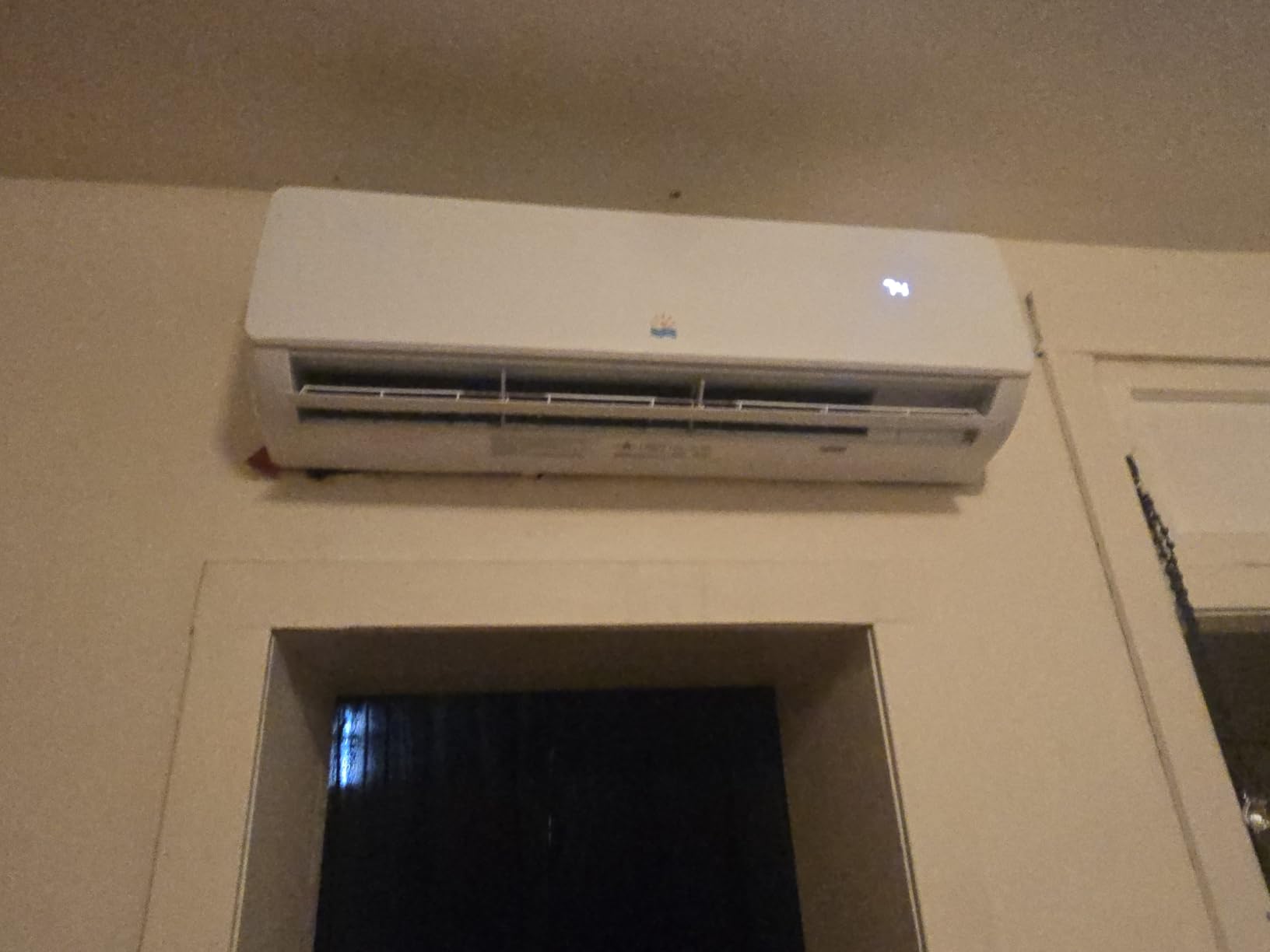
When the Rellytech is the right buy
Take the Rellytech when your budget is the binding constraint and you still want a genuine 19 SEER2 inverter rather than an 18. The gap between this unit and a mid-tier 1-ton system is small, and the efficiency class is the same as several units priced considerably higher.
It is also a sensible pick for a trailer, a small shop, or a room where wall space is tight, because the indoor head is the slimmest in the roundup at just over 8.7 inches tall.
Where the Rellytech falls short
The inconsistent listing data is the honest drawback. When a product page contradicts itself on noise and warranty, you are the one absorbing the risk if the physical unit underperforms the more favorable number. Ask the seller for the printed warranty card before the installer opens the carton.
Professional installation is required under the terms, and a DIY install needs a vacuum pump and gauges. At 1,367 kWh annual listed consumption it is the highest energy consumption figure in the set, which is consistent with a mid-range efficiency class rather than a premium one.
8. Mountman 12,000 BTU 19 SEER2 – Best for Low-Maintenance Operation
Mountman 12000 BTU Mini Split AC/Heating System,19 SEER2 110/120V Energy Efficient Ductless Inverter System,Cools Up to 750 Sq.Ft with Pre-Charged Condenser,Heat Pump & Installation Kits
12000 BTU one ton inverter
19 SEER2 and 4 star BEE,26 dB
750 sq ft,115V,R-32
Pros
- 4.5 star average with the lowest one-star share in the set at 5 percent
- Self-cleaning cycle and automatic defrost cut routine upkeep
- 26 dB sleep mode with auto-off remote display
- Washable anti-dust filter that rinses monthly
Cons
- No WiFi or app control
- remote only
- Color and weight are not stated in the listing
- Only a limited warranty length is stated
The Mountman 12,000 BTU holds a 4.5 star average in this roundup, the highest figure among the ten, with the lowest share of one-star reviews at 5 percent, and the reason owners like it is the reduction in hands-on upkeep.
It is a one-ton inverter system at 19 SEER2 and 4-star BEE, running 110 and 120 volts on R-32 refrigerant, with a claimed 750 square foot coverage. Indoor noise is 26 dB in sleep mode, and the remote display auto-offs after 10 seconds so a dark bedroom stays dark.
Four modes, cool, heat, dry, and fan, each with four fan speeds and turbo for fast pull-down. A high-temperature self-cleaning function and automatic defrost handle the two chores that usually cause callbacks, and the washable anti-dust filter rinses in a sink once a month. ECO mode claims up to 30 percent energy savings, and a 24-hour timer covers scheduling.
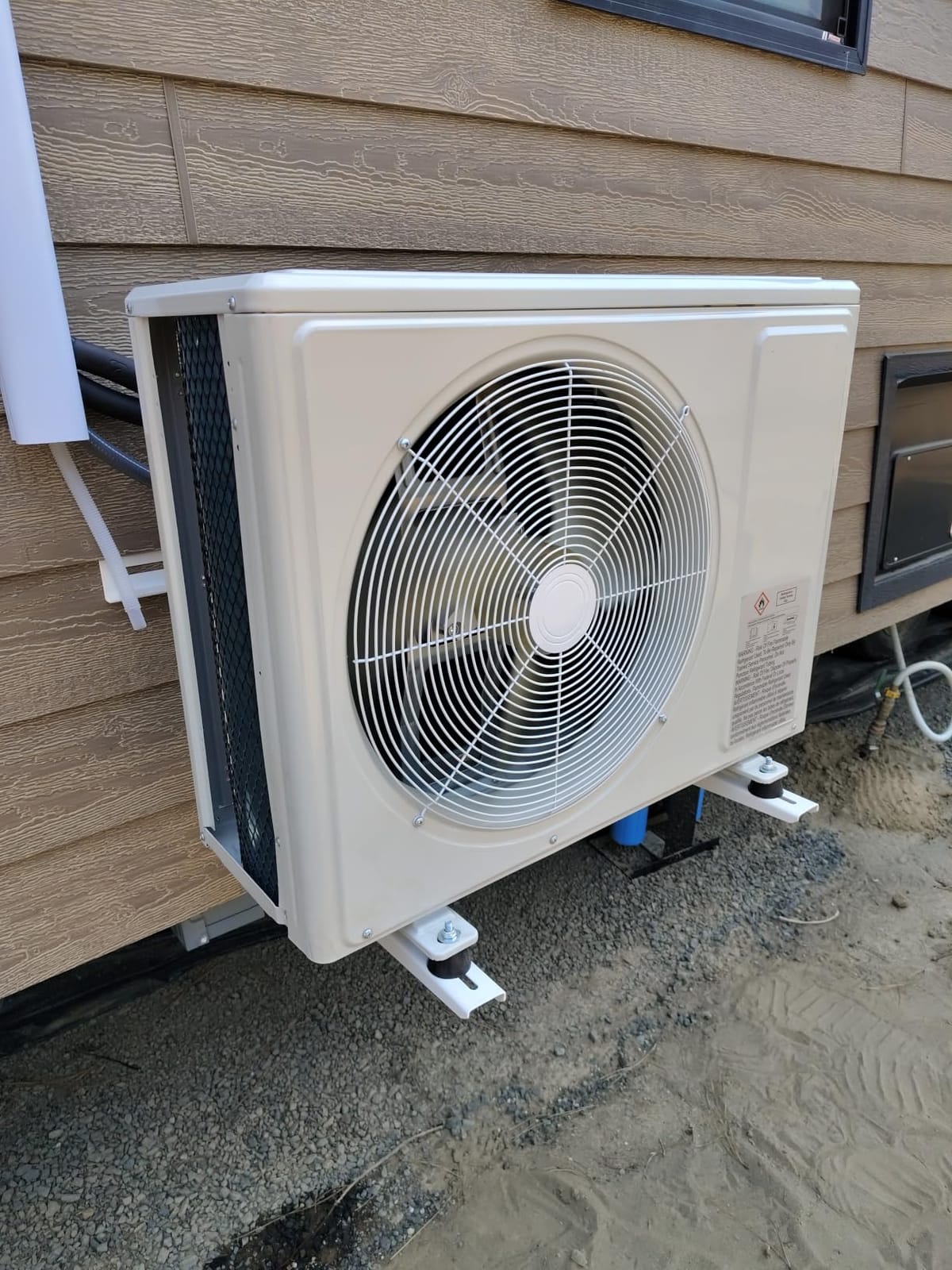
Owner feedback emphasizes quiet sleep-mode operation, mode flexibility, and how rarely the unit needs attention. Seventy-five percent of its 346 ratings are five-star, and at 4.5 average with a 5 percent one-star share, the distribution is the most favorable in the set.
The tradeoff is connectivity. This is the only unit here with no WiFi and no app, remote only, so there is no way to change the setpoint from your phone or build it into a home automation routine. For many buyers that is a non-issue; for anyone else it removes a feature that has become a default expectation.
The listing also does not state a color or a weight, which makes planning a mounting position harder in a finished room where the head has to match trim. The warranty is described only as limited, with no specific term given for parts or compressor.
When the Mountman is the right buy
Choose the Mountman for a vacation home, a rental, a workshop, or any space where you will not be there to fiddle with filters and modes. The self-cleaning cycle and washable filter are the whole point, and a unit that needs less attention in a space you cannot monitor is worth more than a smarter unit you would have to check on.
It is also a strong choice for a bedroom, where 26 dB sleep mode and the auto-off display are more valuable than app control, and where 115-volt power keeps the electrical work minimal.
Where the Mountman falls short
Remote-only control is the real limitation, and it is the one feature gap that cannot be worked around later without replacing the head. If you want to start cooling before arriving home or stop it when you leave, you need a different unit.
The absence of a stated warranty term and missing dimensions mean you are buying on reputation and rating rather than on published terms. On a 12,000 BTU system that is a real risk, since a compressor failure with no clear warranty term is an expensive afternoon. Confirm the term in writing before the install.
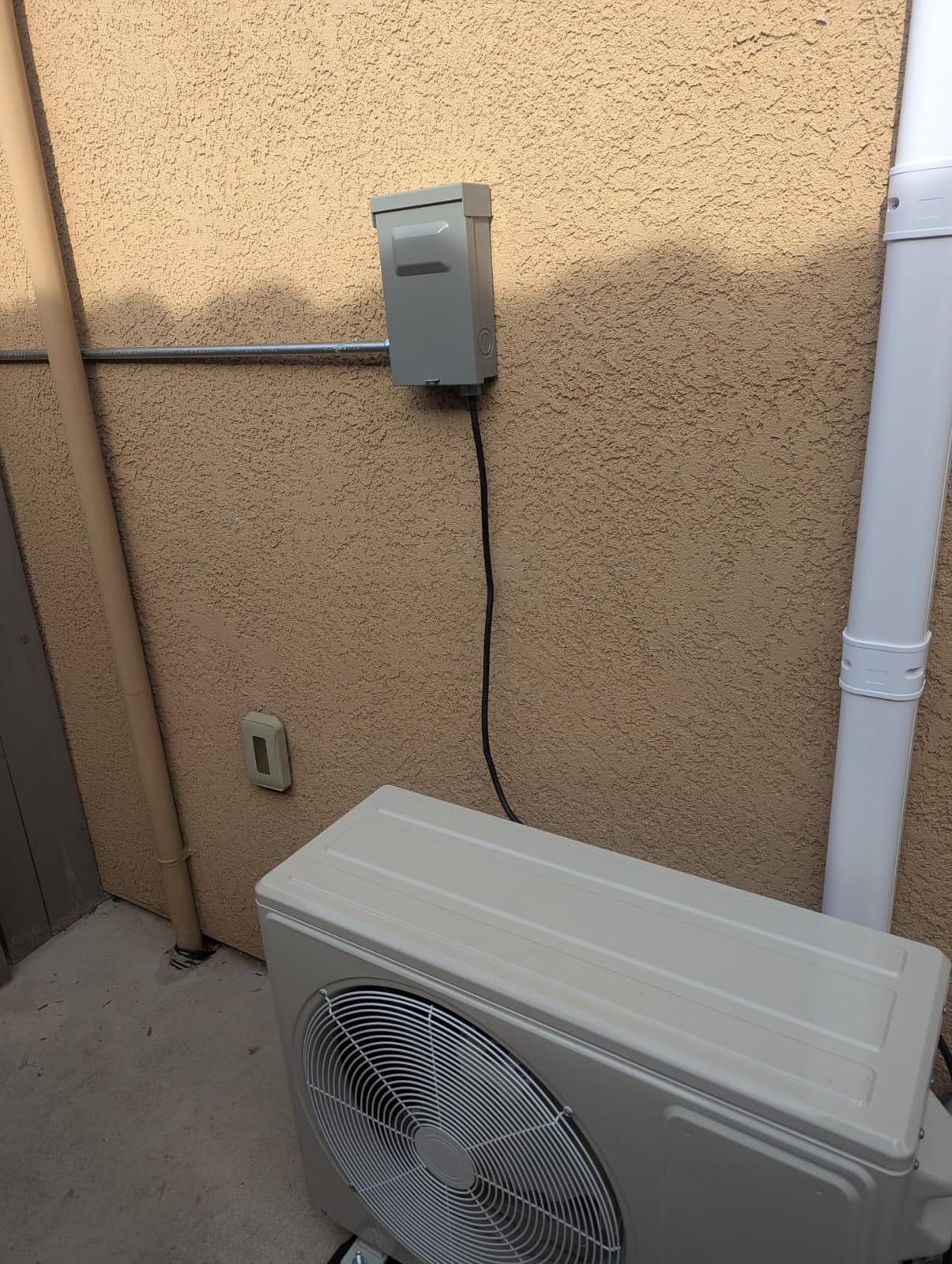
9. Temprium 12,000 BTU 22 SEER2 – Best for Smart Home Control
Temprium 12000 BTU Mini Split Air Conditioner, 115V 22 SEER2 AC & Heat Pump
12000 BTU and 12300 BTU heating
22 SEER2,23 dB
750 sq ft,115V,5F to 122F
Pros
- 22 SEER2 is the highest efficiency among the 115V units here
- 23 dB operation with sleep mode display dimming
- WiFi app plus Alexa and Google Assistant voice control
- Air purification and anti-bacterial filters
- 40.8 pounds is the lightest listed system weight
Cons
- Only 165 reviews
- the smallest base in the roundup
- One-year manufacturer warranty is the shortest stated coverage
- Requires a new outdoor unit
The Temprium 12,000 BTU is the efficiency-and-connectivity pick, running 22 SEER2 on 115-volt power with a 23 dB noise figure and full app, Alexa, and Google Assistant control. It is the best combination of efficiency and smart control on standard household current in this roundup.
Coverage is a claimed 750 square feet with 12,000 BTU cooling and 12,300 BTU heating, and the operating range runs from 5F to 122F, so it works as a year-round system. It uses R-32 refrigerant, an inverter compressor, and it is ETL and AHRI certified.
Control is genuinely flexible: seven operating modes, seven fan speeds, 4D auto swing, WiFi app, remote, and voice. A 133F high-temperature self-cleaning function handles coil upkeep, and air purification and anti-bacterial filters are included, along with sleep mode that dims the display. Power draw is listed at 780 watts, the lowest figure in the roundup.
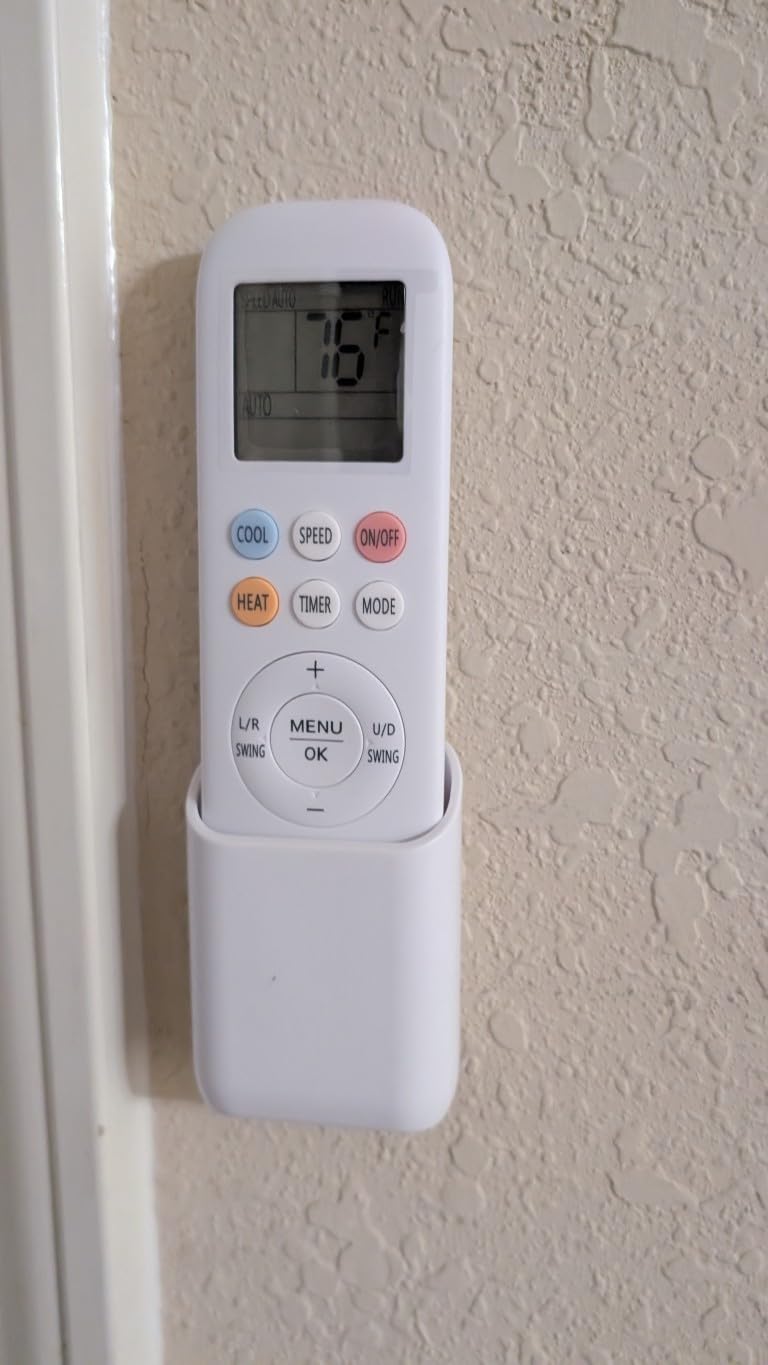
Seventy-four percent of its 165 ratings are five-star at a 4.4 average. The review base is the smallest in the roundup, and that is the honest caveat: 165 ratings is a thin sample for a system expected to last fifteen years, so we are treating the specs as more reliable than the sentiment.
At 40.8 pounds this is the lightest listed system weight in the set, which helps on a second-floor or balcony install where a helper is not available. The indoor head measures 29.96 inches wide by 11.61 inches high, making it a compact 1-ton head.
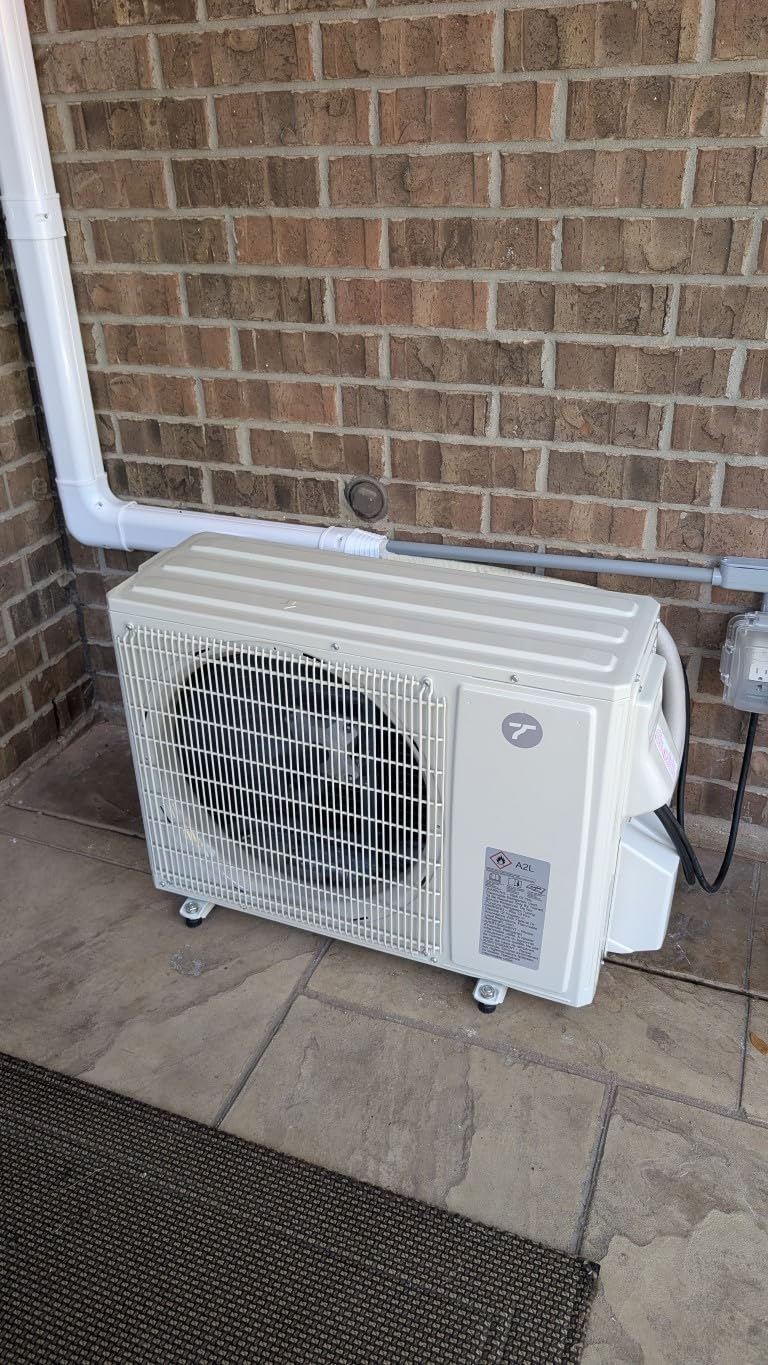
When the Temprium is the right buy
Pick the Temprium if you already run a smart home and want the mini split inside your routines, without giving up efficiency or low noise. A 22 SEER2 rating on 115-volt power is unusual at this budget, and it means you are not choosing between intelligence and operating cost.
It suits a bedroom as well as a living room, since 23 dB operation with a dimmable sleep-mode display is quiet enough for sleep and 750 square feet of coverage handles most open rooms.
Where the Temprium falls short
The one-year manufacturer warranty is the shortest stated coverage in the roundup, and that is a meaningful risk on a system with a 15-year service life. Pair it with an extended plan if you can find one that covers the compressor, since the base term will not.
A 165-review base tells you very little about year-five reliability, and it requires a new outdoor unit. If long-term dependability matters more to you than app control, the higher-review-count units in this roundup are the safer bet.
10. DELLA Serena 22 SEER2 – Best for Quiet Rooms and Lifetime Cover
DELLA Serena 22 SEER2 12000 BTU Mini Split Heat Pump Works with Alexa, Energy Star 1 Ton Pre-Charged 230V Ductless AC Unit Inverter Air Conditioner System for Rooms up to 550Sq.Ft, 16.4ft Install Kit
12000 BTU and 12300 BTU heating
22 SEER2 Energy Star,22 dBa mute
550 sq ft,230V,to 5F
Pros
- Quietest indoor unit in the set at 22 dBa in mute mode
- 22 SEER2 and Energy Star certified for rebate eligibility
- Alexa
- Google Home and app control with geo-location automation
- Lifetime warranty coverage
Cons
- Smallest review base at 79 ratings
- Requires 230V power and a 15A fuse
- Professional installation required rather than a DIY unit
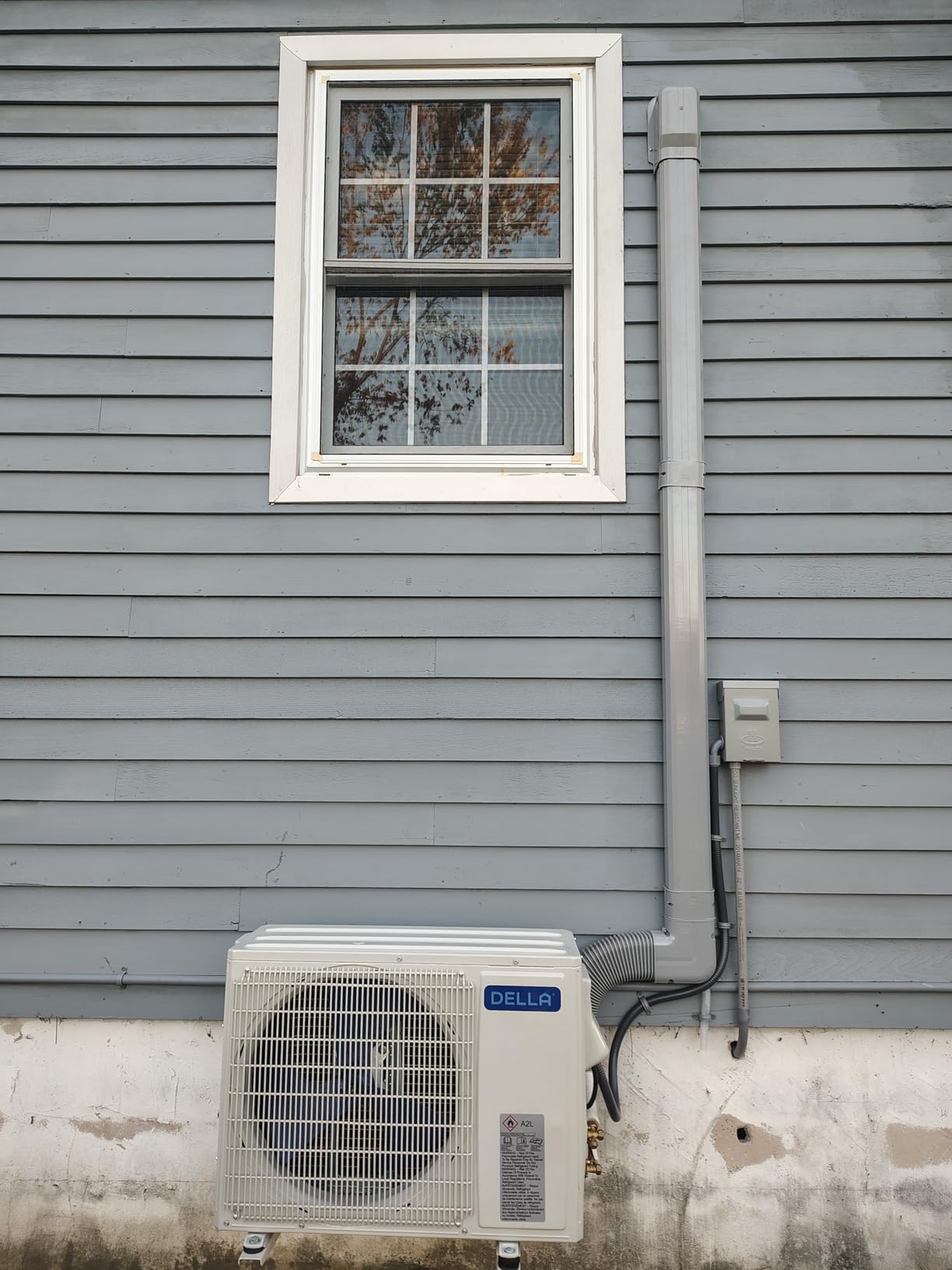
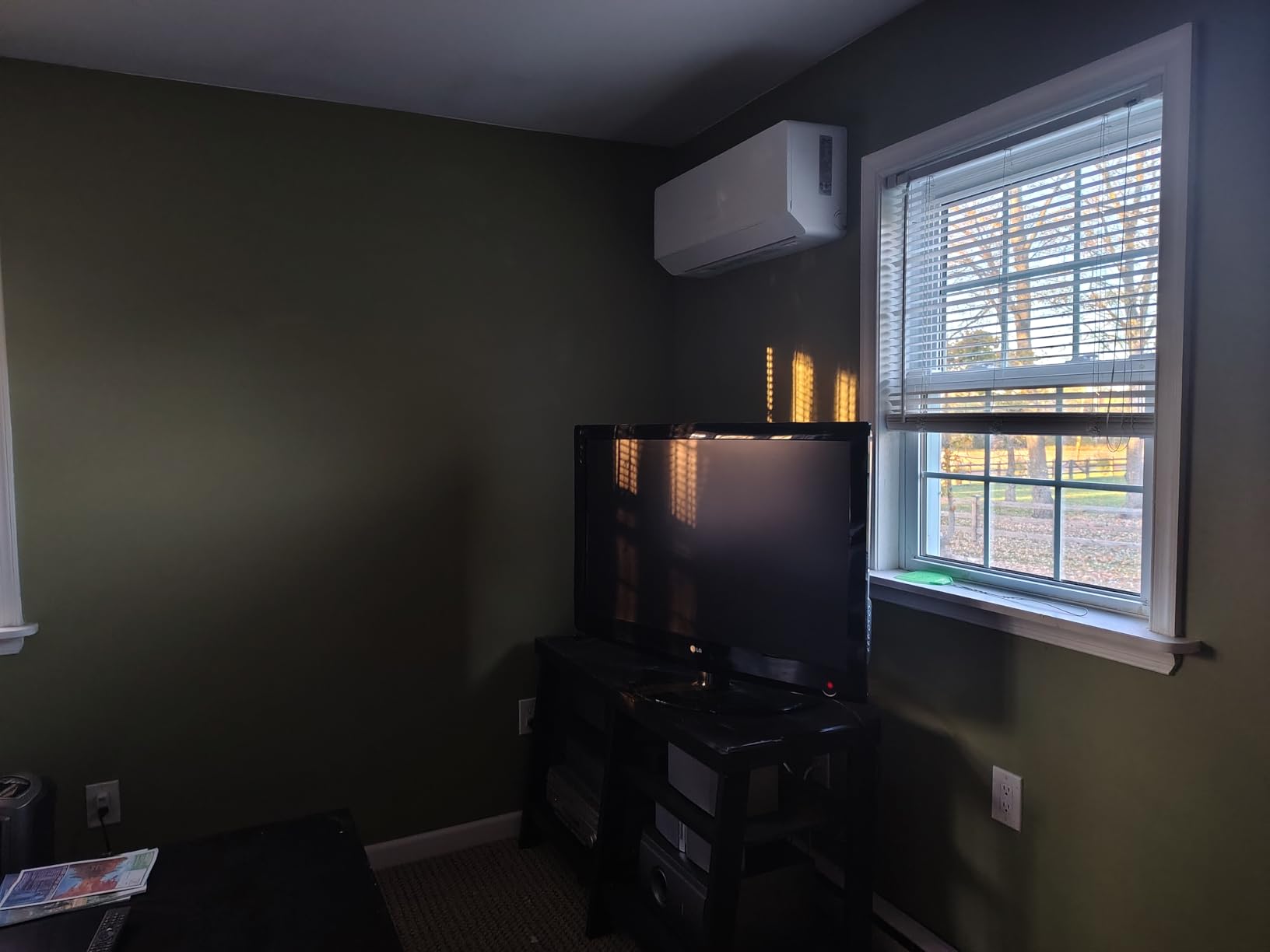
The DELLA Serena is the quietest and most generously warranted system here, with a 22 dBa indoor unit in mute mode, 22 SEER2 Energy Star certification, and a lifetime warranty, which is unusual at this equipment budget.
It is a one-ton 12,000 BTU inverter heat pump rated for 550 square feet, with 12,300 BTU of heating output. It runs on 230 volts, uses pre-loaded R32 refrigerant, and includes a bottom heating element on the outdoor unit for reliable operation down to 5F. PureClean dust prevention and a defrost function reduce upkeep.
Smart control is the best implemented in the roundup. It works with Alexa, Google Home, and the DELLA app, and a geo-location function adjusts the setpoint based on where you are, so the unit can change when you approach or leave home without a manual trigger. Airflow uses 4D air flow with iFEEL mode, and there is a 24-hour timer, sleep, ECO, turbo, and dry mode.
About 77 percent of its 79 ratings are five-star at a 4.4 average, and the unit is UL and ETL listed and AHRI certified. It took a Red Dot Design Award, which tells you about the head design rather than the compressor, but it is a visible quality signal on the indoor unit.
Line-set vacuuming is required and professional installation is mandated, so this is not a DIY unit. Maximum fuse size is 15A. The listed weight of 16.5 pounds appears to reflect the indoor head alone rather than the full system, so plan the two-person lift for the condenser.
The install kit includes a 16.4-foot pre-charged line set with 1/4 inch and 3/8 inch copper pipes and a 78.7-inch drain pipe, pre-loaded for runs up to 25 feet.
When the Serena is the right buy
Choose the Serena for a bedroom, a home office, or a library space where the lowest possible sound floor matters more than raw capacity. At 22 dBa it is the quietest indoor unit in this roundup on mute mode, and the app and geo-location automation make it easy to run at a low setting without thinking about it.
It is also the strongest warranty position available under the cap, and the Energy Star certification is the one most likely to satisfy a utility rebate program that requires a minimum efficiency tier. The inverter is claimed to deliver up to 57 percent power savings against a conventional unit.
Where the Serena falls short
The 79-rating review base is the smallest in the roundup, and a system with a lifetime warranty is exactly the kind of product where you want a long performance history. There is not one yet, and that is the honest limit of what we can tell you.
It needs a 230-volt circuit and a 15A fuse, so the electrical question has to be answered before anything else. The 550 square foot coverage is on the small side, which suits a defined room rather than an open floor plan. If you want this feature set across a larger area, the 18,000 BTU Motto is the capacity-matched option.
What Size Mini Split Do You Need?
A 12,000 BTU one-ton system is the right fit for roughly 400 to 550 square feet of well-insulated, normally exposed living space, and stretching it to 1,000 square feet does not work. For a 1,000 square foot room or open floor plan you want 18,000 BTU at minimum, and that is exactly what the DELLA Motto in this roundup is built for.
Sizing follows a simple shape: roughly 1,000 BTU of cooling per 100 square feet of standard interior space, then adjust for the variables. Sun-facing rooms with large west or south glass need more, upper floors and additions with poor insulation need more, and a room with several people and screens every day needs more than a spare bedroom.
Up to about 300 square feet: a 9,000 BTU three-quarter ton system. The ROVSUN in this roundup is built for this band and covers a claimed 450 square feet.
300 to 550 square feet: a 12,000 BTU one-ton system. This is the most common residential size and the most common listing under the cap.
550 to 750 square feet: a 12,000 BTU unit in a well-insulated room, or step up to 18,000 BTU if the room is sun-exposed or has poor envelope performance.
750 to 1,000 square feet: an 18,000 BTU one-and-a-half ton system for a single open area. Two 9,000 or 12,000 BTU heads is the alternative if the space divides into distinct zones.
The most common sizing mistake is undersizing, and it shows up as a unit that runs constantly and never reaches setpoint on the hottest afternoons. The second most common is oversizing a small room with a 1-ton unit, which causes short-cycling and poor dehumidification because the compressor dumps its full output into a space that hits temperature immediately.
Square footage is also not the only input. A Manual J load calculation accounts for window area, wall construction, ceiling height, sun exposure, and internal heat gain, and it is the difference between a system that works and one that fights you. If your room has anything unusual about it, get a load calculation before you commit to a capacity.
What a 1,000-Dollar Equipment Budget Does Not Cover
The 1,000-dollar ceiling buys you hardware only. A typical ductless mini split installation adds between 600 and 1,000 dollars for a straightforward indoor and outdoor head on a first-floor exterior wall, which means a realistic total budget of 1,600 to 2,000 dollars for a single-zone system.
Here is what the extra cost usually is. Labor for a single-zone install is the largest line, typically several hundred dollars depending on your region. A line set beyond the included length is charged per foot. A wall core for drilling through brick or a finished exterior wall costs extra. An electrical upgrade for a 230-volt circuit can run 150 to 400 dollars if your panel has capacity, and considerably more if it does not. A condensate pump, needed when the drain cannot gravity-drain, is a small but real line item. And a permit, where your jurisdiction requires one, adds a fee and sometimes a plan review.
The single most common pricing bait in this category is an advertised figure that looks like a complete system and turns out to exclude the line set, the wall core, or the electrical work. When you request quotes, ask each contractor for a written breakdown of equipment, labor, line set footage, electrical, and permit as separate lines. If a quote will not itemize, you cannot compare it to another quote.
Renters and anyone in a home with existing central air should also weigh the alternatives. If you cannot modify a panel or run a line set through a wall, our window air conditioner picks and portable air conditioner guide cover rooms where ductless simply is not installable.
SEER2 vs SEER, 115V vs 230V, and Cold Climate Ratings Explained
SEER2 replaced SEER for most residential equipment in recent years, and the numbers dropped by roughly 5 percent as a result, so an old guide quoting SEER is not comparable to a current SEER2 listing. Compare SEER2 to SEER2 and nothing else.
SEER2 measures cooling efficiency across a full season. HSPF2, its heating counterpart, matters if you plan to use the heat pump mode as a primary or near-primary heat source, which is common in the shoulder seasons and increasingly common in cold states as furnace replacements get expensive. The systems in this roundup with published HSPF2 figures are the DELLA Vario at 9.5 and the Rellytech at 8.5.
The electrical decision is simpler than most guides make it. A 115-volt unit plugs into a standard household circuit and avoids panel work entirely, which is why the ROVSUN, COSTWAY, Rellytech, Mountman, Temprium, and Albott units are all 115-volt. A 230-volt unit is more efficient at higher capacity and is effectively required for an 18,000 BTU system, and it needs a dedicated circuit and a panel evaluation. If your home has 100-amp service with no spare capacity, the 115-volt options remove a step that can stop a project.
Cold climate ratings are operating minimums, not marketing. A 5F-rated heat pump stops being an effective heater as outdoor temperatures approach that mark, so it works fine in a moderate climate and disappoints in Maine or northern Minnesota. The DELLA Vario is the only unit here rated to minus 4F, and the DELLA Motto uses an upgraded bottom heating element to reach 5F. If you heat with the mini split through winter, read this spec before anything else.
Which Mini Split Brands Are Most Reliable, and Which to Watch Out For
Under this equipment cap there are no name-brand Daikin, Mitsubishi, or Fujitsu systems, so reliability here is a question of build quality, warranty terms, and service access rather than brand pedigree. The most reliable systems in this price band are the ones with the deepest owner-review histories and the clearest parts and compressor terms, which is why the Senville LETO, COSTWAY, and DELLA Vario rank where they do.
Rather than call out brands to avoid, it is more useful to name the failure patterns. The most common problem in a marketplace-only listing is not the machine failing; it is a warranty claim with no local technician willing to honor it because the brand has no parts pipeline and no service network. Second is a listing with suspiciously high review volume and thin specification data, where the review count does not match how long the product has been on sale.
Third is undersizing sold by BTU alone, with no regard for room square footage, insulation, or sun exposure, which produces rooms that never reach setpoint and a system that runs constantly. Fourth is condensate handling, where an undrained or poorly sloped line causes wall or ceiling water damage, and that risk rises when a unit is oversized for the space.
Forum discussions about these brands consistently ask whether off-label DIY installations hurt long-term reliability, and the review data lines up with the practical answer: the hardware performs, but the consumables supplied in the box are frequently the weak link. Line-set tape that runs out, drain tubing that becomes brittle, and thin mounting plates are recurring themes across multiple brands in this roundup, not just one.
Before buying any listing under the cap, verify three things: a published SEER2 or SEER number, a written warranty term split into parts and compressor, and a stated minimum operating temperature. If any of the three is missing, you are buying an appliance, not a system.
Can You Install a Mini Split Yourself?
You can physically install one, and several of the kits here ship with the pipes, cable, putty, and anchors you would need, but most manufacturers void the warranty on a homeowner install unless the system is commissioned by an EPA Section 608 certified technician.
That commissioning step is not a formality. The line set has to be flushed, pressure tested, and evacuated with a vacuum pump and gauge set to remove moisture before the refrigerant circuit is opened to the indoor unit. Skip it and you risk moisture in the lines, corrosion, and eventual compressor failure that no warranty will cover. Owners of the ROVSUN and the DELLA Vario both note that a vacuum pump and gauges are required, and the ROVSUN instructions reportedly skip the leak-testing step that should happen before startup.
DIY makes the most sense when you have real HVAC experience, a vacuum pump, gauges, a drill and core bits, a line flaring tool, and a plan for the condensate. It makes the least sense on a 230-volt circuit that needs a new breaker run, on a wall core through brick, or when the run exceeds the pre-charged line set length and refrigerant must be added by a certified tech.
If you want the hardware experience in a space where comfort matters less, our garage and workshop heat pump guide covers where ductless in a non-conditioned space behaves differently and what capacity you actually need there.
Rebates and Incentives for Budget Mini Splits in 2026
The federal Section 25C residential clean energy credit has expired, so there is no federal tax credit to claim on a ductless heat pump this year. That removes a line of savings that older buying guides still promise, and it is the single biggest change to budget planning since the SEER2 efficiency transition.
What replaced it is narrower but still worth pursuing. Look first at your state or local energy office for HEAR and HOMES program eligibility, since these fund efficiency upgrades at the state level. Some utilities offer rebates for high-efficiency ductless equipment, and the ENERGY STAR certified units in this roundup, which is the DELLA Serena at 22 SEER2, are the ones most likely to qualify.
Ask your utility before you buy, not after. Program thresholds change with funding cycles, and several require that the equipment be installed by a participating contractor and that the application be filed within a set window after installation. Budget rebates as a possibility rather than a plan, because a missing paperwork step can forfeit the money.
Frequently Asked Questions
Is 12000 BTU enough for a 1000 square foot space?
No. A 12,000 BTU one-ton system is correctly sized for roughly 400 to 550 square feet of normal living space. A 1,000 square foot room or open floor plan needs 18,000 BTU as a minimum, and a sun-exposed space with large glass may need a multi-zone setup with two heads. Undersizing is the most common sizing mistake because the unit runs constantly and never reaches setpoint on the hottest afternoons.
How much does it cost to install a mini split?
For a single-zone ductless mini split, professional installation typically adds 600 to 1,000 dollars on top of the equipment price. That covers labor, any line set footage beyond the length included in the box, a wall core if you are drilling through brick or a finished wall, a condensate pump if the drain cannot gravity-drain, and any electrical work. A 230-volt circuit addition can add 150 to 400 dollars if your panel has capacity.
Can you install a mini split yourself?
You can, but most manufacturers void the warranty unless the system is commissioned by an EPA Section 608 certified technician. That step requires flushing, pressure testing, and evacuating the line set with a vacuum pump and gauge set before opening the refrigerant circuit. If the run exceeds the pre-charged line set length, refrigerant must be added by a certified technician regardless of who did the drilling and mounting.
What mini split brands should you stay away from?
Instead of naming brands, watch for four failure patterns. First, listings with no published SEER2 or SEER rating, which usually means the efficiency claim is unverifiable. Second, products with a warranty that names no specific term for parts and compressor. Third, suspiciously high review counts paired with thin specification data. Fourth, units sold by BTU alone with no coverage figure, which is how rooms end up chronically undersized.
Which mini split brand is the most reliable?
Under a 1,000 dollar equipment budget, reliability tracks owner review volume and warranty terms more than brand name. The Senville LETO, with 2,185 ratings at 4.4 stars, has the deepest performance history of any system in this roundup. The COSTWAY 12,000 BTU pairs a 4.4 rating with 1,661 reviews and an 8-year compressor warranty, which is the strongest long-term coverage available at this price.
Do mini splits work in cold weather?
Every unit in this roundup has a stated heat pump minimum, and most stop being an effective heater as outdoor temperatures approach it. Six of them are rated to 5F, which works well in moderate climates but disappoints in northern states. The DELLA Vario 23 SEER2 is the only one here rated to minus 4F, and the DELLA Motto uses an upgraded bottom heating element to reach 5F. If you heat with the mini split through winter, read this spec first.
Is 115V or 230V better for a mini split?
A 115-volt unit uses a standard household circuit and needs no panel work, which is why the ROVSUN, COSTWAY, Rellytech, Mountman, Temprium, and Albott systems here are 115-volt. A 230-volt unit is more efficient at higher capacity and is effectively required for an 18,000 BTU system, but it needs a dedicated circuit and a panel evaluation. In a home with 100-amp service and no spare capacity, 115-volt avoids an expensive project stop.
How long does a mini split last?
A ductless mini split that is properly sized and regularly serviced typically reaches 15 to 20 years of service life, and the inverter compressor is usually the longest-lived component. Warranty terms are the practical proxy: a 7-year parts term like the Albott in this roundup implies parts availability for a long period, while a 1-year term like the Temprium means the first major component replacement is entirely on you.
Should I buy a mini split under 1,000 dollars or spend more?
Spend more only if you need more capacity, better heating performance in a cold climate, or a stronger warranty. Under the ceiling you can get inverter compressors, 18 to 23 SEER2 efficiency, heat pump heating, WiFi control, and 1-ton coverage in the 400 to 750 square foot band. The step up in price buys tonnage, deeper cold climate ratings, and 10-year warranties, not better basic cooling for a normal single room.
The Bottom Line on the Best Mini Split Air Conditioners Under 1,000 Dollars
The Senville LETO 12,000 BTU is the best mini split air conditioner under 1,000 dollars for most buyers, because it pairs 20.8 SEER efficiency and heat pump heating down to 5F with the deepest owner-review history in the category. Buyers on 115-volt power who want a longer warranty should look at the COSTWAY 12,000 BTU, and anyone who needs 1,000 square feet of coverage should go straight to the DELLA Motto 18,000 BTU.
Before you order anything, get three answers. Confirm the electrical situation, because a 230-volt circuit is a separate expense. Get an itemized install quote that separates labor, line set, electrical, and permit. And verify the warranty term in writing before the carton is opened, because that number varies widely in this price band.
Prices and availability in the ductless mini split market move constantly, so re-check the current figure before you buy. And if you are still deciding between one head and a multi-zone layout, our ductless mini split systems guide covers when a second zone makes more sense than a bigger single unit.