
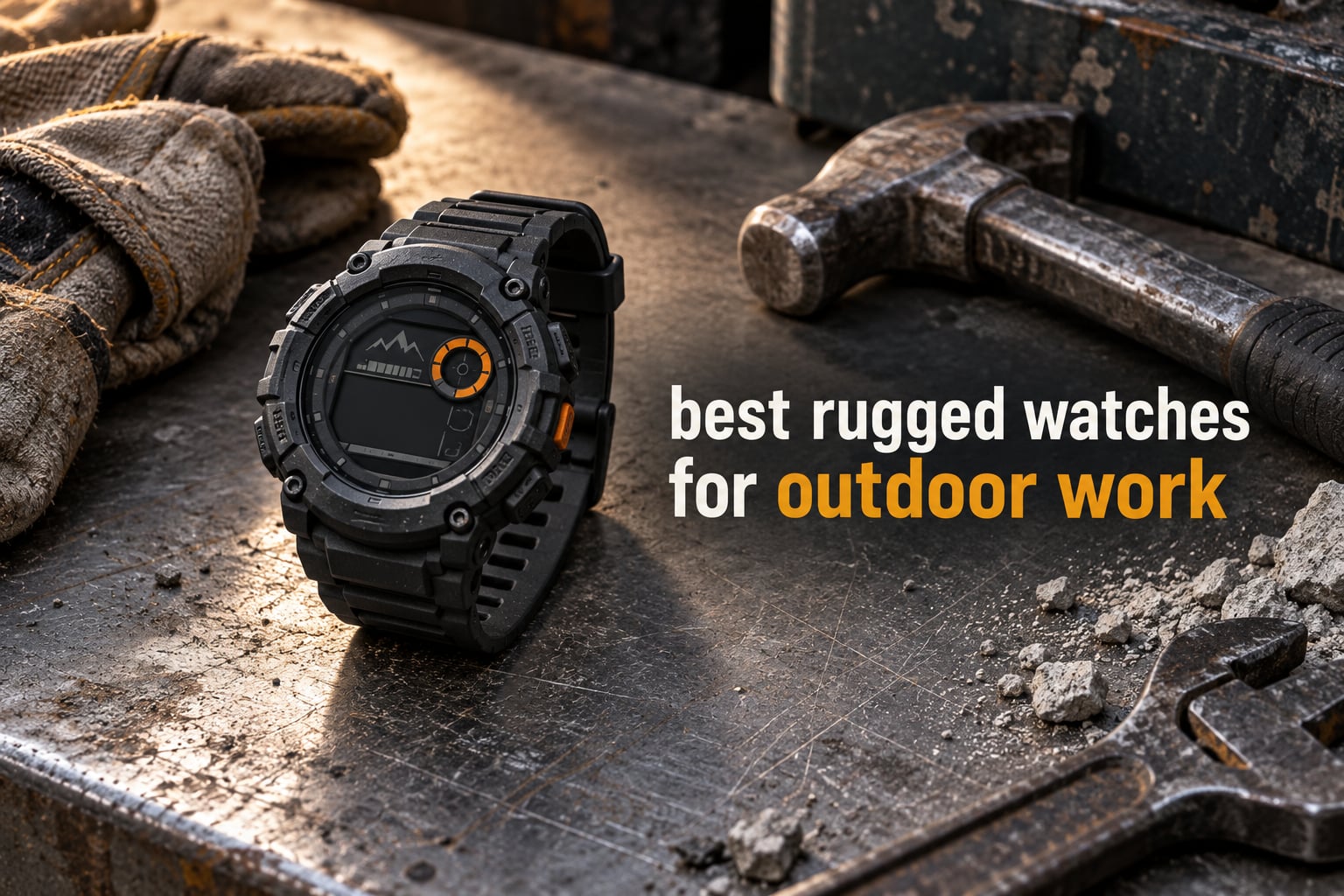
The best rugged watches for outdoor work are the Casio G-Shock DW9052 and the Casio G-Shock Mudmaster GWG-1000-1A3, because both are built to a published shock standard, rated to 200 meters of water resistance and sealed well enough to survive mud, grit and solvent. Add a Garmin Instinct 2X Solar if you want GPS and a built-in flashlight, and a Suunto Core if you want real altimeter, barometer and compass sensors in a compact case.
Most roundups in this category are written for hikers. They test watches on trails, talk about elevation gain and then stop. That framing misses the thing a construction worker, a field mechanic or a utility lineworker actually needs to know: does the watch survive contact with a swinging wrench, a chuck key and a bucket of concrete slurry, and can you still read it with welding gloves on?
Our team compared 12 rugged watches against the failure modes that end a watch on a working site. We weighted four things hardest: a stated shock-resistance standard, a stated water rating in ATM rather than the word waterproof, a crystal that tolerates abrasion, and a battery that survives a full shift without a charger in your pocket. Every pick below carries its own case material, crystal type, water rating and battery claim so you can check us rather than take our word for it.
One honest note before we start. There is no single watch that wins every category. A solar Casio that shrugs off a dropped sledgehammer cannot tell you your heart rate, and a titanium Garmin that maps your whole work site will need charging more often than you would like. The right choice depends on whether your job breaks watches with impact, with grit, with water, or simply with a hard shift on the battery.
If your crew is already comparing options, our [best rugged watches for construction workers roundup](https://eatcreatesleep.net/best-rugged-watches-for-construction-workers/) goes deeper on the site-specific side. We also break out the mapping and GPS side in [our best golf GPS watches guide](https://eatcreatesleep.net/best-golf-gps-watches/), since the sensor hardware is identical to what a field crew would use.
Table of Contents
Top 3 Picks for Best Rugged Watches for Outdoor Work (October 2026)

Casio DW9052 G-Shock
- 200 m water resistance
- Shock-resistant resin case
- Two-year battery
- Multi-alarm
Casio Pro Trek PRG600
- Triple sensor with compass
- Solar plus atomic timekeeping
- Steel bezel
- 100 m water resistance

G-Shock GA-700UC
- Analog and digital display
- Five-year battery
- 52.8 mm case
- 200 m water resistance
All 12 Watches Compared Side by Side in 2026
| Product | Specifications | Action |
|---|---|---|
| Casio DW9052 G-Shock |
|
Check Latest Price |
 G-Shock Solar Atomic GW7900B G-Shock Solar Atomic GW7900B |
|
Check Latest Price |
 Garmin Instinct 2X Solar Garmin Instinct 2X Solar |
|
Check Latest Price |
 Garmin fenix 7X Pro Sapphire Solar Garmin fenix 7X Pro Sapphire Solar |
|
Check Latest Price |
| G-Shock GA-700UC |
|
Check Latest Price |
 G-Shock GBD200 Square G-Shock GBD200 Square |
|
Check Latest Price |
 Suunto Core Suunto Core |
|
Check Latest Price |
 Citizen Promaster Sea Citizen Promaster Sea |
|
Check Latest Price |
 Timex Ironman Triathlon Timex Ironman Triathlon |
|
Check Latest Price |
 Timex Expedition Scout Timex Expedition Scout |
|
Check Latest Price |
| Casio Pro Trek PRG600 |
|
Check Latest Price |
 G-Shock Mudmaster GWG-1000-1A3 G-Shock Mudmaster GWG-1000-1A3 |
|
Check Latest Price |
How We Judged These Watches
Every watch in this list was scored on the same six criteria, and each criterion maps to a specific way a watch dies on a working site.
Stated shock standard. A watch that passes U.S. military standard 810 testing has been put through drop, vibration, temperature and water procedures on a published basis. Marketing language such as shock resistant means nothing on its own. Several picks here carry a standard, and the ones that do are the ones we trust with a tool belt.
Stated water rating in ATM. A rating in atmospheres tells you what the watch actually tolerates: showering, swimming, or a submerged hose. Vague waterproof claims are worthless to a concrete worker or a fisher.
Crystal material. This is the number one complaint that surfaces in owner discussions about watches used on rock, tools and metal surfaces: mineral glass scratches, and scratched glass kills legibility. Sapphire resists it. Acrylic, used on the Timex Ironman, is the softest of the three.
Battery claim by mode. A single headline battery number hides the truth. A figure quoted in smartwatch mode tells you nothing about what happens with GPS running all shift, so we quote the mode each manufacturer quotes and flag where the real-world figure will be shorter.
Serviceability. Straps that can be swapped, crystals that can be replaced, movements that can be serviced. Over a five-year working life this decides whether you replace the watch or the band.
Operation with gloves on, and while wet. Touchscreens are near-useless with work gloves. Button-driven watches are the ones that survive a real shift.
1. Casio DW9052 G-Shock: The Best Rugged Watch for Outdoor Work Overall
Casio Men’s G-Shock DW9052-1V Shock Resistant Black Resin Sport Watch
Shock-resistant resin case
200 m water resistance
Two-year CR2016 battery
1/100-second stopwatch
Pros
- Proven no-nonsense G-Shock formula
- 200 m water resistance covers almost all water work
- Two-year battery means minimal maintenance
- Shock-resistant resin case takes real abuse
Cons
- Negative LCD is hard to read in bright light
- Backlight needs a manual button press
- No sensor suite or smart features
The DW9052 has been in continuous production since 2002, and that longevity is itself a durability signal. It is the watch I recommend as the default answer to the best rugged watch for outdoor work, because it does the three things that actually end watches on site, and it does them without any maintenance at all.
Impact: a shock-resistant resin case and bezel that shrug off knocks, drops and contact with tools. Water: 200 meters, enough for scuba-adjacent surface work, a pressure washer and a full season of rain. Power: roughly two years on a CR2016 cell, so you are not hunting for a charger in a site cabin with no socket.
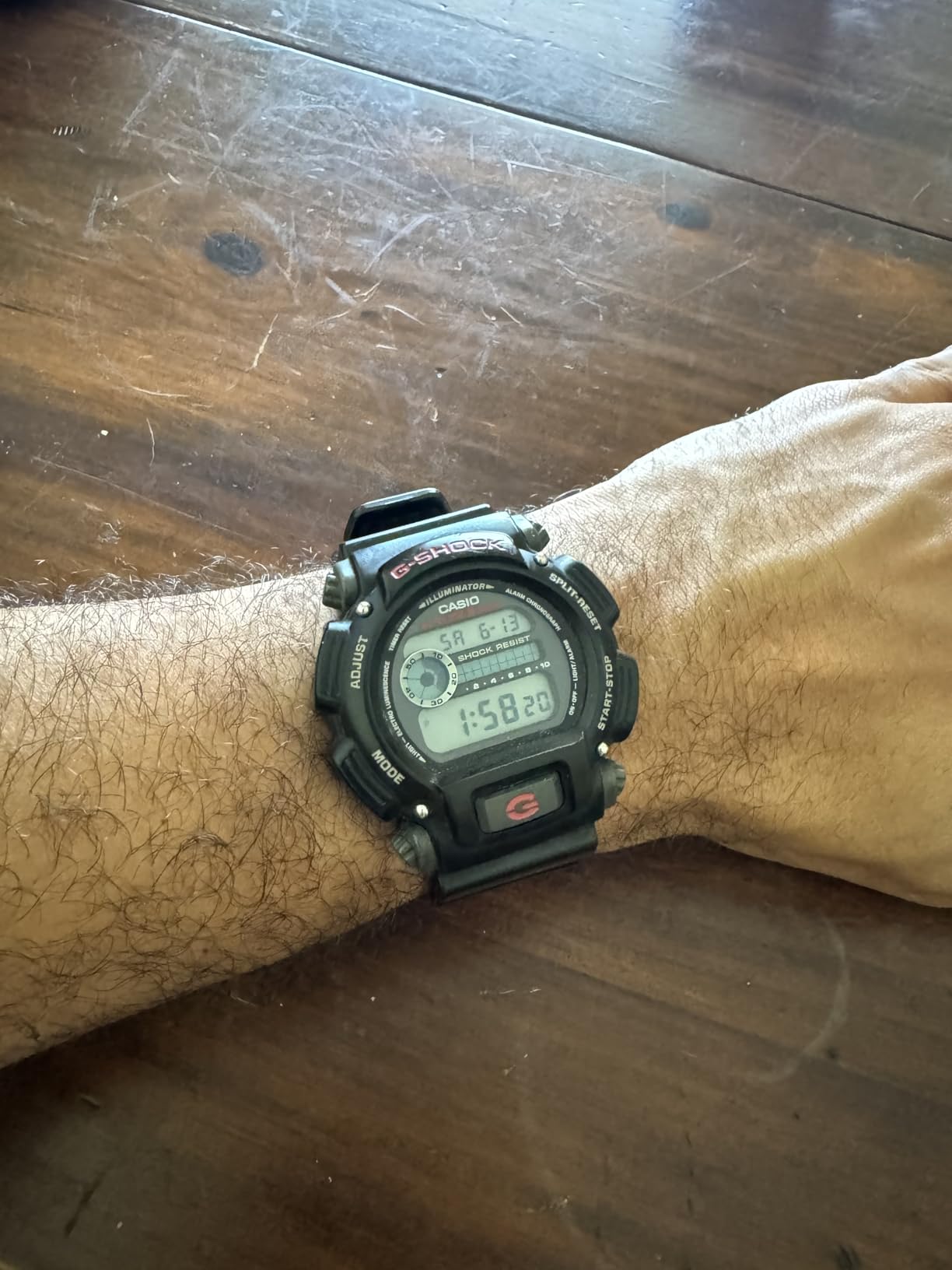
Owner volume is the story here. This is one of the most-reviewed G-Shock listings on Amazon, with more than 10,000 ratings, and the reaction is remarkably consistent: cheap, indestructible, water-safe and low-maintenance. Buyers treat it as the default recommendation rather than a considered purchase.
The 1/100-second stopwatch and 24-hour countdown timer are more than enough for timekeeping on a job, and the multi-alarm with hourly signal and flash alert handles shift changes and break reminders without any setup.
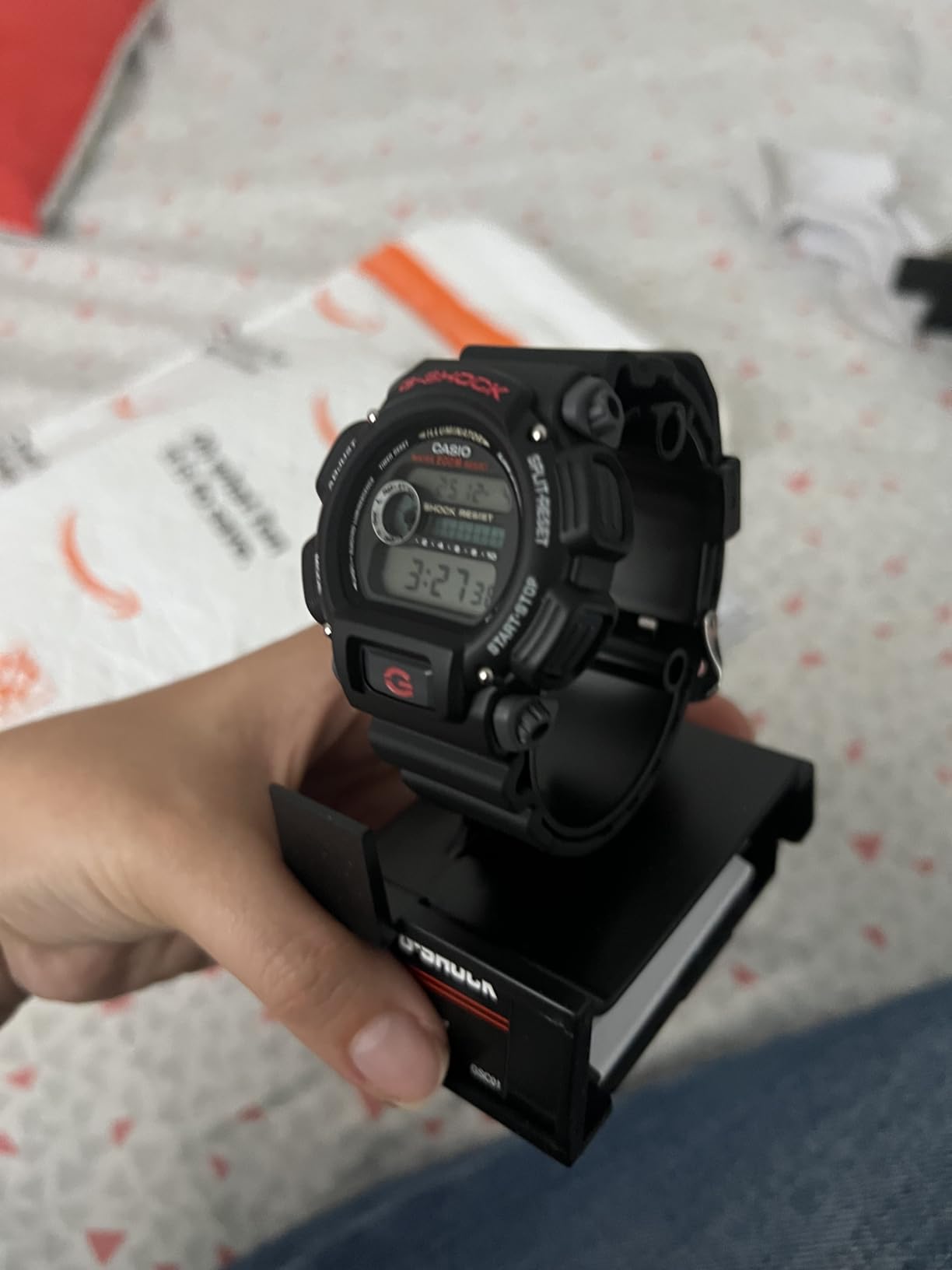
Can you read it in daylight with dirty hands?
Honestly, that is the weak point. The negative LCD is harder to read in bright ambient light than a positive display, and the electro-luminescent backlight only fires when you press the button, with no automatic wrist-rotation trigger. If you need one-tap lighting in the dark, the GBD200 or the DW7900B handles that better.
Who should pay more for something else?
Anyone who needs navigation data. There is no compass, no altimeter, no GPS and no smart feature on this watch, and it will not tell you which direction a pipe run goes. If the job needs sensors, go to the Pro Trek PRG600 or the Suunto Core. If the job needs a timepiece that simply cannot be stopped, keep the DW9052.
The auto-calendar is programmed to 2099, so you will not be resetting it. Dual time handles crews working across zones, and the resin strap and bezel are utilitarian next to metal-cased options, but nothing about them is fragile.
2. Casio Pro Trek PRG600: The Best Value Triple-Sensor Watch
Casio PRG600 Series | Pro Trek | Black | 100M WR | 1/100 SEC Stop Watch | Compass/Alt/Baro-Thermo | Tough Solar Power/Atomic Timekeeping | 1-100 SEC Stopwatch | Countdown Timer | World Time
Resin case with steel bezel
100 m water resistance
Compass, altimeter, barometer, thermometer
Solar plus atomic
Pros
- Best value in the triple-sensor solar category
- Thinner and lighter than a Mudmaster
- Positive LCD reads easily in daylight
- Silicone band is softer than resin
Cons
- Screw-down crown makes setup non-intuitive
- Sensors need periodic recalibration
- Altimeter and barometer share one sensor
The PRG600 is the watch I recommend when someone needs a real compass, altimeter, barometer and thermometer but does not want a 50-millimeter case on the wrist. At 51.5 millimeters it is not small, but it is noticeably thinner and lighter than a Mudmaster and it wears like an ordinary watch on a long shift.
The positive LCD panel is the practical win on a work site. Positive displays are readable in daylight without a backlight, where the negative displays on many G-Shocks need the LED switched on. That difference alone changes how often you look at your watch during a shift.
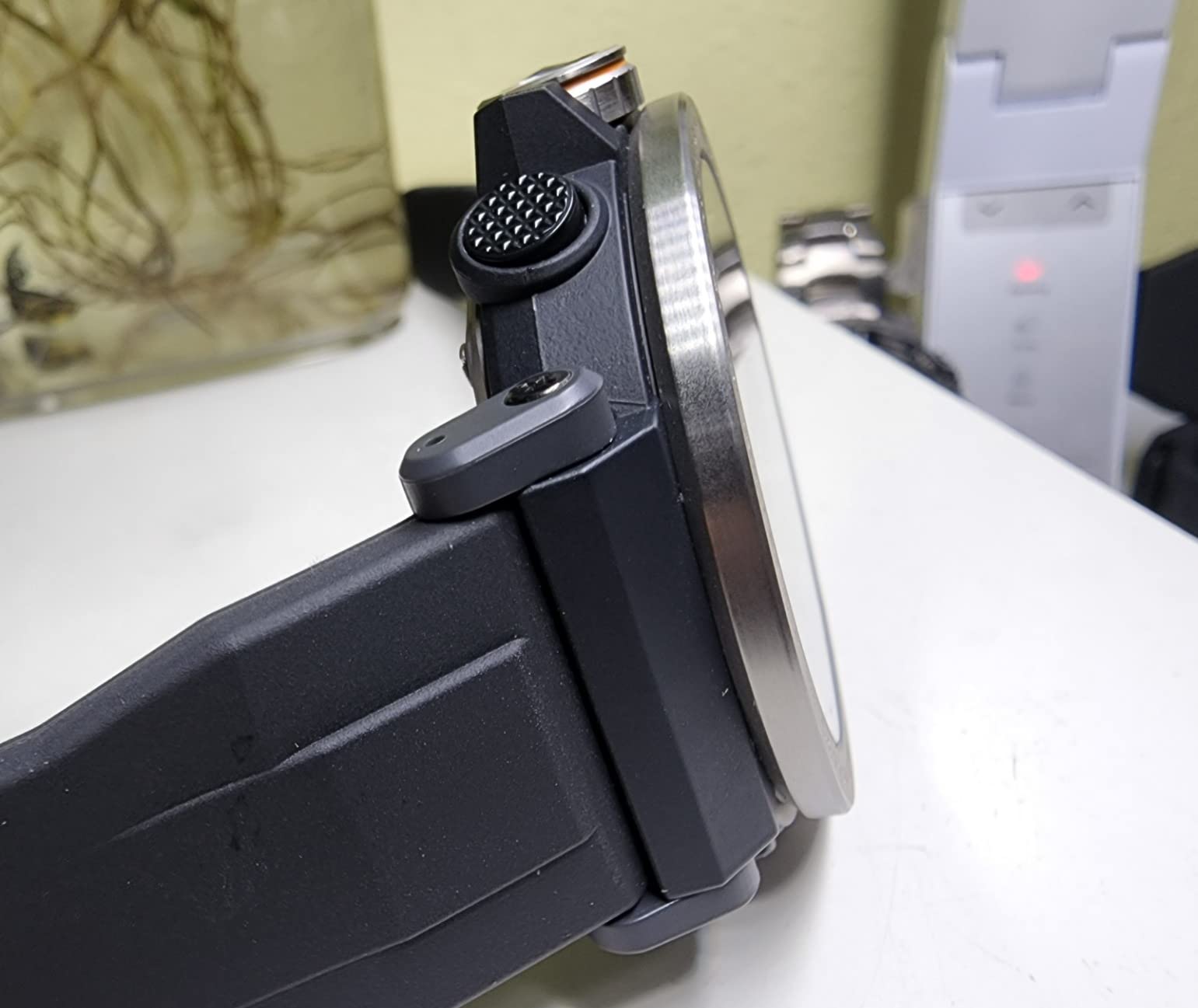
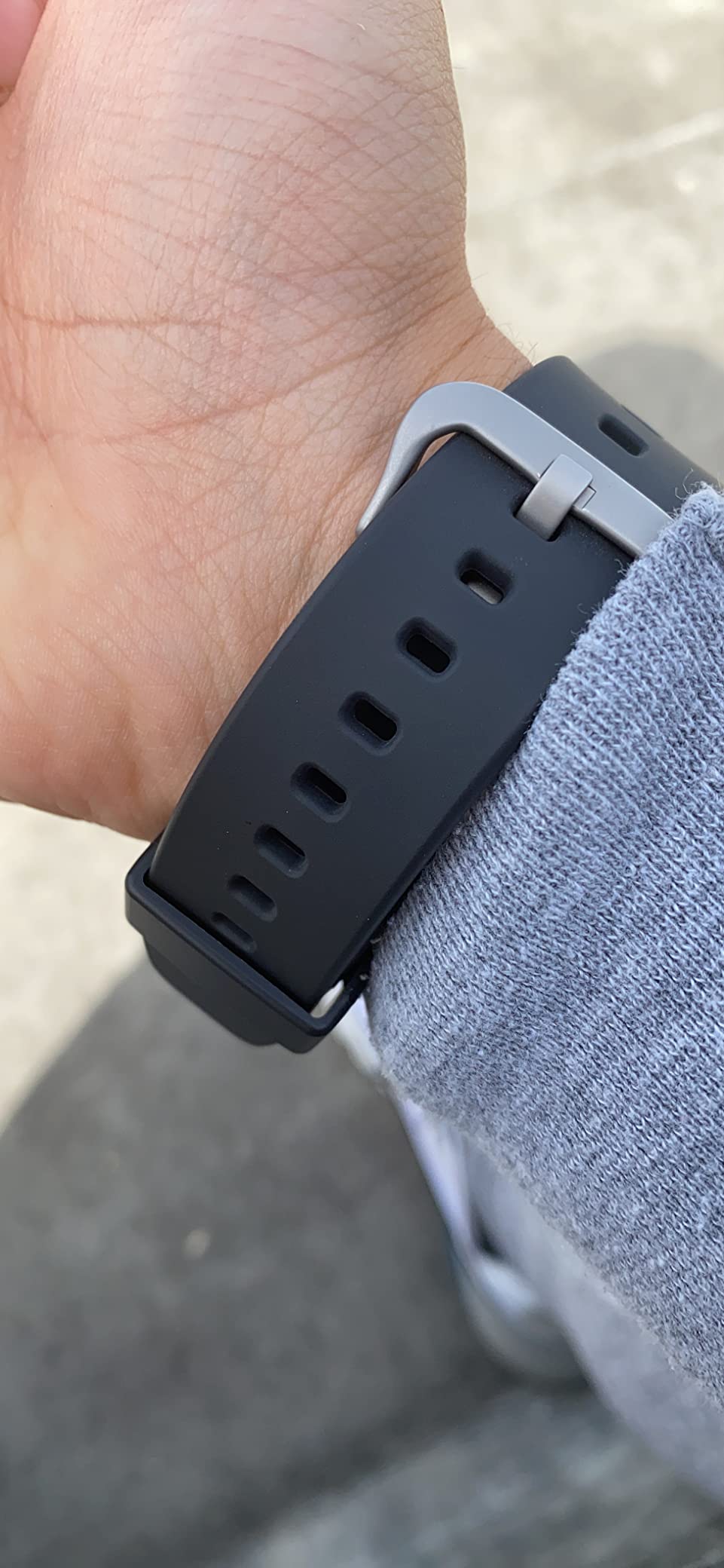
Tough Solar plus atomic timekeeping means no battery changes and no manual time setting. The silicone band is softer and more flexible than standard resin, which matters more than it sounds when your wrist is wet or your gloves are bulky.
Owners consistently frame this as the best value in the triple-sensor solar category, and reviewers push back hard on complaints about complexity, arguing that one setup session and the manual resolve them.
How accurate are the altitude and temperature readings?
Accurate enough to be useful, and honest about their limits. Owners verify the compass and barometer against dedicated instruments, but the altimeter and thermometer need periodic recalibration and drift over weeks. Body heat skews the on-wrist temperature reading, and the altimeter shares a sensor with barometric pressure, so one reading shifts the other.
Is the setup confusing the first time?
The screw-lock crown makes the initial setting procedure non-intuitive if you are used to other Casio digitals. Budget one evening with the manual. Once configured, the daily need is zero, which is the point of a solar atomic watch.
Water resistance is 100 meters, suitable for swimming and showering but not diving. The stainless steel bezel is the part that will show wear least, and it means the watch still looks presentable off the site.
3. G-Shock Mudmaster GWG-1000-1A3: Sapphire, Solar and 200 M Water Resistance
CASIO G-Shock MUDMASTER Mens Japan Import GWG-1000-1A3
Sapphire crystal
Made in Japan
200 m water resistance
Minus 10C tolerance
Multi-band atomic
Pros
- Japanese build quality with a sapphire crystal
- Compass
- barometer and altimeter verified against dedicated instruments
- Multi-band atomic sync keeps time accurate
- Solar power means no battery changes
Cons
- Very large and thick case
- Countdown timer limited to 60 minutes
- Negative display needs strong light or LED
This is the watch I hand to someone whose job involves a chainsaw, mud and cold water. The GWG-1000 is built in Japan with a sapphire crystal, which separates it from every resin-cased watch in this roundup. Owners report compass, barometer and altimeter readings that check out against dedicated instruments, which is more than most watches can claim.
Multi-band radio-controlled timekeeping handles the accuracy problem on its own. The watch syncs to atomic transmitters in the DCF77, MSF, WWVB and JJY bands, so nobody has to set the time after a battery change or a trip across a border. Time zone switching is instant, which matters for crews rotating through sites.
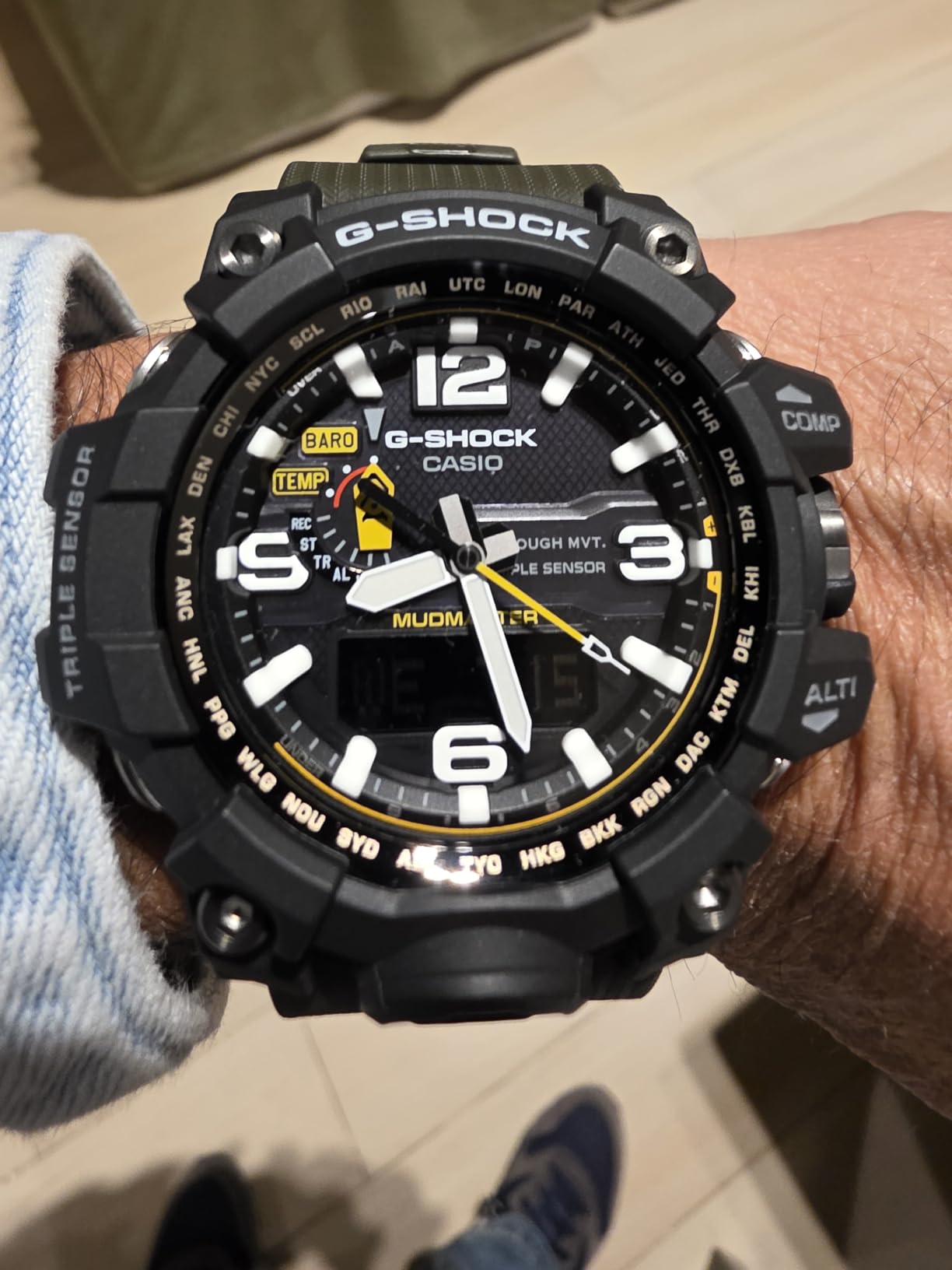
The Tough Solar system means no battery replacements for the life of the watch, and long owners report years of daily abuse without a failure. That matters for anyone working a long deployment where a coin cell is not an option.
The water rating is 200 meters, with a documented low-temperature tolerance down to minus 10C. That is a stated operating limit rather than marketing language, and it matters for winter road crews and anyone washing down equipment in freezing weather.
Will it fit over a work glove and a jacket cuff?
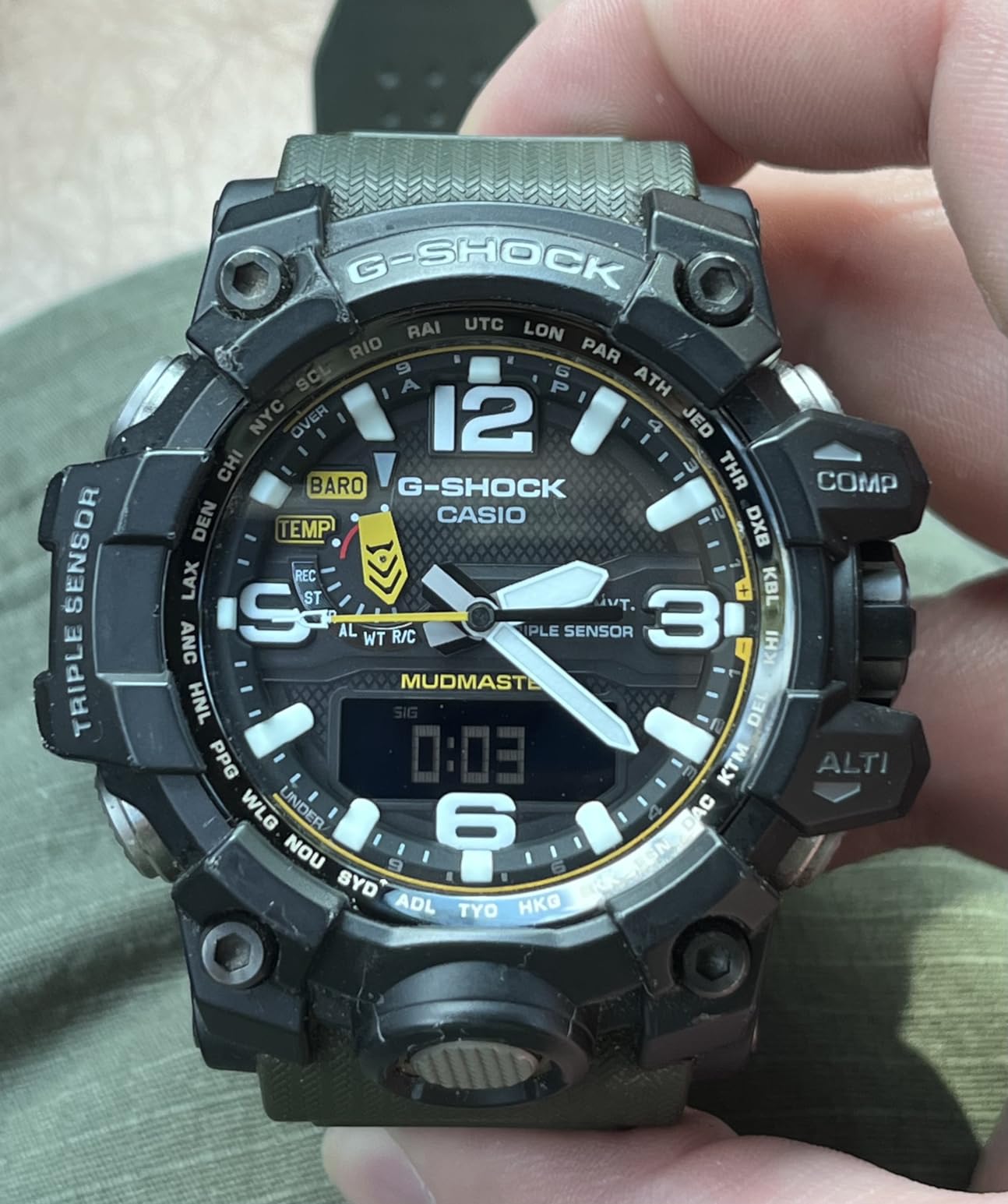
It will fit, but only just. Owners with average wrists report that it sits flat and stays comfortable despite its bulk, and the weight of 4.2 ounces is lighter than its dimensions suggest. The sapphire crystal also means the face stays readable after a season of contact with steel and concrete.
Who should skip it and what should they buy instead?
Anyone on a small wrist should measure first. The case is large and thick, and that is the most repeated complaint in owner reviews. If size is the problem, the Casio Pro Trek PRG600 gives you triple sensors in a much thinner package, and the GA-700UC is smaller again.
Countdown timers stop at 60 minutes here rather than running to 24 hours, so plan tasks in short blocks. And the negative display is genuinely hard to read at a glance in flat daylight without hitting the double LED backlight.
4. Garmin Instinct 2X Solar: The Best Rugged Smartwatch for Work
Garmin Instinct® 2X Solar Tactical, Rugged Outdoor Smartwatch, 50mm, Black
50 mm polymer case
Monochrome MIP display
Up to 40 days battery
Built-in LED flashlight
Pros
- Battery life measured in weeks with solar adding days
- Built-in flashlight works on night shifts
- Multi-band GPS holds a lock under canopy
- Buttons work with gloves on
Cons
- Monochrome screen limits detailed map detail
- Menu system needs tutorials
- Large 50 mm case on small wrists
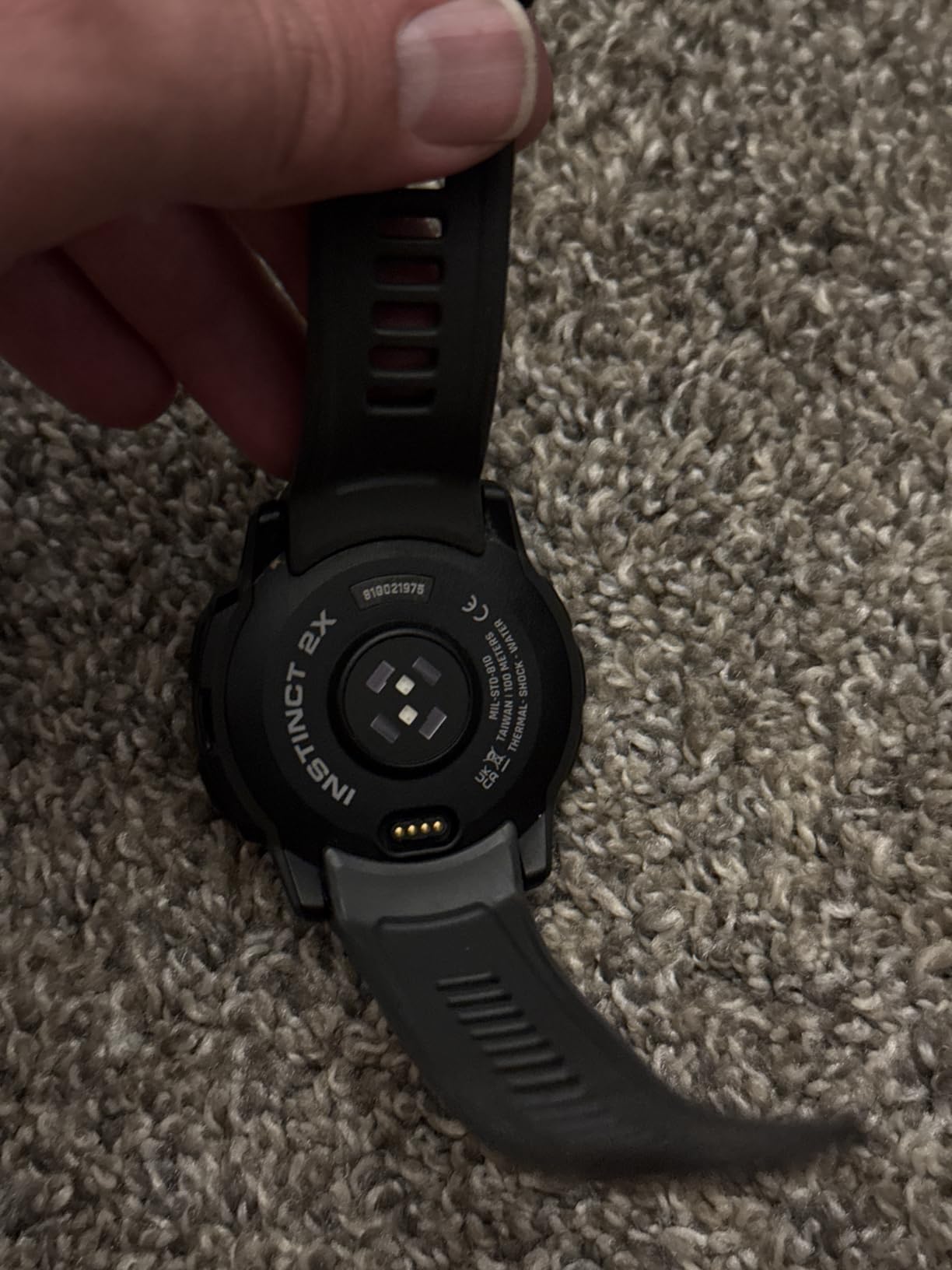
The Instinct 2X Solar is the first watch in this list I would recommend to someone who wants tracking data and still expects the watch to survive the job. It is built to U.S. military standard 810 for thermal, shock and water resistance, in a 50 millimeter fiber-reinforced polymer case rated to 100 meters.
Owners report two weeks to a full month between charges in smartwatch mode, with solar adding more days on top of that. For a crew that cannot charge on site, that is the difference between a usable watch and a paperweight.
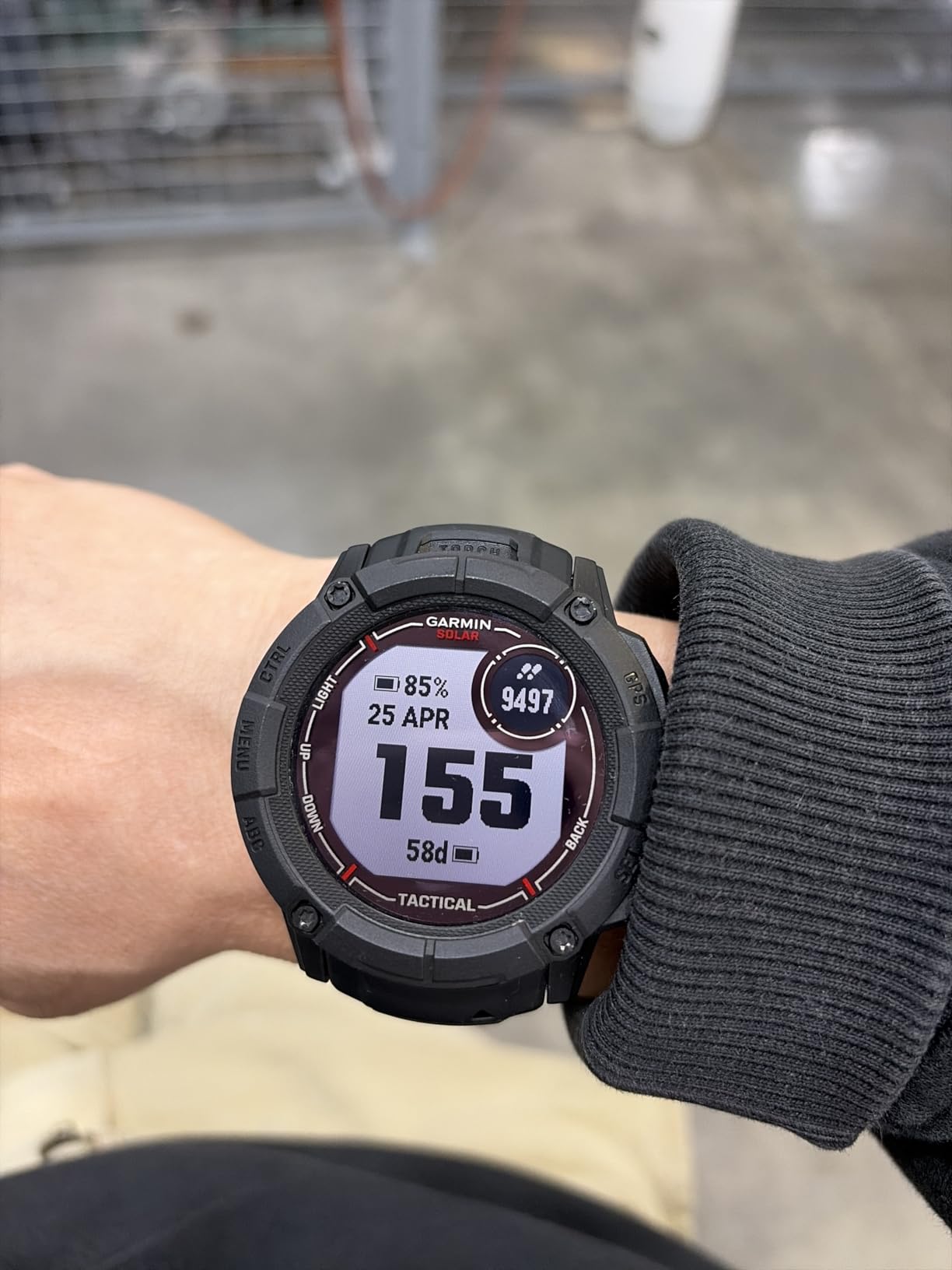
The built-in LED flashlight is the feature that changes daily behavior most, and reviewers single it out repeatedly. Variable intensity and strobe modes replace a phone torch on a night shift or a dark plant room, and it works even when the phone is dead or in a locker.
Multi-band signal reception holds a lock in valleys, canyons and under heavy tree cover, which matters for forestry and utility work rather than for a trail. Health, training and activity metrics need no subscription, and the 26 millimeter silicone band uses a quick-release system.
Can you operate it with gloves and a wet hand?
Yes, and this is its biggest practical advantage over any touchscreen. Every function runs through physical buttons, so a gloved hand or a wet hand changes nothing. Button-driven menu navigation survives rough treatment in a way capacitive screens do not, and screen brightness can be raised from the low default for daylight use.
What are you giving up compared with a Fenix?
Map detail. The monochrome memory-in-pixel display is sunlight-visible and extremely legible, but detailed navigation is limited to a pointer and a breadcrumb line. The button menu is also dense, and owners report needing video tutorials for less common settings. If you need to follow a route on screen rather than confirm a heading, look at the fenix 7X Pro instead.
Solar contribution is modest if you are rarely in direct sun. Most of the endurance comes from the low-power display and the watch’s own efficiency, not from the solar lens.
5. Garmin fenix 7X Pro Sapphire Solar: Titanium, Sapphire and Full Mapping
Garmin fēnix 7X Pro Sapphire Solar, Multisport GPS Smartwatch, Built-in Flashlight, Solar Charging Capability, Black
51 mm case with titanium bezel
1.4 inch Power Sapphire lens
Built-in flashlight
Multi-band GPS with SatIQ
Pros
- Sapphire lens resists the scratches that ruin cheaper watches
- Titanium bezel and rear cover
- Built-in flashlight with strobe modes
- Solar charging extends life to weeks in smartwatch mode
Cons
- 89 g is noticeably heavy
- Premium tier pricing
- Solar gains limited without regular direct sun
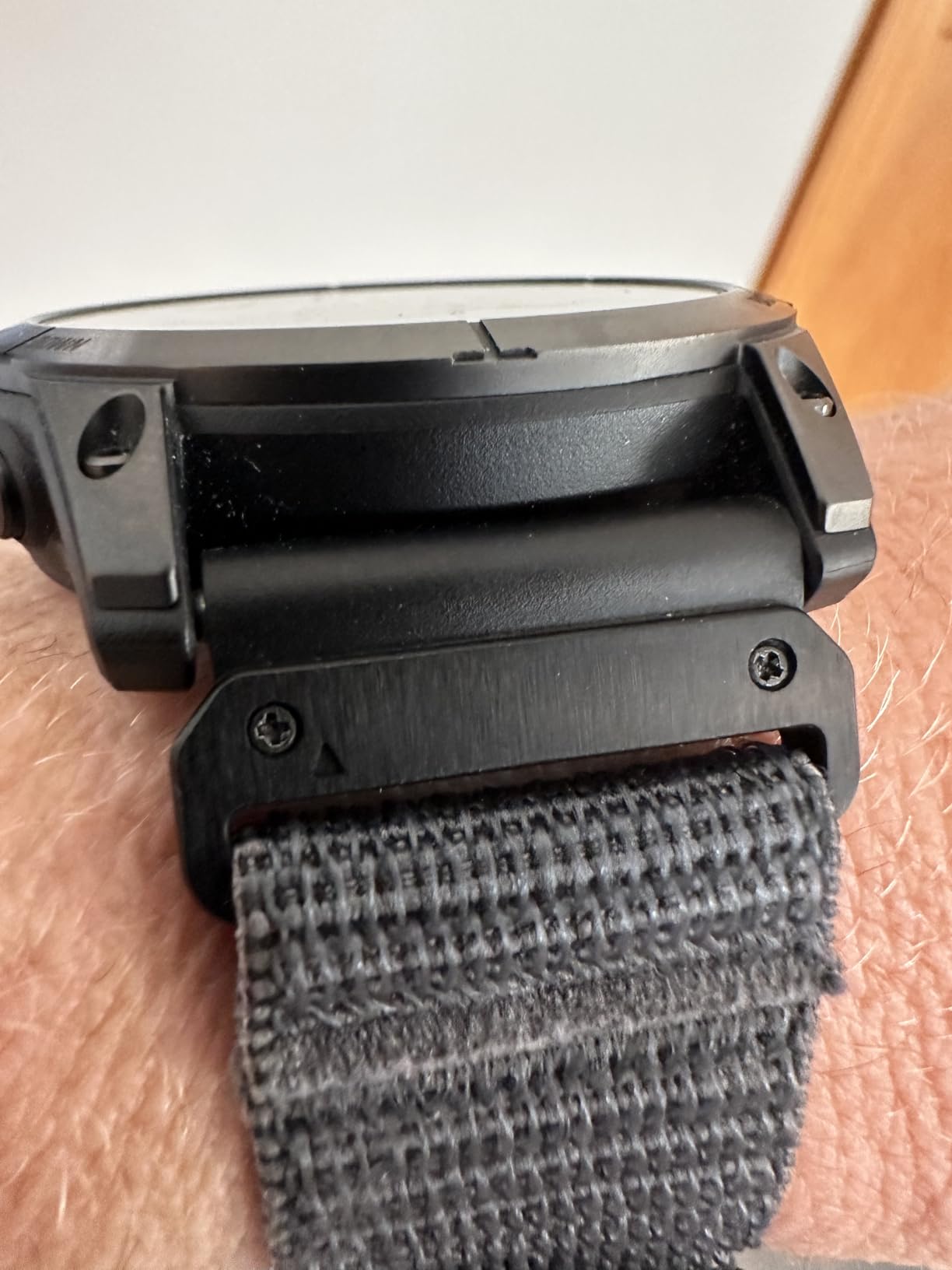
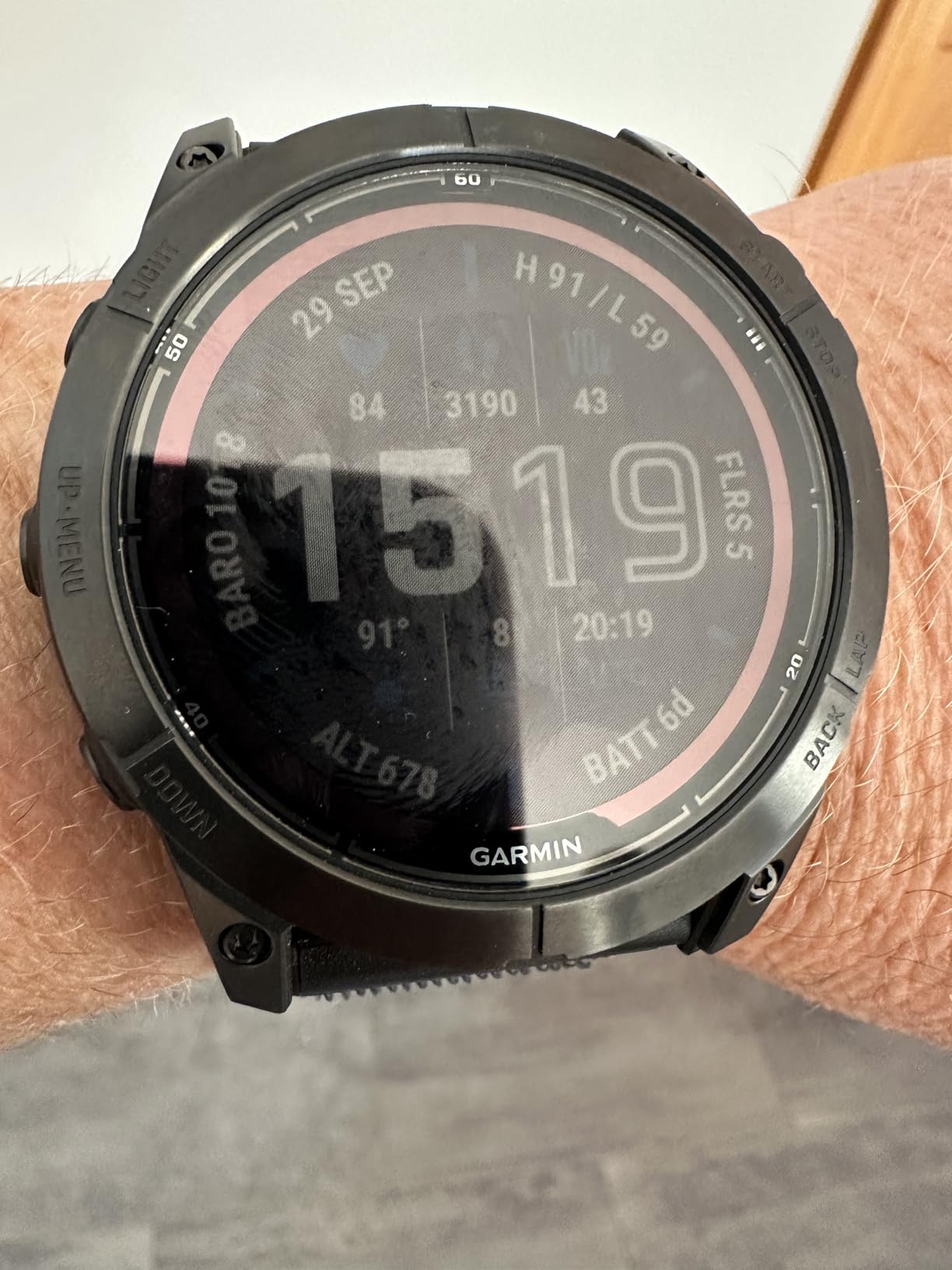
The fenix 7X Pro is the only watch in this roundup that combines a sapphire solar lens with a titanium bezel, and that combination answers the most common complaint from owners of tool watches: scratched glass. If your work puts the watch face against steel, rock or concrete, this is the one that will still be readable in three years.
SatIQ multi-band positioning balances accuracy against battery drain, which is the right trade when you are away from a socket for days. The 1.4 inch display is large enough to read at arm’s length, and the built-in flashlight with variable intensity and strobe modes earns its place on night work.
Training and recovery analytics are genuinely strong here: hill score, endurance score, running power, HRV status and Pulse Ox. For crews tracking exertion across long rotations, that is real data rather than a step count. Preloaded maps plus TopoActive and Up Ahead navigation cover the days when you work away from cell coverage.
It is also a much bigger watch than the Instinct. At 89 grams and 51 millimeters, it sits noticeably taller on the wrist under a jacket cuff.
Is the extra weight a problem on a long shift?
It is noticeable, and owners say so plainly. On a wrist that moves all day, 89 grams is felt by the end of a shift, and the case can catch on a glove when you are pulling it off. If you are on your feet and using your hands constantly, the Instinct 2X is the more comfortable choice and the fenix is the more capable one.
Does solar really add weeks here?
In smartwatch mode, solar charging extends battery life to weeks. The honest limit is that the gain depends on regular direct sunlight, and indoor or night-shift work gets less from it. Owners also report a real learning curve across the feature set, so budget time with the menus before you rely on them on site.
The 100-meter water rating covers washing and rain without worry. Connectivity covers Bluetooth, USB and Wi-Fi, and storage is 32 GB for maps and music.
6. G-Shock GA-700UC: Analog Hands and a Five-Year Battery
Casio Men’s Watch XL Series G-Shock Quartz 200M Water Resistant, Shock Resistant, Matte Tan Resin Finish, Durable Men’s Wrist Watches, Digital Casio G-Shock for Men (Model GA-700UC-5ACR)
Analog hands plus digital readout
About five-year battery
52.8 mm resin case
200 m water resistance
Pros
- Bright and highly legible in direct sunlight
- About five years of battery life on CR2016
- Survives mud
- water and years of hard use
- Available in grey
- tan and olive green
Cons
- Backlight lights the hands but not the digital display
- Learning curve on settings
- Display hard to read in low light
The GA-700UC is the watch to buy if your instinct is that a watch should look like a watch. Analog hands over a digital readout mean you can read the time without waking anything or pressing a button, which is exactly what you want when your hands are full.
Owners describe it as a beater that quietly outlasts the band, and one reviewer reports six years of daily wear through corrections work and volunteer firefighting before replacing it, and only because the clasp broke. That is the kind of ownership report that matters more than any specification.
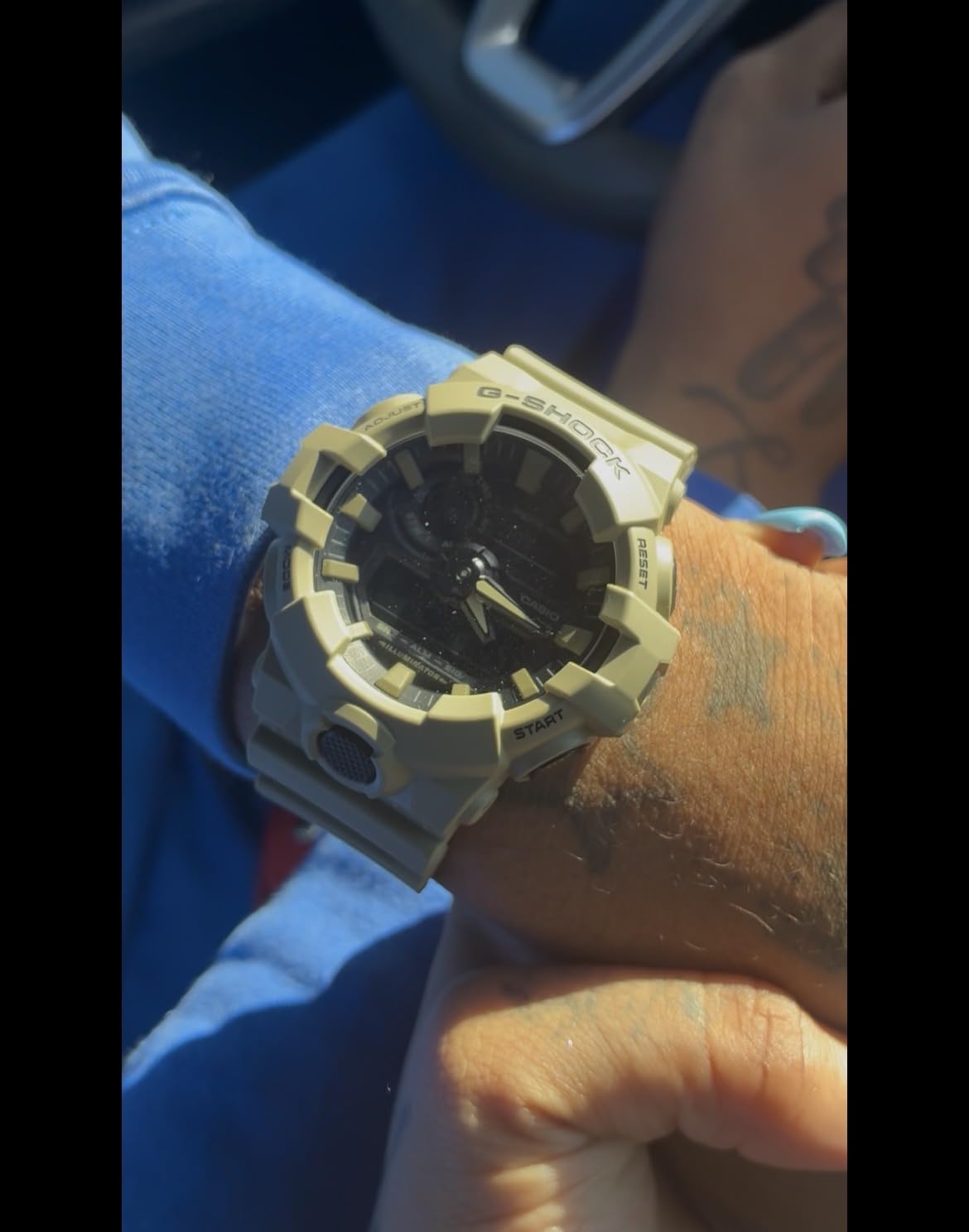
Battery life is the practical headline: roughly five years on a CR2016 cell. Across a five-year working life, that removes every charging conversation and every spare-battery trip to the van. The 200-meter rating and shock-resistant construction cover the same ground as the rest of the G-Shock line.
The super matte finish looks more refined in person than in product photography, and the grey, tan and olive green colorways suit outdoor work wear better than most bright digital watches. At 2.5 ounces it is lighter than the case size suggests.
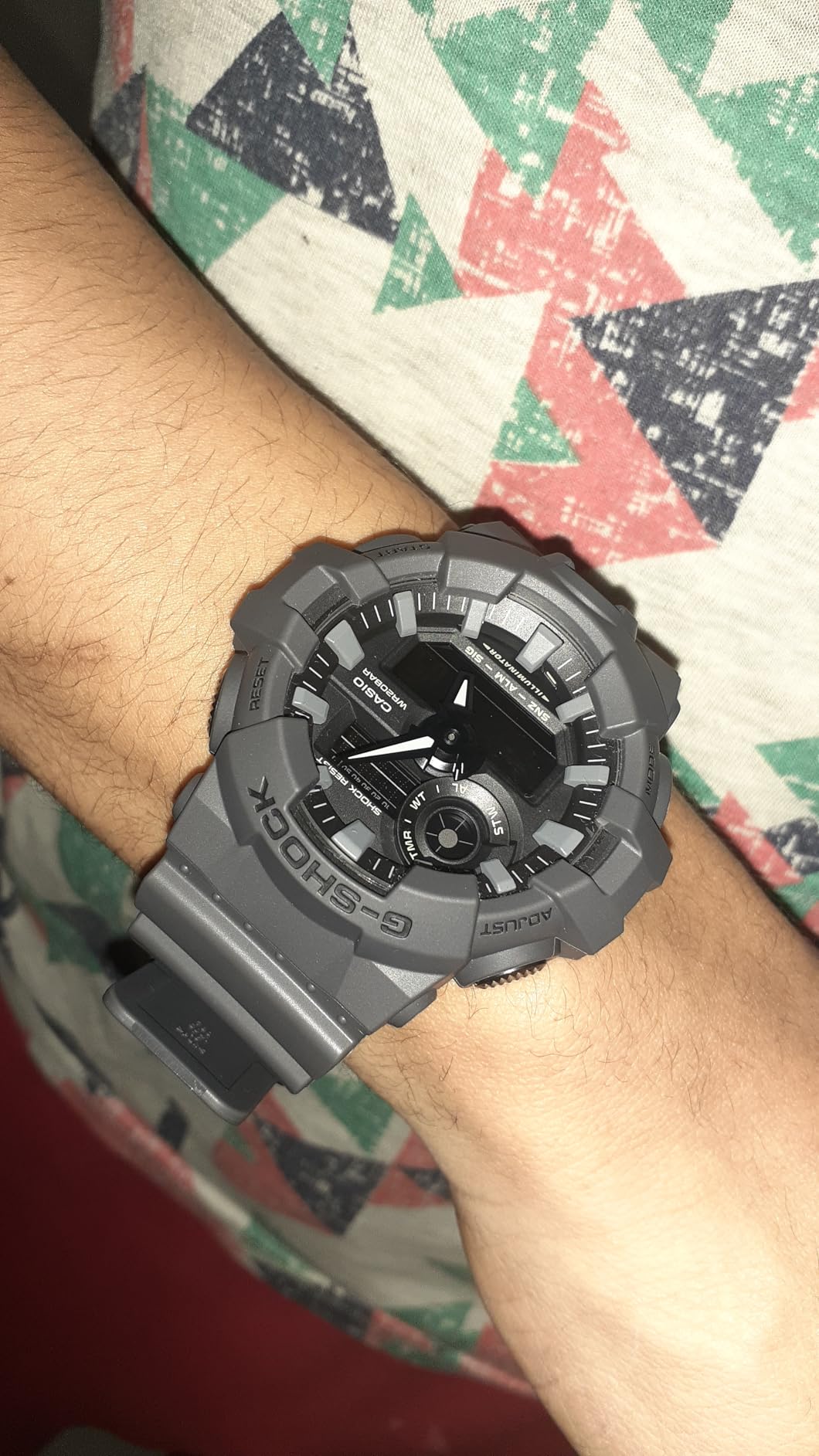
What is wrong with the backlight?
The LED Super Illuminator lights the analog hands but not the digital readout, which limits how useful it is at night. If you routinely work in darkness and need to read a date or a timer, that is a real limitation, and the GBD200 with a full auto backlight is the better tool for that specific job.
Does the 52.8 mm case work on a smaller wrist?
It suits larger wrists. Small-wrist wearers should measure their wrist against the 52.8 millimeter case before committing, and the 40 mm Timex Expedition Scout is a far safer bet if the size is in doubt.
Settings and button operation take a learning curve, and the display is difficult to read in low light without the light. The analog and digital combination, five daily alarms, world time and hand shift feature cover most daily work needs with no phone involvement.
7. G-Shock GBD200: Oversized Numerals and a Two-Year Battery
G-Shock Men’s GBD200 Square Case Watch Black
Large memory-in-pixel display
About two-year battery
200 m water resistance
Bluetooth time sync
Pros
- Huge at-a-glance numerals from the MIP display
- Buttons are easy to find and resist accidental presses
- Two-year battery removes daily charging
- Works fine as a plain watch with Bluetooth off
Cons
- MIP display must be tilted toward the light
- Notifications too small to read
- App and fitness setup is cumbersome
The GBD200 exists for one reason, and owners are explicit that the display is the reason they bought it. The memory-in-pixel panel produces numerals large enough to read at a glance from across a machine bay, with the same sunlight-visible behaviour you get on a proper field instrument.
Several owners disable Bluetooth after a day and use it as a plain digital watch, which the legibility makes easy. The step counter runs independently of the connection, so nothing important is lost by turning the phone off.
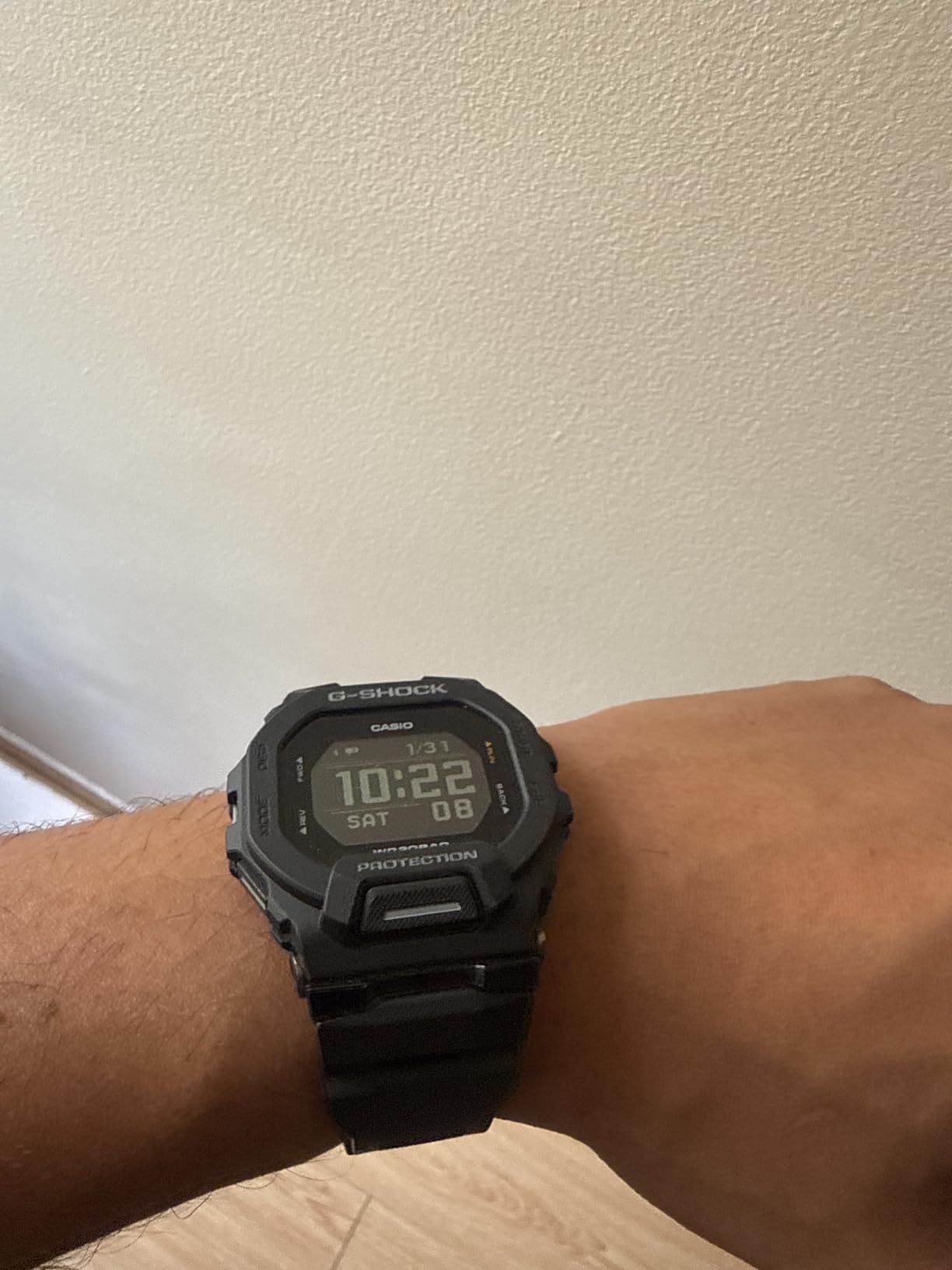
Buttons are easy to find, easy to press and resist accidental activation against a sleeve or a glove. With 200-meter water resistance and roughly two years of battery life on a CR2032, it occupies the same durability position as the rest of the line with none of the charging burden.
The training function covers distance, speed, pace, lap times, Auto Pause and target alerts, which is more than many work watches at twice the size. World time spans 38 cities with automatic daylight saving switching.
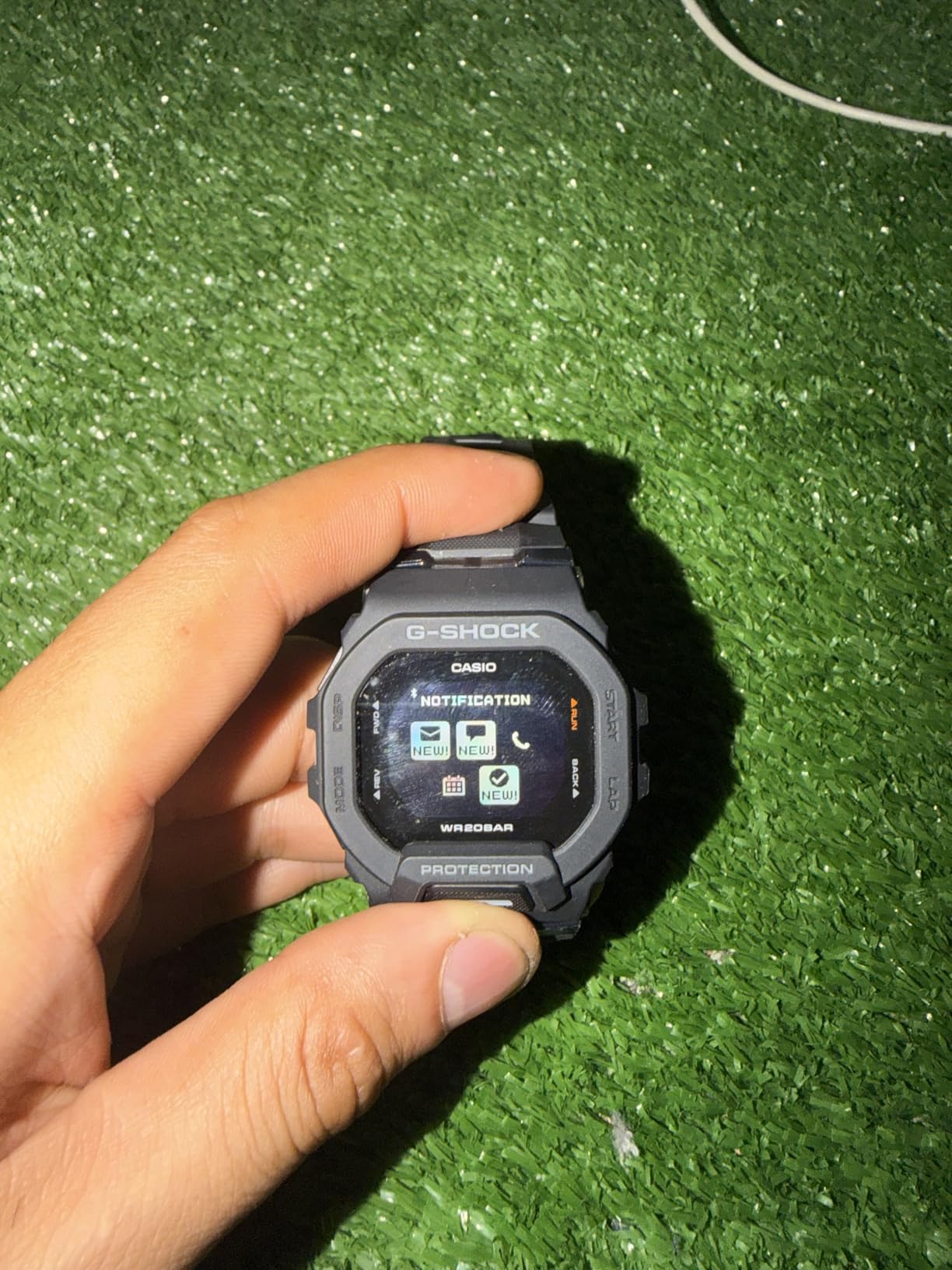
What are you giving up for those numerals?
Glare and notification detail. The MIP display must be tilted toward the light to be legible, and reflections compete with the numerals indoors under fluorescent light. Phone notifications are far too small to read and function only as a buzz reminder, and the companion app and fitness features are cumbersome to configure and slow to navigate.
Will the strap and backlight hold up on a real shift?
Two gripes worth knowing before you buy. The strap runs long on smaller wrists, so plan to adjust or resize it. And the auto-light setting switches itself off after a few hours and has to be re-enabled, which is an irritation on a night shift. The stopwatch also counts only in full seconds because of display response time, so it is not a timing instrument for short intervals.
There is no hourly chime, which some crews rely on for shift changes, and the backlight offers selectable 1.5 or 3 second illumination with afterglow once it is switched on.
8. Suunto Core: The Best Compact ABC Watch for Field Work
Suunto Core Classic, Outdoor Watch, All Black
Compass, barometer, altimeter
Sunrise and sunset display
Depth meter to 30 feet
2.26 ounce case
Pros
- Genuine compass
- barometer and altimeter in a compact case
- Storm Alarm pressure-change warning
- Light and comfortable in any season
- Proven durability across thousands of owners
Cons
- Single-button interface and LCD feel dated
- No Indiglo or LED backlight
- Sensors are entry-level rather than survey grade
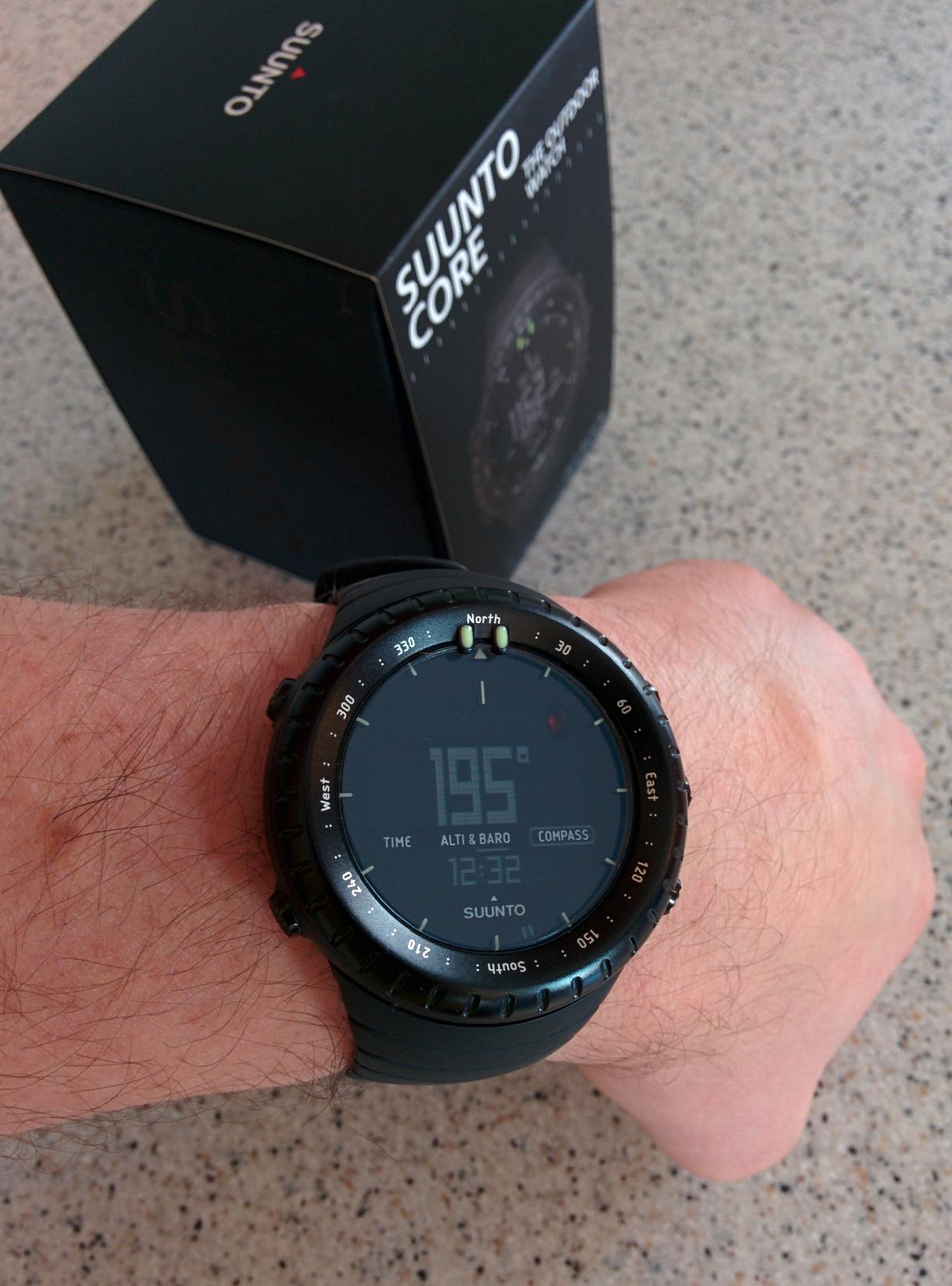
The Suunto Core has been in production since 2008, and that record is the headline. More than 16,000 ratings describe a watch many owners have used for years or replaced an earlier one with the same model, which is strong durability evidence.
The Storm Alarm is the feature that earns its keep in the field. It notifies you when barometric pressure changes sharply, which on a marine, forestry or survey job is a genuine heads-up that most watches in this price range do not give you.
At 1.93 inches and 2.26 ounces, it is a compact watch that stays comfortable through a full shift in any season. It slips under a cuff, it does not catch on a glove, Sunrise and sunset display and a depth meter to 30 feet round out a sensible outdoor instrument, and the styling works with both workwear and outdoor clothing.
Its lower rating relative to the G-Shocks reflects ergonomics and display rather than any reliability problem. The compass and altimeter are entry-level instruments, accurate enough for orientation but not for survey work.
Can you read it at night?
This is the Core’s most criticized omission. It has no Indiglo-style backlight and no LED flashlight, so at night you are tilting the watch toward a light source. If your work involves dark hours at all, choose the GBD200 or the Instinct 2X Solar instead, both of which light up on demand.
Is the single-button interface a problem?
It is dated, and it is slow. The legacy one-button navigation feels dated next to modern smartwatches, and Bluetooth sync and app support are limited compared with current sport watches. That is the trade, because the watch does three jobs without a phone, a charger or an account.
For a buyer who wants to check the time without pulling out a phone, the Core answers that directly, and field technicians deploying for extended periods frequently say the same thing about non-smart watches.
9. Citizen Promaster Sea: The Best Analog Watch for Outdoor Work
CITIZEN Men’s Eco-Drive Promaster Dive 3 44mm Super Titanium BN0200-56E
Super Titanium case and bracelet
Eco-Drive solar movement
200 m ISO diver rating
Mineral crystal
Pros
- Super Titanium is lighter and far more scratch resistant than steel
- Eco-Drive never needs a battery
- ISO compliant 200 m diver rating with rotating bezel
- Luminous hands and markers
Cons
- Analog only with no digital or sensor functions
- Mineral crystal is less scratch resistant than sapphire
- Lighter construction can feel less substantial
This is the one to buy if you want a watch that does not look like equipment, and if your work involves water more than it involves rock and concrete. The Promaster Sea carries a 200-meter ISO-compliant diver certification with a one-way rotating bezel, which is a genuine depth rating rather than a splash-resistant claim.
Super Titanium is the material story: forty percent lighter and five times harder than stainless steel, rust resistant and gentle on the skin. For a watch worn every day for years, that combination of low weight and high hardness is a real advantage over steel, which shows scratches and develops a patina.
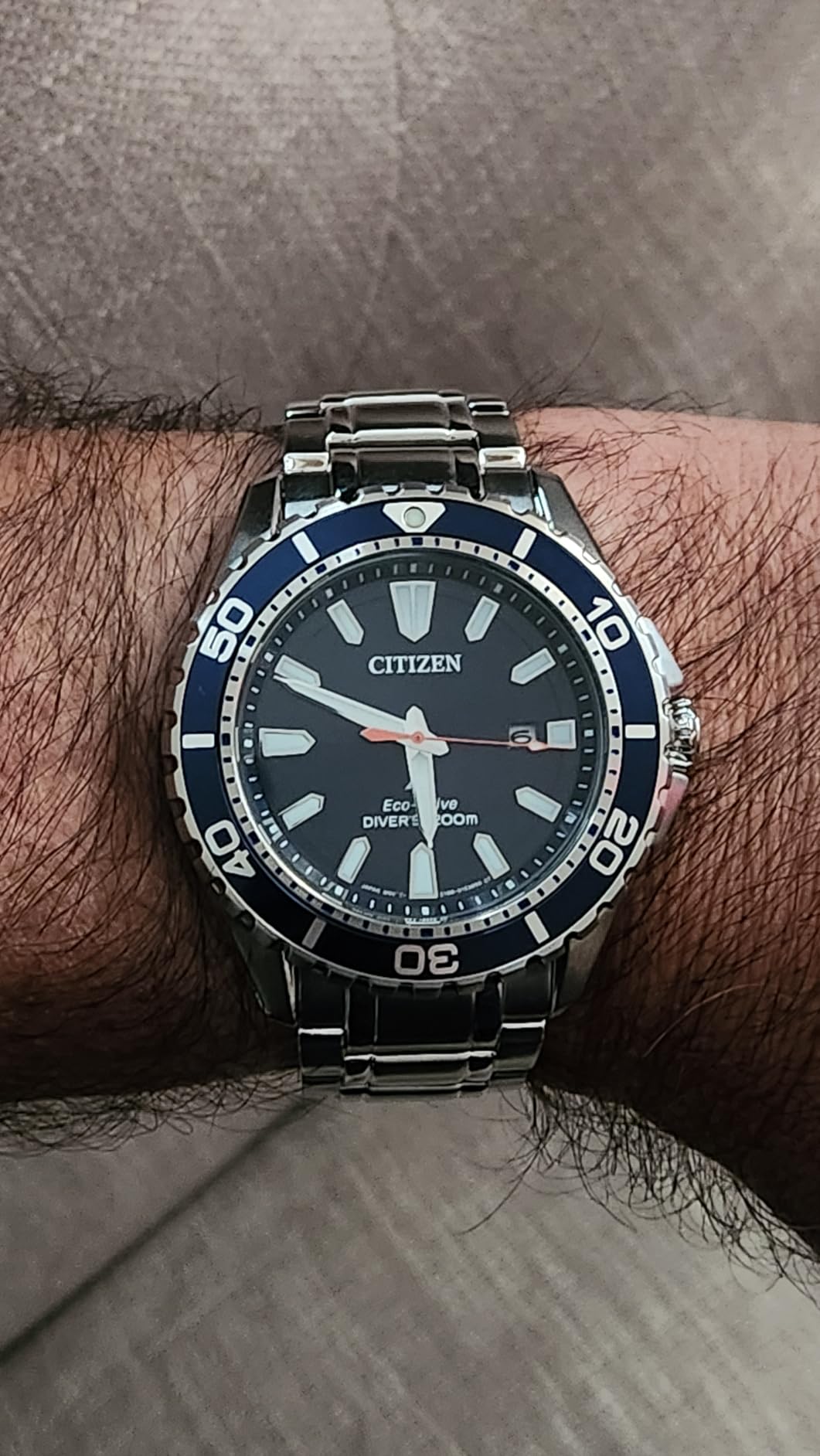
Eco-Drive runs on light and never needs a battery, so there is no charging and no cell. The 5 year limited warranty is the longest warranty in this roundup, and the luminous hands and markers stay readable in low light, which addresses the most common night-shift complaint about analog watches.
It rates lower in this roundup than the G-Shocks and the Suunto because it offers no compass, altimeter or digital utility. That is a deliberate trade, and for some jobs it is the correct one.
What does the mineral crystal cost you?
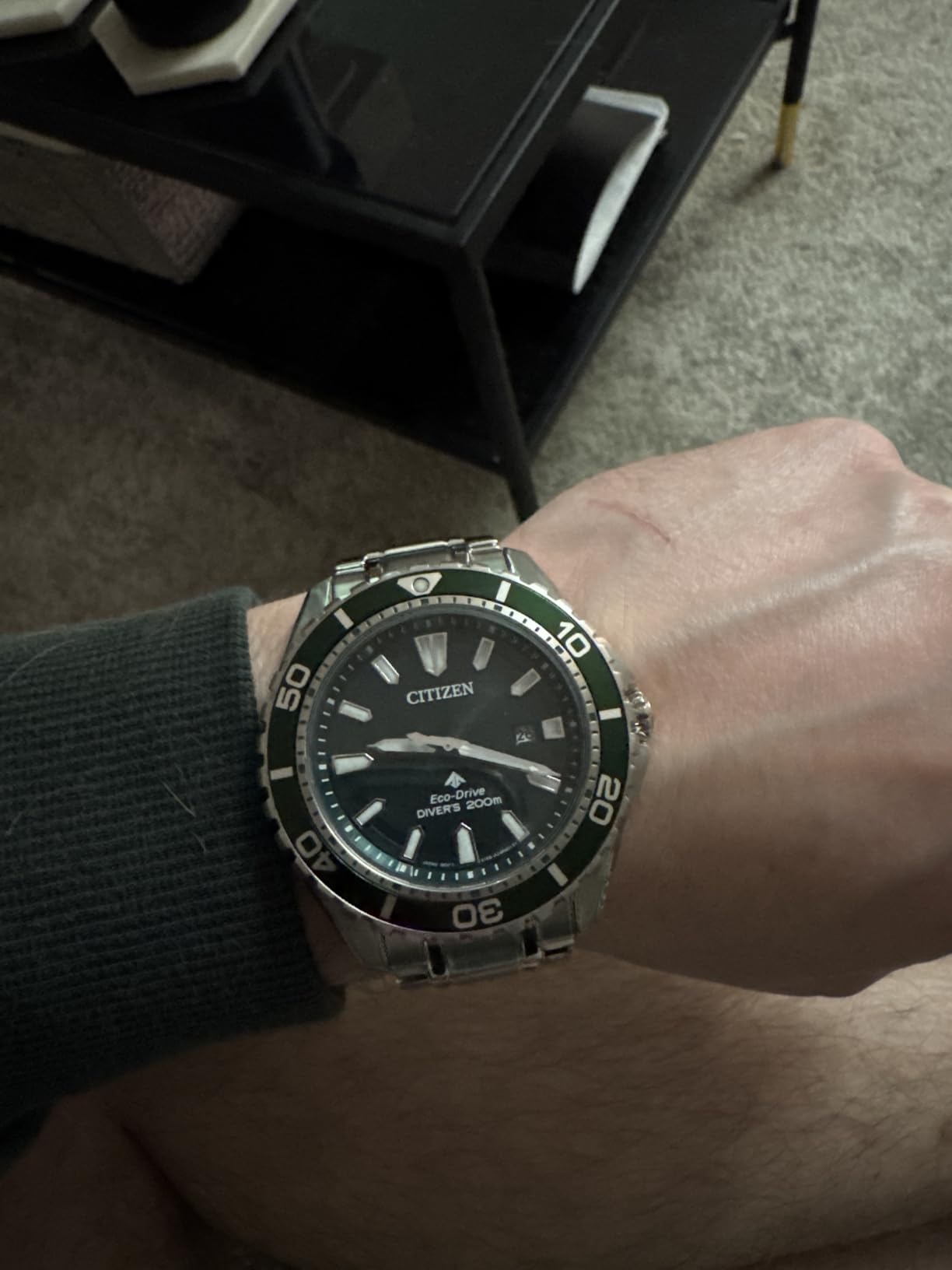
It is the softest lens on a watch that otherwise over-delivers on materials, and it is a common buyer complaint in watch forums. Sapphire would fix it. If you work where the face meets abrasive surfaces, weigh the scratches against everything else this watch does well.
Who should consider it, and who should not?
Consider it if your work is water-side, marine, diving-adjacent or simply not rough enough to matter, and if you want something that passes with a collared shirt. Skip it if you need navigation data, a timer, an alarm or any way to record a job duration. The lighter titanium construction also feels less substantial in the hand than a steel-cased watch, and some buyers prefer the weight.
Available with black, green or blue dials on a silver-tone bracelet. A date window at 3 o’clock keeps the layout simple.
10. Timex Ironman Triathlon: The Best Chronograph for Timing Work
Timex Men’s Ironman Triathlon Rugged 30 44mm Resin Strap Watch – Black Case Negative Display with Black Resin Strap
100-hour chronograph with 30-lap memory
Indiglo dial
44 mm resin case
100 m water resistance
Pros
- 100-hour chronograph with 30-lap memory at a modest price
- Indiglo dial readable in total darkness
- Light 1.6 ounce build for long wear
- Weekday and weekend alarm programming
Cons
- Acrylic lens is the softest crystal here
- No altimeter
- barometer or compass
- Not rated for diving
If your work is judged on time, the Ironman chronograph is the pick. A 100-hour chronograph with 30-lap memory is a serious timing instrument, and having it in a watch this light changes how you approach a job that needs repeat measurements.
The Indiglo dial is readable in total darkness, and unlike an LED backlight it does not need charge. That makes it a genuinely reliable night tool for anyone working unlit plant rooms, tunnels or early starts in winter.
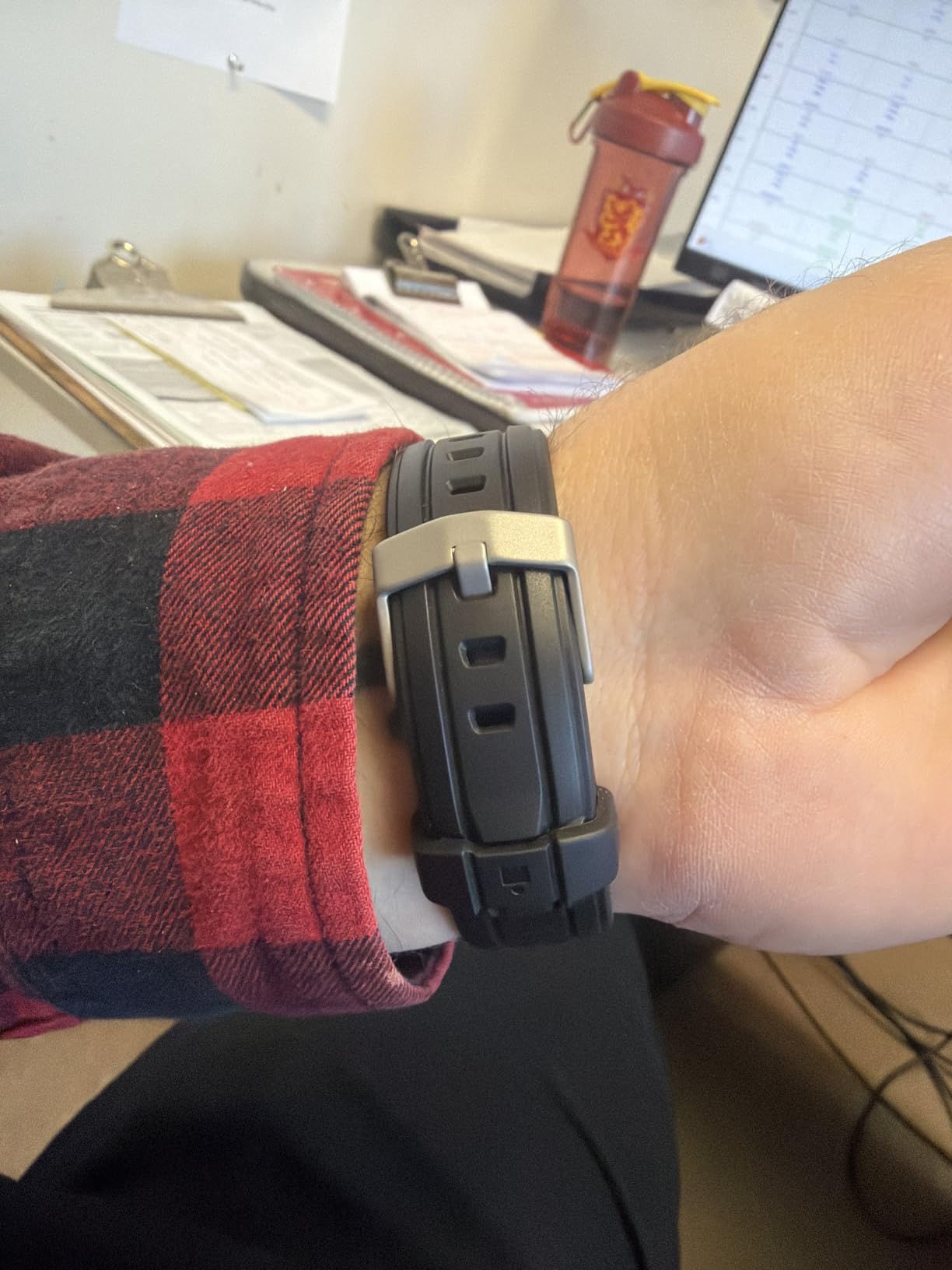
At 1.6 ounces in a 44 millimeter resin case, it is light enough to forget you are wearing it across a long shift, and the adjustable 20 millimeter strap fits wrists up to eight inches. Water resistance to 100 meters covers swimming and showering.
Three daily alarms with weekday or weekend programming suit shift rosters, and 24-hour military time plus two time zones handle crews working unusual hours or across borders.
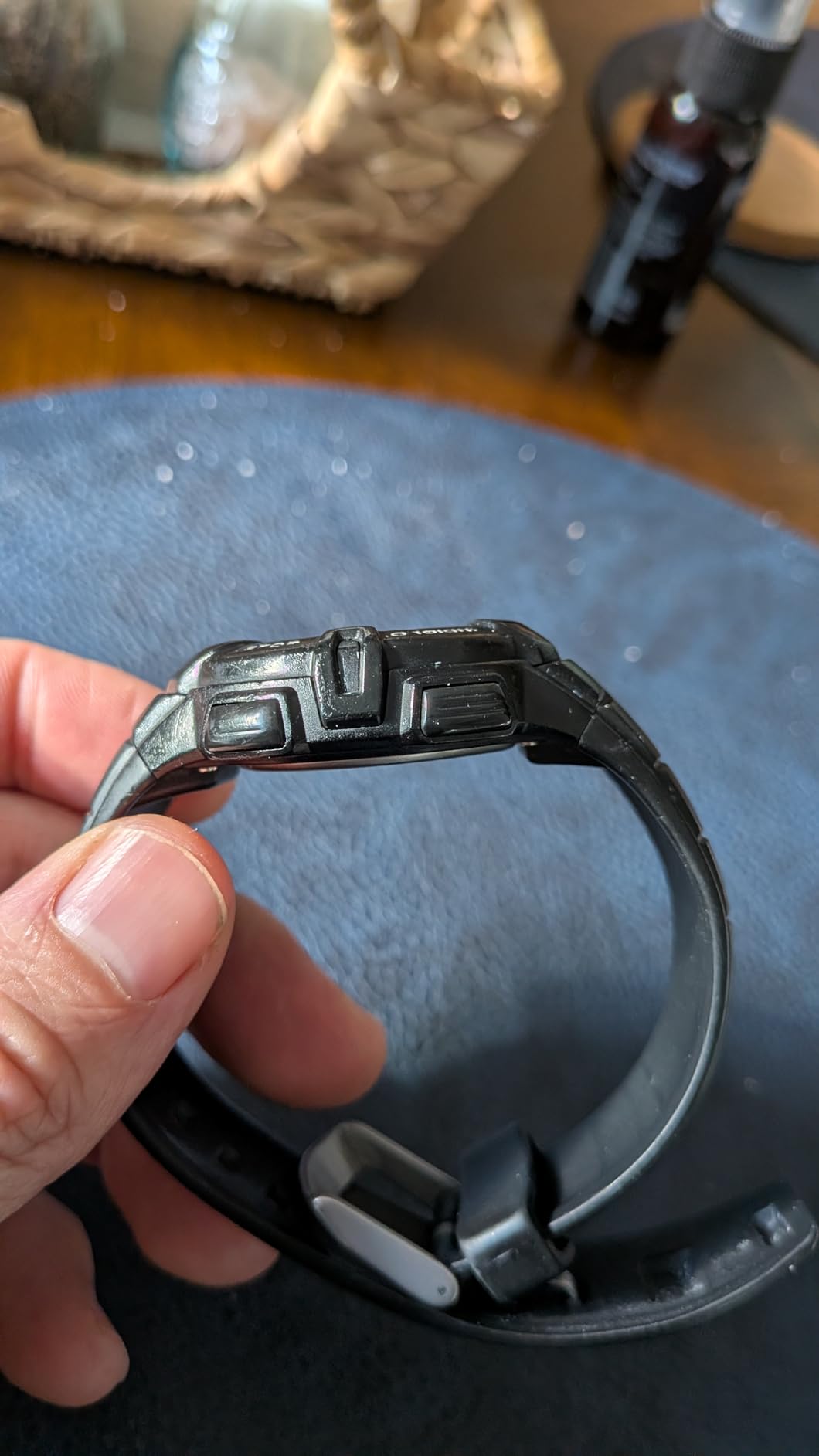
How does the acrylic lens hold up?
It is the softest crystal in this roundup and the first thing to show wear. Acrylic polishes back better than mineral glass, so a hazed lens can often be restored, but it will pick up marks faster than anything else here. For a bench watch kept in a cab or a van, that is acceptable. For one that lives on a tool belt, think twice.
What is missing for outdoor work?
Any navigation. There is no altimeter, barometer or compass, and it is not rated for diving. If your job needs to know where you are relative to elevation or direction, the Suunto Core or the Pro Trek PRG600 adds real capability for modest money. Menu navigation across all these functions does take practice.
The value case is straightforward: long chronograph runtime, lap memory, programmable alarms and a light resin build, at a fraction of what the sensor-equipped watches cost.
11. Timex Expedition Scout: A 40 mm Field Watch With Full Numerals
Timex Men’s Expedition Scout 40mm Watch, Gray Case, Black, Green Strap
40 mm field case
Full Arabic numerals
Indiglo night light
Mineral glass crystal
Pros
- Excellent dial legibility from any angle
- 40 mm case suits both large and small wrists
- Simple analog format with no unnecessary complexity
- Strap is easily swapped
Cons
- Solar variants trade the Indiglo backlight for the solar movement
- Nylon and leather straps stain over time
- Quartz ticking is audible in a silent room
The Expedition Scout is the shape of watch this category is built around. More than 30,000 ratings make it one of the most-reviewed watches on Amazon, and the reaction is consistent: excellent readability, ideal proportions and a clean field-watch look for a modest outlay.
The 40 millimeter case is a genuine sweet spot. It flatters both large and small wrists, which is more than you can say for most of the 50-plus millimeter cases in this roundup, and it slides under a jacket cuff without catching on a glove.
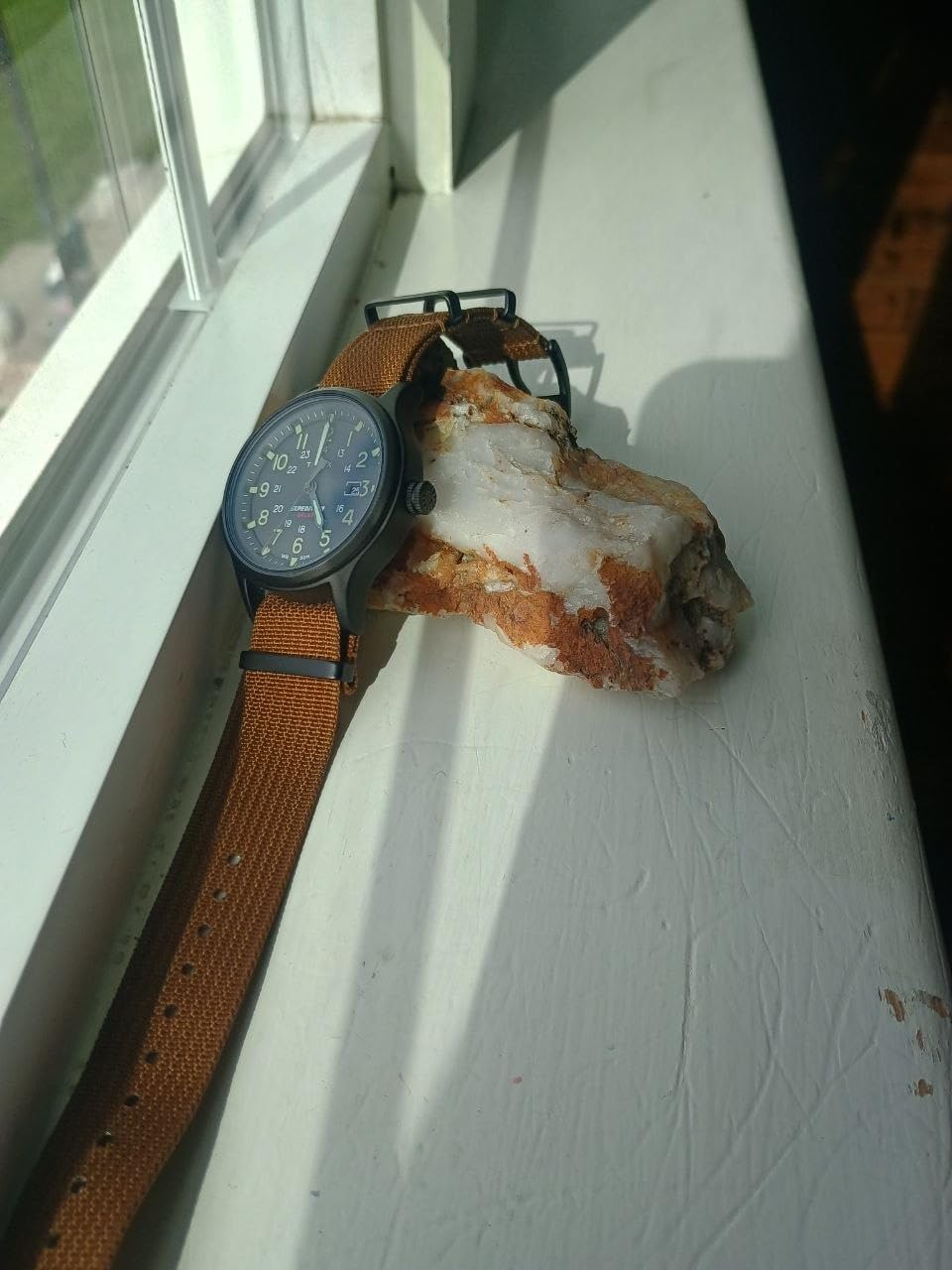
Full Arabic numerals, a date window at 3 o’clock and 24-hour military time on the dial mean you read the watch the same way every time without pressing anything. The mineral glass crystal is a step up from acrylic, and the adjustable nylon strap swaps out easily when it wears through.
Owners like that it needs no setup and no thinking. There is no menu, no app and nothing to charge, which is why crews who want to check the time without touching a phone keep coming back to it.
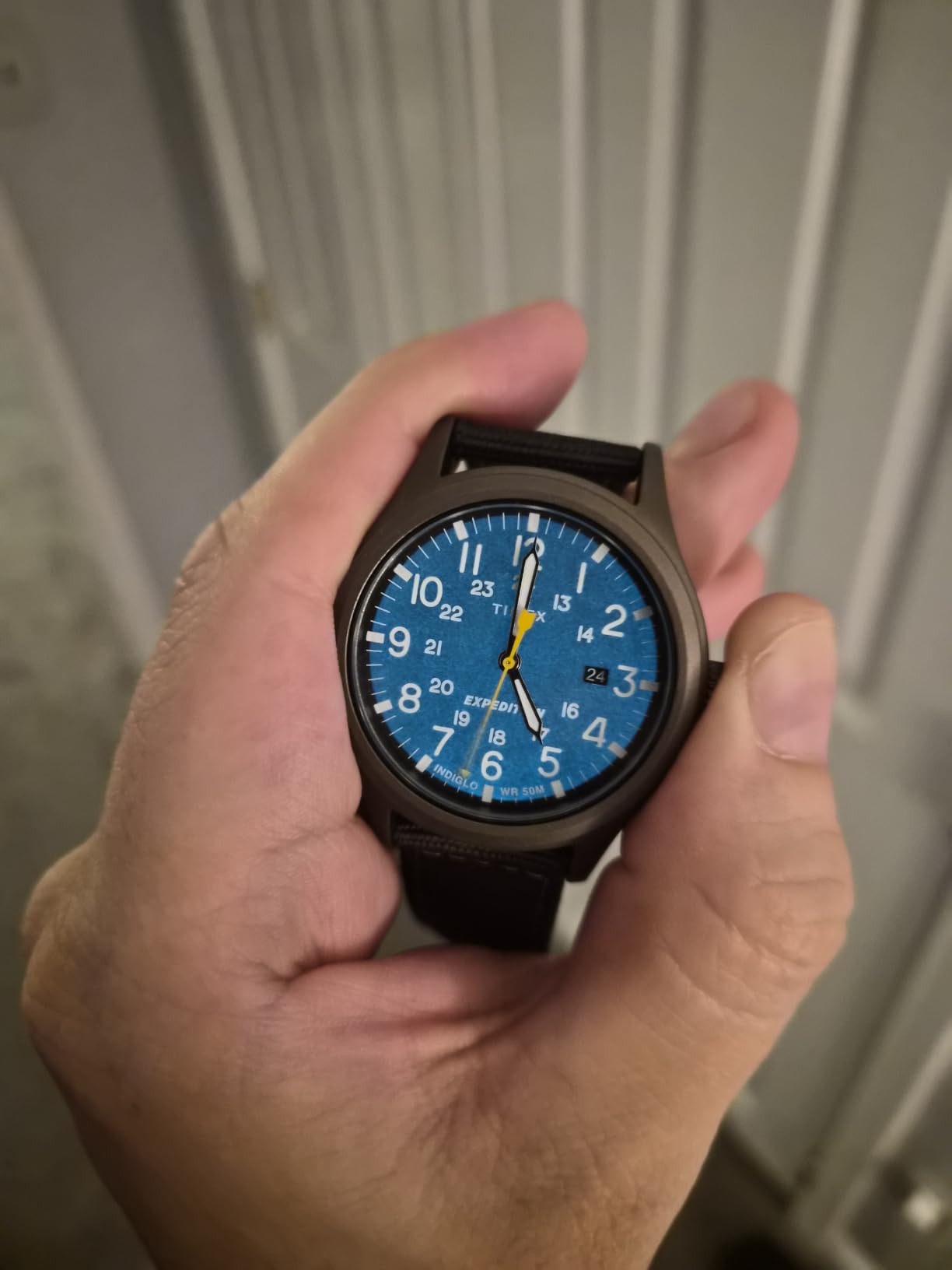
Should you get the Indiglo or the solar version?
You get one or the other, not both. Solar variants run for years without a battery change, but they give up the Indiglo backlight, and solar units may need to sit in sunlight before they start running out of the box. Choose Indiglo for night work and solar for daylight and long deployments, and read the variant carefully before ordering.
What are the real drawbacks?
Quartz ticking is audible in a silent room, which some wearers find irritating and others find reassuring. Nylon and leather straps show wear and staining over time, so keep a spare. And there is no compass, altimeter or any sensor for field navigation, so this is a timekeeper rather than an instrument.
That is why it pairs well with our [field watches for hiking roundup](https://eatcreatesleep.net/best-field-watches-for-hiking/), which covers the sensor-equipped end of the market in detail.
12. G-Shock Solar Atomic GW7900B: Set It Once and Forget It
G-Shock Solar Atomic Rescue GW7900B Black/Black One Size
Solar plus multi-band atomic sync
200 m water resistance
EL backlight with wrist-rotation auto light
Moon phase and tide graph
Pros
- Set it once with solar power and nightly atomic sync
- Accuracy verified against GPS over long ownership
- EL backlight with wrist-rotation auto light
- Survives years of job-site and marine abuse
Cons
- Negative display is hard to read at a glance
- Mineral crystal scratches easily
- Very thick owner manual
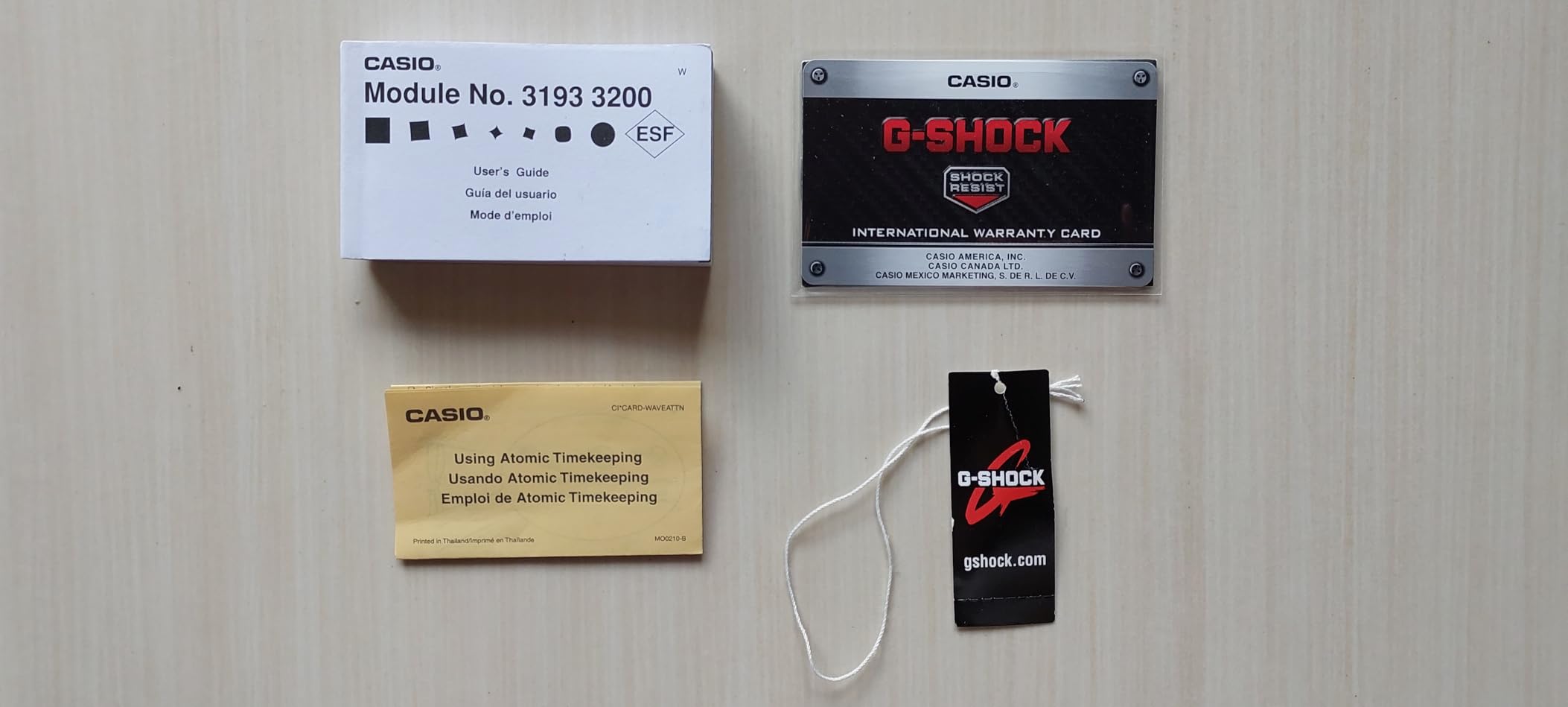
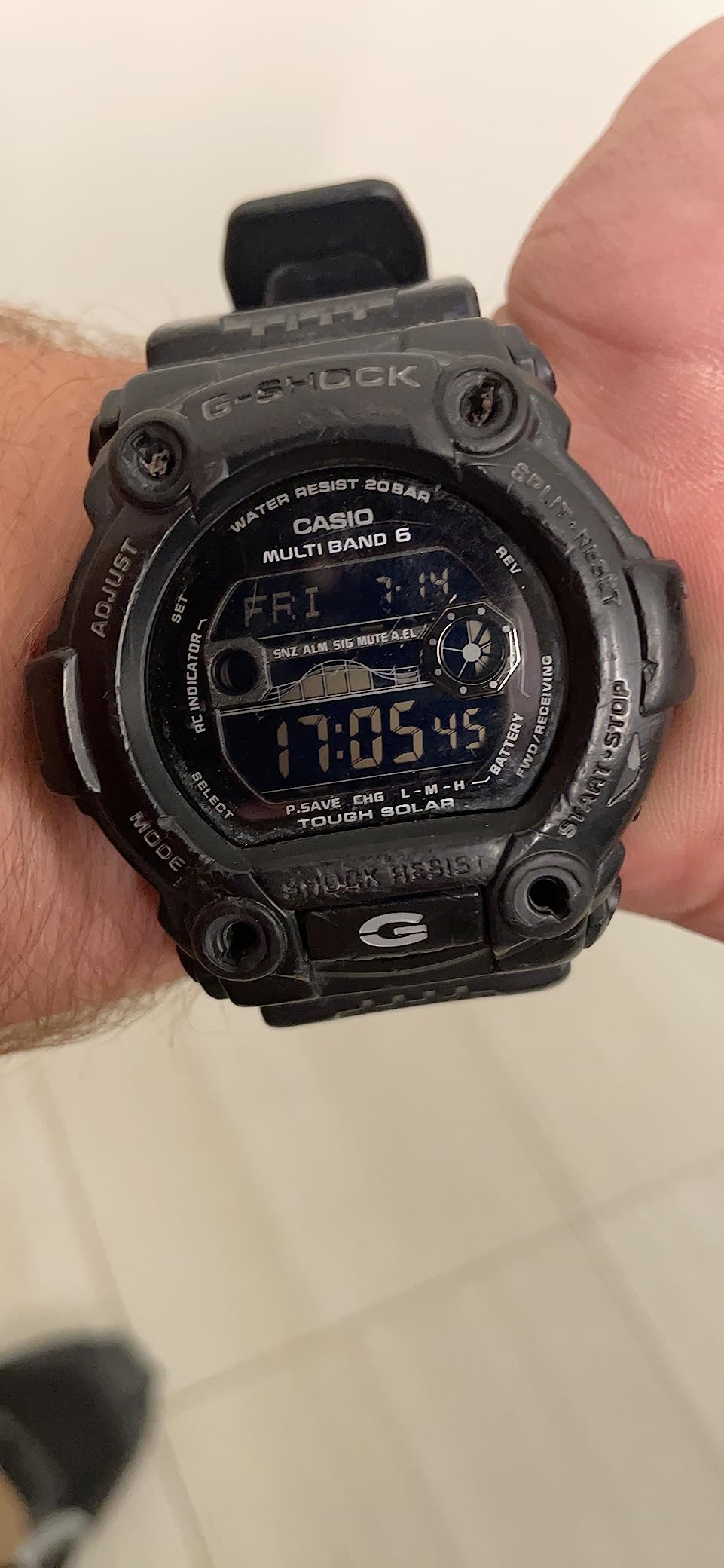
The GW7900B is the watch people describe as the one they stopped replacing. Multiple reviews span a decade of continuous wear, including an owner whose unit went overseas with a soldier, with no battery or cosmetic failures along the way.
Solar power plus multi-band atomic timekeeping means you set it once. It charges in daylight, syncs to atomic transmitters automatically, and the battery level indicator tells you where you stand. On a long deployment that is a genuine removal of a whole category of problem.
Owners report accuracy held to the second against GPS across long ownership periods, which is a stronger claim than most quartz watches in this roundup. The EL backlight fires on wrist rotation, so you can read it at night without hunting for a button through a glove.
At 200 meters the rating covers professional marine activity and serious surface water sports. The hidden solar panels keep the classic G-Shock look intact rather than turning it into a gadget, and world time covers 48 cities across 31 time zones.
What are the two consistent complaints?
Both are display issues, not reliability issues. The grey-on-black negative display is difficult to read at a glance and needs a wrist twist, and the mineral crystal scratches easily, particularly around sand and abrasive work. If the face is going to meet sand, sawdust or grit, the Mudmaster with sapphire is the better version of the same idea.
Is the tide graph worth the setup?
Only if you work near water. It requires a manual offset from your home city before the readings mean anything, and reviewers split on its usefulness. The moon phase display, which shows both hemispheres, costs nothing to set up. The manual is very thick and takes real effort to work through, so allow an evening.
A few owners have reported cosmetic face screws loosening, though this appears uncommon across thousands of reviews. Daily alarm with snooze, 1/100-second stopwatch and 12- and 24-hour formats cover the rest of a working week.
G-Shock Mudmaster vs Garmin Instinct for Working Hands
Is Garmin better than G-Shock for outdoor work? The honest answer is that they fail in opposite directions, and which one wins depends entirely on what breaks your week.
The Mudmaster GWG-1000 is built to survive impact and abrasion. Sapphire crystal, a shock-resistant case, 200-meter water resistance and a documented minus 10C tolerance mean it does not care what you drop on it. It has no battery anxiety, because Tough Solar means no battery changes. Its weakness is size: it is a large, thick watch that some wrists cannot wear comfortably, and its negative display needs light to read.
The Garmin Instinct 2X Solar is built to measure. You get multi-band GPS, a barometric altimeter, a compass, training load metrics and a built-in LED flashlight, on a case built to U.S. military standard 810. Its weakness is that a monochrome display and button menus cannot show you a detailed map, and menus need tutorials.
So the decision rule is simple. If your work is impact, grit, water and long stretches without power, take the Mudmaster. If your work needs position, timing records and night illumination with no phone in your hand, take the Instinct. If you need both, the fenix 7X Pro Sapphire Solar gives you the sapphire lens and titanium bezel alongside mapping, at the cost of 89 grams on your wrist.
What Actually Breaks a Watch on a Job Site
Six failure modes account for nearly every broken watch we have seen. Check your candidate against each one before you buy.
1. Impact from tools, not falls. A watch dropped from a height is a laboratory test. A watch struck by a swinging wrench, caught on a hoist hook or knocked by a tool bag is a real one. Look for a stated shock standard, and check the crystal material, because resin cases survive what sapphire and mineral lenses do not.
2. Abrasive grit. Concrete dust, sawdust, sand and soil get into the case gap and act as grinding compound every time you move your wrist. This is why crystal material matters more than case material, and why a watch that lives in a pocket is scratched differently from one on a tool belt.
3. Chemicals and oils. Hydraulic fluid, diesel, solvent, degreaser and concrete splash attack rubber seals and haze acrylic and resin. Clean resin and steel with a damp cloth and mild soap. Never use solvent on a resin band or a rubber-sealed case, and rinse a watch that has been in salt water before the crystals dry.
4. Water under pressure. A rating in ATM is a real number. Three atmospheres covers rain and hand washing, five covers swimming and showering, ten covers serious surface water work. Watchmakers recommend leaving the crown screwed down and rinsing the watch in fresh water after any salt exposure, regardless of rating.
5. Gloves and wet hands. This is the complaint that decides more purchases than any specification. Touchscreens fail with work gloves on and behave unpredictably with a wet finger. If your day involves gloves, choose button-driven controls and a physical backlight, and test the case on a smaller wrist before you commit.
6. Charging cables. A proprietary magnetic cable gets cut, crushed and lost on a site, and if the replacement is a single vendor part, the watch is dead until you find one. Solar and multi-year battery watches remove the problem entirely, which is the quiet reason they outsell smartwatches in this category. If you do choose a smartwatch, carry a spare cable and confirm it charges from a power bank.
How to Choose a Rugged Watch for Outdoor Work
Eight criteria, in the order they matter for someone who works outside rather than recreates.
Shock resistance standard: MIL-STD-810G and what it covers
MIL-STD-810G is the published U.S. military standard for environmental engineering testing, and it includes drop, vibration, water, temperature and salt-fog methods. A watch that meets it has been put through repeatable procedures rather than described with an adjective. Several picks here carry it, including the Garmin Instinct 2X Solar. Owners and buyers alike treat an unstated standard as marketing, and they are right to.
Crystal and glass: which material scratches the least
Sapphire is the hardest and the most scratch resistant, and it appears on the Mudmaster GWG-1000, the Garmin fenix 7X Pro and the Instinct line. Mineral glass is the most common and scratches noticeably faster, particularly around abrasive work. Acrylic, on the Timex Ironman, is the softest of the three but polishes back more easily. Which watch material scratches the least is straightforwardly sapphire, and it is the first check we advise on any tool watch.
Water resistance: what each ATM rating actually permits
Ratings in atmospheres are the only meaningful figure. Ratings must also be stated: an unspecified water resistance is a deal breaker in forum consensus and should be one for you too. Treat the rating as a limit rather than a target, keep screw-down crowns closed, and remember that every service or crystal replacement can affect it.
Battery life: read the mode, not the headline
Garmin quotes 40 days for the Instinct 2X Solar in smartwatch mode and 37 hours of GPS for the fenix 7X Pro, alongside up to 37 days in smartwatch mode. The same number means something entirely different depending on whether GPS, multi-band positioning or an always-on display is running. Battery figures broken down by mode are far more useful than a single headline, and every figure quoted in this article names its mode.
Solar charging: useful or marketing?
Tough Solar and Eco-Drive genuinely remove battery maintenance, and both are cited by owners as reasons to stop replacing watches. The honest limit is that solar adds days, not months, unless the watch spends real time in direct sun. On a night-shift or indoor job, treat solar as a partial contribution rather than a solution.
ABC sensors: altimeter, barometer and compass on a job site
An altimeter tells you your elevation and whether a line has gone up or down. A barometer warns you about a pressure change, and the Suunto Core turns that into a Storm Alarm you can act on. A compass keeps you oriented when the site has no landmarks and no signal. For utility, forestry, marine and survey work, the ABC set is the functional core of a field watch.
Case size, weight and cuff fit
Anything above 50 millimeters will not fit comfortably under a jacket cuff and will catch on a glove. A 40 to 45 millimeter case suits almost everyone. Weight matters over a full shift: the Instinct 2X at 67 grams sits far better than the fenix 7X Pro at 89 grams. If you are between two sizes, buy the smaller one.
Straps, gloves and serviceability
A non-replaceable strap is a deal breaker because the strap always fails before the watch. Look for a quick-release system, and check that replacement bands exist in the widths you need. A silicone band is the practical choice for wet, dirty work; a nylon band is cool and dries fast; a leather band is not a work strap. Over a five-year working life, the ability to replace a band, a crystal and a battery decides whether the watch outlives the job.
Do you need a smartwatch at all?
Only if you need data you cannot get any other way: heart rate, HRV, altitude acclimation, training load, recorded tracks or a flashlight in the dark. If your real requirement is checking the time without pulling out a phone, a non-smart watch does it with a two-year battery and no charging cable, and the forum consensus among field technicians deploying for long periods points the same way. A quartz G-Shock or a solar field watch is not a compromise here. It is the correct tool.
For a builder of a different kind, our [automatic watches under 300 dollars guide](https://eatcreatesleep.net/best-automatic-watches-under-300-dollars/) covers that side, though be aware that mechanical accuracy and shock tolerance are a different proposition entirely from anything on this list.
Frequently Asked Questions
What is the best watch for working outdoors?
The Casio G-Shock DW9052 is the best watch for working outdoors for most trades, because it combines a shock-resistant resin case, 200-meter water resistance and roughly two years of battery life with no charging cable to lose. If you need navigation data, add a Garmin Instinct 2X Solar for multi-band GPS, a barometric altimeter and a built-in LED flashlight. If you need altimeter, barometer and compass sensors in a thinner case, the Casio Pro Trek PRG600 is the better fit.
What are some good heavy-duty watches for work?
Good heavy-duty watches for work fall into two families. Non-smart workhorses include the Casio DW9052, the G-Shock GA-700UC, the G-Shock Solar Atomic GW7900B, the Suunto Core and the Timex Expedition Scout, all of which run for years on a cell. Sensor-equipped models include the Casio Pro Trek PRG600, the G-Shock Mudmaster GWG-1000 and the Garmin Instinct 2X Solar. Choose the first family if you need low maintenance, and the second if you need navigation data.
Which is the most rugged watch?
The most rugged watch in this roundup is the Casio G-Shock Mudmaster GWG-1000-1A3. It is built in Japan with a sapphire crystal, rated to 200 meters of water resistance, tested to a low-temperature tolerance of minus 10C, and driven by Tough Solar with multi-band atomic timekeeping. The main trade-off is size: it is a large, thick case that small wrists should measure before buying.
Is Garmin better than G-Shock for work?
Neither is better overall; they fail in opposite directions. The G-Shock Mudmaster is stronger against impact, abrasion and water and needs no battery changes, but it is bulky and has no data. The Garmin Instinct 2X Solar is built to U.S. military standard 810 and gives you multi-band GPS, an altimeter, training metrics and a built-in flashlight, but its monochrome screen cannot show detailed maps. Choose G-Shock for physical abuse and Garmin for measurement.
Which watch is the most scratch-resistant?
A sapphire crystal is the most scratch-resistant lens material in this roundup, and it appears on the G-Shock Mudmaster GWG-1000-1A3 and the Garmin fenix 7X Pro Sapphire Solar. Mineral glass is used on the Casio Pro Trek PRG600, the G-Shock GW7900B and the Timex Expedition Scout, and it marks more readily. Acrylic, on the Timex Ironman, is the softest of the three but can be polished back.
What are the best durable watches for construction workers?
For construction work, the strongest choices are the Casio DW9052 for low-maintenance durability, the G-Shock GA-700UC for analog legibility, and the Casio Pro Trek PRG600 if you need compass, altimeter, barometer and thermometer readings on site. Choose a watch with a stated ATM water rating of five or ten for pressure-washing and concrete work, and add a solar or multi-year battery model so there is no charging cable to lose on site. Our dedicated construction roundup covers this in more detail.
What watch do Navy SEALs really wear?
Most of the wristwatches associated with Navy SEALs in public photographs are Casio G-Shock models, typically resin-casual solar and atomic pieces from the mainstream line. What transfers to civilian work is the engineering underneath the badge: a stated shock standard, a 200-meter water rating and a solar or long-life movement. Military heritage does not add a feature you can test, so judge the specification sheet instead of the insignia.
The Best Rugged Watches for Outdoor Work in 2026
The Casio G-Shock DW9052 is our pick for the best rugged watches for outdoor work, because it combines a stated shock-resistant construction, a 200-meter water rating and roughly two years of battery life with nothing to charge, sync or replace. Two decades of continuous production and more than 10,000 ratings back that up.
Take the G-Shock Mudmaster GWG-1000-1A3 instead if your work is impact and abrasion, since its sapphire crystal is the least scratchable surface in this roundup. Take the Garmin Instinct 2X Solar if you need multi-band GPS, a barometric altimeter and a built-in flashlight on night shifts, and accept monochrome detail and a 50 millimeter case as the trade. The Casio Pro Trek PRG600 is the value answer when you need triple sensors in something thinner than a Mudmaster.
Check the crystal first, the water rating second and the battery mode third. Those three answers will eliminate most of the list on their own, and they are the three things that decide whether a watch is still working three years into the job.