
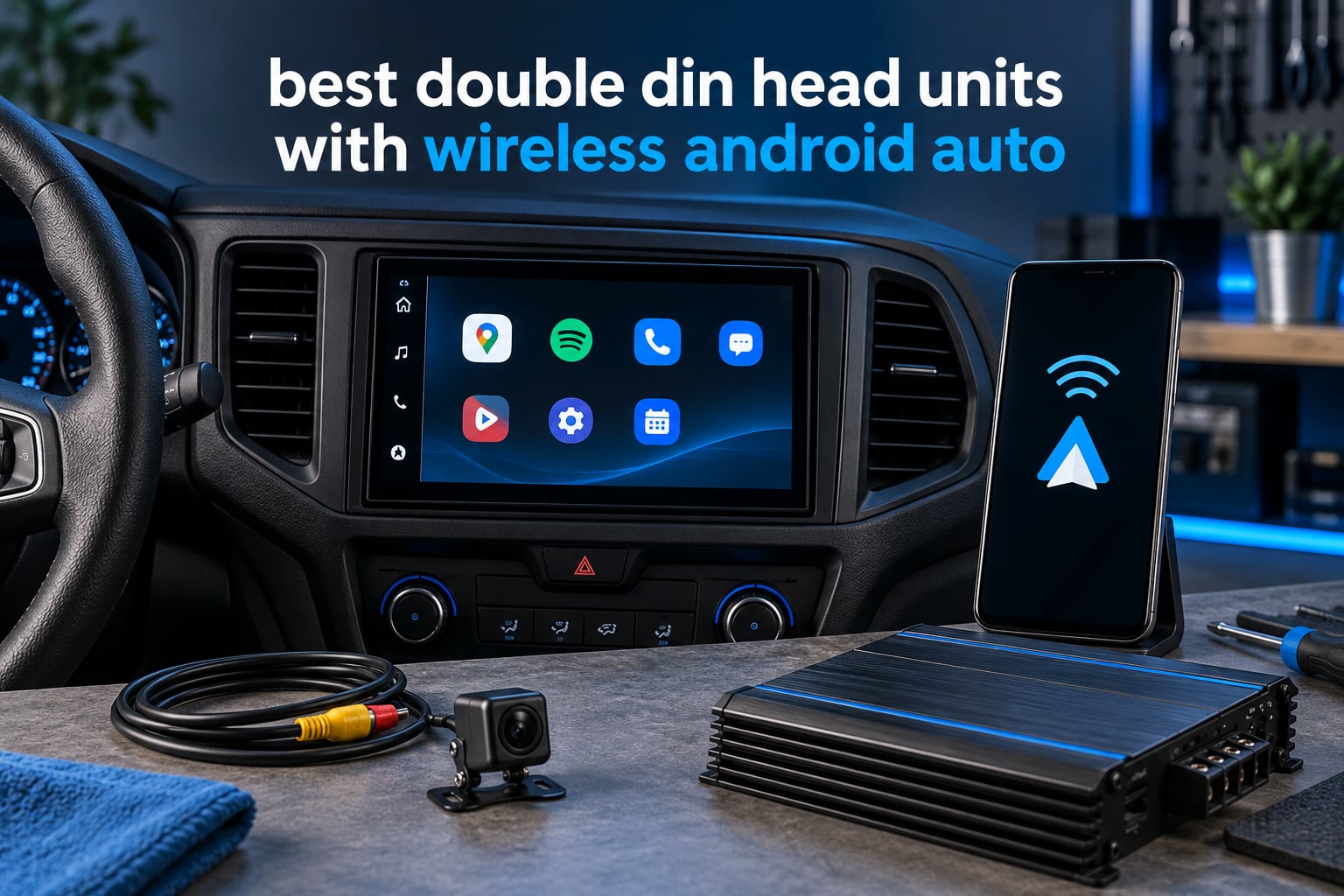
The best double din head units with wireless Android Auto right now are the PLZ MP-902W for most drivers, the SJOYBRING JOY-W022 for a sharper screen, and the ATOTO F7WE if you want a 10-inch display with real amplifier output. All three run wireless Android Auto and wireless Apple CarPlay natively, with no dongle and no adapter box.
A double-DIN head unit fills the 4 x 8 inch dashboard opening that most older cars from the 1990s through the 2010s already have. Wireless Android Auto adds a Wi-Fi radio to that unit, so your phone’s navigation, calls, messages and music show up on the dash screen after one-time pairing, with no cable. Your phone stays in your pocket.
We spent weeks comparing the eight receivers below on fitment depth, screen quality, amplifier output, tuning controls and the reliability of their wireless connection. Two of them are Pioneer receivers from the NEX line, two are ATOTO units, and four are value-brand 7-inch screens. Every one of them supports wireless Android Auto on the exact model number listed, which is the part most listings get vague about.
If you are still deciding whether a head unit swap makes sense for your car, read our general double-DIN head unit guide first. It covers opening sizes and fitment in more detail than we can here.
Table of Contents
Top 3 Picks for Best Double-DIN Head Units With Wireless Android Auto In 2026

PLZ 7-Inch Wireless Double-DIN
- Wireless CarPlay and Android Auto
- 7-inch 1024x600 IPS touch
- 4.2-channel DSP with 240W max output
- 10-band EQ and steering wheel controls

SJOYBRING 7-Inch QLED
- 7-inch QLED at 1280x720
- Wireless CarPlay and Android Auto
- 240W 4.2-channel with dual sub outputs
- Rear camera included
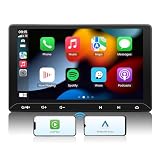
ATOTO F7WE 10.1-Inch QLED
- 10.1-inch 1280x720 QLED display
- 4V RCA pre-outs at 4x29W RMS
- Wi-Fi 6 wireless phone integration
- Dual camera inputs with split screen
Double-DIN Head Units With Wireless Android Auto (October 2026)
All eight receivers below fill a standard 4 x 8 inch double-DIN opening and all eight do wireless Android Auto natively rather than through an adapter. The differences come down to screen size, chassis depth, amplifier output and how much tuning control you get.
| Product | Specifications | Action |
|---|---|---|
| PLZ MP-902W 7-Inch Wireless Double-DIN |
|
Check Latest Price |
| SJOYBRING JOY-W022 7-Inch QLED |
|
Check Latest Price |
 Pioneer DMH-W2770NEX 6.8-Inch Pioneer DMH-W2770NEX 6.8-Inch |
|
Check Latest Price |
 Kissound KS9702 7-Inch Wireless Kissound KS9702 7-Inch Wireless |
|
Check Latest Price |
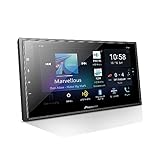 Pioneer DMH-W4660NEX 6.8-Inch Pioneer DMH-W4660NEX 6.8-Inch |
|
Check Latest Price |
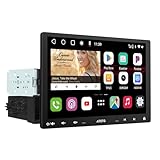 ATOTO S8 MS 10-Inch Floating ATOTO S8 MS 10-Inch Floating |
|
Check Latest Price |
 Pioneer DMH-WT3800NEX 9-Inch Pioneer DMH-WT3800NEX 9-Inch |
|
Check Latest Price |
| ATOTO F7WE 10.1-Inch QLED |
|
Check Latest Price |
PLZ 7-Inch Wireless Double-DIN Stereo With 4.2-Channel DSP
PLZ 7″ Wireless Double Din Car Stereo Apple Carplay Radio Screen for Car Audio Receivers, Bluetooth 5.3 Car Play Android Auto Touchscreen, 240W 4.2 CHN 2 Subwoofers Outputs, Backup Camera, SWC, FM/AM
7-inch 1024x600 IPS touch
4.2-channel DSP, 240W max
10-band EQ
1-year warranty
Pros
- Wireless CarPlay and Android Auto reconnect on startup
- Built-in 4.2-channel DSP with two subwoofer outputs
- Bright 7-inch IPS panel with physical buttons
- Bluetooth 5.3 module with its own external antenna
- Support team handles install and firmware questions fast
Cons
- Call and navigation audio can distort with some source combinations
- No Wi-Fi hotspot function
- Screen flicker traced to low-voltage wiring on some harnesses
The MP-902W is the receiver we kept coming back to. Out of the eight on this list it carries the largest review base by a wide margin at 2,226 reviews, and the pattern in those reviews is consistent: people buy it to replace a dead factory radio, they wire it up over a weekend, and wireless Android Auto connects before they finish reading the manual.
The screen is a 7-inch IPS panel at 1024×600, which is not the highest resolution in this group but is genuinely bright and readable in direct sun. Physical buttons sit alongside the touch layer, and that combination turned out to matter more to drivers than raw pixel count. There is no fingerprint problem on the gloss finish, and the buttons do not require a second glance.
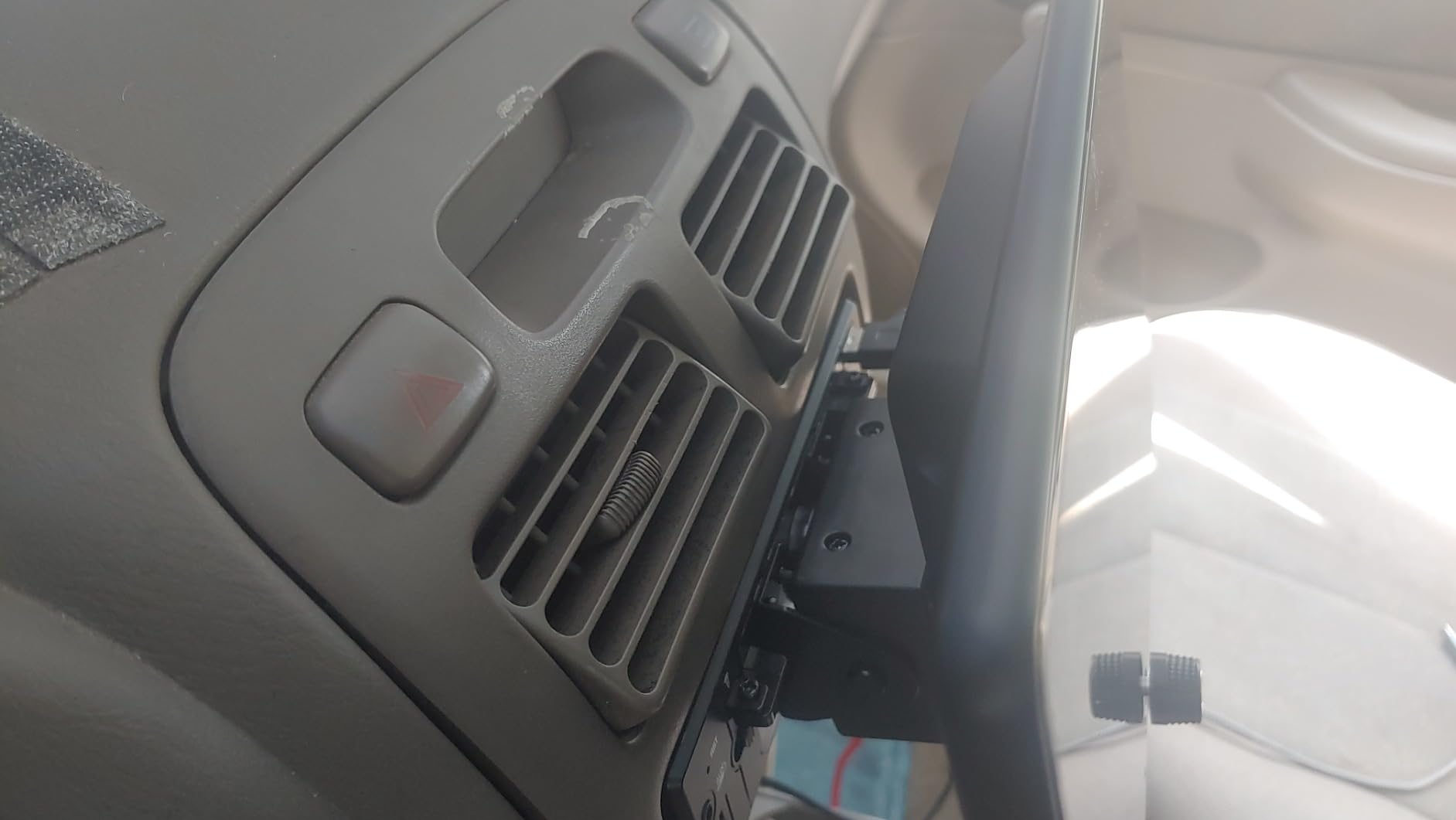
Audio runs through a built-in DSP driving a 4.2-channel stage with a maximum 240W output and two dedicated subwoofer outputs, plus a 10-band EQ. That is enough for factory speakers in a door and a powered sub in the trunk without an external amplifier. The included harness and remote are a nice addition, since most receivers in this class sell the wiring separately.
Two things temper the recommendation. There is no Wi-Fi hotspot function, which matters if you were planning to route a phone hotspot through the unit. And reviewers report that call and navigation audio can distort when source levels combine badly, particularly with a cheap aftermarket harness feeding it.
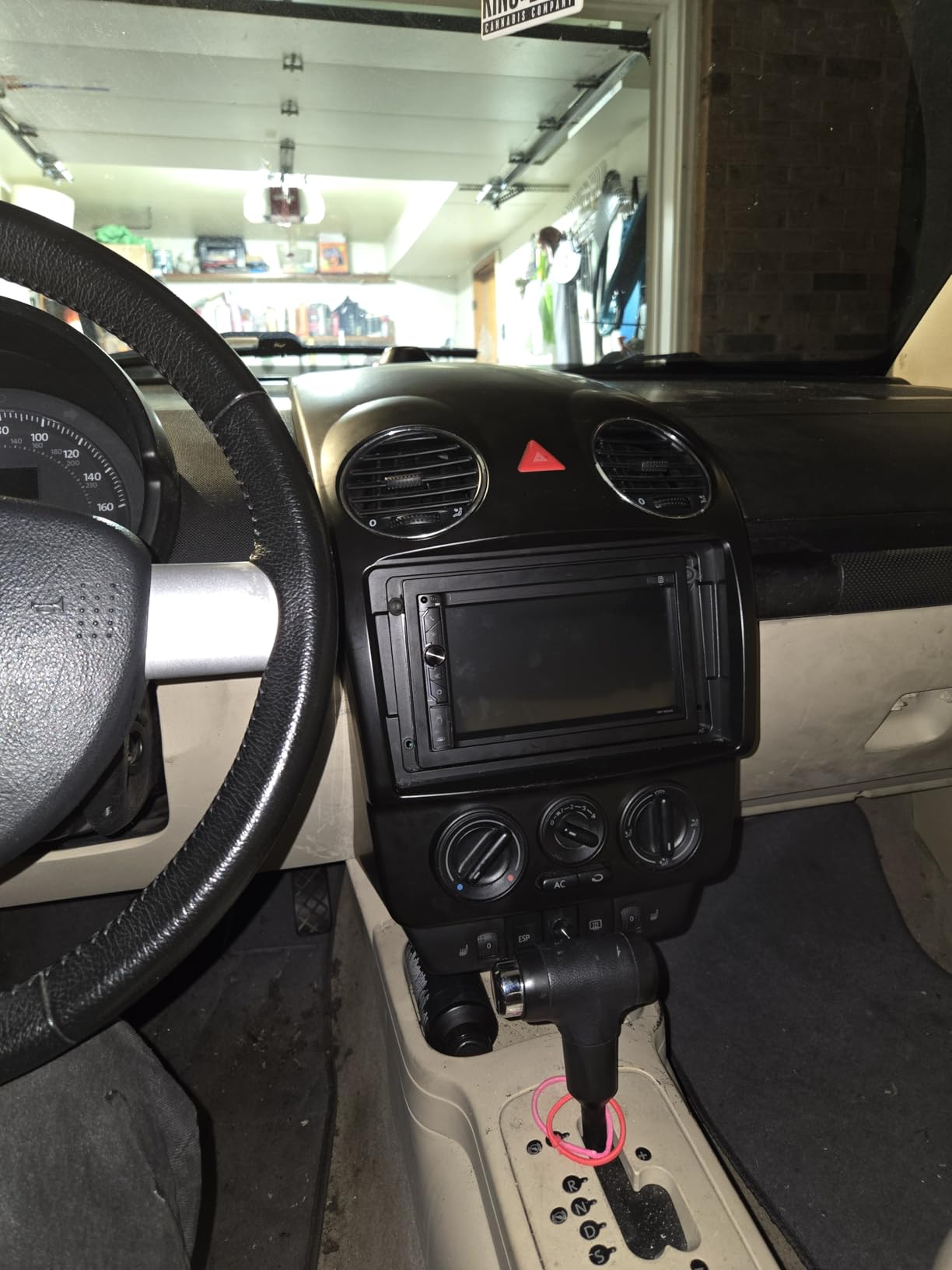
Who the PLZ MP-902W suits best
This is the pick for an older car with a factory double-DIN opening where you want wireless Android Auto and decent volume without buying amplifiers. The minimum dashboard opening is 6.69 x 3.81 inches, with an outer frame of 7.44 x 4.61 inches, so measure your bezel before ordering.
It also suits anyone who hates digging for a cable every morning. Wireless CarPlay and wireless Android Auto both reconnect automatically on startup, and steering wheel control integration is supported through a compatible interface.
Where the PLZ MP-902W falls short
Skip it if audio quality is your top priority and you already plan an external amplifier. There is no documented preout voltage above what a standard RCA line-level output provides, and the EQ is a 10-band graphic rather than a parametric.
The 1-year warranty is also the shortest protection you get on a unit that lives in a hot dash all summer. Some owners who installed it report screen flicker that traced back to low-voltage supply through a low-grade wiring harness adapter.
SJOYBRING 7-Inch QLED Double-DIN Stereo at 1280×720
SJoyBring 7″ QLED Double Din Car Stereo – Wireless Apple CarPlay & Android Auto, 240W 4.2CHN, SWC, Bluetooth, FM/AM Car Radio, 2 Subwoofers Outputs, Backup Camera
7-inch QLED 1280x720 touch
240W 4.2-channel output
Front and rear camera support
Rear camera included
Pros
- Sharp QLED screen stays readable in daylight
- Wireless pairing is quick and holds the connection
- Fast interface with no noticeable lag
- Sound matches or beats some factory systems including older Bose setups
- Support sends custom boot logos and honors warranty out of period
Cons
- Roughly half a second of input lag on touch and buttons
- A small number of receivers lost all audio output after a day
- USB library browsing lacks nested folders and search
The SJOYBRING JOY-W022 has the sharpest 7-inch screen we tested in this group at 1280×720, and that resolution gap is visible next to the 1024×600 panels on the PLZ and Kissound. QLED color also means the map and app icons look less washed out in hard daylight, which matters if your windscreen faces east.
Wireless Apple CarPlay and Android Auto run over a Bluetooth and Wi-Fi link, and owners consistently report fast pairing. The 4.2-channel output stage is rated at 240W maximum with dual subwoofer outputs and a custom EQ, and several buyers say it outplayed a much older premium Bose system in their car.
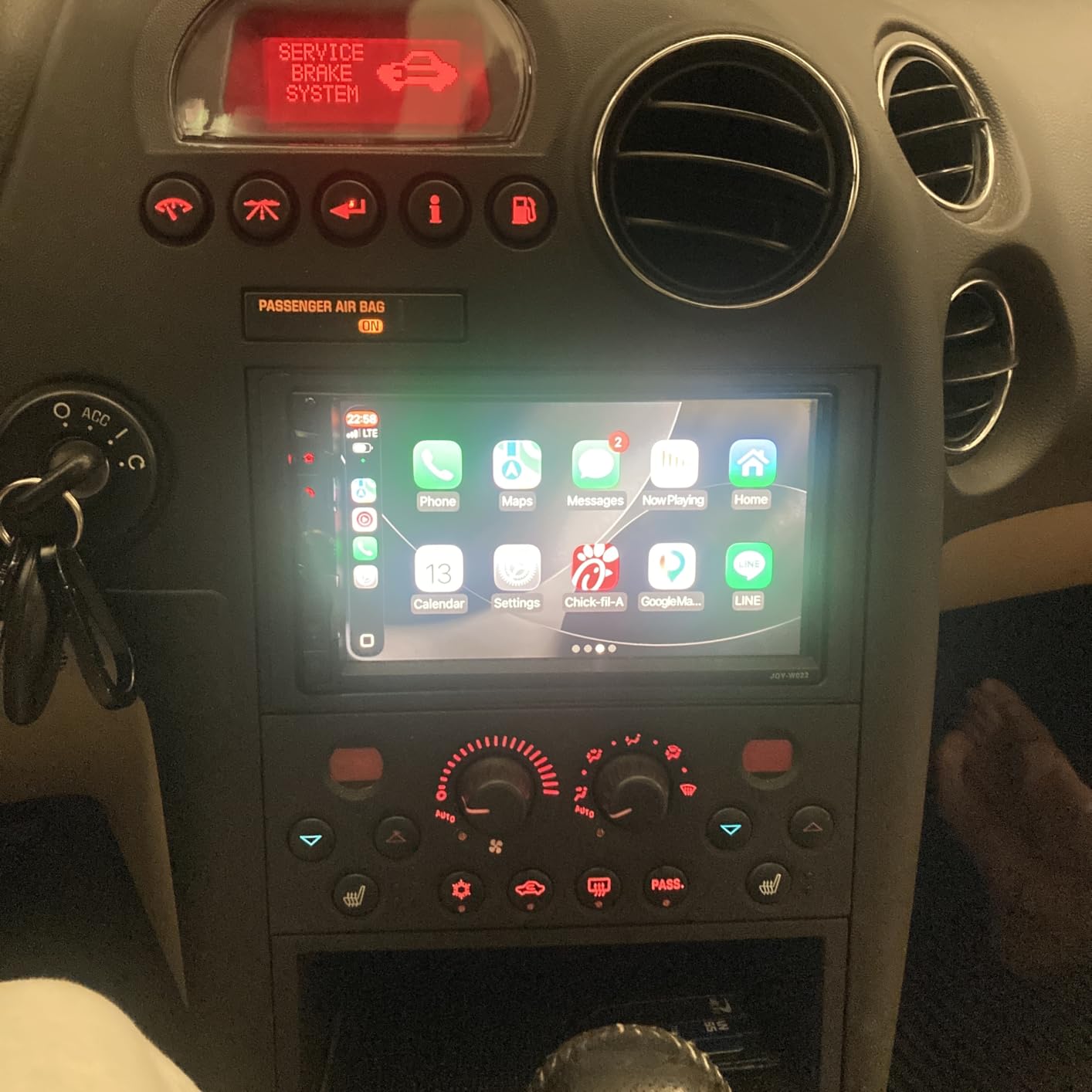
One feature worth calling out: the package includes an HD night-vision rear camera, and the unit supports a front camera as well. For a first head unit install that means the backup camera line item is already handled. It fits a standard 6.69 x 3.81 inch double-DIN opening.
Steering wheel control support is there but requires a separately purchased interface, which is common across this whole category. You may also need a dash kit or an antenna adapter depending on your vehicle, so budget for accessories rather than assuming a bare install.
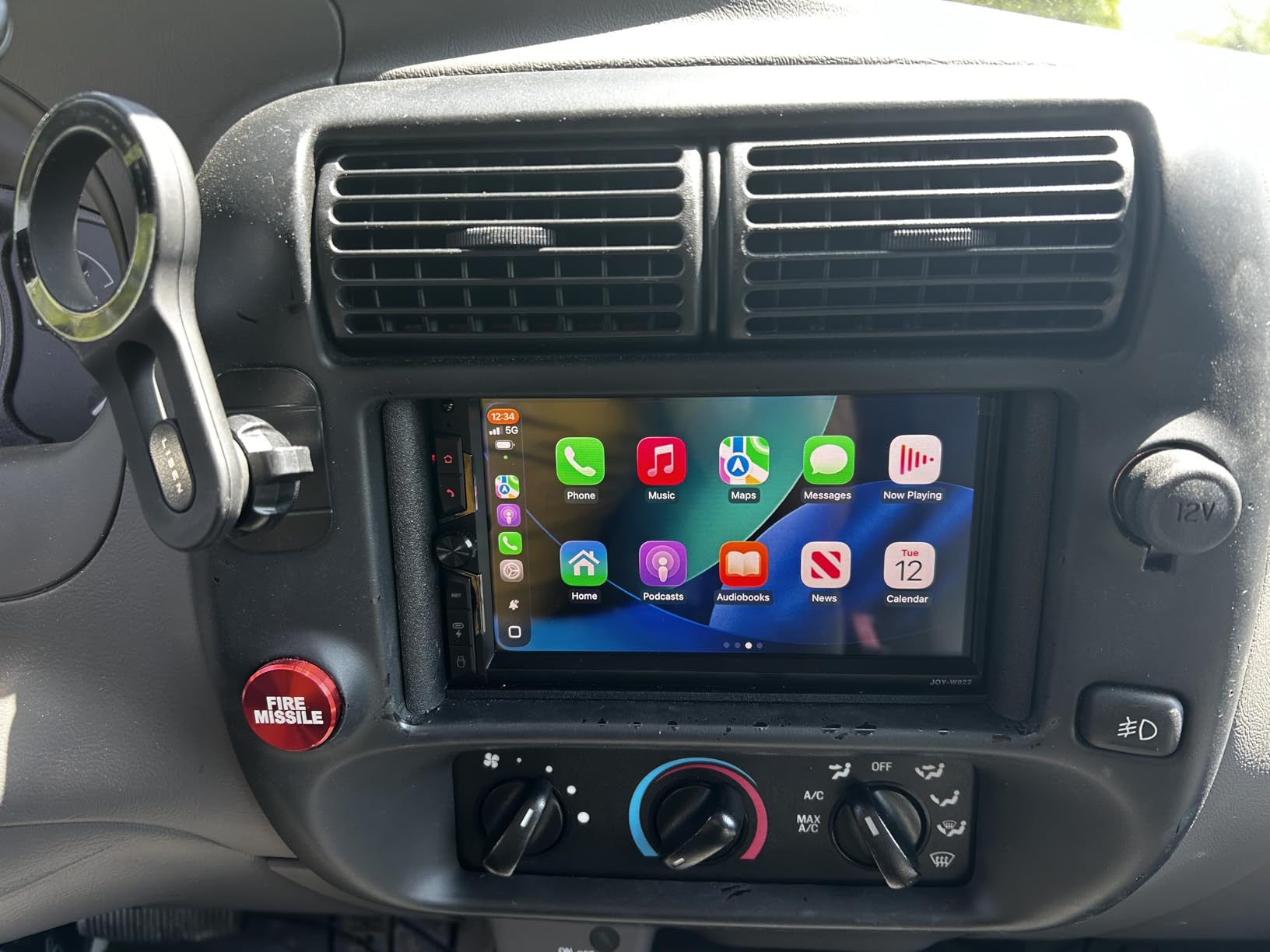
Who the SJOYBRING JOY-W022 suits best
Choose this if screen quality is what you notice every day. The 1280×720 QLED panel holds up under glare better than the 1024×600 IPS alternatives on the other 7-inch receivers here.
It is also a good first upgrade for someone replacing a factory head unit that has no camera at all, because the rear camera is in the box. The 4.2-channel stage handles a powered sub without an amplifier.
Where the SJOYBRING JOY-W022 falls short
There is a noticeable delay of roughly half a second between touching the screen and the unit reacting, and the physical buttons have the same lag. Drivers who live in the interface will notice it even though most reviewers tolerate it.
A small cluster of owners reported every audio output failing after about a day, which points to a power or grounding issue in the harness rather than the head unit itself. USB music browsing is also limited, with no nested folder support or scroll bar for large libraries.
Pioneer DMH-W2770NEX Short-Chassis 6.8-Inch Capacitive Receiver
Pioneer DMH-W2770NEX 6.8″ Capacitive Touchscreen Double Din Car Stereo
6.8-inch WVGA capacitive touch
Short-chassis double-DIN depth
HD Radio, SiriusXM ready
1-year warranty
Pros
- Wireless CarPlay pairs quickly and holds the connection
- Clear capacitive display with an intuitive interface
- Short-chassis depth simplifies installs in cramped dashboards
- Steering wheel interface picked up all factory buttons
- Supports multi-zone output up to 5.1
Cons
- A cluster of early receivers stopped powering on within months
- Random restarts and occasional phone disconnects
- Alexa runs through phone apps rather than being built in
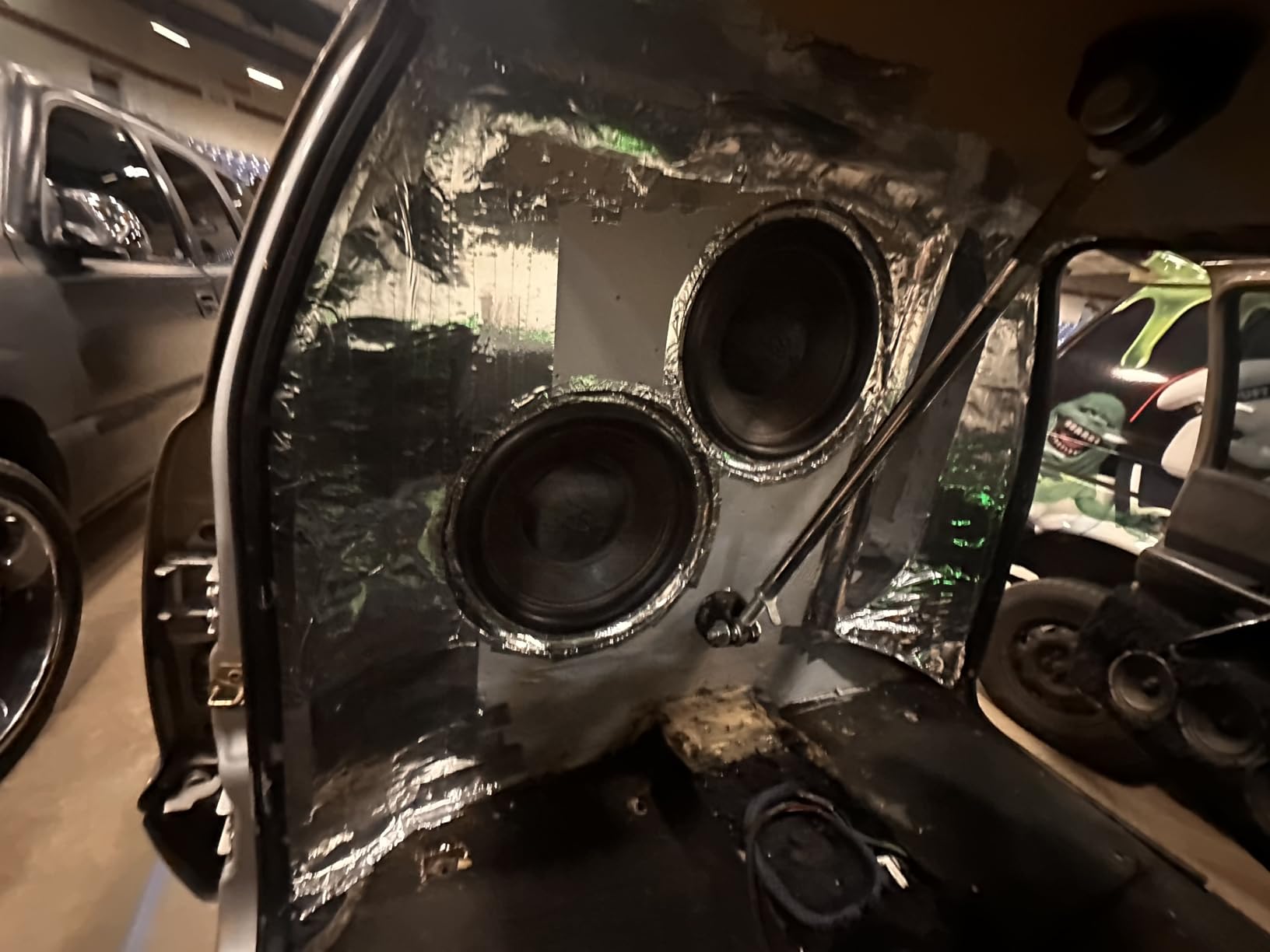
When a dashboard does not have room for a deep radio body, chassis depth matters more than any spec on the sheet. The DMH-W2770NEX is built around a short-chassis design measuring 7 inches wide by 3-7/8 inches tall by 4-7/8 inches deep, which lets it seat in cavities where a full-depth double-DIN unit will not.
The 6.8-inch WVGA capacitive touchscreen is small by current standards but it is a real capacitive panel, so it responds the way a phone does rather than the way a 2005 resistive screen did. Wireless Apple CarPlay and Android Auto work through the built-in Wi-Fi, and owners report quick, stable pairing.
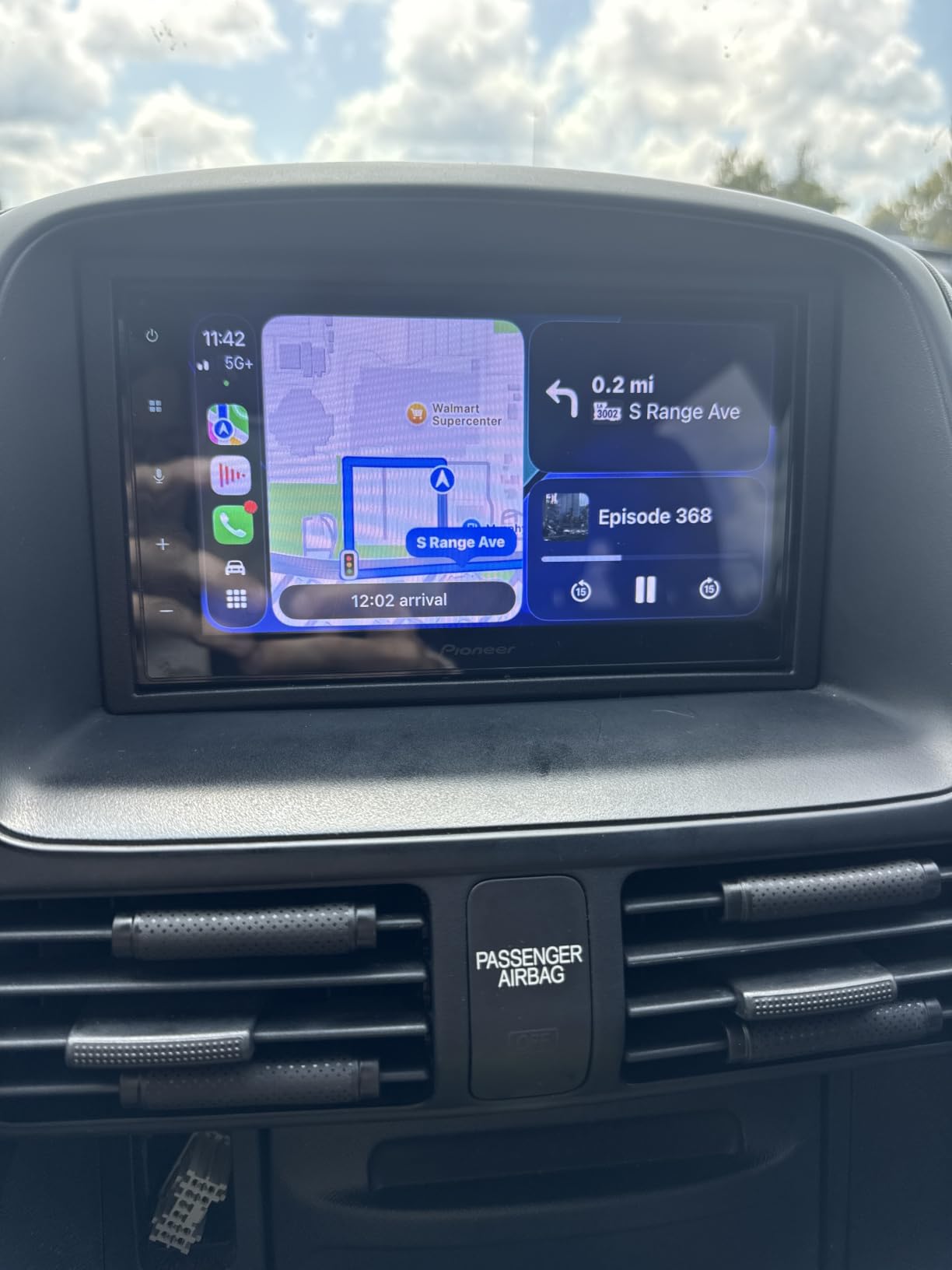
On the feature side it is generous for the class: HD Radio is built in rather than optional, the unit is SiriusXM ready, it plays FLAC, and there is a rear view camera input. Output is rated at 50W per channel across up to 5.1 channels, so it can drive a multi-zone setup without extra amplification for the rear passengers.
Amazon Alexa is supported but it runs through the Vozsis and WebLink phone apps, which means it is slower than a built-in assistant and needs an app on the phone. There is no CD or DVD drive, so anyone with a disc collection should look elsewhere.
Who the Pioneer DMH-W2770NEX suits best
This is the one to buy when your dash cavity is shallow or blocked by HVAC ducting behind the radio slot. The short-chassis body is the whole reason it exists, and it converts installs that would otherwise require cutting metal.
It also suits drivers who want broadcast radio and lossless files alongside phone projection. HD Radio is included rather than an add-on, and the multi-zone output lets you run rear speakers for passengers.
Where the Pioneer DMH-W2770NEX falls short
Review sentiment on this model splits. A cluster of owners report units that stopped powering on within a few months and required a paid return for repair, and separate reviews mention random restarts and occasional phone disconnects.
The screen can feel laggy when switching between source screens, and Alexa is an app experience rather than a built-in one. WVGA resolution is also lower than the 1280×720 panel on the SJOYBRING in this list.
Kissound 7-Inch Wireless Double-DIN Stereo With Included Camera
Kissound Double Din Car Stereo with 7″ HD Touchscreen, Wireless Apple Carplay & Android Auto, Bluetooth, 240W, SWC, Subwoofer Output, Mirror Link, FM/AM Car Radio Receiver, Backup Camera
7-inch 1024x600 IPS touch
240W 4.1-channel with 10-band EQ
Subwoofer RCA pre-out
Rear camera included
Pros
- Wireless CarPlay connects faster than the factory head unit
- Responsive touchscreen and bright readable display
- Clear call quality and loud output for the money
- Rear camera
- remote and external microphone included
- Support turns around custom boot logos quickly
Cons
- Pre-out voltage is around 2V rather than 4V
- Some owners reported overheating and shutdown after a few months
- No time delay or configurable crossover controls
- Slight startup lag on ignition
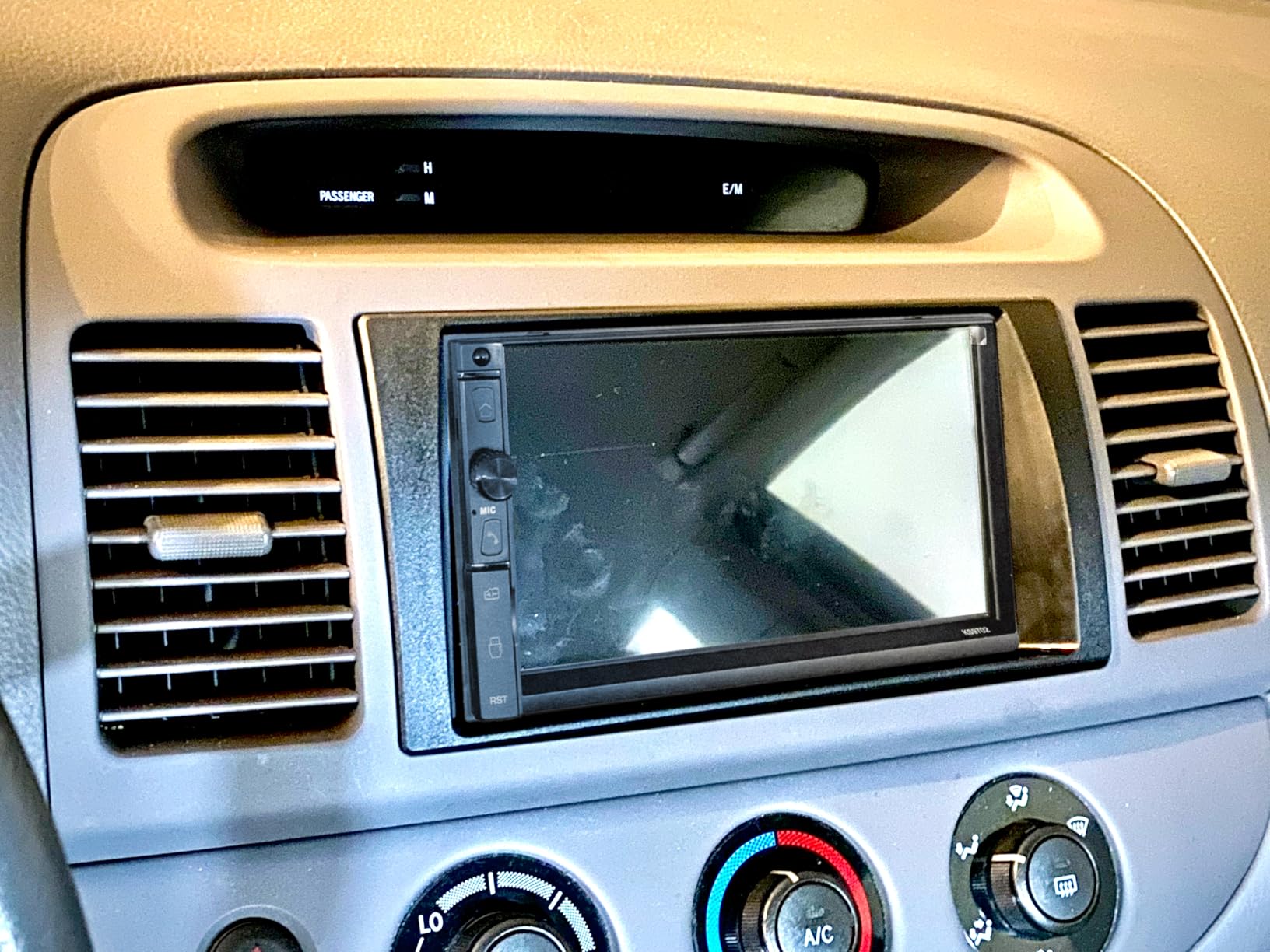
The KS9702 is the most direct route into this list and the only receiver here that includes a rear camera with a 19.7 foot cable, a remote and an external microphone port in the same box. For a first-time install on an old car that saves real money on parts alone.
Wireless and wired Apple CarPlay and Android Auto both work with voice control, and owners report the wireless connection is faster than the factory system it replaced. The 7-inch IPS touchscreen runs at 1024×600 with a wired mirror link available for Android and iOS devices.
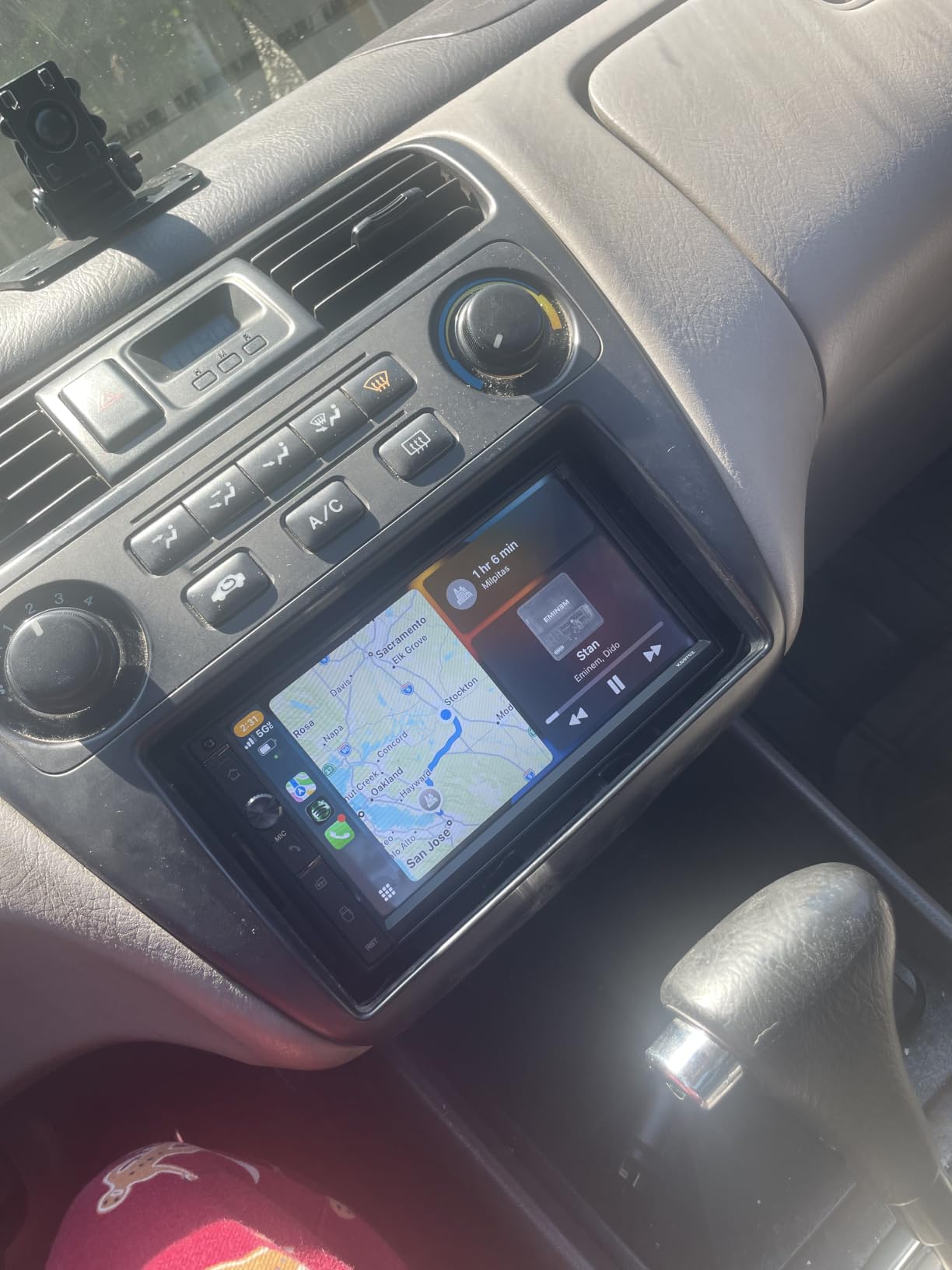
Behind the panel is a built-in DSP driving 4.1 channels at up to 240W with a 10-band EQ. Bluetooth pairing uses a built-in microphone plus a port for an external one, which is the reason call quality comes out clearer than most receivers at this level.
The rear heat sink is oversized for the class, and most owners have not reported thermal problems. A small number did overheat and shut down after a few months, and there is a slight delay at startup when you turn the key.
Who the Kissound KS9702 suits best
Pick this if your budget is the deciding factor and you drive factory speakers. You get genuine wireless Android Auto, a subwoofer RCA pre-out and a camera in the box at a lower outlay than most receivers on this list.
It is also a reasonable option if you want a wired backup. Mirror Link gives you a wired screen-share path for older phones that struggle with wireless projection.
Where the Kissound KS9702 falls short
Pre-out voltage is around 2V rather than the 4V an amplifier like to see, and there is no time delay and no configurable crossover. If you plan to run an external amplifier or a DSP, this unit cannot feed it cleanly.
Steering wheel control support also requires a compatible interface module sold separately. Expect to add a dash kit and possibly an antenna adapter for most vehicles.
Pioneer DMH-W4660NEX With Built-In Alexa and Hi-Volt Pre-Outs
Pioneer DMH-W4660NEX 6.8″ Capacitive Touchscreen Double Din Car Stereo
6.8-inch capacitive touchscreen
Built-in Amazon Alexa
Hi-Volt RCA pre-outs
3-3/8 inch chassis depth
Pros
- Alexa is built in rather than run through a phone app
- Wireless CarPlay and Android Auto with built-in Wi-Fi
- Clear capacitive display at 6.8 inches
- Hi-Volt RCA pre-outs give amplifiers a clean signal
- Shallow 3-3/8 inch chassis fits many dashboards
Cons
- Alexa feature set is narrower than smartphone voice assistants
- No CD or DVD drive
- Some vehicles need dash modification to fit
This is the pick for anyone who wants voice control to work the way it does in the car rather than depend on an app. Amazon Alexa is built directly into the unit, so you can ask for navigation or music without unlocking a phone and launching a companion application first.
The chassis measures 7 inches wide by 3-7/8 inches tall by only 3-3/8 inches deep, which makes it one of the easier receivers here to seat behind a dashboard. At two pounds it is also light on its face bracket.
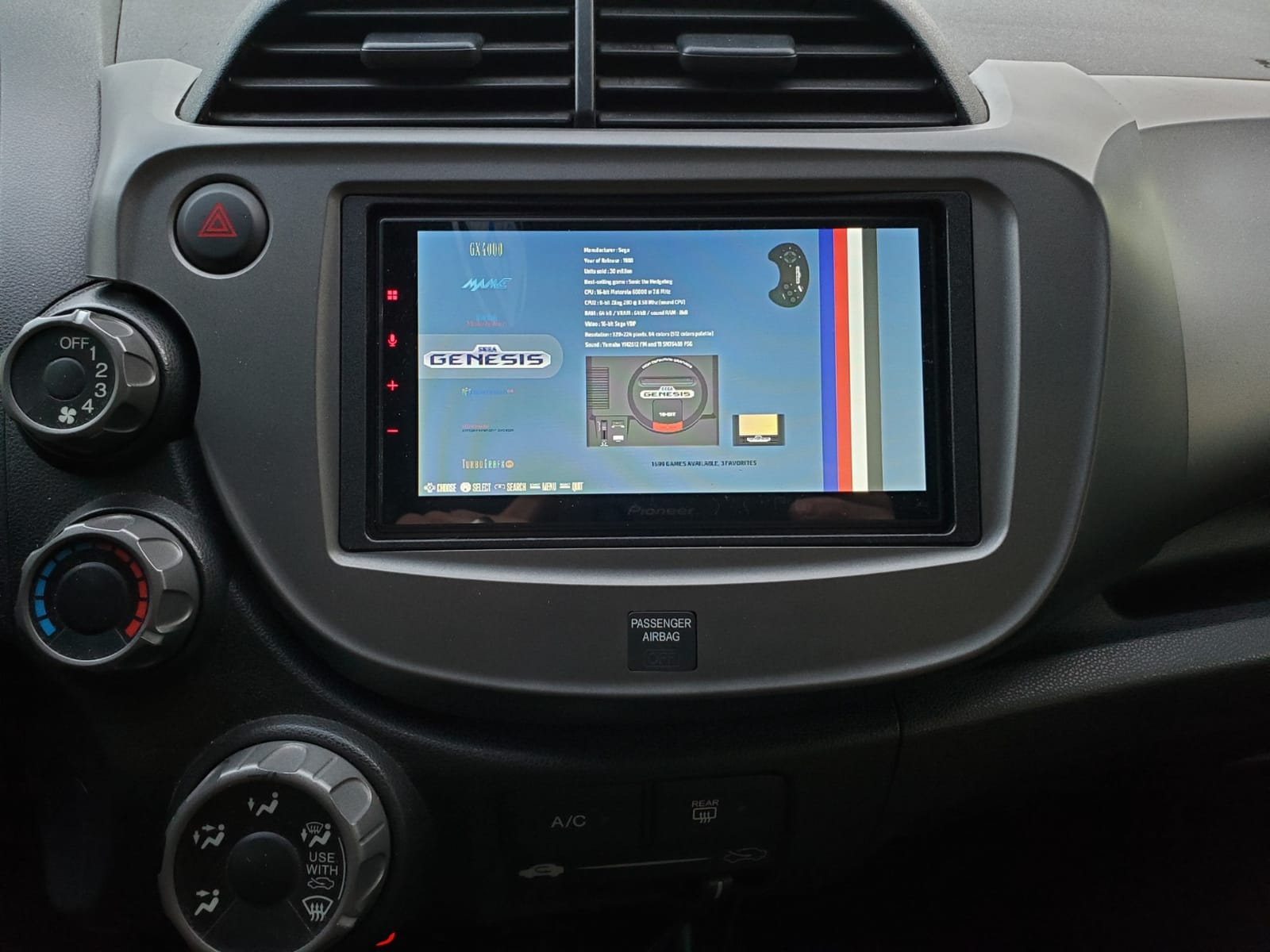
Audio is where the Hi-Volt RCA pre-outs matter. Owners running external amplifiers note the signal stays clean, and with a 6.8-inch capacitive touchscreen, HD Radio, SiriusXM readiness and a rear view camera input, the feature list is complete for a daily-driven car.
The box includes a USB-C extension cable and a USB-C to USB-A adapter, so newer phones can charge from the head unit without an extra cable. Bluetooth handles hands-free calling with clear microphone pickup.
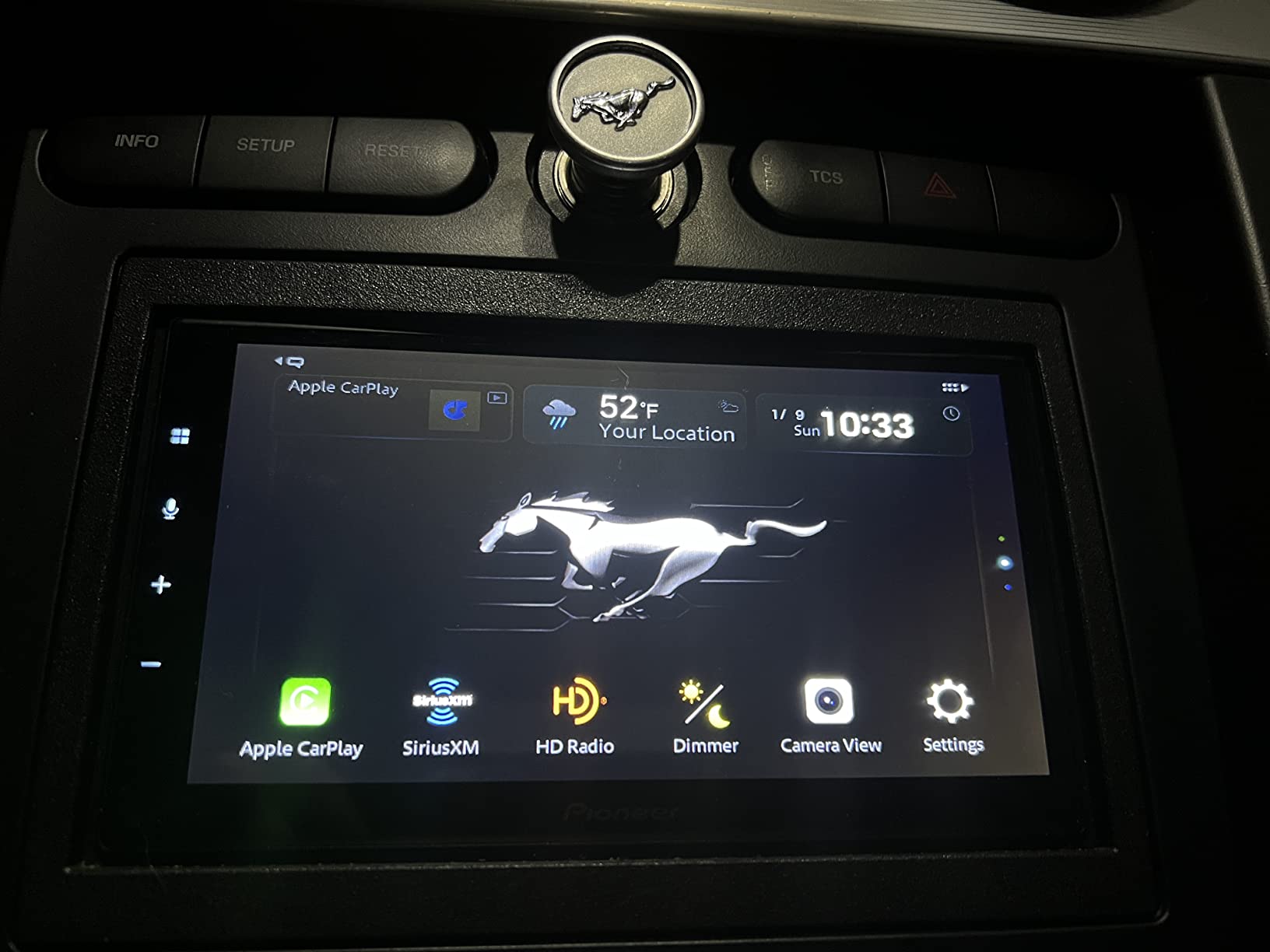
Who the Pioneer DMH-W4660NEX suits best
Buy this if you talk to your car more than you touch it. Built-in Alexa starts with a physical button press instead of a phone app, which is the difference between a two-second and a fifteen-second interaction.
It is also the better Pioneer pick if you are running amplifiers. The Hi-Volt pre-outs deliver the headroom that budget receivers in this list cannot, and the shallow chassis helps with fitment.
Where the Pioneer DMH-W4660NEX falls short
The Alexa implementation is narrower than a phone-based assistant. It handles a defined set of commands and cannot do everything Google Assistant or CarPlay can, so treat it as a convenience rather than a replacement.
There is no disc drive, and some vehicles need dash modification to accept the faceplate. Confirm your opening size before committing.
ATOTO S8 MS 10-Inch Floating QLED With 4G LTE and Triple Cameras
ATOTO S8 MS 10″ Android Double-DIN & Single-DIN Car Stereo, QLED Floating Screen, 4G LTE/Wi-Fi, Dual Cam Recording, Wireless CarPlay & Android Auto, Dual Bluetooth, GPS Track, 36EQ, DSP
10.1-inch QLED floating display
Built-in 4G LTE plus Wi-Fi
Up to three cameras supported
36-band EQ with DSP
Pros
- Nine-way adjustable floating screen gives unusually good visibility
- QLED panel stays readable in bright daylight with a 178-degree viewing angle
- Fast 12nm octa-core processor with 4GB RAM keeps the interface fluid
- Built-in 4G LTE works without relying on a phone hotspot
- Supports triple cameras with live rear view and dash recording
Cons
- Display runs Android 10
- an outdated OS version
- SD card recognition was unreliable for some owners
- Native Android workflow can feel less natural than phone projection
The S8 MS is the only receiver here that keeps working when your phone does not. It has a built-in 4G LTE modem alongside Wi-Fi, dual Bluetooth and USB tethering, so navigation, calls and music can continue without a paired handset.
The 10.1-inch QLED display adjusts nine ways and fits both single-DIN and double-DIN openings. That range of movement is unusual and it solves a real problem: on many dashboards a fixed screen either blocks a vent or sits too low to read.
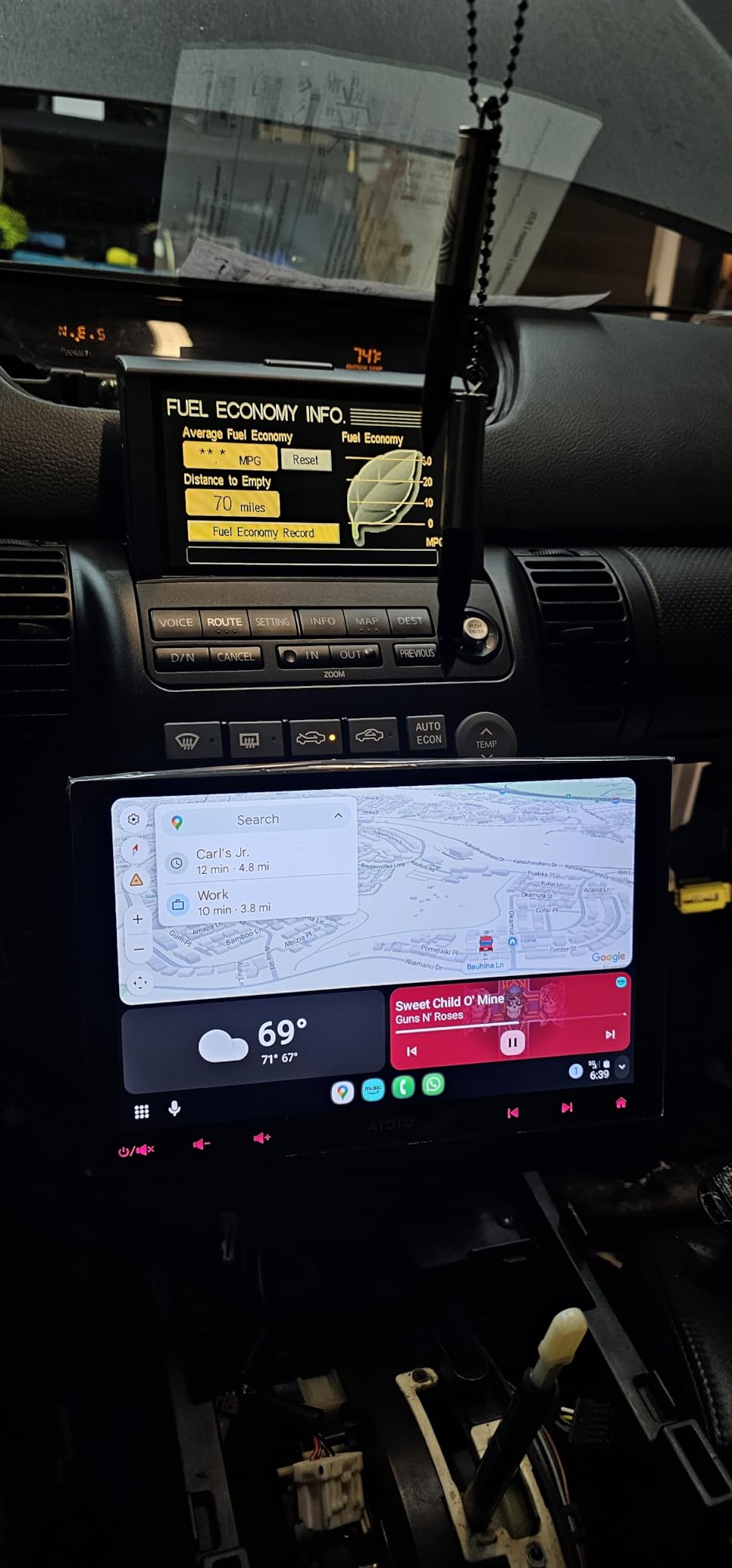
Camera support is the strongest in this group. It handles up to three cameras including 1080P front and rear recording plus a 1080P wireless rear camera with live rear view. For a truck, a work van or an off-road build that needs more than one view, nothing else here matches it.
On the audio side there is a built-in DSP with nine presets, a 36-band EQ, flexible crossover settings and 4x24W RMS amplification per channel. A 12nm octa-core processor with 4GB RAM and 32GB of storage keeps the interface fluid.
Who the ATOTO S8 MS suits best
This is for drivers who record their drives, run a dash camera setup, or need coverage that survives losing signal. The built-in 4G LTE also covers over-the-air maps when you are parked away from Wi-Fi.
Anyone upgrading an older single-DIN car that has never had a touchscreen can use this unit, because the floating screen adapts to both opening sizes. It is a strong choice for shared vehicles where two phones take turns connecting.
Where the ATOTO S8 MS falls short
It runs Android 10, which is behind current versions and will age faster than the Pioneer receivers that simply run your phone. Some owners also had SD card recognition fail.
Because it is a native Android system rather than a projection display, some drivers find the workflow less seamless than wireless Android Auto. The floating screen also needs dash space checked carefully before the fascia goes back on.
Pioneer DMH-WT3800NEX 9-Inch Floating Display With Split Screen
Pioneer DMH-WT3800NEX 9″ Capacitive Touchscreen Floating Display Car Stereo
9-inch capacitive floating display
Split-screen projection mode
Wireless CarPlay and Android Auto
HD Radio and FLAC playback
Pros
- Large 9-inch floating display fills the radio slot
- Strong sound with plenty of tuning control
- Wireless CarPlay auto-connects reliably once paired
- Automatic light and dark mode tied to time and headlights
- Split-screen shows navigation and source content together
Cons
- Some models shut off randomly and will not reconnect until restart
- Wireless CarPlay occasionally needs a manual connection
- Fingerprint smudges show clearly on the screen
- Feature set is thinner than older Pioneer models at similar prices
A floating display mounts above the factory radio slot instead of filling it, so the screen can be positioned clear of vents and trim. On a 9-inch panel that difference is the whole experience, and the DMH-WT3800NEX handles it without looking oversized.
Split-screen mode is the feature that separates it from other large screens. It shows your phone projection and a native source at the same time, so you can follow navigation while adjusting audio settings or watching a camera feed.
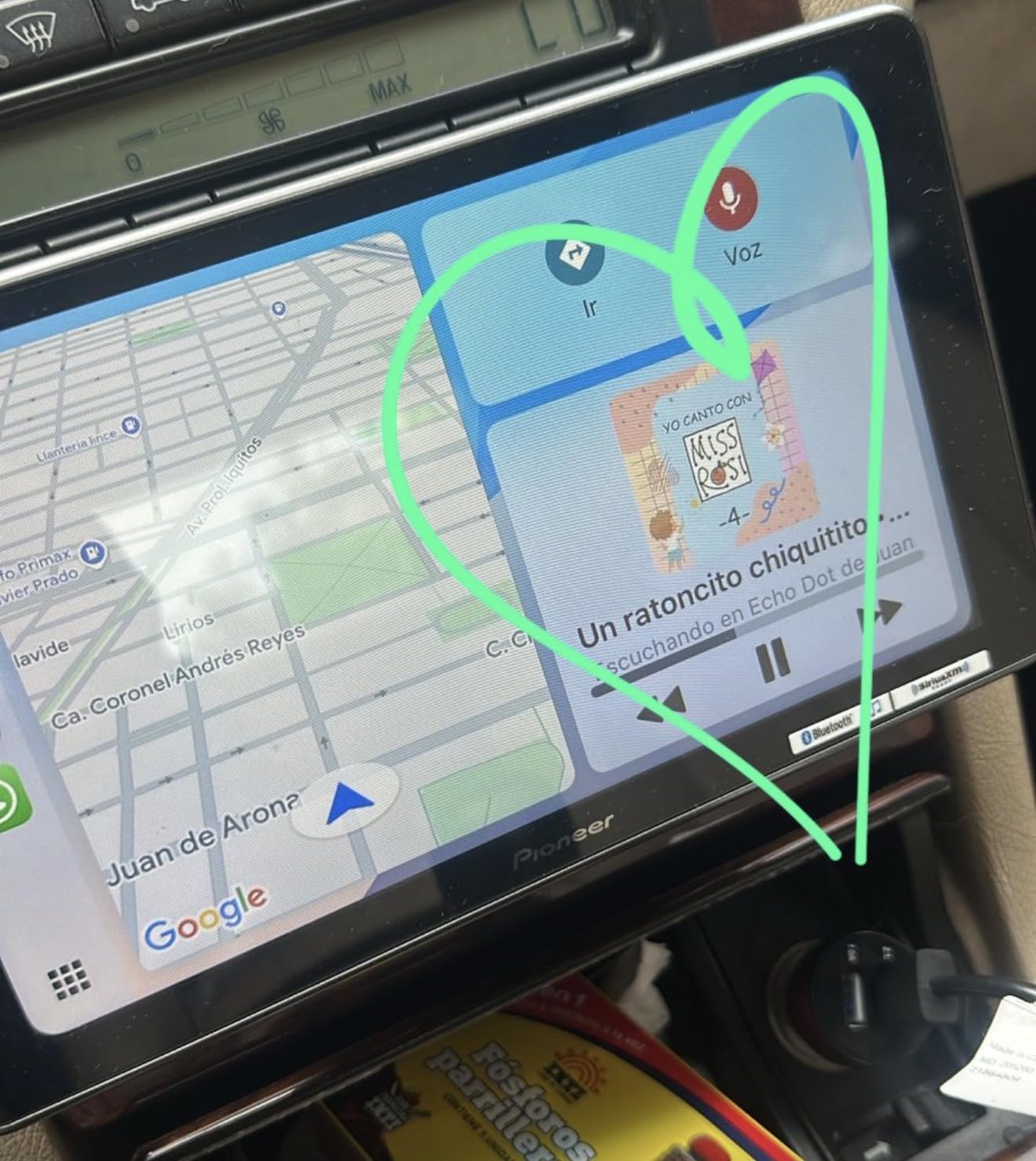
Automatic light and dark mode switches the display based on the time of day or your headlights, which removes the two most common complaints about big bright screens. SiriusXM readiness, HD Radio, FLAC playback and a rear view camera input are all included, and the box carries a GPS antenna, microphone with bracket, source unit and wiring harness.
Sound quality gets consistent praise, with owners describing it as strong and offering more tuning control than the smaller screens here. Alexa again runs through the Vozsis and WebLink phone apps.
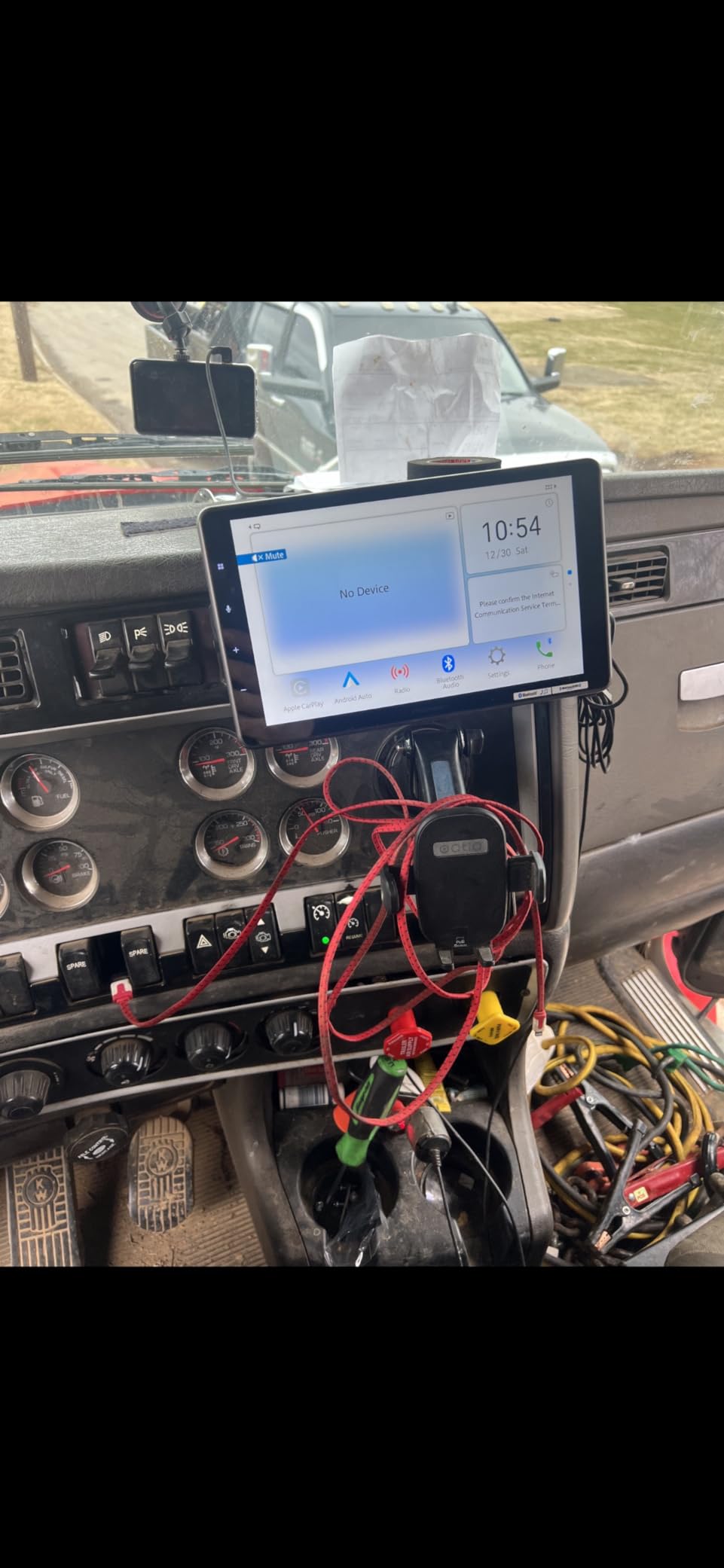
Who the Pioneer DMH-WT3800NEX suits best
Choose this when you want a modern-looking large screen but still prefer the Pioneer NEX approach of projecting your phone rather than running a built-in Android system. Wireless CarPlay and Android Auto both work through the built-in Wi-Fi.
It is a good match for a car with a factory double-DIN opening that has shallow depth, because the floating screen does not push the chassis into the cavity the way a fixed large-screen unit would.
Where the Pioneer DMH-WT3800NEX falls short
A small number of receivers shut off randomly and refuse to reconnect until the vehicle is restarted, which is a serious problem if it happens once. Wireless CarPlay also occasionally fails to auto-connect and needs a manual reconnection.
The gloss surface shows fingerprints badly in daylight, Bluetooth range is limited, and the feature set is thinner than some older Pioneer models at similar prices.
ATOTO F7WE 10.1-Inch QLED With 4V Pre-Outs and Wi-Fi 6
ATOTO F7WE 10.1″ QLED Double DIN Car Stereo,Wireless CarPlay & Android Auto
10.1-inch QLED at 1280x720
4V RCA pre-outs, 4x29W RMS
Wireless CarPlay via Wi-Fi 6
Dual camera inputs
Pros
- Wireless CarPlay and Android Auto reconnect quickly and hold
- Large QLED screen readable in bright sunlight
- 4V RCA pre-outs give external amplifiers real headroom
- Good sound for the money with a 12-band EQ
- Support replaced a defective screen for an owner
Cons
- Screen occasionally freezes during CarPlay until home is pressed
- Microphone failed on some owners
- Front USB and SD slots have not worked for every owner
- Not a standalone Android system so app navigation is unavailable
The F7WE does something no other 10-inch receiver here manages: it drives external amplifiers properly. The TCB502 amplifier chip delivers 4x29W RMS per channel with 4V RCA pre-outs, which is the voltage amplifiers actually want from a head unit.
That matters because many large-screen receivers in this group output a weaker signal and leave you chasing hiss. If your plan includes an amplifier or a DSP later, this is the unit that will not need replacing when you get there.
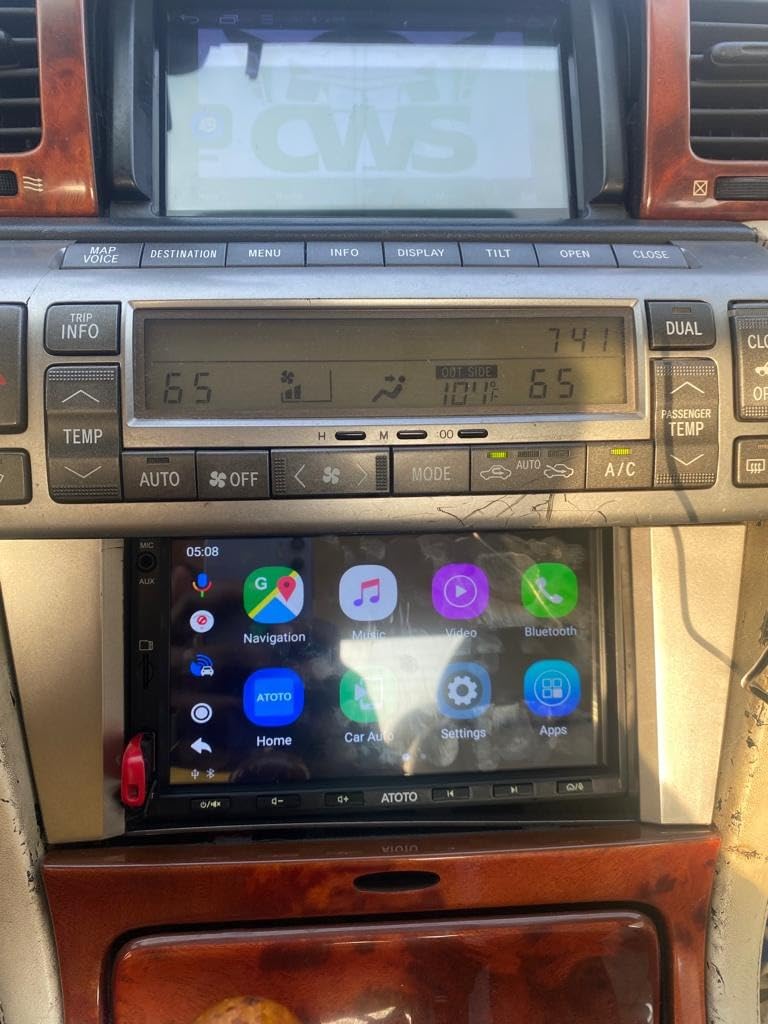
Wireless CarPlay and Android Auto run through a dedicated Wi-Fi 6 module in the second-generation F7 series, and owners report dependable connection with quick auto-reconnection. The 10.1-inch QLED display runs at 1280×720 with a 178-degree viewing angle.
It is a projection receiver, not a full Android head unit. Your phone supplies navigation, music, calls and voice assistant, and app-based navigation is not available without a phone connected.
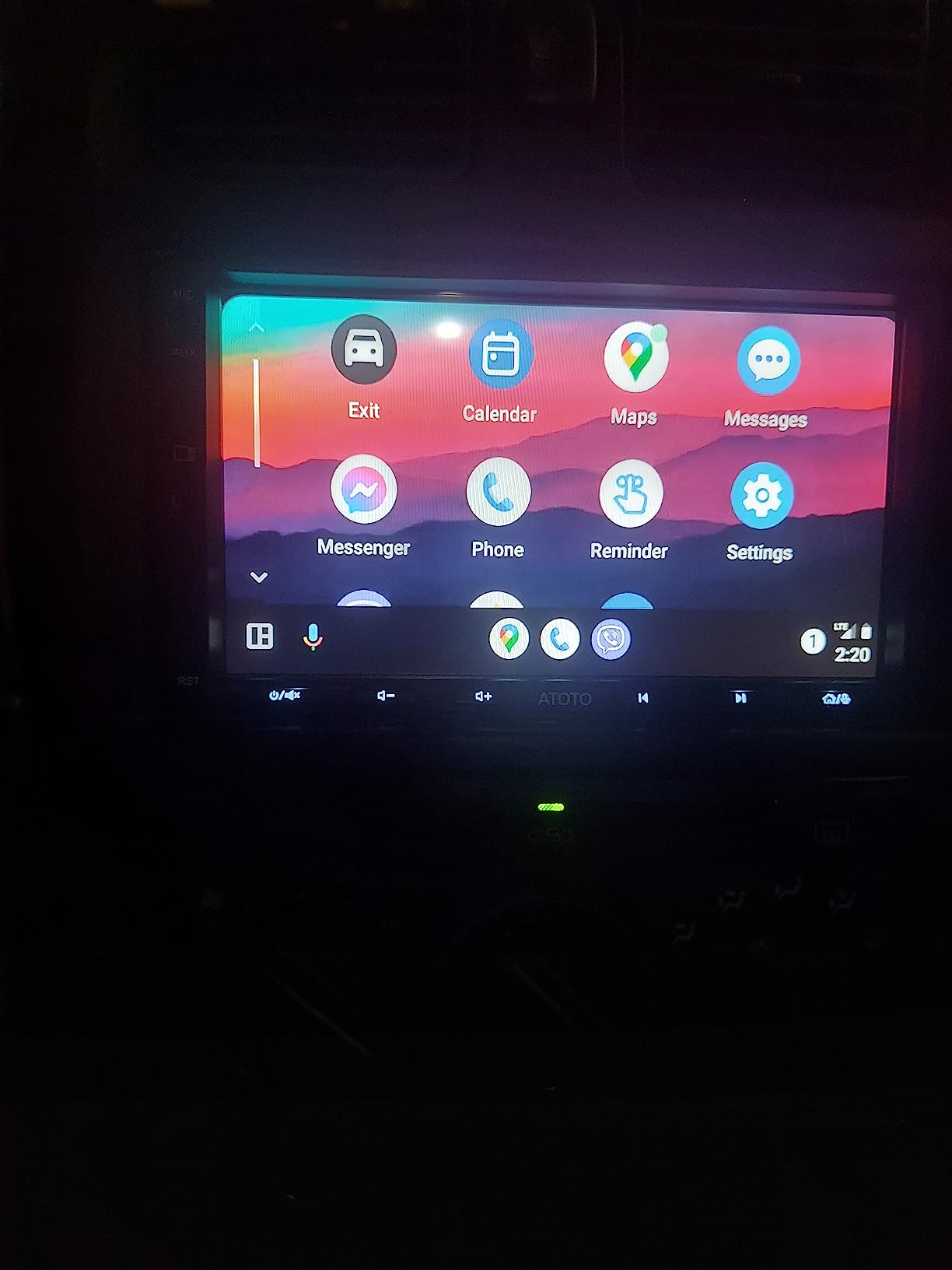
Who the ATOTO F7WE suits best
This is the pick for a large-screen build with amplifiers. The 4V pre-outs give you a clean signal to an external amp, and the 12-band EQ covers most of what you would want to shape without a processor.
Dual camera inputs handle front recording and rear view with split-screen navigation alongside the camera image. Steering wheel control retention and wired phone mirroring are both built in, and it fits a standard double-DIN opening.
Where the ATOTO F7WE falls short
The screen occasionally freezes during CarPlay and only recovers when you press the home button. Bluetooth volume also runs noticeably louder than radio volume, which makes switching between sources jarring until you rebalance it.
Front USB and SD slots have not worked for some owners, the backup camera image tends to be dark with no exposure adjustment, and the microphone failed for a small number of owners.
Is Wireless Android Auto Actually Reliable?
Wireless Android Auto removes a cable, and that is the whole benefit and the whole risk. A forum owner shopping for a wireless Android Auto deck put it plainly: wireless can be a pain at times for some units. The failure is rarely the head unit itself.
Here is the order we would work through when a wireless connection misbehaves.
Check whether the feature is actually enabled. Some units ship with wireless projection present but hidden in factory settings. One Reddit owner explained that the listing says it supports CarPlay and Android Auto, so it does, it is just buried in the settings menu.
Confirm your phone supports wireless projection. Compatibility varies by phone model and by Android version. Search for your exact handset model plus the unit model number before you buy, and read recent forum posts rather than reviews from two years ago.
Reset the connection at both ends. Forget the Bluetooth pairing on your phone, clear the paired-device list on the head unit, then pair fresh. This clears the stored handoff profile that causes delayed reconnection.
Watch the power supply. Screen flicker and random restarts on budget receivers frequently trace back to a low-voltage feed from a cheap wiring harness adapter. A multimeter on the constant and switched supplies during cranking is worth ten minutes of guessing.
Use the wired path when it matters. Every unit on this list still supports a USB connection. If you rely on turn-by-turn navigation for daily commuting, keep the cable in the console as a fallback rather than trusting wireless alone.
Samsung phones come up most often in troubleshooting searches, and Pixel and Xiaomi handsets also generate their own reports. The pattern is not brand-wide failure, it is that a specific handset and a specific Android build can behave differently from the same phone on a wired link.
Do You Even Need a New Head Unit? Wireless Dongles Explained
A wireless Android Auto dongle is a small box that plugs into the USB port of an existing wired head unit and bridges to your phone over Wi-Fi, adding wireless projection to a car that never supported it. It is a legitimate option in two specific situations.
If your car has a factory head unit with a working touchscreen and you only want wireless projection, a dongle solves the problem for a fraction of the cost and with no dash surgery. The same applies if your double-DIN opening has already been taken by another unit you are happy with.
It is not the right answer if your factory radio has a small screen, no touchscreen, or an opening too small for a double-DIN unit at all. In those cases a head unit swap is the actual fix, and no dongle makes a 4-inch 2004 display usable.
How to Choose a Double-DIN Head Unit With Wireless Android Auto
Start with the opening, not the features. A double-DIN opening measures 4 x 8 inches, while a single-DIN opening is 2 x 8 inches. Several receivers here state a minimum opening of 6.69 x 3.81 inches with an outer frame of 7.44 x 4.61 inches, and if your bezel is smaller the unit will not seat no matter how good the screen is.
Fixed, shallow and floating chassis solve different problems
A fixed chassis fills the opening and gives you the largest usable screen for that cavity. It is the simplest install, but it uses the most depth behind the dash, which matters where HVAC ducting crosses behind the radio slot.
A short-chassis unit trades a little internal room for depth. The Pioneer DMH-W2770NEX measures 4-7/8 inches deep and the DMH-W4660NEX measures 3-3/8 inches, and that difference is the difference between an install that fits and one that needs the dash cut.
A floating display mounts above the slot on a bracket and can be adjusted in several directions. The 9-inch Pioneer and the 10-inch ATOTO S8 MS both use this approach, and it is the most forgiving option when vents or trim are in the way.
Capacitive versus resistive touch
Capacitive panels respond like a phone screen and support multi-touch and scrolling gestures. Resistive panels need a firm press and usually only register one touch at a time. Among the receivers here, the three Pioneer models use capacitive panels, the ATOTO units use QLED capacitive displays, and the PLZ and SJOYBRING use IPS touch panels rated at 1024×600 and 1280×720 respectively.
Resolution matters less than brightness in most cars. A 1280×720 panel looks sharper, but a brighter panel that stays readable at noon is worth more than extra pixels you cannot see through glare.
Preout voltage and why phone support says nothing about sound
Preout voltage is the maximum signal the head unit sends down its RCA pre-outs. An amplifier at 4V wants to see close to 4V from the head unit. A unit that only pushes 2V has to be turned up further, and the amplifier amplifies that noise floor with the music, which is where hiss comes from.
This is the single most misunderstood point in this category. Wireless Android Auto and Apple CarPlay support say nothing at all about audio quality, because the phone is a display source. What determines sound is the preamp stage, the preout voltage, the number of EQ bands, whether there is a time alignment setting, and whether crossovers are adjustable.
In this list the ATOTO F7WE leads with 4V pre-outs and 4x29W RMS, the Pioneer DMH-W4660NEX offers Hi-Volt pre-outs, and the Kissound KS9702 sits at roughly 2V with no time delay. If you are running amplifiers, that is the entire decision.
The accessories that decide whether the install works
Every one of these receivers needs a dash kit and a vehicle-specific wiring harness adapter. A dash kit holds the unit in a factory opening that was not designed for it, and a harness adapter translates your car’s steering wheel controls, warning chimes and amplifier signals into a standard plug.
If your vehicle has a more integrated factory screen, an iDatalink Maestro module may be needed to retain steering wheel controls, camera lines and chimes. A Maestro RR or RR2 handles older vehicles with a separate factory radio, while Maestro APX is aimed at later models with an integrated display.
Add an antenna adapter for vehicles with a powered or amplified antenna, and a camera adapter if your factory camera uses a different connector. Owners on r/CarAV repeatedly note the same lesson: a quote that lists only the receiver is not the installed price. Budget the accessories, the module and the labor before you order anything.
One more fitment note that catches people. A floating screen can overlap a climate control panel or a shifter in some vehicles, so measure from the top of the opening to the bottom of your HVAC controls before assuming a 9-inch or 10-inch panel will work. If you also carry a large phone, check our Android phone buying notes to make sure the handset you pair supports wireless projection.
Frequently Asked Questions
Is Android Auto being phased out?
No. Google continues to expand Android Auto and has folded CarPlay-style projection into vehicles from many brands, including GM, Ford, Honda, Hyundai and others. Several manufacturers now build it into their own displays. Head units with wireless Android Auto remain a supported product category, and buying one now is a reasonable bet.
Who makes the best double DIN head unit?
Among the eight units we compared for wireless Android Auto, the PLZ MP-902W leads on review volume at over 2200 ratings, the SJOYBRING JOY-W022 leads on screen quality with a 1280×720 QLED panel, and the ATOTO F7WE leads on amplifier output with 4V pre-outs. Pioneer remains the strongest name for short-chassis fitment and tuning control.
What are common wireless Android Auto connection issues?
The usual causes are a feature hidden in factory settings, a phone model that does not support wireless projection, a stale Bluetooth pairing profile, or low voltage reaching the head unit from a cheap wiring harness. Clear the pairing on both ends, update Android, check the harness supply with a multimeter and keep a USB cable as a fallback.
What is a wireless Android Auto dongle?
It is a small adapter that plugs into the USB port of an existing wired head unit and bridges to your phone over Wi-Fi, adding wireless projection without replacing the stereo. It suits cars with a working factory touchscreen you like. It does nothing for a car with no touchscreen or no double-DIN opening.
Will any double DIN head unit work with any car?
No. The opening must measure 4 x 8 inches, the depth behind the dash must clear the chassis and any HVAC ducting, and you may need a vehicle-specific dash kit, wiring harness and sometimes an iDatalink Maestro module to keep steering wheel controls and chimes working.
Is a wireless Android Auto head unit worth it?
It is worth it if you are replacing a dead or dated factory radio and want modern navigation without replacing the whole dashboard. The convenience is real once paired. It does not improve sound quality at all, so if audio is your main goal, compare preout voltage and tuning controls instead.
Why does my wireless Android Auto keep disconnecting?
Most repeat disconnects come from Bluetooth handoff conflicts or a marginal power supply rather than the head unit. Forget the pairing on your phone and clear the paired-device list on the unit, then pair again. If it still drops, test the harness supply voltage during cranking, since voltage sag causes restarts and dropped projection.
What does 5V preouts mean for a car stereo?
Preout voltage is how hard the head unit drives its RCA outputs to feed an external amplifier. A higher voltage means the amplifier does not have to turn its gain up as far, so it amplifies less noise. The receivers on this list range from roughly 2V up to 4V. If you are not running an amplifier, preout voltage barely matters.
Our Final Pick for Double-DIN Wireless Android Auto in 2026
The PLZ MP-902W is the best double din head unit with wireless Android Auto for most drivers in 2026. It carries the largest review base of any receiver we tested, it reconnects wirelessly on startup, and the 4.2-channel stage will run a powered sub without an amplifier.
Pick the SJOYBRING JOY-W022 if screen sharpness matters most. Pick the ATOTO F7WE if you are running amplifiers and want 4V pre-outs. Pick the Pioneer DMH-W2770NEX if your dash cavity is shallow, and the Pioneer DMH-W4660NEX if you want voice control that does not need a phone app.
Whichever you choose, confirm your opening size and the depth behind the dash first, and budget for the dash kit, wiring harness and any integration module alongside the receiver itself.