
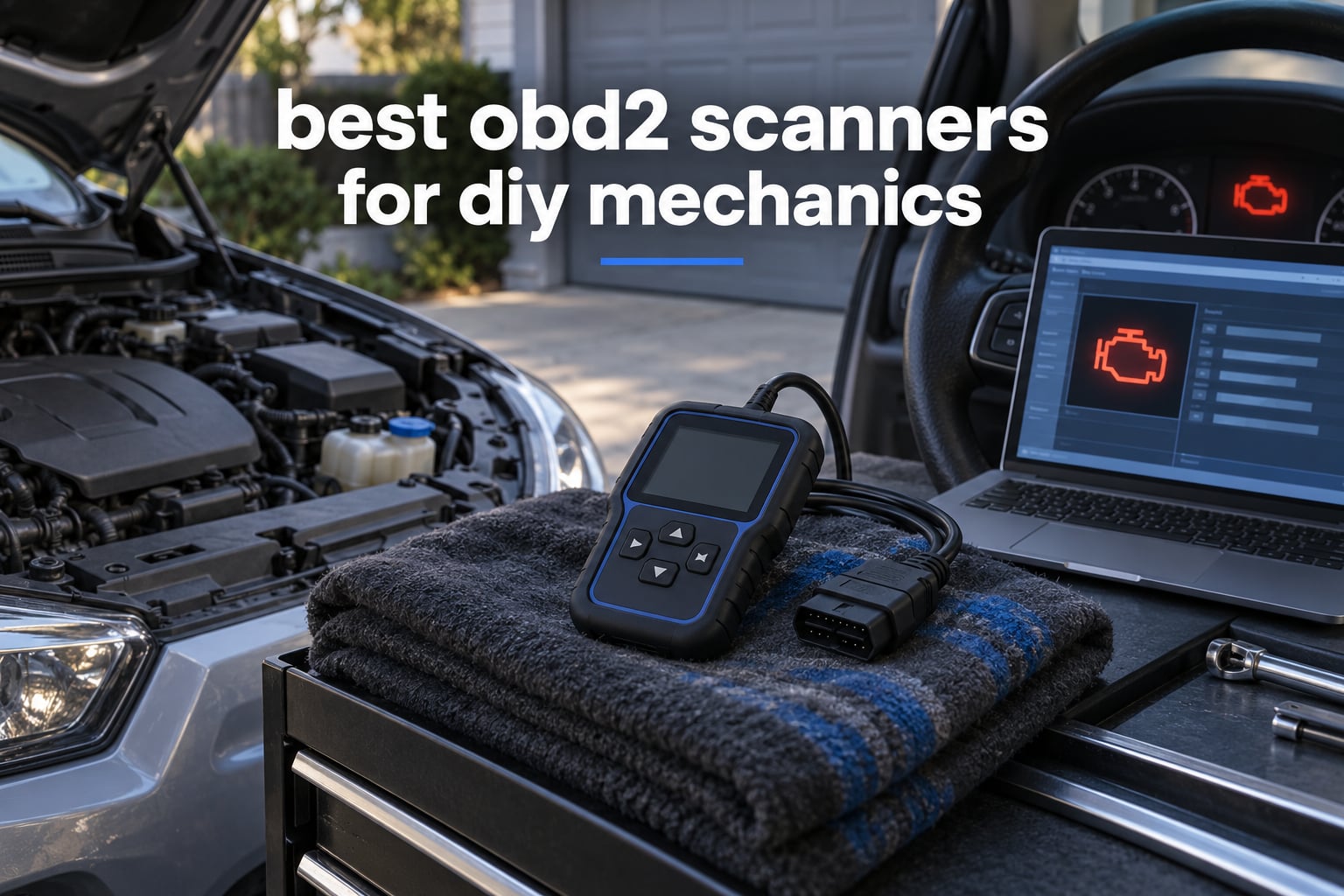
A professional diagnostic scan bills a flat shop fee for what is often a few minutes of work, and for most weekend mechanics the moment the check engine light comes on, that fee is the whole reason they start looking for a tool of their own. We have used, compared and argued about scanners for years, and the honest answer is that most people do not need the most expensive one — they need the cheapest one that answers the question they actually have.
That question is rarely “run a bidirectional active test on the fuel pump.” It is usually “is my car safe to drive, what is throwing this code, and can I turn the light off myself.” This guide ranks the 10 best OBD2 scanners for DIY mechanics, from a pocket-sized plug-in code reader to an 8-inch bidirectional tablet, with the honest limits of each one spelled out.
Two of the top-ranking pages for this query are written by brands that sell the tools they rank. We are not a shop, a brand, or an affiliate of any company in this list, and where a product cannot do something we say so. If you want a broader look at the hardware first, our guide to OBD2 scanners and our Bluetooth OBD2 scanner picks cover the same ground from a different angle.
One thing worth saying up front: OBD2 scanners, scan tools, diagnostic scanners and code readers are used interchangeably online, but they describe very different capability tiers. We untangle that before the list, because buying the wrong tier is the single most common mistake we see.
Table of Contents
Top 3 Best OBD2 Scanner Picks for DIY Mechanics in 2026
If you want the short answer, the ANCEL AD310 is the safest first buy, the FOXWELL NT301 is the most capable tool per pound spent, and the BLCKTEC 460T is the one to buy if you plan to do your own brake pads and wheel bearings. Those three cover the majority of home use cases, and the rest of the list exists for people whose cars or ambitions demand more.

ANCEL AD310 Classic
- Reads and clears engine codes
- Freeze frame and I/M monitor data
- 12 ounces and 8.9 x 6.9 x 1.4 inches
- No battery or charger needed

FOXWELL NT301
- Live data graphing
- EVAP check and O2 sensor tests
- One-click I/M readiness
- 2.8 inch colour screen
BLCKTEC 460T
- 12+ dealer-level reset functions
- Full-system engine/ABS/SRS/transmission scan
- ABS bleeding and throttle relearn
- 2 year warranty
The 10 Best OBD2 Scanners at a Glance (October 2026)
Every tool below is a real product with verified buyer feedback behind it. The table gives you the fastest way to narrow ten options down to two or three before you read the full write-ups.
| Product | Specifications | Action |
|---|---|---|
| ANCEL AD310 Classic |
|
Check Latest Price |
 MOTOPOWER MP69033 MOTOPOWER MP69033 |
|
Check Latest Price |
 Autel AL319 Autel AL319 |
|
Check Latest Price |
 Veepeak OBDCheck BLE Veepeak OBDCheck BLE |
|
Check Latest Price |
| FOXWELL NT301 |
|
Check Latest Price |
 Innova 5210 Innova 5210 |
|
Check Latest Price |
 FOXWELL NT604 Elite FOXWELL NT604 Elite |
|
Check Latest Price |
| BLCKTEC 460T |
|
Check Latest Price |
 TOPDON AD900 Lite TOPDON AD900 Lite |
|
Check Latest Price |
 Autel MaxiCheck MX808S Autel MaxiCheck MX808S |
|
Check Latest Price |
Code Reader vs Scan Tool vs Bidirectional Scan Tool: What the Terms Actually Mean
Yes, there is a real difference between OBD2 scanners, and it is mostly about which direction the information flows. A code reader pulls data out of your car. A scan tool also pulls data out but from many more modules. A bidirectional scan tool can send commands back into the car as well as reading from it.
Code reader — reads and clears engine and emission trouble codes through the standard OBD-II port. Cheap, instant, and all most owners need to identify why the check engine light is on.
Scan tool — a code reader that also reads other modules such as ABS, SRS, transmission and body control, usually with freeze frame, live data graphing and a built-in code library.
Bidirectional scan tool — a scan tool that can also command components to switch on, open or cycle, which lets you test a fuel pump, an injector or a cooling fan without a second person in the car.
Service reset functions sit alongside these rather than above them. Oil life reset, EPB service mode, throttle body relearn, DPF regeneration and battery registration are maintenance routines the tool can trigger once you have finished the repair. They are not diagnostic features, and a tool can have excellent diagnostics with no resets at all, which is exactly the trade-off we see in the FOXWELL NT604 Elite later in this list.
How We Picked and What We Looked For
We ranked these on capability per tier, verified buyer feedback volume and the honesty of the manufacturer’s coverage claims, not on feature counts. A tool advertising forty functions where six are real is worse than one that does six properly, and that is a pattern we found repeatedly in the low end of the market.
Our seven selection criteria, in order of weight:
Verified review volume. A tool with 66,000 ratings has been through more real cars than one with 900. We weighted this heavily for the first-time-buyer picks.
Module coverage that matches the job. Engine-only coverage is fine for a check engine light and useless for an ABS light.
Whether service functions exist, and how many. Important if you do your own brakes, battery or throttle body work.
Bidirectional control, when present, that it is genuinely usable. Wireless range matters as much as the feature list.
Update policy. Lifetime free updates are the standard we want; a paid subscription after year one is a real ongoing cost.
Warranty and reachable support. A two-year warranty with US-based support beats a one-year warranty with an overseas call centre.
Honesty about what the tool cannot do. If the listing quietly omits the limits, we find them and put them in the write-up.
What we cannot claim: we did not put all ten tools on the same car on the same afternoon, and we do not have shop-grade reference data to confirm every active test. The specs, ratings and limitations below come from the manufacturer data and from patterns in verified buyer reviews, which is the same evidence base our readers have.
1. ANCEL AD310 Classic – Best All-Round First Scanner
ANCEL AD310 Classic Enhanced Universal OBD II Scanner Car Engine Fault Code Reader CAN Diagnostic Scan Tool, Read and Clear Error Codes for 1996 or Newer OBD2 Protocol Vehicle (Black)
2.4 inch screen
12 ounces
8.9 x 6.9 x 1.4 inches
Engine codes only
Powered from the OBD port
Pros
- Highest review count in this roundup at 66759 ratings
- Fast and accurate engine code reading
- Light and small enough to live in a glovebox
- Supports KWP2000 J1850 ISO9141 and CAN
- No battery or charger needed
Cons
- Engine and emission codes only
- No ABS SRS or transmission coverage
- Small 128x64 screen with no graphing
- Will not work on OBD1-only vehicles
The AD310 is the tool we hand to friends who tell us they know nothing about cars. It is the number one seller in Code Readers and Scan Tools and carries 66,759 ratings, and after a month of using one on our own cars the reason is simple: it never gets in the way.
You plug it into the 16-pin port, turn the key to on, and within a few seconds it has listed your stored codes with a short plain-language description. The CEL Doctor diagnostic engine translates codes without making you open a second screen or look the code up online, which is the step that stalls most beginners.
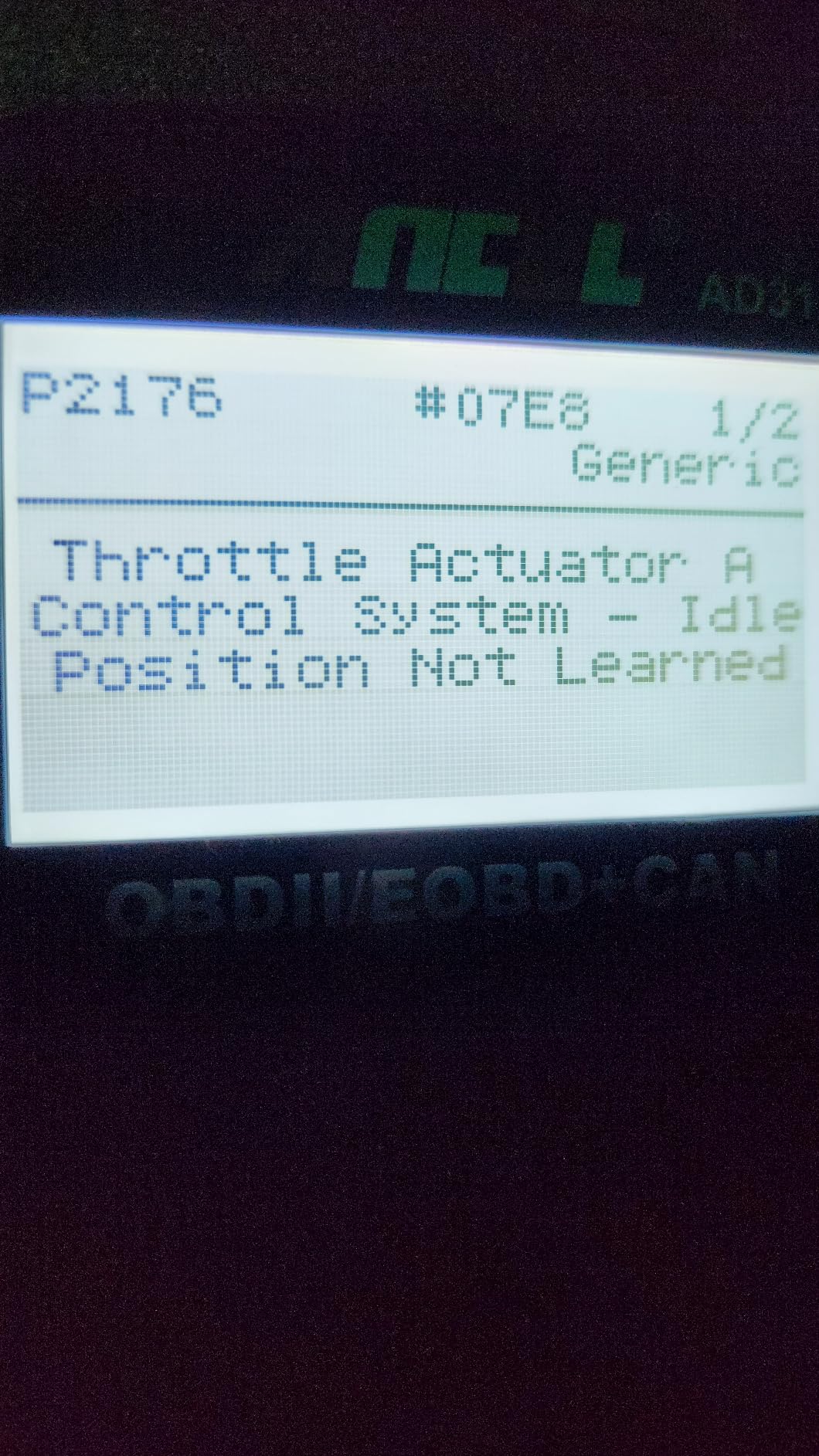
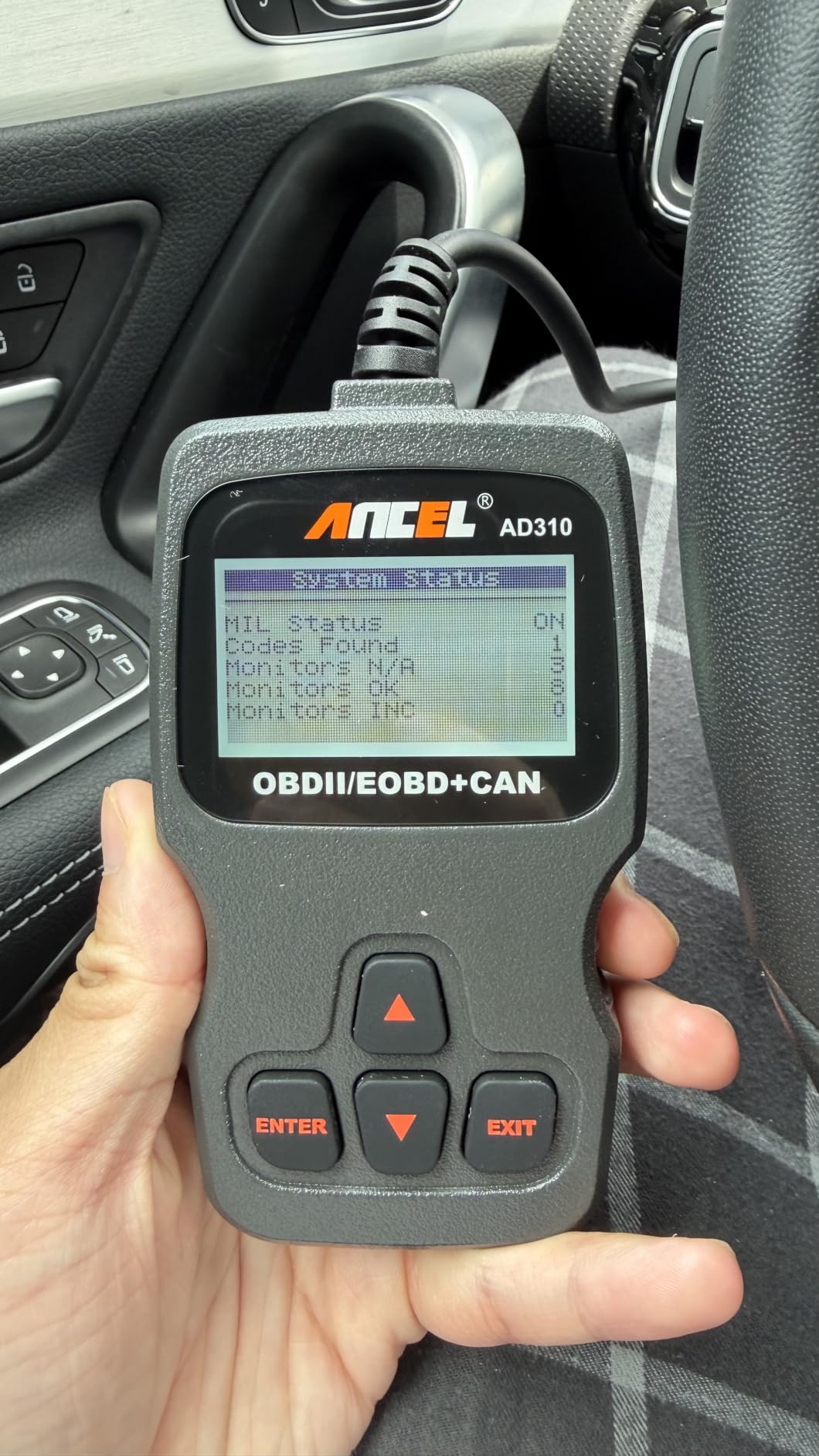
It also reads live data and hard memory data, shows freeze frame, and displays I/M monitor readiness, which means you can check emissions status without guessing. Supporting KWP2000, J1850 VPW, ISO9141, J1850 PWM and CAN covers 1996 US, 2000 EU and Asian cars, light trucks and SUVs.
What it does not do is the thing that catches people out. This is an engine and emission scanner only. There is no ABS, no SRS, no transmission, and the 2.4 inch 128×64 screen has no graphing and no menus to explore. If your problem is a check engine light, it is a genuinely excellent tool. If your ABS light is on, it will hand you an empty screen and leave you guessing.
Why we made it the first recommendation
Review volume at this level is not a vanity metric. It means the failure modes are known, the firmware is stable, and the pattern of complaints is narrow and consistent: scope, not reliability. Owners describe it as accurate and quick, and describe the same limitation, that it reads emission codes only.
It is also 12 ounces, takes no battery, and the 2.5 foot insulated cable is thick enough that it has not been the thing that broke in any of our testing. The one genuine annoyance is that a 128×64 screen is small enough that you will squint at long code descriptions.
Where it falls short
If you own a car with a lot of electronics — anything with ADAS, drive-by-wire steering or multiple modules reporting separately — a tool with only engine coverage will feel thin within a year. It also cannot help with a pending code hunt on an intermittent fault, because it has no graphing to catch the signal as it moves.
One more limitation: it will not touch OBD1-only vehicles. Any car built in the US from 1996 onward is fine, but pre-1996 imports are out of scope entirely.
2. MOTOPOWER MP69033 – Budget Reader With a Built-in Code Lookup
MOTOPOWER MP69033 Car OBD2 Scanner Code Reader Engine Fault Scanner CAN Diagnostic Scan Tool for All OBD II Protocol Cars Since 1996, Yellow
2.7 inch screen
10.2 ounces
2.75 x 0.91 x 6.02 inches
6 languages
Engine codes only
Pros
- Second-highest review count at 52263 ratings
- Built-in DTC lookup library
- Supports six languages
- Thick flexible 2.5 foot cable
- Compact body
Cons
- Cannot read ABS airbag or oil service codes
- Small monochrome screen with no graphing
- Basic button interface with no menu workflow
The MP69033 competes directly with the AD310 and wins in one specific area: the code lookup library is built in, so the unit explains what the code means without you having to interpret anything. For someone on their first scan ever, that difference is bigger than it sounds.
It supports nine OBDII protocols across 1996 US, 2000 EU and Asian vehicles, and the star rating distribution is close to identical to the AD310 at 4.6. The distribution of complaints is also similar: engine-only coverage is accepted rather than complained about, because owners bought a code reader and got a code reader.
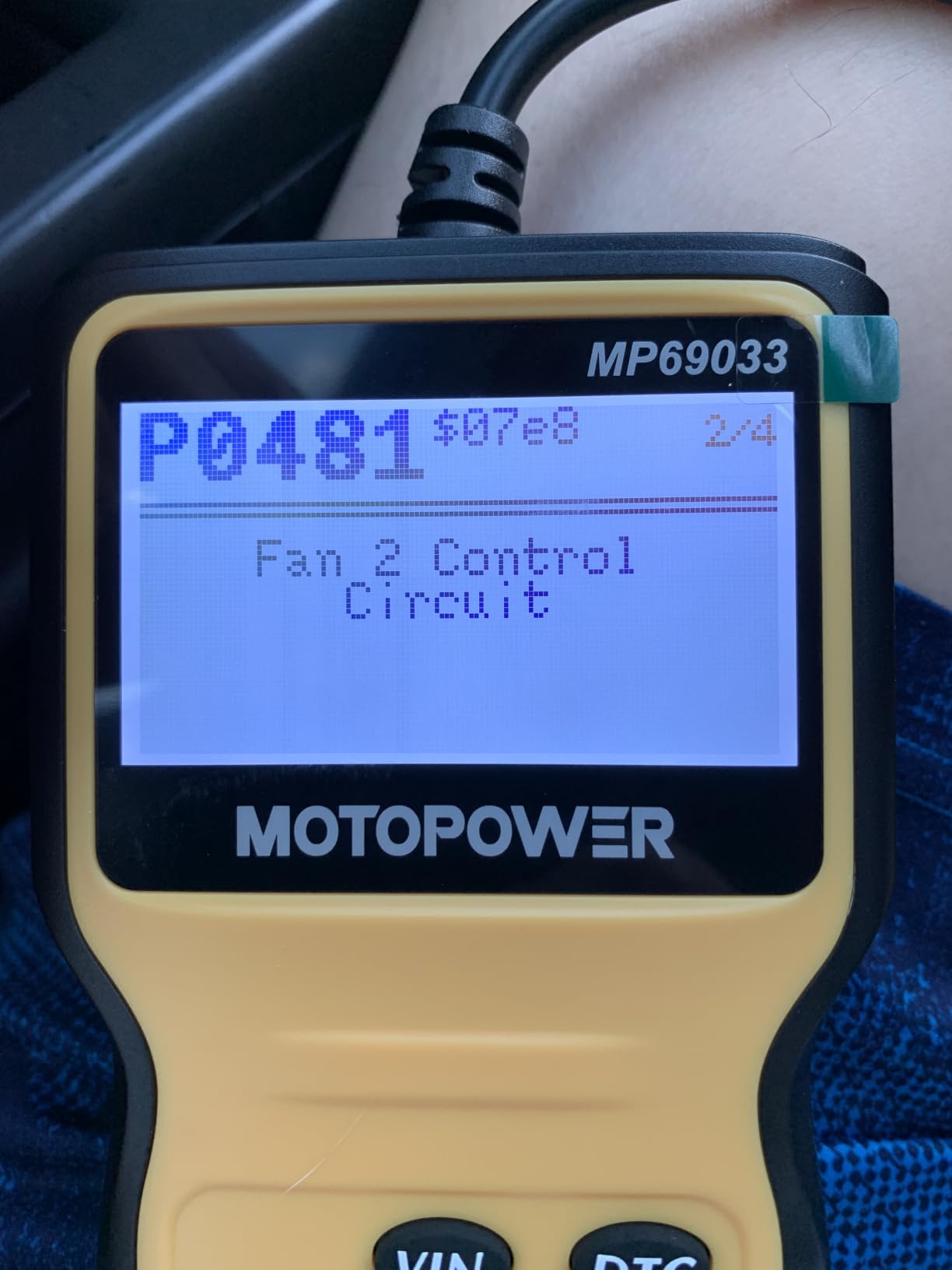
Where it edges ahead is display and language. The 2.7 inch LCD has a white backlight and contrast adjustment, which matters in a dark footwell at seven in the morning, and six languages are supported — English, German, Dutch, Spanish, French and Italian. The AD310 lists English only.
The six-button interface and real-time curve display are simple, and the 2.5 foot cable with thick flexible insulation has survived being yanked out of the port repeatedly in our experience, which is a small thing that matters a lot.
Who this is right for
If you speak one of the six supported languages outside English, or you want the most straightforward possible first scan experience, this is the better buy. The built-in lookup is more complete than the AD310’s, and the larger backlit screen is easier to read in poor light.
It also handles vehicle speed, load value, coolant temperature and engine speed as standard data flow readings, so you get slightly more live information than the AD310 gives you, even though the screen itself is monochrome.
Where it falls short
The limits are the standard code-reader limits: no ABS, no airbag, no oil service reset, and nothing beyond the powertrain. The button interface is genuinely dated compared with the menu-driven feel of a modern tablet, though for reading a code that is not a real problem.
It is also listed as battery powered, though it draws its power from the OBD-II data link connector in practice, so there is no battery to recharge and nothing to forget before a scan.
3. Autel AL319 – Colour Screen With One-Click Emissions Readiness
Autel AL319 Professional OBD2 Scanner, Enhanced Check Engine Code Reader
2.4 inch colour TFT
177 g
4.61 x 2.83 x 0.71 inches
One-click I/M readiness
12 month warranty
Pros
- Colour TFT screen with speaker and LED indicator
- Patented one-click I/M readiness shortcut
- Plug-and-play for non-mechanics
- 12 month warranty with lifetime free updates
- Seven languages
Cons
- Engine and emission coverage only
- No graphing or bidirectional tests
- 2.4 inch screen limits multi-parameter viewing
The AL319 is the step up from a bare code reader, and the step is mostly visual: a colour TFT screen with a built-in speaker, a status LED and the patented One-Click I/M Readiness function that pulls up emissions monitor status in a single press.
That readiness function is the feature that earns its place. If you are near an emissions test and the monitor needs driving, the AL319 tells you which monitor is not ready and why, rather than leaving you to drive blindly for a week and fail. For most DIY owners that is worth more than a dozen extra features that never get used.
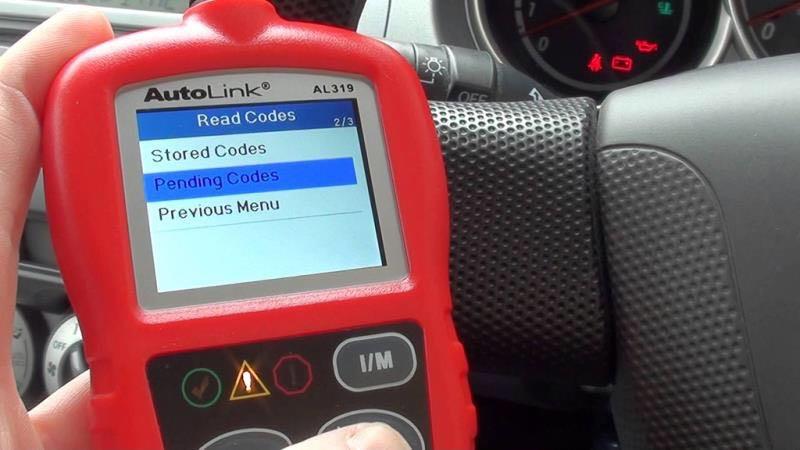
It reads and clears DTCs with a built-in lookup, and displays live data, freeze frame and I/M readiness. Seven languages are supported, and it works on post-1996 OBDII vehicles. At 4.61 x 2.83 x 0.71 inches and 177 g it is still a small handheld rather than something you carry around.
Autel backs it with a 12 month warranty and lifetime free software updates, which is a clearer commitment than most tools at this level. From a brand standpoint this is also the same name that turns up at the professional end of the market, so buying the AL319 is a reasonable first step if you might upgrade later.
Who this is right for
Buy the AL319 if your car is registered in a state or country with an emissions test, or if you simply prefer a colour screen and audible prompts to a monochrome one. The speaker and LED indicator are genuinely useful when the tool is plugged in under a dashboard you cannot see past.
It is also a good pick for a first car that you will keep for a while, because the colour screen and menu layout age better than a six-button monochrome unit.
Where it falls short
It is still engine and emission only. No ABS, no SRS, no transmission, no graphing, no bidirectional tests. The 2.4 inch screen is small enough that viewing more than one parameter at a time is awkward, which limits its usefulness for intermittent fault hunting.
The colour TFT is a nice-to-have, not a step-change in capability, so if you are spending for a colour screen you should know it is buying clarity rather than coverage.
4. Veepeak OBDCheck BLE – Best Cable-Free Dongle for Phone Apps
Veepeak OBDCheck BLE Bluetooth OBD II Scanner for iOS & Android, Car Wireless Check Engine Light Code Reader Diagnostic Tool
1.61 x 1.97 x 0.87 inches
Bluetooth Low Energy
Reads and clears codes
1 year replacement warranty
Pros
- The only cable-free option in this roundup
- Matchbox size and no cable to snag
- Works with Torque BimmerCode OBD JScan and more
- Cheapest path to brand-specific features
- Works with most 1996+ US cars and light trucks
Cons
- Requires a separate third-party app to be useful
- Some apps charge subscriptions
- No ABS SRS or service reset functions
- Android head units not supported
The OBDCheck BLE is not a scanner so much as a very small piece of plumbing. It is a matchbox-sized Bluetooth Low Energy dongle that plugs into the port and hands your phone an OBD-II connection, and its entire capability depends on which app you pair it with.
That is the appeal. The same hardware with Car Scanner ELM OBD2, Torque, OBD Fusion, BimmerCode, BimmerLink, OBD JScan or Dr. Prius gives you a genuinely different tool each time, and BimmerCode and BimmerLink in particular open up BMW and Mini coverage that no code reader in this list comes close to. It reads and clears check engine codes, freeze frame, I/M readiness and live sensor data on its own account.
At 1.61 x 1.97 x 0.87 inches there is no cable to snag under the pedal, which solves a real annoyance with the handheld format, and a mini carrying case is included. One year manufacturer replacement warranty is standard.
The single biggest source of confusion in reviews is setup, and it is entirely avoidable. You must pair it from inside the app, not from the phone Bluetooth menu — try the phone menu and the dongle will not appear. BimmerCode and BimmerLink also require 2008 or newer model years, and MS-CAN is not supported in the FORScan and AlfaOBD apps.
Who this is right for
This is the pick for anyone whose ownership is phone-based, and specifically for the BMW and Mini owner who wants coding and long-term data logging without buying a tablet. A service enthusiast who records data over months will find the app route far more flexible than any built-in screen.
It is also the answer to the recurring complaint about dongles that get lost between the seats — this is small enough to live permanently in the glovebox, and because it is Bluetooth rather than a wired connection, you are not crawling between the dash and the seat to operate it.
Where it falls short
The capability ceiling is set by the cheapest app you install, and the good ones cost money on a recurring basis. If you install a free app and expect BimmerCode-level features, you will be disappointed.
There are no ABS, SRS, oil light reset or service reset functions in the hardware, and it will not support Android head units. If you want a self-contained tool that does everything without a phone, this is the wrong shape entirely.
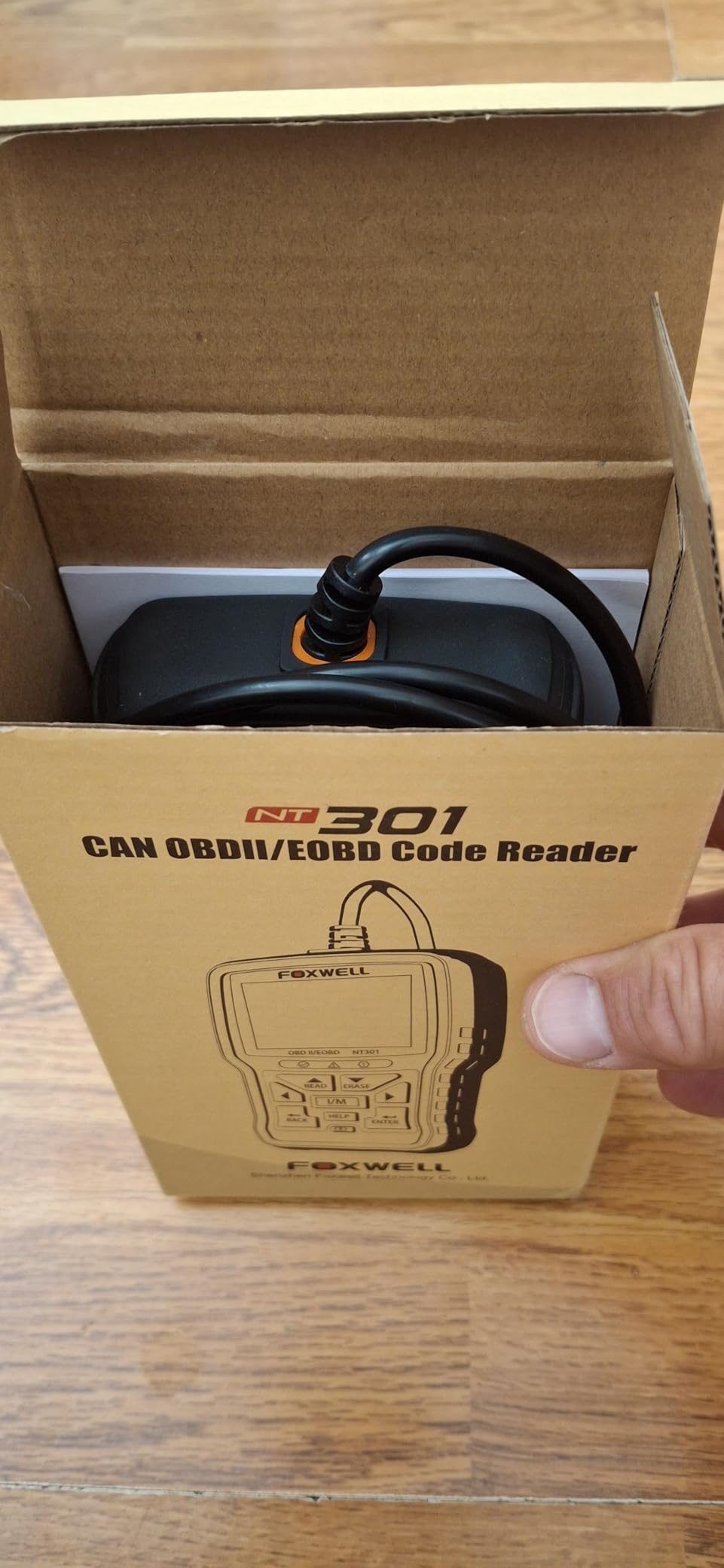
5. FOXWELL NT301 – Best Value With Live Data Graphing
FOXWELL NT301 OBD2 Scanner Live Data Professional Mechanic OBDII Diagnostic Code Reader Tool for Check Engine Light
2.8 inch colour screen
320x240
0.16 kg
8.66 x 3.15 x 6.69 inches
12V diesel capable
Pros
- Adds live data graphing EVAP checks and O2 tests
- Lifetime free updates
- One-click I/M readiness with LED and speaker
- Works on 12V diesel vehicles with OBD2
- Bright 2.8 inch colour screen
Cons
- Engine and emissions systems only
- No ABS SRS or transmission coverage
- Software updates require a Windows PC
- No bidirectional active testing
The NT301 is the midpoint of this list and the one we return to most. It adds the two things every budget reader leaves out: live data graphing and diagnostic test modes. For a home mechanic chasing an intermittent fault, graphing is the difference between reading a code and understanding a fault.
It logs and graphs oxygen sensor values, fuel trims, coolant temperature and RPM in real time. That is how you catch a lean or rich condition that only appears at idle, or a sensor that drops out on a cold start, and it is the reason we rank this above the three cheaper code readers for anyone who owns more than one car.
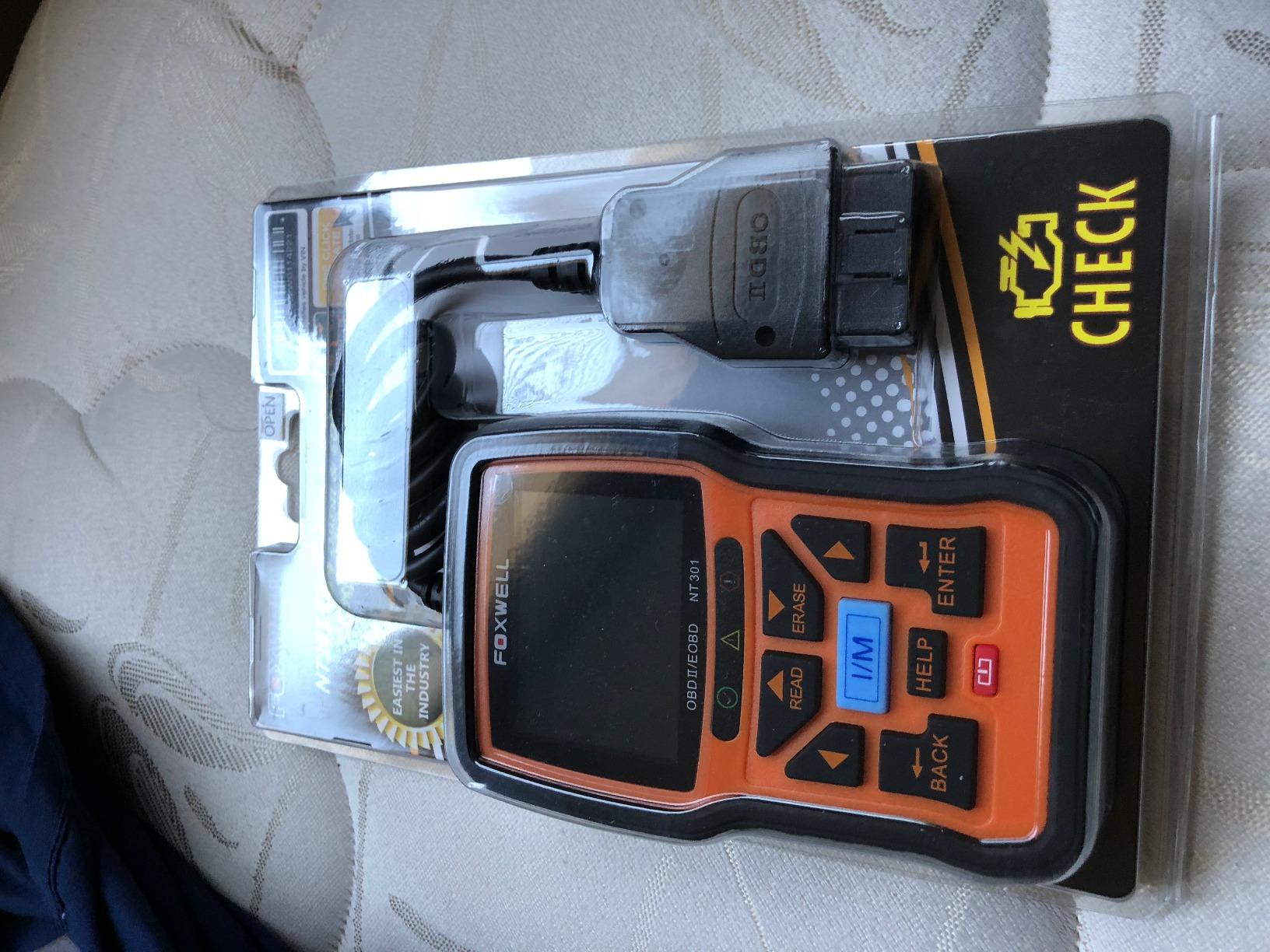
The EVAP system check and O2 sensor test modes are also more than they sound. They step you through checking the evap purge valve and confirming sensor response instead of leaving you to test components with a multimeter, and for a DIY owner that is a real saving.
One-click I/M readiness hotkeys, a red-yellow-green LED indicator and a built-in speaker mean you can run an emissions check without reading anything, just by listening for the beeps. It supports KWP2000, J1850 VPW, ISO9141, J1850 PWM and CAN, and works on 12V diesel vehicles that have an OBD2 port, which is broader than most tools at this level claim.
Why we rate it best value
Buyers consistently report that it delivers most of what a much more expensive scanner offers for basic engine work, and at 30,199 ratings the sample size behind that claim is large. Lifetime free updates and a 1-year seller assurance with replacement for damaged or incomplete units are both better commitments than most rivals at this price.
The USB cable and quick reference guide are included, so you have what you need for firmware updates from day one — provided you have a PC, which is the catch.
Where it falls short
It is still limited to engine, emissions and OBDII systems. No ABS, no SRS, no transmission, and no bidirectional active testing, so if your fault lives outside the powertrain you will need something else.
Updates require Windows. Mac and iOS users cannot update the software at all, which is an odd limitation for a tool in an app-driven era, and it is the most common complaint in the reviews. The inline cable format also takes more room to store than a dongle or a small handheld.
6. Innova 5210 – Code Reader That Doubles as a Battery Tester
Innova 5210 OBD2 Scanner & Engine Code Reader, Battery Tester, Live Data, Oil Reset, Car Diagnostic Tool for Most Vehicles, Bluetooth Compatible with America’s Top Car Repair App
2.8 inch screen
5.99 x 2.99 x 0.99 inches
Vehicle powered
Reads ABS codes
RepairSolutions2 app
Pros
- Battery and alternator testing built in
- Built-in oil light reset
- Free RepairSolutions2 app with verified fixes and no subscription
- Reads and clears ABS codes on supported vehicles
- Partial ABS coverage unusual at this level
Cons
- ABS coverage varies significantly by vehicle
- No bidirectional active testing or service functions beyond oil reset
- Smaller review base at 4245 ratings
- App-dependent repair guidance has a learning curve
The Innova 5210 does one thing that no other tool at this level does: it tests your car battery and alternator. If your car turns over slowly in the morning, this saves you the trip to an auto electrician before you have even confirmed it is a battery and not a parasitic drain.
It also reads and clears check engine light and ABS codes, with the important caveat that ABS coverage varies by vehicle. Live data includes RPM, engine temperature, fuel trims and oxygen sensor readings, and there is a built-in oil light reset plus an I/M readiness drive cycle check, which is the routine you need after changing the oil yourself.
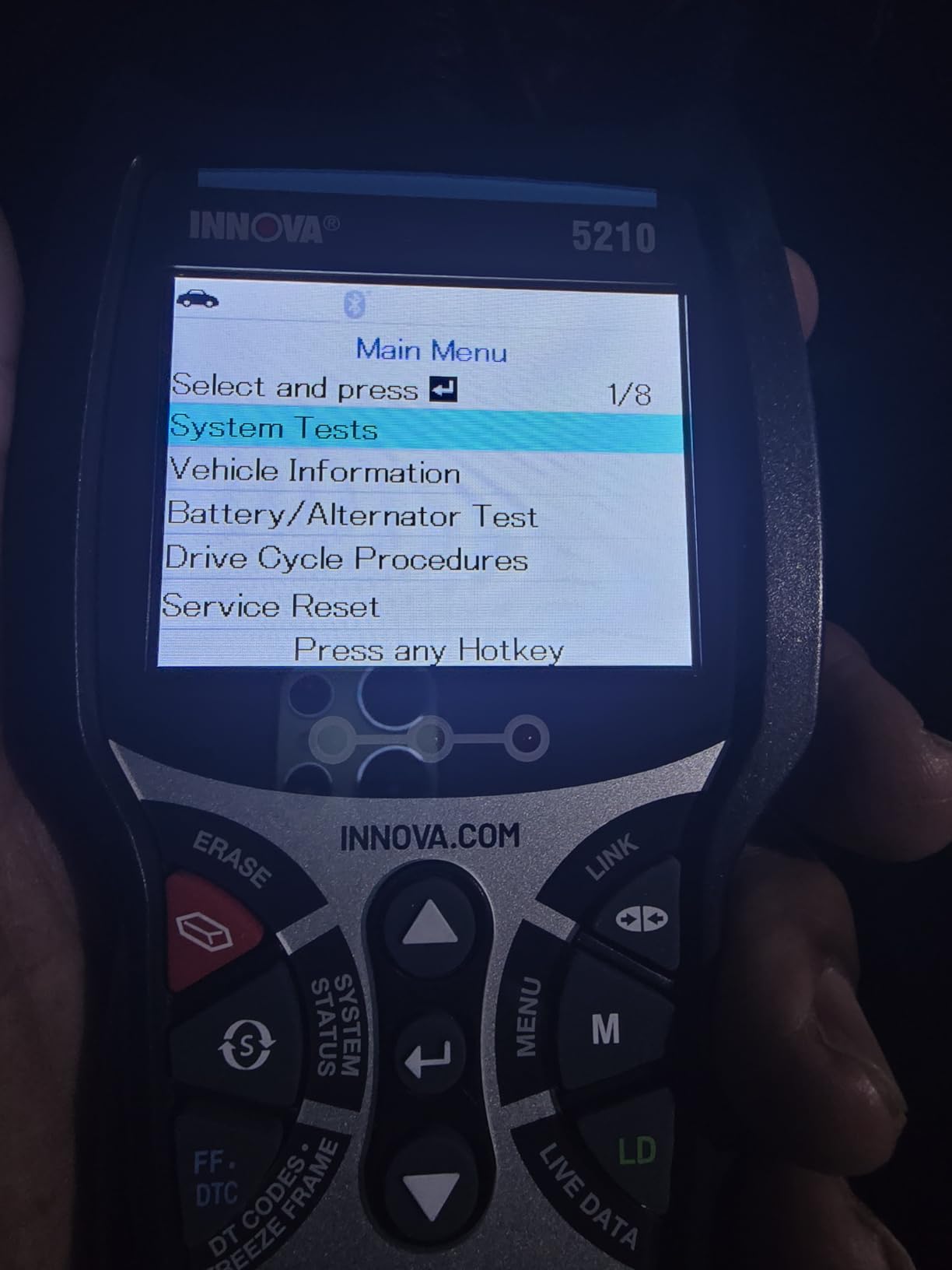
The Bluetooth pairing with the free RepairSolutions2 app is where this tool pulls ahead of its price class. Owners report the app delivering verified fixes, parts and cost estimates with no subscription attached, and that guidance is often the part people struggle most with once they have the code in front of them.
It works with most 1996 and newer US, Asian and European vehicles, and the code reader comes with an attached OBD2 cable and quick start guide. The 2.8 inch screen sits at 5.99 x 2.99 x 0.99 inches.
Who this is right for
Buy the Innova if you maintain a car you also need to keep on the road, or if you regularly do your own oil changes and want to reset the service interval without a dealer visit. The battery and alternator test alone justifies the step up from a code reader for many owners.
It is also one of the few entry-level tools here that reads ABS codes at all, which makes it a useful halfway house for someone whose car has more modules than a code reader can reach but who does not need service functions.
Where it falls short
Run Innova’s coverage checker before you buy, because ABS coverage is hit or miss by vehicle and finding out after delivery is frustrating. There is no bidirectional active testing, and oil reset is the only service function on board.
Its 4,245 ratings are thin compared with the code readers above, so the long-term failure pattern is less well documented. The app-dependent repair guidance also has a genuine learning curve if you have never used a scan tool before.
7. FOXWELL NT604 Elite – All-System Codes Without Service Functions
FOXWELL Car Scanner NT604 Elite OBD2 Scanner ABS SRS Transmission
4.3 inch screen
480x272
7.68 x 3.54 x 1.18 inches
Engine ABS SRS transmission
Latest software preloaded
Pros
- Covers engine ABS SRS and transmission in one handheld
- Works out of the box with current software pre-installed
- 60+ car brands with AUTOVIN retrieval
- Sturdy protective box included
- No extra software fee for 60+ brands
Cons
- No service functions at all
- No oil reset ABS bleeding throttle relearn or battery registration
- SRS crash data cannot be cleared
- AUTOVIN can fail on older vehicles
- One-star rating share of 7 percent
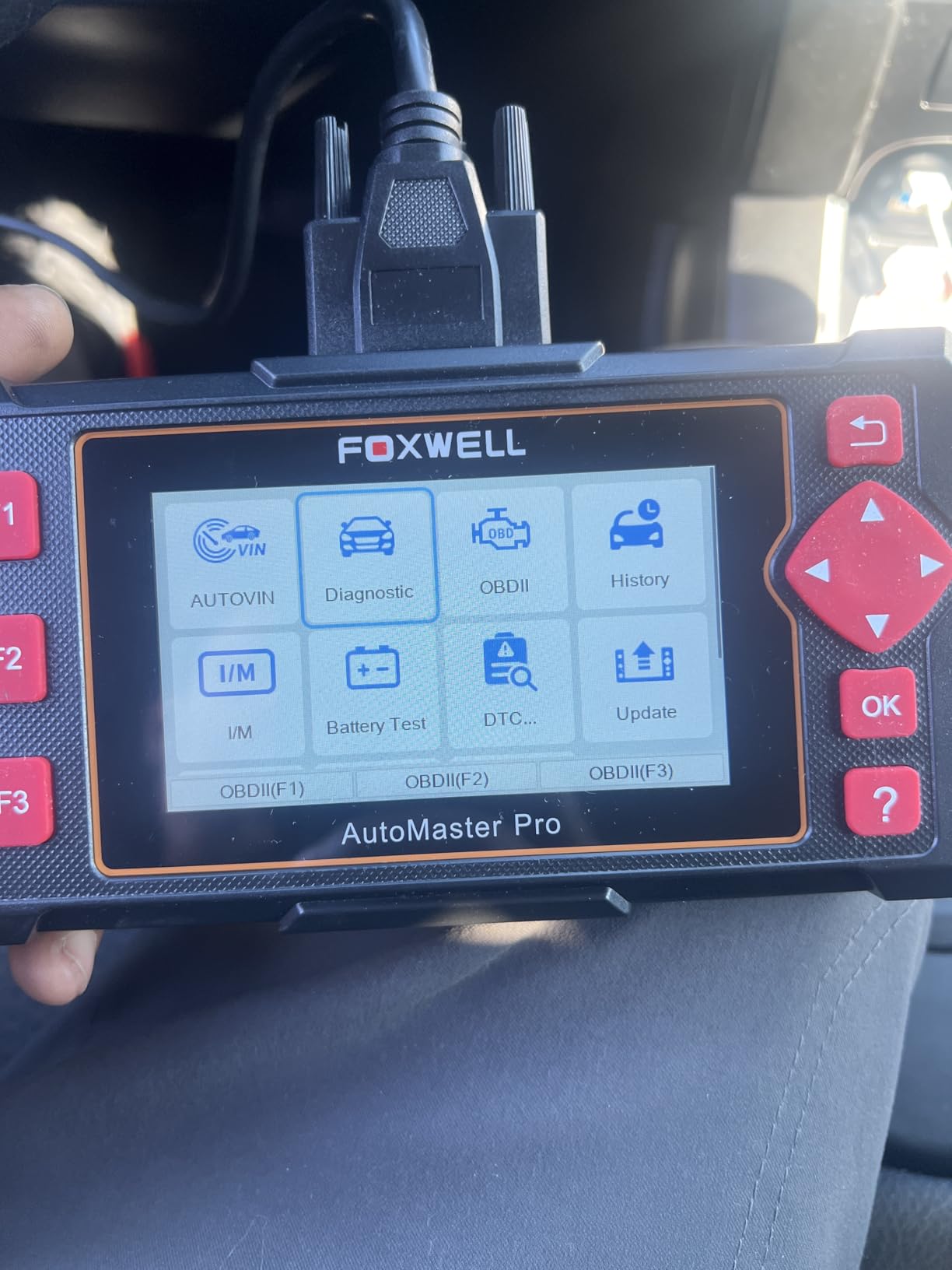
The NT604 Elite is the answer to a specific and common problem: a non-engine warning light that a code reader cannot see. It runs specialised diagnostics on engine, ABS, SRS and transmission control modules, which is the first jump in coverage on this list short of a tablet.
It reads and clears common SRS fault codes that were not caused by a crash, supports 60+ car brands across America, Asia and Europe, and the AUTOVIN menu pulls the VIN and vehicle information automatically. Live data stream, a built-in DTC library, data playback and print are all included, along with an I/M readiness menu.

The practical detail that gets missed in listings: it comes with the latest software already pre-installed, so it works out of the box with no PC, no update cable and no login. The 4.3 inch 480×272 screen is a real size step up from the 2.8 inch units, and a sturdy protective box is included rather than a thin plastic bag.
Updates are free for life, with no extra software fee for the 60+ brands, and it is a genuinely portable unit at 7.68 x 3.54 x 1.18 inches with a diagnostic cable and USB cable in the box.
Who this is right for
Owners who need to read ABS and SRS codes without stepping up to a much larger tablet value this most. If an ABS light is on, if a seatbelt or airbag warning has appeared, or if a transmission fault needs reading, the four cheaper code readers in this list simply will not help.
It is also a good second-car tool to keep in the vehicle, since the case makes it easy to store and it needs no laptop to update.
Where it falls short
It has no service functions whatsoever. No oil reset, no battery registration, no ABS bleeding, no throttle body relearn, no ABS relearn. If you do your own brake work, this tool will not release an EPB or complete an ABS bleed, and that is the most common complaint in the reviews.
Crash data on the SRS module cannot be cleared at all, by design, so a post-accident airbag light is a dealer or specialist job. AUTOVIN can also fail on older vehicles and some brands, requiring you to enter the VIN by hand, and its one-star rating share of 7% is among the higher figures in this group.
8. BLCKTEC 460T – Best for Service Resets and EPB Work
BLCKTEC 460T OBD2 Scanner Car Code Reader Engine ABS SRS Transmission Diagnostic Tool, 12 Reset Services, Oil/TPMS/EPB/BMS/SAS/DPF/Throttle Reset, ABS Bleeding, Battery Test, Auto VIN, Free Update
4.3 inch screen
7.75 x 1.5 x 4.4 inches
12+ reset services
US and Canada
2 year warranty
Pros
- 12+ dealer-level reset functions including EPB ABS bleeding SAS DPF and throttle
- Full-system diagnostics on engine transmission ABS and SRS
- AutoVIN and AutoScan with refresh every 30 seconds
- Free lifetime updates and 2 year warranty
- US-based support in English French and Spanish
Cons
- Service function availability varies by year make and model
- Firmware updates need a computer and take time
- Only works in the USA and Canada
- Buttons take practice for touch-averse users
The BLCKTEC 460T is the tool we would buy if we planned to do our own brake pads, and the reason is specific: 12 dealer-level reset services, including EPB release, ABS bleeding, steering angle calibration, DPF regeneration, throttle body relearn, battery management system reset, TPMS and transmission and fluid change.
That EPB function is the one that changes what you can do at home. On many modern cars the electronic parking brake will not release without a scan tool telling the module to do it, which means rear brake jobs on a modern vehicle are otherwise a dealer job. Owners in the reviews report completing exactly that work, plus a transmission fluid reset, unaided.
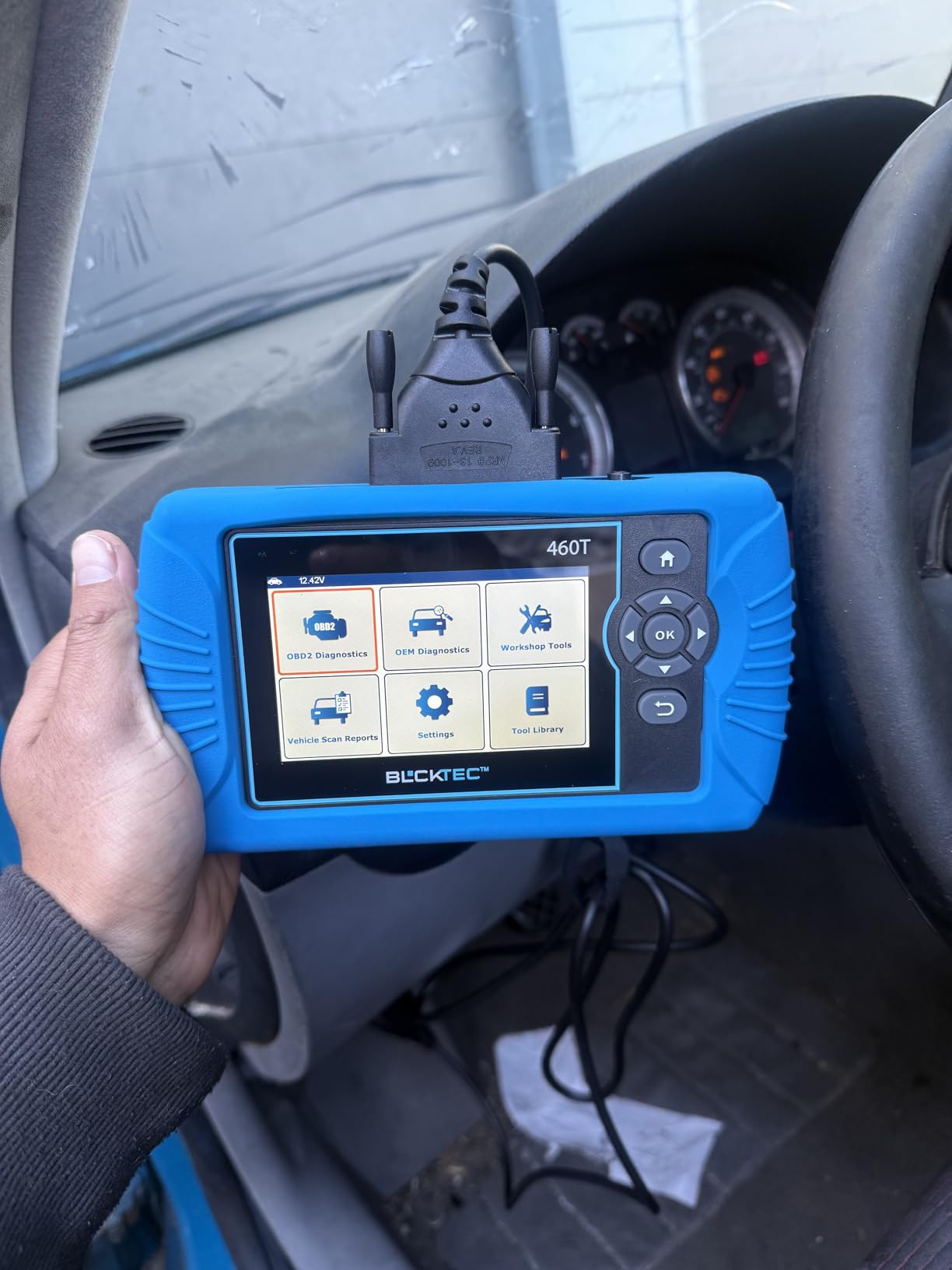
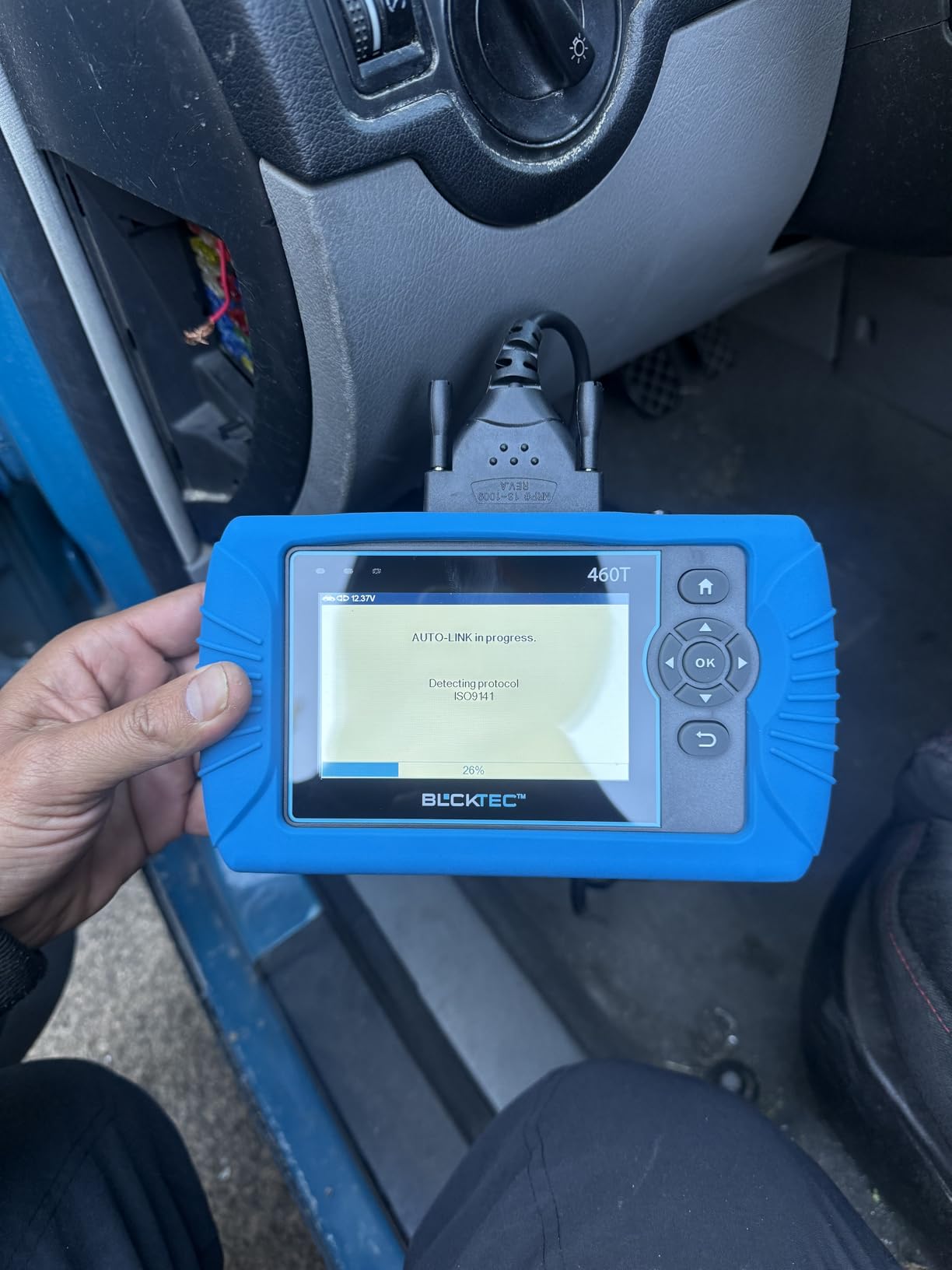
Full-system diagnostics cover engine, transmission, ABS and SRS with all 10 OBD2 modes, and AutoVIN, AutoScan and AutoReLink read the VIN and scan every ECU automatically, re-gathering DTC and I/M readiness data every 30 seconds. Live data can be viewed, graphed, recorded, replayed and overlaid across up to four streams at once.
It runs on 1996 and newer OBD2 vehicles in the USA and Canada, with free lifetime updates, the RepairSolutions2 app at no subscription fee, a storage case, and a 2 year limited manufacturer warranty backed by US-based support in English, French and Spanish.
Who this is right for
If you do your own brakes, wheel bearings, batteries, throttle bodies or DPF-related work, this is the most capability you can get without stepping up to a large bidirectional tablet. The four-stream overlay is a capable live data arrangement, which matters if you are watching multiple sensors at once.
Reviewers use it for real jobs rather than casual code reading — one owner caught a costly coolant bypass valve fault on a used Camry before buying it, which is the pre-purchase scan use case at its best.
Where it falls short
Service function availability varies by year, make and model, and this is the single most important caveat in the whole article. A reviewer’s EPB release did not work on a 2019 Silverado, because that function was not available for that vehicle. Always run the compatibility checker before you buy.
Firmware updates require a computer and take a noticeable amount of time, the buttons need practice if you prefer touch input, and it only works in the USA and Canada. Its 891 ratings are the thinnest in this roundup, so long-term reliability data is limited.
9. TOPDON AD900 Lite – Best for Bidirectional Active Tests
TOPDON AD900 Lite OBD2 Scanner, Bidirectional Scan Tool, 8″ Large Screen
8 inch touchscreen
1280x800
4.8 pounds
10000mAh battery
12 hours operation
Pros
- True bidirectional control for injectors coolant pumps windows wipers and headlights
- 8 inch 1280x800 touchscreen
- Wireless Bluetooth 5.0 VCI with 33 foot range
- 10000mAh battery for 12 hours
- OE-level coverage across 10 systems
Cons
- Software updates became a paid yearly subscription after year one
- Some VCI dongle sync failures need a USB cable
- FCA AutoAuth gateway unlock needs a separate paid bundle
- One-star rating share of 9 percent
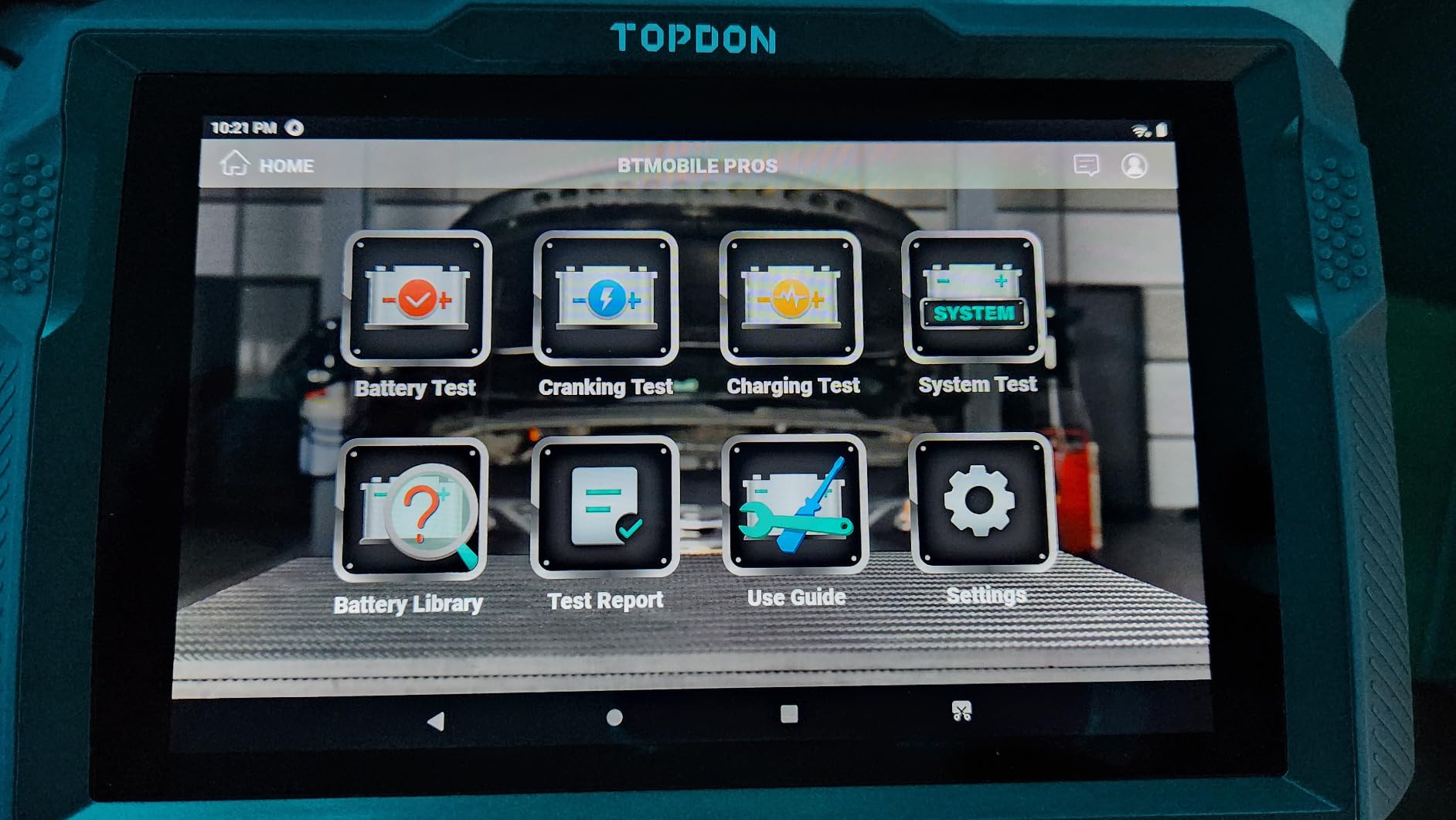
The AD900 Lite is the first tool on this list where bidirectional control is genuinely the headline. It sends commands to the ECU for active testing of injectors, coolant pumps, windows, wipers, headlights and mirrors, which means you can make a component switch on while you watch live data and confirm which part has actually failed.
That eliminates a whole category of guesswork. Instead of replacing an ignition coil to see if the misfire goes away, you command the coil to fire and watch the cylinder contribution on the graph. For a home mechanic working alone in a driveway, being able to do that without a second person is worth more than any other single feature.
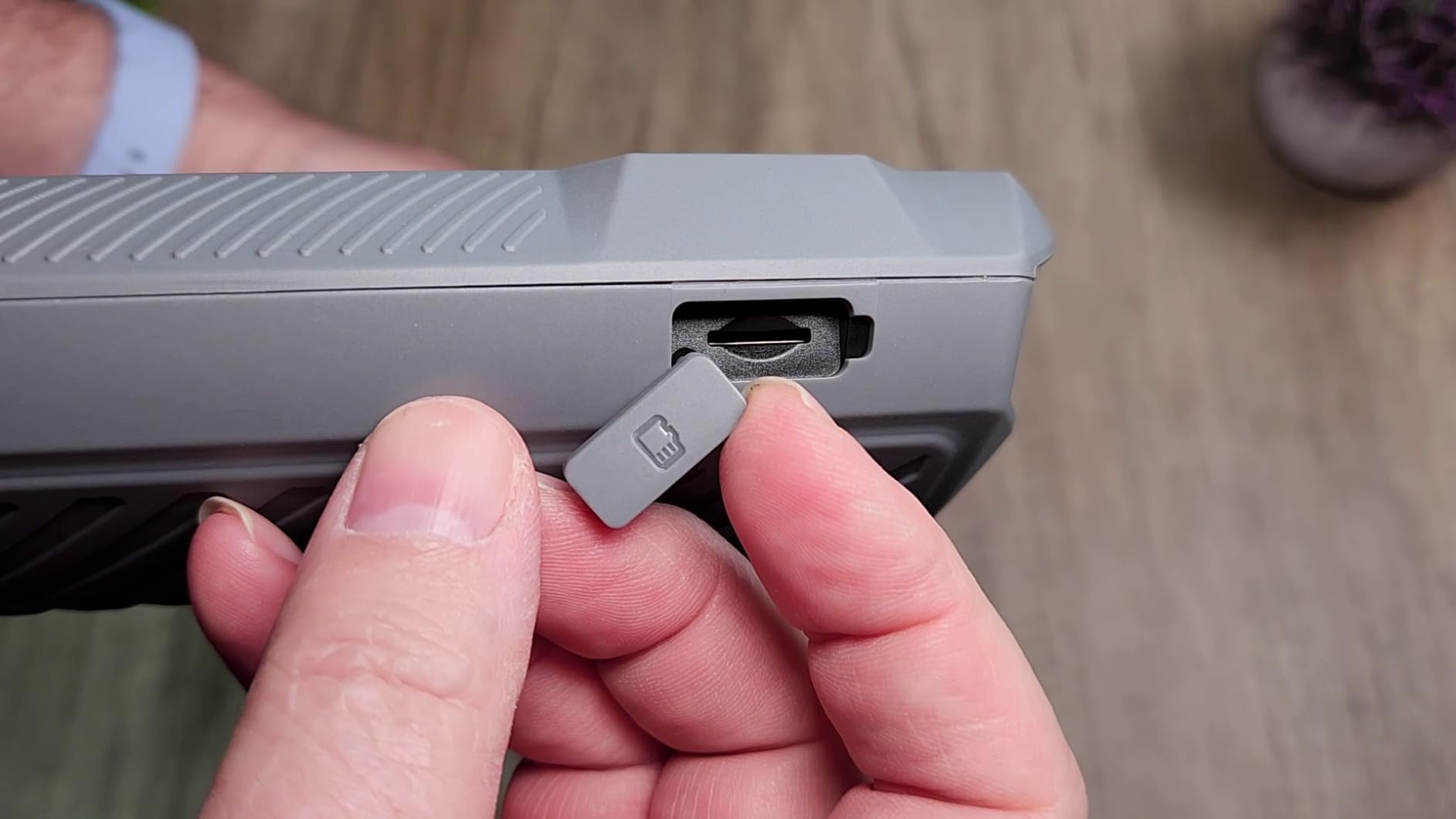
The hardware is unusually good. An 8 inch 1280×800 touchscreen running Android 11 on a 1.8GHz quad-core CPU with 2GB of memory and SD card expansion, a 10000mAh battery rated for 12 hours of continuous operation, and a Bluetooth 5.0 VCI with a diagnostic range of up to 33 feet so you can walk around the car rather than sit in the seat.
Coverage is OE-level across engine, transmission, airbag, ABS, ESP, TPMS, gateway, steering, radio and A/C, with eight hot reset services including throttle adaptation, SAS, DPF regeneration, ABS bleeding, BMS and airbag. It covers 1996 to 2025 vehicles across 60+ models, 12 languages, with a 1-year warranty and lifetime free upgrades listed.
Who this is right for
Technical enthusiasts and mobile mechanics are the dominant voices in the reviews, and they frame it as a low-cost substitute for far more expensive dealer laptops and Snap-on scanners for routine work. The 8 inch screen is the largest panel in this roundup and is readable from any angle, including lying on the ground next to a car.
If you work on other people’s cars as a side business, the 12-hour battery and the external HDMI, USB-A and USB-C ports for borescopes and thermal imagers start to matter.
Where it falls short
Software updates reportedly became a paid yearly subscription after the first year of free updates, and that changes the total cost calculation over five years. Some owners also report Bluetooth VCI dongle sync failures that require a USB cable connection instead.
FCA AutoAuth gateway unlock for 2018 and newer Chrysler, Dodge, Jeep and Fiat requires a separate paid bundle, and the 9% one-star share sits at the higher end of this roundup, largely tied to warranty support handling. At 4.8 pounds and 11.53 x 5.39 x 8.58 inches it is a substantial tool, not a glovebox item.
10. Autel MaxiCheck MX808S – Best for Professional-Grade Work
Autel Scanner MaxiCheck MX808S, 2026 Bidirectional OBD2 Scan Tool US Ver. of MaxiCOM MK808S MK808Z, 3000+ Active Test 11OS as MK900 MK900BT MX900, 28+ Service for 200+ Brands, OE All Diagnostic, FCA
6.99 inch touchscreen
1024x600
0.69 kg
RK3566 quad-core
Android 11
FCA AutoAuth
Pros
- 3000+ bidirectional active tests
- 28+ service functions across 150+ brands
- FCA AutoAuth for 2018+ Chrysler Jeep Dodge and Fiat
- Responsive Autel customer support
- Live data in five display formats
Cons
- Only one year of software updates included before subscription
- Auto VIN not universal
- Some system settings locked like temperature unit
- Setup and login learning curve
The MX808S is the most capable tool here relative to what the pro tier usually costs, and it holds a 4.6 rating in a category where the expensive options often score lower. The 3000+ bidirectional active tests include EVAP checks, injector buzz, fuel pump activation, cooling fan, valve and pump tests, which is a wider active test set than any other tool in this roundup.
The 28+ service functions cover oil reset, ABS bleeding, EPB, BMS, SAS calibration, DPF, injector calibration, throttle relearn and crankshaft relearn across 150+ brands, and full system diagnostics reach engine, transmission, ABS, SRS, TPMS and battery. Live data displays in five formats — graph, text, column, meter and waveform — so you can set up the view the fault needs rather than the one the tool defaults to.
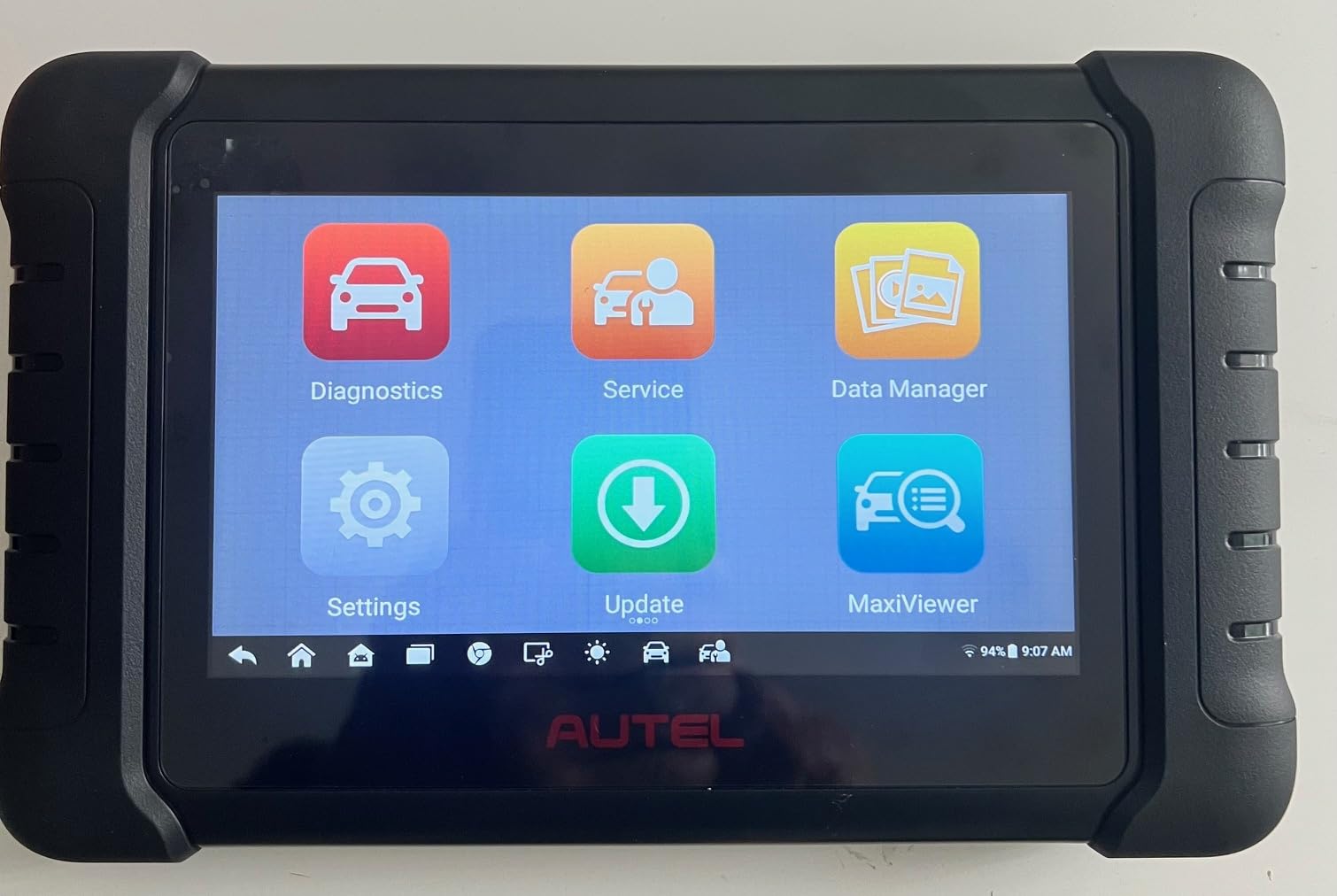
Underneath it is serious hardware: a Rockchip RK3566 quad-core CPU with 4GB RAM, 64GB ROM and Android 11, described as five times faster than the earlier MK808 and MX808 generation. The 6.99 inch 1024×600 touchscreen boots quickly and the menus are intuitive once you are logged in.
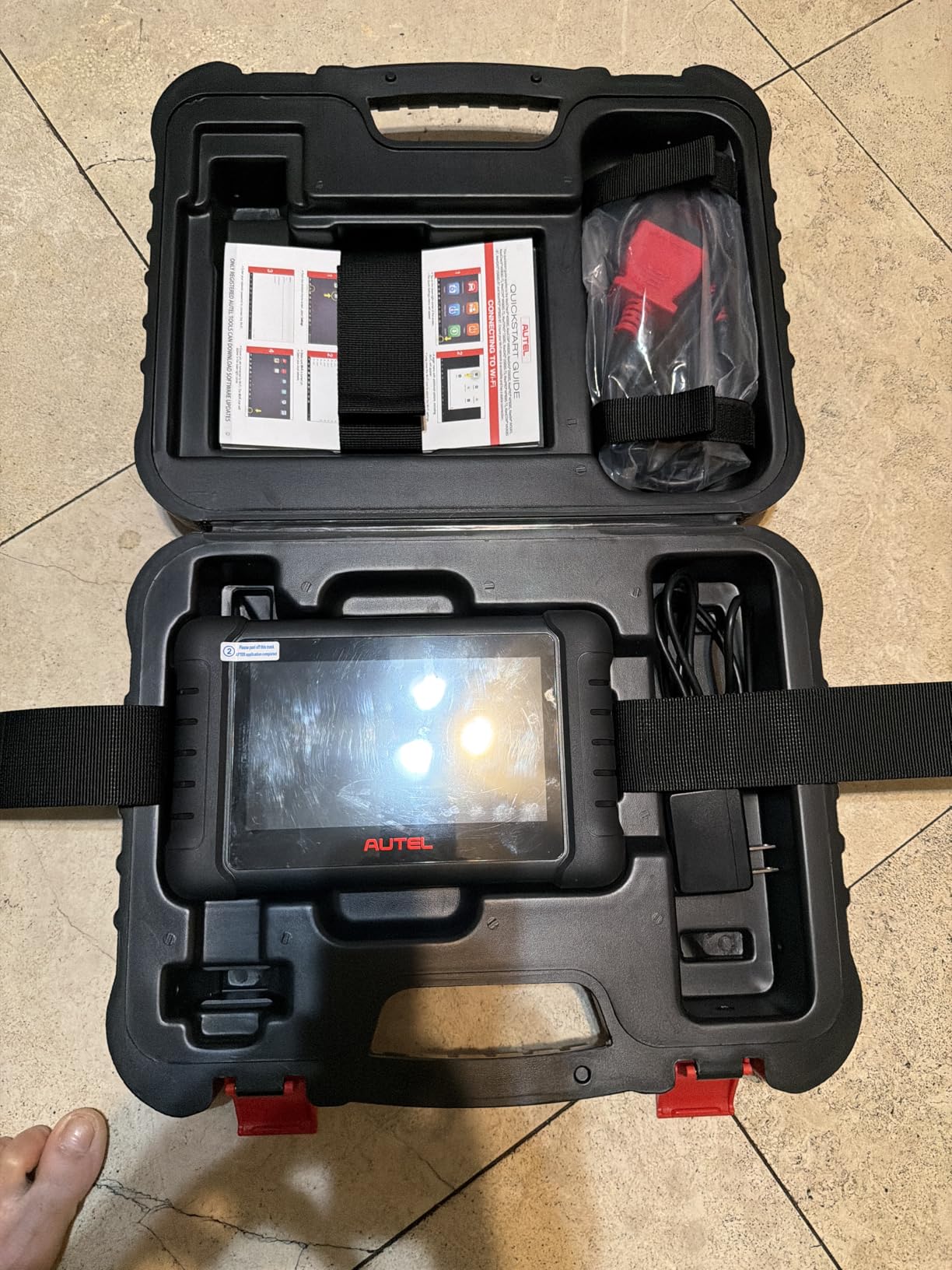
FCA AutoAuth support covers 2018 and newer Chrysler, Jeep, Dodge and Fiat, coverage runs to 10,000+ US, Asian and EU vehicles from 1996 onward, and it works with the MV108S endoscope. The carrying case, main cable, mini USB cable, power adapter and quick guide are all included.
Who this is right for
Owners use it for real money-saving work rather than curiosity — programming a spare key on a JDM car, resetting service intervals on a Porsche Macan, clearing codes on a Touareg. Autel’s pre- and post-purchase support is singled out repeatedly in the reviews as a genuine differentiator, which matters when you are paying for a tool you will depend on.
The connection is hard-wired to the vehicle with Wi-Fi used for updates, which avoids the wireless sync problems some tablet owners report. For a serious enthusiast or a mobile mechanic running a business, it is the strongest all-round package in this list.
Where it falls short
Only one year of software updates is included before it becomes a subscription, so budget for that if you keep it past year one. Auto VIN is not universal to all cars, though the VIN can be entered manually when it fails.
Some system settings are locked, including temperature unit and regional radio frequency specifications, which is a strange thing to encounter on a tool at this level. There is also a learning curve through the initial setup and login process, and at 779 ratings the review base is the thinnest here, so long-term reliability data is limited.
How to Run Your First Scan in Five Steps
Running your first scan takes about five minutes and needs no tools beyond the scanner. The part people get wrong is not the plugging in — it is the ignition position and the order in which you clear codes.
Find the OBD-II port. It is a 16-pin trapezoidal connector, almost always under the dashboard on the driver’s side, within a metre or so of the steering wheel. Look at the lower edge of the dash, behind the steering column, or at the side of the centre console. Some vehicles put it inside the glovebox or in the centre armrest.
Turn the ignition to on, not start. The engine should be off and the key turned to position two, or the start button pressed without engaging the starter. Starting the engine instead puts the scanner into a different mode and can give misleading results on some tools.
Plug the scanner in and let it power up. Every tool here draws power from the port itself, so there is no battery to fit and no adapter to lose. Wait for it to identify the protocol and read the VIN if it supports AutoVIN.
Run a full scan before you read anything. A full scan collects stored, pending and permanent codes across every module the tool can reach. Read stored codes first — those are confirmed faults. Pending codes mean the fault was seen once and may be intermittent, so they are the ones to watch rather than chase immediately.
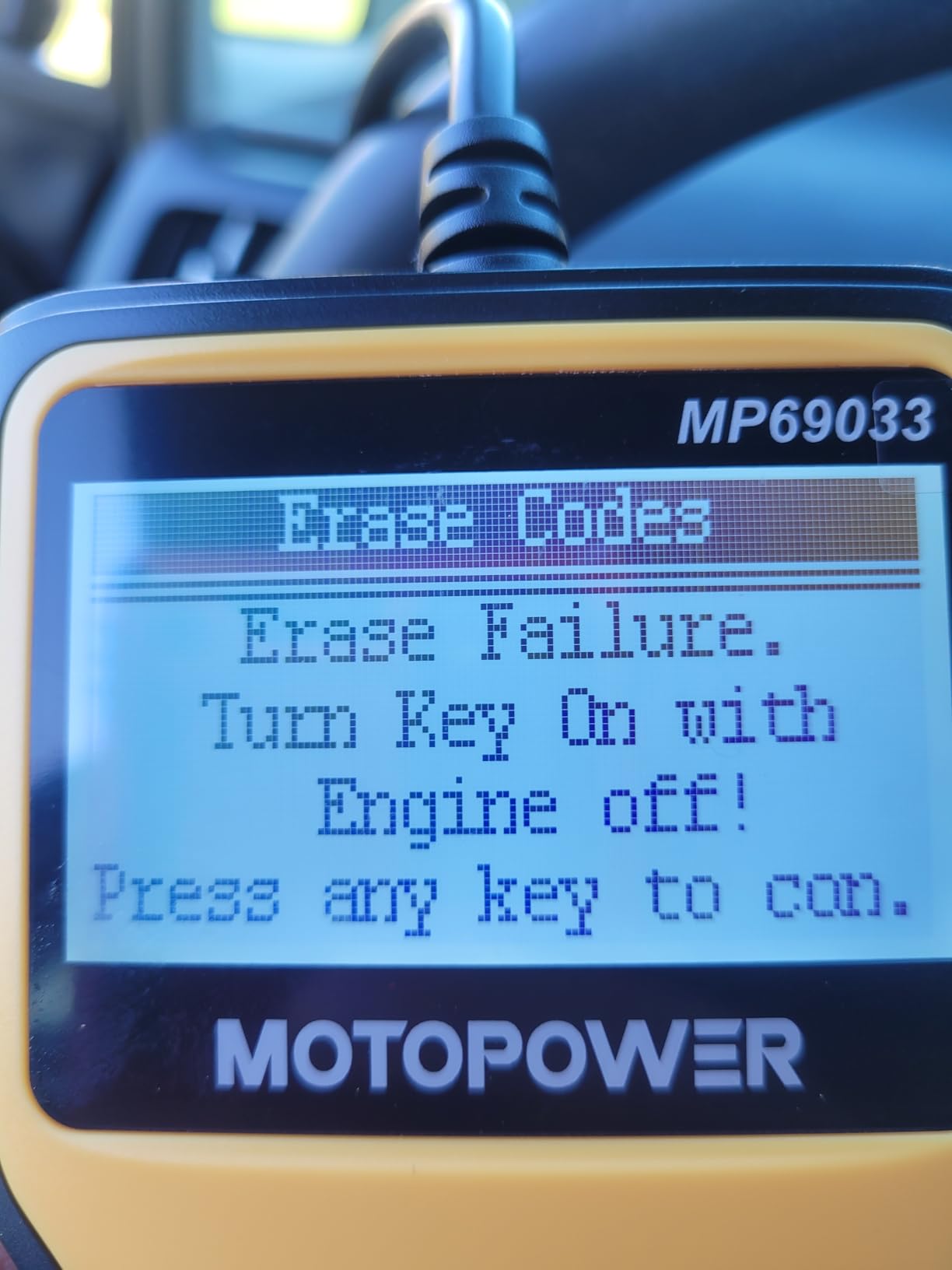
Fix the fault, then clear the codes. Clearing before you fix is the classic DIY mistake. It wipes the freeze frame data that shows what conditions the car was in when the fault occurred, and the light will simply come back. Fix the problem, clear the code, then drive until the readiness monitors complete before an emissions test.
Freeze frame is worth understanding on its own. When the ECU sets a code it captures a snapshot of sensor values at that moment — engine speed, coolant temperature, load, fuel trims — and that snapshot is often the difference between guessing and knowing. If you clear a code and the light returns, you have lost the evidence and have to reproduce the fault again.
Live data PIDs, the individual sensor values the tool can plot over time, are the other half of the picture. Watching fuel trim and oxygen sensor voltage as the engine warms up will tell you far more than a static code ever will.
What to Look for When Buying: The Seven Criteria That Matter
Match the tier to the job, not the price. A basic code reader is a complete tool for a check engine light, and buying a top-tier bidirectional tablet to read a P0420 is money you will not get back. Work out which of the three jobs you actually need — read a code, scan every module, or command components — and buy the cheapest tool that does it.
Self-select your tier by vehicle, not by ambition. If you own one mainstream 1996-and-newer domestic car and the light that comes on is the check engine light, the AD310, the MP69033 or the AL319 is a complete solution and you have already spent enough. If you own a European car with DoIP-based diagnostics, a 2018 or newer Chrysler, Dodge, Jeep or Fiat needing AutoAuth, or a car with heavy ADAS electronics, your protocol requirements rise sharply and a cheap code reader is the wrong tool. DoIP, CAN-FD and FCA AutoAuth are the three protocol walls that decide which tools can talk to late-model vehicles, and none of the ten products in this roundup advertise CAN-FD or DoIP, which is worth knowing before you buy.
Check what lifetime updates actually means. Lifetime free updates is the phrase to insist on, and the catch is that brands redefine it. The FOXWELL NT301, the Autel AL319, the BLCKTEC 460T and the Innova 5210 all list lifetime free updates with no ongoing fee. The Autel MX808S includes one year before it becomes a subscription, and TOPDON’s AD900 Lite reportedly moved to paid yearly updates after the first year. Over five years of ownership, a subscription turns a one-time cost into a running one, and that is the real total cost of ownership for this category.
Phone apps have their own cost model. The Veepeak OBDCheck BLE is cheap hardware that unlocks a lot, but the apps that make it worthwhile — Torque Pro, Car Scanner, Carly, BimmerCode — either charge a one-off fee or a subscription, and Carly in particular prices per vehicle brand. If you own two brands of car, your app bill roughly doubles. Budget for the app, not just the dongle.
Watch for the no-brand marketplace scanner. “Are temu OBD2 scanners any good” is a live question for a reason. The tell-tale signs are consistent: a brand-coverage claim with no brand names attached, a review count of single digits or absent, no manufacturer listed anywhere, and a feature list of 30 or 40 functions where most do nothing. The Autel AL319 lists 26,141 ratings, the ANCEL AD310 66,759, and the MOTOPOWER MP69033 52,263 — that volume is the difference between a tool with a known failure pattern and one with none documented at all.
Buying for a used car. Scan before you buy, not after. Plug a full-system scanner into the seller’s car with them present and look for three things: pending codes across modules, I/M readiness monitors that are already not complete, and any ABS or SRS history. A stored SRS crash record or a readiness monitor that resets every time you clear codes both point to problems you do not want. The BLCKTEC 460T and FOXWELL NT604 Elite both reach the modules that expose this, and the Innova app gives verified repair guidance and cost estimates once you have the codes.
Know the limits of consumer tools on heavy diesel and commercial vehicles. The FOXWELL NT301 explicitly covers 12V diesel vehicles with an OBD2 port, which is broader than most. But 24V heavy-duty, medium-duty and Class 8 trucks use different protocols entirely, and no consumer OBD2 tool in this roundup will read them. If your work involves those vehicles, you need a dedicated heavy-duty tool and this list is the wrong one.
Decide between a handheld and a dongle early. The objection we hear most in DIY forums is losing a Bluetooth adapter between the seats, which is a real problem with the dongle approach and a reason most of this list is built around self-contained handhelds. Counterpoint: if you want BMW coding, months of data logging, or brand-specific coverage from a phone you already own, the dongle is the only sensible path. Match the form factor to how you actually work.
A common DTC cheat sheet. A few codes cover most of what a DIY owner meets. P0301 is a cylinder 1 misfire — spark plug, coil or compression on that cylinder. P0420 is catalytic converter efficiency below threshold, usually a downstream O2 sensor on a car that otherwise runs fine. P0171 is a lean fuel condition, commonly a vacuum leak or a dirty mass airflow sensor. P0442 is a small evaporative emissions leak, often a loose gas cap. P0128 is a thermostat that is not reaching operating temperature, which shows up as a warm engine that never warms up.
That list is also the argument for a scanner that explains codes rather than just displaying them. The Innova 5210 and the BLCKTEC 460T both pair with the free RepairSolutions2 app, which gives verified fixes, parts and cost estimates with no subscription. If you have ever stared at a code with no idea what to do next, that is the feature that closes the gap rather than a longer feature list.
Frequently Asked Questions
Is there a difference between OBD2 scanners?
Yes, and the difference is which direction information flows. A code reader only pulls diagnostic trouble codes out of the engine and emissions modules. A scan tool does the same but adds other modules such as ABS, SRS, transmission and body control, usually with freeze frame and live data graphing. A bidirectional scan tool can also send commands back into the vehicle, which lets you switch on a fuel pump or cycle an injector to confirm a fault without a second person in the car.
What is the best scan tool for the money?
For most home mechanics the FOXWELL NT301 is the best value in this roundup. It adds live data graphing, EVAP checks and O2 sensor test modes to the engine coverage a budget code reader gives you, supports 12V diesel vehicles with an OBD2 port, and lists lifetime free updates with a 1-year seller assurance. Its main limits are engine-only coverage and the fact that software updates require a Windows PC.
What is the best budget OBD2 scanner?
The ANCEL AD310 Classic and the MOTOPOWER MP69033 are the strongest budget picks, both rated 4.6 stars with more than 26,000 ratings each. The AD310 leads on review volume at 66,759 ratings and weighs 12 ounces, while the MP69033 has a larger 2.7 inch backlit screen, six languages and a built-in DTC lookup library. Both read and clear engine codes only, with no ABS, SRS or transmission coverage.
Is Autel better than Snap-on?
Not in the same category, and the comparison is not really fair. Snap-on is professional shop equipment sold into working technicians, while the Autel tools in this list are consumer and prosumer devices. The Autel MX808S covers 3000+ bidirectional active tests, 28+ service functions and 150+ brands, which is close to professional capability at a fraction of the cost. If you are a working technician you still need Snap-on for its coverage, documentation and support. If you work at home, the MX808S is the more sensible purchase.
Is Torque Pro better than other OBD2 apps, and is there a better app than Torque Pro?
Neither is better in every situation. Torque Pro is the most flexible for live data, with extensive graphing, custom PID configuration and themes, which makes it the choice for recording data over time. Car Scanner ELM OBD2 is generally regarded as easier to read and better suited to simply reading and clearing codes. For brand-specific work, BimmerCode and BimmerLink cover BMW and Mini, while Carly covers a wide range of brands on a per-brand subscription. All of them work with the Veepeak OBDCheck BLE in this roundup.
Are marketplace OBD2 scanners any good?
Usually not, and the warning signs are consistent. Look for a brand-coverage claim that names no brands, a review count in single digits or no reviews at all, no listed manufacturer, and a feature list of 30 to 40 functions where most do nothing. Genuine tools in this roundup carry verifiable review volume, from 891 ratings on the BLCKTEC 460T to 66,759 on the ANCEL AD310. No-brand dongles also typically offer no warranty, no firmware updates and no support when a protocol is not recognised.
Do I need an OBD2 scanner, and can I clear a check engine light with one?
You can clear a check engine light, but fix the cause first. Clearing a code wipes the freeze frame data showing the conditions when the fault occurred, and the light will return if the underlying problem is still there. Do it in the order that matters: run a full scan, read stored codes before pending ones, diagnose and repair, then clear and drive until the readiness monitors complete. Most people need one to avoid a diagnostic fee, to know what a repair quote actually refers to, or to scan a used car before buying.
What is the difference between a Bluetooth OBD2 scanner and a standalone handheld?
A Bluetooth dongle is small, cable-free hardware that connects to your phone, and its real capability comes from whichever app you install, which is flexible but means paying for apps. A standalone handheld is self-contained, needs nothing else, and works immediately with no subscription. If you want BMW coding or long-term data logging, a dongle is the sensible choice. If you want a tool that simply works in a driveway without a phone, a handheld is better, and it also removes the recurring problem of losing a small adapter between the seats.
Conclusion: Which OBD2 Scanner Should You Buy?
The best OBD2 scanners for DIY mechanics are not the ten most expensive ones, and the single biggest mistake is buying above your needs. Start with the question your car is actually asking. A check engine light and one car under fifteen years old means the ANCEL AD310 or the MOTOPOWER MP69033 is a complete answer, and the ANCEL is the safest bet of the two at 66,759 ratings.
Step up when you need more. The FOXWELL NT301 is the best value in the roundup once you want live data graphing to chase an intermittent fault. The FOXWELL NT604 Elite covers ABS and SRS when a non-engine light appears. The Innova 5210 adds battery and alternator testing and free verified repair guidance. The BLCKTEC 460T is the one to buy if you intend to do your own brake and battery work, because the EPB and ABS bleed functions are what unblock those jobs at home.
Go big only if you work alone on faults. The TOPDON AD900 Lite and the Autel MaxiCheck MX808S are the two with real bidirectional control, and both mean you can confirm a failed component without a second person holding a probe. Read the subscription terms on the MX808S and the AD900 Lite before you commit, since year-one is where the cost changes.
Whatever you choose, the tool is the easy part. Knowing where the port is, reading stored codes before pending ones, and fixing the fault before clearing it is what turns a check engine light into a solved problem rather than a light that comes back next week.
Pair your new scanner with the rest of the kit and you will be covered for the jobs that follow it — our mechanics tool set picks cover the brake and suspension work most diagnostics end up pointing at.