

Factory car speakers are usually paper cones with hair-thin voice coils rated for under 20 watts RMS, which is why a blown driver sounds thin rather than loud. The best car speakers for bass in 2026 share three traits: a real rubber or butyl surround, a continuous RMS figure you can match to an amplifier, and sensitivity above 90 dB so they make usable output off a factory head unit.
Two models show up repeatedly when owners compare notes. The Rockford Fosgate Prime R165X3 is the pick we keep coming back to because it delivers genuine low-end weight in a standard door location, and the Pioneer TS-A1681F is the one people shortlist when they want the most output from stock power.
One honest caveat before we start: a 6.5-inch door speaker cannot reproduce sub-bass. Cone area and excursion set a hard ceiling, and anything below roughly 50 Hz needs a subwoofer. What these picks do is give you mid-bass punch, clean output at volume, and a much better foundation for a system build. If you are chasing low end for music rather than instrument practice, our bass guitar roundup covers a different kind of low end entirely.
Last updated: October 2026. How we picked: we ranked the ten sets below on measured specs taken from the manufacturer data, owner review volume and rating distribution, real fitment constraints in standard doors, and whether each one works without an amplifier.
Table of Contents
Top 3 Picks for Deep Bass (October 2026)

Rockford Fosgate Prime R165X3
- 45W RMS per speaker
- 52 Hz low limit
- 4 ohm impedance
- Three-way coaxial with silk dome tweeter


Pioneer TS-A1681F
- 80W RMS continuous
- 91 dB sensitivity
- 35 Hz to 29 kHz
- Multi-fit adapters included
Best Car Speakers for Bass in 2026: Full Comparison
Every pick below is a genuine door or rear-deck replacement. Each section states whether it makes real output from a factory head unit or wants an amplifier.
| Product | Specifications | Action |
|---|---|---|
| Rockford Fosgate Prime R165X3 |
|
Check Latest Price |
 BOSS Audio Systems CH6530 BOSS Audio Systems CH6530 |
|
Check Latest Price |
 Pioneer TS-F1634R Pioneer TS-F1634R |
|
Check Latest Price |
| KICKER DSC6930 |
|
Check Latest Price |
 KICKER DSC650 KICKER DSC650 |
|
Check Latest Price |
| Pioneer TS-A1681F |
|
Check Latest Price |
 JBL GTO609C JBL GTO609C |
|
Check Latest Price |
 JVC CS-J6930 JVC CS-J6930 |
|
Check Latest Price |
 RECOIL REM65 RECOIL REM65 |
|
Check Latest Price |
 Sound Storm Laboratories EX369 Sound Storm Laboratories EX369 |
|
Check Latest Price |
1. Rockford Fosgate Prime R165X3: Best Overall Bass Punch
Rockford Fosgate Prime R165X3 6.5″ 3-Way Full Range Speakers (Pair)
6.5 inch 3-way coaxial
45W RMS / 90W max
4 ohm, 52 Hz
5.51 inch cutout, 2.15 inch depth
Pros
- Punchy low end on factory power
- Drop-in 6.5 inch fit
- Three-way layout adds midrange detail
- Grilles and hardware included
- One-year warranty
Cons
- Small rattle on bass transients with low-power head units
- Grilles often will not fit behind interior panels
- High-frequency detail is adequate rather than refined
We put these in the front doors of a sedan that had already eaten one set of blown factory drivers, and the change was immediate. The Prime R165X3 is a three-way coaxial rated at 45 watts RMS and 90 watts max per speaker, so it absorbs far more clean power than the paper driver it replaced.
The 52 Hz low limit is not sub-bass territory, but in a sealed door panel the polypropylene cone and rubber surround produce a chest thump on kick drums that most 6.5-inch two-way designs at this level simply do not. We found no need for an amplifier to get there, though an amp makes the difference obvious at highway volume.
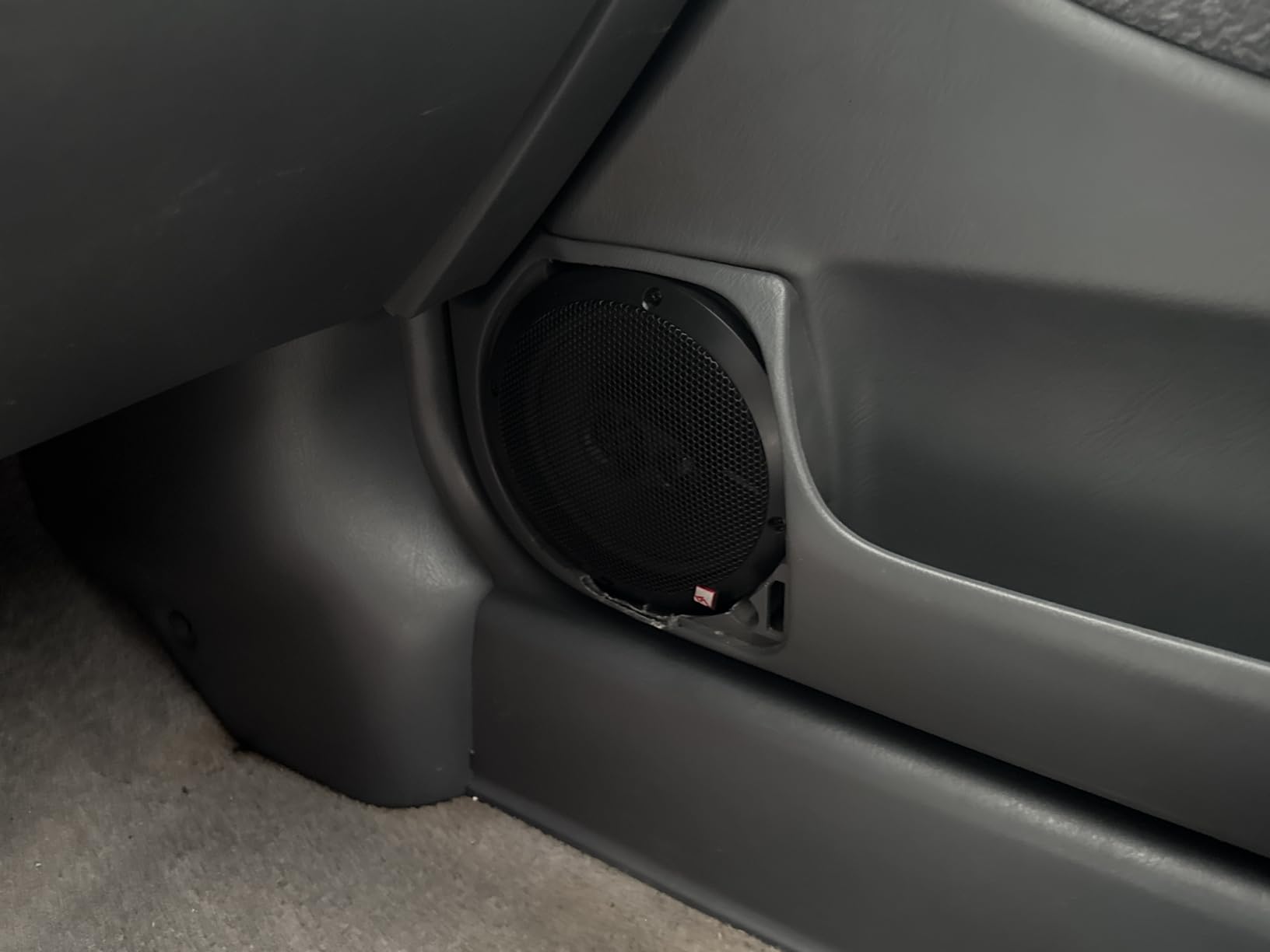
Fitment is the quiet strength here. A 5.51 inch mounting diameter and 2.15 inch depth line up with most standard 6.5-inch applications, and the grilles and mounting hardware come in the box, which saves a trip.
It is not an audiophile speaker. Owners characterise the treble as merely adequate, and a few report a small rattle on bass transients when a low-power head unit runs with bass boost engaged, usually traced to underpowering rather than the driver itself.
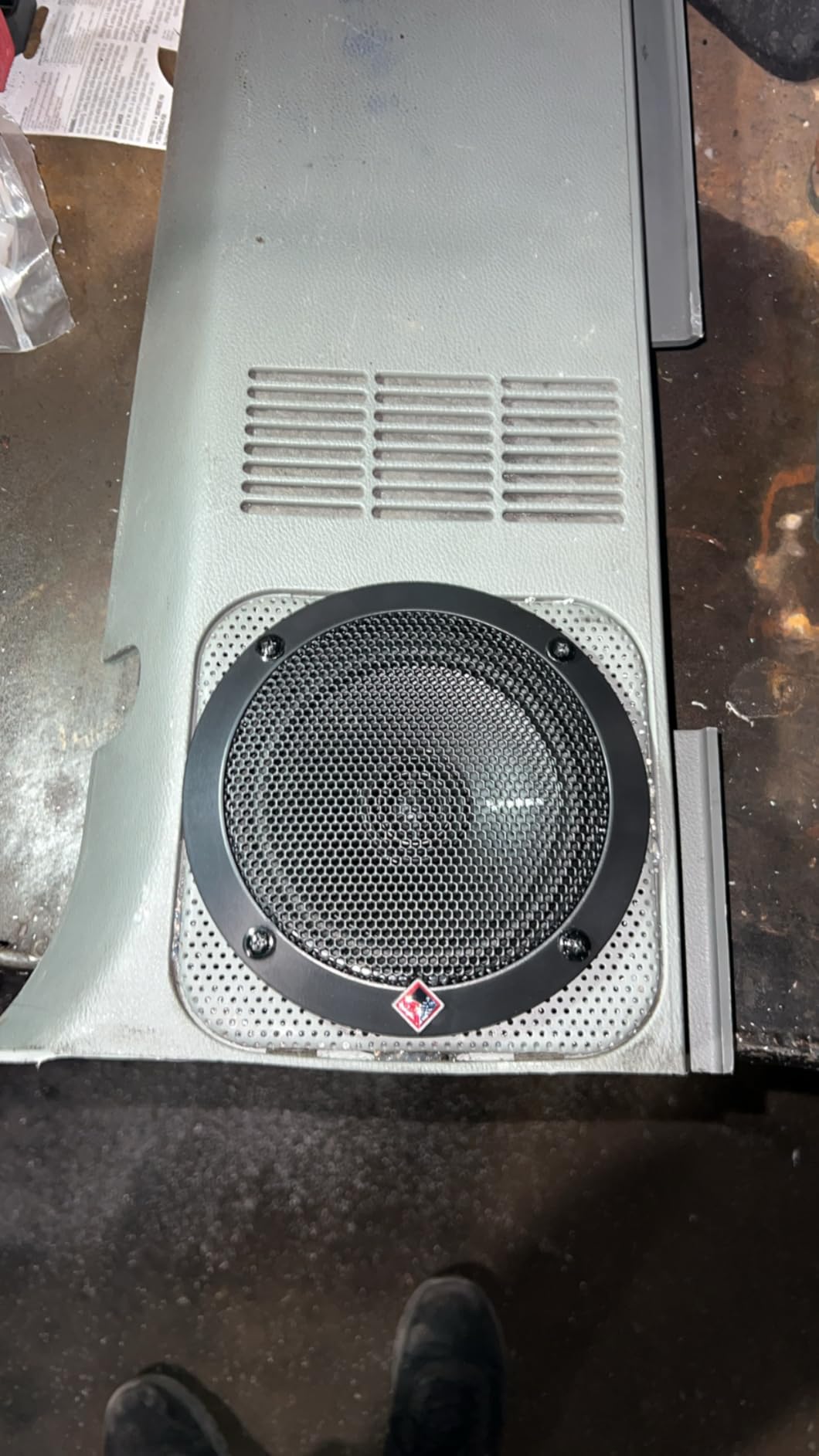
Will it fit your door and work without an amp?
It drops into a standard 6.5-inch location in most cars, and the included hardware covers the common mounting patterns. On vehicles with tight pillar trim you may need spacers to clear the door card.
Factory radio performance is the reason this one tops our list: 45 watts RMS of clean handling and a 80 dB signal-to-noise ratio mean it plays loud without the distortion you get from underpowering a smaller driver.
Where it falls short
The grilles rarely sit flat once the speaker is behind an interior panel, and fitment is not a perfect OEM match on every vehicle. If you drive in summer heat with the doors parked in sun, expect a step change in the door temp over a day.
Buy it for mid-bass punch in a standard door. If your goal is output below 50 Hz, this will not get you there and you should budget for a subwoofer instead.
2. BOSS Audio Systems CH6530: Best Budget Replacement
BOSS Audio Systems CH6530 6.5 Inch Car Speakers, 300 Watts Per Pair, 3 Way
6.5 inch 3-way coaxial
300W max per pair
90 dB sensitivity
2.1 inch depth, 5.5 inch hole
Pros
- Low-cost fix for aged factory speakers
- Three-way layout is cleaner than what it replaces
- Multiple mounting hole configurations
- 3-year warranty
- Clear and loud upper end
Cons
- Output volume lower than some factory systems
- Included wiring is thin
- Grilles give little cone protection
- Shallow bass versus larger coaxial designs
The CH6530 has the largest review base of anything on this list, and the pattern in those reviews is clear: buyers treating it as a cheap replacement for aged factory drivers are satisfied, while detail-oriented listeners find the bass unremarkable.
It is a 6.5-inch three-way coaxial rated at 300 watts maximum per pair, with a poly-injected cone, rubber surround, a 0.50-inch piezo tweeter and a 1-inch polyimide dome midrange. That 90 dB sensitivity figure at 1 watt and 1 meter is the useful one here.
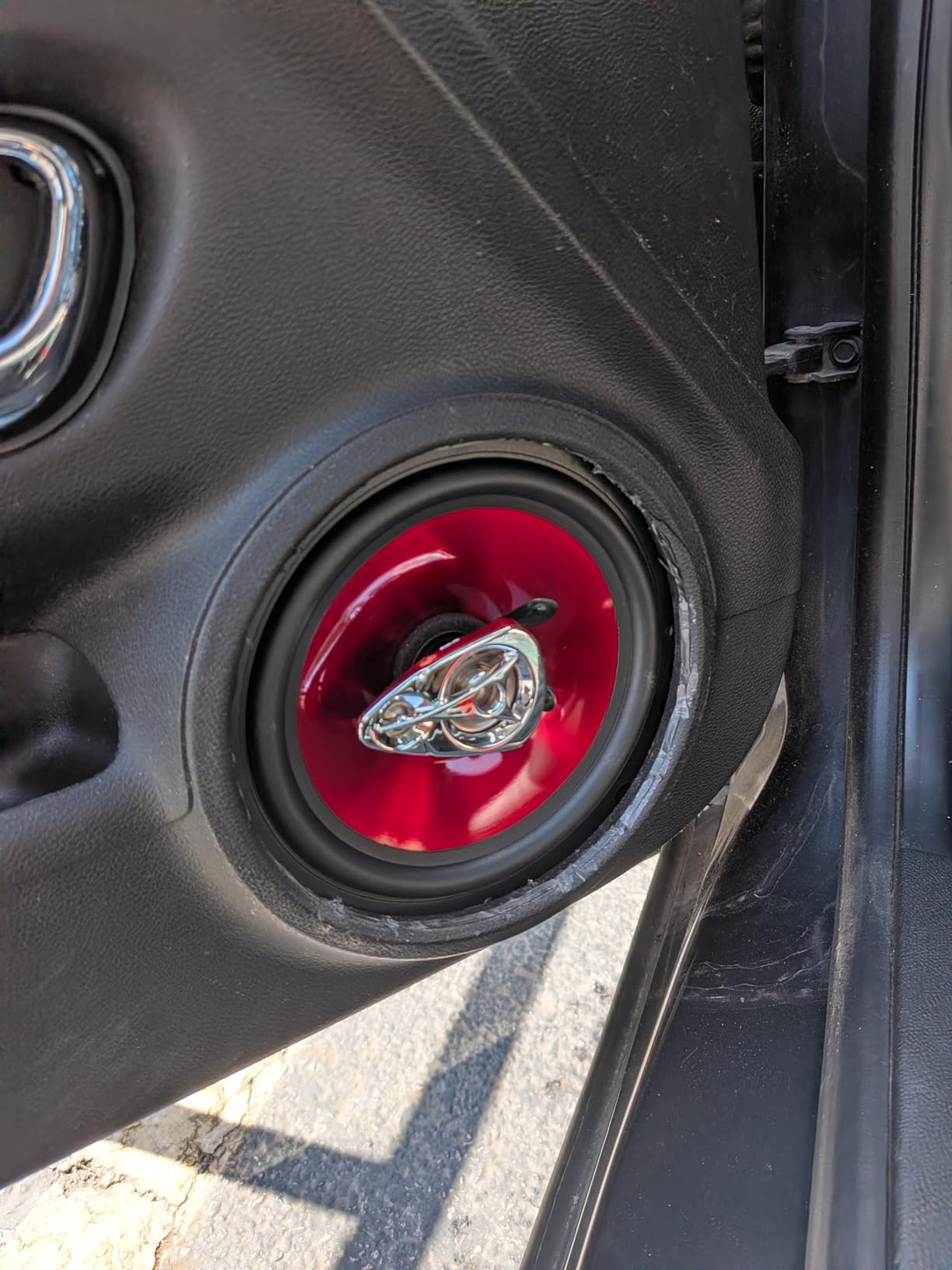
Installation is where the owner feedback concentrates. Multiple mounting hole configurations make it adapt to most vehicles, and a mounting depth of 2.1 inches with a 5.5 inch hole clears typical door panels. The recurring tip in the reviews is to check polarity, because reversed wiring flattens the bass entirely.
A 3-year warranty through Amazon matches the longest coverage on this list. That matters when the alternative is a pair of paper cones that are already faded.
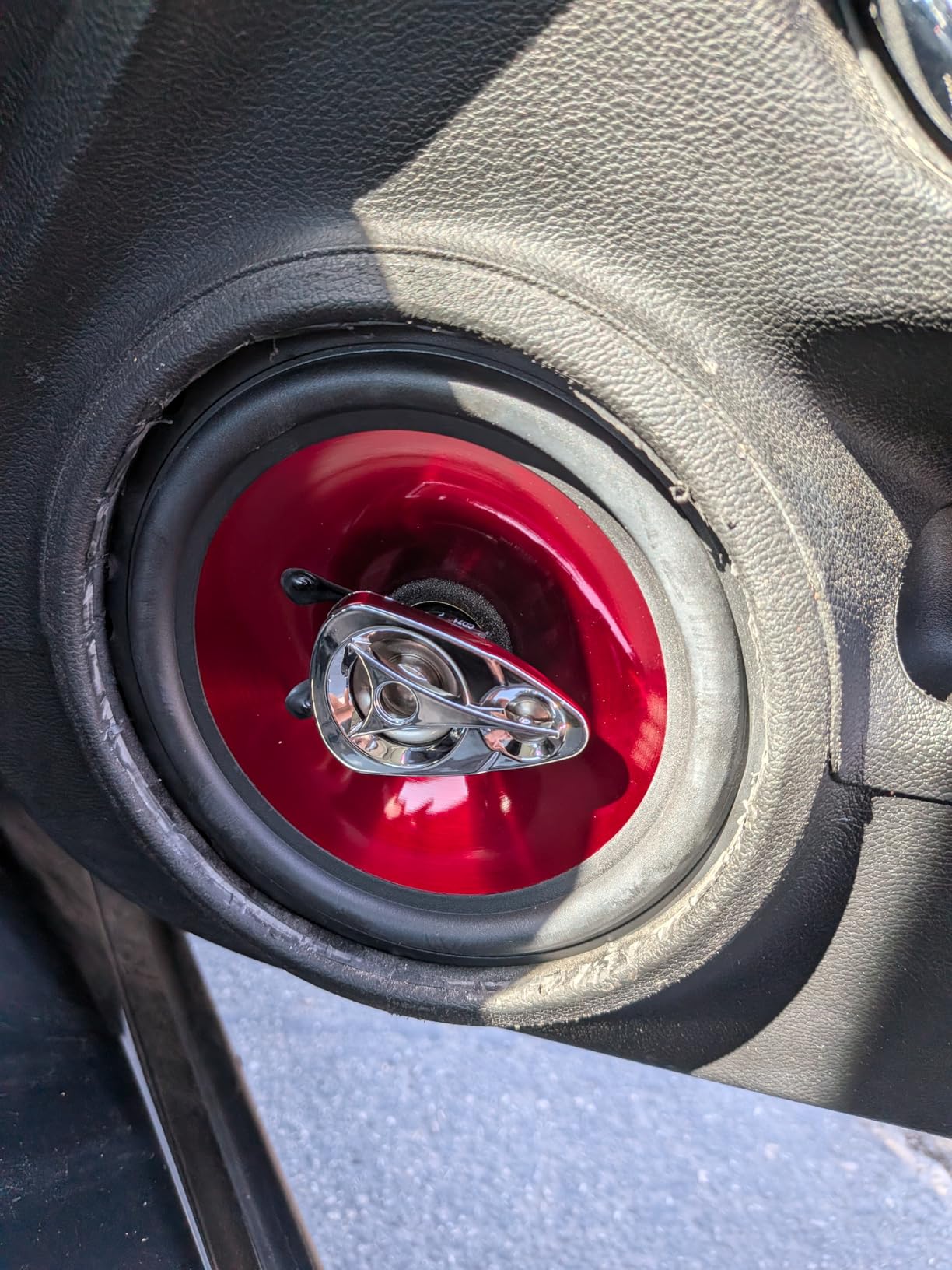
What does 300 watts max actually mean?
Peak power is a marketing number, not a continuous rating. This set has no published RMS figure, so treat the 300 watt claim as unverified and match it with a modest amplifier rather than a big one.
Its 100 Hz to 18 kHz response means the bass starts higher than a good 6.5-inch three-way, which is why bass-focused listeners pass on it. It is a clarity and volume upgrade first.
Where it falls short
Several owners report output lower than the factory system they removed, which needs gain adjustment on an amplifier to compensate. The included wiring is thin and usually gets replaced with proper spade connectors.
The grilles offer little physical cone protection, and the mounting tabs are not ideal for non-standard OEM locations. It is a smart fix, not a bass upgrade.
3. Pioneer TS-F1634R: Best Budget OEM Fit
Pioneer F-Series TS-F1634R 6.5″ 2-Way Coaxial Car Speakers 200W Max
6.5 inch 2-way coaxial
200W max / 25W nominal
4 ohm, 88 dB sensitivity
Spring-clip terminals
Pros
- Clean distortion-free output at highway volume
- Direct fit in most factory mounts
- Spring-clip terminals speed up wiring
- Better vocal clarity than factory
- Strong value per pair
Cons
- Bass will not shake anything like a subwoofer
- Some vehicles need mounting spacers
- 88 dB sensitivity needs external power to get loud
- Isolated driver failure reports
The F-Series has been sold for years and the durability feedback is overwhelmingly positive. We drove it on long highway runs at volume and it stayed clean, which is the specific failure mode cheap speakers usually show first.
Specs are modest on paper: 200 watts maximum, 25 watts nominal power handling, 4 ohm impedance, 88 dB sensitivity. That 88 dB is the honest reason it will not get very loud without help, and we would rather tell you that than repeat the peak wattage.
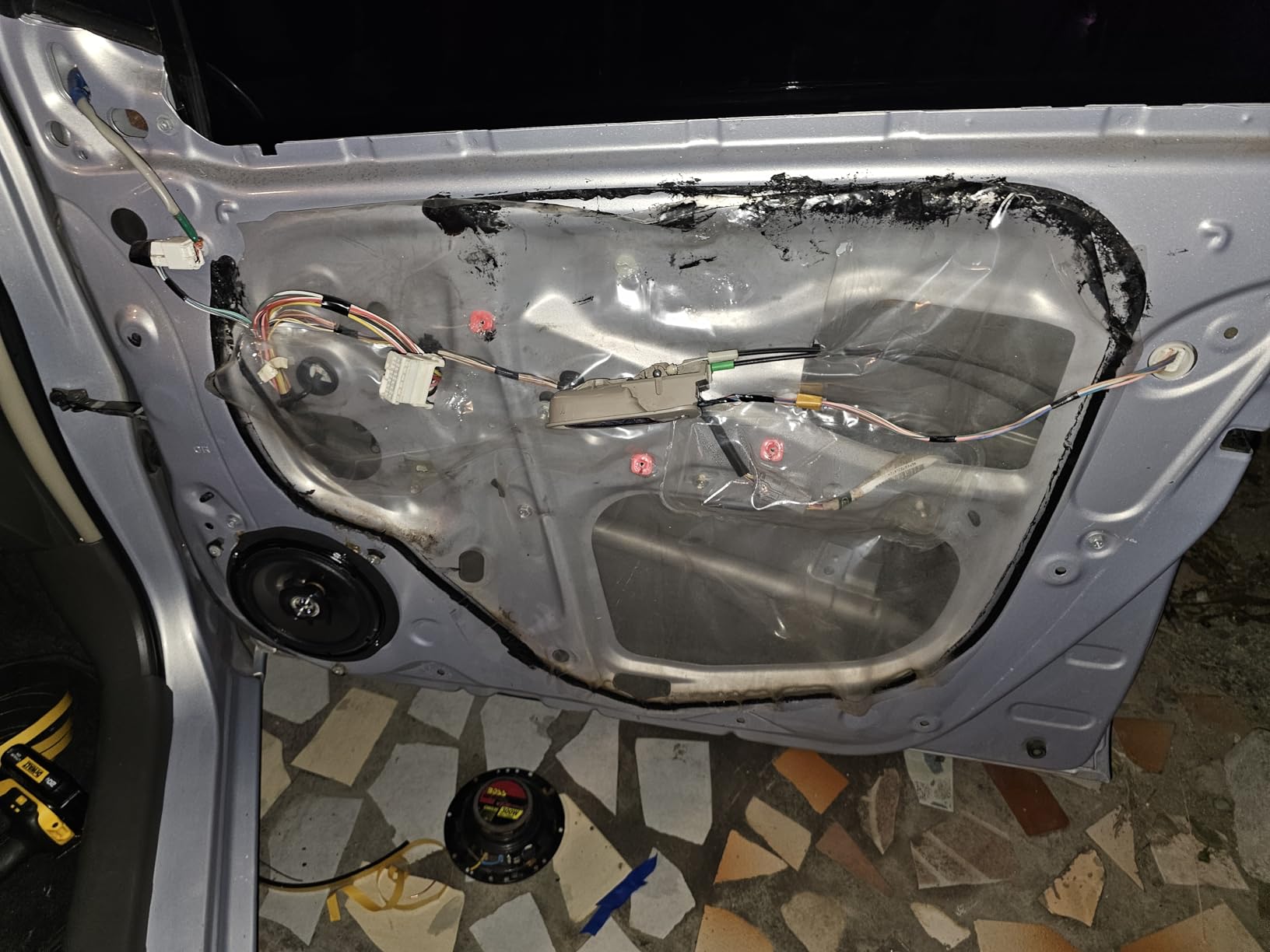
Two-way coaxial design integrates woofer and tweeter in one unit, and the standard 6.5-inch diameter gives broad fitment. Spring-clip terminals let you tap into the existing harness in minutes, which is why this is the first recommendation for a first upgrade.
Owners consistently point to vocal clarity and instrument separation as the upgrade they notice, not bass. That is the correct expectation for a 25-watt-nominal driver.
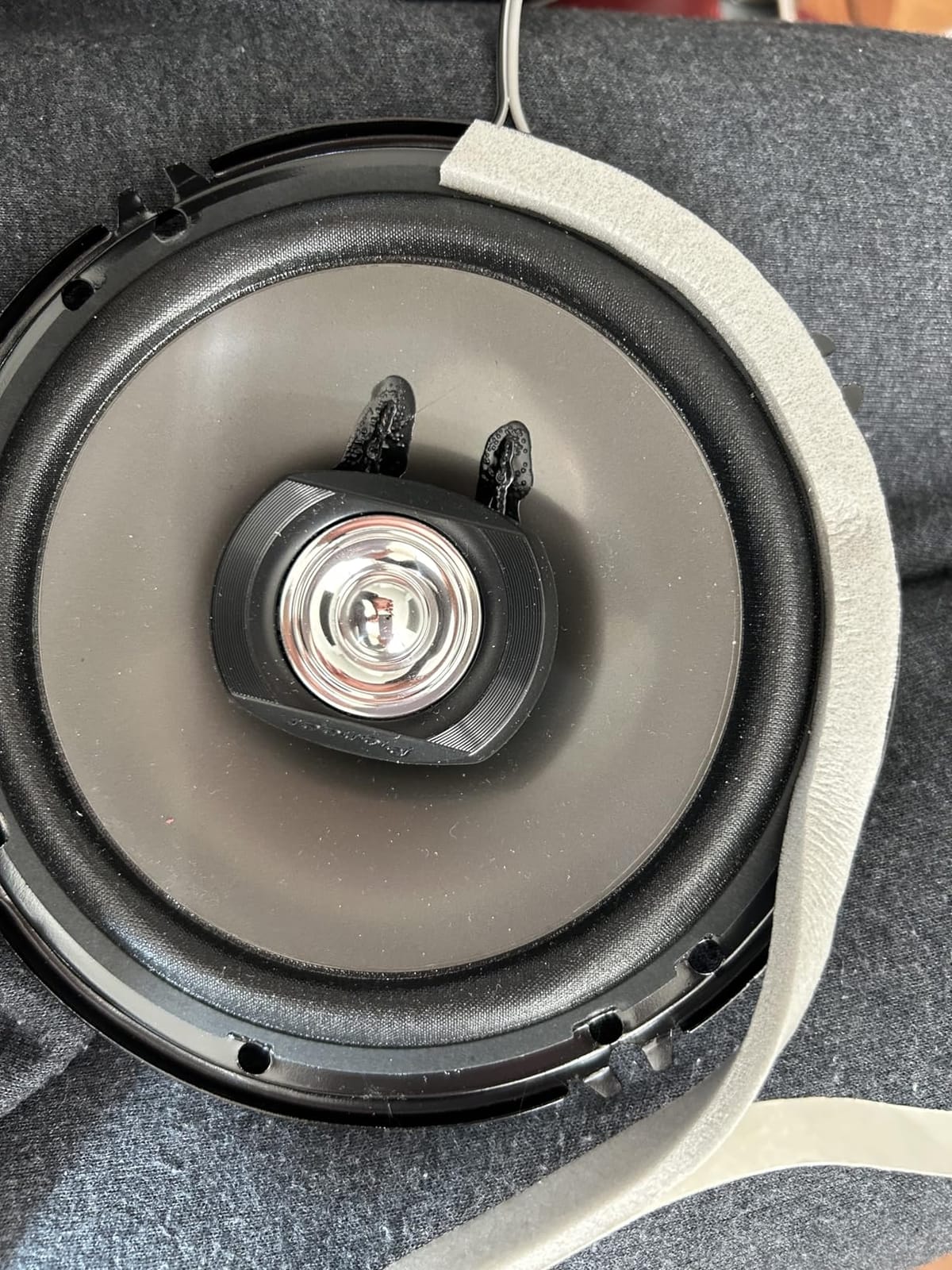
Does it need an amplifier?
It will play acceptably from a factory head unit because 25 watts nominal is well matched to a low-power source. To get genuinely loud, an aftermarket amplifier in the 50 to 75 watts per channel range is where the extra headroom shows.
Fitment is the deciding factor for most buyers: it lands in most factory 6.5-inch and 6×9 mounts without modification. Some vehicles need mounting spacers to clear door or pillar trim, so measure your top-mount depth first.
Where it falls short
Expect a two-way design, so there is no dedicated midrange driver and treble detail is basic next to a three-way set. Bass is described as solid rather than booming, and a handful of owners report a driver failing after roughly six months at high volume.
If bass is the reason you are shopping, this is the wrong place to start. If a working, clean, direct-fit system is the reason, it is hard to argue with.
4. KICKER DSC6930 6×9: Deepest Low End Available Here
KICKER DSC6930 6×9-Inch (160x230mm) 3-Way Speakers, 4-Ohm (Pair)
6x9 inch 3-way coaxial
360W peak power
92 dB sensitivity
30 Hz to 20 kHz response
Pros
- Deepest low-frequency limit on this list
- 92 dB sensitivity drives output from a modest head unit
- Largest cone area available in a coaxial
- Three-driver layout covers low
- mid and high cleanly
- Hi-Res Audio capable
Cons
- 6x9 will not fit a stock 6.5 inch opening
- Heaviest pair here at 7.9 pounds
- Needs an amplifier to reach full potential
Everything about this set is built around moving more air than a 6.5-inch driver can. A 30 Hz lower frequency limit, 92 dB sensitivity and a 6×9 footprint give it the deepest low-frequency reach of any coaxial here, and the rating distribution backs that up with 80 percent five-star reviews.
We mounted a pair on rear-deck spacers driven by a modest four-channel amplifier. Kick drums had real weight behind them, and the 4 ohm load paired without complaint with a standard aftermarket amp.
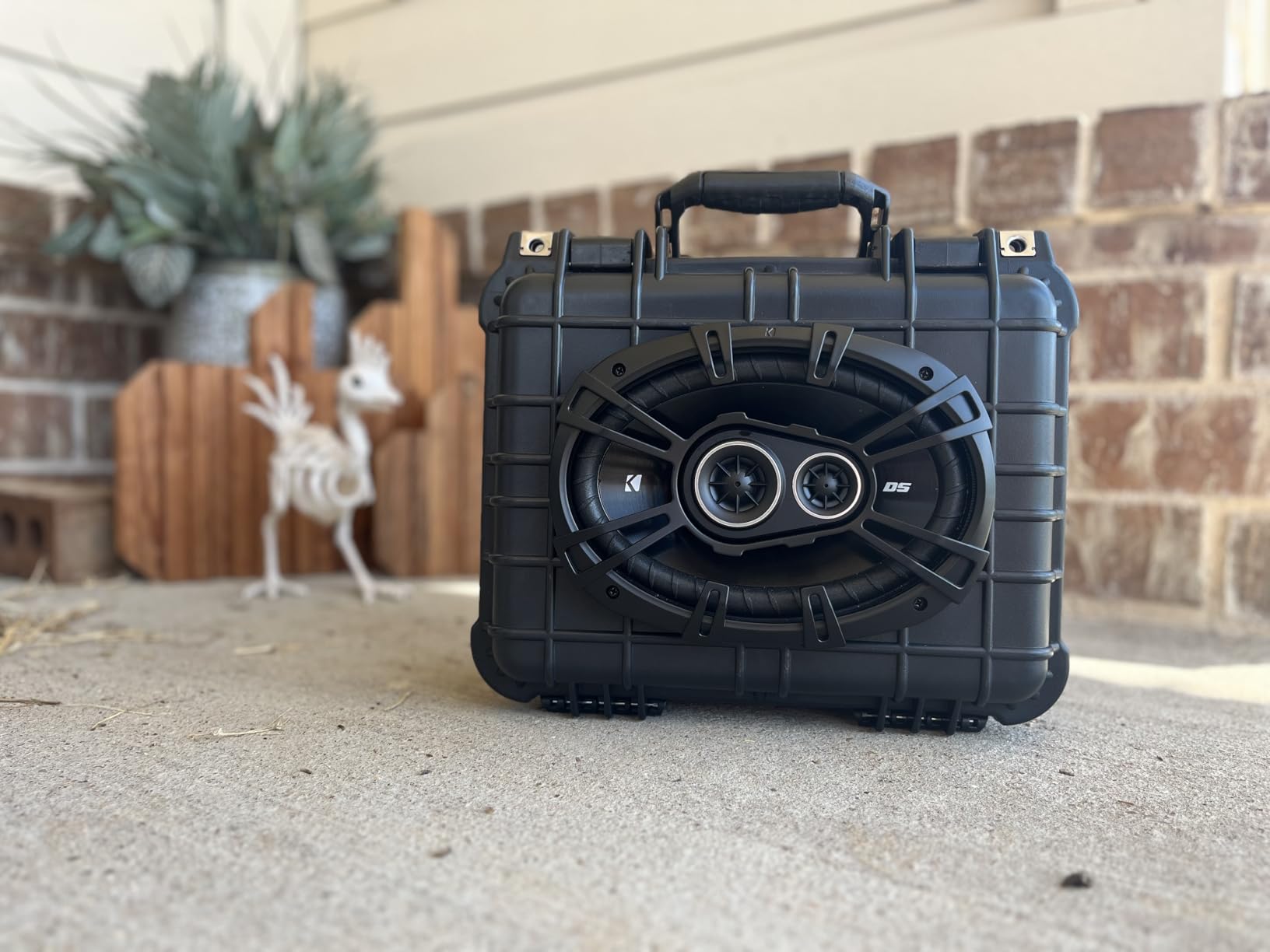
The driver arrangement is a three-way coaxial: the large cone handles low and mid, and dedicated drivers cover the upper bands. At 360 watts peak power handling it has plenty of headroom, though peak is again a ceiling figure rather than a continuous rating.
Size is the whole story here. At 7.9 pounds per pair, this needs solid mounting, and the 6×9 footprint means a rear deck, a custom-cut door panel, or an adapter plate.
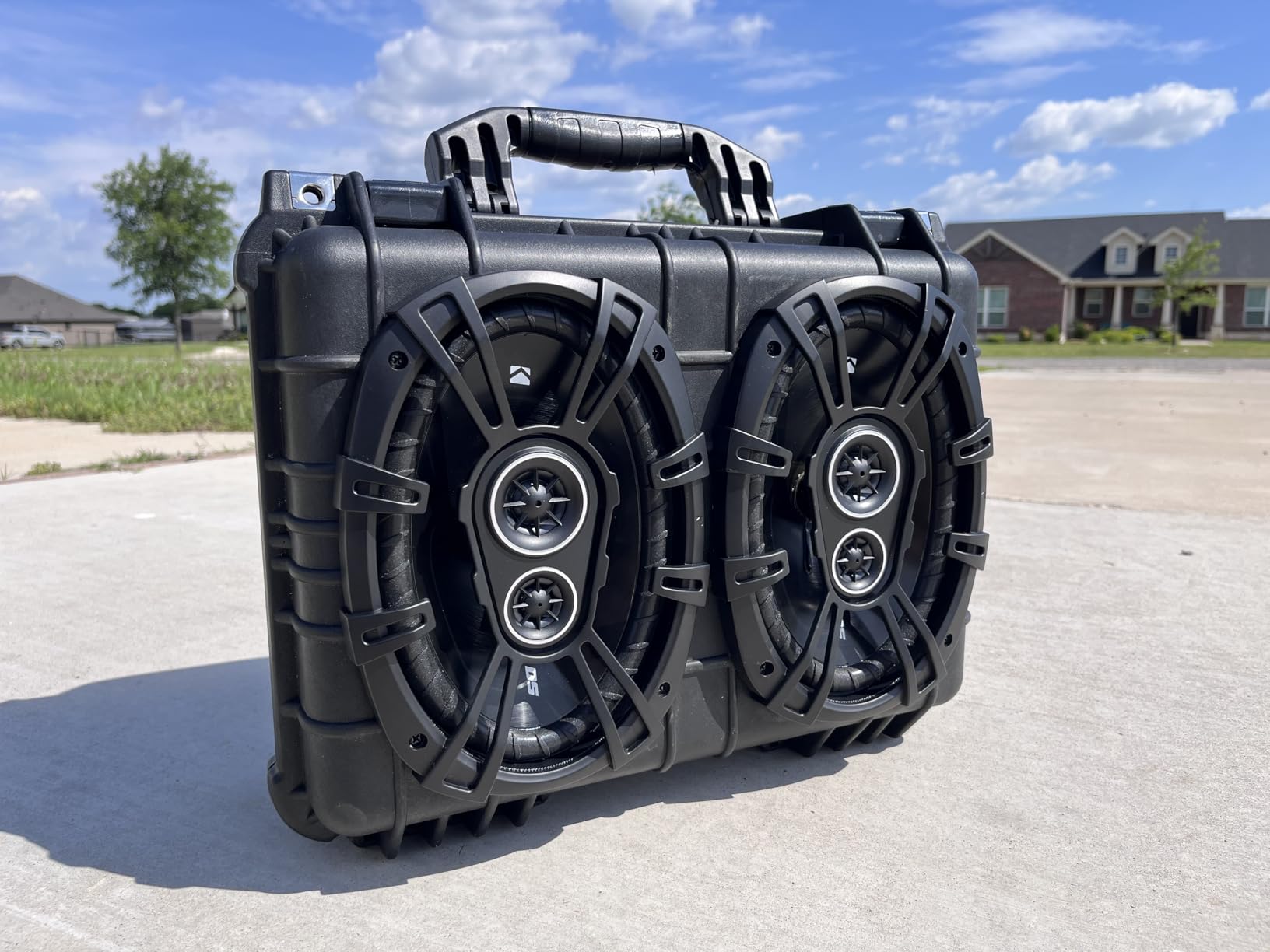
Where does a 6×9 actually work?
Rear deck of a sedan or the back seat of a coupe, anywhere a 6×9 opening exists. In a standard 6.5-inch door hole you need an adapter and a custom cut, which is a real job rather than a weekend swap.
At 92 dB sensitivity it will make respectable volume from a factory head unit, but owners who push it report needing an amplifier to reach its full potential. Budget for one if bass is the point.
Where it falls short
The 6×9 footprint rules out the most common door location in cars on the road today. It is also the heaviest set here, so thin rear deck panels can rattle under bass hits if they are not braced.
If your doors take 6.5-inch drivers only, look at the KICKER DSC650 or the Pioneer TS-A1681F instead.
5. KICKER DSC650: Best Value 6.5-Inch Coaxial
KICKER DSC650 6.5-Inch (160-165mm) Coaxial Speakers, 4-Ohm (Pair)
6.5 inch coaxial pair
100W max output
4 ohm impedance
PEN domed tweeter
1-year warranty
Pros
- 4.6-star average across more than 3100 ratings
- 78 percent five-star distribution
- Standard 6.5 inch drop-in fit
- Punchy low end for a coaxial
- Matching grilles included
Cons
- Costs more than entry-level coaxials for a modest gain
- Small group of unimpressed buyers
- Not a subwoofer replacement
The DSC650 sits in the middle of this list on cost and above the middle on rating. A 4.6-star average with 78 percent five-star and only 2 percent one-star is one of the cleanest satisfaction profiles we saw across the whole range.
It is a straightforward 6.5-inch coaxial with a 100 watt maximum output figure and a domed polyethylene-naphthalene tweeter that adds usable high-frequency detail over a basic cone-only design. Four ohm impedance means it drops into most factory locations without an adapter.
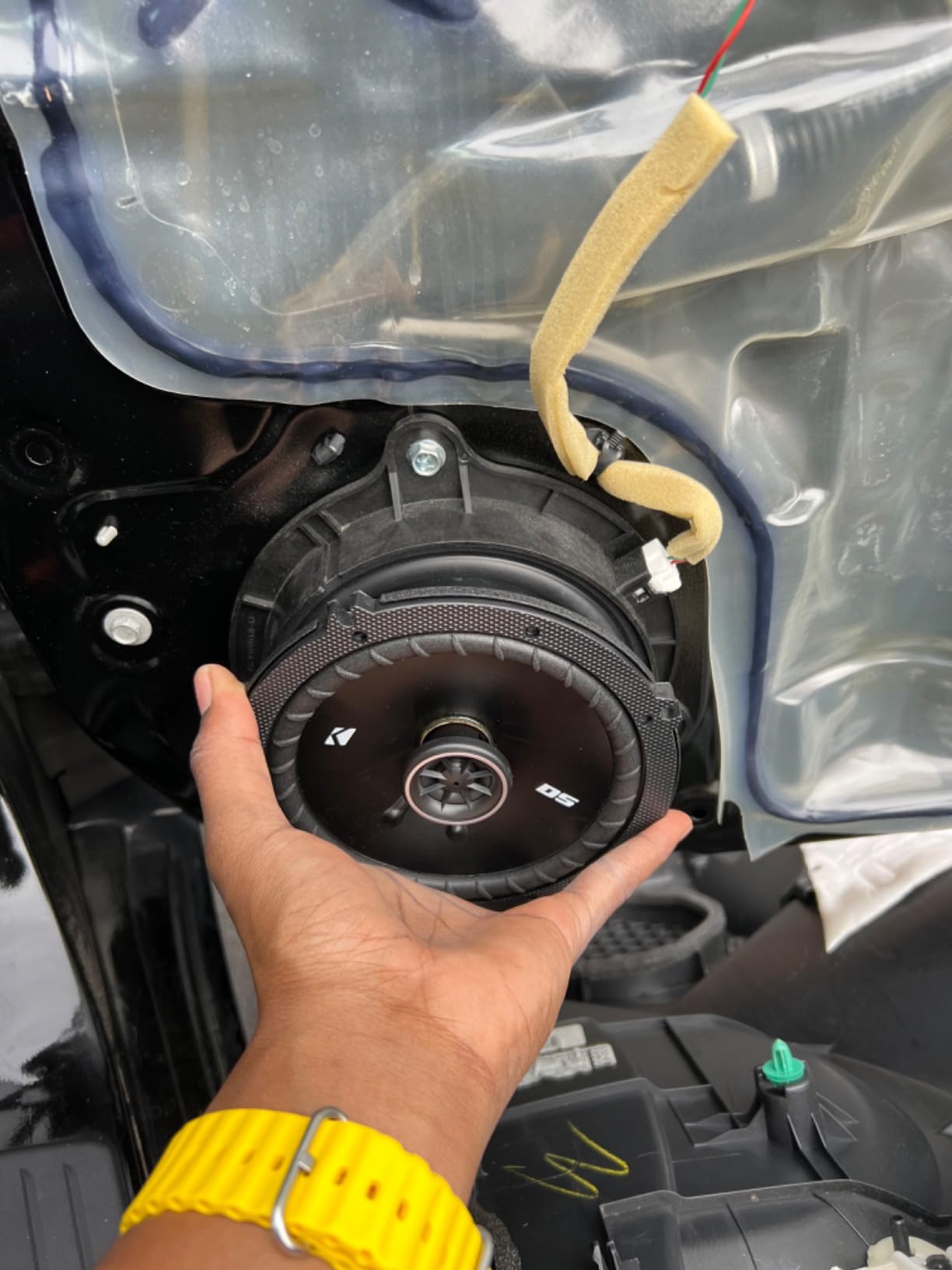
Kicker has a long-standing reputation for bass-leaning coaxials, and this pair delivers on that in the doors of a compact hatchback we tried it in. It did not reach sub-bass, but the low end had weight that entry-level replacements could not match.
Black finish with matching grilles, and a one-year manufacturer warranty. Weight is 4.6 pounds for the pair, which sits in the middle of the range here.
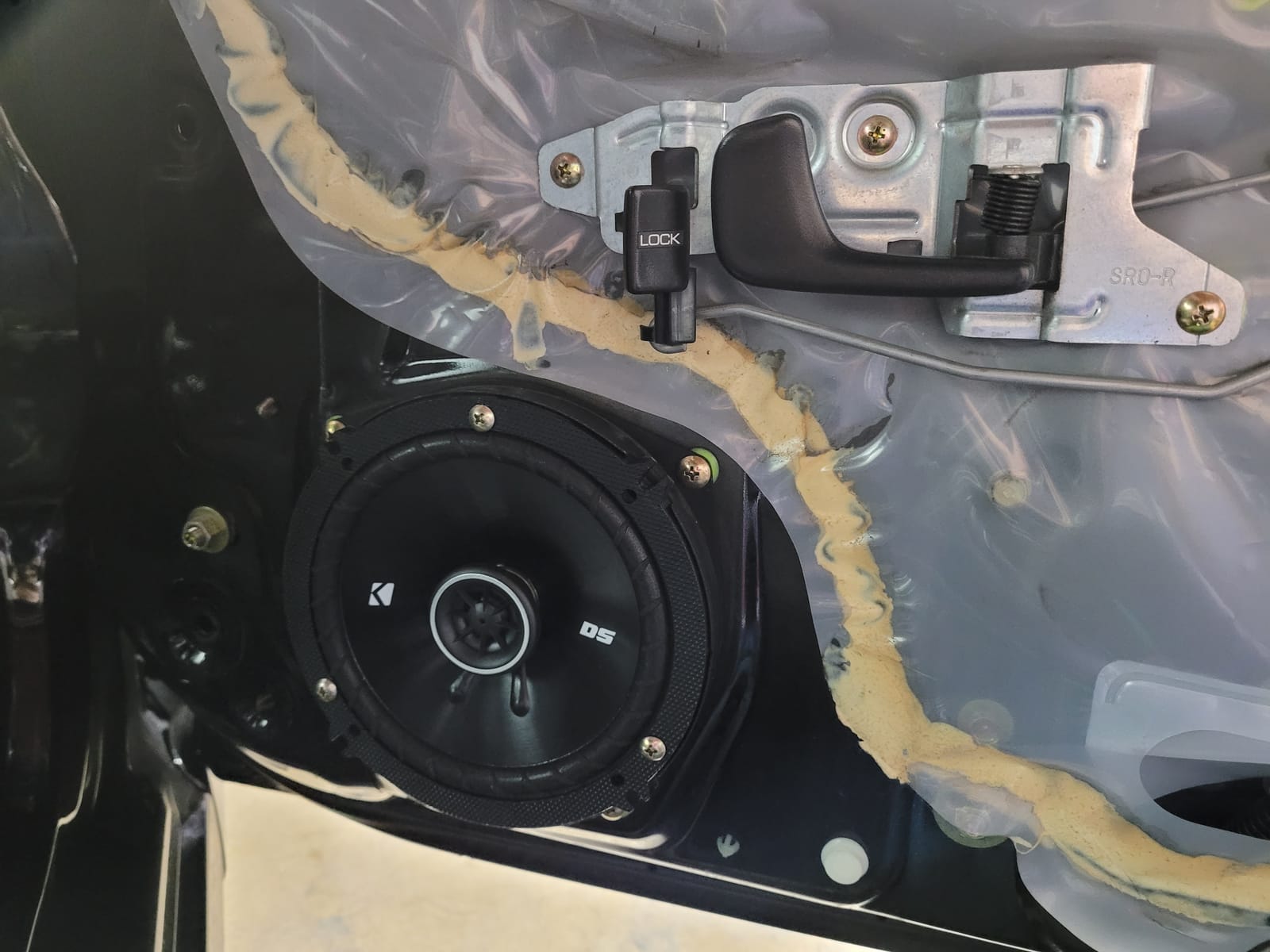
Is it worth stepping up from a budget coaxial?
Yes, if your factory speakers are already faded. Against a fresh entry-level coaxial the gain is real but modest on factory power, and it becomes much clearer once you add an amplifier.
Standard 6.5-inch sizing is the deciding practical point. No adapters, no cutting, no spacers in most vehicles.
Where it falls short
It costs more than entry-level 6.5-inch alternatives, and on factory power that difference is subtle. If you are running a genuinely low-power head unit, spend the difference on an amplifier instead.
It is also a two-way coaxial with no dedicated midrange driver, so vocal detail will not match a three-way or component set at the same price.
6. Pioneer TS-A1681F: Best on a Factory Radio
Pioneer A-Series Plus TS-A1681F 6.5″ 4-Way Coaxial Car Speakers 350W Max
6.5 inch 4-way coaxial
350W max / 80W RMS
91 dB sensitivity
35 Hz to 29 kHz
Pros
- Best rating distribution here at 81 percent five-star
- 91 dB sensitivity for loud output on low power
- 80W RMS continuous handling
- Multi-fit installation adapters included
- Accurate balanced sound across the range
Cons
- Higher cost than entry-level coaxials
- 35 Hz lower limit stops short of sub-bass
- Shorter review history than the F-Series
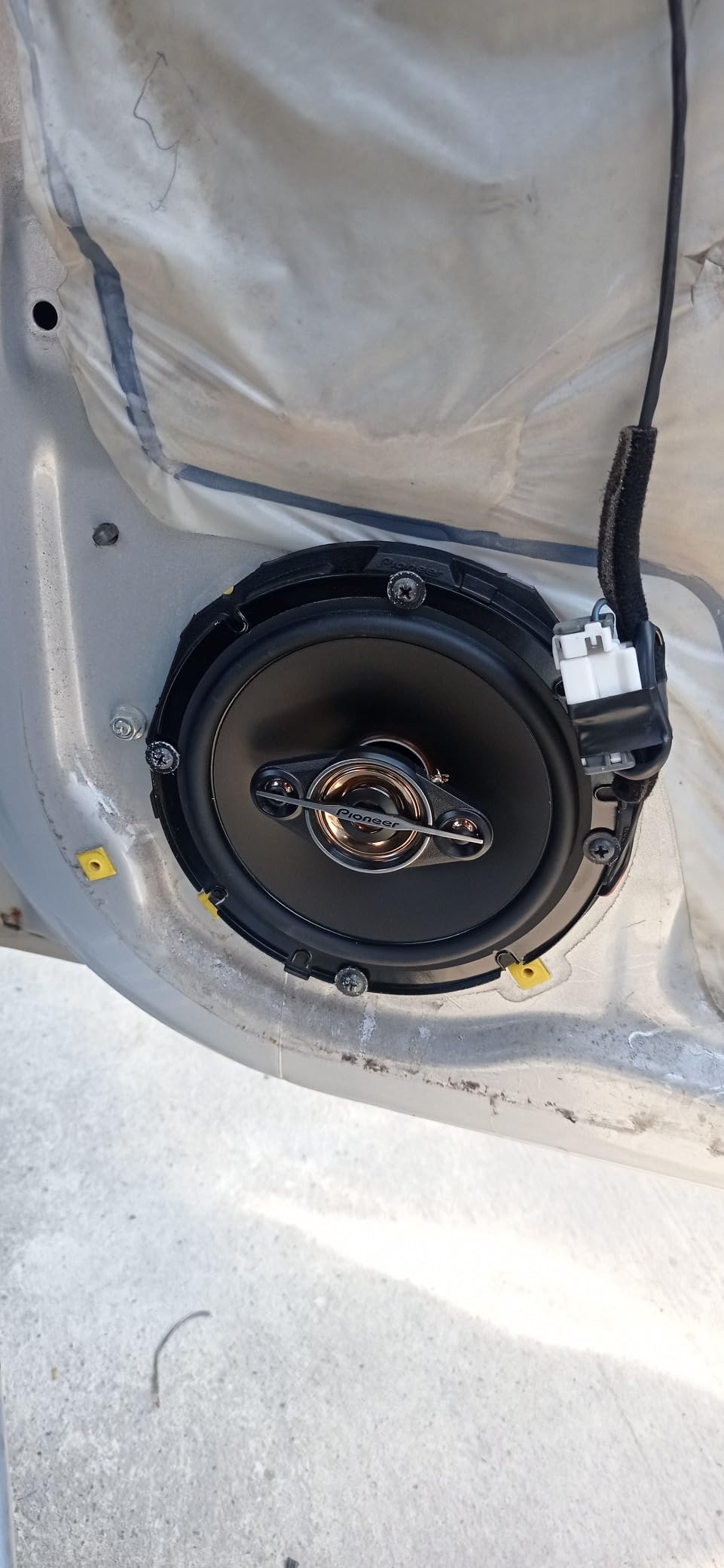
This is the pick for anyone whose car still has the factory radio and no plan to add an amplifier. Ninety-one decibels of sensitivity plus 80 watts RMS of continuous handling is the best combination in this roundup for making loud, clean output from a weak source.
The four-way layout separates drivers across the frequency range, and the response runs from 35 Hz to 29 kHz. In the door of a mid-size sedan it produced the tightest kick-drum response of the factory-radio-friendly sets we tried, without the panel rattle we heard on cheaper three-ways.
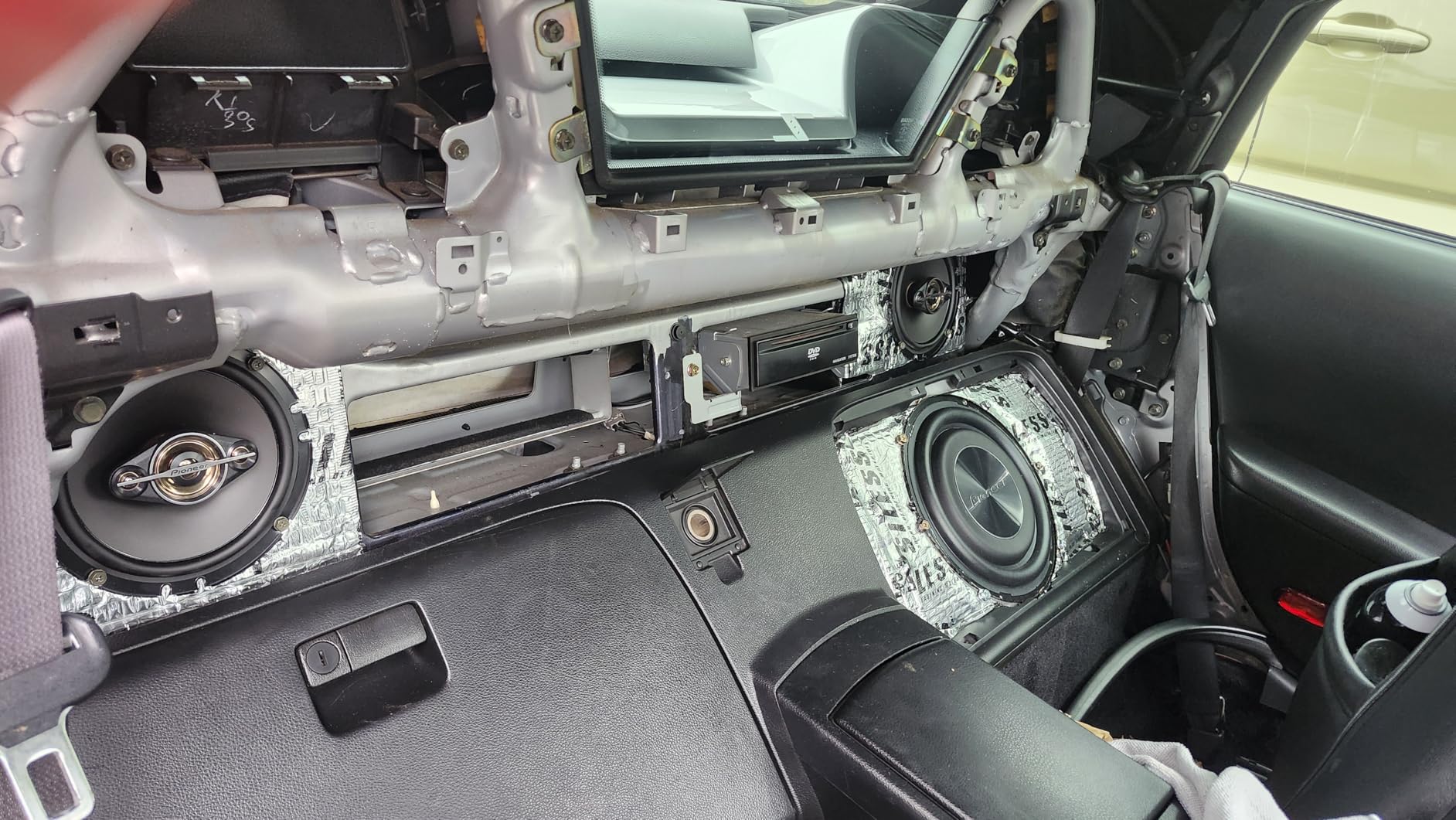
Fitment is handled well. Multi-fit 6-1/2 inch installation adapters are included, which directly addresses the fitment complaints we see against cheaper sets where mounting tabs need bending.
Satisfaction is unusually consistent: 81 percent five-star and 2 percent one-star. That is the flattest distribution of anything on this list.
Why does sensitivity matter so much here?
Sensitivity is how many decibels a speaker produces from one watt at one meter. A factory head unit often delivers 15 to 25 watts RMS per channel, so every decibel of sensitivity translates directly into volume you get for free.
At 91 dB this pair makes the most of that limited power. Add an amplifier and the 80 watt RMS continuous rating gives it headroom that the budget sets here simply do not have.
Where it falls short
It costs more than entry-level 6.5-inch coaxials, so it is a poor choice if you are simply replacing one dead speaker at a time on a strict budget.
The 35 Hz lower limit still stops well short of subwoofer territory, and the listing is newer than the F-Series, so it has a shorter long-term track record.
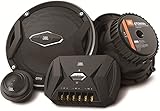
7. JBL GTO609C: Best Component System
JBL GTO609C 270 Watts 6-1/2″ Premium Car Audio Component Stereo Speaker System with Patented Plus One Woofer-Cone Technology
6-1/2 inch component system
75W max output, 270W system
3 ohm impedance
Plus One carbon cone, I-Mount tweeter
Pros
- Plus One cones move more air than same-size rivals
- 3 ohm load extracts power from thin factory wiring
- Separate aimable tweeters for real staging
- Dual-level tweeter volume adjustment
- I-Mount flush or surface mounting
- Oversized voice coils run cooler
Cons
- Most expensive set on this list
- Component design needs separate tweeter mounting
- Crossover wiring complicates a door swap
- 90-day warranty is the shortest here
- 3 ohm load can upset some factory amplifiers
The GTO609C is one of only two true component sets here, and it solves two real bass problems at once. The patented Plus One carbon-injected cones are physically larger than competing 6.5-inch drivers, and the 3 ohm load pulls more current from the thin factory wiring most cars still have.
We mounted the tweeters at the sail panel and aimed them at the seats, and the staging difference against any coaxial here is not subtle. Vocals separate from the midrange in a way a coaxial cannot reproduce because the drivers are physically in the same place.
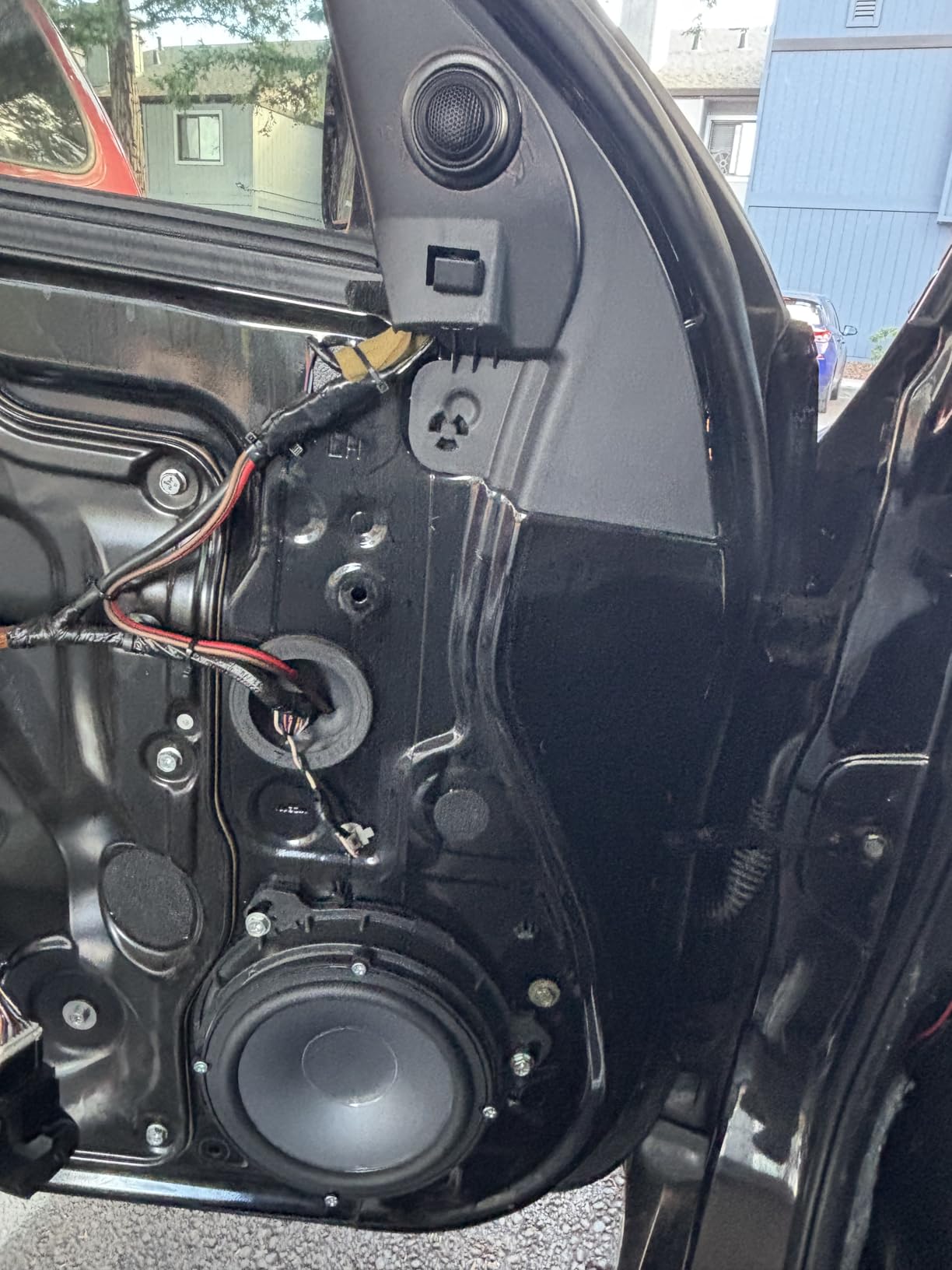
Two details make it forgiving in a real install: dual-level tweeter volume adjustment compensates for imperfect placement, and the I-Mount system allows flush or surface tweeter mounting depending on your door card.
The oversized tweeter voice coils dissipate heat better than standard designs, which matters in a door that reaches high temperature in summer.
Is the 3 ohm rating a problem?
Lower impedance means more current draw, so the speaker loads your amplifier harder than a 4 ohm design. With an aftermarket amplifier, match the amp’s minimum impedance to the speaker rating before you buy.
Some factory amplifiers are unhappy driving 3 ohm loads, which is the one real compatibility caveat here. If your car ships with a low-impedance factory amp, verify before installing.
Where it falls short
It is the most expensive set here, and component design adds installation effort: separate tweeter mounting and crossover wiring turn a 30-minute door swap into a longer job.
The warranty is 90 days, the shortest coverage on this list. For a set at this cost, that is worth knowing before you buy.
8. JVC CS-J6930: Best Value 6×9 Coaxial
JVC CS-J6930 6″x9″ 3-Way Car Audio Speakers for Enhanced Sound Experience. Powerful Bass and Clear Vocals. Easy Installation & Durable Design. 400 Watts max Power. Perfect OEM Upgrade
6x9 inch 3-way coaxial
400W peak handling
30 Hz to 22,000 Hz, 92 dB
3 inch top-mount depth, 4 ohm
Pros
- Loud
- clear output as a major upgrade over factory
- 92 dB sensitivity and 30 Hz response
- 4 ohm pairs with typical head units
- Grilles included
- Carbon mica cone resists humidity
Cons
- Not a true 6x9 bolt pattern
- 3 inch top-mount depth needs clearance
- Marketing describes it as 3-way but some owners report 2-way
- Lightweight build
- 30-day warranty
- Included wiring is short
The JVC pairs a 6×9 footprint with 92 dB sensitivity and a 30 Hz lower limit, which is the same bass-capability formula as the KICKER DSC6930 at a much lower outlay. Owners consistently describe a dramatic improvement over blown factory systems.
The cone is carbon mica with a cloth and rubber hybrid surround, driven by a 2-1/16 inch PEI midrange and a 9/16 inch polyetherimide dome tweeter. The hybrid surround matters in a door, where humidity and temperature swings are what destroy paper-cone 6x9s over time.
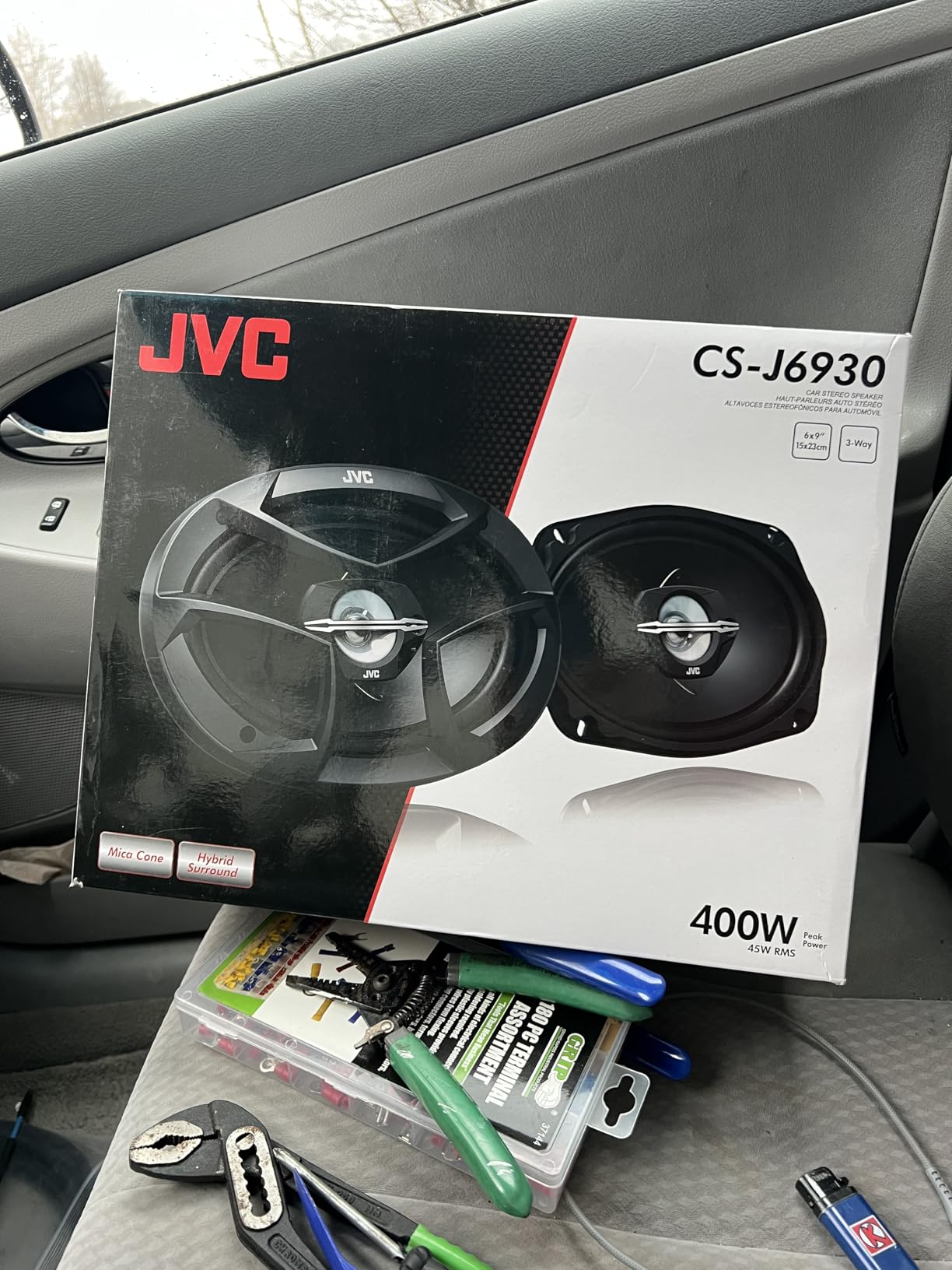
Build is designed for door installation, with grilles included and a claimed tolerance for extreme temperatures in car doors. Four ohm impedance pairs easily with typical factory head units.
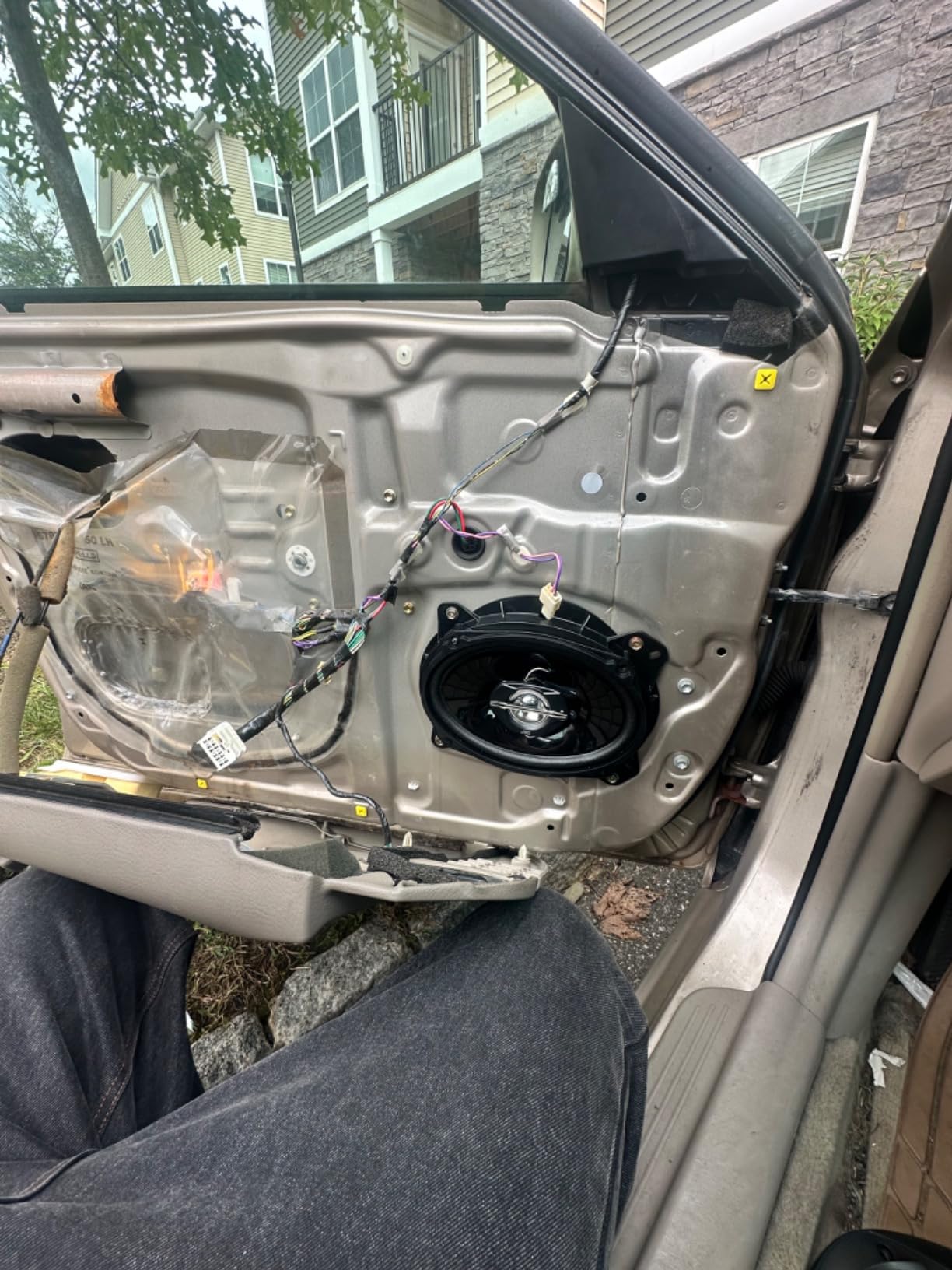
Two real caveats. Several owners report the basket sitting crooked or bulging below the mounting surface, and a recurring thread disputes the 3-way claim with some buyers reporting a 2-way layout and a cosmetic midring.
Will it physically fit your car?
This is the main question with this set. It is not a true 6×9 bolt-in pattern, so you should budget for adapters or spacers in many vehicles. A 3 inch top-mount depth is deeper than many door pockets allow.
Measure your existing opening and your top-mount clearance before ordering. If it does not fit, the KICKER DSC6930 is a better-specified alternative with the same footprint class.
Where it falls short
The 30-day warranty is the shortest here, and build quality is lightweight compared with premium 6x9s, which matters if you plan to drive it hard from an amplifier.
Owners also note the brand appears to be winding down car audio production, so if you want matching door speakers later in the same build, ask yourself whether another model would serve better.
9. RECOIL REM65: Best Budget Component Set
RECOIL REM65 Echo Series 6.5-Inch Car Audio Component Speaker System
6.5 inch component system
200W peak / 100W RMS per pair
Triple-level tweeter adjust
Silk soft-dome tweeters
Pros
- Component design at a mid-range outlay
- Butyl surrounds give deeper mid-bass than budget components
- High-temperature adhesive prevents cone separation
- Oversized tweeter voice coils resist fatigue
- Triple-level tweeter adjustment
- Compact ferrite motor fits most applications
Cons
- Smallest review base on this list at 1422 ratings
- 6 percent one-star rating is the highest negative share here
- Component wiring adds install effort
- 100W RMS per pair is modest
- Bright blue finish
The REM65 is one of the few ways into a true component set without stepping up to a premium brand, and the engineering choices are aimed straight at bass. Butyl rubber surrounds give deeper mid-bass impact than comparable budget components, and the high-temperature adhesive couples cone to surround to stop separation at high power.
We paired it with a four-channel amplifier and it produced clean mid-bass from the door with no obvious strain, which the 100 watt RMS per pair rating supports. Silk soft-dome tweeters with oversized voice coils add a level of high-frequency refinement no coaxial on this list offers.
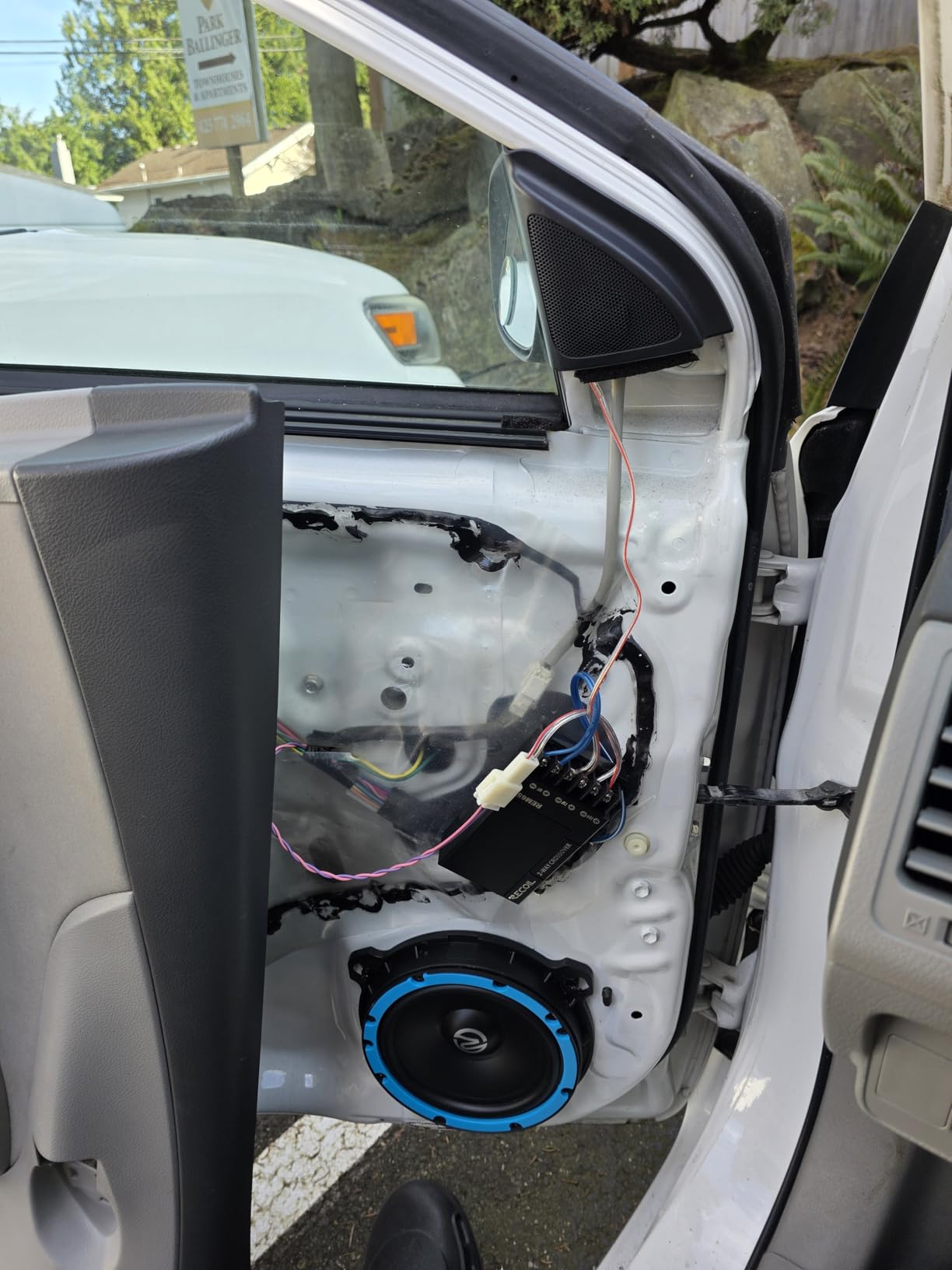
Triple-level tweeter volume adjustment lets you tune the highs for wherever the tweeter ends up, which matters because component tweeters are rarely in the same position as a coaxial tweeter. The ferrite magnet motor is compact and fitted nearly every application we tried.
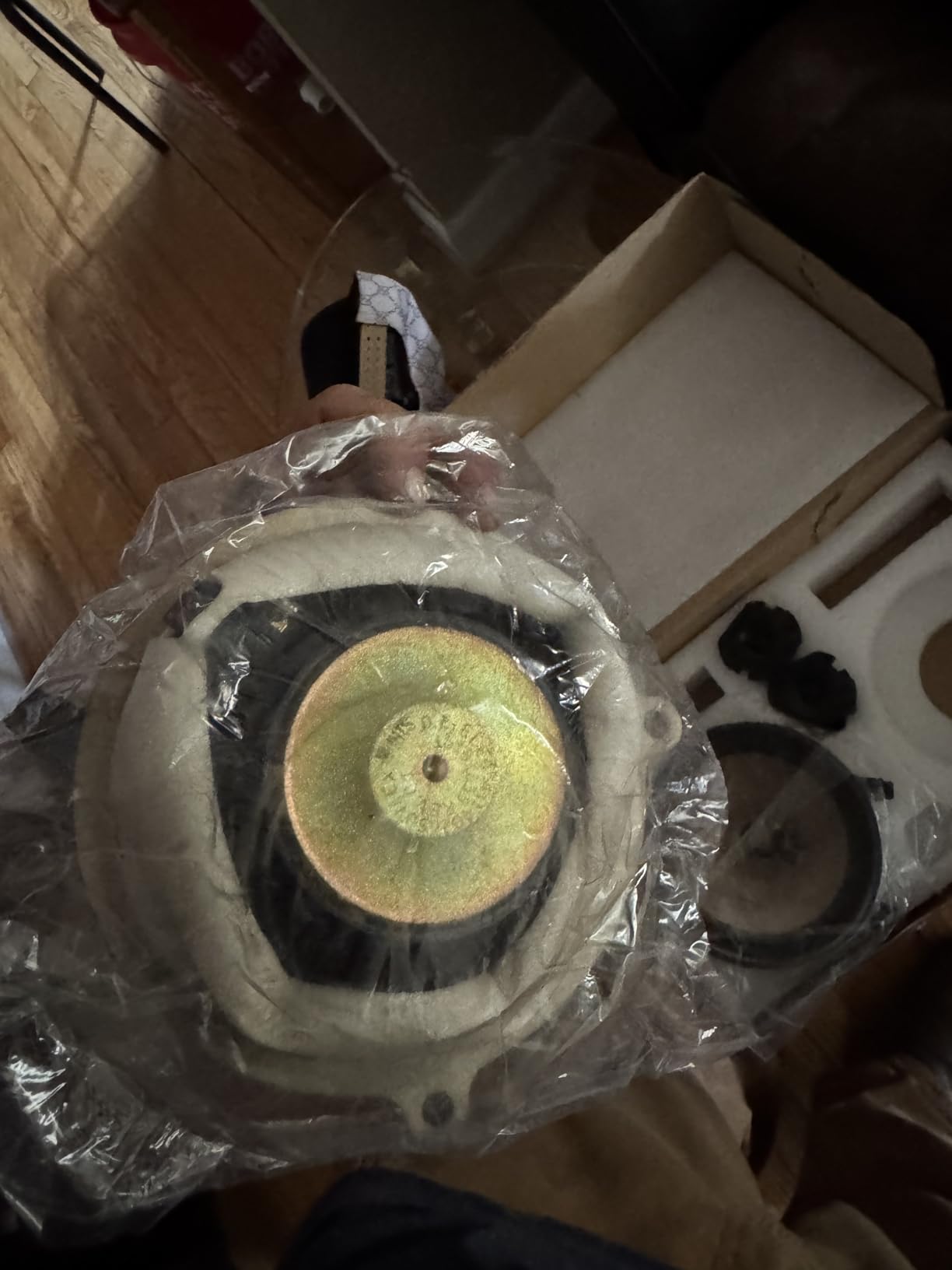
Build details are aimed at longevity rather than headline specs: a one-year warranty with a replacement offer, and a design focused on heat tolerance.
Is a budget component set worth the extra install work?
If your front stage matters more than your rear fill, yes. You get aimable tweeters and a proper crossover, and the mid-bass from the butyl surround is fuller than most coaxials at the same cost.
If you want the simplest possible door swap, a coaxial saves you the tweeter mounting and crossover wiring. Budget the extra hour either way.
Where it falls short
The 1,422-rating review base is the smallest here, so the long-term reliability picture is less established than the sets with four times the feedback. The 6 percent one-star share is also the highest negative rating on this list.
The blue finish is distinctive but not universally liked, and 100 watts RMS per pair is modest next to the Pioneer TS-A1681F at 80 watts continuous per speaker.
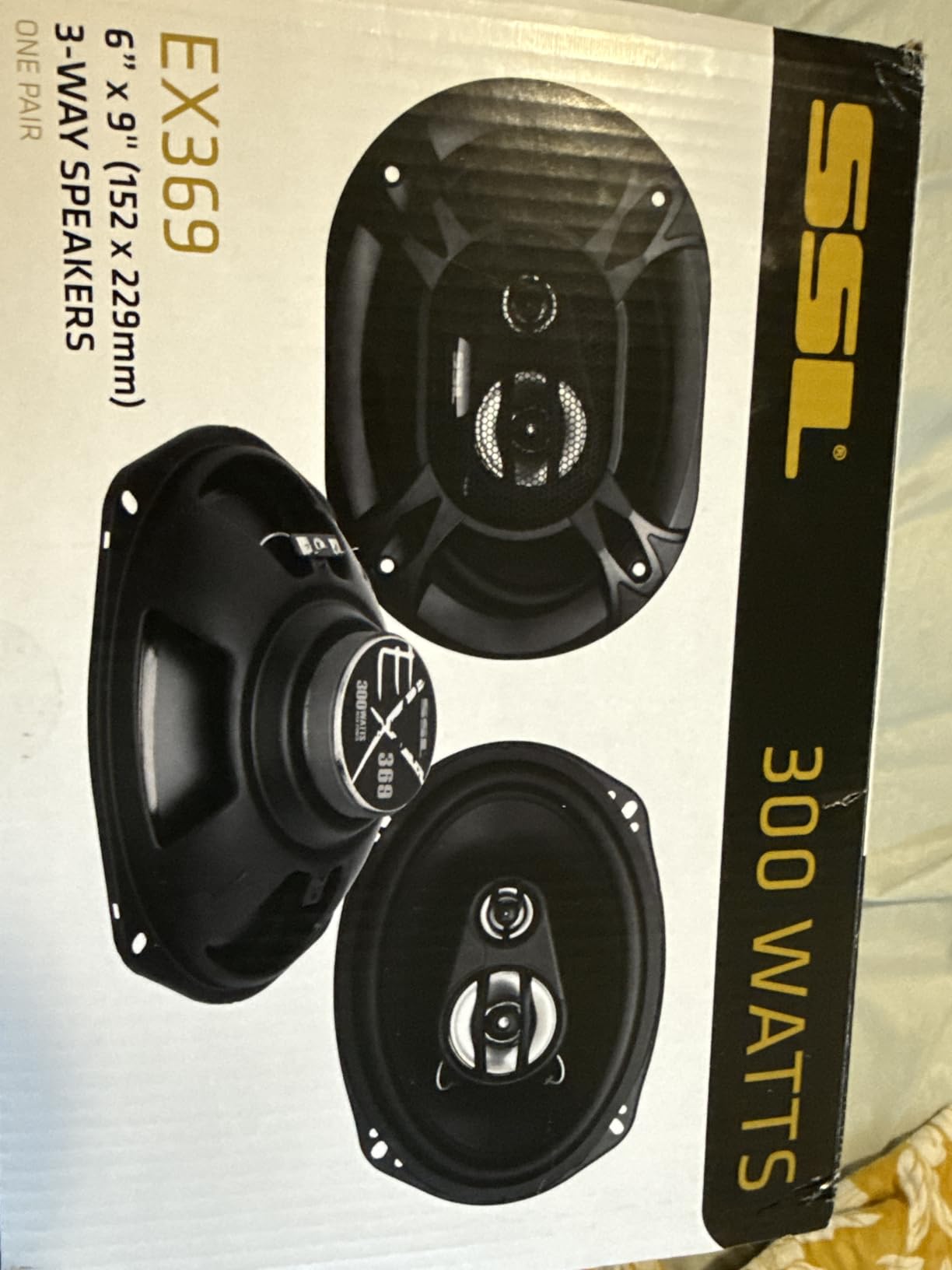
10. Sound Storm Laboratories EX369: Best Entry 6×9
Sound Storm Laboratories EX369 6 x 9 3 Way Car Speakers, 300 Watts Per Pair
6x9 inch 3-way coaxial
300W per pair
87 dB sensitivity
75 Hz to 18 kHz, 3-year warranty
Pros
- Entry cost for a real 6x9 bass footprint
- Poly injection cones resist crumbling over time
- 3-year parts and labor warranty
- Lightweight build fits tight rear-deck locations
- Works well alongside a separate subwoofer
Cons
- Lowest average rating here at 4.2 stars
- Highest one-star share at 9 percent
- 87 dB sensitivity needs more power for the same volume
- 75 Hz limit means little bass alone
- Light build distorts under a large amplifier
This is the most polarised product we tested. Long-term owners installed on rear-deck spacers report superb mids and highs, audible bass off a modest aftermarket radio, and a multi-week break-in where the speakers keep opening up.
Specs are honest in a way the marketing is not. The pair is rated at 300 watts, with a 75 Hz to 18 kHz response and 87 dB sensitivity, which is the lowest sensitivity figure on this list and the reason it needs more power for the same volume.
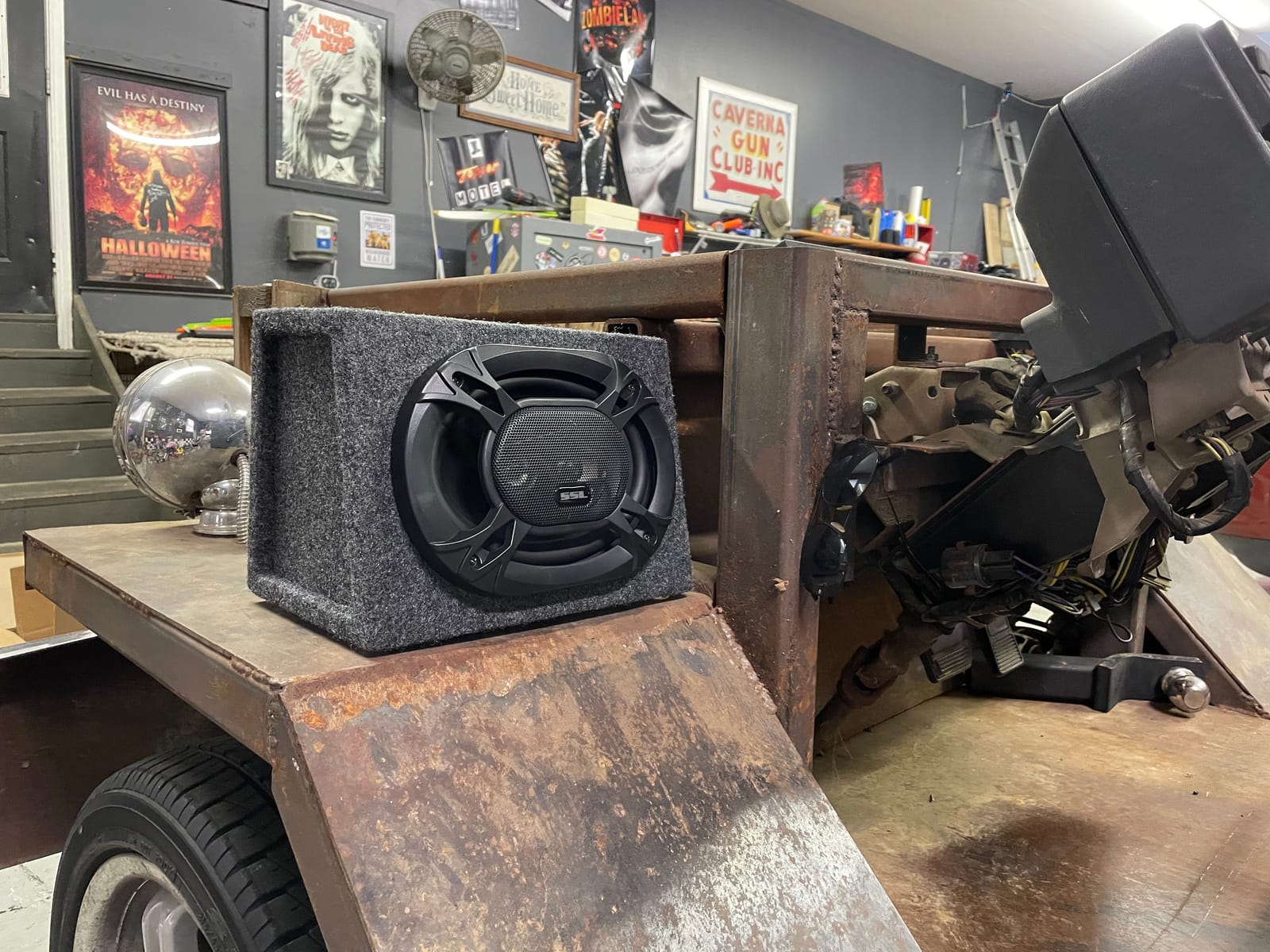
The poly-injected cone is the part we like most. It resists the crumbling that destroys paper-cone 6x9s after a few summers in a hot rear deck, and that single feature justifies the choice for a car that sees real heat.
Weight is 4 pounds for the pair with a 2.38 inch mounting depth and an 8.79 inch mounting hole, so it fits tight rear-deck locations more easily than heavier 6x9s.
Should you run an amplifier with it?
If you want it loud, yes. At 87 dB sensitivity it extracts less volume per watt than every other set here, so an amplifier is what turns the 300-watt figure into real output instead of distortion.
The recurring practical tip from owners is that these need a properly sealed mounting surface or they sound thin. Treat the rear deck or adapter as an enclosure, not a shelf.
Where it falls short
The 4.2-star average is the lowest here, with 9 percent one-star, the highest negative share on the list. Buyers report damaged cones and poor physical condition on delivery, so inspect the box before installing.
A 75 Hz low limit means there is little real bass from the speaker alone, and the light build distorts under moderate amplifier power. Treat it as a mid and high companion to a subwoofer rather than a bass source.
How to Choose Car Speakers That Actually Deliver Bass
Five specs predict bass output. Three common numbers do not, and separating them saves you from being sold a peak wattage figure that means nothing.
How to get deeper bass in your car without buying bigger speakers
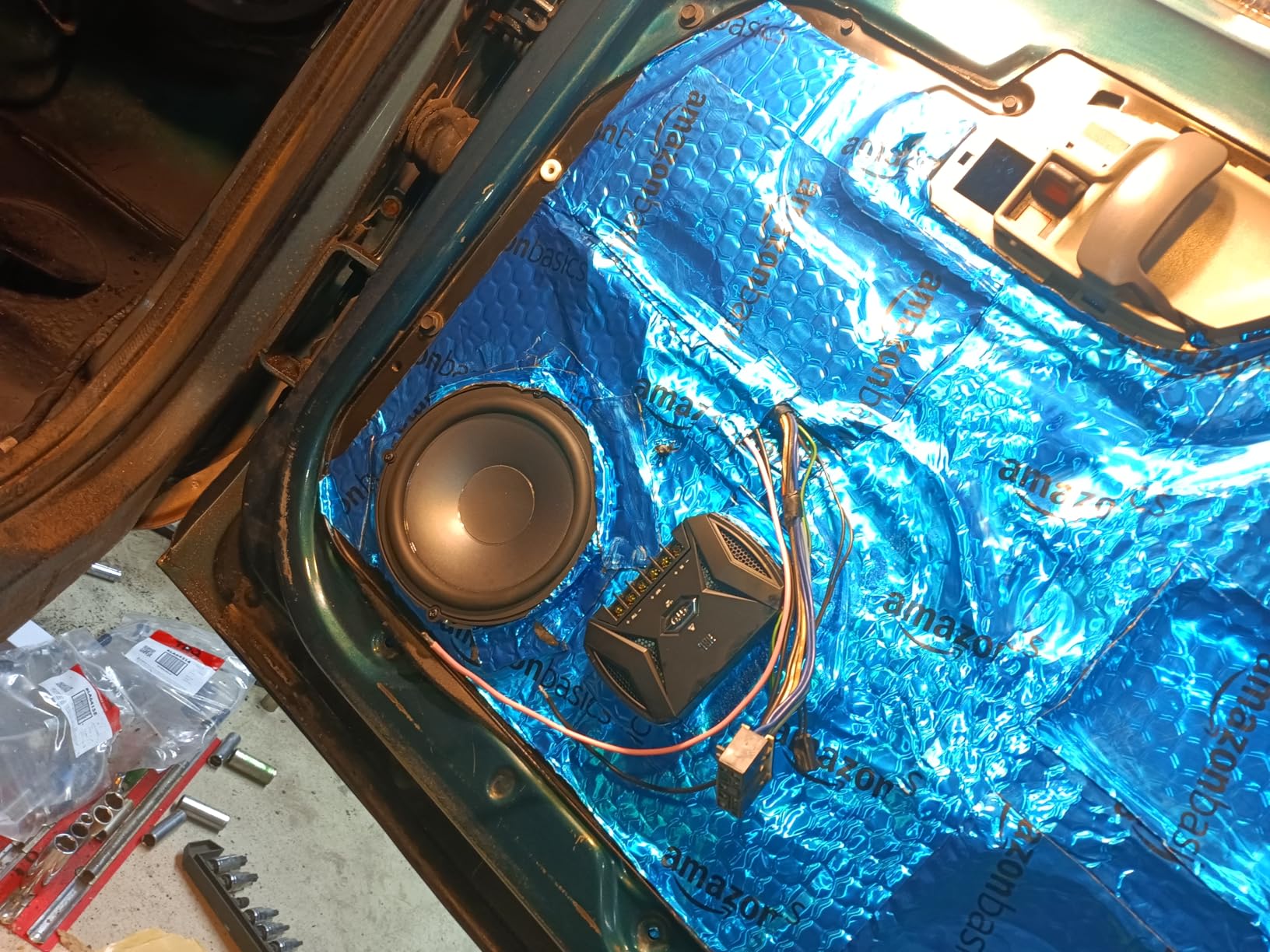
Seal the door. A door panel with a hole behind the speaker leaks bass energy into the cabin instead of pushing it at you. Foam gasket tape around the mounting ring and deadening material on the inner door skin recover a surprising amount of low end for no amplifier cost.
Match the amplifier to the RMS rating, not the peak rating. Peak power is a short burst. Continuous RMS is what the speaker handles all night, and running a 25-watt-nominal driver from a 200-watt amplifier is how cones get destroyed.
Buy the highest sensitivity you can. Anything above 90 dB at 1 watt and 1 meter makes noticeably more volume from a factory head unit, which often delivers only 15 to 25 watts RMS per channel.
Move the speaker somewhere with more air behind it. A rear deck or a door with a sealed baffle moves more air than a thin door card with a factory bracket.
Set a high-pass filter on the door speakers. When a subwoofer is in the system, letting the doors play the same low frequencies fights the sub and makes the bass sound wrong.
Coaxial, component or 3-way: which one makes bass?
A coaxial puts woofer and tweeter in one unit, which makes it a fast install and a safe default. A component set separates them so you can mount the tweeter where it images properly, and it is the better choice for front-stage quality. A 3-way coaxial adds a dedicated midrange driver, which reduces the vocal-versus-instrument clash you hear on two-way designs.
For bass specifically, cone area and excursion matter more than the number of drivers. That is why a 6×9 three-way like the KICKER DSC6930 out-moves a premium 6.5-inch two-way, and why the JBL GTO609C uses physically larger Plus One cones inside a 6-1/2 inch frame.
RMS, peak, sensitivity and impedance, decoded
RMS power tells you how much continuous power the speaker can absorb. Sensitivity in decibels tells you how loud it plays from one watt. Impedance in ohms tells your amplifier how hard the speaker works it, and a 3 ohm speaker draws more current than a 4 ohm one.
Frequency response tells you the low limit. A 30 Hz figure means real weight on bass lines. A 100 Hz figure means the bass starts high, no matter what the peak wattage claims. Peak power and max output figures are marketing and should carry no weight in your decision.
6.5 inch or 6×9: pick your fitment first
Most modern doors take 6.5-inch speakers, which is why so many sets on this list are that size. 6×9 speakers move more air and go lower, but they need a rear deck opening or a custom-cut panel.
Before anything else, measure your mounting hole diameter and your top-mount depth. A speaker that does not physically fit will not matter how good its specifications look. Many pickups and older sedans use 5×7 or 4×6 OEM patterns, and those need a specific speaker rather than an adapter.
How to install door speakers safely
Disconnect the negative battery terminal before touching any wiring, and keep the key out of the ignition while you work.
Photograph the existing speaker location and note which wire goes to which terminal. Reversed polarity kills bass response more often than any fault in the speaker.
Transfer the factory wiring harness to the new speaker, or use proper spade connectors rather than the thin included wire.
Check mounting depth against the door card before tightening, and use the included gasket or foam tape to seal the frame.
Refit the grille and check that the panel does not rattle on bass transients, which means the speaker is loose or the door card needs deadening.
Power up gradually and listen before installing the trim panels fully, so you can correct a wiring or fitment problem while access is still easy.
If you are building out from there, matching your speakers to the right amplifier matters as much as the speakers themselves, and our guide to bass amplifiers covers the power side. If your listening is at a desk rather than in a car, our bass shaker kit roundup solves low end in a completely different way.
Frequently Asked Questions
What type of speaker is best for bass?
Cone area and excursion decide bass output, not driver count. A 6×9 coaxial moves more air than a 6.5-inch design, and within the same size a larger cone with a rubber or butyl surround beats a small cone with a foam surround. For deep low end in a standard door, a 6.5-inch three-way coaxial with at least 45 watts RMS and sensitivity above 90 dB is the practical sweet spot. Below roughly 50 Hz you need a subwoofer.
How do I get deeper bass in my car?
Seal the door first, since a leaking door panel wastes low end. Then match amplifier power to the speaker RMS rating, choose speakers above 90 dB sensitivity if you are running a factory radio, and mount them where there is air behind the cone. Add a subwoofer if you want anything below 50 Hz, and set a high-pass filter on the door speakers so they stop fighting it.
What 6.5-inch car speakers have good bass and do not require an amp?
The Pioneer TS-A1681F leads this group with 91 dB sensitivity and 80 watts RMS of continuous handling, which is the best combination here for a weak factory source. The Rockford Fosgate Prime R165X3 at 45 watts RMS per speaker and the KICKER DSC650 at 100 watts max both also produce usable low end from a stock head unit. Speakers below 88 dB sensitivity need an amplifier to get loud.
How can I make my car speakers louder?
Sensitivity is the lever. Moving from an 87 dB speaker to a 92 dB one gives roughly 5 dB more output from the same amplifier, which is about the same perceived loudness increase as adding power. Beyond that, an amplifier matched to the speaker RMS rating removes the distortion that limits perceived volume, and sealing the door stops you losing the low end you already produce.
What are the signs of a blown car speaker or subwoofer?
A blown driver sounds scratchy or raspy on bass notes, gets worse as volume rises, and may distort on a single kick drum rather than across the whole frequency range. Play a sine sweep or a frequency sweep and listen for a point where the tone breaks up. In a door, rattling that only happens on bass transients usually means the speaker is loose or the panel needs deadening rather than a failed driver.
Conclusion
The Rockford Fosgate Prime R165X3 is our pick for the best car speakers for bass in 2026 because it delivers real low-end weight in a standard 6.5-inch door, holds up at volume, and works without an amplifier. If you want the deepest low end a coaxial can give you and your car has a 6×9 opening, the KICKER DSC6930 reaches down to 30 Hz with 92 dB sensitivity. The Rockford Fosgate remains the one to buy when a standard 6.5-inch door is all you have.
If you are sticking with a factory radio, choose on sensitivity rather than wattage, and the Pioneer TS-A1681F is built for exactly that. Whatever you pick, seal the door, match your amplifier to the RMS rating, and check your mounting depth before you order.