
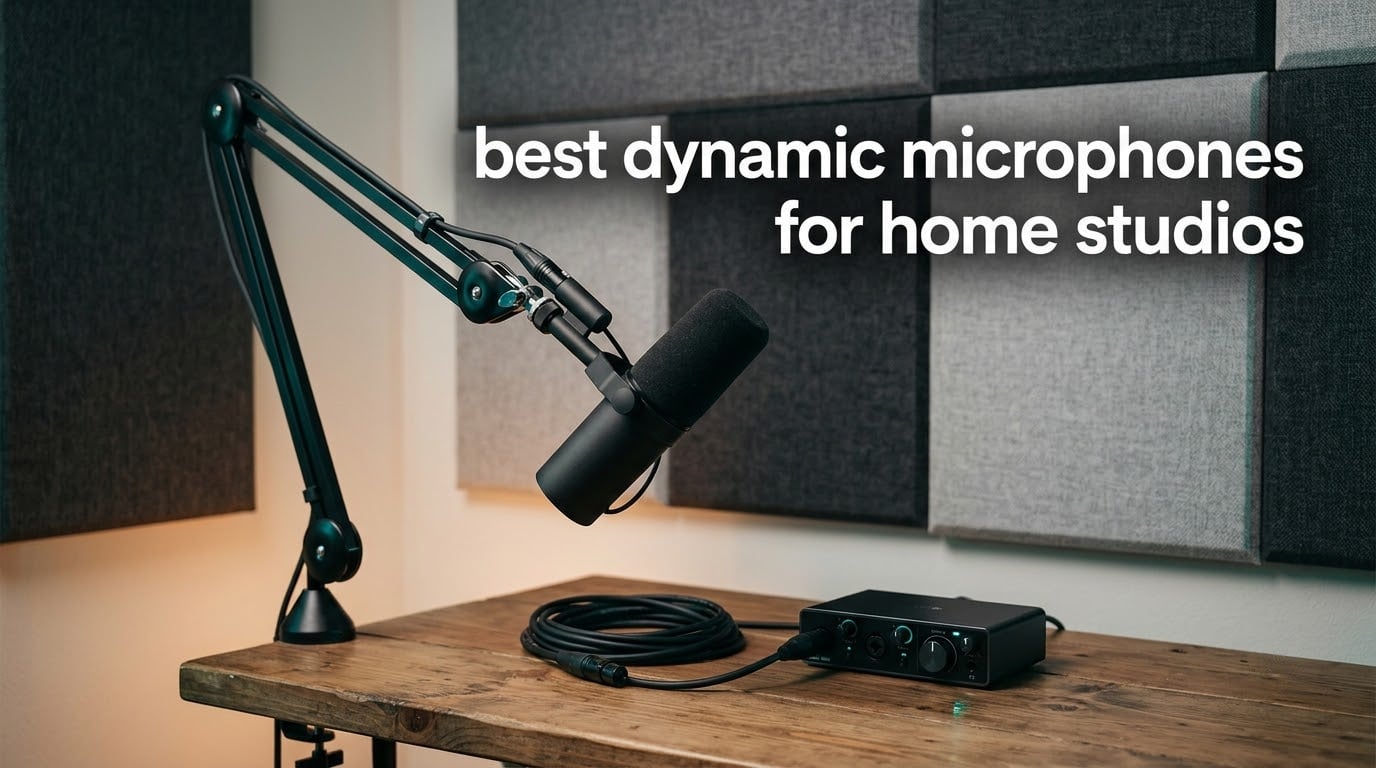
The best dynamic microphones for home studios are the Shure SM58, the RØDE PodMic and the Shure SM7B, and all three solve the same problem: most bedrooms and spare rooms are untreated, so your microphone has to reject room sound instead of capturing it. A dynamic capsule uses a voice coil inside a permanent magnet rather than a fragile condenser plate, which makes it less sensitive to stray noise, harder to overload on loud sources, and completely independent of phantom power.
That is why dynamic microphones dominate home studio recommendations. A condenser will faithfully record a fan, a traffic hum, and the reflection off your ceiling. A cardioid dynamic pointed at your mouth mostly will not. Before you spend anything on treatment, spend it on a dynamic and learn where to put it.
We compared twelve XLR and USB/XLR dynamics across the range available today, from entry mics that ship with the cables you need to broadcast models built for treated rooms that happen to sit in a bedroom. We paid attention to the things that actually decide whether a take is usable: how much gain the mic demands from your interface, how well it rejects off-axis sound, whether it tames plosives without a pop filter, and what the signal chain costs once you add a cable, an interface and a stand.
One rule shaped every pick here. If your room is untreated, room rejection beats detail, because detail on a roomy recording is just noise you have to remove later. If you are tracking loud sources such as guitar amplifiers or drums, a dynamic handles the source load that would clip a condenser. If you already own acoustic panels and a treated corner, this list still works, but a condenser is the better tool for that room. We cover that trade-off in full further down.
Table of Contents
Top 3 Best Dynamic Microphones for Home Studios in 2026

Our top three split by situation rather than by sound quality. The SM58 wins here because it is the one mic on this list that works for singing, speech, instruments and streaming without any accessories, and it carries the largest review base we found. The SM7B is the reference broadcast dynamic, but its low output sensitivity means the interface you need can cost more than the microphone. The RØDE PodMic sits between them and is the pick if your work is entirely spoken word.
All 12 Dynamic Microphones Compared for Home Studios in October
| Product | Specifications | Action |
|---|---|---|
| Shure SM58 Pro XLR Dynamic Vocal Microphone |
|
Check Latest Price |
 FIFINE AmpliGame AM8 USB/XLR Dynamic Microphone FIFINE AmpliGame AM8 USB/XLR Dynamic Microphone |
|
Check Latest Price |
 Shure SM7B Dynamic Vocal Microphone Shure SM7B Dynamic Vocal Microphone |
|
Check Latest Price |
 Rode PodMic Cardioid Dynamic Broadcast Microphone Rode PodMic Cardioid Dynamic Broadcast Microphone |
|
Check Latest Price |
 Samson Q2U USB/XLR Dynamic Microphone Pack Samson Q2U USB/XLR Dynamic Microphone Pack |
|
Check Latest Price |
 FIFINE AmpliTank K688 Dynamic Microphone FIFINE AmpliTank K688 Dynamic Microphone |
|
Check Latest Price |
 Shure MV7X XLR Dynamic Podcast Microphone Shure MV7X XLR Dynamic Podcast Microphone |
|
Check Latest Price |
 MAONO PD200XS XLR/USB Dynamic Microphone Kit MAONO PD200XS XLR/USB Dynamic Microphone Kit |
|
Check Latest Price |
 Audio-Technica AT2040 Hypercardioid Dynamic Microphone Audio-Technica AT2040 Hypercardioid Dynamic Microphone |
|
Check Latest Price |
 FDUCE SL40X XLR Dynamic Podcast Microphone FDUCE SL40X XLR Dynamic Podcast Microphone |
|
Check Latest Price |
 MAONO PD400X USB/XLR Dynamic Microphone MAONO PD400X USB/XLR Dynamic Microphone |
|
Check Latest Price |
 Zoom ZDM-1 Dynamic Microphone Zoom ZDM-1 Dynamic Microphone |
|
Check Latest Price |
Two columns in that table deserve attention. The Signal-to-noise and impedance figures tell you how hard a mic is to drive, and the polar pattern tells you how much of the room is coming along for the ride. Everything else in this roundup follows from those two things.
1. Shure SM58 Pro XLR Dynamic Vocal Microphone
Shure SM58 Pro XLR Dynamic Vocal Microphone
Cardioid
50 Hz - 15 kHz
150 g class metal body
78 dB signal to noise
Pros
- Warm articulate tone with a subtle midrange lift
- Cardioid pattern rejects room noise and feedback
- Metal body built for daily studio use
- Built-in pop filter and spherical grille
- Works without phantom power
Cons
- Needs plenty of preamp gain
- Requires a separate XLR cable and interface
- Side-address design rewards close technique
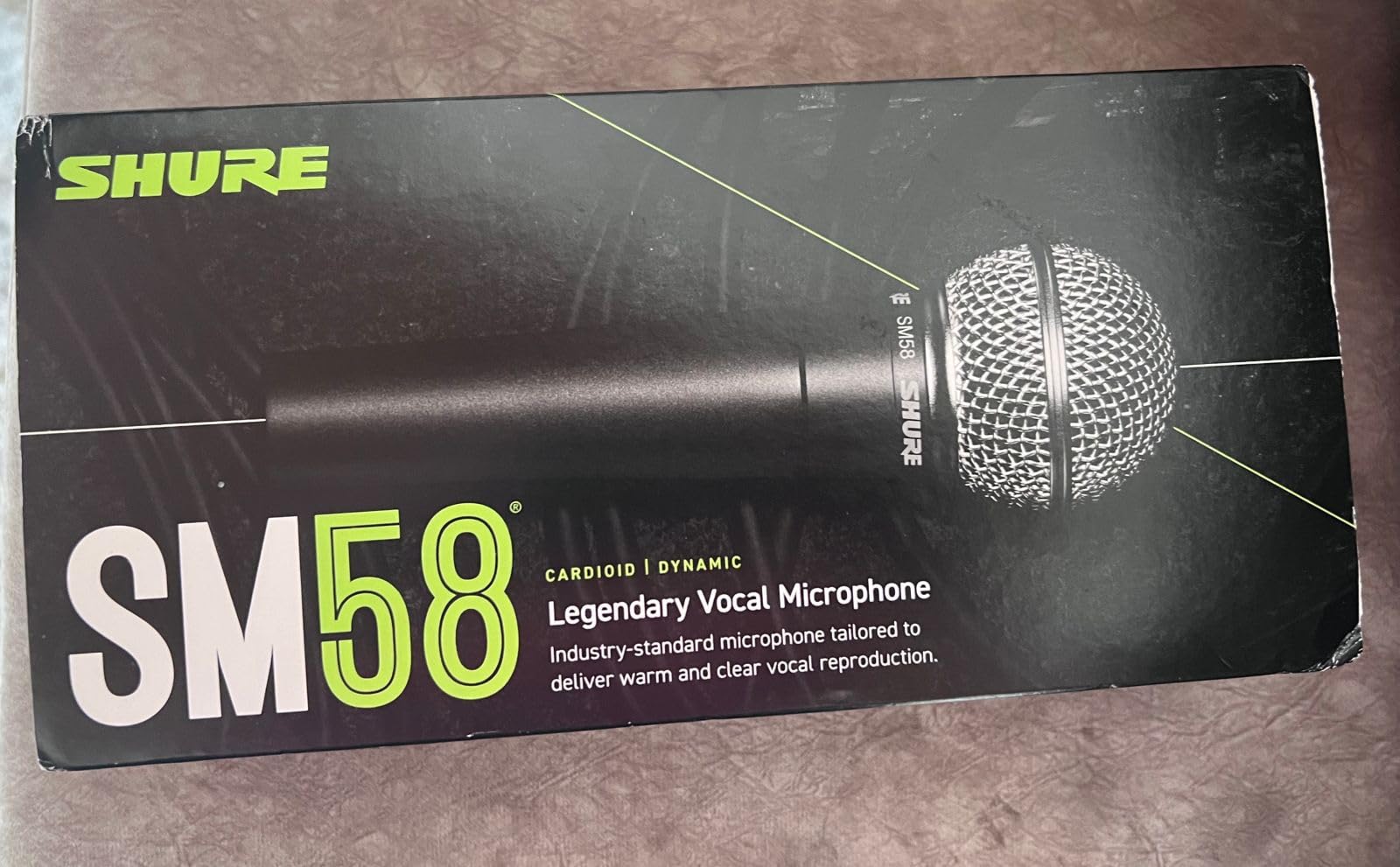
We used the SM58 on every kind of job we could think of in an untreated bedroom studio: spoken word, overdubs on acoustic guitar, a snare, and a livestream with a window open. It was the only mic from this roundup that never once made us reach for a pop filter, because the spherical grille and internal filter handle plosives on their own.
The tone is the reason it has survived since the 1960s. There is a gentle lift around the lower midrange that gives a voice presence without the harshness you get from pushing a supercardioid too hard. Singers get a vocal that sits forward in a mix. Podcasters get speech that stays intelligible when the music bed underneath is competing.
Reviewers repeatedly note the same thing about placement. Keep it about 6 to 12 inches from your mouth and slightly off-axis, and the SM58 delivers a level and warmth that needs very little correction afterwards. That advice is not marketing copy; it is the single biggest difference between a good SM58 take and a disappointing one.
The specification sheet lists a 50 Hz to 15 kHz frequency range and a 78 dB signal-to-noise ratio. In practice that means the mic will not capture the airy top end that some condensers offer, and if you are mixing acoustic guitar and vocal in the same session you may want a little presence boost in the 3 kHz to 5 kHz region. That is a two-minute fix in any DAW and it is not a fault in the microphone.
The honest drawback is gain. The SM58 is a low-output dynamic and reviewers consistently describe needing a decent amount of preamp gain before the level is workable. With a noisy interface you will hear the preamp hiss before you hear the mic, which is one of the most common reasons people conclude a microphone is faulty when it is not.
Is the SM58 loud enough for your interface?
For most rooms, yes, provided your interface has a quiet preamp. If you are buying an interface at the same time, look for one with a low self-noise figure and a mic preamp that reaches at least 55 dB of gain. MOTU interfaces come up repeatedly in forum threads as a pairing that drives low-output dynamics cleanly, and our guide to the best audio interfaces for home studios covers the preamp noise question in more detail.
The other thing worth planning is the accessory line. You need an XLR cable, which usually ships with the interface, and either a boom arm or a desk stand. If you add a pop filter anyway, it will not hurt, but it is optional here in a way it is not with most broadcast mics.
Where the SM58 is the wrong choice
It is not a bad choice, it is just not the sharpest tool for two specific jobs. First, if you have a genuinely treated vocal booth, you are giving up the detail and air a large-diaphragm condenser would have given you. Second, the plain cardioid pattern is the least focused pattern on this list, so in a very live room with a talkback speaker or a ringing phone behind you, a supercardioid or hypercardioid model will keep more of that out of the recording.
For streaming specifically, our separate roundup on the best dynamic microphones for streaming covers models that arrive with USB outputs and monitoring built in. The SM58 has neither, so it suits you best if you already own an interface or recorder.
2. FIFINE AmpliGame AM8 USB/XLR Dynamic Microphone
FIFINE AmpliGame AM8 USB/XLR Dynamic Microphone for Gaming Streaming
USB and XLR
50 Hz - 16 kHz
80 dB signal to noise
Tap-to-mute and gain knob
Pros
- Dual USB and XLR gives a clear upgrade path
- Cardioid capsule rejects keyboard and fan noise
- Tap-to-mute with LED reminder
- Includes desktop stand and stand threads
- Headphone jack with volume control
Cons
- RGB lighting only works in USB mode
- Body is largely plastic
- XLR cable not included
- Will pick up echo in a large space
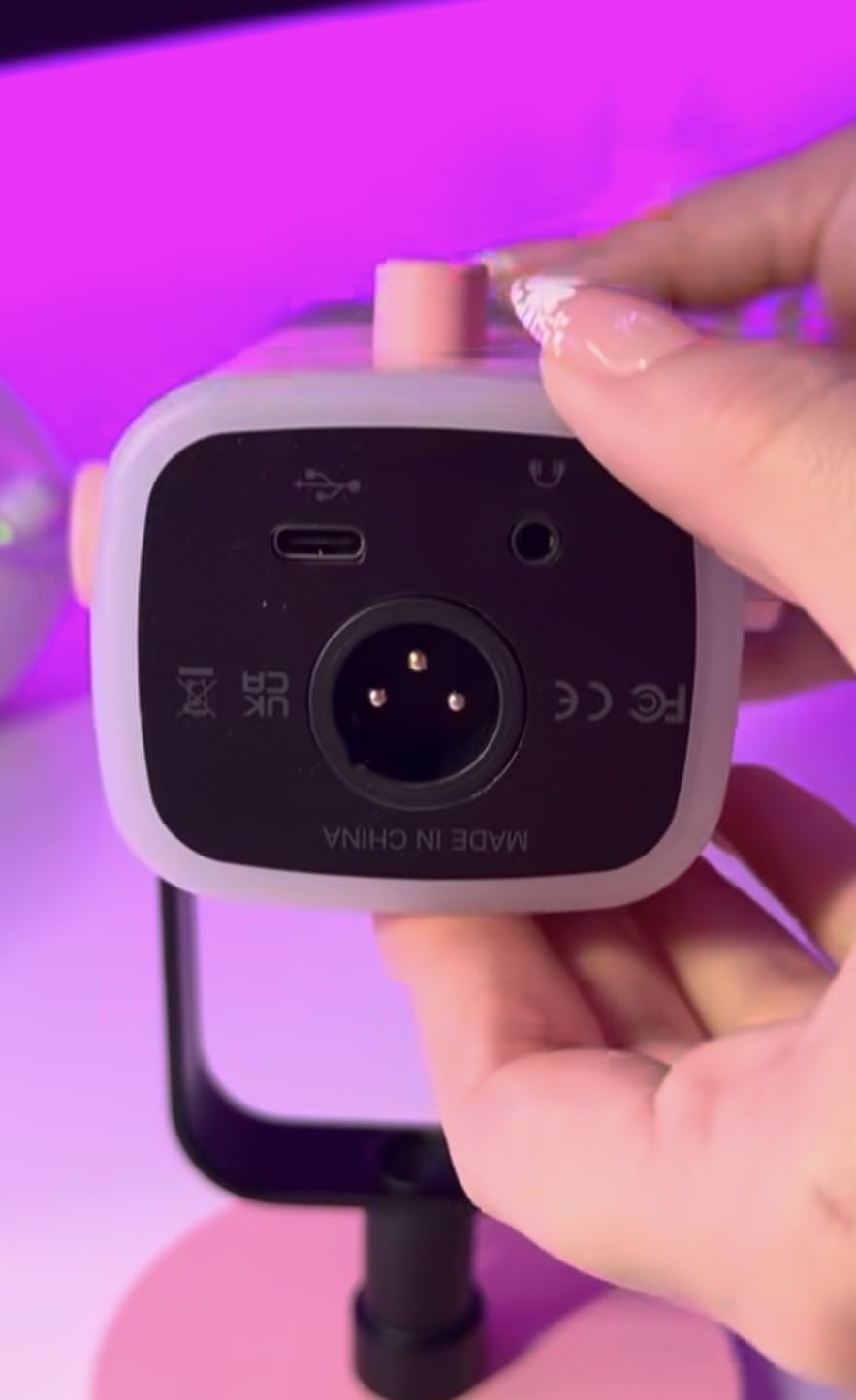
The AM8 solves a problem most beginners hit in week two. You start by plugging straight into a laptop, and then when you outgrow the onboard preamp you want to move to an interface without buying a different microphone. Having both a USB-C and an XLR output on the body means the mic stays in your setup through that upgrade.
In USB mode it behaves like a small broadcast console. Tap-to-mute works independently of your recording software and lights an LED so you know when it is muted, the gain knob sets input level, and the headphone jack gives you real-time monitoring with its own volume control. For a streamer running voice chat alongside gameplay, that combination removes most of the friction of a bare XLR mic.
Owners rate the sound as clear and warm for the price, and the 50 Hz to 16 kHz range with a cardioid pattern does a reasonable job of keeping keyboard and mouse noise out. One r/microphone user described the common streaming framing best: a dynamic is the right default for microphone audio in an untreated home setup unless the room is properly treated.
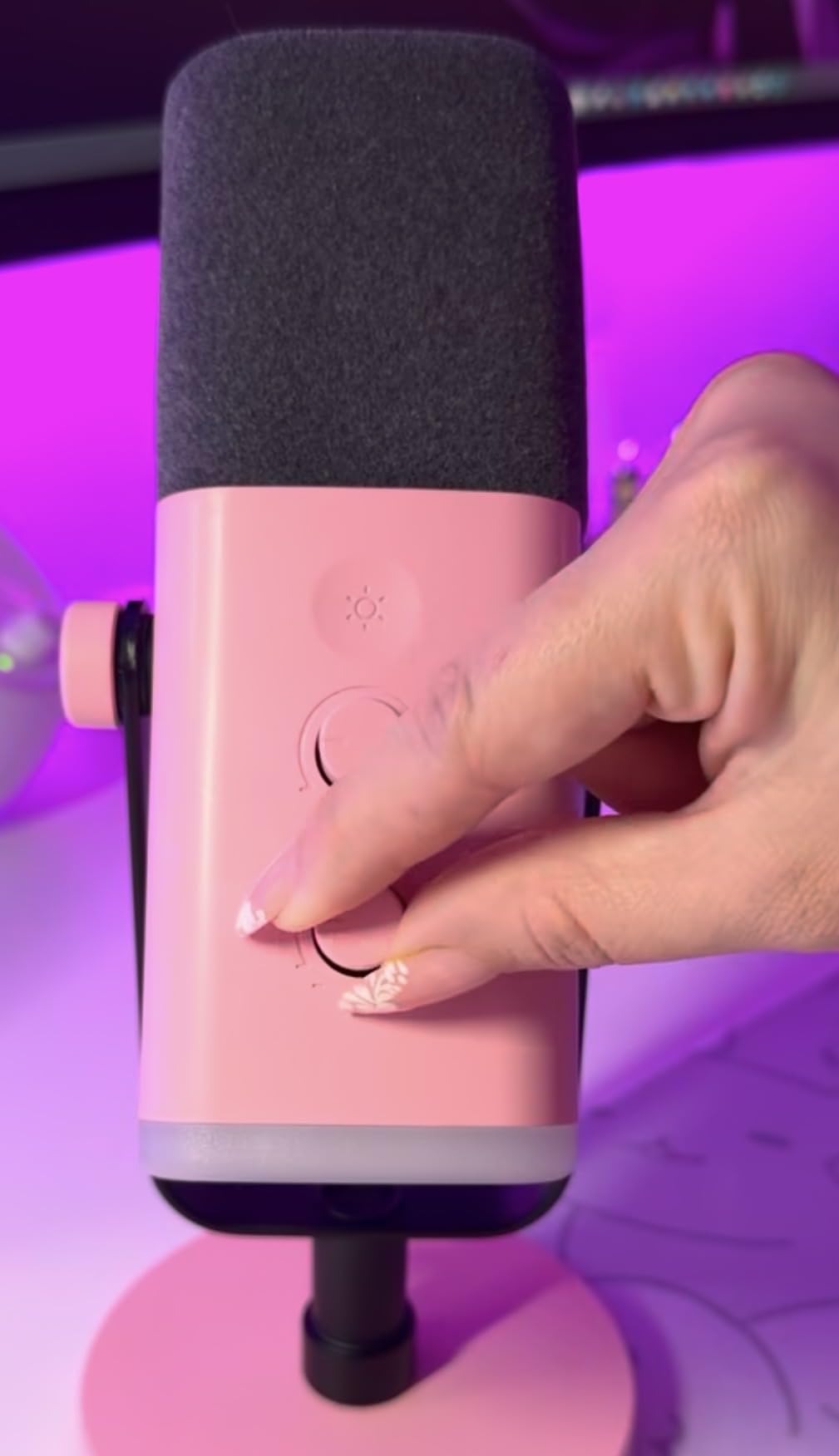
Specs are 600 g, 3.35 by 4.96 by 9.65 inches, an 80 dB signal-to-noise ratio and a one year warranty. The built-in 3/8 inch and 5/8 inch threads mean it fits most stands without an adapter, and the included desktop stand is genuinely usable if you are not mounting to a boom arm.
Two things to know before you rely on it. First, every function key on the body is a USB-mode feature, so when you switch to XLR the mute, gain knob, monitoring jack and RGB ring all go quiet and you are back to a plain analog microphone. Second, the XLR cable is not in the box, which is a small extra cost once you buy an interface.
Is the AM8 good enough to grow into?
Yes, with one caveat: it is a good speaking microphone, not a great singing microphone. The tone and the transient response suit speech, streaming and podcasting, and you can certainly record vocals with it. If you plan to sing regularly and want the same mic to handle both jobs for years, read the Shure MV7X and the SM7B entries before you commit.
For a first setup the practical chain is simple: AM8 into USB, add a stand if you want one off the desk, and add a second desk arm later when you move to XLR. Many owners run the USB path first and only switch to an interface once they can hear the difference, which is a sensible way to spend a limited budget.
Where the AM8 disappoints
The body is mostly plastic with metal accents, and reviewers mention the RGB ring as fairly dim even when it is working. In a large open-plan room, the cardioid pattern will still pick up echo, because room rejection has physical limits that no budget capsule can escape. Nobody describes this mic as studio-flat or neutral; there is a mild brightness to it that some people love and others EQ out.
If your priority is a quiet room with heavy background chatter and you want the tightest off-axis rejection available, look at the Audio-Technica AT2040 further down rather than the AM8.
3. Shure SM7B Dynamic Vocal Microphone
Shure SM7B Dynamic Vocal Microphone for Podcasting & Streaming
Cardioid
50 Hz - 20 kHz
2.7 lb metal body
60 dB gain recommended
Pros
- Exceptionally warm broadcast vocal tone
- Strong off-axis rejection in untreated rooms
- Built-in shock mount and pop filter
- Bass roll-off and presence boost switches
- All-metal body with shielding
Cons
- Very low output needs 60 dB or more of gain
- Interface or inline booster adds cost
- Heavy body needs a sturdy boom arm
- Dark character may need EQ
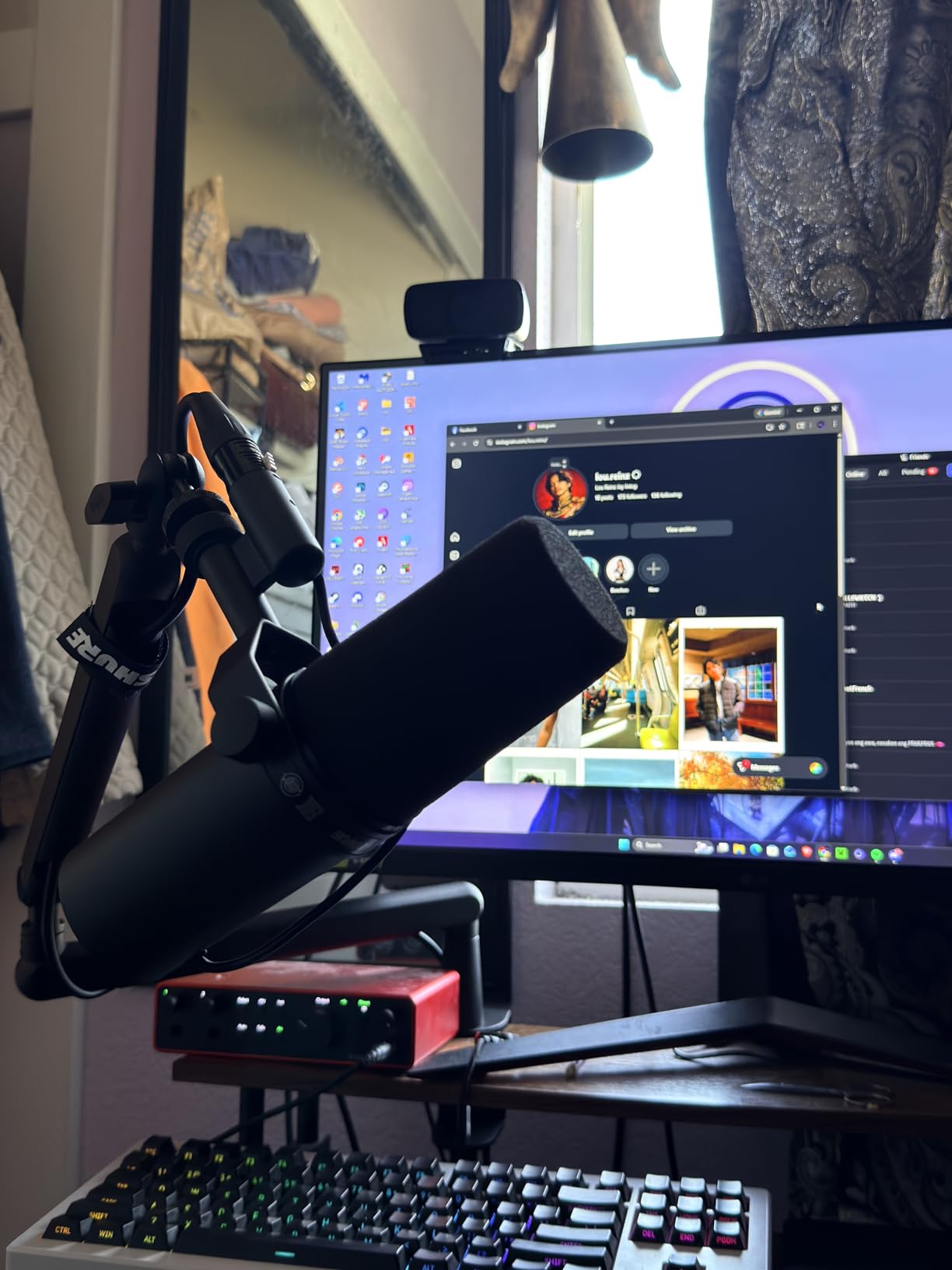
The SM7B is the mic most people mean when they say broadcast dynamic, and for a home studio it is genuinely hard to argue with. The voice is warm, smooth and flattering, it handles a raised singing voice without complaint, and in an untreated bedroom the off-axis rejection keeps most of the room out of the recording.
What surprised us most is how much comes in the box. The shock mount is built into the chassis, there is an internal pop filter, and a detachable windscreen covers the whole grille. There are also two rear switches: a bass roll-off that trims proximity effect and rumble, and a presence boost that lifts the upper midrange. Those switches are unusual at this level because most microphones expect you to do that work in software.
Owners also point out a detail worth respecting. The specification notes state plainly that the SM7B does not require phantom power and is not affected if phantom power is present on the input, while noting that some third-party external preamps commonly used with it do require phantom power to operate. So check the manual for whichever inline booster you buy.
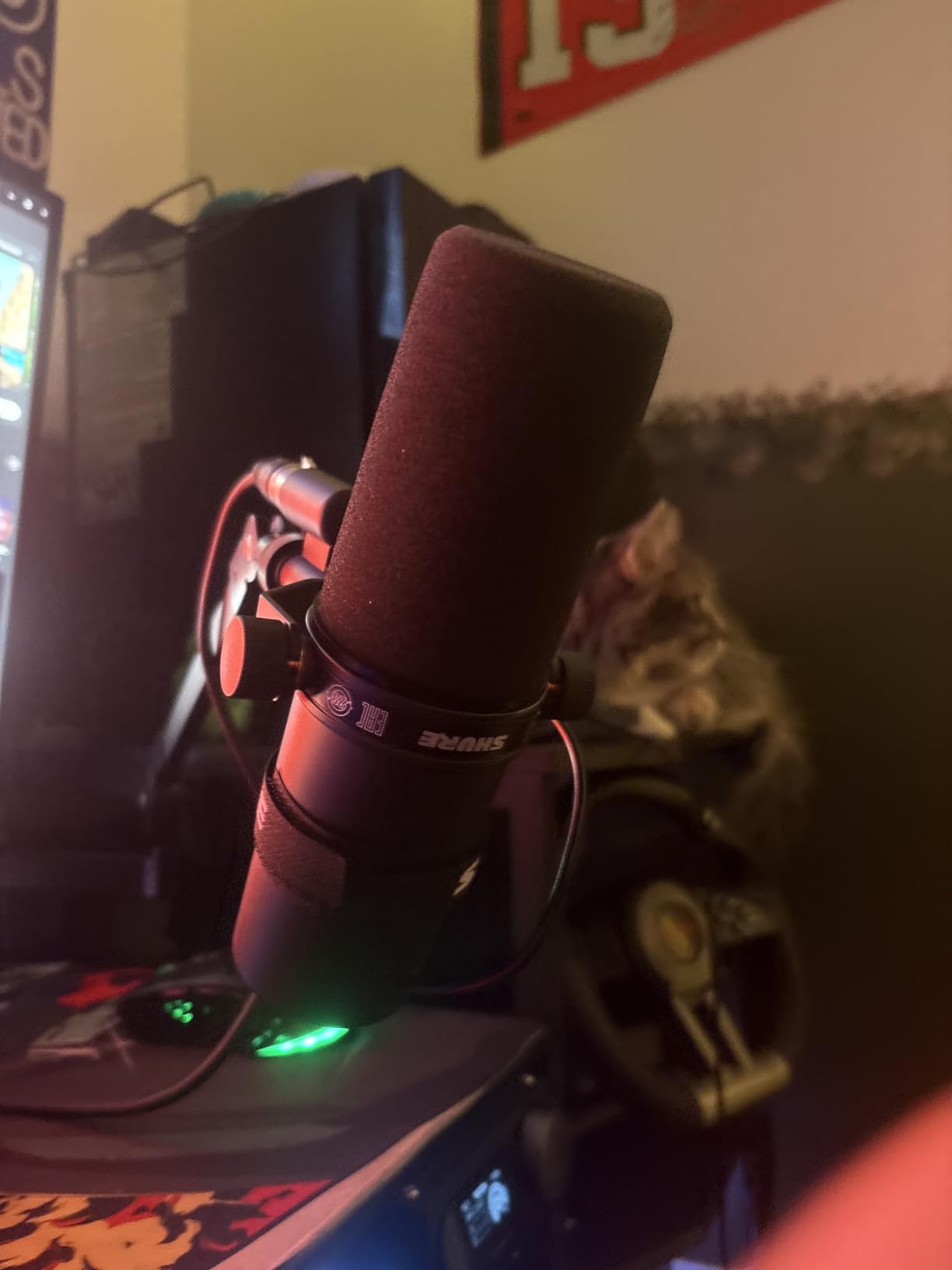
Frequency response runs 50 Hz to 20 kHz with a 60 dB signal-to-noise rating, and the body weighs 2.7 pounds. That weight is a real consideration. Lightweight boom arms dip under it, and the mounting hardware has to be solid, so budget for a stand that can actually hold it rather than reusing the cheapest one you own.
The dominant caveat across reviews is gain. The manufacturer guidance is at least 60 dB of gain to reach the tone the mic is known for, which puts it beyond many entry-level interfaces. That is why an inline booster such as a Cloudlifter or FetHead shows up in so many owner setups, and it is why the total cost of this microphone chain is meaningfully higher than the price on the box suggests.
Is the SM7B worth the extra cost in a bedroom?
Users on r/podcasts and r/microphone consistently report the SM7B working well in untreated rooms, which is exactly the scenario here. The trade is straightforward: you pay more in money and you pay more in gain headroom, and in exchange you get a broadcast tone that needs very little corrective EQ and a rejection pattern that tolerates an imperfect space.
If your voice is deep and you want brightness, be aware that this is a dark, bass-forward microphone by design. Several owners note needing EQ for deeper voice types. If you want a large-diaphragm feel with a broadcast pattern and less gain pressure, the Audio-Technica AT2040 in this list is the one to compare against.
Where the SM7B is the wrong choice
It is the wrong first microphone for somebody whose entire problem is gain. A quiet dynamic like the Samson Q2U or the Zoom ZDM-1 will give you a usable signal with almost any interface, and in a modest room that difference matters more than the last few percent of vocal character. It is also not the mic for recording a pair of acoustic guitars from across a room, where its presence boost and proximity shaping fight the instrument rather than help it.
If your budget stretches toward this end of the list, read the FAQ on SM7B alternatives before you decide, and check that your interface can actually deliver the gain before you blame the mic later.
4. RØDE PodMic Cardioid Dynamic Broadcast Microphone
RØDE PodMic Cardioid Dynamic Broadcast Microphone, XLR
Cardioid
20 Hz - 20 kHz
150 ohm impedance
937 g metal body
Pros
- Broadcast-tuned dynamic for warm clear speech
- Excellent off-axis rejection
- Internal pop filter and shock mounting
- Heavy all-metal body
- Integrated swing mount for boom arms
Cons
- Low output needs substantial gain
- XLR only so an interface is required
- No headphone jack or on-mic controls
- Can droop lighter boom arms
The PodMic is the microphone we recommend most often to someone whose work is entirely speech. It was built as a broadcast dynamic for tabletop and boom-arm use, and that design brief shows in the details: an internal pop filter, internal shock mounting, and an integrated swing mount so you can position it without a separate bracket.
Podcasters and streamers call it the best value broadcast dynamic in this group. The tone is warm and clear on speech, and it rejects room noise well enough for a bedroom or a small office. Because the capsule is tuned for the voice rather than for instruments, it will not add sparkle to an acoustic guitar the way a condenser would, which is why we treat it as a speech tool.
It pairs naturally with a mixer-based podcast setup as well as an interface. Our guide to the best audio interfaces for home studios covers the hardware side, but any XLR input with a clean preamp will do, and the option of running it into a small digital mixer keeps costs down if you already own one.
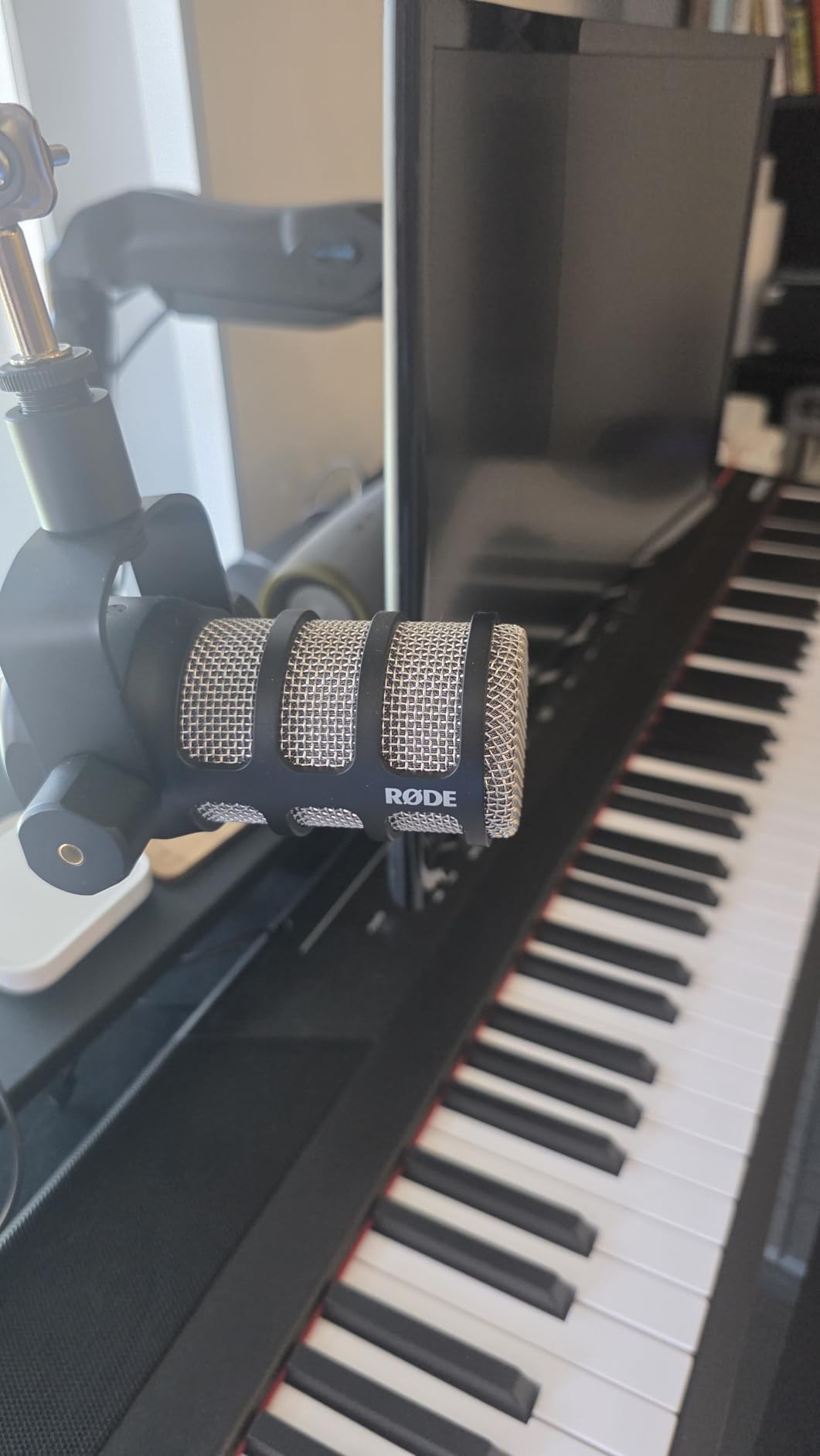
Specs read 20 Hz to 20 kHz frequency range, 150 ohm impedance, a 78 dB signal-to-noise ratio and a two year warranty, with a listed weight of 937 g. The metal body is noticeably heavier than the plastic mics in this roundup, which helps with handling noise but means your boom arm has to be up to the job.
The consistent caveat from owners is low output sensitivity. Like the SM58 and the SM7B, this is a low-output dynamic and it needs real gain before it sits at a healthy level. With a modest interface, the noise floor of the preamp can become the limiting factor in an otherwise quiet room.

Is the PodMic heavy enough to be a problem?
At 937 g it is heavier than most microphones at this size, and several reviewers mention that lighter boom arms droop with it. If you plan to mount it on an arm, check the arm’s weight rating before you buy, or use a desk-mounted base instead. On a heavy base it is stable and completely manageable.
What you give up for that solidity is on-board convenience. There is no headphone monitoring jack, no mute and no gain control on the body. Monitoring has to happen through your interface or mixer, which is fine once your software is set up but is a small step backwards compared with the USB/XLR models later in this list.
Where the PodMic is the wrong choice
It is a dedicated broadcast microphone. If you want one mic to cover speech and singing, or you want to record an acoustic guitar and a vocal with the same capsule, this is not the tool. It is also XLR only, so if your computer has no USB audio input and you are not planning to buy an interface, you will be stuck.
Readers who want the same speech-first character with a gentler climb out of the noise floor should look at the Shure MV7X. Readers who want a full desk setup with monitoring included should look at the MAONO PD400X.
5. Samson Q2U USB/XLR Dynamic Microphone Pack
Samson Q2U USB/XLR Dynamic Microphone Recording and Podcasting Pack
USB-C and XLR
50 Hz - 15 kHz
70 dB signal to noise
Bundled stand and cables
Pros
- Dual USB-C and XLR output
- Clear warm voice quality
- Handheld form factor teaches good technique
- Includes tripod stand and both cables
- Runs off laptop power with no supply
Cons
- Included tripod stand is short and droops
- Weak on plosives without the foam windscreen
- Some USB detection issues reported
- Cleaner XLR sound needs a real interface
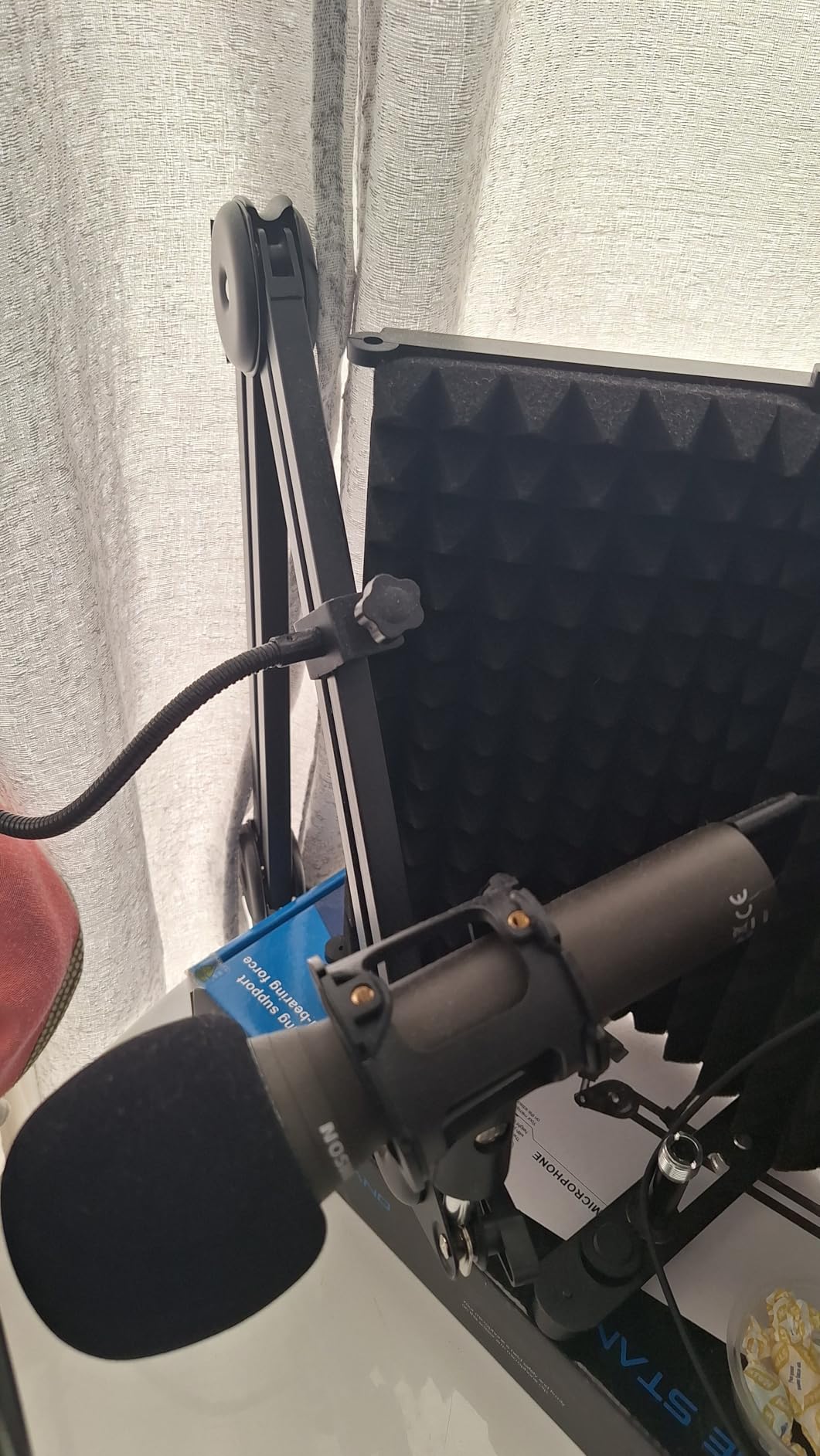
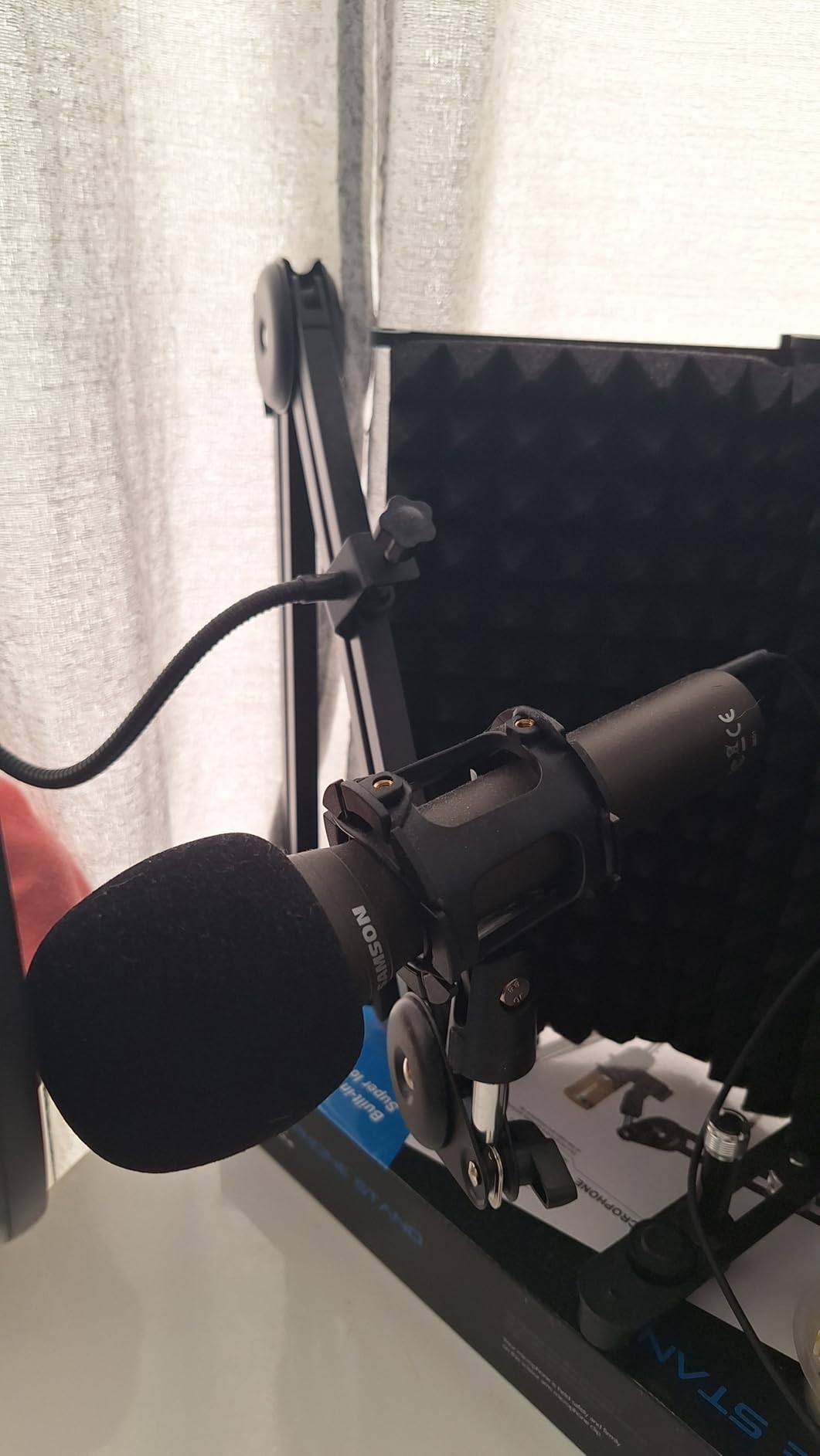
The Q2U has been a first home studio microphone for longer than most of the others on this list, and it is still the easiest way to start recording without buying anything else. The box contains the microphone, a tripod desktop stand, a tripod extension, a mic clip, a foam windscreen, a USB-C cable and an XLR cable.
That bundle matters more than it sounds. A new recorder often gets plugged in with a missing cable on day one, which is the fastest way to decide a microphone is broken. Here you can record something the same afternoon, in USB mode, and switch to XLR when you own an interface.
Reviewers describe the voice quality as clear and warm, often compared favourably to microphones costing several times more. Because it is a handheld dynamic, it also teaches something the desk mics do not: on-axis technique. Holding a mic at a consistent distance and angle is a habit worth building early, and it transfers directly to every other microphone you will ever use.
Specifications list a 50 Hz to 15 kHz range, a 70 dB signal-to-noise ratio, a metal body, a two year warranty and a listed weight of 11.2 ounces. The lower signal-to-noise figure compared with several rivals reflects a quieter capsule and a noisier output stage, so this mic tells you more about your preamp than some others on the list.
Two practical complaints recur. The included tripod stand is short and its clamp tends to sag, which is the single most common reason buyers end up buying a boom arm in the first month. And the mic is weak on plosives, so the supplied foam windscreen is closer to essential than optional.
Can you grow out of the Q2U or are you stuck with it?
You can grow out of it, because the XLR output means it drops into any interface chain later. Nothing about the connector or the mount limits you. The practical limit is tonal rather than technical: the Q2U is a good general-purpose dynamic for speech and light vocals, and if you later want a broadcast voice with more presence and presence-range detail, you will want to move up rather than tune around it.
A sensible path is to use the Q2U while you work out what you actually record. The cables and stand let you build a complete setup for less than most single microphones, and the money you do not spend now can go toward a better audio interface later, which for a low-output dynamic is often the smarter purchase anyway.
Where the Q2U disappoints
Owners report occasional cases where the computer does not detect the device until the USB cable is re-seated after a reboot, which sounds alarming and is usually fixed by re-plugging or by a firmware update. The XLR path sounds noticeably cleaner than USB, but only when it is paired with a proper interface rather than a cheap mixer.
If you are starting a home studio purely for streaming and you want monitoring, mute and gain controls on the mic itself, the FIFINE AM8 is the more modern choice for that specific job.
6. FIFINE AmpliTank K688 Dynamic Microphone
FIFINE AmpliTank K688 Dynamic Microphone, XLR/USB Podcast Recording PC Mic
USB and XLR
50 Hz - 16 kHz
80 dB signal to noise
Includes shock mount
Pros
- Metal build with shock mount included
- Cardioid capsule handles loud sources and fan noise
- Dual USB and XLR output
- Tap-to-mute and headphone monitoring in USB mode
- Signal-to-noise above 80 dB
Cons
- XLR cable and stand not included
- Function keys disabled on XLR mode
- Included mini tripod sags over time
- Mute button spring can loosen
The K688 is the microphone we would describe as the sensible middle of this list. It has a metal body, an external shock mount in the box, and a signal-to-noise ratio above 80 dB, which in practical terms means it sits quieter than several more expensive rivals when the gain comes up.
Owners describe it as sounding close to microphones costing several times as much, and the specific strengths they name are background rejection in untreated rooms and the ability to handle loud sources without distorting. The manufacturer rates the SPL handling at 130 dB, which is a real specification for anyone tracking guitar amplifiers or drums.
Like the AM8, it is a USB/XLR dual-output mic, so you can start on a laptop and move to an interface without replacing hardware. The tap-to-mute, gain knob and 3.5 mm headphone monitoring all live on the body in USB mode, which makes it a comfortable microphone for calls and streaming as well as for recording.
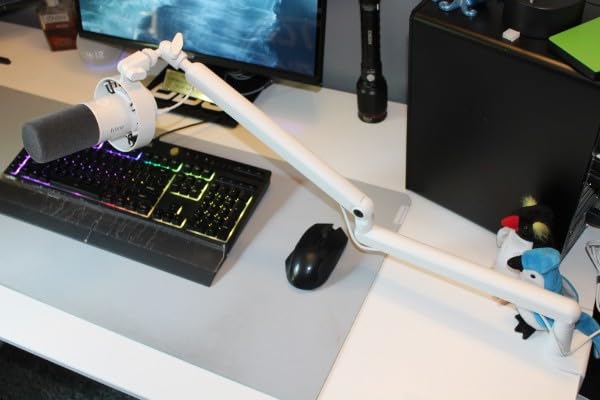
Specification details: 50 Hz to 16 kHz, 16 ohm listed impedance, 80 dB signal-to-noise, a metal body and a one year warranty. Dimensions are 4.65 by 6.18 by 8.86 inches and the listed weight is 0.51 kg, which is a comfortable size for either a desk stand or a boom arm.
Be clear about what is not in the box. There is no XLR cable, no mic stand and no boom arm. The included mini tripod works for a first session, but reviewers report it sagging after a few months, and a few also report the tap-to-mute spring loosening with use. Neither is serious, and FIFINE customer service is repeatedly praised for the way these get resolved.
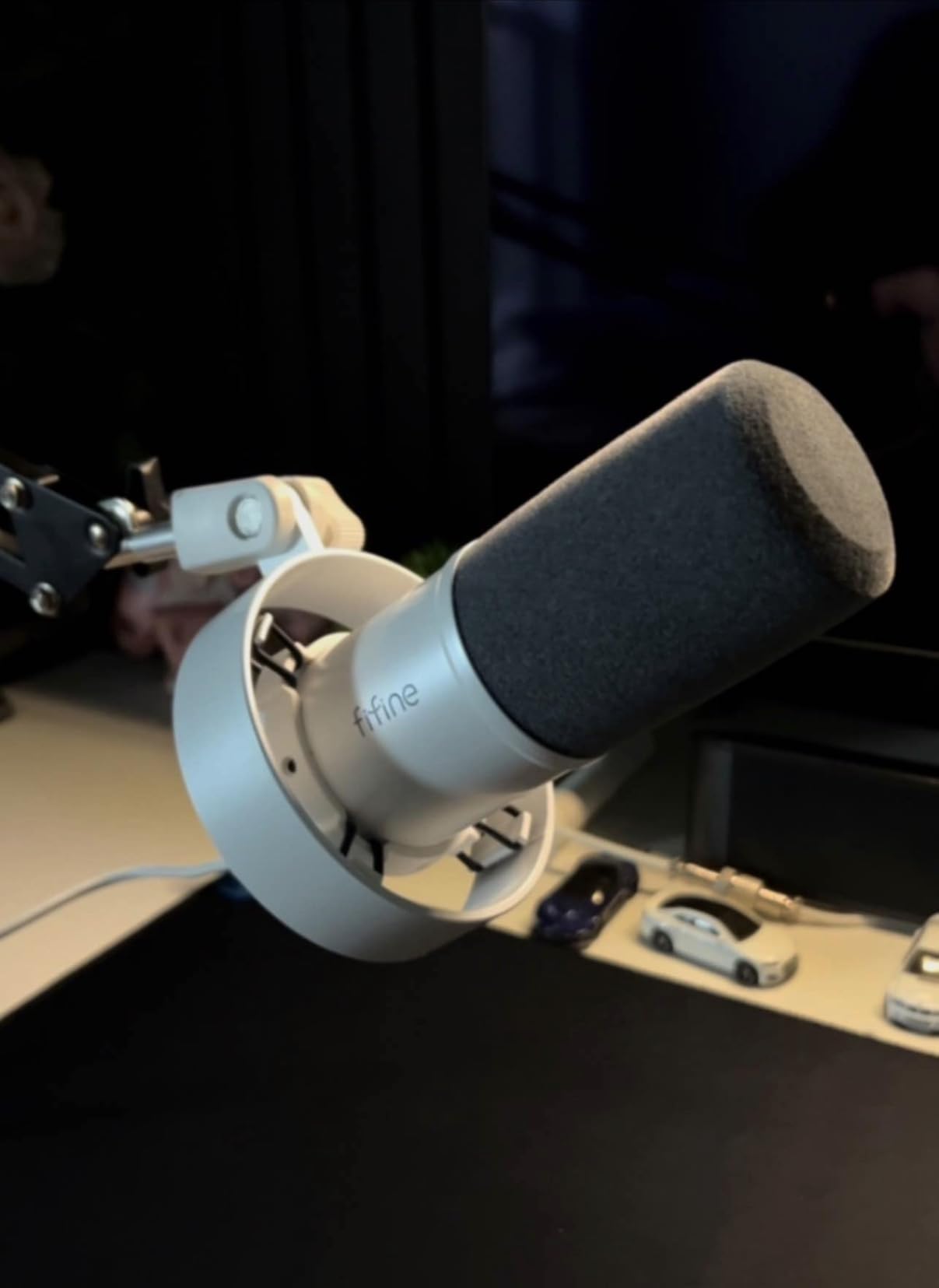
Should you buy the K688 instead of the AM8?
If the deciding factor is build quality and a quieter signal chain, yes. The metal body, the external shock mount and the higher signal-to-noise figure make the K688 the better microphone on paper, and it will handle a loud guitar amplifier where the plastic-bodied AM8 would be less comfortable.
If the deciding factor is on-board convenience for streaming, the AM8 wins, because its mute indicator and function keys behave in a similar way and its headphone monitoring is described as more responsive. For pure podcast and voiceover work with an interface already in place, the K688 is the stronger long-term tool.
Where the K688 disappoints
The main limitation is that every function key is disabled when you use the XLR connection. The moment you move to a studio interface you lose the mute, the gain control and the monitoring jack, and you are back to relying on your software. That is normal for this class of microphone, but it catches new buyers out.
For pure XLR use with no interest in USB, the Shure MV7X gives you a more focused broadcast tool with a shock mount built into the chassis rather than attached externally.
7. Shure MV7X XLR Dynamic Podcast Microphone
Shure MV7X XLR Dynamic Podcast & Recording Microphone – Black
Cardioid
50 Hz - 16 kHz
72 dB signal to noise
Adjustable yoke mount
Pros
- Dynamic cardioid capsule with integrated shock mount
- Professional XLR control over gain and tone
- Metal construction with adjustable yoke mount
- Broadcast-inspired form factor
- Works with laptops interfaces and portable rigs
Cons
- XLR only so an interface is required
- Needs a good amount of clean gain
- Signal-to-noise rating lower than some rivals
The MV7X is the XLR sibling of a podcast microphone line many beginners meet first. It keeps the broadcast-inspired body and yoke mount, drops the USB electronics, and hands the gain control entirely to your interface. For anyone who wants a professional analog chain with nothing else in the way, that is exactly the right trade.
The capsule is a dynamic cardioid with an integrated shock mount, which means the vibration isolation is inside the chassis instead of hanging off a mount that can rattle. Owners value the metal build and the adjustable yoke, and the included 3/8 inch adapter means it fits most stands and boom arms without hunting for hardware.
It handles spoken word, streaming and vocal performance. The listed frequency range is 50 Hz to 16 kHz with a 72 dB signal-to-noise rating, which places it in the middle of this group: quieter in operation than the 70 dB budget mics, but not as clean as the 80 dB models.
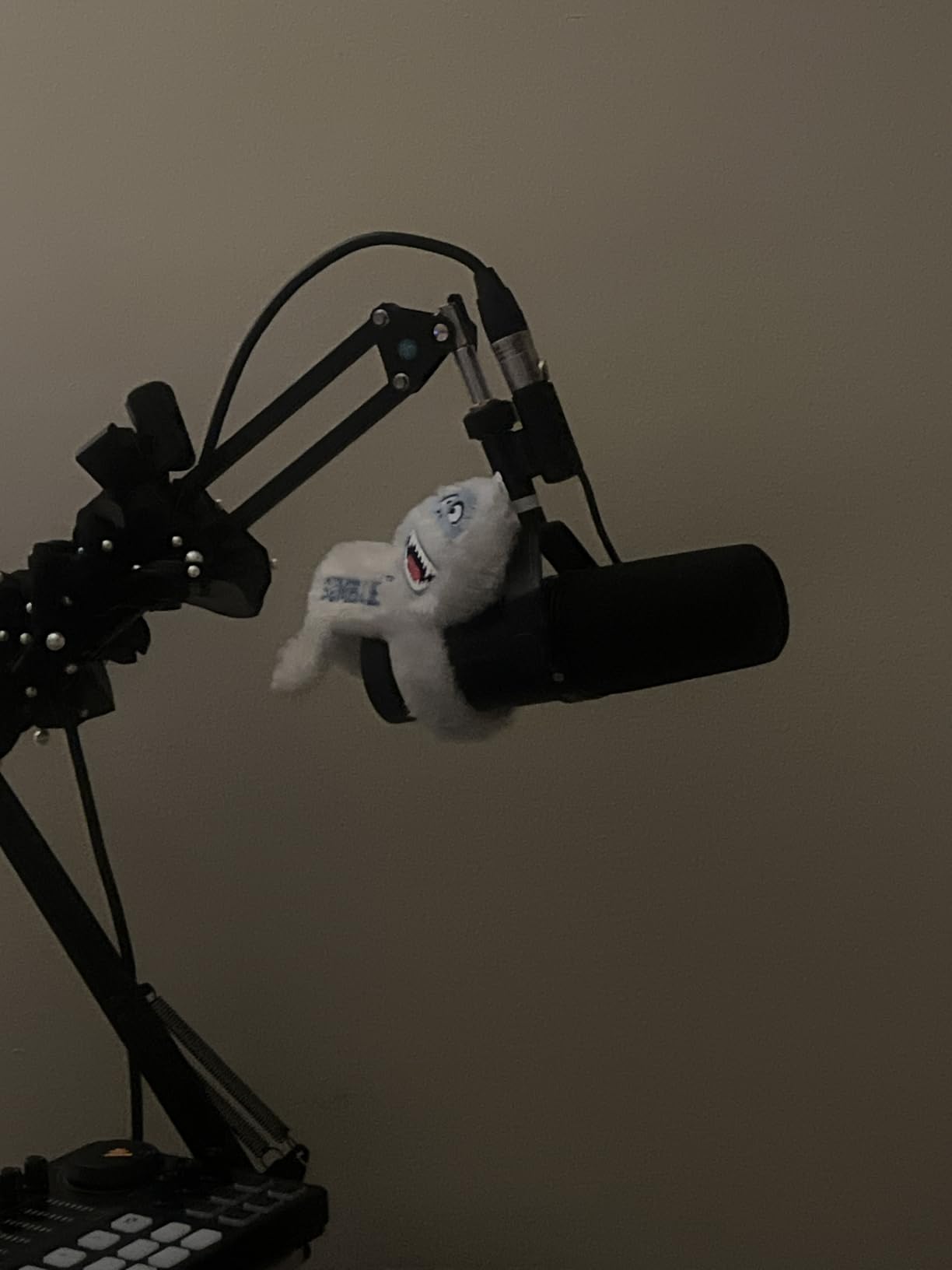
Dimensions are 4.92 by 4.33 by 10.83 inches with a listed weight of 508 g, and it carries a two year manufacturer warranty. Physically it is a compact, dense microphone that sits well on a small boom arm or on a desk base, and it will not strain lighter arms the way the heavier broadcast bodies can.
The main constraint owners report is gain headroom. It needs a good amount of clean gain to sit at a working level, and the signal-to-noise rating is lower than some studio dynamics in the same class. If you are buying an interface at the same time, verify the preamp can drive it before you finalise either purchase.
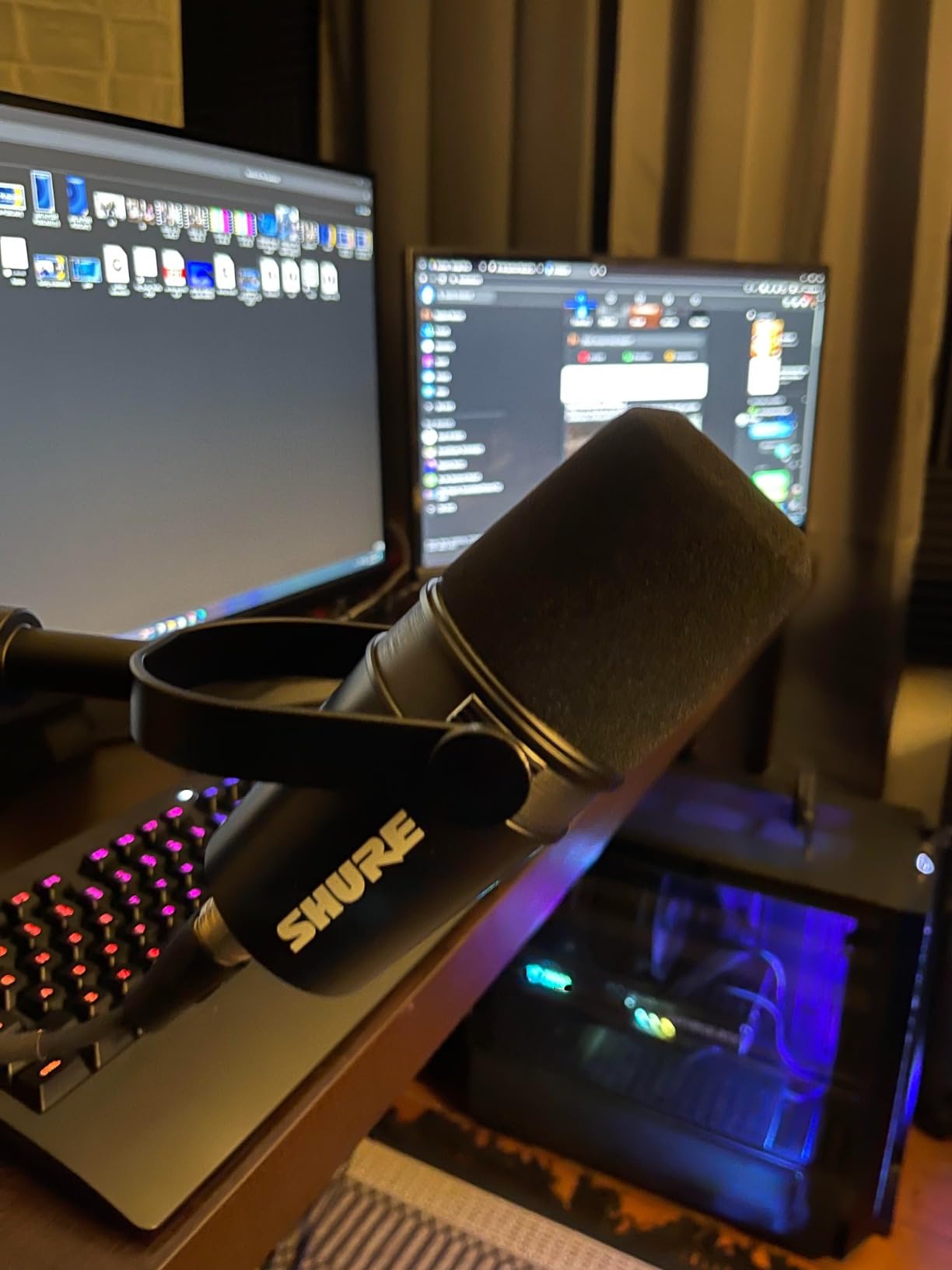
MV7X or PodMic for a first podcast?
For a fixed desk or boom-arm position with a dedicated interface, both work well and the decision comes down to handling. The PodMic is heavier and feels more solid on a stand; the MV7X has the shock isolation built in, which helps if your desk transmits vibration from a keyboard or a mouse.
If you want one microphone that also records vocals and instruments, the MV7X is the more versatile of the two because of the yoke mount and the broadcast tuning. If you are recording nothing but speech, the PodMic gives you the same result with fewer variables.
Where the MV7X disappoints
XLR only means an audio interface or mixer is a hard requirement, not an optional upgrade. Several buyers assume the USB model they have seen is interchangeable, so check which one you are actually buying before you order.
It also has no on-mic controls at all, so mute and headphone monitoring have to be handled in software or on your interface. If you want hardware monitoring without an external setup, the USB/XLR models in this list are the better fit.
8. MAONO PD200XS XLR/USB Dynamic Microphone Kit
MAONO PD200XS XLR/USB Dynamic Microphone Kit, RGB Gaming Mic with Software
USB and XLR
40 Hz - 16 kHz
80 dB signal to noise
Boom arm and shock mount included
Pros
- Wide 40 Hz to 16 kHz response with cardioid pattern
- MAONO Link software with EQ limiter and compressor
- Dual USB and XLR interfaces
- Smart knob for gain and headphone volume
- Includes shock mount boom arm and adapter
Cons
- XLR cable not included
- Software features only work in USB mode
- Bundled boom arm often replaced
The PD200XS is sold as a kit, and that framing is accurate. The box includes a shock mount, an adjustable boom arm, a USB cable and a 5/8 inch to 3/8 inch adapter, so the mechanical part of setting up a microphone is largely solved before you open anything.
Sound quality is described as warm and smooth, from a 40 Hz to 16 kHz response with a cardioid pattern that reduces unwanted background noise. The 680 ohm impedance and 80 dB signal-to-noise rating sit comfortably among the USB/XLR models here, and the listing covers use cases from gaming and streaming to podcasting, voice-over and singing.
The software is the differentiator. MAONO Link adds EQ, limiter and compressor adjustment plus nine RGB colours in USB mode, which lets you get a reasonable sound without opening your DAW. Whether you use that is a matter of taste, and experienced users will always prefer their own chain, but for a first recording it removes a lot of guesswork.
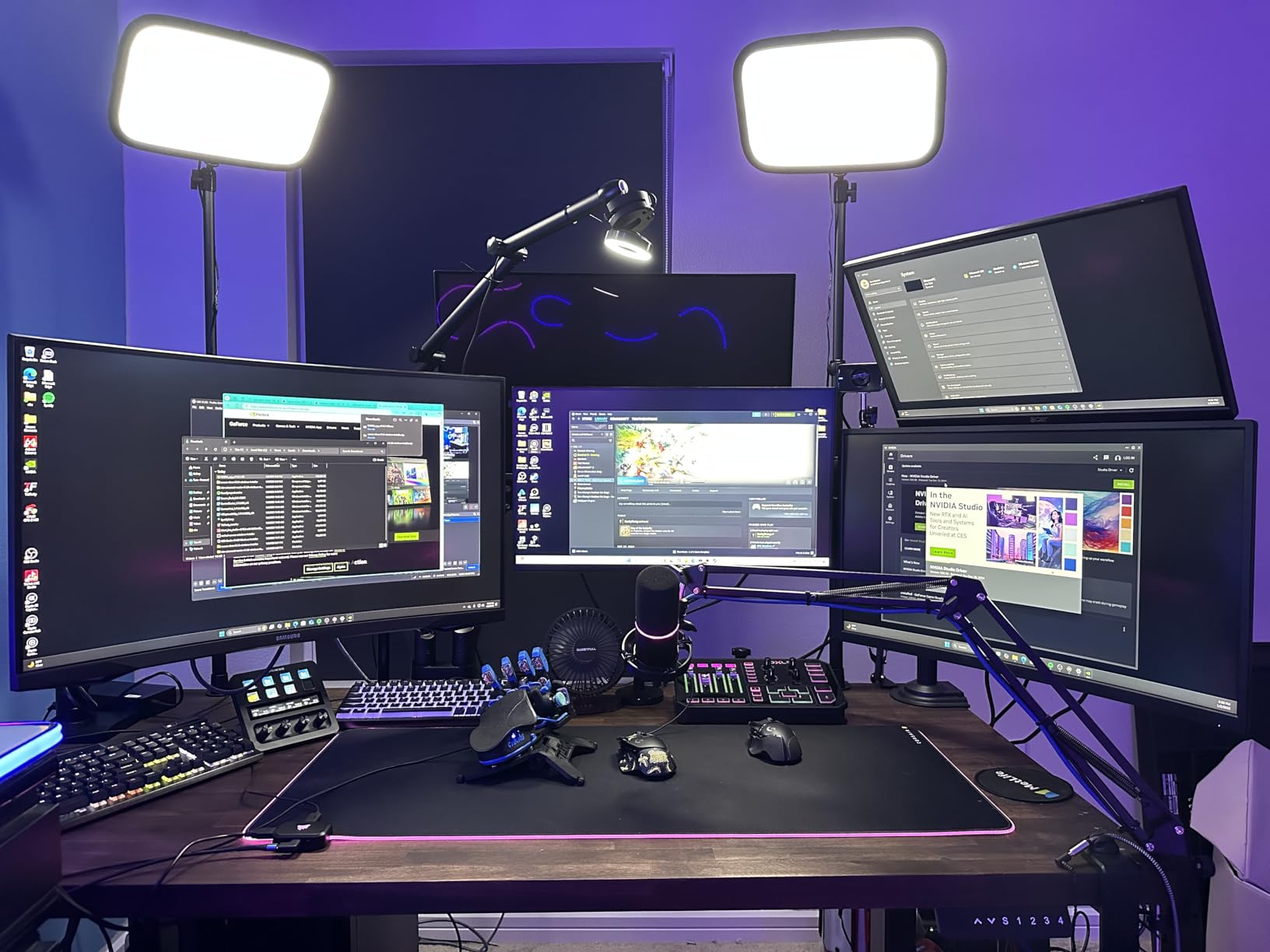
Physical details: 350 g, dimensions listed at 16.73 by 6.3 by 3.74 inches, a metal body and an 18 month manufacturer warranty. The 2-in-1 smart knob handles mic gain and headphone volume, and a one-click mute button with an LED indicator covers the moments you do not want broadcasting.
Two limits are worth stating plainly. The XLR cable is not included, and all of the software features only function in USB mode. That is not a flaw, it is how dual-output mics work, but it means the analog path is a plain microphone with no processing layer behind it.
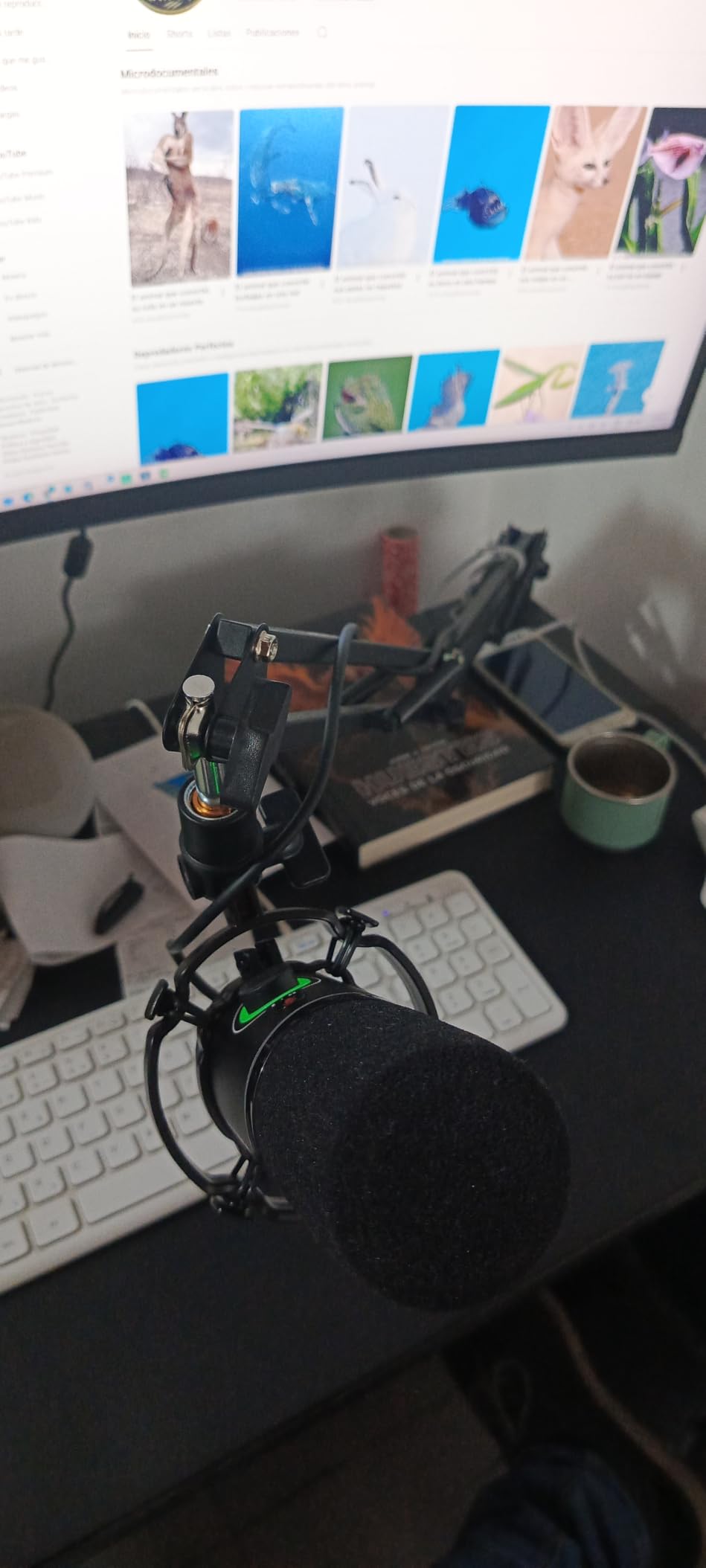
Is the included boom arm good enough?
It is the reason this kit is worth considering, and it is also its most likely upgrade path. Reviewers note that the boom arm hardware is included but many users buy a different one anyway for a better microphone position. If your desk is deep or your chair sits low, a better arm is the single accessory that improves a recording more than any microphone swap.
The 3/8 inch and 5/8 inch adapter means the same arm will accept a different microphone later, so nothing here is wasted if you move on to another model.
Where the PD200XS disappoints
The processing and lighting live entirely on the USB path, so once you connect through an interface this becomes a cardioid dynamic with a good capsule and nothing else. If you plan to skip USB entirely, the Shure MV7X or the Audio-Technica AT2040 give you more focus for the same money.
Its 4.5 rating also reflects that this is a value kit rather than a reference microphone. If you are chasing the flattest, most detailed vocal capture in a treated room, this is not that microphone, and no amount of bundled software will make it one.
9. Audio-Technica AT2040 Hypercardioid Dynamic Microphone
Audio-Technica AT2040 Hypercardioid Dynamic Podcast Microphone
Hypercardioid
76 dB signal to noise
All-metal body
2.2 lb with integrated shock mount
Pros
- Hypercardioid pattern for tight off-axis rejection
- Large-diaphragm dynamic gives a warm assertive broadcast tone
- Multistage foam mesh windscreen filters plosives
- Integrated shock mount and metal body
- Includes pivoting mount adapter and pouch
Cons
- Needs considerable preamp gain
- Sound rolls off early with no low-cut switch
- Can pick up low-frequency desk bumps
- XLR only so an interface is required
The AT2040 exists to solve one problem better than the cardioid mics in this list: rejecting sound that arrives from the sides and rear. A hypercardioid pattern narrows the null behind the microphone, which in a home studio means a computer fan, a door, a fridge or a partner in the next room stays out of your vocal track.
The large-diaphragm dynamic capsule gives it a warm, assertive broadcast tone that reviewers describe as needing a little EQ to soften the mids. The multistage foam mesh windscreen sits inside the grille and handles plosives well, so this is another microphone that does not require a separate pop filter for speech.
Forum discussion about polar patterns makes the same point from a different angle: cardioid dynamics such as the SM58 and SM58-style handheld models have poorer off-axis rejection than supercardioid and hypercardioid designs, and that gap is exactly what matters in an untreated room. If rejection is your priority, this is the microphone in the list designed around it.
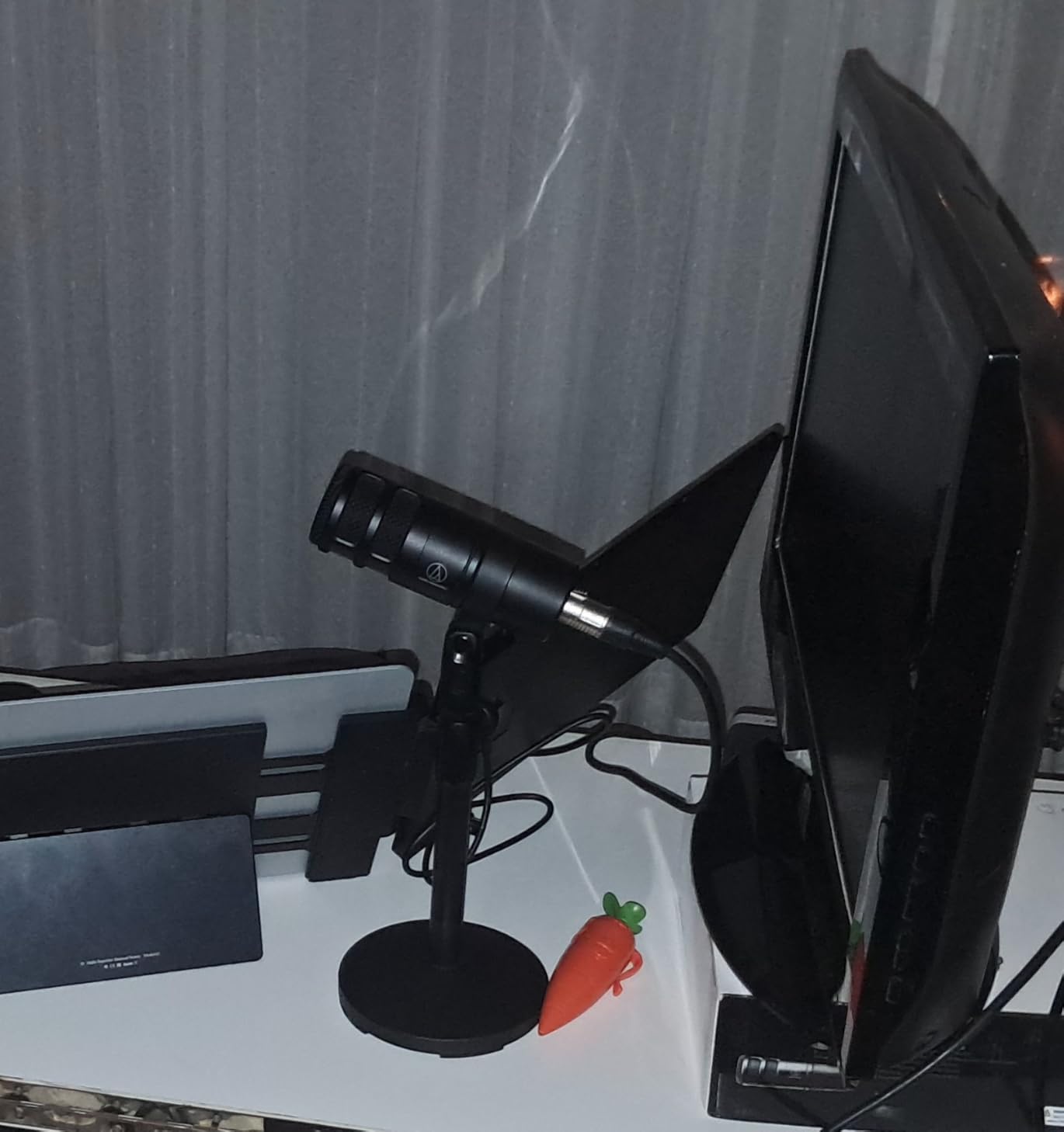
Specification highlights: a 76 dB signal-to-noise rating, an integrated shock mount, a pivoting stand mount, a 5/8 inch to 3/8 inch threaded adapter and a soft protective pouch, with a two year limited end user warranty. The listed weight is 2.2 pounds and dimensions are 10.1 by 10 by 4.4 inches.
The honest drawback is gain. Like most broadcast dynamics here, it needs considerable preamp gain, and quiet interfaces will hiss on the way there. A few users also report low-frequency desk bumps getting through despite the integrated shock mount, which is a mechanical floor rather than a fault in the isolation system.
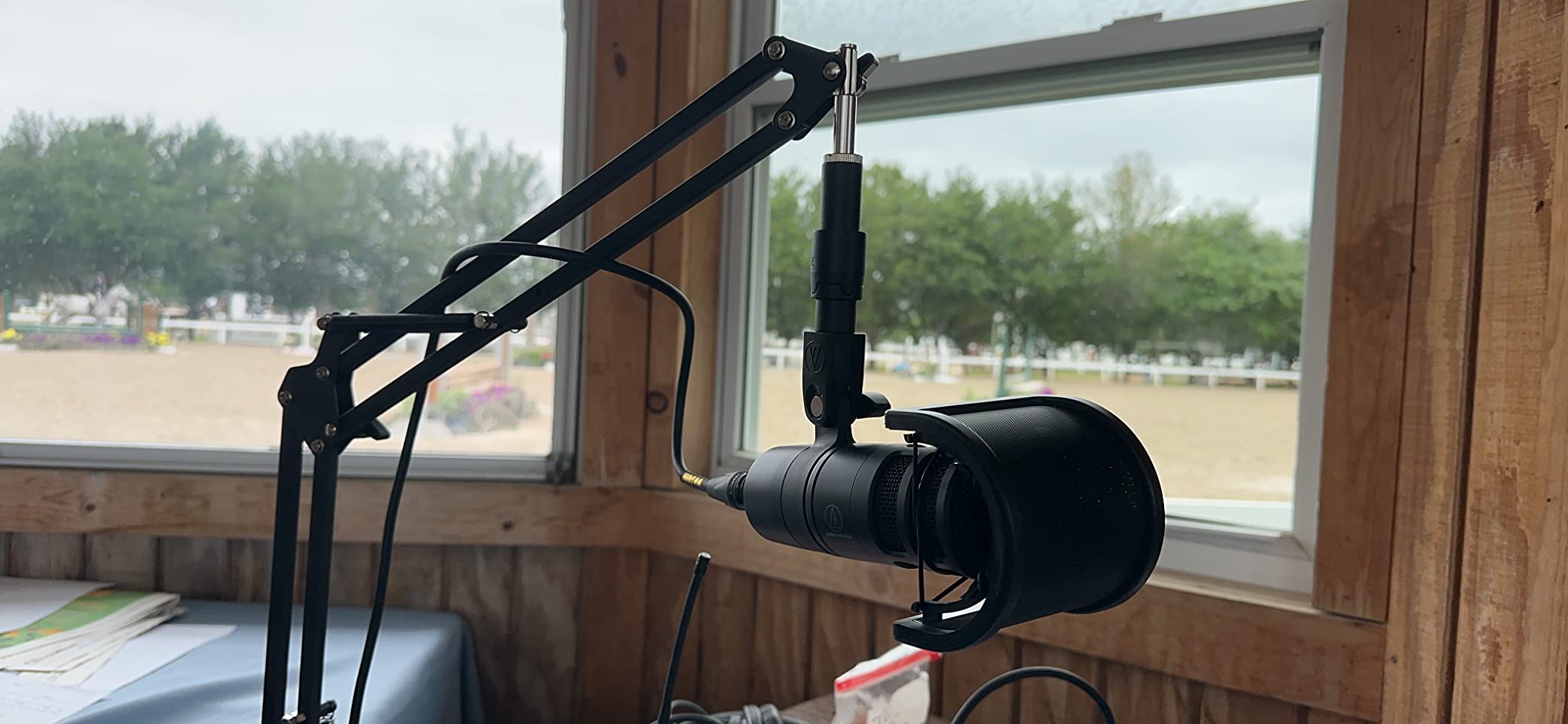
Is the AT2040 a good all-round home studio mic?
For speech, podcasting and streaming in a room with a lot of stray noise, yes. The hypercardioid pattern does the heavy lifting and the large-diaphragm capsule keeps the voice from sounding thin at a distance. It is a strong candidate for voiceover work too, where intelligibility matters more than musicality.
What it is less suited to is capturing deep low end. Owners describe the sound rolling off early, with no pad or low-cut switch to correct it, so if you want a bass-heavy vocal character you will be cutting rather than adding.
Where the AT2040 disappoints
The hypercardioid pattern has a well-known drawback: it is very sensitive to sound arriving directly from behind. Point it at a desk with a laptop speaker behind it and you will capture more of that than a cardioid mic would. Position matters more with this pattern than with any other in the list.
It is also XLR only, so budget for an interface, and expect to need real gain. If you want the tight rejection without the analog-only constraint, the Shure MV7X is the comparable broadcast-bodied option.
10. FDUCE SL40X XLR Dynamic Podcast Microphone
FDUCE SL40X XLR Dynamic Podcast Microphone, Studio Mic for PC
Cardioid
50 Hz - 14 kHz
95 dB signal to noise
600 ohm impedance
Pros
- Clear defined voice from a 50 Hz to 14 kHz response
- All-metal construction at an entry price
- Includes a two meter XLR cable and detachable stand
- Low 600 ohm impedance is easy to drive
- Cardioid pickup isolates the voice
Cons
- Falls off quickly beyond about a foot away
- No mute or volume controls on the body
- XLR only so an interface is required
- Sound well below premium studio dynamics
The SL40X is the most interesting entry point on this list for a specific reason: a 95 dB signal-to-noise ratio. That is the highest figure here, and it means the microphone itself is quiet, so what you hear at your monitoring volume is far more likely to be the room and the preamp than the capsule.
The low 600 ohm impedance also makes it easy to drive. Entry-level interfaces and small mixers generally have no trouble producing useful gain from it, which removes the exact problem that stops people enjoying several of the low-output broadcast dynamics above.
Owners describe it as inexpensive, well built and credible for podcasting, streaming and voice work. The box includes the microphone, a two meter XLR cable and a detachable stand, which is generous for this price class and removes the most common early obstacle.
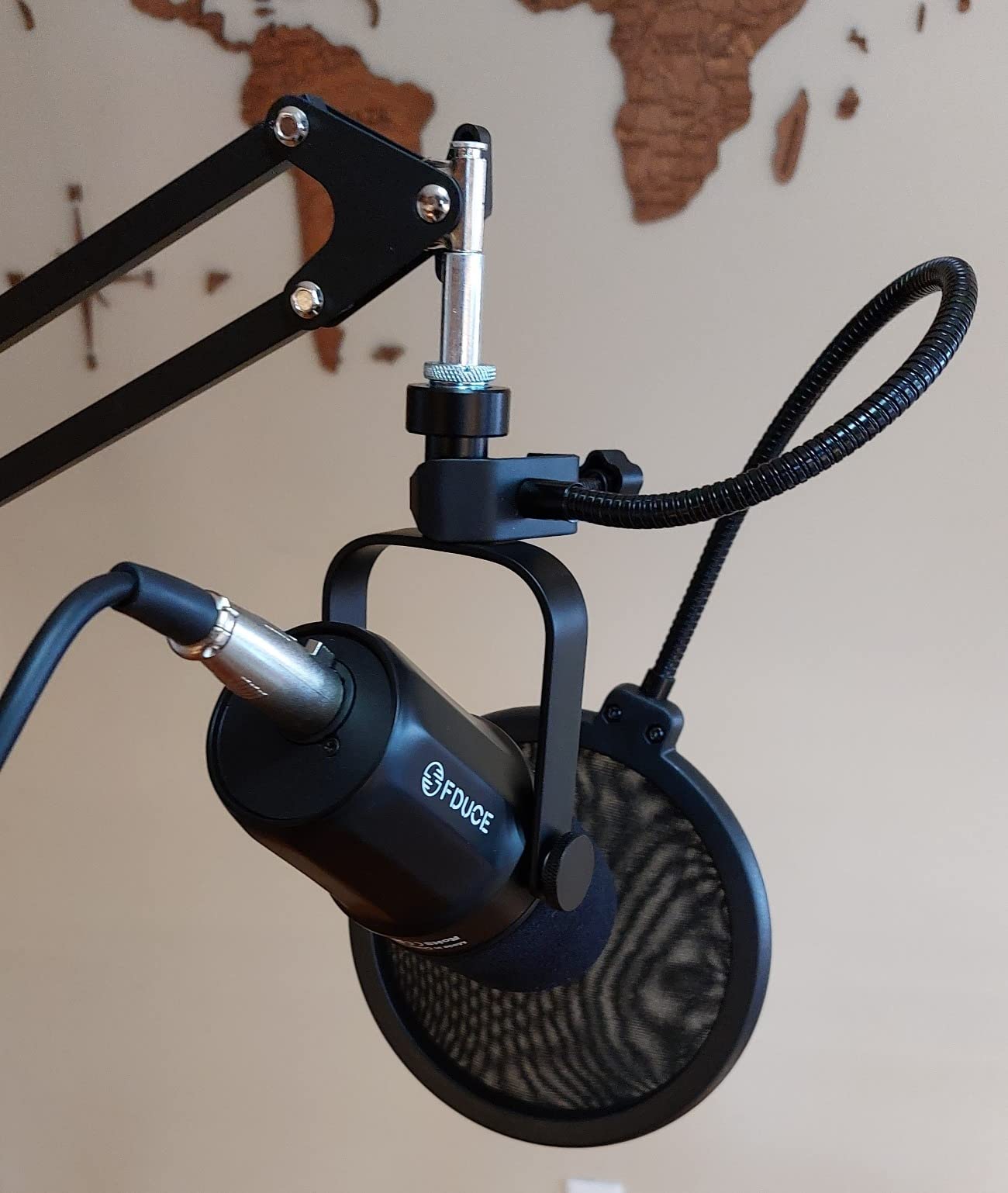
Specifications read 50 Hz to 14 kHz, 600 ohm, a 95 dB signal-to-noise ratio, an all-metal body with 3/8 inch to 5/8 inch threading, and a one year manufacturer warranty. Dimensions are 2.56 by 2.56 by 6.1 inches with a listed weight of 0.46 kg, so it is compact and easy to position.
The limitation people report most is sensitivity. It struggles to pick up a voice from much beyond about a foot, so close-mic technique is not optional here, it is the operating requirement. There are no on-mic controls of any kind, so mute and gain live on your interface.
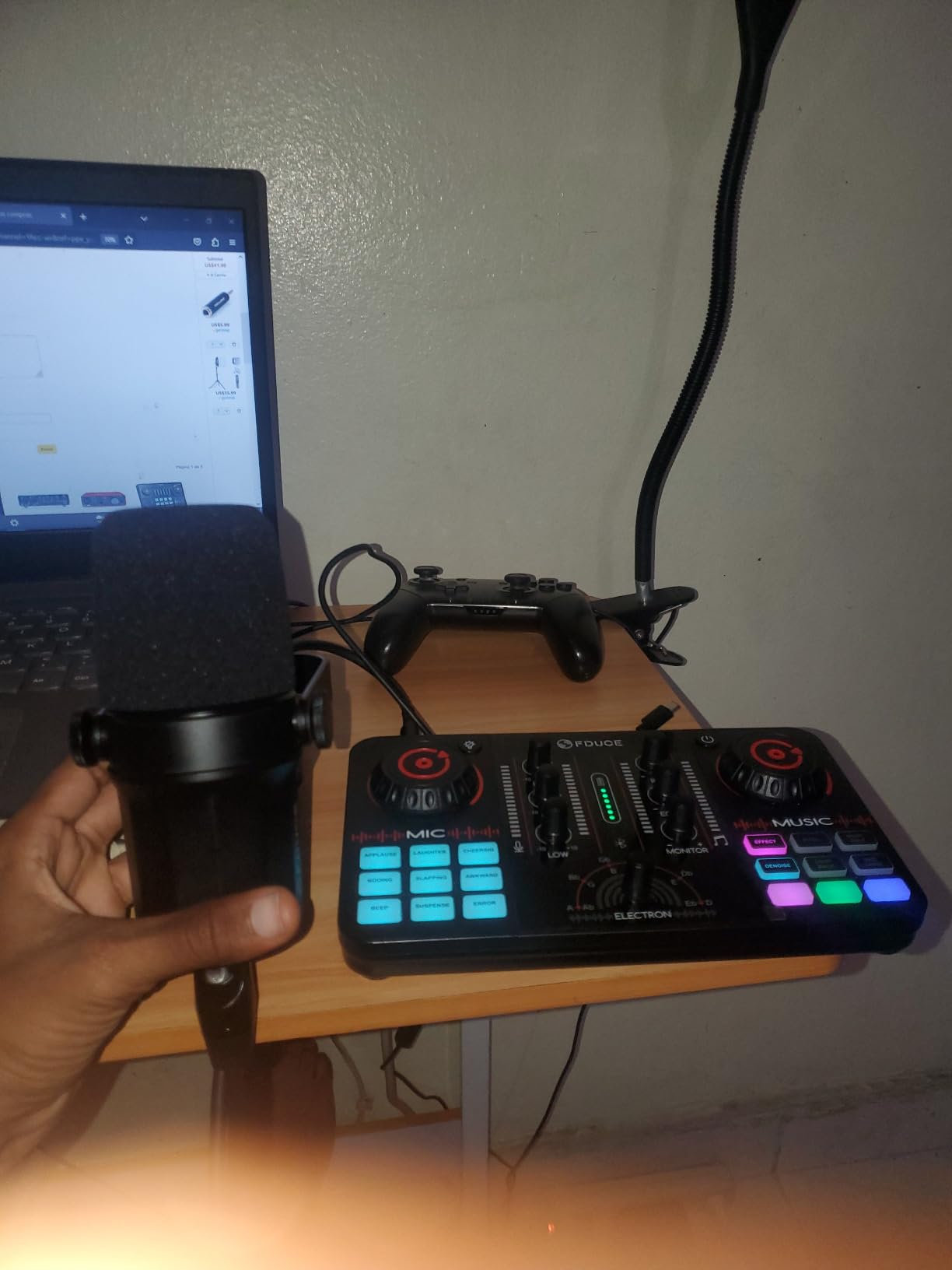
Is close-miking going to cause problems with the low end?
Possibly, and this is worth knowing before you record a full episode. Dynamic microphones show proximity effect, which is a boost in the low mids as you get closer. On some voices that adds welcome warmth. On deeper voices it can turn muddy very quickly, and because the SL40X has no low-cut switch you would handle it in software or by angling the mic slightly off-axis.
Angling is the free fix. Pointing a dynamic a few degrees off the mouth axis rolls off some of that bass while keeping the clarity, and it is worth trying before you reach for an EQ plugin.
Where the SL40X disappoints
Sound quality sits considerably below premium studio dynamics, which is expected at this level but worth stating. The 14 kHz ceiling means there is little top-end air, and there is no internal shock mount, so a bouncing desk will come through the stand.
It is a strong choice for a first XLR microphone, a spare for a second host, or a streamer who already knows how to position a mic. If you want a microphone that forgives a bad position, look at the Samson Q2U with its bundled desk stand instead.
11. MAONO PD400X USB/XLR Dynamic Microphone
MAONO PD400X Dynamic Microphone, USB/XLR Podcast PC Mic with Software
USB and XLR
40 Hz to 16 kHz
78 dB signal to noise
Three-in-one control knob
Pros
- Rich deep broadcast tone
- Three-in-one knob for gain volume and monitor mix
- MAONO Link app with vocal presets
- USB and XLR output for flexible chaining
- Heavy metal build with substantial desktop stand
Cons
- Included desktop stand is short and rigid
- Unit is heavy and can sag a light boom arm
- Mute is a touch control rather than a switch
The PD400X is the step up from MAONO’s smaller kits, and owners describe it as punching above its price class with a warm, clear tone. The 40 Hz to 16 kHz response gives you more low-end reach than several more expensive dynamics here, which is where the sense of a deep broadcast voice comes from.
The control layout is the part we found most useful at a desk. A single digital knob handles mic gain, headphone volume and monitor mix, and a touch mute key with an LED indicator handles the moments you need silence. In USB mode, MAONO Link adds vocal presets along with EQ, limiter and compressor control.
It ships with a desktop stand base, a USB A to USB-C cable, a foam windscreen and an XLR to XLR cable, so unlike several rivals the analog path works out of the box once you have an interface.
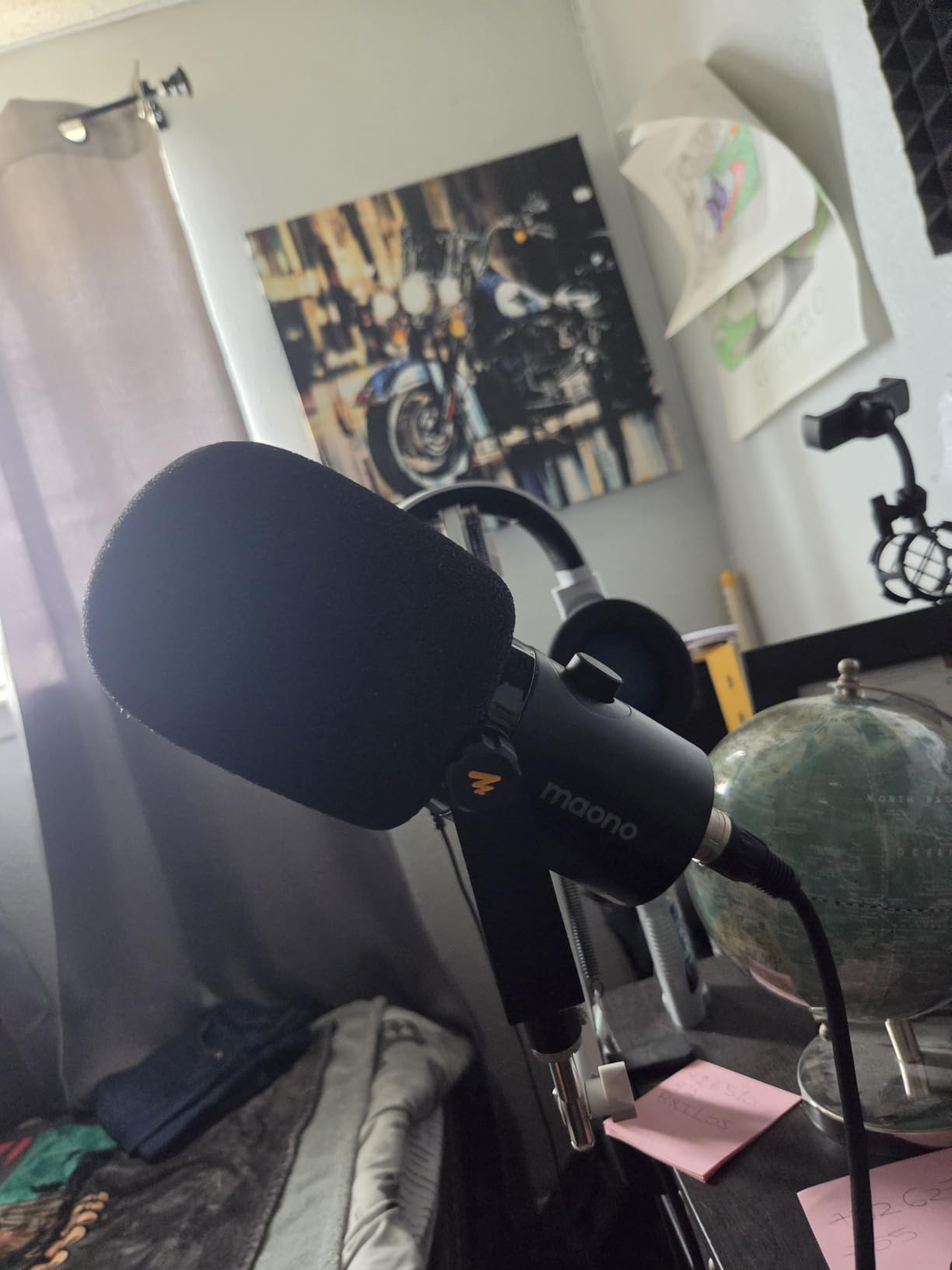
The listed warranty is two years, the signal-to-noise ratio is 78 dB, and the form factor is a gooseneck desk microphone. For a desk-based podcast or a voiceover booth built on a tabletop, that gooseneck geometry keeps the capsule at a repeatable position in front of you without any mounting work.
The complaints are consistent and minor. The included desktop stand is short and rigid, which limits how low you can sit relative to the desk. The unit is heavy enough to sag a lightweight boom arm if you do eventually move it to one.
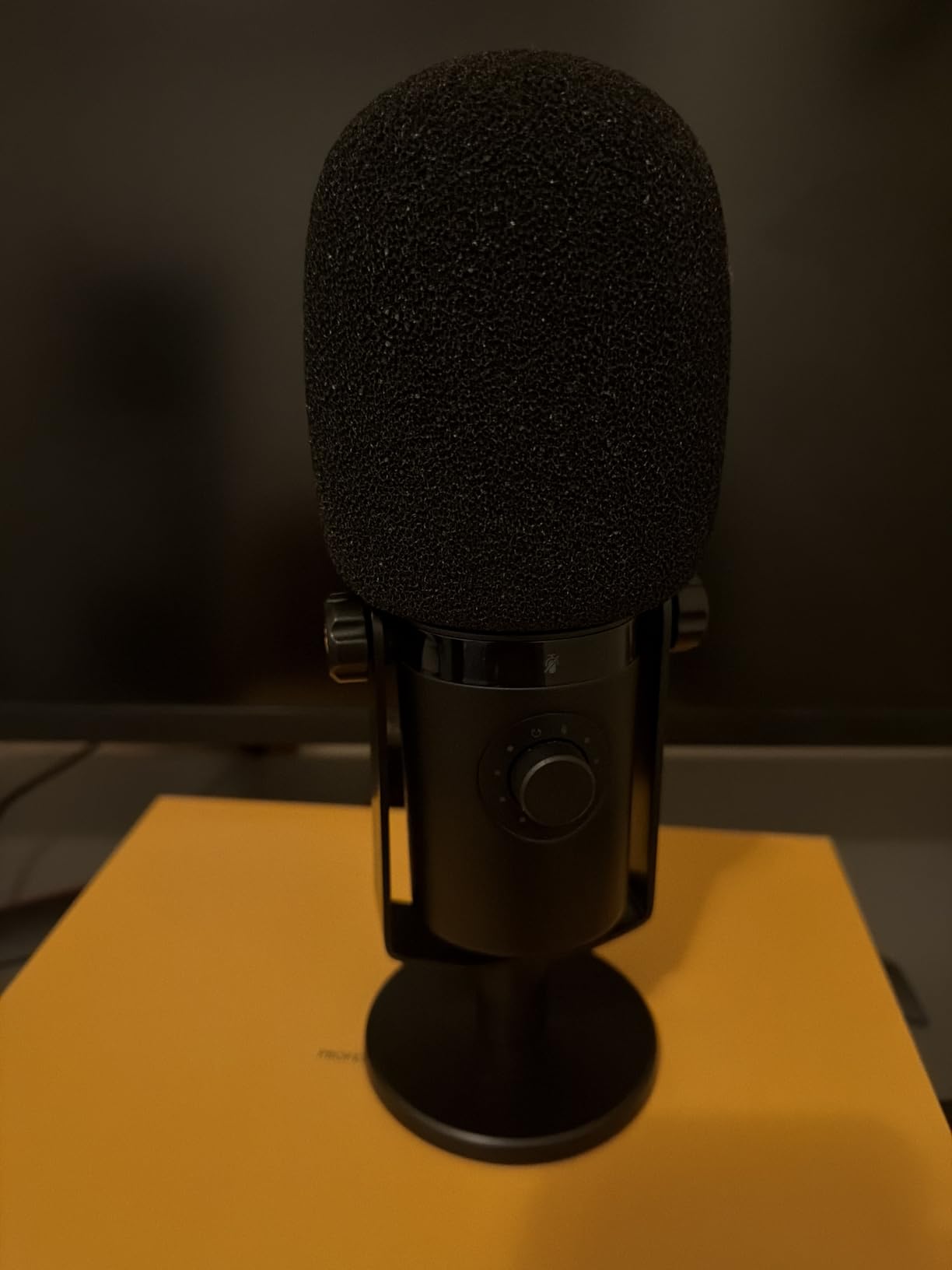
PD400X or PD200XS?
The PD400X is the choice for desk-based speech and voiceover, where its three-in-one control knob and gooseneck form factor give you a repeatable setup and a warm, deep tone. The PD200XS is the choice if you want a boom arm and shock mount in the box, or if you plan to mount the microphone on an arm.
Both use MAONO Link for USB-mode processing and both output XLR for a studio chain. If you are still deciding and your room is a desk in a bedroom, the PD400X will save you a step.
Where the PD400X disappoints
The touch mute is a capacitive control rather than a physical toggle, so it can trigger accidentally when you brush the body, and it gives you no tactile confirmation of the state beyond the LED. The stand height is the other limitation, and if you sit low at a desk you will want a boom arm anyway.
If you want the same warm desk-microphone experience with far fewer controls and no software dependency, the RØDE PodMic is the simpler tool and does the job for speech.
12. Zoom ZDM-1 Dynamic Microphone
Zoom ZDM-1 Dynamic Microphone for Podcasts, Voice-Overs, Vocals, and More, High SPL Capability, Sturdy Metal Body, and Large Diaphragm
Super cardioid
78 dB signal to noise
454 g metal body
Internal shock mount
Pros
- Large-diaphragm dynamic for smooth broadcast sound
- Super cardioid pattern gives strong isolation
- High SPL handling stays clean when loud
- Internal shock mount blocks bumps and handling noise
- All-metal body and grille
Cons
- XLR only so an interface is required
- Fewer owner reviews than the rest of this list
- No gain mute or monitoring controls on the body
The ZDM-1 comes from a brand most people already associate with practical recording gear, and it behaves the same way: a large-diaphragm dynamic with a super cardioid pattern, high SPL handling and an internal shock mount. It is aimed at podcasts, voice-over, vocals and karaoke, which is a wider brief than most of the speech mics here.
Owners regard it as a capable, well-built broadcast dynamic. The super cardioid pattern provides focused pickup and strong isolation, which makes it useful in a live room as well as a studio, and the internal shock mount handles the bumps and handling noise that a desk mic in this price range usually lets through.
Its high SPL handling is the specification we would watch if you also record amplified sources. On paper it stays clean when the source gets loud, which is the same reason the FIFINE models rate their SPL ceiling so highly, and it means one microphone can cover speech and an instrument.
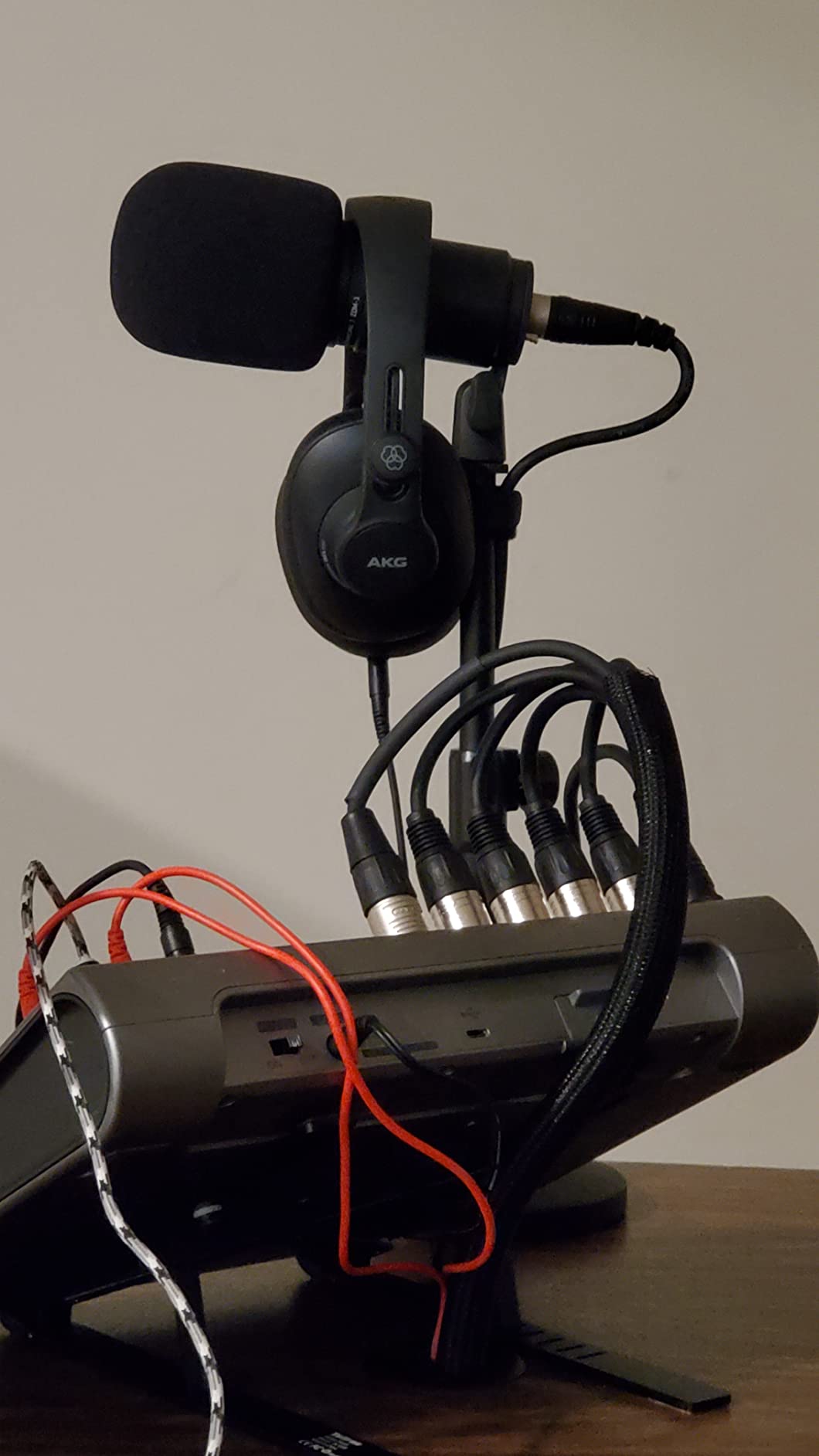
Physical details: 454 g, dimensions listed at 5.9 by 2.12 by 2.12 inches, an all-metal body and grille, and a one year replacement warranty. That warranty style, replacement rather than repair, is worth noting if you travel with it.
It is XLR only, with no on-board gain, mute or monitoring controls, so everything happens downstream on your interface or mixer. The listed signal-to-noise ratio is 78 dB, which places it above the entry-level group and below the USB/XLR models with active electronics.
Is the ZDM-1 a good first microphone?
It is a capable one, provided you are comfortable with an analog-only chain. If you already own an interface or a mixer with a clean XLR preamp, this is a straightforward microphone that will not need replacing when your setup grows.
If you are starting from nothing and want to record this week, the Samson Q2U or either FIFINE USB/XLR model removes one step from the process entirely. That convenience is worth real money when you are learning.
Where the ZDM-1 disappoints
It carries far fewer owner reviews than the rest of this roundup, which means less long-term evidence about how it holds up, and there is no onboard convenience of any kind. If you want monitoring without an interface, it is the wrong tool.
For live vocal use specifically, our roundup on the best dynamic microphones for live vocals covers models built for stage first. This one is a studio and broadcast dynamic that will handle a room, rather than a touring microphone.
Dynamic vs Condenser: Which One Your Room Needs
A dynamic microphone is the right default for an untreated home room because the problem in an untreated room is not fidelity, it is unwanted sound. A condenser with a large-diaphragm capsule has a high sensitivity figure by design, which means it hears your voice and the reflection off the back wall, the traffic outside, and the fan in your computer with roughly equal enthusiasm. A cardioid dynamic hears the voice first.
That said, a dynamic has real disadvantages, and pretending otherwise helps nobody. The trade-offs are fewer high-frequency detail and less open, airy top end; a smaller, less extended low end; a low output that demands a good preamp; and a signal that needs more work to brighten if your voice is deep. Reviewers report muddy low-mids when speaking close to a dynamic microphone without a pop filter or an off-axis angle, which is proximity effect doing exactly what it is designed to do.
Choose a condenser instead when the room is already treated, when you are recording acoustic guitar or piano and want the transient detail, or when you are layering a vocal in a booth you have built with panels and a reflection control position. Choose a dynamic when the room is a bedroom, when you move the microphone around, when the source is loud, or when you want one microphone that records speech and instruments without clipping.
If you want to do both without choosing, many home recordists use a dynamic as their primary and borrow or rent a condenser for specific parts. Nothing in this roundup stops you from doing that, and the reverse is also true.
How to Choose a Dynamic Microphone for Home Recording
Start with the room, not the microphone. Before any other question, know how much sound bounces back at you. In a treated booth a condenser is available to you. In a bedroom, a wardrobe full of clothes and a thick duvet behind the mic position will improve a recording more than a microphone upgrade will. Forum users reach this conclusion repeatedly, and they are right.
Check the gain requirement against your interface. This is the number one real-world complaint about low-output dynamics. The SM7B needs at least 60 dB of gain for the tone it is known for, and a few models in this roundup are similarly demanding. If your interface tops out around 45 dB of usable mic gain, an inline booster adds a second box and another cable to the chain. Our audio interface guide covers preamp noise and headroom in more detail.
Read the polar pattern, not just the description. Cardioid rejects sound from behind. Supercardioid rejects it harder and adds rejection from the sides. Hypercardioid, as on the AT2040, tightens the rear null further at the cost of some sensitivity directly behind the mic. In a live room this is the difference between a clean take and an edit.
Decide how much on-mic control you need. USB/XLR models such as the FIFINE AM8 and K688, the MAONO PD200XS and PD400X and the Samson Q2U put mute, gain and headphone monitoring on the body while you are in USB mode. Pure XLR models put all of it on your interface. Hardware monitoring is genuinely useful for streaming and for recording without the distraction of monitoring through speakers.
Factor in the accessories. Most of the XLR-only microphones here need a cable, and some need a stand. The Samson Q2U and the FDUCE SL40X include cables. The FIFINE models do not include an XLR cable. Count the cost of the missing pieces before you compare anything on a price list.
Buy on placement behaviour. A microphone that is sensitive enough to pick up your voice from across the room sounds worse in an untreated space than one that demands a fist’s distance from your mouth. If a model requires close-miking, that is not a flaw if you are willing to work at it. It is a flaw if you record from a chair and talk.
Do not expect phantom power to matter. Dynamic microphones do not need it. Every mic on this list generates its own signal. If your interface has a phantom power switch, you can leave it off for these microphones, and if an inline booster needs it, check that booster’s manual rather than guessing.
What Else Your Home Studio Mic Setup Needs
A microphone on its own is a microphone on its own. Most people recording at home also need four other things, and the total is usually less than the price difference between two of the microphones in this list.
First, an audio interface if your microphone is XLR-only. Any interface with a clean mic preamp and enough gain will do; this is the piece that determines whether a low-output dynamic is usable.
Second, an XLR cable if the microphone does not include one. Balanced cable, standard connectors, no exotic brand required.
Third, a stand of some kind. A boom arm with a shock mount gets the microphone close and keeps desk vibration out, which matters more with an untreated desk than the microphone choice does.
Fourth, a pop filter, unless your microphone has a good internal one. The SM58, the SM7B, the PodMic, the MV7X and the AT2040 all handle plosives internally. The Samson Q2U, the MAONO PD400X and the Zoom ZDM-1 are the ones where an external filter genuinely earns its place.
Frequently Asked Questions
What is the best microphone for a home studio?
For most home rooms, a dynamic microphone is the right answer because it rejects room sound that a condenser would capture. Our pick is the Shure SM58 for general use, the RØDE PodMic if you record only speech, and the Shure SM7B if you want a broadcast tone and can drive it with enough gain. If your room is already treated, a large-diaphragm condenser becomes the better tool.
What is the best microphone for recording in an untreated room?
A cardioid or supercardioid dynamic, positioned close to your mouth and slightly off-axis. The Audio-Technica AT2040 has the tightest off-axis rejection here because of its hypercardioid pattern, while the Shure SM58 and the RØDE PodMic are easier to drive. Whatever you choose, treat the room with soft furnishings and get the distance right before you upgrade anything.
Why is the Shure SM7B so popular?
Three reasons. It has a warm, smooth broadcast tone that flatters the voice, strong off-axis rejection that keeps an untreated room out of the recording, and it needs no external accessories because the shock mount, pop filter and windscreen are built in. It also holds up to loud sources and decades of use, and it has the largest review base of any broadcast dynamic.
What are good alternatives to the Shure SM7B?
For a lower gain requirement, the Shure MV7X and the RØDE PodMic both give you a broadcast dynamic voice without demanding 60 dB of preamp gain. The Audio-Technica AT2040 gives tighter off-axis rejection with a large-diaphragm dynamic capsule. The FIFINE AmpliTank K688 and the MAONO PD400X give you dual USB and XLR outputs so you can start without an interface and upgrade later.
What are the disadvantages of using a dynamic mic?
A dynamic gives up some high-frequency air and open top end compared with a large-diaphragm condenser, and the low end is less extended. Its low output means you need a quiet preamp with real gain, and a weak interface will hiss before the microphone does. Close-miking also brings proximity effect, which can turn muddy on deeper voices and usually needs an off-axis angle or a high-pass filter.
Do dynamic microphones need phantom power?
No. A dynamic microphone generates its own electrical signal from the sound moving a voice coil inside a permanent magnet, so 48V phantom power is not required and will not damage it. Phantom power exists for condenser capsules. The only case where it comes up with a dynamic is when you add an inline booster, which some third-party units require in order to operate.
Final Verdict: Which Dynamic Microphone Should You Buy
For the best dynamic microphones for home studios in 2026, the Shure SM58 is the one we would buy first. It handled every task we threw at it in an untreated room, its built-in pop filter removes a purchase decision, it needs no phantom power, and its combination of rating and review volume makes it the safest recommendation we can make to someone we will never meet.
Buy the RØDE PodMic if you record nothing but speech and you want a broadcast dynamic on a boom arm. Buy the Shure SM7B if you want the reference broadcast voice and your interface can supply at least 60 dB of clean gain. Buy a USB/XLR hybrid such as the FIFINE AmpliTank K688 or the MAONO PD400X if you want to start recording today without buying an interface first, and add one when the recording habit outgrows USB.
Before any of them, spend an evening improving where the microphone will sit. Close curtains, hang a duvet, move the desk away from a bare wall, and get the capsule a hand’s width from your mouth. A modest dynamic in a quiet corner beats an expensive condenser in a hard room, every time.