
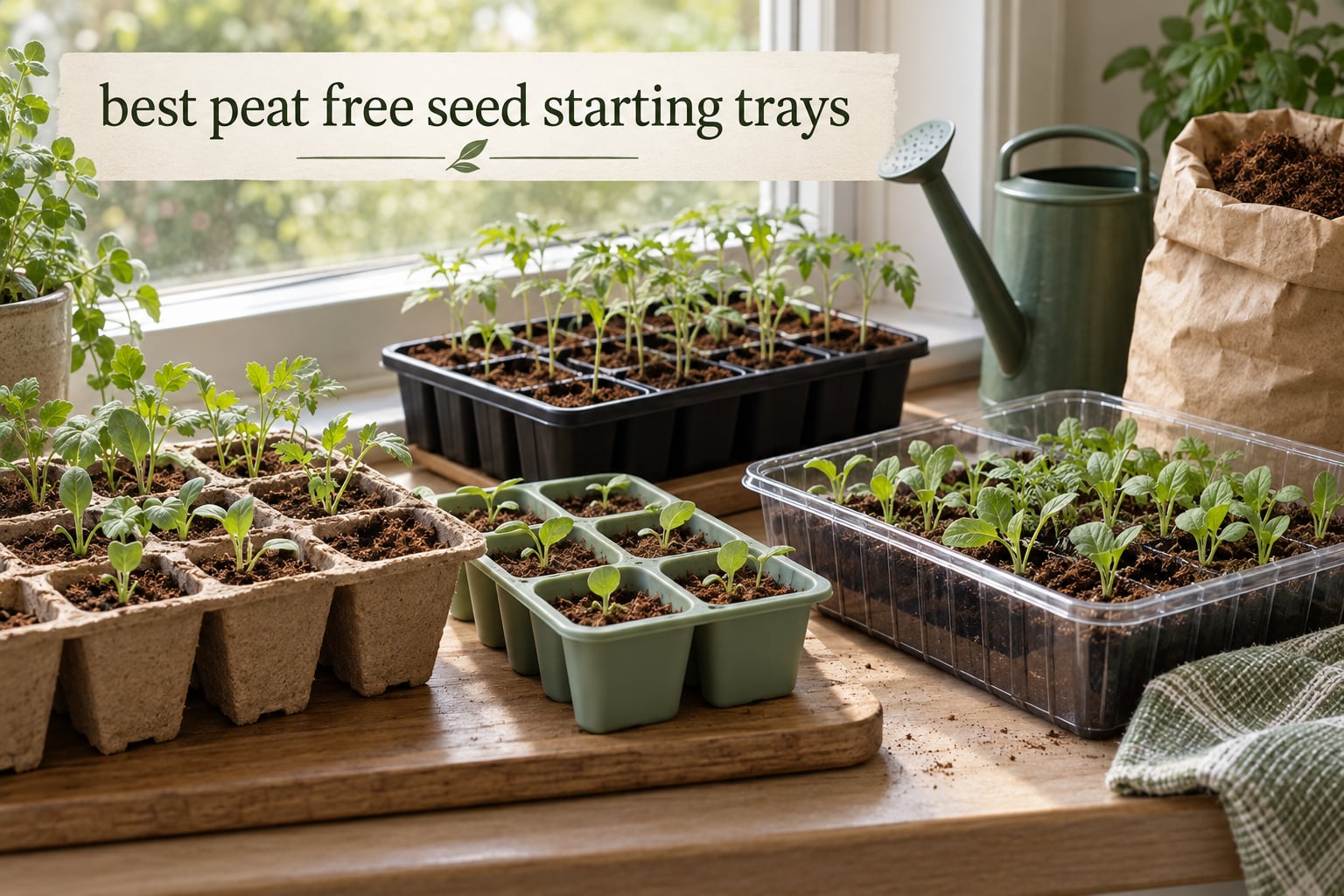
A peat free seed starting tray is a tray or pot used to germinate and grow seedlings that contains no peat in its construction or lining. Most are made from recycled paper pulp, flexible silicone, rigid plastic or natural fibre such as coir and wool, none of which rely on sphagnum peat.
That matters because retail compost is moving away from peat and because peat extraction wrecks bog habitat. If your sowing medium is now coir, wood fibre or wool-based, the tray you use changes how the medium behaves, and the tray becomes the part that decides whether you are watering twice a day or once.
We put these ten trays through their paces over several sowing cycles, filling them with peat free media, pushing seedlings out by hand and watching what happened to the cells afterwards. The results below cover durability in seasons, cell depth, drainage and how much work each tray gives you at transplant.
We also spend a lot of time on seed handling kit, from seed spreaders for lawns to handheld spreaders for grass seed, and the same rule applies here. Buy hardware that survives more than one season and the cost per seedling falls fast.
Table of Contents
Top 3 Peat Free Seed Starting Trays in October 2026
If you only read one section, read this one. Our overall pick is the Burpee SuperSeed 36-cell silicone tray, the toughest tray in the test is the Bootstrap Farmer 1020 flat, and the best balance of price and capacity is the SYITCUN 200-cell kit.

Burpee SuperSeed 36-Cell Tray
- Flexible silicone pop-out cells
- Drainage slots and deep channels
- Plant-o-Gram diagram included
- Dishwasher safe

Bootstrap Farmer 1020 Flat
- 1.8-2.0mm thick polypropylene
- Solid no-holes base
- Standard 1020 footprint
- Two year warranty

SYITCUN 200-Cell Kit
- 200 cells in 20 packs
- Bottom drainage holes
- 200 plant markers included
- Biodegradable plantable cells
Our overall pick: the Burpee SuperSeed 36-cell tray. It combines the highest review volume we saw, a 4.5 rating across 6189 reviews, and silicone cells that release a seedling with the root ball still attached.
Peat Free Seed Starting Trays Compared Side by Side in October 2026
This table puts all ten trays next to each other so you can match material, cell count and cell depth to the crop you are sowing. No competitor page on page one of the search results carries a table like this, which is why we built one.
| Product | Specifications | Action |
|---|---|---|
| Burpee SuperSeed 36-Cell Silicone Tray |
|
Check Latest Price |
| Bootstrap Farmer 1020 Flat Trays |
|
Check Latest Price |
 Ryscam 72-Cell Kit with Dome Ryscam 72-Cell Kit with Dome |
|
Check Latest Price |
 Ryscam 120-Cell Pop-Out Kit Ryscam 120-Cell Pop-Out Kit |
|
Check Latest Price |
 Dalzom 60-Pack Recycled Pulp Pots Dalzom 60-Pack Recycled Pulp Pots |
|
Check Latest Price |
| SYITCUN 200-Cell Biodegradable Kit |
|
Check Latest Price |
 INCIKITI 40-Pack Peat Pots INCIKITI 40-Pack Peat Pots |
|
Check Latest Price |
 TCBWFY 640-Cell Pulp Trays TCBWFY 640-Cell Pulp Trays |
|
Check Latest Price |
 Jucoan 480-Cell Paper Trays Jucoan 480-Cell Paper Trays |
|
Check Latest Price |
 Doter 120-Cell Biodegradable Trays Doter 120-Cell Biodegradable Trays |
|
Check Latest Price |
1. Burpee SuperSeed 36-Cell Silicone Tray – Our Overall Pick
Burpee SuperSeed 36-Cell Reusable Seed Starting Tray for Indoor Seedlings
36 silicone cells
11.5 x 10.375 x 2.25 inches
Dishwasher safe
Alphanumerically labelled rows
Pros
- Flexible cells pop seedlings out with the root ball intact
- Deep watering channels and drainage slots improve aeration
- Plant-o-Gram diagram and labelled rows track every sowing
- Top-shelf dishwasher safe and reusable season after season
Cons
- Only 36 cells per tray so large batches need several
- Needs a decent indoor light setup for reliable germination
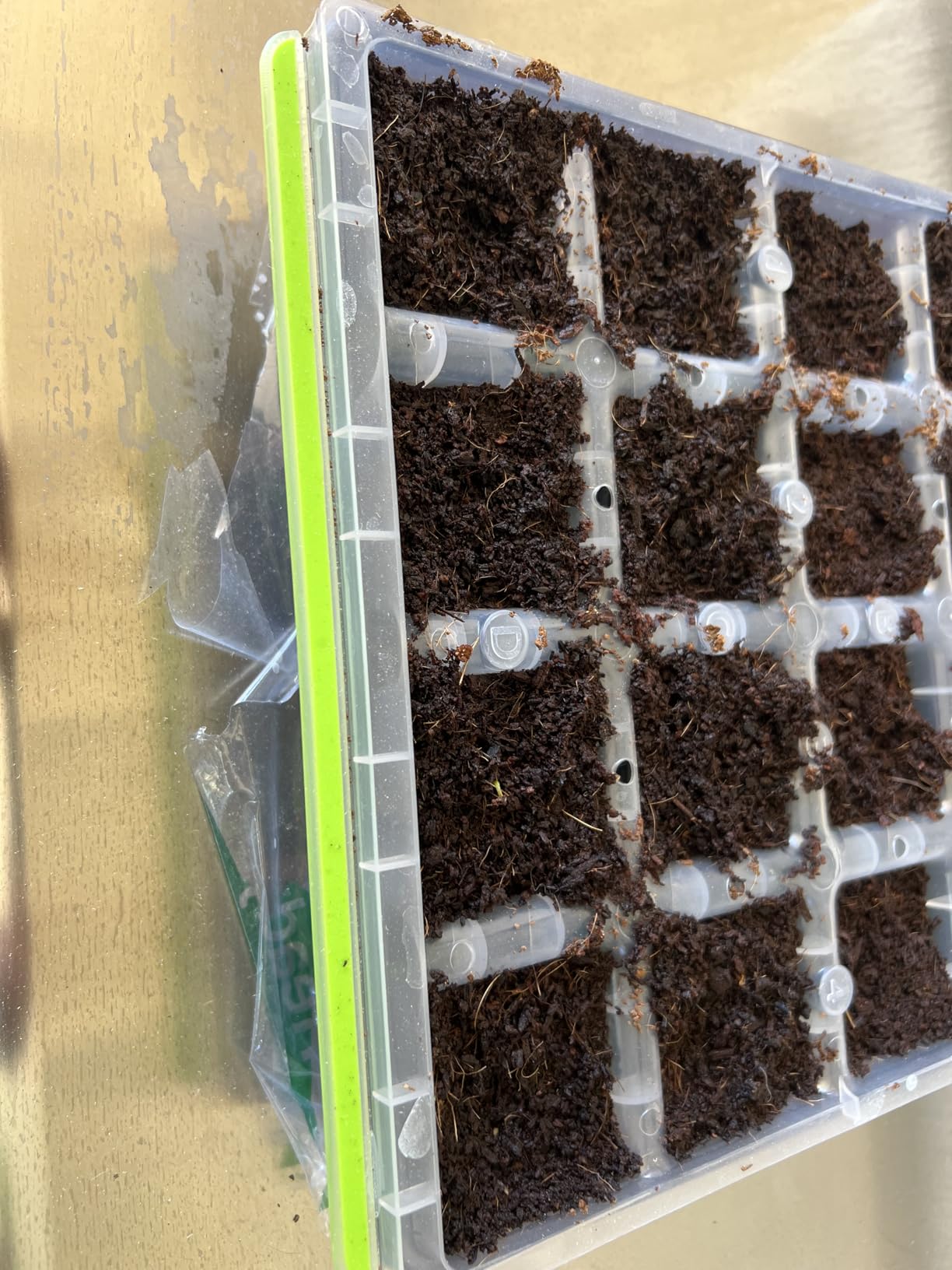
I filled this tray with a coir and wood fibre sowing mix and left it under a grow light for three weeks. Every cell drained cleanly and nothing pooled in the base, which matters more than it sounds once peat free media is under the lamp warming it all day.
The cells are soft food grade silicone and they flex far enough to push a seedling out whole. I did not have to loosen the root ball with a knife or tease roots off the sides, which is the usual reason a tray damages seedlings at transplant.
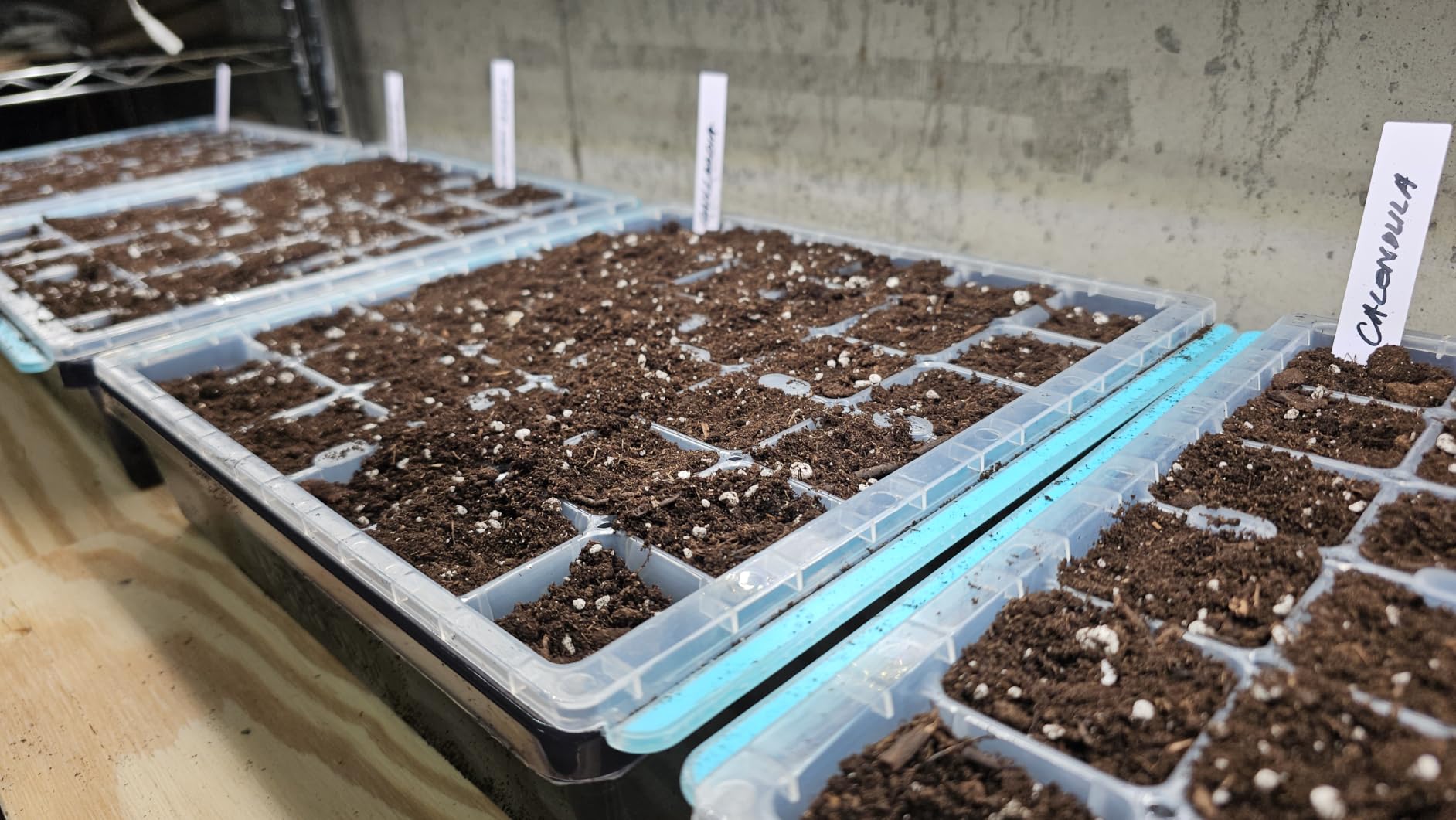
Burpee ranks this tray first in its plant germination category, and with 6189 reviews it is the most tested tray in this roundup by a wide margin. Reviewers repeatedly single out the drainage slots, the labelled rows and the fact that it survives being washed out and reused.
The labelled rows and included Plant-o-Gram diagram are a small detail that saved me the most time. Filling 36 cells twice with two different varieties and remembering which was which is where most home sowers lose track.
Is the cell depth deep enough for tomatoes and peppers?
The tray measures 11.5 by 10.375 by 2.25 inches overall, so the cells are medium depth rather than deep. They handle peppers, tomatoes and brassicas through the first three weeks comfortably, but a leggy tomato at week five will need potting on before it hits a real pot.
If you want a single tray that carries a crop from seed to a decent size without an intermediate step, the 2 inch cells on the Ryscam 120-cell kit give you more root room.
Is it worth buying for a windowsill sowing of flowers?
For one season of quick crops such as lettuce, basil, brassicas and microgreens, 36 cells is comfortable and the tray stores flat against a wall. For a broad wildflower or brassica sowing where you want hundreds of plants, you will fill and empty this tray many times over.
The dishwasher rating is the underrated part. Trays that are hand washed in a cold kitchen sink rarely get properly cleaned, and reused trays with damp corners are how damping off spreads between sowings.
2. Bootstrap Farmer 1020 Flat Trays – The Toughest Base You Can Buy
Bootstrap Farmer 5 Pack Seed Starter Trays, 1020 Flat No Holes, Extra Strength 2.0mm Thick Polypropylene for Microgreens & Propagation
5 trays per pack
1.8-2.0mm polypropylene
21.1 x 11 x 2.5 inches
Two year warranty
Pros
- Holds over 50 lbs saturated without buckling
- Solid no-holes base acts as a bottom watering reservoir
- Standard 1020 footprint fits domes and cell inserts you already own
- Manufactured in the USA with a two year warranty
Cons
- Higher cost per tray than disposable alternatives
- Edges sometimes arrive chipped from packing
These are not seed cells. They are flat reservoirs, five per pack, and at 1.8 to 2.0mm thick polypropylene they are the only tray here rated to hold over 50 pounds without flexing.
I loaded one with a full watering depth and kept it saturated overnight. Nothing buckled and the rim stayed square, which is exactly the failure square-foot gardeners describe when cheap trays crack at the base after two or three seasons of use.
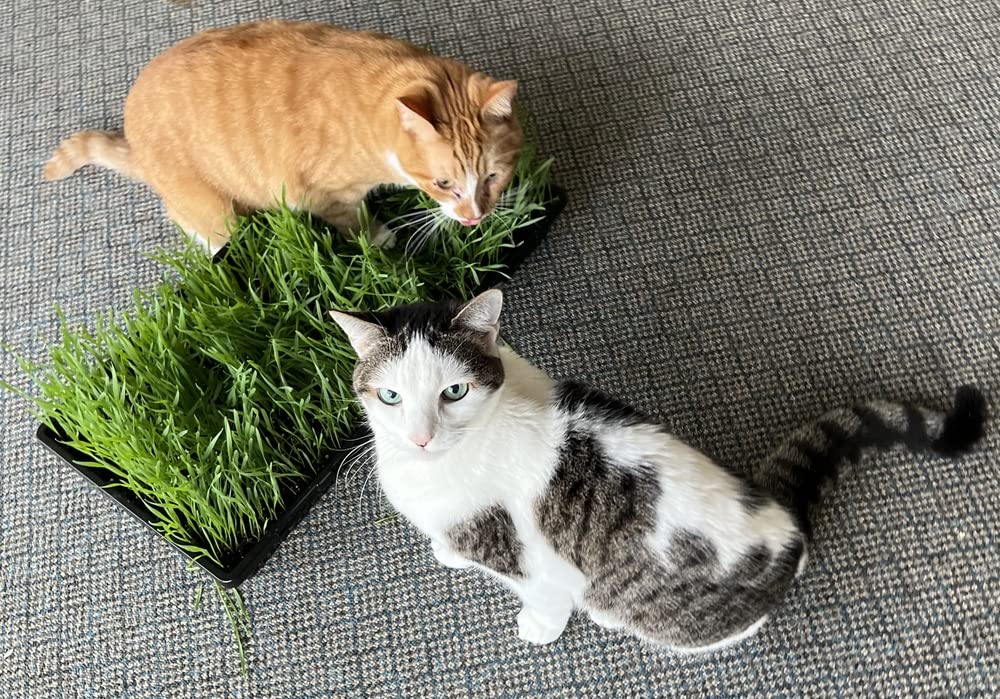
With 2176 reviews at 4.8 stars this is the highest rated product we tested. Buyers treat them as a one-time buy and describe them as the last tray purchase they expect to make for propagation.
The standard 1020 footprint measures 21.1 by 11 by 2.5 inches, so humidity domes, cell trays and soil blocks bought separately all drop straight in. That is the practical reason to own them even though they are not peat free in the strict sense.
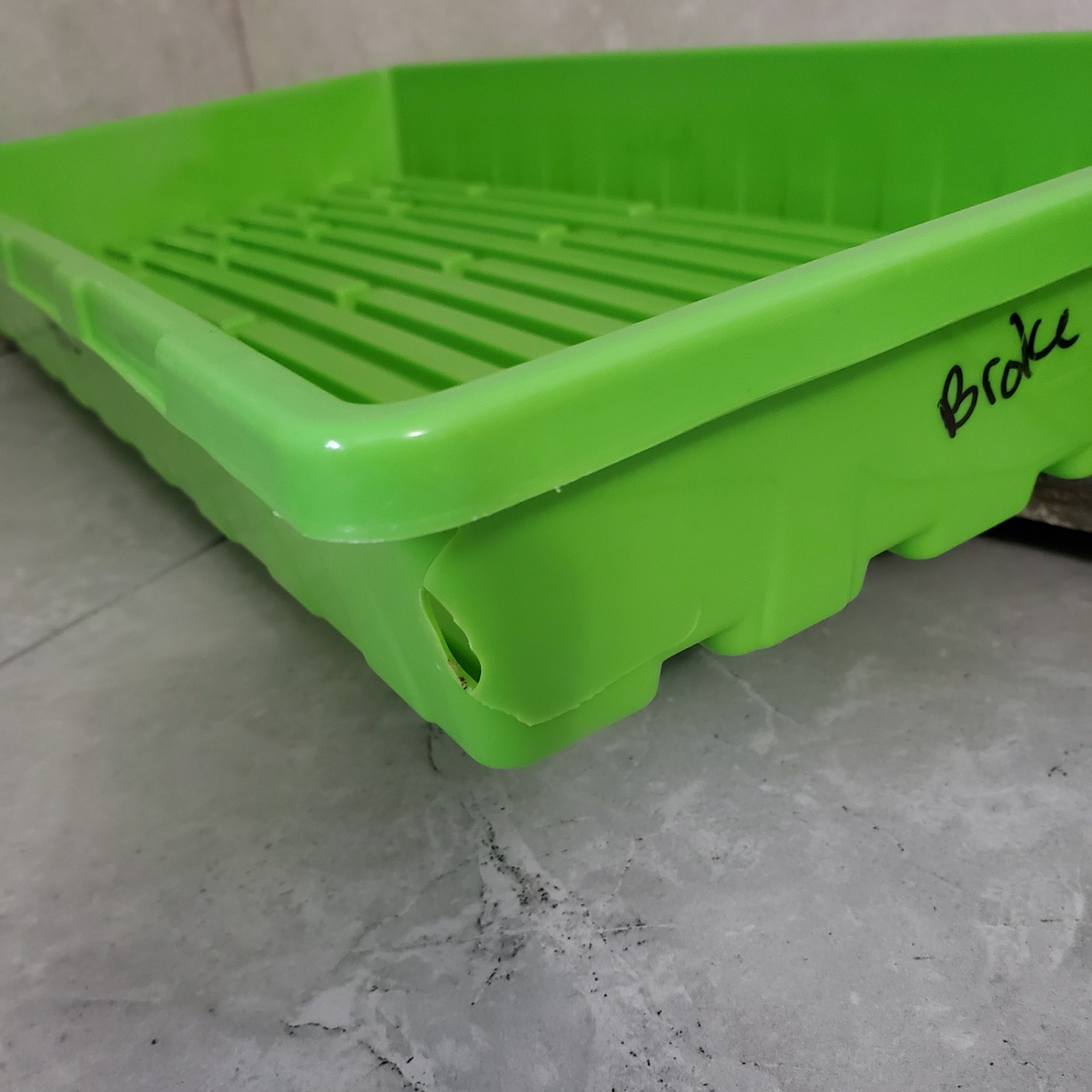
Why does the hole-free base matter for peat free sowing?
Because peat free media dries from the top and from the sides at the same time. A solid base lets you stand your cell tray in half an inch of water and let the medium wick it up from below, which keeps the surface from crusting over and pulling moisture out of young roots.
Bottom watering with a coir and wood fibre mix is the single change that most improves germination in warm conditions, and this tray is built to do it properly.
Do these trays count as a peat free seed tray?
Not strictly. They are polypropylene, so if cutting plastic from your propagation stage is the goal, look at the recycled pulp pots instead. What they do give you is the durability to stop buying throwaway trays every season while your sowing media stays peat free.
Many growers pair one of these with the pulp or silicone cell trays on our list and refill the same base for years.
3. Ryscam 72-Cell Kit With Humidity Dome – Best For Indoor Germination
Seed Starter Tray, 72 Cells Indoor Seed Starter Kit, Flexible Silicone Designed Seedling Starter Trays, Germination Tray with Humidity Dome & Lids(4in Height), Reusable & Dishwasher Safe, BPA-Free
72 cells with dome
4.33 inch vented lid
7.87 x 6.29 x 6.29 inches
Compact footprint
Pros
- Vented humidity dome speeds germination without a heat mat
- Flexible silicone bases release seedlings with the root ball
- Compact enough to fit several trays under one grow light
- Grooves and raised rim move excess water away from the cells
Cons
- Cells are small so most seedlings need potting on
- Some units report lids that do not snap shut tightly
- Too small for raising hundreds of plants at once
The dome is the reason to buy this kit. Brassicas and herbs germinate far more evenly under a vented lid than on an open windowsill, and the 4.33 inch height gives seedlings room to stretch before you need to remove the cover.
Vented lids matter more than most buyers realise. A dome with no adjustment traps condensation and pushes damping off, and once the first true leaves appear you crack the vents wide for a few days to wean them off the humidity.
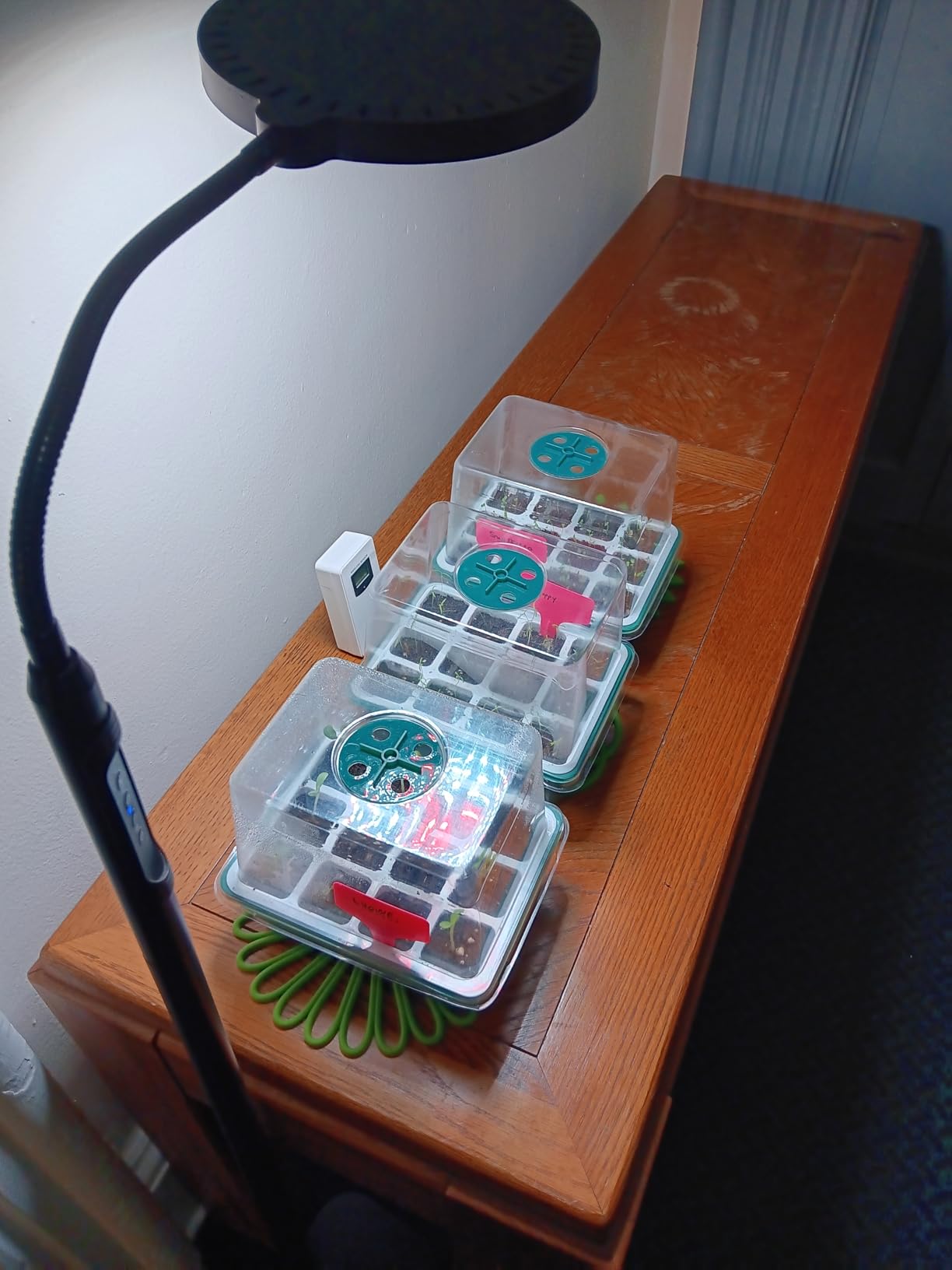
With 663 reviews at 4.5, this is one of the better-reviewed indoor kits. Buyers call the build sturdy rather than brittle, which is the usual complaint about cheaper moulded kits after a season in a warm propagator.
The compact footprint of 7.87 by 6.29 inches is genuinely useful. It means a single 24 inch light bar can cover two or three trays instead of one, and light is what limits most indoor sowings.
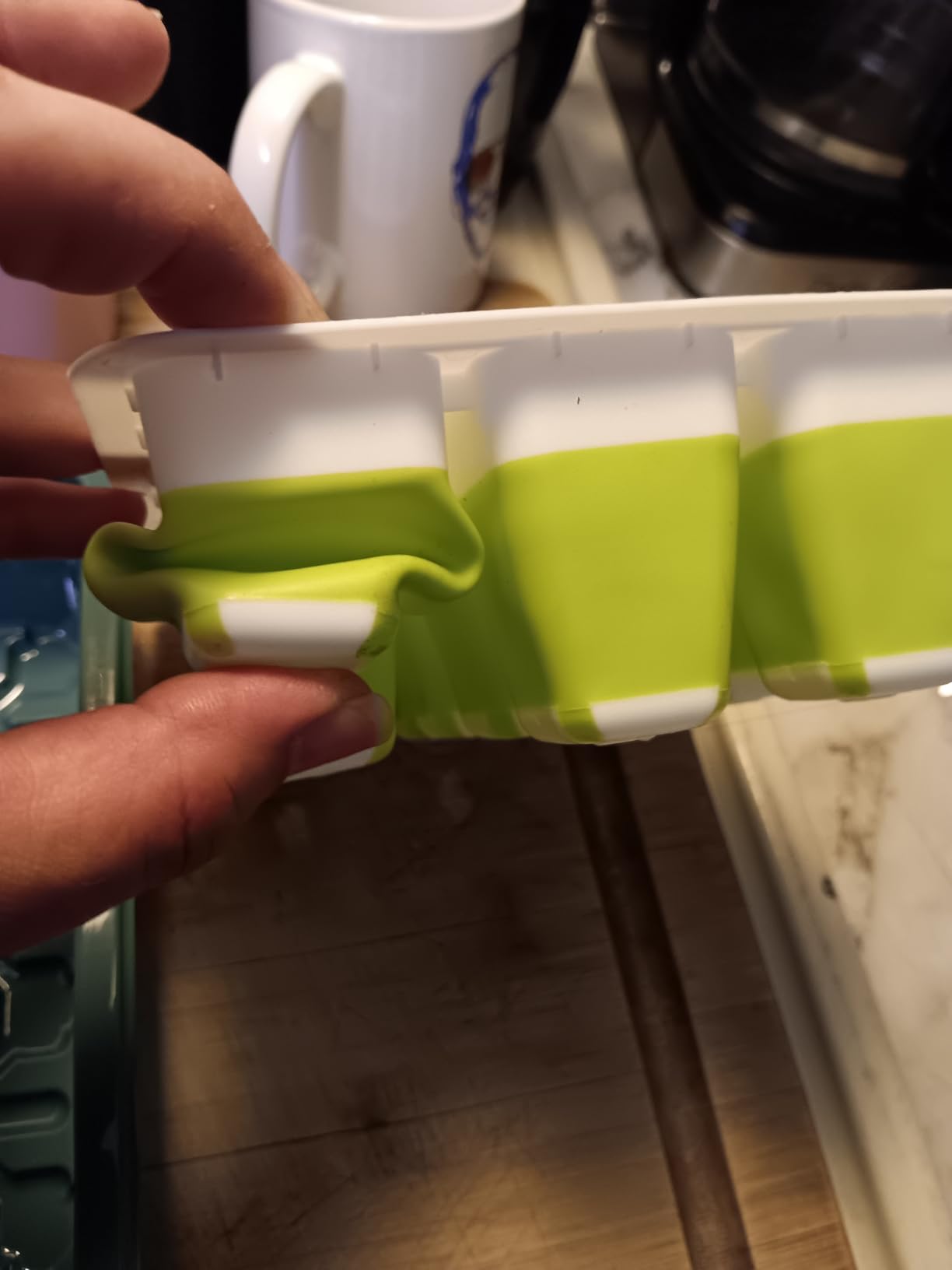
Will these cells hold a tomato seedling until planting out?
No. With 72 cells in a tray this size the cells are small, and most crops need potting on into larger containers before they go outside. That is fine for brassicas, lettuce, basil and flowers, but tomatoes and peppers want more root room earlier.
If you grow a lot of tomatoes, pair this dome with a deeper tray for the potting on stage, or move seedlings into the 2 inch cells on the Ryscam 120-cell kit.
Is a humidity dome necessary with peat free compost?
It helps, because peat free mixes lose moisture quickly once the surface dries. The dome buys you two or three days before you need to water, which is exactly the buffer you want when a tray is on a heat mat or above a radiator.
The trade-off is that the dome also slows drying when you forget it, so check under the lid daily once seedlings emerge rather than watering on a fixed schedule.
4. Ryscam 120-Cell Pop-Out Kit – Best For A Window Ledge
Ryscam 10pcs Reusable Seed Starter Tray, 120 Cells Seed Starter Kit, Silicone Seedling Starter Trays for Starting Plant Seeds with Flexible pop-Out Cells, Indoor Gardening Plant Germination Trays
10 trays of 12 cells
Cells 1.5 x 1.5 x 2 inches
5.9 x 7 x 5.9 inches
One piece silicone and plastic
Pros
- Gentle push releases the whole root ball with no tearing
- Holds the highest rating of the reusable group at 4.7 stars
- One piece silicone and reinforced plastic washes and reuses
- Corner drain slots improve aeration in every cell
Cons
- No base tray included so you need something underneath
- Soft bottoms shift when filling
- No lid included so a dome has to be added separately
Ten small trays of 12 cells each, and that is the design decision worth noticing. Individual trays mean you can carry twelve seedlings to the windowsill instead of a full block, and you only need light over the section actually in use.
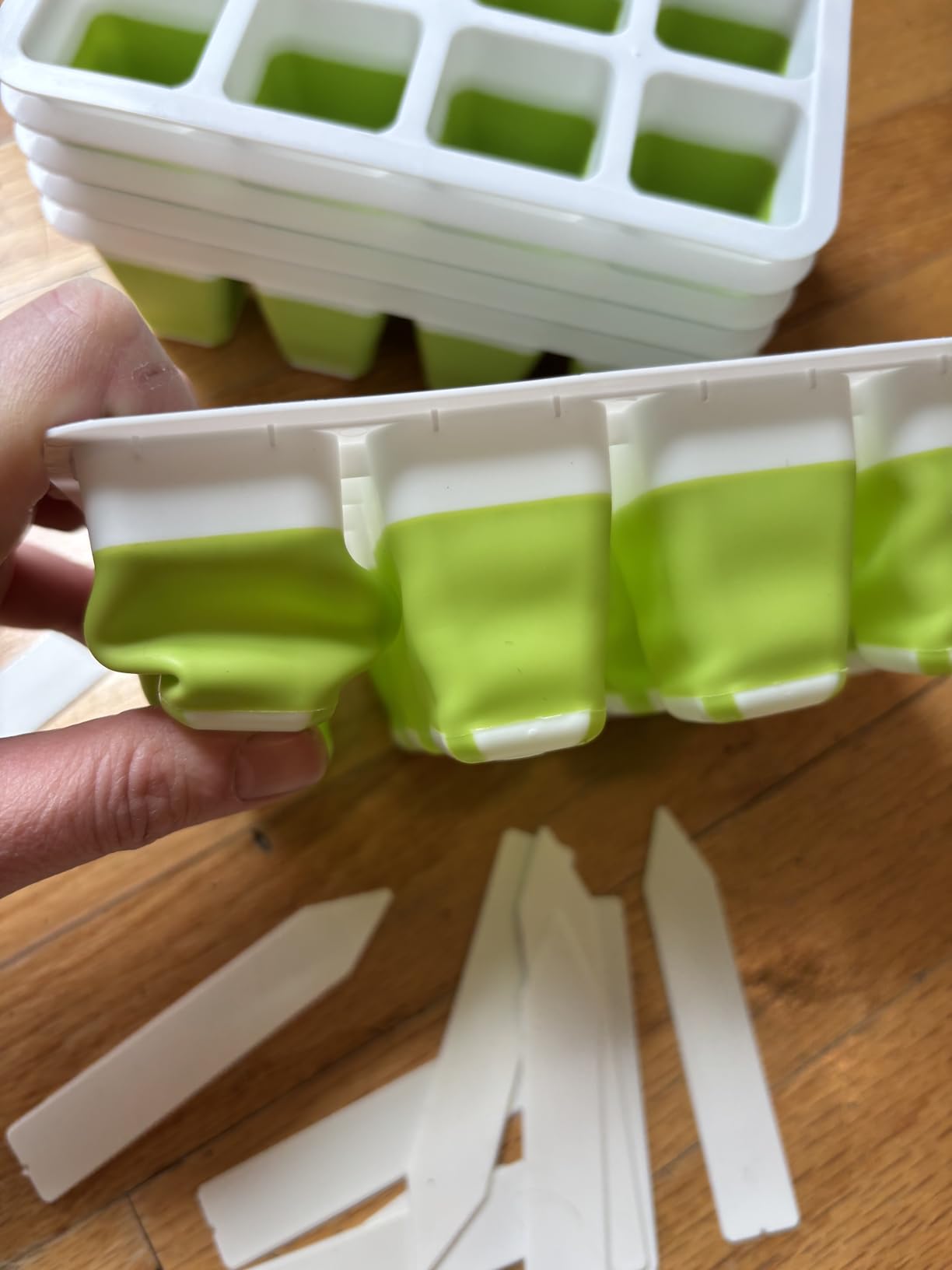
Each cell measures 1.5 by 1.5 by 2 inches, which is the best compromise in this list between root room and light coverage. I pushed seedlings out of these with a thumb through the silicone base and the whole plug came away with the medium intact.
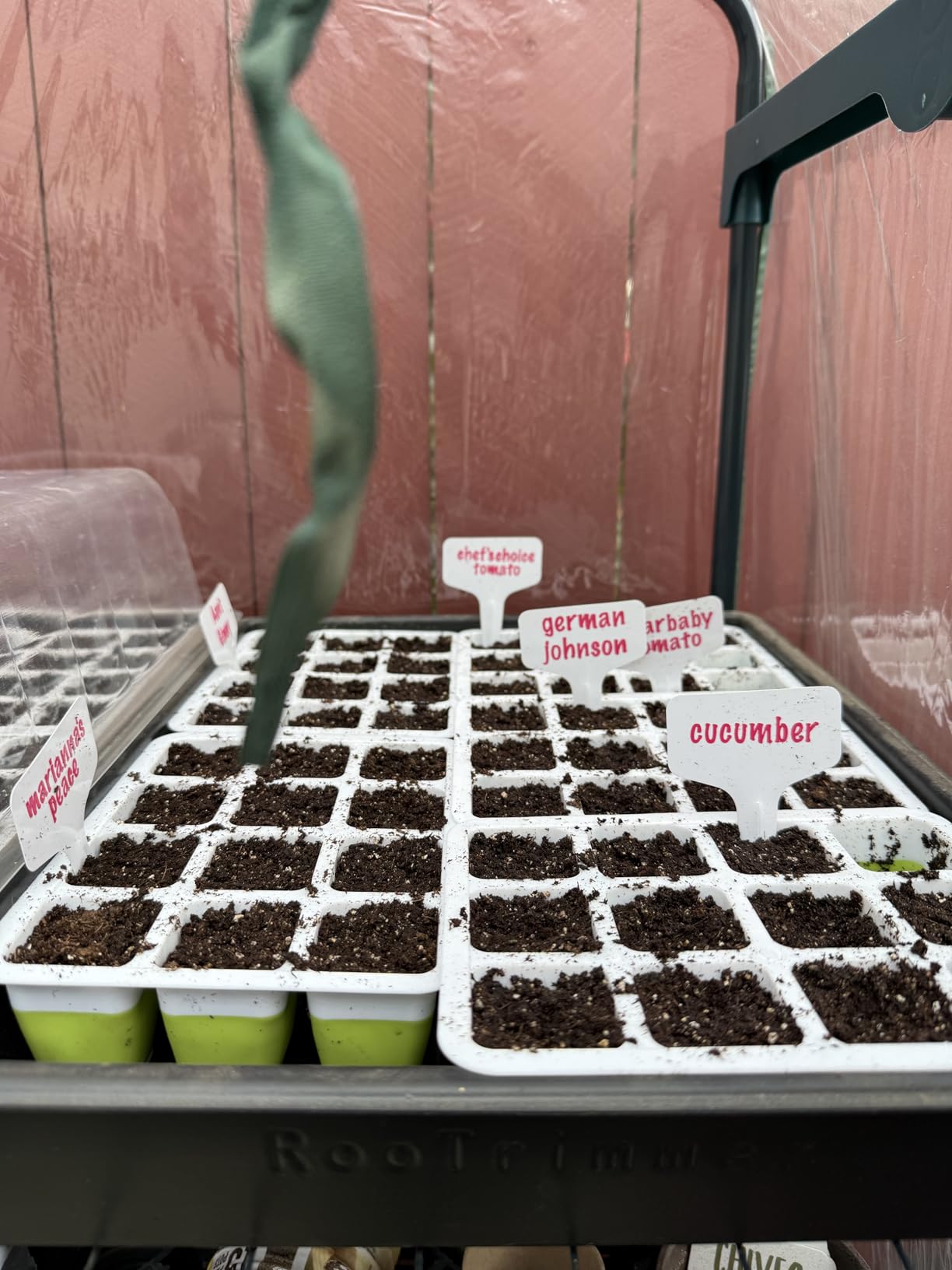
At 4.7 stars across 497 reviews this sits at the top of the reusable group. Buyers highlight the seedling removal, the one piece build and the fact that the trays stack flat for storage in a small cupboard.
Corner slots on each cell improve drainage and aeration. Because no base tray is included you need a tray or a baking sheet underneath, which is also your chance to bottom water from a known level.
How many trays do you need for a typical vegetable sowing?
One 12-cell tray holds a useful row of a brassica or herb. A full tomato and pepper sowing of any size means working through all ten trays, and at that point you want a bigger light footprint than a window ledge offers.
The answer for most home growers is to use two or three trays on a sill and move the rest under a grow light once they germinate.
What happens when you water peat free media in these cells?
The 2 inch depth gives you a decent reservoir and the slots drain the excess, so watering from above every morning works well in moderate conditions. In a warm greenhouse or above a radiator the surface will dry between waterings, which is where a bottom tray earns its keep.
The soft base does shift slightly when you move a filled tray, so fill it on a flat surface and carry it from underneath rather than by the rim.
5. Dalzom 60-Pack Recycled Pulp Pots – Best For Direct Planting
Dalzom® 60Pcs 3.1” Peat Pots with 60Pcs Plant Labels, Biodegradable Pots for Seedlings with Drainage Holes, Garden Plant Nursery Pots Seed Starting Trays
60 recycled pulp pots at 3.1 inches
60 matching labels
3.2 x 3.2 x 3 inches
Brown unfinished finish
Pros
- Made from recycled pulp and planted straight into soil
- Sixty matching plant labels in the same package
- Drainage holes balance airflow and moisture
- Tapered 3.1 inch pots suit tomatoes and cucumbers
Cons
- Single use pots are discarded after transplanting
- Loose pots mean more handling than a moulded tray
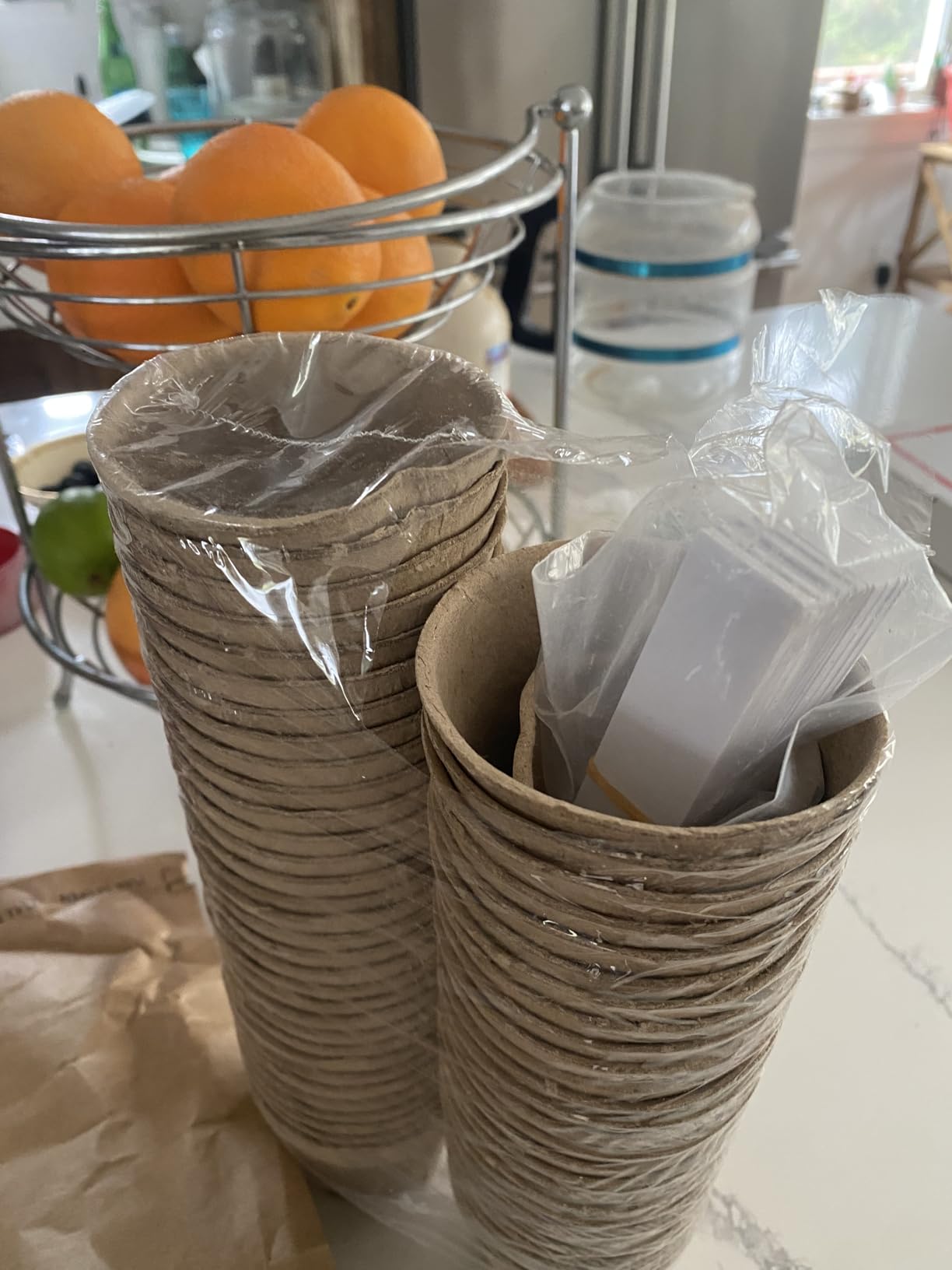
This is a pot rather than a tray, and for gardeners moving tomatoes and cucumbers straight into the garden that difference is the whole point. The pot goes into the soil with the seedling still inside, so there is no root disturbance at the moment it can least afford it.
Each pot measures 3.1 inches across the top, 2 inches at the base and 3 inches tall. That taper matters because a tapered pot slips off a wet root ball instead of tearing against it, which is the trick growers describe for getting a wet pot off rather than fighting it.
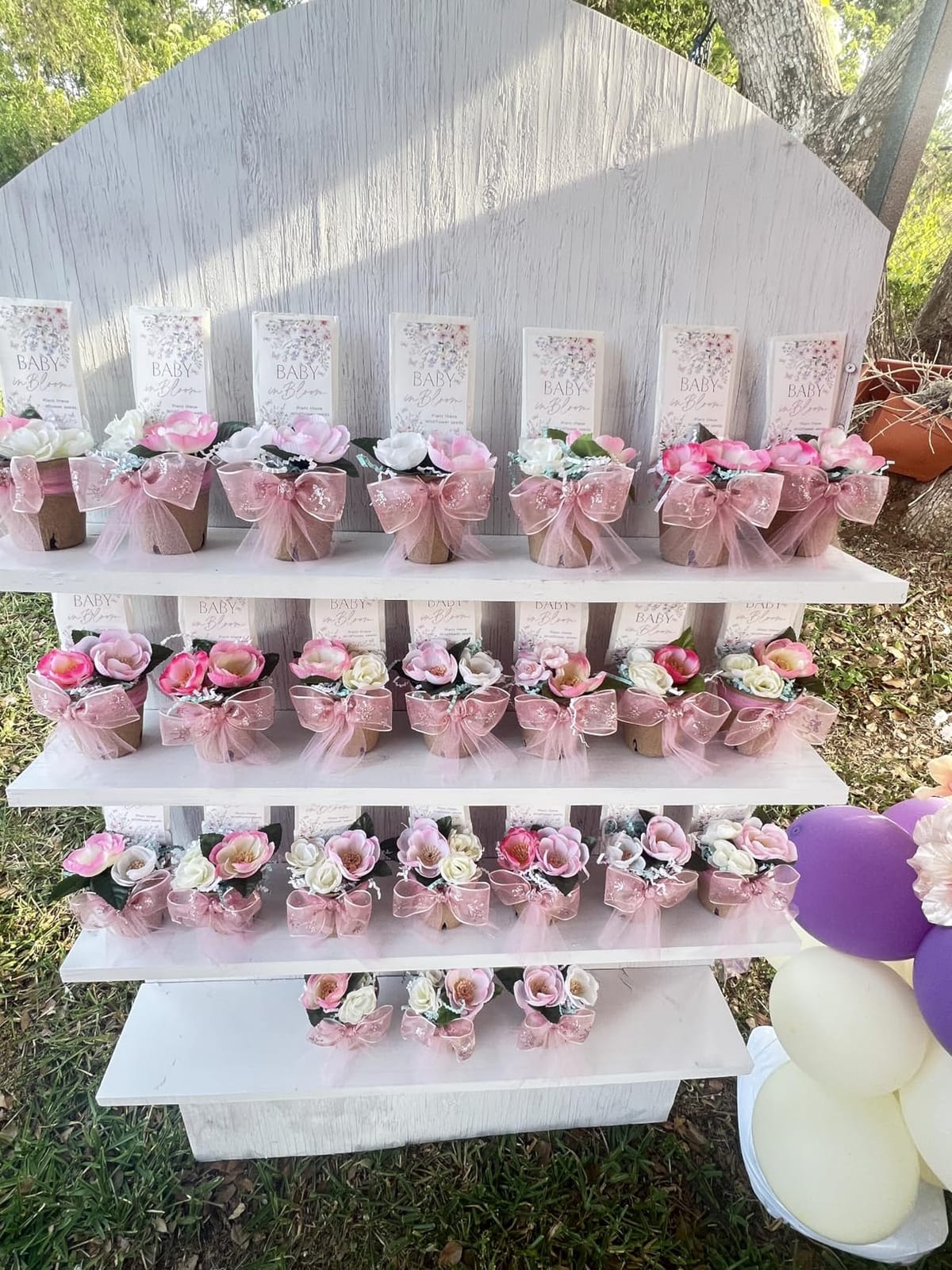
852 reviews at 4.5 stars, and the feedback repeats three things: consistent sizing, drainage holes that actually work and a label supply that matches the pot count. That is more labels than most similar packs include.
Because the material is recycled pulp with no peat, these fit a peat free approach properly. Gardeners switching away from peat pots usually start here since the planting method is familiar.
Do pulp pots cause root circling like peat pots do?
Less so, but not zero. Loose-walled pulp pots let roots push through the side wall, and reviews on these mention planting direct to avoid root damage. Peeling a wet pot off rather than tearing it is the practical habit to build.
Round and tapered profiles also air-prune better than square cells. Roots hit the curved wall and are redirected downward instead of circling along a flat corner.
Is it awkward to handle sixty loose pots?
It is more work than a moulded tray, and you need something to move them around in. The payoff is that you can pot up individual plants as they grow and leave the rest alone, which a solid tray does not allow.
Use a standard 1020 flat as a carrier if you own one, and you get the best of both: loose pots and a rigid base that holds them level while you water.
6. SYITCUN 200-Cell Biodegradable Kit – Best Value Bundle
SYITCUN 200 Cells Seed Starter Tray, 20 Pack Biodegradable Seed Starter Kit, Peat Pots for Seedlings with 200 Plant Labels, 2 Seed Planting Tool and 1 Spray Bottle
20 packs of 10 cells
Bottom drainage holes
3.94 inch square footprint
200 markers and tools included
Pros
- Complete accessory bundle with 200 labels tools and a spray bottle
- Cells can be planted whole to avoid transplant shock
- Bottom drainage holes prevent overwatering
- Holds moisture well despite a porous material
Cons
- Cells go flimsy once saturated and can break if overwatered
- Run slightly smaller than some buyers expect
Two hundred cells across twenty packs of ten, and the pack includes 200 plant markers, two seed planting tools and a spray bottle. The accessory bundle here is more complete than anything else we tested, which matters when you are sowing in batches and labelling everything.
Bottom drainage holes do the quiet work. They stop a saturated cell holding water against the base of a seedling and they let air sit under the medium, which is how you keep damping off out of a paper tray.
With 199 reviews at 4.6 this one punches above its weight on rating. Buyers report strong germination and appreciate that the whole cell can go into the soil, which removes the transplant shock step entirely.
The material is porous enough to hold moisture even when the surface looks dry, which is a slight advantage over denser paper trays. It also means you should not overwater, because saturated cells lose their shape.
Are these trays peat free?
Yes, the cells are made from biodegradable material with no peat in the construction, which is why they appear in this roundup at all. That means they work with coir, wood fibre and wool-based sowing media rather than fighting it.
The trade is durability. Paper-based cells are built for one sowing, and a grower on a peat free compost noted how pots that felt floppy when new firmed up once filled, which changes how you handle them.
Will these small cells hold a tomato until planting out?
Not to full size. With twenty packs of ten cells, each cell is on the small side, so use them for pricking out, brassicas, flowers, lettuce and quick greens. Order deeper pots or a deep cell tray for the final run up to plant out.
The included spray bottle is genuinely useful for these cells because a fine mist settles evenly instead of washing medium out of a shallow pot.
7. INCIKITI 40-Pack Peat Pots – Best Budget Pot Set
INCIKITI 40Pcs 3.15 Inch Peat Pots, Biodegradable Eco-Friendly Round Plant Seedling Starters Kit, Seed Germination Trays with 10 Labels for Flower Vegetable Tomato Saplings & Herb Germination, Khaki
40 pots at 3.15 inches
10 plant labels included
Khaki unfinished finish
0.33 kg pack weight
Pros
- Recycled pulp and peat moss construction for direct planting
- Ten plant labels included in the pack
- Generous count for a small budget
- Round pots suit flowers herbs and vegetables
Cons
- Single use
- cannot be reused after transplanting
- Loose pots rather than a tray so watering many seedlings takes longer
Forty round pots at 3.15 inches with ten labels, and that is the whole package. For direct sowing of beans, squash, cucumbers and large-seeded veg in a small greenhouse bed, it does the job without any other hardware.
Being loose pots rather than a fixed tray is the main trade-off. You can space them wherever you want and move individual plants, but watering a full set of forty on a windowsill takes longer than tipping water into a moulded tray.
1378 reviews at 4.4 stars, which makes this one of the better-established budget options. The feedback centres on the biodegradable material and the fact that seedlings can be transplanted without removing them from the pot.
Round pots also air-prune better than square cells. Roots hit the curved wall and are redirected downward instead of circling along a flat corner.
Are these truly peat free given the peat moss in the material?
The listed material is recycled pulp and peat moss, so treat this as a lower peat option rather than a strictly peat free one. If eliminating peat entirely is the point of your switch, choose the recycled pulp pots that carry no peat in their material listing.
The pot itself is still plantable and still plastic free, which covers the waste side of the calculation even if the compost inside is peat based.
Are these deep enough for big seeds like beans and squash?
Yes. At 3.15 inches across and 3.1 inches tall, there is enough depth for large seeds that produce vigorous seedlings, and enough width that two seedlings in one pot is not instantly over crowded.
Sow one per pot and thin later if germination is patchy, which keeps the roots from tangling before you separate them.
8. TCBWFY 640-Cell Pulp Trays – Best For Bulk Sowing
TCBWFY 640Cells Seedling Start Trays,40 Pack Peat Pots Seedling Pots Biodegradable,Seedling Starter Kit,Organic Germination Plant Starter Trays
640 cells across 40 trays
Cells 1.6 x 1.6 x 2 inches
Pulp material
Cuts into 16 cell sections
Pros
- Largest capacity here at 640 cells for bulk sowing
- Roots can grow through the pulp walls to reduce transplant shock
- Each tray cuts into sixteen cell sections for multi-use
- Soft pulp is easy to peel away from a wet seedling
Cons
- Pulp breaks down after one season and cannot be reused
- Bulk packs need real indoor light and bench space
Six hundred and forty cells across forty trays is the volume end of the market. If you raise large batches of brassicas or direct sow a whole block of wildflowers, this is where the cell count stops being the constraint.
Each cell measures 1.6 by 1.6 by 2 inches, and roots can push through the pulp wall into the ground when the cell is planted whole. That is what the design is for: removing the potting on step for a crop you intend to grow on outdoors.
Reviews at 4.4 across 1055 sit slightly below the reusable trays on rating, and the reason is consistent. Nobody complains about germination, they complain about volume and about the fact that the material is single season.
One tray cuts into sixteen smaller cell sections, which is a useful feature if you only need a handful of cells for a second variety rather than a whole tray. Forty trays of sixteen cells is the kind of volume where a labelled row system matters, so mark each tray as you fill it rather than relying on memory at transplant time.
Do you have the space for 640 cells?
You need bench space and light, and that is the honest catch. Forty trays at two inches deep need a propagation area that most kitchens do not have, so this pack suits a greenhouse, a polytunnel or a dedicated grow room.
If your space is limited, buy fewer cells and use the money on light instead. Light is usually the limiting factor in an indoor sowing before tray capacity is.
Are pulp trays actually better for roots?
They are gentler at transplant because the whole cell goes into the soil, but they do not air-prune the way fabric or rigid slotted pots do. Treat biodegradable as convenient rather than root-optimised, and plan on a short stay in the cell.
One pack degrading into the bed does return organic matter, which peat does not, and that is a real part of the peat free calculation.
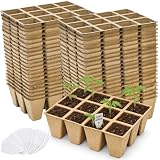
9. Jucoan 480-Cell Paper Trays – Best Small Cells For Flowers And Herbs
Jucoan 40 Pack Peat Pots Seed Starter Trays, 480 Cells Germination Seedling Pots, Organic Biodegradable Plant Germination Tray with 40 Plant Labels for Vegetable Flower, Herbs, Indoor Outdoor Garden
40 trays of 12 cells
Cells 1.5 x 1.5 x 1.7 inches
Paper and grass charcoal
40 labels included
Pros
- 480 cells across forty trays plus forty labels
- Paper and grass charcoal holds water well and is recyclable
- Transplants directly into the garden without root shock
- Small cells suit flowers herbs and small veg seedlings
Cons
- Lowest rated here at 4.0 with a 13 percent one-star share
- Cells at 1.5 inches mean potting on sooner
- Pulp pots are single use
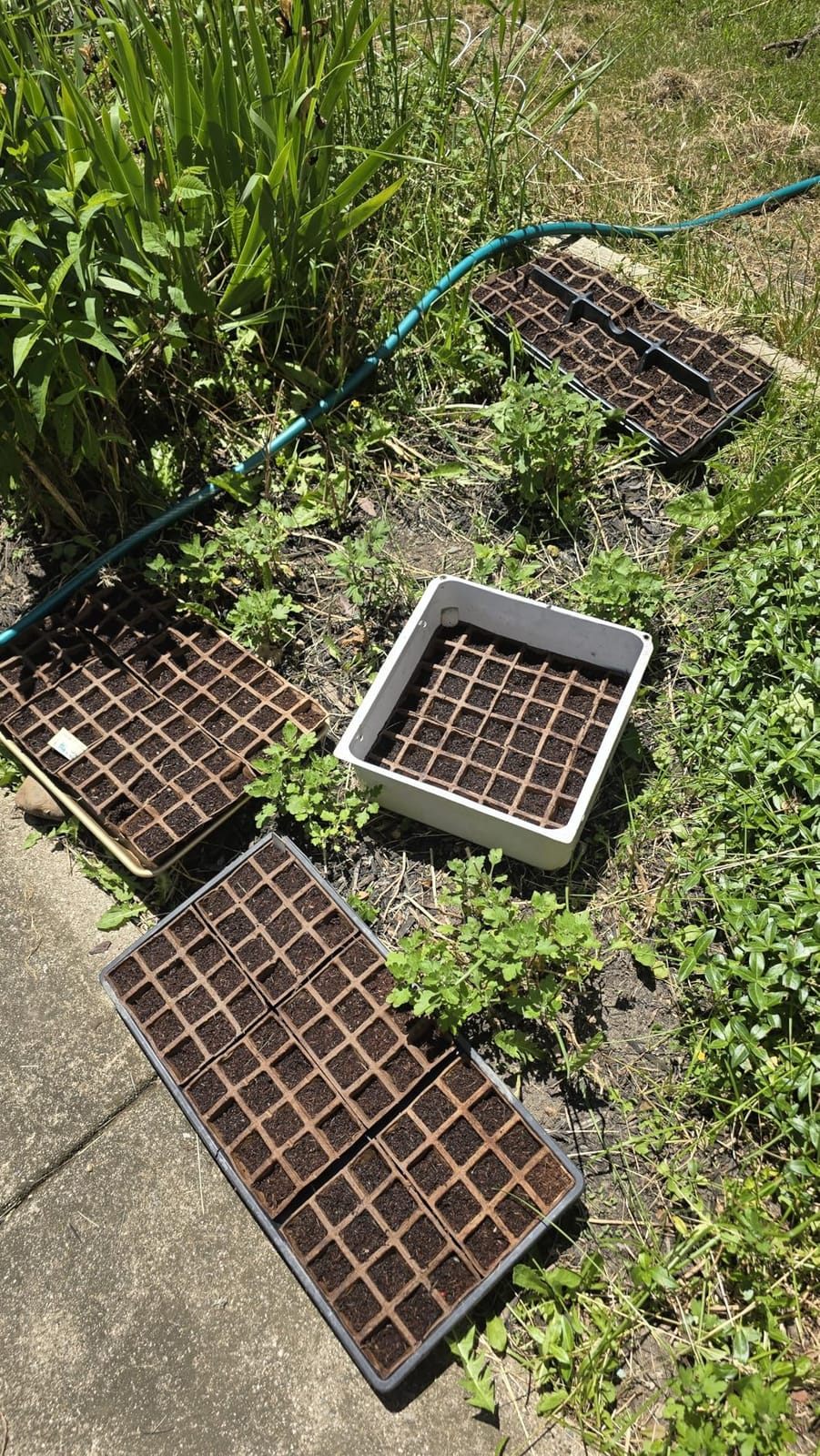
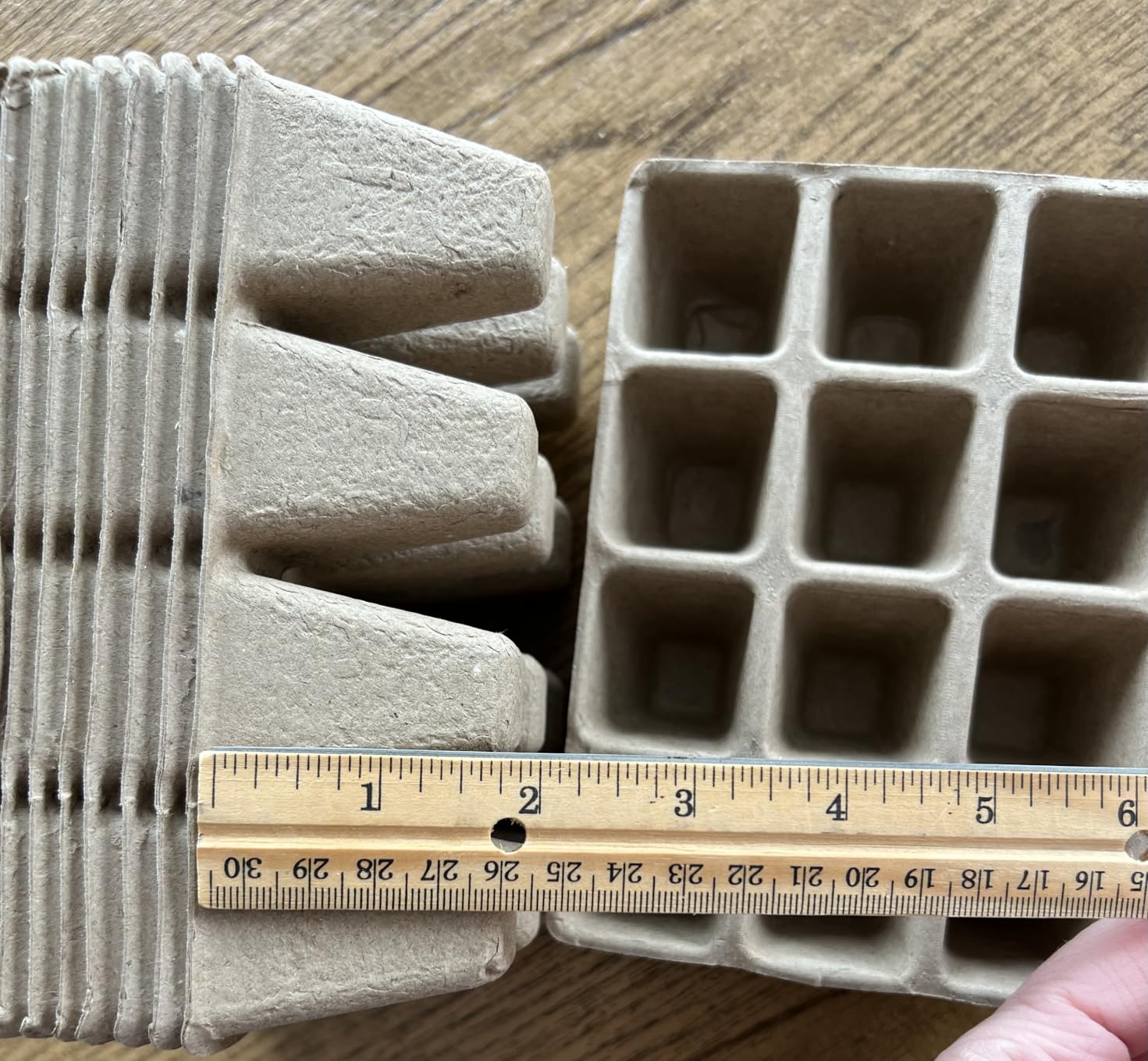
These are the smallest cells in the roundup at 1.5 by 1.5 by 1.7 inches, and that single fact drives everything else about them. Forty trays of twelve cells give you 480 starts from a tray footprint of 6.2 by 4.7 inches.
For flowers, herbs and salad crops that you prick out or transplant young, that is the right size. For tomatoes, peppers or anything you want to grow on, the cells are too shallow and you will be potting on sooner than you planned.
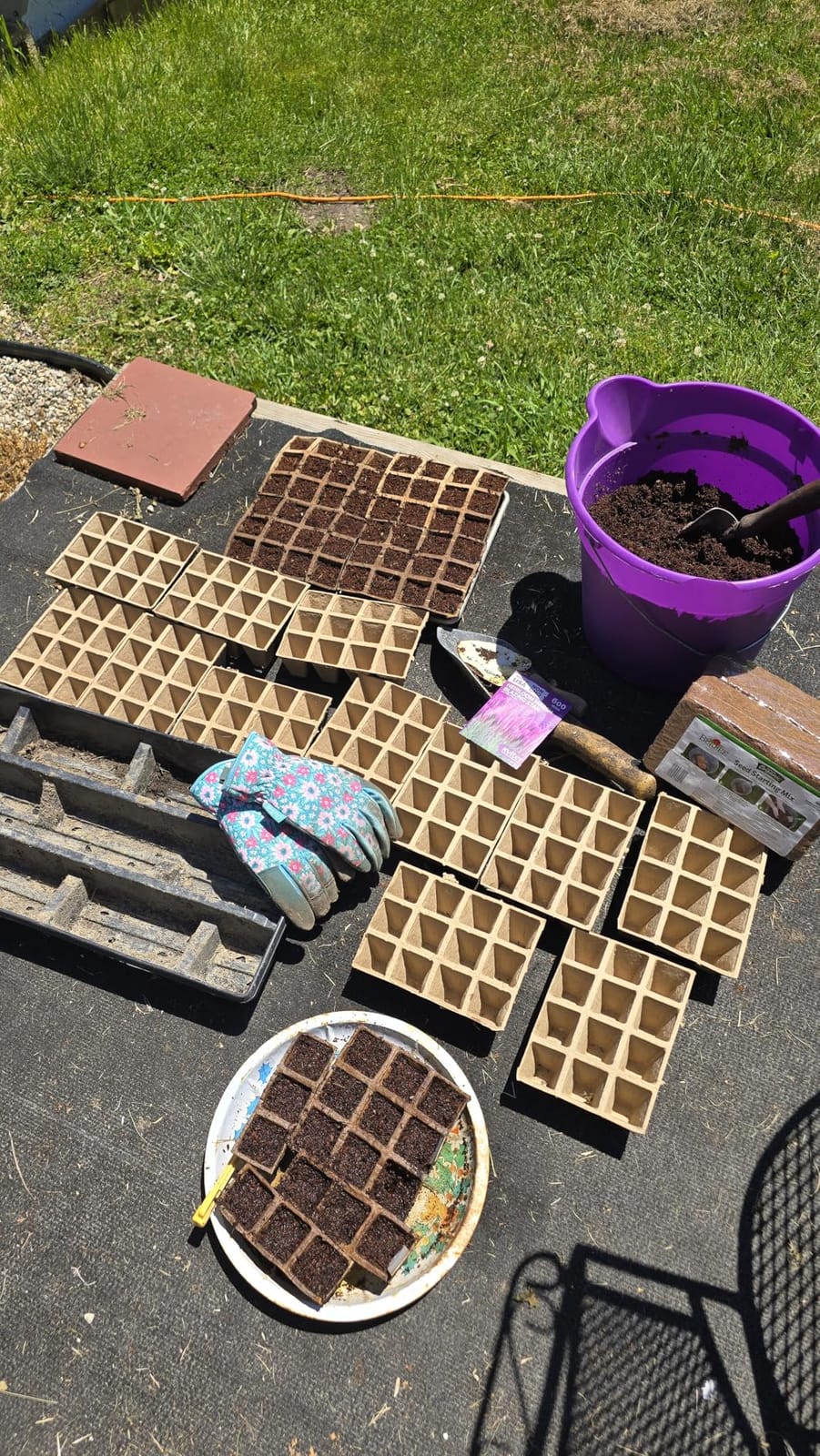
This is the lowest rated product here at 4.0 stars, with a 13 percent share of one-star reviews. The complaints cluster on cell size and on how quickly the pulp breaks down, not on failed germination.
The paper and grass charcoal construction is worth knowing about. It holds water better than denser paper trays and it is fully recyclable, so it fits a low waste approach even though it is not reusable.
Which crops suit 1.5 inch cells?
Flowers, most herbs, lettuce, rocket, cress, microgreens and brassicas sown for transplant. Anything you intend to plant out as a full sized vegetable plant wants at least 2 inches of cell depth.
As a rough rule, if you would not transplant it before it reached 15 to 20 cm, a shallow cell is fine because you were going to move it on anyway.
Is the lower rating a deal breaker?
No, as long as you buy for the right crop. Four stars across 284 reviews reflects people expecting more cell depth than they got, which is a sizing mismatch rather than a quality fault.
It is the right pack to trial a seed variety cheaply. Sow a few cells, see what germinates, and only commit a bigger tray to the varieties that perform.
10. Doter 120-Cell Biodegradable Trays – Best For Trialling Sowing Mixes
Doter 10 Packs Seedling Starter Trays 120 Cells, Biodegradable Seed Germination Trays Plant Starter Peat Pots for Seedlings
10 packs for 120 cells
Biodegradable material
0.22 kg pack weight
Brown recyclable trays
Pros
- Low entry cost per tray
- Biodegradable cells go straight into the ground
- Buyers report germination in as little as two days
- Simplifies transplanting while reducing waste
Cons
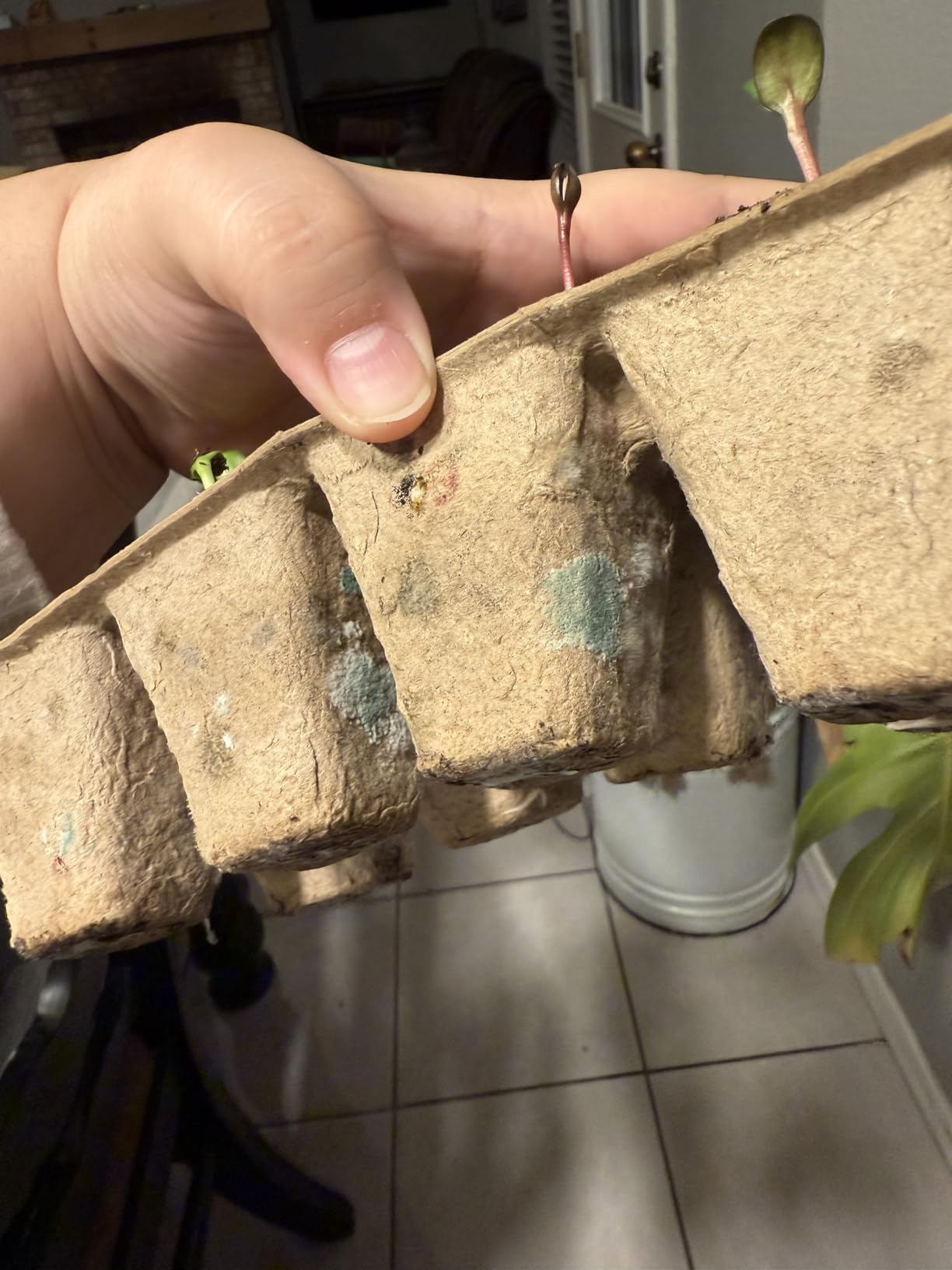
- Cells are very small and some buyers report mould or algae
- Cells go flimsy and lose shape once saturated
- Ratings sit at 4.0 with 12 percent one-star reviews
Ten packs of twelve cells for 120 starts, and this is the cheapest tray per cell in the roundup. If your goal is to run a trial across several seed varieties and several sowing media, that is exactly the use this pack suits.
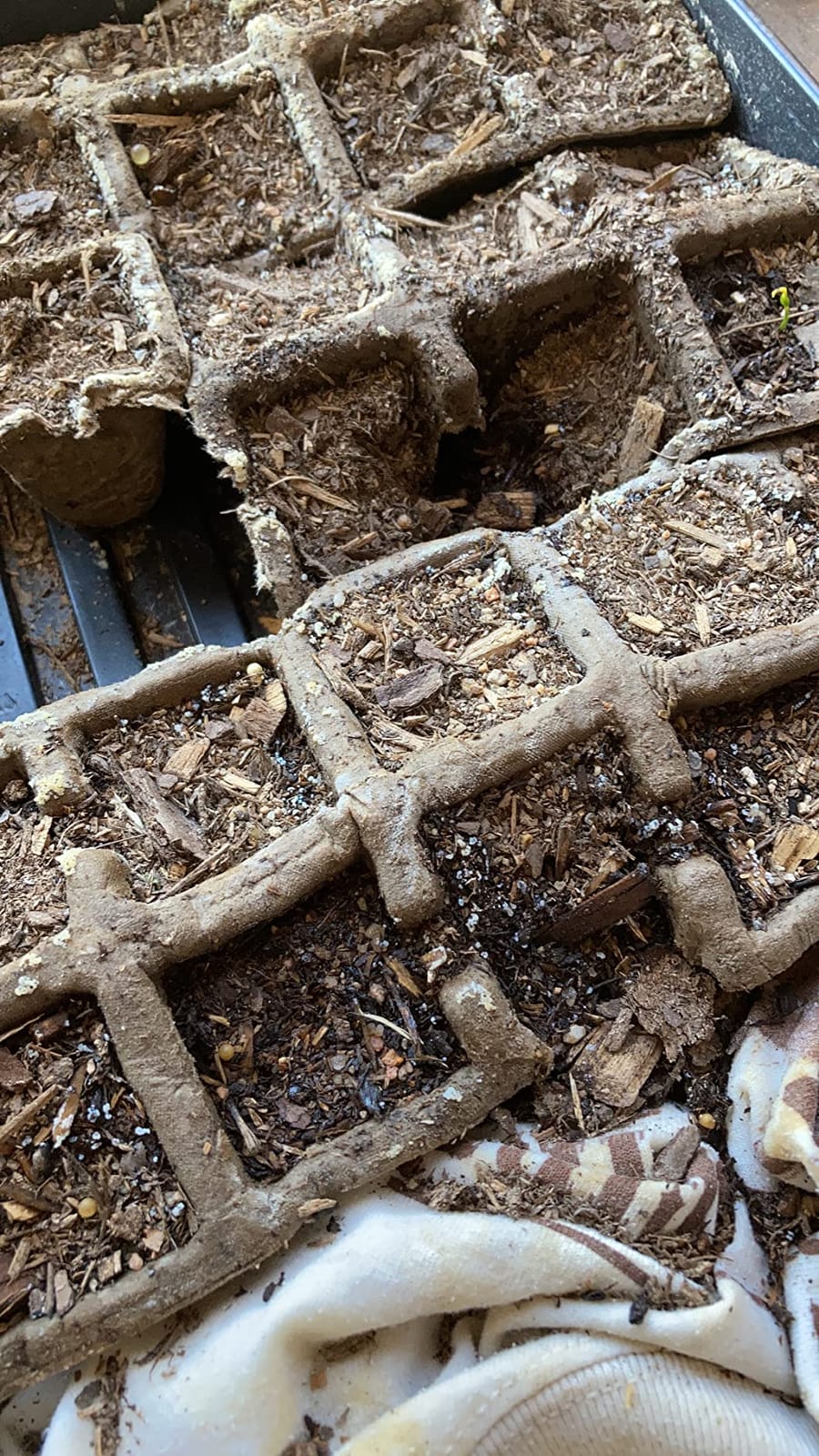
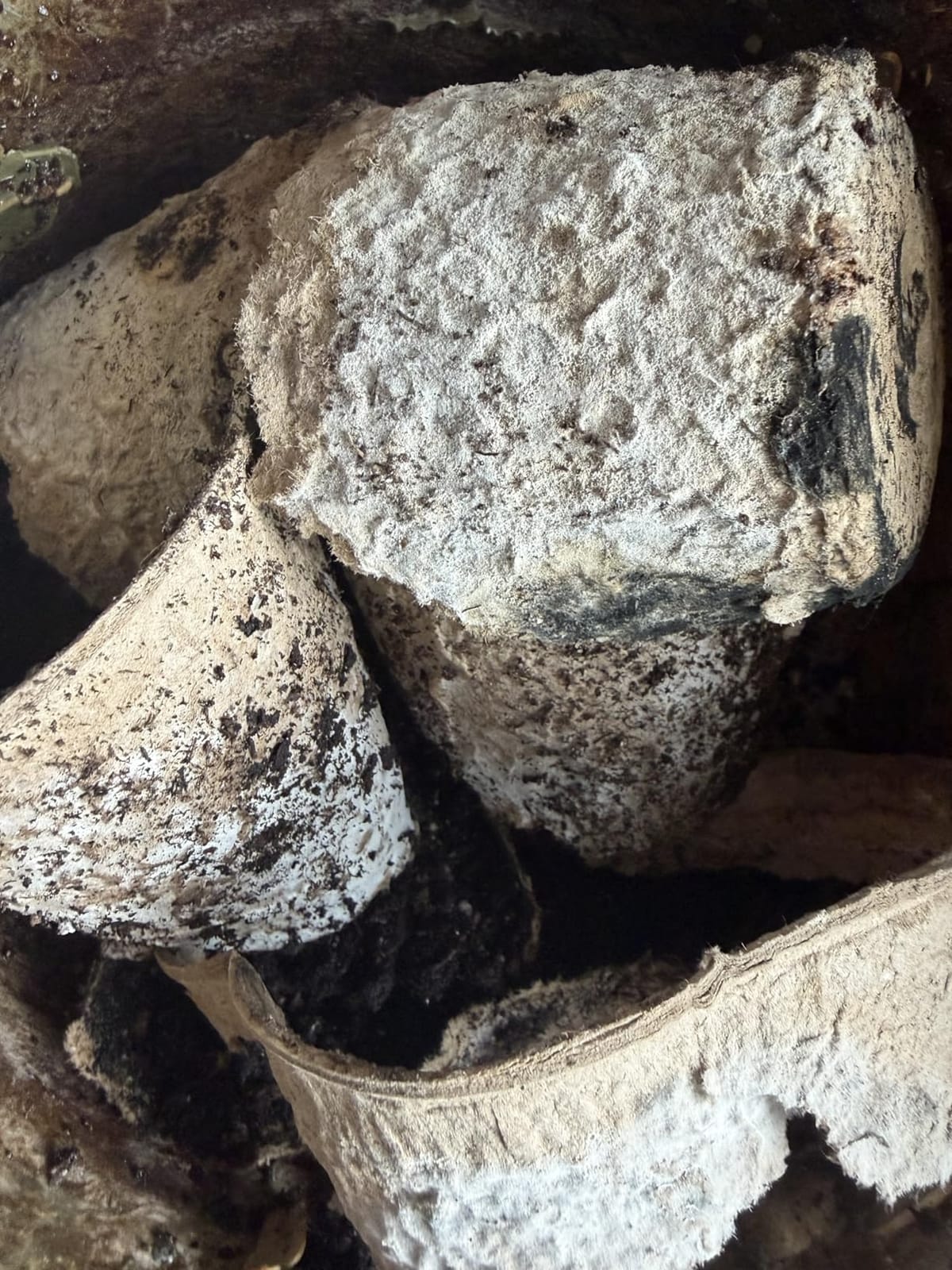
Cheap trays carry one specific risk and reviewers mention it clearly: mould and algae in the paper cells. That happens when a shallow, absorbent cell stays wet at the surface, which is more likely with peat free media than with a denser peat mix.
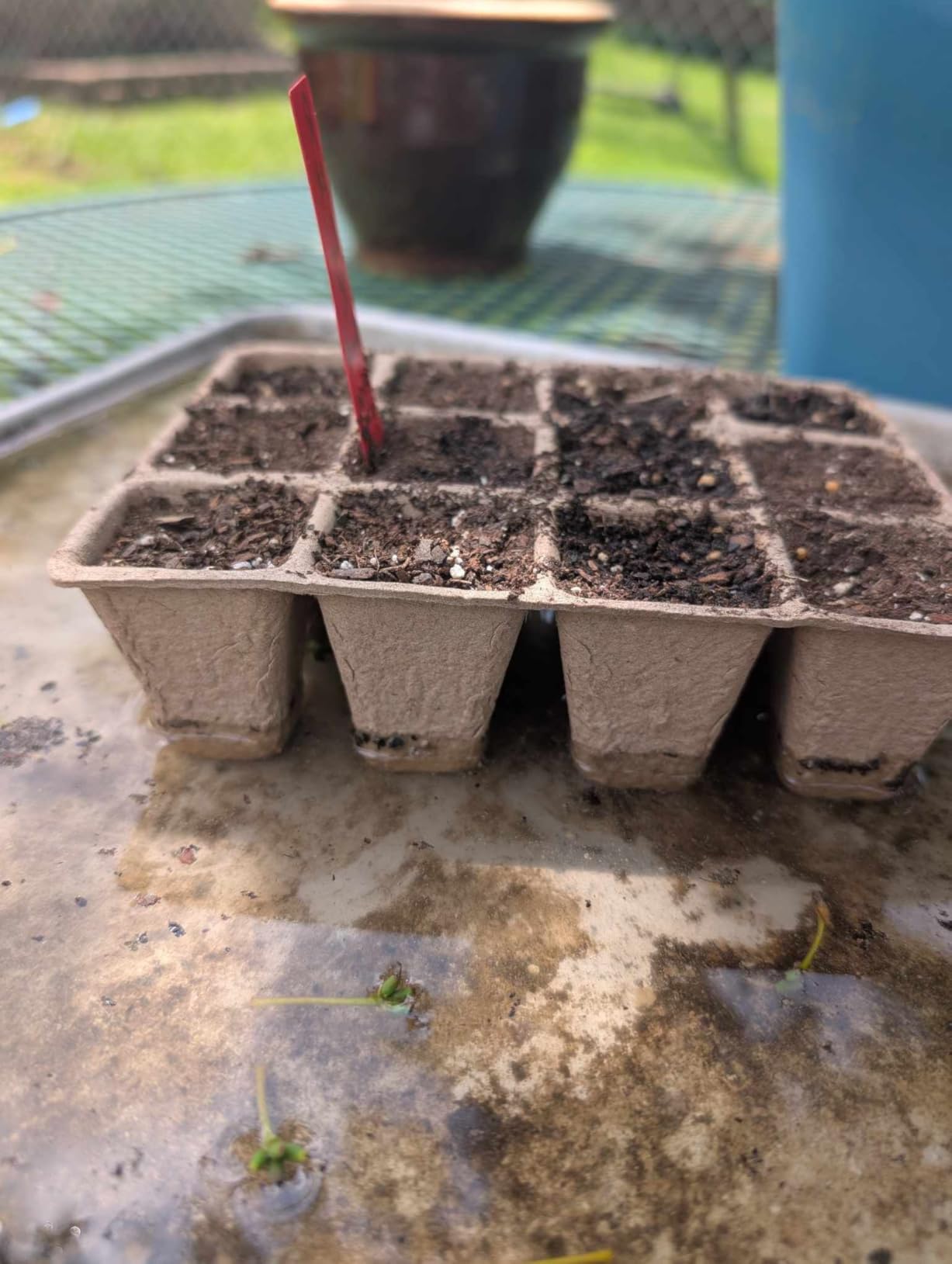
With 251 reviews at 4.0 stars, feedback is genuinely split. The germination reports are good, including several buyers seeing sprouts in two days, while the negative reviews focus on cell size and moisture management.
A fine mist is the safest way to wet these cells. It dampens the surface evenly and wets the sides of the cell, where roots reach first, instead of pooling on top and sitting there.
How do you stop mould in small paper cells?
Water less often than you think and water more thoroughly when you do. Let the surface lose its sheen before you wet it again, and use bottom watering whenever you can stand the pack in a shallow tray of water for ten minutes.
Air movement is the second lever. A small fan moving air across the tray after watering dries the surface film far faster than a windowsill with still air ever will.
Is this pack worth it for a serious grower?
As a trial tool, yes. The cost per cell is low enough that you can sow small batches of many varieties and see which perform in your own conditions before committing trays and light space to a full run.
For a main crop of tomatoes or brassicas, choose a deeper cell. Shallow cells reward you with extra potting on work later, and that work costs more than the tray saved.
What Peat Free Actually Means For A Seed Tray
For a tray, peat free means no sphagnum peat in the construction or lining. It does not mean biodegradable, compostable or plastic free, and shoppers regularly mix those three labels up.
Biodegradable means the material breaks down in soil over time. Compostable means it breaks down under specific industrial composting conditions, which a garden compost heap does not reliably reach. Plastic free simply describes the material, and a plastic free tray can still contain peat.
Four material families cover everything in this roundup:
Recycled paper pulp. Compressed cellulose pots and trays that you plant whole. Cheap per cell, single season, and they soften when saturated so handle them filled more than you would a moulded tray.
Flexible silicone with a plastic frame. Pop-out cells that release a seedling with the root ball attached. Reusable for years, not compostable, and not plastic free in the strict sense because the frame is plastic.
Rigid plastic flats. The 1020 format, essentially no cells of its own, used as a reservoir or base. Long lasting, recyclable, and the best match if your priority is tray lifespan.
Natural fibre pots. Coir, wool and wood fibre products that contain no peat. Where you see glue and binder claims, look for a USDA biobased certification, because cheap compostable pots are often glued together and defeat the purpose.
One buying habit beats every other: pick the tray that matches the medium you actually use. A tray that wicks moisture out of a coir mix will always look worse than the same tray holding a peat mix, and the tray is usually blamed for the medium’s behaviour.
Why Peat Free Media Changes How You Water A Tray
Peat holds water longer than most peat free media. Coir, wood fibre and wool-based composts are airier and wick moisture toward the surface, so they dry faster at the top and faster at the edges of a cell.
For most gardeners the practical effects are these:
Water earlier in the day. A tray watered last thing at night in a warm greenhouse can be dry by midday, and young seedlings hit with that swing stop growing.
Bottom water when the tray allows it. A solid base or a spare tray underneath lets the medium draw water from below, which keeps the top from crusting and pulling moisture away from young roots.
Use a dome during germination. A covered tray holds humidity for the first week and buys you time while the mix wets in evenly.
Watch the sides, not the top. In a paper pot the top can look damp while the sides are dry, so check a cell at the edge of the tray before deciding everything is fine.
Mixing half leafmould with a good peat free compost is a common cost-saving approach in grow forums. It slows the drying rate and spreads nutrients further, which is why it comes up so often as a compost fix rather than a tray fix.
How To Choose Cell Depth By Crop
Cell depth matters more than cell count. A tray with many shallow cells wins on germinating fast crops and loses on anything you want to grow on.
Microgreens, cress and lettuce. Anything under 1 inch is fine. Shallow cells warm fast and drain fast, and you harvest before root depth ever matters.
Flowers, most herbs, brassicas and onions. 1.5 to 2 inches works. You will prick out or transplant most of them anyway, so the extra depth just buys you time.
Tomatoes and peppers. 2 inches minimum. Anything shallower and you are potting on at week four regardless of how good your light is.
Beans, peas, squash and cucumbers. Sow in 3 inch or larger individual pots rather than cells. These seeds push hard and a shared cell box ends with two seedlings tangled together.
Deep-rooted perennials and tree seedlings. Use a tall pot, not a cell tray. Roots need vertical run and a shallow cell forces them sideways.
Native wildflower mixes. Shallow cells are fine but expect uneven germination, and do not judge the tray on a mix that includes species needing cold stratification.
Whichever depth you choose, fill the medium evenly and press it down lightly. Air pockets at the bottom of a cell are the main reason a seed fails to germinate, and peat free mixes collapse less than peat mixes so they need a firmer press.
Six DIY Peat Free Alternatives To Bought Trays
You do not need a purpose-bought tray. These six methods use materials you already have, and all of them avoid peat.
1. Newspaper pots. Roll strips of newspaper into tubes, fold the base, and stand them in a tray. They collapse as you handle them, so soak the paper first and set them in a shallow tray before filling.
2. Cardboard tubes. Toilet rolls and cut-down cardboard sleeves are free and hold moisture better than newspaper. Cut the same height all round so they stand level, and score the outside so they root-prune slightly as they break down.
3. Egg boxes. Moulded cardboard egg boxes give you individual cells that already drain well. Bury them, or stand them in a tray and fill each cup with a sowing compost, though expect uneven moisture from the moulded shape.
4. Plaster of Paris pots. Mixing a growing medium into a reusable silicone mould makes pots you can lift out intact, which solves the shape problem that newspaper pots have.
5. Drilled solo cups. Some growers skip trays entirely and drill drainage holes in plastic cups with a heated skewer. They are reusable, free if you already have them, and the clear sides let you check root depth without disturbing anything.
6. Upcycled containers. Yogurt pots, takeaway tubs and offcuts of downpipe all work once holed. Line them with a natural fibre pot so the medium never touches the container wall.
Whichever method you use, the same rule applies. Give it drainage, give it depth matched to the crop, and water from below where you can.
Where To Buy Biodegradable Seed Starting Pots
Most of these trays come from the large online marketplaces, which is where the volume pricing and the review volume both come from. Garden centres and allotment suppliers stock a narrower range but let you handle the material before buying, which is worth doing once.
Handling matters more than it sounds. A well made pulp pot feels dense and holds its shape wet, while a cheap one is light, thin and goes soft the moment it is filled. If you can pick one up, do.
Look for a USDA biobased certification or an explicit glue free and binder free statement if your reason for going peat free is waste reduction. A pot assembled with adhesive is not plastic free in practice, whatever the label says.
For pots and trays specifically, check that the pack size matches your light. It is easy to buy 600 cells and work out two months later that you can only light forty of them at a time.
Frequently Asked Questions
What are the best seedling starter trays?
For most home growers the Burpee SuperSeed 36-cell silicone tray is the strongest all-round choice, with flexible cells that release seedlings and a dishwasher-safe build. A rigid 1020 flat such as the Bootstrap Farmer tray is tougher and works as a bottom-watering reservoir. Biodegradable pulp cells suit anyone who wants to plant the pot straight into the ground.
What are the best quality seed trays?
Quality comes down to wall thickness, drainage and cell depth. The Bootstrap Farmer 1020 flats use 1.8 to 2.0mm polypropylene rated to hold over 50 pounds saturated and carry a two year warranty. Among cell trays, the Burpee SuperSeed and Ryscam silicone models hold their shape through repeated washing and provide cells deep enough for brassicas and peppers.
What are the disadvantages of peat-free compost?
Peat-free media dries faster than peat, both at the surface and at the edges of a cell. Coir and wood fibre mixes are airier and wick moisture out of trays quicker, so seedlings can dry out between waterings in warm conditions. Some mixes also hold fewer nutrients at the same volume, which is why many growers dilute with leafmould or top-dress with a richer compost.
What are the best trays for seed planting?
Match the tray to the crop and to the medium. Microgreens and lettuce need cells under 1 inch deep, flowers and brassicas need 1.5 to 2 inches, tomatoes and peppers need at least 2 inches, and beans and squash want individual pots of 3 inches or more. With peat free media, add a solid base so you can bottom water.
Do biodegradable seed starter pots work?
They do, with two conditions. Plant the whole pot or cell into the soil so nothing is disturbed, and expect a single season rather than reuse. They are gentler at transplant than bare soil sowing because the root ball never breaks up. Watch for mould in shallow cells and let the surface dry slightly between waterings.
Conclusion
The best peat free seed starting tray depends on how long you want it to last and whether you are planting the whole pot. Our overall pick is the Burpee SuperSeed 36-cell silicone tray, with the most reviews in the roundup and the cleanest transplant of any cell tray we used.
Buy the Bootstrap Farmer 1020 flats alongside it if you want one rigid base that lasts for years and gives you somewhere to bottom water. If plastic waste is the priority rather than lifespan, the Dalzom recycled pulp pots plant straight into the soil with 60 matching labels.
Whichever you pick, remember that peat free media dries faster than peat. Water earlier in the day, water from below where you can, and give your crop a cell deep enough for what you intend to grow.