
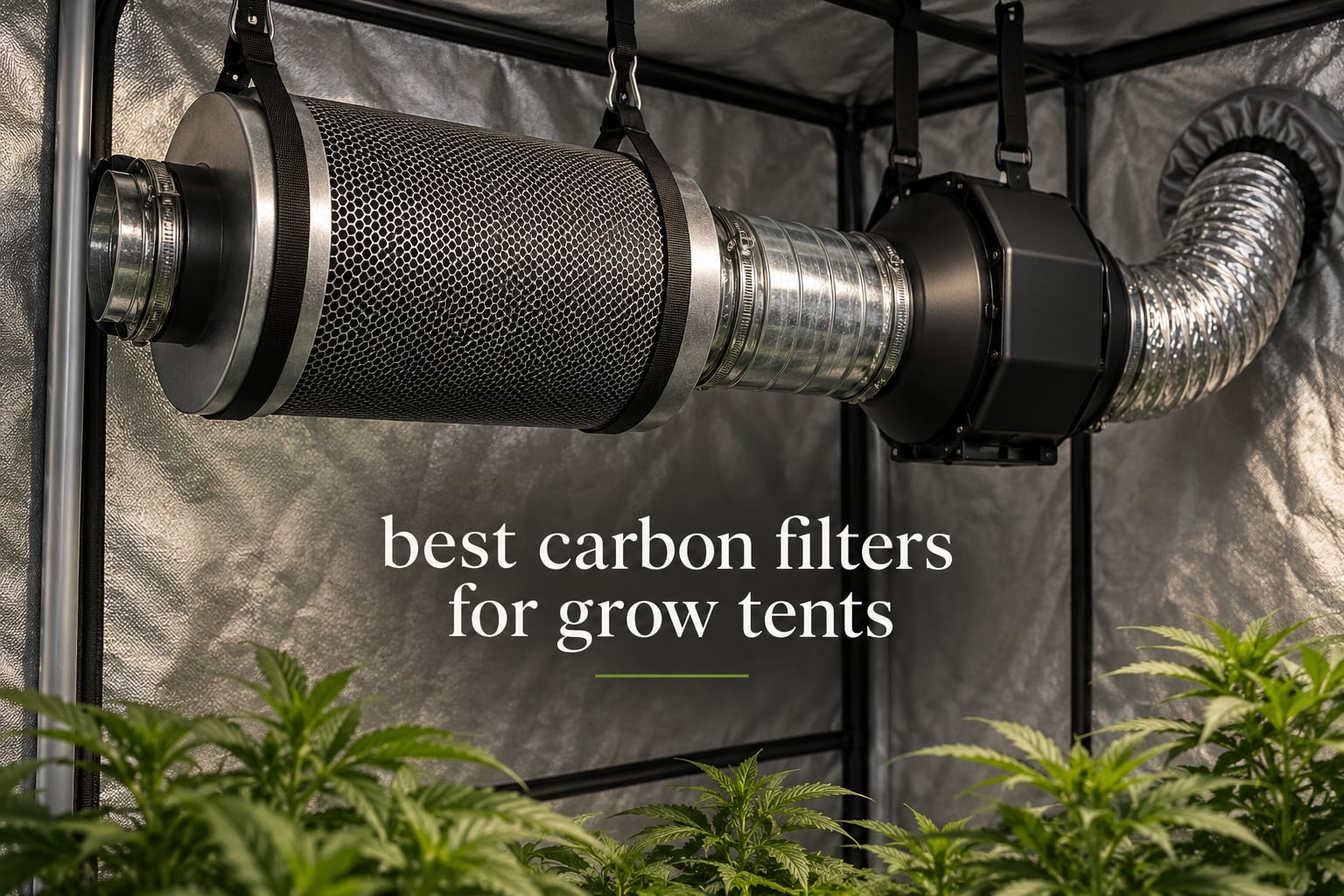
A carbon filter for a grow tent is a cylindrical duct housing packed with activated charcoal whose microscopic surface adsorbs the volatile organic compounds behind grow odor, so scented air gets scrubbed as it is pulled out of the tent. The best carbon filters for grow tents pair a 1200+ IAV carbon bed with a duct diameter that matches your inline fan.
Our team compared all ten filters in this roundup side by side, rating them on duct diameter, rated CFM, carbon grade, bed thickness, refillability and the housing design that decides whether odor gets out. Every product below comes straight from the analyzed spec data and owner reviews, with no estimated numbers.
We also weighted the three failure modes that show up again and again in grower threads: a filter smaller than the fan pushing air through it, a tent that is not under negative pressure, and a cheap canister that arrives with barely any carbon in it. Get those right and most odor complaints disappear.
Table of Contents
Top 3 Carbon Filters for Grow Tents in October 2026

AC Infinity 4 Inch Carbon Filter
- 1200+ IAV Australian RC412
- 210 CFM rated
- 38mm bed
- Refillable housing
VIVOSUN 4 Inch Carbon Filter
- 1200+ IAV RC412 bed
- 223 CFM rated
- Reversible canister
- 90-day warranty

VIVOSUN 6 Inch Pro Carbon Filter
- 455 CFM rated
- 1200+ IAV RC412
- 38mm mesh bed
- Rope hangers included
The AC Infinity 4 inch takes the top slot on the strongest combination of rating and evidence in the group, plus a housing you can refill. The VIVOSUN 4 inch is the value alternative with more published airflow, and the VIVOSUN 6 inch Pro is the pick once your tent outgrows 4 inch ducting.
All 10 Carbon Filters Compared in October 2026
| Product | Specifications | Action |
|---|---|---|
| AC Infinity 4 Inch Carbon Filter |
|
Check Latest Price |
| VIVOSUN 4 Inch Carbon Filter |
|
Check Latest Price |
 AC Infinity Refillable 4 Inch Kit AC Infinity Refillable 4 Inch Kit |
|
Check Latest Price |
 vanleno 4 Inch Carbon Filter vanleno 4 Inch Carbon Filter |
|
Check Latest Price |
 G HYDRO 6 x 12 Inch Refillable Filter G HYDRO 6 x 12 Inch Refillable Filter |
|
Check Latest Price |
 MELONFARM 4 Inch Carbon Filter MELONFARM 4 Inch Carbon Filter |
|
Check Latest Price |
 iPower 6 Inch Carbon Filter iPower 6 Inch Carbon Filter |
|
Check Latest Price |
 Spider Farmer 4 Inch Carbon Filter Spider Farmer 4 Inch Carbon Filter |
|
Check Latest Price |
 HYDROWE 4 Inch Carbon Filter HYDROWE 4 Inch Carbon Filter |
|
Check Latest Price |
| VIVOSUN 6 Inch Pro Carbon Filter |
|
Check Latest Price |
That table compresses into three questions: how much air the housing is rated for, how much surface area the carbon has, and whether you can service the bed when it saturates. The buying guide at the end explains how to read all three for your own tent.
1. AC Infinity 4 Inch Carbon Filter – Best Overall 4 Inch Scrubber
AC Infinity Air Carbon Filter 4″ with Premium Australian Virgin Charcoal
4 inch duct opening
12 inch length
210 CFM rated
38mm carbon bed
5.5 pounds
Pros
- 1200+ IAV Australian RC412 carbon
- Seals tightly with matching AC Infinity inline fans
- Powder-coated gunmetal shell resists humidity corrosion
- Two pre-filters plus straps and rope clips included
- Opens up for refilling with bulk carbon
Cons
- Carbon fades sooner than expected in heavy continuous bloom
- Higher upfront cost than generic brands
- Occasional reports of loose carbon or creased pre-filters in packaging
This is the filter we kept coming back to. It holds a 4.8 average across more than ten thousand reviews, which makes it the most thoroughly documented unit in the group, and its 210 CFM rating is an honest figure for a 4 inch housing rather than an inflated one.
The carbon is the reason it performs. It uses Australian RC412 at 1200+ IAV in a 38mm bed, the grade we would hold any competing filter to. Owners report the odor outside the tent going nearly odor-free within hours of installation.
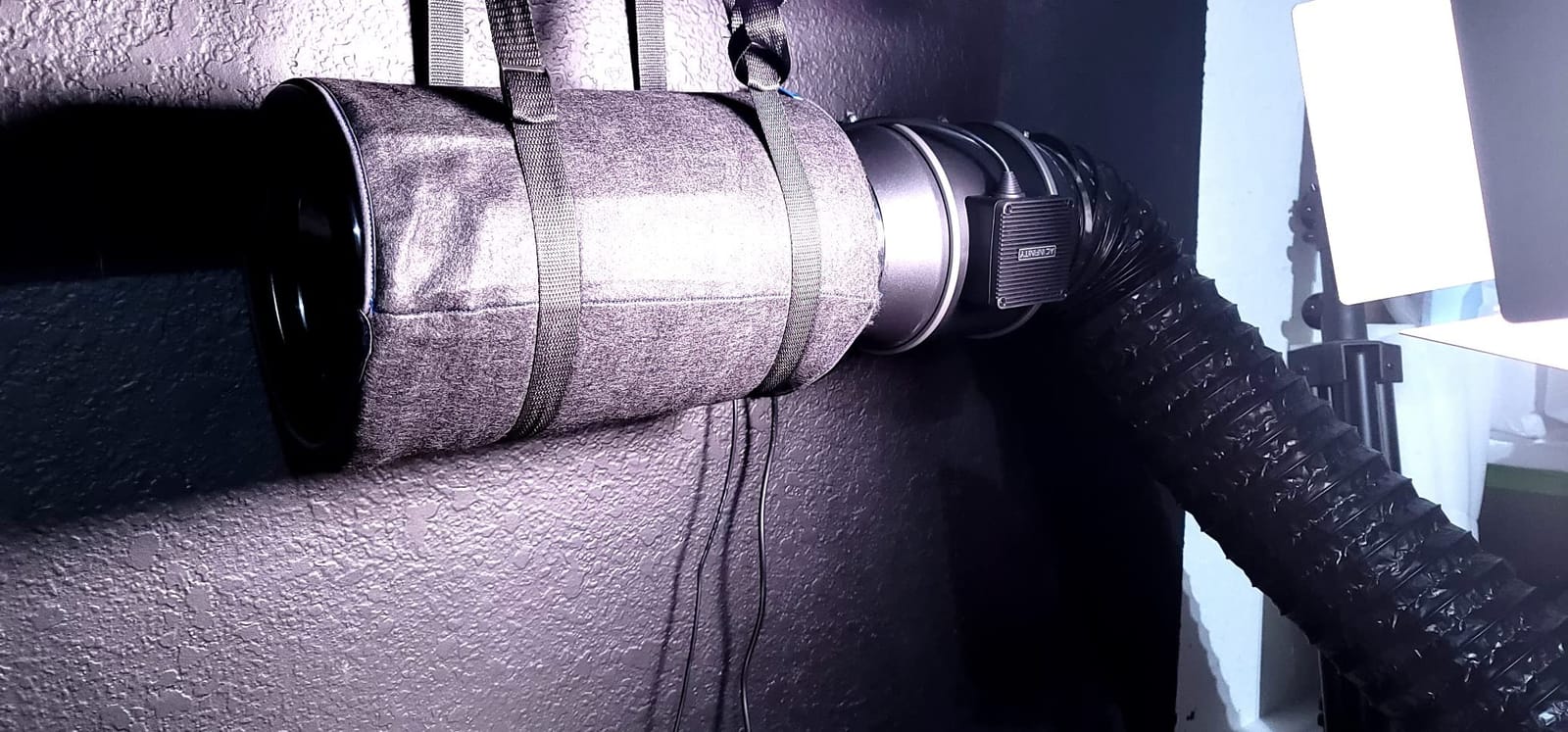
Build quality is a step above the generic cans. The housing is powder-coated gunmetal aluminum and steel over a galvanized mesh core, listed at 5.5 pounds, substantial enough that it does not flex or leak air around the flange. It sealed quietly against a matching inline fan with no duct tape.
What impressed me most is that it opens. The flanges come off, so you can pour out spent carbon and refill with bulk media instead of buying a new cylinder every cycle. That one feature changes the long-run math more than any other spec here.
Two pre-filters plus straps and rope clips ship in the box, so nothing else is needed to hang it and start filtering. The same design is offered from 4 inch up to 12 inch, which makes it a straightforward brand to stay with as you grow.
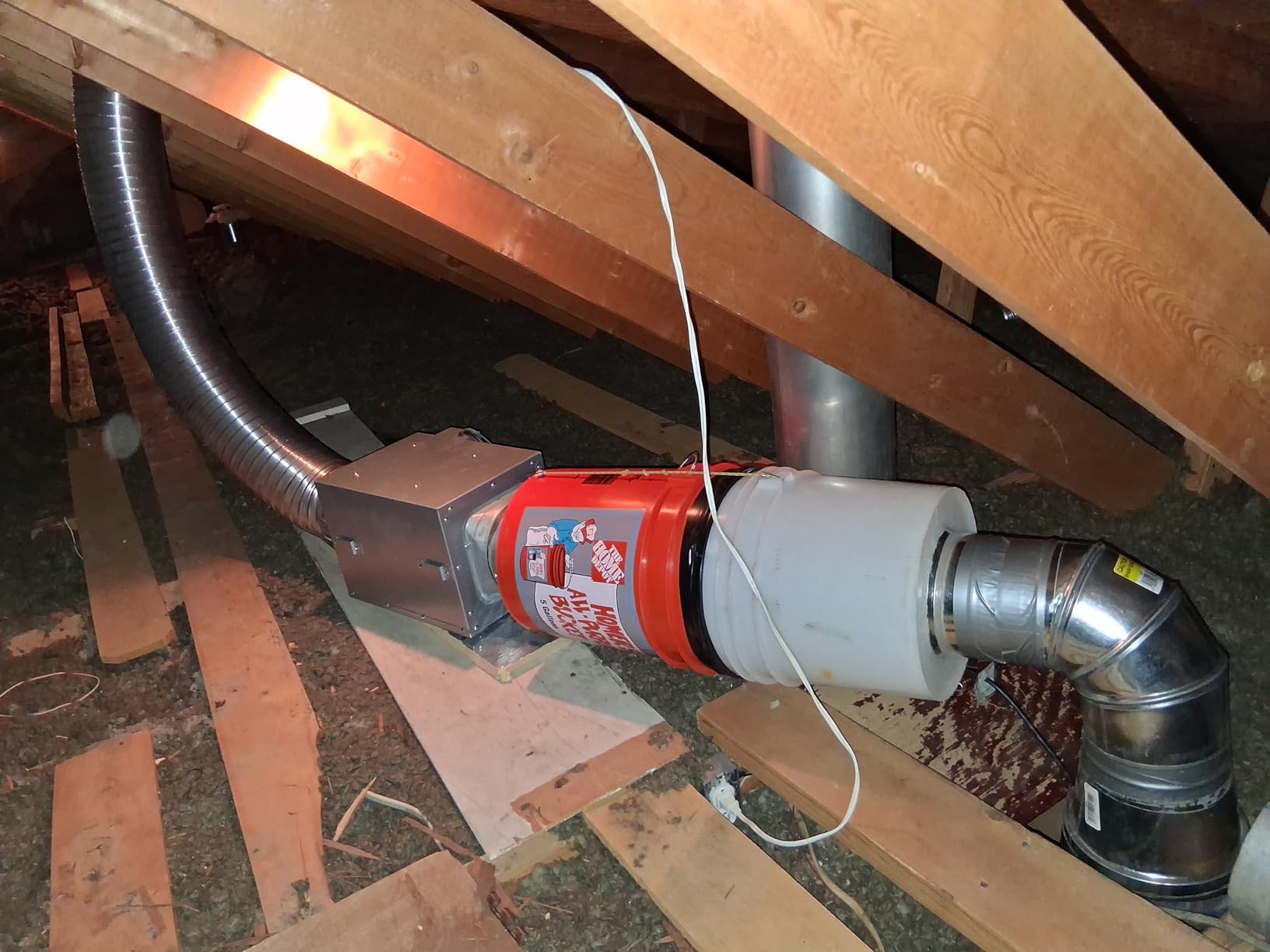
What to check before you buy
Verify your fan diameter matches the 4 inch duct opening, since a mismatch at the flange is a top reason odor escapes regardless of carbon quality. Also confirm you can run 24 hours a day, because reviewers report odor fading at roughly three months under heavy continuous bloom load.
Who should skip it
Skip it for a single short cycle in a 2×2 tent, where refillability never gets used and a fixed canister costs less. Anyone pushing more than 210 CFM through this housing should step up a diameter rather than force it.
2. VIVOSUN 4 Inch Carbon Filter 223 CFM – Best Value 4 Inch Filter
VIVOSUN 4″ Carbon Filter & Pre-Filter 223 CFM for Inline Fan, Silver
4 inch flange
223 CFM rated
1200+ IAV RC412
38mm bed
6.6 pounds
Pros
- Over 10000 reviews averaging 4.6 stars
- 223 CFM from round-hole galvanized mesh
- Reversible canister extends usable bed life
- Detachable washable pre-filter cloth
- Belts included for quick tent hanging
Cons
- Fastened flanged base means carbon cannot be replaced in place
- Some owners report odor returning near the three-month mark in continuous bloom
- Only a 90-day manufacturer warranty
- Heavier than some 4 inch rivals at 6.6 pounds
This is the filter most growers end up running, and the reason is plain: it delivers the same 1200+ IAV RC412 carbon grade as our top pick at a lower entry point, with a review history to match. Over ten thousand reviews averaging 4.6 is as much real-world evidence as this hardware gets.
Airflow is where it edges ahead. The 223 CFM rating comes from dual-sided galvanized steel mesh with a round-hole pattern, which gives it more open area than the hexagonal mesh several rivals use. On a 2×4 tent that headroom keeps the filter from becoming the restriction point.
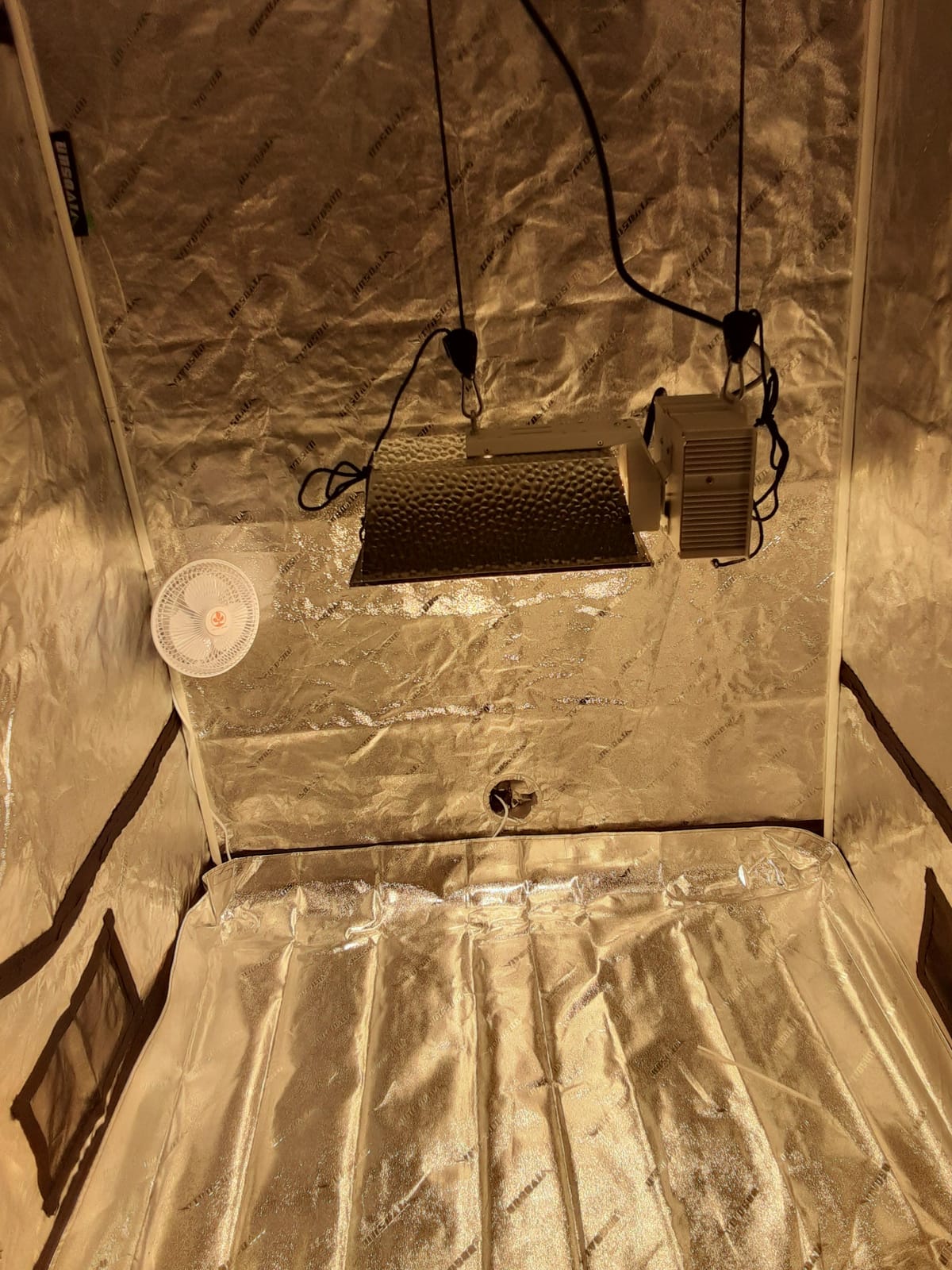
The reversible flange is the detail we like most. You can flip the charcoal canister end for end and get a second pass through the bed before replacing anything, effectively doubling the usable carbon first. The heavy-duty iron flanges hold their seal under a vibrating fan.
The pre-filter cloth is detachable, washable and rated to block roughly 99% of particles. Keeping that sleeve clean is the cheapest way to extend carbon life, since a clogged pre-filter pushes the full pressure drop onto the carbon bed. A pair of belts is included for hanging.
Owners do report odor returning around the three month mark in continuous bloom cycles, and the flanged base is fastened rather than serviceable. Those are the two things to weigh against a 4.6 rating this well supported.
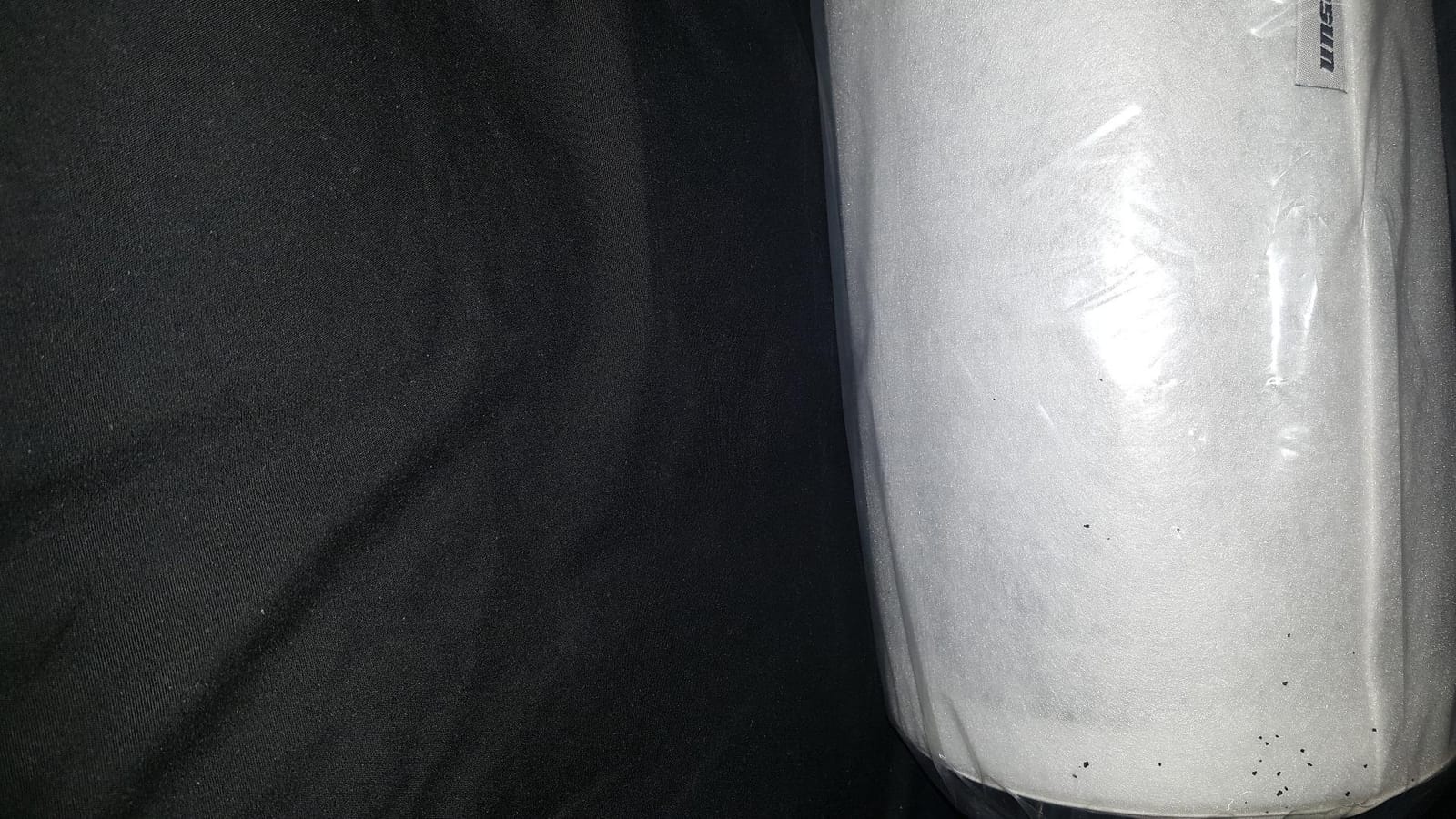
What to check before you buy
Accept that the housing is not refillable, so you replace the whole canister once the carbon is spent. Also note the 90-day warranty is the shortest coverage here, and at 6.6 pounds you should use four hanger points rather than two.
Who should skip it
Skip it if you grow pungent strains through a long flower and want to refill instead of replace, since a refillable kit costs less across several cycles. It is also the wrong choice for a 4×4 tent on its own.
3. AC Infinity Refillable Carbon Filter Kit 4 Inch – Best for Repeat Cycles
AC Infinity Refillable Carbon Filter Kit 4” with Activated Carbon Refill
4 inch kit
Twist-off flanges
Refill equals two standard filters
Funnel and scoop included
Pros
- Refillable housing ends the throwaway cycle
- One extra refill bag included in the box
- Twist-off flanges allow end-for-end flipping
- Tool-free refilling takes about ten minutes
- Dual-layered coated steel mesh resists humidity
Cons
- Higher entry cost than other 4 inch options
- Loose charcoal pellets make refilling messy
- Bulk media means the initial outlay is roughly double a disposable
- Requires a matching 4 inch duct diameter
This kit is the one we recommend to anyone who has already replaced a carbon filter once and thought it was wasteful. The housing opens with twist-off flanges, gets refilled with loose carbon and is used again, so the metal cylinder stays in your setup indefinitely.
Out of the box you get enough media for roughly two standard 4 inch filter fills, and the refill capacity is stated to match two conventional carbon filters. A custom funnel and scoop come with it, which matters once you have tried pouring charcoal back into a can by hand.
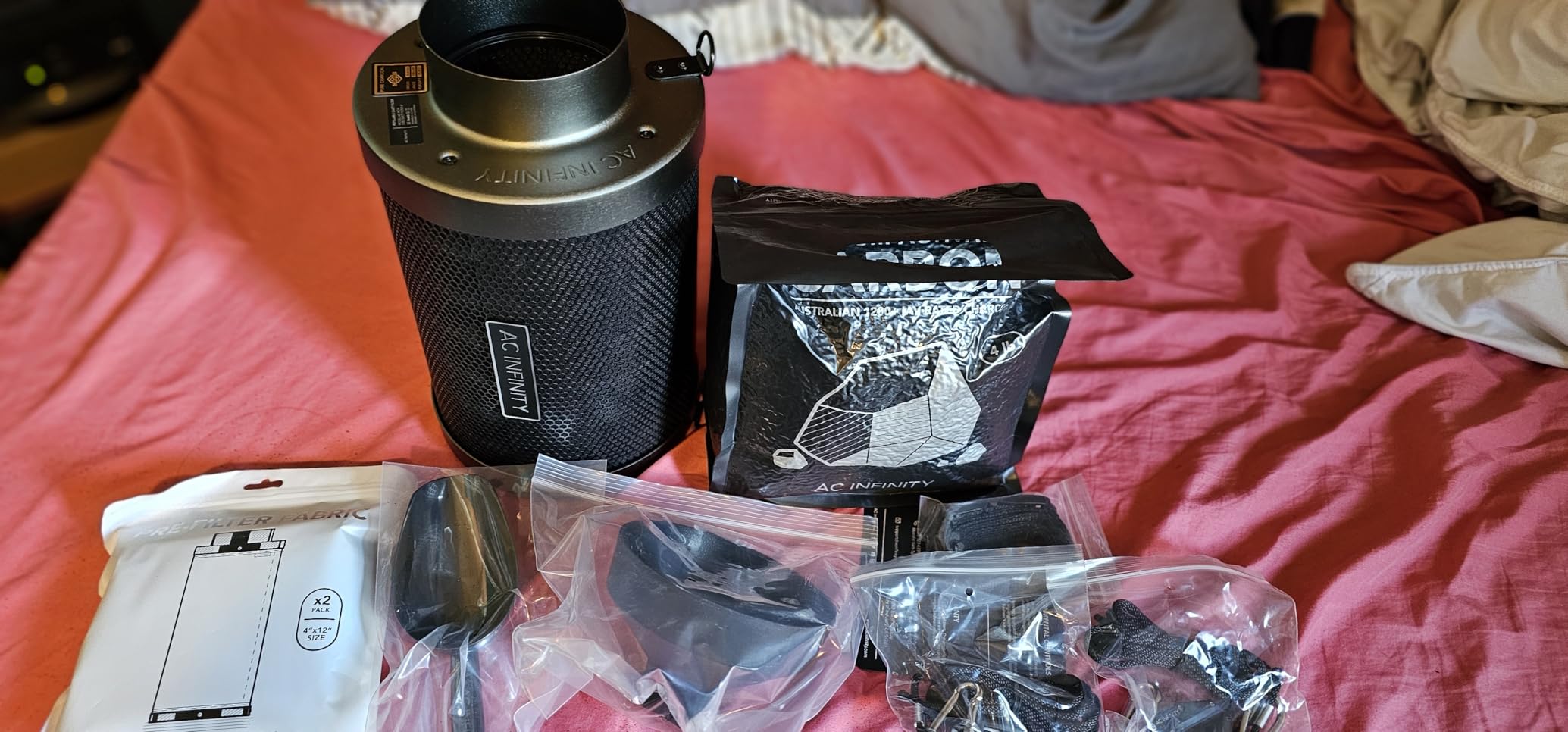
The chamber is described as larger than a standard canister, with a lab-tested claim that it blocks odor without compressing the carbon bed. The mesh is dual-layered steel with a protective coating chosen for humid tent conditions, and the listed weight is 5.74 kg for the kit.
Its 4.8 average comes from a much smaller review base than the fixed-housing models, at 487 reviews, so treat the number with some caution. The design logic is still the soundest here for anyone running more than one cycle a year, and 4 inch, 6 inch and 8 inch kits are all offered.
Reviewers flag two honest drawbacks: the initial outlay is roughly double a disposable 4 inch filter because the media is included, and refilling is messy because loose charcoal pellets have to be contained. Open it outside with gloves on.
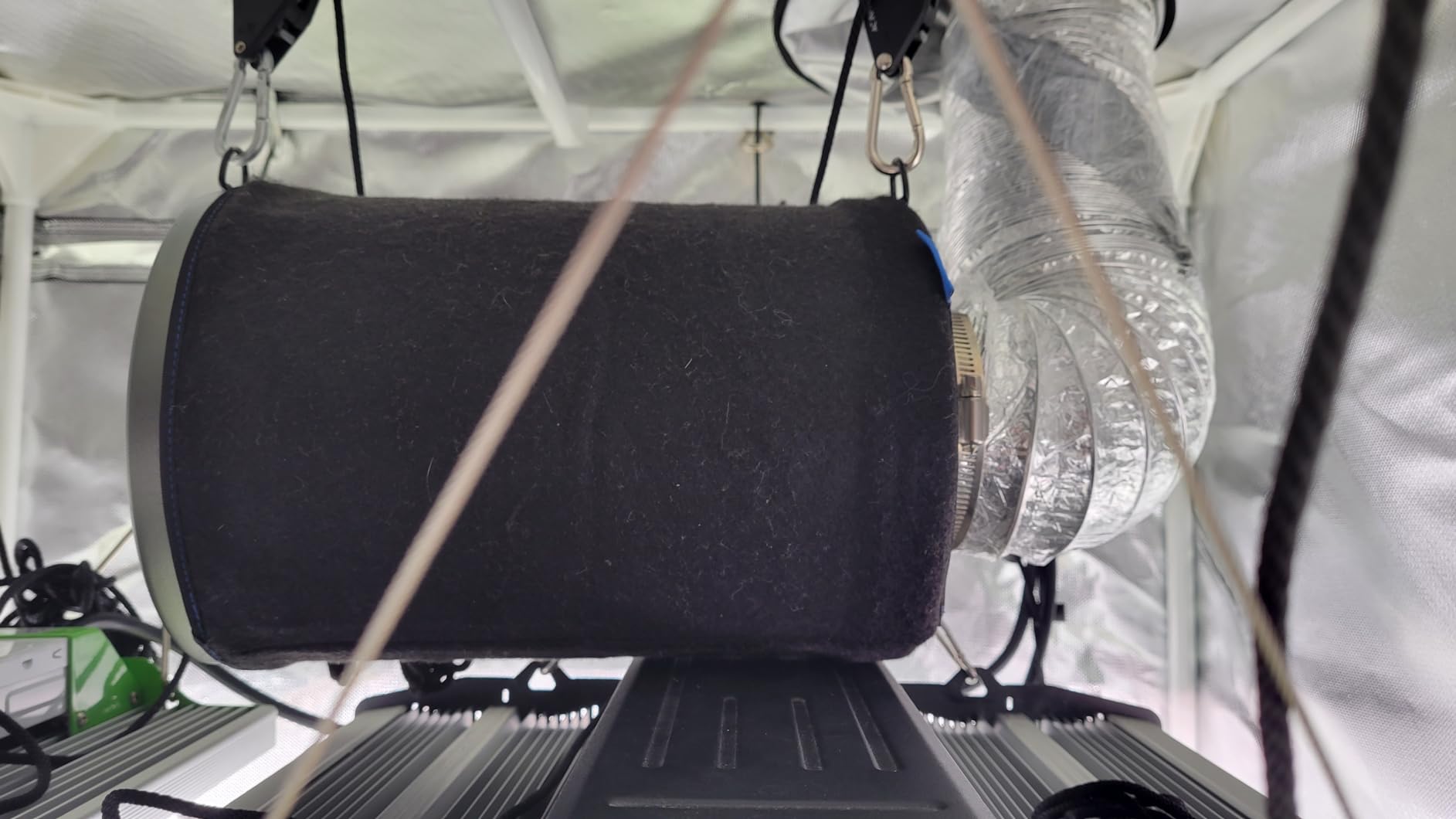
What to check before you buy
Be honest about whether you will refill it, because a single cycle will not get your money back. Confirm you have a matching 4 inch fan too, since the kit covers that diameter only and refilling takes about ten minutes with the included funnel.
Who should skip it
Skip it if noise and weight are your priorities, since this is a bulky, heavy assembly. If you only need odor control during flower and run the fan bare during veg, a fixed filter on that lighter duty cycle may outlast it.
4. vanleno 4 Inch Carbon Filter – Most Versatile With Two Pre-Filters
vanleno 4inch Carbon Filter Odor Control with Australia Virgin Charcoal Two Prefilter 1 Pair Rope Hanger Included for Inline Duct Fan, Grow Tent, Hydroponics, Odor Scrubber
4 inch flange
12 inch length
210 CFM rated
1200+ IAV carbon
5.4 pounds
Pros
- 1200+ IAV Australian carbon at an entry-level cost
- Two pre-filters and a rope hanger pair in the box
- 210 CFM suits typical 4 inch inline fan setups
- Stainless steel flanges resist corrosion in humid rooms
- Also used for basements and kitchens
Cons
- Single size option only
- Non-serviceable canister so the whole unit is replaced
- Build quality trails the premium aluminum brands
- Less published long-term filtration data than named brands
The vanleno solves one problem: getting a real 1200+ IAV carbon bed into a 4 inch housing without paying the premium brand premium. On paper the specification sheet matches costlier units, and 2927 reviews averaging 4.6 suggest most buyers feel the same way.
Airflow is rated at 210 CFM, which is the honest number for this class. It is not the highest in the group, but it is more than enough for a 2×2 or 2×4 tent where the fan is correctly sized rather than oversized.
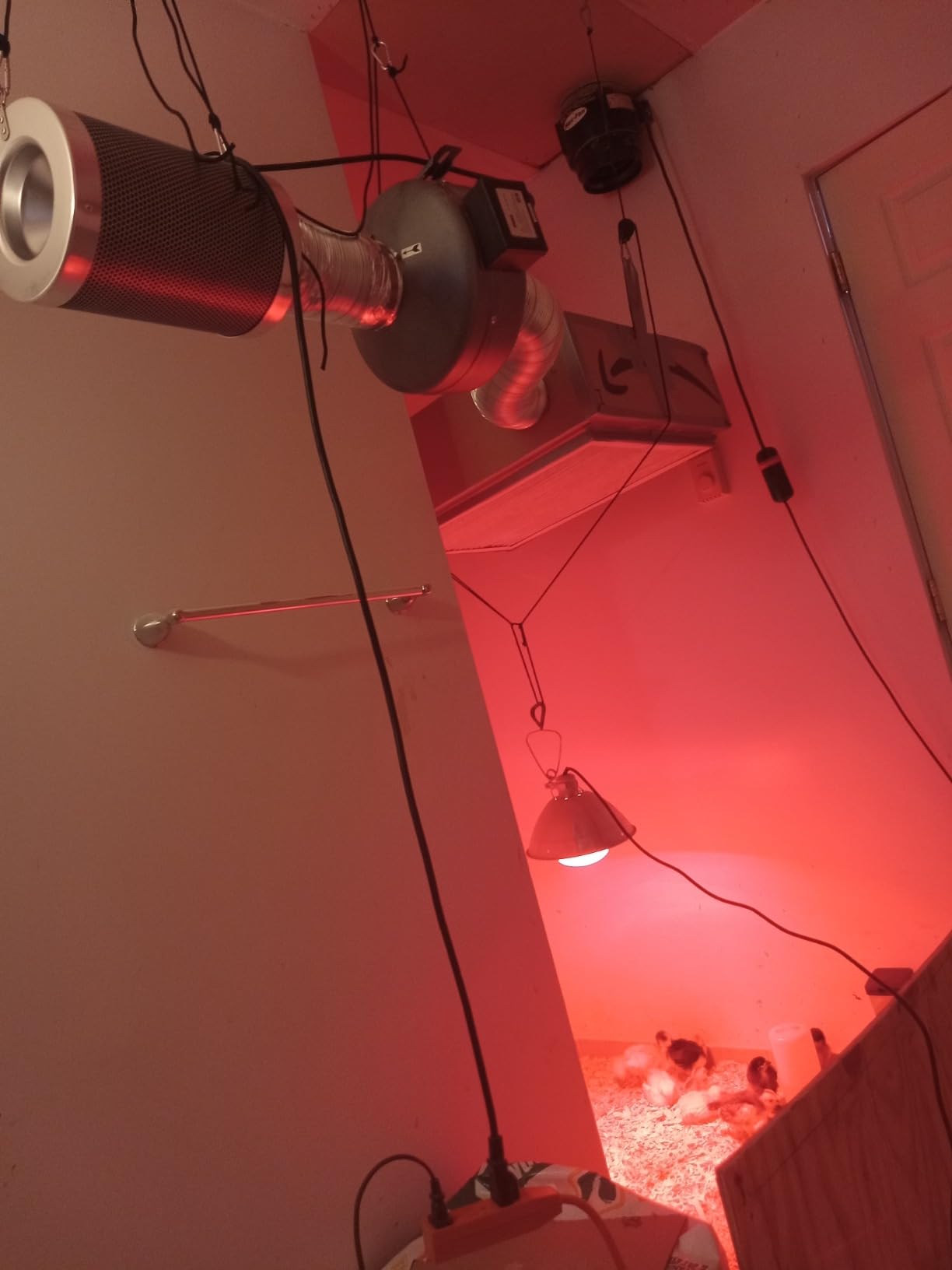
The included hardware is generous for a budget unit. You get two pre-filters that block roughly 99% of particles, a pair of rope hangers, and heavy-duty stainless steel flanges that will not corrode in a tent running above 60% relative humidity.
At 5.4 pounds it is one of the lighter 4 inch options and hangs comfortably from a standard trapeze. It also has the broadest application range here, since the same canister handles bathroom and basement odor control outside a grow context.
The trade-off is the housing. The canister is not serviceable, so you discard the whole unit when the carbon is spent, and a portion of reviewers note the bed is less generous than the housing volume implies.
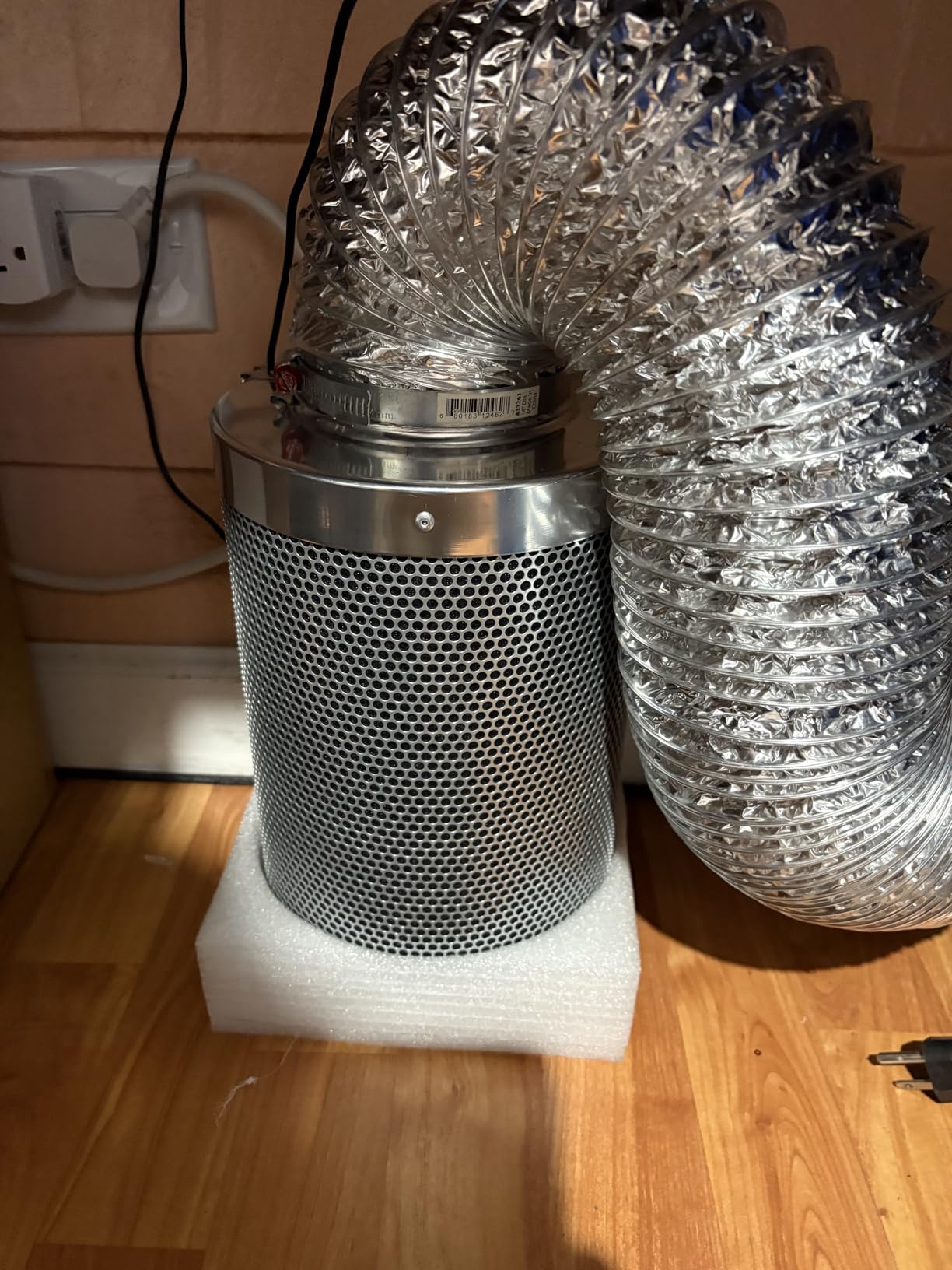
What to check before you buy
Confirm you need 4 inch ducting and only 4 inch ducting, because this listing comes in a single size. You are also buying a non-serviceable canister, so budget for replacing a complete unit each time the carbon loads up.
Who should skip it
Skip it for a large tent or a high-humidity room where you want a powder-coated premium housing, since the stainless flanges are where the durability advantage ends. It is also a poor fit for continuous 24 hour flower duty.
5. G HYDRO 6 x 12 Inch Refillable Carbon Filter – Best Refillable at 6 Inch
6×12 Inch Carbon Air Filter, Refillable Australian Virgin Charcoal Filter, Replaceable Carbon Design, High Efficiency Odor Control for Hydroponics, Grow Tents & Inline Duct Fans
6 x 12 inch cylinder
1200+ IAV virgin charcoal
Twist-off refilling
About 5 pounds per cylinder
Pros
- Refillable system cuts waste and long-term cost
- Extra pre-filled refill plus funnel and scoop included
- 1200+ IAV charcoal handles heavy flowering odor
- Galvanized steel with sandblasted finish resists rust
- Twist-off flanges make refilling fast and tool-free
Cons
- Opening the cylinder is messy as charcoal settles in transit
- Carbon lifespan varies widely with some odor returning near 10 months
- Replacement cylinder quality can vary from the original
- Fixed at the 6 x 12 inch size
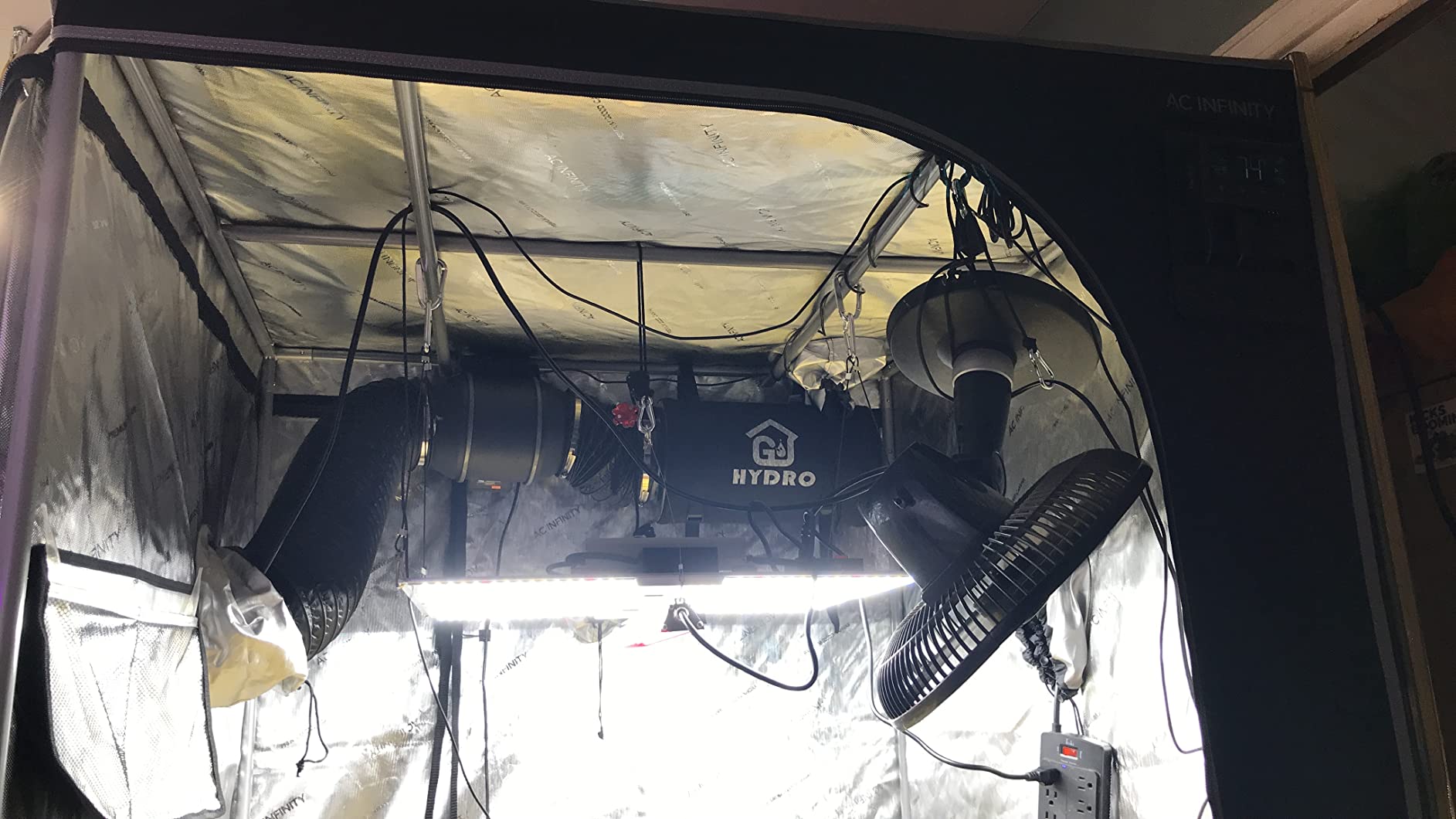
If you run a 4×4 or 5×5 tent on a 6 inch inline fan, this is the refillable option holding the same 1200+ IAV carbon grade as the premium 4 inch kits. That combination of diameter and carbon quality is hard to find, and it is why we rank it above cheaper 6 inch options.
The replaceable carbon system works the same way as other twist-off refill designs: flanges come off by hand, you swap the pre-filled cylinder and the outer mesh housing stays put. A full extra pre-filled refill plus a funnel and scoop are in the box.
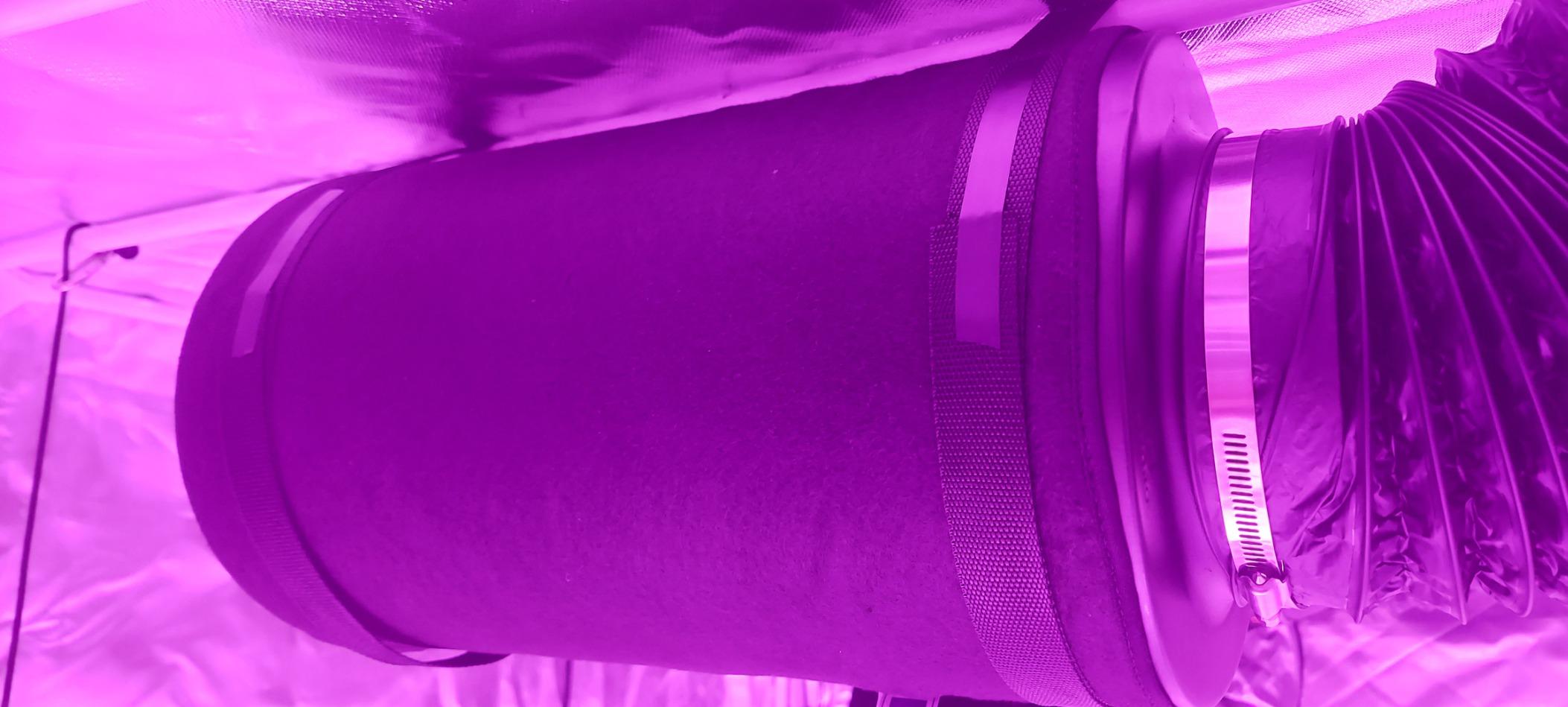
Construction is galvanized steel mesh with a sandblasted protective finish, chosen for rust and corrosion resistance in high-humidity tents. Each cylinder weighs roughly 5 pounds, light enough to hang from a rope ratchet without a frame upgrade.
Owners credit it with eliminating exterior odor at 6 inch, at a 4.6 average over 636 reviews. The recurring caveat is lifespan variability: some growers running bloom-only setups report odor returning around the ten month mark rather than the twelve to eighteen months often quoted.
Mess is the other recurring complaint. The charcoal settles during shipping, so reviews specifically advise gloves and opening the unit outdoors rather than over your tent floor.
What to check before you buy
Check your duct diameter, because this listing is fixed at 6 x 12 inch with no smaller variant and no adapter. Note also that no CFM rating is published, so you cannot confirm throughput against your fan output.
Who should skip it
Skip it if you need a 4 inch or 8 inch diameter, or if you run only one short cycle and will never use the refill. Buyers who need a published airflow figure should look at a competing 6 inch filter instead.
6. MELONFARM 4 Inch Carbon Filter – Highest Airflow Rating at 4 Inch
MELONFARM 4 Inch Air Carbon Filter Smelliness Control with Australia Virgin Charcoal, Odor Removal Carbon Filter for Grow Tent, Inline Fan, Hydroponics, Pre-Filter Included, Insulated Flange 4″ x 11″
4 inch flange
11 inch length
254 CFM rated
38mm charcoal bed
4.93 pounds
Pros
- 254 CFM is a high published figure for a 4 inch unit
- 1050+ IAV Australian virgin charcoal in a 38mm bed
- Fixed welded flange resists carbon leakage
- Usable as intake or exhaust filter
- Light at 4.93 pounds for easy hanging
Cons
- 1050+ IAV carbon sits a step below the 1200+ IAV standard
- Fixed flange prevents end-for-end canister reversal
- Only one pre-filter included versus two on rivals
- 4.5 average with a 13 percent three-star share
The MELONFARM makes a different trade from most of the 4 inch filters here. Instead of chasing carbon grade, it maximizes open area, and 254 CFM is the highest published airflow of any 4 inch unit in this group. That matters when your fan can push more than the filter will pass.
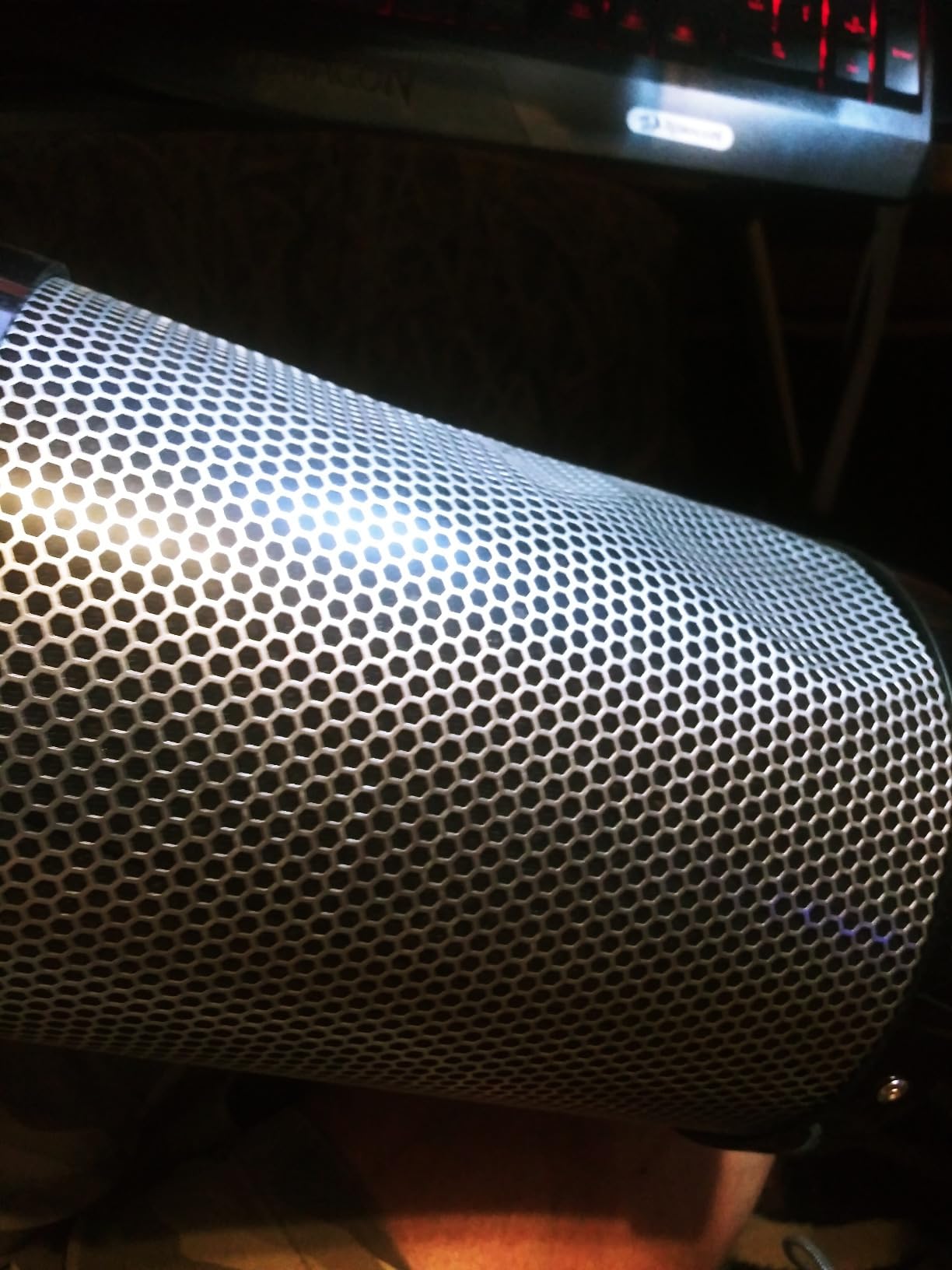
That rating comes from double-sided galvanized steel mesh with a hexagonal design. Combined with a 38mm high-microporosity bed, it holds throughput high without thinning the carbon to a token layer, which is the usual compromise in high-flow designs.
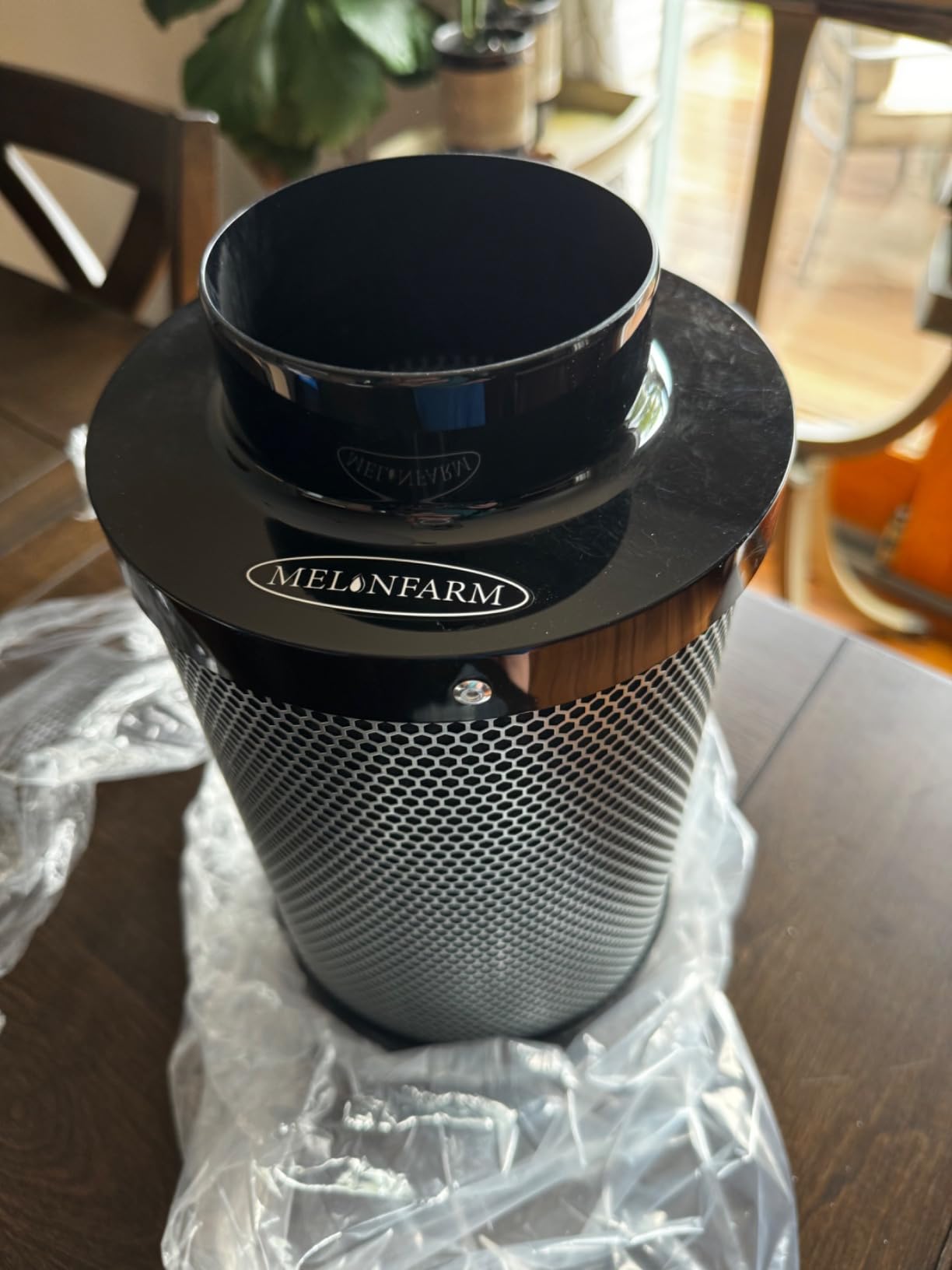
The fixed heavy-duty flange and base are welded rigid, a real advantage for preventing loose carbon from escaping into the duct, and the unit works as either an intake or exhaust filter. At 4.93 pounds it is easy to hang in a tent.
The carbon is 1050+ IAV Australian virgin charcoal, a step below the 1200+ IAV grade used by the leaders, and the 4.5 average across 346 reviews includes a 13 percent three-star share. More air moving, slightly less capacity per gram.
Only one pre-filter is included where most rivals ship two, and the fixed flange means you cannot flip the canister end for end to extend its life.
What to check before you buy
Compare the carbon grade against your odor load, because 1050+ IAV in a 38mm bed gives you less headroom for pungent late-flower terpenes than a 1200+ IAV canister of the same size.
Who should skip it
Skip it for the longest possible service life per cycle, since the lower IAV grade and non-reversible housing reach breakthrough sooner. High-flow designs also make little sense with an undersized fan, so a 2×2 tent gains nothing here.
7. iPower 6 Inch Carbon Filter 400 CFM – Best Warranty at 6 Inch
iPower GLFILT6M 6 Inch Air Carbon Filter Indoor Plants Grow Tent Odor Control Scrubber with Australia Activated C for Inline Fan, Reversible Flange, Prefilter Included, 6″
6 inch with 16 inch flange
400 CFM rated
1050+ IAV RC412
11 pounds
1-year warranty
Pros
- 400 CFM suits larger tents and 6 inch inline fans
- Reversible flange doubles usable bed orientation
- 1050+ IAV Australian RC412 activated carbon
- Works as intake or exhaust across many configurations
- Backed by a 1 year warranty versus 90-day rivals
Cons
- Heavy at 11 pounds
- so it needs solid hanging support
- 1050+ IAV carbon is below the 1200+ IAV grade
- Some buyers report only a few months of life under heavy bloom
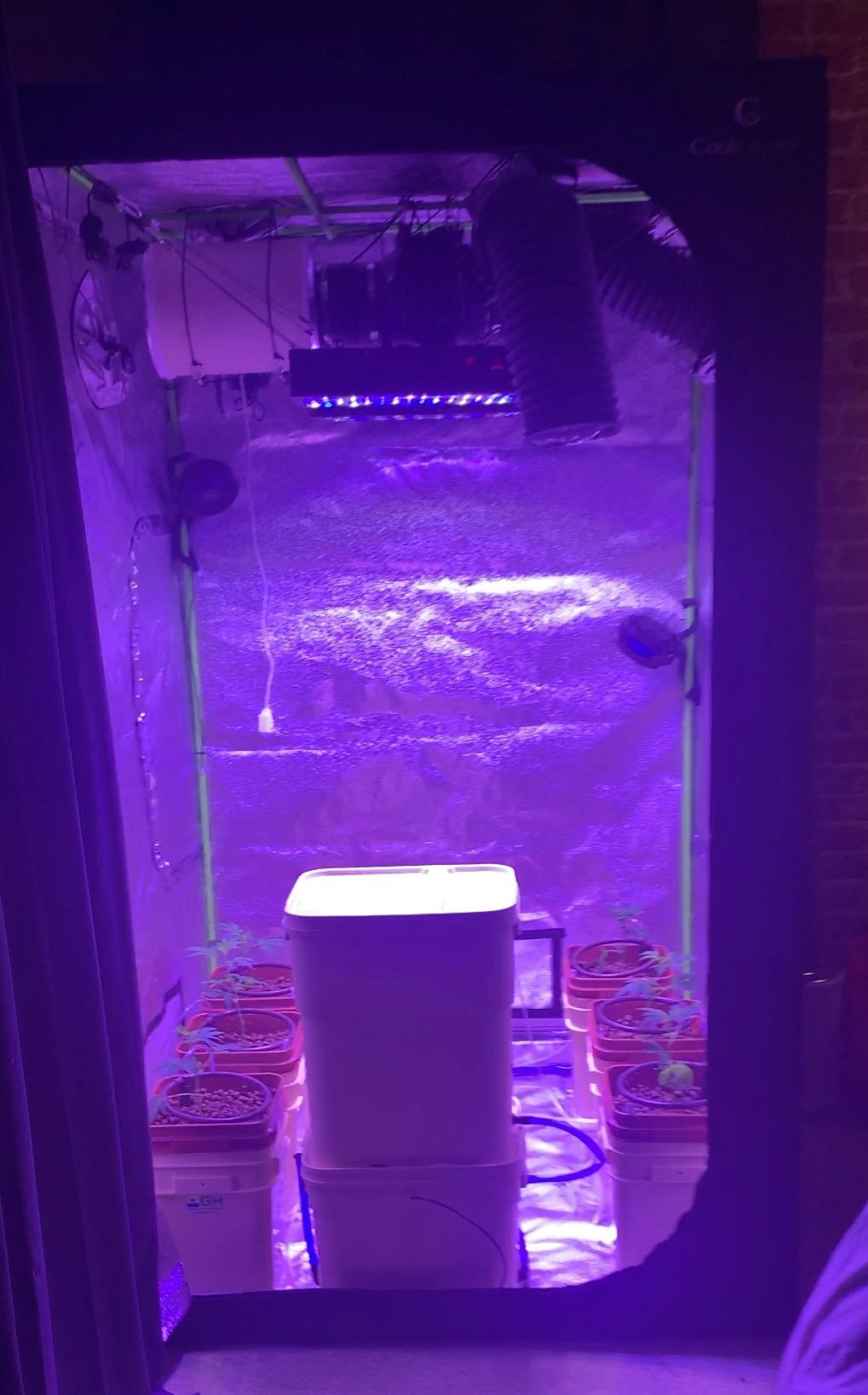
The iPower 6 inch is the pick for anyone who wants a large-diameter filter with real warranty coverage behind it. Where most competing 6 inch canisters carry 90 days, this one is covered for a full year, and 1386 reviews averaging 4.5 make the feedback base solid.
Airflow is rated at 400 CFM on a 6 inch body with 16 inch flange ducting. That is enough throughput for a 4×4 tent on a correctly sized 6 inch inline fan, which is exactly where people first discover a 4 inch filter was never going to work.
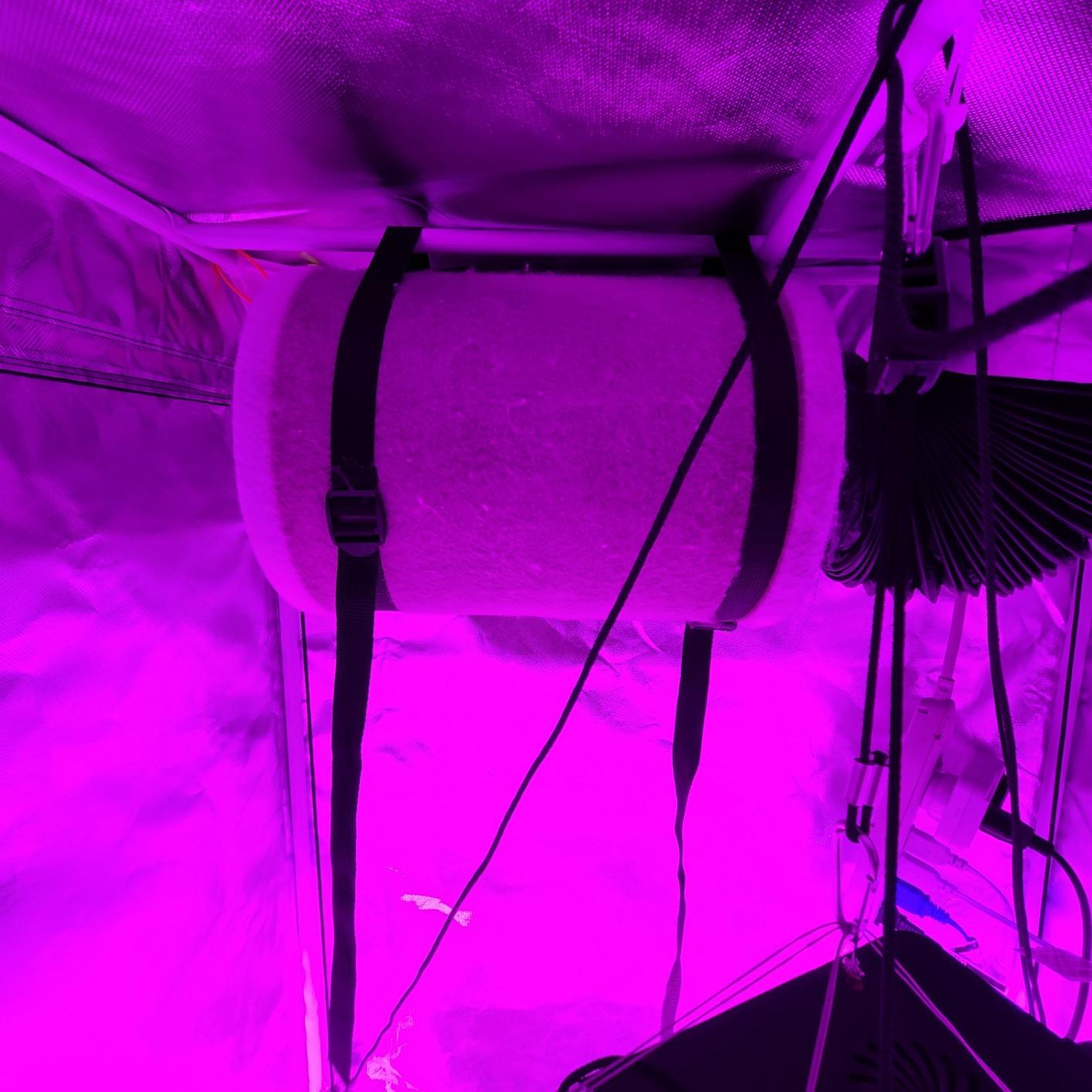
The reversible flange and base are the feature we like. Like the VIVOSUN design, you can flip the charcoal canister end for end and extract more from the bed before replacing it, which matters when the housing itself is not refillable.
Carbon is 1050+ IAV Australian RC412, and a pre-filter is included with a recommendation to replace it every 6 months. At 11 pounds it is a heavy assembly, so it needs solid hanging support rather than two light rope ratchets.
Buyer feedback is split on durability, with a portion noting the carbon saturates faster than premium-brand filters in demanding bloom cycles. The warranty covers hardware, not exhausted media.
What to check before you buy
Plan the hanging solution first, because 11 pounds plus a 6 inch fan needs four solid anchor points and a frame that can carry the load. A sagging bar pulls the duct flange open and leaks odor on its own.
Who should skip it
Skip it for small tents, where a 6 inch body is oversized and adds restriction, weight and noise. Bedroom growers should also weigh noise, since a 6 inch housing at 400 CFM needs a larger, louder fan.
8. Spider Farmer 4 Inch Carbon Filter – Best Washable Pre-Filter Design
Spider Farmer 4 Inch Carbon Filter for Grow Tent Odor Control
4 inch duct opening
RC 412 virgin charcoal
Removable washable pre-filter
4.84 pounds
Pros
- RC 412 Australian virgin charcoal from an established grow brand
- Washable pre-filter and washable filter body
- Removable pre-filter is easy to clean on a schedule
- Two straps included and connects without special tools
- Offered in 4 inch and 6 inch versions
Cons
- Lowest average rating in the group at 4.4 with a 13 percent three-star share
- No published airflow rating makes sizing harder
- Non-refillable canister discards the whole unit
- Build is a step below the aluminum-heavy premium options
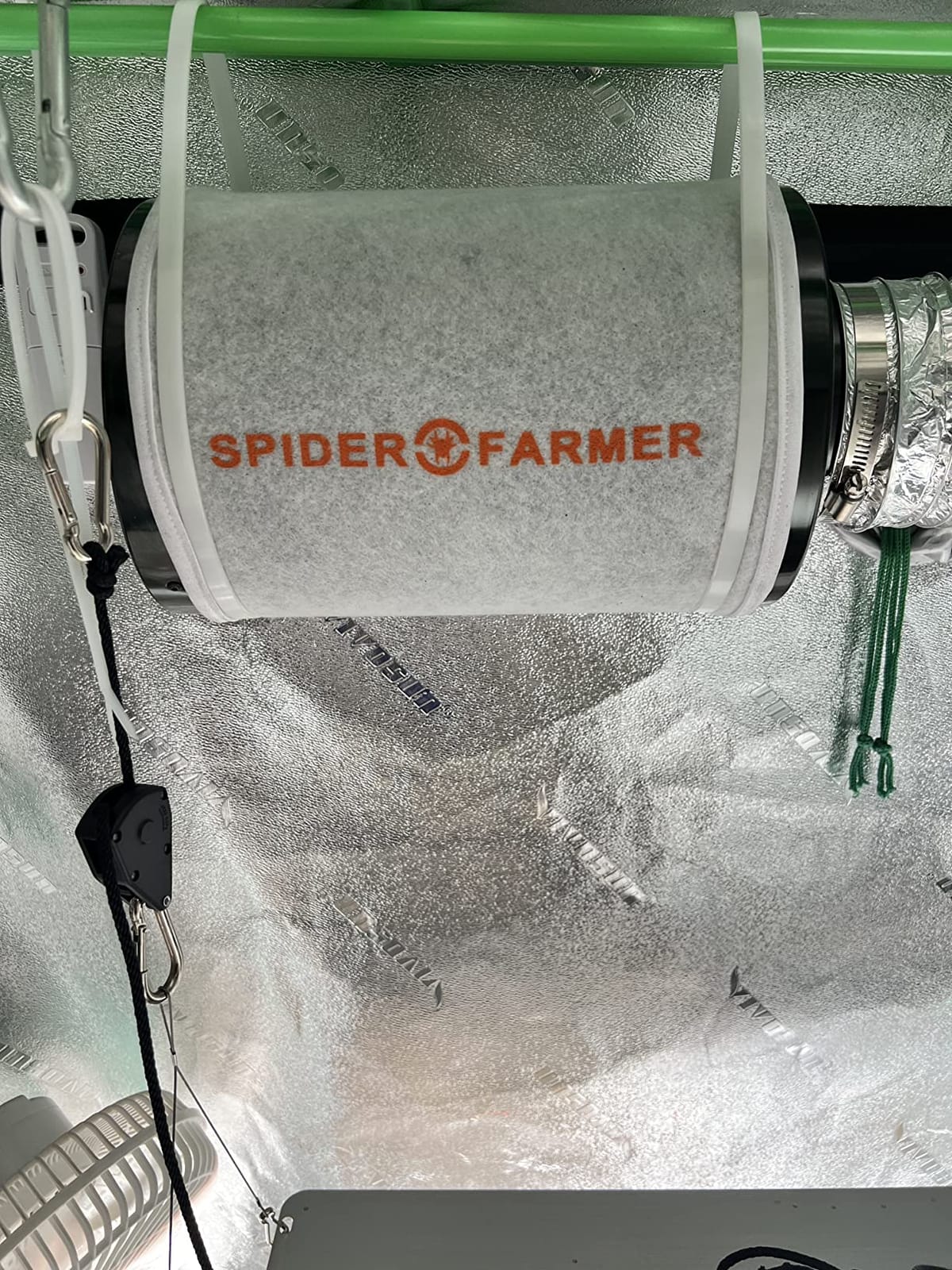
Spider Farmer came up constantly in the forum threads we read, usually as one of two or three names growers trust. This 4 inch unit is the reason: RC 412 Australian virgin charcoal, and both the pre-filter and the filter body are washable, which is unusual at this level.
That washable design matters more than it sounds. A pre-filter you can rinse and reuse costs nothing to maintain and keeps particle load off the carbon bed, which is the simplest way to extend the life of any filter in this guide.
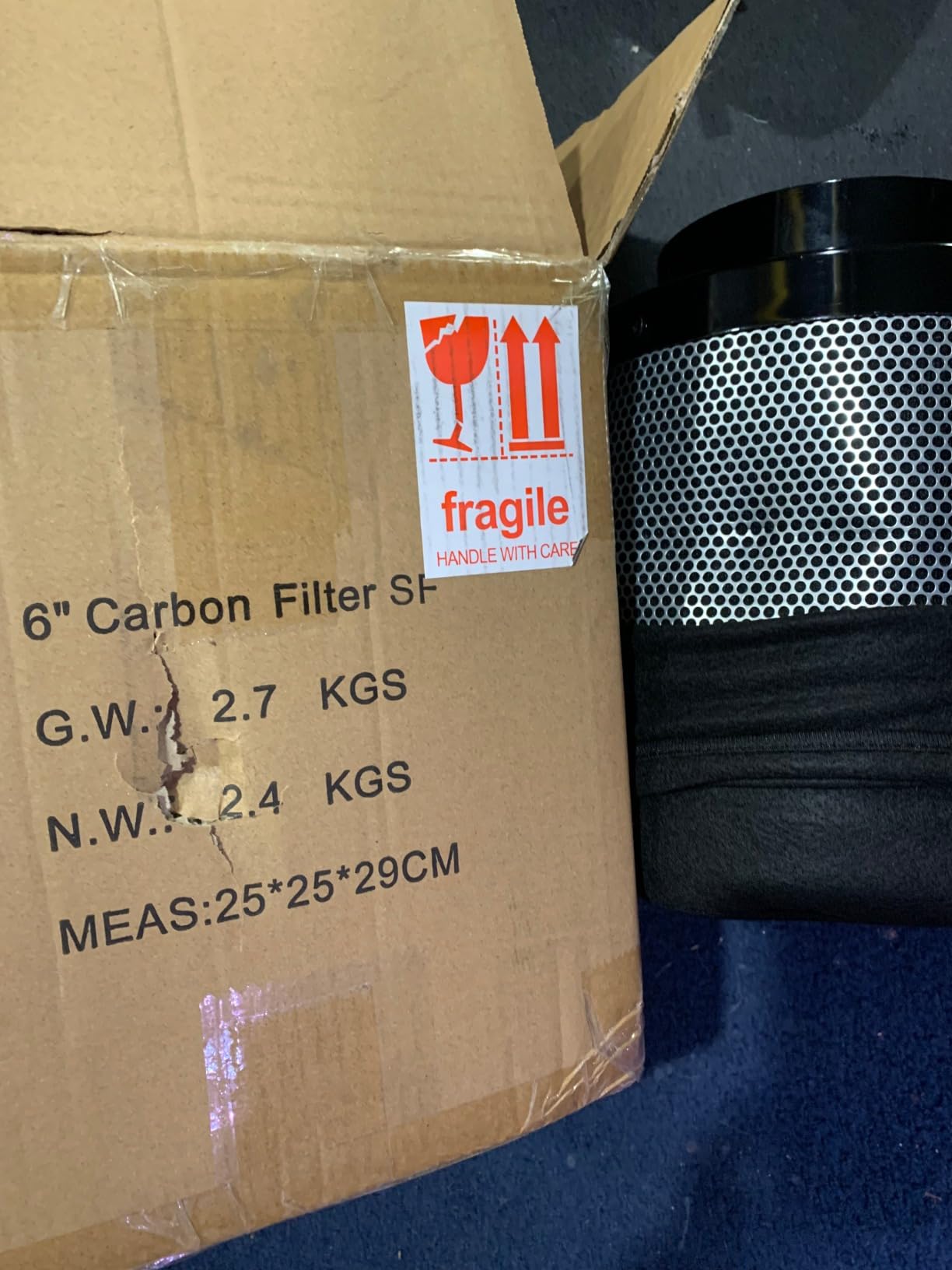
Setup is tool-free. Heavy-duty aluminum flanges and galvanized steel construction connect to ducting without special tools, two straps are included, and at 4.84 pounds it hangs cleanly from a standard tent trapeze.
Where it falls short is transparency. It carries the lowest average in this group at 4.4 with a 13 percent three-star share, it does not publish a duct airflow rating, and the canister is not refillable once the carbon is gone.
Both 4 inch and 6 inch versions are offered, so confirm you are buying the diameter your setup actually needs rather than defaulting to the cheaper listing.
What to check before you buy
Ask whether you need a published CFM figure, because without a rated airflow number you are sizing on brand reputation rather than data. That is uncomfortable when the whole purpose of the filter is keeping up with your fan.
Who should skip it
Skip it for a heavily aromatic strain on continuous airflow, since a non-refillable housing plus a noticeable share of early breakthrough reports is weaker for demanding tents than the top-rated options here.
9. HYDROWE 4 Inch Carbon Filter – Lowest-Cost Starter Scrubber
HYDROWE Air Carbon Filter 4 Inch ,Smellines Control Removes 3X More Odors Contaminants. Australian Virgin Charcoal, Carbon Filter for Grow Tent, Hydroponics, Pre-Filter Included (4inch)
4 inch duct opening
Cone-shaped internal base
Imported Australian carbon
2.99 kg
6.69 x 6.69 x 11.8 inches
Pros
- Entry-level cost while still using imported Australian activated carbon
- Cone-shaped base and galvanized mesh support steady airflow
- Pre-filter included and setup is straightforward
- Build and charcoal described as solid by multiple reviewers
- Good fit for a one-and-done filter
Cons
- Some users report odor breaking through late in flower on pungent strains
- A portion of reviews found little measurable filtration
- Not refillable and no IAV rating is stated
- Catalog metadata is loosely filled in
The HYDROWE is the entry point. It uses imported Australian activated carbon in a 4 inch housing, and at 4.5 across 346 reviews most buyers find it matches or beats costlier filters for basic odor control on a small tent.
One structural detail stands out. The cone-shaped internal base combined with galvanized steel mesh is designed to keep airflow steady rather than turbulent, helping the carbon bed see consistent contact time across the cylinder instead of channeling air down the middle.
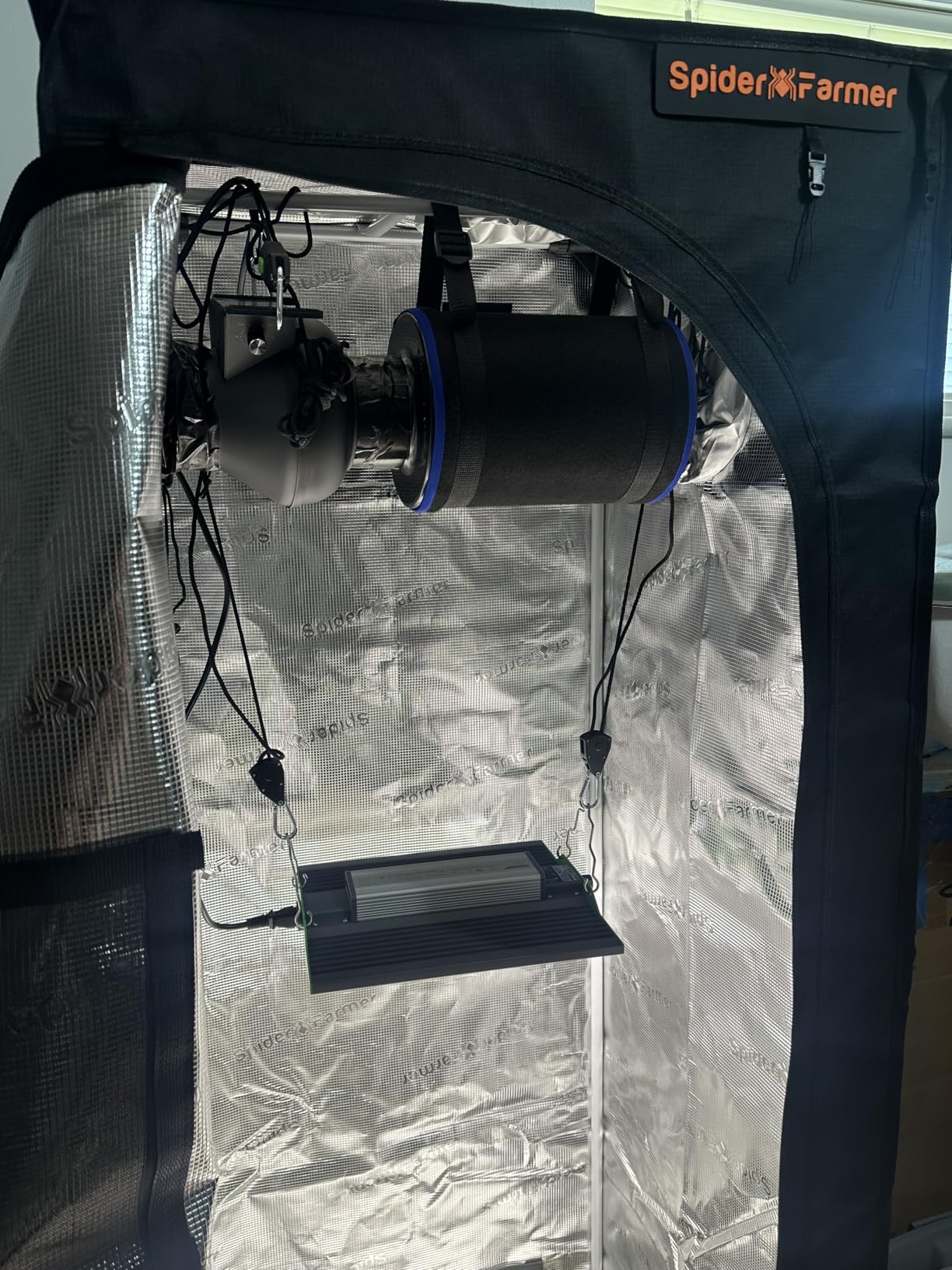
It ships with a clothed pre-filter and needs no tools to install. Dimensions are compact at 6.69 by 6.69 by 11.8 inches with a listed weight of 2.99 kg, so it fits a 2×2 or 2×4 tent without stealing vertical space.
Two cautions. A meaningful minority of reviews report smell leaking late in flowering on very pungent strains, and no IAV figure is stated, so you cannot compare its carbon grade against the specified 1200+ IAV units.
The catalog metadata is also loosely filled in, with attributes that do not match the product, so do not treat the listing copy as a precise spec sheet. It is also not refillable.
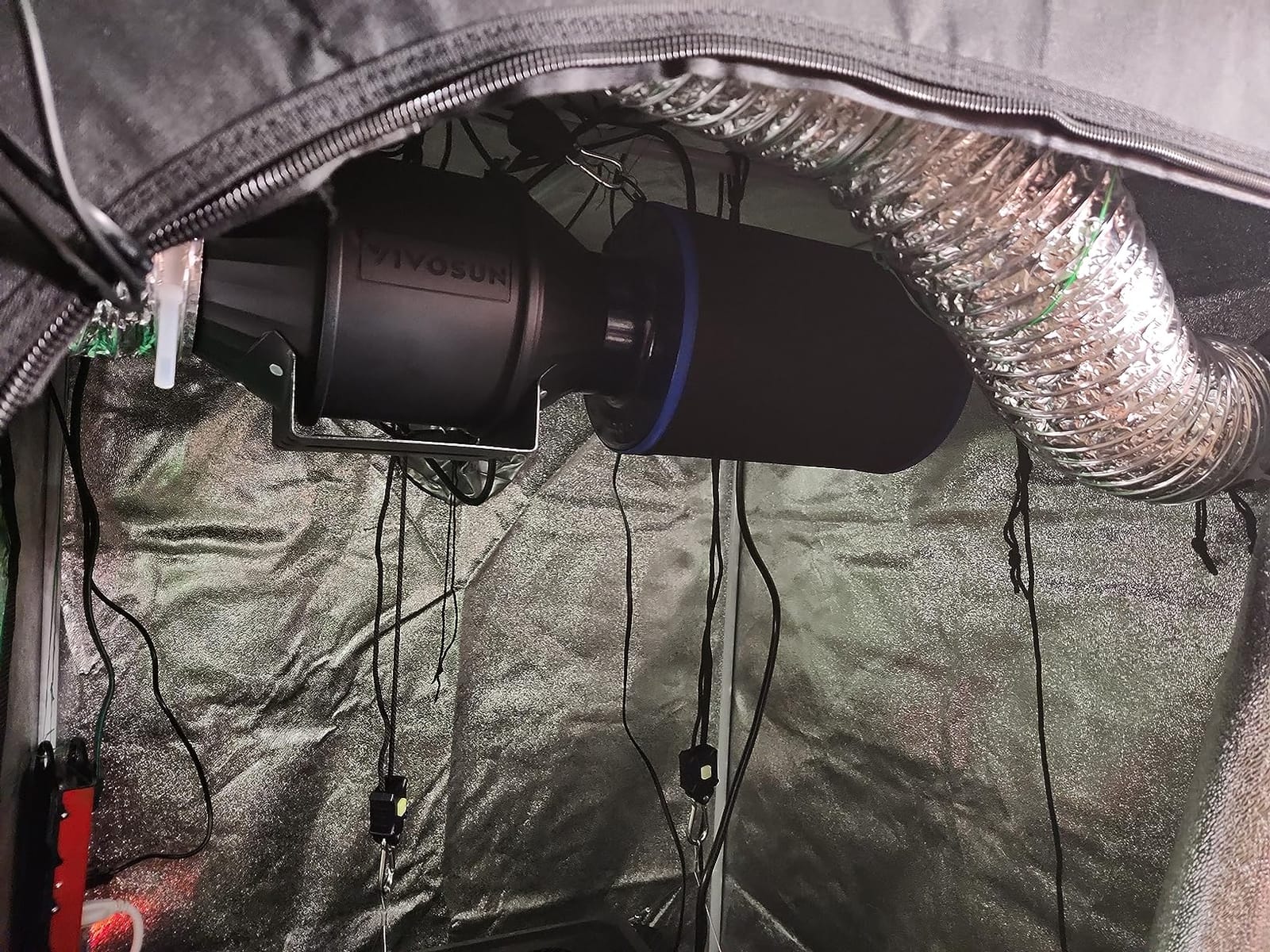
What to check before you buy
Decide whether your strains are pungent, because unreported carbon mass is the main unknown with this unit. Plan for spare pre-filters too, since only a single cloth sleeve is included and it is not refillable.
Who should skip it
Skip it for a 4×4 or 5×5 tent, where 4 inch ducting is the wrong diameter regardless of budget, and for apartment growers under a strict odor complaint, since breakthrough reports cluster in the late-flower window.
10. VIVOSUN 6 Inch Pro Carbon Filter 455 CFM – Best for Large Tents
VIVOSUN 6″ Pro Carbon Filter & Pre-Filter 455 CFM for Inline Fan, Black
6 x 9 x 16 inch
455 CFM rated
1200+ IAV RC412
38mm bed
Reversible flange
Pros
- 455 CFM is the highest published airflow in this roundup
- 1200+ IAV RC412 charcoal in a 38mm bed
- Hexagonal mesh keeps airflow high through a deep bed
- Reversible flange extends usable carbon life
- Ring anchors and rope hangers for quick hanging
Cons
- Only a 90-day manufacturer warranty
- 16 inch tall so it needs vertical clearance
- Flanged canister is not refillable in place
- Lower review volume than the 4 inch VIVOSUN sibling
This is the filter to buy if your tent is bigger than 4×4 or you are pairing a 6 inch inline fan with a serious carbon stage. At 455 CFM it delivers the highest published airflow of anything in this roundup, and it does so while still using 1200+ IAV RC412 Australian virgin charcoal in a 38mm bed.
Most high-flow designs reach their rating by thinning the carbon. This one uses dual-sided galvanized steel mesh with a hexagonal pattern specifically to keep open area high, so throughput does not come at the expense of contact time through the bed.
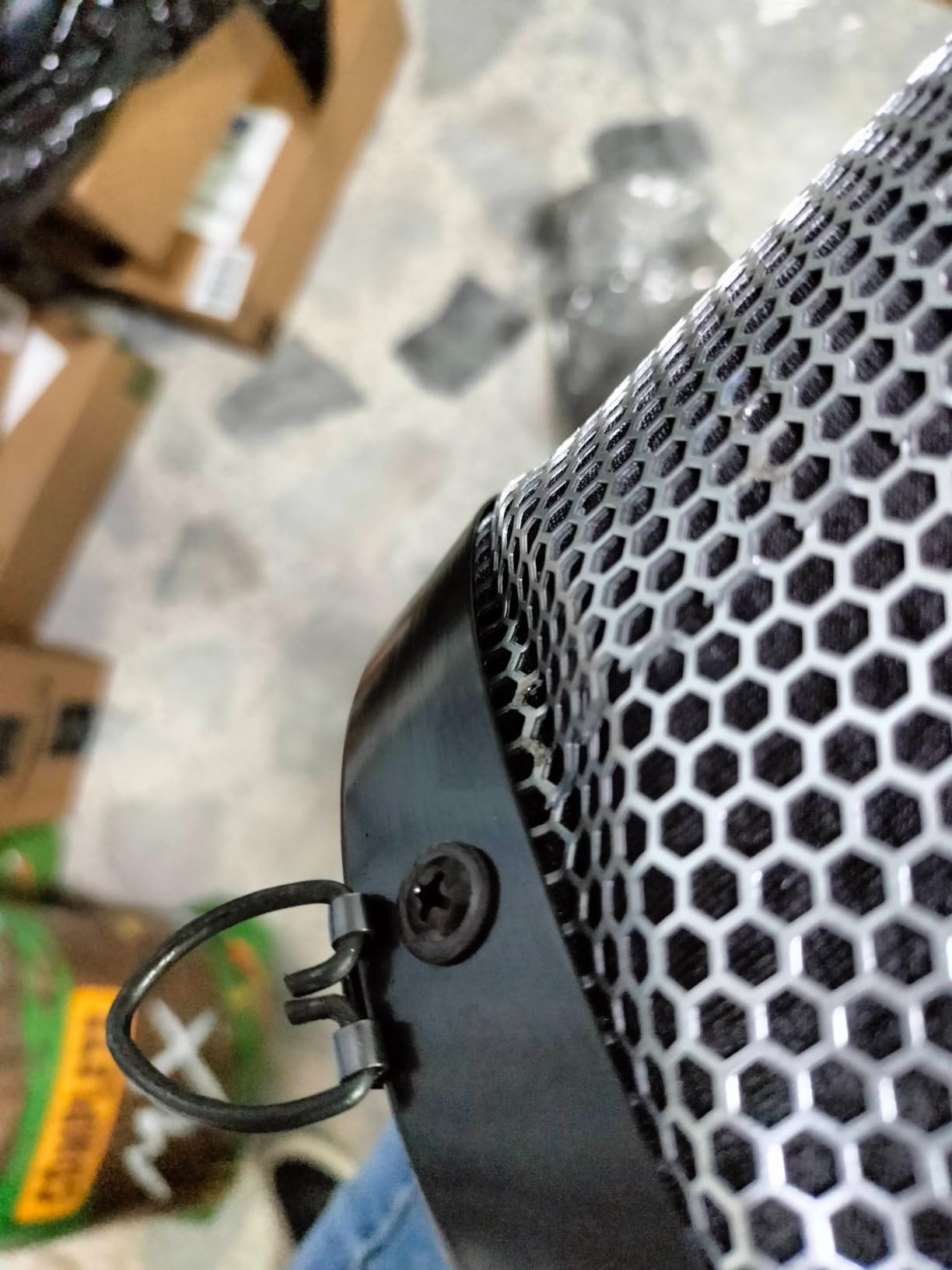
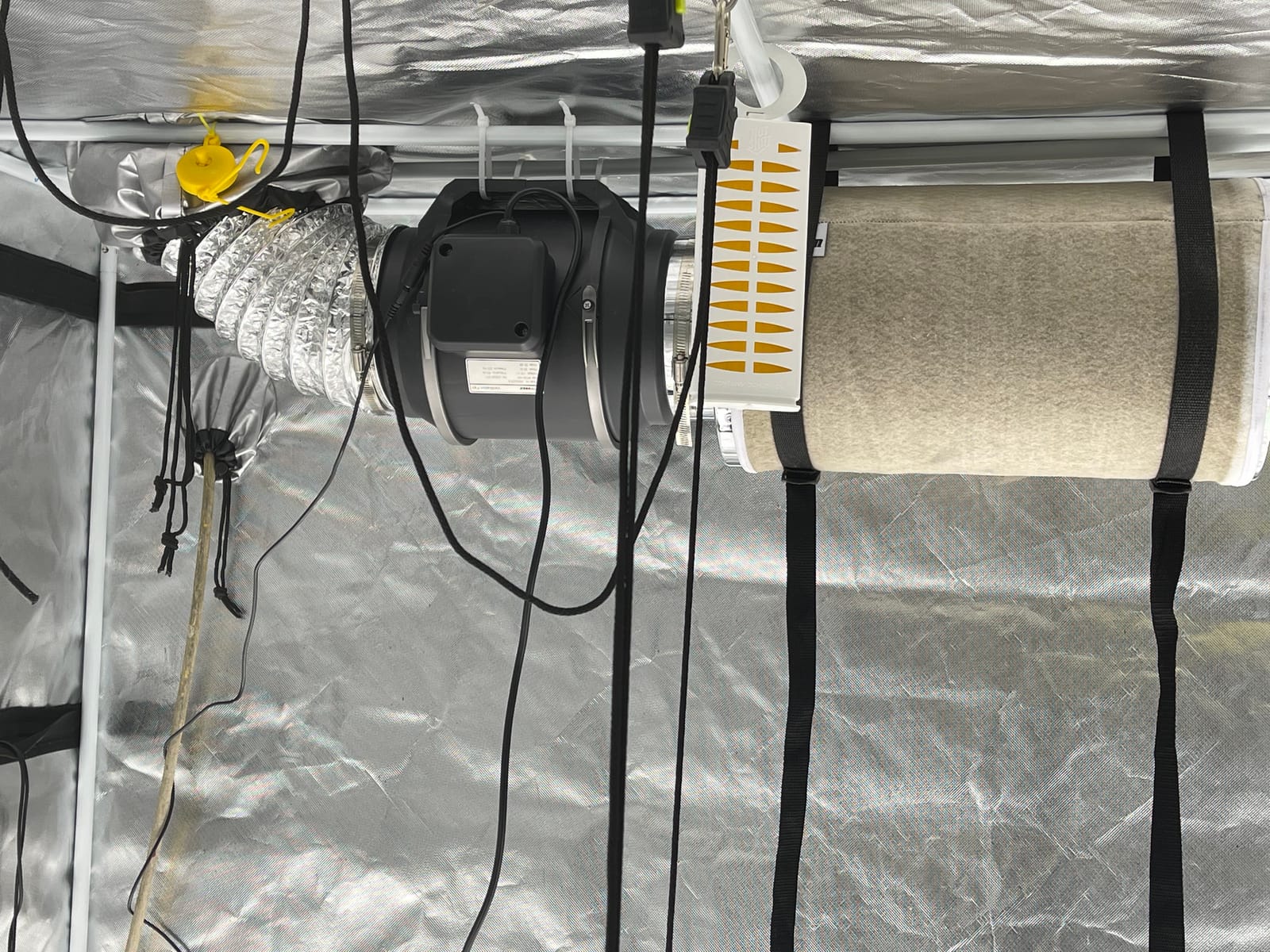
Hanging is handled with ring anchors and rope hangers for quick tent installation, and the reversible flange and base let you flip the canister end for end before replacing it. That is useful in a large tent, where the bed sees constant airflow and saturates faster than a 4 inch unit on a small tent.
The 4.6 average across 1684 reviews is solid, though it sits below the two VIVOSUN 4 inch figures. The caveats are the same short 90 day warranty as its smaller sibling, a 16 inch body that needs real vertical clearance, and a housing that cannot be refilled in place.
Compare it to the iPower 6 inch before deciding: this one moves more air and uses a higher IAV carbon, while the iPower carries the longer warranty and the heavier housing.
What to check before you buy
Measure your vertical space first, because at 6 by 9 by 16 inches the filter is far taller than a 4 inch canister and can stop the roof zip closing properly, which leaks odor on its own.
Who should skip it
Skip it for a 2×2 or 2×4 tent on 4 inch ducting, where the airflow is wasted and the restriction just adds noise. Bedroom growers should also weigh noise, since 455 CFM needs a large fan.
How to Choose a Carbon Filter for Your Grow Tent in 2026
Match the filter diameter to your tent size
Diameter is the decision that matters most, and it is a step function rather than a preference. A 2×2 or 2×4 tent runs on 4 inch ducting and needs roughly 200 to 250 CFM of filtered airflow. A 3×3 or 4×4 tent moves to 6 inch ducting at 400 CFM and above. A 5×5 tent or grow room is an 8 inch job.
The rule underneath is air exchange. Work out tent volume, decide how many air changes per hour you need, convert that to CFM, then pick the filter whose rating is at or above that number. Grower threads make the same point from the other side: the most common odor failure is a fan and filter pair that are both too small for the tent.
How carbon filters actually capture odor
Carbon captures odor by adsorption, a surface process rather than an absorption one. Every particle is riddled with micropores and mesopores, giving it a specific surface area measured in square meters per gram. Terpenes and other volatile organic compounds stick to that surface and stay trapped until the media is replaced.
That is why IAV, the iodine adsorption value, is the number to compare. A 1200+ IAV carbon has more usable surface area per gram than a 1050+ IAV carbon, so grade comes before bed thickness. Coconut shell and coal-based carbon both work; what separates a good filter from a bad one is how much media is actually in the can.
Rated CFM versus real-world CFM
A rated CFM figure assumes clean air through a short, straight duct. Real setups lose a meaningful share to the carbon bed itself, to extra duct length and to every bend in the path, so filters commonly see their rated number drop by a third or more once installed.
Size the filter about 25 percent above your fan’s rated output. That headroom covers aging media, duct losses and a pre-filter that has picked up dust, and it is the difference between a filter that keeps up and one that becomes the bottleneck.
Refillable versus throwaway economics
A refillable filter trades a higher entry cost for a metal housing you keep forever and loose carbon you buy as needed. A throwaway canister is cheaper once and then costs a whole unit each cycle, so over several cycles the refillable route wins and produces far less waste.
Two filters here are refillable by design, the AC Infinity kit and the G HYDRO 6 inch, both using twist-off flanges with enough media in the box for at least one refill. Between the two sits a middle ground: several fixed housings let you flip the canister end for end for a free second pass through the bed.
Where to install the filter and fan
Inside the tent is standard, because you need negative pressure with the fan pulling air out through the carbon rather than pushing unfiltered air in. If the tent walls do not bow inward slightly when the fan runs, you are not sealed and no filter fixes the leak.
The order growers converge on is thin pre-filter, then carbon filter, then fan, all inside, exhausting up and out through the shortest possible run of ducting. Rope ratchet hangers rather than zip ties keep the duct straight.
Humidity, pre-filters and the replacement schedule
Carbon loads with moisture as well as odor, and a tent above roughly 60 to 65 percent relative humidity during flower will saturate the media well before the twelve to eighteen month window most people quote. Watch your humidity numbers as closely as your odor complaints.
The pre-filter sleeve is the cheapest intervention available. Replace or wash it before it looks dirty and it keeps particle load off the carbon bed, and running the fan bare during vegetative growth before adding carbon from week two or three of flower extends media life more than any product choice on this list.
Why odor still leaks, and how to fix it
Work down this list. Confirm the tent is under negative pressure, confirm the filter diameter matches the fan, and confirm air is being pulled through the carbon rather than blown past it. After that it is usually a housing problem: gaps at the duct flange, unsealed zipper ports, or any open path that bypasses the media.
Finally, accept that saturation is normal. When outside smell starts creeping back mid-flower the carbon is loaded, and that is the moment to change media, not a sign you need a bigger fan. Treating it as a fan problem is how people buy hardware they did not need.
Frequently Asked Questions
What is the best carbon air filter for a grow tent?
The best carbon air filter for a grow tent is one whose duct diameter matches your inline fan, whose carbon is 1200+ IAV or better, and whose rated CFM is at or above your required airflow. In our comparison the AC Infinity 4 inch led the group on rating and review volume, with the VIVOSUN 4 inch a strong value alternative and the VIVOSUN 6 inch Pro the right pick for larger tents.
Do carbon filters really work in grow tents?
Yes, when the setup is correct. Carbon adsorbs the volatile organic compounds behind grow odor as air is pulled through the bed, and growers routinely report the odor outside dropping within hours. They fail when the tent is not under negative pressure, when the fan is oversized and blowing instead of pulling, or when the carbon bed is exhausted or barely loaded at the start.
Can you refill a carbon filter?
It depends on the housing. Refillable designs such as the AC Infinity refillable kit and the G HYDRO 6 inch use twist-off flanges so you can swap the carbon and keep the metal housing indefinitely. Many others are sealed or fastened shut, and some only let you flip the canister end for end to get a second pass through the bed before discarding it.
What are the disadvantages of using a carbon filter?
The main drawbacks are cost over time, added noise and airflow restriction, and the fact that they dry your tent air by exhausting it without returning filtered air. A filter also does nothing about mold, pests or temperature, and a poorly sized or poorly sealed installation gives false confidence while odor still escapes.
What size carbon filter do I need?
Match the filter to the ducting your fan uses, then confirm the rating. A 2×2 or 2×4 tent needs a 4 inch filter around 200 to 250 CFM. A 3×3 or 4×4 tent needs 6 inch ducting and roughly 400 CFM or more. A 5×5 tent or grow room needs 8 inch. Size the filter about 25 percent above your fan output for aging headroom.
Should the carbon filter be inside or outside the tent?
Inside the tent is standard, because you need the tent under negative pressure with the fan pulling air out through the carbon rather than pushing unfiltered air in. Hanging order is a thin pre-filter, then the carbon filter, then the fan, all inside, exhausting up and out through the shortest possible run of ducting.
Conclusion: The Best Carbon Filters for Grow Tents in 2026
For most readers the answer is the AC Infinity 4 inch at number one, because it pairs 1200+ IAV Australian RC412 carbon with a housing you can refill and the strongest review record in the group. The VIVOSUN 4 inch is the value alternative with more published airflow, and the VIVOSUN 6 inch Pro is where you start once your tent outgrows 4 inch ducting.
Whatever you choose, get three things right: match the filter diameter to your tent, size the filter above your fan output, and make sure the tent pulls rather than pushes. Check the current listings for each pick and choose the diameter your setup actually needs.