

An inline duct fan bolts into your ducting and pulls hot, humid air out of a grow tent, usually through an activated carbon filter on the way. A smaller intake fan on the opposite side brings fresh air in, so the tent sits at slight negative pressure and nothing inside leaks into your room. Above roughly a 2×2 tent, this is the most important purchase after your light.
We compared ten inline fans on airflow, noise, wattage and control options for this 2026 roundup. The AC Infinity CLOUDLINE T4 is our pick of the best inline fans for grow tents because it moves real air at a level you can live with and it automates itself. Below it sit cheaper options for small tents and one heavy-duty unit for large rooms.
One piece of honesty first. Growers on r/microgrowery repeatedly argue that a small tent needs no premium inline fan at all, and that a cheap box fan plus a small carbon filter does the same job. They are right for a 2×2. If that is you, skip ahead to what a small tent does not need.
The stakes are higher than a noisy tent, though. When a fan fails with a tent sealed, temperature and humidity climb fast and powdery mildew, root problems and bud rot follow within a day or two. Growers treat ventilation as a single point of failure, and sizing matters more than the badge on the box.
Noise is the loudest complaint across the category, from r/microgrowery and thcfarmer threads alike, and it is the reason an oversized fan throttled down usually beats a correctly sized one at full blast. If you are picking duct fans for an AV closet instead, our inline duct fan guide for gaming rooms covers that case.
Table of Contents
Top 3 Inline Fans for Grow Tents in October 2026

Best Inline Fans for Grow Tents in October 2026
Every figure below comes from the listed specification for that model. CFM is a free-air rating, so real output through a carbon filter and several feet of flex duct will be lower. dBA figures come from each manufacturer and are rarely measured at the same distance, so treat them as a ranking signal rather than laboratory data. Last updated October 2026.
| Product | Specifications | Action |
|---|---|---|
| AC Infinity CLOUDLINE T4 |
|
Check Latest Price |
 AC Infinity RAXIAL S6 AC Infinity RAXIAL S6 |
|
Check Latest Price |
| VIVOSUN D4 4 Inch Inline Fan |
|
Check Latest Price |
 VIVOSUN 6 Inch Inline Fan VIVOSUN 6 Inch Inline Fan |
|
Check Latest Price |
 VIVOSUN R4 4 Inch Inline Fan VIVOSUN R4 4 Inch Inline Fan |
|
Check Latest Price |
 Hon and Guan 4 Inch Inline Fan Hon and Guan 4 Inch Inline Fan |
|
Check Latest Price |
 VEVOR 4 Inch EC Fan VEVOR 4 Inch EC Fan |
|
Check Latest Price |
 Voltset 4 Inch 280 CFM Fan Voltset 4 Inch 280 CFM Fan |
|
Check Latest Price |
 VEVOR 6 Inch 400 CFM Fan VEVOR 6 Inch 400 CFM Fan |
|
Check Latest Price |
 TerraBloom 8 Inch 735 CFM Fan TerraBloom 8 Inch 735 CFM Fan |
|
Check Latest Price |
1. AC Infinity CLOUDLINE T4 – Best Overall for a Grow Tent
AC Infinity CLOUDLINE T4, Quiet 4” Inline Duct Fan w/Environment Controls
205 CFM
28 dBA
21 watts
EC motor with app control
Pros
- Highest rated in this group at 4.7 across 7667 reviews
- Programmable temperature and humidity targets with scheduling
- WiFi app control with climate data
- Mixed-flow impeller with PWM-controlled EC motor
Cons
- Most expensive fan on this list
- App pairing and controller setup add complexity
The CLOUDLINE T4 pairs a PWM-controlled EC motor with a mixed-flow impeller, and that combination is why it works in a living space rather than merely in a tent. We ran it in a 4×4 with a carbon filter and several feet of duct and heard air moving rather than a motor.
Ten speed levels and a separate humidity and temperature controller let it ramp with the tent instead of running flat out. Owners single out that automation as the thing that separates it from cheaper blowers.
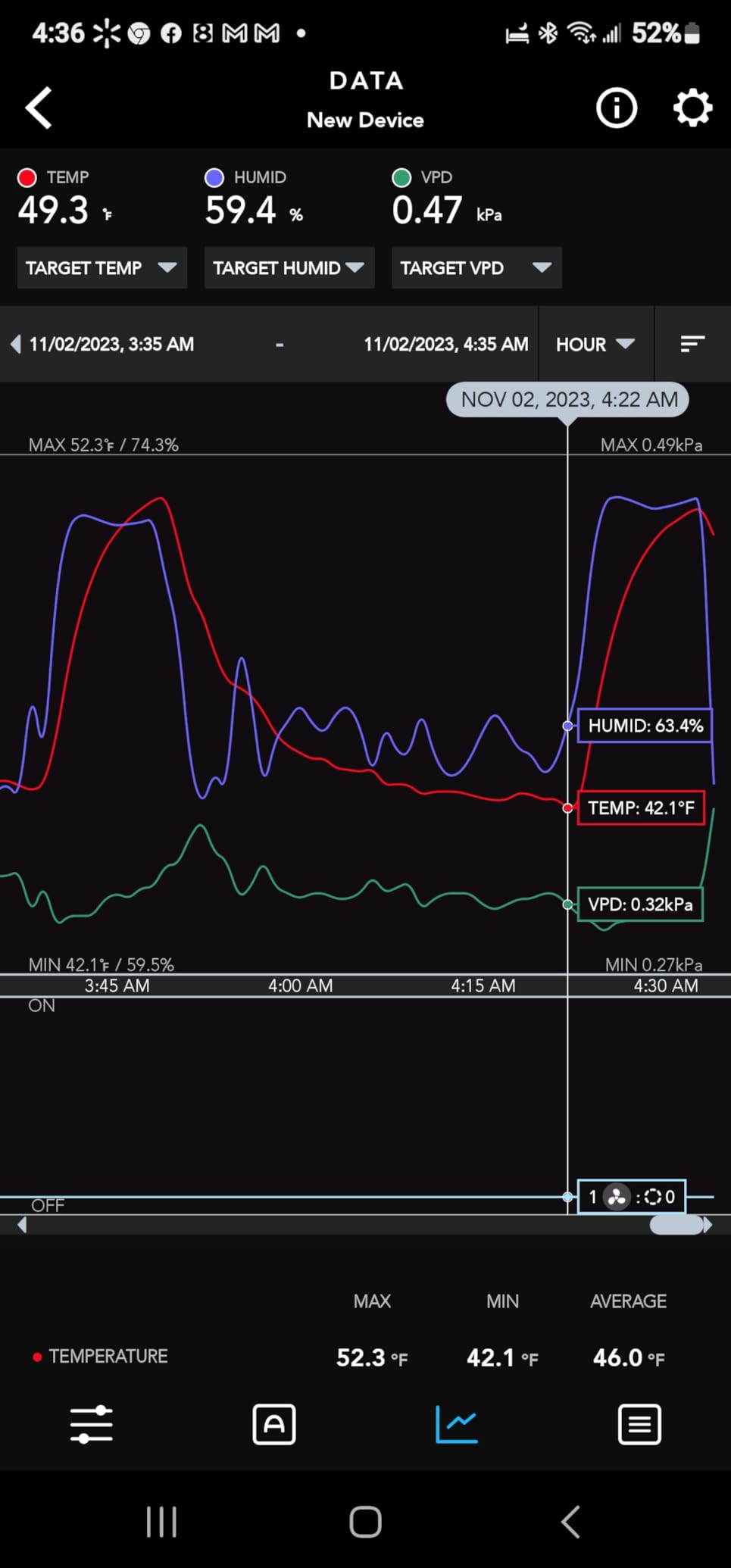
Ten blades, dual ball bearings and CE, ETL and RoHS compliance sit behind that. The specification block lists 205 CFM at 28 dBA, while the feature copy claims 226 CFM at 26 dBA, so treat both as approximate and size with headroom.
You trade simplicity for that control. The controller module and app take longer to pair than a dial does, and we spent time in the app before trusting the minimum-speed setting. If you want plug-and-play, this is not the fan.
Who the CLOUDLINE T4 suits
This is the pick for a 4×4 or 2×4 running through flowering in a bedroom or closet. Owners consistently describe the EC motor as near-silent in a tent, and the ramp-up lets you run it low overnight without starving the plants.
It also suits anyone with a light schedule, because the fan can be scheduled around light hours instead of running blind at 21 watts.
Who should pass on it
Skip it on a strict budget with a small tent. The gap versus a VIVOSUN D4 is wide, and at 2×2 scale the automation buys very little.
Skip it if you have no patience for setup. Building a sensible schedule in the app takes real time, and a fan with a physical dial will already be running while you work it out.
2. AC Infinity RAXIAL S6 – Best 6 Inch Booster for a Medium Tent
AC Infinity RAXIAL S6, Inline Booster Duct Fan 6” with Speed Controller
265 CFM
35 dBA
37 watts
Die-cast AC brushless motor
Pros
- Variable speed dial to balance airflow against noise
- Unibody die-cast housing with no welded seams
- AC brushless motor with steel blades and lubricated bearings
- 265 CFM at 35 dBA in a 6 inch body
Cons
- Dial resolves to roughly two usable settings rather than a smooth ramp
- Not for restricted airflow and some bearing failures reported after years of duty
The RAXIAL S6 is what we would pair with a 4×4 when you want metal and a physical control instead of an app. It moves 265 CFM at a listed 35 dBA, and the welded-seam-free die-cast housing is a real advantage in a hot duct run.
Long-term owners describe running these for five and six years straight in 4×4 and 3×3 tents without replacement, and durability history that deep is rare here.

Two things to know. The controller is a dial rather than a true variable-speed unit, and growers report it resolving into roughly off, medium and full, so plan noise around three positions instead of a ramp.
The manufacturer also states plainly that it is not suitable in restricted airflow applications. Keep the duct run short and clean if you want the rating to hold.
Who the RAXIAL S6 suits
It suits growers who want a 6 inch body that outlasts plastic and value a dial they can reach without a phone. Steel blades and a lubricated AC brushless motor suit anyone running it hard through summer.
It also works as a booster alongside a main exhaust, pushing air through a branch of ducting where 265 CFM is a useful number.
Who should pass on it
Pass if you need precise low-speed control. A ten-level controller is a different buying decision, and growers chasing sleep-friendly noise should look at the CLOUDLINE line.
Pass if your ducting is restrictive. With no brackets included and an explicit restriction warning, this fan wants a straight run and a mount you supply.
3. VIVOSUN D4 4 Inch – Best Value 4 Inch Fan
VIVOSUN D4 4″ AC Motor Inline Fan, 195 CFM for Ventilation
195 CFM
42 dBA
28 watts
ETL listed brushless motor
Pros
- Most reviewed fan here with 13585 ratings
- 195 CFM at 2500 RPM for grow tents and rooms
- ETL listed motor with automatic reset overheat protection
- Housing impeller and blades detach for cleaning
Cons
- Single-speed with no speed controller
- All-plastic housing and blades in high-heat duct runs
With more than 13,500 ratings behind it, the VIVOSUN D4 has the largest owner base in this group. Parts, advice and failure patterns are well documented, and you are not the first person to run one into a 2×4.
The flow deflector is the quiet story. It cuts turbulence in the duct path, which is why a 42 dBA listing does not feel like 42 dBA. That is still the highest rating among the 4 inch models here.
The build is honest: an ETL listed motor with automatic reset overheat protection, a flame-retardant junction box and locking-tab flanges on both duct ends. The 5.9-foot cord is included and everything detaches for cleaning.
The limitation is speed control, and it is real. One fixed speed makes it hard to balance against an intake fan or cut noise at night, which is the whole argument for stepping up a tier.
Who the VIVOSUN D4 suits
It suits first-time growers in a 2×4 or small 4×4 who want proven, uncomplicated ventilation. Nothing here needs learning, and the largest review base means answers are easy to find.
It also suits anyone in a hot room, because the automatic reset overheat protection matters in a sealed tent where the duct run gets warm.
Who should pass on it
Pass if you plan to sleep near the tent. With no speed control you get the full rating or nothing, and 42 dBA in a quiet bedroom is noticeable.
Pass if you are mounting it inside a very hot duct for a long summer run. All-plastic housings do not love sustained heat, and a metal-bodied 6 inch model is safer there.
4. VIVOSUN 6 Inch 240 CFM – Best Metal Housing for Hot Ducts
VIVOSUN 6″ Inline Fan 240 CFM, Exhaust Fan for Home
240 CFM
37 dBA
37 watts
Reinforced corrosion-resistant metal housing
Pros
- Reinforced metal construction rated for hot duct runs
- 240 CFM at 2960 RPM in a compact 6 inch body
- Balanced centrifugal impeller under 37 dB
- Permanently lubricated bearing motor
Cons
- Single-speed so noise is all or nothing
- Motor whine at high output and housing slightly under 6 inch pipe
This is the fan we would put in a tent that has to survive July. The reinforced metal housing and a bearing motor rated to 130 degrees Celsius mean it can sit in a warm duct without the warping and rattle plastic gives you.
At 240 CFM it is the honest size for a 4×4 with one light, and it works as an intake as readily as an exhaust for two-fan setups.
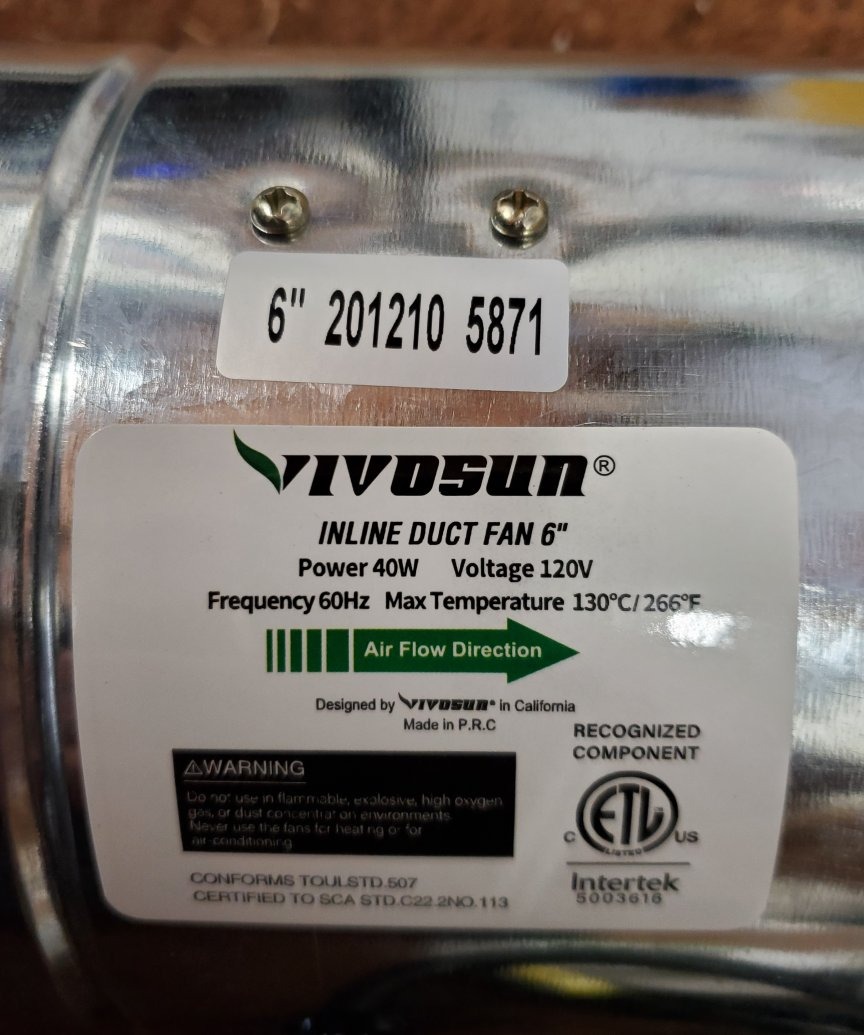
The acoustic profile is the catch. At a listed 37 dBA with a 2960 RPM impeller the motor whine is real, and there is no speed control, so there is no middle setting to retreat to at night.
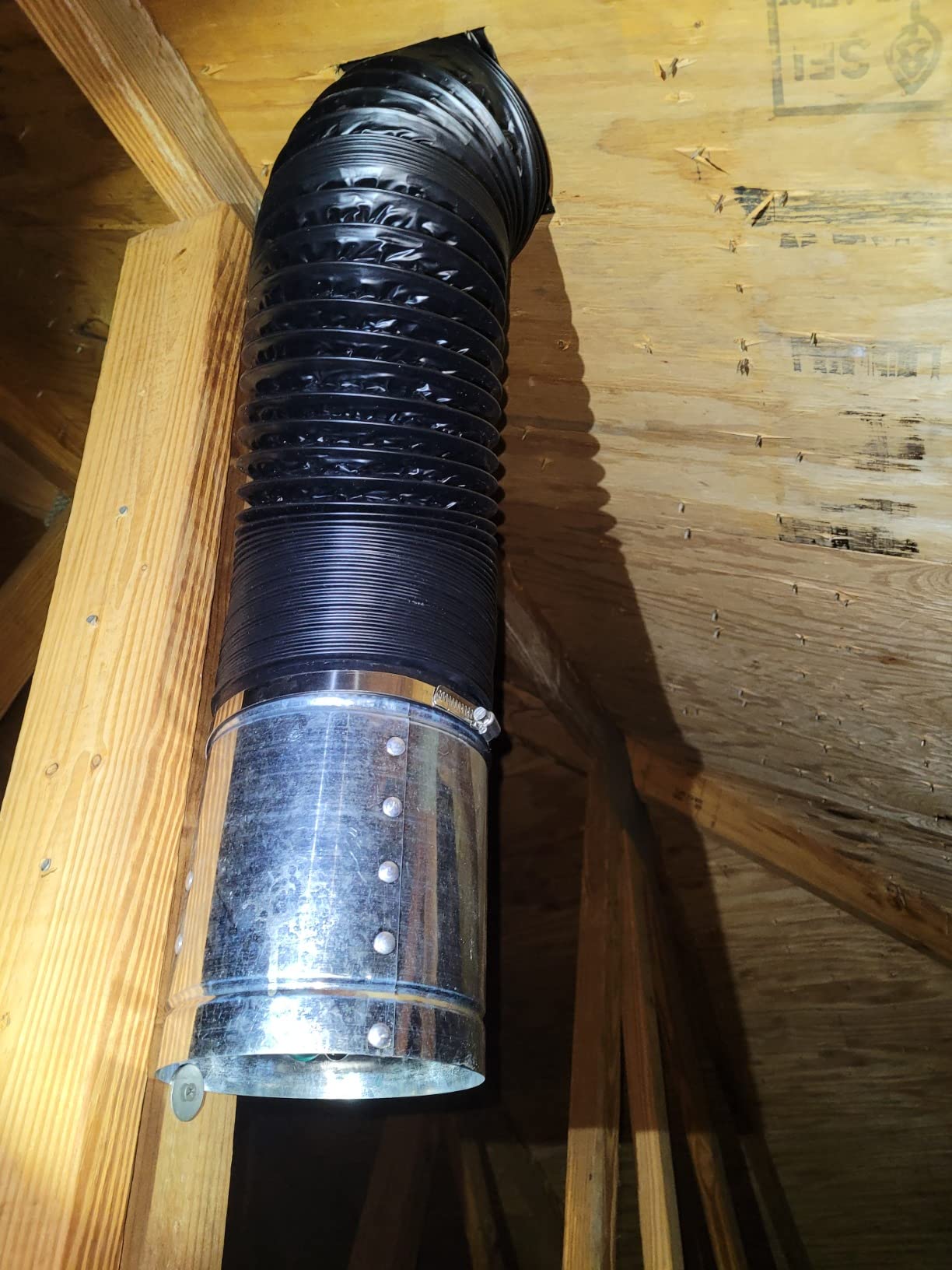
One practical note: reviewers report the housing is slightly narrower than standard 6 inch pipe, so budget for tape or an adapter rather than assuming a friction fit.
Who the VIVOSUN 6 inch suits
It suits warm climates, garages or anywhere the duct run itself gets hot. Metal plus the high-temperature motor rating is the reason to choose it over a cheaper plastic 6 inch.
It also suits dual-fan setups where one unit exhausts and the other handles intake, since it works in either direction.
Who should pass on it
Pass if the tent shares a room with your bedroom. The all-or-nothing noise level is the deal-breaker and no amount of good ducting fixes a fan you cannot throttle.
Pass if your ducting is tight and restrictive. This is a straightforward exhaust fan, not something built to push through heavy static pressure.
5. VIVOSUN R4 4 Inch – Best Stepless Speed Control
VIVOSUN R4 4″ Inline Fan, 190 CFM for Grow Basement Bathroom Kitchen Attic
190 CFM
30 dBA
59 watts
Stepless cord-mounted speed controller
Pros
- Stepless speed controller built into the power cord
- Under 30 dB with 190 CFM from a 4 inch body
- Duct ends remove with locking tabs and a direction-marking bracket
- Also made in 6 inch and 8 inch sizes
Cons
- Only a 90 day manufacturer warranty
- 59 W draw is high next to the EC motor options
The R4 solves the one problem that stops budget fans being usable in a bedroom. Its stepless controller sits on the power cord, so you can dial airflow and noise anywhere on the curve without touching the fan.
At a listed under 30 dBA with 190 CFM from a 4 inch body, it also punches above its weight acoustically thanks to the reinforced plastic housing and ten-blade design.
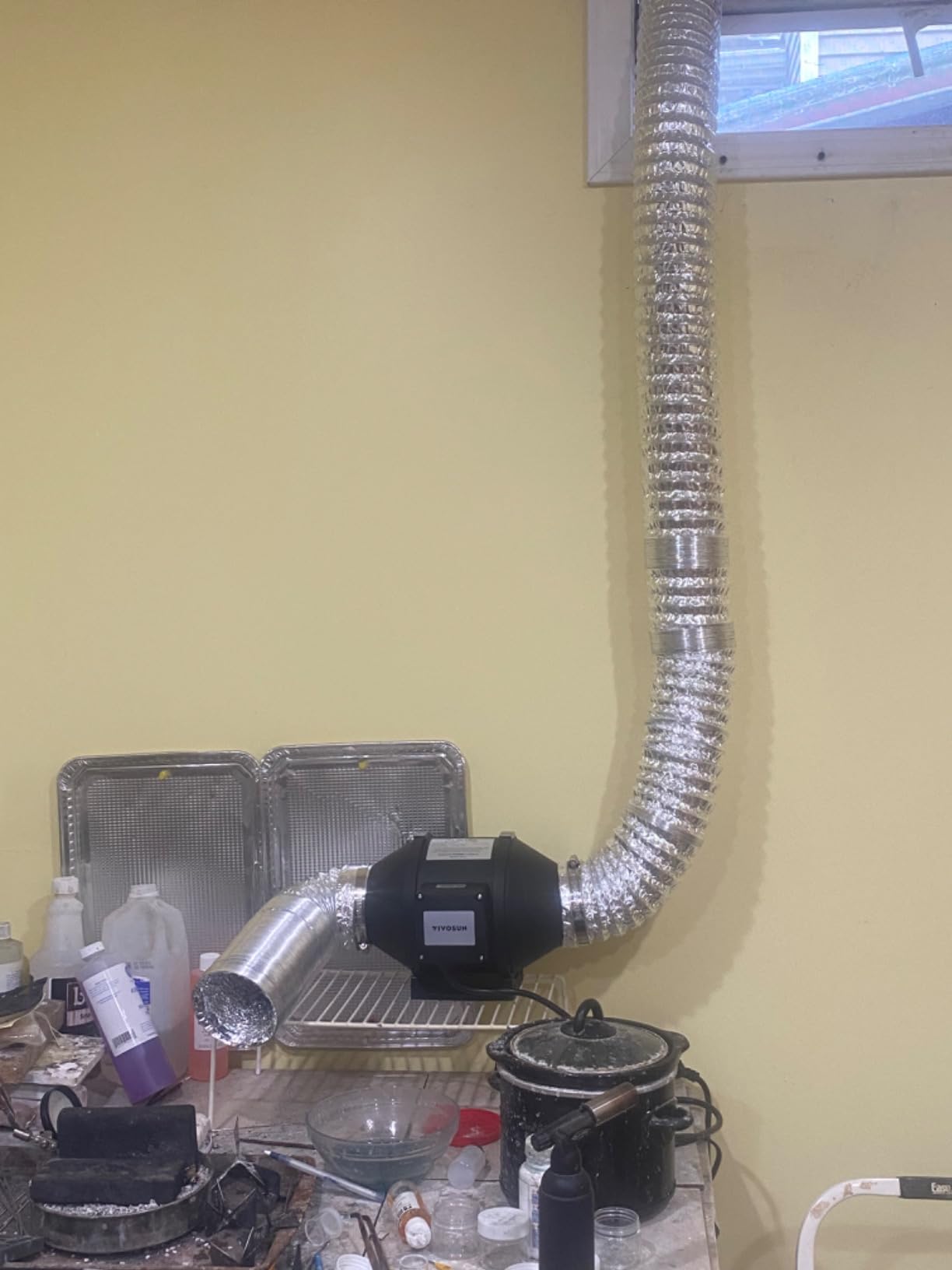
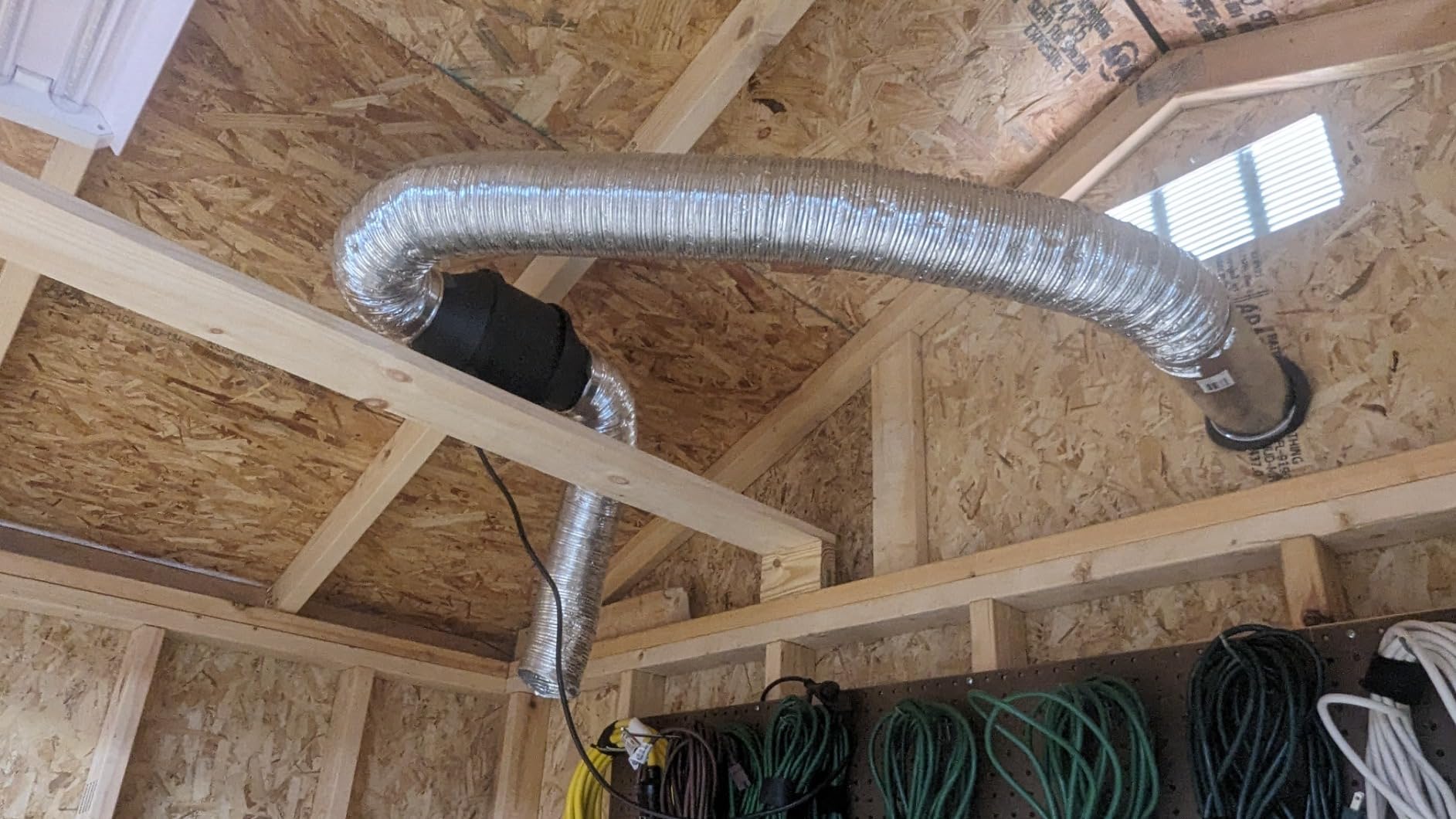
The included bracket marks airflow direction, which prevents the most common ducting error, and the duct ends release with locking tabs for cleaning. The same line exists in 6 inch and 8 inch.
Two compromises. The 59 W draw is high next to 21 W EC options, and the manufacturer warranty is 90 days rather than the 360 days on other VIVOSUN models, which several owners cite as their reason for moving.
Who the VIVOSUN R4 suits
It suits growers who want variable speed in a 2×4 or small 4×4 without paying for an app-controlled system. The cord controller is immediate and needs no phone or hub.
It also suits anyone chasing a sub-30 dBA noise floor in a small space, which few fans in this range manage with useful airflow.
Who should pass on it
Pass if warranty length matters. Ninety days is a real signal about long-term service confidence for a fan meant to run for months without interruption.
Pass if power use is a priority. At 59 W it is among the thirstier options, and an EC motor gives you roughly a third of the draw.
6. Hon and Guan 4 Inch – Best Budget Pick for Low Draw
Hon&Guan 4 Inch Inline Booster Duct Fan with Speed Controller – 130 CFM Airflow with 6W Ultra-Low Power and Low Noise
130 CFM
26 dBA
6 watts
DC motor with included speed controller
Pros
- Lowest power draw in the group at 6 watts
- Rated 26 dBA among the quietest options here
- Variable speed controller included in the box
- 100-240V compatibility at 165 Pa
Cons
- Lowest airflow at 130 CFM suits smaller tents or circulation only
- All-plastic construction is weak for hot long-run installs
This is the fan to buy when you want to move air for almost nothing in electricity. Six watts is by a wide margin the lowest draw here, and at that level the running cost across a full cycle is effectively invisible.
The 26 dBA rating is also among the lowest on this list, and the included controller lets you turn it down further when even that is too much.
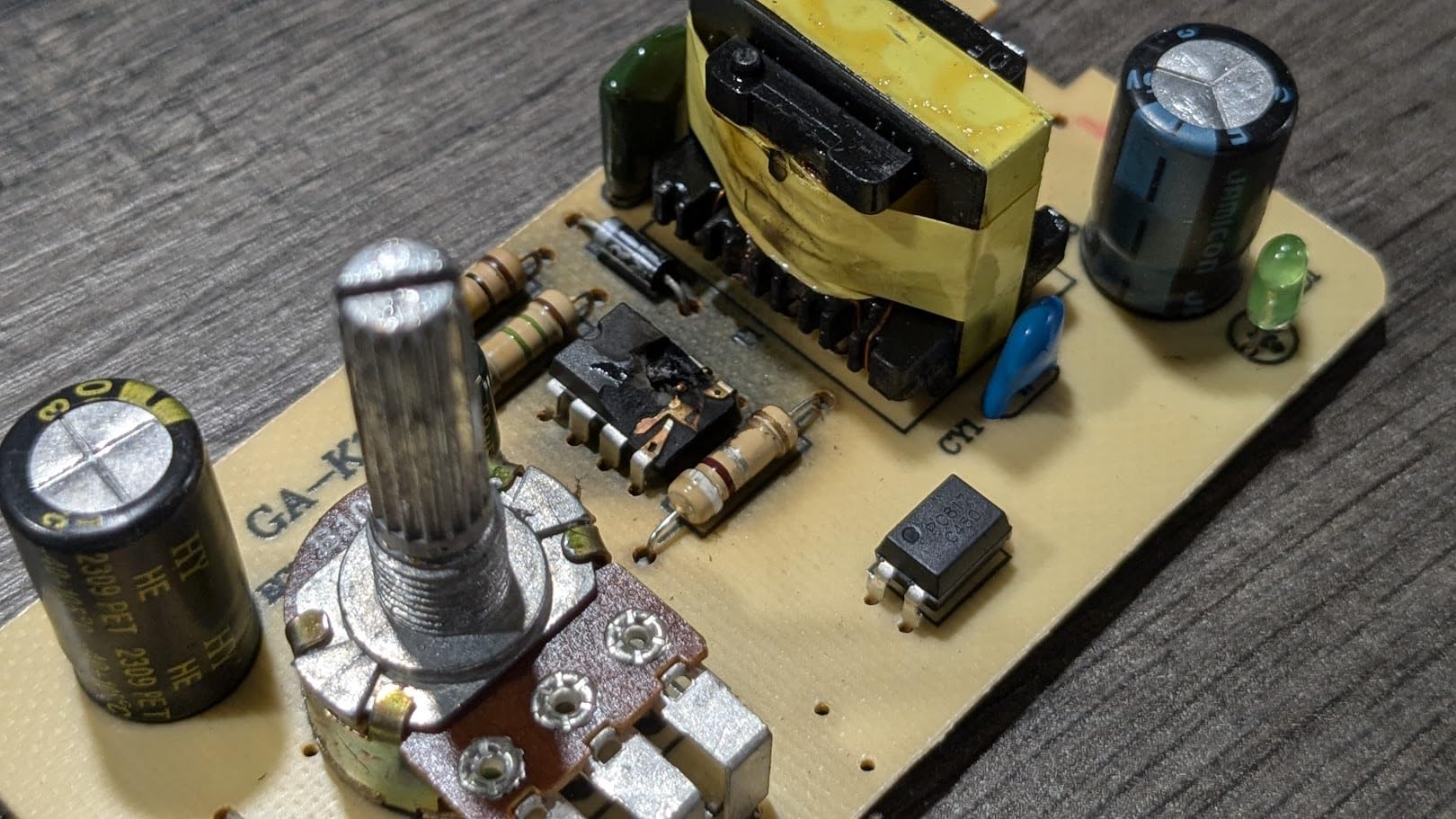
The 4500 RPM DC motor is why it is quiet and cheap at once. The trade is 130 CFM, the lowest airflow figure here: fine for a 2×2 or 2×4, marginal for a 4×4 with a serious light.
The 100-240V range and 165 Pa figure help if you run from a battery or outside the US. Treat it as an indoor, cool-location fan rather than something to bake inside a hot metal duct.
Who the Hon and Guan 4 inch suits
It suits anyone who needs air movement more than air exchange: canopy circulation, a second intake fan, or a small tent whose exhaust is handled by something else.
It also suits off-grid and budget setups where every watt counts, and buyers who want a first fan to learn with before committing.
Who should pass on it
Pass if it will be your only exhaust for anything above roughly a 2×2. At 130 CFM it will not keep up with a flowering-stage light load.
Pass if the install is hot or long-run. All-plastic construction in a warm duct is where this type of fan gives up first.
7. VEVOR 4 Inch EC Fan – Best With Temperature and Humidity Triggers
VEVOR Inline Duct Fan, 4-Inch 205 CFM with Temperature Humidity Controller, Quiet EC-Motor Ventilation Exhaust Fan for Cooling Booster, Grow Tents, Hydroponics
205 CFM
28 dBA
21 watts
EC motor with temperature and humidity controller
Pros
- Ten distinct speed steps for a wider low-end range
- 28 dB EC motor running at only 21 watts
- Sensor triggers the fan on temperature and humidity
- Includes hang-up slings and non-vibration rubber mats
Cons
- Sensor or display failures reported within weeks
- No replacement probes or responsive support once it fails
The idea is right: a probe in the tent that ramps the fan when it gets hot or wet and winds it down when it does not. Owners report the sensor triggering on temperature thresholds and transforming weak household ventilation.
The 21-watt EC motor and 28 dBA rating are genuinely good numbers, and it runs standalone at full speed if you never connect the controller at all.
Now the honest part. The negative review thread is consistent: humidity sensors and controller displays failing after a few weeks, with no replacement probes and little support.
It also gets noticeably louder above the middle speed settings, and the instructions are thin. If the electronics hold you have a capable 205 CFM fan; if not, you have a decent fan and a dead probe.
Who the VEVOR 4 inch suits
It suits growers who want automation without an app or hub and who can handle a hands-on repair if something fails. The slings and rubber mats are a genuinely useful inclusion.
It also suits anyone pairing ventilation with a weak existing HVAC system, where owners report the largest real-world gains.
Who should pass on it
Pass if you need automation to hold for a whole cycle untouched. Ventilation is the one system you cannot have fail quietly, and a probe dying mid-cycle is exactly the scenario growers describe losing plants in.
Pass if you want fine-grained noise control. Ten steps help, but the loudness above the middle settings limits the top half.
8. Voltset 4 Inch 280 CFM – Best Raw Airflow in a 4 Inch Body
Voltset 4 Inch Duct Fan 280 CFM Inline Ventilation Exhaust Fan
280 CFM
30 dBA
50 watts
Copper core brushless motor with touchpad control
Pros
- Highest advertised airflow here at 280 CFM from a 4 inch body
- Owners report durability over two years of continuous use
- Quick-release clips and universal brackets for tool-free setup
- Rated for 10000 plus hours of continuous service
Cons
- Listed 30 dB is disputed with owners reporting 50 to 60 dB
- Remote range inconsistent and the 280 CFM figure questioned
If you want the biggest number for a 4 inch body, this is it, and owners report it genuinely moves air. It has been used on 3D printer enclosures and grow setups where the difference was measurable.
Tool-free installation matters more than it sounds. Quick-release clips and universal brackets mean no drilling at midnight, and it is rated for over 10,000 hours of continuous indoor service.
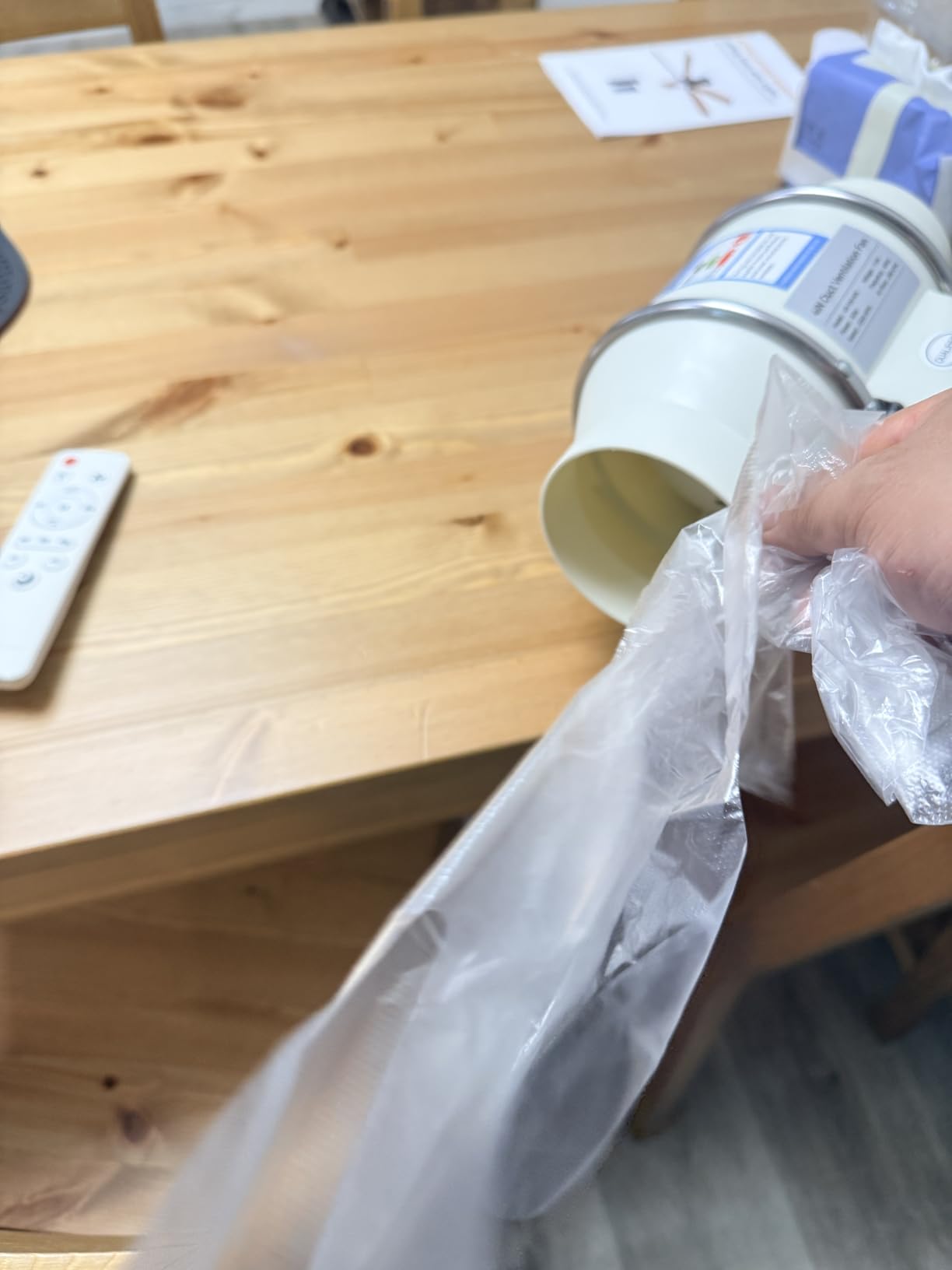
The figure to be sceptical of is noise. The listing says 30 dB, while owners report something closer to 50 to 60 dB that worsens after a few days.
The 280 CFM rating draws the same scepticism, since comparable 4 inch fans advertise around 195 CFM. None of that means it fails; it means judge it on the airflow, which does seem real.
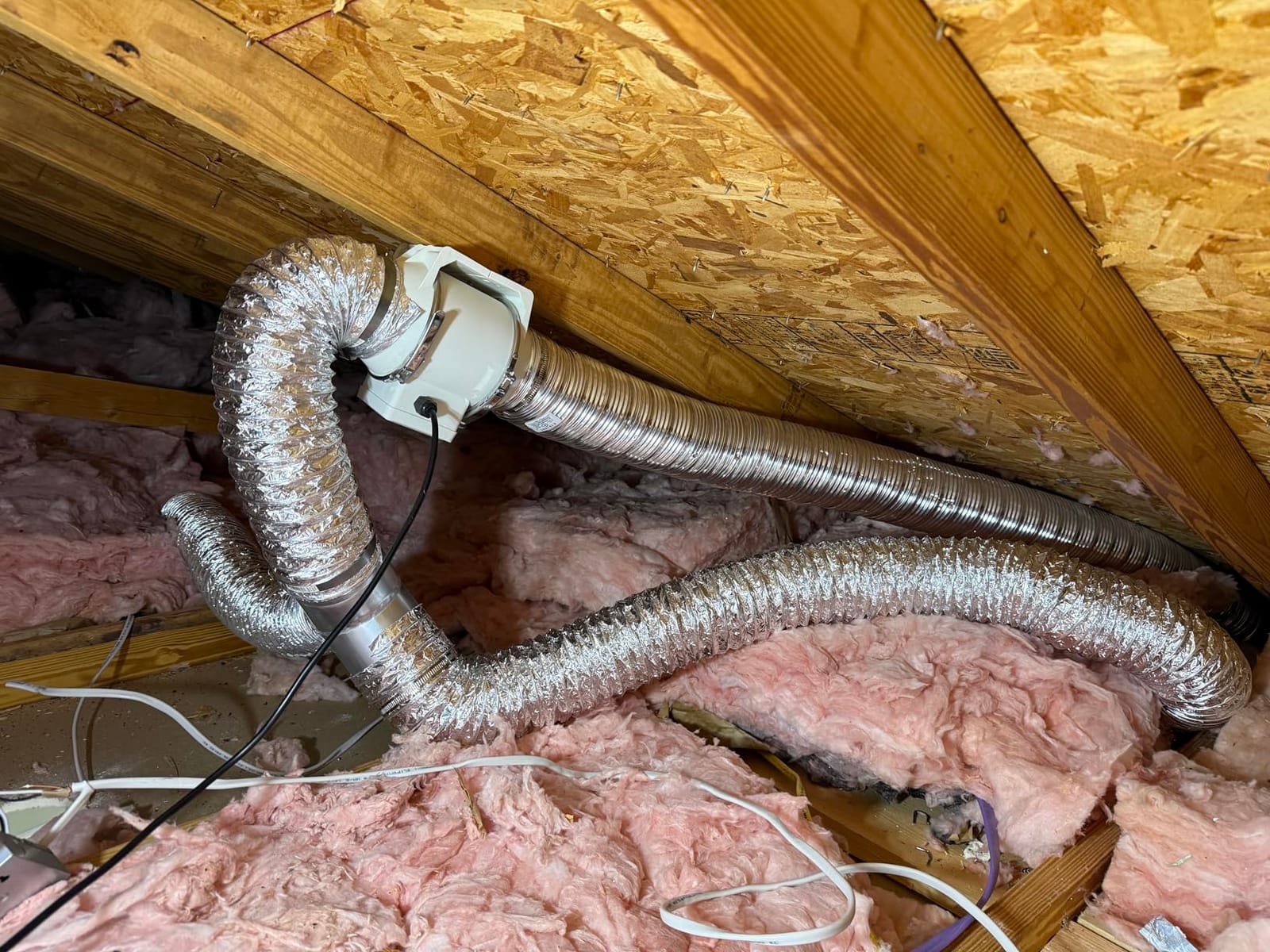
Who the Voltset 4 inch suits
It suits growers with more heat to move than a 195 CFM fan can handle in a 4 inch body, and who want a fast install. Two years of continuous-use reports are encouraging at this price.
It also suits anyone running sealed equipment such as a 3D printer enclosure, where extraction matters more than silence.
Who should pass on it
Pass if noise is part of your decision. The gap between the listing and what owners hear is too wide to ignore in a bedroom-adjacent setup, and it worsens with age.
Pass if you want real throttling. Two settings and an unreliable remote is not speed control, and budget for the sound rather than assuming it away.
9. VEVOR 6 Inch 400 CFM – Best 6 Inch for Medium Tents
VEVOR Inline Duct Fan, 6-Inch 400 CFM with Variable Speed Controller, Quiet AC-Motor Ventilation Exhaust Fan for Cooling Booster, Grow Tents, Hydroponics
400 CFM
34 dBA
60 watts
Variable knob speed controller
Pros
- 400 CFM from a 6 inch body suits medium tents
- Manual knob speed controller for stepwise selection
- Includes hang-up sling and four non-vibration rubber mats
- Also sold in 4 inch and 8 inch sizes
Cons
- Smallest review base here at 271 ratings
- 60 W AC motor draws more than the EC alternatives
Four hundred CFM from a 6 inch body is real headroom for a mid-size tent, and at a listed 34 dBA it delivers that without demanding a phone. If a 4×8 was outgrowing a 4 inch fan, this is the size step.
The box contents matter for tent work. The hang-up sling and four rubber mats let you suspend it from the frame rather than wall-mounting, cutting structure-borne vibration.
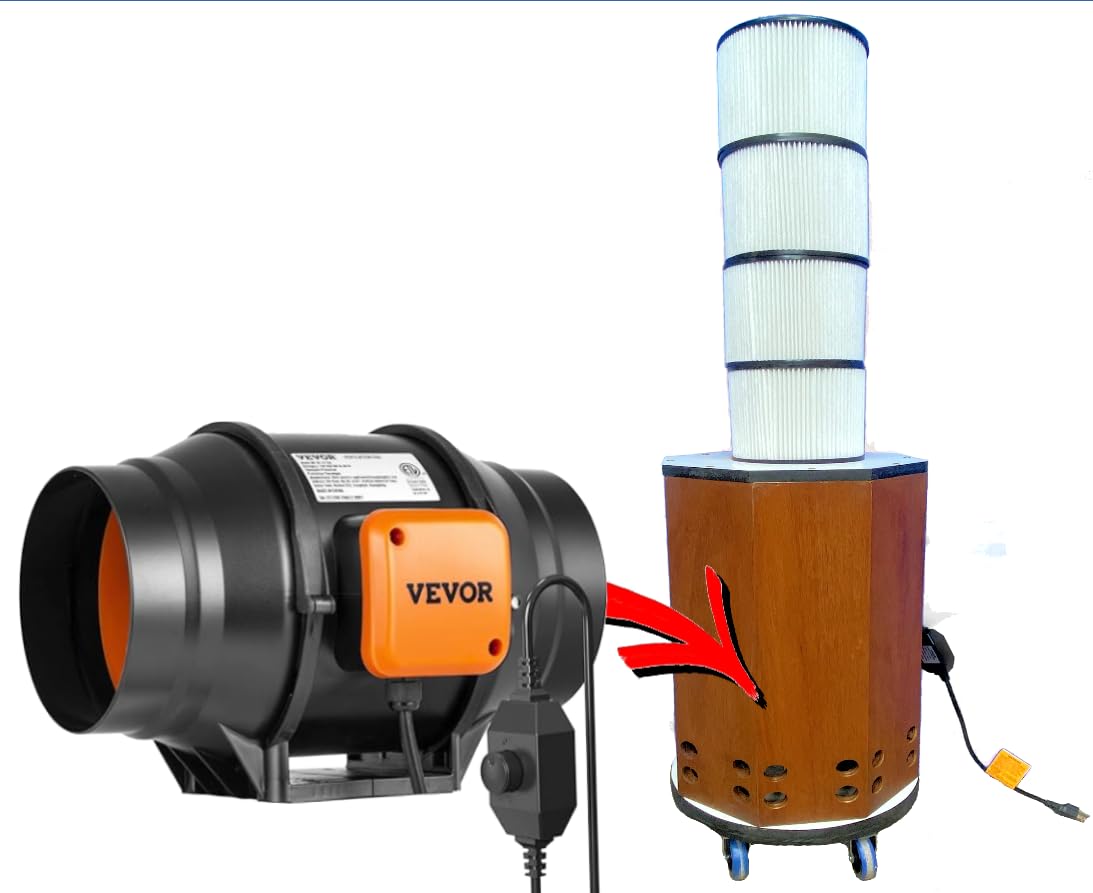
The caveat is evidence. With 271 ratings there is very little long-run durability history to lean on. The 4.4 rating is good, but it says less about three years from now than a 4.3 from 13,000 reviews does.
This is also an AC motor at 60 watts, while the quieter 4 inch model in the same line uses a 21 watt EC motor, so you are trading efficiency for size knowingly.
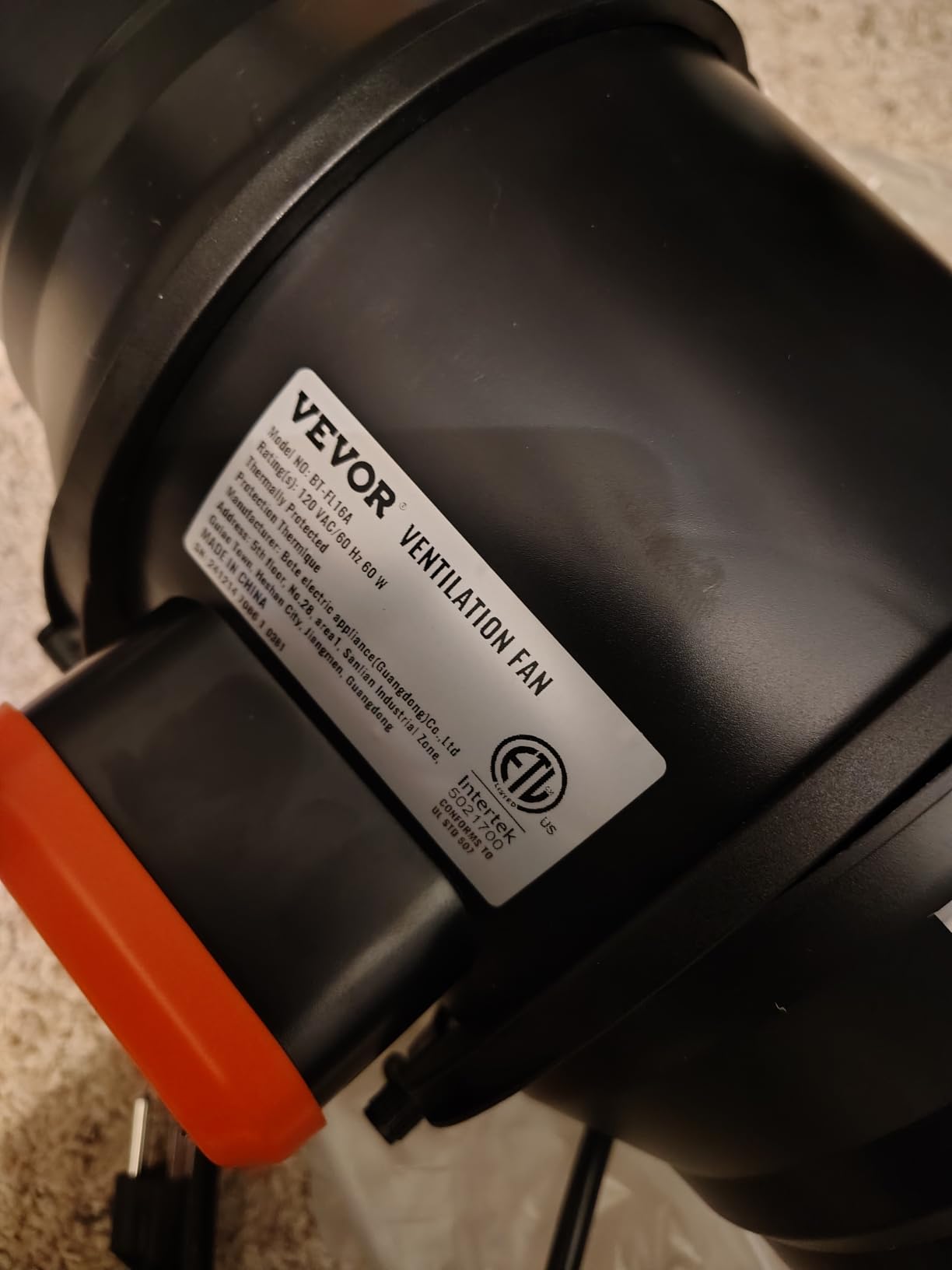
Who the VEVOR 6 inch suits
It suits growers in a 4×8 or 5×5 who need more airflow than a 4 inch delivers but not the noise and weight of an 8 inch. The manual knobs are simple and immediate.
It also suits two-fan setups at 6 inch, since the same line covers 4, 6 and 8 inch with consistent controls.
Who should pass on it
Pass if long-term reliability evidence is what you weigh most. There is very little of it yet, and ventilation is the one thing you do not want to discover the hard way.
Pass if consumption matters. At 60 watts it is a thirsty fan, and a smaller EC motor throttled back would cost less to run.
10. TerraBloom 8 Inch 735 CFM – Best for Large Tents and Grow Rooms
TerraBloom 8 Inch (200 mm) Inline Fan – 735 CFM Exhaust Duct Fan, Built-In Speed Controller, ETL Listed, Pre-Wired 6 FT Grounded Cord – For Use In Grow Tents With Carbon Filters, Fixtures, Attics
735 CFM
60 dBA
205 watts
ETL listed with built-in speed controller
Pros
- Highest airflow here at 735 CFM for medium to large tents
- Built-in speed controller with no extra wiring
- ETL listed with a pre-wired 6 foot grounded cord
- Bracket physically enforces correct airflow direction
Cons
- Loudest unit here at a listed 60 dBA and 205 watts
- Only two power levels and a heavy 7.7 pound body
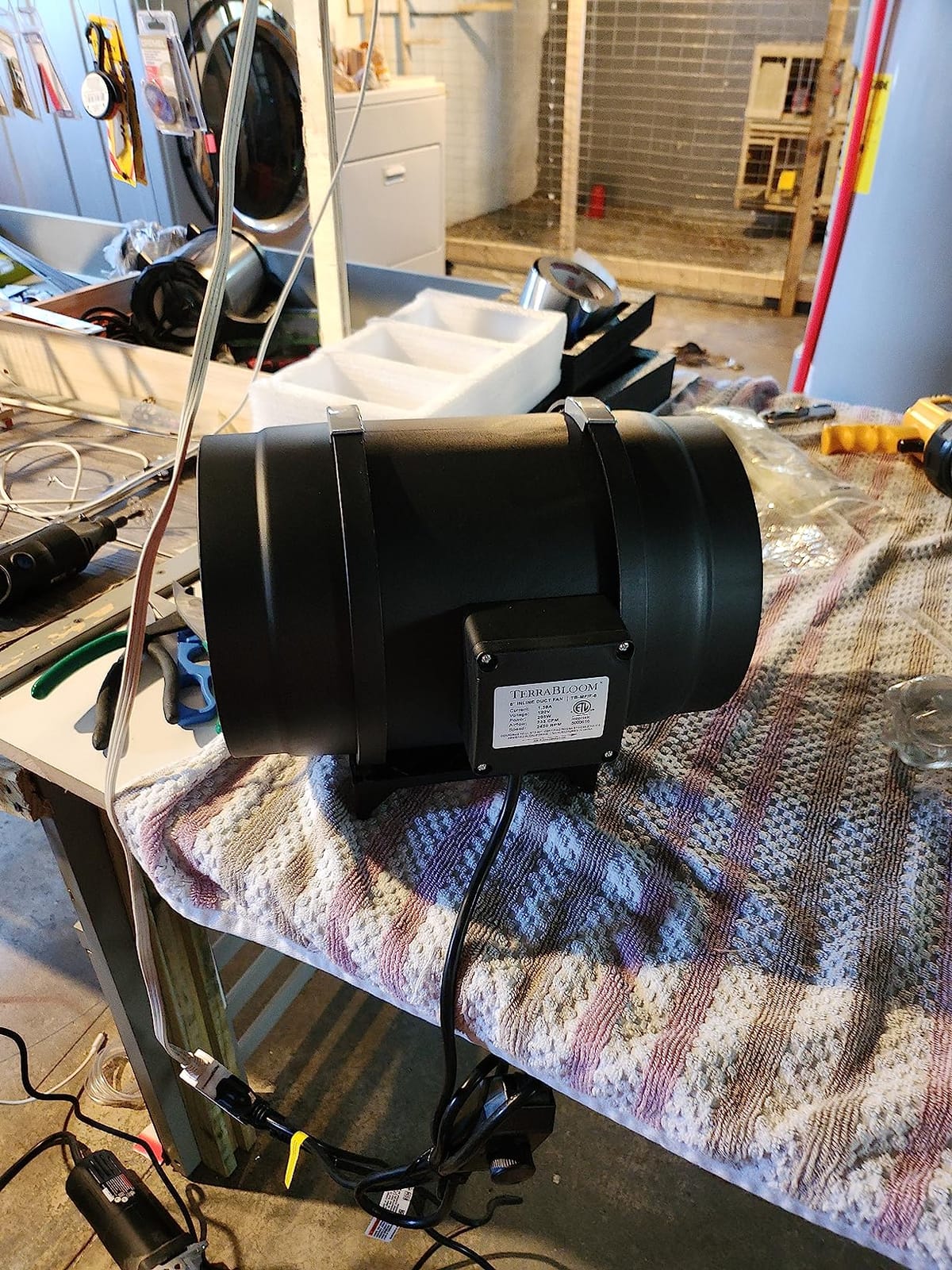
When one 4 or 6 inch fan will not hold temperature, the honest answer is usually more airflow. This 8 inch moves 735 CFM, and owners pairing it with carbon filters in larger setups say it is what keeps temperatures down.
The build details are the ones vendors skip. It is ETL listed, ships with a pre-wired 6 foot grounded cord, and the bracket has different front and back openings that enforce correct airflow direction.
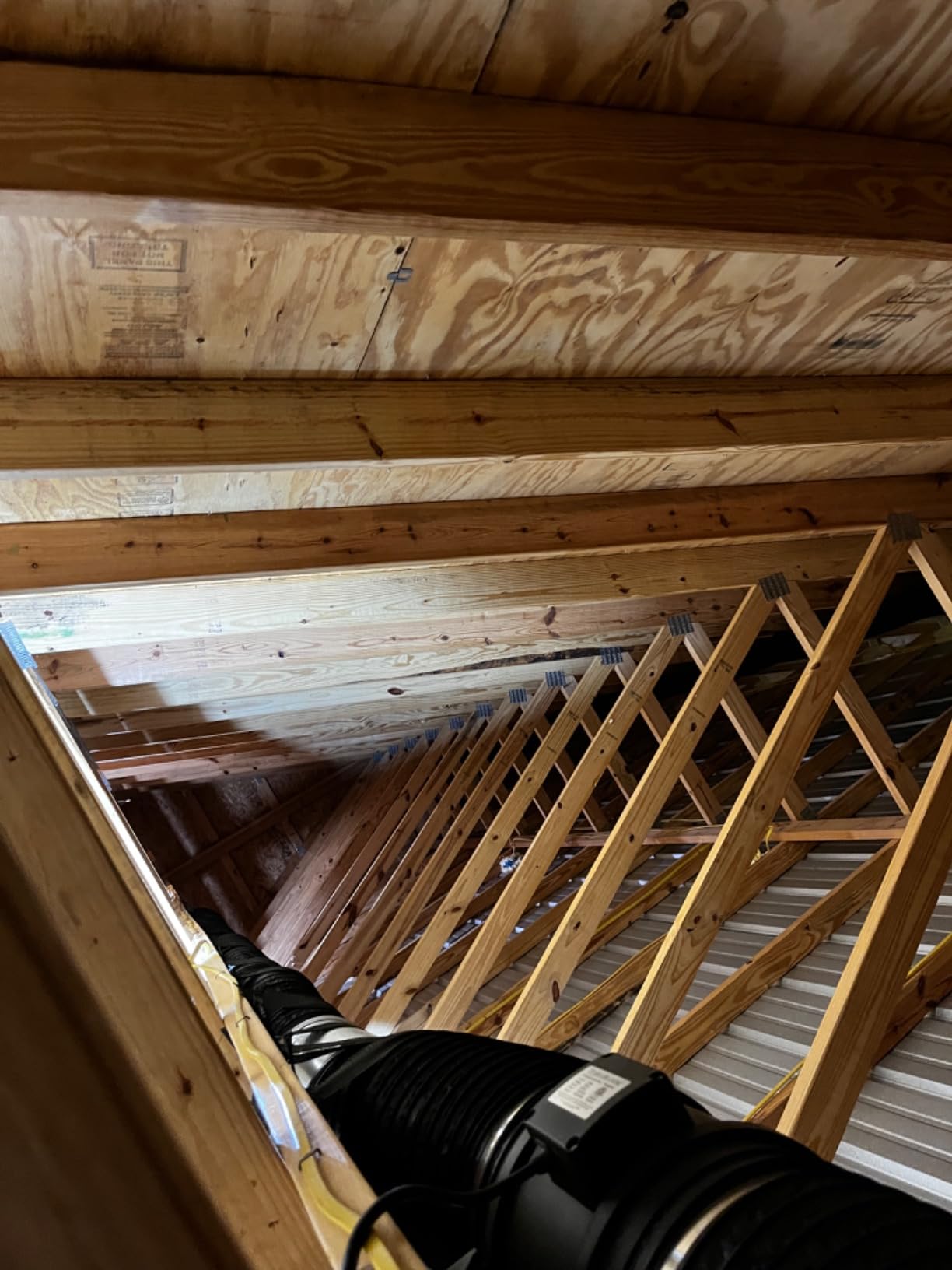
Now the trade. At a listed 60 dB and 205 watts it is the loudest and thirstiest unit here, and growers accept that without flinching. Only two power levels means no quiet middle ground.
At 7.7 pounds the housing is genuinely heavy for a tent frame. Inside a grow room where the air is already noisy, that is a reasonable deal.
Who the TerraBloom 8 inch suits
It suits a 4×8, 5×10 or converted room where heat rejection is the problem and a 6 inch is close but not enough. The 735 CFM figure is both the reason to buy and the reason it works.
It also suits anyone who wants a foolproof install, since the direction-marked bracket and pre-wired cord remove two common first-night mistakes.
Who should pass on it
Pass if the tent is anywhere near a bedroom. Sixty decibels with only two power levels leaves no quiet option, and the power draw is the highest here by a factor of three.
Pass if your space is a small tent. Forcing 735 CFM through a 2×4 or 4×4 creates pressure problems, noise and a needlessly hard-working fan.
What Size Inline Fan Do I Need? CFM Math Step by Step
Size your fan by calculating the air your tent needs, adding drag penalties for lights, filter and ducting, then adding 25 percent headroom so it is not running flat out. For a 4×4 tent at 6.5 feet that lands near 221 CFM, which points at a 6 inch fan or the largest 4 inch units.
Step 1: Calculate tent volume. Multiply width by length by height in feet. A 4×4 at 6.5 feet is 104 cubic feet, a 2×2 at 4 feet is 16, and a 5×5 at 6 feet is 150.
Step 2: Add drag penalties. Add 10 percent per grow light, 25 percent per carbon filter, 1 percent per foot of ducting, 30 percent per 90 degree bend, 15 percent per 45 degree bend and 10 percent if the surrounding room runs hot. For that 4×4 with one light, one filter, four feet of duct and one 90 degree bend, 104 multiplied by roughly 1.7 gives about 177 CFM.
Step 3: Add 25 percent headroom. 177 multiplied by 1.25 gives roughly 221 CFM. The headroom exists so the fan runs below maximum, which lowers noise and wear. A fan that must run flat out is one you hear for nine weeks straight.
Here is the short version for the sizes people ask about most:
2×2 tent at 4 feet: about 25 CFM. A box fan or small 4 inch unit is plenty.
2×4 tent at 5.9 feet: about 60 CFM. A 4 inch fan covers it, and a 130 CFM booster is genuinely enough.
4×4 tent at 6.5 feet: about 221 CFM. A 6 inch fan, or the largest 4 inch units here.
5×5 tent at 6 feet: about 260 CFM with drag included. A 6 inch fan, ideally throttled.
4×8 tent at 6.5 feet: about 440 CFM. One 6 inch 400 CFM fan, or dual 4 inch fans.
5×10 tent at 6.5 feet: about 550 CFM. Two 6 inch fans, or one 8 inch unit.
8×8 room at 8 feet: around 1350 CFM. Four 6 inch fans rather than one enormous unit.
The rule that falls out of this: under roughly 205 CFM you are in 4 inch territory, under roughly 400 CFM in 6 inch territory, and above that run multiple fans. Multiple smaller fans also give redundancy, which matters when one failure ends a cycle.
Exhaust vs Intake: Getting Negative Pressure Right
Yes, you want negative pressure, and you want the exhaust to be the stronger fan. A slightly negative tent draws air in through its own seams rather than pushing odour out through them, which is what keeps your room clean.
Forum consensus is consistent on the ratio: run the intake at roughly 60 to 70 percent of the exhaust CFM. Equal CFM on both sides gives zero net pressure, and too much intake creates strong negative pressure that sucks the walls inward and restricts airflow.
If you only want one fan, put it on the exhaust side. The intake then comes passively through the tent’s own portals, which is how growers on r/microgrowery run simple setups and it works fine.
Install sequence that works: mount the exhaust fan outside the tent, run the carbon filter in line behind it, add a short length of insulated flex duct, then add the intake at 60 to 70 percent on the opposite side. If the tent is fully sealed, duct your intake from outside the room rather than recycling air you already cleaned. A sealed closet rather than a fabric tent is the same airflow problem in hard walls, and the hardshell rooftop tent guide covers that kind of rigid shelter if you are building one.
Carbon Filters: Do You Need One, and When?
Carbon filters do work, but experienced growers run them on a schedule rather than the whole cycle. The common pattern is a plain inline exhaust through vegetative growth, then the filter for drying and trimming when odour output peaks.
Running it continuously is reasonable in a shared house or rented property. Just budget for it: filters saturate, and a 4 inch filter in continuous use has been reported holding for around six months before smell breaks through. Set a reminder at five months rather than waiting for the failure.
On combo kits versus separate purchases, kits guarantee the filter diameter matches the fan and avoid the mismatch you hit when a housing is slightly narrower than standard duct. Separate purchases cost less and let you choose filter quality independently, and for odour control a modest fan with a serious carbon filter beats the reverse.
One maintenance note gets missed. Owners recommend cleaning the impeller after the first week with a filter connected, because filter media sheds dust into the airstream and it settles on the blades. A fan that sounds like something is stuck in it usually has something stuck in it.
Quieting a Noisy Tent: The Acoustic Ladder
If your fan is too loud, work down this list in order. Each step costs less than the next, and the first three solve most grow tent noise problems.
Step 1: Throttle the fan. Running at 60 percent instead of 100 percent cuts noise far more than growers expect, and it is free. If your fan has no speed control, that is the argument for replacing it.
Step 2: Add an inline duct silencer. Fitted in the run straight after the fan, a silencer absorbs turbulence in the airstream. Experienced growers treat it as the first acoustic accessory to buy, and it works best in a straight run.
Step 3: Switch to insulated flex duct. Standard aluminium flex duct radiates sound along its whole length. Insulated or double-wall duct cuts that and keeps the air cooler, which helps in summer.
Step 4: Damp the mounting. A fan bolted rigidly to a frame transmits vibration into the structure and becomes far louder than its dBA figure. Suspending it on rubber costs nothing and fixes a real problem, which is why the VEVOR models ship with slings and mats.
Step 5: Move the fan outside the tent. This is the biggest single improvement. Once the motor is outside, the only noise path left is the duct, and steps two and three handle it.
Watch for the opposite problem too. Growers report an 8 inch 600 CFM fan paired with an 8 inch filter reaching something like 35 air changes per hour, which is massively overbuilt and adds noise for no benefit.
What a Small Tent Does Not Need
If you run a 2×2, stop reading and save your money. Growers on r/microgrowery make this argument constantly and they are right: a small box blower fan and a modest carbon filter through the tent’s own duct port ventilates a tent that size perfectly well.
Premium inline fans exist for control and quiet, not because small tents need more power. A fan you cannot throttle is loud at 3am, and a fan you cannot automate is one more thing to check on. Neither problem exists in sixteen cubic feet.
Sanity-check the size before buying too. Growers report spending on an 8 inch fan for a 2×4 and ending up with excess noise, unnecessary negative pressure and no airflow benefit. For a different kind of enclosed space, our guide to large camping tents covers portable shelters rather than ventilation hardware, and our picks for rooftop tents cover the lighter shelter end of the same category.
Frequently Asked Questions
What size inline fan do I need for my grow tent?
Size by volume, drag penalties and headroom. A 2×2 needs roughly 25 CFM, a 2×4 about 60 CFM, and a 4×4 with one light and a carbon filter lands near 221 CFM. Under about 205 CFM use a 4 inch fan, under about 400 CFM use a 6 inch fan.
How many CFM do I need for a 4×4 grow tent?
A 4×4 tent at 6.5 feet is 104 cubic feet. Add about 10 percent for each grow light, 25 percent for a carbon filter, 1 percent per foot of ducting and 30 percent for each 90 degree bend, then add 25 percent headroom. That lands at roughly 221 CFM.
Should I use an intake fan or an exhaust fan in my grow tent?
Use an exhaust fan and treat intake as optional. The exhaust removes heat, humidity and odour. If you add an intake fan, run it at roughly 60 to 70 percent of the exhaust CFM so the tent sits at slight negative pressure and draws air through its own seams.
What is the quietest inline fan for a grow tent?
The EC motor models here are the quietest: the AC Infinity CLOUDLINE T4 and the VEVOR 4 inch at a listed 28 dBA, and the Hon and Guan 4 inch at 26 dBA. The real gain comes from throttling to the lowest speed that holds your temperature setpoint.
Do carbon filters really work in grow tents?
Yes, but they saturate. Many growers run a plain inline exhaust through vegetative growth and add the carbon filter for drying and trimming, when odour output peaks. Expect around six months of continuous use from a 4 inch filter before smell breaks through.
The Verdict on the Best Inline Fans for Grow Tents in 2026
The AC Infinity CLOUDLINE T4 is our pick of the best inline fans for grow tents in 2026. At 4.7 across 7,667 reviews, 205 CFM at a listed 28 dBA, a 21 watt draw and app-driven scheduling, it solves noise, automation and running cost in one box.
Below it, the AC Infinity RAXIAL S6 wins if you want metal durability and a physical dial in a 6 inch body, and the VIVOSUN D4 wins on value for a 4×4 or smaller if you can live without throttling.
Run the numbers first, skip the premium fan on a 2×2, and put a reminder on your filter replacement before the smell tells you.