
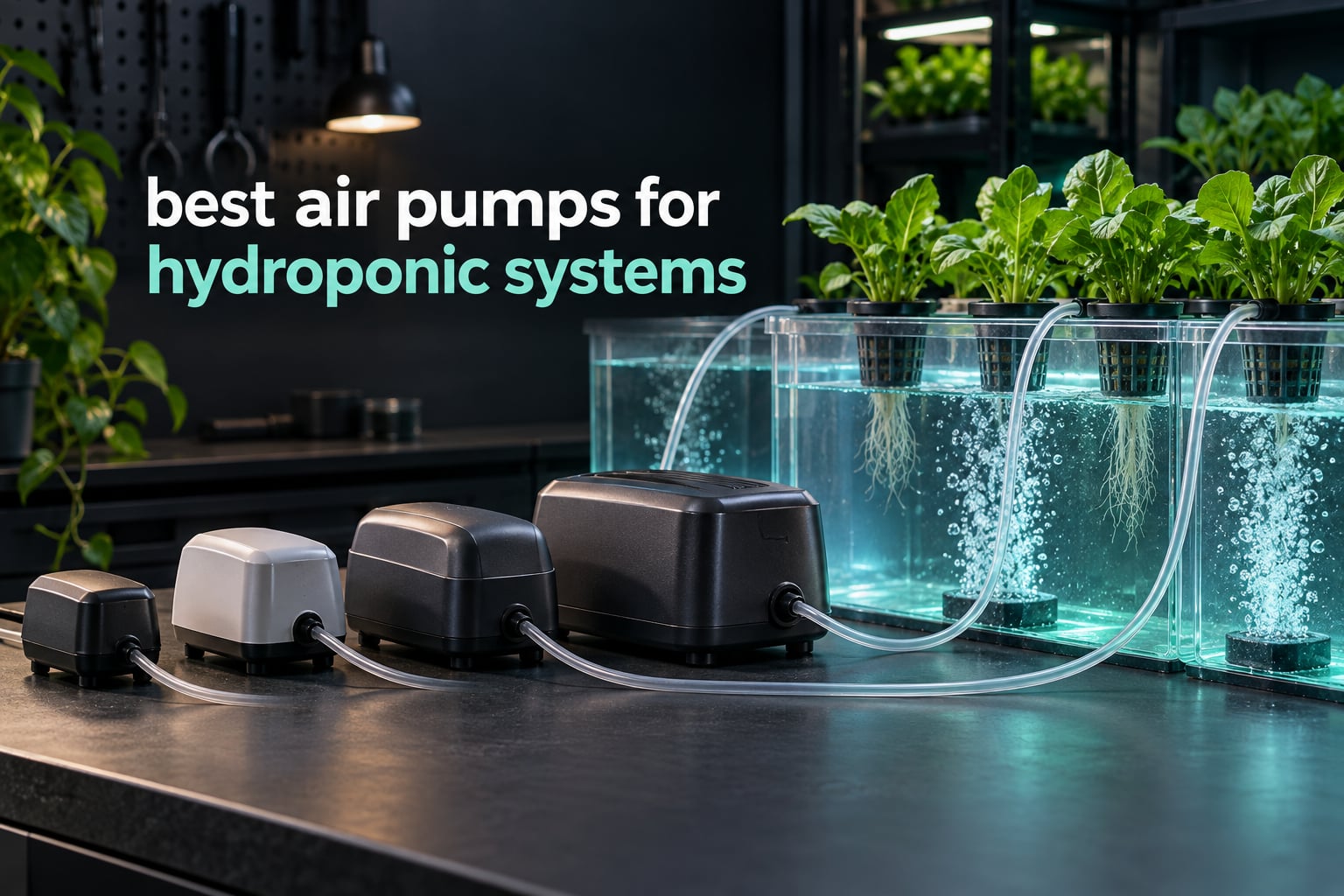
Roots sitting in still nutrient solution run out of dissolved oxygen faster than most new growers expect. Within a few hours of a pump cutting out, the root tips go soft, the water takes on a stagnant smell, and a system that looked healthy on Monday starts losing leaves by the weekend. The air pump is the small box that prevents all of that.
Our short answer: the EcoPlus ECOair 1 is the best air pump for hydroponic systems overall, the Simple Deluxe 6-outlet pump is the best value for multi-reservoir setups, and the Hydrofarm Active Aqua 4-Outlet is the best pick for smaller deep water culture systems where noise and power draw matter most. For aquaponics, the aluminum-bodied AquaMiracle gives you the headroom most fish tanks need.
We spent weeks running these ten pumps against deep water culture buckets, a four-bucket RDWC loop and a small aquaponics tank, and we cross-checked every spec against thousands of buyer reviews. Every product below is one we would be comfortable leaving running overnight. We earn a commission if you buy through our links, and it does not change which pump we recommend.
Table of Contents
Top 3 Air Pump Picks for Hydroponics in October 2026

The 10 Best Air Pumps for Hydroponic Systems in October 2026
Before the individual reviews, here is the short list of every pump that made the cut and the job it does best.
EcoPlus ECOair 1 – best overall, heavy multi-bucket or farm-scale aeration
Simple Deluxe 6-Outlet – best value for splitting airflow across many buckets
Active Aqua 4-Outlet 6W – best for a single bucket or a small cloning setup
INCLY 7W Ultra Silent – best when the system sits in a living space
AQUANEAT 300 GPH kit – best all-in-one starter kit for a first system
SunSun YT-304 – best for a small reservoir on a tight budget
AquaMiracle 600 GPH – best for aquaponics and larger fish tanks
HITOP 10W 320 GPH – best when air stones sit deep in the reservoir
Active Aqua Commercial 6-Outlet – best raw airflow for multi-bucket RDWC
VIVOSUN 1110 GPH – best when one pump has to feed many lines
| Product | Specifications | Action |
|---|---|---|
| EcoPlus ECOair 1 Air Pump |
|
Check Latest Price |
| Simple Deluxe 6 Outlet Pump |
|
Check Latest Price |
 Active Aqua 4 Outlet 6W Active Aqua 4 Outlet 6W |
|
Check Latest Price |
 INCLY 7W Ultra Silent INCLY 7W Ultra Silent |
|
Check Latest Price |
 AQUANEAT 300 GPH Kit AQUANEAT 300 GPH Kit |
|
Check Latest Price |
 SunSun YT-304 8.5W SunSun YT-304 8.5W |
|
Check Latest Price |
 AquaMiracle 600 GPH AquaMiracle 600 GPH |
|
Check Latest Price |
 HITOP 10W 320 GPH HITOP 10W 320 GPH |
|
Check Latest Price |
 Active Aqua Commercial 6 Outlet Active Aqua Commercial 6 Outlet |
|
Check Latest Price |
 VIVOSUN 1110 GPH VIVOSUN 1110 GPH |
|
Check Latest Price |
1. EcoPlus ECOair 1 – Best Overall Air Pump for Hydroponic Systems
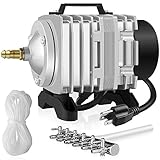
EcoPlus ECOair 1 Commercial Grade Air Pump 793 GPH – 18 Watt Single Outlet with 6 Valve Manifold
793 GPH
18 watt aluminum pump
6 valve manifold
1 year warranty
Pros
- Handles 6 separate lines from one unit
- Aluminum housing runs cool under 24/7 duty
- Rated to 290 psi so backpressure is not a problem
- Both 1/4 and 3/8 inch nozzle fittings included
Cons
- Heavier and larger than plastic diaphragm pumps
- Six valve manifold is the only way to split output
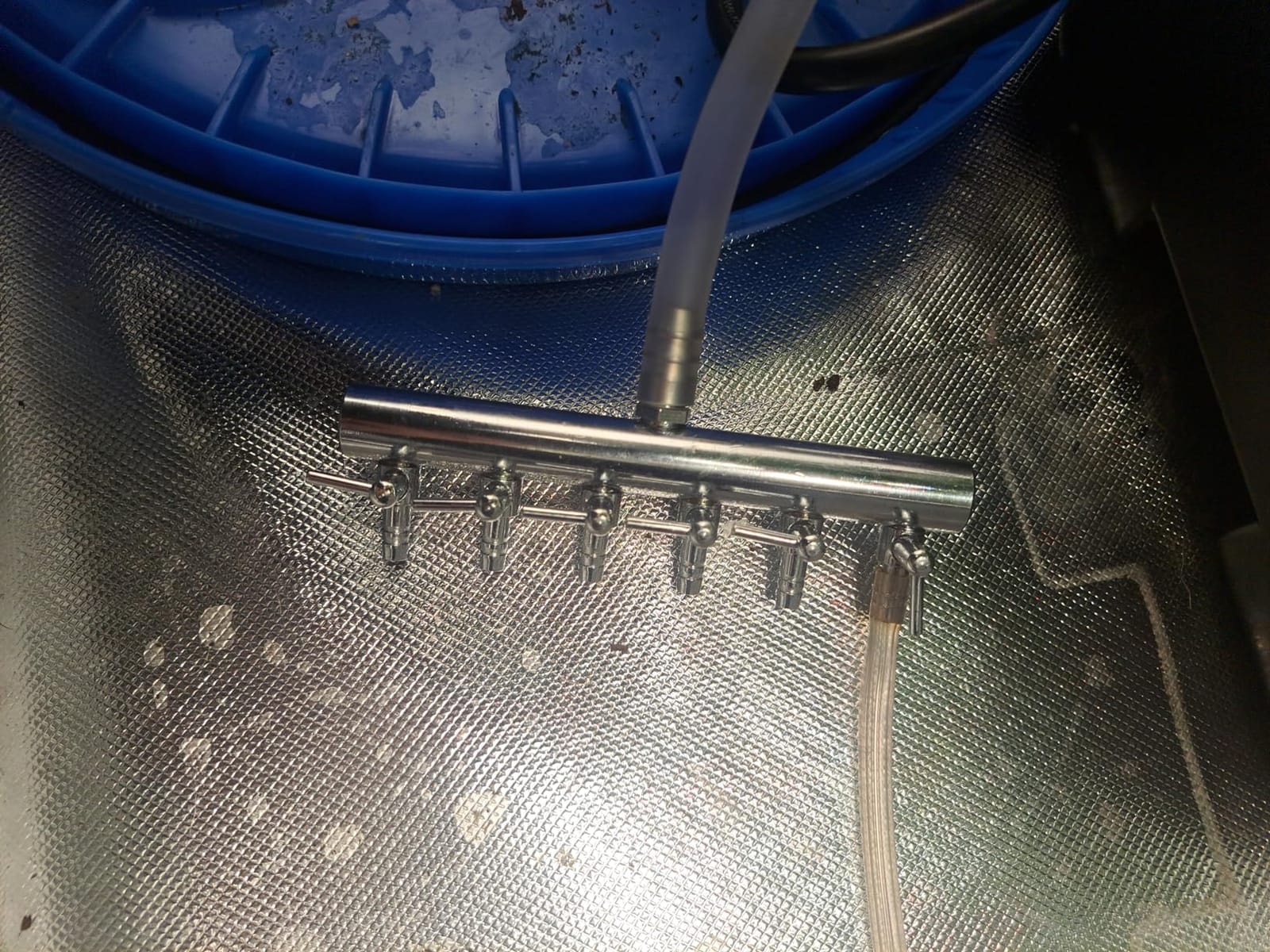
The ECOair 1 is the pump we keep coming back to when a system stops being hobby scale. It moves 793 GPH of air through a single outlet, and the chrome manifold on the front lets you dial six independent lines up or down independently. That is the part that matters for a multi-bucket RDWC rig, because each bucket gets exactly the bubble rate it needs rather than a compromise.
One pump feeding six sites beats six smaller pumps on every practical measure here. Fewer power cords to trip over, one warranty to track, one failure point instead of six, and a single wattage figure for your whole electrical budget.
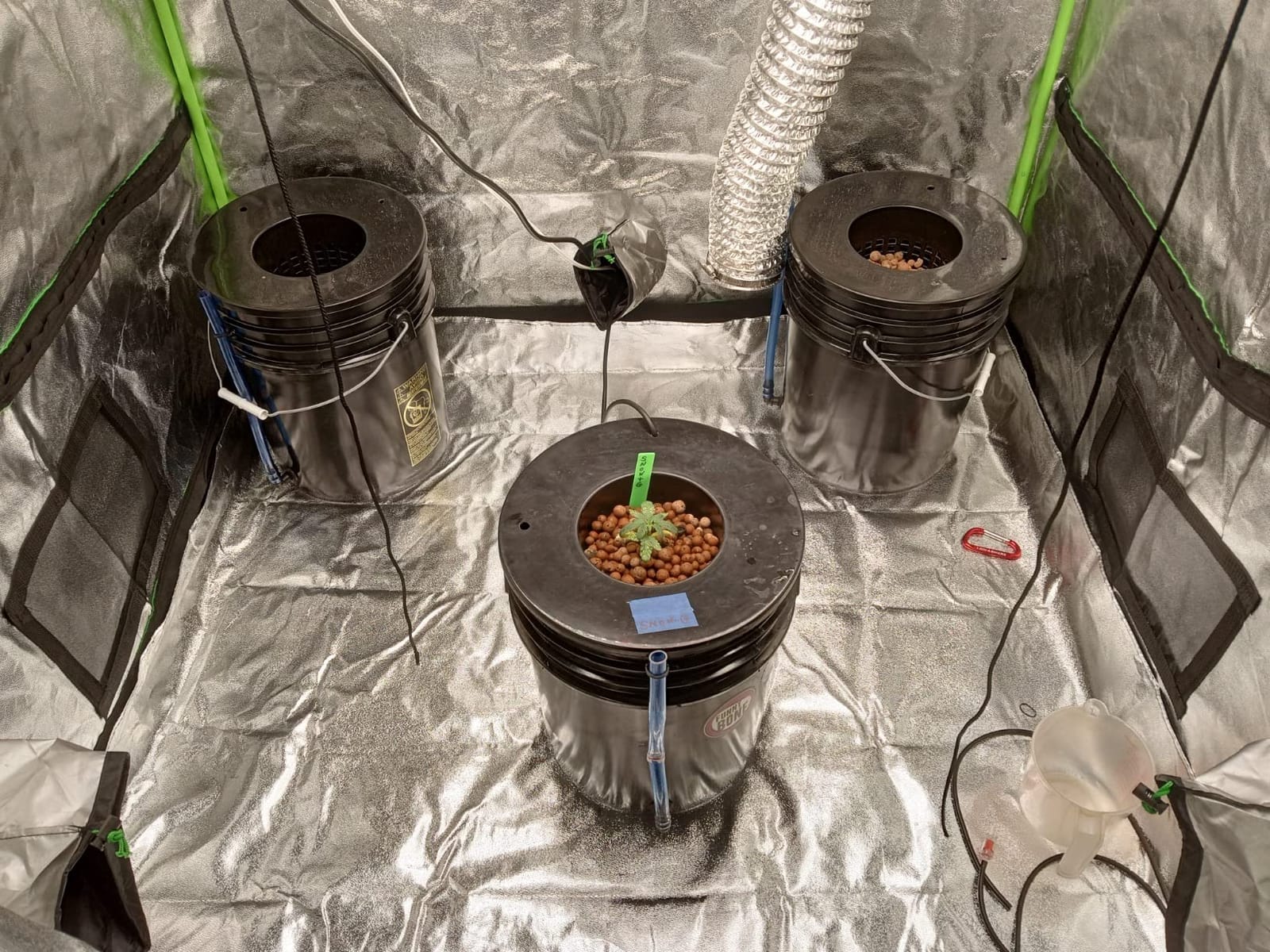
The build is what separates it from the plastic crowd. The housing is aluminum, the cylinders and pistons are made from premium materials, and the 290 psi maximum pressure rating means a deep air stone or a long airline run barely registers as a load. Units rated near 20 kPa will noticeably sag once a stone sits at the bottom of a tall bucket; this one does not have that problem in the same way.
It is not a small pump. At roughly 2.5 pounds and about 6.8 by 5.9 by 5.7 inches, it needs a real shelf, and the noise floor is a low hum rather than a silence. Neither issue matters if your reservoir is in a closet, a garage or a greenhouse bench.
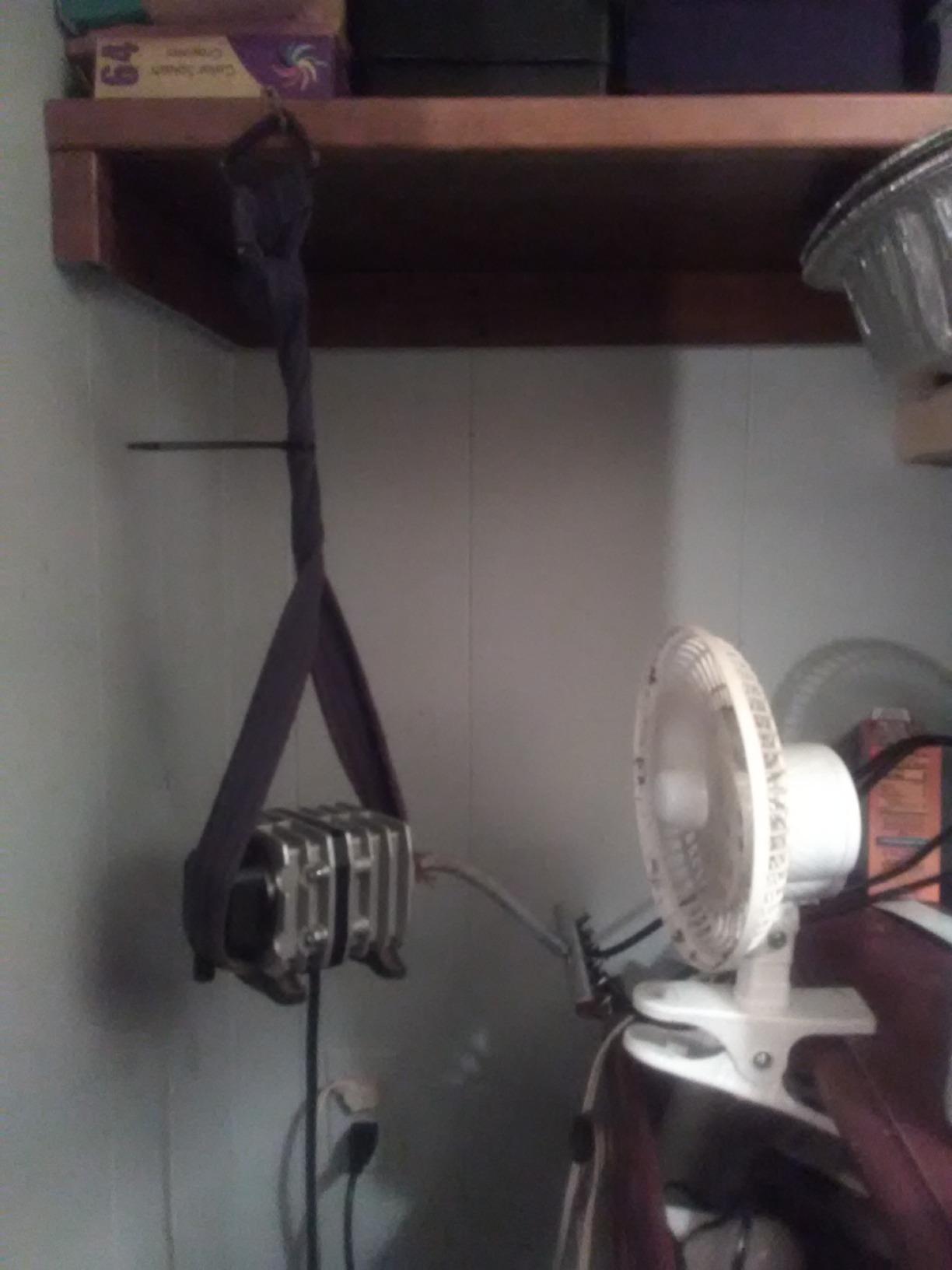
Check the manifold valves before you buy
The six valves on the manifold are flow restrictors you tune once and then leave alone. If you later need more air to a single site, the ECOair 1 cannot give it: there is one main outlet, so the manifold is the only path to more lines, not a bypass around a bottleneck.
Owners running it in aquariums and fish farms mostly treat it as a set-and-forget unit with occasional flow adjustment. For hydroponics the same behaviour applies, and the 1 year manufacturer warranty covers the first year of that.
Skip it if you are running a single small bucket
One 5 gallon bucket does not need 793 GPH. You would be paying for headroom you cannot use and sitting next to a pump that is larger than the reservoir it serves. The Active Aqua 4-Outlet covers that case more honestly.
It is also a single-outlet design, so anyone planning a dozen or more lines should look at the Active Aqua Commercial unit or the VIVOSUN, both of which split air internally.
2. Simple Deluxe 6-Outlet – Best Value Multi-Outlet Pump
Simple Deluxe 602GPH Air Pump 38L/min with 6 Adjustable Air Flow Outlets for Aquarium, Fish Tank and Hydroponic Systems, 18W, New
602 GPH, 38 L/min
18 watt
6 adjustable outlets
25 ft tubing
Pros
- Six individually adjustable outlets
- 25 feet of airline tubing in the box
- Oil free design keeps delivered air clean
- Rubber anti vibration base cuts transmitted hum
Cons
- Runs louder than small diaphragm pumps
- 6 month warranty is shorter than most rivals
This is the pump we recommend to anyone building a multi-bucket system on a sensible spend. It moves 38 liters per minute, which is 602 GPH, across six individually adjustable outlets, and the box already contains 25 feet of quarter inch transparent airline tubing. For a four-bucket RDWC loop that is everything you need on day one.
The airflow figure alone is not the reason to buy it. The reason is that the six outlets each have their own flow control, so a lettuce bucket and a tomato bucket can sit on the same pump without fighting each other for air.
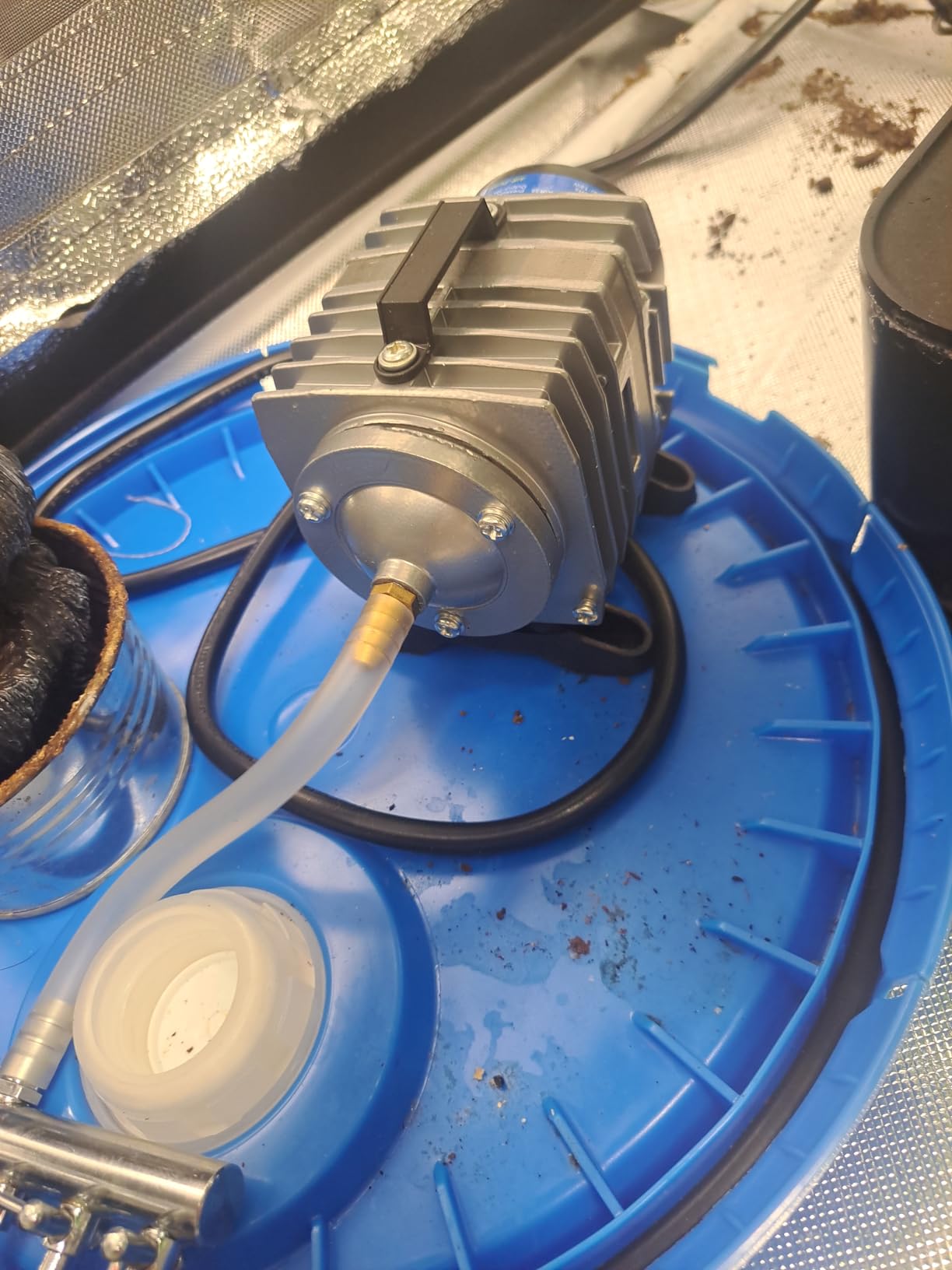
Construction is a step above typical plastic in this bracket. The housing is ZL 102 aluminum alloy with phosphating and electrostatic coating, which is why it stays cool during the long daily run. The compression is lubricant free, so nothing from the motor ends up in the airstream feeding your roots.
Noise is the trade. Reviewers consistently name it as the main criticism, and a rubber anti-vibration base helps with the rattle but does not make it a quiet box. Placement matters more than brand here, so plan a spot on a solid surface away from thin cabinet panels.
Count outlets against your lines, not your buckets
Six outlets sounds like a lot until you remember each line still needs a stone, a check valve and enough airline to reach the reservoir floor. Budget for tubing and fittings separately on this pump; the 25 feet included covers roughly four to five runs depending on your layout.
The manifold valves give you coarse to moderate control, so it suits steady-state aeration. If you want to dial an individual bucket down to almost nothing while keeping the rest running, the coarser control here takes a little practice.
Watch the warranty and the room noise
The 6 month warranty is the shortest on this list, and that is a real consideration for a pump meant to run continuously. It is a straightforward electrical unit, but the shorter coverage tells you how the manufacturer weighs durability risk.
If the system will run inside the house, pick something quieter. If it lives in a grow closet, basement or outdoor run, the extra output per watt is the better trade.
3. Hydrofarm Active Aqua 4-Outlet 6W – Best for a Single Bucket or Cloning Setup
Active Aqua AAPA15L Air Pump, 4 Outlets, 6W, Silver
240 GPH, 15 L/min
6 watt draw
4 outlets
45 dB max
Pros
- Quietest rated design in this roundup
- 0.08 amp draw makes 24/7 running almost free
- Four outlets feed several stones at once
- Pressure dial lets you tune output
Cons
- 15 L/min caps it at modest reservoir volumes
- 6 watt motor cannot push stones far below the surface
The Active Aqua 4-Outlet is the one we recommend more often than any other, and the reason is the 4.5 star rating across more than 2,700 reviews. It is not the most powerful pump here. It is the one people keep, stop thinking about, and run for years.
At 6 watts and 0.08 amps it draws almost nothing. A single bucket running 24 hours a day uses a trivial amount of power, and the multi-level muffler keeps it at a maximum of 45 decibels, which is the figure we consider the practical noise limit for a pump living near people.
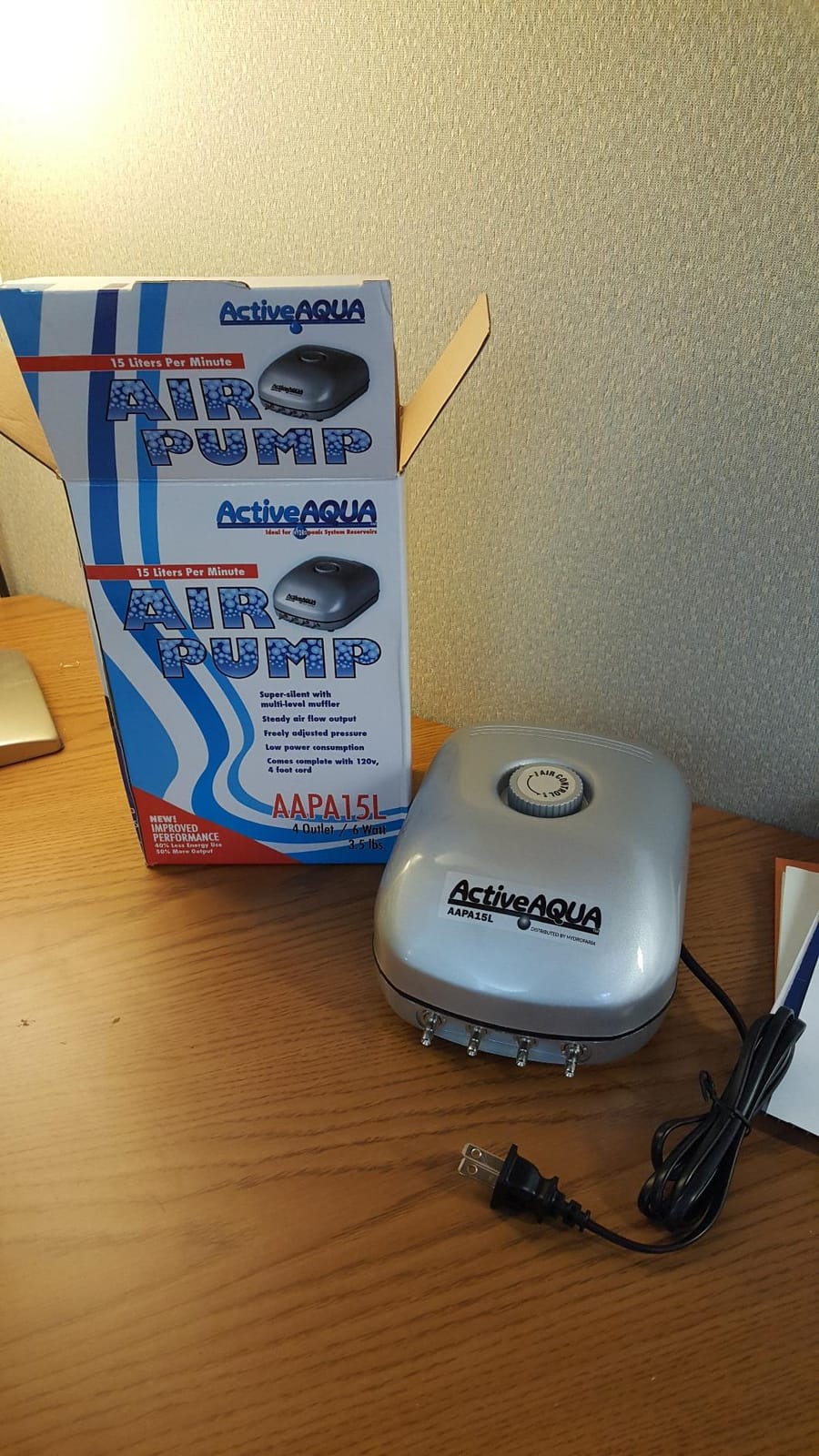
The synthetic rubber diaphragm is what gives it the reputation for steady output. Airflow stays consistent rather than pulsing, and the pressure dial on the housing lets you trim the whole system at once instead of choking individual lines. Four outlets cover a bucket, a reservoir and a couple of small tanks from a single plug point.
It is also a narrow vertical unit, about 6 by 4.1 by 9.4 inches, so it fits a shelf where a horizontal pump would overhang. The 4 foot cord is on the short side, so you may want an extension lead to reach the nearest outlet.
Match it to reservoir volume, not bucket count
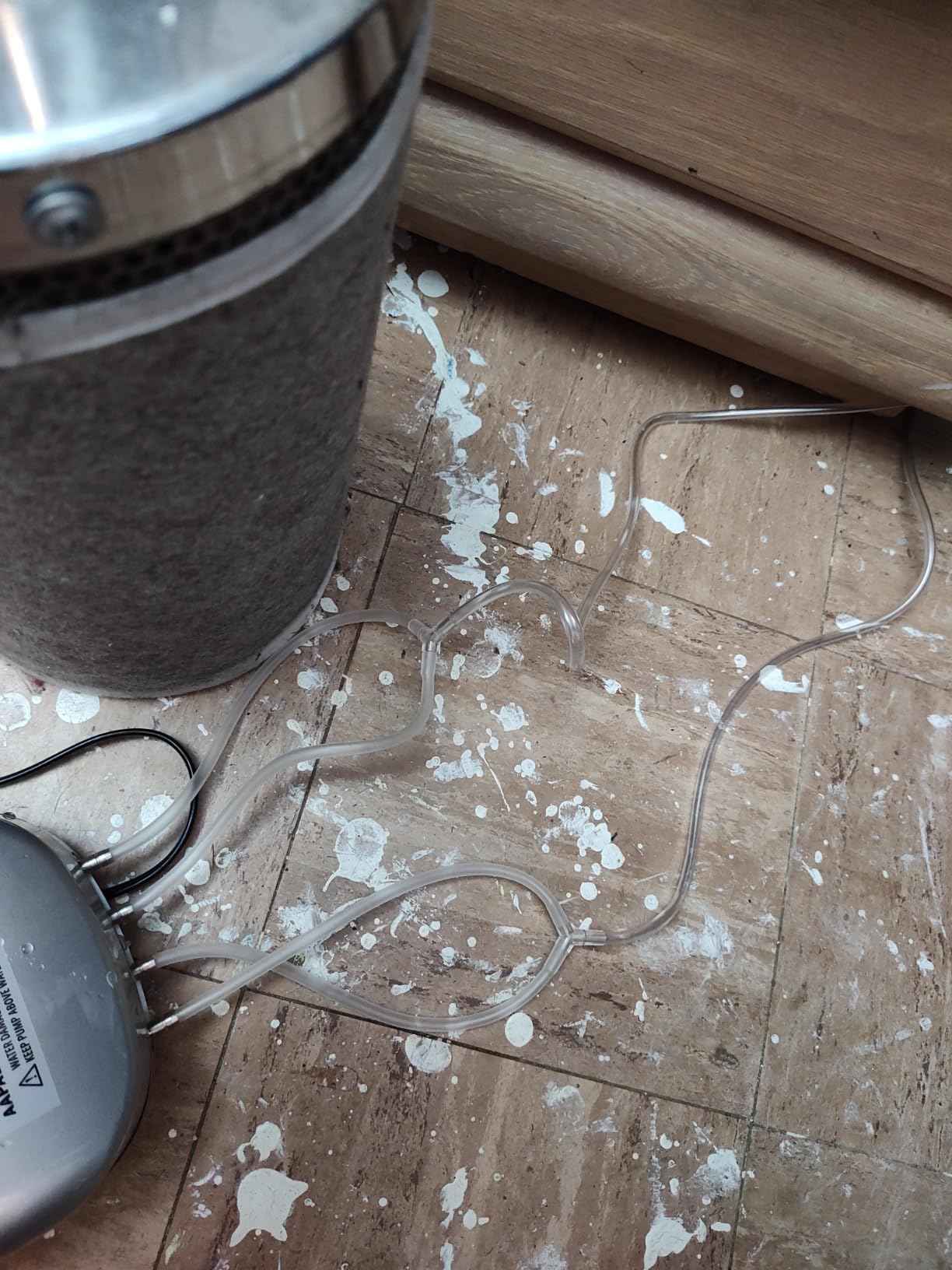
At 15 liters per minute, or 240 GPH, this pump comfortably serves one 5 gallon deep water culture bucket. Push it toward two or three buckets and the air stones start fighting each other, and the solution loses the agitation that keeps roots clean.
It is also weak on pressure. If your air stone sits at the bottom of a tall bucket, more than about a foot or two down, a 6 watt motor will not push a strong bubble curtain to the surface. Keep the stone shallow and this pump is excellent.
Skip it for a large RDWC loop
The single most common complaint in the reviews is wanting more pressure or more airflow than the 6 watt motor delivers. That is a sizing mismatch, not a defect, and it is the wrong pump for anything beyond a modest reservoir.
If your system needs five or six buckets, step up to the Active Aqua Commercial 6-Outlet or the ECOair 1 rather than running this one at its limit.
4. INCLY 7W Ultra Silent – Best Pump for Systems in a Living Space
INCLY 7W Ultra Silent Aquarium Air Pump – 245 Gallon/Hr, 4 Adjustable Outlets – Commercial & Hydroponics Oxygen Bubbler for Fish Tank & Pond
245 GPH, 16 L/min
7 watt
hi/low switch
4 outlets
Pros
- Hi/low switch drops output to near silence
- Strong airflow for a 7 watt draw
- Four outlets with individual control
- Efficient electromagnetic design
Cons
- Pressure fades and noise rises after two to three years
- Limited pressure starves stones past about 2.5 feet
- Coarse on/off valves rather than fine throttling
The INCLY is the answer to the question that comes up most often in grow forums: is there an air pump quiet enough to live with? Its answer is a hi/low speed switch. On low it drops to a whisper, which is exactly what you want overnight, and on high it still moves 245 GPH across four outlets.
That switch is a genuine feature rather than a gimmick. A bedroom closet setup can run on low through the night and full during the day, without anyone changing a dial on the manifold.
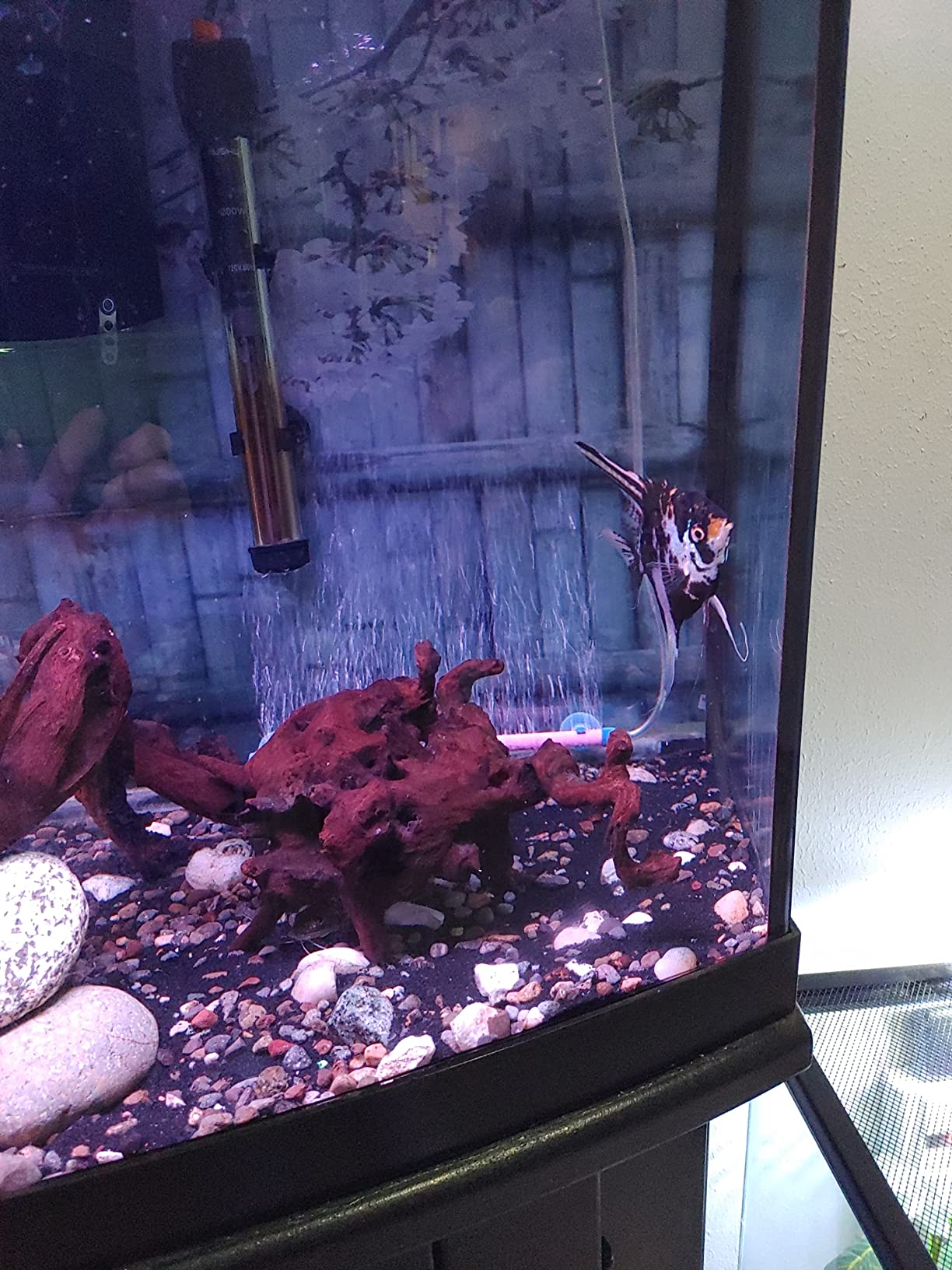
Reviewers commonly describe buying it to replace a louder pump, and several run double sponge filters on a single unit. The electromagnetic design minimises friction between moving parts, so it consumes less power than most pumps in this bracket while still delivering a steady stream.
Durability is the honest weak point. Multiple owners report noticeable pressure drop and rising noise after roughly two to three years of daily use, and a few report units failing sooner. Plan on treating it as a replaceable component rather than a ten-year investment.
Check the depth of your air stone
The 0.025 mpa pressure rating is the practical limit here. Air stones deeper than roughly 2.5 feet start to starve, and the workaround is a shallower stone or a longer airline rather than more pump.
Always keep the pump itself above water level, as the manufacturer instructs. On a humid shelf a small drip tray under the outlet is cheap insurance.
Know what you are trading for the quiet
You give up some pressure and some outlet fine-tuning compared with the larger pumps on this list. The manifold valves are effectively on and off, so this suits setups where each line needs the same treatment, not ones where you want to throttle a single bucket down.
If your system is in a closet, buy the more powerful pump and deal with the noise by placement. If it is two metres from a bed, the quiet version wins.
5. AQUANEAT 300 GPH Kit – Best Starter Kit for a First Hydroponic System
AQUANEAT Aquarium Air Pump 300GPH, for up to 200 Gallon Fish Tank, Powerful Hydroponic Aerator Pump with Tubing, Air Stones, Valves
300 GPH
8.5 watt
4 outlets
17 piece kit
Pros
- Everything needed is in the box
- 300 GPH suits tanks up to roughly 200 gallons
- Control knob plus per line valves make tuning easy
- Rubber feet damp vibration
Cons
- Lightweight plastic housing transmits more vibration
- Modest pressure relative to the 300 GPH figure
Nothing exposes the value of a kit pump like your first build. The AQUANEAT box contains the pump, 16 feet of airline, four air stones, four check valves, four control valves, four suction cups and four T-connectors. That is the entire air side of a working system, and it means no guessing what else you need.
At 300 GPH total with four outlets, it covers anything from a single bucket up to a small multi-reservoir setup. For a first deep water culture system that is more than adequate.
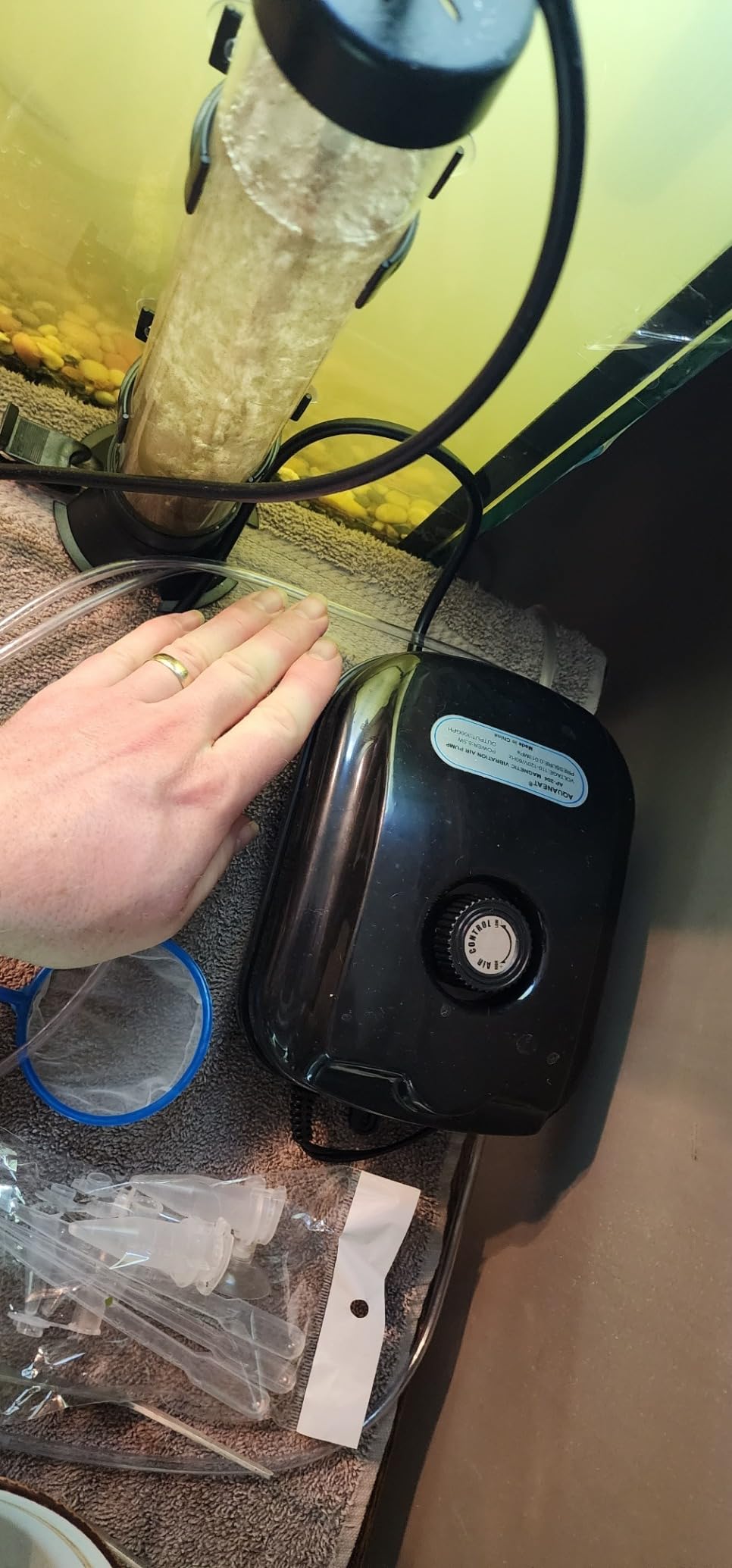
Flow control is straightforward: one knob on the pump sets the overall output, and the individual control valves trim each line. The rubber stabilizer feet do a reasonable job of keeping vibration down for the construction, which matters more than it sounds when the pump sits on the same board as the reservoir.
The 4.3 rating carries a note. Around 7 percent of reviews are one star, and the criticism clusters on pressure being more modest than the 300 GPH headline suggests, plus plastic construction feeling less durable than an aluminum-cased pump.
Check that the four stones suit your water volume
Four stones sounds generous until you split 300 GPH four ways. If your reservoir is small, run one or two lines and close the rest. An open unused outlet wastes air and adds noise for no benefit.
The check valves included are worth keeping. Without one, a power cut can let the reservoir drain back through the airline, which is the classic cause of a flooded floor after an outage.
Skip it for a deep or high pressure setup
If your air stone needs to sit far below the surface, the modest pressure here will disappoint. Deep-set stones are better served by a pump with a 20 kPa or higher rating, such as the HITOP.
And if the system will run continuously for years in a warm room, an aluminum housing will shed heat better than this plastic case over the long term.
6. SunSun YT-304 – Best Value for a Small Reservoir
SUN YT-304 18 LPM Aquarium Air Pump with 4 Outlets, 8.5W, 120 Gallon Grey
18 L/min, 120 gallon rated
8.5 watt
4 outlets
muffler
Pros
- Multi-level muffler keeps noise low for the output
- Low 8.5 watt power draw
- Artificial rubber diaphragm holds steady flow
- Four outlets cover several stones
Cons
- 18 L/min caps it at smaller tanks
- Plastic housing and few included accessories
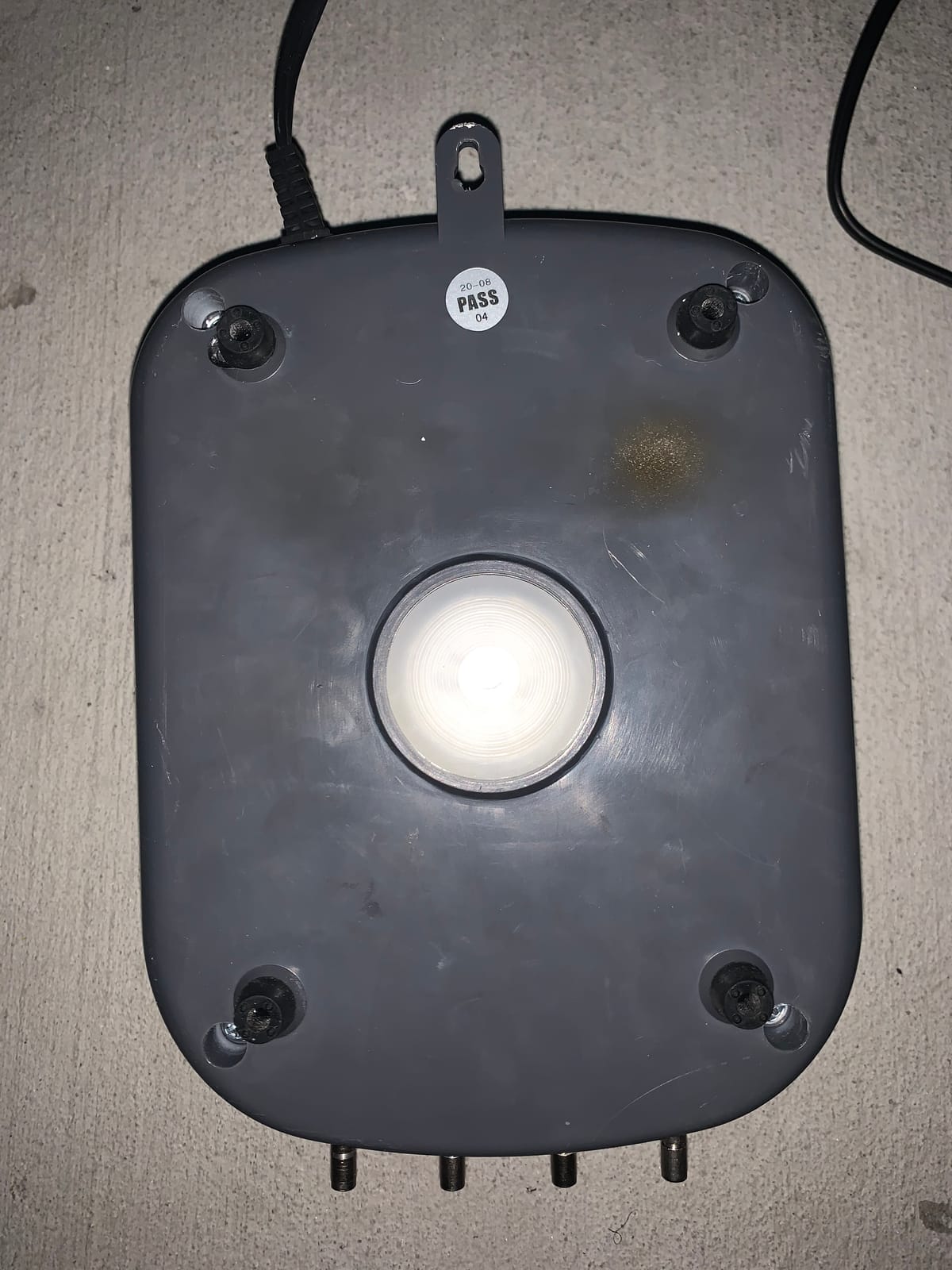
The SunSun YT-304 is the straightforward answer when you need a small, quiet pump and nothing more. It puts out 18 liters per minute and is rated by the manufacturer for setups up to about 120 gallons, which covers most single-bucket DWC systems with room to spare.
The multi-level muffler is the detail that separates it from other budget pumps at this output. Reviewers name it specifically, and it is the reason this pump does not generate the usual complaint about rattly cheap units.
The artificial rubber diaphragm is designed to hold steady airflow and pressure with free adjustment, which is what you want when a system runs unattended for days. Four outlets mean one bucket, a reservoir and a small tank can share the pump instead of you running two cords.
It is 8.5 watts, so running it around the clock costs very little, and at 2.2 pounds it is easy to reposition when you rearrange the system.
Buy it for the small setup, not the big one
At 18 L/min, this is a pump for a compact reservoir. The moment you add buckets, the per-outlet airflow drops below what roots need, and you will be back to searching for something larger.
Accessories are also thin compared with the kit pumps. The box is the pump and the power supply, so budget for airline tubing, check valves and air stones separately.
Choose it when power draw counts
The low draw and low noise make this a good pairing with a small closet or a countertop pico system where a loud pump would be the first thing anyone noticed.
If you want the same footprint with more included hardware, the AQUANEAT kit gives you stones and valves in the box for a similar outlay.
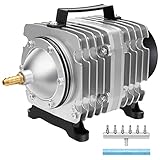
7. AquaMiracle 600 GPH – Best for Aquaponics and Larger Fish Tanks
AquaMiracle Aquarium Air Pump Commercial Air Pump with Aluminum Housing, 18W/600GPH Fish Tank Bubbler Pond Aerator for Aquariums, Ponds, Hydroponics
600 GPH at 18 watts
aluminum housing
6 outlet manifold
oil free
Pros
- Aluminum alloy housing dissipates heat well
- Six outlet manifold with individual adjustment
- Oil free wear resistant piston and cylinder
- Rated 4.4 stars across 878 reviews
Cons
- Needs good ventilation and benefits from a cooling fan
- Variants differ widely so the 600 GPH version needs help for large volumes
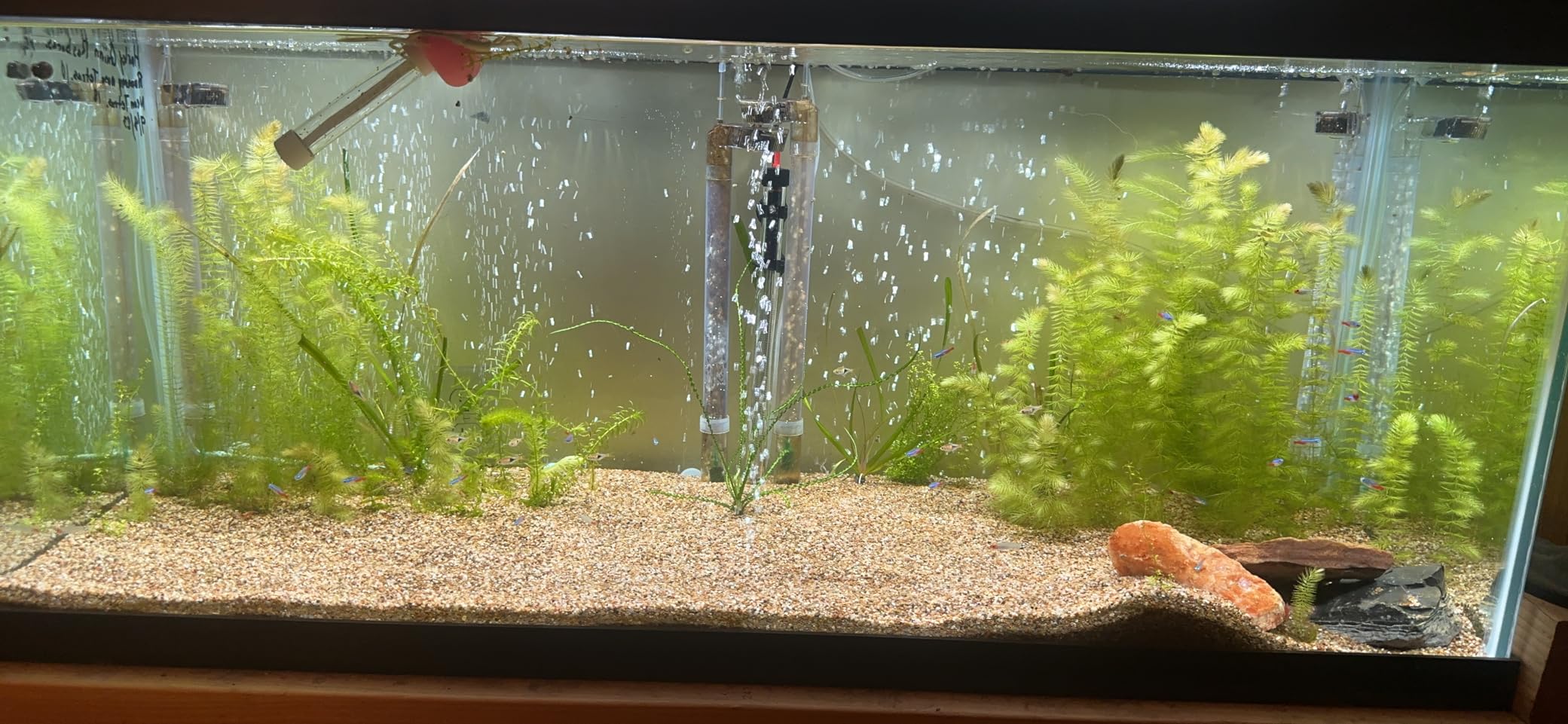
Aquaponics asks more of a pump than a plain DWC reservoir does, because the water has to stay oxygenated for the fish as well as the plants. The AquaMiracle 600 GPH is the pick for that job, with 18 watts of electromagnetic motor driving 600 GPH through a six-outlet chrome manifold.
The manifold is what makes it useful beyond a single tank. You can push main tank aeration, a filter, and a plant bed loop from one unit and set each line independently, which is the kind of routing a fish system needs.
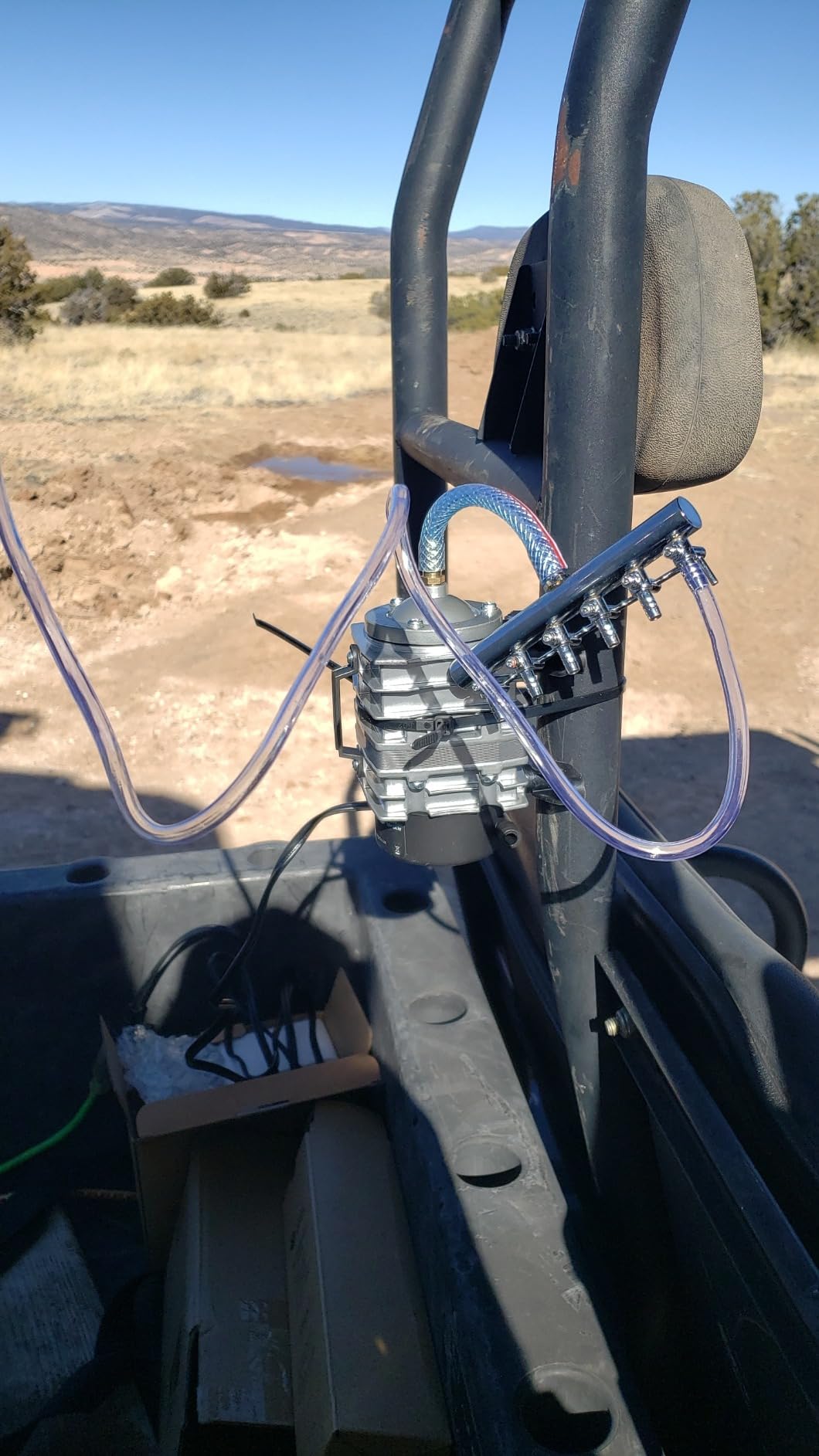
The aluminum alloy housing is the reason to pick it over a plastic pump of similar output. The enlarged surface area pulls heat away from the motor, and several variants in this family scale from 600 GPH up to 1750 GPH, so a bigger system does not mean starting over.
The cylinder and piston are lubricant free and made from wear resistant materials, so nothing contaminates the water your fish live in. That matters more here than in a plant-only setup.
Give it airflow and vertical space
Reviewers consistently flag heat as the main caution. The manufacturer recommends a well-ventilated location, and a small cooling fan extends pump life by keeping the motor below the temperature that degrades the piston seals.
Mount it where the exhaust has somewhere to go. Inside a closed cabinet the aluminum housing is working against a problem no pump can solve.
Check the variant before you buy
Output varies widely across this product family, and the 600 GPH version is the 18 watt one. If you are running a large fish tank or several grow beds, a single 600 GPH unit may leave you short and you will end up adding a second pump anyway.
Decide your required GPH first, then pick the variant that matches, rather than buying the highest number in the range.
8. HITOP 10W 320 GPH – Best When Air Stones Sit Deep
HITOP 10W Powerful Aquarium Air Pump: 4-Outlets 320GPH Air Pump for Fish Tank, Quiet Aquarium Aerator with Completely Accessories, for Tank/Hydroponic/Pond Oxygenation
320 GPH, 80 GPH per outlet
10 watt
22 kPa
4 outlets
Pros
- 22 kPa pressure supports air stones down to 7.2 feet
- Complete accessory kit in the box
- Double layer housing and rubber feet damp vibration
- Air inlet filter pad extends service life
Cons
- Lowest average rating here at 4.2 with a 12 percent one-star share
- Plastic construction is the least durable of the group
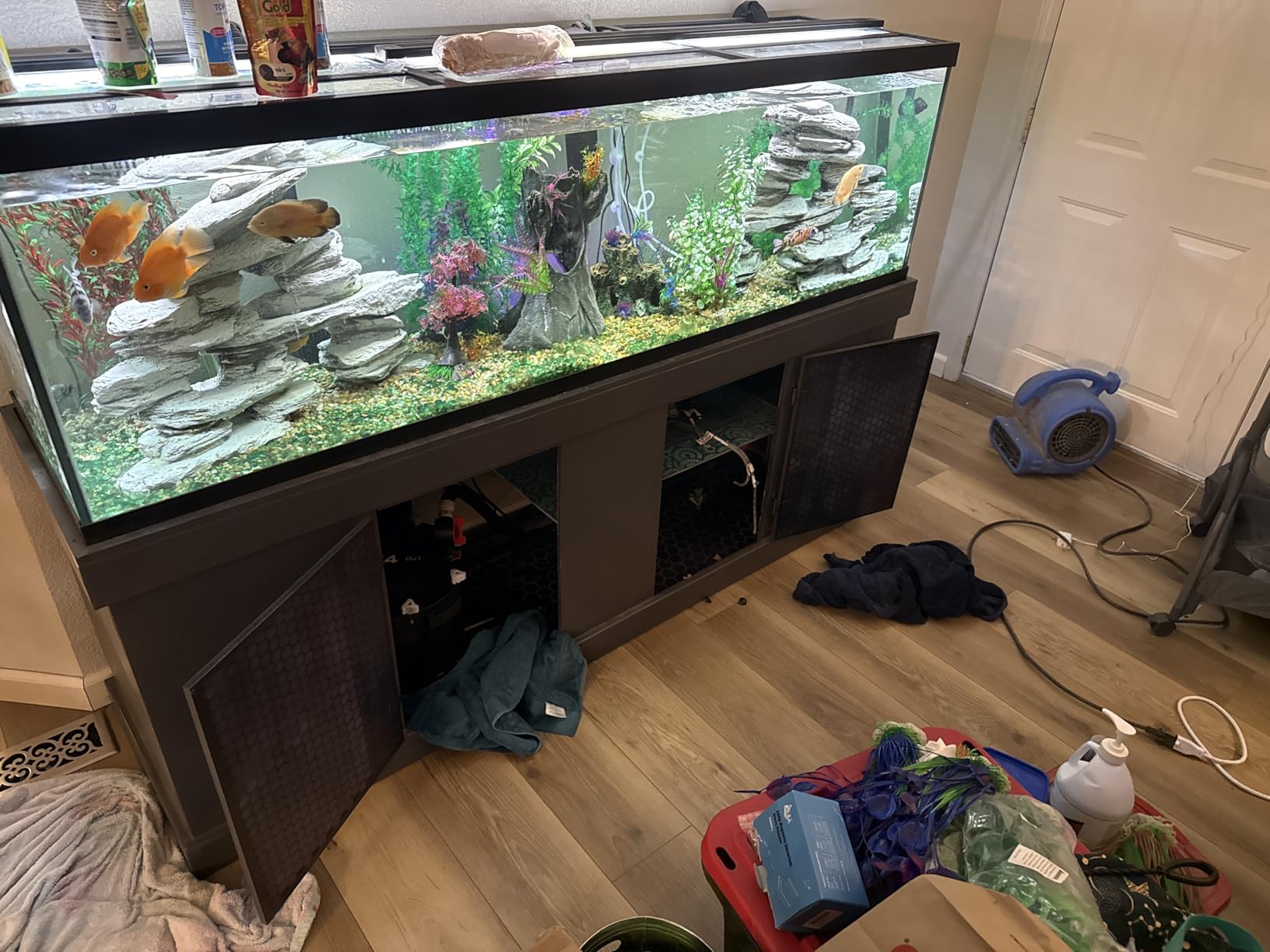
Depth is the problem this pump solves. Its 22 kPa pressure rating is stated to support air stones down to 7.2 feet, or 2.2 meters, which is far deeper than the small 6 and 7 watt pumps on this list can manage. If your stones sit at the bottom of a tall reservoir, that number is the whole buying decision.
Airflow is 320 GPH total, split as 80 GPH per outlet across four lines. That per-outlet figure is enough for a proper bubble curtain rather than a token trickle of bubbles.
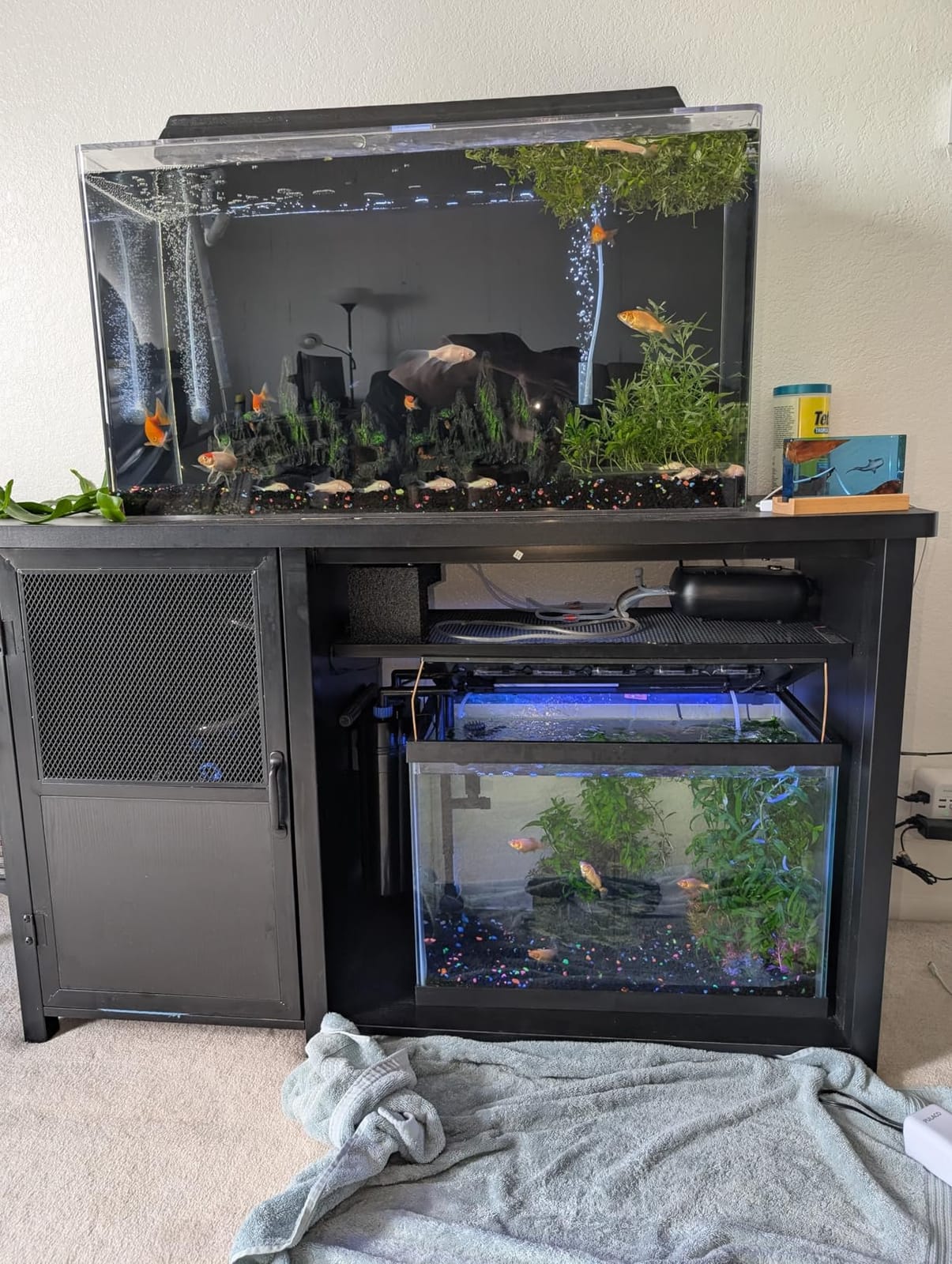
The box is unusually complete. Four soft air tubes, four air stones, four check valves, four regulating valves, four suction cups, two T-connectors and two filter cotton pads are all included, so a deep-set system is wired up without a second order.
The double-layer housing is a real design choice rather than marketing. The reinforced outer shell blocks noise from the inner pump, and multiple rubber feet absorb what vibration is left. The air inlet filter pad catches impurities before they reach the mechanism, which is how you extend service life on a pump that runs daily.
Read the rating spread honestly
This is the lowest rated pump in the group at 4.2, with a 12 percent one-star share, the largest negative share among the ten. The critical reviews focus on noise being louder than advertised and on longevity at this build level.
That is worth weighing if the pump will sit in a quiet room. If it lives in a grow closet with a deep reservoir, the pressure advantage outweighs it.
Skip it for a quiet indoor setup
Nothing about this pump is built for near-silence. If your reservoir is inside the house and the stones can sit higher up, a quieter low-wattage pump with a shallower stone will serve you better.
Also plan a replacement path. Cheap plastic-cased pumps like this one tend to be the first component you swap out as your system grows, so buying a spare is sensible.
9. Active Aqua Commercial 6-Outlet 20W – Best Raw Airflow for Multi-Bucket RDWC
AAPA45L Active Aqua Commercial, 6 Outlets, 20W, 45 L/min Air Pump, Silver
700 GPH, 45 L/min
20 watt
6 copper outlets
aluminum case
Pros
- 45 L/min is enough to churn several 5 gallon DWC buckets
- Six individually controllable copper outlets
- Aluminum case with wear resistant piston and cylinder
- Built in air filter is easy to clean
Cons
- Louder than small diaphragm pumps and runs hot
- Supplied fitting lacks hose clamps so airline can slip
When a forum tells you that you want 80 to 100 GPH of air per bucket, a 700 GPH pump is the number that makes the arithmetic work for a five or six bucket system. Buyers running multi-site setups and DWC bucket farms describe it as strong value precisely because of that headroom.
The six-outlet copper manifold has an individual valve on each leg, so you can balance flow across sites. The aluminum alloy case and wear resistant cylinder and piston are built for continuous duty rather than occasional use.
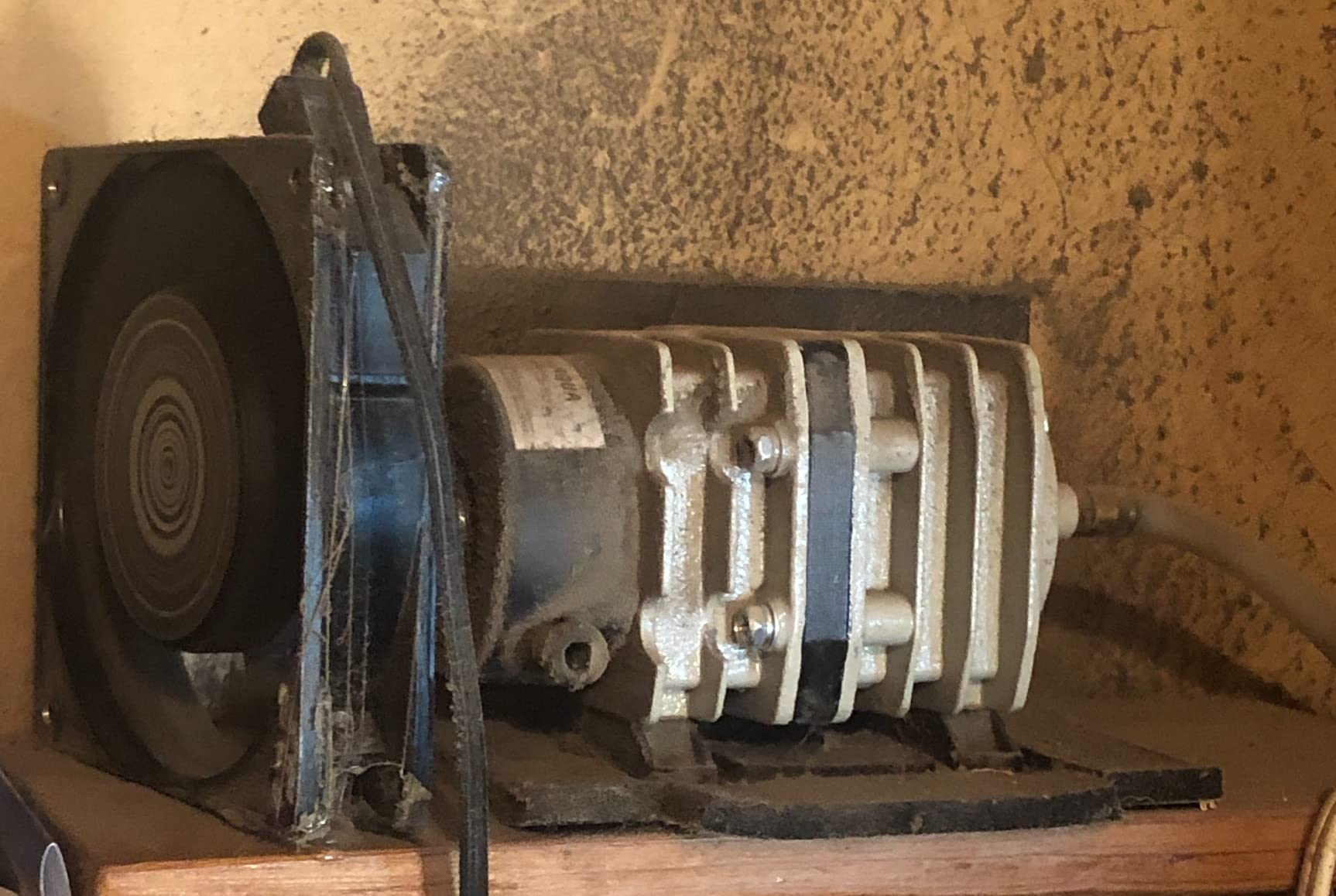
There is a built-in air filter that is easy to clean, and owners running it continuously in ponds report no output loss over long periods. That combination of cleanable filter and metal internals is what separates the commercial line from hobby pumps.
It draws 0.17 amps at maximum, so a six-bucket system on one pump still costs very little to run around the clock. The 1 year warranty is standard for a unit of this class.
Plan for the noise and the heat
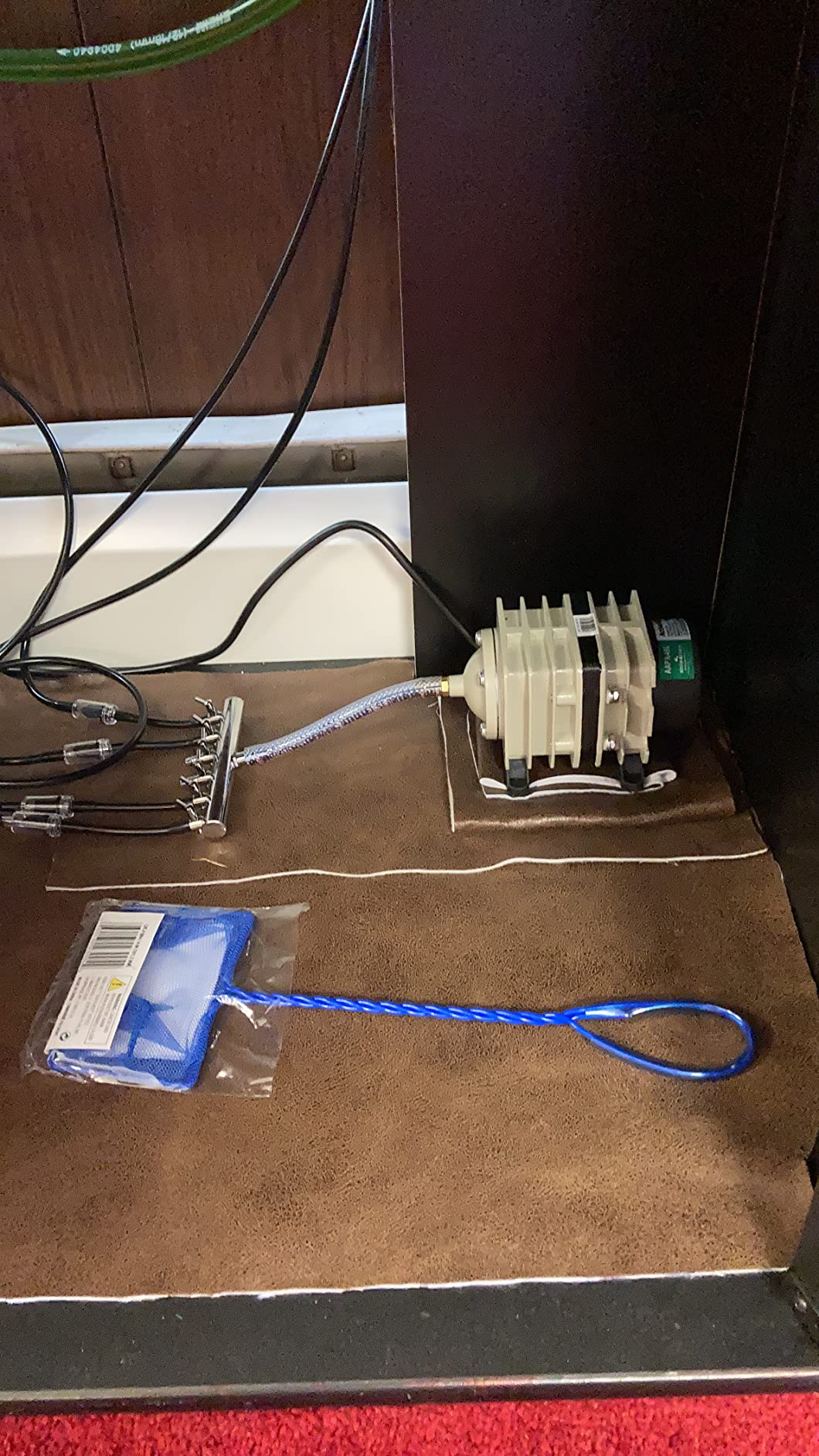
Noise and heat are the dominant complaints. Reviewers report the actual noise and heat levels often exceed the 45 decibel listing claim, and several found that mounting the pump on a foam pad or fitting a short hose to the air intake dramatically cut the sound.
Expelled air runs warm too. In a hot room that is free cooling for the reservoir, but in a cold room it is wasted heat you will want to account for.
Add clamps and check valves at install
The supplied barbed fitting has no hose clamps, so airline can slip off and dump your reservoir. Add clamps and a check valve on every leg during setup; it takes minutes and prevents the most common failure we hear about.
Also verify the outlet thread. It is a tight quarter inch nipple with a tapered thread that is awkward to replace, so buy fittings for it before you need them rather than after.
10. VIVOSUN 1110 GPH 40W – Best When One Pump Has to Feed Many Lines
VIVOSUN 1110GPH Aquarium Air Pump Commercial Air Pump with Aluminum Housing
1110 GPH at 40 watts
8 outlets
0.03 MPa
aluminum plates
Pros
- Eight adjustable outlets for maximum routing flexibility
- Aluminum heat radiating plates cool better than plastic
- Huge airflow for many air stones
- Designed for 24/7 continuous operation
Cons
- Vibration and hum transmit through light structures
- Runs warm and has tripped outlets for a few owners
- Large 40 watt draw for a hobby scale setup
Eight outlets is the distinguishing number here. Every other pump on this list feeds four or six lines, and most of them reach six only through a manifold that divides air after the pump. The VIVOSUN splits across eight internally adjustable legs with a premium manifold and pure copper nozzles, so a large commercial reservoir or a multi-site farm can run from a single box.
At 1110 GPH from a 40 watt electromagnetic motor, the airflow is enormous relative to everything else here. Hydroponic and pond owners report a year-plus of outdoor service on a first pump.
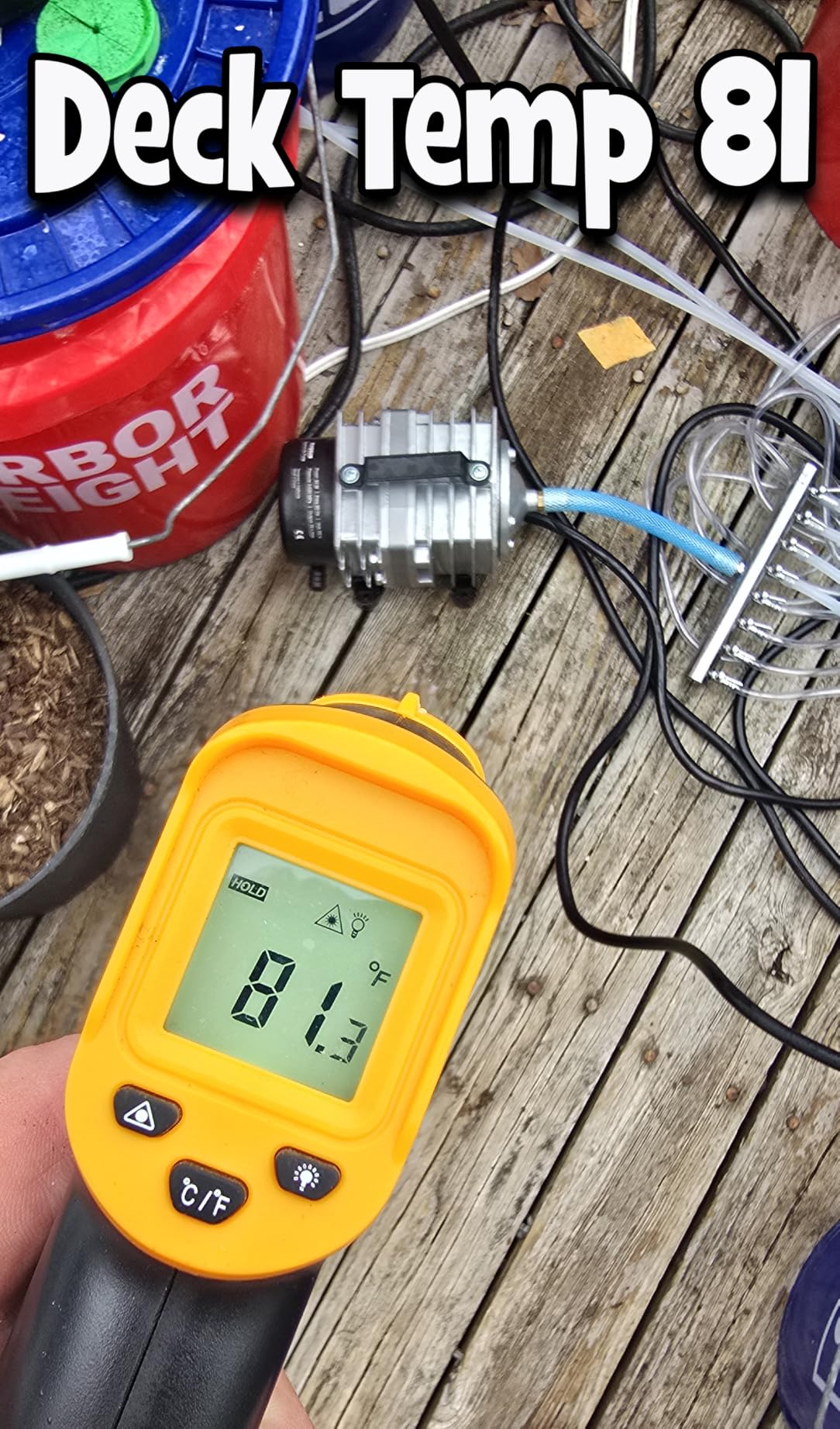
The aluminum alloy heat radiating plates are the reason it holds up under that load. They move heat away from the motor far better than a plastic shell, and the material engineering on the steel engine column and piston is what makes the 24/7 continuous operation rating credible rather than aspirational.
It is oil-free and rated under 60 decibels, which sounds high until you read it next to the output class: this is a lot of air for that noise level, and oil-free lubrication is why.
Mount it on structure that can carry the vibration
The main complaint is vibration. If the pump sits indoors on a light shelf or cabinet, the hum transmits straight through the structure and becomes far louder in the room than any decibel figure suggests. A solid bench, a stand, or an isolation pad makes a large difference.
Several owners also fit a short hose to the air inlet to damp the intake noise, a cheap fix that works on most of the bigger pumps in this roundup.
Skip it unless the airflow is genuinely needed
A 40 watt draw is substantial for a hobby scale setup, and it runs warm enough that a few owners reported an electrical fault or a tripped outlet after a few months. If you are running a handful of buckets, this is a large pump looking for work.
Use it when you have eight lines to feed, or when you want one pump to cover a system you expect to grow into.
How Big of an Air Pump Do You Need?
Sizing is the part most guides get vague about, so here are the numbers we actually used.
Rule one, for deep water culture: match the pump’s wattage to the reservoir’s gallon capacity. A 5 gallon reservoir wants roughly a 5 watt pump, a 20 gallon reservoir wants something in the 8 to 10 watt range, and past 20 gallons you should be counting outlets rather than watts.
Rule two, for multi-bucket RDWC: the figure that circulates most widely among growers is 80 to 100 GPH of air per bucket. A discussion on THCFarmer, which ranks at the top of the results for this query, puts it plainly: you want 80 to 100 GPH of air per bucket. Four buckets means 320 to 400 GPH, which is exactly where the HITOP and the SunSun sit.
Rule three, the unit conversion: US listings sell airflow in GPH, manufacturer sheets and forums often use LPM, and 1 GPH equals 3.8 LPM. A pump quoted at 20 LPM is roughly 320 GPH. Check which unit your pump’s spec sheet uses before you compare two products.
Rule four, account for depth: a pump’s rated output is measured at zero backpressure. Air stone depth, airline length and fittings all reduce what reaches the water, so a stone sitting at the bottom of a deep bucket can cut delivered airflow by a lot. Match the pressure rating, not just the GPH figure, and keep stones as shallow as the root mass allows.
Rule five, aeration raises water temperature: the bubbles carry heat into the solution as they collapse. In a cold room that is a genuine benefit that keeps nutrient solution from dropping toward growth-stopping temperatures. In a warm room it works against you, and you will need a chiller or ice bottles to hold the temperature down.
One more sizing note before you commit: it is better to run one pump with a proper manifold than several small pumps daisy chained with splitters. Air follows the path of least resistance, so a splitter sends a disproportionate share of the flow to the least restricted line and leaves the others short.
If you are sizing anything beyond a reservoir, it helps to read a general pump guide first. Our roundups on sump pumps and well pumps cover the flow and head pressure basics that carry over, since the same math explains why a hydroponic air pump sags with depth.
Which Type of Air Pump Is Right for Hydroponics?
Almost every pump sold for hydroponics today is an electromagnetic diaphragm compressor. That is the type behind nine of the ten products in this roundup, and it is the right default: oil-free, cheap, repairable and available with up to eight outlets.
Diaphragm compressors flex a rubber membrane to move air. The membrane is a consumable, and it is why a diaphragm pump that felt strong in month one can feel weak in year three. Keep a spare diaphragm or a rebuild kit for your model and the failure never becomes a system-wide outage.
Linear piston pumps use a piston travelling in a straight line inside a cylinder. They are quieter than a diaphragm at the same output and tend to hold pressure better at depth, which is why they appear in aquaponics and high pressure aquarium setups. Growers running pumps near a bedroom often report that a linear unit sounds noticeably calmer than a comparable diaphragm pump, and other growers advise staying with a diaphragm compressor unless the system really is close to where people sleep.
Magnetic drive pumps are common in the small nano end of the market and are often described by growers as noisy, so they make sense mainly for very small reservoirs or a single bucket.
Peristaltic and water pumps are a different category. A peristaltic pump moves liquid rather than gas and is used for nutrient dosing, not aeration. If you are looking for a dosing or circulation pump rather than an air pump, our DDC pump roundup covers that side of a system.
Not every system needs an air pump at all. Deep water culture and RDWC need one because roots sit submerged and oxygen-starved. NFT, drip, wick and ebb and flow systems do not, because roots are periodically moist rather than continuously submerged, and the Kratky method is a passive DWC variant designed around the same principle. Aquaponics needs one, and at higher output than a plant-only setup, because the fish depend on it.
Why Your Hydroponic Air Pump Is Loud and How to Fix It
Every air pump makes noise. The useful question is what kind of noise. A broad rush of air is easy to live with, while a tonal rattle or a metallic hum grabs attention because your ear locks onto pitch, not just volume. That is why a pump with modest volume can sound worse than a bigger one that runs smoothly.
Around 45 decibels is roughly where most people start finding a pump annoyingly loud in a domestic space. Two pumps on this list are specified against exactly that figure, and those are the ones to shortlist if the system lives anywhere near a bedroom or a living room.
Three fixes cover most of it.
First, raise the depth of your air stone. Bubble noise at the surface is the loudest part of the system, and a shallower stone means less water column for sound to travel through.
Second, move the pump. Vibration travels through shelving, cabinets and floors far beyond the pump itself, and a rubber mat, a stand, or simply placing the unit on a solid surface away from thin panels changes the perceived noise more than any amount of shopping.
Third, fill any unused outlets. An open outlet vents air that is not aerating anything, and it rattles. Capping idle lines reduces both waste and sound.
For a larger pump in a room where noise still matters, two cheap additions help further: a short length of hose on the air inlet damps the intake, and an inline muffler fitted between the pump and the manifold takes the edge off the pressure pulses. Both are standard practice on the bigger commercial units in this roundup.
Fish and aquaponics setups deserve a separate note. Aeration is not optional there, and the noise tolerance is higher, but positioning the pump away from the tank and giving it ventilation is still worth doing.
How to Choose an Air Pump: Buying Guide for Hydroponics
Outlets beat splitters. A multi-outlet pump feeds each line through its own valve, so flow is balanced and a failed line does not affect the others. A splitter hangs off one outlet and lets the least restricted line take most of the air.
Pressure and flow are different numbers. GPH tells you how much air moves. Pressure tells you whether it can get that air to a deep stone. For shallow stones, prioritize flow. For deep stones and long airline runs, prioritize the kPa rating.
Choose aluminum over plastic for continuous duty. Every pump here is designed to run around the clock, but aluminum housings shed heat better. Plastic is acceptable for a small bucket and a cooler room.
Check the duty rating and the noise floor together. A pump specified for 24/7 operation is worth paying for over a cheaper unit, and a pump that sits in a living space should be under the 45 decibel mark.
Factor in the accessories. Check valves, airline, control valves and air stones are not optional. A kit pump like the AQUANEAT or HITOP removes that shopping list, while a bare pump like the EcoPlus leaves you to source them.
Buy a spare diaphragm. Diaphragms are consumables, and output fades gradually rather than suddenly, so a weak pump usually means a tired membrane. For higher output pumps, output degradation over time is a known complaint, and a spare makes the swap a two-minute job.
Fit check valves on every airline. After a power cut, a reservoir connected by an open airline can siphon out onto the floor. Check valves cost almost nothing and prevent the most common outage damage in a DWC setup.
Finally, plan for growth. If your system may double in size, buy the pump with a manifold and spare outlets rather than the cheapest single-outlet model, and give it a ventilated mounting spot from day one so you are not relocating it later.
Frequently Asked Questions
What is the best air pump for hydroponics?
For most systems the EcoPlus ECOair 1 is the best overall pick, pairing 793 GPH with a six-valve manifold that feeds separate lines. The Simple Deluxe 6-Outlet is the better value choice for multi-reservoir setups at 602 GPH with individually adjustable outlets. For a single DWC bucket, the Hydrofarm Active Aqua 4-Outlet at 240 GPH runs quietly under 45 decibels and draws only 0.08 amps.
How big of an air pump do I need for hydroponics?
Match pump wattage to reservoir gallons: a 5 gallon reservoir wants about a 5 watt pump, and 20 gallons wants 8 to 10 watts. For multi-bucket RDWC, the community standard is 80 to 100 GPH of air per bucket, so four buckets needs 320 to 400 GPH. Remember that depth and airline length reduce delivered airflow, so check the pressure rating as well as the GPH figure.
What is the best type of pump for hydroponic systems?
An oil-free electromagnetic diaphragm compressor is the right default for hydroponics, because it is inexpensive, repairable and available with up to eight outlets. Linear piston pumps are quieter at the same output and hold pressure better at depth, which makes them a good fit near a bedroom or in aquaponics. Magnetic drive pumps suit very small reservoirs, and peristaltic pumps move liquid for dosing rather than air for aeration.
What are the best air pumps for aquaponics?
Aquaponics needs more oxygen than a plant-only system because the fish depend on it. The AquaMiracle 600 GPH is our pick, with an aluminum alloy housing, an oil-free piston and a six-outlet manifold that lets main tank, filter and plant beds run from one unit. A linear piston pump is the upgrade to consider if the system sits in a living space, since it runs quieter at the same output.
Which air pump is the quietest for a grow room?
At the small end, the INCLY 7W is the quietest option thanks to a hi/low speed switch that drops output to near silence on low. The Hydrofarm Active Aqua 4-Outlet is rated at a maximum of 45 decibels thanks to a multi-level muffler. Placement matters as much as the pump: raise the air stone, move the unit onto a solid surface, and cap unused outlets.
Can I use an aquarium air pump for hydroponics?
Yes, and most listings for these pumps are marketed for both aquariums and hydroponic systems, which is why the same models show up in both categories. The requirements are identical, since the only job is moving air through airline tubing to a stone. Choose based on your required GPH, outlet count and pressure rating, then fit check valves and keep the pump above water level.
Our Final Verdict on Hydroponic Air Pumps in 2026
For most growers the EcoPlus ECOair 1 is the best air pump for hydroponic systems, because 793 GPH through a six-valve manifold covers everything from a single large reservoir to a multi-site farm, and the aluminum body is built for continuous duty. The Simple Deluxe 6-Outlet is the value pick, and the Active Aqua 4-Outlet is what we put in a single bucket or a small cloning rig.
Beyond those three, match the pump to the constraint you actually have: quiet for a living space, raw airflow and six outlets for multi-bucket RDWC, deep-set stones for pressure, and more spares and included hardware for a first build. If the pump also has to keep fish happy, start with the AquaMiracle.
Whichever you pick, size it with a number, fit check valves, and buy the spare diaphragm before you need it. That is the difference between an air pump you never think about again and one that ends a grow.