
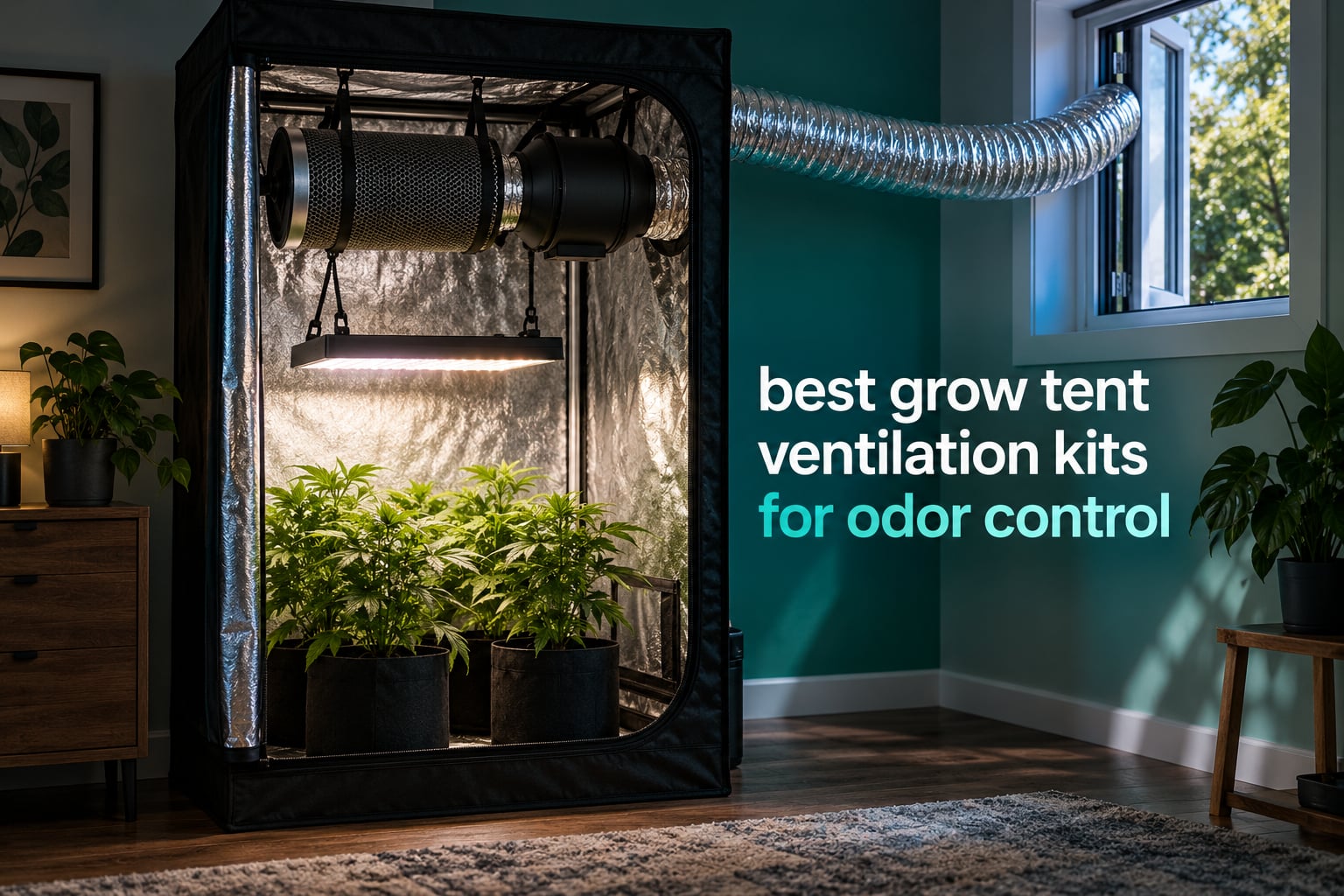
The number one thing growers want from a grow tent ventilation kit is not airflow. It is the ability to run a room without announcing it. A tent can be airtight, packed with lights and running hot, and still fill a house with smell in a single evening if the exhaust path leaks through one zipper seam.
That is why the best grow tent ventilation kits for odor control are judged on a single chain of parts working together: an inline duct fan, an activated carbon filter sized to that fan, enough ducting to route the exhaust outside, and a way to dial the whole thing up and down. Buy one fan, then scavenge a filter, and the system rarely works as well as a matched bundle.
Our short answer: the VIVOSUN G4 Air Filtration Kit earns the top slot for most setups, with 195 CFM of airflow at 28 dB, a thick virgin charcoal bed and a ten-speed app-controlled unit. Growers with a 4×4 tent or bigger need the Spider Farmer 6 Inch Air Filtration Kit, at 402 CFM, and anyone on a tight budget will be fine with the Hydro Crunch 4 inch combo once the fan is matched to the tent. This roundup covers all 12 kits we could find with real review history, plus the sizing math that tells you which one you actually need.
One note before we start: grow tent ventilation is a general indoor gardening topic, and the rules around what you may legally cultivate vary widely. The ventilation advice here applies to any indoor grow space, including vegetables, herbs, flowers and mushroom fruiting rooms.
Table of Contents
Top 3 Grow Tent Ventilation Kits for Odor Control in October 2026
If you want the answer without reading 5,000 words, these three cover almost every indoor grow space. Our team compared the airflow ratings, carbon media, controller types and review histories of all 12 kits before settling on this order.


All 12 Grow Tent Ventilation Kits Side by Side in October 2026
Every kit below ships as a matched set. The airflow figure is the manufacturer’s rated output, which is the number that matters most when you size a tent.
| Product | Specifications | Action |
|---|---|---|
| VIVOSUN G4 Air Filtration Kit |
|
Check Latest Price |
| VIVOSUN 4 inch Inline Fan and Carbon Filter |
|
Check Latest Price |
 iPower 118 CFM Kit with 25 ft Ducting iPower 118 CFM Kit with 25 ft Ducting |
|
Check Latest Price |
 iPower 4 Inch 190 CFM Combo iPower 4 Inch 190 CFM Combo |
|
Check Latest Price |
 Spider Farmer 6 Inch Air Filtration Kit Spider Farmer 6 Inch Air Filtration Kit |
|
Check Latest Price |
 VIVOSUN G6 Smart Filtration Kit VIVOSUN G6 Smart Filtration Kit |
|
Check Latest Price |
 Hon and Guan 4 Inch Air Filtration Kit Hon and Guan 4 Inch Air Filtration Kit |
|
Check Latest Price |
 Hydro Crunch 4 inch 100 CFM Kit Hydro Crunch 4 inch 100 CFM Kit |
|
Check Latest Price |
 MELONFARM 4 inch All-in-One Filter Fan MELONFARM 4 inch All-in-One Filter Fan |
|
Check Latest Price |
 iPower 4 Inch 190 CFM Lite Kit iPower 4 Inch 190 CFM Lite Kit |
|
Check Latest Price |
 Hon and Guan 6 Inch Air Filtration Kit Hon and Guan 6 Inch Air Filtration Kit |
|
Check Latest Price |
 Spider Farmer 4 Inch Air Filtration Kit Spider Farmer 4 Inch Air Filtration Kit |
|
Check Latest Price |
Three of those 12 are 6 inch systems, eight are 4 inch, and every one of them moves air through a carbon bed before it leaves the tent. That order matters, and it is the single most common mistake in home setups.
1. VIVOSUN G4 Air Filtration Kit: The Best Overall Grow Tent Ventilation Kit
VIVOSUN G4 Air Filtration Kit, Inline Fan, Controller, Carbon Filter, Duct
4 inch inline fan at 195 CFM
E12 controller with 10 PWM speeds
RC 412 virgin charcoal, 38 mm bed
28 dB brushless motor
Pros
- Quiet 28 dB brushless motor with 195 CFM of airflow
- Ten PWM speeds with memory recall and three cycle modes
- App control for remote monitoring
- 38 mm RC 412 Australian virgin charcoal bed
- Aluminum ducting
- stainless clamps and rope hangers
Cons
- 72-watt power draw is high for a 4 inch inline fan
- Bundle parts cannot be upgraded one at a time
- Only offered in the 4 inch size in this variant
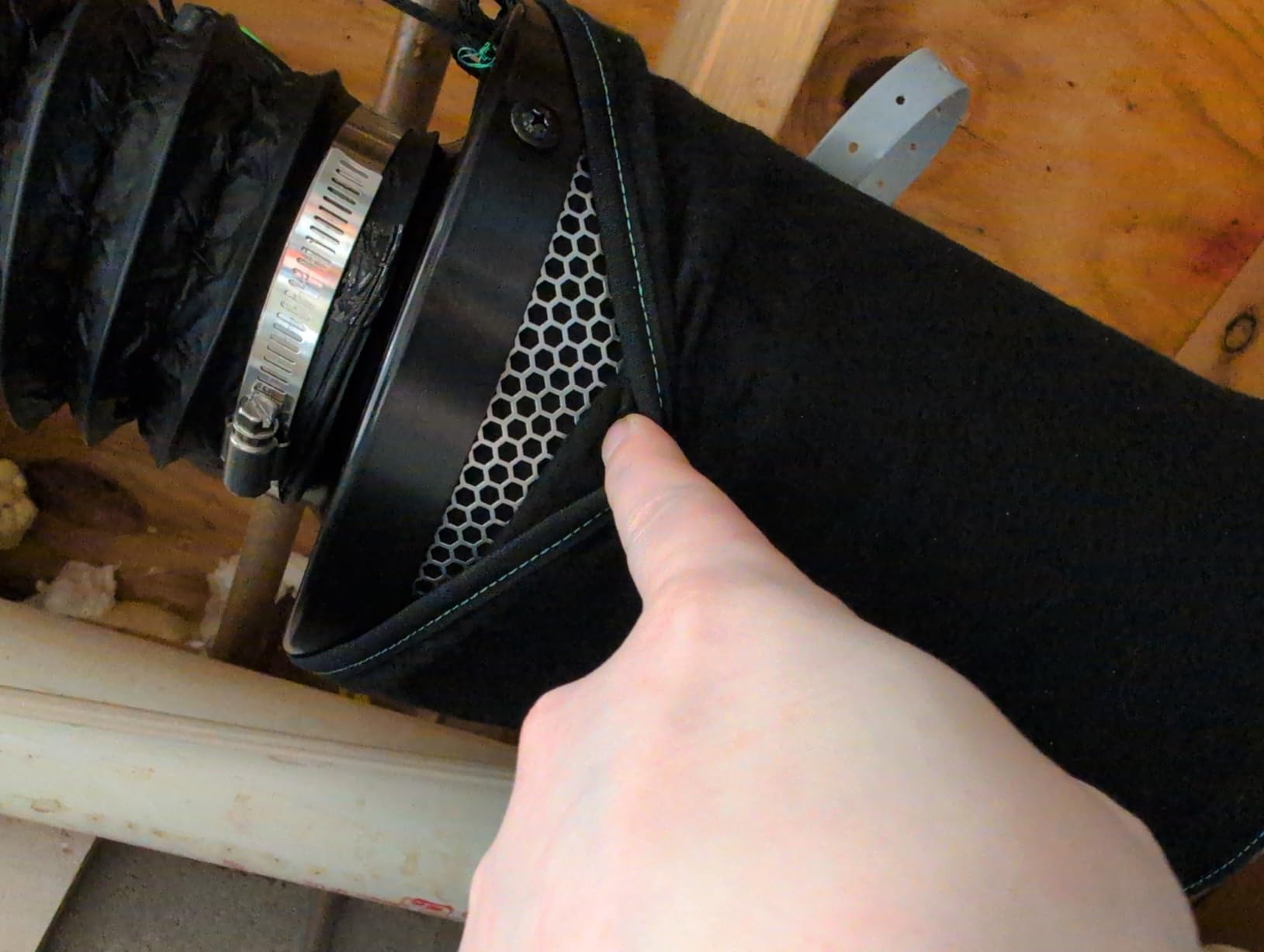
This is the kit we kept coming back to. Out of the box it is a 4 inch inline fan rated at 195 CFM, a 38 mm carbon bed made from RC 412 Australian virgin charcoal at 1200+ IAV, 8 feet of aluminum ducting, and the E12 speed controller. Nothing has to be bought separately to get a working exhaust.
The motor is the quiet part. At 28 dB it is one of the softer 4 inch fans in this roundup, which matters more than the raw CFM figure when the tent sits in a bedroom or a shared office. Owners describe a low hum rather than the higher pitched rattle that budget motors produce once they age.

The E12 controller is where this kit pulls away from the field. Ten PWM speeds with backup memory means the fan returns to the speed you left it at after a power cut, and three on/off cycle modes let it pulse the room instead of running flat. It also pairs with an app, so you can check the tent from another room.
On the 195 CFM figure, treat it as the practical ceiling for a sealed 4×4 tent. Most owners run it below maximum and dial with the controller, which is exactly what the PWM design is for. The 72-watt draw is the one number that gives us pause if you are running several of these on one circuit.
What it handles well
For a 2×2, 2×4 or a 4×4 that is well sealed, the G4 sits right at the sizing target. The 38 mm carbon bed is thick enough that odor breakthrough does not arrive early, and the 81 percent five-star share across 701 ratings is one of the strongest profiles in this group.
It also suits anyone who wants the tent on a phone. The app and the memory recall are genuine conveniences, not decoration, and the rope hangers included in the box save a separate purchase.
Where it falls short
Because fan, controller, filter and ducting are bundled, you cannot swap a single component later. If your tent grows from 2×4 to 4×4, the whole kit is the part that changes, not just the fan.
At 72 watts it also draws more power than most 4 inch competitors, and the listed variant is 4 inch only. Plan on one G4 per small tent, or move up to the 6 inch G6 for anything larger.
2. VIVOSUN 4 Inch Inline Fan, Carbon Filter and 8 ft Duct: The Most Proven Kit
VIVOSUN 4″ Inline Fan, Carbon Filter & 8ft Duct, Circulate air, Reduce Odor
4 inch inline fan at 190 CFM
RC 412 Australia virgin charcoal
8 ft aluminum ducting with 2 clamps
15 watts, 3-blade construction
Pros
- Most reviewed kit here with more than 2500 ratings
- Complete three-part set with nothing else to buy
- 190 CFM in a compact 18.6 inch wide footprint
- Aluminum ducting rated for high temperature and corrosion
Cons
- No variable speed controller in this version
- Basic button control with no digital readout
- Some owners add clamps or tape to join the parts
This is the one most growers have actually run for years. At more than 2,500 ratings and a 4.5 average, it has the deepest review history in the roundup, and 73 percent of those ratings are five stars. That is a track record, not a launch-week score.
The build is deliberately simple. A 190 CFM 4 inch inline blower, a 4 inch carbon filter using porous activated carbon with 1200+ RC 412 Australia virgin charcoal, and 8 feet of aluminum ducting with two heavy-duty stainless steel clamps. The fan is 15 watts, which is a fraction of what the G4 pulls.
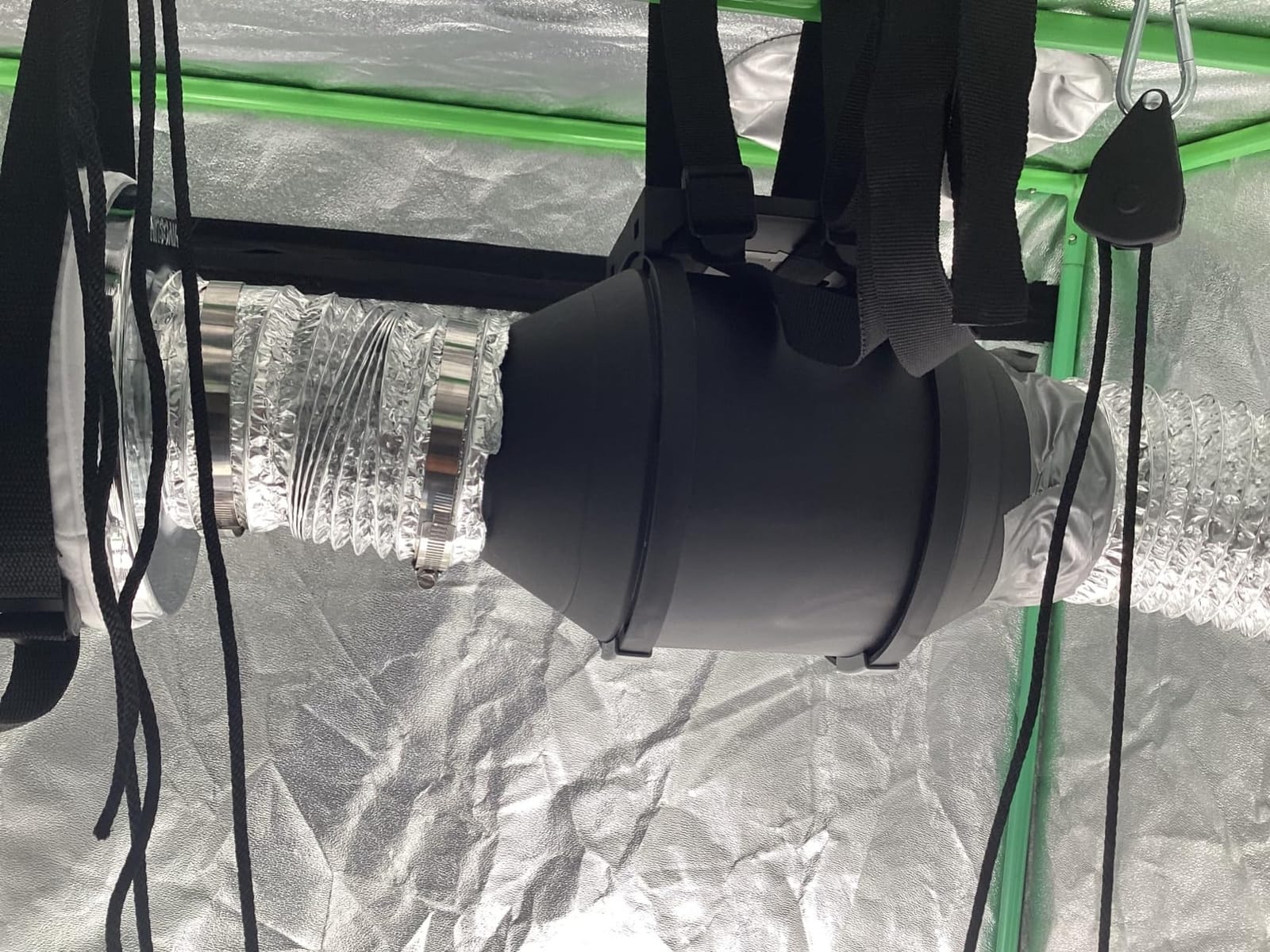
What stands out is longevity. Owners running this set for a year or more report the carbon bed still working, and the aluminum ducting is described as holding shape without kinking. The mounting bracket even marks the airflow direction, which saves a guess on installation.
It suits grow rooms, tents, HVAC and bathroom venting equally, so it is not a single-purpose product. For a straightforward exhaust with a manual dial and no app, that versatility is a fair trade.
What it handles well
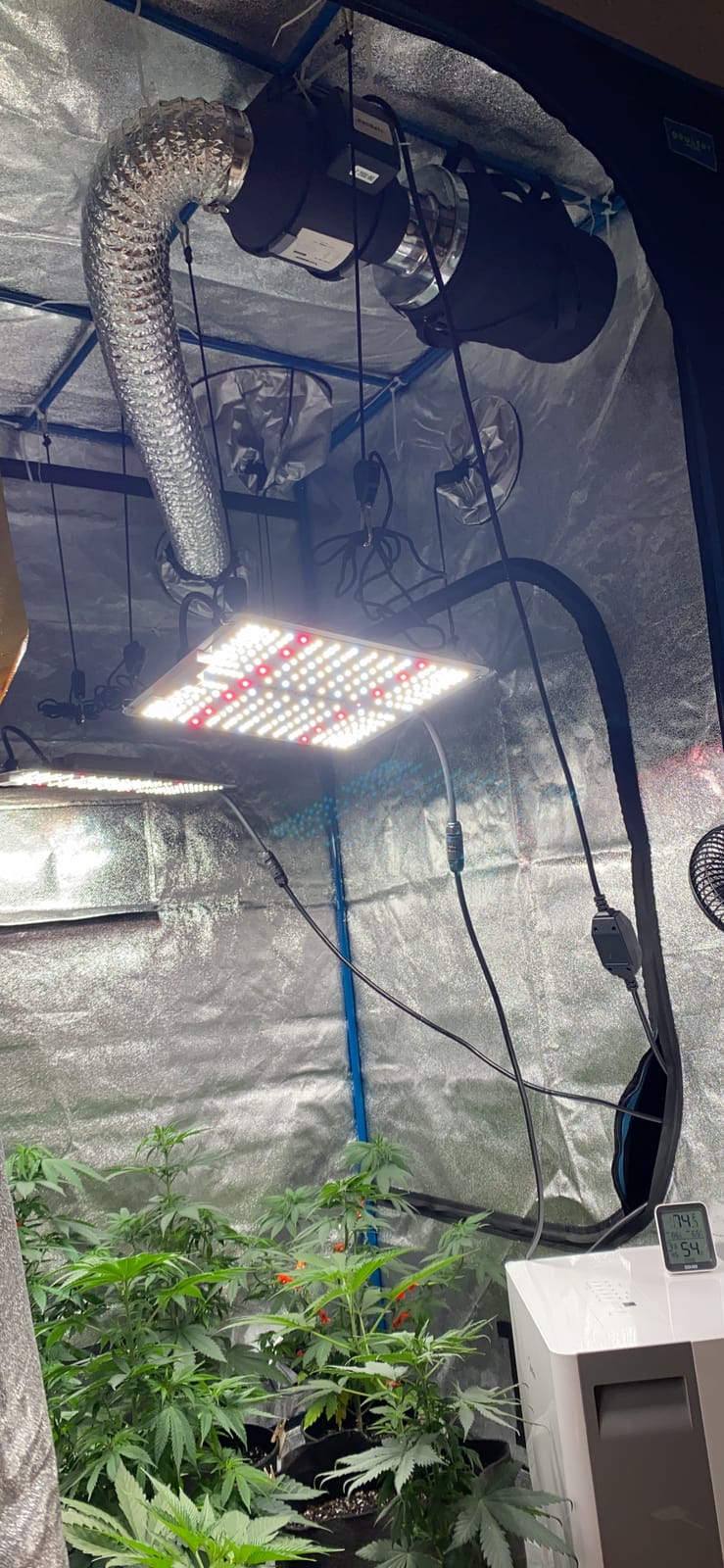
For a 2×2 or 2×4 tent on a tight budget, this is the safe pick. At 15 watts and roughly 190 CFM it covers a 2×4 tent with room to spare, and the three-part design has been proven in more real setups than anything else on this list.
Replacement parts are also easy to source. The filter, the ducting and the clamps are all standard 4 inch components, so nothing about this kit locks you into a single brand ecosystem later.
Where it falls short
There is no speed controller in this version. The push-button control gives you on and off only, so the only way to moderate airflow is a wall dimmer or an external controller, neither of which is elegant.
A minority of buyers report needing extra clamps or duct tape to join the fan to the filter cleanly. Budget five minutes and a roll of foil tape before you hang it.
3. iPower 118 CFM Kit with 25 ft Ducting: Best for Small Tents and Long Runs
iPower GLFANXEXPSET4D25CHUMD 4 Inch 118 CFM Inline Filter 25 Feet Ducting with Fan Speed Controller and Temperature Humidity Monitor and Grow Tent Ventilation, Kits, Black
4 inch inline fan at 118 CFM
25 ft uninsulated aluminum ducting
Temperature and humidity monitor included
Free pre-filter, 1-year warranty
Pros
- 25 ft of ducting gives far more routing reach than a typical kit
- Includes a temperature and humidity monitor with the speed controller
- Composite blades and hub cut noise and vibration
- Free pre-filter protects the carbon bed
- Five speed controller with a 50 percent motor floor
Cons
- 118 CFM suits smaller tents only
- Owners report not enough hangers for a full tent install
- Instructions are largely unusable without a setup video
The iPower GLFANXEXPSET4D25CHUMD is the odd one out, and that is its appeal. It ships with 25 feet of aluminum ducting instead of the usual 8, which is exactly what you need when the tent has no exterior wall and the exhaust has to travel across a room.
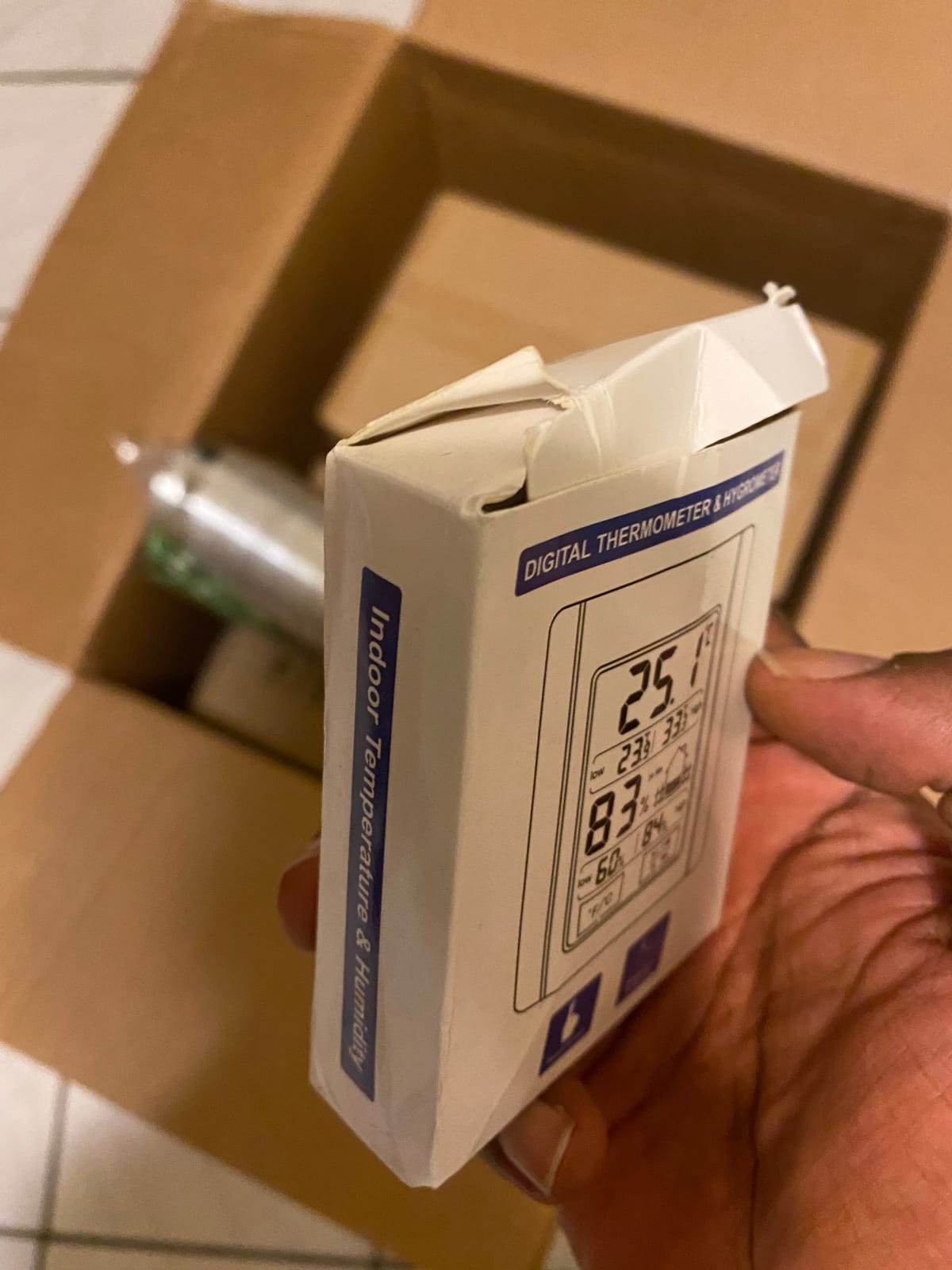
It also includes a temperature and humidity monitor, which is a genuinely useful addition in a tent you are not standing next to. The speed controller has five settings with a floor at 50 percent, so the motor never gets starved into early failure.
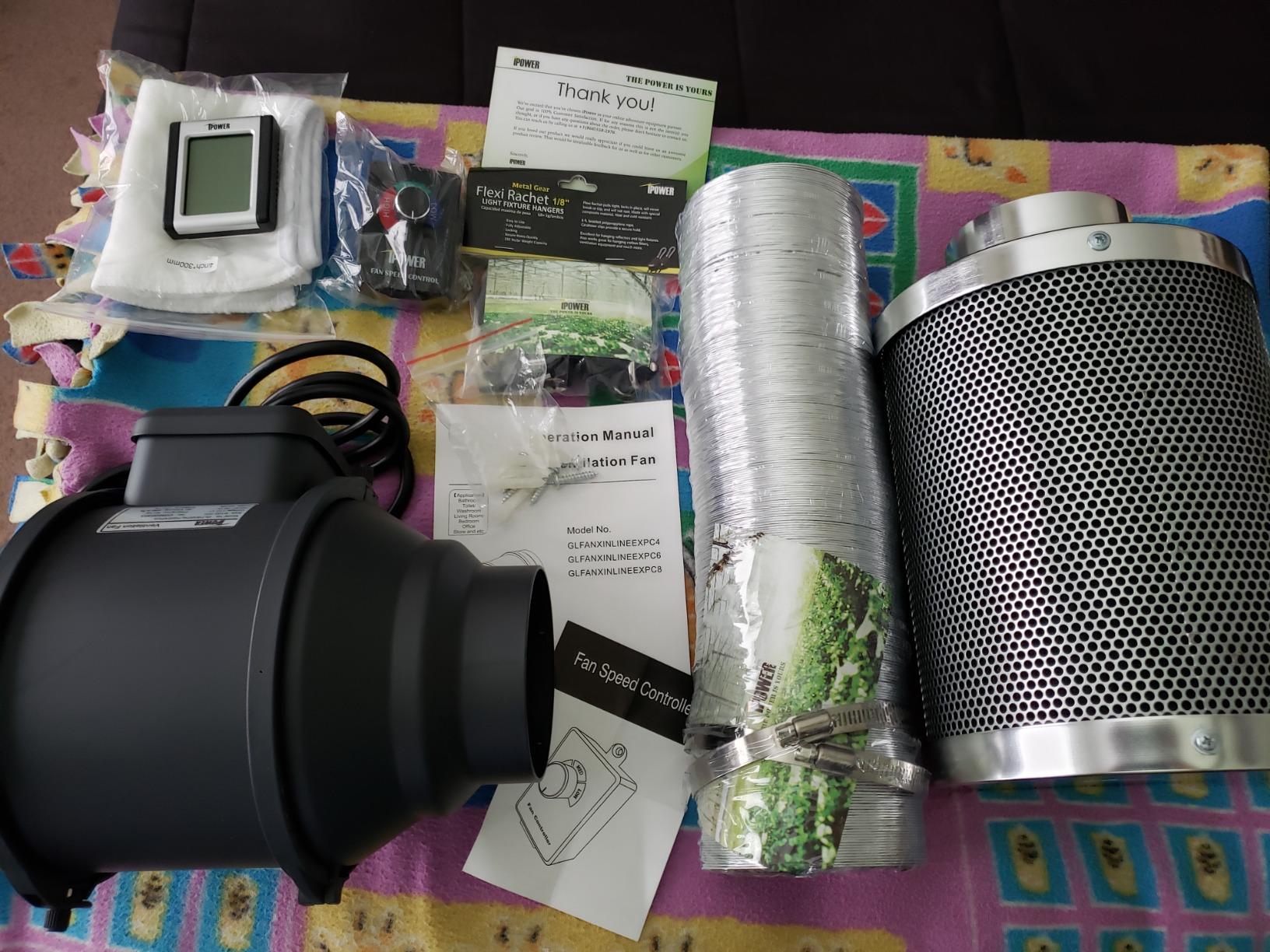
The composite fan blades and center hub are designed to reduce noise and vibration, and the ducting carries a flame-retardant coating rated from 0 to 185 degrees Fahrenheit. That temperature endurance is worth noting if your exhaust runs near a hot room.
The catch is the fan itself. At 118 CFM, this is not a 4×4 system. Owners using it in larger tents report it running at maximum and still not keeping up, which is the correct outcome for a fan this size and not a defect.
What it handles well
Long duct runs are the reason to buy this one. Twenty-five feet of flame-retardant aluminum ducting with a corrosion-resistant wire helix means you can put the exhaust where it belongs, which is outside, not in a closet.
The included monitor means you can track tent climate before the plants show stress. A 4.6 average across 950 ratings with 74 percent five stars reflects how much growers appreciate the complete package.
Where it falls short
118 CFM is modest. A 2×2 is the comfortable fit, and a 2×4 will need the controller at maximum with a sealed tent to keep up.
Owners also report thin hangers, unusable written instructions and aluminum flex duct that needs supporting along its length to stop it kinking. Budget a few extra ratchets and a length of rigid support.
4. iPower 4 Inch 190 CFM Combo: The Best Match for a 2×4 Tent
iPower 4 Inch 190 CFM Duct Inline Fan with 4″ Filter 8 Feet Ducting Combo for Grow Tent Ventilation, Silver
4 inch inline fan at 190 CFM
48 dB operating noise
4 by 12 inch filter with reversible flange
8 ft ducting, free pre-filter, 1-year warranty
Pros
- 190 CFM covers 2x2 and 2x4 tents with headroom
- Reversible filter flange extends usable filter life
- Free pre-filter included and sold separately as a spare
- No assembly required
- 1-year manufacturer warranty
Cons
- 48 dB is the loudest listed figure in this group
- No speed controller included
- Some fans develop vibration noise at high RPM
If your tent is a 2×4 or a 2×2 and you want the numbers to line up cleanly, 190 CFM is the target. This iPower combo hits it exactly, and the 4.4 average across 624 ratings with 71 percent five stars reflects a kit that simply does its job.
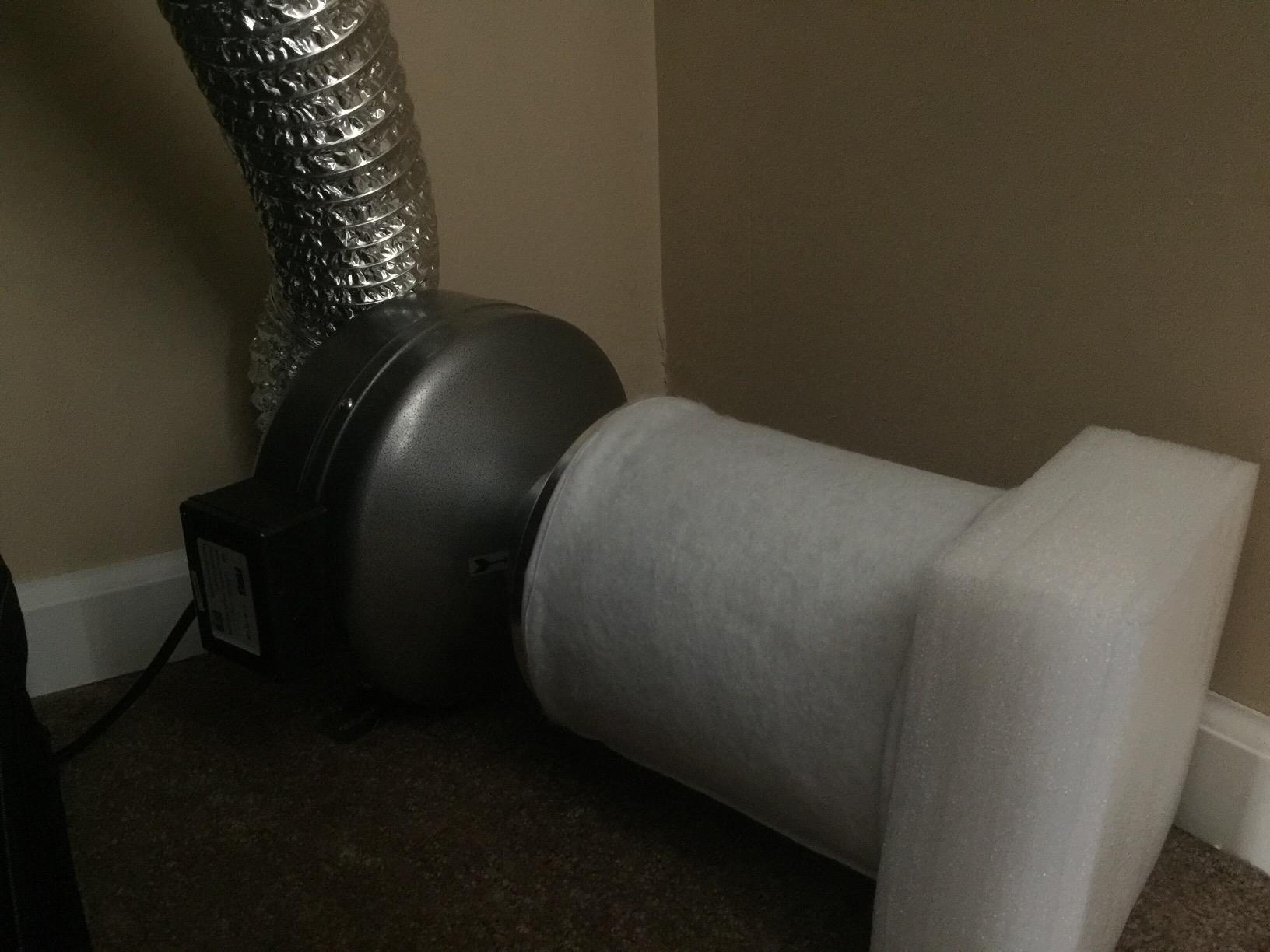
The filter is a 4 inch flange ducting design measuring 12 inches long with a reversible flange. That flange detail matters more than it sounds: flip it and you are running clean air through a different face of the carbon bed, which stretches the life of a given filter.
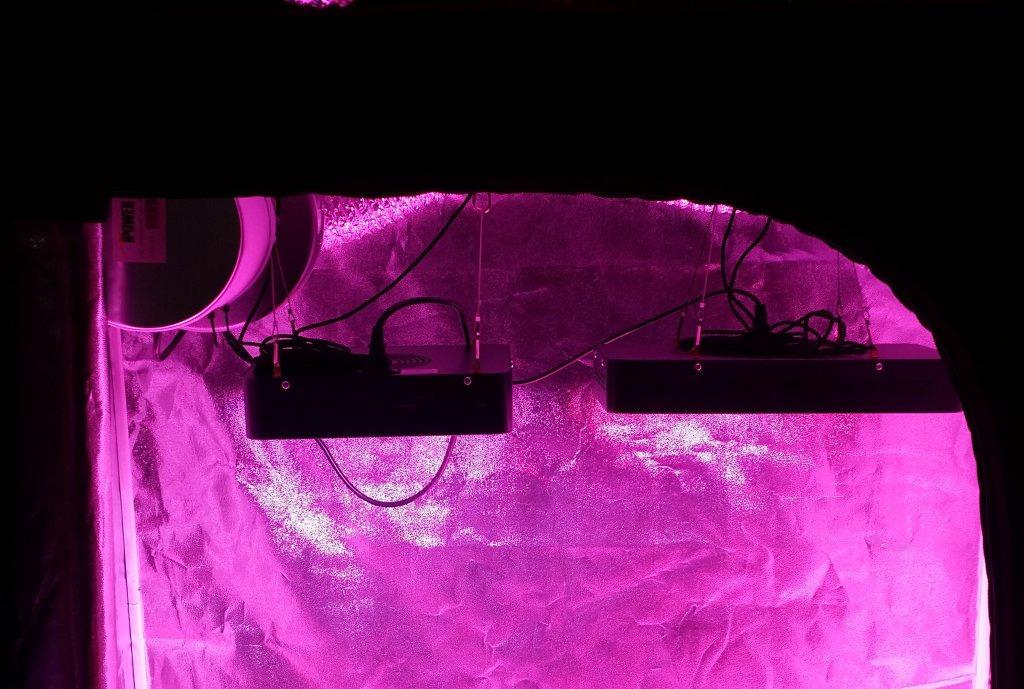
You also get 8 feet of uninsulated aluminum ducting, two stainless clamps and a free pre-filter, all rated 0 to 185 degrees Fahrenheit. The pre-filter is the piece most beginners skip and most benefit from, since it catches dust and pollen before it reaches the carbon.
Owners confirm the filter holds up, with reports of units still working after a year. The fan is heavier than expected at 16.1 pounds, so plan your hangers around that rather than assuming it is a light unit.
What it handles well
It is a clean fit for a 2×4 tent with a 6.5 foot height, which is the most common indoor footprint. 190 CFM through a 12 inch carbon bed gives you real odor control rather than a token filter.
The reversible flange and included pre-filter mean the consumables are cheap to maintain. Replacing a pre-filter every six months is the single cheapest way to extend carbon bed life.
Where it falls short
The 48 dB figure is the loudest listed in this roundup, and several owners mention vibration noise at high RPM from an off-balance blade. In a bedroom you will hear it.
No speed controller is included, so you run it full or not at all. A handful of owners also report fan failures within a few months of continuous use, which is worth considering against the 1-year warranty.
5. Spider Farmer 6 Inch Air Filtration Kit: The Best Choice for 4×4 Tents and Up
Spider Farmer 6 Inch Air Filtration Kit with RJ12 Speed Controller
6 inch inline fan at 402 CFM
Brushless EC motor at 32 dB
RC412 carbon filter with 38 mm bed
13 ft reinforced ducting, ETL and FCC listed
Pros
- 402 CFM is the highest airflow figure in this roundup
- Brushless EC motor runs at 32 dB for that output
- 13 ft of double-layer reinforced duct for long routing
- ETL and FCC listed with stainless steel clamps
- Creates strong negative pressure that seals tent fabric
Cons
- Overwhelms small and makeshift tents
- Only three speed settings on the touchpad
- Some units failed shortly after the warranty period
Once you pass 4×4, the 4 inch format runs out of air. This Spider Farmer 6 inch kit moves 402 CFM, which is double what most 4 inch kits manage and more than enough to strip heat off a larger tent or a closet grow room.
The motor is a brushless EC design rated at 62 watts and 32 dB, with lightweight ABS blades that the manufacturer credits with a 40 percent airflow increase. The result is a lot of moving air for a modest noise floor, which is the right trade for a bigger tent.
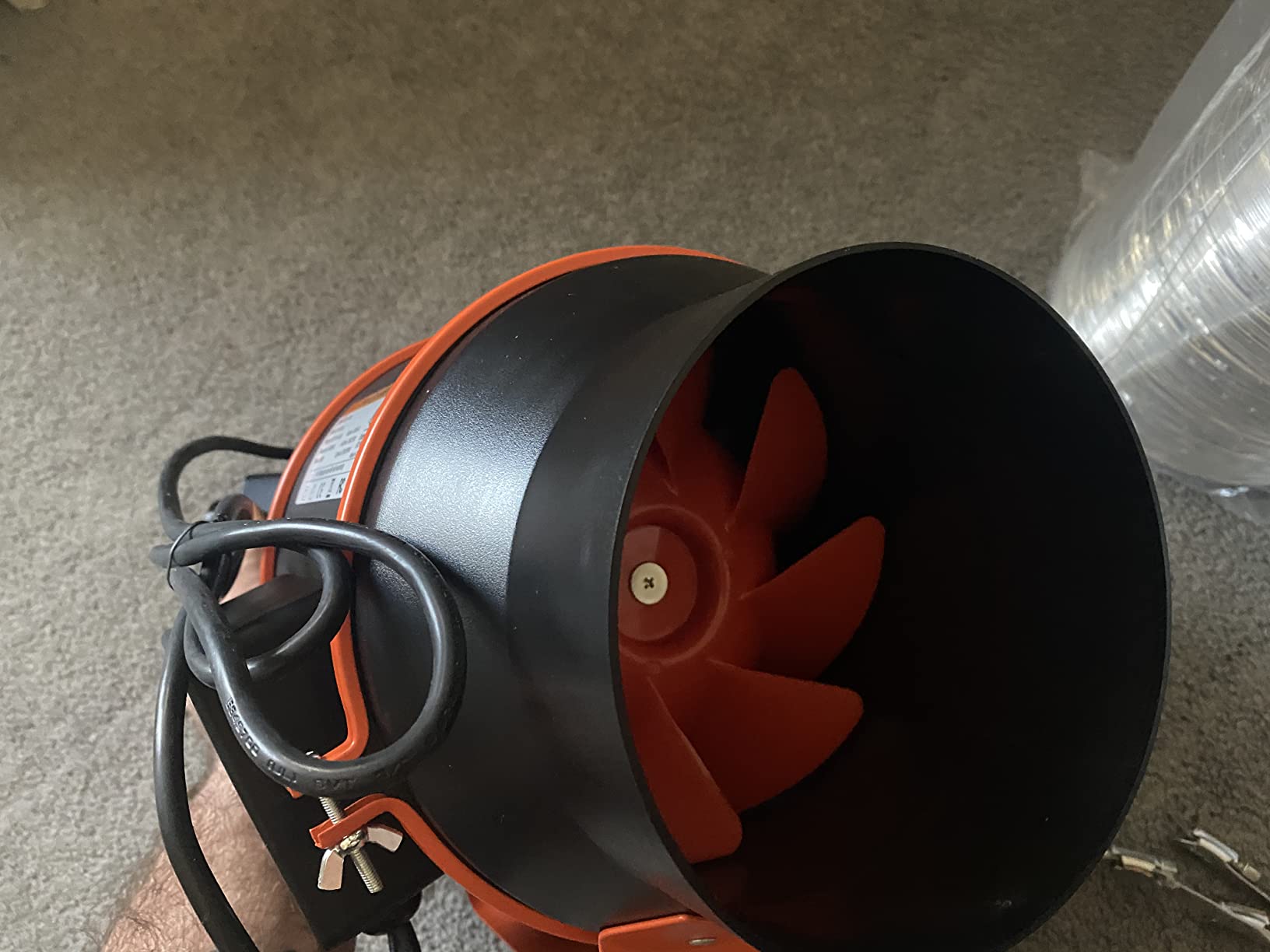
The carbon side is an RC412 activated carbon filter with a 38 mm thick bed and stainless steel flanges, plus a pre-filter. You get 13 feet of double-layer aluminum and PVC duct with a steel wire helix, which passed the GB8624B1 flammability test.
The RJ12 controller is worth understanding before you buy. It uses a proprietary connector and an 8.2 foot control wire, and it is compatible with the GGS controller and power strip if you already run that ecosystem.
What it handles well
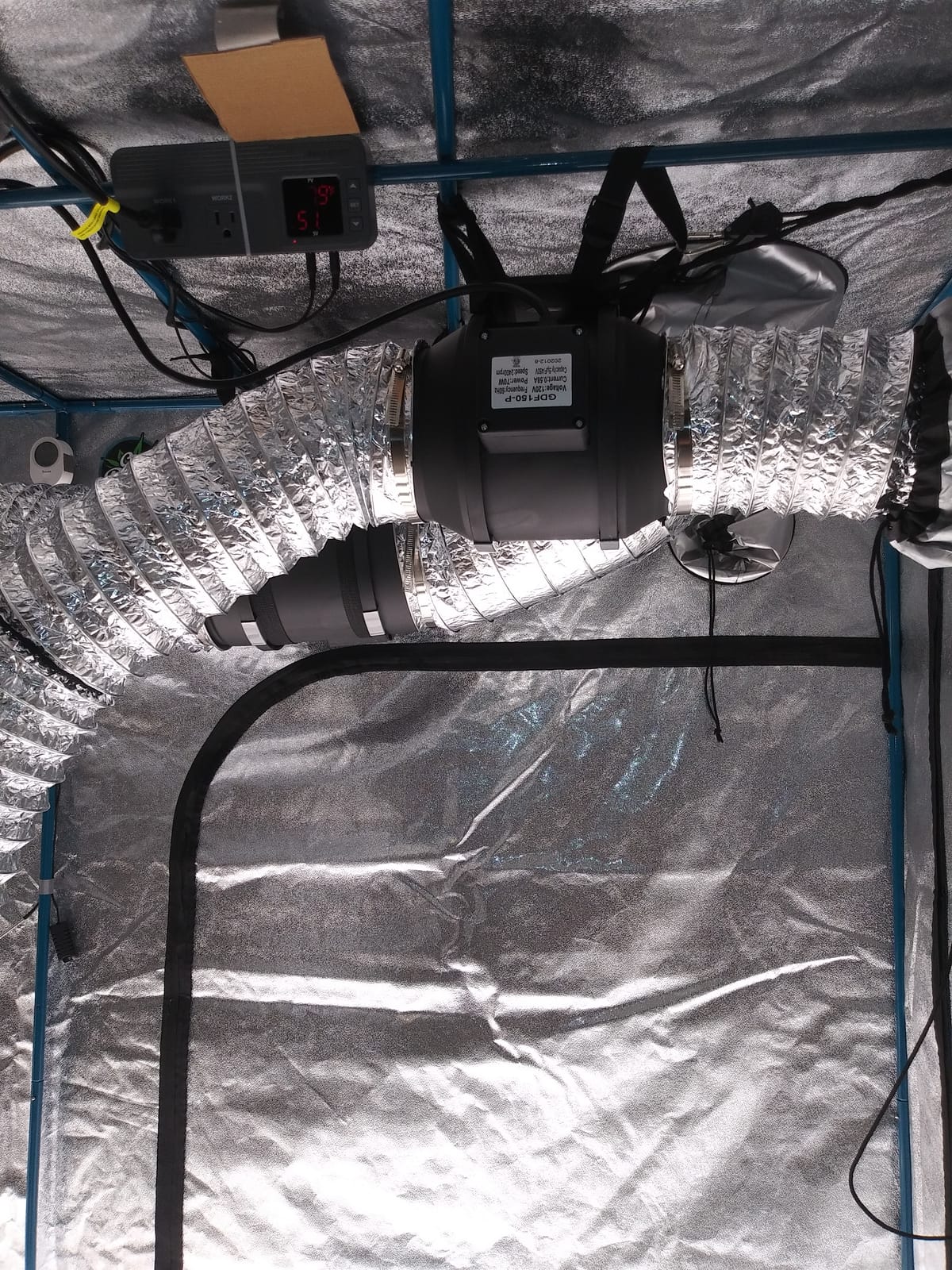
Large tents and small rooms. Owners report meaningful temperature drops in grow rooms using this kit, and the strong suction is useful for pulling air out of a closet or a sealed cabinet as well as a tent.
Thirteen feet of ducting means routing options most kits do not offer. When the exhaust has to reach a window or an exterior wall, that length is the difference between a clean install and a taped-together mess.
Where it falls short
402 CFM is more than a small or improvised tent can handle. Owners report fabric walls pulling inward hard enough to worry, so seal every port and expect to run it at partial speed in a small space.
Only three speed settings are available, and a small number of units have failed shortly after the warranty period ended. With 246 ratings the long-term track record is still short compared to the four inch kits.
6. VIVOSUN G6 Smart Filtration Kit: Best for Automated Climate Control
VIVOSUN G6 Smart Filtration Kit, Inline Fan, Controller, Carbon Filter,Duct
6 inch inline fan at 388 CFM
35 watt EC motor at 45 dBA
GrowHub E42A+ controller with VPD monitoring
WiFi app with high temperature alerts
Pros
- Controller automates fan speed from temperature
- humidity and VPD
- App and WiFi let you check the tent remotely
- 388 CFM gives real headroom through a carbon bed
- Quiet at typical running speeds
- 83 percent five-star share
- the strongest in this group
Cons
- App interface is described as clunky
- Heaviest kit here at 20.2 pounds
- Requires a sealed tent to work as intended
The G6 is the AeroZesh 6 inch fan at 388 CFM paired with the GrowHub E42A+ controller, and the controller is the reason to choose it. It carries a built-in temperature and humidity gauge plus an external probe, tracks VPD, and adjusts the fan on its own.
For a grower who cannot sit next to the tent all day, automation beats raw CFM. Set a high temperature and a humidity range, and the fan responds. Owners also use the WiFi app to check conditions from another room and to receive high temperature alerts.
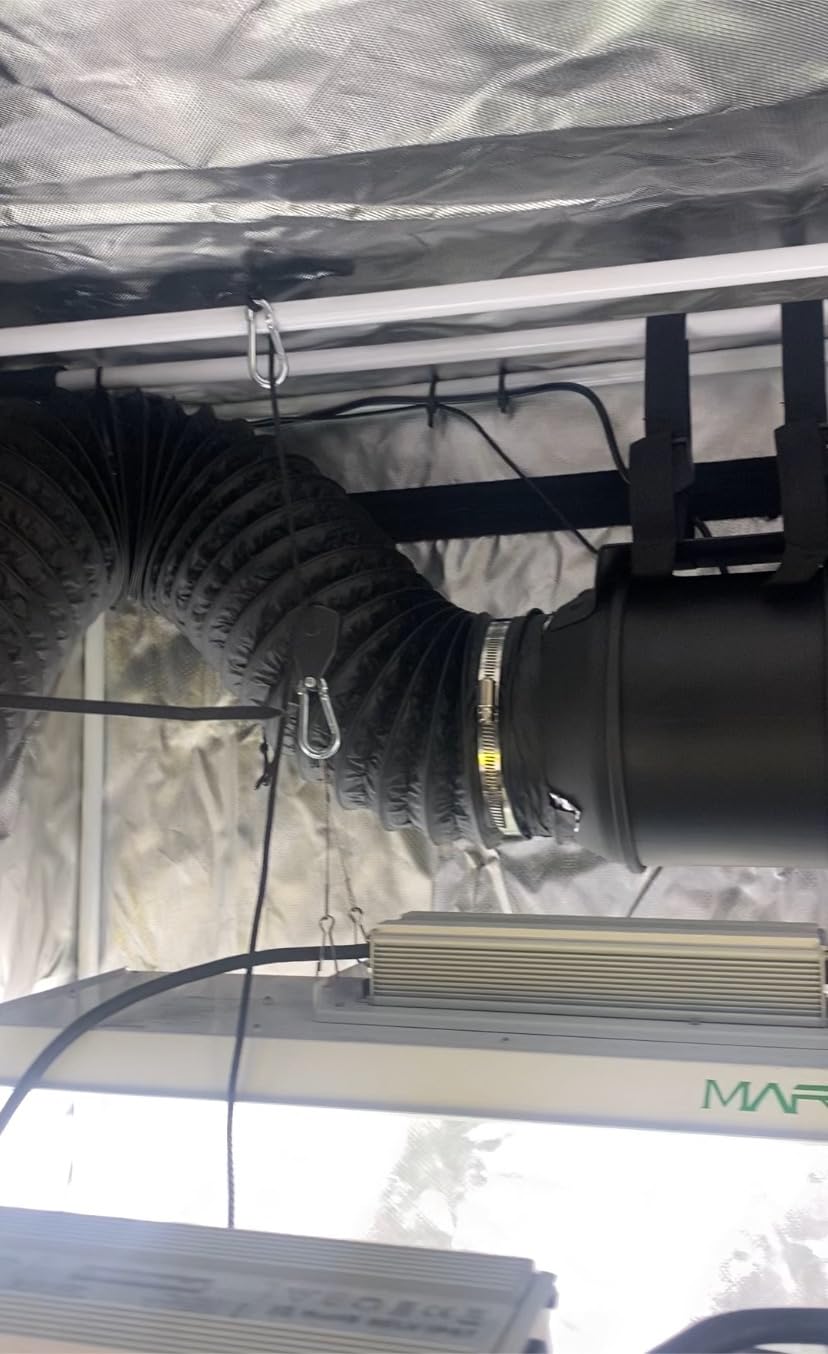
The carbon side matches the flagship VIVOSUN spec: RC 412 Australian virgin charcoal at 1200+ IAV in a 38 mm high-microporosity bed. You get 6 inch by 8 feet of black aluminum ducting with a PET thermoplastic core, two stainless clamps and a pair of rope hangers.
At 35 watts the EC motor is efficient for the output, and the PWM control means you can dial the 388 CFM down to whatever the tent actually needs rather than running it flat out and blasting heat into the room.
What it handles well
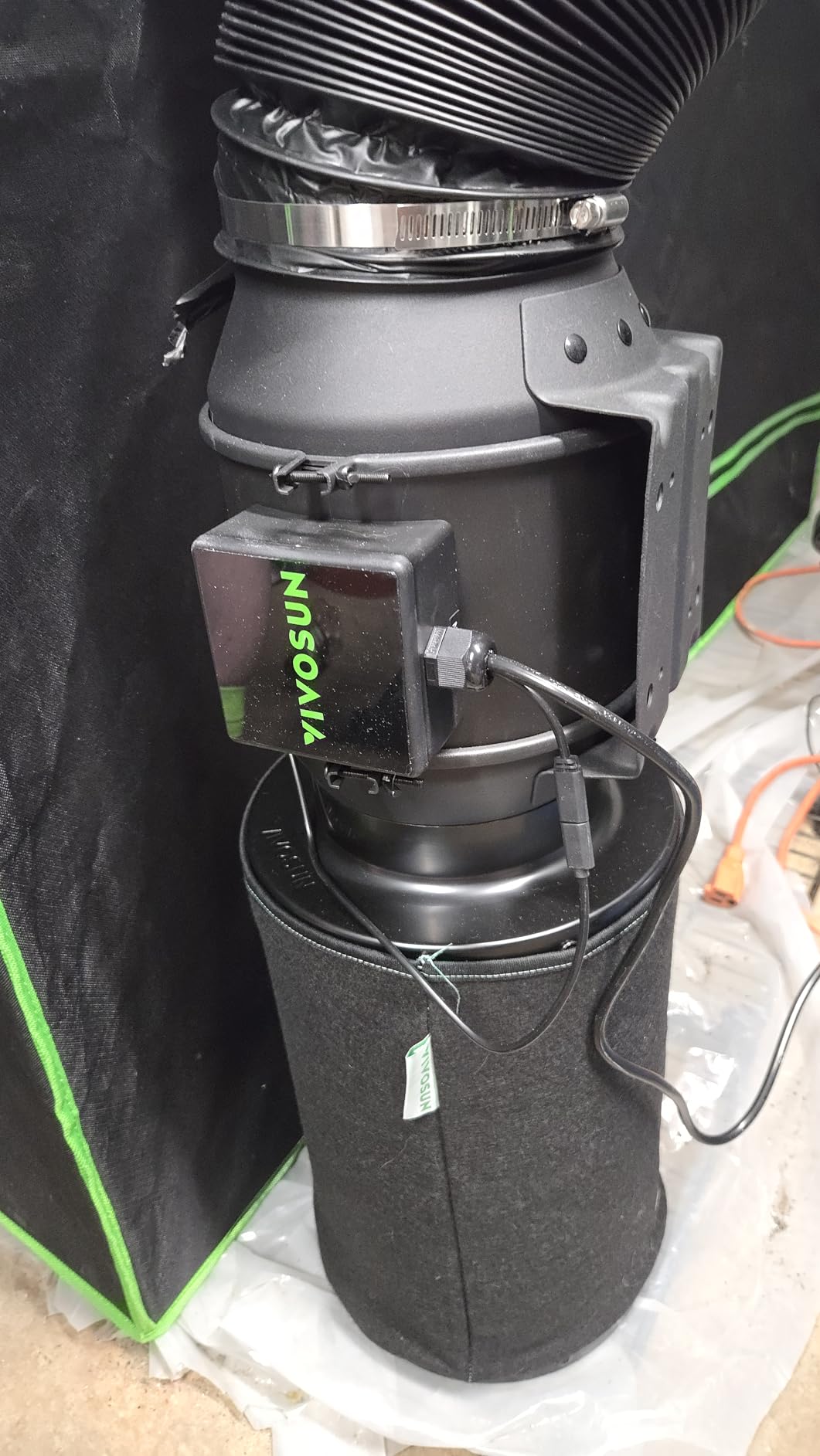
Tents where you cannot monitor constantly, and rooms where heat and odor both have to be handled. 388 CFM through a thick carbon bed is real headroom, which means the filter still has airflow pushing through it late in a cycle.
The rating profile is the strongest in this roundup, with 83 percent five-star ratings across 193 reviews. Several owners bought additional identical kits.
Where it falls short
At 20.2 pounds it is the heaviest kit here, so support matters more than usual. Two people or a proper hoist is safer than one person on a ladder.
The app interface draws repeated complaints as clunky, and setup takes longer than expected. Negative pressure also only works if the tent is genuinely sealed, which is a setup problem rather than a product fault.
7. Hon and Guan 4 Inch Air Filtration Kit: The Quietest 4 Inch Setup Here
Hon&Guan 4″ Air Filtration Kit: 4 Inch Inline Duct Fan with Speed Controller, 10″ High Carbon Filter, 8 Ft Ducting & Rubber Coupler, Ventilation System for Grow Tents, Indoor Gardening, Hydroponics
4 inch inline fan at 130 CFM
26 dB operating noise
Speed controller included
10 inch carbon filter and 8 ft ducting
Pros
- 26 dB is the lowest listed noise figure in this group
- Speed controller included
- Three-layer foil and PET ducting resists rips and pin holes
- Rubber coupler gives a sealed fan to filter joint
- 10 inch filter body is taller than the common short filter
Cons
- 130 CFM suits small tents
- Uses RC 48 carbon rather than RC 412
- Far less review history than the larger brands
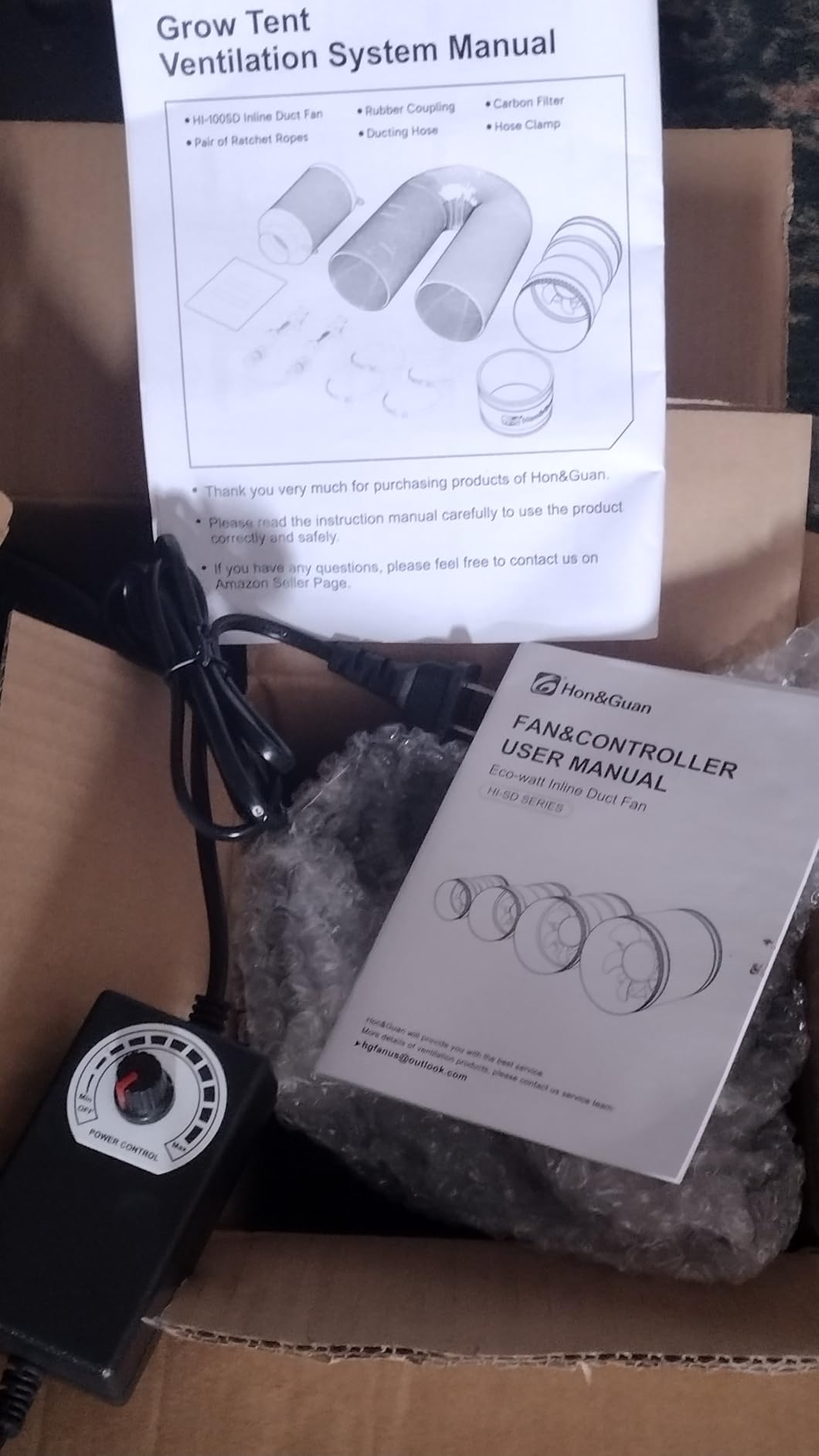
Noise is the deciding factor for anyone running a tent in a living space, and this Hon and Guan kit is the quietest listed figure in the roundup at 26 dB. It still moves 130 CFM, which is a small tent’s worth of air.
Most budget kits make you buy the speed controller separately. This one includes it, along with a 10 inch tall carbon filter using RC 48 lightweight activated carbon at 1200+ IAV in a 38 mm bed, and 8 feet of ducting.
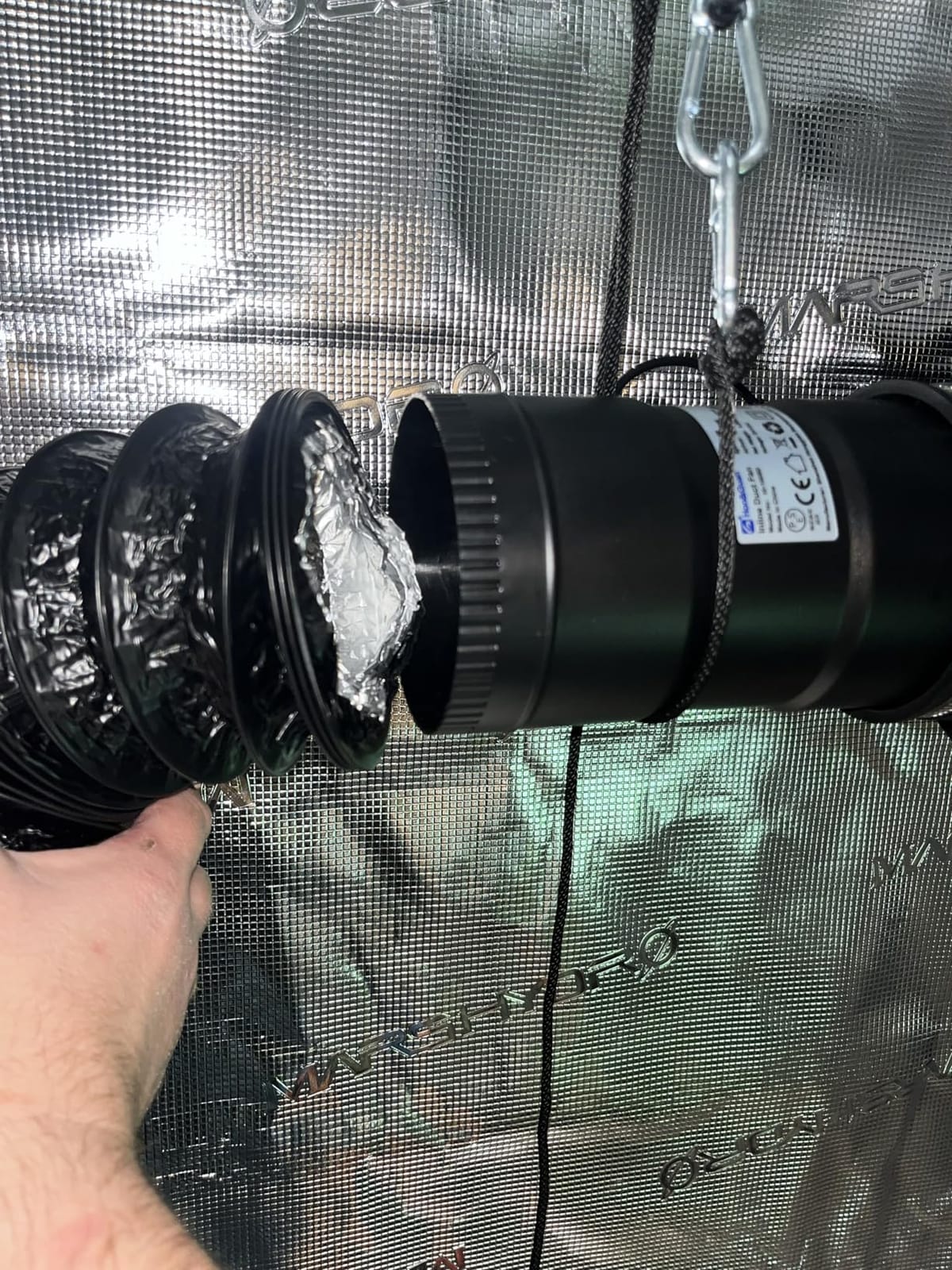
The ducting is the part that looks over-engineered. It uses two layers of aluminum foil with a PET layer and a steel wire helix, a three-layer build aimed squarely at the pin holes that ruin cheap flex duct in a season.
A rubber coupler joins the fan to the filter, which solves a problem several kits in this roundup leave to the buyer. Fewer gaps, fewer leaks, less odor escaping at the seam.
What it handles well
Bedrooms, offices and any space where a constant fan hum is genuinely annoying. At 26 dB the fan sits under most background room noise, and the included controller lets you lower it further.
For a 2×2 tent, 130 CFM is workable when the tent is sealed. The same manufacturer also makes 6 inch and 8 inch versions if you outgrow it.
Where it falls short
The carbon is RC 48 rather than the RC 412 used by the VIVOSUN and Spider Farmer kits. It carries a 1200+ IAV rating, but it is a lighter media and the bed saturates sooner under heavy late-cycle odor.
With 260 ratings the long-term record is thin compared with the four inch kits that have thousands. Expect to check the filter more often.
8. Hydro Crunch 4 inch 100 CFM Kit: The Budget Pick for a Starter Setup
Hydro Crunch 4 inch 100 CFM Booster Fan & 4″ x 12″ Carbon Filter with 4″ x 25ft. Ducting Hydroponic Ventilation Kit
4 inch booster fan at 100 CFM
4 by 12 inch carbon filter with pre-filter
4 by 25 ft aluminum ducting
1-year warranty
Pros
- Complete kit in one box with 25 ft of ducting
- Carbon filter owners reuse with a higher-CFM fan
- Pre-filter included with the carbon bed
- 1-year warranty
- Works for odor control and heat removal together
Cons
- 100 CFM is the lowest airflow in this group
- Only one clamp included for a multi-joint assembly
- Some units arrived with a loose ground wire
- Ducting is described as cheap and awkward to assemble
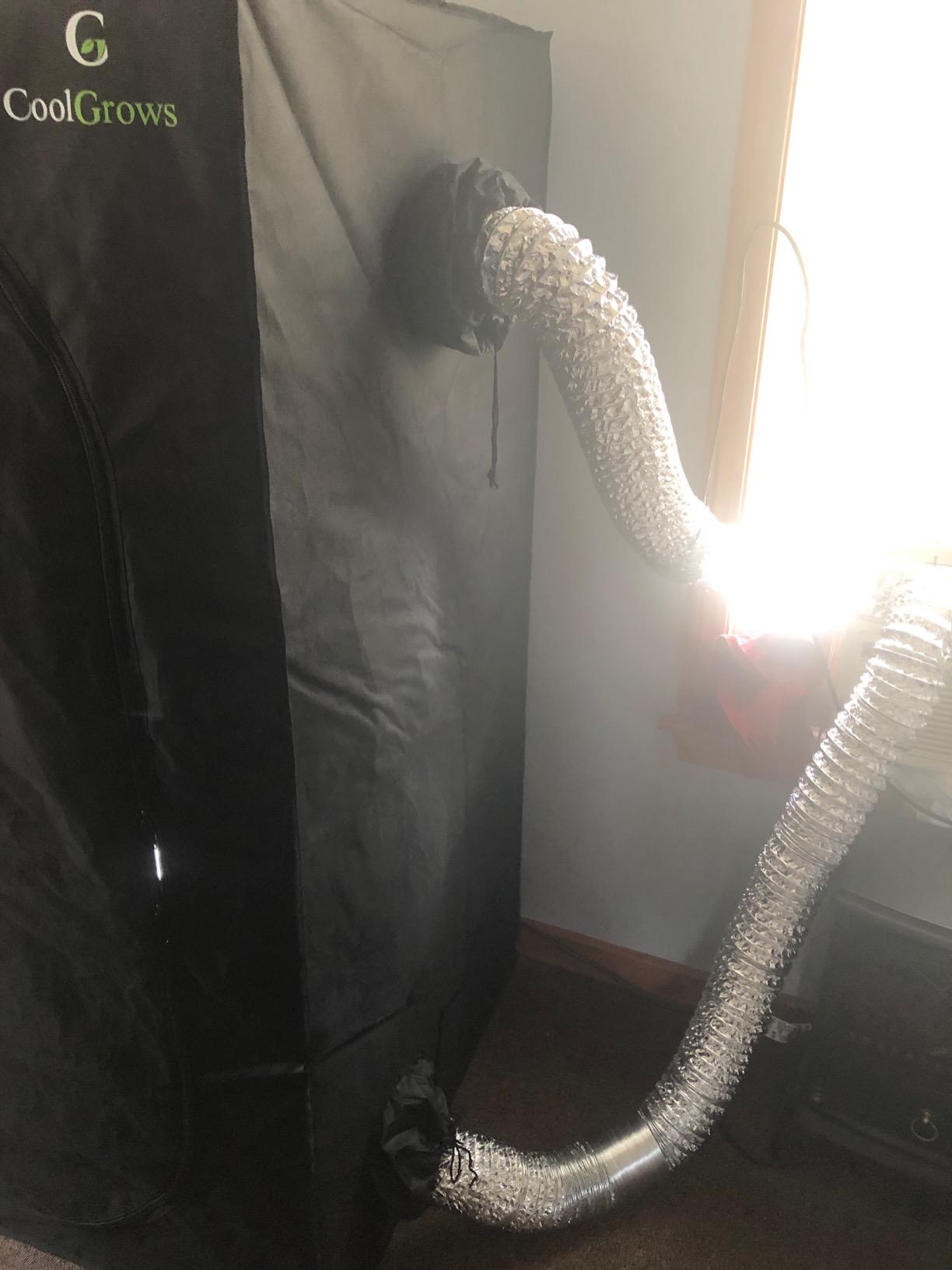
The Hydro Crunch is the cheapest complete kit here, and the only one that includes 25 feet of ducting. If you are building a first tent on a budget, the box contains a booster fan, a carbon filter, a pre-filter, ducting and clamps.
The problem is the fan. At 100 CFM it is the weakest in the roundup, and owners replace it more often than any other component in this list. The carbon filter, by contrast, is widely praised and several users keep it when they fit a stronger fan.
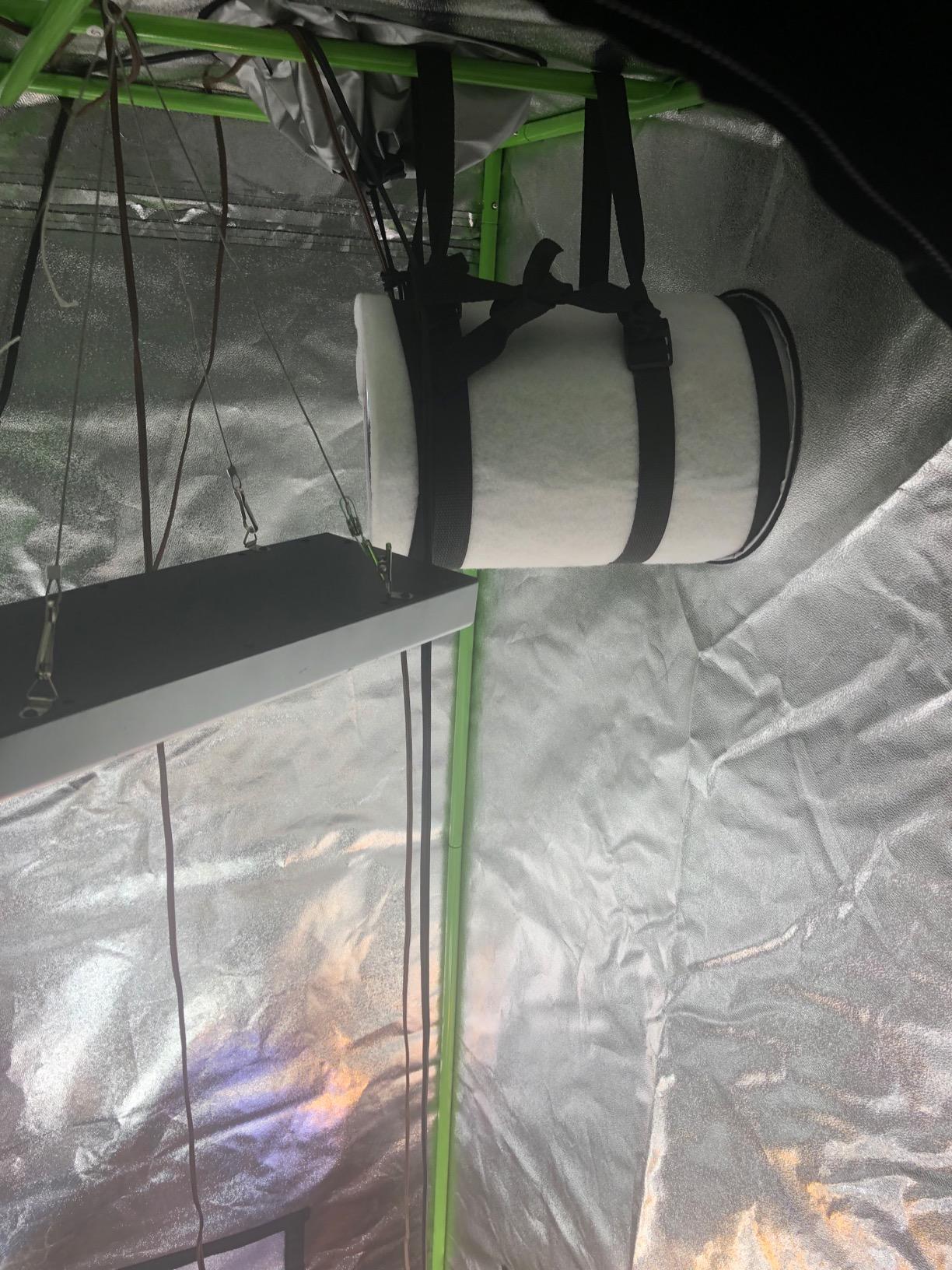
At 4.3 stars across 320 ratings, with 66 percent five stars, the score reflects a kit where one part is strong and one part is not. The carbon bed is a 4 by 12 inch charcoal filter with a pre-filter, and the ducting is 25 feet of uninsulated aluminum.
Owners do report the full package working: humidity stabilizing and odor disappearing entirely in a sealed tent. That is a small tent result, not a room result.
What it handles well
A 2×2 tent on a strict budget, especially one with a long exhaust run. Twenty-five feet of ducting at this level is unusual, and it removes the most common early purchase.
If you plan to upgrade the fan later, this is a sensible chassis. The filter and ducting both survive the swap, so nothing is wasted.
Where it falls short
100 CFM will not keep up with a 2×4 tent during peak heat, and the single included clamp is not enough for a proper multi-joint assembly. Buy a set of clamps before you start.
A small number of units arrived with a loose ground wire or loose charcoal in the filter. Check both before the first run, and treat this as a temporary fan rather than a long-term one.
9. MELONFARM 4 inch All-in-One Filter Fan: The Simplest Install
MELONFARM Air Filtration Kit 4″, Built-in 14cm Fan Low Nois Carbon Filter with 12-Speed Controller, 8′ Ducting, Cooling & Ventilation System for Grow Tents, Indoor Gardening, Hydroponics 4“x12.6″
Built-in 14 cm fan rated 260 CFM
30 dB operating noise
12-speed button controller
4 by 12.6 inch carbon filter with pre-filter
Pros
- Fan and filter in a single housing cuts install to one unit
- Twelve speed settings
- the most granular control here
- Quiet at 30 dB while moving 260 CFM
- Removable pre-filter cloth blocks 99 percent of particles
- Light at 3.99 kg
Cons
- Integrated design means fan and carbon cannot be replaced separately
- Listed airflow varies between 265 and 260 CFM
- Fixed 8 ft ducting with no clamp compatibility detail
Everything else in this roundup asks you to join three parts. This one puts a 14 cm fan inside the carbon filter housing, which means one unit in the duct run instead of two, and it moves 260 CFM at 30 dB.
That is an unusual amount of airflow for a 4 inch footprint, and it comes from the airflow deflector that focuses the fan output and reduces turbulent energy. The filter uses Australian virgin charcoal at 1200+ IAV in a 4 by 12.6 inch body.
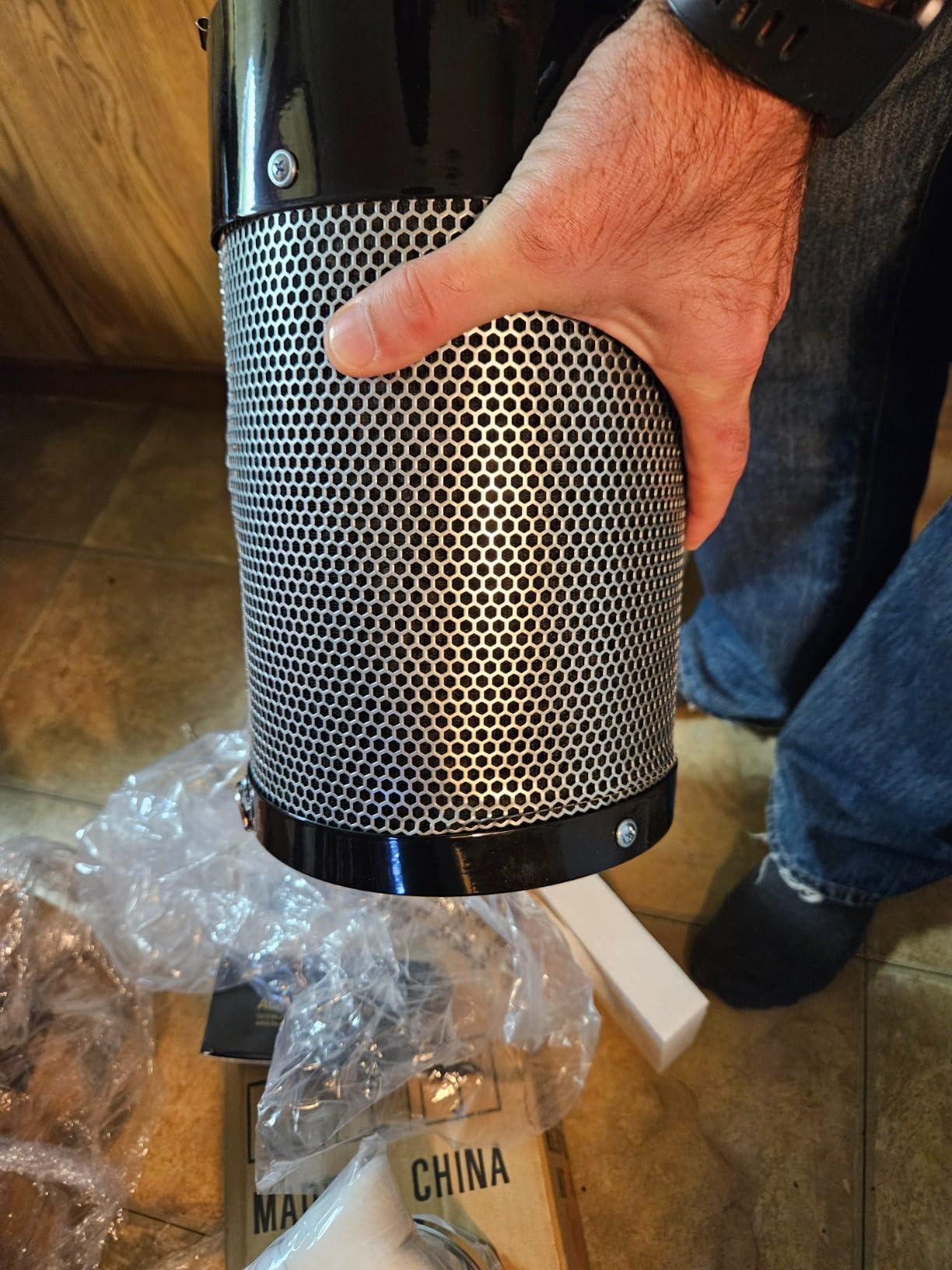
The mesh face is a double-sided galvanized steel hexagonal design that increases open area, and the removable pre-filter cloth is claimed to block 99 percent of particles. That pre-filter is the piece that keeps the carbon bed from clogging with dust and lint.
The controller gives you twelve speed settings with an automatic operating mode, the most granular speed control in this group. It works as an intake or exhaust filter, which makes it useful for two-way setups.
What it handles well
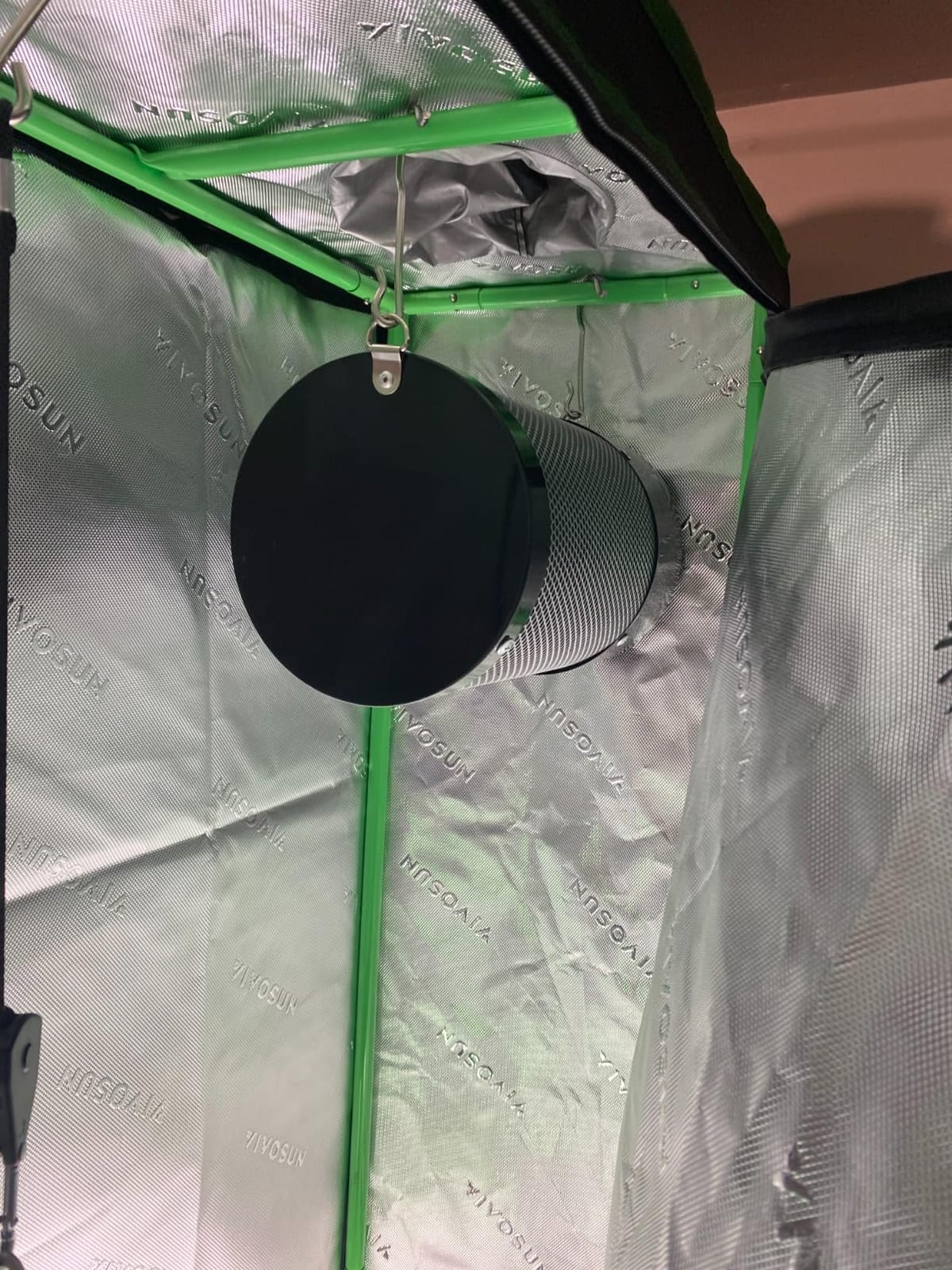
Closets, cabinets and small rooms where a tent footprint is overkill. At 260 CFM it handles spaces that would normally need a 6 inch kit, and the single-body design means one connection to seal.
Light weight is another point in its favor at 3.99 kg. Hanging a single unit is far easier than hanging a fan, a filter and a duct separately.
Where it falls short
The integration cuts both ways. When the fan motor or the carbon bed is spent, you replace the whole unit, which over time is more expensive than swapping a fan in a conventional kit.
The listed airflow is inconsistent between the bullet points at 265 CFM and the spec sheet at 260, and the ducting is a fixed 8 feet. Plan around the smaller number and expect to buy longer ducting.
10. iPower 4 Inch 190 CFM Lite Kit: A Complete Starter Set
iPower 4 Inch 190 CFM Inline Exhaust Fan, Air Carbon Filter, 8 Feet Ducting, Rope Hanger for Grow Tent Ventilation, Lite Kits
4 inch inline exhaust fan at 190 CFM
4 by 12 inch carbon filter at 1050+ IAV
3-position speed control and rope hangers
8 ft ducting, pre-filter, 1-year warranty
Pros
- 190 CFM with rope hangers and a speed controller included
- 1050+ IAV Australia charcoal in a reversible flange
- Free pre-filter included to protect the carbon bed
- 1-year manufacturer warranty
- Composite blades reduce noise and vibration
Cons
- 4.2 average with 8 percent one-star ratings
- Controller will not adjust below 50 percent
- Only 8 ft of ducting for routing outside
- Small mylar housing holds less carbon than taller filters
This iPower Lite kit is the most complete 4 inch package per box: a 190 CFM inline fan, a carbon filter, 8 feet of ducting, a three-position speed control switch, a pair of rope hangers and a free pre-filter, all under a 1-year manufacturer warranty.
Most competing 4 inch combos leave out either the controller or the hangers. Having both in the box is the reason a first-time buyer can finish an install in one trip.
The filter uses 1050+ IAV Australia charcoal, the highest IAV figure listed in this roundup, in a 4 inch flange by 12 inch body with a reversible flange. The switch offers variable speed plus OFF, HIGH, MED and LOW, with a floor at 50 percent to protect the motor.
Composite fan blades and a composite center hub are used to cut noise and vibration, which is a real design choice for a fan meant to run continuously.
What it handles well
A first tent in the 2×2 to 2×4 range, where 190 CFM is the right number. Nothing needs buying separately, and the rope hangers mean the install is genuinely a one-job project.
The pre-filter included here protects the carbon bed from day one. Swapping a pre-filter every six months is cheap insurance on a kit this size.
Where it falls short
It has the weakest rating profile in the roundup, with a 4.2 average and 8 percent one-star ratings. That points at motor durability and noise under continuous use rather than a defect in the design.
Eight feet of ducting is short for routing exhaust outside, and the controller will not go below 50 percent, so you have limited control at the quiet end. The mylar filter housing also holds less carbon than the taller inline filters.
11. Hon and Guan 6 Inch Air Filtration Kit: The Best Value at 345 CFM
Hon&Guan 6″ Air Filtration Kit: 6 Inch Inline Duct Fan with Speed Controller, 12″ High Carbon Filter, 8 Ft Ducting & Rubber Coupler, Ventilation System for Grow Tents, Indoor Gardening, Hydroponics
6 inch inline fan at 345 CFM
32 dB operating noise
12 inch carbon filter with a 38 mm bed
8 ft three-layer ducting and rubber coupler
Pros
- 345 CFM at 32 dB covers a 4x4 tent with headroom
- Complete bundle including the rubber coupler
- 12 inch filter body is taller than most 6 inch filters
- 3-layer foil ducting resists rips and pin holes
- 4.5 average across 262 ratings
Cons
- Basic manual dial rather than a smart controller
- Sizes are matched to the 6 inch fan
- so upgrades mean replacing the kit
- Uses RC 48 activated carbon
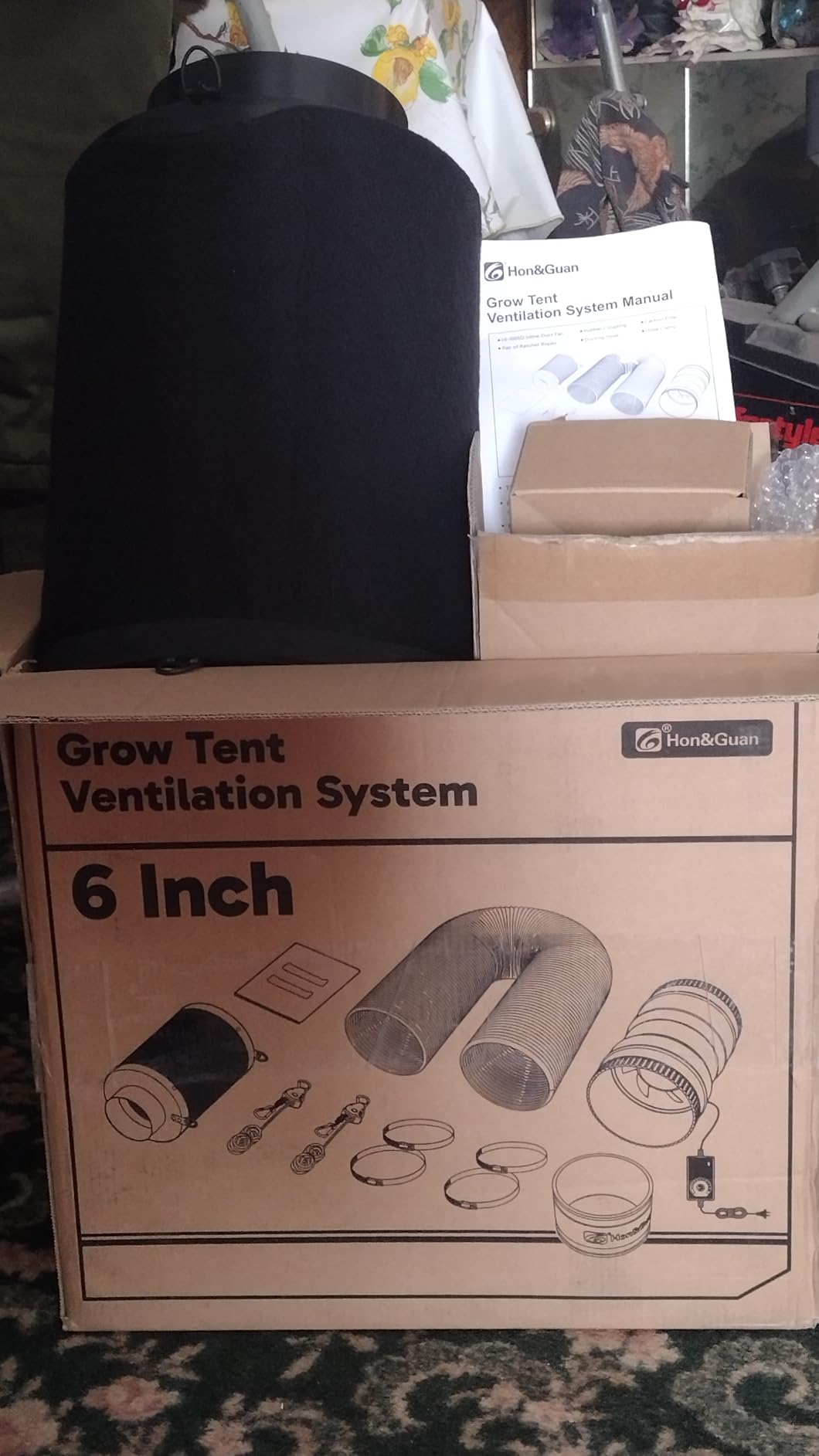
Most 6 inch kits jump straight to 400 CFM and smart controllers. This Hon and Guan kit sits in between at 345 CFM with a manual speed dial, and for a 4×4 tent that is close to the ideal number.
The bundle is genuinely complete: a 6 inch inline fan, a speed controller, a 12 inch high carbon filter using RC 48 activated carbon at 1200+ IAV with a 38 mm bed, 8 feet of reinforced ducting and a rubber coupler for a sealed joint.
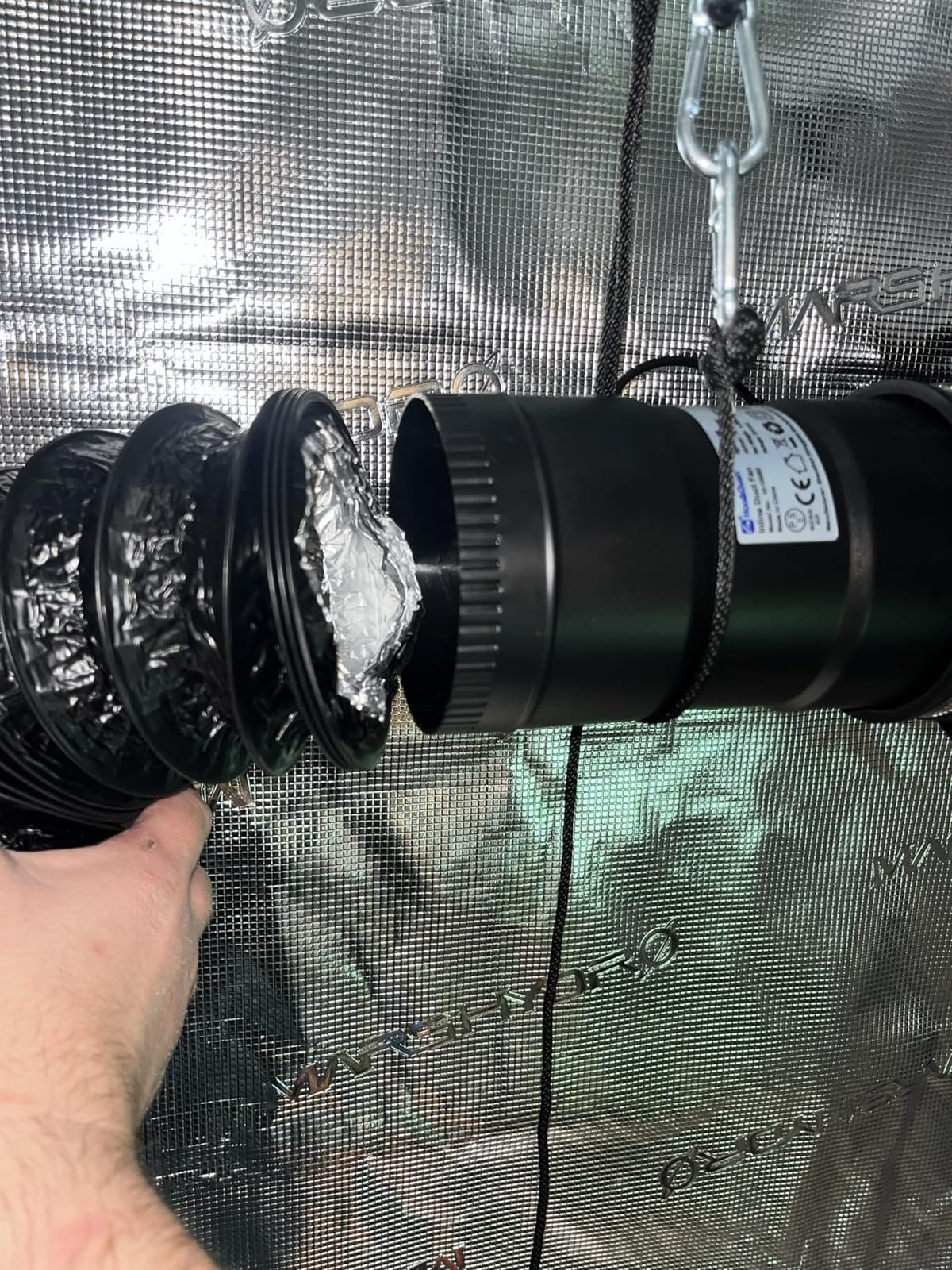
The ducting is the same three-layer construction as the 4 inch version, with two aluminum foil layers, a PET layer and a steel wire helix. That build is what keeps a run of flex duct from developing the pin holes that quietly leak odor.
At 32 dB for 345 CFM the noise-to-output ratio is competitive, and 4.5 stars across 262 ratings puts it among the better-reviewed 6 inch kits in this group.
What it handles well
A 4×4 tent, or two smaller tents run from one exhaust, which is a configuration experienced growers use often. The 12 inch filter body holds more carbon than the common 12 inch short cylinder.
If you want 6 inch performance without an app or a probe, the manual dial is a feature. It cannot fail from a failed connection and it never needs updating.
Where it falls short
The carbon is RC 48 rather than RC 412, so it is a lighter media that saturates sooner under sustained odor. Pre-filtering matters more with this kit than with the RC 412 filters.
Everything is sized to the 6 inch fan, so a later upgrade means replacing the filter and ducting too. And the dial gives you no read on tent temperature, which is the number you actually want once the crop is running.
12. Spider Farmer 4 Inch Air Filtration Kit: The Best 4 Inch Upgrade
Spider Farmer 4 Inch Air Filtration Kit with RJ12 Speed Controller
4 inch inline fan at 205 CFM
26.8 dB with a brushless EC motor
RJ12 speed controller with 8.2 ft cable
13 ft reinforced ducting and RC412 carbon
Pros
- 205 CFM at 26.8 dB is the best airflow to noise ratio here
- 13 ft of double-layer reinforced ducting
- RJ12 controller works with GGS controllers and power strips
- RC412 carbon with a 38 mm bed and pre-filter
- ETL and FCC listed with stainless flanges
Cons
- 205 CFM is a ceiling for 4 inch
- lower than the 6 inch kits
- Proprietary RJ12 connector adds a cable dependency
- Only three speed levels
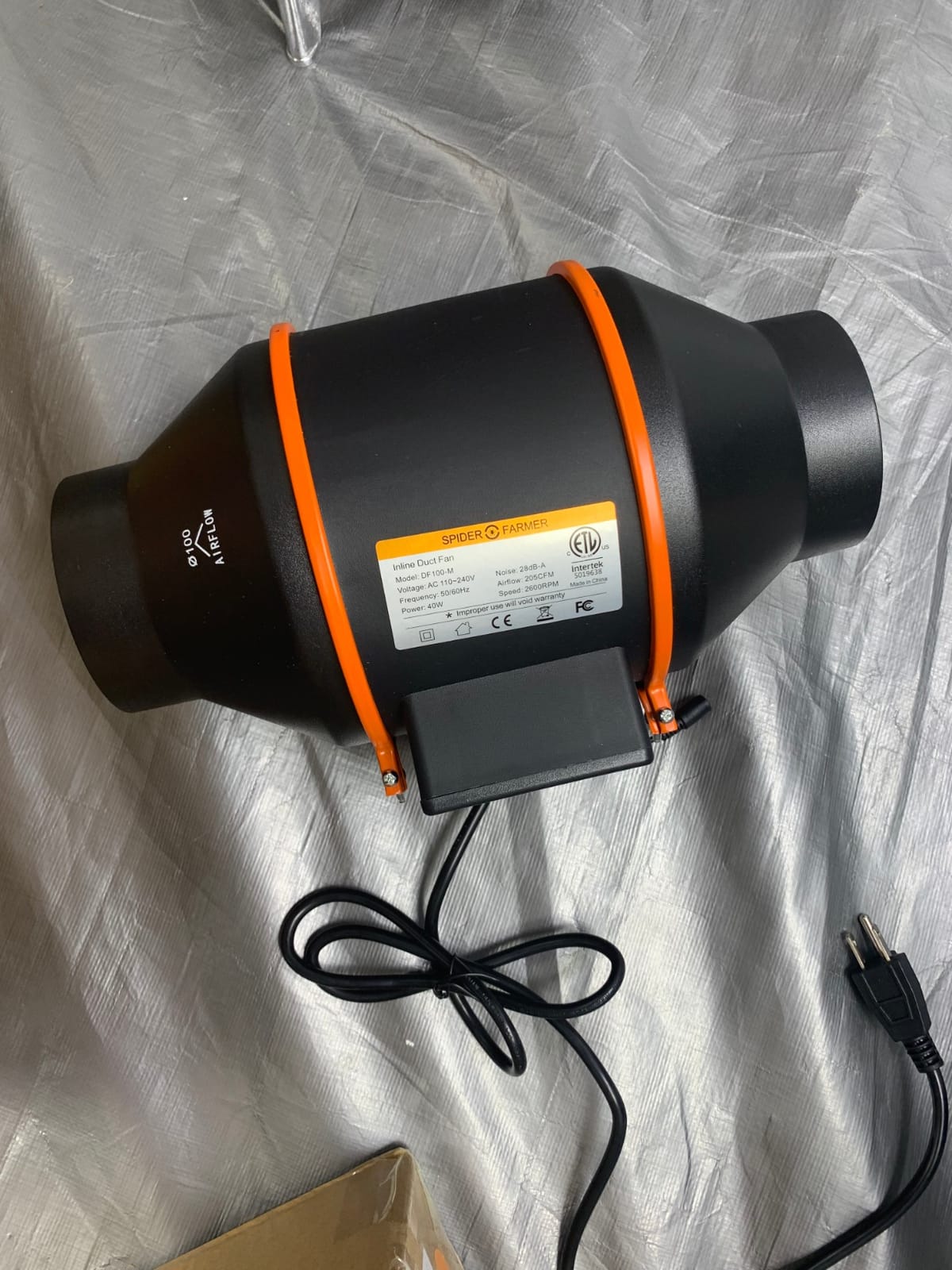
If you want a 4 inch kit and you want the best version of a 4 inch kit, this is it. The brushless EC motor delivers 205 CFM at 26.8 dB, which is the highest airflow-to-noise pairing in this roundup.
The carbon is RC412 activated carbon with a 38 mm thick bed and a pre-filter, mounted between stainless steel flanges with corrosion-proof clamps. That is the same filter media used in the 6 inch Spider Farmer kit.
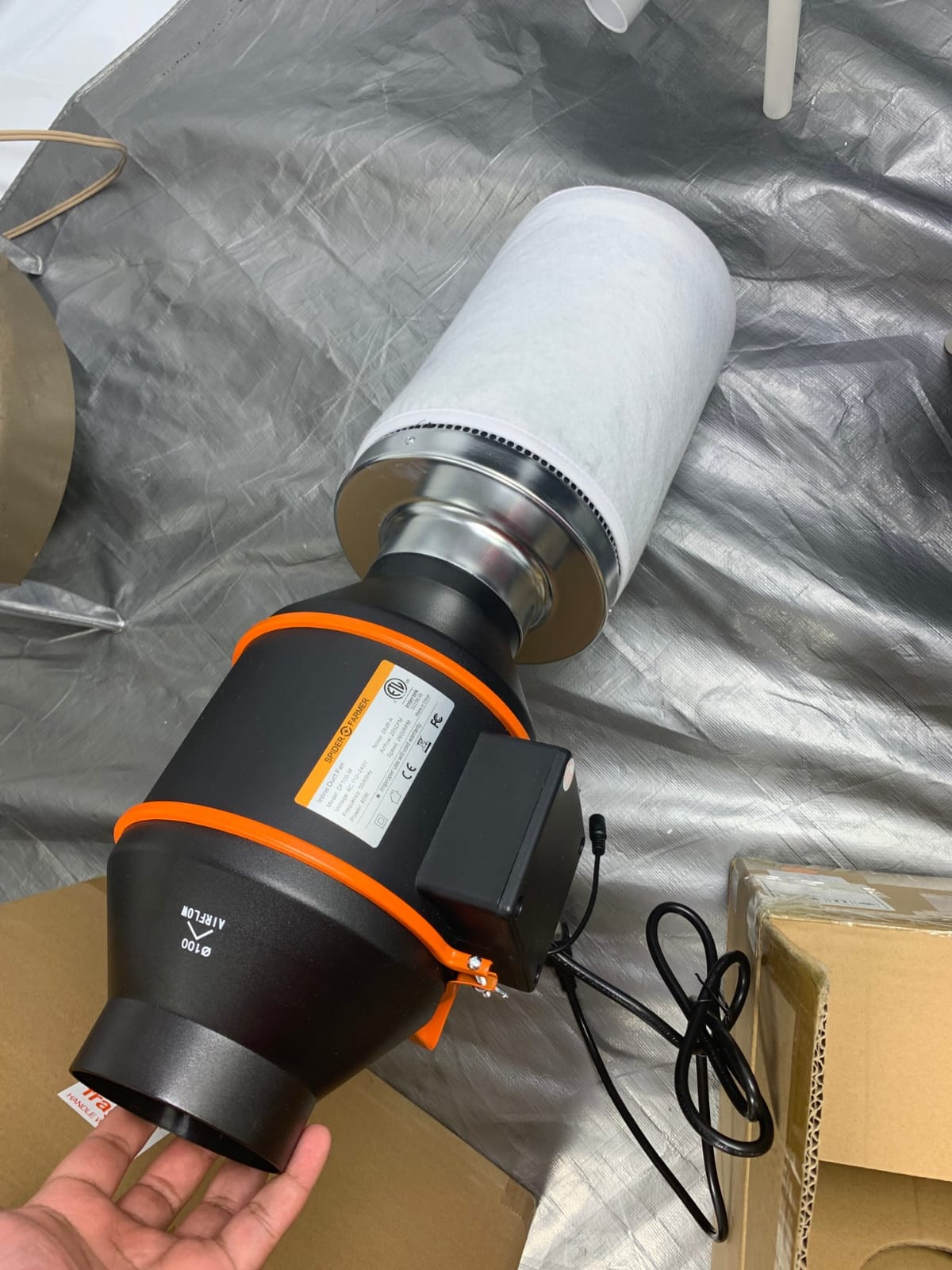
You also get 13 feet of double-layer aluminum and PVC ducting, steel wire reinforced and tested to GB8624B1, plus a three-speed RJ12 touchpad controller on an 8.2 foot cable. The RJ12 interface is compatible with the GGS controller and power strip.
At 4.5 stars across 415 ratings with 75 percent five stars, this is one of the better-reviewed inline filtration combos available, and reviewers repeatedly call out the bundled completeness.
What it handles well
A sealed 2×4 or 3×3 tent, and small rooms. At 205 CFM it has just enough headroom to push air through a 38 mm carbon bed without the fan straining.
Thirteen feet of ducting removes the most common install compromise. If you later need more capacity, the filter and ducting format carries across to larger systems in the same line.
Where it falls short
205 CFM is the ceiling for a 4 inch fan, so this kit is not the answer for a 5×5 or a 4×8. Reviewers note the limited capacity as the recurring point.
The RJ12 connector is a proprietary dependency rather than a standard dial. If you are not using the GGS ecosystem, that is extra cable to keep spare, and you get only three speed levels.
Grow Tent Ventilation Buying Guide: What Actually Matters
Once you know the CFM number your tent needs, the remaining decisions are motor type, carbon quality, intake design and duct routing. These are the parts that separate a system that works from one that only appears to.
EC motors versus AC motors for grow tents
An EC motor is electronically commutated, meaning it uses a controller to manage current rather than simple AC commutation. The practical results are lower wattage at a given airflow, better low-speed control and less heat wasted as noise.
Look at the numbers in this roundup for the scale of the difference. The VIVOSUN G6 lists 388 CFM at 35 watts, the Spider Farmer 6 inch lists 402 CFM at 62 watts, and the VIVOSUN G4 lists 195 CFM at 72 watts. Wattage is not directly comparable across designs, but the EC kits consistently deliver more air per unit of noise.
The VIVOSUN G4 is the interesting exception. It moves 195 CFM quietly for a relatively high draw, which is a reasonable trade if noise in a living space is your top concern.
Carbon filter quality: what actually removes odor
Activated carbon removes odor by adsorption, not absorption. Molecules stick to the enormous microscopic surface area of the carbon rather than dissolving into it, which is why a thick, high-porosity bed outperforms a thin one made from the same material.
Two figures matter when comparing. IAV, or iodine adsorption value, measures how much material the carbon can hold. RC 412 Australian virgin charcoal at 1200+ IAV appears in the VIVOSUN G4, the VIVOSUN G6 and the Spider Farmer kits, and is the densest media in this roundup. RC 48 at 1200+ IAV, used by both Hon and Guan kits, is described as lightweight and saturates sooner.
Bed depth is the second number. A 38 mm bed is the standard here, and a 10 inch or 12 inch filter body gives more media than a short cylinder. Growers on forum boards consistently rate the 6 inch RC 412 filter as the strongest of the group for the same reason.
Pre-filters are the third piece. They catch dust, pollen and lint before it blinds the carbon surface, and several kits here include one with a recommended six month replacement interval. That is the cheapest odor control improvement available.
Passive versus active intake
Your tent does not need a second filtered fan. In most setups you leave a passive intake port open and let the exhaust fan pull fresh air in, which costs nothing and adds no noise.
The sizing rule is that the passive intake opening should be smaller in cross-section than the exhaust. Running the intake at roughly 80 percent of the exhaust diameter keeps the tent under negative pressure, which is what forces escaping air through the carbon bed rather than through the zipper seams.
Active intake, where a second unfiltered or filtered fan pushes air in, only becomes necessary for very large tents or sealed rooms where you need matched airflow. If you do add one, match the diameters or you will fight the pressure.
Ducting, bends and where airflow is lost
Advertised CFM is measured on a bench with a straight, short, free-air duct. Every bend and every foot of flex duct reduces what you actually get, so 20 to 25 percent off the rated figure is a realistic expectation in a real install.
Keep the run short and straight where you can, and avoid tight 90 degree bends. If the route demands bends, make them long and gentle, and support the duct along its length so it does not collapse into a flattened section.
Insulated ducting also matters in summer. A metal flex duct sitting in a warm room adds heat to the air it carries, and that heat ends up back in the tent through the intake. Longer exterior runs or insulated duct reduce that loop.
Installation: the six-step filter, fan and duct setup
First, seal the tent. Walk the perimeter and close every port, zipper and vent flap except the ones you are using, and check fabric seams for pin holes under light. This step decides whether everything after it works.
Second, set up the pull-through configuration with the filter closest to the tent, the fan downstream of the filter, and the duct last. The fan pulls air through carbon rather than pushing it, which improves capture and keeps dust off the fan.
Third, hang both units as high as the tent allows. Warm air rises, and a top-mounted exhaust pulls the hottest, most odor-laden air first. The filter can live outside the tent, but the fan should sit on the carbon side of the assembly.
Fourth, run the duct outside. Exhaust into a closet, a spare room or a lung room relocates the smell rather than removing it, which is one of the most common complaints in grow forum threads.
Fifth, connect and clamp. Use clamps at every joint plus foil tape, and check the rubber gaskets where the fan meets the duct. Gaps here are where odor escapes that never touched the carbon.
Sixth, confirm negative pressure. Close the door and hold a tissue at the intake ports. If the fabric walls draw inward and the intake pulls air in, the tent is sealed correctly. If the walls billow outward, you have a leak.
Diagnosing an odor leak: symptom, cause, fix
Smell still in the room with the fan running usually means one of three things. Check the tent walls for a positive-pressure situation first, then look at seams and zipper gaps, then inspect the fan-to-filter joint for a gap.
Walls bowing outward mean the tent is leaking faster than the fan exhausts. The fix is sealing, not a bigger fan. Add passive intake flaps if you are starving the fan, and check that the intake is not blocked by a collapsed filter.
Airflow noise with weak movement usually means a restriction: a collapsed duct, a clogged pre-filter or a saturated carbon bed. Open up the duct run and replace the pre-filter before blaming the fan.
Rattling and vibration point to a loose clamp, an unbalanced blade or a fan mounted on rigid duct. Rope hangers and vibration-isolating mounts are the fix, and both cost almost nothing.
Persistent humidity alongside odor is a specific failure mode. Growers on 420 Magazine and similar boards report filters failing in under two weeks when humidity was not controlled, because moisture coats the carbon surface and blocks adsorption. Control humidity first.
If the tent is airtight and the flow is correct and odor still carries, the problem may not be inside the tent at all. A separate odor tool such as an ozone generator for odor removal handles the room, not the tent, and is a different category of tool from a ventilation kit.
Filter lifespan and the signs of saturation
A carbon filter has no fixed lifespan, because saturation depends on odor load, humidity and run time. A tent on a constant 24/7 cycle saturates far faster than one running only the lights-on hours.
Watch for three cues. The first is odor breakthrough, where the smell returns faintly in the room even though the tent is sealed. The second is a change in airflow noise, often a higher-pitched hiss as the bed fills and the fan works harder. The third is visible dust loading on the pre-filter.
Replace the pre-filter on a six month interval, and replace the carbon when the cues appear rather than on a calendar. One of the biggest sources of wasted filter life is running a saturated pre-filter until the carbon bed is already compromised.
How much negative pressure is too much
Some new owners worry that strong suction will pull tent poles in. Realistically, a slightly firm inward draw on the walls is the goal, and it should not bend aluminum poles or deform a frame. If the walls are taut to the point of straining, you are running too much airflow for the tent size, and the controller should come down a step.
Common mistakes that ruin odor control
Matching the fan and filter diameters is the first one. A 4 inch fan feeding a 6 inch filter, or a filter with a smaller inlet than the duct, chokes airflow and produces noise without exchange.
Pushing air through the filter instead of pulling is the second. The fan belongs downstream of the carbon, on the outside of the assembly, so every cubic foot crosses the bed.
Running the filter without a pre-filter is the third, and it is the most common reason a filter dies early.
Using push-button on/off instead of variable speed is the fourth, because you cannot moderate airflow to match the tent’s changing load.
Exhausting indoors is the fifth, which moves the problem to another room.
Leaving the tent unsealed is the sixth, and no filter rating on any box compensates for air escaping through a zipper.
Frequently Asked Questions
What is the best ventilation system for a grow tent?
The best system is a matched inline duct fan and carbon filter kit sized to your tent footprint, with the fan pulling air through the carbon before exhausting it. For most 2×2, 2×4 and 4×4 tents, a 4 inch kit rated between 190 and 205 CFM does the job well, and the VIVOSUN G4 is our top overall pick. Larger tents need 6 inch systems rated around 345 to 402 CFM.
What size inline fan do I need for my grow tent?
Calculate your tent volume by multiplying footprint by height, then move that volume once a minute during peak heat. Add about 25 percent for carbon filter resistance, another allowance for ducting losses, and 20 percent headroom. That gives roughly 200 CFM for a 4×4 tent, 250 CFM for a 5×5 and 350 to 400 CFM for a 4×8.
Is a carbon filter necessary for a grow tent?
A carbon filter is what separates a tent that smells from a tent that does not. The fan alone moves air out of the tent, but odor molecules still pass through the room on the way. Activated carbon adsorbs those molecules onto its surface as air crosses the bed, so a sealed tent plus a carbon filter is the combination that actually contains odor.
How long does a grow tent carbon filter last?
There is no fixed number, because lifespan depends on odor load, humidity and run time. Expect roughly 3 to 6 months in a constant 24/7 setup and longer when the fan runs only with the lights. Watch for odor breakthrough, a change in airflow noise and visible dust on the pre-filter, and replace the pre-filter every six months.
Do inline carbon filters work, and should the filter go before or after the fan?
Inline carbon filters work well when the whole system is sized correctly. The filter belongs upstream of the fan, closest to the tent, so the fan pulls air through the carbon bed rather than pushing it. Push-through configurations reduce capture and load dust onto the fan faster, which is why most manufacturers specify the pull-through order.
Why is my grow tent still smelling with a carbon filter?
Work through four checks in order. Confirm the tent is under negative pressure by watching the fabric draw inward. Check zipper seams, port flaps and the fan-to-filter joint for gaps. Verify the fan and filter diameters match. Finally, check humidity, because moisture on the carbon surface blocks adsorption and is a reported cause of filters failing within weeks.
Do I need an intake fan for my grow tent?
Usually not. Leaving a passive intake port open is enough for tents up to about 4×4, and the fresh air enters only because the exhaust fan pulls it in. Keep the passive intake cross-section smaller than the exhaust, roughly 80 percent, so the tent stays under negative pressure. Add an active intake fan only for very large tents or fully sealed rooms.
Do you need an exhaust fan with a carbon filter for mushroom grow bags, or also an air purifier?
For mushroom fruiting rooms the odor load is much lower than a flowering grow, so a filtered exhaust plus good air exchange usually handles it. A carbon filter still helps with humidity and spore-heavy air. If you are running CO2 enrichment bags, keep the exhaust running whenever the bags are active, since extra CO2 raises the room’s pressure and odor will find every gap.
The Best Grow Tent Ventilation Kits in 2026: Final Verdict
After working through all 12 kits, the VIVOSUN G4 Air Filtration Kit is the grow tent ventilation kit we recommend most often. It hits 195 CFM at 28 dB, pairs that with a 38 mm RC 412 virgin charcoal bed, and adds a ten-speed app controller that most competitors charge extra for.
Match the rest of the list to your tent. The Spider Farmer 6 Inch kit covers anything from a 4×4 upward, the VIVOSUN G6 handles automation, the Hon and Guan 4 inch kit is the quietest option and the Hydro Crunch combo is the budget starting point. Whatever you choose, seal the tent first and replace the pre-filter twice a year.