
Two meters that disagree by 0.4 pH can mean two very different fertilizer decisions, and one of them is wrong. A pH meter for hydroponics is the cheapest insurance a grower has, but only if you know how it fails.
We spent weeks putting ten of the most-used digital meters through the same routine: soak the probe, calibrate at 4.00 and 7.00, read a nutrient solution at room temperature, then read it again a week later to see what moved. Everything below reflects those readings plus the patterns that show up repeatedly in grower communities like THCFarmer, Overgrow and r/Hydroponics.
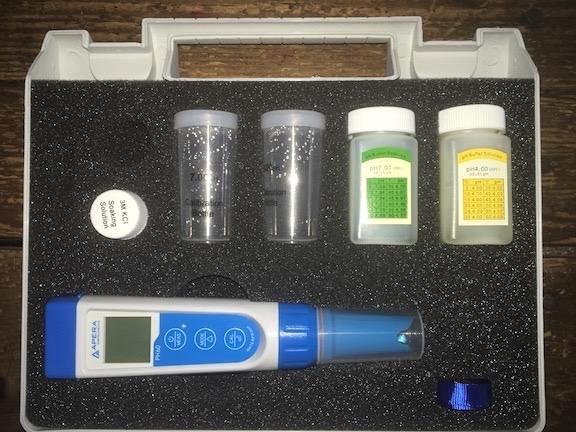
If you want the short answer, the Apera PH60 is the pH meter for hydroponics we would put in front of most people. It reads to 0.01 pH, takes a replaceable glass probe, and ships with buffer and storage solution already in the case. The Bluelab pH Pen is the durable reservoir veteran, and the Milwaukee MW102 is the one to buy when a reading has to be defensible.
Table of Contents
Top 3 pH Meter Picks for Hydroponics in October 2026
These three cover the three ways people actually use a meter: a daily hand check, a pen that lives in a wet bucket, and a bench instrument for labs or multi-reservoir rooms.
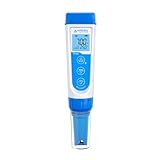
Apera PH60 Waterproof pH Pocket Tester
- 0.01 pH accuracy
- Replaceable glass probe
- 1-3 point auto calibration

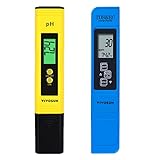
VIVOSUN pH, TDS and EC Meter
- pH plus TDS and EC readings
- 0.01 pH resolution
- Includes case and buffers
For the record on how we chose these: rating and review volume were the first filter, because a 4.5 score built on 3k reviews tells you more than a 4.5 score built on 200. After that we looked at whether the probe is replaceable, whether the meter calibrates in one button press, and whether it survives a humid room. Nothing in this list was picked on a spec sheet alone.
All 10 pH Meters at a Glance for October 2026
Every meter below is a real pH tester for hydroponics use. The table shows what each one does, not just what it is called.
| Product | Specifications | Action |
|---|---|---|
| Apera PH60 Waterproof pH Pocket Tester |
|
Check Latest Price |
| Bluelab pH Pen |
|
Check Latest Price |
 Milwaukee MW102 Portable pH Meter Milwaukee MW102 Portable pH Meter |
|
Check Latest Price |
 Apera PC60 5-in-1 Pocket Tester Apera PC60 5-in-1 Pocket Tester |
|
Check Latest Price |
| VIVOSUN pH, TDS and EC Meter |
|
Check Latest Price |
 UIUZMAR 4-in-1 pH, PPM, EC Tester UIUZMAR 4-in-1 pH, PPM, EC Tester |
|
Check Latest Price |
 YINMIK YK-T4 Pro 4-in-1 Meter YINMIK YK-T4 Pro 4-in-1 Meter |
|
Check Latest Price |
 AC Infinity AC-PHM3 Digital pH Meter AC Infinity AC-PHM3 Digital pH Meter |
|
Check Latest Price |
 GIDIGI 4-in-1 pH, TDS, EC Tester GIDIGI 4-in-1 pH, TDS, EC Tester |
|
Check Latest Price |
 KETOTEK KT-3 Digital pH Pen KETOTEK KT-3 Digital pH Pen |
|
Check Latest Price |
1. Apera PH60 Review – Top Pick for Everyday Hydroponic Monitoring
Apera Instruments AI311 Premium Series PH60 Waterproof pH Pocket Tester Kit, Replaceable Probe, ±0.01 pH Accuracy, Lcd display
Accuracy 0.01 pH
Range -2.00 to 16.00 pH
Replaceable glass probe
0 to 50 degrees C
Pros
- 0.01 pH accuracy with a replaceable glass probe
- Auto calibration at 1 to 3 points across five buffer types
- Smiley icon shows when a reading has settled
- Dual pH and temperature display on a backlit LCD
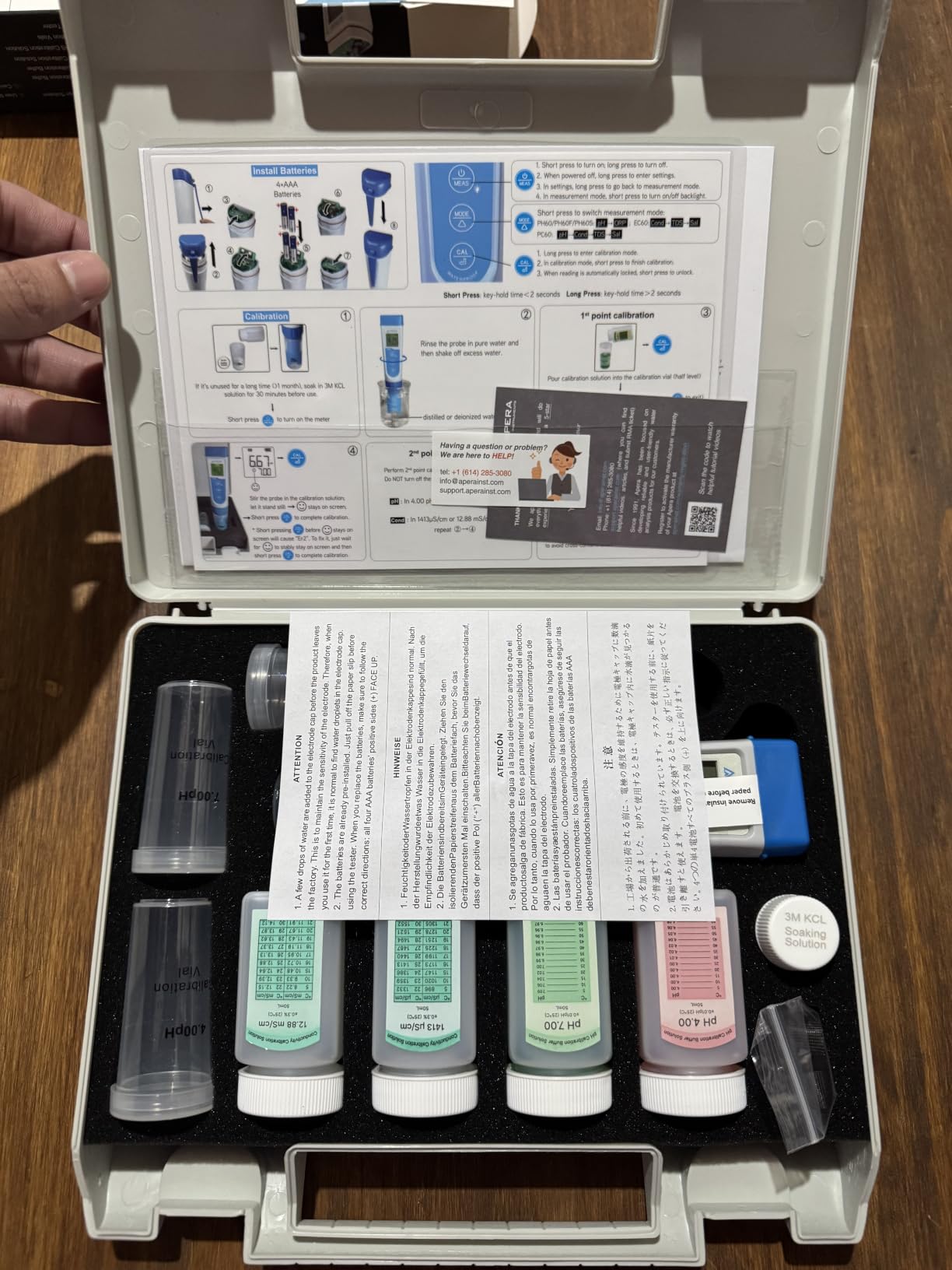
- Complete kit with buffers
- storage solution and a case
Cons
- Replacement probes and buffers add running cost
- Temperature range stops at 50 degrees C
- Droplets in the electrode cap confuse first-time users
This is the meter we kept reaching for. It is the highest-rated unit in this group at 4.5 stars across more than 3k reviews, and the reason is not a clever gimmick, it is the replaceable glass probe.
Most budget pens die with the probe, which means the whole body goes in the bin. On the PH60 the electrode unscrews, so when readings start wandering you swap a ten-dollar part instead of a whole meter. That single design decision changes the long-run cost of owning a pH meter more than any spec on the box.
Calibration takes one to three points and the meter recognises five different buffer values, so it does not matter whether your powder is 4.00, 7.00 or 6.86. The large LCD runs through three backlit colours for its modes, shows pH and temperature at the same time, and lights a smiley icon the moment the reading has settled enough to trust.
That settle indicator matters more than growers expect. On any meter, the number keeps moving for a few seconds after the probe goes in. Owners who log pH against a written note of their dosing say the icon stops them from writing down a half-settled number and then chasing it the next day.
Who this meter suits
Anyone checking one or two reservoirs daily, whether that is a countertop DWC bucket or a two-room setup. Growers who mix their own nutrients get more out of it than casual testers do, because 0.01 resolution lets you fine-tune a mix rather than just confirm it is roughly right.
The IP-style waterproof pocket body suits a wet tent, and the auto power-off after eight minutes means you will not flatten the four included AAA batteries by forgetting it in your pocket.
Where it falls short
The temperature ceiling of 50 degrees C rules it out for heated, warm-water or aquaculture-style systems, though almost no soil-less hydroponic reservoir runs that hot on purpose. Replacement probes and calibration solution are an ongoing cost, and a few new owners report being confused by water droplets trapped in the electrode cap on first use.
None of that is disqualifying. It is the meter we would hand someone who wants one tool that keeps working for years.
2. Bluelab pH Pen Review – Built for Reservoirs That Get Dropped
Bluelab pH Pen – ± 0.1 pH Accurate – Durable Double Junction Probe
Accuracy plus or minus 0.1 pH
Double-junction probe
Waterproof and floats
8 x 2.16 inches
Pros
- Waterproof body that floats if dropped in a reservoir
- Double-junction probe resists contamination
- 30-day calibration indicator on the backlit LCD
- Includes pH 7
- pH 4 and KCl sachets
- Long track record with hydroponic growers
Cons
- 0.1 pH resolution is coarser than 0.01 meters
- Readings can be slow in distilled or reverse osmosis water
- Two-point calibration only
Bluelab is the name most experienced growers name first when they discuss pH meters for hydroponics, and the pH Pen is the reason. It is a purpose-built hydroponic tool, not an aquarium meter with a reservoir sticker on it.
The double-junction probe is the part worth understanding. A standard single-junction glass bulb can absorb nutrients and foul over time, which is exactly the water a hydroponic reservoir is full of. The double junction keeps the reference side separated from the solution, and it is the design forum regulars point to when they explain why some pens keep working for years and others last a season.
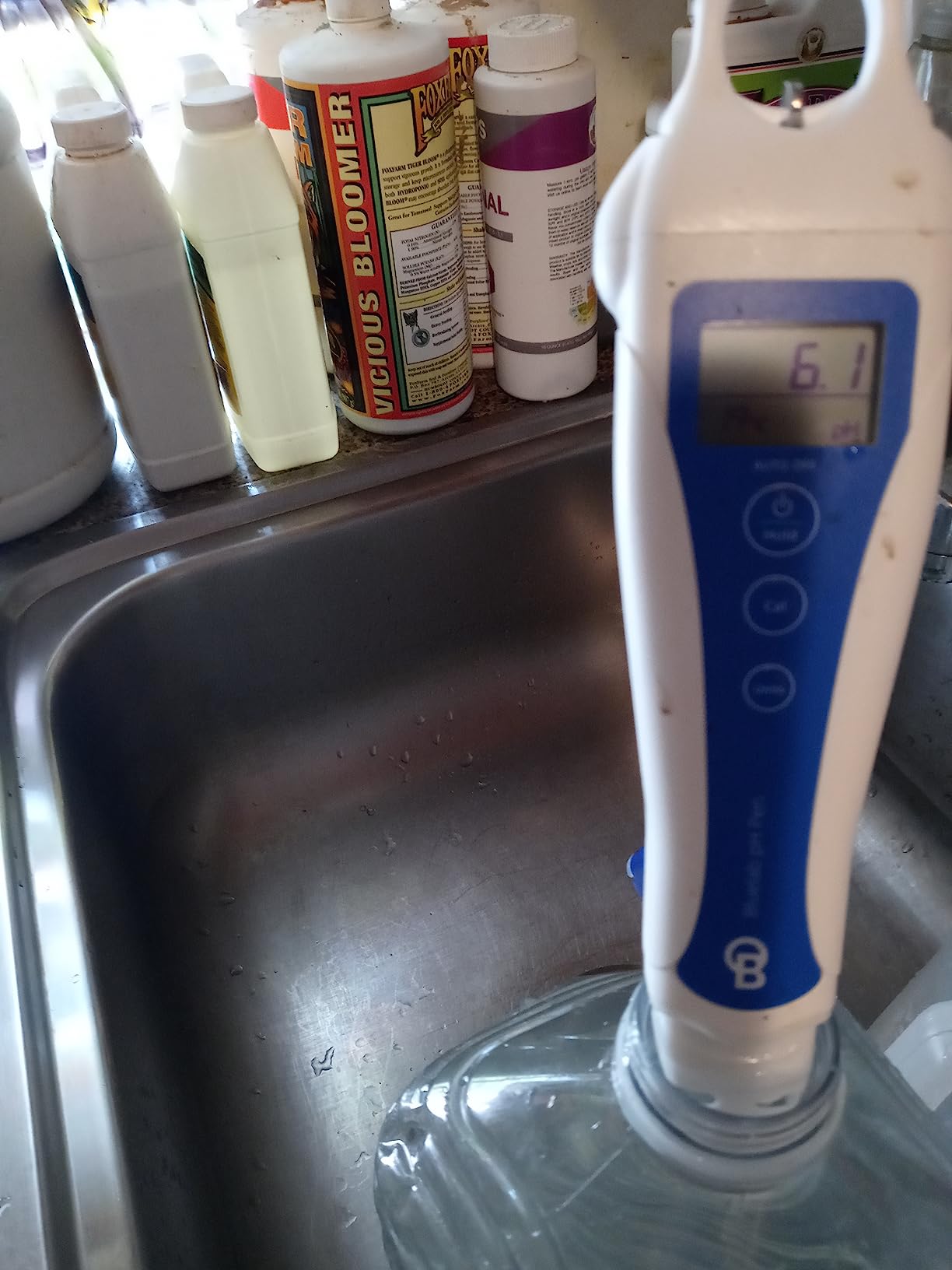
The other thing you notice is that it floats. That is not a gimmick for hydroponics, it is a real answer to the single most common accident in this hobby, which is a meter going into the tank. Growers on r/Hydroponics describe cheap pens shorting out and giving nonsense numbers after an unintended dunk.
The backlit LCD carries a 30-day calibration indicator, so instead of guessing whether last month’s calibration is still good, the pen tells you. Included sachets of pH 7, pH 4 and KCl mean it is usable out of the box and you already have the right storage fluid on hand.
What 0.1 resolution means in practice
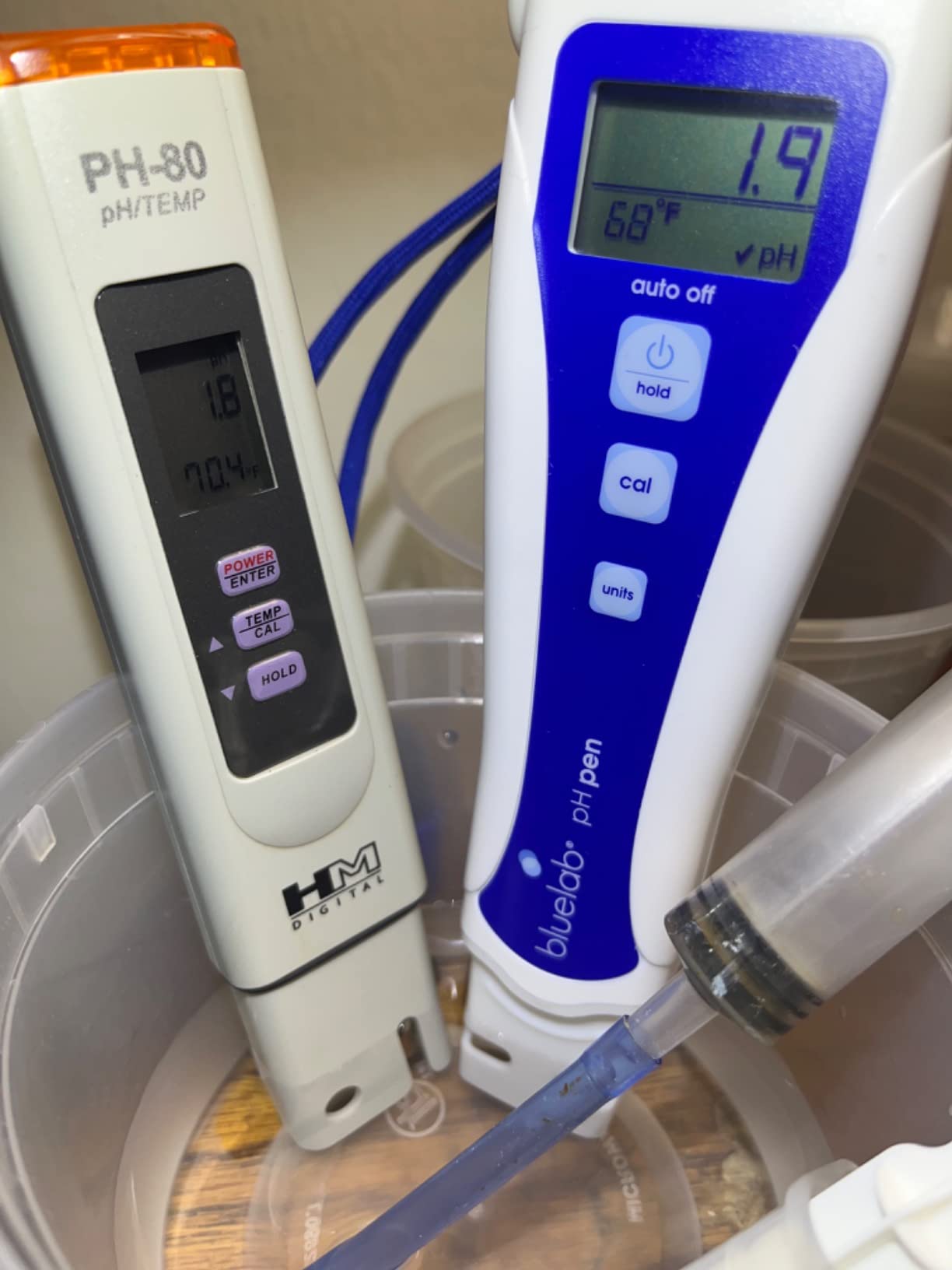
Readings move in 0.1 pH steps here, against 0.01 on the Apera and Milwaukee. For a mature system sitting at 5.8 or 6.2, that is not a problem, you are confirming a target rather than chasing tenths. For a seedling mix where you are trying to dial in 5.5 exactly, it limits how precisely you can land.
Bluelab also warns that readings in tap, reverse osmosis or distilled water can be slow or unstable because there are too few dissolved ions to form a stable reference. That is a physical limitation of any electrode in low-ion water, not a fault specific to this pen.
Why growers keep coming back to it
The forum consensus is that Bluelab and Apera are the two names that come up repeatedly across THCFarmer, Overgrow and ICMag threads, and the pattern is consistent: Bluelab for durability and reputation, Apera for resolution and probe replacement.
Pick the Bluelab if your meter lives in the room with the plants rather than in your hand. Pick the Apera if you want tenths and a swappable electrode.
3. Milwaukee MW102 Review – Lab-Grade Accuracy for Serious Growers
Milwaukee Portable pH/Temperature Meter – MW102
Accuracy plus or minus 0.02 pH
Range -2.00 to 16.00 pH
9V battery, 300 hours
Gel-filled double junction electrode
Pros
- Plus or minus 0.02 pH confirmed against reference probes
- Holds calibration between adjustments where pens drift in days
- Separate pH and temperature probes on long cables
- Gel-filled double junction electrode needs no refilling
- Around 300 hours of battery life
Cons
- Readings take time to settle
- especially in moving water
- Bulkier than a single pen
- Two-point calibration only
- Higher cost than every other meter here
This is the most accurate meter in the roundup by specification, at plus or minus 0.02 pH across a -2.00 to 16.00 range. It is also the least convenient, and that trade is the whole decision.
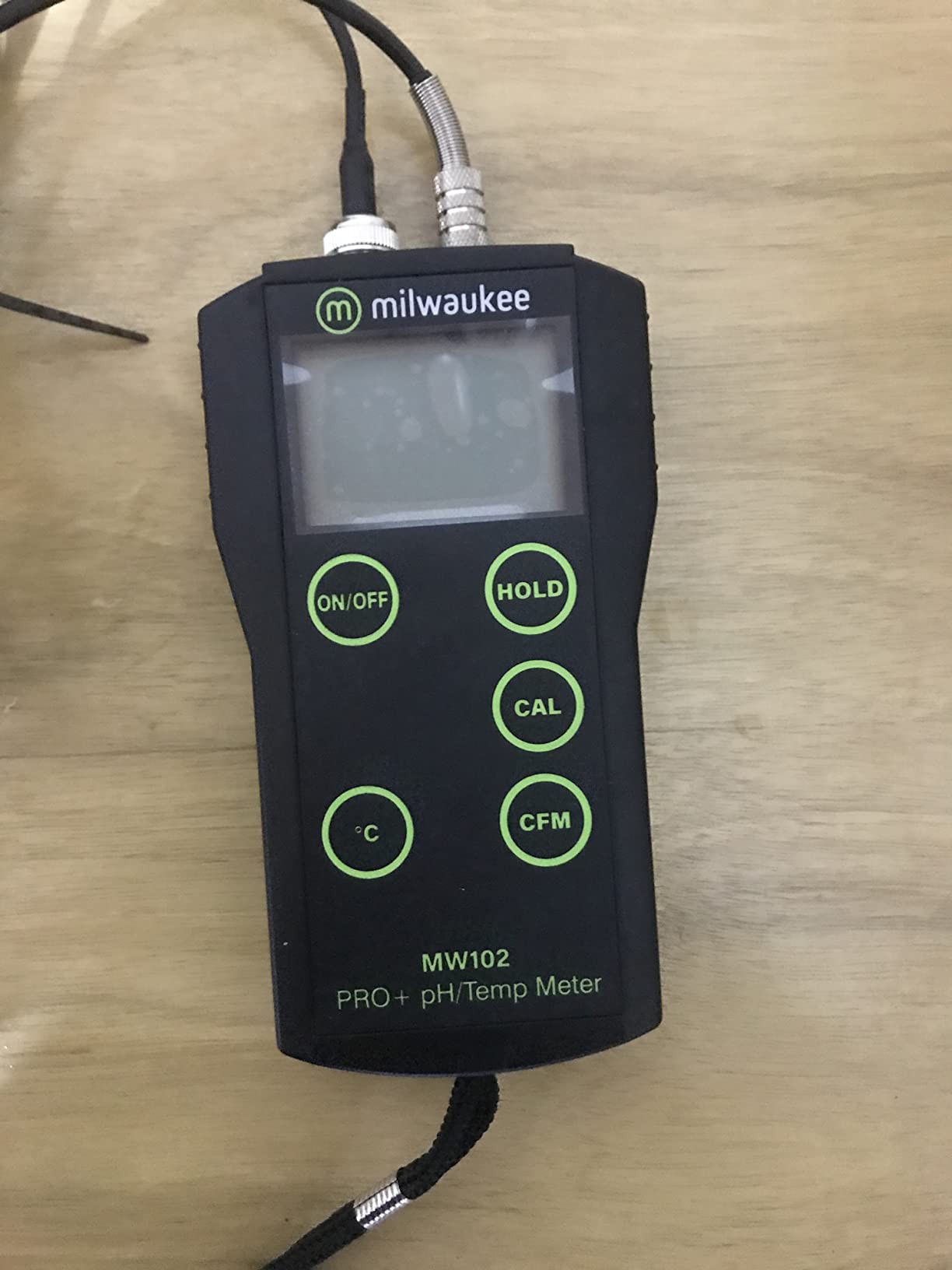
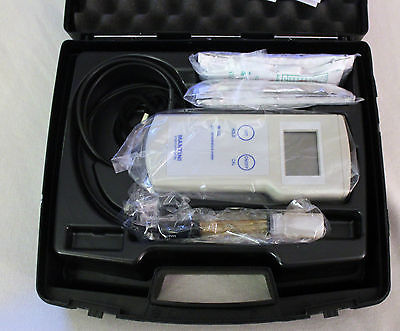
The MW102 arrives as an instrument rather than a pen. You get the meter, a separate pH electrode, a separate stainless temperature probe and a carrying case. Both probes run on cables, which means you can leave the display sitting on a shelf and lower the probe into a reservoir without draining the whole thing onto the floor.
That cable separation is the feature experienced growers mention most. Reading a probe held over a bucket by its cable while watching a display 30 inches away is not a luxury in a commercial room with several systems running at once.
The electrode is gel-filled and double junction, so there is no fill solution to top up and no reference chamber to dry out. People who have cycled through several budget pens describe the change as going from recalibrating every morning to checking the meter a couple of times a week.
Automatic temperature compensation runs fast through a dedicated stainless probe, and calibration is automatic at up to two points, starting at 7.01 then 4.01 to set slope. A 9V battery is included and gives roughly 300 hours of running time.
Where the accuracy actually shows up
The number that matters is not the spec, it is the gap between two readings a week apart. When we tested pens side by side, the cheap units moved more than the amount they were meant to measure, and a 0.3 drift in a reservoir translates into a real dosing change.
There is a long-horizon view here too. A THCFarmer grower reports Milwaukee meters still working after eight years of use, and that testimony about accumulated months matters more to buyers than a single lab test.
Reasons to look elsewhere
Settling time is the recurring complaint. In moving or poorly buffered water the reading crawls, and if you are taking 20 samples a day that wait adds up.
Two-point rather than three-point calibration, a bulkier footprint than any pen here, and the highest cost in the roundup all count against it too. If your whole operation is one DWC bucket, this is over-specified. If you are checking several rooms, running aquaponics, or defending a reading to someone else, it is the right tool.
4. Apera PC60 Review – pH and EC in One Pocket Meter
APERA INSTRUMENTS AI316 Premium Series PC60 5-in-1 Waterproof pH/EC (Conductivity) /TDS (ppm) /Salinity (ppt) /Temp. Multi-Parameter Pocket Tester Kit
pH, EC, TDS, salinity and temp
7 x 1.6 inches
Replaceable probe
Two-year instrument warranty
Pros
- Five readings in one pocket meter
- Replaceable multiparameter probe extends instrument life
- Colour-coded backlit modes for each measurement
- Dual display of temperature plus reading
- Calibration-complete and stable-reading icons
- Two-year warranty on the instrument
Cons
- Highest cost of the pocket meters in this group
- Probe and buffers add running cost
- Salinity mode is unnecessary for most hydroponic setups
The question behind this product is simple: do you buy a pH meter and an EC meter separately, or one device that does both? The PC60 answers yes, and for growers mixing their own nutrients it is the more efficient answer.
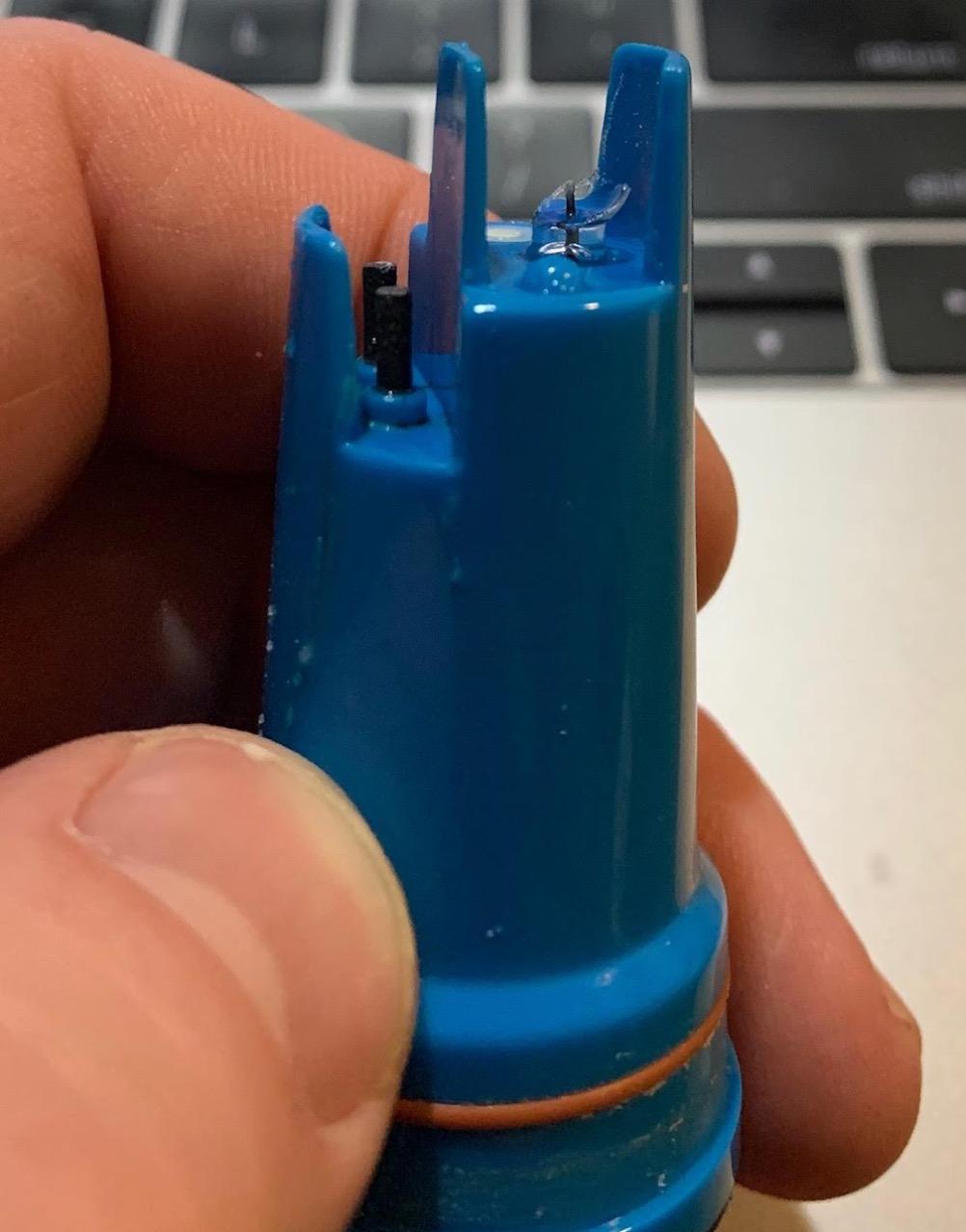
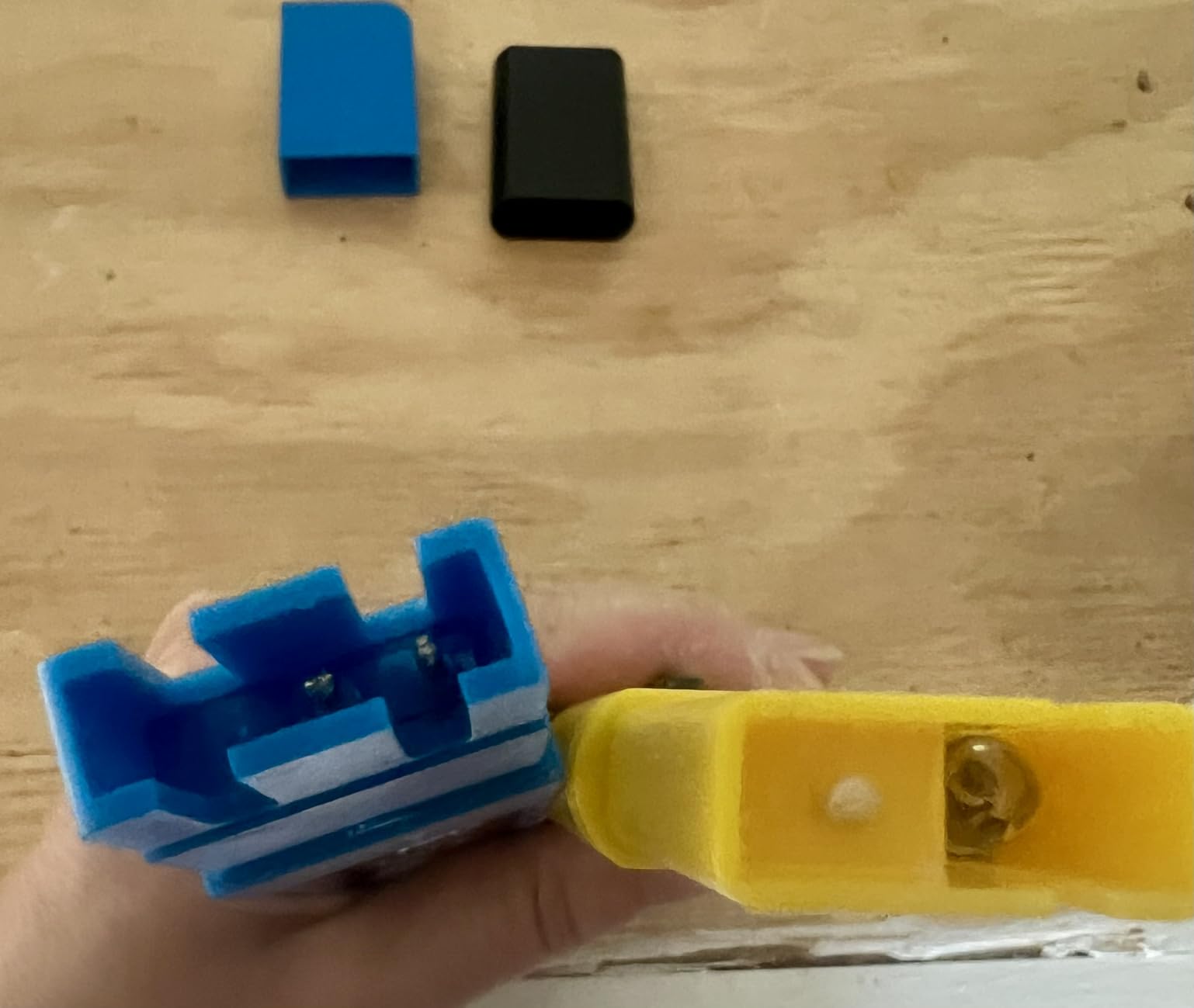
It measures pH, EC, TDS in ppm, salinity in ppt and temperature, with the temperature shown alongside whichever value you are measuring. The replaceable multiparameter probe is the crucial part, because a five-parameter probe is expensive to throw away and cheap to swap.
Salinity is the one mode most hydroponic growers never touch. It exists for brackish and marine work, so treat it as a spare function rather than a reason to buy.
The same interface logic from the PH60 carries over. Three backlit colours mark the three operating modes, icons confirm a finished calibration, and the smiley face stays on screen when the value is stable enough to write down. That last detail is the feature reviewers praise most in long-term use, because it removes the guesswork from taking a log.
Warranty terms are unusually clear for a meter in this class: two years limited on the instrument and six months on the electrode. Electrodes are consumables by nature, so knowing which part the shorter warranty covers tells you where the real maintenance cost sits.
When a combo meter beats two separate meters
If you only check pH, the PC60 is wasted capability. If you mix nutrients from concentrates, run top-ups, or juggle more than one reservoir, seeing pH and EC change together tells you something a pH reading alone cannot. A falling pH alongside rising EC usually means uptake outpacing your dosing schedule.
Forum regulars often keep two dedicated meters anyway, one per parameter, for the reason above about verifying a suspicious number. A combo meter is a strong first instrument and a poor only instrument in a critical setup.
What you are paying for
This is the most expensive pocket meter in the group, and the cost is not the housing, it is the multiparameter probe. Every time that probe expires you replace something more costly than a single glass bulb.
If EC readings are part of your routine, that is a fair trade. If pH is the only number you act on, the PH60 gives you the same core reliability for less.
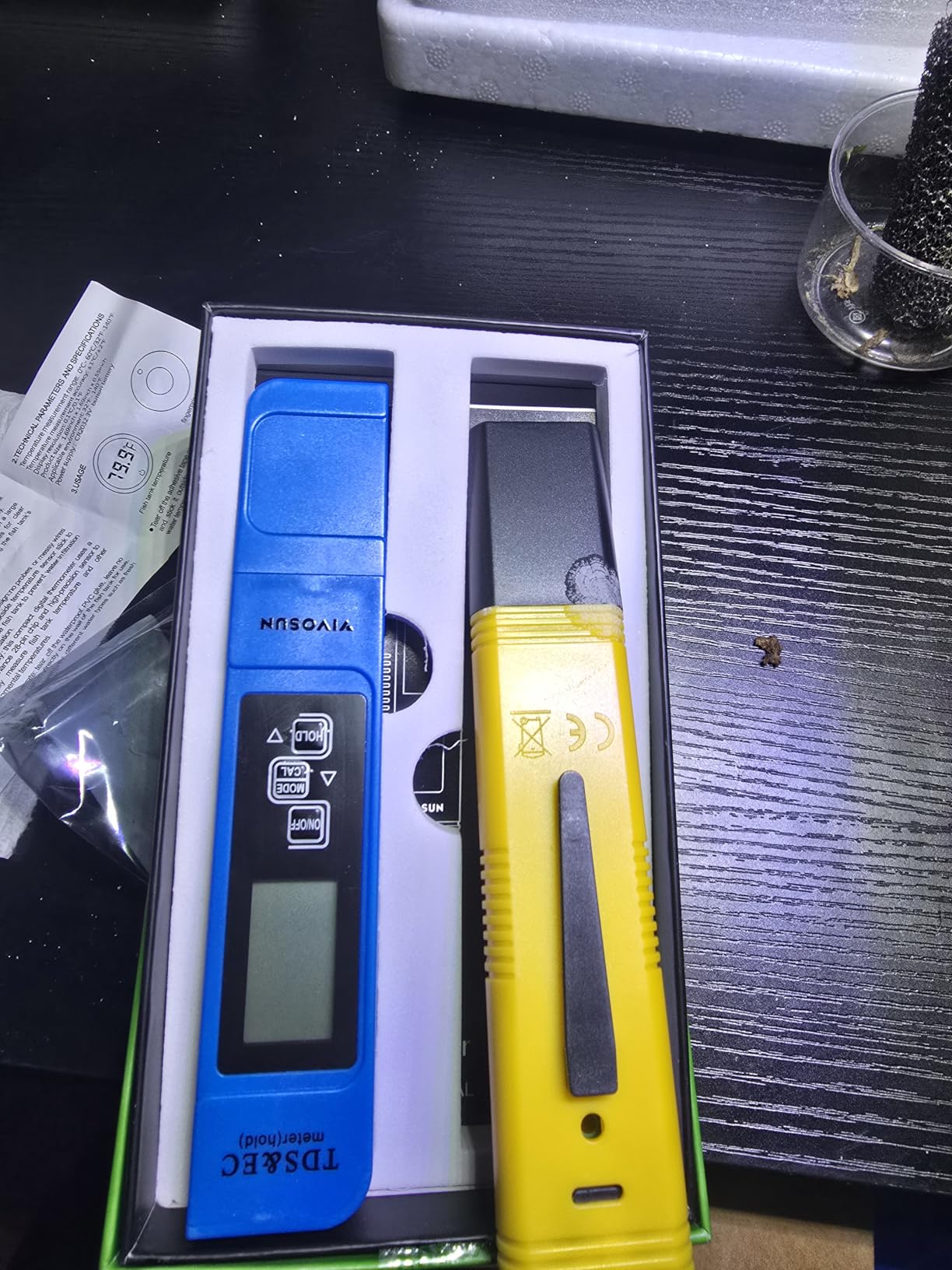
5. VIVOSUN pH, TDS and EC Meter Review – The Most-Used Starter Kit
VIVOSUN Digital pH Meter TDS EC Meter for Water 0.01 Accuracy Hydroponics
pH 0 to 14 range
0.01 pH accuracy
TDS and EC to 9990 ppm
0.1 to 80 degrees C
Pros
- Most-reviewed meter in this roundup with over 33k reviews
- Covers pH
- TDS and EC in one device
- Includes case
- spare batteries and calibration buffers
- Auto calibration and temperature compensation
- Backlit pocket-size body with hold function
Cons
- Lightweight plastic build with flimsy buttons
- Some report calibration not completing and readings drifting
- The TDS mode can switch display unexpectedly
- Slow to settle compared with reference meters
- Cannot test sea water
By review volume this is the meter most people in this hobby have actually owned. Tens of thousands of ratings sit under it, which makes it the closest thing we have to a public reference point for what an affordable meter does and does not deliver.
Spec-wise it covers a lot of ground for the money: pH from 0 to 14 at 0.01 resolution, TDS and EC from 0 to 9990 with plus or minus 2 percent accuracy, and temperature from 0.1 to 80 degrees C. Automatic temperature compensation and auto calibration are both included, along with a protective case, spare batteries and 6.86, 4.00 and 9.18 calibration buffers.
Having all three buffers in the box matters. Most first-time growers buy a meter and then discover they have nothing to calibrate it against.
The broad consensus in reviews treats this as a big upgrade on test strips that needs regular recalibration rather than a laboratory instrument. Buyers moving up from paper strips usually find the accuracy more than adequate for a hobby reservoir.
The same reviewers who praise it also flag the same weaknesses. The housing feels like cheap plastic, the buttons are light, readings settle slowly, and the TDS mode has a habit of changing the display mid-measurement. Those are real gripes rather than dealbreakers, and they show up consistently.
Where it earns its place
A first system, a classroom, a shared meter for a group, or any setup where the meter gets handled roughly. The included case matters more than it sounds, because a pH pen that lives in a case survives a busy grow room far better than one loose on a shelf.
Reviewers commonly pair this style of meter with a proper reference pen kept for verification, which is the forum-standard habit of cross-checking two meters and splitting the difference when they disagree by a tenth or two.
Reasons to step up a tier
The probe is not replaceable, so when the electrode goes, the meter goes. The 11 percent one-star share is mostly about calibration that will not hold and drift after a few weeks, both of which trace back to a fixed electrode and a light build.
If your system is small and you recalibrate each week, this is a reasonable place to start. If a reservoir holds real money in plants, a replaceable-probe meter pays for itself.
6. UIUZMAR 4-in-1 Review – Fast Readings Without the Premium Tag
UIUZMAR pH Meter for Water Hydroponics Supplies 4 in 1 pH PPM ECTester
pH, EC, PPM and temperature
1 to 2 second settling
8.9 x 2.9 inches
Calibration powders included
Pros
- Settles in one to two seconds
- Checks feed water and runoff in a single dip
- Backlit screen readable in daylight
- Calibration powders for 7.00
- 4.00 and 10.01 included
- Growers report it matching far costlier meters on speed
Cons
- Only one packet of calibration buffer included
- Some report calibration not completing or the pH channel failing
- Probe can arrive dry with crystallised storage solution
- Fixed probe with no replacement option
This is the one that made us pause. Several reviewers who also own Bluelab and Apera meters report this settling in one to two seconds and reading the same as meters costing multiples of it.
The reason is the probe. A blue glass diode responds quickly and holds a stable reading, which is the part most budget meters get wrong. Slow settling is worse than low accuracy in practice, because a drifting number gets written down.
Four measurements in one dip, pH, EC, PPM and temperature, means you can check incoming water and return runoff without swapping tools or switching modes.
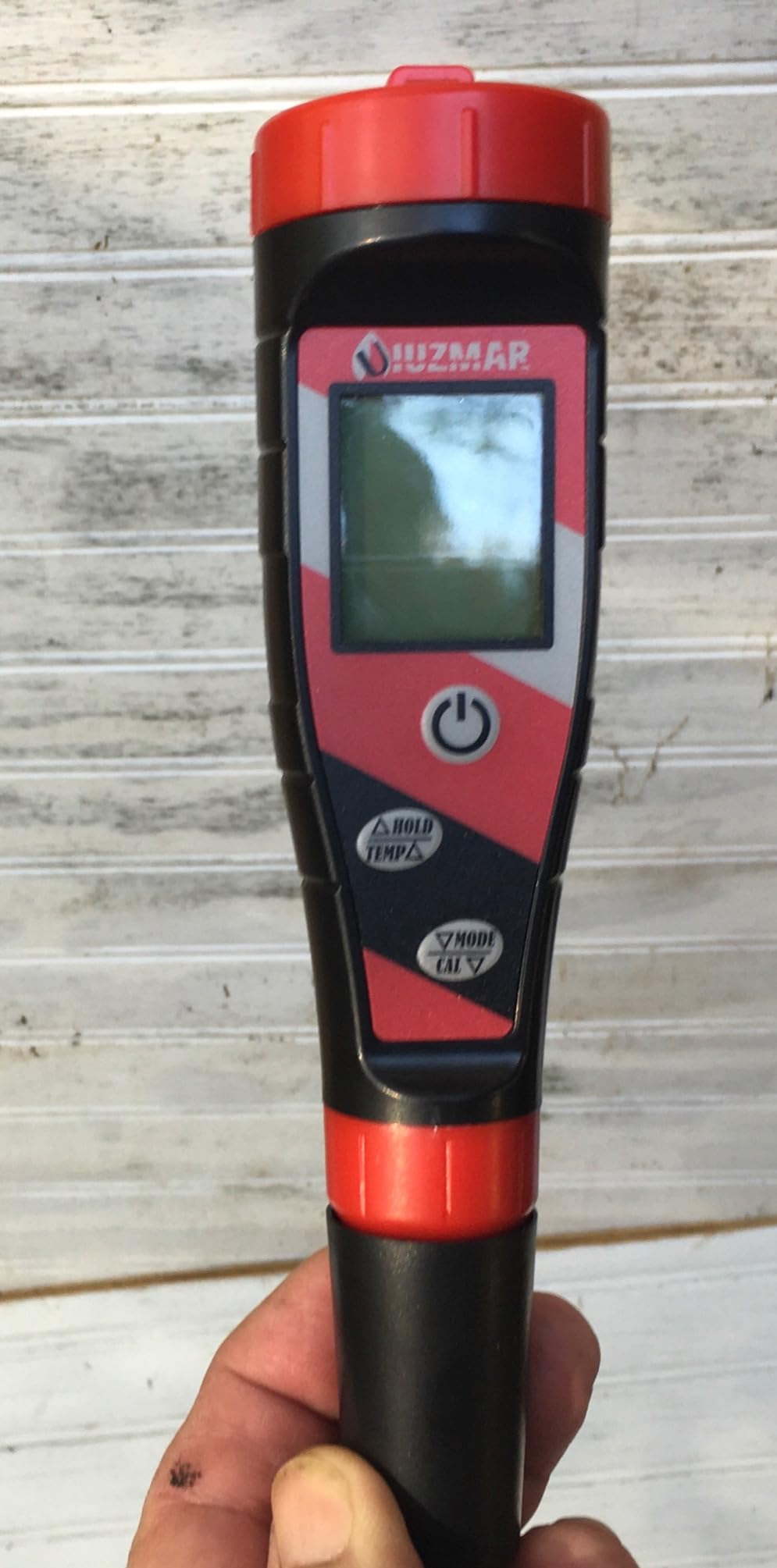
Calibration powders for 7.00, 4.00 and 10.01 are in the box and the sequence is simple, with a bright backlit display that reads in a dim tent or in daylight. The specification sheet lists DWC, aeroponic, grow tent and reservoir testing as intended uses, and the body shape suits one-handed reservoir work.
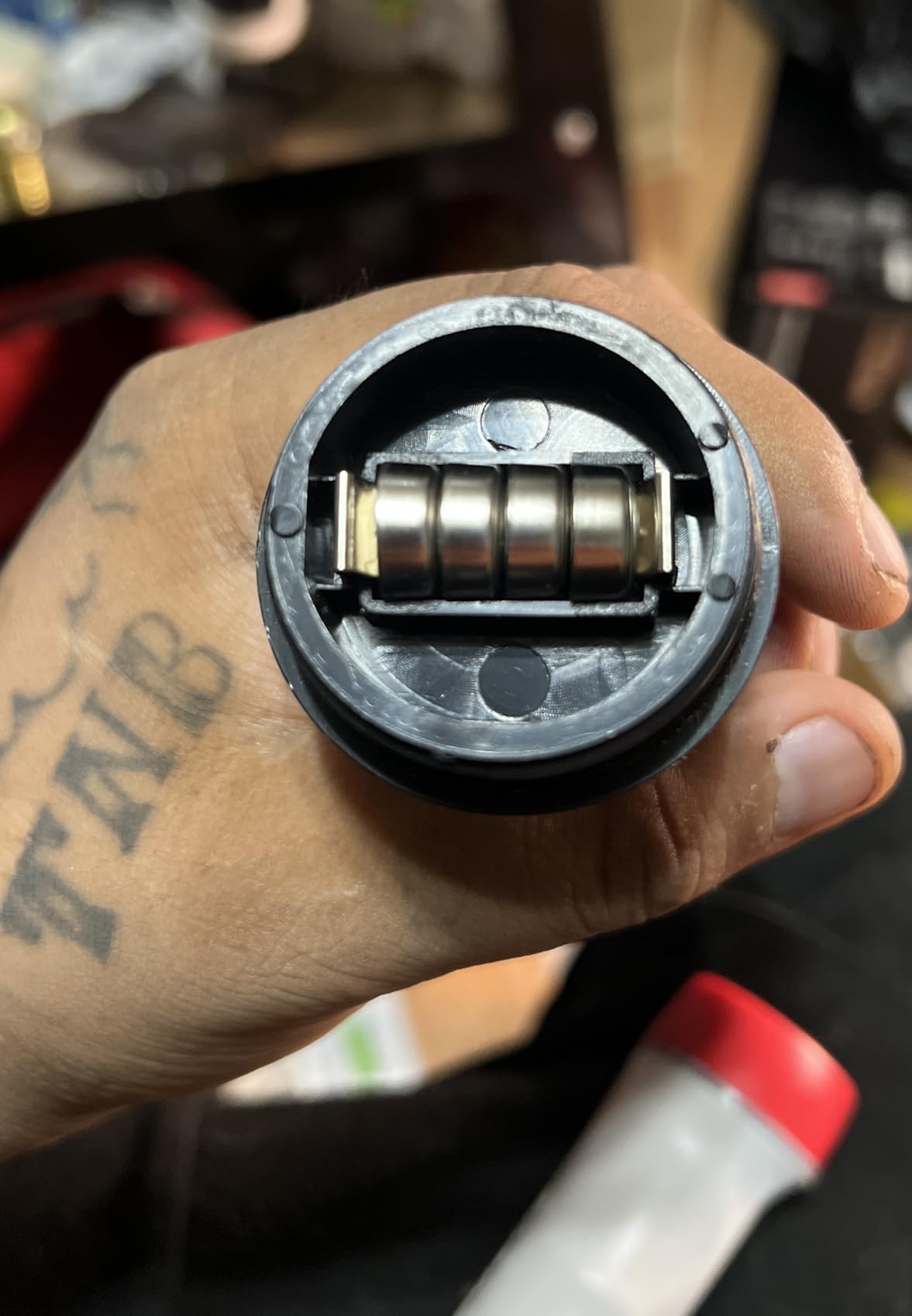
The honest catch is what arrives with it. Reviews repeatedly mention that the probe can come dry or with crystallised storage solution, which means you soak it before first use and calibrate immediately.
Where the speed advantage pays off
Fast settling changes how often you can measure. A meter that needs 30 seconds to stop moving gets checked twice a day by busy growers, while a two-second meter gets checked every time you walk past the reservoir. More samples means a better picture of how the pH actually behaves over a day.
That data is what lets you dose intelligently rather than chasing a single afternoon reading.
Reasons to skip it
The probe is fixed, so there is no path when it dies short, and only one packet of buffer is included, which means buying more solution sooner rather than later. There are also scattered reports of calibration not completing or the pH channel failing within days.
Storage solution is not optional with this one. Reviewers who skip it describe the drift that follows, and reviewers who use it describe a meter that holds up far longer.
7. YINMIK YK-T4 Pro Review – Designed to Stay in the Tank
YINMIK pH Meter for Hydroponics, 4 in 1 PPM EC Meter for Plant Nutrients
pH, PPM, EC and temperature
Extended stainless steel electrode
Simultaneous pH and temp readout
Buffers included
Pros
- Extended stainless steel electrode made for immersion
- Shows pH and temperature at the same time
- Ready-to-use calibration liquids with no mixing
- EC and TDS factory calibrated
- Responds quickly and resists temperature drift
Cons
- Fewer reviews than the other picks
- Probes and solutions must be bought separately
- Liquid solutions only
- not soil or semi-solid media
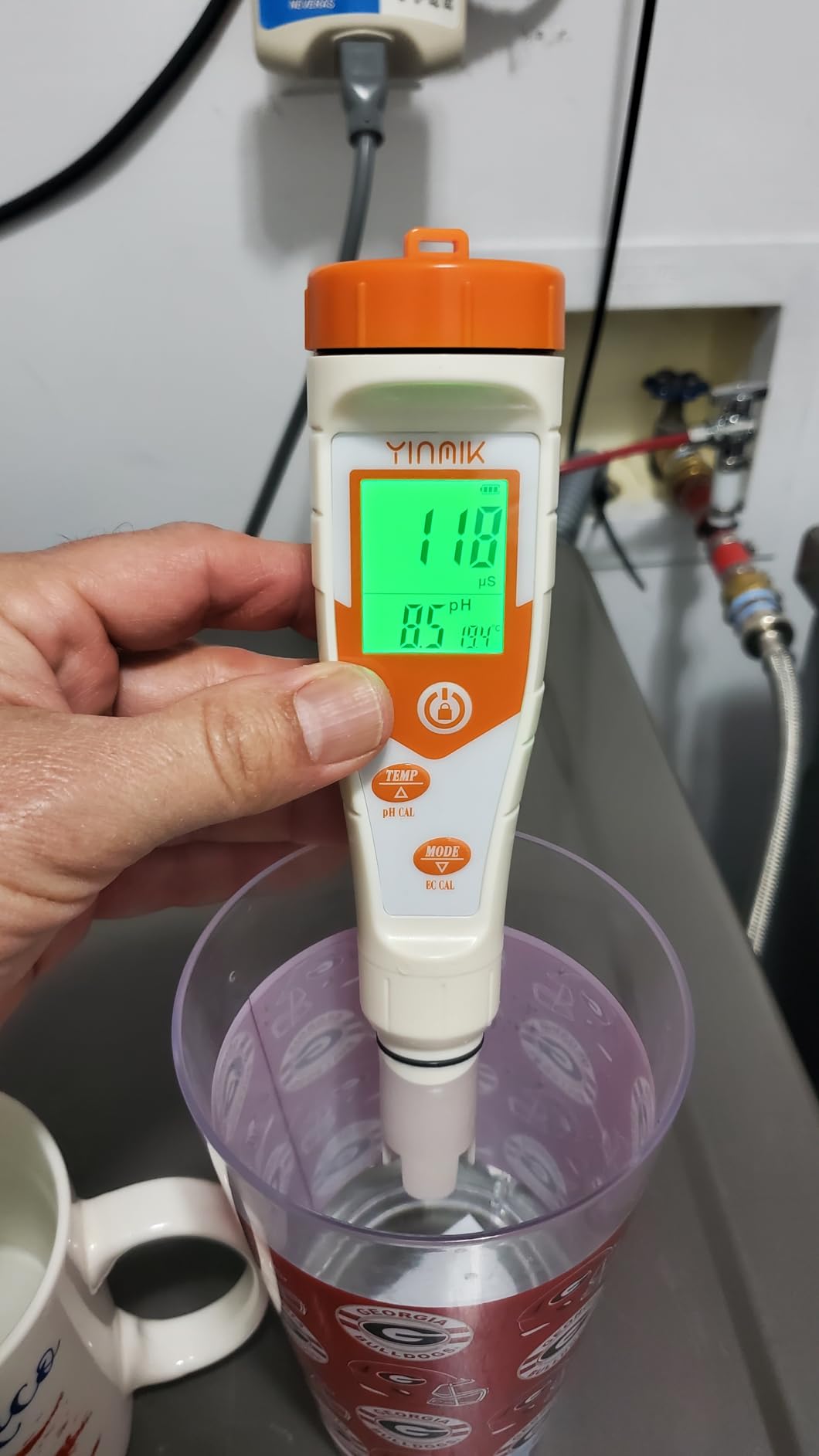
Most meters in this roundup are built to be held. This one is built to stay in the water, because the listing specifies an extended stainless steel electrode rated for continuous immersion in a reservoir or nutrient line.
That is a different design philosophy. A glass bulb in a nutrient bath for days on end invites fouling, and no rating on the box tells you the meter will survive it. A stainless electrode handles immersion more gracefully.
The display shows pH and temperature simultaneously, so you are not pressing a button to check whether the reading was taken at a sane temperature. Automatic temperature compensation keeps EC accurate as solution temperature moves.
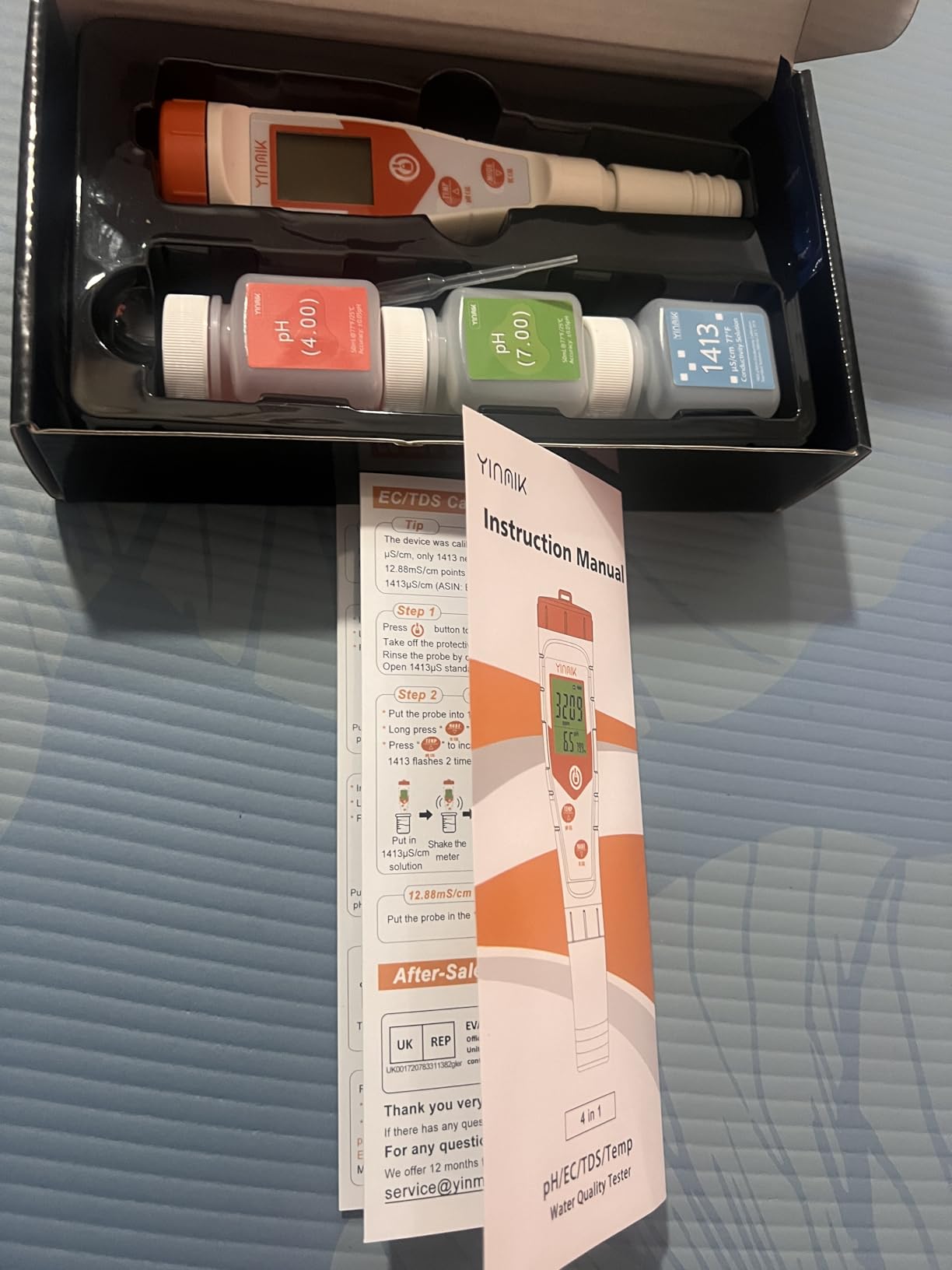
Ready-to-use 4.00 and 7.00 pH solution and a 1413 microS/cm EC buffer come in the box with no mixing required, and the EC and TDS channels are factory calibrated so they read usefully out of the box. Water, well water, tap water, pools and fish tanks are all listed use cases.
Automatic temperature compensation is applied for EC accuracy across temperatures, and the stainless electrode is described as responding quickly while resisting temperature drift.
When immersion changes the maths
If your meter sits in the solution, you are logging a trend rather than taking a spot check, and that is genuinely better data. Drifts that a daily reading misses entirely, like a slow pH creep from root activity, show up as a visible slope on a continuous log.
It also removes the daily drop risk that forum members complain about most with cheap pens.
Reasons to look elsewhere
The evidence base here is the thinnest among the professional-grade picks, with 513 reviews, so long-term reliability data is limited. It is built for liquid solutions rather than soil or semi-solid media, and replacement probes and calibration solution have to be sourced separately.
Treat it as a continuous logging tool with a handheld backup, not as the only meter in the room.
8. AC Infinity AC-PHM3 Review – Sealed for Humid Grow Rooms
AC Infinity Digital pH Meter Kit, Precision pH Pen for Hydroponics & Water
Plus or minus 0.1 pH accuracy
IP67 sealed body
Includes 4.00 and 7.00 solutions
Glass membrane sensor
Pros
- IP67 sealed against heavy moisture
- dust and sand
- Instant readings from a glass membrane sensor
- Build quality matches the rest of the AC Infinity range
- Ready-to-use calibration solutions included
- Owners upgrading from cheap pens report better accuracy
Cons
- Plus or minus 0.1 pH is coarser than 0.01 options
- Ships uncalibrated and one owner found it 0.8 out
- Some report readings fluctuating in the same sample
- Probe life reported at one to three years depending on upkeep
Every meter here can handle a wet room. The AC-PHM3 is the one rated for it, with an IP67 sealing specification against high-volume moisture, dust and sand, plus a tolerance for high heat.
The sensor is a sensitive glass membrane, which delivers instant pH readings without the long settling you get from cheaper electrodes. Buyers moving up from entry pens talk about the change in speed first and accuracy second.
It measures acidity, alkalinity and water temperature, and the kit includes ready-to-use 4.00 and 7.00 calibration solutions rather than powders you have to mix.
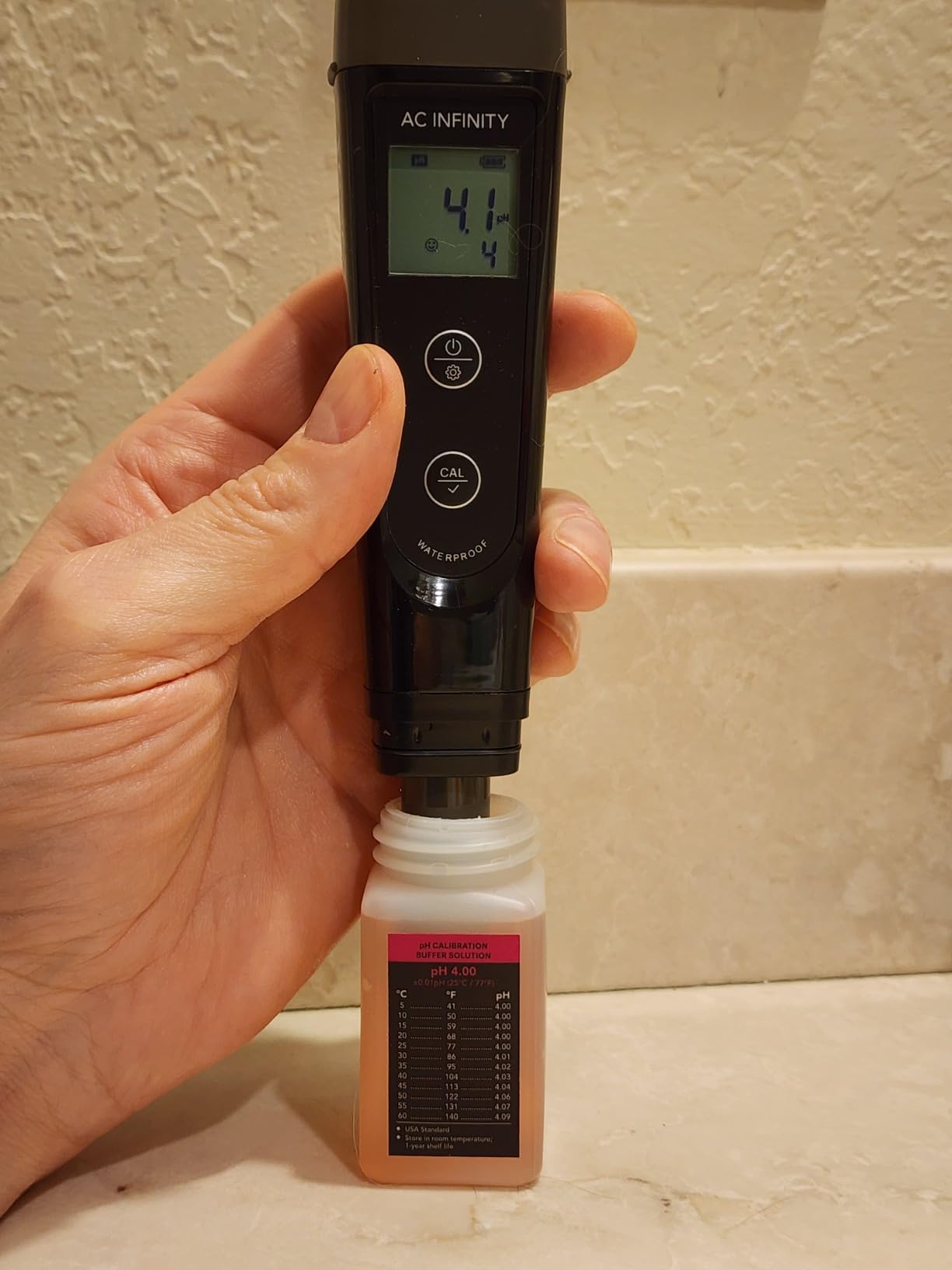
The build feels consistent with the rest of the AC Infinity range, which matters in a category where many affordable meters are thin plastic. That is a fair criticism of several competitors in this roundup, and it is the reason this one holds a premium over generic pens despite similar specs.
Accuracy is specified at plus or minus 0.1 pH. That is fine for holding a mature reservoir at target and coarse for fine-tuning a seedling mix.
What IP67 changes in practice
It is a sealing rating, not a licence to submerge the display end of the meter. What it does mean is that you can leave it near a humid tent wall, handle it with wet hands, and stop worrying about a splash from a reservoir.
For growers in warm climates or unconditioned rooms, that reliability in humid air is worth more than an extra decimal place.
Reasons to skip it
It arrives uncalibrated. One owner found it reading 0.8 out before calibrating, which is a reminder to calibrate on arrival rather than trusting the box.
There are also reports of readings fluctuating within the same sample, and probe life is quoted at one to three years depending on upkeep. With 276 reviews, the long-term picture is thinner than it looks from the rating alone.
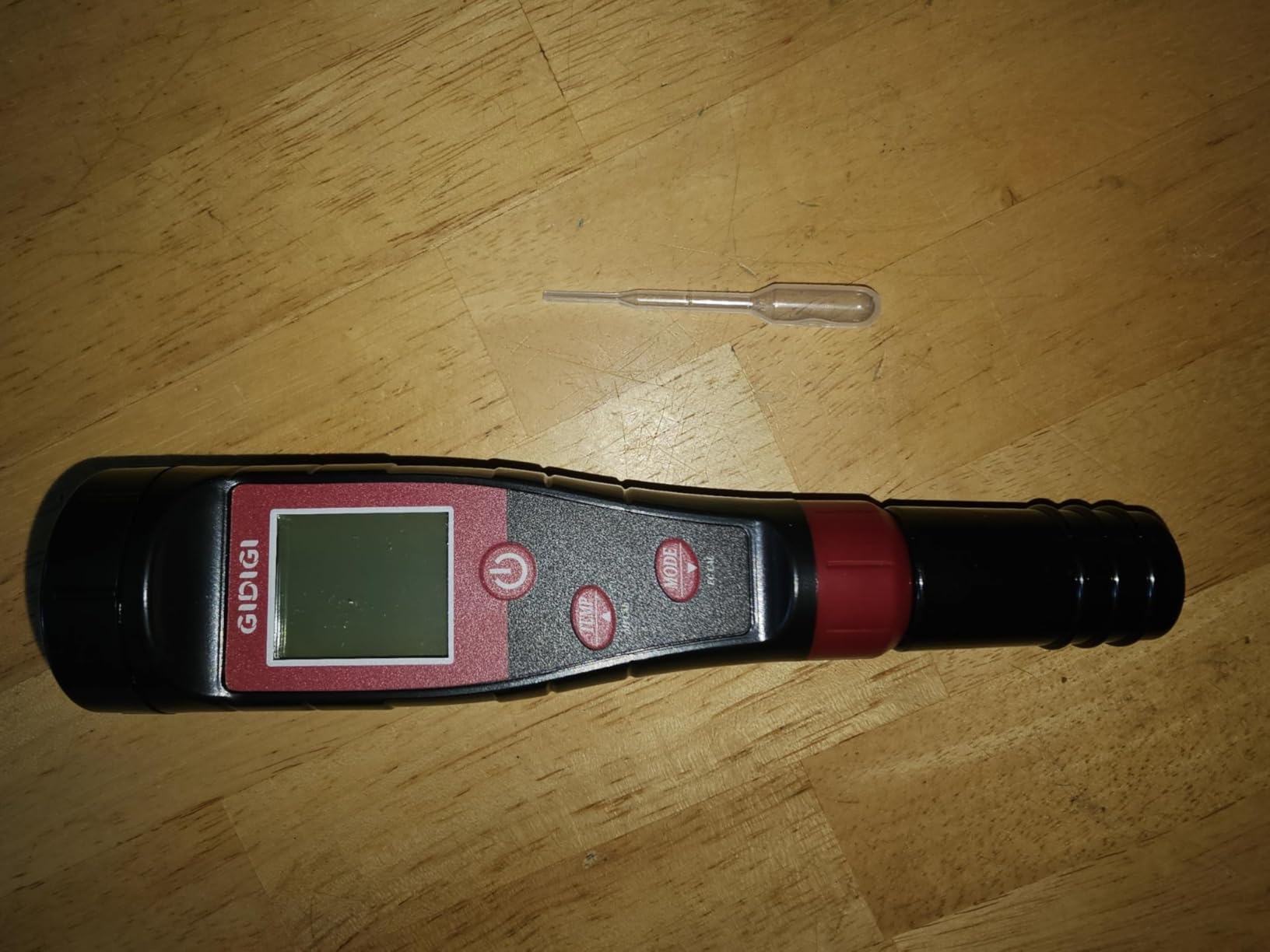
9. GIDIGI 4-in-1 Review – Everything on One Screen
GIDIGI Digital pH Tester for Water, pH Meter for Hydroponic Water
pH 0.1 to 14 at 0.1 resolution
EC 0 to 9990 microS/cm
ATC 0 to 50 degrees C
Green backlit display
Pros
- Shows pH
- EC and temperature together with no mode switching
- Sponge cap keeps the electrode moist
- Holds calibration after months of dry storage
- Bridge between cheap two-in-one pens and premium meters
- Beginners report it caught a drifted reservoir
Cons
- Non-replaceable probe tip
- 0.1 pH resolution is coarse for fine control
- Some owners recalibrate every use and still see readings off by up to 0.6
- No cleaning cloth included for the bulb
This is the bridge option. Owners describe it as the step up from the very cheap two-in-one pens, sitting between those and the premium Bluelab and Apera units.
The interface decision is the good one. It displays pH, EC and temperature at the same time, so you are not pressing through modes to see whether a number changed while you were looking away. Every other combo meter in this roundup requires mode switching, which is where accidental misreads come from.
Range is pH 0.1 to 14 at 0.1 resolution, EC from 0 to 9990 microS/cm with a second band up to 19.99 mS/cm, TDS 0 to 9990 ppm, and temperature from 32 to 140 degrees F. Automatic temperature compensation runs from 0 to 50 degrees C, and the green backlit screen is readable in low light.
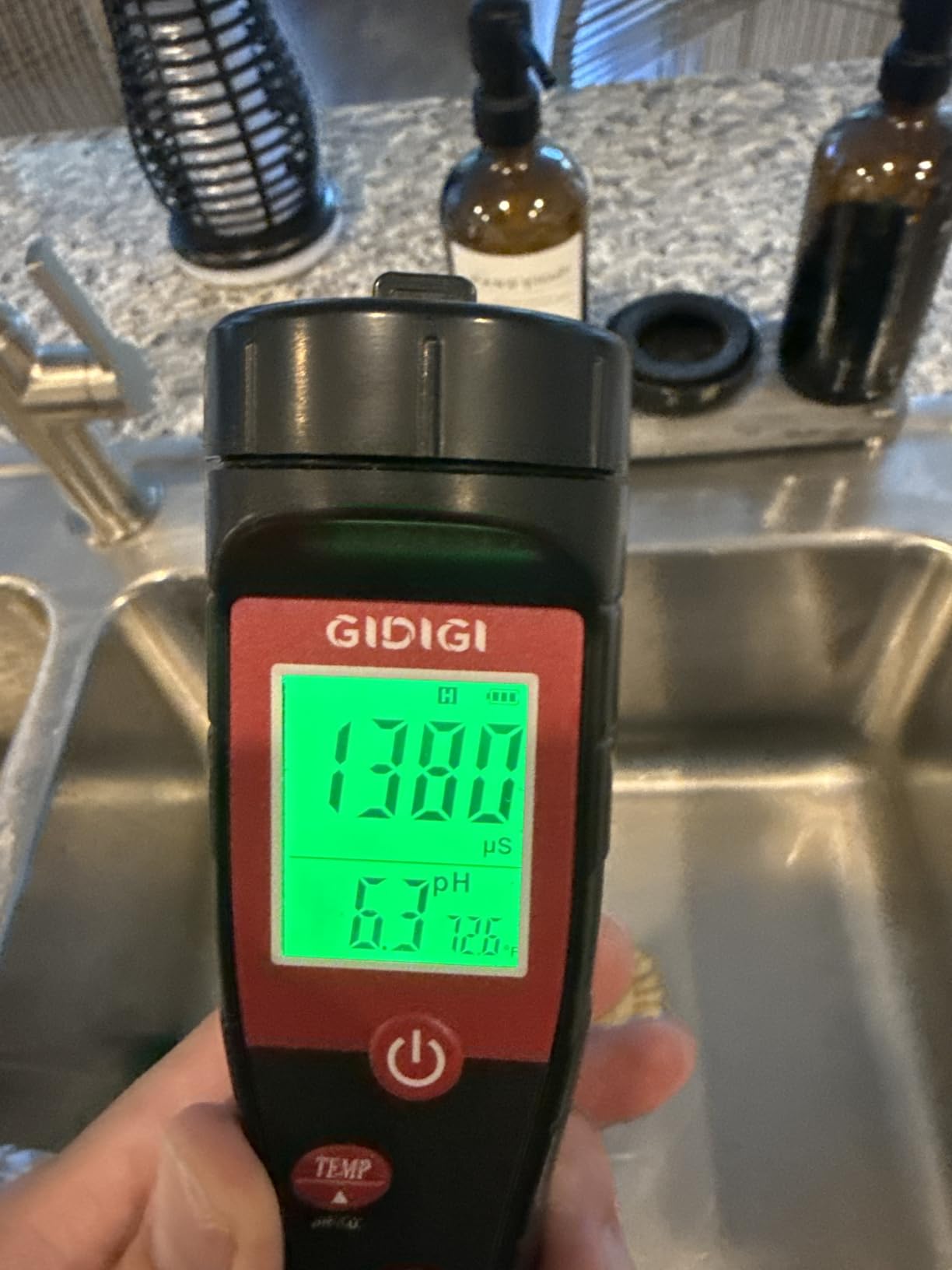
Two details get singled out in reviews. The sponge cap keeps the electrode moist, which is the single biggest factor in probe longevity, and owners report it staying calibrated through months of dry storage without drama.
New growers tell stories of this meter catching a drifted reservoir before plants showed stress, which is exactly the outcome you want from a tool.
Where simultaneous readout helps
Watch the EC and temperature numbers move at the same time as pH and you can diagnose rather than observe. EC rising with temperature usually means the compensation is working. pH falling while EC falls points at uptake. Reading one value alone leaves you guessing at the cause.
That is the argument for a combo meter, and this one makes the case with a display rather than a spec sheet.
Reasons to be cautious
Resolution of 0.1 pH is coarse. Several owners report needing to recalibrate before every use and still reading up to 0.6 out, and the probe tip cannot be replaced, so a dead electrode means a dead meter.
No cleaning cloth is included for the sensitive bulb, which is a small thing to add to your order.
10. KETOTEK KT-3 Review – The Simplest First Step Into Digital Testing
KETOTEK Digital PH Meter for Water, PH Pen Meter with ATC, PH Tester with 0.00-16.00ph Measure Range for Drinking Water, Hydroponic, Aquarium, Swimming Pool, Accuracy ±0.01pH
0.01 pH resolution across 0 to 16
ATC with in-liquid sensor
Auto two-point calibration
3.2 ounces
Pros
- Very low entry price for a digital pH pen
- Single-button on and off operation
- Lightweight at 3.2 ounces with a protective case
- Backed by a 12-month warranty replacement service
- Calibration steps are straightforward
Cons
- Accuracy is modest with one buyer reading 7.5 as 8.2
- Several owners report the meter dying within weeks or months
- Only two packets of calibration solution included
- Slow to settle to a final reading
This is the low-risk way to find out whether you care about pH at all. Single-button operation, automatic two-point calibration at 4.01 and 6.86, and automatic temperature compensation through a sensor that sits in the liquid.
The form factor is genuinely pocketable at 3.2 ounces and 6.1 inches long, with a protective case included, which makes it easy to carry around several rooms or to the sink for a calibration.
Manufacturer support is the underrated part. The 12-month warranty replacement service replaces units that fail, and that matters because a recurring thread in reviews is meters that stop working after a few weeks or a couple of months.
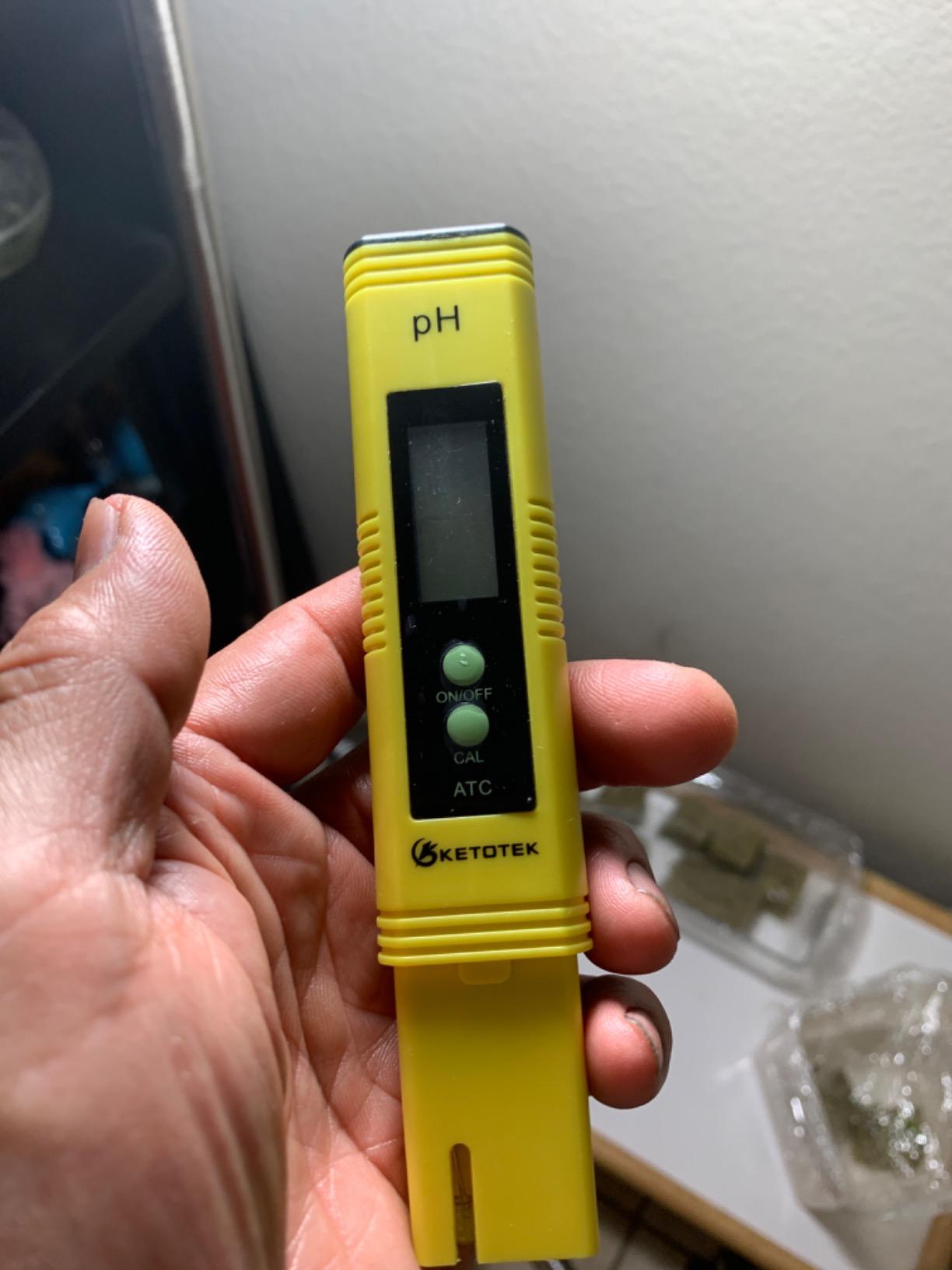
Resolution is listed at 0.01 pH across a 0 to 16 range, which sounds like a precision instrument on paper. In practice the accuracy is more modest, and one buyer reported reading a 7.5 solution as 8.2, which is a 0.7 gap and well outside a hydroponic control range.
It also takes longer to reach a final reading than the better meters, so give it time before you record the number.
What it is genuinely good for
Kombucha, brewing, swimming pools, drinking water checks and light hobby monitoring, which is exactly the category the reviews describe. If you are checking one small reservoir casually, the accuracy ceiling is unlikely to be the thing that fails first.
It also works as a second opinion instrument, the sort of cheap meter you keep in a drawer to sanity-check an expensive one.
Reasons to move up
The 4.1 star average is the lowest in this roundup, and durability is the reason. Multiple owners report units failing within weeks, and the electrode is not replaceable.
Only two packets of calibration solution come in the box. If you recalibrate often, that budget line grows quickly, and the warranty replacement route means waiting on a swap rather than fixing a probe.
My advice is to treat this as a 90-day trial. If you are still checking pH after that, step up to a meter with a replaceable probe.
How to Choose a pH Meter for Hydroponics
The meter is the least important purchase in your setup and the one that changes your decisions most, because every other input is wasted if the pH number is wrong. Here is how we would narrow ten options down to one.
Start with resolution versus accuracy
Resolution is the smallest step the display can show, and accuracy is how close the reading is to truth. They are different things, and a meter with 0.01 resolution can still be off by 0.3.
For a mature system holding a target, 0.1 resolution is enough. For seedling and clone mixes where you are building a solution from scratch, 0.01 gives you meaningful control.
Decide what else you need it to measure
If you only adjust pH, a single-parameter meter is the better buy. EC, TDS and salinity modes on a combo unit exist for growers who mix their own nutrients or run top-up dosing, and they are wasted capability otherwise.
EC measures electrical conductivity, which tracks nutrient concentration. TDS in ppm is a conversion of EC that is easier to read but less precise. Growers argue about the conversion because it assumes a fixed factor that different fertilizer salts break.
Automatic temperature compensation is not optional
Automatic temperature compensation corrects the pH reading for the temperature of the solution, because the same water reads differently warm and cold. A reservoir at 70 degrees F and one at 78 degrees F can show a real difference that is temperature, not chemistry.
Every meter in this roundup has it. Treat any that does not as a reason to move on.
Look for a replaceable probe before anything else
A pH electrode is a consumable with a lifespan measured in months of active use, not a lifetime part. Sealed probes are cheaper up front and dead ends later. Replaceable ones turn a dead meter into a five-minute fix.
This is the single highest-value feature on the list, and the reason the Apera PH60 comes out on top.
Match the form factor to your water
Pen testers are pocketable and cheap. Handheld meters with separate probes let you leave the display out of the wet area. Benchtop instruments suit a lab bench rather than a grow room. Continuous monitors stay in the solution and log a trend.
Whichever you pick, buy one that is waterproof or floats. Dropping a meter into a reservoir is the most common accident in this hobby, and r/Hydroponics users report cheap meters going erratic after an unintended dunk.
Think about who else is reading instruments
If you measure light in a grow room or clamp current on equipment, the same buying logic applies: accuracy specification, replaceable parts, and a calibration routine you will actually keep. Our guides to light meters and clamp meters walk through the same criteria.
What pH should you actually target?
Most soil-less hydroponic systems sit between 5.5 and 6.5. Below roughly 5.5, nutrients start locking out. Above about 6.5, iron, manganese and other micronutrients become unavailable even when they are present in the water, which is the version of the problem that quietly starves a crop.
Narrower ranges per crop:
Seedlings and clones: 5.5 to 6.0
Leafy greens and herbs: 5.5 to 6.5
Fruiting crops such as tomatoes and peppers: 5.8 to 6.3
Raised trough or Dutch bucket systems: 5.5 to 6.5, adjusted for how much the medium buffers
Aquaponics shared water columns: usually 6.5 to 7.0, following the fish more than the plants
Keep a pen and a notebook log. A trend over a week tells you far more than a single reading, and it is the only way to know whether your meter is drifting.
Calibration, Probe Storage and Common Failure Modes
A meter that reads accurately on day one and badly in month three has not failed. It has been left wet, left dry, or left dirty, and every one of those is fixable.
How to calibrate a hydroponic pH meter
Rinse the probe with distilled or reverse osmosis water and shake off the excess. Do not wipe the glass bulb.
Pour buffer solution into a clean container. Use 4.00 and 7.00 for a typical hydroponic range, and never dip the probe into the bottle itself.
Place the probe in the buffer and wait for the reading to settle, which on a good meter takes a few seconds.
Press the calibration button and confirm. Repeat with the second buffer value.
Rinse the probe again before it goes anywhere near your reservoir.
Record the date. That is how you know when the next calibration is due rather than guessing.
Calibrate before each session rather than on a fixed schedule. It takes under a minute and it is the cheapest accuracy you will ever buy.
How to store your pH probe
This is the most repeated question in the forums and the one almost no roundup answers properly. The answer is straightforward: store the probe wet, in the solution it was designed for, with the bulb covered.
Use the KCl storage solution that came with the meter, or the pH 7 calibration fluid growers commonly keep probes in. Rinse with RO or distilled water after every reading, and never let the glass bulb dry out in the air.
Keeping the probe in nutrient solution long-term is the practice most growers argue about, and the practical compromise is to keep it in storage fluid between uses and soak it in nutrient solution only for as long as a test needs.
Why cheap meters drift
Three causes account for most of it: a fouled junction where organic matter and salts coat the reference side, a dried-out bulb, and low dissolved ions in the sample. Nutrient solution is rich in salts, so a probe left in a reservoir for weeks will drift.
Forum consensus treats cross-checking two meters as the definition of an accurate meter. Keep a cheap second pen, compare readings, and when they diverge by 0.1 to 0.2 split the difference and investigate. If they diverge by more than that, one of them needs a buffer check.
Failure modes worth knowing
Dropping a meter into a reservoir: waterproof bodies survive it, sealed electronics may not.
Glass bulb breakage: any fracture ruins the electrode and it cannot be recovered.
Junction fouling: gradual, shows up as slow drift, sometimes fixed by soaking the probe tip in warm water.
Wet storage caps left open: the cap keeps the bulb moist, storing it off the meter dries it out.
Cross-contamination from soil or substrate: liquid-only meters read nonsense in semi-solid media.
None of these are expensive to prevent. They are just easy to forget, which is why a two-minute check after each use pays for itself.
Frequently Asked Questions
What pH meter is best for hydroponic water?
For most growers the Apera PH60 is the strongest all-round choice. It reads to 0.01 pH, takes a replaceable glass probe so a dead electrode does not end the meter’s life, and calibrates at one to three points across five buffer values. It measures from 0 to 50 degrees C, which covers standard soil-less reservoirs. Bluelab’s pH Pen is the alternative if you want a waterproof body that floats and a double-junction probe built for hydroponics.
What is the best pH level for hydroponics?
Most soil-less hydroponic systems run best between 5.5 and 6.5. Below about 5.5 nutrients begin to lock out, and above about 6.5 iron, manganese and other micronutrients become unavailable even when they are present in the solution. Seedlings and clones prefer the lower end around 5.5 to 6.0, while fruiting crops are usually held between 5.8 and 6.3. Aquaponics systems sit higher, often 6.5 to 7.0, because the fish set the range.
Which pH meter is the most accurate?
The Milwaukee MW102 is the most accurate by specification at plus or minus 0.02 pH, using a gel-filled double-junction electrode and a separate stainless temperature probe. Among pocket meters the Apera PH60 matches it at plus or minus 0.01 pH accuracy and a replaceable glass probe. Real-world accuracy depends far more on calibration habits than on the printed spec, so whichever meter you buy, buffer it before each session.
Are cheap pH meters accurate?
Cheap meters are accurate enough for casual monitoring but drift quickly. The main causes are a fouled junction, a bulb that has dried out, and low dissolved ions in the sample. Reviews of entry-level pens repeatedly report calibration that will not hold and readings moving by several tenths within weeks. The fix is habit rather than spending: rinse with distilled or RO water after each reading, keep the probe wet in storage fluid, and cross-check against a second meter when a number looks wrong.
Do you need an EC meter for hydroponics?
You need an EC meter if you mix your own nutrients from concentrates or run top-up dosing, because EC tracks nutrient concentration as plants drink. You can get by with pH alone if you follow a fixed feeding schedule in a small system. Combo meters such as the Apera PC60 or the 4-in-1 testers measure both in a single dip, which is convenient but means you replace one expensive probe instead of two cheap ones when it expires.
How often should I test pH in a hydroponic reservoir?
Test daily at minimum, and test before every dose. Larger reservoirs change more slowly and can be checked every two to three days if nothing is being added, but small DWC buckets can shift a full point in a day as roots drink and feed. Continuous immersion meters log the trend between manual checks. Whichever meter you use, a written daily log is more useful than any single reading.
What should I store a pH probe in?
Store the probe wet, in the storage solution it shipped with, or in pH 7 calibration fluid. The glass bulb must never be allowed to dry out, because a dried electrode drifts until it no longer calibrates. Rinse with distilled or reverse osmosis water after each reading before storage. Growers often debate keeping probes in nutrient solution, but long-term immersion in nutrient salts encourages junction fouling.
What is the best pH tester for hydroponics on a small budget?
Combo meters give you the most measurement per unit of spend. The VIVOSUN pH, TDS and EC meter has the largest review base in this roundup and includes a case, spare batteries and calibration buffers in the box. The UIUZMAR 4-in-1 is the faster performer, settling in one to two seconds. Both have fixed probes, so plan to buy a second meter with a replaceable electrode as a reference once you outgrow them.
Conclusion – Which pH Meter for Hydroponics Should You Buy in 2026
Buy the Apera PH60 if you want one meter that resolves a tenth of a pH step, ships with buffers and storage solution, and keeps working after the electrode dies. Buy the Bluelab pH Pen if your meter lives next to a wet reservoir and you would rather not think about it. Buy the Milwaukee MW102 if a reading has to survive scrutiny.
For new growers on a small system, the VIVOSUN combo is the sensible entry point and the UIUZMAR is the faster one. Whatever you choose, calibrate it before every session and keep the bulb wet, because the habits protect the meter more than the badge on the box does.