
Quick answer: yes, aeroponics suits beginners, but only with a system that has few small outlets, a pre-filtered pump, and a humidity dome. Aeroponics suspends plant roots in air inside a sealed chamber and delivers nutrients by misting them on a timer, so roots get more oxygen than in any other growing method. The catch is that every one of these systems depends on a pump and on electricity, and that single dependency is where most first crops are lost. Everything in this roundup is built around that reality rather than around brochure specs.
We spent weeks reading review data on ten aeroponic and mist-based growing systems, comparing how they behave when they are left alone for three days, how many pieces a first-timer has to buy separately, and what happens when the mist stops. This is the guide we wanted before buying one ourselves. It is current as of October 2026, and every rating quoted here comes from the product listing at the time of writing.
One naming note before we start, because it trips up a lot of first-time shoppers. Aeroponics is the general method: misted roots. AeroPonics with a capital P is a trademark belonging to a specific commercial product line from Aqua Design, and its tower gardens are hydroponic, not aeroponic. When you type the word into a search box you will land on both. Know which one you are reading about.
We also want to be straight with you about the split in this roundup. Nine of our ten picks are cloning and propagation machines, which is where the beginner aeroponic market actually lives for home growers, because cuttings are cheap, mistakes cost nothing but a leaf, and the whole cycle finishes in under three weeks. The remaining picks are countertop and tower units that mist from above. There are no commercial vertical farm rigs here, and there is no build-your-own bucket kit in this roundup, because a beginner should buy a sealed chamber with a pre-filtered pump before they buy pipe and fittings.
Table of Contents
Top 3 Aeroponic Systems for Beginners for October 2026
The three picks below are the ones we would hand to a friend with no hydroponic background. The CLONE KING 36-site is the strongest all-round choice, the HORTIPOTS 35-site is the better value, and the EZ Clone 16-site is the tidiest first unit.
All 10 Aeroponic Picks at a Glance for October 2026
This table lists every system in the roundup with its capacity, pump type and the situation it suits best. Read across rather than down: the right pick depends far more on how many cuttings you have and how much attention you can give it than on any single specification.
| Product | Specifications | Action |
|---|---|---|
| CLONE KING 36-Site Aeroponic Cloner |
|
Check Latest Price |
 HORTIPOTS 35-Site Aeroponic Cloner HORTIPOTS 35-Site Aeroponic Cloner |
|
Check Latest Price |
 HORTIPOTS 24-Site Aeroponic Cloner HORTIPOTS 24-Site Aeroponic Cloner |
|
Check Latest Price |
 EZ Clone 16-Cutting Cloning System EZ Clone 16-Cutting Cloning System |
|
Check Latest Price |
 Psycloner Pro 35-Site Cloner Psycloner Pro 35-Site Cloner |
|
Check Latest Price |
 Zekeson 15-Pod Misting Herb Garden Zekeson 15-Pod Misting Herb Garden |
|
Check Latest Price |
 PowerGrow 21-Site Bucket Cloner Kit PowerGrow 21-Site Bucket Cloner Kit |
|
Check Latest Price |
 LYCereal 30-Plant Vertical Tower LYCereal 30-Plant Vertical Tower |
|
Check Latest Price |
 NEEWER HGS02 Silent Aeroponics Kit NEEWER HGS02 Silent Aeroponics Kit |
|
Check Latest Price |
 HORTIPOTS 70-Site Aeroponic Cloner HORTIPOTS 70-Site Aeroponic Cloner |
|
Check Latest Price |
1. CLONE KING 36-Site Aeroponic Cloner: The One to Buy First
CLONE KING 36 Site Aeroponic Cloning Machine. Expect 100% Success Rates!
36 cloning sites
Submersible 317GPH pump
13 spray heads
5 lb, 13.75 in square
Pros
- Complete prebuilt kit with reservoir lid manifold pump and inserts
- Even mist coverage from 13 spray heads
- Illustrated instructions simplify assembly
- Compact 13.75 inch footprint
- Strong reported rooting rates
Cons
- Blue and red neoprene inserts only
- Bigger chamber means more reservoir water to top up
- No dome light or cloning gel included
This is the system we would put in front of a beginner with no caveats attached. It arrives as a complete unit: reservoir, lid, spray manifold with misters, a submersible 317GPH pump and the inserts. You add a light and a cutting. There is no assembly step where something can be plumbed backwards, which is the failure mode that ends most first builds.
The number that matters most here is 13. Thirteen spray heads across a 36-site chamber is generous coverage, and it means no corner of the lid sits in a dry pocket where cuttings quietly stall. The chamber is 13.75 inches square and 12.5 inches tall and weighs 5 pounds, so it lives on a countertop and can be moved to the sink for cleaning.
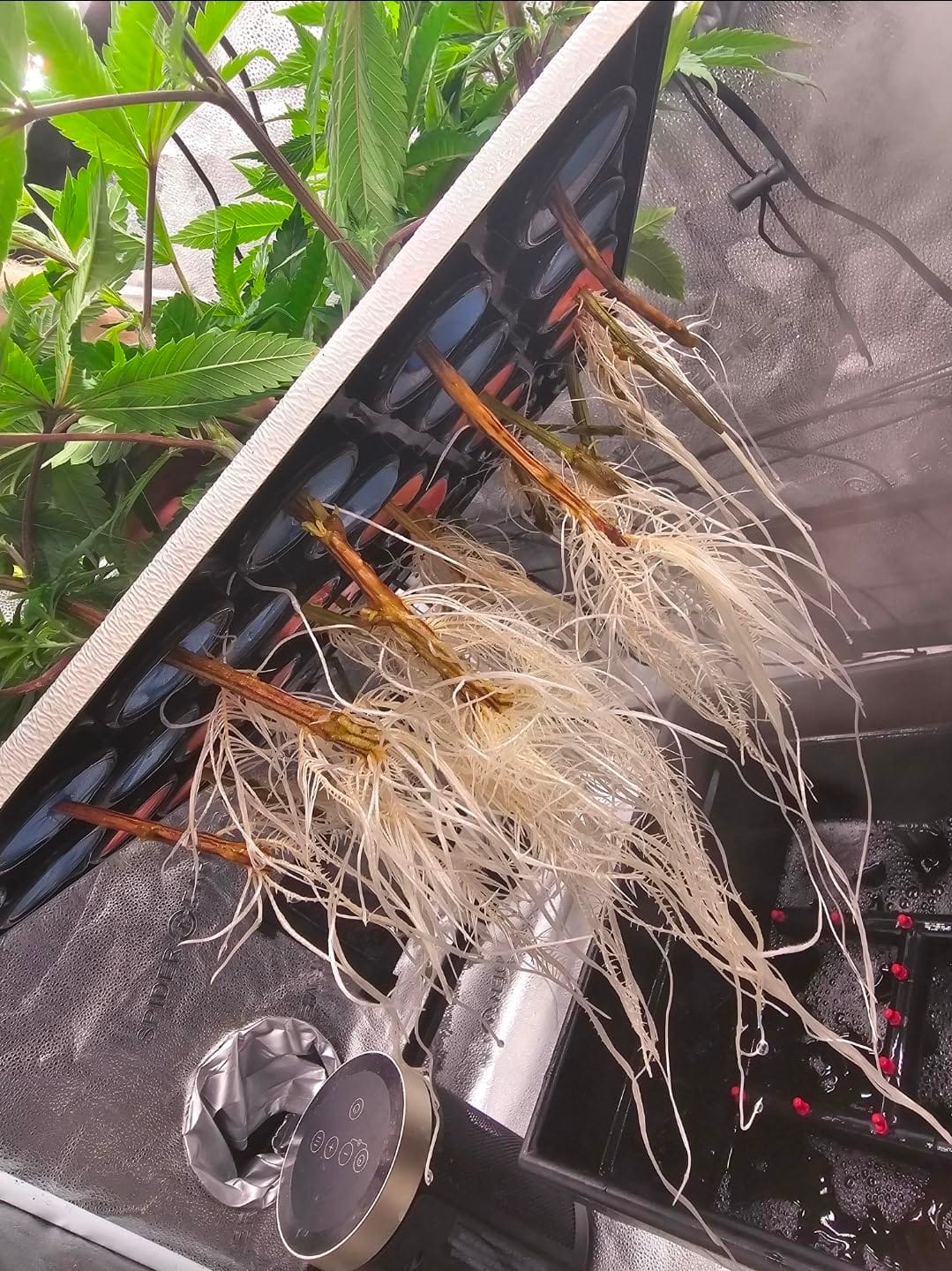
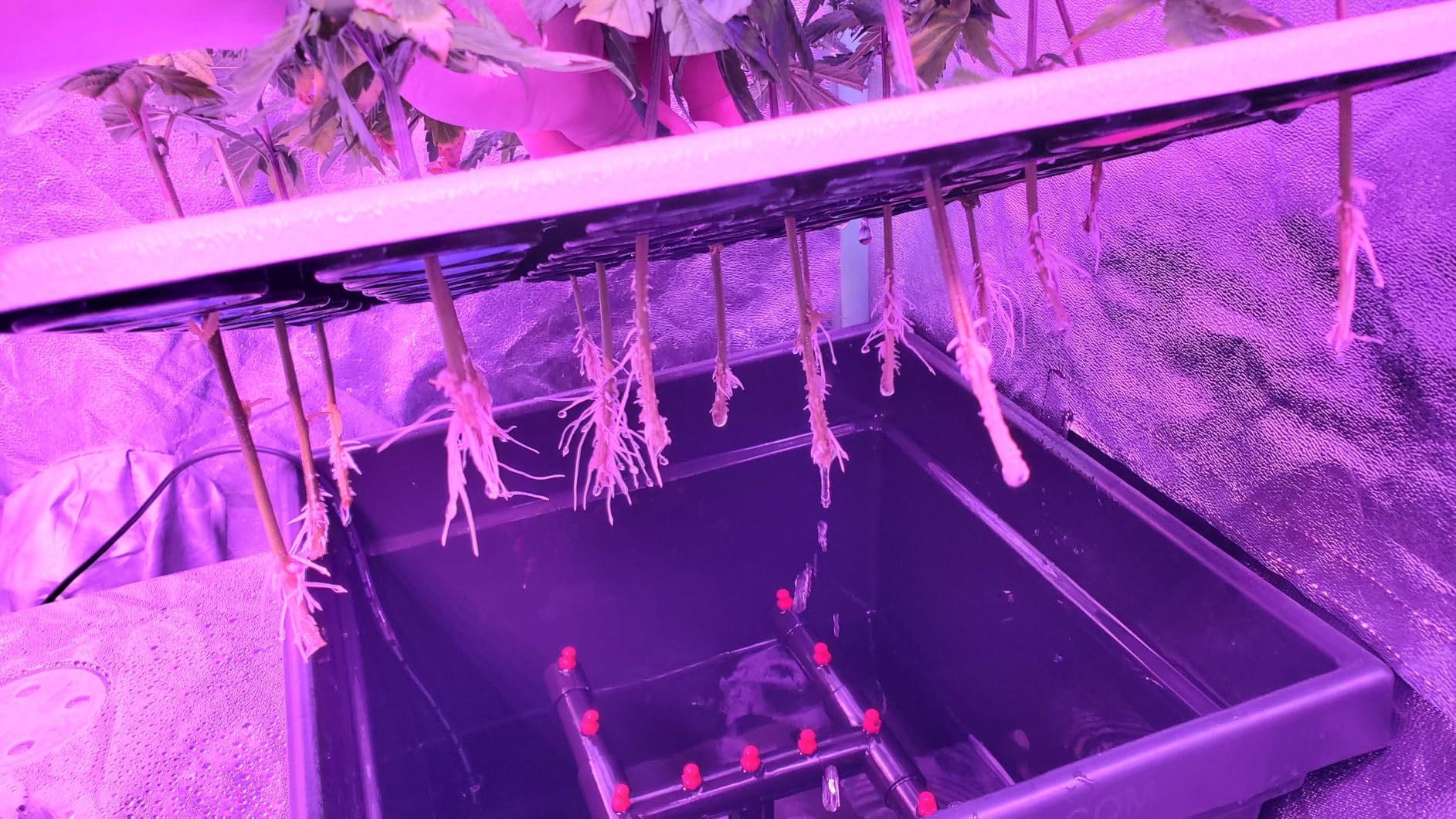
With 1867 reviews at 4.5 stars and 76% of ratings at five stars, this is the best-reviewed machine in the roundup by a wide margin, and that matters more here than in most categories. Buyers consistently report strong rooting and describe assembly as straightforward. Pumps and misting performance across this machine are reported as reliable, which is the exact thing you cannot verify before you buy.
Two practical notes. The chamber currently includes blue and red neoprene inserts only, so collar colour is not a choice you get. And because it is a 36-site unit, you will be topping up more water than you would with a 16-site chamber, so build the reservoir check into your routine from day one rather than treating it as a warning sign.
What to check before you commit
Decide whether you actually have 36 cuttings to put in it. A cloner running at a quarter full is a cloner where the mist pattern is not being tested the way the manufacturer tested it, and unused sites can sit in drier air than the ones in use. Buy the size you will fill, not the size you might fill one day.
Also price the add-ons before you order. There is no dome, no light and no cloning gel in the box, so the real cost of this system is the chamber plus a dome plus a light plus gel plus a pH test. Add a cheap interval timer too, because running the pump continuously instead of on a cycle is the most common cause of the algae problems described in reviews.
Where it will frustrate you
It is a 36-site machine with a large reservoir, so it wants more water top-ups than a smaller chamber would. If your daily routine does not include a kitchen check, that becomes the thing that kills your batch, and it will happen quietly rather than dramatically.
It is also propagation-only. Once your cuttings are rooted you need soil, media or a second system, so this is an entry point rather than a whole answer. If your goal is a continuous supply of lettuce rather than a propagation bench, look at one of the countertop units further down.
2. HORTIPOTS 35-Site Aeroponic Cloner: Better Value Than the Winner
Aeroponic Cloner Machine, Cloning Machine 35 Site for Cutting Rooting Germination Kit Using 1.625 inch Neoprene Clone Inserts
35 cloning sites
1.625 inch inserts
Pre-filtered UL pump
Humidity dome included
Pros
- Humidity dome included at no extra cost
- Pre-filter housing helps stop sprayer clogging
- Runs without a separate air pump
- Selling worldwide since 2016
- Tight-fitting parts
Cons
- Light pH supplies and gel sold separately
- 120V pump only
- Some lid seam leakage reported
- Neoprene collars need periodic replacement
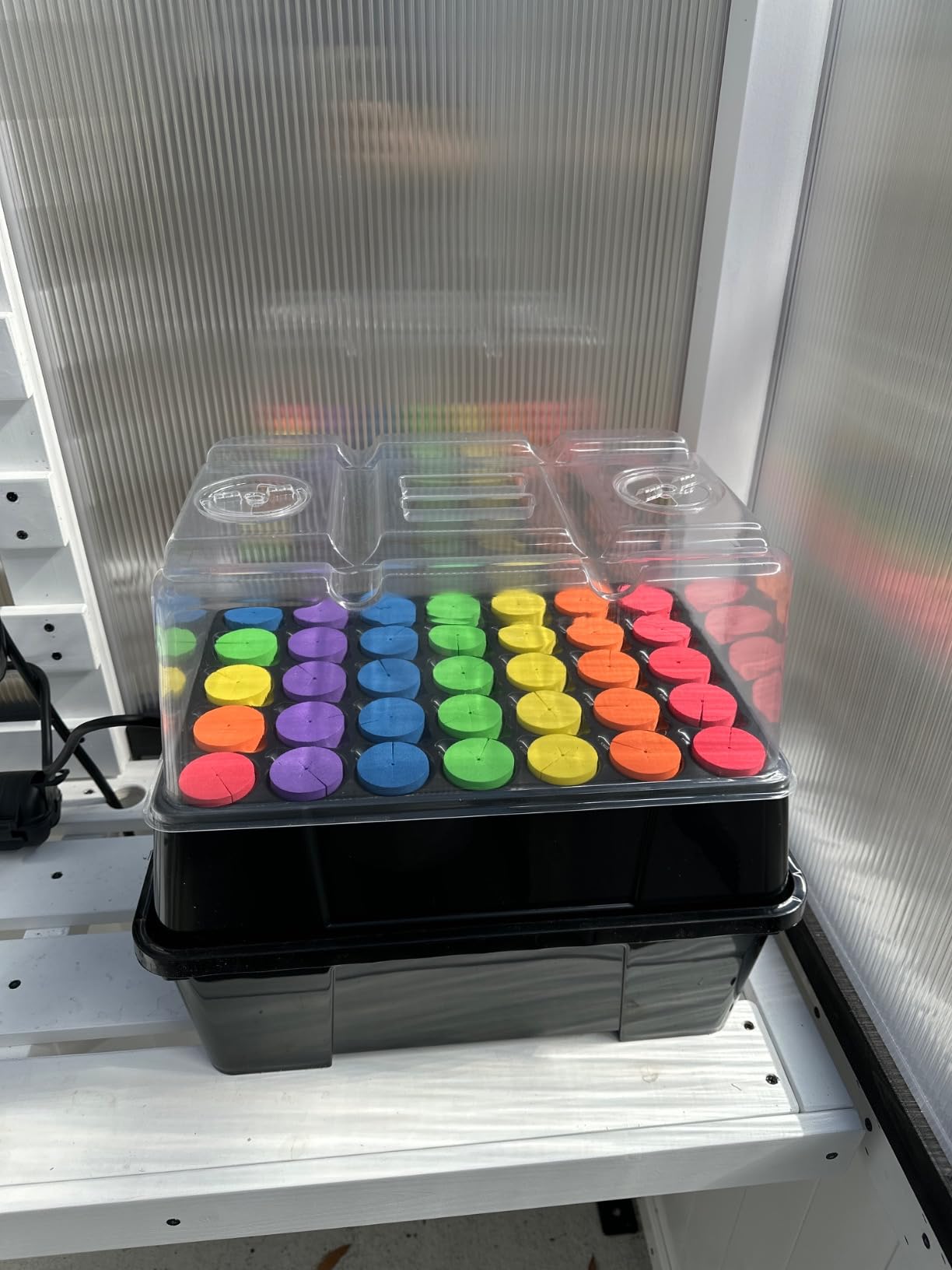
Everything the CLONE KING does, this machine does with one important addition: a foldable clear humidity dome in the box. For a first-timer, that dome is worth more than it looks. Cuttings lose moisture through their leaves in the first few hours, and transplant shock at exactly that moment is what turns a good batch into a patchy one. The dome is hard plastic that folds flat, which is also better than the thin vinyl domes on cheaper kits.
The second thing this machine gets right is the pump. It is UL-listed and sits behind a pre-filter housing, which is a direct answer to the single most repeated complaint in aeroponic forums, which is clogged sprayers. The patented spray manifold also runs without a separate air pump, because the lid is vented and the cord outlets let air in and out on their own. One fewer machine to buy and one fewer thing to fail.
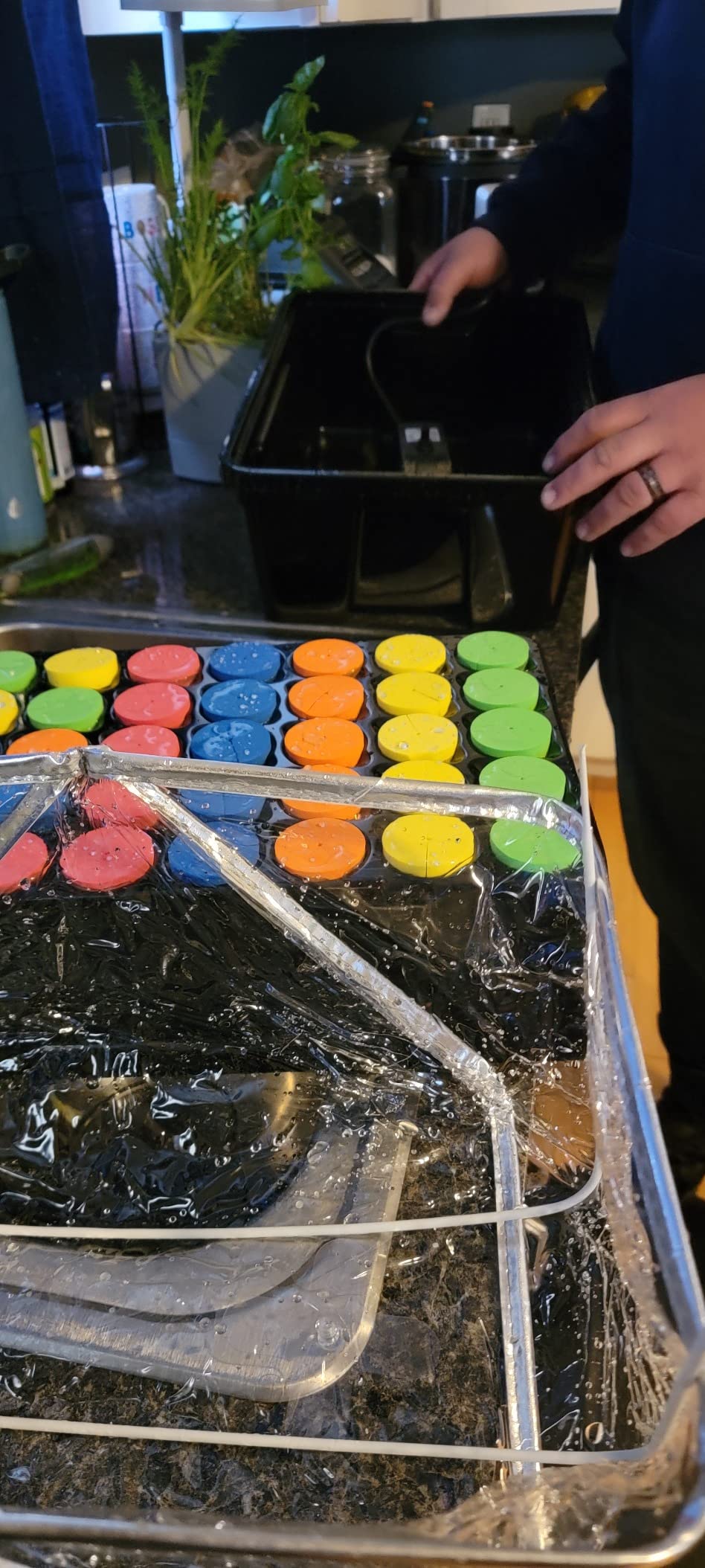
That construction has a track record behind it. This machine has been sold worldwide since 2016 with no major quality issue reported, and the company is explicit that it is a manufactured product from new ABS and PP plastic rather than a hand-made DIY clone of one. Spare pump filters and extra spray nozzles come in the box, which is a quietly generous detail that most kits skip.
Reviewers report dependable rooting in roughly 4 to 10 days. The recurring gripes are honest ones: some owners see the sprayers leak past the lid seams, the discs are thin enough to let light into the reservoir and encourage algae, and the pump is 120V only, which matters if you are outside the North American market.
What to check before you commit
Count what you need to buy separately, because it is more than you expect. A light, pH testing supplies, cloning gel and an interval timer are all outside the box. Experienced growers in the reviews are blunt about this: without a pH test and an interval timer, results swing badly from batch to batch no matter how good the chamber is.
Check the plug type against your mains before you order, since the 120V pump is the most common regret among overseas buyers of otherwise good machines. Plan on replacing neoprene collars every few cycles, because bacteria embed in the foam and a collar that has been through two batches is a contamination risk you cannot mist away.
Where it will frustrate you
The dome is clear plastic, and light in the reservoir means algae. If you see green fuzz forming, it is not because you did anything wrong, it is because the discs are thin. Keep the reservoir dark and change water on a fixed rhythm.
Also expect to think about water volume more than you expect. A 35-site chamber running a full propagation cycle drinks more than a small one, and top-ups during a hot week are part of the job, not a fault.
3. HORTIPOTS 24-Site Aeroponic Cloner: Best for Smaller Batches
Aeroponic Cloner Machine 24 Site for Cuttings Rooting Using 2 inch Neoprene Inserts or 2 inch Clone Collars
24 cloning sites
2 inch neoprene collars
Humidity dome included
Pre-filtered pump
Pros
- Hard clear-plastic dome included
- Spare filter and nozzles supplied
- Roots reported in under three weeks
- Manageable size for a first run
- Cuttings reported not to wilt
Cons
- Black plastic body feels thin and flexes
- 2 inch plugs sit loosely and splash
- Dome can drip onto the lower ledge
- 120V pump only
This is the same design philosophy as the 35-site machine, scaled down and using 2 inch neoprene clone collars measuring 48 to 48.3 millimetres instead of 1.625 inch ones. For a first propagation run, 24 sites is a much more comfortable number than 35, because it is easy to fill with cuttings from one healthy parent plant and it keeps water volume manageable.
You get the same core hardware: a UL-listed pump behind a pre-filter housing, a ventilated top lid that removes the need for an air pump, and a foldable clear humidity dome in the box. Construction is BPA-free ABS and PP, and the chamber is marked as blocking light to the root zone.
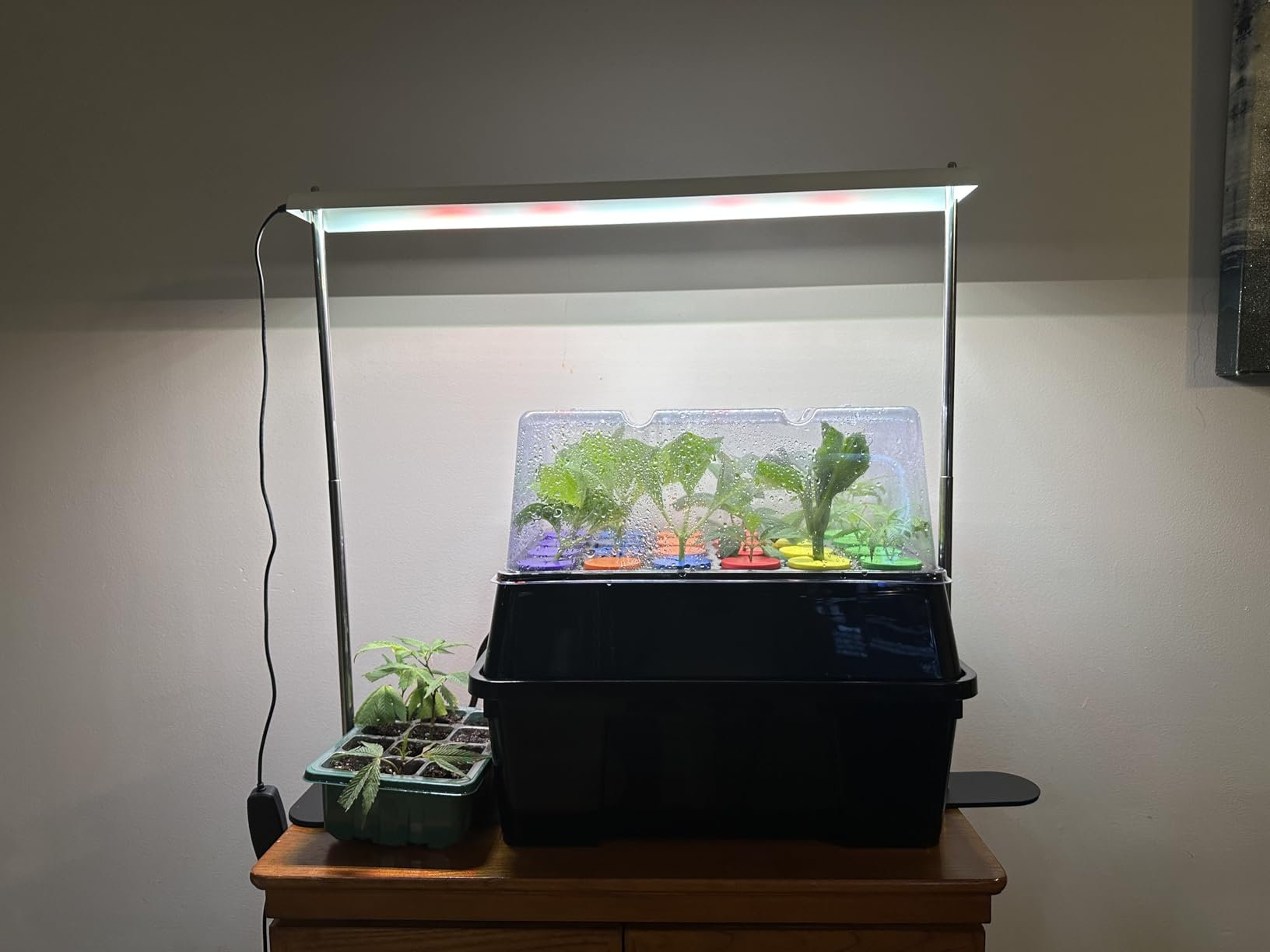
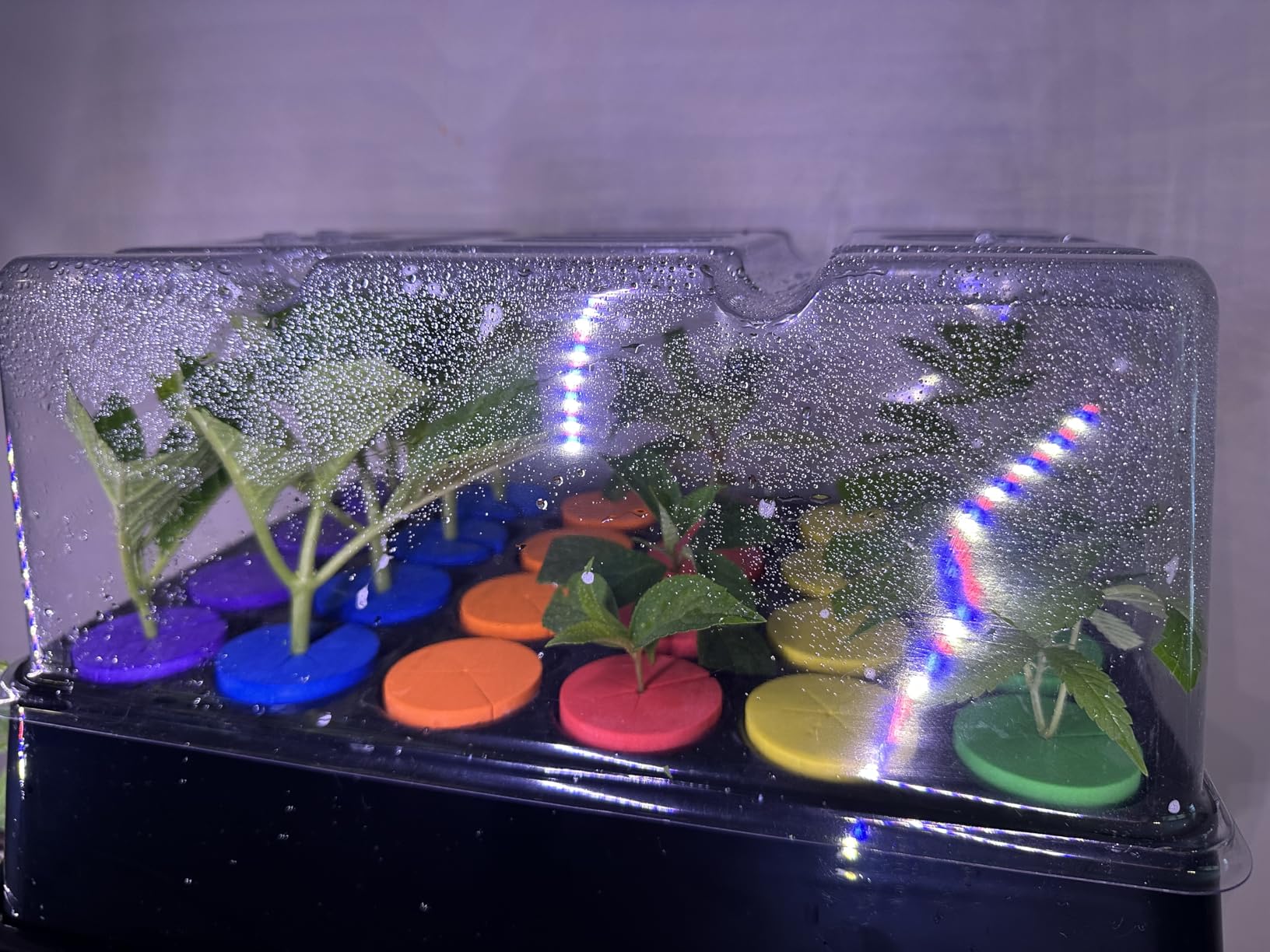
Owners report strong results, in some cases roots more than half an inch long in under three weeks, and they single out the dome and the tight-fitting parts as the reason. Cuttings are reported not to wilt during the rooting period, which is the outcome you are paying for, because a wilted cutting in hour one rarely recovers.
The complaints are specific and worth taking seriously. The black plastic body flexes and feels thin, the 2 inch plugs sit loosely in the ports so solution splashes up into the domed canopy, and the dome cover can drip down onto the upper stage, which the lower reservoir ledge catches. Owners on 220V mains report pump overheating and tripped fuse boxes, so this is not a machine to buy outside North America without a converter.
What to check before you commit
Decide whether you will use 2 inch media or 1.625 inch. The collar size is fixed by the lid, and mixing sizes across machines is how people end up with inserts that sit loose and leak. If you already own 1.625 inch collars, the 35-site or 70-site model is the better buy.
Inspect the lid seating on the first run. This is the cheapest machine in the roundup where a badly seated lid shows up as solution on the bench rather than as a stalled crop, and you can fix it in seconds once you know it is happening.
Where it will frustrate you
Loose plugs and a dripping dome are both tidiness problems as much as crop problems. Water sitting in the canopy zone keeps leaves wet, which is exactly the condition you do not want above a rooting chamber, so plan on checking the seam and wiping the ledge during the cycle.
Nothing is included for lighting, timing or pH. Experienced growers using this machine add a pH test, an interval timer and often an air stone to get consistent results across more than one batch.
4. EZ Clone 16-Cutting Cloning System: Smallest and Tidiest First Unit
EZ Clone 16 Cutting Cloning System
16 cutting chamber
Made in the USA
14.3 x 14.7 x 12.3 in
8 pounds
Pros
- Smallest chamber here so a first run needs few cuttings
- Made in the USA with tighter sealing
- 4.5 stars across 273 reviews
- Compact footprint for a shelf or counter
Cons
- Listing detail is thin so the manual is the real guide
- No light dome gel or pH supplies included
- Heavier than most at 8 pounds
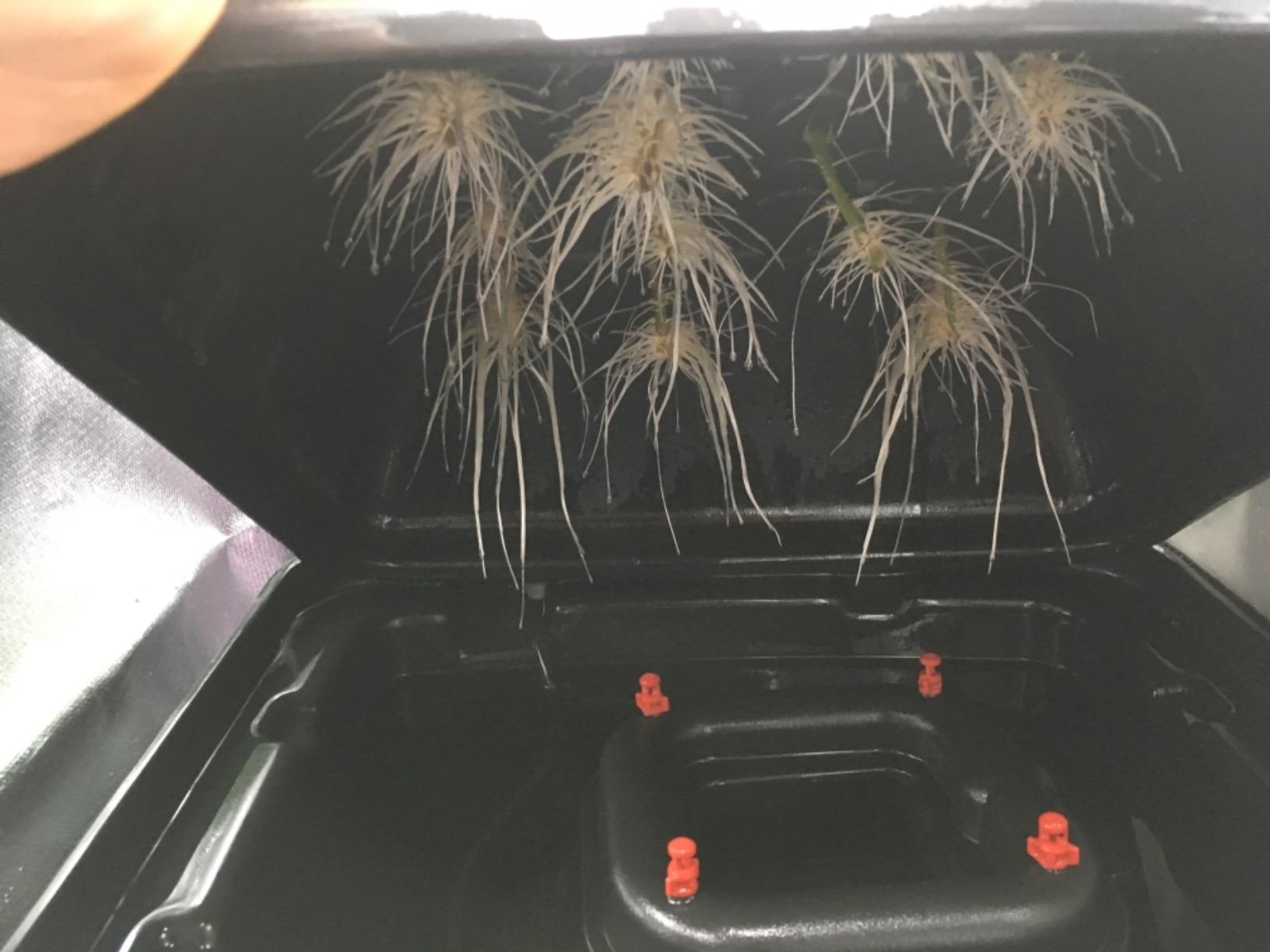
Sixteen sites is a genuinely small number, and that is the entire argument for this machine. A first propagation run only needs a handful of cuttings to learn the process, and a 16-site chamber lets you do a complete cycle in an afternoon without committing a reservoir of water to it. It measures 14.3 by 14.7 by 12.3 inches, so it fits on a shelf.
This is the one in the roundup made in the United States, by Hawthorne Hydroponics under the EZ Clone name. Buyers associate that with tighter tolerances and better sealing than budget imports, and the 4.5 star average with 79% of ratings at five stars is the second-highest satisfaction score here, behind only the CLONE KING.
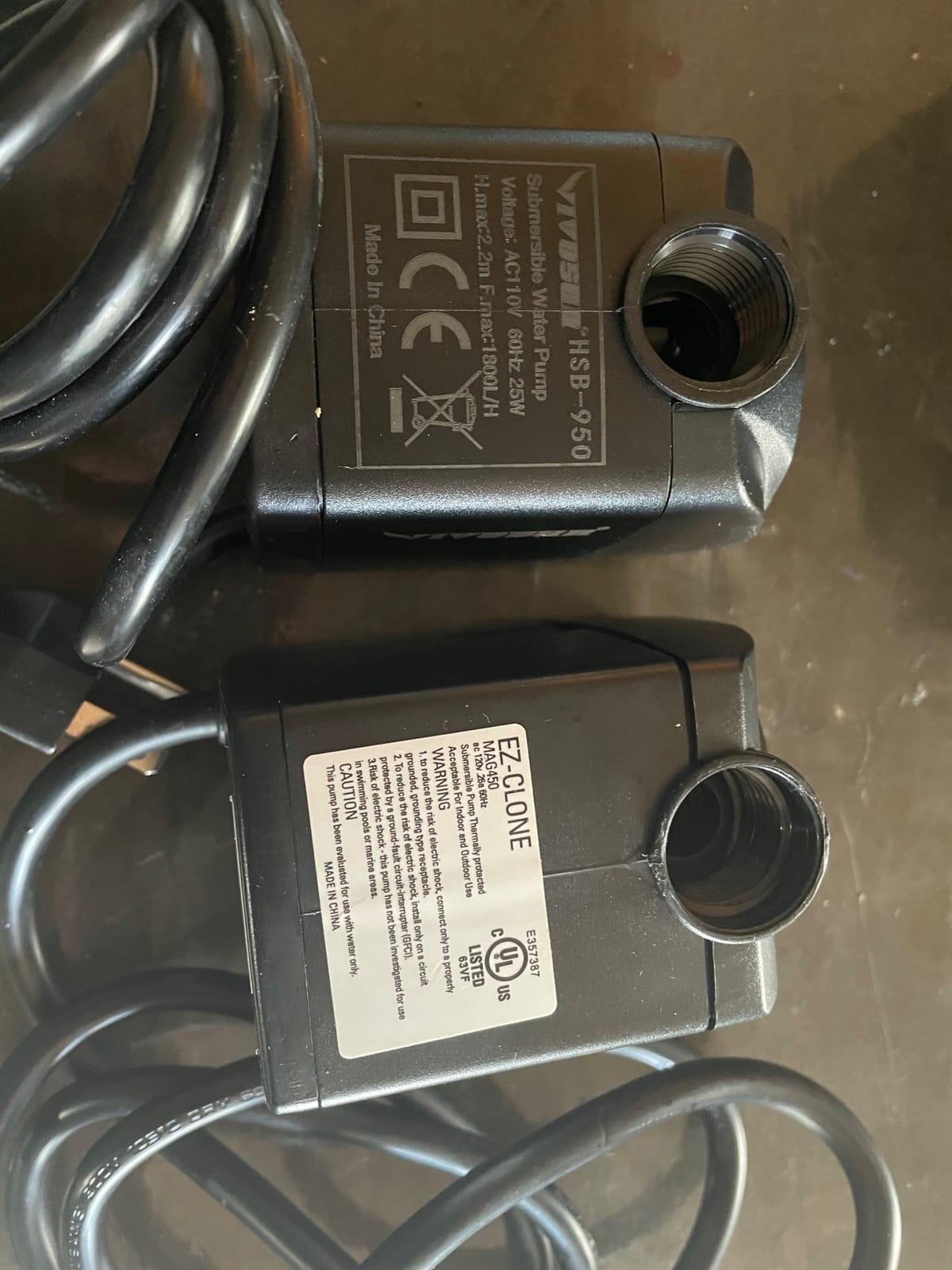
What we like most is that a 16-site chamber is fully used by almost any first batch. You are not paying for empty ports and you are not misting a chamber with one cutting in the corner. The model number is EZCL-BL16-LP-1, and the low-pressure designation tells you it is not a high-pressure atomising rig, which is the right place for a beginner to start.
The limitation is information rather than hardware. The listing carries very little detail beyond packaging dimensions, so buyers end up learning the unit from the manual, and light, humidity control, cloning gel and pH supplies all have to be sourced separately. At 8 pounds it is also the second-heaviest machine here, so moving it between rooms is a two-handed job.
What to check before you commit
Make sure you have a propagation habit, not just a plant-buying habit. This machine does one job and does it well, but if what you actually want is lettuce on the counter every week, a cloner is the wrong purchase and you should read further down the list.
Find the manual before you buy and read it once fully. With this little listing detail, the manual is the only setup guide you will get, and the assembly sequence matters more than it does on a unit that arrives with illustrated instructions in the box.
Where it will frustrate you
Eight pounds is heavier than it looks in a small footprint, so do not plan to carry it between rooms while full of solution. Empty the reservoir before you move it, every time.
Sixteen sites is small enough that you will outgrow it within a season if your propagation takes off. Treat it as a trainer rather than as a permanent bench, and pick a larger chamber as the second purchase rather than as the first.
5. Psycloner Pro 35-Site Cloner: Fastest Rooting in the Roundup
Psycloner Pro Clone Machine, Aeroponics System, Cloner for Plant Cuttings, Propagation + Bonus (35 Site)
35 cloning sites
2.12 kg
ABS tray and humidity dome
Gel and collars included
Pros
- 3 to 4 inch roots reported in as little as 13 days
- Clear instructions and quick setup
- Collar and cloning gel bonuses in the box
- Also made in 35
- 70 and 140 site sizes
Cons
- Lowest rating in the roundup at 4.0
- Seams leak if the lid is not seated perfectly
- Tent flap drips instead of returning water
- Thin plastic can warp
The Psycloner Pro is the fastest-rooting machine in this roundup based on what buyers report, with 3 to 4 inch roots in as little as 13 days on some strains. If your priority is turnaround rather than durability, this is the one to look at first. Setup is described as quick, with clear instructions and no special technical knowledge required.
Two details make it attractive to a first-timer. The kit includes neoprene inserts and cloning gel as bonuses, so you can run a batch on day one without waiting for a second order. And the ABS propagation tray is designed to block light to the root zone while promoting evaporative cooling, which reduces the heat load inside the chamber during a long cycle.
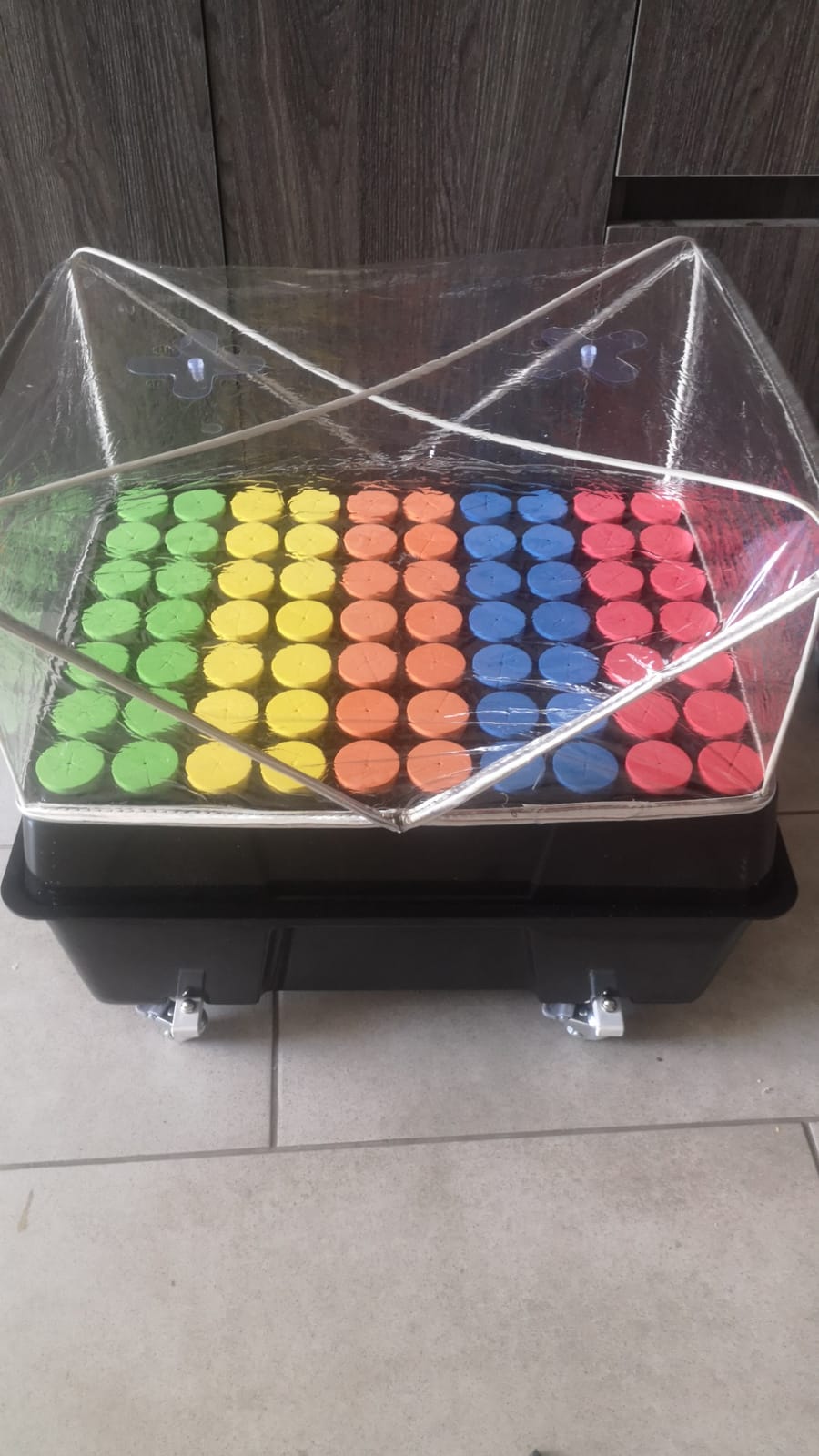
It is also the only machine here that scales in a straight line, since the same design comes in 70-site and 140-site configurations. That makes it the least likely purchase you will replace, if you plan to move from hobby scale to something bigger within a couple of years.
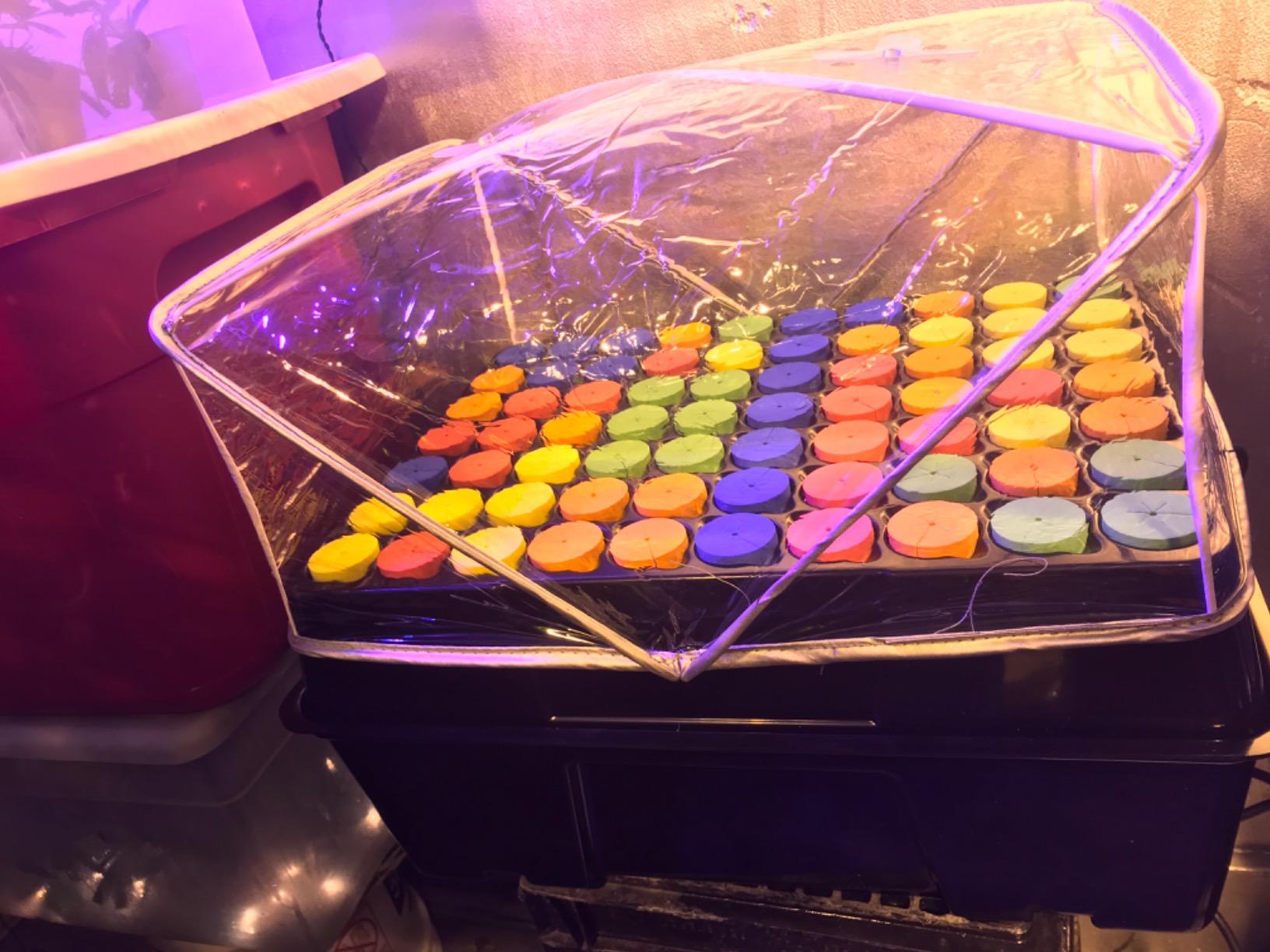
Now the honest part, and it is significant. At 4.0 stars from 372 reviews this is the lowest-rated dedicated cloner in the roundup, with 58% five-star and 12% one-star. Leaking dominates the reviews: seams leak if the lid is not seated perfectly, the supplied tent flap bows out and drips rather than returning water to the reservoir, and some owners report hairline cracks at the pump-cord corner after very light use.
What to check before you commit
Sit the unit down and inspect the seam before you pour solution in. That single five-minute check, done under a light, is the difference between a clean cycle and the leaking pattern that drives the one-star reviews. Owners who report leaks and owners who report clean runs differ mostly on whether the lid was seated properly.
Budget for an interval timer regardless. The pump here is 120V only, and there is no timer, no pH supplies and no light in the box, so your first order is really the machine plus a timer plus a light plus a pH test.
Where it will frustrate you
Thin plastic is the structural weakness. Owners report the tray can warp in a dishwasher, and once it warps the leaks follow. Hand-wash it, dry it flat, and do not put it near heat.
There is also a report of an impeller needing manual spinning after a couple of runs, and a 120V pump that will burn out on 220V mains. If you are outside North America, factor in a converter and keep a spare pump in mind.
6. Zekeson 15-Pod Misting Herb Garden: Best Countertop Grower
Misting Hydroponic Growing System Kit 15-Pods Indoor Smart Herb Garden Planter with LCD Touch Panel 6L Large Tank for Herb/Vegetables/Flowers/Fruits,Gardening Gifts for Women Men Beginners-Black
15 pods
6L tank, 3L fill
LCD touchscreen timer
8 x 15.7 x 19.7 in
Pros
- Misting can be dialled back for seedlings
- Everything needed including A&B nutrients in the box
- 15 pods is plenty for herbs and greens
- Compact compared with 24 pod systems
- Plants transplant out easily once mature
Cons
- Misting can be over-aggressive
- Needs topping up sometimes twice daily
- Electronics fail within a few months
- Algae in the reservoir
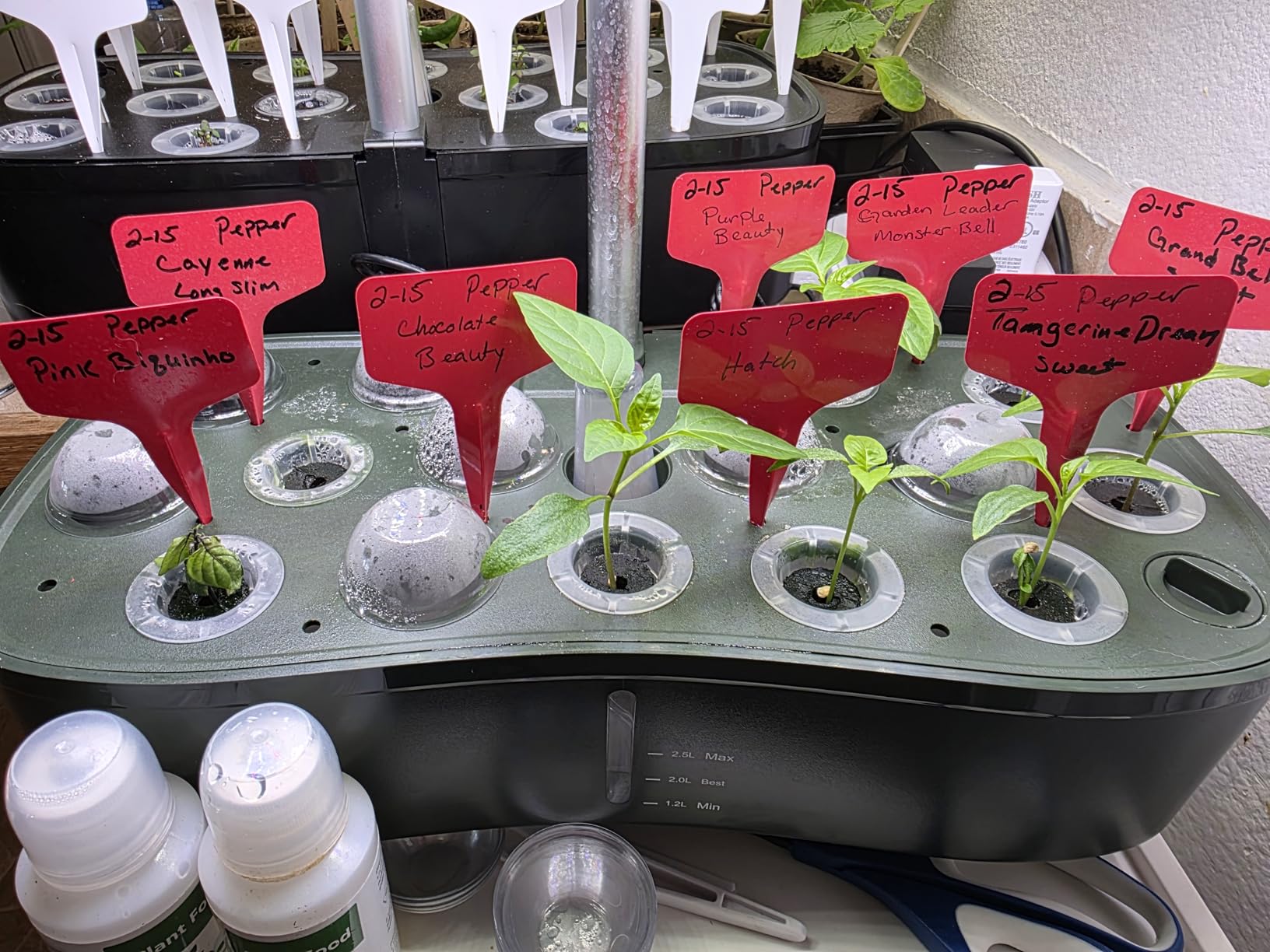
This is a different category from everything above it. Where the cloners mist cuttings from below, this unit sprays from above into a 15-pod chamber, which makes it a countertop kitchen garden rather than a propagation machine. Buyers grow basil, green onion, lettuce, mint and small tomatoes in it successfully, so it does deliver on what it promises.
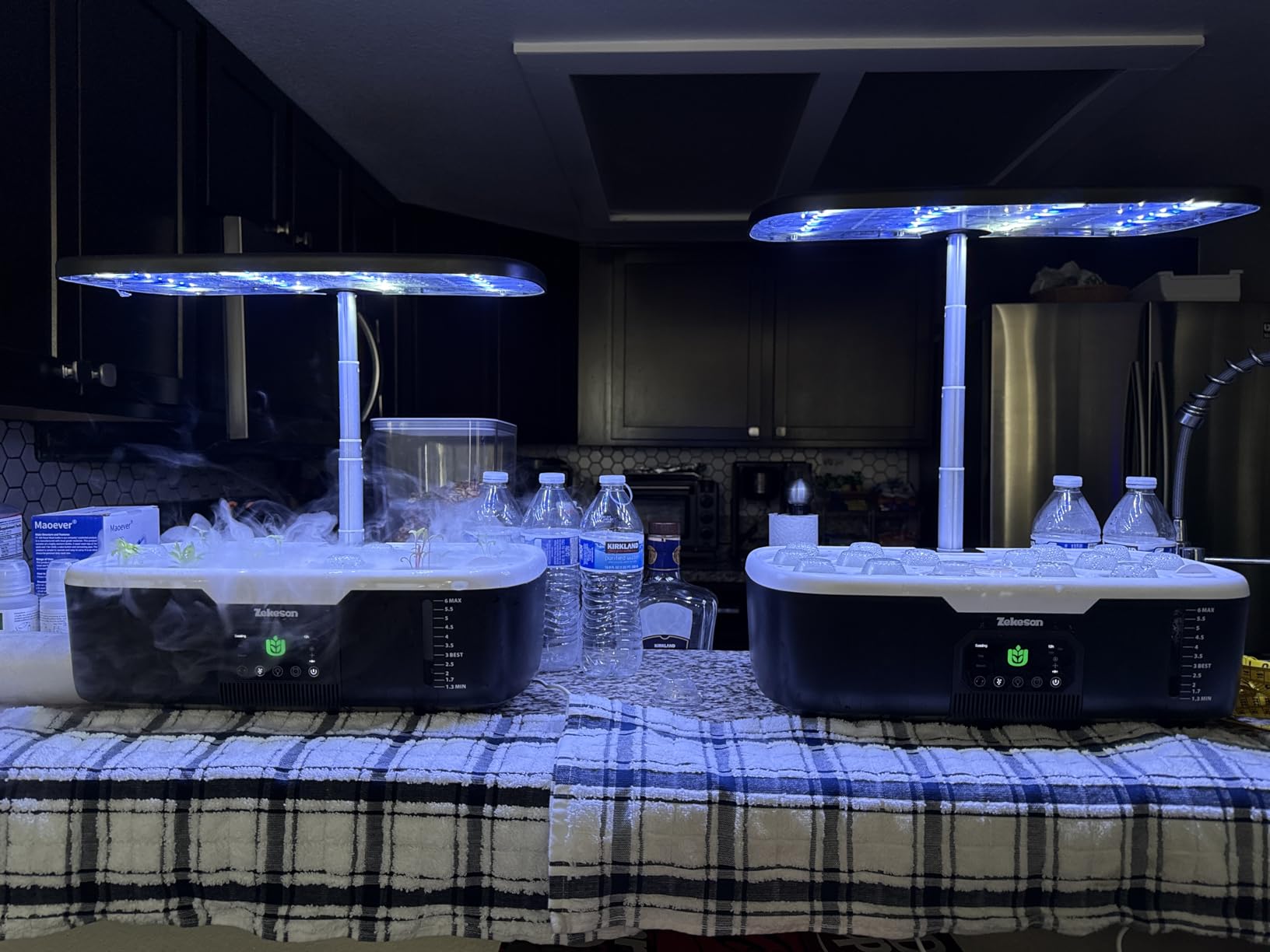
The build quality of the thinking is what impressed us. The 6 litre tank has a transparent level window with a recommended 3 litre fill and lifts out for cleaning, the LCD panel runs a 12, 14 or 16 hour light timer with seedling, vegetable and bloom modes, and the light and height adjust on a telescoping arm. The box includes 15 grow sponges, baskets, domes, labels and A&B nutrients.
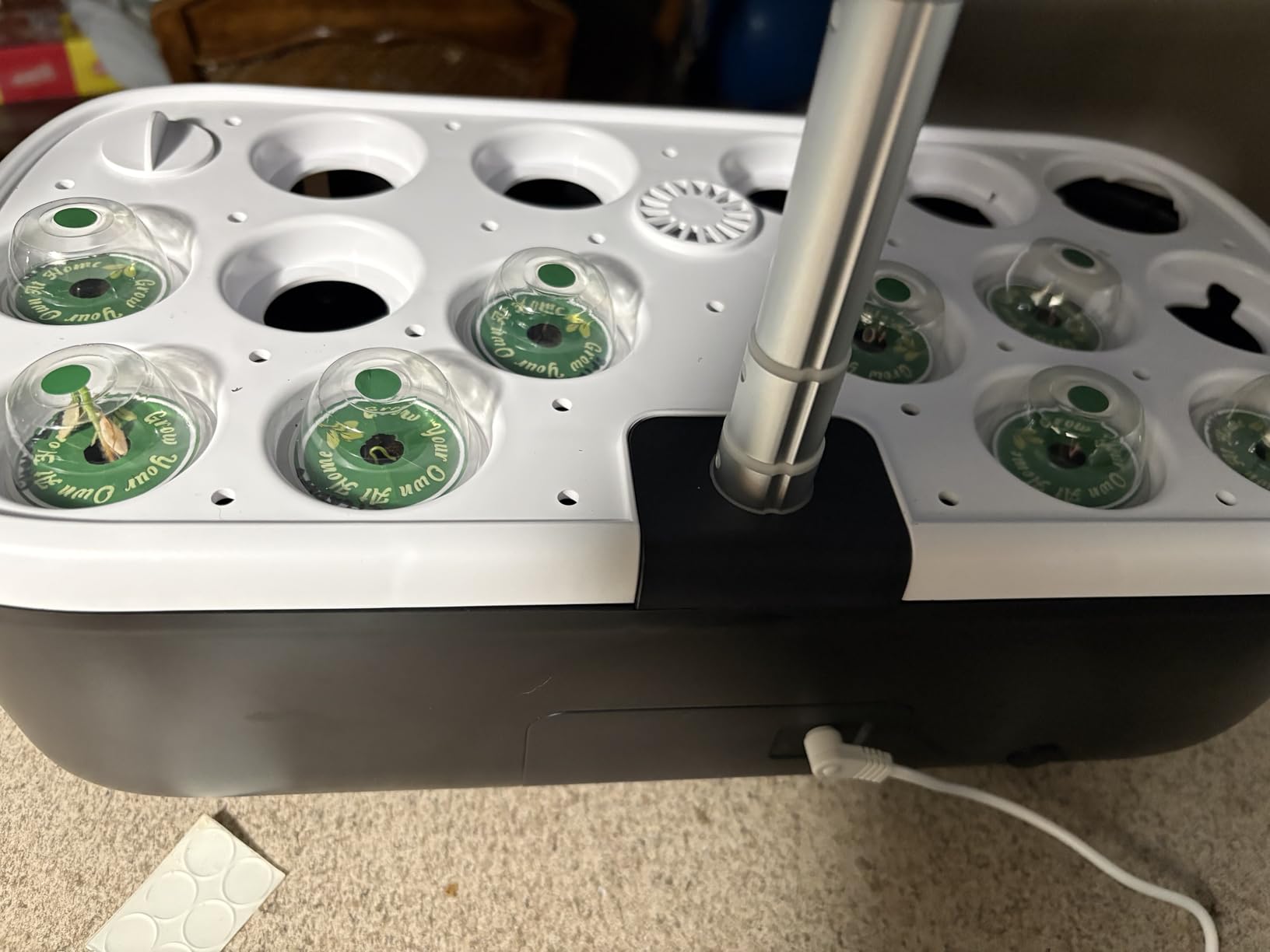
The single most useful control for a beginner is the misting toggle. You can switch misting off entirely for young seedlings and only introduce it as roots develop, which is the version of this system that works well. Most of the complaints we read come from people who left misting on from day one.
At 3.8 stars from 193 reviews it is the second-lowest score here, and 19% of ratings are one-star. Two themes dominate: misting so aggressive it creates excess moisture and water everywhere inside the chamber, and electronics that stop working after two to six months with little warranty support.
What to check before you commit
Sit it where you will see it daily. This is not a set-and-forget appliance, and the most common complaint is topping up water sometimes twice a day, which only becomes a problem if you expected otherwise.
Plan the seed order separately. Seeds are not included, and the grow sponges, baskets and domes are all sized for the pods, so this is genuinely turnkey once you add seeds and light intensity in the room is adequate.
Where it will frustrate you
Electronics reliability is the real risk here. Multiple owners report units that stop powering on or whose controls start blinking within a few months. If you are not prepared to treat it as a consumable appliance, pick a machine with a simpler control board.
There is also no Wi-Fi or feeding reminders, so you have to set your own water-change and feed calendar. And without a heater, germination temperature is on you. Note also that once plants outgrow the unit, transplanting them into jars or soil is the intended next step, not an exception.
7. PowerGrow 21-Site Bucket Cloner Kit: The Budget Pick
Plant Cloning Machine – Deluxe 21-Site Bucket Cloner Kit by PowerGrow Systems
21 cloning sites
Bucket format
360-degree spray nozzles
12 x 12 x 12 in package
Pros
- Most complete kit in the roundup with gel and collars
- 360 degree nozzles give full coverage
- Made in the USA with about 15 years of use reported
- Bucket format is simple to fill and clean
Cons
- Bulkier and less tidy than a solid-lid cloner
- Bucket handle makes lid seating awkward
- No dome light timer or pH supplies
The PowerGrow bucket cloner is the most complete box in this roundup. Bucket, 21-site lid, clone collars, pump and cloning gel all arrive together, which means the only things you have to add are a light, a dome if you want one, and a pH test. For a beginner on a tight budget, that completeness matters more than any individual specification.
The spray nozzles are 360 degree, so each cutting gets misted from around its own collar rather than relying on a single overhead jet. That is a genuine advantage in a bucket, where the geometry is awkward and spray patterns can leave dead zones. The company reports use by thousands of customers over about 15 years, and the unit is made in the USA.
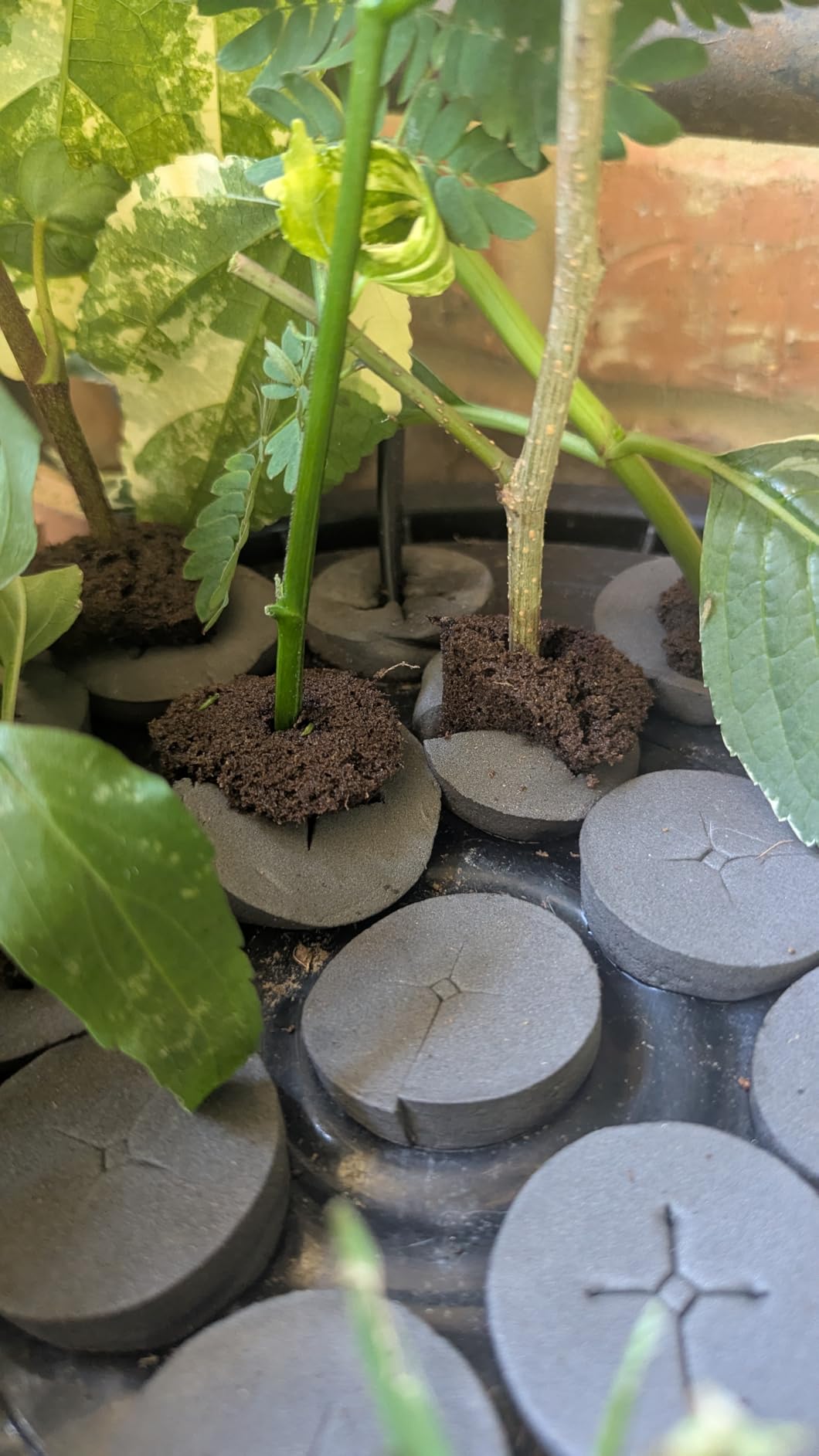
At 4.2 stars from 159 reviews with 64% five-star ratings, the satisfaction is solid without being exceptional. What buyers consistently mention is the simplicity of the format. Filling, draining and cleaning a bucket is something everyone already knows how to do, and the whole assembly takes minutes.
Because this is a bucket, the failure modes are different from the enclosed machines. Water volume is easy to judge by sight, which is a genuine beginner advantage. The trade-off is that a bucket is bulkier and less tidy than a solid-lid cloner, and the handle can make seating the lid awkward enough to leak.
What to check before you commit
Check your ceiling and counter space. A 21-site bucket format plus dome needs vertical room and somewhere to put the bucket when you want to lift the lid without spilling. The package measures 12 by 12 by 12 inches, but the assembled unit with dome is taller.
Make a deliberate decision about the dome. There is none included, and cuttings in an open bucket lose moisture faster than they do under a hard dome. Plenty of beginners run this format successfully without one, but expect to open and mist more often.
Where it will frustrate you
The lid seating issue is the one to watch. The bucket handle gets in the way of a flat, evenly pressed seal, so check the seal every time rather than assuming it is fine from last time.
Everything you need for monitoring is missing, which means no timer and no pH supplies. Given this is the budget option, that is the trade, but budget for a cheap interval timer and a pH test before your first batch rather than after it.
8. LYCereal 30-Plant Vertical Tower: Best for Small Spaces
LYCereal Hydroponics Growing System, 30-Plant Indoor Hydroponic Tower with Pump System, Plants Germination Kit, Smart Aeroponic Herb Garden, Vertical Hydroponic System for Gardening Lover (No Seed)
6 tiers and 30 plant sites
10L tank
9.84 x 9.84 x 33.86 in
Timer-controlled pump
Pros
- Arrives mostly pre-assembled
- 30 sites in under one square foot
- Sturdy build that stays stable when bumped
- 64 growth sponges included
- Water level gauge on the tank
Cons
- No grow light included
- No nutrients or fertilizer included
- Food grade material not stated in the listing
- Recirculating design needs constant reservoir monitoring
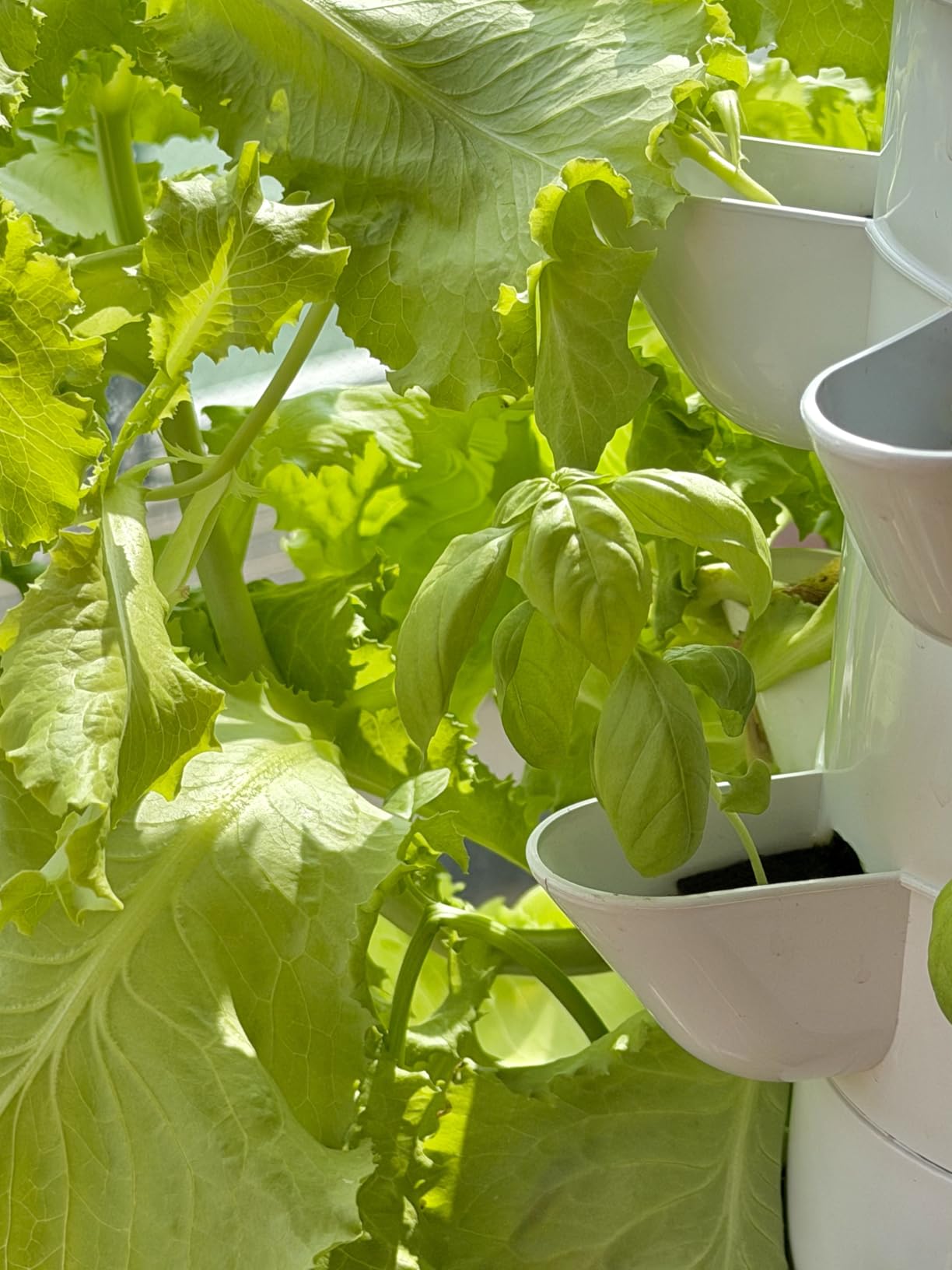
Footprint is the reason to buy this one. Six tiers holding up to 30 plants in a 9.84 by 9.84 by 33.86 inch column, which is less than one square foot of counter space. For an apartment, a small kitchen or a home office where vertical space is the only space available, there is nothing else in this roundup that comes close.
Setup is the other advantage. The tower arrives mostly assembled, so owners report minutes rather than hours to get going. The 10 litre tank has a sight gauge and a self-watering recirculation loop, and the pump runs off a timer so the watering schedule is set once and left alone.
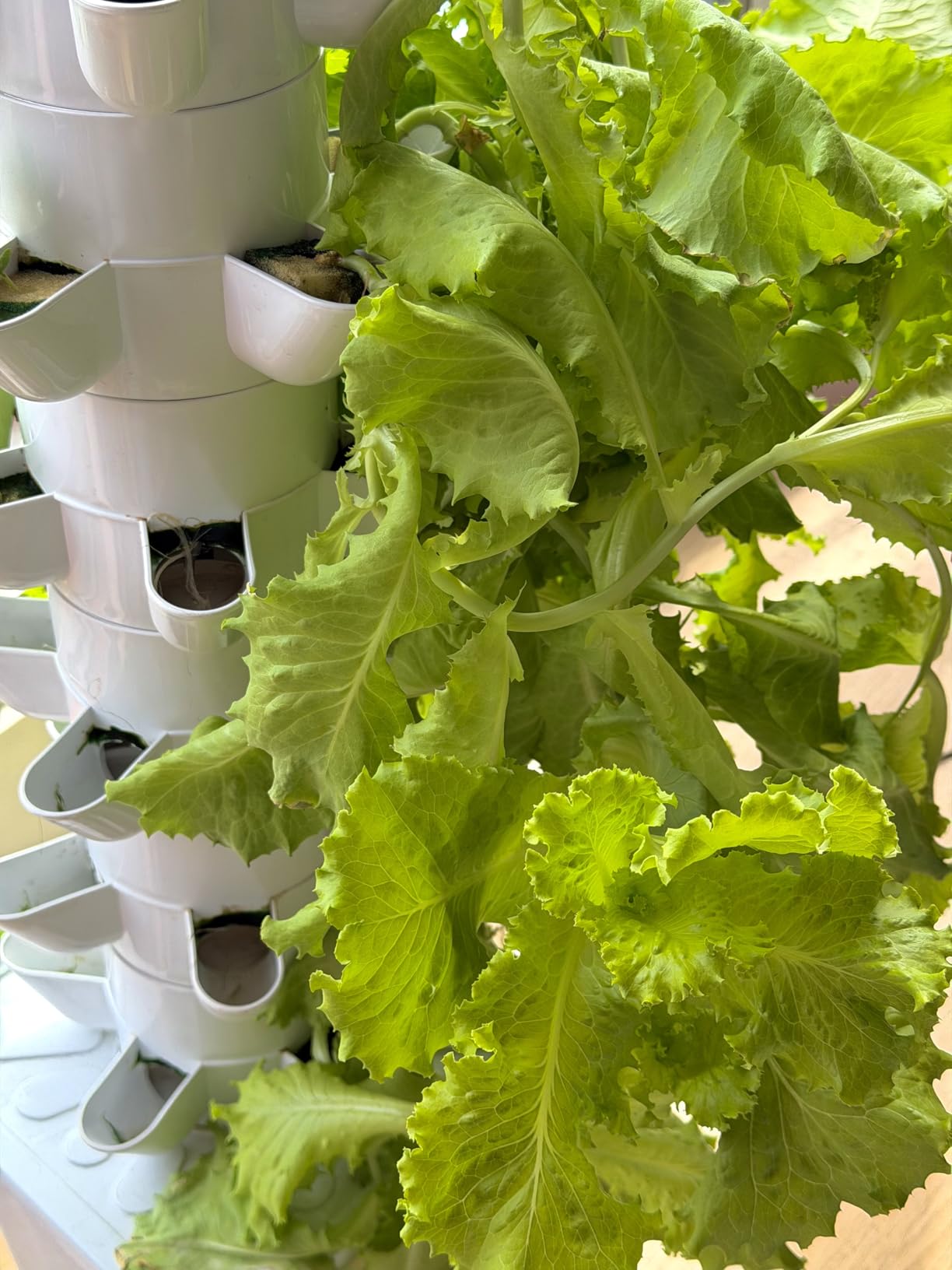
Build quality surprises people at this tier. Owners describe sturdy plastic that stays stable even when bumped and with top-heavy growth, which matters on a tower that is 34 inches tall. The 64 included growth sponges are enough to start a full round of 30 without a second purchase.
At 4.1 stars from 48 reviews, the base is small, so treat the score as indicative rather than proven. Two caveats stand out. No grow light is included, so results depend on a separate light. And food-grade material is not stated anywhere in the listing, which several buyers flagged as a genuine concern when the crop is edible.
What to check before you commit
Resolve the food-grade question before you eat anything from it. The listing does not state it, and for lettuce and herbs that is the kind of detail worth emailing the manufacturer about rather than assuming.
Plan the lighting separately and before you plant. A tower without a light is a very expensive way to grow nothing, and this system has no light at all. Also plan where nutrients come from, since none are included.
Where it will frustrate you
A recirculating design needs consistent reservoir monitoring and regular cleaning to avoid algae, and the sight gauge helps but does not replace looking. On a 34 inch column at the back of a counter, that habit takes discipline.
The sites are evenly spread over six tiers, so plants on the bottom tier get noticeably less light than those at the top. Plan for that, or rotate tiers, because a tower with one bright end and one dim end produces one good crop and one thin one.
9. NEEWER HGS02 Silent Aeroponics Kit: Quiet, With a Reliability Caveat
NEEWER Basics Silent Aeroponics Growing System Kit, Hydroponics with Atomization Tech LED Grow Light 3 Modes 15 Seed Pods Timer LCD, Indoor Gardening Plant Food Vegetable Herb Garden Planter, HGS02
15 seed pods
5L tank
Silent atomizer, 3 min on 5 min off
192-LED light
Pros
- Genuinely quiet atomization
- 192-LED light is bright and clear
- Fine mist avoids waterlogging roots
- Light at 0.5 kg so easy to move
- Works well as a dedicated seedling starter
Cons
- Lowest rating here at 3.2 with 30% one-star
- Control panels and screens fail quickly
- Atomizer has overheated for some owners
- Mist feature failed from day one on some units
- Instructions are minimal
This one is worth including for a specific reason: it is the quietest unit we looked at. The atomizer runs 3 minutes on and 5 minutes off automatically, or manually from the button, and owners consistently describe it as genuinely quiet enough for a living room or bedroom. If noise is what stops you growing indoors, that single feature can justify the compromise below.
The rest of the specification is sensible for a starter. A 5 litre tank has marked levels, with 2 litres optimal and 1.2 litres minimum, the 192-LED light has 10 brightness levels and seedling, vegetative and bloom modes, the light height adjusts from 17.7 inches, and the LCD timer covers 1 to 23 hours.
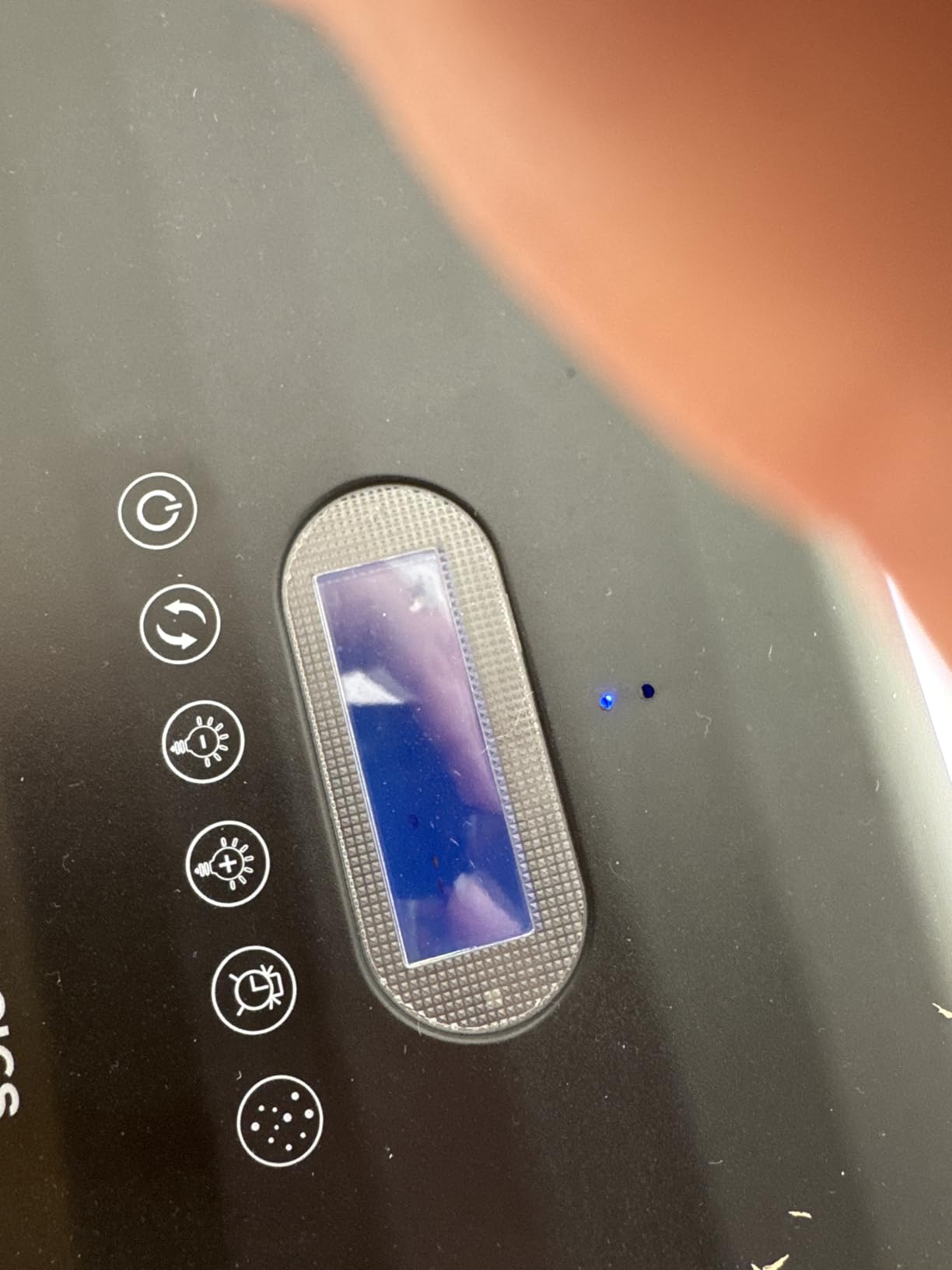
The misting quality itself is not the problem. Buyers report fine mist that keeps roots hydrated and oxygenated without waterlogging them, and one owner had desert rose seeds sprout in roughly half the usual time. At 0.5 kg it is also the lightest unit here, so moving it between rooms is trivial.
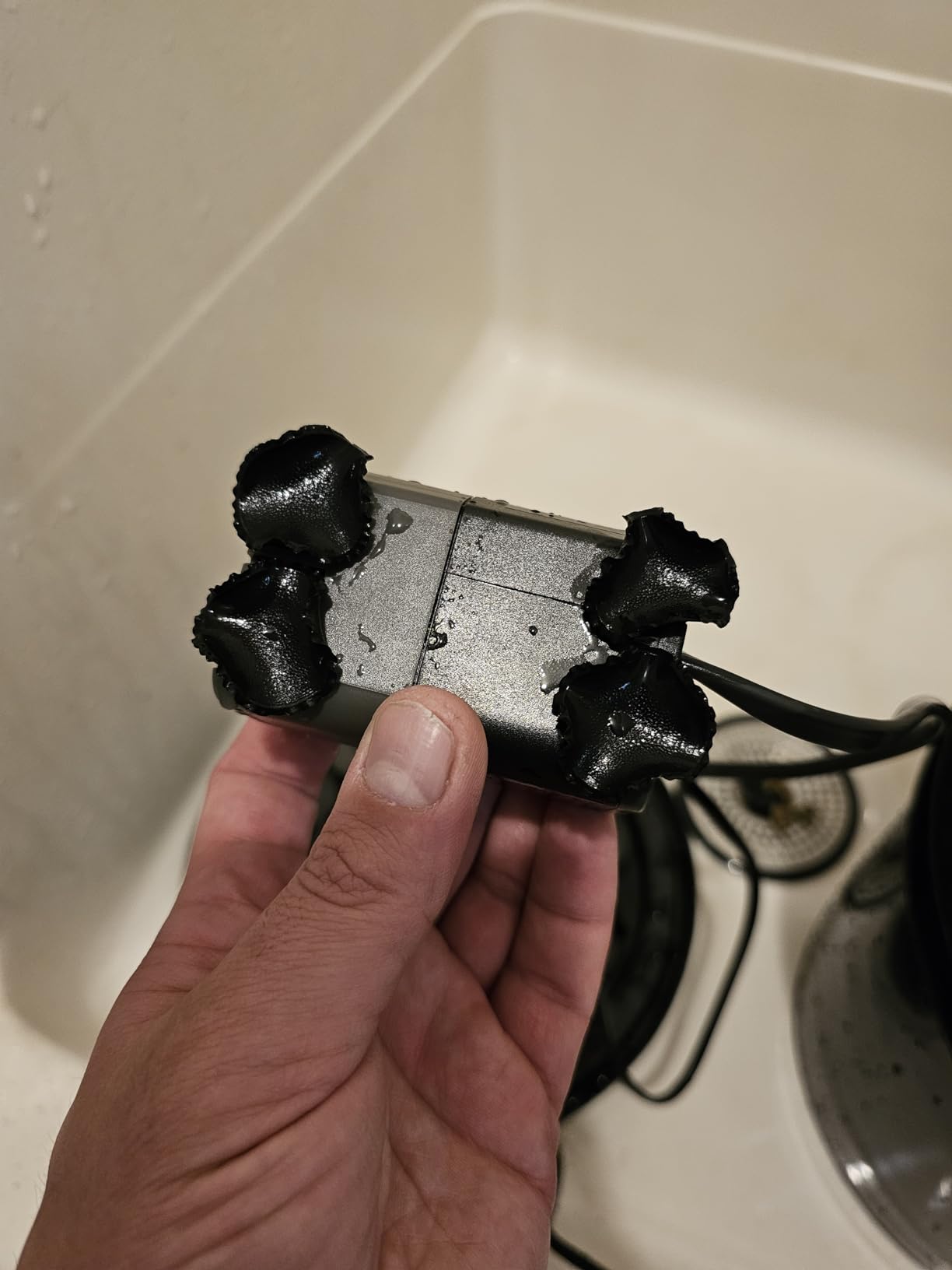
The problem is reliability, and it is significant. At 3.2 stars from 96 reviews it is the lowest-rated product in this roundup, with 30% of ratings at one star. Control panels, screens and lights have died within two days to a month for several owners, the atomizer has overheated and left a burn mark for some, and the mist feature has failed from day one on units with no support route available.
What to check before you commit
Be clear about your risk tolerance. If you are going to be irritated by a dead control panel in month three, skip this one and buy the Zekeson unit, which has the same quiet-atomisation idea with a better support record.
If you buy it anyway, use it as a seedling starter and keep a backup plan. Several owners use it successfully to germinate and then transplant out, which limits how much a failure costs you.
Where it will frustrate you
Instructions are minimal, with little beyond a basic product video, so expect to work out the water routine yourself. The chamber also runs warm, and some growers report seedlings stalling once they outgrow the seed stage, which is the limit of what this unit is designed to do.
There is no heater included, so germination temperature depends on your room. And because electronics dominate the complaint list, keep the unit away from any splash zone.
10. HORTIPOTS 70-Site Aeroponic Cloner: Best for Batch Propagation
HORTIPOTS Cloning Machine Aeroponic Cloner System 70 Site for Plant Cuttings Using 1.625 inch Neoprene Clone Inserts (1-5/8 inch)
70 cloning sites
1.625 inch inserts
Pre-filtered UL pump
Humidity dome included
Pros
- Largest capacity in the roundup
- Free foldable clear humidity dome
- Pre-filtered pump and vented lid
- ABS engineering plastic resists warping
- Easy assembly guide and clone tips
Cons
- Most expensive unit here
- 8.3 pounds so awkward to move
- No light gel pH supplies or pump timer
- Larger chamber needs regular reservoir checks
The 70-site machine is the same proven design as our second pick, scaled up. Same 1.625 inch neoprene clone inserts, same UL-listed pump behind a pre-filter housing, same patented spray manifold that runs without a separate air pump, same vented lid, same foldable clear humidity dome in the box.
It also carries the highest satisfaction score among the dedicated cloners here, at 4.3 stars from 146 reviews with 72% five-star ratings. Buyers point to the capacity for batch propagation, the included dome, and the 100% new ABS engineering plastic which is described as not warping or leaking over years of use, which is precisely the complaint we flagged on lighter machines.
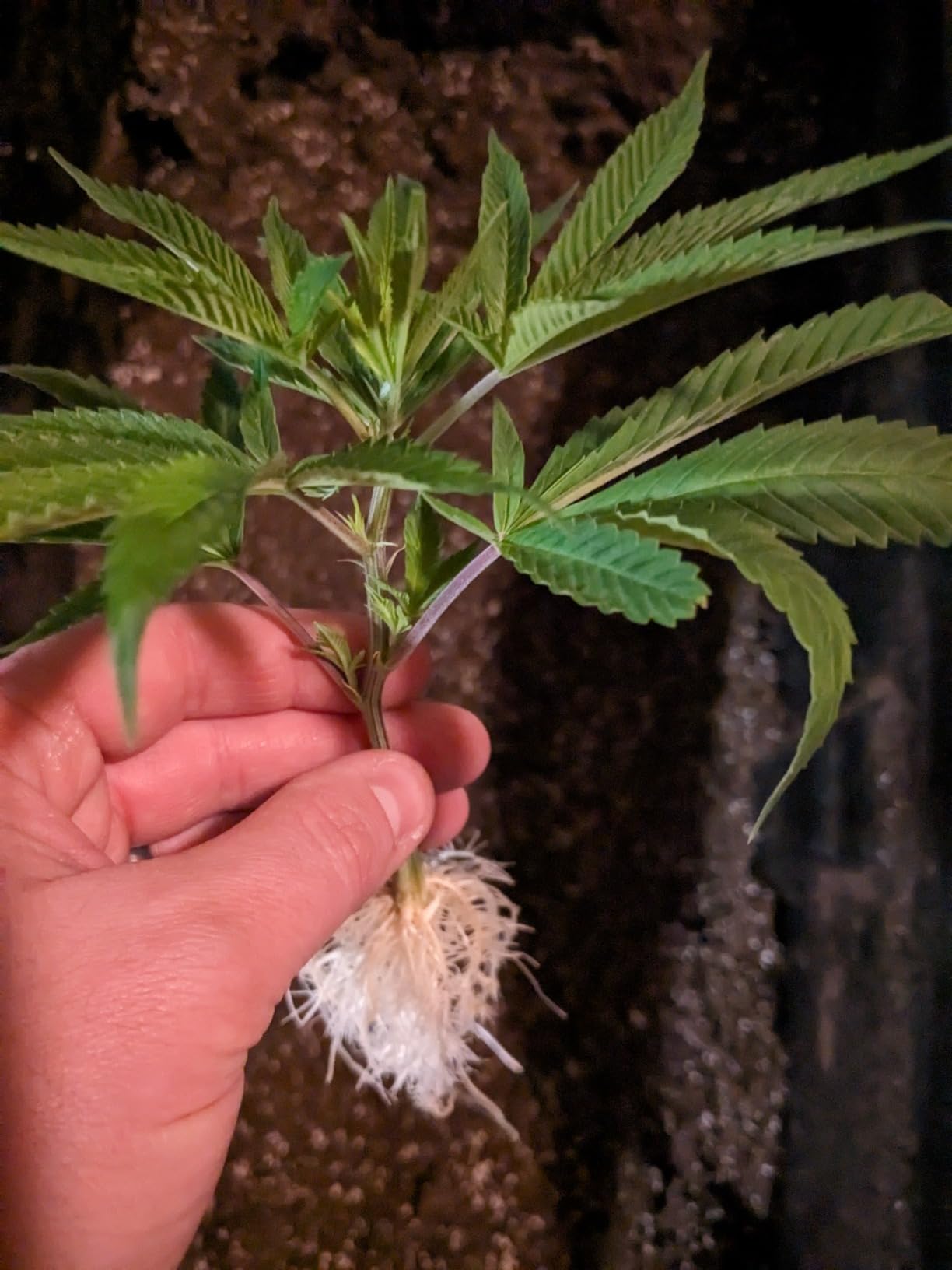
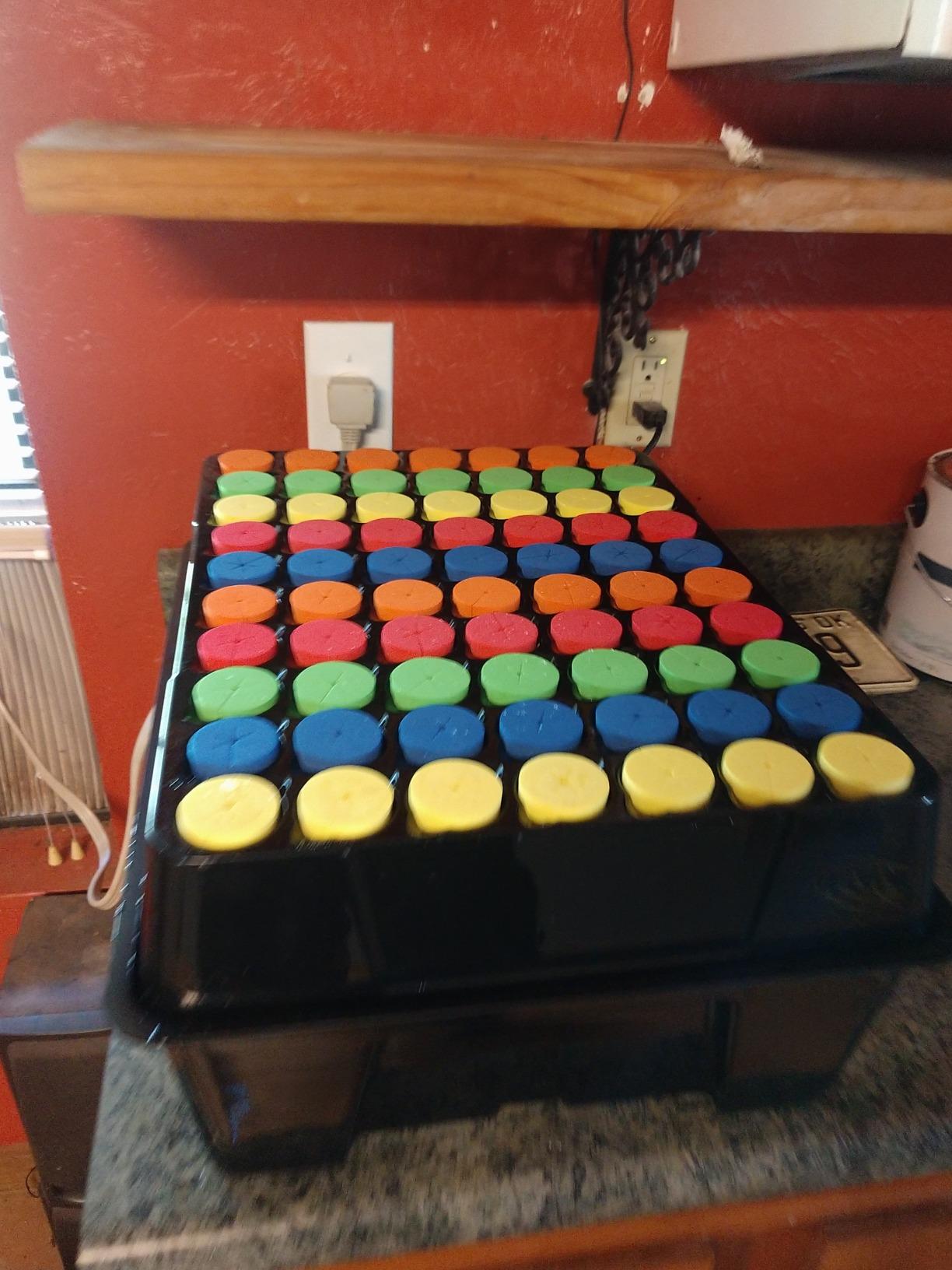
If you already run a small cloner and consistently fill it, this is the upgrade that makes sense. One run puts a whole batch of cuttings through, which matters when you are propagating a parent plant you care about and you do not want to take cuttings at three different times to fill three chambers.
The honest framing is that this is the wrong first purchase for most people. It is the most expensive unit in the roundup, it weighs 8.3 pounds so moving it around a room is awkward, and at 70 sites it is overkill for a first small batch. Nothing is included for lighting, gel, pH testing or pump timing.
What to check before you commit
Count your actual cutting supply across a whole season, not one session. Seventy sites means seventy cuttings from healthy, well-prepped mother plants, and the quality of the mother plant matters more than the machine at this scale.
Plan the reservoir check into your routine. A chamber this size over a long propagation cycle still needs regular top-ups, and the weight makes carrying it to the sink an avoidable risk if it is full.
Where it will frustrate you
Scale is the main issue. Emptying, moving and cleaning a 70-site chamber takes real effort, and if you only have 20 cuttings right now you will be paying to mist empty space for a good part of the cycle.
It is also the unit where the missing accessories add up most in practice, because the largest batch is when you most want the pump to run on a timer rather than continuously. Buy the timer on the same day.
How We Picked
We ranked these ten systems on five things, in this order. The first is failure tolerance, because the only question that really separates beginner-friendly equipment from beginner-hostile equipment is what happens when something goes wrong.
Second is setup difficulty. Every machine here is a sealed chamber rather than a build, so we looked at how many parts you assemble, whether instructions are illustrated, and how many accessories you have to buy before the first batch.
Third is clogging exposure. We weighted machines with pre-filtered pumps and fewer, larger outlets above machines with more spray heads and no filtration, following the consistent advice from experienced growers about avoiding small outlets.
Fourth is footprint and weight, measured against real counter and shelf space. Fifth is running hardware: whether the pump runs on a timer, how easy the reservoir is to inspect, and whether the power supply matches your mains.
Where reviews contradict the spec sheet, we followed the reviews. Several machines here have clean-looking listings and a pattern of complaints about leaking or failed electronics, and that pattern mattered more to us than the marketing copy.
Buying Guide: What Actually Matters in a Beginner Aeroponic System
Five things separate a beginner-friendly aeroponic system from one that will teach you to hate hydroponics. Here they are in the order they matter.
Fewer, larger outlets. This is the single most useful buying criterion and it comes straight from practitioner advice. A twelve-nozzle manifold with pre-filtered supply is a different risk profile from a twelve-nozzle manifold fed by an unfiltered pump. Prefer pre-filter housings, and prefer fewer nozzles over more.
A real humidity dome, ideally hard plastic. Cuttings transpire heavily in the first hours. A thin vinyl dome fogs, tears and collapses onto the canopy; a foldable hard-plastic dome keeps shape and costs little more. Four of the picks here include one.
An interval timer, even if it is not included. Continuous pumping keeps the reservoir warm and aerated enough for algae. Almost every experienced grower in the review data mentions adding a timer, and it is the cheapest fix on this list.
Reservoir access and visible water level. You will check the water daily. A removable tank with a sight window or a gauge turns a chore into a glance, and it is the difference between topping up once a day and twice.
Mains compatibility and spares. Every cloner in this roundup uses a 120V pump, and that is the single most reported regret among buyers outside North America. Also check whether a spare pump and filter are included, since pumps are consumables over a decade of use.
Two more things worth knowing before you buy. First, plan for power: a pump failure stops misting within hours, so keep a cheap backup pump and know where your nearest hydroponic shop is, the same way you would for a fridge. Second, if your instinct is toward foggers and humidifiers for the room, we have covered those separately in our guide to backyard misting systems, which covers a different use case but shares the pump reliability questions.
If your growing space is more about organisation than water, our pegboard system roundup is worth a look for wall-mounted storage that keeps a propagator bench tidy.
Aeroponics vs DWC, NFT and Flood and Drain
Deep water culture is the most forgiving hydroponic method, and that is its whole argument. Roots hang in aerated water, the water level is visible, and a pump failure costs you a day rather than a crop. For a first-timer, DWC is the correct answer, and if your goal is a steady supply of lettuce rather than fast propagation, we would choose it over anything in this roundup.
NFT pushes a thin film of solution through channels past the roots. It uses very little water and little power, and it scales badly in a home because channels need to be sloped, which means level surfaces, which means a level floor. It is superb in a greenhouse and awkward on a kitchen counter.
Flood and drain, or ebb and flow, floods a tray on a timer and drains it back. It is the method most beginner forum threads actually recommend, and the reasoning is sound: trays exist in nearly every size, rockwool and clay media buffer pH swings, and a missed cycle does not kill plants.
Aeroponics wins on speed, oxygen delivery and water efficiency, and loses on every tolerance measure. It is the right method when you have daily attention and want roots in under two weeks. It is the wrong method when you travel, when power is unreliable, or when a silent crop failure would discourage you.
On hybrid designs, which do appear in forum discussions: systems like Aeroflo combine aeroponic misting with NFT flow, and Rainforest and Aquamist combine misting with deep water culture. The logic is sound because the reservoir gives roots a buffer during a pump failure. We did not include one in this roundup, because the beginner should master a single method first.
Your First 30 Days: Setup Checklist and Timetable
Day 1: unbox, inventory, and read the manual fully before you fill anything. Confirm whether a light, dome, timer, cloning gel and pH test are included or need ordering. Getting this wrong on day one is the most expensive mistake in the whole cycle.
Day 2: leak test. Assemble with water only and run the pump for 30 minutes with the lid off, then again with the lid seated exactly as it will be in use. Wipe every seam. Fix leaks now, because leaks found on day 20 have already cost you a batch.
Day 3: prepare the nutrient solution at the strength the manufacturer specifies, measure pH, and top up to the marked fill level. Check pH again the following day. Silent pH mistakes are the most common cause of a first crop that simply stops growing.
Day 4 to 8: take cuttings. Strip the lower leaves, dip in cloning gel if you have it, and insert into neoprene collars. Mist the chamber so the leaves are wet but not dripping. Run the pump on a short cycle rather than continuously from the start.
Around day 10: this is the widely cited transfer point for leafy greens, and it is roughly when cuttings should have visible roots. Pull one, look, and only then move the batch. Users consistently report that transferring too early, before roots are visible, is what causes losses.
Day 10 to 17: roots develop. Keep the reservoir topped up and check pH every few days. Open the dome briefly once roots appear to reduce humidity. Expect to be checking this chamber daily by choice, not by obligation.
Day 18 to 21: harvest or transplant. Cuttings with 3 to 4 inch roots can go into soil, media or another system. Clean the chamber with a dilute sterilising solution, and replace collars that look discoloured.
Day 22 to 30: run a second, smaller batch or switch to a seedling-only role. This is also the point at which you should honestly assess whether your routine supports this method, and whether a countertop deep water culture unit would suit your week better.
On crops: stick to lettuce, kale, basil, mint, cilantro and other leafy greens and herbs for your first run. Avoid fruiting plants such as tomatoes and peppers until you have a stable cycle, because they need far more light, far more nutrient and a far longer attention window than a first-time grower can supply. Avoid anything with a woody stem for the same reason.
The Disadvantages of Aeroponics
Nobody should buy aeroponics without reading this list first. Seven disadvantages account for nearly every failed first crop we see described.
1. Zero tolerance for pump failure. Roots dry in hours, not days. There is no water buffer to fall back on, so a failed pump is a dead batch.
2. Full dependence on electricity. An outage in a soil bed is an inconvenience. An outage overnight in an aeroponic chamber can be the end of the crop.
3. Clogged outlets cause partial or total failure. Blocked nozzles starve part of the root zone, and blockages are the most repeated complaint across every forum thread on the topic.
4. No medium to buffer pH swings. With no rockwool or clay holding nutrients, a pH drift hits the roots immediately and consistently.
5. Roots bloat when misting is wrong. Run wet cycles too long or drain too slowly and you get the hydro equivalent of overwatering, which appears as a swollen, gelatinous root mass.
6. Downtime tolerance is close to nil. There is no scheduled holiday mode, no reserve and no grace period. Every hour away from the system is a risk.
7. Higher upfront cost and more parts. A chamber, pump, timer, light, dome, collars and pH supplies are the real starting requirement, not just the chamber.
The honest summary is that these are all the same disadvantage wearing different clothes. Aeroponics has no buffer. Whatever improves your buffer, a bigger reservoir with a hybrid design, a backup pump, a shorter propagation window, or simply fewer plants, is worth doing.
Frequently Asked Questions
What is the easiest hydroponic system for beginners?
A countertop deep water culture unit is the easiest, because roots sit in visible, aerated water and a pump failure costs a day rather than a crop. Among aeroponic systems, the easiest are sealed cloning chambers with pre-filtered pumps and a hard humidity dome, such as the EZ Clone 16-cutting system or the HORTIPOTS 35-site cloner.
Which aeroponic garden system is the best?
For most beginners the CLONE KING 36-site aeroponic cloner is the best balance of capacity, coverage and reliability, with 1867 reviews at 4.5 stars and 13 spray heads across the chamber. The HORTIPOTS 35-site is the better value because it includes a humidity dome, and the EZ Clone 16-cutting system is the tidiest unit for a very first run.
What are the downsides of aeroponic farming?
The main downsides are zero tolerance for pump failure, total dependence on electricity, clogging in small misting outlets that starves part of the root zone, no growing medium to buffer pH swings, root bloat when misting or drainage is wrong, almost no tolerance for time away from the system, and a higher upfront cost once a timer, light, dome and pH supplies are added.
What is better, aeroponic or hydroponic?
Hydroponic methods that keep roots in water are more forgiving and cheaper to run, so they suit most beginners. Aeroponics is better when you want the fastest rooting, the highest oxygen delivery and the best water efficiency, and you can check the system daily. If you travel regularly or have unreliable power, choose a water-based method instead.
What are five disadvantages of aeroponics?
Five core disadvantages are: roots dry within hours if the pump stops, the crop is fully dependent on electricity, small misting outlets clog and take out part of the root zone, there is no medium buffering pH changes, and running wet cycles too long causes root bloat rather than healthy root growth.
Which is better, NFT or DWC?
DWC is better for beginners because the water level is visible, the roots are buffered by the reservoir and mistakes are easy to see and correct. NFT uses less water and less power and scales well in a greenhouse, but it needs precisely sloped channels and level surroundings, which is awkward in a home.
What are three plants that are not recommended for hydroponics?
Three plants to avoid for hydroponic beginners are fruiting crops such as tomatoes and peppers, which need far more light and nutrient than a small indoor system can supply, and woody-stemmed plants such as mint that outgrow small chambers and root systems quickly.
The Verdict
Our pick for the best aeroponic systems for beginners in 2026 is the CLONE KING 36-site cloner, on the strength of 13 spray heads across a 36-site chamber, a complete prebuilt kit and 1867 reviews averaging 4.5 stars. Buy the HORTIPOTS 35-site instead if the included humidity dome matters more to you than the spray coverage, and buy the EZ Clone 16-cutting system if you want the smallest, tidiest first run.
Buy the PowerGrow bucket kit if budget comes first and you can live without a dome. Buy the LYCereal tower if floor space is your binding constraint, and buy the Zekeson unit if you want countertop herbs rather than propagation. We would skip the NEEWER HGS02 in 2026 until its electronics reliability improves.
Whichever you choose, run a leak test, add an interval timer, start with leafy greens, and check the reservoir every day. That routine is the entire difference between an easy first cycle and a lost one.