
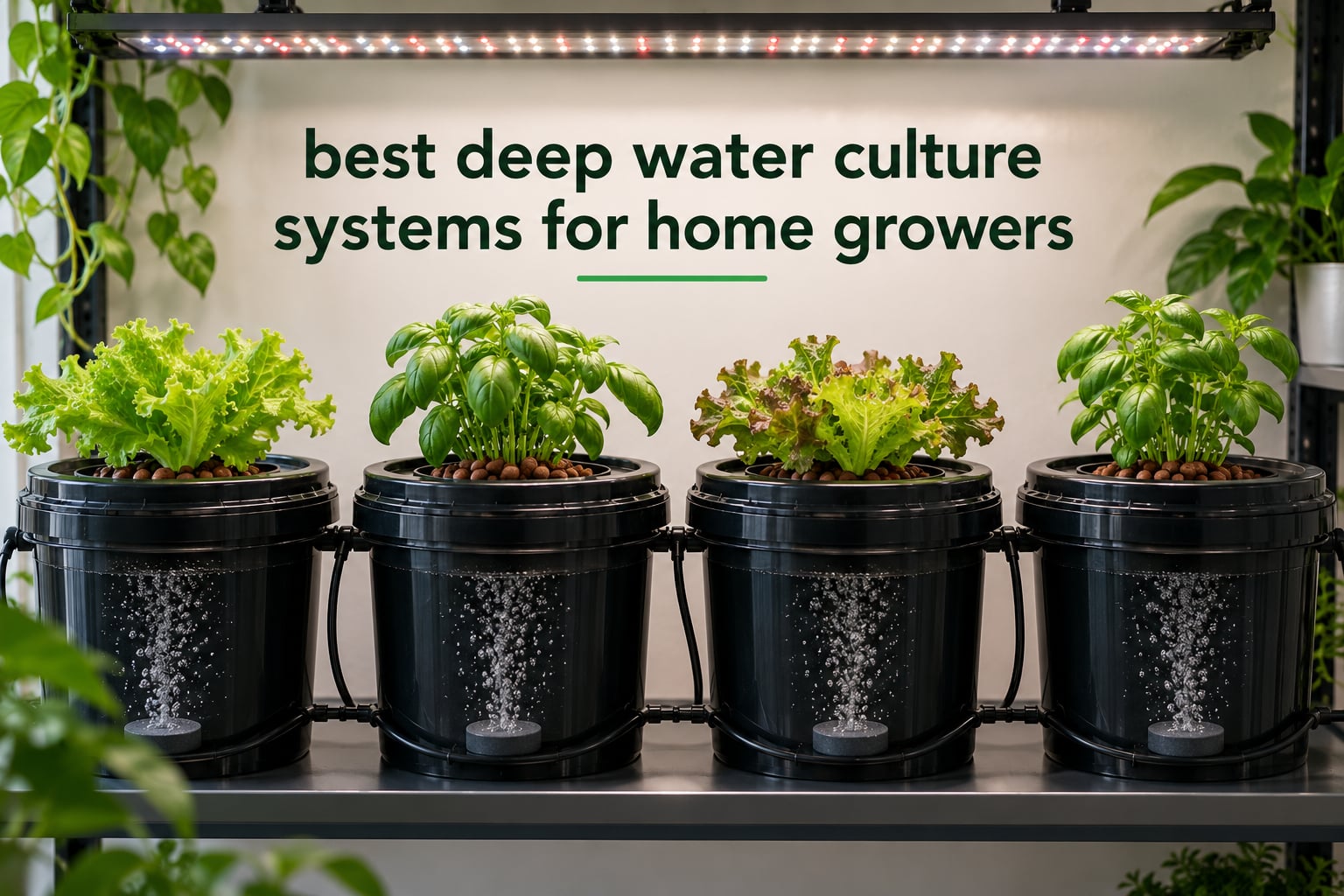
Growers keep asking us the same question: which deep water culture system should a home setup actually use? The honest answer is that the best DWC system for most people is a food-safe bucket, a lid that blocks light, one or two net pots, and an air pump with more output than the plant count suggests. Everything else is a preference about footprint and how many plants you want at once.
That is why every system in this roundup of the best deep water culture systems for home growers is a true bucket or container system with roots suspended in nutrient solution, not one of the countertop machines built around a soil-free seed puck. We compared 10 of them on reservoir size, plant count, aeration, recirculation and how much assembly is left to you.
Two of our picks deserve an immediate callout. The PowerGrow Systems 5 gallon DWC kit is the one we recommend to most first-time growers because it arrives complete with a 44 GPH air pump, medium and seed plugs, and it holds the highest rating in the group. If your main constraint is floor space rather than budget, the Spider Farmer two-bucket kit gives you 7 gallon reservoirs, the largest per site here, which is where bigger root mass lives.
What none of these systems solve on their own is light. A 10 watt bulb will not cover a bucket footprint, and stretched stems are the number one complaint we see from growers who blame the hydroponic hardware for a lighting problem. We cover that, along with water temperature and pH, in the buying guide further down.
Table of Contents
Top 3 Deep Water Culture Systems for Home Growers in October 2026

PowerGrow Systems 5 Gallon DWC Kit
- 5 gallon HDPE bucket and 6 inch lid
- 44 GPH air pump included
- Air stone
- medium and rockwool plugs
- Visible water level indicator
Hydrofarm Root Spa 5 Gallon Bucket
- 8 inch basket and 8 inch lid
- Airtight net pot lid
- Multi-purpose air hose
- Includes grommet and elbow fittings

Spider Farmer 2 Bucket 7 Gallon Kit
- 7 gallon reservoirs
- Triangle cover for top-ups
- Adjustable drip ring
- 6 inch PP net cups
The short version: the PowerGrow kit wins on completeness and rating, the Hydrofarm Root Spa wins on review volume and price-to-quality, and the Spider Farmer kit wins on root room. All three are non-recirculating bucket systems, which is exactly what a home food grower needs.
All 10 DWC Systems Compared in October 2026
| Product | Specifications | Action |
|---|---|---|
| PowerGrow Systems DWC Kit 5 Gallon 6 inch |
|
Check Latest Price |
| Hydrofarm Root Spa 5 Gallon Bucket System |
|
Check Latest Price |
| Spider Farmer DWC Two Bucket Kit |
|
Check Latest Price |
 VEVOR DWC 8 Bucket System VEVOR DWC 8 Bucket System |
|
Check Latest Price |
 VIVOSUN DWC Top Drip Kit 4 Buckets VIVOSUN DWC Top Drip Kit 4 Buckets |
|
Check Latest Price |
 PowerGrow Systems DWC Bubbler Kit 4 Buckets PowerGrow Systems DWC Bubbler Kit 4 Buckets |
|
Check Latest Price |
 Mars Hydro DWC Two Bucket Top Drip System Mars Hydro DWC Two Bucket Top Drip System |
|
Check Latest Price |
 Atwater HydroPod DWC Garden System Kit Atwater HydroPod DWC Garden System Kit |
|
Check Latest Price |
 LAWNFUL 4 Hydroponic Buckets Kit LAWNFUL 4 Hydroponic Buckets Kit |
|
Check Latest Price |
 Aunifun DIY Hydroponics Grower Kit Aunifun DIY Hydroponics Grower Kit |
|
Check Latest Price |
1. PowerGrow Systems DWC Hydroponic Bucket Kit 5 Gallon 6 inch – Best Complete Starter Kit
Deep Water Culture (DWC) Hydroponic Bucket Kit 5 Gallon, 6 inch
5 gallon HDPE bucket
6 inch basket lid
44 GPH air pump
Water level indicator
1 year warranty
Pros
- Highest rating in the group
- Complete box with medium and seed plugs
- No leaking reported by owners
- Level indicator is easy to read
- Cheaper than buying parts separately
Cons
- Included air pump is on the weak side
- Water changes get hard once roots fill the bucket
- Viewing tube clouds as plants grow
- Needs regular mixing and top-ups
This is the kit we hand to friends who have never grown hydroponically before. It ships with the 5 gallon HDPE bucket, a 6 inch basket lid, a 44 GPH air pump, air tubing, an air stone, growing medium and rockwool seed starting plugs, so the only things you add are water, nutrients already in the box and a seed.
Owners consistently report healthy, fast growth on a first attempt, and this is the highest-rated kit in our group at 4.6 stars across 700 reviews. Leaking is not a complaint anyone raises, and the pre-installed water level tube means you can check the reservoir without lifting the lid and letting light in.
It is not a plant-and-forget system. Mixing nutrient solution and topping off the water are regular jobs, and once the root mass is thick the level indicator becomes hard to read through the roots. The fix most owners use is a small transfer pump for draining, which is a few dollars more than the kit cost as a fraction of the total.
The 44 GPH air pump handles a single site comfortably. If you plan to run two or three of these buckets, the recurring advice is to move up to a higher-output pump and split the air with flow regulators rather than running one pump per bucket.
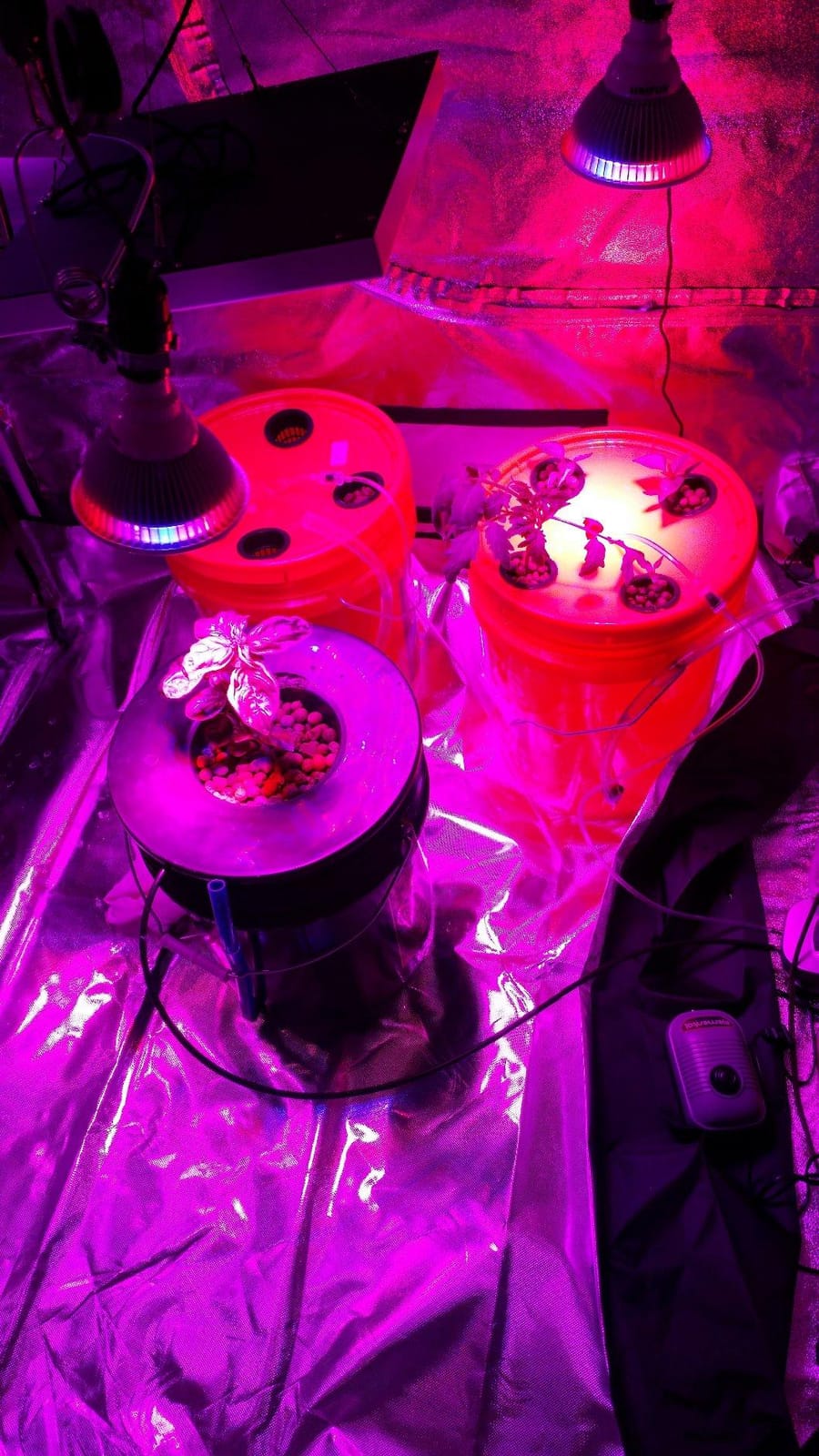
Who this kit suits
It suits a first-time grower who wants a working system this weekend without a parts list, and anyone growing leafy greens, lettuce or basil where two to four plants per bucket is plenty. It also suits anyone who wants the reassurance of a stated one year manufacturer warranty on the system.
Where it falls short
It is one site only, so scaling means buying more buckets and another pump, and water changes are per bucket by design. It also gives you no way to recirculate, so nutrient solution moves bucket by bucket rather than through a shared reservoir.
2. Hydrofarm Root Spa 5 Gallon Deep Water Culture Bucket System – Best Value Single Bucket
Hydrofarm RS5GALSYS Root Spa Deep Water Culture Bucket System, 5 Gallon, black
5 gallon bucket
8 inch basket and lid
Air pump with air hose
1/2 inch grommet and elbow fittings
Pros
- Most reviewed system in the roundup
- Airtight lid keeps light out
- Tough grommet fittings that do not leak
- Buckets can be linked with drilled plugs
- Simple to assemble
Cons
- Air pump underpowered for multiple sites
- Buckets not plumbed together
- Occasional missing elbow fittings
- Clay pebbles sold separately
The Hydrofarm Root Spa is the most proven design in this roundup by volume alone, with 1132 reviews behind it. The 8 inch basket gives you a larger planting medium reservoir than most kits here, and the net pot lid fits tight enough that owners rarely report light leaks into the solution.
What people like is the hardware. The grommet and elbow fittings seal properly, the multi-purpose air hose reaches the bottom of the bucket, and the pump pushes enough air for a single air stone. Several growers link multiple Root Spa buckets with a drilled drain plug and short tubing to run them as one.
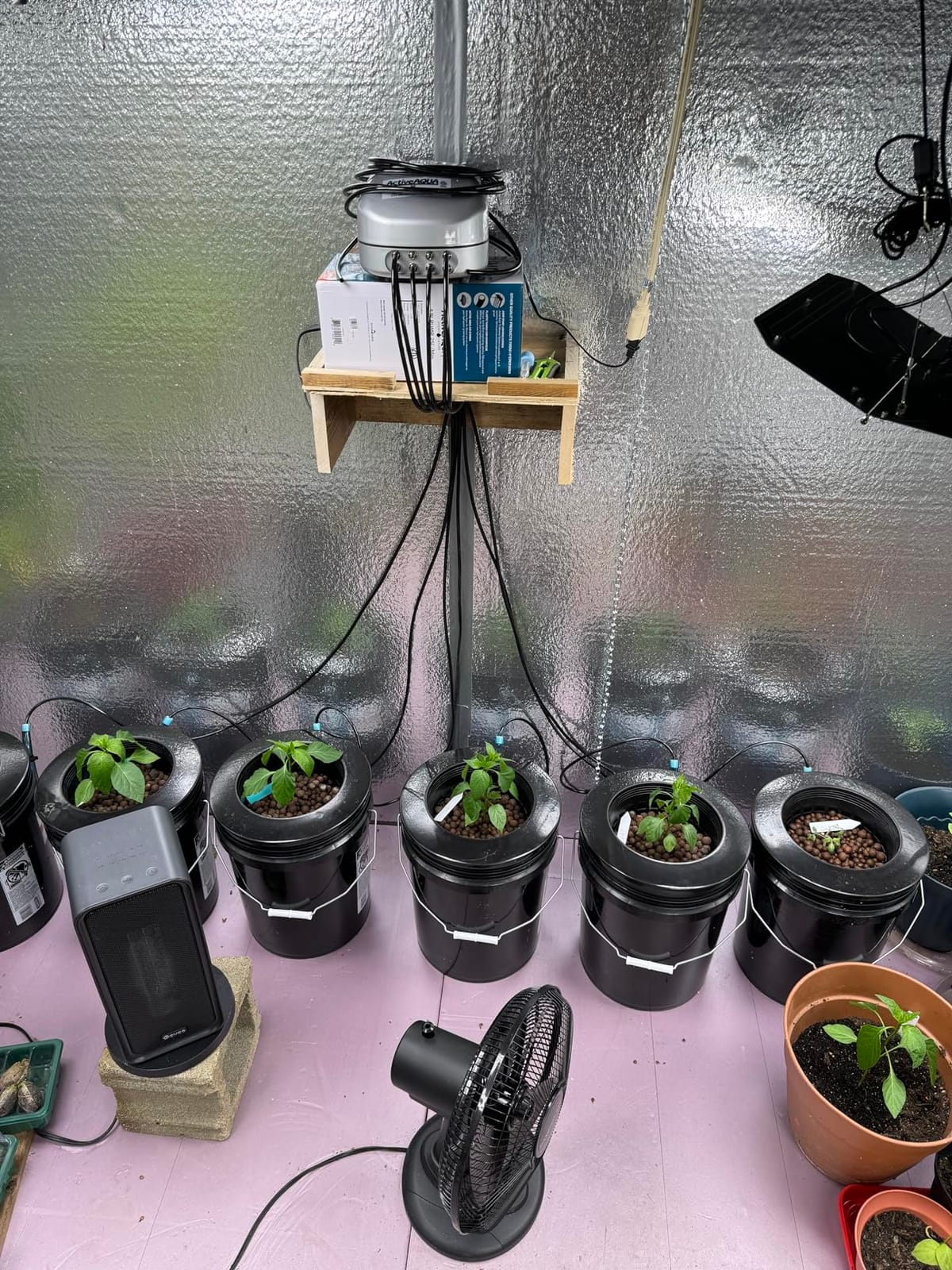
The weak point is the included pump, and owners say so plainly. It is fine for one bucket and marginal for a linked multi-bucket setup, which is where a pump upgrade becomes worthwhile. The fittings also occasionally arrive damaged or missing, so check the box before you start assembly.
Clay pebbles are sold separately, which is the one item you need to buy before transplanting. Washed lava rock works just as well, and any inert medium that holds the seedling upright and wicks moisture to the root zone will do the job.
Who this bucket suits
It suits a grower who wants one dependable bucket rather than a multi-site kit, and anyone growing a single large plant per site. The 8 inch basket is comfortable for tomatoes, peppers and other plants that want more root volume than a 6 inch lid allows.
Where it falls short
Nothing extra is included beyond bucket, lid, pump and fittings, so nutrients and medium are on your shopping list. Manual water changes are also on you, and the pump is the part most likely to need replacing in the first season.
3. Spider Farmer DWC Two Bucket Kit with 7 Gallon Reservoirs – Best for Big Plants
Spider Farmer DWC Hydroponics Growing System Kit 2 Buckets for Indoor Plant
2 x 7 gallon buckets
Triangle access cover
8W adjustable air pump
6 inch PP net cups
Pros
- Largest reservoir capacity per site
- Cover opens for top-ups and testing
- Adjustable drip ring for irrigation control
- 6 inch net cups hold heavy plants
- Corrosion resistant PP
Cons
- Only two growing sites per kit
- Buckets are not plumbed together
- No seed starting medium included
Reservoir volume is the quiet advantage here. At 7 gallons per bucket, this kit holds more nutrient solution than the 5 gallon systems in the group, which means the EC drifts more slowly between top-offs and you spend less time rebalancing a heavy feeding plant.
The triangle cover is a small design choice that matters daily. You lift it to add water and to measure pH and EC without pulling the whole lid off, so you are not dumping light into the reservoir every time you check. The 6 inch high tenacity PP net cups are rigid enough for fruiting plants that get top heavy.
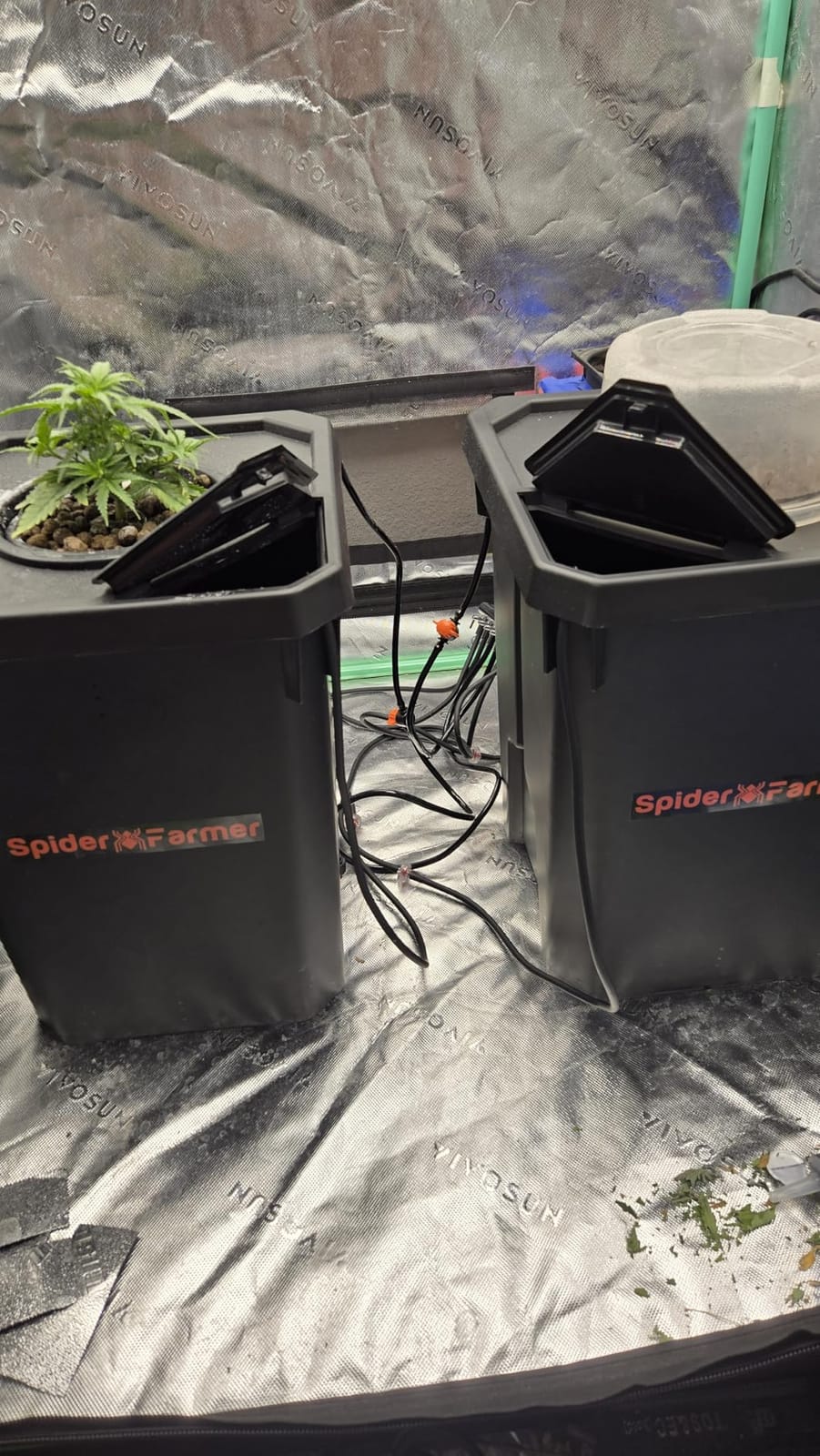
The included drip irrigation ring adds a top-up path to the root zone during the growth stage, and its flow is adjustable rather than fixed. The 8W air pump is rated to a maximum airflow of 4 x 63.4 GPH with adjustment, which is generous headroom for two sites.
You get two sites per kit, so if you want eight plants you are buying four. The buckets are separate rather than connected to a shared reservoir, and no seed starting or cloning medium is included, so propagation happens elsewhere.
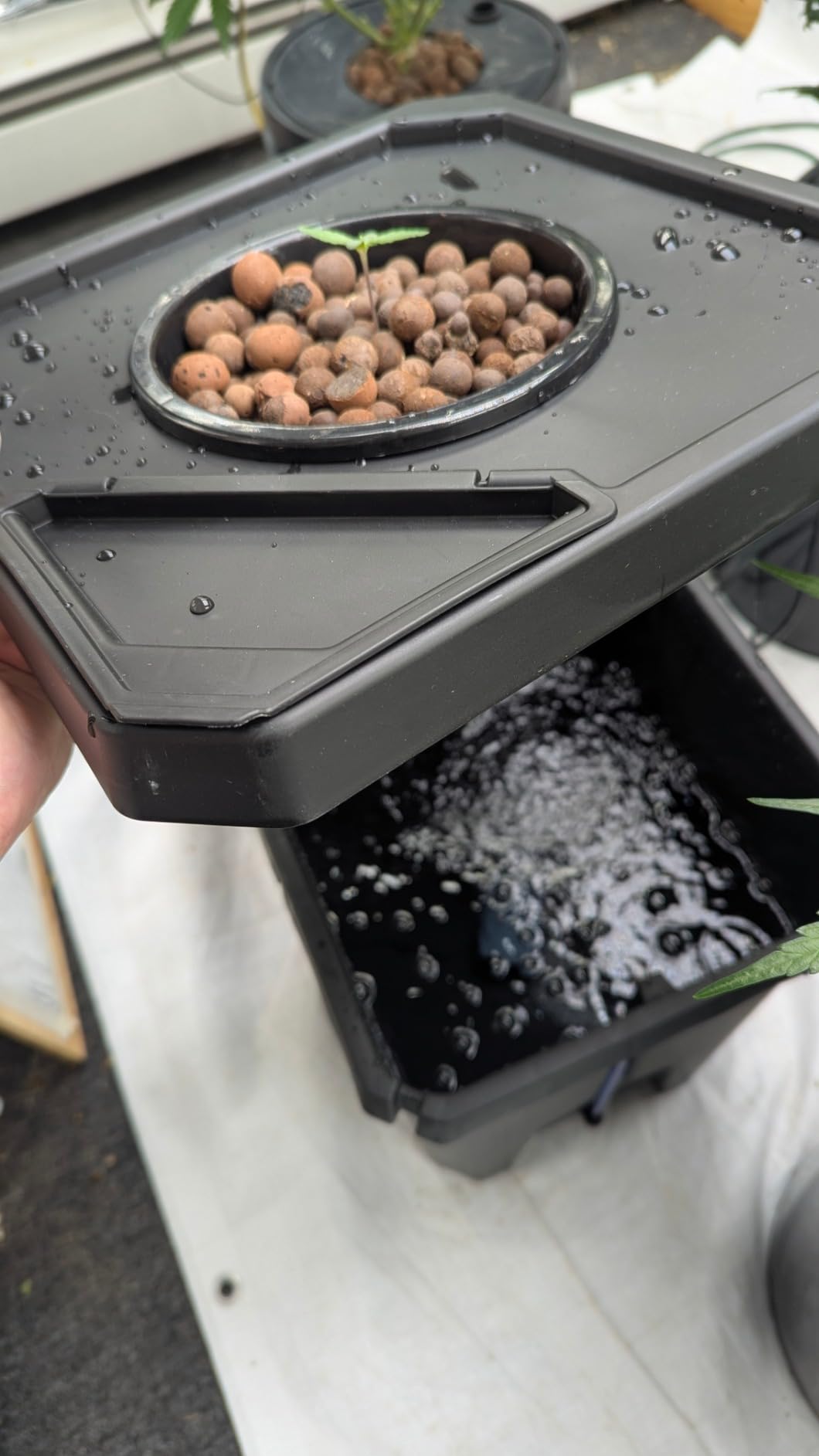
Who this kit suits
It suits growers running tomatoes, peppers, strawberries or a large basil plant where root volume is the limiting factor. It also suits anyone who resents frequent reservoir refills and prefers larger nutrient swings between water changes.
Where it falls short
Two sites is few for a food grower chasing a real harvest, and the footprint is tall at nearly 20 inches with the cover. Because the buckets do not share water, each one is its own nutrient reservoir to monitor and drain.
4. VEVOR DWC Hydroponic System 8 Buckets – Best for Maximum Plant Count
VEVOR DWC Hydroponic System, 5 Gallon 8 Buckets, Deep Water Culture Growing Bucket, Hydroponics Grow Kit with Pump, Air Stone and Water Level Device, for Indoor/Outdoor Leafy Vegetables
8 x 5 gallon buckets
5 inch baskets per lid
10W air pump at 25 L/min
Side water level devices
Pros
- Eight growing sites in one package
- Everything included down to clay pebbles
- Inline check valves prevent backflow
- Side level devices for at-a-glance checks
- Leak resistant seals
Cons
- Separate reservoirs mean eight nutrient mixes
- Bulk size for small indoor rooms
- 25 lb total weight is awkward to move
- High ongoing maintenance across all sites
Eight growing sites is more than any other kit in this roundup, and it arrives with everything attached: buckets, baskets, an air pump, 12 m of air hose, connectors, check valves, air stones, clay pebbles and a manual. Nothing else needs buying to get eight plants running.
The inline check valves on each line are the detail worth knowing. They stop reverse flow so one bucket cannot drain back through the air line into another, which is the failure mode that makes multi-bucket builds leak and sputter.
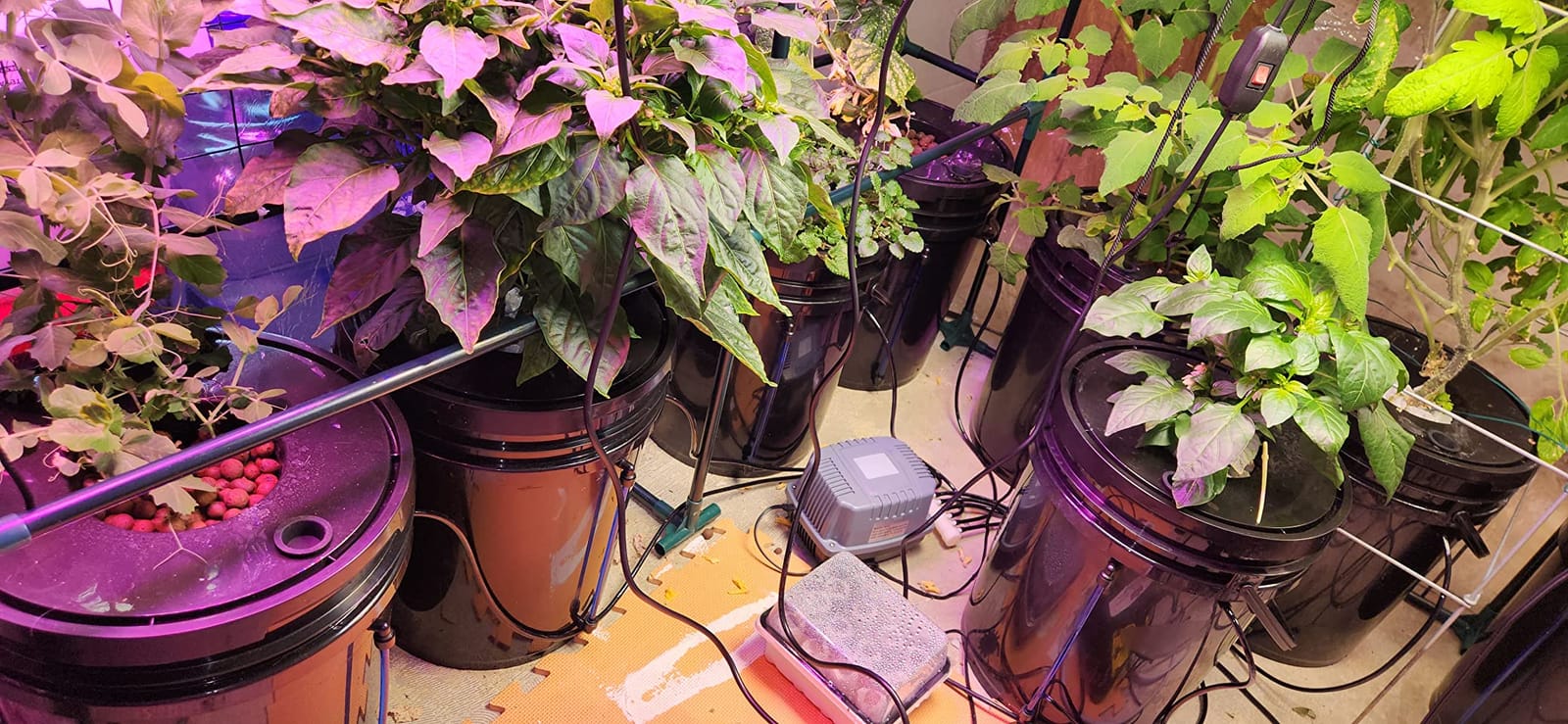
At 25.4 pounds and roughly 12 inches square per bucket, this is a floor-standing system rather than a countertop one. It suits a basement, garage or spare room where a 24 plant cycle of lettuce is the goal.
Here is the honest trade-off: eight separate reservoirs means eight nutrient solutions to keep balanced. Growers who scale past four buckets usually plumb their buckets to a shared tank, and that conversion is easier with drilled drain plugs than with a kit designed for it from the start.
Who this system suits
It suits a grower chasing volume in a space with room to spread out, and anyone who wants a full lettuce or herb harvest cycle rather than a demonstration. The per-bucket level devices also help when eight reservoirs are toped up on different schedules.
Where it falls short
It is heavy and bulky for a small apartment, and the maintenance load scales with the site count. Light is the other hidden cost, since eight sites need a fixture that genuinely covers the footprint.
5. VIVOSUN DWC Top Drip Kit with 4 Buckets – Best Multi-Bucket Starter
VIVOSUN DWC Hydroponics Grow System with Top Drip Kit 4 Buckets
4 x 5 gallon PP buckets
8 inch baskets
25 L/min air output
Top drip irrigation sets
Pros
- Complete kit at a sensible total cost
- Instructions lead to a 10-15 minute setup
- Strong reported growth versus soil
- Quiet once all tubing is connected
- Lids fit any standard 5 gallon bucket
Cons
- Buckets do not recirculate with each other
- Top drip ring sputters and adds noise
- Flow valves are on-off with no adjustment
- Black tubing is hard to push through grommets
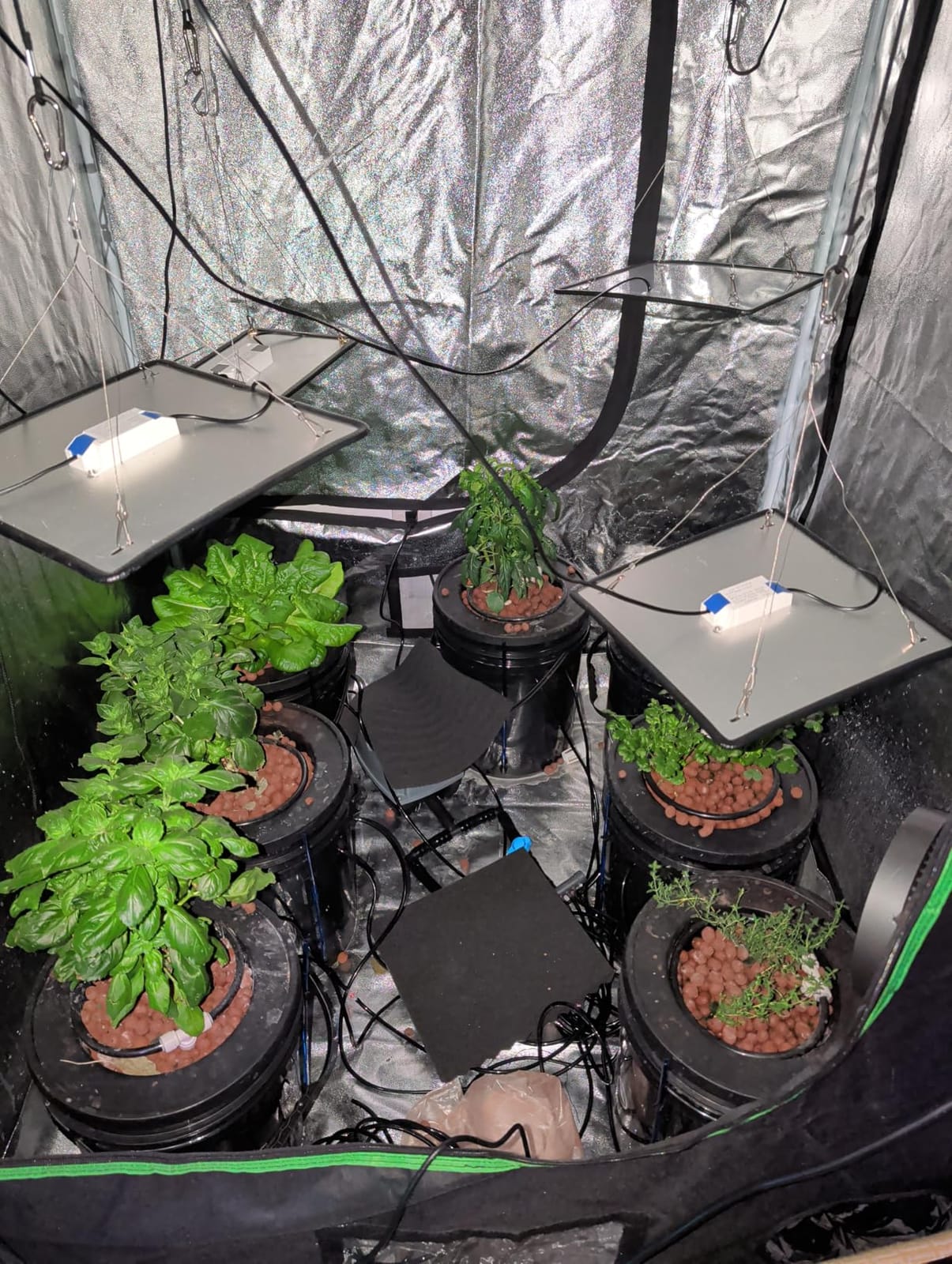
Four 5 gallon polypropylene buckets with 8 inch baskets is the configuration most home growers end up with, and this kit assembles it in about 15 minutes. The box includes 36 pieces: buckets, baskets, drip sets, an air pump, four flow regulators, 12 m of air tubing, four air stones, clay pebble packs, water level indicators, a check valve and air valves.
The air output is rated at 25 L/min at 15W, which is the highest figure in the roundup and gives real headroom for four sites. Owners report heavy results, including substantial cucumber yields, and once every connection is seated the system runs quietly.
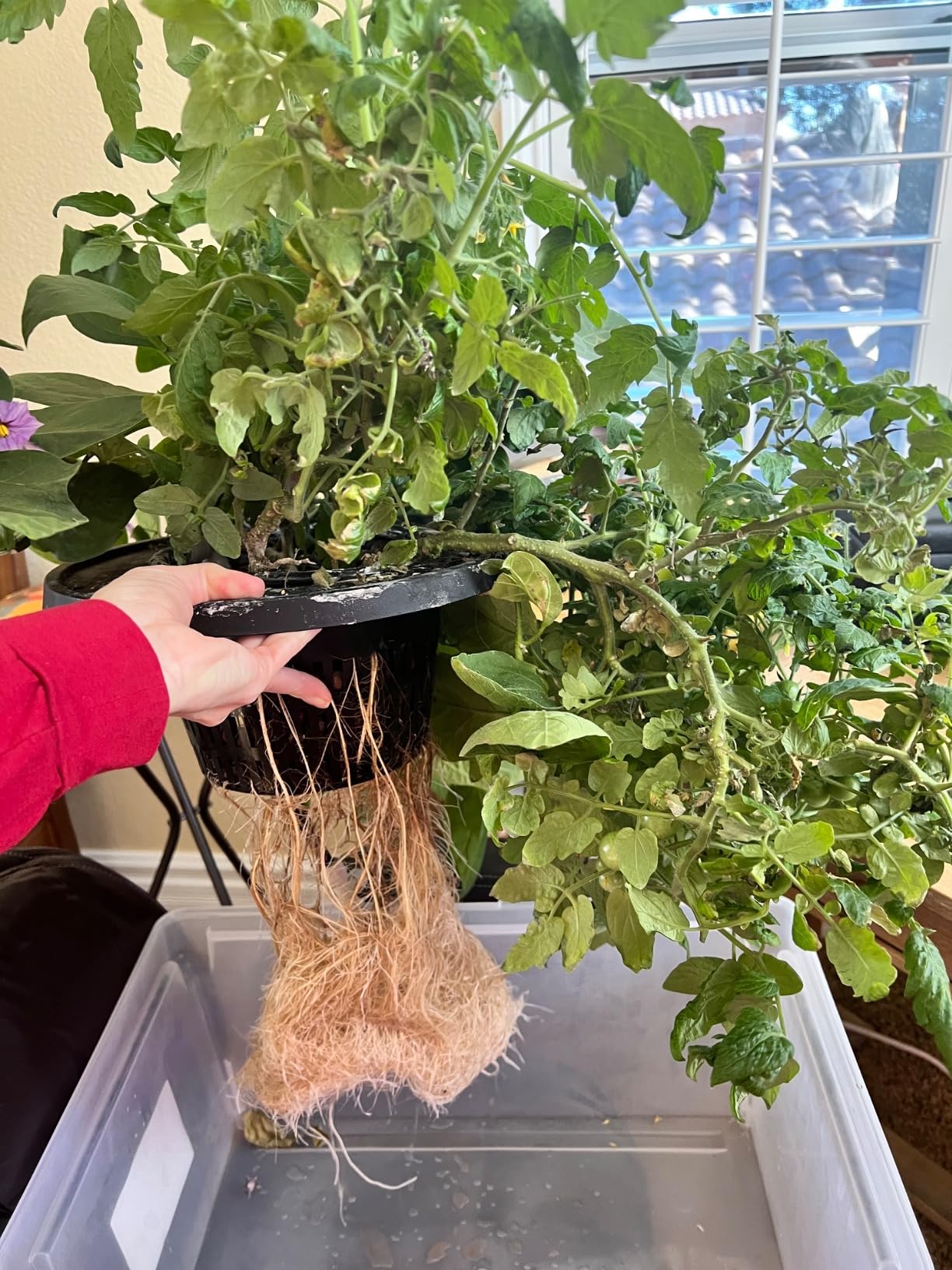
The top drip ring is the piece that divides opinion. It circulates water back toward the root zone to keep the solution fresher, but it tends to sputter rather than run smoothly, and the small flow valves only turn about a quarter turn, so you get on and off rather than adjustment.
One assembly note from owners: getting the black tubing through the lid grommets is the fiddly part, and the air system is interconnected, so all four sites run as a single unit. That is a feature when a pump fails and a limitation when you want one bucket isolated.
Who this kit suits
It suits a grower who wants a mixed planting: four independent planting units means four different crops or four varieties on their own schedules. It also suits anyone moving into a larger setup and planning to add standard 5 gallon buckets later.
Where it falls short
Water changes are per bucket, since nothing connects the reservoirs, and the drip ring is the first thing you will want to tune or bypass. It is a lot of hardware to route through one lid grommet set.
6. PowerGrow Systems DWC Bubbler Bucket Kit 4 Buckets – Best for Growing Mixed Crops
Deep Water Culture (DWC) Hydroponic Bubbler Bucket Kit by PowerGrow ® Systems (4) 5 Gallon – 6″ Buckets
4 x 5 gallon buckets
6 inch basket lids
4 growing sites
Per-bucket drain and indicator
Pros
- Four sites in one purchase
- Grow different crops side by side
- Made in the USA
- One year workmanship warranty
- Air pump
- lines and stones included
Cons
- Highest cost for the same bucket design
- Buckets are not interconnected
- 18 lb weight is heavy to move
- Per-bucket water changes
This is the same fundamental bubble bucket design as the single-bucket PowerGrow kit, scaled to four sites. Each 5 gallon bucket has its own 6 inch basket lid, its own water level indicator and its own drain, so you can run basil in one, lettuce in another and a tomato in a third without one crop dictating the schedule for all of them.
Per-bucket drains are more useful than they sound. Draining one reservoir without disturbing the other three means you can correct pH or nutrient strength in a single plant while the rest of the system keeps running.
The kit is made in the USA and carries a one year manufacturer warranty against workmanship defects. Air pump, air lines, air stones and basket lids are all in the box, so the parts list is short.
The cost is the highest in the roundup for what is essentially the same bucket engineering as the single-site kit, and at 18 pounds the four-bundle is awkward to move between rooms. Growers weigh that premium against not having to source and assemble four sets of parts.
Who this kit suits
It suits a grower running mixed crops who wants isolation between plants, and anyone who values a US-made product with a stated warranty. Four sites at 5 gallons each is a sensible footprint for a closet or a shelf-mounted closet rack.
Where it falls short
It is not plumbed to a shared reservoir, so you are maintaining four nutrient solutions. It also offers no drip ring, so top-up to the root zone happens only by hand.
7. Mars Hydro DWC Two Bucket Top Drip System – Best Aeration
Mars Hydro DWC Hydroponics Grow System 5 Gallon Deep Water Culture with 8W Air Pump, Multi-Purpose Air Hose, Air Stone, 2 Buckets and Top Drip Kit
2 x 5 gallon buckets
8W air pump with flow control
Top drip rings
Visual level indicators
Pros
- Strong adjustable air output
- Food grade BPA-free polypropylene buckets
- Air flow regulator controls irrigation
- Seals hold with no reported leaks
- Buckets hold temperature under lights
Cons
- Air pump is noticeably loud
- Power cord is short
- Instructions and parts list are unclear
- Some bent level indicator tubes reported
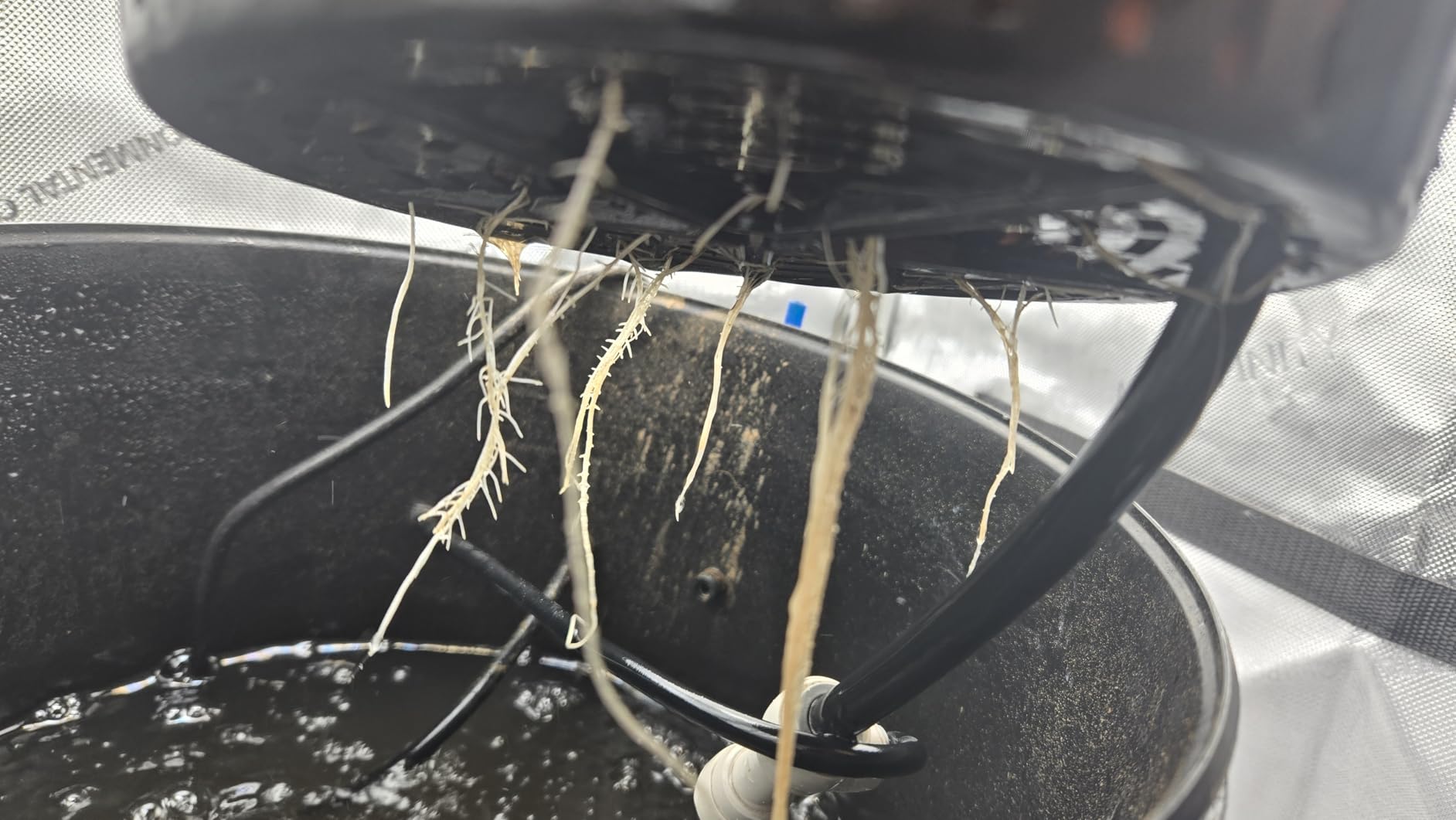
Aeration is where root health is won or lost, and this kit is built around it. The included 8W pump is rated at 0.02 mPa pressure with a maximum airflow of 4 x 63.4 GPH, and the regulators let you dial output per bucket. Growers report white roots with no anaerobic pockets, which is exactly what you want to see in week four.
The BPA-free polypropylene buckets are worth noting under a grow light. Owners report they hold nutrient temperature steadier than thinner plastic, and steadier water temperature is the difference between healthy roots and root rot in a closed tent.
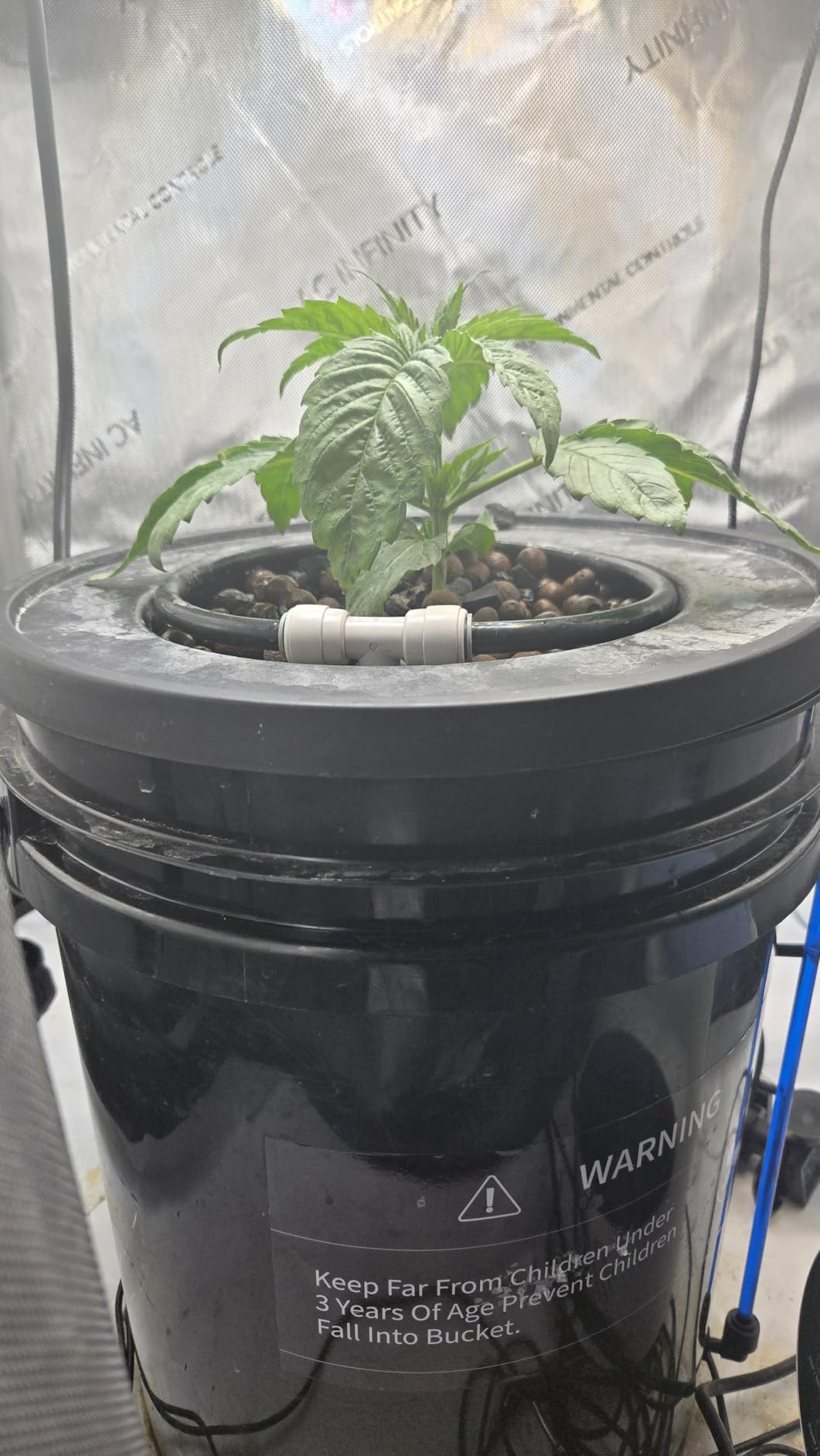
The box includes two 5 gallon buckets, two air stones, two top drip kits, 6 m of air tubes, two visual water level indicators, four check valves, two air flow regulators and clay pebbles. The regulator sets both the drip irrigation flow and the visual flag when water runs low.
The complaints are consistent and minor: pump noise, especially with no tubing attached, a power cord too short for tight tents, and documentation that leaves you guessing. A few owners also received bent level indicator tubes, so inspect them at unpacking.
Who this kit suits
It suits growers in warm rooms or enclosed tents where water temperature runs high, and anyone who has had root rot before and wants aeration headroom. Two sites is a good starting scale for a first recirculating-style setup.
Where it falls short
Two buckets is few, the pump is loud enough to notice in a living space, and the instructions will not get you started on their own. Plan to spend an evening with another guide before assembly.
8. Atwater HydroPod DWC Garden System Kit – Best Turnkey Starter
The Atwater HydroPod – DWC Deep Water Culture Garden System Kit – 5 Gallon Bubble Bucket – Bubbleponics – Nutrients & pH Testing/Adjusting Kits are Included!
Single 5 gallon food grade bucket
Dual outlet DC air pump
2 air stones
Nutrients and pH kit included
Pros
- Nutrients and pH supplies in the box
- Food grade USA-made bucket
- Dual outlet DC air pump
- Low maintenance single site
- Ready to plant immediately
Cons
- Only one growing site
- No recirculation or shared reservoir
- Instructions need reading before planting
- Bucket must be followed along with
The Atwater HydroPod is the only kit here that arrives with nutrients and a pH testing and adjusting kit in the box. For someone whose hesitation is not the hardware but the question of what to mix, that removes the whole first-week problem.
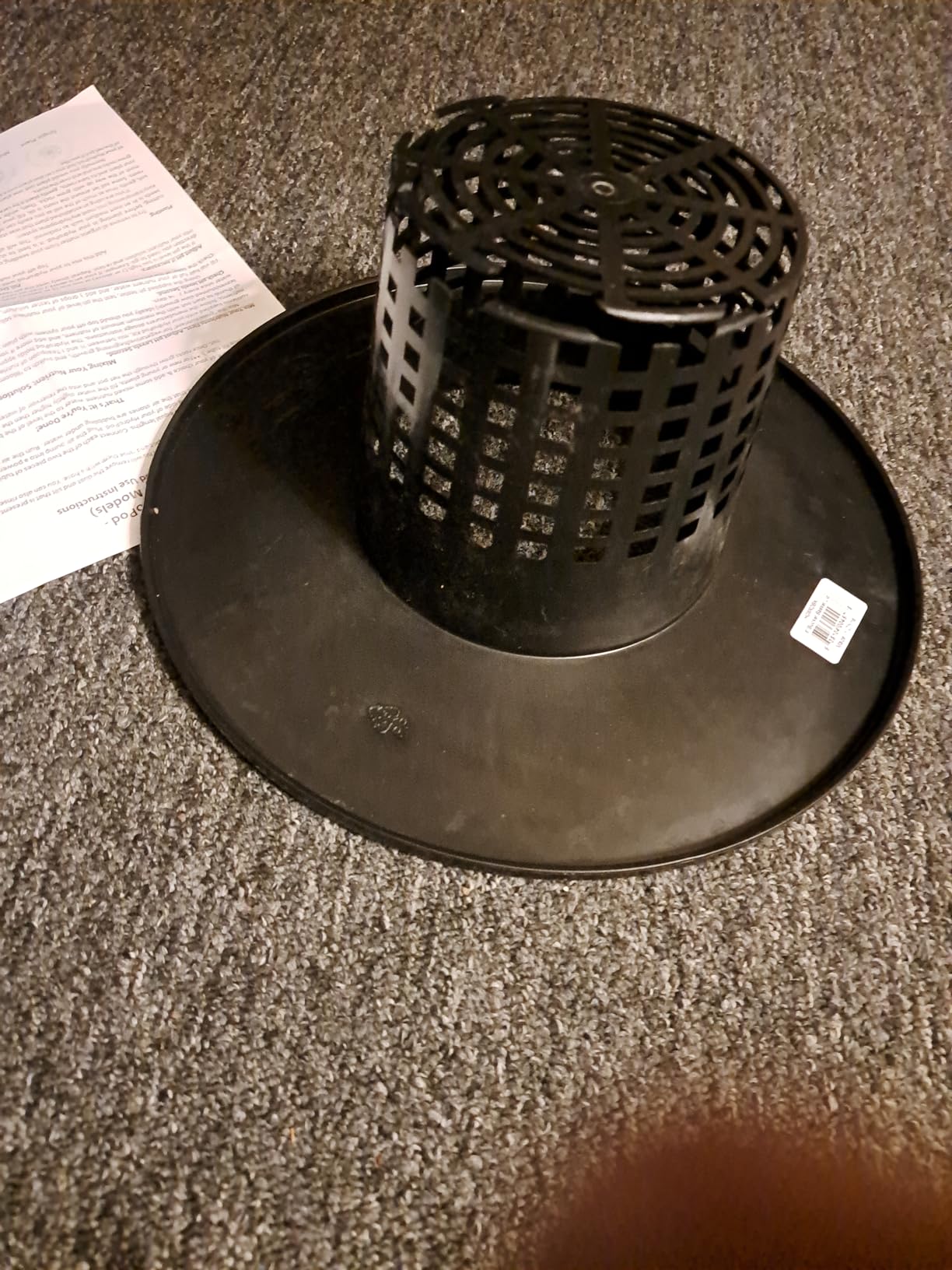
The hardware is a USA-made 5 gallon food grade bucket with a dual outlet DC air pump and two air stones. The dark lid blocks light so algae does not take the reservoir, and the design is deliberately low maintenance once it is running.
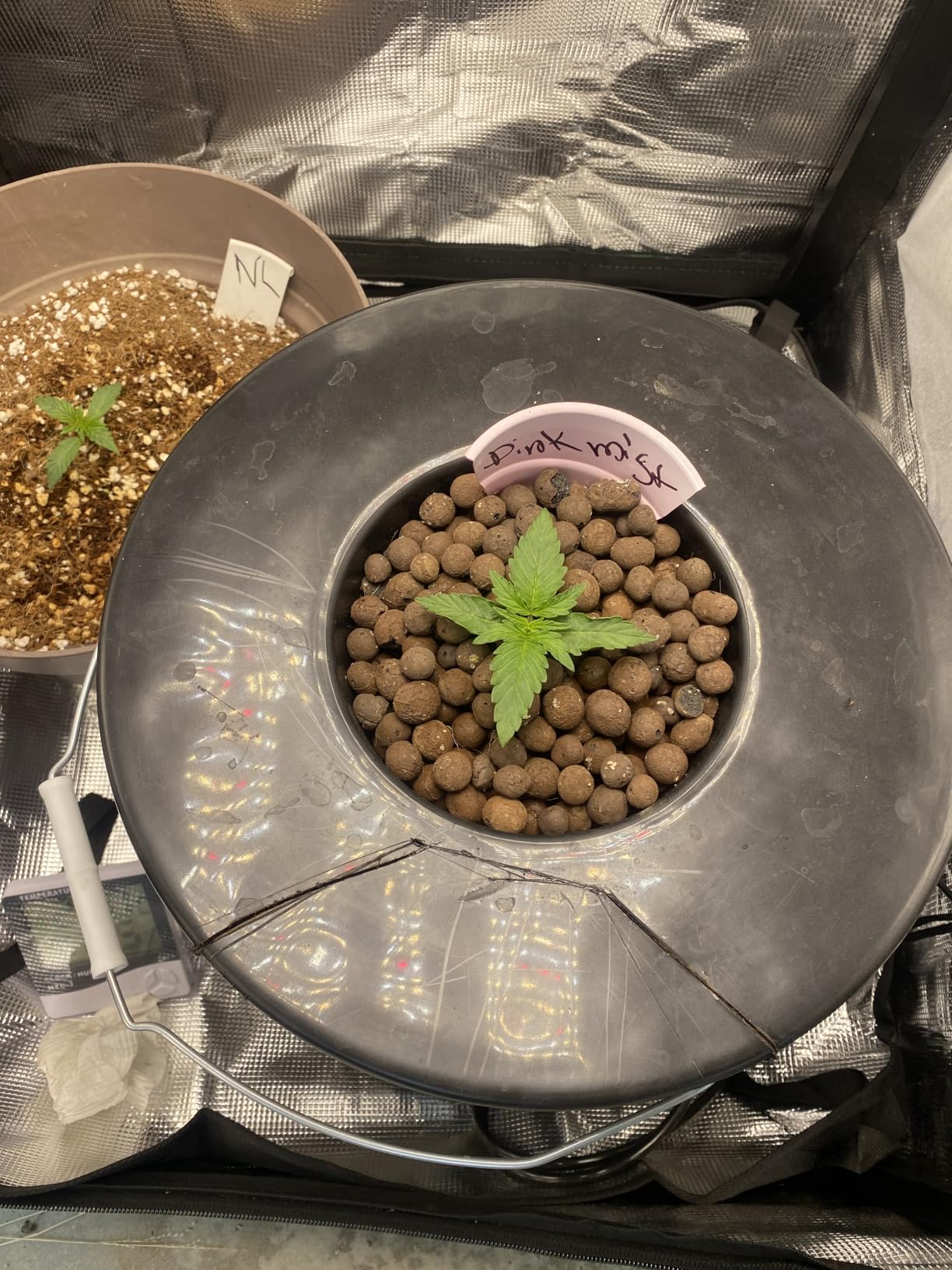
Owners describe it as genuinely turnkey: mix, adjust, plant. Evaporation is minimal, which means fewer top-offs than an open tray system, and the basic bubbleponics layout has no moving part that can fail except the pump itself.
The scope is the limitation. One site means one plant, and adding a second means a second bucket, a second lid and a second air path. There is no recirculation and no shared reservoir to grow into.
Who this kit suits
It suits a complete beginner who wants a single large plant, like one basil plant or one pepper, and wants nutrients and pH supplies in the same delivery. It also suits anyone who values food grade components for edible crops.
Where it falls short
One site is limiting for a food grower, and included nutrients only get you through an initial cycle or two before you buy more. The instructions expect you to read along before adding plants, which is a fair ask but an extra step.
9. LAWNFUL 4 Hydroponic Buckets Kit – Best for Seedlings and Propagation
Lawnful 4 Hydroponic Buckets Kit for Plants, Hydroponics Growing System for Herbs/Tomato/Vegetables, DWC System with Air Pump & Germination Tray (Complete Indoor Hydroponic Gardening Supplies)
4 x 10L buckets
5 growing pods per lid
Four-outlet air pump
Germination trays with humidity dome
Pros
- Covers germination through to harvest
- Five pods per lid gives good density
- Water level indicator on every bucket
- Four-outlet pump with check valves
- Compact for a balcony or rooftop
Cons
- Smallest bucket capacity in the group
- Lowest average rating in the roundup
- Pods may need extra rockwool for larger crops
- Germination accessories add bulk
At 2.6 gallons per bucket, these are the smallest reservoirs in the roundup, and that is the whole trade-off. Small volume means the nutrient concentration in a bucket swings faster, so a lettuce or herb cycle is realistic while a long-lived fruiting plant is not.
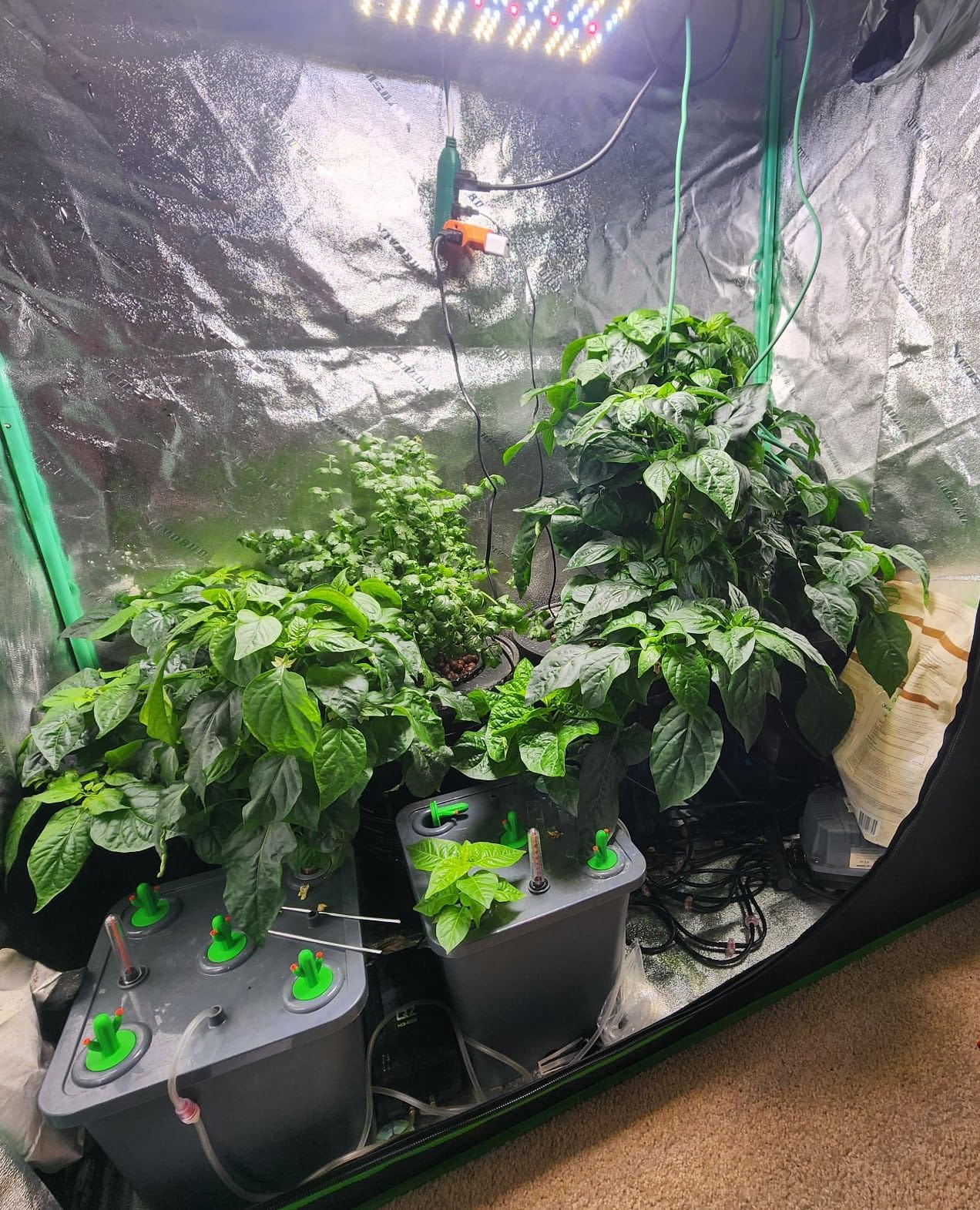
What this kit does better than anything else here is propagation. It includes two germination trays, a 12-cell tray with a vented humidity dome, 24 grow sponges, 24 grow baskets and 16 sponge cubes, so you can start seeds and clones in the same kit you transplant them into.
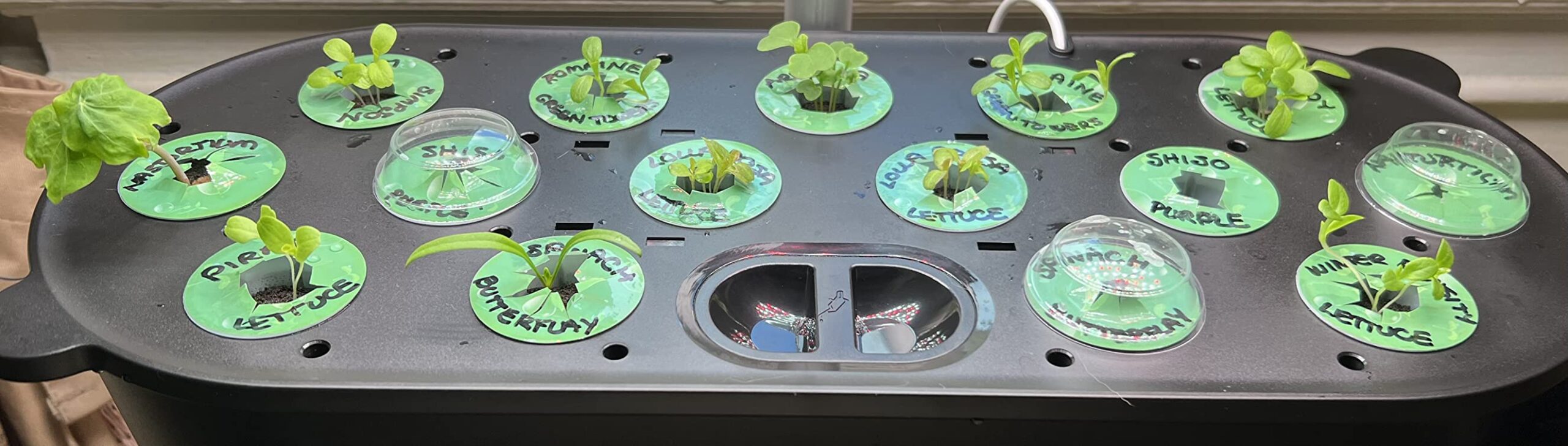
The air pump has four outlets with matching check valves, four air stones and 4 ft of tubing per bucket, and adjustable flow up to 1 L/min. That layout maps one pump to four buckets cleanly, which is the arrangement experienced growers describe as the standard multi-bucket build.
Owners like the pod density and the fact that each bucket has a level indicator. The honest drawbacks are the small volume, the 4.1 rating which is the lowest here, and the fact that the dome and sponge accessories add packaging bulk without improving mature plant performance.
Who this kit suits
It suits a grower who wants a complete seed-to-salad cycle in one box and has a balcony, rooftop or small indoor area rather than a floor. It also suits anyone starting many small plants at once instead of a few large ones.
Where it falls short
Root volume is the limit, so keep this to leafy greens, lettuce and herbs. The small buckets also mean more frequent pH checks than a 5 or 7 gallon system would.
10. Aunifun DIY Hydroponics Grower Kit – Budget Pick for Learning
Aunifun Hydroponics Grower Kit DIY Self Watering Indoor Hydroponics Tools Hydroponic System Planting Container Include Aquarium Air Pump Buoy Planting Box
Planting box 28 x 19 x 13.5 cm
6 planting baskets and sponges
Air pump and bubble stone
Dark basin lid
Pros
- Lowest cost entry point to hydroponics
- About 20 minutes to assemble
- Dark basin and baskets limit algae
- Good for seedlings and clones
- Compact enough for almost any indoor spot
Cons
- Very small reservoir
- Plants tip over as they grow
- Cheap air pump can be noisy
- Instructions are poor
- Air pump is 110-120V only
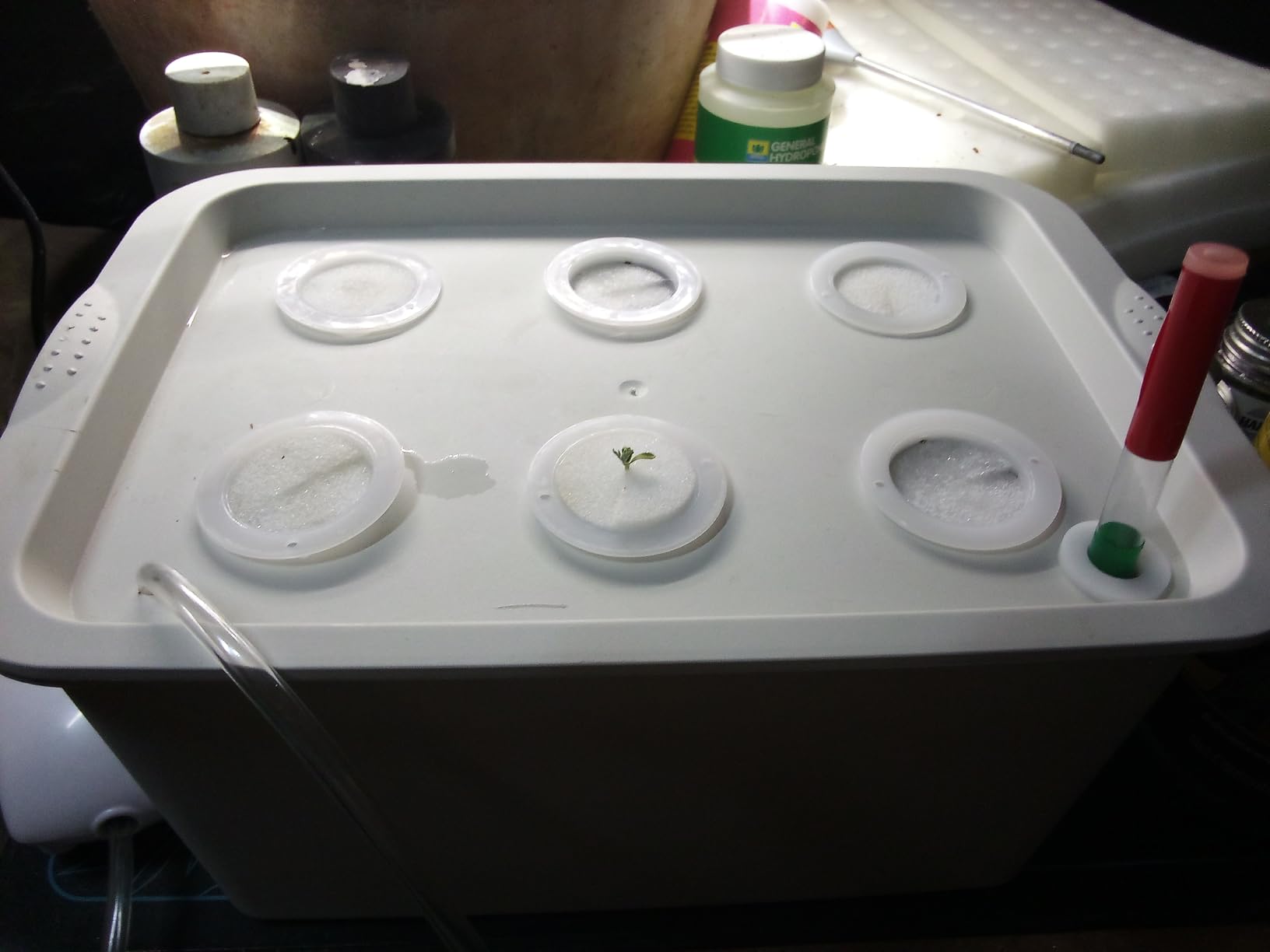
Treat this as a teaching system rather than a grow system. The PVC-U planting box measures 28 x 19 x 13.5 cm and holds six planting baskets with sponges, a buoy, an air pump, a bubble stone, a check valve and tweezers, and it assembles in about twenty minutes.
Its best use is propagation. Growers use it to start seedlings and clones, then transplant into a larger DWC bucket, and the dark basin and baskets do a good job of keeping light out of the solution so algae does not take over.
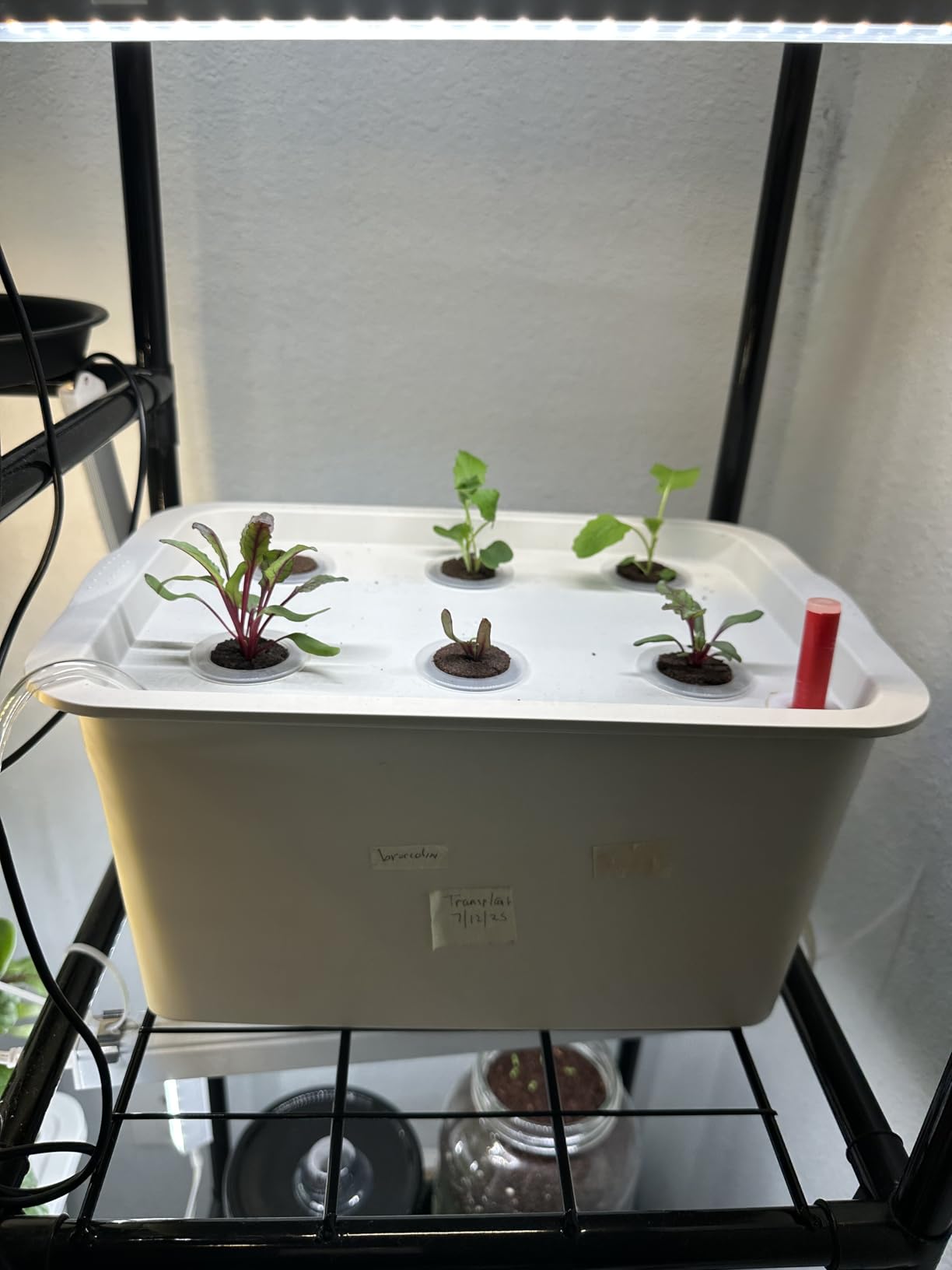
The limits are physical. The reservoir is very small, plants become top-heavy and tip over as they grow, and the included air pump is a budget unit that can be noisy or give up. Expect to replace the pump within a season if you run it continuously.
Two further warnings. The instructions are poor enough that you will need outside guidance before you start, and the air pump runs on 110-120V only, which is a genuine problem on 220-240V mains where you will need your own pump.
Who this kit suits
It suits a first-time grower who wants to learn how hydroponics works before spending on a real reservoir, and anyone who needs a compact propagation box for seedlings. At this weight it is easy to move between rooms.
Where it falls short
It cannot support a mature plant, the pump is the weak link, and the documentation will not get you started alone. Use it as a stepping stone to one of the bucket systems above.
DWC vs NFT vs Kratky vs Ebb and Flow: Which Method Fits Your Space
Deep water culture is the better choice for most home growers because it is the most forgiving and the cheapest to start. Here is how it stacks up against the other common indoor methods.
DWC: most forgiving, cheapest entry, excellent for lettuce, basil and leafy greens, scales in buckets of one to eight sites. Weakness: nutrient management is manual, and pump failure is visible fast.
NFT: higher yield density in a small footprint and excellent for lettuce, but roots dry quickly if the pump stops, so it needs reliable power and a chiller in warm rooms.
Kratky: the simplest method of all, a static reservoir with no pump at all. Ideal for a first single harvest of lettuce, but you generally get one cycle per reservoir fill.
Ebb and flow: a tray system that floods and drains on a timer. Flexible plant count and easy to scale, but it uses more water and takes more floor space than a bucket.
Drip systems: familiar from commercial grows, quiet and flexible, but they are harder to plumb at home and offer no advantage over DWC for leafy greens.
For food crops in a home space, DWC wins on forgiveness and NFT wins on density. If your power is unreliable or you are just starting out, the bucket method is the safer bet.
Recirculating vs Non-Recirculating DWC: Is RDWC Worth the Upgrade
Recirculating deep water culture connects every bucket to one shared reservoir with a return line, so a single pump moves the solution through the whole system. Non-recirculating DWC, which covers most kits in this roundup, keeps each bucket as its own isolated reservoir.
RDWC gives you one nutrient solution to balance instead of one per bucket, and the return flow keeps roots gently agitated. Growers on r/Hydroponics and rollitup.org describe it as the natural upgrade path once you are past a few buckets, and Current Culture plug-and-play systems get recommended there specifically to avoid DIY plumbing.
The honest cost of waiting is repetition. Four separate buckets means four pH checks and four nutrient mixes, and that is how small errors spread. A four-outlet air pump with one air stone per bucket is the common multi-bucket arrangement experienced growers describe, and it works whether or not the water recirculates.
Our advice: start non-recirculating with one to four buckets. Move to RDWC when the maintenance of multiple nutrient solutions becomes the thing you skip.
What Grows Best in Deep Water Culture (and What to Skip)
Lettuce, leafy greens and herbs are the strongest performers in DWC, and forum consensus repeatedly names basil and lettuce as the crops this method favours.
Lettuce and other leafy greens: the safest first crop, fast to harvest, tolerant of small reservoirs, and happy in the 2.6 gallon buckets.
Basil and herbs: mint, parsley, cilantro and oregano all do well, and basil will thrive in a 5 or 7 gallon bucket where a single site is all you need.
Strawberries and shallow-rooted fruiting crops: workable in the larger 7 gallon reservoirs, since fruit load needs root volume.
Tomatoes and peppers: possible in a 5 gallon or 7 gallon bucket with support, but they want more light and more attention than a first-time DWC grower usually expects.
Root-heavy crops such as potatoes: growers on forum.growweedeasy.com and r/DWC point to bato buckets or soil instead, since DWC is a poor match for tuber crops.
Rule of thumb: match the crop to the reservoir, not the other way around. A 2.6 gallon bucket is a lettuce bucket, and a 7 gallon bucket is where a fruiting plant belongs.
Root Rot, Water Temperature and Dissolved Oxygen: The Failure Modes That Matter
Root rot in DWC is almost always one of three things: warm water, low dissolved oxygen, or light reaching the solution. Fix those and the fourth problem, crown rot from a net pot sitting too deep, mostly solves itself.
Water temperature. Keep the reservoir between 65 and 70F. Above that, dissolved oxygen drops and pathogens multiply, and the 7 gallon polypropylene kits hold temperature better under a light for that reason. Cooling an enclosed tent matters more than any hardware change; if you are chasing reservoir temperature in a hot room, our guide to water cooling systems for a gaming PC covers the same closed-loop cooling logic in detail.
Dissolved oxygen. An air stone per site, running continuously, is the baseline. Growers describe wilting within hours when an air pump stops, which is the single best argument for DWC over NFT: the roots are still in water. Air pumps like the 8W units in the Mars Hydro and Spider Farmer kits exist to give you headroom above the minimum.
Light and algae. An opaque or covered lid is non-negotiable. Green water means light got in, the algae are consuming nutrients, and pH drifts upward as they go. Algae also competes for the oxygen your roots need.
Water changes. Change the solution roughly every one to two weeks, or sooner if pH drifts outside 5.5 to 6.5. Top off with plain water between changes, since top-off is where unnoticed EC creep begins. If your source water has iron or sediment, our water filtration guide for well water covers the pretreatment question, and the UV purifier comparison is worth reading if microbial contamination is a concern in your reservoir.
How to Choose a DWC System: A Buying Guide for Home Growers
Choose by plant count first, reservoir volume second, and everything else after that. Starting with a wish for a particular brand is how people end up with four 2.6 gallon buckets and a light that cannot cover them.
Match sites to space. A 5 gallon bucket is roughly a foot square and fits two to four leafy greens or one large plant. Eight sites need a floor or a long shelf, not a countertop. If you only want to learn, one bucket teaches you everything a six-bucket rig would.
Size the air pump generously. Rule of thumb from experienced multi-bucket growers: one air stone per bucket, fed by a pump with a multi-outlet head and flow regulators, and enough rated output that each stone still gets a strong bubble stream with all lines attached. Test the airflow with the full tubing run before you trust the rating.
Budget for light separately. No kit in this roundup includes a grow light, and that is where new growers under-spend. Match the fixture to the footprint: a bucket plus a 12 inch fan needs a fixture with at least 12 inches of coverage, and small bulb-style lights will not do it. Undersized lighting causes leggy, stretched plants that get blamed on the hydroponic system.
Decide how much you will fiddle. A fully plumbed recirculating system costs more in parts and in patience. Non-recirculating buckets are cheaper, leak less often and are trivially easy to repair, at the price of managing several nutrient solutions.
Check the consumables list. Clay pebbles or rockwool, hydroponic nutrients, pH test and adjust, and a timer-capable pump. Kits that bundle medium and nutrients, like the PowerGrow and Atwater options, genuinely lower the barrier to a first harvest.
Plan your first 30 days. Week one is assembly and a nutrient mix with no plants. Week two is germinating seeds in rockwool or sponges. Weeks three and four are transplanting into net pots and watching roots turn white. Growers who transplant on day one rarely get a clean first cycle.
Frequently Asked Questions
Which is better, NFT or DWC?
DWC is better for most home growers because it is more forgiving: roots stay submerged if a pump fails or power goes out, and entry systems cost less. NFT wins on plant density in a small footprint, but it dries out quickly when a pump stops and usually needs a chiller in a warm room. Choose DWC for lettuce, basil and leafy greens on a first system.
What is the best hydroponic system for growing at home?
For most people the best hydroponic system for a home is a deep water culture bucket kit with a food-safe bucket, an opaque lid, one or two net pots and an air pump. The PowerGrow Systems 5 gallon DWC kit is our top pick because the box includes a 44 GPH air pump, an air stone, growing medium, rockwool seed plugs and a water level indicator, so the only things you add are water and seeds.
What grows best in Deep Water Culture?
Lettuce, leafy greens and herbs grow best in deep water culture. Basil, mint, parsley and cilantro all perform strongly, and strawberries and shallow-rooted fruiting crops work in larger 7 gallon reservoirs. Root-heavy tubers are a poor match, and growers commonly point to bato buckets for those instead of DWC.
What are the cons of DWC systems?
The main cons of DWC systems are manual nutrient management, pump dependency, root rot risk in warm water, and water changes that get difficult once roots fill the bucket. You also have to keep light out of the reservoir or algae will compete with your roots for oxygen. In exchange you get the most forgiving hydroponic method and fast growth on leafy greens and herbs.
Do I need an air pump for DWC?
Yes, an air pump is the one piece of equipment a DWC system cannot run without. It drives an air stone to keep dissolved oxygen high enough for submerged roots to breathe, and stopping it causes visible wilting within hours. Use one air stone per bucket, run the pump continuously, and size the pump with headroom plus flow regulators for each line.
How long can DWC go without air?
Roots in a DWC system can survive a few hours without aeration, but wilting typically shows up quickly and growth stalls as soon as dissolved oxygen drops. This is exactly why DWC is more forgiving than NFT during a pump failure, since the roots stay in water. Treat a stopped air pump as an emergency, not a pause, especially in warm water.
How often should I change the water in my DWC hydroponic system?
Change the nutrient solution roughly every one to two weeks, and sooner if pH drifts outside 5.5 to 6.5 or the root zone smells off. Between changes, top off with plain water and check the water level indicator, because repeated top-off is where unnoticed EC creep starts. Draining a bucket gets harder as roots fill it, so a small transfer pump is a worthwhile accessory.
Conclusion: Our Best Deep Water Culture Picks for 2026
After working through 10 systems, the best deep water culture systems for home growers come down to three clear winners. The PowerGrow Systems 5 gallon DWC kit is the one to buy first, because it is complete, it holds the highest rating in the group, and it costs less than assembling the equivalent yourself. The Hydrofarm Root Spa is the value pick if you want one dependable bucket with the widest review base. The Spider Farmer two-bucket kit is the right answer when root volume matters more than plant count.
Whichever you choose, the hardware is the easy part. Keep the reservoir between 65 and 70F, hold pH between 5.5 and 6.5, run an air stone per site around the clock, and buy a grow light that actually covers the footprint. Start with lettuce or basil, change the solution every one to two weeks, and expect your first clean harvest in about 30 days.
Start with one bucket, get a full cycle under your belt, and add sites only once the routine is boring. That is the advice we give everyone who asks where to begin.