
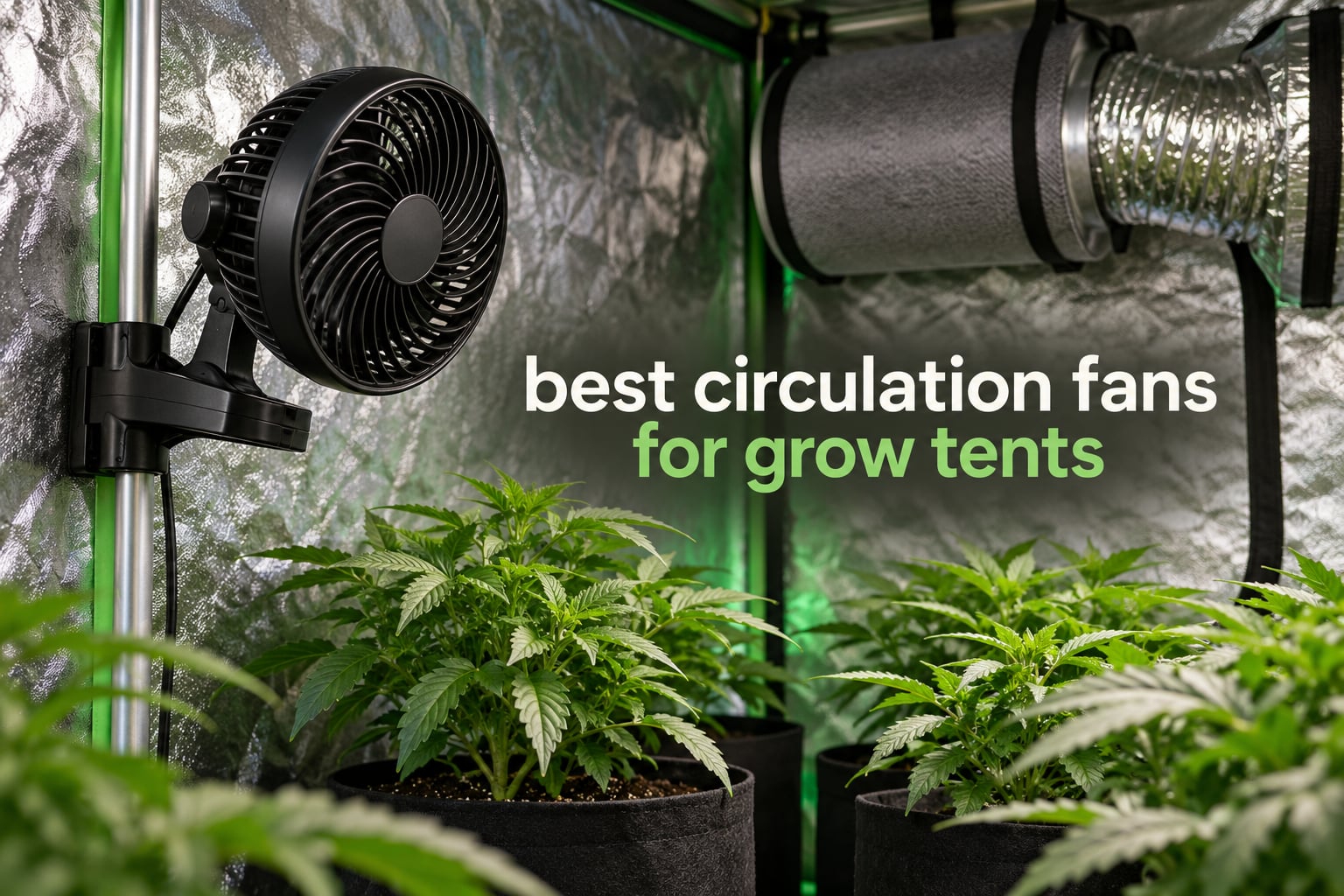
A grow tent circulation fan is a small internal fan, usually a 4 to 8 inch clip-on, pole-mounted or floor unit, that pushes air across and through your plant canopy. It mixes the humid pockets that sit behind leaves and in corners, helps each leaf shed heat and moisture, and keeps mould risk down.
It does not pull air out of the tent. That is the job of an inline exhaust fan and carbon filter, and no circulation fan on this list replaces one. Growers on r/microgrowery ask the same question constantly: do I need a clip fan if I already have an inline fan? The answer from growers and vendors alike is yes, because the two do completely different jobs.
We compared 12 of the most-reviewed fans in this niche side by side across clip-on units, inline duct blowers, one dual-head pair and one bundled extraction kit. We weighed airflow against noise, motor type, clamp fit, oscillation behaviour and how long each one realistically lasts running 24 hours a day in a wet, hot tent.
Table of Contents
Top 3 Best Circulation Fans for Grow Tents in October 2026

AC Infinity CLOUDRAY S6
- 6 inch EC clip fan
- 315 CFM
- 31 dB
- 10 speeds and 10 oscillation ranges

AC Infinity CLOUDLINE S6
- 402 CFM inline duct fan
- 32 dBA
- wired 10-speed controller included

Best Circulation Fans for Grow Tents in October 2026
| Product | Specifications | Action |
|---|---|---|
| AC Infinity CLOUDRAY S6 |
|
Check Latest Price |
 VIVOSUN D4 Inline Fan VIVOSUN D4 Inline Fan |
|
Check Latest Price |
| VIVOSUN AeroWave E6 Gen2 |
|
Check Latest Price |
 VIVOSUN AeroWave D4 VIVOSUN AeroWave D4 |
|
Check Latest Price |
 MARS HYDRO 6 Inch Clip-On MARS HYDRO 6 Inch Clip-On |
|
Check Latest Price |
 Spider Farmer 6 Inch Clip Fan Spider Farmer 6 Inch Clip Fan |
|
Check Latest Price |
 HealSmart 6 Inch Monkey Fan HealSmart 6 Inch Monkey Fan |
|
Check Latest Price |
| AC Infinity CLOUDLINE S6 |
|
Check Latest Price |
 VEVOR 6 Inch Inline Duct Fan VEVOR 6 Inch Inline Duct Fan |
|
Check Latest Price |
 iPower 4 Inch Vent Kit iPower 4 Inch Vent Kit |
|
Check Latest Price |
 erifyng 5 Inch Dual Fan erifyng 5 Inch Dual Fan |
|
Check Latest Price |
 Active Air 8 Inch Clip Fan Active Air 8 Inch Clip Fan |
|
Check Latest Price |
1. AC Infinity CLOUDRAY S6 – Best All-Round Clip Fan for a Grow Tent
AC Infinity CLOUDRAY S6 Grow Tent Oscillating Clip Fan 6”
6 inch clip-on
315 CFM
31 dB
10 speeds
Brushless EC motor
Pros
- Brushless EC motor with carbon steel gears and dual ball bearings
- 10 speeds and 10 oscillation ranges
- IP54 rated for humid grow spaces
- Works with UIS controllers for app automation
Cons
- Full 10-speed control needs the app or a UIS controller
- Deep feature set is more than a small tent needs
The CLOUDRAY S6 is the fan we kept coming back to. It is a 6 inch clip-on with a brushless EC motor, carbon steel gears and dual ball bearings, and growers name it more often than any other premium clip fan.
At 315 CFM and 31 dB it moves real air quietly enough for a bedroom grow, and the 8 watt draw stays easy on power across a nine week flower cycle.
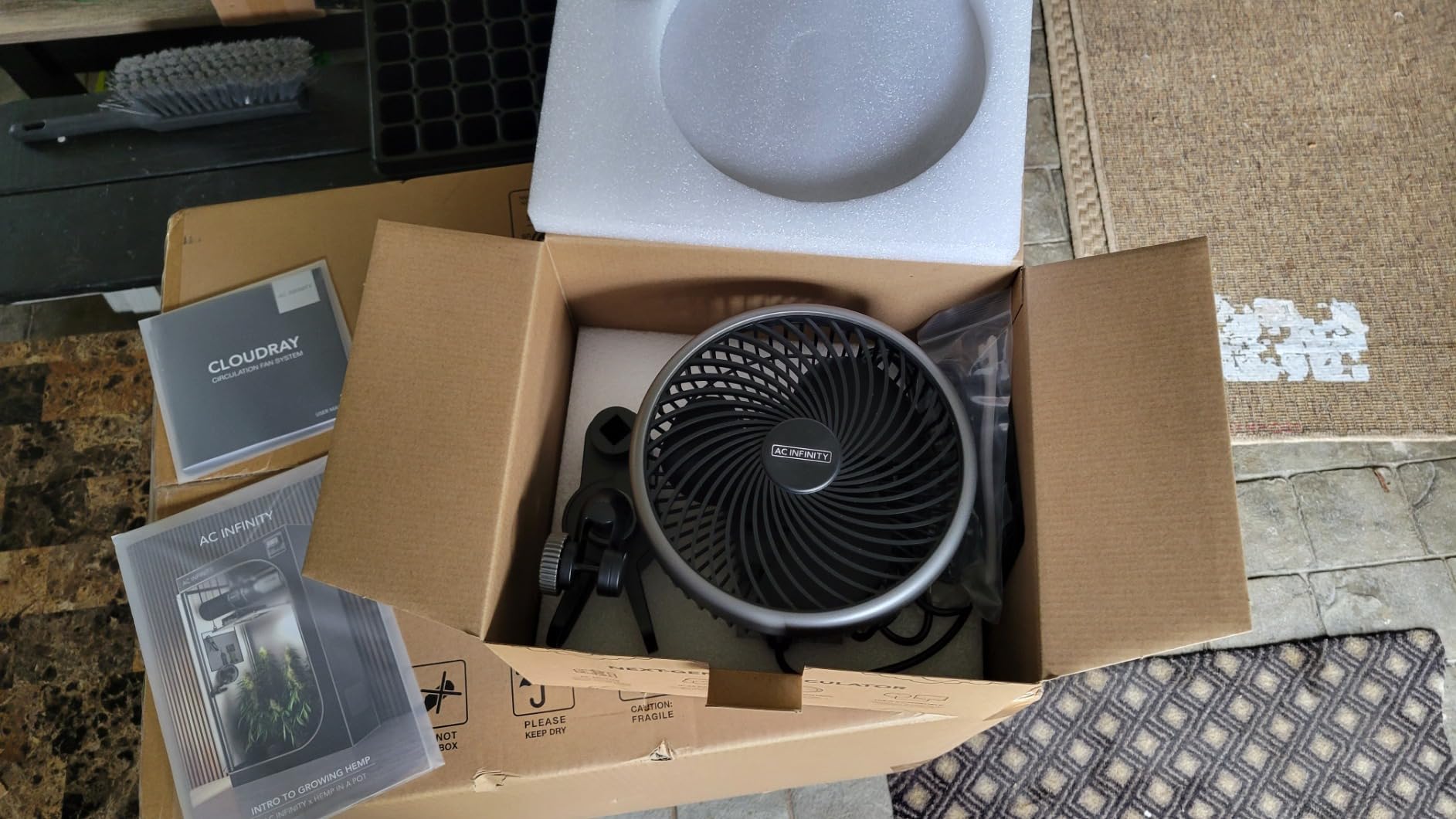
Ten speed levels, ten dynamic wind modes and ten oscillation ranges let you set a narrow sweep over a seed tray or a wide arc across a full canopy.
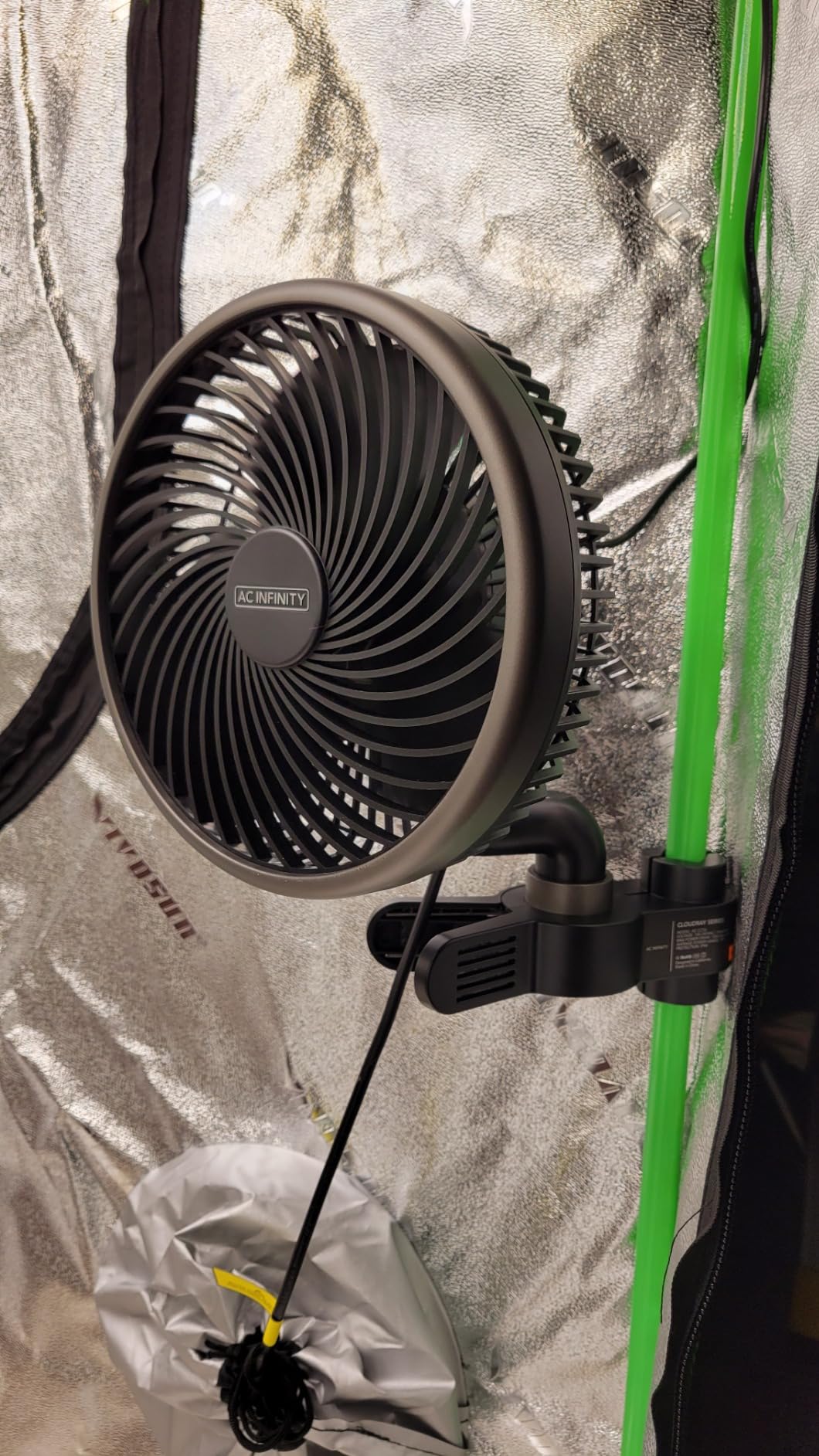
IP54 rating suits a wet tent, and growers pick it partly because it grips the 1 inch poles on AC Infinity tents without shimming.
The catch is that the full control set is exposed through the app or a UIS controller. Out of the box it runs, but not to full depth.
What to check before you buy
Check the clamp fit and pole diameter before ordering, and decide honestly whether 10 wind modes earn their place in a 2×2 closet.
Who should skip it
Skip it on a tight seedling budget or if you dislike app-dependent controls. It is not an extractor, so pair it with a duct fan.
2. VIVOSUN D4 4 Inch Inline Fan – Best Proven Budget Inline Duct Fan
VIVOSUN D4 4″ AC Motor Inline Fan, 195 CFM for Ventilation
4 inch inline duct
195 CFM
2500 RPM
28W
ETL listed
Pros
- Most reviewed unit here with over 13500 ratings
- 195 CFM at 2500 RPM for intake and exhaust
- Flow deflector keeps noise down
- Housing and impeller detach for cleaning
Cons
- Single fixed speed with no controller included
- Some noise complaints at higher output
With more than 13,500 ratings, the VIVOSUN D4 is the most proven budget inline duct fan here. It runs at 2500 RPM and moves 195 CFM, enough for a 2×2 or 2×4.
The motor is ETL listed with automatic reset overheat protection, and the flame-retardant junction box is a sensible touch in a damp tent.
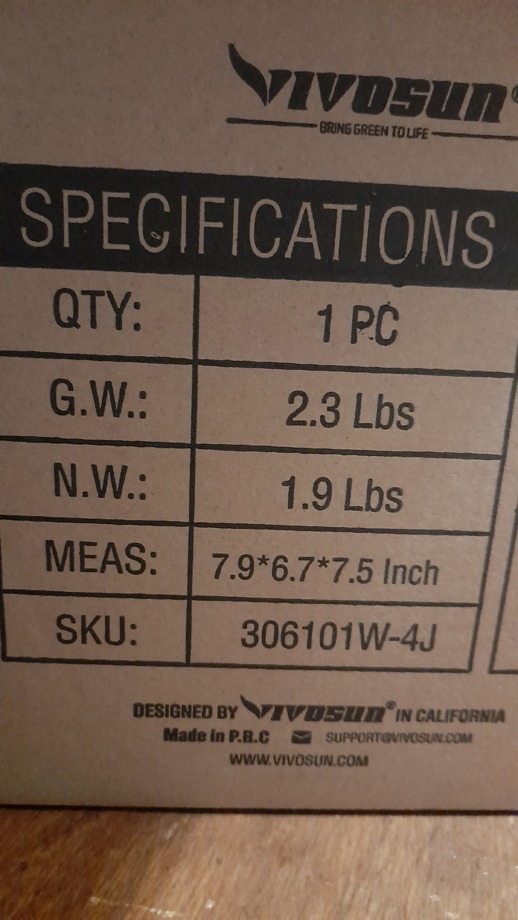
Noise is what to plan around. The flow deflector focuses the stream and trims turbulence, but at 42 dB it is clearly audible in a quiet room.
The housing, impeller and blades all detach, which matters with a carbon filter attached. Cleaning keeps airflow nearer its rated number.
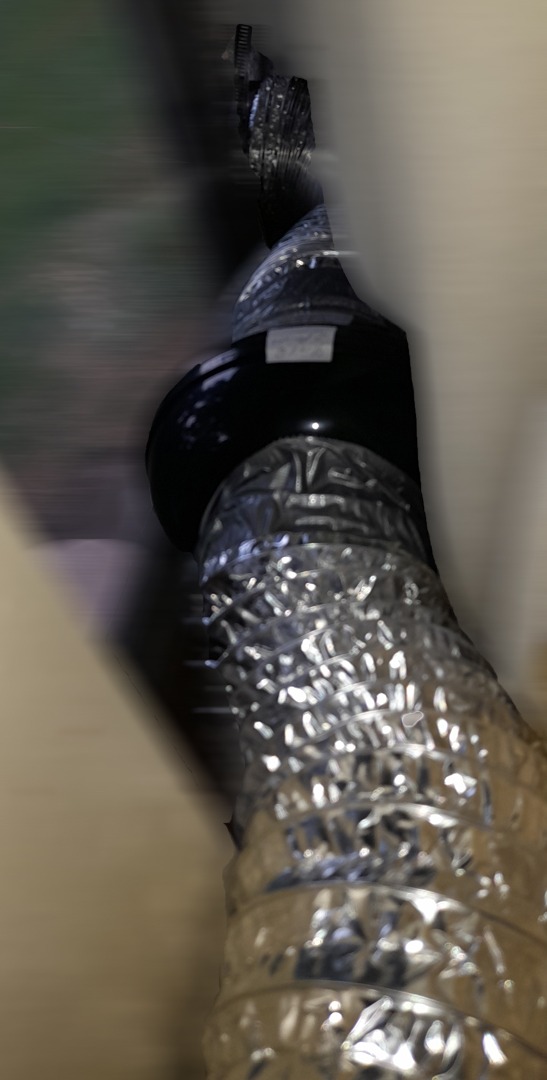
Locking-tab flanges make installation simple, and the 5.9 foot cord suits a tent where the fan sits close to the duct run.
What to check before you buy
Confirm your ducting diameter first. This is a 4 inch unit, so it needs 4 inch clamps, a 4 inch filter and matching flex duct.
Who should skip it
Skip it for a bedroom grow or as a circulation fan. Pair it with a clip-on like the CLOUDRAY S6 and the system works well.
3. VIVOSUN AeroWave E6 Gen2 – Best Oscillating Clip Fan With Obstacle Retract
VIVOSUN AeroWave E6 Gen2 Grow Tent Oscillating Clip Fan, 6″ Fan, 1-Pack
6 inch clip-on
320 CFM
33 dBA
10 speeds
5-level oscillation
Pros
- 320 CFM airflow from a 6 inch clip fan
- Oscillation retracts when it meets an obstacle
- IP54 rated and USB Type C powered
- Two year warranty with rubber padded clamp
Cons
- Full 10-speed access requires the app
- Smart features need Vivosun GrowHub or SGS hardware
The AeroWave E6 Gen2 delivered 320 CFM on a dual ball bearing EC motor rated at 33 dBA, which is why we would put it in a wide, dense canopy.
That airflow reaches far corners instead of one side of the tent, and the 12 watt draw keeps the running cost low.
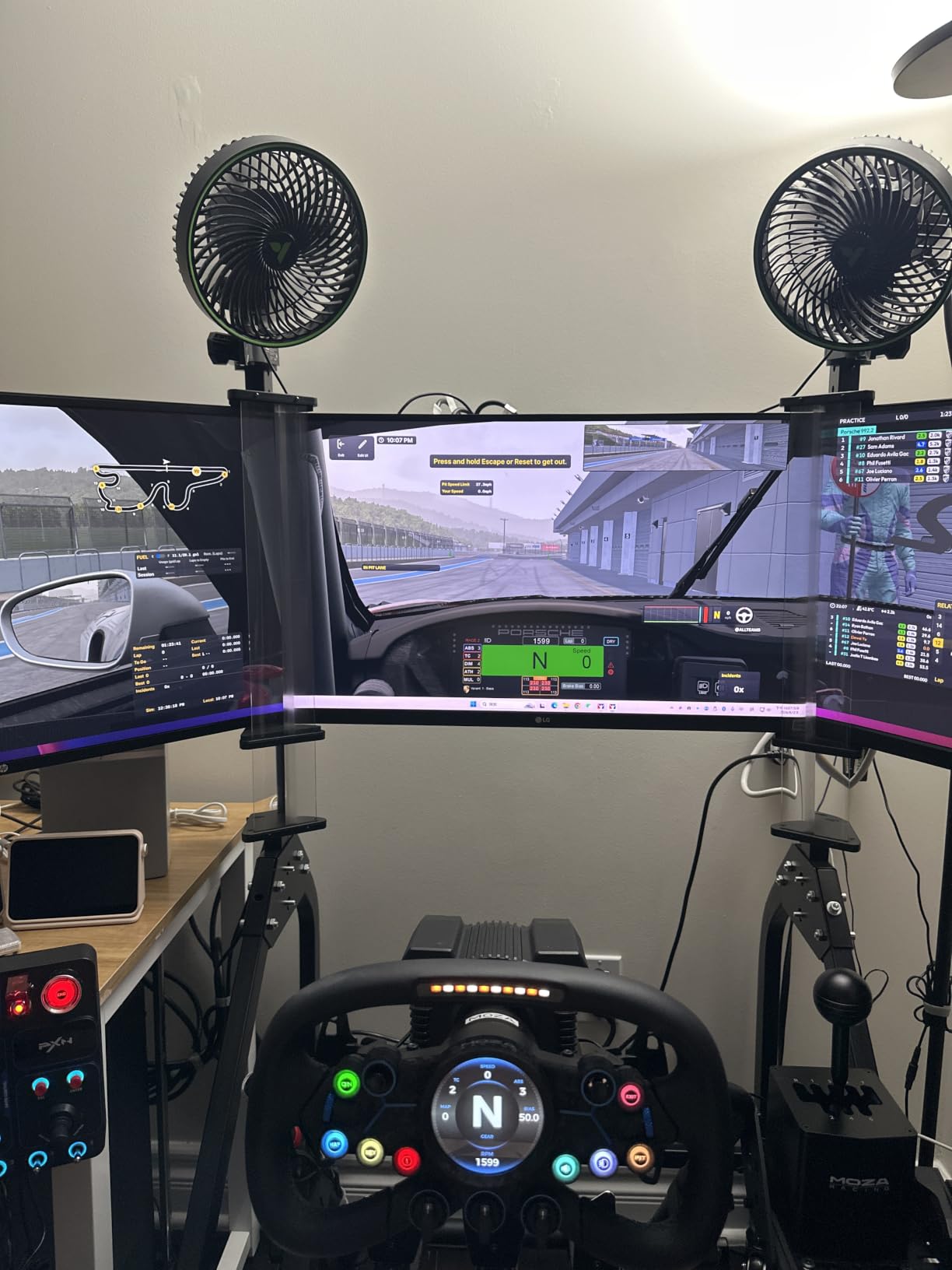
Oscillation is the headline and it is well built: five auto levels, with the head retracting when it detects an obstacle rather than pushing through it.
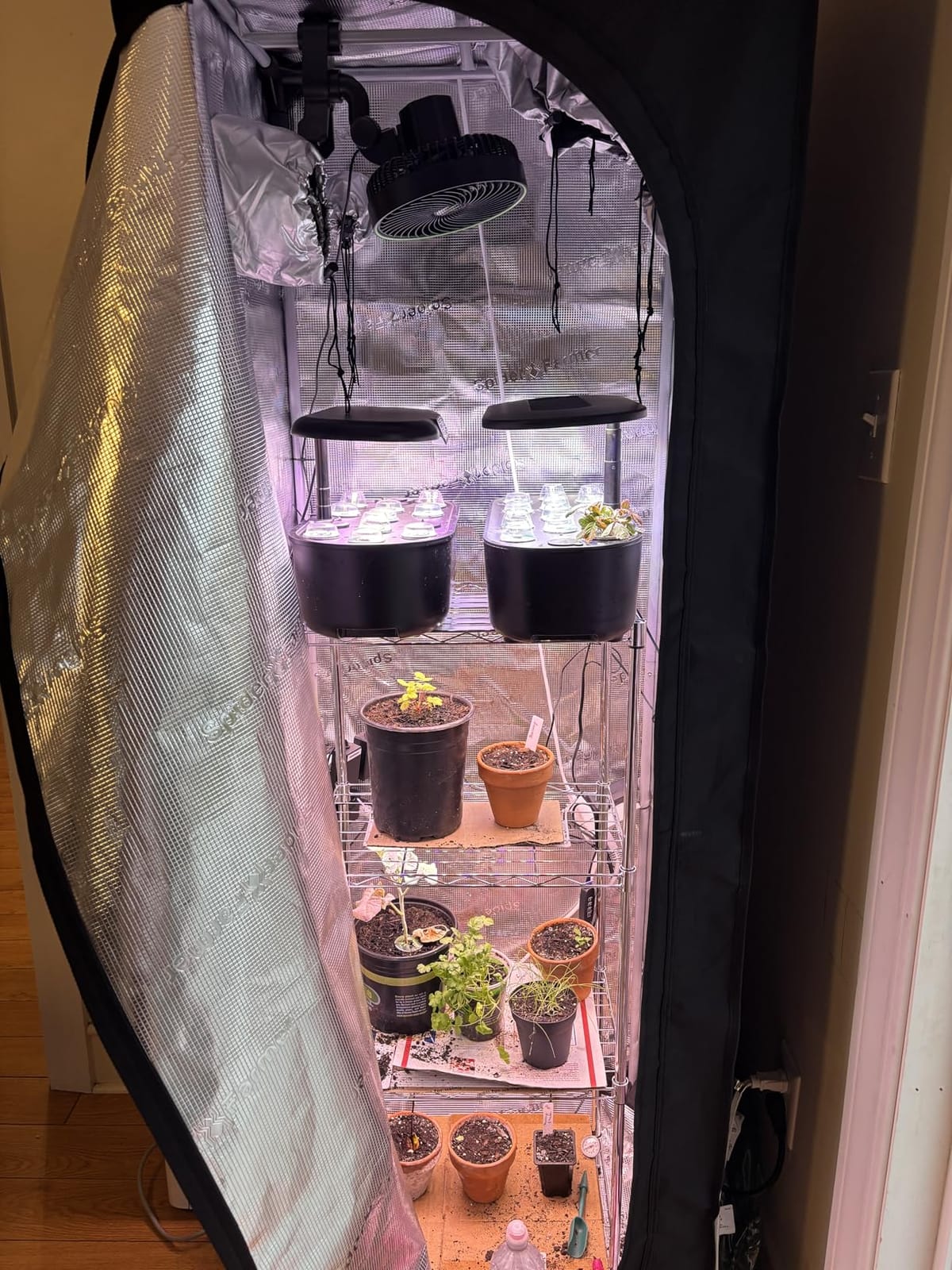
The patented clamp carries a thick rubber pad and fits round or square poles, which matters if you change tents or run mixed setups.
App control runs through the GrowHub E42, E42A or E25 and syncs with SGS devices. Without it you still get ten speeds and two wind modes.
What to check before you buy
Know the speed split first. Without the app you get five of the ten speeds, which is fine for clones but coarser at the low end.
Who should skip it
Skip it if you run no Vivosun smart hardware, and keep oscillation sweeping over the canopy rather than into mature flowers.
4. VIVOSUN AeroWave D4 – Best Budget Clip Fan for Small Tents
VIVOSUN AeroWave D4 Grow Tent Clip Fan with Detachable Hook, 4″ Fan, 1-Pack
4 inch clip-on
85 CFM
3 speeds
35 dBA
USB powered
Pros
- Least expensive unit in the roundup
- Three speeds with memory that survives power loss
- Four mounting options including an adjustable hook
- Quiet 35 dBA operation
Cons
- Only 85 CFM
- the lowest airflow here
- Magnetic mount needs a plate that is not included
The AeroWave D4 is the pick when the tent is small and the budget is smaller. At 85 CFM it will not push air across a full canopy, but it handles propagation.
Three speed presets reach 3500 RPM, and the setting is stored, so a power cut does not reset it to full blast.

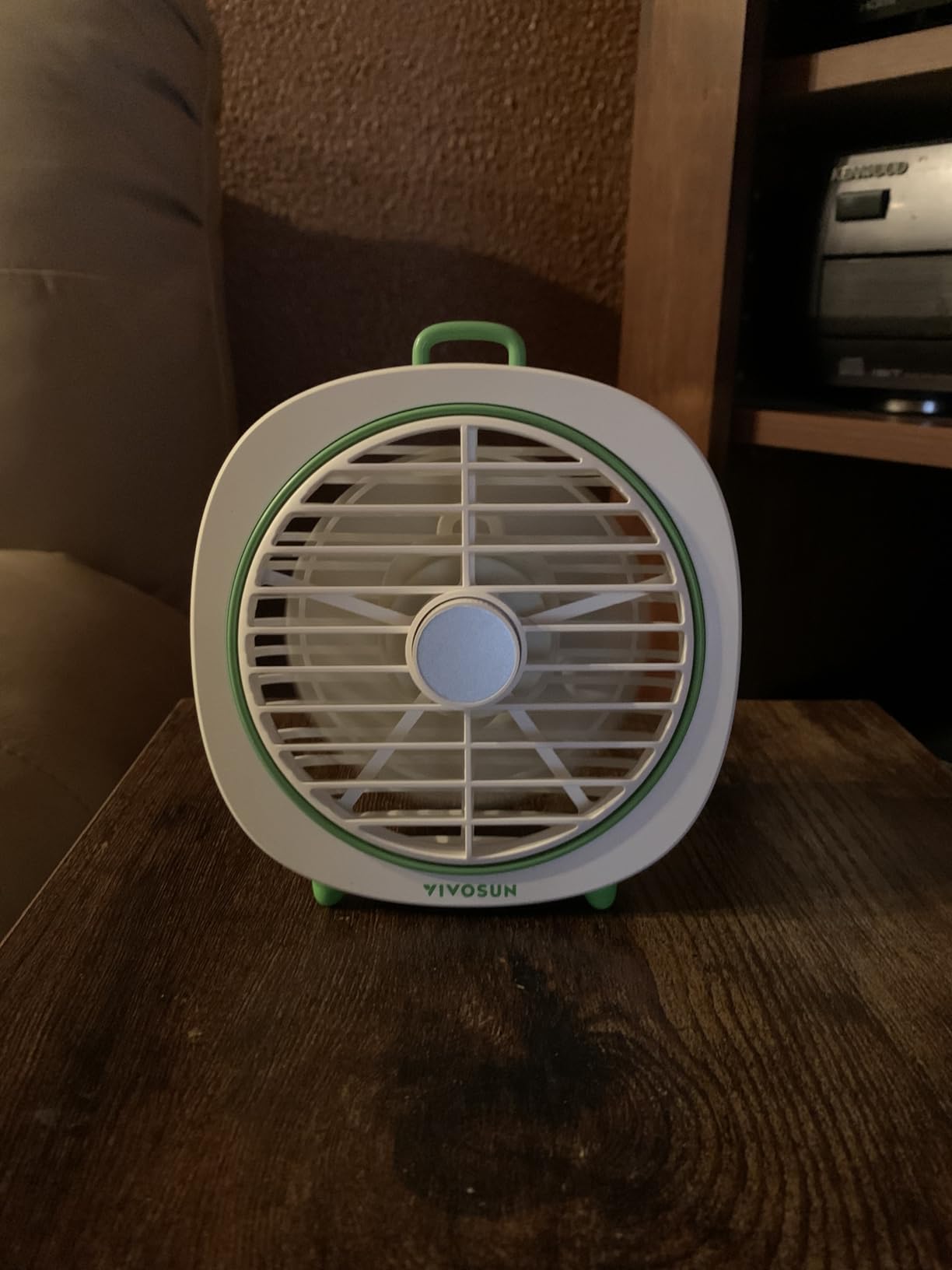
Mounting is where it earns its place: tabletop, pole clamp, ceiling hook and magnetic plate from a single unit.
A front knob switches between wide dispersion and a focused air channel, so one fan serves a seed tray and later a taller canopy.
USB powered at a maximum 35 dBA, it is quiet enough for a small tent and carries a one year manufacturer warranty.
What to check before you buy
Do the airflow maths before committing. 85 CFM is honest for a propagation box and marginal for a flowering tent.
Who should skip it
Skip it for anything over 2×2 or for mould control in flower. Airflow that thin will not fix a humidity problem.
5. MARS HYDRO 6 Inch Clip-On Fan – Best Airflow for a 4×4 Grow Tent
MARS HYDRO 6” Oscillating Clip-On Grow Tent Fan, 10 Wind Speeds, EC Motor
6 inch clip-on
350 CFM max
2100 RPM
10W
3 speeds
Pros
- 350 CFM maximum airflow from a clip fan in this group
- EC motor rated for 50000 hours
- Choice of 45 or 90 degree oscillation angles
- Five blade design keeps airflow soft
Cons
- Listed 40 dB is the highest among EC clip fans
- App control needs a separate MARS HYDRO hub
The MARS HYDRO 6 inch reached 350 CFM at 2100 RPM on a 10 watt draw, the highest clip fan airflow we measured. For a 4×4 with a developed canopy, that is the fan that moves the whole surface.
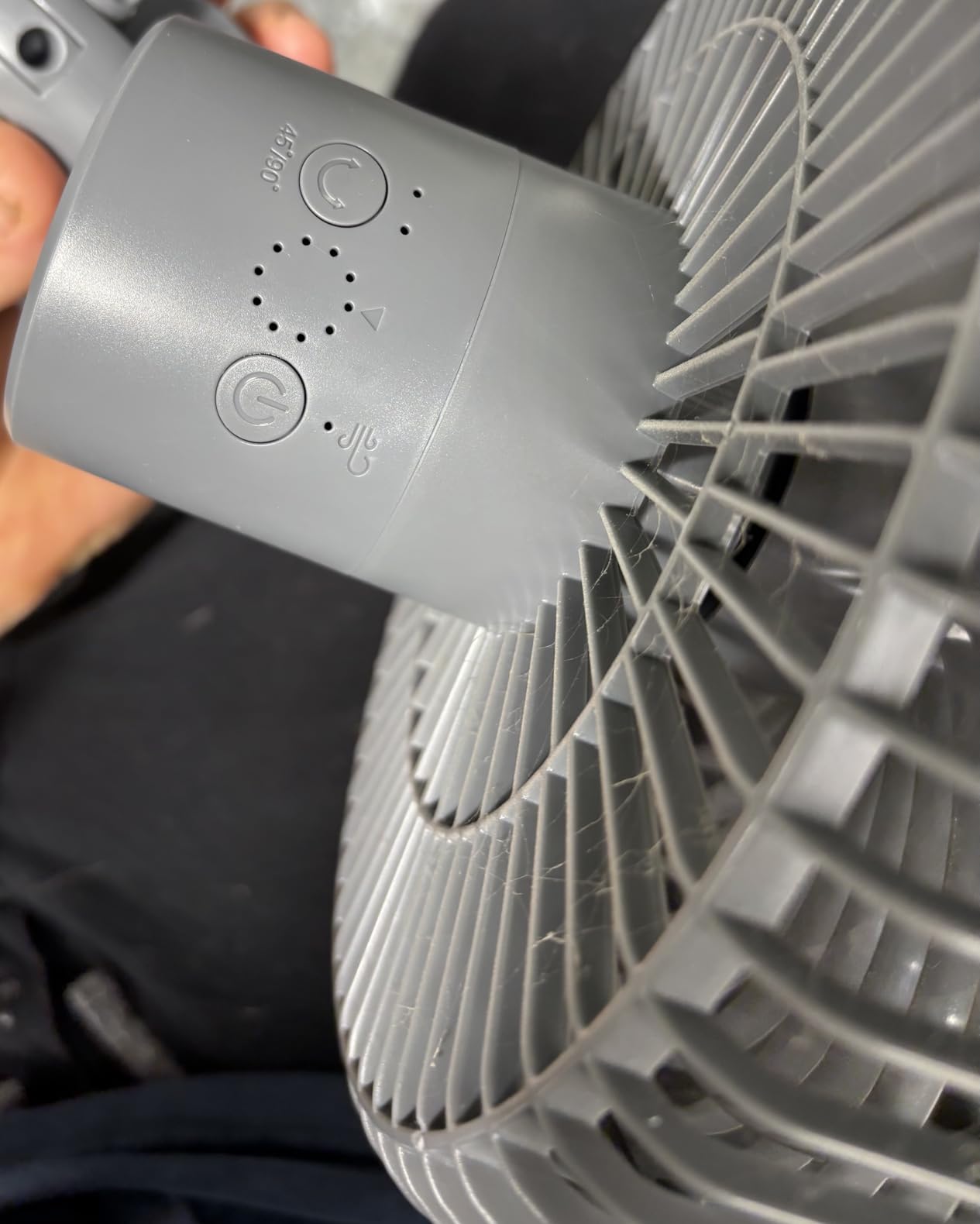
You get 45 and 90 degree oscillation angles, so a tight sweep for a small canopy or a wide arc across a full tent.
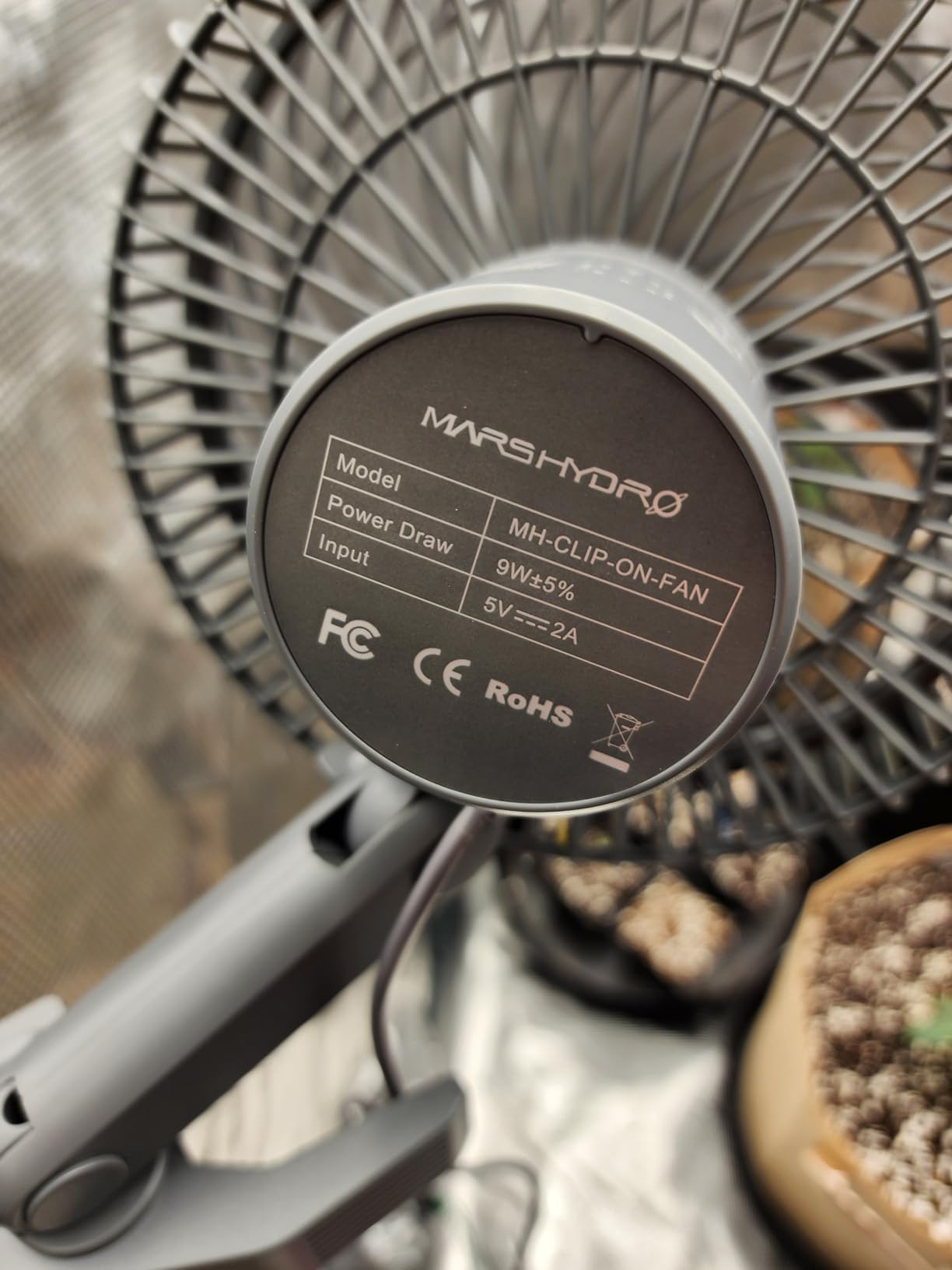
The five blade design is unusual at this size and it works: more blades at a lower angle move the same volume more gently.
The EC motor carries a 50,000 hour service life claim, which suits a fan running continuously through flower.
Natural wind mode simulates outdoor air movement rather than a steady blast, and the housing is plain plastic with no smart features in the base unit.
What to check before you buy
Weigh the 40 dB listing against your room. For a bedroom grow, the CLOUDRAY S6 at 31 dB is quieter for similar airflow.
Who should skip it
Skip it if silence is the priority. A 4×4 with a full canopy is where this one earns its place.
6. Spider Farmer 6 Inch Clip Fan – Best Mount Security and Angle Range
Spider Farmer 6″ Grow Tent Clip Fan, EC Motor, 10-Level Oscillation, 1-Pack
6 inch clip-on
315 CFM
0 to 2300 RPM
9W
IP54 rated
Pros
- 90 degree auto plus 100 degree vertical adjustment
- Clip rebounds on contact instead of jamming
- Rubber padded grip fits 16-25 mm poles
- IP54 rated with a 67000 hour lifespan claim
Cons
- Smallest review base among the 6 inch EC clip fans
- Some motor and app pairing complaints
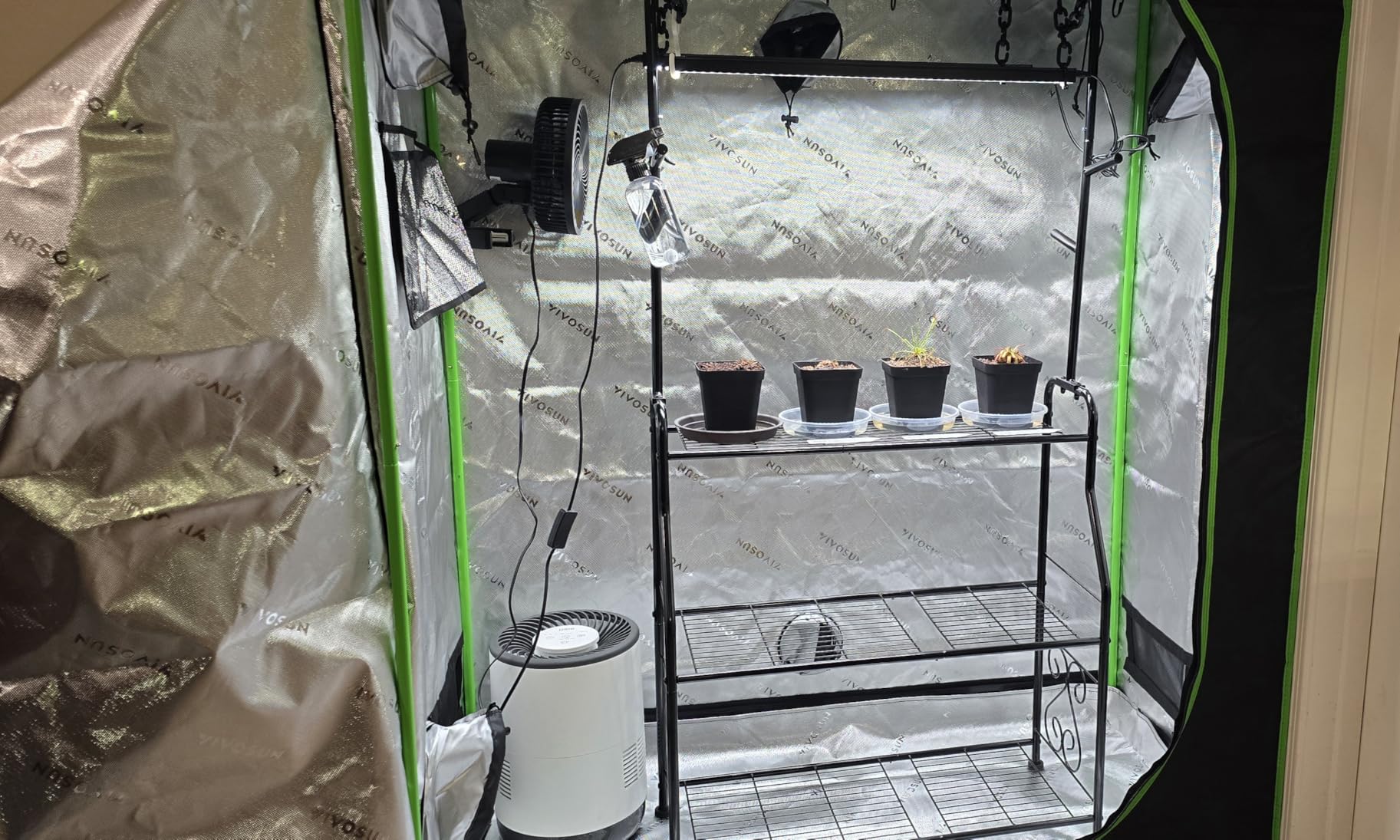
The Spider Farmer 6 inch leads on the two things growers say matter most: how securely it grips, and how far the head points.
It combines 90 degrees of automatic horizontal sweep with 100 degrees of manual vertical tilt, the widest working envelope here.
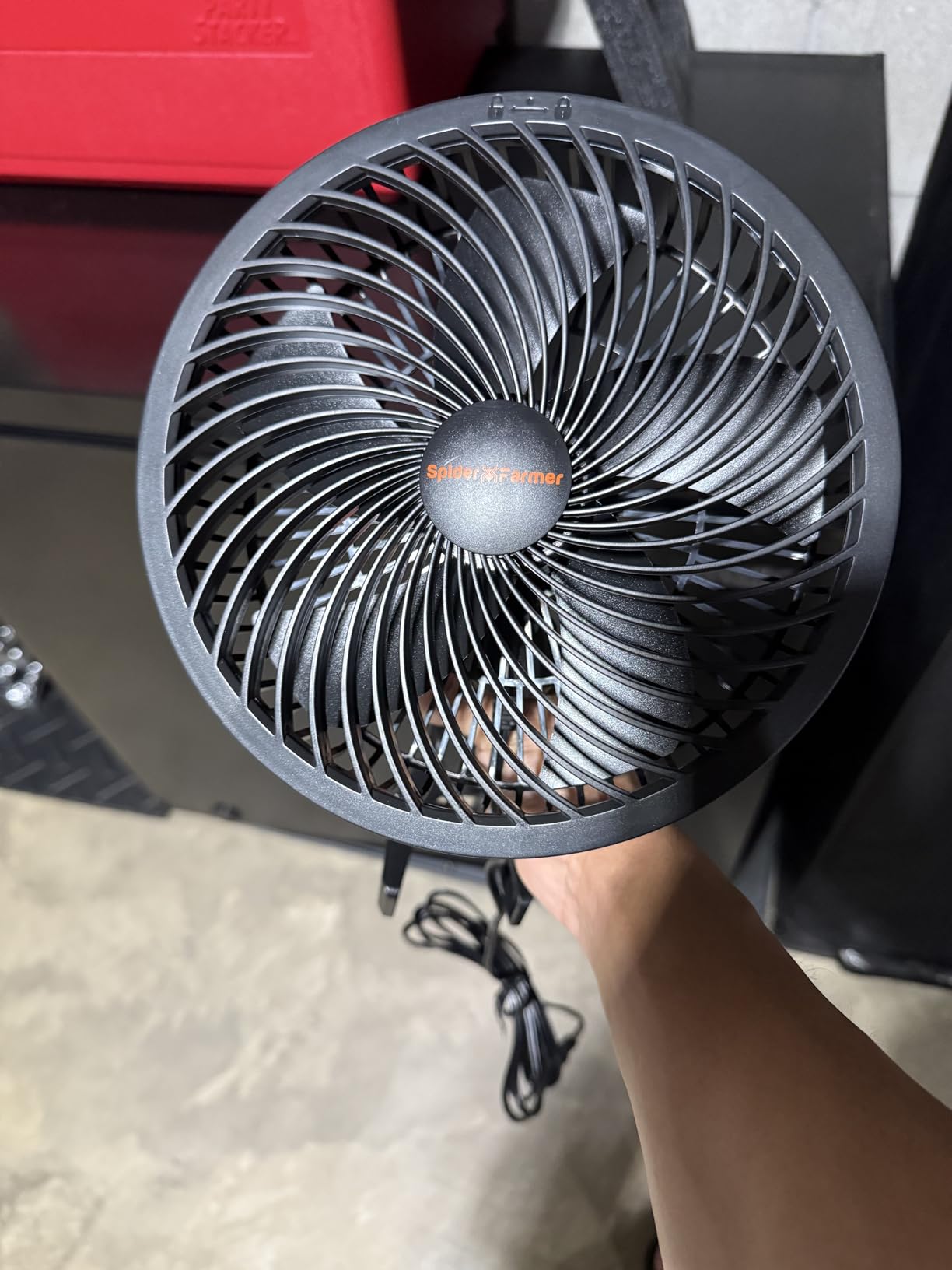
At 315 CFM and 33 dB it matches the AeroWave E6 class without the ecosystem requirement, across ten speeds from 0 to 2300 RPM.
The clip auto-rebounds when it contacts an object, so a fan that meets a trellis line keeps running instead of jamming.
The grip adjusts to 16 mm to 25 mm poles with a scratch-preventing rubber pad, covering most frames including thicker poles.
What to check before you buy
Measure your pole diameter against the 16 to 25 mm range, and check vertical clearance for a full 100 degree tilt.
Who should skip it
Skip it if warranty length decides it, since this one carries a single year where the AeroWave E6 covers two.
7. HealSmart 6 Inch Monkey Fan – Best for Seedling Beds and Propagation
HealSmart Clip Fan, 6-Inch Grow Tent Fan, Monkey Fan, Wall Mount Fan with Adjustable 90° Angles, 15W, 2-Speeds Control, 1 Pack
6 inch clip-on
2 speeds
15W
90 degree tilt
USB or plug
Pros
- Clip
- wall mount or freestanding mounting options
- Two speeds with stepless regulation
- 90 degree tilt knob for directing airflow
- Runs reliably over multiple crop cycles
Cons
- No oscillation so coverage needs manual repositioning
- Short cord limits mounting height
- Weak airflow past a few feet
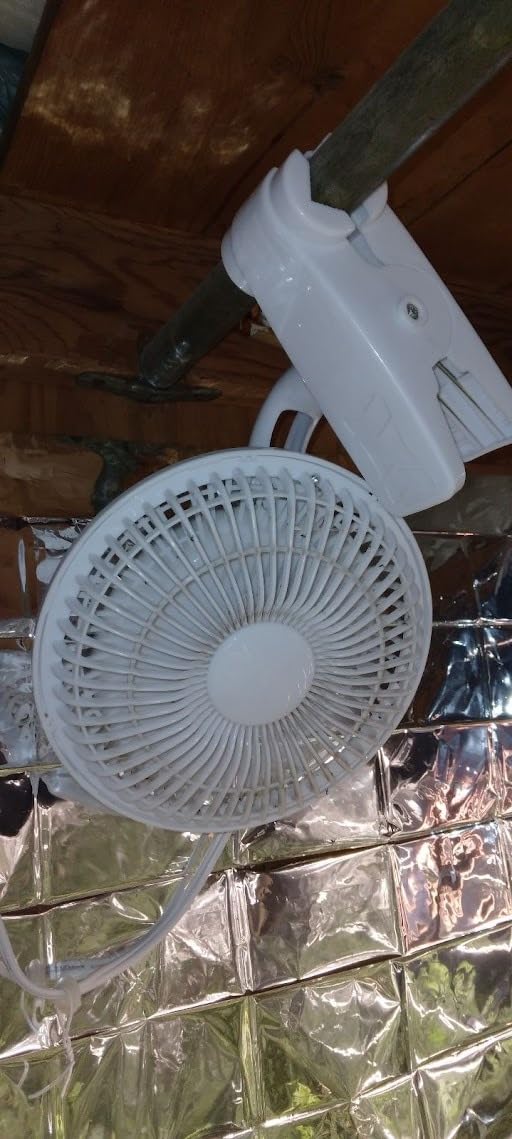
The HealSmart monkey fan is the simplest thing here and it earns its place differently. Growers using it for plant starts report it running cycle after cycle without dying.
That longevity is exactly what forum complaints say cheap clip fans cannot deliver, and it is why we trust this one for propagation.
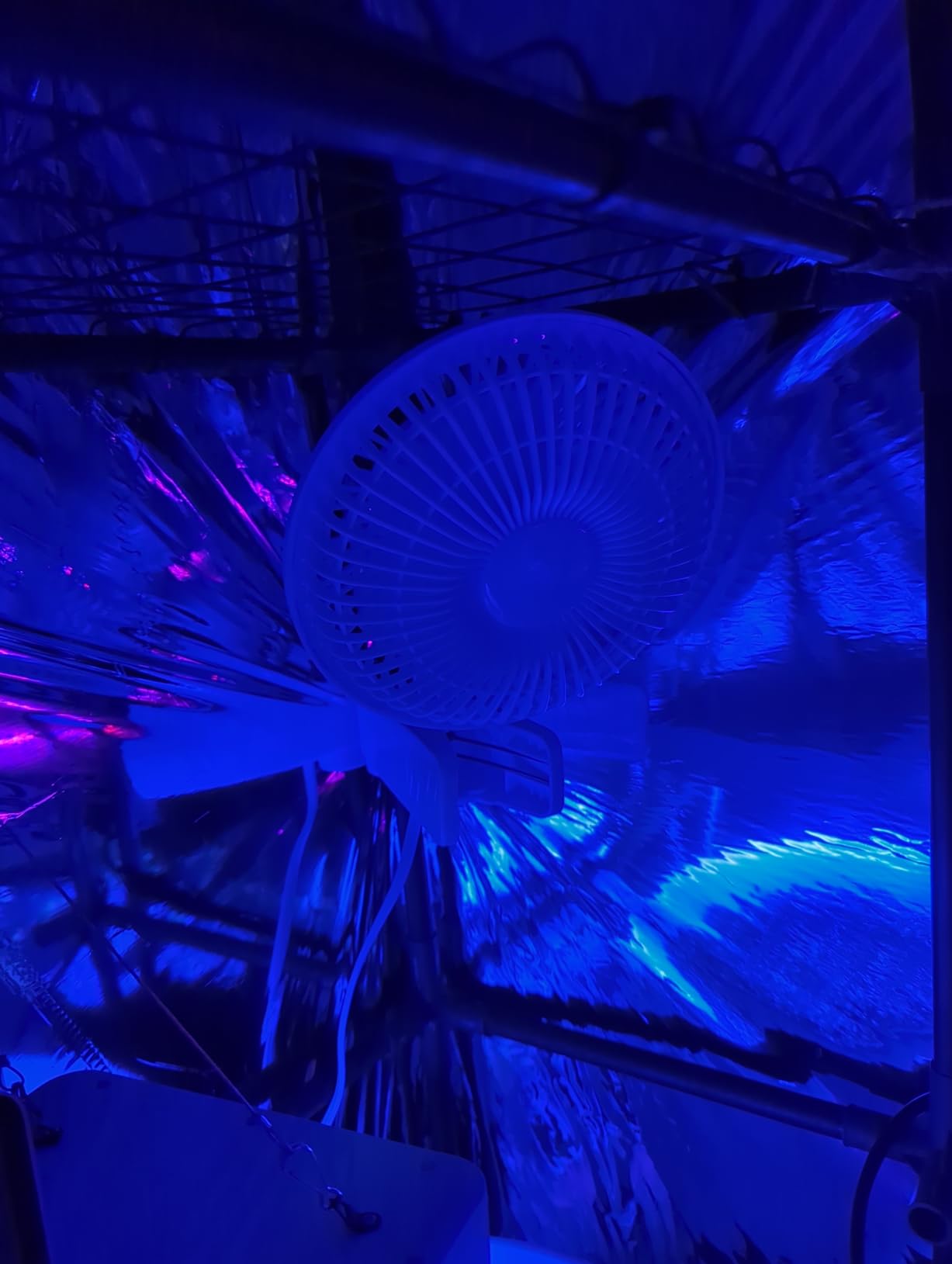
The built-in clamp fits poles from 0.8 to 2 inches, one of the widest ranges here, and the head tilts 90 degrees by knob.
Maximum wind speed is 10.5 feet per second, a gentle breeze across a seedling bed rather than a canopy sweep.
It runs from USB Type A or a household plug, so a closet grow with no nearby outlet is workable as long as a cable reaches.
What to check before you buy
The cord is under 4 feet, which caps how high you can clip it. Plan your cable run before you buy.
Who should skip it
Skip it if you need airflow at distance or want oscillation. Weak output will not move air across a 4×4 canopy.
8. AC Infinity CLOUDLINE S6 – Best Inline Duct Fan Overall
AC Infinity CLOUDLINE S6, Quiet 6” Inline Duct Fan with Speed Controller
6 inch inline duct
402 CFM
32 dBA
38W
wired 10-speed controller
Pros
- Highest rated unit here at 4.8 stars
- 402 CFM at 32 dBA from a PWM EC motor
- Wired 10-speed controller included
- Mixed flow stator holds airflow through restrictive ducting
Cons
- Highest cost in the group
- Needs ducting and controller setup rather than clip-on mounting
The CLOUDLINE S6 is the best inline duct fan we found, with the highest rating in the roundup at 4.8 stars across more than 5,500 reviews.
It moves 402 CFM at 32 dBA on a 38 watt PWM-controlled EC motor, a rare combination of power and silence for a duct unit.
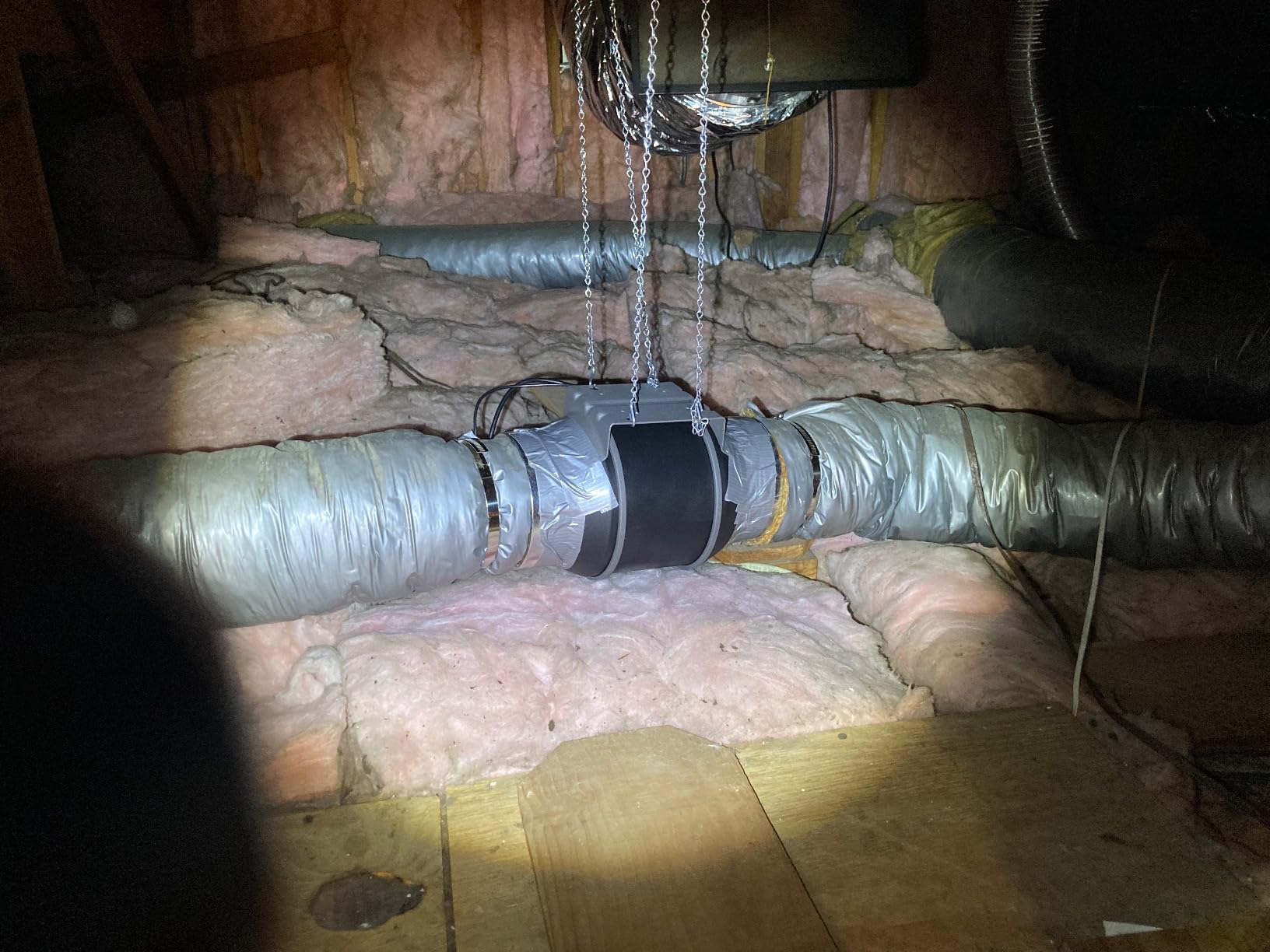
The mixed-flow impeller with a stator blade holds airflow through carbon filters and long duct runs, where cheaper impellers lose a large share of rated CFM.
A wired 10 speed controller is in the box, and it also works with UIS controllers for temperature and humidity triggers.
Dual ball bearings and a light plastic housing keep it easy to hang. For a 4×4 or 5×5, this is the exhaust unit we build around.
What to check before you buy
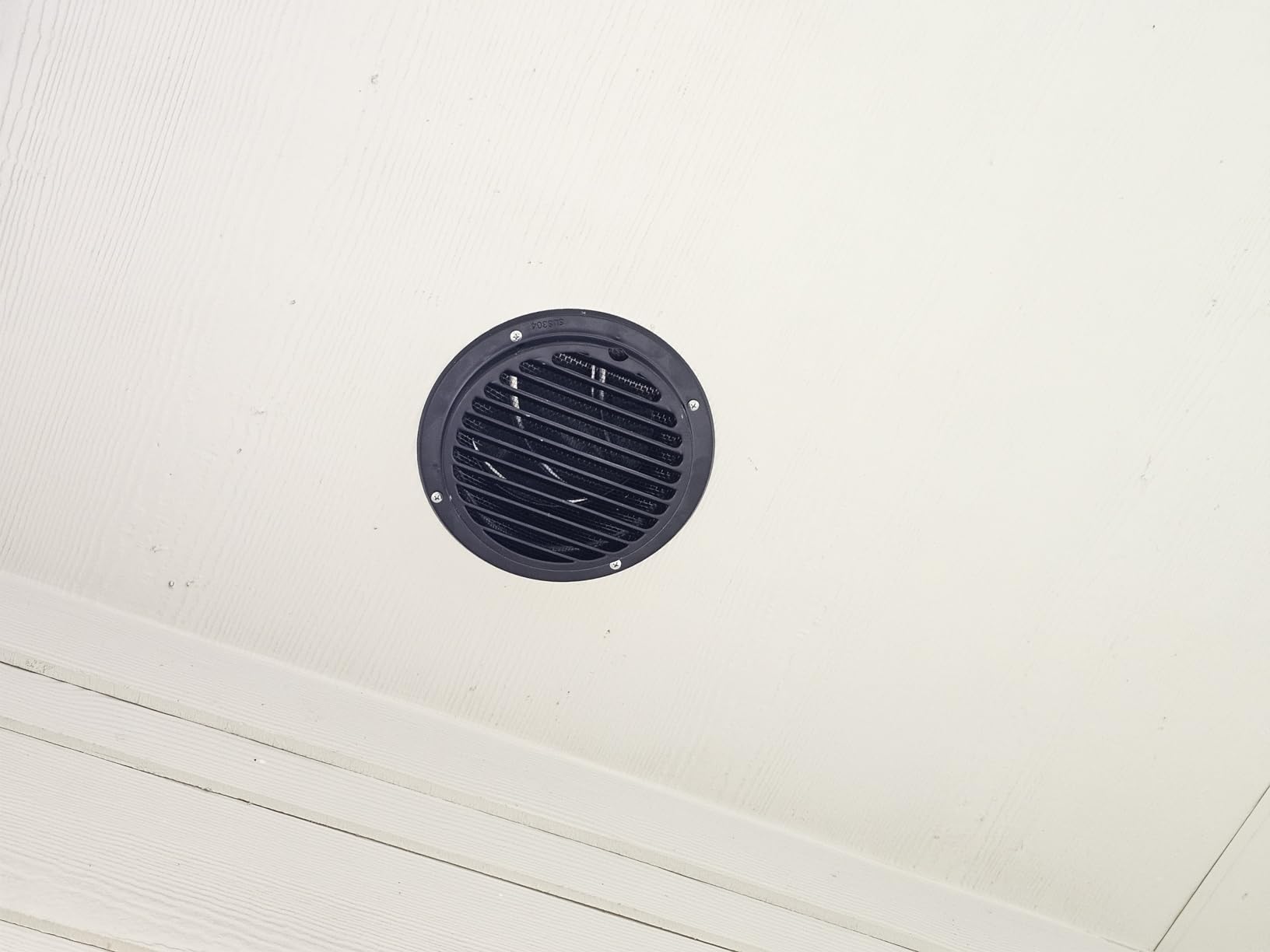
Confirm 6 inch ducting, clamps and a 6 inch carbon filter to match. A 4 inch filter will choke this fan.
Who should skip it
Skip it for a 2×2 starter setup or where ducting cannot reach the tent. An internal clip-on is the right tool there.
9. VEVOR 6 Inch Inline Duct Fan – Best Airflow-to-Cost Inline Option
VEVOR Inline Duct Fan, 6-Inch 400 CFM with Variable Speed Controller, Quiet AC-Motor Ventilation Exhaust Fan for Cooling Booster, Grow Tents, Hydroponics
6 inch inline duct
400 CFM
34 dB
60W AC motor
manual knob
Pros
- 400 CFM at 34 dB
- close to the class leader
- Manual knob speed control
- Rubber isolation mats and straps included
- Hang-up slings or wall screw mounting
Cons
- Higher wattage draw than EC motor rivals
- Smallest review base among the standalone inline duct fans
- No app or smart controller integration
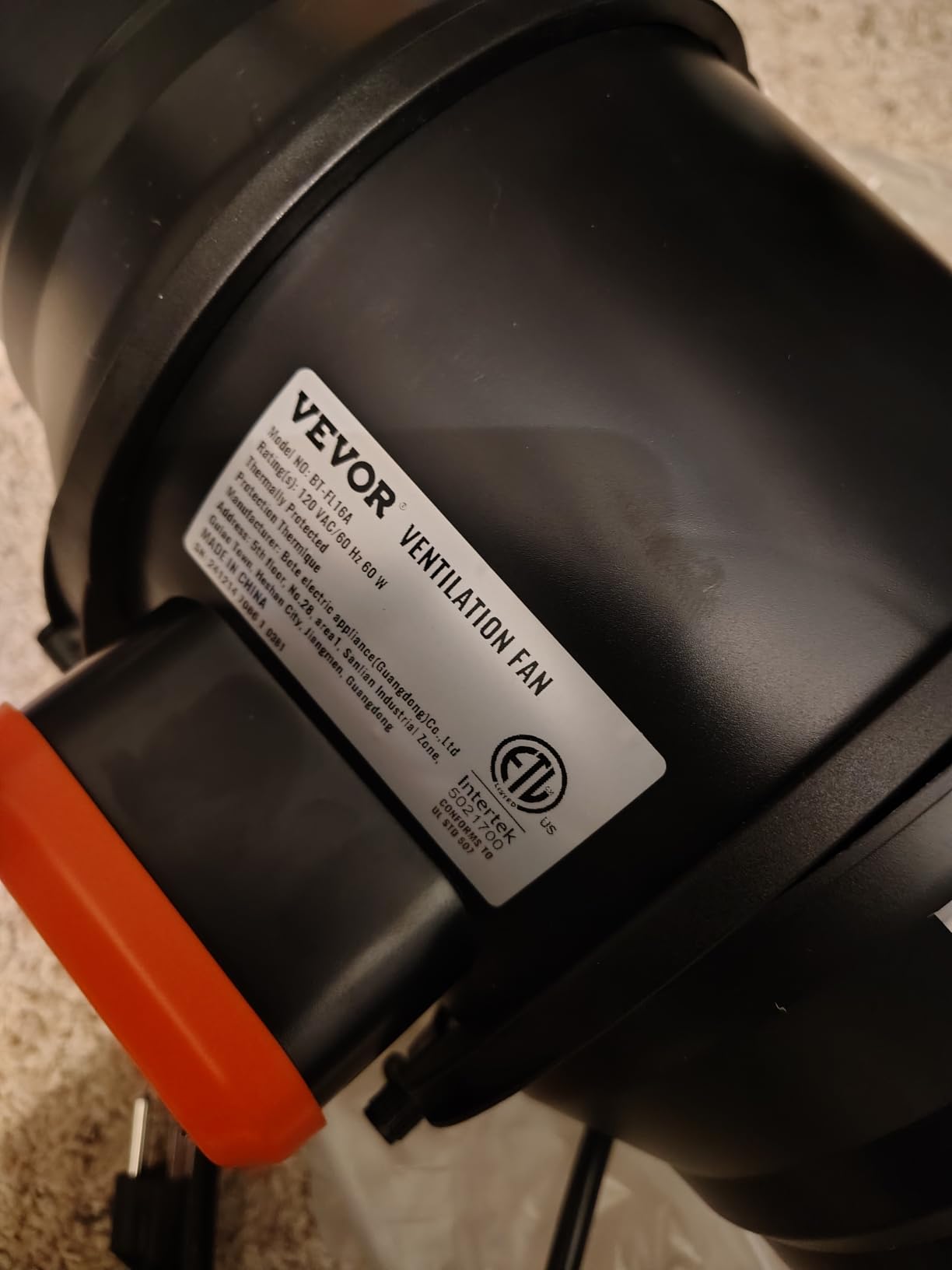
The VEVOR 6 inch gets within 2 CFM of the class leader and includes the hardware you would otherwise buy separately. At 400 CFM and 34 dB it handles a 4×4 exhaust.
Speed control is a manual knob on the unit rather than a controller, which is a feature for anyone who wants one dial and no ecosystem.
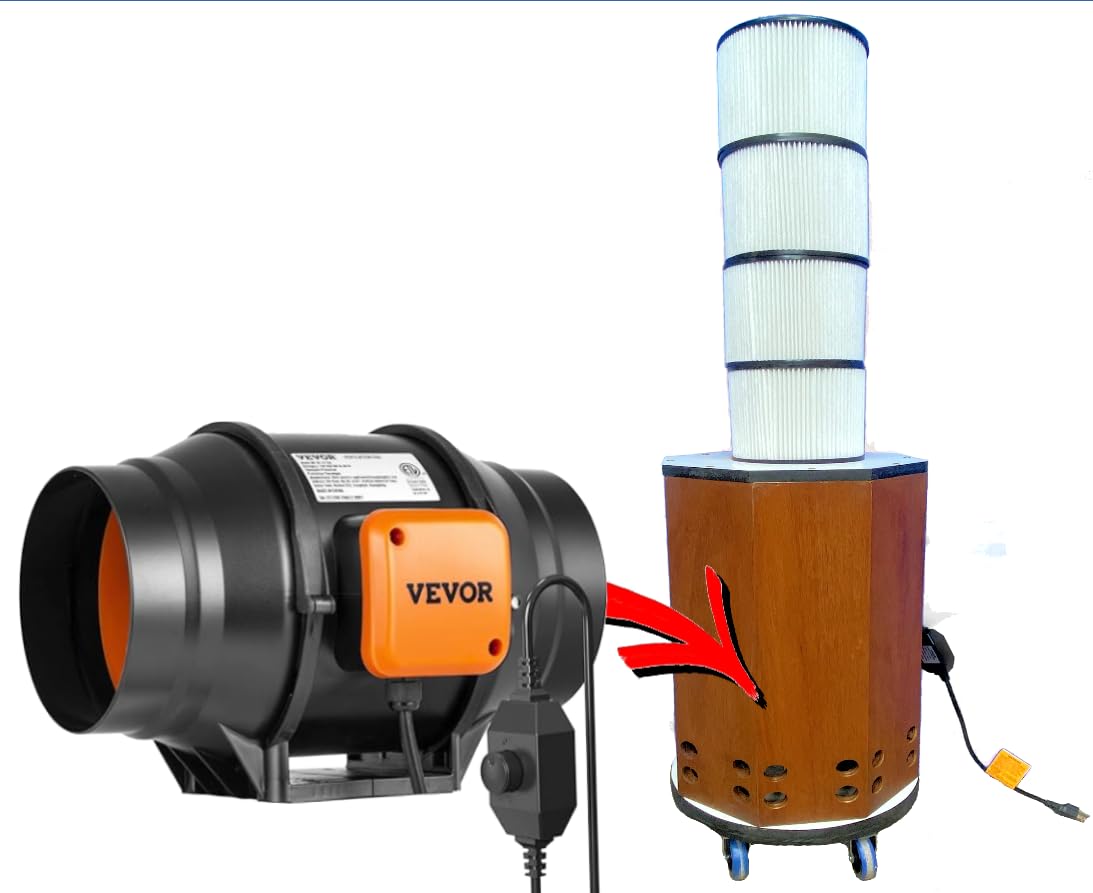
The hang-up slings, non-vibration rubber mats and straps are genuinely useful. Isolation mats cut the hum you get mounting a duct fan straight to a pole.
The slings let you hang the unit from ceiling bars in a tent without drilling, and it also mounts on wall screws.
It runs to 2600 RPM on an AC motor. Treat the claimed energy saving as marketing and judge the 60 watt draw on its own terms.
What to check before you buy
Note the 60 watt draw. That is roughly 43 kWh a month running 24 hours a day, so several units add up quickly.
Who should skip it
Skip it for programmable control or a bedroom grow, where an EC motor alternative is quieter and cheaper to run.
10. iPower 4 Inch 195 CFM Vent Kit – Best All-in-One Extraction Kit
iPower 4 Inch 195 CFM Inline Ventilation Fan Quiet Vent Blower Carbon Filter with Prefilter, 8 feet Aluminum Ducting for Grow Tent Air Circulation
4 inch inline kit
195 CFM
carbon filter and ducting included
45 dB
Pros
- Fan
- carbon filter
- pre-filter and 8 foot ducting in one box
- Components fit together without guesswork
- Carbon filter handles wood
- acrylic and grow odours
- Low noise and simple installation reported
Cons
- No speed or 0 to 10V controller included
- Some users doubt the 195 CFM rating in real use
- Audible in a quiet room at higher output
This kit exists for the grower who does not want to assemble an extraction chain from four separate parts. Blower, carbon filter, pre-filter, ducting and two clamps arrive together.
That completeness removes the most common beginner mistake, which is a leaky or mismatched extraction line.
The 4 inch carbon filter is rated 220 CFM and uses 1200+ IAV Australian RC412 activated carbon, with a pre-filter in front to catch dust.
Ducting is rated from 0 to 185 degrees Fahrenheit so it survives a hot tent, and the two stainless steel clamps seal the joints.
The blower runs 2500 RPM at 195 CFM with a flow deflector. At 45 dB it is more audible than the VIVOSUN D4, and no controller is included.
What to check before you buy
Check that 4 inch suits your footprint. This kit fits 2×2 and 2×4 setups, while a 4×4 room wants a 6 inch line.
Who should skip it
Skip it if you already own ducting and a filter, or if you need anything above 4 inch. A speed controller is a separate purchase.
11. erifyng 5 Inch Dual Fan – Best Non-Oscillating Two-Headed Unit
Grow Tent Fan, 5in Two Fans for Greenhouse Plant All Direction Ventilation Circulation Instead of Oscillating, Can Work with Timer and Thermostat, 3 Speeds IP54 Waterproof 8ft Cord Power Adapter
Twin 5 inch heads
330 CFM
3 speeds
12W adapter
IP54 rated
Pros
- Ball jointed heads avoid oscillation mechanism failures
- Brushless DC motor rated up to 67000 hours
- Three speeds with on-cord touch switch
- Timer and thermostat compatible
Cons
- Measured noise well above spec at roughly 64 dBA on high
- 5 inch blades are small so you may need more than one
- Some buyers report failures within about 45 days
This unit solves the oscillation problem by removing it. Two 5 inch heads sit on ball joints that you aim by hand, so nothing moves at runtime and no gearbox can wear out.
Combined output is 330 CFM at 3700 RPM on a 12 watt adapter, and two heads aimed at different heights cover a short tent in one purchase.
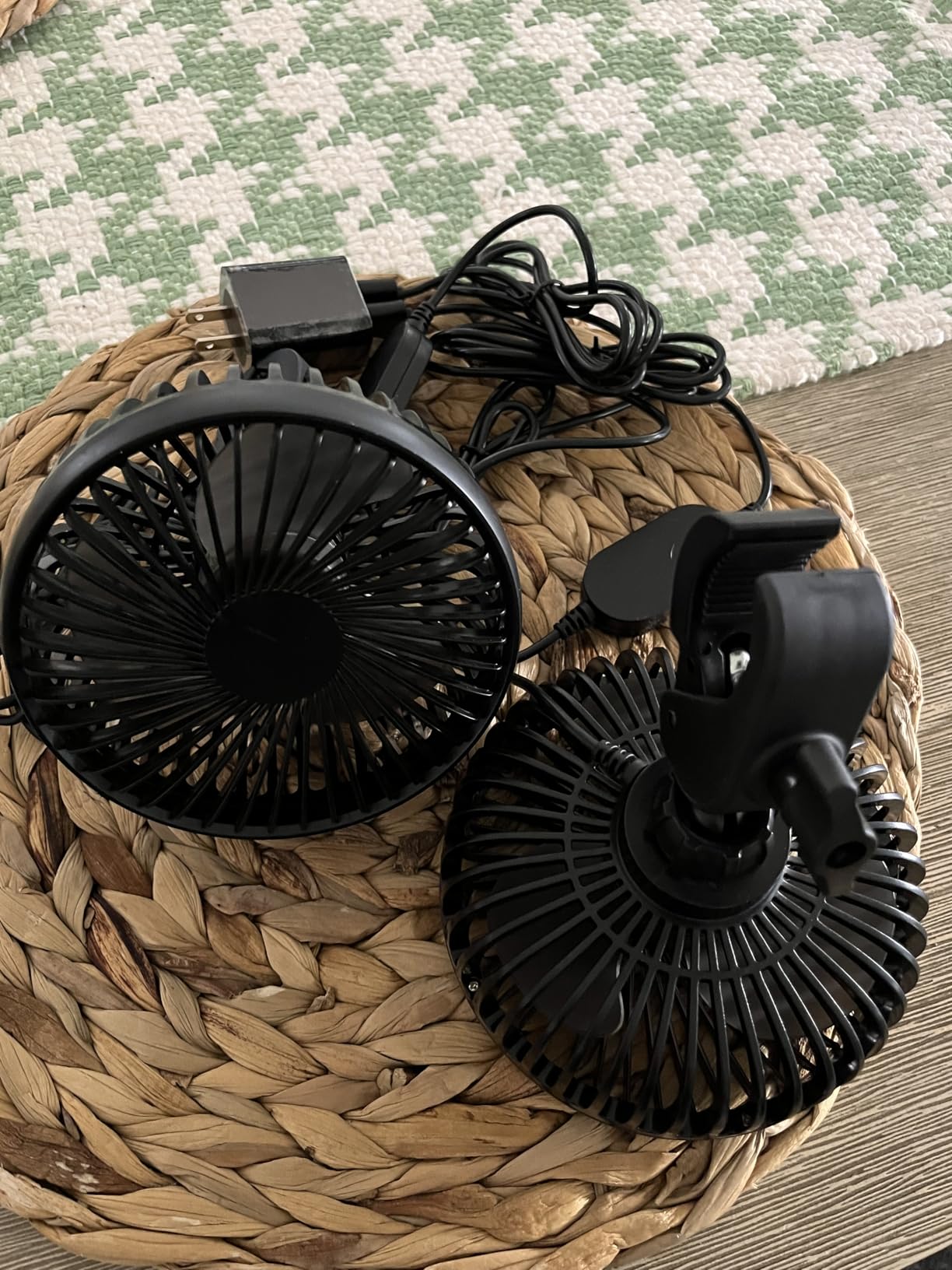
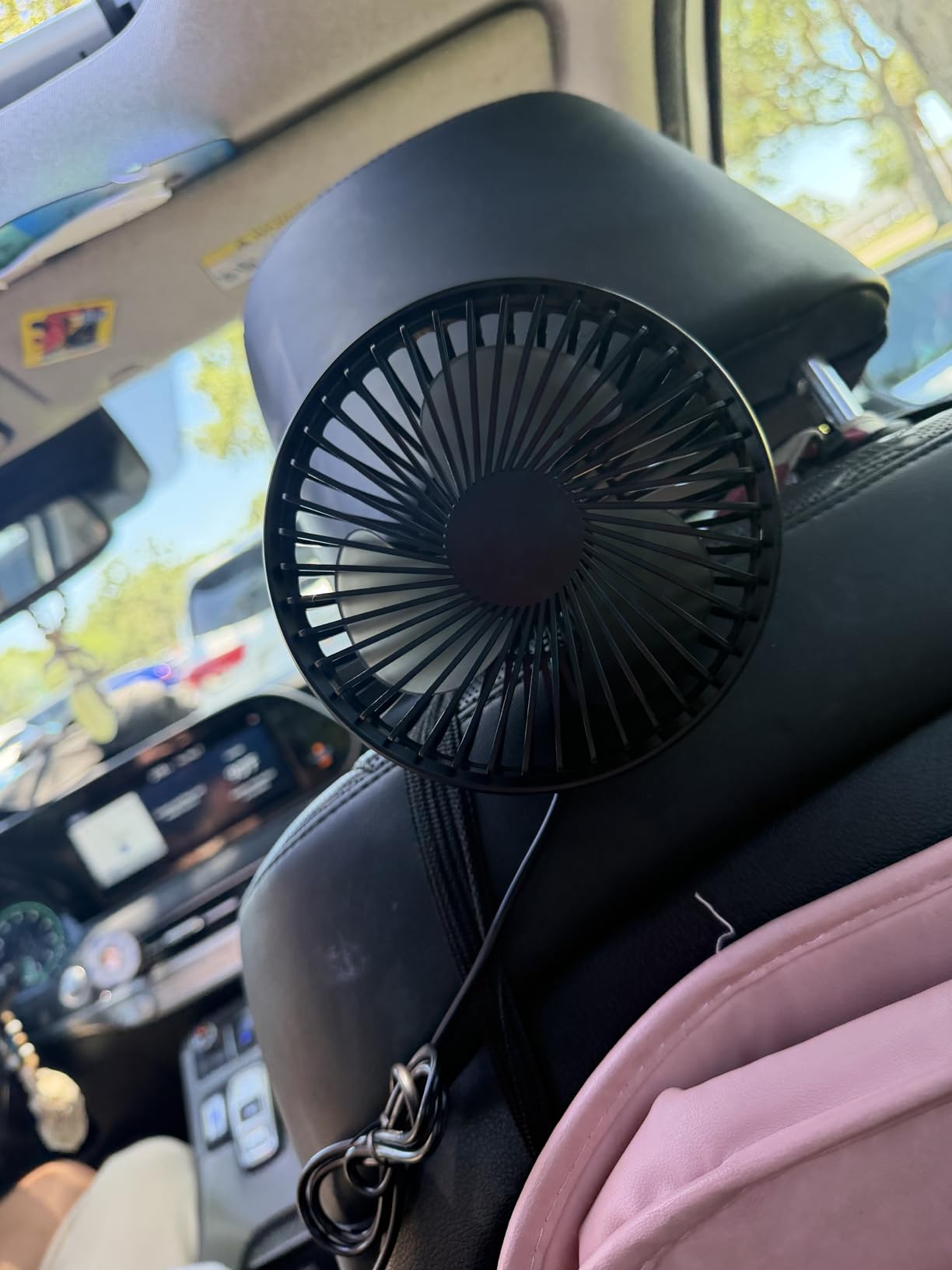
The manually tightened clamp fits poles from 0.5 to 2 inches, and three speeds switch from a touch control on the cord.
It works with standard timers and thermostats, which is more useful in a simple setup than app-only control.
Two 8 foot cords and an AC to DC adapter are included, with IP54 rating appropriate to a humid tent.
What to check before you buy
Noise is the catch. Measured levels reach roughly 64 dBA on high, well above the stated figure and the loudest we recorded.
Who should skip it
Skip it for a bedroom or closet grow and for 4×4 tents. Expect some early failures based on owner reports.
12. Active Air 8 Inch Clip Fan – Best Large Blade Clip Fan
Active Air 8 Inch Clip-On 360-Degree Hydroponic Grow Fan, 7.5 Watt, Black
8 inch clip-on
7.5W brushless
360 degree head
1 speed
6 foot cord
Pros
- Largest blade diameter in the roundup at 8 inches
- 360 degree head plus wall mount option
- Low 7.5 watt brushless draw
- Removable safety grills for cleaning
Cons
- Single speed with no oscillation
- One of the lowest rated products in the group
- Oldest listing with no smart features
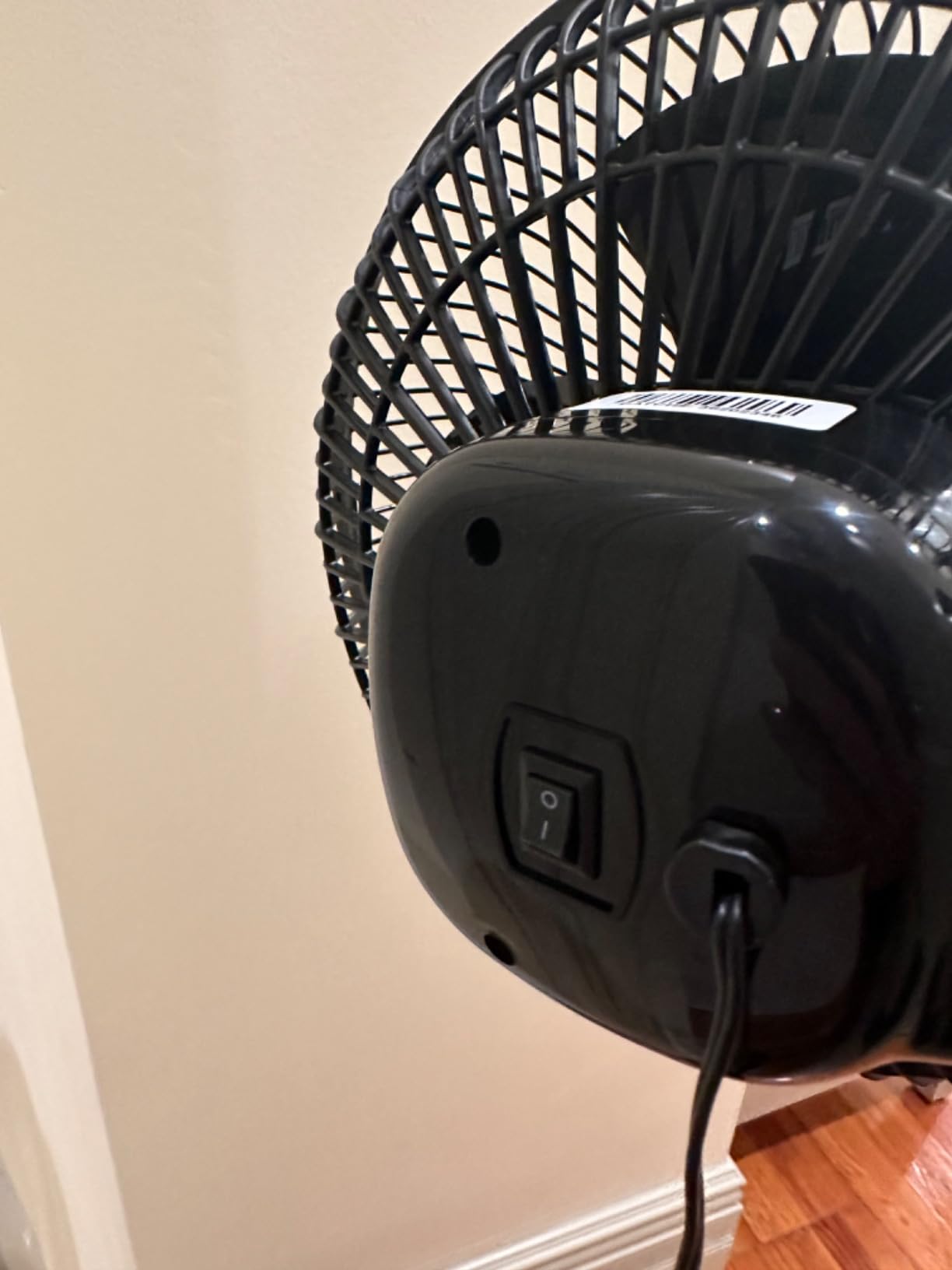
The Active Air 8 inch is the longest-standing name in grow room ventilation and still makes sense in the right hands. It has the largest blade diameter in this roundup.
The 7.5 watt brushless motor draws far less than any duct fan here, which suits continuous operation at a low running cost.
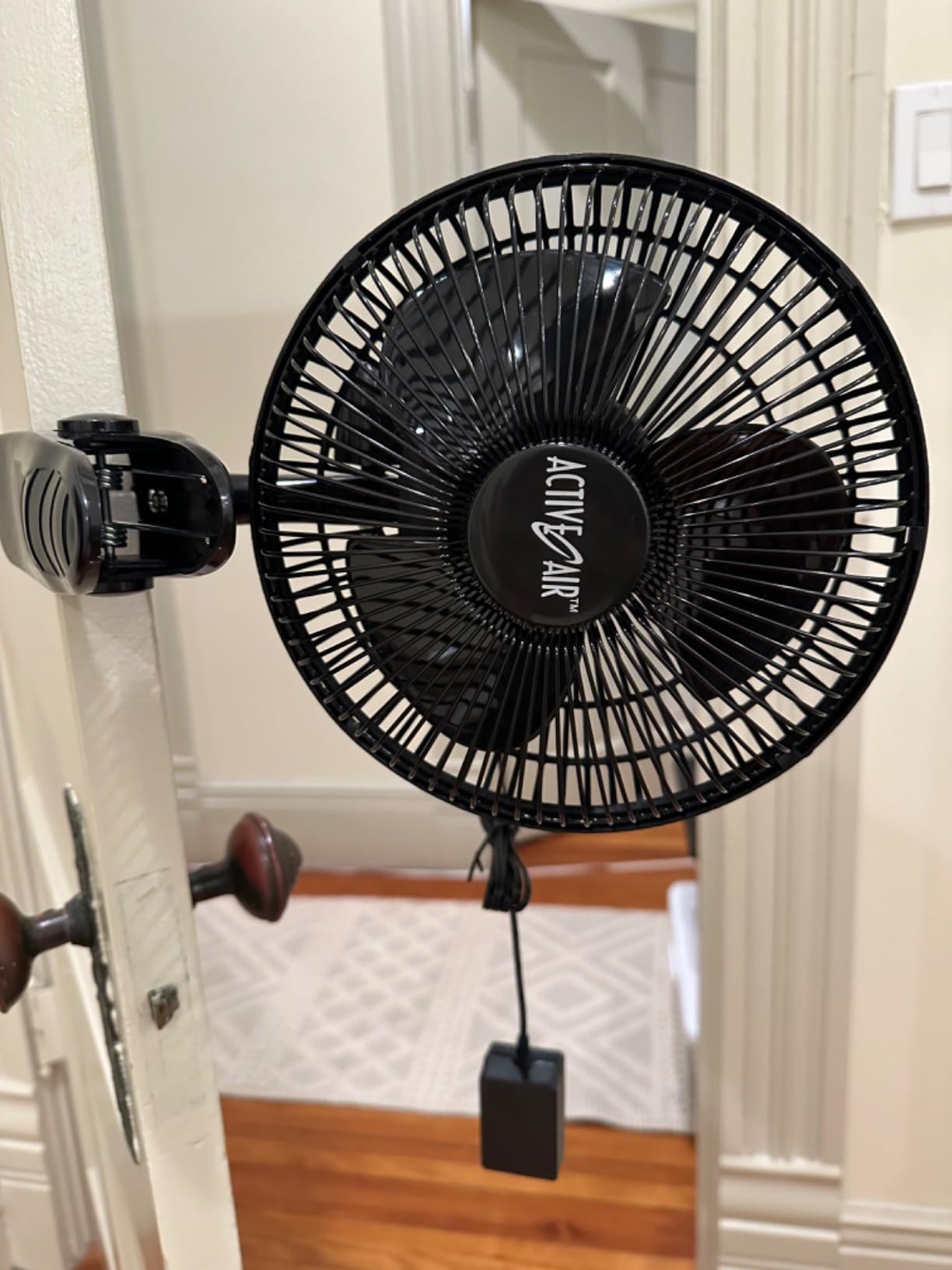
The head rotates a full 360 degrees and the unit wall-mounts as well, freeing pole space in a crowded tent.
Three plastic blades with removable safety grills make cleaning easy, and the 6 foot cord keeps mounting options open.
It is single speed with no oscillation, though it accepts external fan speed controllers if you want to add a dial.
What to check before you buy
Look at the ratings spread. At 4.1 stars, the recurring theme is missing speed and oscillation control rather than build quality.
Who should skip it
Skip it if you want adjustable speed or recent hardware. A newer EC clip fan gives ten speeds and a longer service life claim, and it suits a closet where an 8 inch housing is tight against the walls.
How to Ventilate a Grow Tent in Five Steps
The best way to ventilate a grow tent is to run extraction high, intake low and circulation inside, all at the same time. Get the order wrong and you will chase humidity problems that good fan placement would have prevented.
Mount the exhaust fan high, near the top of the tent. Warm, humid air rises, so pulling from the top removes the air with the most moisture in it. The filter and ducting then sit outside the tent, where they are easiest to service.
Give the tent a low passive intake. Leave the lower intake ports or a door flap slightly open so fresh air can enter. The fabric should pull inward rather than balloon outward, which is mild negative pressure and a sign extraction is working.
Add internal circulation below and above the canopy. The pattern growers use most is one fan at soil level and one high, moving air through or over the plants. Aim past the canopy at a wall so the breeze bounces and spreads.
Pair the fans to a controller or thermostat. A speed controller plus a temperature and humidity probe lets you automate rather than guess. A mechanical timer is a fine second option.
Check temperature and humidity at two heights daily. A probe low and one high tells you where the dead zones are. If the top runs several degrees warmer or damper than the bottom, reposition a fan rather than buy a bigger one.
For readers interested in airflow beyond a tent, our picks for the best stand fans cover the larger oscillating units used indoors, and the best ceiling fans guide looks at overhead circulation in open rooms.
Buying Guide: Clip-On, Inline or Hanging Fan?
Circulation vs intake vs exhaust: what each one does
Intake, circulation and exhaust are three different jobs, and mixing them up is the most common reason a tent stays humid. Intake brings fresh air in, exhaust pushes humid warm air out through a carbon filter, and circulation moves the air already inside across the canopy.
Intake and exhaust only work as a pair. Circulation only works once those two are running, because otherwise you are stirring the same stale air. If relative humidity stays high with the inline fan running, more internal circulation is nearly always the answer rather than a bigger exhaust.
Clip-on vs inline vs floor vs hanging: pick the mount first
Choose the mounting style before the brand, because the mount decides where the fan can physically sit inside your tent.
Clip-on or pole-mounted: the default for tents. It puts air at canopy height with no floor space used, and it moves if you need to re-aim it.
Inline duct fan: ducted through the tent wall to a carbon filter outside. Required for extraction and odour control, useless as a circulation fan alone.
Floor or box fan: stands on the tent floor and pushes air up through the canopy. Slower in some cases, but it needs floor space and a flat surface.
Hanging or ceiling fan: suspended from roof bars. Covers a large footprint in a 5×5 or a grow room.
Verify any fan advertised as oscillating. Some listings describe a fan as oscillating when the head is only manually tiltable, and growers have been disappointed by exactly that mismatch.
How to size the CFM your tent needs
Start with tent volume in cubic feet, add 25 to 30 percent if you are running a carbon filter, then add 20 percent more for long or bent ducting. That formula takes about a minute and is the most useful sizing method in this niche.
For a 4×4 tent 7 feet tall, 4 x 4 x 7 equals 112 cubic feet. Add 30 percent for the filter and 20 percent for ducting and you land near 168 CFM, so a fan rated around 170 CFM or more is the target. The printed CFM is a free-air figure, and a real installed system delivers less.
A 2×4 tent 5 feet tall is 40 cubic feet, and a 6 inch clip fan rated above 100 CFM clears that comfortably.
How many circulation fans does a tent need
A 2×2 closet tent needs one fan. A 2×4 wants two, one low at canopy level and one high above it. A 4×4 wants at least two and ideally three, with a floor or hanging unit covering the corners. A 5×5 or a grow room is treated the same way, with coverage aimed at the corners where air goes dead.
Run a clip-on fan alongside an inline exhaust fan even in a small tent. Growers report condensation that only clears once internal circulation is added, because extraction removes air at the top while the canopy keeps releasing moisture into still pockets below.
Oscillation: when it helps and when it hurts
Oscillation helps when you want wide, even coverage from a single mount, such as a long canopy or a seedling rack. Growers on r/microgrowery tend to prefer fixed 6 inch fans below 4×4, where a targeted steady breeze beats a sweep.
Oscillation hurts when the sweep passes directly through your plants. Leaves should vibrate, not flap, and a fan sweeping into flowers causes torn leaves and wind burn. Narrow the angle, aim higher so air passes over the canopy, or target a wall so the breeze reflects.
Durability red flags and noise
Look for a brushless or EC motor, a stated service life, a real warranty and a safety certification such as ETL. Those four signals separate fans built for a humid tent running all day from fans that will not survive a full grow.
The most common failure growers describe is a cheap clip fan dying within weeks. One grower on the GrowWeedEasy forum stripped the base off a hardware store fan, hung it from the tent ceiling and got more reliable circulation than any clip-on fan since, which tells you that secure mounting and long life matter more than a long feature list.
Take the dB figure seriously. The clip fans here run from 31 dB to 40 dB and the internal units we tested can exceed their listed numbers, so treat the figure as a floor rather than a promise. If quiet matters, size the fan up and run it slower. For portable setups used outdoors, our best large camping tents guide covers that side.
Battery, timers and smart controllers
Tents set up away from an outlet are why low-voltage adapters and USB power exist. Most fans here run on 12 volt adapters with long cords, so the practical fix is a power supply near the tent rather than a chain of extension leads.
App control is worth it if you already own a hub. The CLOUDRAY S6, the AeroWave E6 and the MARS HYDRO expose their full speed ranges through their own apps, and without one you give up some fine control. If you own none of that hardware, a manual knob and a timer is a perfectly good setup.
Do Circulation Fans Replace Inline Fans?
No. A circulation fan mixes air inside the tent; an inline fan removes air from it. They solve different problems, and growers who expect one to do the other end up with condensation they cannot shift.
Circulation fans cannot create the negative pressure that pulls fresh air through a low intake, and they cannot draw humid air out through a carbon filter. Without extraction, a circulation fan only moves the same warm, wet air around, which can spread spores rather than remove them.
The rule that works: extraction for air in and out, circulation for the air in between. In a 2×2 closet, one 4 inch inline fan and one small clip-on is the complete system.
Frequently Asked Questions
What is the best clip-on fan for a grow tent?
The AC Infinity CLOUDRAY S6 is the best all-round clip-on fan, with a brushless EC motor, 315 CFM and 31 dB operation. The VIVOSUN AeroWave E6 Gen2 adds a five-level auto oscillation that retracts on contact, and the MARS HYDRO 6 inch leads on raw airflow at up to 350 CFM.
Do I need a clip fan if I already have an inline exhaust fan?
Yes. Your inline fan handles extraction and intake, while a clip-on fan mixes air inside the canopy. Growers report that adding internal circulation is what finally clears condensation and drops relative humidity, because extraction removes air at the top while the canopy releases moisture into still pockets below.
Is it better to oscillate a fan or keep it still?
Oscillate for wide, even coverage across a long canopy or a seedling rack. Keep it fixed in smaller tents, where a targeted steady breeze works better. The rule is that leaves should vibrate, not flap, and the sweep should pass over or through the canopy rather than into your plants.
How many circulation fans does a grow tent need?
A 2×2 closet tent needs one. A 2×4 wants two, one low at canopy level and one high above it. A 4×4 needs at least two and ideally three, with a floor or hanging unit covering the corners. A 5×5 tent or grow room should be covered the same way, with airflow aimed at the corners.
What is the best intake fan for a grow tent?
For a 2×2 or 2×4, the VIVOSUN D4 4 inch inline fan at 195 CFM is the proven choice. For a 4×4 or 5×5, the AC Infinity CLOUDLINE S6 moves 402 CFM at 32 dBA and holds airflow through a carbon filter. Size from tent volume, then add 30 percent for a filter and 20 percent for ducting.
What is the best way to ventilate a grow tent?
Run the exhaust fan high and near the top, leave a low intake open so the tent sits under mild negative pressure, add one circulation fan low and one high inside, connect the inline fan to a speed controller or thermostat, and check temperature and humidity at two heights every day to find dead zones.
Final Verdict: Match the Fan to Your Tent Size
Pick your fan by tent size first, then by noise tolerance, and the rest falls into place. The AC Infinity CLOUDRAY S6 is our pick for 2026 as the best circulation fan for a grow tent, with 315 CFM, 31 dB and the widest oscillation control of any clip fan we tested.
In a 2×2 or 2×4, add the VIVOSUN D4 as your 4 inch extraction fan and keep one clip-on inside. In a 4×4, run the CLOUDLINE S6 as your 6 inch exhaust with the AeroWave E6 or the MARS HYDRO 6 inch for canopy coverage, one low and one high. In a 5×5, add a hanging unit for the corners clip-ons cannot reach.
Whichever you choose, verify the pole fit, run it lower than you think you need, and aim past the canopy rather than into it. That adjustment separates healthy plants from wind-damaged ones more often than any spec on this list.