
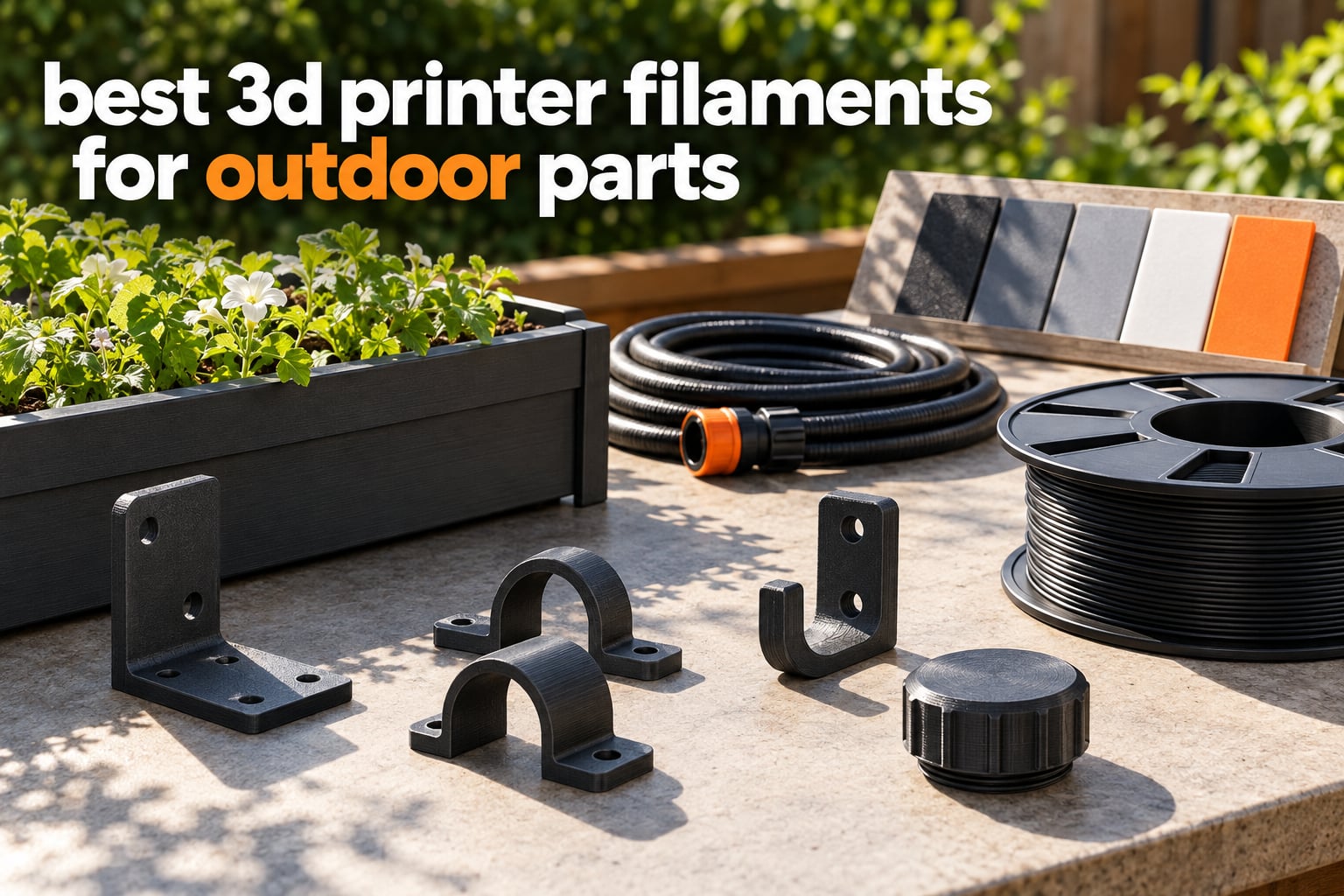
If you want one short answer: ASA is the best 3D printer filament for outdoor parts. It takes UV exposure, rain, and heat without turning brittle or fading the way PLA does, and it prints far more easily than ABS. Carbon fiber PETG is the sensible second choice when you want an easy print and the part sits in shade or a mild climate. Everything below is ranked on how each spool actually holds up outdoors, not on brand reputation.
We’ve worked through the specs, the printer requirements, and the recurring complaints in the maker communities for all ten filaments in this roundup, so you can match a spool to the job before you commit a weekend to a failed print. The short version of the material science: outdoor filaments survive because ASA and polycarbonate use UV stabilizers and an aromatic polymer backbone that absorbs sunlight without chain scission, while moisture-tolerant grades limit water uptake so the part keeps its strength across rain, humidity, and freeze-thaw cycles.
One honest warning before the picks. Nine of the ten filaments here need a heated bed, and most want an enclosure. If you do not have one yet, our guide to the best enclosed 3D printers is worth a look before you buy filament. If you are just getting started and your machine is a basic open bed, jump to the printing sections near the end, because ASA warping is the number one reason outdoor prints disappoint people.
Table of Contents
Top 3 Best 3D Printer Filaments for Outdoor Parts in October

All 10 Best 3D Printer Filaments for Outdoor Parts in 2026
| Product | Specifications | Action |
|---|---|---|
| Polymaker ASA Filament |
|
Check Latest Price |
 ELEGOO PC Filament ELEGOO PC Filament |
|
Check Latest Price |
| iSANMATE ASA Filament |
|
Check Latest Price |
 OVERTURE ASA Filament OVERTURE ASA Filament |
|
Check Latest Price |
 SUNLU ASA Filament SUNLU ASA Filament |
|
Check Latest Price |
 ANYCUBIC ASA Filament ANYCUBIC ASA Filament |
|
Check Latest Price |
 ERYONE ASA Carbon Fiber ERYONE ASA Carbon Fiber |
|
Check Latest Price |
 Creality ASA Filament Creality ASA Filament |
|
Check Latest Price |
 FLASHFORGE Carbon Fiber PETG FLASHFORGE Carbon Fiber PETG |
|
Check Latest Price |
 OVERTURE TPU 95A Filament OVERTURE TPU 95A Filament |
|
Check Latest Price |
Why PLA Fails Outdoors
PLA is the wrong material for anything that sees sun, and the failure mode is worse than most people expect. Standard PLA has a heat deflection temperature around 50 to 55 degrees Celsius, so a dark part sitting in summer sun on a south-facing wall can start to sag before the season is out.
The bigger problem is UV embrittlement. Sunlight breaks the polymer chains in PLA, the surface goes chalky and pale, and the part turns into something that snaps at the layer line. On r/prusa3d the consensus is blunt: PLA is a poor outdoor choice because of low UV resistance and embrittlement. People regularly report prints ruined after a single season of sun exposure.
PLA Plus is a marginal improvement, not a fix. Toughened PLA raises impact strength, but it does not add the UV stabilizers that ASA carries, so the sun still wins eventually. If you are set on PLA for a cheap outdoor prop, seal it first and treat it as a disposable part rather than hardware.
1. Polymaker ASA Filament – Best Overall Outdoor Filament
Polymaker ASA Filament 1.75mm Black 1KG, UV & Weather Resistant
ASA blend
Heat resistant to 100C
250C nozzle, 90C bed, 50mm per second
Enclosed printer advised
Pros
- Excellent UV and weather resistance for outdoor functional parts
- Withstands temperatures up to 100C with high impact resistance
- Reliable layer adhesion on strong prints
- Vacuum sealed with desiccant
- No tangles or nozzle clogging reported
Cons
- Wants an enclosed printer with a heated chamber
- Cardboard spool may not fit an AMS system
- Narrower color range than some rivals
ASA is the answer to the search for the best 3D printer filaments for outdoor parts, and the Polymaker spool is the version we keep coming back to. It prints at 250C with a 90C bed at 50mm per second, and it is rated heat resistant up to 100C. That headroom matters more than most people expect, because a dark part in direct sun can exceed the heat deflection point of cheaper materials.
The reviews describe exactly the behaviour we want from an outdoor filament. Owners report strong layer adhesion, and they use this spool for car accessories, brackets, and housings rather than decorative models. It is also commonly described as easier to handle than ABS, with lower odor, which matters when you are printing a large part on a weekend.
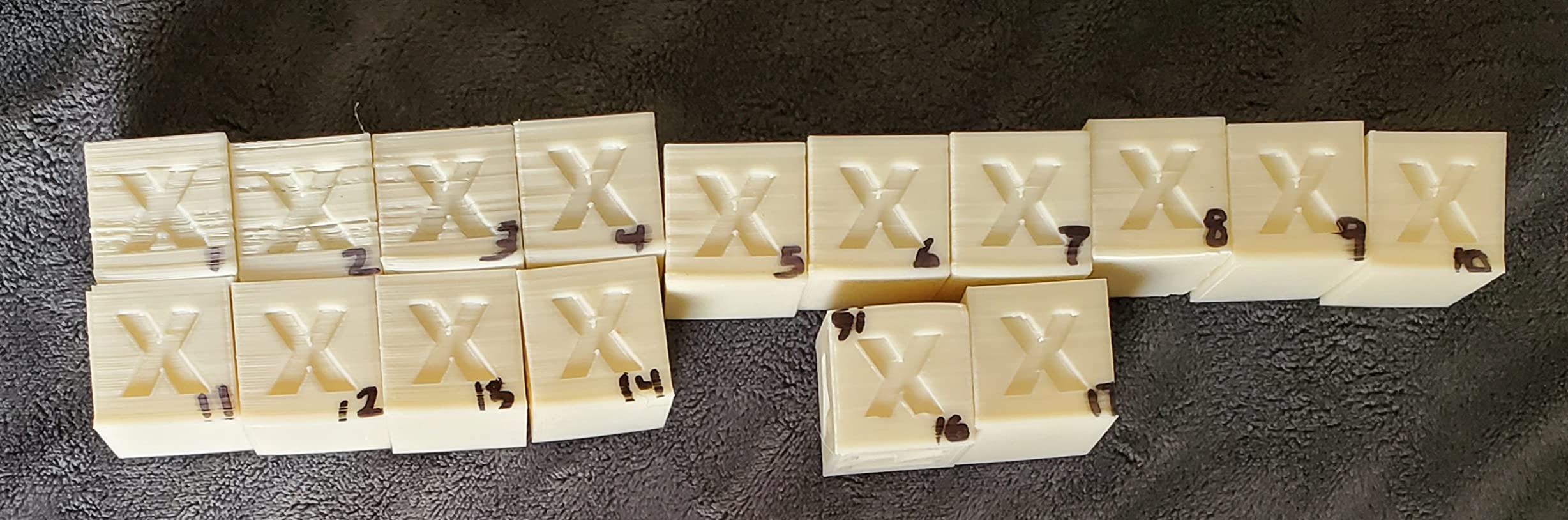
The one universal caveat is the chamber. This filament needs an enclosed printer with an actively heated chamber and careful bed preparation to avoid warping, and that is not negotiable on large parts. If you do not have an enclosure, read our printer buying guide before buying, or plan to use a draft shield.
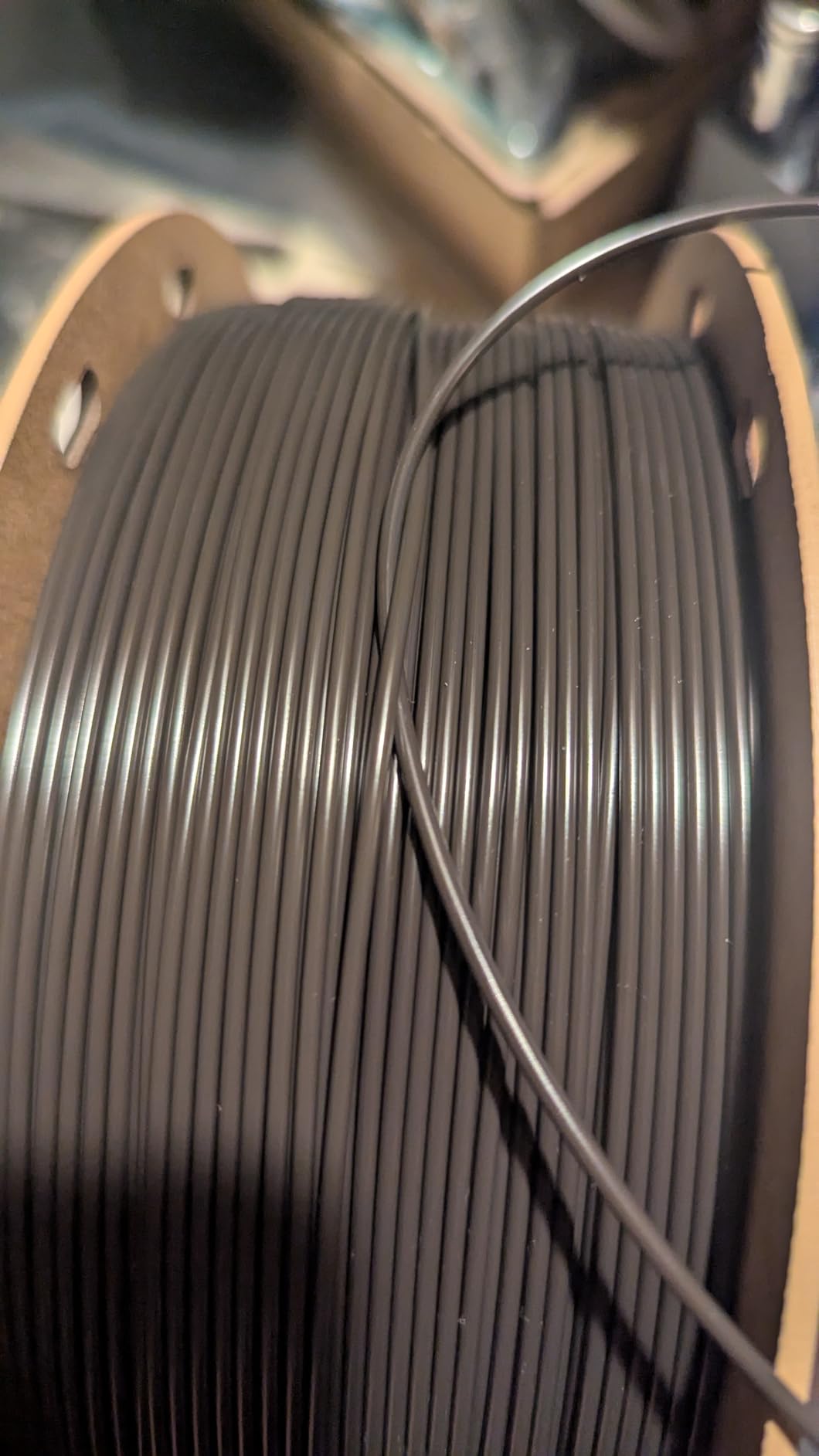
Why this one wins for full-sun parts
Two numbers put it ahead of the rest: the 100C heat resistance and the improved environmental stress cracking resistance built into the formulation. Environmental stress cracking is exactly what kills outdoor plastic, because it is the slow crack that grows under steady load plus heat plus a UV-weakened surface. A bracket that carries weight in the sun fails through that mechanism long before it fails from fatigue.
Layer adhesion is the second reason. An outdoor part that delaminates along the Z axis is worthless, and reviewers specifically call out reliable adhesion on this spool. A vacuum-sealed package with desiccant also means the first print is usually as clean as the tenth.
Where it will disappoint you
You need an enclosed printer with a heated chamber for the best results, and on an open bed a large flat part will lift at the corners. The cardboard spool can arrive damaged, and it may not fit AMS units, which is annoying if you run a multi-material system.
A minority of users also report that the natural or white variant clogs or has poor bed adhesion, so pick black if you can. Beyond that, the specialty color shades are thinner than some brands. Black is also the smarter choice outdoors anyway, because it hides the yellowing you would otherwise see after a season of sun.
2. ELEGOO PC Filament – Best for Extreme Heat and Impact
ELEGOO PC Filament 1.75mm Black 1KG, Tough and Durable Professional 3D Printer Filament Dimensional Accuracy +/- 0.05mm 1KG Spool Heat Resistant 3D Printing Polycarbonate Material
Polycarbonate blend
Enclosed printer required
Dry at 80C for 8 hours
Plus or minus 0.05mm accuracy
Pros
- Very high impact and heat resistance
- Low warp and stable dimensions on large prints
- Finished parts are near rock-hard and take a polish
- Vacuum sealed for smooth extrusion
Cons
- Stringing and nozzle buildup need frequent cleaning
- Some spools arrive with crossed over-tight winding
- A few users report brittleness under sustained tension
Polycarbonate brings the highest impact strength to this roundup, and the ELEGOO spool is the way to buy it. It is genuinely tough: reviewers print functional and engineering parts with it and report finished parts that are near rock-hard and take a high polish. For a load-bearing bracket that takes knocks, it is the hardest-wearing option in the list.
The trade is that PC is not a sunlight material, and the review data is clear on this point. Lacking UV resistance makes it less suited to prolonged outdoor exposure than ASA or nylon. Pick this filament for heat and impact, or for outdoor parts in permanent shade, and choose ASA if the part lives in direct sun.
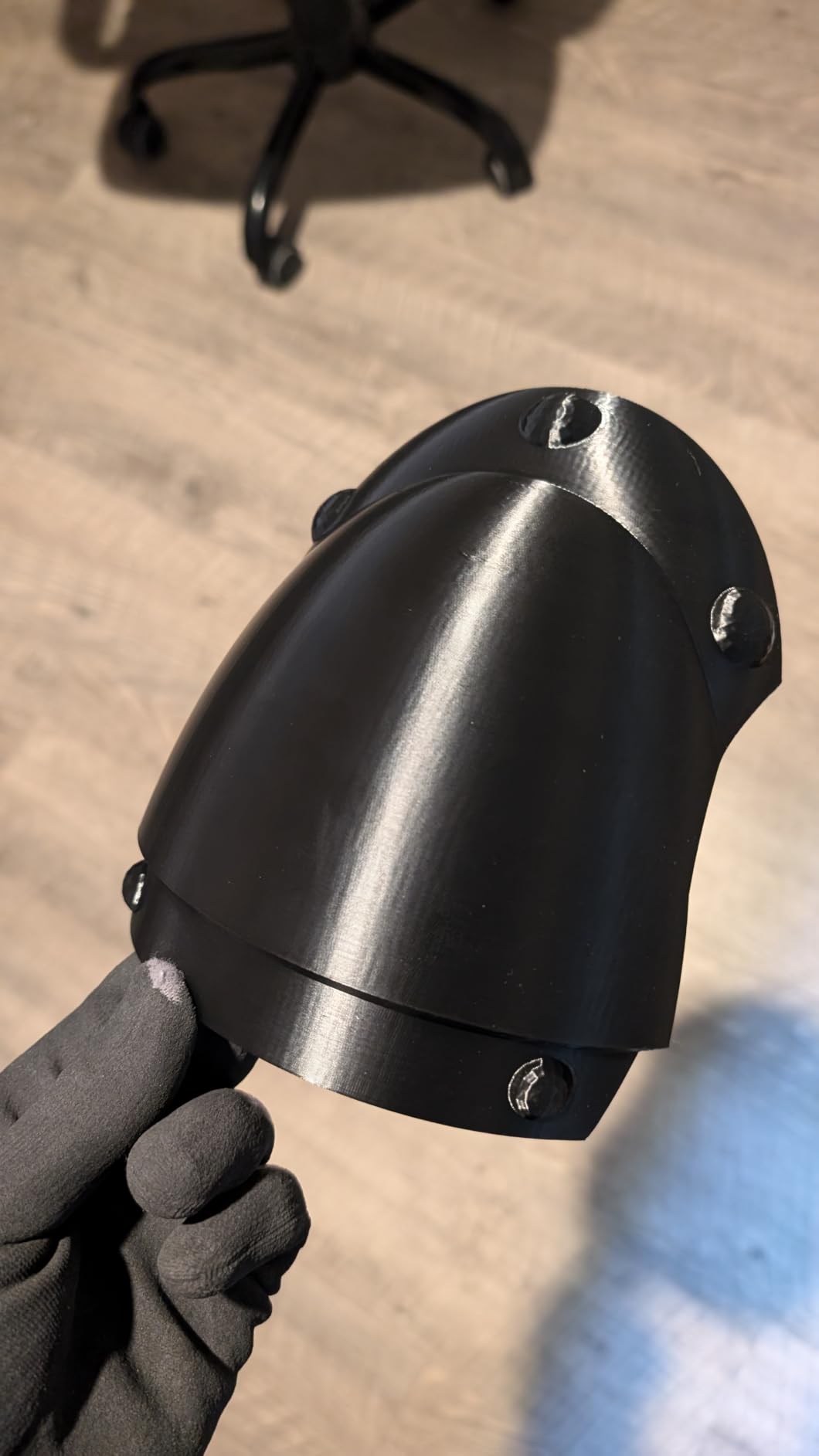
Practically, this material is fussy. It demands an enclosed printer plus careful drying, flow, and nozzle calibration, and the manufacturer recommends drying at 80 plus or minus 5C for 8 hours before use. A small but notable minority of users report the filament becoming brittle and snapping after being under tension, which is worth knowing before you design a clip around it.
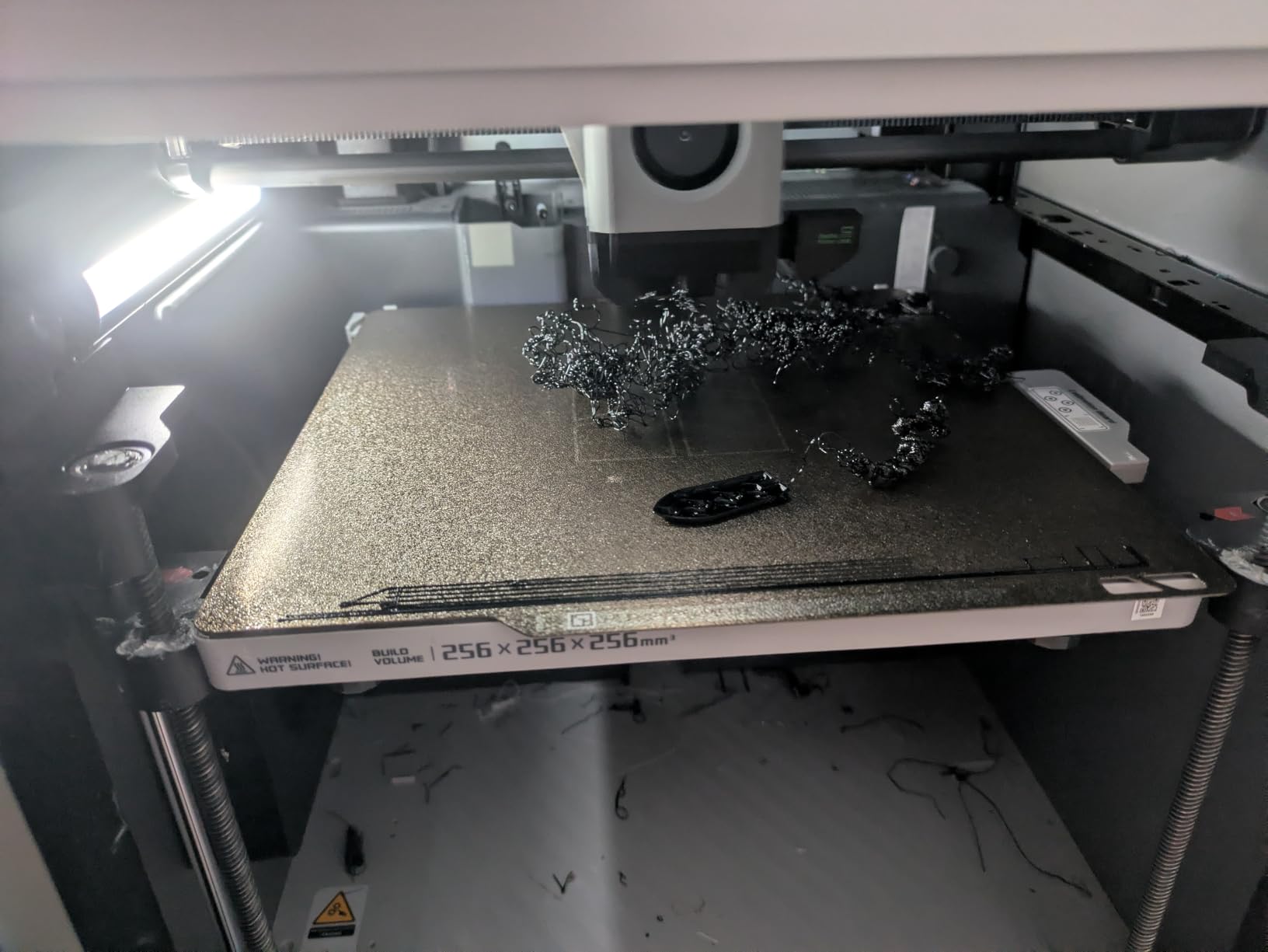
When polycarbonate is the right call
Choose PC when the part gets hot and gets hit, and the sun is not the main enemy. That covers equipment shrouds exposed to a hot engine bay, plant pot feet carrying load in summer, and mounting hardware for a camera or sensor on a pole. The low creep rate also means the part keeps its dimensions under sustained load, which is why it suits large functional prints.
Dimensional accuracy of plus or minus 0.05mm is on paper for a 1.75mm filament, so it is not the standout number here. The real reason to trust it is the combination of impact resistance and dimensional stability on large models, which reviewers call out repeatedly.
Where it will disappoint you
Stringing is common and nozzle buildup requires frequent cleaning, especially on long prints. If you are printing for eight hours, plan nozzle swaps. Some spools have been reported with crossed, over-tight winding that caused print failures, so check the spool before you load it.
And the biggest limitation is sunlight. If your part is in full sun year round, this is the wrong spool, and the UV hit will undo the strength advantage that made you choose it.
3. iSANMATE ASA Filament – Best Value Outdoor ASA
iSANMATE ASA Filament 1.75mm Black 1KG, UV & Weather Resistant 3D Printer Filament Perfect for Outdoor Functional Parts, Dimensional Accuracy +/- 0.02mm, 1kg Spool (2.2lbs)
ASA with UV and weather resistance
240 to 270C nozzle
80 to 100C bed
Plus or minus 0.02mm
Pros
- Strong UV weather and thermal resistance
- Compatible with most consumer and industrial printers
- Vacuum sealed with desiccant
- Tight plus or minus 0.02mm diameter accuracy
Cons
- Requires a closed printing environment to avoid warping
- Glue on the bed is recommended for adhesion
- Narrower temperature window than some ASA rivals
This is the pick if you want genuine outdoor ASA without paying for a premium brand name. Nearly a thousand reviews averaging 4.4 is a solid base for an outdoor filament, and buyers highlight consistent diameter alongside strong UV and weather durability.
Wide printer compatibility is a genuine plus. It runs across consumer and industrial machines, with a 240 to 270C nozzle range, an 80 to 100C bed, and 30 to 100mm per second print speeds. For most people printing brackets, signage, or garden parts, that flexibility removes the guesswork.
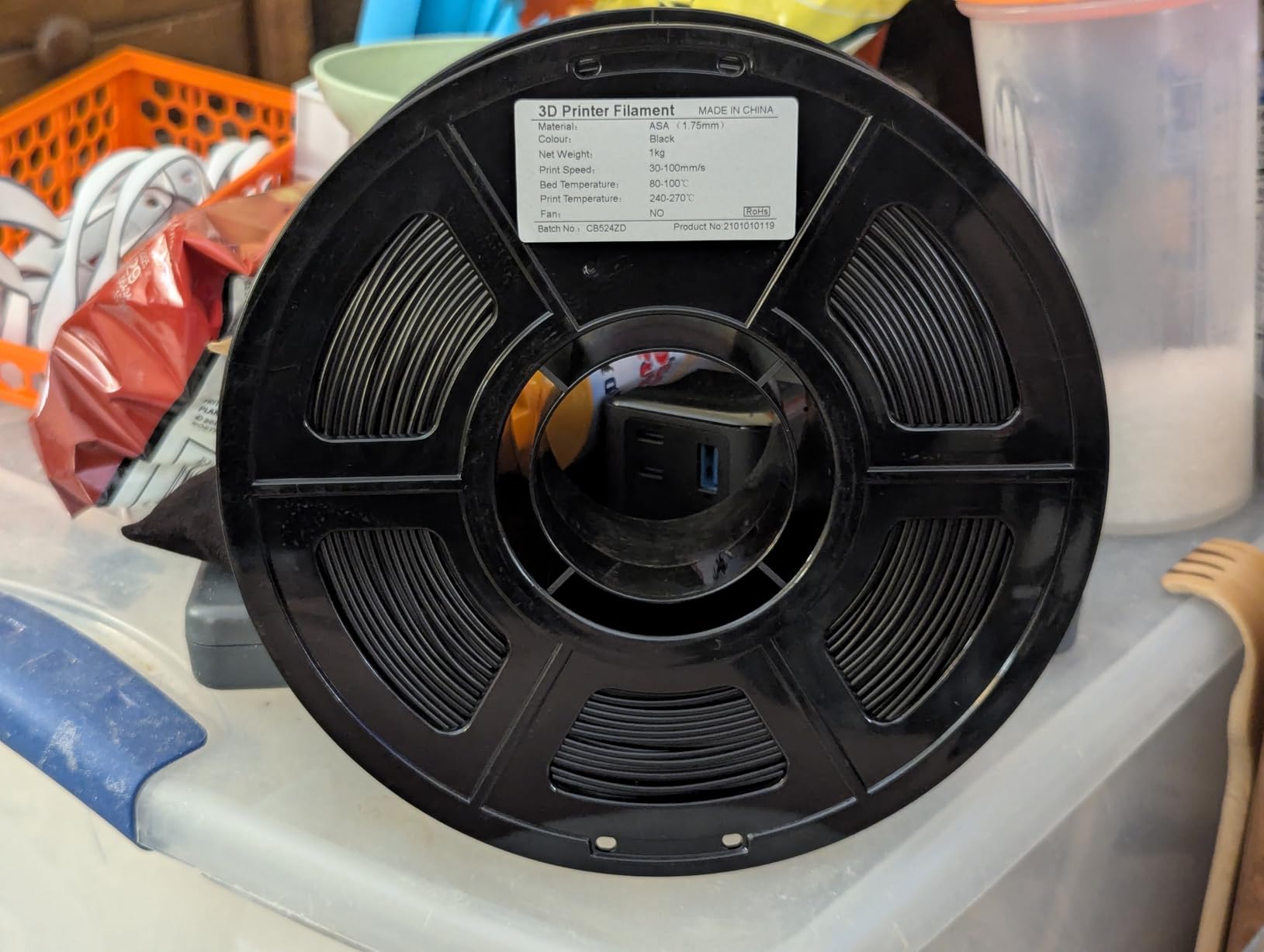
The color range surprised us more than expected. There are carbon fiber look and gradient spools in the line, which is unusual at this tier and useful if you want a part that reads as a finished component rather than a prototype.
Why this is the value pick for outdoor parts
It is the same material family as the premium ASA spools, with the same outdoor chemistry, at a noticeably lower entry point. The claimed protections against breakage and color degradation in long-term outdoor use are exactly what you are buying filament for, so there is little reason to pay more for the same polymer class.
The accuracy number matters here. A tight plus or minus 0.02mm diameter at 1.75mm gives reliable extrusion, which is one of the quiet reasons a print looks better: fewer blobs, cleaner layer lines, and less time spent fighting stringing.
Where it will disappoint you
It requires a closed printing environment to avoid warping, and the brand recommends glue stick on the bed for reliable adhesion. That is a small extra step but it is a real one, and skipping it is the most common reason an ASA print lifts.
The temperature window is narrower than some ASA competitors, so if your machine struggles to hold 260C, you have less margin than you would with a wider-spec spool. Treat the listed range as a requirement, not a suggestion.
4. OVERTURE ASA Filament – Best Low-Hassle ASA
OVERTURE ASA Filament 1.75mm, UV & Weather Resistant, 1kg Black
ASA blend
Heat resistance to 96C
Plus or minus 0.02mm diameter
Pre-dried and vacuum sealed
Pros
- Good weather resistance and rigidity as an ABS alternative
- Easy to print with little to no stringing
- Accurate diameter and consistent extrusion
- Prints well on high-speed enclosed machines
Cons
- Recommended speed limited to roughly 30 to 50mm per second
- Needs drying and a 95 to 110C hot bed
- Lower volumetric speed than premium ASA spools
ASA is still ASA, and this one is the version we would hand to someone who has never printed an engineering material before. Owners rate it highly for weather rigidity, diameter consistency, and ease of printing, with several users reporting it performs at least as well as pricier ASA on Bambu and Creality machines.
It arrives pre-dried, sealed, and well packaged, which removes the single most common cause of a bad first print. The patented clog-free formula and a heat resistance figure up to 96C put it squarely in outdoor territory, and the 1-year warranty and shelf life on unopened spools are unusual to see listed.
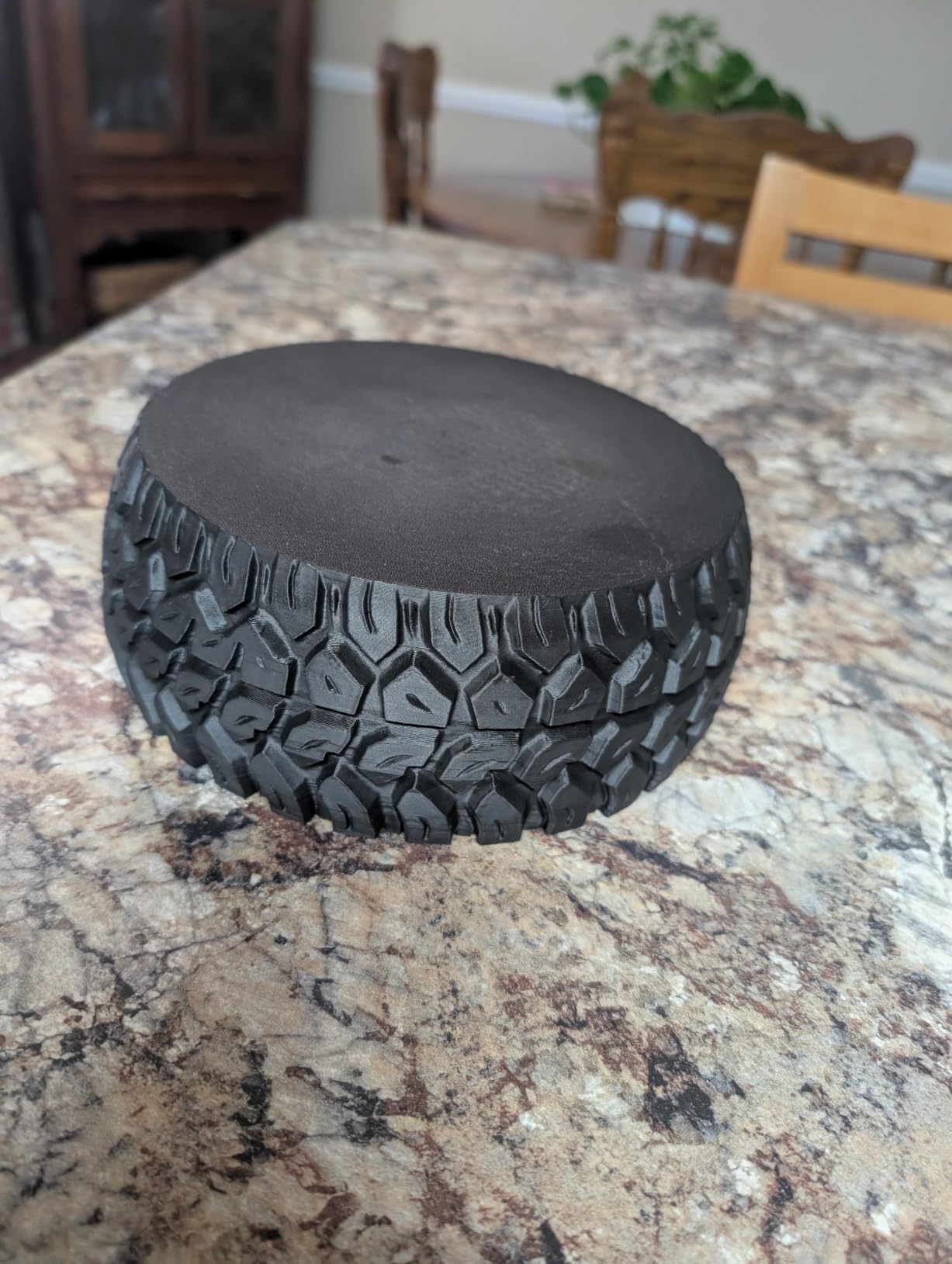
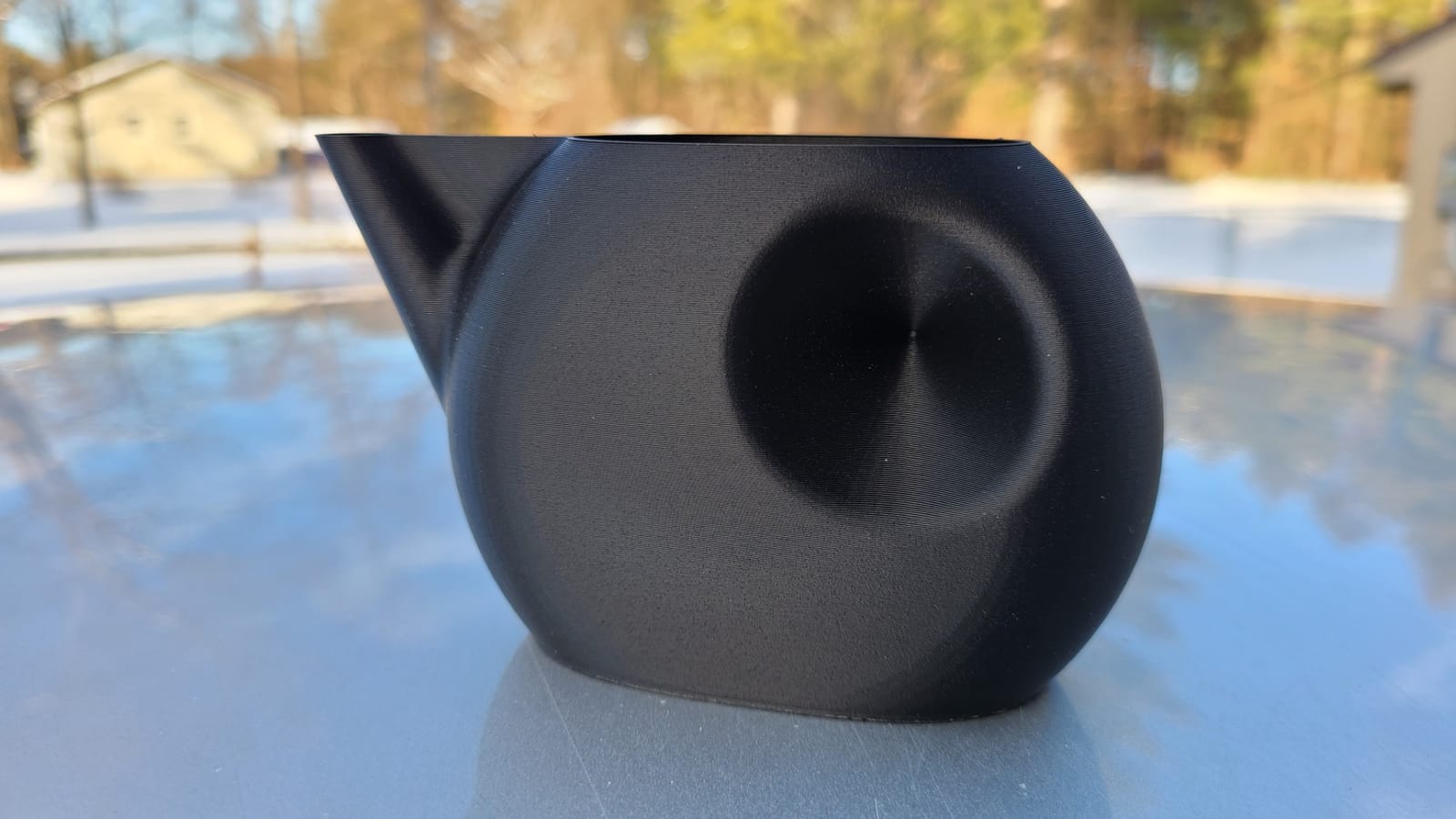
Consistent extrusion is the quiet hero here. A diameter measured with CCD at plus or minus 0.02mm is why owners describe little to no stringing, and why it prints well on high-speed enclosed machines such as the Centauri Carbon 2 without choking.
Why this suits first-time ASA printers
Everything that makes ASA difficult for a beginner has been softened here: lower odor expectations than ABS, reliable bed adhesion at a hot 95 to 110C bed, and a speed ceiling that protects you from making brittle parts. Reviewers consistently call it easy to print, which is the most useful thing a material can be for a first outdoor project.
Spools are dried 24 hours and vacuum sealed in resealable foil, so if you live somewhere with real humidity, the sealing is doing work for you. For a maker printing a few garden parts a season, that is exactly the reliability you want.
Where it will disappoint you
The recommended print speed is limited to roughly 30 to 50mm per second to avoid brittle parts, and it is slower than some premium ASA spools on maximum volumetric speed. If you are producing large batches of big parts, you will feel that ceiling.
It also requires drying before printing and a hot bed for adhesion, so it is not a filament for a cold open-bed machine. If you print big flat panels, expect to manage warping the way you would with any ASA.
5. SUNLU ASA Filament – Most Versatile for Outdoor Hardware
SUNLU 3D Printer ASA Filament 1.75mm,1KG(Black)
ASA Strong grade
230 to 260C nozzle
80 to 120C bed
AMS and AMS Lite spool
Pros
- Excellent UV rain and heat resistance for outdoor mechanical parts
- Strong and tough in user testing
- Clean winding with no tangles
- Low odor and clean satin finish
Cons
- Off-gasses so an enclosure and ventilation are needed
- Warping still occurs on long parts
- Lower peak flow at roughly 20 cubic mm per second
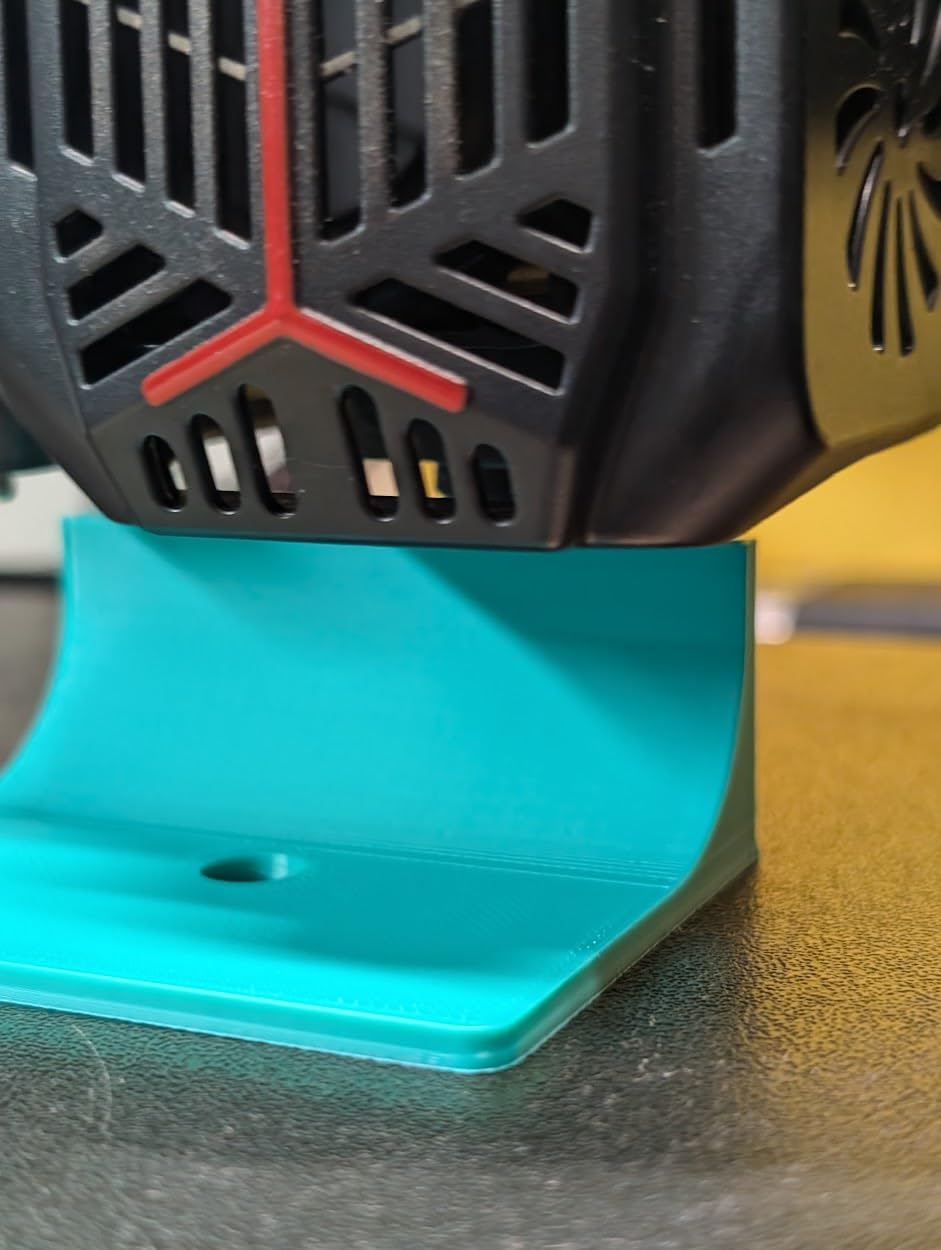
The name of this product is the claim. ASA Strong is billed for outdoor mechanical parts, and the UV, rain, and heat resistance holds up in user testing. Users report strong and tough prints, stronger than PLA and ABS in their own comparisons, with good layer adhesion and no clog, bubble, or tangle problems.
It is also one of the easier ASAs to live with in a mixed setup. The third-generation high temperature resistant white spool is designed to fit AMS and AMS Lite, and it carries a weight and temperature scale so you can read remaining material at a glance. That spool design alone removes a common source of friction.

Users regularly report clean winding and parts that hold up after months outdoors, which is the detail that matters most for an outdoor filament. Low odor and a slightly satin finish are a pleasant surprise for an ABS-family plastic.
Why this suits hardware that has to work
Outdoor hardware means brackets, hangers, and mounts that carry real load, and this is a case where layer adhesion matters as much as material strength. A part that separates along the Z axis after a season is a safety problem, not a cosmetic one, and the reported adhesion here is consistently good.
The 50 to 100mm per second print speed range and plus or minus 0.02mm accuracy make it practical for functional parts rather than display models. For anyone running an AMS-style multi-material system, the compatible spool makes it the least annoying premium ASA.
Where it will disappoint you
It off-gasses during printing, so an enclosed printer and ventilation are needed, and it prints hot, which lengthens print times in uncooled spaces. Warping still occurs on long parts, requiring brims or mouse ears.
Maximum volumetric flow is lower than some premium ASA at roughly 20 cubic mm per second, so it is not the spool to reach for when you are chasing print time on large parts.
6. ANYCUBIC ASA Filament – Best for Planters and Garden Hardware
ANYCUBIC ASA Filament 1.75mm, Weather & Heat Resistant, 3D Printer Filament Suitable for Printing Outdoor Functional Parts, Dimensional Accuracy +/- 0.02mm, 1KG Spool, Black
ASA with 90C heat deformation temperature
Resists UV water and aging
Plus or minus 0.02mm
Pros
- Strong resistance to sunlight water and aging
- Higher heat deformation temperature than ABS PETG and PLA
- Good mechanical strength for engineering parts
- Smooth extrusion with no blockages or bubbles
Cons
- Still needs a high-temperature nozzle and heated bed
- Limited ASA color range versus the brand PLA line
Gardening is where ASA earns its keep, because planter boxes, pot feet, and hose guides combine sun, water, and load in one part. This spool is rated for strong resistance to sunlight, water, and aging, and buyers cite it for outdoor brackets, plant pots, and vehicle accessories.
The number worth knowing is the heat deformation temperature of 90C, listed against 75C for ABS, 63C for PETG, and 53C for PLA. That gap is the whole argument. A pot sitting on a hot patio in full sun is closer to the ASA ceiling than most people assume, and a similar PLA formulation would be well past its own limit.
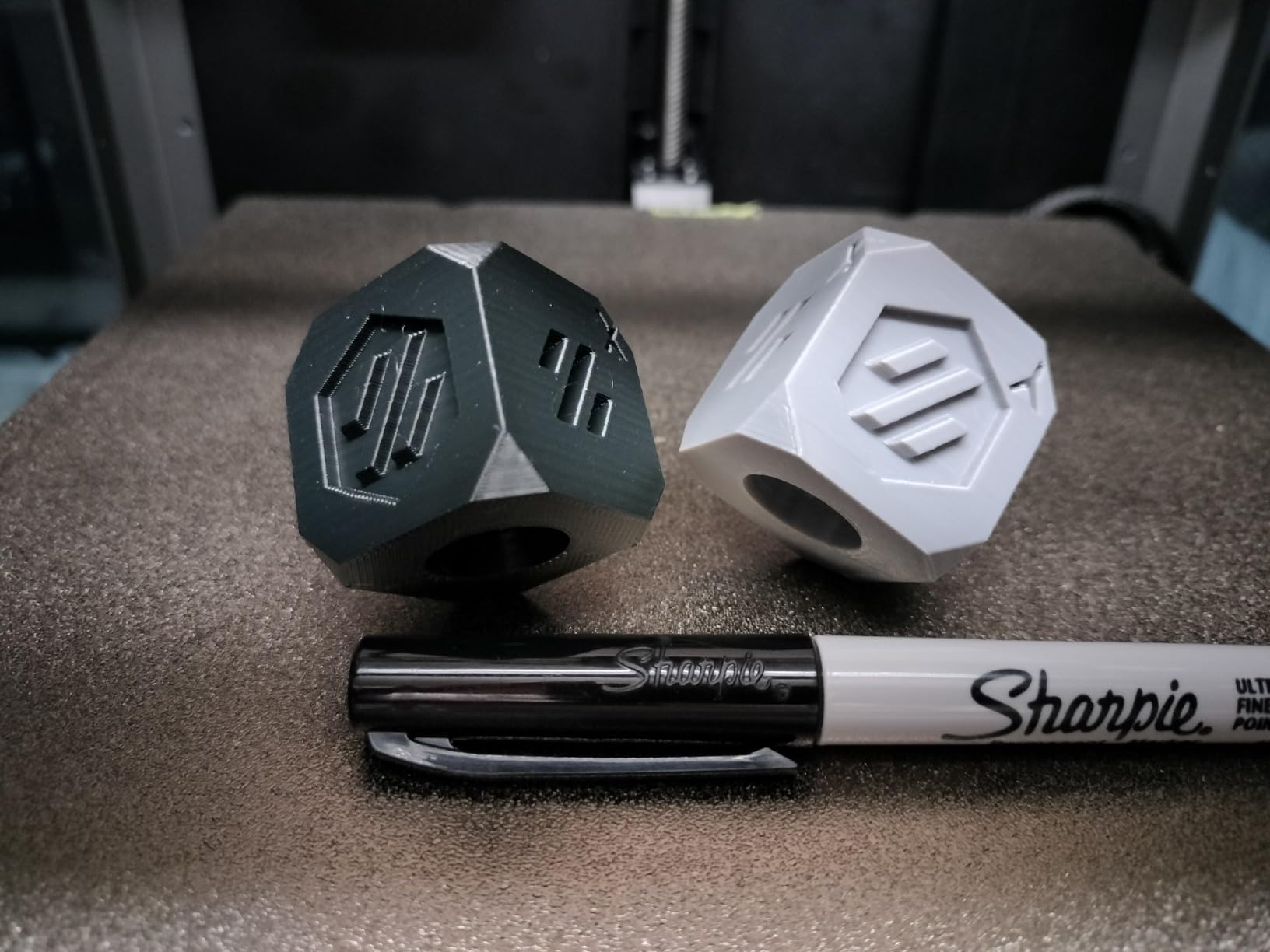
Mechanically it holds up too. Good impact strength suits engineering and outdoor functional parts, and owners report smooth, bubble-free extrusion with a tight diameter tolerance and neat winding for compatibility with most FDM printers.
Why this is the garden pick
Moisture plus sunlight is a brutal combination, and this is one of the few spools in the roundup where the manufacturer claims resistance to both explicitly. Low shrinkage, reduced cracking, and reduced warping also mean a large planter wall is less likely to open up between layers after a wet winter.
If your project is irrigation hardware, pot supports, or a camera mount on a fence post, this is a sensible default. It is also a forgiving material to start with, because the deficits listed against it are the standard ones for the whole ASA class.
Where it will disappoint you
ASA still requires a high-temperature nozzle and heated bed, so this does not unlock a cold printer. And the color range is limited compared with the brand PLA selection, so if you want a bright decorative planter, look elsewhere or paint it.
That is not a real problem for hardware, and it is one of the reasons this material is easy to recommend to a first-time outdoor printer.
7. ERYONE ASA Carbon Fiber Filament – Best Stiff Low-Weight Parts
ERYONE ASA Carbon Fiber Filament 1.75mm UV&Weather Resistant, ASA 3D Printing Filament Perfect for Printing Outdoor Functional Parts, 1kg (2.2 lbs)/Spool, Black
ASA with 10 percent carbon fiber
Hardened steel nozzle needed
Enclosed printer advised
Pros
- Lightweight yet strong with carbon fiber reinforcement
- High heat chemical and weather resistance
- Vacuum sealed with desiccant
- Stiff and dimensionally stable for structural prints
Cons
- Abrasive fiber wears out brass nozzles
- Enclosed printer advised for chamber stability
- Smaller review base than established ASA rivals
Carbon fiber reinforcement inside an ASA base is a genuinely useful outdoor combination, because you keep the UV and weather performance of ASA and add stiffness with less weight. Reviewers describe rigidity and dimensional stability suited to demanding structural prints, plus high resistance to heat, chemicals, and weather for outdoor signage and marine accessories.
At 10 percent carbon fiber, the reinforcement is enough to stiffen thin walls noticeably without turning the spool into a milling-grade composite. That is the sweet spot for camera mounts, ducting, and housings that need to hold shape without sagging in heat.
Why this suits stiff, light parts
Stiffness matters outdoors because heat makes soft parts deflect under their own load. A bracket that is fine in cool shade can droop in summer if the material is not rigid enough, and reinforcement is the simplest fix that does not force you into a much hotter material.
Chemical resistance is the other reason to like it. If your part touches fuel residue, salt, or cleaning products, a reinforced ASA is a better bet than unreinforced plastic, and marine accessories are specifically named by buyers as a use case.
Where it will disappoint you
Hardware, mostly. Abrasive carbon fiber wears out brass nozzles, so you need a hardened steel nozzle, and an enclosed printer is advised to maintain stable chamber temperature. If your machine has neither upgrade, this spool is not for you.
The review base is also smaller than the established ASA competitors, so you have less field data to lean on. Ask yourself whether you need the stiffness badly enough to fit a new nozzle and a draft shield before you order it.
8. Creality ASA Filament – Best for High-Speed Printers
Creality ASA Filament 1.75mm, 1kg Spool (2.2lbs) 3D Printer Filament, High Temperature Tolerance- ASA Filament Perfect for Printing Outdoor Functional Parts, Dimensional Accuracy +/- 0.03mm
ASA rated to hold form at 100C
Prints up to 350mm per second
Plus or minus 0.03mm diameter
Pros
- Maintains form at temperatures up to 100C
- Excellent UV aging and corrosion resistance
- Tough with high impact strength
- Prints fast without clogging
- Sticks well to textured PEI plates
Cons
- Some spools have reported poor winding and filament binding
- Limited ASA color selection
- Requires a closed enclosure and a hot bed
If your printer is fast, this is the spool that keeps up. It prints at up to 350mm per second and users report it running at 300 to 350mm per second without clogging, which puts it well ahead of ASAs that cap out at 30 to 50mm per second. On a K1, K1 Max, or Ender-5 S, that is the difference between finishing a part in an evening and finishing it in a weekend.
Outdoor performance is the reason to consider it anyway. It maintains form up to 100C, well above PETG or ABS, and reviewers praise its UV, aging, and corrosion resistance for direct sunlight exposure. Tough with high impact strength, it suits structural parts rather than just decorative ones.
Why this suits fast machines and sun-exposed parts
Corrosion resistance is the underrated feature here. Salt air and rain are the two things that turn a cheap printed bracket into scrap, and this material is specifically described as resistant to UV radiation, aging, and corrosion. For a coastal install, that matters more than the speed rating.
It also sticks well to textured PEI plates with little stringing, which means fewer failed first layers and less wasted filament on a large ASA plate. Reviewers use it for automotive interiors, garage organizers, and tool holders.
Where it will disappoint you
Winding quality is the one real negative theme. Some spools have been reported with poor winding causing filament binding and failed prints, and one reviewer reported cross-over binding on consecutive spools and switched suppliers. Inspect the spool before you commit to a long job.
It needs a closed enclosure and roughly a 100C bed temperature, ASA color selection is limited, and there is some printing odor. Check your machine clears that bed temperature before you buy.
9. FLASHFORGE Carbon Fiber PETG – Best Rigid Gear for Warm Climates
FLASHFORGE Carbon Fiber PETG Filament 1.75mm, Carbon Fiber PETG 3D Printer Filament, 1KG Spool Dimensional Accuracy +/- 0.02mm, Lightweight & Heat-Resistant & Moisture Free (Black)
Carbon fiber reinforced PETG
Plus or minus 0.02mm diameter
Pre-dried and vacuum sealed
Pros
- Reinforcement improves strength and heat resistance
- Excellent rigidity and dimensional stability
- Lightweight and moisture free for frames and mounts
- Tangle-free automatic winding
- Compatible with 99 percent of FDM printers
Cons
- PETG base has less UV resistance than ASA in direct sun
- Abrasive fiber can wear brass nozzles
- Stiffer than unfilled filament on some machines
This sits between PLA and ASA, and that middle position is genuinely useful. It is stiffer and more heat resistant than plain PETG while keeping PETG impact resistance, and it is far more warp tolerant than ASA. That combination makes it a practical pick for rigid outdoor-adjacent parts such as mounts, frames, and drone components.
Reinforcement improves strength and temperature resistance while keeping the toughness of the PETG base, and buyers praise consistent diameter, clean winding, and strong layer adhesion. Automatic winding with manual inspection reduces tangles and line breakage, which is a bigger quality-of-life win than it sounds.
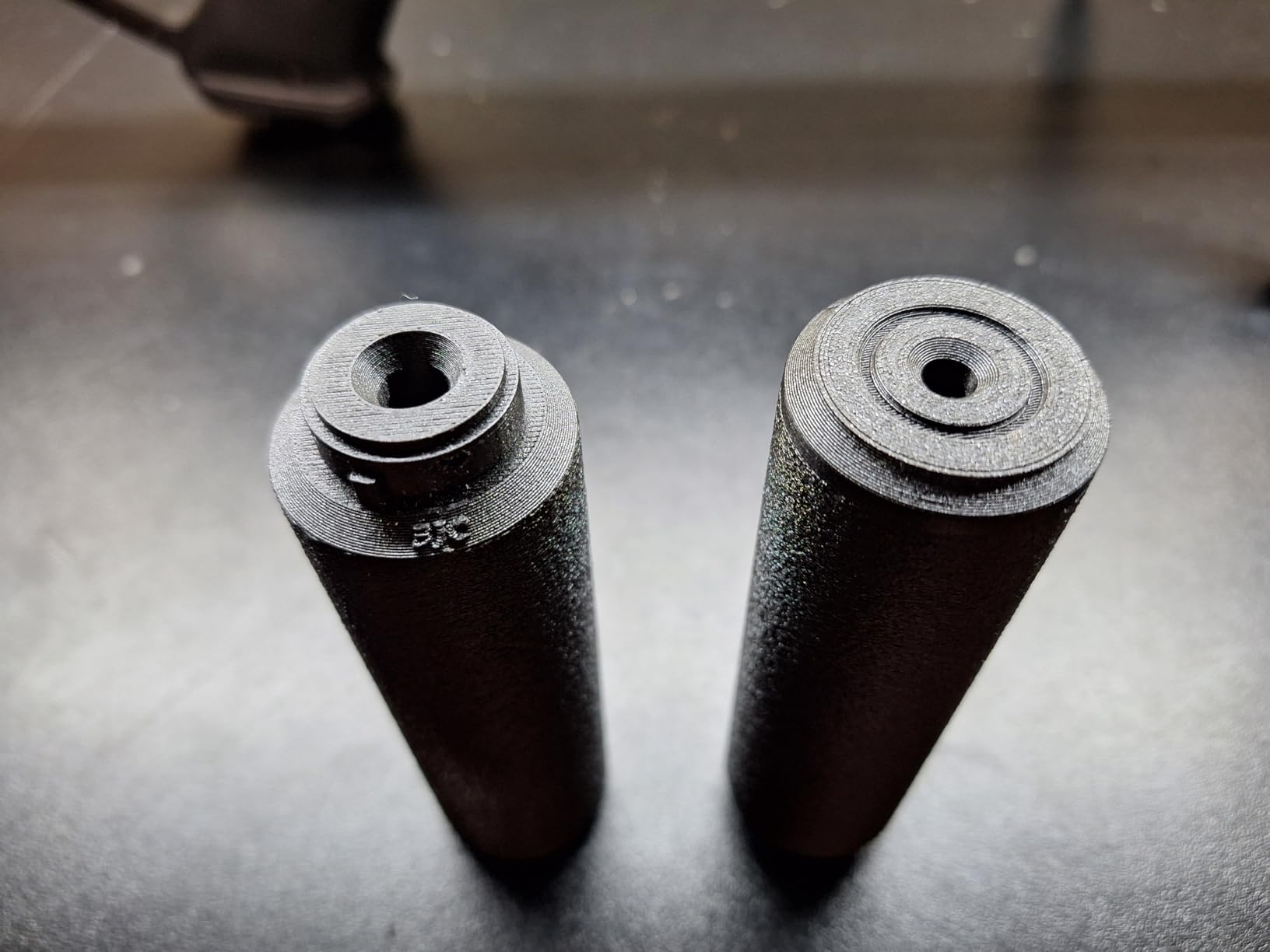
It is also the least demanding filament here to actually run. Compatible with 99 percent of FDM printers, it is dried 24 hours and vacuum sealed with desiccant, and it is described as lightweight and moisture free for frames, drones, tools, and automotive parts.
Why this suits warm-climate gear
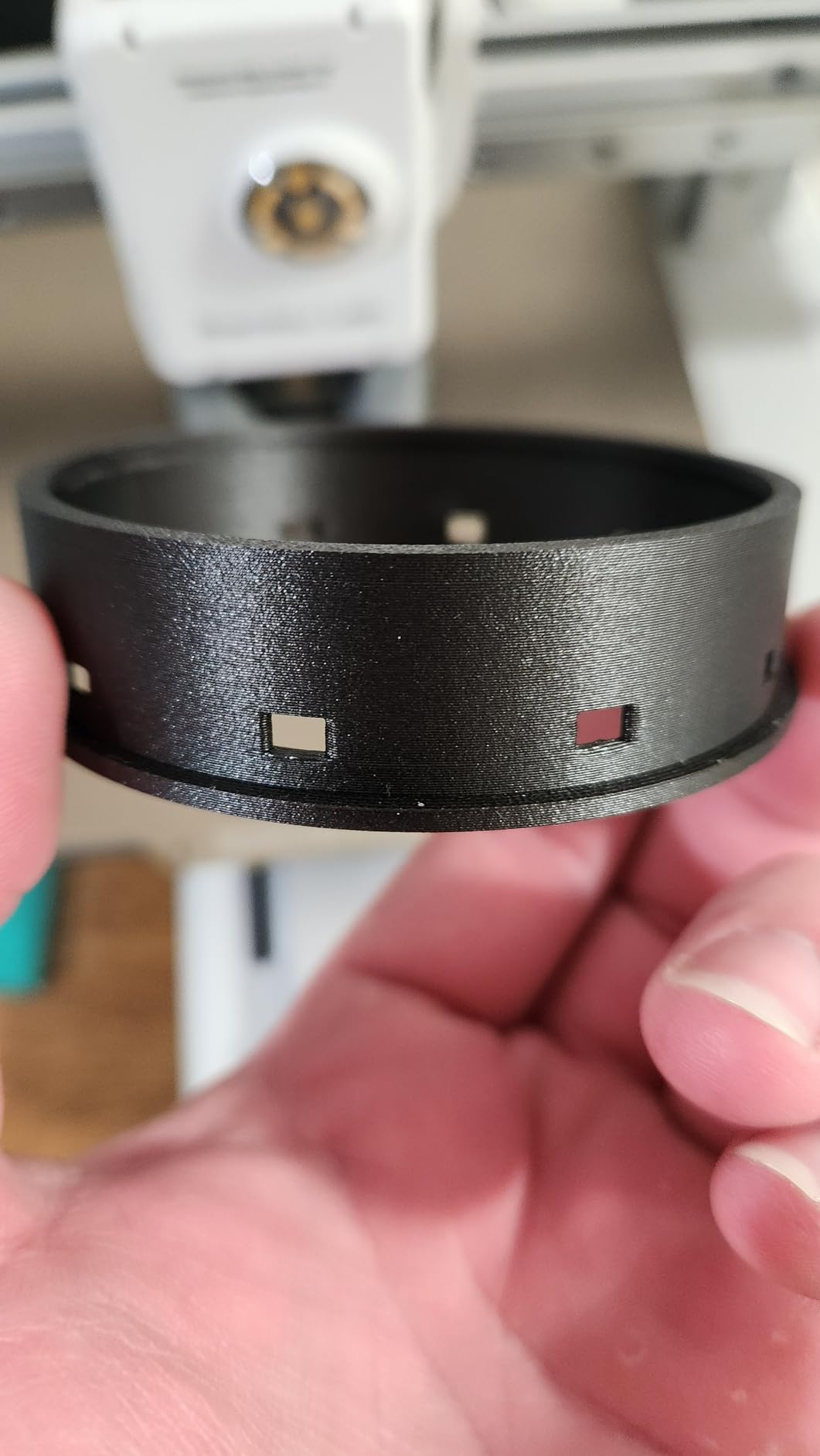
Reviewers describe it as sitting between PLA and ASA in a way that works for warm climates: enough heat resistance to avoid sagging where plain PETG would not, and enough UV headroom to be usable in conditions where you would not trust PETG long term. For gear that lives in a hot vehicle, on a wall, or in a workshop, that is a sensible middle.
Stiffness is the other argument. Carbon fiber reinforcement gives you dimensional stability that plain PETG lacks, which is exactly what a frame or a mount needs to stop flexing under load and cracking at the layer line.
Where it will disappoint you
Honesty first: the PETG base has less UV resistance than ASA for long-term direct sunlight exposure. If your part sits in full sun year round, this is not the right spool, however good the rigidity is.
Abrasive carbon fiber can wear brass nozzles, and it is stiffer than unfilled filament, which can be harder to print on some machines. If your printer struggles with rigid filament, start small and raise nozzle temperature gradually.
10. OVERTURE TPU 95A Filament – Top Rated for Seals and Gaskets
OVERTURE TPU 95A Flexible 3D Printer Filament 1.75mm, 1kg Black
Shore 95A flexibility
Dry over 8 hours at 65C or store with desiccants
Vacuum sealed resealable foil
Pros
- Shore 95A flexibility for realistic rubber-like parts
- Excellent layer adhesion and smooth finish
- Consistent diameter and neat winding
- Prints reliably with vendor presets on common printers
Cons
- Needs substantial speed and temperature tuning
- Splices can cause jams
- Printed parts have a slight shine rather than matte
Every rigid filament in this roundup fails at the same task: sealing something. For gaskets, weatherstripping, and vibration isolators outdoors, flexible TPU 95A is the correct answer, and this is the highest-rated spool in the set, averaging 4.7 across more than 2,200 reviews.
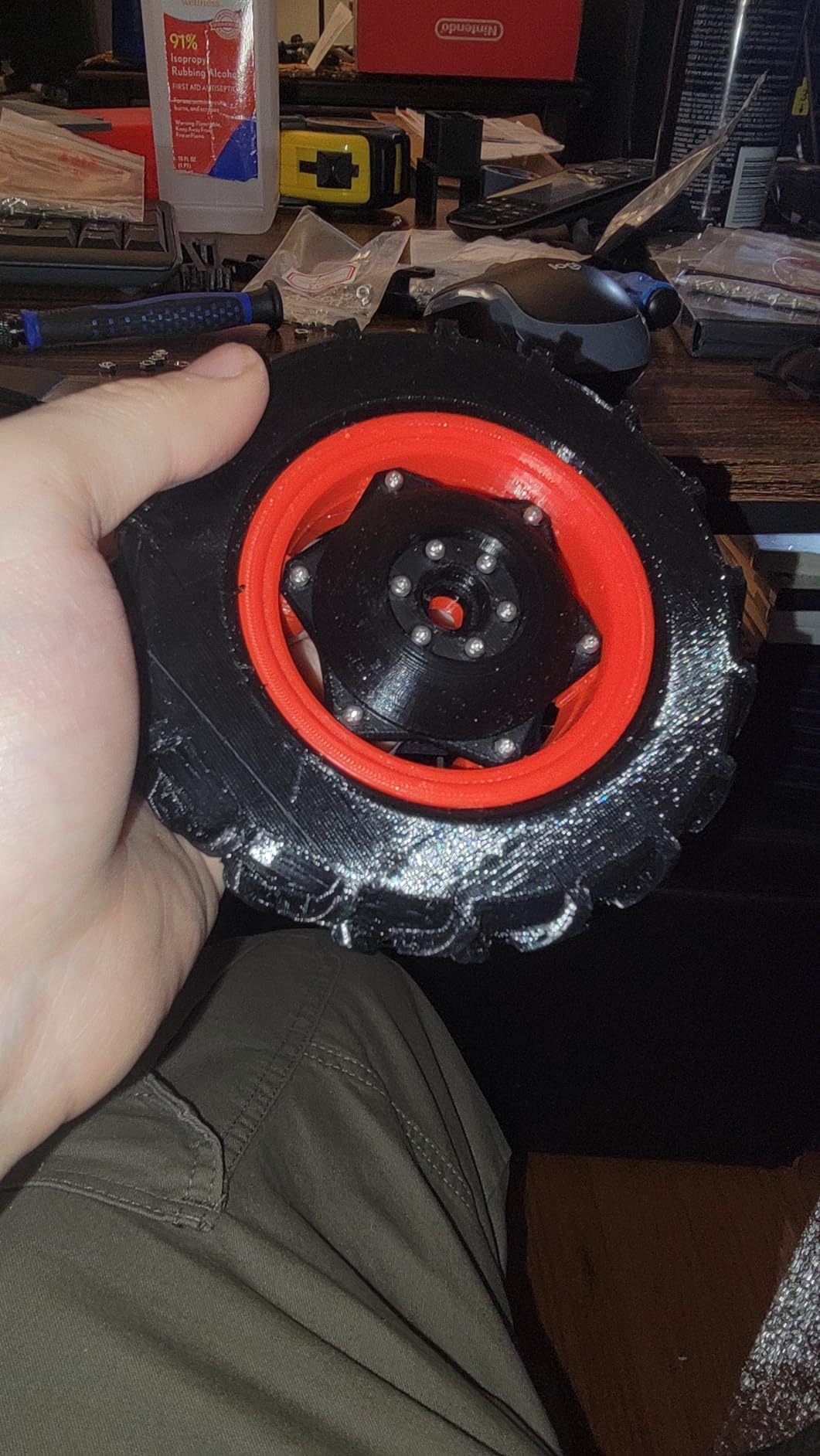
Shore 95A gives you a rubber-like part that holds its shape after printing and compresses under load. Users print model tires, eartips, grips, and other flexible parts, and the reported layer adhesion and smooth finish are what make the seal actually work.
It also prints reliably on Bambu A1 and P1S with vendor presets, which shortens the learning curve considerably for anyone starting out with flexible filament. If your printer struggles with TPU, our beginner printer guide is worth checking for direct drive models.
Why this suits seals and gaskets
A rigid part cannot seal. TPU 95A deforms around an uneven surface, which is what stops water and dust getting past a door edge or a joint, and the resilience means the seal returns to shape after the load is removed instead of taking a permanent set.
For outdoor applications specifically, this is the filament for a lid gasket on a weatherproof box, a vibration mount for a camera on a pole, or a soft grip that stays comfortable in the cold. Dry it for more than 8 hours at 65C or store it with desiccants, and it feeds cleanly.
Where it will disappoint you
It requires substantial tuning of speed and temperature compared to rigid filaments, so expect a learning period of slower speeds and a higher nozzle temperature. Some users report jams caused by oversized filament splices, which is a splicing discipline problem more than a material one.
Printed parts have a slight shine rather than a fully matte rubbery look, and the filament must be dried thoroughly before printing. TPU is also not a UV champion, so use it for seals and cushions rather than long-term exposed trim.
How to Match Filament to Your Climate
Material choice is a climate decision, not just a strength decision. A user in Arizona told us plainly that ASA UV resistance is invaluable for anything outside, and openly prefers it over PETG despite the harder print. A user in a coastal, humid zone has a different problem, and the same filament choice will not serve both.
Desert heat and full sun call for ASA, and specifically the spools rated around 96 to 100C. Black or natural color is worth choosing deliberately here, because sun drives yellowing in lighter colors and the discoloration is the first visible sign that the polymer chain is degrading. Black hides the aging long after it has started.
Coastal humidity is a drying problem before it is a material problem. Nylon and PETG absorb moisture from the air, and most “PETG is weak” complaints trace back to wet filament rather than the material. Print from a dry box, and if a part will sit in salt air, choose a reinforced ASA or a carbon fiber blend for the chemical resistance.
Freeze-thaw cycles punish layer adhesion more than they punish the bulk material, because water gets into micro-cracks and expands. This is where a tight diameter and reliable extrusion matter, and it is an argument for the spools that advertise CCD diameter measuring. Our guide to filament picks for functional accessories covers the same durability logic for indoor parts.
Shade-only exposure is where PETG and carbon fiber PETG are at home. If the part never sees direct sun, a hot car, or a heated surface, you trade a lot of UV capability for a much easier print, and most people will happily make that trade.
How to Print ASA Without an Enclosure
ASA does not warp as badly as ABS, but it is still a high-shrinkage material and warping frustrates first-time users more than any other material complaint. Multiple threads describe ASA as tripping people up, especially on large parts, so this is worth planning for rather than discovering halfway through a print.
Start with bed adhesion, because almost every ASA warp starts there. A high bed temperature, 90C or above for most spools, plus a glue stick on a smooth PEI sheet, is the combination that works most reliably. A brim of 8 to 10mm, or mouse ears at the corners, buys you a much wider tolerance than a plain first layer.
Then control the chamber. A cardboard draft shield around an open printer is a genuine hack that works, and a cabinet that holds heat does the same job. The goal is simply to stop cold air hitting the first few layers and shrinking them faster than the part can resist.
Finally, do not print ASA on a cold bed in a cold room. If you cannot get the nozzle to 250 to 270C or the bed to 90C and hold it there, use PETG instead. The honest answer to does ASA warp as bad as ABS is that it warps less, but it still needs a warm, stable chamber to look its best.
How to Dry and Store Outdoor-Grade Filament
Hygroscopic filaments absorb water from the air, and outdoor-grade materials are often the worst offenders. Nylon, polycarbonate, and ASA all need attention, and the symptoms are familiar: stringing, bubbling at the nozzle, rough surfaces, and layers that separate under load.
The fix is mechanical, not chemical. Dry the spool before first use, keep it in a dry box with fresh desiccant between prints, and reseal the bag with a clip or tape rather than rolling it loose. Most of the spools in this roundup arrive pre-dried and vacuum sealed, so freshness is not the issue, but storage is.
For polycarbonate, the manufacturer guidance here is specific: dry at 80 plus or minus 5C for 8 hours. For TPU, dry for more than 8 hours at 65C or store with desiccants. If you print outdoors in winter or somewhere humid, treat the dryer as part of the workflow rather than a troubleshooting step.
How to Extend the Life of Any Outdoor Print
The most effective trick for extending an outdoor print is a coating, and it is the step most people skip. Forum users ask constantly how to make PLA safe for outdoor use, and the answer is not a better filament, it is a barrier between the polymer and the sun.
Filler primer first, then paint. Primer gives the topcoat something to grip on a textured printed surface, and an exterior-grade paint rated for UV resistance does the actual work of blocking sunlight. Two thin coats beat one thick coat, and let each cure fully before the next part goes outside.
For parts that only need weather protection and not a color change, a clear UV-resistant varnish or a thin epoxy coat over a cleaned surface works. Clean the part first, because dust and oily handling are what make a coating fail early. Reapply every couple of seasons on the parts that see the most sun.
Color choice is free durability. Black and natural filament hides UV yellowing far better than white or bright colors, so if the part does not need to be visible from a distance, choose the darker spool and the part will look newer for longer.
Frequently Asked Questions
Which is better for outdoor use, PLA or PETG?
PETG is clearly better than PLA outdoors, because PLA has a heat deflection temperature of roughly 50 to 55C and embrittles under UV exposure within a single season. PETG holds heat and moisture far better. If your part sits in direct sun or a hot car, go one step further and use ASA, which resists UV and stays rigid to around 90 to 100C.
Is ASA or ABS better for outdoor use?
ASA is the better choice for outdoor use. It shares ABS impact strength and heat resistance but adds UV stabilization, so it resists the sunlight-driven embrittlement that destroys ABS outdoors. The practical reasons people choose ABS over ASA are better layer adhesion, lower odor, and no cracking on large prints, but those are print-quality problems rather than material limits.
Will PETG last outside, and how long?
PETG lasts outside, but expect a limited service life in full sun compared with ASA. In shade, under cover, or in a mild climate, PETG parts can hold up for multiple seasons without much visible change. In direct sun or a hot vehicle, PETG is more likely to soften in peak summer and to lose strength over time, and the r/3Dprinting crowd generally recommends ASA for those conditions.
Can PETG be exposed to the sun?
Yes, PETG can be exposed to the sun, and it will not dissolve or warp instantly. It does, however, have less UV resistance than ASA, and users in hot climates report PETG slightly deforming in a car during the hottest months. Print it in black to hide yellowing, and if the part is structurally important, choose ASA instead.
What is the best filament for structural outdoor parts?
For stiff, load-bearing outdoor hardware, use a carbon fiber reinforced material. ERYONE ASA Carbon Fiber keeps ASA UV and weather resistance while adding stiffness at lower weight, and it needs a hardened steel nozzle. For heat and impact rather than UV, polycarbonate is the hardest-wearing option in this roundup. If the part must flex or seal, TPU 95A is the right choice instead.
Does ASA warp as badly as ABS?
No, ASA warps less than ABS because of its lower shrinkage, but it still needs a warm and stable chamber. Print on a high bed temperature of 90C or above with glue stick on a smooth PEI sheet, add an 8 to 10mm brim or mouse ears, and use a draft shield or enclosure if your printer is open. Without those steps, large ASA parts will lift at the corners.
Final Verdict for Outdoor Filaments in 2026
The best 3D printer filaments for outdoor parts are ASA spools, and our pick is the Polymaker ASA. It handles full sun, rain, and heat up to 100C with the layer adhesion that outdoor hardware needs, and it prints more easily than the ABS it replaces. If your machine struggles with ASA, pick the FLASHFORGE carbon fiber PETG for parts that stay in shade, or the OVERTURE ASA for a gentler first attempt.
Before you print, check that your machine can hold a 90C bed and a 250C nozzle, dry the spool, and plan the coating step. That preparation is what separates a part that lasts years from one that fails in a season.