
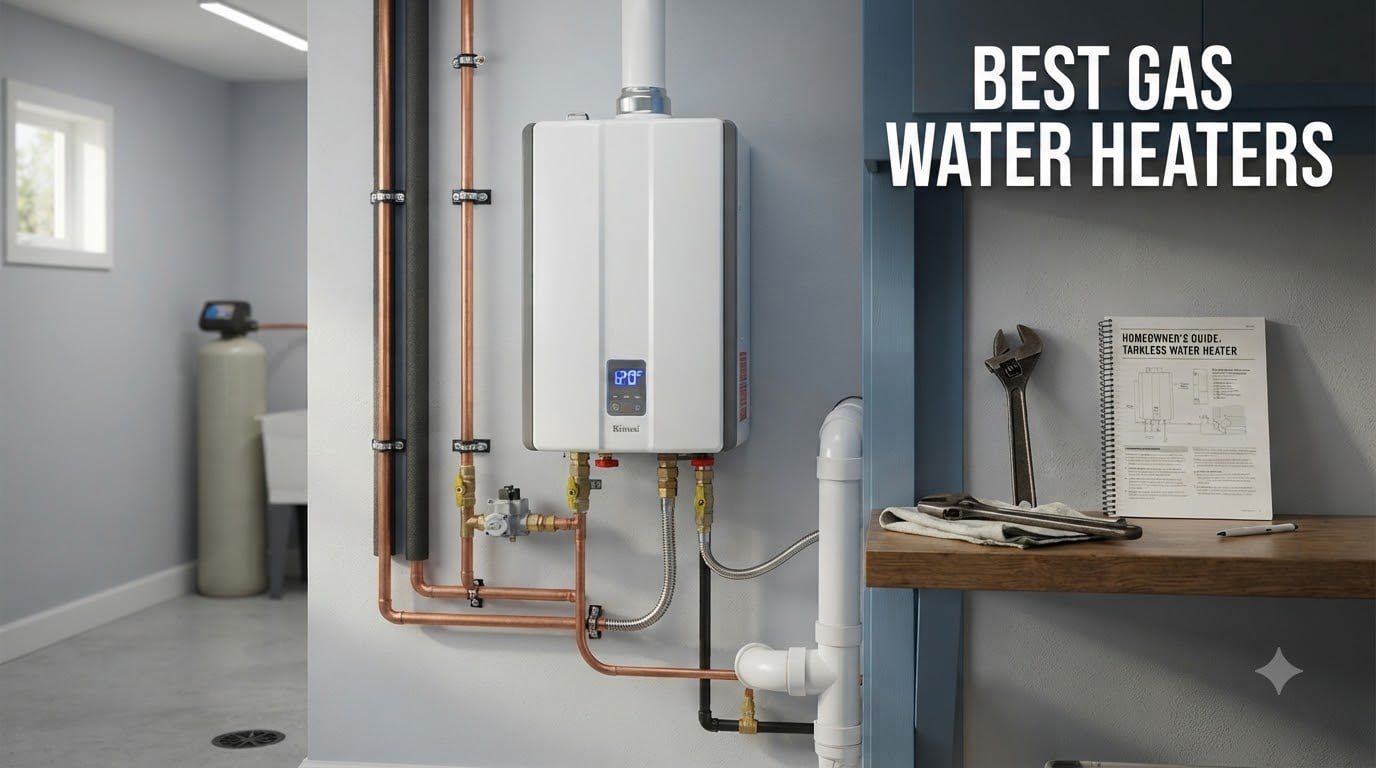
Running out of hot water mid-shower is one of those small disasters that ruins a whole morning. If you have natural gas or propane at your house, upgrading to one of the best gas water heaters fixes that permanently, because gas units recover heat far faster than electric models and cost less to run month after month.
Our team spent weeks comparing tankless gas units from Rinnai, Rheem, MIZUDO, Westinghouse, GASLAND, and ThermoMate, digging through verified buyer reports, spec sheets, and the plumber threads on r/Plumbing where installers talk openly about which brands actually last. Every model here is a gas tankless water heater, which is the format most homeowners are switching to in 2026 for the endless hot water and the smaller footprint.
Below you will find our top three picks, a full comparison table of all eight units, detailed reviews based on real owner feedback, a plain-English buying guide covering GPM, BTU, UEF, and venting, plus straight answers to the questions people ask Google most. One note before we start: plumbers on every forum we read agree that gas water heaters live or die on the quality of the installation, so budget for a pro even if the unit itself is a DIY-friendly design.
Table of Contents
Top 3 Picks for Best Gas Water Heaters in 2026

Rinnai RX199iN Condensing Smart Sense…
- 11.1 GPM
- 199k BTU
- UEF .98
- Indoor or Outdoor
- Natural Gas or Propane

MIZUDO 199000 BTU Natural Gas Tankless…
- 10.3 GPM
- WiFi and App Control
- 16+ Safety Mechanisms
- 6 Stage Gas Modulation
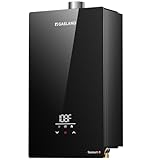
GASLAND Gasmart E Natural Gas Tankless…
- 5.8 GPM
- 150000 BTU
- CSA Certified
- 1-Year Free Replacement Warranty
Best Gas Water Heaters in October
| Product | Specifications | Action |
|---|---|---|
| Rinnai RX199iN Smart Sense Tankless |
|
Check Latest Price |
| MIZUDO 199k BTU 10.3 GPM Tankless |
|
Check Latest Price |
 Rheem RTGH 8.4 GPM Condensing Ultra-Low NOx Rheem RTGH 8.4 GPM Condensing Ultra-Low NOx |
|
Check Latest Price |
 Westinghouse 7.9 GPM 180k BTU Tankless Westinghouse 7.9 GPM 180k BTU Tankless |
|
Check Latest Price |
 MIZUDO 180k BTU 7.9 GPM Tankless MIZUDO 180k BTU 7.9 GPM Tankless |
|
Check Latest Price |
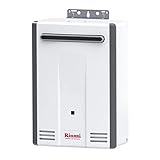 Rinnai V53DeN 5.3 GPM Tankless Rinnai V53DeN 5.3 GPM Tankless |
|
Check Latest Price |
| GASLAND Gasmart E 5.8 GPM Tankless |
|
Check Latest Price |
 ThermoMate CZ422NG 5 GPM Tankless ThermoMate CZ422NG 5 GPM Tankless |
|
Check Latest Price |
1. Rinnai RX199iN – Best Overall for Whole-Home Hot Water
Rinnai RX199iN Condensing Smart Sense Tankless Water Heater
11.1 GPM
199,000 BTU
UEF .98
Natural Gas or Propane
Indoor or Outdoor
55 lbs
Pros
- Never runs out of hot water
- UEF .98 efficiency
- Indoor or outdoor install
- Runs on natural gas or propane
- 15-year heat exchanger warranty
Cons
- Higher price point
- Some units may arrive damaged
- Professional installation recommended
This is the unit I would put in my own house if budget allowed, and honestly the spec sheet explains why. The RX199iN pushes 11.1 GPM, which Rinnai says is enough to feed seven fixtures at once, so two showers, a dishwasher, and a washing machine can run together without anybody getting a cold blast.
Rinnai is also the brand plumbers consistently praise in forum threads for tankless longevity when the unit is maintained properly. That reputation matters here more than any single feature, because a tankless heater is a 15-to-20-year commitment, not an impulse buy.
The Smart Sense gas control system and the 0.98 UEF rating are the technical standouts. That efficiency rating is about as high as condensing tankless units get, and it shows up on gas bills within the first few billing cycles according to multiple owners.
Versa Vent technology means you can install it indoors or outdoors, and it converts between natural gas and propane. The 15-year heat exchanger warranty plus 5-year parts and labor coverage is among the strongest protection in this roundup. Watch the delivery, though, as several buyers reported units arriving opened or damaged, so inspect everything before the installer leaves.
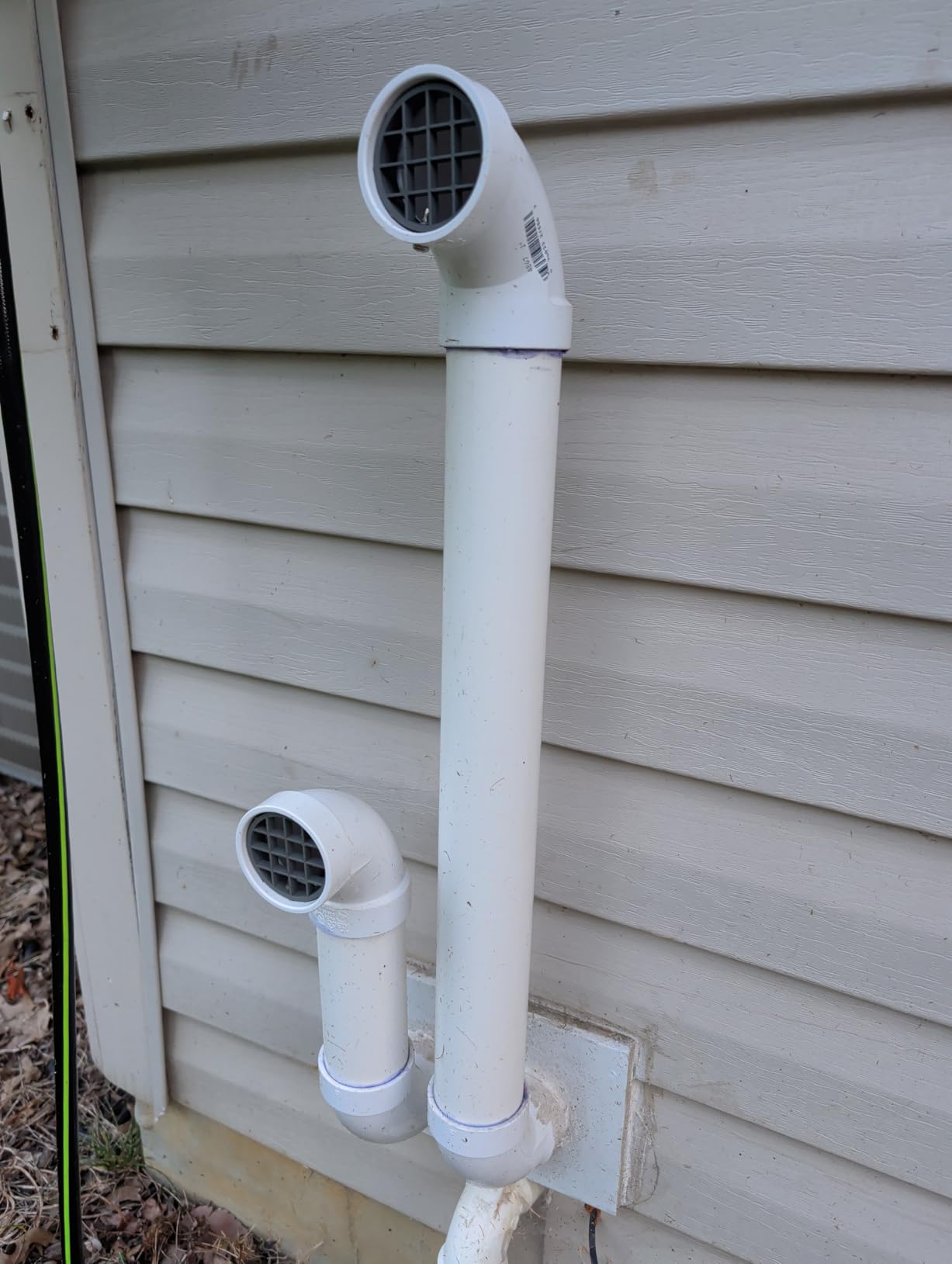
Installation and Venting Requirements
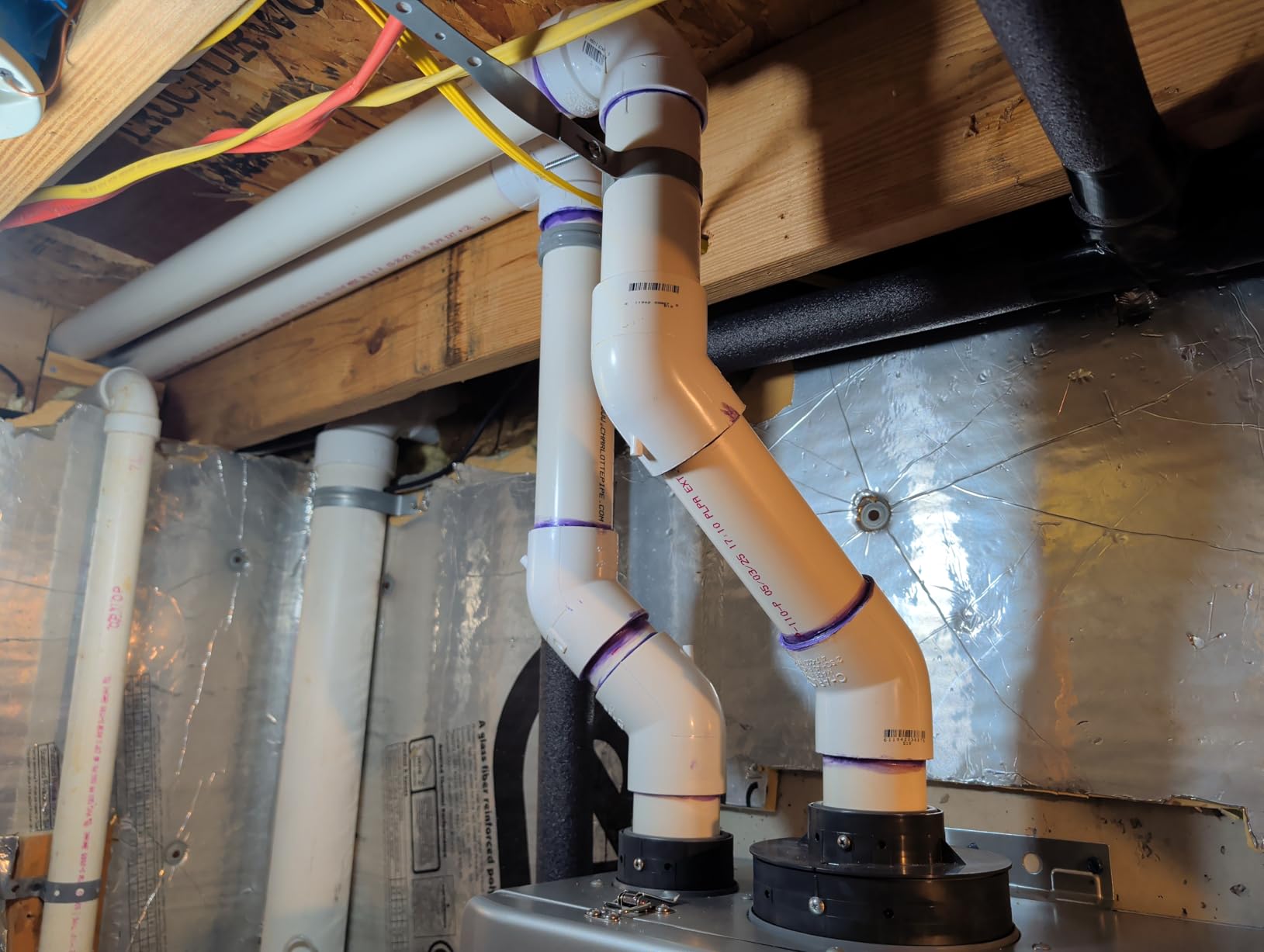
This is a condensing unit with flexible venting options, but it still needs correct Category III or PVC-approved venting per the manual, and gas line sizing for 199,000 BTU is non-negotiable. Rinnai recommends professional installation, and I agree with them for anything at this BTU level.
Plan the drain too, because a condensing heater produces condensate that needs a proper drain line or pump. Getting these details right upfront is what separates a 20-year installation from a 5-year headache.
Who Should Buy It
Large households with multiple bathrooms running showers simultaneously are the perfect fit. If you have a family of five plus guests and everyone gets ready at 8 AM, this is your unit.
It is overkill for a one-bathroom condo or a small cabin where a single 5 GPM unit would do the same job for a third of the cost.
2. MIZUDO 199,000 BTU 10.3 GPM – Best Value High-Capacity Pick
MIZUDO Natural Gas Tankless Water Heater, 199,000 BTU, Indoor
10.3 GPM
199,000 BTU
Natural Gas
WiFi and App Control
6 Stage Gas Modulation
55.5 lbs
Pros
- Excellent capacity for the price
- WiFi app control
- 16+ safety protection features
- Supports 5-7 fixtures at once
- 5-year heat exchanger warranty
Cons
- Vent kit sold separately
- Some users report issues at high altitudes
The MIZUDO 199k gives you nearly the Rinnai’s flow capacity at a meaningfully lower price, and that trade is why it earns our Best Value badge. Owners consistently call out the value factor in reviews, with 198 buyers giving it a 4.4 average.
In daily use, the 6-stage gas modulation is the feature you actually feel. Instead of firing at full blast every time a faucet opens, it dials output to match demand, which keeps water temperature stable to within 1 degree F and trims gas use.
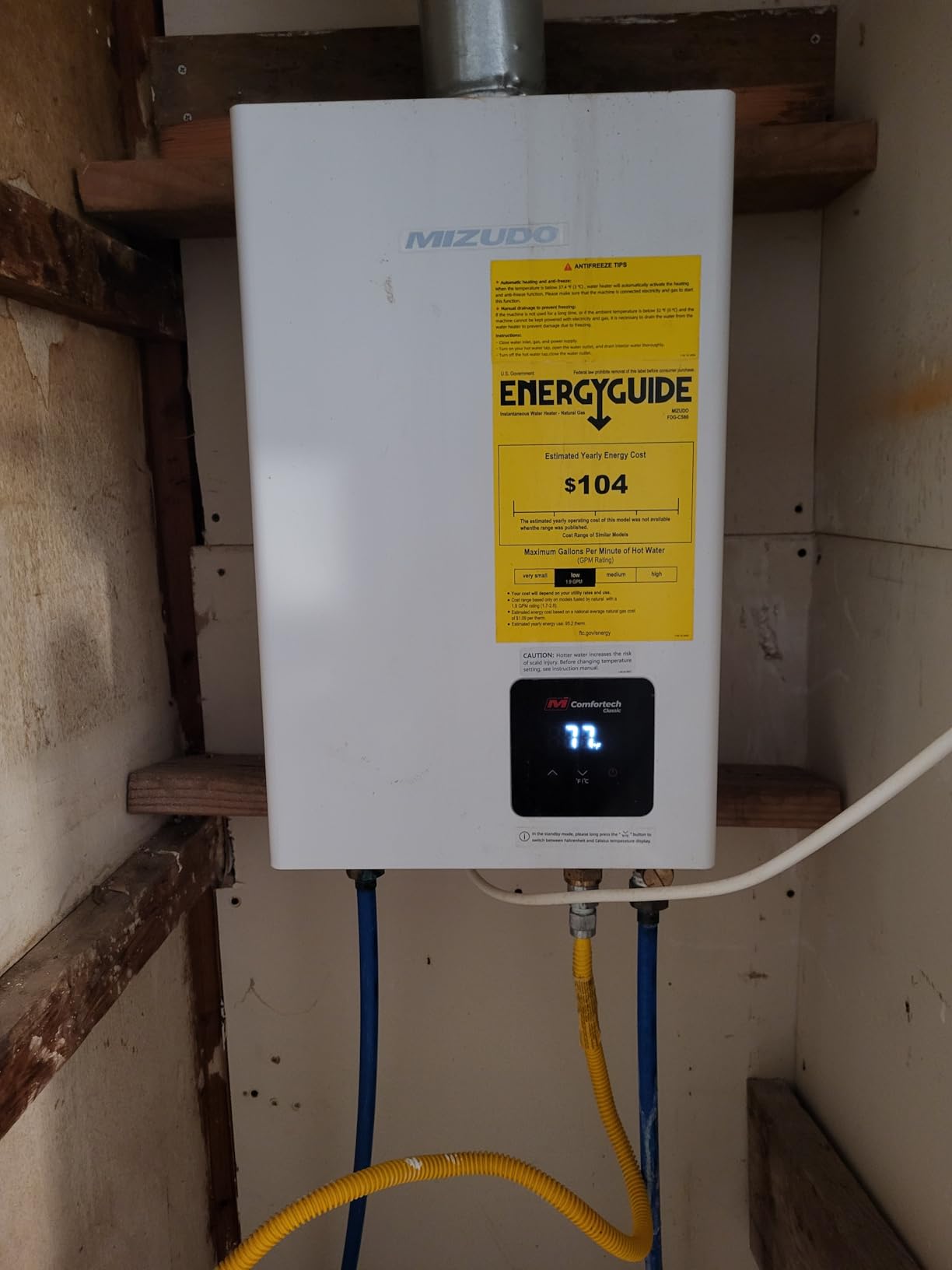
The WiFi app control is genuinely useful rather than a gimmick. I like being able to check outlet temperature and error status from my phone instead of walking to the utility closet, and the 16+ safety mechanisms cover everything from overheat to dry-fire protection.
Two honest caveats from the review data: the vent kit is sold separately, so factor that into your total cost, and several owners at high altitude report performance issues. If you live above roughly 6,000 feet, confirm altitude compatibility with the manufacturer before ordering.
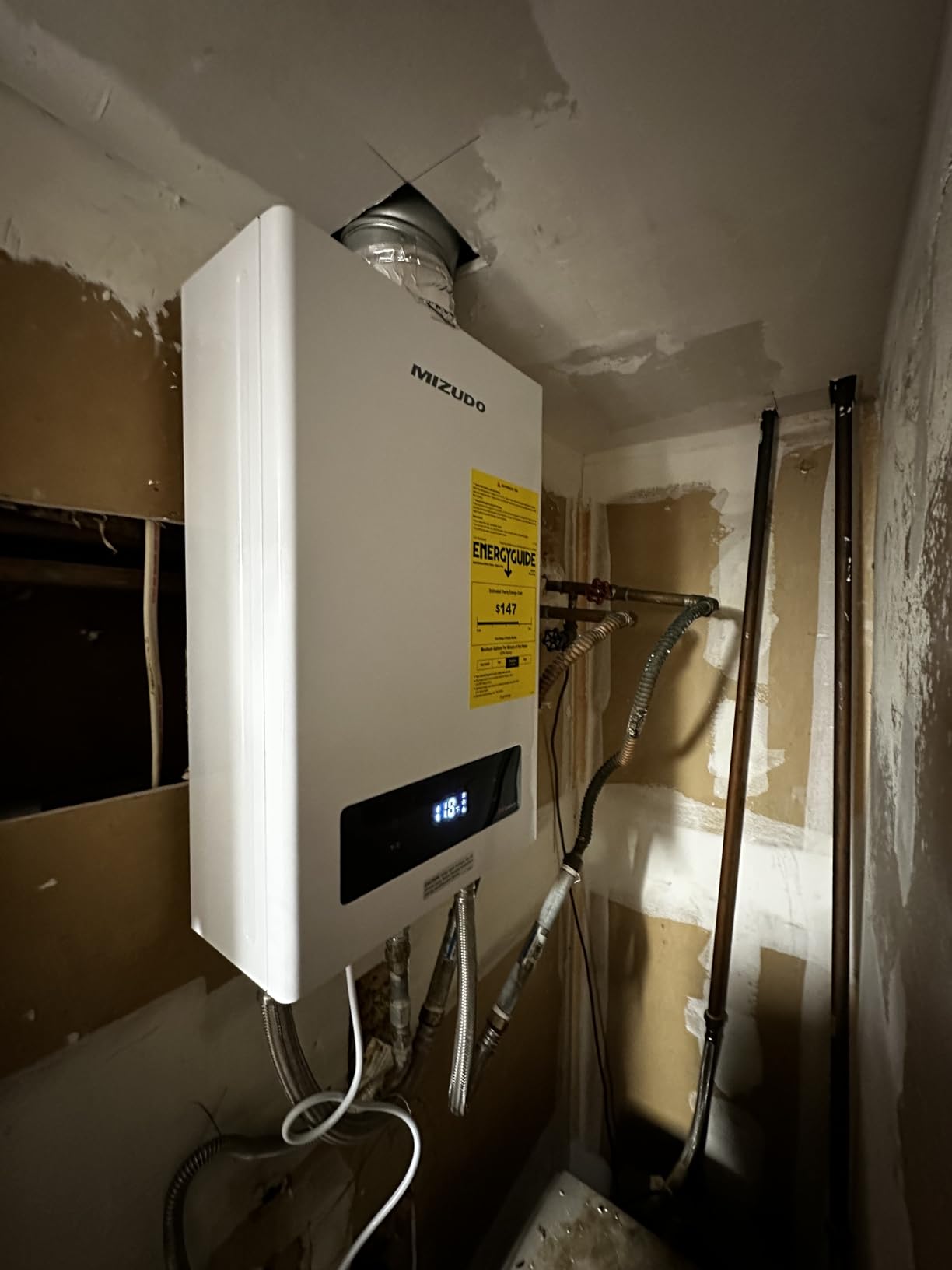
Sizing and Fixture Count
At 10.3 GPM this unit comfortably serves five to seven fixtures, which covers most three-bathroom homes. In cold-winter climates where inlet water drops near 40 degrees F, expect real-world flow closer to 5-6 GPM at shower temperature.
That is still plenty for two simultaneous showers plus a sink, but size honestly against your groundwater temperature, not the marketing number.
Smart Features and Daily Use
The app lets you schedule temperature, view usage history, and receive fault alerts, which is more control than most gas units offer at this price. The phosphorous-deoxidized copper heat exchanger and stainless combustion chamber are quality components you normally find on pricier brands.
The 5-year heat exchanger warranty is decent, though it trails Rinnai and Rheem’s 15-year coverage. That gap is part of why this is the value pick rather than the overall winner.
3. Rheem RTGH Series 8.4 GPM – Best Ultra-Low NOx Condensing Unit
Rheem RTGH Series 8.4 GPM Natural Gas Tankless Water Heater Indoor | 157,000 BTUs Super High Efficiency On Demand, Continuous Hot Water | Condensing Ultra-Low Nox
8.4 GPM
157,000 BTU
0.93 UEF
Ultra-Low NOx
Indoor Direct Vent
59.9 lbs
Pros
- 8.4 GPM for whole-house use
- 0.93 UEF condensing efficiency
- Ultra-low NOx emissions compliant
- Digital LED control with 1 degree F precision
- 15-year heat exchanger warranty
Cons
- Challenging installation requiring many extra parts
- Some users report poor warranty support
- Complex venting requirements
Rheem is the brand everyone knows from big-box store shelves, and the RTGH-84DVLN is their serious condensing model rather than the basic builder-grade units. At 8.4 GPM with a 0.93 UEF, it handles three to four simultaneous showers while keeping gas bills noticeably lower than a tank heater.
The ultra-low NOx emissions rating matters if you live in California or another state with strict air quality rules, since some standard units simply cannot be legally installed there. This one complies out of the box.
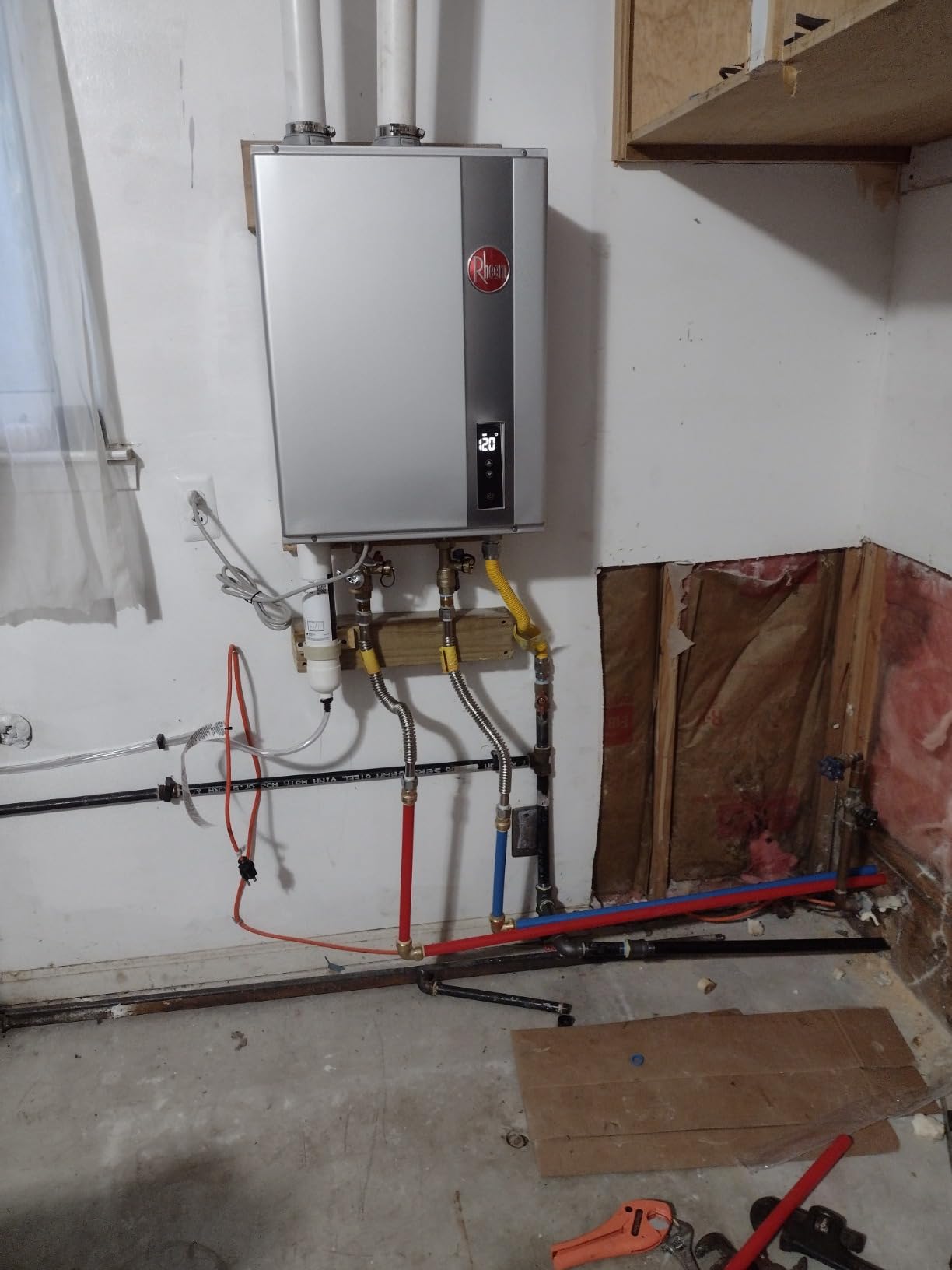
The exclusive Hot Start programming minimizes the cold-water sandwich effect, that annoying blast of lukewarm water when a second person showers right after the first. Owners also mention quiet operation as a pleasant surprise compared to older tank units.
I want to be straight about the downsides, because the review data is clear on them. Installation is challenging and requires many additional parts, the venting is complex, and several owners report frustrating warranty support from Rheem when things go wrong. Forum threads echo this, with some Rheem owners reporting leaks after 5-7 years on older tank models. Buyers who paid for professional installation report the best results with this unit.
Venting and Gas Line Requirements
This indoor unit uses direct venting with concentric or dual-pipe configurations, and you must follow the manual exactly on termination clearances. It also needs a properly sized gas line for 157,000 BTU plus a condensate drain.
Do not treat this as a weekend DIY swap unless you have real gas-fitting experience. Budget for a licensed installer and the extra venting parts from day one.
Efficiency and Operating Cost
The 0.93 UEF rating means roughly 93 cents of every gas dollar becomes hot water, which is dramatically better than a standard 0.60 EF tank heater. Owners report visible drops in winter gas bills after switching.
Combined with the 15-year heat exchanger warranty, the long-term ownership math is strong, provided the unit is installed correctly and descaled yearly in hard-water areas.
4. Westinghouse 7.9 GPM 180,000 BTU – Best Smart WiFi Features
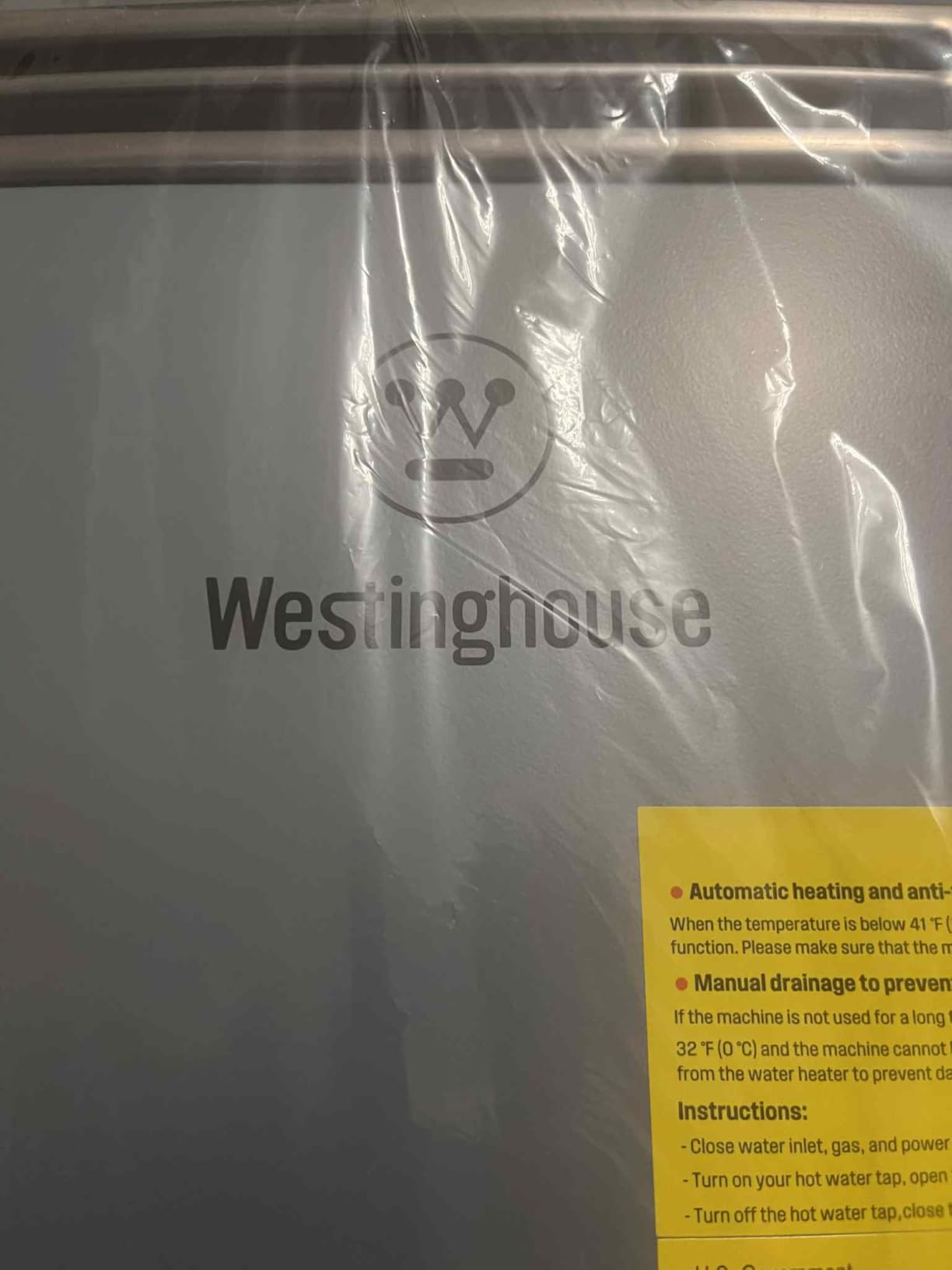
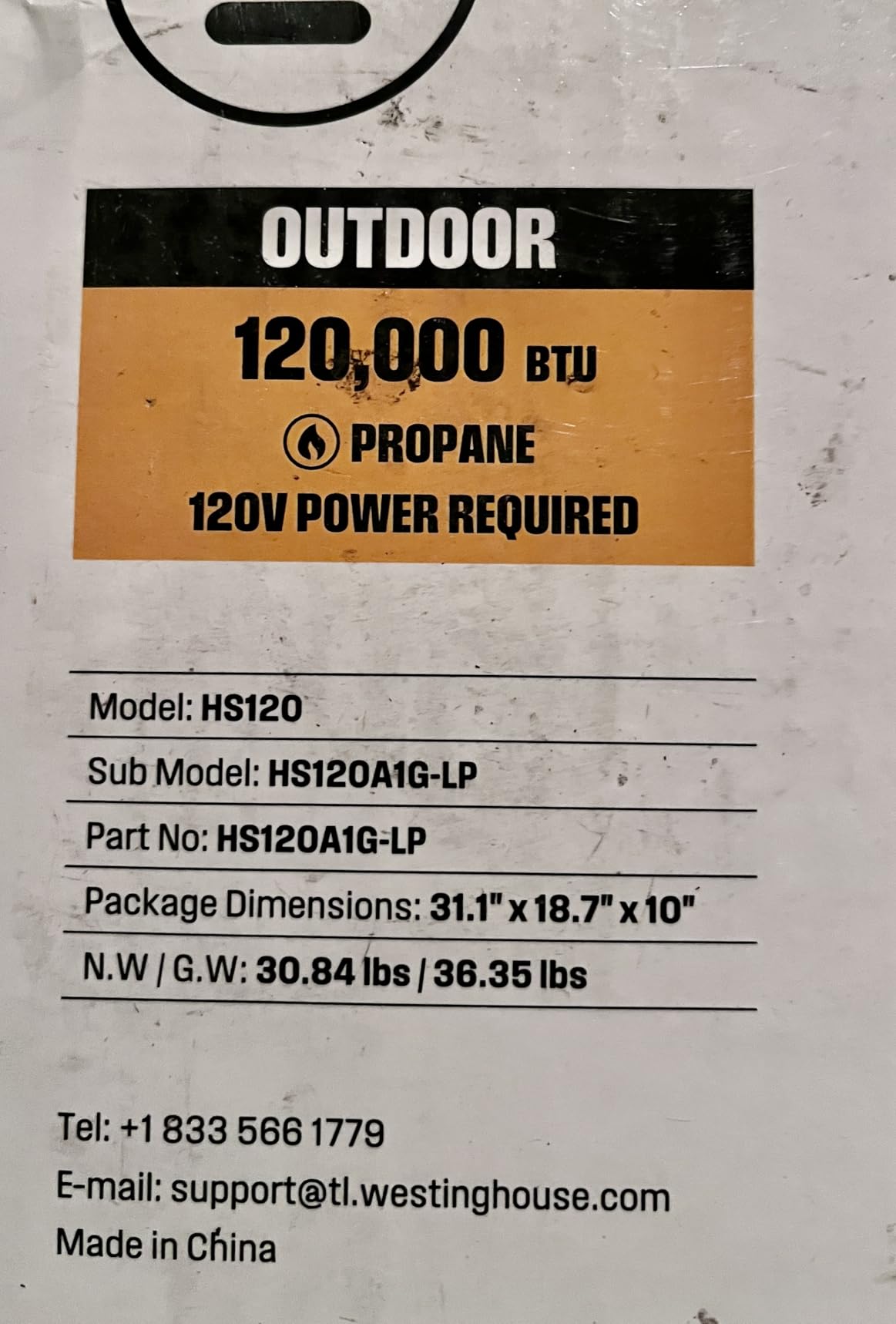
Westinghouse Tankless Water Heater Gas Indoor, 7.9 GPM, 180,000 BTU
7.9 GPM
180,000 BTU
Self-Modulating
WiFi App and Voice Control
165 F Max Temp
Low 15 PSI Activation
Pros
- WiFi and voice control included standard
- Reliable 1 degree F temperature stability
- Works with low water pressure at 15 PSI
- Easy installation with clear instructions
- Good for 3-5 fixtures
Cons
- Some units may arrive with defects
- Finding a contractor can be difficult
- Display may not turn on in rare cases
The Westinghouse 79NI includes smart WiFi app and voice control as standard equipment with no extra accessories to buy, which competitors like MIZUDO and Rheem cannot always claim. For anyone who wants to monitor and adjust their water heater from the couch, this is the easiest path.
With 7.9 GPM at 180,000 BTU, it sits in the sweet spot for a typical three-to-four bedroom home serving three to five fixtures. Early owners rate it 4.5 stars, and the review pool praises the straightforward installation instructions.
The self-modulating technology with a variable-speed combustion fan is what keeps showers at a steady temperature. One thoughtful detail is the low 15 PSI activation pressure with a 0.53 GPM minimum flow, which helps homes with weak municipal pressure or older plumbing.
On the caution side, the review count is still small at 29, and a few buyers received units with defects or a display that would not power on. Westinghouse covers it with a 2-year warranty plus 5 years on the heat exchanger, which is reasonable but not class-leading.
Smart Home Integration
The app supports remote temperature adjustment, schedules, and fault notifications, and voice control works through standard smart home ecosystems. Setup reportedly takes minutes since WiFi is built in, not an add-on module.
If you already run a connected home, this unit slots in without extra purchases, which quietly offsets some of its price premium over budget picks.
Water Pressure and Flow Considerations
The 15 PSI minimum activation is genuinely low, making this a strong choice for well-water systems or homes at the end of a municipal line. The 165 degree F maximum temperature also gives headroom for commercial-style applications or sanitizing cycles.
Just remember that higher flow fixtures pull more GPM, so count your simultaneous fixtures honestly before committing to 7.9 GPM.
5. MIZUDO 180,000 BTU 7.9 GPM – Best for Small to Medium Homes
MIZUDO Tankless Water Heater Natural Gas Indoor WiFi, 180K BTU 7.9 GPM
7.9 GPM
180,000 BTU
Natural Gas
WiFi and App Control
CSA Certified
39.6 lbs
Pros
- Great for small to medium households
- WiFi app control works well
- Compact space-saving design
- CSA certified safety
- Easy installation
Cons
- Some issues reported at high altitudes
- May struggle in very cold climates
- 0.53 GPM minimum activation flow
This is the little sibling of our Best Value pick, pairing the same WiFi app control and CSA certification with a 7.9 GPM, 180,000 BTU output sized for three to five outlet points. For a two-bathroom family home, it is often the smarter buy than paying for capacity you will never use.
Owners rate it 4.2 across 175 reviews, with easy installation and the convenient app earning repeated mentions. At 39.6 pounds and about 16 by 25 inches, it also fits in tight utility closets where a tank heater never could.
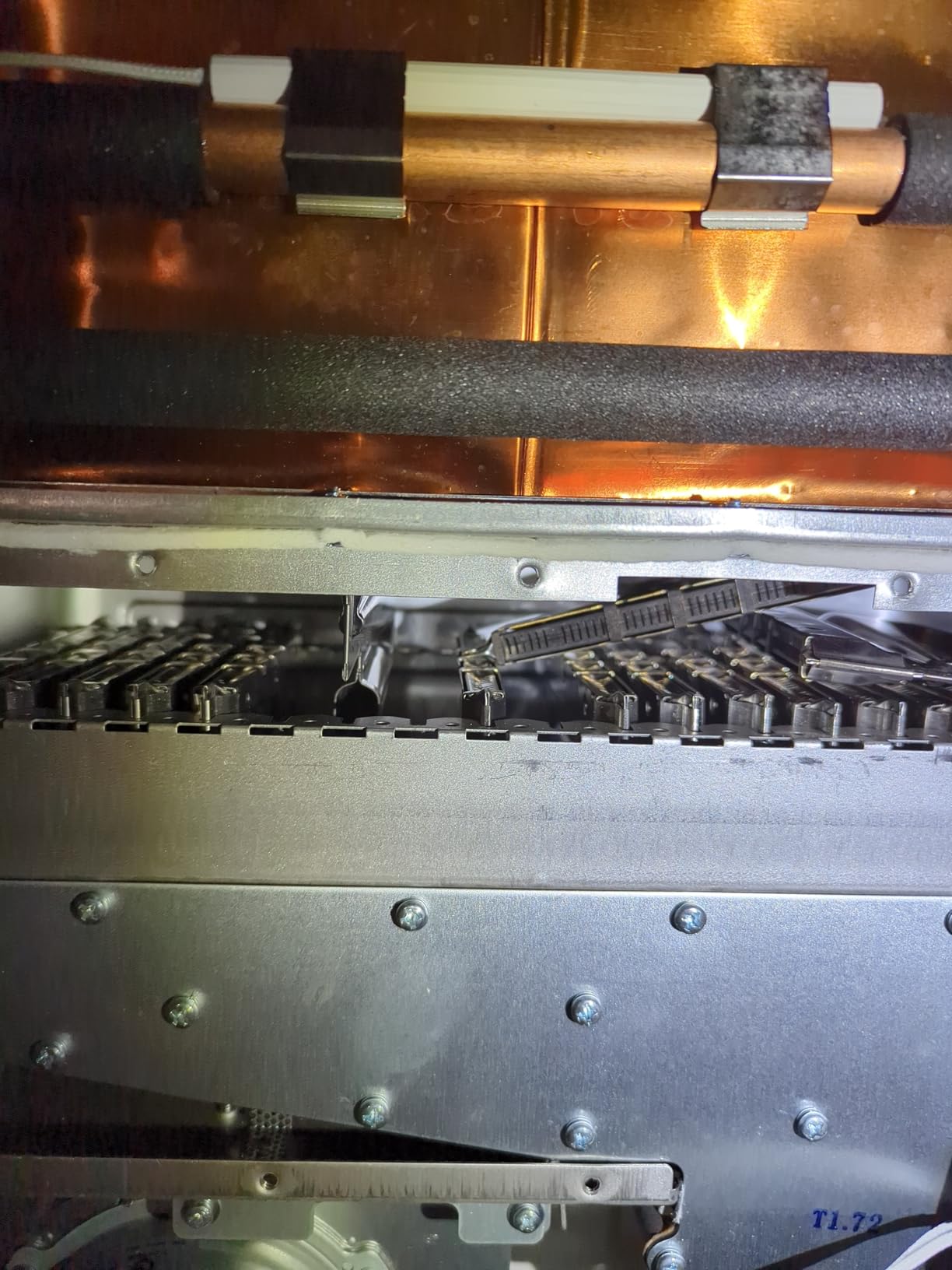
The oxygen-free copper heat exchanger and sealed combustion system are solid engineering at this price. Temperature stability of plus or minus 1 degree F means comfortable, consistent showers.
The honest limits: owners at high altitude report issues, and in very cold climates with low inlet water temperatures the effective flow rate drops. The 0.53 GPM minimum activation flow also means a trickling faucet may not trigger the burner at all.
Cold Climate Performance
In winter, incoming groundwater can fall to 40 degrees F or lower in northern states, which cuts real-world output. This unit still delivers enough for a shower plus a sink in those conditions, but not the full 7.9 GPM.
If you regularly need three simultaneous hot water outlets in a cold climate, step up to the 199k BTU MIZUDO or the Rinnai RX199iN instead.
Warranty and Support
MIZUDO backs the heat exchanger for 5 years, which is respectable for the price tier. CSA certification means the unit passed recognized North American safety testing, which not every import brand can claim.
Keep your registration and installation receipts, since warranty claims on any brand go smoother with documentation.
6. Rinnai V53DeN 5.3 GPM – Best Compact Outdoor Unit
Rinnai V53DeN Natural Gas Tankless Water Heater
5.3 GPM
0.82 Efficiency
Outdoor Wall Mount
Natural Gas
120V
33 lbs
Pros
- Heats water only when needed
- Compact space-saving design
- 10-year heat exchanger warranty
- Serves up to 4 appliances
- Easy installation with basic tools
- Quiet operation
Cons
- Outdoor rated only
- Flame stability issues in high winds
- Lag time before hot water arrives
The V53DeN is the workhorse of Rinnai’s non-condensing line and the most-reviewed unit in this roundup at 231 ratings. It is an outdoor-mounted design, which is a huge plus in warm climates where mounting outside frees up the entire utility closet and eliminates venting through the wall.
At 5.3 GPM it feeds up to four appliances, which realistically means one good shower plus a simultaneous sink or appliance. For a small household, a condo, or a guest house, that is exactly enough.
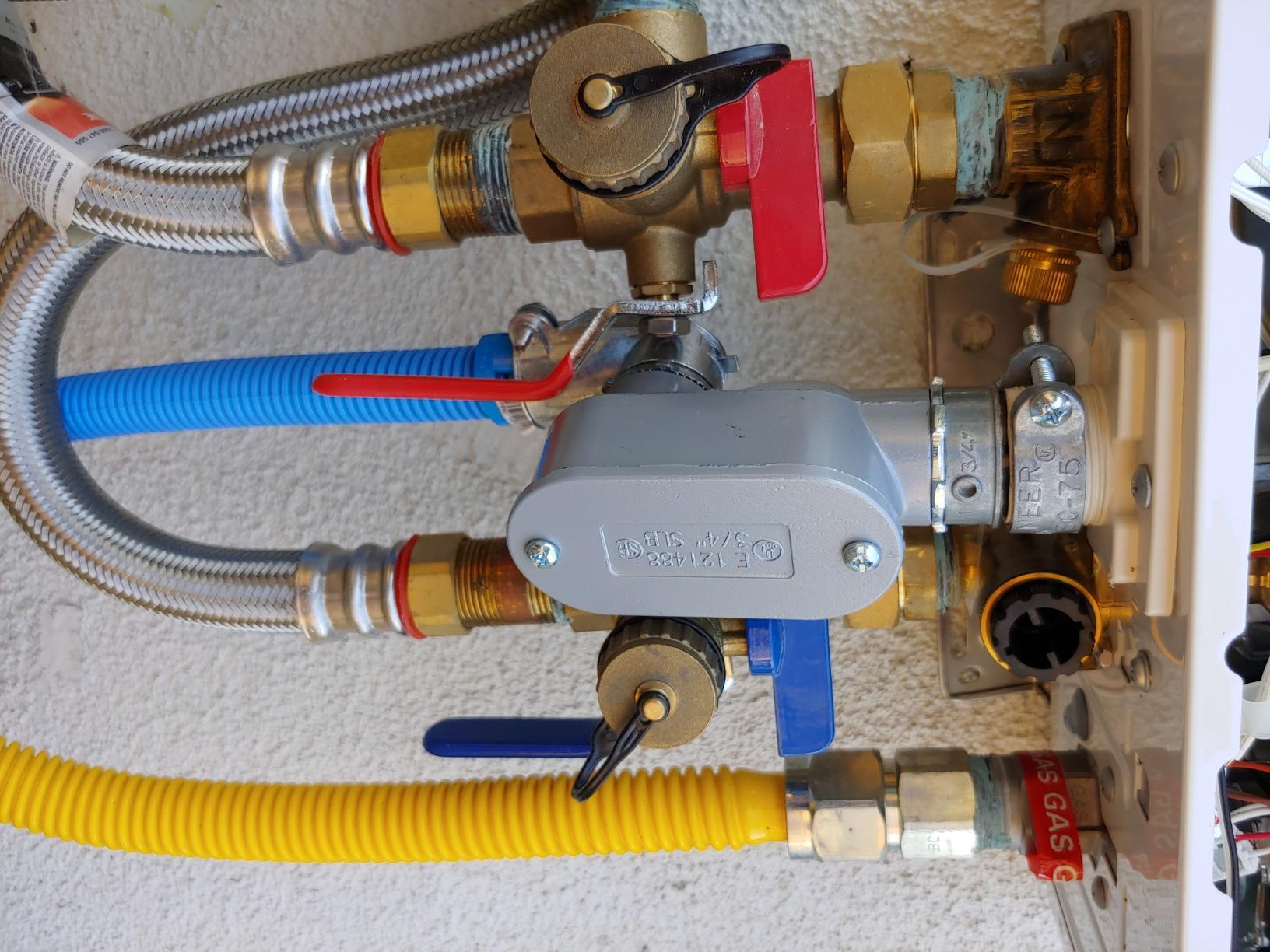
The 0.82 energy factor is mid-pack by modern condensing standards but still efficient in practice, because the unit only fires when water flows. Multiple owners specifically note energy savings after replacing old tank heaters.
Warranty coverage is where Rinnai flexes: 10 years on the heat exchanger, 5 years on parts, and 1 year on labor, with registration extending heat exchanger coverage. The known weak spot is flame stability in high winds since the burner lives outdoors, so pick a sheltered mounting wall if gusts are common at your address.
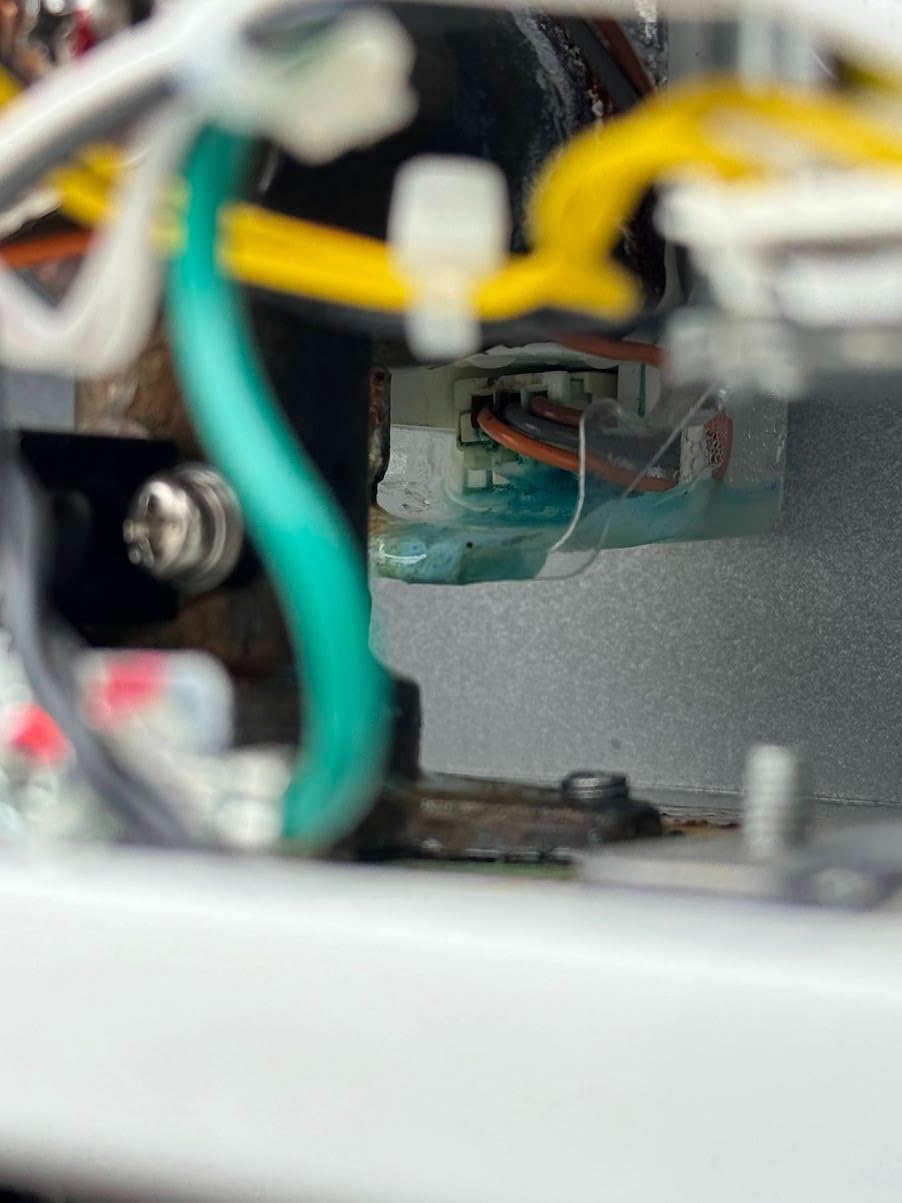
Indoor vs Outdoor Mounting
This specific model is outdoor rated only, so it cannot go inside your garage or closet. That is a feature in the South and Southwest, where freeze risk is low and wall-mounting outside simplifies installation dramatically.
In freezing climates, an outdoor unit needs constant power for freeze protection, and a power outage in a cold snap becomes a real risk. Northern homeowners should choose an indoor model from this list instead.
Hot Water Lag Time
Every tankless unit has a lag between opening the tap and hot water arriving, and owners honestly report it here as with all brands. The delay depends mostly on how far the unit sits from your faucet, not on the heater itself.
A recirculation pump or a point-of-use mini tank under the far sink solves this if it bothers you, and both are cheaper add-ons than upsizing the whole heater.
7. GASLAND Gasmart E 5.8 GPM – Best Budget Whole-House Option
GASLAND Gasmart E Natural Gas Tankless Water Heater Indoor, Up to 5.8 GPM 150,000 BTU, CSA Certified Whole House Installation Residential On-demand Instant Hot Water Heater, CE528NG
5.8 GPM
150,000 BTU
0.8 UEF
Natural Gas
LED Display
33.1 lbs
Pros
- 34% more efficient than 50-gallon tank heaters
- Compact space-saving design
- CSA certified safety protections
- US-based customer support
- 1-year free replacement warranty
Cons
- Installation challenges for DIY users
- Vent kit sold separately
- Lag time before hot water arrives
The GASLAND Gasmart E is the cheapest whole-house-capable unit in this roundup, and it still covers the basics properly: CSA certification, a 0.8 UEF rating GASLAND says is 34% more efficient than a 50-gallon tank, and 150,000 BTU of output for 5.8 GPM.
For a first tankless conversion on a tight budget, it hits the mark. Owners rate it 4.2 and repeatedly praise the value and the responsive US-based customer support when questions come up.
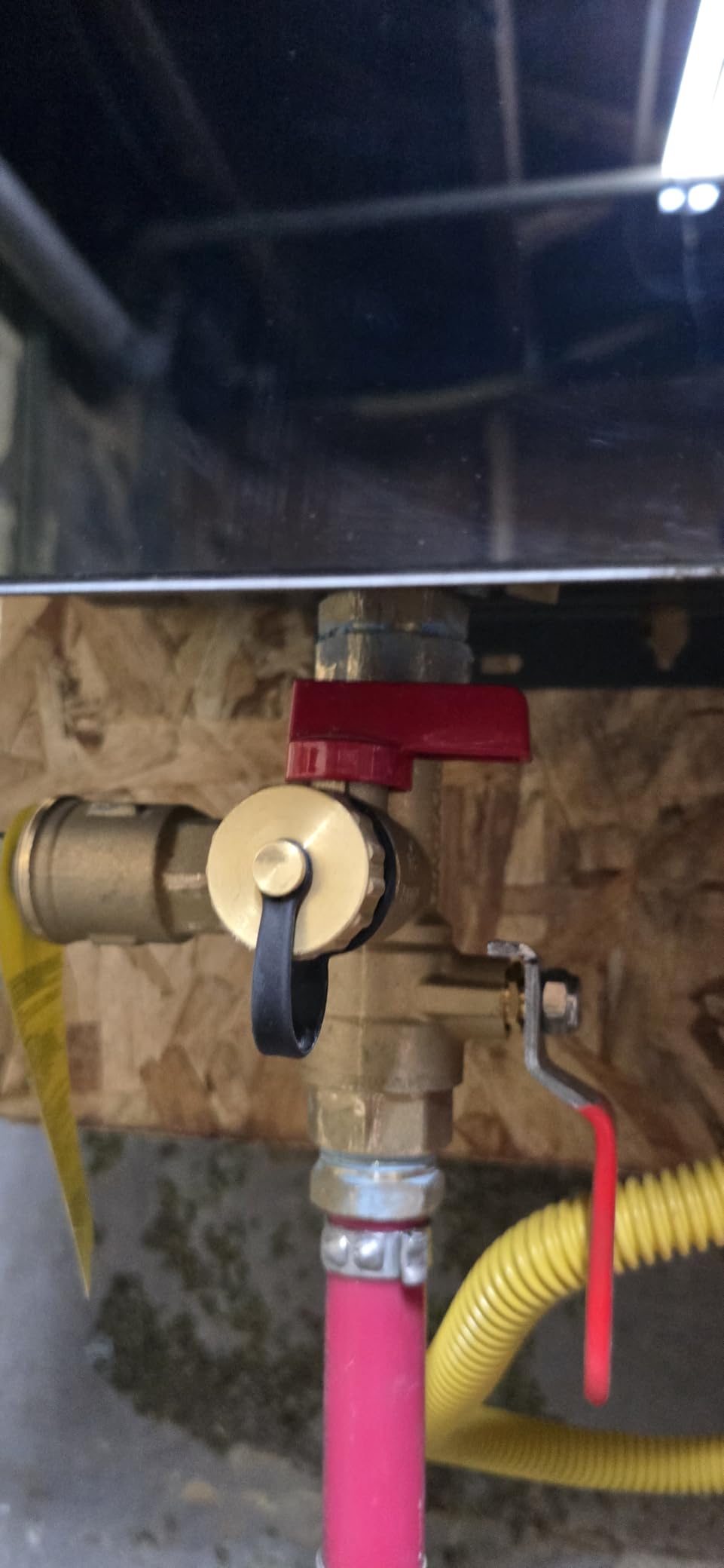
Safety coverage is genuinely thorough for the price, including anti-freezing protection, dry combustion protection, flame failure protection, and high water pressure protection, plus an integrated error code indicator on the LED display.
The trade-offs are the ones you would expect at this price. Installation is challenging for first-time DIYers, the venting kit is a separate purchase, and there was a report of a unit failing after 3 months, which the 1-year free replacement warranty exists to cover. Have a plumber or an experienced friend lined up rather than going in cold.
DIY vs Professional Installation
Forum consensus is blunt on this: gas work is not where you learn plumbing. A mis-set gas pressure or a sloppy flare fitting can mean carbon monoxide or a fire, and a botched install can also void your warranty.
If you are handy, you can mount the unit and run water lines yourself, then pay a pro just for the gas connection and final commissioning. That hybrid approach saves money without cutting corners on safety.
Long-Term Reliability Outlook
GASLAND is a newer brand in the North American market, so long-term longevity data simply does not exist yet the way it does for Rinnai or Rheem. The 1-year replacement warranty is shorter than most rivals, so keep that in your calculation.
The customers who report the best outcomes describe careful installation and periodic descaling, which is honestly the recipe for longevity on any tankless brand.
8. ThermoMate CZ422NG 5 GPM – Best Entry-Level Tankless Pick
ThermoMate CZ422NG, Natural Gas Tankless Water Heater Indoor, Up to 5 GPM
5 GPM
113,000 BTU
98% Thermal Efficiency
Natural Gas
LED Diagnostic Display
22 lbs
Pros
- On-demand hot water for two showers
- 98% thermal efficiency
- 8 safety protections
- Easy installation with standard connections
- Compact at just 22 pounds
Cons
- Some construction quality concerns
- Venting requirements can be confusing
The ThermoMate CZ422NG is the lightest and one of the most affordable gas tankless units worth buying, at just 22 pounds with a small 13.77 by 21.65 inch footprint. It is built for apartments, small homes, cabins, and accessory dwellings where a single bathroom rules the load.
At 5 GPM and 113,000 BTU, owners confirm it runs two showers simultaneously in moderate climates, which is impressive for the size and price. The 4.2 rating across 147 reviews reflects a solid budget experience.
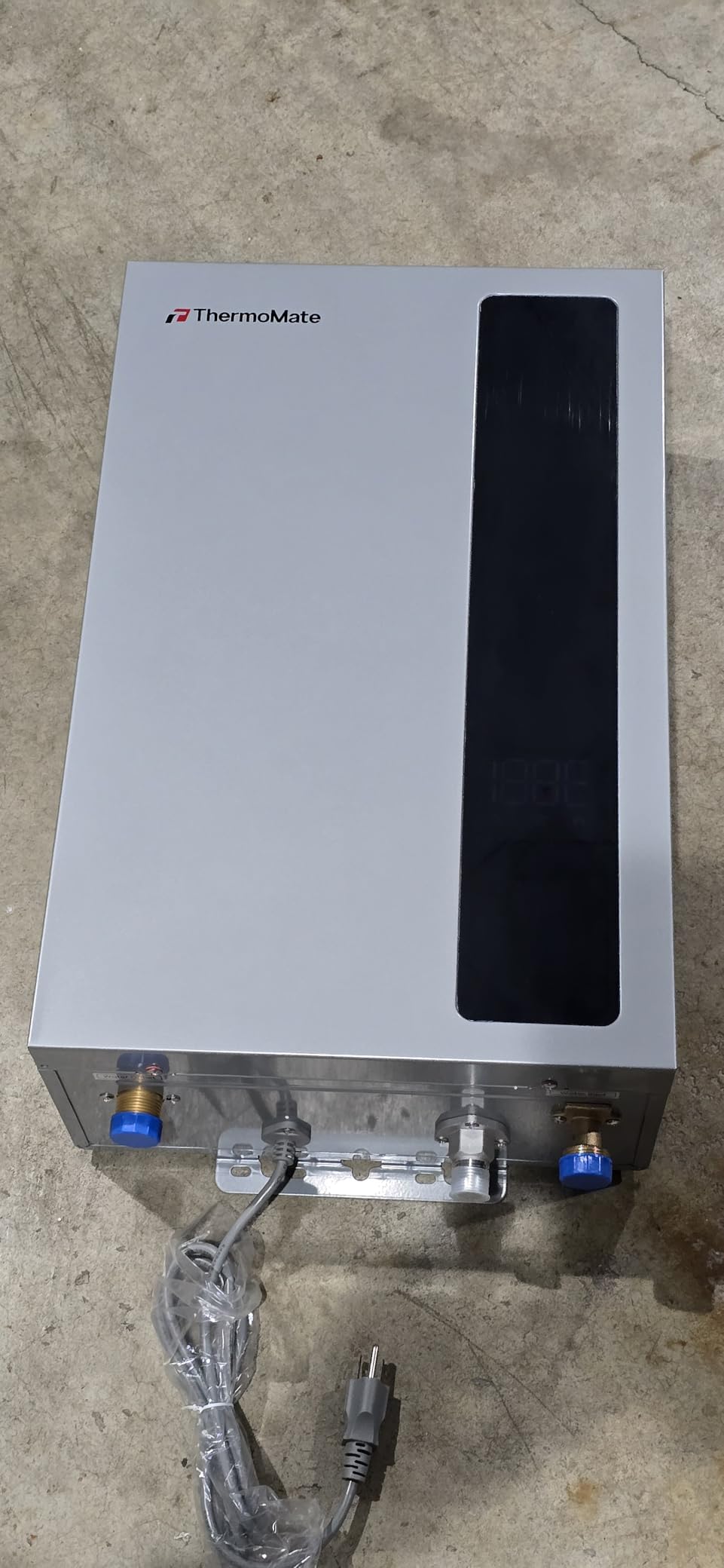
Eight safety protections, including boil-dry, freeze, flame-out, and overheat shutoffs, plus a 3.5-inch LED diagnostic display with error codes, make it feel less spartan than its price suggests. The wind resistance rating up to Category 3 hurricane forces is unusual at any price point.
The two recurring complaints are construction quality concerns on some units and confusing venting requirements, so read the venting section of the manual twice before purchase. Anti-freezing protection down to 41 degrees F is built in, but this is not the unit for a Minnesota garage wall.
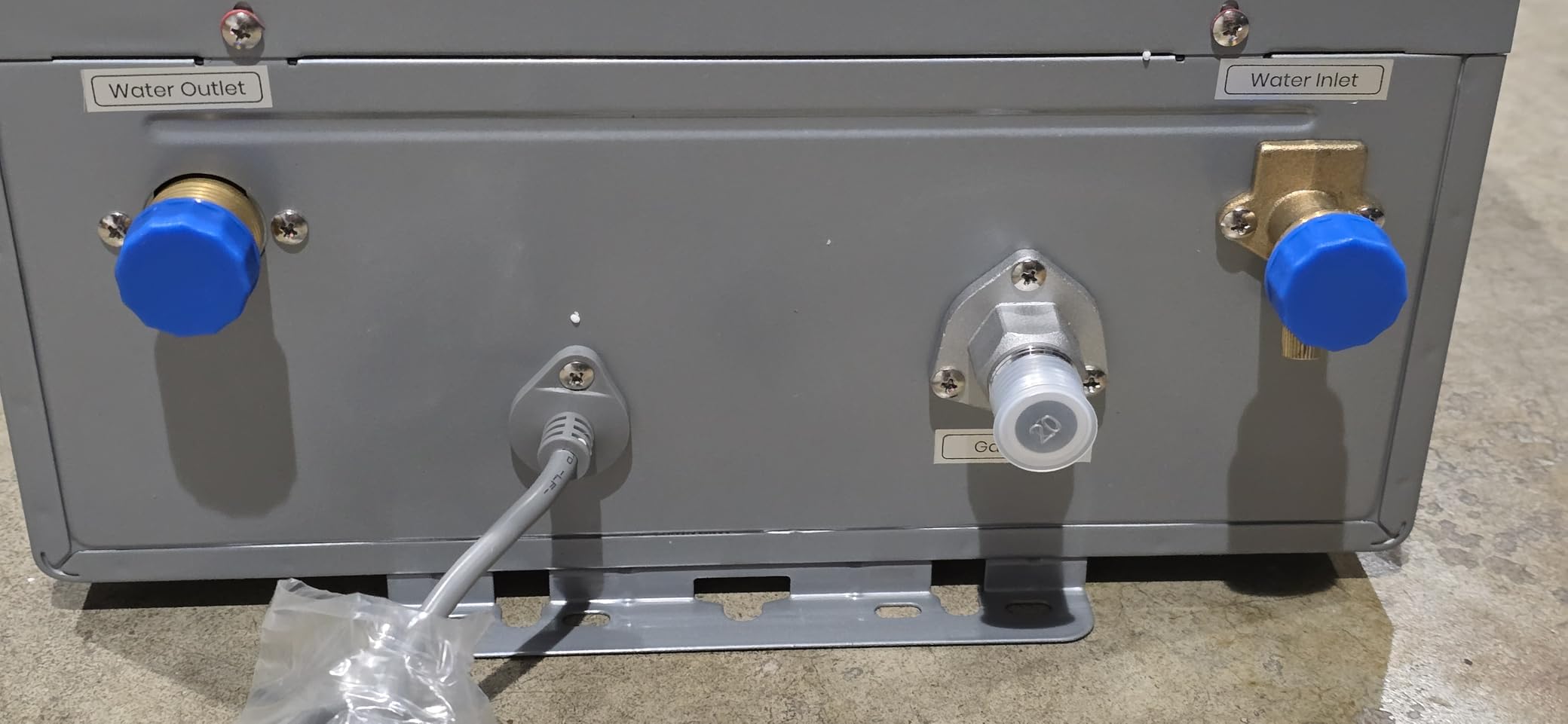
Best Use Cases
Think small: a one-bathroom home, a guest suite, a workshop, or an ADU rental. Pairing it with low-flow showerheads stretches the 5 GPM further than you would expect.
It struggles as a whole-house unit for families who shower in shifts on winter mornings, so treat it honestly as a point-of-use or small-home solution.
What to Check Before Buying
Confirm your gas line can supply 113,000 BTU alongside your furnace and dryer, since undersized gas supply is the number one cause of tankless complaints on every brand.
Also verify the venting type your space allows before ordering, because the venting rules are where most entry-level buyers trip up and end up paying for rework.
Gas Water Heater Buying Guide
Choosing among the best gas water heaters comes down to five numbers and one honest look at your climate. Here is how to decode them without a plumbing license.
Flow Rate: How Much GPM Do You Actually Need
GPM, or gallons per minute, is the single most important spec on a tankless gas water heater. Count your simultaneous fixtures: a standard shower pulls about 2 GPM, a dishwasher about 1.5, and a washing machine 2 to 3.
A two-bathroom home usually lives comfortably in the 5 to 8 GPM range, while a four-bathroom household wants 9 GPM or more. Then subtract for cold groundwater, because every tankless unit’s rated GPM assumes a 77 degree F temperature rise that northern winters never provide.
BTU Input and Why It Matters
BTU measures how much gas the burner can consume, and it determines how fast the unit can heat incoming water. The models here span from 113,000 BTU on the ThermoMate up to 199,000 BTU on the Rinnai and MIZUDO flagships.
Higher BTU means more hot water in winter, but it also means your gas line must be sized for it. Many tankless “failures” are really undersized gas supplies, so have your line checked before you blame the heater.
UEF and Energy Efficiency Explained
The Uniform Energy Factor, or UEF, tells you how much of the gas you pay for becomes hot water. Non-condensing units like the Rinnai V53DeN sit around 0.82, while condensing models like the RX199iN at 0.98 and the Rheem RTGH at 0.93 capture waste heat from exhaust gases.
Condensing units cost more upfront but win on lifetime operating cost, especially for large households. Low NOx and ultra-low NOx ratings are separate, and they matter mainly for emissions regulations in states like California.
Natural Gas vs Propane
Most models here are natural gas units, and several, including the Rinnai RX199iN, support conversion to propane. Never assume conversion is allowed, because some units are fuel-specific and converting one improperly voids the warranty and creates a safety hazard.
Rural homeowners without a gas line should confirm propane compatibility and the correct conversion kit before purchasing anything on this list.
Venting Requirements
Venting is the most underestimated part of a tankless gas water heater installation. Condensing units can often use affordable PVC because their exhaust is cooler, while non-condensing units require Category III stainless steel venting.
Outdoor units like the Rinnai V53DeN sidestep venting entirely at the cost of exposure to wind and freezing weather. Match the venting type to your home’s layout before you fall in love with a specific model.
Household Sizing Cheat Sheet
One to two people, one bathroom: 5 to 6 GPM like the ThermoMate or GASLAND. Two to four people, two bathrooms: 7 to 8 GPM like either MIZUDO or the Westinghouse. Four or more people, three-plus bathrooms: 9 to 11 GPM territory ruled by the Rinnai RX199iN and MIZUDO 199k.
When in doubt, size up one tier, because nobody has ever complained about too much hot water capacity.
Warranty, Hard Water, and Longevity
Heat exchanger warranties range from 5 years on the MIZUDO and GASLAND-class units up to 15 years on the Rinnai and Rheem, and that term is a decent proxy for how long the manufacturer expects the core to last.
Forum threads are unanimous that hard water is the silent killer of tankless heaters, with scale buildup choking the heat exchanger years early. The fix is cheap: flush the unit with vinegar yearly, and on tank models replace the anode rod every 3 to 5 years, the single most neglected maintenance task in homeownership.
Total Cost of Ownership
Think in three parts: the unit, the installation, and the years of operation. Professional install of a tankless gas unit typically runs higher than a tank swap because of venting and gas line work, and several models here also need a separately purchased vent kit.
A condensing unit at 0.93 to 0.98 UEF often repays that premium through lower gas bills over a 15-year life, which is the real reason to buy efficiency rather than the sticker alone.
Frequently Asked Questions
What is the most reliable brand of gas hot water heater?
Rinnai is widely considered the most reliable gas water heater brand, with plumbers on r/Plumbing repeatedly praising its tankless units for longevity when properly maintained. The Rinnai RX199iN backs that reputation with a 15-year heat exchanger warranty, and Rheem and Bradford White also earn strong professional endorsements for durability.
What water heaters do plumbers recommend?
Plumbers most often recommend Rinnai and Navien for tankless gas installations, and Bradford White for traditional tank units, citing component quality and low failure rates. They also consistently advise buying contractor-grade equipment over the cheapest big-box versions and insist on professional installation for any gas-fired model.
Is Rheem or AO Smith better?
Both are solid mid-range brands. Rheem offers wider availability, strong condensing tankless models like the RTGH series with a 15-year heat exchanger warranty, while AO Smith is praised for balanced price and quality, and its sister brand State offers similar quality at a lower price. Owners report mixed long-term results with both, so warranty terms and installation quality usually matter more than the badge.
What is the number one hot water heater?
For gas tankless water heaters, the Rinnai RX199iN is our top pick for 2026, thanks to 11.1 GPM of flow, a 0.98 UEF efficiency rating, and best-in-class warranty coverage. It delivers endless hot water for large households, which is the core promise of the category.
Final Verdict
After comparing all eight models, the Rinnai RX199iN stands out as the best gas water heater overall for 2026, pairing 11.1 GPM of flow with 0.98 UEF efficiency and a 15-year heat exchanger warranty. The MIZUDO 199k delivers nearly the same capacity for less money, and the GASLAND Gasmart E proves you can go tankless on a modest budget.
Match the unit to your household size and climate, insist on a proper installation, and flush the heat exchanger once a year. Do that, and whichever model you choose from this list will keep the showers hot for well over a decade.