
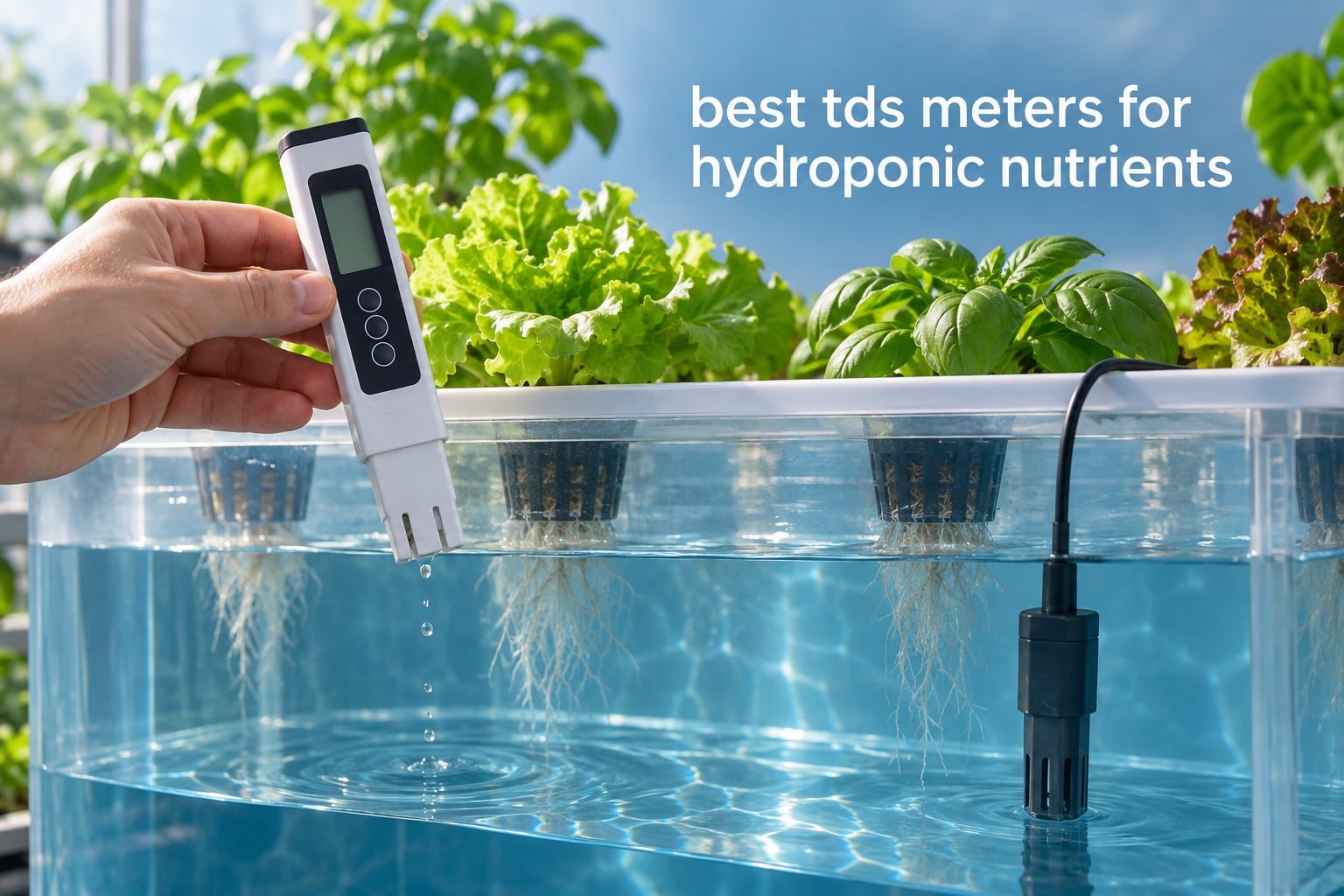
If you only want one number for your reservoir, buy a meter that reads EC in mS/cm, has automatic temperature compensation, and lets you choose between the 0.5 and 0.7 ppm conversion factors. The HoneForest HFTDS-M7 is the best all-round pick here, the Bluelab PENCON is the one to buy if you can justify it, and the HM Digital TDS-3 is a low-cost tool that still gives you 1 ppm resolution.
That advice matters more than it sounds. A TDS meter is the cheapest instrument in a hydroponic setup and the one growers are most likely to trust blindly, even though a TDS reading is a calculated estimate rather than a direct measurement of solids.
Our team mixed nutrient batches, checked source water baselines and compared readings against label targets across the 12 meters below, and the differences between them showed up quickly once the water temperature moved. Here is the full roundup, plus the chemistry you need to make sense of whatever the screen tells you.
Table of Contents
Our Top 3 TDS Meters for Hydroponic Nutrients in October 2026
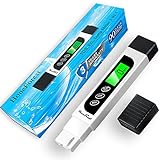
HoneForest HFTDS-M7
- TDS
- EC and temperature in one pen
- 0-9990 ppm range
- Titanium alloy probe
- Backlit LCD with auto-lock

Bluelab PENCON
- Factory calibrated
- Selectable PPM 500 and PPM 700
- Automatic temperature compensation
- Fully waterproof and floats

HM Digital TDS-3
- 0-9990 ppm at 1 ppm resolution
- Plus or minus 2% readout accuracy
- Built-in digital thermometer
- Carrying case with belt clip
Best TDS Meters for Hydroponic Nutrients in October 2026
Every meter in the table below reads the same physical property, so the differences are all in the details: which scales you can switch between, whether the reading is temperature corrected, whether the probe survives a season in nutrient solution, and whether you can recalibrate it when it drifts. We sorted them by how well they work in a real grow room rather than by specification alone.
| Product | Specifications | Action |
|---|---|---|
| HoneForest HFTDS-M7 |
|
Check Latest Price |
| Bluelab PENCON |
|
Check Latest Price |
| HM Digital TDS-3 |
|
Check Latest Price |
 Apera PC60 Apera PC60 |
|
Check Latest Price |
 HM Digital COM-80 HM Digital COM-80 |
|
Check Latest Price |
 YINMIK YK-T4 Pro YINMIK YK-T4 Pro |
|
Check Latest Price |
 UIUZMAR UMR-PH08 UIUZMAR UMR-PH08 |
|
Check Latest Price |
 HM Digital TDS-EZ HM Digital TDS-EZ |
|
Check Latest Price |
 VIVOSUN pH and TDS pair VIVOSUN pH and TDS pair |
|
Check Latest Price |
 MEXYBE A2 MEXYBE A2 |
|
Check Latest Price |
 EZTOCH SZ-08 EZTOCH SZ-08 |
|
Check Latest Price |
 EKOOTIMO a4 EKOOTIMO a4 |
|
Check Latest Price |
1. HoneForest HFTDS-M7: The Best TDS Meter Overall
HoneForest TDS Meter, Digital Water Tester – Accurate and Reliable, Measures TDS, EC & Temperature (°F/°C), 0-9990ppm, Water Test Meter for Drinking Water, RO/DI System, Aquariums, etc
TDS, EC and temperature
0-9990 ppm range
Titanium alloy probe
Auto-lock reading
Pros
- Accurate and stable TDS and EC readings
- Backlit LCD and auto-lock are easy to use in a dim grow room
- Titanium probe resists corrosion in nutrient solution
- Light and pocketable
- Leather carry pouch included
Cons
- Cannot measure pH
- Some users report probe coating wear after extended daily use
This is the pen we kept reaching for during this roundup. It measures TDS, EC and temperature in the same body, and the auto-lock means you drop the probe in, stir once, and the number holds while you get a notebook out.
The 0-9990 ppm range covers every reservoir strength we tested, from plain tap water to a full-strength vegetative mix. Readings lined up with the label targets on the nutrient bottles we mixed, and it settled quickly even in solution that had not finished dissolving.
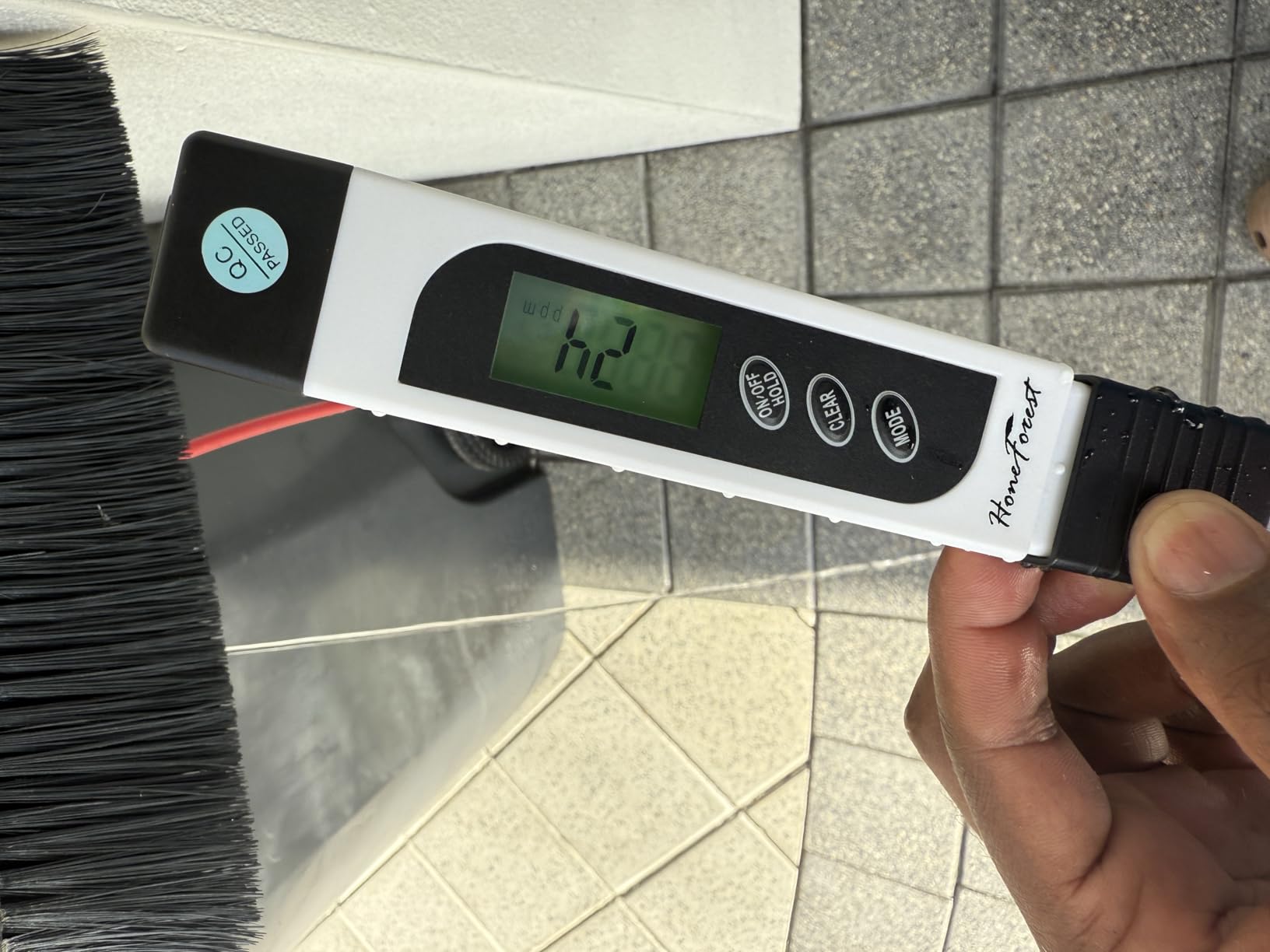
The backlit screen matters more than it sounds. Grow tents and grow rooms are usually dim or lit from one side, and a non-backlit pen forces you to cup your hands around it. We also liked that temperature sits on the same readout, which gives you a sanity check on whether a warm reservoir is skewing your numbers.
One thing to plan for: this is a TDS, EC and temperature pen, not a pH meter. Many growers end up pairing it with a separate pH pen anyway, and treating the two as a matched set of tools is more realistic than expecting one device to cover everything.
What makes it our top pick for a first reservoir meter
It covers the three numbers that actually drive nutrient decisions: dissolved solids, conductivity, and the water temperature that skews both. The titanium alloy probe is also the right material for repeated contact with fertiliser salts, where cheaper plated probes tend to pit and drift.
At 16505 reviews averaging 4.5 stars, it is one of the best-proven pens here, and the complaints that do appear are narrow. Reviewers point out it has no pH function, and a few mention wear on the probe coating after long stretches of daily use.
Where it falls short
If you need continuous monitoring, a handheld pen that you dip and read is the wrong tool. For an RDWC system where you want a reading without wading into the reservoir, look at the meters built for permanent immersion further down.
It also has no calibration solution included and no on-board calibration procedure beyond a single-point button press. For most home systems that is fine. For a commercial operation running multiple rooms, a meter with a documented calibration workflow is worth the extra step.
2. Bluelab PENCON: The Best Meter You Can Leave in the Reservoir
Bluelab PENCON Conductivity Pen and Digital TDS Meter, Water Tester for Temperature and Nutrient (CF, EC, PPM 500, PPM 700), TDS Testing Kit for Hydroponic System and Indoor Plant Grow
EC, CF, PPM 500 and PPM 700
Automatic temperature compensation
Waterproof and floats
Factory calibrated
Pros
- Holds calibration over months of daily hydroponic use
- Solid build compared with budget pens
- Waterproof and floats so it can sit in solution
- Switchable between both ppm scales
- Repair or replacement guarantee from the maker
Cons
- Water can ingress at the battery compartment seal
- Probe care kit sold separately
- Conductivity only
- pH needs a separate pen
The PENCON is the meter growers recommend when they ask what to buy once. It arrives factory calibrated, it floats, and you can switch between EC, CF, PPM 500 and PPM 700 without converting anything by hand.
That last point is the one that separates it from most pens in this list. Growers on r/Hydroponics and r/hydro repeatedly name Bluelab as the name they trust, and the reason usually given is that the calibration holds up rather than quietly drifting out over a season.
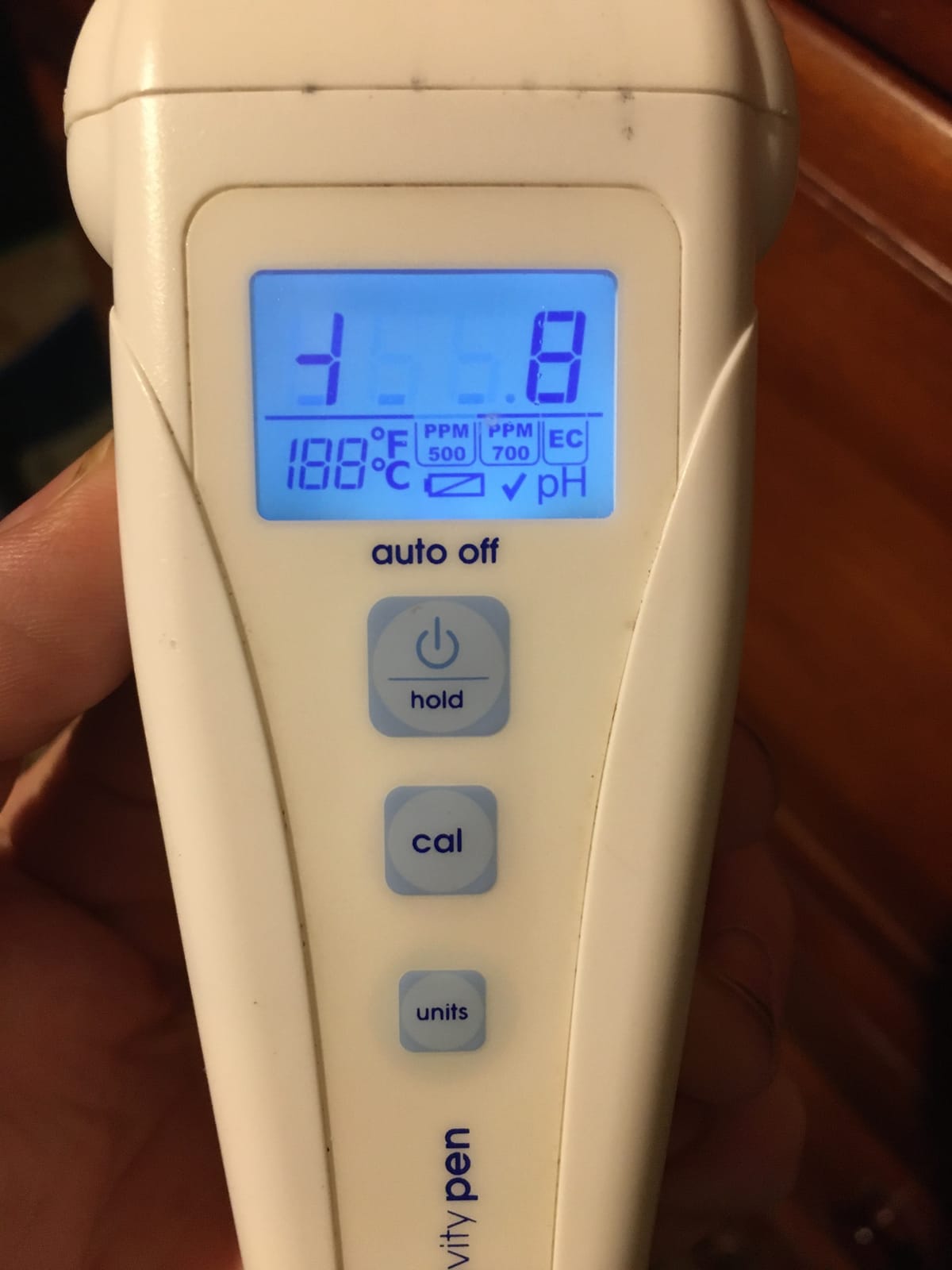
Automatic temperature compensation means the reading stays comparable whether the reservoir is 18 °C in the morning or warmer after a lighting cycle. In our testing that mattered, because the same solution read differently on a pen with no compensation once the water warmed up.
Because it is fully waterproof and floats, you can leave it in a bucket or reservoir while you do other work, or float it in a mixing tank to watch the reading climb as you add concentrate. It weighs 3.84 ounces and runs on a single included AAA battery.
Why experienced growers end up here
Long-term calibration stability is the deciding factor. Several reviewers describe using one for a year and a half with no meaningful drift, and report that cheaper pens they tried first wandered within a few months. Over a full grow that difference is worth more than the price gap.
It is also the only pen here that lets you correct for the conversion factor at the device. A solution reading 2.0 mS/cm shows as 1000 ppm on the 500 scale and 1400 ppm on the 700 scale, and you choose the number that matches your nutrient label.
Where it falls short
The waterproof claim is the weak point, and reviewers do report water getting into the battery compartment, which can disable the pen. Several people recovered the unit by drying it out, and Bluelab’s support response is consistently praised, but it is a real failure mode in a wet environment.
The warranty is one year on a comparatively expensive instrument, and the probe care kit is a separate purchase. You are buying conductivity only, so budget for a separate pH pen if you have not already got one.
3. HM Digital TDS-3: The Best Value Meter With a Thermometer
HM Digital TDS-3 Handheld TDS Meter With Carrying Case, 0 – 9990 ppm TDS Measurement Range, 1 ppm Resolution, +/- 2% Readout Accuracy
0-9990 ppm at 1 ppm resolution
Plus or minus 2% readout accuracy
Built-in digital thermometer
Belt-clip carrying case
Pros
- Highest average rating in the group at 4.6 stars
- Fast repeatable readings users trust for nutrient checks
- Carrying case with belt clip suits field or commercial work
- Built-in thermometer gives solution temperature
- Durable metal body
Cons
- TDS only with no EC scale
- pH or logging
- Runs on two LR44 button cells which are short-lived
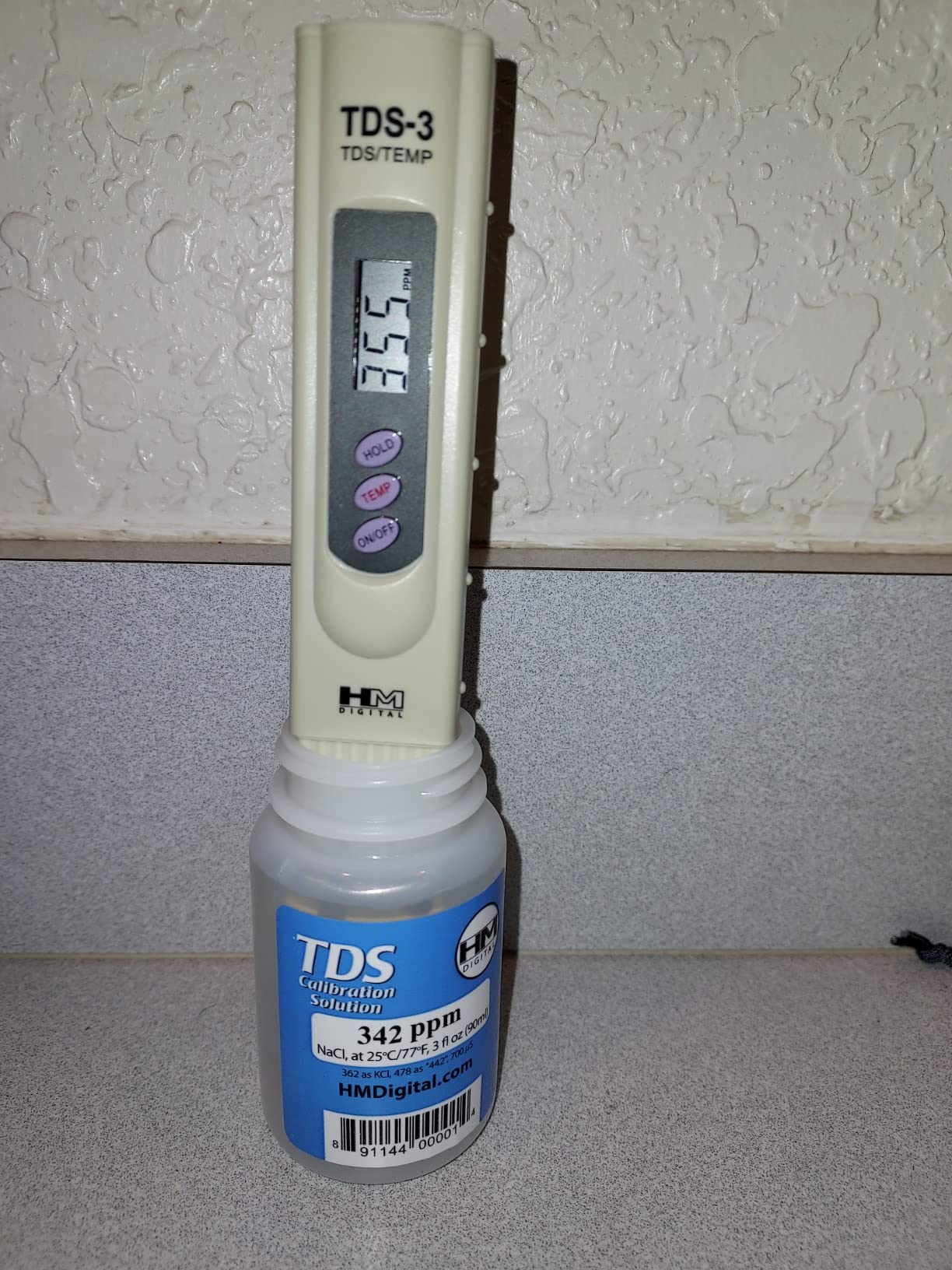
The TDS-3 is the oldest instrument in this roundup and still the highest rated at 4.6 stars across 1869 reviews. It does one thing, it does it consistently, and the 1 ppm resolution is finer than most of the newer pens.
That resolution is the underrated spec. A lot of budget meters step to 10 ppm increments above 1000 ppm, which makes it awkward to watch a reservoir creep up as you top off with plain water. At 1 ppm you can actually see small changes.
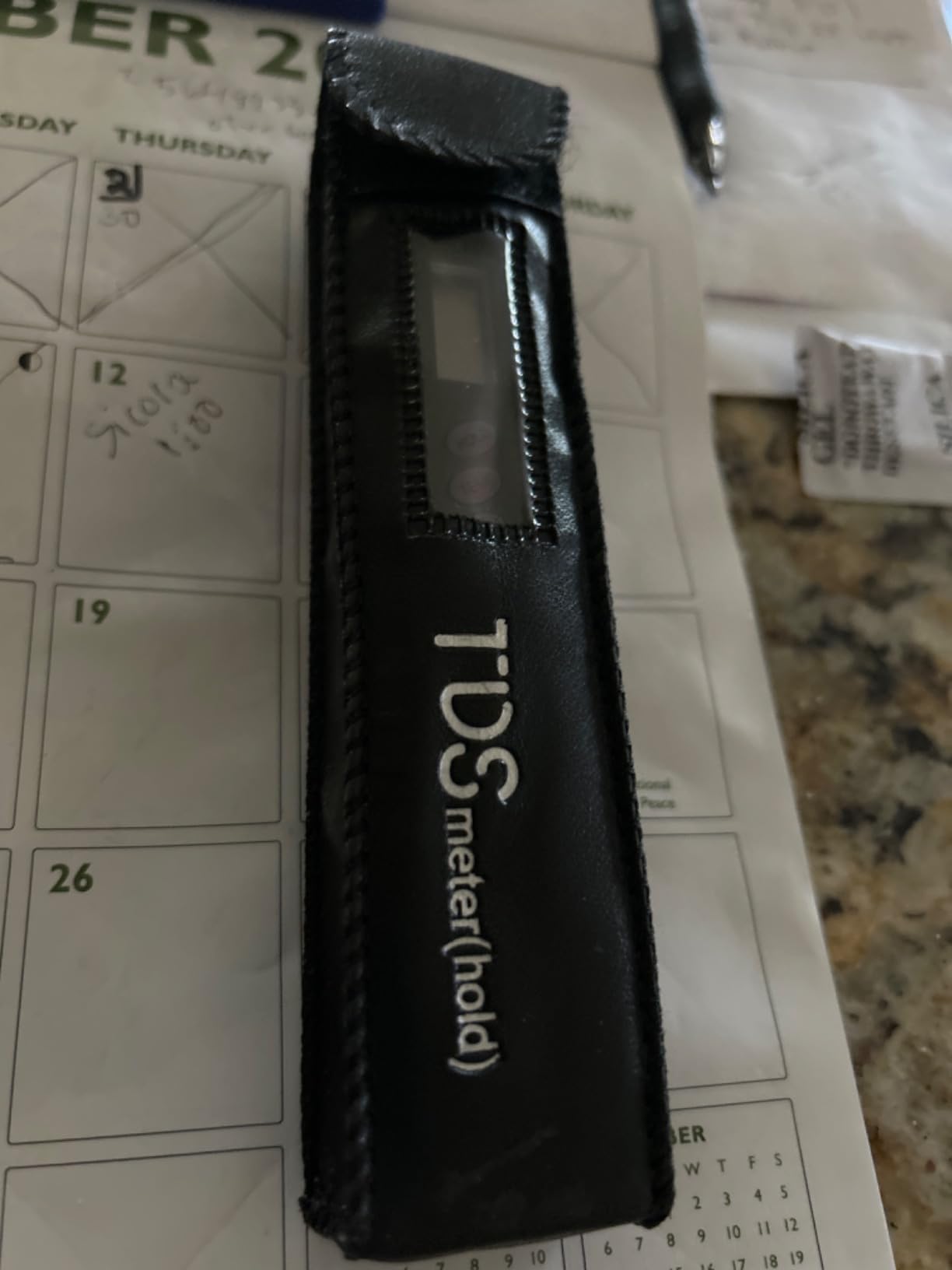
The built-in digital thermometer is a genuine bonus in hydroponics. Solution temperature affects both nutrient uptake and the conductivity reading, so seeing both on the same device lets you judge whether a number is drifting because of the water or because of your feeding.
Accuracy is quoted at plus or minus 2% readout, which is tighter than the plus or minus 3% figure on the cheaper TDS-EZ. The hold function saves a reading so you can record it, and auto-off after 10 minutes protects the two LR44 button cells.
What it gets right for the money
It is a metal-bodied pen with a belt-clip case, which is closer to how you would use a commercial meter than most of the plastic sticks here. Users report fast, repeatable readings that they trust for daily nutrient checks rather than occasional curiosity.
It is also the meter we would hand someone who has never tested a reservoir before and just wants to know where they stand. There is almost nothing to configure and nothing to buy alongside it.
Where it falls short
It has no EC scale. You get ppm only, so if your nutrient label quotes an EC target, you have to do the conversion yourself and decide which factor applies to your fertiliser.
There is no temperature compensation, so the thermometer tells you the temperature but does not correct for it. In a warm grow room that means the same solution can read differently at different times of day, which is fine for trend-watching and not fine for dosing decisions.
4. Apera PC60: The Best All-In-One Combo Tester With a Replaceable Probe
APERA INSTRUMENTS AI316 Premium Series PC60 5-in-1 Waterproof pH/EC (Conductivity) /TDS (ppm) /Salinity (ppt) /Temp. Multi-Parameter Pocket Tester Kit
pH, EC, TDS, salinity and temperature
Replaceable multi-parameter probe
Waterproof pocket format
Two-year instrument warranty
Pros
- Five measurements in one pocket meter
- Replaceable probe extends the life of the instrument
- Large backlit colour LCD is readable in a grow tent
- Stability and calibration icons show when a reading is trustworthy
- Full kit with calibration and storage solutions
Cons
- The most expensive meter in this roundup
- Salinity mode is not useful for most hydroponic work
- Bulkier than a simple TDS pen
The PC60 measures pH, EC, TDS, salinity and temperature in a single waterproof body. If you have been running two cheap pens and cross-checking them, this is the tool that replaces both without a second device.
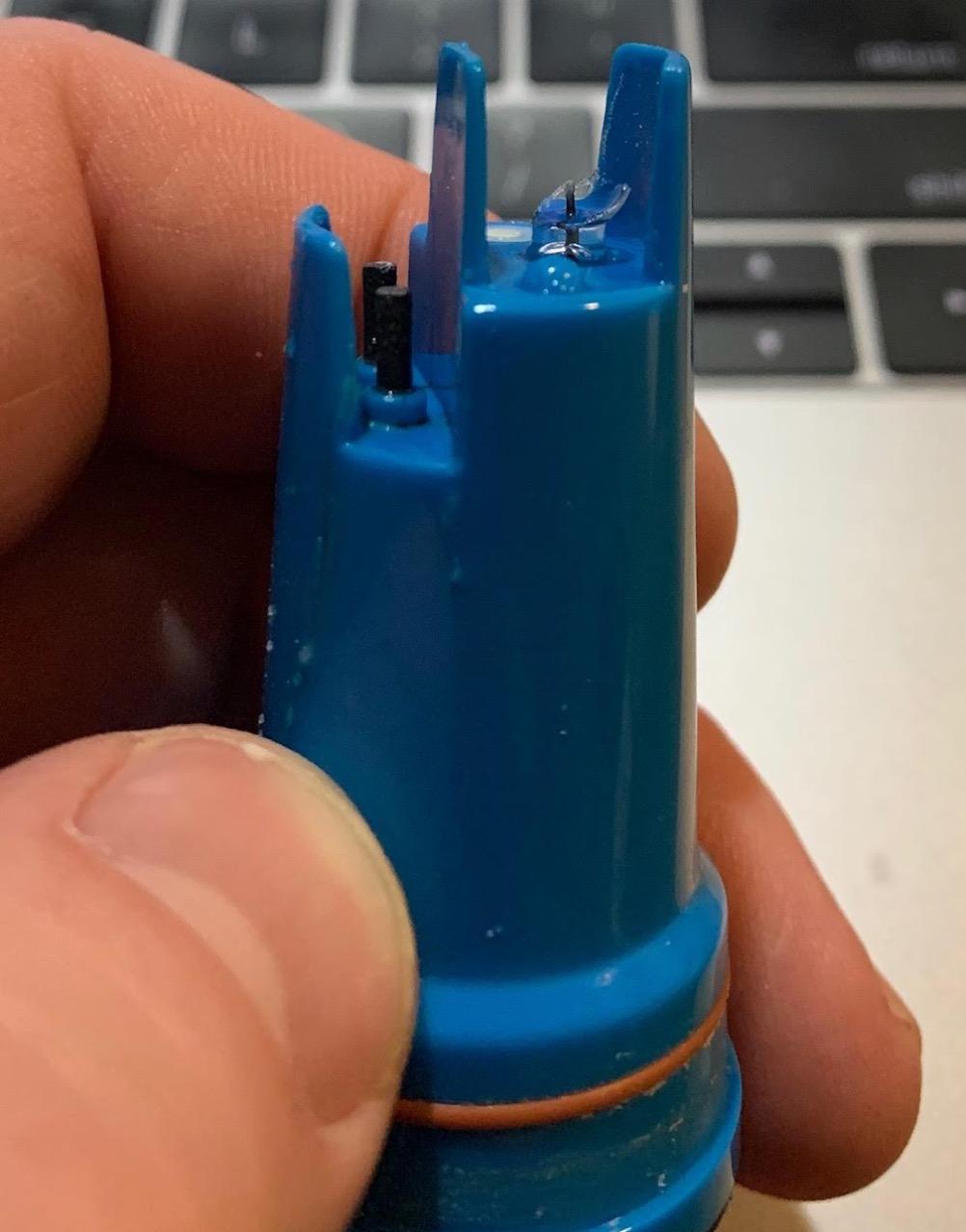
What sets it apart from other combo meters is the replaceable multi-parameter probe. When the electrode ages out you replace the probe rather than the whole unit, which is the single biggest reason a combo meter is worth more than a two-pen set long term.
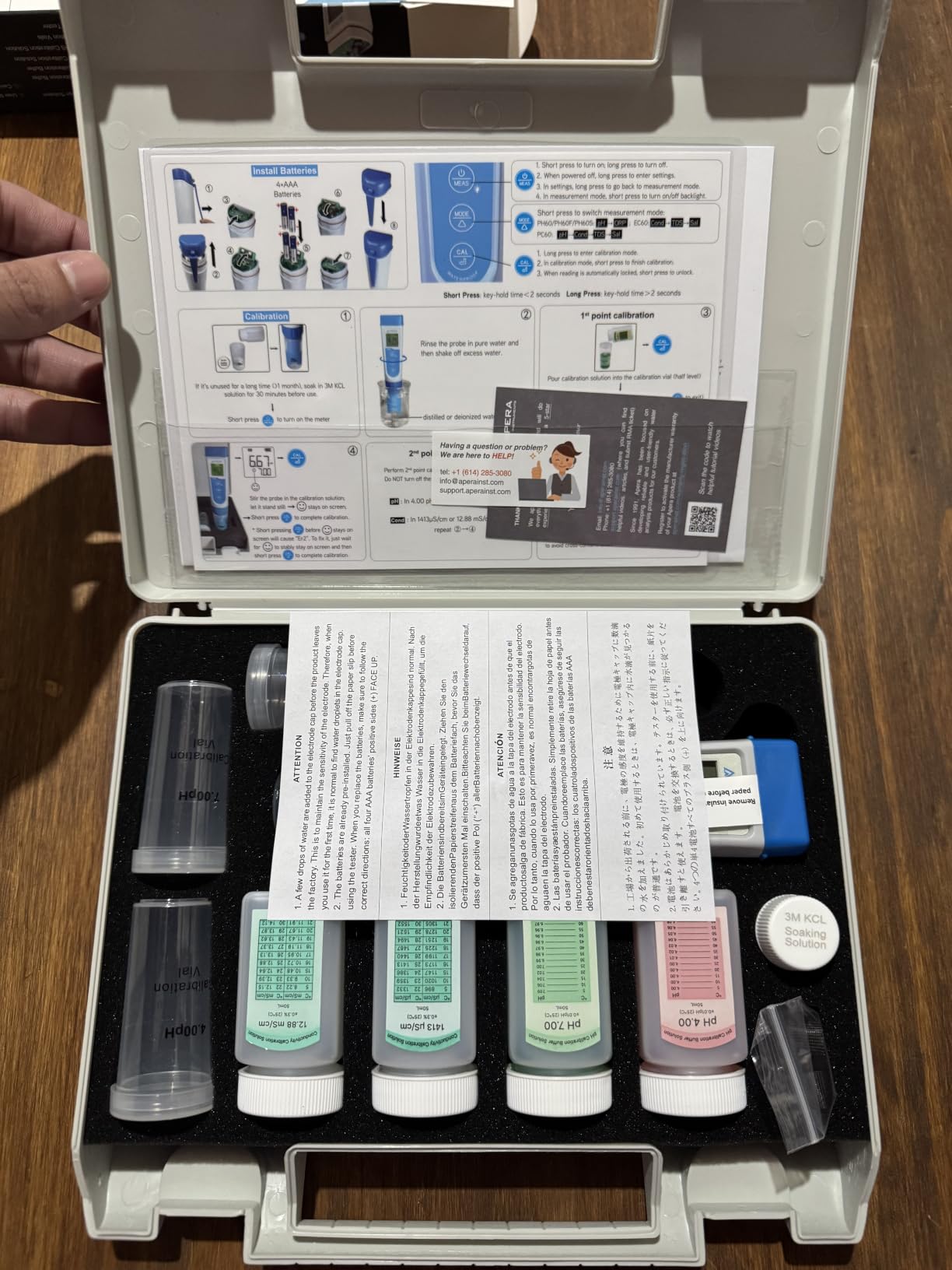
The on-screen smiley and calibration icons are a small thing that makes a real difference. Instead of guessing whether a reading has settled, you wait for the icon and then record the number, which removes most of the ambiguity that causes growers to chase phantom drift.
Several owners use it as a reference meter to sanity-check cheaper pens, which is a sensible strategy. When a budget pen gives you a number that disagrees with the bottle label, having an independent instrument to compare against tells you which one to trust.
When the combo approach actually pays off
If you are already tracking pH and TDS together, the pair interacts. pH determines which nutrients are available and EC tells you how much of each is dissolved, and checking them at the same moment on one screen is more useful than checking them minutes apart on two devices.
The kit ships with calibration solutions, storage solution, AAA batteries, a lanyard and a carrying case, so nothing else needs buying before the first calibration. The two-year instrument warranty gives more cover than the one-year terms typical of cheaper pens.
Where it falls short
It is the most expensive meter here, and for occasional checking that cost is hard to justify. If you are mixing nutrients once a week, a single good pen will get you there.
Salinity mode is a marine aquarium function and adds nothing to nutrient work. The body is also bulkier than a plain TDS pen, which matters if you are moving between reservoirs in a tight grow room.
5. HM Digital COM-80: The Best Meter for Switching Between EC and TDS Scales
HM Digital COM-80 Electrical Conductivity (EC) and Total Dissolved Solids Hydro Tester, 0-5000 ppm TDS Range, 1 ppm Resolution, +/- 2% Readout Accuracy
EC in uS and mS, TDS in ppm and ppt
0-5000 ppm at 1 ppm resolution
Automatic temperature compensation
15.5 cm immersion depth
Pros
- Four scales covering mS/cm
- uS/cm
- ppm and ppt
- Automatic temperature compensation improves accuracy in warm solution
- Half-second response makes checking several samples quick
- Water resistant to 15.5 cm for reservoir work
- Consistently described as accurate on nutrient solution
Cons
- Battery compartment is difficult to open
- Calibration needs solution and equipment not included
- One reviewer found a unit out by 200 ppm that would not recalibrate
The COM-80 is the meter to buy if your nutrient label quotes EC and you have been trying to work out the ppm equivalent. It carries four scales: EC in microsiemens, EC in millisiemens, TDS in ppm and TDS in ppt, and you switch between them on the unit.
That matters because the labels in the grow room are not consistent. A vegetative feed might state 1.4 mS/cm, a bloom feed might state 1400 ppm, and having both on one device means you never have to guess which convention a particular bottle is using.
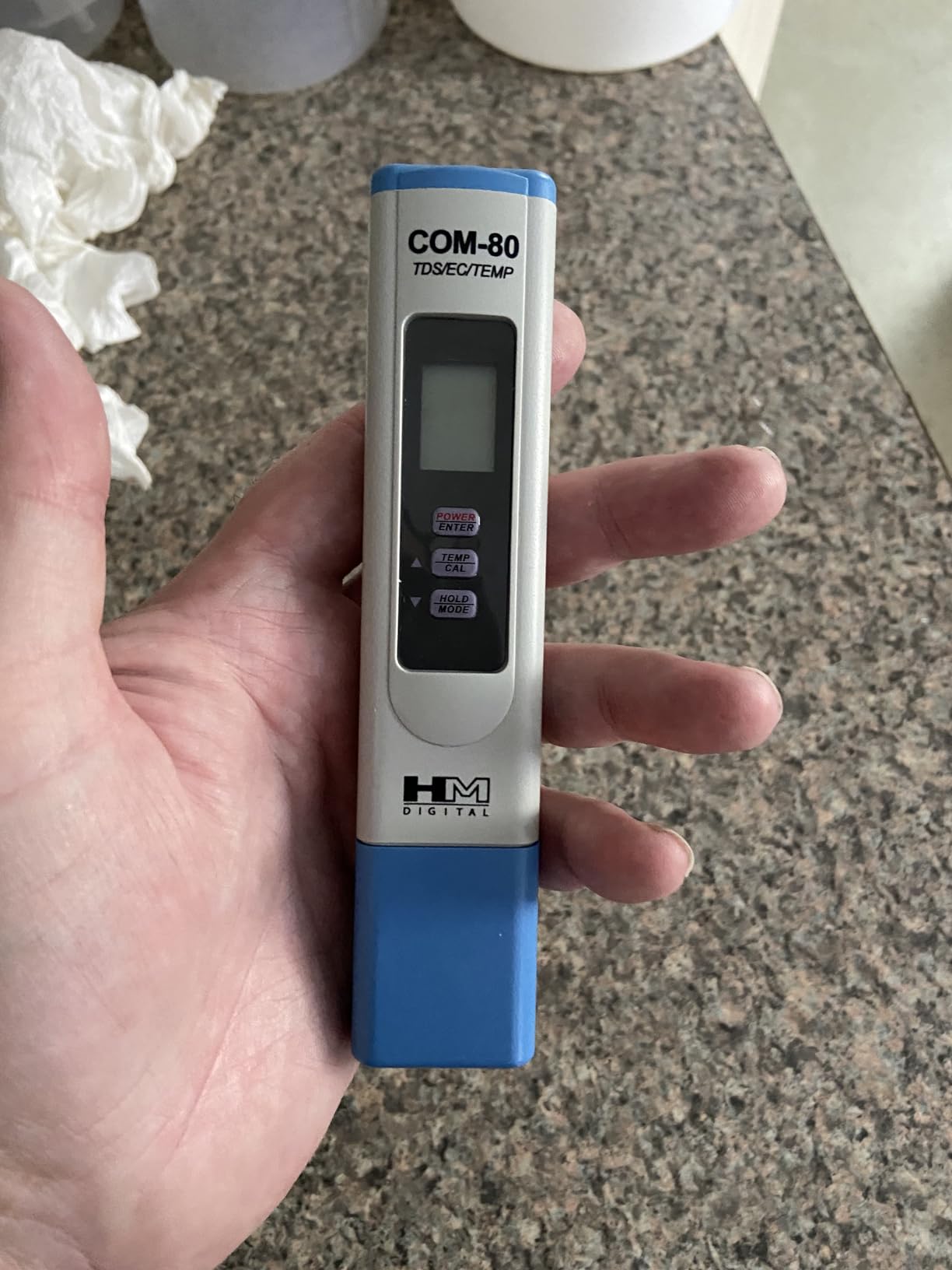
Automatic temperature compensation is present here too, and the water resistance to 15.5 cm means you can sink it properly into a reservoir rather than dipping the tip and hoping. The 0.5 second response time made it the fastest meter in the roundup when checking several samples in a row.
Accuracy is quoted at plus or minus 2% with 1 ppm resolution over a 0-5000 ppm TDS range. That range stops below the top of the others here, which is irrelevant for nutrient solution but worth knowing if you also test concentrated stock.
Why scale flexibility matters more than price
Once you can read EC directly in mS/cm, you are working in the unit that fertiliser labels and nutrient charts actually use. It also removes the compounding error that comes from a meter applying a fixed conversion factor to a solution that is not simple table salt.
Reviewers recommend this model for nutrient solution and pool salinity work, and the fast response makes it a natural choice for spot checks across several tanks in one pass.
Where it falls short
The battery door is genuinely stiff, and reviewers mention breaking fingernails on it. If you are opening batteries often in a grow room, that is a daily annoyance.
Calibration solution and the equipment needed to adjust it are not included, and one reviewer reported a unit that was 200 ppm out against calibration fluid and could not be corrected. It also gives you no independent temperature reading of its own, only compensation.
6. YINMIK YK-T4 Pro: The Best Meter for Continuous Reservoir Immersion
YINMIK pH Meter for Hydroponics, 4 in 1 PPM EC Meter for Plant Nutrients
Dual pH and EC or pH and PPM modes
Stainless steel temperature electrode
Automatic temperature compensation
Ships with pH and EC buffers
Pros
- Purpose-built for hydroponic reservoirs
- Can stay immersed for continuous in-tank monitoring
- Stainless steel temperature electrode responds quickly
- Factory-calibrated EC and TDS with buffers included
- pH and temperature always visible on screen
Cons
- Smaller review base than the established pens
- Not the cheapest four-in-one meter available
Most pens in this roundup are dipped and read. The YK-T4 Pro is designed to stay in the tank, which makes it a genuinely different tool for a recirculating system where you want a reading without reaching into the reservoir.
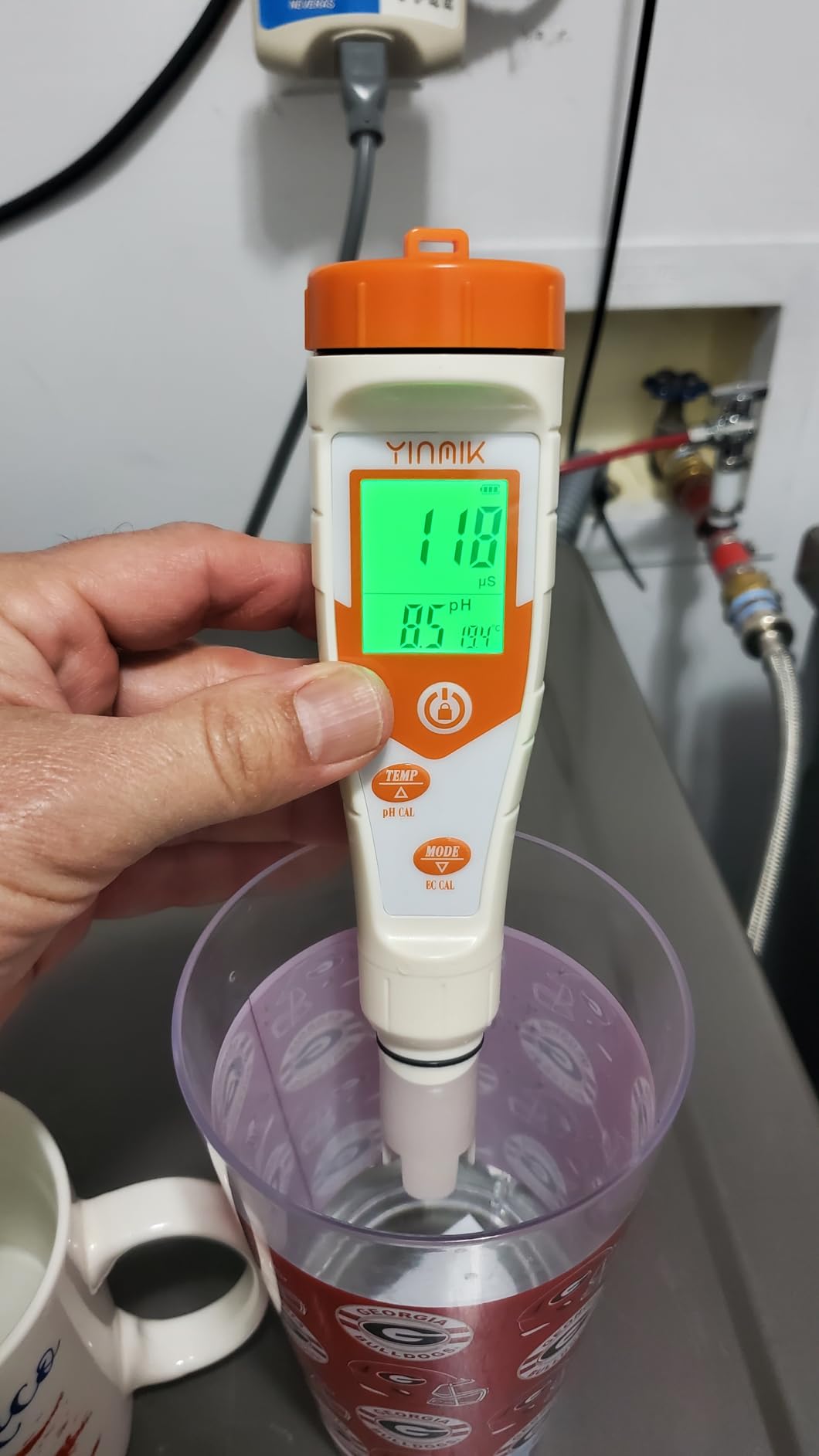
It has two display modes, one showing pH, ppm and temperature and another showing pH, EC and temperature. The mode choice matters: the ppm mode is for base and reservoir water checks, the EC mode is for working against nutrient strength targets.
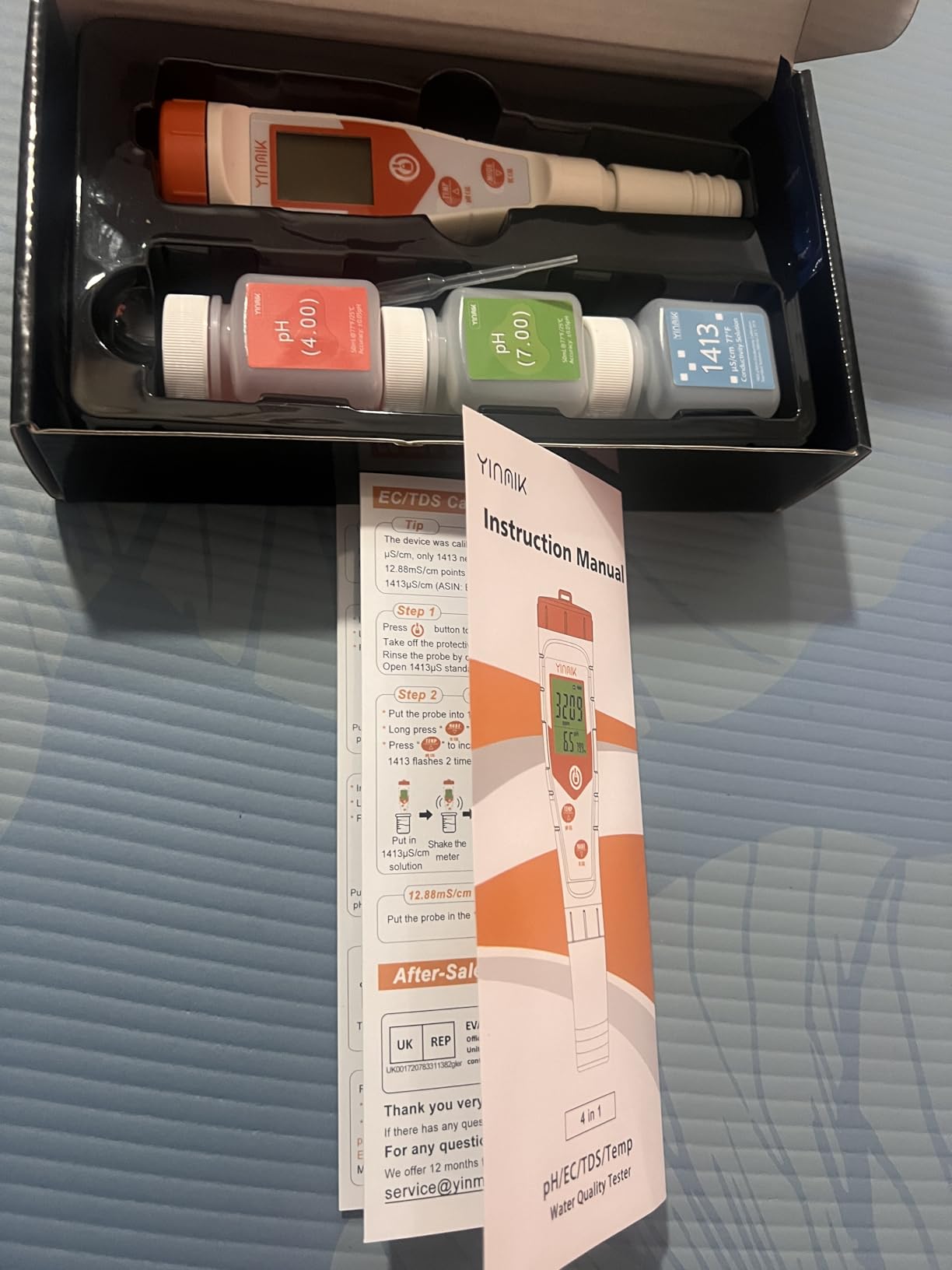
The extended stainless steel temperature electrode responds faster than most, and with automatic temperature compensation the EC and ppm readings stay consistent as the reservoir warms through a lighting cycle. pH and temperature remain visible in both modes so you are not toggling screens to see them.
It ships with 4.00-7.00 pH solution and a 1413 uS/cm EC buffer, and the EC and TDS side comes factory calibrated. Having the buffers in the box means you can verify the meter the day it arrives rather than discovering a problem three months in.
Best suited to RDWC and multi-tank setups
If you are running a recirculating system with a large reservoir, leaving a meter in the tank gives you a continuous picture of how the solution is drifting between top-offs. You can see uptake and evaporation effects instead of guessing at them from two samples a day.
It is also usable outside the tank, for planting water, tap water, well water, pools and brewing, so one instrument covers several checks in a mixed setup.
Where it falls short
With around 513 ratings, the long-term durability picture is thinner than for the established pens in this list. Buyers who have had one a while report good results, but there is less evidence about how it holds up over multiple seasons.
It does not give you the choice of reading EC and TDS separately as the COM-80 does. You pick one mode at a time, and continuous immersion still leaves the probe sitting in solution, so the fouling question does not go away.
7. UIUZMAR UMR-PH08: The Best Combo Meter for Fast Readings
UIUZMAR Digital pH Meter pH TDS EC Meter for Hydroponic Solution
4-in-1 pH, TDS, EC and temperature
3-point pH calibration
Automatic temperature compensation 32-122 F
Bright backlit LCD
Pros
- pH probe stabilises in a second or two
- Large bright backlit screen readable in daylight
- Factory pre-calibrated EC and TDS
- Reviewers report readings matching far more expensive meters
- Good build quality for the tier
Cons
- Some units lose pH calibration within days
- Included calibration powder can run out quickly
- Only one probe and the probe joint is easy to damage
- Limited English documentation for some buyers
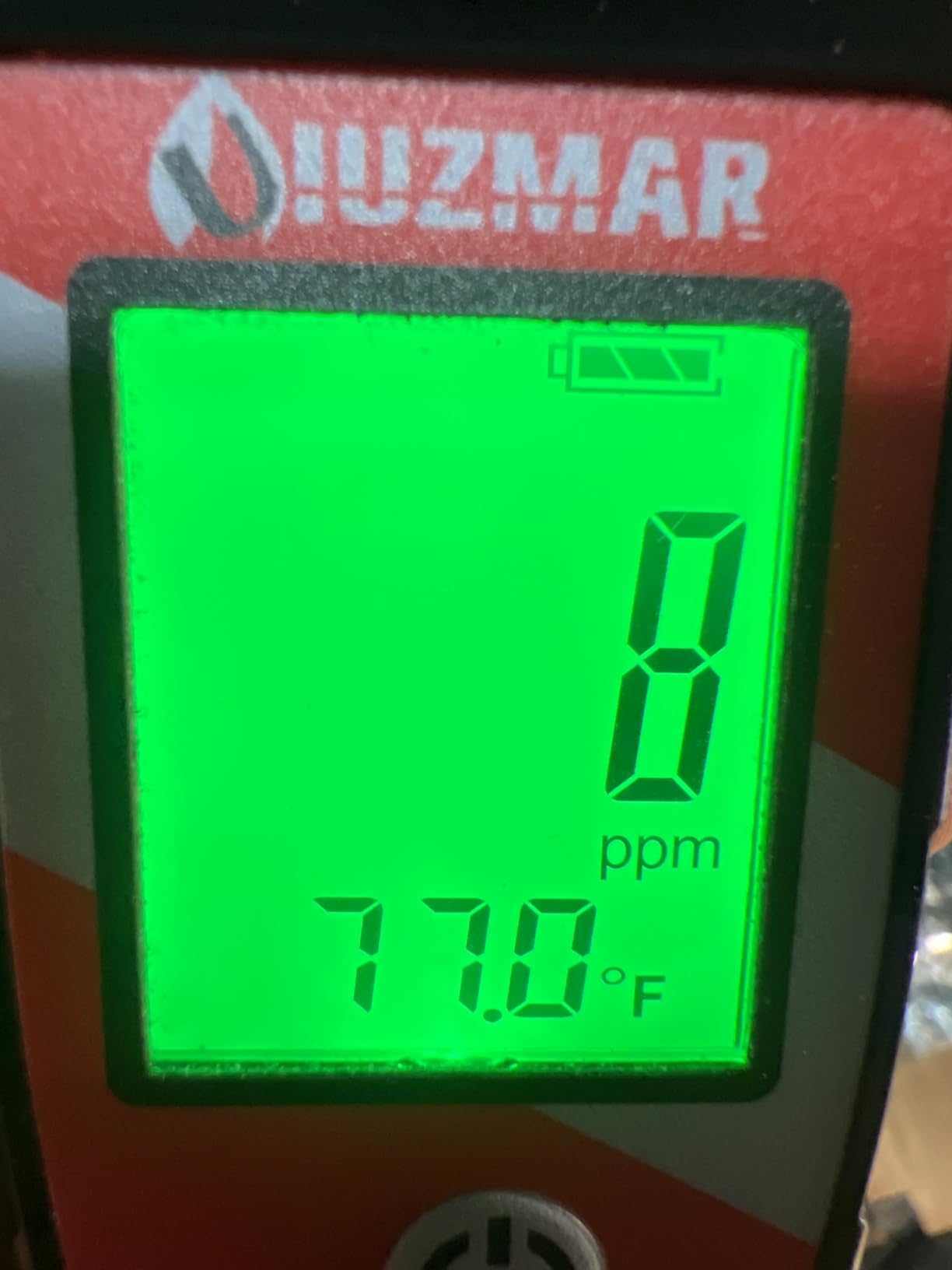
The UMR-PH08 is a four-in-one desktop-style tester that is far quicker than it has any right to be at this tier. The pH probe stabilises in a second or two, which is the difference between a meter you check daily and one that gets left in a drawer.
Reviewers who calibrate rigorously report readings that match Bluelab and Apera meters in side-by-side tests. That is the strongest claim any budget combo in this roundup makes, and it is the reason this one is worth considering over a two-pen set.
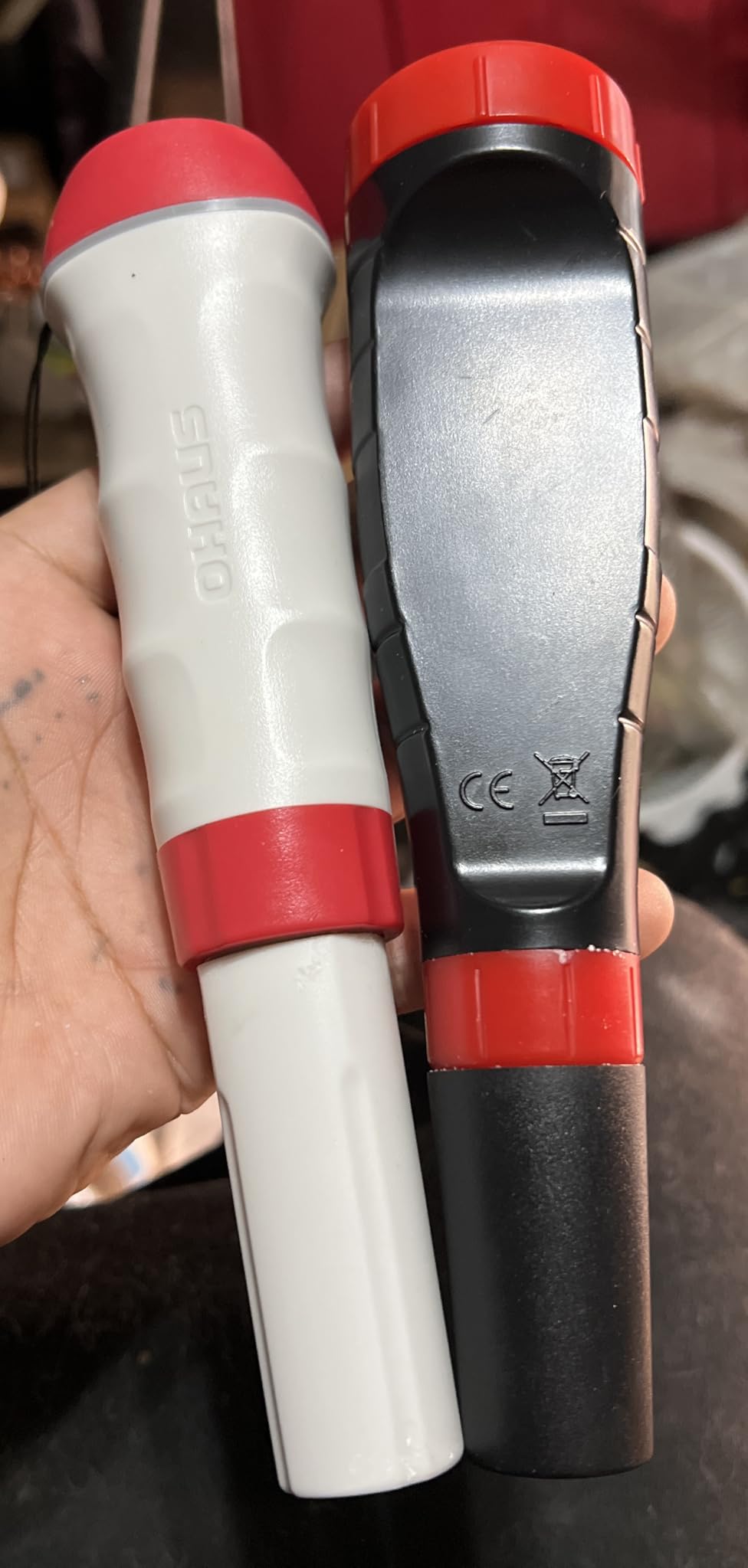
Calibration is three-point at 4.0, 7.0 and 10.01, and two sets of buffer powders are included, so you can check the meter at both ends of the pH scale rather than only at neutral. EC and TDS come pre-calibrated from the factory, and automatic temperature compensation runs from 32 to 122 °F.
The backlit display is bright enough to read in daylight and dims after 30 seconds. At 7.7 ounces it is a bench instrument rather than a pocket pen, which suits a mixing area where it stays put.
Where the speed advantage shows up
Rapid stabilisation is the practical win. When you are chasing a problem in a reservoir, being able to dip, wait a moment and re-dip without waiting several minutes for the reading to settle is a meaningful time saving over a slower combo meter.
It is a good companion to a dedicated conductivity pen. Many growers use a fast combo for pH and a dedicated pen for the EC number they actually dose against.
Where it falls short
Reliability is the recurring negative. A number of units develop a pH reading stuck at 14.1 that calibration will not correct, and some lose calibration within days. That is a small enough minority to be worth knowing about before you rely on the pH channel.
The probe joint is easy to damage if you submerge too far, and the included calibration powder runs out quickly, so plan on ordering more buffer solution. The documentation is also thin for some regional buyers.
8. HM Digital TDS-EZ: The Best Simple Meter for Source Water Checks
HM Digital TDS-EZ Water Quality TDS Tester, 0-9990 ppm Measurement Range, 1 ppm Resolution, 3% Readout Accuracy,Purple
0-9990 ppm range
1 ppm resolution to 999 ppm
Plus or minus 3% readout accuracy
Factory calibrated to 342 ppm NaCl
Pros
- Long-established meter with consistent readings
- Large easy-to-read LCD with a hold function
- Durable translucent housing
- Long battery life and 10-minute auto-off
- Simple affordable entry point for nutrient TDS
Cons
- TDS only with no EC or temperature readout
- Resolution drops to 10 ppm above 1000 ppm
- Recalibration needs a small screwdriver and a known solution
The TDS-EZ is the meter to buy for the job almost every grower has to do before mixing anything: finding out what your tap water is already carrying. If your source water reads 40 ppm, that is 40 ppm of your target the nutrients never supplied.
It is factory calibrated against a 342 ppm NaCl standard, which is a real reference point rather than a generic factory setting. It has been on the market for years and has 7624 reviews averaging 4.4 stars, so its behaviour is well documented.
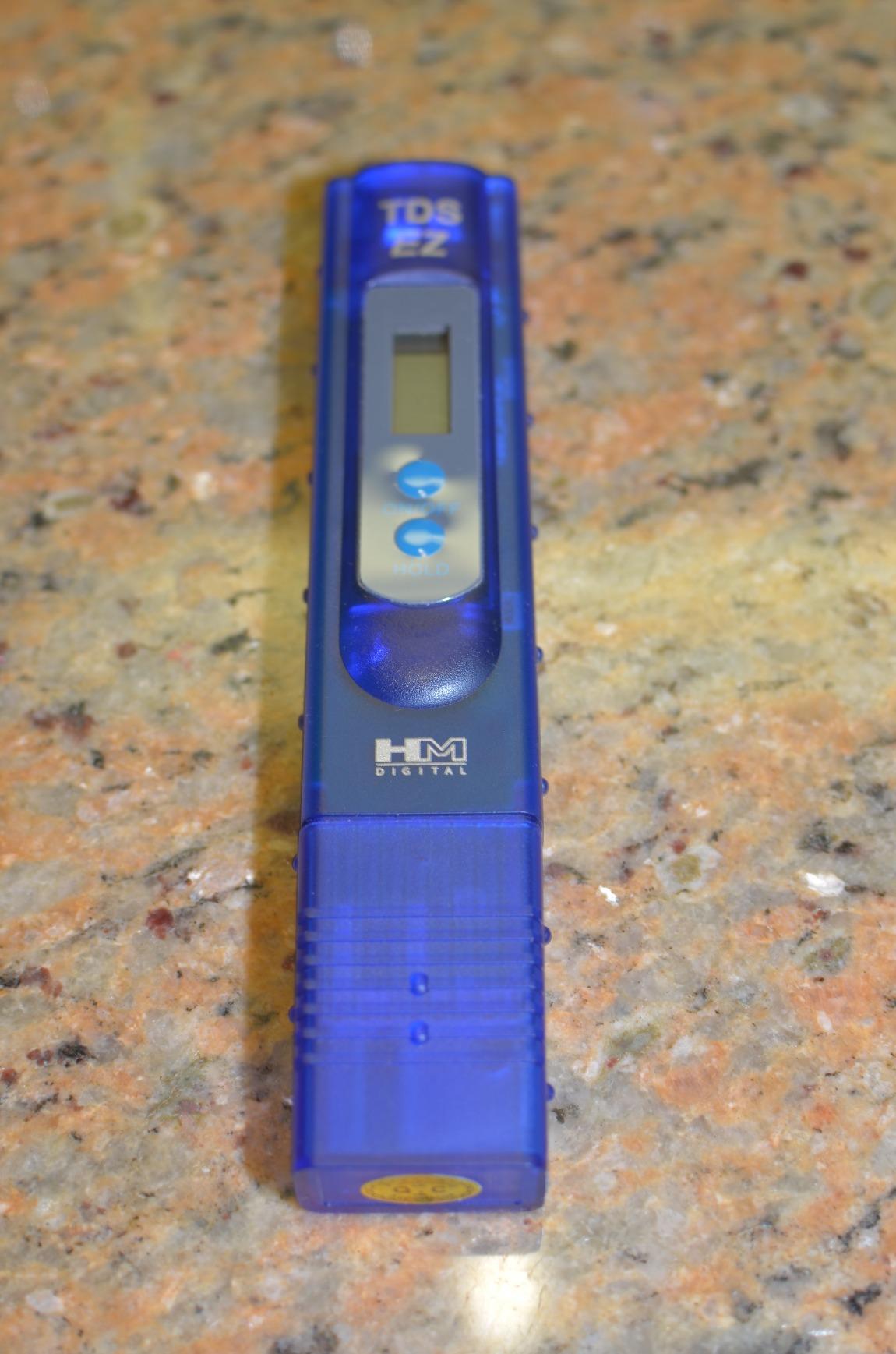
Resolution is 1 ppm up to 999 ppm and 10 ppm steps above that, which is coarse for a full-strength reservoir but perfectly fine for source water and top-off checks where the numbers are much lower. The large LCD and hold function make recording values painless.
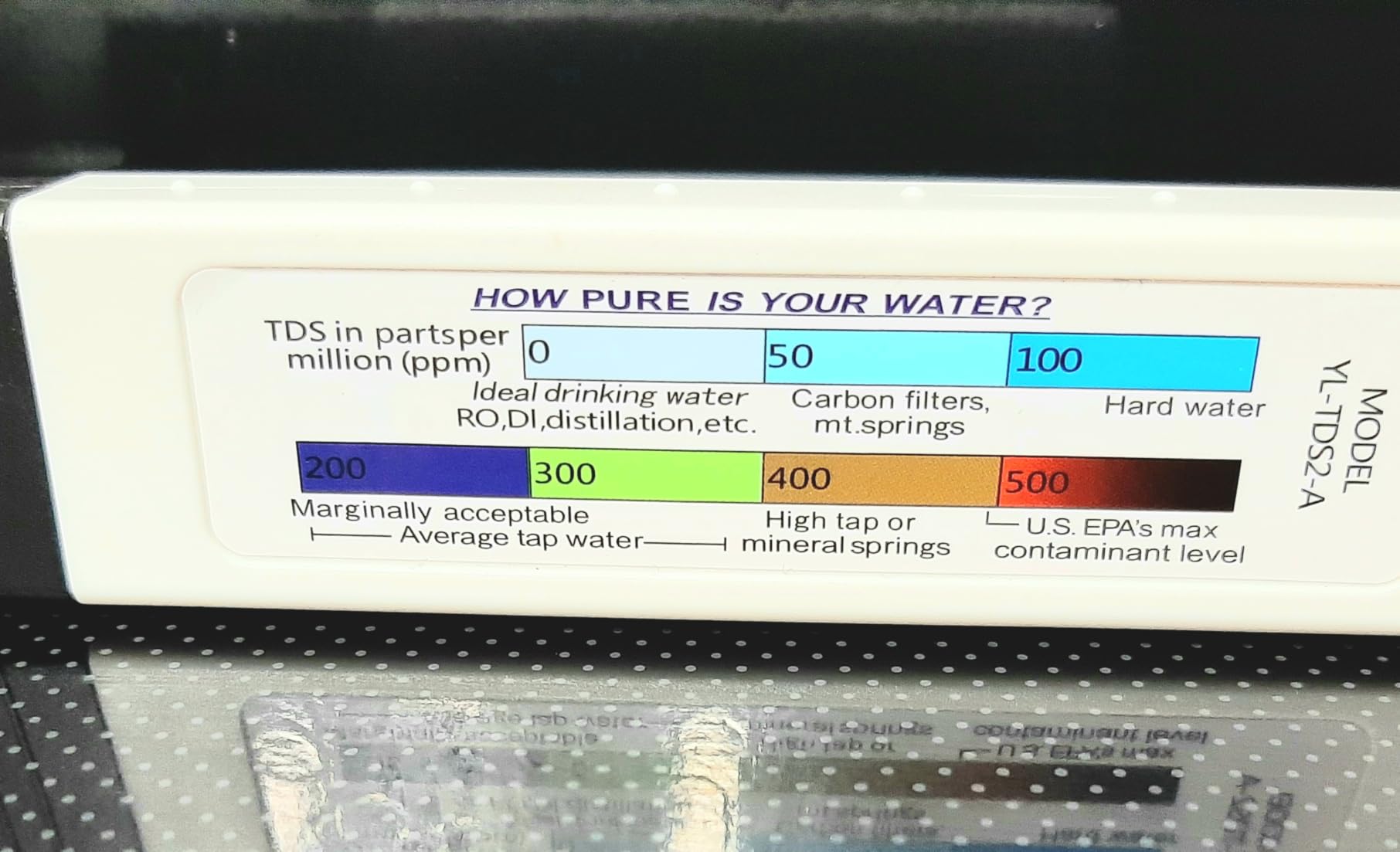
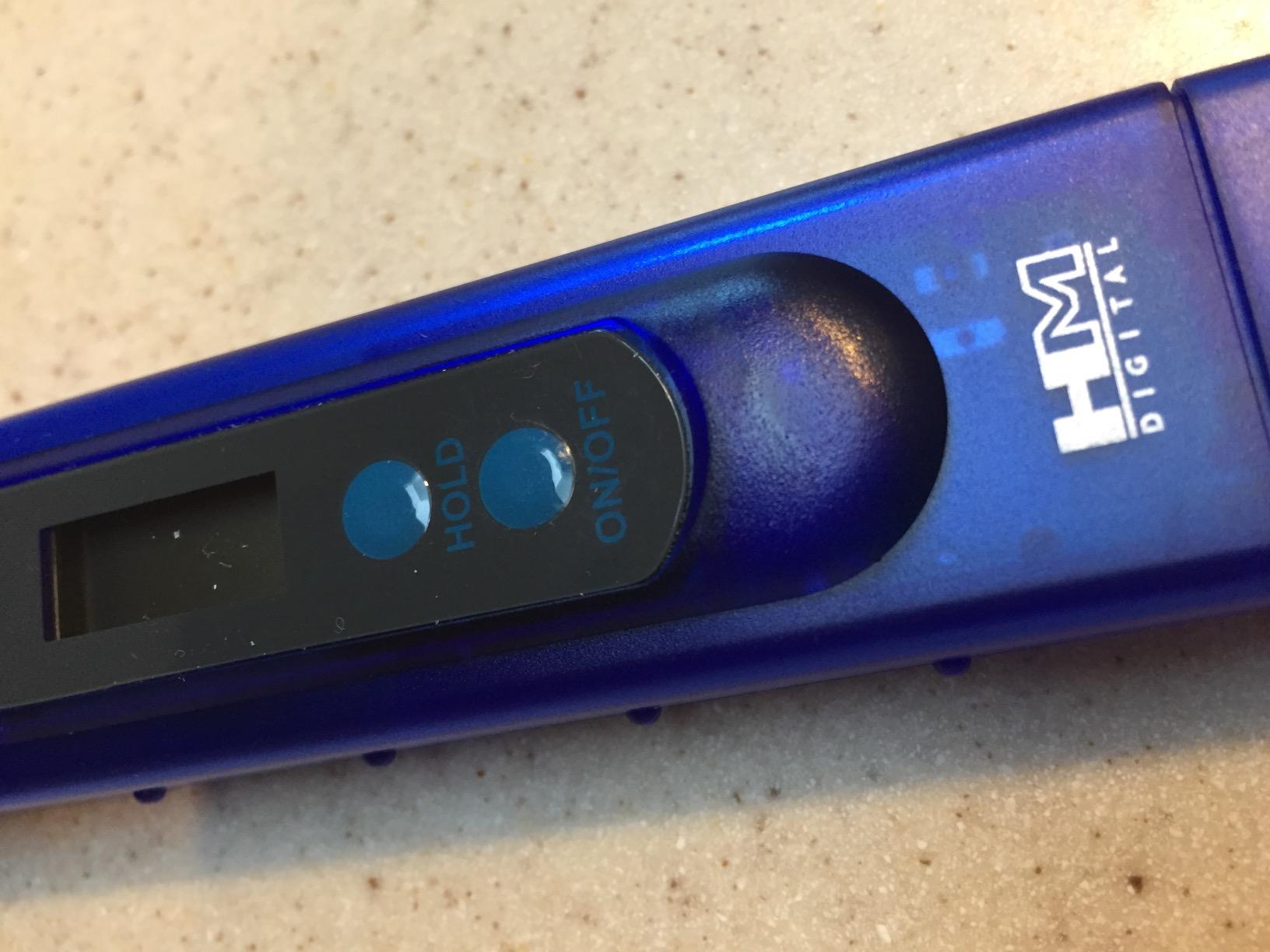
Battery life is around 1000 hours on two LR44 button cells, and auto-off after 10 minutes means you can leave it in the bucket without thinking about it. The translucent housing has a TDS reference chart printed on the back.
Best used as a first or second instrument
Two meters in a household is a reasonable setup: this one on the tap water and reservoir top-offs, and a better meter on the nutrient solution where accuracy matters most. The cheap meter is then doing the low-stakes job.
Owners consistently describe it as a dependable no-frills unit that does the basic job, with the practical strengths being the large screen, the hold function and the battery life rather than any advanced feature.
Where it falls short
It measures TDS only, with no EC scale and no temperature readout. That rules it out as a standalone nutrient meter, because you cannot correct for temperature or read the unit your label uses.
Recalibration needs a small screwdriver and a known standard solution, neither of which is included. It is also the least accurate spec in the roundup at plus or minus 3% readout, so it is not the meter to make a dosing decision with.
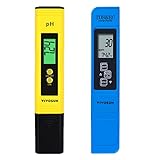
9. VIVOSUN pH and TDS Meter Pair: The Best Starter Set
VIVOSUN Digital pH Meter TDS EC Meter for Water 0.01 Accuracy Hydroponics
Two pens: pH 0-14 and 3-in-1 TDS
TDS range 0-9990 ppm
Plus or minus 2% accuracy
Auto calibration with buffers
Pros
- Two pens cover pH and TDS together
- Auto calibration and temperature compensation simplify setup
- Storage case
- spare batteries and buffer powders included
- Large readable display with a hold function
- Well documented with a large review base
Cons
- Lightweight plastic with flimsy buttons
- pH readings can sit half a unit off against reference probes
- TDS pen can switch display modes mid-reading
- Slow to stabilise in some conditions
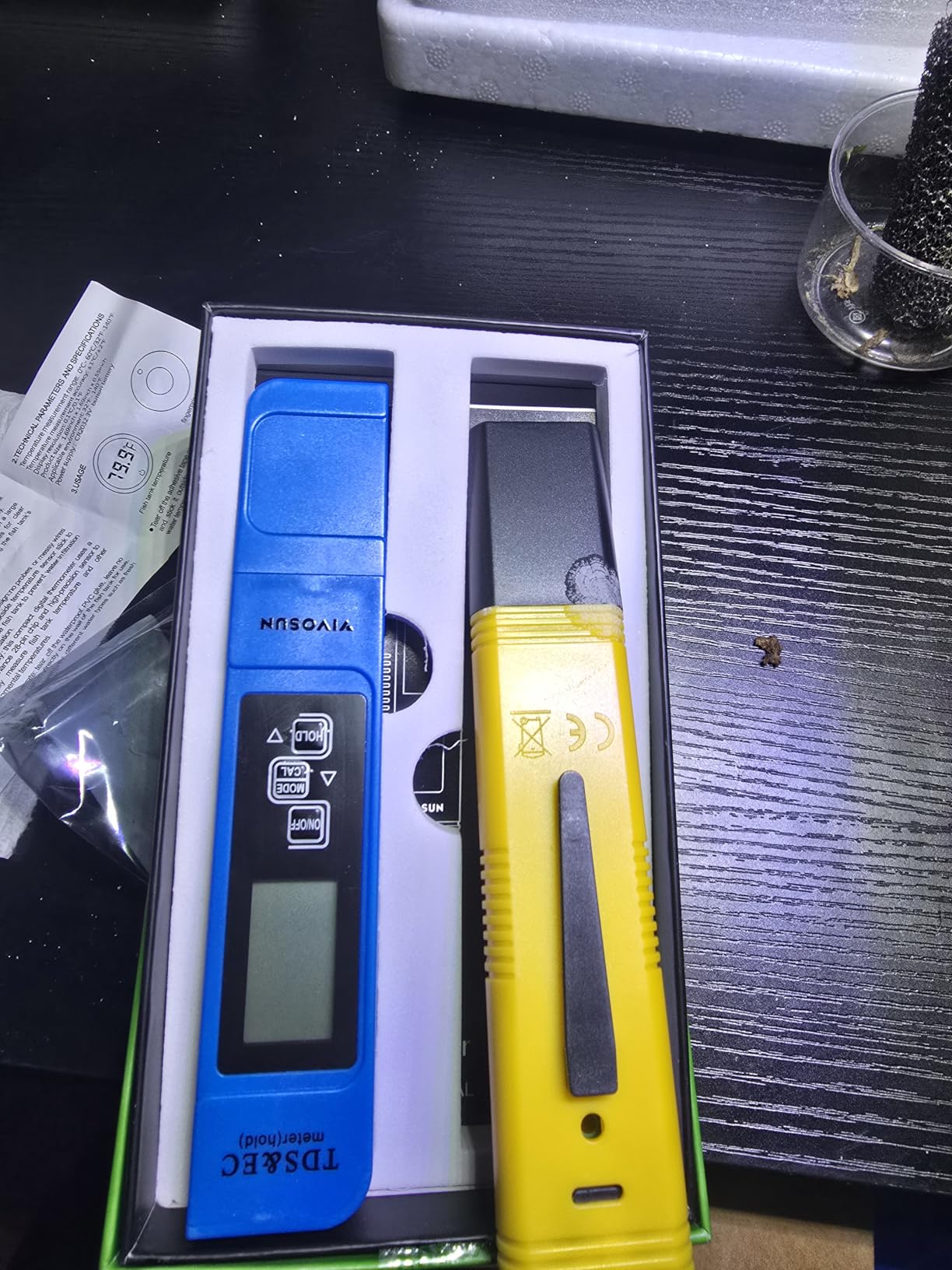
This listing is two pens in one box, a dedicated pH pen and a 3-in-1 TDS, EC and temperature pen. For a first setup that is a sensible way to cover both numbers without buying a combo meter that does everything less well.
With 33834 reviews it is the most reviewed product in this roundup, and the overall value rating is high. Reviewers treat it as an affordable, easy replacement for test strips rather than as laboratory instrumentation.
The TDS side covers 0-9990 ppm and 0-9990 uS/cm with plus or minus 2% accuracy, and it has automatic temperature compensation. The pH side runs 0 to 14 with a stated 0.01 resolution, and the box includes three calibration buffer powders, spare batteries and a protective case.
Its listed uses are aquariums, home water and pool testing, and it cannot be used on seawater. For a nutrient reservoir at normal pH that limitation does not come up.
Why this is a reasonable first purchase
You get pH and TDS coverage immediately, the case keeps both pens together, and the included buffers mean you can calibrate before first use. Nothing about the setup should stall a beginner.
It is also a common recommendation in budget grow communities for checking a mixing bucket, where the stakes of a small error are lower than they are in a fruiting reservoir.
Where it falls short
The pH channel is the weak part. Reviewers who check against scientific-grade probes report readings that drift or run half a pH unit or more off, and the TDS pen can switch between ppm, EC and temperature display modes mid-reading, which is genuinely irritating in a dark grow room.
It also stabilises slowly in some conditions, and the plastic body and buttons feel cheap. If accuracy matters to your operation, treat this as a starting tool rather than a reference.
10. MEXYBE A2: The Best Four-in-One for a Large Display
2026 All-New 4 in 1 Tds Meter Digital Water Tester – Accurate and Reliable TDS EC & Temp(°C,°F) Meter – 0-9999ppm – Professional Testing for Drinking Water, RO/DI System, Aquariums etc
TDS, EC, temperature in C and F
0-9999 ppm range
Titanium alloy probe
Auto-lock and hold function
Pros
- Inexpensive for a four-parameter meter
- Readings match pricier meters once stabilised
- Large backlit display is easy to read
- Two-button operation
- Useful for aquarium
- RO and nutrient spot checks
Cons
- Probe must be dipped deep enough to read properly
- Not waterproof beyond the sensing area
- Readings can drift lower as salts build up on the probe
- Some reviews dispute the backlight claim
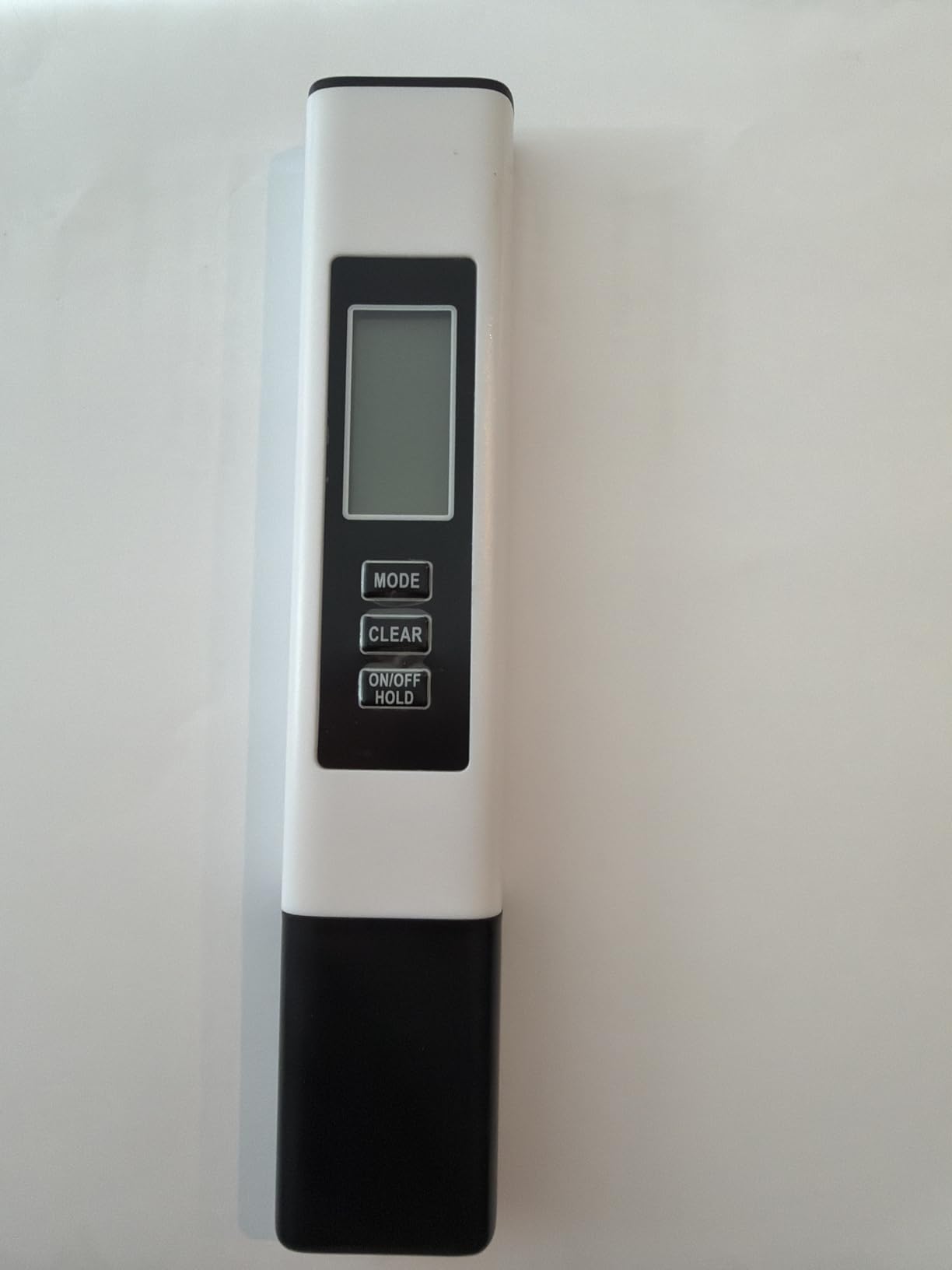
The A2 gives you four scales, TDS, EC, Celsius and Fahrenheit, in a compact body with a noticeably larger screen than most testers at this size. The auto-lock holds a stabilised reading so you can record it without watching the numbers.
Across 6330 reviews averaging 4.4 stars, owners generally find it performs comparably to pricier models once you let it settle. The operating pattern is two buttons: calibrate, dip, hold.
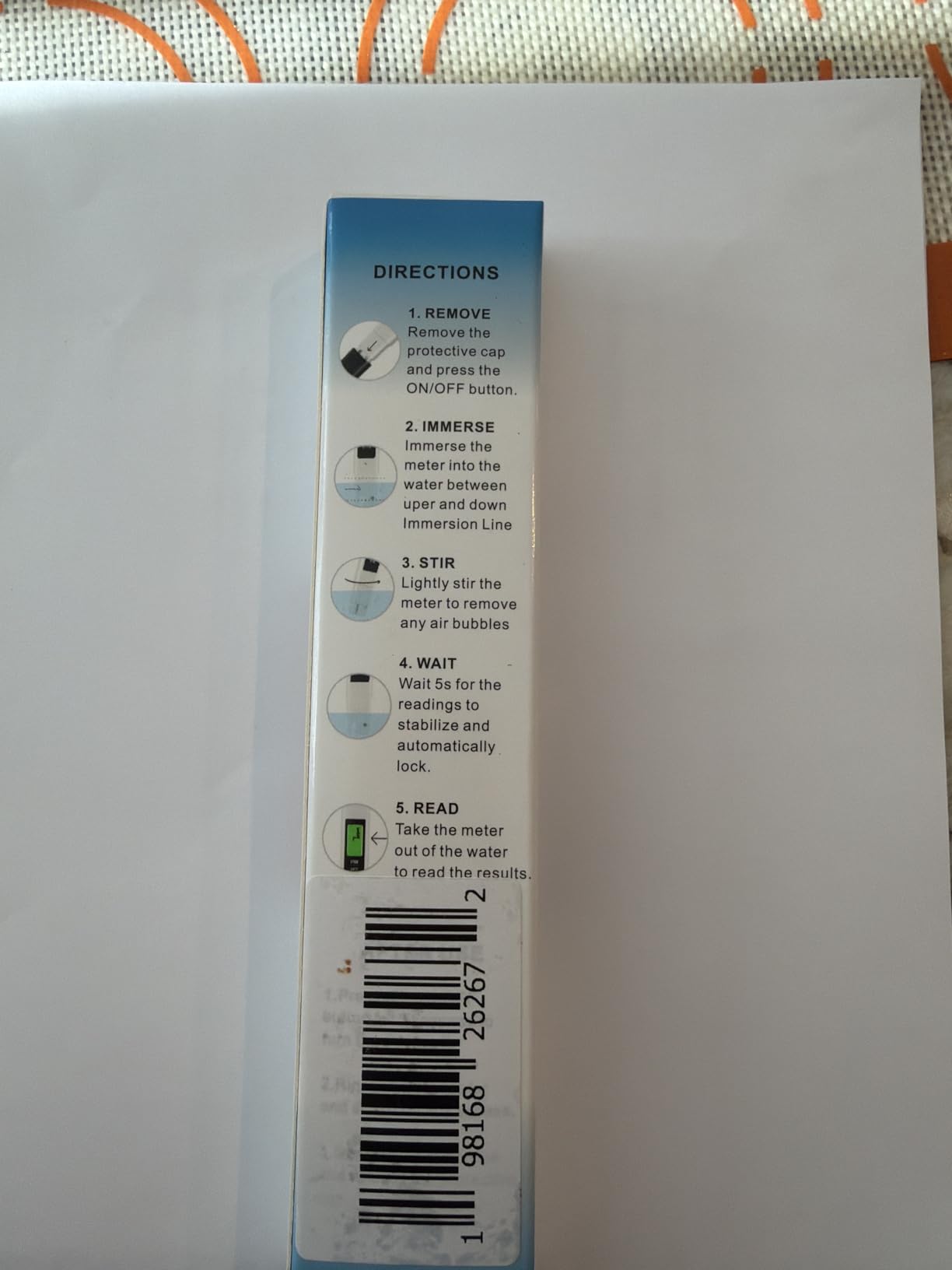
The titanium alloy probe and high-precision chip give fast, repeatable readings in our mixing tests. The 0-9999 ppm range covers full-strength nutrient solution comfortably, and a colour TDS reference chart is printed on the back of the tester and in the guide.
Auto-off after 2 minutes conserves the battery, and it suits a wider range of checks than hydroponics alone: drinking water, RO and DI systems, aquariums, wells, pools and spas.
Where a big screen earns its keep
The display is roughly 25% larger than older 3-in-1 models, and that is the difference between reading a number quickly in a dim room and squinting at it. Combined with auto-lock, it suits someone taking many readings in a session.
It is also a good second instrument. Several growers keep a cheap four-in-one like this for quick checks and a better pen for the number they actually dose against.
Where it falls short
It is not waterproof beyond the sensing area, so the body should stay dry. That makes it a poor choice for a tank where you might drop it in fully or use it in a deep or vertical tower.
Probe fouling is the main complaint: salts build up on the sensing area in hard or high-mineral water and readings drift lower over time. Rinsing and storing it properly mitigates this, but it needs more attention than the bluelab-grade pens.
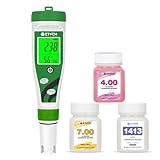
11. EZTOCH SZ-08: The Best Meter for Towers and Kratky Jars
EZTOCH Hydroponic pH EC Meter, Water pH TDS PPM Meter
Simultaneous pH, EC and temperature
0.00-19.99 mS range at 0.01 resolution
PPM 500 dual scale
Reading lock function
Pros
- Shows pH
- EC and temperature together on one screen
- Users report it matching pricier reference meters after calibration
- Pre-mixed pH and EC solutions included
- Customer support repeatedly praised for fast replacements
- Good value for beginners running several small systems
Cons
- Powering off needs a five-second hold that feels unreliable
- Not waterproof past the marked line
- pH drifts 0.1 to 0.2 against reference meters and settles slowly
- Some units lost calibration within months
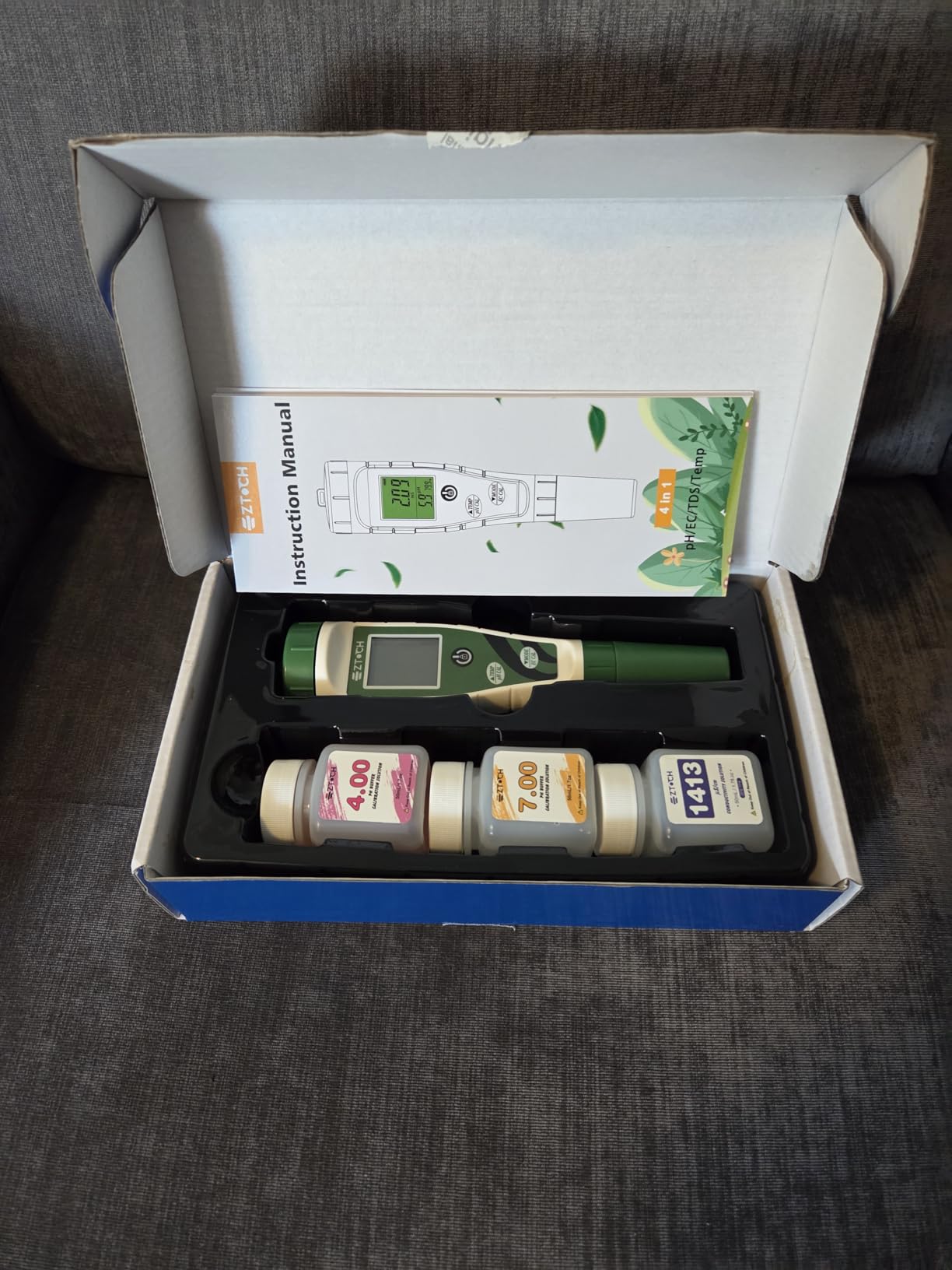
The SZ-08 is built around hydroponic systems specifically, and the stated systems are DWC, Kratky, vertical towers, aeroponics and aquaponics. It shows pH, EC and temperature at the same time, or pH, ppm and temperature, on one screen.
Conductivity runs 0.00 to 19.99 mS/cm at 0.01 resolution with a PPM 500 dual scale. The wide EC range means one meter covers everything from plain reservoir water to undiluted stock, which is unusual at this tier.
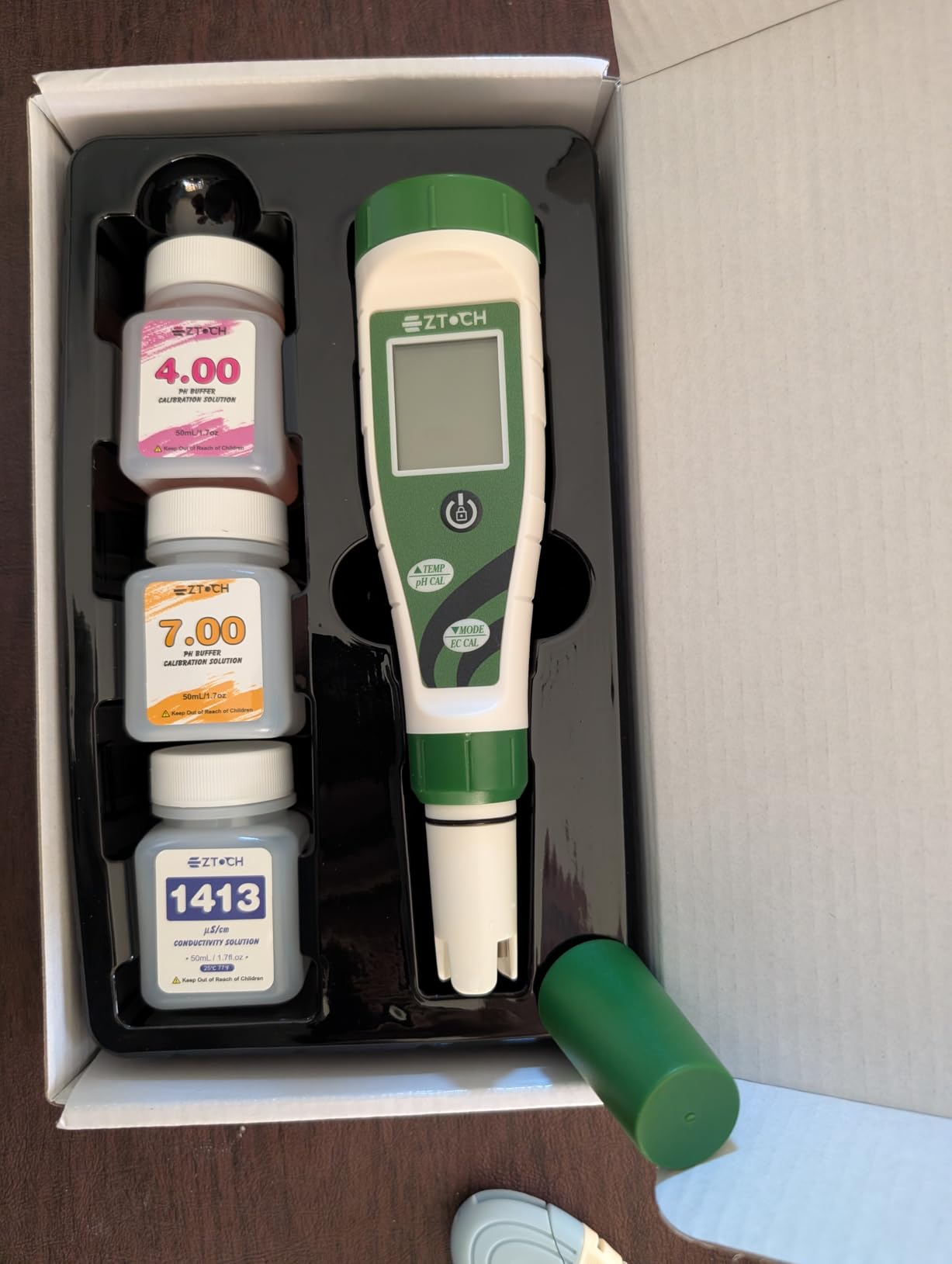
It ships factory calibrated with 4.00 and 7.00 pH solutions and a 1413 uS/cm EC standard, so you can verify it against a known point without buying and mixing powder. The lock function holds and records a reading, which helps when you are logging several tanks.
Owners largely find the readings line up with pricier reference meters once calibrated, and several single out customer support that shipped replacement units quickly when something went wrong.
Best for small multi-system setups
Running a Kratky jar, a DWC bucket and a tower at once means several checks a day, and seeing pH and EC together cuts that to one dip. The wide EC range also means you do not need a second meter for a concentrated top-up tank.
It is a sensible companion to a good TDS pen, where the pen handles the reservoir and this one handles quick checks across smaller systems.
Where it falls short
Waterproofing stops at the marked line, which makes readings in a deep or vertical tower awkward. For those systems, an immersion-rated meter is a better fit.
The power-off needs a five-second hold that users find unreliable, and pH readings drift by 0.1 to 0.2 against reference meters while taking several minutes to settle. Some units also lost calibration within a few months, and with 156 ratings there is limited long-term evidence.
12. EKOOTIMO a4: The Best Budget Meter for Drinking Water Spot Checks
4 in 1 TDS Meter Digital Water Quality Tester TDS/EC/Temperature(°C/°F) | 0-9999 ppm | Accurate and Professional for Drinking Water, Hydroponics, Aquariums, RO Systems, Pool (2026 NEW)
TDS, EC, F and C switching
0-9999 ppm range
Dual-colour backlit LCD
CR2032 coin cell
Pros
- Cheapest four-in-one here and still rated 4.5 stars
- Colour backlight shows at a glance whether water is above or below 40 ppm
- Single coin cell lasts about a year with daily use
- Titanium probe gives quick repeatable readings
- Compact with non-slip grips
Cons
- No pH measurement
- TDS and EC scales only with no mS readout
- Fewer than 500 ratings so less proven over time
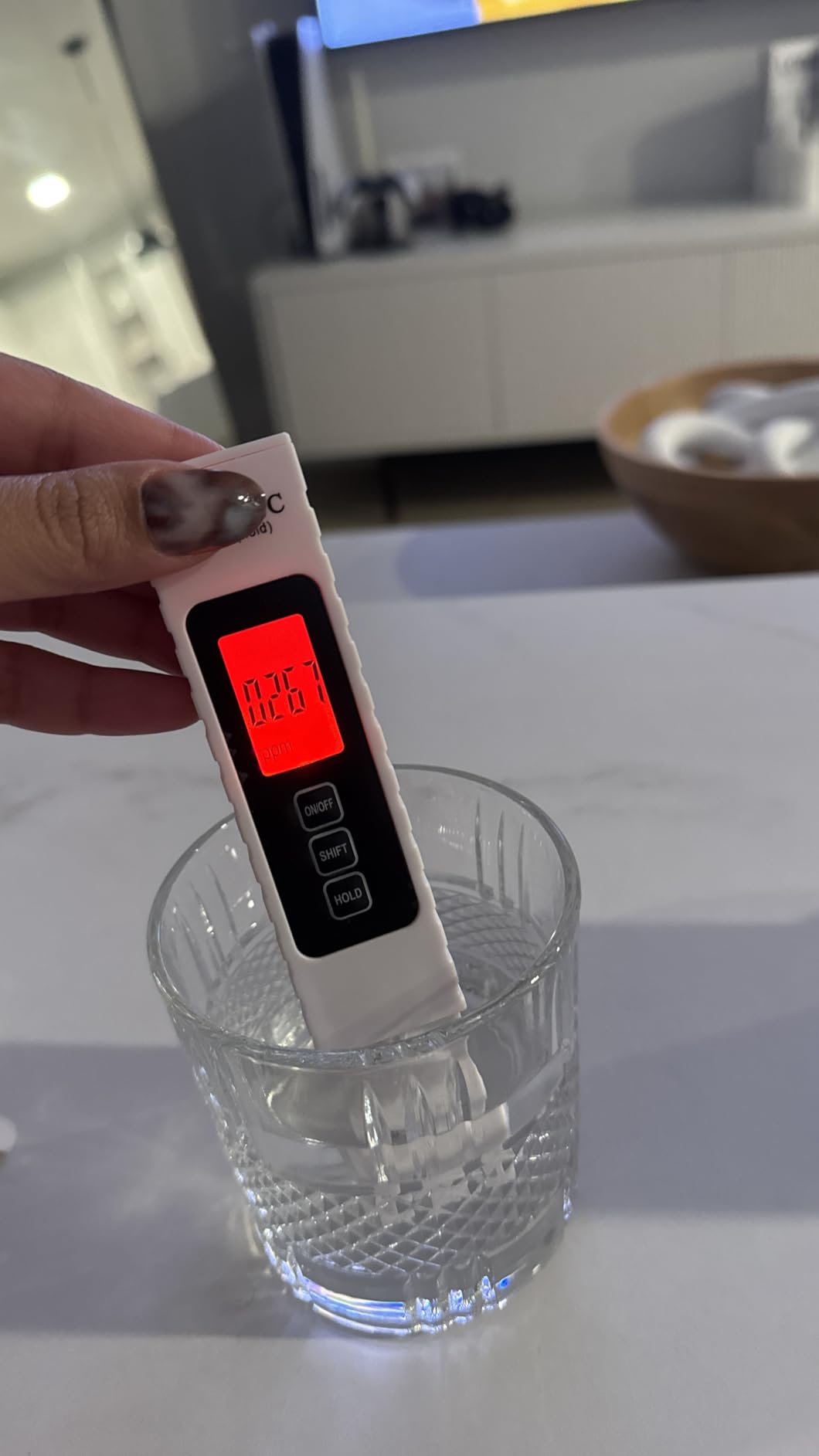
The a4 is the cheapest meter in the roundup and the one most likely to be useful for the check you should do first. The dual-colour backlight switches from red to green around the 40 ppm potability threshold, so you can see your water source status instantly.
It measures TDS, EC, Fahrenheit and Celsius with one-tap switching, over a 0-9999 ppm range. At 1.76 ounces it is genuinely pocketable, with an ABS shell and non-slip grips.
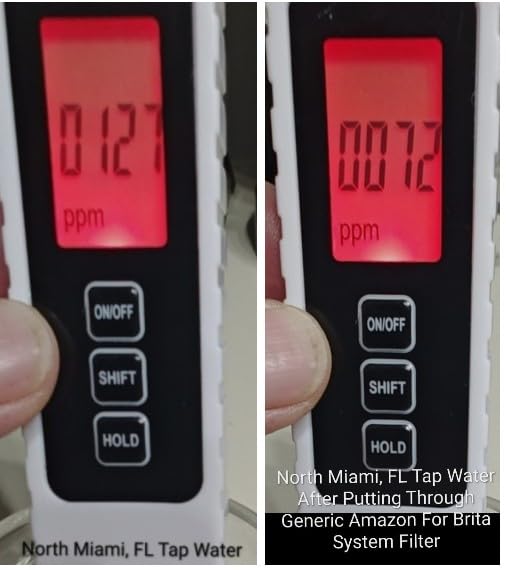
The CR2032 coin cell is claimed to run 12 or more months with daily use and there is an automatic shutoff. There is a 2-year warranty, which is longer than most pens in this list offer. The titanium probe and dual-core processor give fast, repeatable readings.
It works well as a source water and top-off checker, or as a backup to hang on the wall of a mixing area. For anything where a wrong number would cost you a crop, pair it with a better meter.
Where a low-cost meter is genuinely enough
Checking whether your tap water is roughly 30, 200 or 900 ppm does not require laboratory accuracy. For that job, and for confirming a reservoir is not wildly off target, this meter does the job at a price that makes it easy to own two.
It is also the meter to hand someone who wants a TDS reading before committing to anything more expensive.
Where it falls short
It cannot measure pH, so it cannot check nutrient pH at all, and it has no dedicated mS/cm readout despite the EC scale. There is no temperature compensation, so warm reservoir readings are not corrected.
With 472 ratings it is the least proven meter here. Treat it as a supporting tool rather than the meter your dosing decisions rest on.
How to Choose a TDS Meter for a Hydroponic Reservoir
Most buyers pick a meter on price or on the number of functions printed on the box. Neither is a good filter. These are the seven things that actually change whether a reading is useful in a grow room.
TDS, EC, PPM, PPT and uS/cm in plain English
Electrical conductivity is what a meter can genuinely measure. Dissolved salts dissociate into charged ions that carry current between two electrodes, and the meter reports that conductivity in microsiemens per centimeter, abbreviated uS/cm, or in millisiemens per centimeter, mS/cm. One mS/cm is 1000 uS/cm.
Total dissolved solids is not measured directly. The meter multiplies conductivity by a conversion factor and shows you an estimate in ppm, which is a proxy for a weight measurement made by evaporating water and weighing what is left. It is fast and useful, and it is a calculation rather than a fact.
PPM and PPT are parts per million and parts per thousand, the same concentration expressed differently, and a ppm figure of 1000 is a ppt figure of 1.0. When you compare a meter reading to a nutrient label, check which one the label uses before you assume the meter is wrong.
The 0.5 versus 0.7 conversion factor changes every reading by 40%
Here is the single most common source of confusion in this niche. If your meter shows 1.4 mS/cm, the ppm figure depends entirely on the factor it is using: 1.4 multiplied by 0.5 is 700 ppm, and 1.4 multiplied by 0.7 is 980 ppm. Same solution, same meter, 280 ppm apart.
The reason is chemistry rather than convention. Table salt dissociates almost completely, so sodium chloride solutions are accurately described by the 0.5 factor and that is the aquarium default. Plant fertiliser contains magnesium sulfate and similar salts that do not dissociate as completely, so 0.65 to 0.70 is the right factor for nutrient solution and is what most hydroponic growers use.
What this means in practice: a meter with a fixed 0.5 factor will systematically under-report your nutrient strength by about 30% compared to the 0.7 convention, and you may top up concentrate chasing a number that is simply on a different scale. If your meter lets you switch the factor, match it to whatever your nutrient labels use and note the choice somewhere you will find it again.
Target TDS and EC ranges by crop and system
There is no single correct number. A 350 to 450 ppm reservoir is treated as reasonable to slightly low for a recirculating system running a fruiting crop, and 600 to 1000 ppm with around 800 recommended is the common general target for a mixed hydroponic feed. Pak choi is the consistent exception, preferring roughly 1200 to 1400 ppm.
Use these as ranges rather than fixed points, and always let the nutrient label override a generic chart. Feed strength also tracks plant stage, light intensity and how much water surface area your system exposes to air.
Leaves greens and herbs generally sit at the lower end, fruiting crops such as tomatoes and peppers sit higher and increase further once flowering begins, and strawberries fall in between. Deep water culture and recirculating systems hold the most stable readings, while Kratky systems concentrate as the water evaporates, so they need checking more often.
Measure your source water before you mix anything. Tap water commonly reads around 40 ppm, and a reverse osmosis system should read near zero. If your source is not near zero, that baseline is part of your target and your concentrate dose has to account for it.
Automatic temperature compensation is not optional in a warm grow room
Conductivity rises with temperature, roughly two percent per degree Celsius, so an uncorrected meter reports a stronger solution than you actually have. A reservoir that warms through a lighting cycle can swing enough to look like a feeding difference when nothing about your nutrients changed.
Automatic temperature compensation corrects the reading to a reference temperature, which is why six of the meters in this roundup have it. The only way to compensate by hand is to note the temperature and compare readings at the same temperature, which is impractical over a week.
How to verify a new meter in ten minutes
Before you trust any meter in a reservoir, run two checks. First, put the probe in distilled or deionised water, which should read close to zero, and confirm the meter is not stuck at a non-zero baseline. That single step catches a surprising share of faulty units.
Second, make a known solution and compare. Mix a nutrient batch to the strength your label recommends, stir thoroughly, let the salts dissolve, then dip the probe and wait for a stable reading. If the meter agrees with the label target, it is working. If it does not, check the conversion factor before assuming the meter is faulty, since a 0.5 factor against a 0.7 label will always look like a fault.
Repeat both checks monthly. Calibration drift is the most common complaint in grow forums and it happens gradually, with no warning, which is exactly why it goes unnoticed until a crop shows stress.
Six mistakes that produce false readings
Not rinsing the probe between samples carries nutrient solution from the last reservoir into the next reading. Rinse with distilled or plain water and blot the tip rather than wiping it.
Storing the probe dry is the other big one. A dried electrode coating reads high and drifts. Keep the tip wet in storage solution or distilled water, never sealed in a bag with no liquid.
Testing undiluted concentrate is common and produces meaningless numbers. Concentrate reads far above any range that matters, and some meters are not rated for it. Dilute first.
Chasing ppm with the wrong conversion factor has been covered above, and it is the mistake that wastes the most time.
Dipping too shallow leaves the electrodes partly uncovered, which produces a reading that drifts upward. Submerge to the marked line and hold still.
Finally, testing a reservoir right after adding concentrate catches you mid-dissolution. Stir and wait for the number to stabilise before you judge it.
Continuous inline monitoring versus a handheld pen
A handheld pen is the right choice for most growers. It costs little, it is accurate, and the fifteen seconds it takes to dip and read is not a real burden when you are already walking past the reservoir.
Continuous monitoring becomes worthwhile when you cannot easily get to the tank, when you are running several rooms and want a trend rather than a spot check, or when you want alerts when a reservoir drifts far enough to cause stress. For that, an immersion-rated meter designed to stay in solution is the tool, and it is a different category of purchase rather than a better pen.
A useful compromise we like is two instruments: a good pen for the nutrient solution and a cheap four-in-one for source water and top-off checks. The same idea shows up in our guides to light meters for film photography and clamp meters for HVAC technicians, where a cheap tool handles routine checks and a better one handles the readings you actually decide on.
Probe life, cleaning and what to budget for
Probe coating wear is the main reason accuracy declines, and cheap pens with non-replaceable probes turn a probe problem into a whole-unit replacement. Meters with a replaceable probe, like the Apera PC60, have a longer useful life for that reason alone.
Rinse the probe after every use, store it wet, and expect to recalibrate periodically rather than assuming a factory setting holds forever. Plan on buying calibration solution and a spare probe as part of the first-year cost of whichever meter you choose, because both are consumables rather than optional extras.
Frequently Asked Questions
What is the most accurate TDS meter?
The most accurate meters for hydroponic nutrient solution are the ones that measure EC directly in mS/cm with automatic temperature compensation, a replaceable or well-sealed probe, and a calibration standard you can verify against. Among the meters we tested, the Bluelab PENCON and the Apera PC60 held their calibration best over repeated daily use. Accuracy depends far more on calibration discipline and probe condition than on the printed accuracy figure alone.
Which EC meter is best for hydroponics?
For most growers the Bluelab PENCON is the best EC meter for hydroponics, because it is factory calibrated, waterproof, floats, and lets you switch between mS/cm, CF, PPM 500 and PPM 700. If you want a single instrument that also covers pH, the Apera PC60 adds that on a replaceable probe. Budget growers get consistent results from the HM Digital COM-80, which has four scales and temperature compensation.
What is a good ppm level for hydroponics?
A general target for mixed hydroponic feeds is around 600 to 1000 ppm TDS with roughly 800 ppm as a common working figure, and fruiting crops usually sit at the higher end while leafy greens and herbs sit lower. Pak choi is the notable exception, preferring around 1200 to 1400 ppm. A 350 to 450 ppm reservoir is considered reasonable to slightly low for a recirculating system, and your nutrient label should always override a generic chart.
How do I measure nutrient levels in hydroponics?
Measure your source water first, because tap water often carries around 40 ppm of dissolved solids that your nutrients never supplied. Then mix your batch, stir until the salts fully dissolve, submerge the probe to the marked line, and wait for the reading to stabilise or lock. Compare that number to the strength your label recommends, making sure your conversion factor matches the label convention. Rinse the probe and store it wet when you are done.
Do I need a TDS meter or an EC meter?
They measure the same thing, because TDS is calculated from EC by multiplying by a conversion factor. If your nutrient label states EC in mS/cm, a meter that reads EC directly is the safer choice, because ppm readings depend on a factor that may not match your fertiliser. If your labels quote ppm, a TDS meter is fine. Either way, automatic temperature compensation matters in a grow room where reservoir temperature changes through the day.
How often should I test my hydroponic reservoir?
Test at least once a day, and more often in Kratky systems where the solution concentrates as water evaporates. Check the reservoir every time you top it off, since that is when the biggest drift occurs. For anything larger than a few buckets, twice a day gives a much clearer picture of uptake, and a meter built for continuous immersion is worth considering if you cannot get to the tank regularly.
Which TDS Meter Should You Buy?
After working through all 12 of the best TDS meters for hydroponic nutrients, the HoneForest HFTDS-M7 is the one we would buy first. It reads TDS, EC and temperature, it has a titanium probe that tolerates repeated contact with fertiliser salts, and it has one of the deepest review histories of any pen here.
If your budget stretches further, the Bluelab PENCON is the better long-term instrument. Factory calibration, switchable ppm factors, full waterproofing and the ability to float mean it keeps working where cheaper pens drift, and growers name it as the trusted name more than any other.
For a single device that also handles pH, take the Apera PC60 and its replaceable probe. For a reservoir you cannot easily reach, the YINMIK YK-T4 Pro stays in the tank. And on a tight budget, the HM Digital TDS-3 gives you 1 ppm resolution and a thermometer for very little money.
Whatever you pick, check the conversion factor against your nutrient label before your first dose, verify the meter in distilled water and a known batch, and rinse and store the probe properly. That habit matters more to your results than the difference between any two meters on this list, and it will keep your readings honest well into 2026 and beyond.